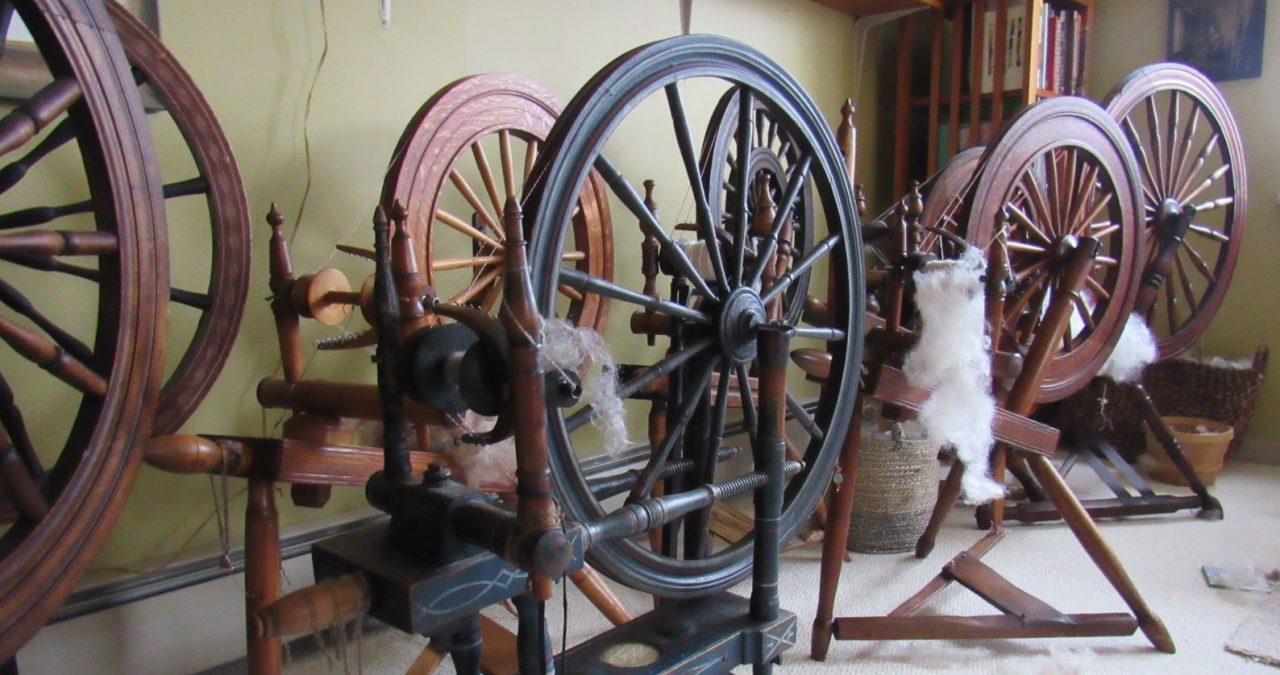

This wheel started it all for me. When I was growing up, it decorated the corner of our Connecticut living room, with a messy, dusty hank of flax drooping from the distaff. Somehow, when I was sixteen, I got it spinning again (with wool). After I moved to Alaska when I was twenty, the wheel became decoration in my brother’s house. Through the years, a flyer arm, the footman, and the treadle broke. I brought it to Maine when I retired, had it repaired, and it has been spinning my homegrown flax ever since. It’s solid as a rock–a lovely smooth spinner–even though it likely was made in the late 1700s and saw a lot of use.
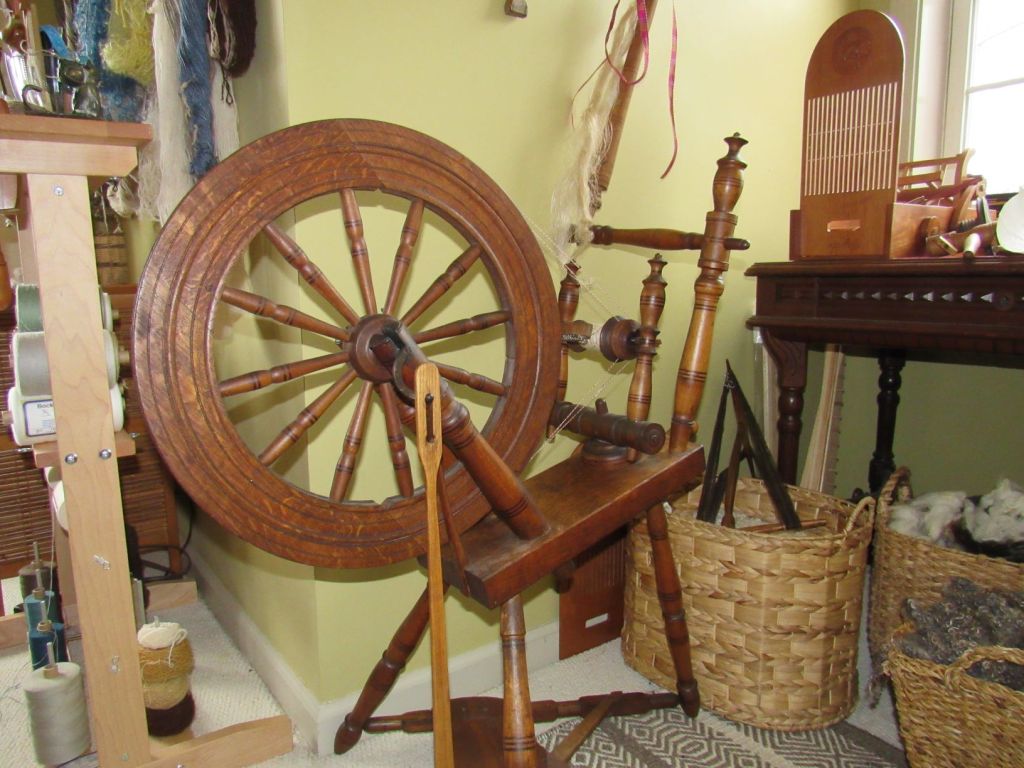
The original treadle was deeply worn.
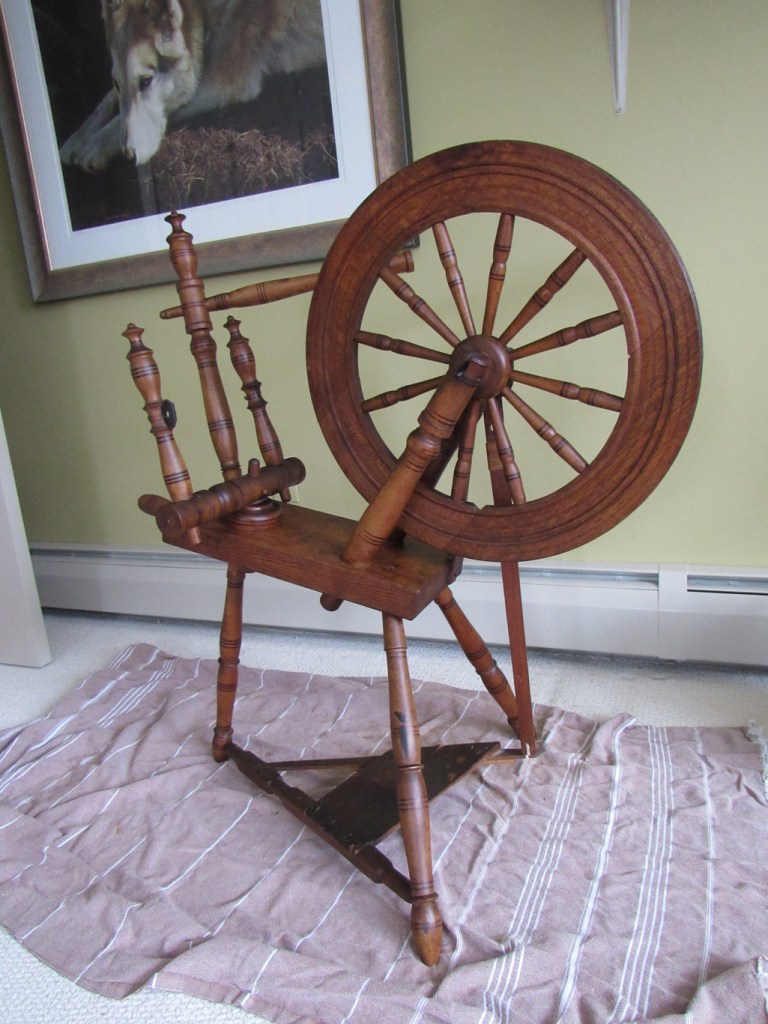
And the distaff made from a sapling.
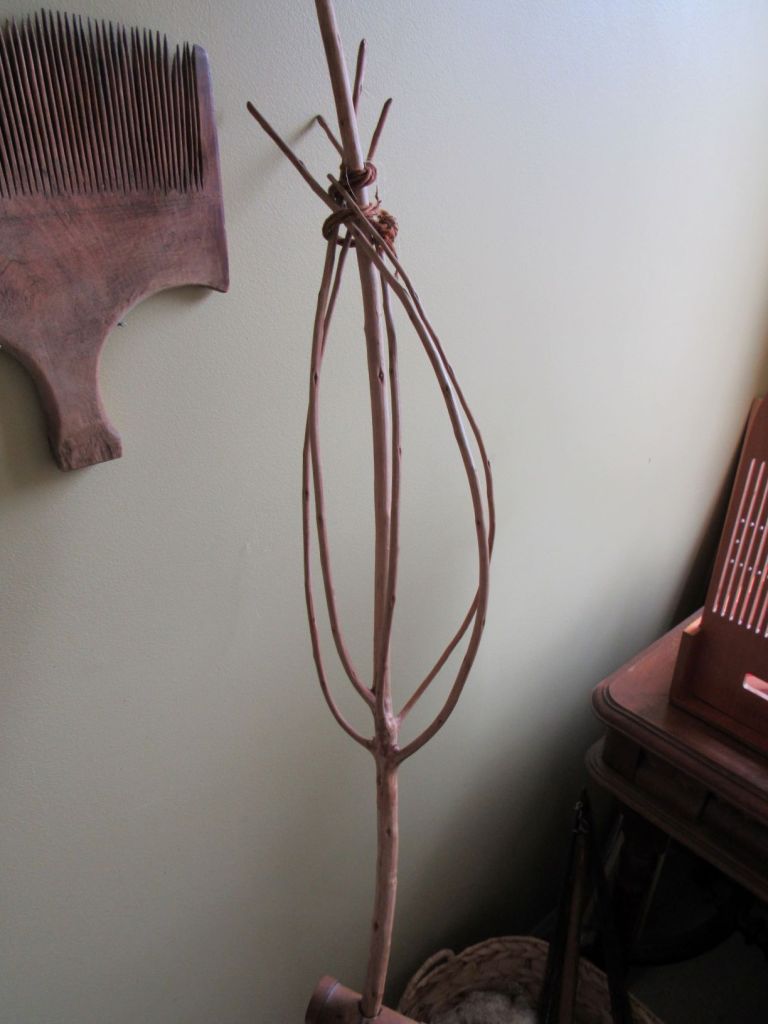
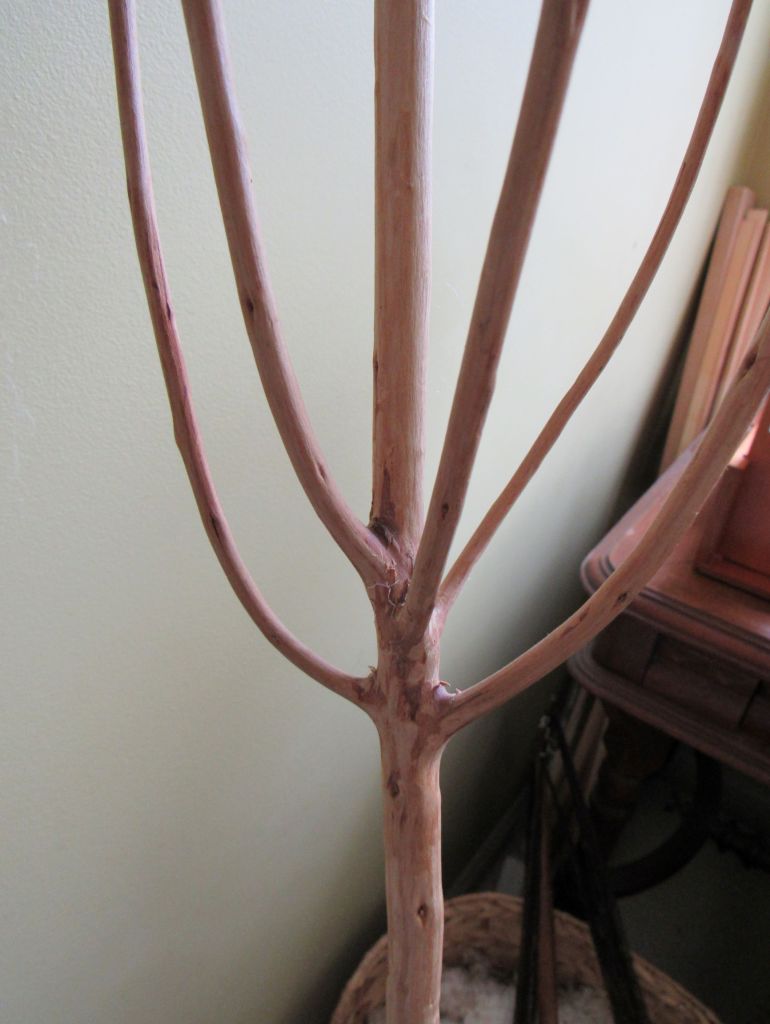
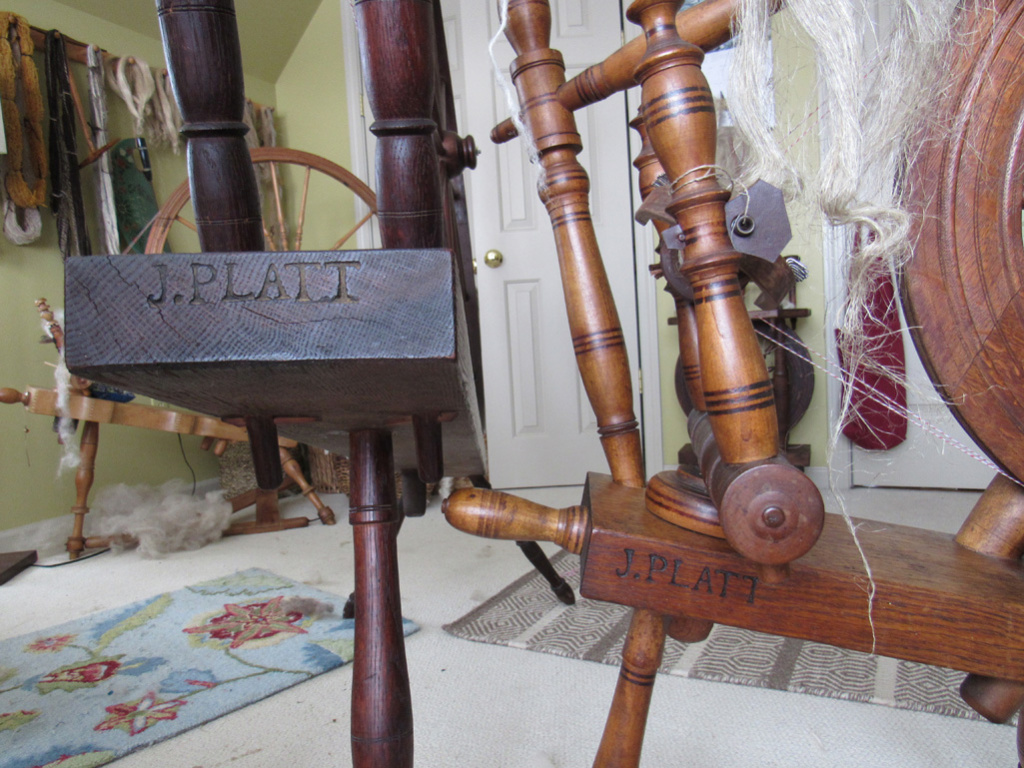
The table is quite short, only 16 3/4″ long, it has 12 spokes, and turnings typical for early Connecticut wheels. Every turned piece is adorned with sets of black stripes, but there are no chip carvings on the stripes, which were found on many of the early Connecticut wheels.
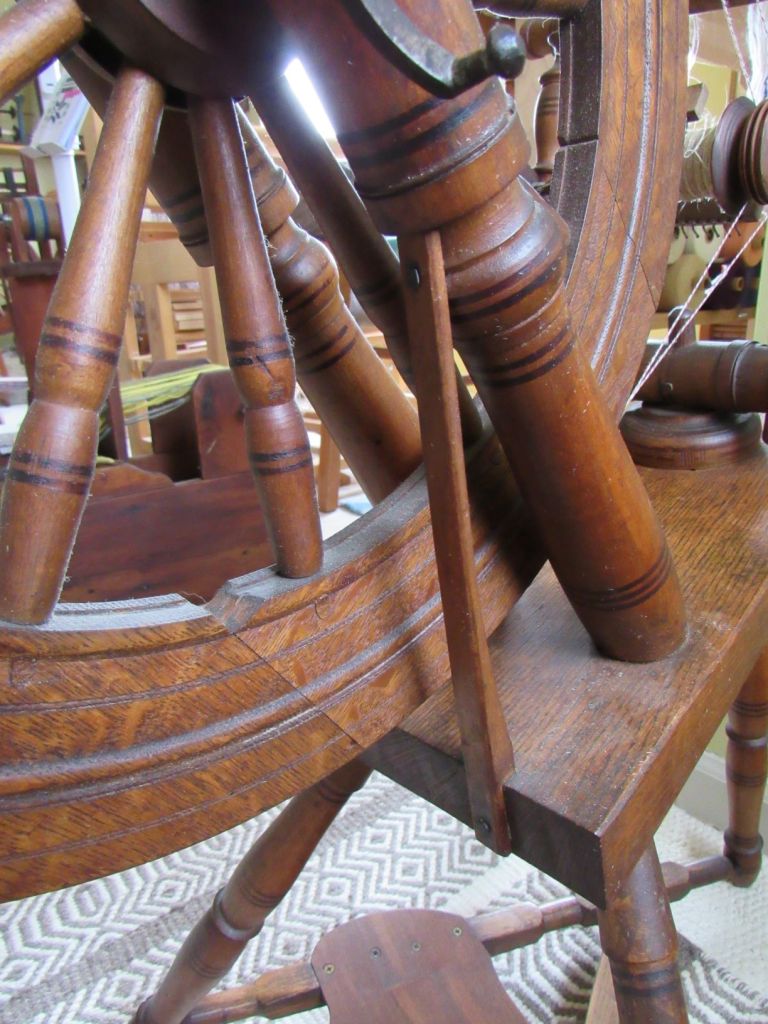
J. Platt, the wheelmaker, remains something of a mystery. Despite extensive research, I still haven’t been able to nail down who he was. His wheels share a number of features with Samuel Sanford, John Sturdevant, and Silas Barnum–wheelmakers from southwestern Connecticut in the late 18th and early 19th centuries, well-known for their double-flyer flax wheels.
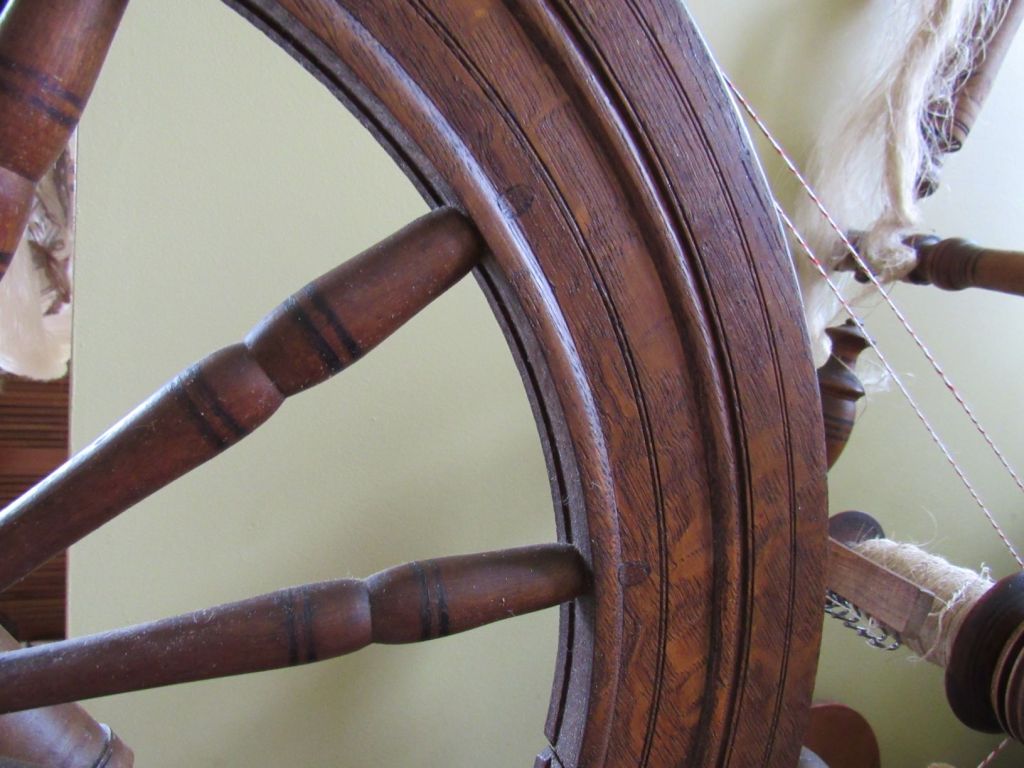
My best guess for J. Platt, is Josiah Platt (1735-1804) from Newtown (married to Sary Sanford, sister to wheelmaker, Samuel Sanford), Connecticut or Joseph Platt (1741-1793) from Danbury, Connecticut but the research continues.
 Exquisite Machinery