
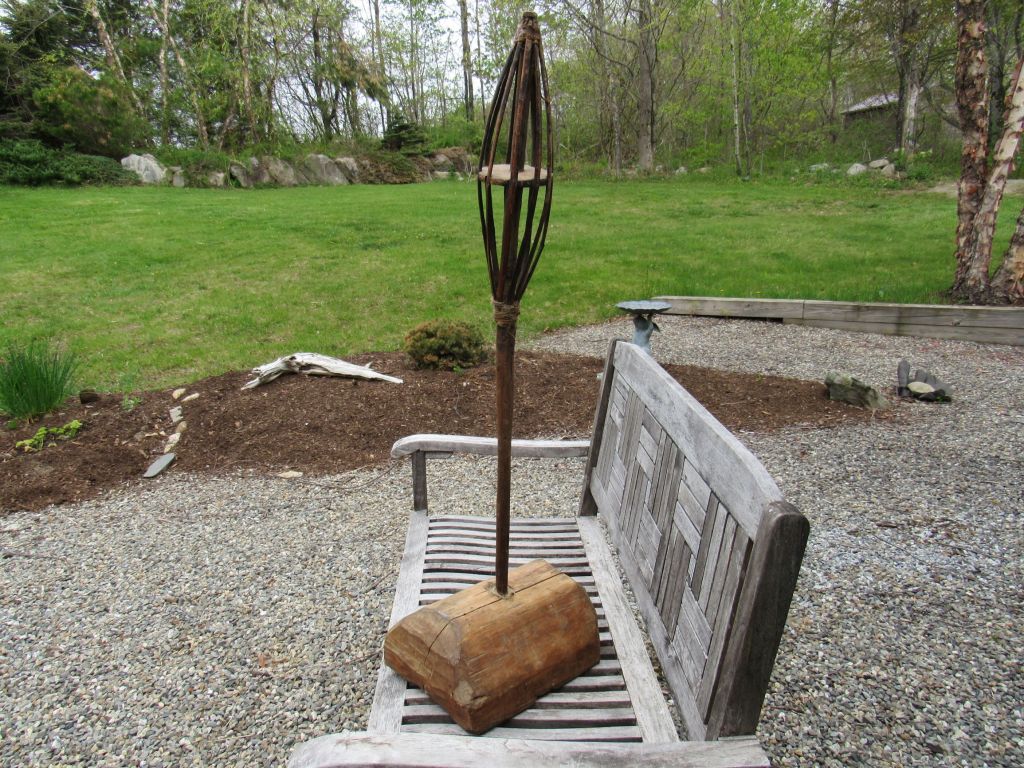
This standing distaff is a bit of mystery. Free standing distaffs were commonly used in many regions of Europe, but North American versions don’t appear very often. Those from Europe tend to be tall and ornate, accompanying beautifully turned wheels. They were used for spinning long flax and sometimes hemp fibers. Most flax wheels in North America had built-in distaffs, but there must have been spinners who preferred to use standing distaffs, so it’s surprising that we don’t see more of them.
I bought this distaff at one of the American Textile History Museum auctions (see previous post “Jo”). The accession number indicates that it was part of Joan Cummer’s collection. While living in New England, Joan Whittaker Cummer collected antique wheels and textile tools for years. In 1993, she documented her collection in A Book of Spinning Wheels, which was thoughtfully put together with beautiful photos, descriptions, and measurements. She offered the book as “a tribute to the individuality of the men who made the wheels and the spinners who used them.” (Cummer, Preface, p. xiv).
At the time the book was published, Joan had already donated her collection, in 1991, to the American Textile History Museum in Lowell, Massachusetts, noting that it was hard to see them go, “but it was a good and appropriate place for these wheels. I look back with joy on the years I had them and hope that other people will enjoy them in the years to come.” (Cummer, p. 3).
Sadly, when the museum closed, Joan Cummer’s collection scattered, making her book all the more valuable. Although the collection no longer survives intact, other people continue to enjoy the wheels and tools she collected–some, like me, in a very personal and hands-on way, which would not have been possible had they remained in the museum.

The museum’s accession numbers identify items in her collection with “1991.178.” followed by the individual item number, which, in the case of wheels, tracks the wheel number in her book. The accession number on this distaff “1991.178.211,” appears to indicate that it was from Joan’s collection.
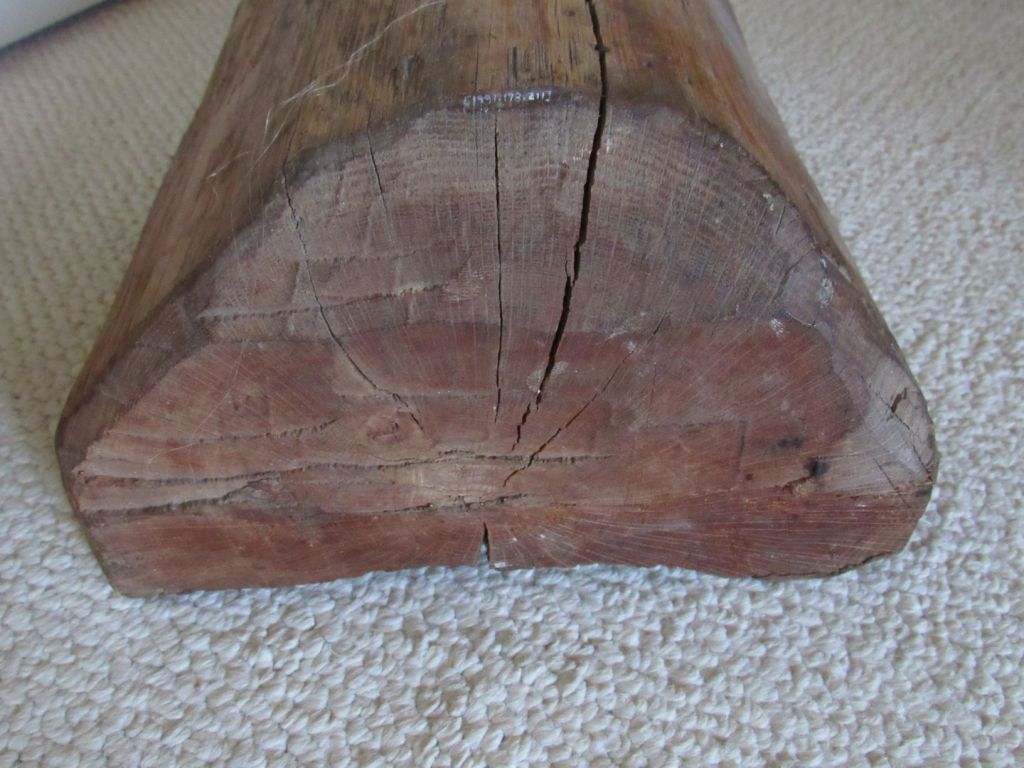
But the distaff does not appear in her book. In fact, in the book, she includes one photo of a free standing distaff (Accessory 46, p. 371), noting that: “Only one other has been seen over the years these wheels and accessories have been collected. It was a carved and beautifully finished article.” (Cummer, p. 370). She clearly wasn’t referring to this distaff, which is neither carved nor beautifully finished. So, unless I’m mistaken and this isn’t a distaff at all, it’s puzzling as to why it wasn’t mentioned in her book. Perhaps it was a last-minute acquisition.
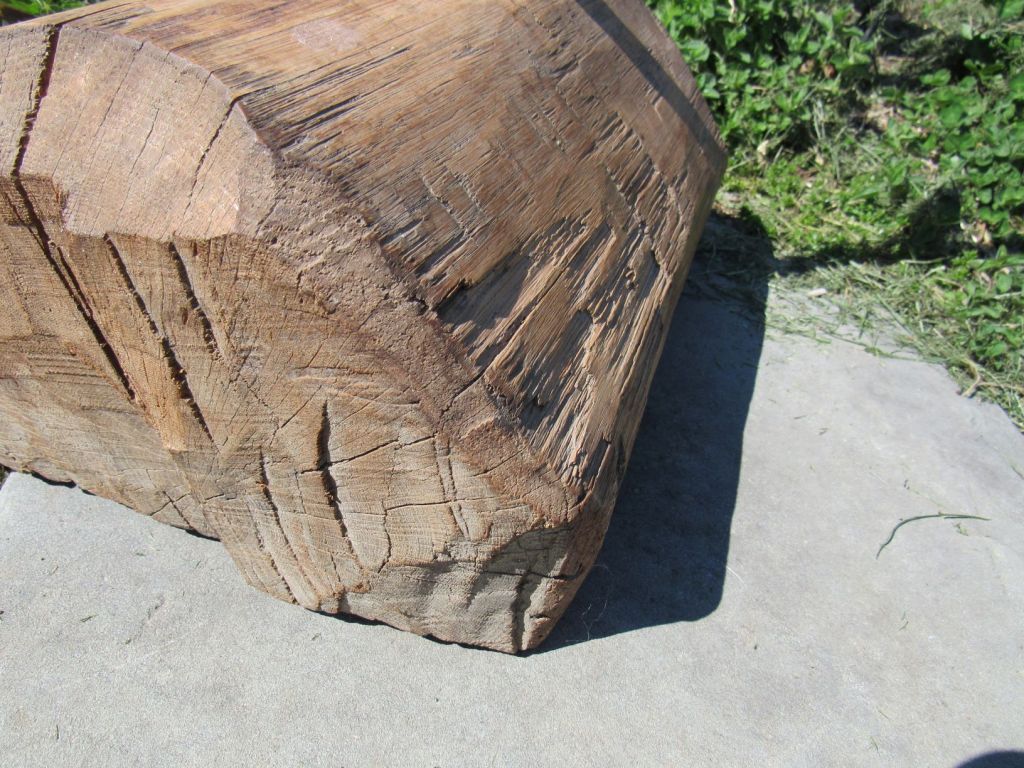
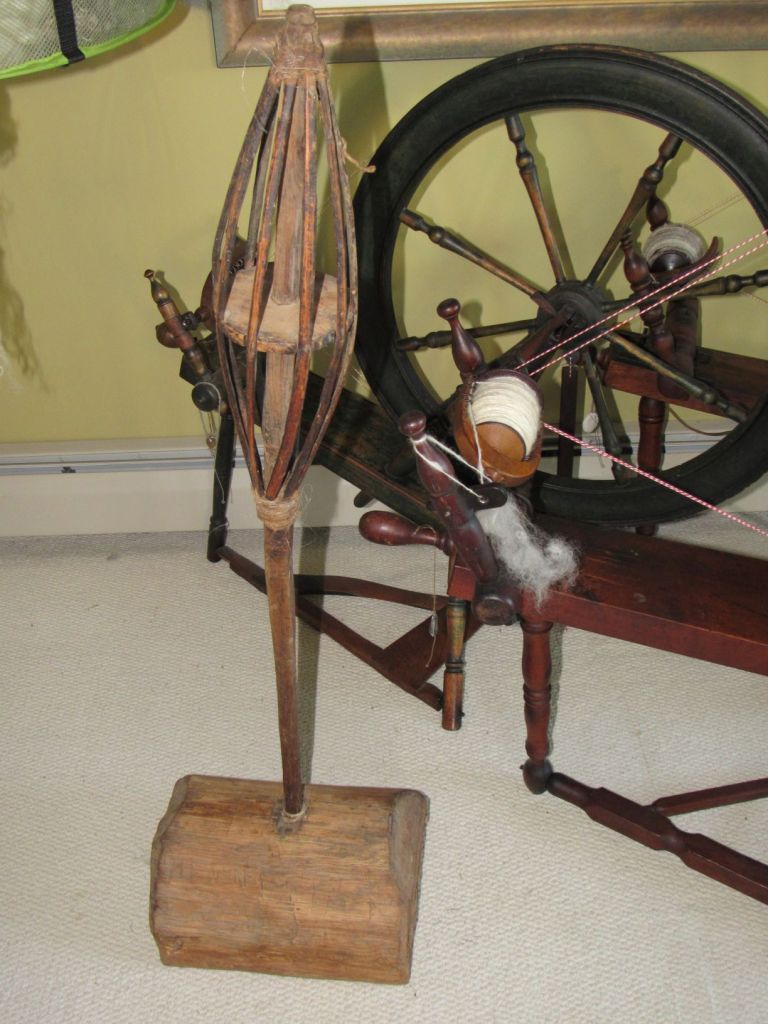
The distaff itself was made simply—a strong and useful tool—heavy enough for stability, yet light enough to easily move.
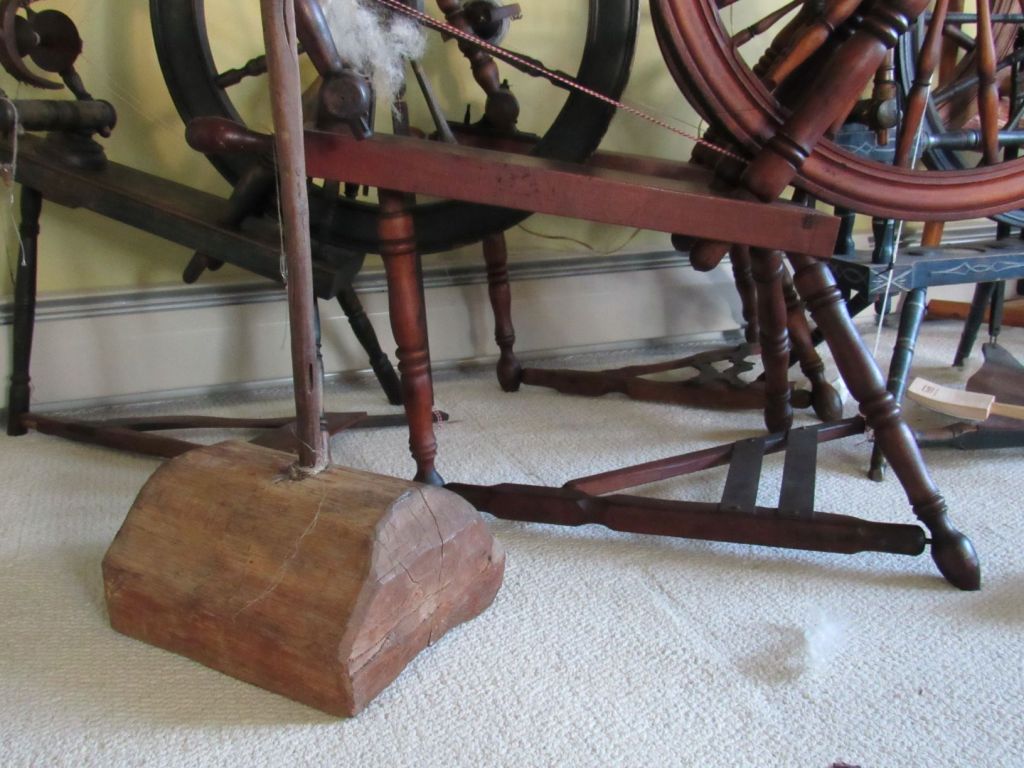
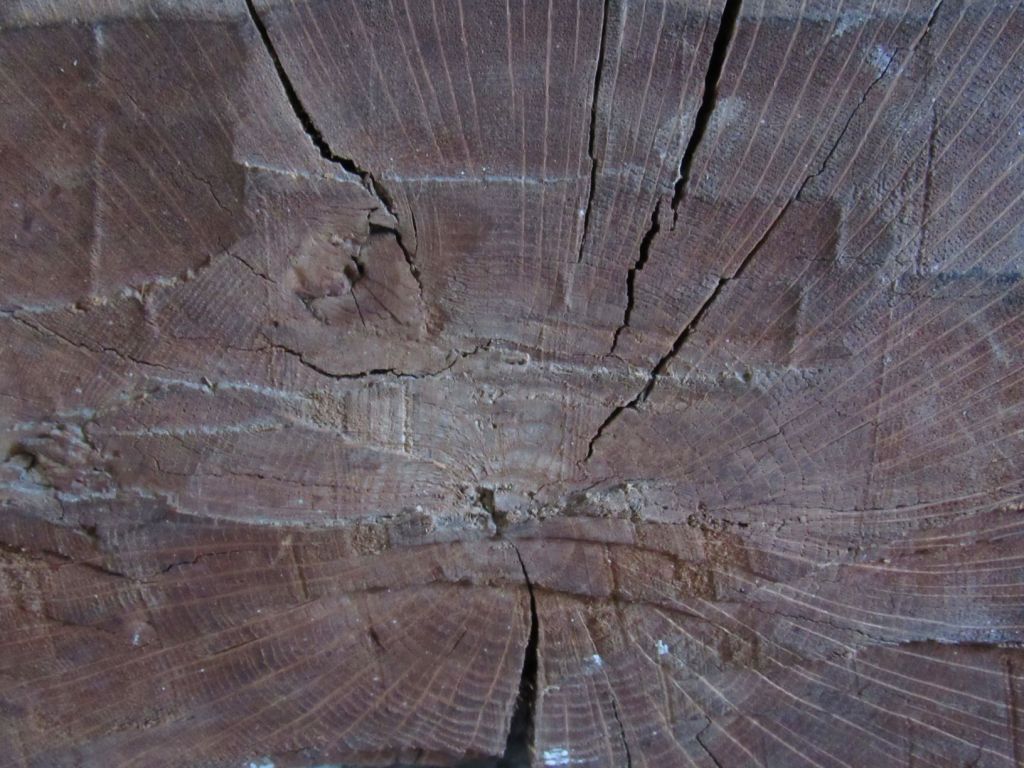
The base is a chunk of wood—it appears to have been shaped with an ax—with a hole for the distaff pole.
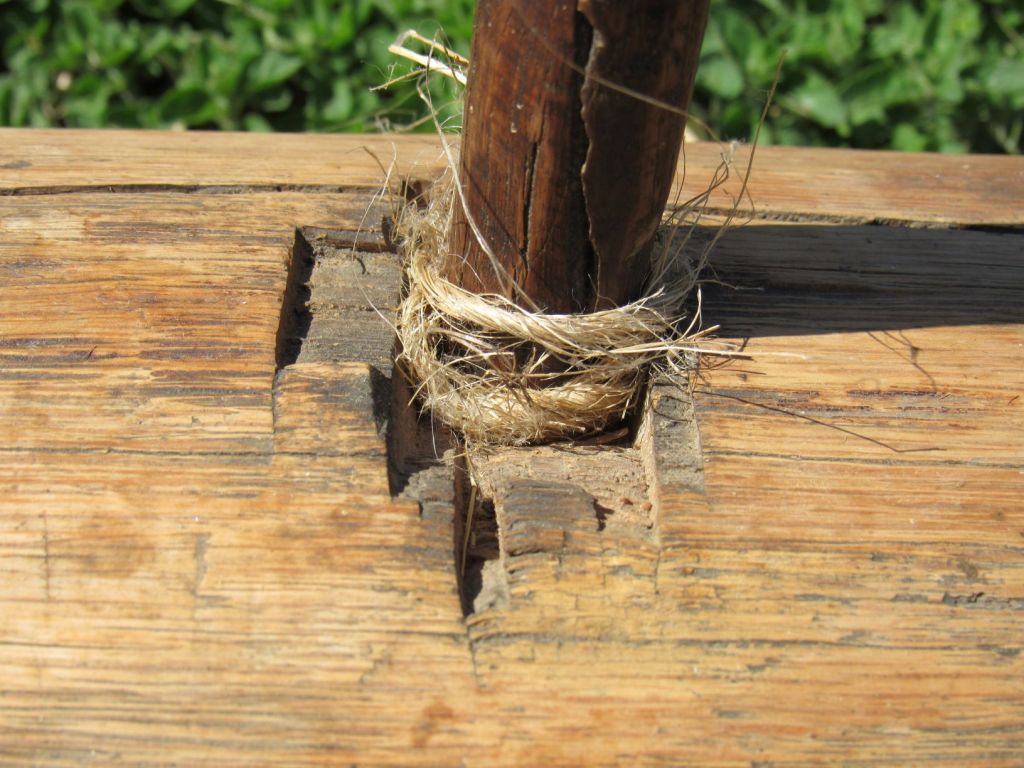
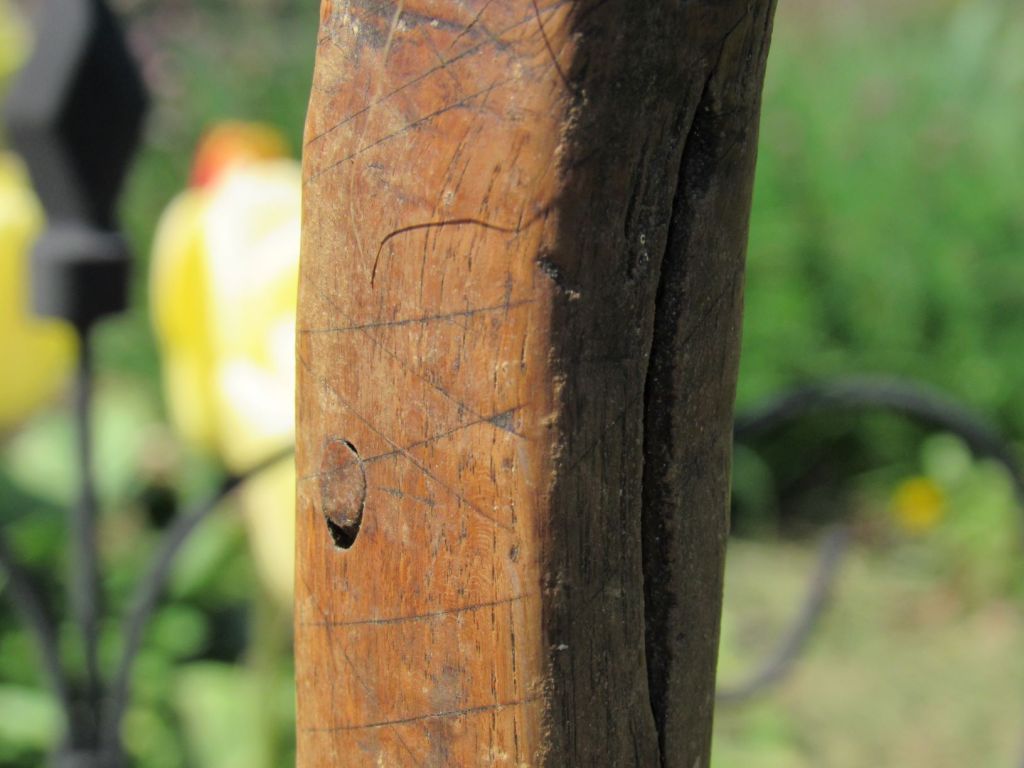
There are some cross hatched marks on the pole.
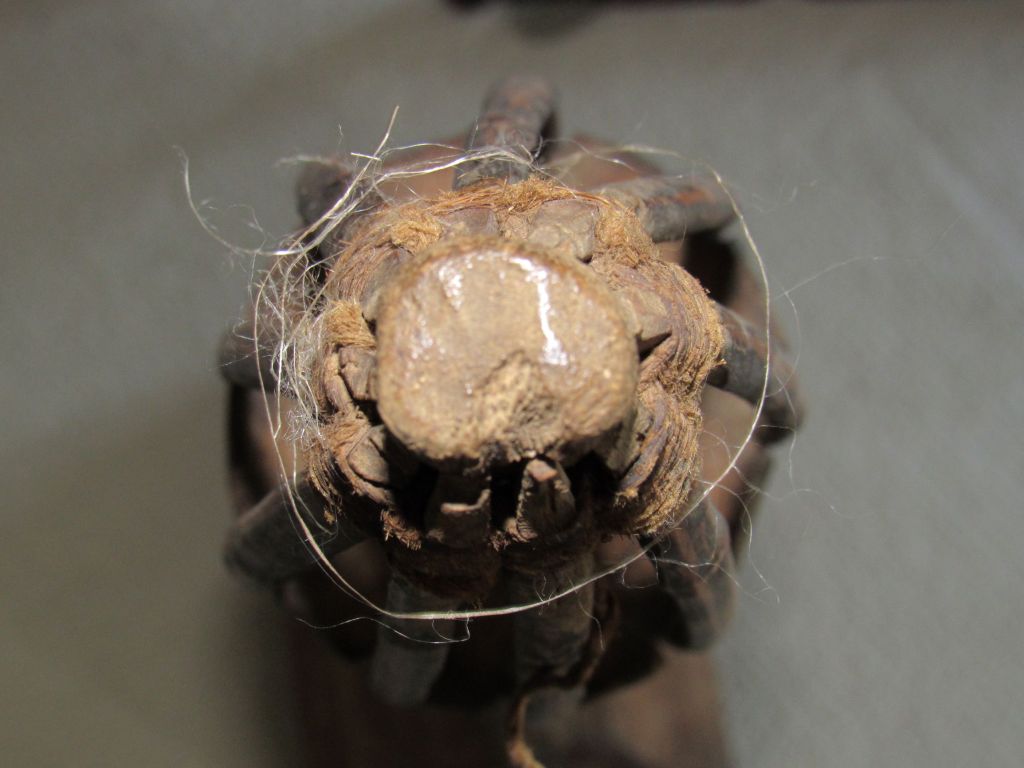
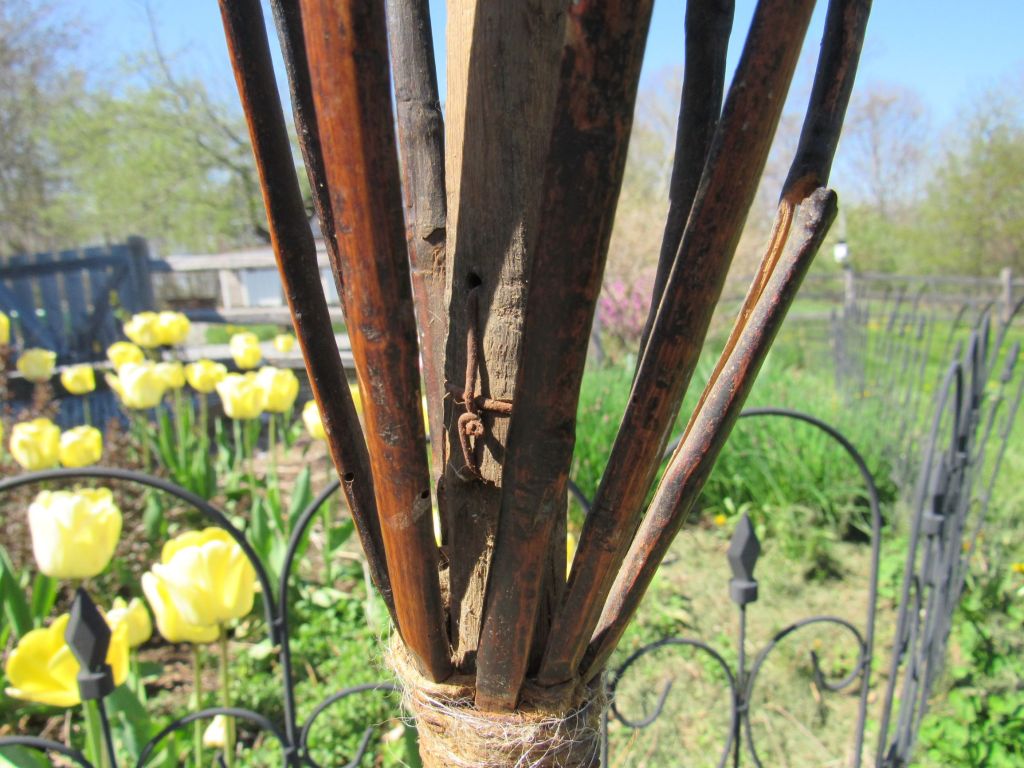
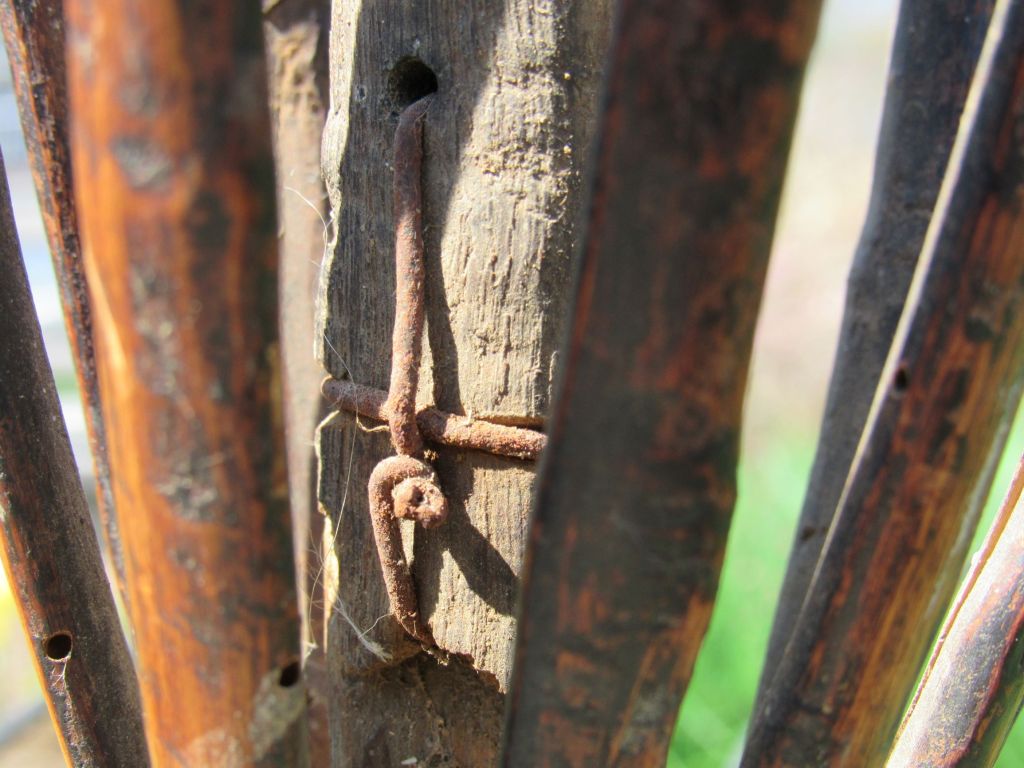
The arms of the cage at the top of the distaff are made from some light weight, pliable wood—almost like basket splints—and have small fish-hook-like prongs on the top.
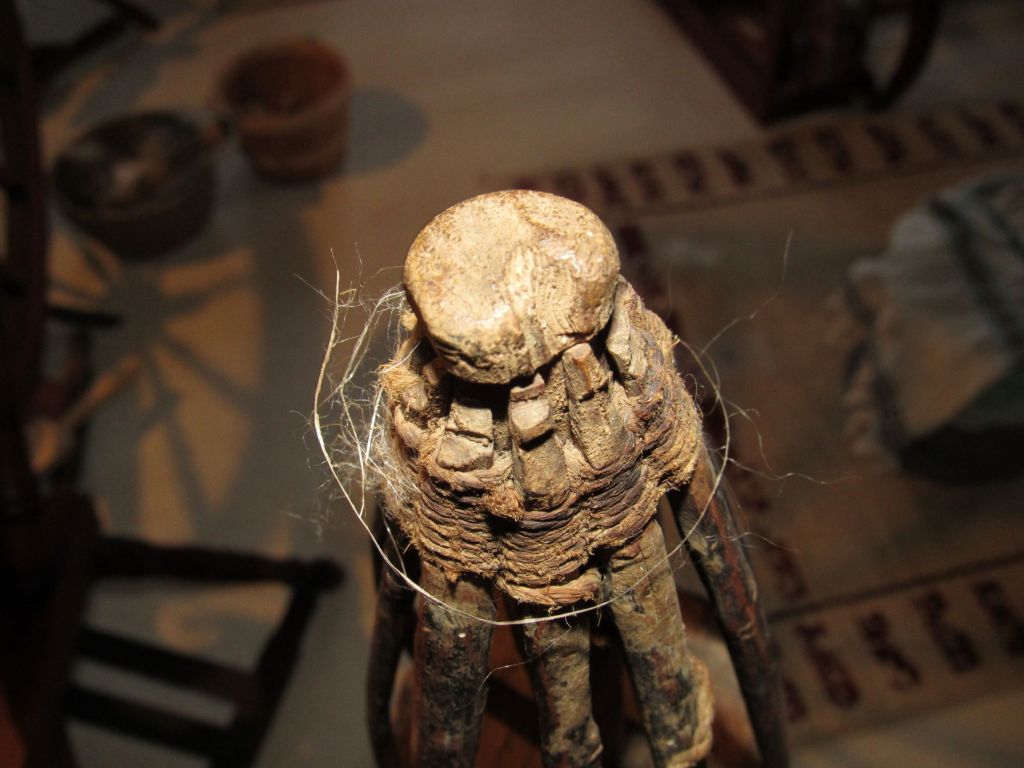
They are held in place with twine at top and bottom,
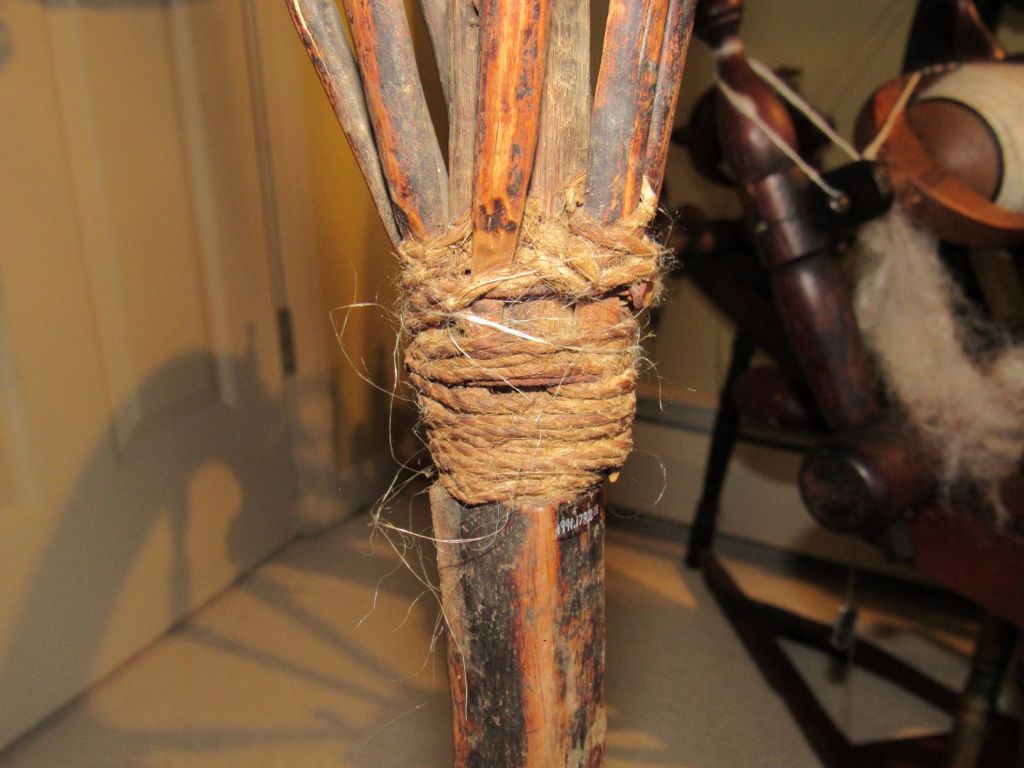
with a fitted wooden disc holding them out in the middle.

Simple, practical, and obviously well-used,

with an old repair to the distaff pole.
I would love to know where, when, and why this distaff was made, but for now, I am happy to use it and wonder about where it has been.
Measurements: Height—42 inches; Base—13 ¼ inches by 9 ¾ inches; Cage height, 17 ½ inches.
For more information see:
Baines, Patricia. Spinning Wheels, Spinners and Spinning. New York: Charles Scribner’s Sons, 1977, pp. 94-103.
Cummer, Joan. A Book of Spinning Wheels, Portsmouth, NH: Peter J. Randall, 1993.
Pennington, David A. and Michael B. Taylor. Spinning Wheels and Accessories. Atglen, PA: Schiffer Publishing, Ltd., 2004, pp. 142, 173.
 Exquisite Machinery