Reels, like wheels, come in a wonderful variety of styles, often reflecting a region and a time. Within each style, makers used their own ingenuity and personal touches, often to increase ease of use and efficiency.
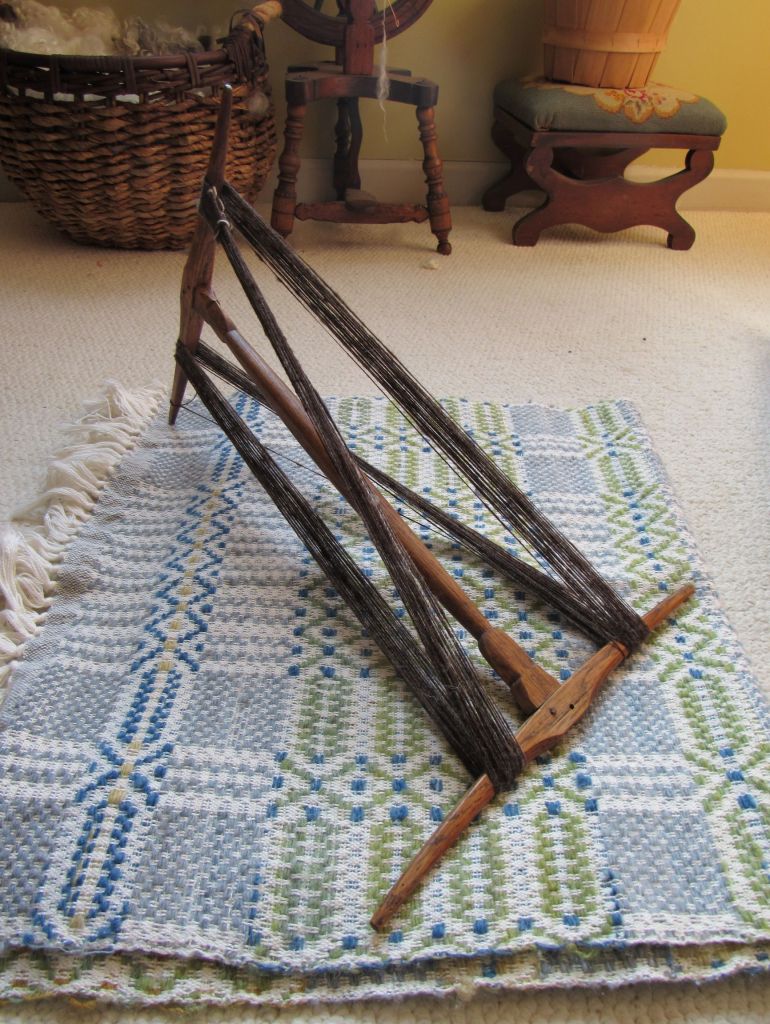
No matter the style, the function is the same–to take yarn off of a spinning wheel’s spindle or bobbin to create a skein. The skein can then be washed or dyed in preparation for weaving or knitting.
One of the simplest reels is a niddy-noddy. It is relatively easy to make and is portable and easy to store. On the down side, it is not particularly fast or efficient and there is no mechanism for counting the rotations of yarn as it is reeled.
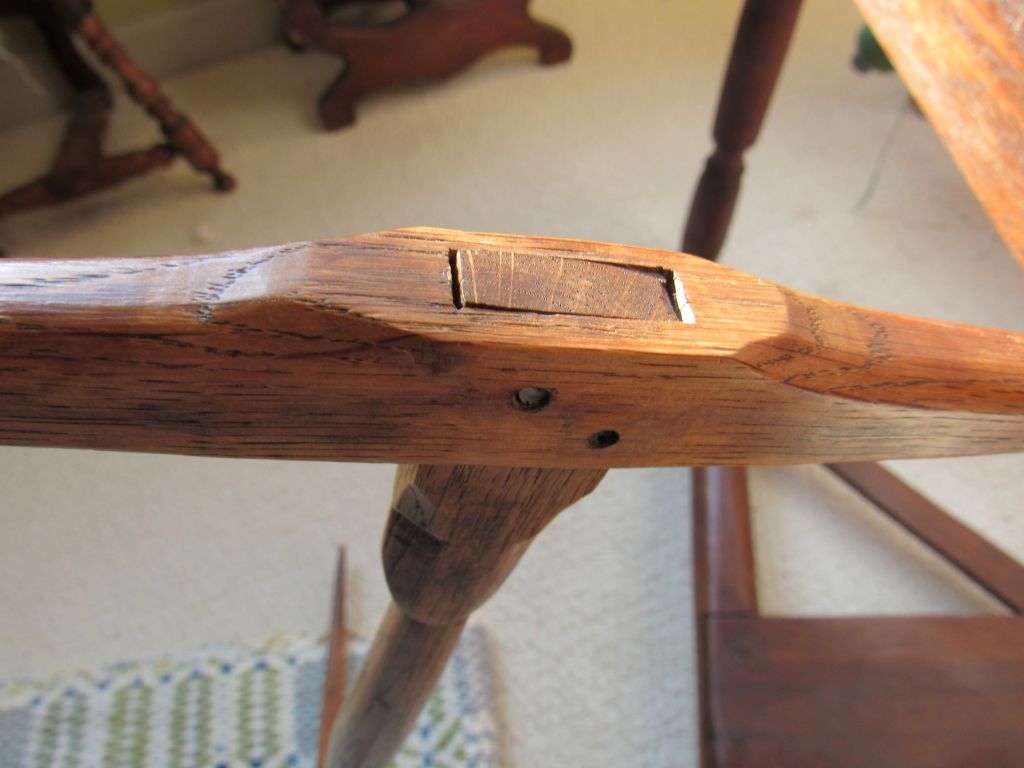
Simple niddy-noddies are easy to find and inexpensive in Maine. Decorated ones, however, tend to go for high prices. I was at an auction where a chip-carved niddy-noddy—nice, but nothing awesome—went for $450, while the Shaker wheels at the auction went for less than $50. Ouch.

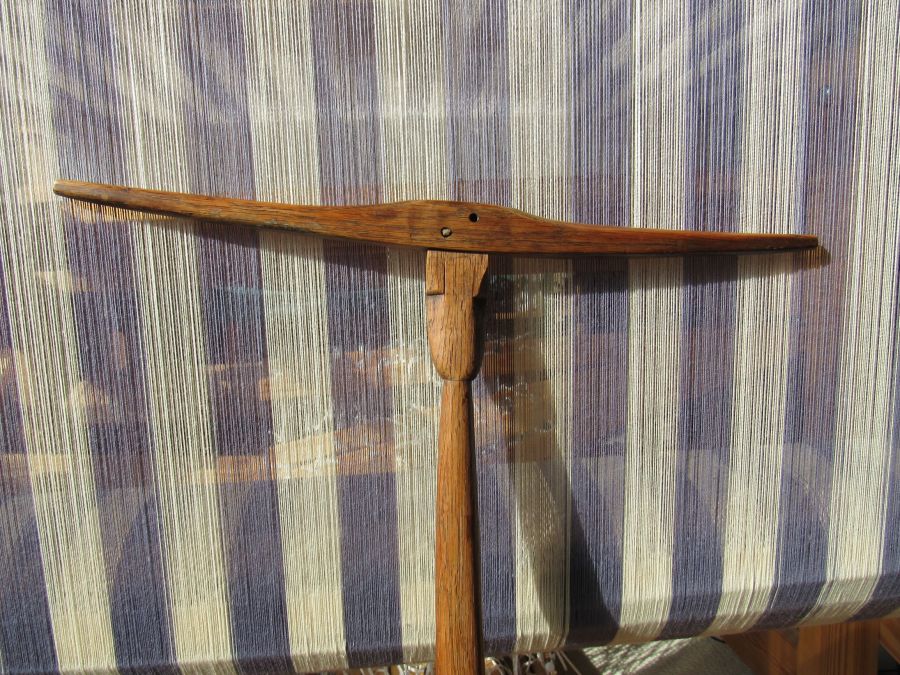
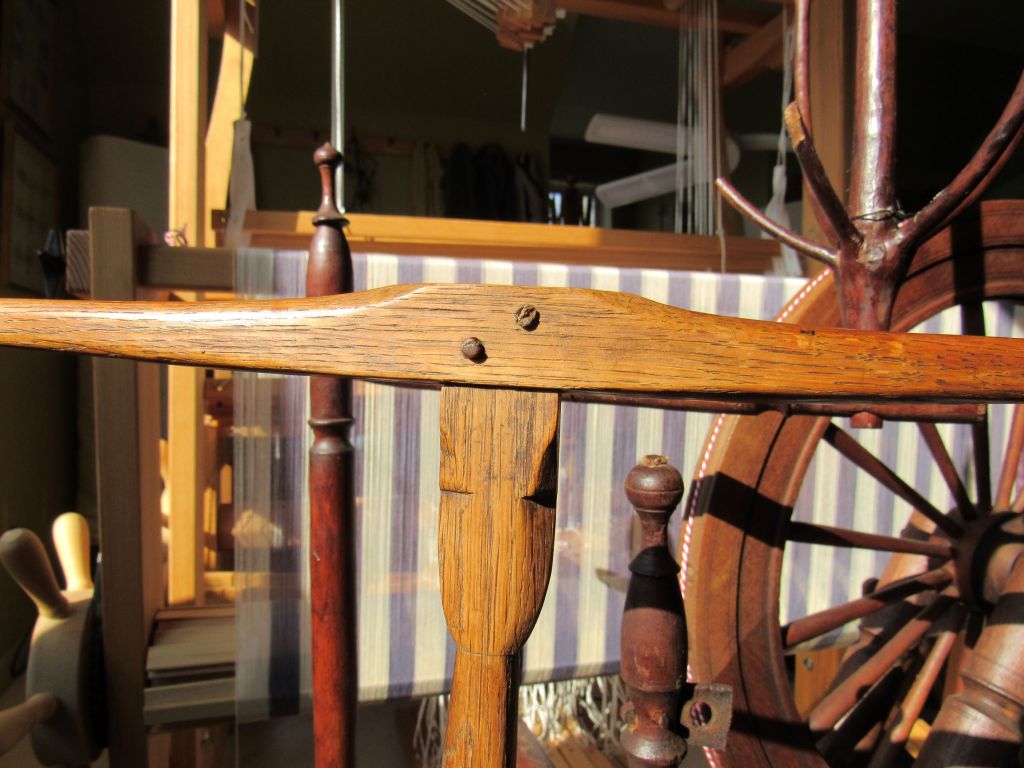
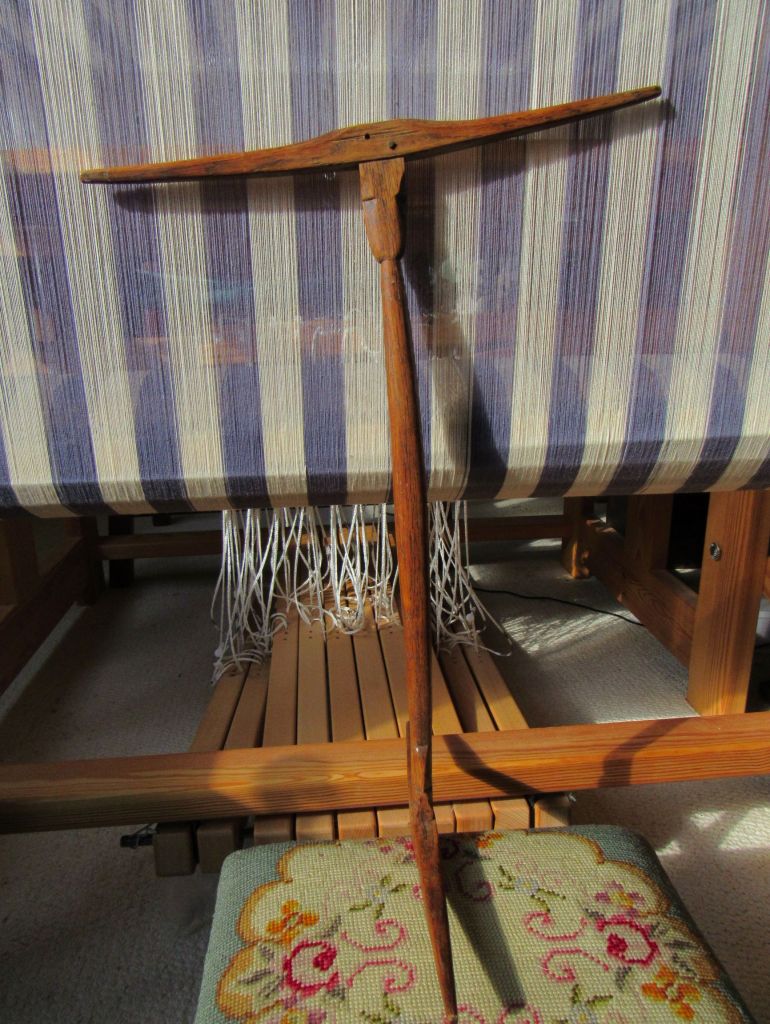
I only have one niddy-noddy and it is the first reel that I bought. I found it at Elmer’s, a local junk barn, one of four hanging from an overhead beam. I liked the way it felt in my hand and its simple, swooping lines.
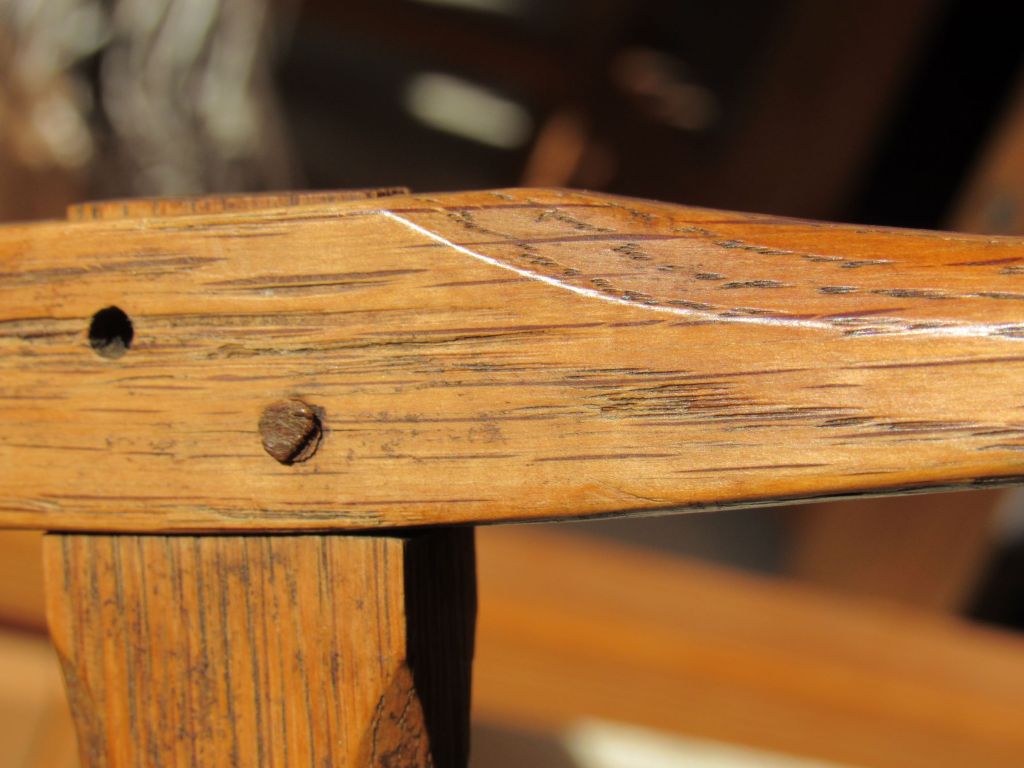
The length of yarn for one full turn is 72 inches—or two yards. Its handle, worn to a glass-smooth feel, has a slight curve to the side, which I assume was an intentional design to make for an easier rocking motion when reeling on and easier removal of the skein.
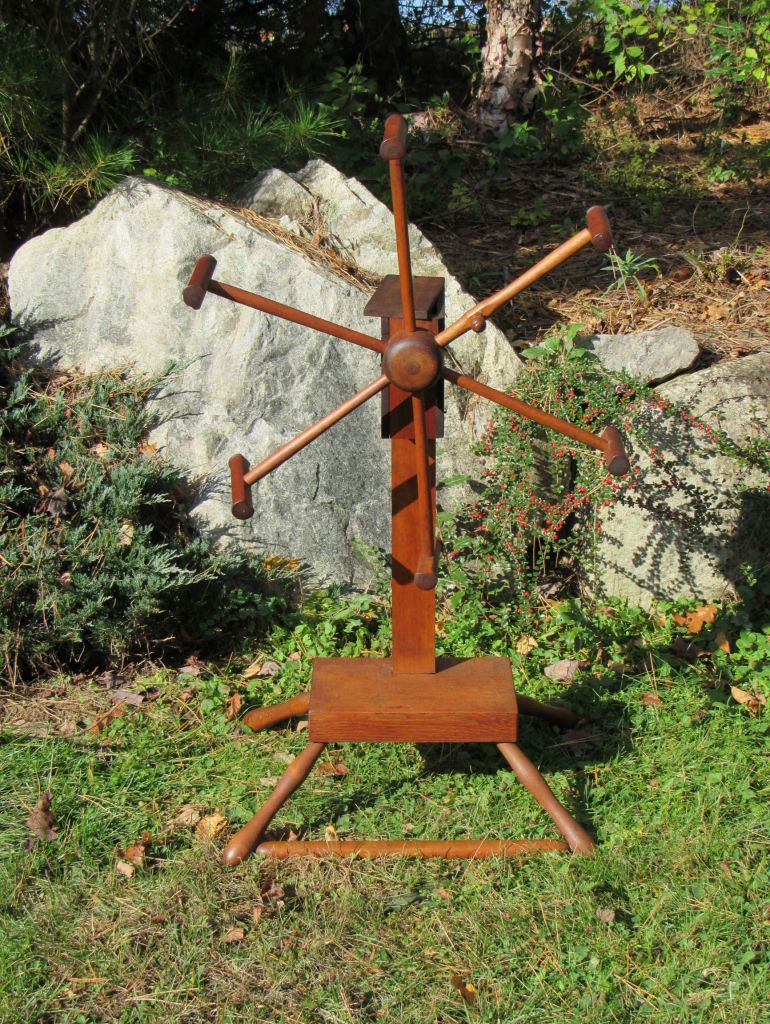
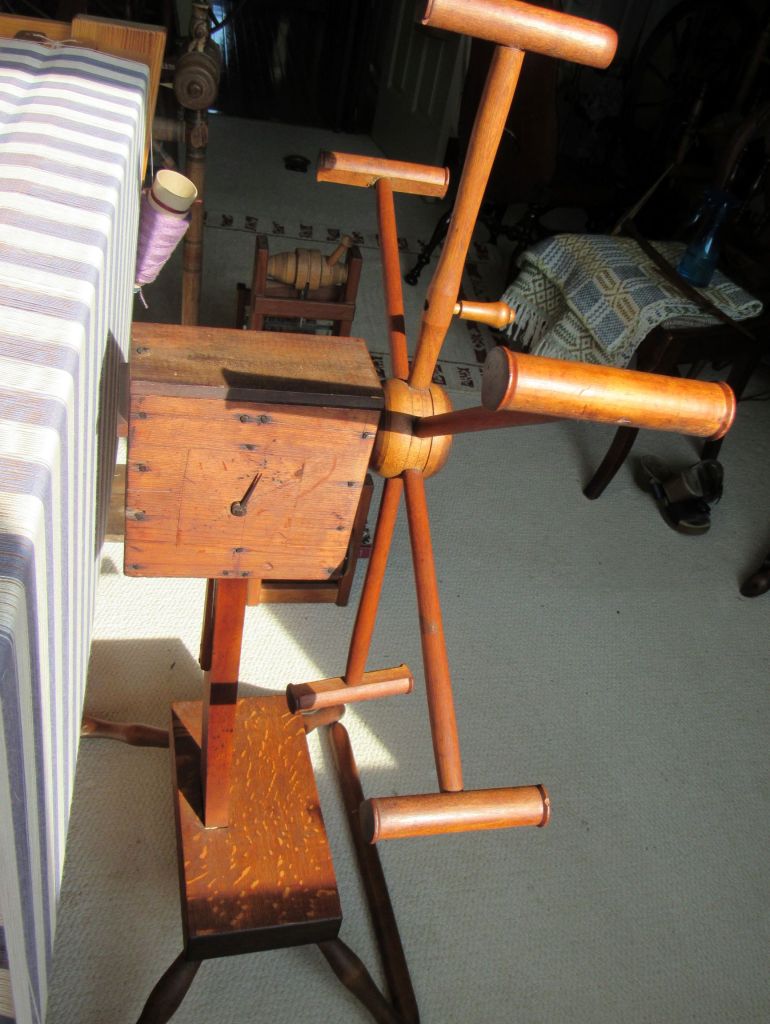
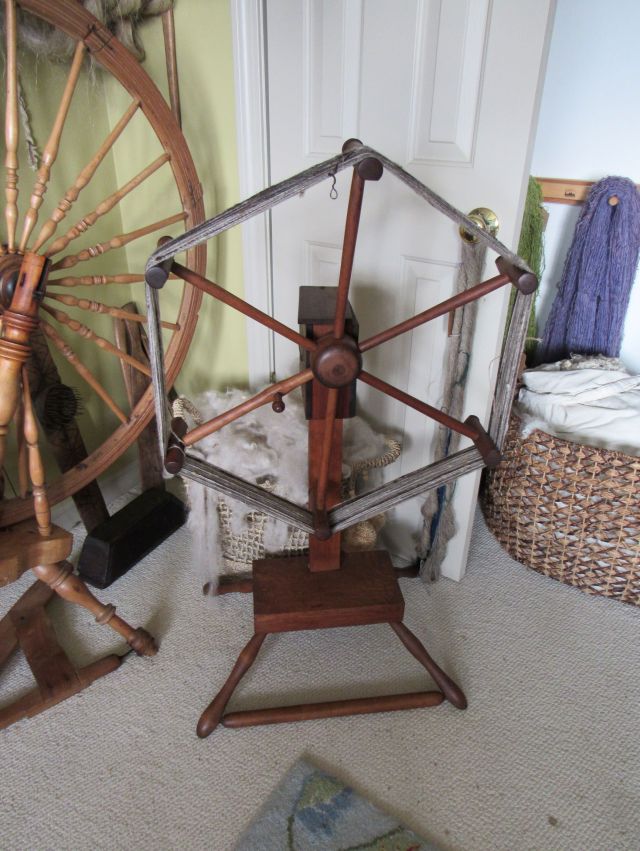
The next reel I bought (Lucy) came from the American Textile History Museum (ATHM). I spotted her at one of the auctions of ATHM items and, although I had no intention of buying a reel, was attracted to her small size and simplicity.
I was the only bidder, brought her home, and she has been my go-to reel ever since.
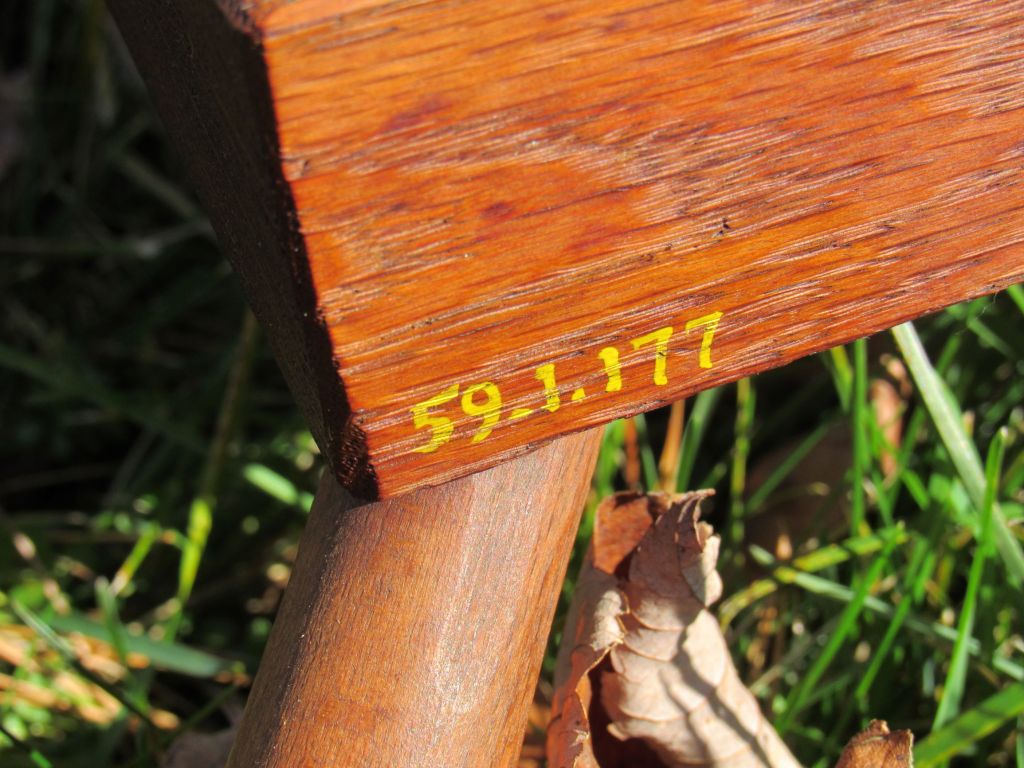
One of the nice features of this reel is that the box top opens, making it easy to paraffin the threads for smoother rotation and to troubleshoot any problems with the gear mechanism.
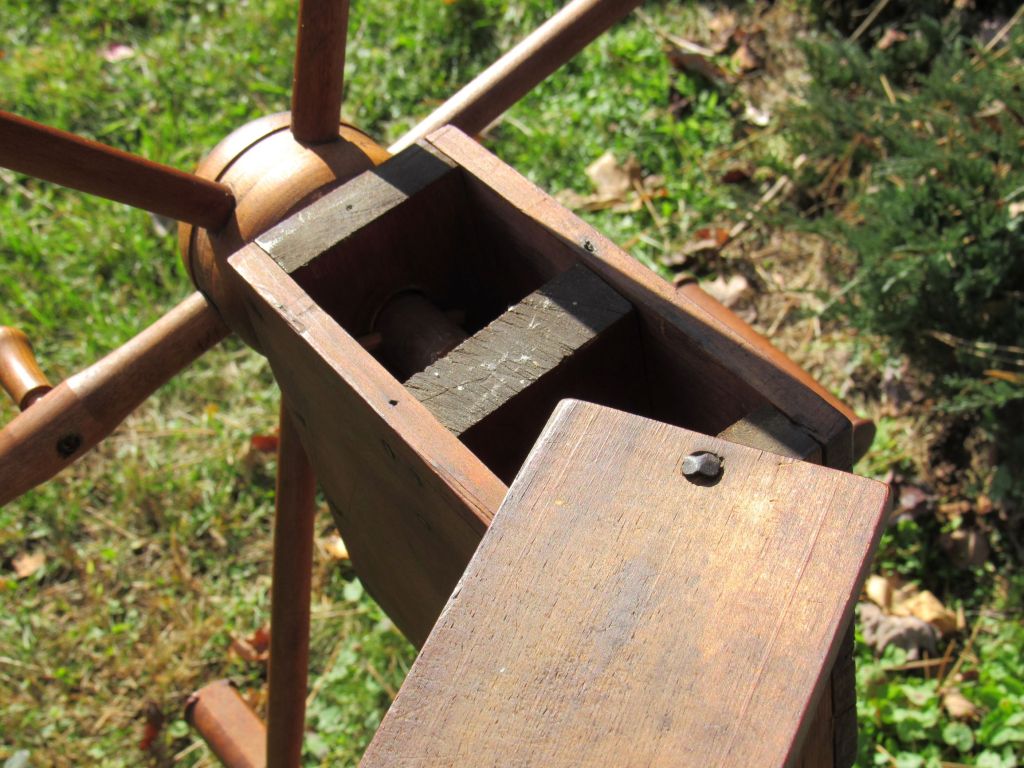
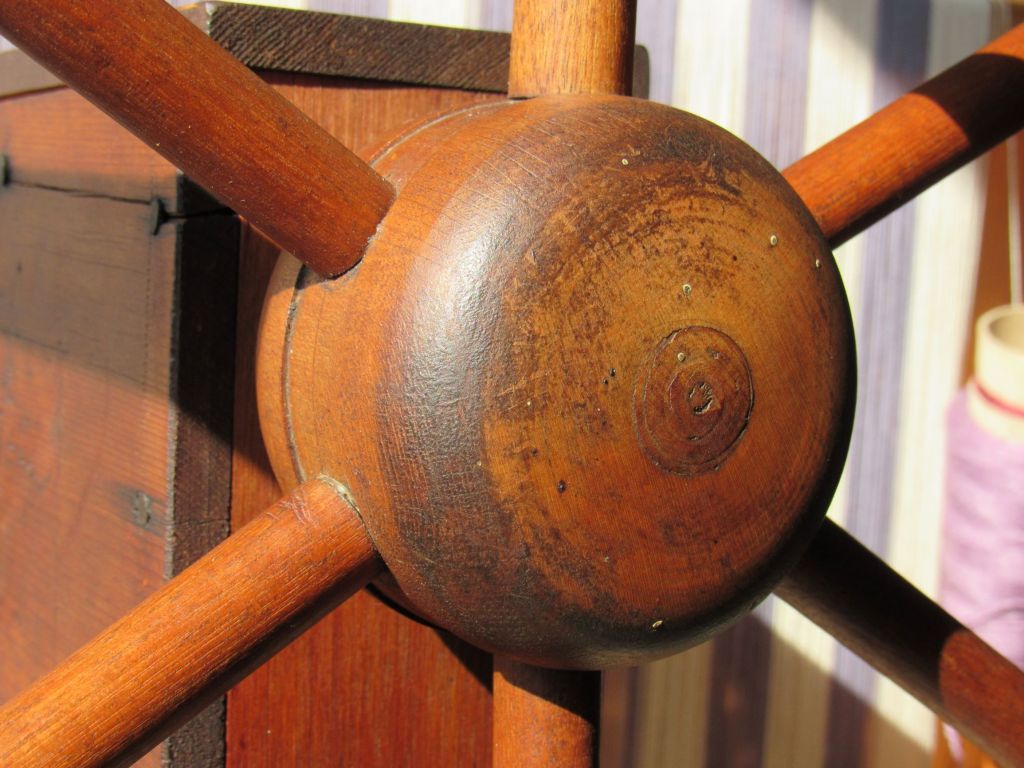
Another nice feature is the little handle for turning the arms. It rotates around a center piece, allowing a constant grip as the reel is turned, making for faster reeling.

The clicker is a long wooden piece that gives a nice thwacking sound when it hits a small metal barb on the gear.
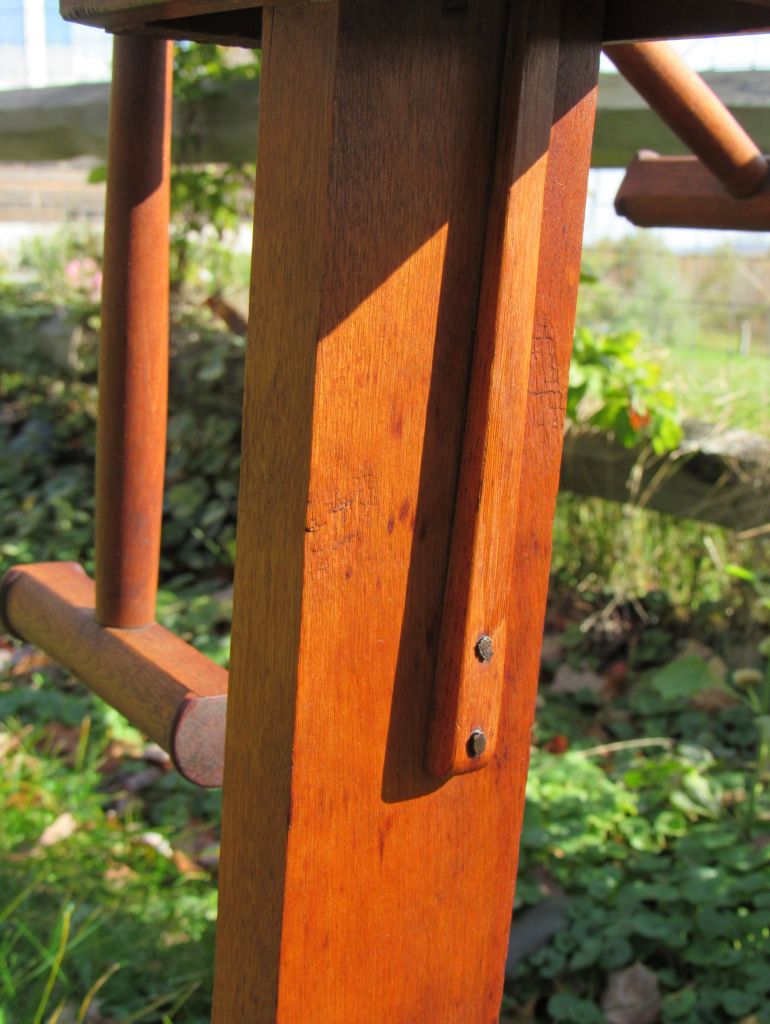
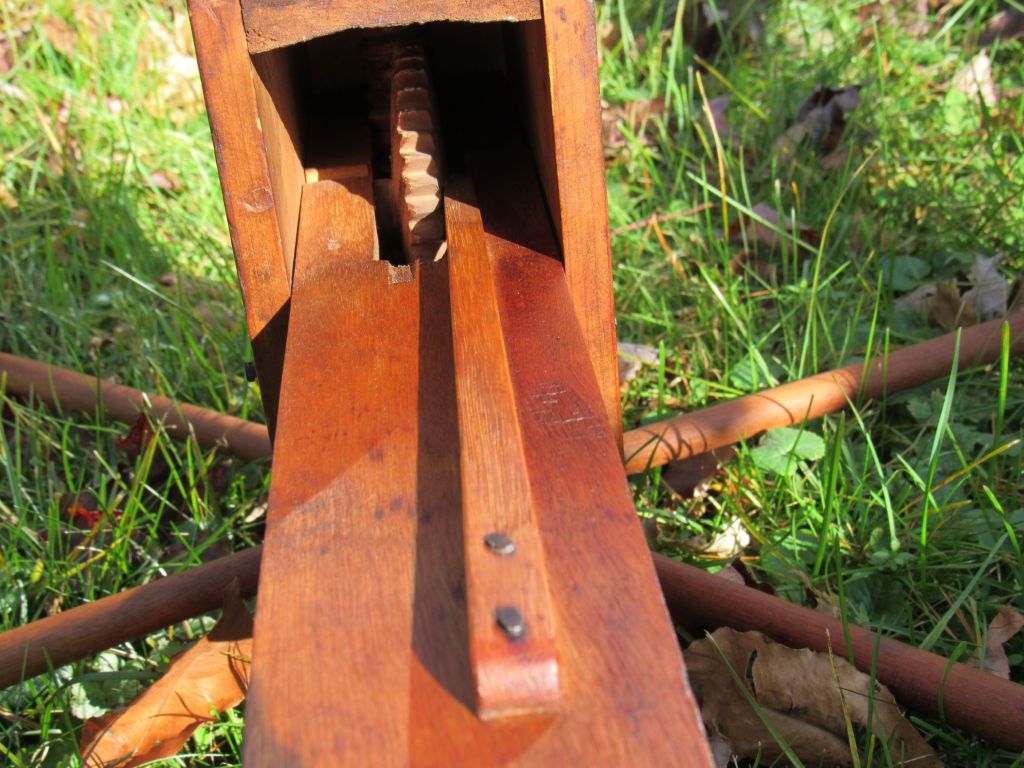
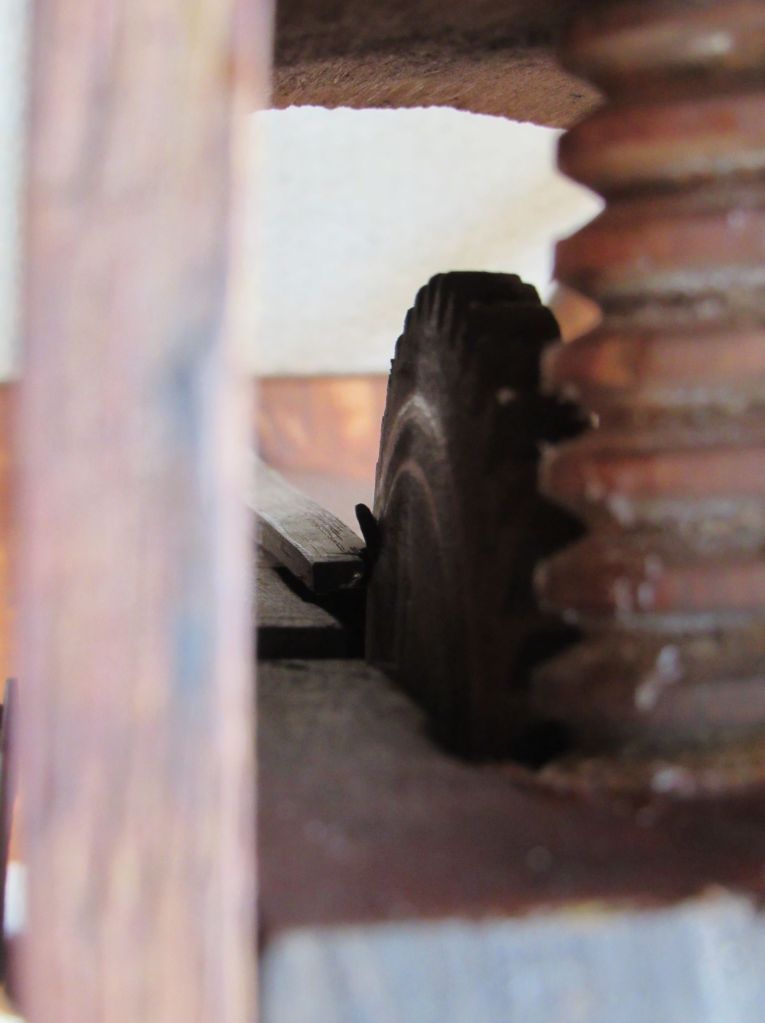
Five of the six arms have lips on the end-pieces to keep the yarn in place,
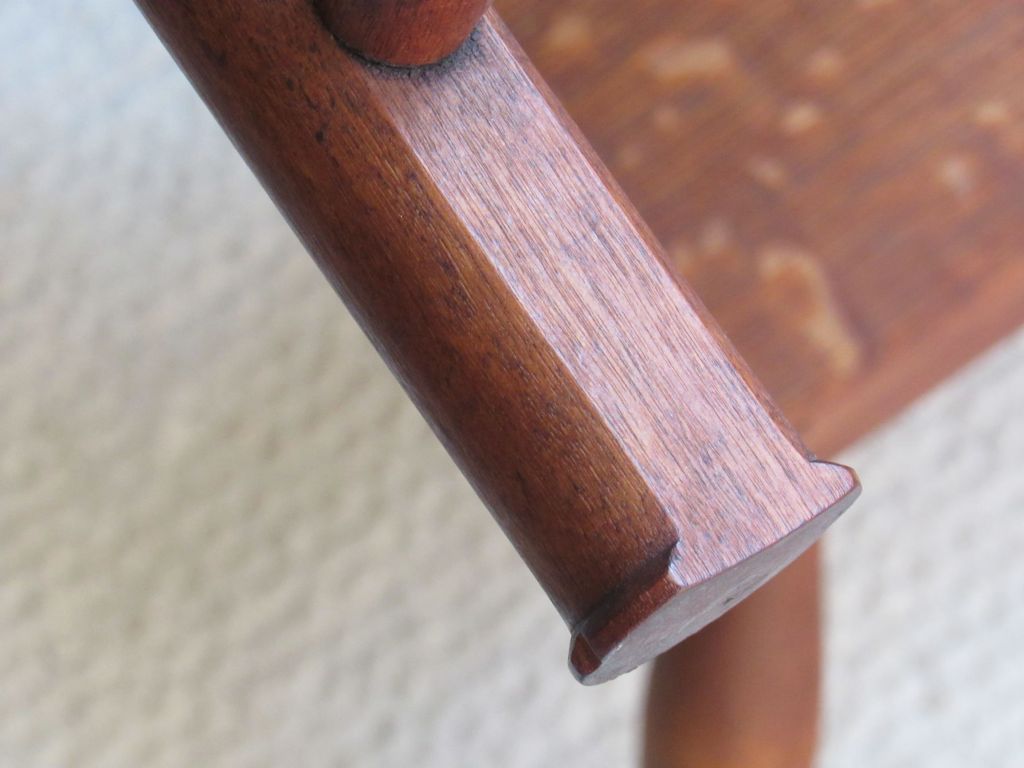
with the sixth being smooth for easy removal of the skein.
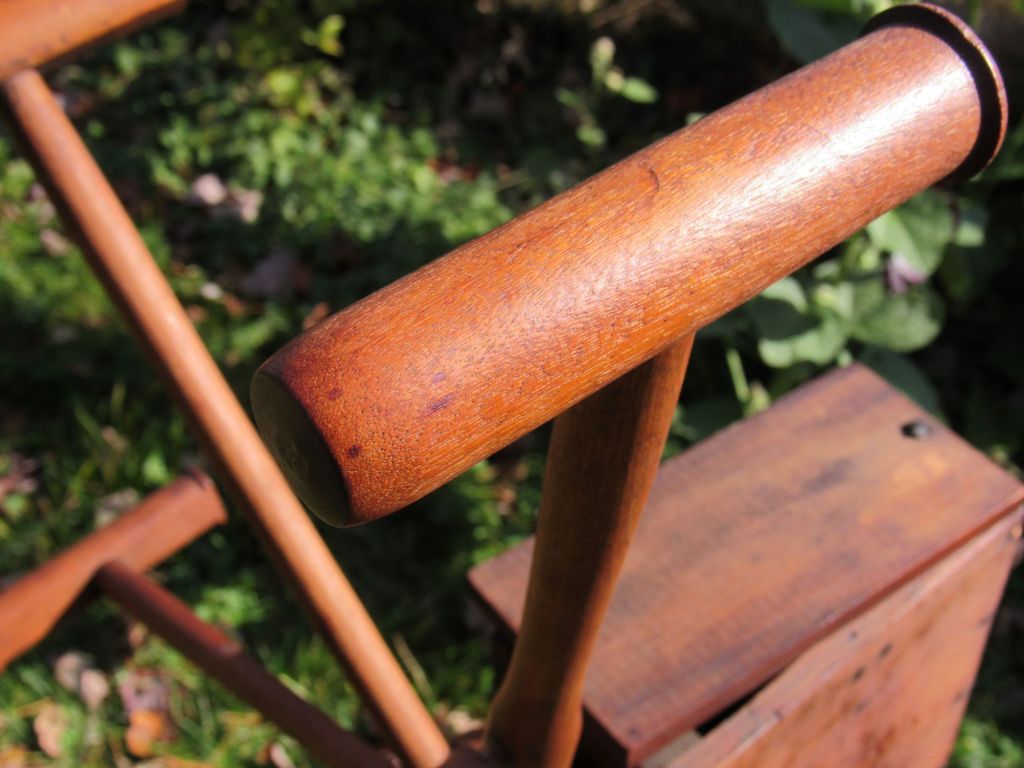
In A Book of Spinning Wheels, Joan Cummer refers to the oddball smooth end-piece as “the stranger.” Cummer, p. 302.
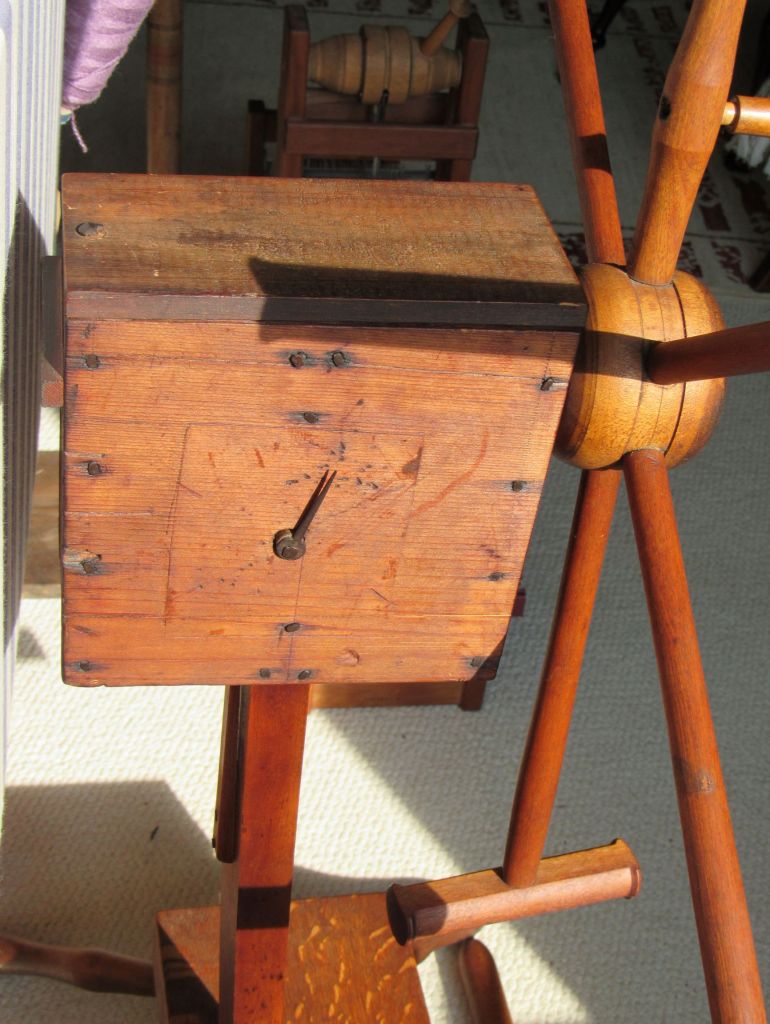
In addition to the clicker, Lucy has a simple clock mechanism on the side. Originally the reel may have had a paper label under the arm for rotation count.
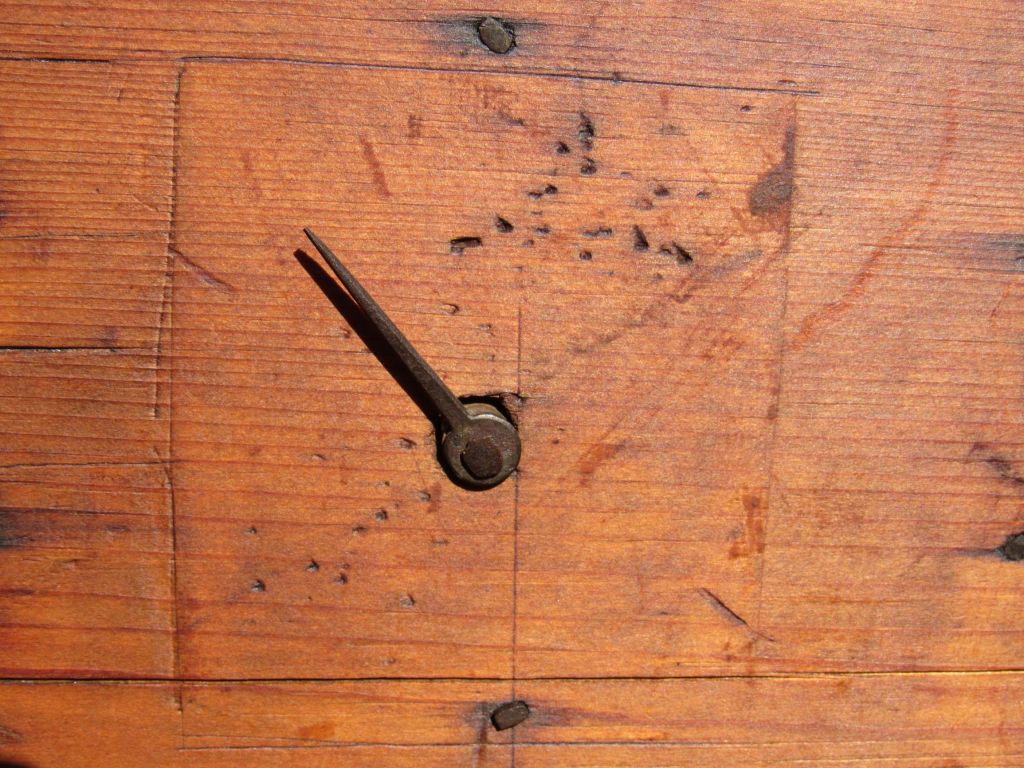
There is a somewhat similar reel in the Mount Lebanon Shaker museum collection, with the same simple clock arm and a paper label. https://www.shakermuseum.us/object/?id=5542&limit=24&offset=24&sort=name_ref&tags=weaving
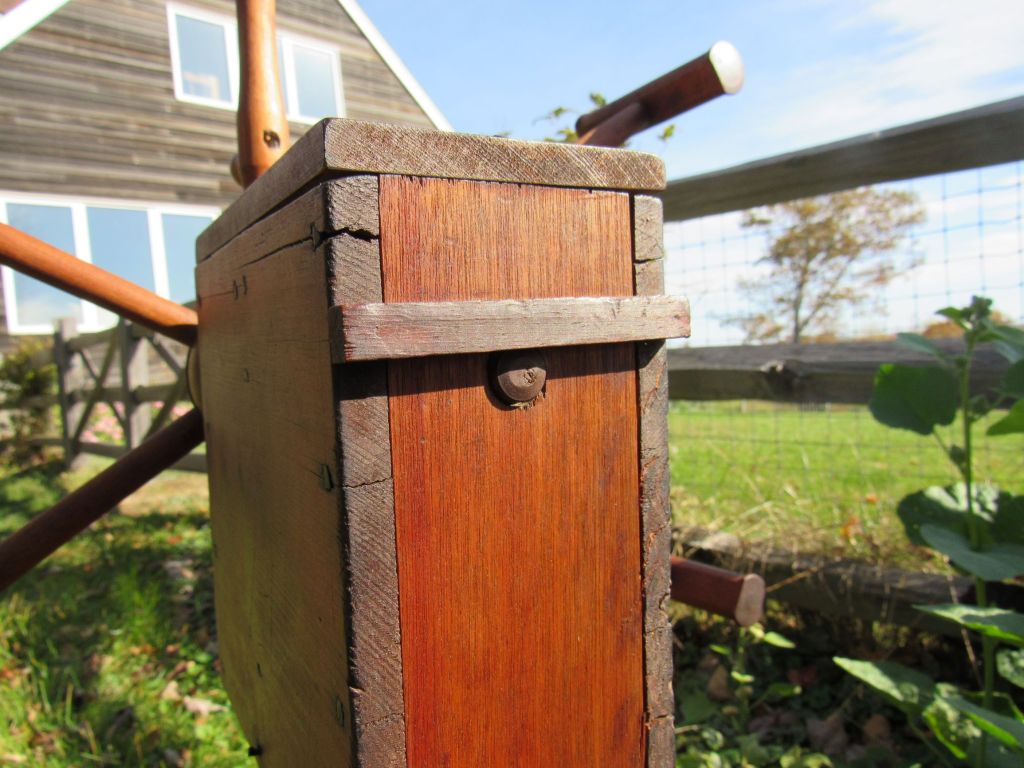
As with my niddy-noddy, the length of yarn for one rotation on this reel is 72 inches, or two yards, and the clock clicks at 40 rotations, making an 80 yard skein.
Joan Cummer indicates that the distance between clicks is 85 yards on most American reels, which gives an 80 yard skein after washing and shrinkage. Id. I am not sure if my reels are outliers or if I am measuring improperly.
This reel is a typical style found in New England. I do not know where she is from originally. An almost identical reel came up for auction in Maine a few years ago and was said to be Shaker made.
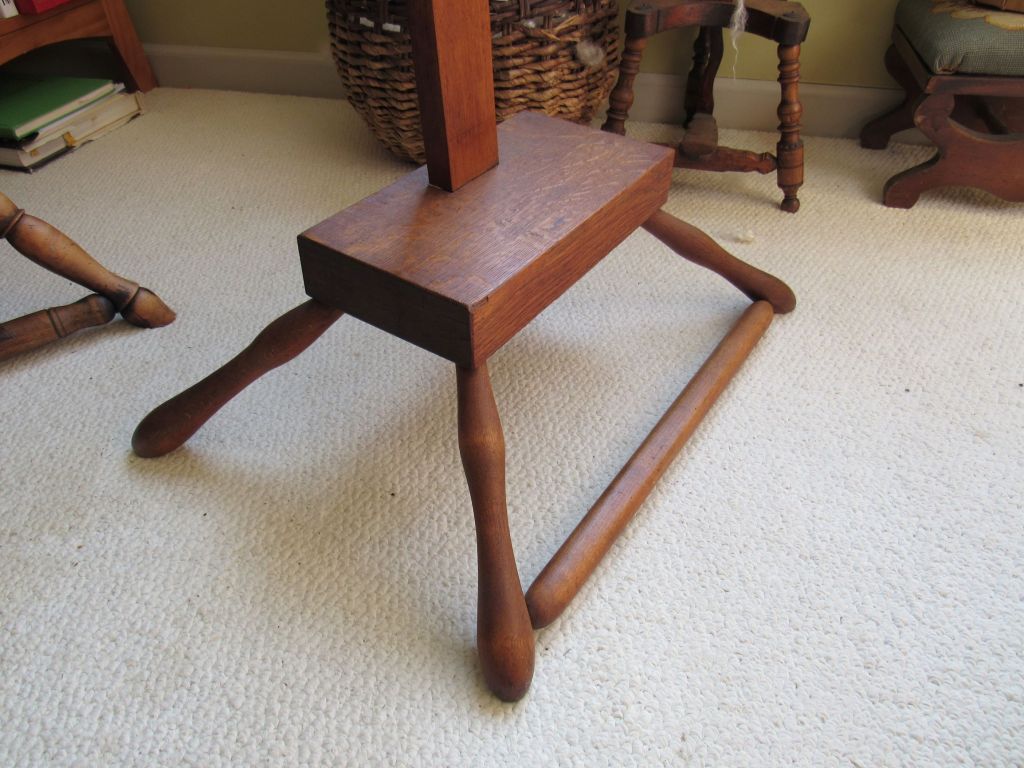
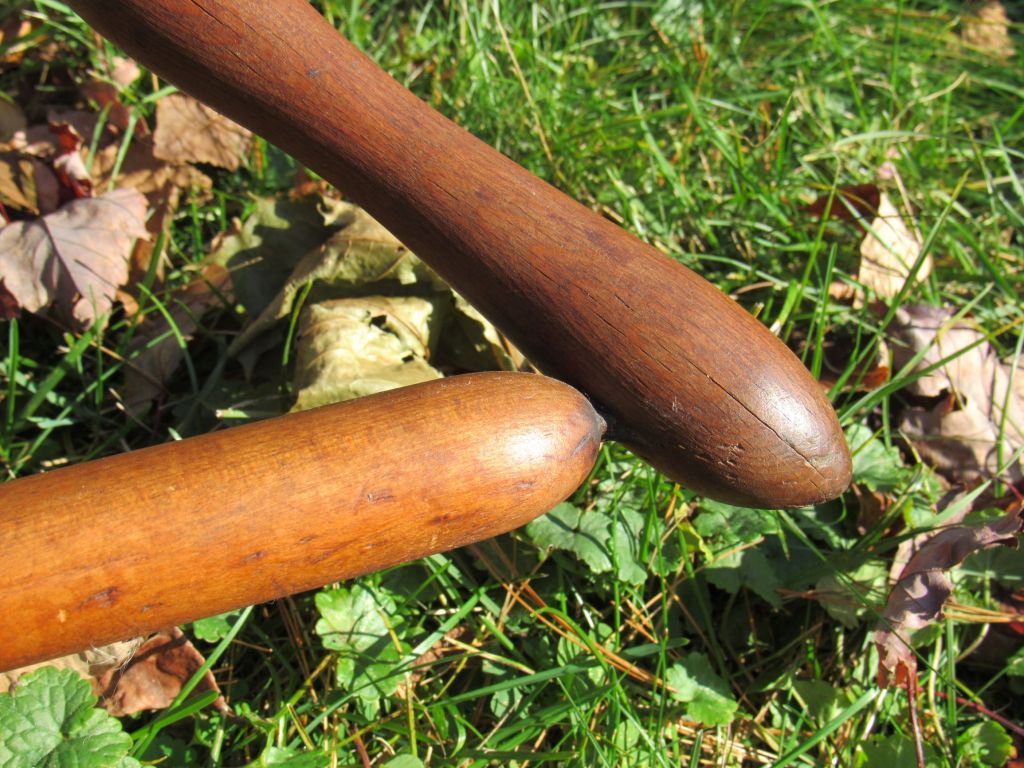
It is probable that the maker also made spinning wheels because the legs, cross bar, and table appear to have come from wheel stock—and do have a Shaker look to them.
But, who knows?
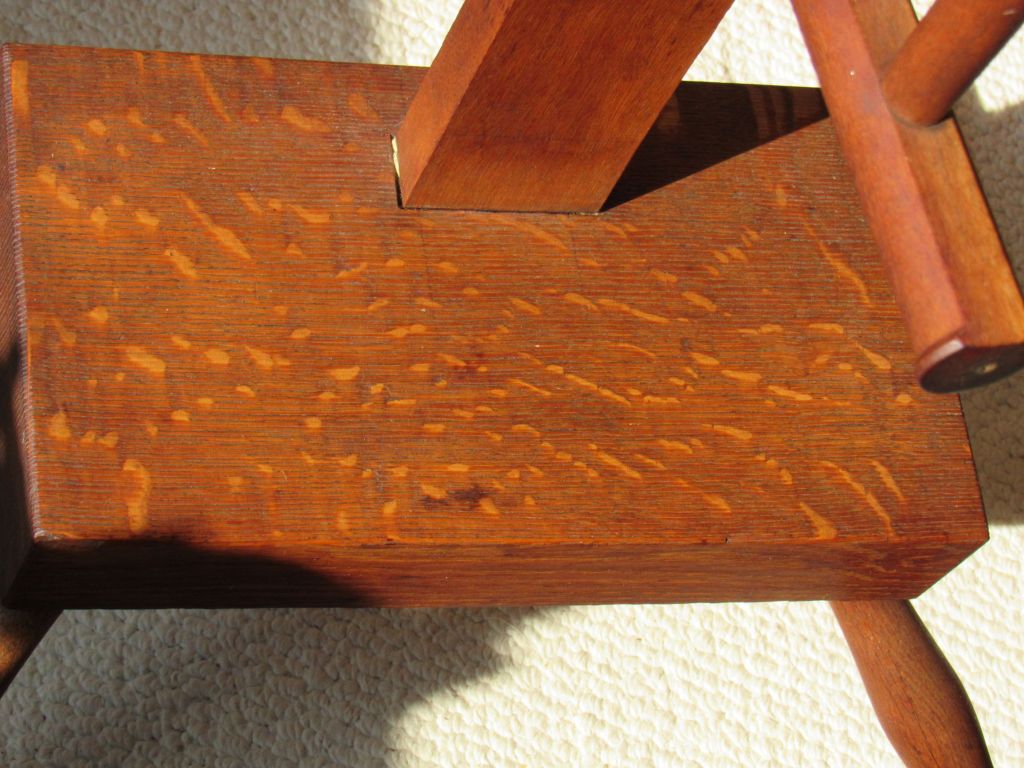
In any case, she is beautifully made and her clicker and clock still work perfectly. And she brought along a piece of what looks like handwoven linen tucked in to tighten a cross piece.

For more information on reels:
Baines, Patricia. Spinning Wheels, Spinners and Spinning. New York: Charles Scribner’s Sons, 1977, pp. 302-327.
Cummer, Joan. A Book of Spinning Wheels, Portsmouth, NH: Peter J. Randall, 1993.
 Exquisite Machinery