
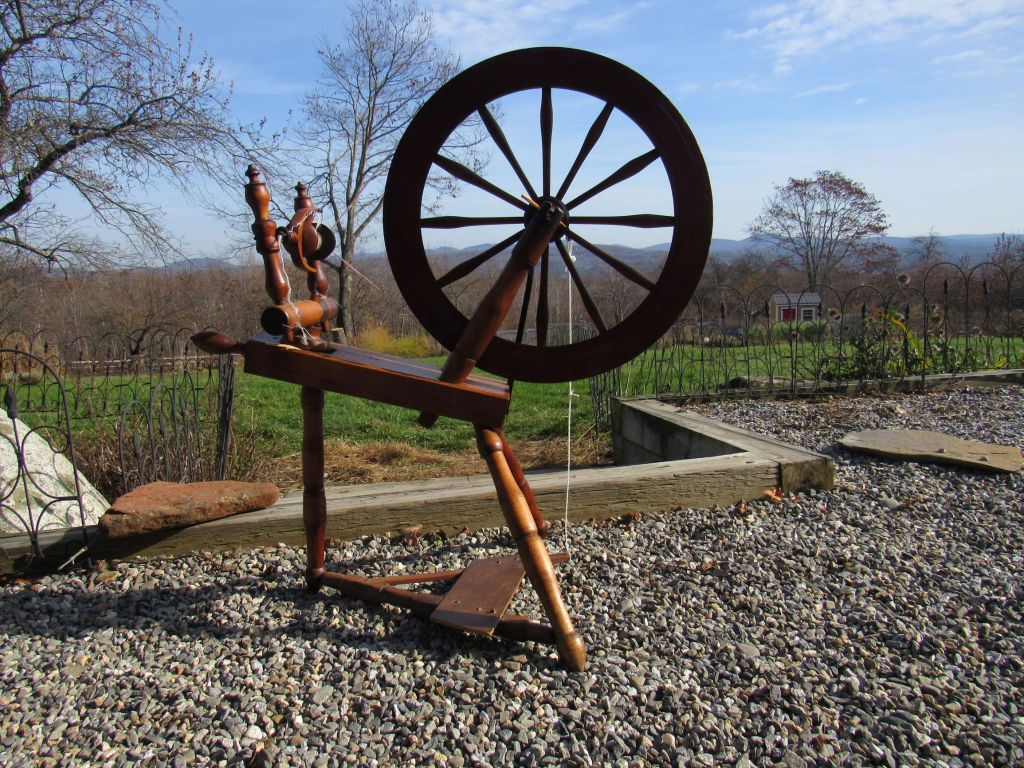
Phoebe is my gateway wheel. She is not the first wheel I brought back to spinning life. That was Katherine the Witch, the family antique that I somehow managed to get spinning when I was a teenager. It is Phoebe, though, that led to my retirement addiction to antique wheels. Although I prefer to think of it as a love affair.
When we retired, I had not done any spinning in decades and had no intention of taking it up again. Until, one afternoon, I spotted Phoebe in an antique store in Union, Maine. According to the store owner, she had belonged to an elderly woman in the neighboring town of Appleton. The wheel had all her necessary working parts but had obviously been stored in a barn or attic for many years.
She was grime-black and bespeckled with bird or bat poop. I did not buy her, or even seriously consider buying her. We were house hunting–nearing the end of our year of travel–and had no place to put her. Over the next weeks, though, I could not get her off my mind. The poor filthy thing was crying out for a rescue.

So, I returned to the store and the owner agreed to store her for me until we had a house. Little did I know that she would open an entirely new world to me—a happy obsession progressing from flax wheels and tools to great wheels and tape looms, bringing an added advantage of wonderful friendships with like-minded antique wheel addicts.
As soon as we settled into our house, I brought Phoebe home and cleaned her up. No easy task. But, under all the crap, she was a beautiful little thing.
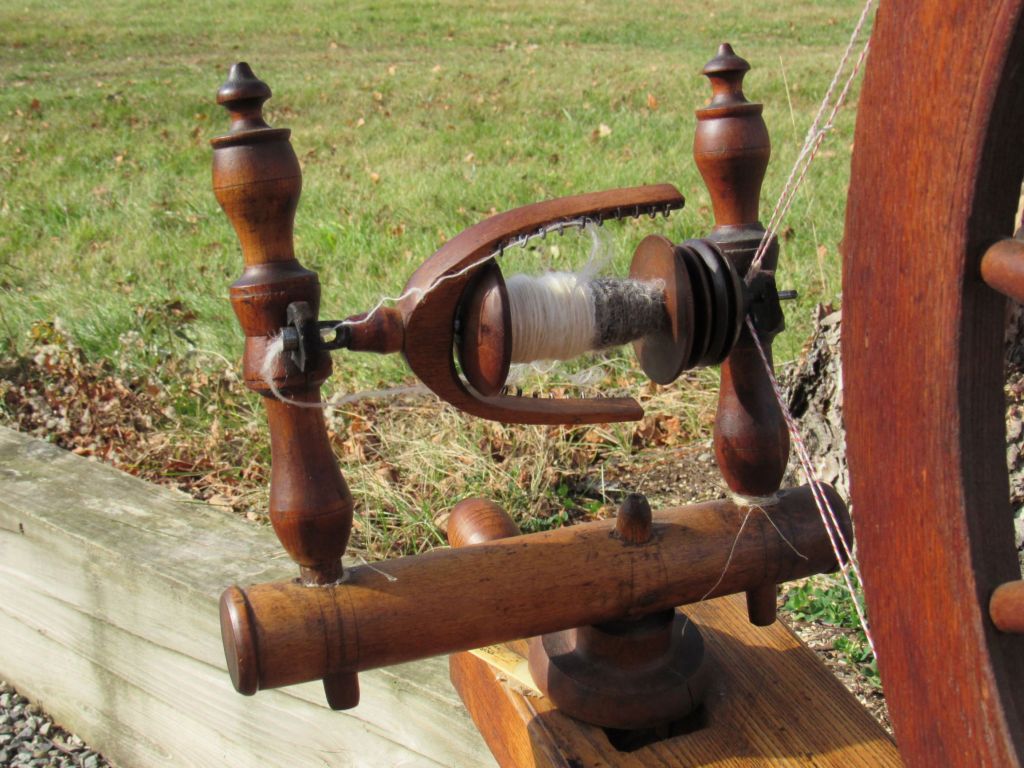
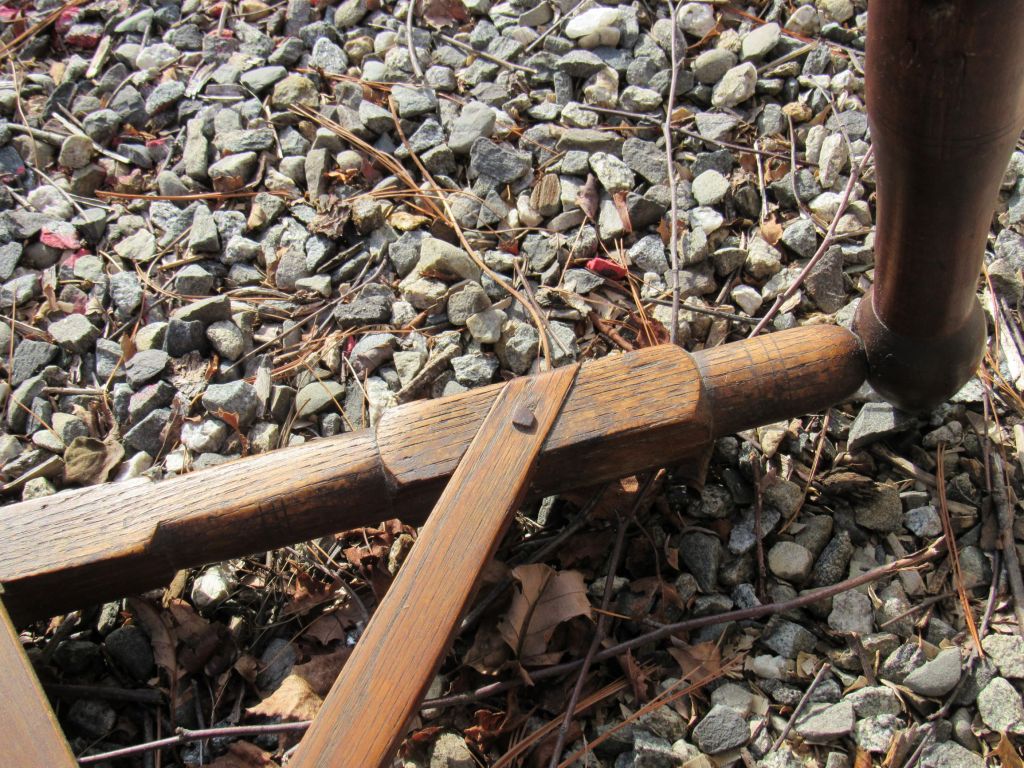
She does not have a maker’s mark but appears to be typically New England. Her maidens and the upright support suggest a Connecticut influence, while the simple spokes have a Maine Shaker look to them.
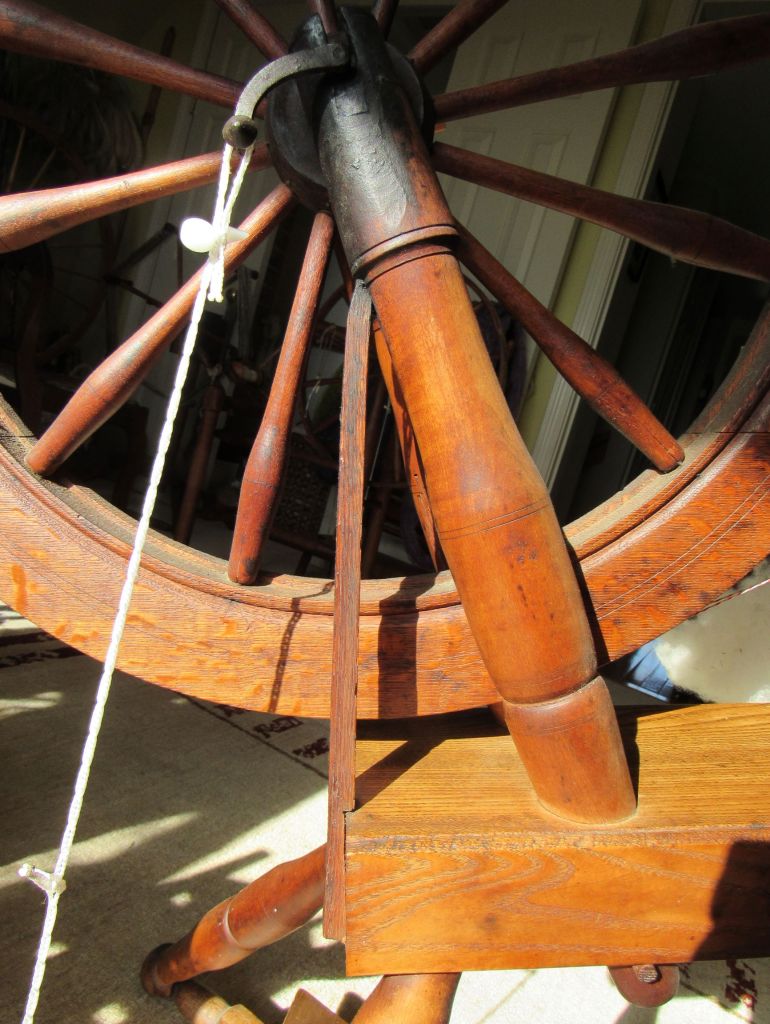
She is made with a variety of woods.
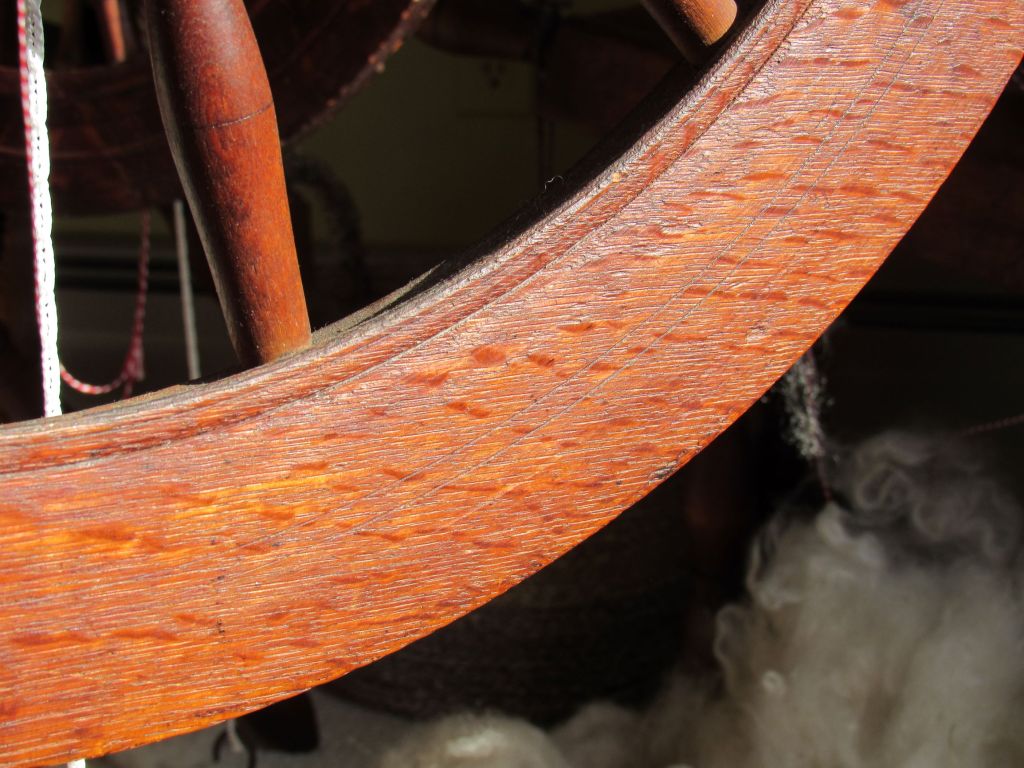
Some parts appear to be cherry, with a red glow, while the table and treadle support are a coarser grained oak or chestnut, perhaps.
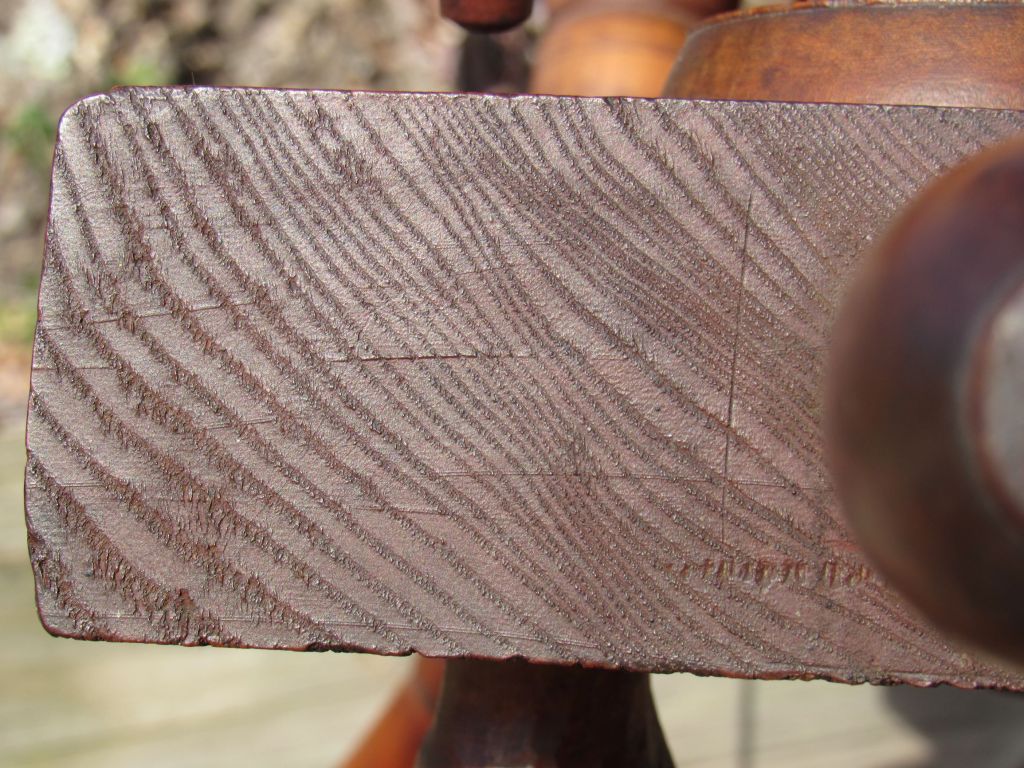
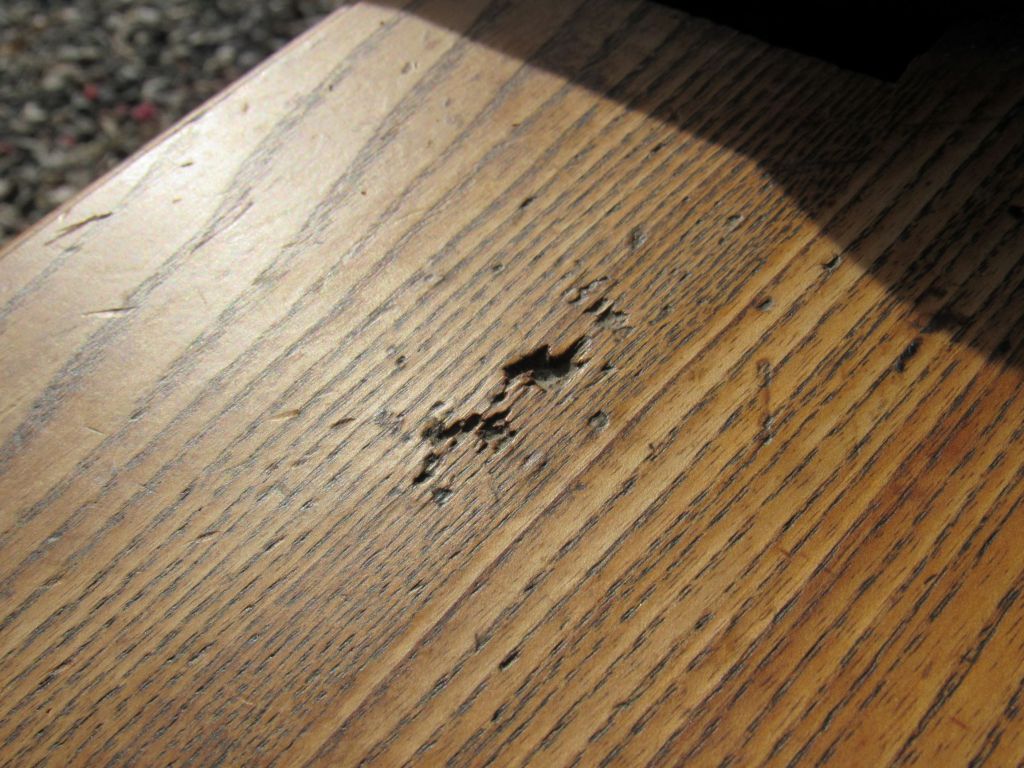
The table has gouges in the middle, which, as mentioned in an earlier post, are speculated to be from a knife (or fork) used to guide or separate the drive band at the cross, perhaps for plying.
There are scratch marks at various places.
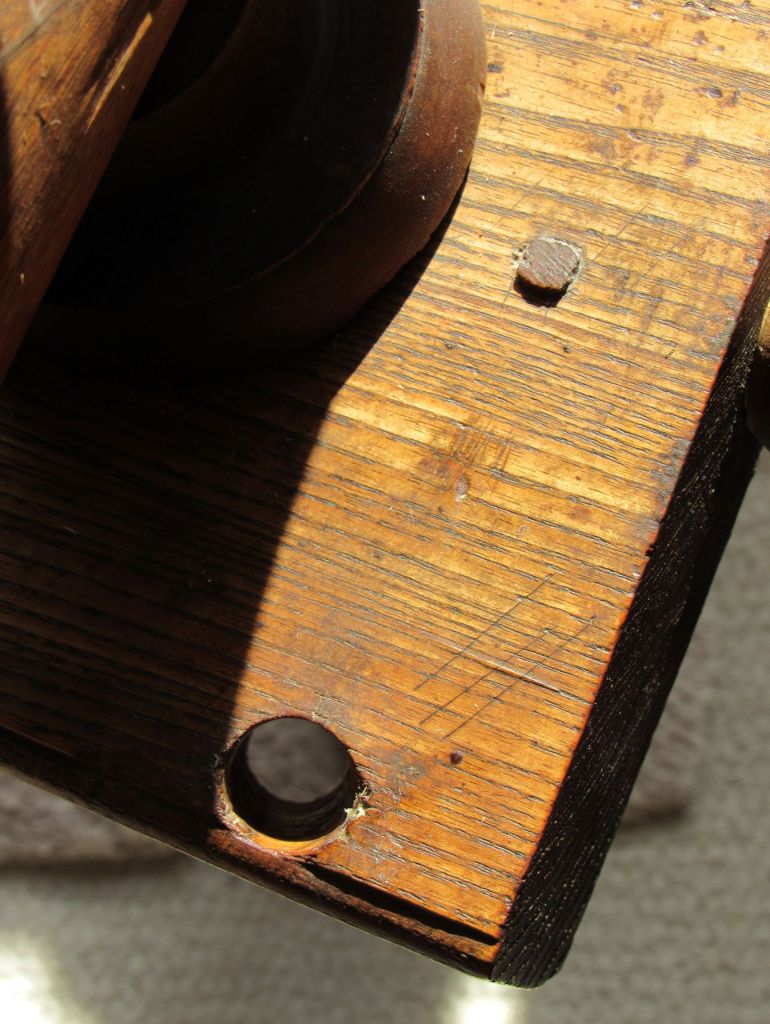
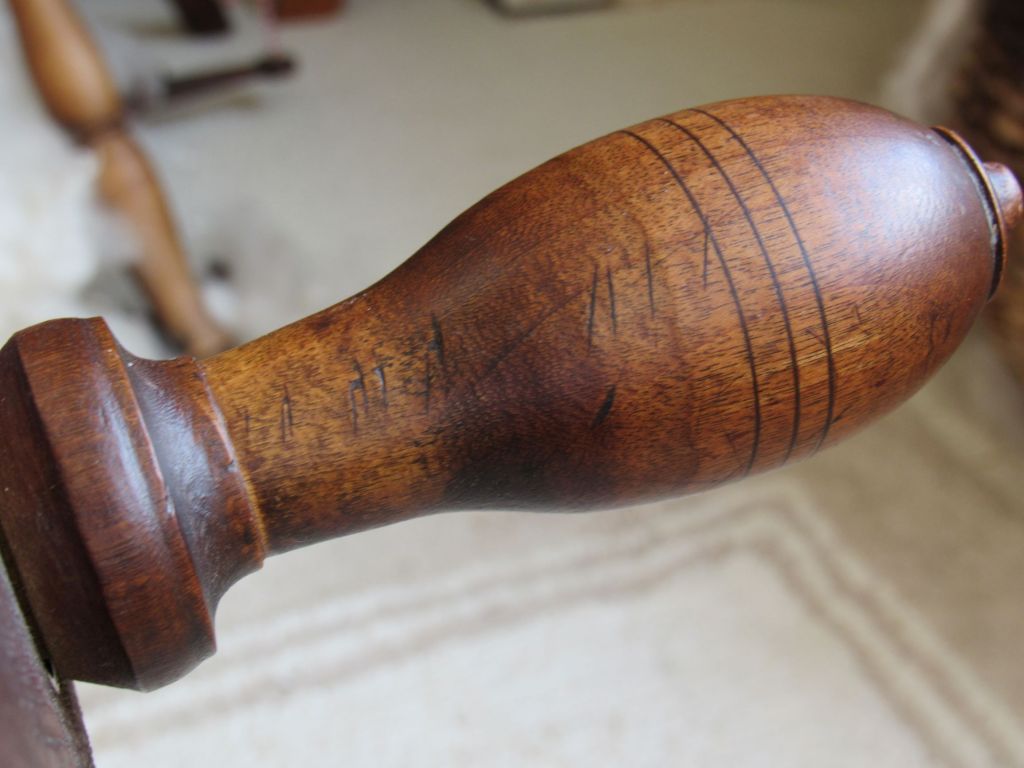
It is hard to tell whether they were deliberate or not.
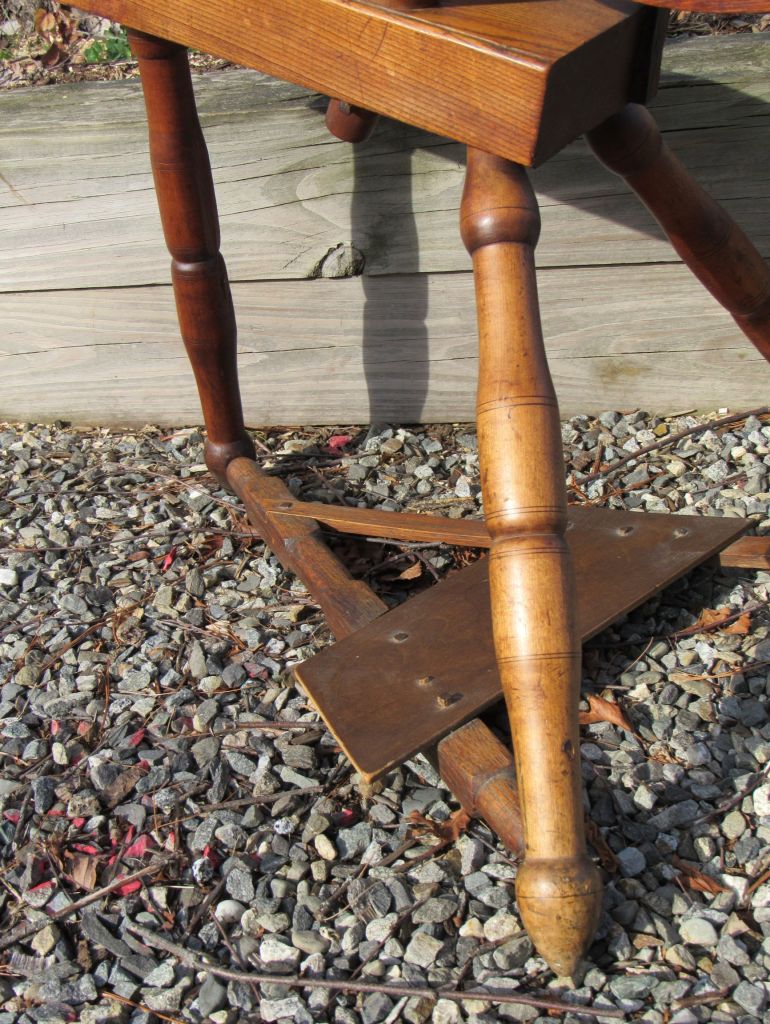
The treadle appears to be a replacement and the distaff supports are missing, although a partial bird-cage distaff was propped in the support hole.
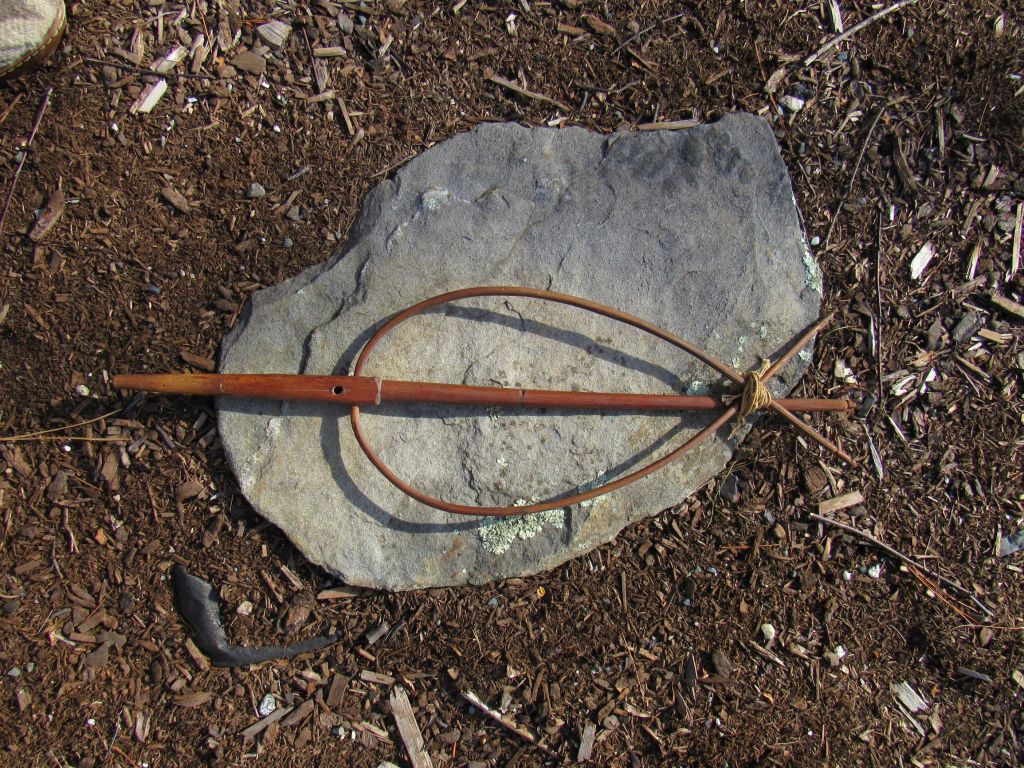
There are crossed scribe marks under the table for positioning the legs,

similar to those on other northern New England wheels, and an interesting three-dash chuck mark.
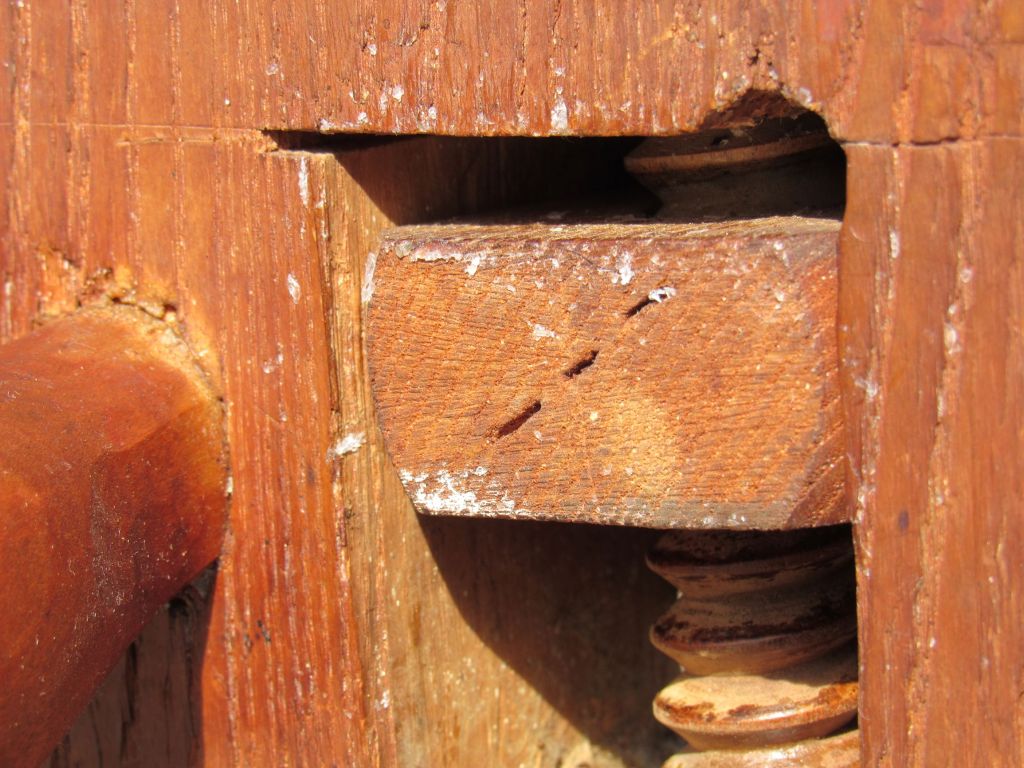
Phoebe provided a good education in getting a wheel up and running again.
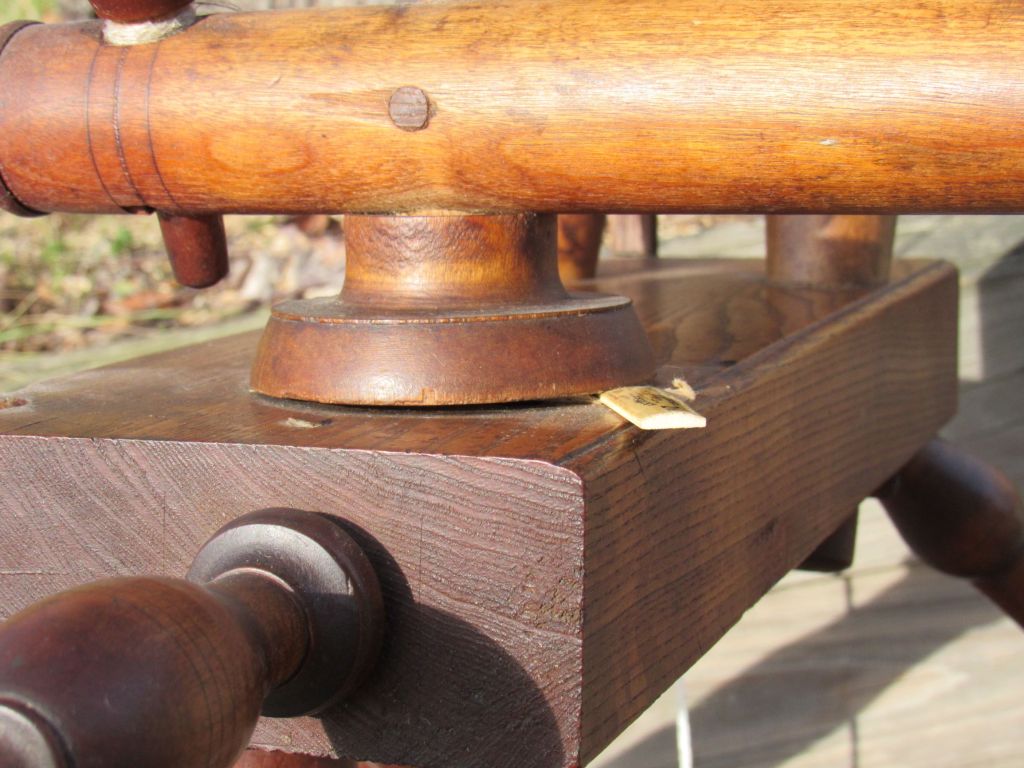
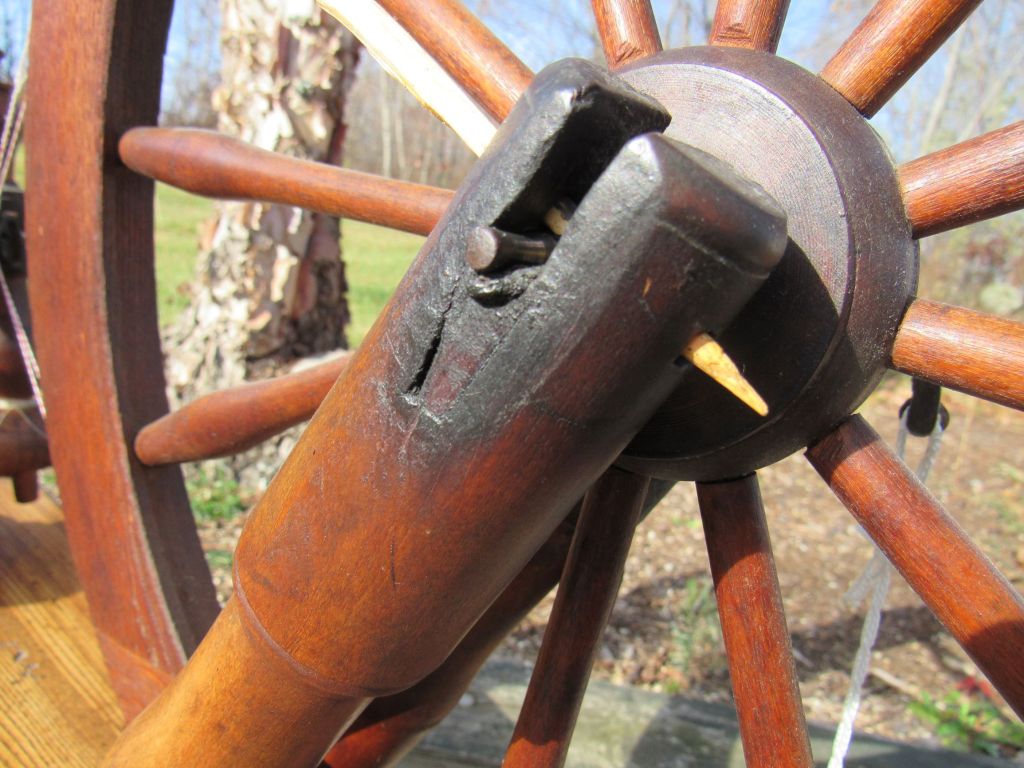
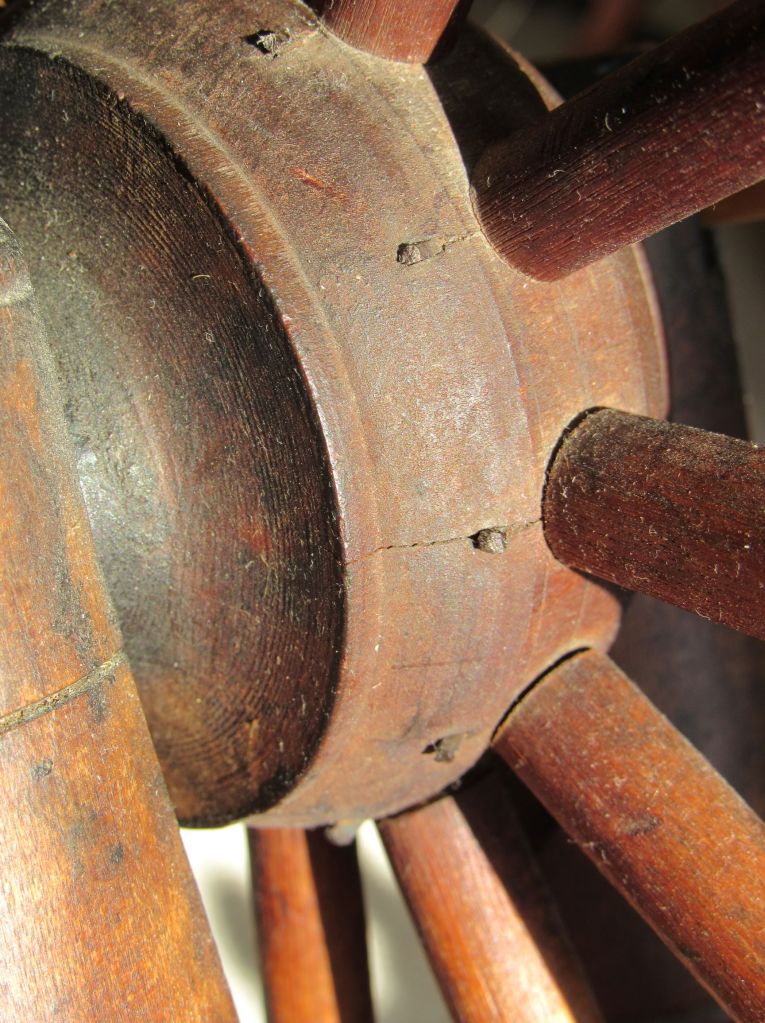
Many of her joints were very loosey-goosey, so I learned to shim the mother-of-all (clarinet reeds make great shims) and wrap joints with linen yarn.
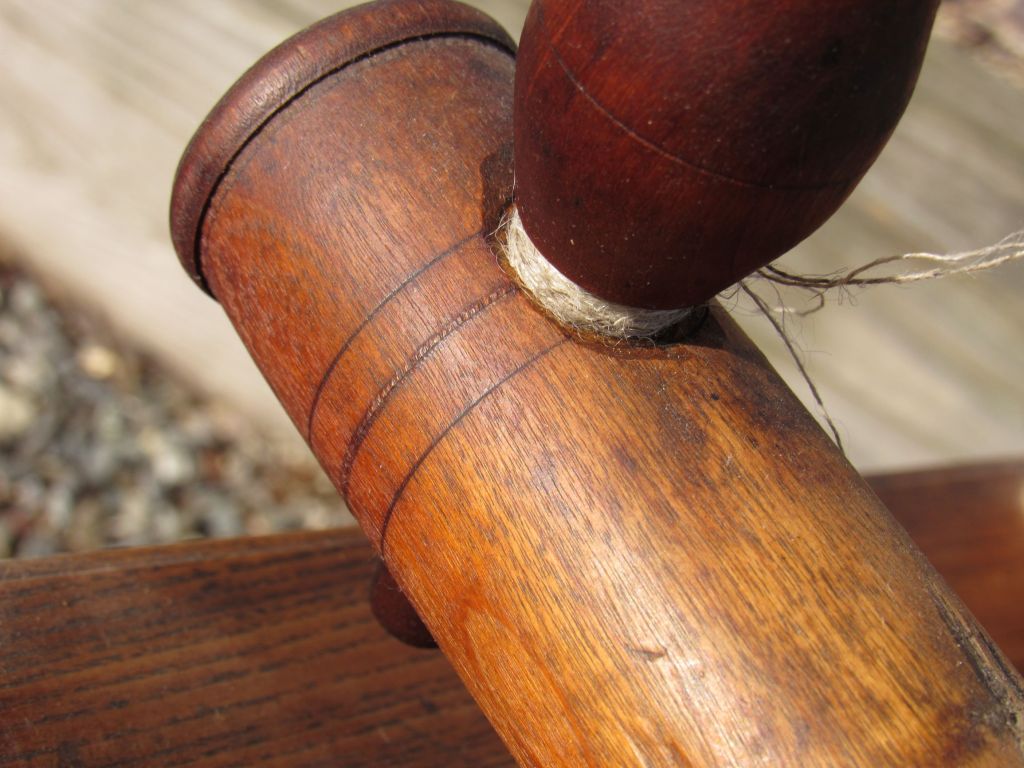
Her whorl was stuck and the flyer hooks—those that were not missing—were severely rusted. At that time, I used WD-40 to loosen the whorl and fine sandpaper on the hooks. I now use a rubber strap wrench for stuck whorls and abrasive cord for rusty hooks.
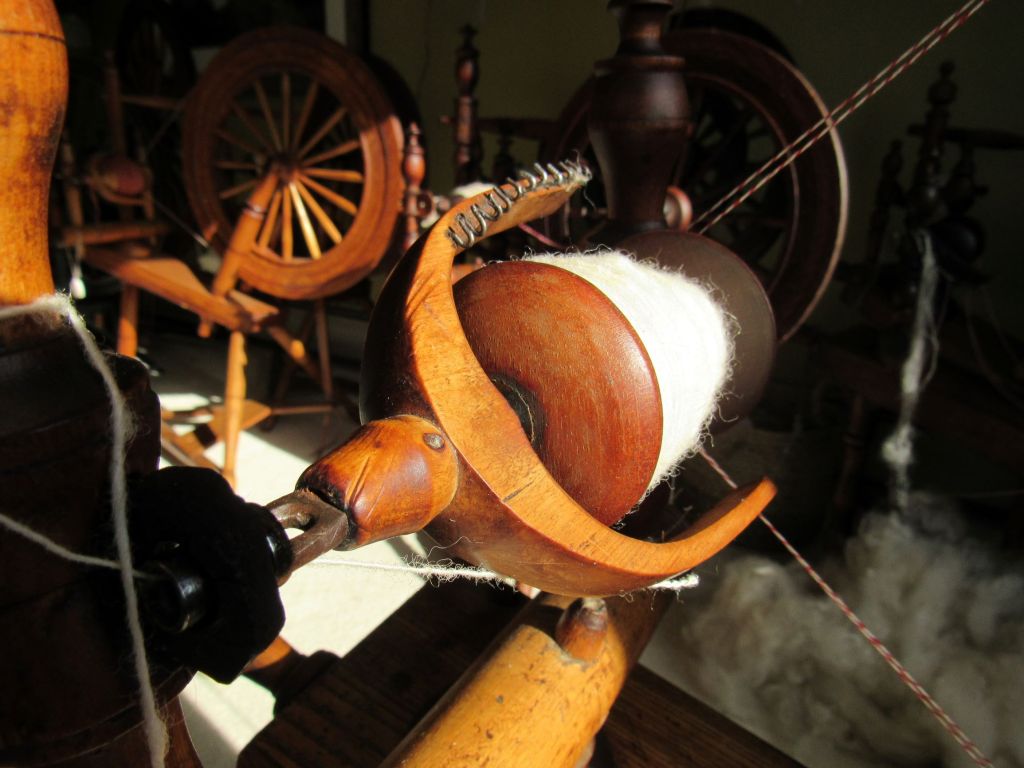
What an amazing feeling it was to get her spinning again. I was hooked.
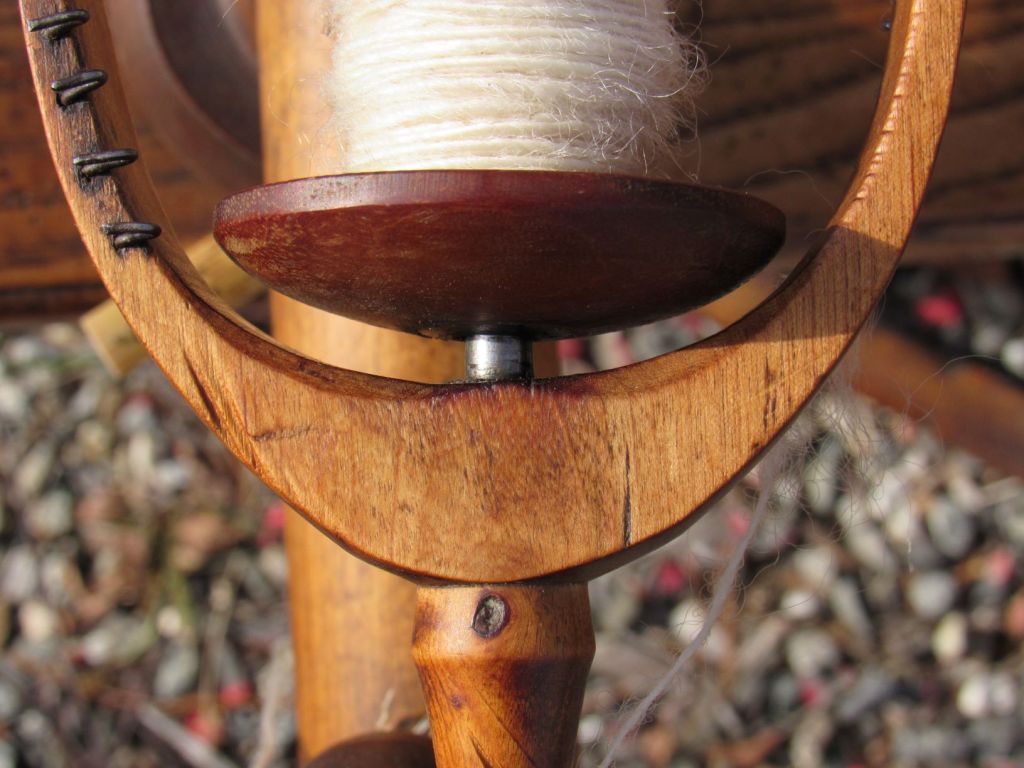
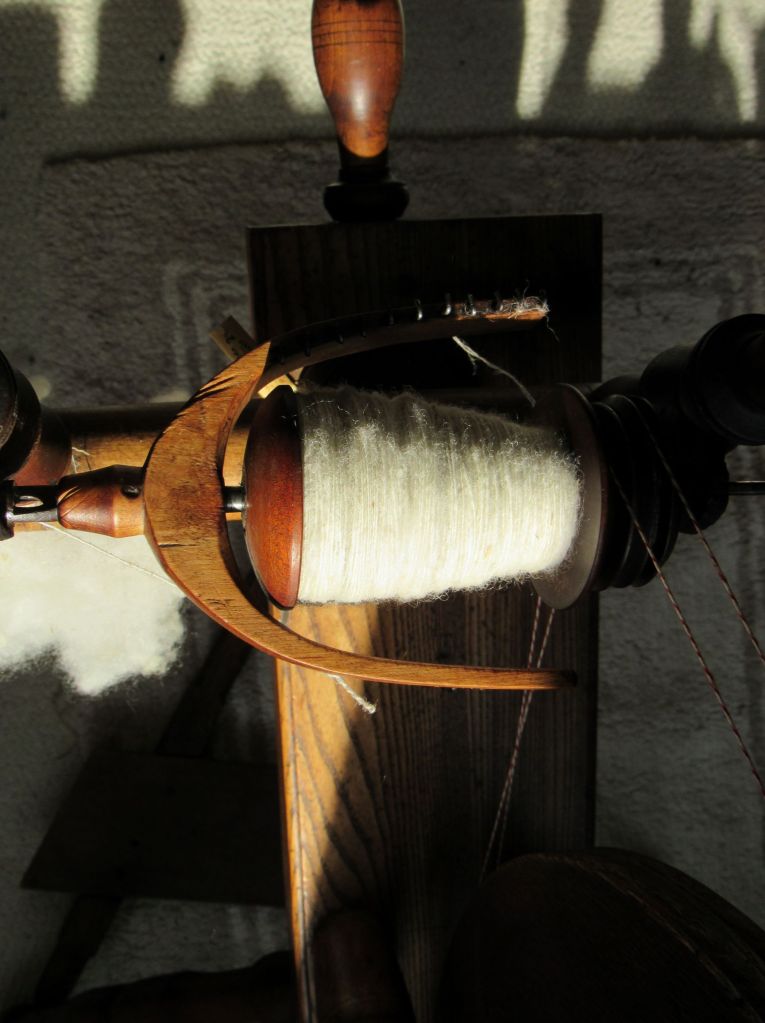
Her bobbin is a little short, giving her a low chatter, unless I wrap a little wool around the mandrel. And, interestingly, the wear marks on her orifice and flyer arms indicate that the spinner brought the thread around from the underside of the orifice hole. It still amazes me to see wear marks from thread–likely linen–on metal parts.

I always like to follow the thread marks on a flyer, to try to interpret how previous spinners worked with the wheel. Was the orifice threaded this way to slow down the uptake, to change the amount of twist, or to accommodate flax vs. wool? Even though it is not that long ago, we are ridiculously ignorant about spinning methods in the 18th and 19th centuries. At least these old wheels can give us some clues, if we can understand how to read them.

 Exquisite Machinery
I’m always fascinated by your discourses on the wheels, how you restored them and how they work. Old machinery is really beautiful…
LikeLike
Yes, these old wheels are such an intriguing combination of beauty and function, I can’t get enough of them. I’m glad that you stop by this blog, since I haven’t been attending to the other one. I will do a post over there soon!
LikeLiked by 1 person
Isn’t that a maker’s mark on the table end very close to the tension screw? It is mis-struck so that the top of each letter is all that can be seen. Try a pencil rubbing to bring up the whole name. I’ll be curious to see the results.
LikeLike
No, it’s not unfortunately. It looks as if it is some sort accidental tool mark and the “letters” look like a string of Greek Pi letters.
LikeLike