Hjordis

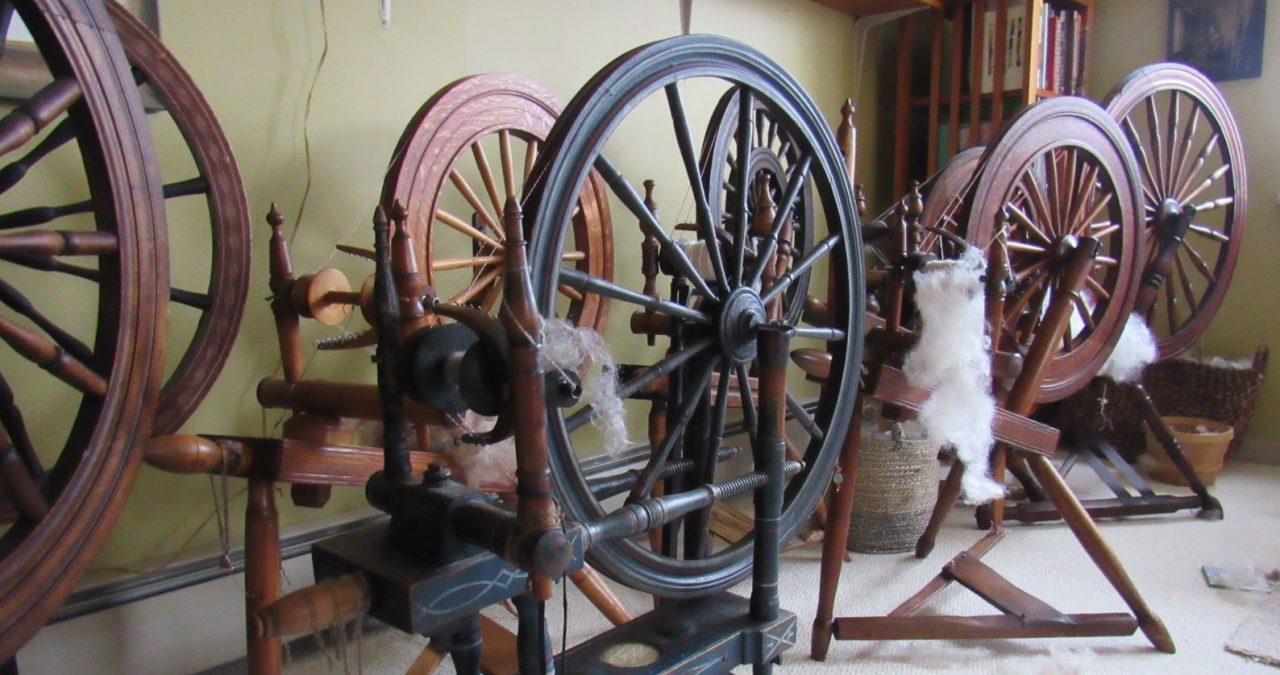
Collecting and rescuing antique wheels is like hunting or foraging. The hunt starts with scanning a parade of sale and auction photographs in hopes of finding unique and interesting wheel quarry.  Because sale photos are often dark, blurry, and taken from a distance, details of construction and decoration can be obscured.   It is easy to take a quick look, pass by, and miss out on a treasure.   
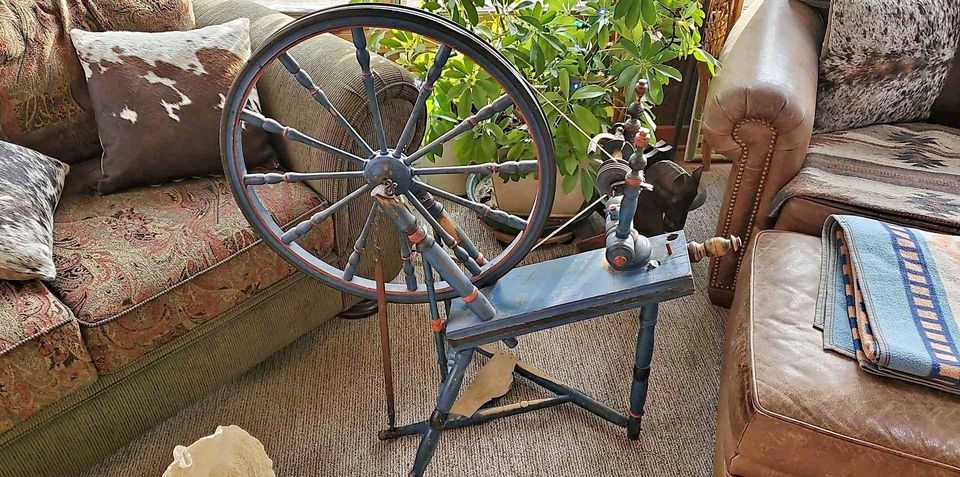
Hjordis sale photo

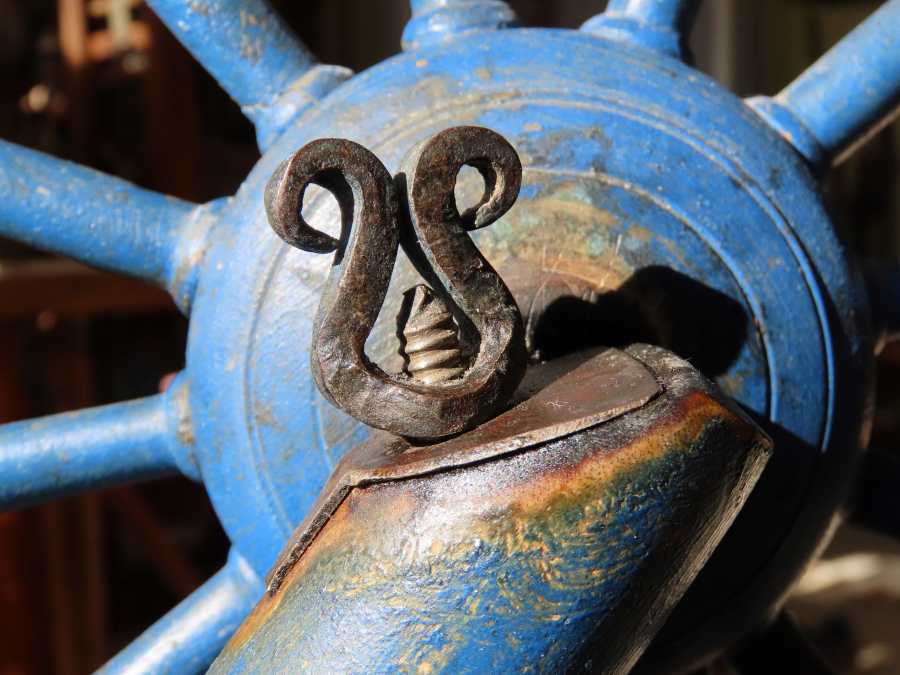
Hjordis is a treasure that could easily have been overlooked.  The sale photo showed a pretty painted wheel, likely Scandinavian.  At first glance, it was hard to make out the gorgeous lyre-shaped nut on top of the upright–an indication that this wheel is something special. 
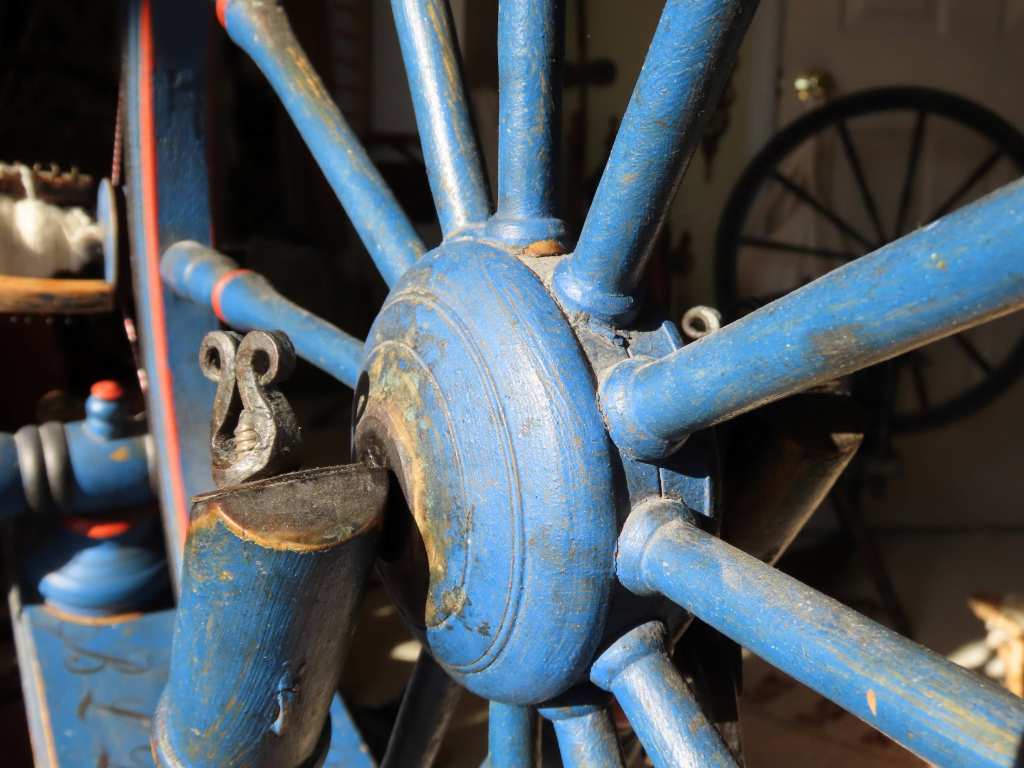
The axle and footman seemed oddly out of whack in the photo, but it was hard to make out why. Fortunately, my friend, Sherran Pak, had spotted this wheel online.  The sale price was ridiculously high, but since it was close to where she lived, and our curiosity was high, she went to have a look at it.  Curiosity satisfied and interest piqued even more, we waited until the price eventually came down and, with Sherran’s help, I was able to rescue Hjordis.
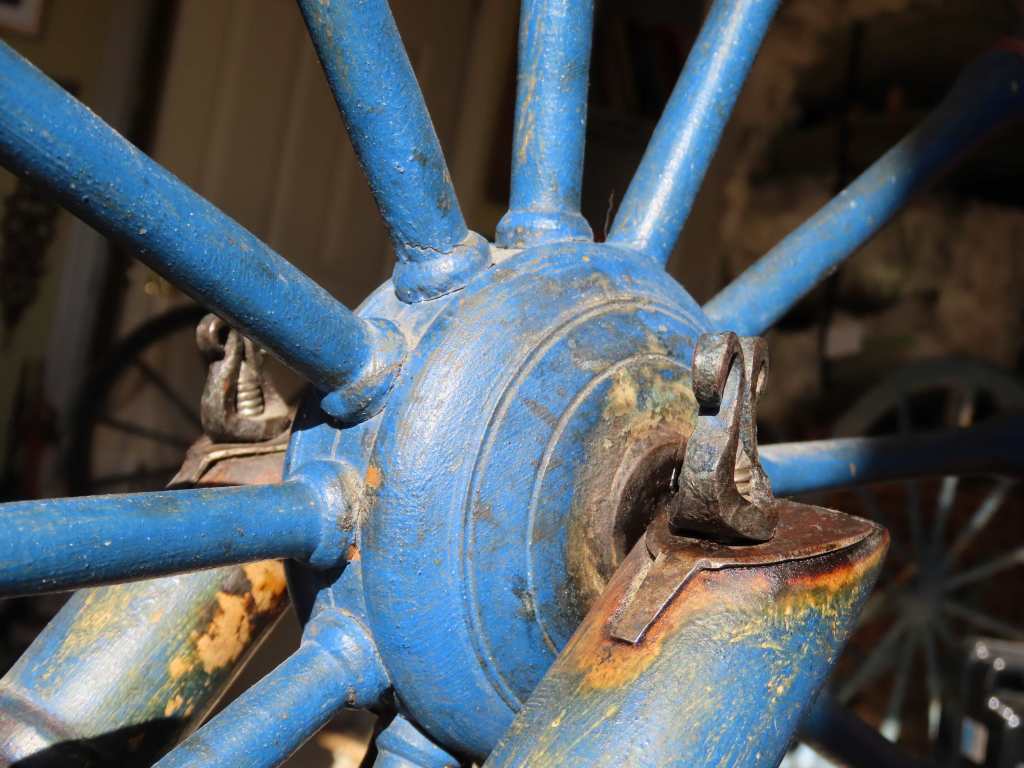
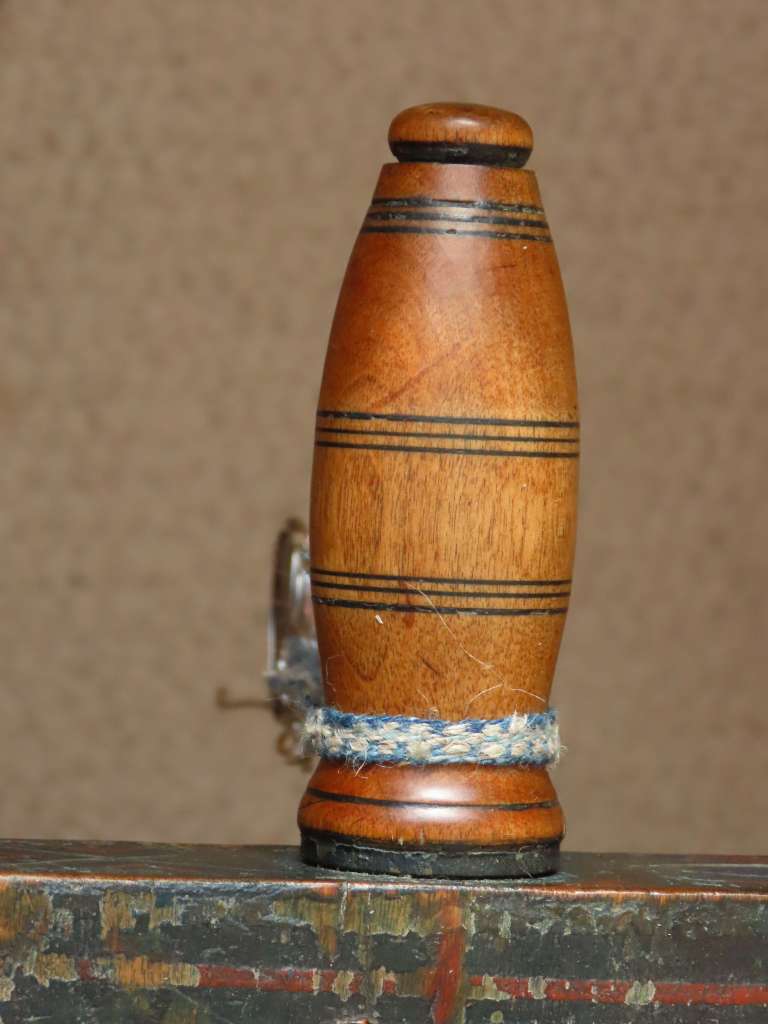
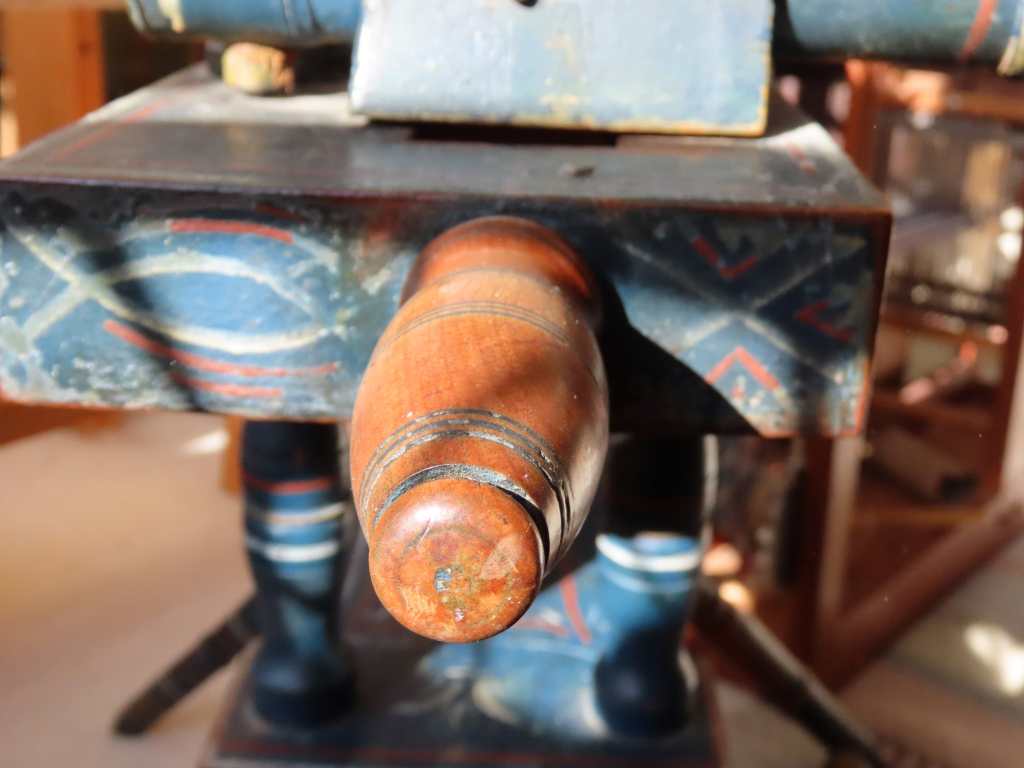
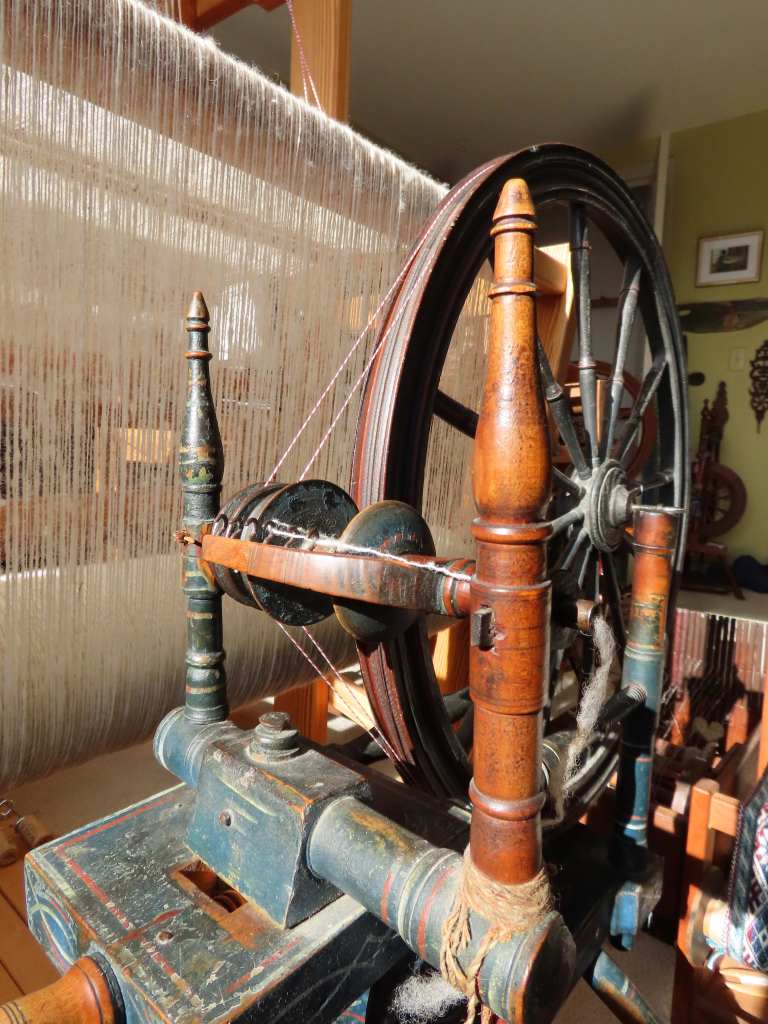
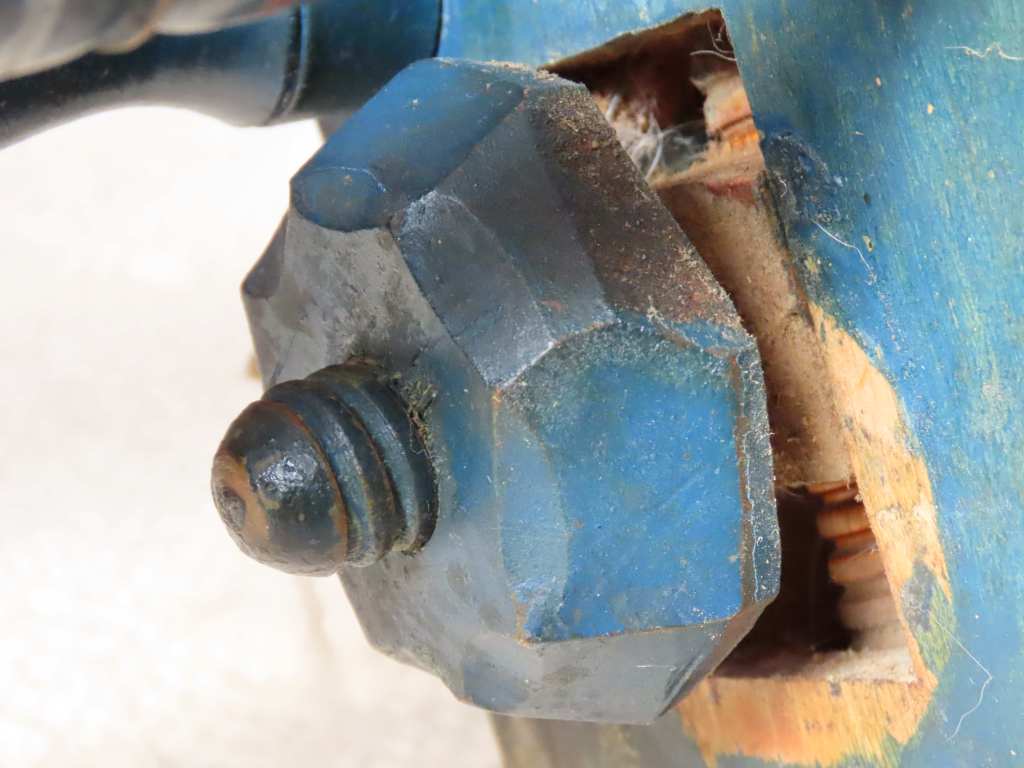
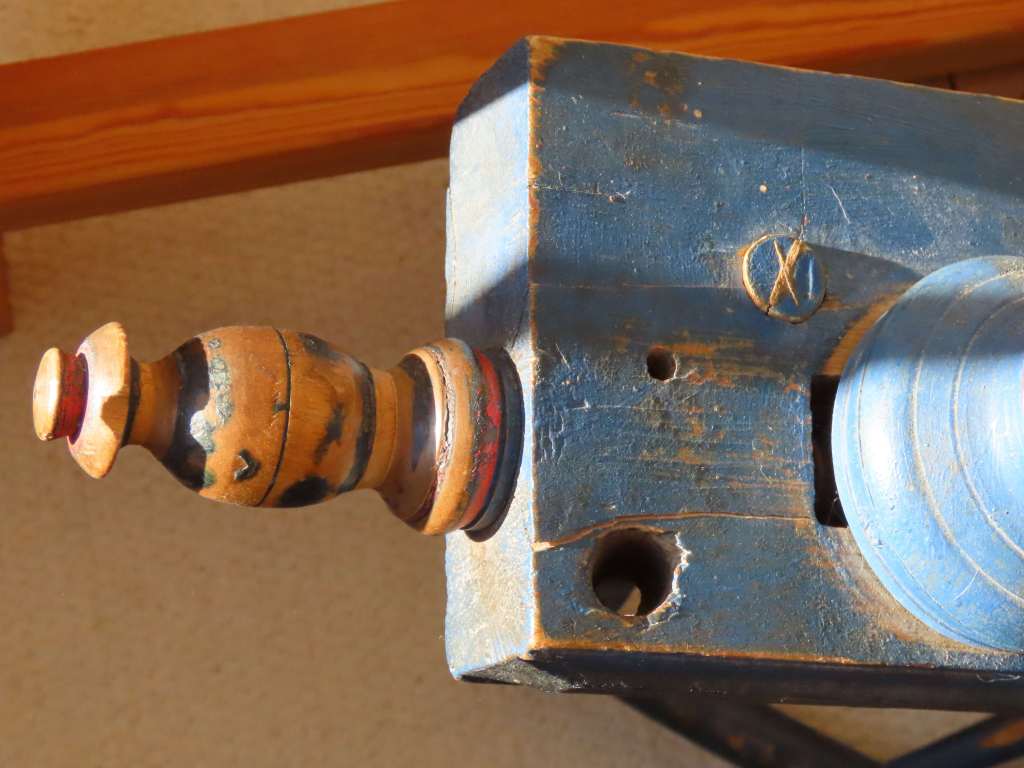
The lyre-shaped nuts were even more stunning in person than I expected. They sit like twin guardians on top of the metal plates securing the axle ends. 
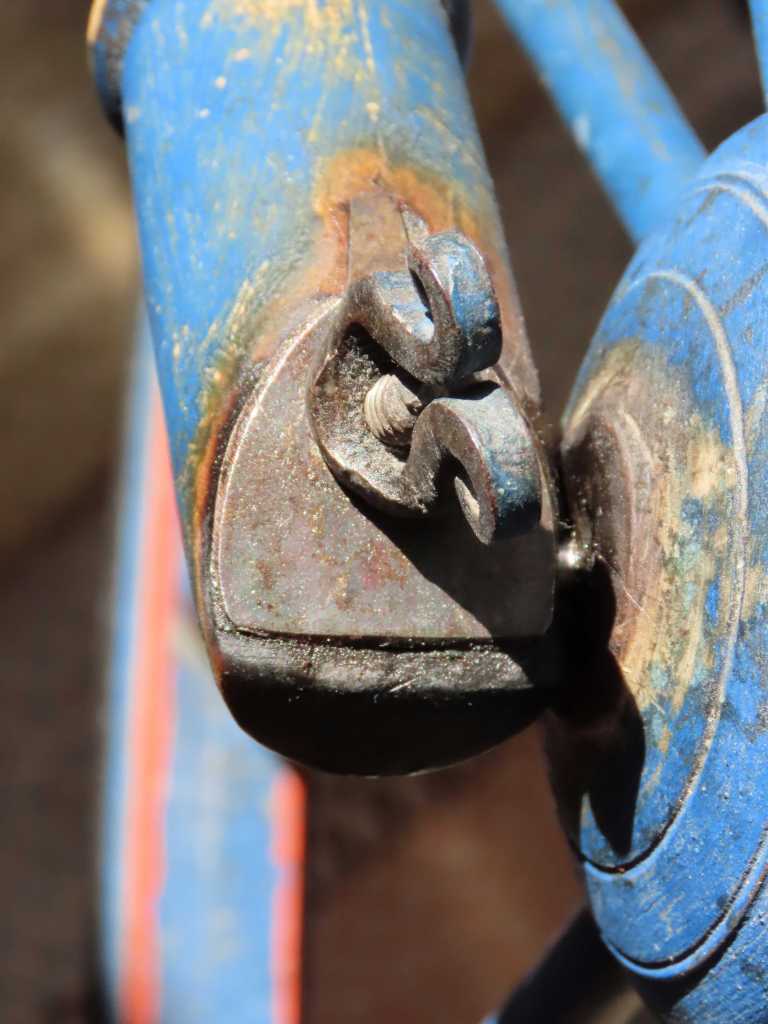
But, an even more unusual feature was the wheel’s internal crank.  
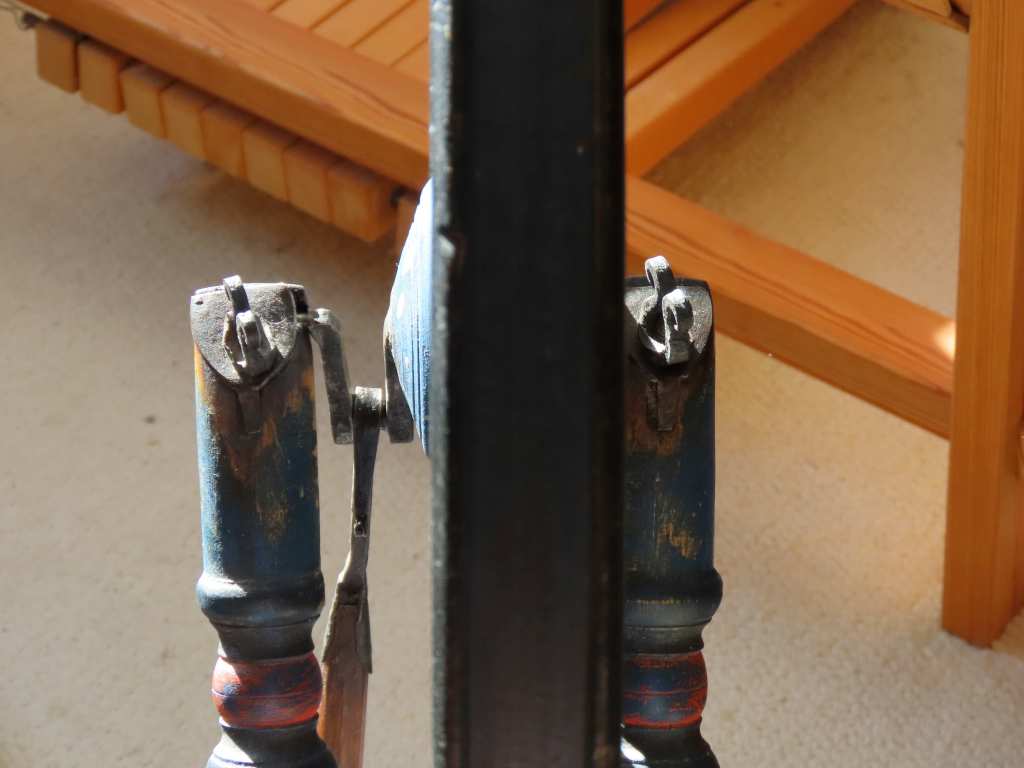
It was what confused us in looking at the sale photos.  While internal cranks are found on many double-table Norwegian wheels, they are very rare on saxony-style wheels.  Samuel Morison, in Vermont, used them on some of his saxony-style wheels, but aside from his wheels, they are scarce.  So I was thrilled to find this beautiful example.
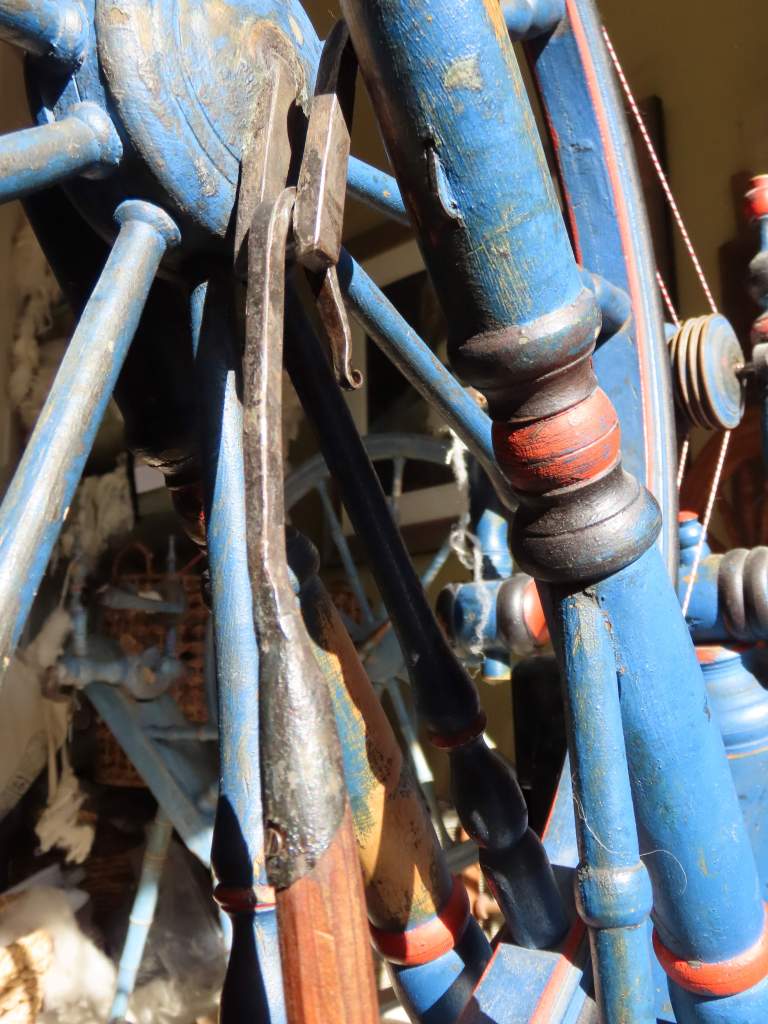
The inside part of the crank is actually embedded into the wheel hub. I would love to know why some wheel makers experimented with internal cranks. Is there any advantage to them? One disadvantage is that a traditional style footman is not ideal because it cannot easily be popped on and off the axle.
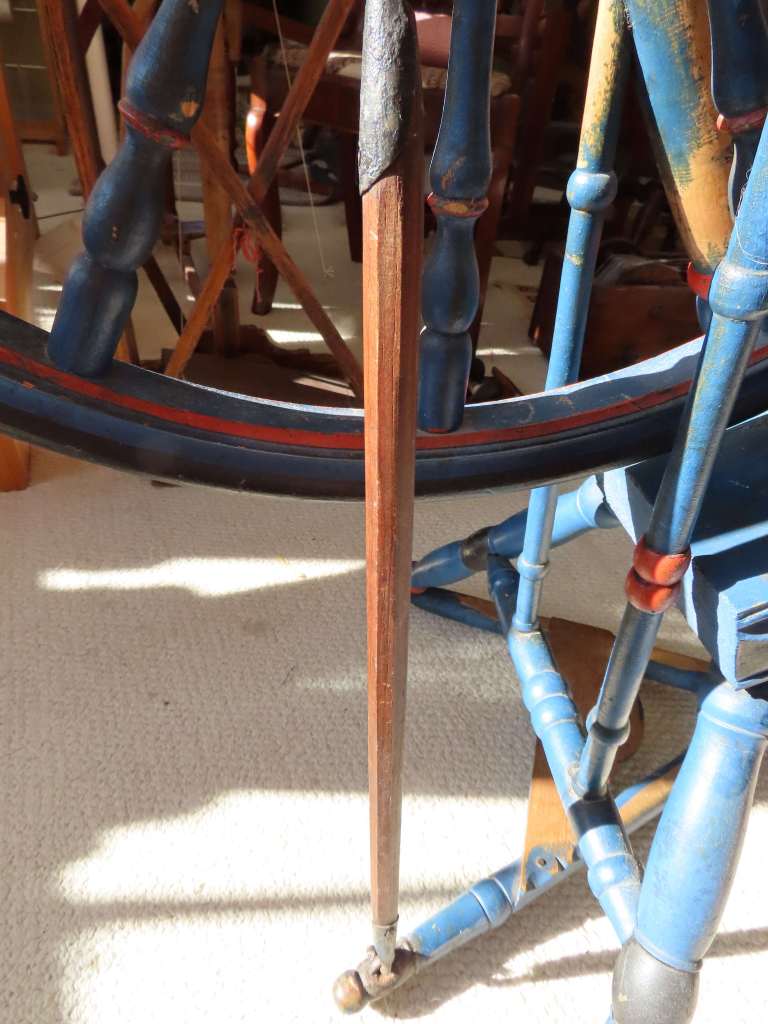
Hjordis’s maker solved that problem by crafting a special footman. A multi-sided wooden shaft is topped with what looks like a metal hood, partially surrounding the wood.
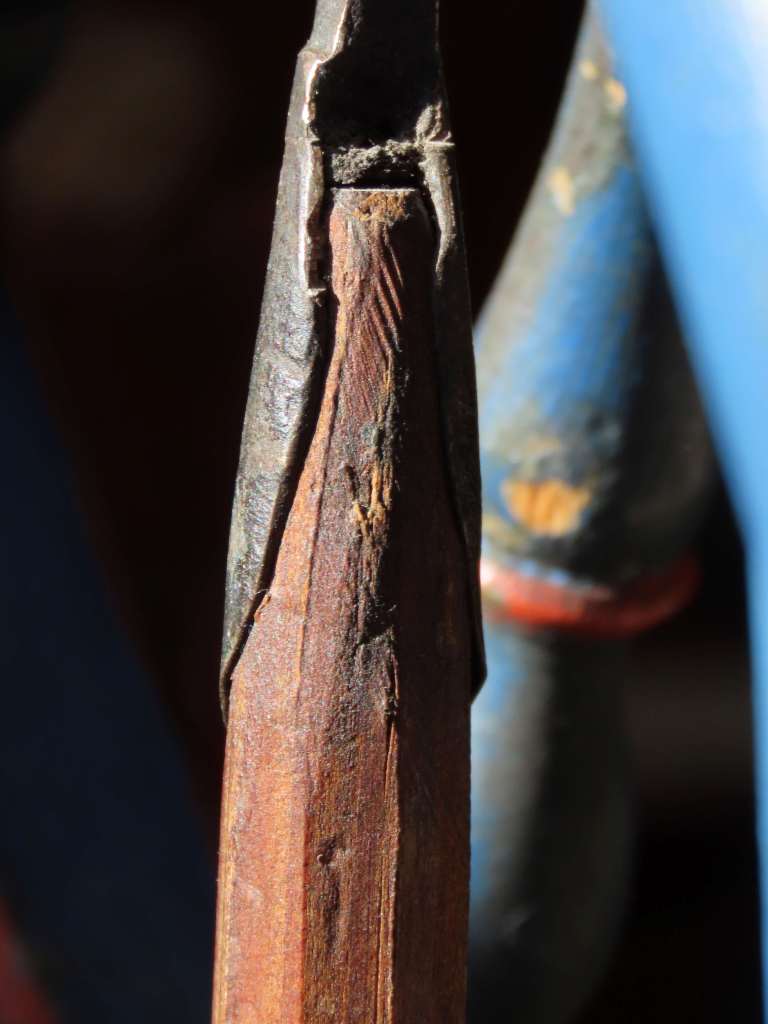
The hood is topped by a long metal piece that hooks over the internal crank and ends in a lovely curl.
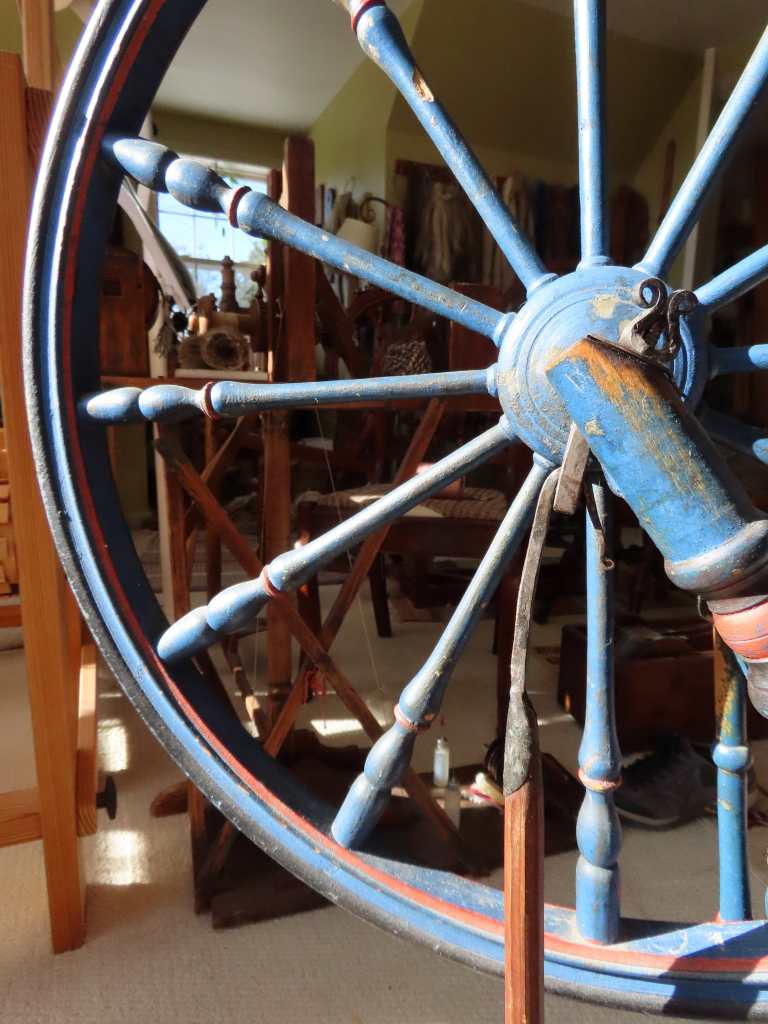
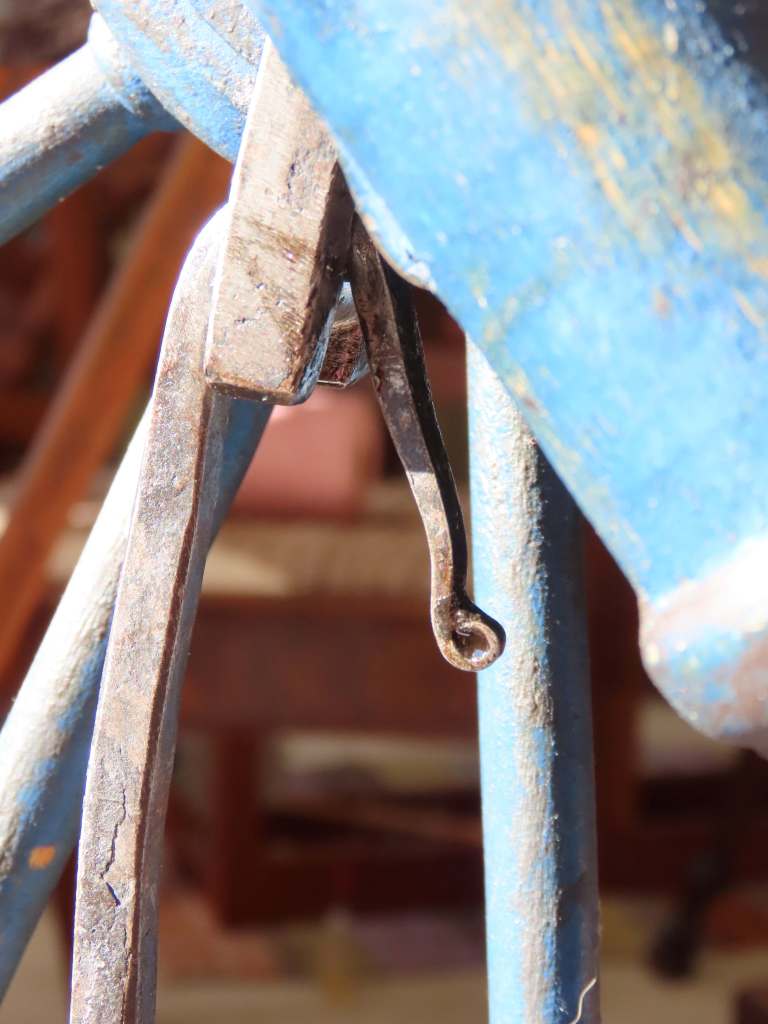
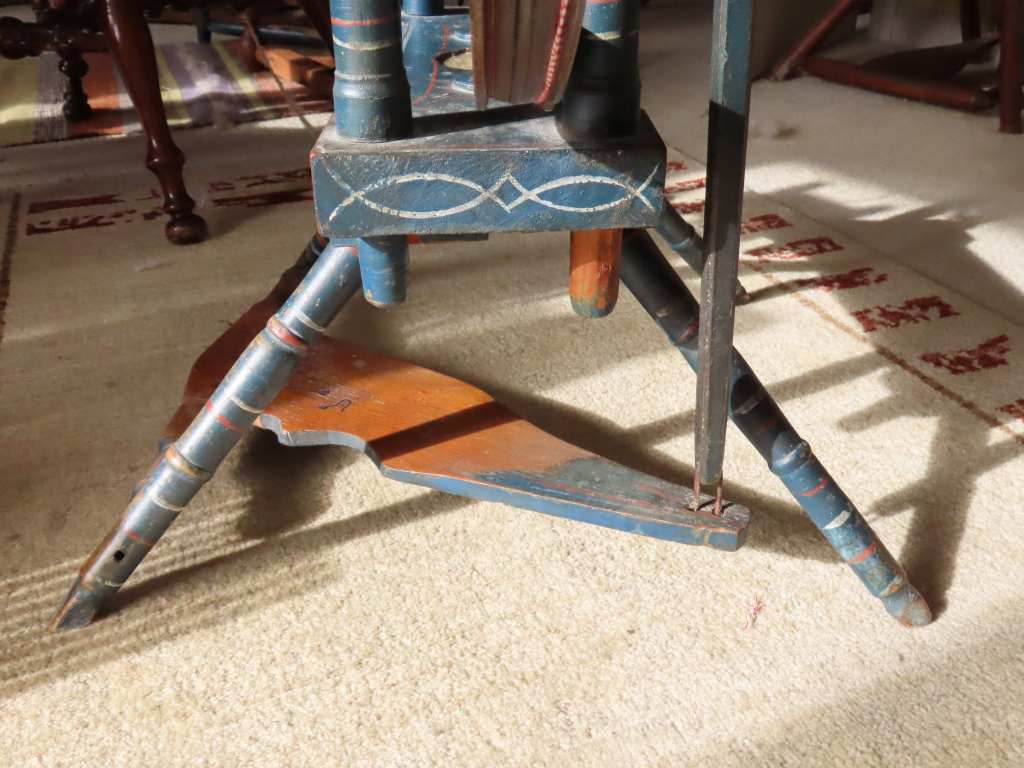
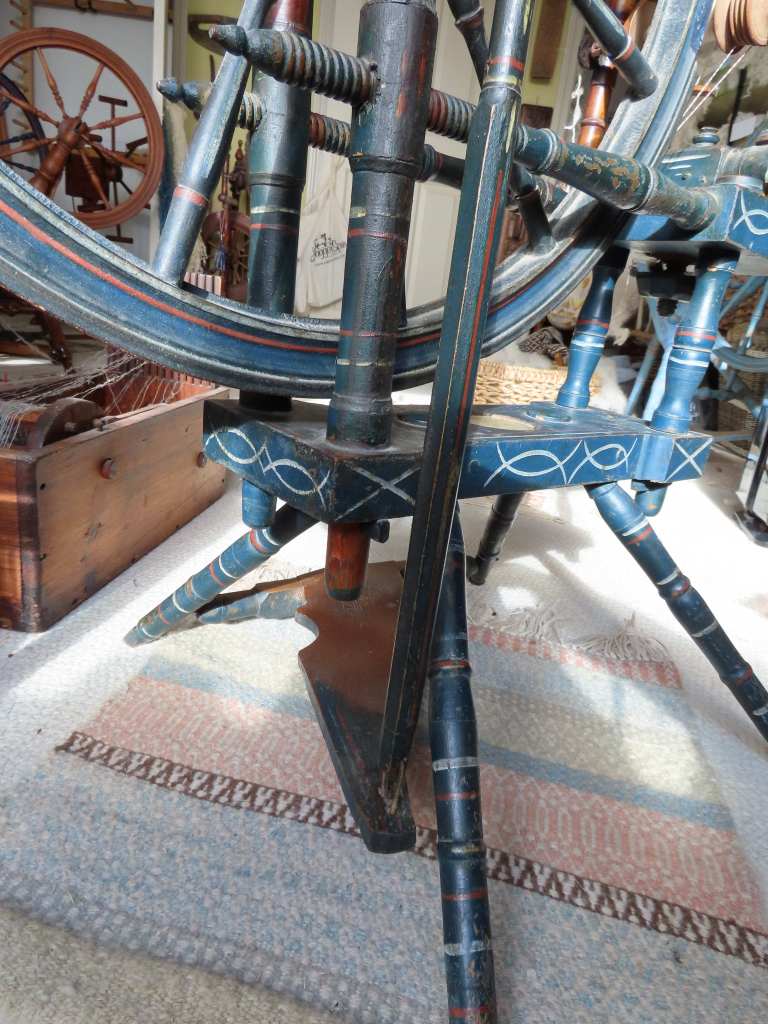
The bottom end of the footman also is encased in metal with a small metal hook attaching it to a metal piece on the treadle bar.
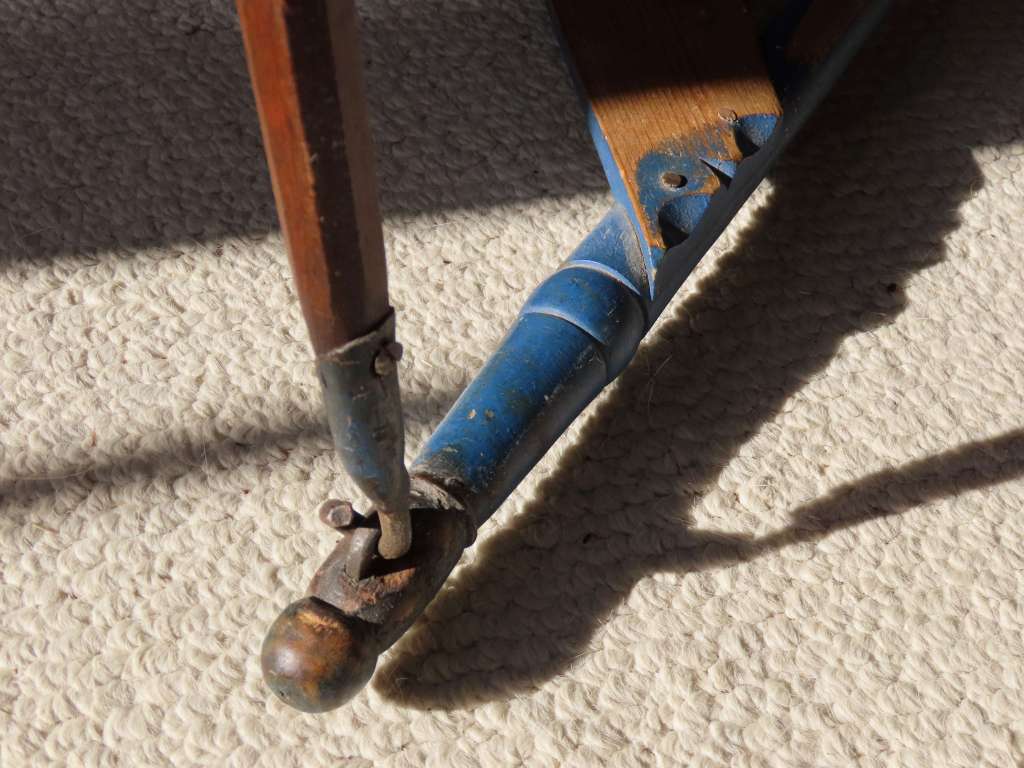
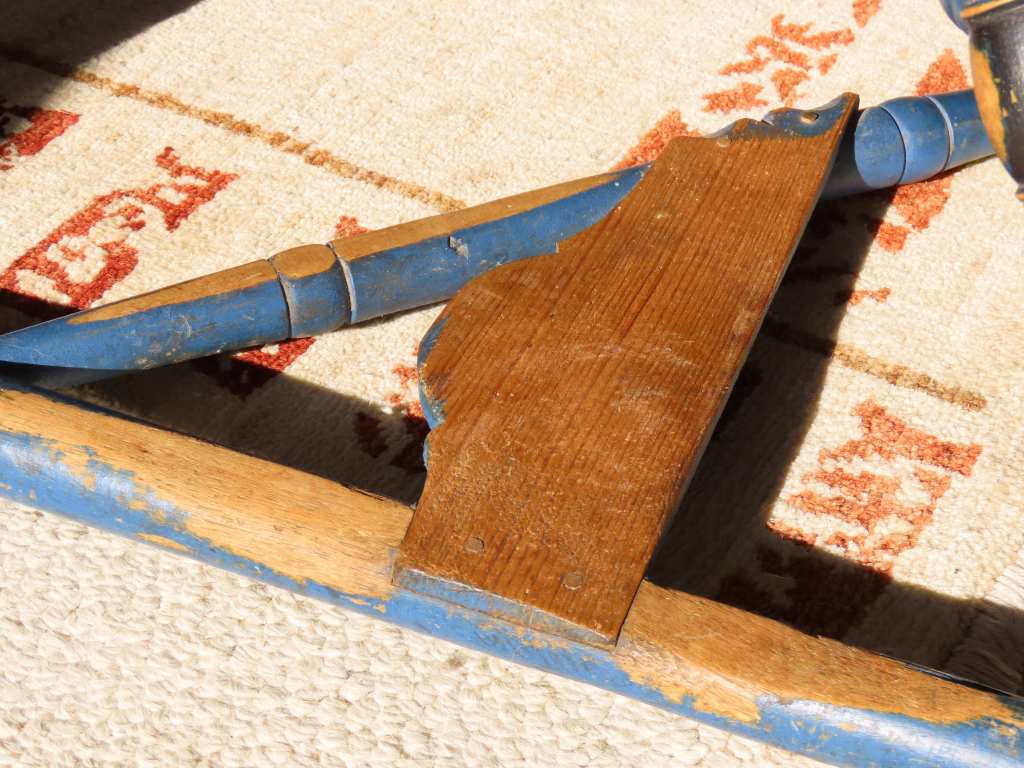
So much beautiful work went into this footman. Likewise, the treadle is no plain wood piece, but shaped with a decorative flourish at the end.
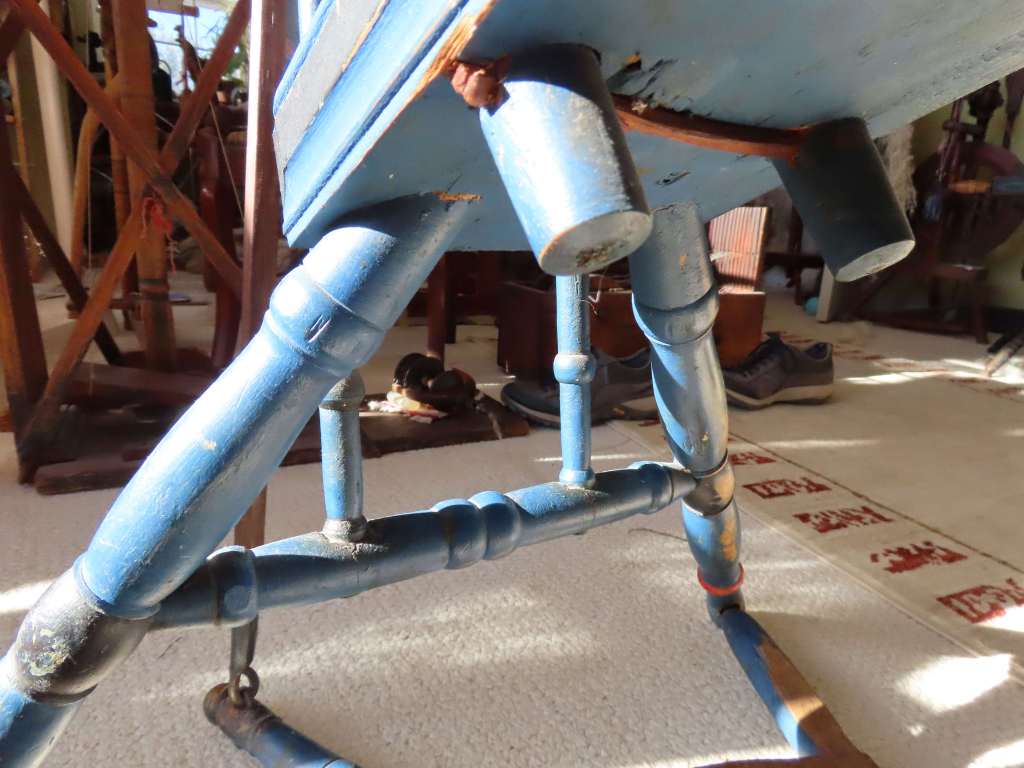
The wheel end has a cross-bar between the wheel-end legs with supports extending to the wheel uprights.
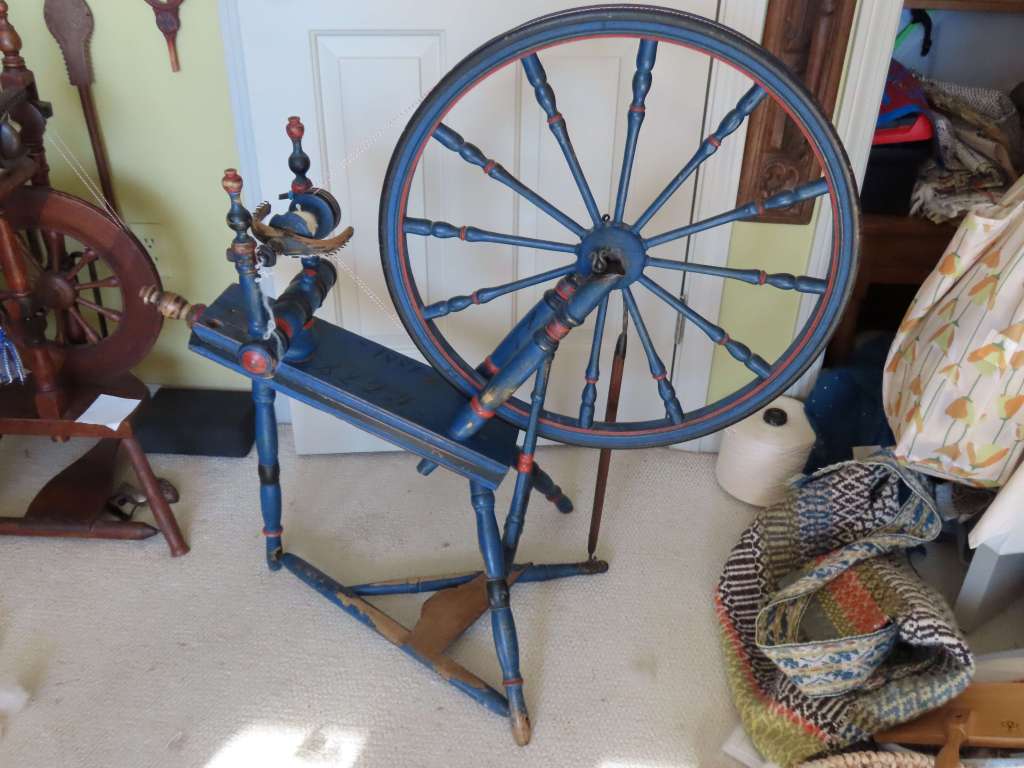
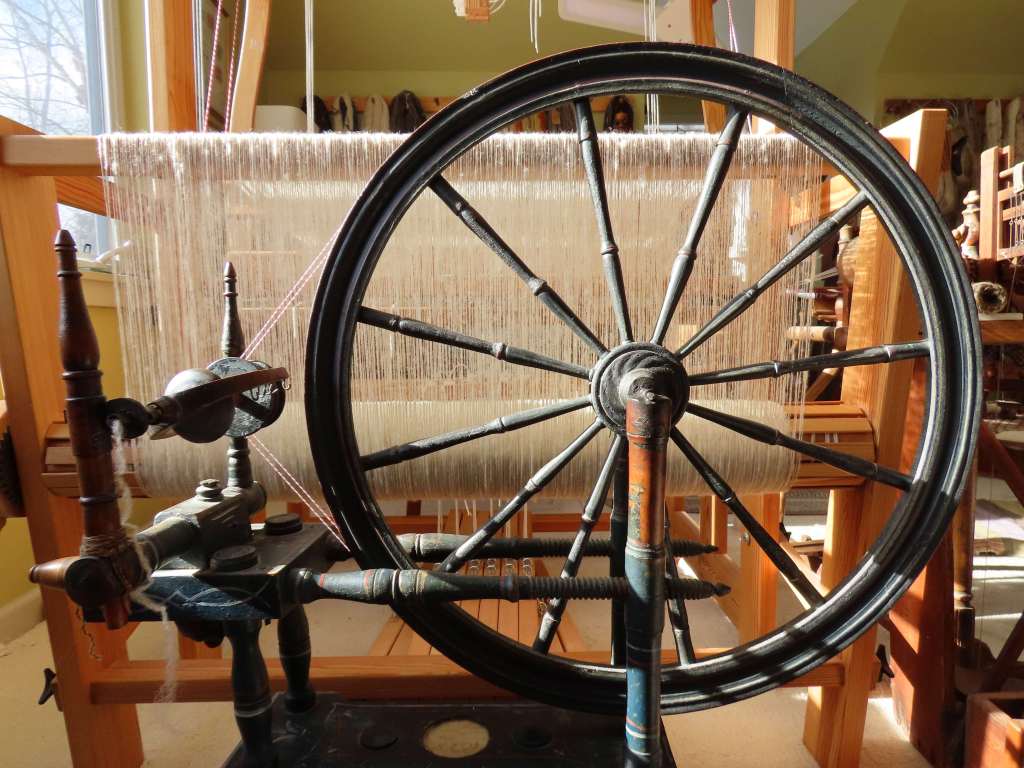
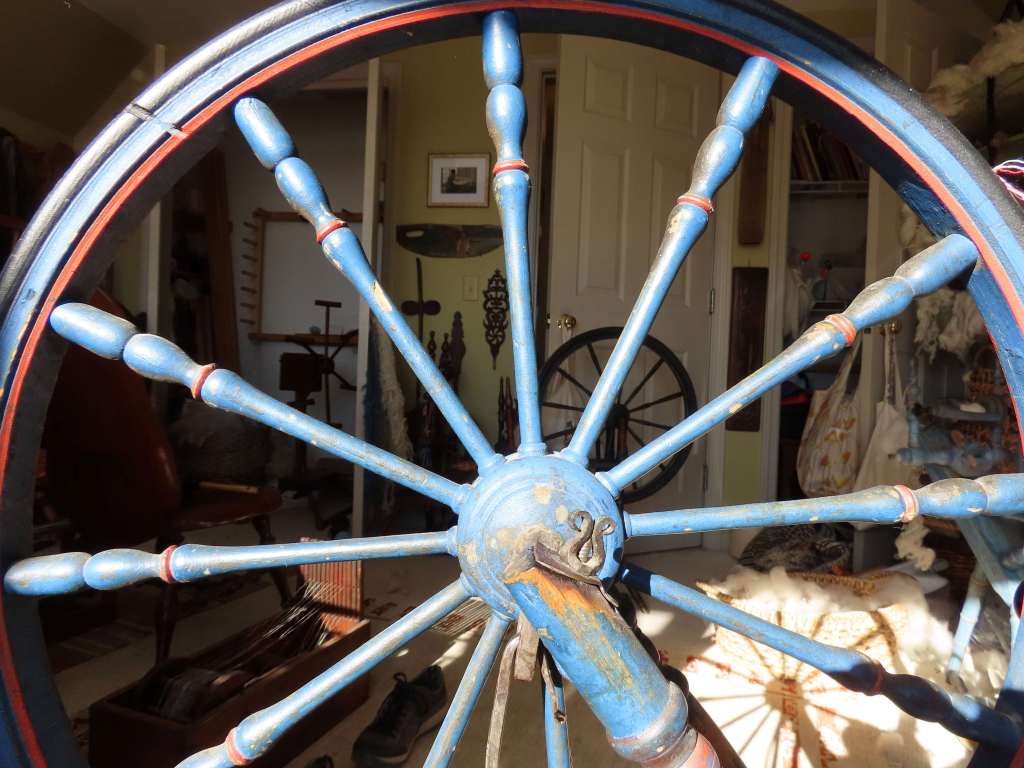
The drive wheel has 12 spokes,
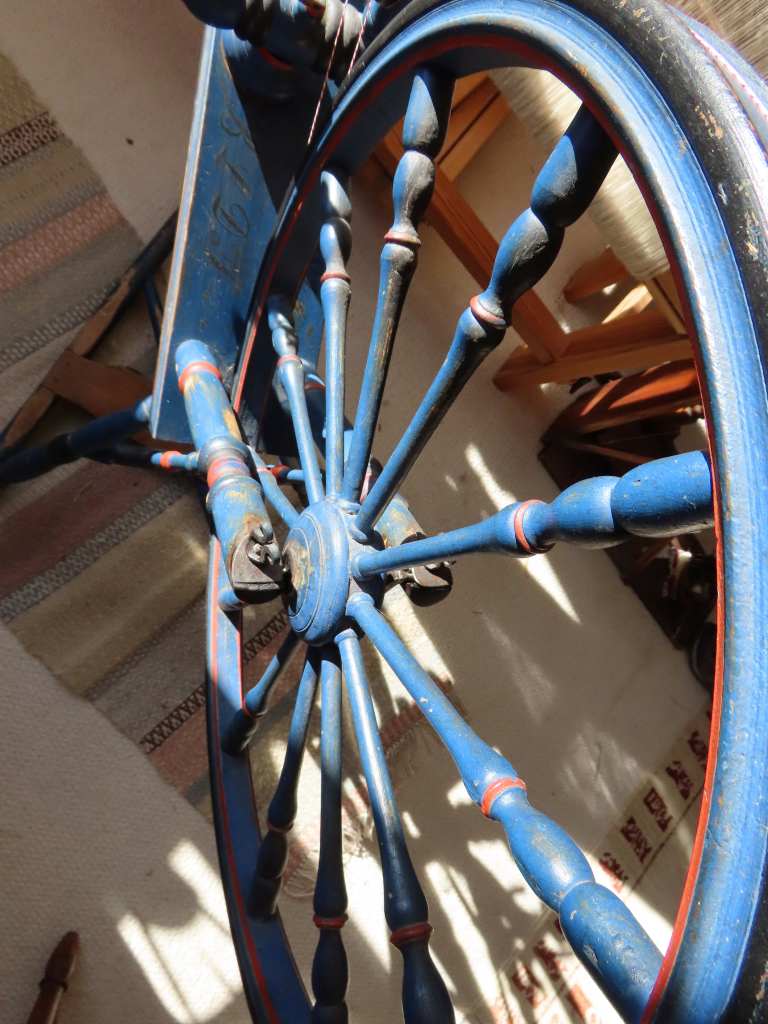
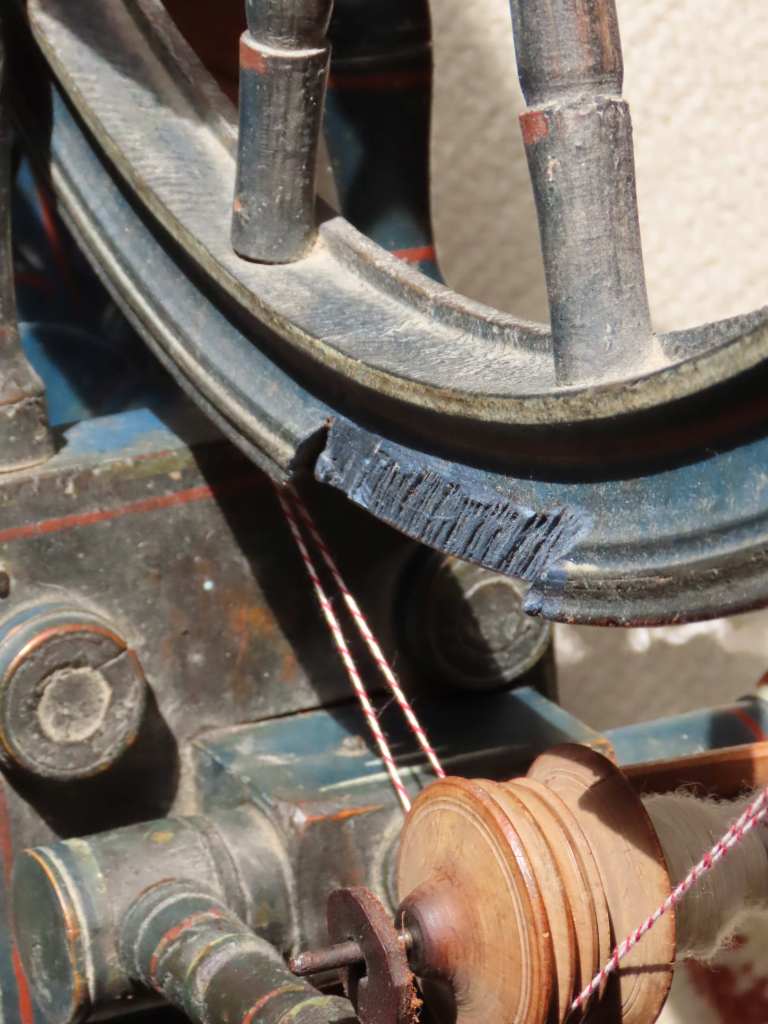
set on the flat inner rim
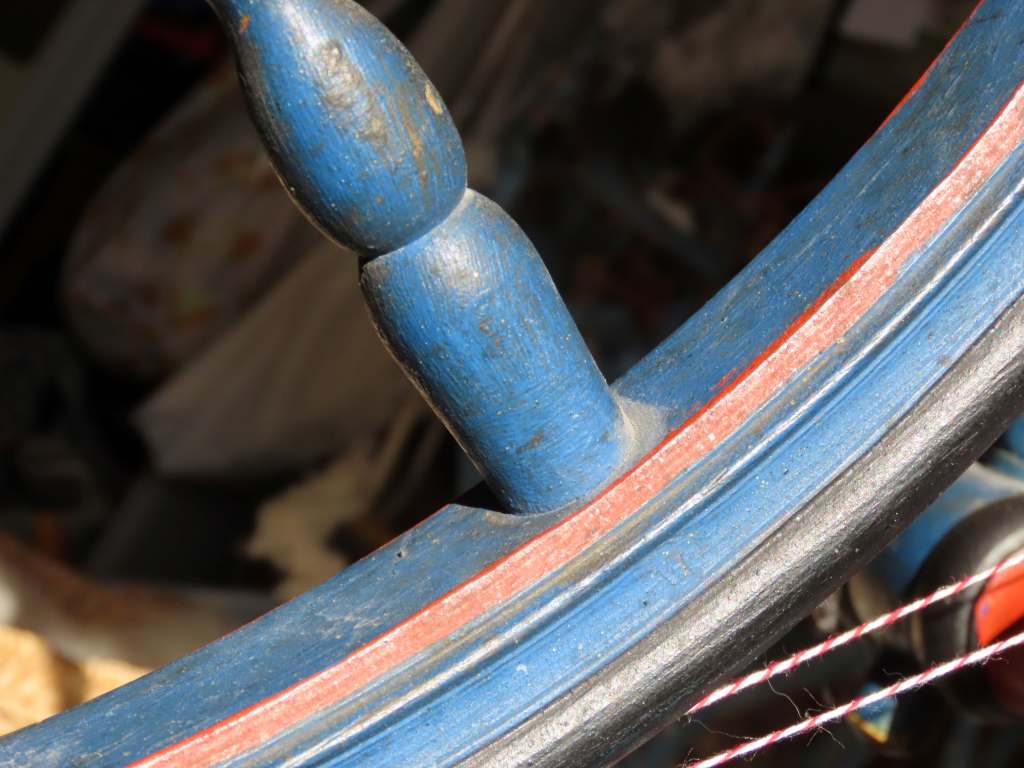
with a nail or peg securing them at an angle through the side of the rim.

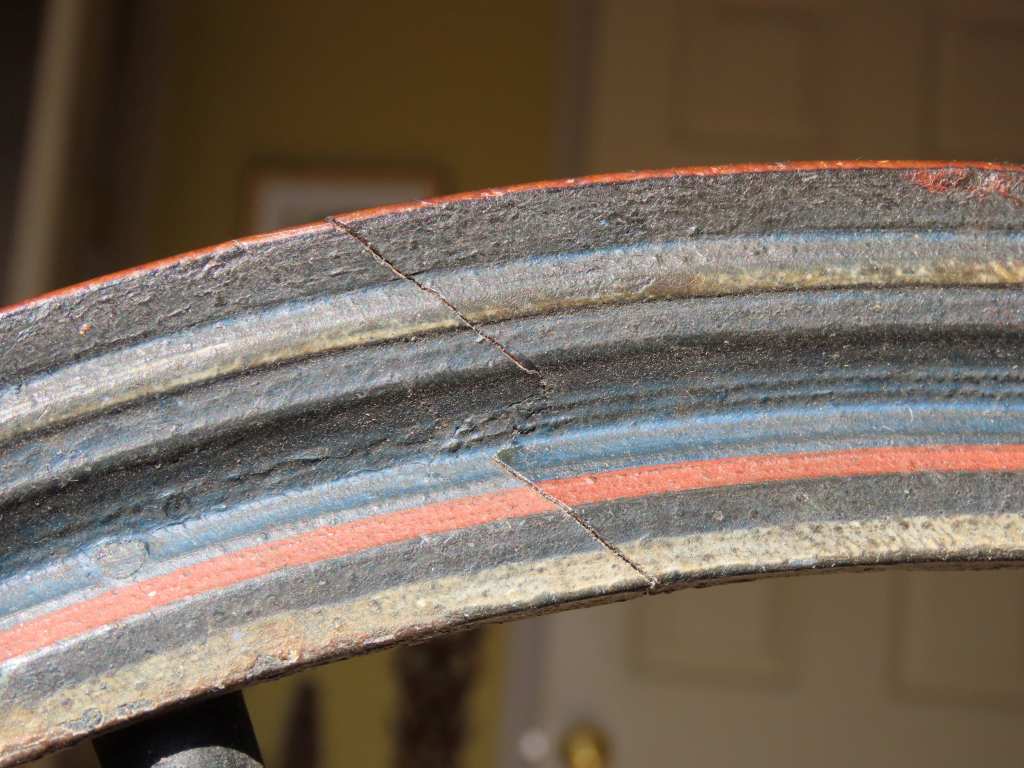
The rim itself is four sections. The sections are fitted together with tongues (long on the top, shorter inside) going in opposite directions on two sections, fitting into grooves on the other two sections.

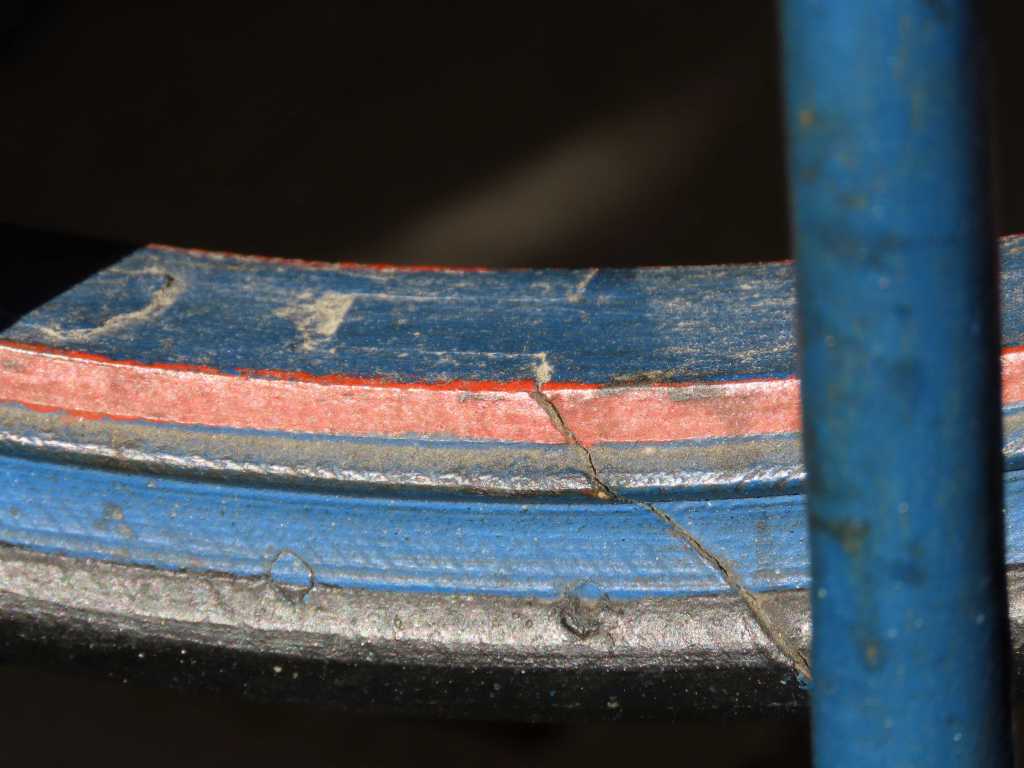
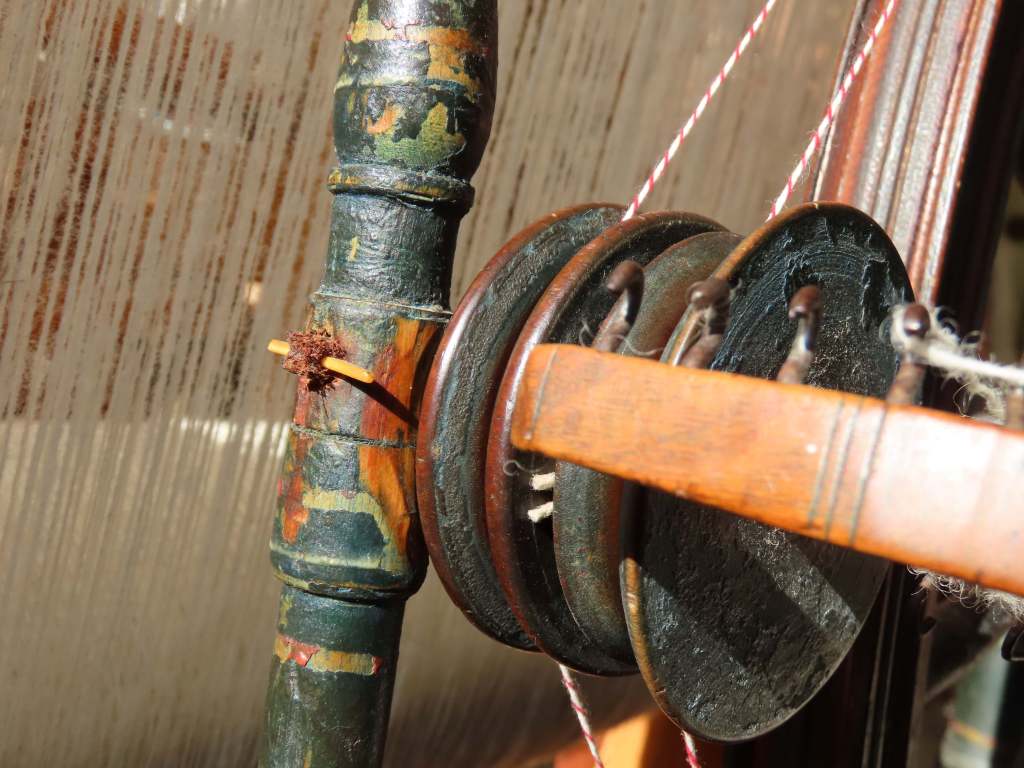
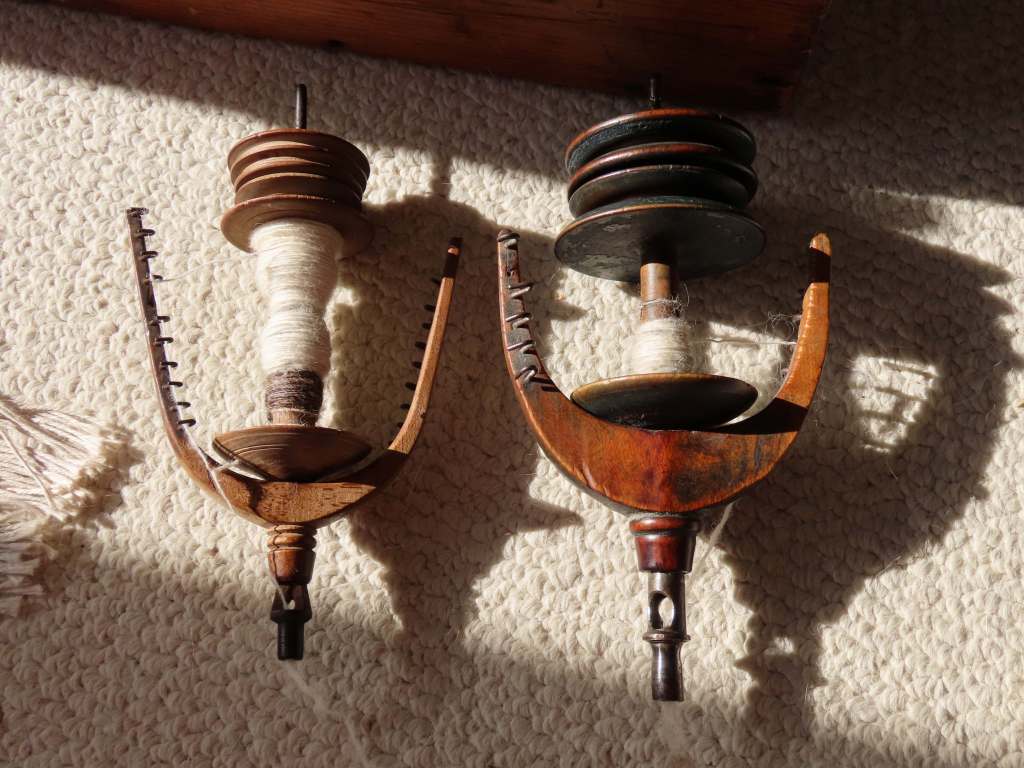
Hjordis has seen a lot of use but her flyer assembly is still going strong.
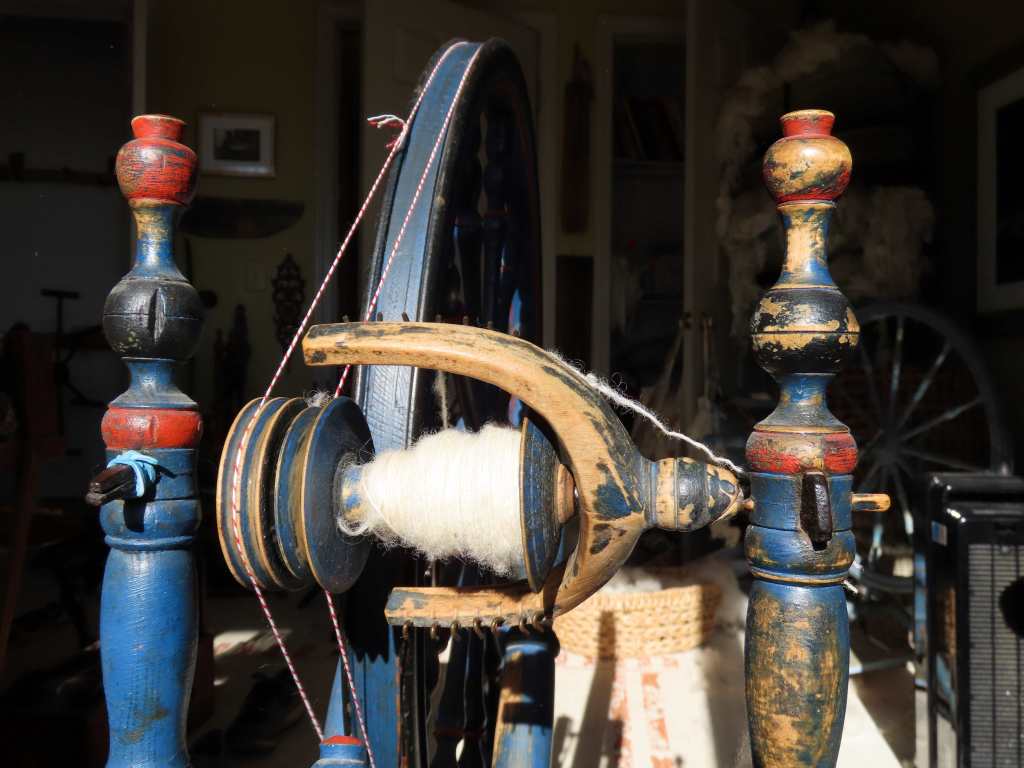
Her bobbin is cracked and there is a deep groove in the flyer front near the orifice.
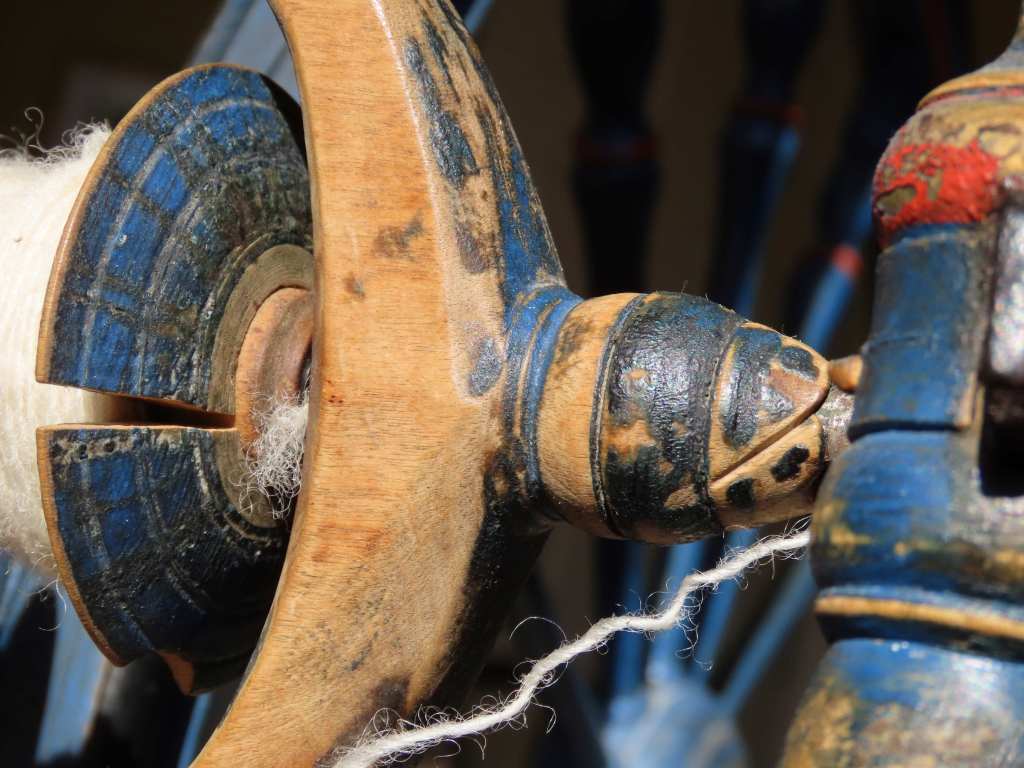
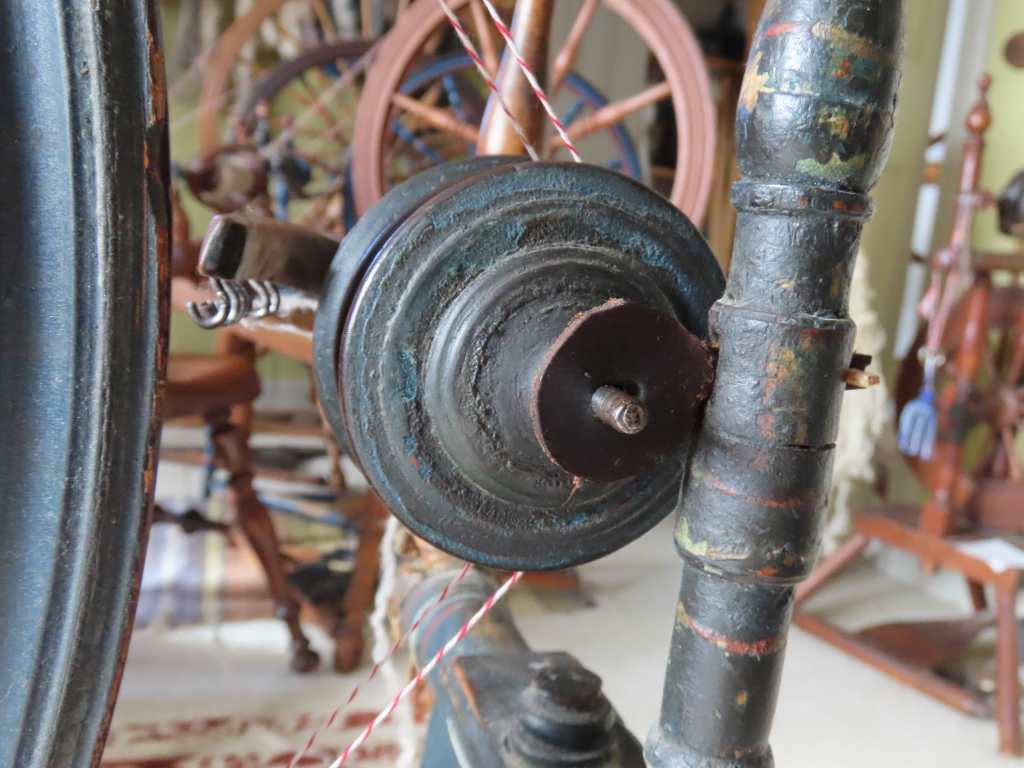
Her whorl screws on righty-tighty, lefty-loosey, the opposite of most North American wheels, but found on many Norwegian wheels.

Her back leather bearing is a little droopy, but works well. The previous owner put an elastic band on it.

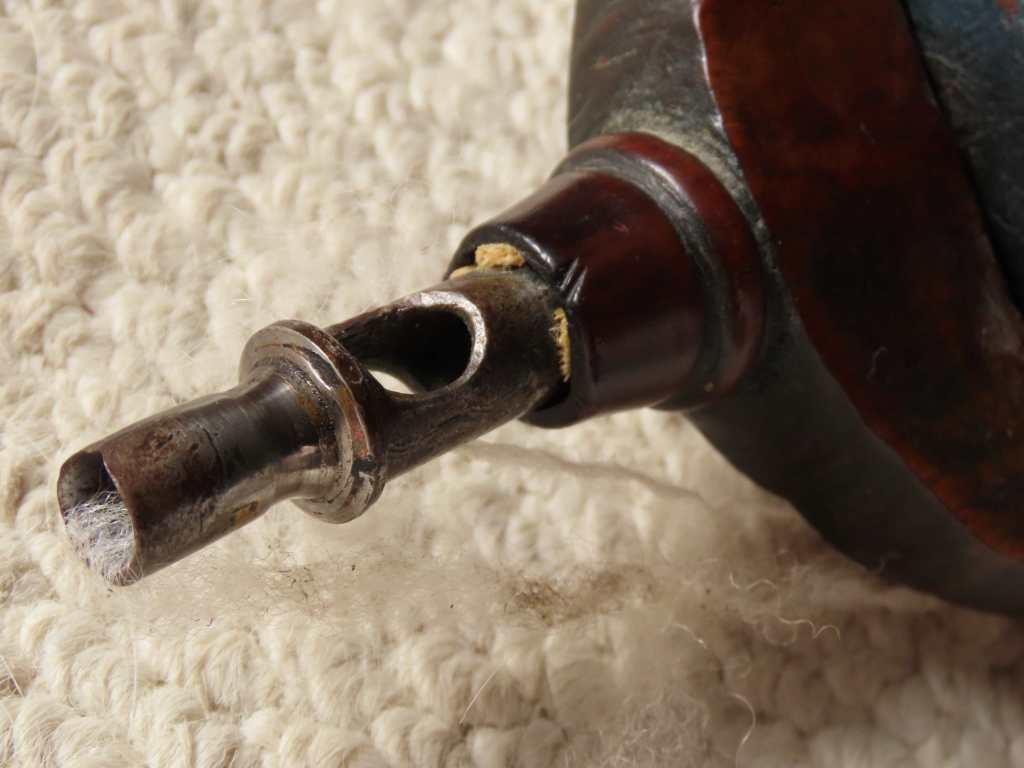
The orifice is quite smooth and the front bearing secured with some old yarn or twine.
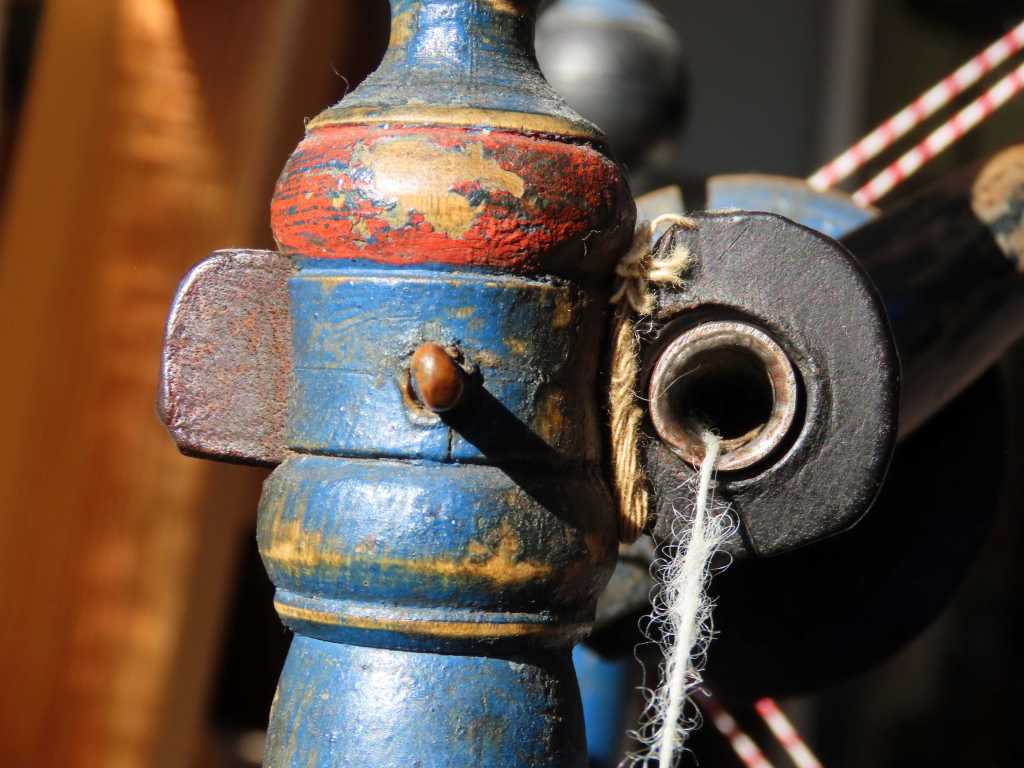
Her paint colors are vivid,
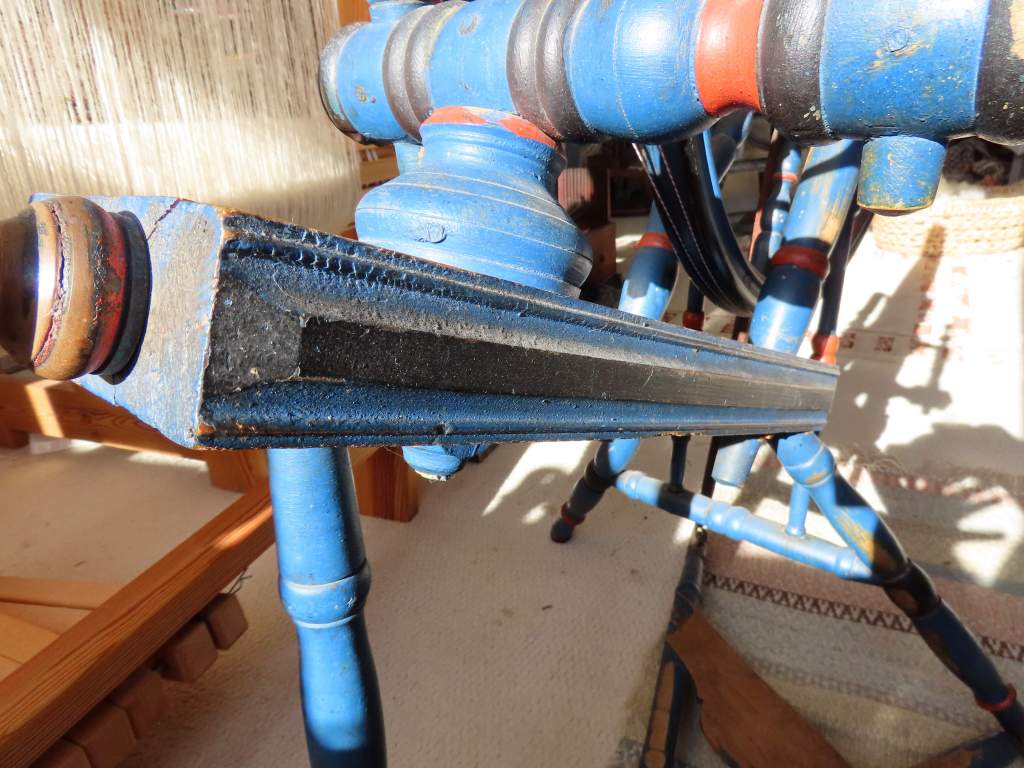
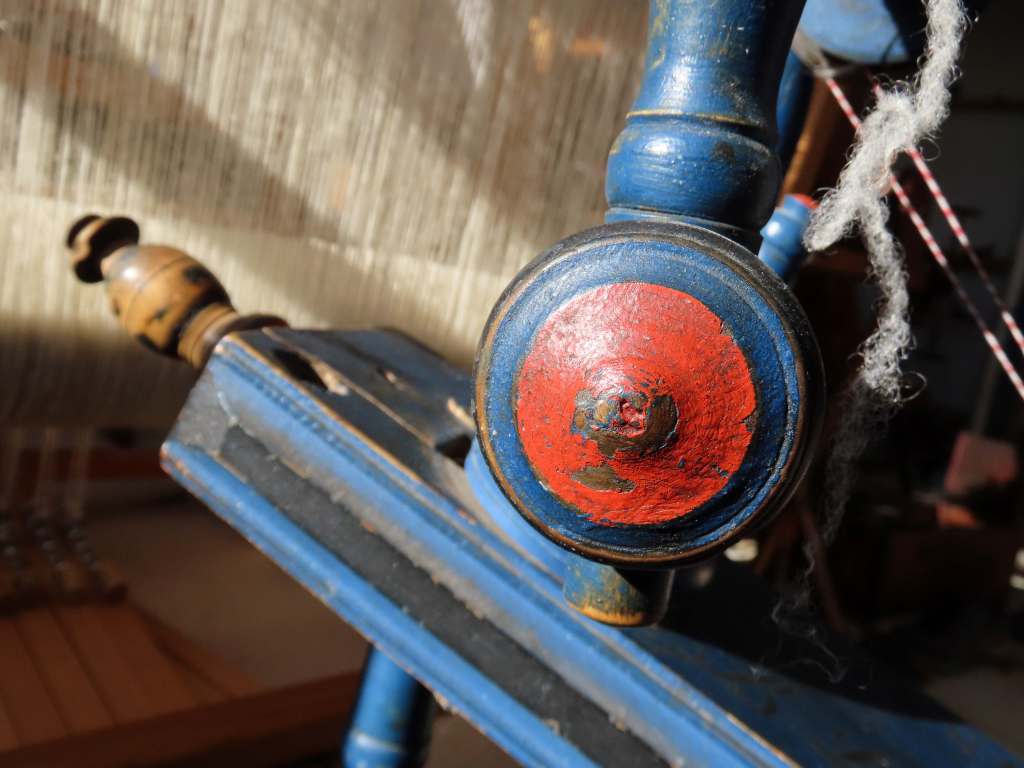
but, in some areas, applied a little sloppily,
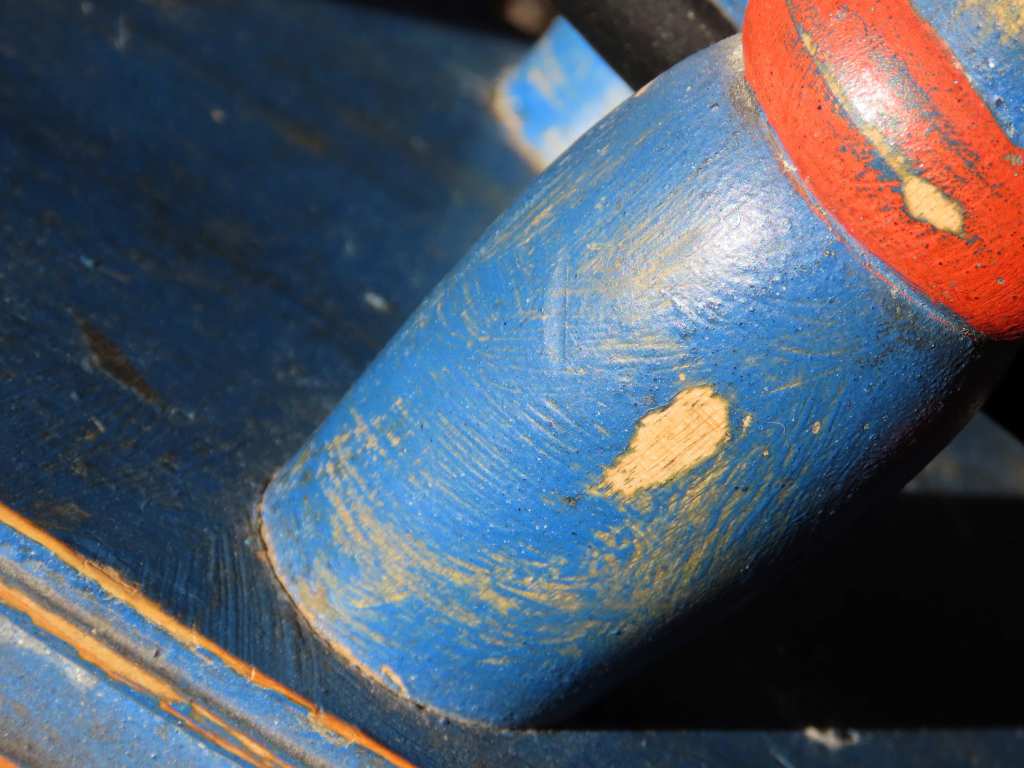
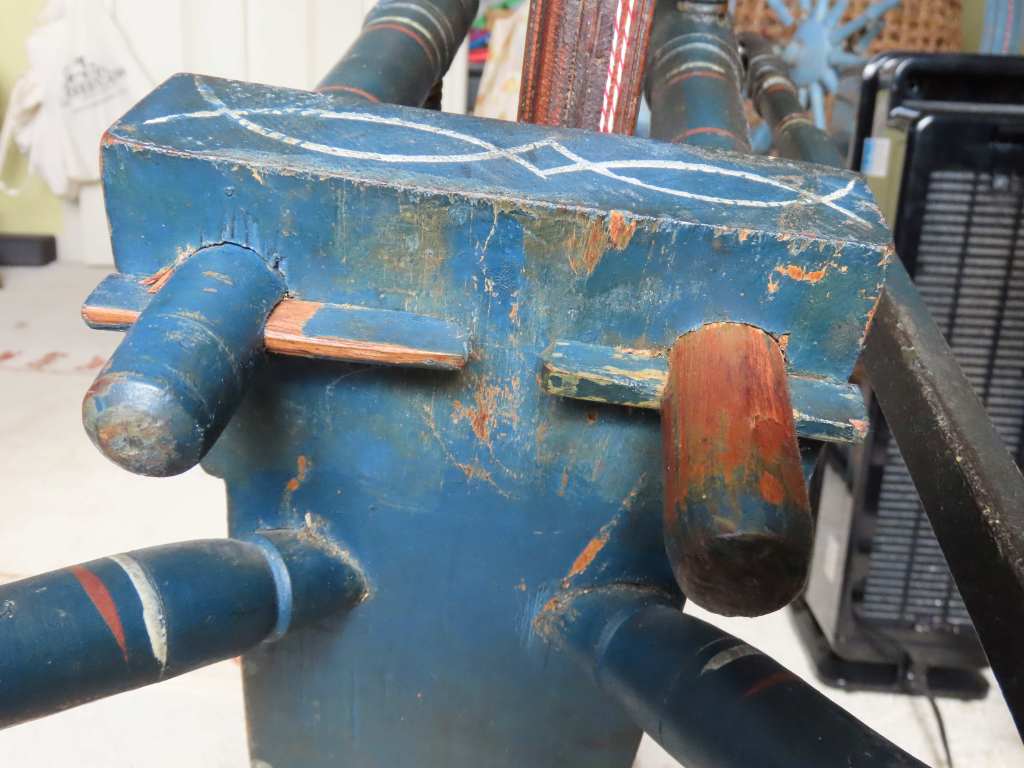
which is interesting, since the underside of the table is painted, something many makers do not bother with.
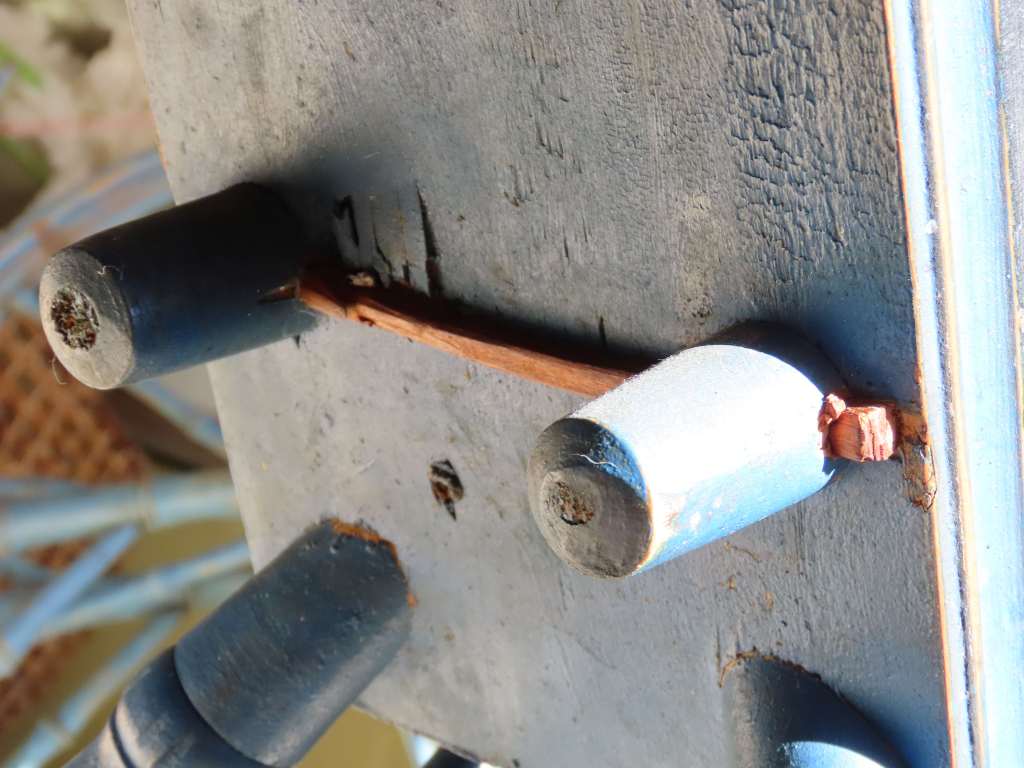
There is a crack in the table that I need to repair and a distaff hole on the spinner side.
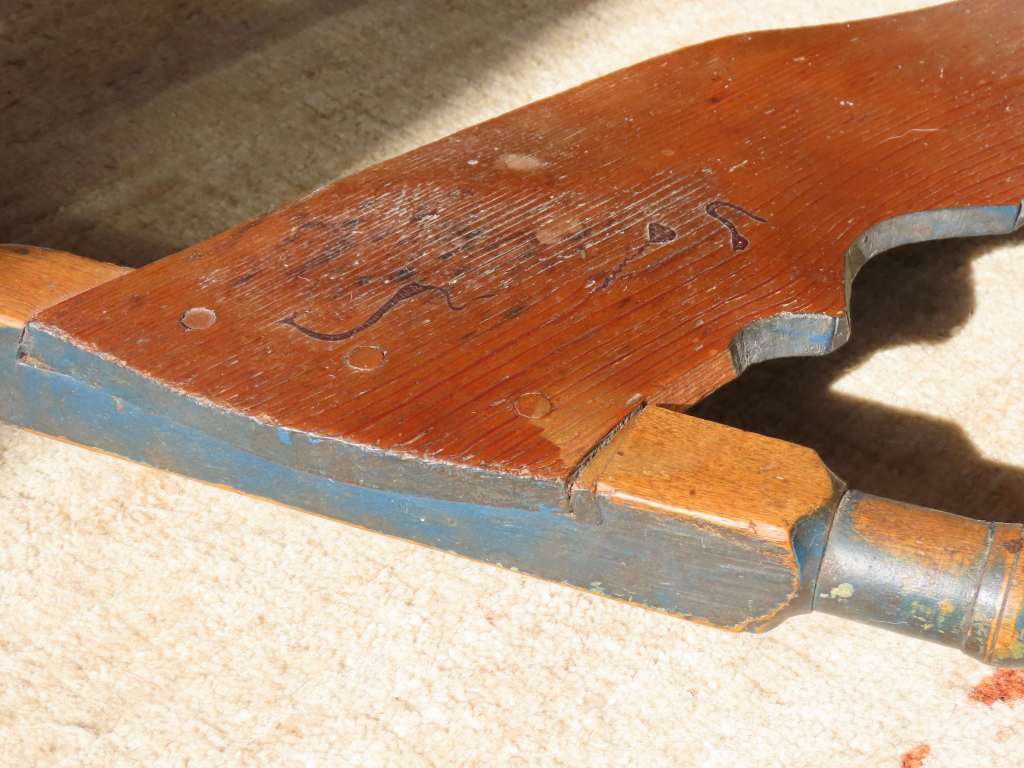
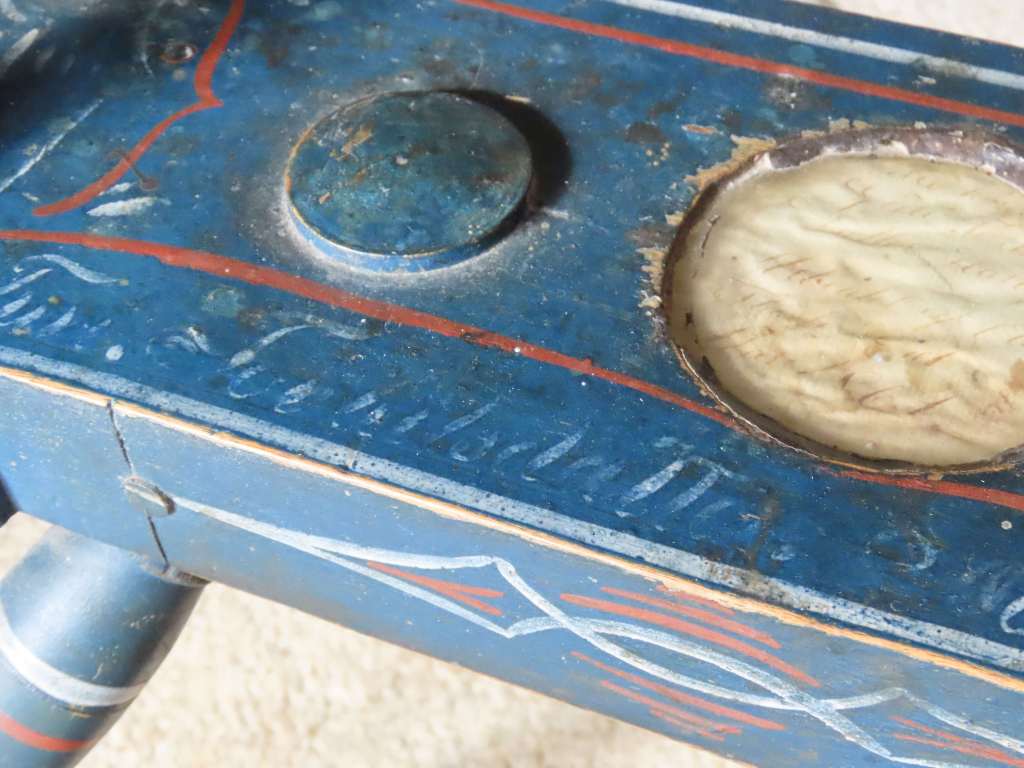
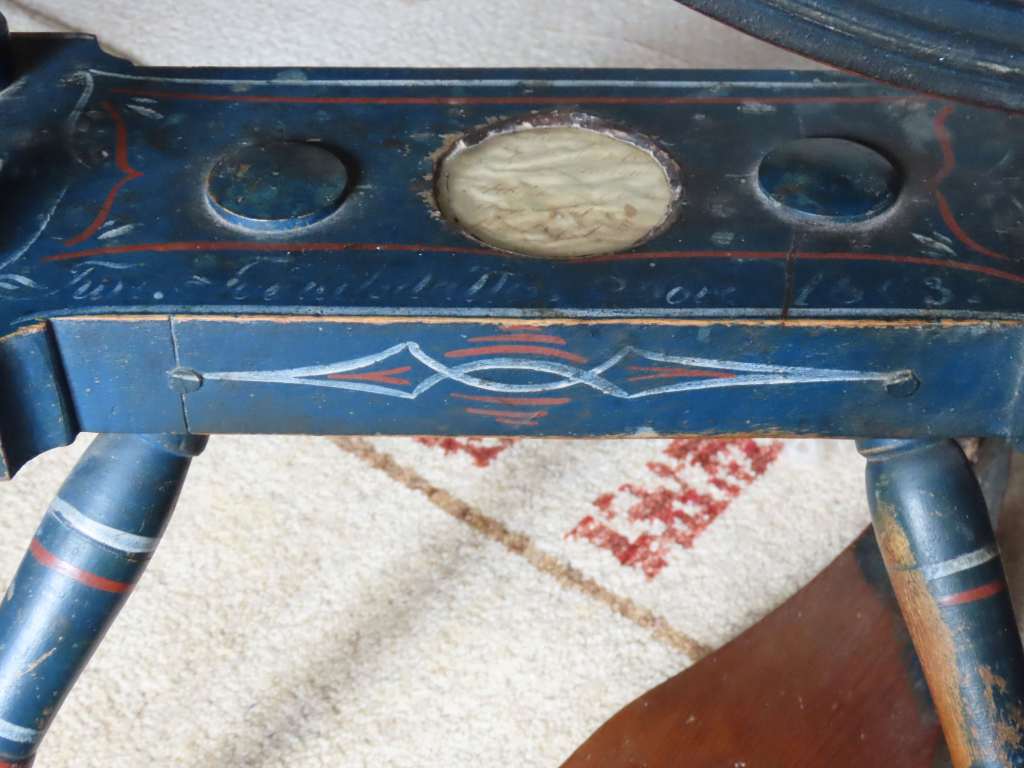
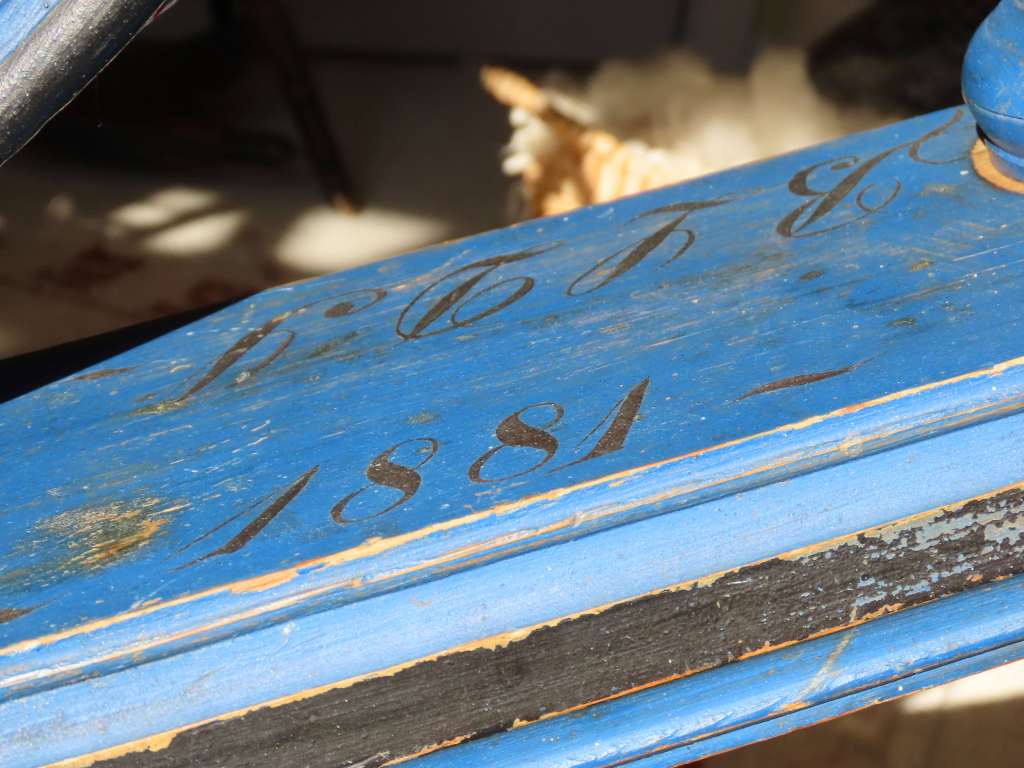
The table bears a date and initials in elegant script.
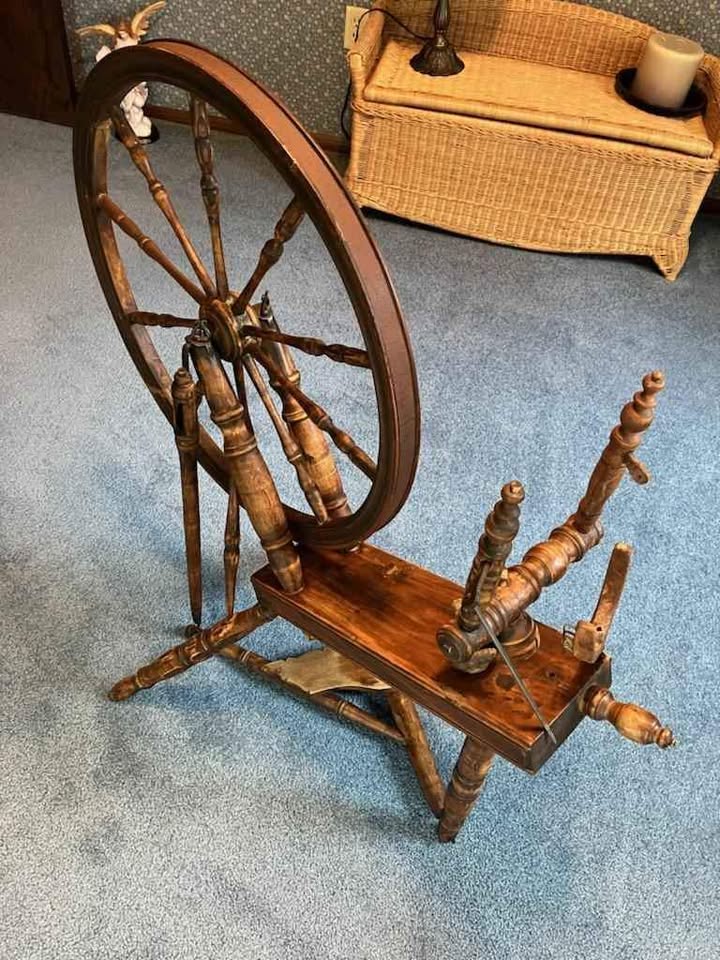
Aside from the date, I have not been able to find out much about the wheel’s origins. I believe that she is Norwegian for a few reasons. The internal crank and righty-tighty whorl point in that direction and there have been a few other wheels that have come up for sale with sellers indicating they are Norwegian. These wheels do not have an internal crank, but do have the unusual lyre-shaped nuts and metal upright-tops.
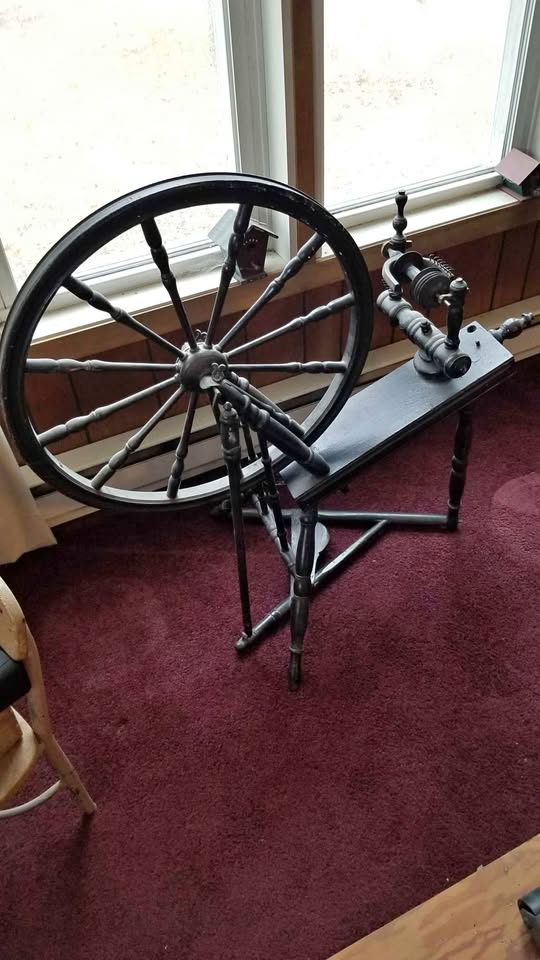
For sale in Iowa
For sale in Minnesota, no internal crank but the treadle is very similar to Hjordis’s

Although these wheels likely were made by the same maker, only Hjordis has the internal crank and creative footman, which kicks her up a notch. I am very grateful that she was not passed by in the hunt.
Turi Little Bear

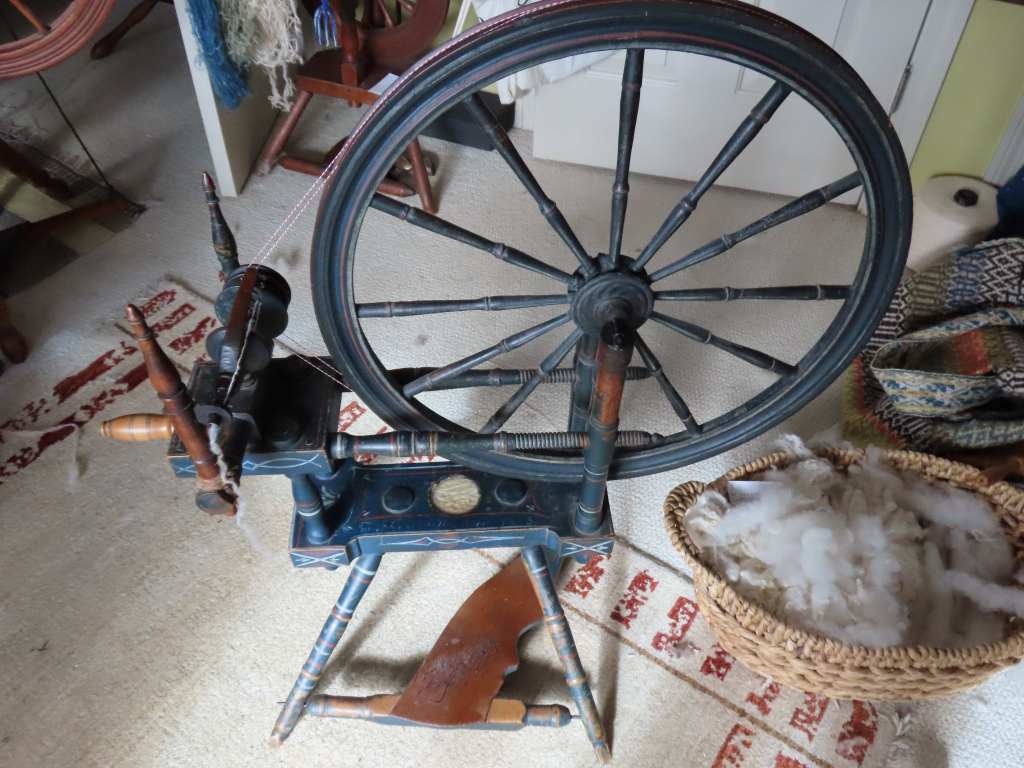
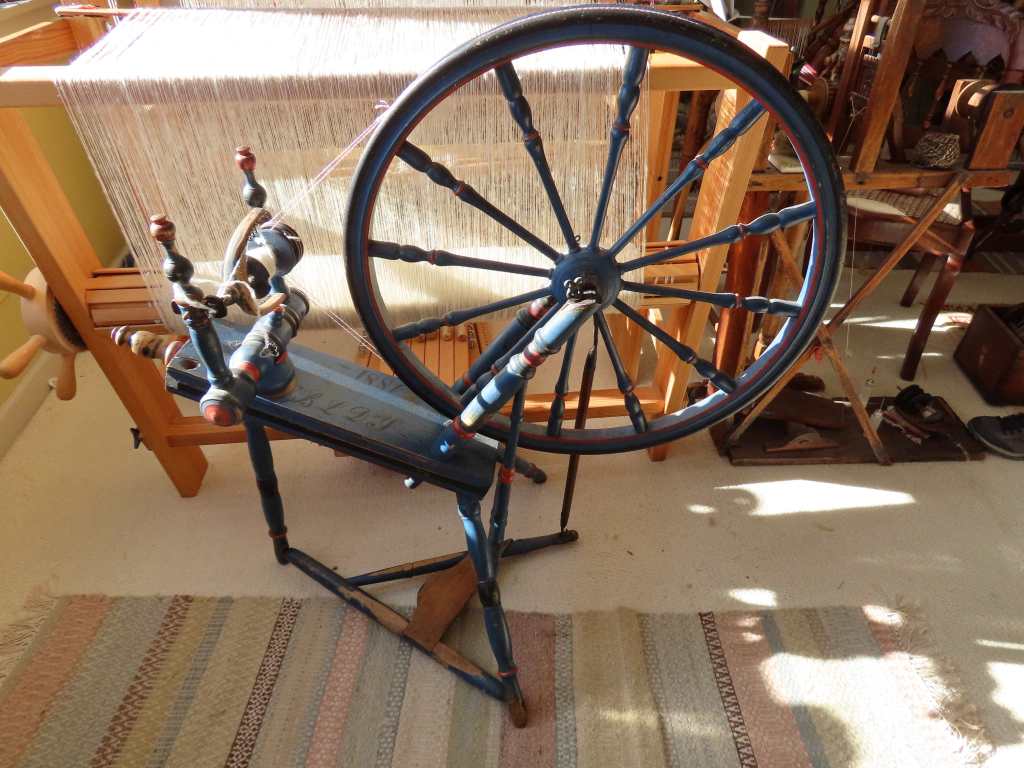
Norwegian wheels come in all shapes, sizes, and colors. This one is a “double-table” wheel, a style commonly found in Norway.

But it has several interesting features that make it stand out–its size, festive paint, handwritten note, and fixes.

Size-wise, it is petite compared to most double table wheels. It is more compact and lightweight, making it relatively easy to store and portable, attributes apparently prized in Norway, given the many different styles of slanty wheels made there.

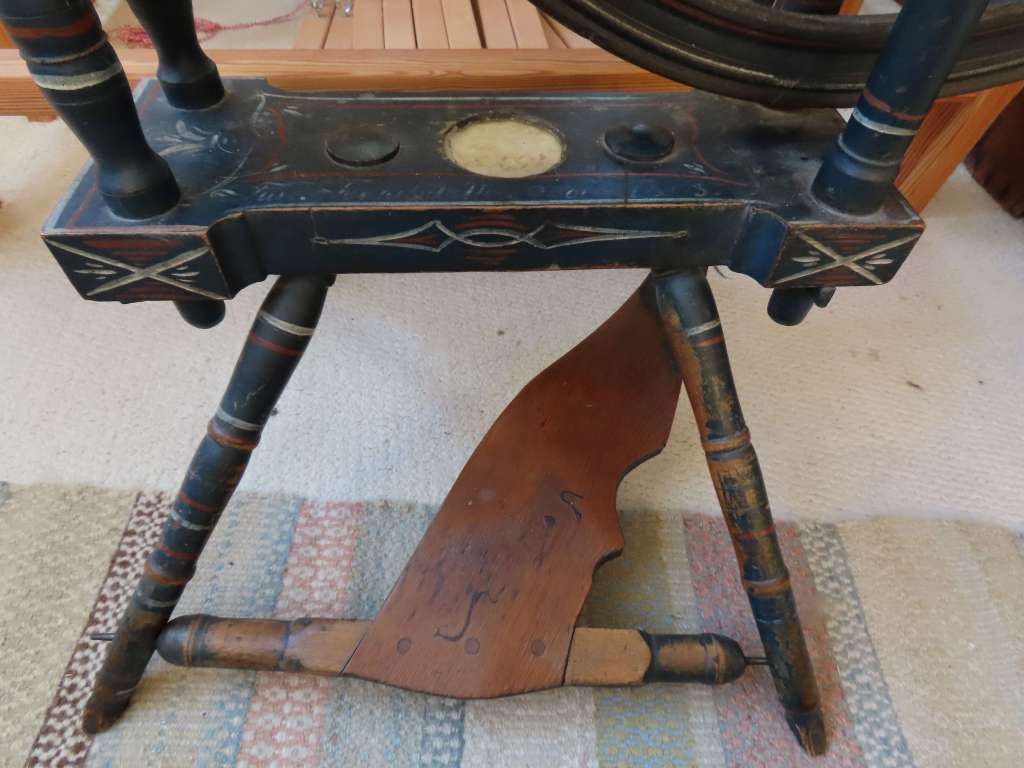
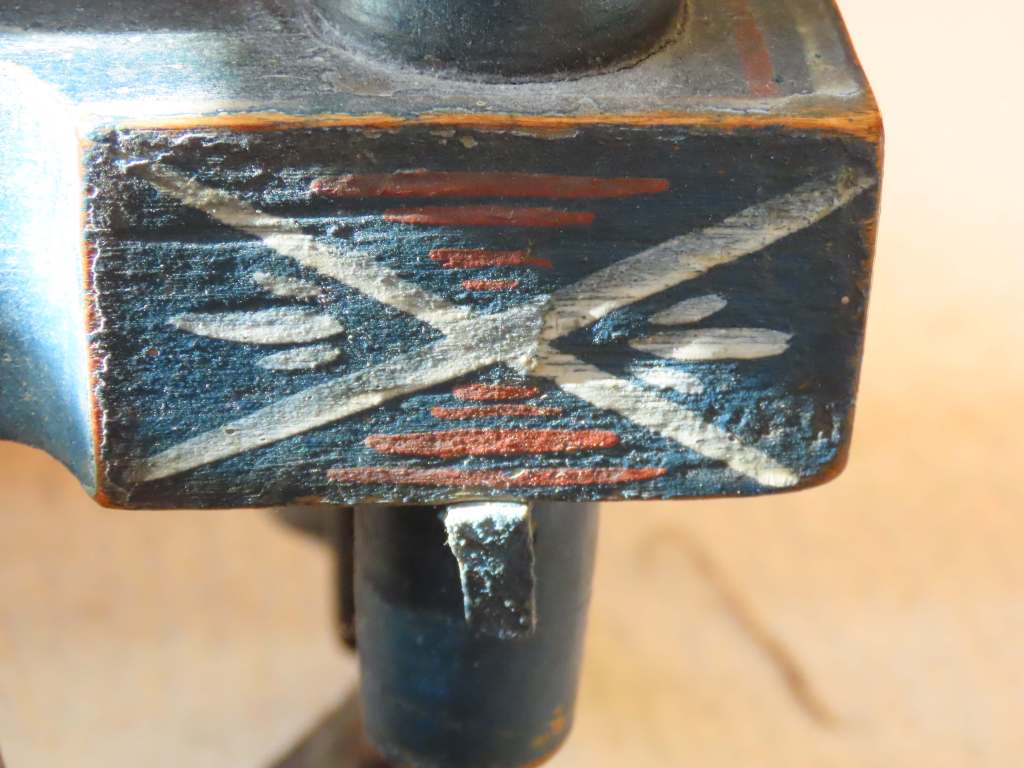
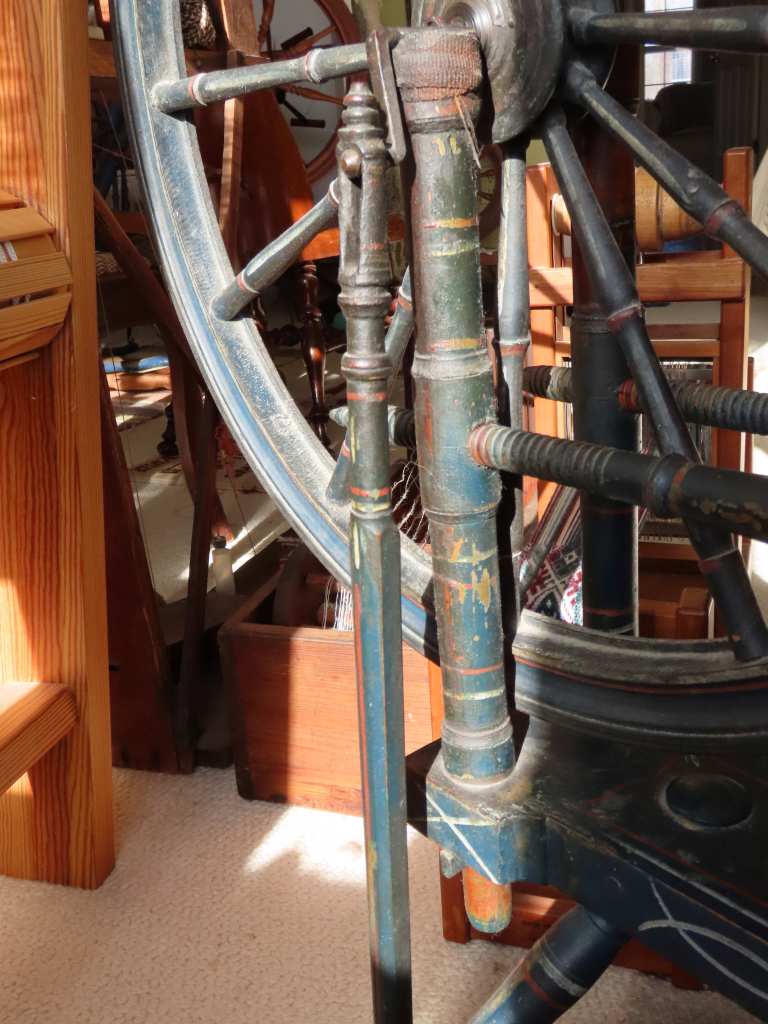
Painted a dark greenish-blue, almost every surface is decorated with red and white designs, which really pop in contrast with the deep background color.

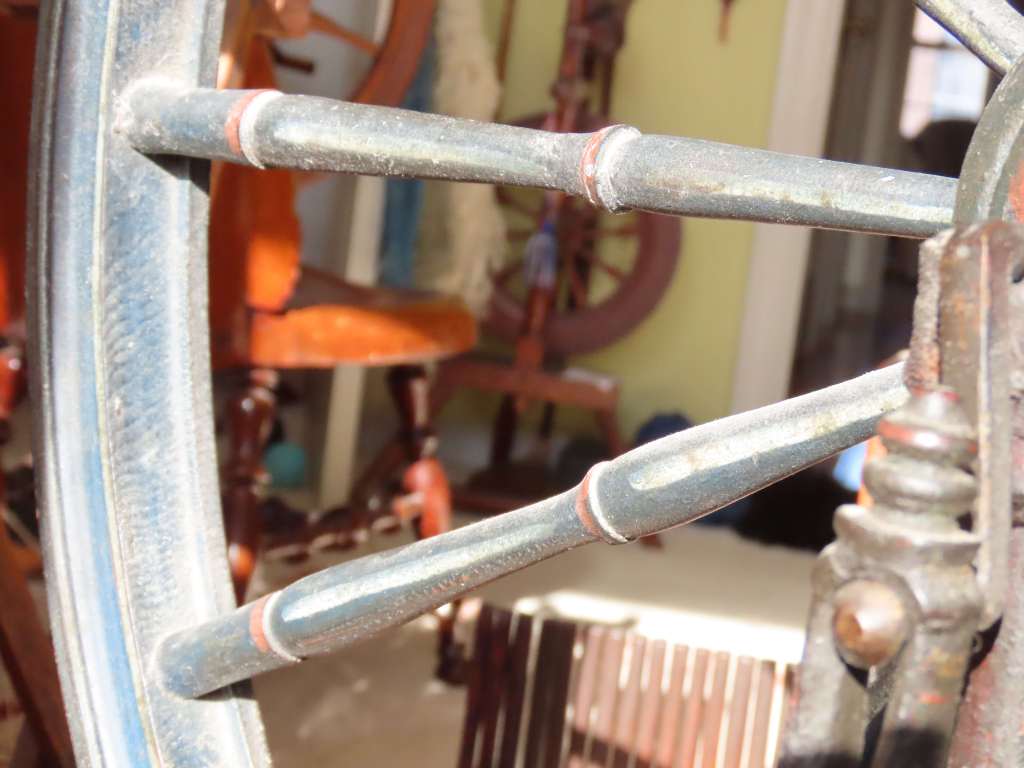
Even the spokes have white stripes running their length–many hard to see through fading.

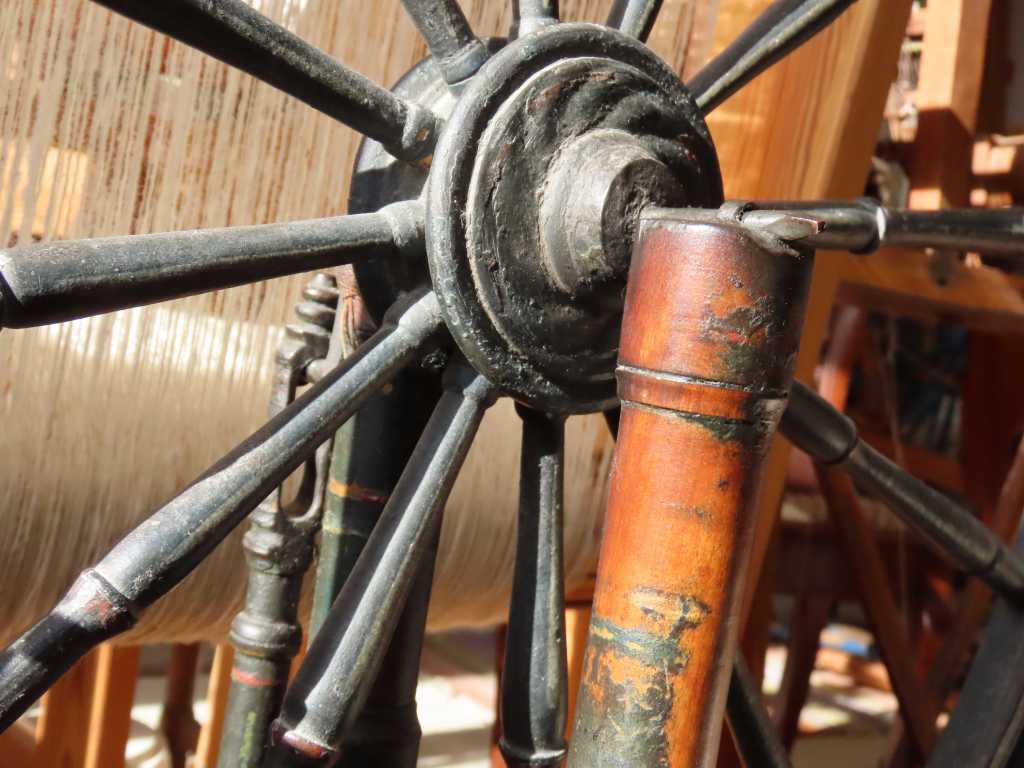
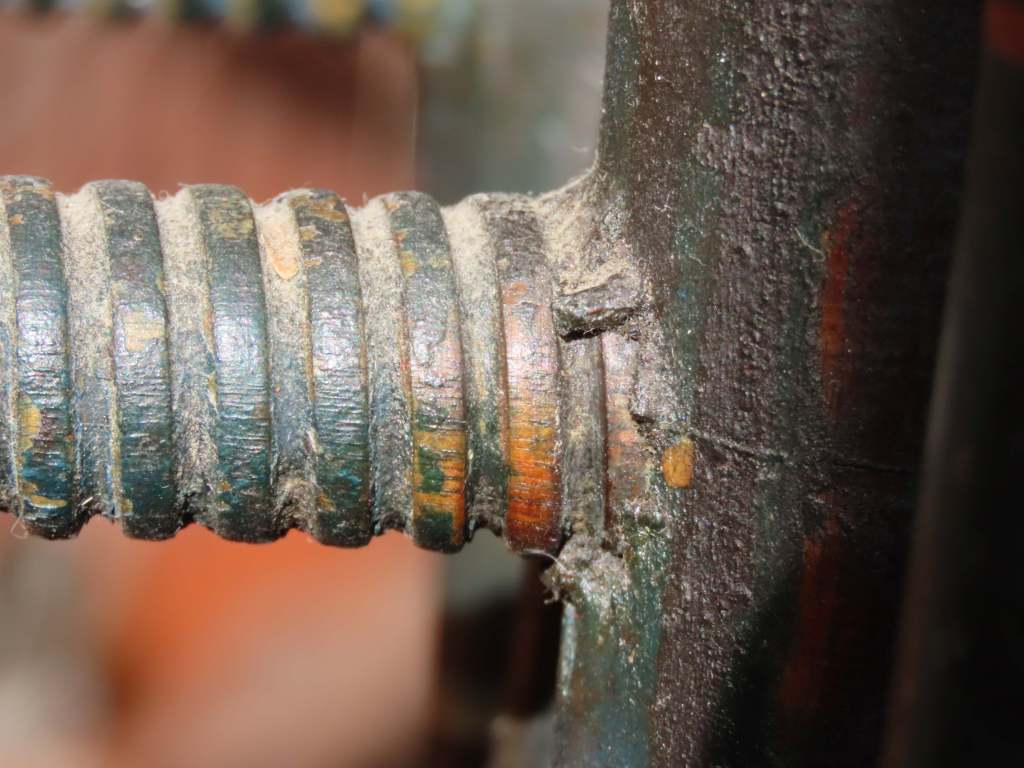
The hub has an odd wave–like surface.

The footman is ornate

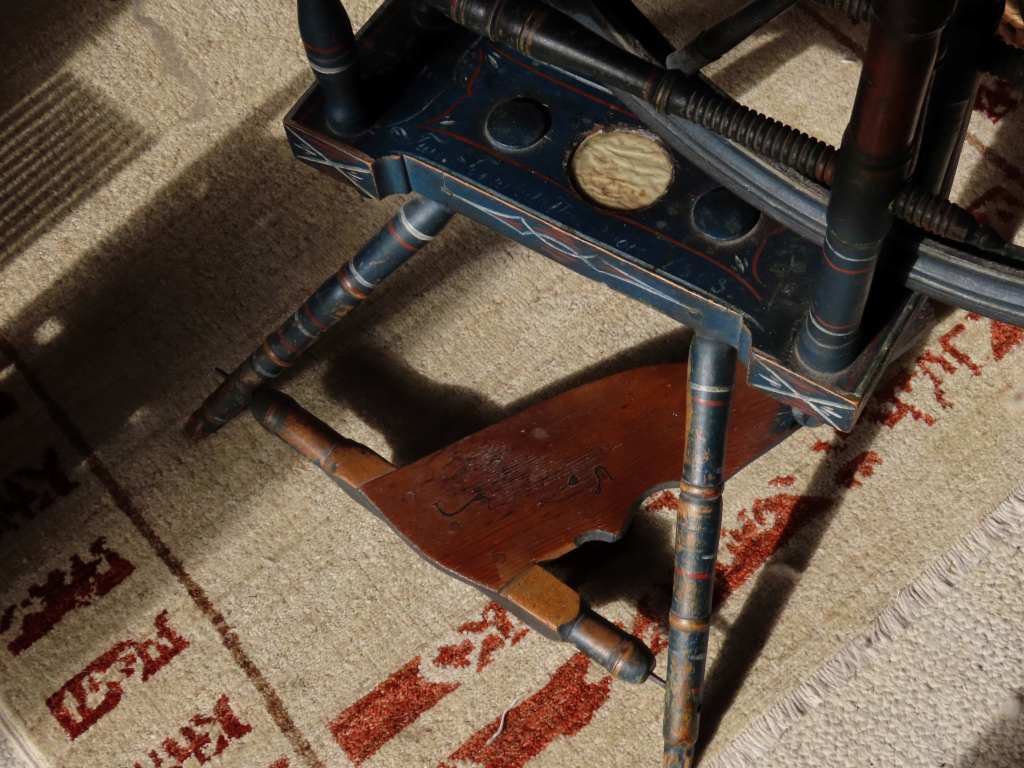
and the treadle is nicely contoured to fit exactly next to the leg.

The tension knob was either unpainted or the paint has worn off.

Maybe a touch of old paint left on the end

The treadle is worn

and the paint is mostly worn of of the front maiden.

The back maiden has a recess for the whorl, either through wear or made intentionally.

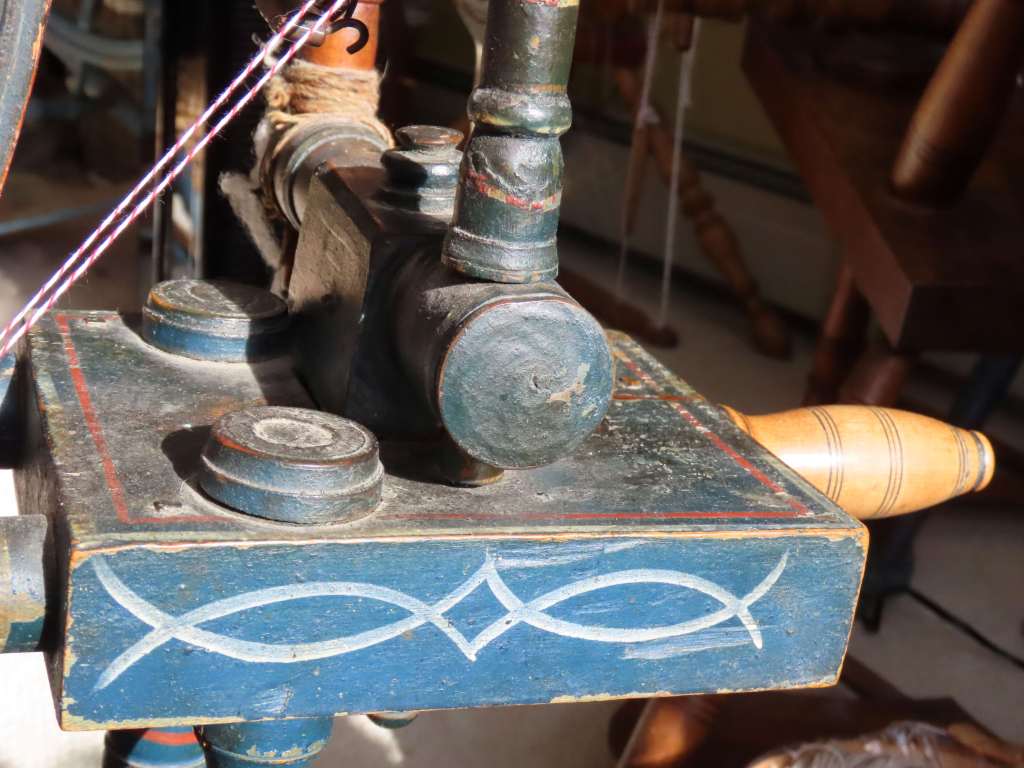
The underside of the table is painted.

As is the under-table nut tightening the MOA.

The rim of the drive wheel looks like beautiful snakeskin.

A piece had been broken off the rim and repainted with a blue paint that does not match the original.

The name of the owner is painted on the top, “Turi Torkelsdatter,”

along with a place name, “Nore,” and date “1863.”

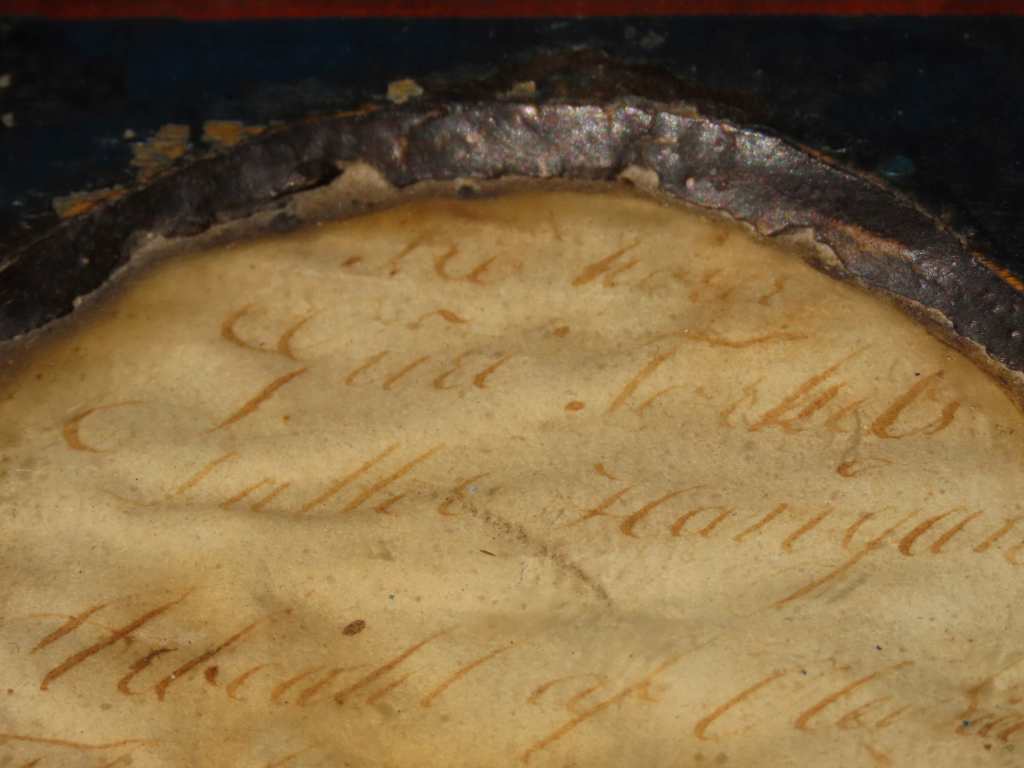
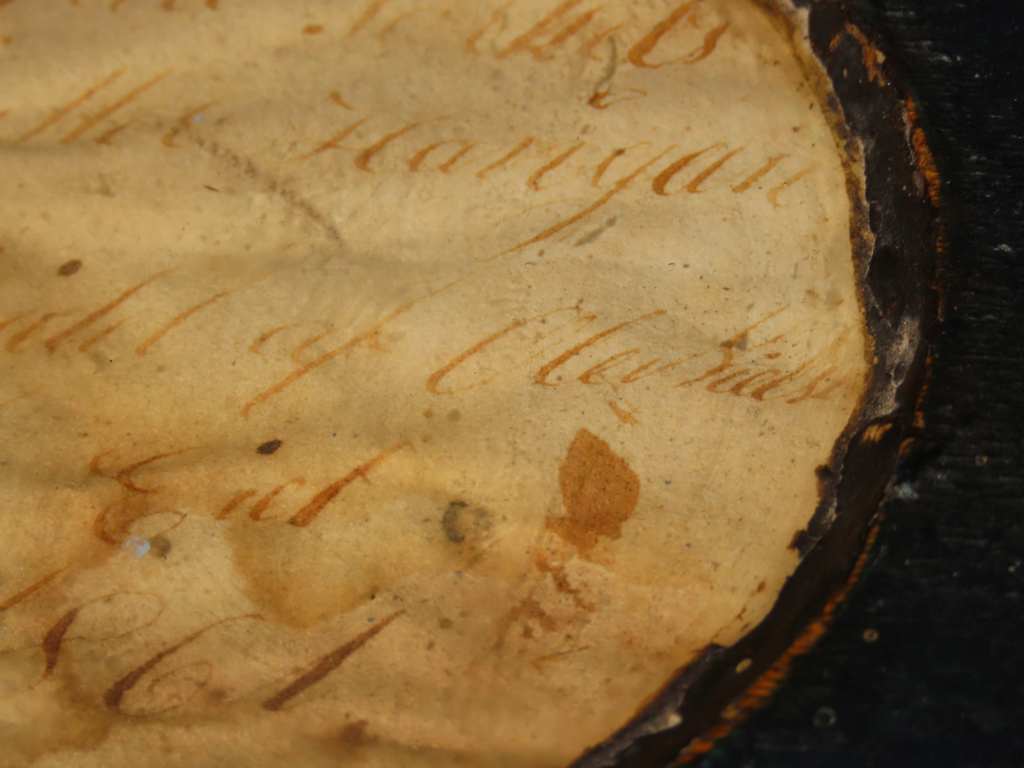
But what sets the wheel apart is a small piece of paper covered with glass sitting in the middle of the table.

The paper is wrinkled now and the handwriting faded.

But what a treasure. A note came with the wheel from a previous owner saying that the rough translation of the script is: “For: Turi Torkelsdatter Year: 1863 Place: Nore Valley Norway Made by: Olev Seilsen in 1861.” I cannot read Norwegian and much of the writing is hard to make out. It is pretty easy to make out the “Turi Torkelsdatter,” although there is a word after it that looks like it could be “Harigan” or “Haugan.”
Also, the name of the maker is here. I believe that the name is actually “Ole Neilsen,” because what looks like it could be a “v” at the end on “Ole” is really just a swirl on a capital “N.”
The maker’s name is in the center right

In researching online, I did find several Ole Neilsens who lived in the Nore Valley through the years, although nothing indicating that any of them might have made wheels.

I also found several Turi Torkelsdatters in genealogy sites, but I do not have access to international searches so was not able to pin down this particular Turi.

Nevertheless, what a valuable piece of paper–I am grateful to Ole Neilsen for taking the time to document this wheel. Did he do so out of pride in his beautiful creation, to celebrate Turi, or both? Perhaps someone with the resources could track down more about Ole and Turi.

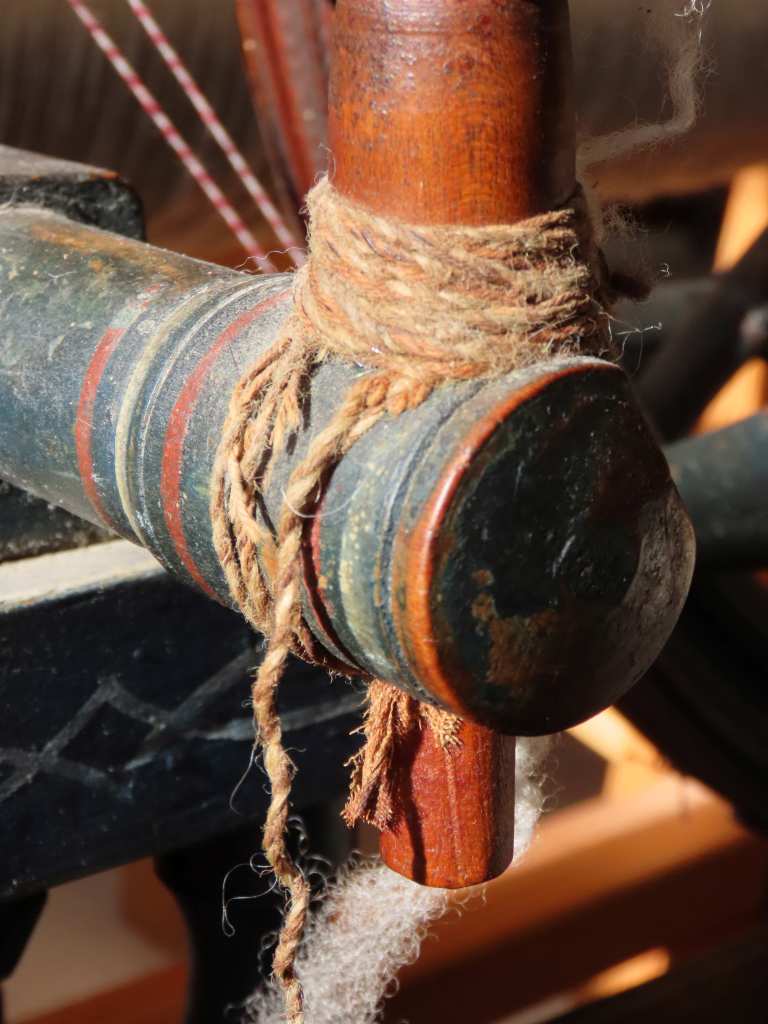
Whoever Turi was, she, and the women who inherited this wheel, used it well and took great pains to keep it spinning. It is a fantastic example of make-do fixes. The front maiden is bound at the bottom with a thick string.

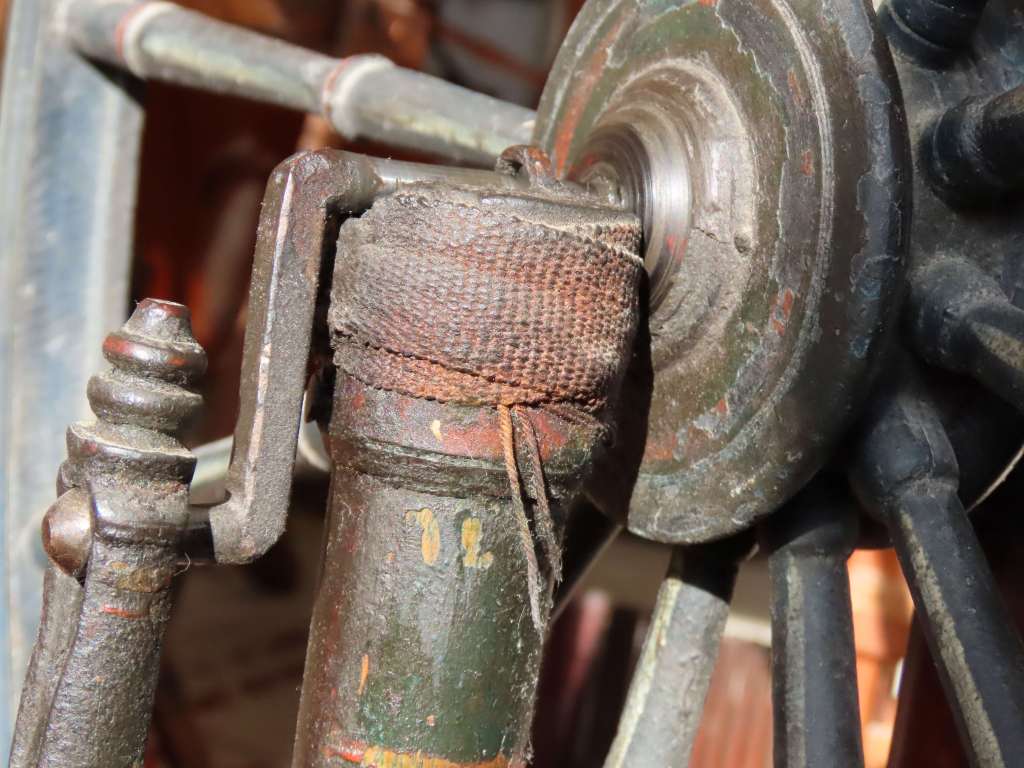
The back axle is bound with what looks like linen tape and secured with nails.

In fact, nails abound.

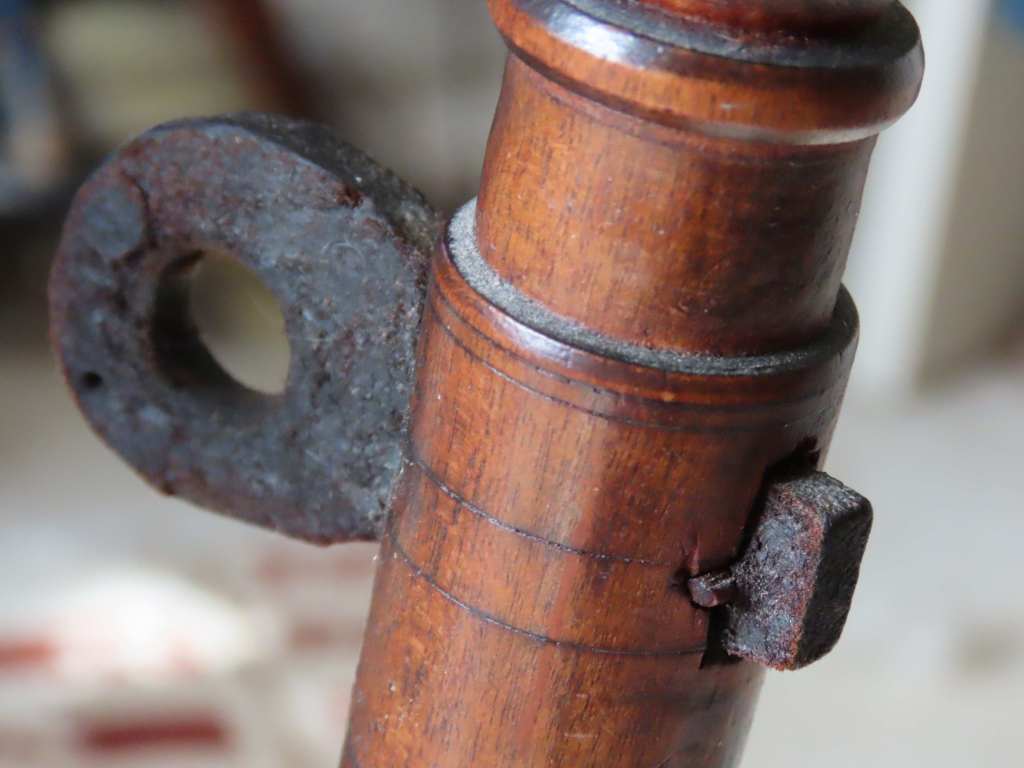
They are found here in one of the secondary tension screws.

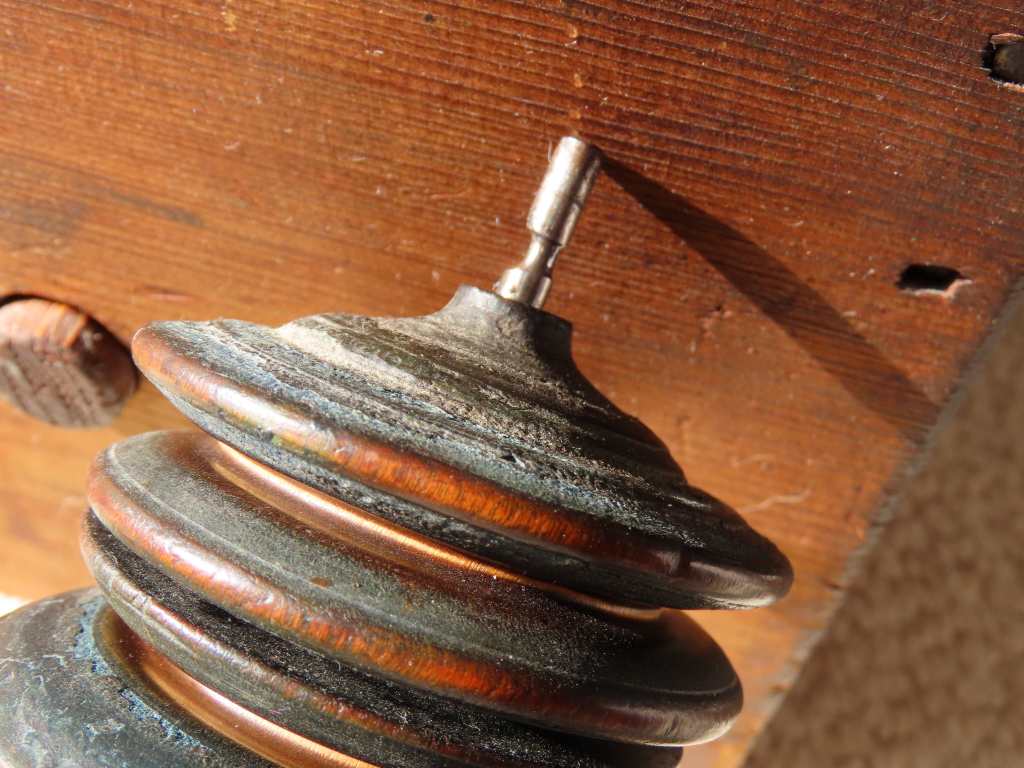
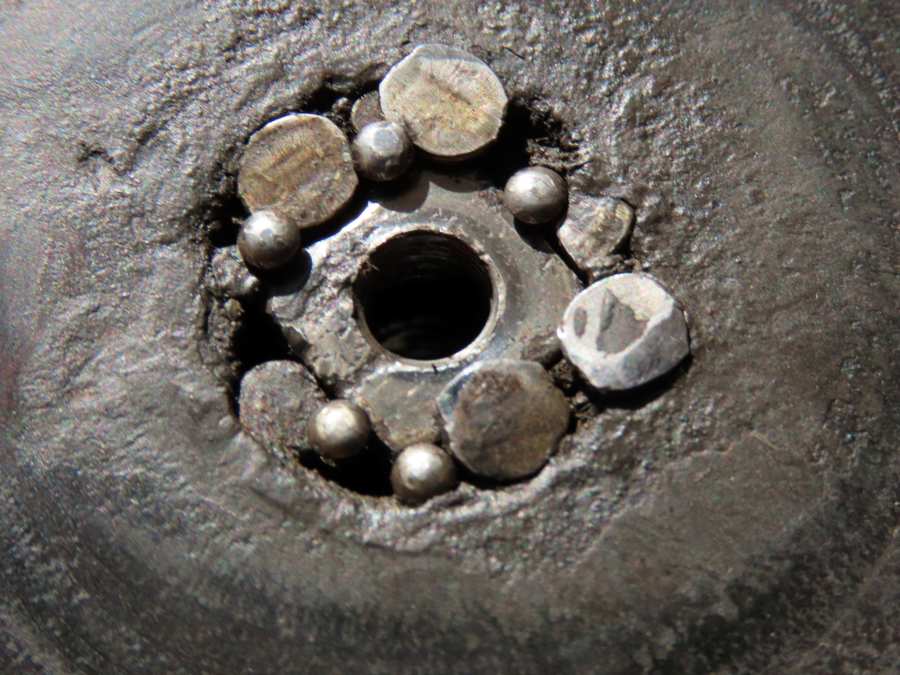
But the biggest nest of nails was hidden. When I got the wheel, it spun okay, but the flyer was a bit funky, turning with a wobbly, thump-ity feel to to it. The whorl looked as if it was a bit askew. I carefully unscrewed it (as an aside, as with many Norwegian wheels, it screws righty-tighty, lefty-loosey, in contrast to most North American wheels) and found this.

I imagine they were to keep the whorl nut in place, but sadly, it is loose again and the nails seem to give an odd unbalanced weight to the whorl. Interestingly, the whorl end of the mandrel shows uneven wear, with one side grooved more deeply than the other.

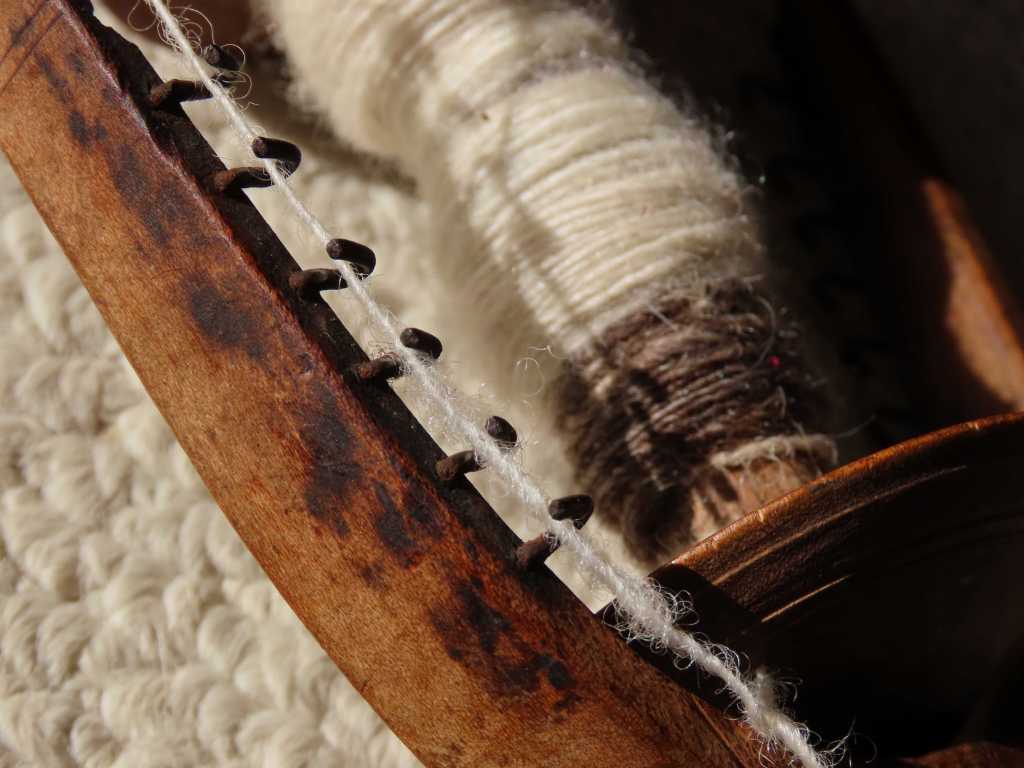
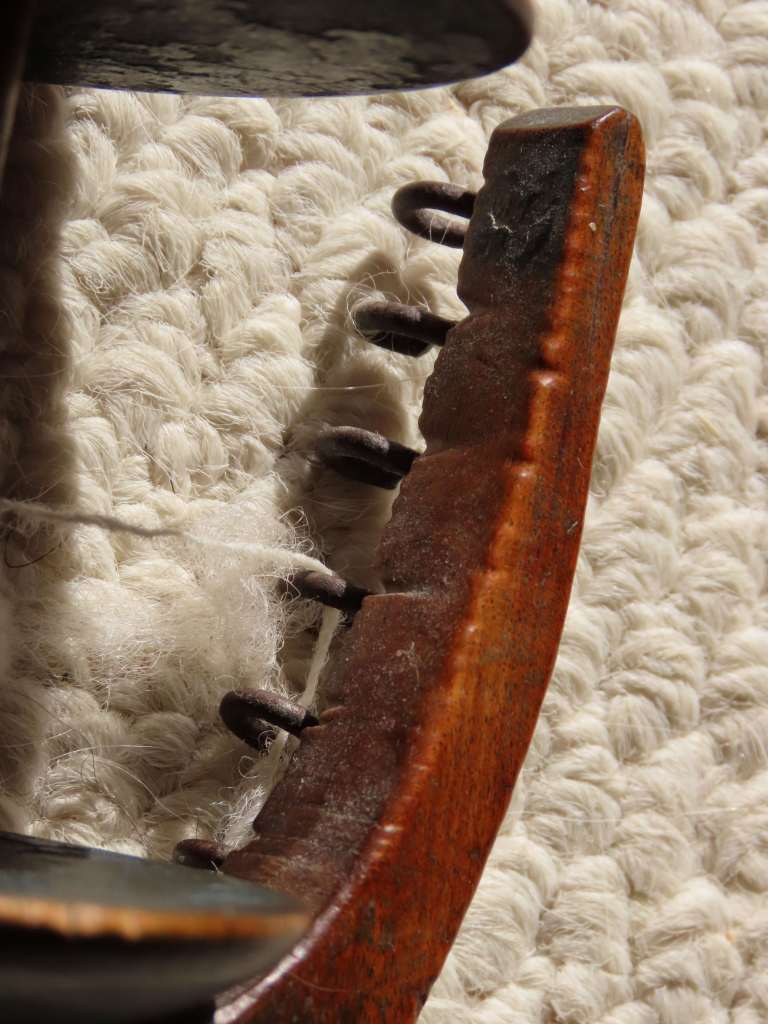
So, perhaps this unbalanced whorl was used for a while. The flyer arms show grooves on both edges, with interesting deeper grooves right next to the hooks.

Because this flyer is such a marvelous piece of the wheel’s history, I wanted to keep it as is and not have it repaired.

But it spins a bit awkwardly and there is some slippage of the mandrel. I did not want things to get worse, so I found an extra flyer in my collection to replace the original for everyday spinning.

Although it is a very different design than the original, it works beautifully on this wheel, belying the oft-repeated mantra that you cannot substitute flyers on antique wheels.

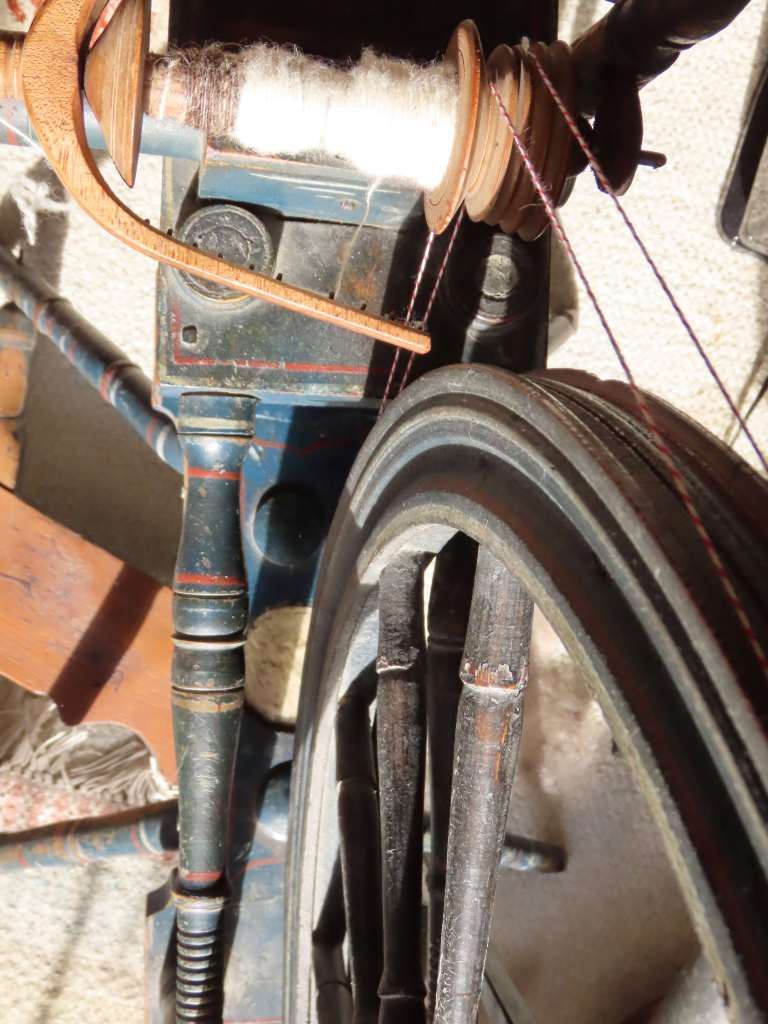
I do it all the time with great success. On this wheel it was especially satisfying to find a good substitute since the clearance between the flyer arms and drive wheel is very narrow.

The actual clearance is even closer than it looks in these photos

Happily, the substitute flyer looks nice and at home on the wheel.

And, as with all the previous fixes, it will allow this wheel to spin on, without erasing any of its history.