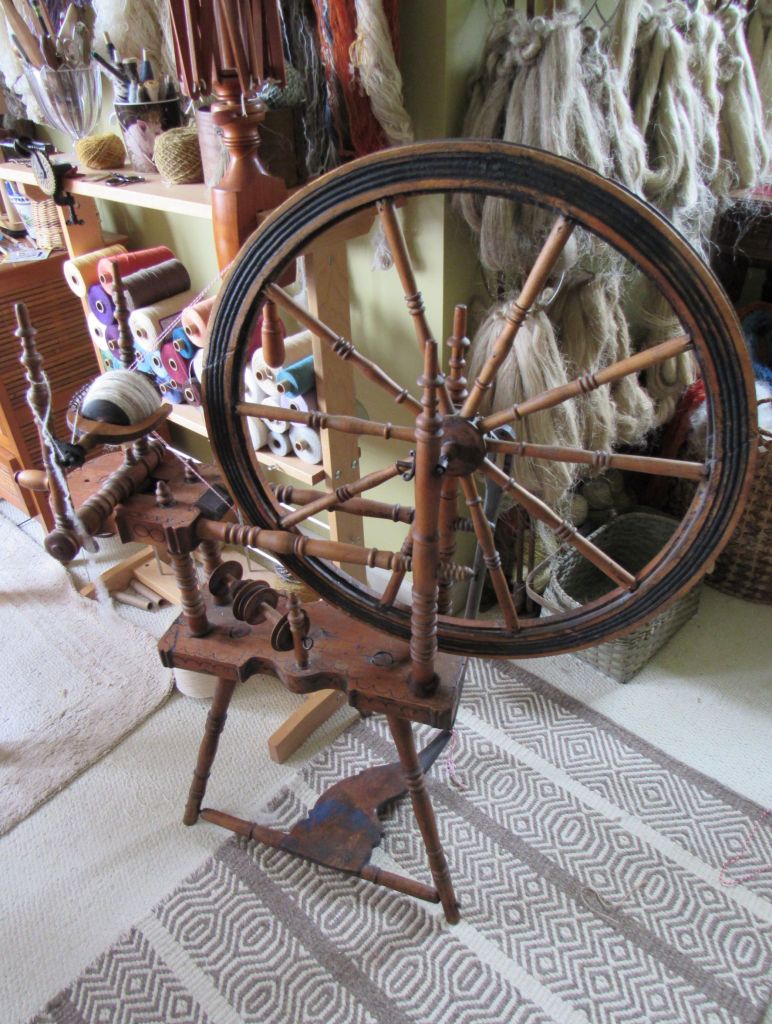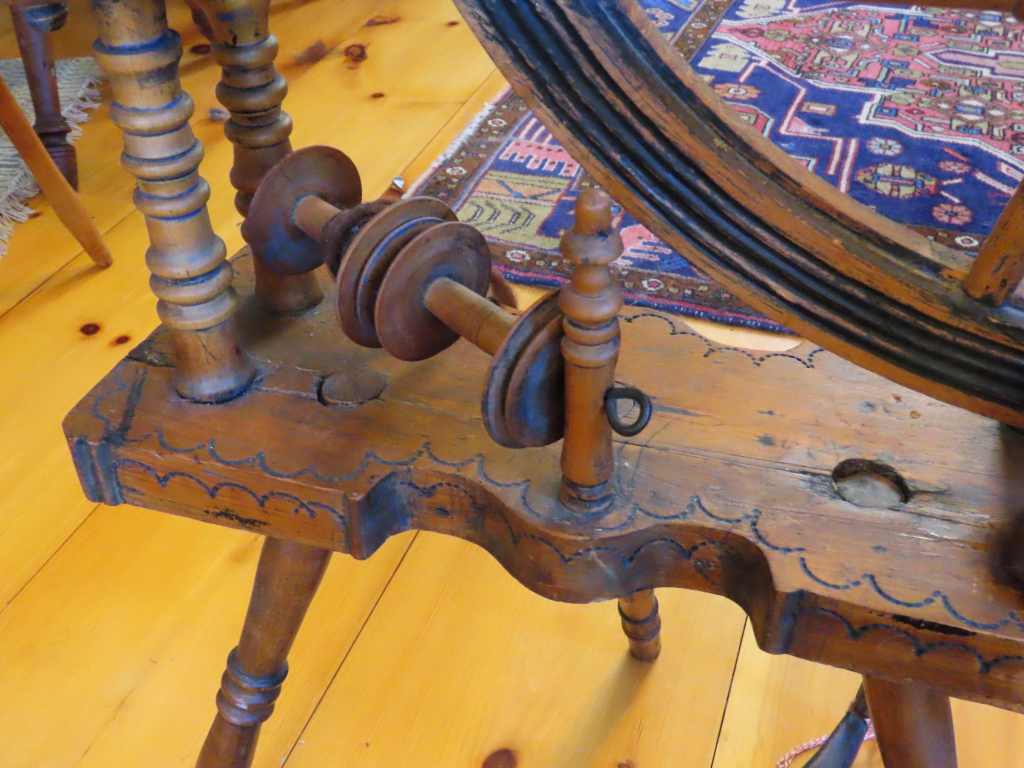
Out-of-the-Ordinary (a Reel, a Wheel, and a Loom)

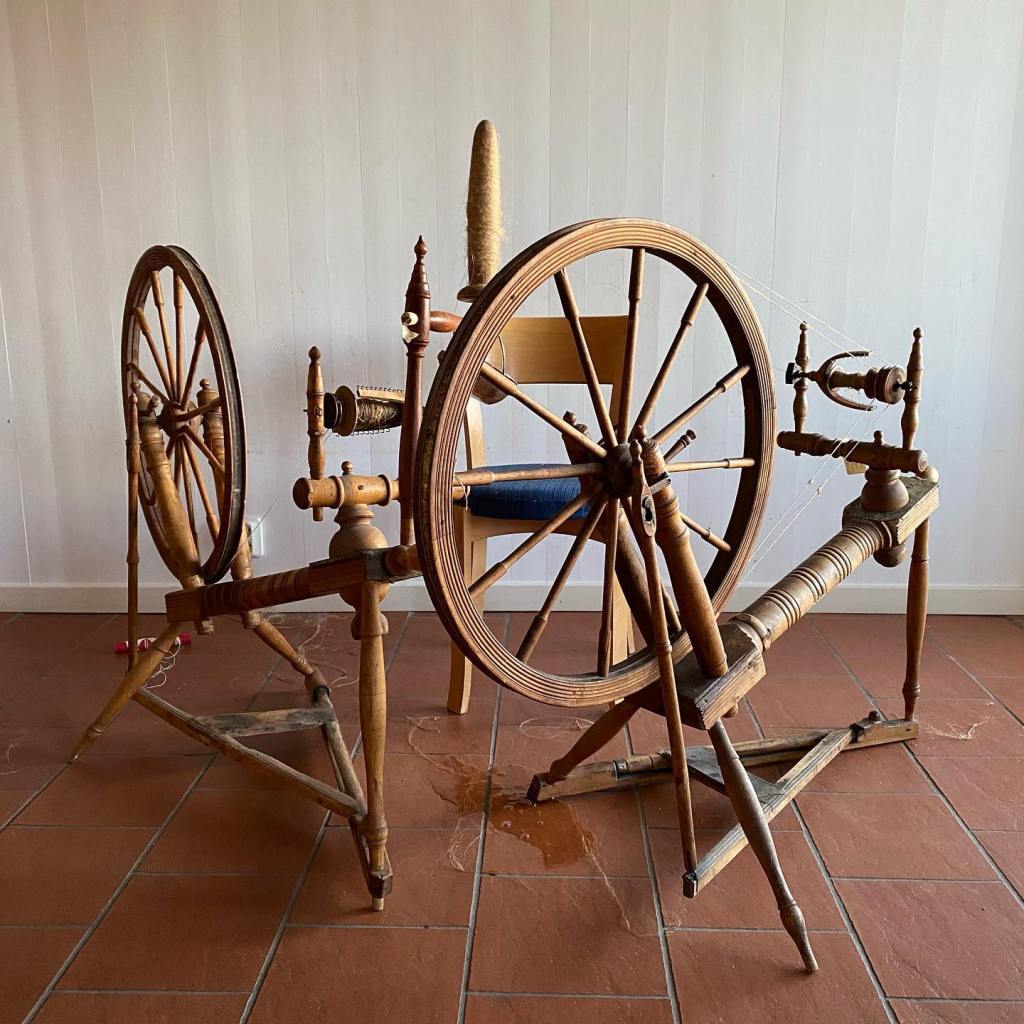
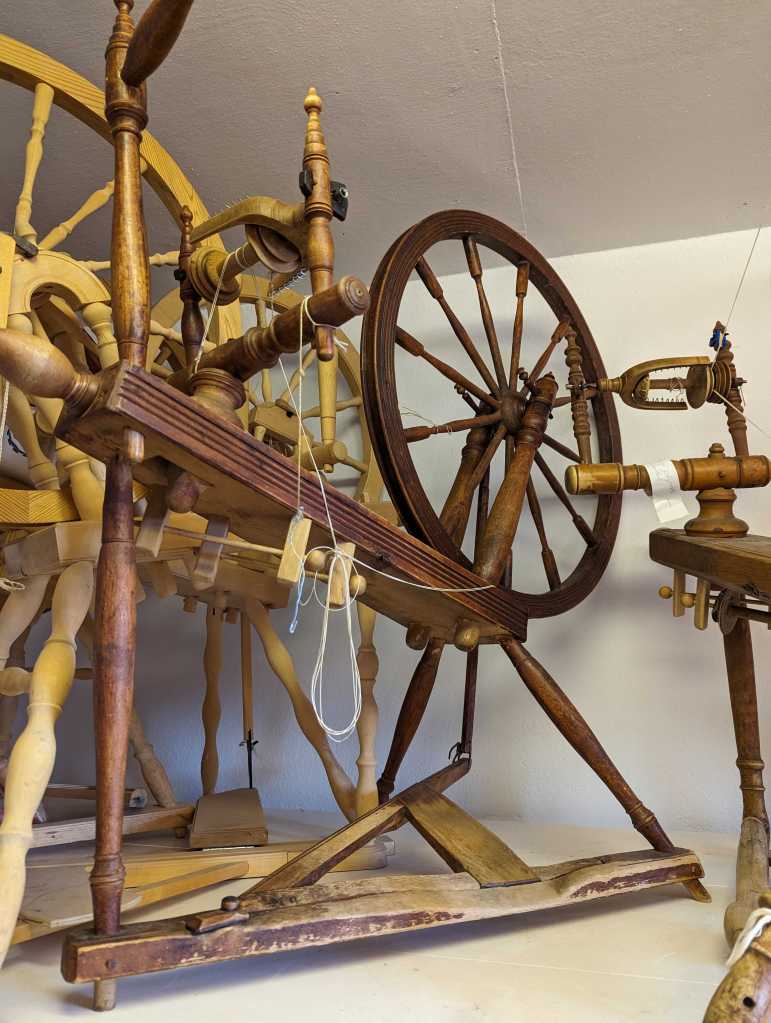
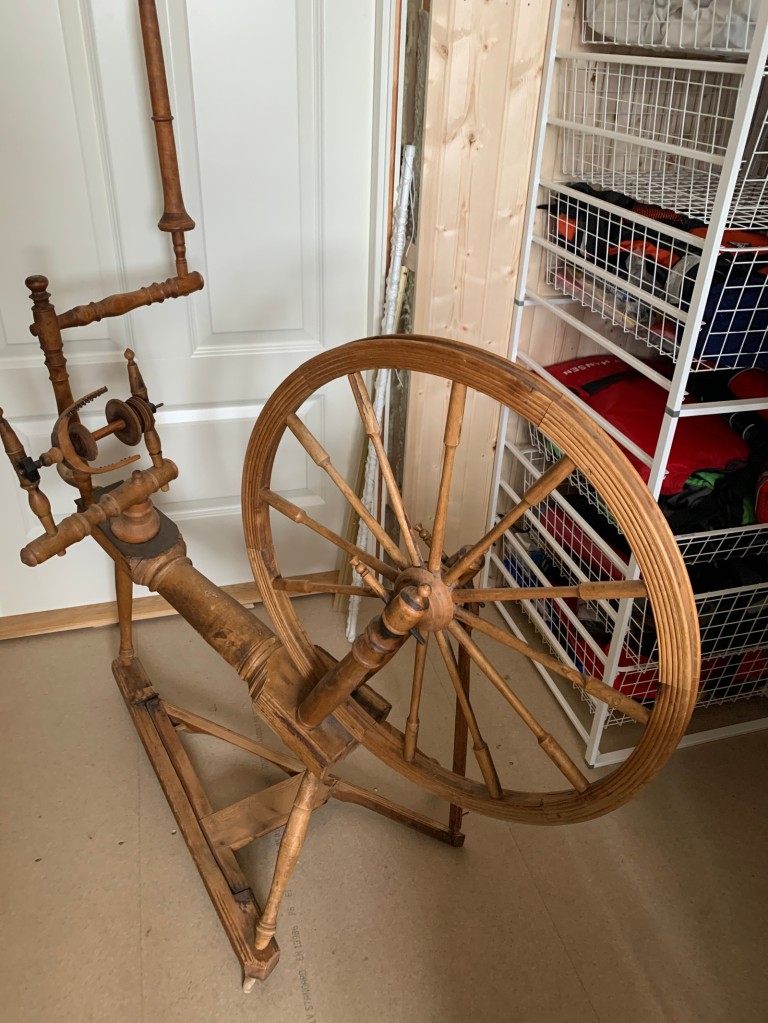
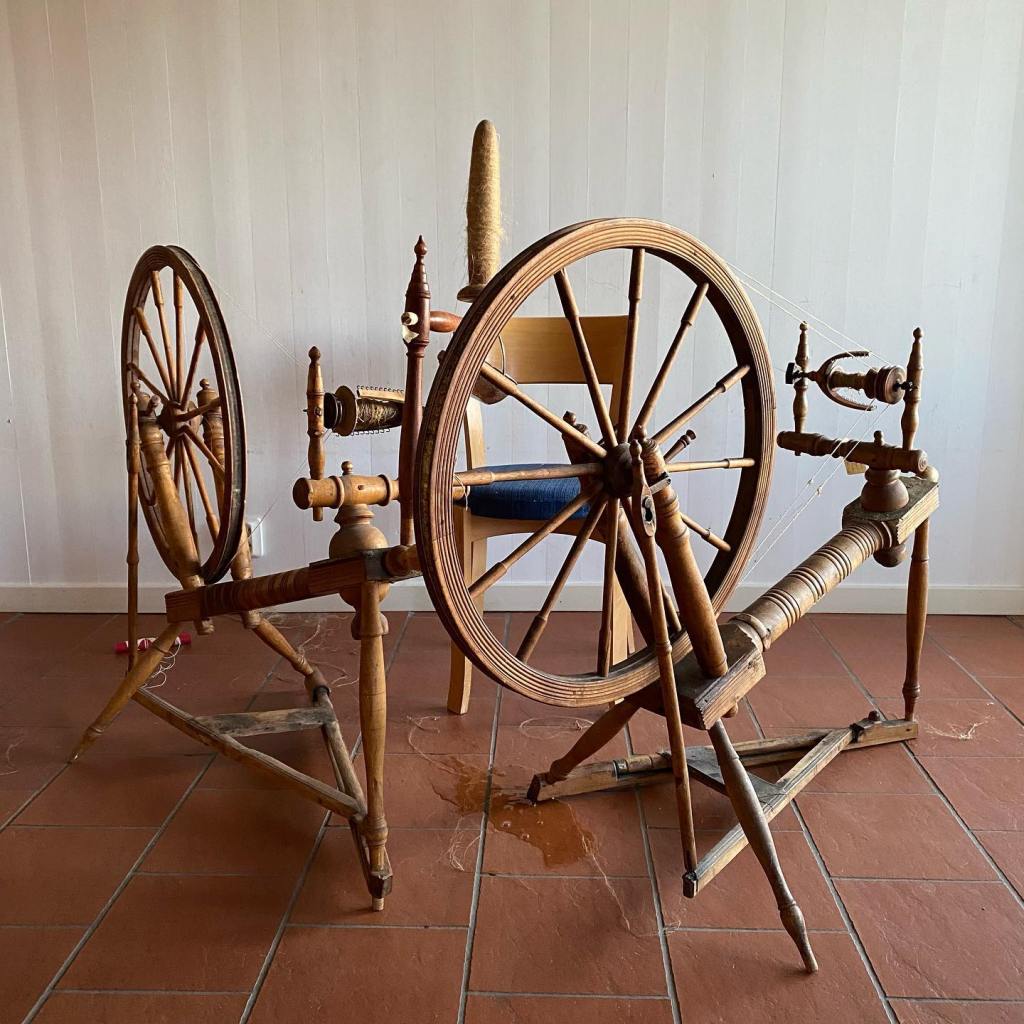
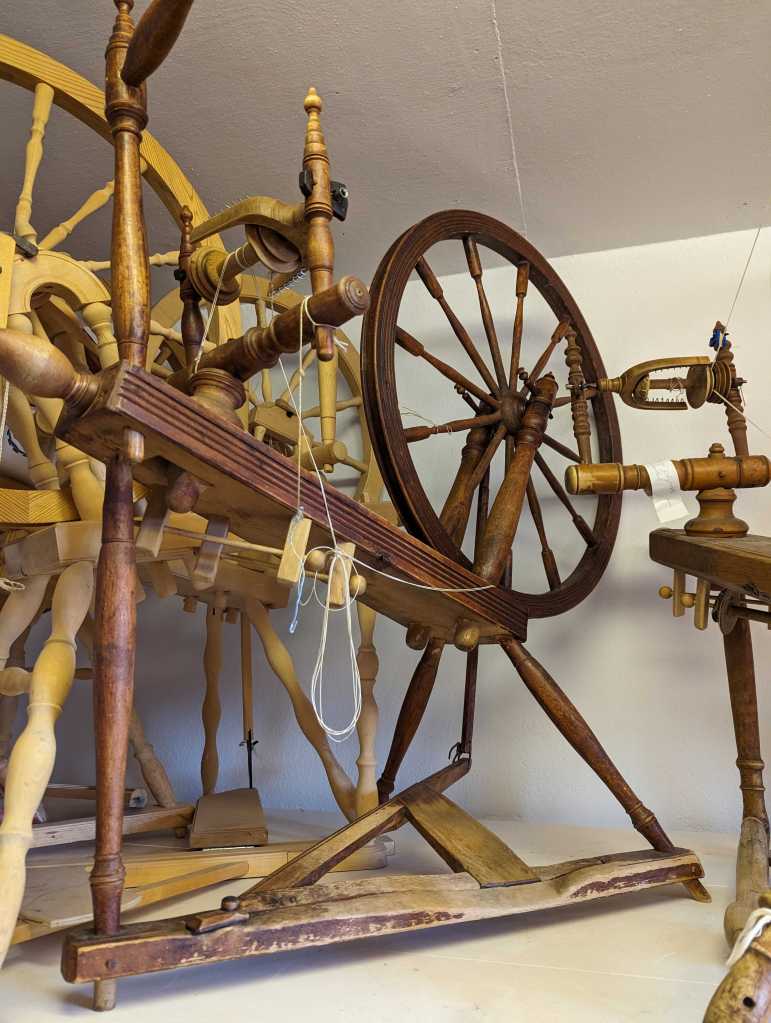
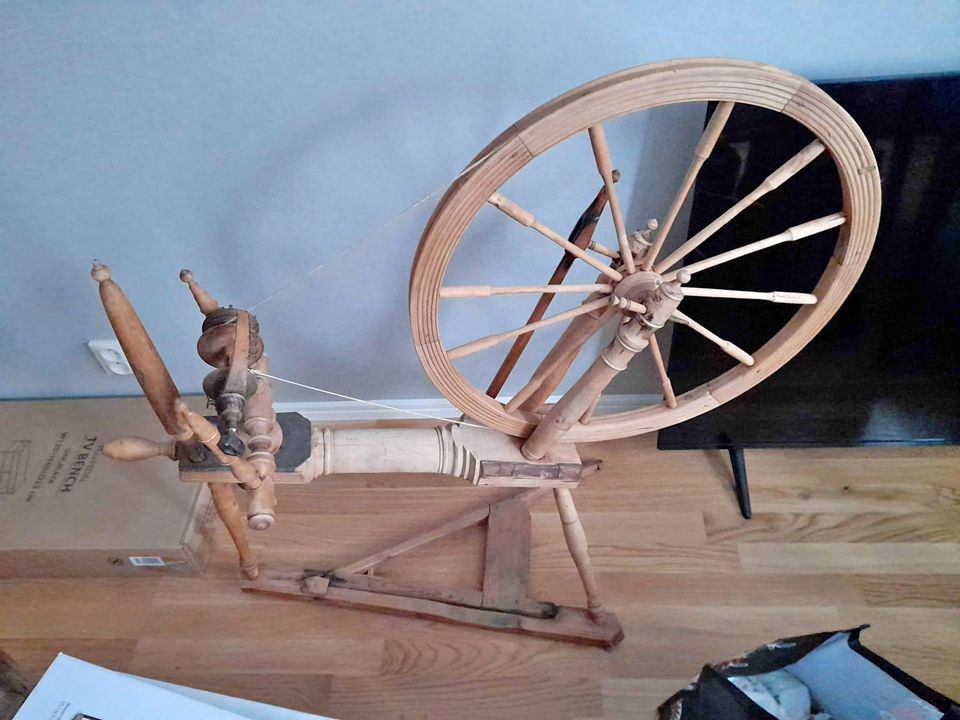
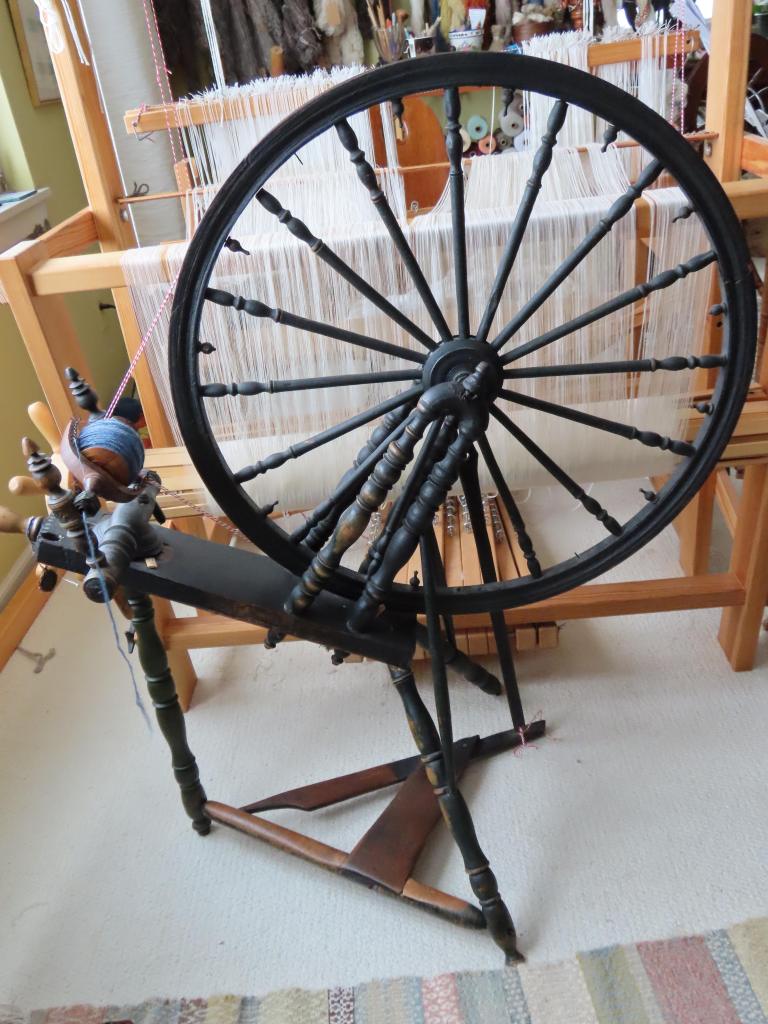
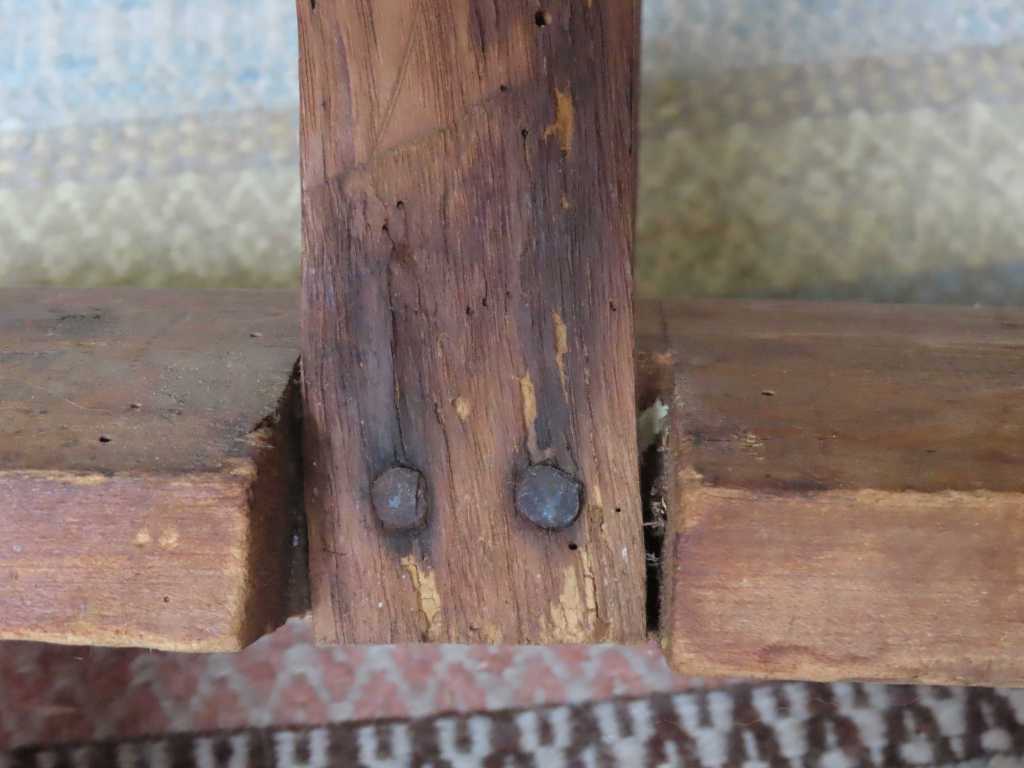
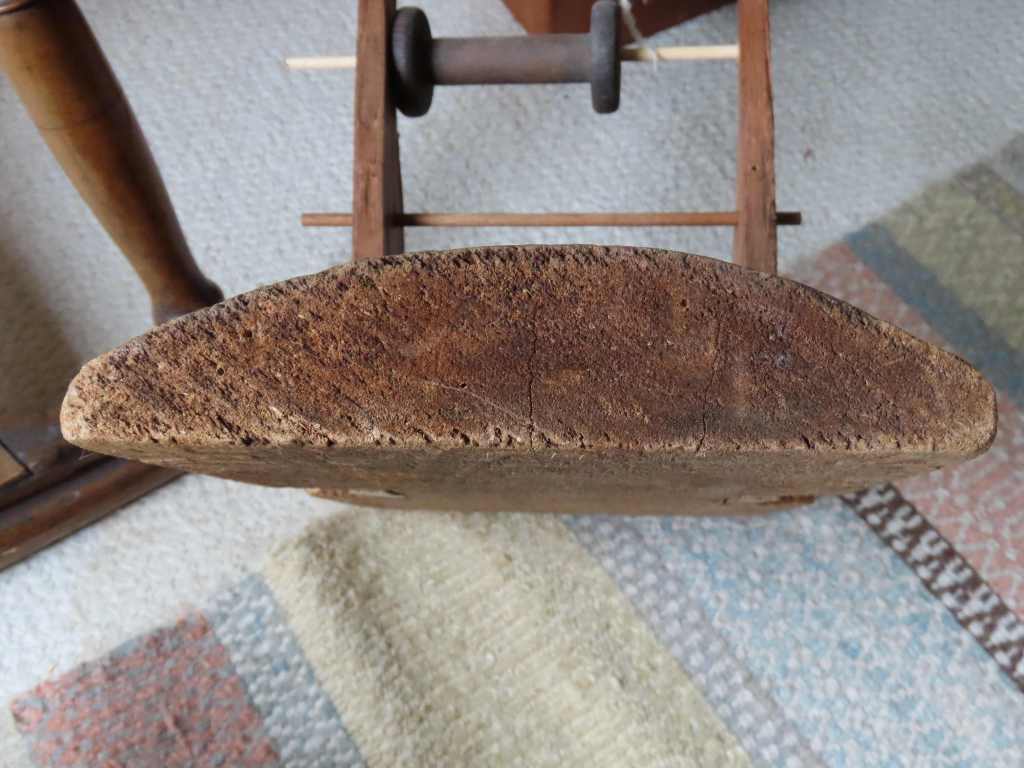
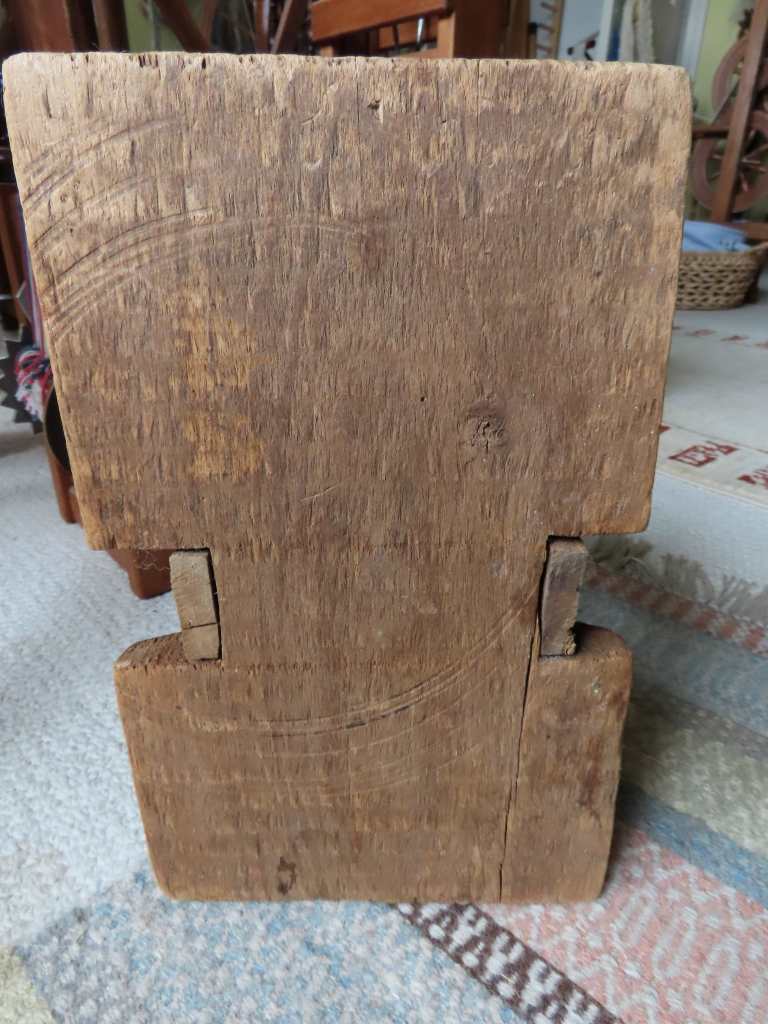
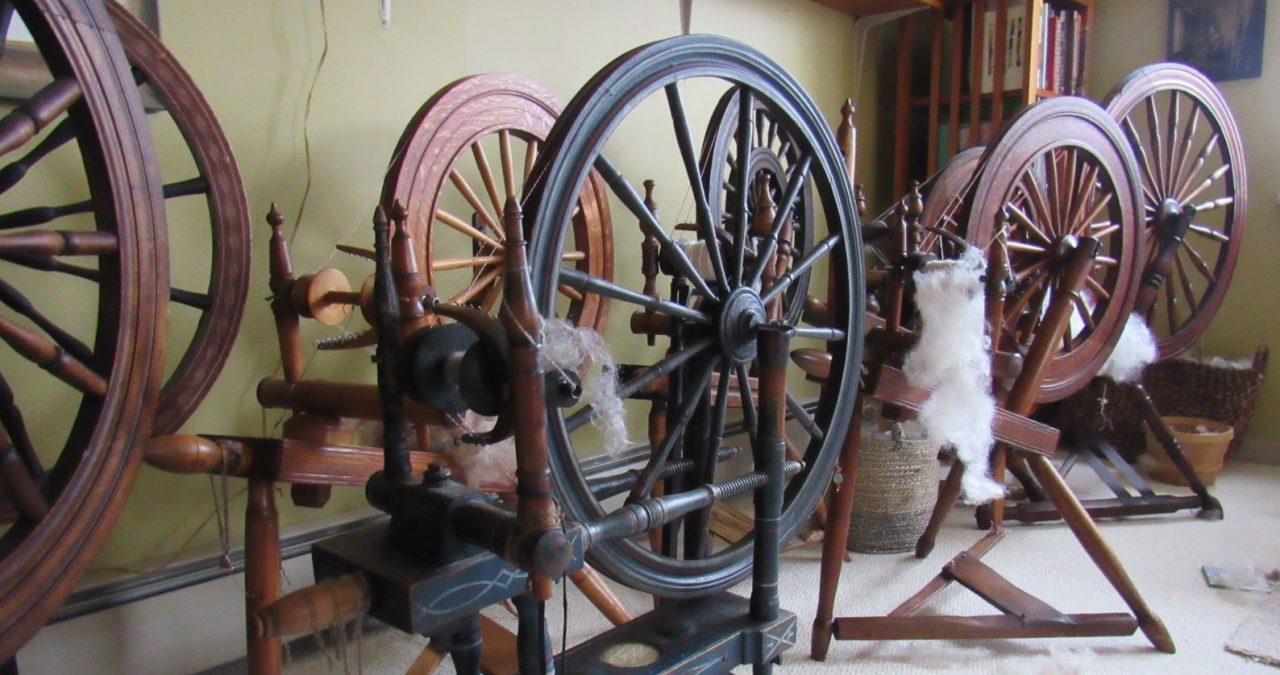
Although these three pieces are now in new homes, I want to include them in this blog because their unusual features should be documented for future reference. 

THE REEL

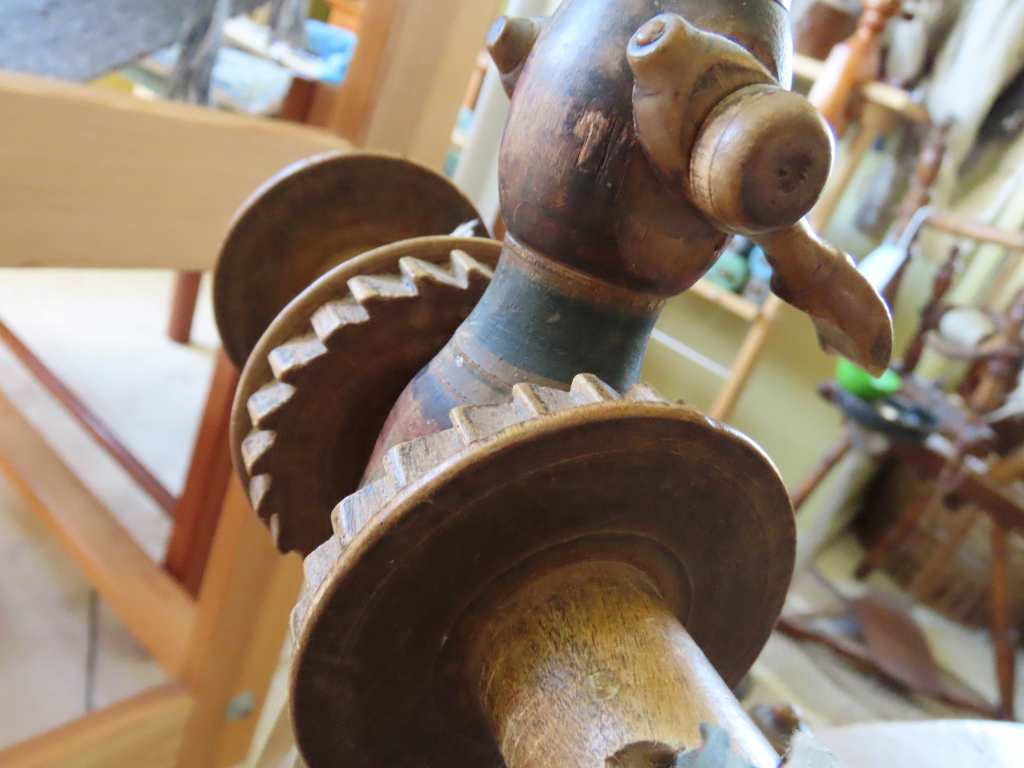
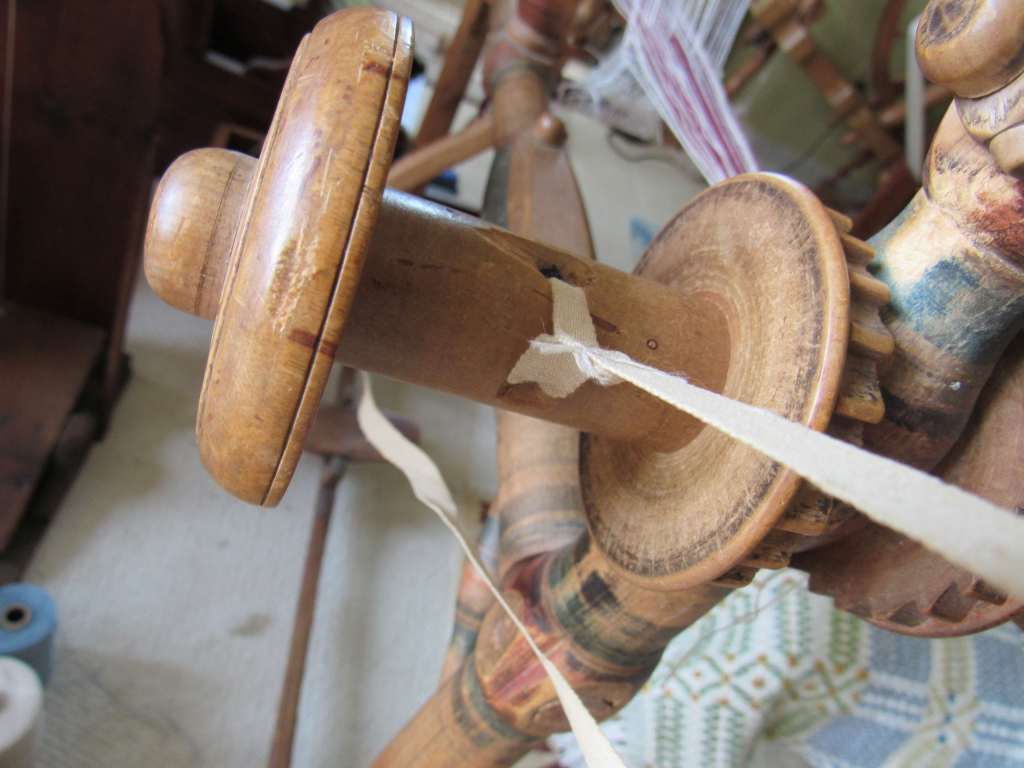
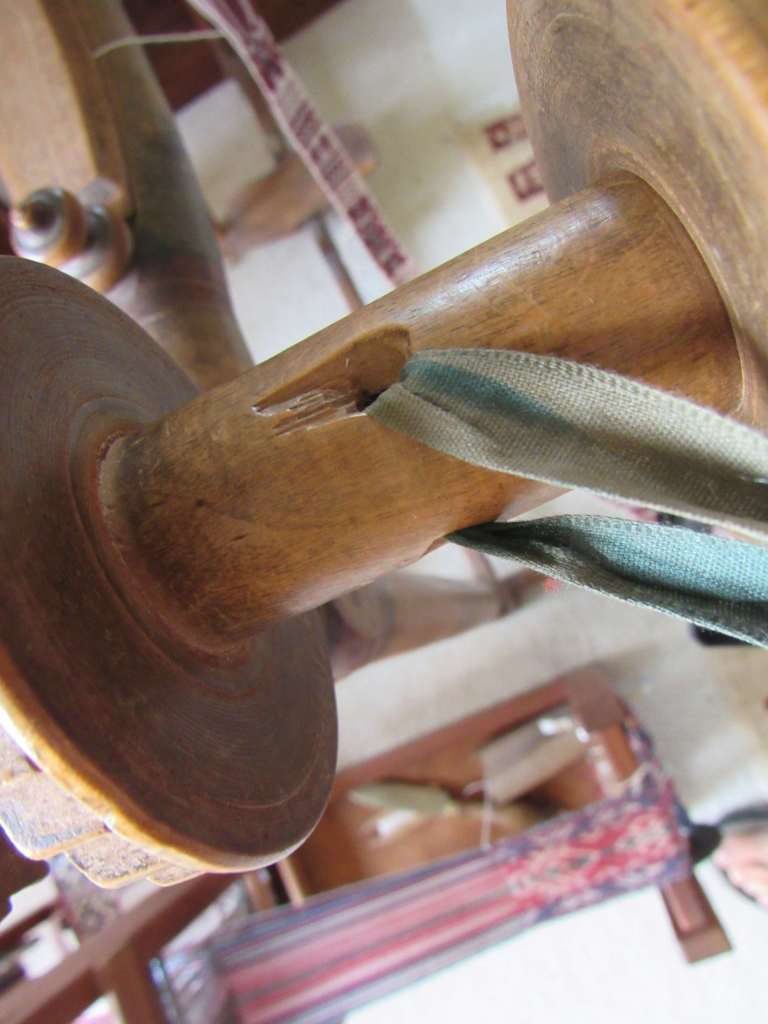
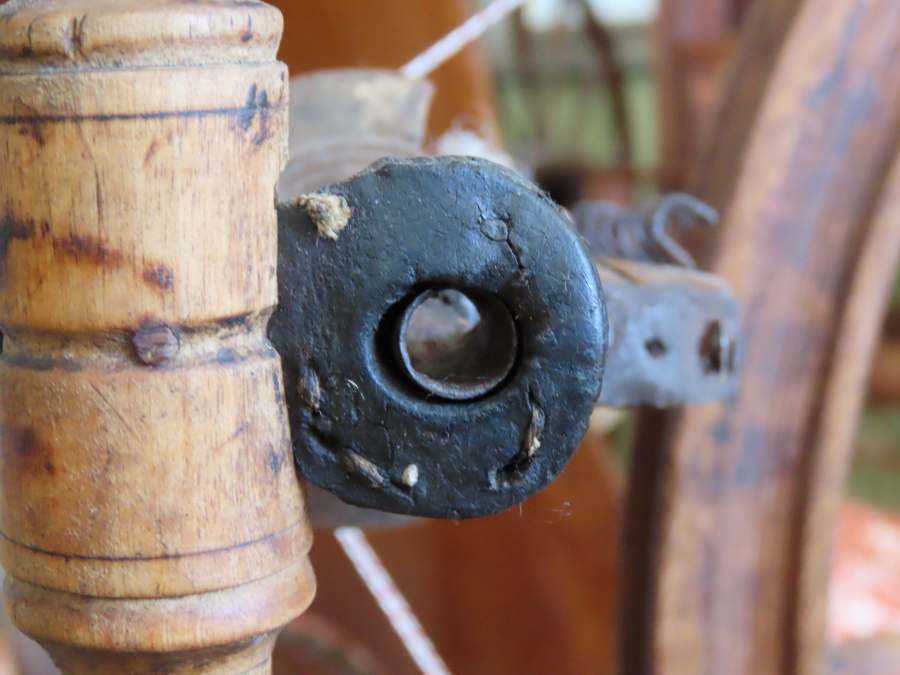
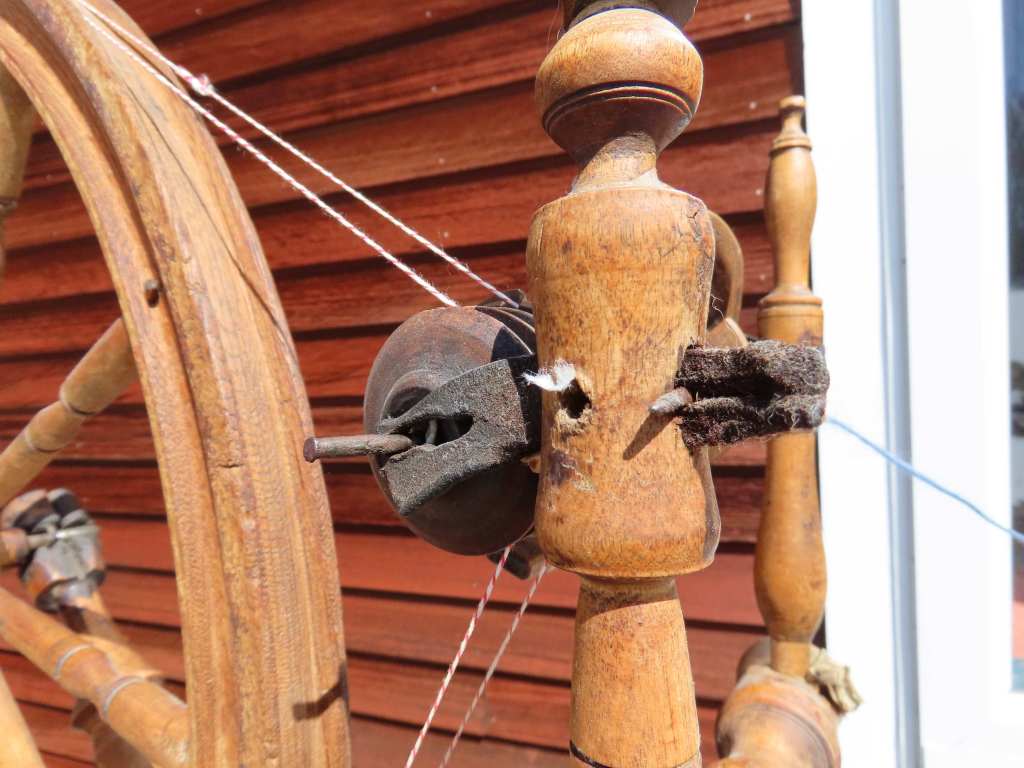
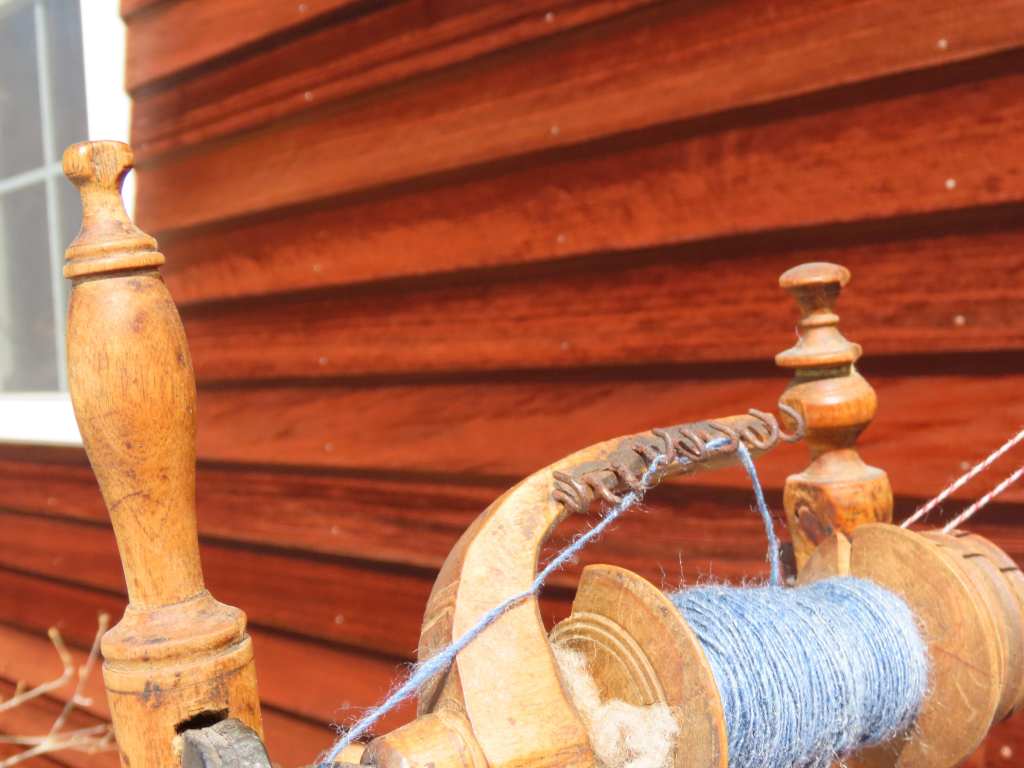
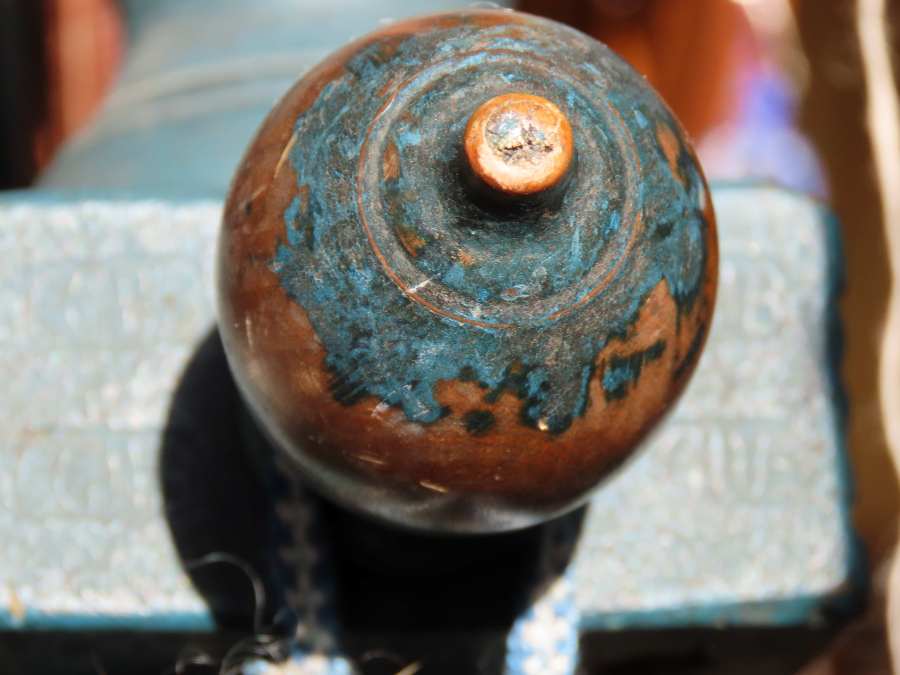
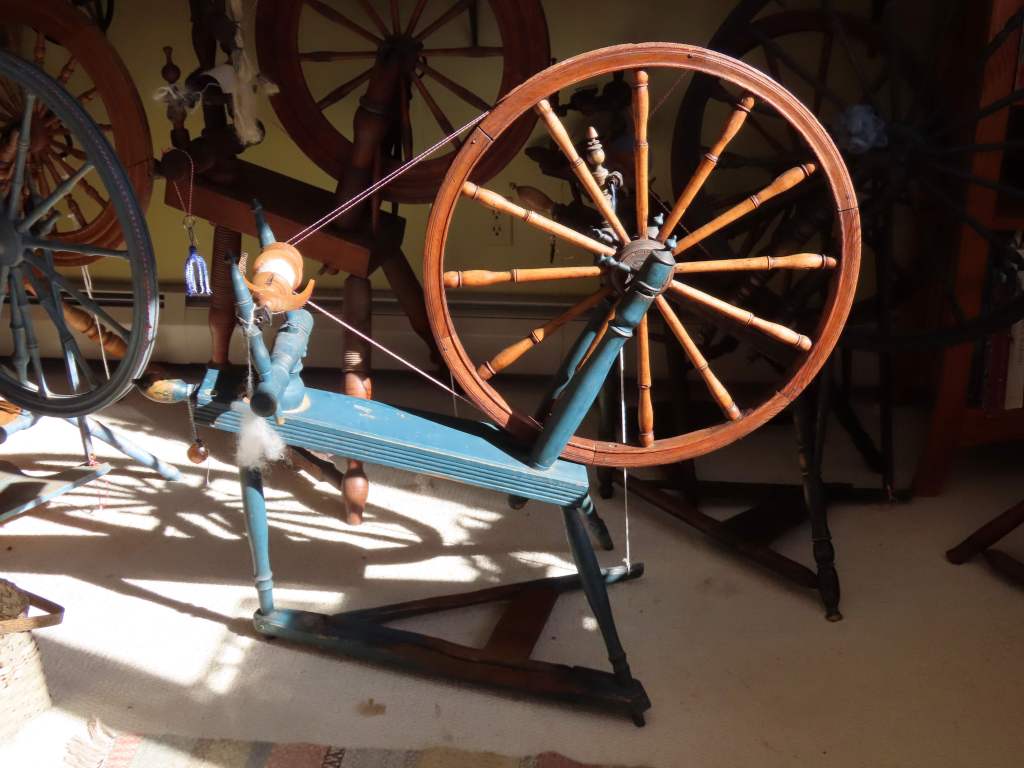
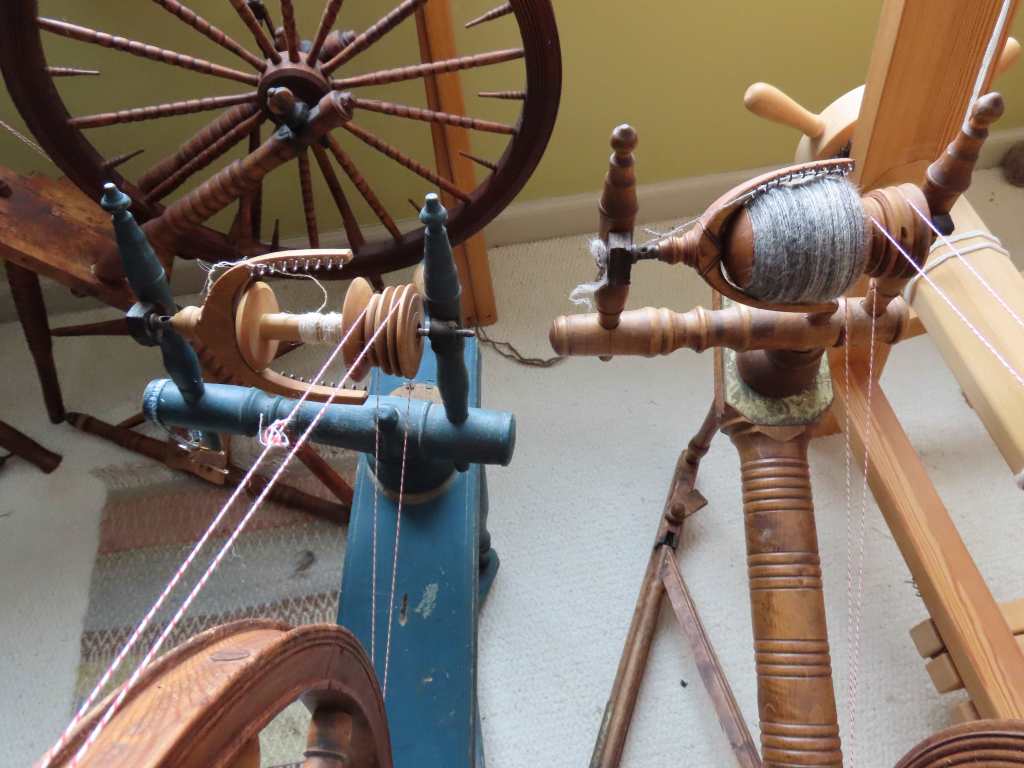
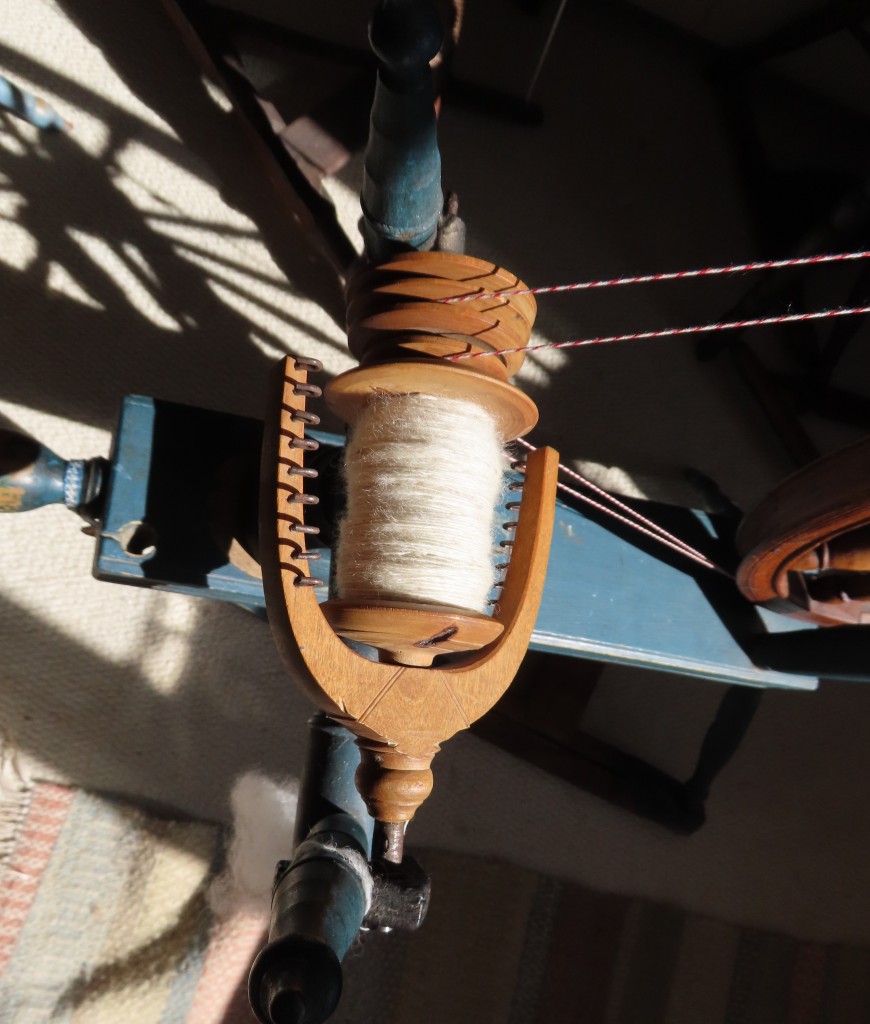
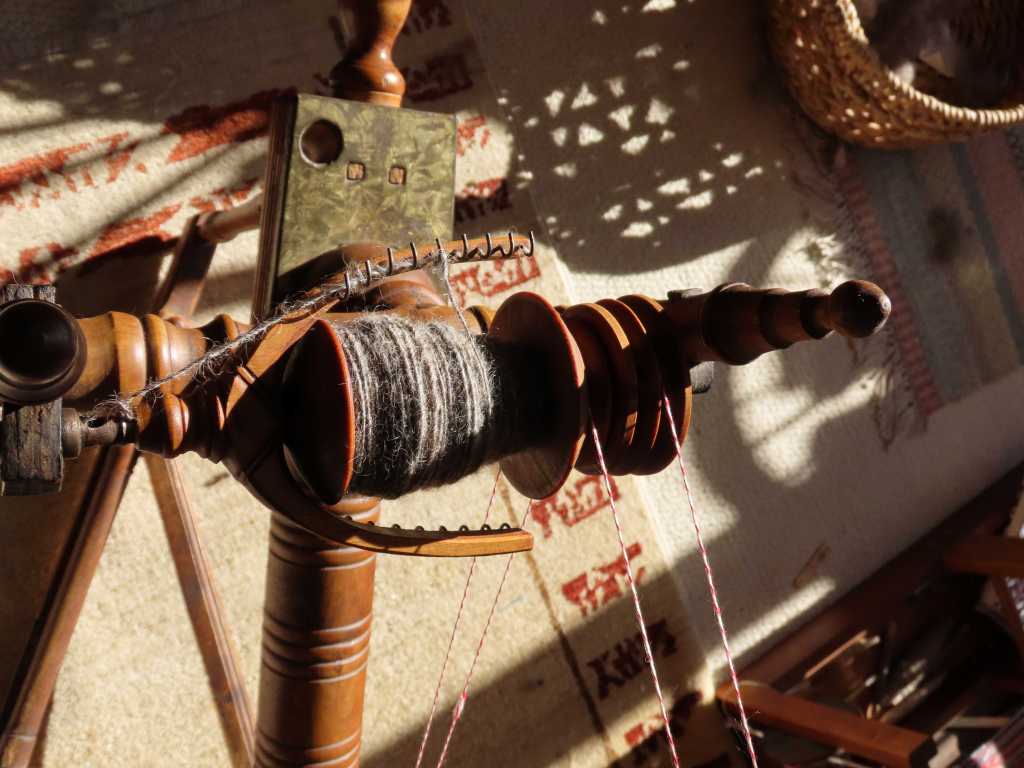
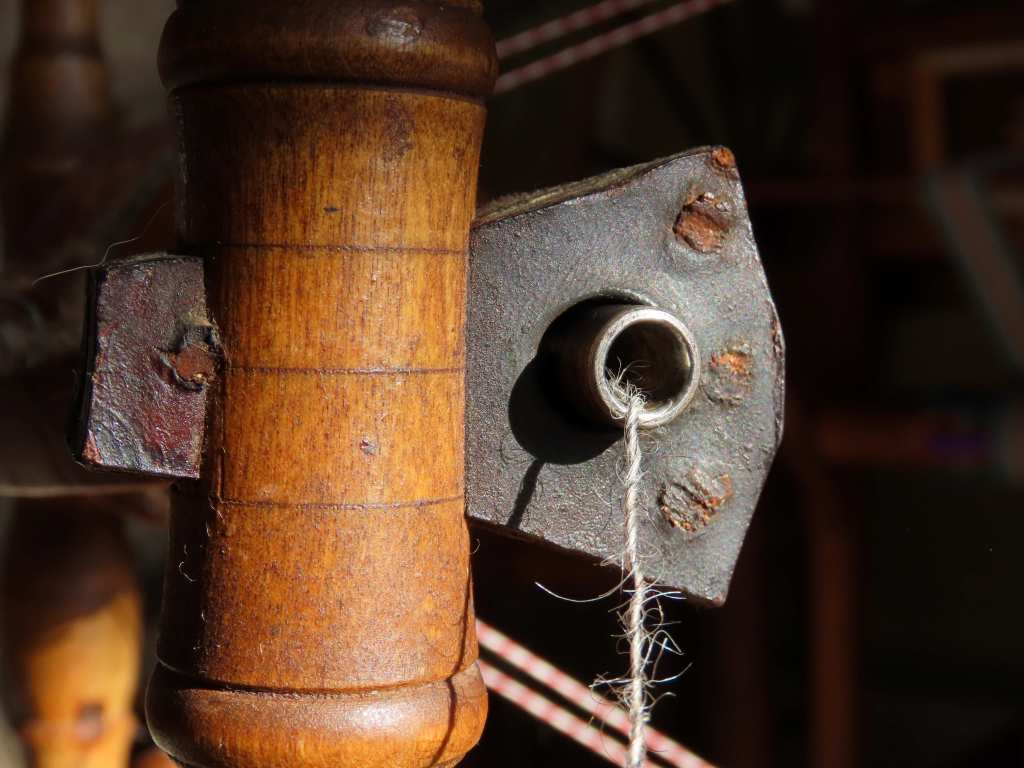
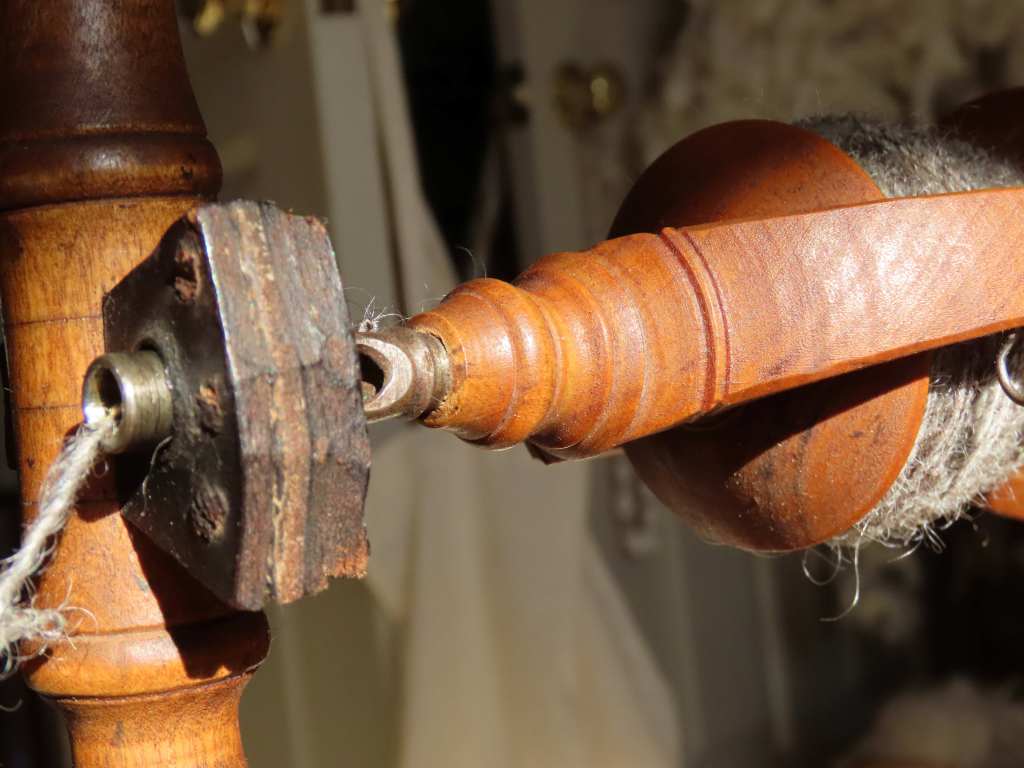
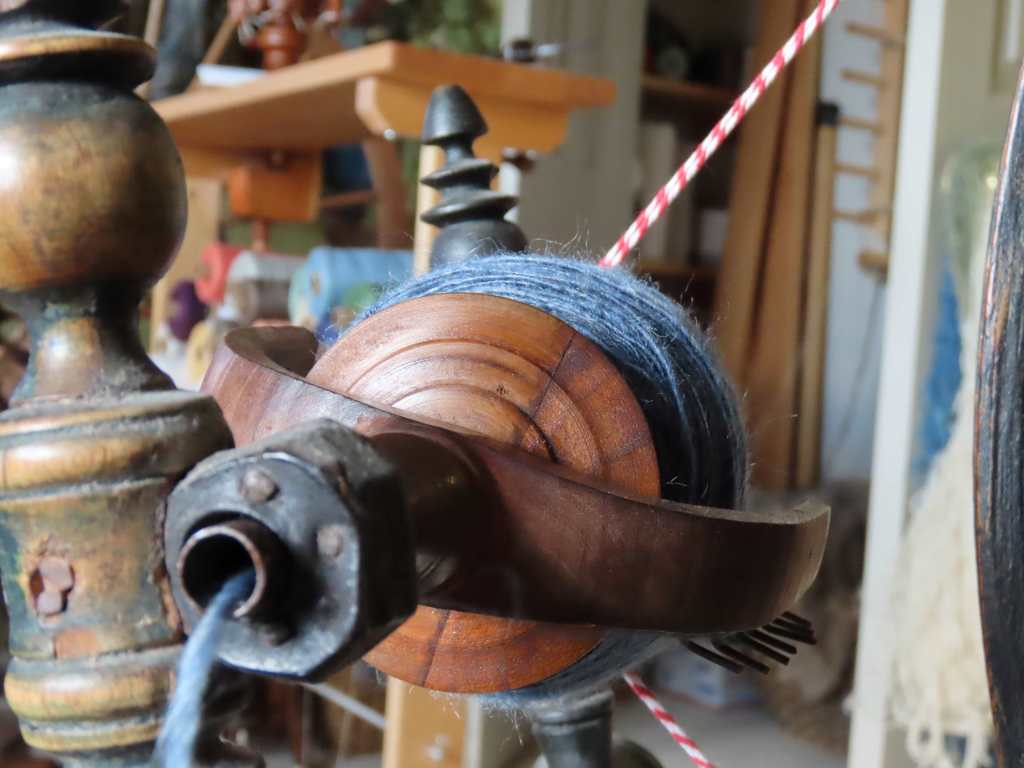
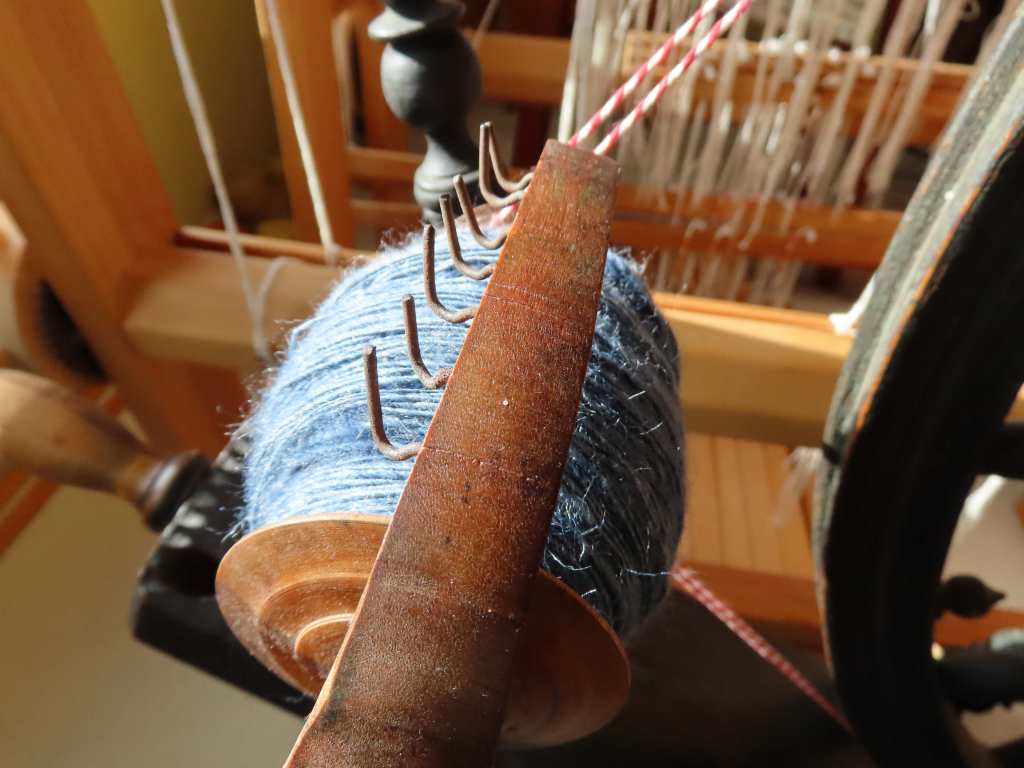
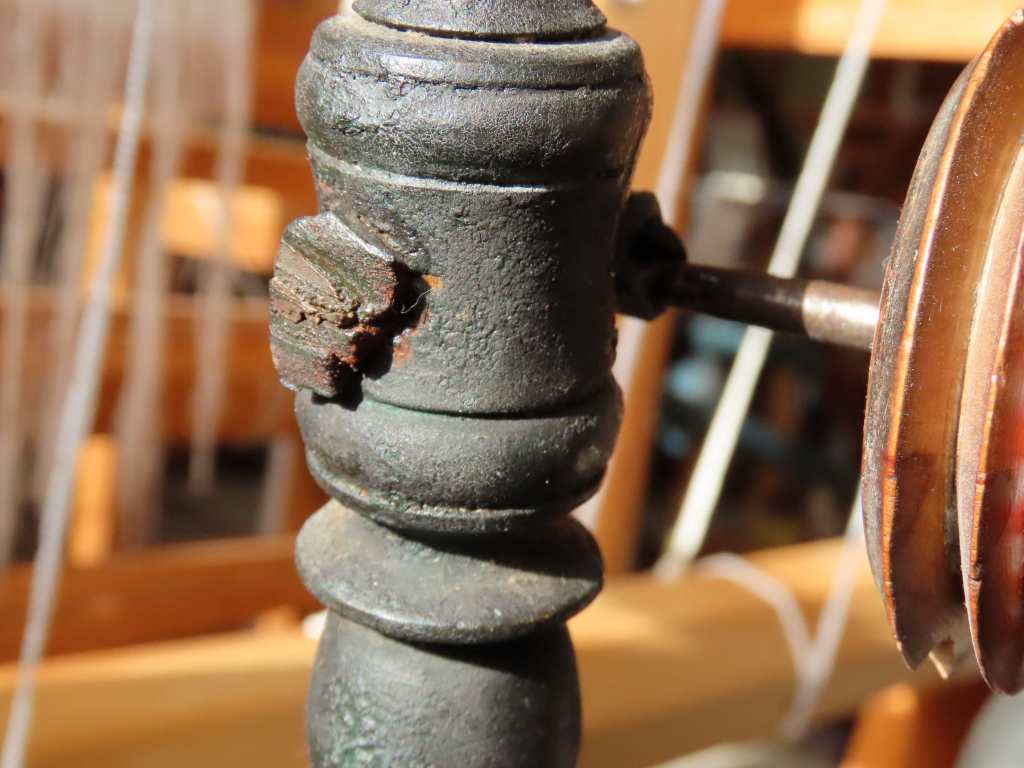
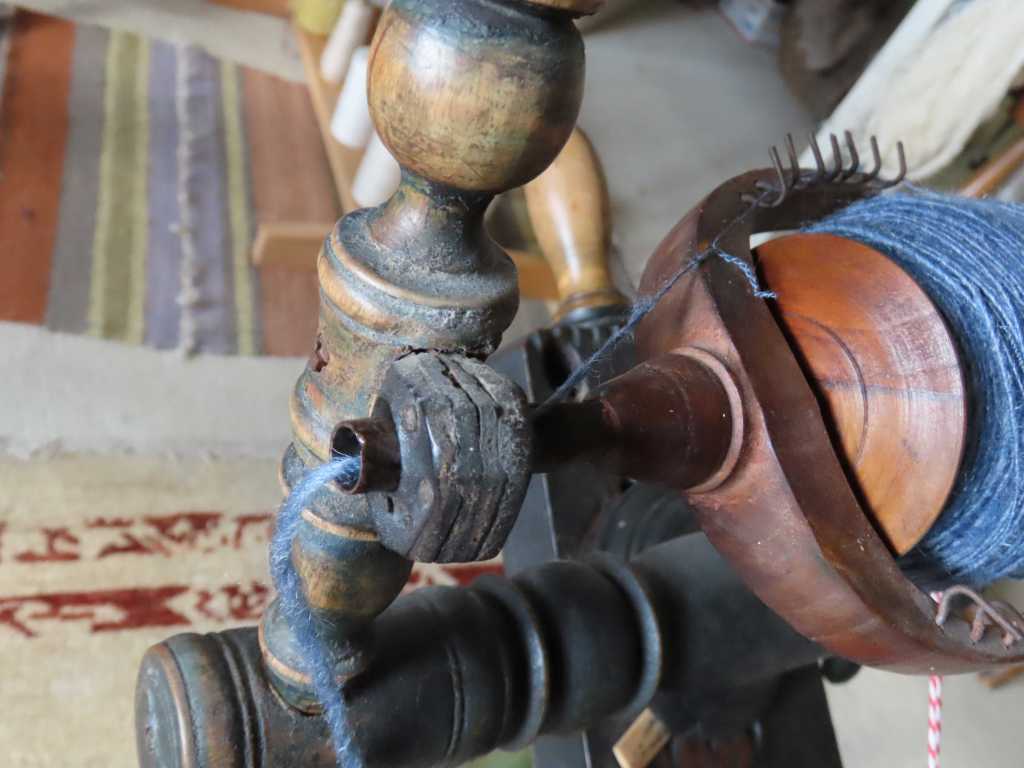
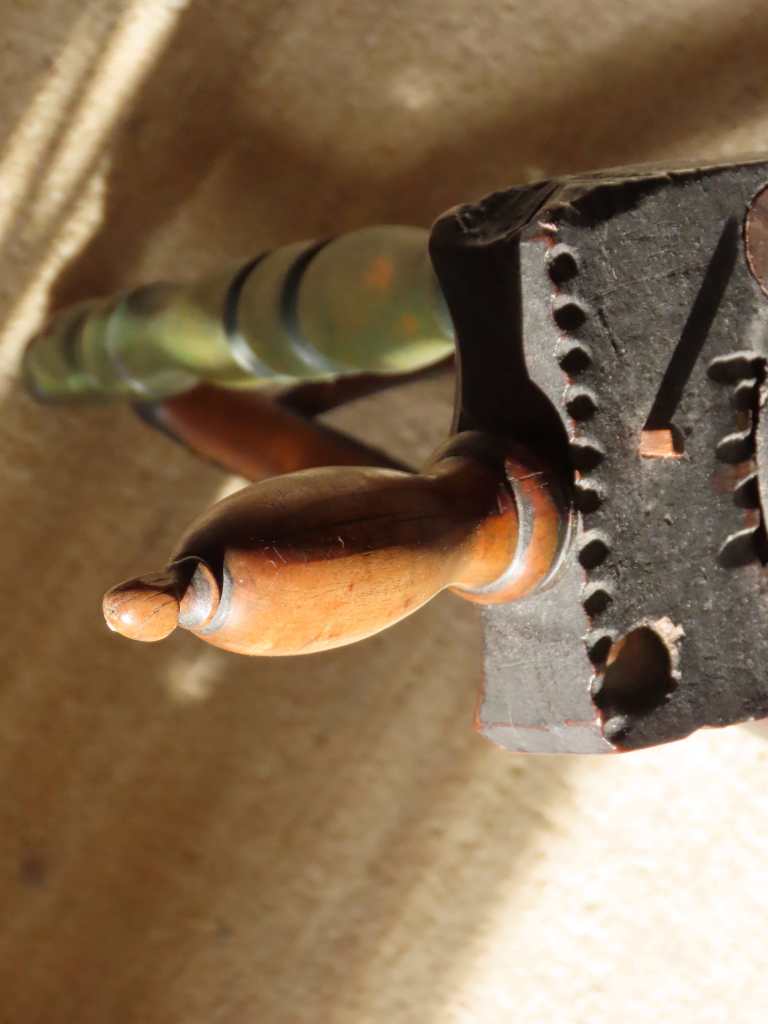
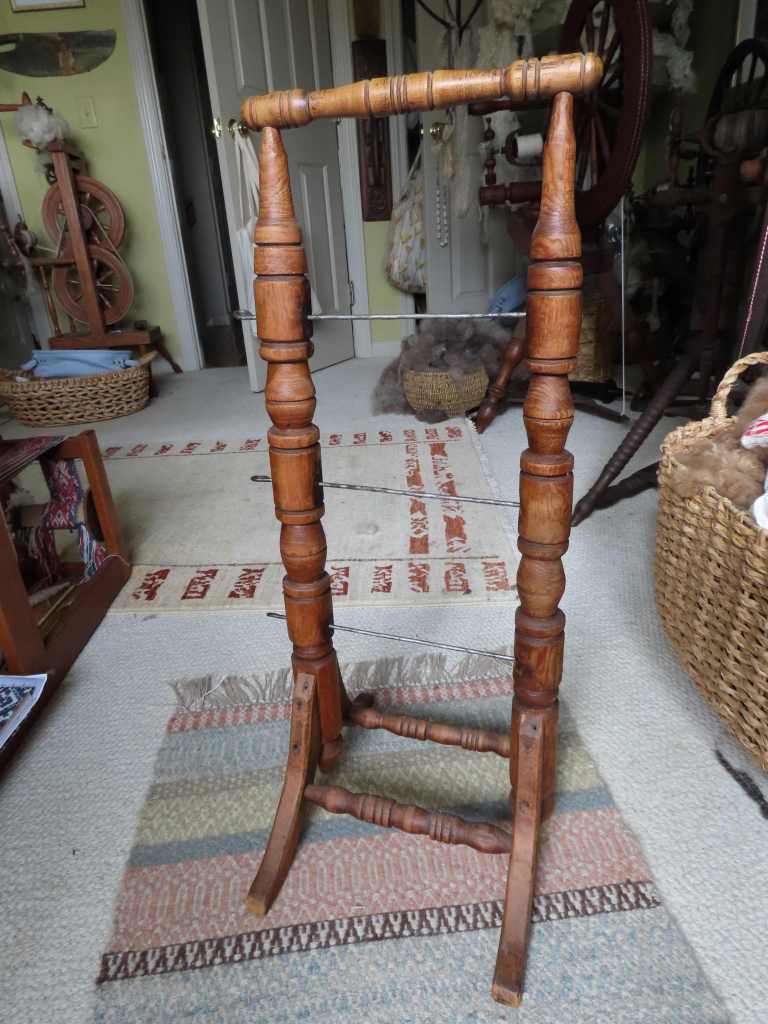
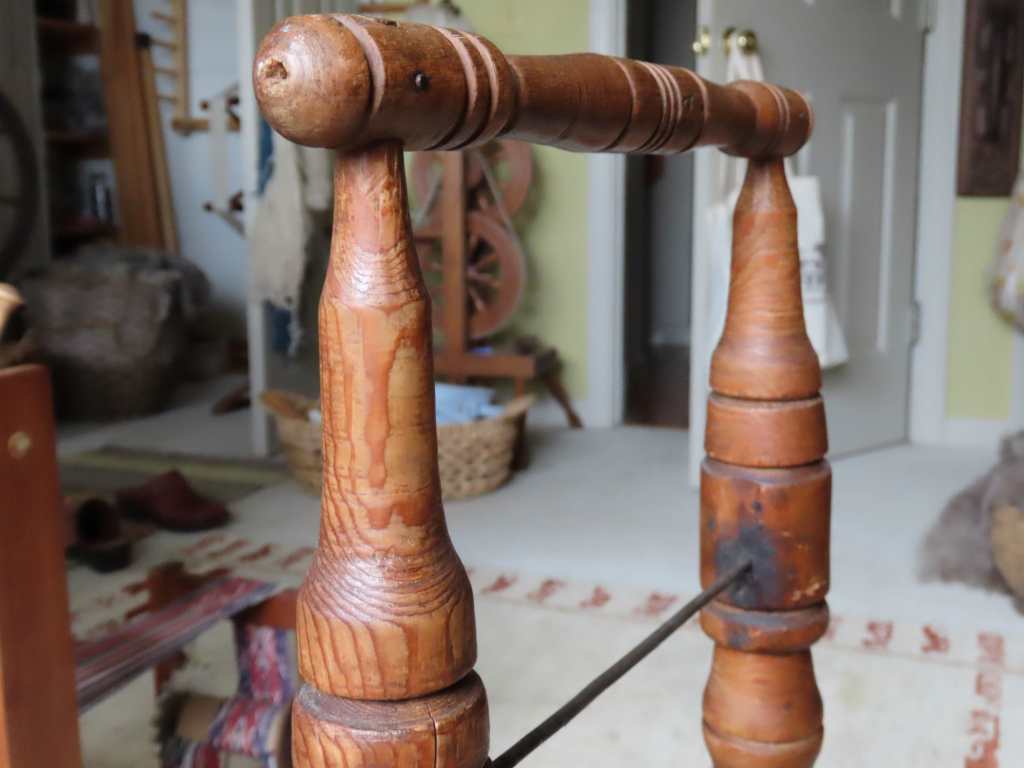
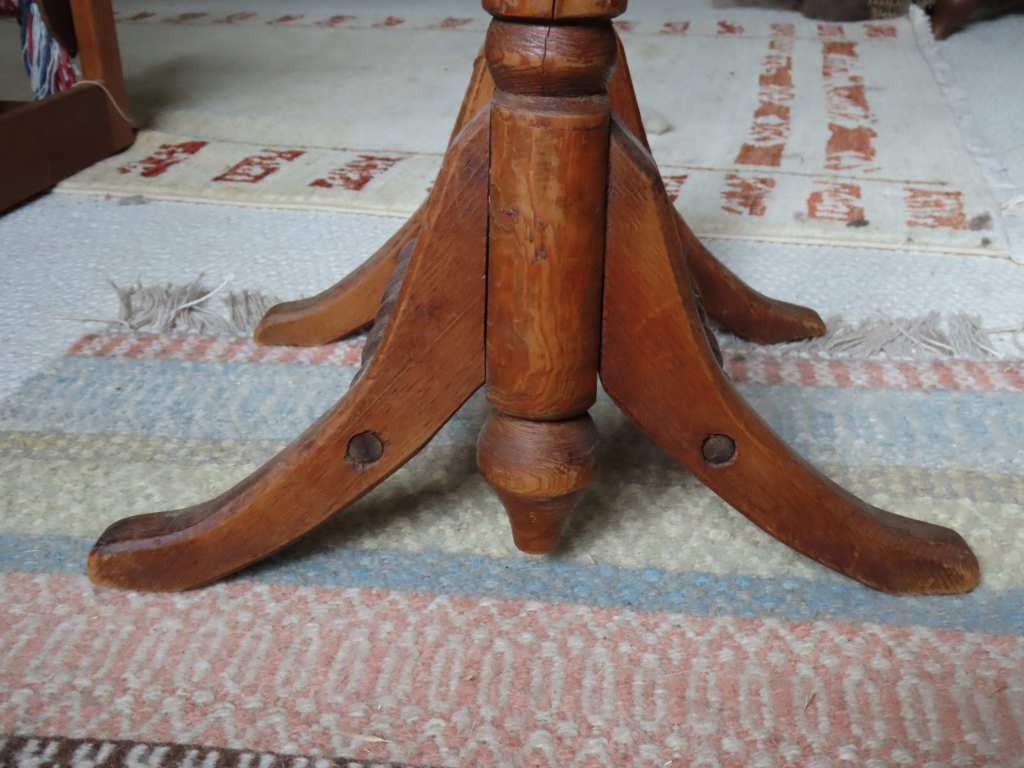
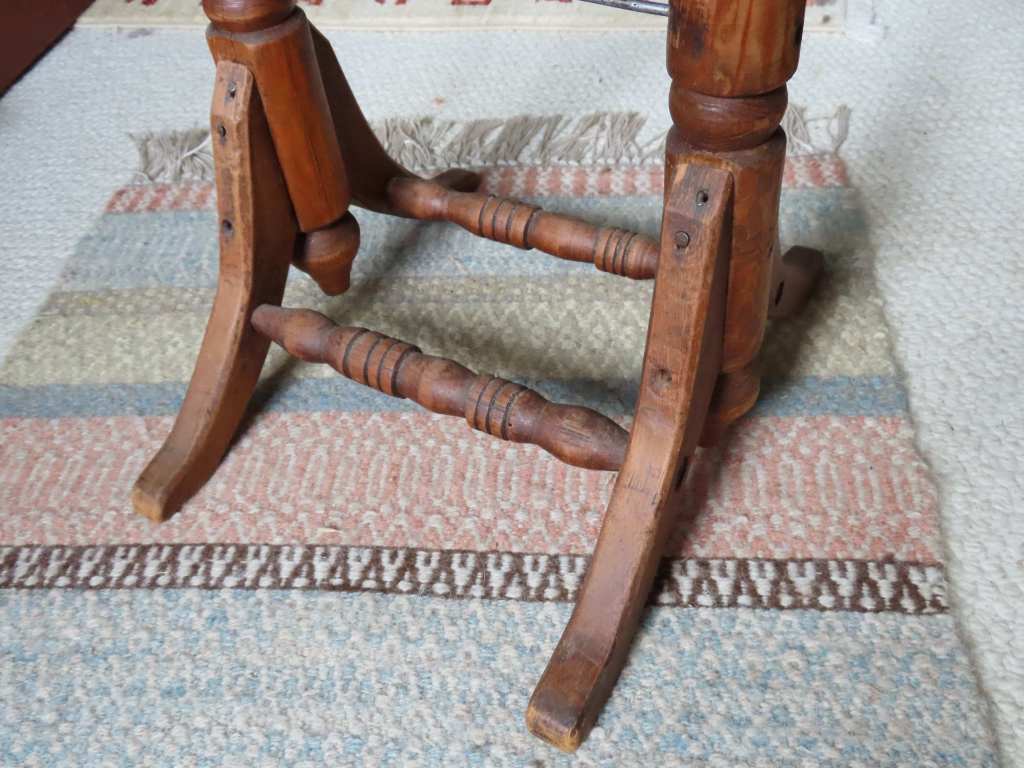
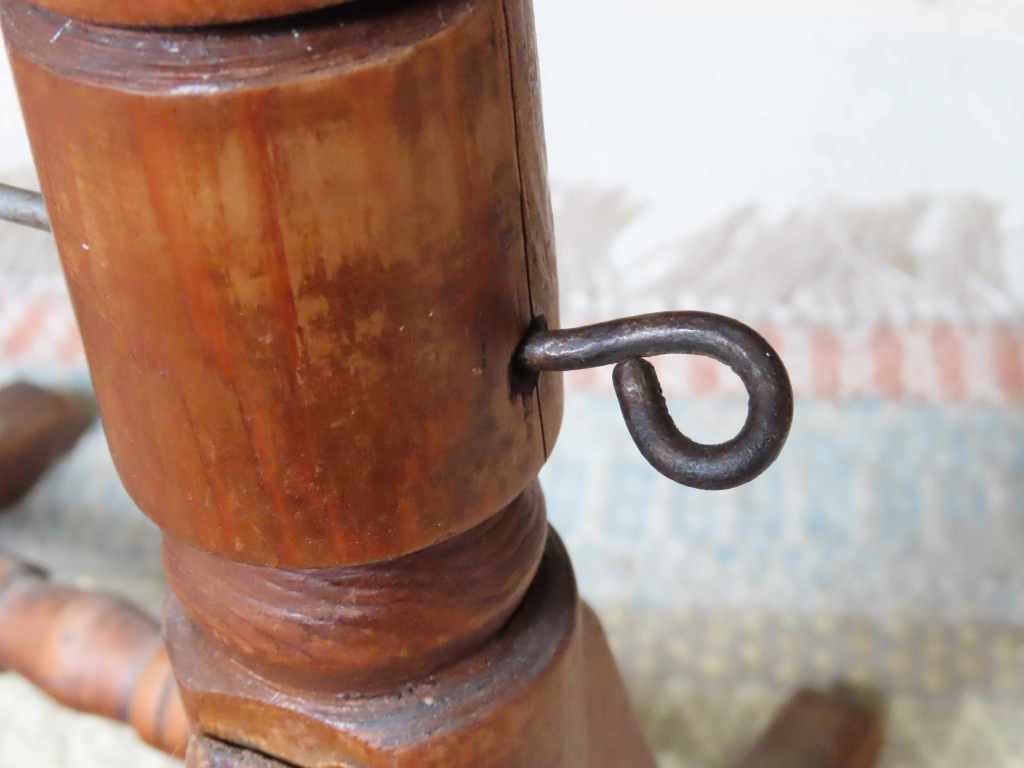
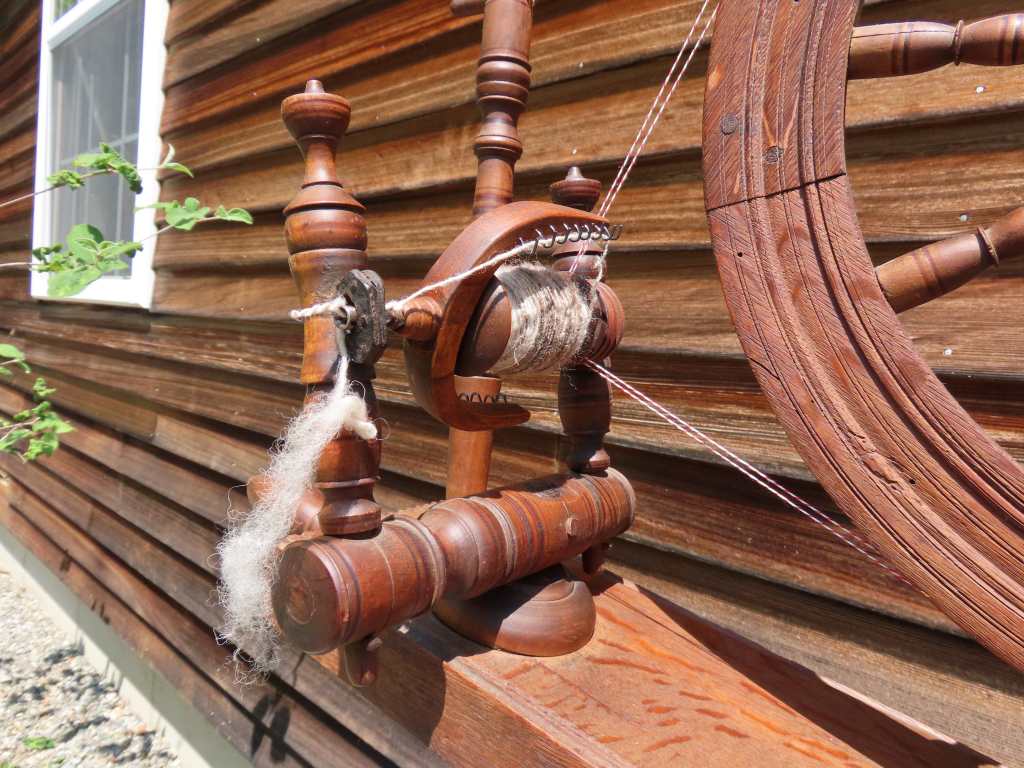
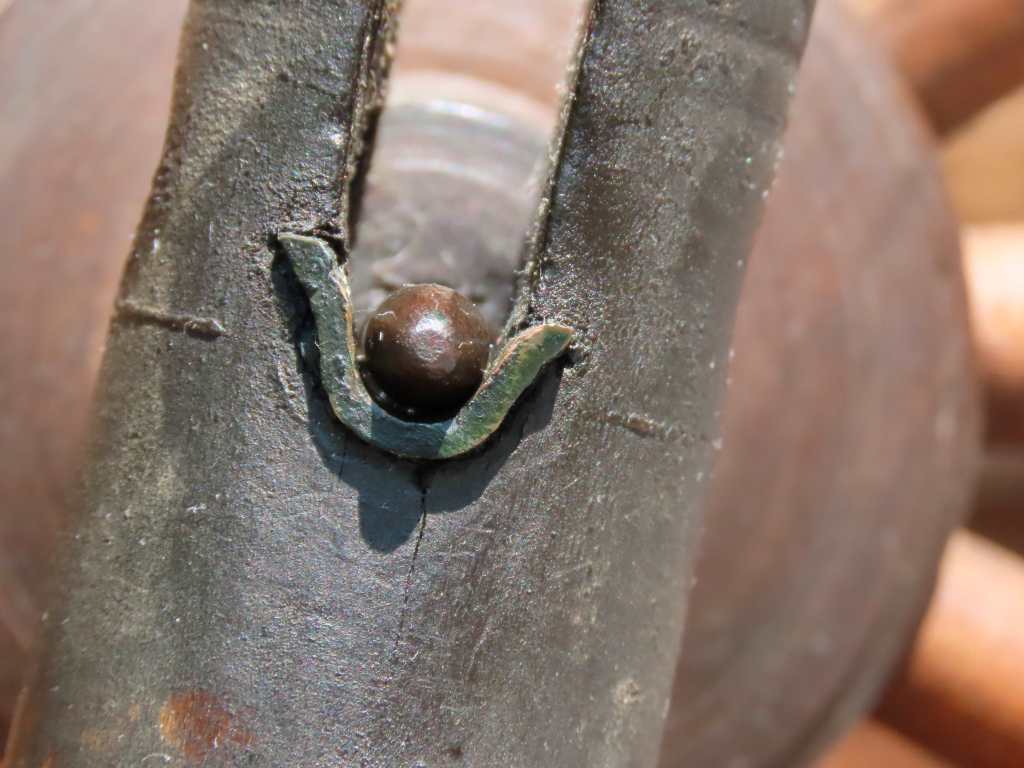
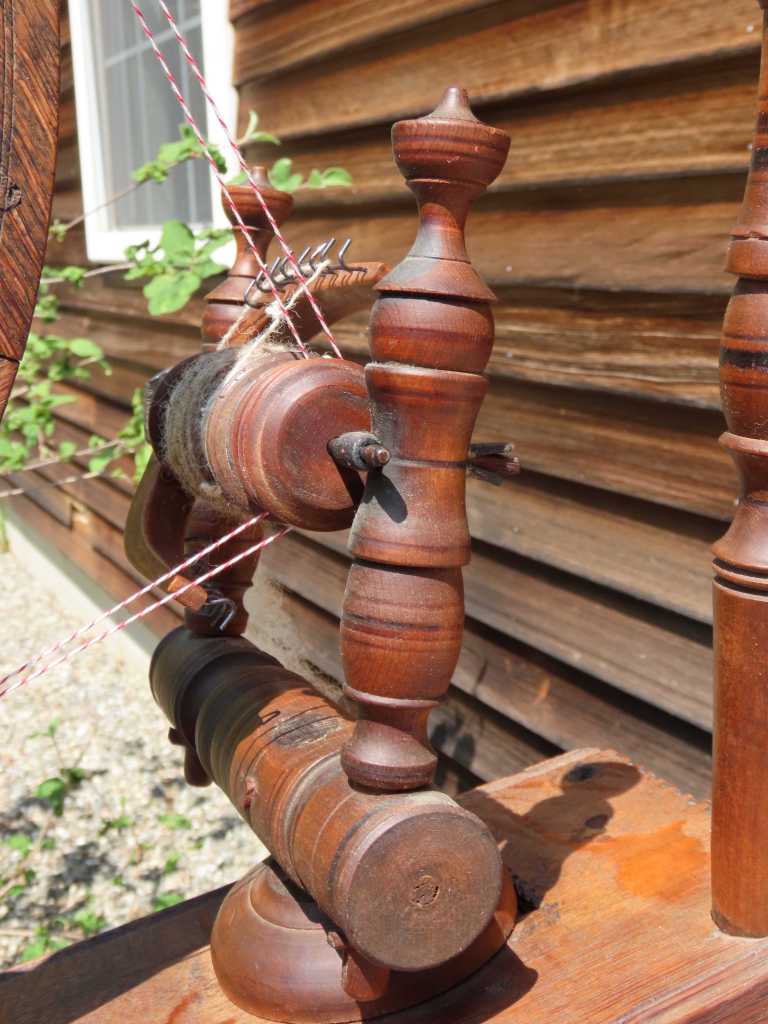
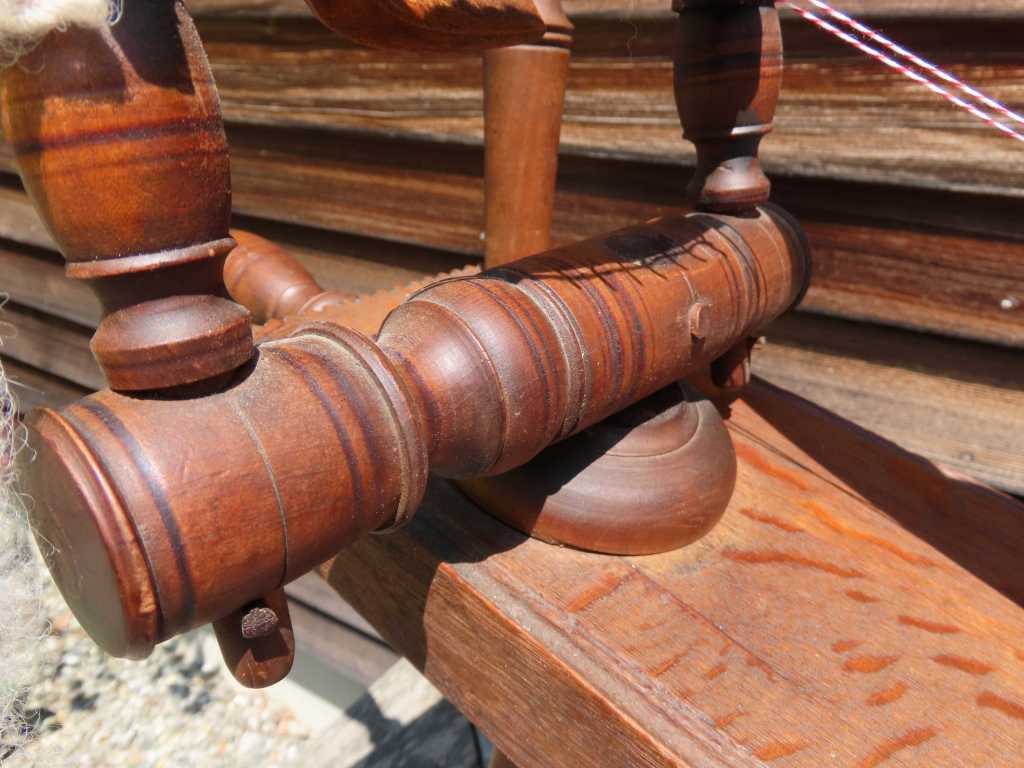
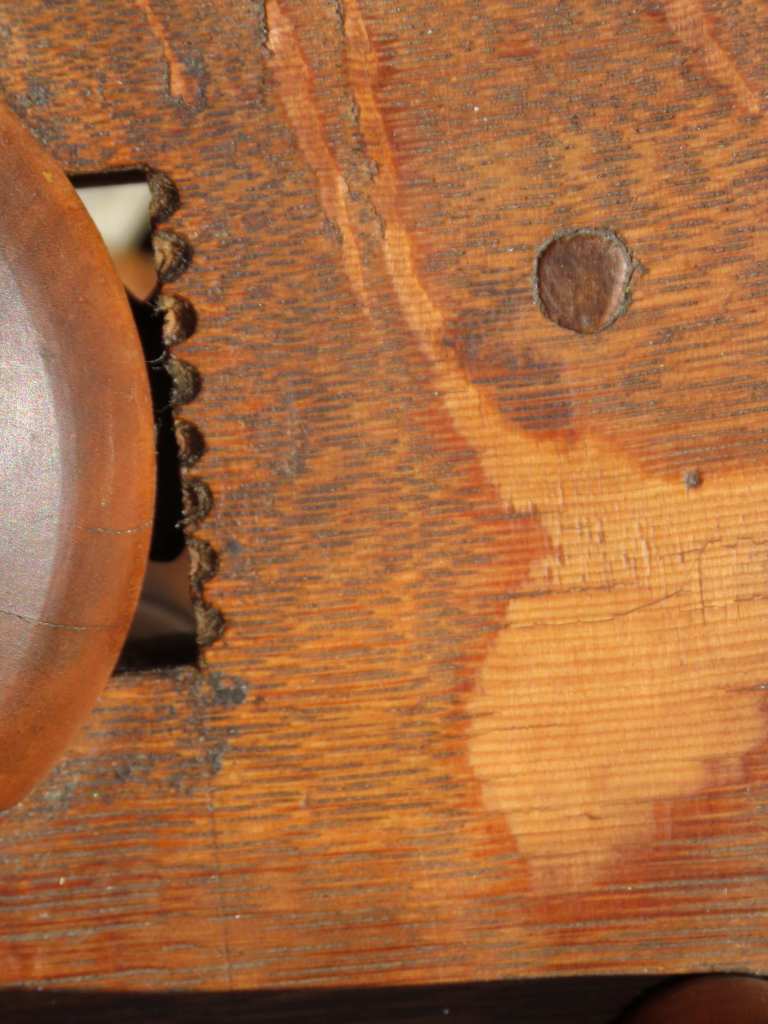
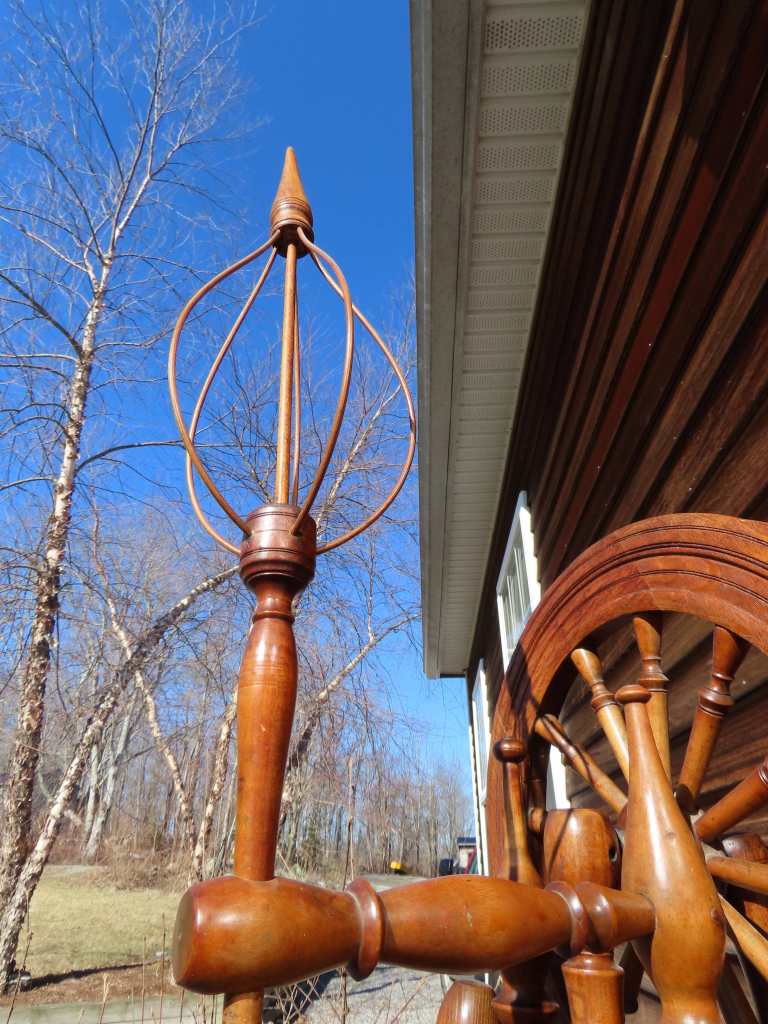
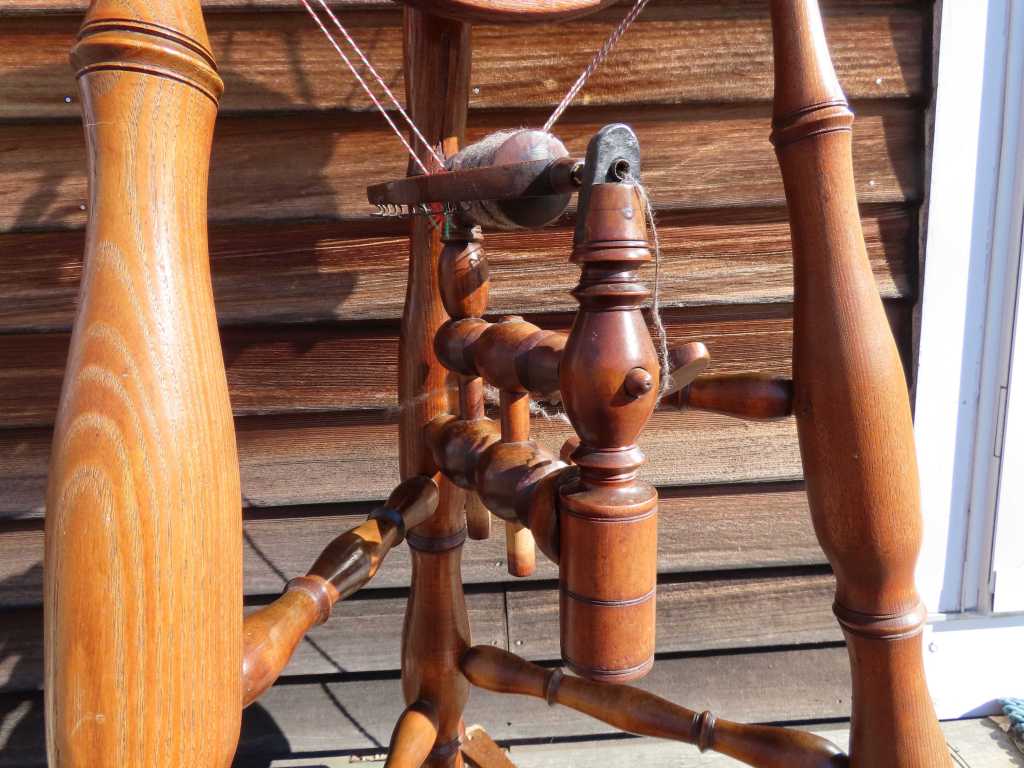
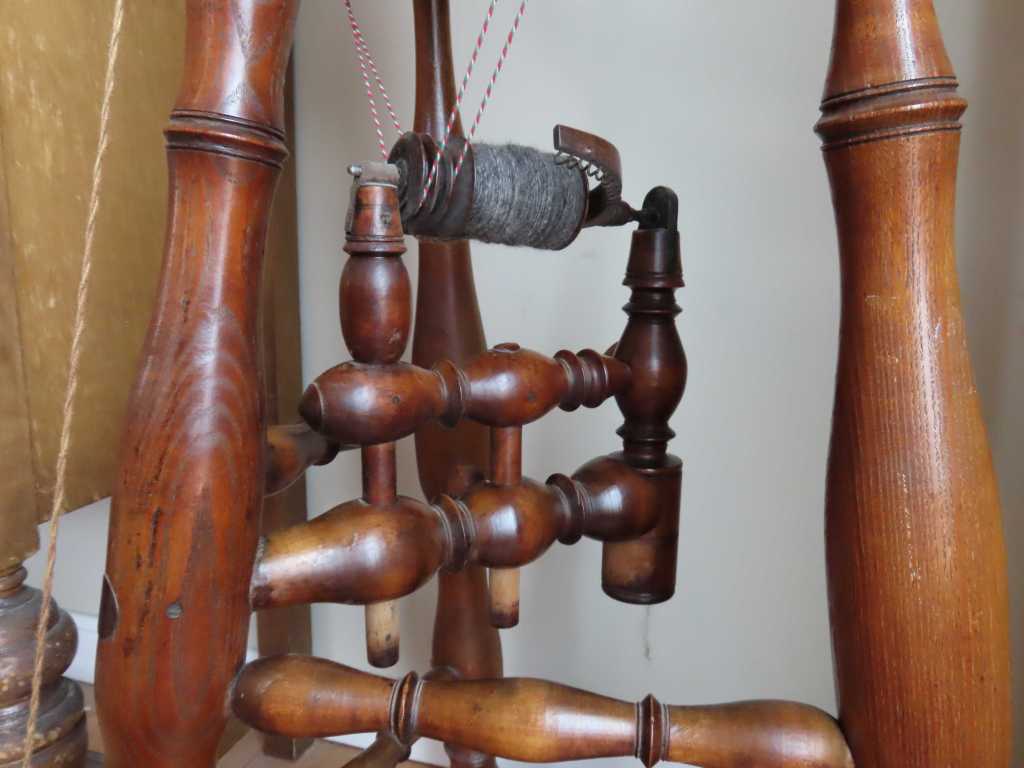
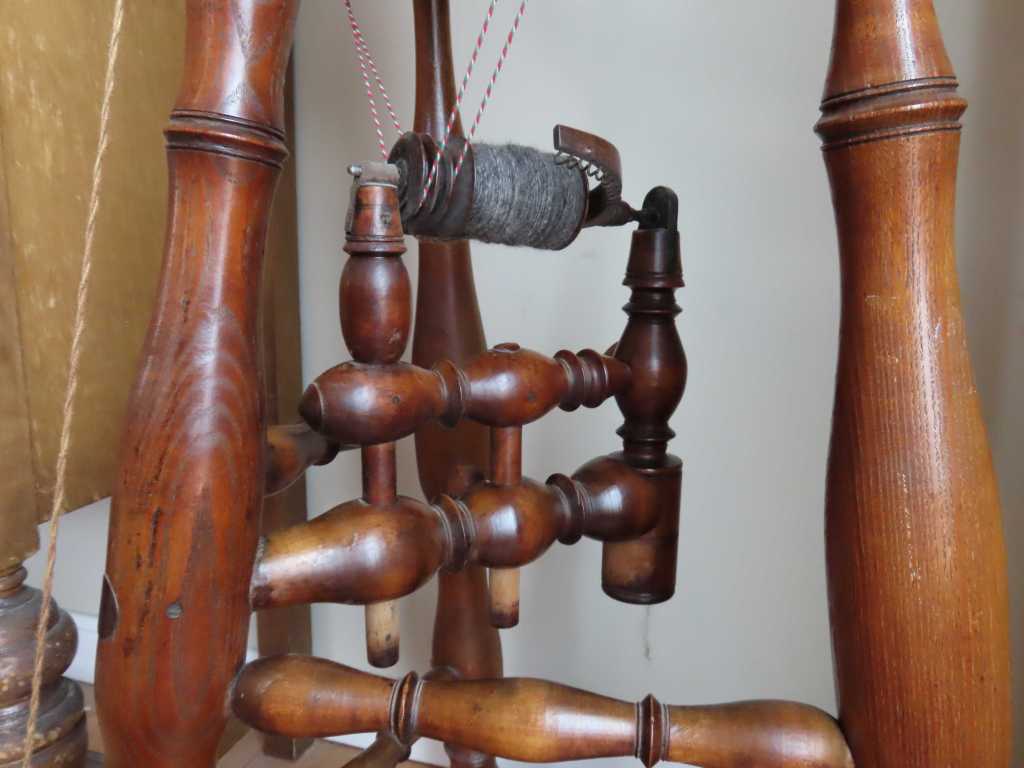
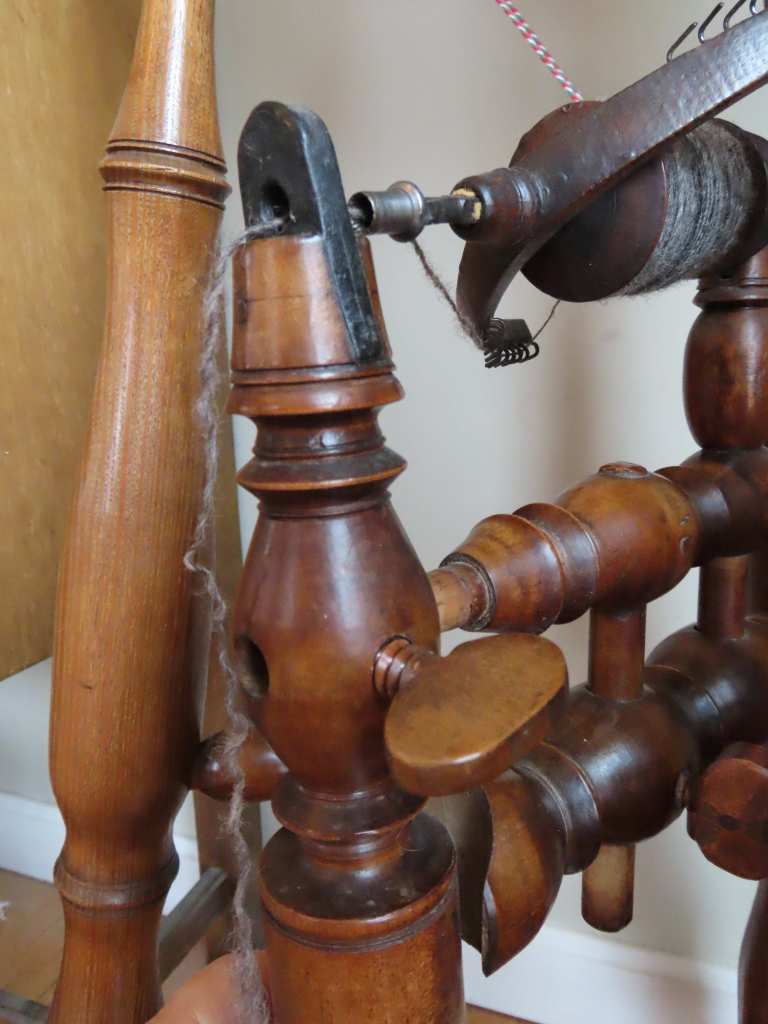
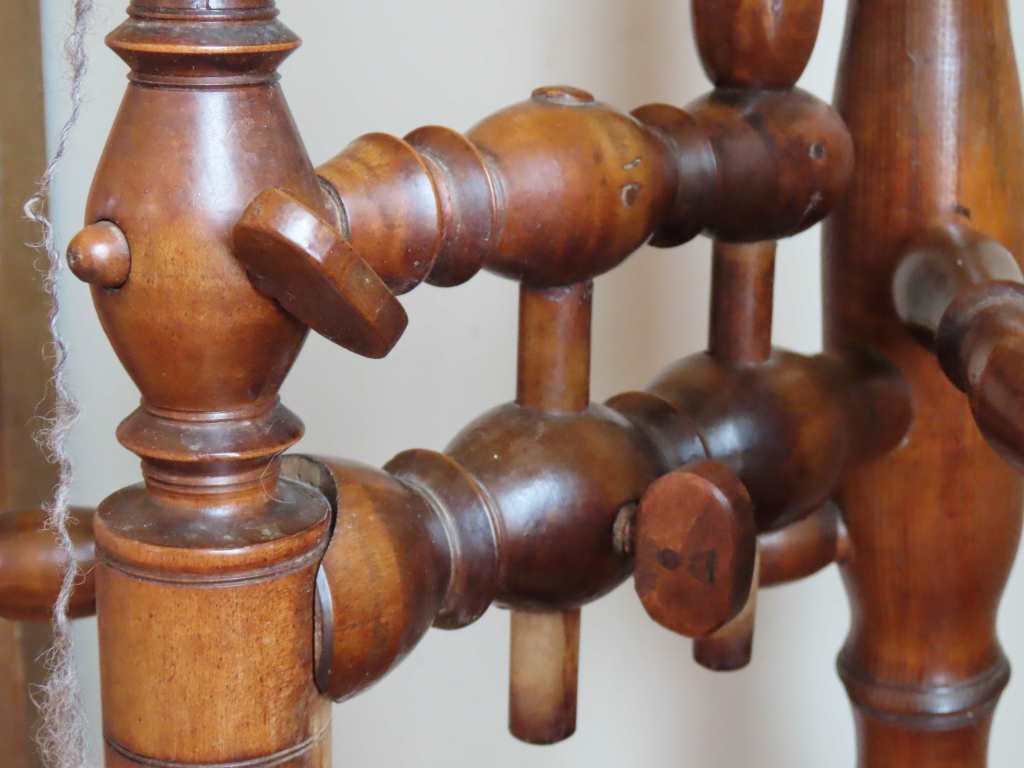
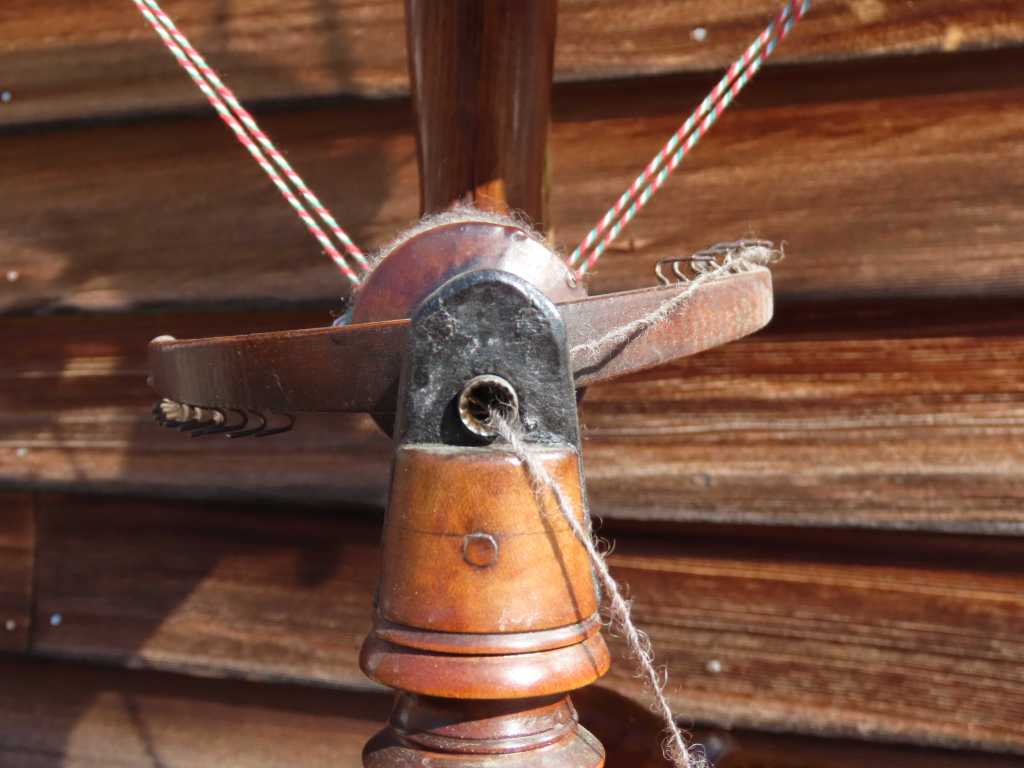
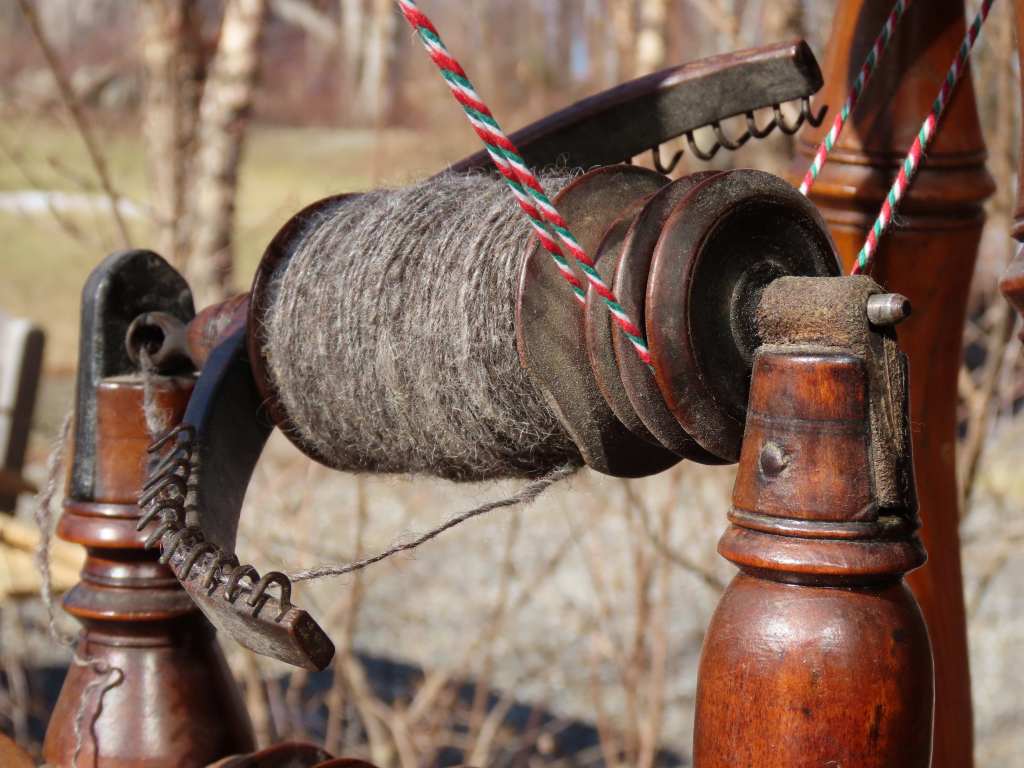
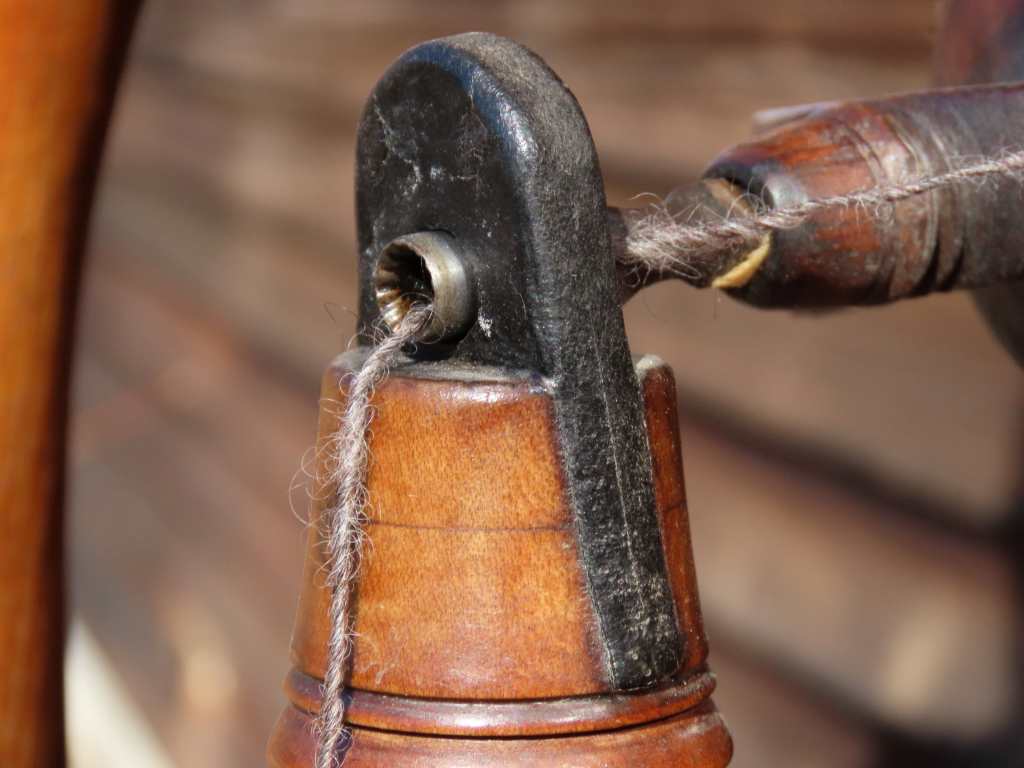
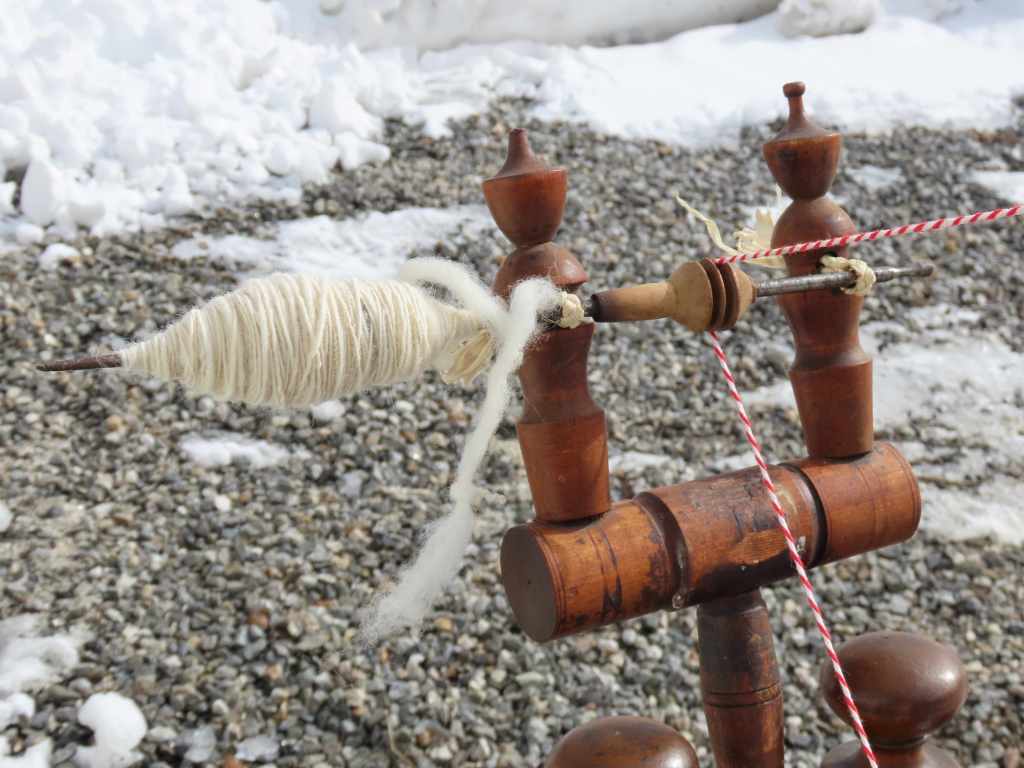
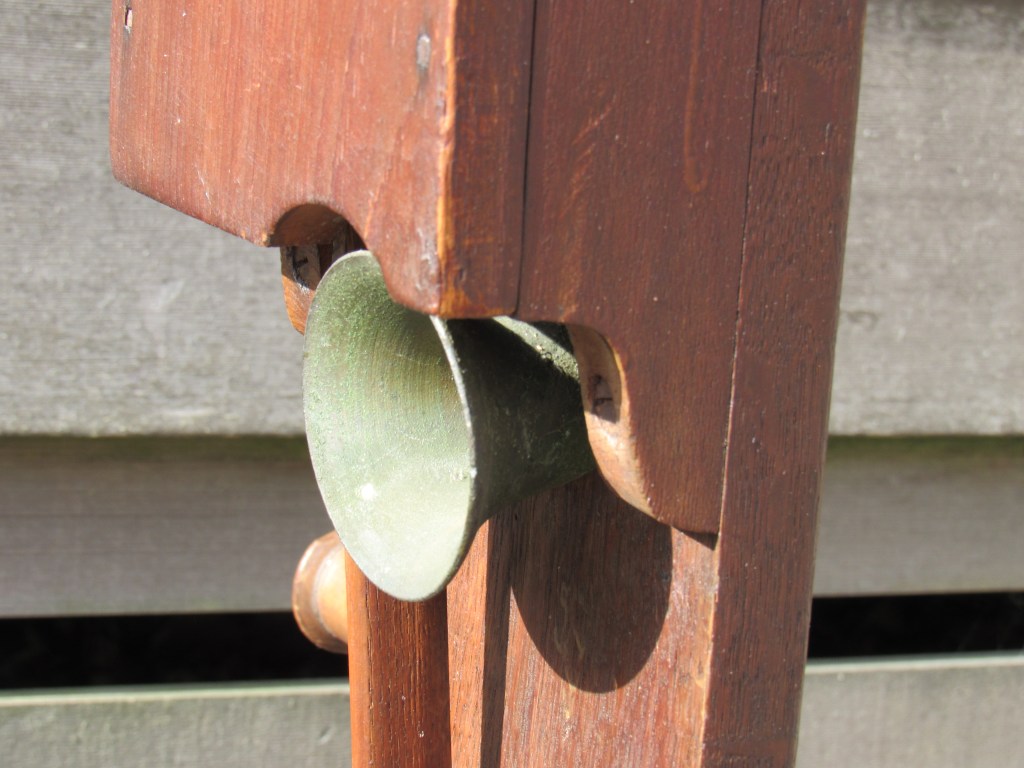
The first, a reel I named “Annabelle,” came as a package deal with two wheels from Canada.  I have no idea if the reel is from Canada, too.  Given that the reel’s shiny glory is a metal bell, and metal was incorporated into many Quebec wheels, it is possible. 
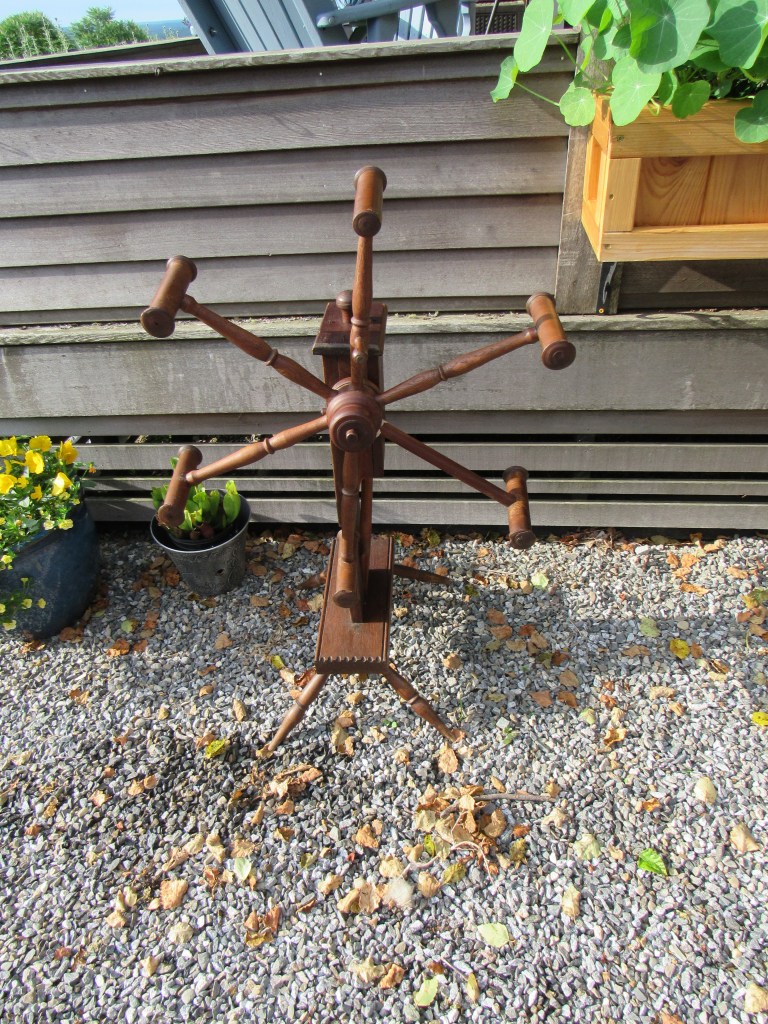
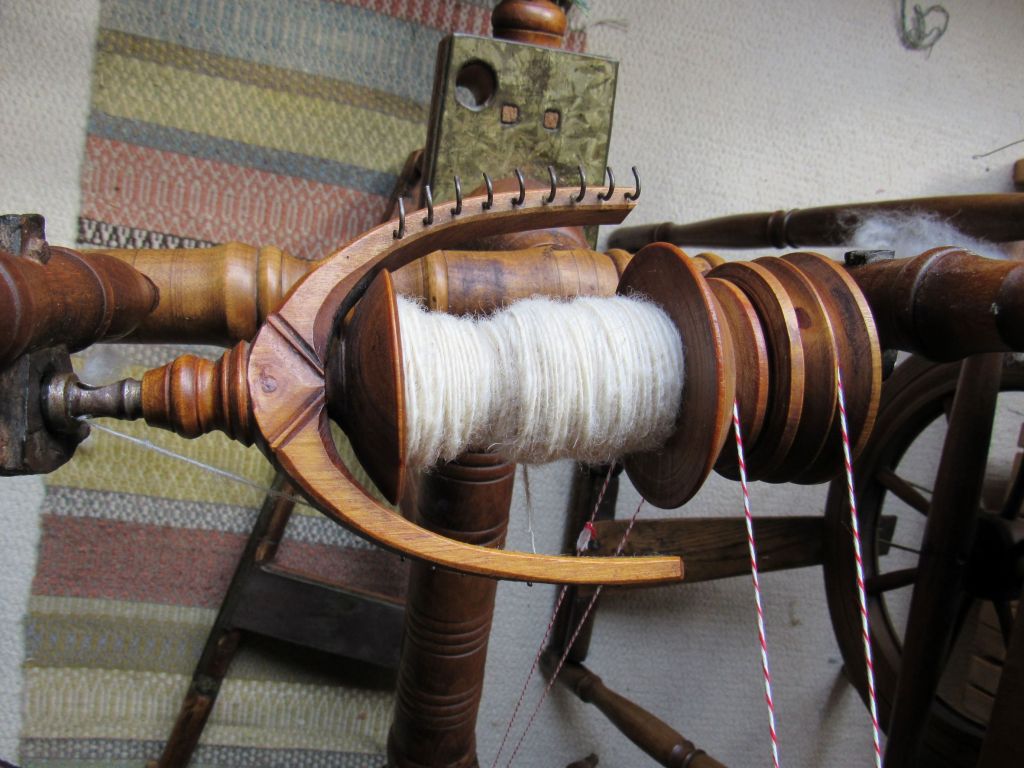
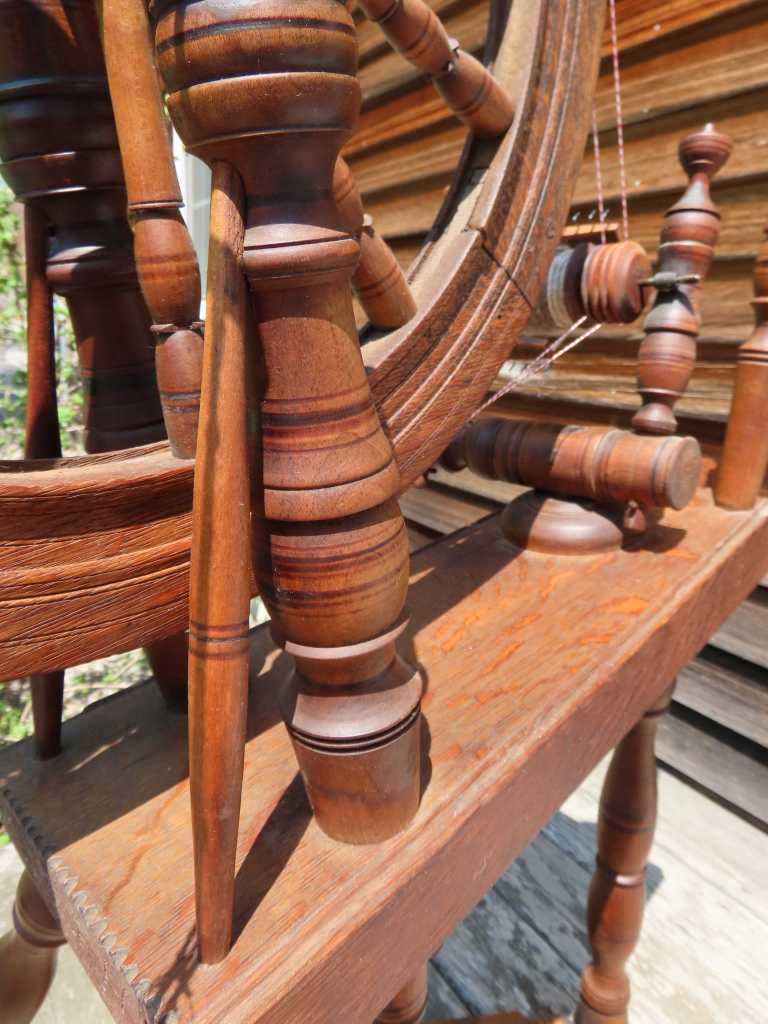
On the other hand, most (but not all) Quebec reels, called “dévidoirs,” unlike this one, are horizontal, barrel style reels, so it may not be from Quebec at all.  Sadly, its origin remains a mystery.  Its vertical design and counting mechanism is generally known as a clock or click reel. 
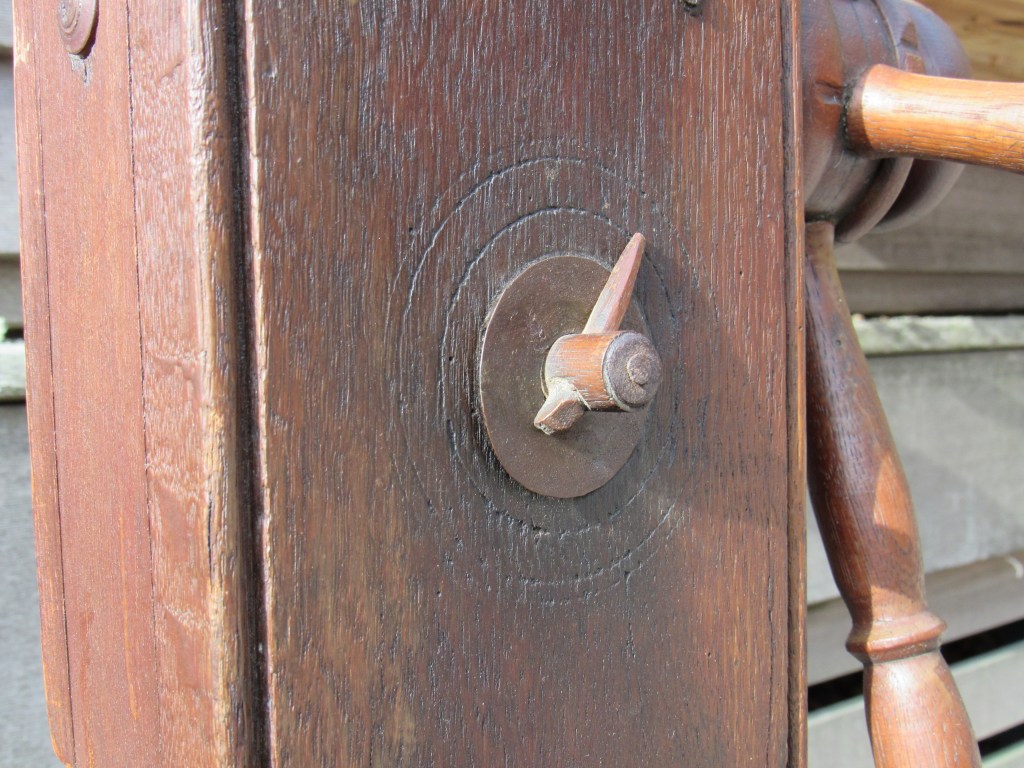
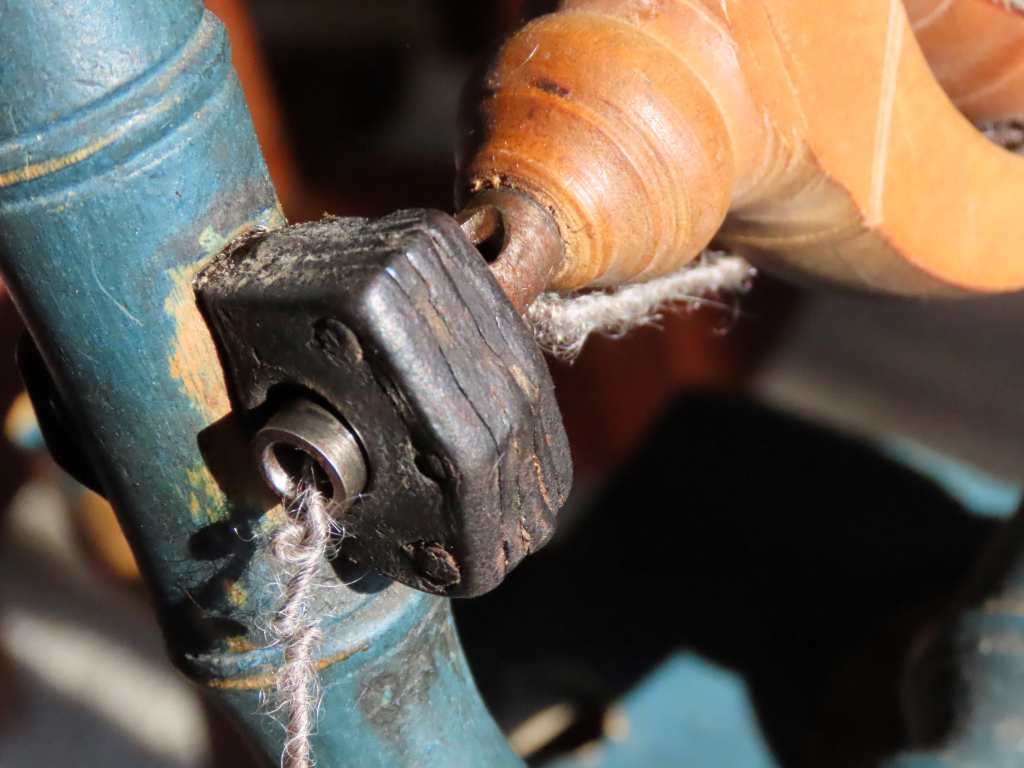
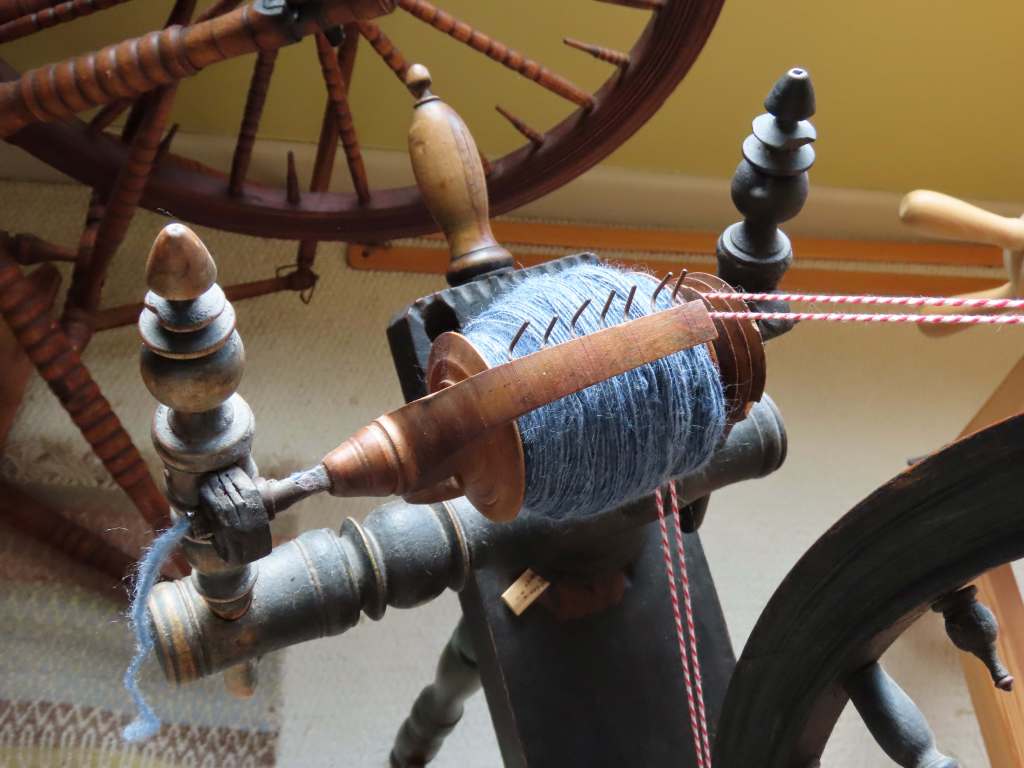
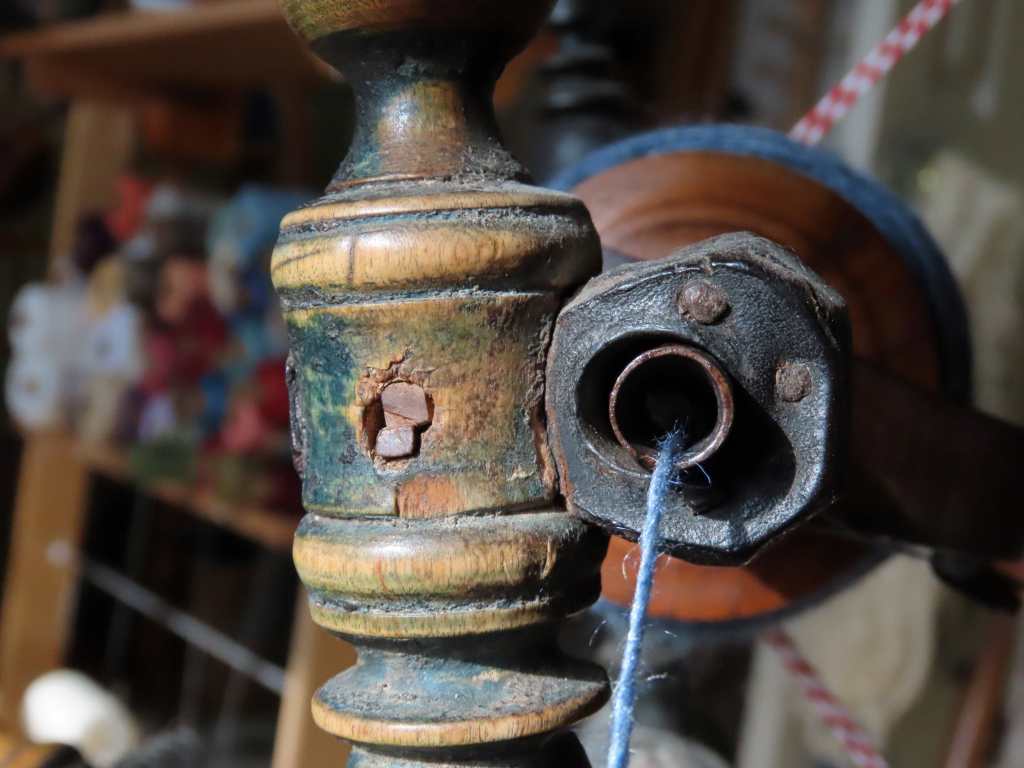
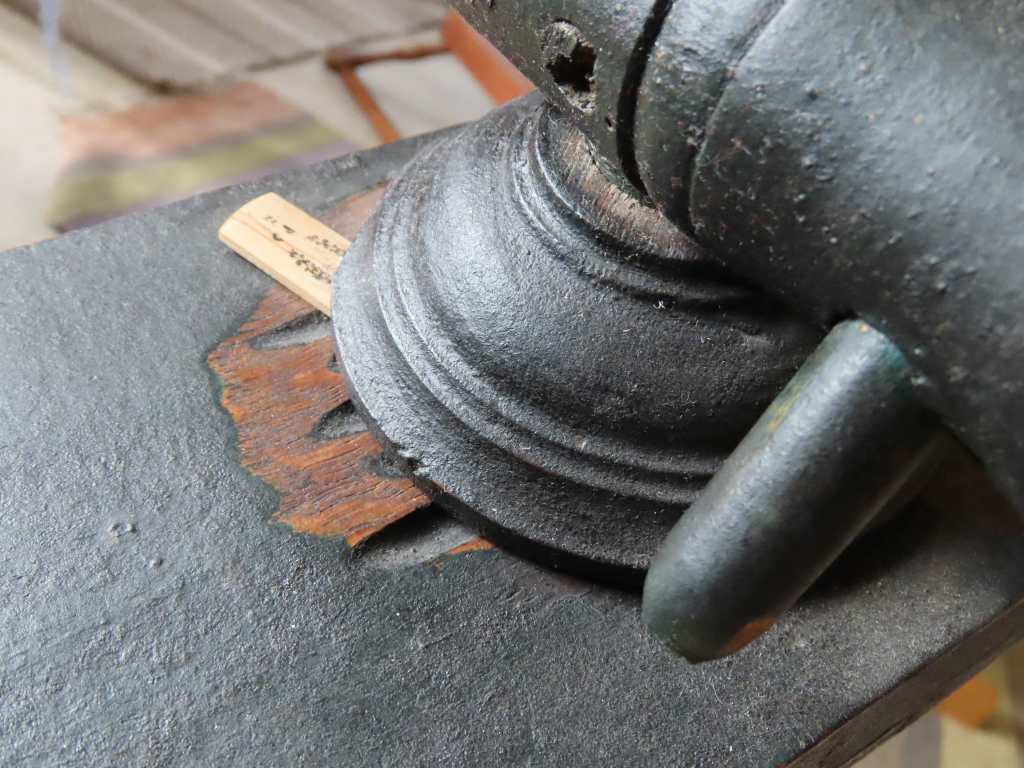
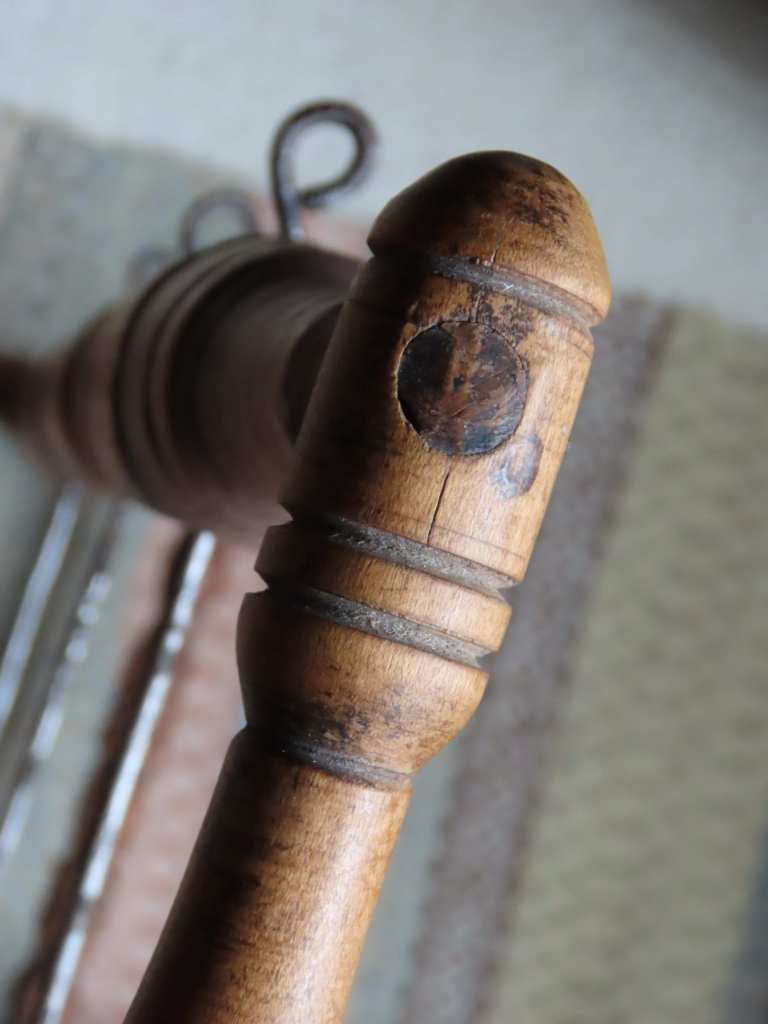
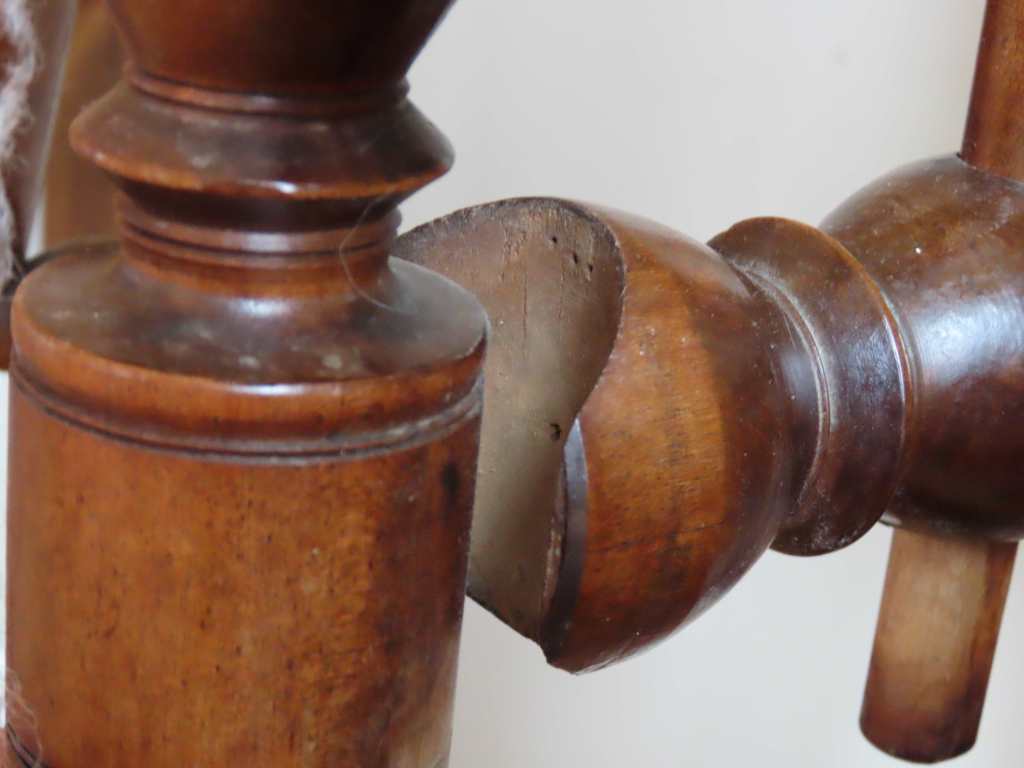
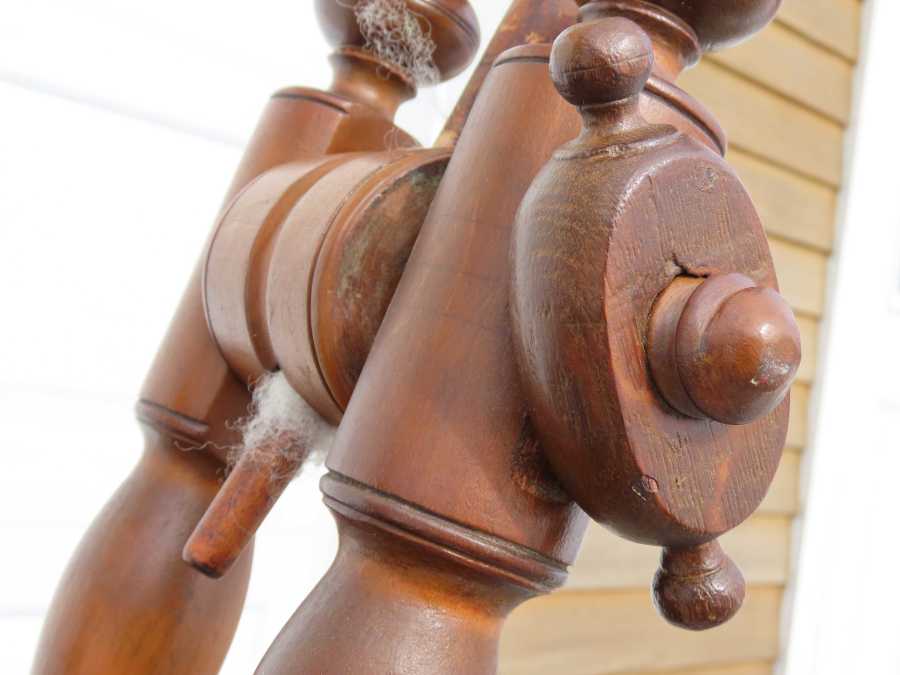
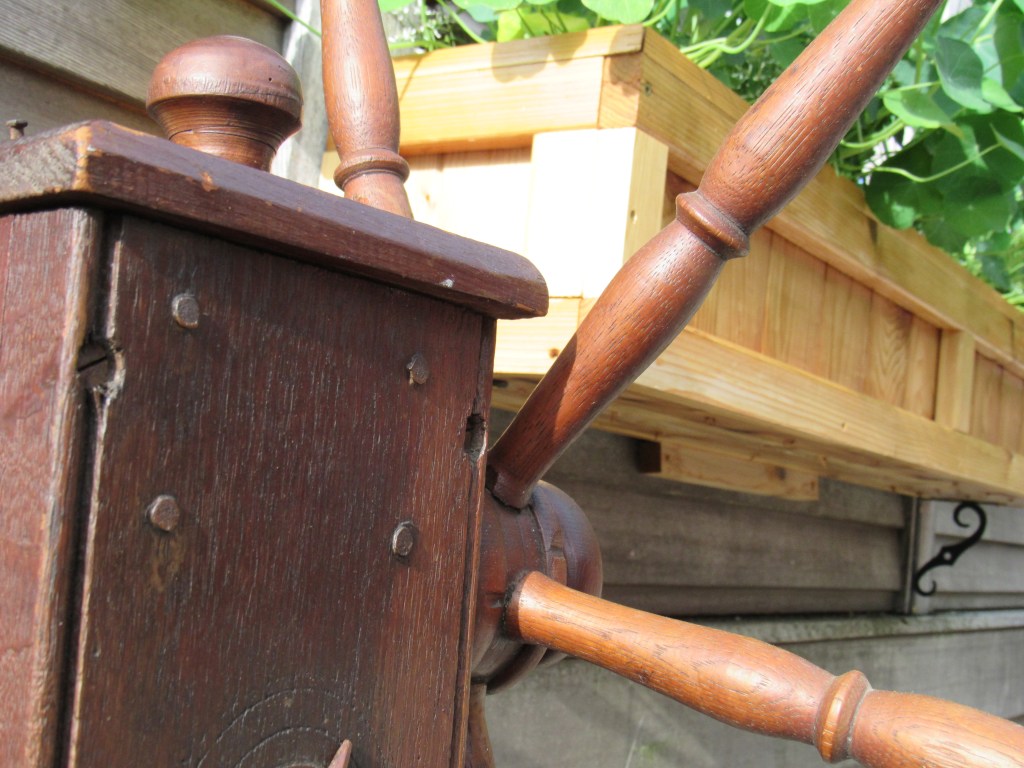
Except in this case, the rotations are marked not by a click but by a ringing sound, because, upon 40 rotations, the wooden clapper hits a bell. 
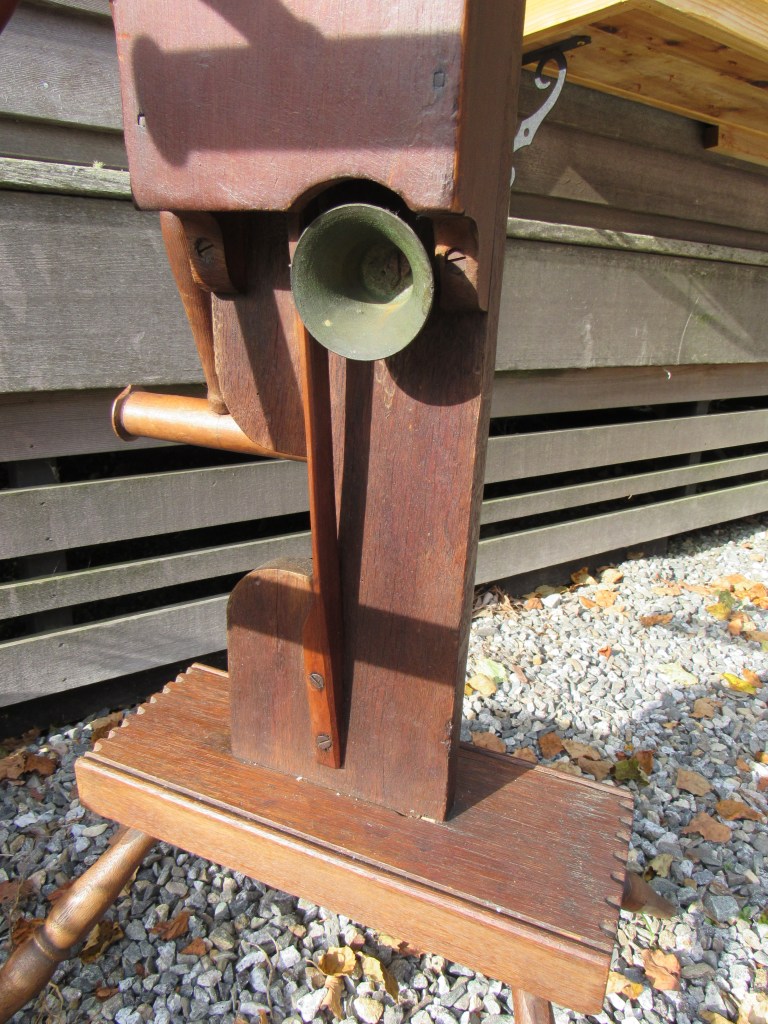
It is a louder and more pleasing way to count rotations, but I suspect having metal work done for a reel was not worth the extra expense for most people. 
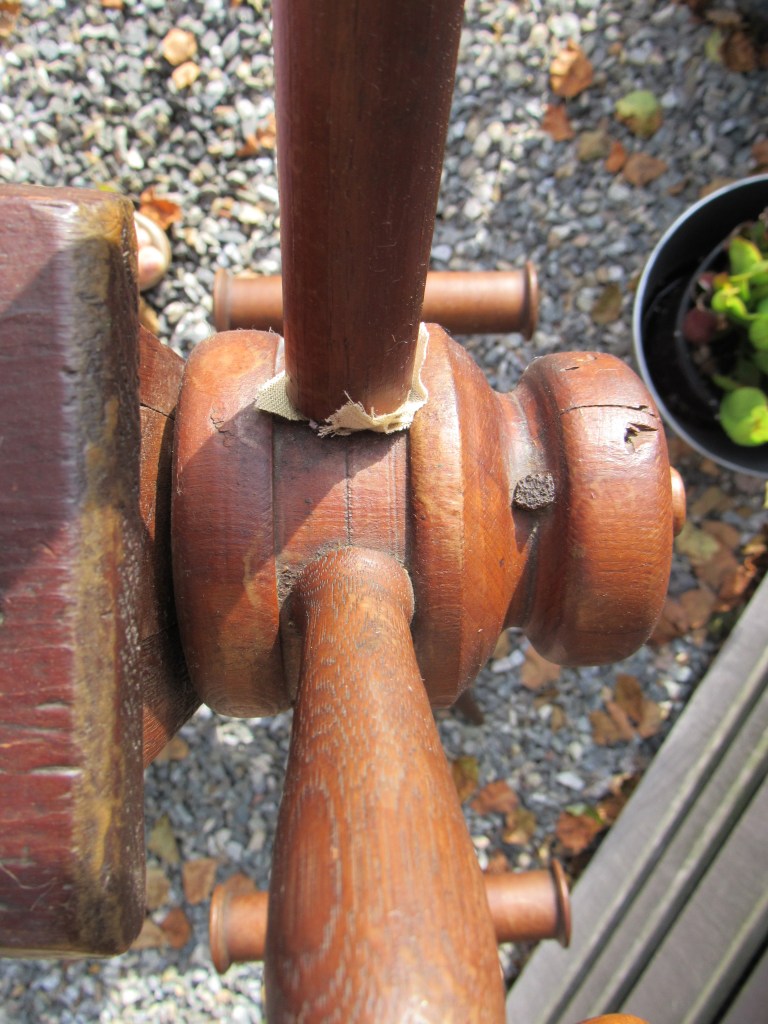
A shame, because it is lovely and practical feature.  And, very rare.
THE WHEEL

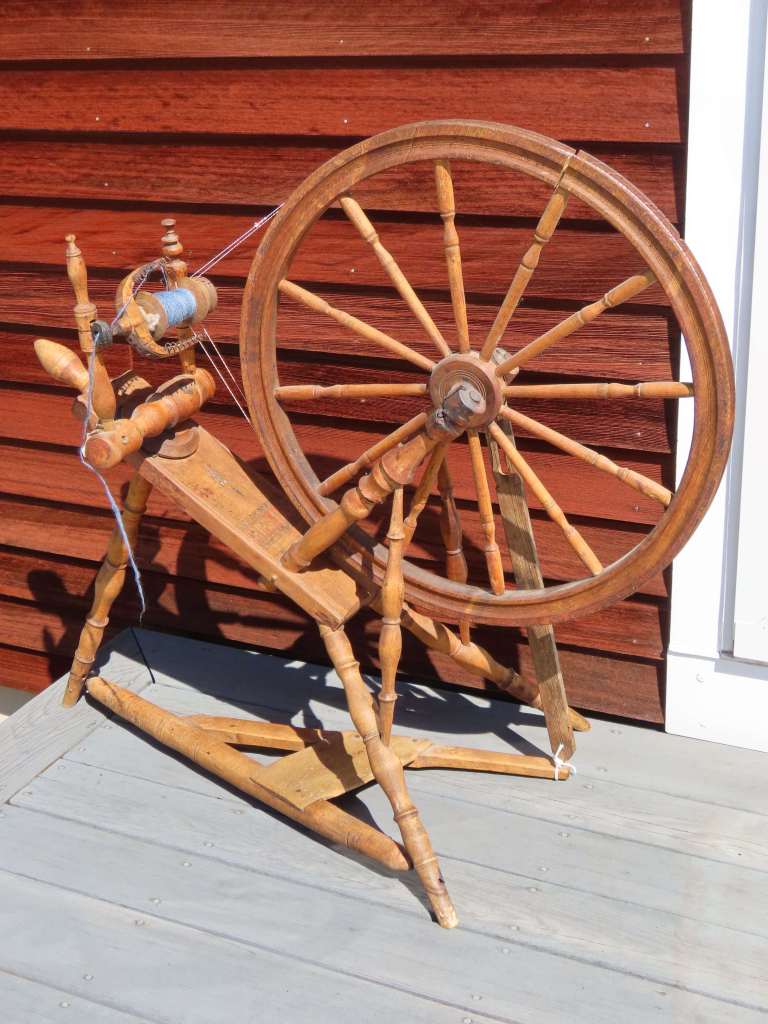
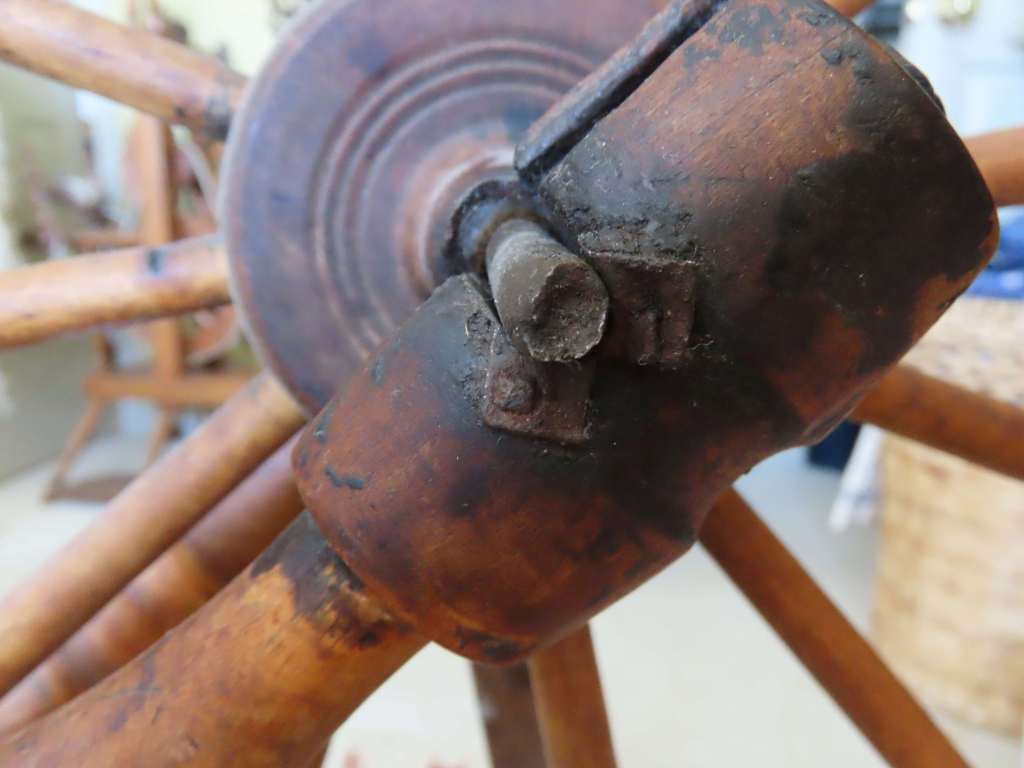
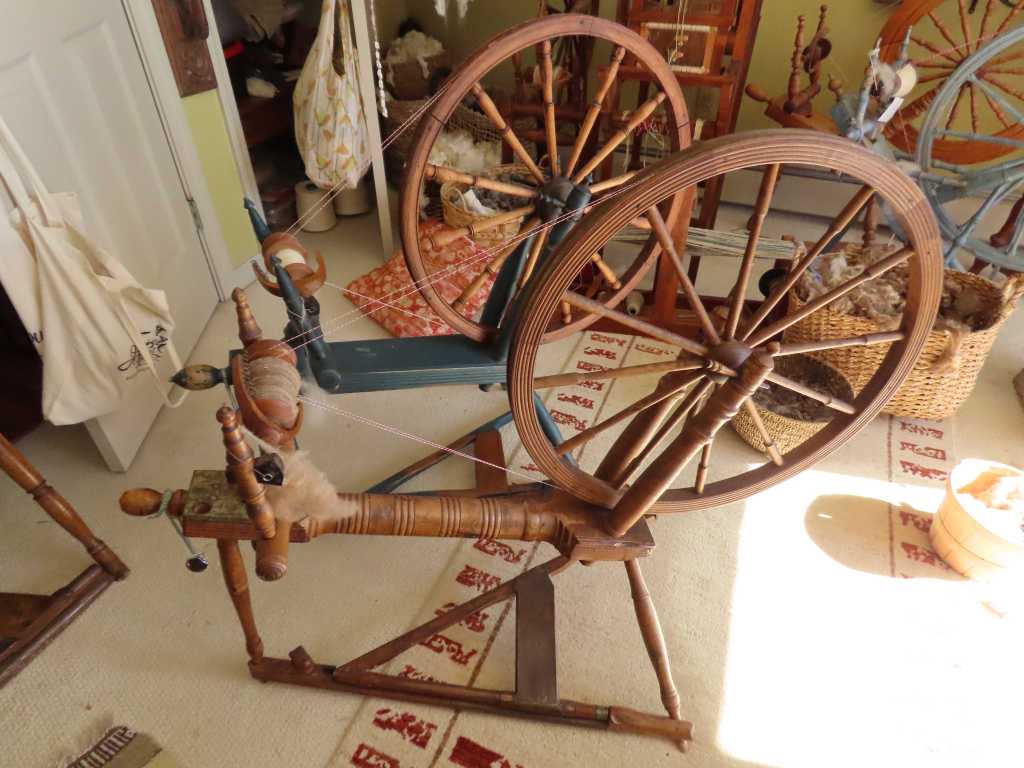
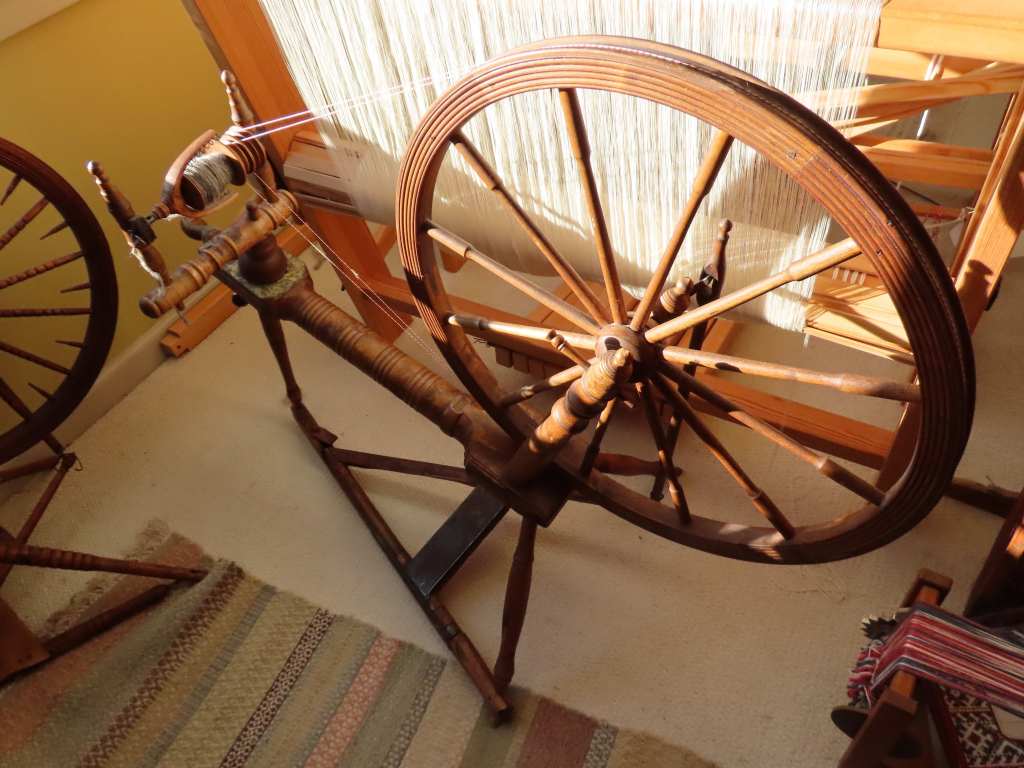
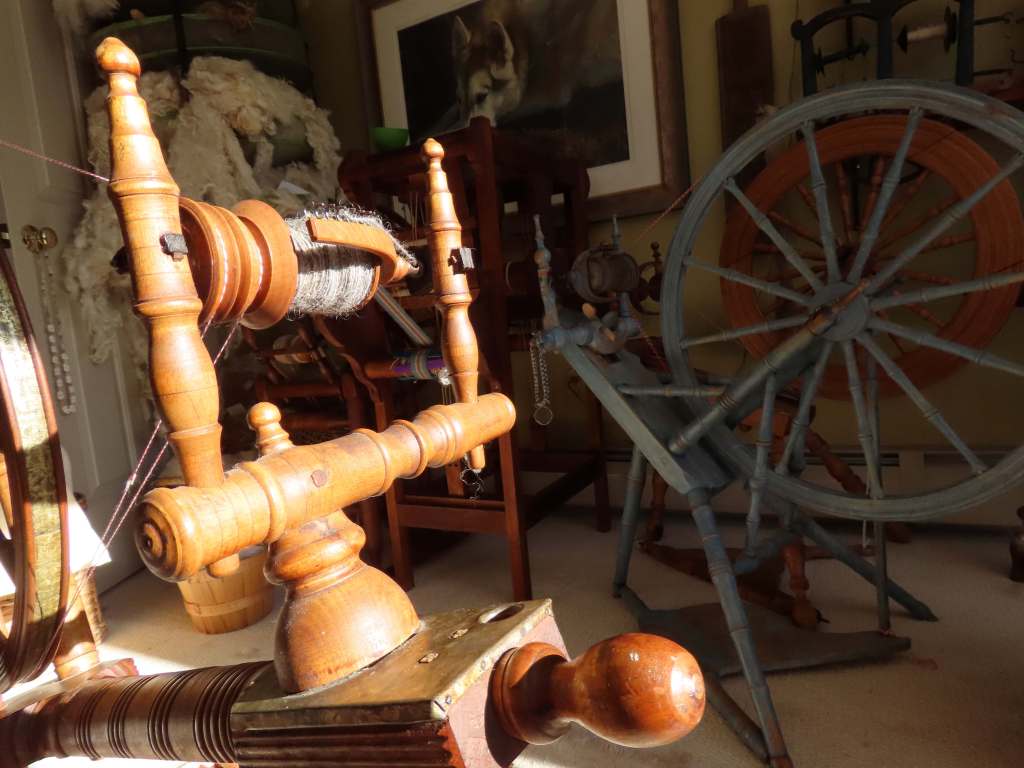
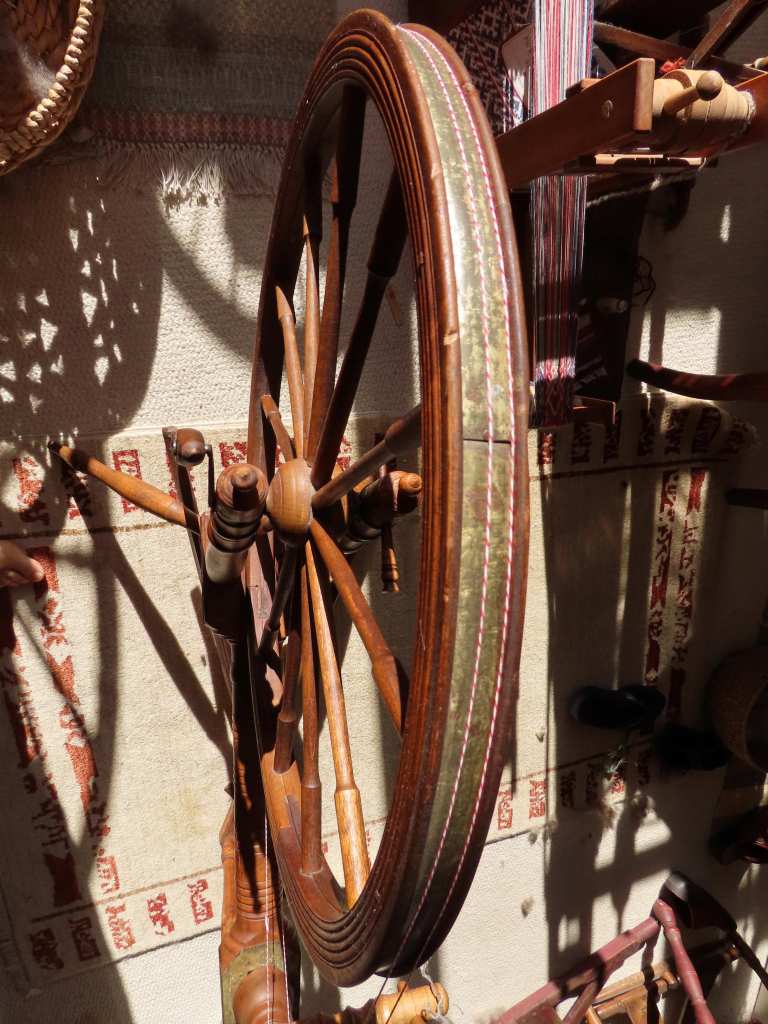
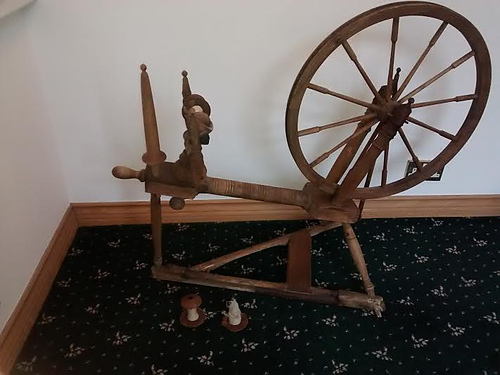
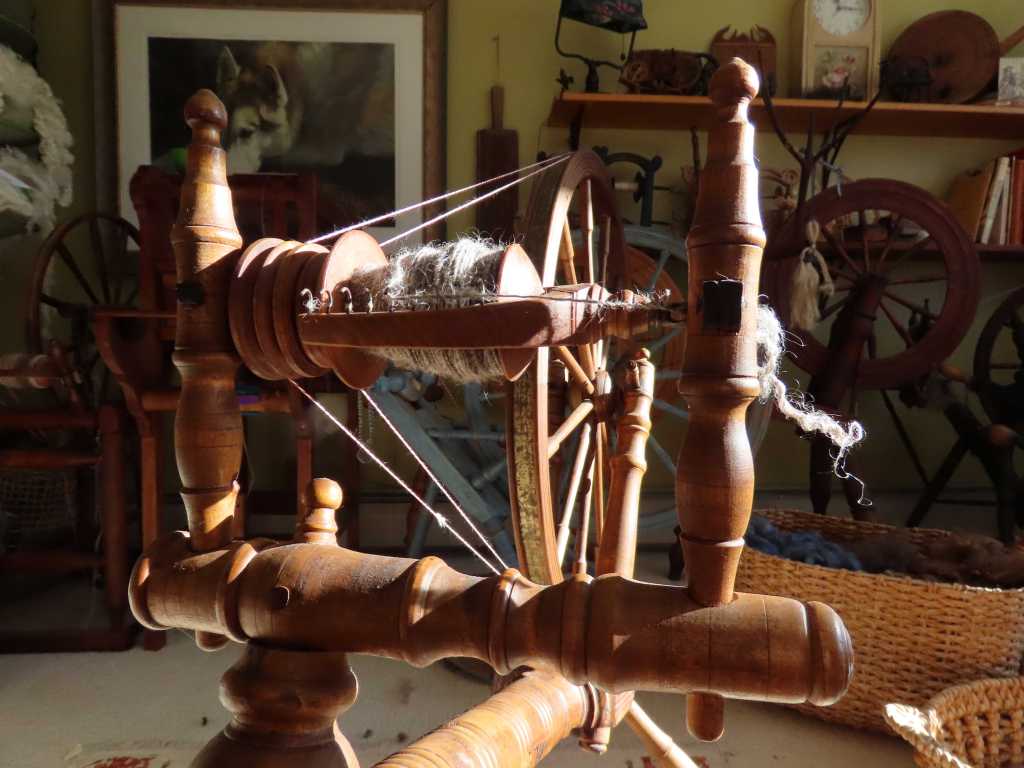
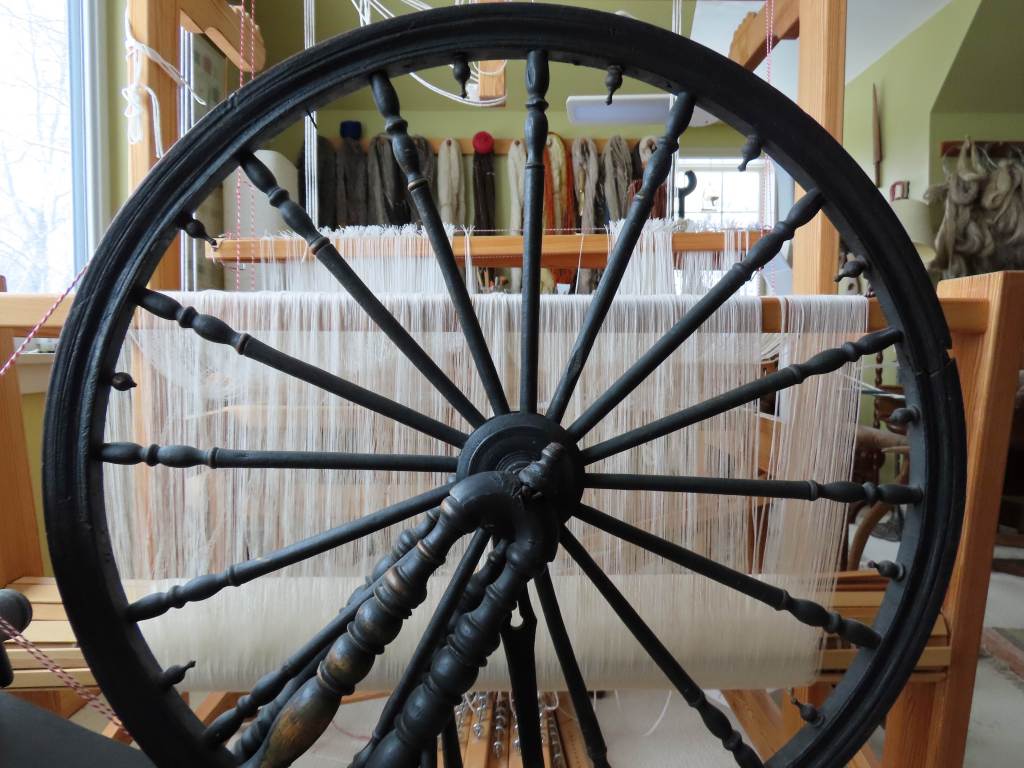
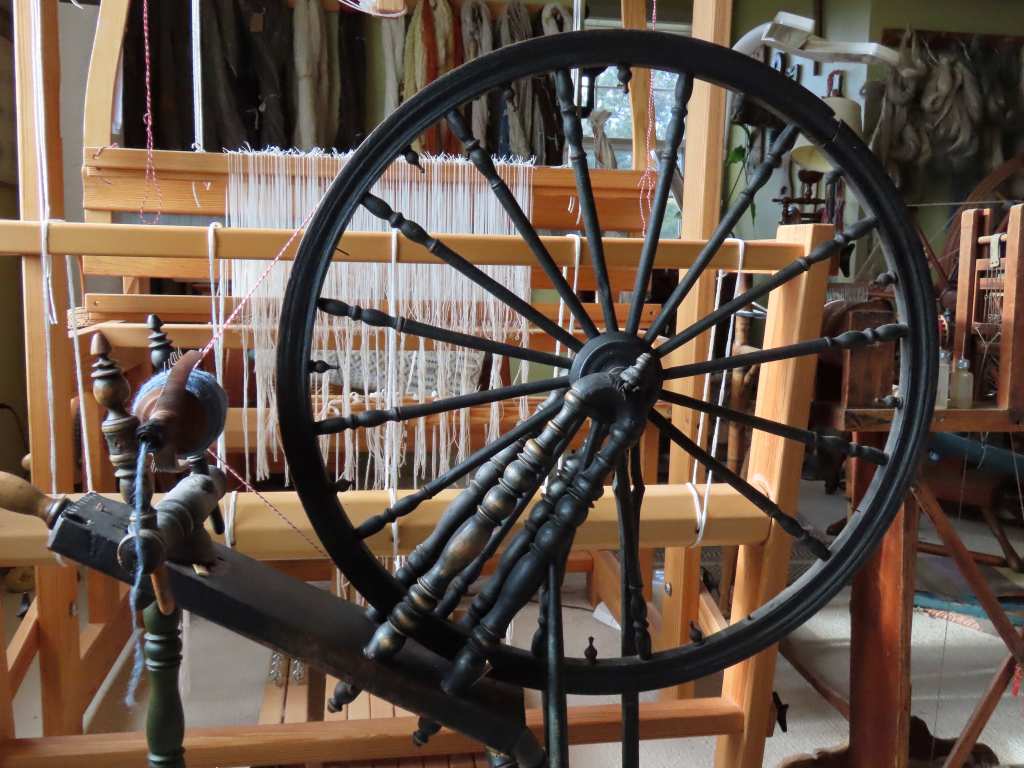
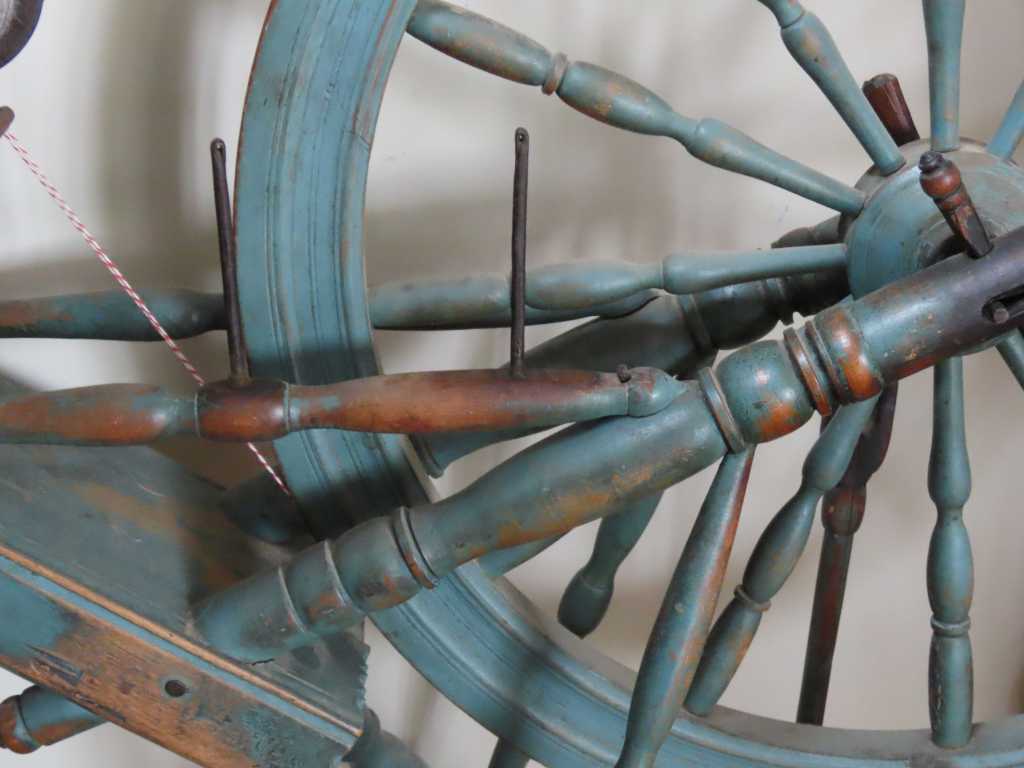
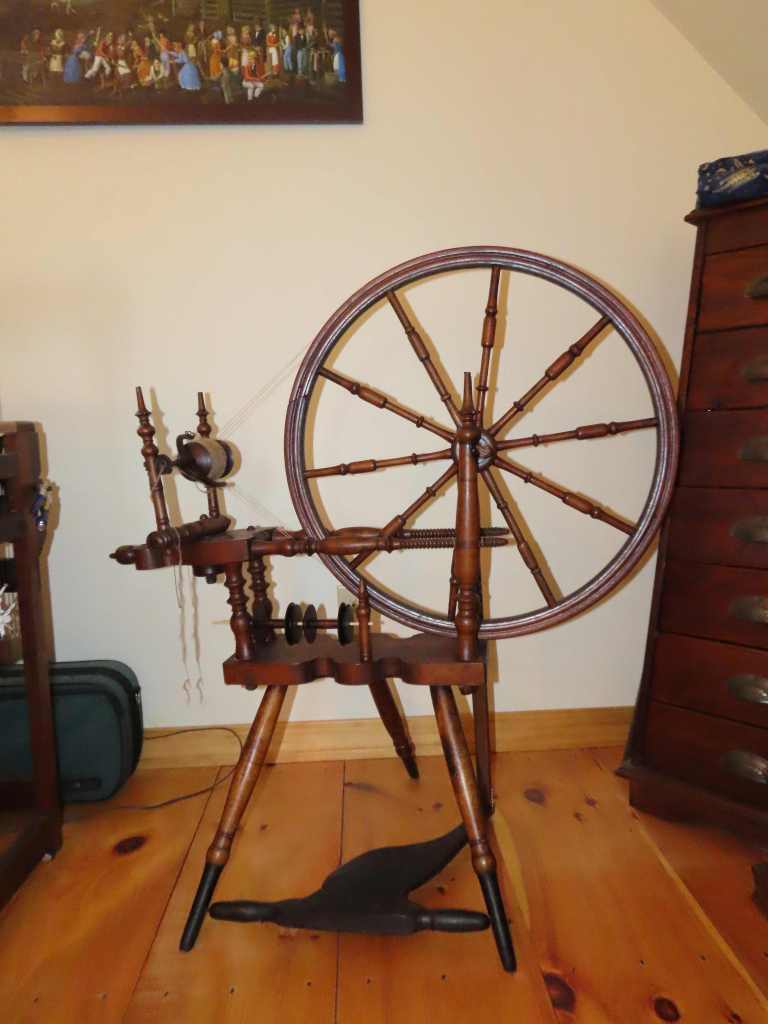
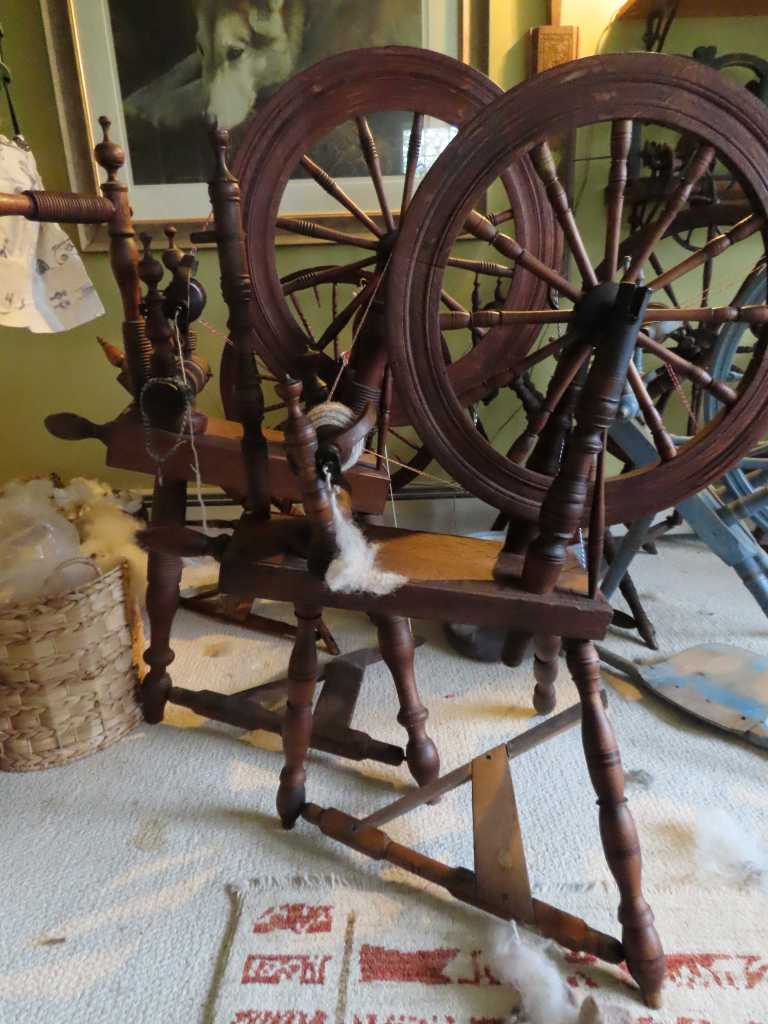
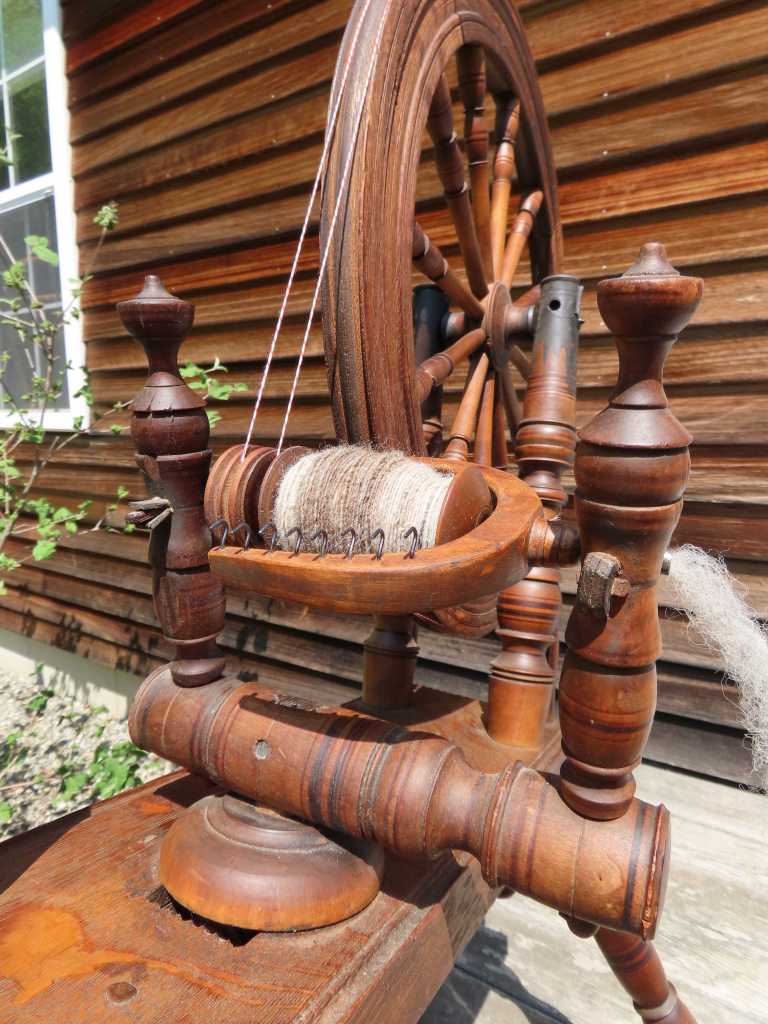
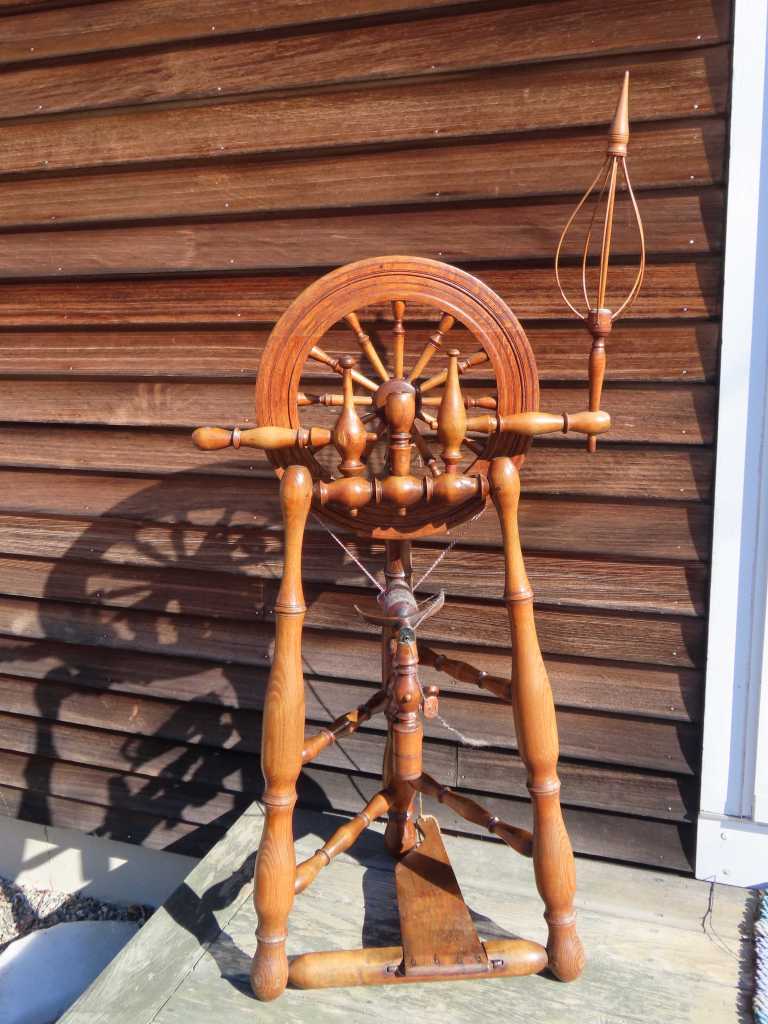
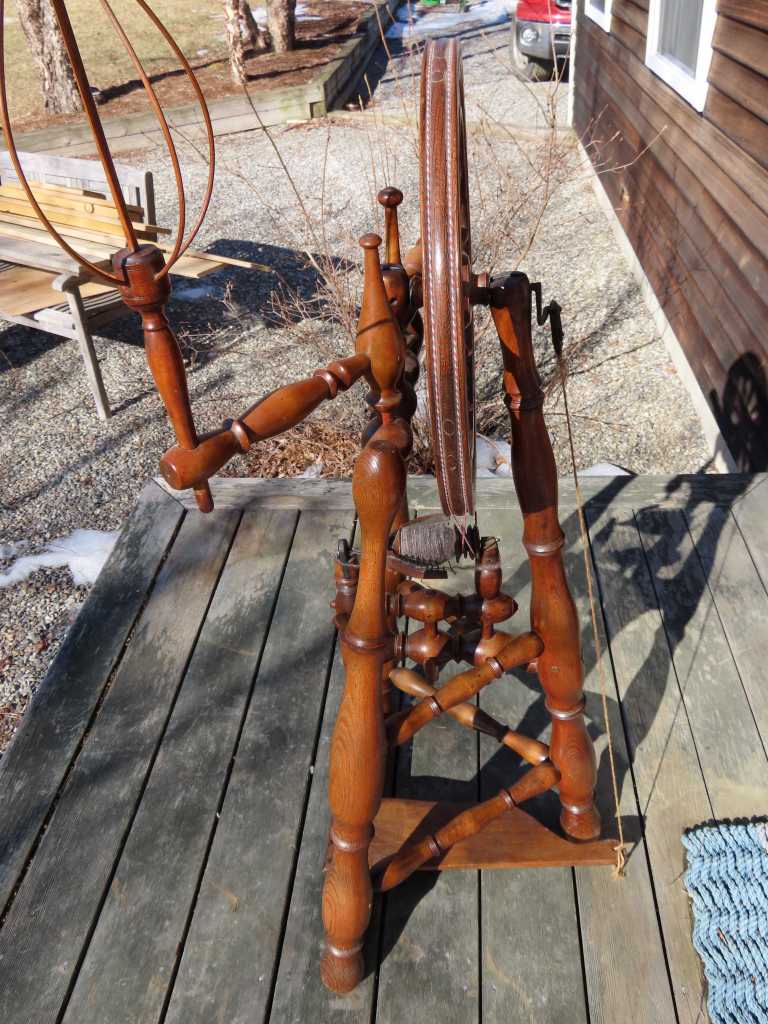
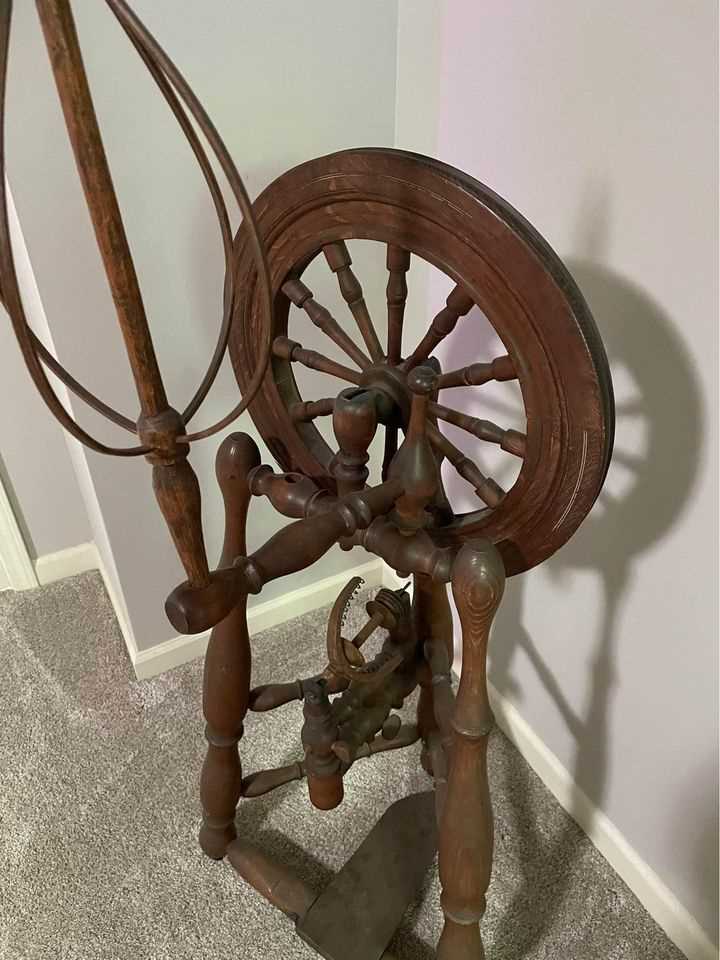
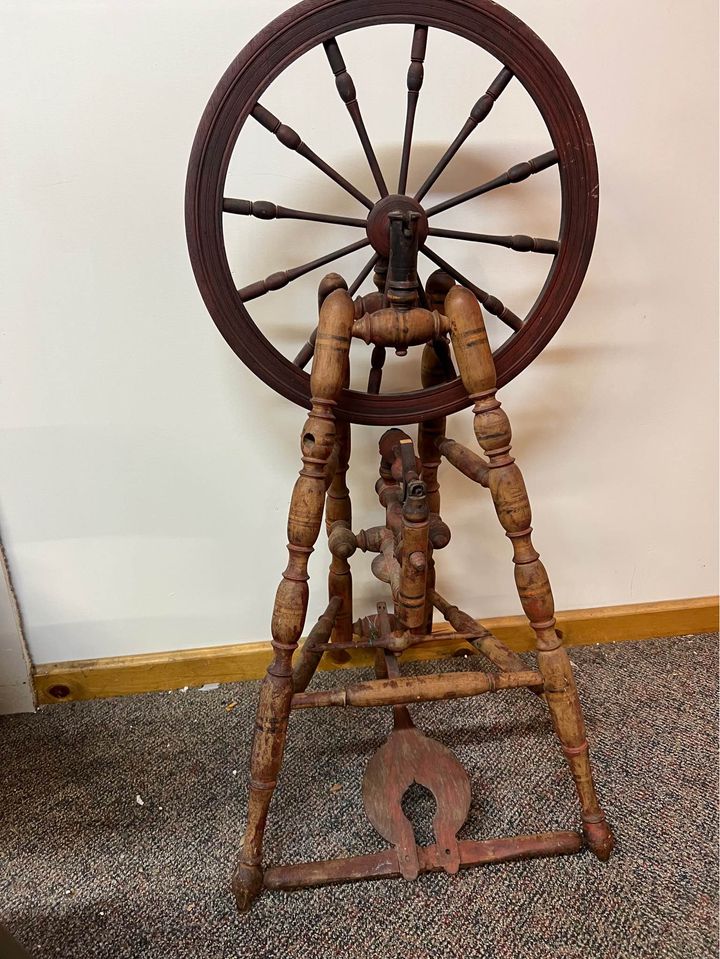
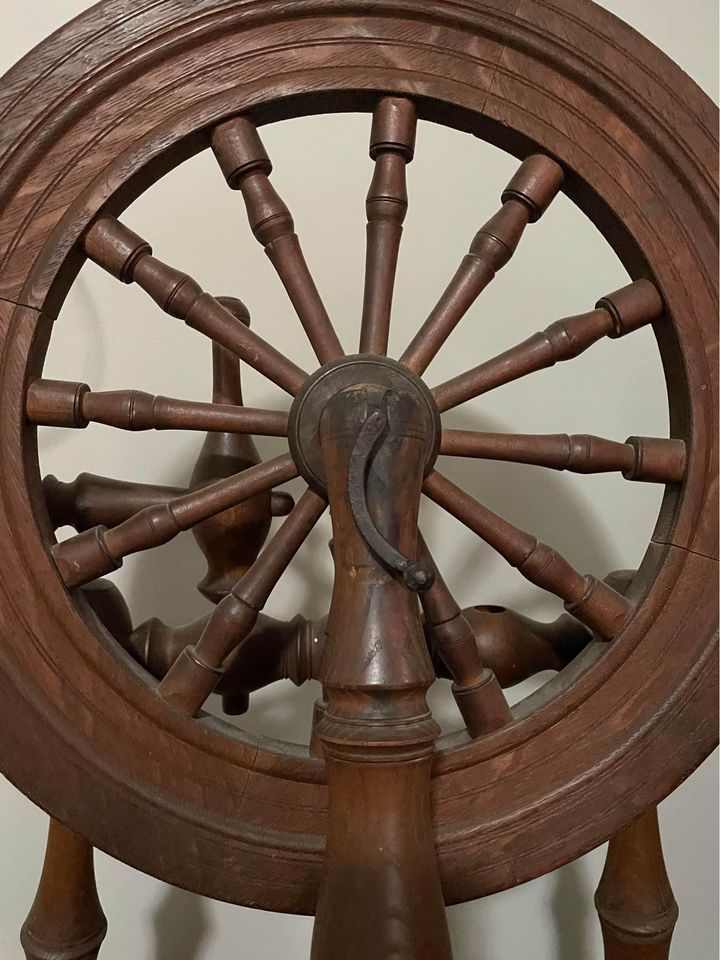
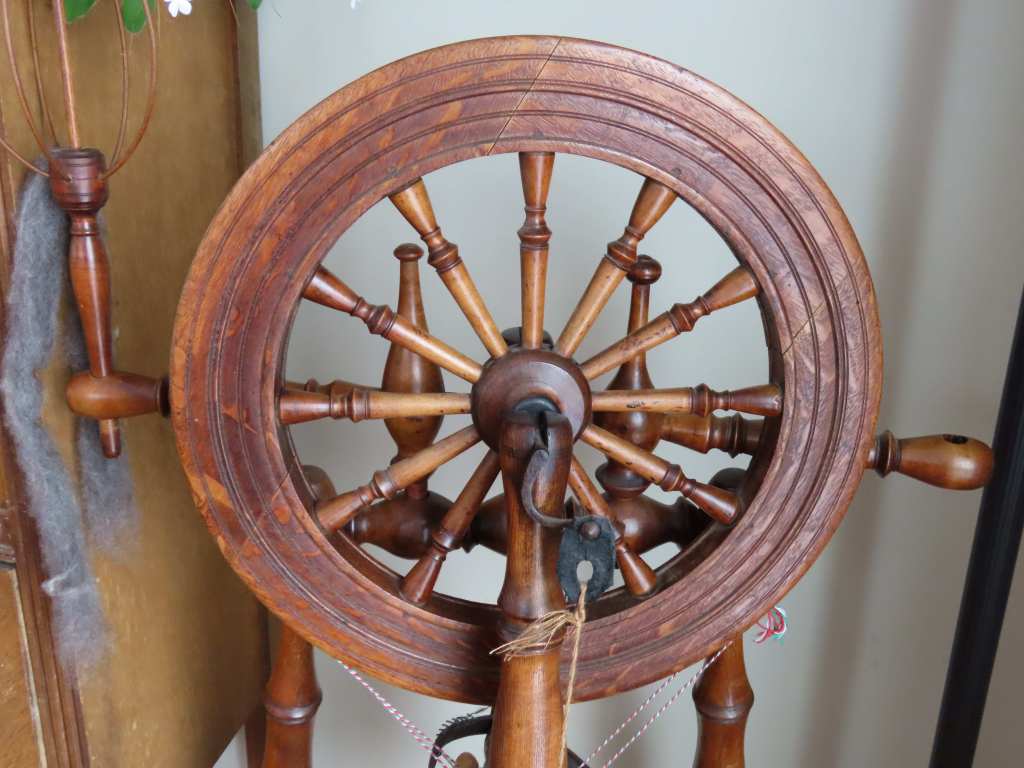
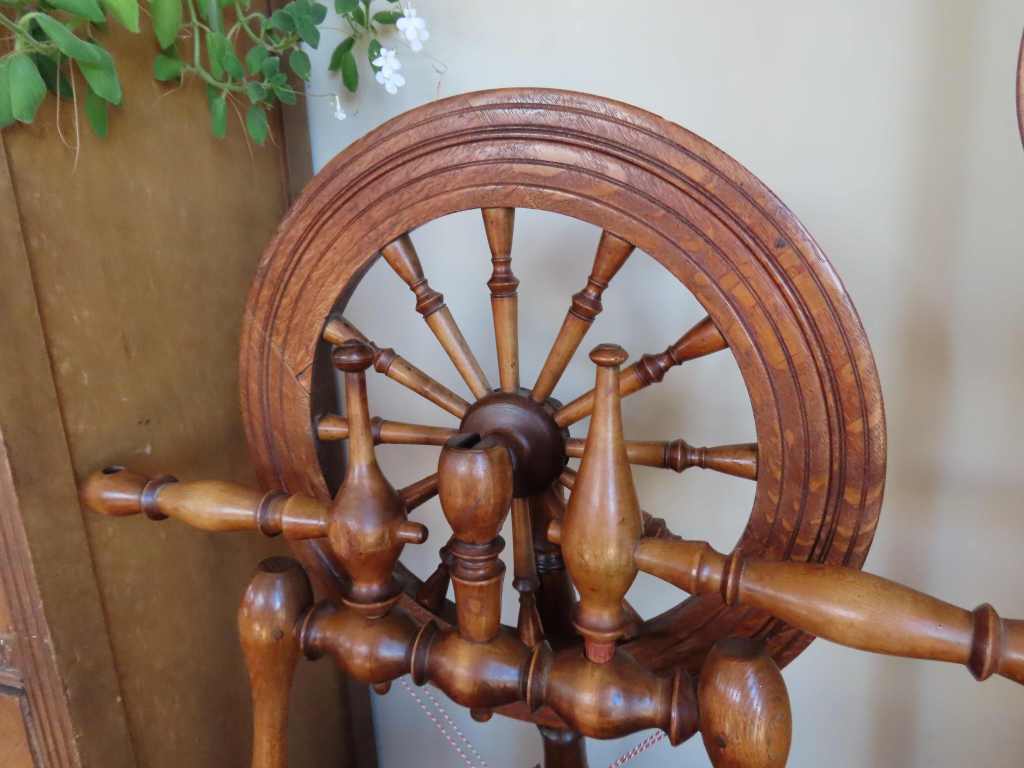
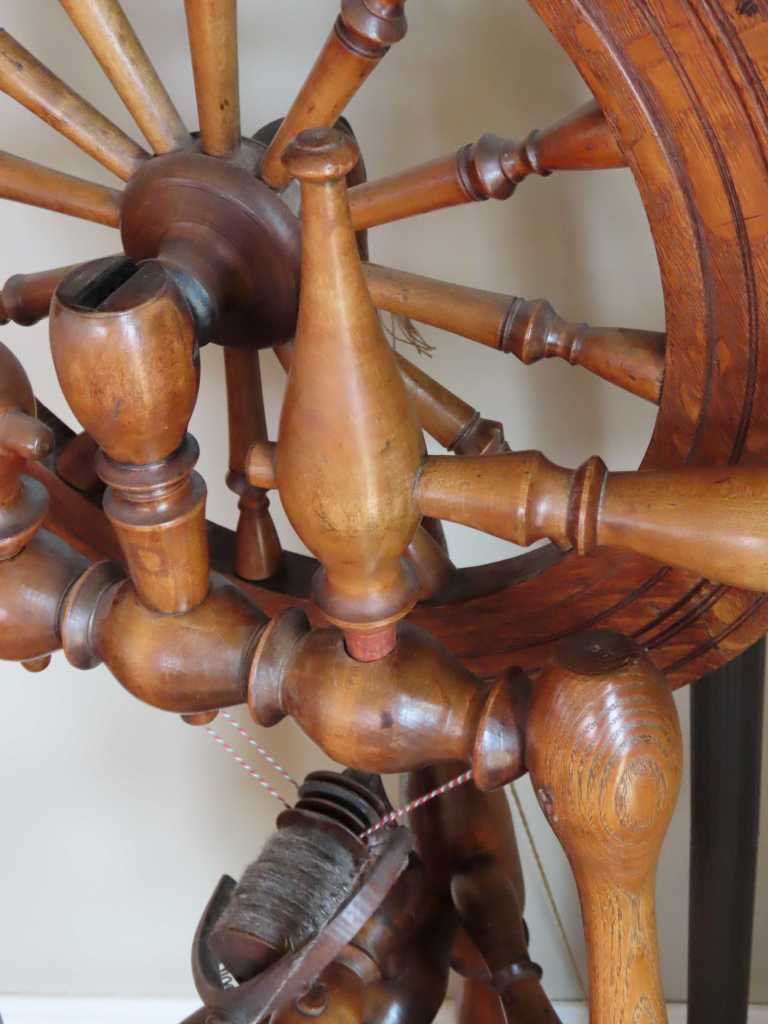
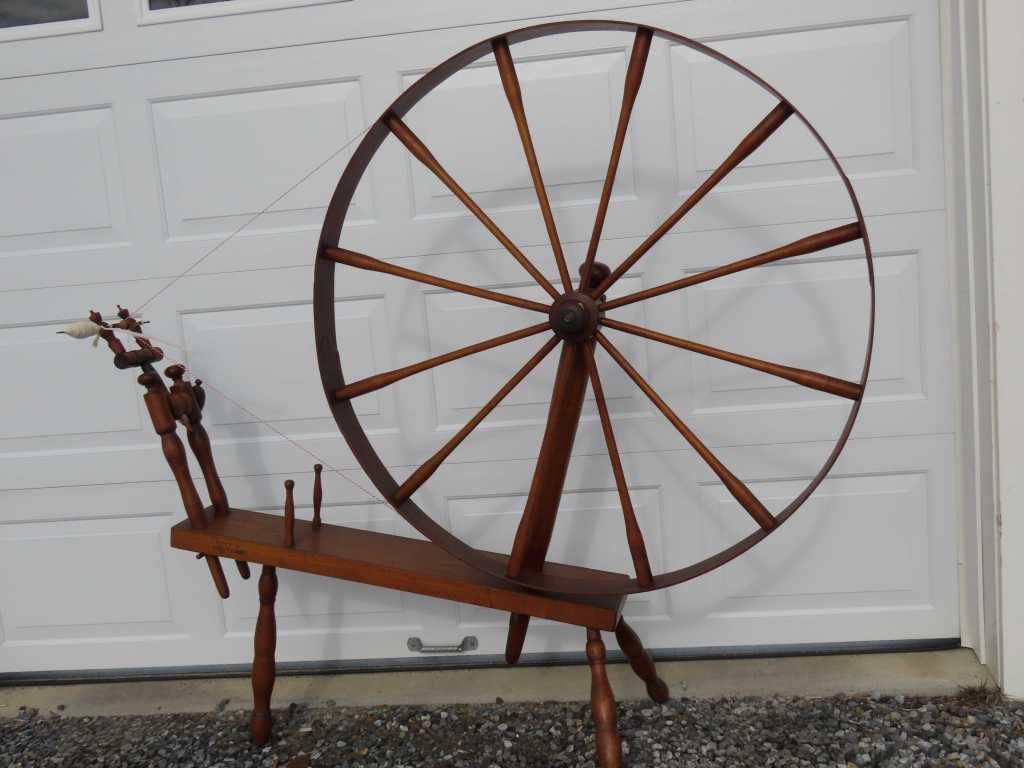
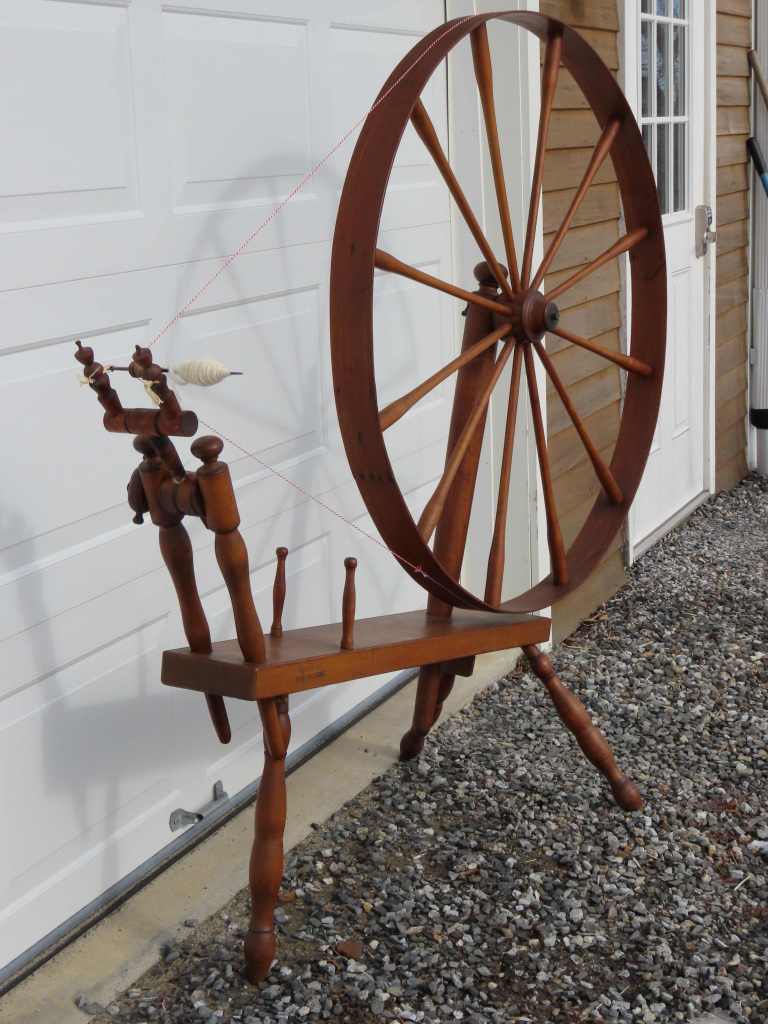
The second out-of-the-ordinary piece, a great wheel I named “Felice,” was the wheel that hooked me on great wheel spinning. 
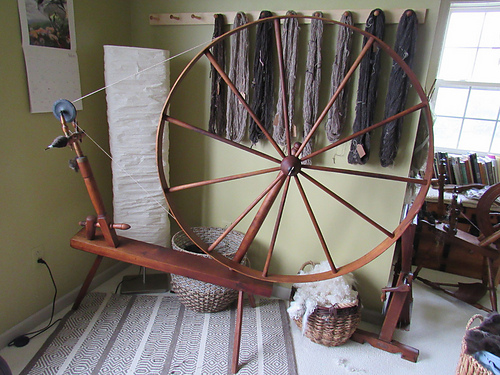
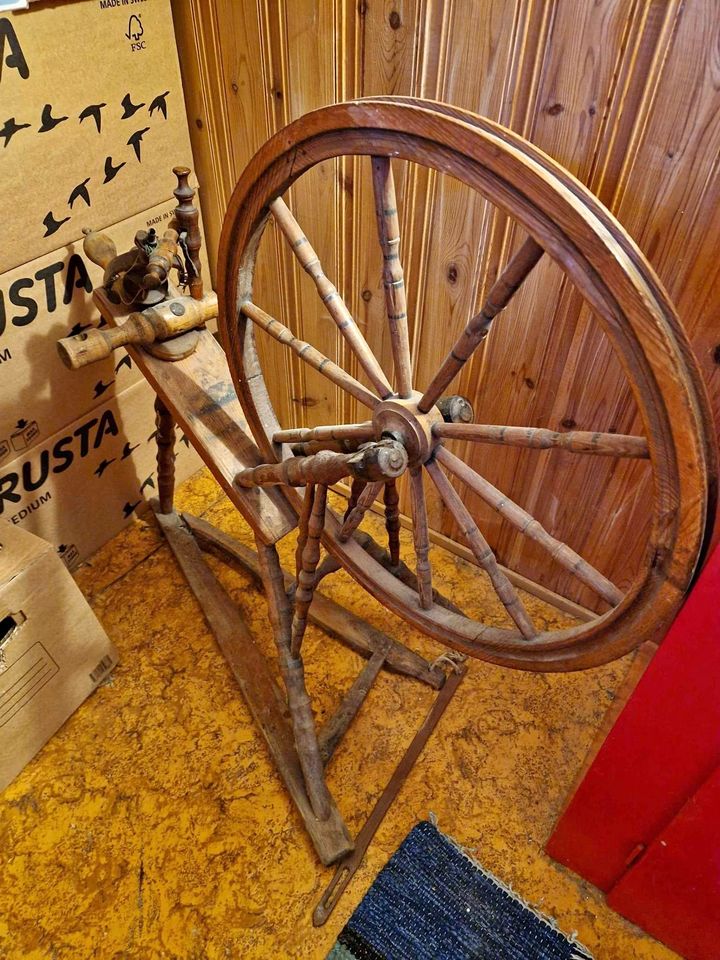
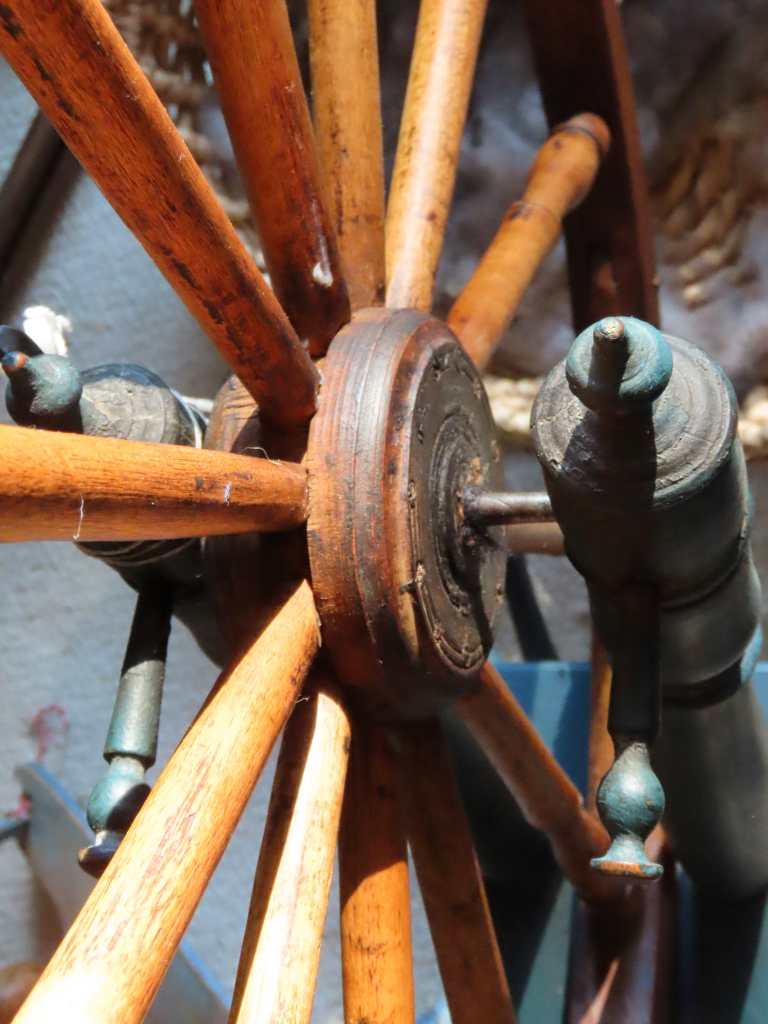
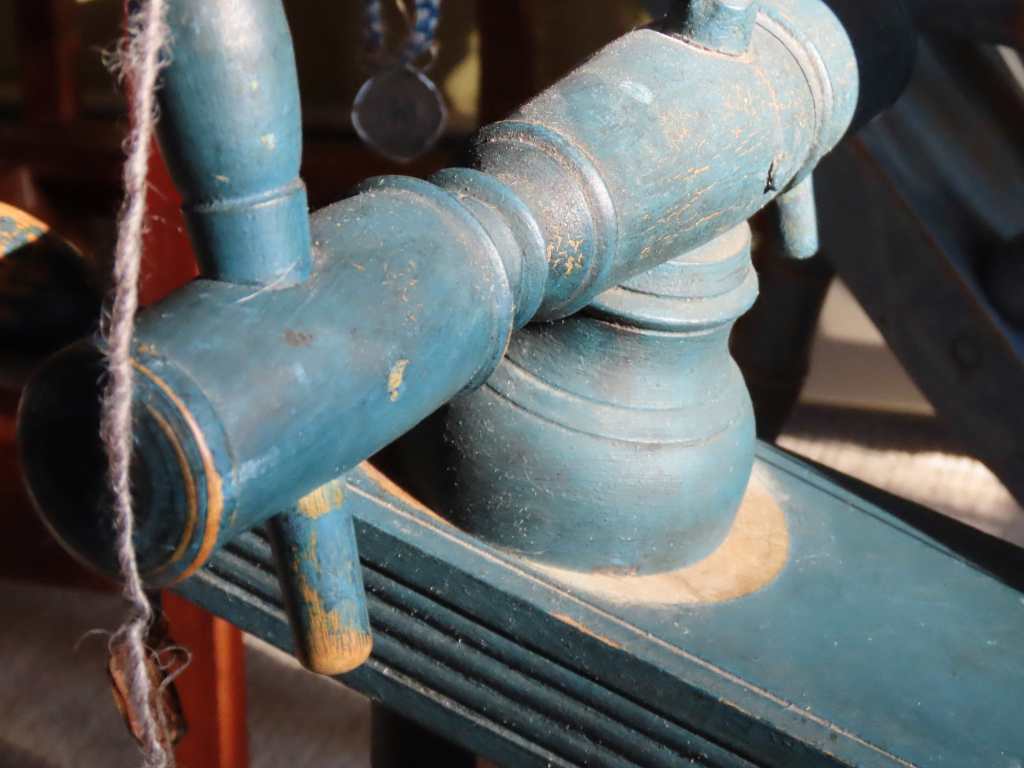
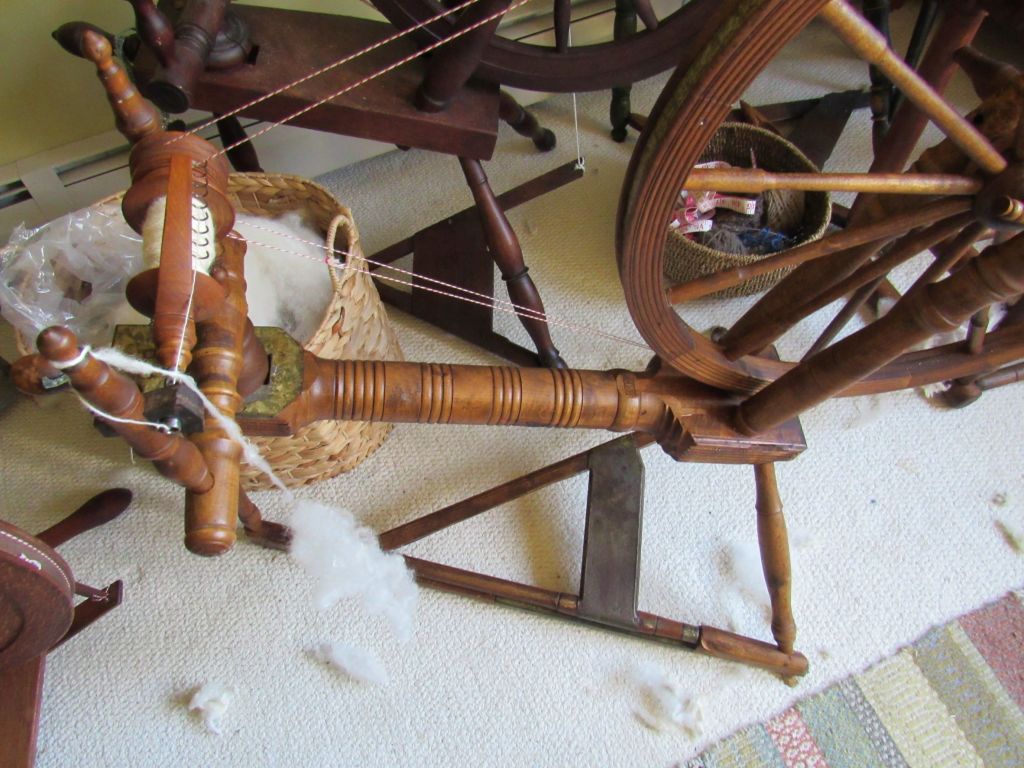
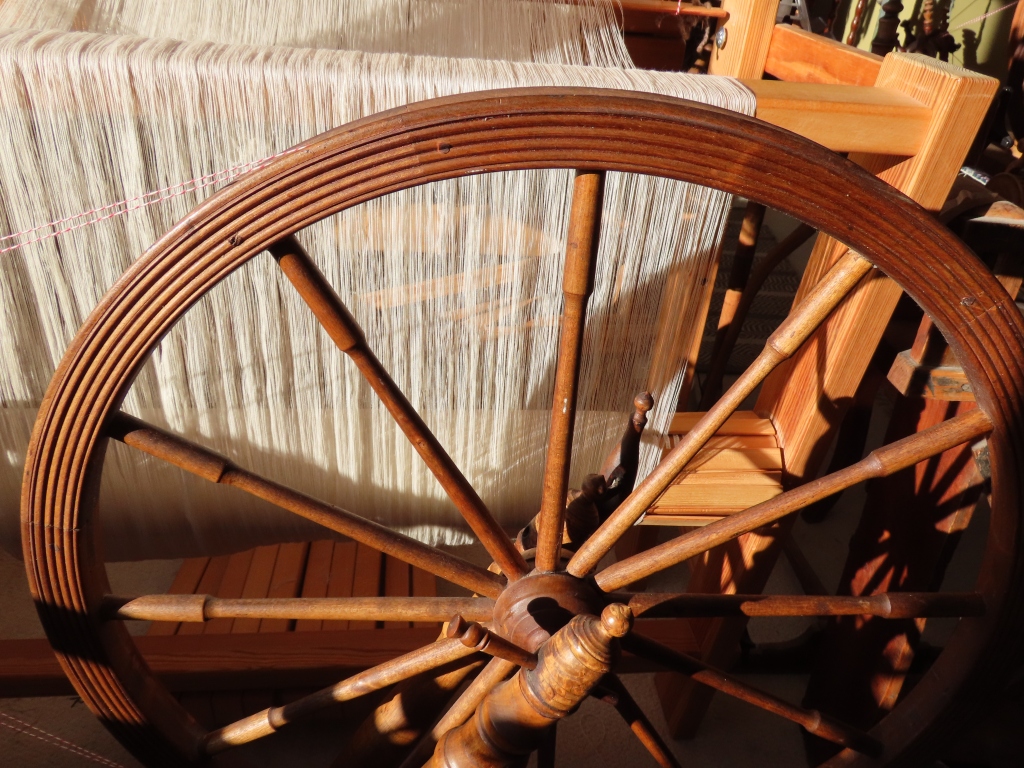
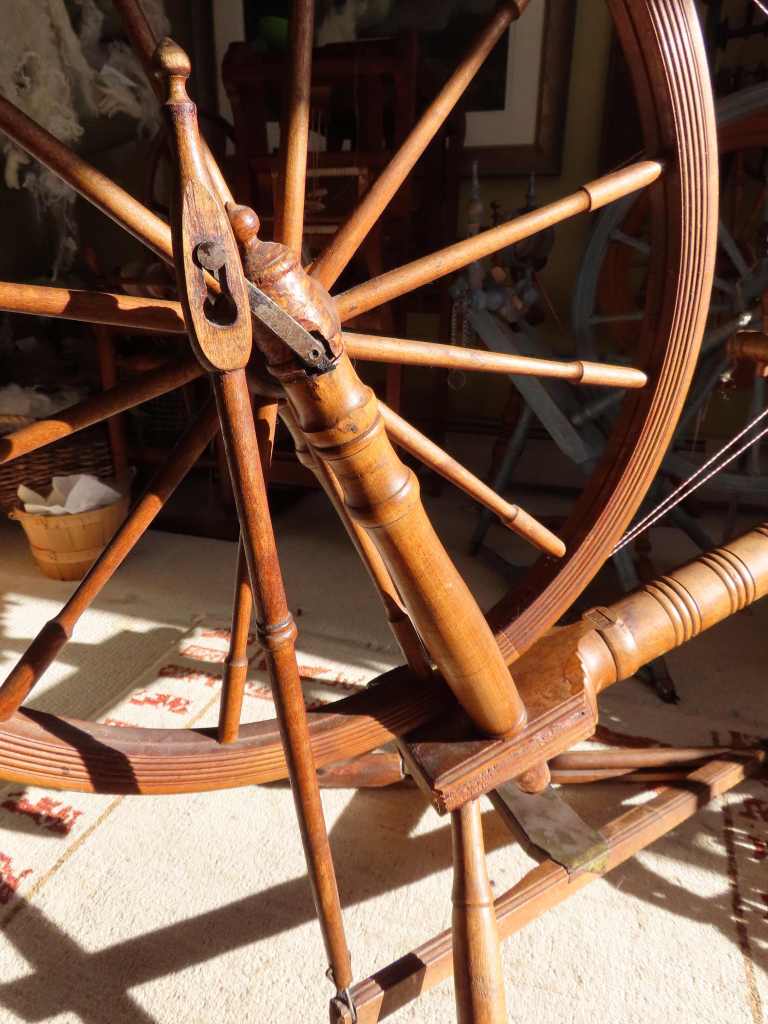
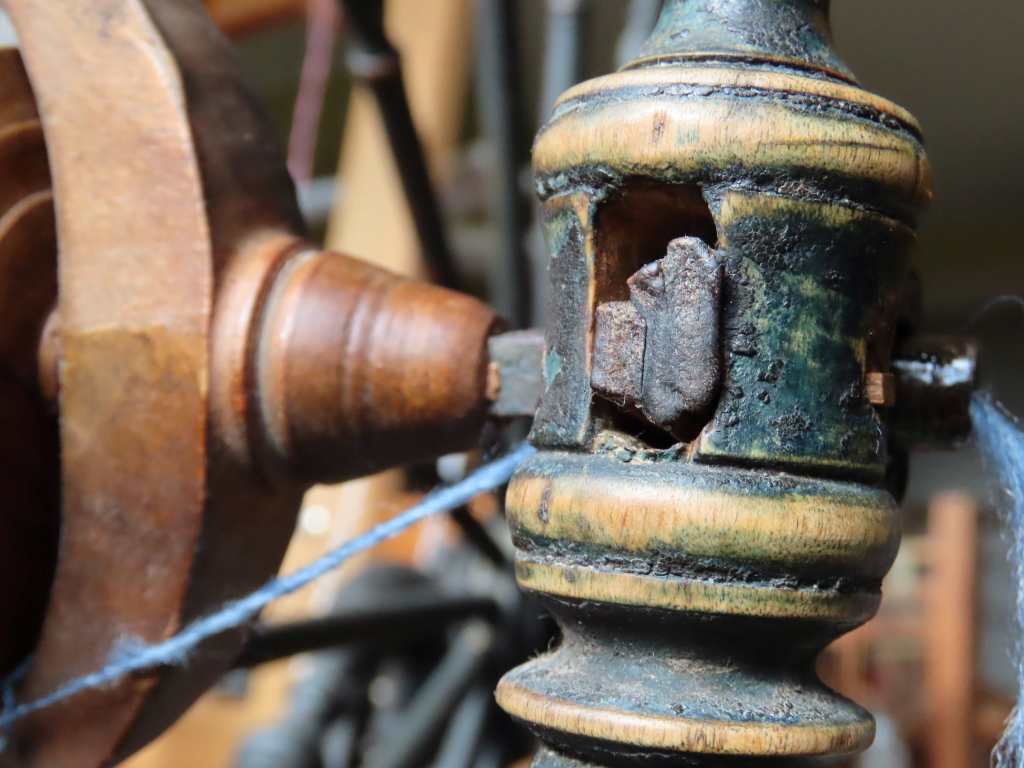
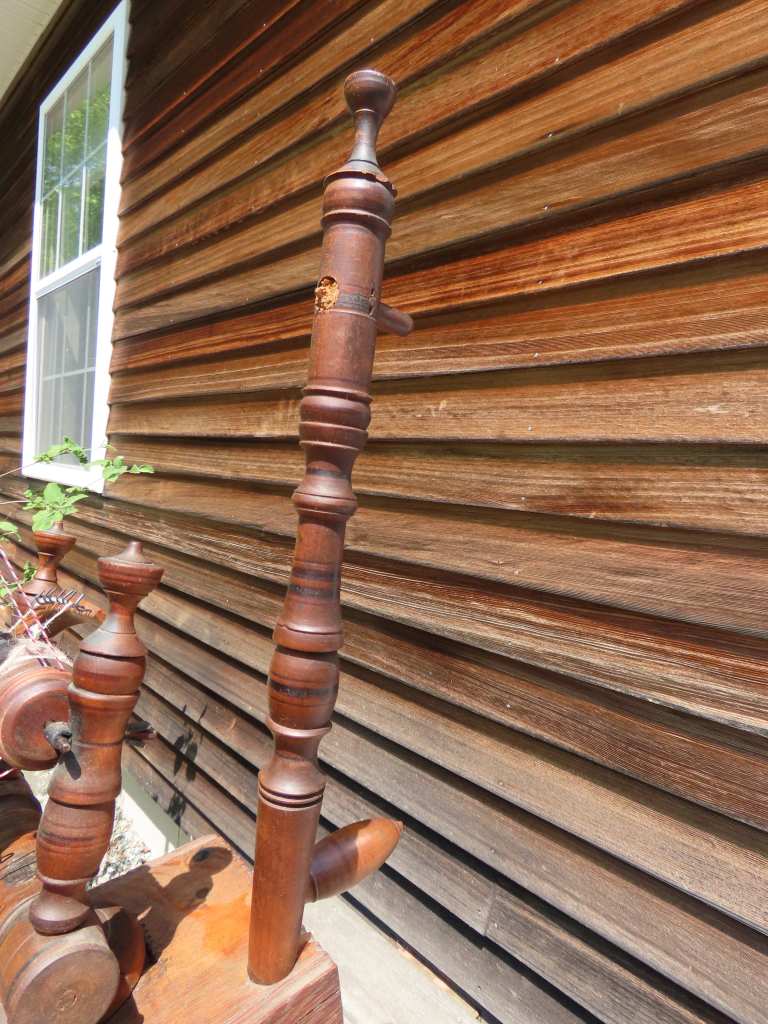
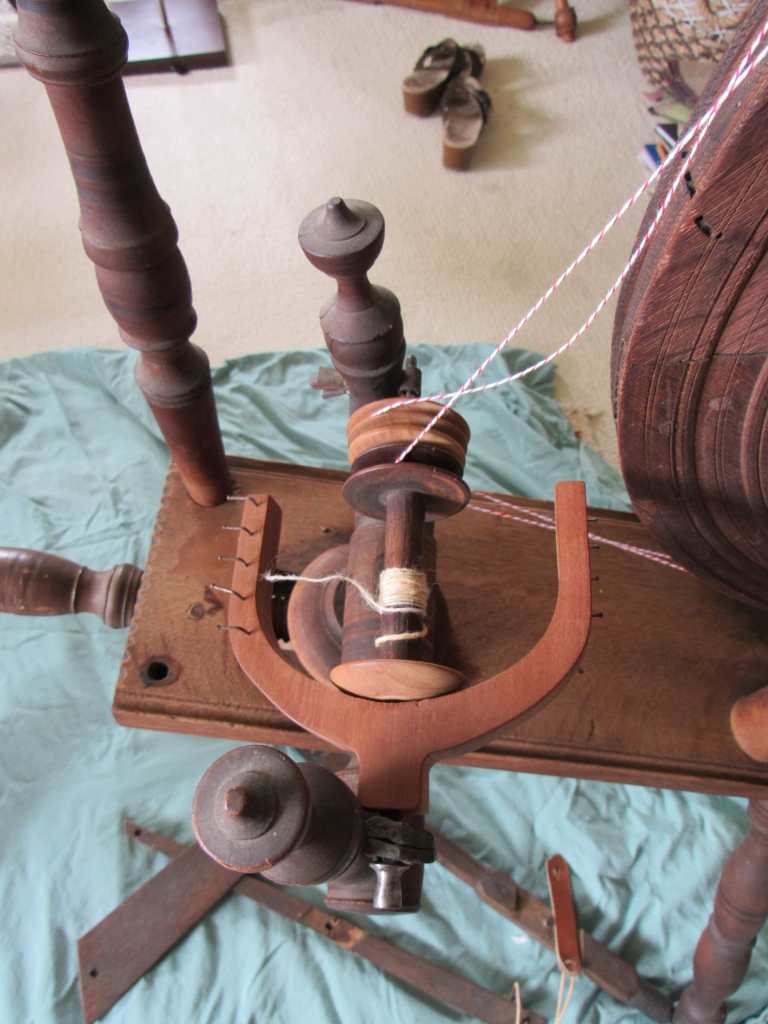
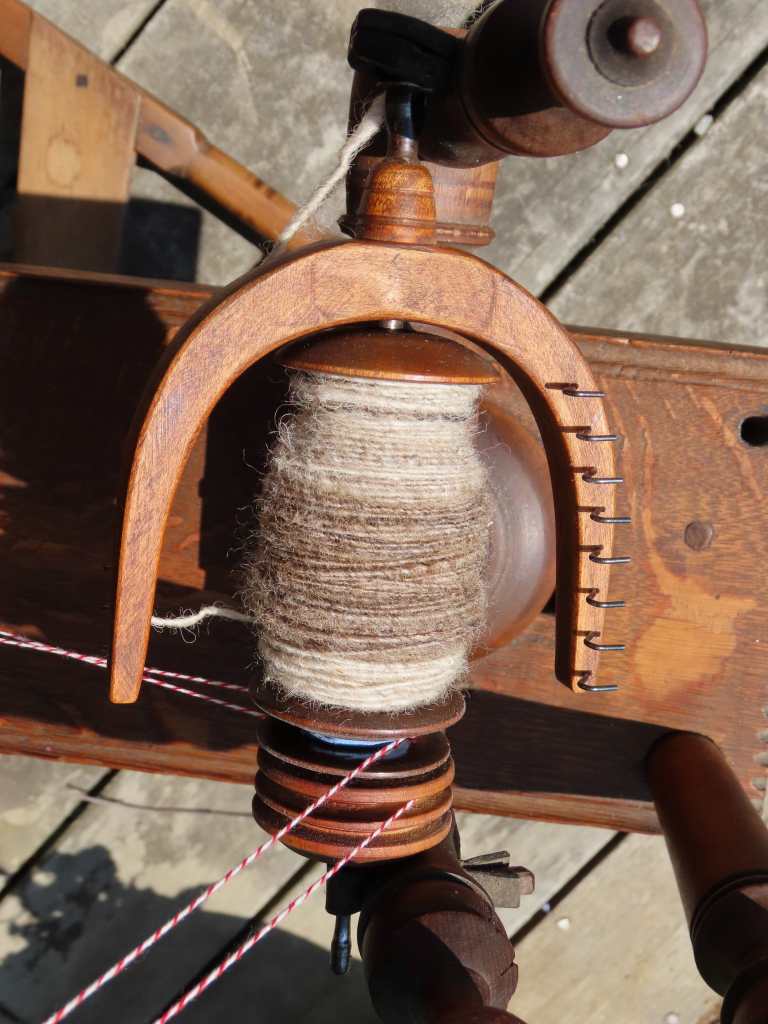
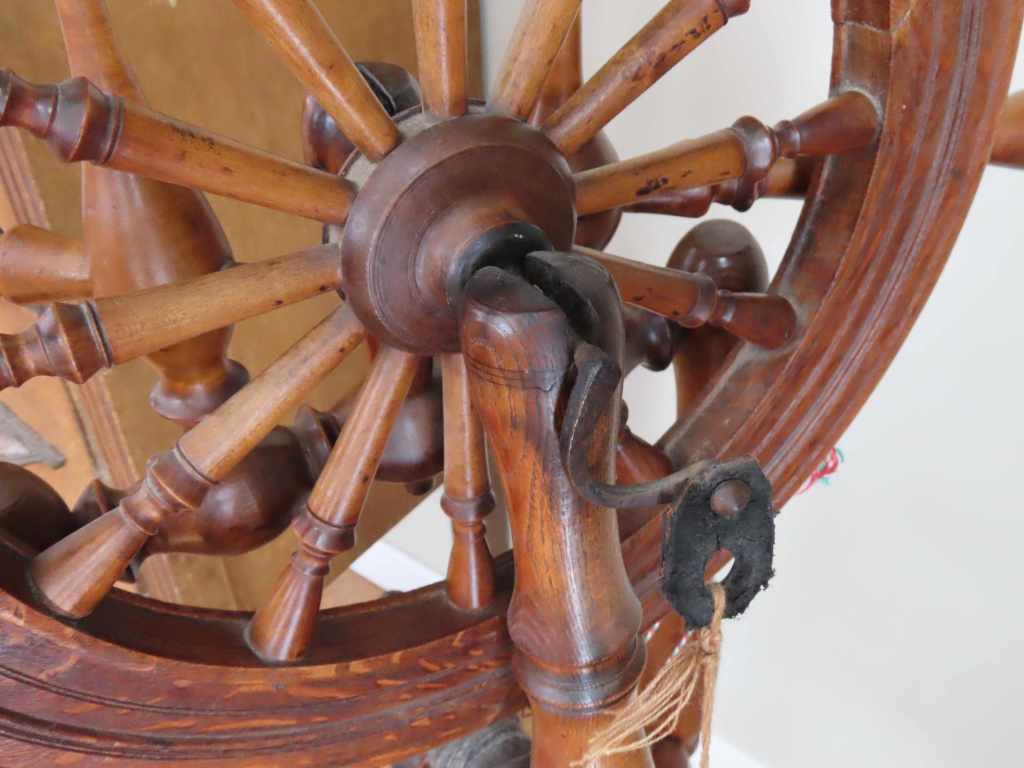
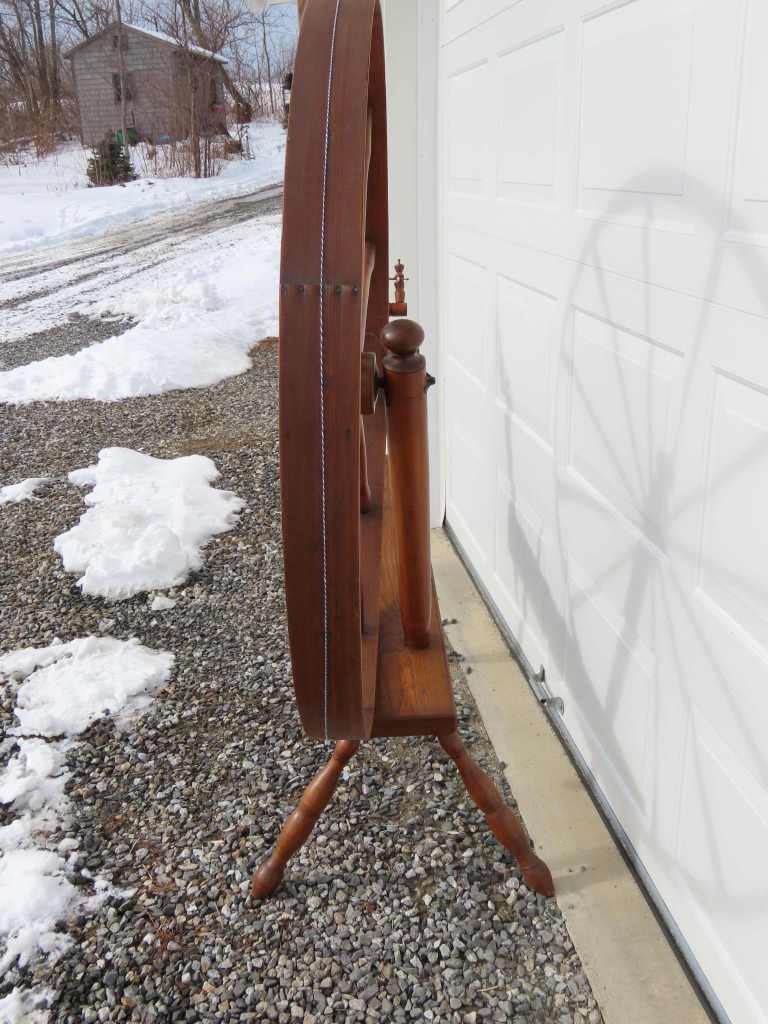
I bought her in southern Maine.  The seller had, in turn, bought the wheel in New Hampshire from a woman who said it was Shaker.  While the beauty, simplicity, and craftsmanship would fit well with the Shaker approach to design and construction, I have not seen any evidence that Shakers make wheels with features similar to this one.
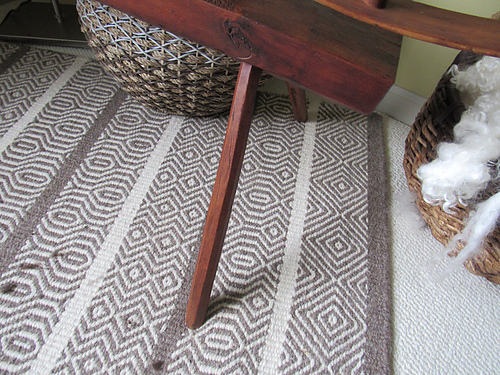
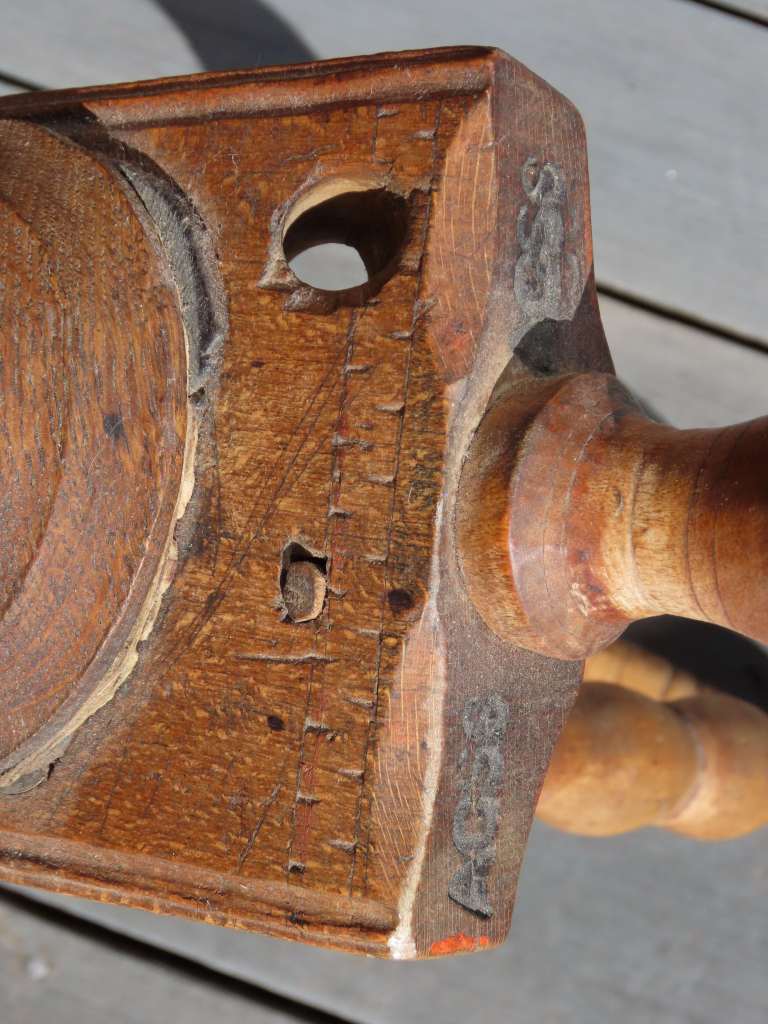
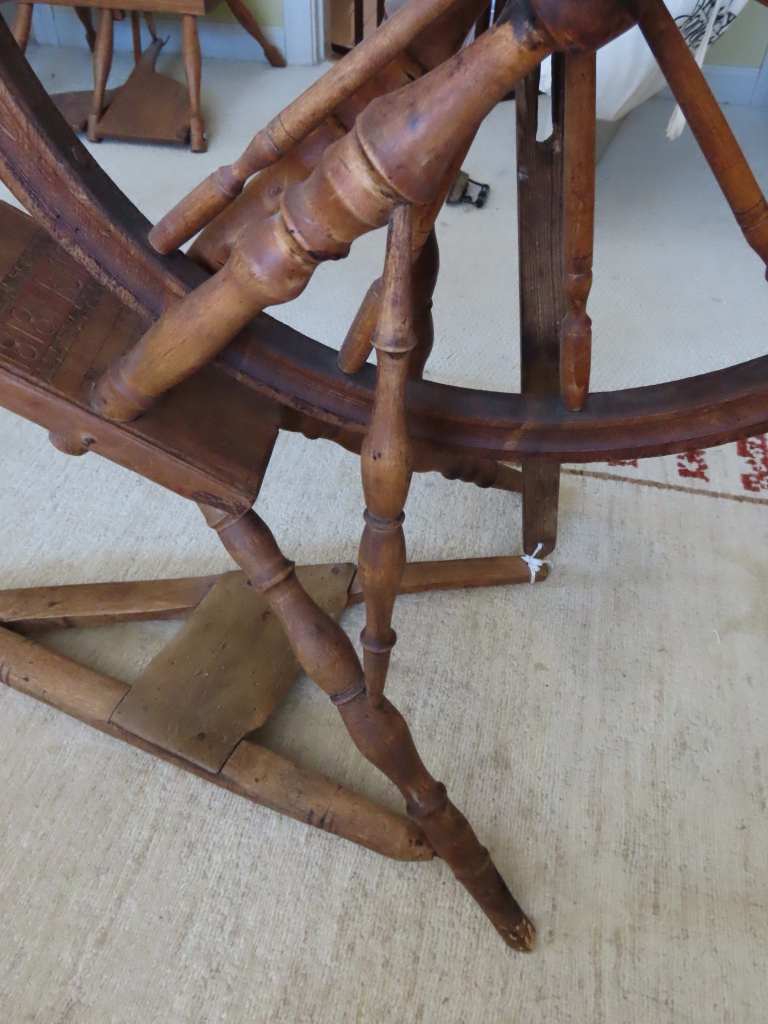
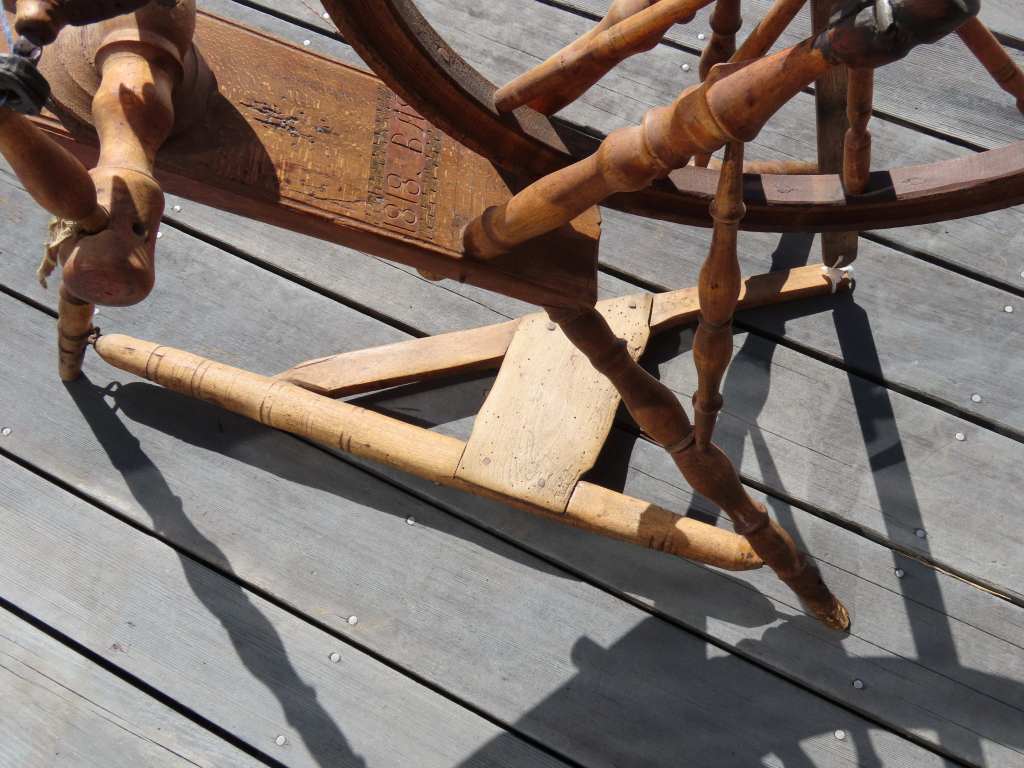
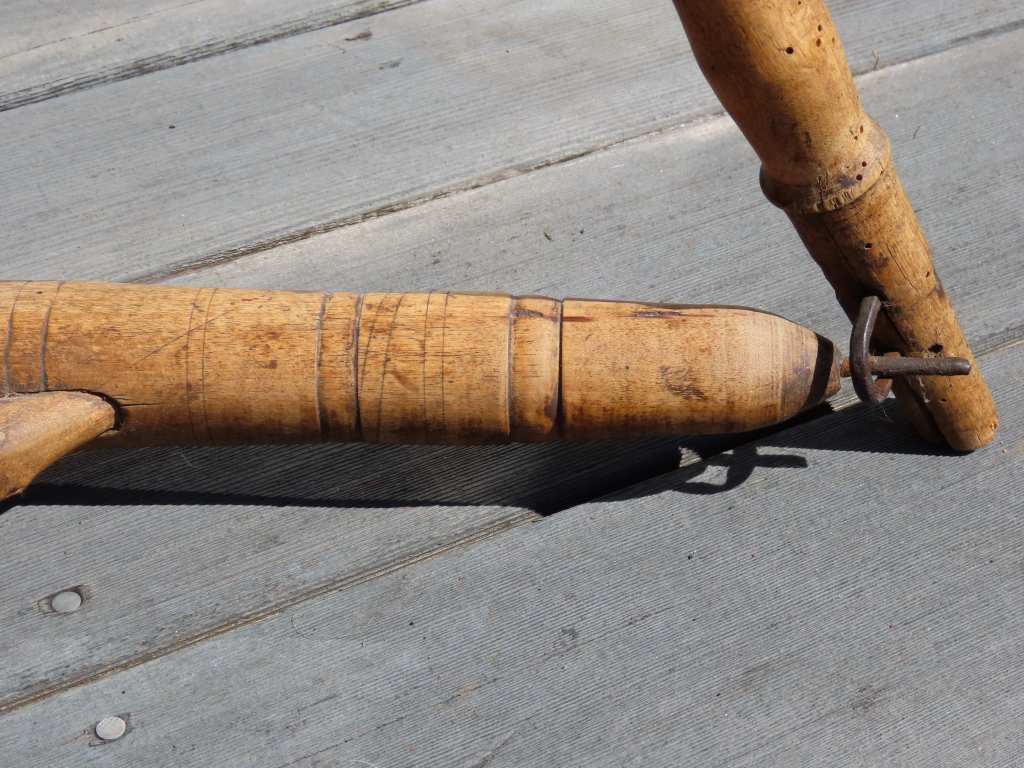
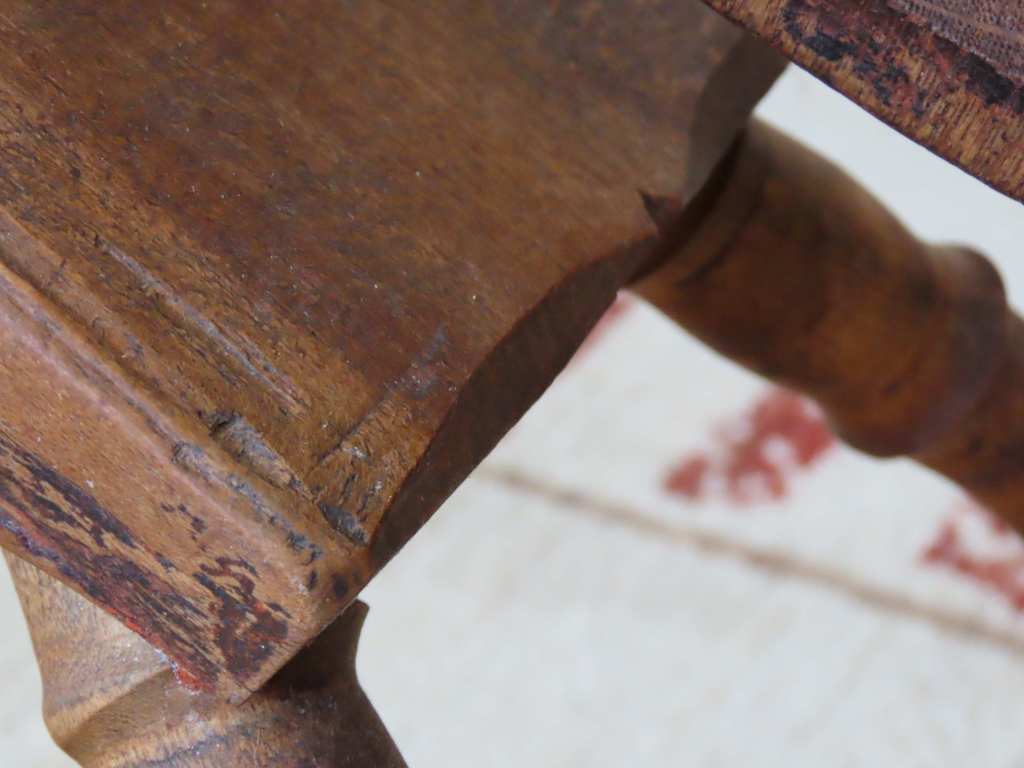
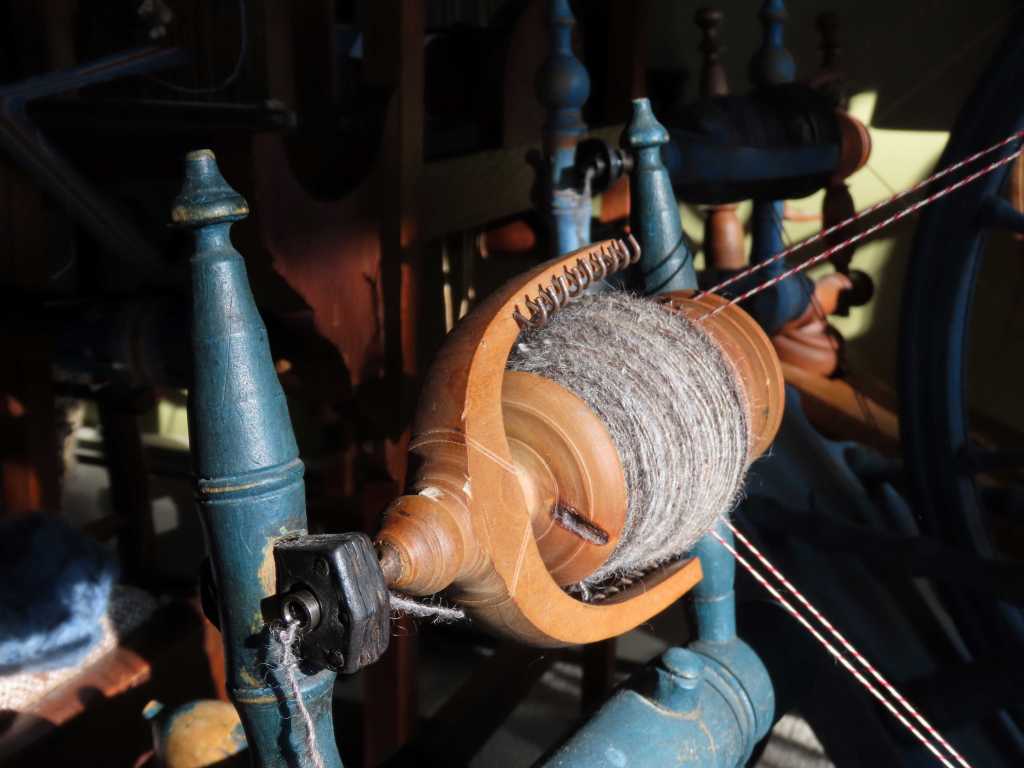
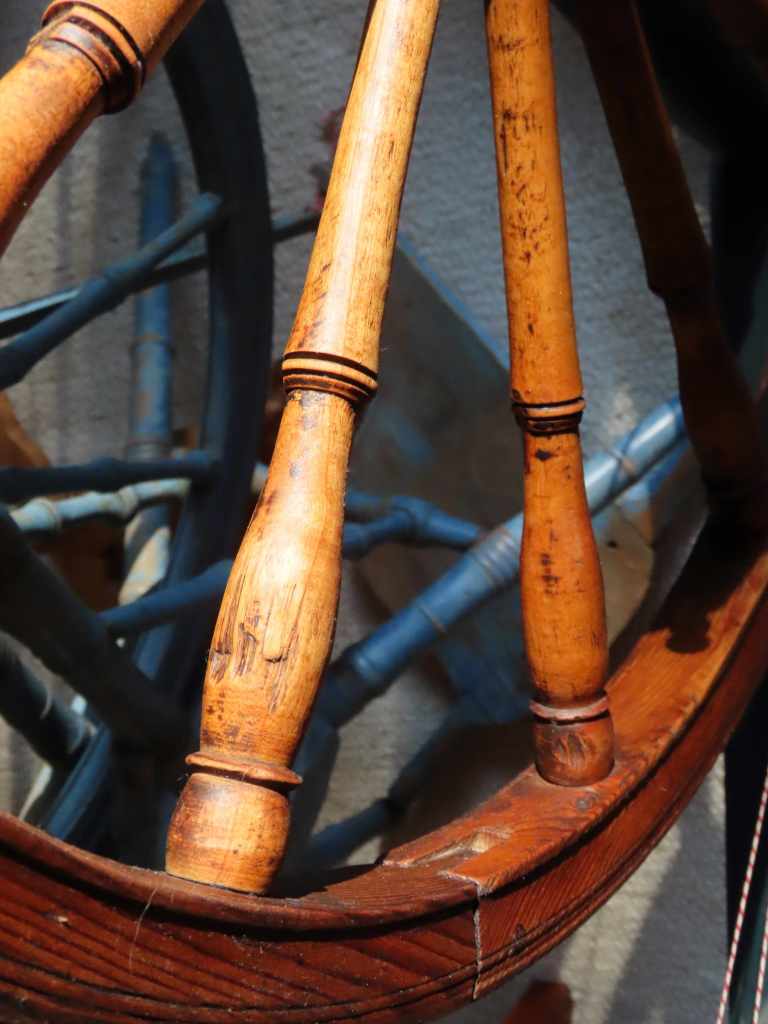
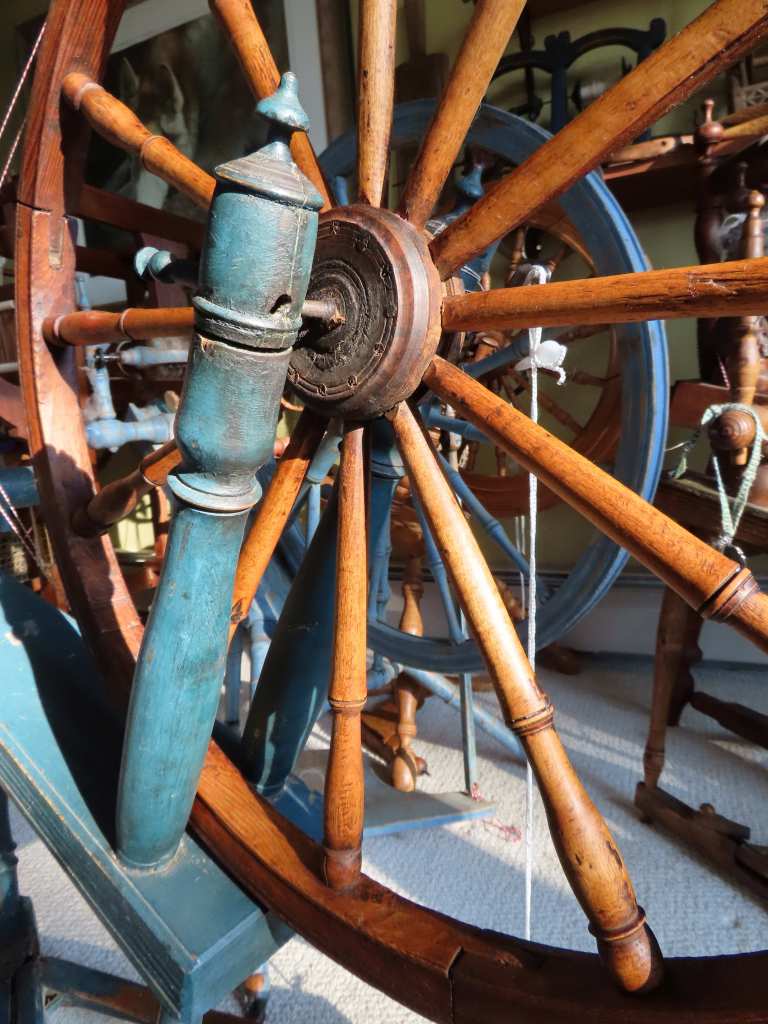
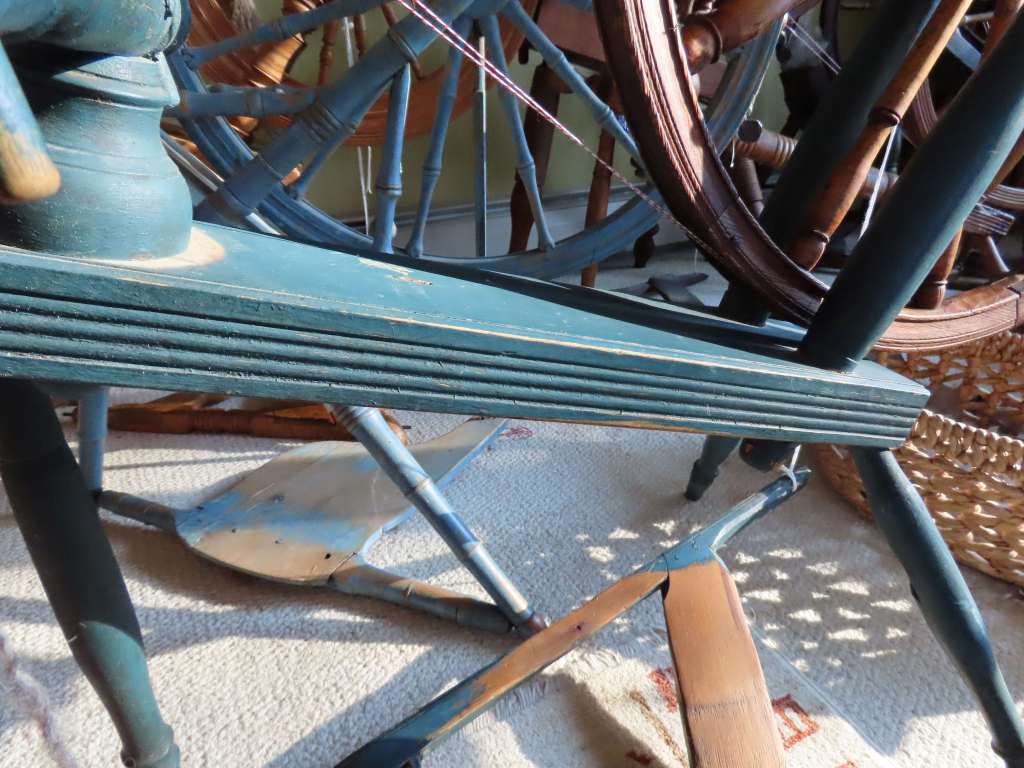
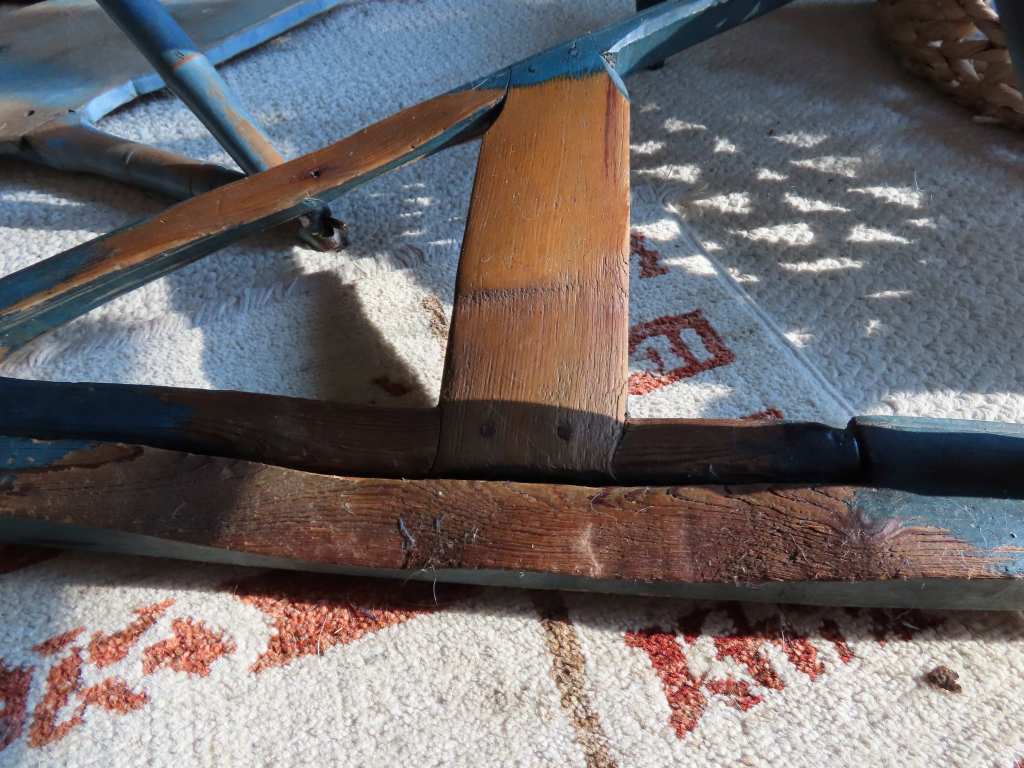
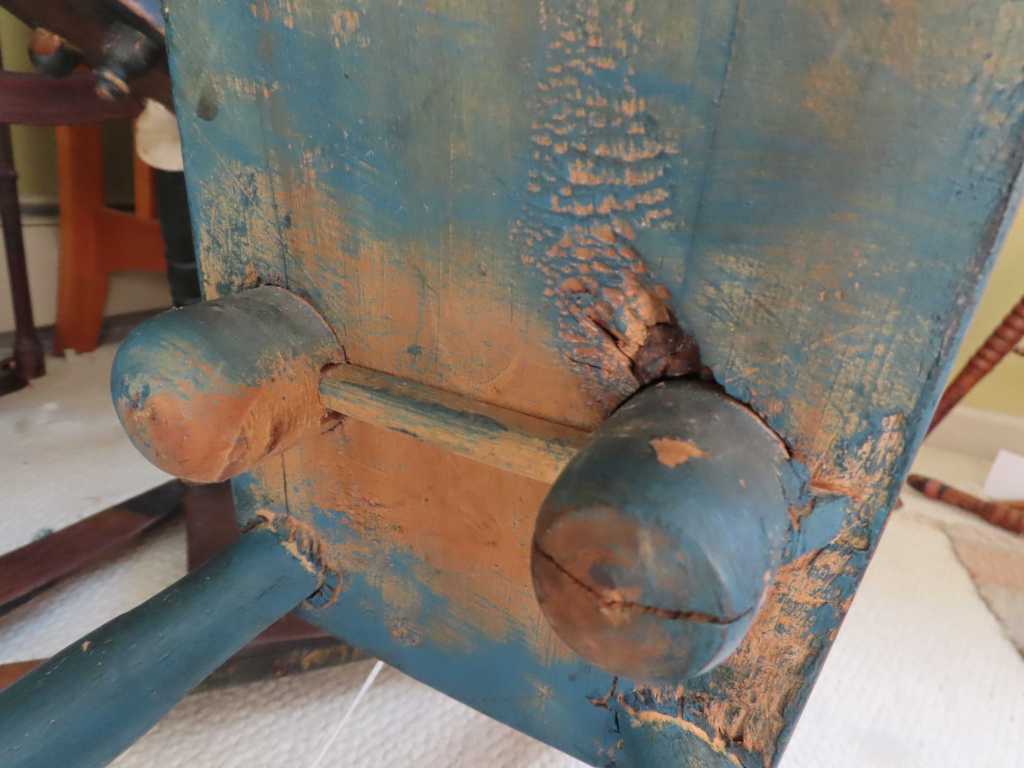
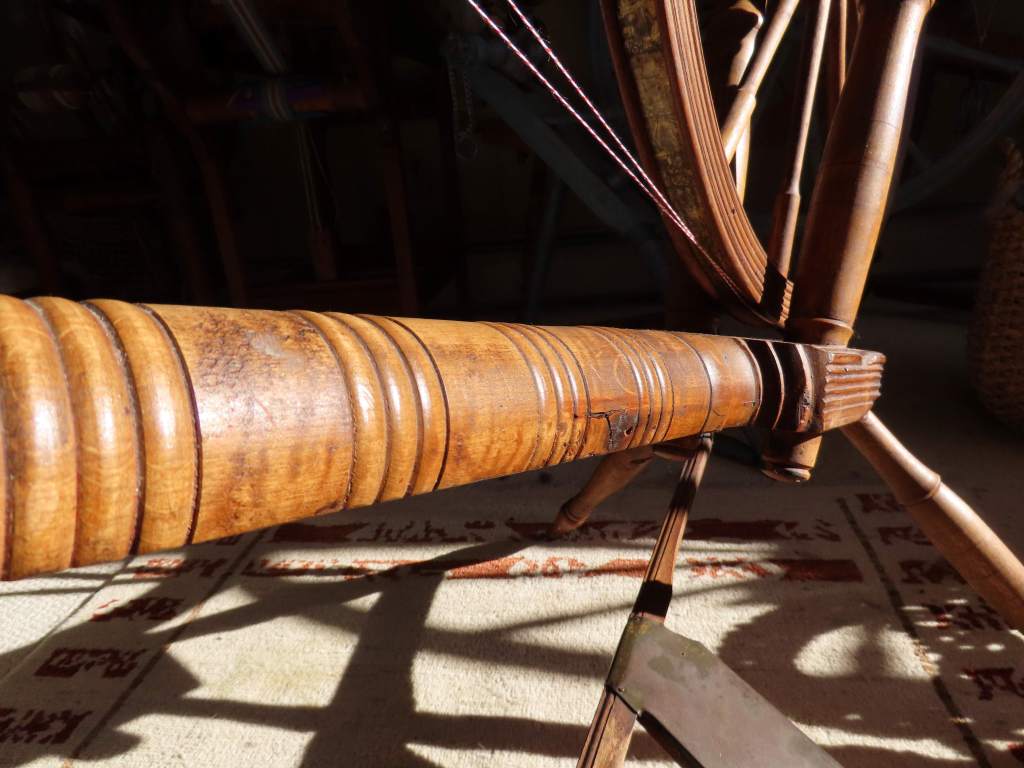
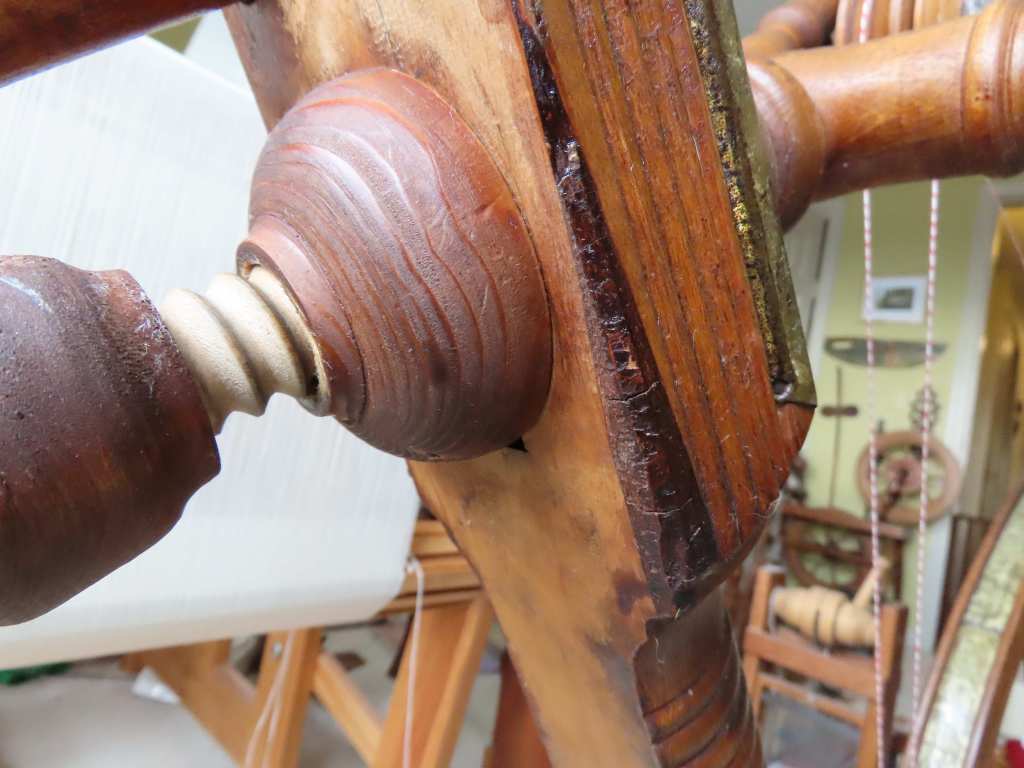
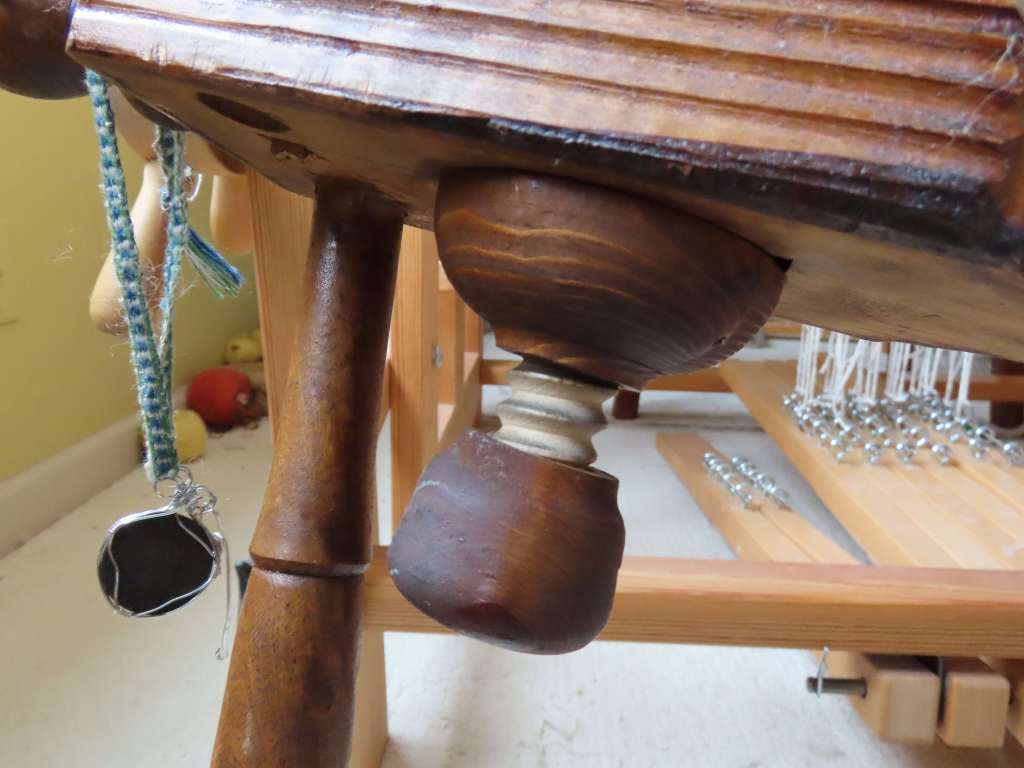
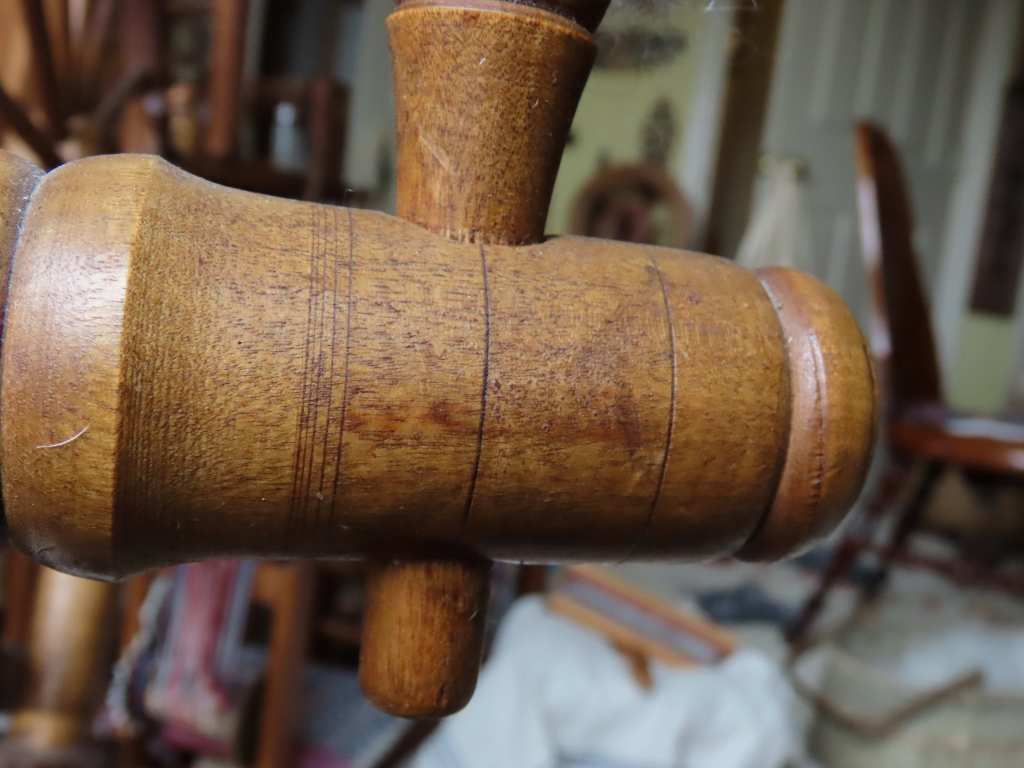
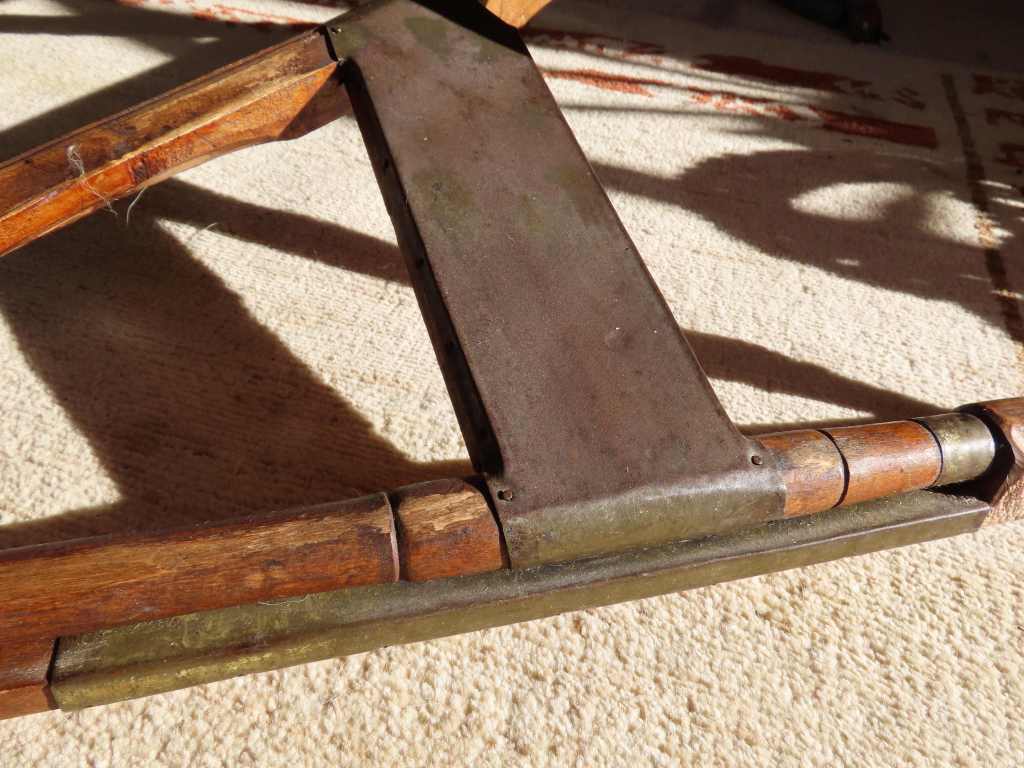
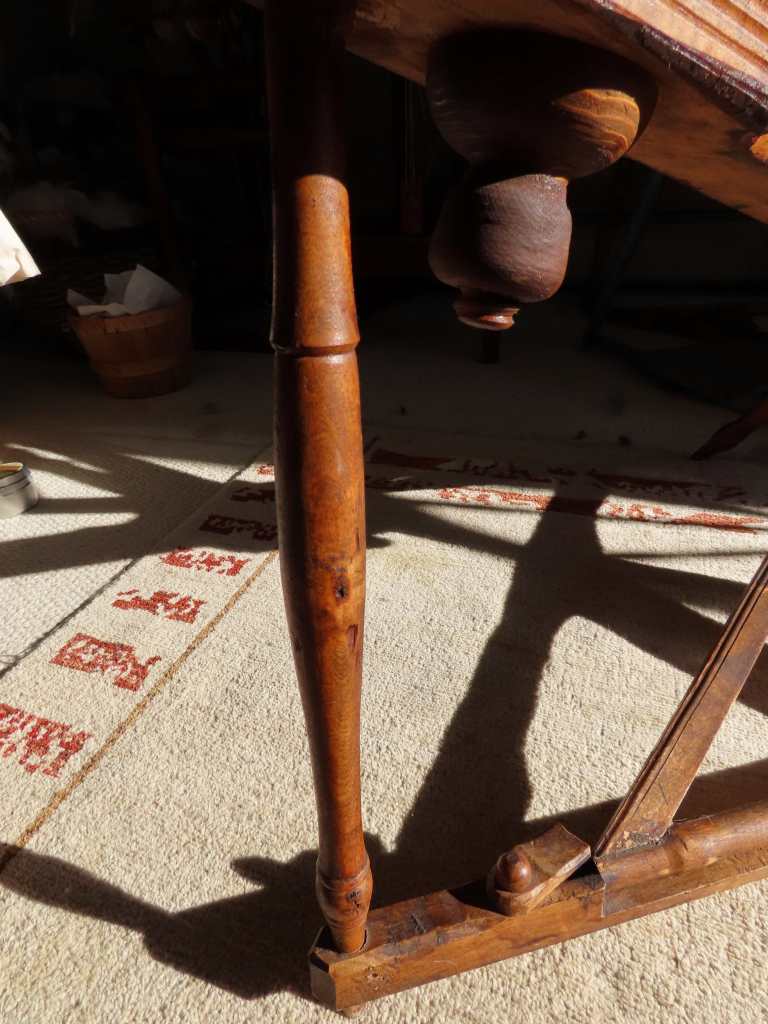
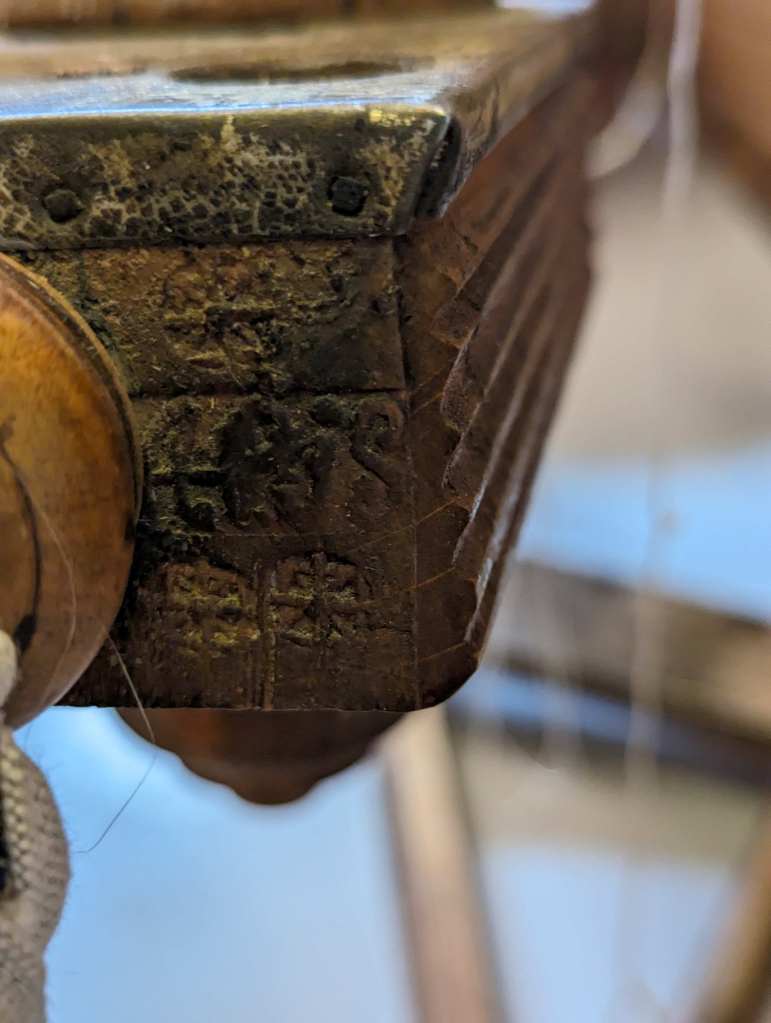
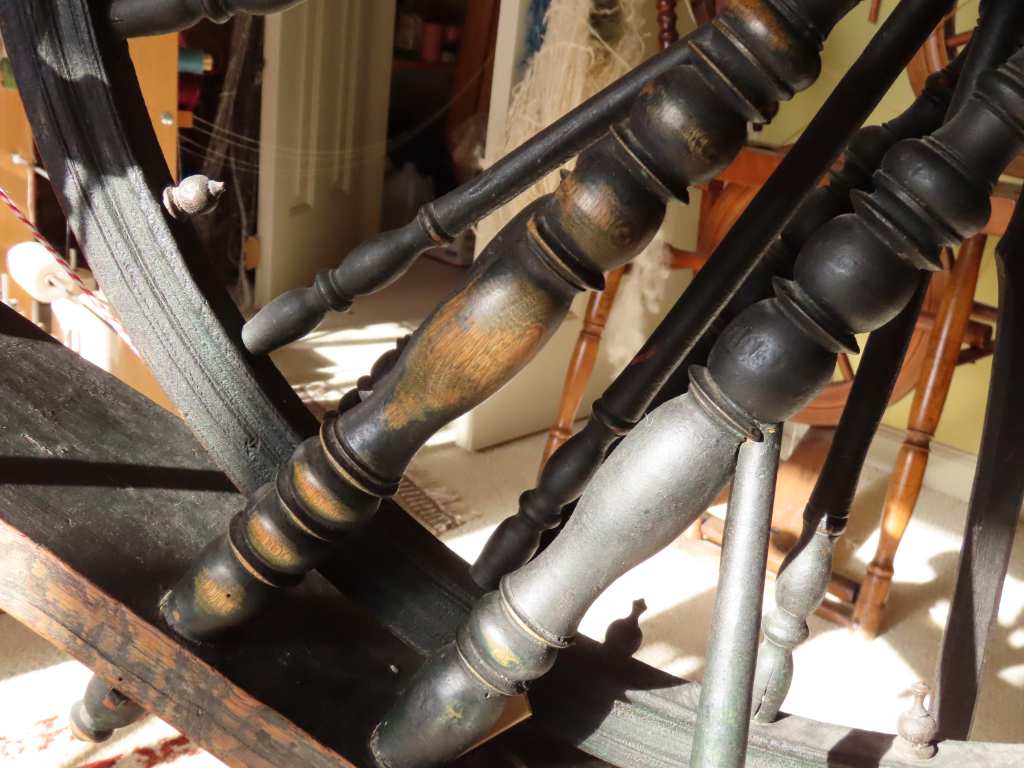
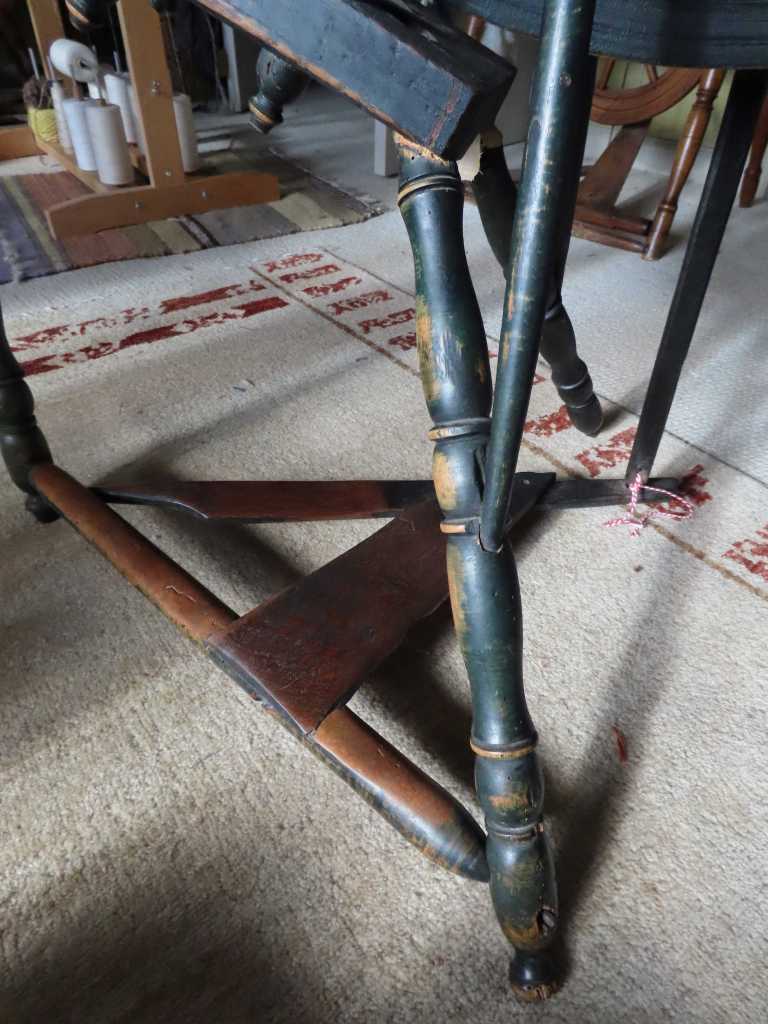
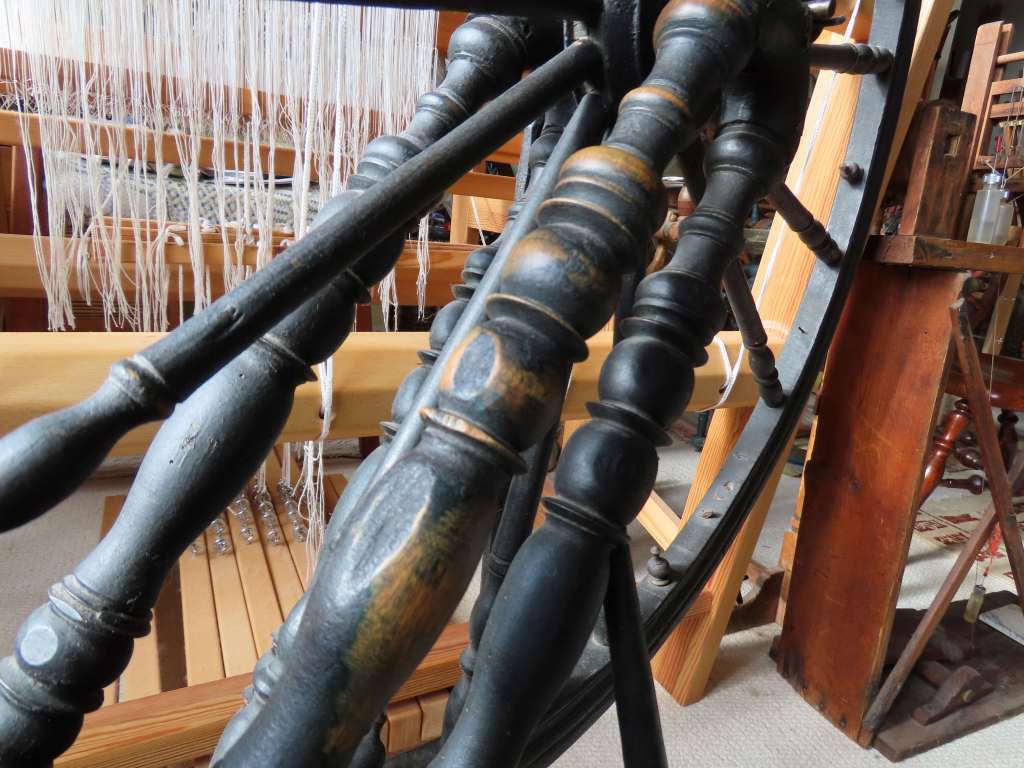
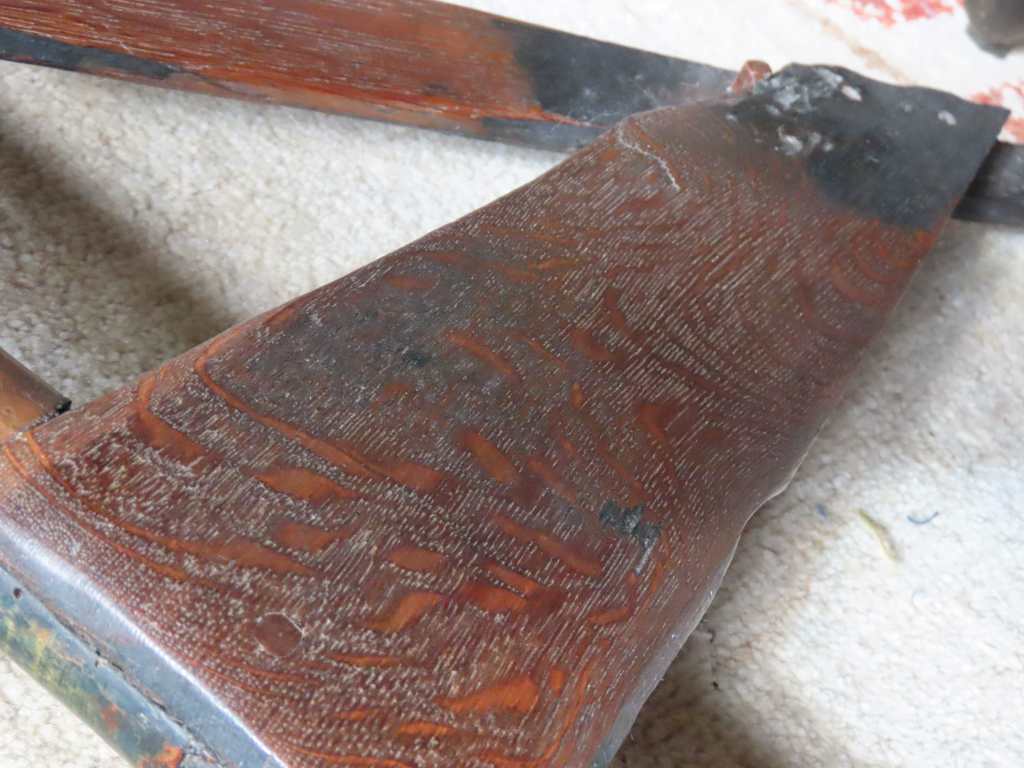
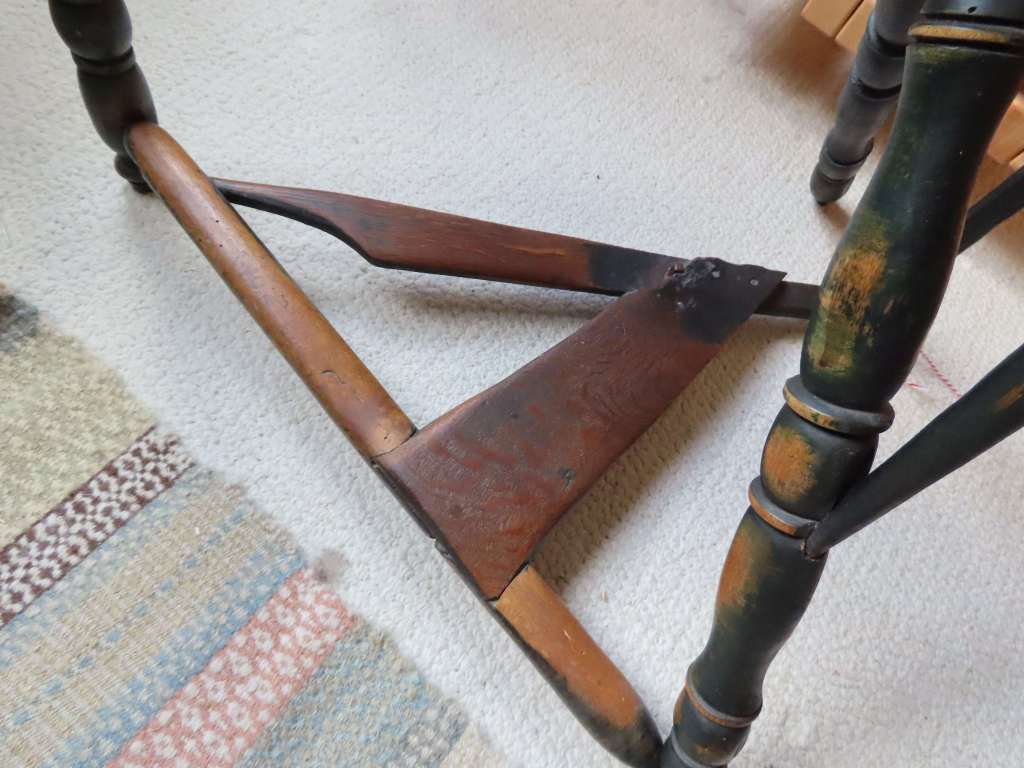
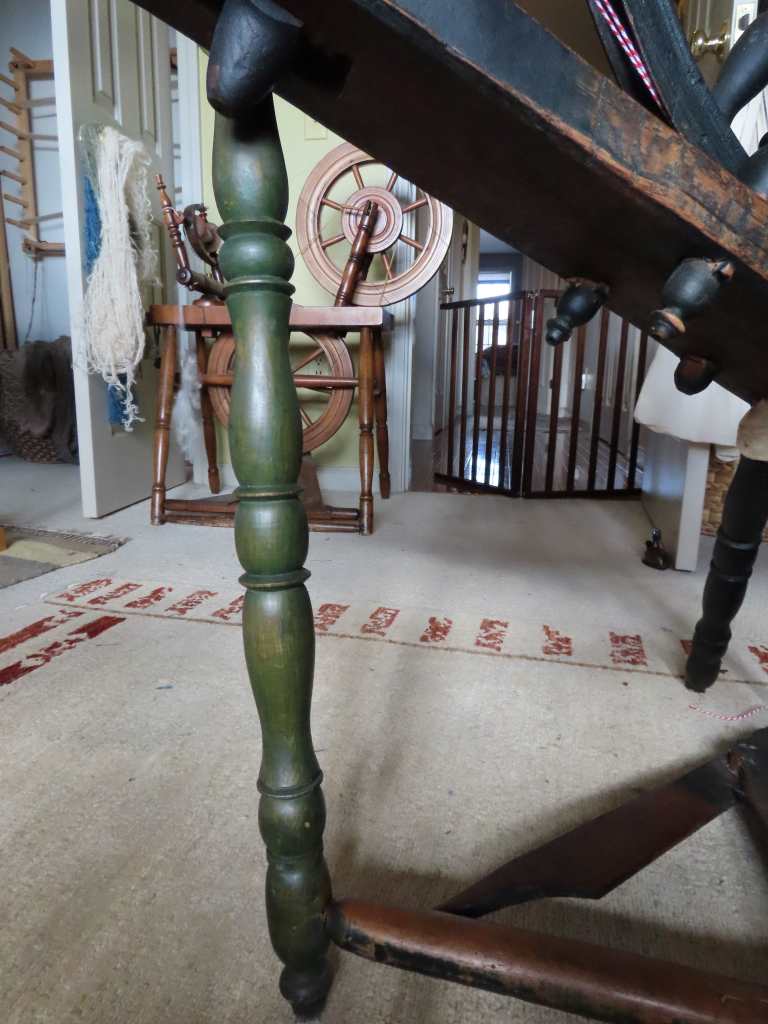
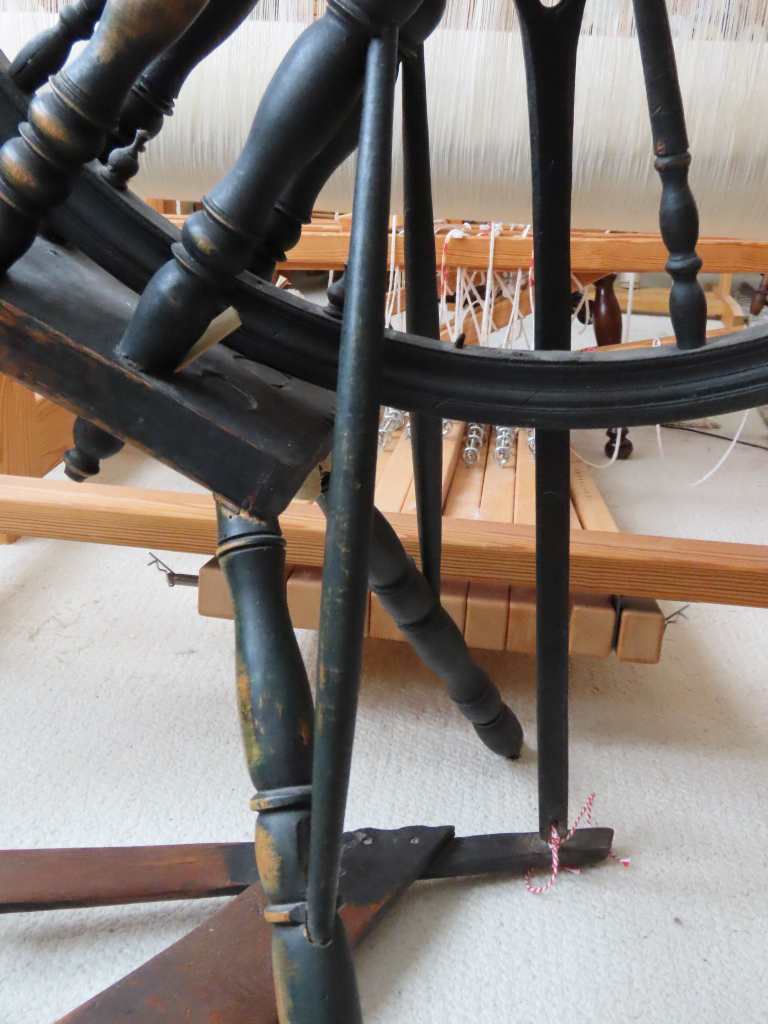
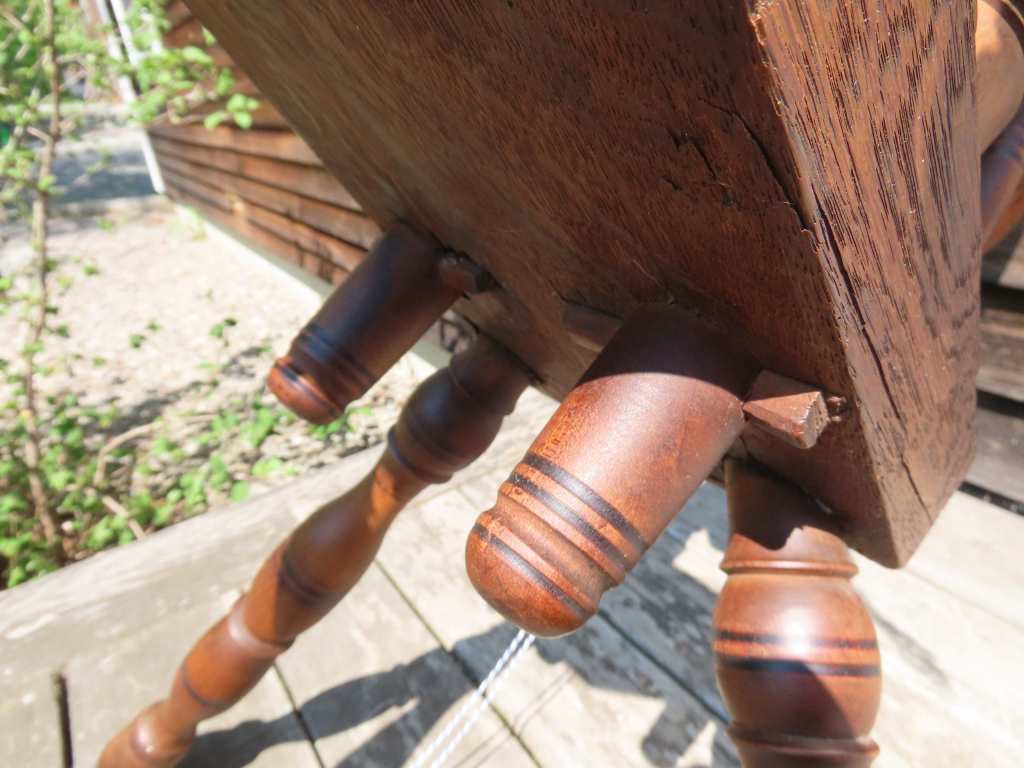
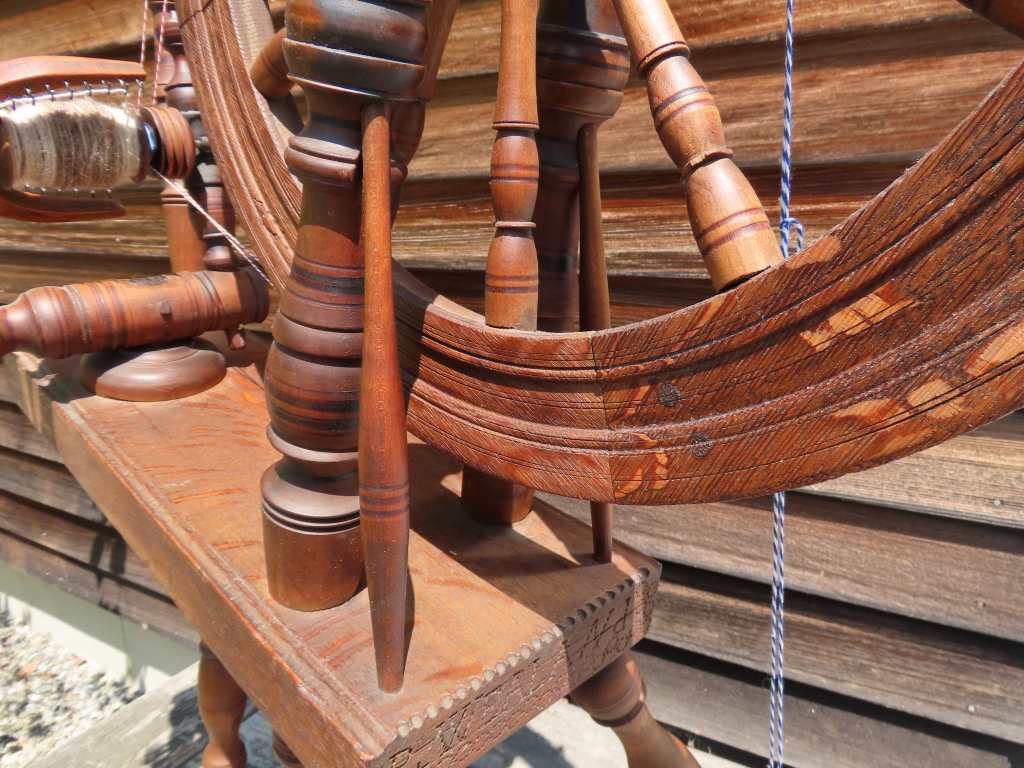
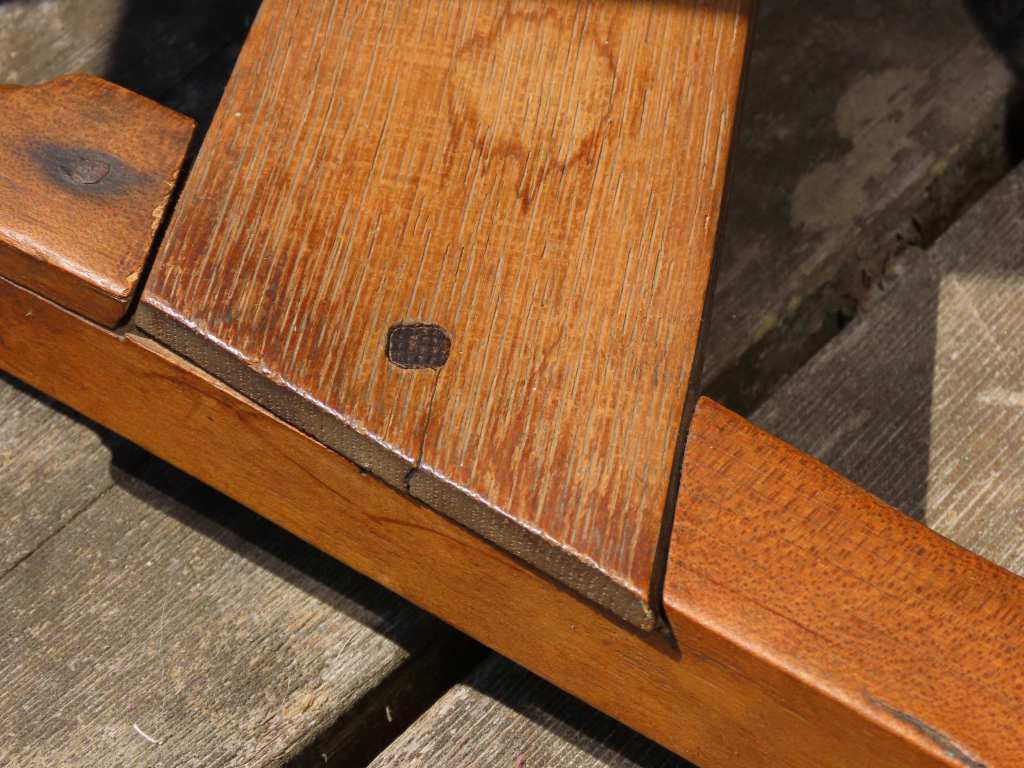
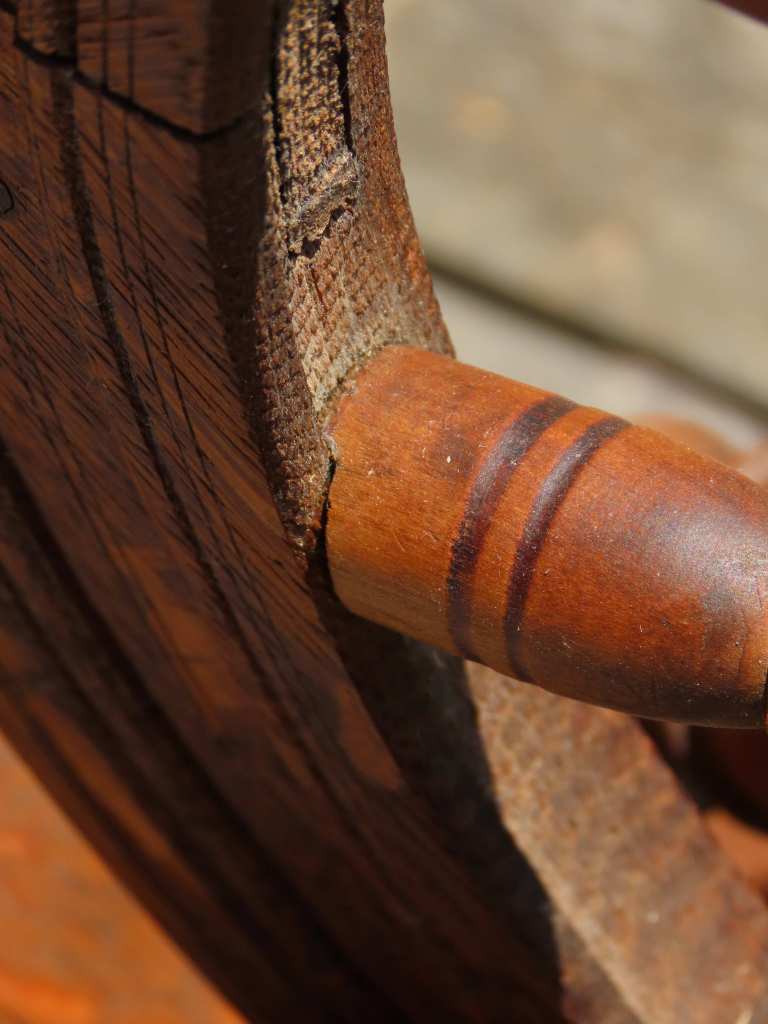
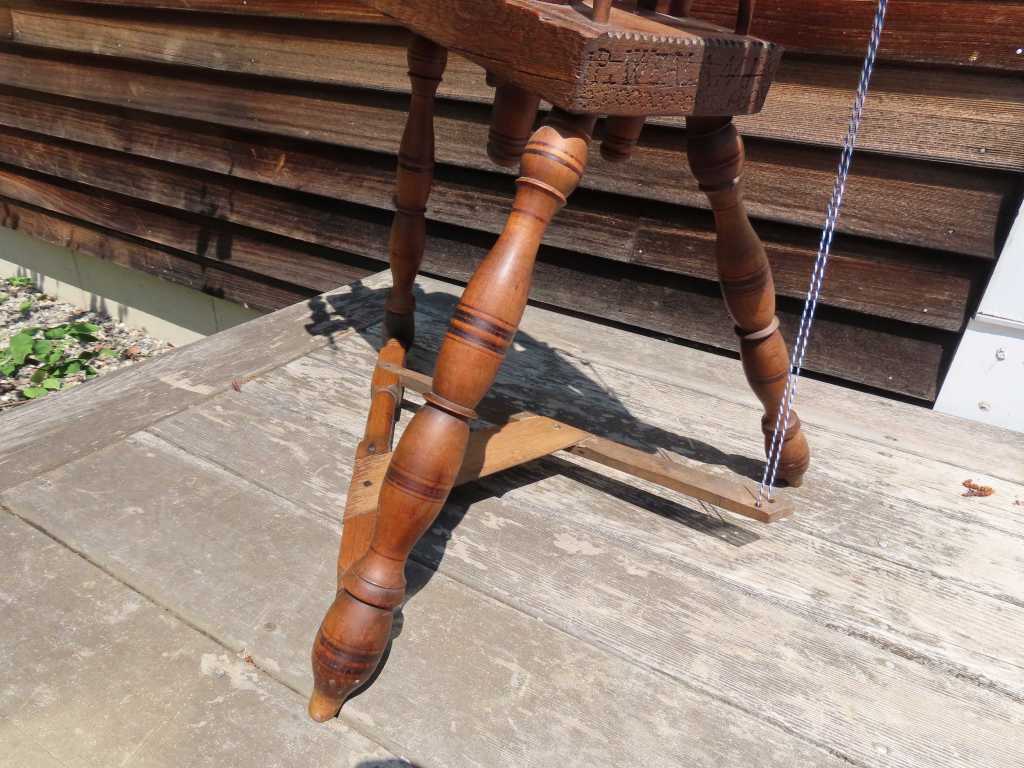
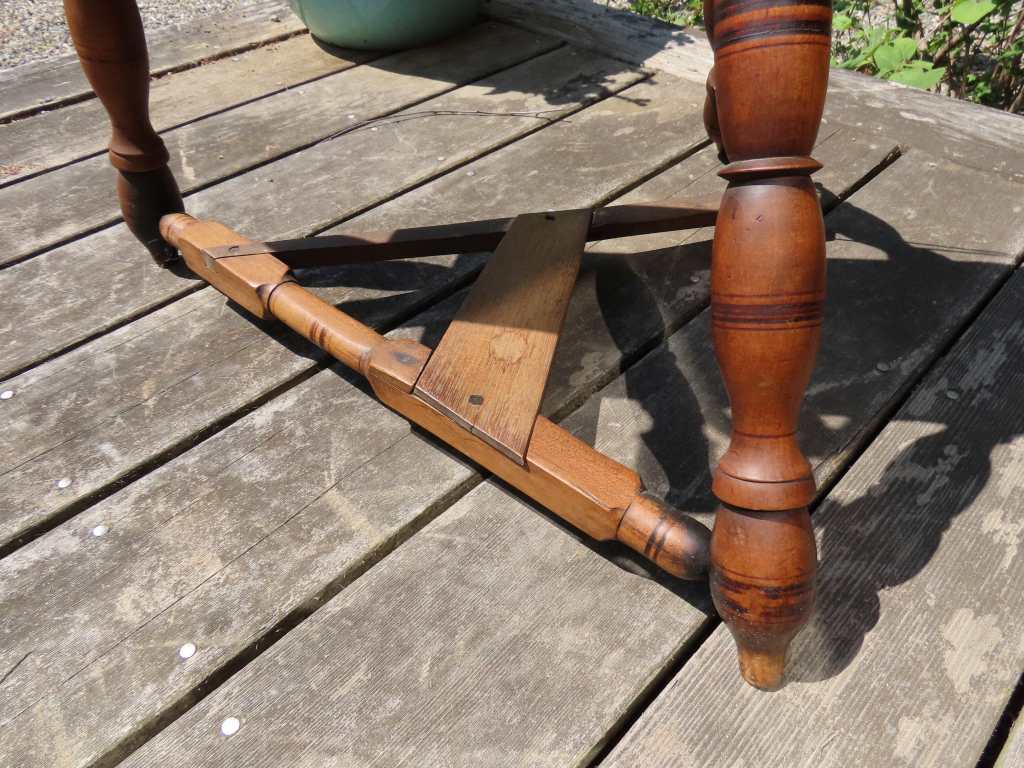
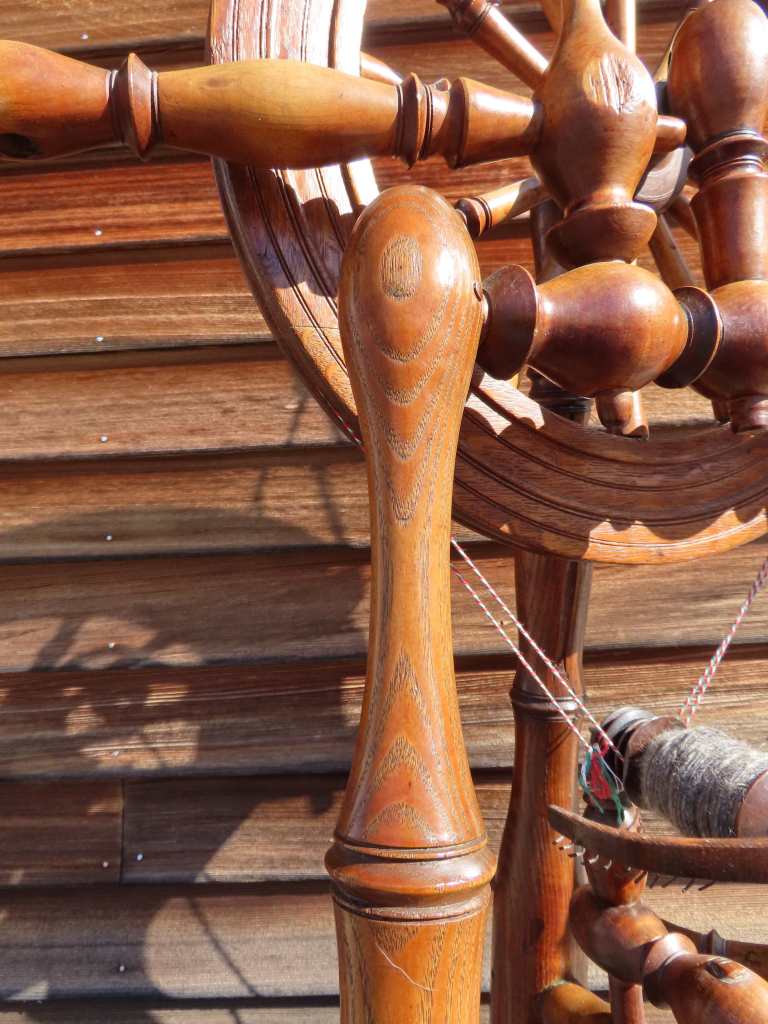
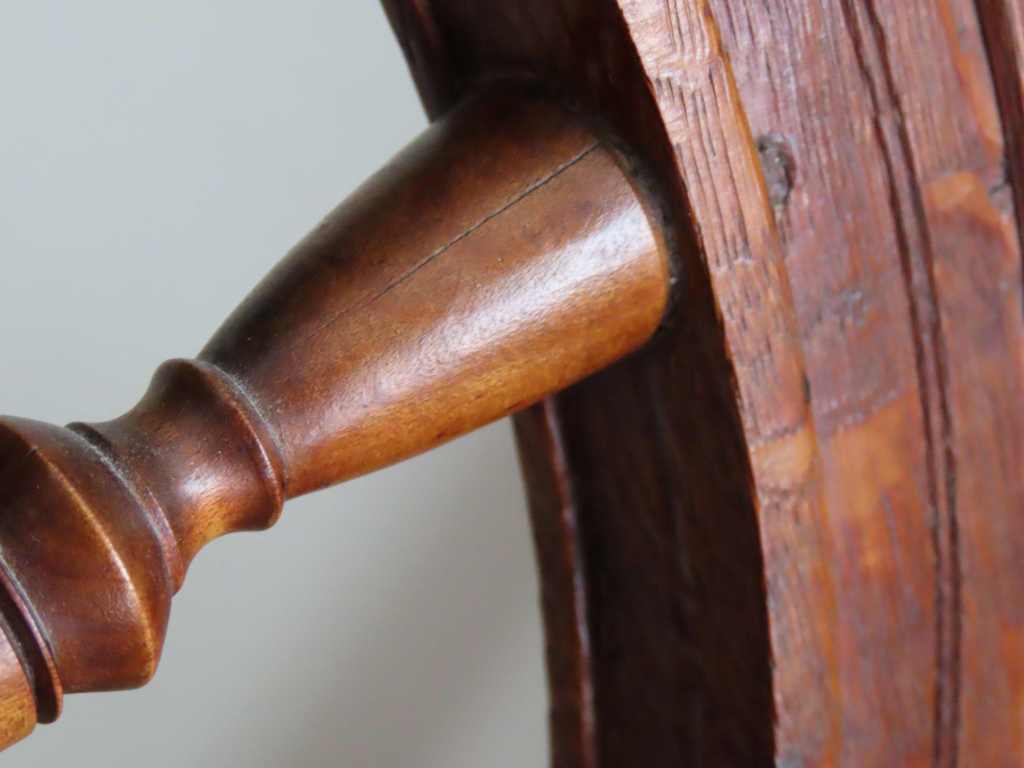
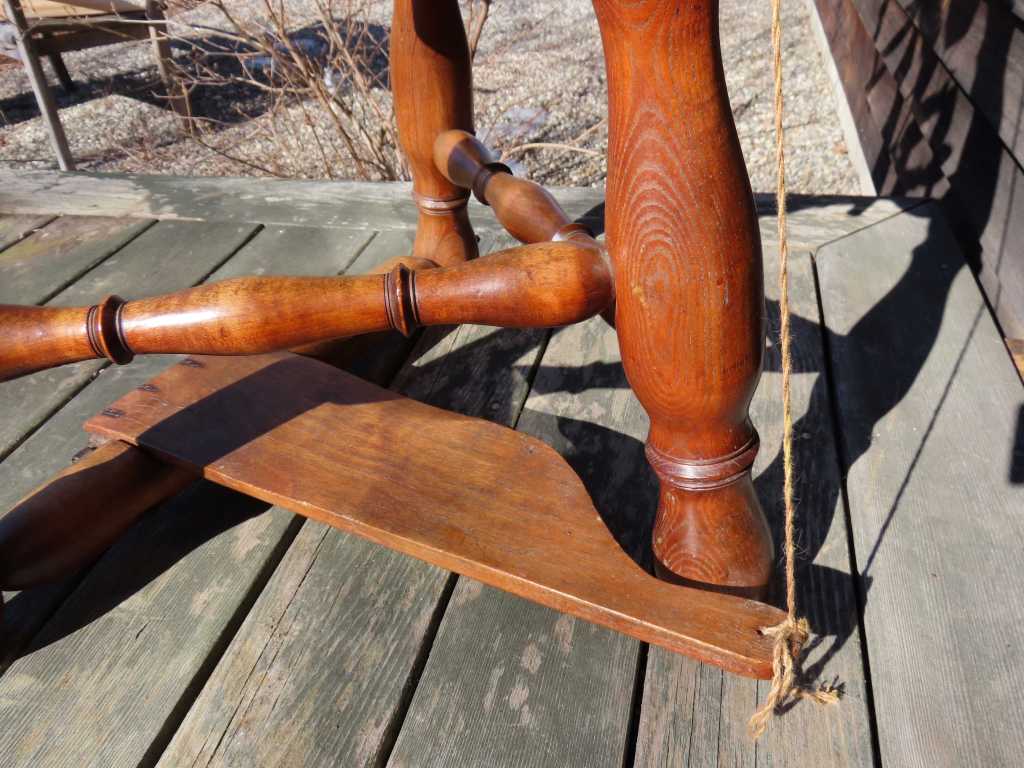
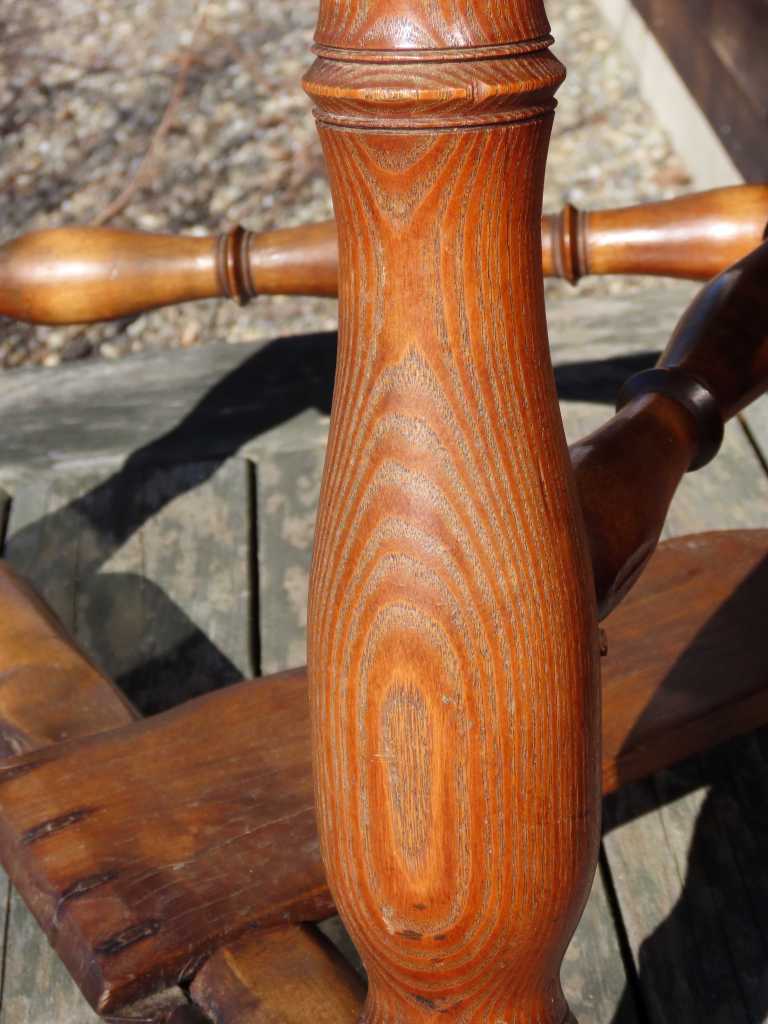
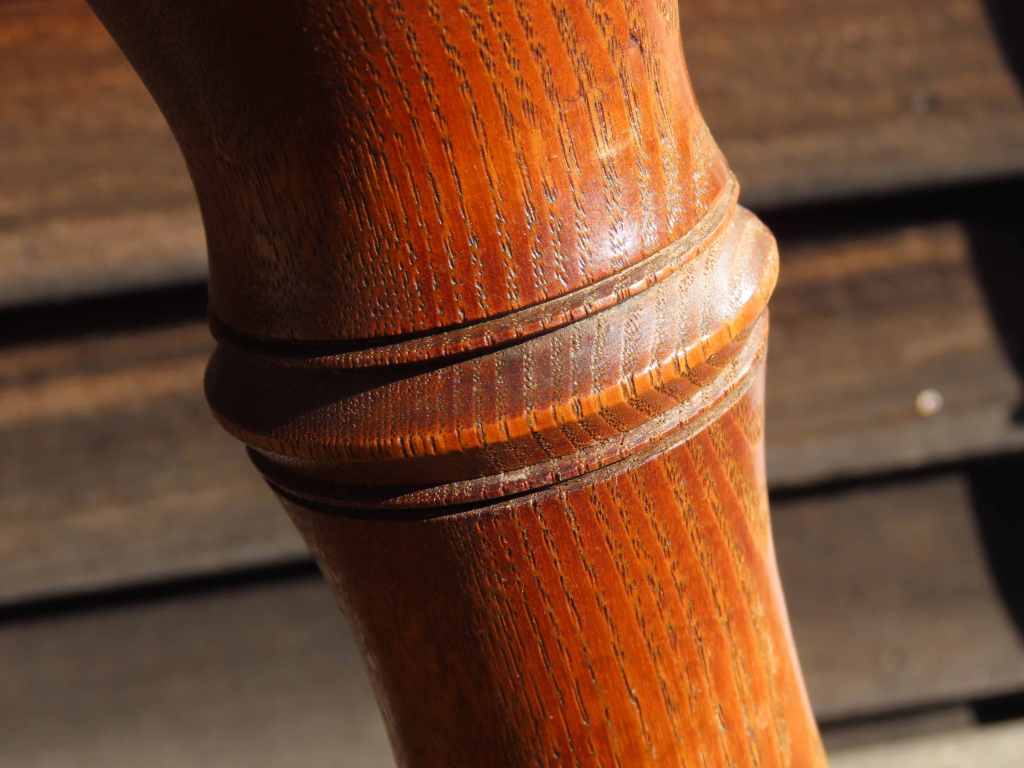
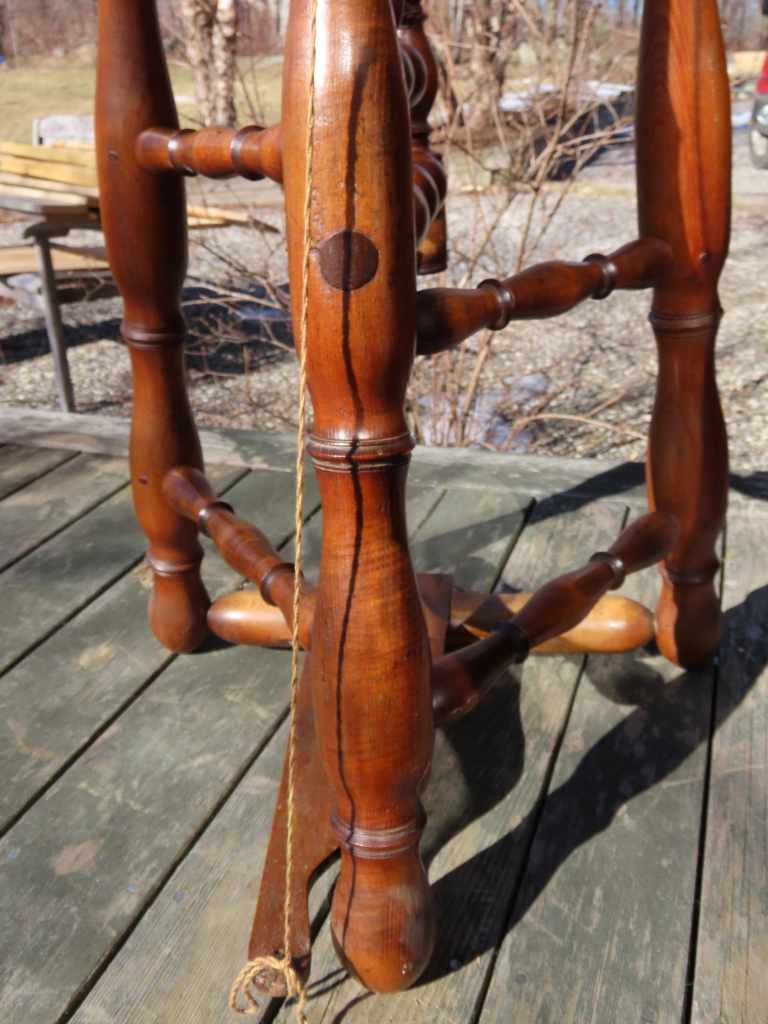
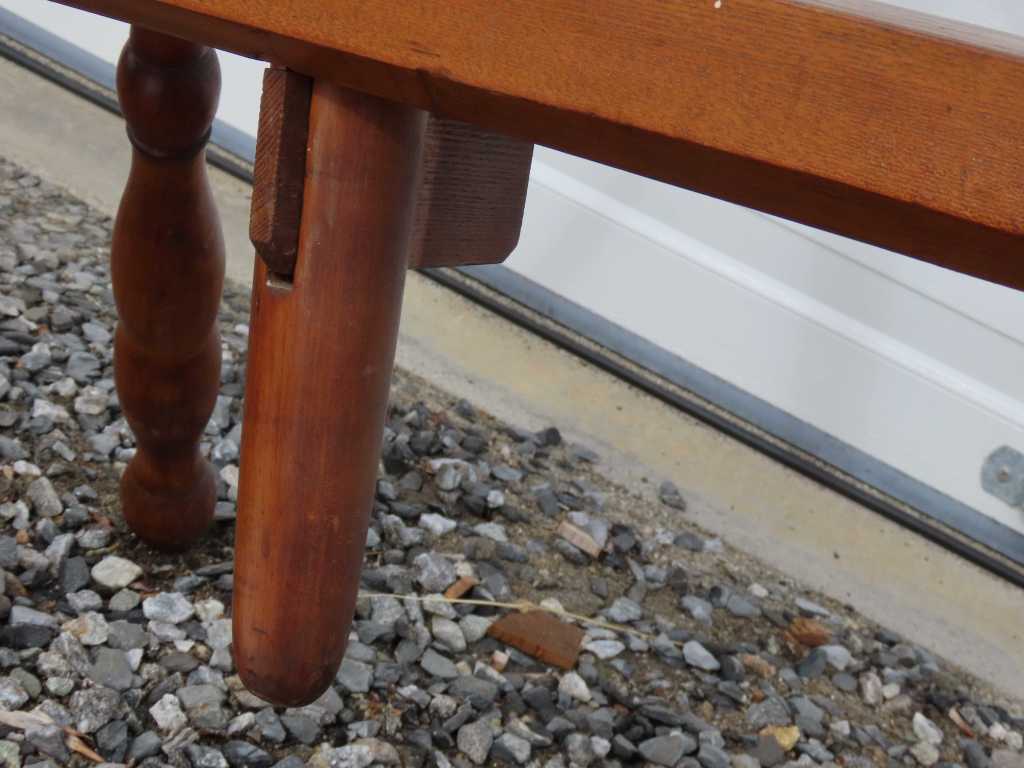
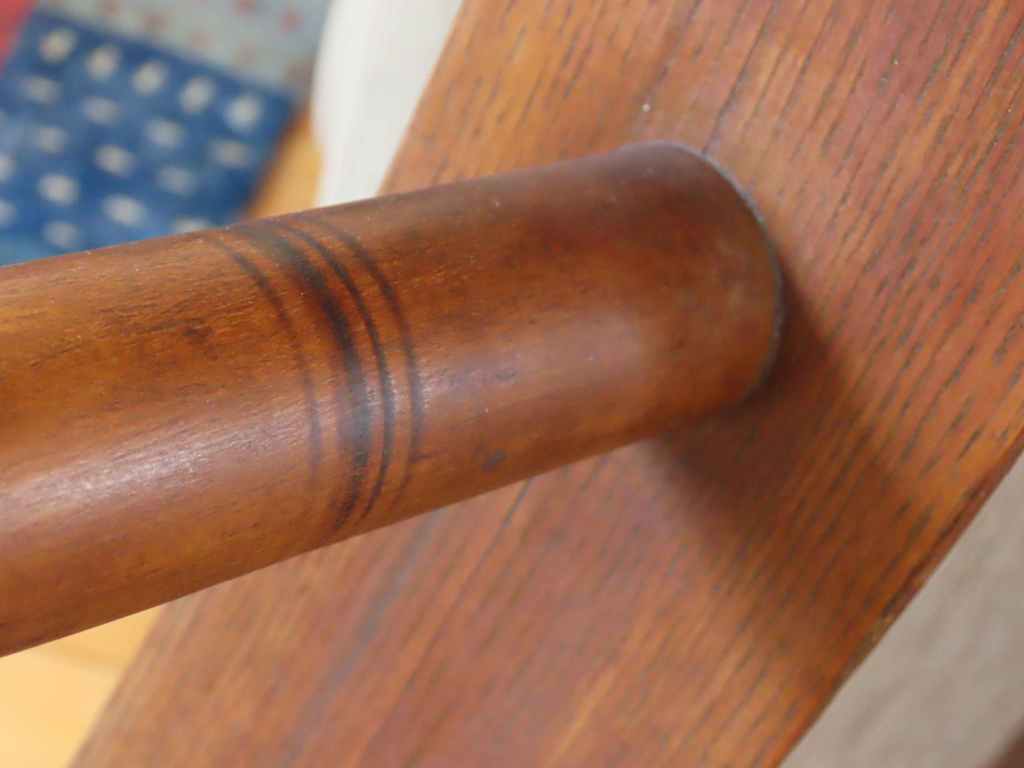
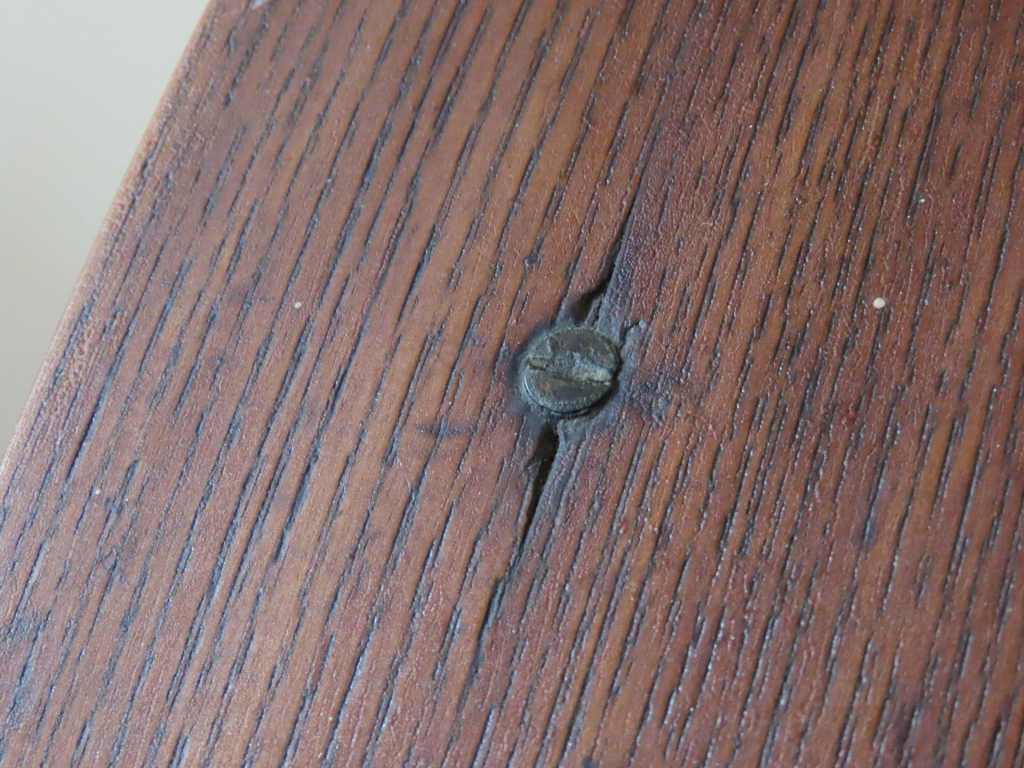
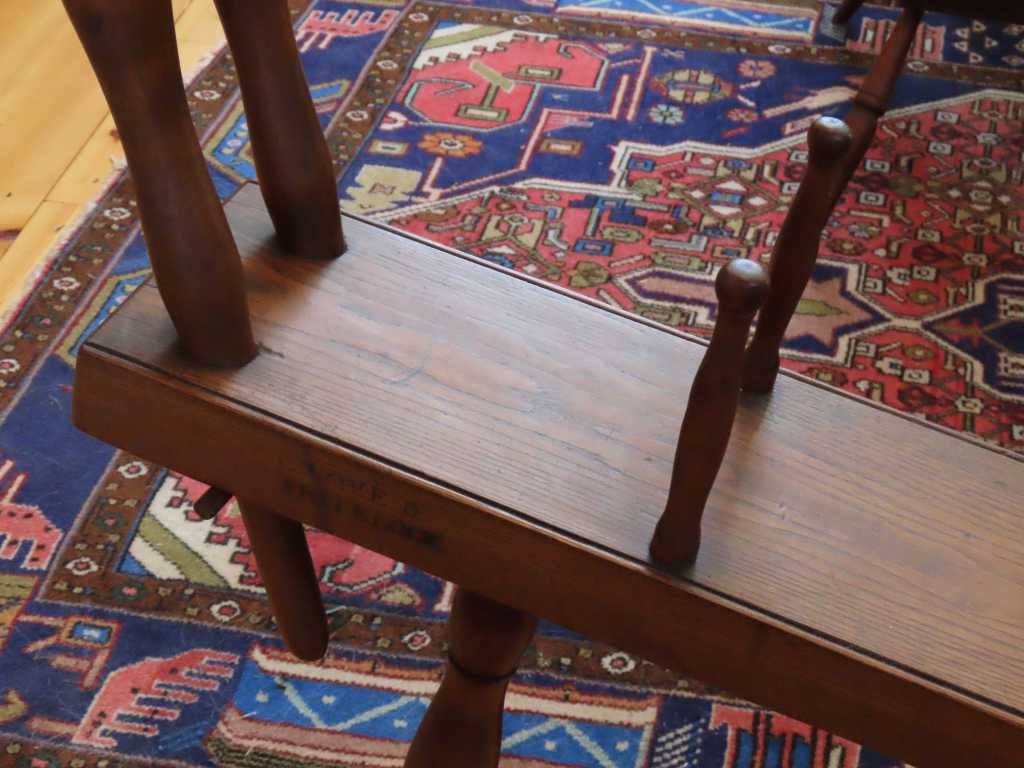
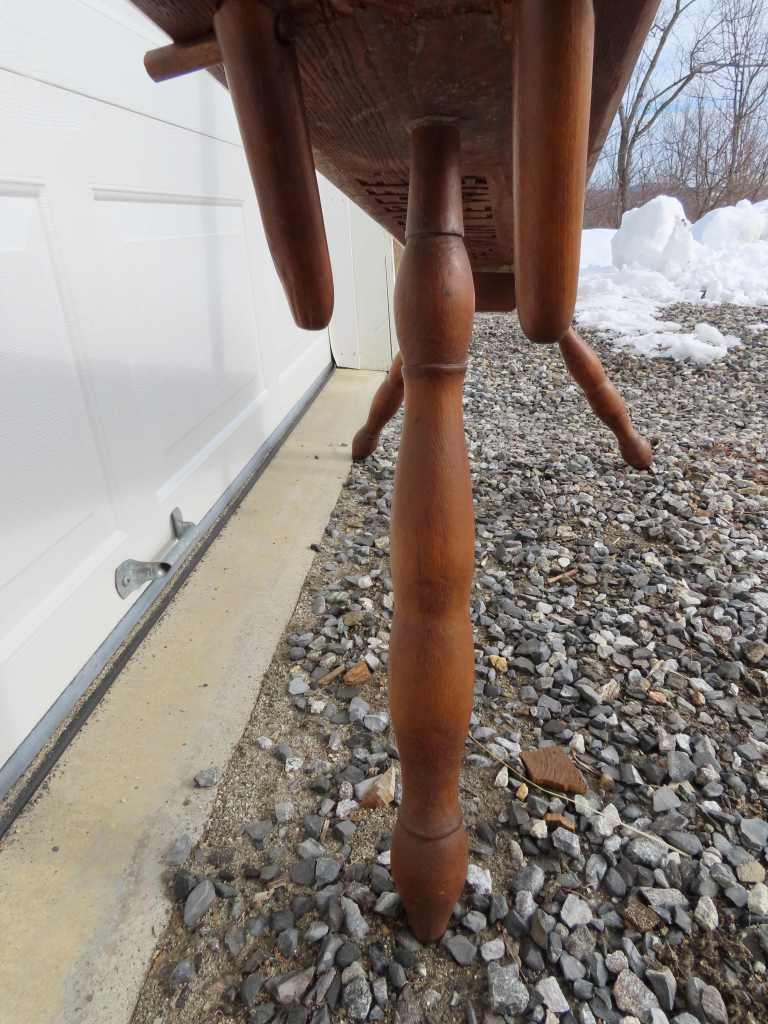
The legs are chamfered rather than turned.* 
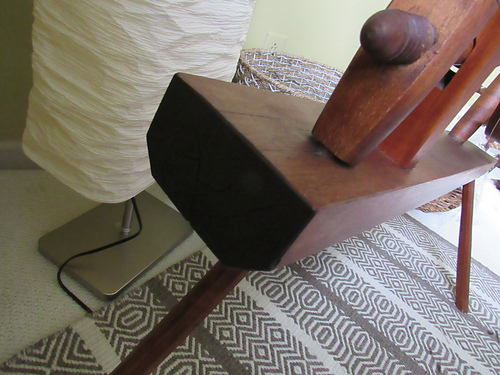
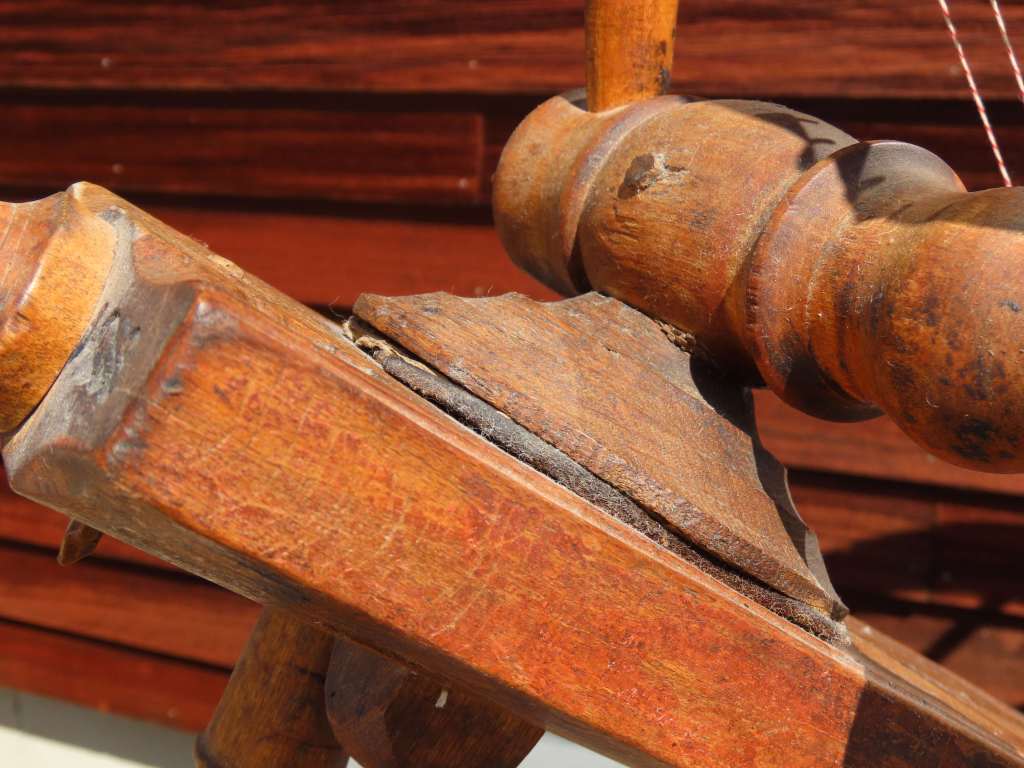
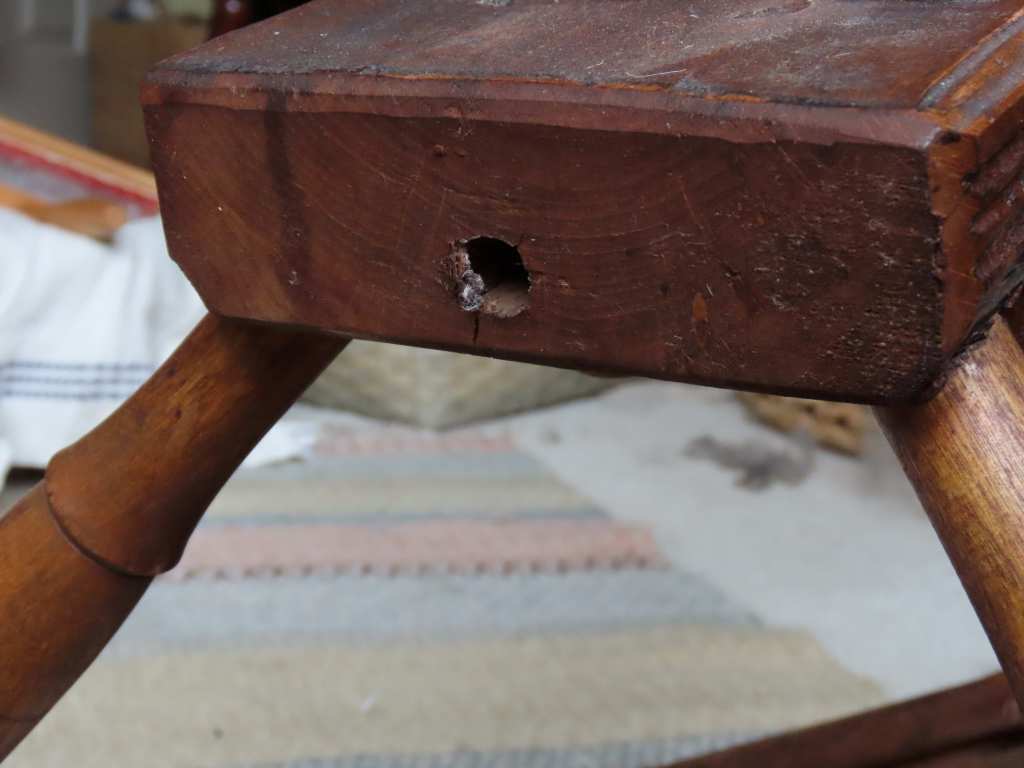
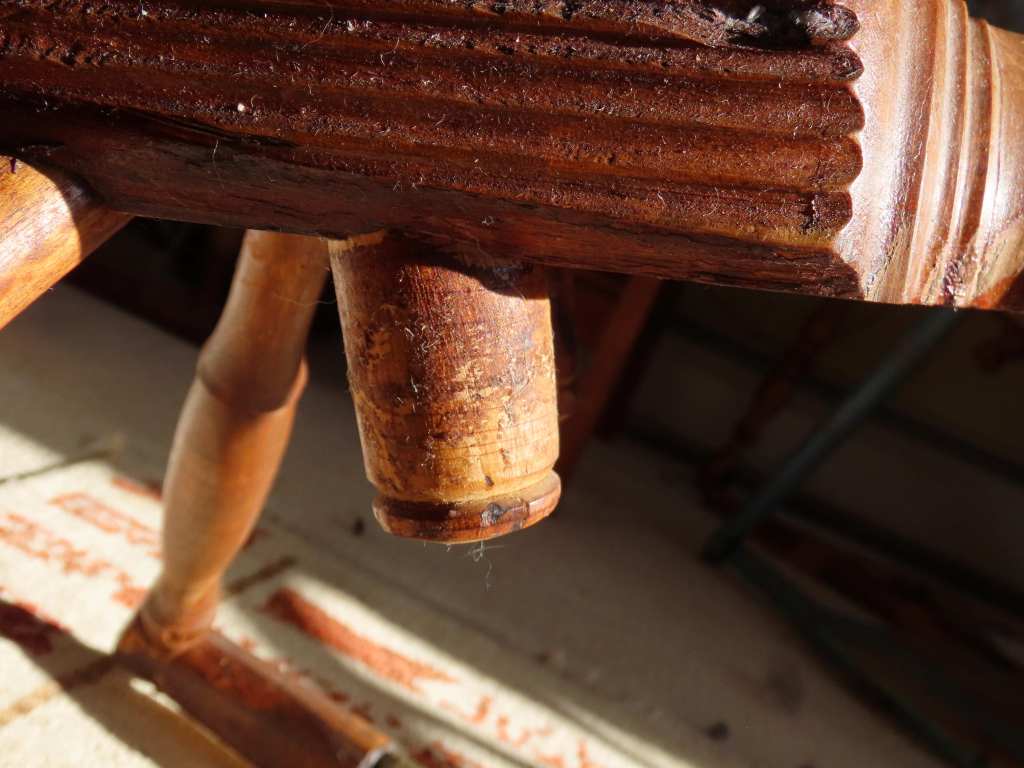
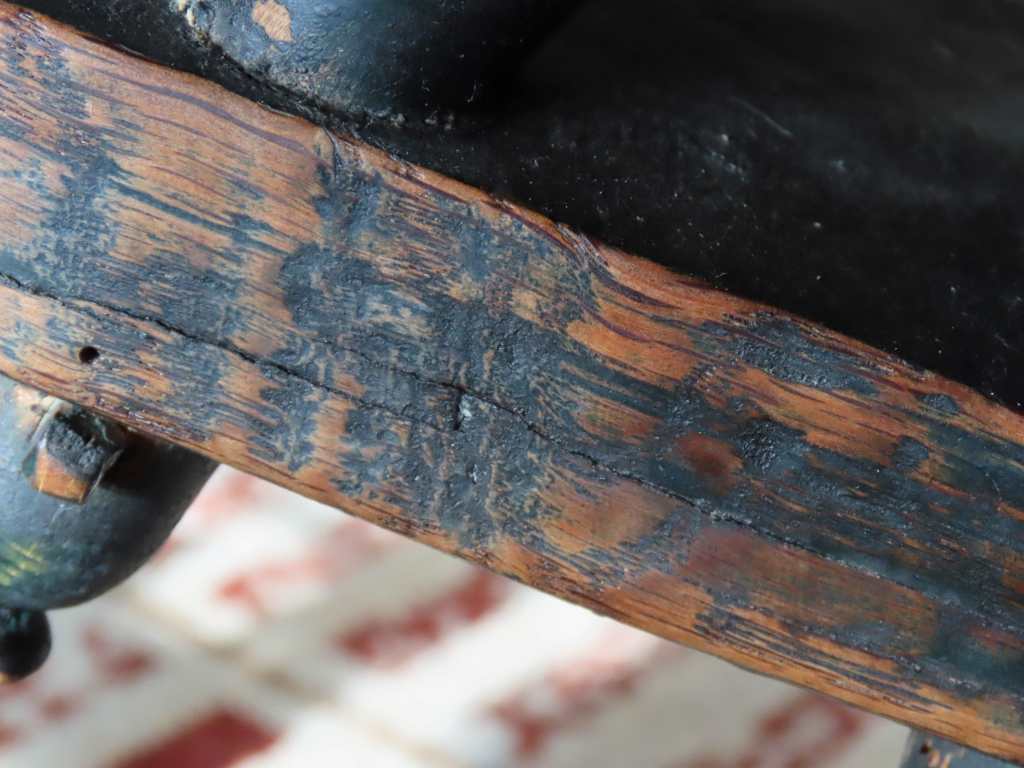
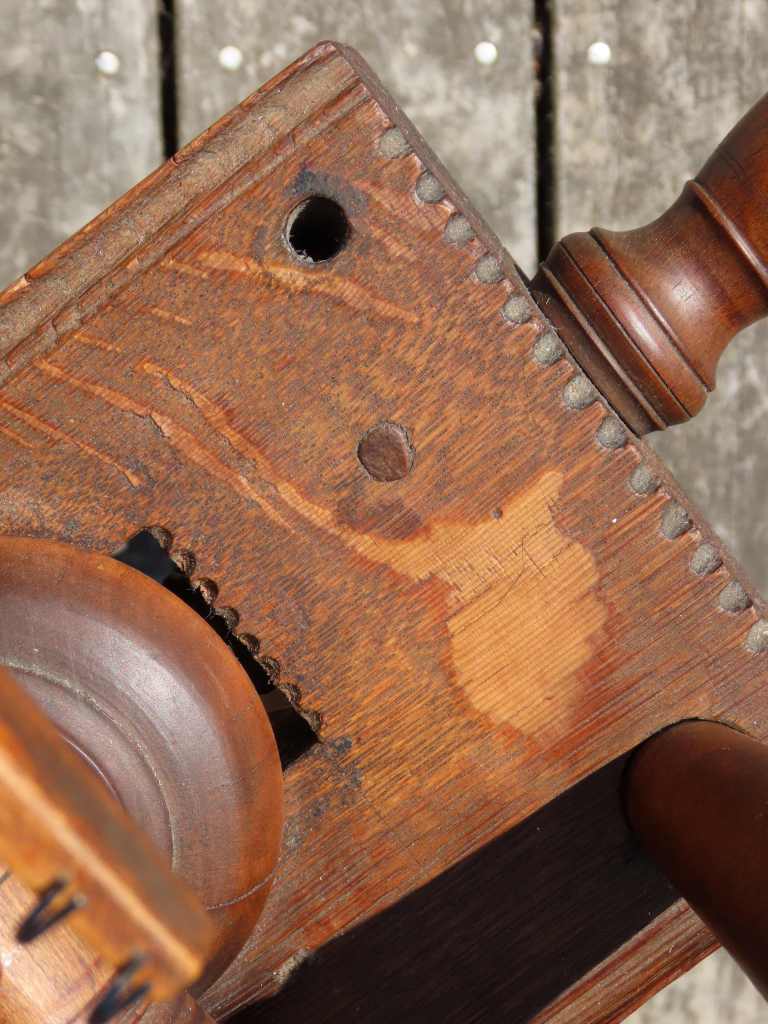
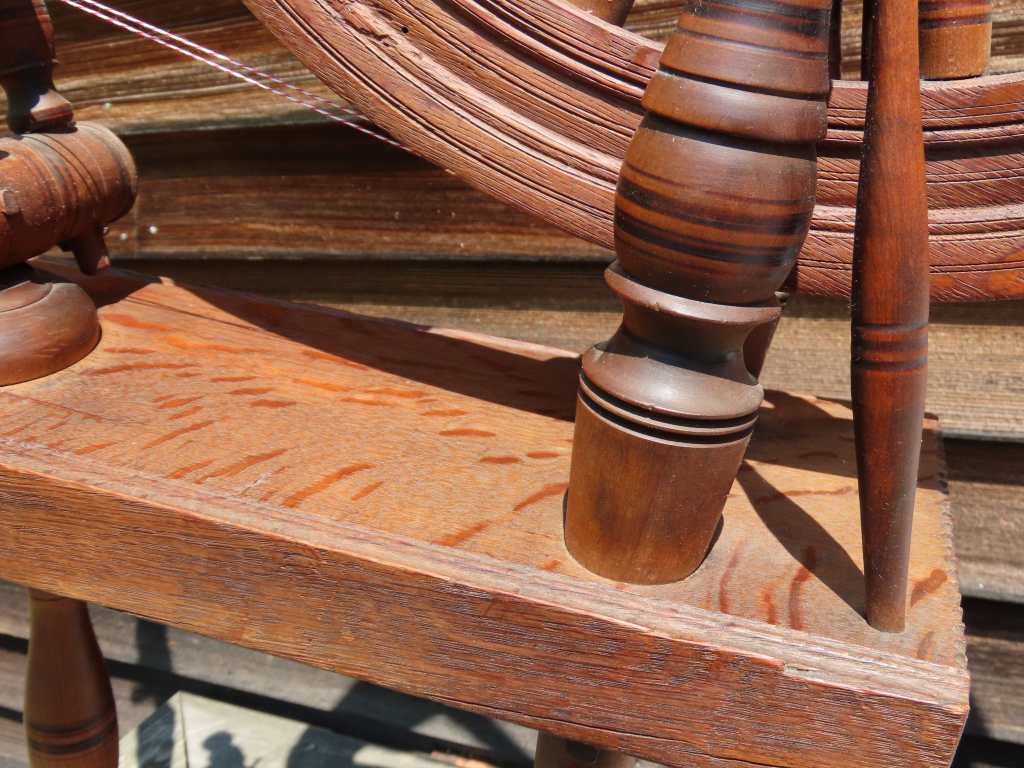
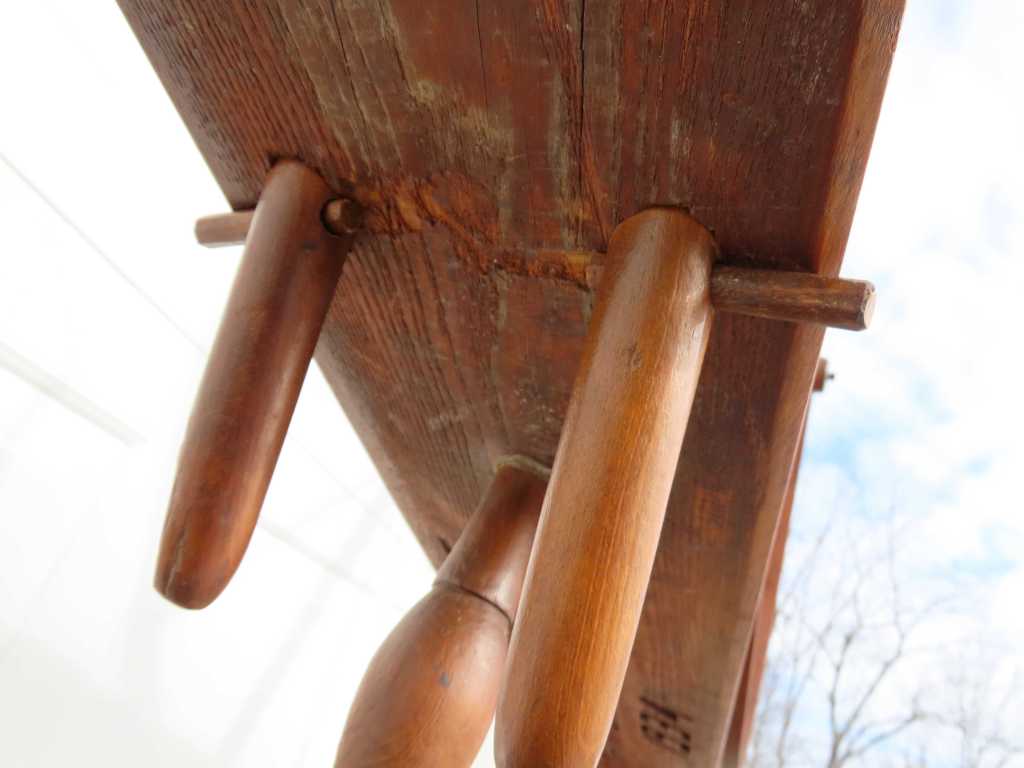
The table also has transitional, chamfered bottom edges. 
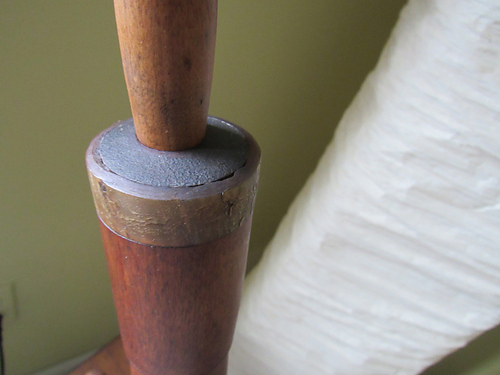
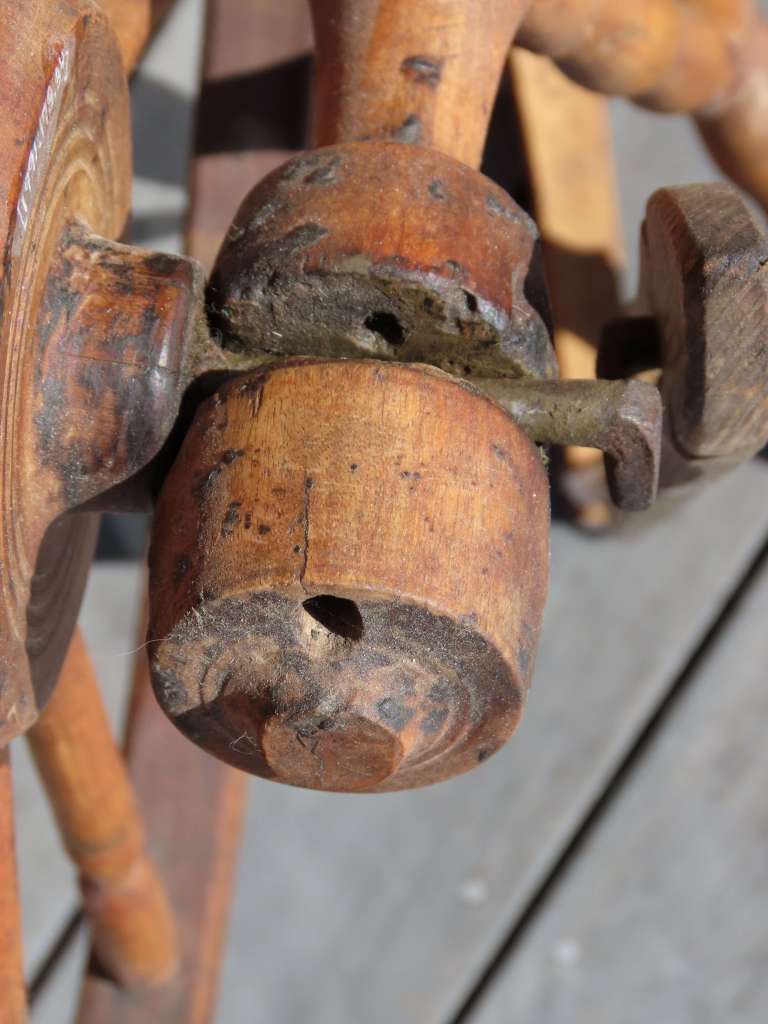
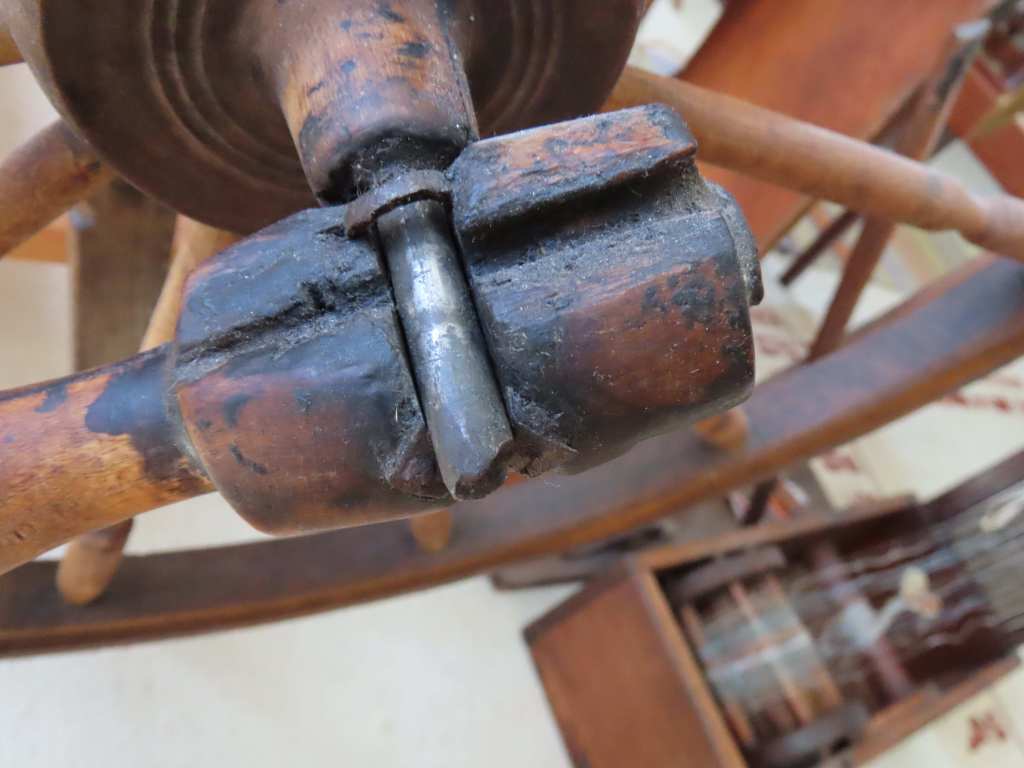
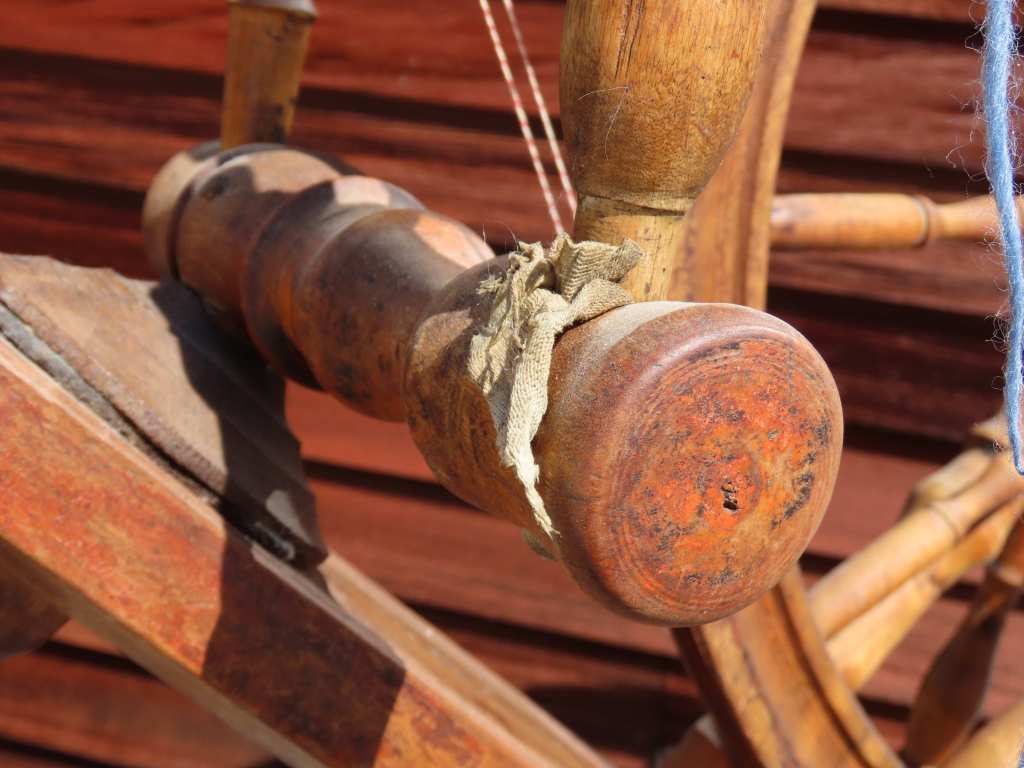
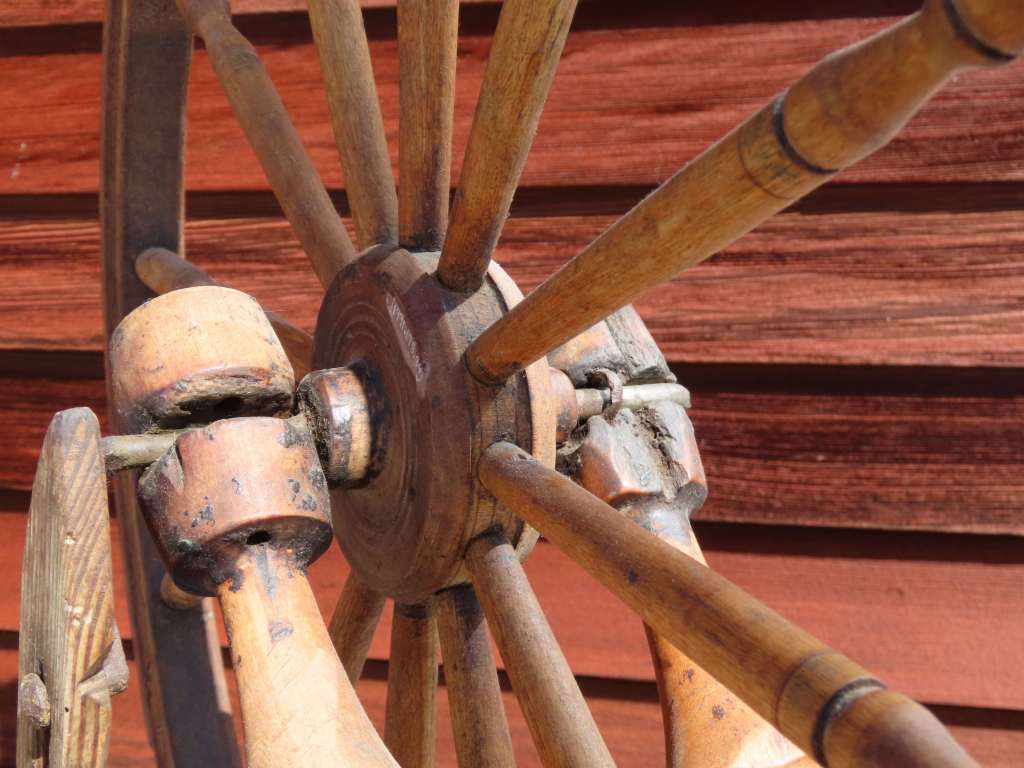
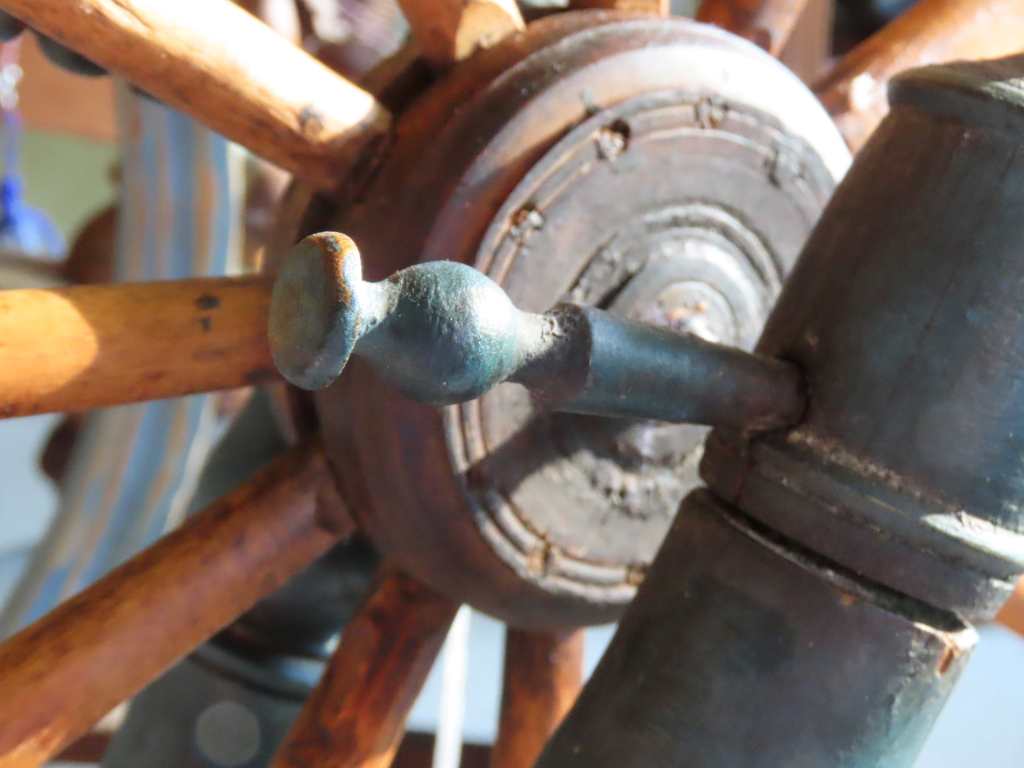
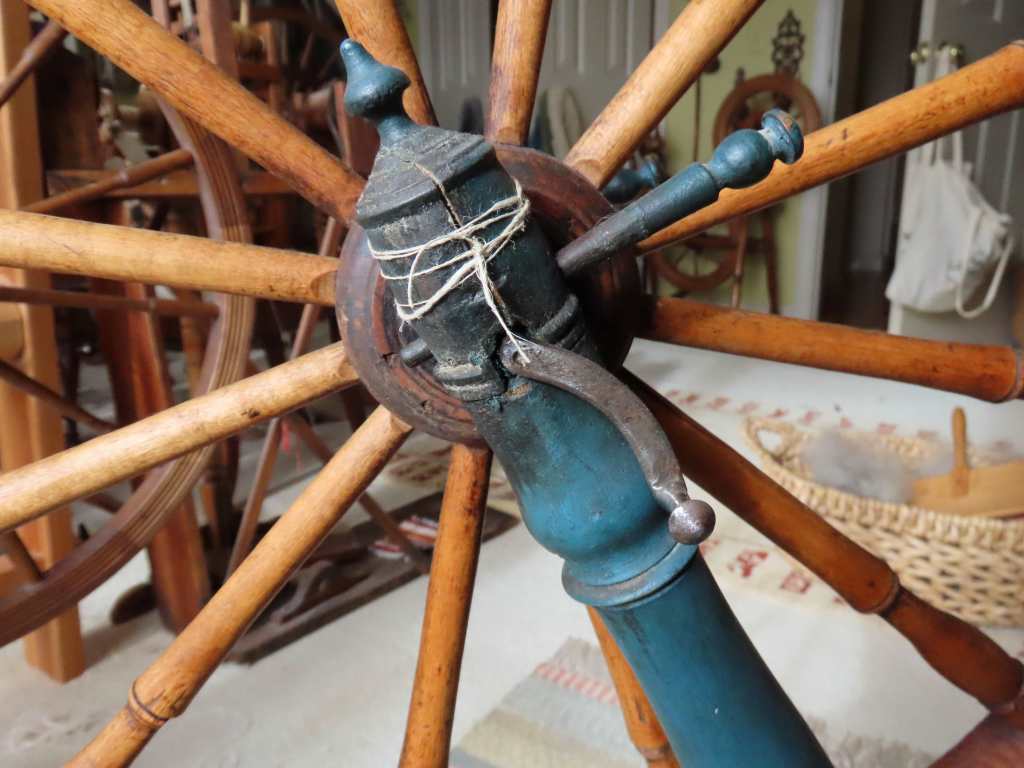
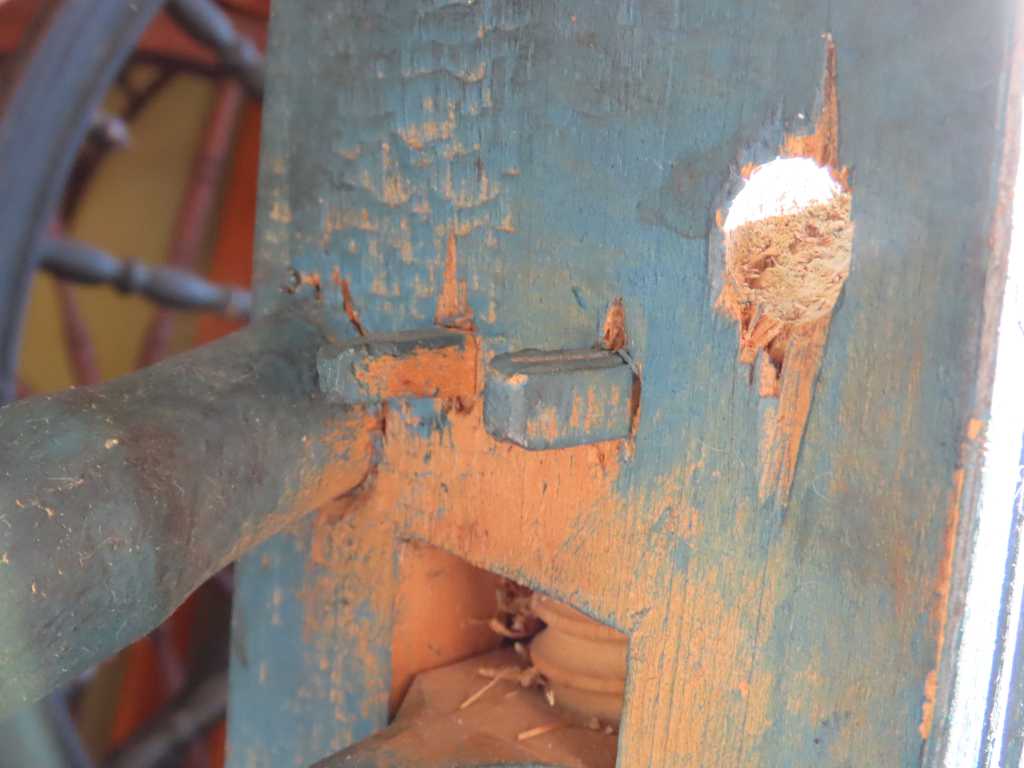
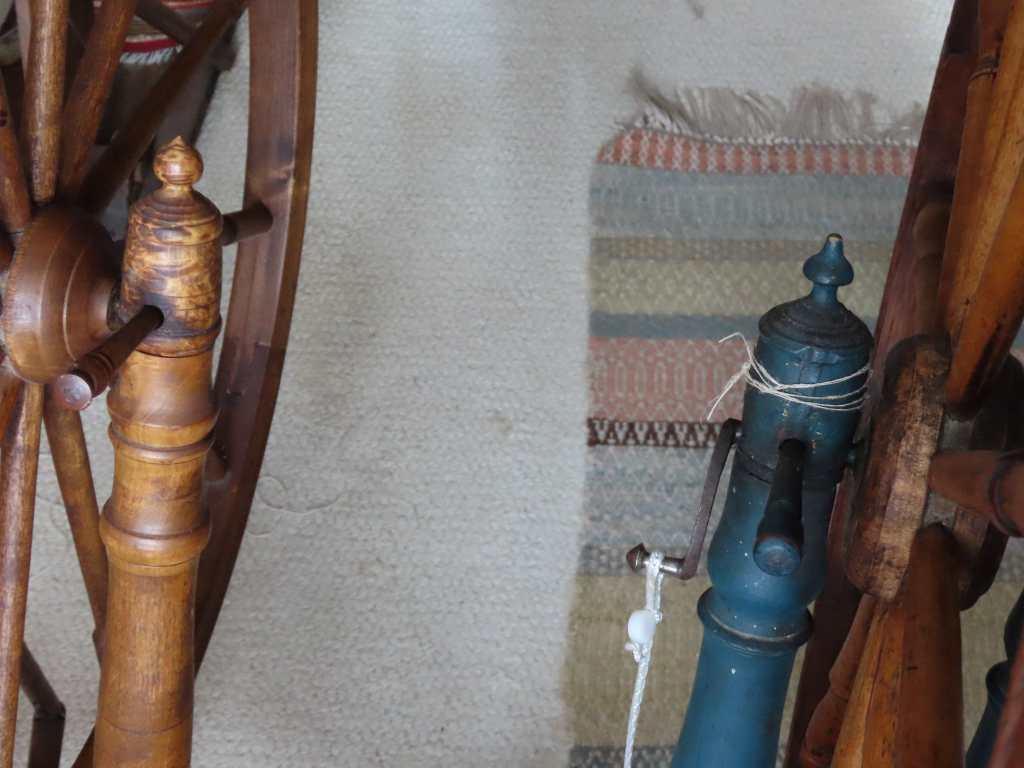
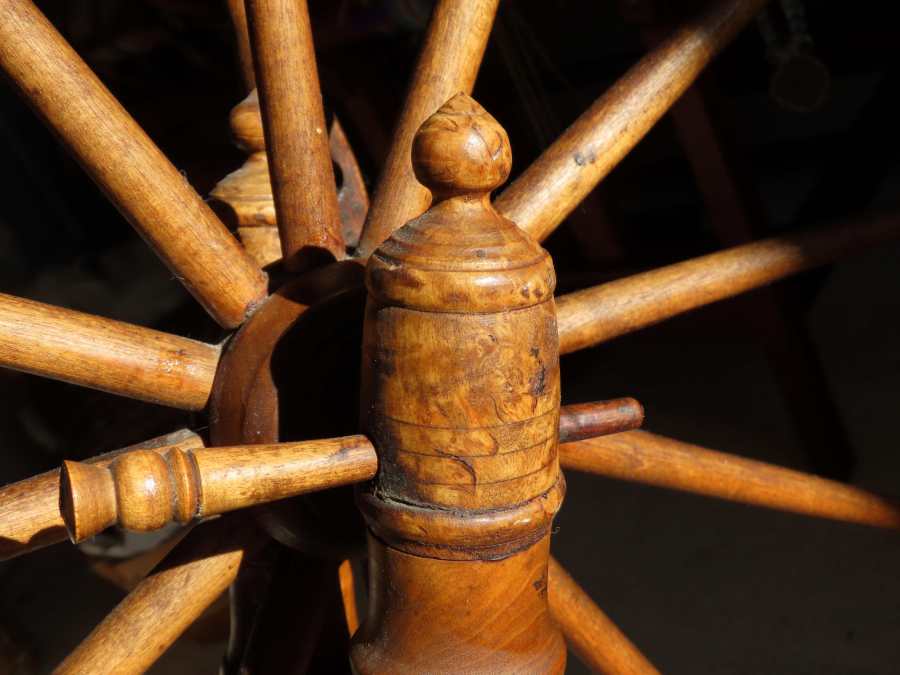
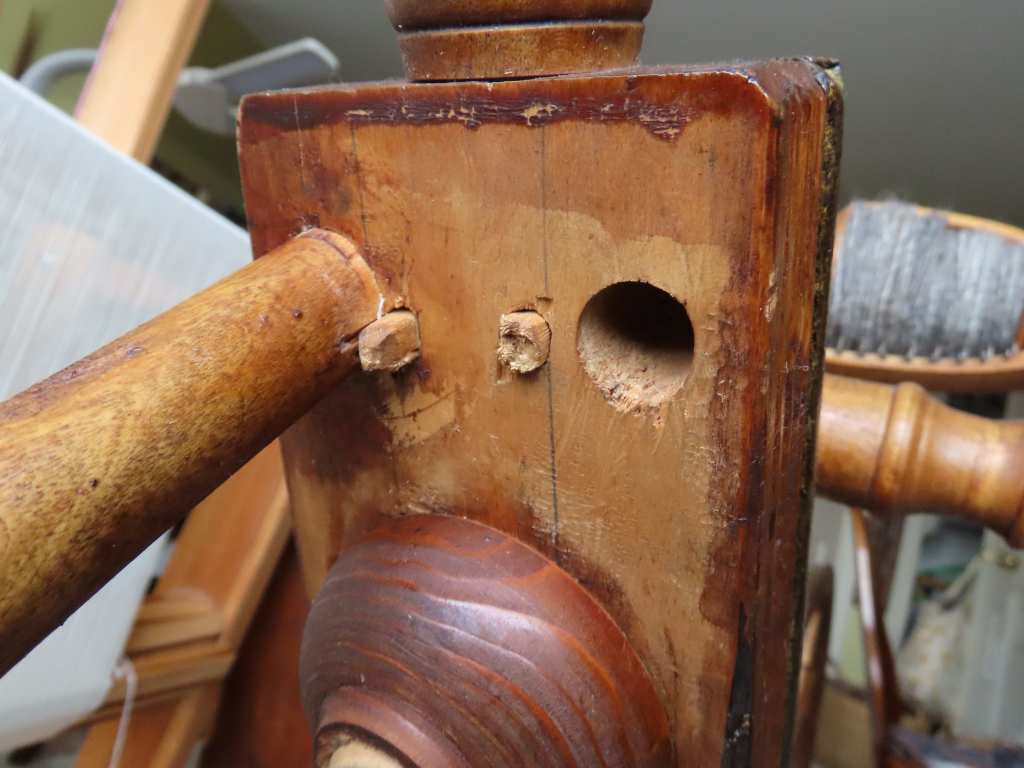
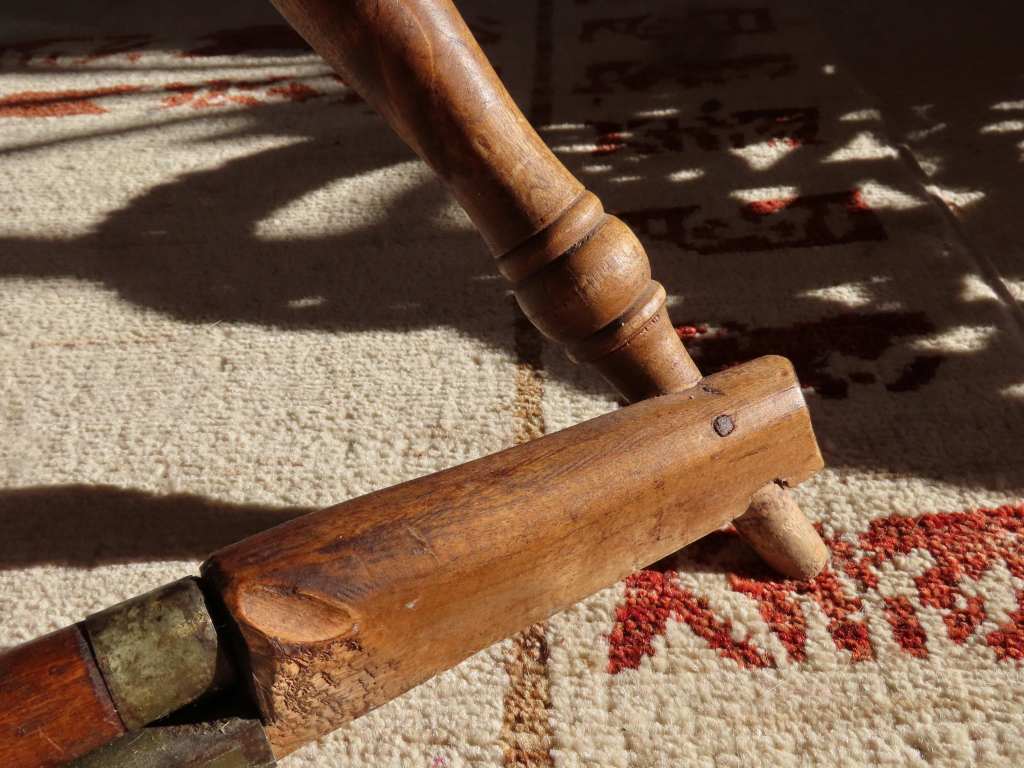
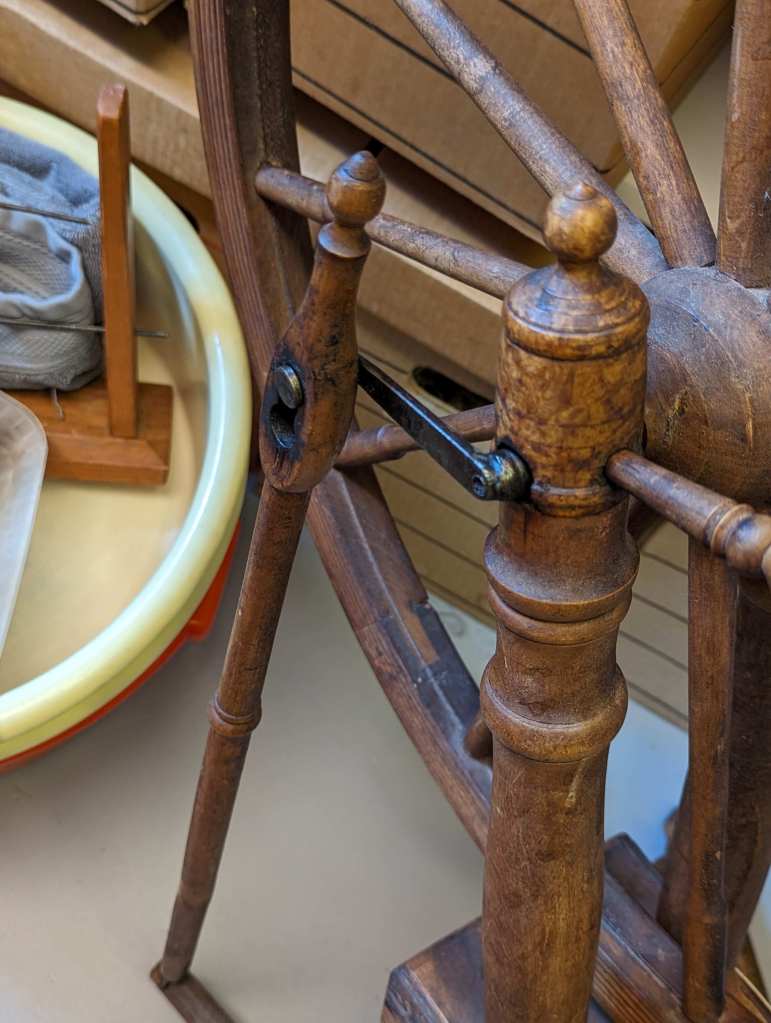
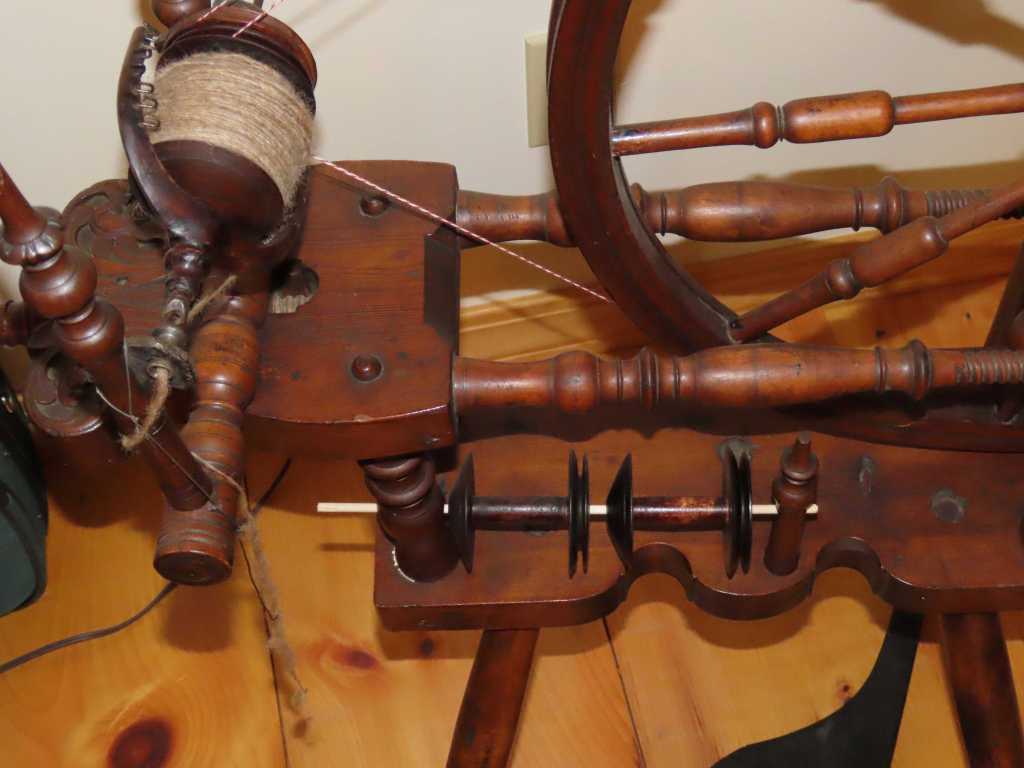
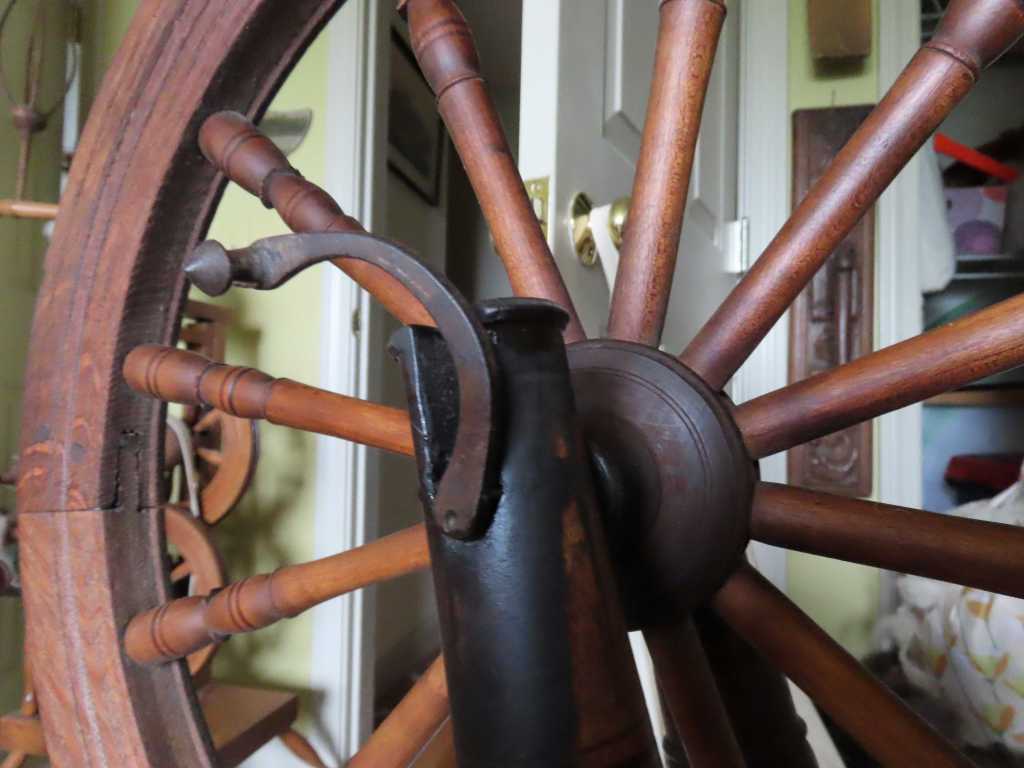
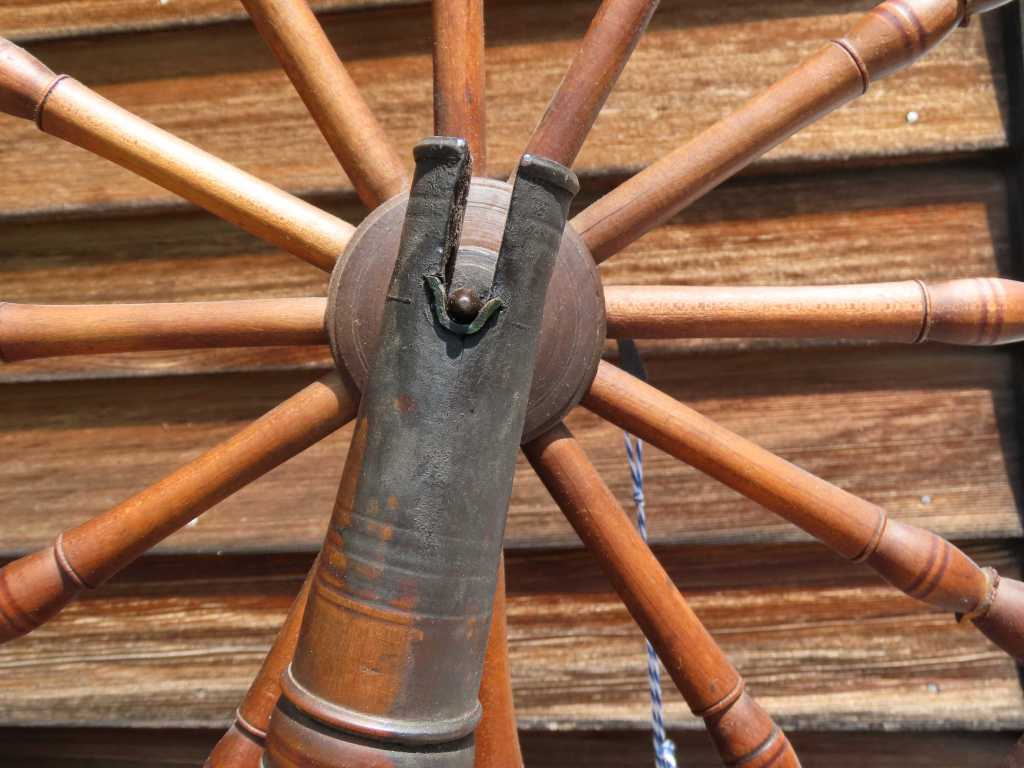
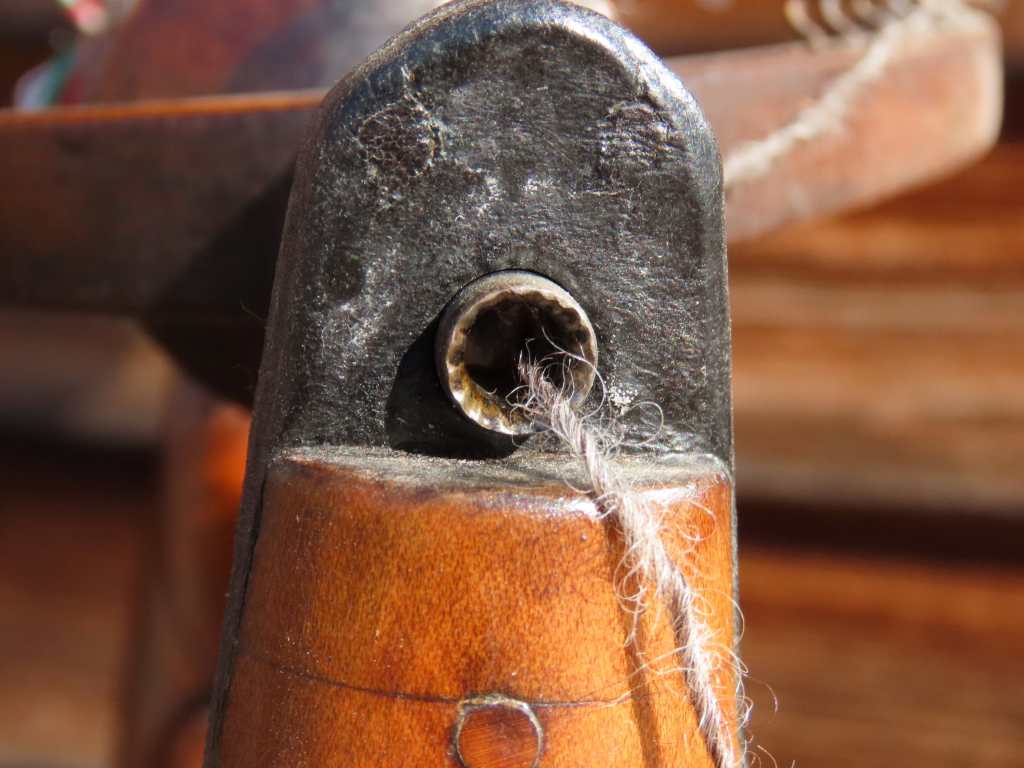
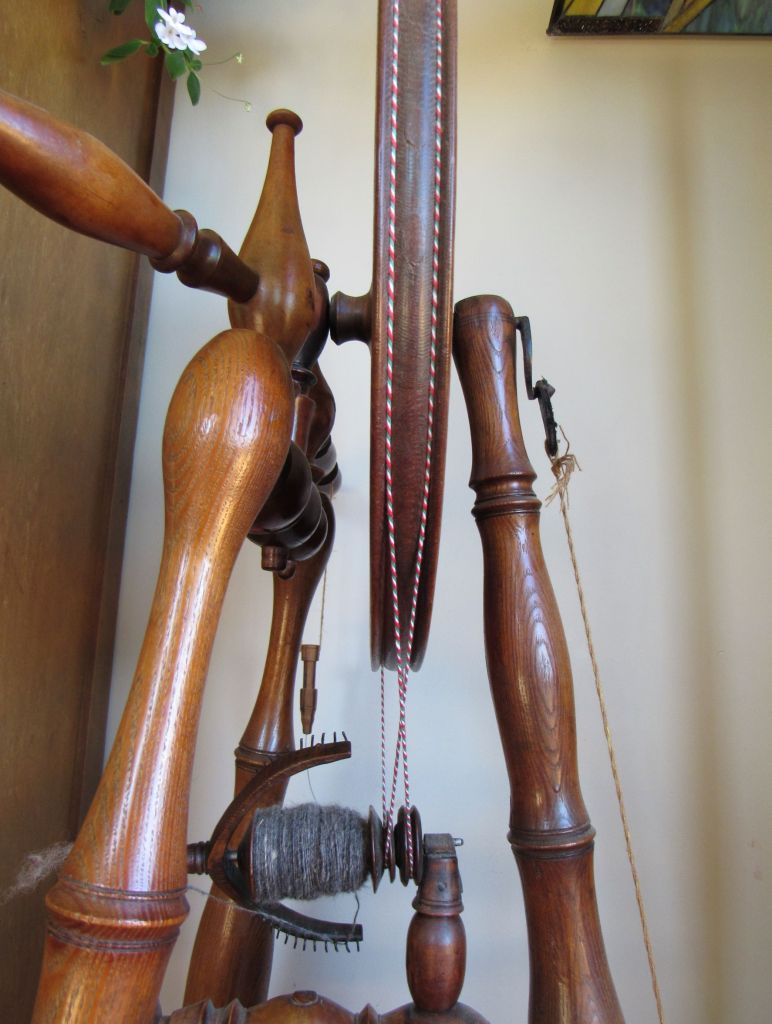
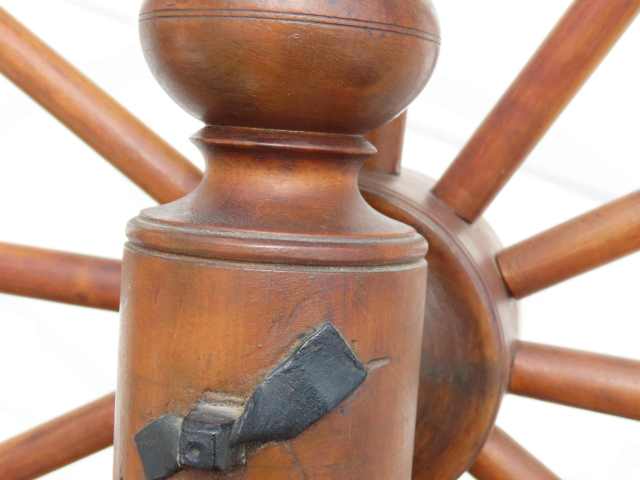
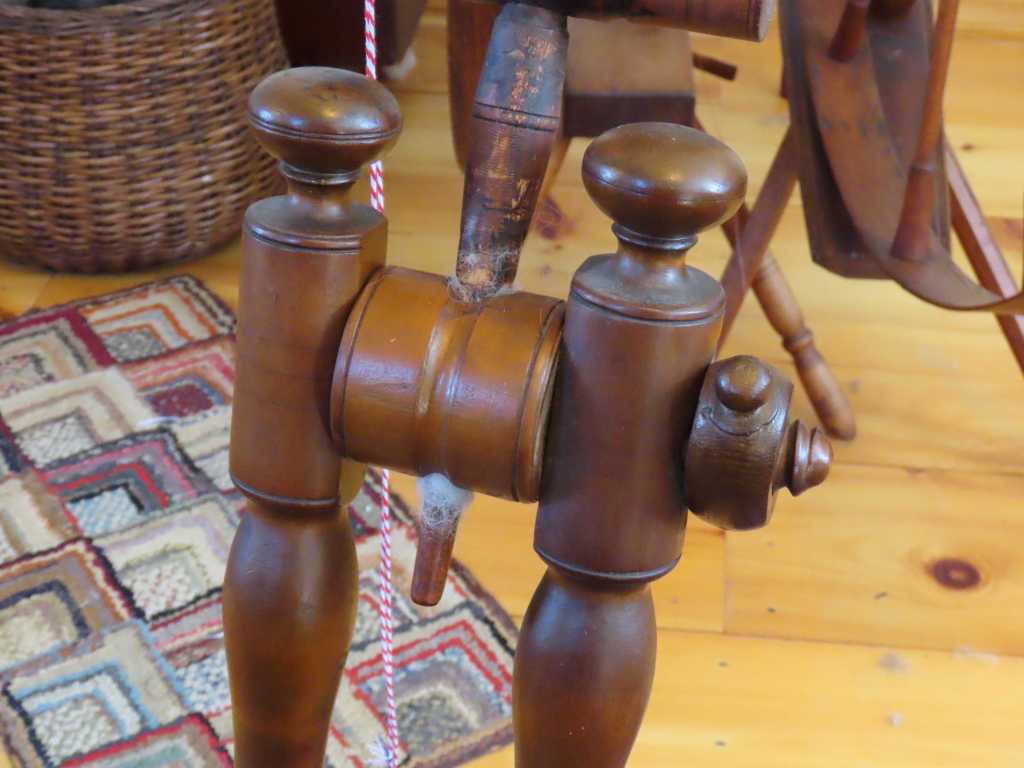
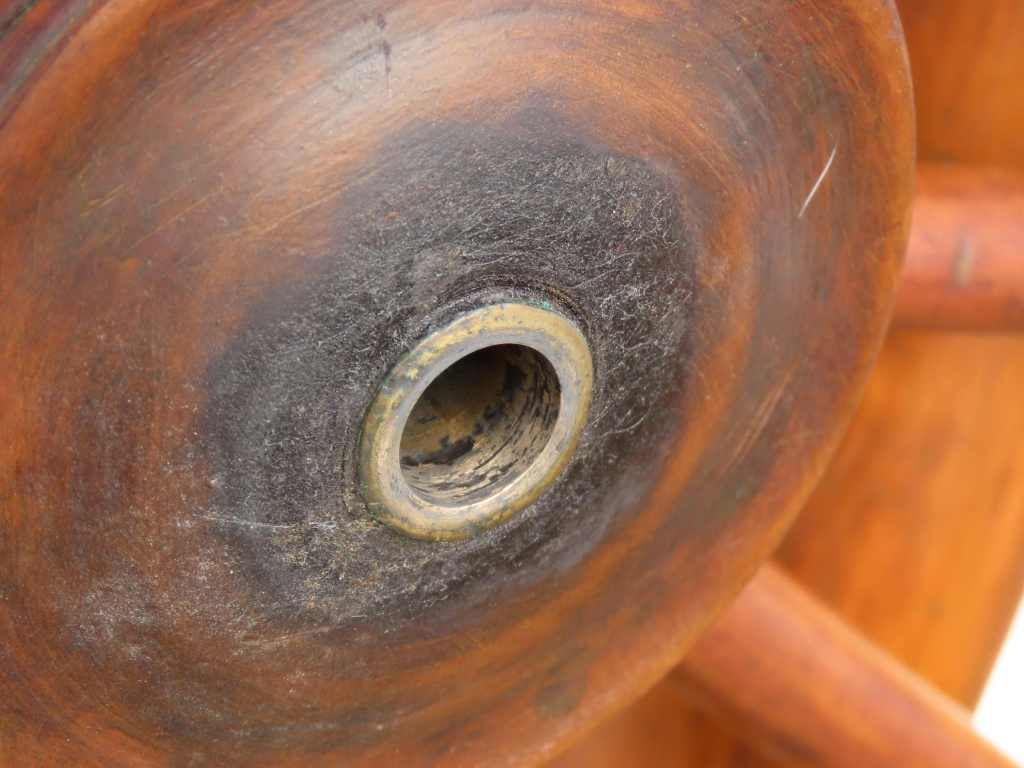
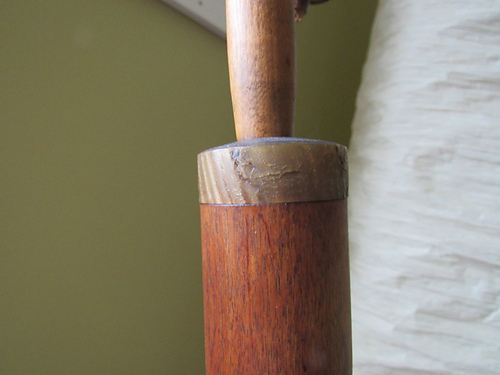
The wheel post has a perfectly fitted thick horn collar, a feature found on some early Shaker wheels.  
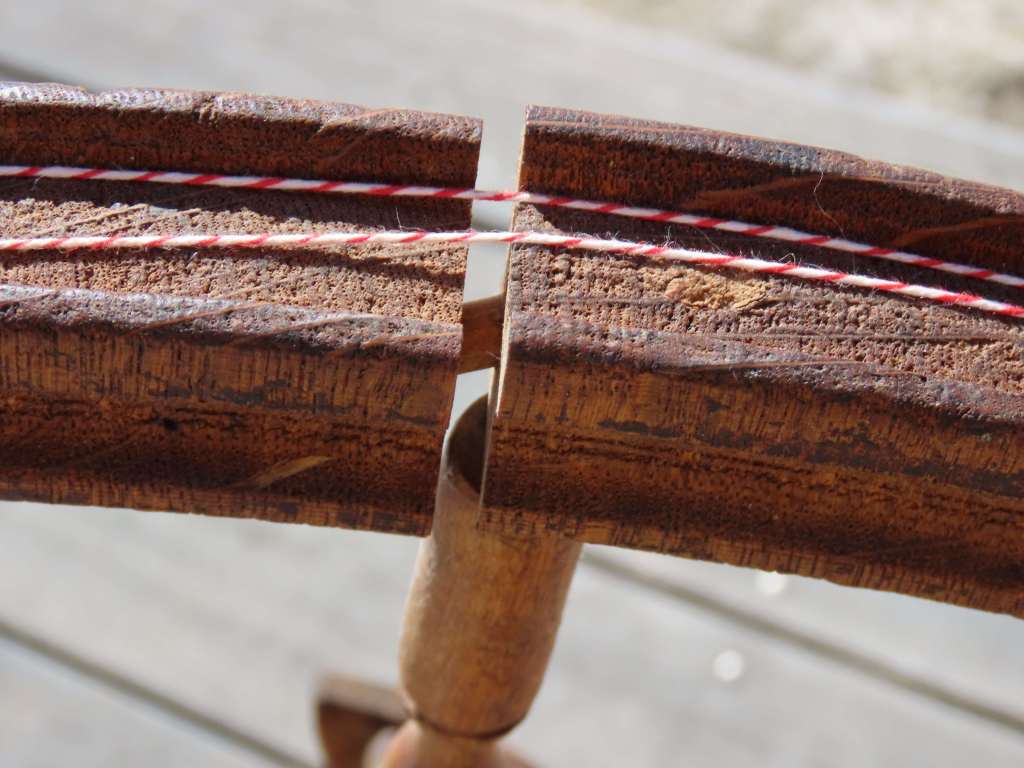
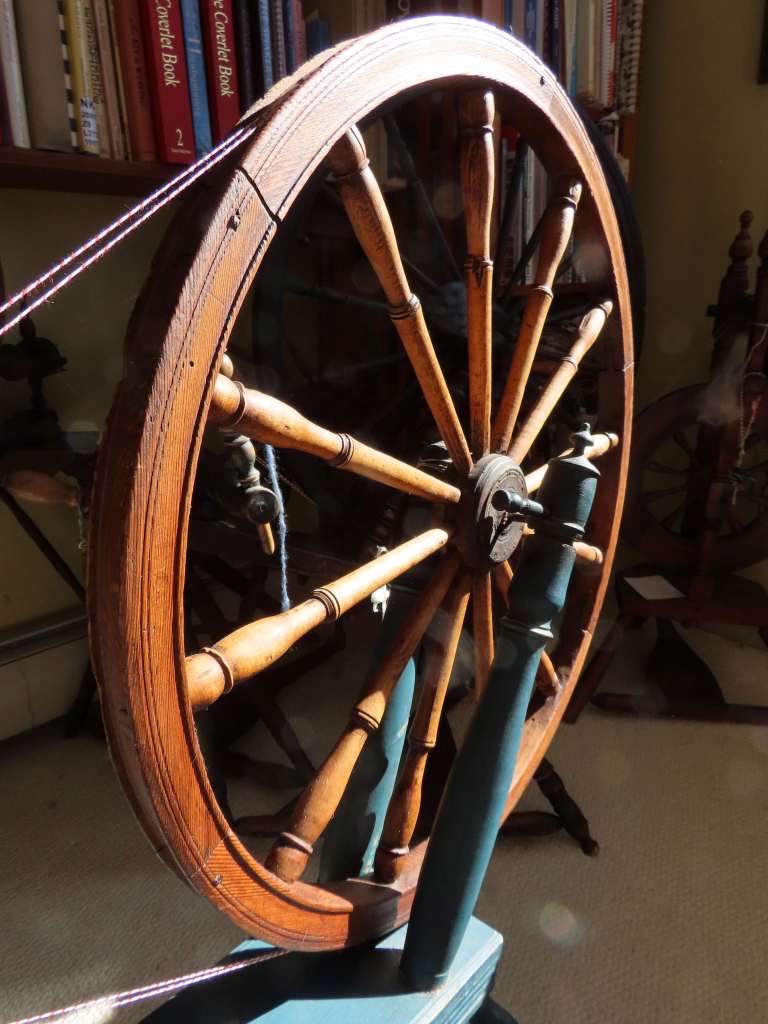
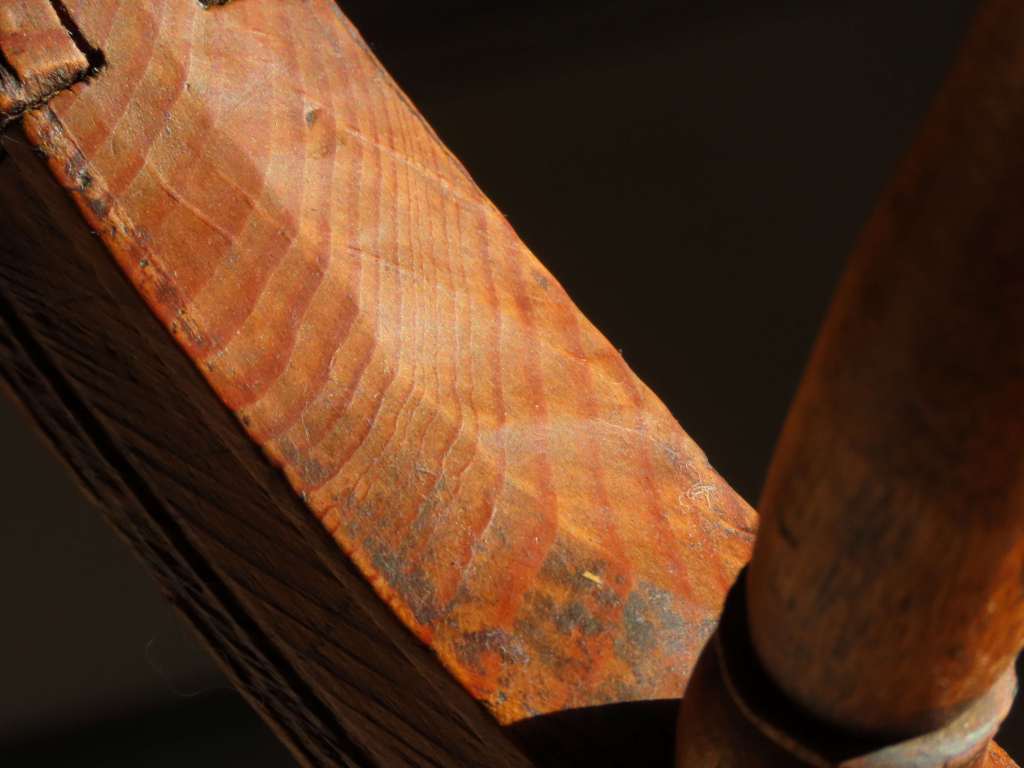
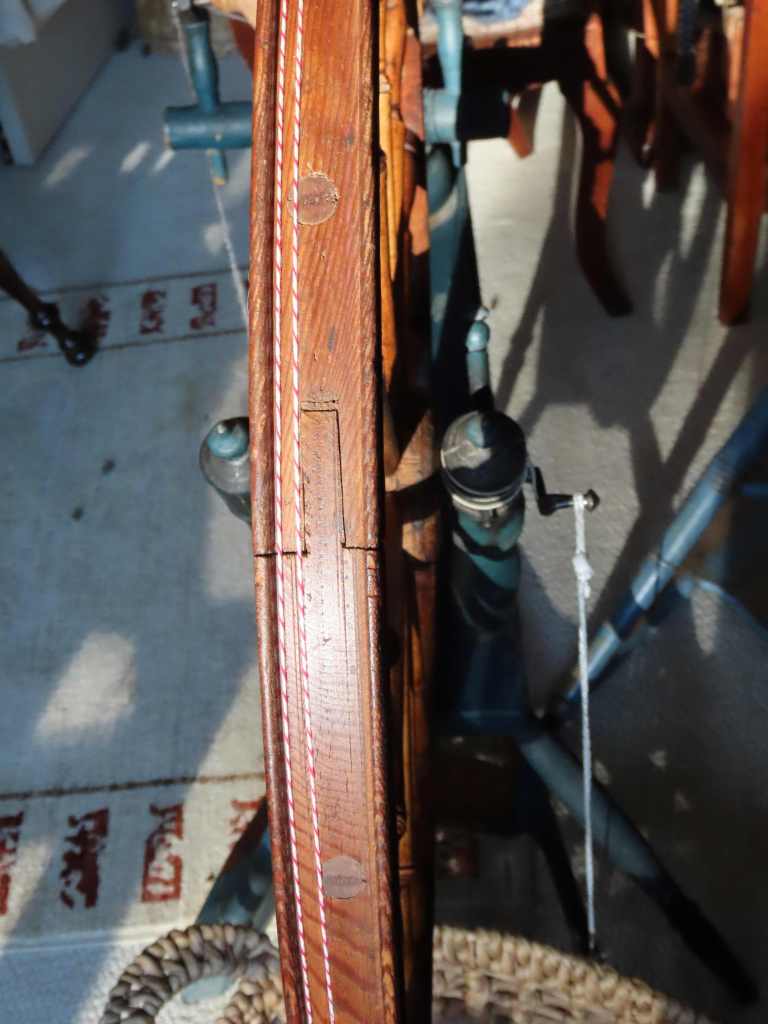
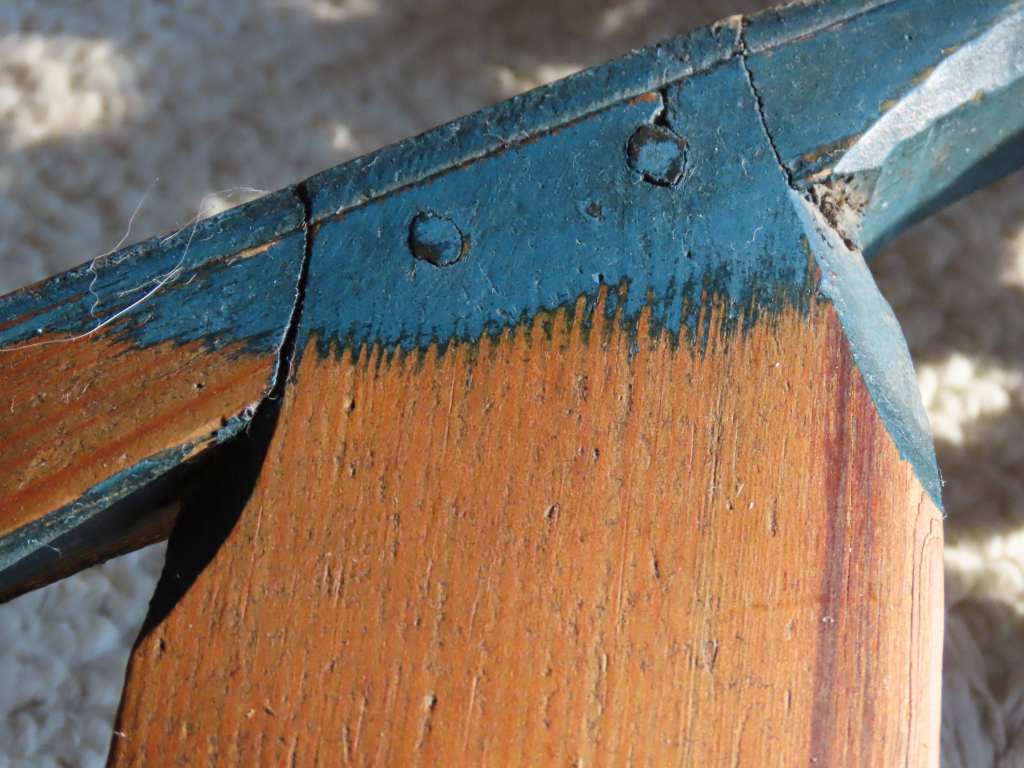
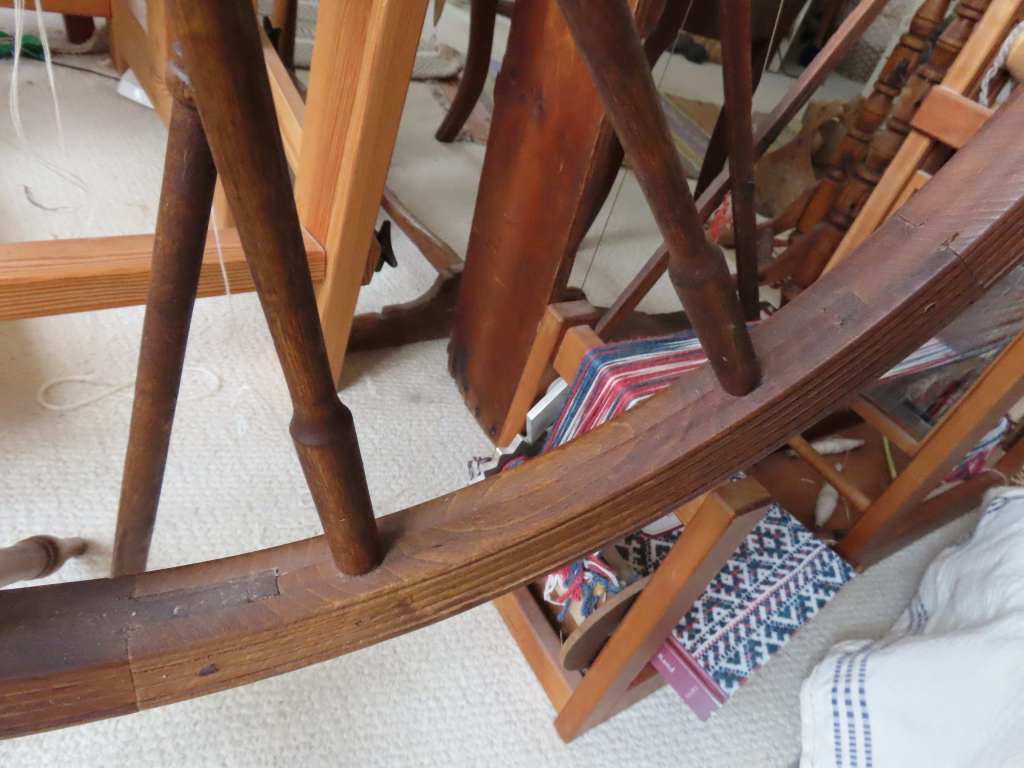
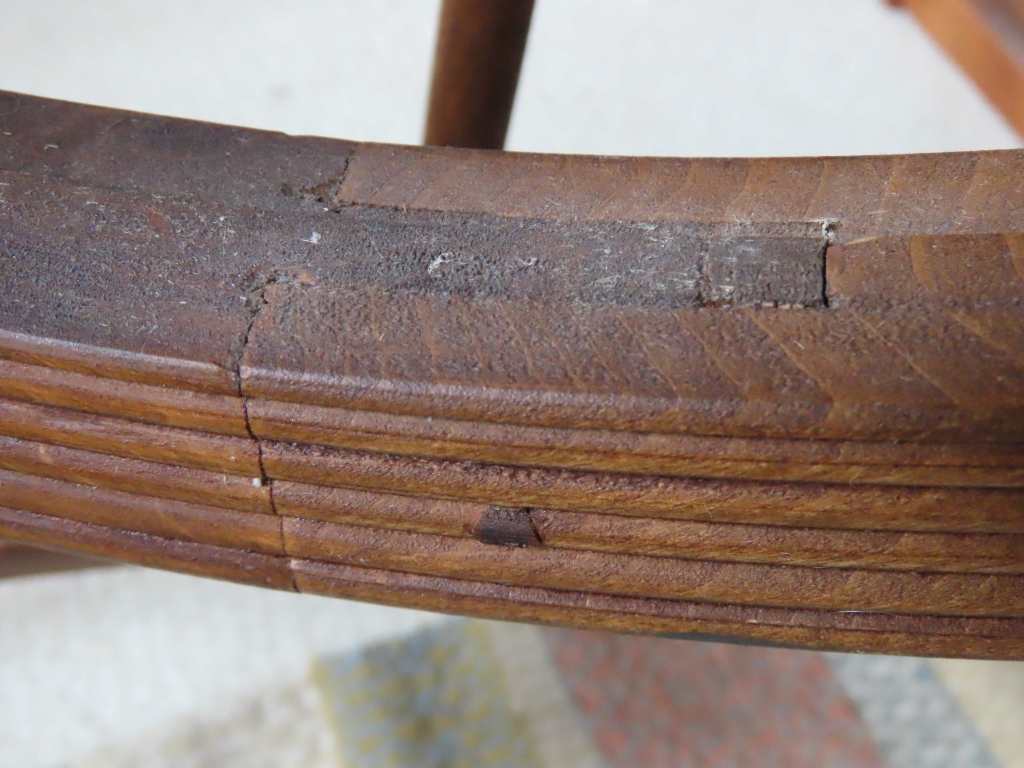
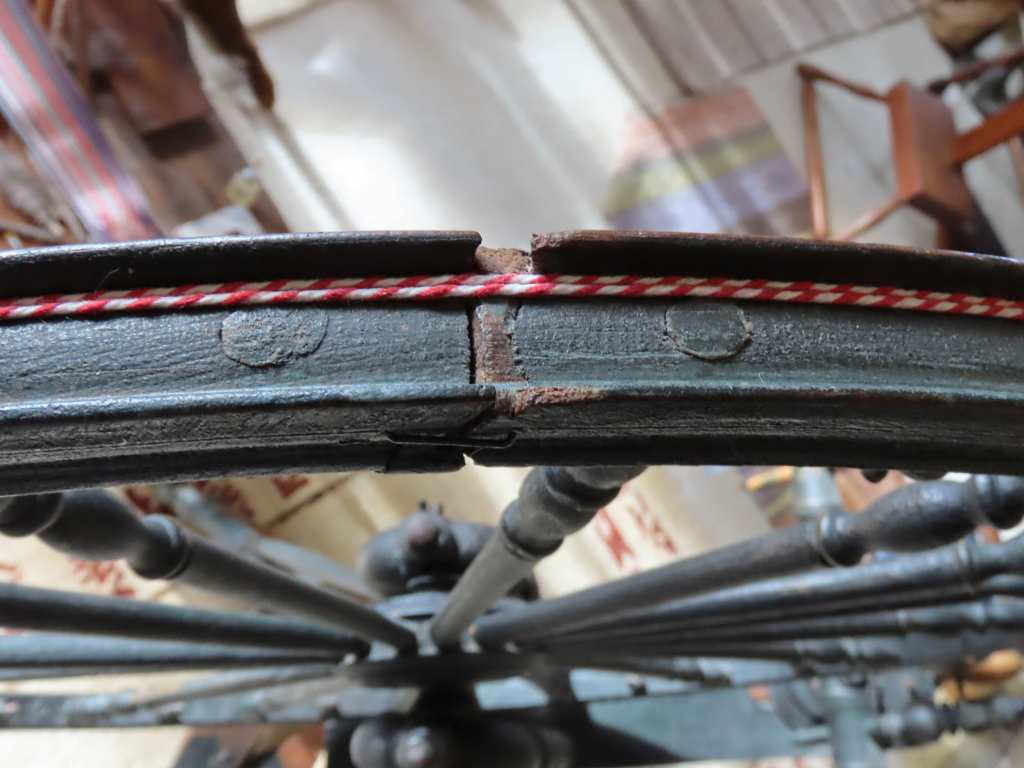
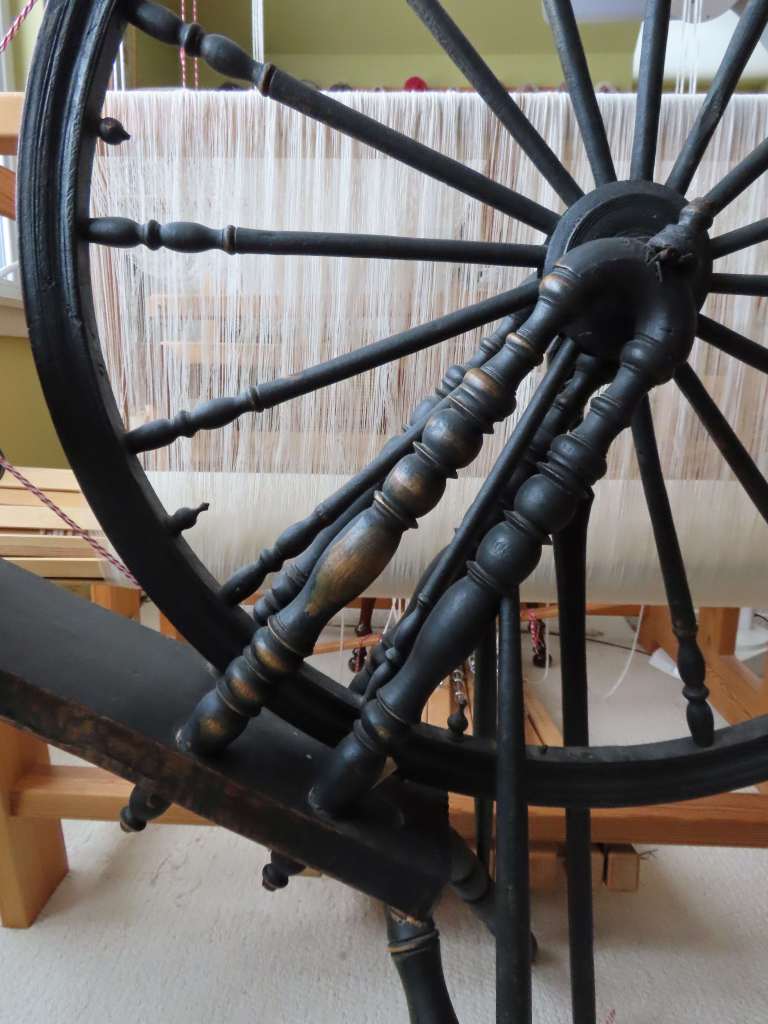
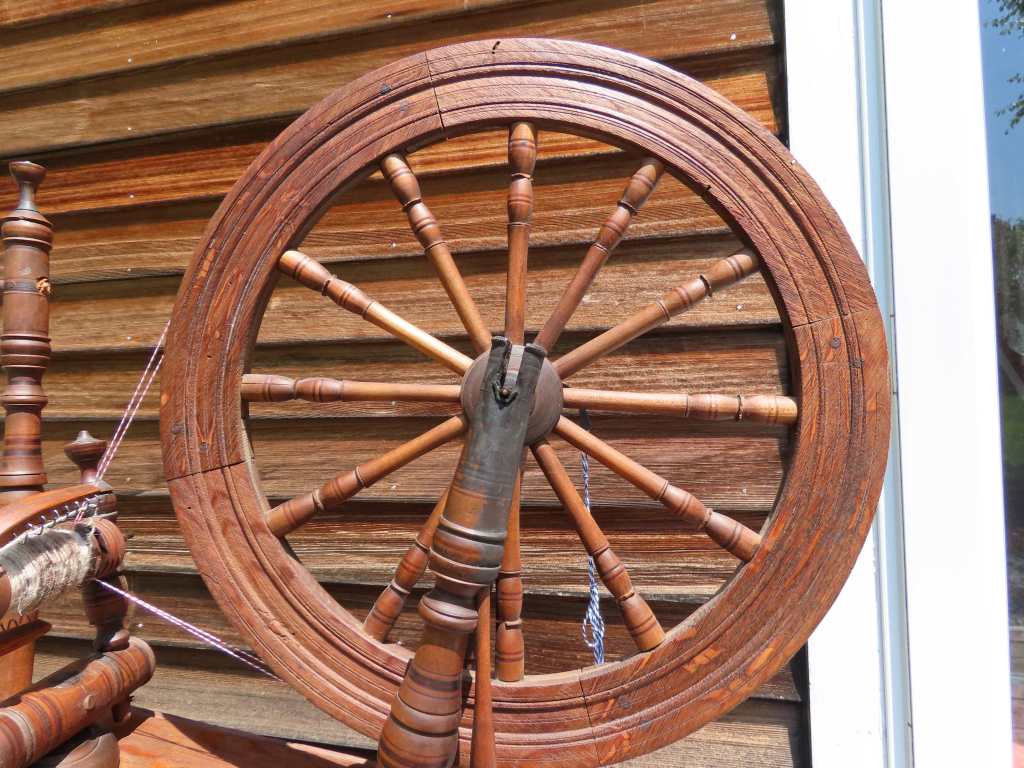
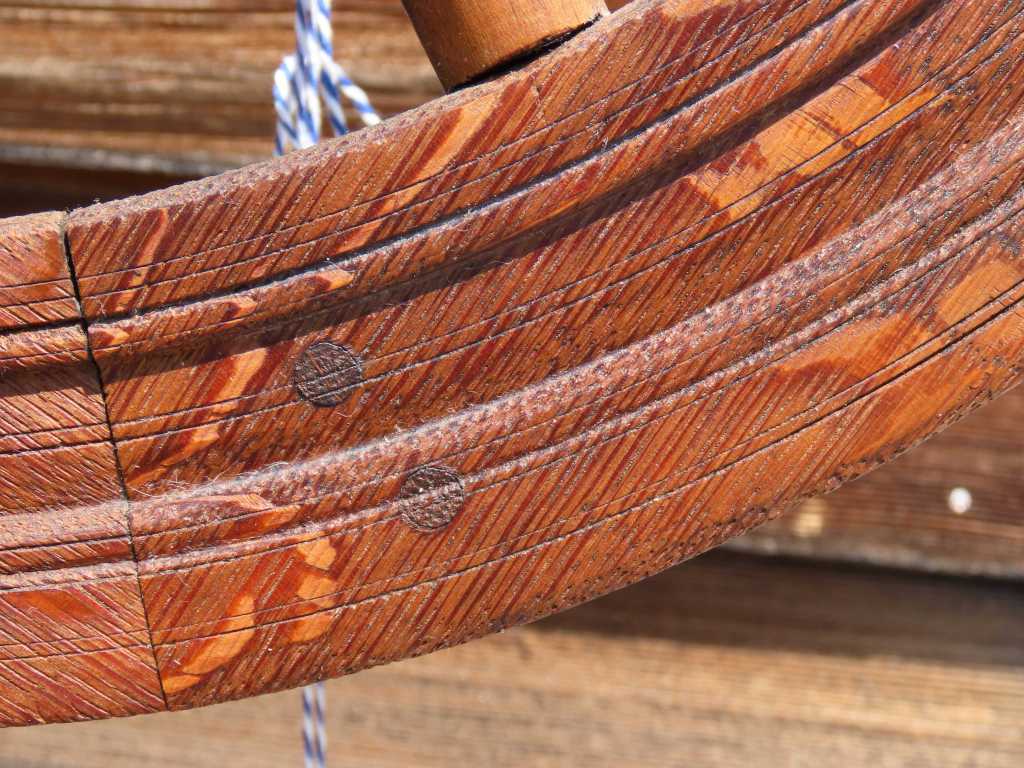
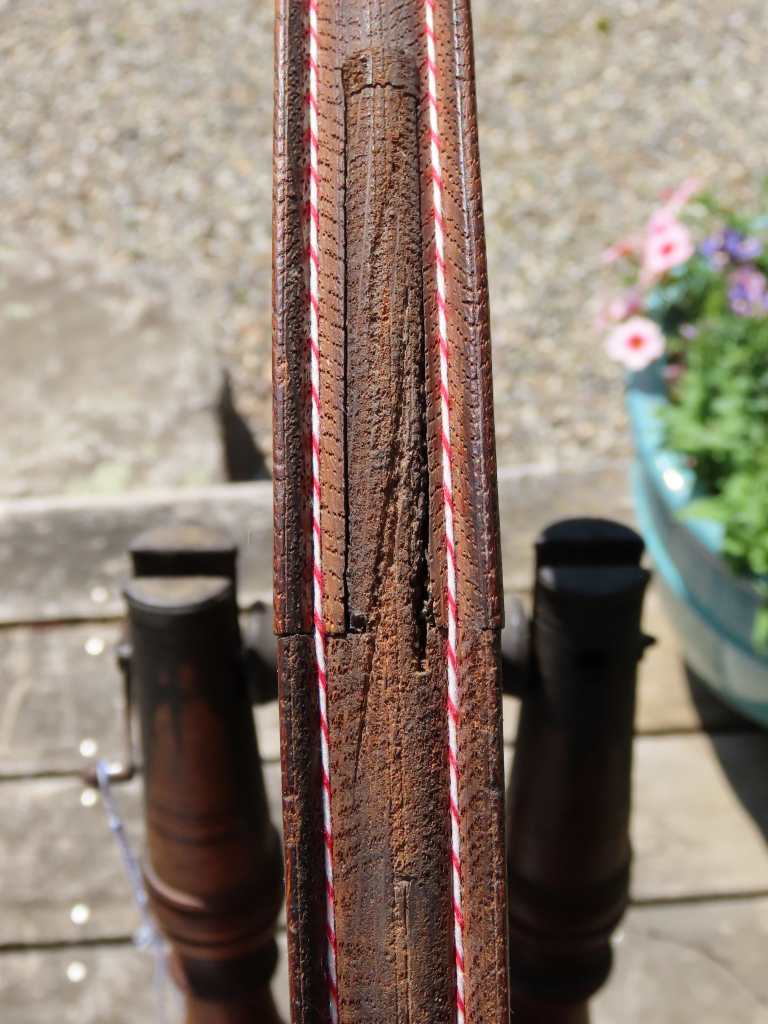
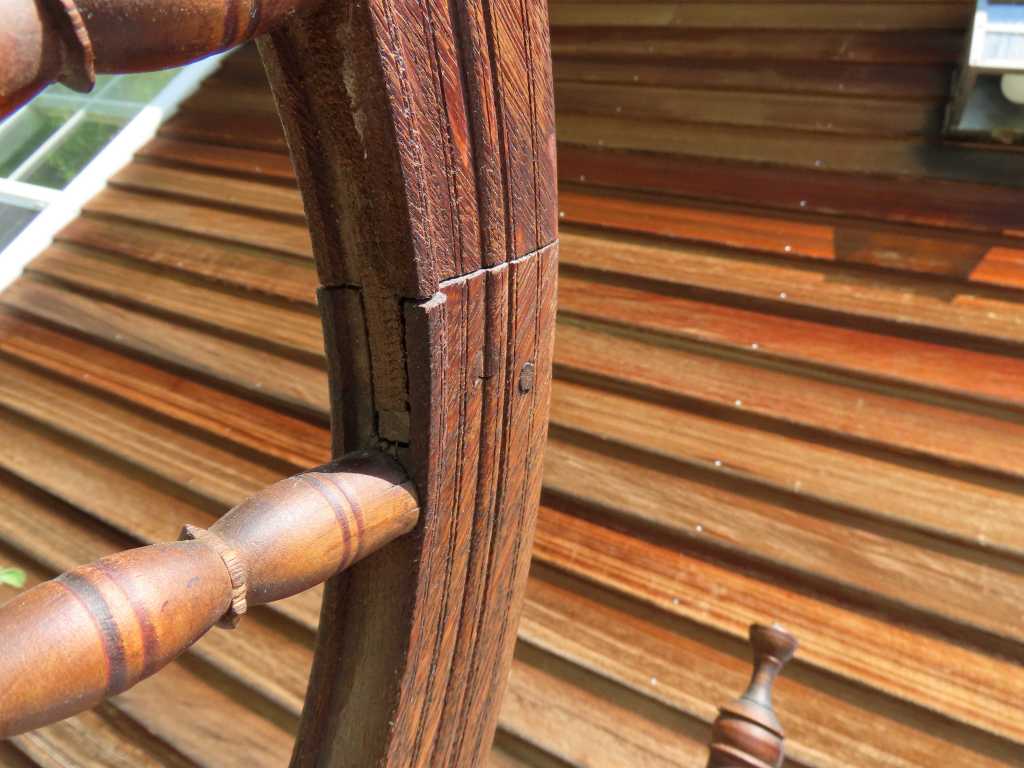
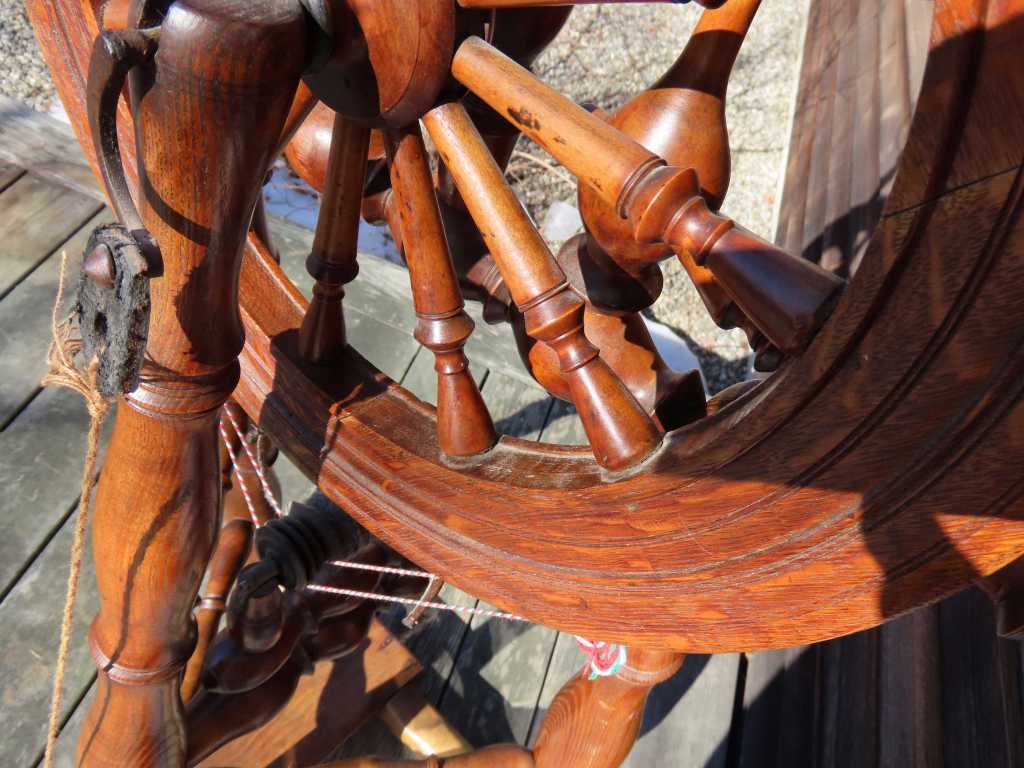
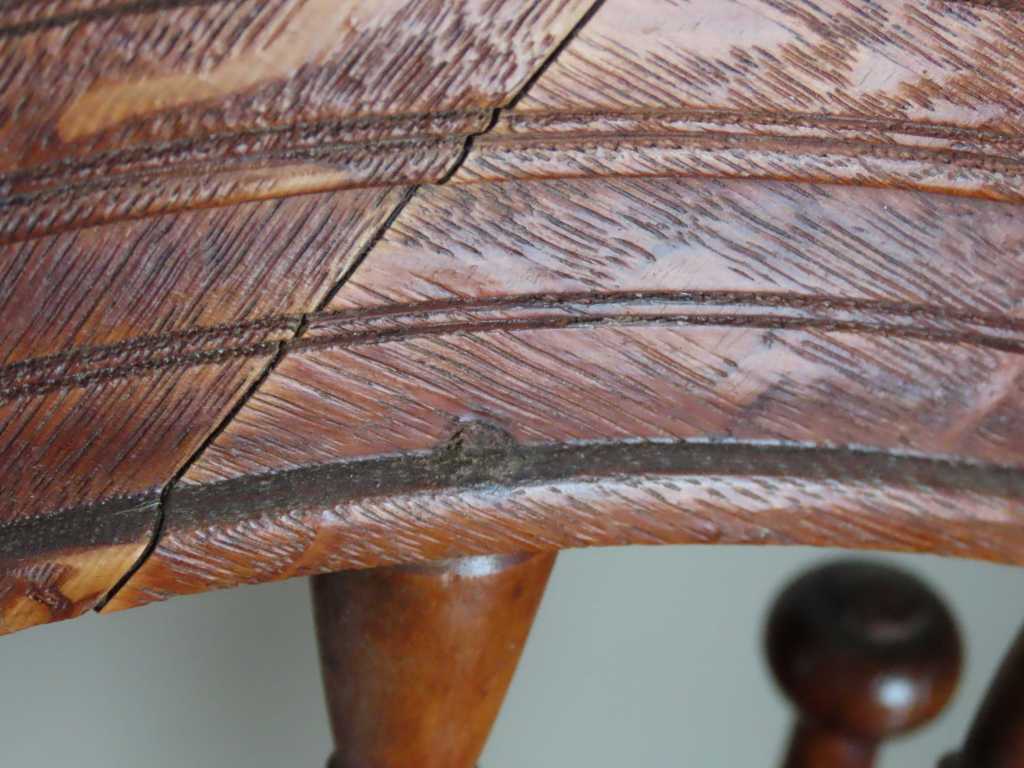
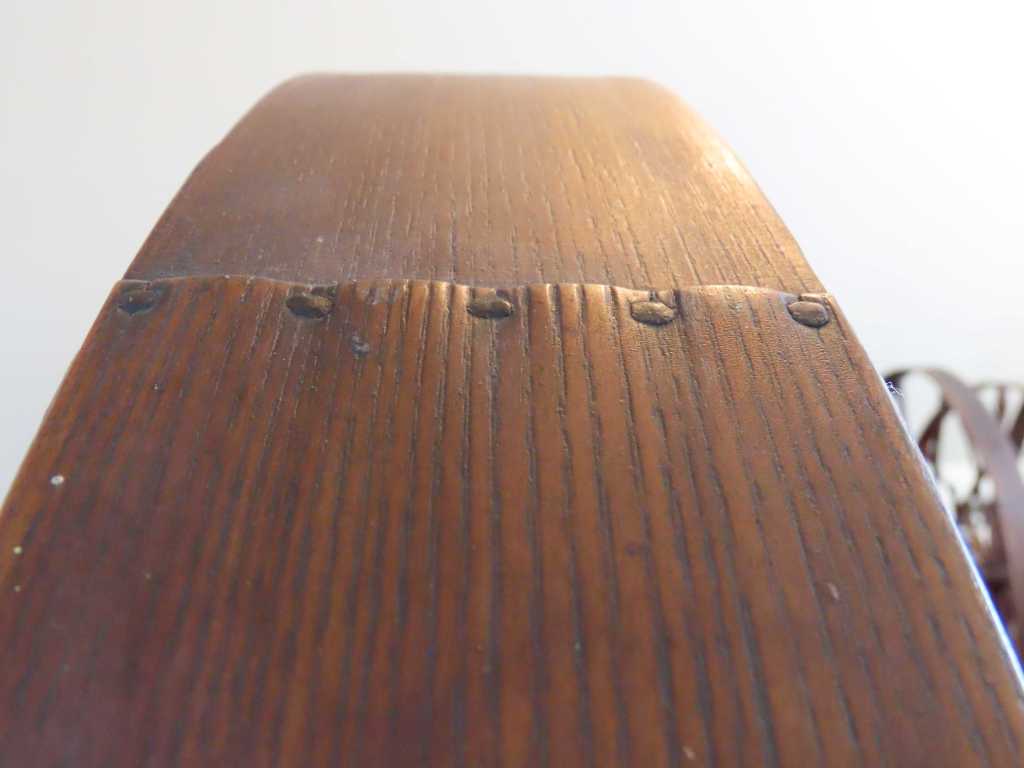
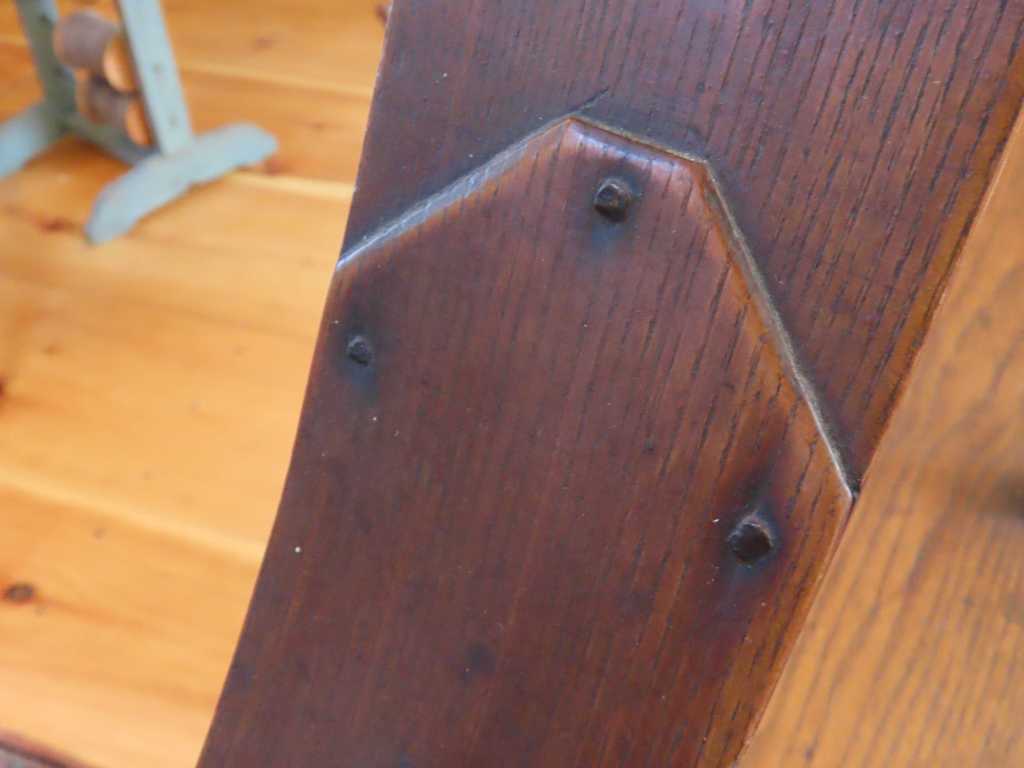
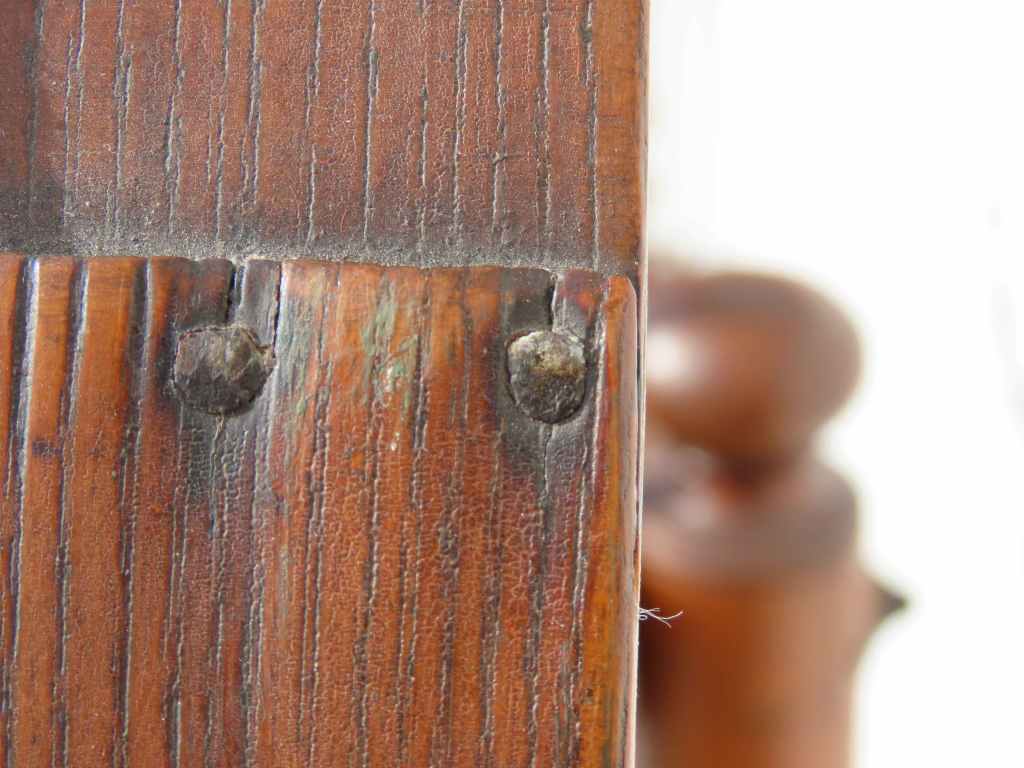
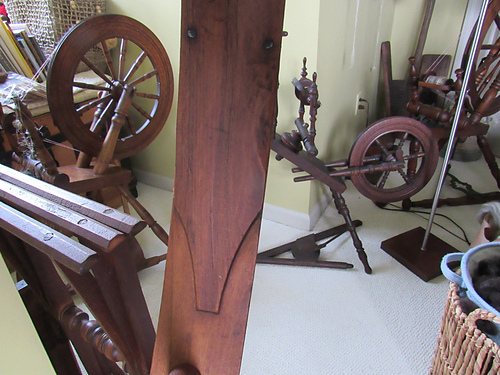
 The drive wheel rim has beautifully made joins. 
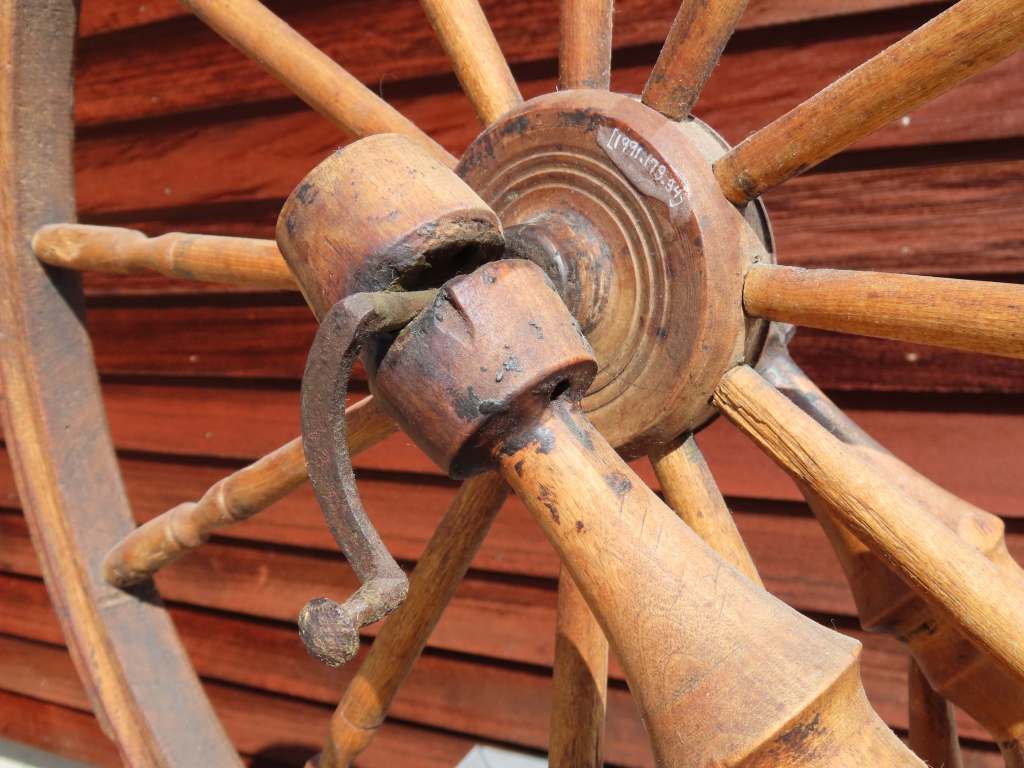
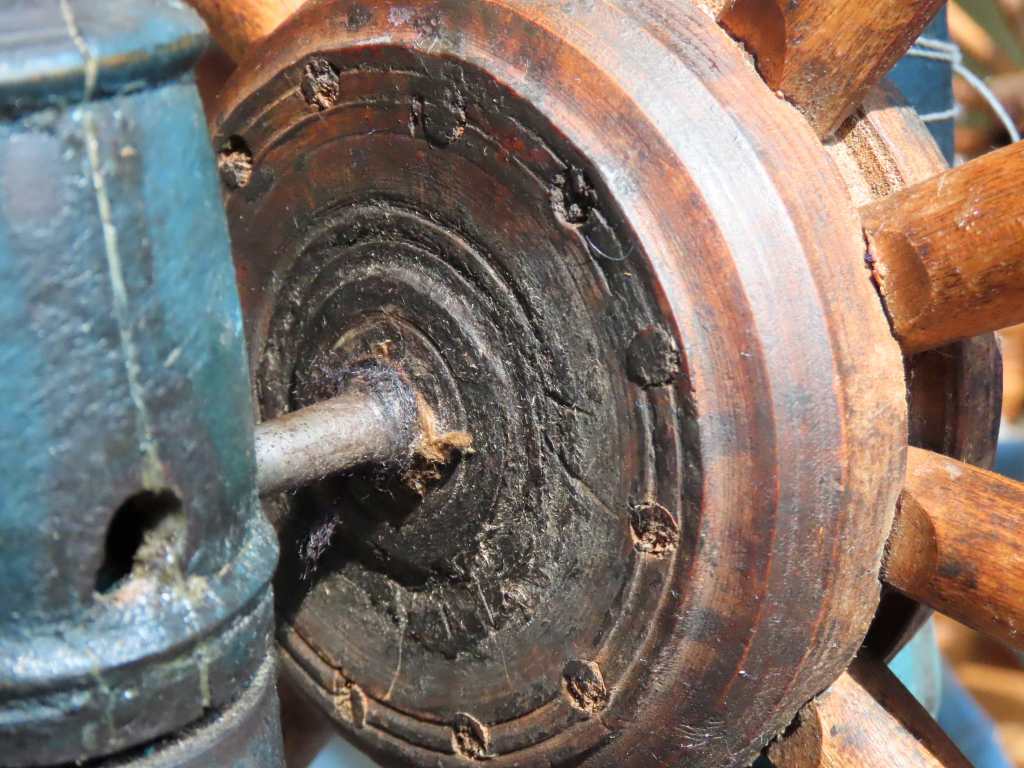
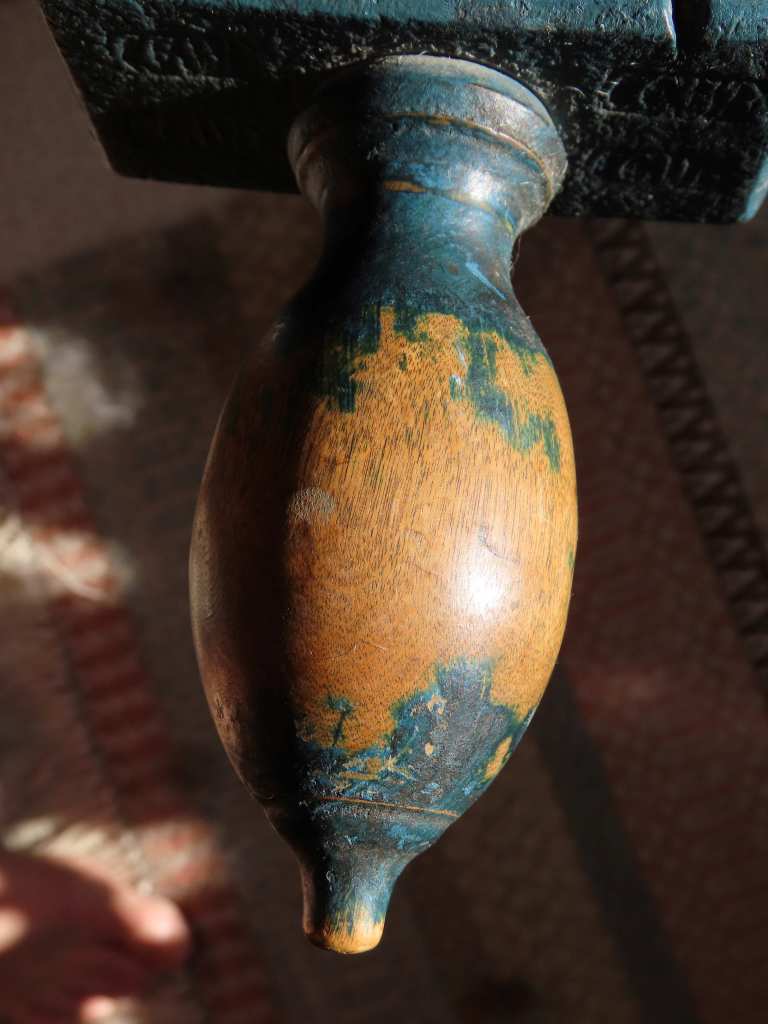
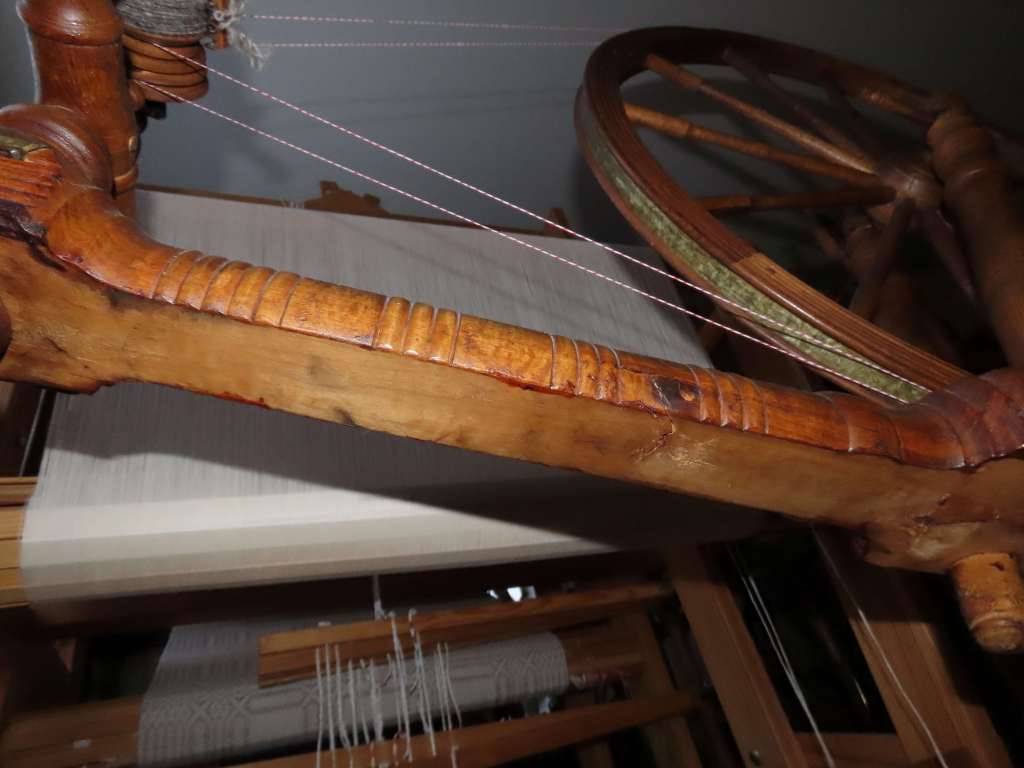
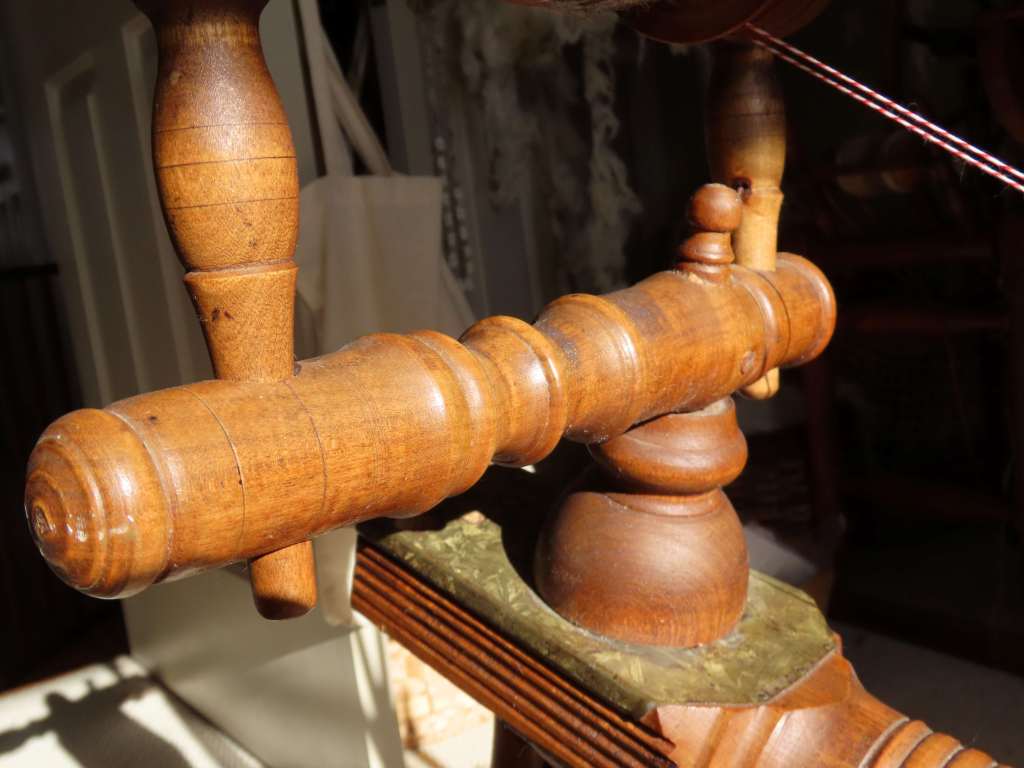
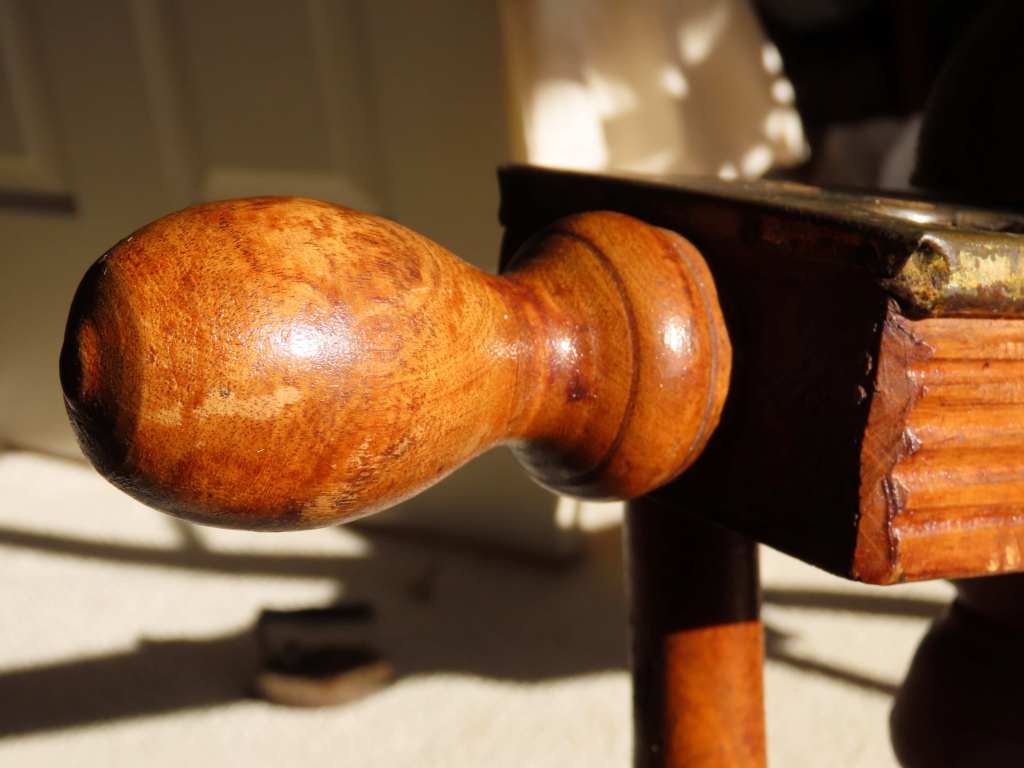
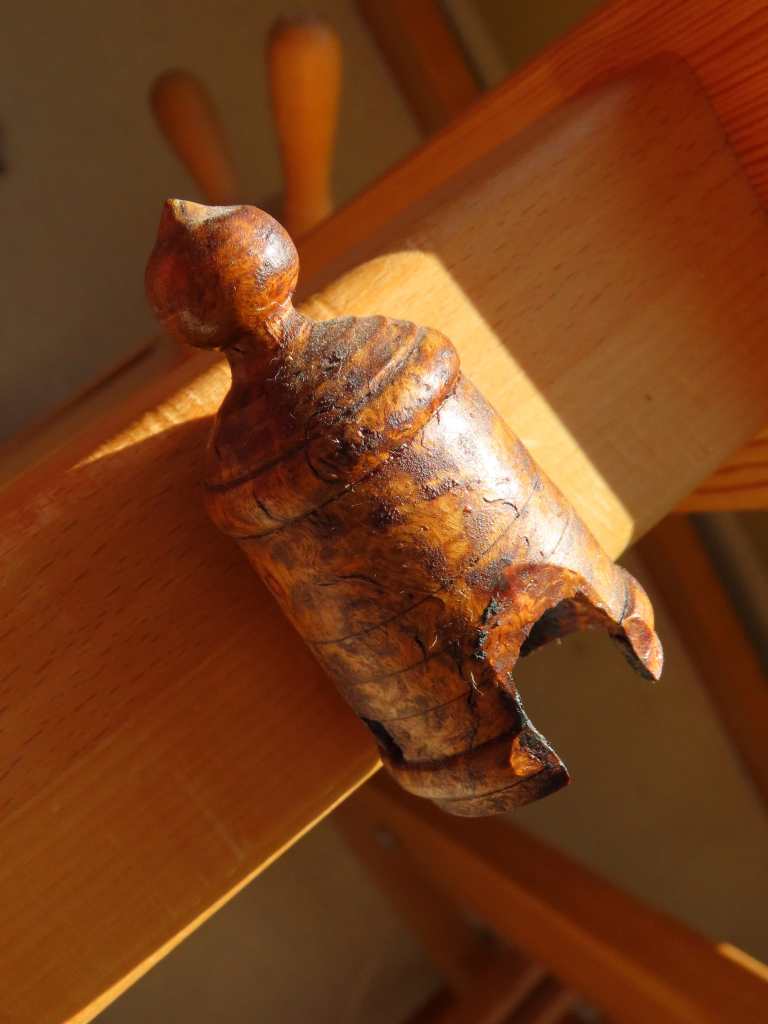
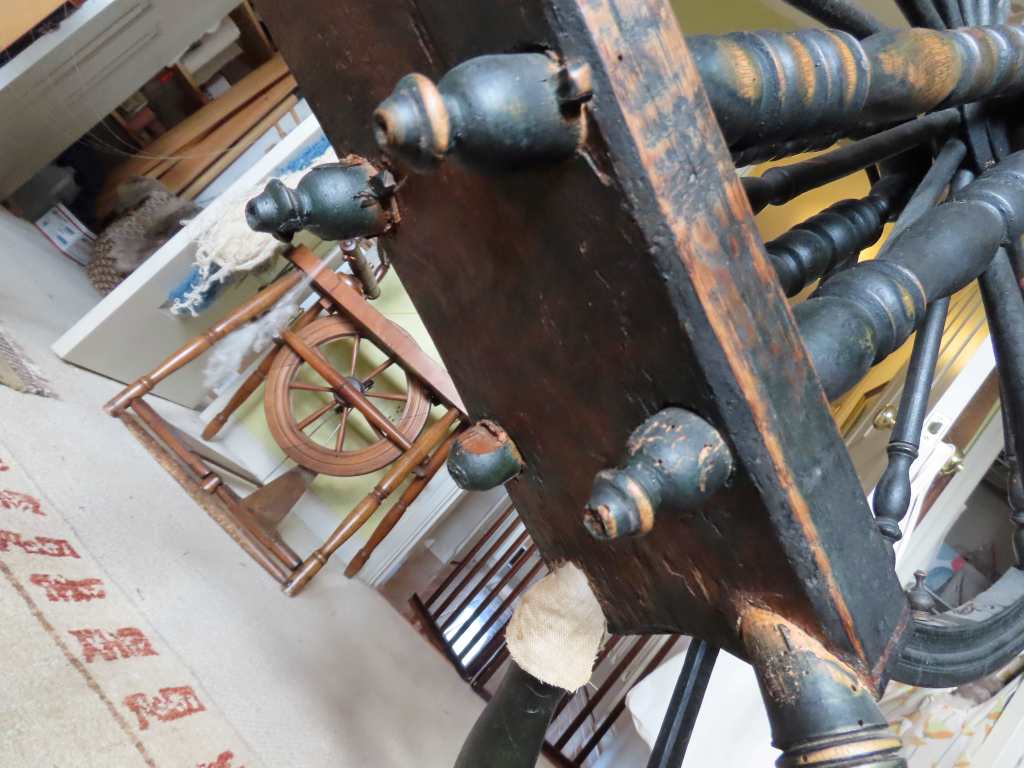
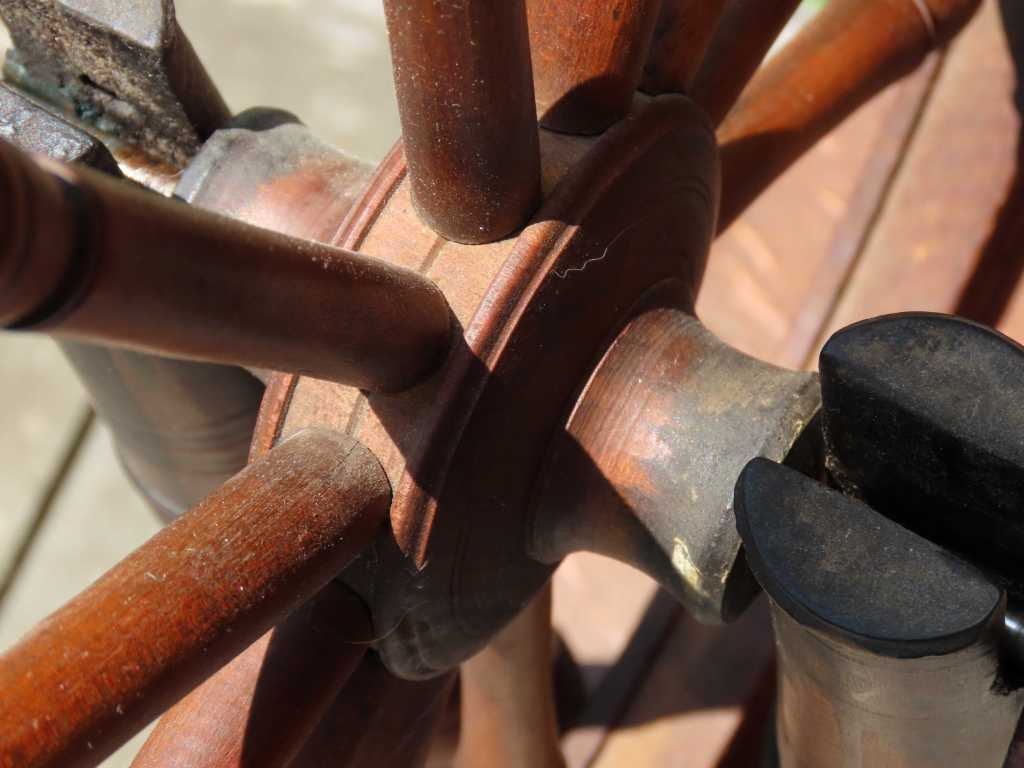
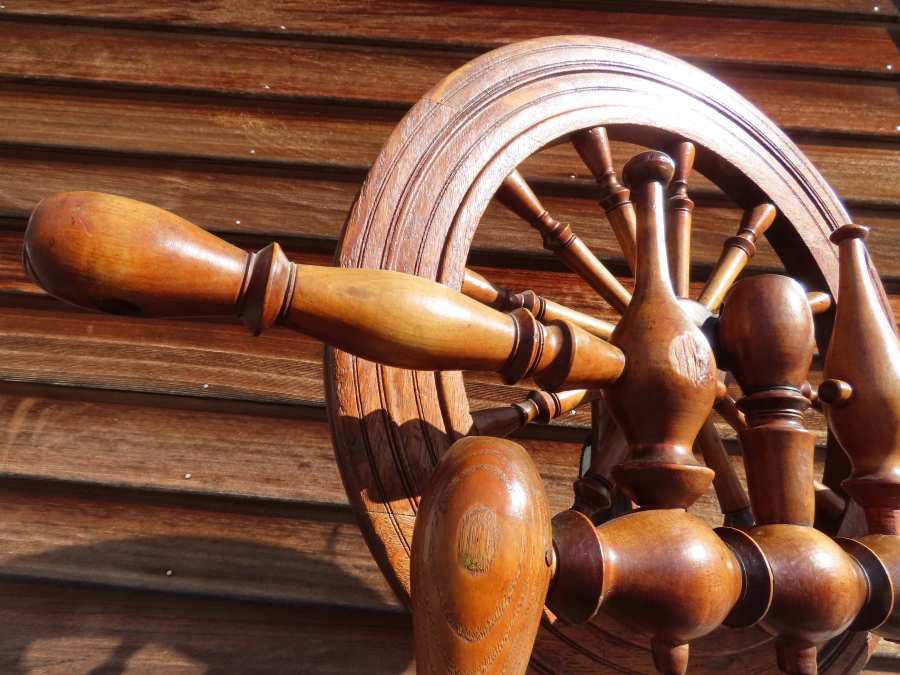
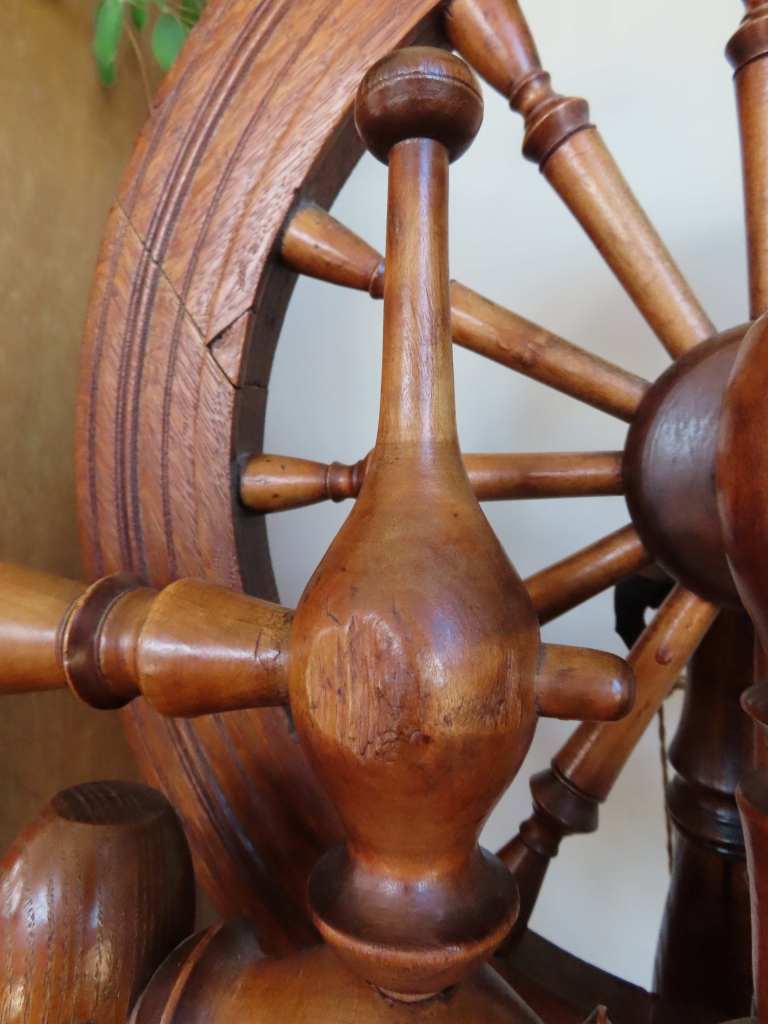
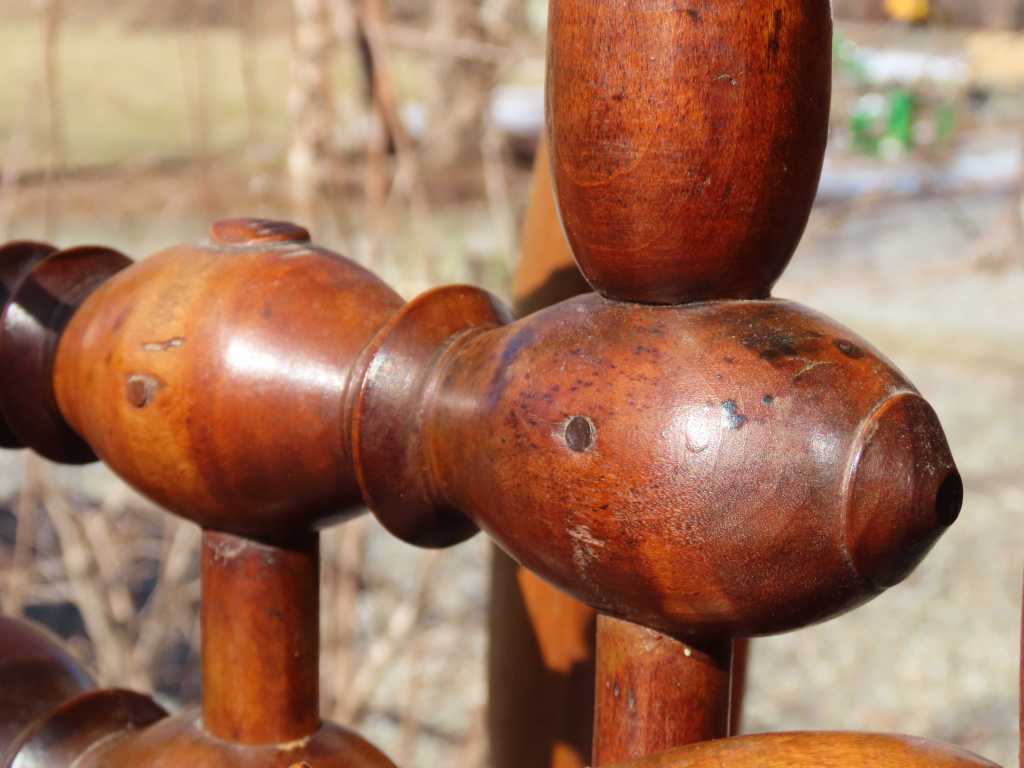
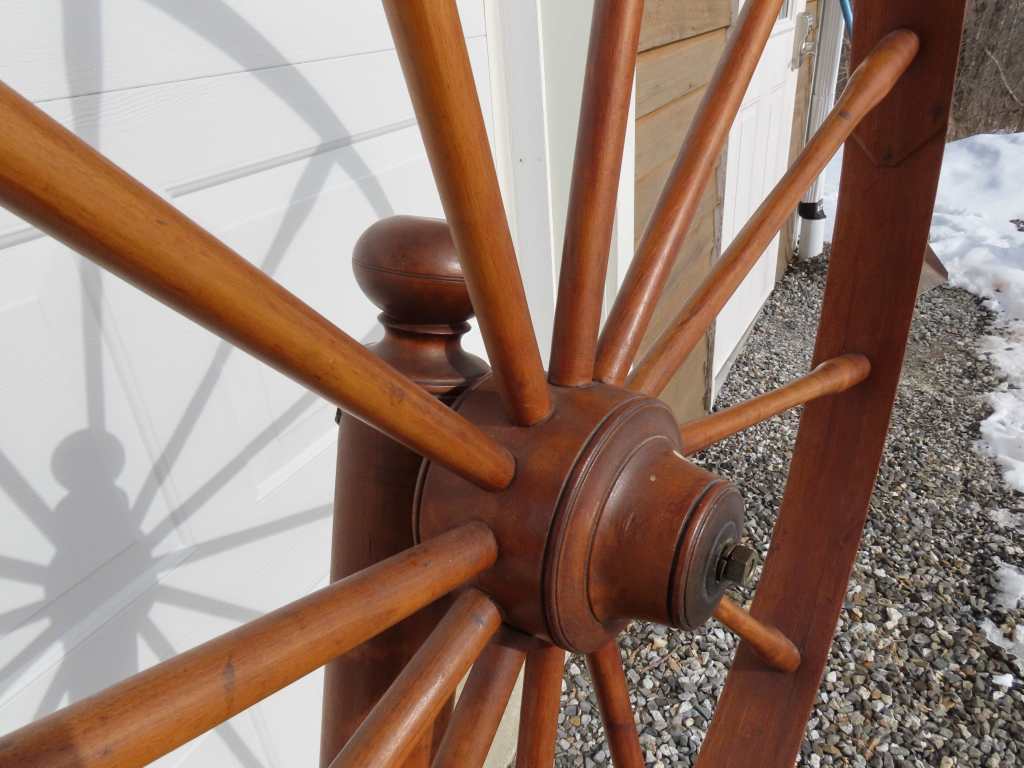
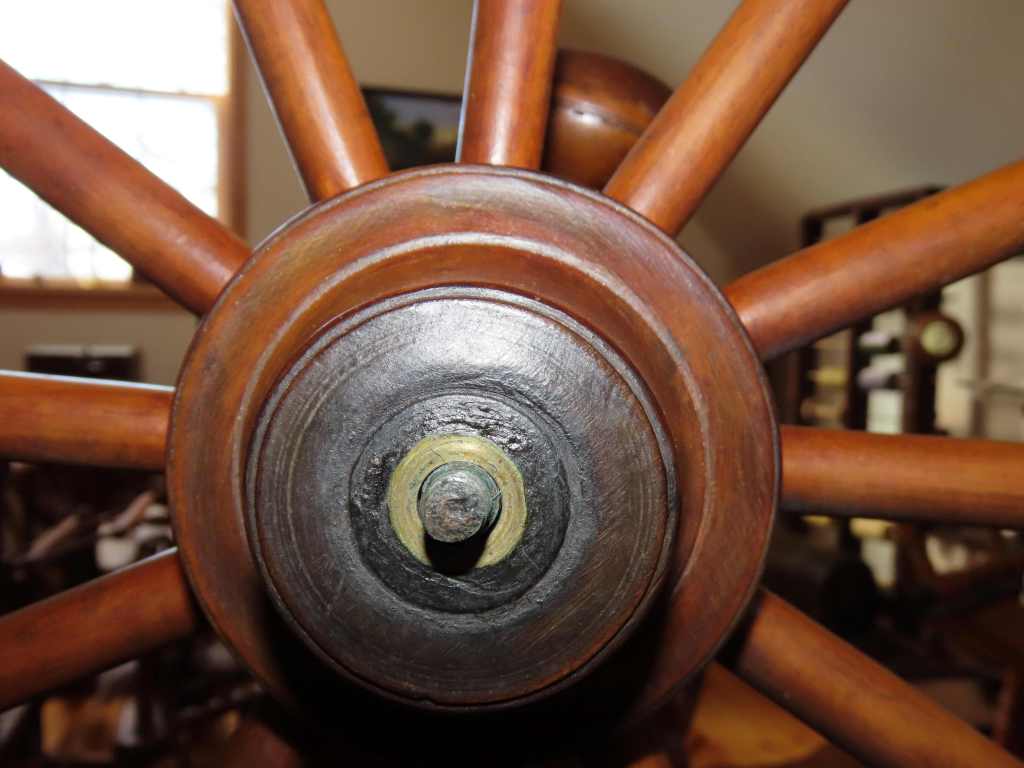
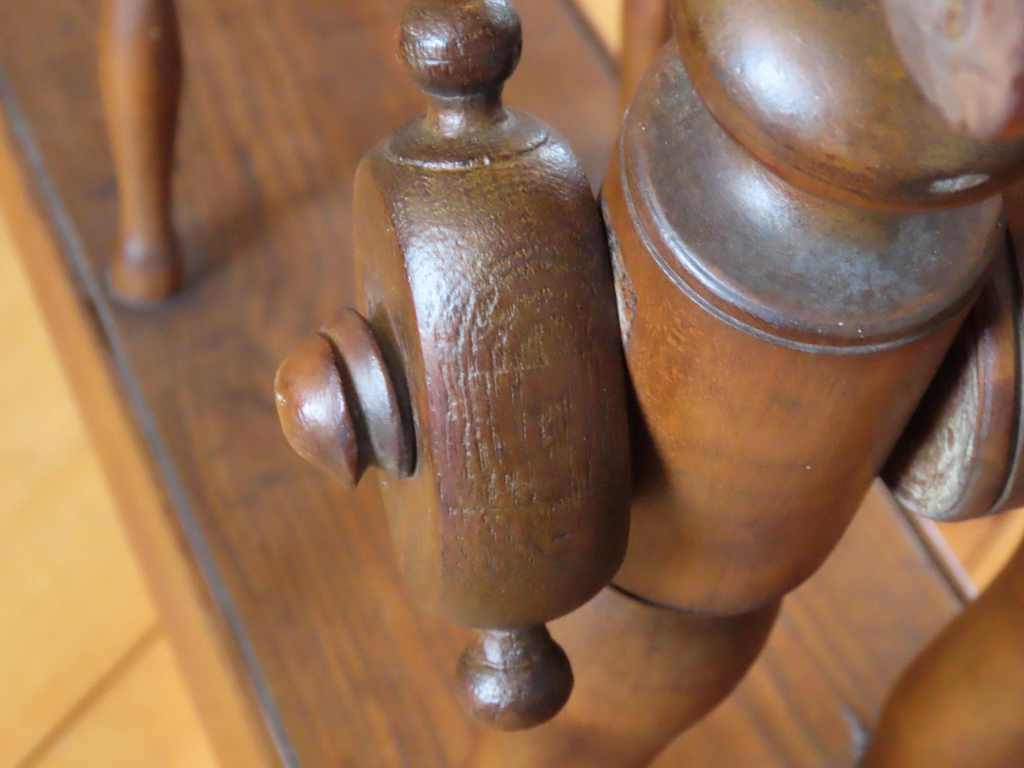
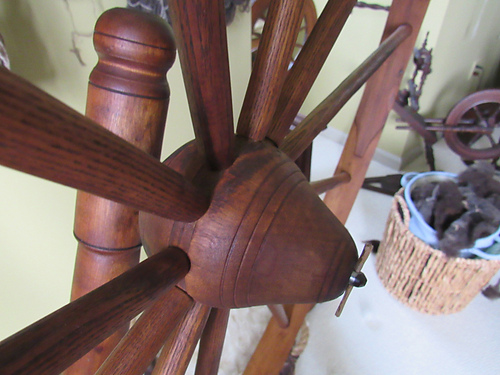
My favorite feature, though, is the hub, which is a perfect pear shape.  I have only run across one other wheel like this one.  It was found in Peachum, Vermont.
In my mind, these wheels are more beautiful than the typical Shaker great wheels.  Mine also was a joy to spin on. 

THE LOOM
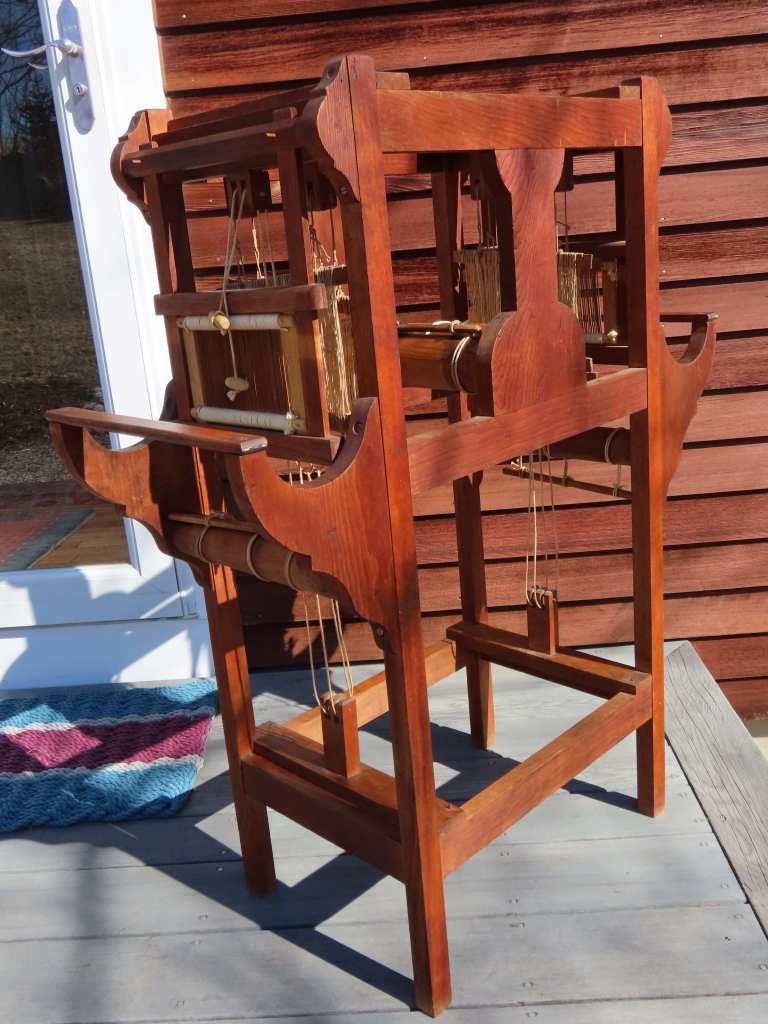
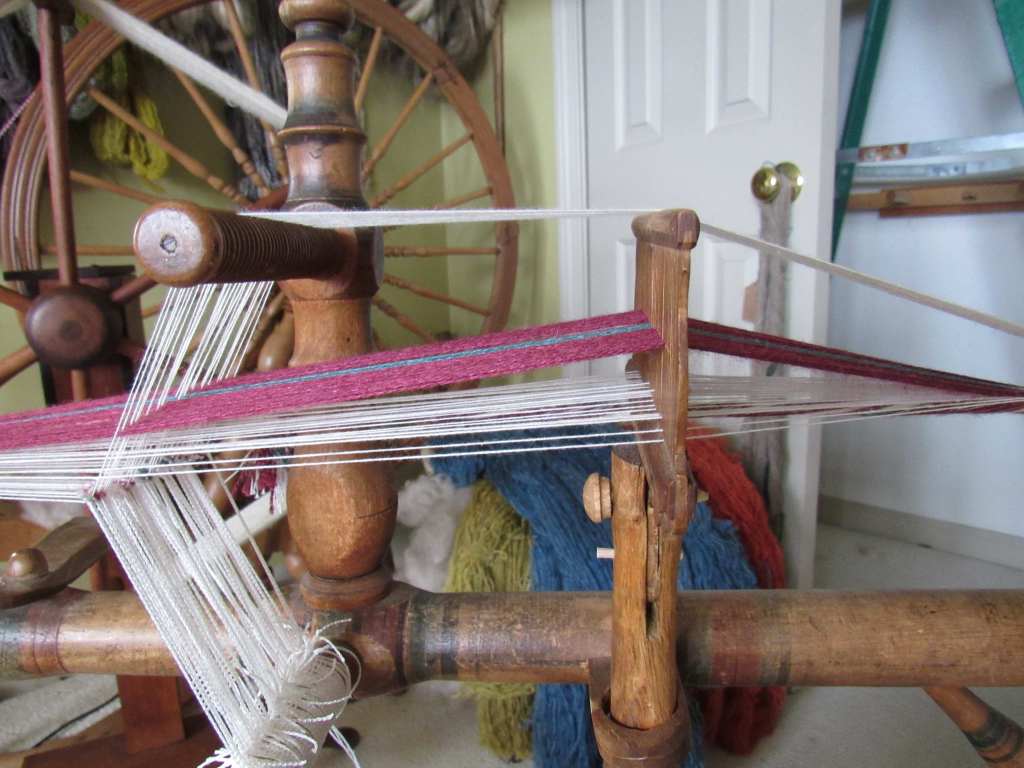
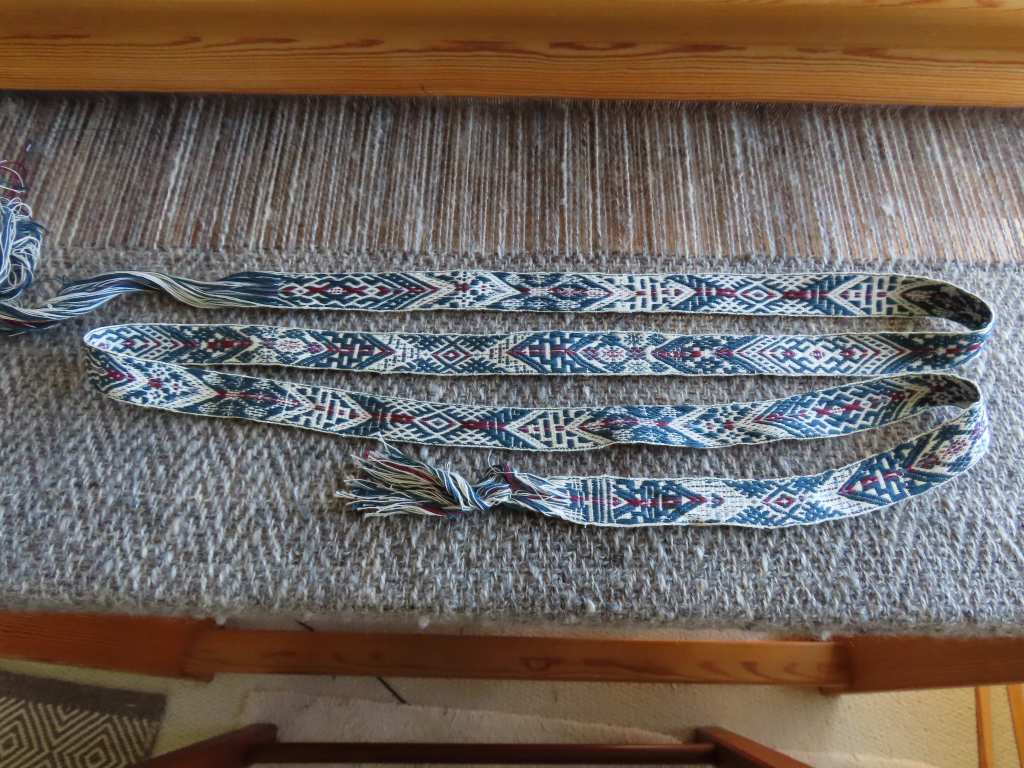
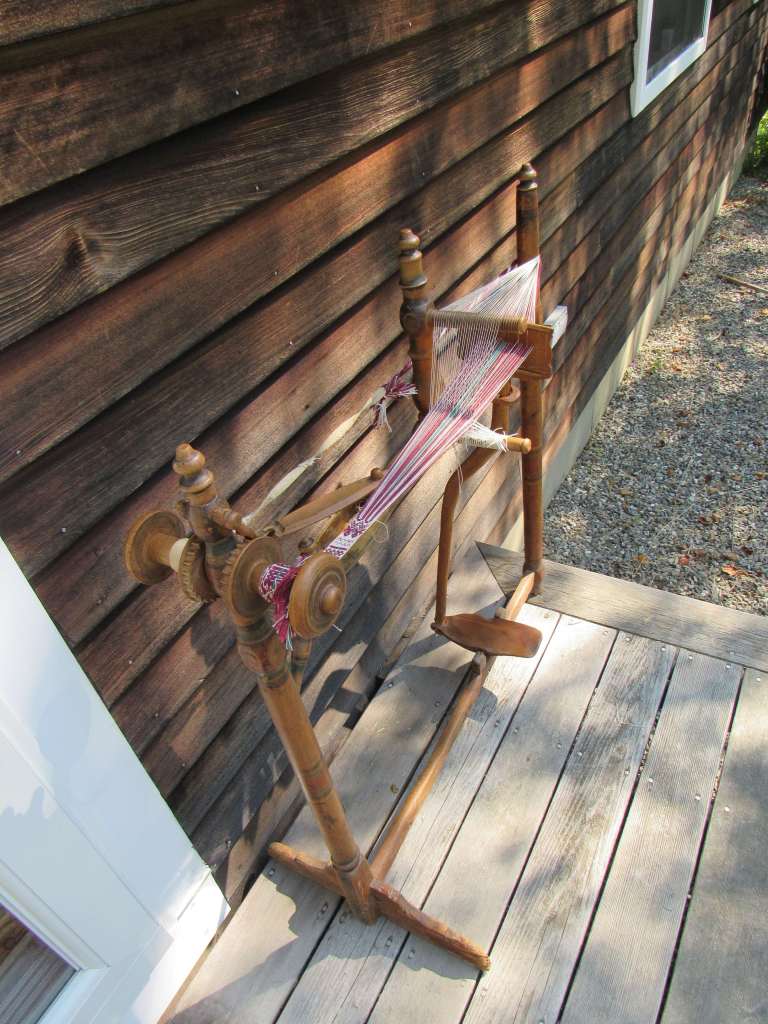
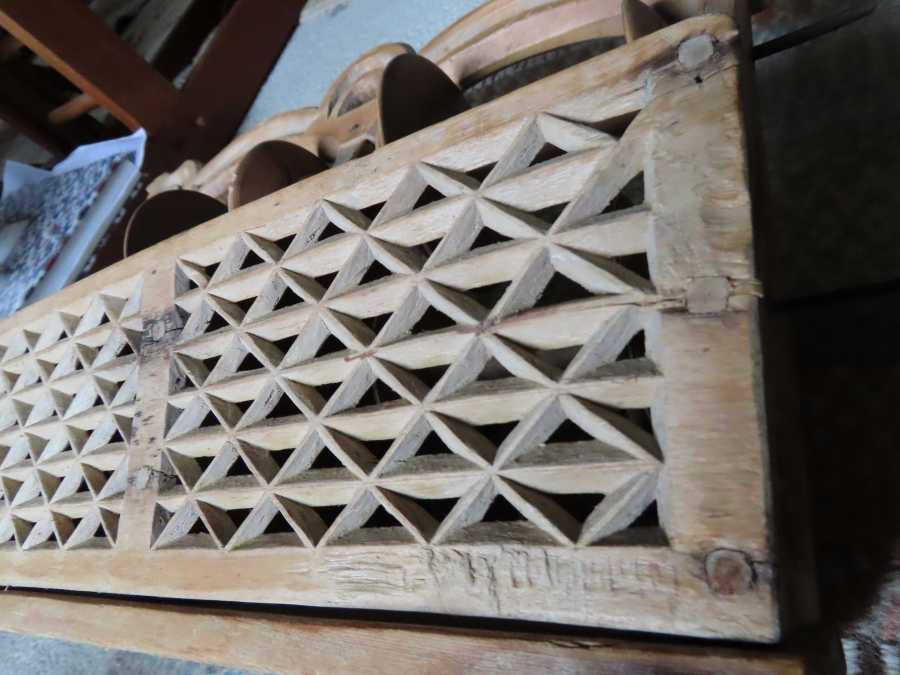
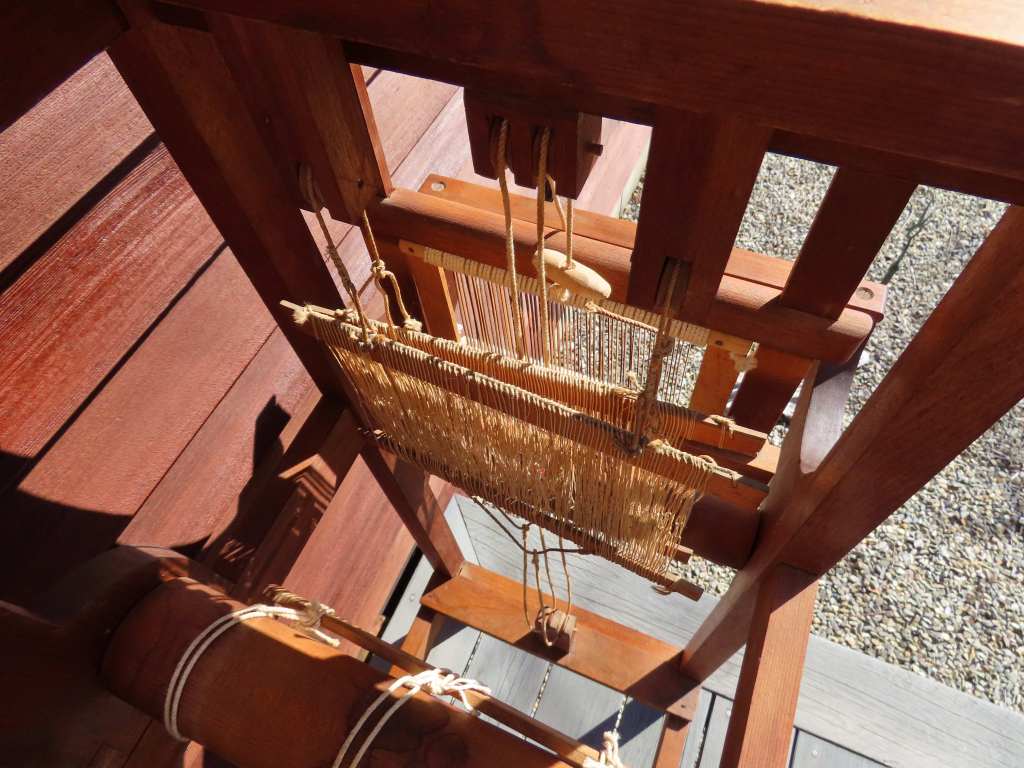
Finally, another piece that may or not be Shaker is a very unusual two-person tape loom.  I wrote an article about it for the Spinning Wheel Sleuth Handloom Supplement Issue #24, but this post will supplement the article with more photographs for those curious about this wonderful little loom. 
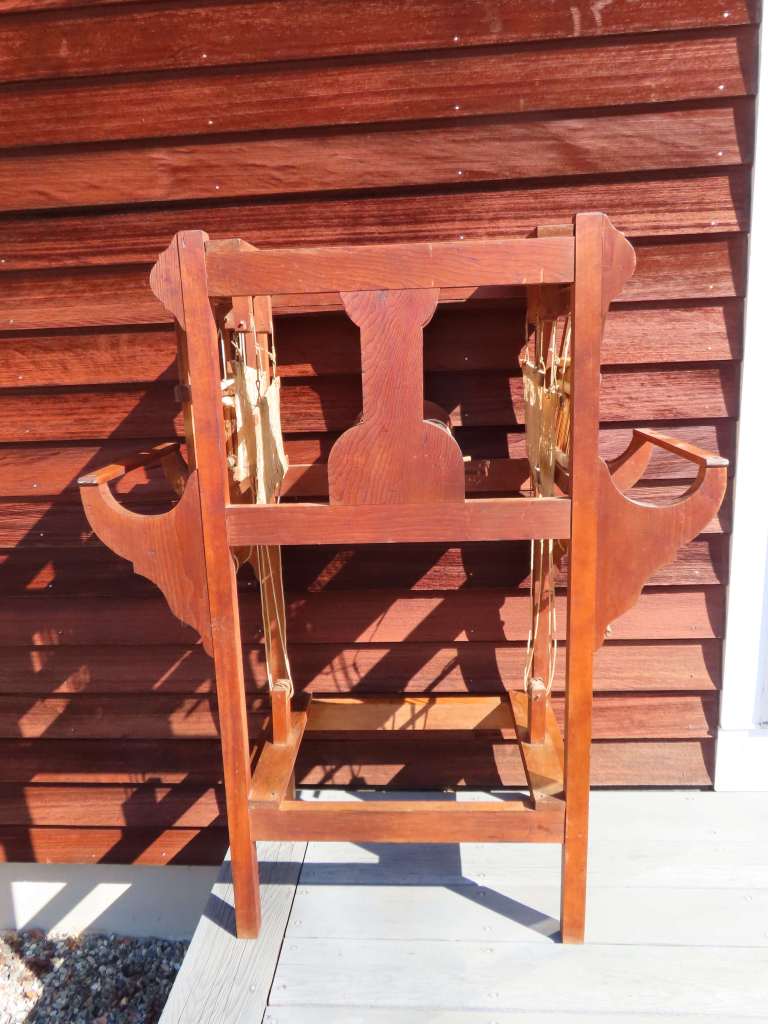
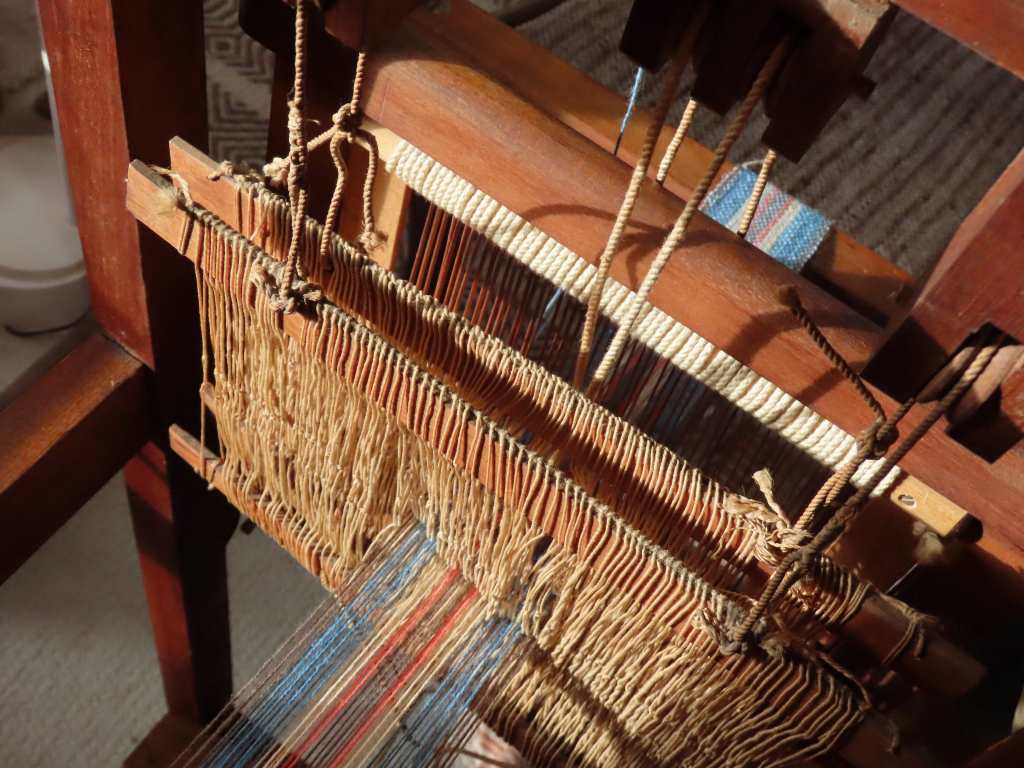
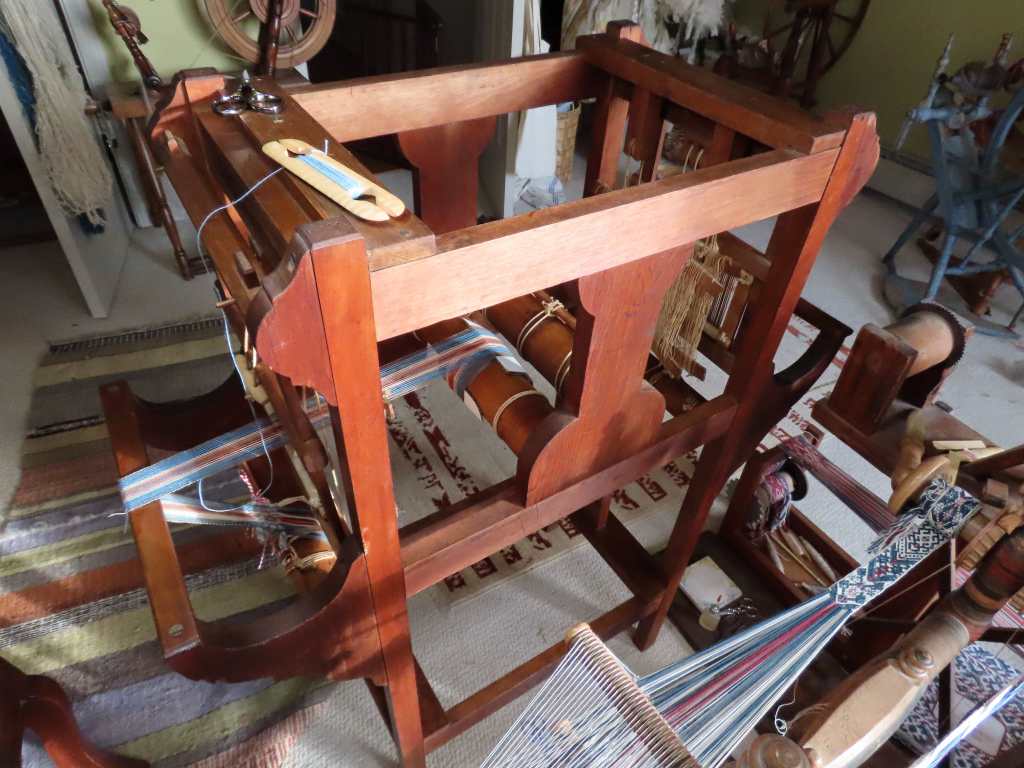
It came up for auction near me last year and I fell head over heels for it at the auction preview.   Designed for two people to weave simultaneously, with a petite, pleasing design, what put it over the top was that it was in fantastic condition, with string heddles and reeds made of actual reed. 
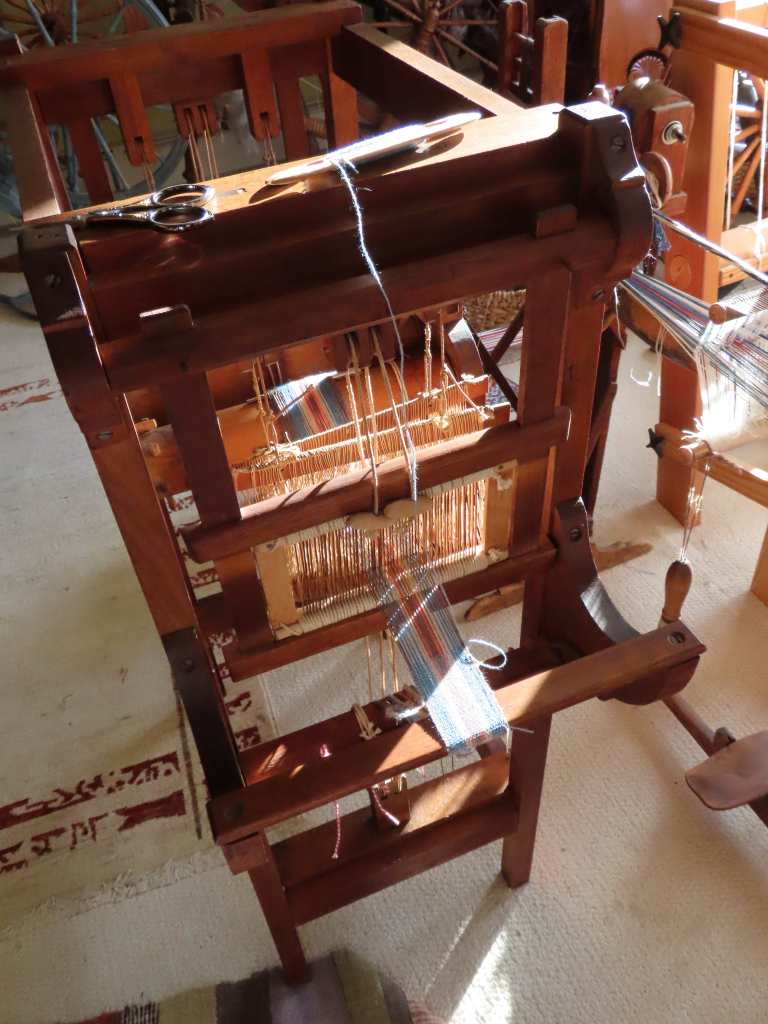
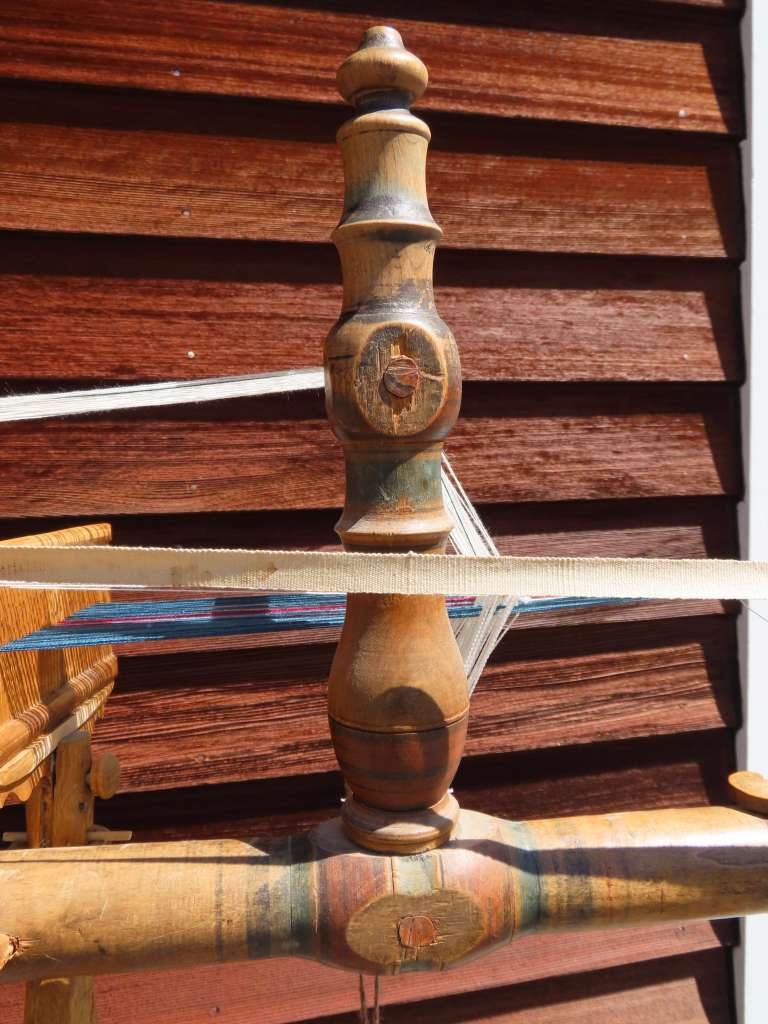
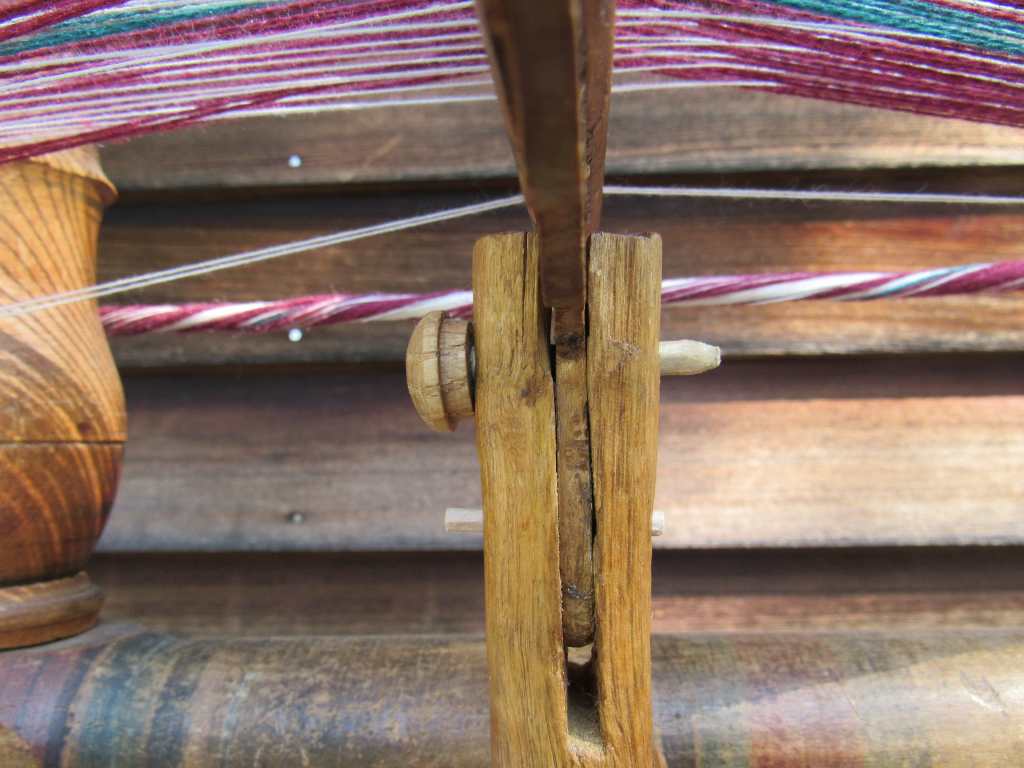
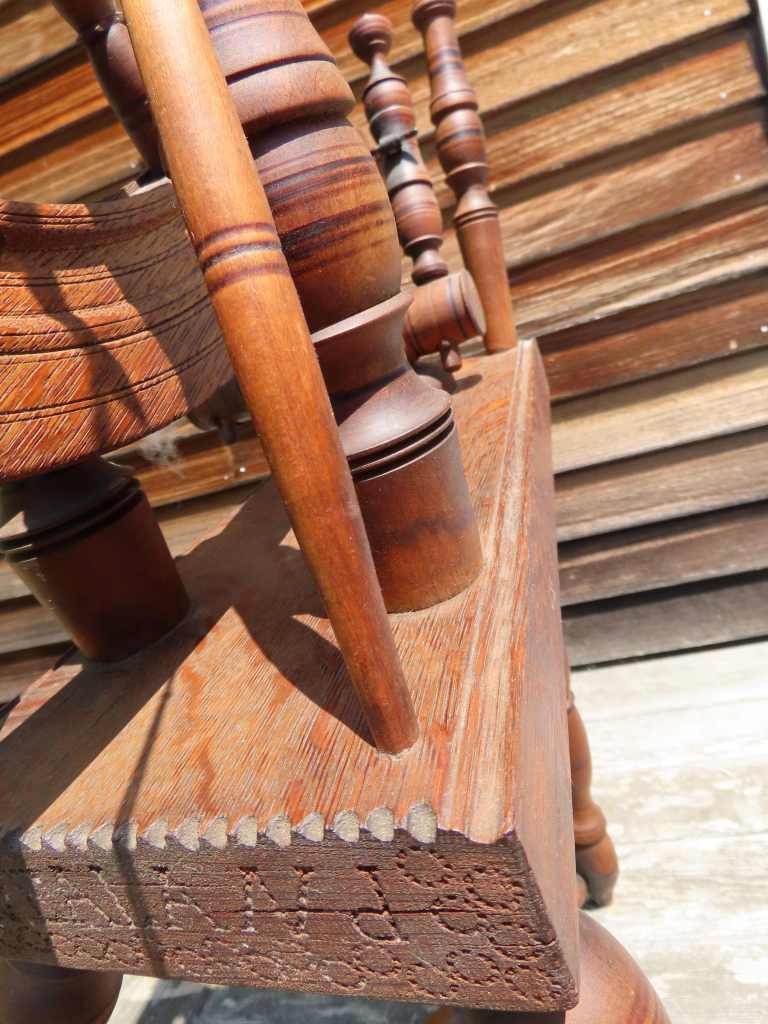
It is only 39 ½ inches tall and 13 ¾ inches wide, but big enough for two people to weave tapes at the same time.  It has no space-hogging treadles, which allows for a compact footprint.  Each side has two shafts, connected by an overhead pulley. 
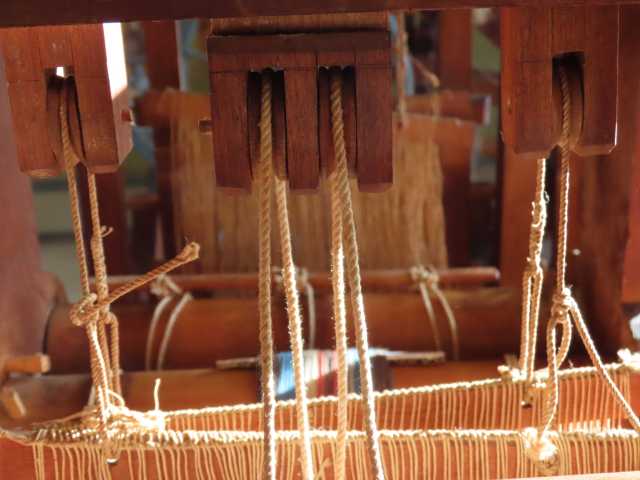
Each shaft also has a cord running down to a lower pulley and then to an upper pulley,
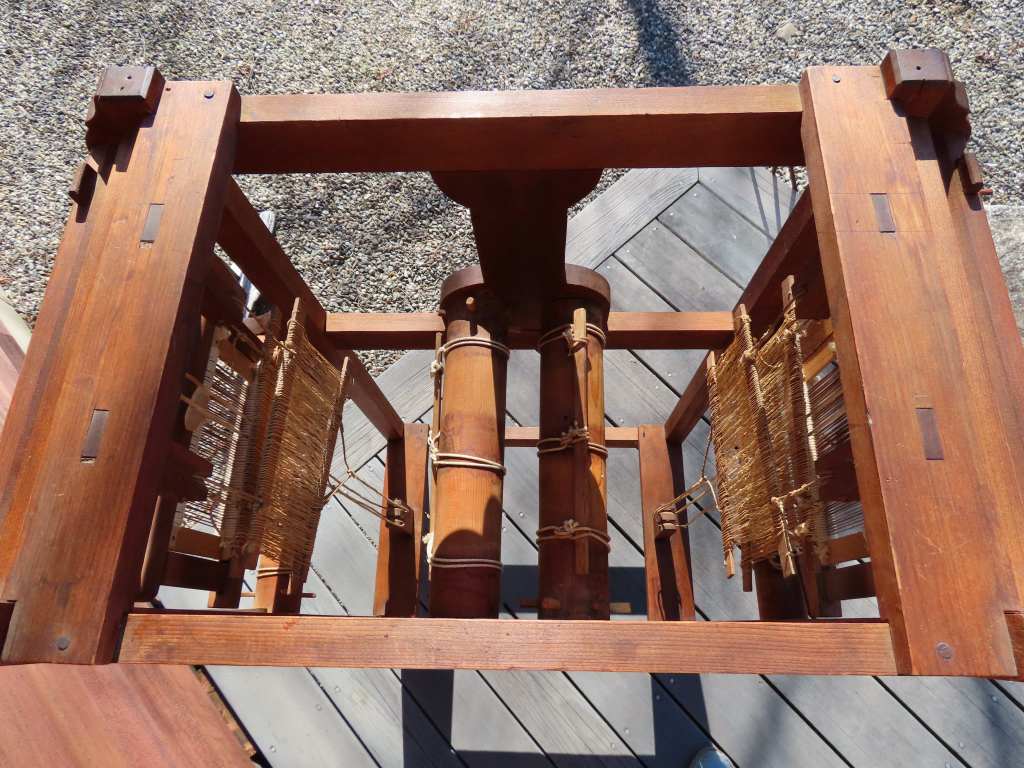
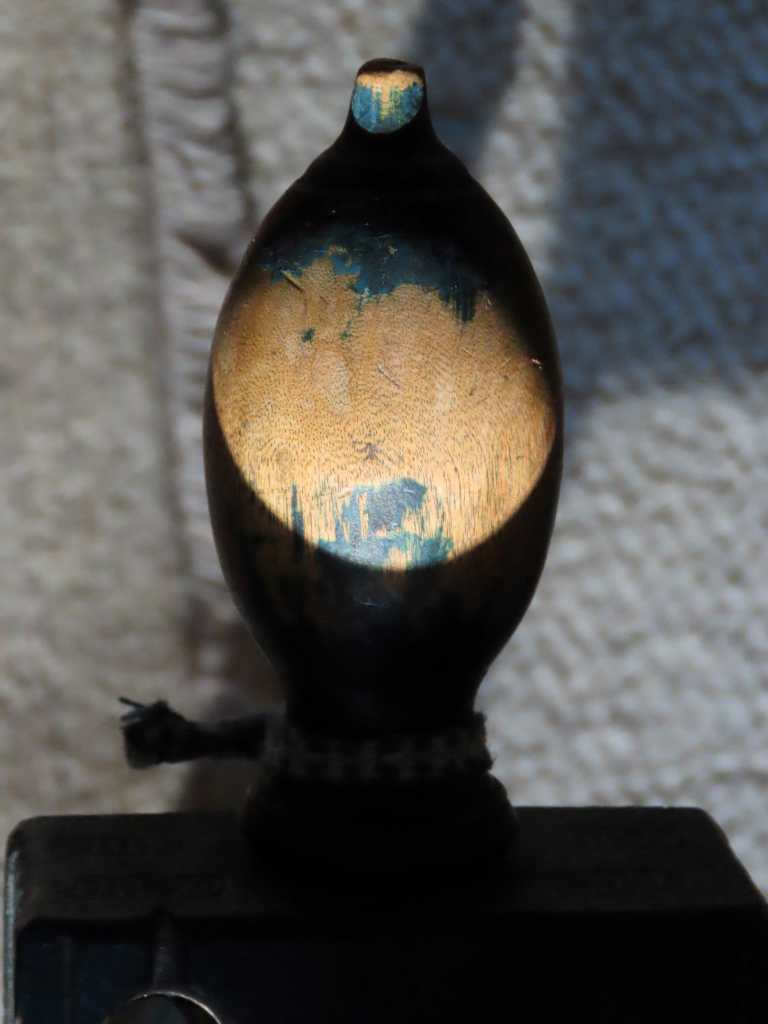
ending with a wooden knob which the weaver pulls to raise each shaft. 
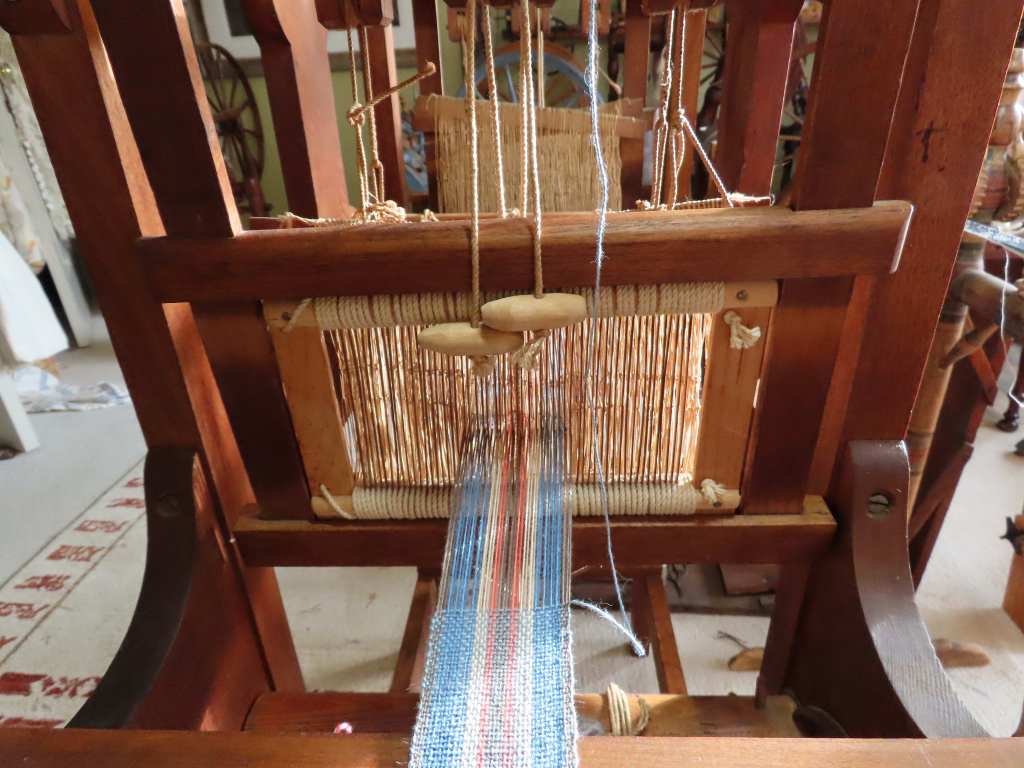
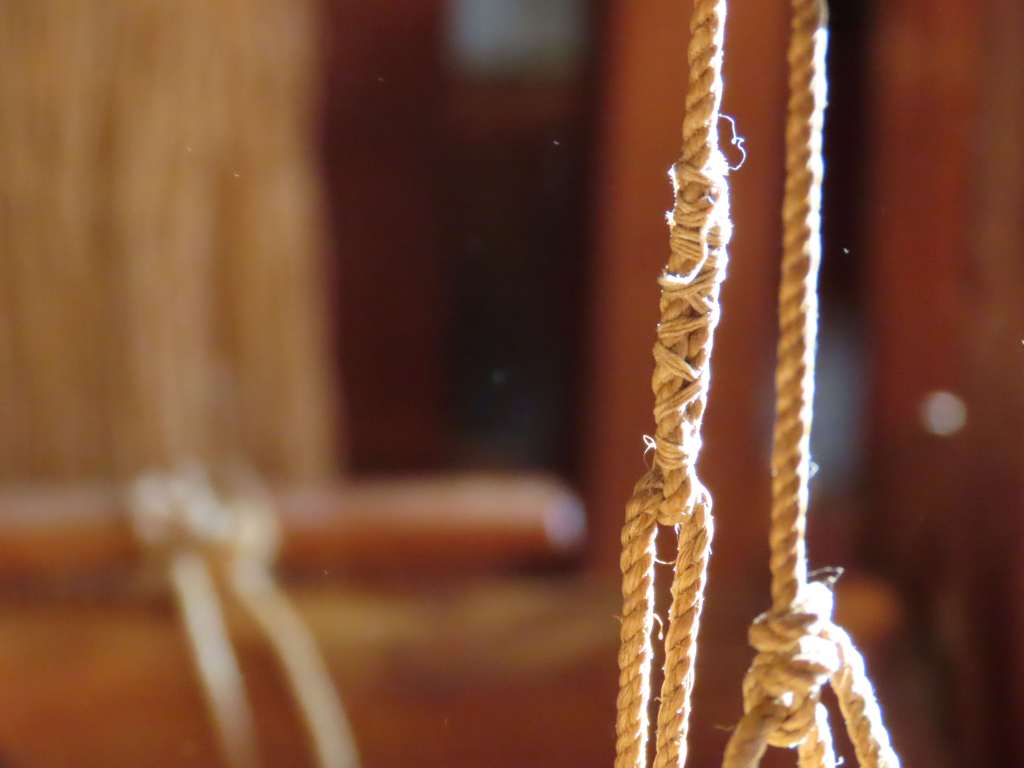
Each side has its own warp and cloth beams, with cords for attaching the warp.  Interestingly, the cords have water stains around them even though the rest of the loom shows no water damage at all. 
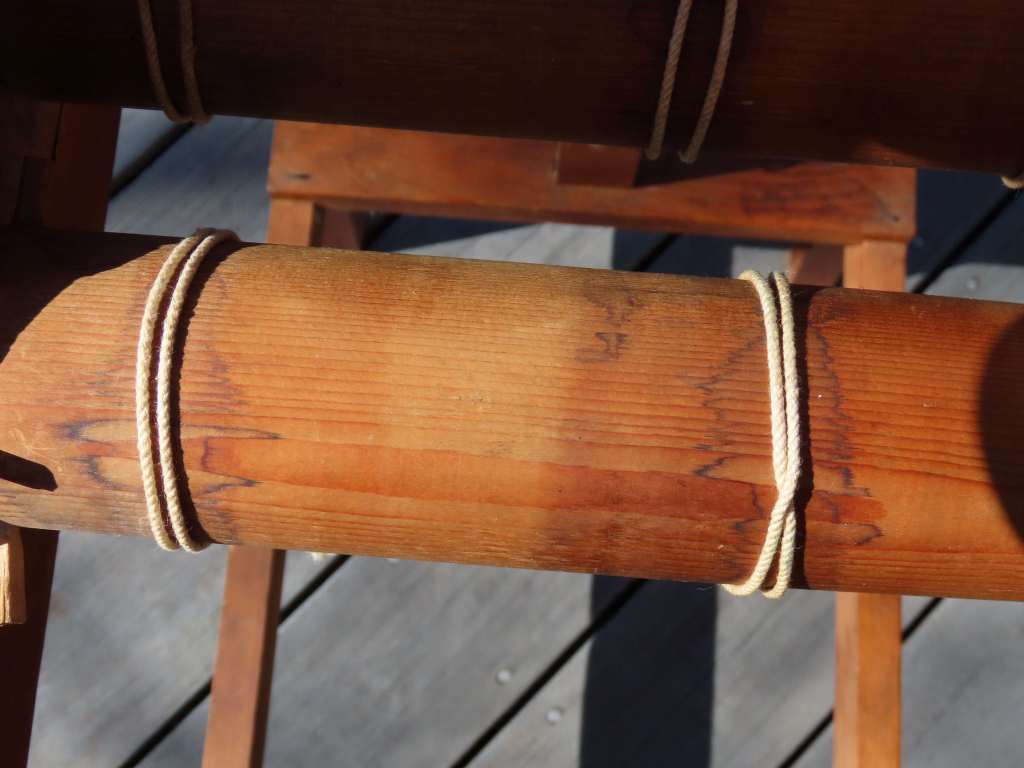
One possible explanation is that the cords were moistened to make them swell and have a tighter grip on the beam when weaving.  I found that without wetting the cords or otherwise securing them, they tended to slip around the beams when under tension. 
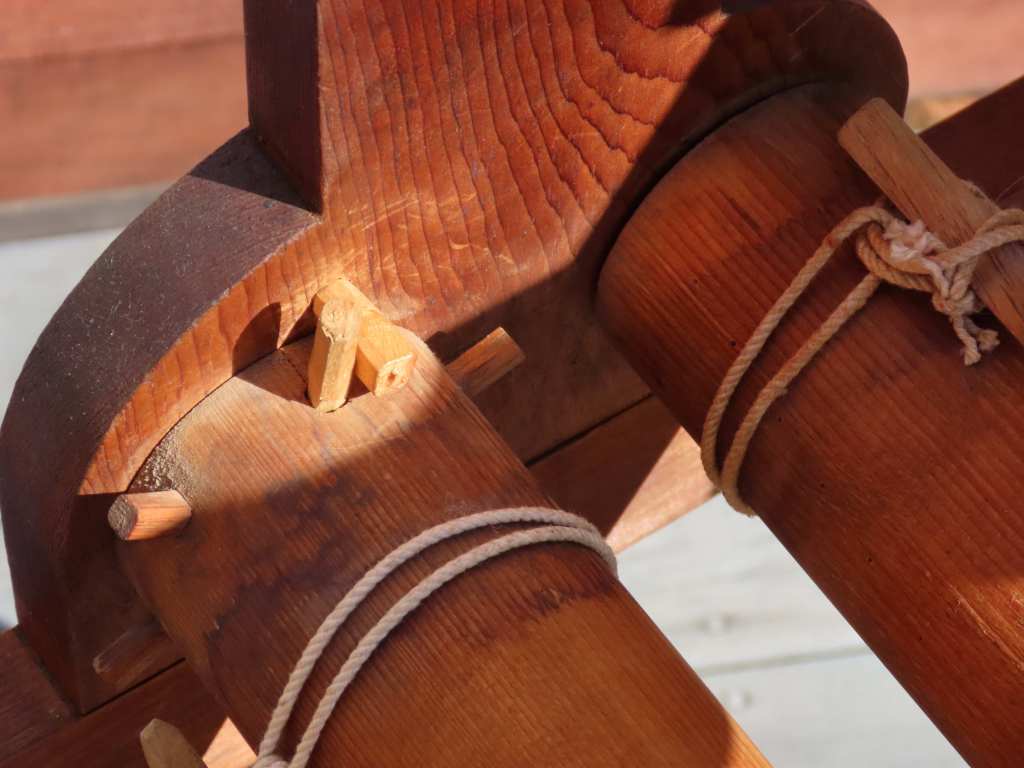
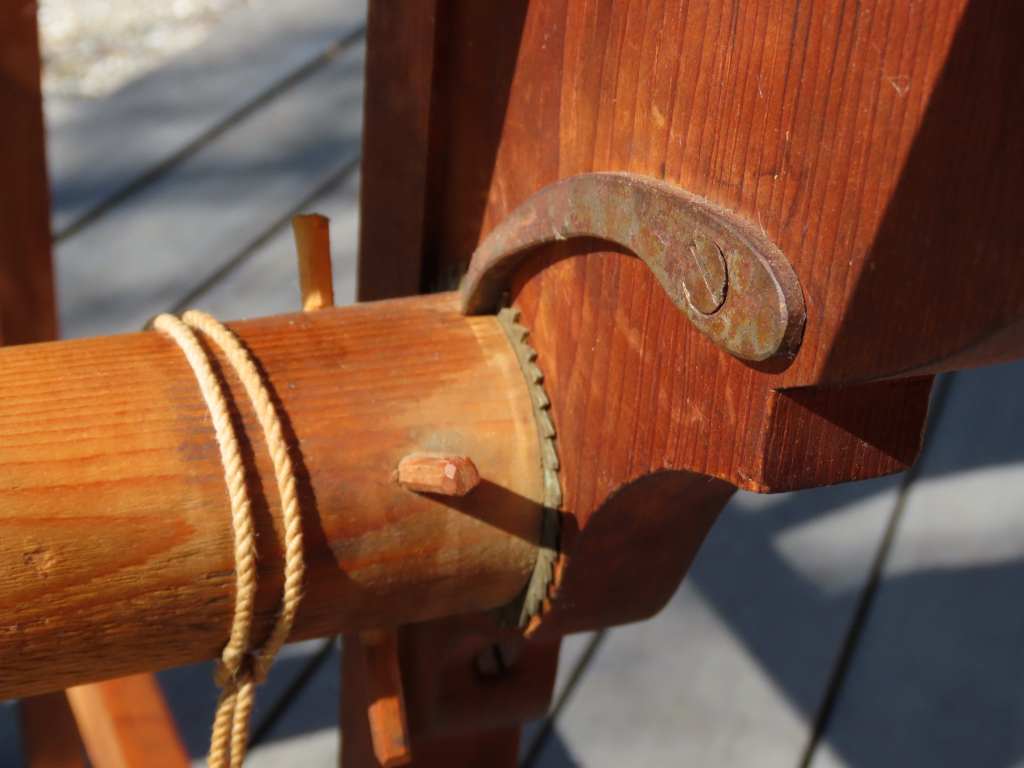
The warp beams are held in place with wooden pegs and the cloth beams have metal ratchets and pawls. 
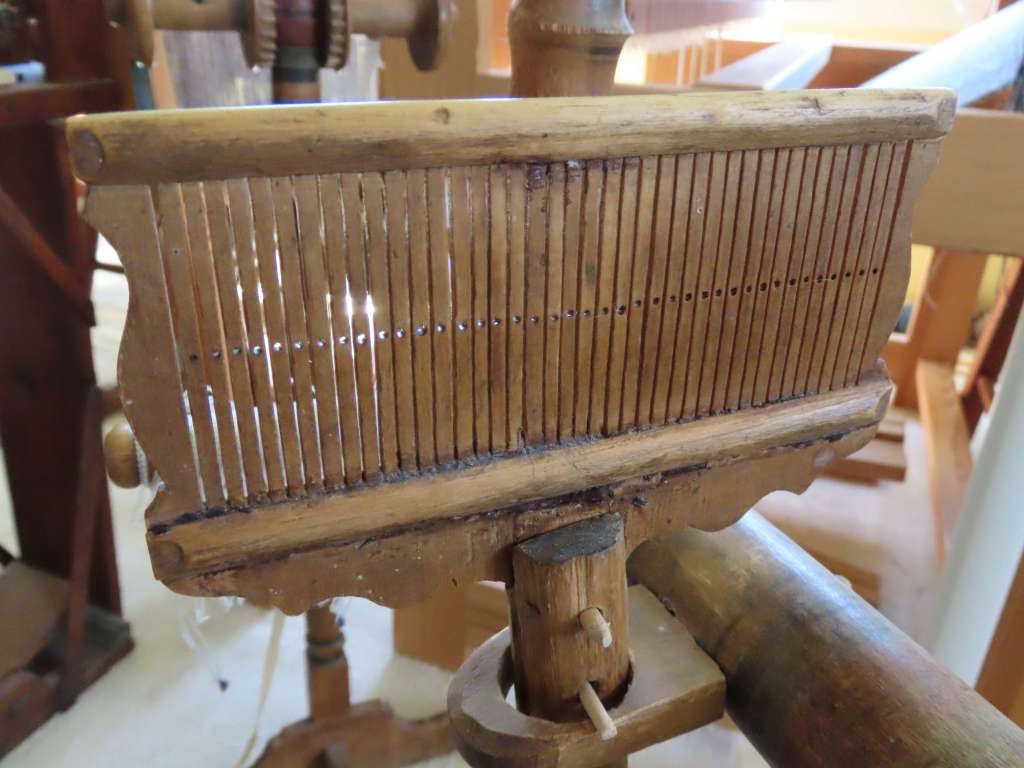
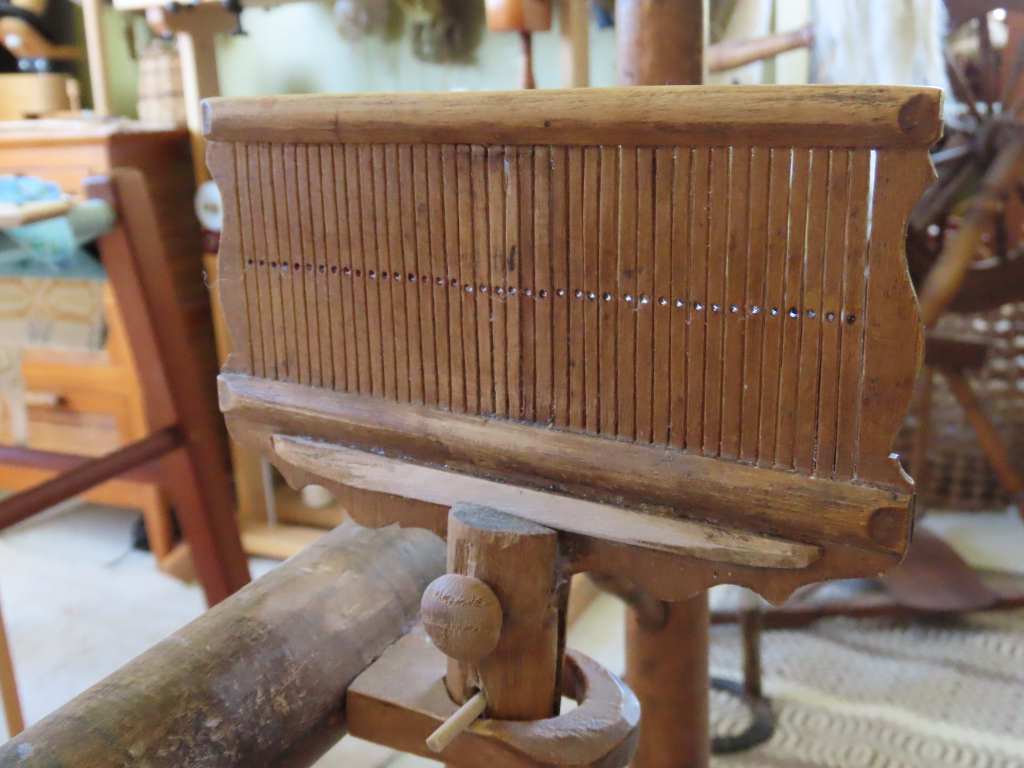
The reeds in the overhead beaters have some newer cord on them, indicating that they have been repaired or replaced. 
They also appear to be taller than the original reeds, based on the darkening of the wood on the beater sides.
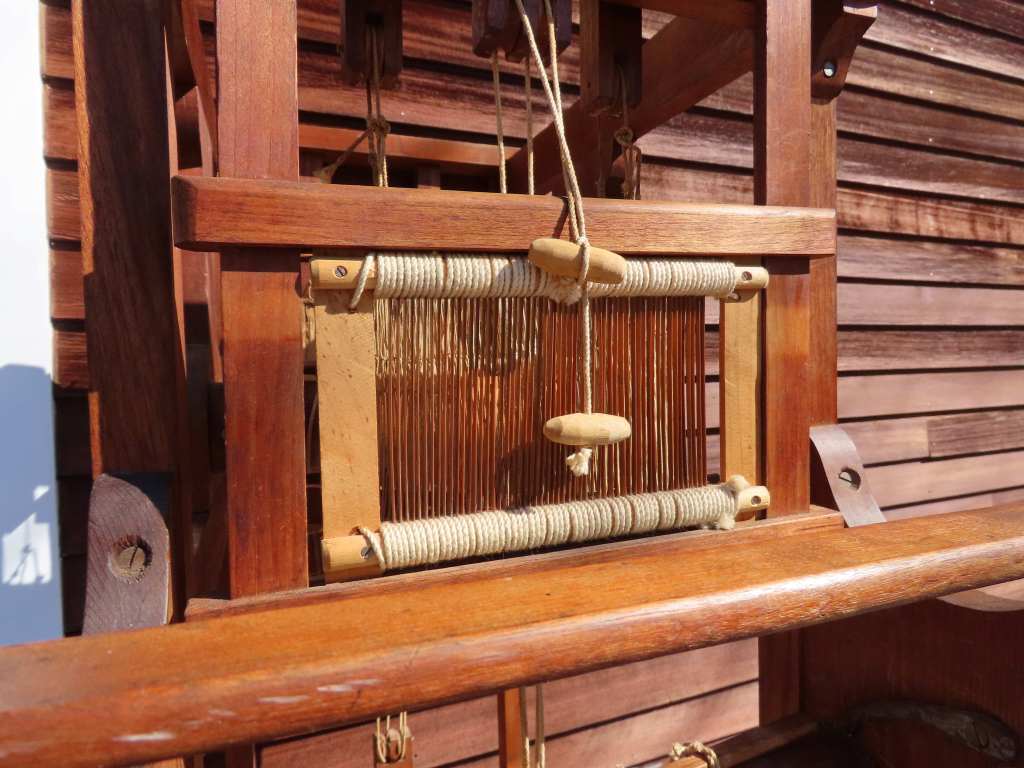
The sides of the beater have lighter patches where the cross bar holding the reed used to rest

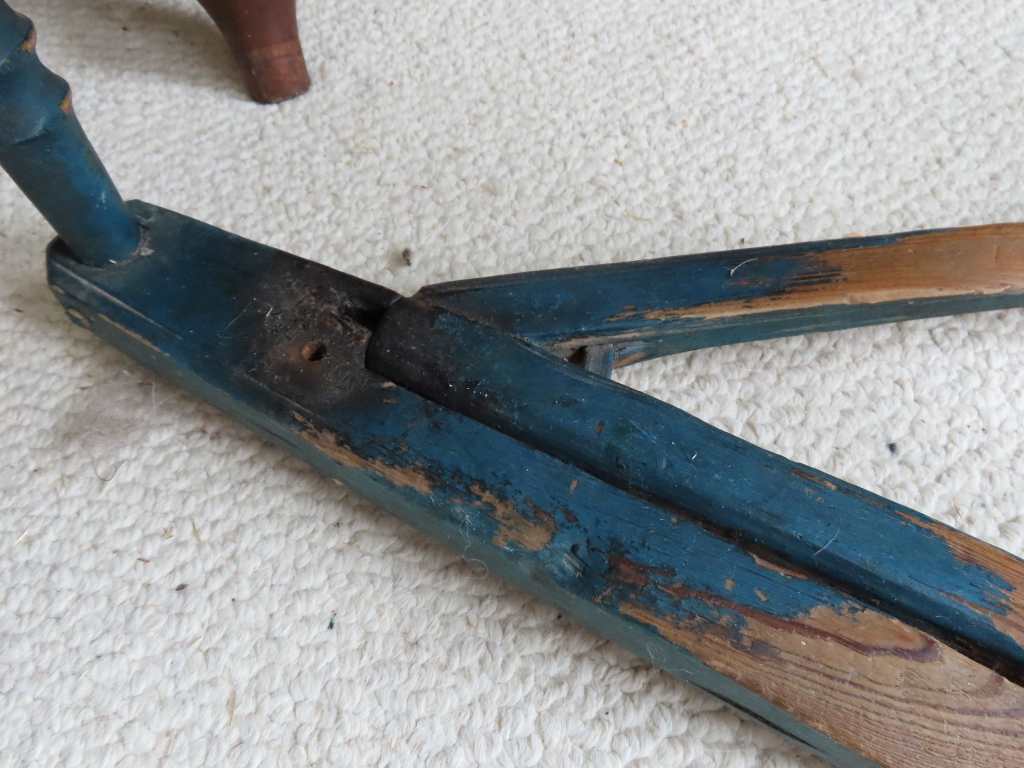
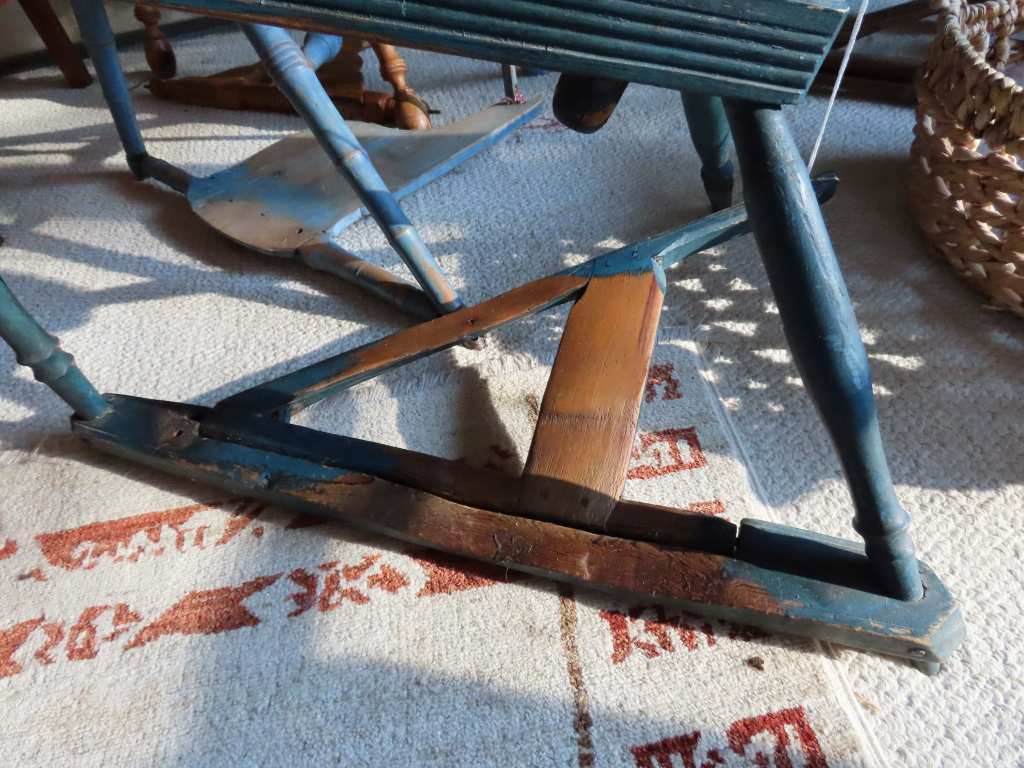
The loom came with two extra pieces that were a total mystery to me. 
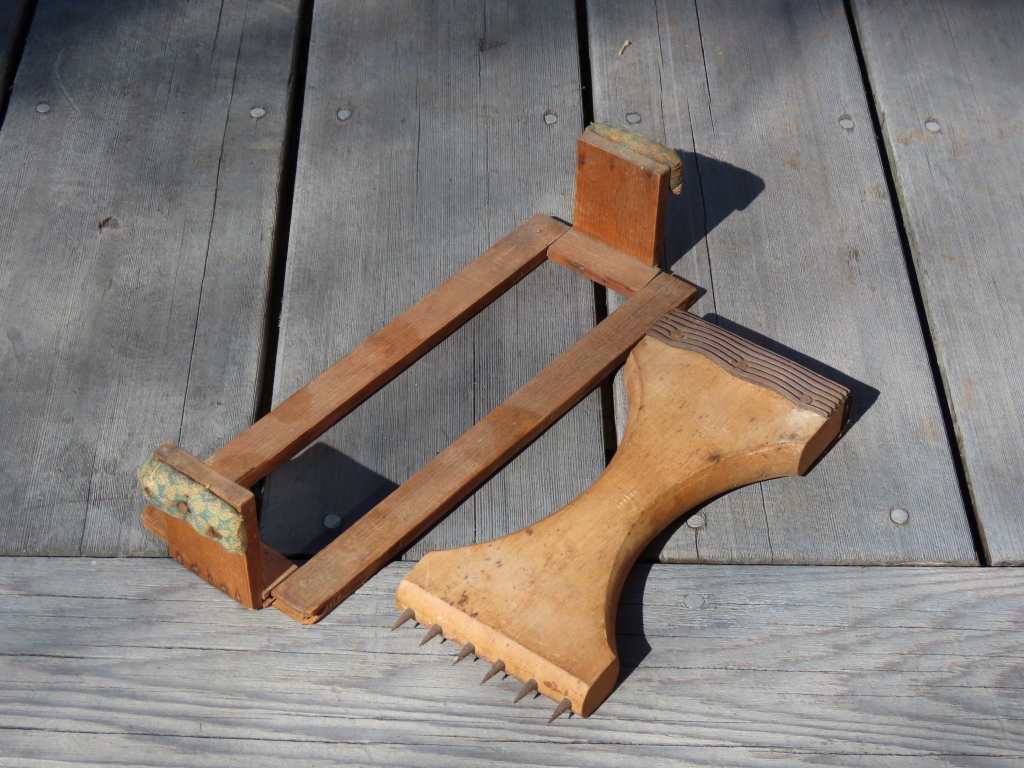
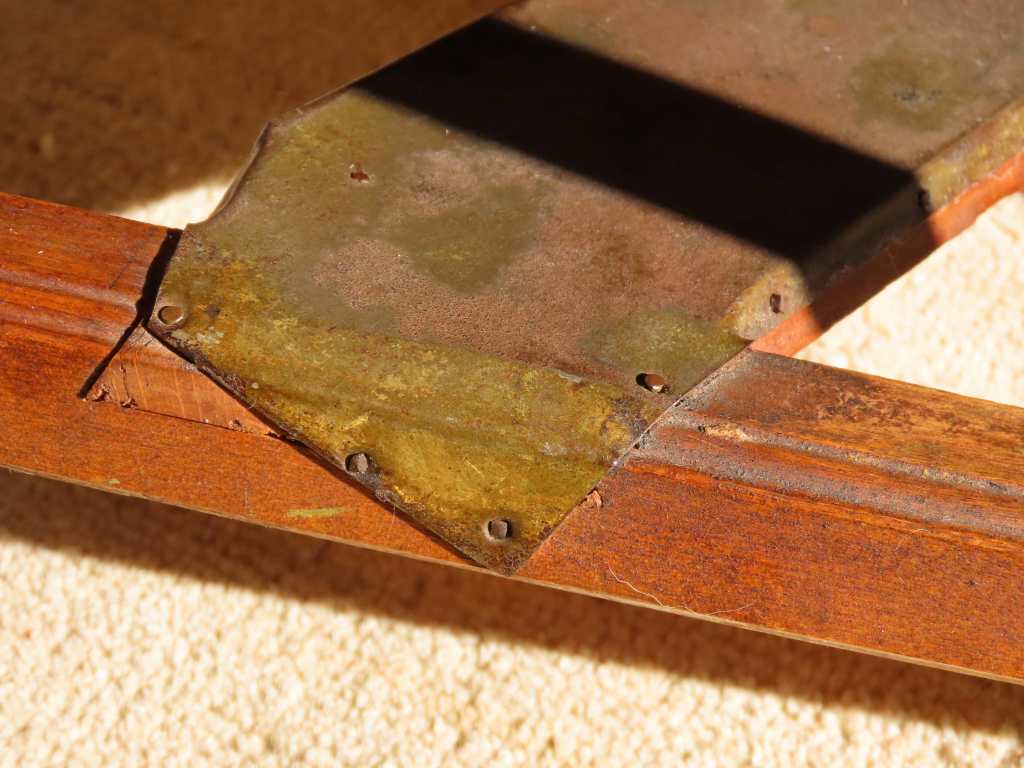
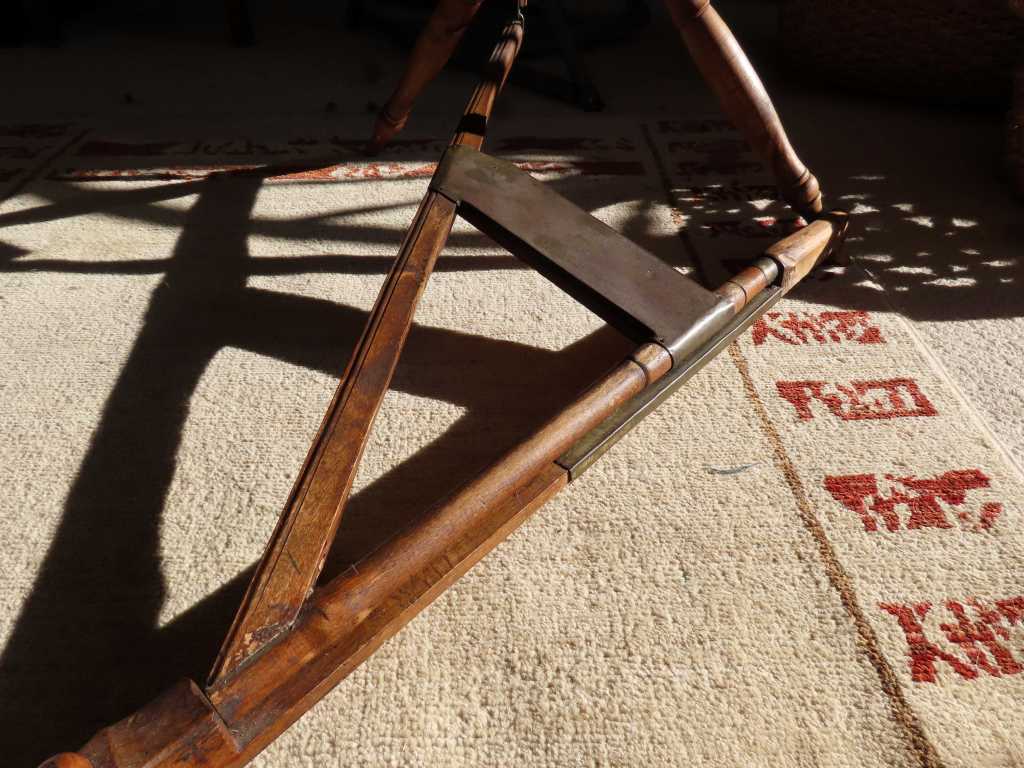
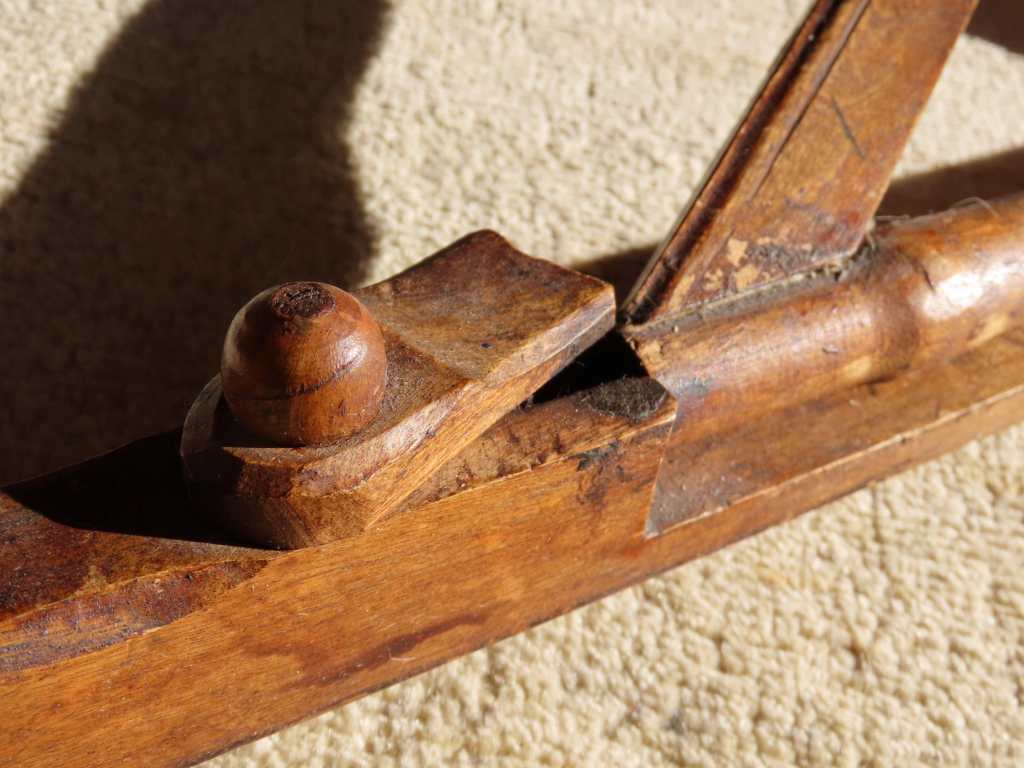
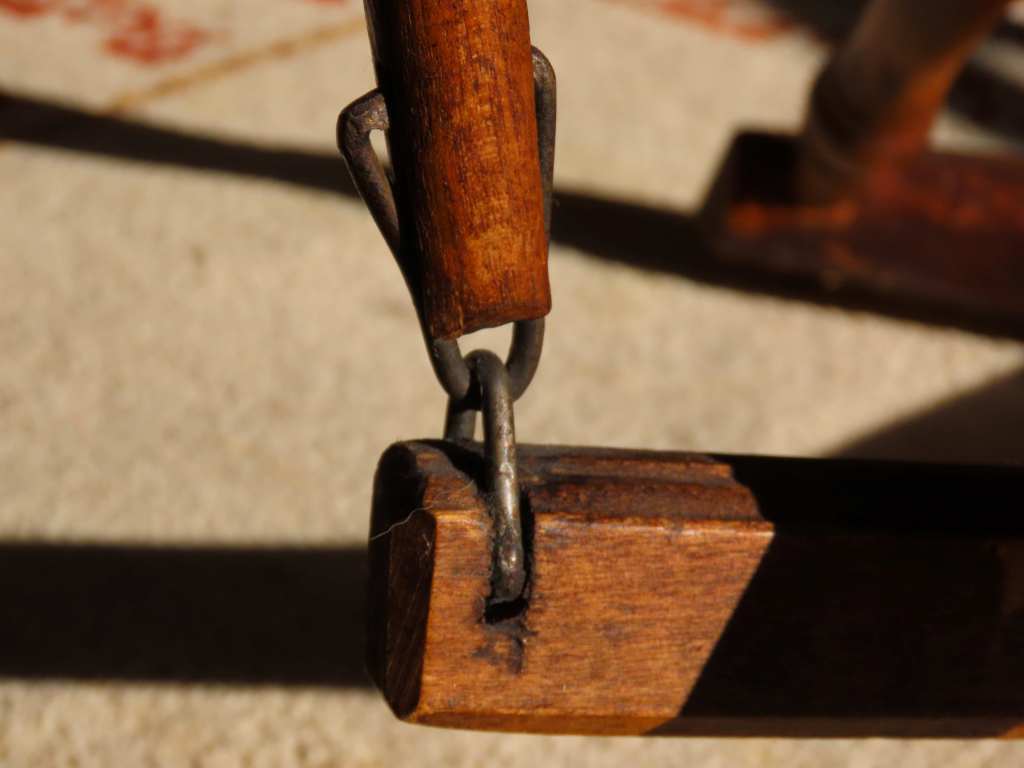
It turns out that the piece with the prongs is a stretcher used to tighten webbing when making chair seats.  The other piece, which looks very old, is something I believe was used to hold the reed in place for sleying.  But, that is just a guess. 
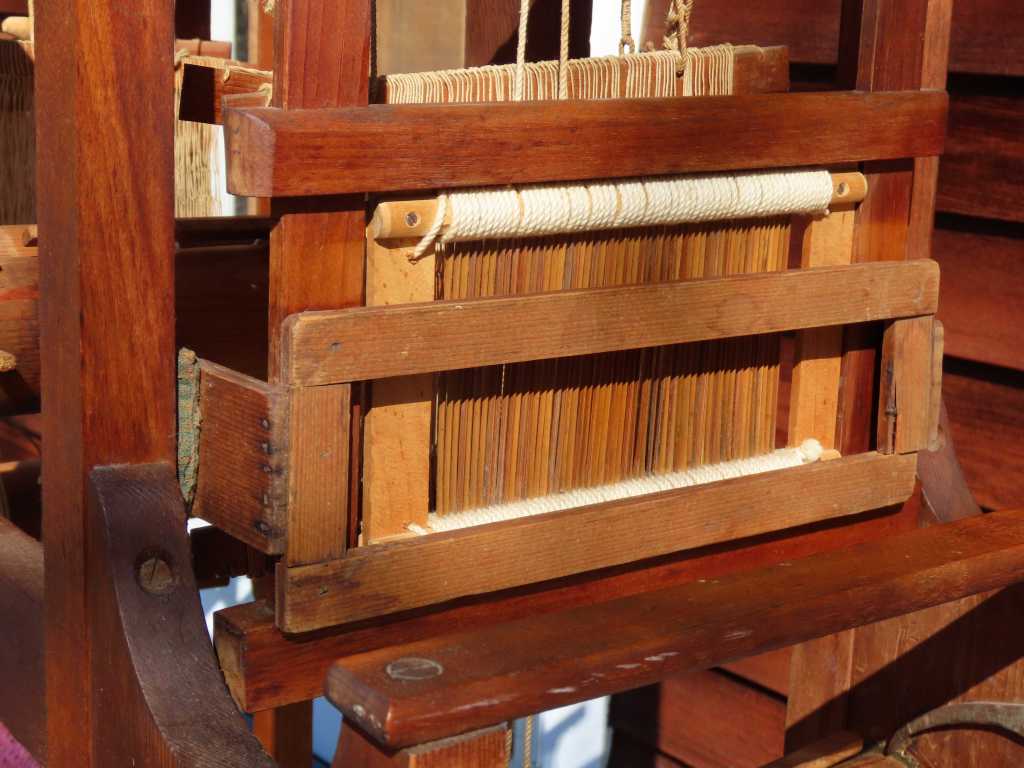
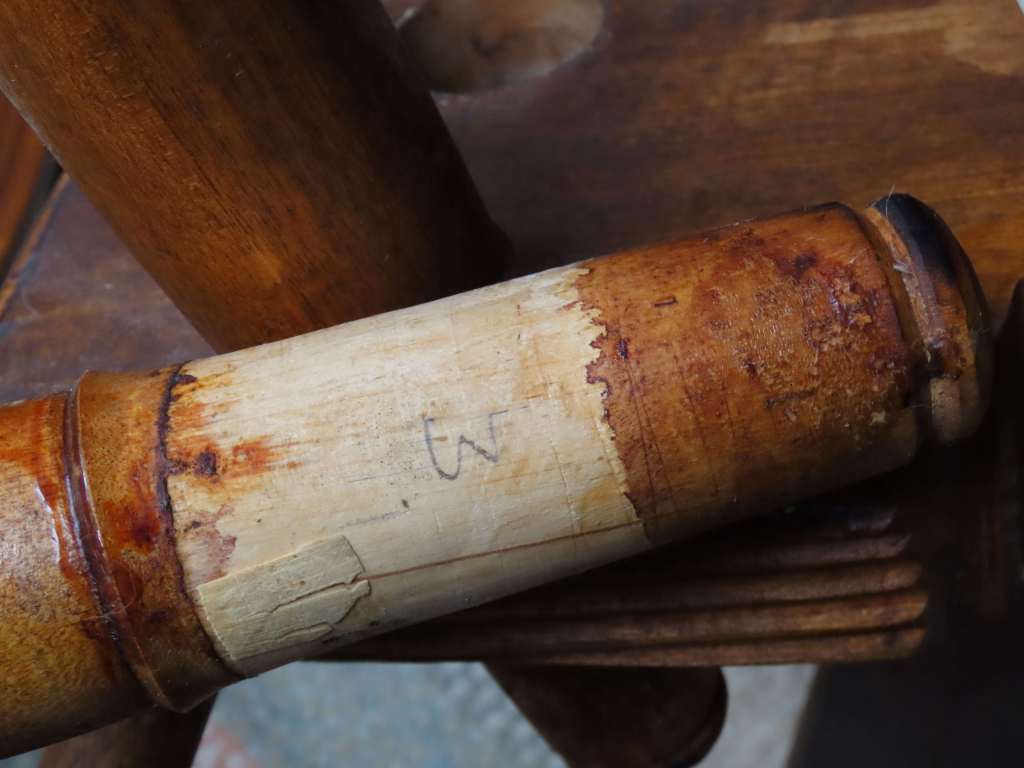
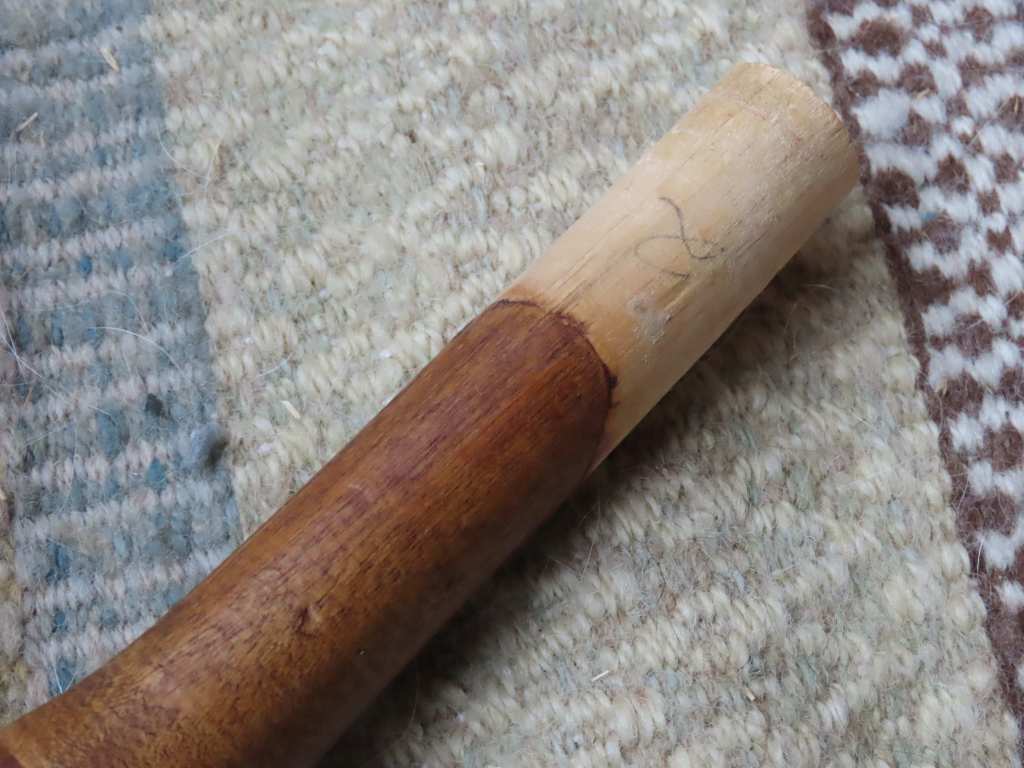
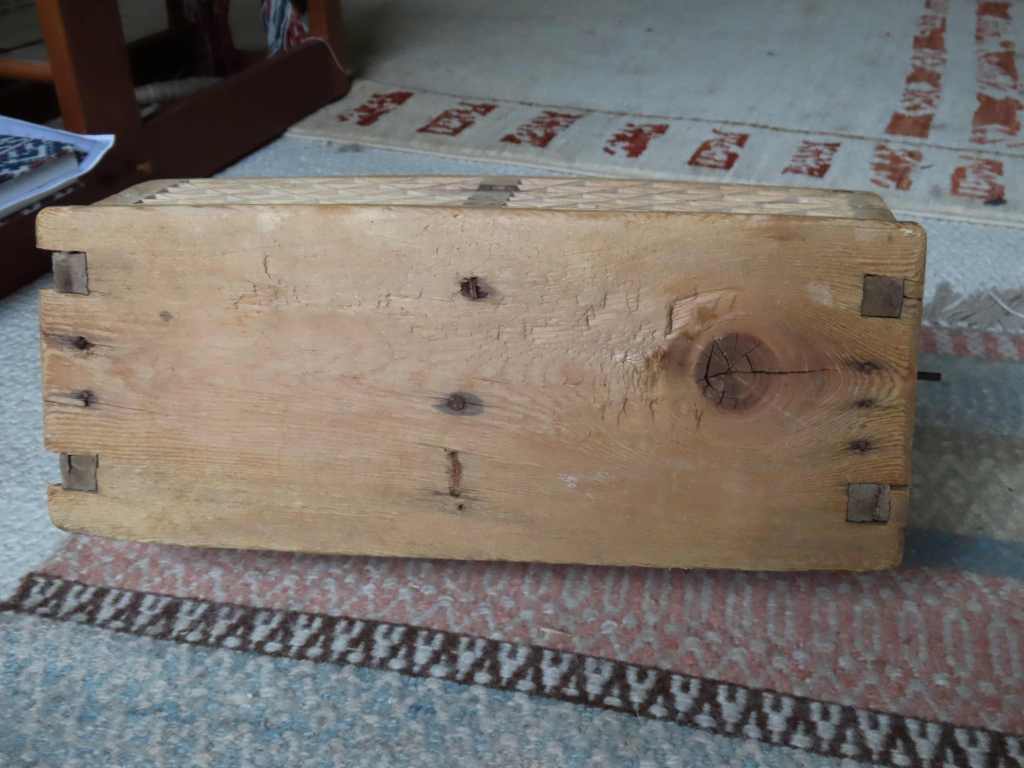
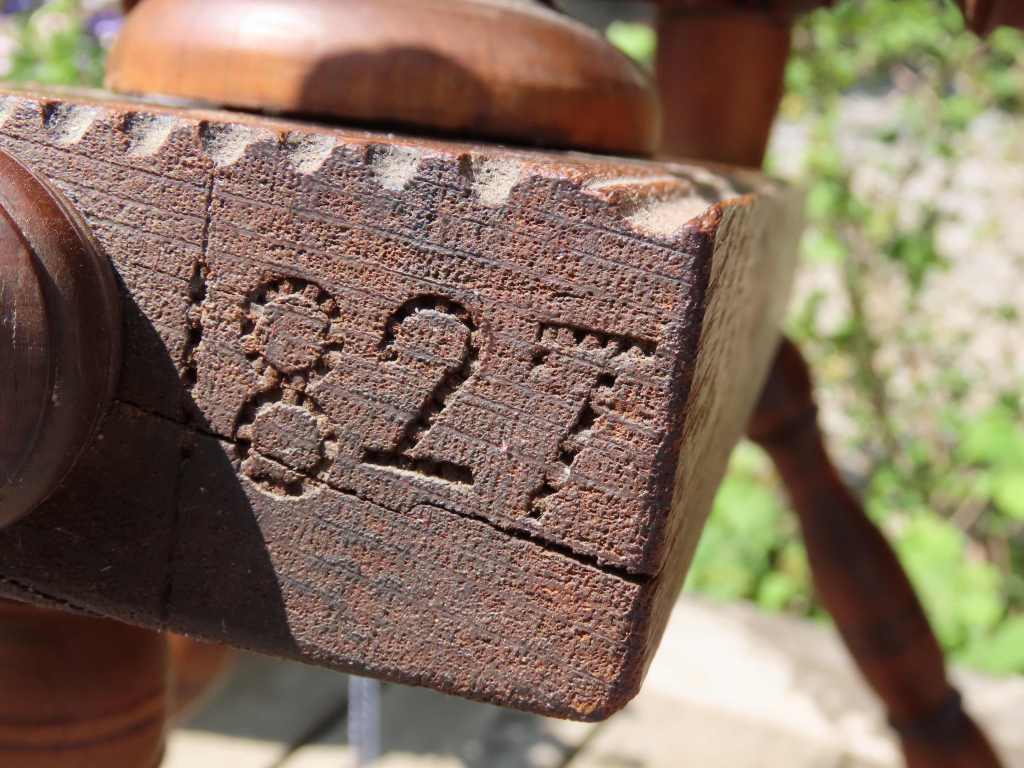
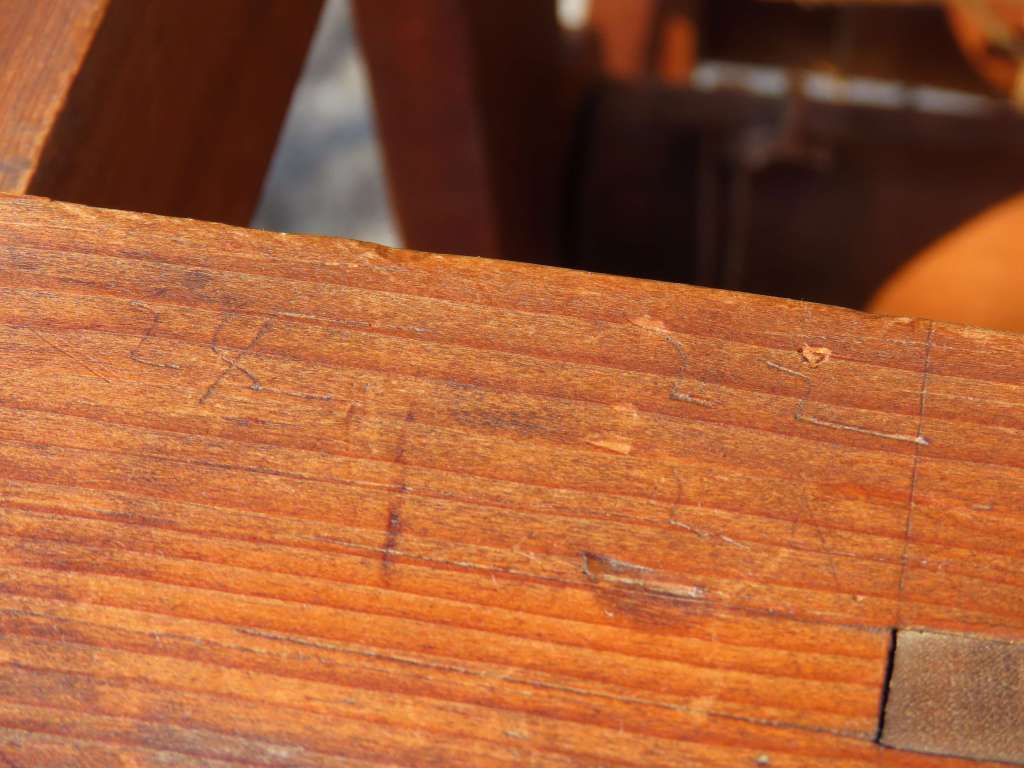
This treasure of a loom was well-cared for and apparently well-used.  There are even numbers scratched on the loom top—24, 22, 24—presumably to keep track of something. 
The auction house said that the loom came from the Baxter estate in Benton, Maine.  Wildly curious about who would design and use a two-person tape loom, I started researching it right away and found that several have turned up.  One other, just like it, but in much worse condition, was at the Fort Ticonderoga Museum and pictured in Bonnie Weidert’s book “Tape Looms Past & Present.”  (photo 2-22, p. 24).  A little research revealed several others—but designed for a single user—at Hancock Shaker Village Collection (1986.024.0001); Enfield Shaker Museum (2018.51); Marshfield School of Weaving Textile Equipment Collection (1959.1.12); and Jeanne Asplundh’s collection, photographed in “Spinning Wheels and Accessories” (fig. 14-67, p. 182). 
Finding that two of the looms were at Shaker museums, I dove into research to see if there was an established Shaker connection (more on that in the SWS article).  Ultimately, I could not find evidence to either prove or disprove that these were used by the Shakers. 
The looms would be perfect for weaving the large amounts of the tape used by Shakers for chairs but the only documented Shaker chair-tape looms that I could find are a different style.  If not Shaker, would they have been used in some other institutional setting such as a rehabilitation facility or a school?  Having hand-operated looms would make sense for those unable to use their legs or for short-legged children. 
Whatever its history, I am just thankful that it was preserved with such care so that it can be appreciated by us and future generations. 

Page, Brenda, “A Two-Person Tape Loom,” The Spinning Wheel Sleuth Handloom Supplement, Issue #24, April 2024

Weidart, Bonnie R., Tape Looms Past and Present, 3rd edit., Bonnie Weidert, Henrietta, NY, 2012

Pennington, David & Taylor, Michael, Spinning Wheels and Accessories, Schiffer Publishing Ltd., Atglen, PA, 2004

*I refer to pieces with multi-angled faces as “chamfered.”  While I understand that others use the term to refer to 45 degree angled edges, until I learn of a more fitting term for the multi-angled faces that we find on legs, spokes, and supports of wheels and reels, I will continue to use the term chamfered. 
Albertina

Of all the pieces in my collection, this little loom may be the one I treasure the most.  In part, because it is a particularly colorful and complete example of a rare loom, but also because of the sheer pleasure of weaving on it. 

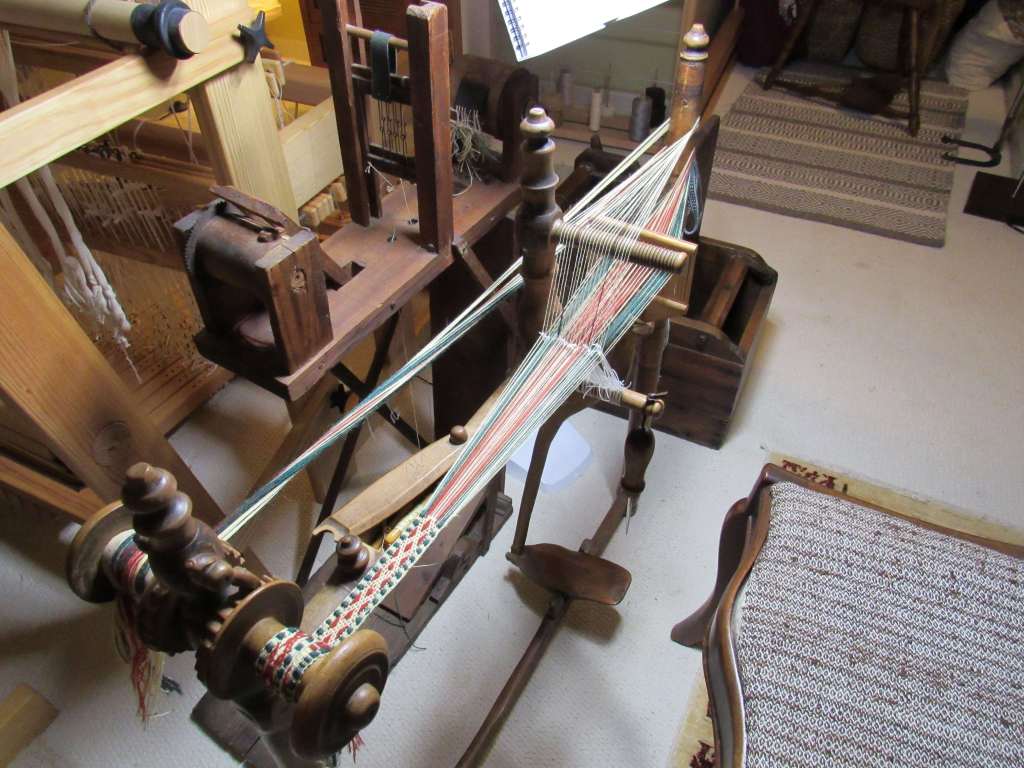
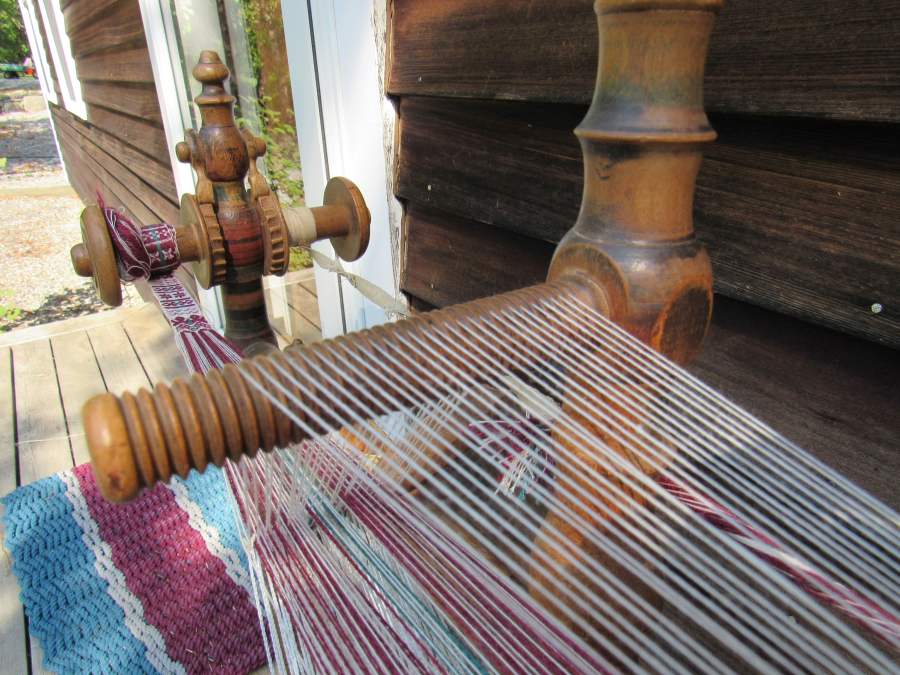
This style loom, designed for weaving bands (also called ribbons and tapes), generally is referred to as a “Leksand loom,” because it was made only in the Leksand area of Sweden.  Its design is unique. 

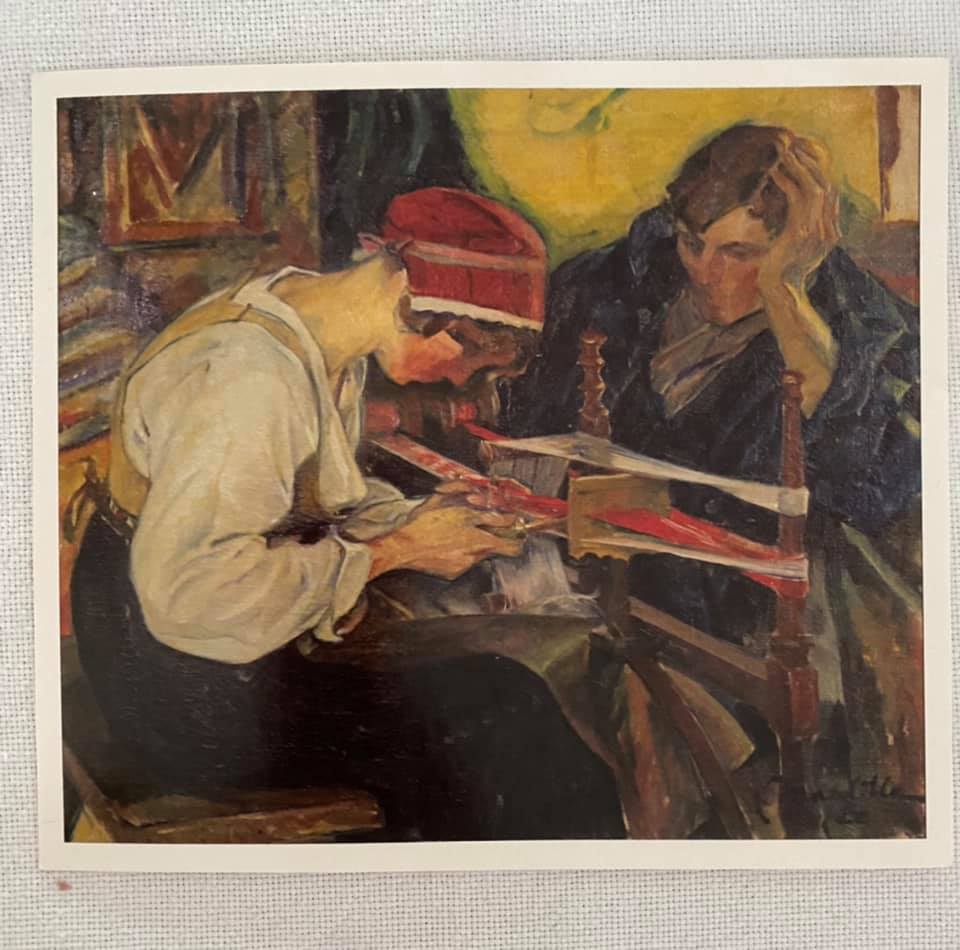
At the Loom,” Helmer Masolle (1884-1969)

To start with, the weaver works from the side of the warp.  While this horizontal style is unusual these days, it must have been quite common in the 15th century.

Medieval manuscripts show many varieties of sideways-style band looms,

Paris Bibl. Mazaring, Vierge tissant dans le Temple

some with tablets,

15th century France, Houghton Library, Cambridge, MA

some with floating rigid heddles,

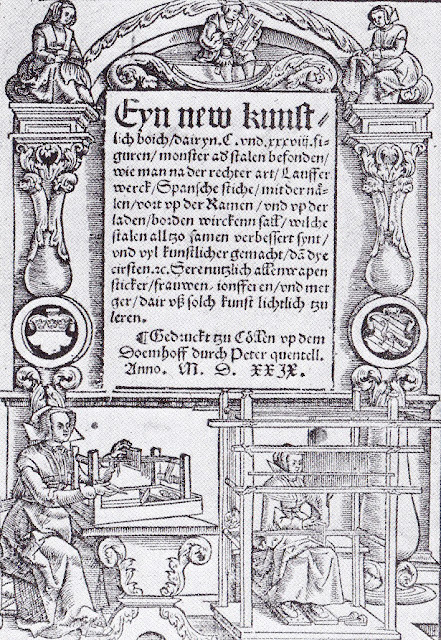
Eny Newe Kunstlick Moetdelboech: P Quentel, Cologne, 1532, Metropolitan Museum of Art

and, at least one, with what we now call an inkle-style set up (“inkle” is believed to be a corruption of the 16th century English word “linckle,” meaning “band” or “tape”). 

Le Livre de Bonnes Moeurs de Jacques Legrand, 15th century

While horizontal band looms were used in several parishes in Sweden,

Carl Larsson, 1853-1919

only in Leksand did looms have the added feature of a small wooden rigid heddle attached to a foot treadle. 

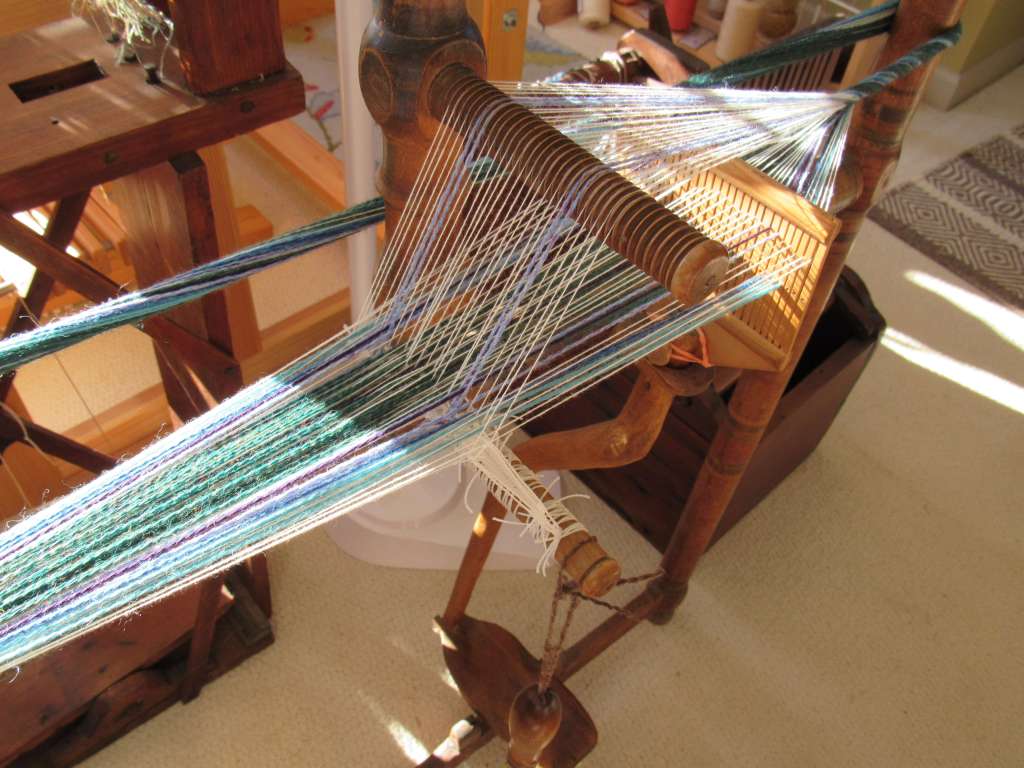
With this ingenious design, the pattern threads run through the holes in the rigid heddle. 

One set of background threads runs through the heddle slots and the other set runs over a corrugated rod and through half-heddles.

This photo shows the new heddle that came with my loom, the rubber band kept it from tipping side-to-side

It functions similarly to a double-slotted (Sunna or pattern) heddle in backstrap weaving.  Using the foot treadle, the pattern threads can be raised together, all in one plane, separate from the background threads.

With the heddle in the raised position

Elevating and isolating the pattern threads this way allows the weaver to easily pick out the band patterns with a band knife. 

It is a brilliant innovation for fast, efficient weaving of complicated band patterns. 

With the band knife in the right hand picking patterns and beating, the left hand is free to pass the bobbin through the sheds

And the prolific Leksand weavers took advantage of these little looms to produce stunning bands in great quantities.  Most often red and white or black and white, the Leksand bands were woven with a seemingly never-ending variety of patterns, some dating back to the thirteenth century. Foulkes, p. 16.  The bands were used for hats, belts, straps, ties, laces, and decorative edging. 

Some typcial Leksand bandsphoto by Kirsi Manni

In Sweden, Kirsi Manni is a rich source of information about Leksand looms and bands, including invaluable knowledge learned from local older weavers. 

“Band Weaving in the Cowshed,” Leksand, C. Gellerstedt 1875–according to Kirsi, band-weaving in Leksand often was a social event, where young women could gather unchaperoned with their friends and young men

Kirsi kindly welcomed me to her home in Sweden last summer where she collects spinning wheels, textile tools, and these rare looms to preserve them for future generations. 

Some of Kirsi’s collection–all are different and few have the original heddles

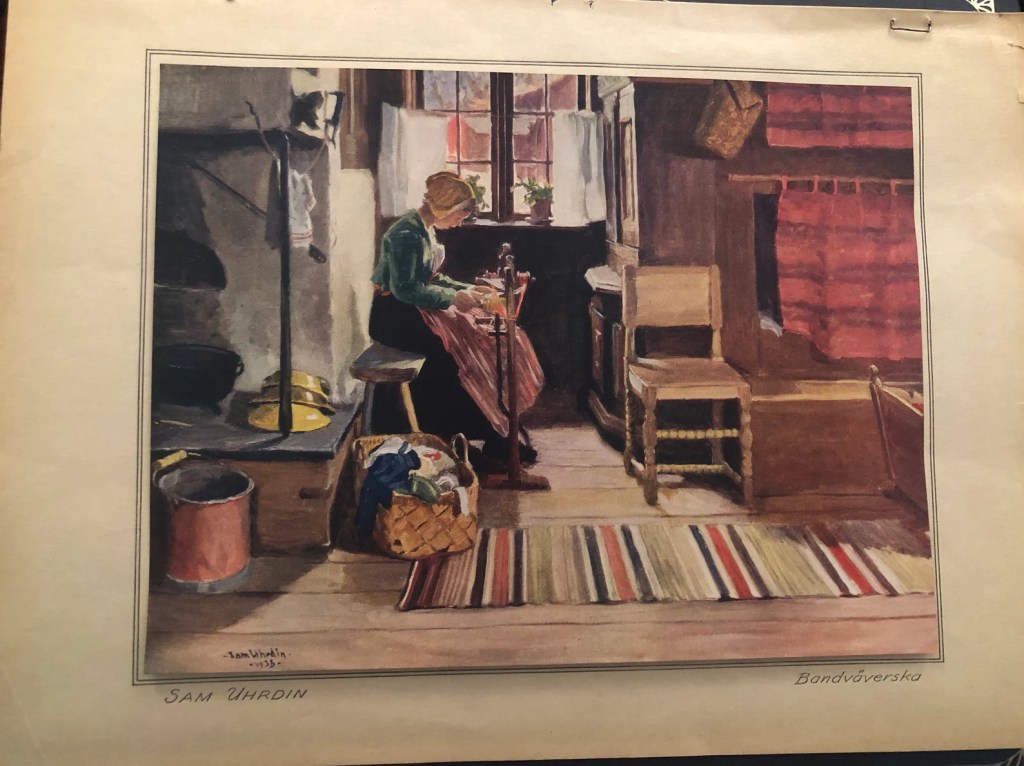
For those on Facebook, Kirsi started a “Leksand Loom” group, in which she has shared some lovely artwork, including from local painter, Sam Uhrdin (1886-1964), depicting women weaving at their band looms. 

A Leksand Band Weaver, by Sam Uhrdin, 1945

Photos of Kirsi’s looms, and much more, can be found in Kirsi’s excellent article on Leksand looms in the Spinning Wheel Sleuth’s Handloom Supplement #23.  

Leksand bands in Kirsi’s collection

Given that these looms were only made in Leksand, it is not surprising that they seldom turn up anywhere but Sweden.  There are only a handful of which I am aware in the United States, so I am incredibly fortunate to have one (thank you Florence). 

My loom was featured in The Spinning Wheel Sleuth’s Handloom Supplement #4.  The article’s author, Marion Satchwell, found the loom at an antique show in Florida in the 1990s. 

It came with a wee bit of black and white woven tape, which was passed on with the loom.  That tape was made with what looks like fine sewing thread for the background and silk pattern threads. 

Bobbins and the bit of band that came with the loom

The Leksand looms were made by local carpenters and ranged from simple to ornate.  The carpenter who made mine was skilled and made the loom as lovely as it is functional.

The colorful paint has faded, but continues to highlight the loom’s turnings and design. 

I especially love the upright between the ratcheted spools, with reminds me of a woman with arms that lower and raise to keep the spools properly in place. 

The leashes for attaching the warp ends are secured through holes in the spools.  

The treadle is attached to the rigid heddle by a curved piece of wood provided by a perfectly imperfect sapling in a Swedish wood, bent by some force of nature, now living on in a Leksand loom. 

It is hinged to the treadle and has a slit at the top for the rigid heddle. 

A lower bar holds the half heddles and the corrugated top bar keeps the upper warp threads spread out, making for easier shed changes. 

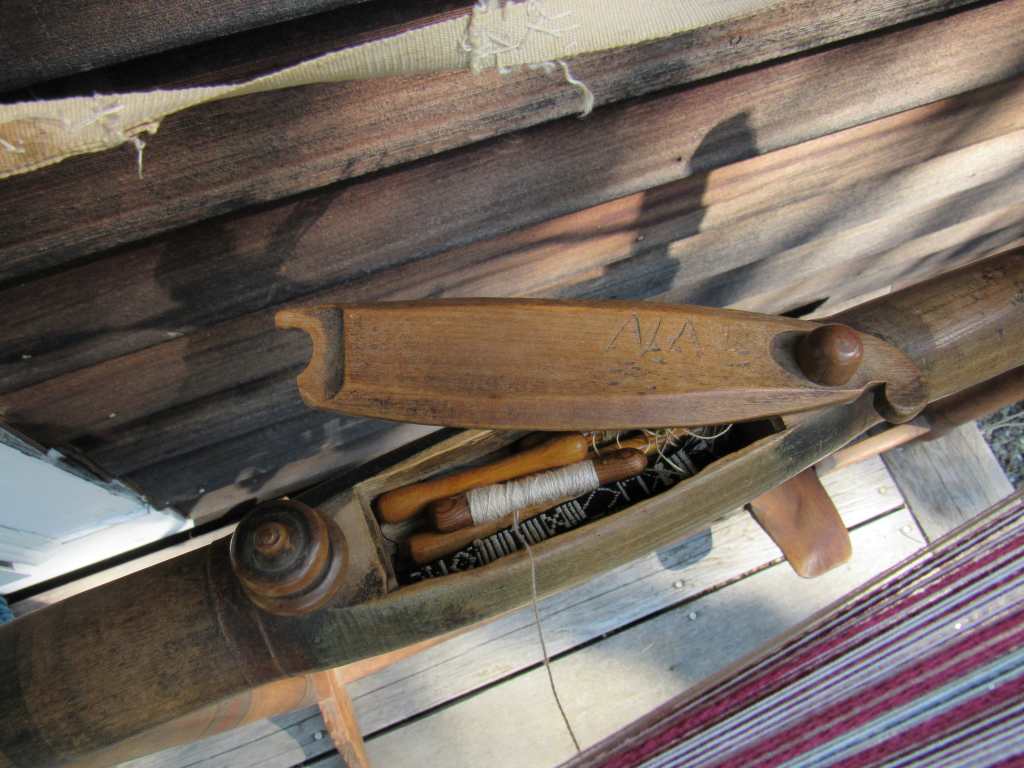
The frame has a convenient carved-out storage box, full of bobbins,

with a rotating lid with letters, probably “NA,” scratched on top.   

Whoever NA was, she did a lot of weaving,

because there is heavy wear on the lower cross bar and treadle—with a deep hollow made by a smallish shoe heel on the treadle. 

How I wish she could have transmitted some of her knowledge to me.  Because it was a real challenge to figure out how to best set up and use this loom.

There are no manuals for weaving on Leksand looms and I did not know Kirsi then.  After months of research, head scratching, messages to and from people who might be able to help, experimentation, and good dose of serendipity—I went from confused to enamored. 

The first band I wove on this loom

My first stroke of luck came right after I brought the loom home when a Swedish band knife came up for sale on eBay. 

About a month later, another three came up for sale together and no one bid on them (but me, eventually).   

The three knives I have now–I gave one of the original four to Kirsi

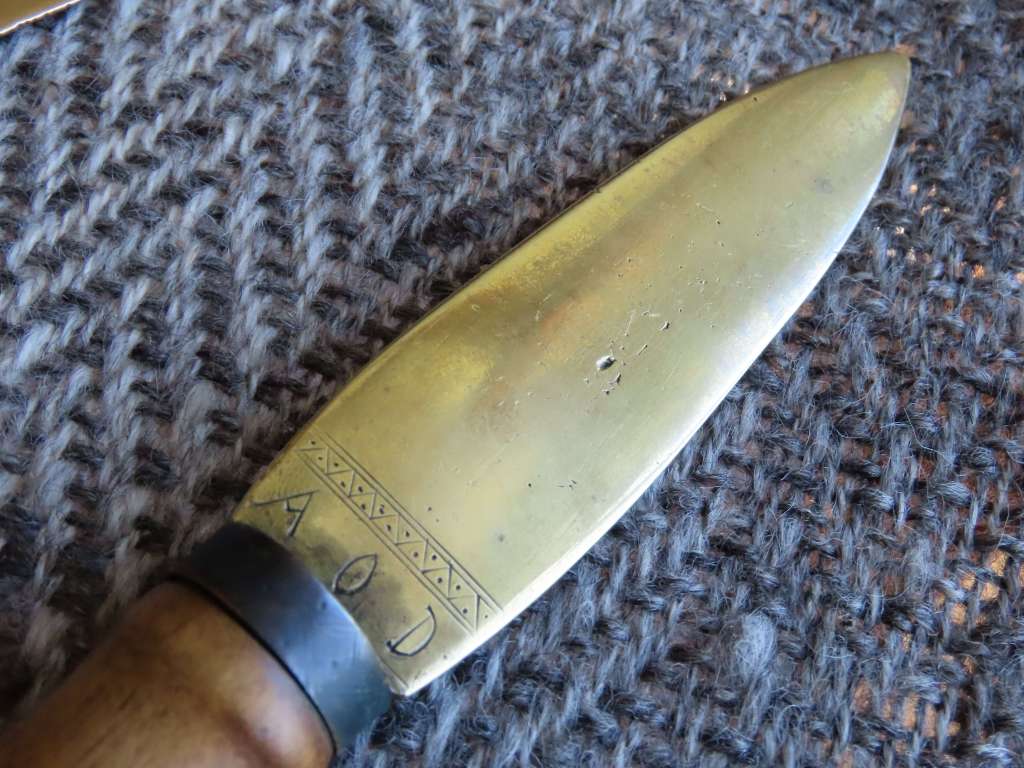
Since then, I have only run across one other for sale, so I was extremely lucky to find these right after I got the loom.  Apparently, many of the knives of this style were made in Mora, Sweden, often with dates and initials inscribed on the blades.  Each of mine is different, perhaps giving the weaver some choice in size and weight—a particular balance and heft. 

Notice how all the tips are different

But all were designed for hours of weaving—comfortable in the hand, smooth, and nicely weighted, so that a weaver can continuously pick, slide, and whack/whack almost effortlessly.  They feel amazing—the wooden handles and brass blades are incredibly smooth—I love to run my hands over them.  The oldest has deep grooves in the blade from angling and lifting the shed to transfer the bobbin. 

Using them gives me a feeling of intimate connection with their previous owners, knowing we have shared a common experience—the specific fit and feel of the wood in the hand, the certain way the blade tip picks up the threads, the smooth slide and angling of the shed, the force of the beat—unique to each knife. 

They are marvelous tools.  For more about them, Lois Swales wrote an article in the Spinning Wheel Sleuth Handloom Supplement #16.  As a bonus, her article includes a photo of one of Louise’s looms, which appears to be a twin to mine–so likely by the same maker.  According to Louise, that loom had been imported from Sweden by a California decorator for use as a bathroom towel rack.  Such an indignity!  Fortunately, it survived and is weaving again.

The heddle that came with my loom

Louise’s loom, like mine, had lost its original rigid heddle. Not surprising, because they are quite delicate and easily broken or lost—in fact, it is rare to find one with an intact heddle.  My loom had a new heddle when I got it.  It was nicely made, but only big enough for 29 pattern threads, and it wobbled from side to side. Since many of the traditional Leksand bands used 33 pattern threads, I wanted to find someone who could make me one close to the originals.  Not an easy task.  While researching possibilities, what should appear on eBay but an antique Leksand rigid heddle? 

I was gobsmacked—they NEVER come up for sale.  More loom serendipity.  Because, when it arrived, it fit into the treadle bar slot as if made for it and the two holes in the inserted portion lined up exactly with the holes in the treadle bar. 

At the time, I ignorantly did not think much of that, assuming that there must have been a certain uniformity in the rigid heddles make in Leksand.  Ha.  Since then, all of the Leksand rigid heddles that I have seen have been different—nothing uniform about them.

Which makes me think that I may have lucked into a rigid heddle made by the maker of my loom.  How weird would that be?    

A previous owner marked the center of the heddle with a small black lineI thank her for that!

I am not an experienced or particularly proficient band weaver, but with this loom and antique heddle, I can easily weave the complicated 33 pattern bands found in Leksand.  I do not know if the way I weave is historically accurate, but no matter. It is fun, rhythmic, very tactile, and satisfying. This loom is a rare link to a very specific time and place that I am fortunate to be able to enjoy. Thank you to everyone in Leksand and beyond who saved these looms, especially those who had no idea what the looms were, but appreciated their unique beauty.  

For more information on these looms:

Foulkes, Susan J., Weaving Patterned Bands, Schiffer Publishing, Ltd., Altglen, PA 2018, pp. 13-16.

Manni, Kirsi, “Band Looms from Leksand, Sweden,” The Spinning Wheel Sleuth Handloom Supplement, Issue 23, June 2022, 2-4

Satchwell, Marion, “A Swedish Ribbon Loom,” The Spinning Wheel Sleuth Handloom Supplement, Issue 4, April 2001, p. 12.

Swales, Lois, “Band-Loom Weaving Tools,” The Spinning Wheel Sleuth Handloom Supplement, Issue 16, June 2014, pp. 6-8.

Thanks to Susan Foulke’s blog, “The Durham Weaver,” for many of the manuscript pictures and to Kirsi Manni for the artwork from Leksand.

Astrid

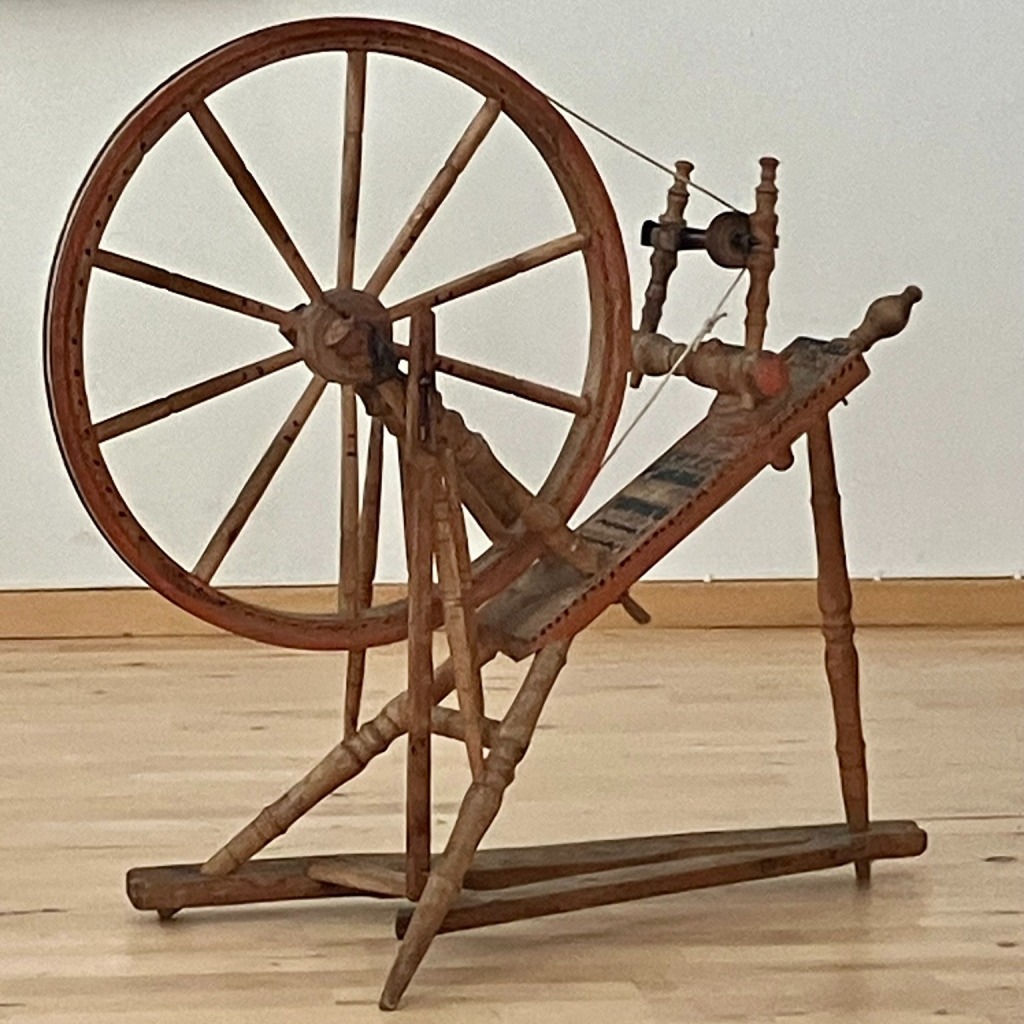
If the value of a wheel can be measured by the lengths taken to keep it spinning, this wheel must have been very highly regarded.  It could be a textbook for how to keep a spinning wheel running with whatever is on hand.  Belying modern wheel owners who too often declare such wheels “a piece of junk,” and those who insist that flyer arms must be “balanced,” with all its makeshift repairs, this wheel still spins beautifully, more than two hundred years after it was made. 
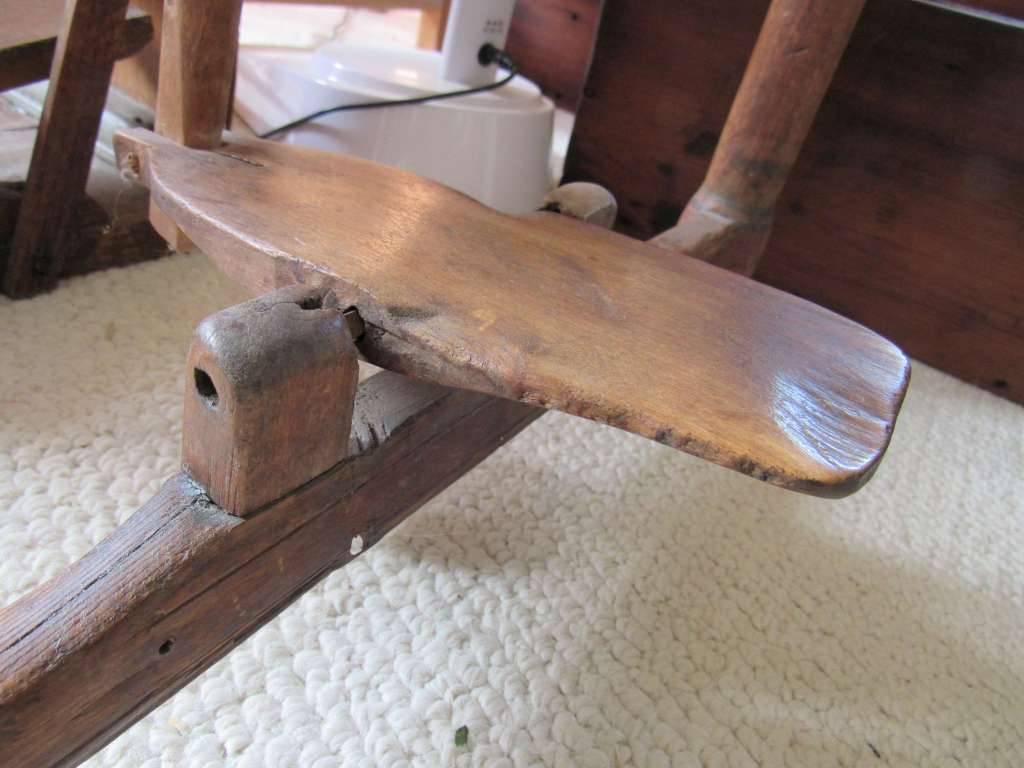
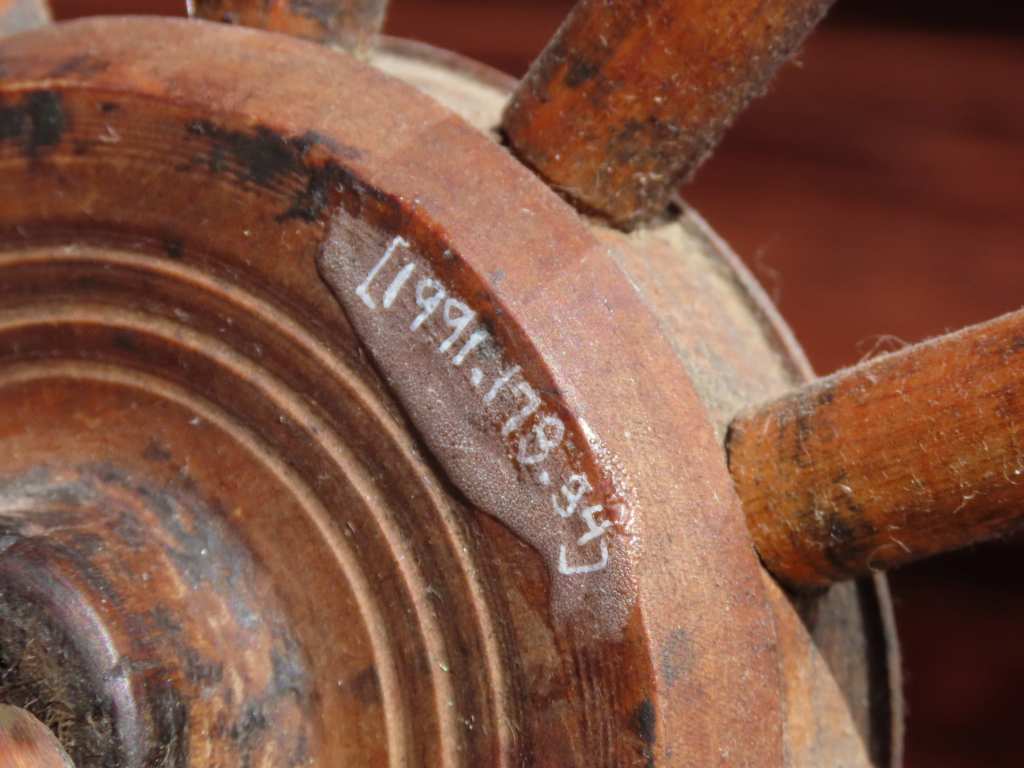
The wheel was part of Joan Cummer’s collection, which she donated to the now-defunct American Textile History Museum.  Along with most of Cummer’s wheels, it was auctioned off after the museum closed and I was fortunate enough to become the next owner.   

Museum accession number

The wheel, “No. 34,” is pictured and described on pages 80-81 in Cummer’s “A Book of Spinning Wheels.”  Cummer notes that it “is probably Scandinavian judging by the slope of the table and general proportions.” (p. 80)  She did not know that the wheel contained a hidden clue as to its origin. 

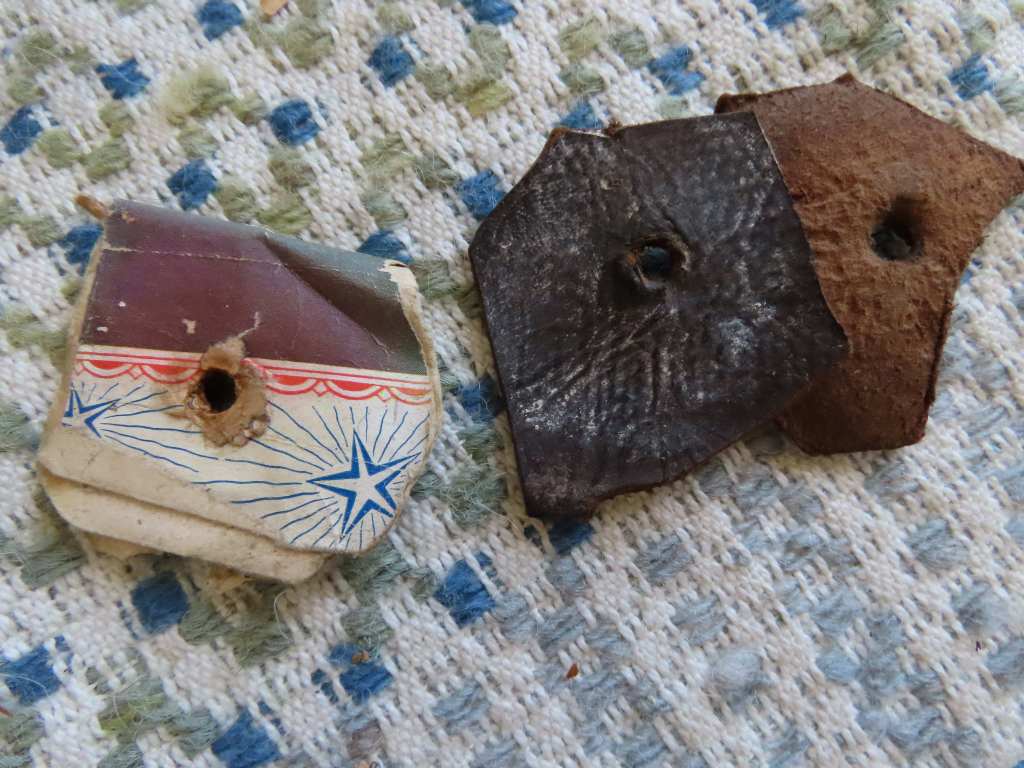
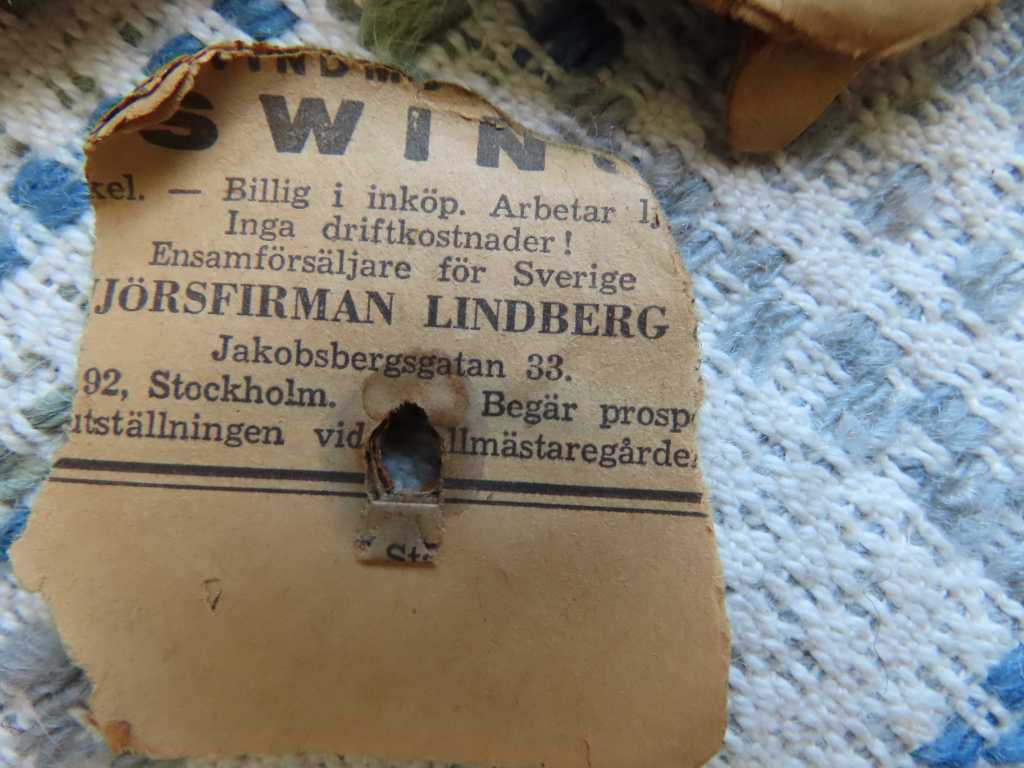
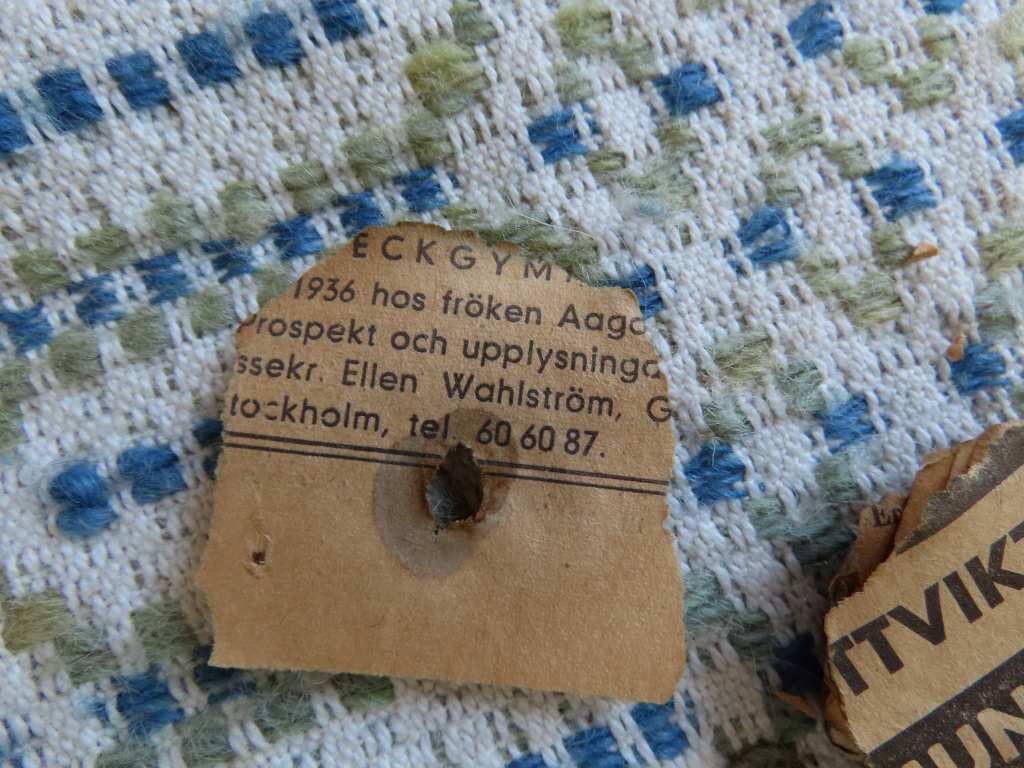
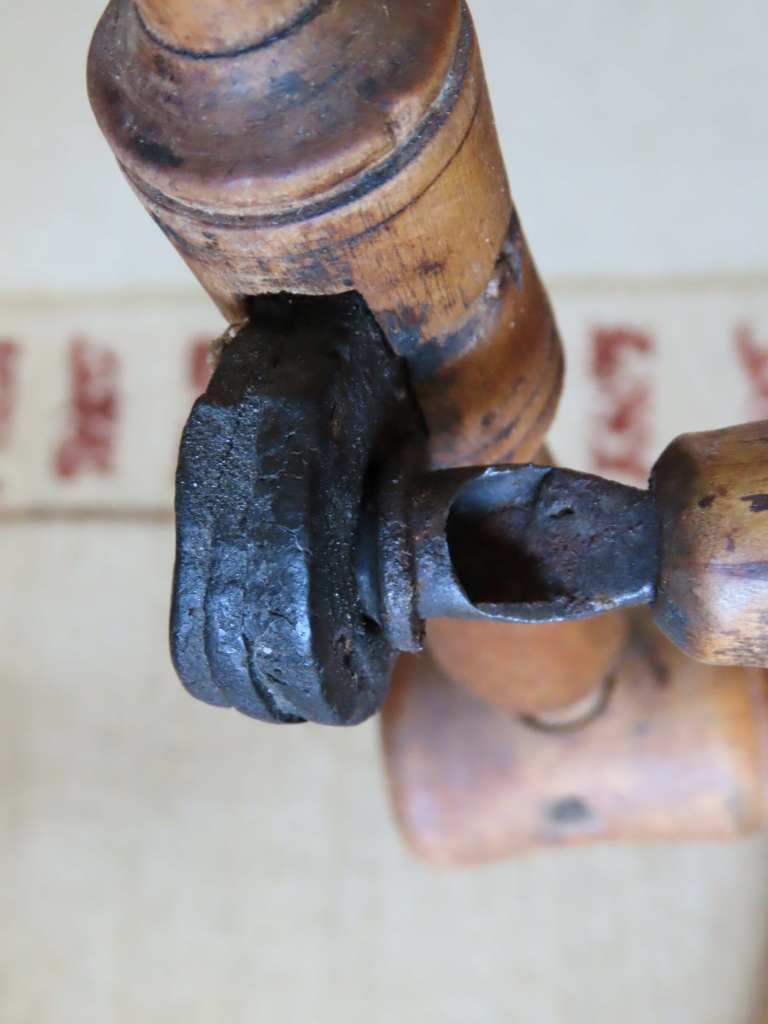
After bringing the wheel home, I wanted to get it spinning.  On the mandrel, between the bobbin and flyer arms, was a spacer made from layers of leather, cardboard, and newspaper. 

I carefully removed the layers and found that the newspaper pieces were in Swedish and contained Stockholm addresses and the date 1936,

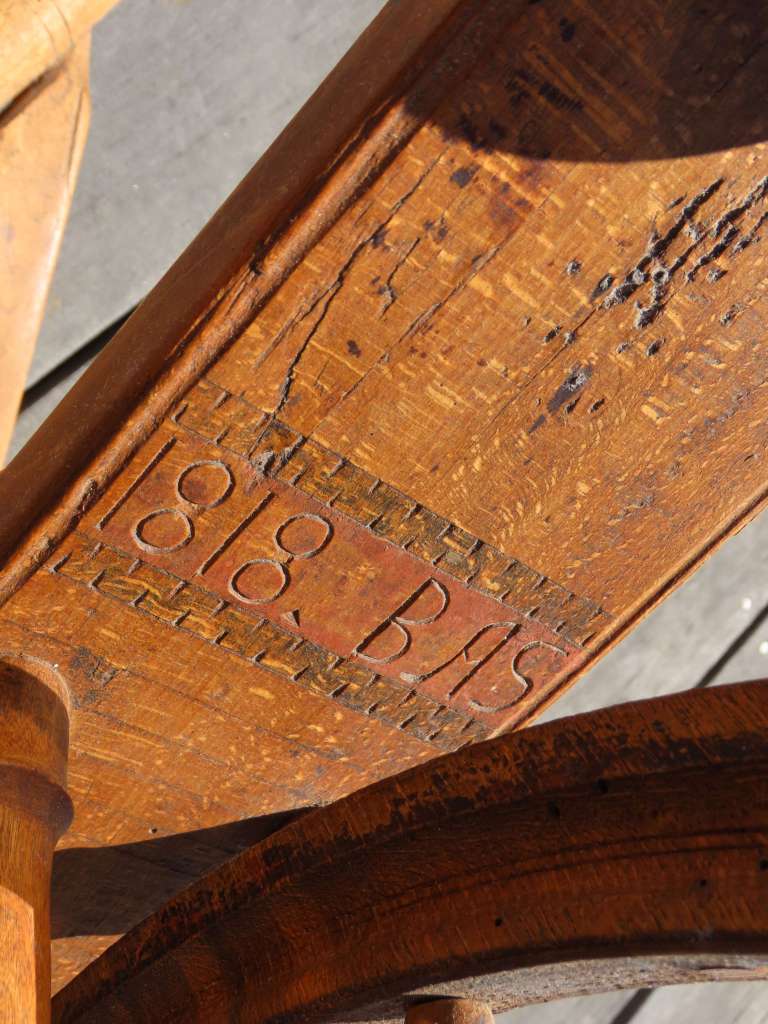
evidence that this wheel—made in 1818—was being used well into the 1930s, either in Sweden, or by Swedish immigrants with access to a Swedish newspaper. 

That was all I knew about this wheel until the fall of 2023, when the Rydals Museum in Sweden advertised on their Facebook page a presentation by Hans Johansson on wheels made in Hyssna, Sweden.  Johansson runs Kvarnen y Hyssna (The Mill at Hyssna) (this link to his website has fantastic old photographs of Hyssna). Johansson is the fourth generation of a mill and sawmill family in Hyssna, a town east of Gothenburg, Sweden.  With its ample water power and lumber, the town had a tradition of woodturning, passed down from father to son since the 16th century.  By the mid-19th century, there were about fifty spinning wheel makers in the area, making a distinctive wheel style associated with Hyssna. 

A typical Hyssna wheel

These “Hyssnarocken” were pictured on the Rydal Museum’s notice of Johansson’s talk and I excitedly realized that my 1818 wheel, Astrid, shared their features. 

Although the museum people confirmed that Astrid likely is a Hyssna wheel, I have not been able to identify the actual maker.  The most well-known Hyssna wheelmakers seem to be fairly recent ones–Johannes Persson and his son, Oscar (who was making wheels into the 1970s).  The 1818 date on Astrid is the earliest I have seen on a Hyssna wheel. 

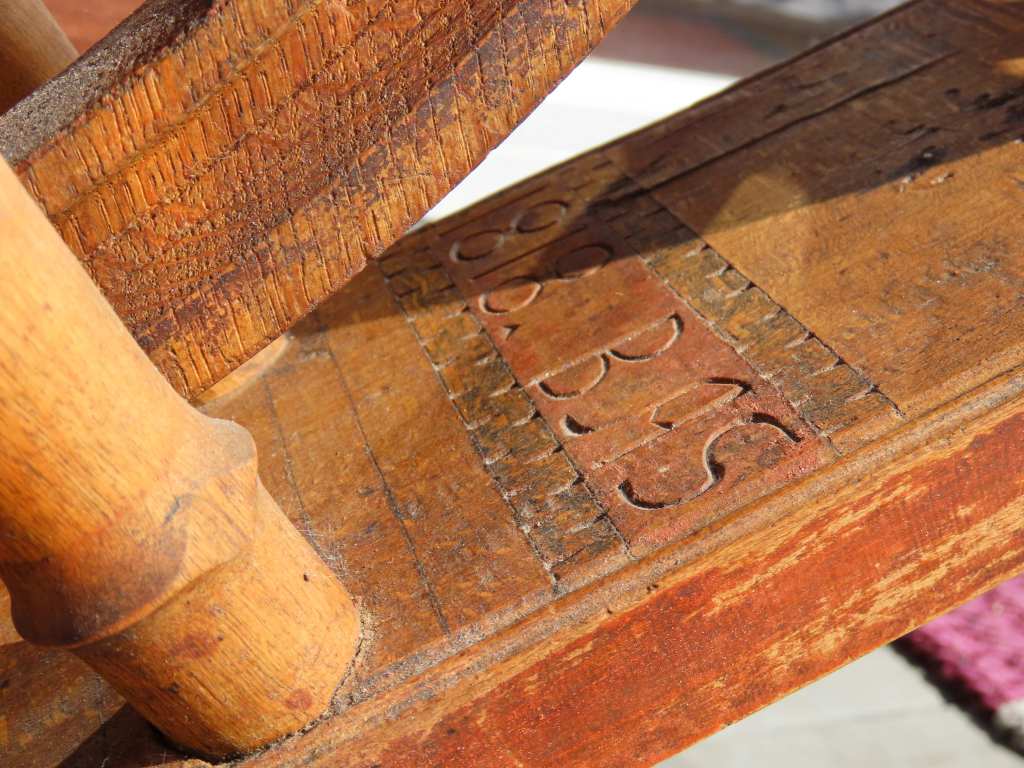
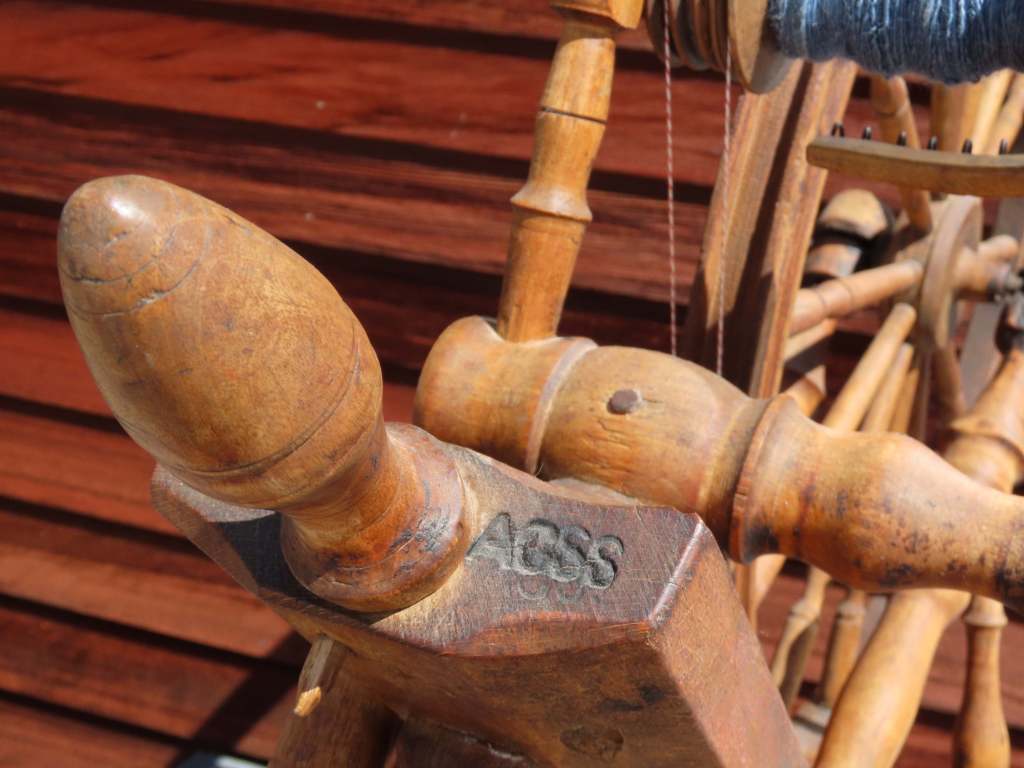
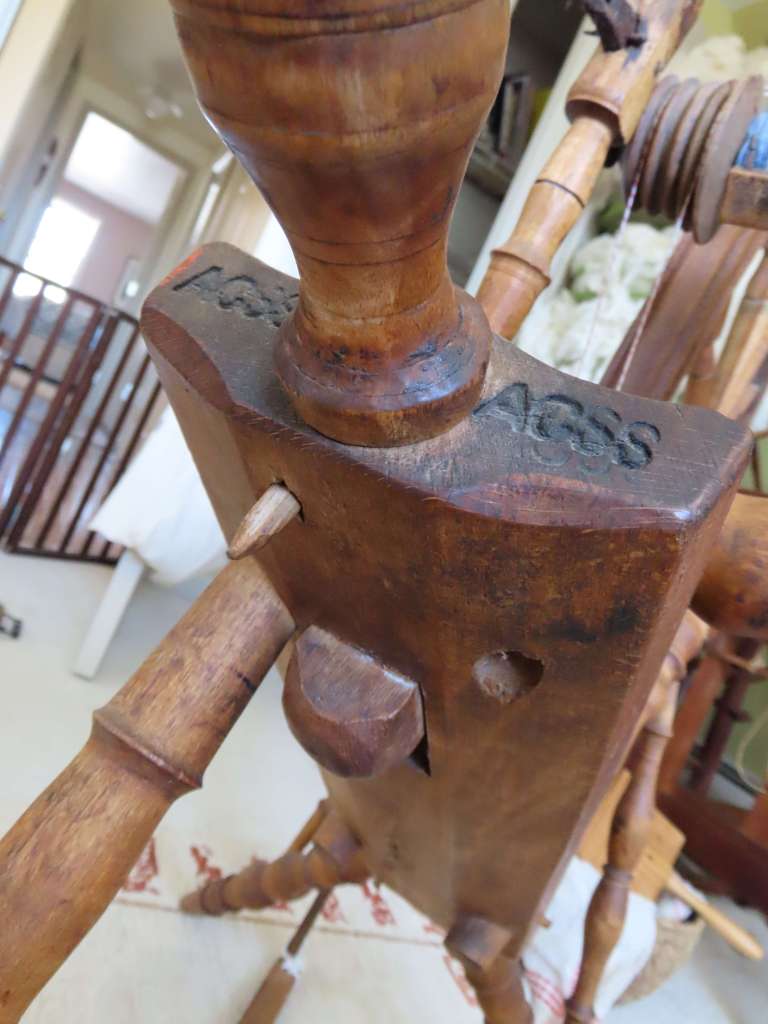
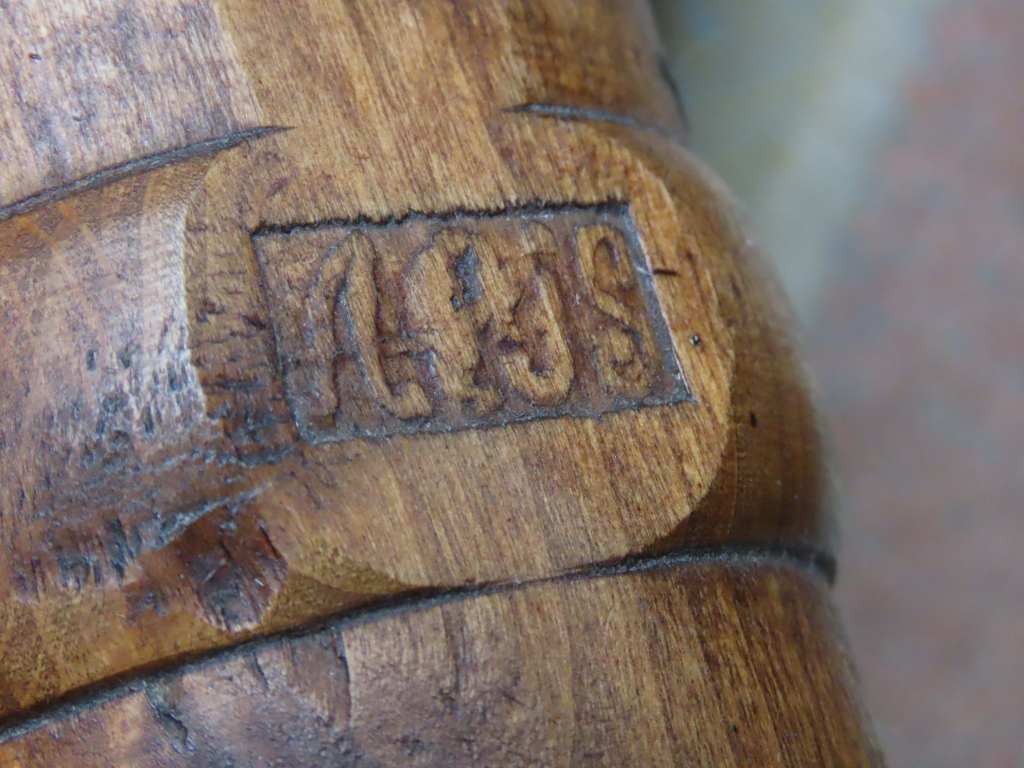
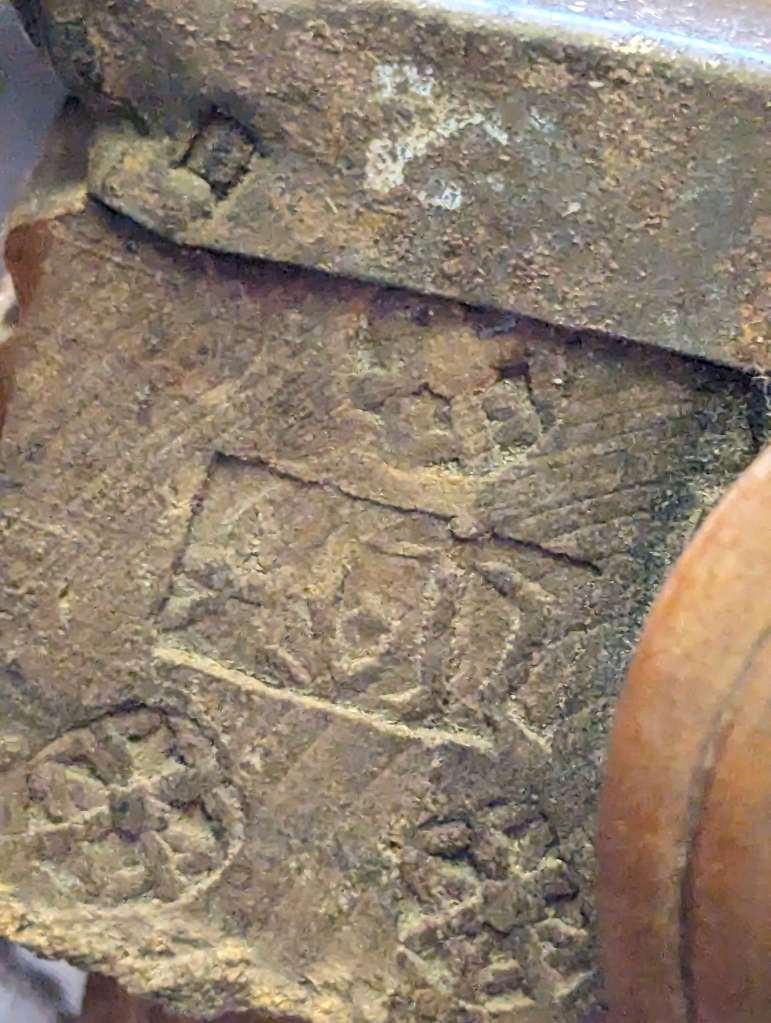
With that date and the initials “ACSS” on the table end and “BAS” on the table top, it probably would not be too hard to trace the maker.  But, with my limited Swedish skills, I am happy at this point just to know where the wheel is from. 

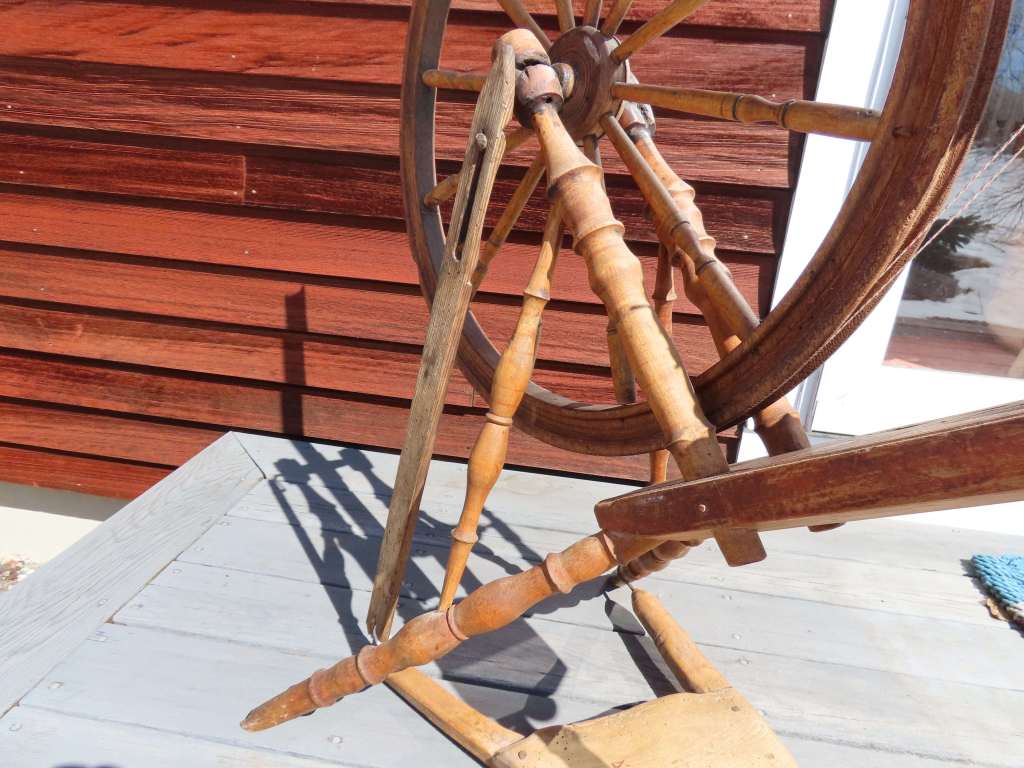
Hyssna wheels have several distinctive features.  There is a particular tilt to the table and angle of the legs that mark them, even from a distance. 

They have painted highlights, usually in red, green, and black. 

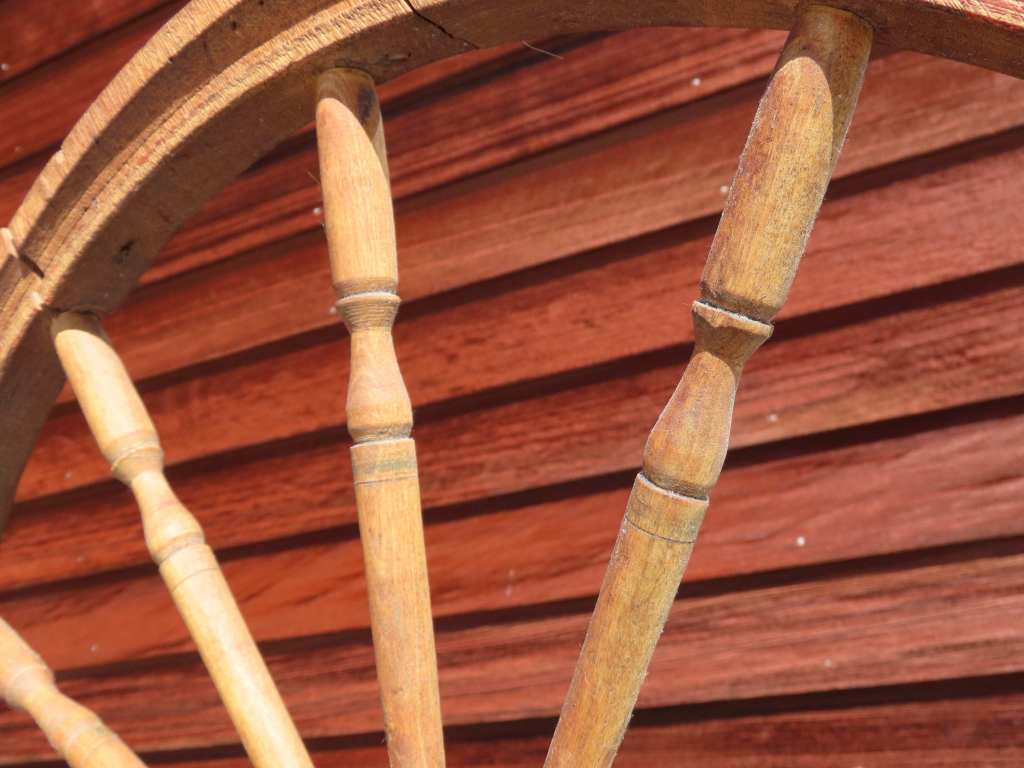
Traces of paint on the spokes

Aside from the painting, the wood has an unfinished, almost rough quality.

The table has initials, and often a date, carved and painted on its top, accompanied by decorative carving. 

As Joan Cummer mentioned in her book, it is generally believed that initials on the end of the table belong to the maker, while those on the top are those of the owner.  Whether that is always the case with Hyssna wheels, I do know, but the wheel in this Clara Falk blog post appears to have Johannes Persson’s initials on the table, if I understand correctly.

Two secondary upright supports extend down to the legs and the axles are held in place with pegs that go down the side of the upright rather than across it. 

Pegless, but you can see the holes

Another unique feature for most Hyssna wheels is the treadle set up, in which the treadling is done by the foot (or feet) resting across the cross bars rather than on a flat treadle piece.  There is a small piece between the cross bars to the right of the spinner’s feet and the spinner-side legs go through the cross bar.

Typical Hyssna treadle set up. This wheel was on FB marketplace–a lot of these wheels come up for sale

Astrid has a more traditional treadle set up, which leads to the fascinating fixes made to this wheel over the years. 

There are holes in the legs for treadle bar pins, which usually would not have been present in Hyssna wheels. Oddly, in this case, in addition to the holes, someone fashioned a metal bracket to hold a pin rather than have it go through the leg. 

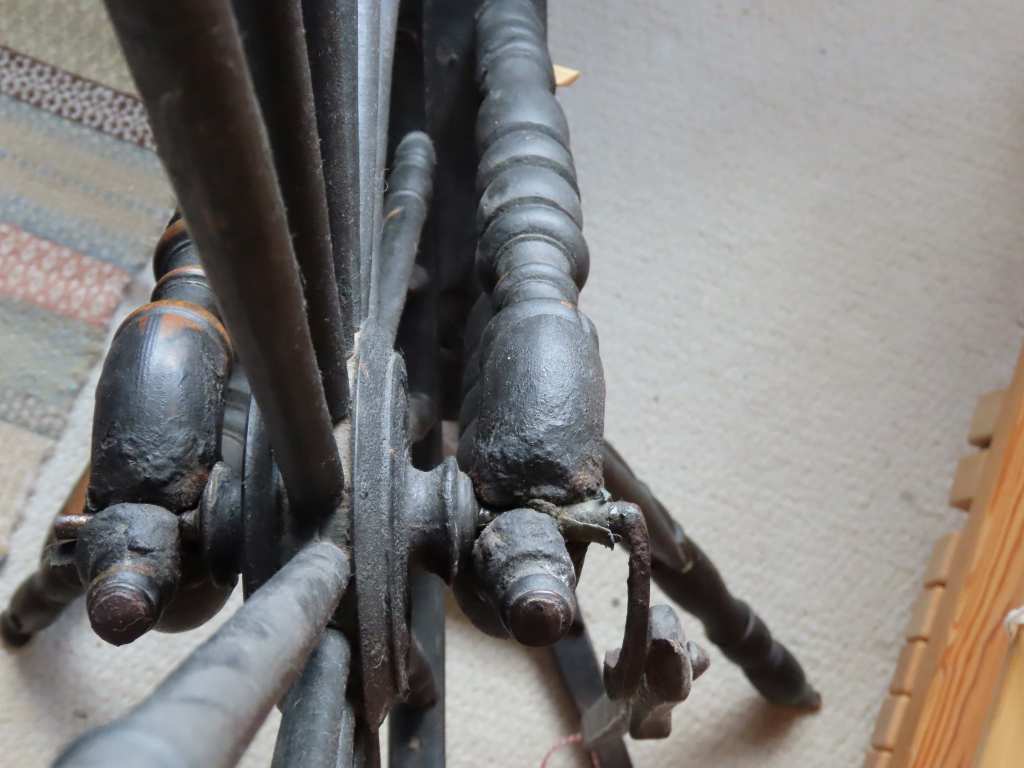
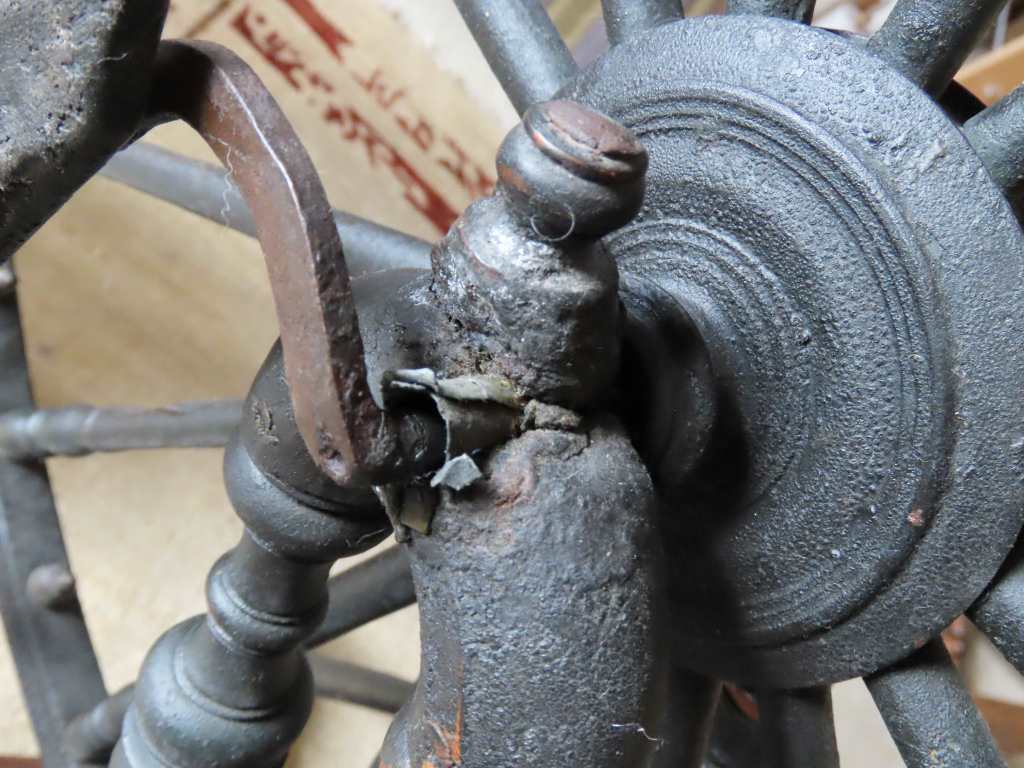
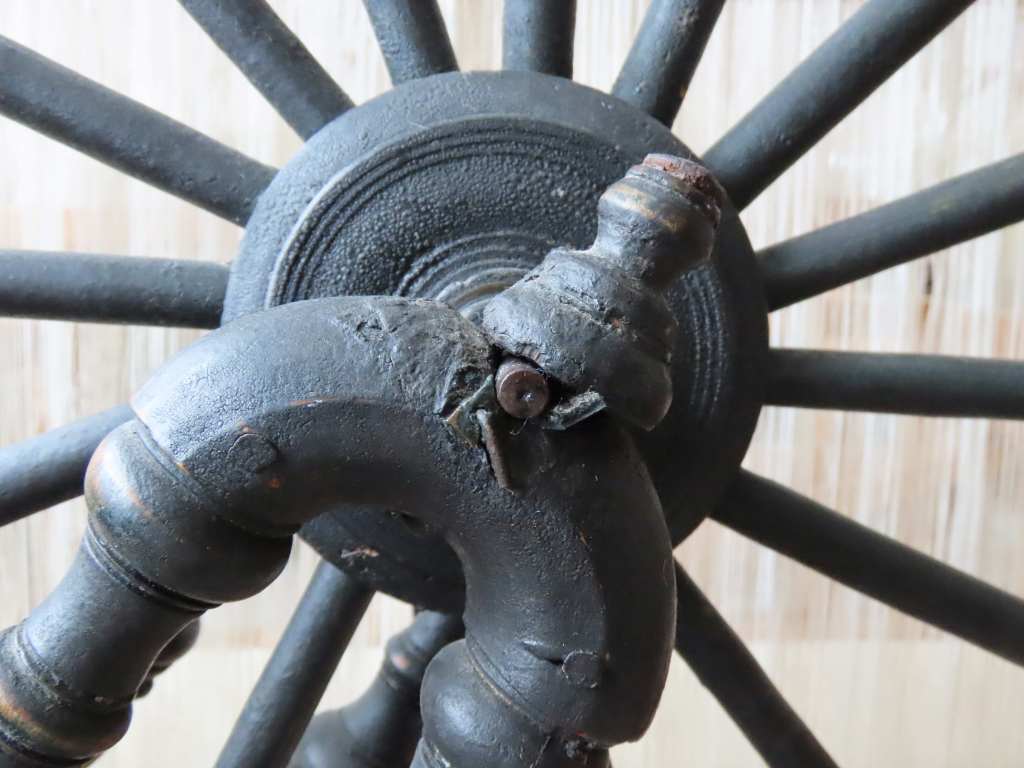
It is possible that the treadle set up is a replacement—its turnings and wood look a bit different than the rest of the wheel—and it may not have fit the holes well. Or perhaps it is original and just popped out of the hole too much. A similar metal bracket holds the axle in place after the hole for the axle peg eroded and was no longer functional

and a front axle bearing was made with folded metal hammered into the upright.

While it is hard to tell if the treadle set-up is a replacement, it is easy to see that the spinner-side maiden came from another wheel. 

Not only does it have mismatched turnings, it does not come close to fitting properly in its hole.  The peg to hold it in place is missing but someone stuffed a piece of fabric under the maiden which holds it tight and lends a nice bit of history to the wheel. 

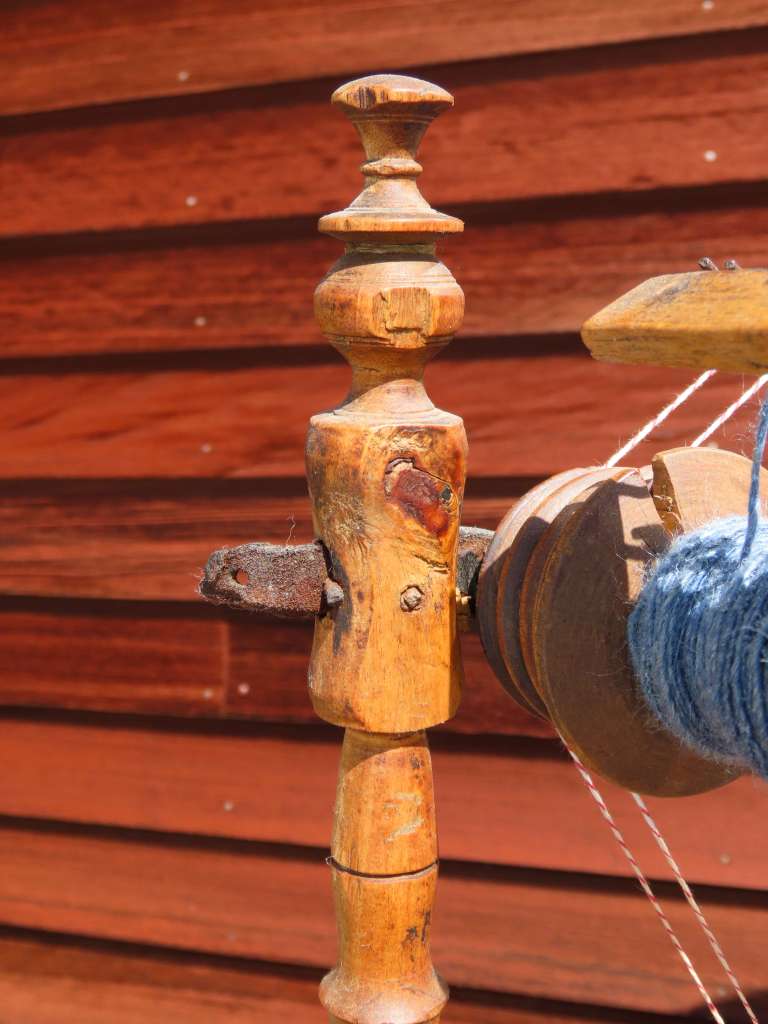
The collar for the mother-of-all is shimmed with layers of paper and leather. 

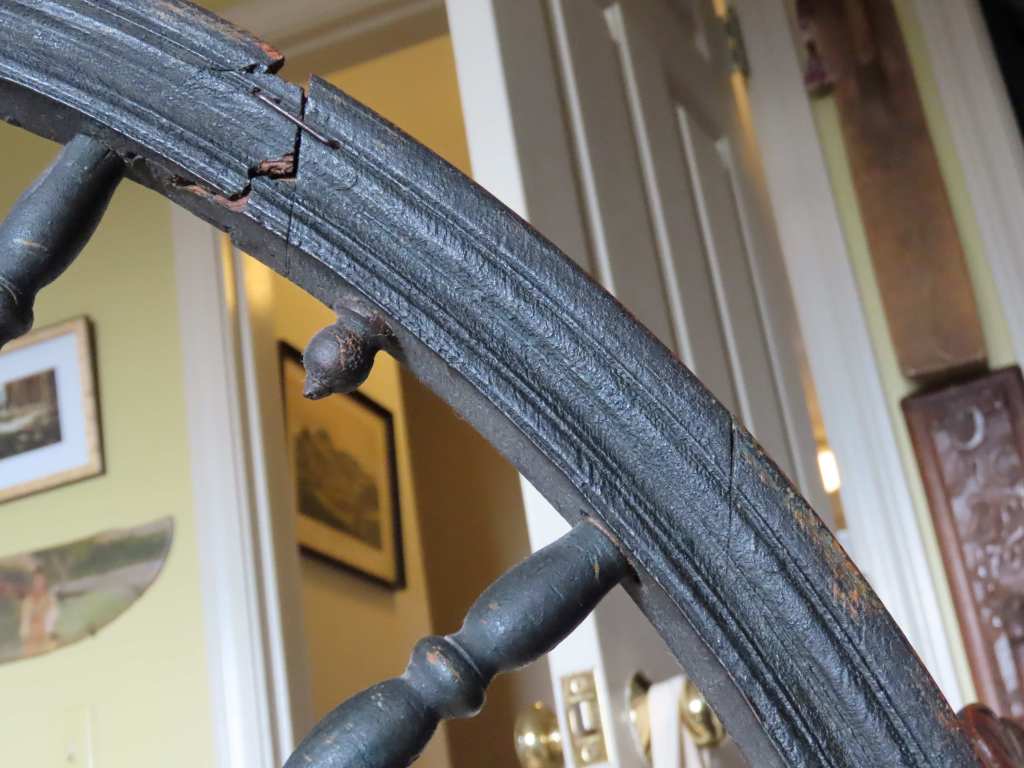
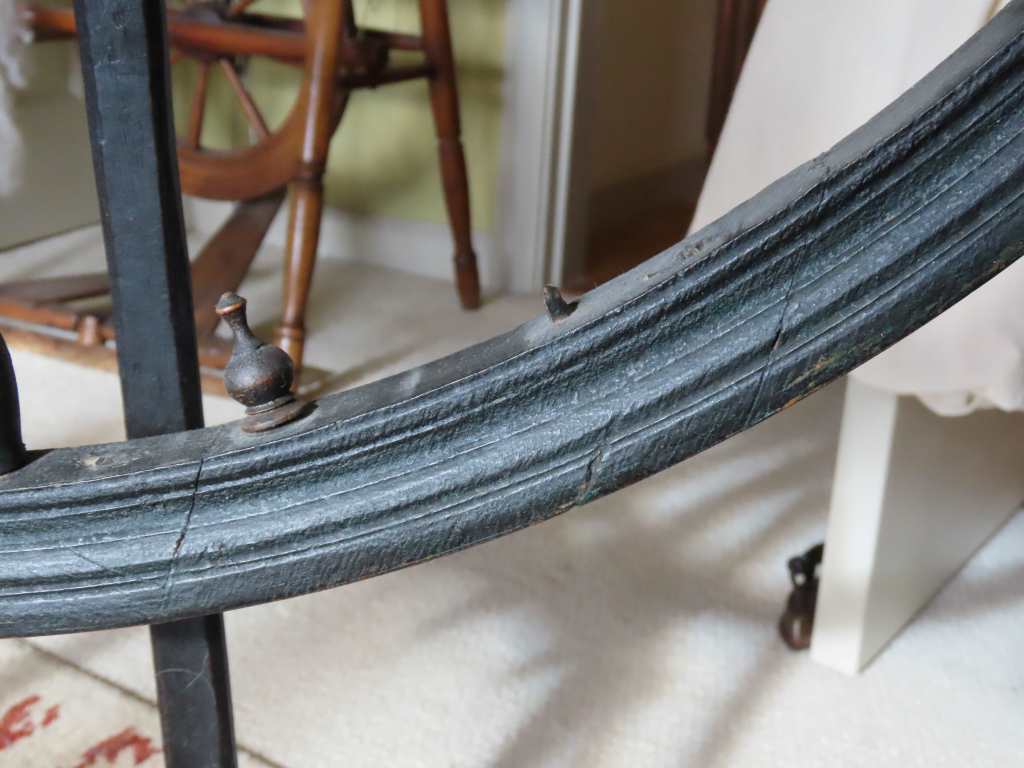
The wheel rim, still bearing paint traces, has a largish gap showing a peg at an awkward angle. 

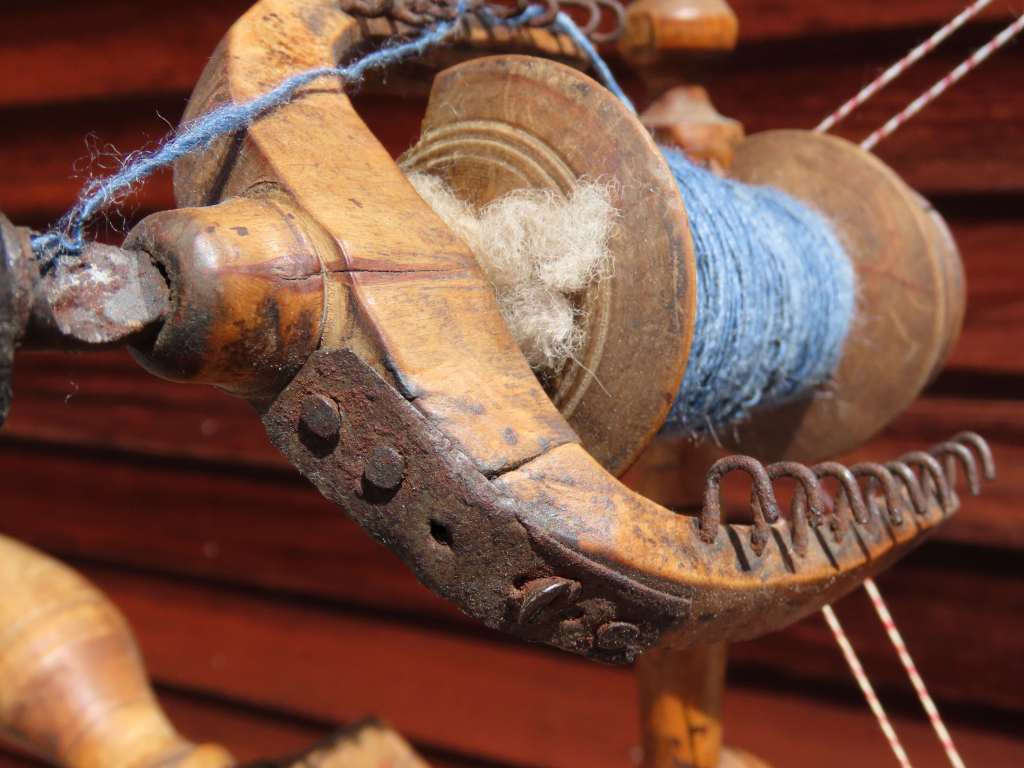
The crowning glory of the make-do repairs is the flyer, with its now-rusty metal patch holding a broken flyer arm in place.  I replaced the spacer made of leather and newspaper with some woolen yarn wrapped on the mandrel.  The whole thing looks a mess and certainly is not balanced, but it spins surprisingly well.  

The orifice only has a one-sided opening as it emerges to the flyer.

The table underside is beautifully shaped

but my favorite touch is the decorative shaping of the wheel end of the table. 

Joan Cummer noted that the other “end of the table bearing the tensioning screw is beautifully shaped and sculptured. Much care and pride seems to have been taken in the making of this wheel.”  (p. 80)  I agree.  And much care was taken to keep it functioning for over 200 years. 
Thank you to the Rydals Museum staff for their patience and time in helping me learn about the Hyssna wheels. 

The information on Hyssna wheels is from the Rydal Museum’s summary of Hans Johansson’s presentation and a piece that he wrote: “Spinnrockar, förläggare och svavtradition i Hyssna,” which is in a book available through the museum.

Cummer, Joan, A Book of Spinning Wheels, Peter E. Randall, Portsmouth, N.H. 1984. Wheel 34 is on pp. 80-81. 

Ulla

While in Dalarna, Sweden last summer, one particular wheel style kept appearing at various places I visited.  I first noticed this style in the collection at Sätergläntan, the craft school I was attending for a daldräll weaving course.  I was especially interested in the collection’s two turned-table, metal-clad wheels described in my last post, “Torvi.” 
The turned-table wheels at Sätergläntan

Even as I was marveling over those wheels, however, another caught my eye.  It was the maidens I noticed first—they were so much like those on the turned-table wheels. 

The similar wheel in the collection

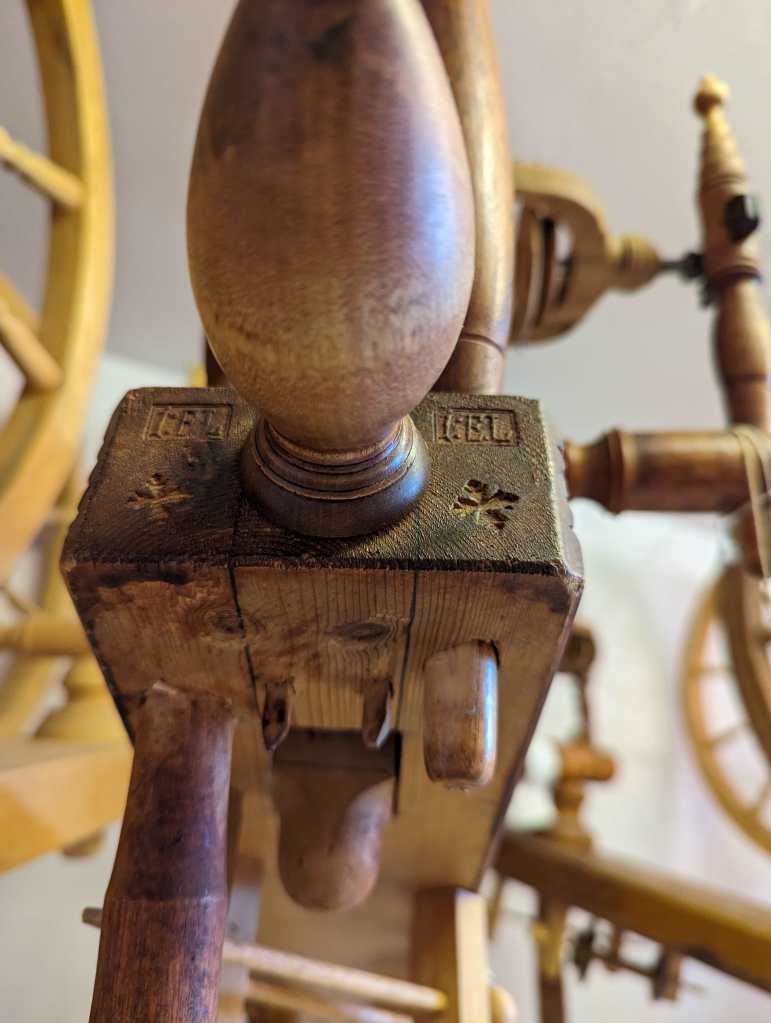
And not just the maidens–the unusual treadle set up, the legs and feet, the axle caps, the table-side grooves, and the spokes and drive wheel– all were remarkably similar to the turned-table wheels.  The maker’s mark was different, though—an I (or J): E.L, with some star/sunburst stamps. 

Later that week, we took a trip to the home of Anna Thomasson, a weaver who co-wrote a book on daldräll weaving. While there, we were treated to a tour of the home of the mother of Swedish poet Erik Axel Karlfeldt, which is next to Anna’s studio in southern Dalarna. As soon as we entered the house, there it was—another wheel of this style. 

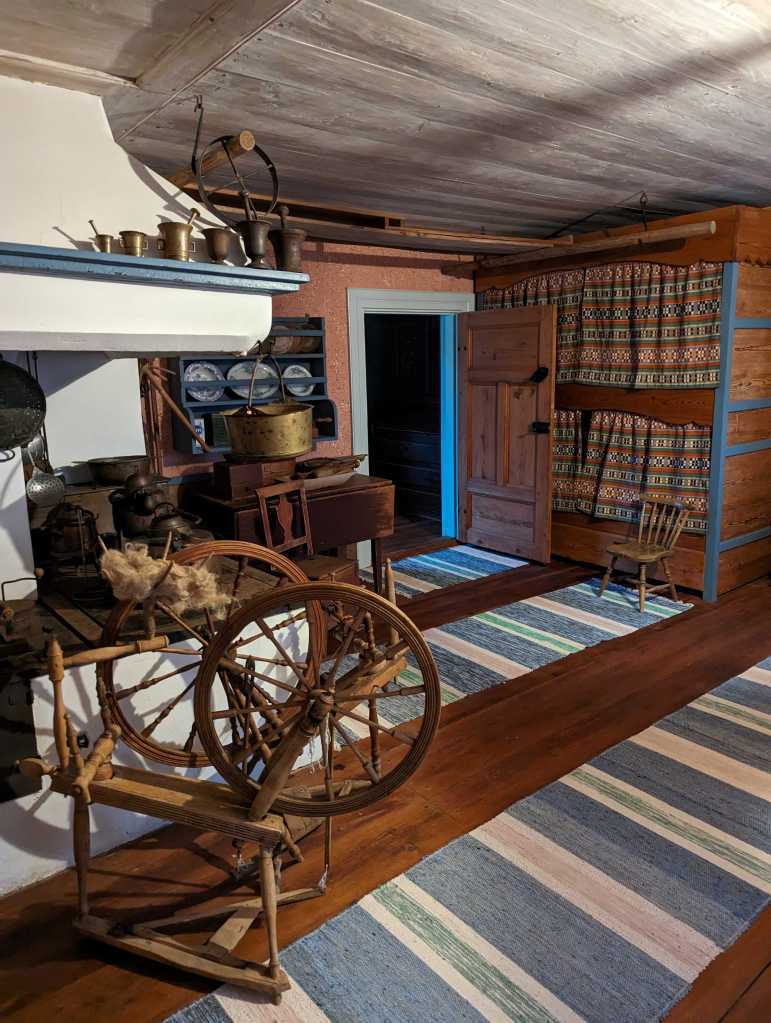
Seeing it there made me realize that I had seen others a few days earlier, when visiting the museum home of artists Carl and Karin Larsson in Sundborn, near Falun (post on this visit is here: Sweden, Part 1).  While we were not allowed to take photos in the Larsson house, I was sure that one of the wheels there was this style (I have since confirmed it through photos in books).  And there was a second one at the nearby exhibit on Karin Larsson and her textiles, which I was able to photograph. 

When I returned home, I found that these wheels pop up regularly on Facebook Marketplace in Dalarna.  This one said that it was owned by a great-grandmother born in 1893 and from somewhere near Falun. 

The Dalarna Museum in Falun also has one, recorded as being from the Husby/Hedemora area, which is in Dalarna, southeast of Falun.  (Dalarna museum wheel link). Skansen, Stockholm’s wonderful open-air museum, has another, with the maker’s initials “CWB,” but no information as to where it came from.  (Skansen wheel link). With so many of these wheels in the Dalarna area, I was puzzled that there did not seem to be any definitive information on where they were made. 

Ulla and Torvi side-by-side–surely they are related

From the 18th to 20th centuries, Scandinavia had well-known centers of wheel-making, usually in an area with good water power, where multiple wheel-makers, sometimes as many as fifty or more (often related), produced wheels for generations.  The distinctive Finnish Kiikkalainen wheels and Norwegian Gylland wheels are good examples.  Sweden had several wheel-making centers, including Solberga, Hyssna, and Hjulbäck.  Each area’s wheels were immediately recognizable for their particular style and features, but with small variations by the different makers. 

Many of these regionally-styled wheels were marketed outside of the areas in which they were made and, perhaps for that reason, many were marked by the wheelmakers.  So, while the wheel’s style and features advertised the area in which it was made, it was the initials that advertised the individual maker.

One of the maker’s marks for the turned table wheels–“AGIS” or “AGJS

It seems likely that these Dalarna wheels were made in this same pattern, with multiple wheel-makers in an area making similar wheels.  But what area?  I am sure there are people Sweden who would be able to immediately identify where these were made, but I have not found them yet.  Perhaps I will get lucky and one will read this post.  I hope so.  In the meantime, a clue has emerged.  I found a wheel in same style as Ulla in an old Facebook post. It apparently has some metal on the rim, the initials “GI (or J) S,” several star/sunburst stamps and “Stigsbo” stamped on the table end.  Stigsbo is a town on the eastern edge of Dalarna, close to Stjärnsund.  In commenting on the wheel, Kirsi Manni, who lives in Dalarna, indicated that wheels made in Stärnsund Parish often have the star stamps on them since “stjärna” means “star” in Swedish.  Could the Stigsbo wheel, with similar initials to the turned-table wheels be made by the same maker?
Another maker’s mark on a turned table wheel–probably “AGIS”

But why has only one wheel been found with a place name on it? From what I understand, Stigsbo today is tiny–were there multiple wheelmakers in the area, but spread out, perhaps in the triangle between Stigsbo, Falun, and Hedemora? My research has been hindered by my poor Swedish language skills. Nevertheless, I have not been able to find anything discussing this area as a hotbed of wheel-making.  Unfortunately, I have not been able to make contact with owner of the Stigsbo wheel to get permission to post photos.  But the initials bear a resemblance to the first example above.

So, the mystery lingers as to where these wheels were made.  Oddly enough, while researching them, one came up for sale in Massachusetts.  It is highly unusual to find any Swedish wheels for sale in New England, so I jumped on it. 

Painted a greenish-blue, with an unpainted drive wheel and flyer for contrast, Ulla is a beauty and spins almost as effortlessly as her relative, Torvi. 

The drive wheel was very dark with old oil and dirt, but cleaned up to reveal striking wood grain. 

It does not have the simple spokes of the other wheels of this style. 

And the drive wheel fits oddly between the uprights, leading me to believe it may be a replacement. 

The spokes are pegged through the outside of the rim, which is probably how they are pegged on Torvi, although we cannot tell because Torvi’s rim is covered in metal. 

The hub construction is quite interesting and there appears to be some hemp or other material around the axle where it goes through the hub. 

It has the distinctive style of axle cap found on these wheels. 

One is cracked almost through, so I temporarily wrapped it with some linen. 

The table sides are grooved

and there is a gouge in the middle, which is presumed to be from a knife or other tool, used to manipulate the drive band cross, perhaps for plying (I have not yet seen a definitive explanation for why the knife was used—only speculation). 

There are also fainter semi-circular marks on the table that seem to show up from time to time on wheels–a history of a spinner’s habit of tapping something, perhaps the orifice end of the flyer, on the table for some unknown purpose.   

The four-layer leather flyer bearings secured with metal are typical for Swedish wheels.

The flyer is in wonderful shape

and, given the amount of wear on the treadle, might be a replacement or second or third flyer made for the wheel.

Most of the wheels I have seen of this style show extensive wear on the treadles. They must have been real work horses. Ulla’s drop-in treadle and pointy toes are characteristic of this style. 

Interestingly, the non-spinner side leg has a metal spike, just like Torvi. 

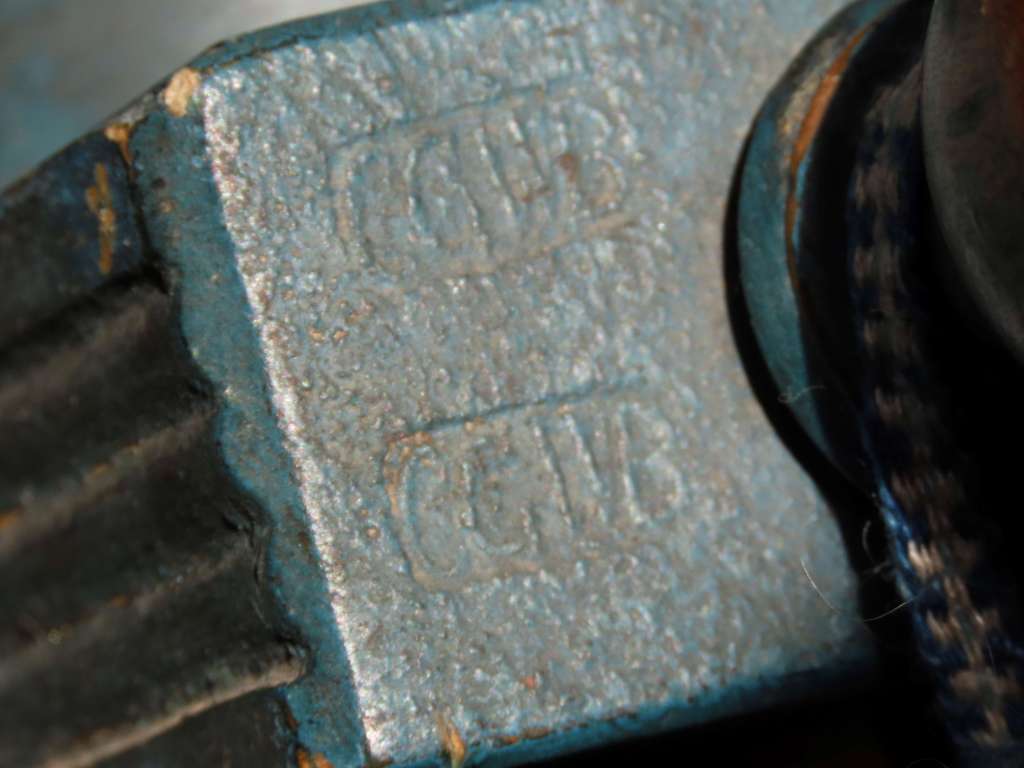
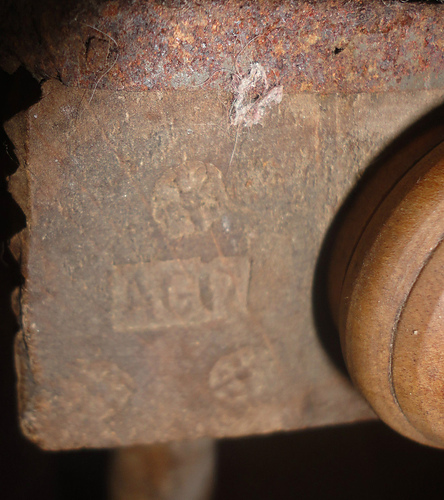
The maker’s initials are a little hard to make out, but appear to be “CGWB.” 

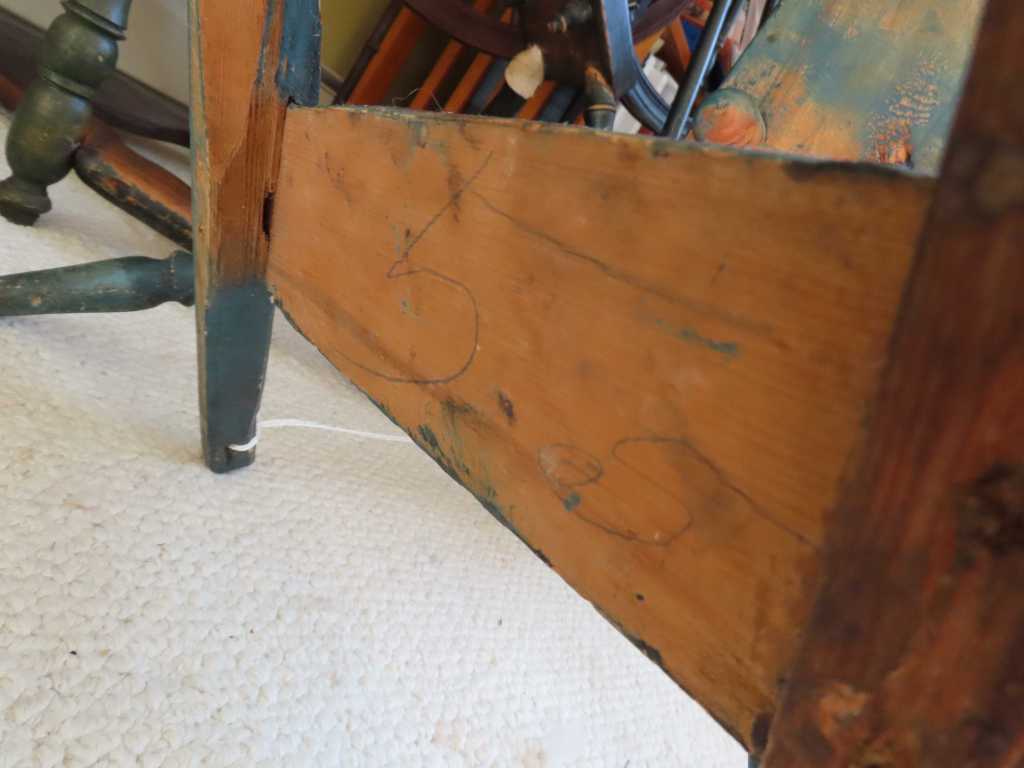
It is stamped twice on each side of the tension knob, but there are no star/sunburst stamps.  The bottom of the treadle is marked in pencil “55.” 

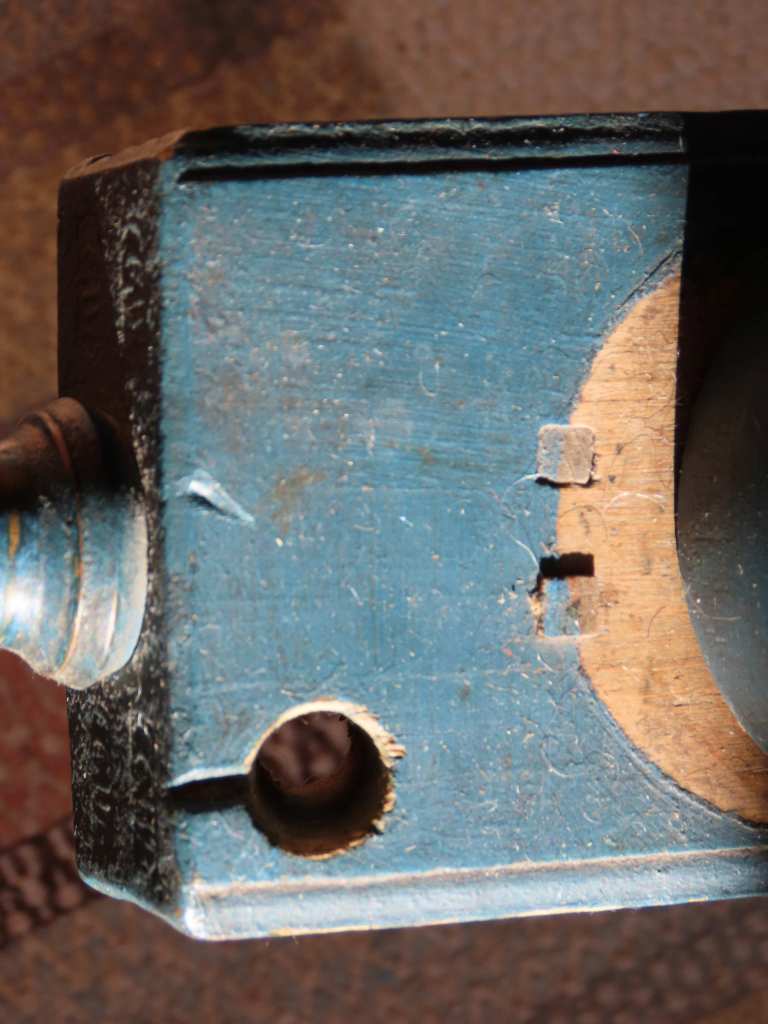
I did not remove the legs or the uprights to check for numbers (as Torvi has) because they were tightly shimmed in place before the wheel was painted. 

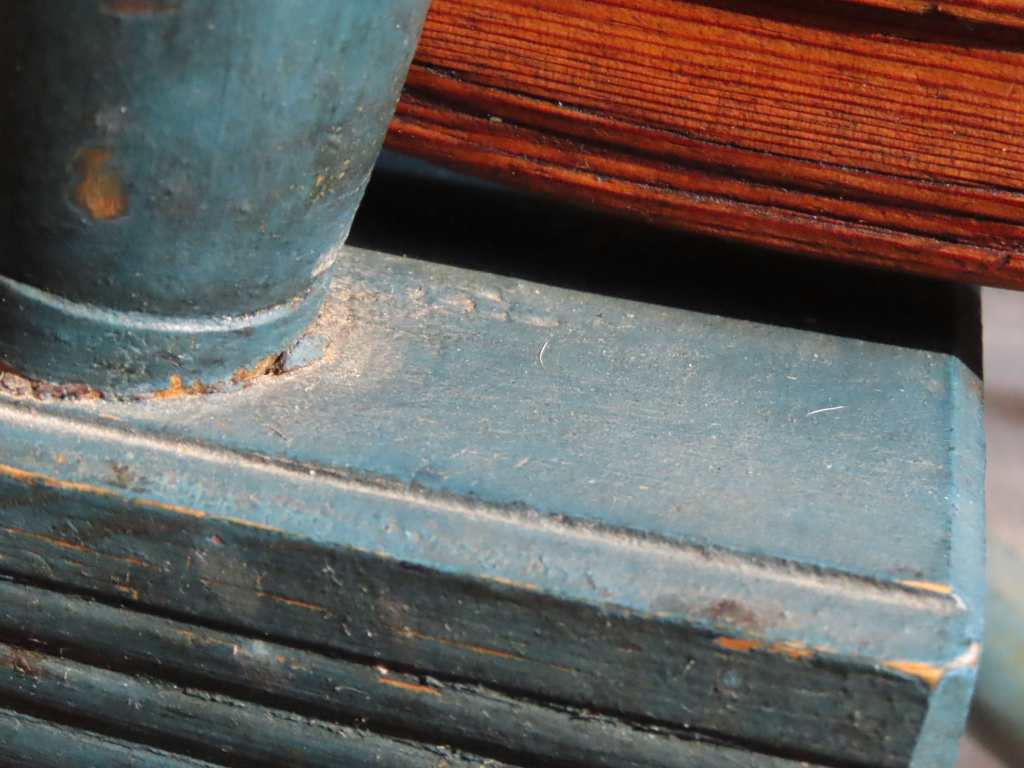
You can see the shim for the upright, which has been painted over

As with the turned-table wheels, there are two keeper pegs for the tension screw. 

But, in contrast with Torvi, there is no wooden screw and nut under the mother-of-all.

The uprights are secured under the table with one piece of wood through both.

The paint shows wear in all the expected places and enhances the interest and beauty of the wheel.

With all of the similarities between these Ulla-style wheels and the Torvi turned-table style wheels, it looks as if they all were made in the same region, but with multiple makers.  If we can pinpoint with some certainty the town or towns where these wheels were made, it will make it worthwhile to research the maker’s initials to try to determine who they were.  Stigsbo will be a starting place. If any one has more clues, however small, please let me know.

Torvi

Simply put, I love this Swedish wheel.  Metal clad, with a long and rounded waist, it is utterly unique.  To top it off, it is one of the most pleasurable wheels for spinning that I have ever used. 

The table, if you can call it that, is unusual from end to end.  There is a good-sized hole in the wheel end, perhaps where it was mounted on a lathe. 

Each end of the table top is cut flat, making room for the wheel posts and mother-of-all.  Likewise, the whole length of the table bottom is flat. 

But between each flat end, the table top narrows and rounds to a caterpillar-like middle, making it easy to pick up and carry. 

The wood is nicely turned but knot-ridden.  Several areas still retain some dark bark. 

The sides of the flat sections have multiple grooves. 

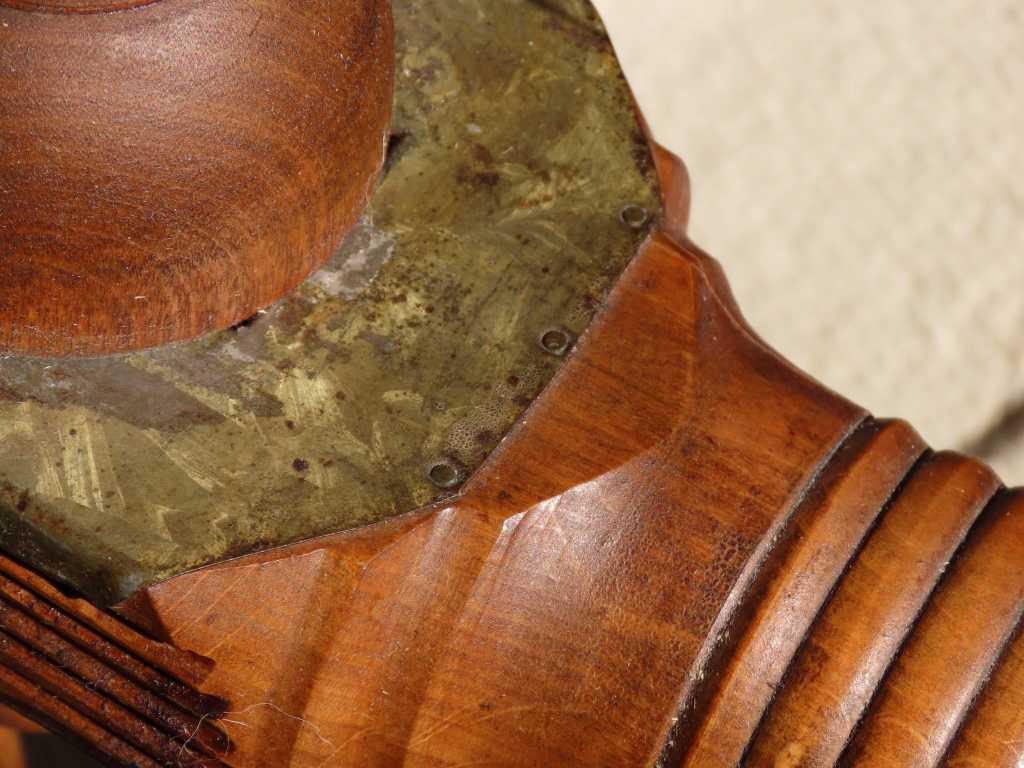
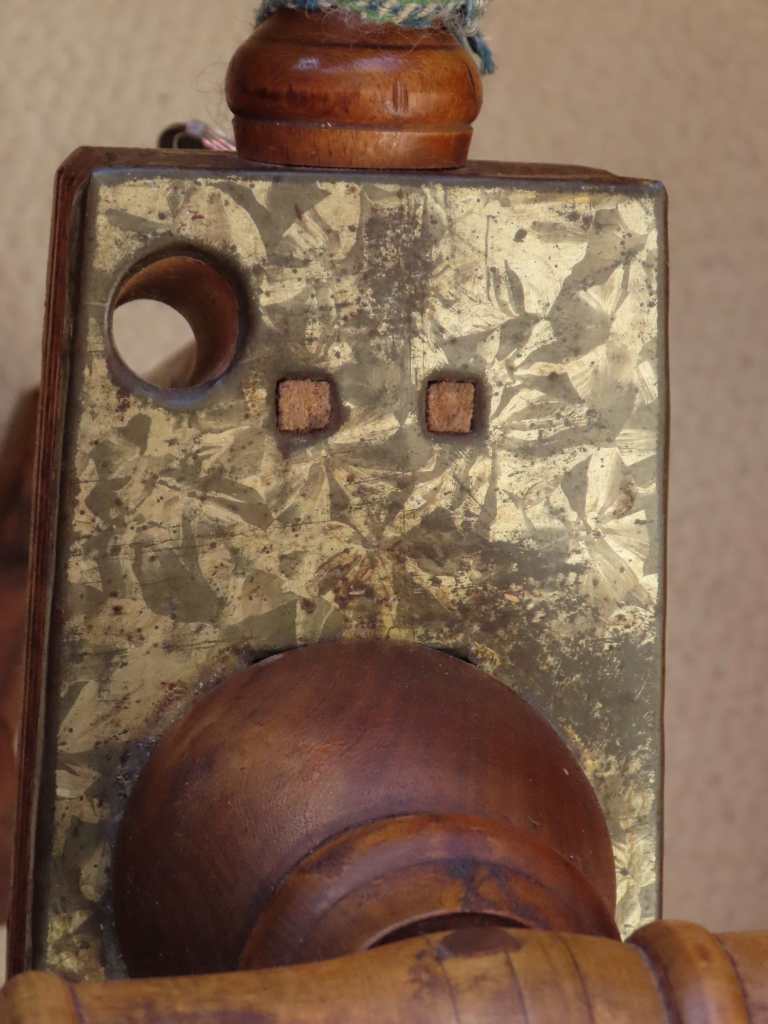
But most interesting is the galvanized metal neatly covering the table at the flyer end. 

Its spangled surface gives the wheel a slightly festive look. 

Unlike the familiar silver of modern galvanized steel, this metal is a golden greenish color. 

The mother-of-all sits atop the metal and is tightened in place with an under-table wooden screw. 

Two keeper pegs flank the tension screw. 

A distaff hole is on the spinner’s side, but the distaff has been lost. 

Scribe marks are found throughout, most utilitarian, but some appearing to be decorative. 

The maidens have three-tiered tops. 

The leather bearing is a sandwich of four thick layers, cut in a distinctive style. 

The flyer is relatively petite, perfect for flax. 

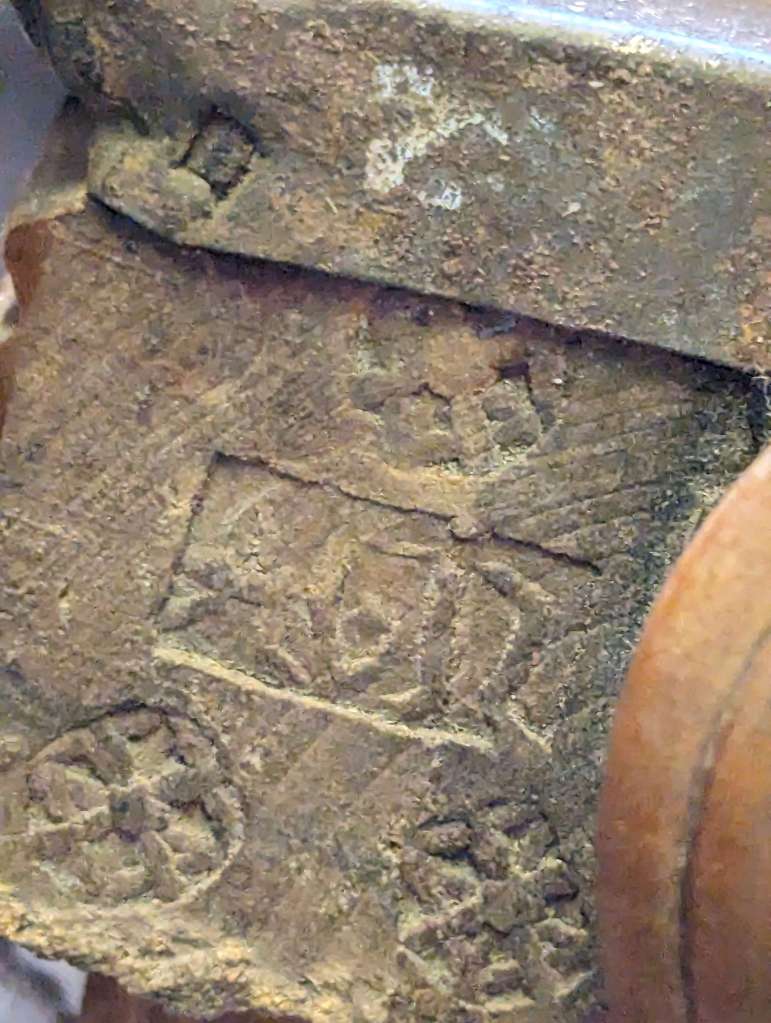
Two maker’s marks are embedded in the table end along with several star/sunburst/wheel stamps. 

Another maker’s mark, on the table top, is easier to make out. 

It appears to be “A P J S” or “A upside-down-G J S. “

The drive wheel has six sections/felloes with radial joints. 

The joints are unusual in that each felloe has either mortises or tenons on its ends, rather than one on each end, which seems to be more common. 

Moreover, the tenons do not extend all the way into the mortise, but instead butt up against a second small piece of wood. 

Each joint is pegged.  The spokes, however, which straddle a small step on the inside rim, do not have any visible pegs and likely are pegged through the outside of the rim.  We cannot tell for sure, though, because the rim is encased in more galvanized metal.  

The axle arm for the footman is straight rather than curved or S-shaped

and the axle caps appear to made from “masur,” a curly birch found in Scandinavia and Russia, including some areas of Sweden. 

The treadle is encased in metal, which has started to rust.

The foot-side treadle bar has one metal-encased end and rests and pivots in a cross bar, also partly encased in metal. 

One pivot pin is covered by a small, rotating wooden piece. 

Thick metal wire attaches the footman to the treadle bar. 

The elegant pointed feet extend through the cross bar. 

Variations on this drop-in style of treadle are often seen on Finnish wheels. 

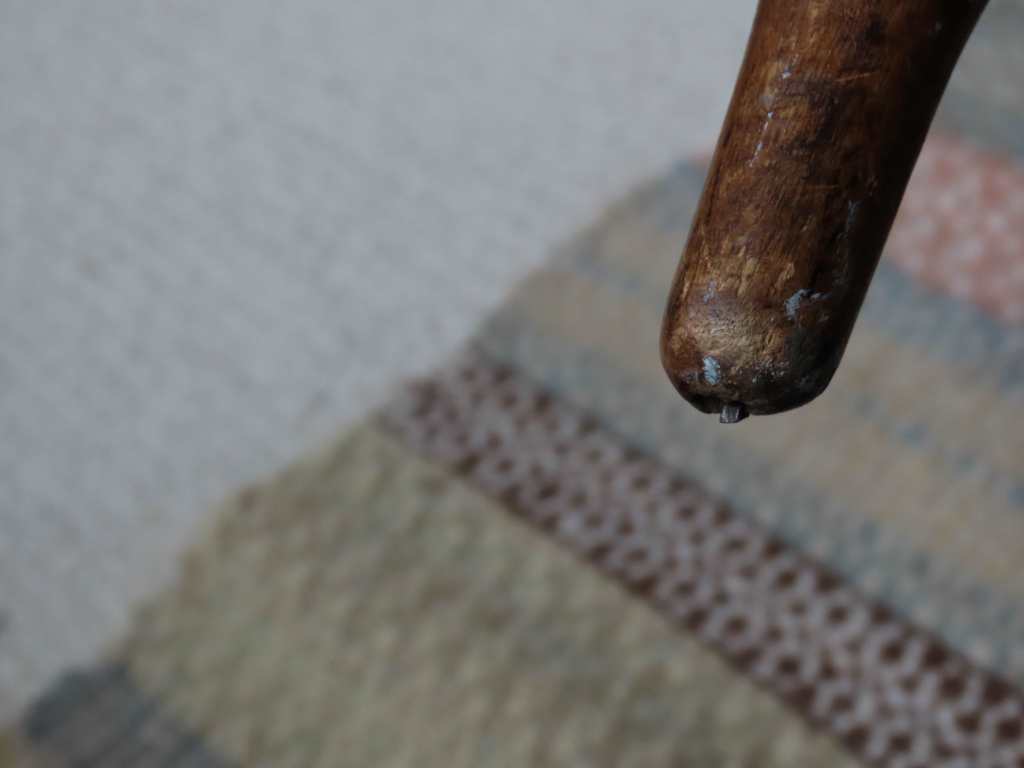
The non-spinner side foot has a nail embedded in the bottom, something often found in Quebec wheels. 

It seems with so many unique features—the turned table, the galvanized metal, the masur wood, the initials–we should be able to find out where this wheel was made.   But I have not been able to find its maker or town of origin, although I think we are getting close.  The seller of my wheel bought it in Dalarna many years ago when she lived in Sweden. Dalarna is a traditional province (landskap) and administrative county (län) in central Sweden with a rich cultural tradition of handcrafts. 

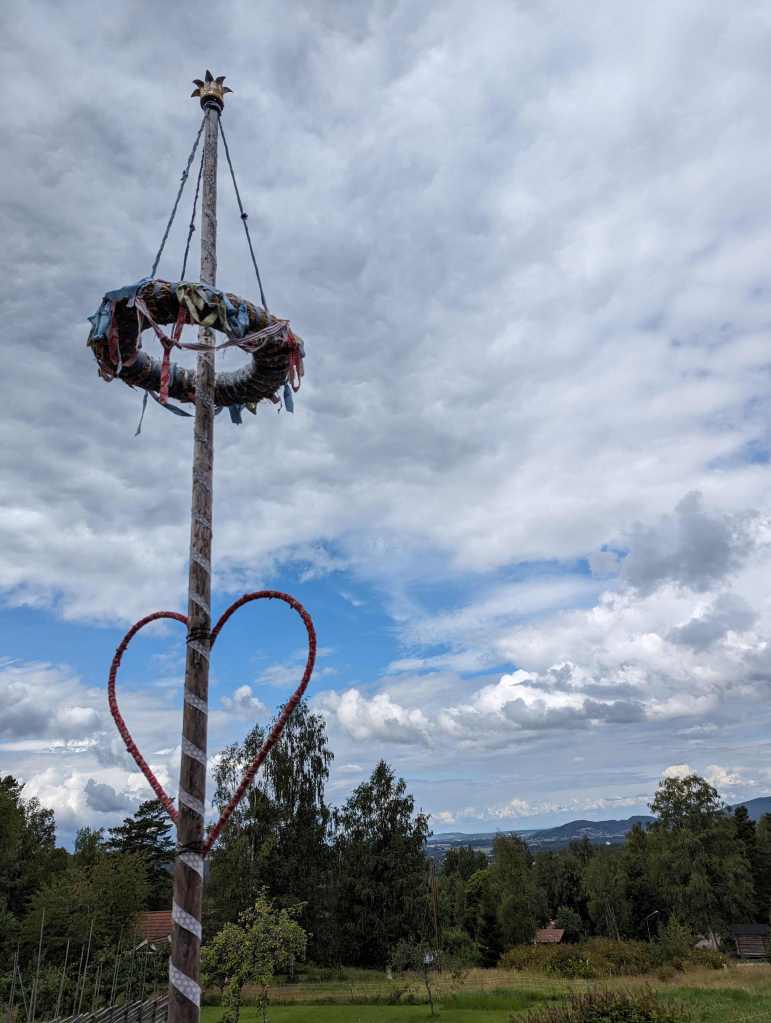
A Dalarna maypole at Sätergläntan

There are about a dozen of these wheels of which I am aware (I am sure there are plenty more in Sweden) and many have some association with Dalarna.  I first learned of them on Ravelry where Sheila MacIsaac, who lives in Scotland, started a discussion about a likely Swedish wheel that she had recently bought.   Sheila’s wheel appears older than mine, with rusted metal and no metal at all on the treadle. 

The initials on her wheel are slightly different, too. 

They appear to be “A G J S(backwards).”  Another wheel on Ravelry came over to the U.S. from Stöde, Sweden (north of Dalarna) where it was given to the owner’s great-grandmother in 1894. Its maker’s mark is similar to mine but the second letter appears to be a backwards “G.” A third belonged to a family who had lived in the southeast part of Dalarna before coming to the U.S. Interestingly, that wheel does not have a maker’s mark, but the handwritten number “17” on various parts.  While my wheel does not have numbers on the outside of the parts, I did discover numbers penciled in hidden areas where the wheel uprights (number 3)

This wheel upright has a slender shim that appears to have been inserted when the wheel was made

and legs (number 2) are inserted into the table. 

Also, several of these wheels have shown up on sale sites, including this wheel in Norway. 

While the turned part is thicker, the maidens, drive wheel, and metal covered table appear to be very similar to the others.  Another wheel recently for sale came to the U.S. from Sweden with the seller’s ancestors.  But the only information she had on where they had lived was that an uncle worked at a copper mine.  That mine would likely have been the large Falun mine, which is in Dalarna, too.

The Dalarna connection was reinforced by the photo above of two wheels, which Swedish spinner, weaver, and teacher, Marie Ekstedt Bjersing, posted on Facebook.  The wheels are part of the collection at Sätergläntan, a century-old handcraft school in Insjön, a small town in the middle of Dalarna. 

Sätergläntan

The wheels were donated to the school by two different people, and, from what Marie knows, they were from southern Dalarna.  I was fortunate to take a weaving class at Sätergläntan this past summer and soon after I arrived, made a beeline to to their wheel collection to check out the two wheels. 

Both are in good condition.  One has initials almost identical to those on my wheel

and the other one’s are similar to those on Sheila’s wheel. 

I made some inquiries locally (with help) to see if anyone had a clue as to where these wheels were made, but came up empty-handed.

The axle cap appears to be curly birch on this one, too

I spent some time spinning flax on one of the wheels and, as with mine, it is a joy to spin on.  As Sheila commented about her wheel, the spinning is “almost effortless.”  Whether it is the metal on the rim giving the wheel some extra weight and momentum, something about the long low design, or some other design feature, these wheels have a spinning quality that is hard to match. 

While examining Sätergläntan’s wheel collection, another wheel caught my eye.  Although it had a flat table, the drive wheel, spokes, drop in treadle, maidens and grooved sides were markedly similar to the turned-table, metal-clad wheels.  The initials were different, but the wheels certainly appeared to be related somehow. 

Could it provide some clues?  Maybe.  More to come in the next blog post. 

Thank you to Sheila and Marie for permission to use their photos.

Update on January 12, 2024: Just as this was posted, another of the thicker-waisted versions of this style wheel came up for sale in Hofors, Sweden, which is just east of Dalarna. It only has metal on the table under the mother-of-all. But, as with my wheel, there is what appears to be bark left on the table edge. 

Amalia

This wheel’s distinctive profile is immediately recognizable from across a room. Its rakish slant, impressive drive wheel, and closely set double upright supports combine for a unmistakable look. The wheel’s previous owner had brought the wheel to New Hampshire from Gothenburg, Sweden, where she had been living.

As far as she knew, the wheel had been made locally, somewhere near Gothenburg. A few sister wheels have shown up on Facebook and Ravelry, but with little information as to their origins. Recently, however, another showed up online as part of the “Lin on Me” linen exhibit at the Rydals Museum in Rydal, Sweden, east of Gothenburg. I checked with the museum and with others in Sweden knowledgeable about antique wheels and, while there seems to be agreement that the wheels are from Västra Götaland, the county (län) surrounding Gothenburg, no one seems to know the maker or town in which they were made.

No maker’s mark

They share some similarities with the beautiful Solberga wheels, but those typically are double rimmed. The photo below is a Solberga wheel, also from Västra Götaland. The photo is from the Upplandsmuseet, with more details here in Digitalt Museum: https://digitaltmuseum.se/011023874843/spinnrock

In the photo above, a woman is spinning in Bolum, also in Västra Götaland. Although the wheel is different than Amalia, it shares many features. More information on this photo is found here: https://digitaltmuseum.se/021017212168/spinning. For anyone researching Swedish wheels, I highly recommend the DigitaltMuseum: https://digitaltmuseum.se/search/?q=spinnrock&o=0&n=60 The search term “spinnrock” yields photographs from eight museums.

As with the Solberga wheels, Amalia’s most striking feature is the drive wheel.

With a 27 inch diameter, sixteen spokes, and decorative finial/half spokes, it was designed both for beauty and fast spinning. And there is no doubt this wheel was valued for its spinning, with telltale signs of heavy use. The axle area is so deeply encrusted with old grease, I hesitated to try to unscrew the axle retaining pegs. I did unscrew one, but left the other in place.

the back-side axle emerges from a sheath of thin crumpled metal.

The front had badly worn the bearing, requiring a bit of propping.

The paint wear on the spinner’s side is fascinating.

One maiden, one upright support, the table side,

and one leg have been rubbed clean of paint, revealing the smooth lustrous wood underneath.

It is interesting to speculate just how the wear occurred–perhaps a combination of hands and clothing (large skirts and sleeves, perhaps?) rubbing against the wheel for hours, days, months, and years.

Most of the treadle paint has worn off completely.

The treadle paint and wood wear show that the wheel was often treadled with two feet. The treadle bar appears to have been designed for treadling that way, with its widened sweep to easily accommodate and support the left foot.

The uphill leg was replaced and painted a lighter green.

All of the wheels of this style that I have seen were painted with a very dark green paint. In contrast, the flyer is not painted, which is not unusual on painted Scandinavian wheels.

On the other hand, it might indicate that the flyer is not original to the wheel.

Especially because it does not show as heavy use as the rest of the wheel. The flyer hooks are quite large.

The leather bearings look like they could be original.

The spinner-side flyer bearing is four-layered leather, riveted with nails.

To see how such bearings were made, here is a superb 1964 video of Swedish wheel maker, August Jonsson: Spinnrocken.

Amalia’s wheel is missing one spoke and several of the small half-spoke/finials. The wheel rim is unusually constructed with eight alternating short and long sections.

To help support the large wheel, there are long, smooth secondary uprights running down to each leg.

The drive wheel’s arched-top double upright supports are most often associated with Finnish wheels. But they are found on Swedish wheels, too. These are closer together than most, which add to this wheel’s elegant style.

The table is made of fairly coarse grained wood, rough on the underside, but with nicely turned (and worm/beetle hole riddled) bottoms to the upright supports. Several have old shims.

There is a spinner-side distaff hole, but no distaff.

And the table end and openings are nicely chip-carved.

The distance between the flyer and the drive wheel is very short, which is somewhat unusual for Swedish wheels. It does allow for a large drive wheel to fit in a smaller footprint, although the wheel is quite tall. As for spinning, the wheel is fast, smooth, and effortless. Hats off to her maker, wherever he was.

Lazy Kates

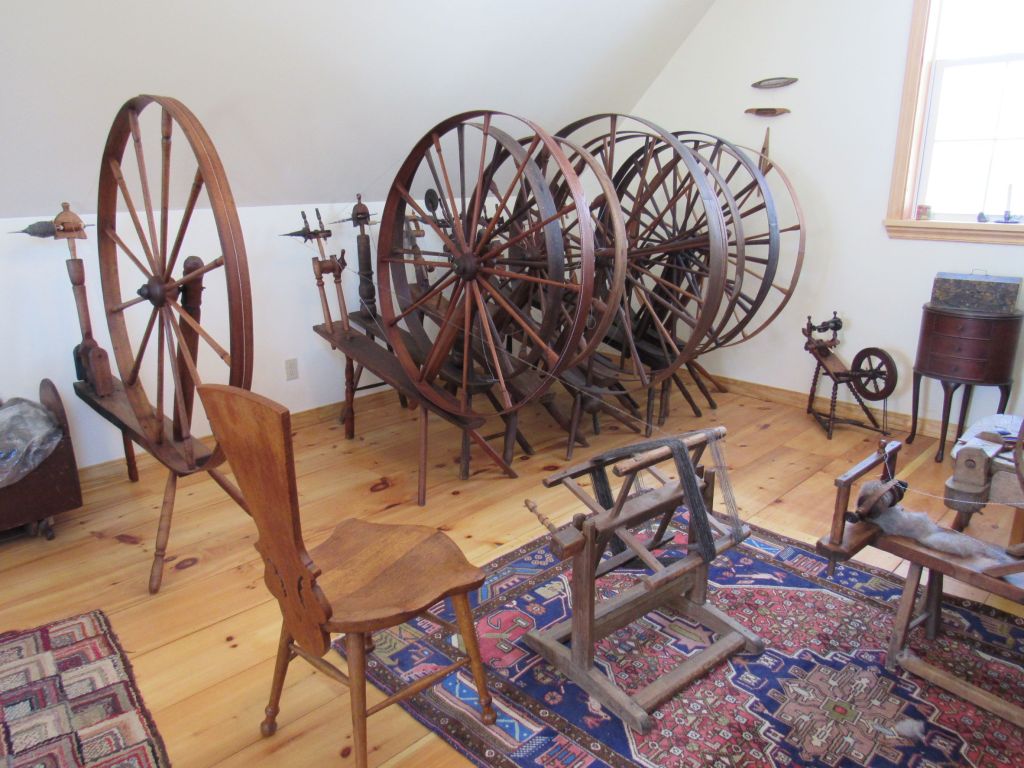
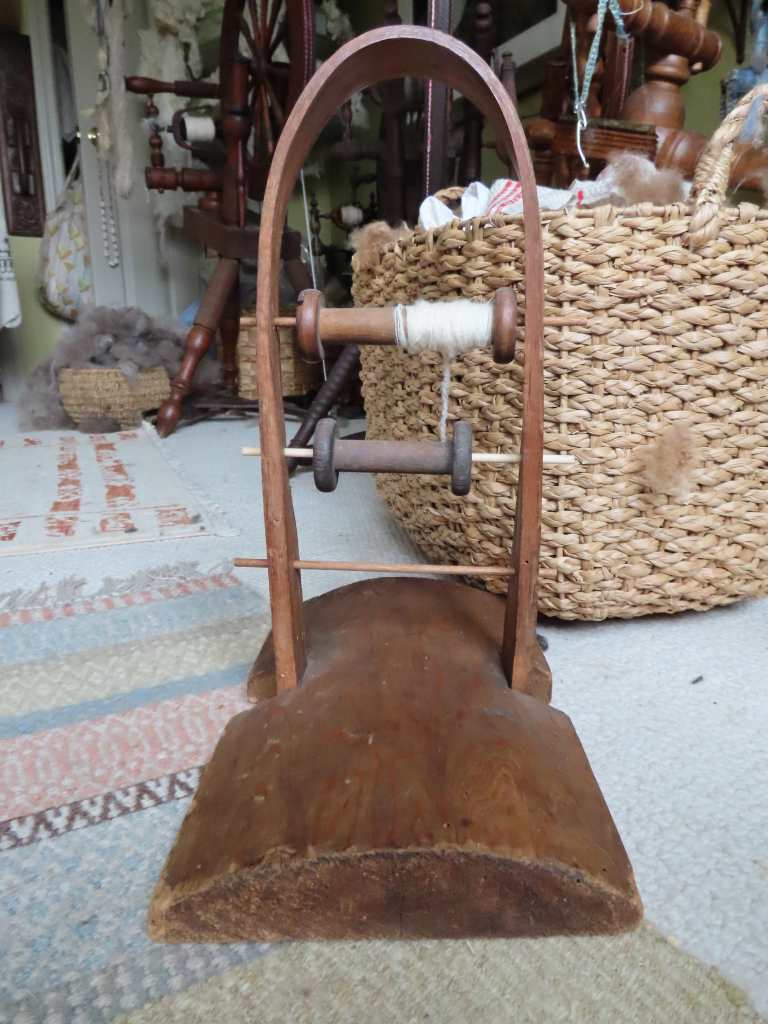
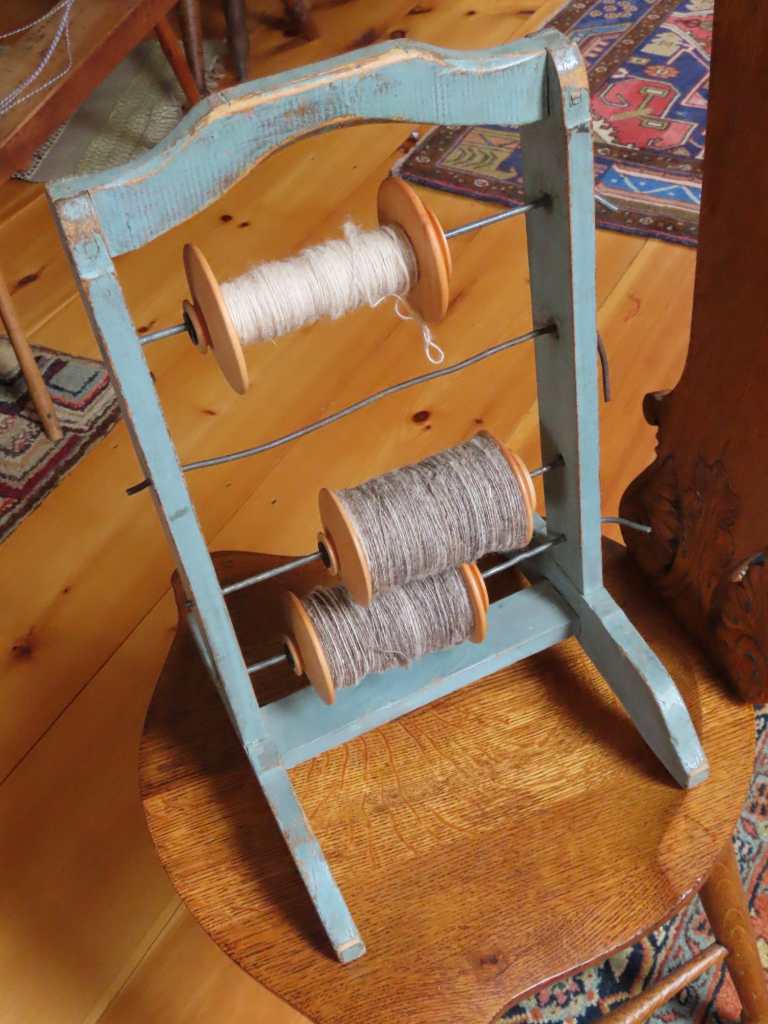
Although we are rich in antique spinning wheels in Maine, antique Lazy Kates are hard to come by. A Lazy Kate is a bobbin holder, usually for three or four bobbins. Most often used for plying, they can also serve as bobbin storage.

Perhaps they are scarce in Maine because much of the spinning done here in the 18th and 19th centuries was to produce singles linen and wool for weaving. With singles, the spun thread or yarn could simply be reeled off the wheel without removing the bobbin. Not surprisingly, we have an abundance of antique reels and bobbin/pirn winders here.

In Quebec, spinners also tended to leave bobbins on the wheel, reeling multiple bobbin-loads onto a wrap reel, called a “dévidoir.” Spinners would then simply ply directly from the dévidoir, a wonderfully efficient system that made it unnecessary to have multiple bobbins or a Lazy Kate.

Dévidoir being used for plying

In any case, Lazy Kates seldom come up for sale in New England. And those that do seem to have no similarity of design or construction. The three I have found are wildly different from each other.

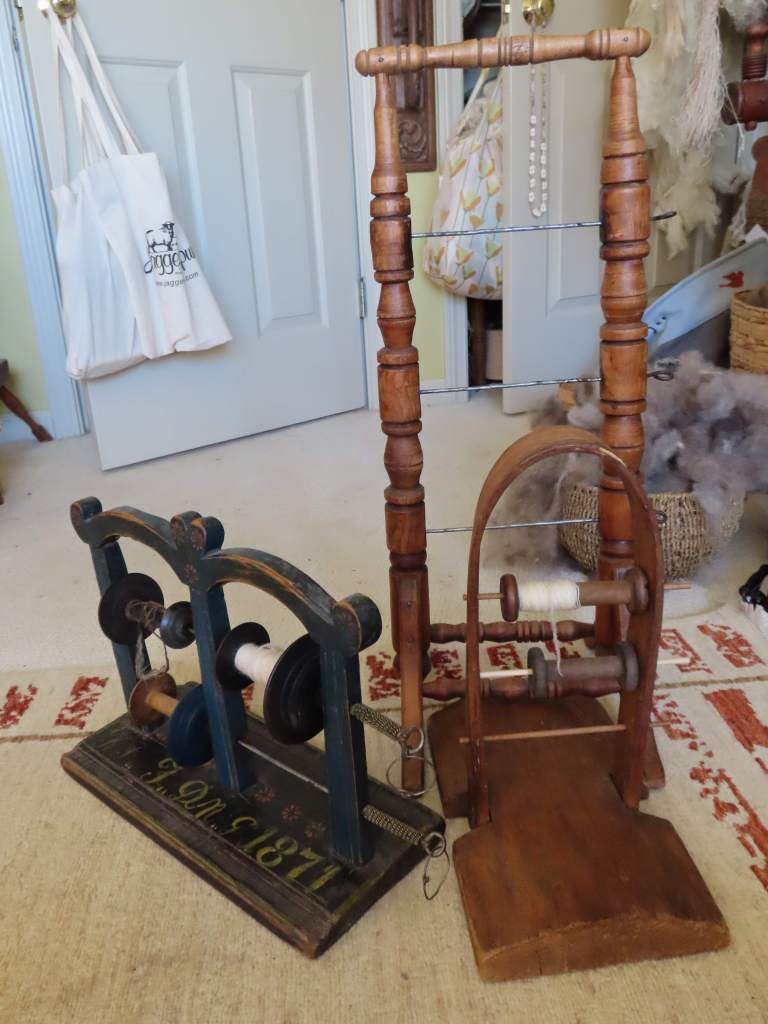
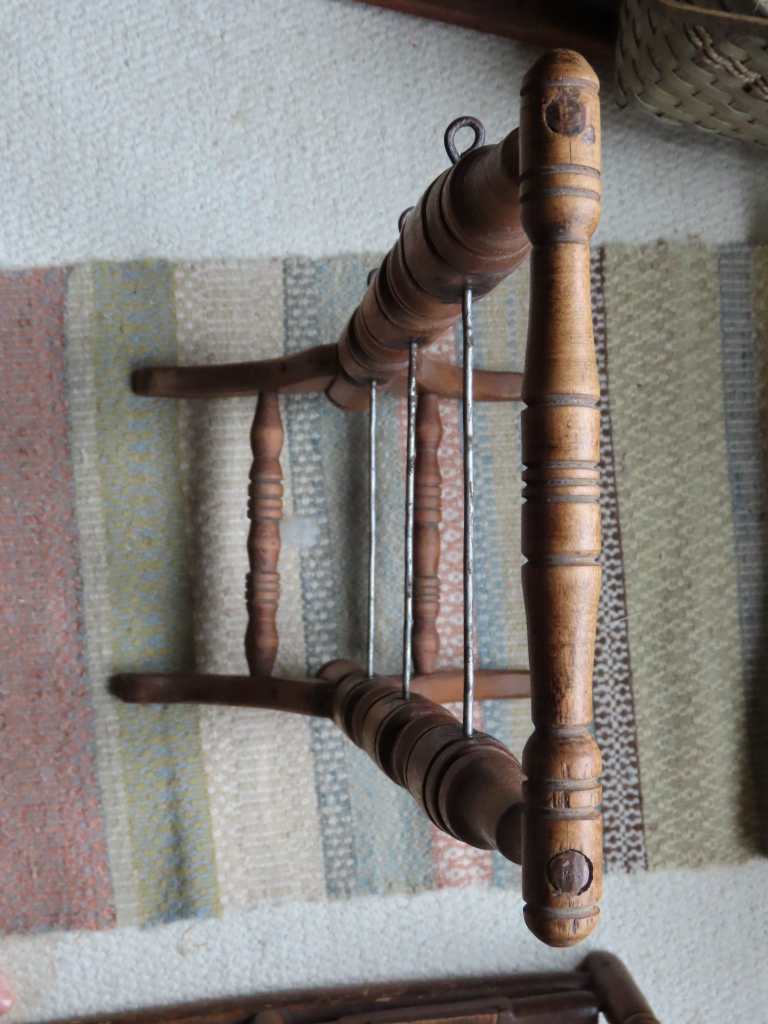
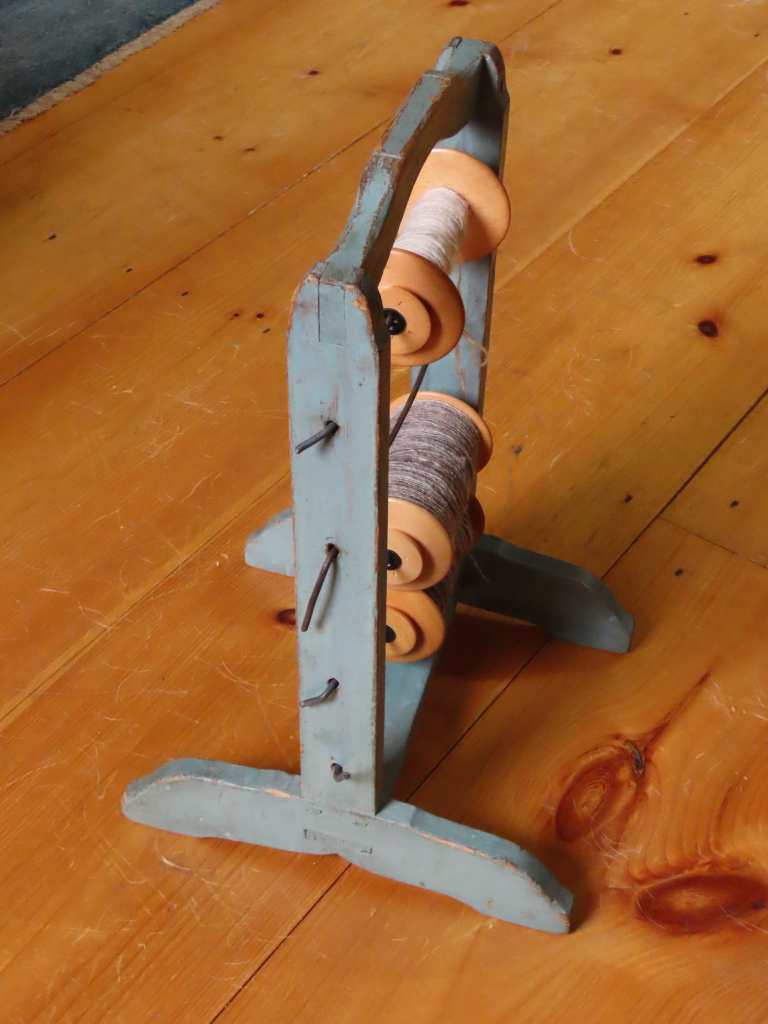
This tall Kate for three bobbins has slightly mismatched turnings.

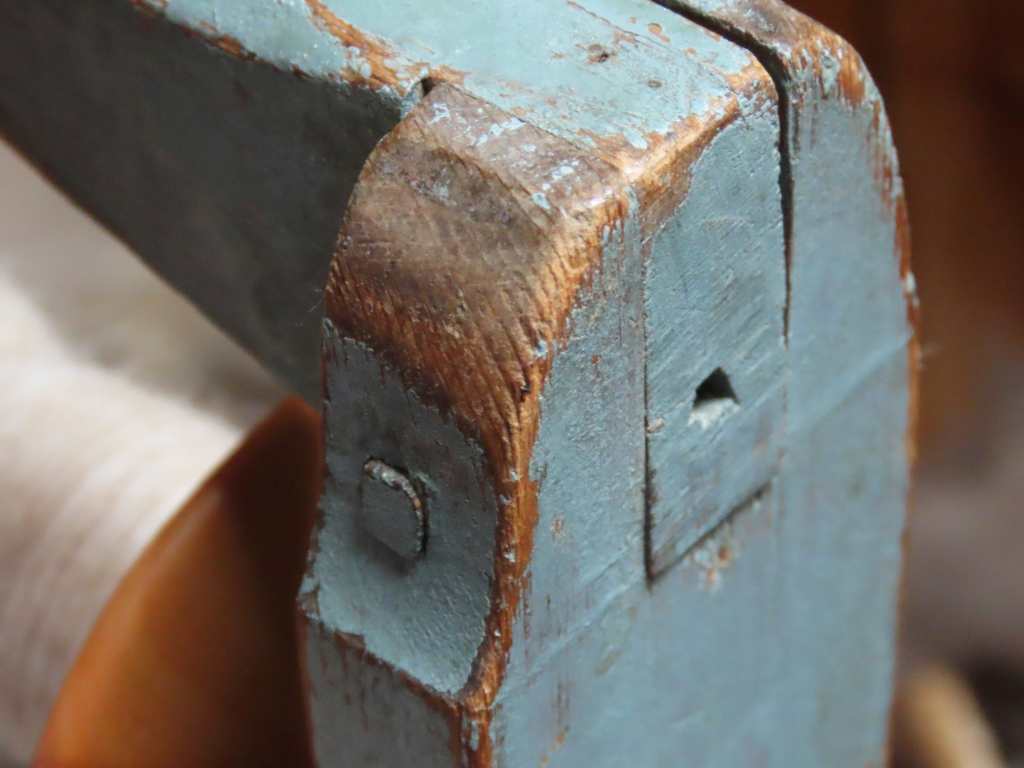
The base manages to be both sturdy and graceful.

It looks as if it may have been made with spare pieces from furniture making.

As with spinning wheels, the makers of Lazy Kates were not content to produce objects that were just utilitarian.

Instead, they approached these simple tools with creativity and style, leaving an imprint of time, place, and their own personalities.

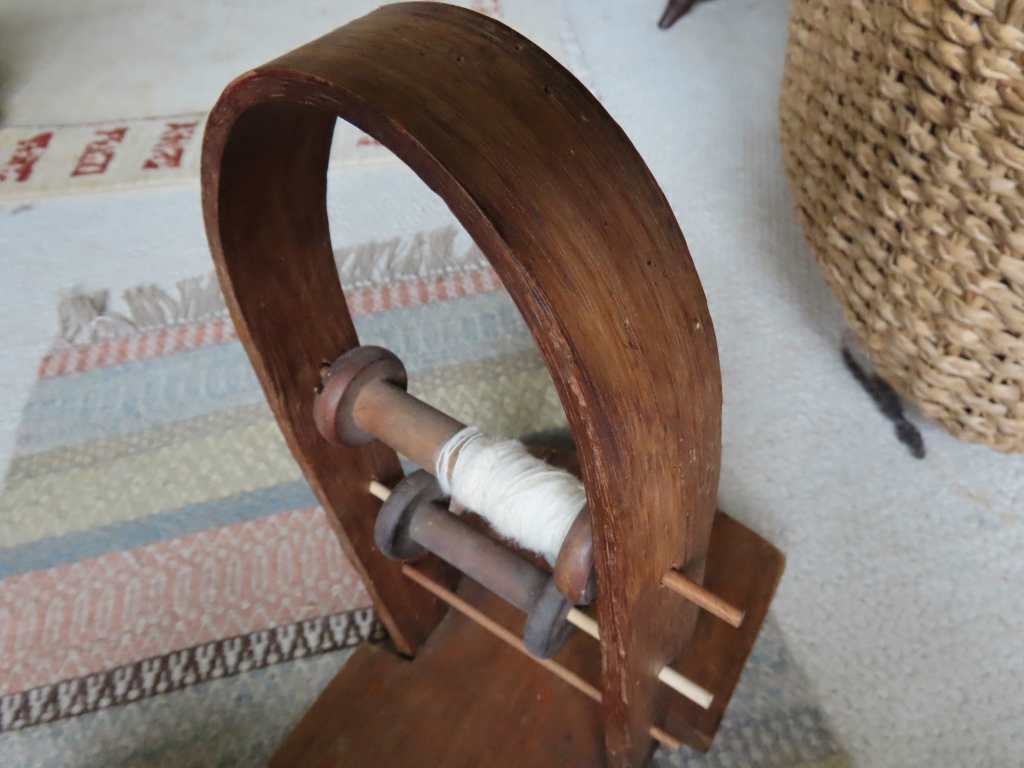
This petite three-bobbin Kate was found in a New Hampshire antique store.

It is unusual and impressive due to its extreme bentwood arch,

nailed into a plain unfinished base.

The rough bottom shows saw marks.

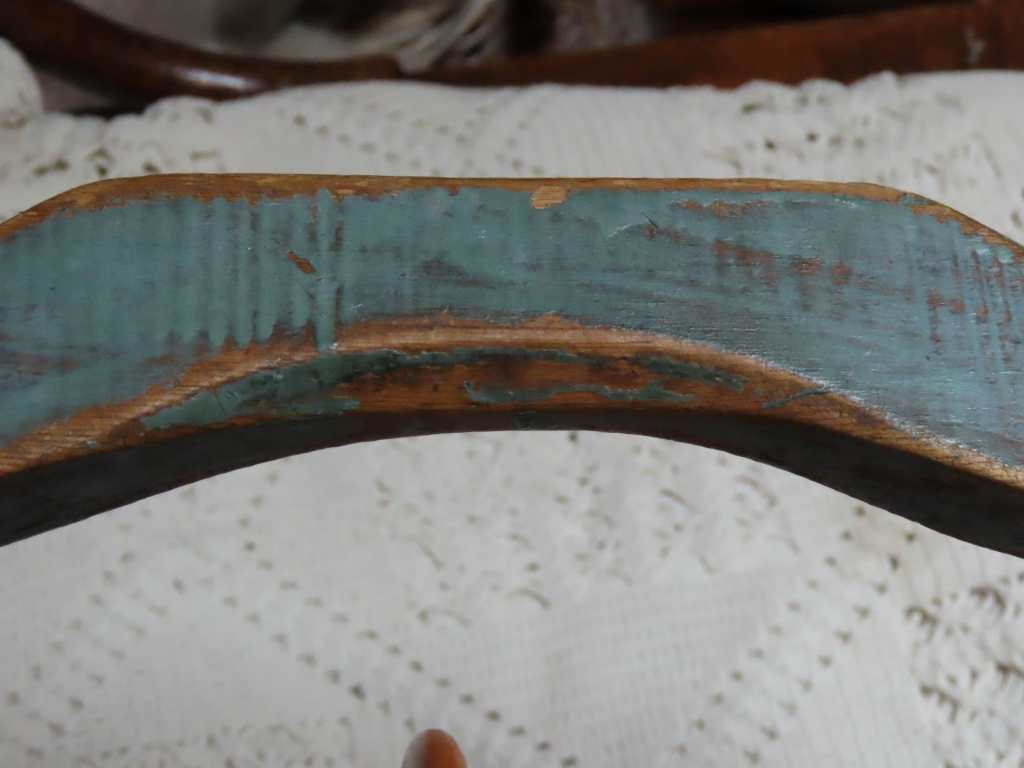
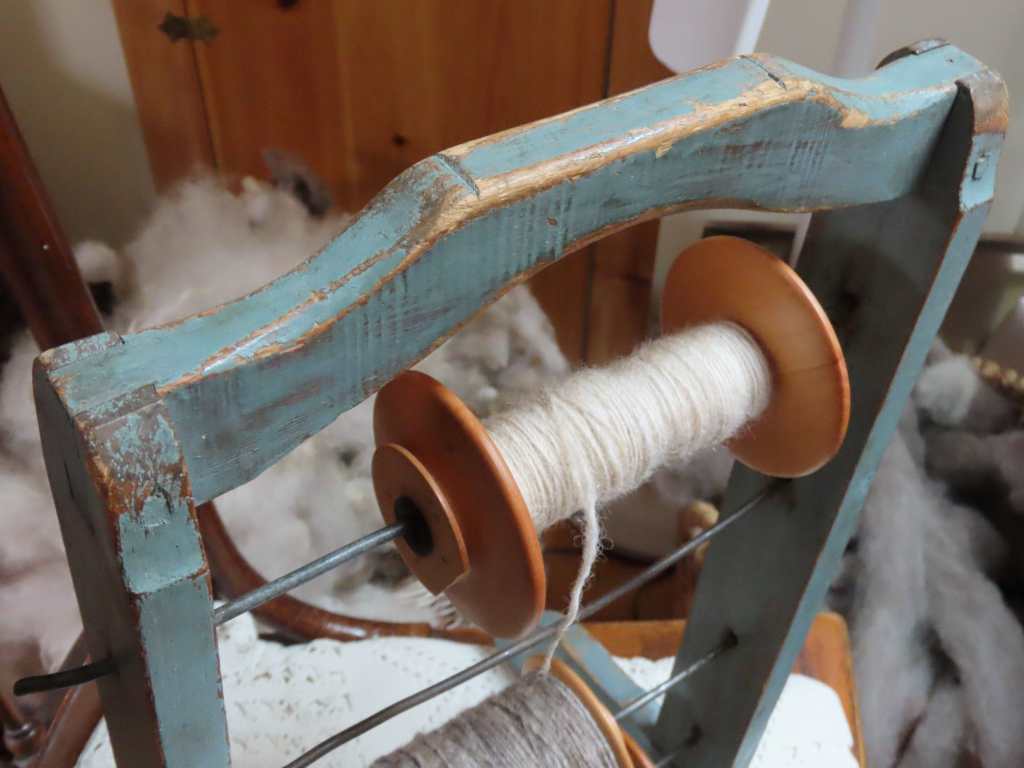
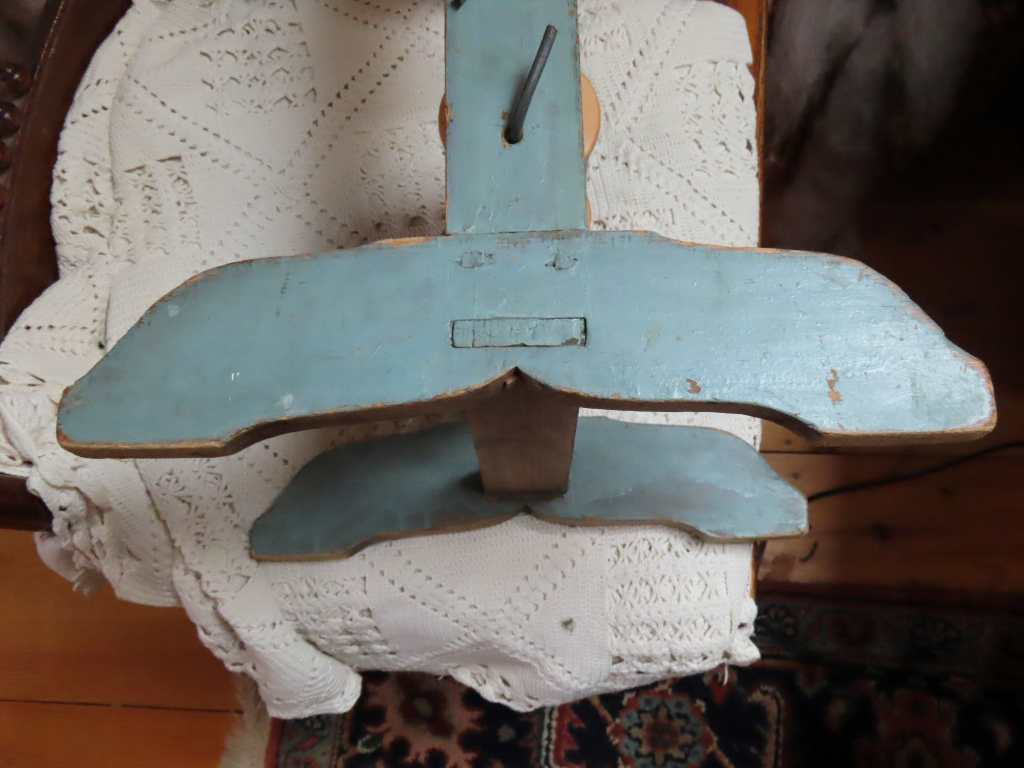
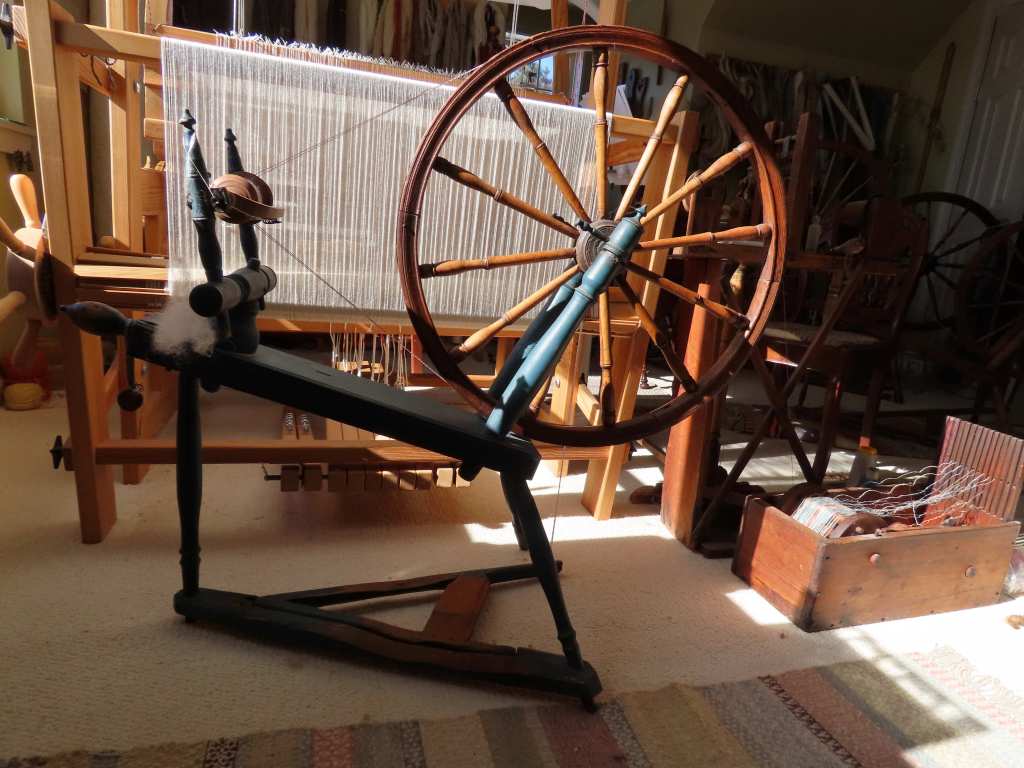
In contrast, this Kate, found at an antique show in Maine, is well-finished with paint and pegs.

The top is designed for comfortable carrying and shows paint wear, presumably from being handled.

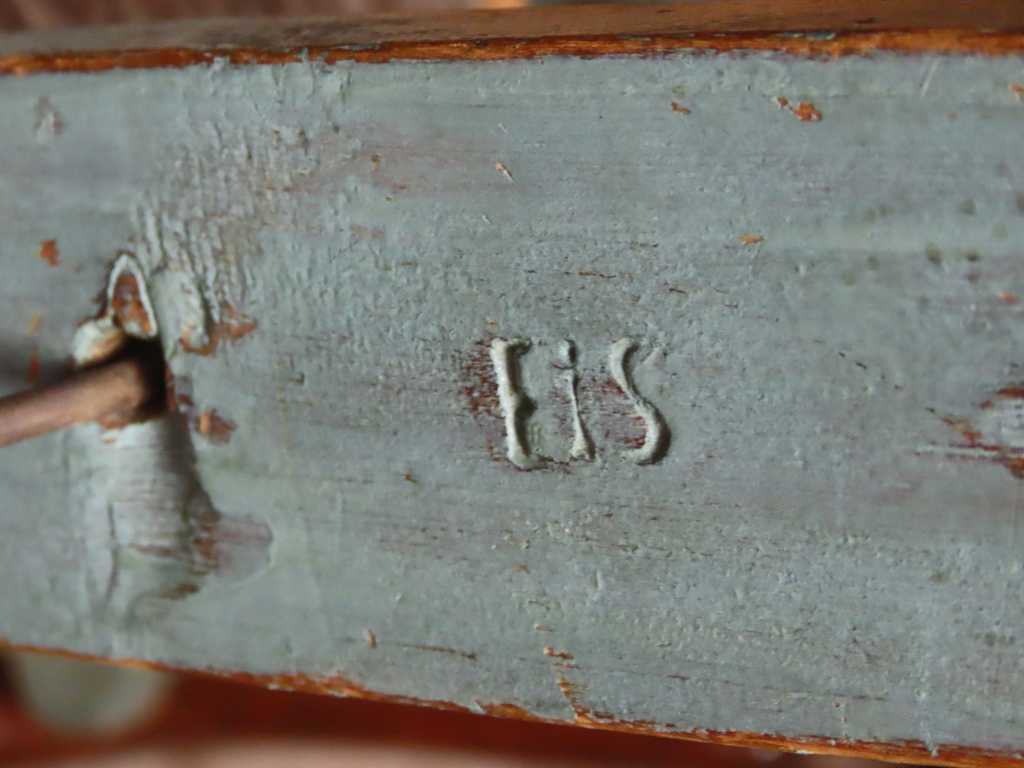
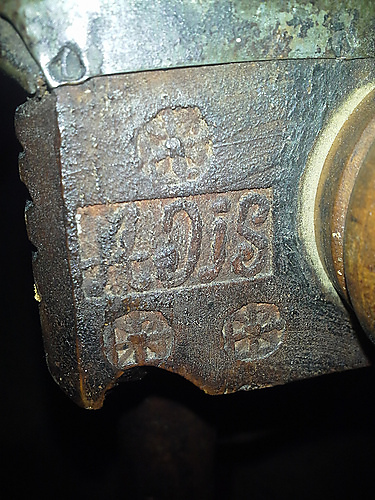
Surprising to me, it also has initials “EiS” stamped on the side.

Because the paint color and initials look much like those on Scandinavian wheels,

I wondered if this Kate may have come from there.

But, its general style does not resemble the Scandinavian Kates that I’ve seen, so its origin remains a mystery.

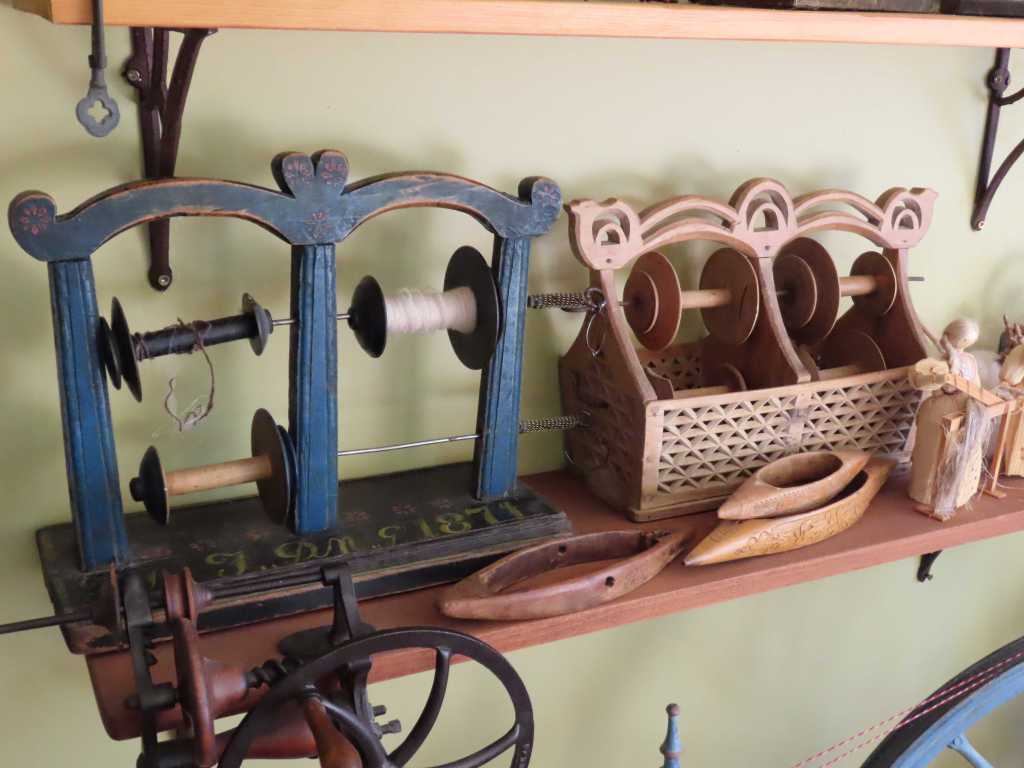
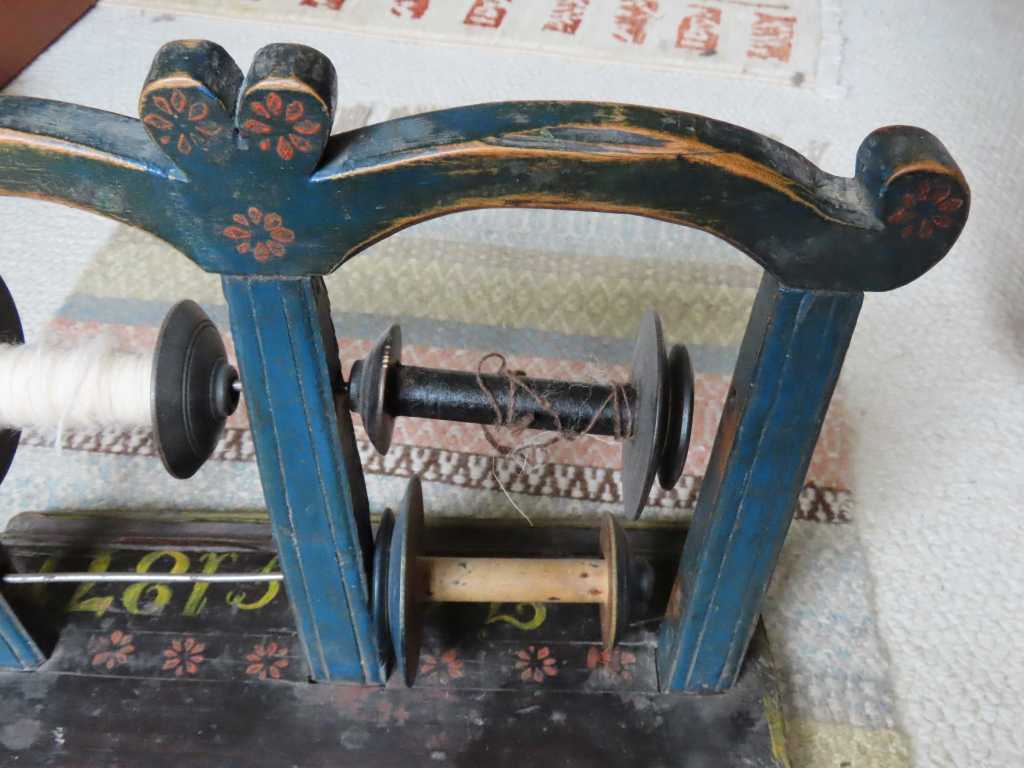
Aside from the Kates I found in the US, I have two Kates from Scandinavia.

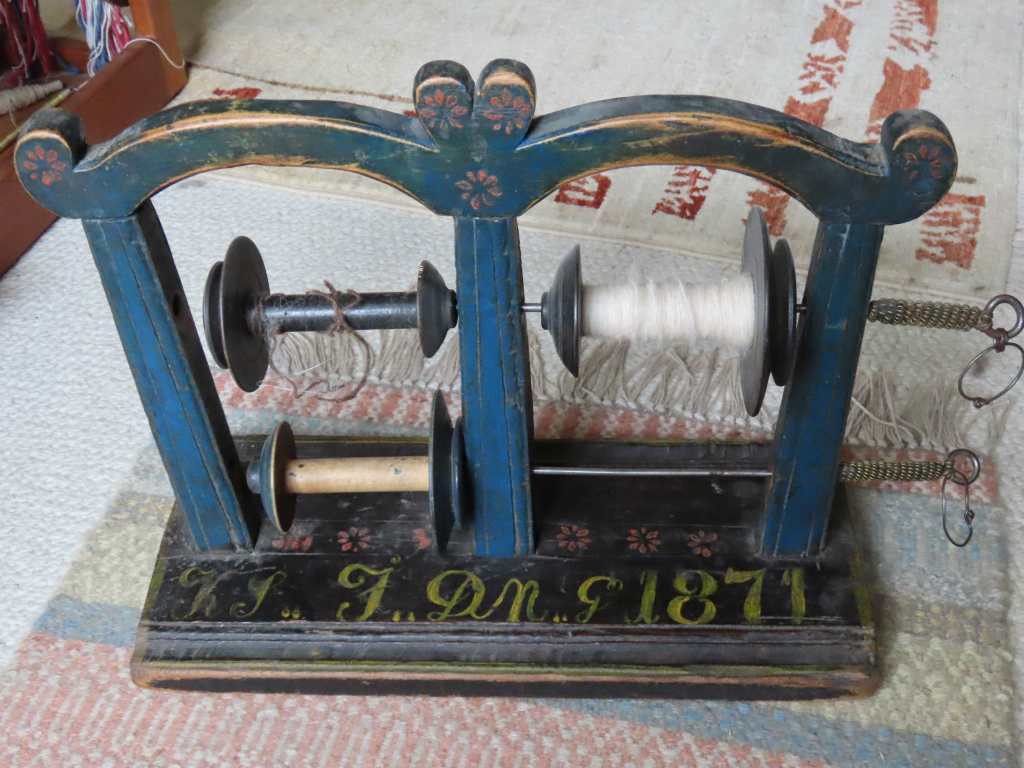
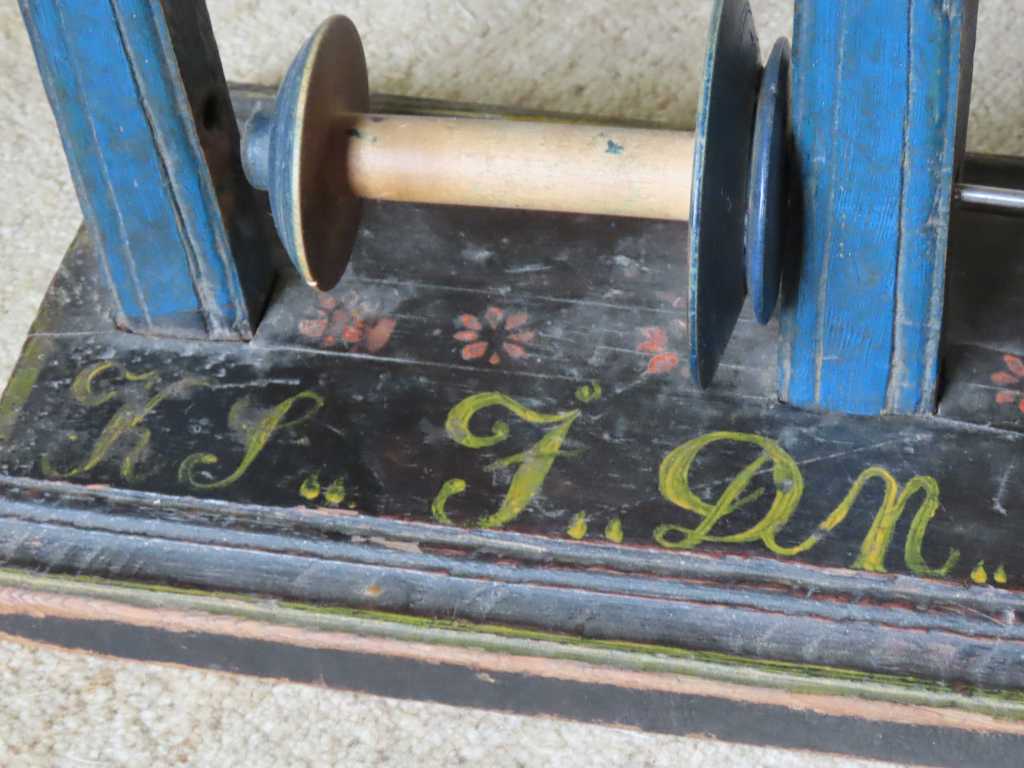
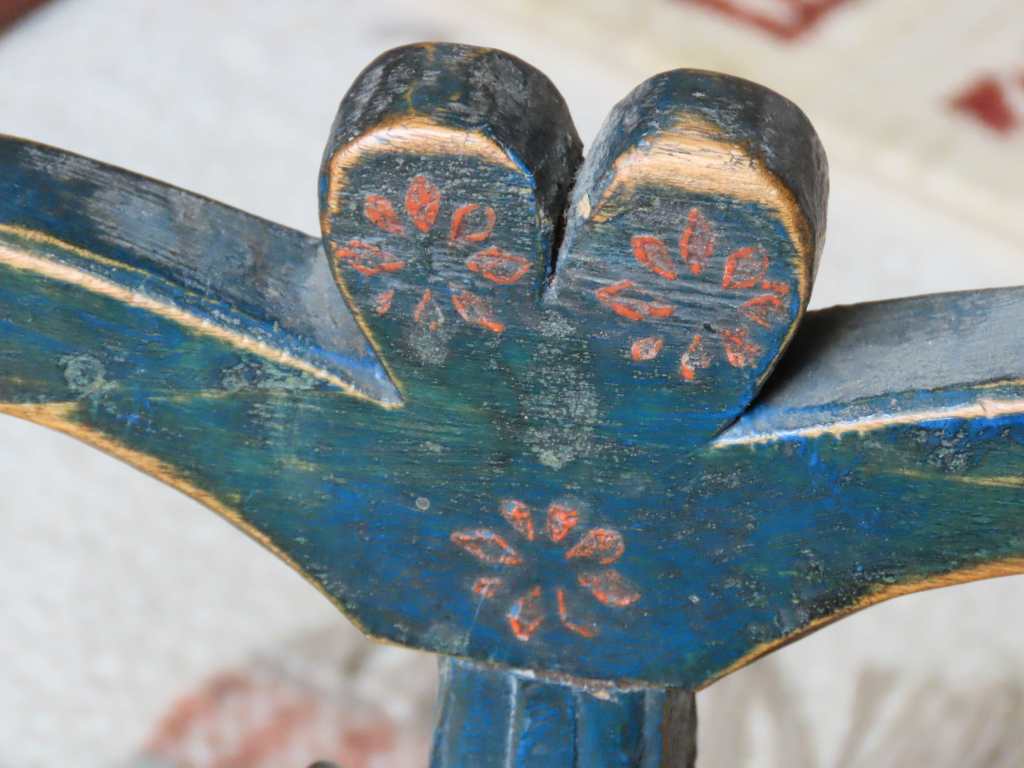
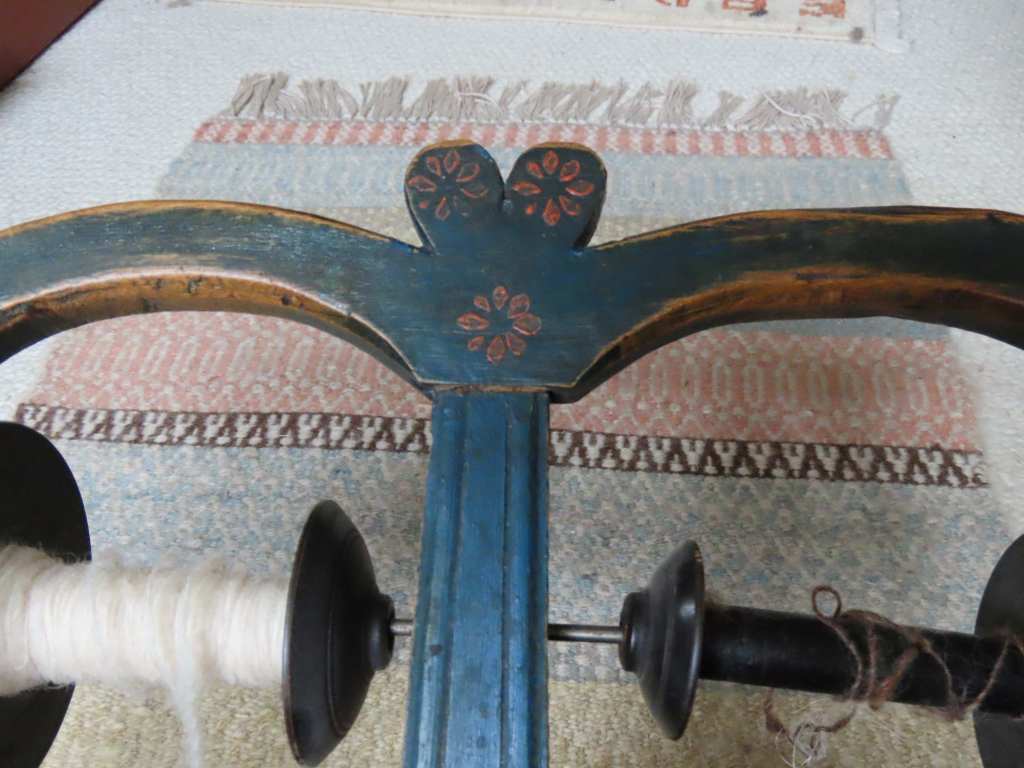
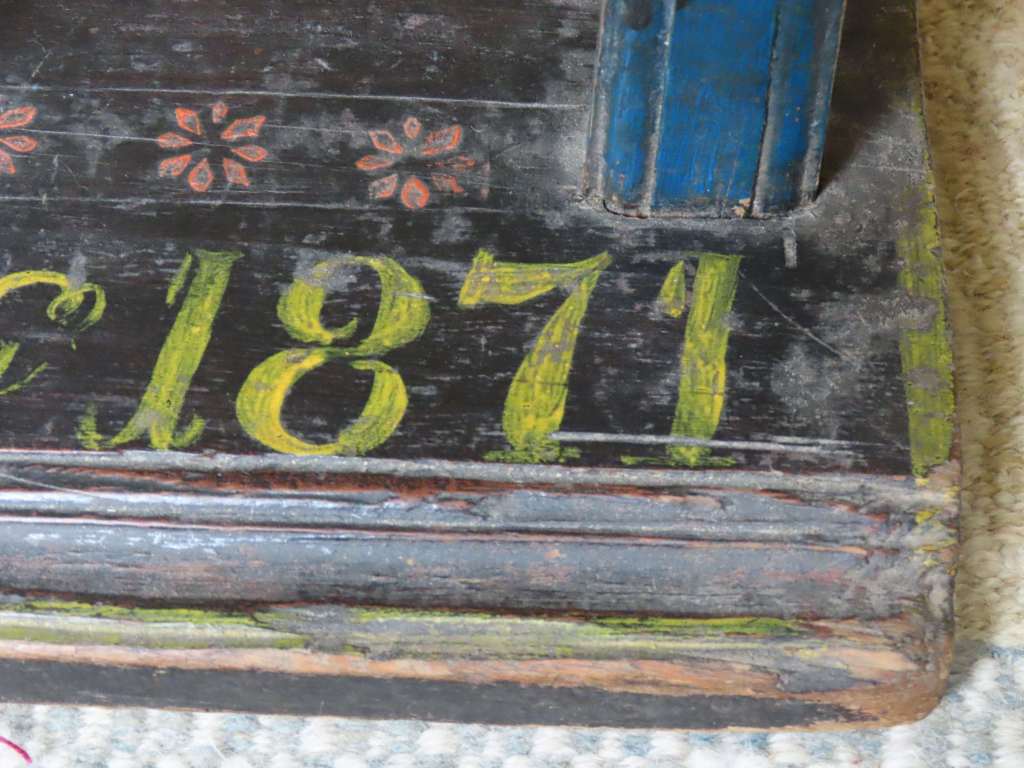
The first is one typical style found there–upright with two bobbins on each side. Painted, with an 1871 date and puzzling letters.

Is it two sets of initials, perhaps, or initials and abbreviated words?

It may have been a wedding or birthday gift.

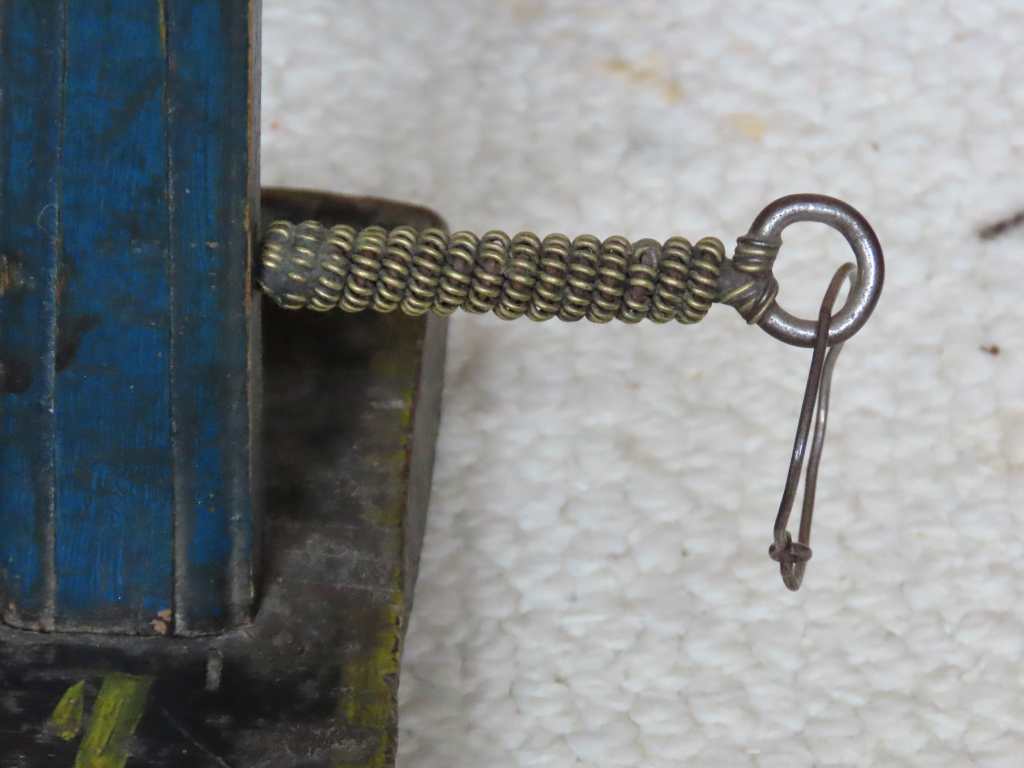
I have seem this general design and the coiled handles on the bobbin supports on a few Kates from Finland,

so this one may be Finnish or maybe these features were common in Sweden or Norway, too. As with the other blue-painted Kate, this one shows paint wear from being carried around.

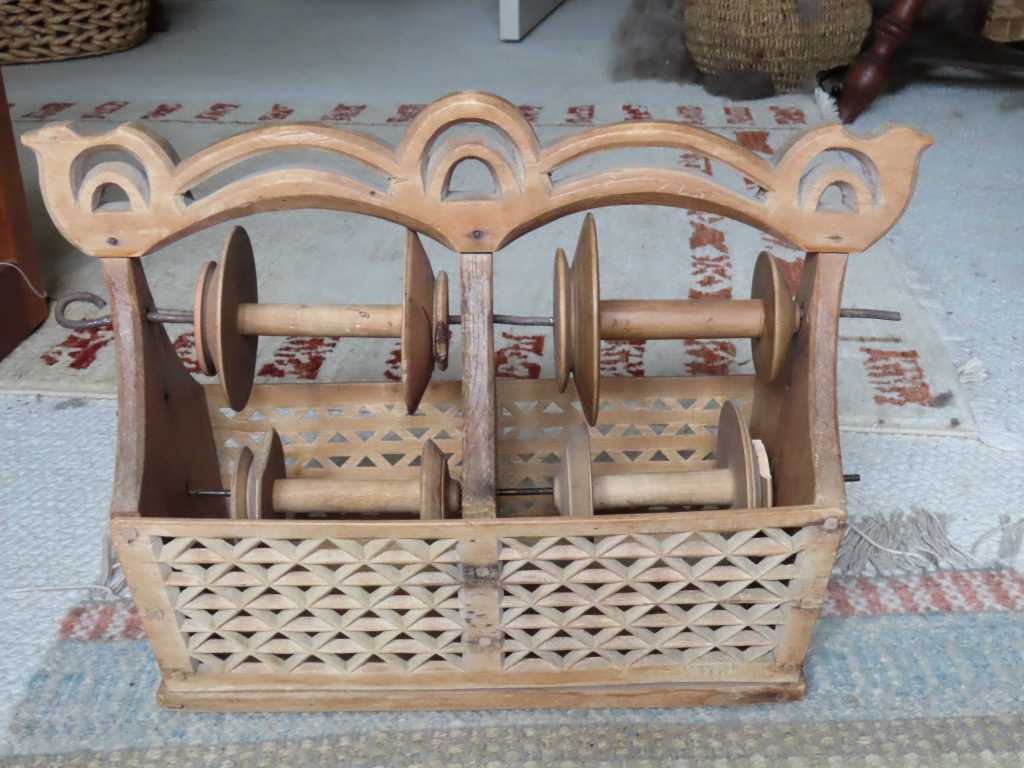
The second Scandinavian Kate illustrates another common style there.

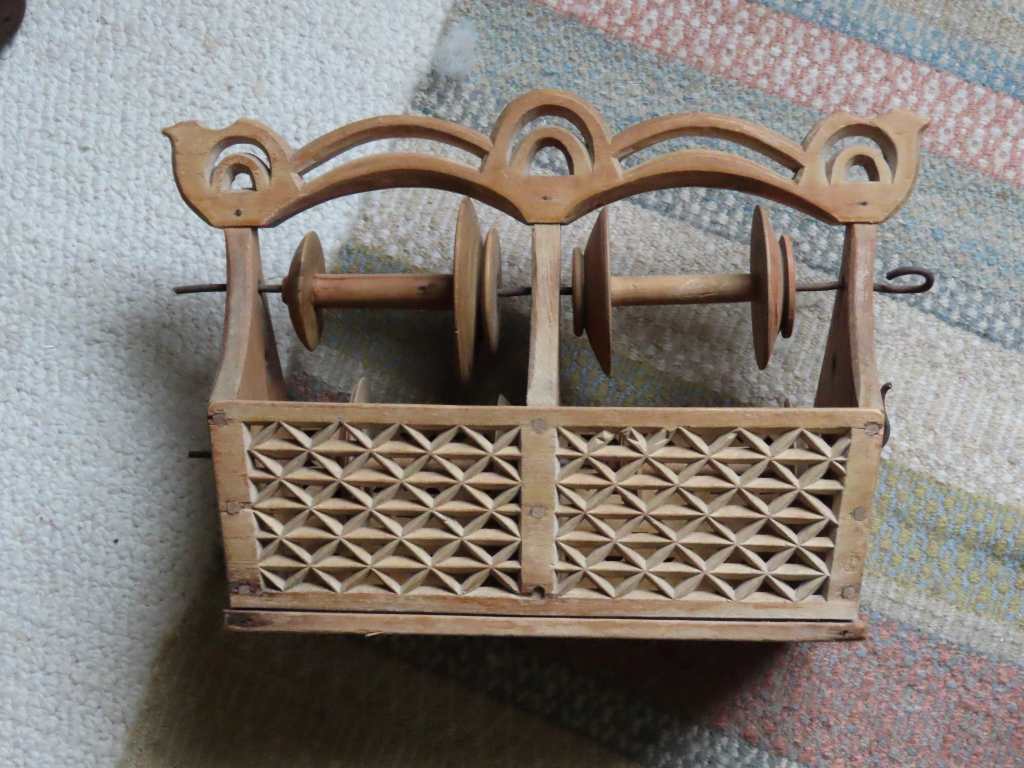
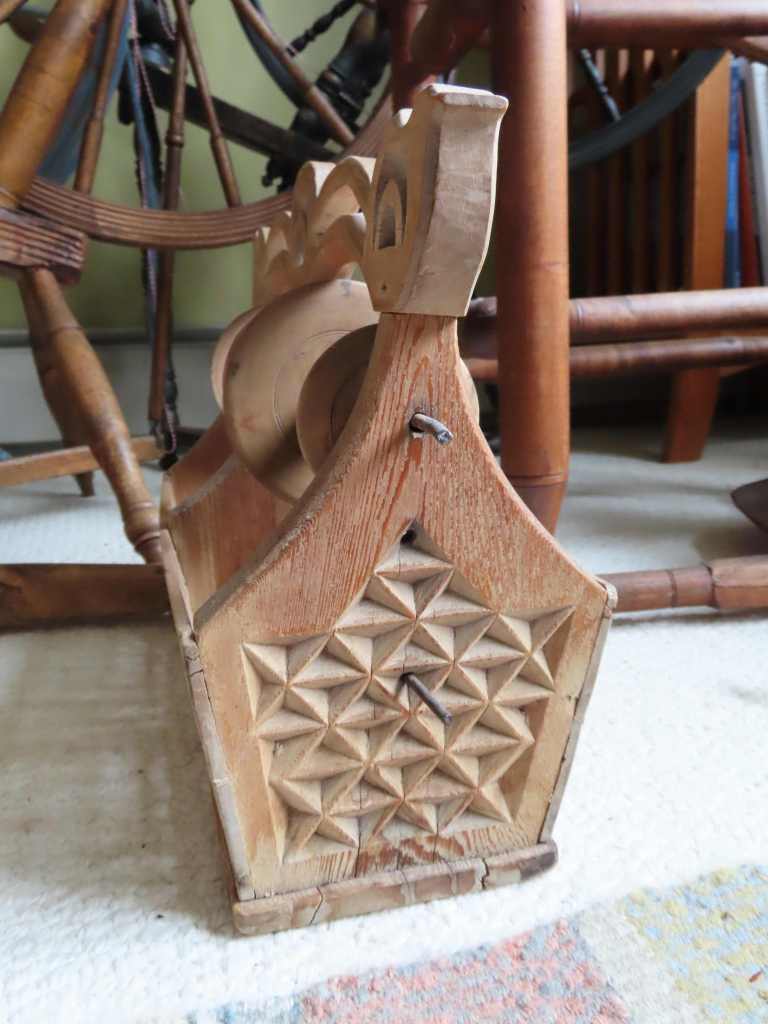
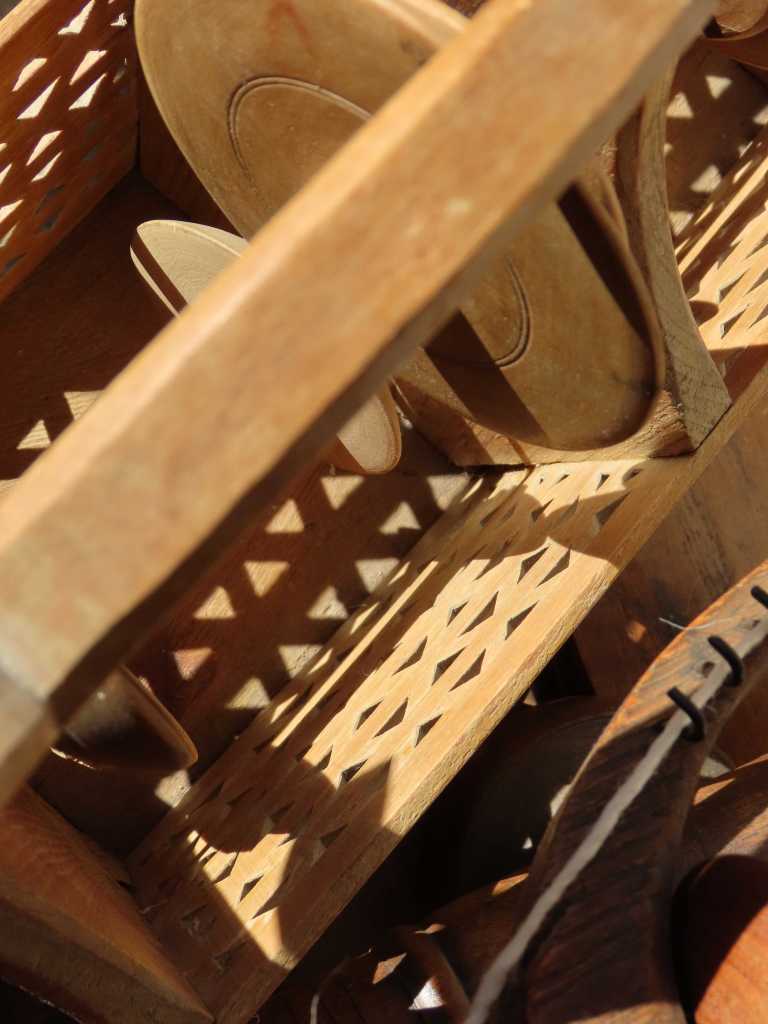
It is like a wooden basket, with four bobbins and a bottom that can provide extra storage for small items.

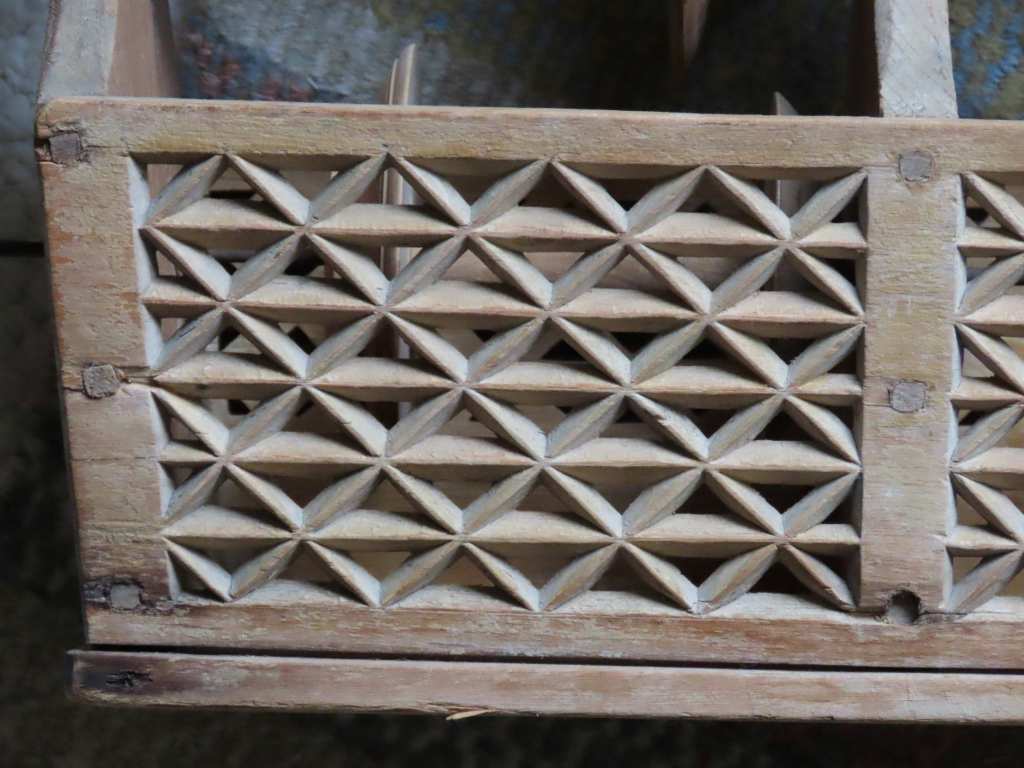
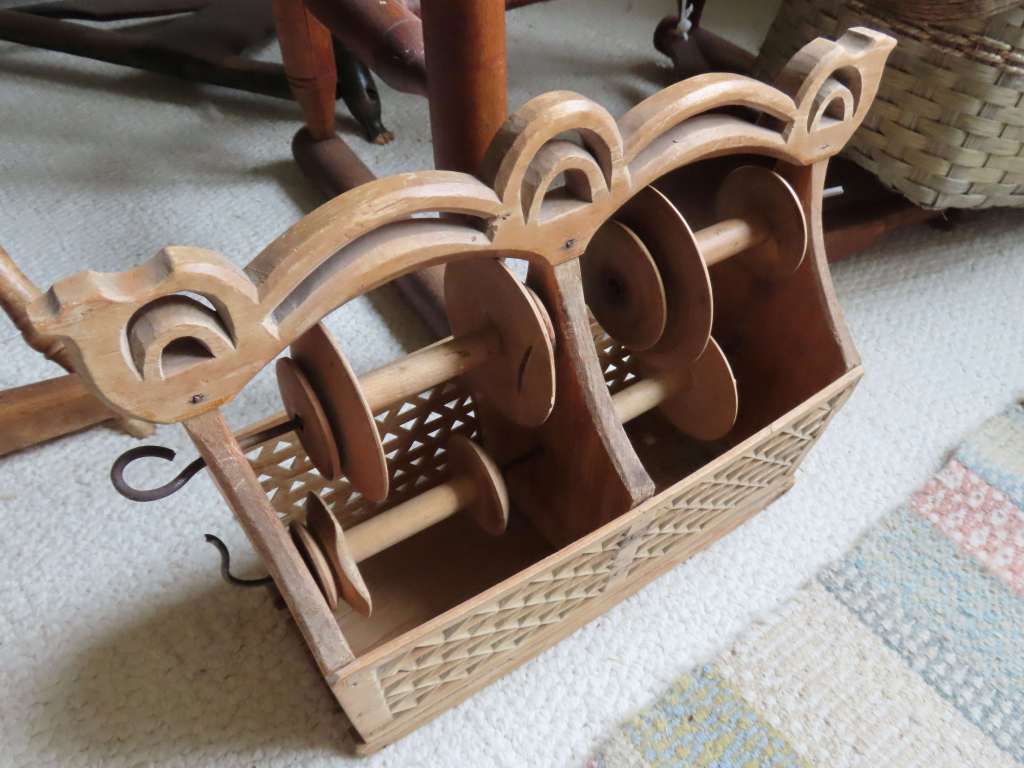
This one is an especially striking example,

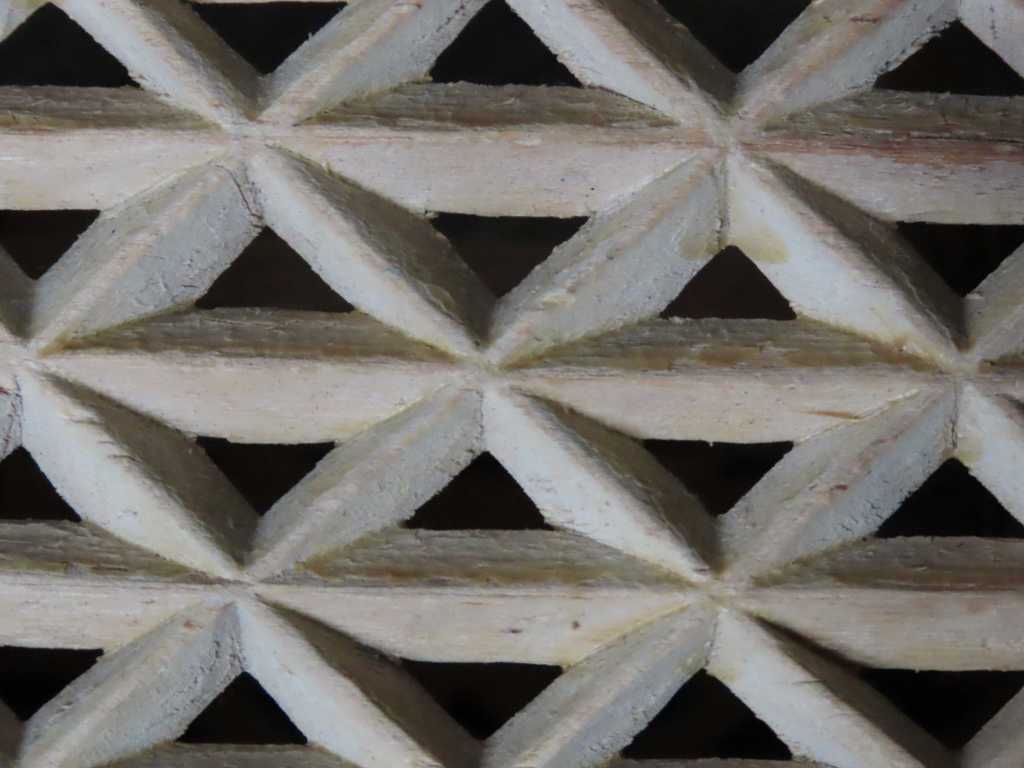
with precise, intricate carving that throws ever-changing shadow dapples.

What an investment of time and care in its creation.

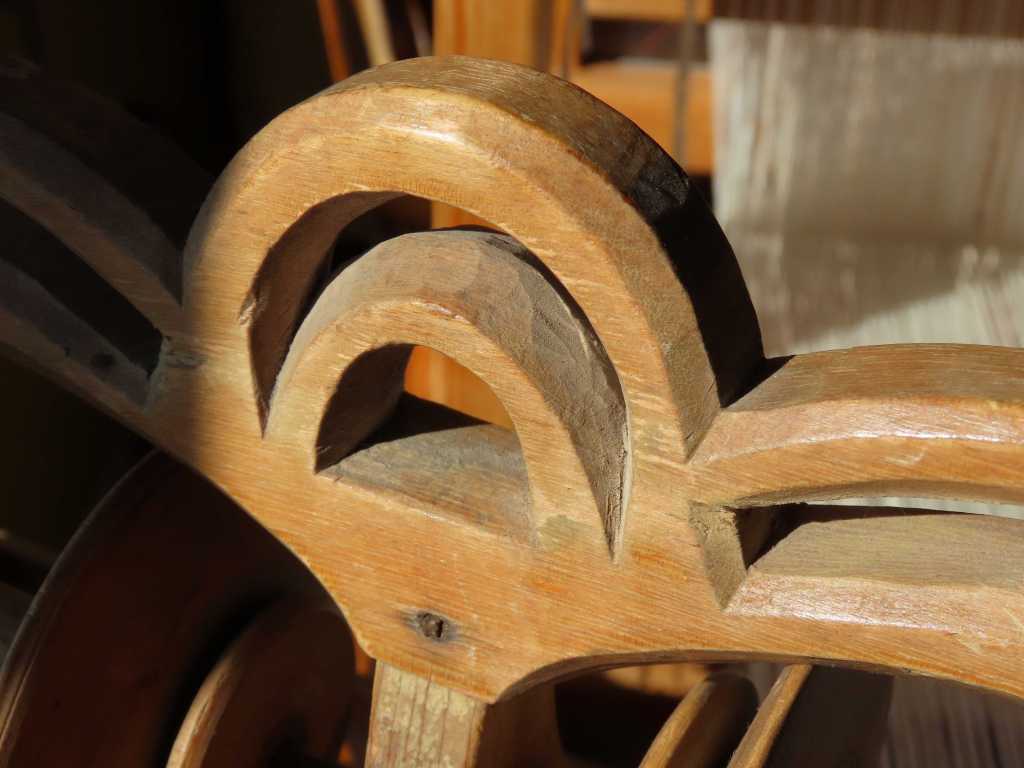
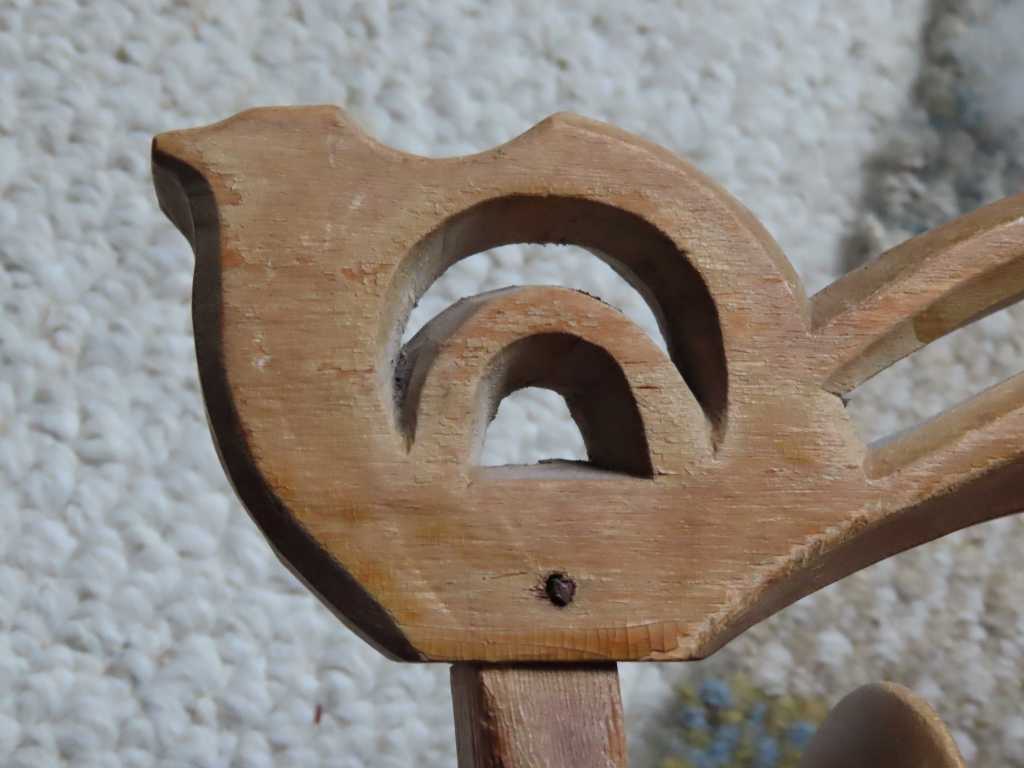
The handle ends look like plump birds

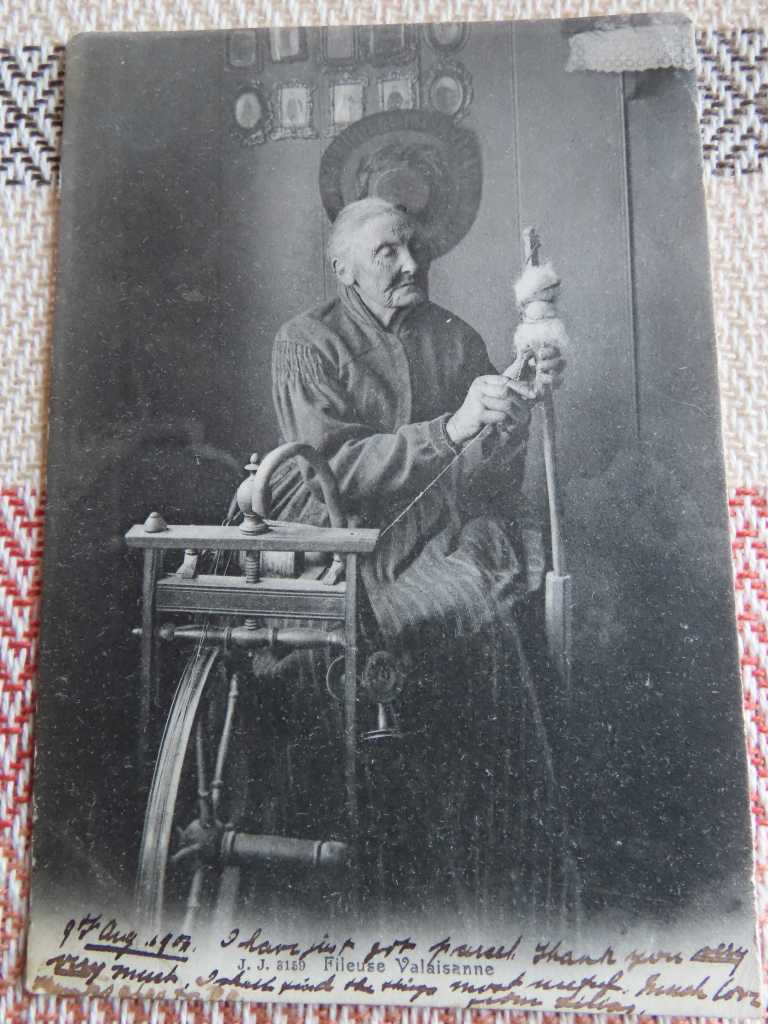
Aside from portable Lazy Kates, some wheels have “on-board” bobbin holders. A few North American makers, such as Joel Farnham and Samuel Morison made wheels with built-in bobbin holders–usually for just one bobbin. Norwegian wheels, on the other hand, often seem to have on-board Kates for two bobbins. I have not been able to determine if they were used primarily for bobbin-storage, or for plying, or both. We do see old wheels in other regions where extra bobbins were simply hung from the wheels. Some were used for spinning flax, such as the wheel in this photo from Switzerland, so the extra bobbins likely were not for plying, but simply spares.

But some Norwegian wheels have holders that would allow for plying.

For example, the wheels marked “OAP” have two vertical holders, placed so that they could be used for plying.

(Interestingly, the paint color on this wheel appears to be just the same as the stand-along Kate with the “EiS” initials.)

Double table Norwegian wheels also often have on-board horizontal Kates. The one on this acanthus-carved wheel could be used for plying.

But, on this Norwegian wheel

the horizontal holder is angled in such a way that plying would be awkward.

For some reason, there appears to be little research on Lazy Kates. The origin of the name, for example, seems to be a total mystery. Does the “Lazy” tell us anything about how these tools were used or viewed? Information is scarce on where, when, and how they were used historically, why some regions had them on wheels, or whether the built-in Kates were used for plying. So, much is left to speculation and assumptions. Another area ripe for research …

Snow Molly

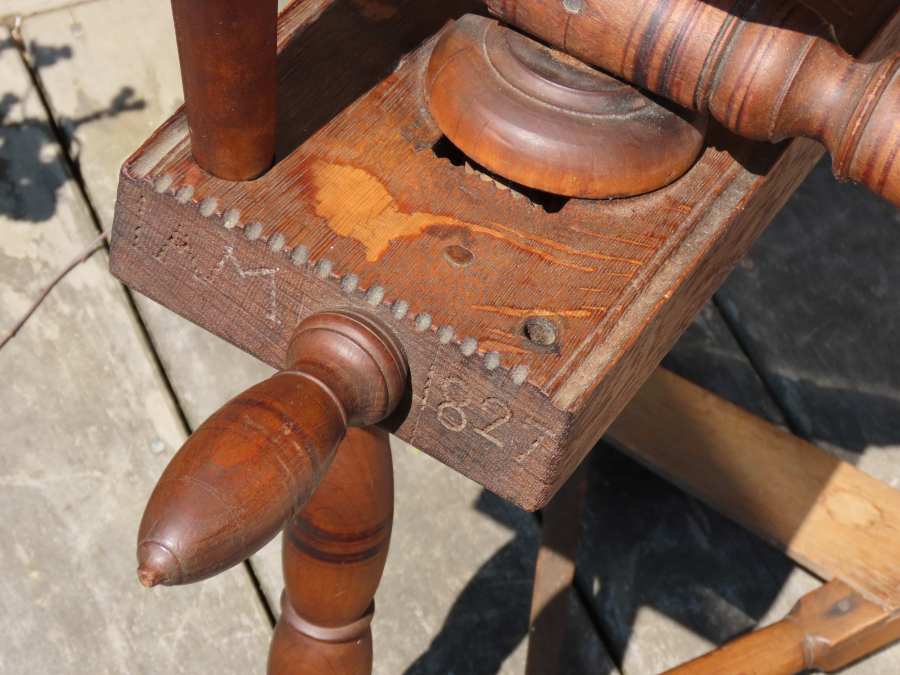
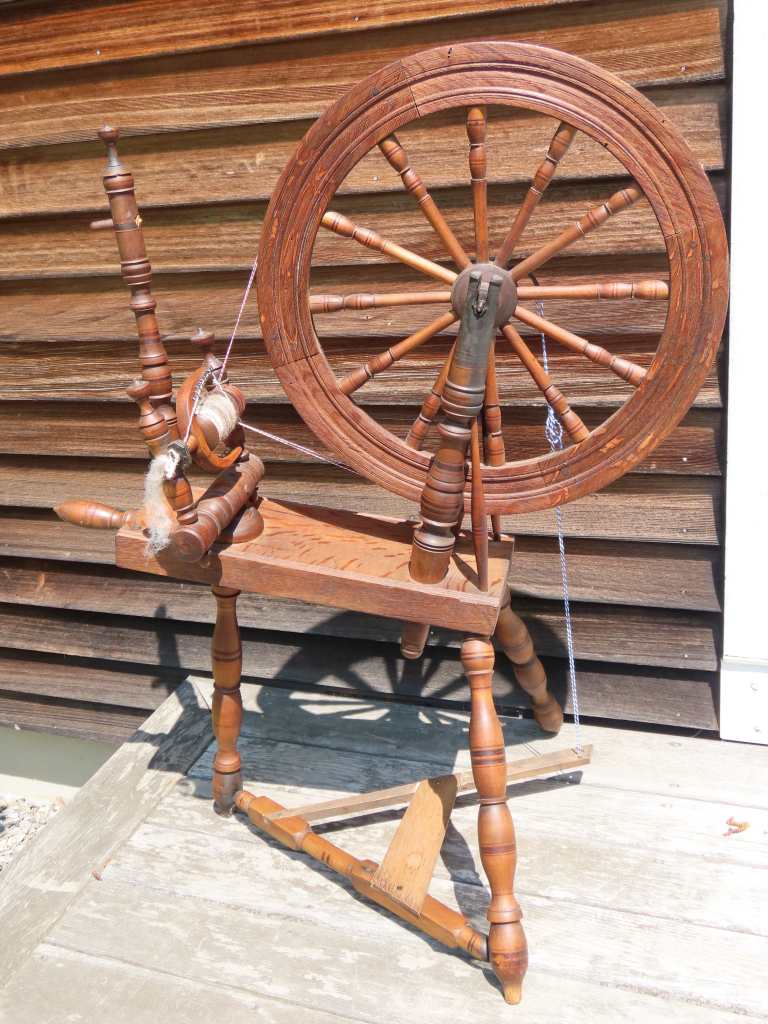
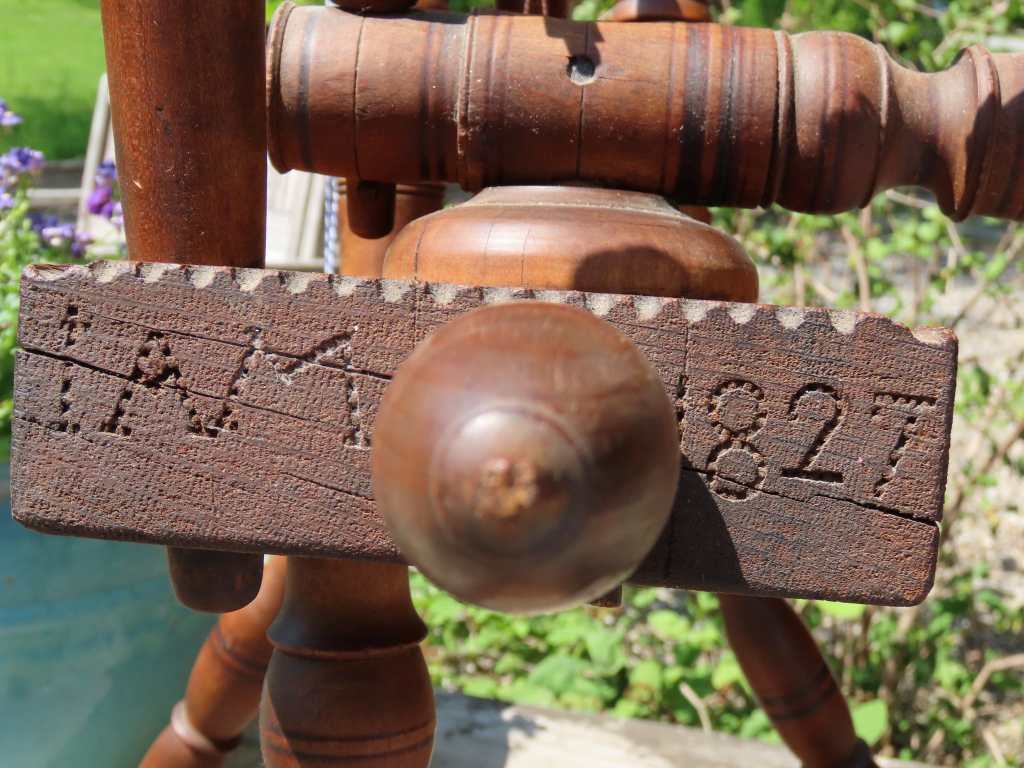
This wheel is intriguing.  It is marked with the initials “IAM” and the date “1827.” 

Yet, as far as I know, the maker has not been identified.  According to the list of spinning wheel makers in Pennington and Taylor’s book, several flax wheels with the “IAM” mark have been found in Pennsylvania and Ohio, with dates of 1825, 1834, and 1843. 

To complicate matters, a friend has a wheel with a very similar “IAM” mark and a date of 1833, but the wheel itself bears little resemblance to this one.  That wheel turned up in Virginia.  This one belonged to New Hampshire collector, Sue Burns, but I have no idea where she found it originally. 

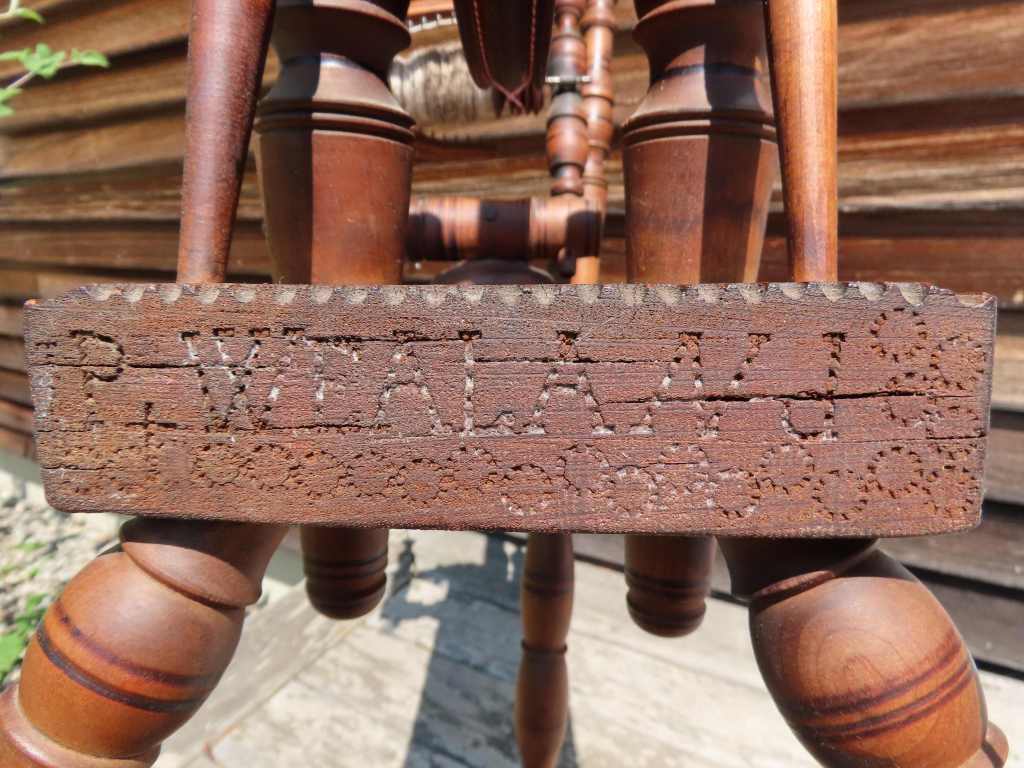
When I started researching, I hoped the mark at the other end of the table, “P. Wealand”–most likely the wheel’s owner–might provide a clue. 

I found numerous Wealand families in Pennsylvania and Ohio in 1827, but not many first names beginning with “P.”  Probably the strongest candidate was a Polly Wealand born in 1810 in Lancaster, Pennsylvania.  She would have been 17 when this wheel was made, so the timeline fits nicely for the wheel to be made as a present to her, possibly for an engagement or wedding. 

But I could not find any evidence of a Lancaster wheel maker in 1827 with the initials IAM or JAM.  I found a John McSorley, listed as a spinning wheel maker in East Lampeter, Lancaster, PA in the 1850 census, but his age was only 36—too young to have been making wheels in 1827.  I could not track down his family to see if he had a wheel-making brother or father.   James Murry was another possibility.  He was listed as a wheel wright in Stroudsburg, PA in the 1860 census, but he was not that close to Lancaster and there was no concrete evidence that he made spinning wheels.    

I focused my research mostly on Pennsylvania, rather than Ohio, because so many of the wheel’s features are found in other Pennsylvania wheels. What is interesting, though, is that it resembles wheels in several different eastern Pennsylvania counties. 

For example, it has a few notable similarities with the wheels made by J. Fox (Jacob Fuchs) (see previous post “Ester”) in Berks County.  The way the the uprights below the table are turned and striped is much like the Fox wheels.

And, as with the Fox wheels, this wheel has a hole for a reeling pin, which suggests either Berks or a nearby county, where this somewhat unusual feature was most often found. 

The drive wheel is so similar to Fox’s that, at first, I thought it might be a replacement off of a Fox wheel. 

The unusual hub design, with snouts on both sides, is very similar

and, like Fox wheels, the rim is built radially in four equal parts and double pegged at the joints.

The spokes are much the same. 

But there are differences in construction,

turnings, decoration,

and the axle is more curved than the axle on my Fox wheel. 

Also, the wood, aging, fit, grease stains, and overall look just seem to indicate that it is original to this wheel.  Nevertheless, that there is some Fox influence seems pretty apparent. 

On the other hand, the style of maker’s mark differs from Fox.  Here, the initials and a date were picked with a sharp tool, likely an awl, into the table’s end grain rather than stamped.  This style mark is similar to Abraham Overholt’s (from Bucks County) and William Major’s (from Chester County).  (P & T at 124-25) 

Also similar to Overholt and Major, this wheel has decorative stamping along with the P. Wealand name.  (I did research to see whether Major had a wheel making brother with an “I” or “J” first name, but came up empty-handed.) 

The turnings on the spokes and the flat-topped finials on the maidens and distaff

are also similar to Overholt’s wheels and to a group of other Bucks County makers, including D. Reiner, S. Reiner, I. Sellers, and I. Homsher.  (P&T at 124-25). 

Those wheel makers, however, constructed the secondary upright supports to extend down to the legs, which is different than this wheel, where they only go to the table. 

In fact, although this wheel is much smaller, the profile looks very much like my Irish wheel (see previous post “Handsome Molly”), with the double secondary supports holding the drive wheel in a very upright position quite close to the flyer assembly. 

Although I searched in Berks, Bucks, Chester, Montgomery, and Lancaster counties, I could not come up with evidence of an IAM wheel maker in 1827. I hope there are enough clues to eventually lead us to this wheel’s maker. If so, it may give us a better understanding of the relationships between wheel makers in the area and how IAM and P. Wealand fit into their particular time and place. 

Whoever IAM was, he made a lovely wheel, highlighting the ray flecks in the table’s wood so that over two hundred years later, I appreciate the way they pop in the light every time I spin. 

The wheel is beautifully constructed, with thoughtful decorative touches such as the chip carving,

punched designs, burned ring marks,

and pleasing turnings. 

The grease stains show that the wheel was well used.

While the upper two parts of the distaff are gone, I am delighted that this part survived. 

Sadly, the original flyer arms must have broken at some point.  The mandrel appears to be original and perhaps the bobbin, but the clunky flyer arms seemed to be a fairly recent replacement,

so I had new ones made. 

The treadle bars had some damage too (I actually broke one when I first spun on the wheel). 

I repaired the treadle and with her new flyer arms, it is pure pleasure to spin on this wheel. 

References:

Pennington, David and Taylor, Michael, Spinning Wheels and Accessories, Schiffer Publishing, Atglen, PA 2004, pp. 123-29.

ancestry.com for genealogical research and census records

Elizabeth

Perhaps the most readily identifiable Pennsylvania wheel is the “Irish castle” wheel.  Its distinctive style is best described by collector, Bill Leinbach: “The vertical lines, the splay of the long legs, the relationship between the drive wheel and the flyer bobbin assembly, all contribute to the magnificent display of this tripod temptress.” (Leinbach, SWS p. 6) 

Aside from its harmonious lines, its height is impressive and its design practical, with long hefty legs providing a solid base with a small footprint.  The solidity and stability allows for steady, even spinning, while the small footprint is welcome in tight living quarters. 

While this wheel style has been found occasionally in other parts of this country, it flourished in Pennsylvania. Why and how this Irish wheel design was adopted by Pennsylvania German wheel makers remains something of a puzzle.  Some have speculated that this style may have originated in Germany and migrated to Ireland, with the “castle” name having derived from the German town “Kassel.”  (P&T, p. 56)  On the other hand, wheel collector John Horner suggested that these wheels are named “castle” because of their shape and are “peculiar” to Ireland.  (Ulster Museum, P. 21) 

Patricia Baines notes that in Britain castle wheels refer to vertical wheels in which the drive wheel is above the flyer mechanism, with Scotland having its own castle wheel, different than the Irish.  (Baines, p. 45).  Whether born in Ireland or not, the sturdy three-legged Irish castle wheel was an integral part of 19th century life in northern Ireland, especially in Donegal and Antrim counties, used early on for flax and later for wool spinning into the 20th century.  (Baines, p 144-46, P & T, p. 53)      

Spinning linen in northern Irelandnotice the spokes

While some castle wheels were brought over from Ireland to Pennsylvania and other states, the majority that we find in this country appear to have been made here, primarily by Pennsylvania wheel makers of German descent. 

Danner wheel for sale a few years ago

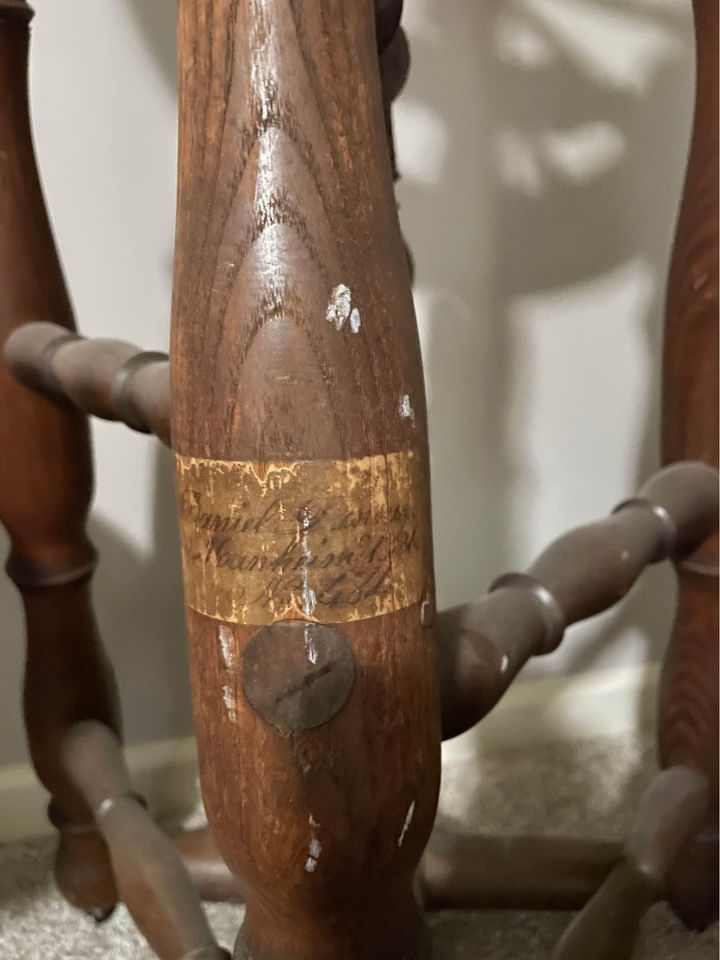
Probably the most well-known is Daniel Danner, who signed and dated many of his wheels with a paper label pasted onto the back leg.  Of course, most of those labels have not survived, but his wheels have distinctive qualities that identify them as Danner wheels.

Paper label on Danner sale wheel

Danner was born in Manheim in Lancaster County, Pennsylvania in 1803.  His father, Adam, was a weaver.  Daniel married Elizabeth Hartman in 1833 and they had five children, only two of whom survived to be adults.  (Leinbach, SWS, p. 6)

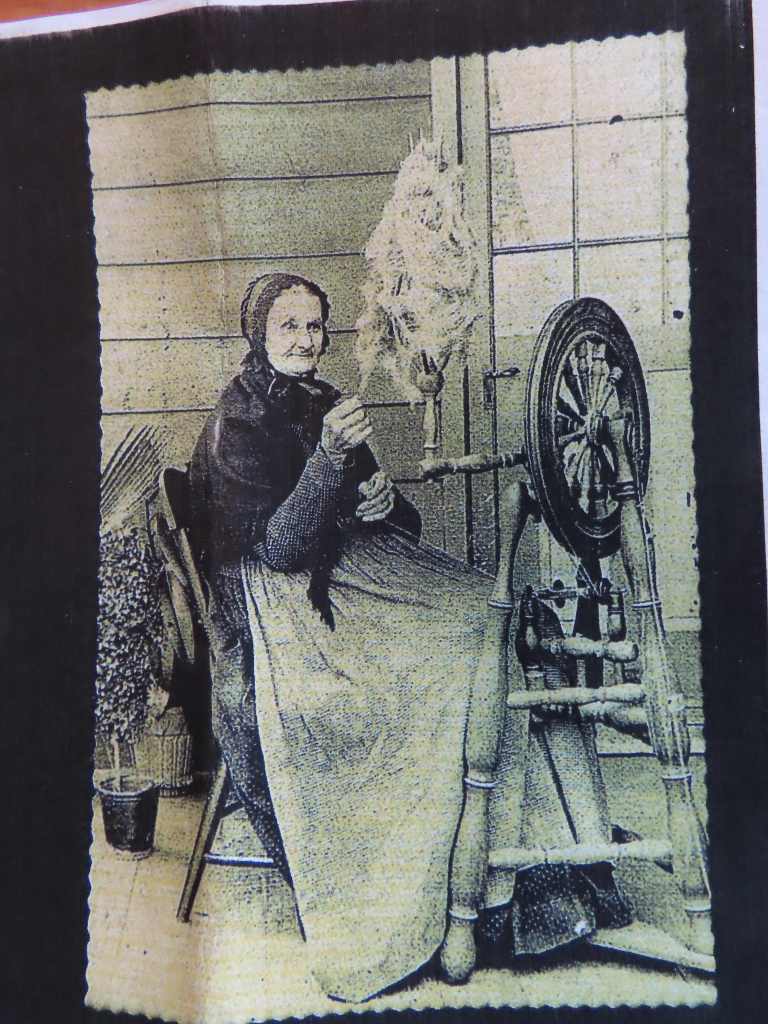
Danner’s wife Elizabeth spinning flax on one of his wheels. Notice the label on the back leg.

Fortunately, Danner kept daybooks, which show that he made wheels for over 40 years, from 1821 until at least the early 1860s.  He made great wheels, saxony-style wheels, and what he called “cassel” wheels.  Perhaps this was a phonetic spelling of “castle” (his daybooks were written in English, not German), or it could be an indication that these wheels did have a German origin.  As with so many spinning wheel makers, Danner was not limited to wheel making, but made and repaired all types of household and farm items, including reels and swifts.  About forty percent of his wheels were castle wheels, which he priced at $4.00, fifty cents more than his regular flax wheels.

There is no definitive answer as to why Danner and other Pennsylvania Germans were making Irish Castle style wheels.  Perhaps there were similar wheels remembered from Germany—although I am not aware of anyone actually identifying a German wheel of this style.  Perhaps he was influenced by an Irish wheelmaker, such as Samuel Humes.  Humes, born in 1753—considerably older than Danner–came to Lancaster County from Antrim, Ireland.  Danner’s saxony-style flax wheels were very similar to Humes’ wheels, almost copies. 

Whether he did this with Humes’ permission or not remains a question. I am not aware of evidence that Humes made Irish castle wheels, but it is certainly a possibility and other wheel makers in the area, including Danner, may have copied the style from him.  It is also possible that Irish Castle wheels were simply a response to market demand. 

When I started digging into genealogy research on Danner, I found several family trees on ancestry.com that had Danner’s father, Adam, as born and living part of his life in Shelby, North Carolina.  Because that is a region with many Scots-Irish immigrants, I was excited to think that might offer some explanation for Danner’s adoption of this style. 

As it turns out, I believe that is a different Adam Danner and Daniel’s family likely did not venture outside of Pennsylvania.  But it got me looking into Scots-Irish settlement in Pennsylvania and I found Scots-Irish immigrants from Antrim and nearby counties settled in many of the same areas in Pennsylvania as the Germans.

Perhaps they sought this style wheel from the local German wheel makers.  While I have only seen a few pages of Danner’s day book, in those, it appears that the surnames of most of his customers were of German origin, but with a smattering of English and Irish names, including “a new flyre” for Barb Donoven.  (McMahon, p. 16).  So, it is possible that, at least initially, these wheels may have been made for Irish customers seeking this wheel style.  We just do not know.

While probably the most well-known, Danner was not the only one making this style wheel in Pennsylvania.  Some did not sign their wheels and will remain a mystery.  Samuel Henry, however, another maker of German descent, did stamp his name on at least some of his unique and elaborate castle style wheels—quite different from Danner’s. 

Although unmarked, this appears to be a Henry wheel that came up for sale last year

Another intriguing maker is usually referred to as the “Landisville” maker because several of his wheels showed up in that area of Pennsylvania. 

According to Bill Leinbach, Clarke Hess, a well-known Pennsylvania historian and collector, believed that perhaps the Landisville wheels can be attributed to Johannes Berg or his son Jacob Berg, based at least in part on probate inventory records.  Hess died several years ago and his extensive collection was auctioned off.  In Lot 5525 of Clarke’s on-line auction collection, a sampler was identified as made by Maria Berg, daughter of “Turner” Jacob Berg of West Donegal Township, son of immigrant Andreas Berg.  I do not know if this is the same Jacob Berg that Clarke had been researching—there are multiple Jacob Bergs in Lancaster County–but it is a clue worth pursuing.  

Donegal Township had a large number of Irish settlers, so might have been fertile ground for these wheels and is not far from where Danner was making his wheels in Manheim, Pennsylvania.  That may be important because, apparently, multiple wheels have been found with bodies made by Danner and drive wheels made by the “Landisville” maker.  Bill Leinbach suggests that may indicate that they knew each other or even worked together at some point.  This is an area ripe for more research. 

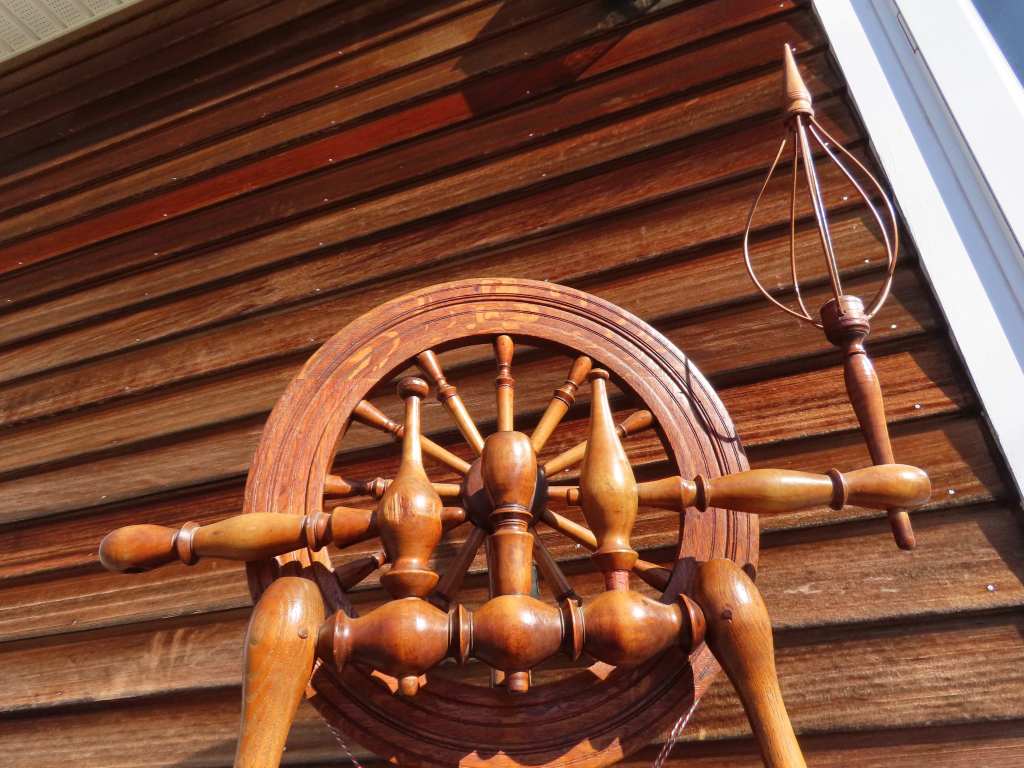
My wheel, Elizabeth, which came from Bill Leinbach, is one of those combination wheels.  The body has classic Danner features, but the drive wheel appears to have been made by the Landisville maker.  Danner’s drive wheels were made of four equal pieces and had “shotgun shell and olive” spokes—a perfect descriptive term because that is just what they look like. 

Danner drive wheel

The Landisville/perhaps Berg maker constructed his drive wheels with two long and two short sections (felloes) and spokes closely resembling those on wheels from Ireland—they look like wine goblets to me. 

The drive wheel on my wheel–notice how similar the spokes are to the earlier photograph of the Irish wheel

For an excellent visual comparison and description of wheels made by Danner, the Landisville maker, and Samuel Henry, I recommend Michael Taylor’s article “Castle Wheels in Lancaster County, PA.” listed below. 

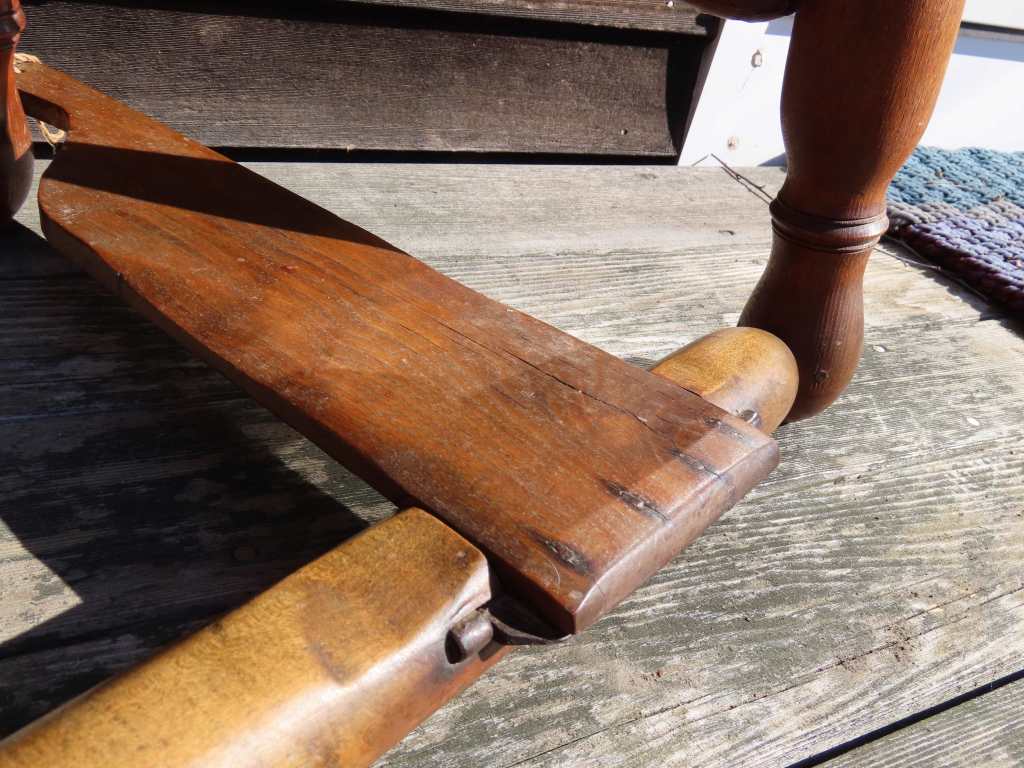
While there is no label on my wheel, the body appears to be a beautiful example of Danner’s work.  The long flat treadle fits around the back leg,

and is attached to the axle with a long cord and leather top—typical of Irish wheels. 

While the legs are heavy, they are gracefully curved and highlight the wood grain. 

The top cross bar has two holes.  Danner traditionally used one for the distaff and the other for a reeling pin.  Having two holes allows the spinner to place the distaff on either side and also provided a place to mount a water dish for flax spinning.  I am fortunate to have two distaff supports, one on each side. 

Danner had some variations in the turnings for the distaff supports.  I believe the left hand one is typical of Danner’s wheels,

but am not sure if the other one is also made by him or some other maker. 

The flyer set up is ingenious. 

One wooden key releases the end flyer bearing so that the flyer can be removed. 

The other raises a central bar to control tension. 

The flyer hooks are seated opposite to most flyers, in other words, the hooks are on the top right side and lower left side of the flyer when looking down the arm, in contrast to the usual configuration of right on top of the left arm and below the right. 

According to Patricia Baines, this was the way the flyers were usually made on castle wheels in Ireland.  She suggests that this may have originally been to facilitate spinning flax in the “S” direction.  (Baines, p. 146)  It is interesting to see how that unusual feature seems to have been carried over from Ireland to many of the castle wheels made in Pennsylvania. 

While most makers of these wheels were in Pennsylvania, a few wheels have appeared in New England, too, including one signed “M. Wood.”  That name is intriguing because we know of two New England wheel-making brothers, Phineas and Obadiah Wood (see previous post “Scarlet”).  Could M. Wood be related? 

There is still so much research to be done on American castle wheels—to pin down who made them and why.  But there is already a tremendous amount of research that has been done.  I only skimmed the surface here.  The articles and books listed below were my references and contain much more in-depth and complete background and analysis.  I highly recommend them. 

Descriptions and photographs do not do justice to the beauty and fine craftsmanship of this wheel. A heartfelt thank-you to Bill Leinbach for entrusting me with this amazing wheel, for his generosity in sharing time and knowledge, and for the photograph of Elizabeth Danner. 

References:

Leinbach, William A., “Daniel Danner: The Man Behind the Wheel,” The Spinning Wheel Sleuth, Issue 4, January 1994, pp. 6-8.

McMahon, James D., “Daniel Danner Woodturner: An Early 19th Century Rural Craftsman in Central Pennsylvania,” Pennsylvania Folklife; Vol. 43, No. 1, Fall 1993., pp. 8-19.

Taylor, Michael, “Humes, Danner, and Killian Flax Wheels,” The Spinning Wheel Sleuth, Issue 35, January 2007, pp. 2-4.

Taylor, Michael, “Castle Wheels in Lancaster County, PA,” The Spinning Wheel Sleuth, Issue 93, July 2016, pp. 2-4.

Baines, Patricia, Spinning Wheels, Spinners & Spinning, B. T Batsford, Ltd, London, 1977, pp. 144-46.

Pennington, David and Taylor, Michael, Spinning Wheels and Accessories, Schiffer Publishing Ltd., Atglen, PA 2004, pp. 53-59.

Thompson, G.B., Spinning Wheels (The John Horner Collection), Ulster Museum, Belfast 1976. 

Ancestry.com for genealogies of the Danner and Berg families in Pennsylvania.

Betty M.

This wheel has the feel of a city-made wheel—sophisticated and finely finished.  Not surprising, since it was made just outside of Philadelphia.  I spotted it on Facebook Marketplace in Connecticut, where it sat for weeks and weeks, with the price lowered from $50 to $25 as the seller appeared desperate to just get rid of it.  Although it did not have a spinning head, I had to rescue it—fine Philadelphia great wheels do not come along very often.

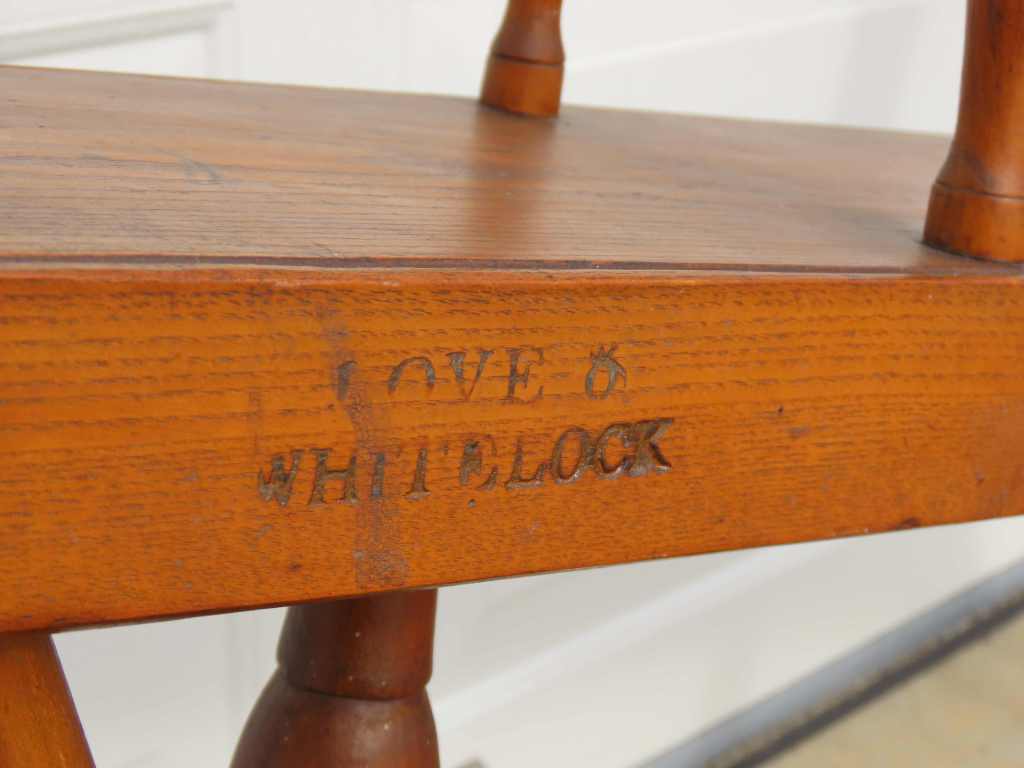
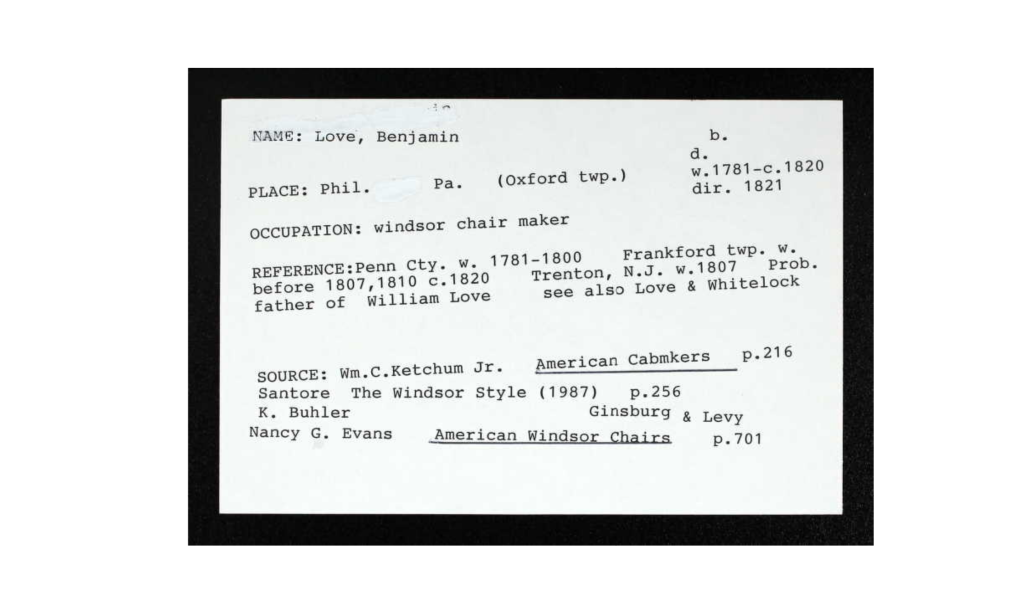
It is a solid heavy wheel, made by Windsor chairmakers, Benjamin Love, and his step-son, Isaac Whitelock. 

Love, a Quaker, was born in 1747 in Bucks County, Pennsylvania.  He married Eleanor McDowell in 1768 and they had ten children over the next two decades, several of whom died young.  By 1780, when he was 33, Love was living in Frankford, five miles north of Philadelphia, where he was admitted to the Frankford Preparative Meeting (Society of Friends or Quakers).  Their Frankford meetinghouse was built in 1775-76 and now is the oldest surviving Quaker meetinghouse in Philadelphia. 

Records show that Love was a Windsor chair maker from 1781 to 1820. 

He also took care of and did repair work on the Frankford Meetinghouse, according to the Meeting’s minutes.  His wife, Eleanor, died in 1793, and, two years later, in 1795, Love married Elizabeth (Smith) Meharry Whitelock (1752-1829). 

Love’s new wife, Elizabeth, had been recently widowed and left with several children, including a son, Isaac Whitelock (1778-1848).  In addition to their sizable combined clan of children, the couple took in the daughter of widower, John Davis, who later married Elizabeth’s daughter, Mary Whitelock.  In his autobiography, Davis describes Benjamin Love as a “respectable” Quaker Friend.  Davis also noted that Isaac Whitelock, Love’s stepson, was in business with Love.  (p. 33) 

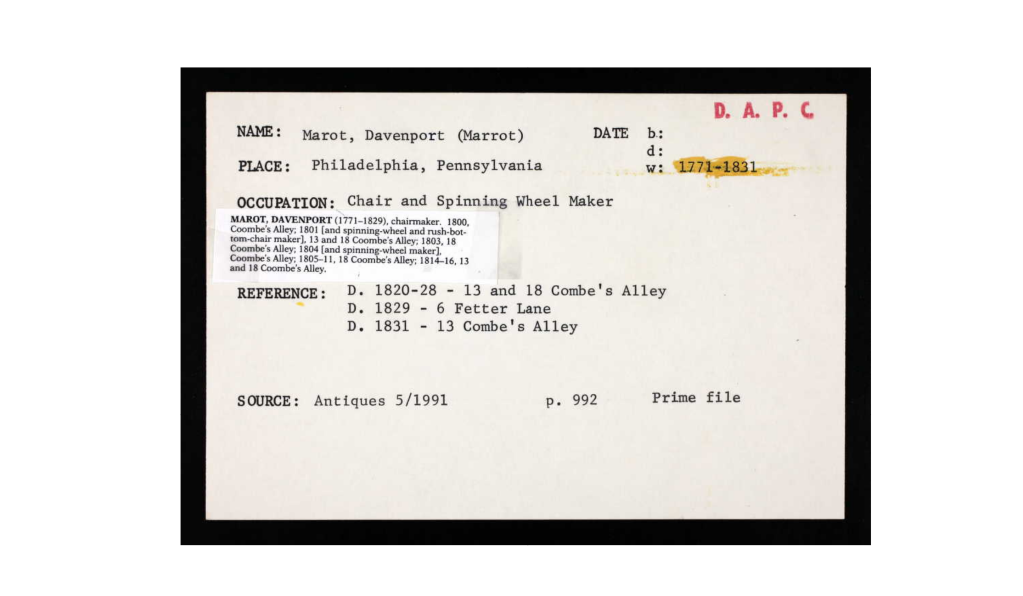
Isaac was about 17 years old when Love married his mother, so a prime age to be trained into Love’s chair and wheel making business.  In 1807, when he was 29, Isaac married Ann Woodcock Marot (1785-1865) a Quaker from Delaware.  Her uncle Davenport Marot (also spelled “Mariott” and “Marott”) appears also to have been a chair and spinning wheel maker in Philadelphia (from 1771-1829). 

Love & Whitelock’s shop was large enough to have an upper loft or attic, called a “cockloft,” where an apprentice may have slept.  (Evans, p. 9) By 1818, a few years before Love’s death, it appears that they also expanded into lumber sales, because Love is described as a “Lumber Merchant” in one document.  At the time of Love’s death in 1821, Whitelock was described as a “Spinning Wheel & Chairmaker.” At some point later in his life, Isaac Whitelock gave up chairmaking altogether and focused on dealing in lumber and hardware, running a lumberyard in Frankford from at least 1837 on.  (Evans p. 84, fn. 147)

The wheel itself is sturdy and well-made, with a straightforward design of few embellishments or fancy turnings.  Its an attractive wheel and I am surprised that there do not seem to be many that have survived.  I know of one in the Mercer Museum in Doylestown, Pennsylvania, and have seen another one for sale in St. Louis, but compared with some other makers, Love & Whitelock wheels seem to be hard to find. 

This one is in excellent condition.  The wide drive wheel rim is undamaged, without any cracks or chips.  The two-piece rim is neatly joined.

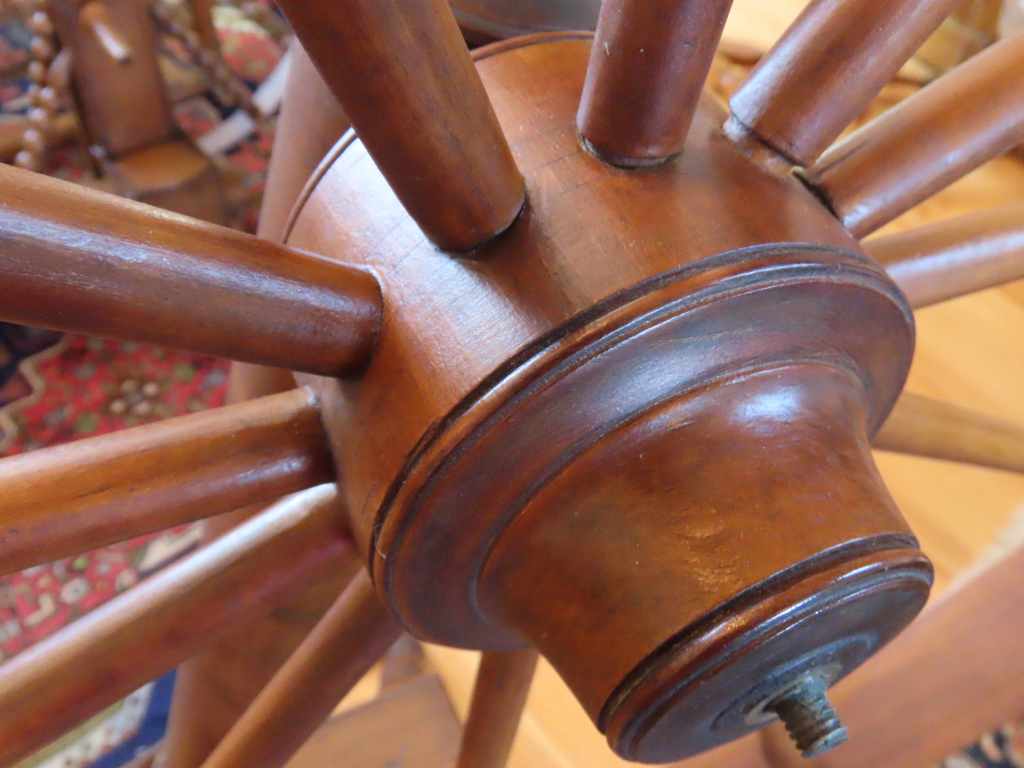
The spokes gently widen as they near the rim, decorated with burn marks midway and near the rim end. 

They are firmly attached to the rim with screws. 

The hub has intact metal bearings on both sides. 

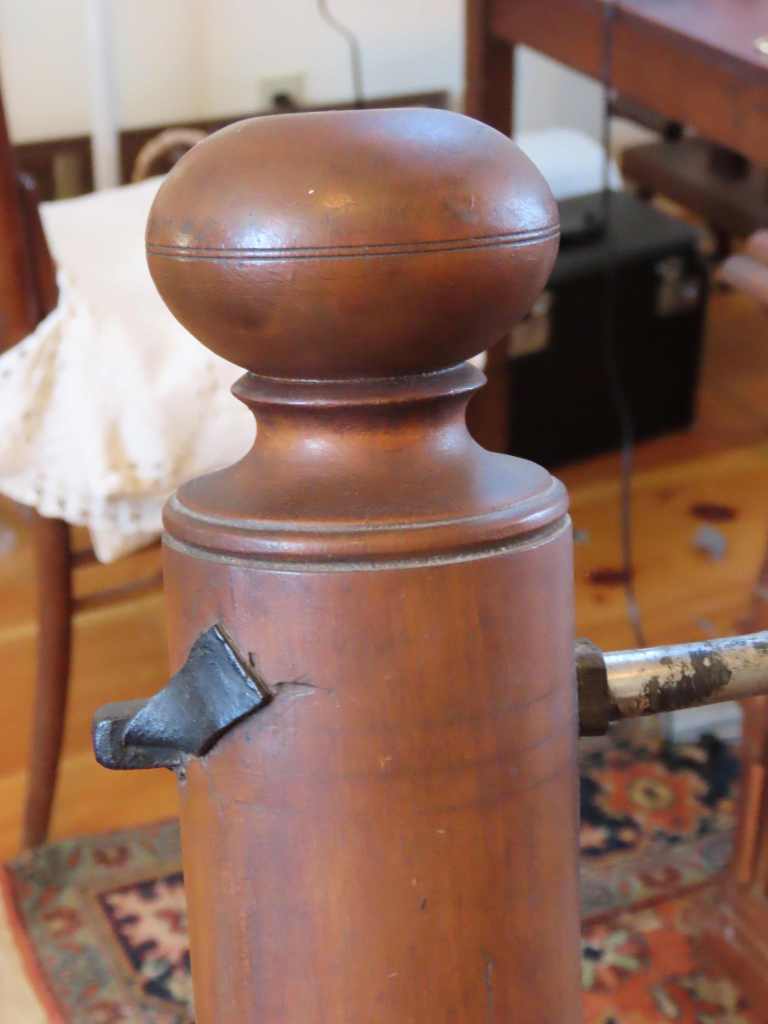
The axle is threaded on the wheel side

and held in place on the other side with folded over metal pieces. 

The wheel sits on the axle at an angle, giving more room for the spinner’s arm to turn the wheel. 

The table is made of heavy-grained wood,

with grooves down each side, and tall rolag holders. 

The barrel tension has a screw for tightening on the non-spinner side. 

The wheel came without a spinning head. 

I found this direct drive head for it because it is similar to the head on the Love & Whitelock that was for sale years ago in St. Louis.  The legs are simple and heavy.   

All of the posts extend well below the table and are pegged in place. 

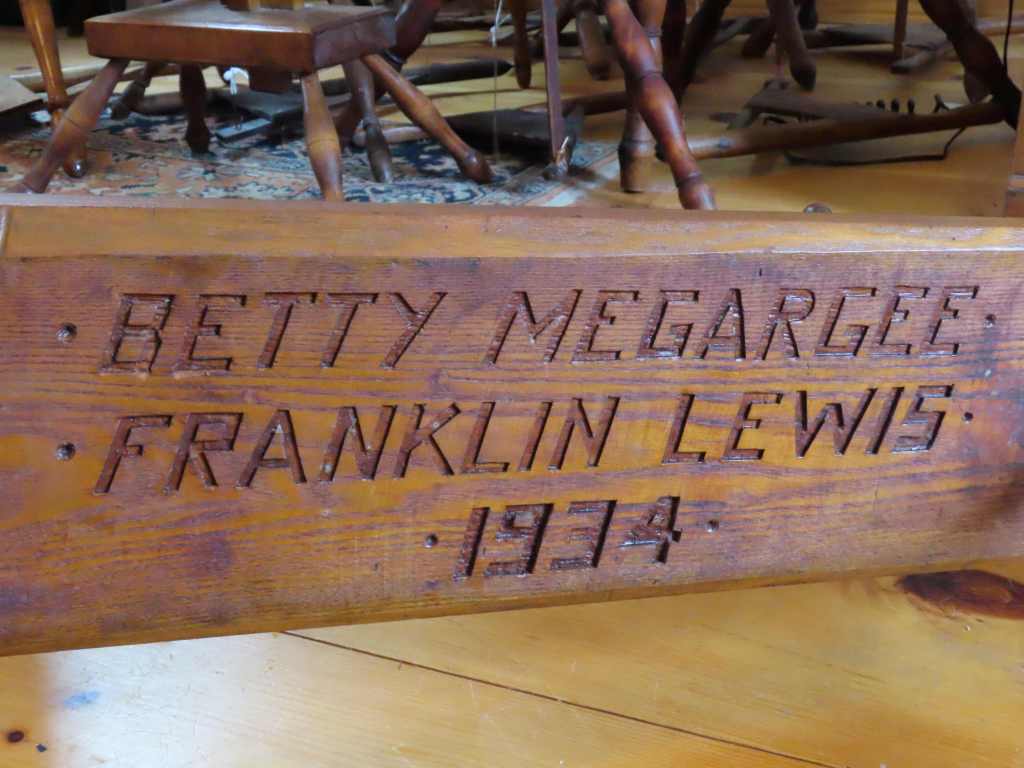
The table’s underside included a surprise.  The names “Betty Megargee” and “Franklin Lewis” were carefully carved in large squared-off letters, along with the date “1934.” 

After some on-line research, I found a Betty Naomi Megargee (1911-1995) who married Benjamin Franklin Graves Lewis (1908-1967) in Philadelphia in 1939.  I wonder if this wheel may have been an engagement present.  If so, it would have been given in the depths of the depression, which might help explain a five-year engagement. 

In the 1930 census, when Betty was 18, she was listed as a Stenographer at a bank and Franklin Lewis as an apprentice electrician.  From what I can tell, this Betty and Franklin did not have any children and always lived in Pennsylvania.  So, if this wheel belonged to them, I have no clues as to how it ended up in Connecticut.  I wish I could confirm that Betty Naomi was the owner of this wheel and that we knew more of her and Franklin’s story. 

References:

U.S. Gen Web Archives Philadelphia Wills for a copy of Benjamin Love’s will, witnessed by Isaac Whitelock “Spinning Wheel & Chairmaker.”

Ancestry.com for genealogical research on the Love, Whitelock, Marot, Megargee, and Lewis families, and minutes from the Frankford Preparative Meeting 1772-1794.

Maryland Historical Society, Volume 30, Issue 1, Baltimore, 1935, Autobiography of John Davis.

Evans, Nancy Goyne, Windsor-Chairmaking in America, From Craft Shop to Consumer, University Press of New England, London, NH 2006.

The Pamphlet of the Historical Society of Frankford, Pennsylvania, 1912.