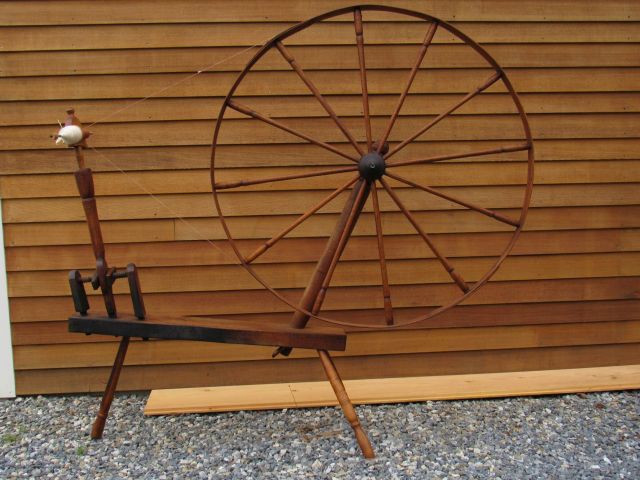
Experience (Prance)

Most wheel makers remain a mystery.  Even when they mark their wheels, leaving names or initials, it can be difficult to determine who they were or to find any details about their lives.
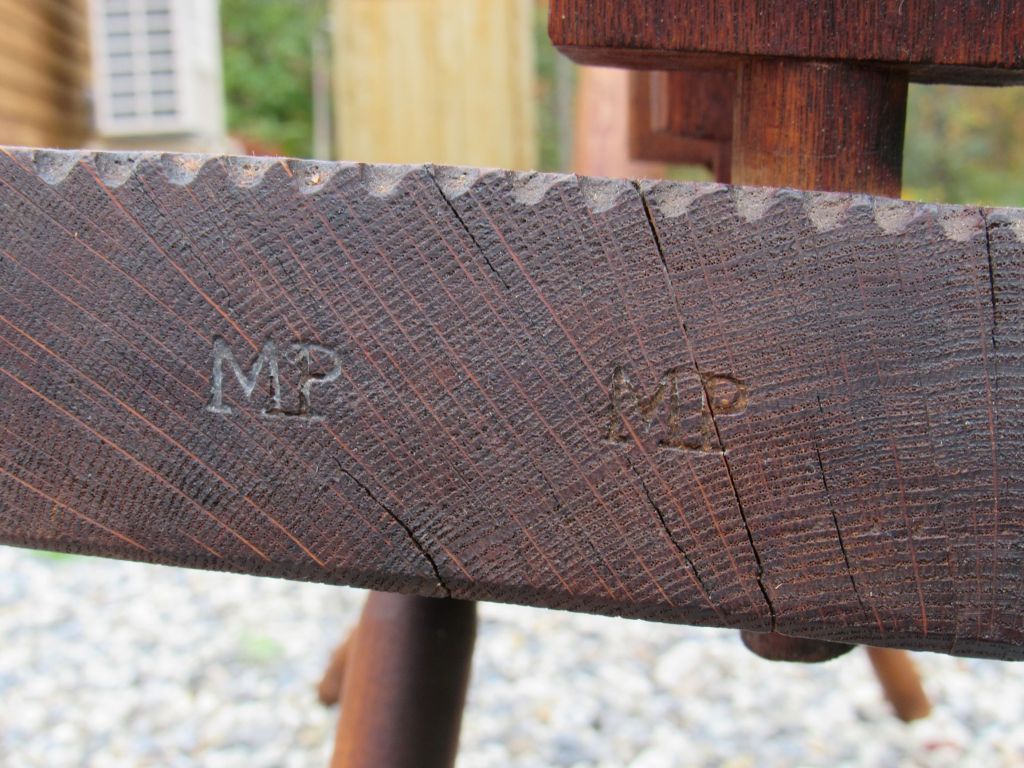
That is not the case with Marlboro (or Marlborough) Packard.  He marked his wheels and lived in a town–Union, Maine–with an unusually well-documented history, allowing us to get a small glimpse into his life.  
Marlboro was born in 1763 in Bridgewater, Massachusetts.  According to DAR records, he served as a private in the Massachusetts militia during the Revolutionary War.  At some point after that, he moved to Maine, joining his uncles, Micah and Benjamin, who had been there as early as the 1770s. 

His uncle, Benjamin, in fact, has a role in Union’s early history.  Initially called Stirlingtown, Union was born in controversy.  A group of Scottish men first claimed possession but, soon after, a Massachusetts man, Dr. John Taylor, bought the land, despite the previous claims.   After some dispute, Taylor prevailed, and in 1775, Marlboro’s uncle, Benjamin, worked with Taylor’s indentured servants to clear the land and cut lumber for Taylor.  History of Union, Maine, pp. 27-39.
That year, Benjamin Packard built the first permanent house, a log cabin, in what would become Union.  The next spring, in 1776, the Robbins family moved into the cabin and their story was the basis for the novel “Come Spring.”  The foundation of the house built by Benjamin is still intact near the shore of Union’s Seven Tree Pond.

It’s unclear whether Marlboro came to Maine right after serving in the militia, but the 1790 census shows that, by then, he had joined his uncles, living in Cushing on the coast. That same year, he married Mary Ann “Nancy” Blackington.  They had seven children, all of whom lived to adulthood–no small feat in those days.  According to his children’s birth records, Marlboro appears to have been living in Union in the early 1790s, then moved to nearby Warren and Thomaston, and eventually returned to Union by 1803. 

He lived the rest of his life in Union, on a farm on Clarry Hill, at times serving the town in positions such as selectman. He died in 1846, days shy of his 83rd birthday. Marlboro’s descendants still live in and around Union.  His oldest son, Nathan, named his first son (born in 1828) “Marlboro.”  This namesake grandson became a well-known master shipbuilder in Searsport, Maine, clearly inheriting his grandfather’s design and woodworking skills.   https://en.wikipedia.org/wiki/Marlboro_Packard.

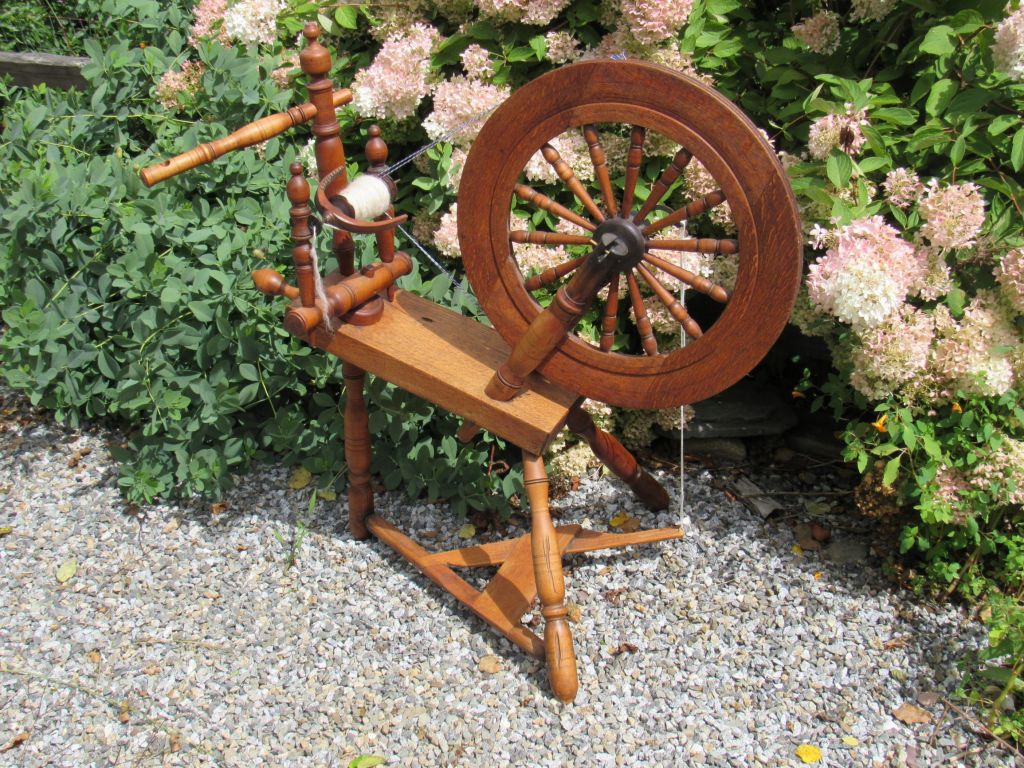
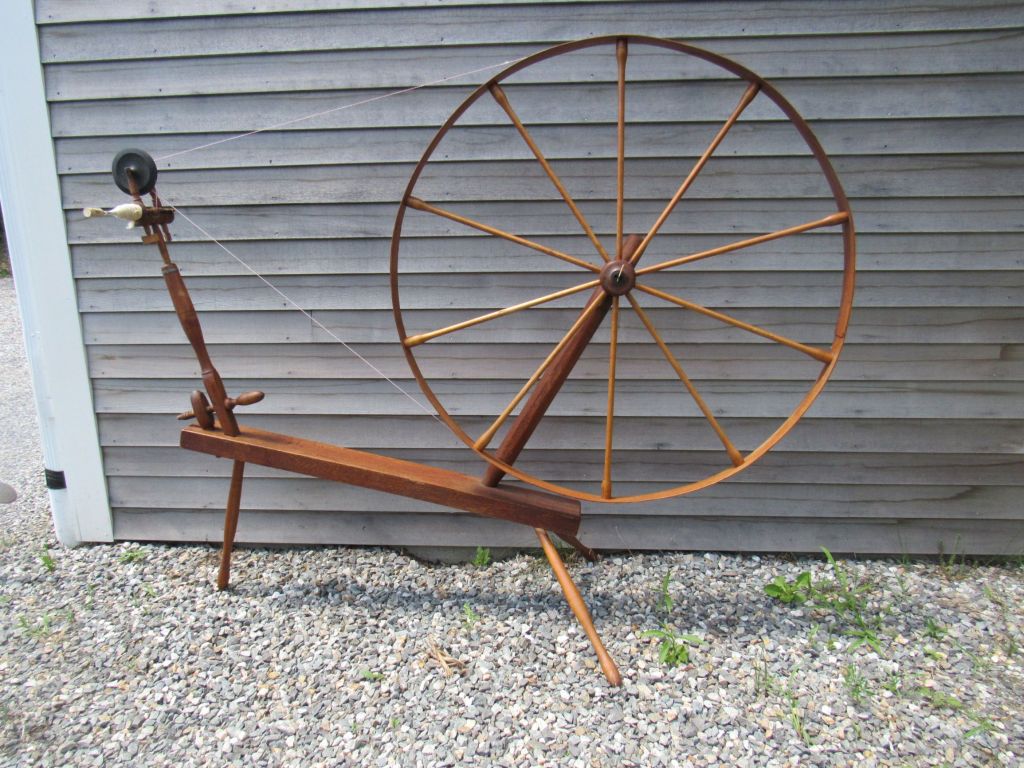
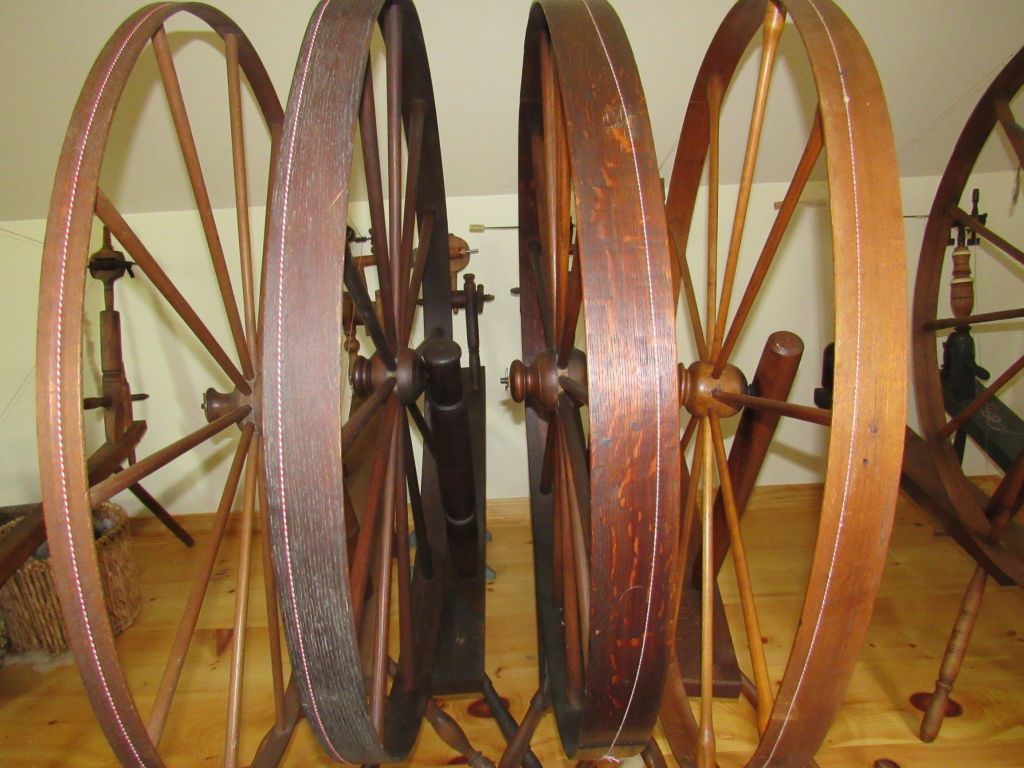
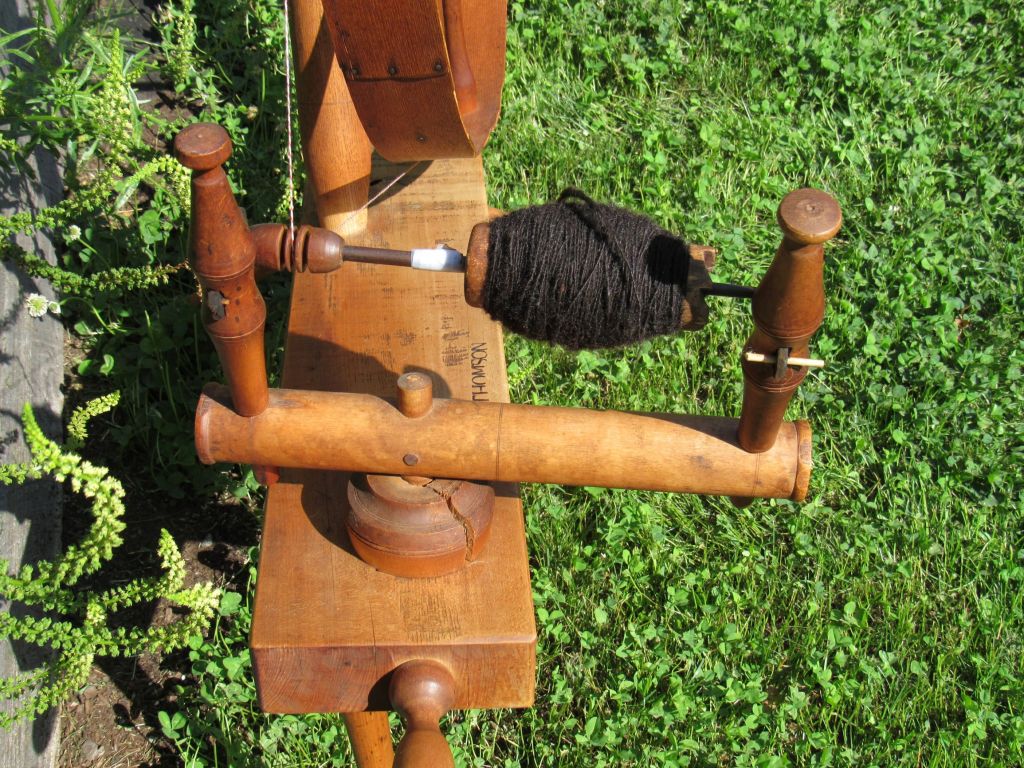
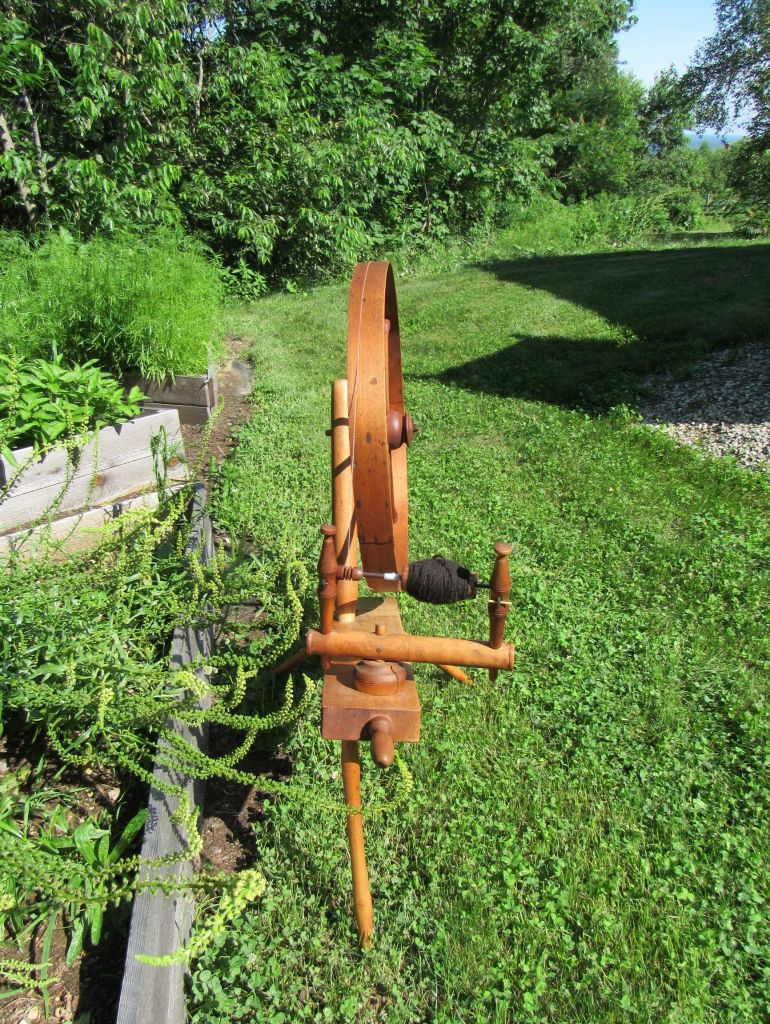
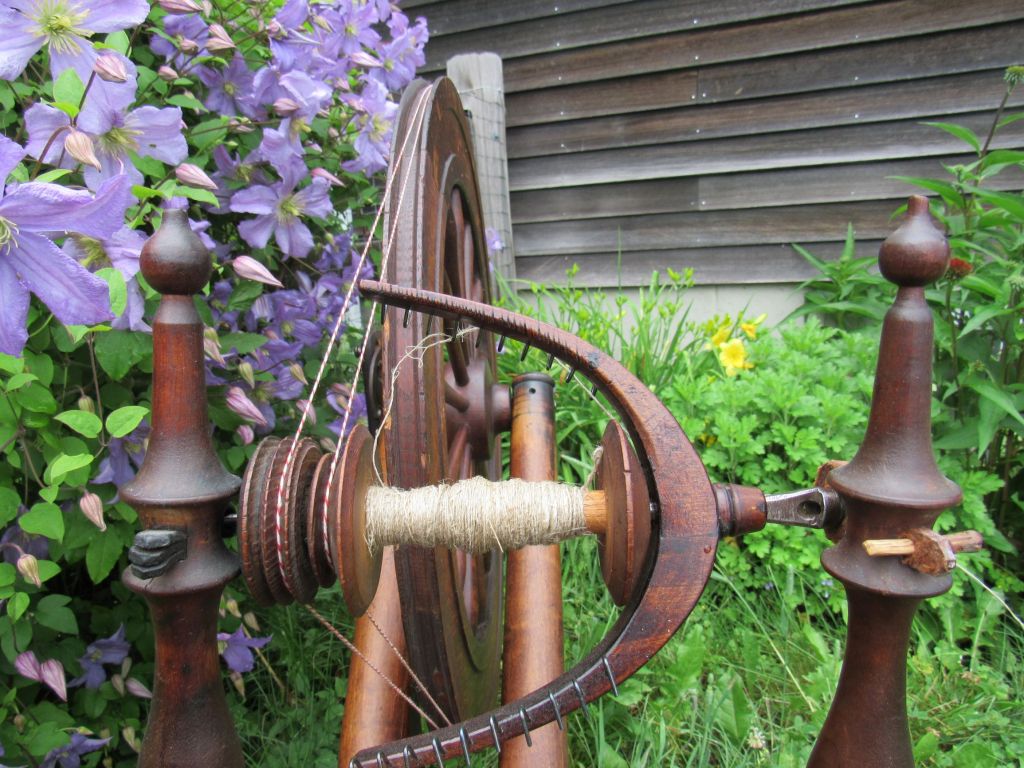
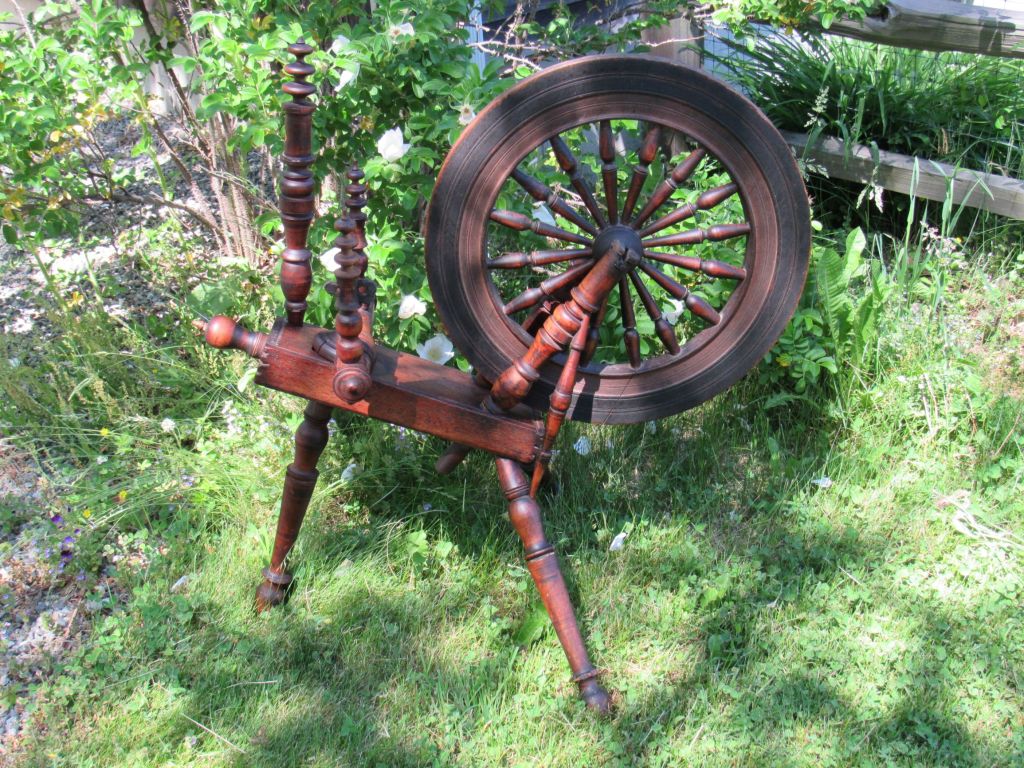
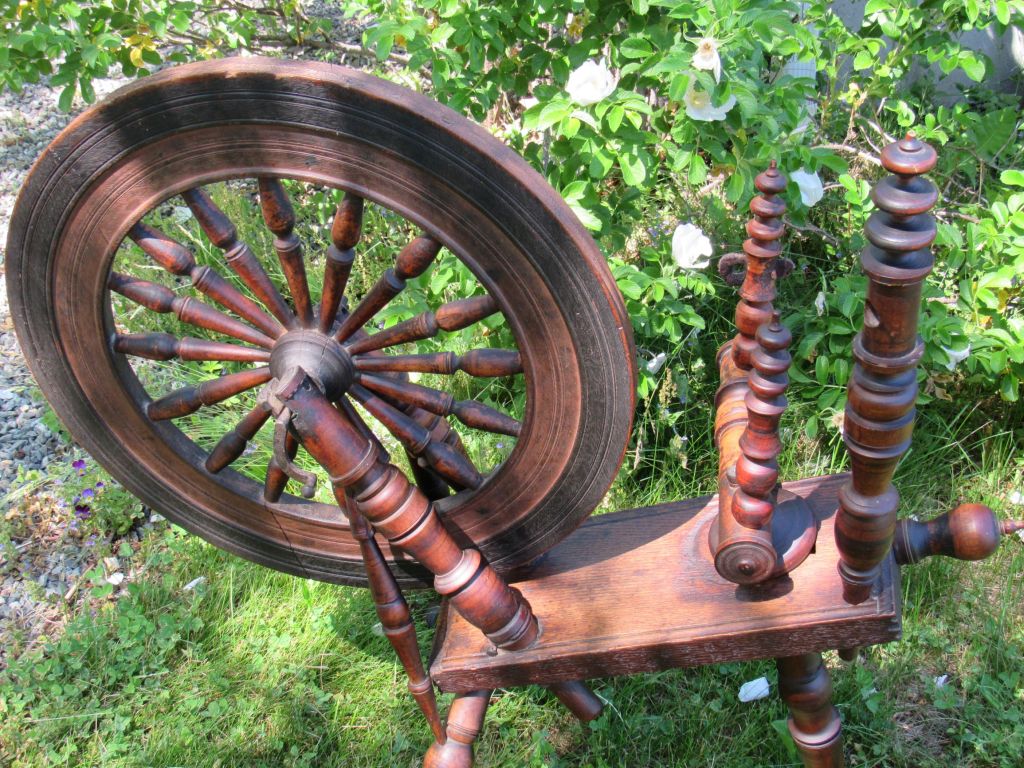
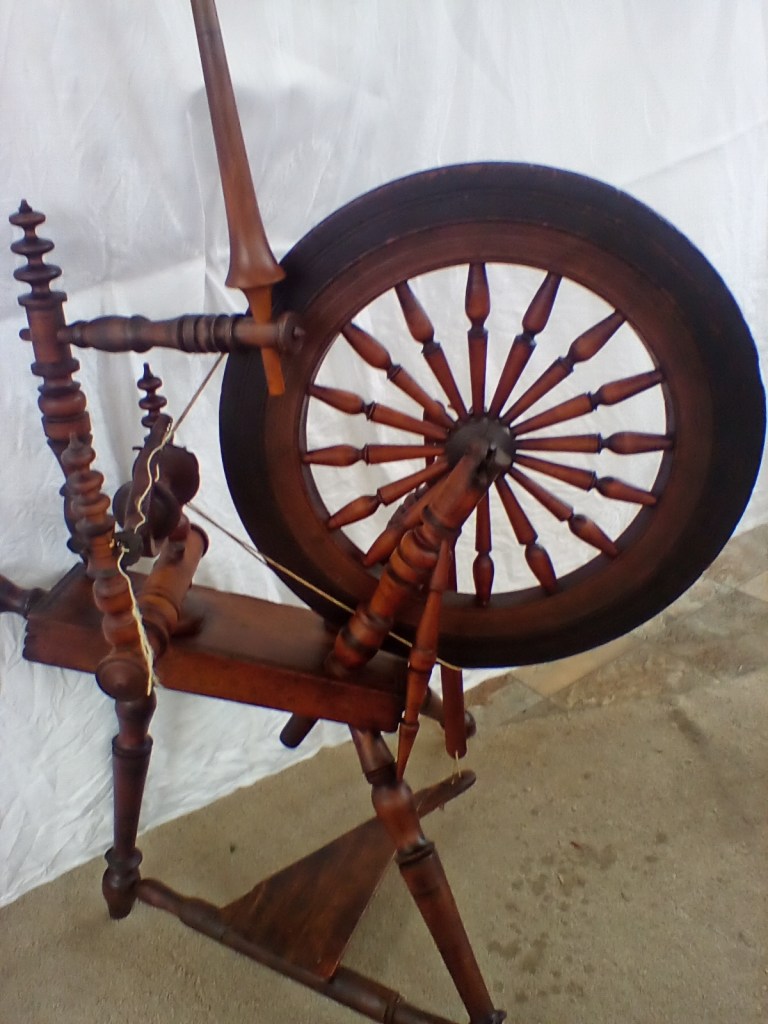
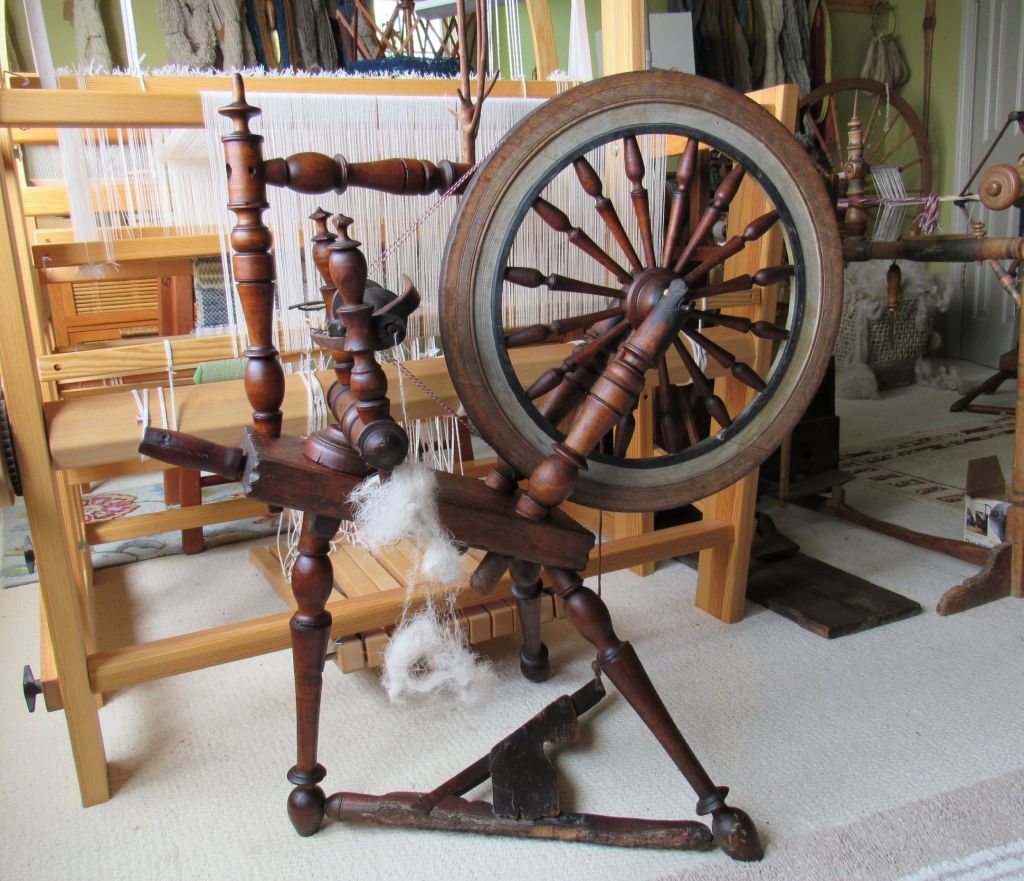
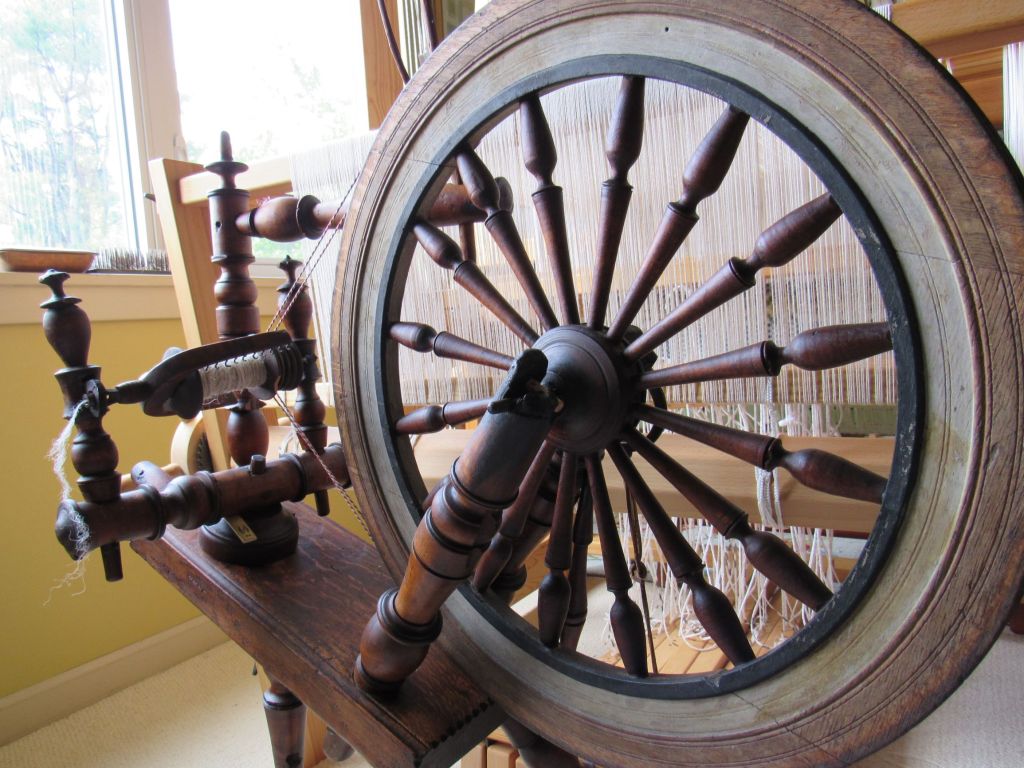
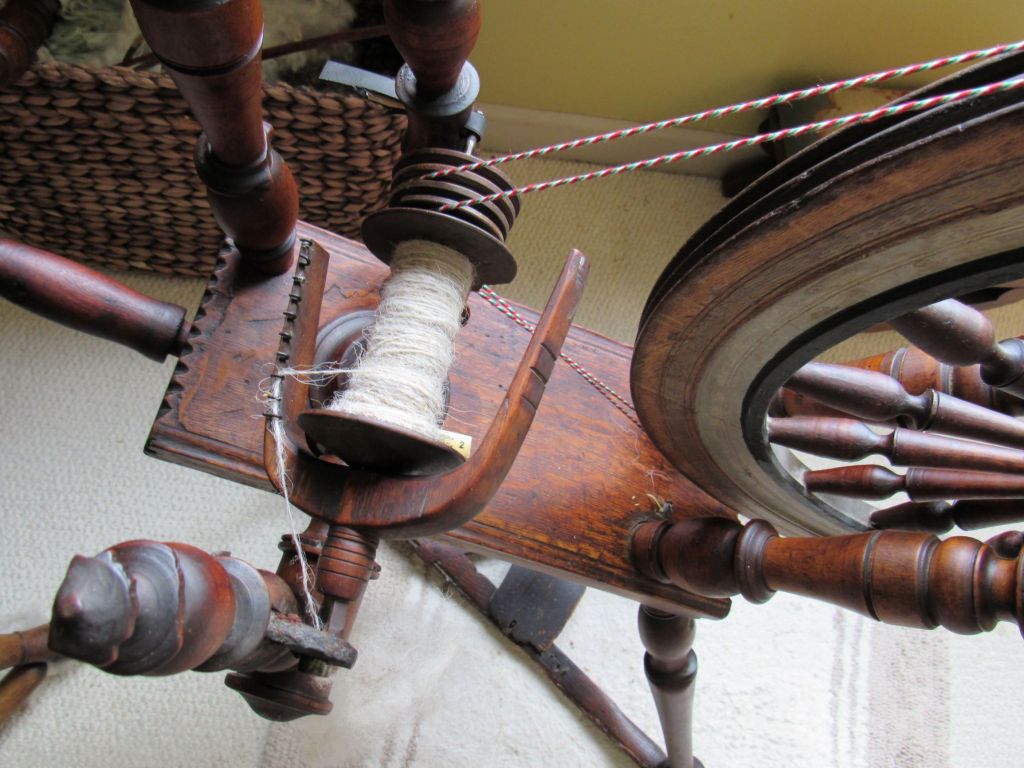
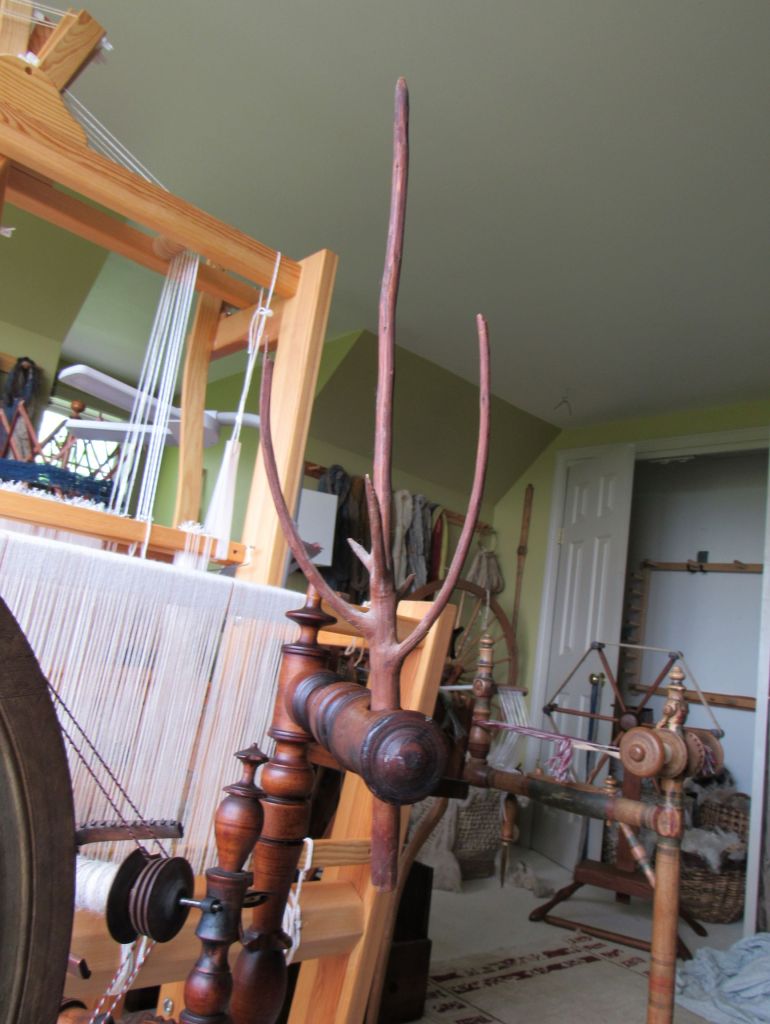
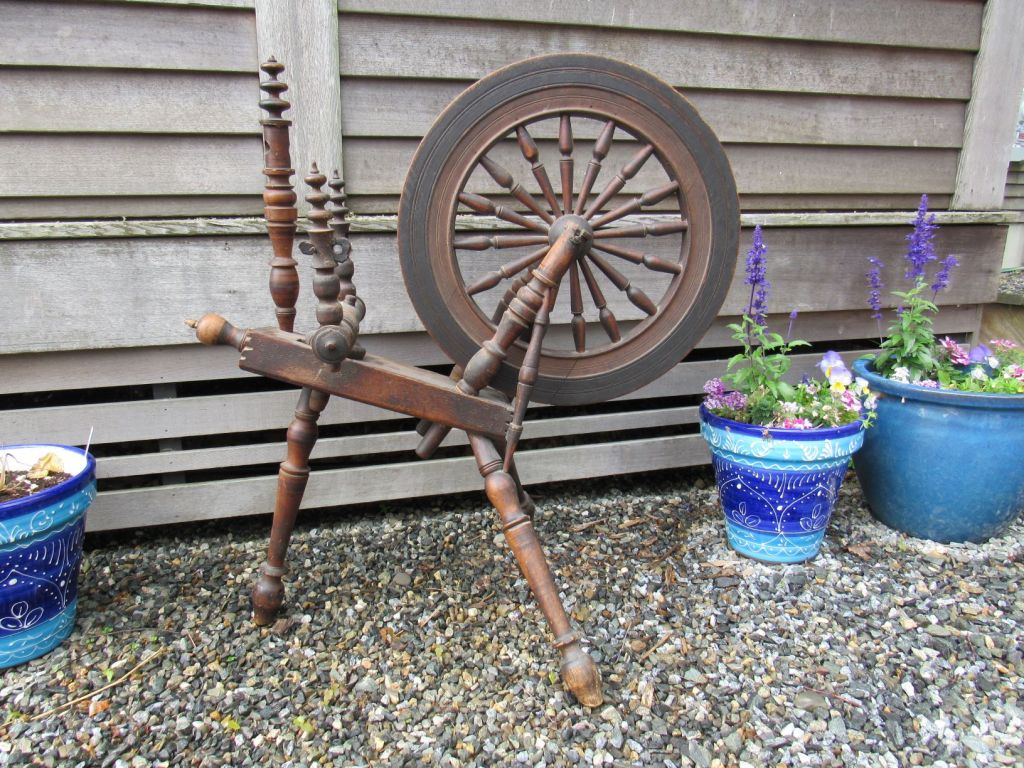
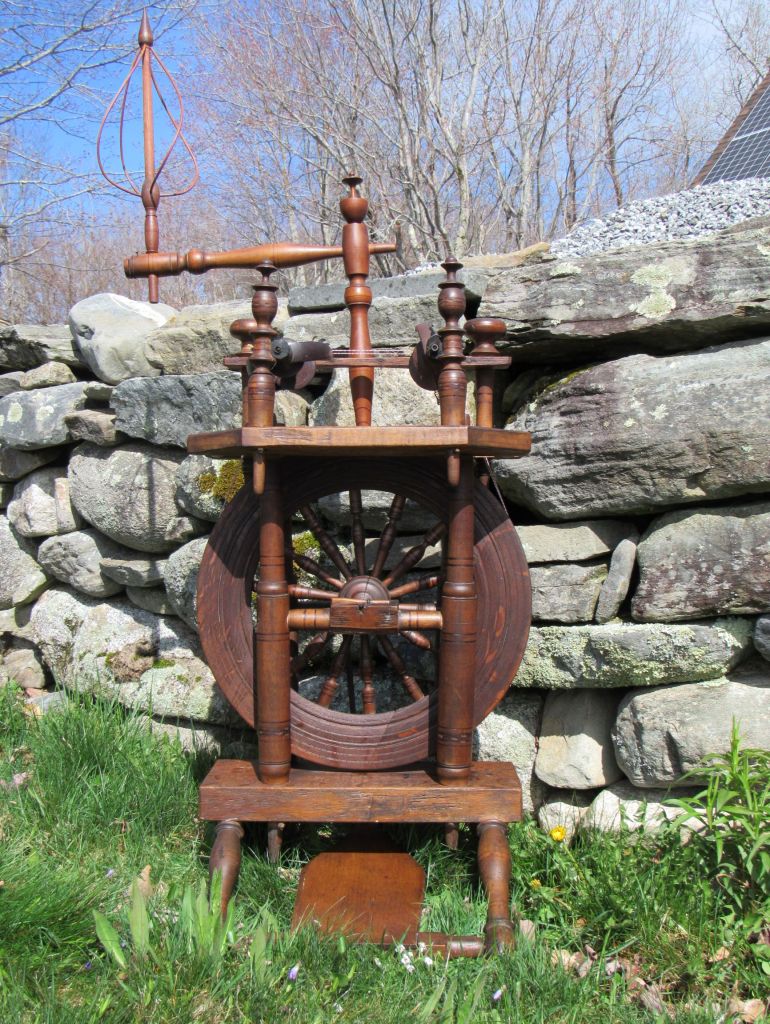
As noted in the previous post about Marlboro’s flax wheels, “Clarry,” his wheels are well-designed and attractive. And, as with his flax wheels, Marlboro’s great wheels are immediately recognizable as his. 

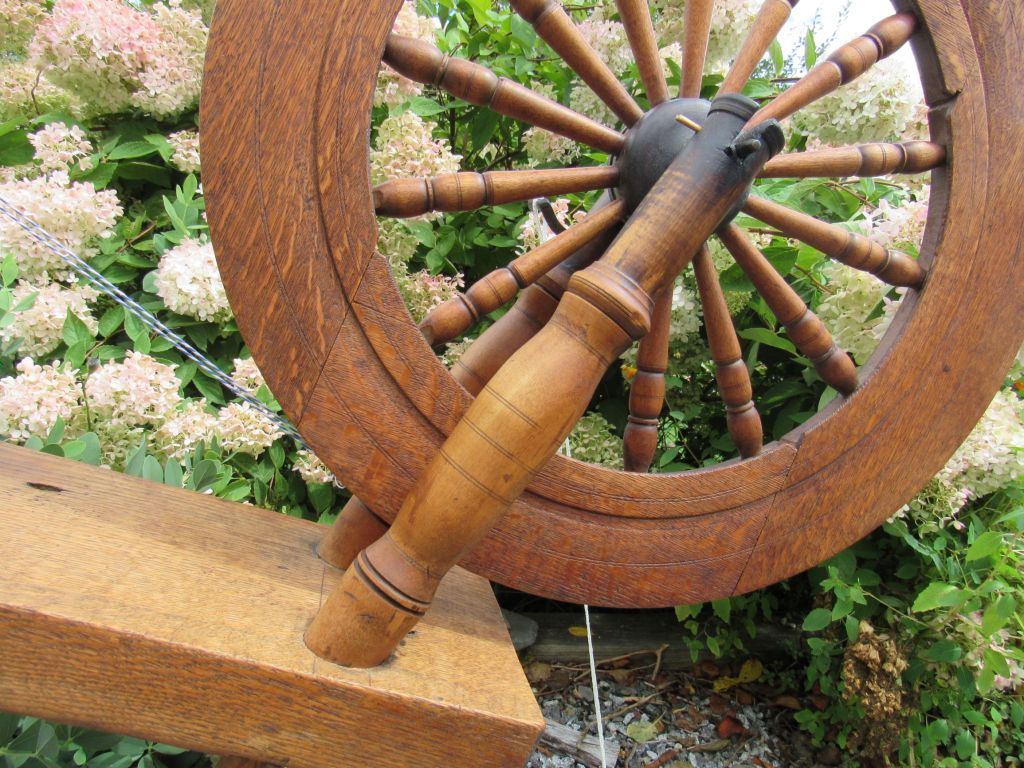
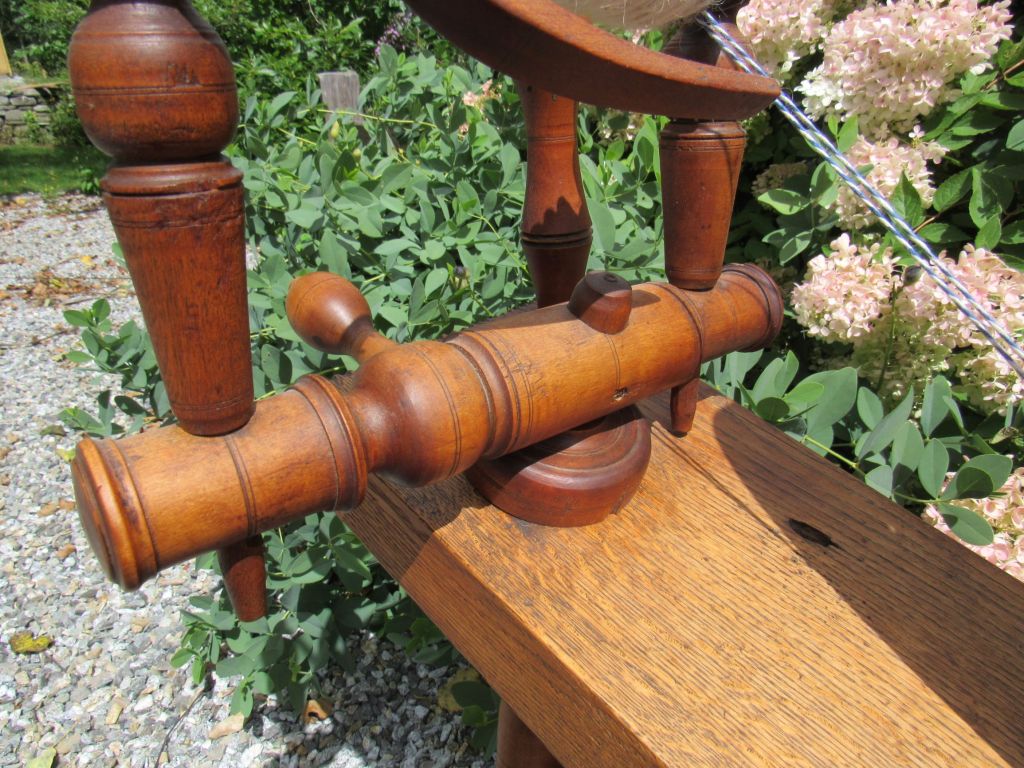
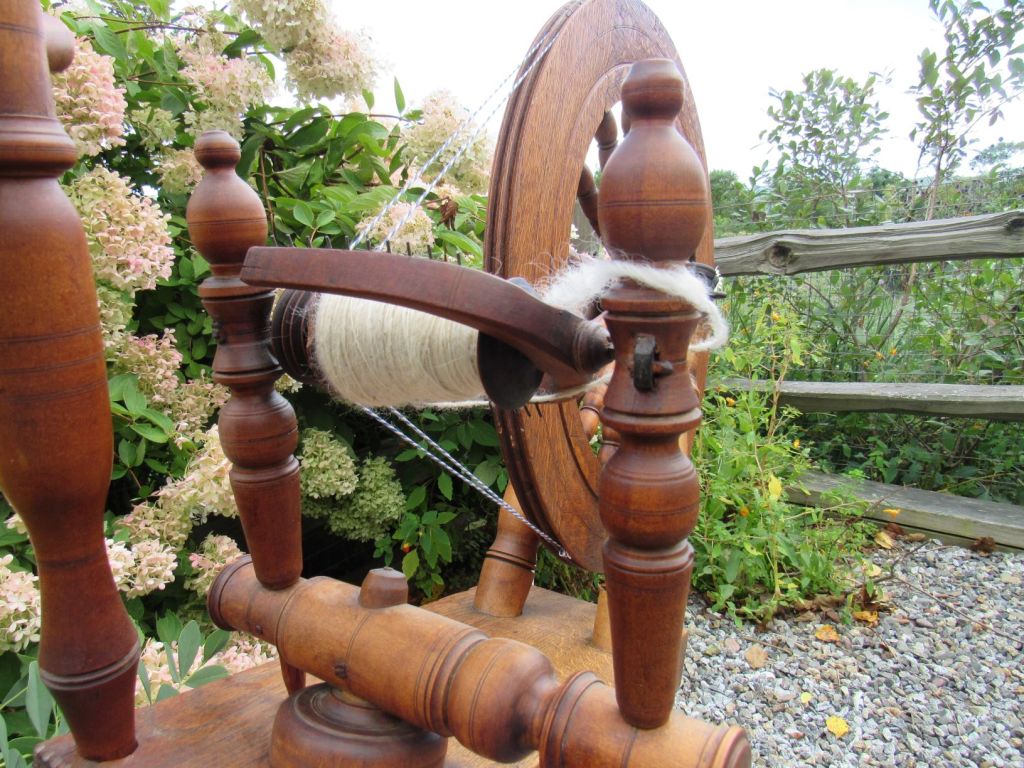
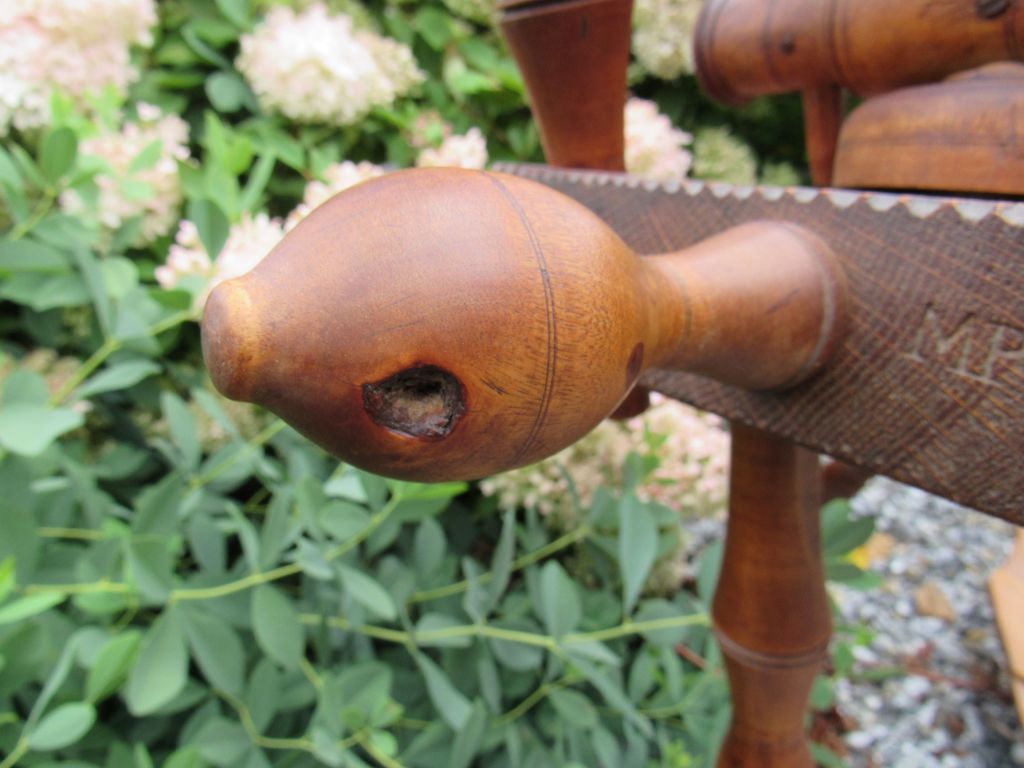
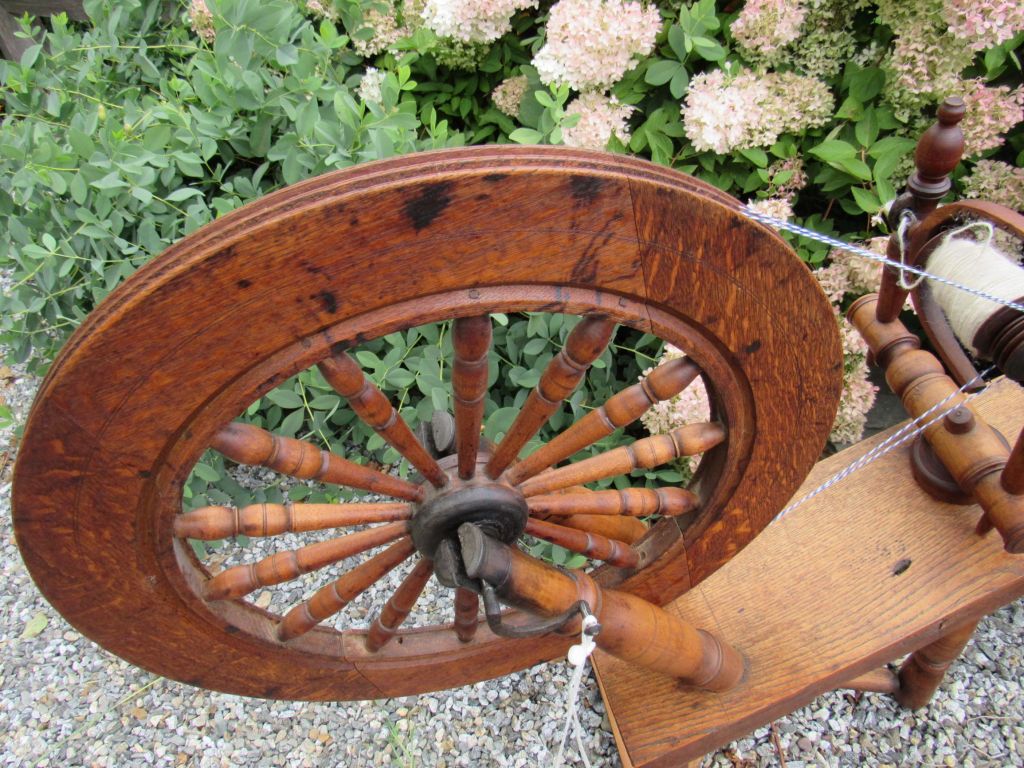
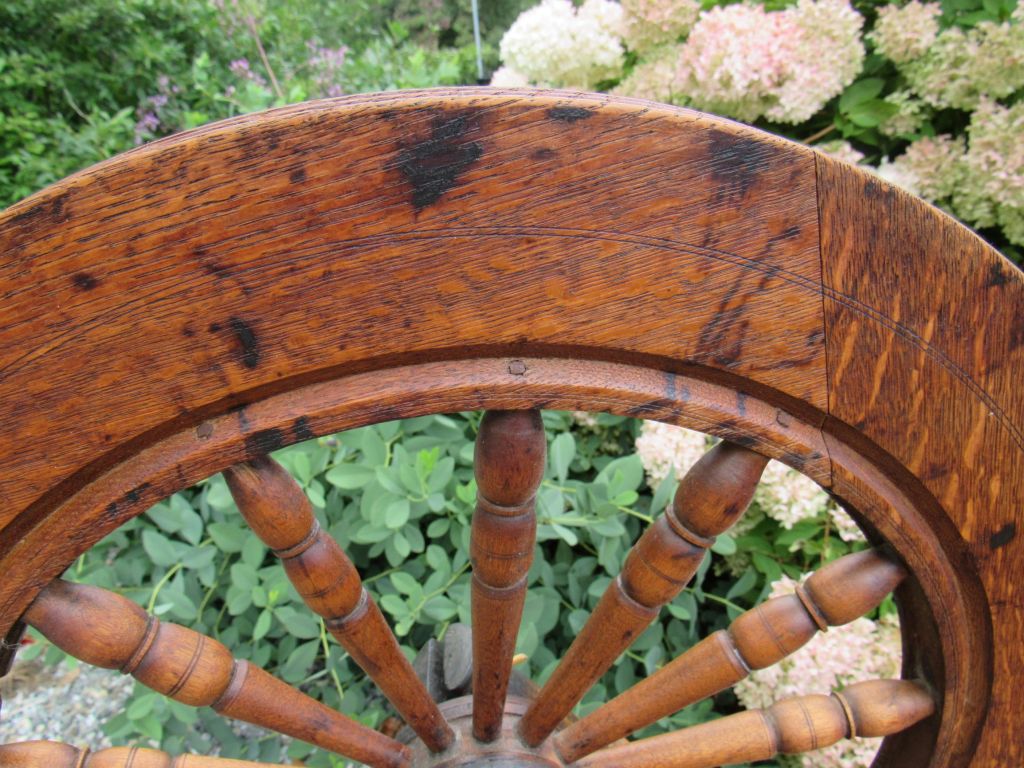
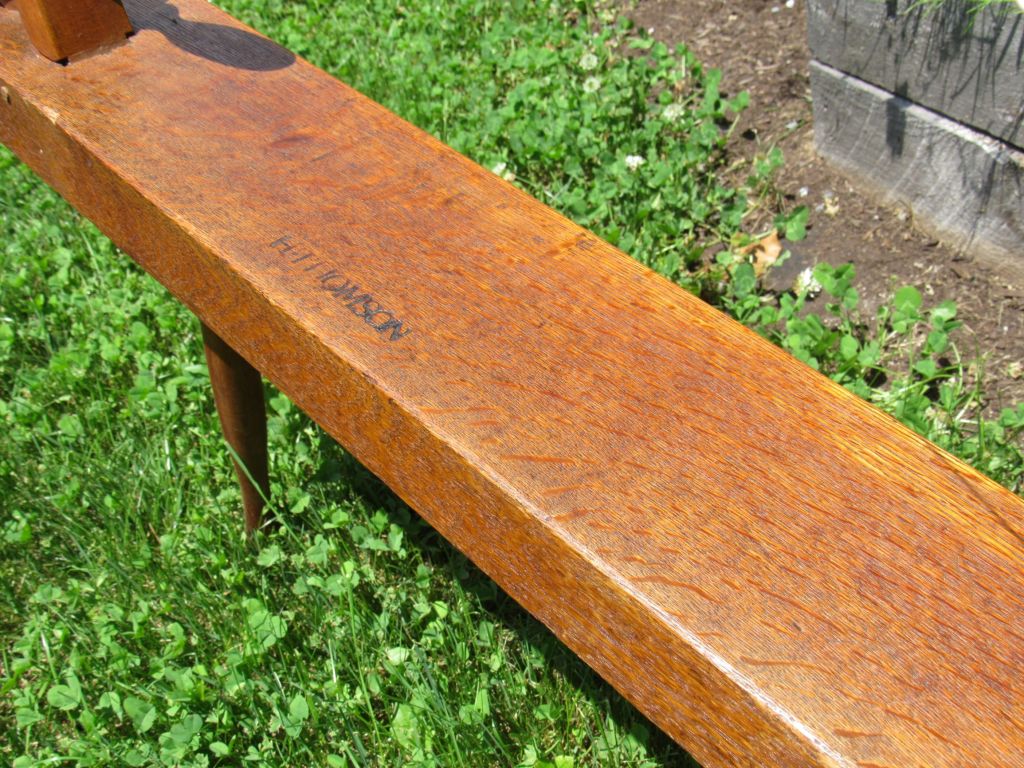
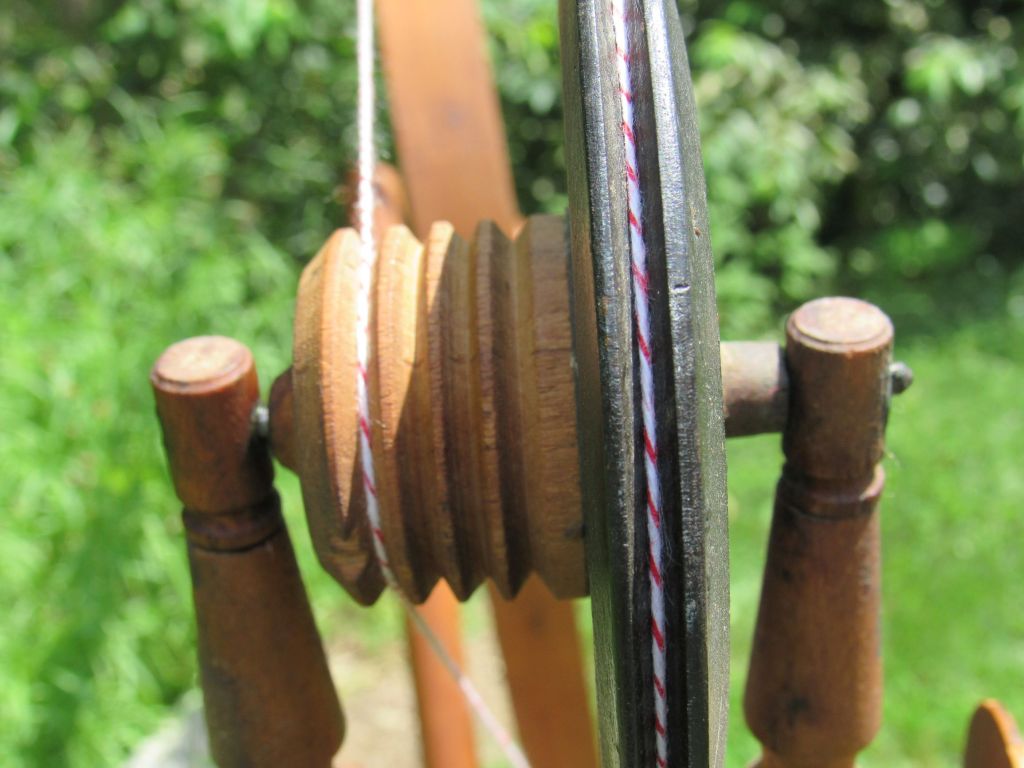
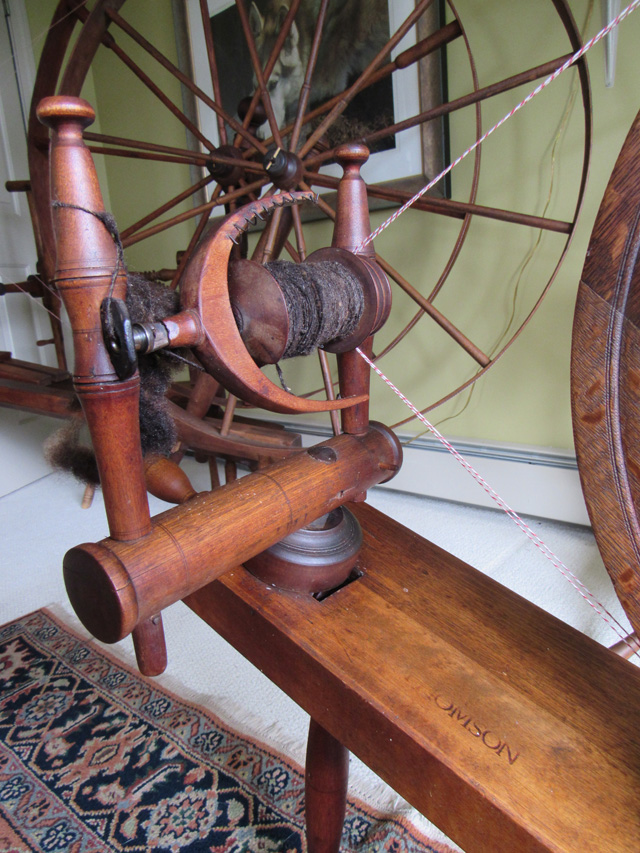
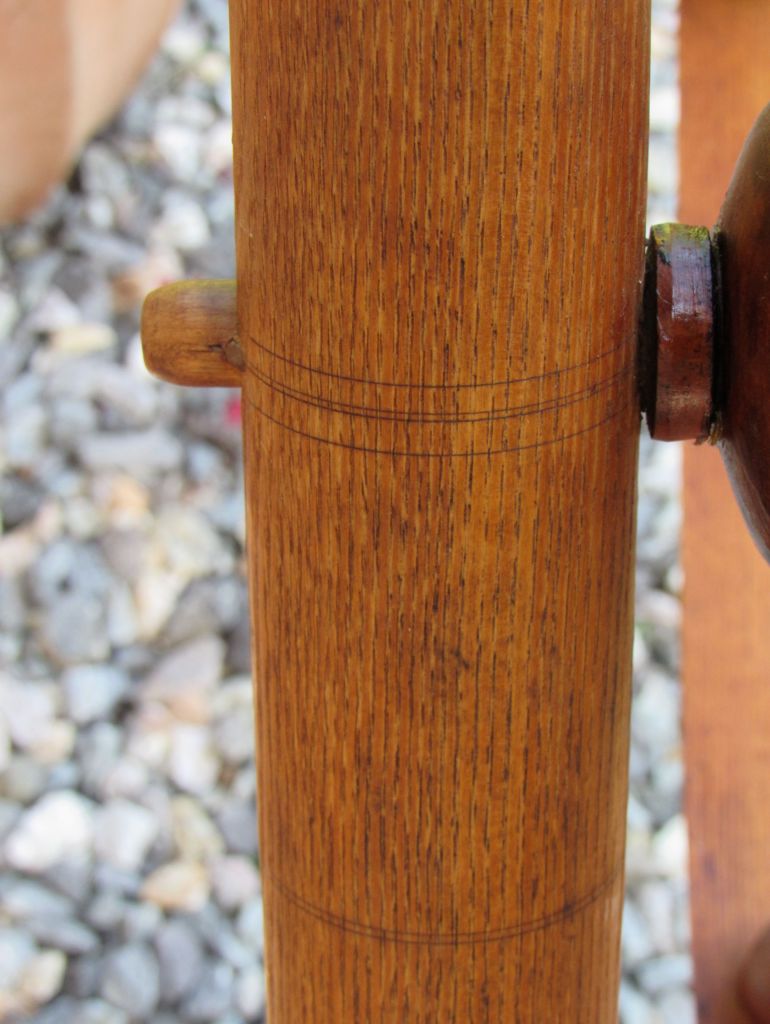
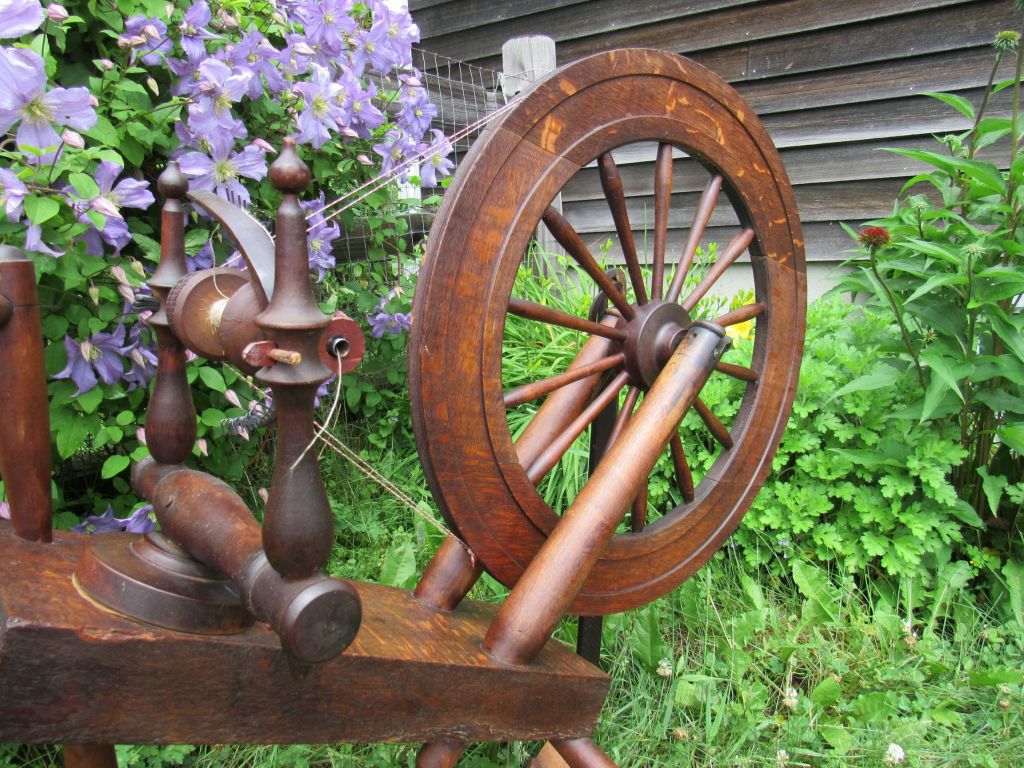
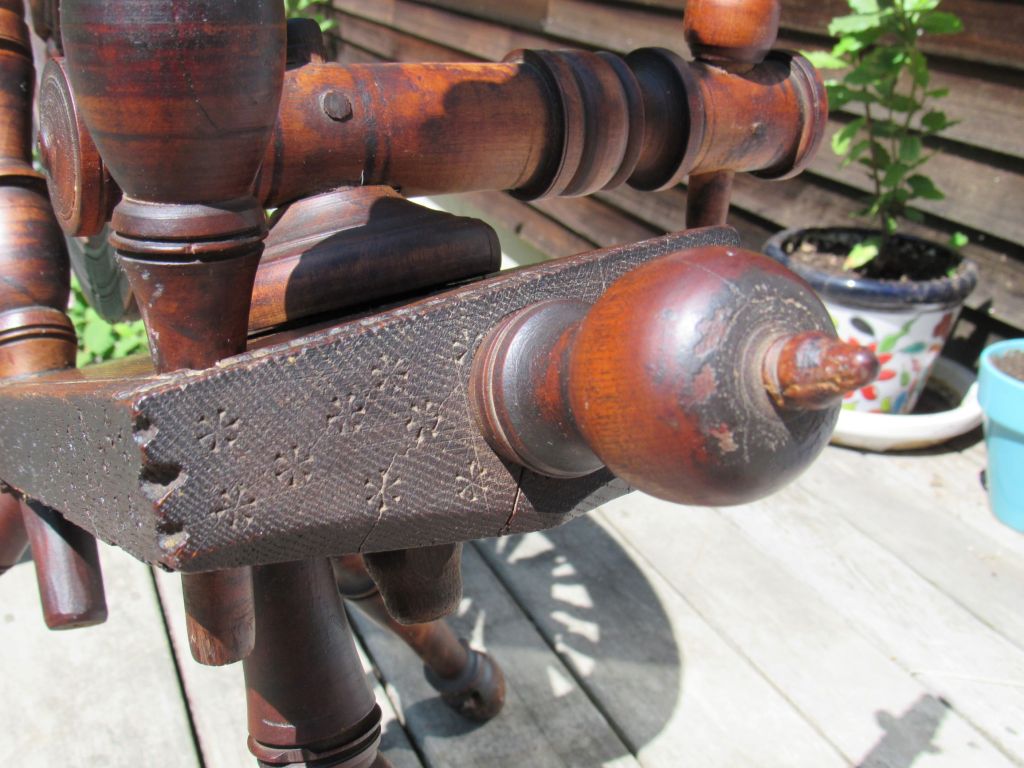
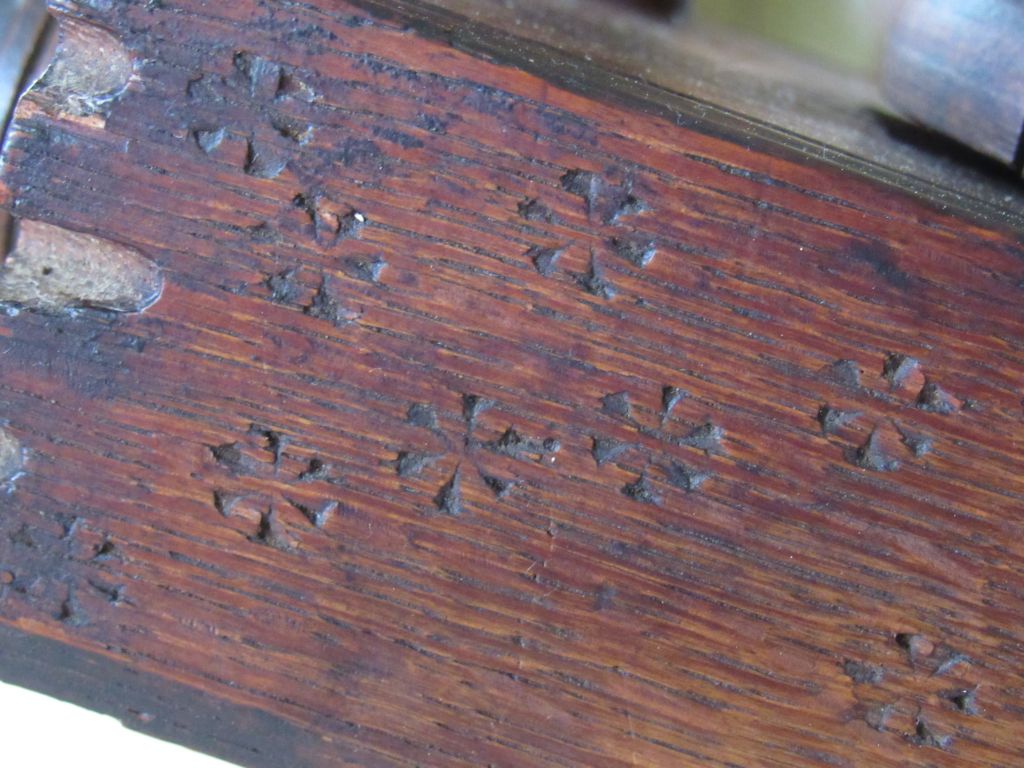
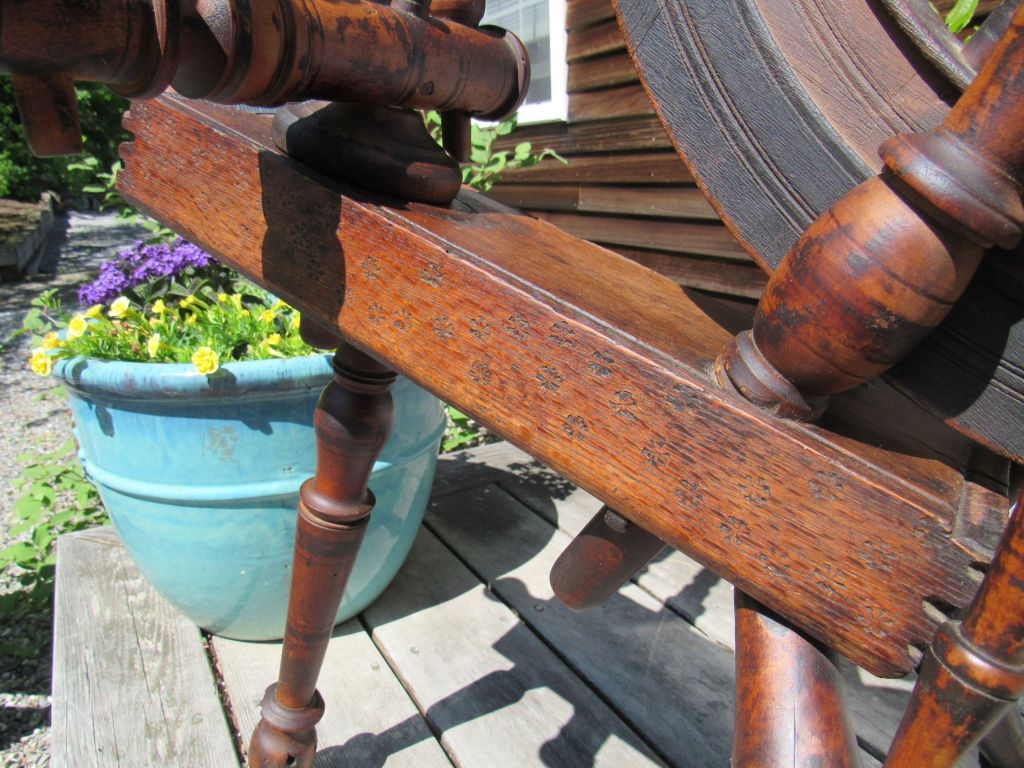
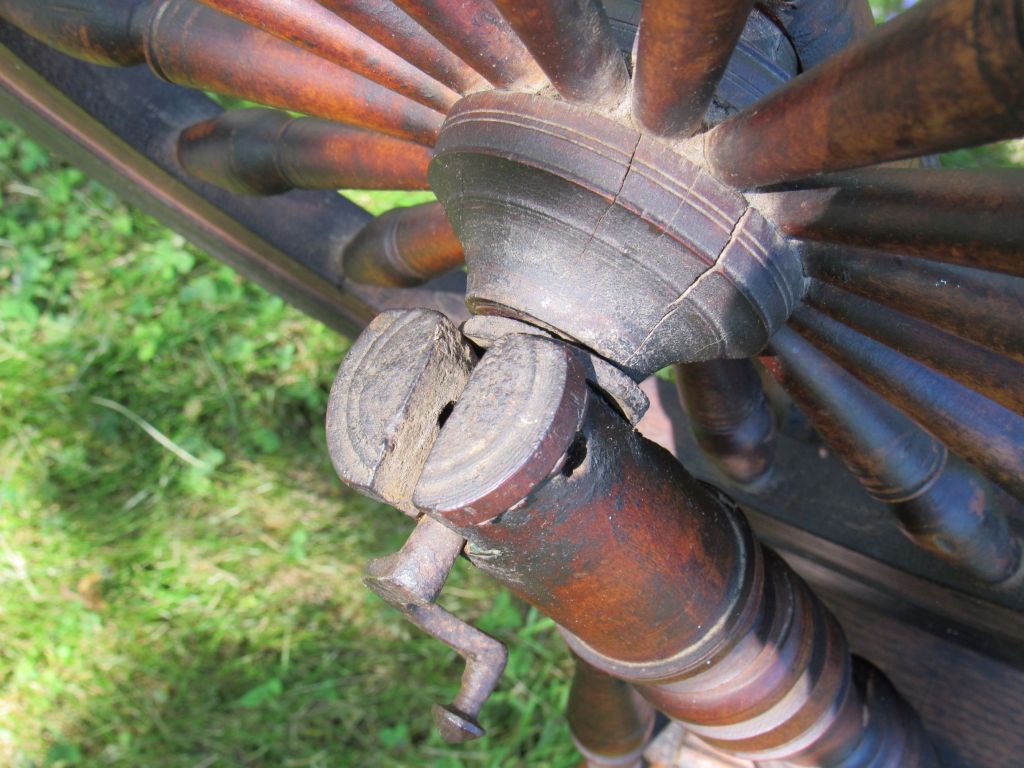
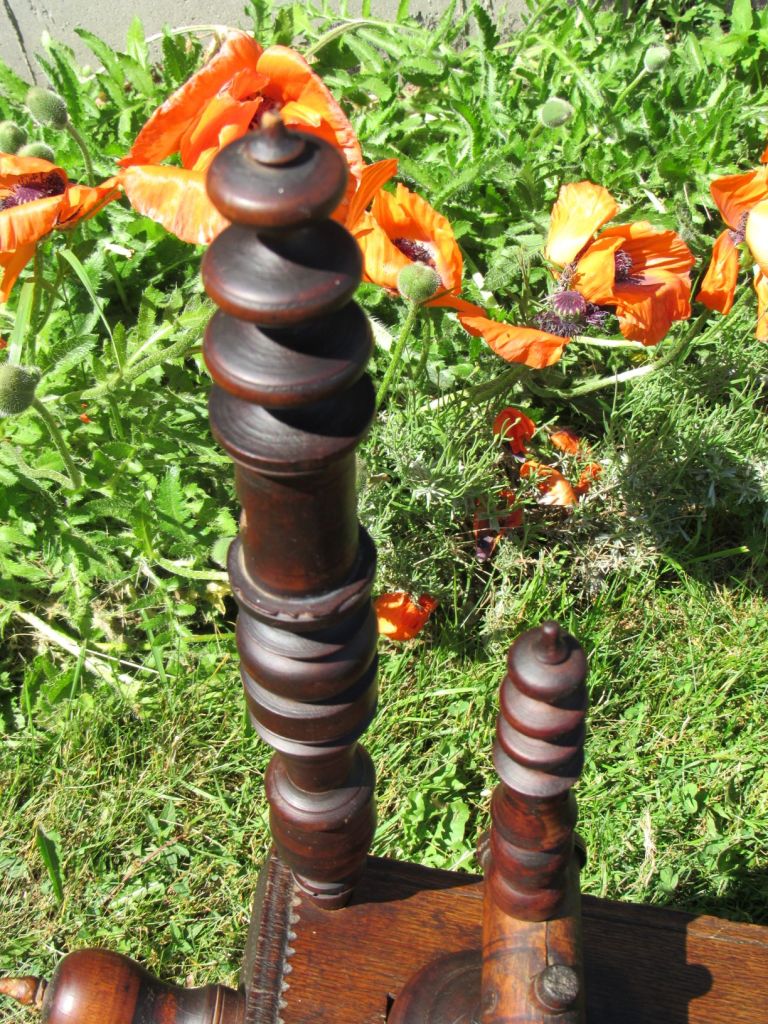
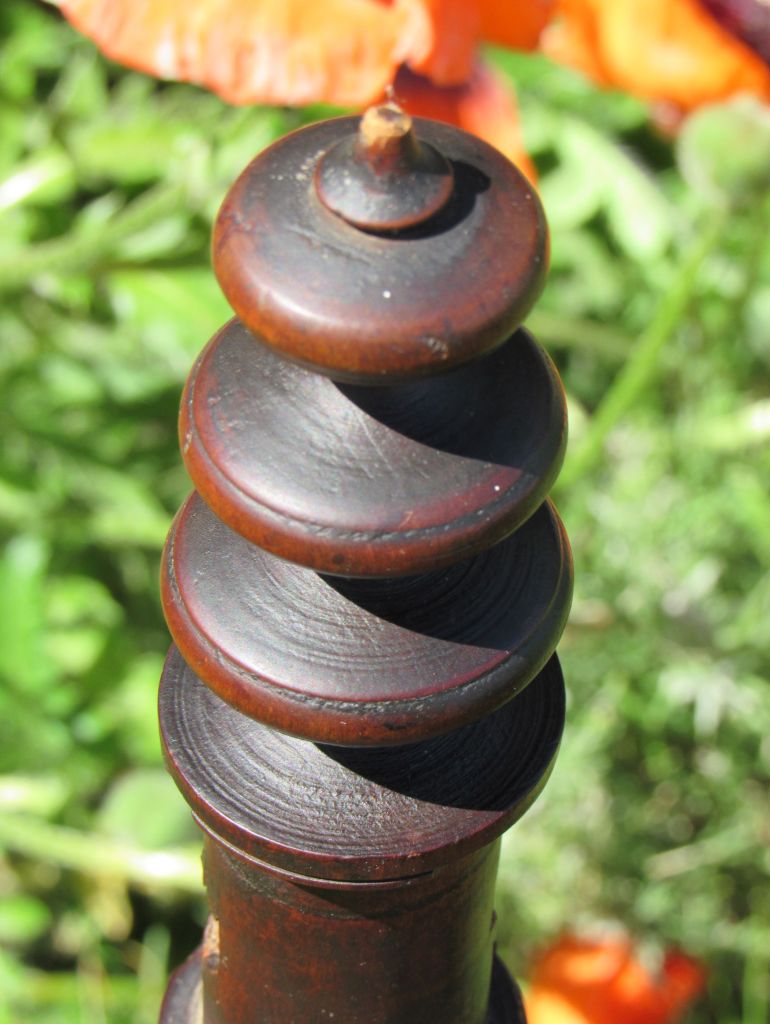
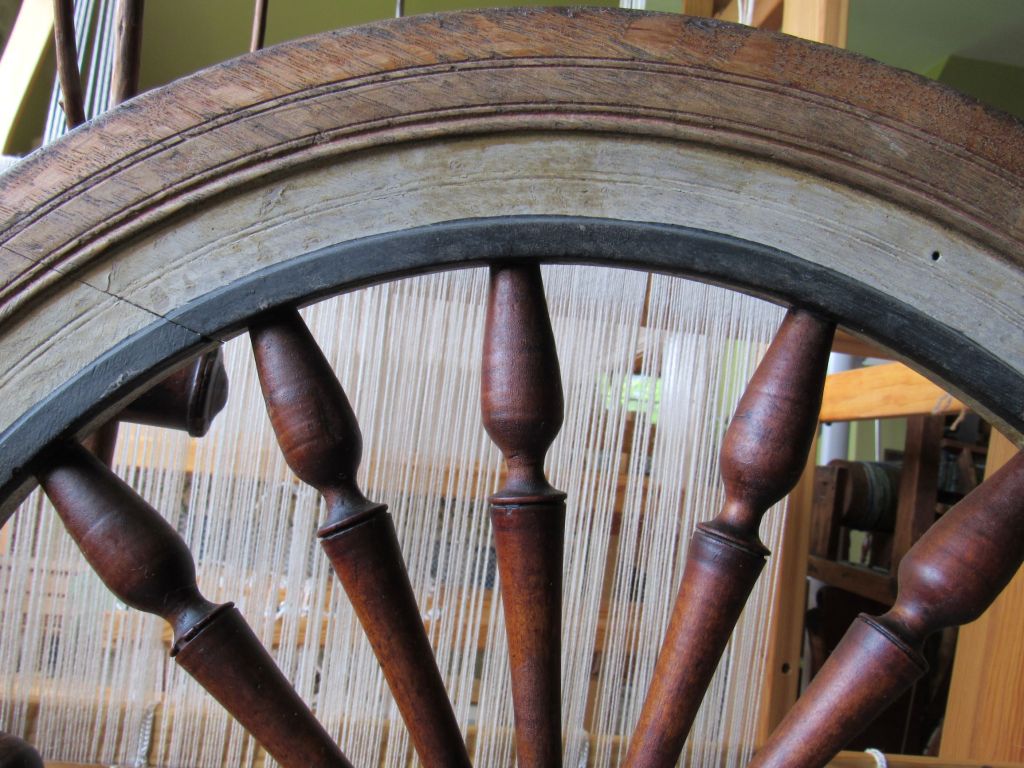
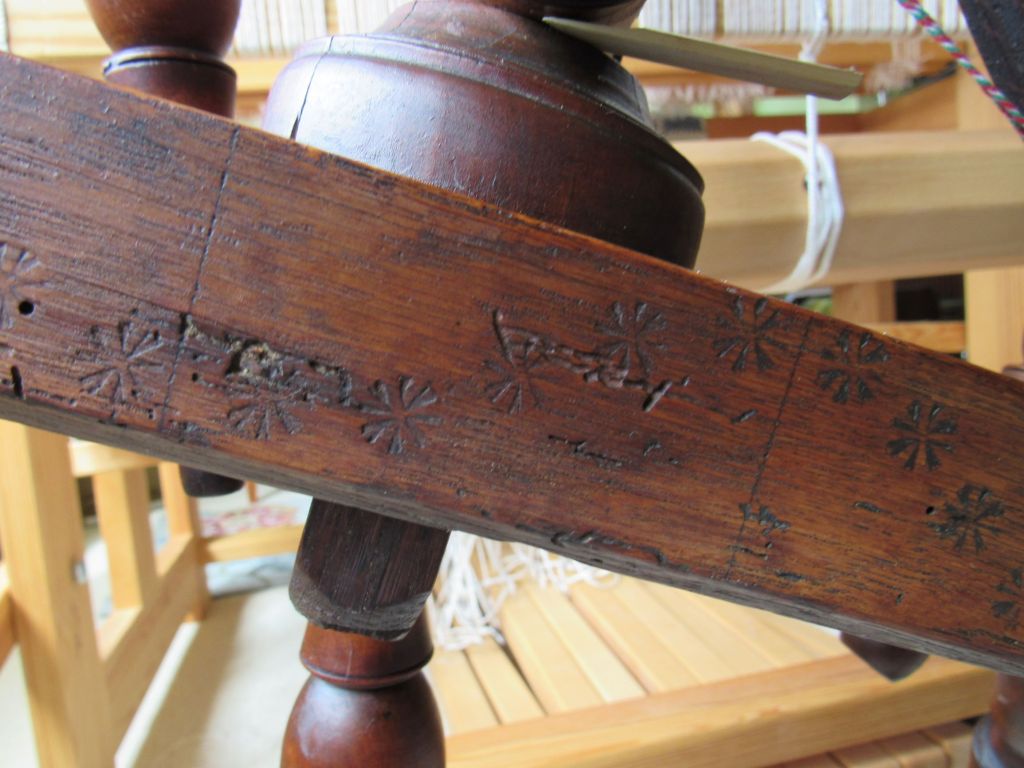
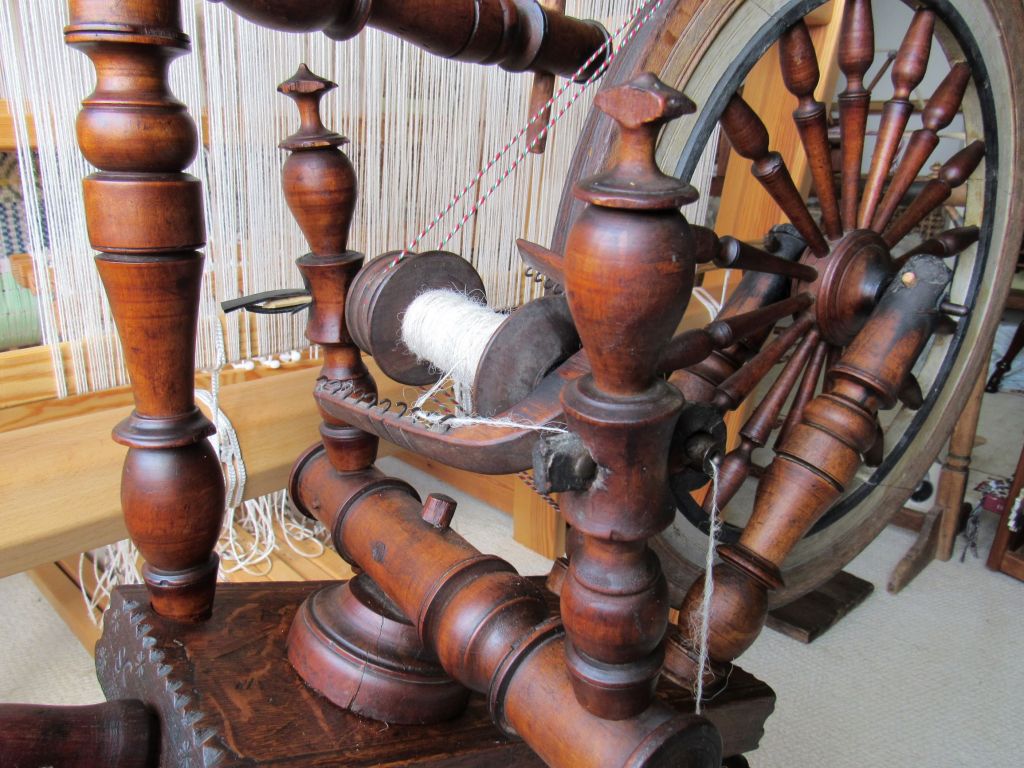
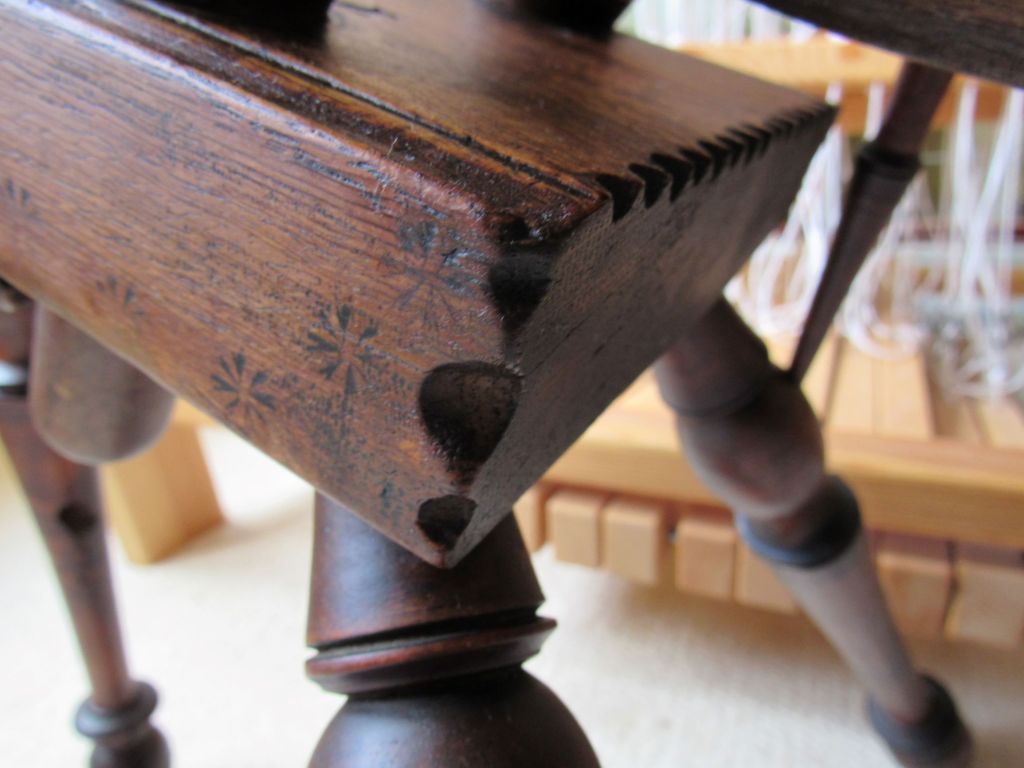
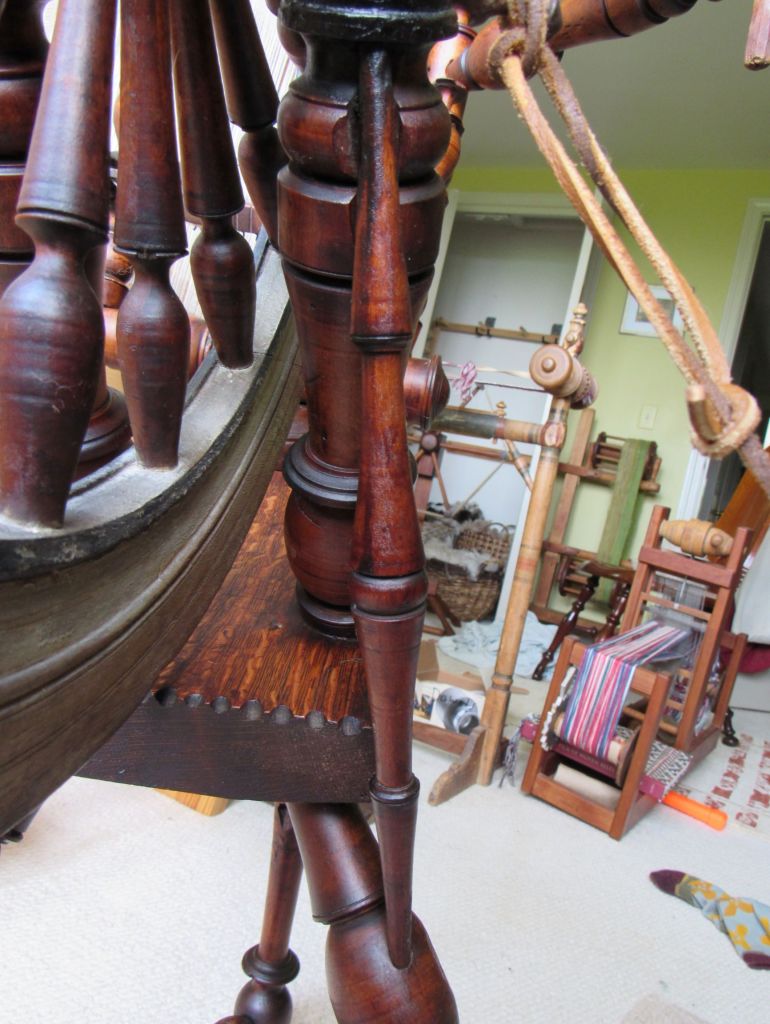
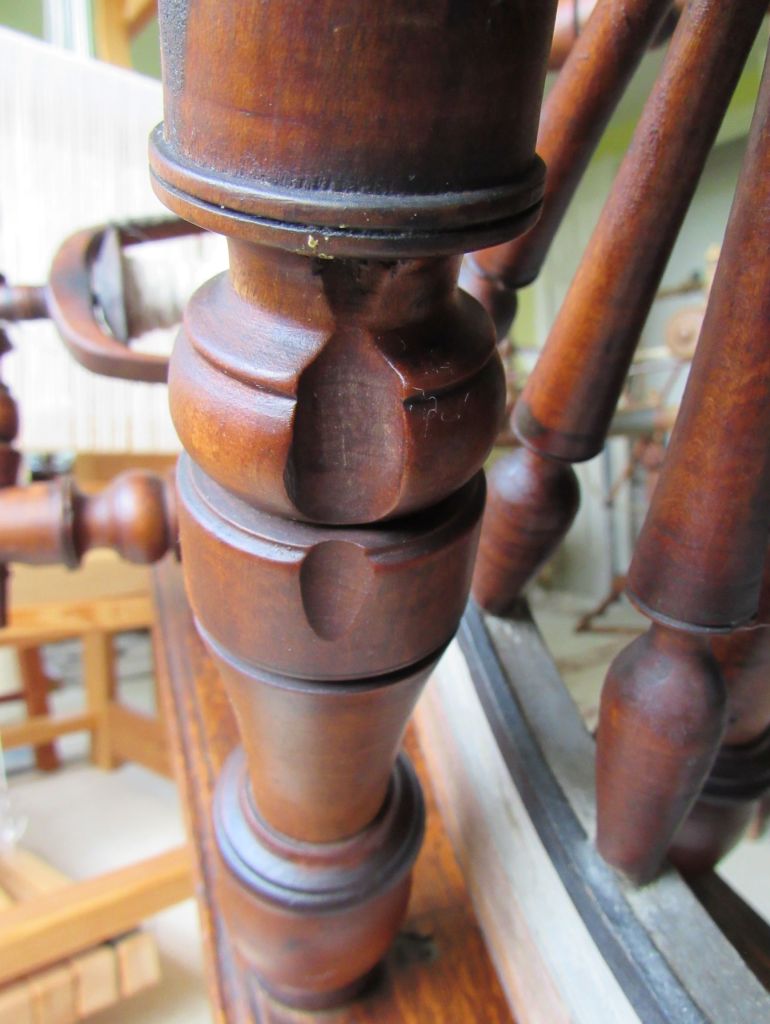
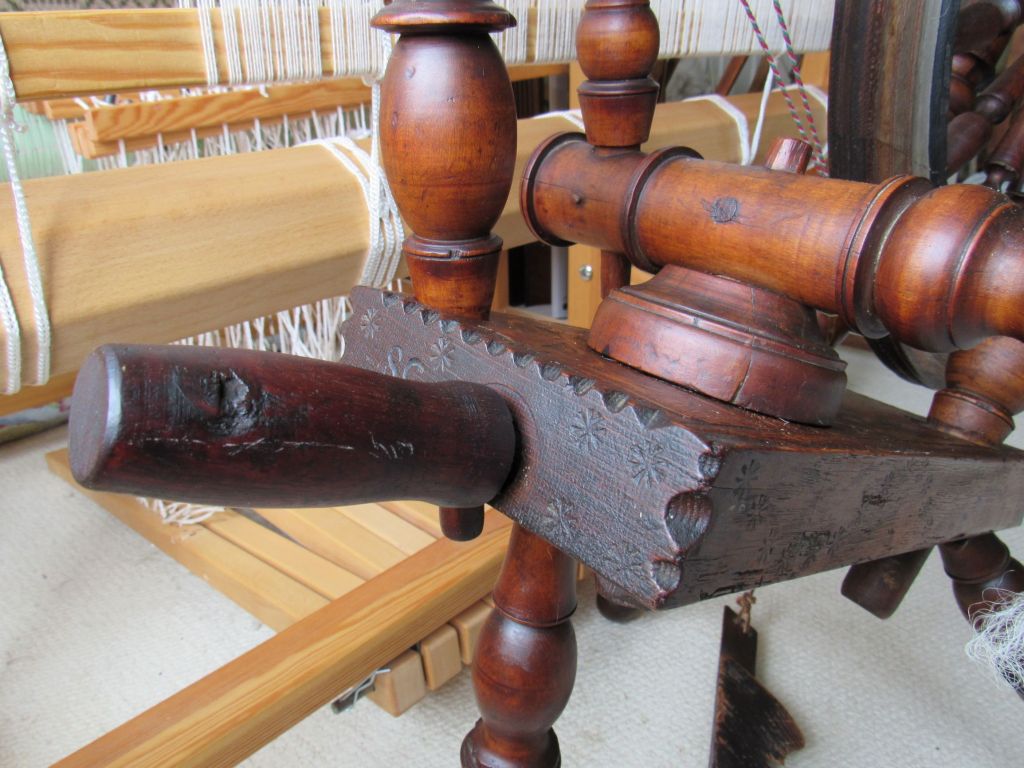
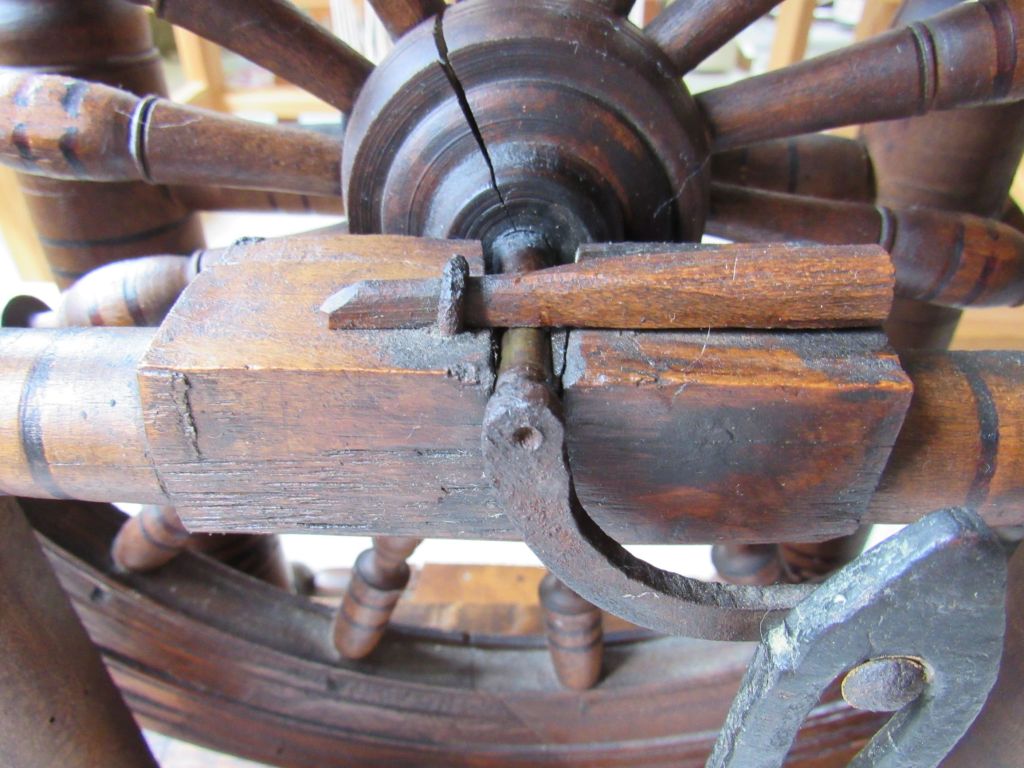
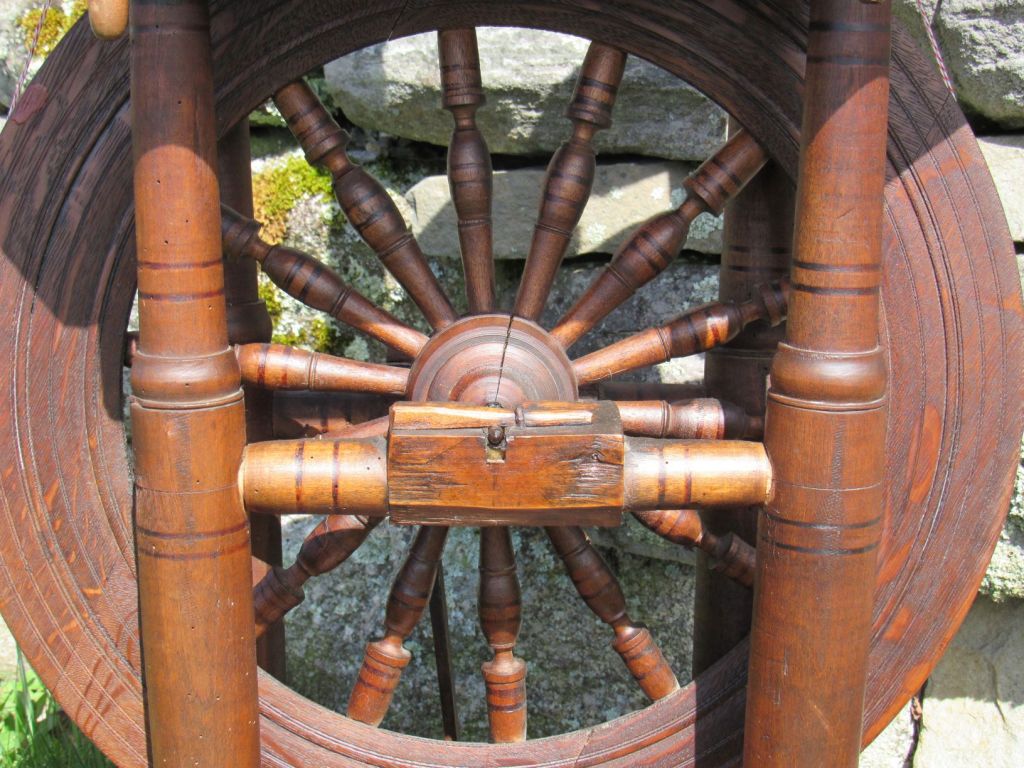
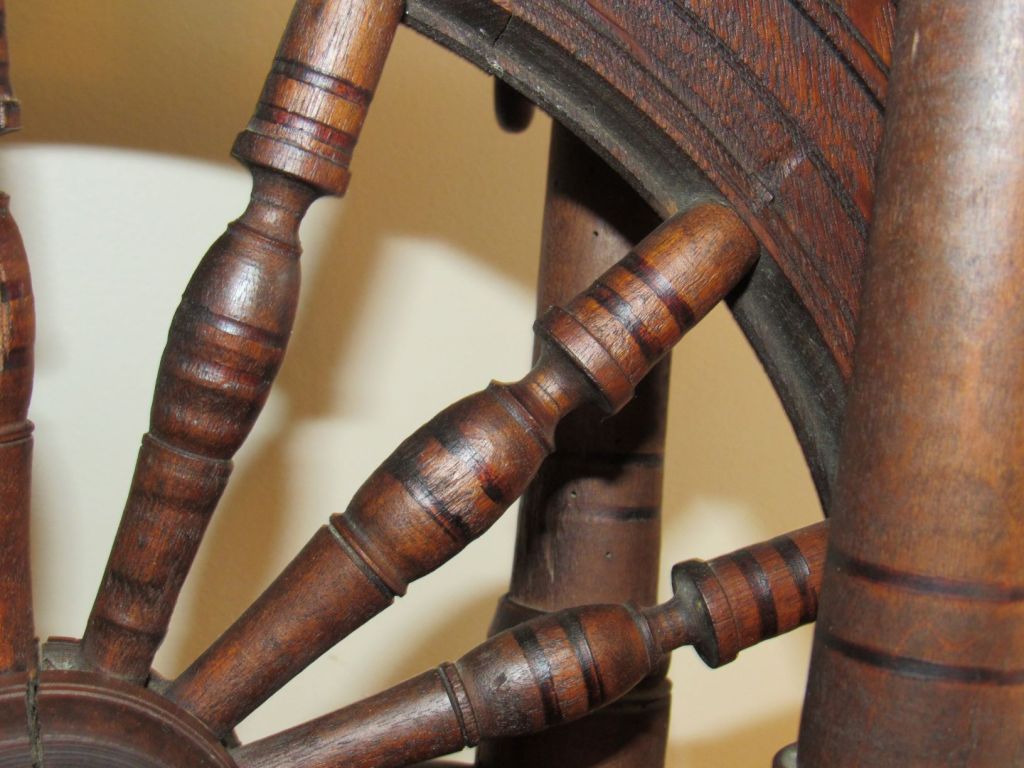
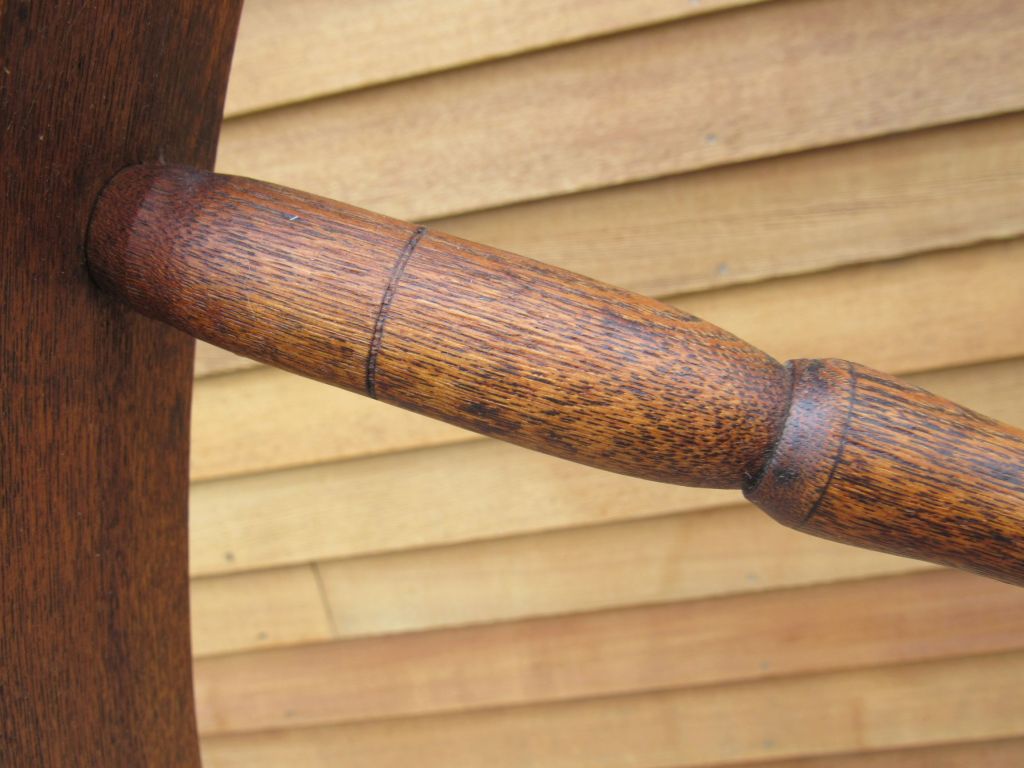
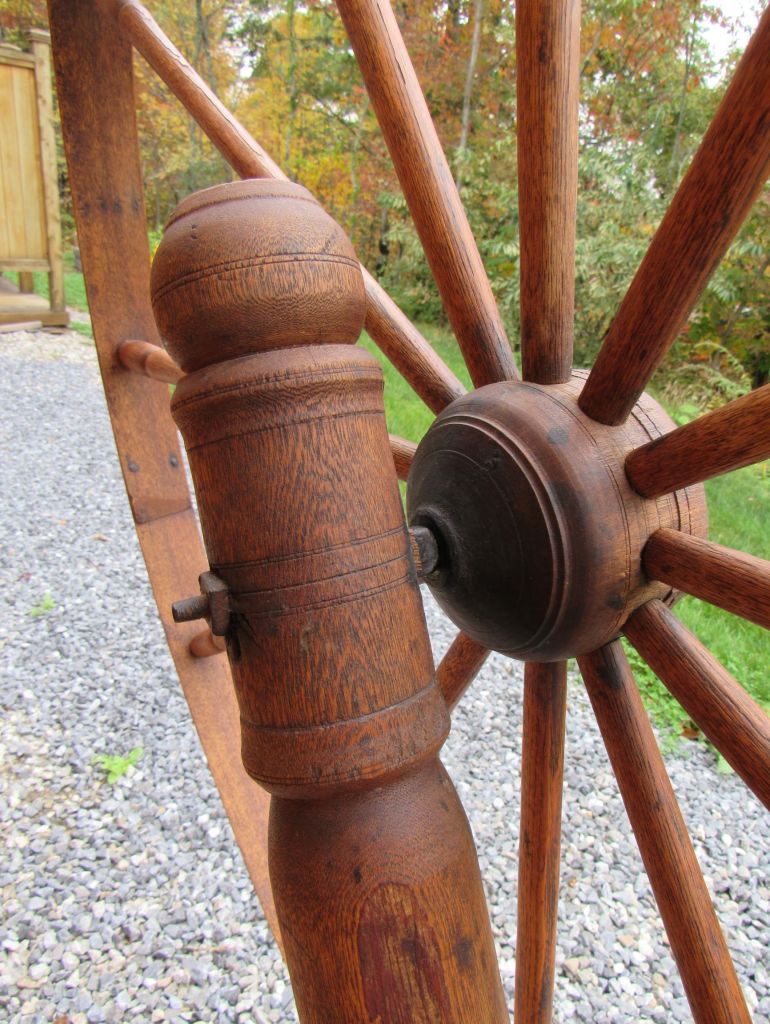
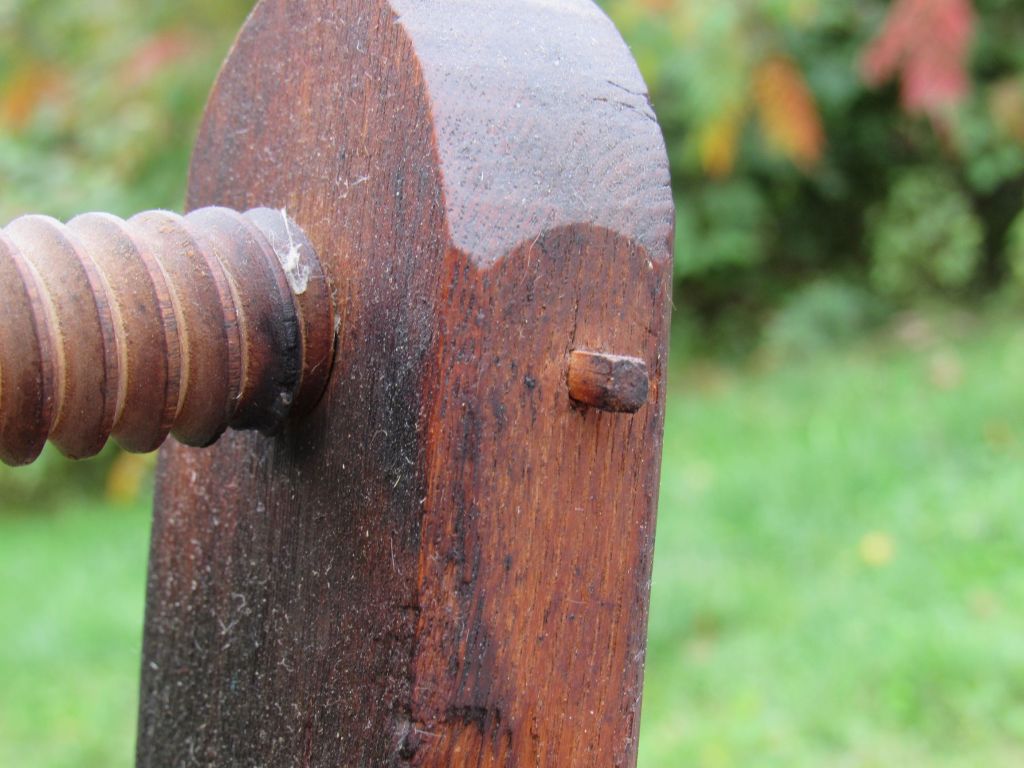
He used a double-nut tensioning system–a somewhat unusual design found primarily in wheels from New England and New York.  The wheels are sturdy, with some lovely turnings and scribe marks, and his signature “MP” stamps. 

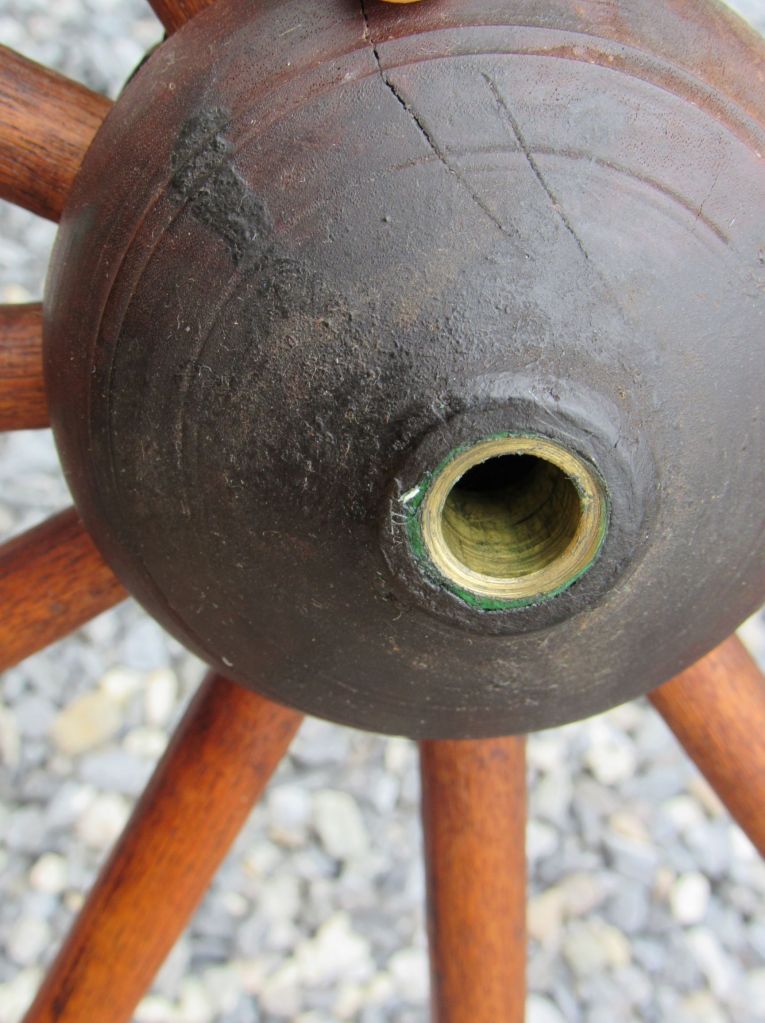
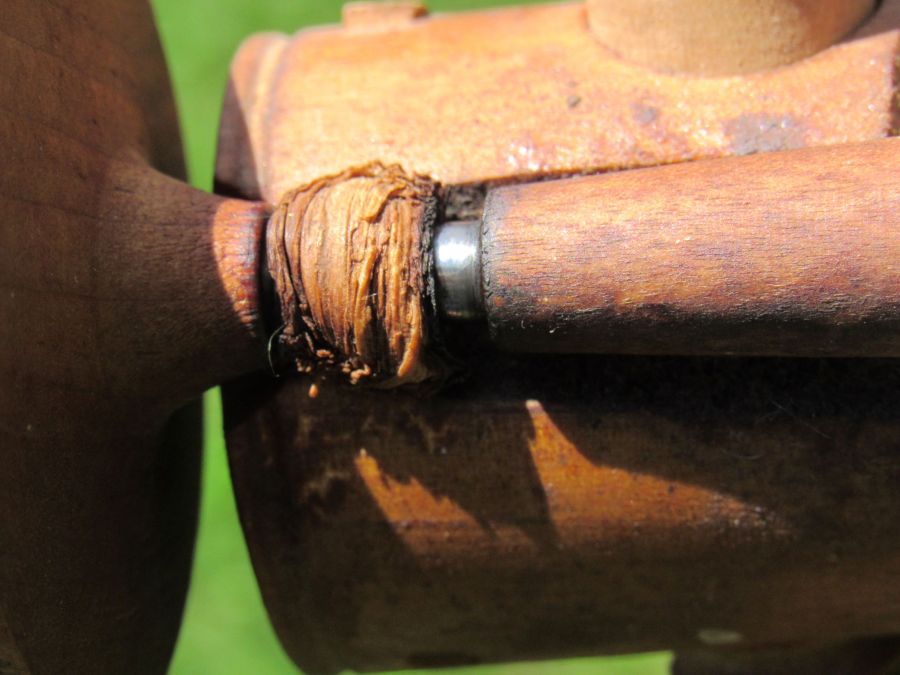
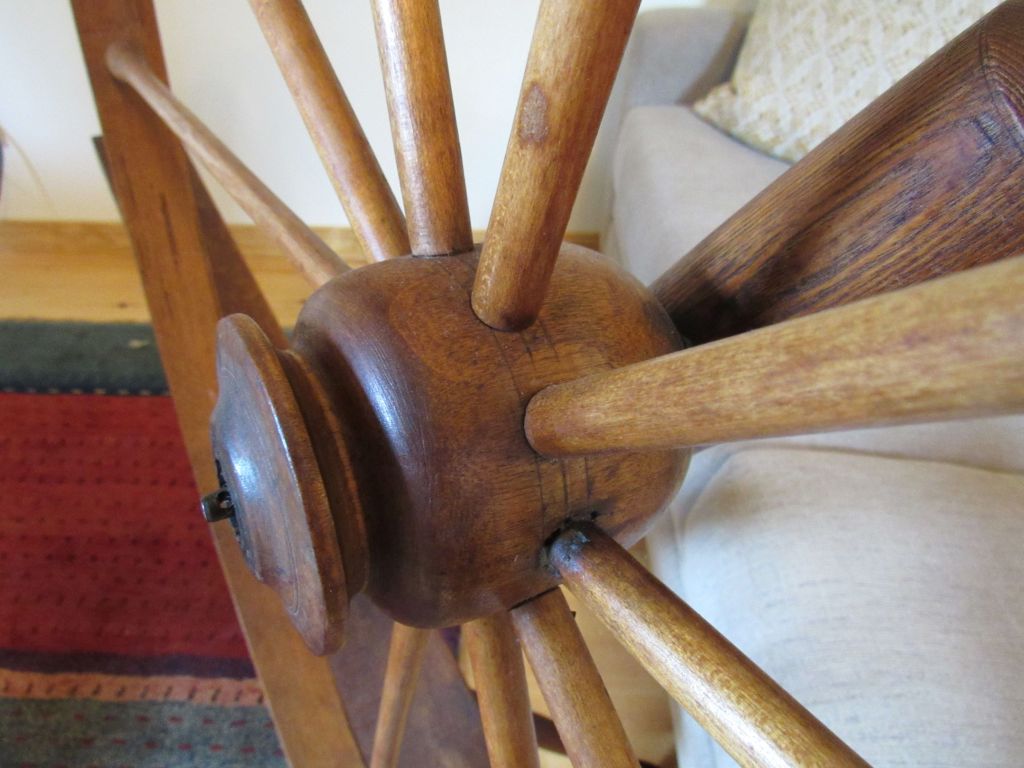
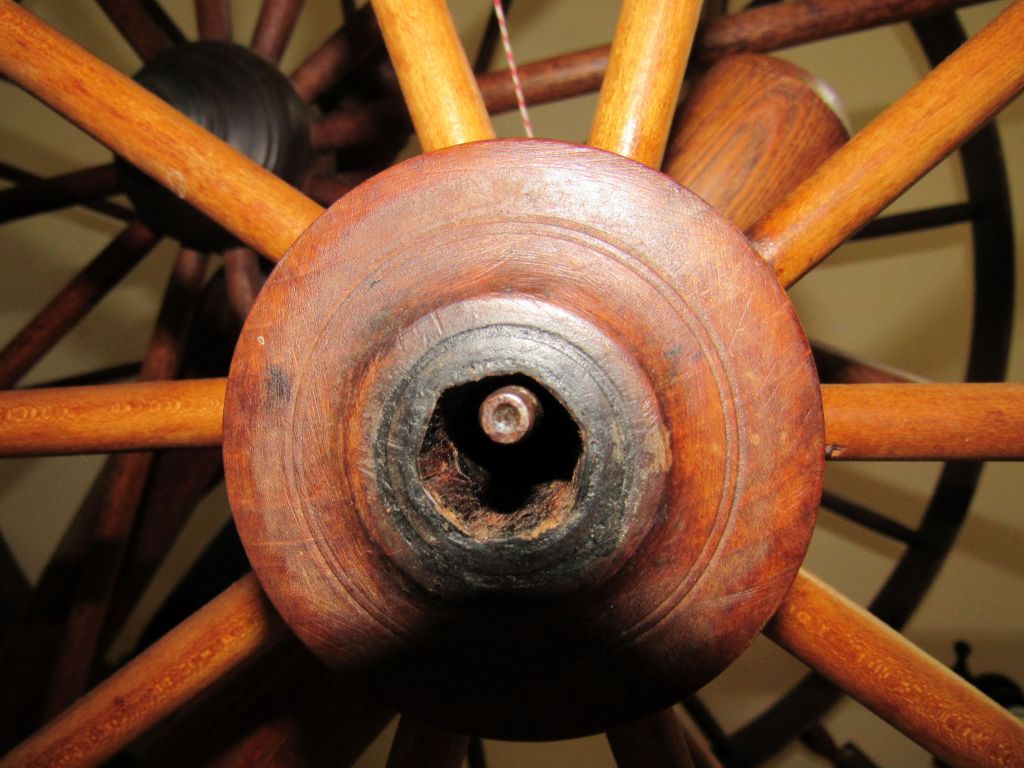
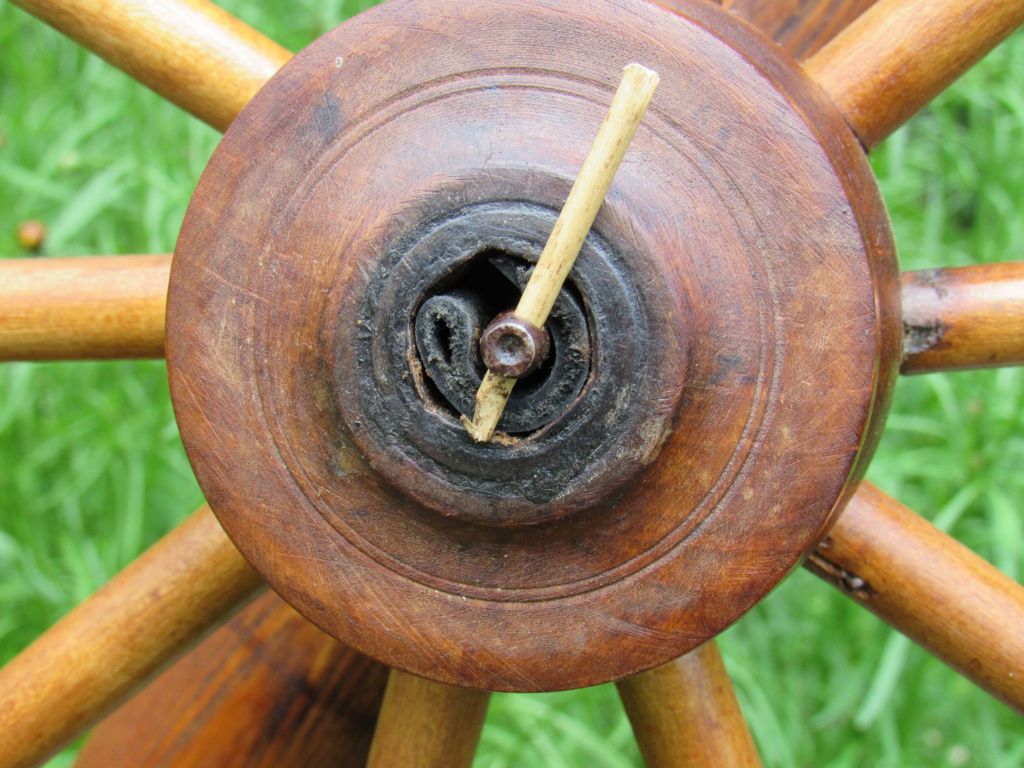
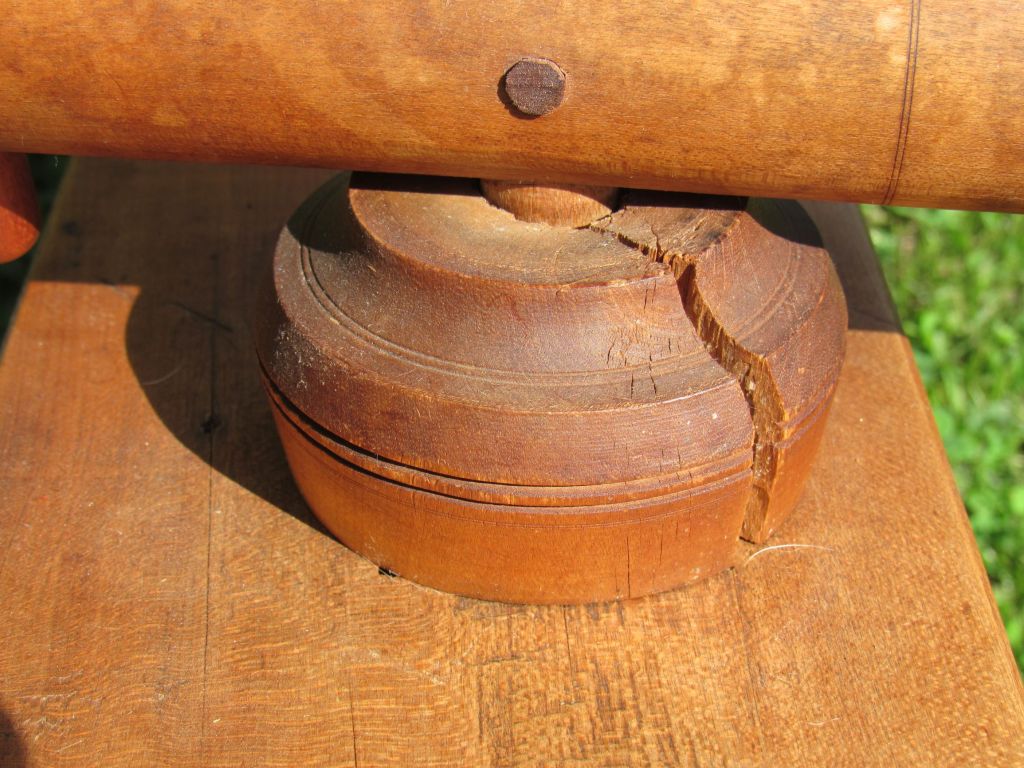
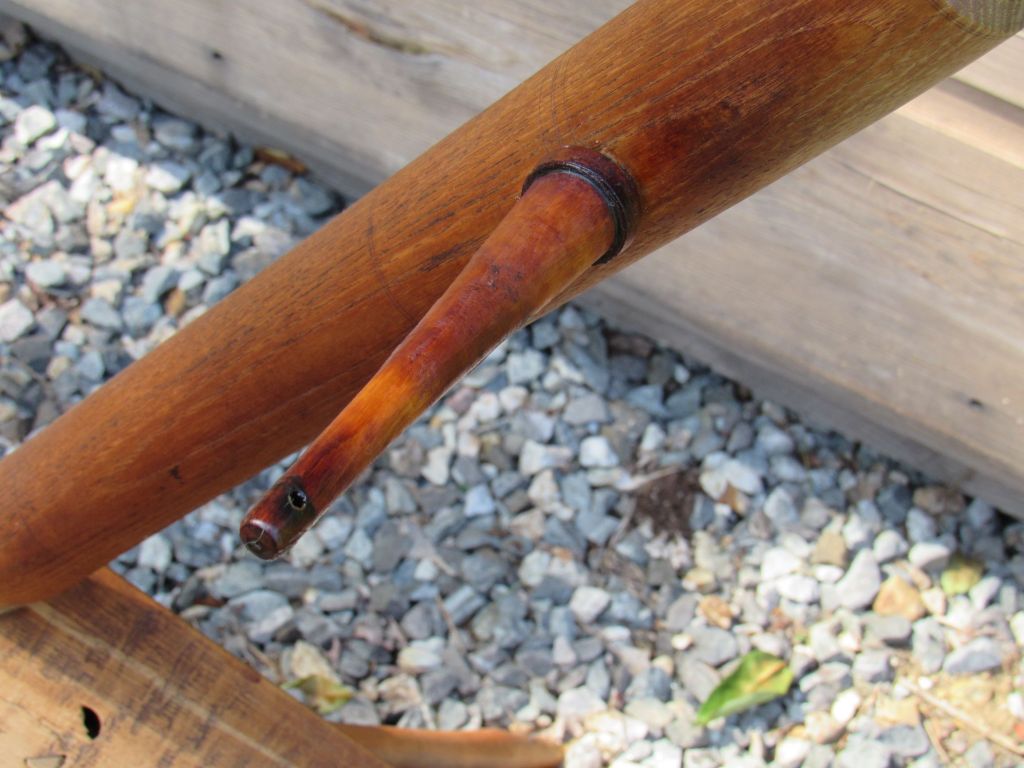
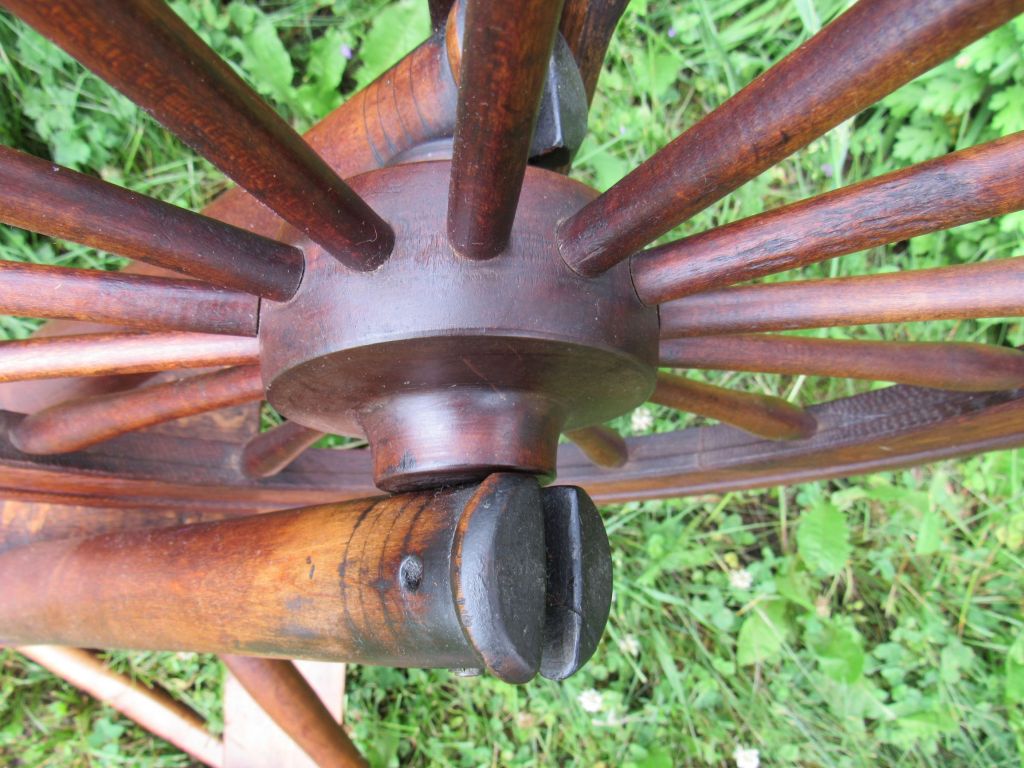
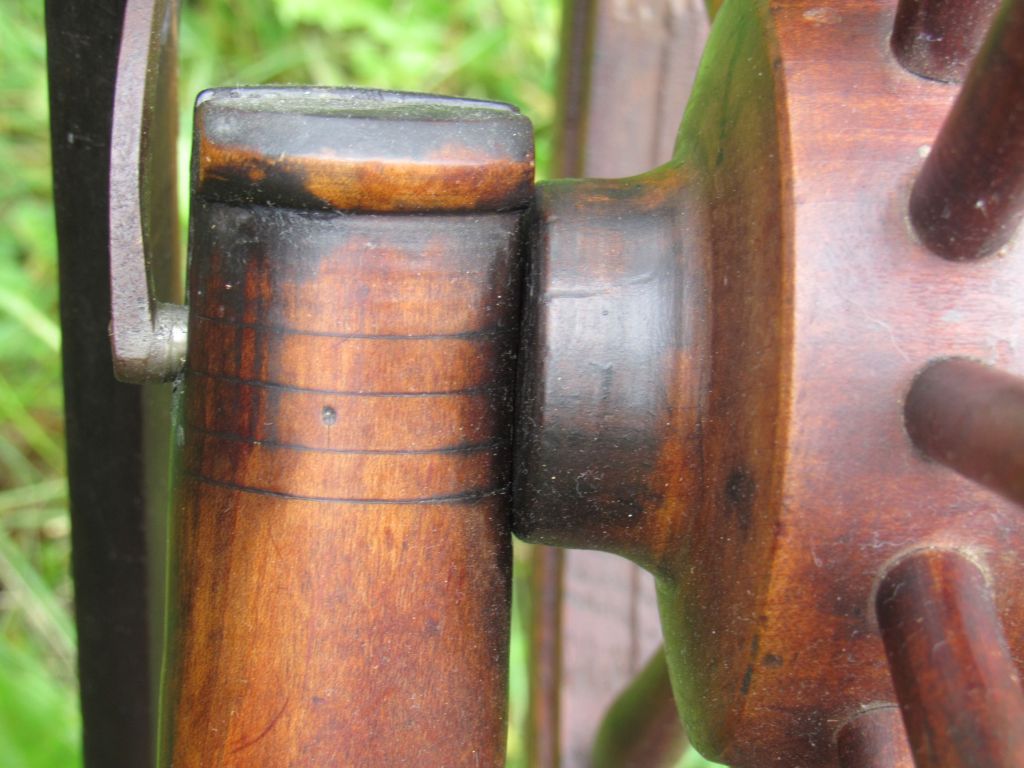
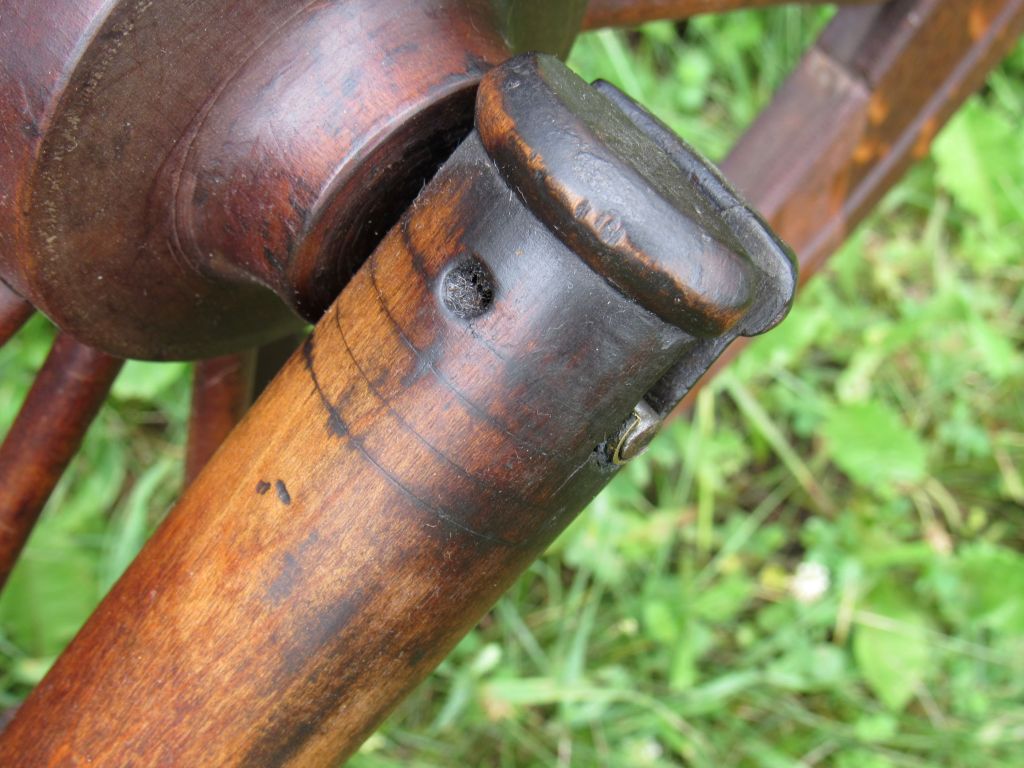
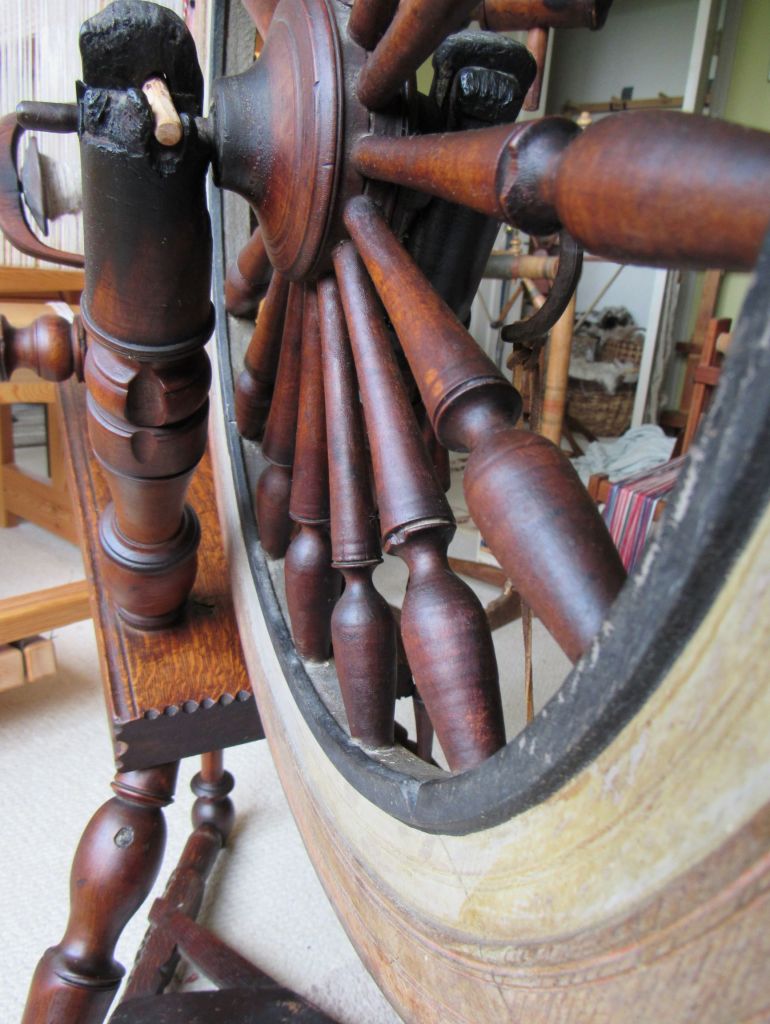
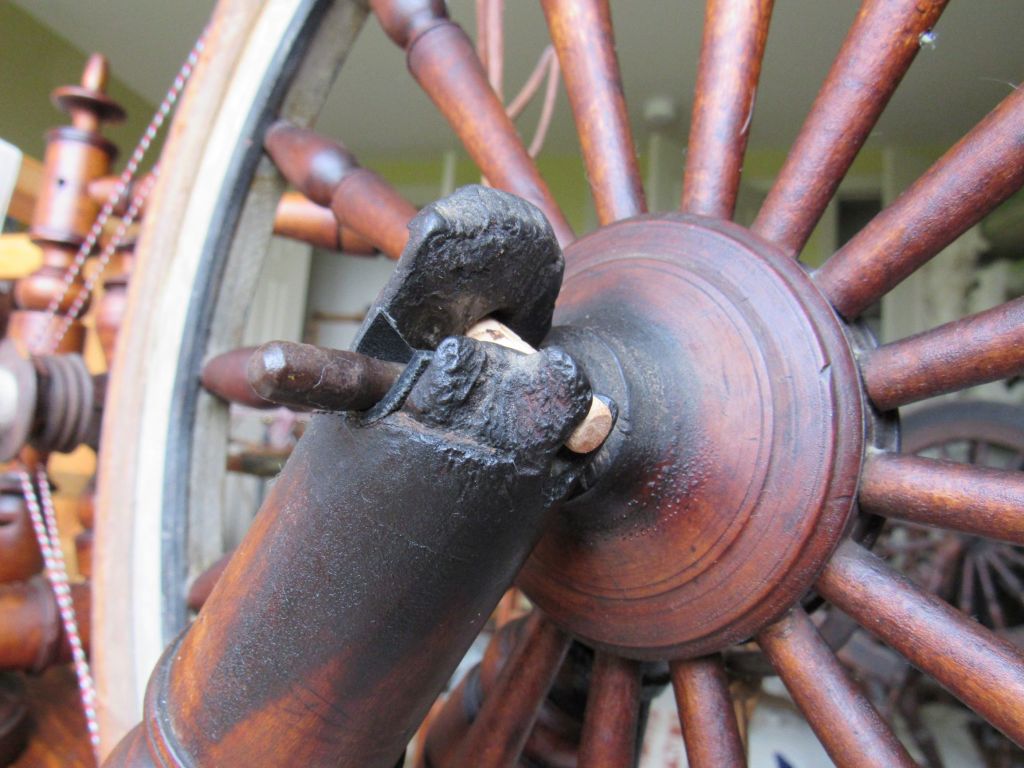
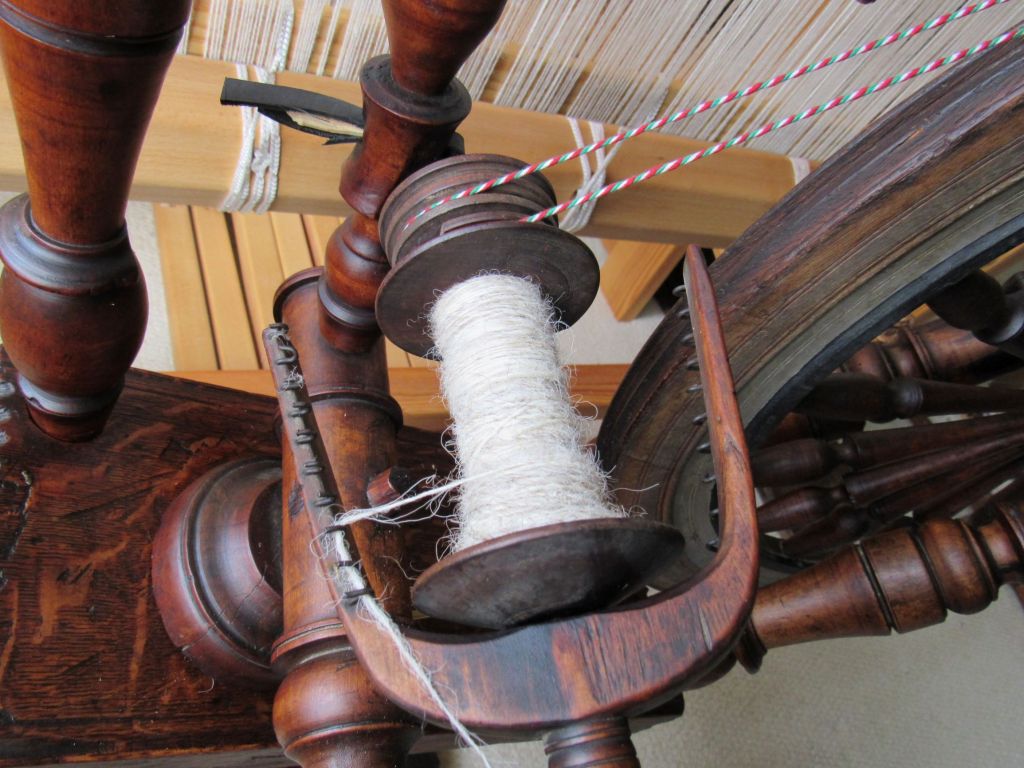
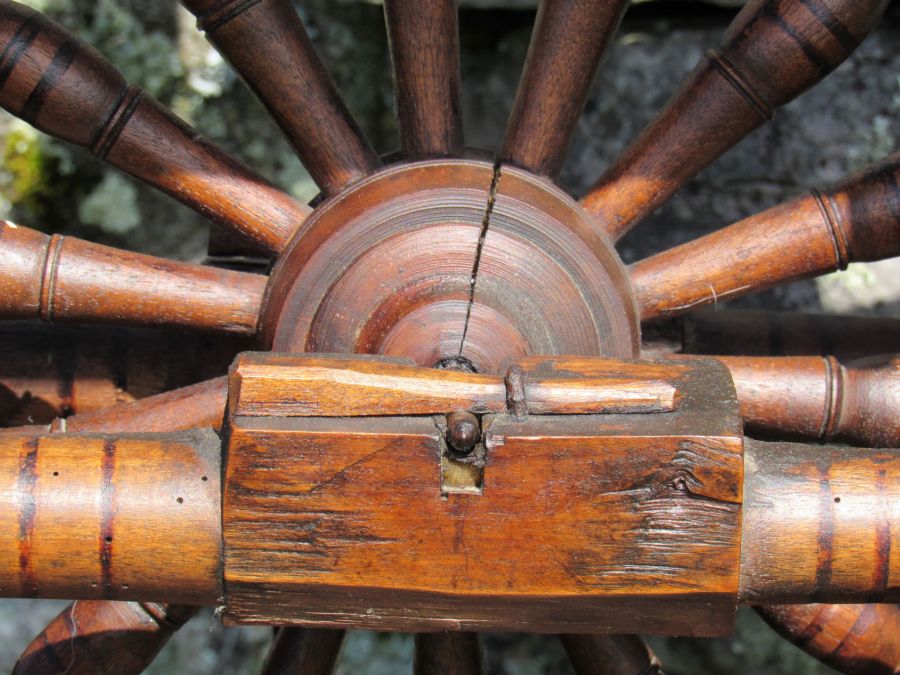
The hub is particularly nice, with brass bearings in both ends. 

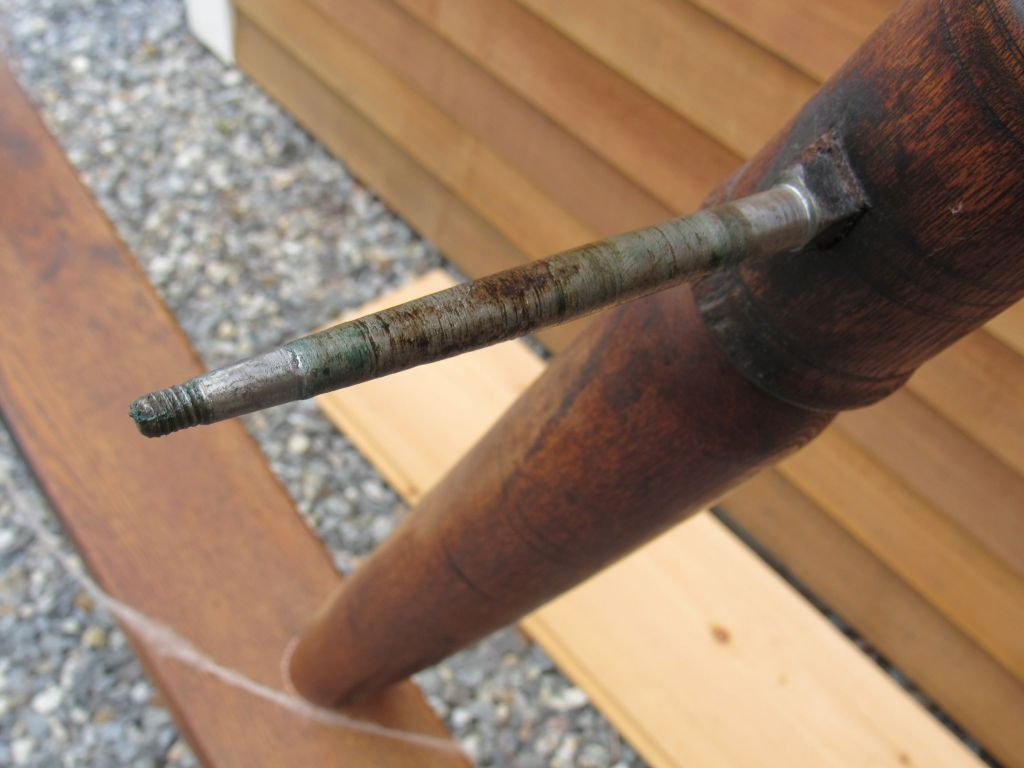
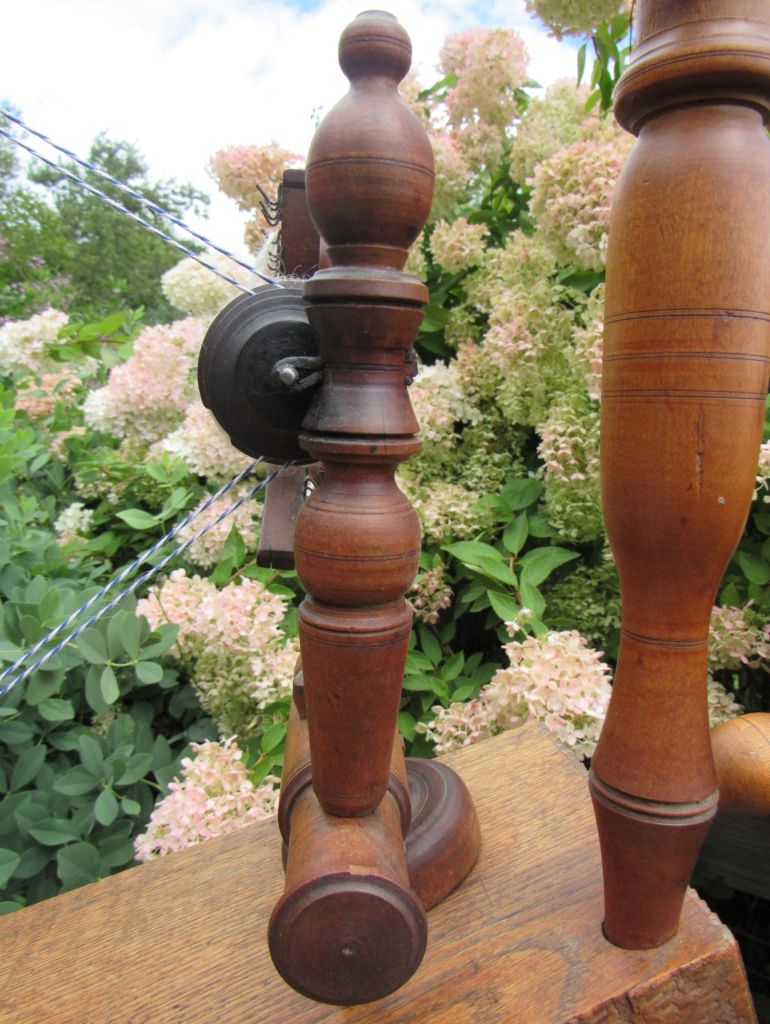
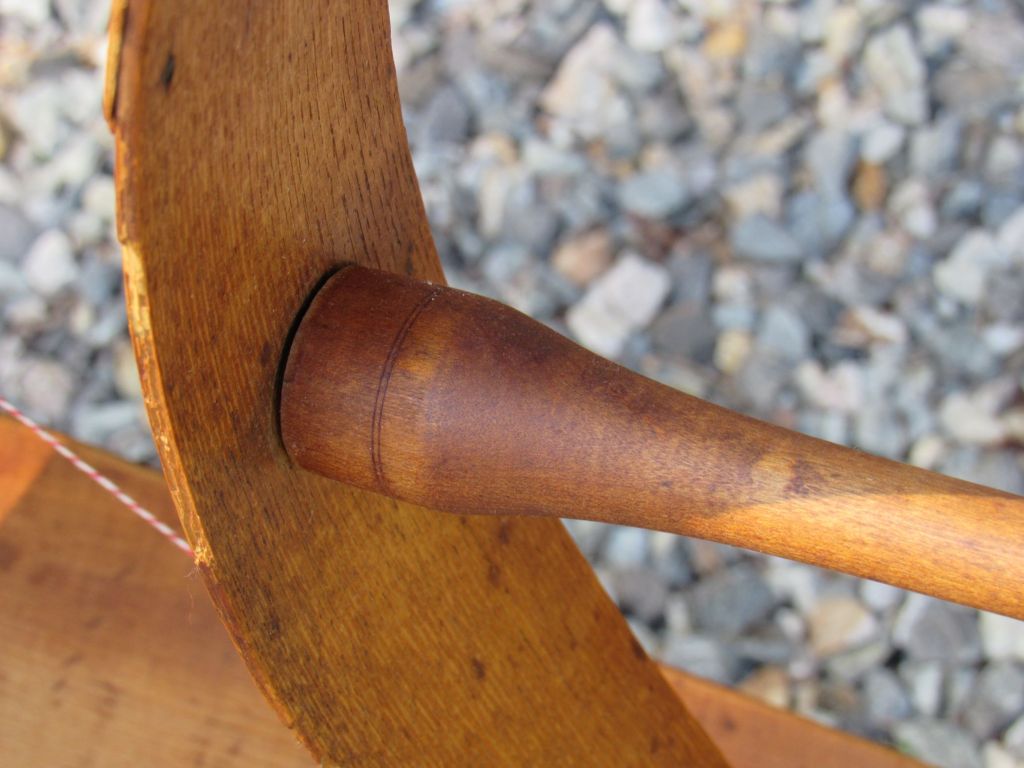
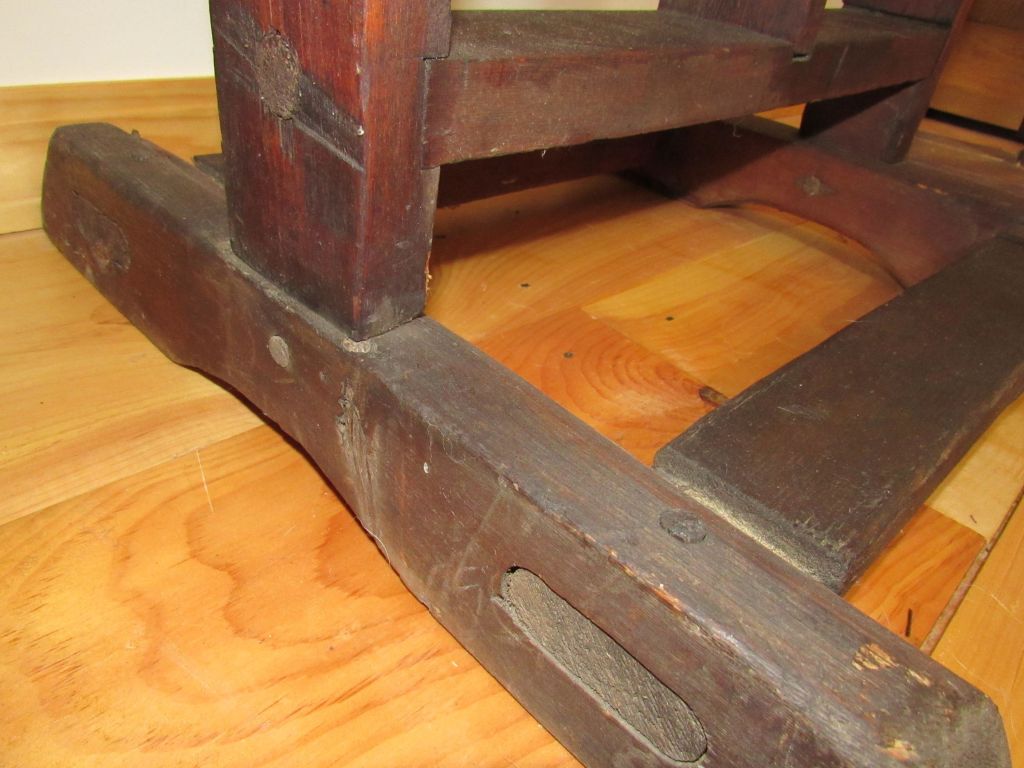
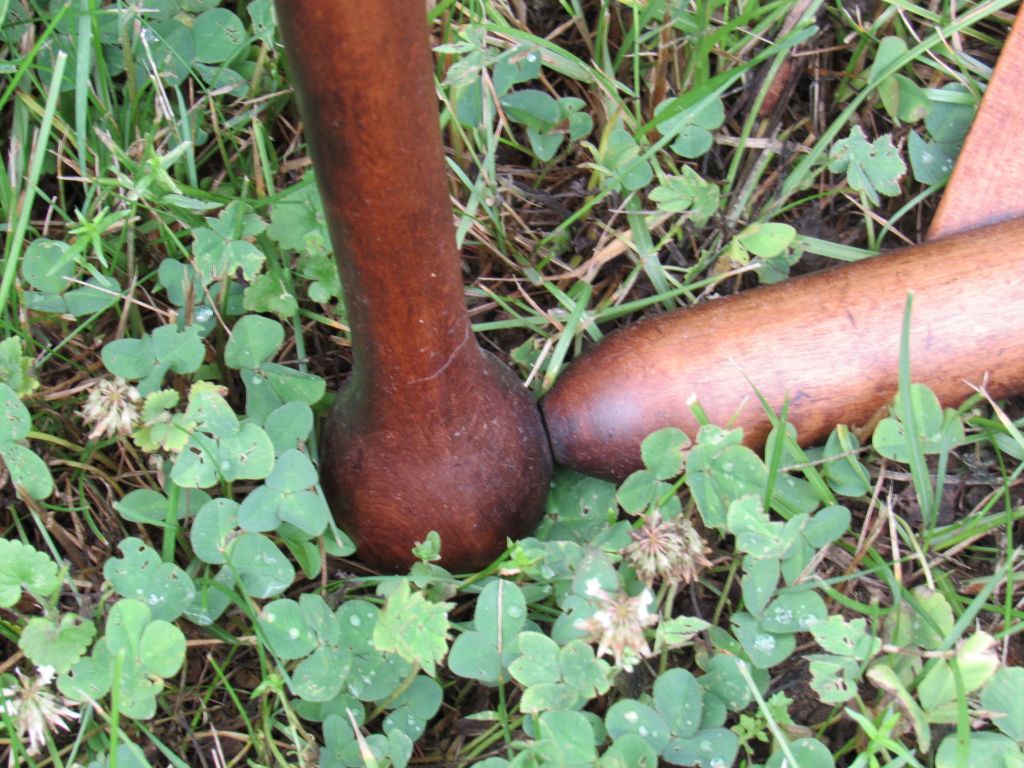
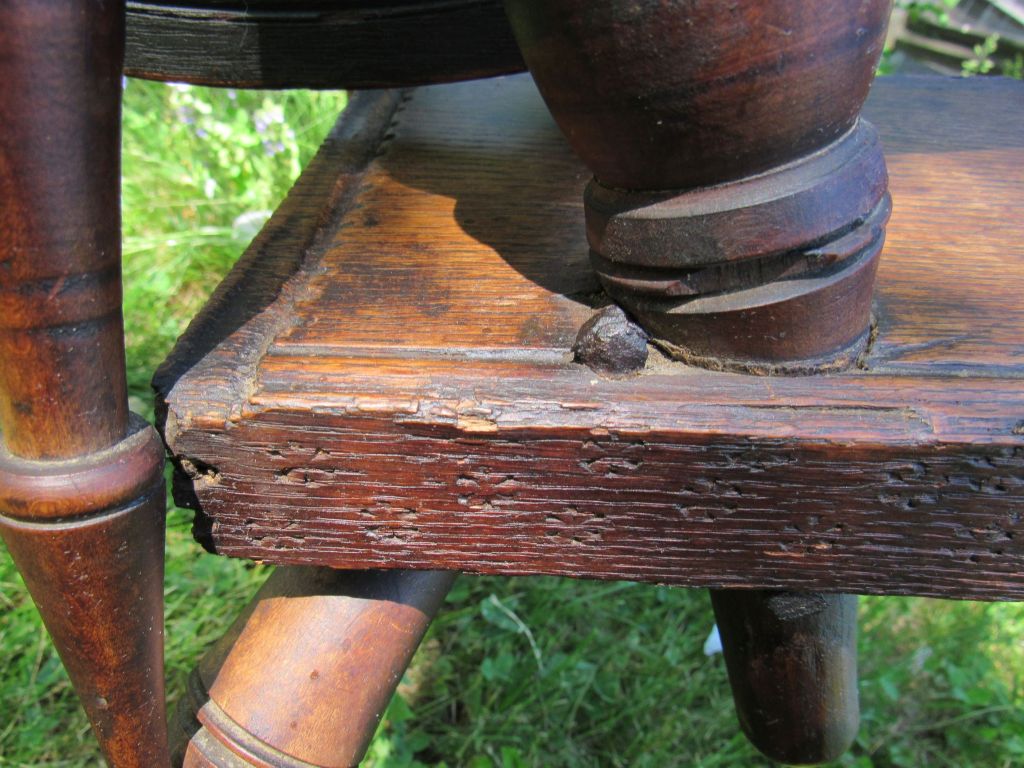
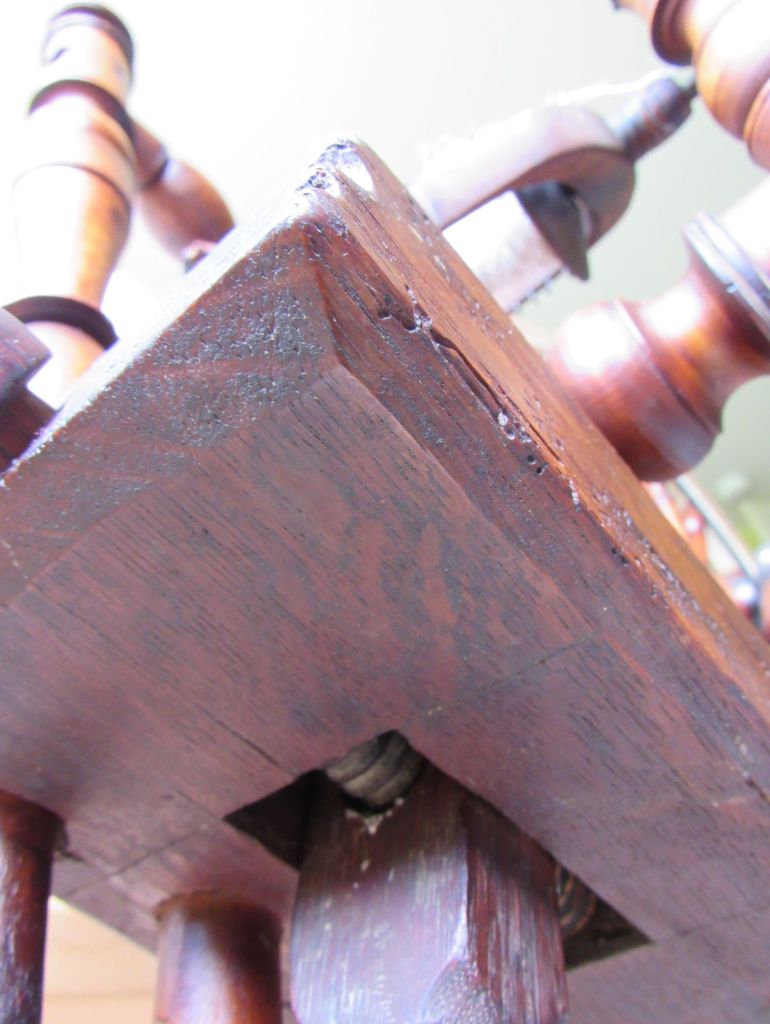
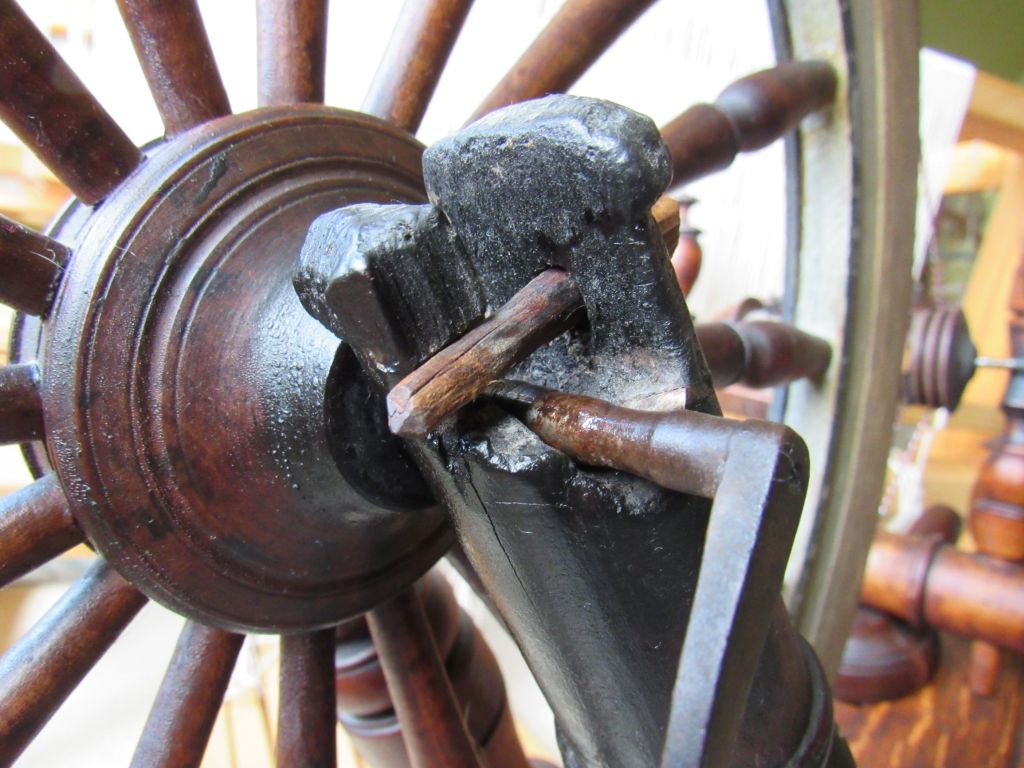
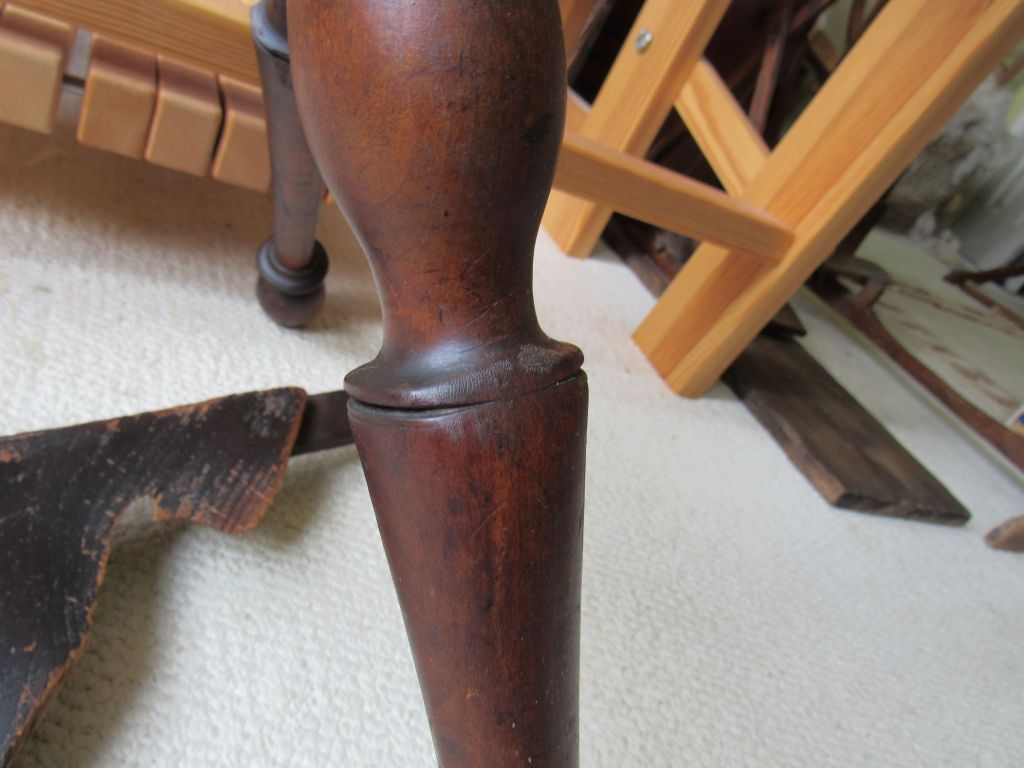
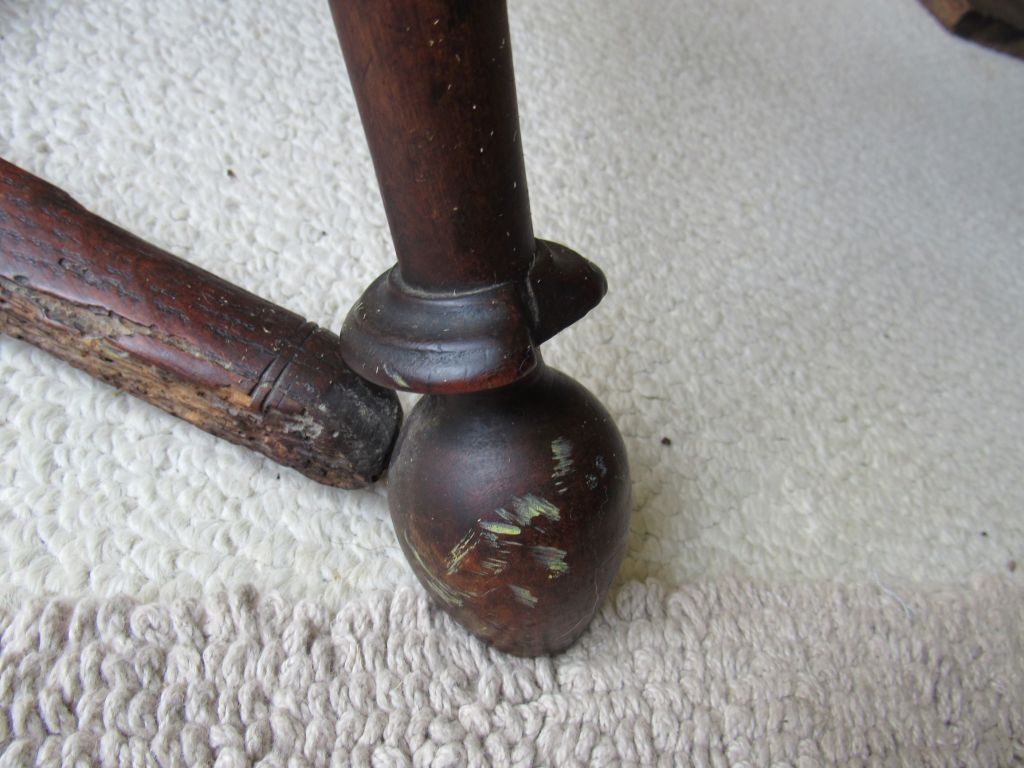
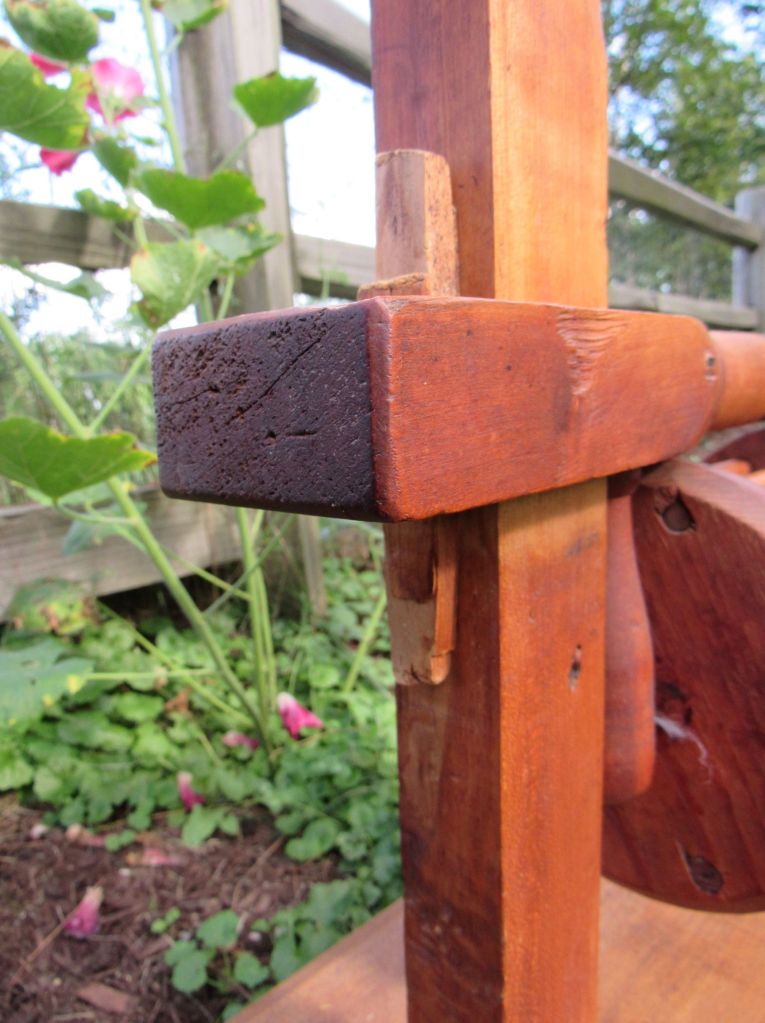
The axle has square base, holding the wheel away from the upright, and nuts to tighten down each end. 
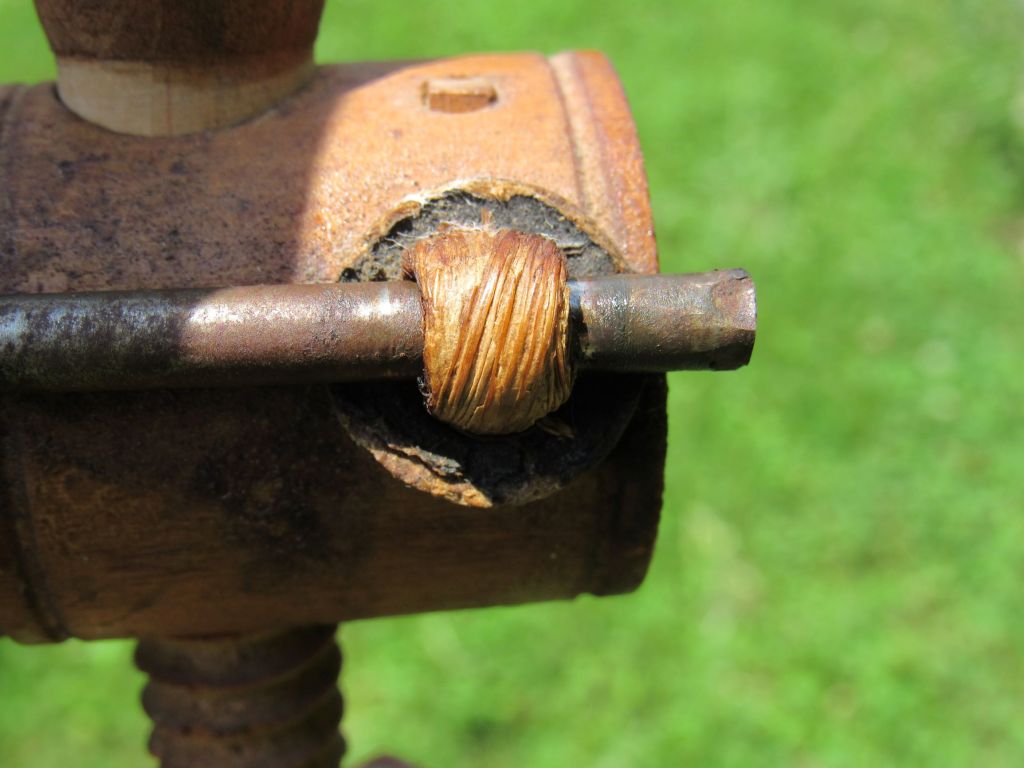
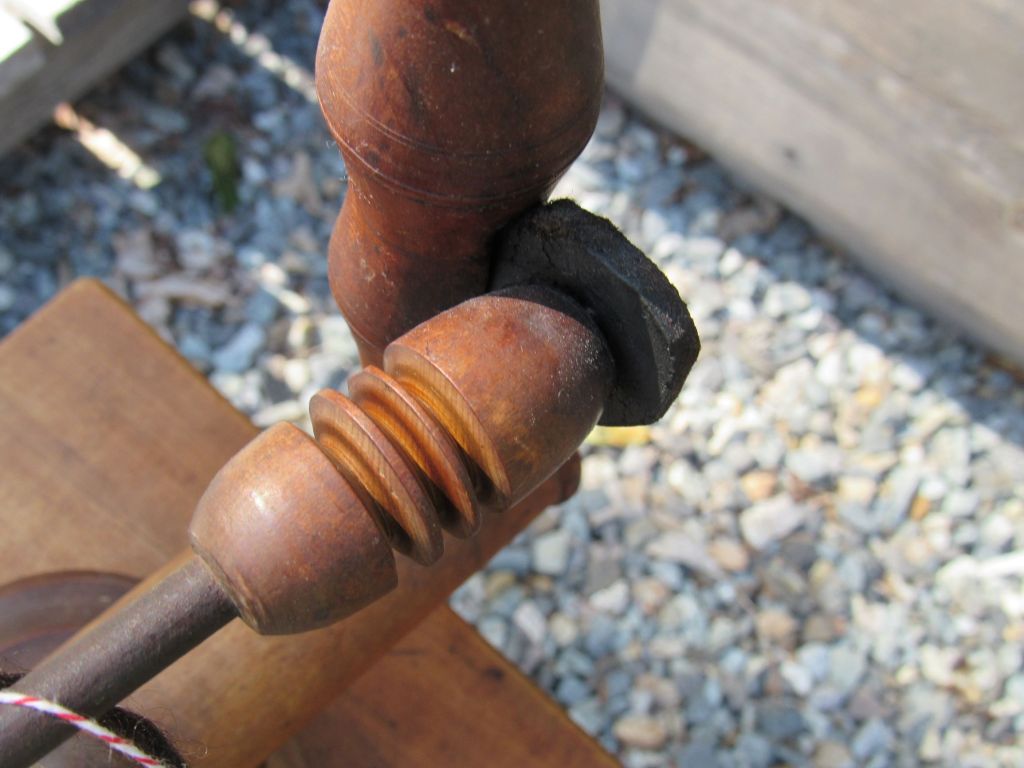
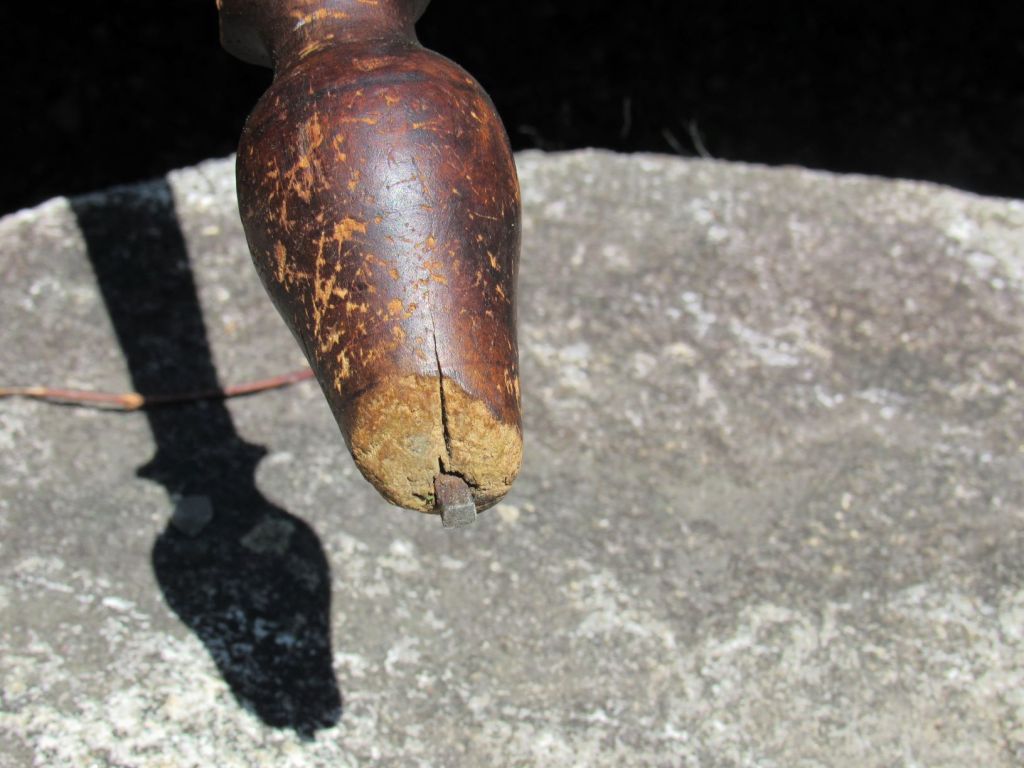
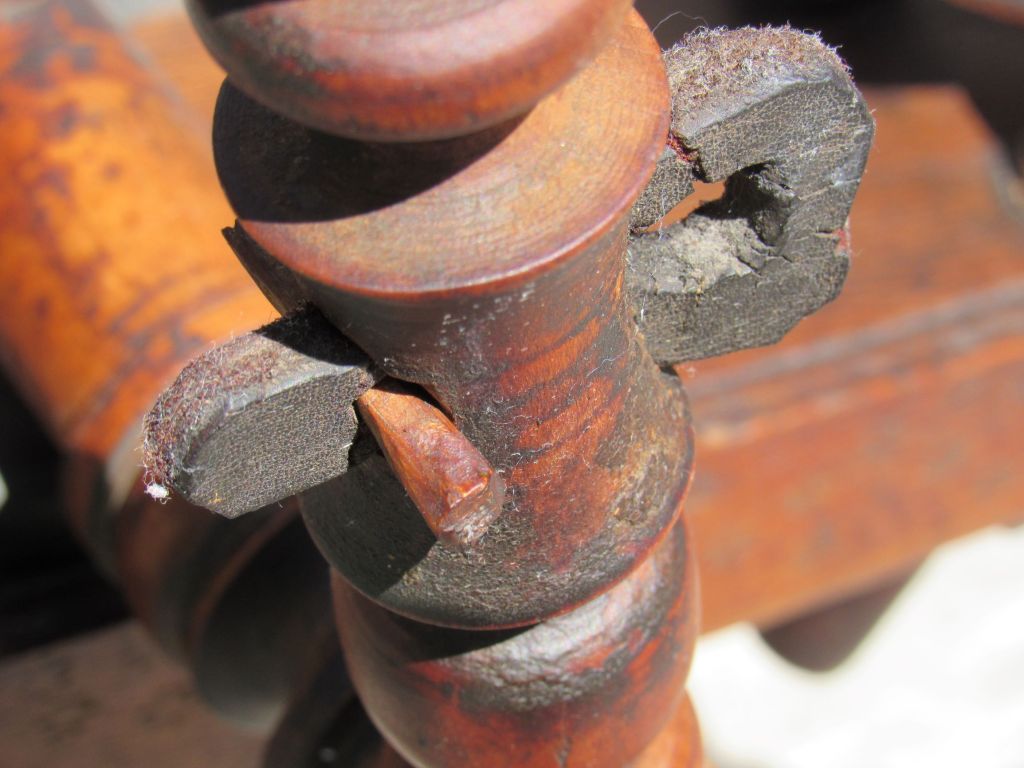
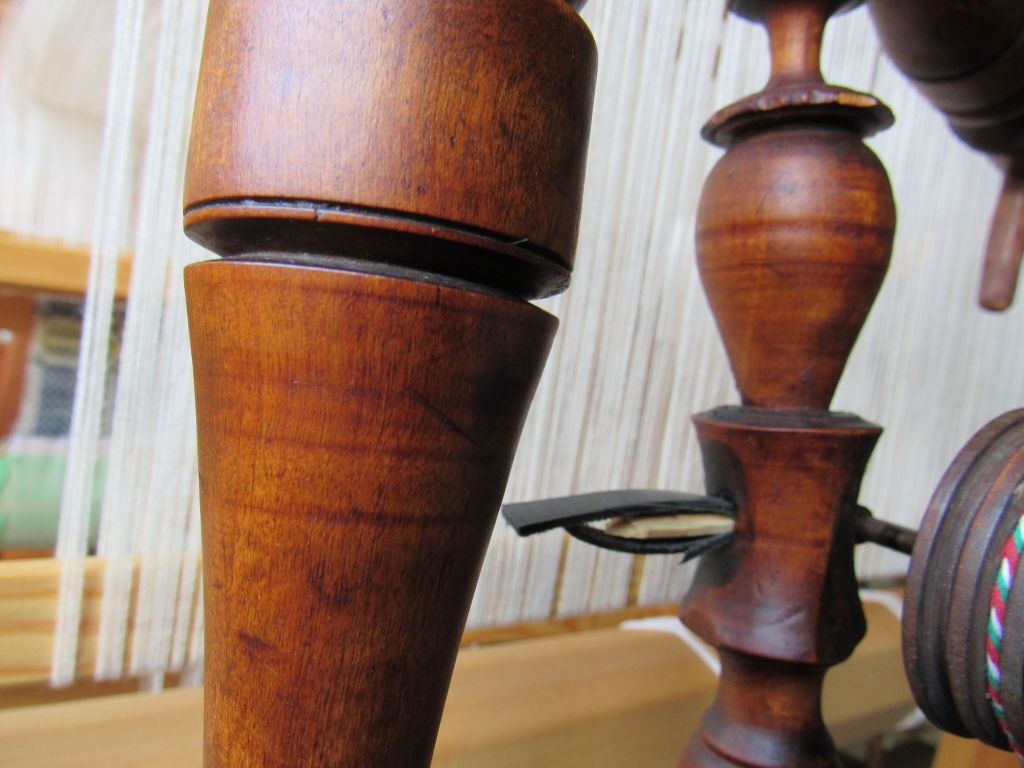
My wheel originally came with a Miner’s head, but I replaced it with an old bat head, new spindle, and new cornhusk spindle bearings. 

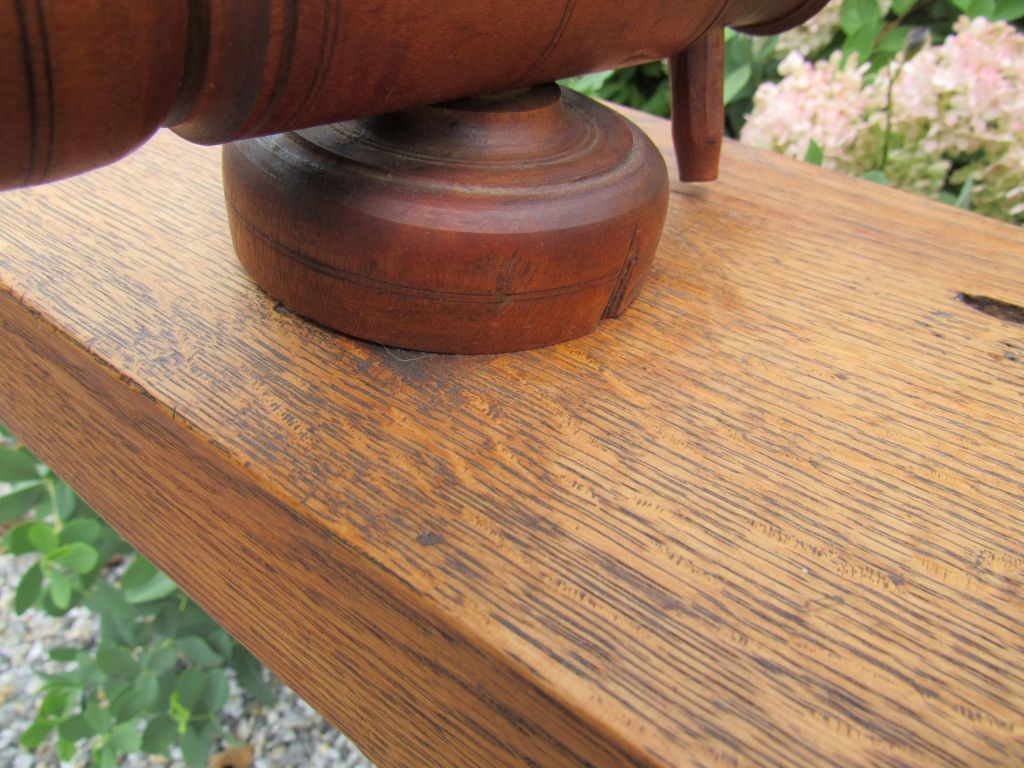
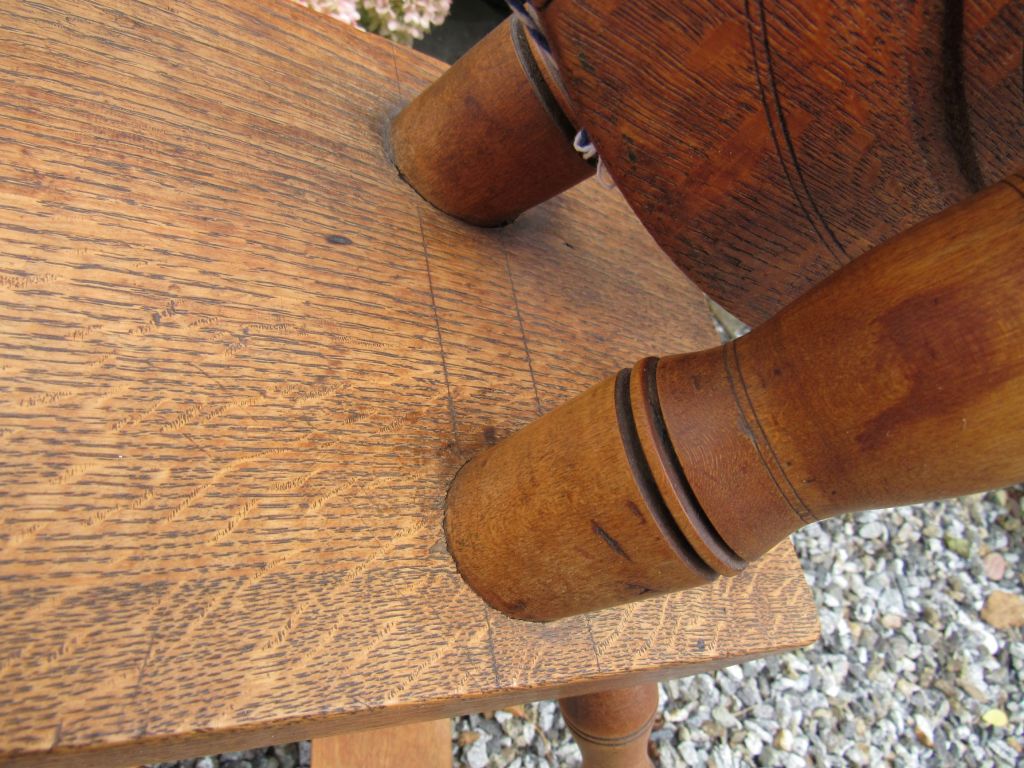
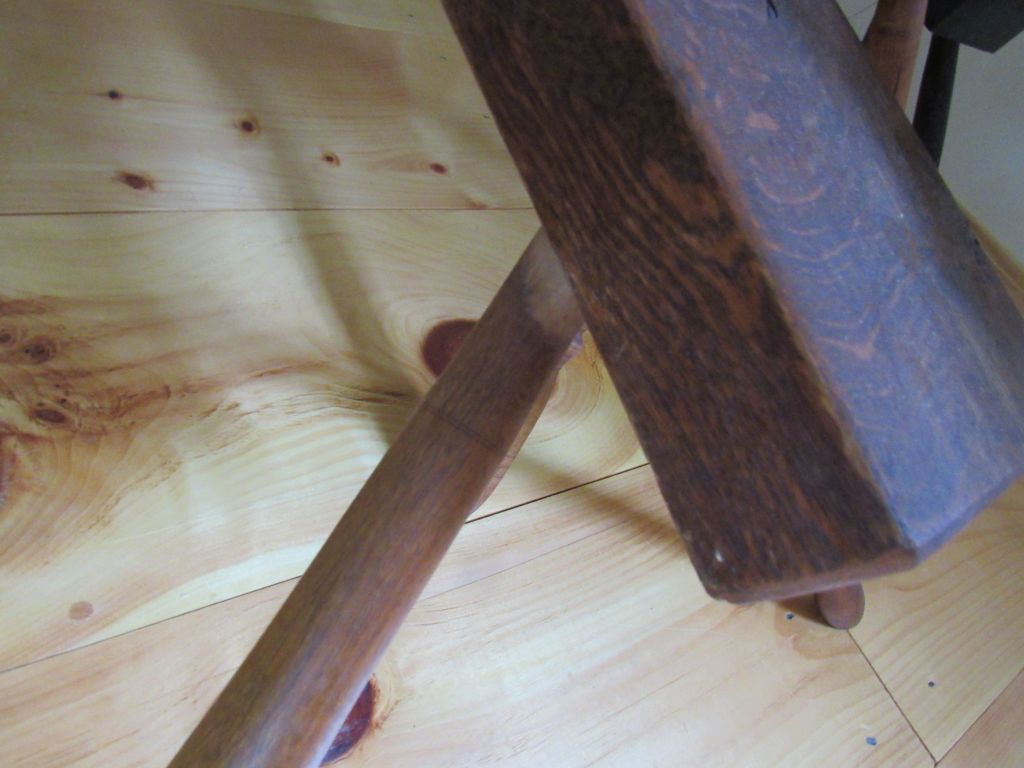
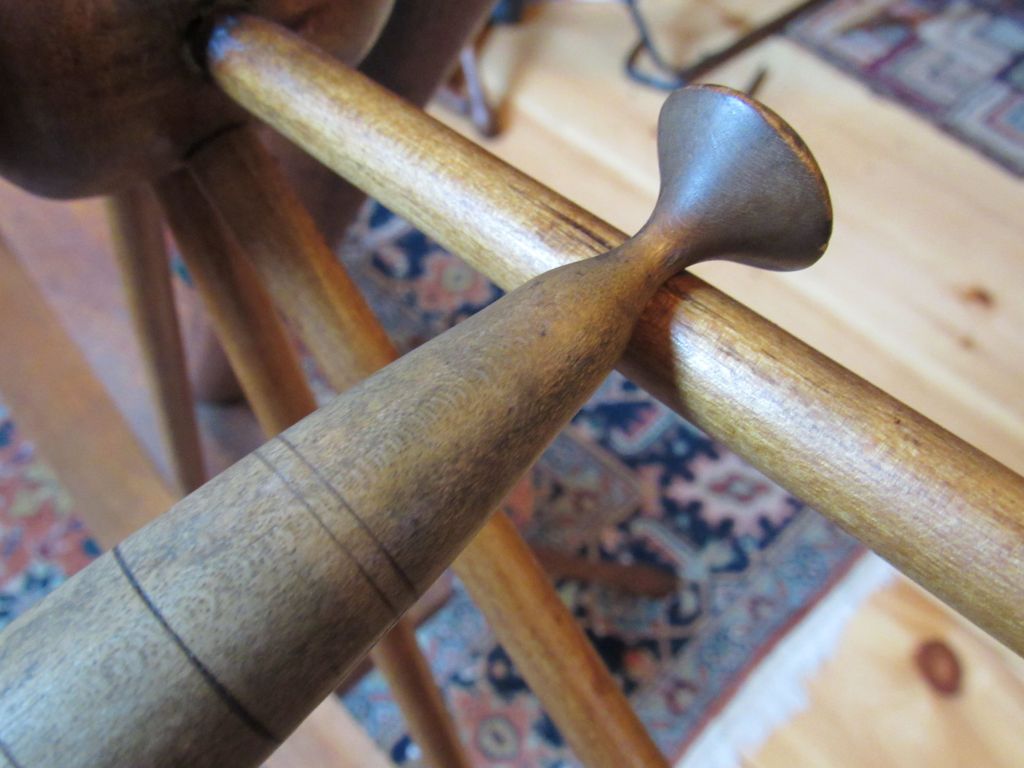
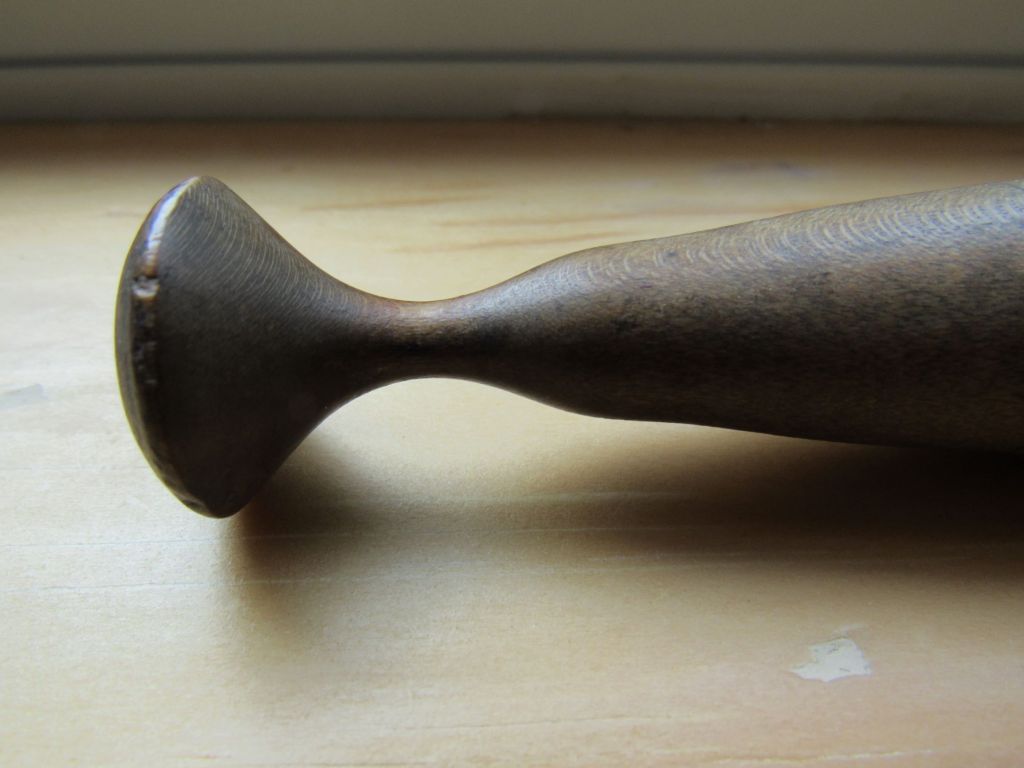
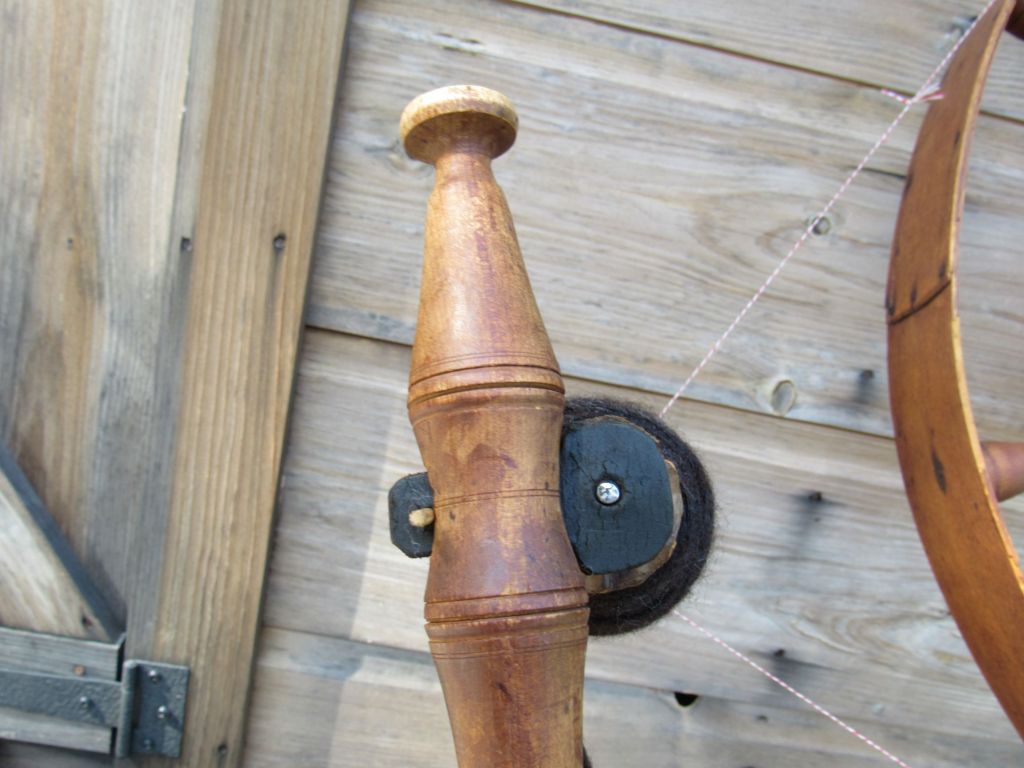
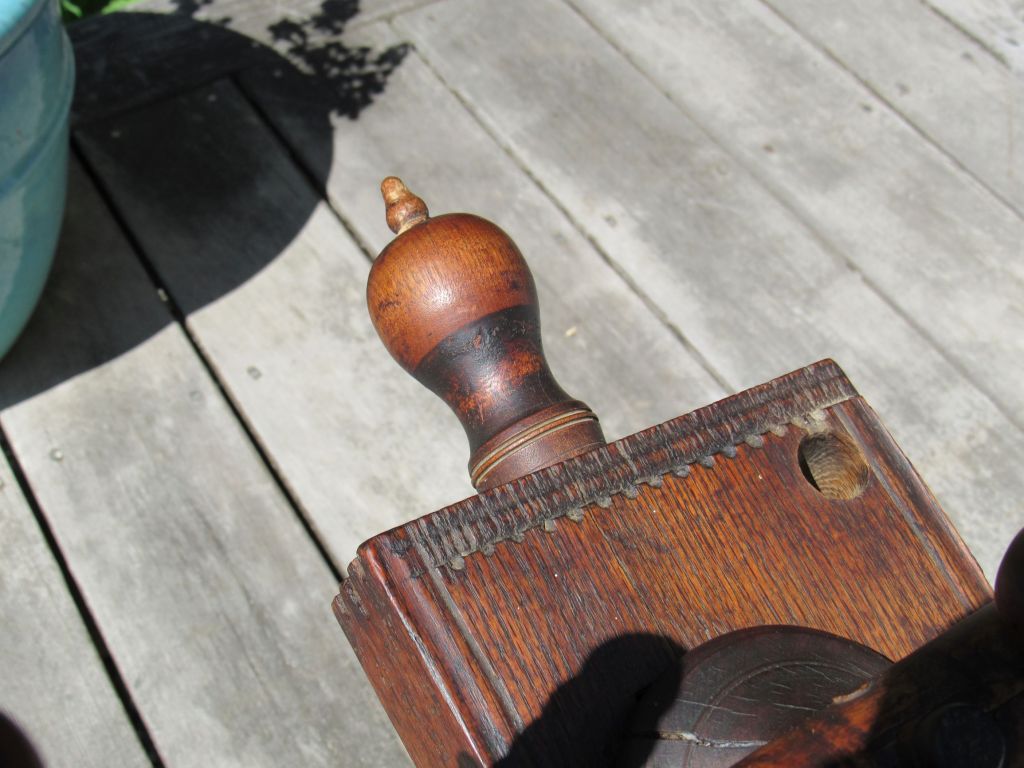
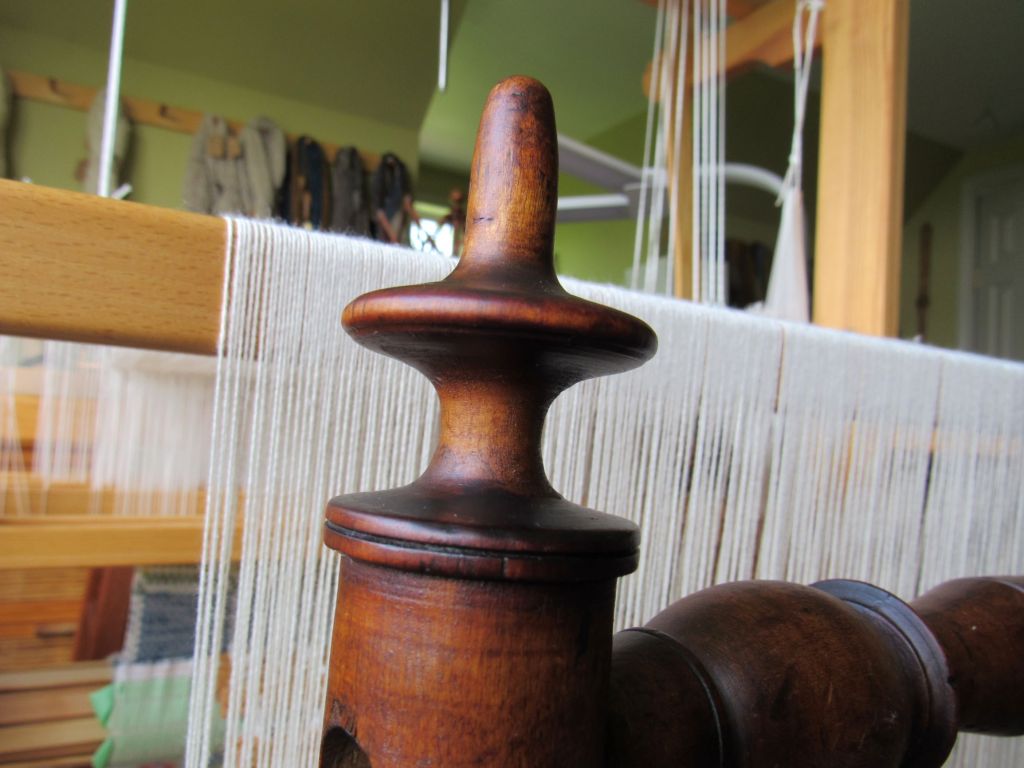
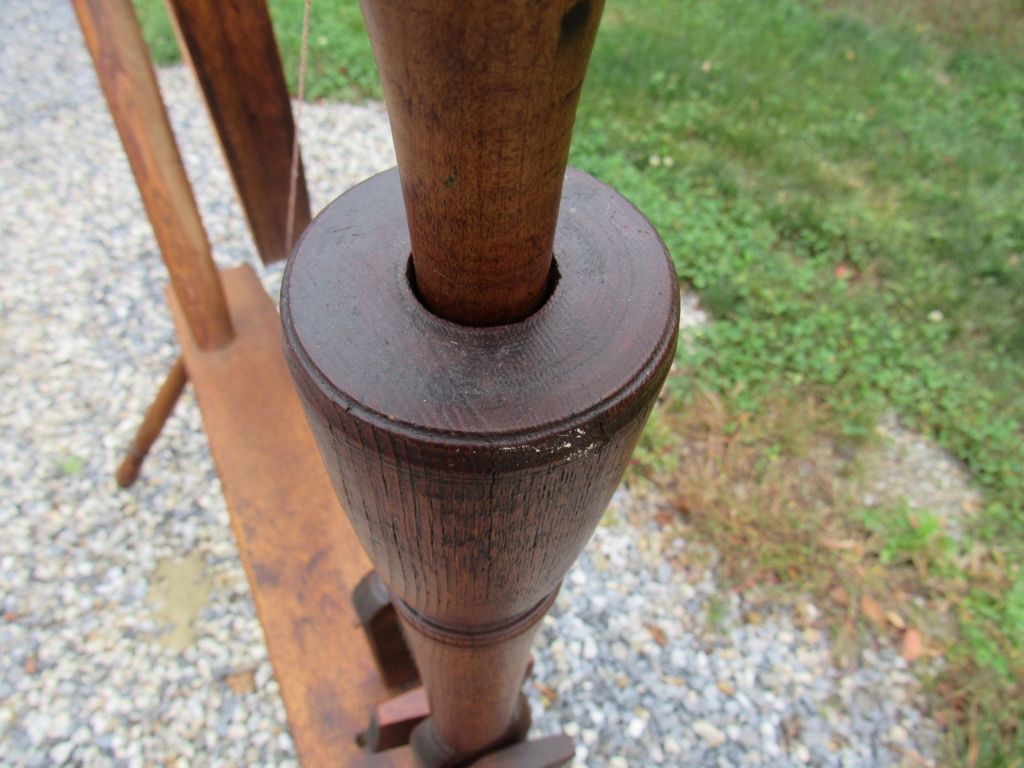
As with his flax wheels, Marlboro’s great wheels show no influence from the Shakers.  For example, the top of the spindle support is hefty–flat, wide, and collar-less–in contrast with Shaker wheels, which generally have slender, curving uprights with a collar.  
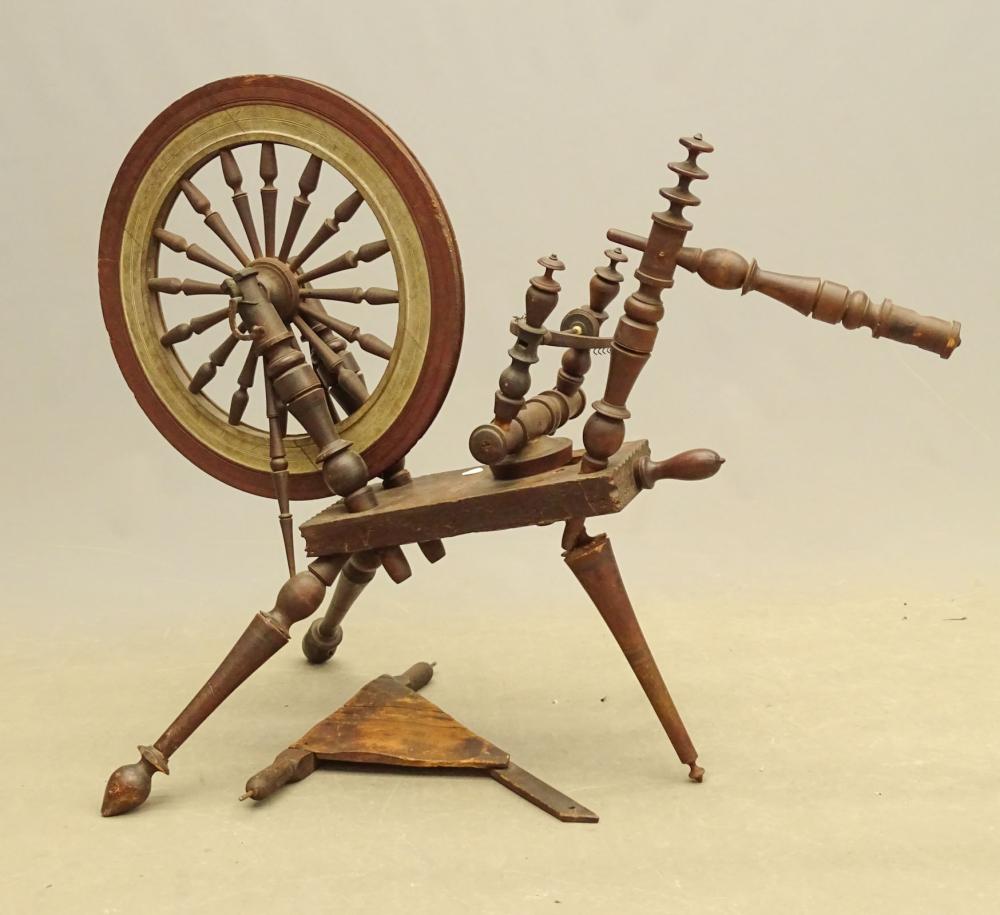
Interestingly, a few wheels have turned up that look almost identical to Packard’s, but with the initials “MS.”  It is not known whether MS may have worked with Marlboro, copied him (or the other way around), or whether the similarity is coincidental. 
Thanks to some friends who spotted her, I found my great wheel in the front window of an antique store in Liberty, Maine, two towns away from Union, where it had been sitting for a long time. 

According to the store owner, it had belonged to a Liberty woman, Ida Quigg McLain, who lived in a old square farmhouse with a huge central chimney. 
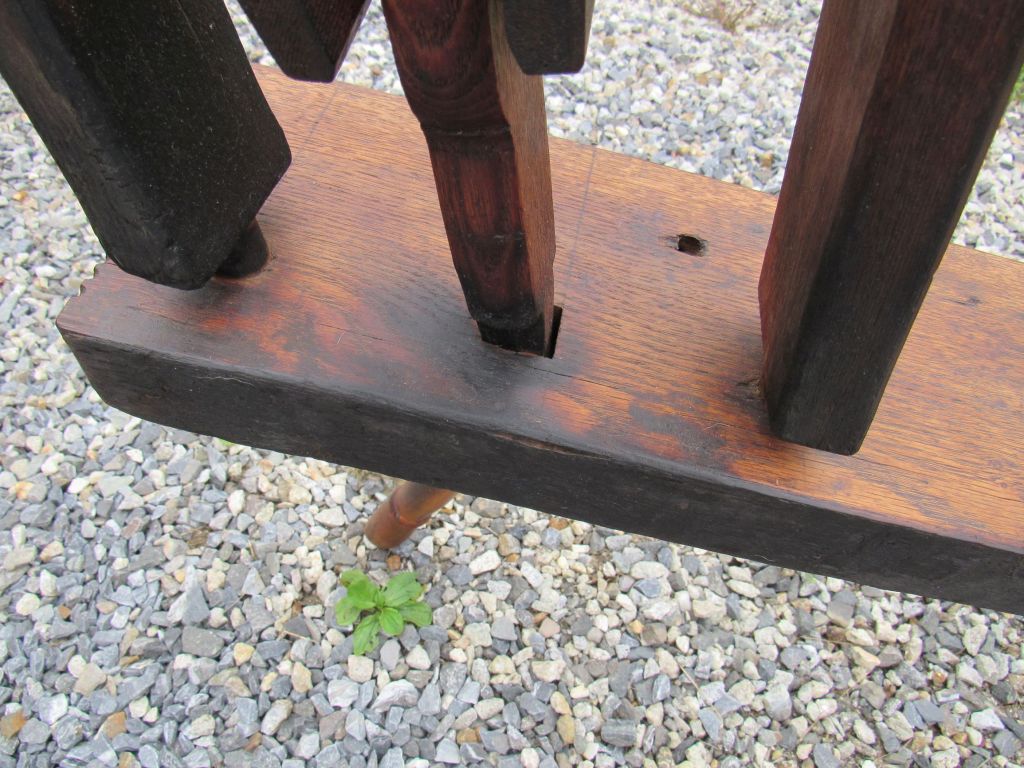
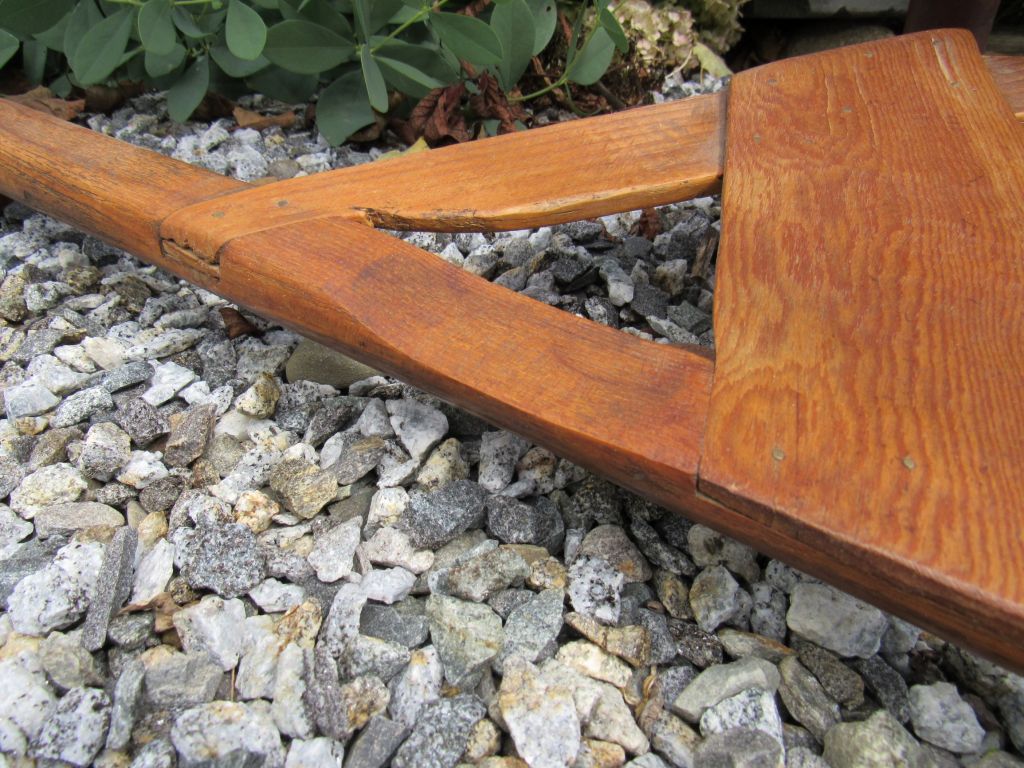
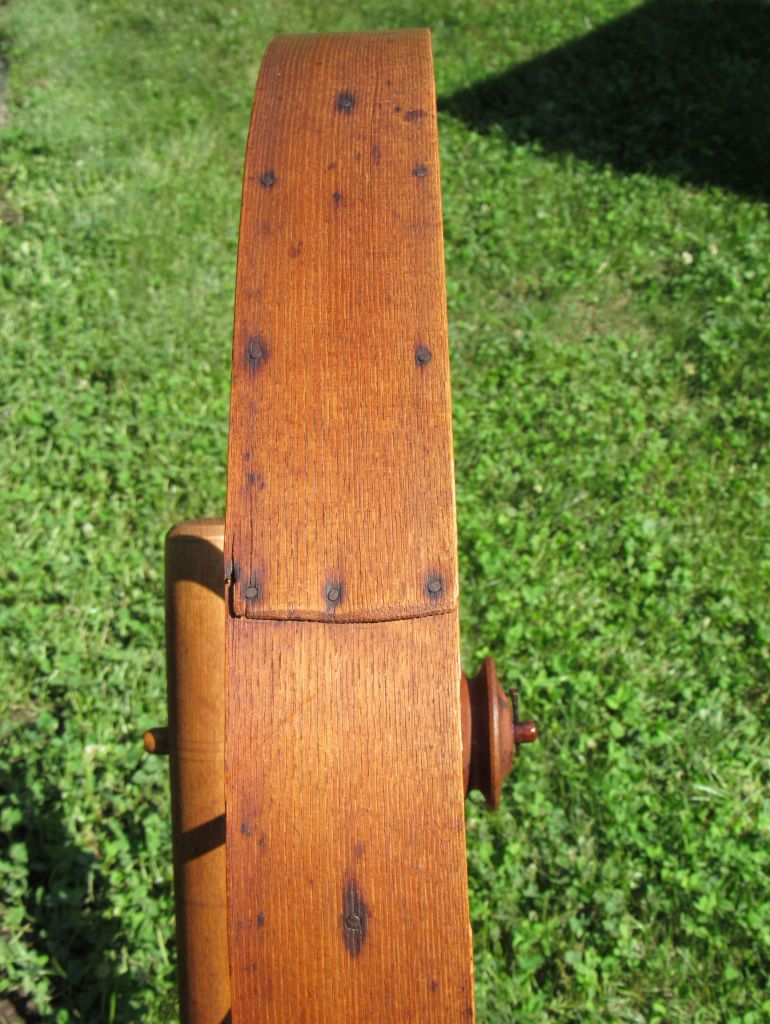
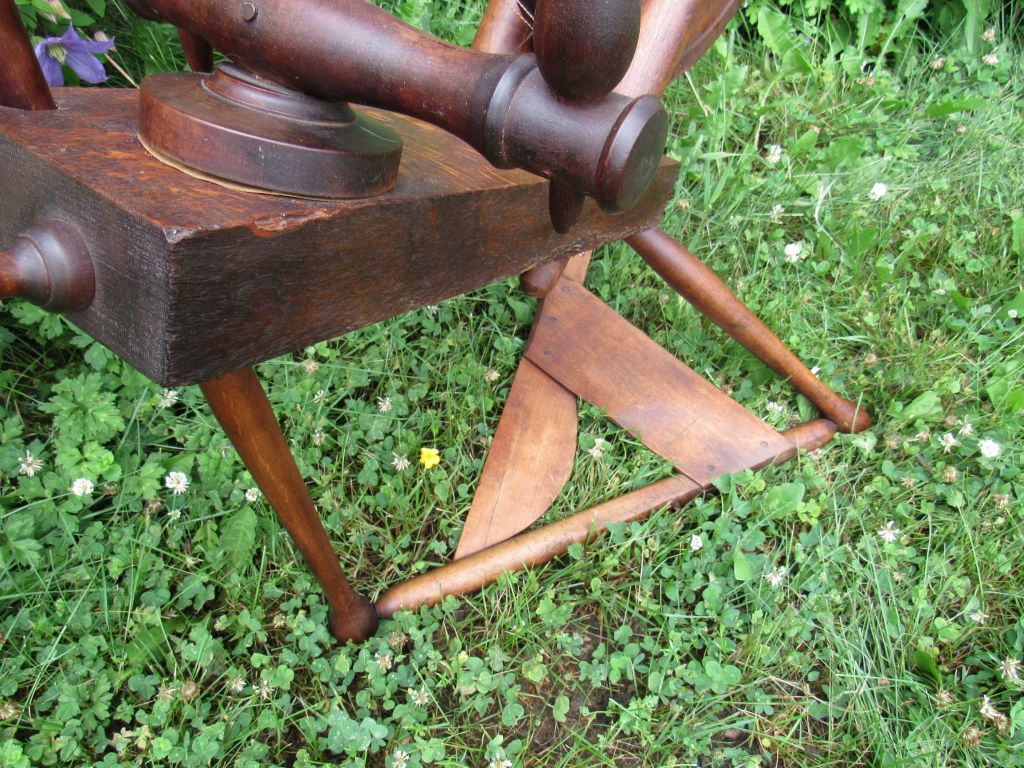
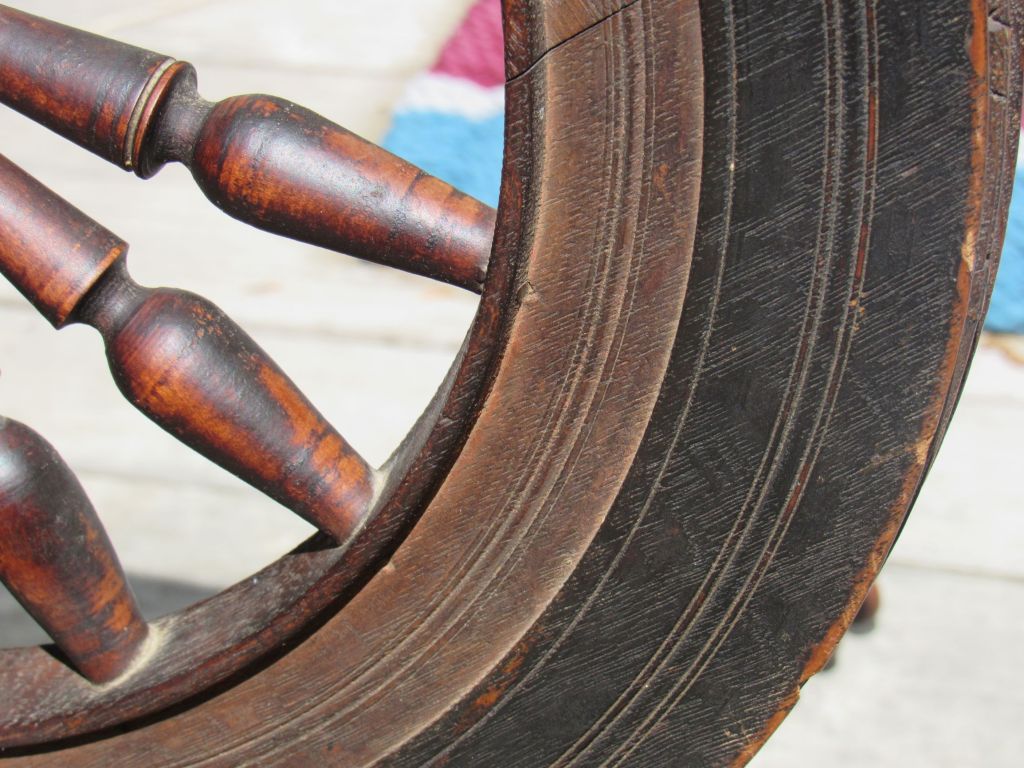
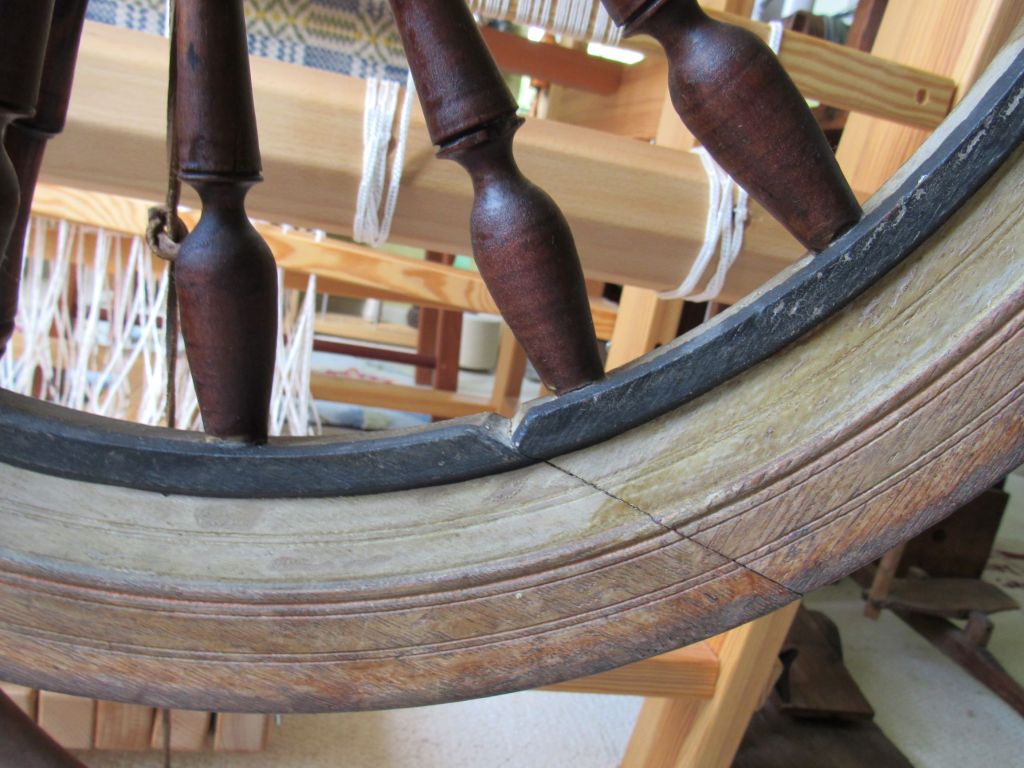
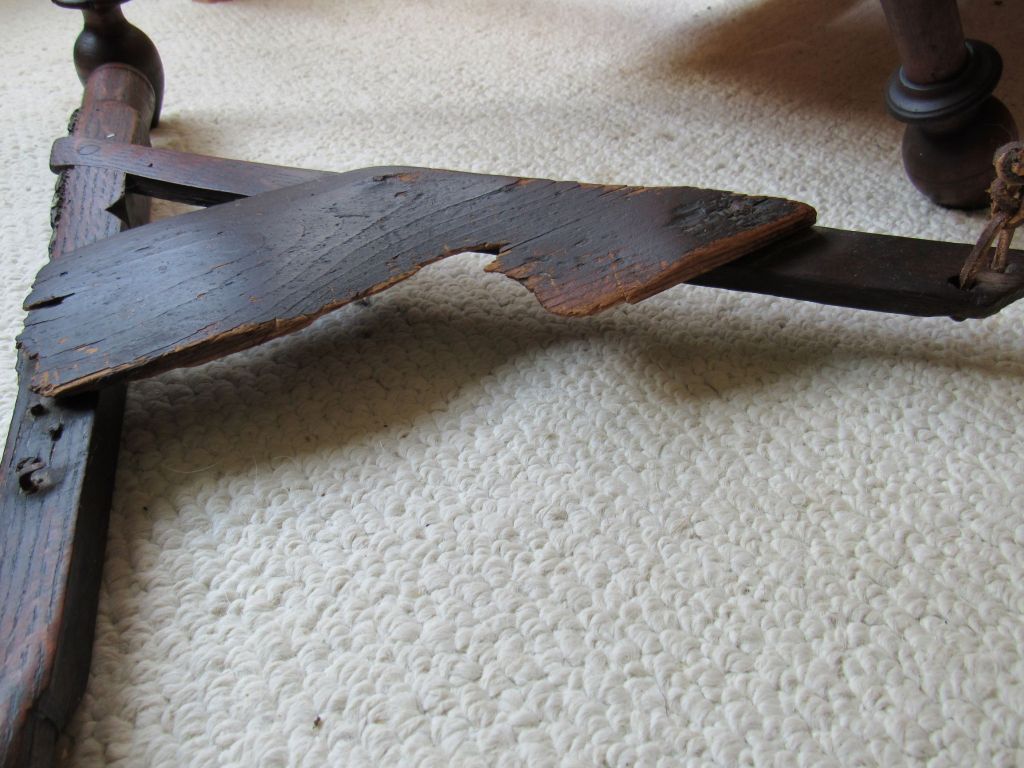
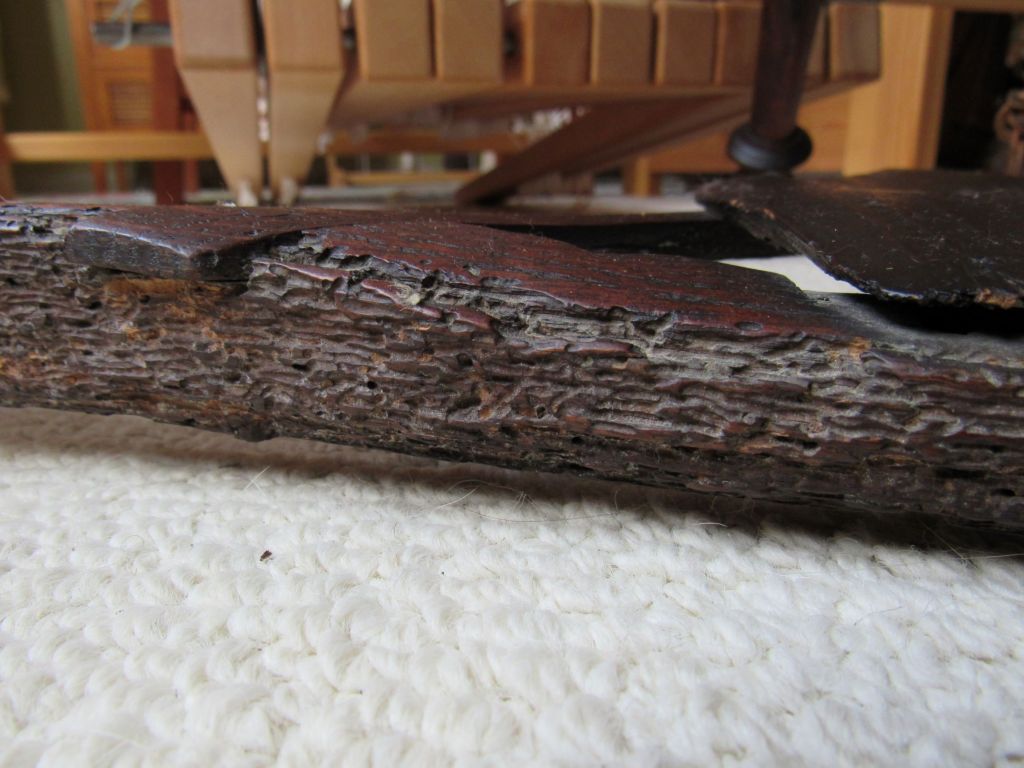
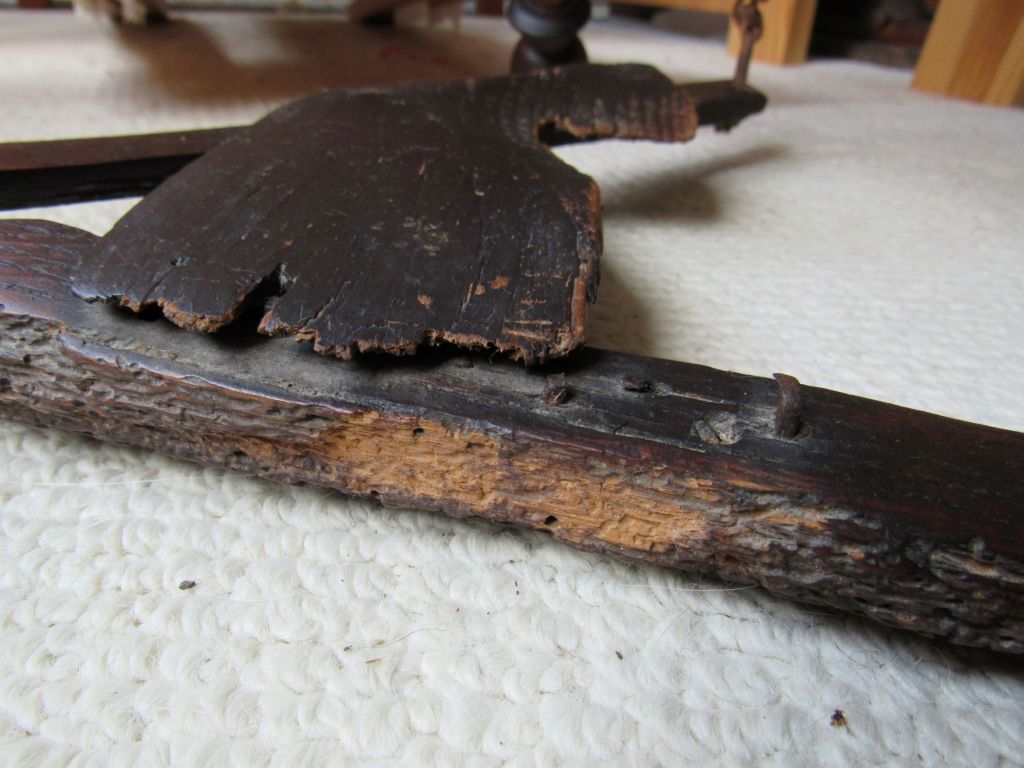
Whether that chimney is responsible, I’ll never know, but the spinner side of the wheel is badly blackened and charred,
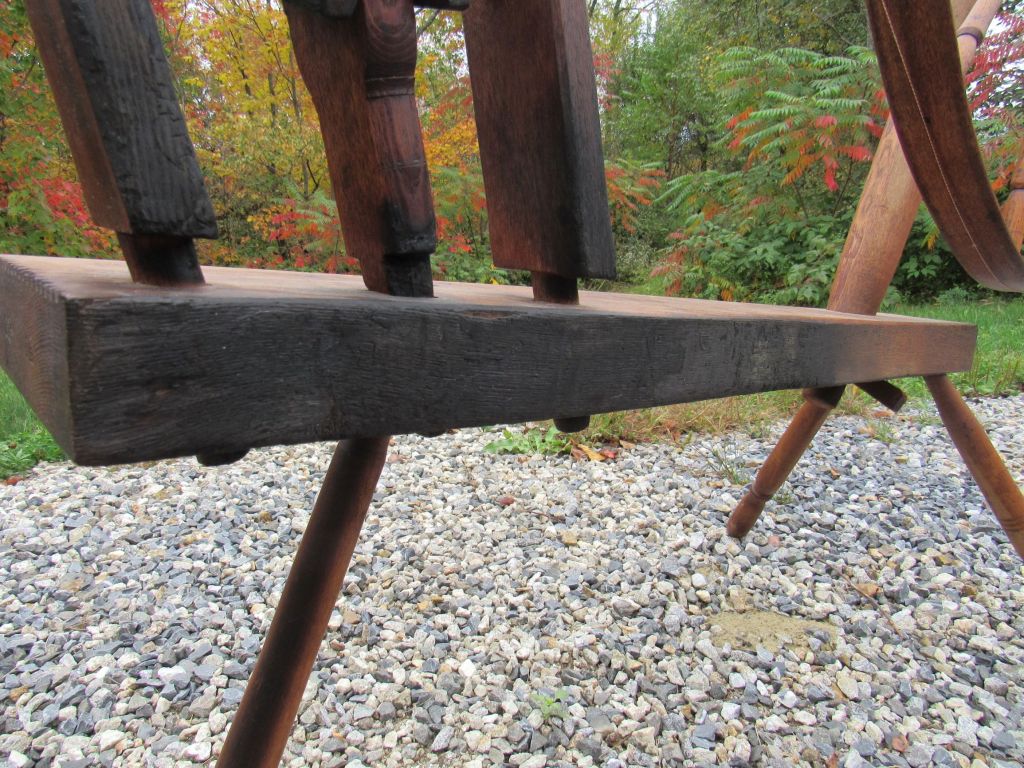
likely from being too close to an open fire or hot stove. 
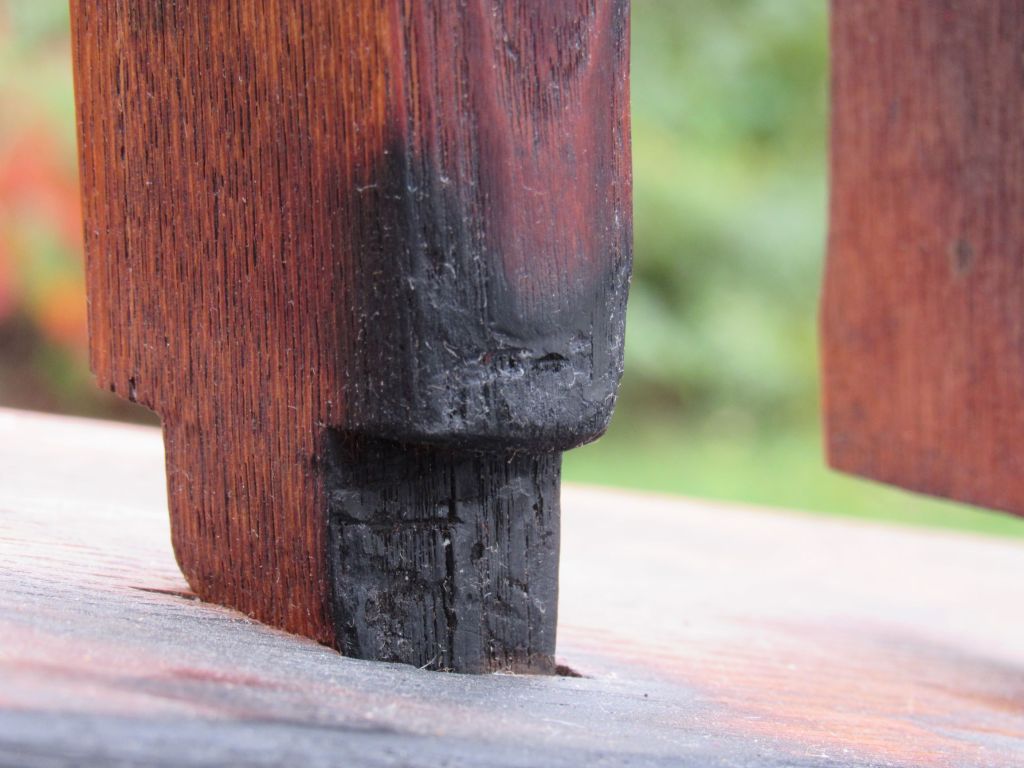
The charring doesn’t affect the wheel’s spinning, though.  She spins beautifully and I love that she’s a local girl—made from trees one ridge over from where I now live, by a man with one of my all-time favorite names—Marlboro Packard.

For more on Marlboro Packard and the history of Union, see the previous post “Clarry,” and these books:

Sibley, John Langdon, History of Union, Maine, originally published in 1851, reprinted by New England History Press, Somersworth, N.H, 1987.

Williams, Ben Ames, Come Spring, Houghton, Mifflin Co., Boston, 1940.

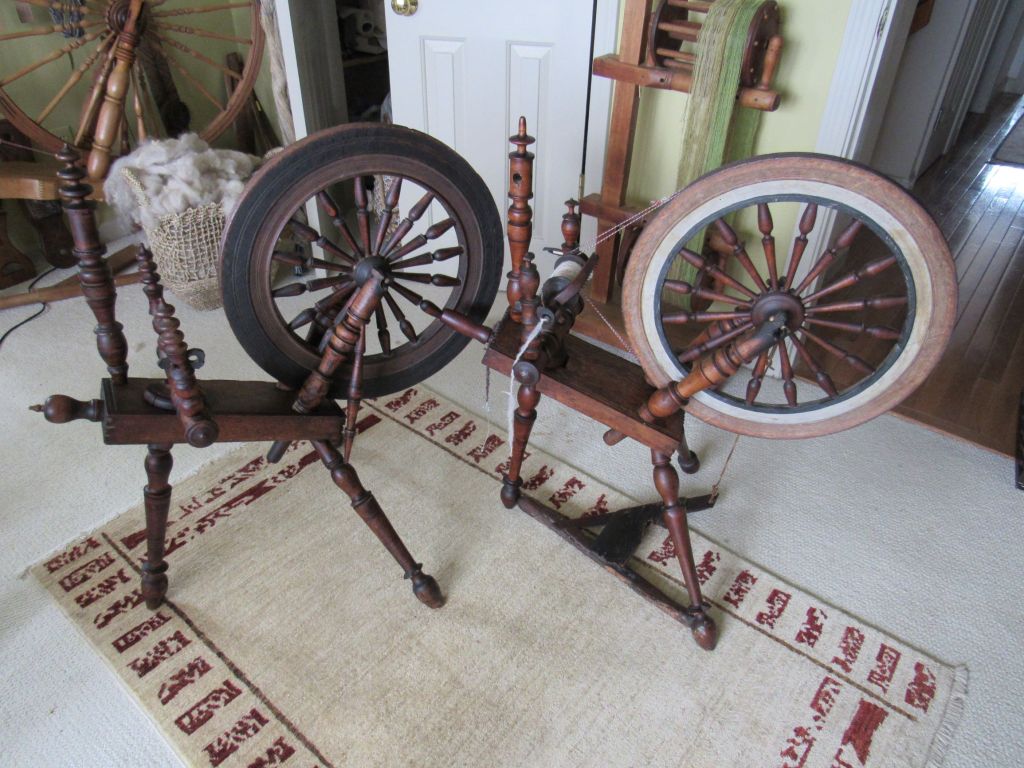
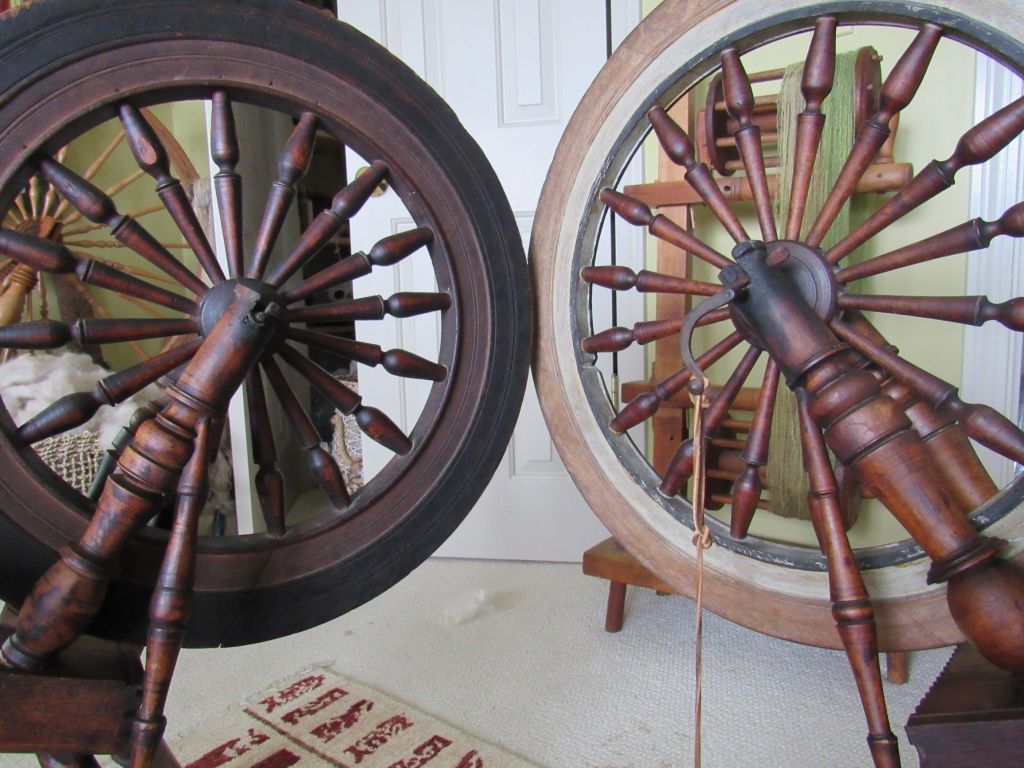
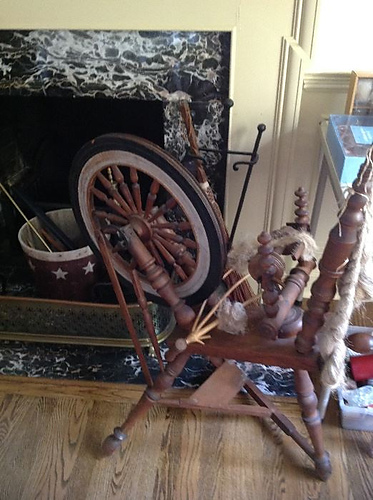
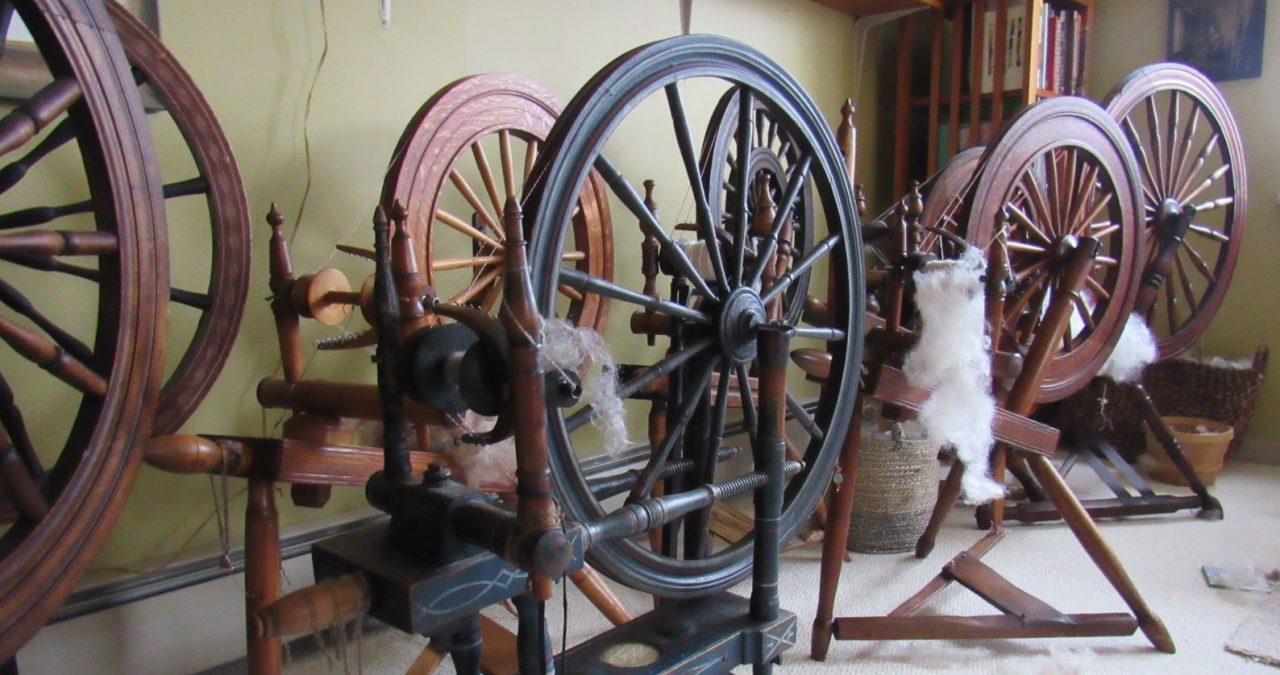
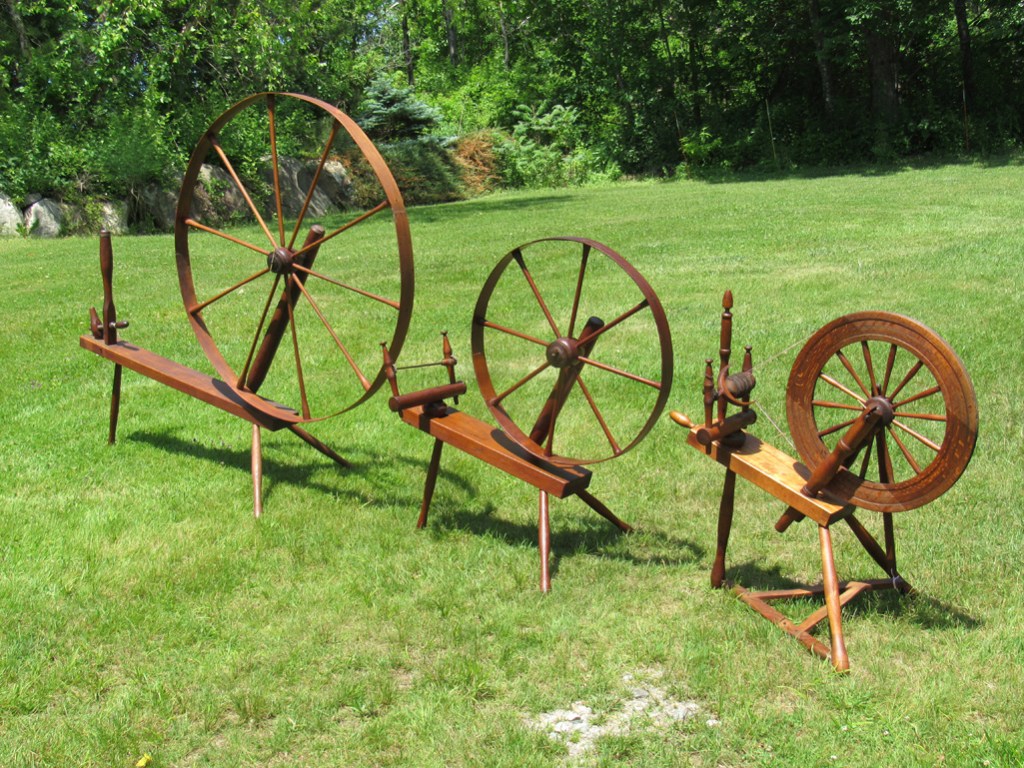
Update December 2020: Last month I picked up a Packard great wheel in Nobleboro, a nearby town, for my friend, Susanne. The seller had found the wheel at the Waldoboro dump. Its drive wheel did not appear to be original, but the rest of the wheel was lovely and had some interesting differences with my wheel. My wheel is on the left in the photo below.

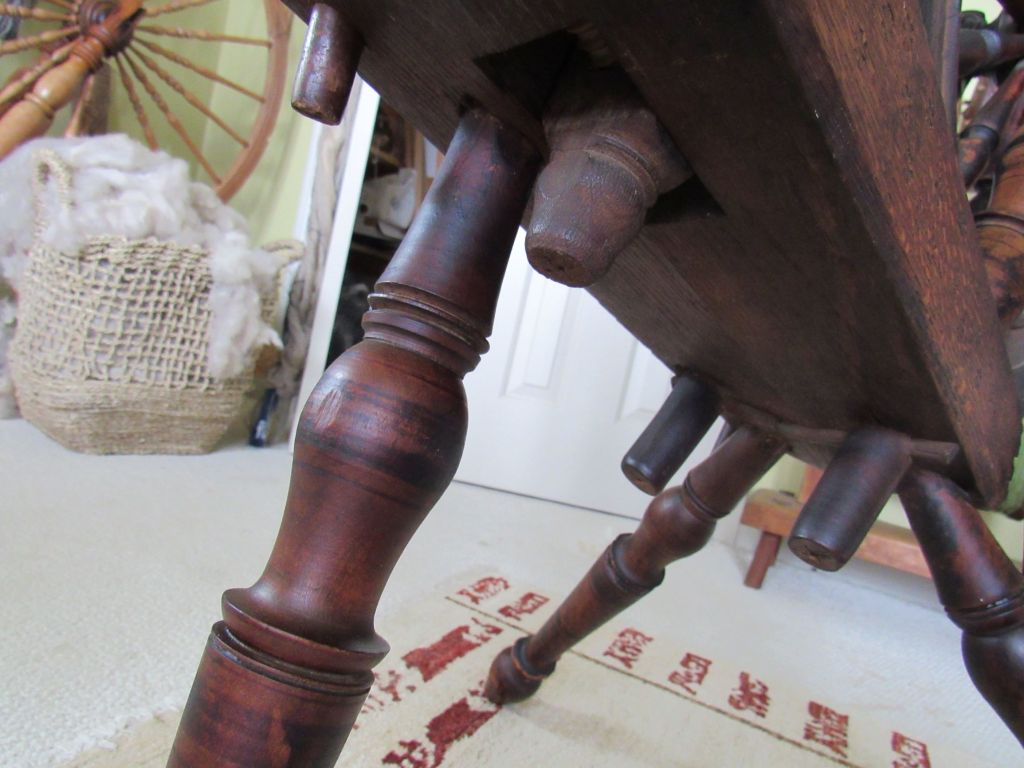
Susanne’s wheel had a slightly daintier feel than mine. The tension screw supports were smaller overall and fit up snugly against the table–in contrast to mine and another wheel of Susanne’s, which have a significant gap between the supports and the table.
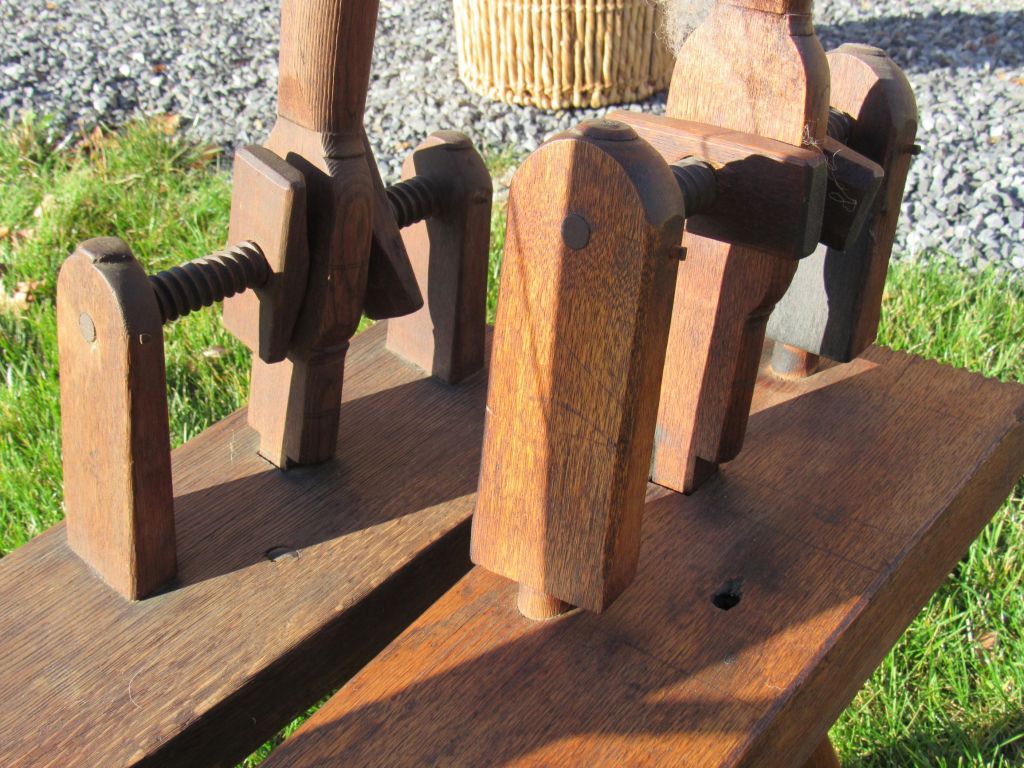
Susanne’s on the left, mine on the right.

In addition, the ball at the top of the wheel post is flatter on Susanne’s than on mine.
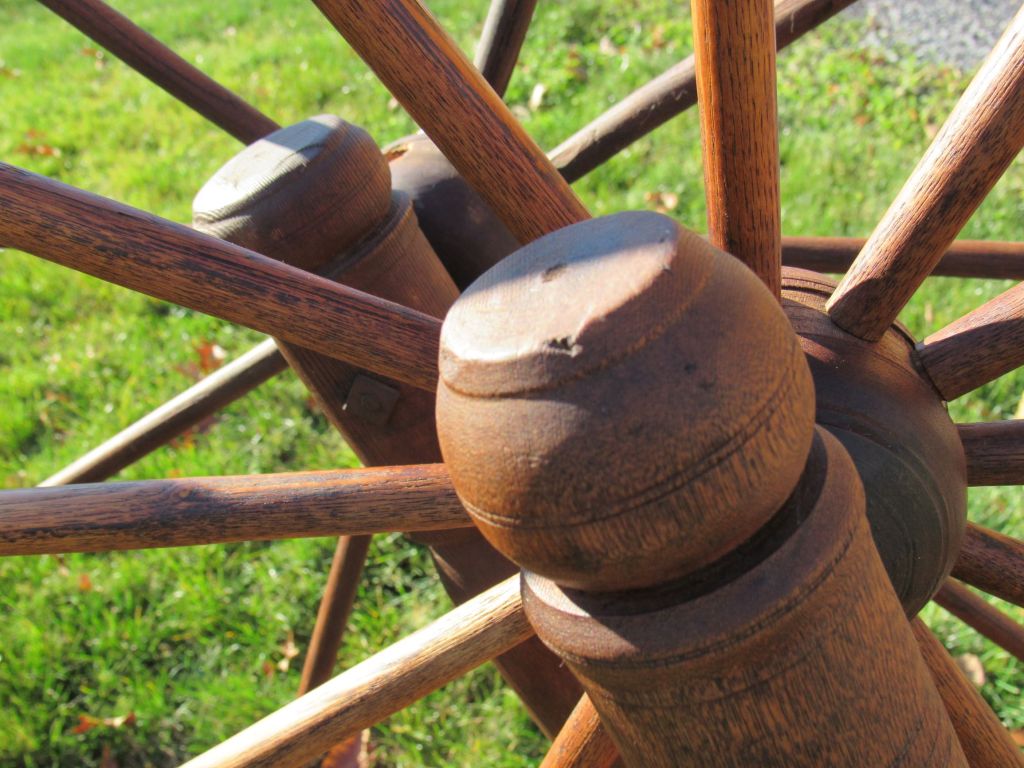
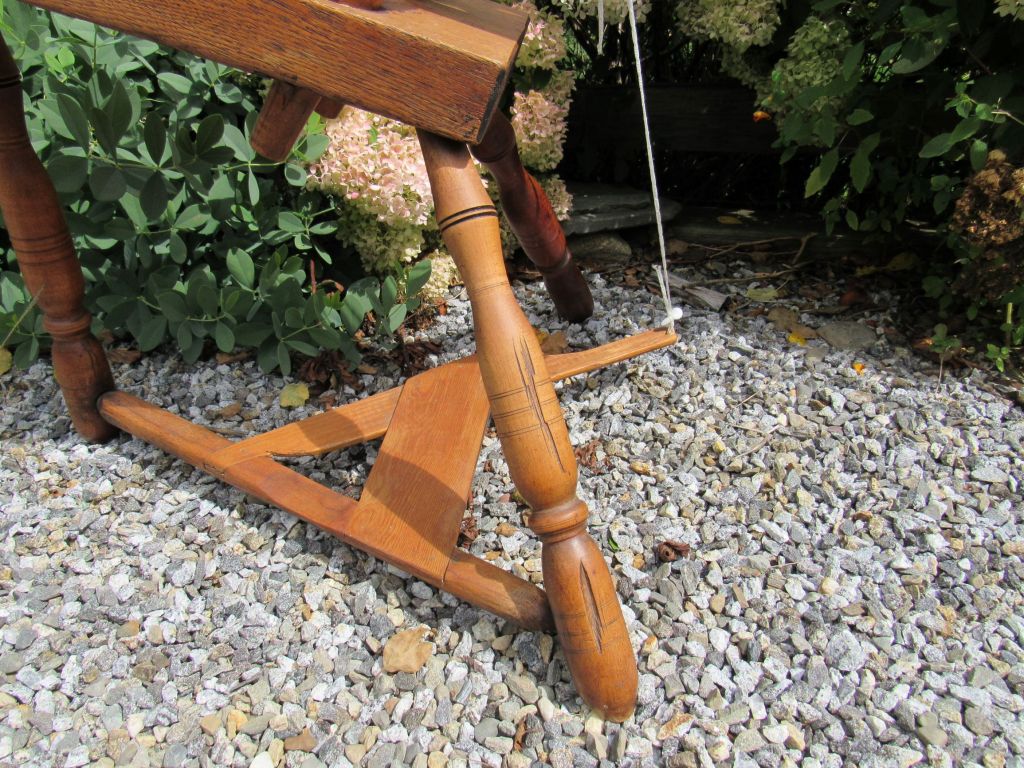
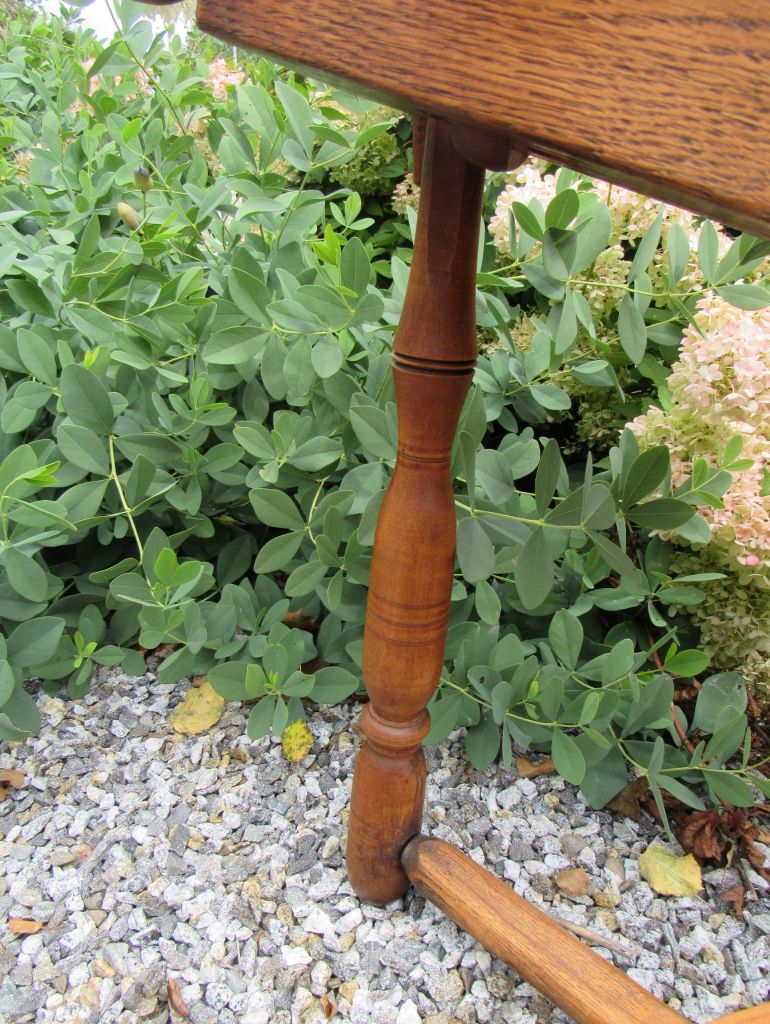
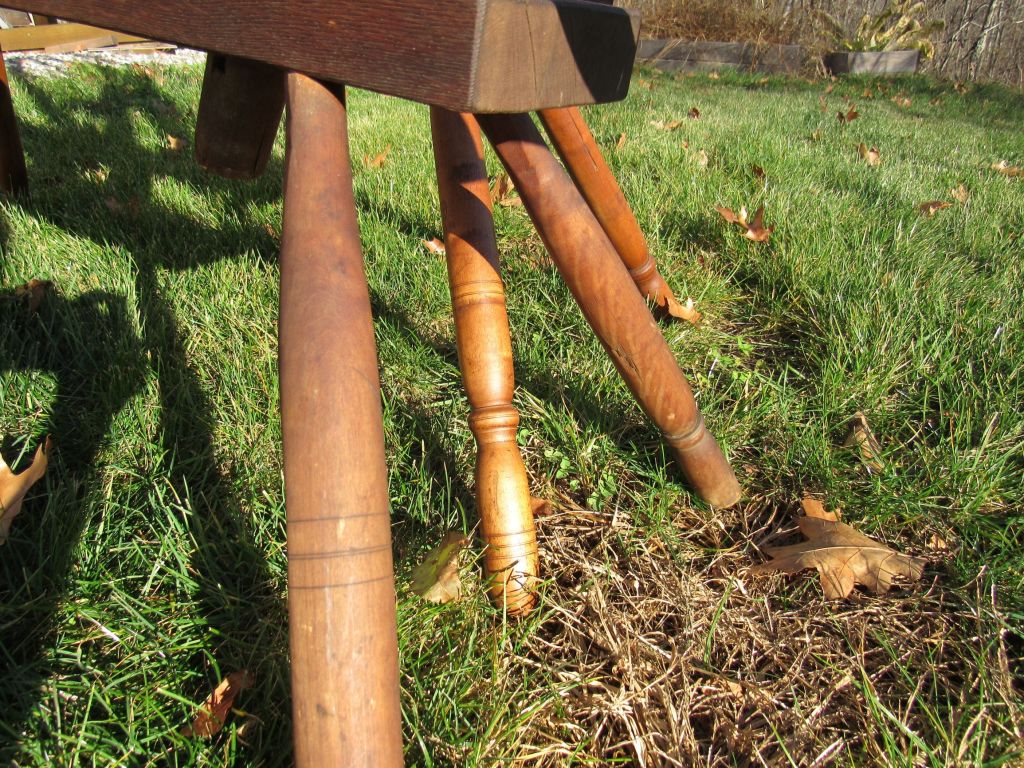
The legs are much the same.
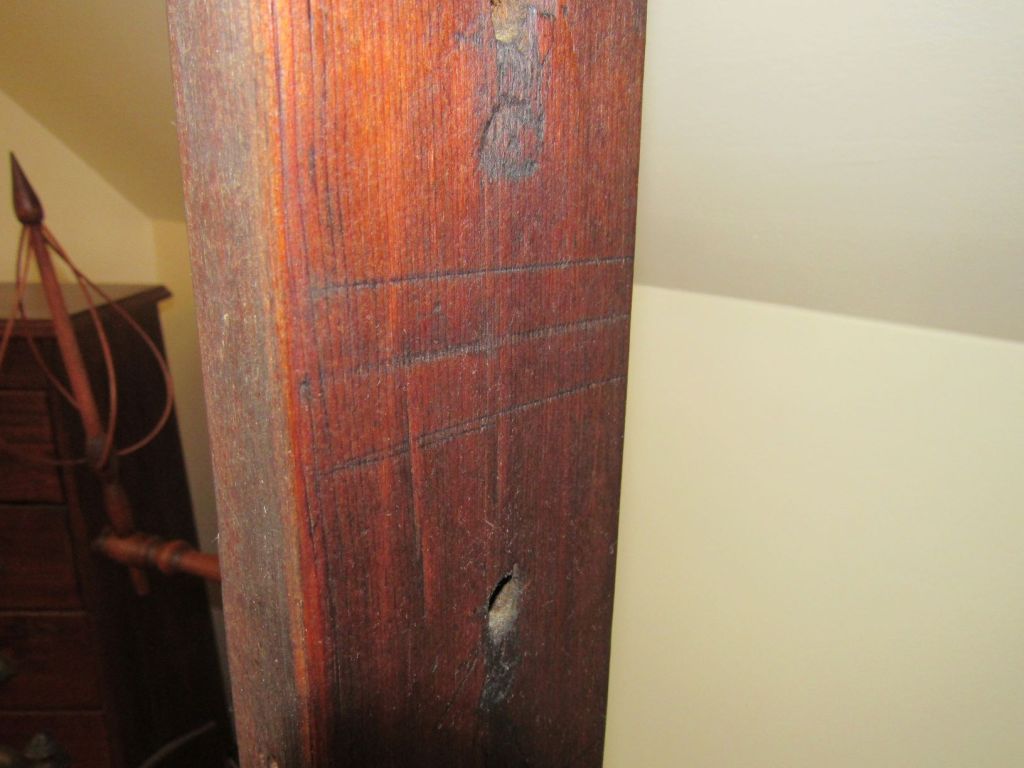
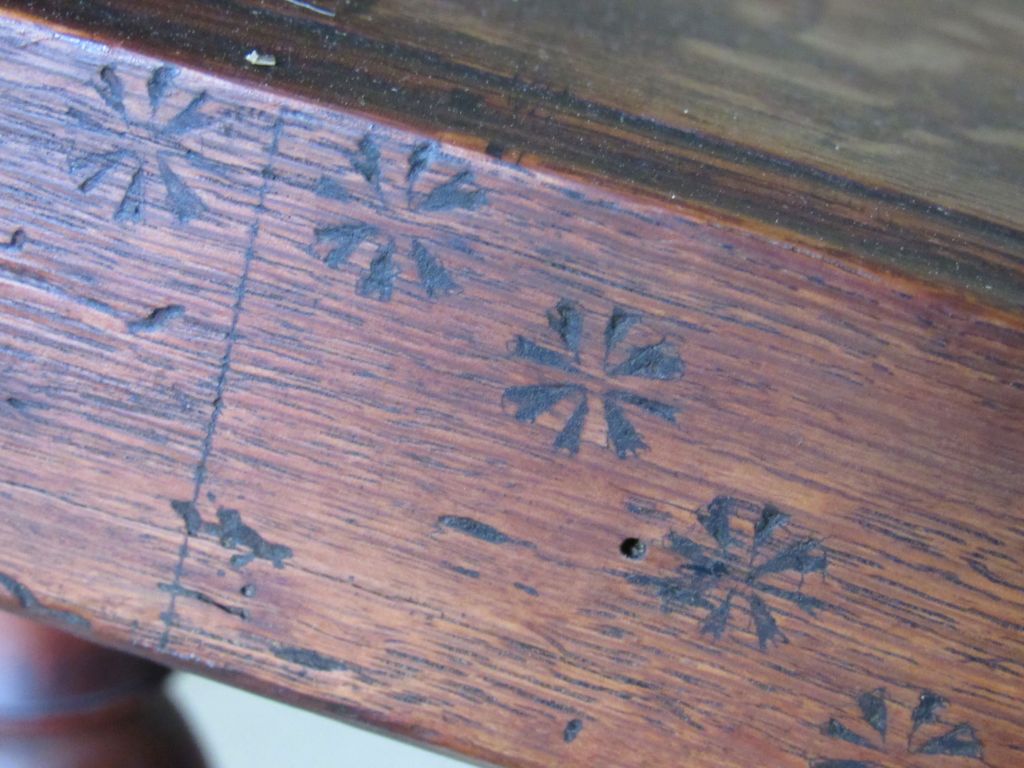
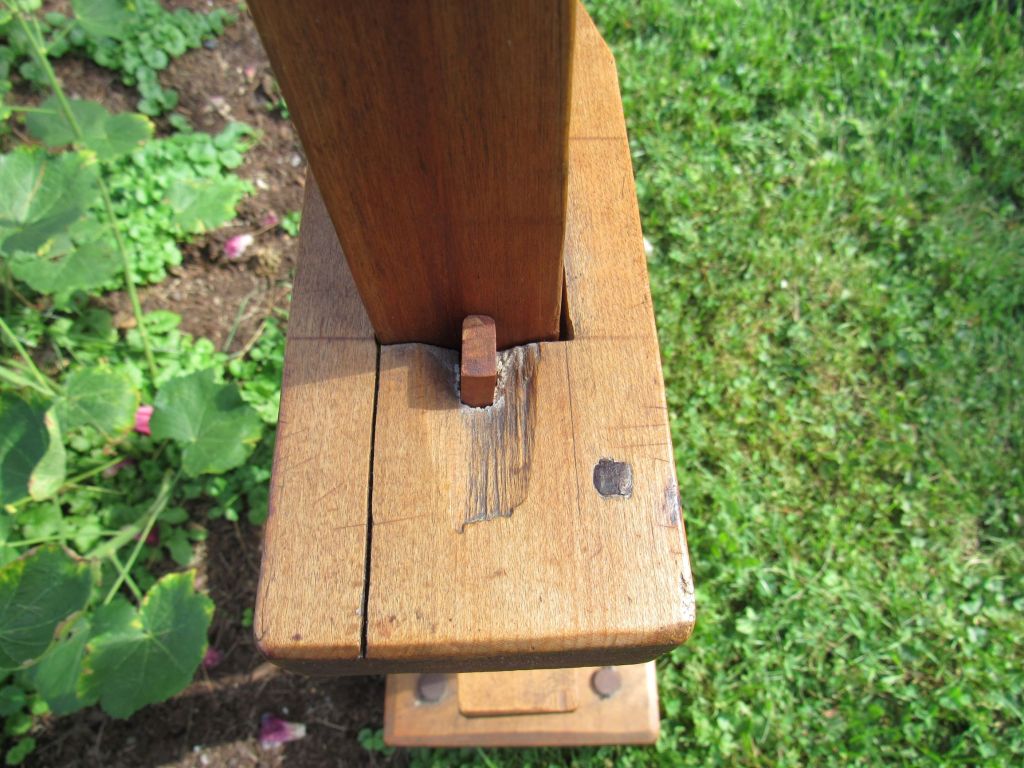
Intriguingly, Susanne’s wheel had a “VII” inscribed on the table, the front tension screw support and the wheel post–something I have not seen on other Packard wheels.
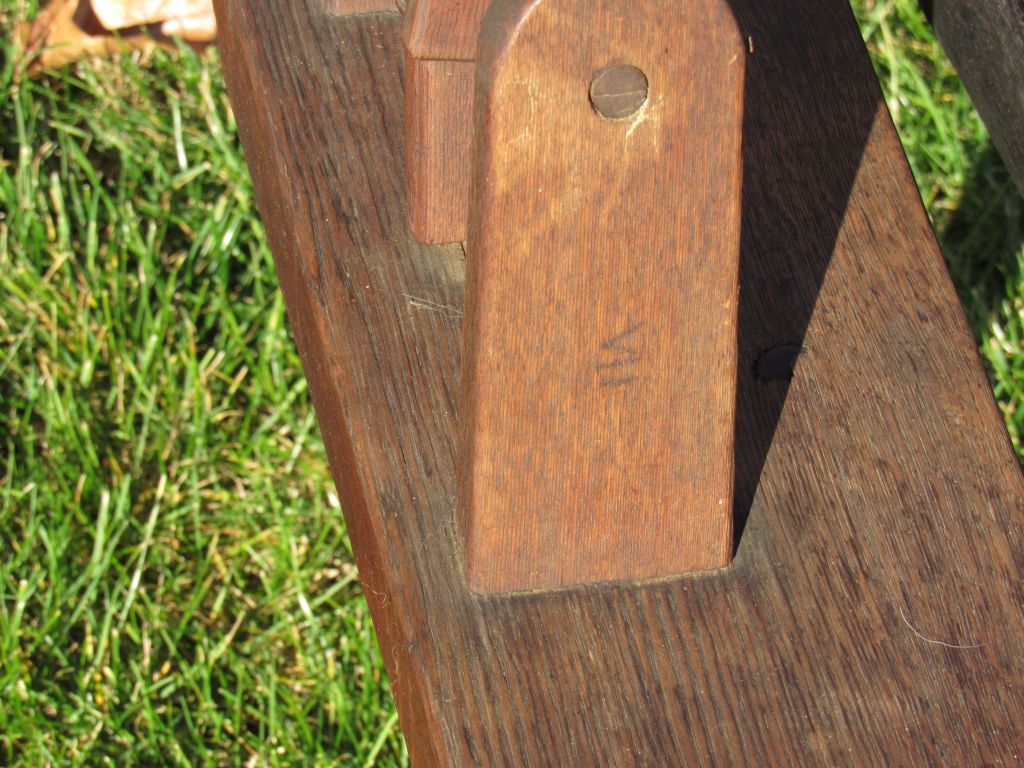
It is hard to say whether the numbers were for disassembling the wheel for transport, used because apprentices or others were helping with assembly, or for some other reason.
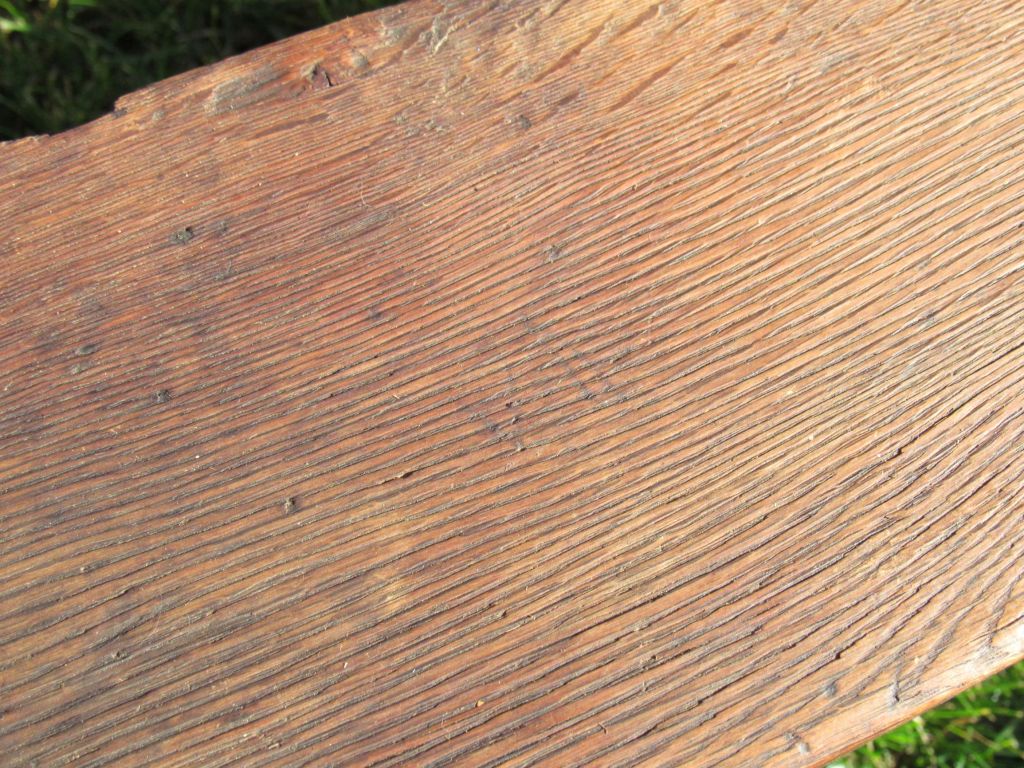
The VII is very faint in the photo–easier to see in person.

It would be interesting to know whether Marlboro Packard changed his wheels slightly over the decades of production or whether he changed things up from wheel to wheel. It was a treat to be able to compare these wheels side by side.

Clarry

Marlboro Packard, born in Massachusetts in 1763 into a family of carpenters, moved north to Union, Maine where he produced attractive, well-engineered spinning wheels, found throughout the midcoast to this day. 

Marlboro, also spelled “Marlborough,” was “a natural mathematician. He excelled in the solution of mathematical problems and in the use of mechanical tools. He could make anything from a boot-jack to a wagon wheel, from a window to a spinning wheel and in construction of the latter, he was a past master. All spinning wheels in the locality having the letters ‘MP’ carved on the end of the body are the work of Mr. Packard.” Soldiers and Sailors of Lower St. Georges Maine, p. 51. 

Marlboro was born in Bridgewater, Massachusetts, in the same part of town (now Brockton) as the wheel-making Thompson family (see previous posts “Polly and a Skarne” and “Mag Reiver and a Finger”). 

Multiple generations of Thompsons (also spelled “Thomson”) were well-known wheel-makers in Bridgewater. 

While the Packards were carpenters, I couldn’t find evidence that they made wheels while in Bridgewater or that they worked with the Thompsons. 

But it does appear that the two families were related.  Marlboro’s aunt, Joanna Packard (his father Nathan’s sister), had a daughter, Jennett Allen, who married wheel-maker John Thompson.  John and Jennett were wheel-maker Hannibal Thomson’s parents. 

That makes Marlboro and Hannibal first cousins once-removed. 

Both Marlboro and Hannibal ended up in Maine making spinning wheels, but they are a generation apart and their wheels reflect that. 

Marlboro’s wheels were similar to those made by the earlier Thomson generations, based on a traditional Scottish-style wheel, while Hannibal’s wheels show the strong influence of the Maine Shakers on wheel styles in the early and mid 1800s. 

Marlboro’s father, Nathan, died in 1772, when Marlboro was only nine years old.  It’s unclear when Marlboro came to Maine, but his uncles Micah and Benjamin apparently moved to Cushing on the midcoast in the 1760s. 

They worked as carpenters and appear to have done well.  I couldn’t determine how long Marlboro stayed on in Bridgewater or whether he learned wheel-making skills there before coming to Maine. 

But eventually, Marlboro joined his uncles and by 1795 must have been well established in his trade, because the Maine Historical Society has copies of payment invoices to Marlboro for turning work, including banisters, for Montpelier, the mansion being built in Cushing by Henry Knox, George Washington’s former Secretary of War.  

In the 1790s or early 1800s Marlboro moved to Union, about 15 miles inland up the St. George River from the coast, and settled on Clarry Hill, the top of which is now blueberry barrens with a magnificent view. 

The Packard farmhouse still stands and Marlboro’s wheels appear with regularity in antique stores and barn sales throughout the area. 

In the Maine State Museum, one of Marlboro’s wheels serves as the example of a typical Maine flax wheel. 

Marlboro’s flax wheels are easily recognizable. 

Aside from his doubled initial stamps on the table end, the turnings are somewhat unusual in their generous proportions.  There is nothing skinny or delicate about these wheels, they are plump and ripe-looking. 

My wheel has a replacement treadle. 

Marlboro’s treadles have a distinct notch such as this one found by a friend in Searsport.  Here is her wheel and the treadle.

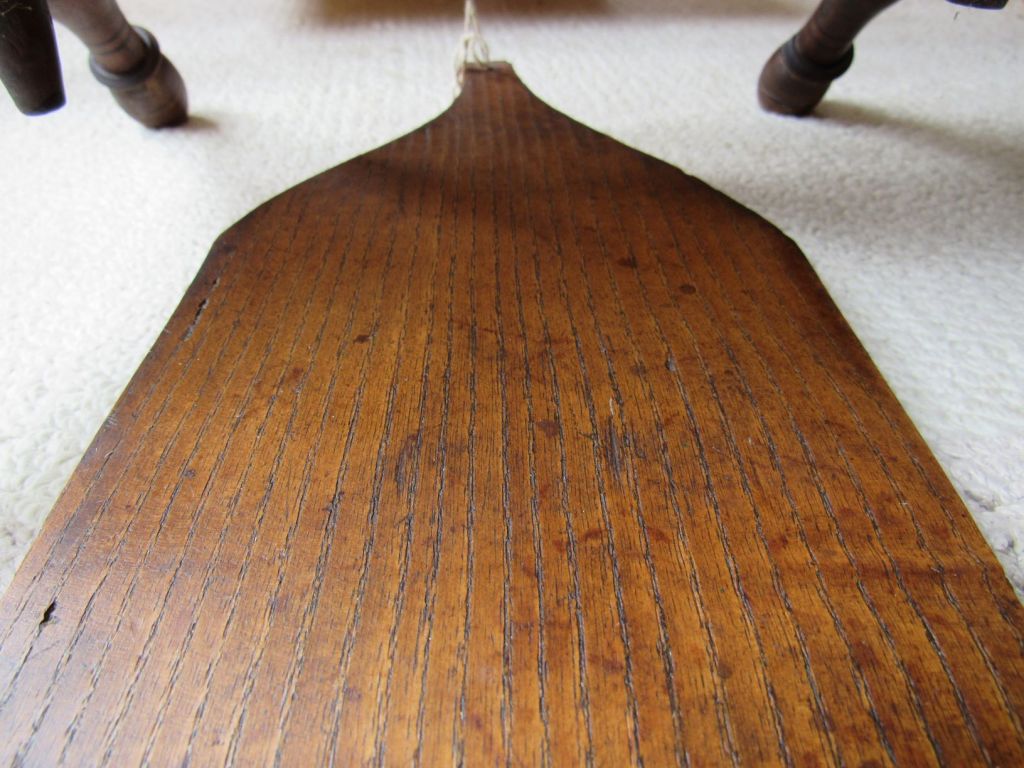
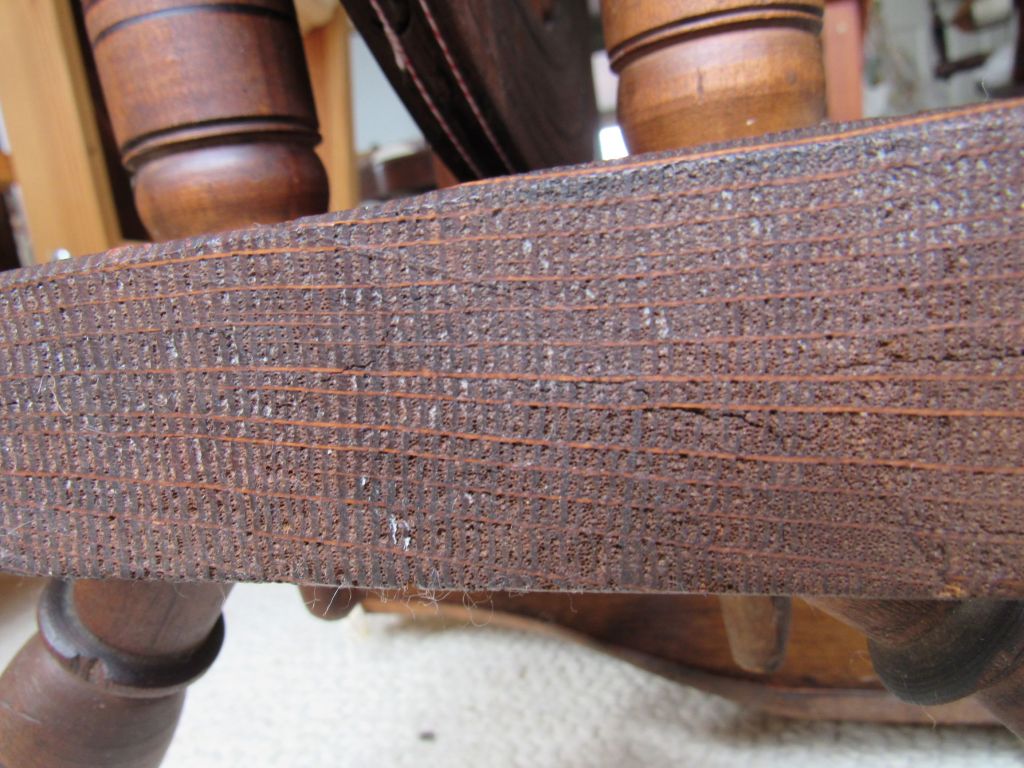
On my Packard wheel, the back side of the drive wheel has black marks, which look somewhat like burn marks, but in odd patterns.   

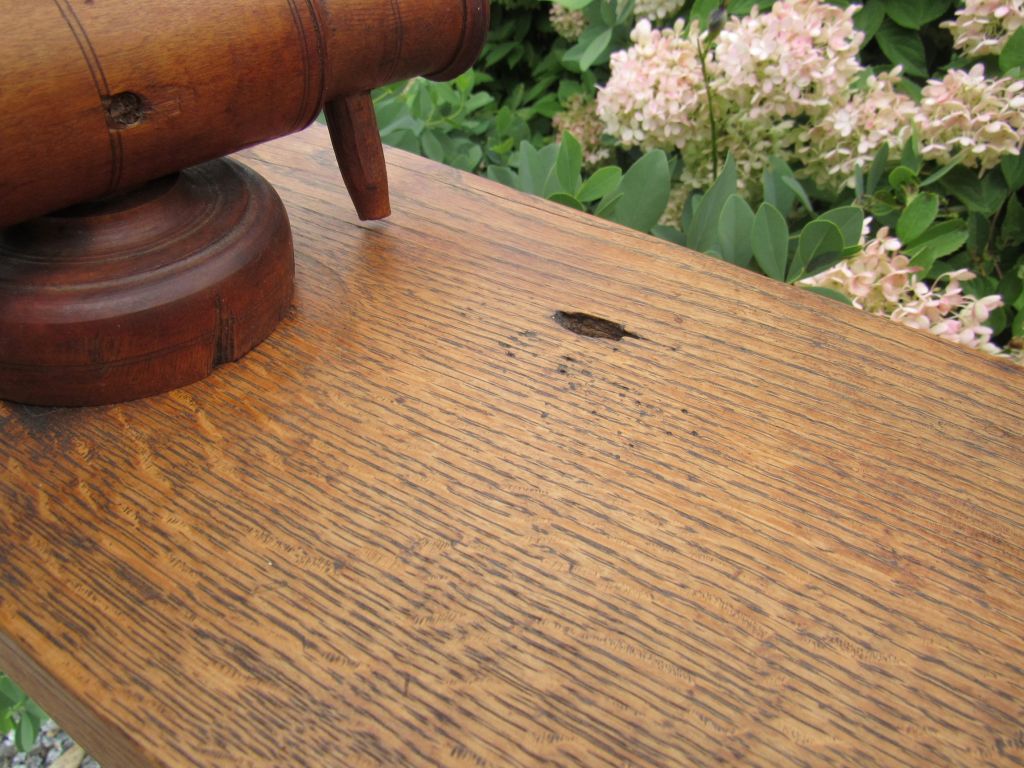
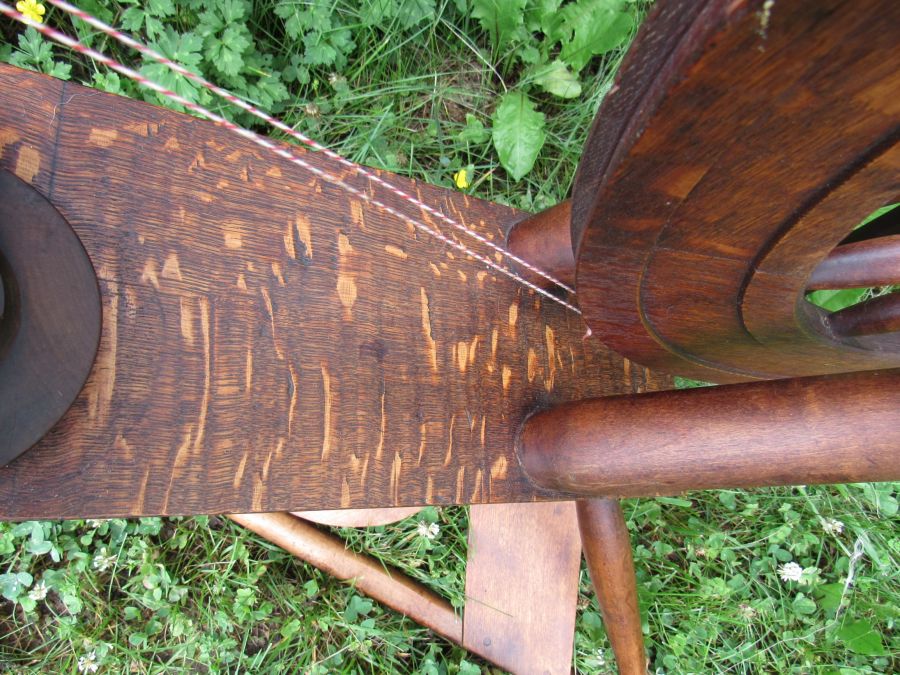
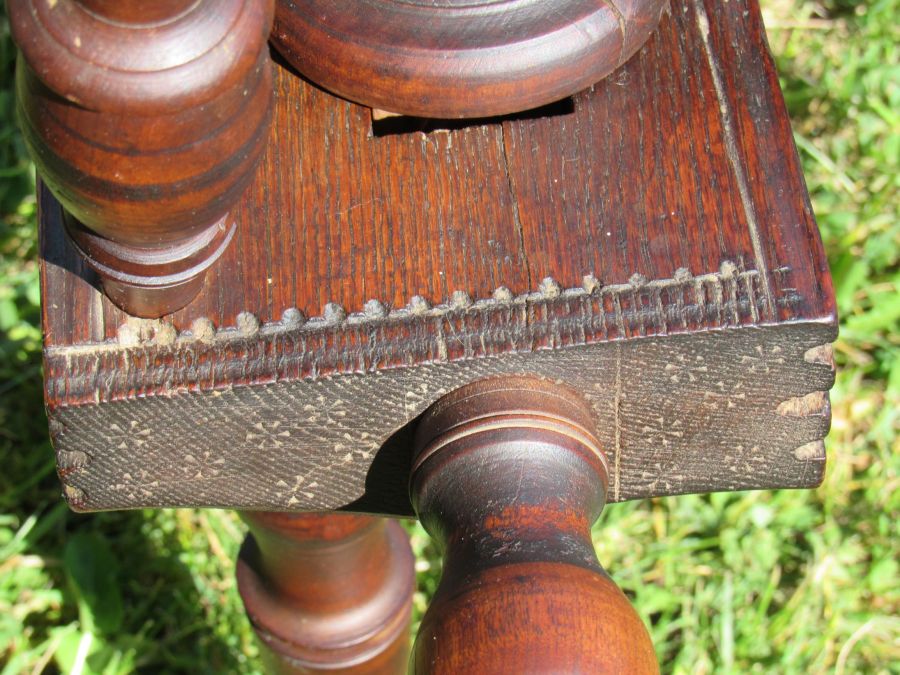
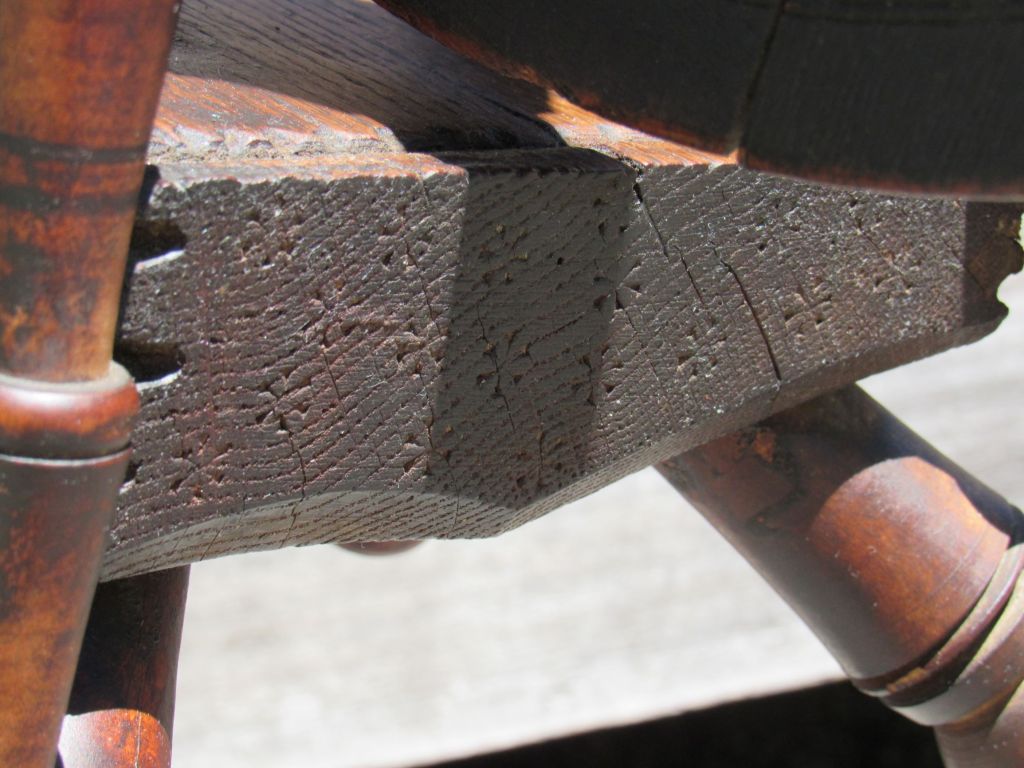
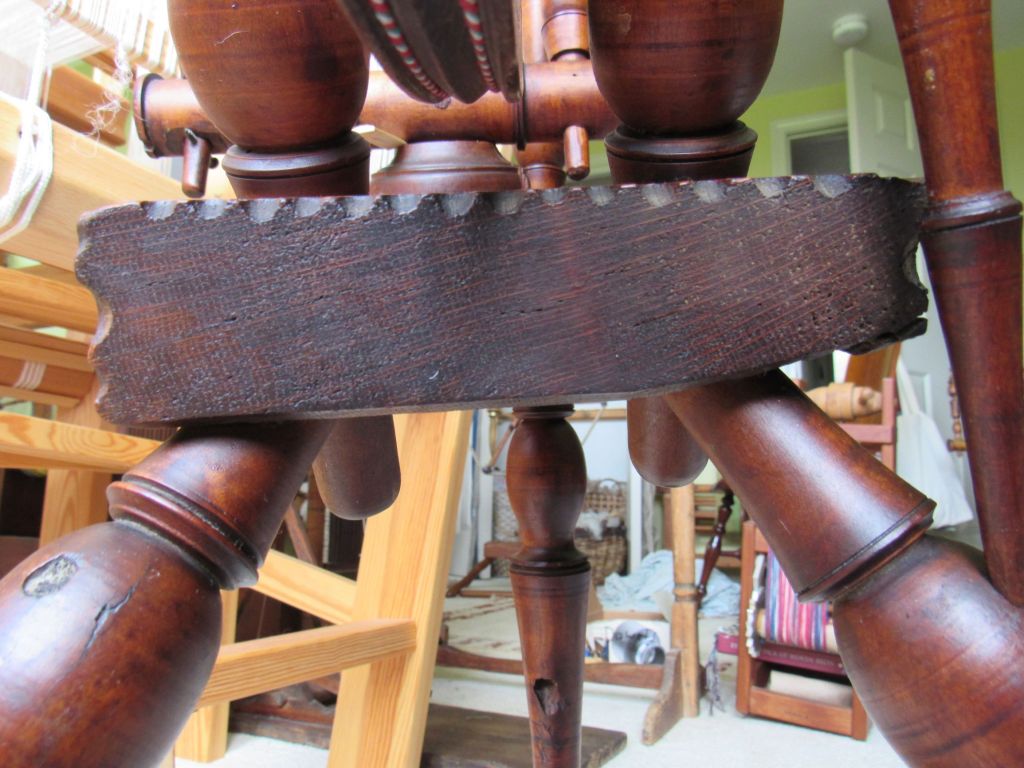
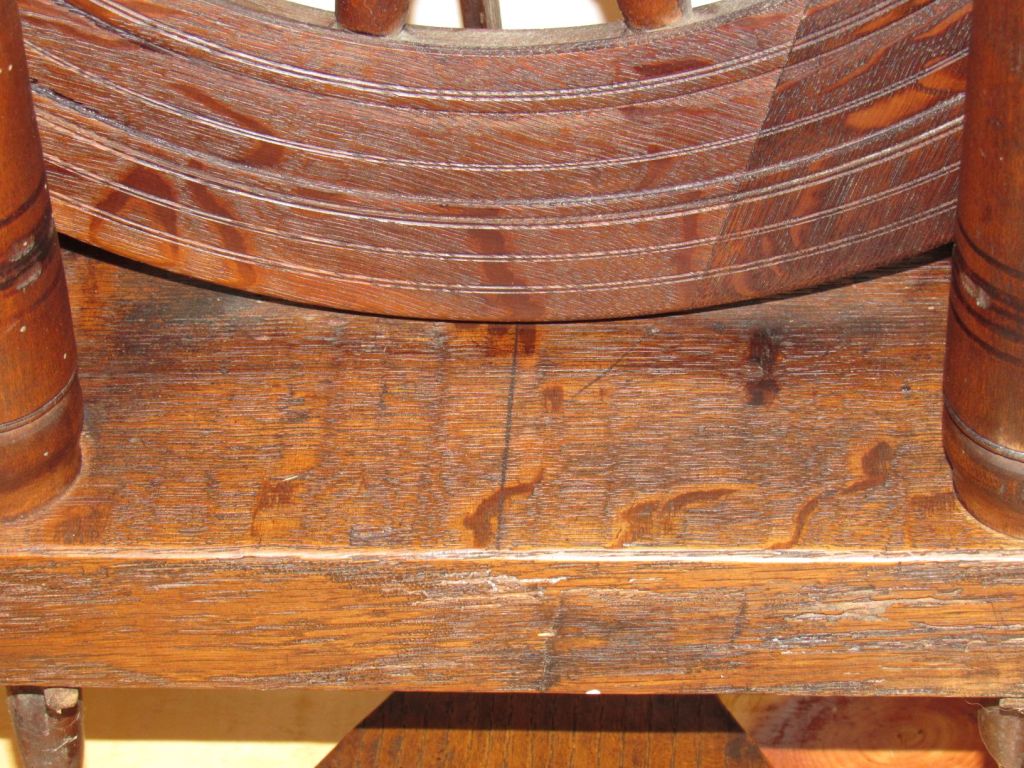
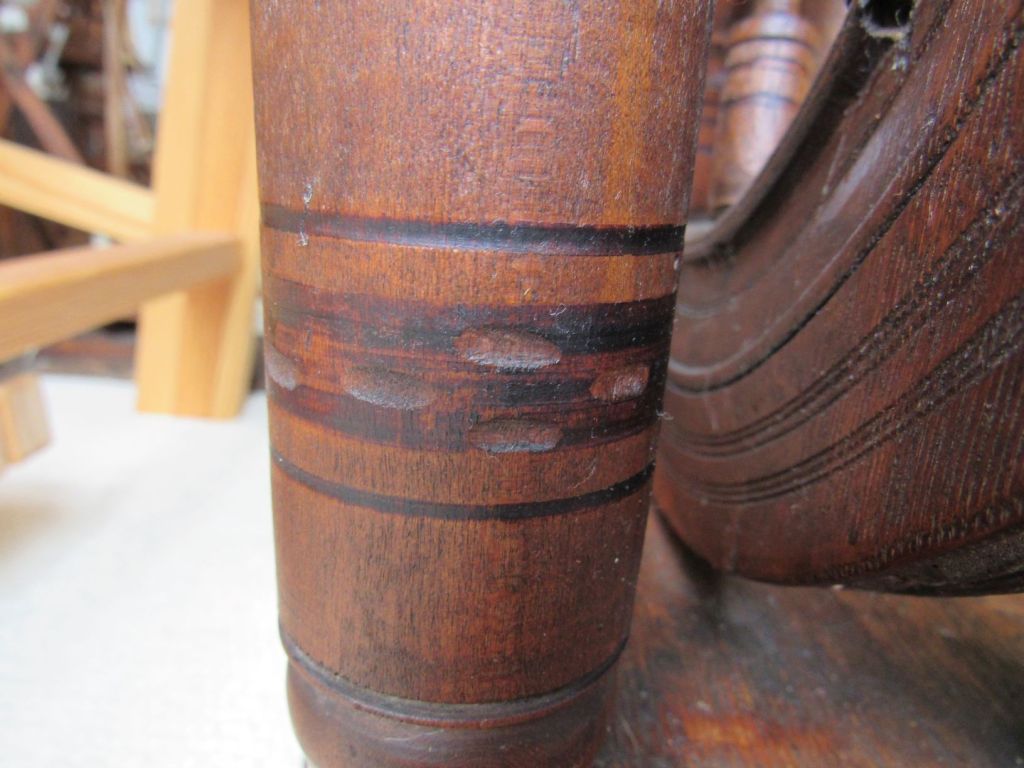
It also has gouge marks on the table, which remain something of a mystery.

They are usually attributed to the practice of sticking knives (or forks) in the table to separate or guide the double drive band, perhaps when plying.

My wheel has a quirk shared with another of my Maine wheels, in that if the whorl is tightened fully, it tends to pinch the bobbin so that it doesn’t turn freely, so I need to back it off slightly.  Once that is done, she spins fast and sweet. 

I was delighted to be contacted this week by a woman seeking information about her beautiful Packard wheel bought in New York state. It is complete with a full distaff and in amazing condition. It is satisfying to see that Marlboro’s wheels have been cherished and maintained so that they can continue to spin for us two hundred years later.

The wonderful quote on Marlboro is from:

Miller, Frank Burton, Soldiers & Sailors of the Plantation of Lower St. Georges Maine, Who Served in the War for American Independence, Genealogical Publishing Co., 1999.

Update December 2020:

I recently ran across this old photograph for sale in eBay. According to the seller, it was taken in 1914 and is from a photo album belonging to the Fountain and Sproul family from Round Pond and Sproul Hill in Bristol, Maine. The back of the photo identifies the woman knitting as Margy Johnson. What caught my eye was the swift behind Margy Johnson and, of course, the spinning wheel, which is a Marlboro Packard wheel. Bristol is about thirty miles from Union, where the wheel was made. It is hard to tell from the photo whether the wheel was still in use. The treadle appears quite worn, the footman is attached and there appears to be a drive band. It felt like I met an old friend when I recognized this wheel.

Beatrix

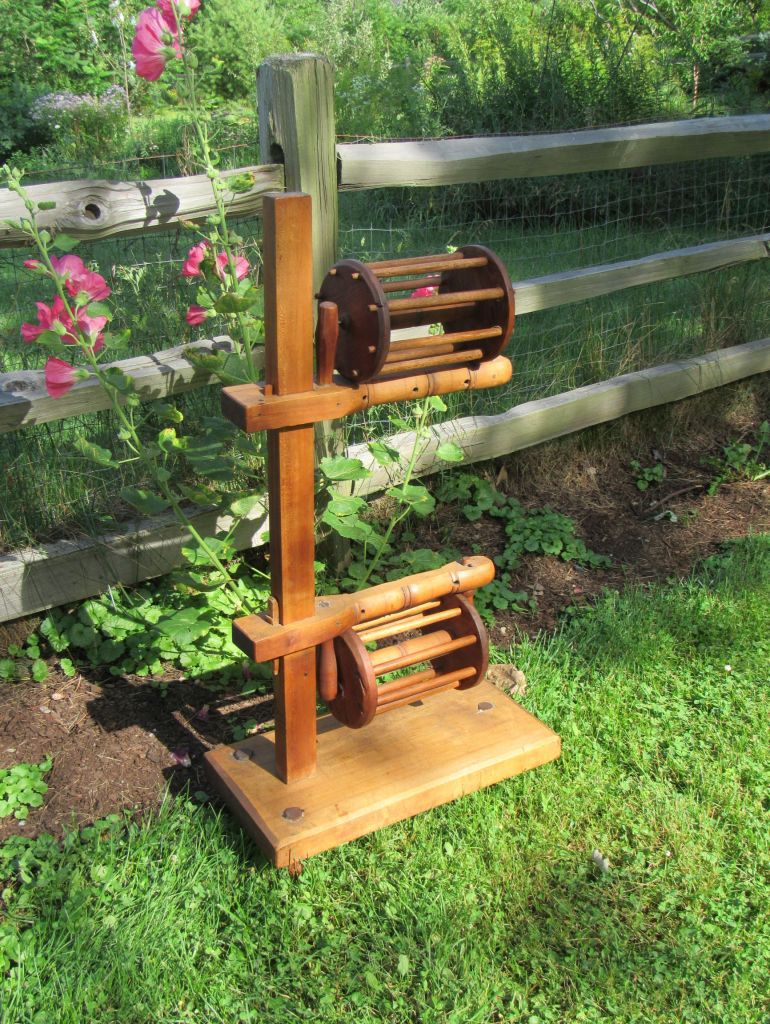
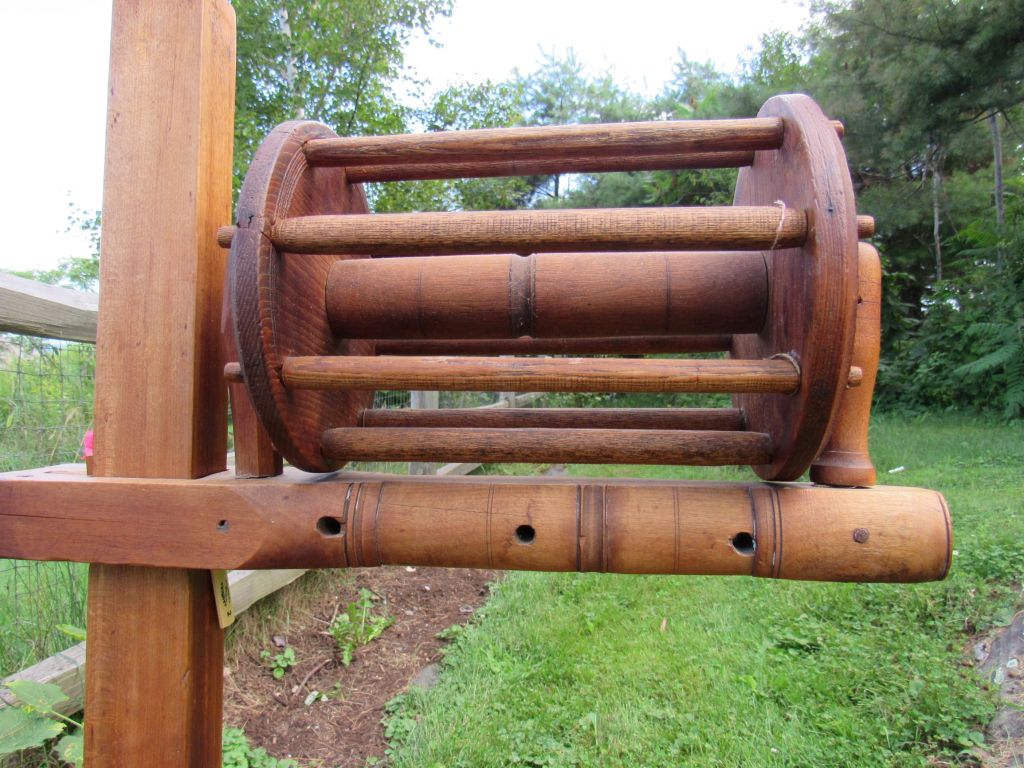
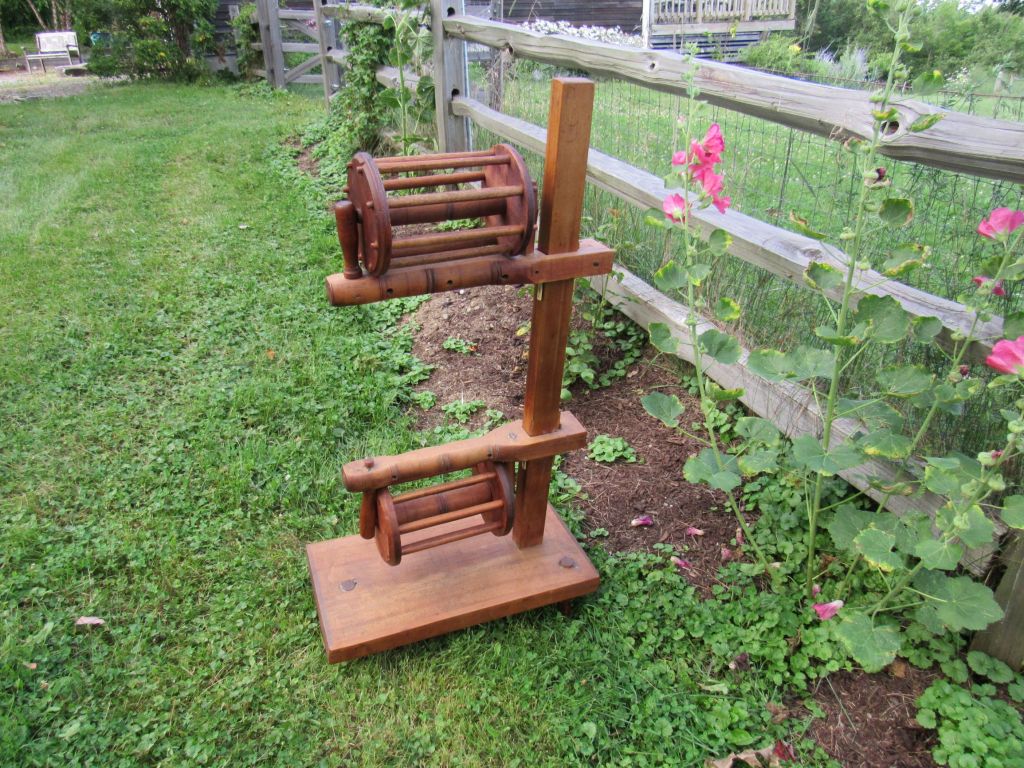
When I first saw this, I suspected it was fiber related, but had absolutely no idea what it was. It turns out this odd looking, hamster-playground-contraption is a wonderfully versatile fiber tool. 

It goes by multiple names, including squirrel cage swift, drum swift, barrel swift, and wool rice.   

I was puzzled by the squirrel cage name, thinking that surely our busy 18th and 19th century forebears did not have the time or inclination for caging squirrels.  But a quick internet search proved me wrong.  Apparently, squirrels of all kinds—gray, red, and flying—were popular household pets as early as the 1700s and as late as the Victorian period. 

Some were actually leashed, while others were housed in cages complete with exercise wheels about the size of the wheels on this swift.  I love how researching antique textile tools can bring to life other details of their time, like a penchant for pet squirrels.

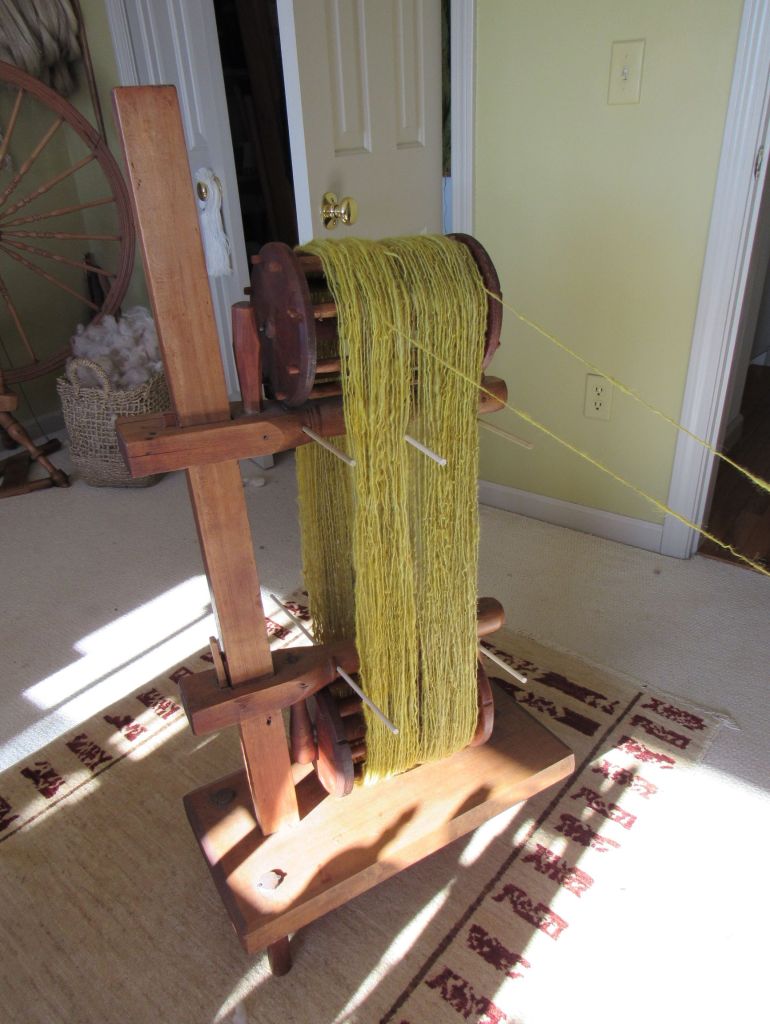
Swifts are designed to hold a skein of yarn and to turn, allowing the yarn to be easily wound off into a ball or onto a spool or bobbin for knitting or weaving. 

A reel or winder would have been used before the swift, to unwind the yarn from a spinning wheel and make the skein.  Like most swifts, squirrel cage swifts can be adjusted so that different sized skeins will fit. 

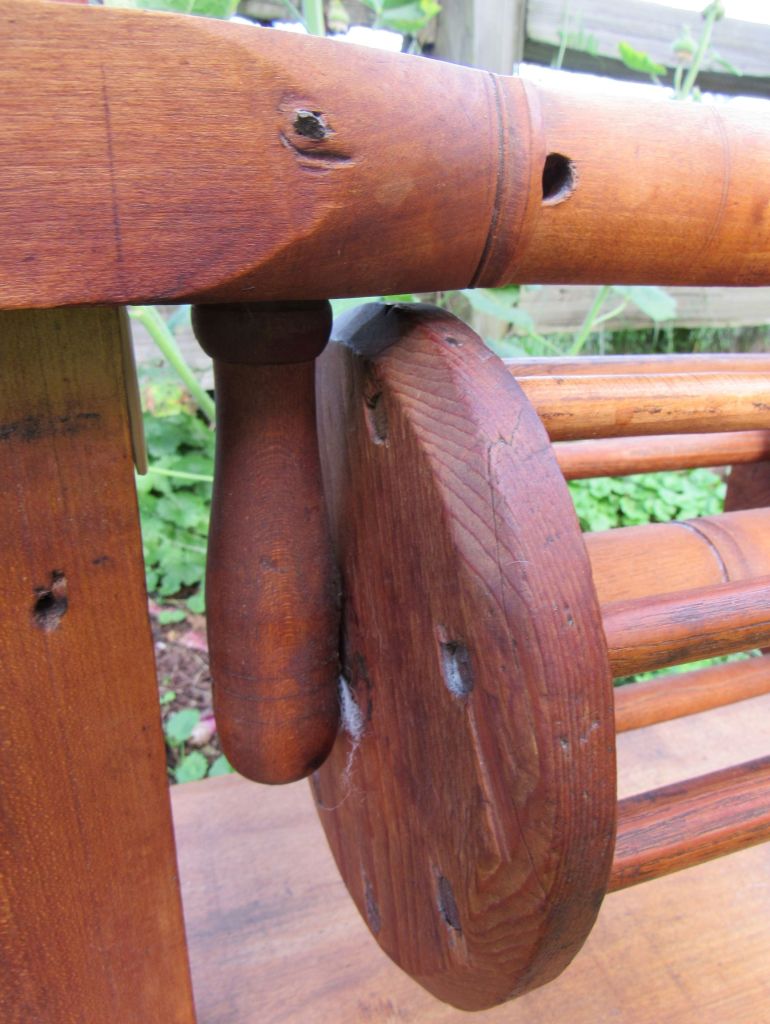
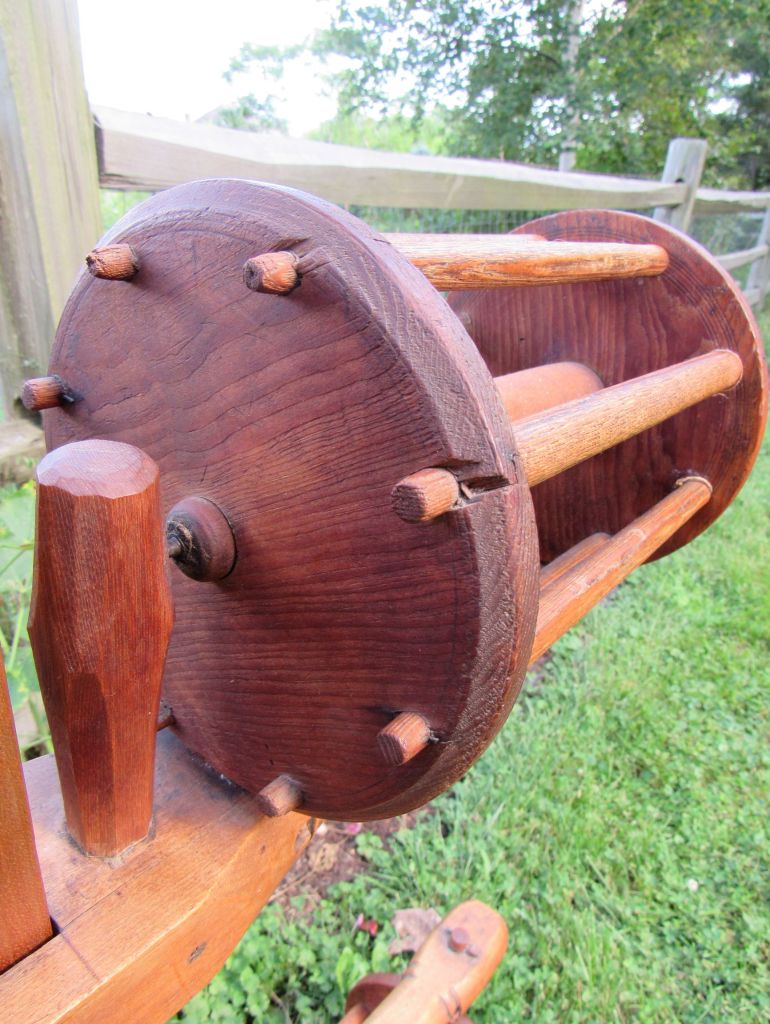
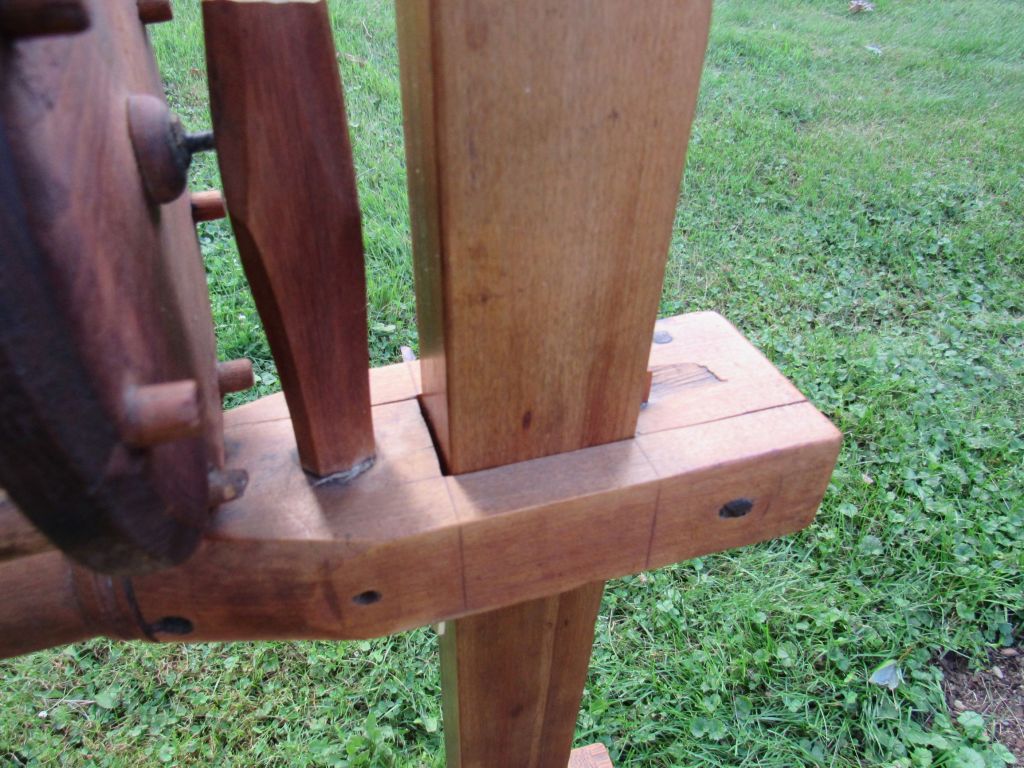
On mine, both cages are moveable and held in place with friction wedges on the opposite sides of the cages. 

Unfortunately, if the wedges aren’t positioned just right, the top cage has a tendency to go crashing down at the slightest bump.  It is quite heavy and, aside from concern that the swift will be damaged, I was afraid that it might land on a finger or two, crushing them into so many pieces.   

I finally learned to insert clarinet reeds as wedges underneath, which works well to keep the cages in place.

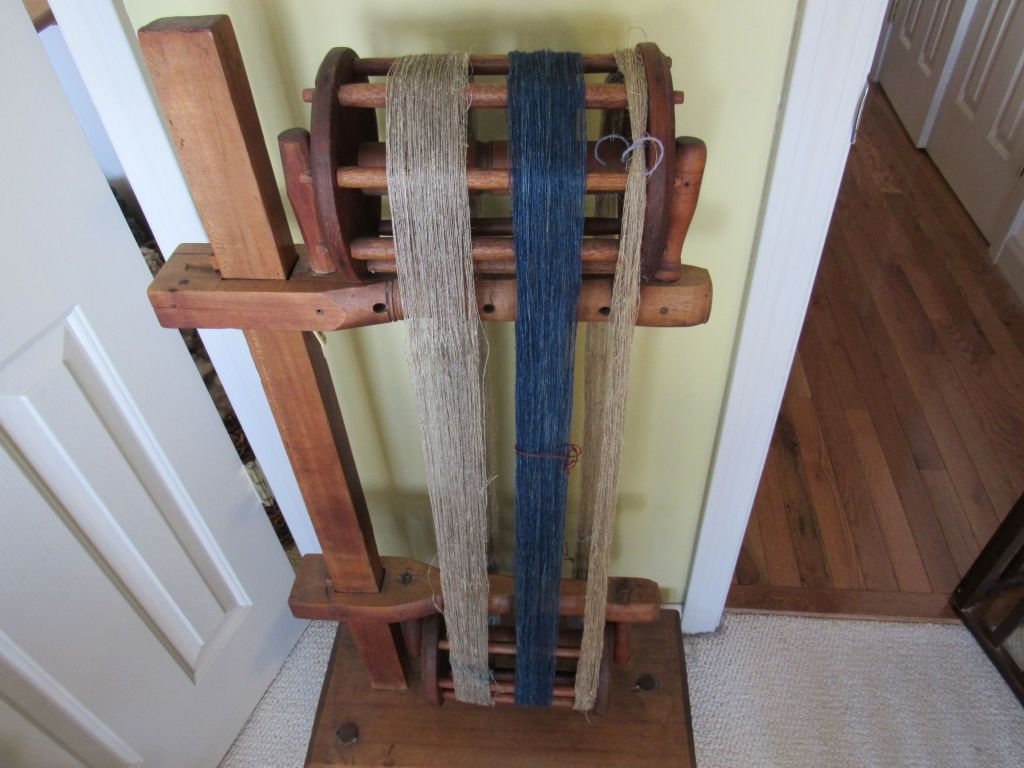
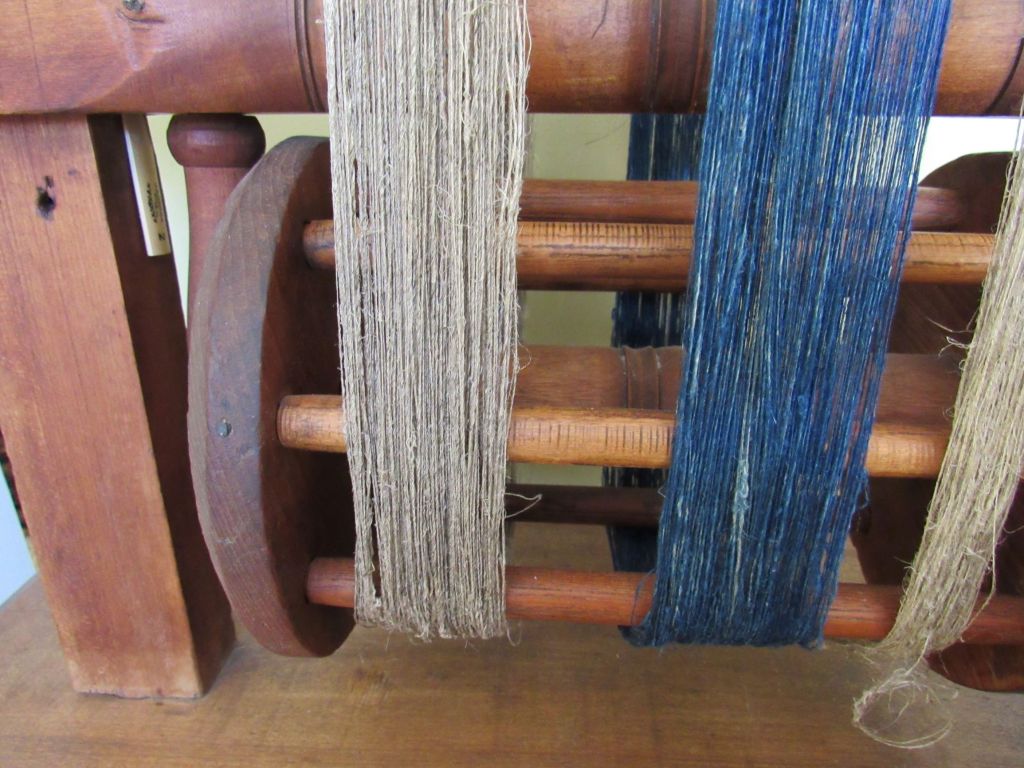
Most squirrel cage swifts have barrels big enough to fit two skeins side-by-side.  That makes them ideal for plying, which is how I most often use mine.  I also use it to smooth my handspun linen, running it from the swift to a reel through wet fingers or a bar of soap.   

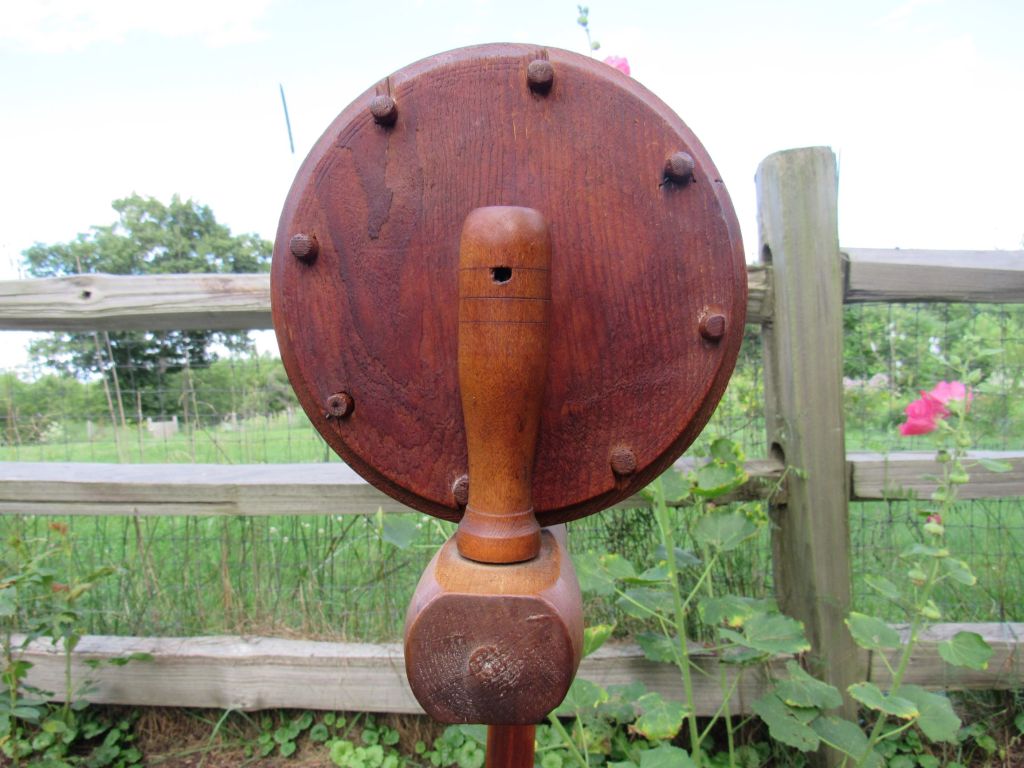
They also work wonderfully as yarn blockers.  Wet skeins can be stretched to a desired tension and then periodically rotated to efficiently dry the skein by moving the wettest area at the bottom up to the top. 

My swift, Beatrix, appeared outside of our local antique store one day, an oddity to draw in the curious.  According to the store owner, it had belonged to an old woman, two towns over, who had been a weaver. 

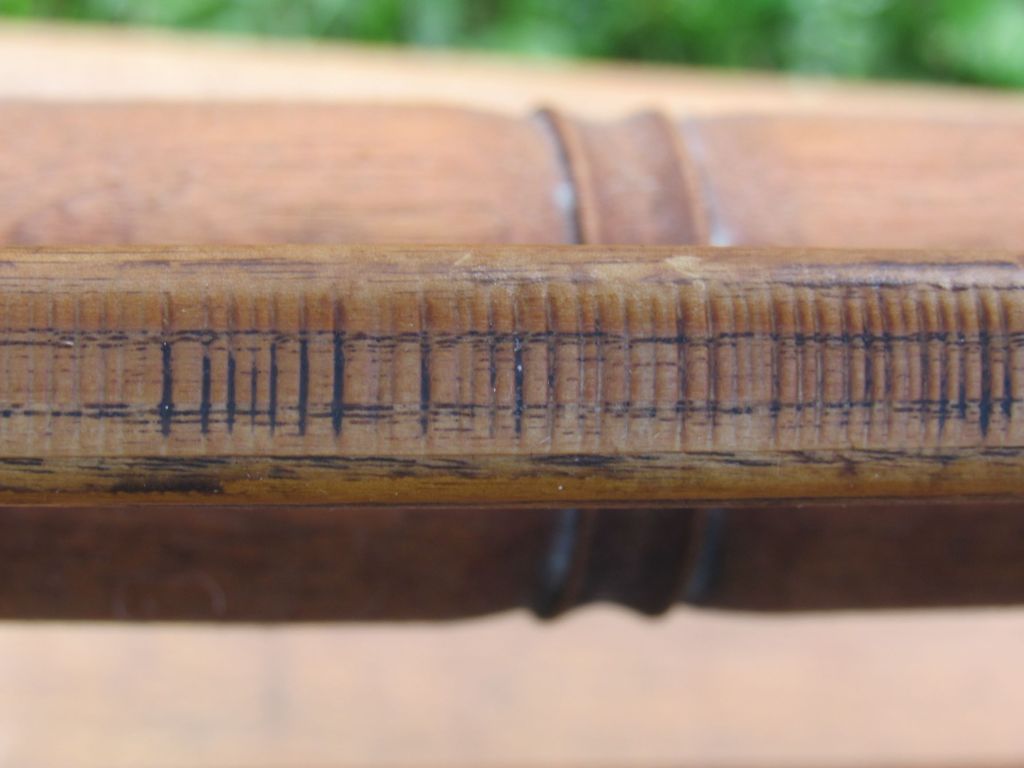
Her loom had been sold to someone on the coast, but he picked up this swift and a reel. I was smitten the deep groves on every cross bar of the cages. 

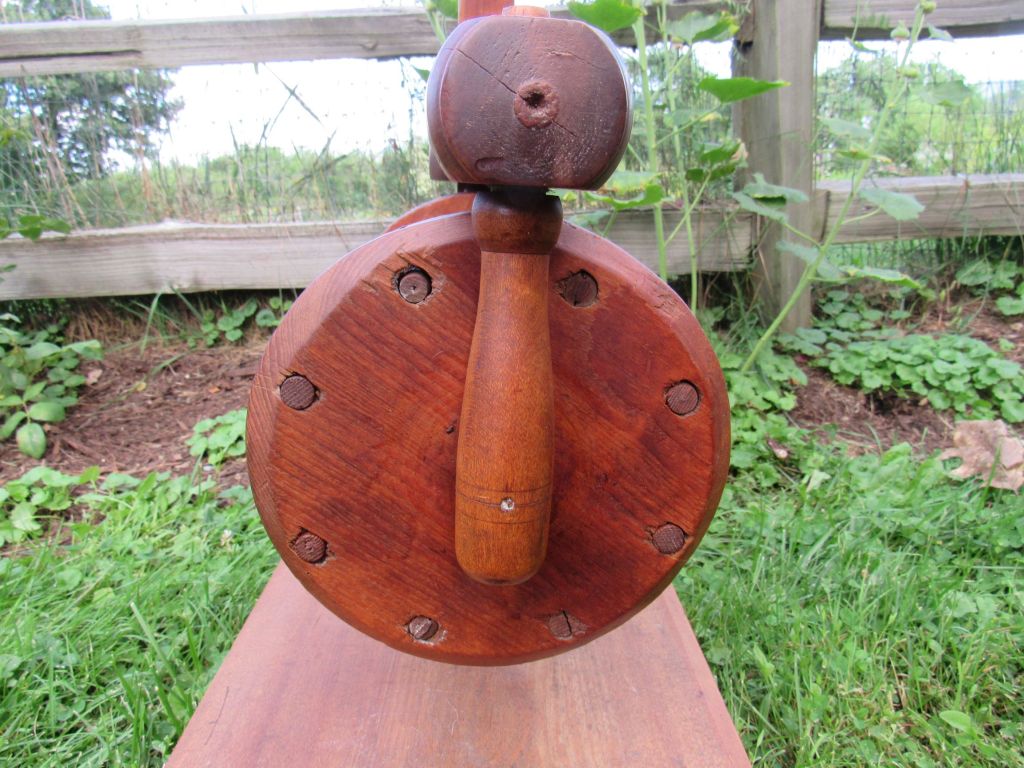
Imagine all the skeins that ran over those bars.  There were some bits of linen thread tied at the edges of two bars, so I like to imagine that it saw its share of locally grown linen in its day. 

But, really, I don’t anything about when it was made or by whom. 

It’s very sturdy, with substantial weight and short legs, so won’t tip, no matter how it is used. 

Some parts are beautifully turned, some hand carved. 

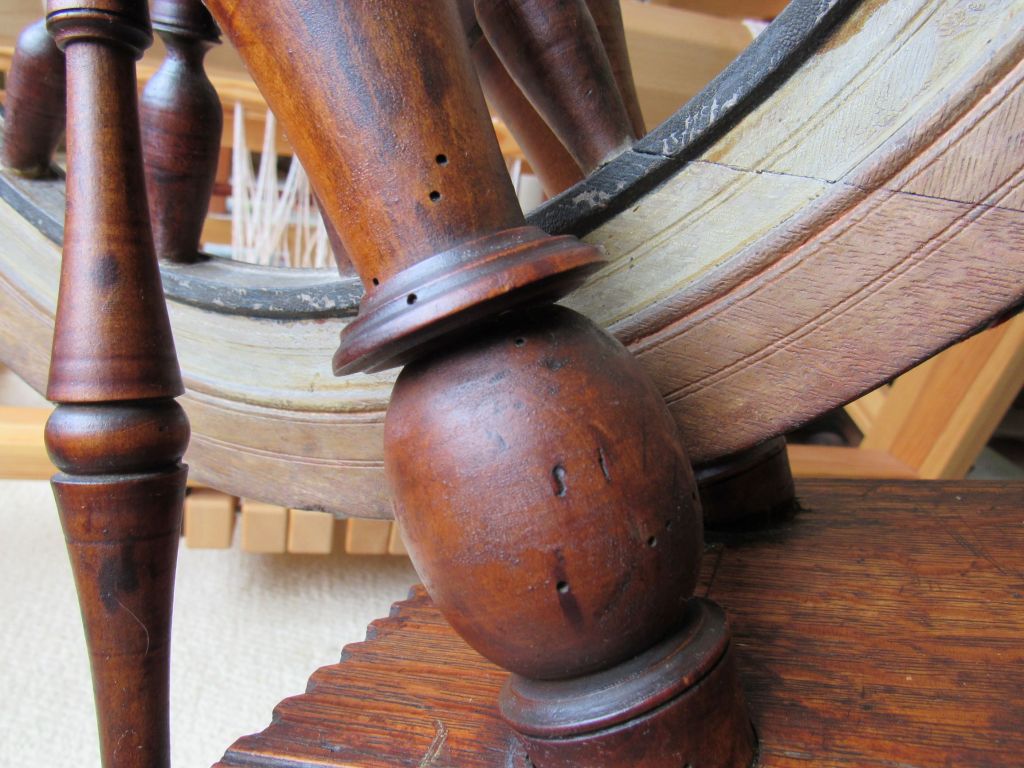
The holes in the supports under the cages are seen in other reels and swifts, and there are various theories about their purpose, but I’m not sure that anyone really knows why they are there. 

These holes do not show any yarn wear marks, but they must be there for a reason.  Any and all theories are welcome. 

I have never seen another swift quite like this one.  In fact, I have never have seen two squirrel cage swifts that were the same. 

But there are a wide array of styles, so they must have been popular in their time. 

Perhaps not many survived because they didn’t have the decorative appeal that allowed so many of our antique wheels to escape the burn pile. 

January 2021 update: Thanks to the knowledgeable and generous woman known as whiteoakgrandma on Ravelry, the mystery of the holes in the arm supports has been solved. They are for dowels to keep the skeins separated and from slipping off (or piling up on) the ends of the cages while plying. Whiteoakgrandma learned this when she was growing up from the elders in her community in West Virginia. It works brilliantly!

Mag Reiver and a Finger

Around the time that I picked up Polly, the Thomson bobbin winder in the previous post, I also bought a Hannibal Thomson great wheel. 

It’s funny how related wheels often seem to come out of the woodwork in waves.  None in sight for years and suddenly three pop up within weeks of each other. 

This wheel was for sale in Waterboro, Maine—about sixty miles south of Turner, where Thomson made his wheels.  Just as with Thomson’s flax wheels and bobbin winders, the Shaker influence is obvious in the overall design.  

The spokes are flush with the hub, marked in place with three scribe lines

It could almost be mistaken for a Shaker wheel with its pewter collar, clean lines, and beautiful wood. 

But it has Thomson’s imprint, too, in the collar’s scallops,

his signature spokes,

The spokes don’t run down the center of the rim, but are spaced from side-to-side, presumably to angle the rim to help keep the drive band on

the fine decorative scribe lines,

and the table-top maker’s mark. 

The nail pattern on the drive wheel join is the same with this wheel and Thomson’s bobbin winder.

Great wheel nail pattern
Bobbin winder nail pattern

Over time, this wheel has acquired its own particular oddities—missing bearings, surface scratches, and a strange leg.    It’s fairly common for old great wheels to lose their hub bearings.  This one was bearing-naked front and back, leaving a gaping hole around the axle and no support for the poor drive wheel. 

The original front bearing appears to have been six-sided where it met the wooden hub, which is not unusual for this time period.  New bearings can be made from various materials, including metal and plastic, but I’m always in a hurry to see how a new wheel spins, so usually just fold some sturdy leather in there and give it a go.   The leather works great, which invariably means that I leave it in and new bearings plummet to the bottom of the wheel-repair priority list.

Without looking carefully, it’s not obvious at first that there are fine scratches over many parts of the wheel.  The close-up photos really make them apparent. 

I’m guessing that someone had a vigorous sandpaper workout on this wheel to clean it up at some point and that’s what left the scratches.  If anyone has other theories, I’d love to hear them.  I kind of like the scratches—they are subtle to the naked eye and are part of the wheel’s history—remnants of some person’s time and attention on the wheel.  I view them as fine wrinkles on a beautiful face.   

Mag Reiver on the left

The strange leg is more of a mystery.  First, a matter of terminology.  I believe it’s fairly standard to refer to the legs on the right side of wheel (facing the wheel from the spinner’s side) as the back legs.  I just don’t get that.  Since great wheels look like magnificent herd animals ready to go bounding down hill wheel first, the legs on the wheel end should be the front legs, right? 

So, since what seem to be front legs to me are back legs to most, I will refer to great wheel legs as the “uphill side” and “downhill side” legs.  With the downhill side legs on this wheel, the spinner side leg is about an inch longer than the far-side leg and it splays at a slightly different angle.   In some wheels, such leg differentials are purposeful, to make more room for the spinner to walk back and forth.  I believe that is the case here, since Thomson’s bobbin winder has a similar leg, but the difference in this case may be exaggerated due because the leg does not seem to be set properly in its hole. 

There is an unstained portion of the leg showing below the hole, which indicates that it once was more deeply set.  On the other hand, the leg hits the floor at the proper angle, the table isn’t askew, the leg is clearly a Thomson leg, and the leg is tightly wedged into its hole.  In any case, it gives the wheel a distinctive look.

The wheel has scribe marks for setting the angles of the spindle support and a peg to keep it from pulling out. Some Shaker wheels have similar marks and pegs.

In comparing this wheel to my other great wheels, the table is quite narrow—only a little over five inches wide—

and the drive wheel is high and wide of the table, especially in comparison to the Connecticut wheels (previous posts “Mercy” and “Big Bear”), where the drive wheels ride directly over the table, with little clearance. 

Despite the differences, the height of the hubs is fairly consistent with all the wheels, with only about an inch differential.    

This wheel came with an accelerated head made by Fred B. Pierce & Co.  Accelerated heads were first manufactured in the early 1800s to increase spinning efficiency and output.  

They are often referred to as “Miner’s heads,” because Amos Miner had an early patent on the design. Miner and others manufactured these wildly popular heads through the 19th century, with the Pierce family in New Hampshire dominating the market from about 1850 to 1900.   

As an example of their output, Benjamin, the father, oversaw the manufacture of more than 60,000 heads in 1865 and many heads that we find today have a Benjamin Pierce label.  Benjamin’s son Fred took over the business and the heads with his label were manufactured between 1882 and 1890.  

That means the head on this wheel is relatively new compared to most.  That may be why the corn husk bearings are still in good shape. 

As a bonus, this wheel came with a wheel finger, also sometimes called a wool finger, wheel boy, or wood peg. 

These were used to turn great wheels and bobbin winders, placing them on the spokes and giving greater reach and a break to hands, I guess, which must have gotten pretty stiff, achy, and arthritic over time. 

Some great wheels will show wear on the spokes from use of a wheel finger, but this one doesn’t.  The finger itself, however, has a good deal of wear, creating a lovely curve where it goes from the hand-holding hefty part to the narrow neck that hugs the spoke.  

This finger spent a lot of time in someone’s hand. 

For more information on Hannibal Thomson, see the previous post, “Polly,” and the references there.

My resources for information on Pierce accelerating heads:

Ramer, Alvin, “Accelerating Wheel Heads: A Comparison,” The Spinning Wheel Sleuth 54 (October 2006).

Polly and a Skarne

This attractive bobbin winder was made in Turner, Maine, by a man with the wonderful name of Hannibal Thomson.  Unraveling the who, where, and when of Thomson’s wheels illustrates why many of us are addicted to rescuing these old wheels.  There’s the thrill of the hunt—for the wheels themselves and to discover the wheel makers.  And there’s the collaboration with other antique-wheel addicts, railroading wheels to new owners, sharing knowledge and research, and getting ridiculously excited about discovering a wheel’s origins. 

My Thomson journey started at a Maine antique store, “Den of Antiquities,” where I spotted a Shaker-like flax wheel with an un-Shaker-like maker’s mark in large letters on the table.   The mark had been worn to oblivion on one end but enough was there to make out, “Thomson.” 

I knew nothing about Mr. Thomson and brought the wheel home in anticipation of a history hunt to find the maker.  I found references to three Thom(p)sons in Ravelry’s Antique Spinning Wheel group, J. Thompson, T. Thompson, and H. Thomson.  All the table stamps were in the same style, although the spelling varied.  A wheel making family, perhaps?   My wheel matched those of H. Thomson.  I had found my maker. 

H. Thomson flax wheel

Unfortunately, I couldn’t seem to discover exactly who he was.  My on-line research found many H. Thomsons who had come to Maine from Massachusetts, but I couldn’t find any references to wheel making. 

I did find, however, another H. Thomson wheel owner on Ravelry who lived not far from me in Maine. Jan had an H. Thomson bobbin winder (like the subject of this post), and flax wheel, but the drive wheel was not original.

Jan’s Thomson great wheel, and bobbin winder, reunited with my flax wheel (which I passed on to Jan)

She had been looking for an H. Thomson great wheel and when one became available at a large “wheel rescue” that I was helping with in Massachusetts, we arranged a wheel railroad. 

Flax wheel

I drove a number of wheels that Jan had been fostering down to their new owners who were also at the rescue and brought back the Thomson great wheel for Jan.  In the process, I got a chance to spin on the great wheel and it was love at first spindle click.  As with the flax wheel, the Thomson great wheel was a beautiful spinner, well- balanced and designed for effortless spinning.  I was hooked.

The maidens on the bobbin winder and flax wheel are almost identical

Some months later, a Thomson bobbin winder came up for sale in New Hampshire.  It was a long drive, so I decided to combine it with it a trip to see Craig Evans, a wheel and textile collector, historian, and weaver, who lived in the same area and was selling some of his collection. 

I picked up the bobbin winder and a large skarne that the seller desperately wanted to unload (“take it! take it!”) and headed to Craig’s.  While admiring some of his amazing collection (and picking a few things to bring home), we talked about wheels and wheel makers, including H. Thomson.  Craig recalled seeing a Thomson flax wheel in an antique store in Alfred, Maine years earlier, but didn’t know anything about Thomson himself. 

About a year later, I heard from Craig that he had discovered the identity of H. Thomson.  During that year, I had acquired a Thomson great wheel and passed my flax wheel on to Jan, to complete her Thomson collection. I excitedly contacted Jan with the news and she and Craig collaborated on a fascinating article, with Craig’s research and Jan’s wheels, titled “Hannibal Thomson and His ‘Widely Known and Sought For’ Spinning Wheels.”  The Spinning Wheel Sleuth #107, Oct. 2020.

The title quote was from a book on the history of Turner, Maine, the town where Hannibal lived and worked in the early to mid 1800s.   The description of Hannibal brings him alive: “Mr. Thompson was a good mechanic, and his spinning-wheels were widely known and sought for.  He prosecuted his business for many years, and being remarkable for ready wit, his shop was an agreeable place in which to spend a leisure hour.”  French, pp. 87-88. 

Hannibal died at age 79 in 1861, but not before seeing his wheels become obsolete: “He lived to a good old age, but in the last years there were few calls for his work, as in the change of customs, spinning-wheels, carding machines, and fulling-mill, all went down together and became things of the past.”  French, p. 88.  

What would Hannibal think if he could see how we value his work today? His wheels once again are spinning, while we marvel at his skill and thoughtful design.

Hannibal’s name in his lifetime was spelled in a variety of ways, with his last name spelled both “Thomson” and “Thompson.”  Craig found that Hannibal came from a family of wheel makers.  His great-grandfather, Archibald Thompson, emigrated with other Scots-Irish in the 1720s from Ulster, a center of Irish linen production. 

Archibald settled in North Bridgewater (now Brockton), Massachusetts, and was reputed in local histories to have made the first treadle spinning wheel in this country—or New England.  Others, however, have credited the Scots-Irish who settled in Londonderry, New Hampshire in the early 1700s with that distinction. 

In any case, Archibald’s descendants (called “his posterity” in one history) also made wheels.  Given the similarities in the style and placement of the makers’ marks, it’s likely the wheels marked “J. Thomson” and “T. Thompson” were made by family members, although that hasn’t been established yet. 

As for the winder itself, it’s a little beauty.  Its overall look is similar to Shaker wheels, which isn’t surprising because Turner, Maine is not far from the Maine Shaker colonies and Hannibal’s wheels were made in the heyday of Shaker wheel production.   The Shaker style influenced many local wheel makers.

These bobbin winders were used by weavers to fill bobbins, which were then placed on a skarne (or creel) (photos at the end of the post) for winding warps onto a warping board or reel, or directly onto a loom’s sectional beam.

The bobbins often were filled from skeins on swifts.  But, in my case, I usually tuck the winder right next to my great wheels and unwind from the wheel spindle directly onto the bobbin. 

The winder’s legs are slightly offset and the mother-of-all is angled—features that presumably make for ease of use.   

There is a similar Thomson winder in Pennington & Taylor’s book, with slightly different maidens and a spindle tip, which would allow it to be used for winding quills or even spinning. P. 29, Fig 2-33. Quills were inserted into a weaver’s shuttle, which carries the weft across the warp. This one doesn’t have a spindle tip, just a long metal rod with a whorl. 

The rod on my winder is pretty thick, so may have been rather large for quills.  Its axle is wooden, which I keep well lubricated because I use the winder all the time.  It’s a marvelous tool.

I hadn’t planned on buying a skarne when I picked up the winder, but they are very difficult to find, and the owner wanted to get rid of it.

So, home it came.

It has holes for 10 crossbars, so would hold at least 20 bobbins, more if they were smaller. Once I get additional crossbars in, I’ll put it to good use.

My resources for information on Hannibal Thomson and bobbin winders:

Cunningham, Jan and Craig Evans, “Hannibal Thomson and His ‘Widely Known and Sought For’ Spinning Wheels,”  The Spinning Wheel Sleuth 107 (October 2020).

Feldman-Wood, Florence, “Bobbin Winder Basics,” The Spinning Wheel Sleuth 36 (April 2002)

Taylor, Michael, “Londonderry, N.H. Flax Wheels, The Spinning Wheel Sleuth 48 (April 2005)

Books:

All Sorts of Good Sufficient Cloth: Linen Making in New England 1640-1860, Merrimack Valley Textile Museum, North Andover, MA 1980.

French, W.R. A History of Turner, Maine, From Settlement to 1886, Portland, ME: Hoyt, Fogg, Durham, 1887.

Pennington, David A. and Michael B. Taylor. Spinning Wheels and Accessories. Atglen, PA: Schiffer Publishing, Ltd., 2004, fig. 2-33, p. 29.

Patience

The Maine Shakers made thousands of spinning wheels and I am lucky enough to have one.

Shaker missionaries first started settling in Maine in the 1780s and by the early 1790s had established several formal communities. Two of those communities, Sabbathday Lake and Alfred, starting producing wheels soon after.

Many Shaker communities in other states also were involved in wheel production and it’s estimated that the communities combined may have produced more than 10,000 spinning wheels from the 1790s to the mid-1800s. My wheel was made in Alfred, Maine.

Maine’s Alfred community was a major wheel producer, perhaps turning out as many as 3000, the majority being wool wheels.

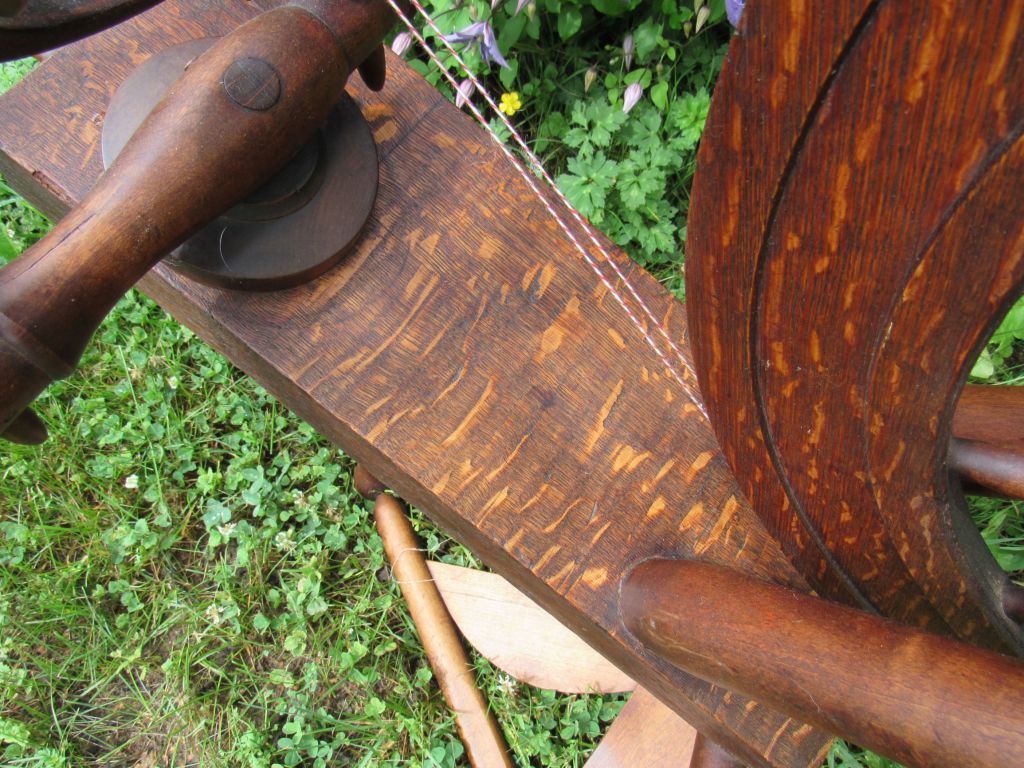
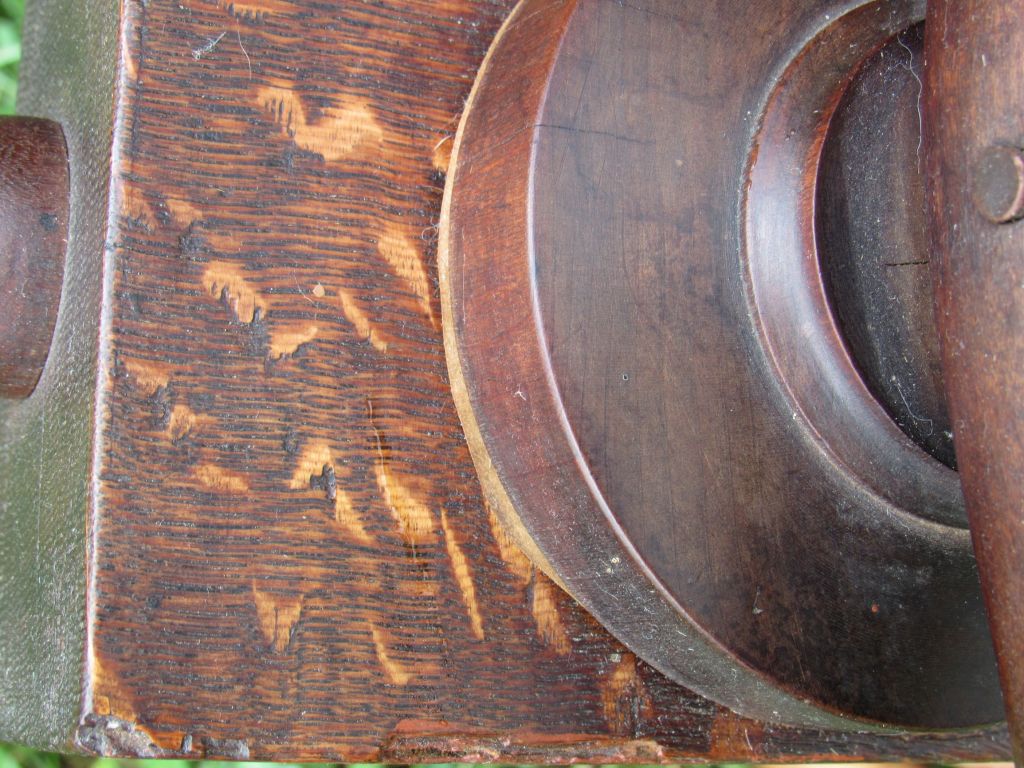
But they did produce flax wheels, too, with simple, graceful lines highlighting wood that appears to have been carefully chosen for its beautiful grain patterns and ray flecks.

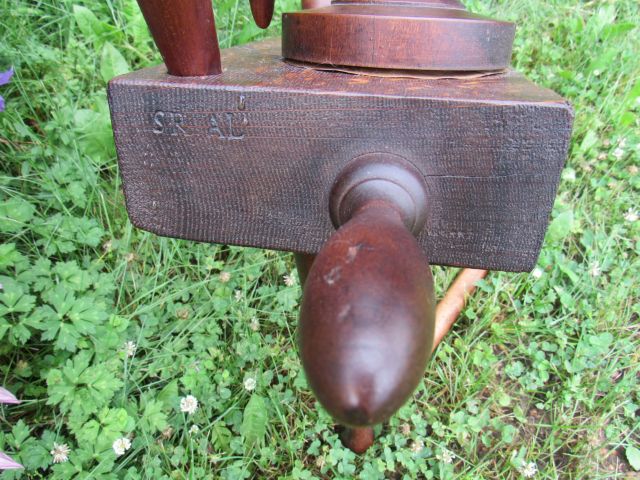
The Shakers didn’t mark all of their wheels, but many have initials stamped in the end grain of the tables. The initials were those of the community’s trustees, who may or may not also have been wheel makers. The earliest Alfred wheels were marked “TC” for trustee Thomas Cushman and, after 1809, flax wheels were marked “SR AL” for trustee Samuel Ring.

Even though Ring wasn’t a trustee for long and wasn’t a wheel maker, his name continued on the wheels after he retired in 1814. Those initials must have essentially become a brand for Alfred Lake wheels at that point.

The simple design of Shaker wheels was a huge influence on other wheel makers in Maine and New Hampshire. The designs were similar between the different Shaker communities, but each community’s wheels had some distinctive features. The Alfred Lake wheels have beautifully curved maidens with small teardrops at the top.

The wheel upright supports are encircled with multiple scribe marks.

Mine has four on each side.

Whether the number of marks has any significance is up for debate. There are fourteen plain spokes–with no ornamentation.

The treadle bar usually is a half-moon shape, likely designed for ease in using both feet to treadle.

The legs have a gentle curve with a rounded foot. I’m always struck by how many of the shapes on these flax wheels resemble curves in the human body–an interesting feature since the Shakers were celibate.

The flyer assembly and distaff top are not original to my wheel, although both are probably from other Shaker wheels. Mine is an absolutely wonderful spinner, especially for flax. And she’s easy on the eyes.

My resources for the information on Shaker wheels are:

Pennington, David A. and Michael B. Taylor. Spinning Wheels and Accessories. Atglen, PA: Schiffer Publishing, Ltd., 2004, pp. 131-39.

Michael Taylor, “Shaker Spinning Wheel Study Expands,” The Shaker Messenger, Vol. 8, No. 2, (spring 1986).

Jerusha

This exuberant wheel appears to be related to the family of wheels in the previous post, “Julia.” Those wheels are marked “JC,” “IC,” or “SC,” accompanied by star/flower stamps, and I expected to see one of those sets of initials on this one. But, no–nothing but star stamps–lots of them.

The basic characteristics of this wheel are the same as the others–small table, vase-turned legs, 16 tulip bud spokes, painted rim, extra upright supports, star stamps, and pagoda tops.

But when viewed side-by-side with Julia, everything is slightly different. This wheel’s table is slightly longer, narrower, and less tilted. The turnings–while sharing the same general contours–are different.

The spokes are shorter and stouter.

The drive wheel is about the same 20″ diameter, but looks heftier because of a broader rim. Even the star/flower stamps are different.

Julia’s stamps have 8 points, made by 4 V-shapes
Jerusha’s stars are six simple points

Jerusha has stars on every side of the table (Julia doesn’t have them on the wheel end), with wave patterns down both sides and additional stars in the curves.

The table is generally wedge-shaped, but has a slight peak underneath in the middle.

The table underside is smooth, with beautiful chamfered edges.

The tension knob is plump, with a painted band. That end of the table is decorated with an unusual carved pattern and all corners have the small-large-small chip carving of the other wheels in the family.

The non-spinner side leg has a nail in the bottom, presumably to keep the wheel from moving across the floor.

There also is a nail driven into the table in front of the rear drive-wheel support.

The treadle parts and flyer assembly are missing, but the wheel shows that it was well-used by the layers of encrusted grease around the axle and on the maidens.

After clean up–some of the grease remains.

The wheel is decorated with black bands, although some have worn off and others covered with years of grime.

The paint colors on the drive wheel appear to be black and perhaps red.

And the wheel’s crowning glory is the trio of triple pagodas.

I have an extra flyer assembly that looks as if it will fit this wheel and my husband will make new treadle parts this fall. Then we’ll see how she spins.

January 18, 2022 update:

In May, 2021, I took a trip to Pennsylvania to railroad antique wheels there and back, visit with other wheel lovers, and see the textile tool collections at the Landis Valley Museum, Ephrata Cloister, and Schwenkfelder museum. Thanks to friend and fellow railroader, Tina M., a highlight of the trip was a morning she and I spent with Bill Leinbach, who not only is an extraordinary weaver, but also has a remarkable collection of antique wheels. Weaving, wheels, good conversation–my idea of heaven. Since then, Bill has generously continued to share his knowledge with me and, when he asked if I would be willing to part with Jerusha, I was delighted to pass her on to him. After his meticulous clean up and new treadle and distaff parts, she has been brought back to her full glory. Thank you Bill.

Julia

Some wheels demand notice.  Certain curves, angles, stances, and colors stand out in a way that catches the eye. 

A family of eye-catching wheels, sharing distinctive looks and features, have come up for auction over the years in scattered locations in the northeast—New Jersey, Massachusetts, and Connecticut.  They are jaunty, but elegant, with short tables, vase-turned legs, and sixteen tulip-bud spokes.   

Here are two examples—the first from a New Jersey estate sale and the second from a recent auction in Copake, New York. 

Notice that the Copake wheel has a distaff inserted for the rear missing leg.

Most have painted rims—a fairly unusual feature.  From what I know, all are festooned with stamps resembling stars, or sunbursts, or flowers—depending on your interpretation—along the table end and sides. 

Most have the initials “JC” stamped on the table end, but there are others, with similar legs, supports, and star patterns, but variations on the maidens and spokes marked “IC” and “HE.”

In January 2020, a similar wheel appeared on Facebook Marketplace in New Hampshire.  It shared the same features with the JC wheels, but was marked “SC.” 

I was intrigued.   Was there a family of wheelmakers creating these distinctive, exuberant wheels?  I wanted to buy the wheel but, unfortunately, my planned trips to pick it up were delayed by snow, rain, and the granddaddy of delays—the Covid-19 lockdown.  Fortunately, the seller graciously held onto the wheel for me until I could finally pick it up on a spectacular sunny May drive through the White Mountains.  It was worth the wait.

Once cleaned up, this wheel just glowed.  The combination of rich wood grain on the spokes and the table contrasted with the paint colors on the rim is amazing.  The rim looks as if it may have been red, white, and blue originally. 

If so, the white and blue stayed strong, but the red faded into barely discernible remnants in the grooves. 

The star stamps run in a sine wave pattern down both sides of the table

and adorn the tension-knob end with the “SC” stamp.  The other end of the table is naked of stamps. 

There are scalloped chip carvings at both table ends. And these wheels all seem to share a feature of corner chip carvings of small-large-small. 

The underside of the table is planed and smooth, with a chamfered edge, and long pointed holding pegs and chuck marks on the bottom of the uprights.

The table itself is very short, only 15 inches, and the angle with the splayed legs suggests the look of a dog inviting you to play. 

It’s very appealing.  The drive wheel diameter is 20 inches, which with the short table, brings it quite close to the flyer assembly, similar to Pennsylvania wheels, but with a less upright stance. 

Also similar to Pennsylvania wheels (and others, including Connecticut wheels) are the extra supports between the legs and the drive wheel supports. 

This wheel originally had one on each side, but only the backside one remains.  The other side shows the beautiful grooving and hole for the missing support. 

The metal axle support, or bearing, is straight and at a severe angle to the support—almost horizontal with the ground.

The wheel has subtle ring marks on the turnings

and a simple one tiered tower on the distaff support–many of these wheels have more.

The distaff itself on this wheel is made from a sapling, often used for spinning tow.

My goal with all of my wheels is to get them spinning again.  I was a concerned that this wheel had been spun to death and was too worn out to be used again.  I’ve dealt with a lot of old wheels that show decades of use, but none with quite this imprint of heavy spinning.  The upright supports for the drive wheel were badly eroded and blackened. 

Some blackening occurs from the continual use of grease as a lubricant for the axles, but I’ve never seen uprights like this, where they are just broken down to nubs. 

The treadle had been worn completely through, yet it wasn’t replaced, just used as is—a skeleton of itself, but still functional.  

Moreover, the treadle bars had been well-tunneled by beetles, which can turn it into a crumbling wood lace—not ideal for continued use. 

And, what worried me most was that the tension screw was not original. 

The threads on the screw don’t match those under the mother of all.   No matter.  This wheel was made to spin.  A few tweaks and adjustments, plenty of oil, and she was off and running. 

The wheels with the most wear on them are often the best spinners.  Makes sense, of course. 

When cleaning the wheel, I was surprised to find that the fine-edged turnings on the right spinner side leg had been completely smoothed down.  

Once I started spinning, I understood that wear.  Because the table is so short on this wheel, the spinner’s treadling leg rests naturally on the wheel’s front leg.  It’s a comfortable accommodation.  But, imagine how much fiber was spun on this wheel and how many decades of women’s legs rested on this wheel’s leg to smooth those grooves into oblivion.  It’s a rare privilege to add my leg to their imprint. 

The day after I got this wheel spinning, I drove to southern Maine to pick up another wheel from the same family. She will get her own post once she’s up and running.

Given the style of these wheels and the amount of wear and damage found on many of them, they may date from the 1700s.  But, really, we don’t know who made them, or when or where they were made.  The research continues.  In the meantime, these wheels are a brilliant reminder of how a person—or in this case, perhaps a family—can transform a utilitarian item into a work of great beauty that leaves a personal impact long after the maker is gone. 
Free Standing Distaff

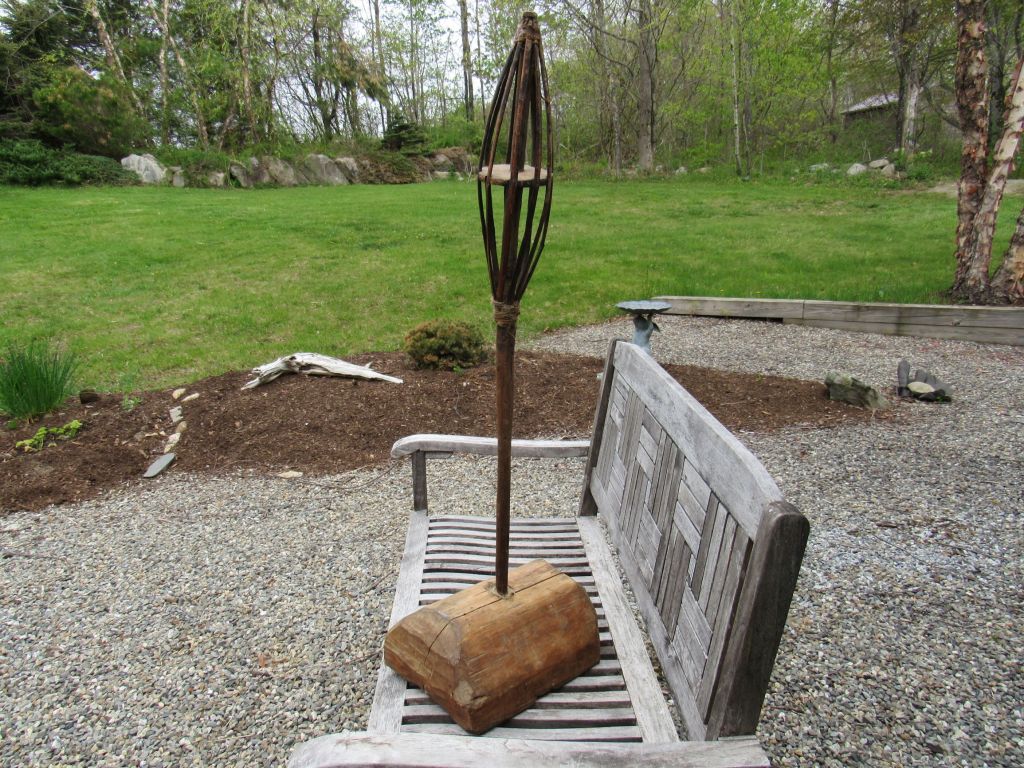
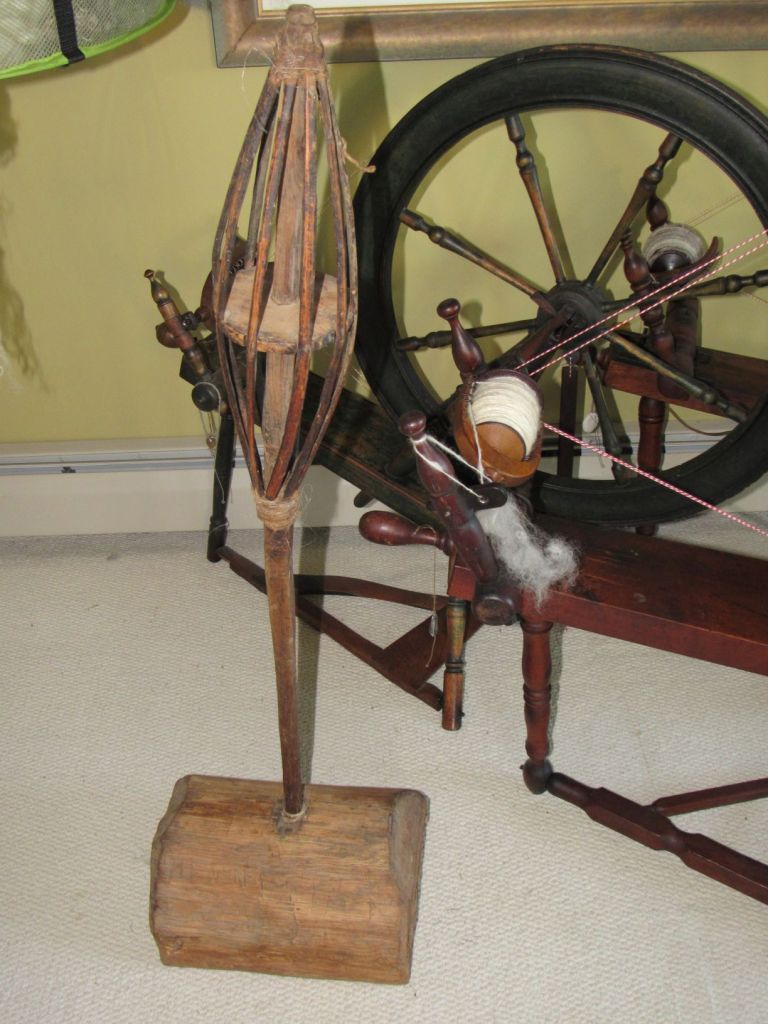
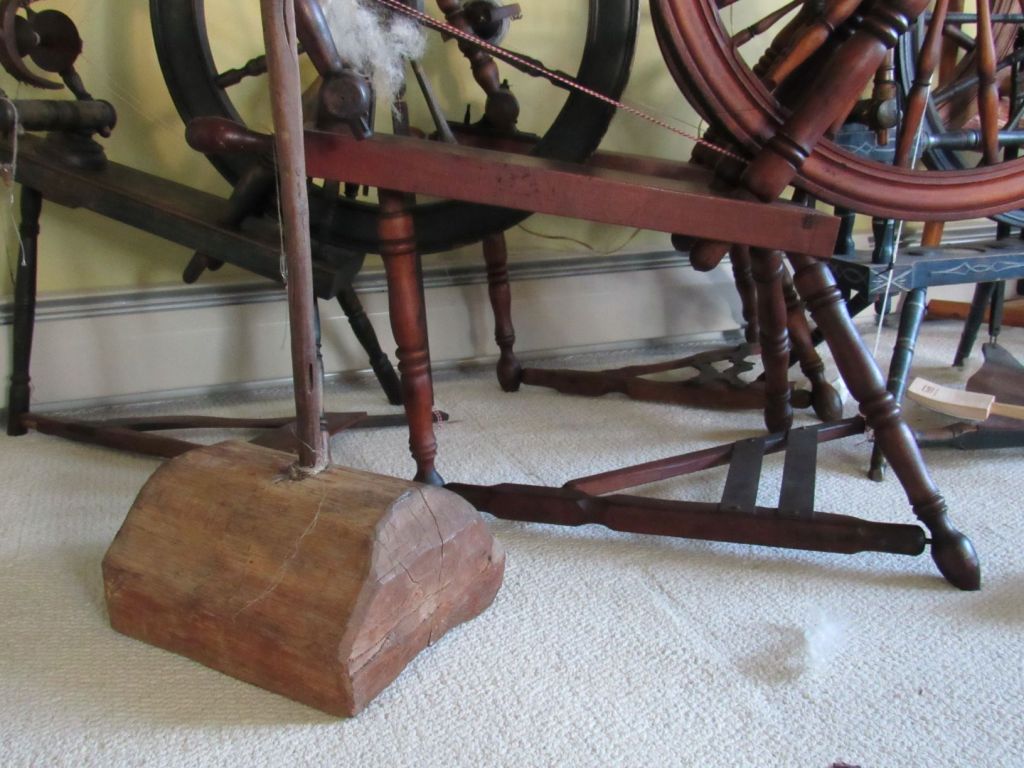
This standing distaff is a bit of mystery.  Free standing distaffs were commonly used in many regions of Europe, but North American versions don’t appear very often.  Those from Europe tend to be tall and ornate, accompanying beautifully turned wheels.  They were used for spinning long flax and sometimes hemp fibers.  Most flax wheels in North America had built-in distaffs, but there must have been spinners who preferred to use standing distaffs, so it’s surprising that we don’t see more of them.  
I bought this distaff at one of the American Textile History Museum auctions (see previous post “Jo”).  The accession number indicates that it was part of Joan Cummer’s collection.  While living in New England, Joan Whittaker Cummer collected antique wheels and textile tools for years.  In 1993, she documented her collection in A Book of Spinning Wheels, which was thoughtfully put together with beautiful photos, descriptions, and measurements.  She offered the book as “a tribute to the individuality of the men who made the wheels and the spinners who used them.”  (Cummer,  Preface, p. xiv). 

At the time the book was published, Joan had already donated her collection, in 1991, to the American Textile History Museum in Lowell, Massachusetts, noting that it was hard to see them go, “but it was a good and appropriate place for these wheels.  I look back with joy on the years I had them and hope that other people will enjoy them in the years to come.” (Cummer, p. 3). 

Sadly, when the museum closed, Joan Cummer’s collection scattered, making her book all the more valuable.   Although the collection no longer survives intact, other people continue to enjoy the wheels and tools she collected–some, like me, in a very personal and hands-on way, which would not have been possible had they remained in the museum. 
The museum’s accession numbers identify items in her collection with “1991.178.” followed by the individual item number, which, in the case of wheels, tracks the wheel number in her book.  The accession number on this distaff “1991.178.211,” appears to indicate that it was from Joan’s collection. 

But the distaff does not appear in her book.  In fact, in the book, she includes one photo of a free standing distaff (Accessory 46, p. 371), noting that: “Only one other has been seen over the years these wheels and accessories have been collected.  It was a carved and beautifully finished article.”  (Cummer, p. 370).  She clearly wasn’t referring to this distaff, which is neither carved nor beautifully finished.  So, unless I’m mistaken and this isn’t a distaff at all, it’s puzzling as to why it wasn’t mentioned in her book.  Perhaps it was a last-minute acquisition.

The distaff itself was made simply—a strong and useful tool—heavy enough for stability, yet light enough to easily move.  

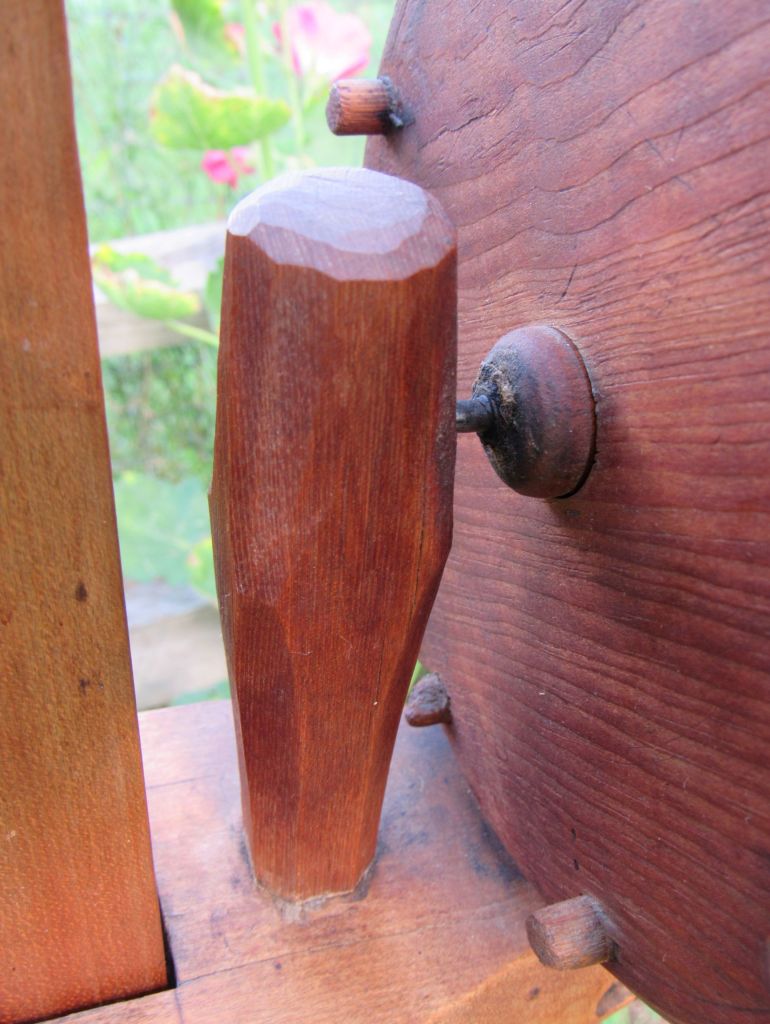
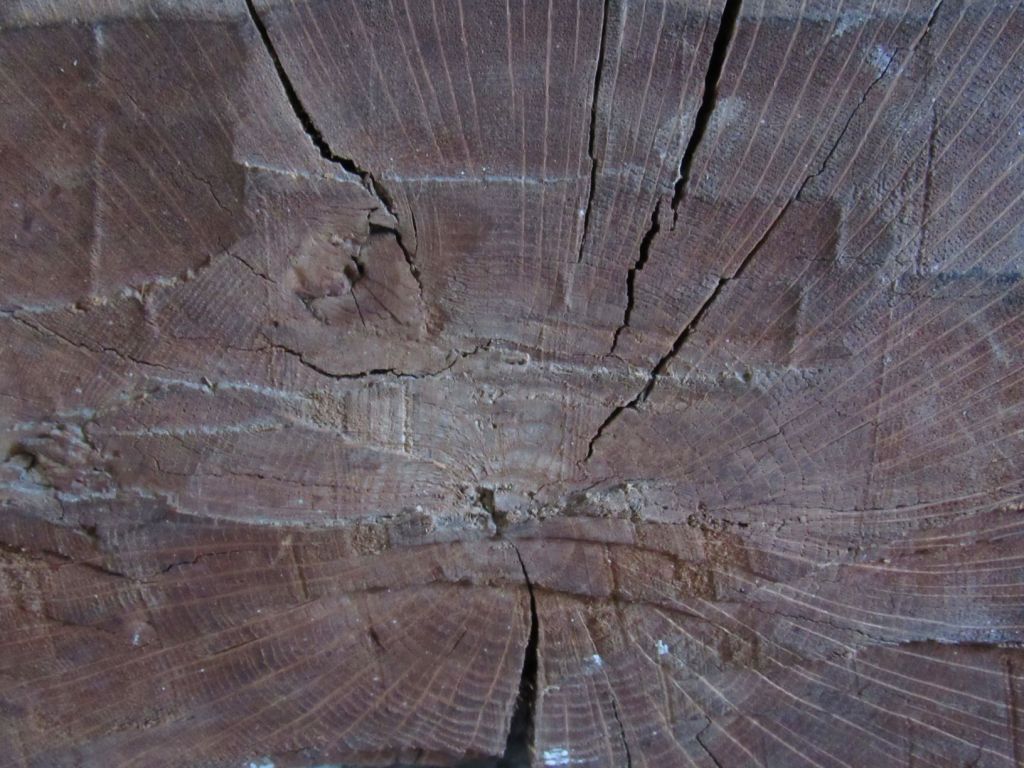
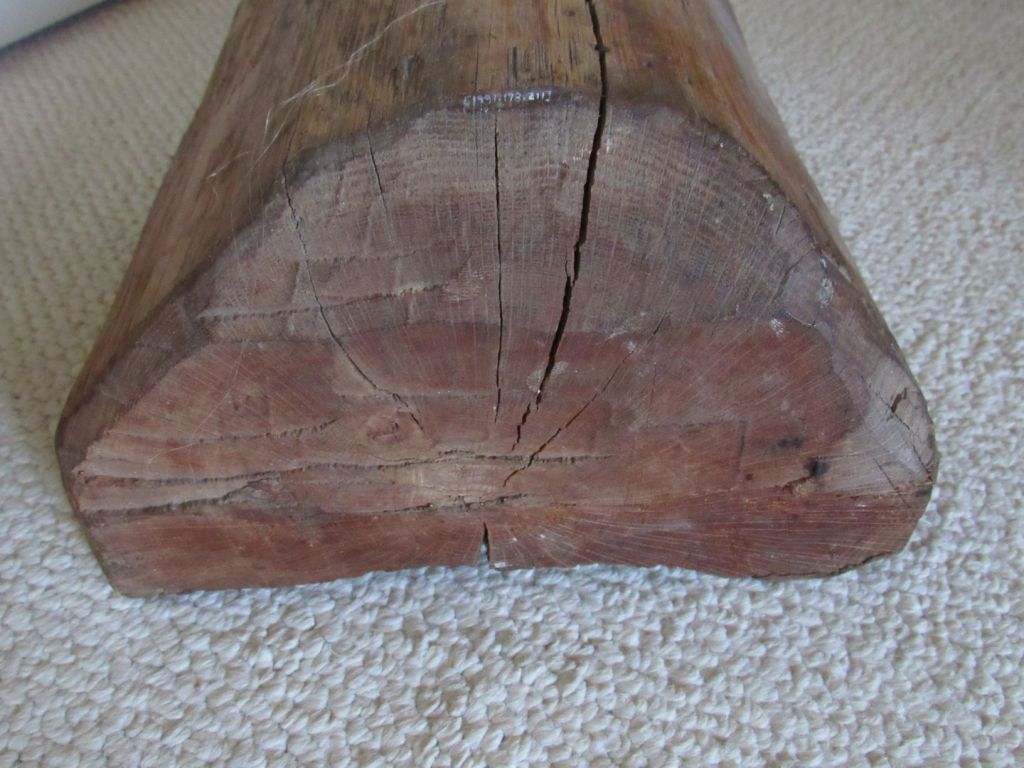
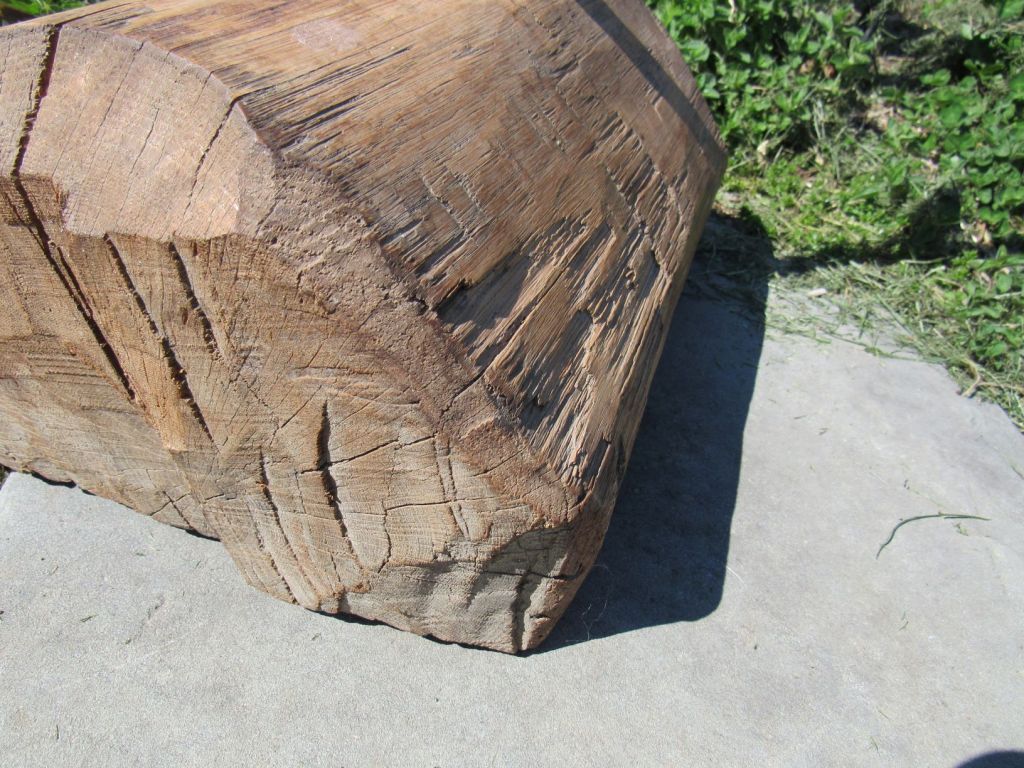
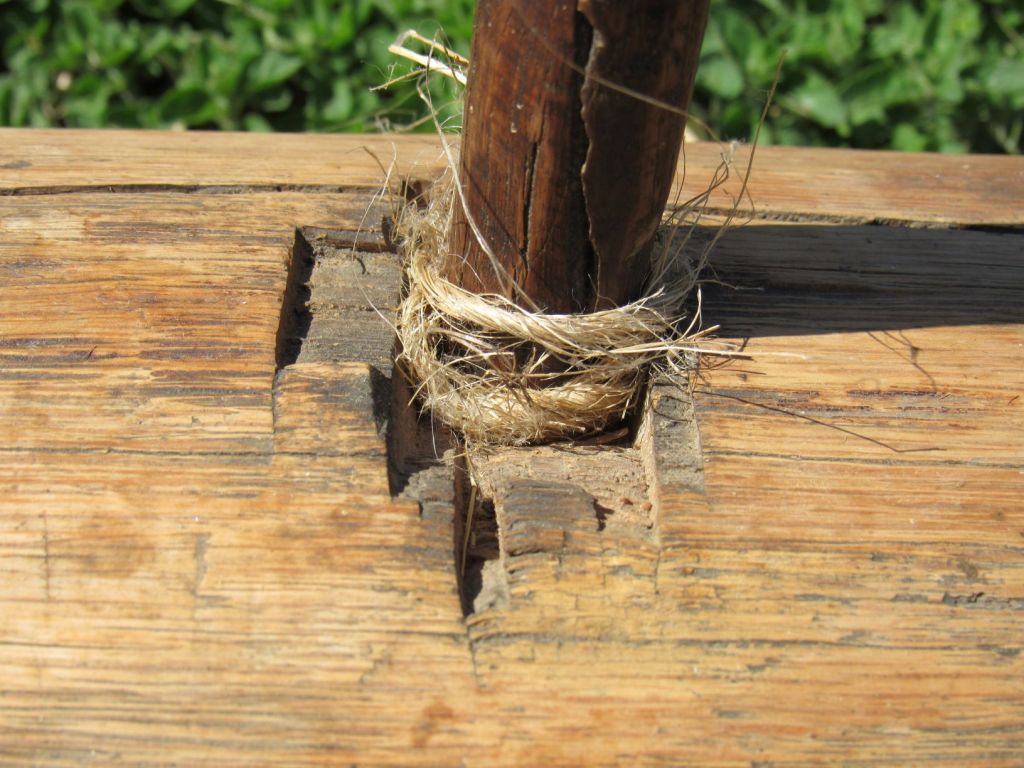
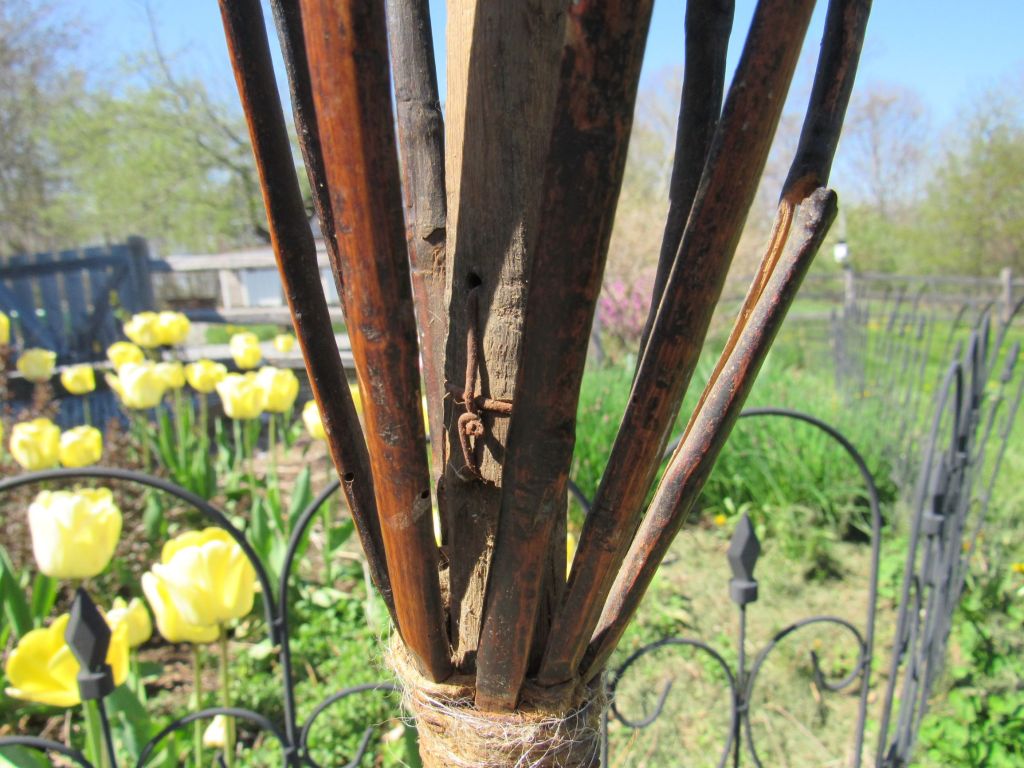
The base is a chunk of wood—it appears to have been shaped with an ax—with a hole for the distaff pole. 

The twine in this photo is mine

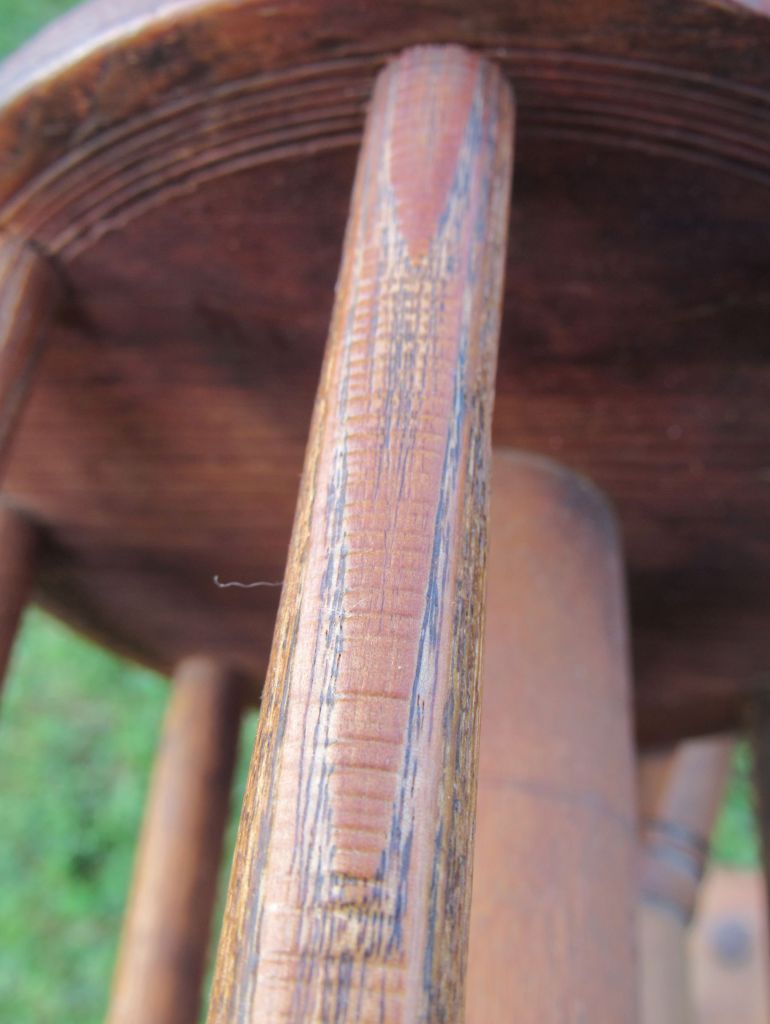
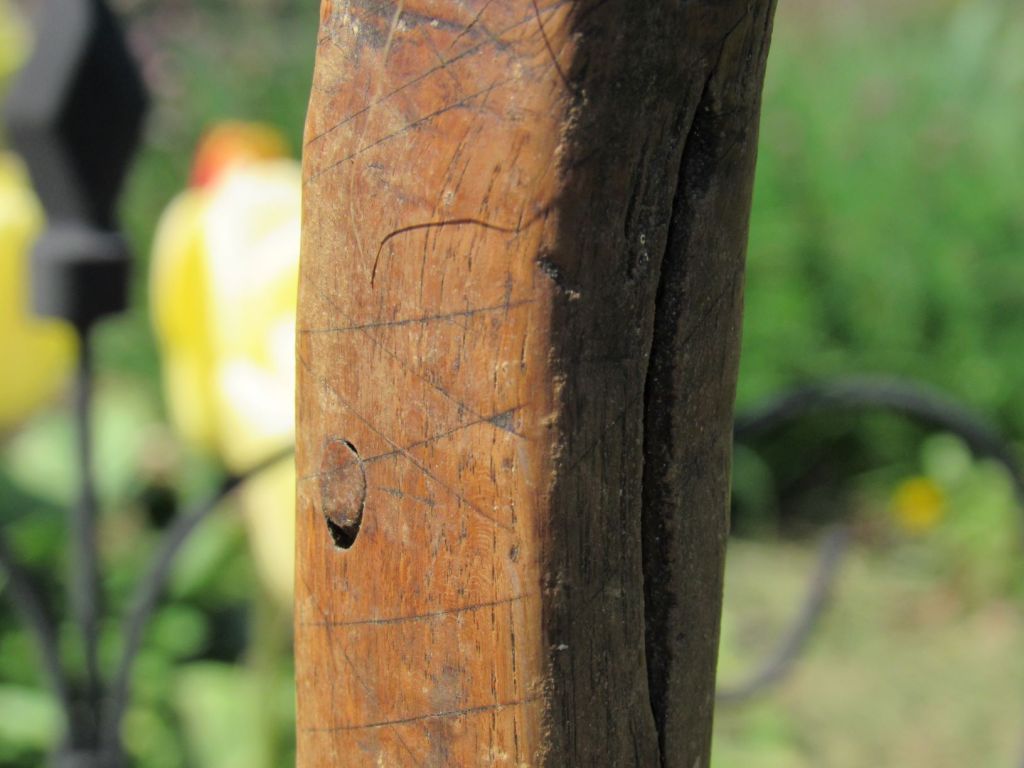
There are some cross hatched marks on the pole. 

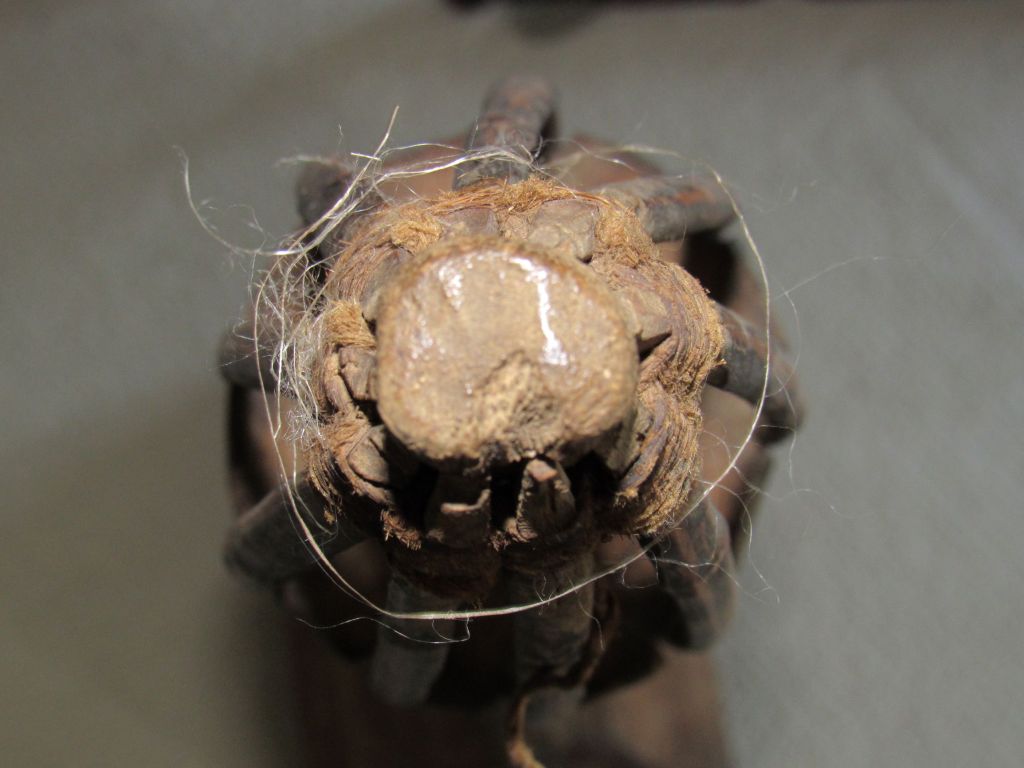
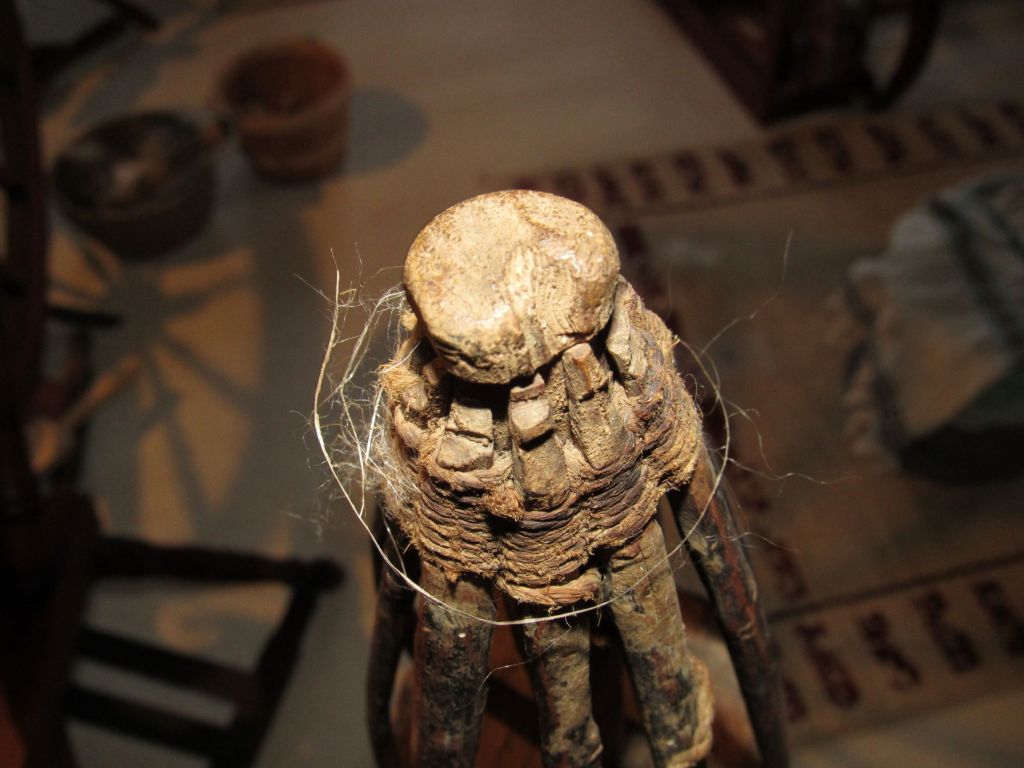
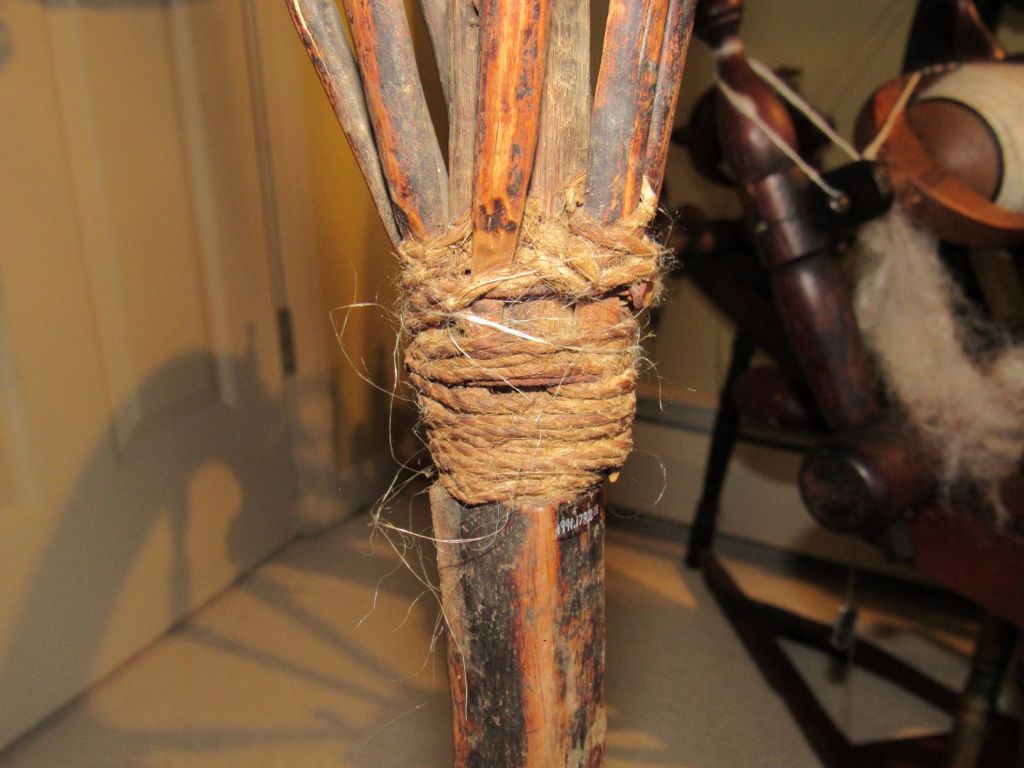
The arms of the cage at the top of the distaff are made from some light weight, pliable wood—almost like basket splints—and have small fish-hook-like prongs on the top. 

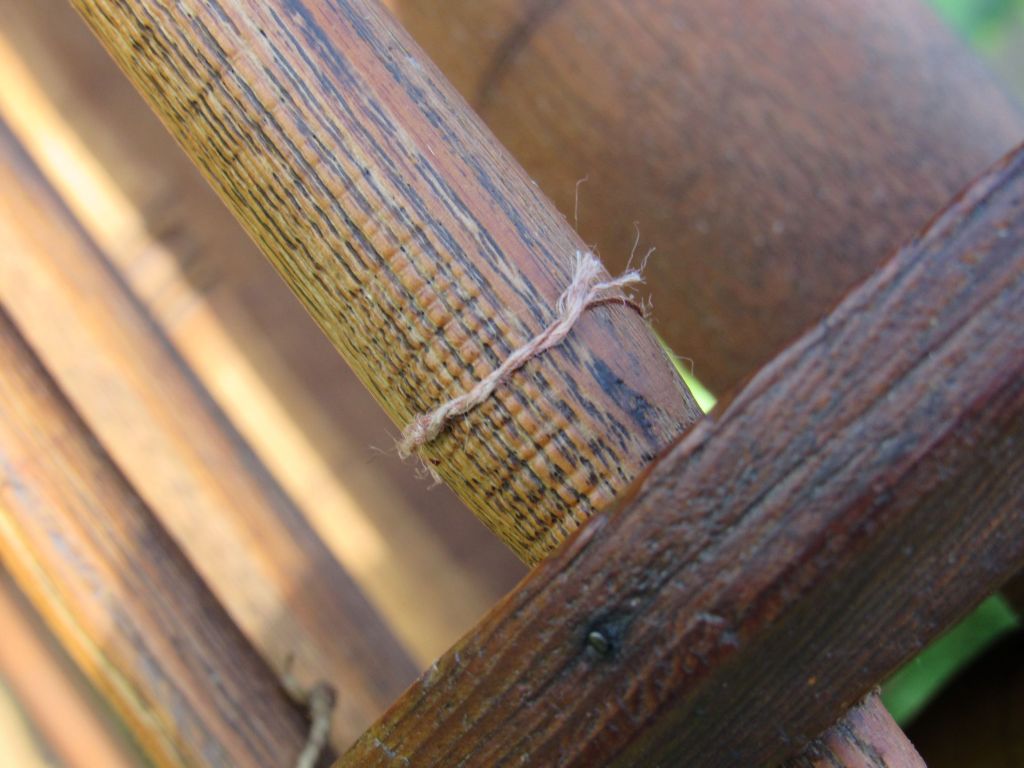
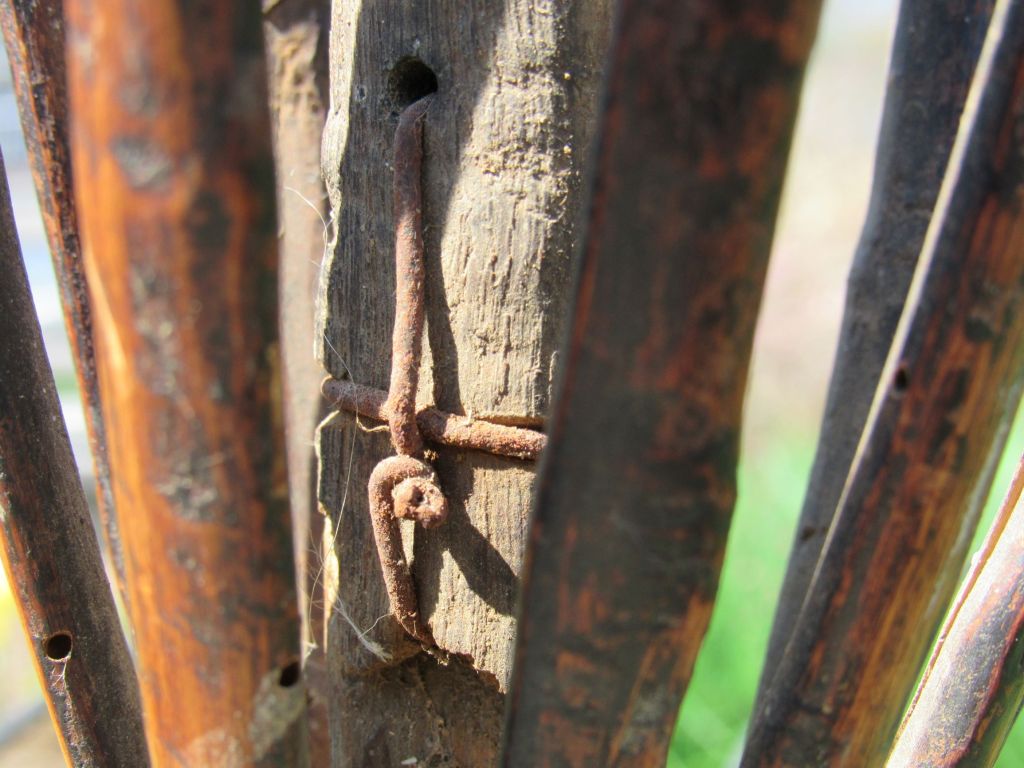
They are held in place with twine at top and bottom,

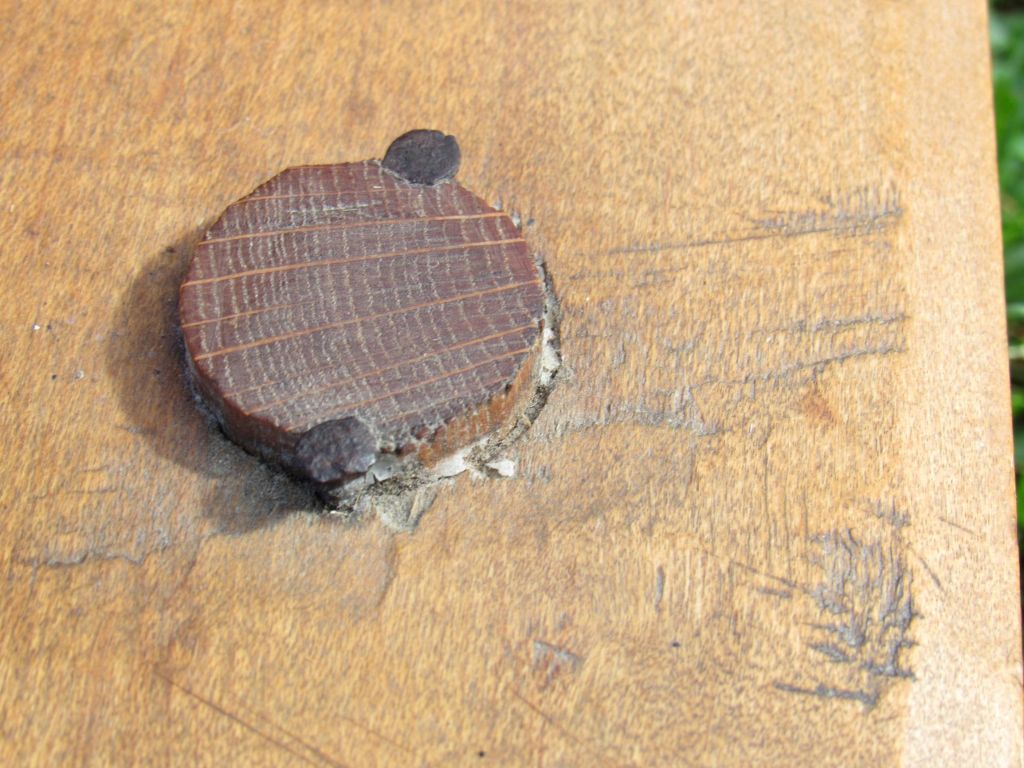
with a fitted wooden disc holding them out in the middle. 

Simple, practical, and obviously well-used,

with an old repair to the distaff pole. 


I would love to know where, when, and why this distaff was made, but for now, I am happy to use it and wonder about where it has been.

Measurements: Height—42 inches; Base—13 ¼ inches by 9 ¾ inches; Cage height, 17 ½ inches.

For more information see:           

Baines, Patricia.  Spinning Wheels, Spinners and Spinning.  New York: Charles Scribner’s Sons, 1977, pp. 94-103. 

Cummer, Joan. A Book of Spinning Wheels, Portsmouth, NH: Peter J. Randall, 1993.

Pennington, David A. and Michael B. Taylor. Spinning Wheels and Accessories. Atglen, PA: Schiffer Publishing, Ltd., 2004, pp. 142, 173.

Louisa Lenore

Antique wheels present so many puzzles.  Connecticut double flyer wheels, for example.  Why was there a sudden surge in manufacture of these wheels in the late 1700s and early 1800s?  Was there a need for increased spinning production in that particular region at that time?  Or did they simply become fashionable—a personal advertisement of spinning prowess? 

These wheels, compact uprights with two flyers supported above the drive wheel, have been referred to as “gossip wheels,” based on a lovely, but mistaken, notion that two spinners could work side by side at one wheel, chatting as they spun.  For most double flyers, however, reality was much less cozy and serene—they were a means to increase production, not socialization.  One spinner, two hands, two flyers—double the product. 

Or almost double—apparently a good spinner could increase her production by about fifty or seventy-five percent.  I have great admiration for those spinners.  It’s not easy to spin with only one hand for each flyer—especially with flax.  Spinning a fine, consistent linen thread requires an even pull-down from the distaff (and very careful dressing of the distaff), a way to smooth out inevitable lumps and thicknesses, and a way to moisten the thread as it is spun. 

Tough enough with two hands, let alone one.  And once single-handed spinning is mastered—with right hand and left–then one must co-ordinate each hand to spin at the same time—but separately.  Despite that challenge, these wheels were very popular for several decades in Connecticut. 

Were all of the users competent with two flyers, I wonder?  Most double flyer wheels can be used with only one flyer, so perhaps they were considered versatile—with an option of using one or both flyers.  They also are compact and attractive, which may have contributed to their appeal. 

In any case, my double-flyer does not appear to have seen much use, so perhaps the wheel was more aspirational than practical for her owner. 

The treadle has no signs of use.

There is no maker’s mark, but the wheel bears the hallmarks of the Sanford family (see previous post “Big Bear” for more on the Sanfords). 

Sanford double flyers are characterized by cross posts supporting the wheel axle rather than upright supports favored by other area wheelmakers such as Silas Barnum, Solomon Plant, John Sturdevant, Jr., and J. Platt. 

The Sanford wheels also have a simple top table—with a straight angle corner cut.  In contrast, most of the other wheelmakers’ top tables have curved corners and half-rounds at the base of the maidens.  J. Platt’s wheels had the unusual combination of upright supports with a Sanford-like top table and L. Judson’s wheels shared the Sanford characteristics. 

My wheel has spokes characteristic of the early Sanford wheels—the later ones had simpler spokes—and the typical black bands with diamond chip carvings. 

Neither flyer appears to be original and the bird cage distaff looks as if it was made fairly recently.  A straight, truncheon-style distaff would have been more typical for these wheels. 

The distaff support assembly is absolutely beautiful and also likely not original to this wheel. The wood, finish, and rings are quite different than the wheel body and the really elegant turnings suggest that they came from a different wheel.

The wood on the wheel table is quite coarse-grained

and one of the tension knobs still has a bit of bark on it.

Although the flyers are not original, they fit and work nicely. The wheel is in remarkably good shape and a spinning beast. Now, I need to learn to keep up with her.

Update December 2020: Recently someone questioned me about the assertion that a spinner could not double production on one of these wheels. I thought it would be worthwhile to include here some sources for that contention. In her article “The Double Flyer Spinning Wheel” in Issue #6 of the Spinning Wheel Sleuth, Joan Cummer wrote: “Although sometimes used for spinning wool, the double flyer wheels were especially employed for spinning flax. A spinner could not double her single flyer production but if very competent could produce 150% to 175% of her single flyer yardage per hour.”

In Patricia Baines’ book, “Spinning Wheels, Spinners & Spinning,” (1977) she wrote that double flyer wheels were “mostly found where flax spinning was an industry, as it was thought of as a wheel essentially for helping the poor to earn more money and to speed up production although it could not actually double the output.” (p. 151). Baines cited H. E. Von Rettich’s Spinnradtypen, Vienna, 1895, for the proposition that “a spinning wheel with treadle produced 350 metres per hour and one with two flyers 498 metres per hour,” while noting that the validity of these measurements is necessarily dependent on the skill of the spinner.

And, a little book, “The Tale of the Spinning Wheel,” by Elizabeth Cynthia Barney Buel, quotes from an 1801 advertisement in a Connecticut newspaper, the Hartford Courant, by local wheel maker Joel Baldwin , saying “Two handed wheels are highly recommended to young women, as they can spin one third faster on them.” (p. 39) The book was published in 1903 and is a fascinating glimpse spinning and textile production. A free e-book version can be found here: https://www.gutenberg.org/files/58950/58950-h/58950-h.htm?fbclid=IwAR1TgJdVNGMxNgxaeHuk2MBD2Uh5wurV6D008O-FnGJcHYr6_bdxA64ZKXw.

An article in “The Journal for Weavers, Spinners, and Dyers” Winter 2020 from the UK, titled “A Window Onto the Linen Industry in Eighteenth Century Scotland,” by Hilary Miller, also discussed output from double flyer wheels in Scotland. The article notes that, according to the Old Statistical Account (OSA)–information from Scottish parishes–a spinner on a double flyer wheel could spin nearly one third more and of better quality than on a single flyer wheel, or near twice as much, but of a coarser quality. (p. 20).