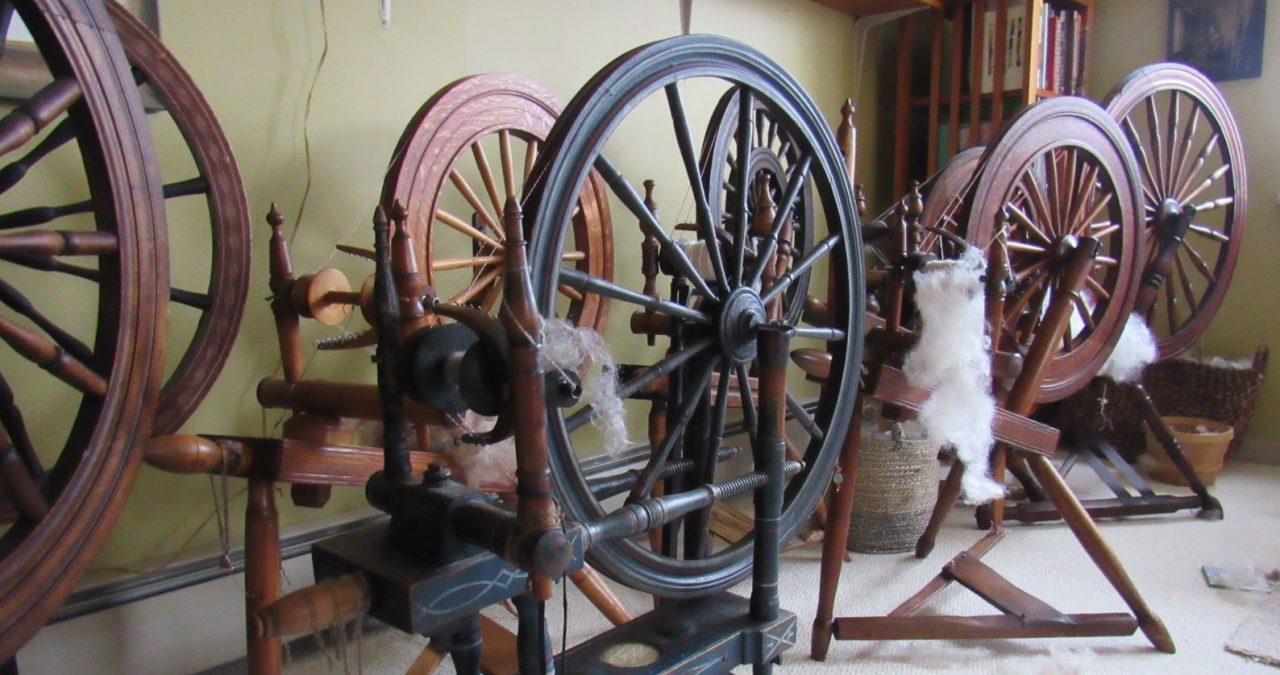

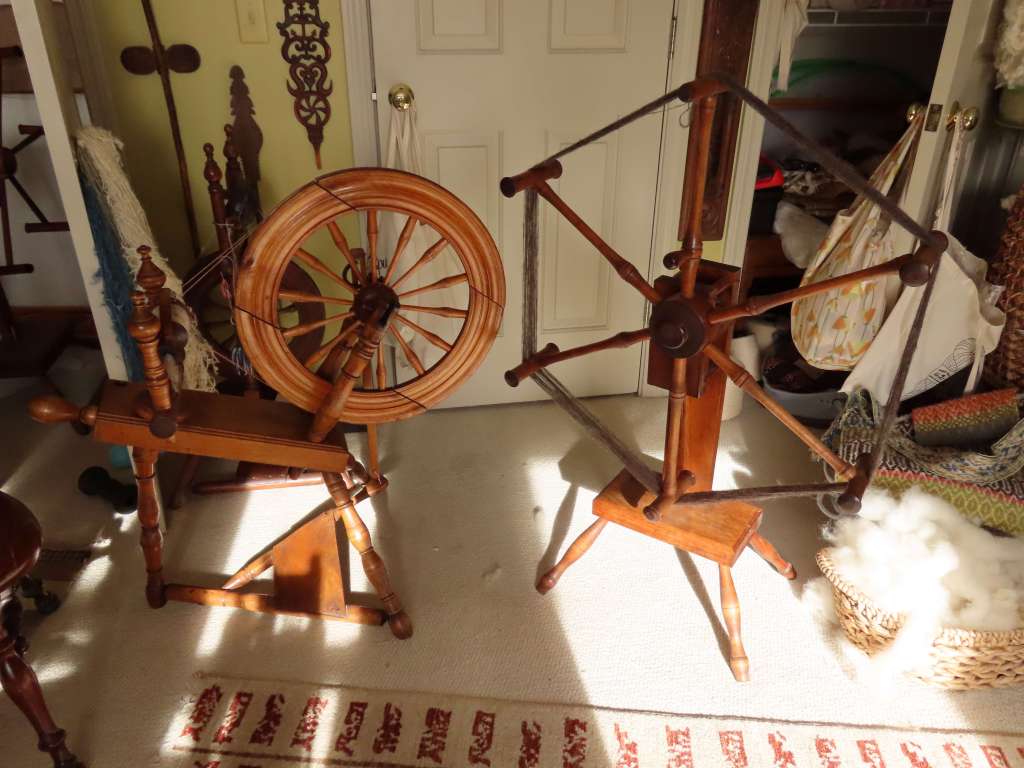
I bought this wheel and reel because they are from Prince Edward Island. Like many, PEI has a place in my heart because of L.M. Montgomery’s books. I discovered an ancient copy of “Anne of Green Gables” when I was about ten (many years before the television series) and there was no looking back. Although Montgomery’s books were not easy to find then, I ferreted out every one I could track down, eventually reading all of them.
I visited PEI when I was 14, and when Montgomery’s journals and letters were published, I devoured them, too. The magic of Montgomery’s writing, to me, is how, through her perceptive lens on the small details of speech, behavior, and customs, she brings a specific time and place to life so vividly that it feels as if I have been there. Her descriptive details also provide rare documentation of everyday practices, passed on orally, which she preserved through her writing.
A wonderful example is when Emily (of New Moon) finishes mopping the kitchen floor, she then sands it in “the beautiful and complicated ‘herring-bone pattern’ which was one of the New Moon traditions, having been invented, so it was said, by [a] great-great-grandmother … New Moon was the only place in Blair Water where the old custom of sanding the floor was kept up; other housewives had long ago begun to use ‘new-fangled’ devices and patent cleaners for making their floors white.” Emily Climbs p. 60.

So, when I bought this wheel, I tried to think of spinning wheel references in Montgomery’s books that might be a helpful starting point for research. I remembered that in “Emily of New Moon,” Aunt Laura wove and spun in the garret. “The walls were hung around with great bundles of soft fluffy rolls, all ready for spinning, and hanks of untwisted yarn. Sometimes Aunt Laura spun on the great wheel at the other end of the garret and Emily loved the whirr of it.” p. 93.

The only other reference I could think of was from “Anne of Windy Poplars,” when the local dressmaker encountered Anne walking in the old graveyard and regaled her with stories of those buried there: “My great-great-grandfather Courtaloe is buried here. He came out in 1760 and he made spinning wheels for a living. I’ve heard he made fourteen hundred in the course of his life. When he died the minister preached from the text, ‘Their works do follow them,’ and old Myrom Pringle said in that case the road to heaven behind my great-great-grandfather would be choked with spinning wheels.” p. 44.
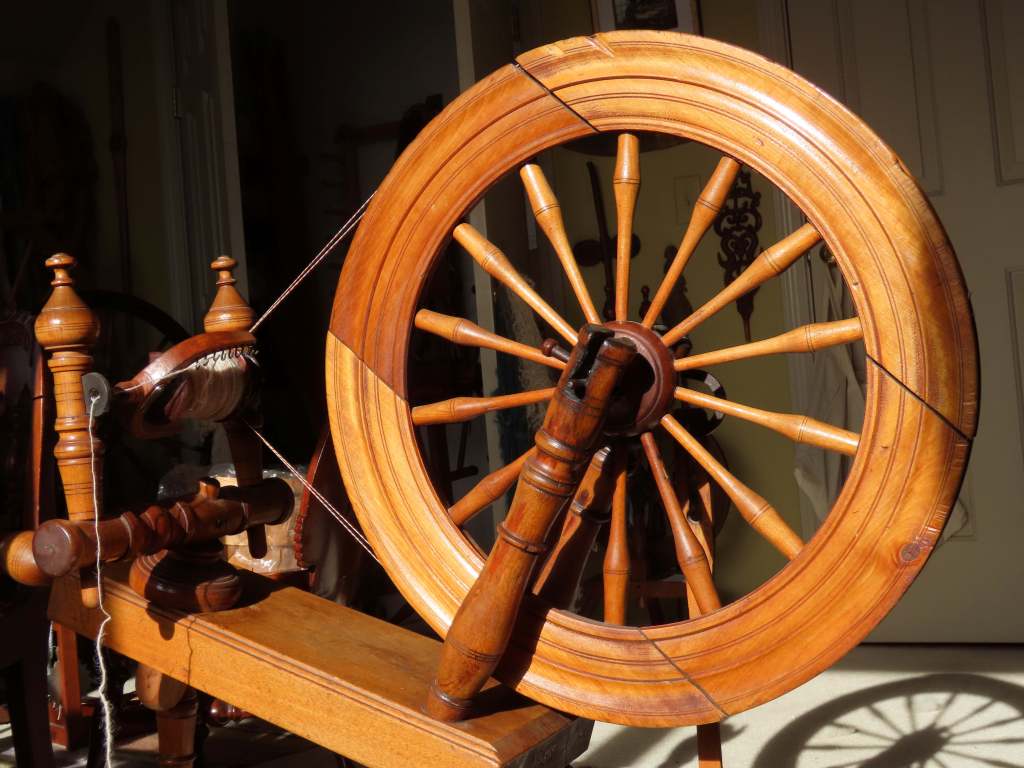
From these tidbits, it appeared that some spinning was still going on into the early 1900s on PEI, including with great wheels (at least in homes that kept up old traditions), and that there must have been some prolific wheelmakers on the island. A promising start.

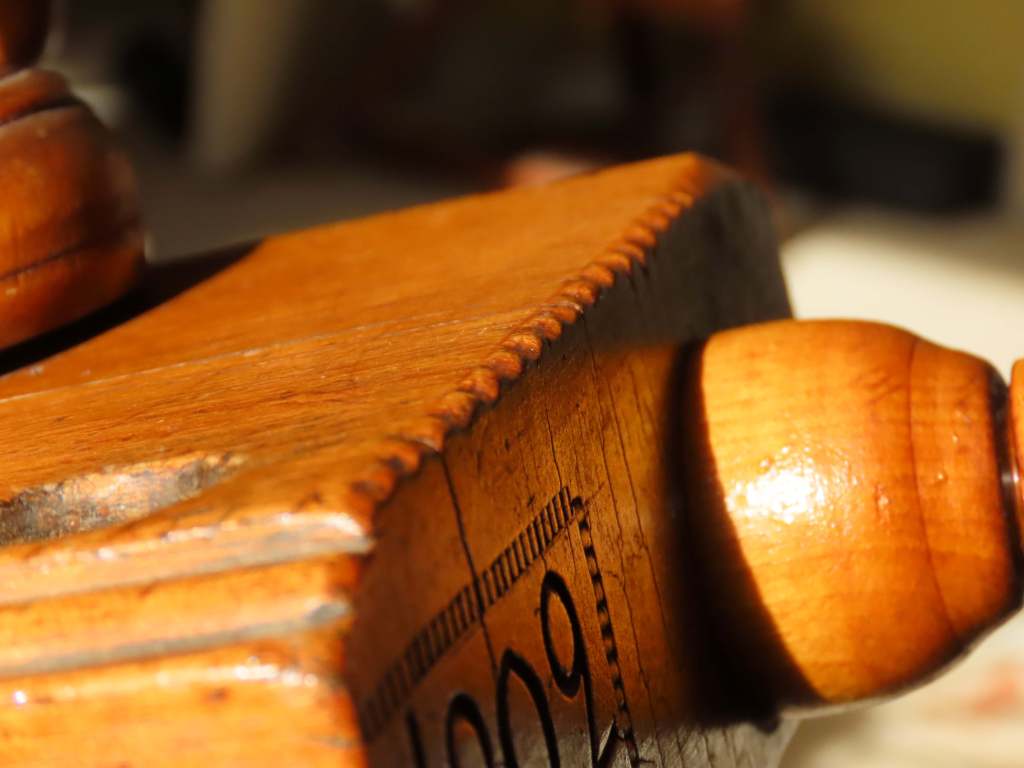
I next checked in my other books and was excited to find a reference to PEI wheels in “Keep Me Warm One Night.” “In Prince Edward Island an unidentified maker incised a number at one end of the platform,
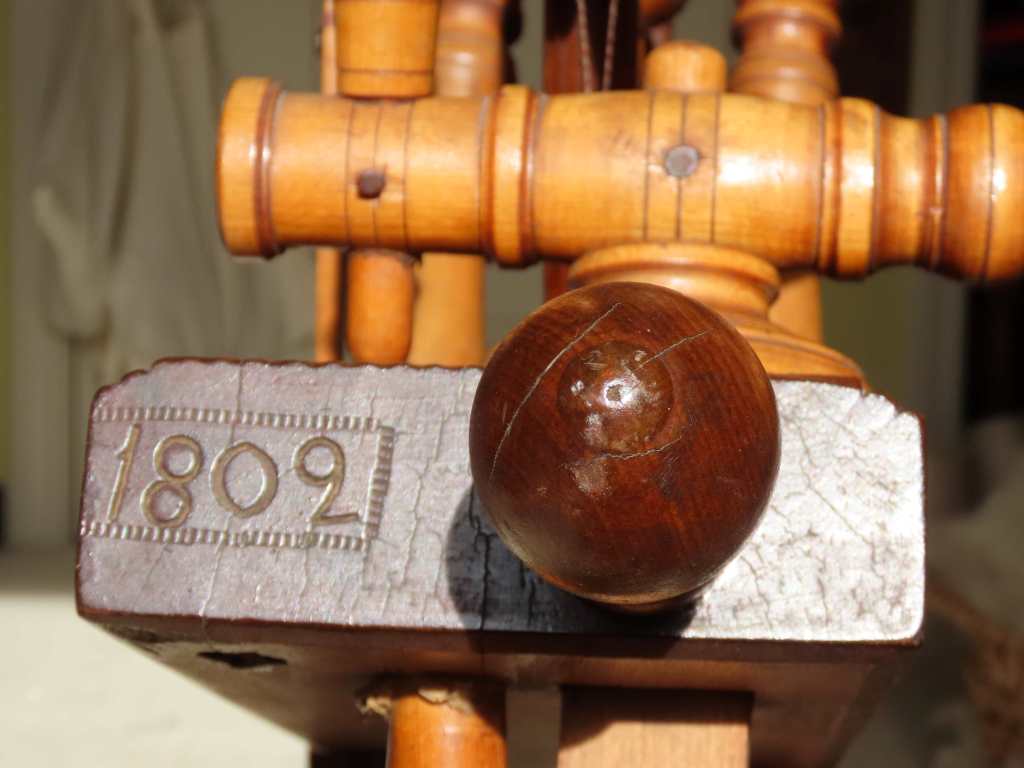
and a date at the other. Some idea of his production may be guessed by the fact that examples numbered in the 600s have been seen.” p. 19.
I also found a reel in Joan Cummer’s book that looks just like my reel. pp. 326-27. Cummer writes: “This click reel came from Prince Edward Island, Canada. Probably made in the early nineteenth century, it had belonged to only one family where it received much use. The family, even in the first quarter of the twentieth century, spun and wove their own cloth. The reel is still in perfect working order. Each single turn takes up 79 inches, and the clicker clicks every 100 turns.” P. 326.
Cummer’s account confirms Montgomery’s portrayal of PEI spinning and weaving into the 20th century, and both support the family history that came with this wheel and reel. The people from whom I bought them kindly wrote up their history within the family.

The wheel and reel have always been together, passed down from parents to son about 1894, when the son was married on PEI.

The family lived in St. Mary’s Road, in Kings County, the easternmost part of the Island. When the family eventually migrated to Massachusetts, the wheel and reel came with them. According to the family, the wheel is made from apple wood.
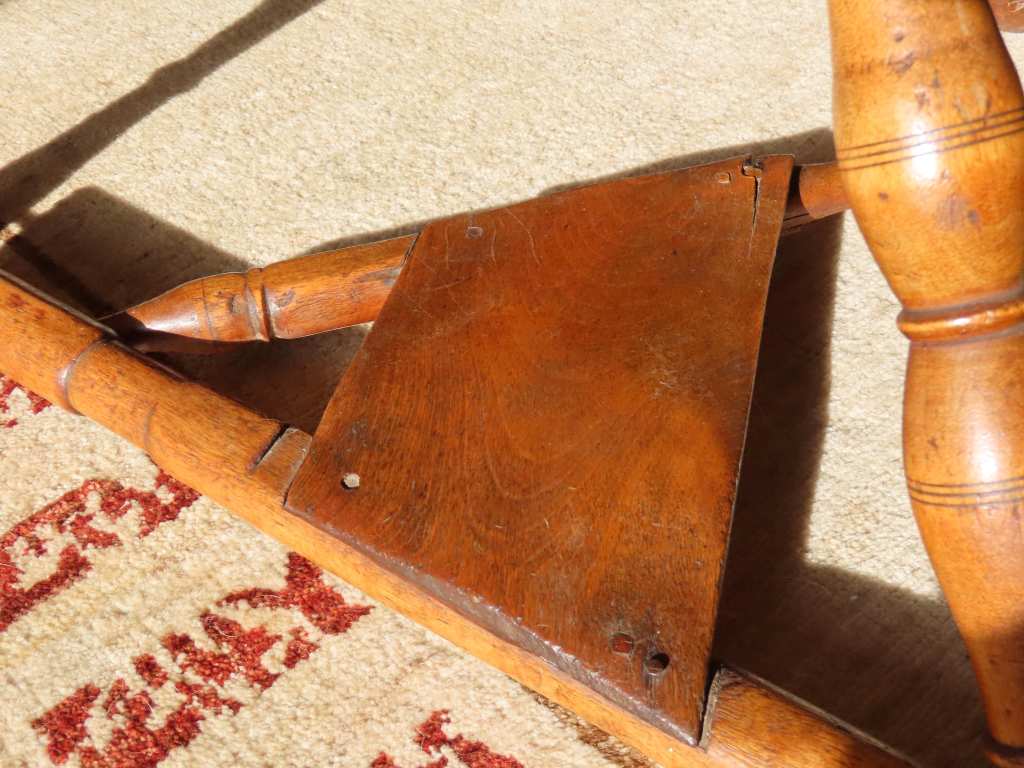
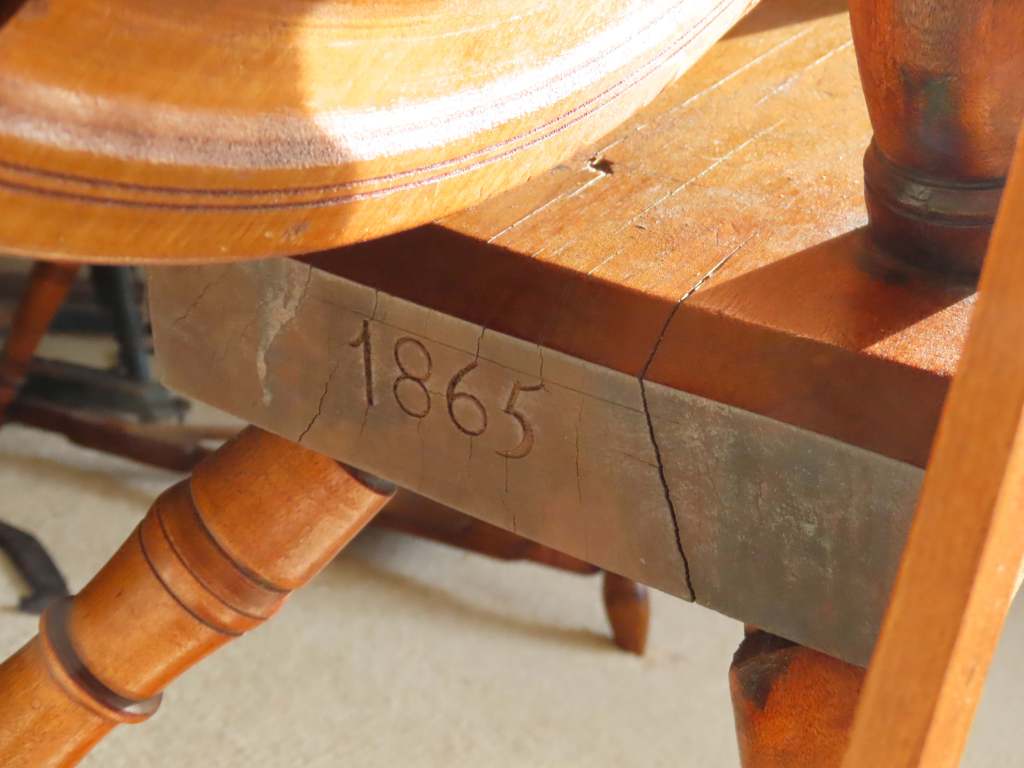
Like the wheels mentioned in “Keep Me Warm One Night” a production number of 1802 is on one end and a date, 1865, on the other.

Presuming that 1802 is a production number, it would seem that such a prolific wheel maker would be well documented. I started out my search with great optimism. But, over and over, my online searches yielded the same name-–Benjamin Chappell.
Chappel was a man of many talents. A wheel wright, machinist, and lay preacher, he came from England to PEI in 1774. He turned his hand to most anything that needed doing, including politics and spinning wheel production, and kept daybooks for many years. His daybooks are a phenomenal resource for anyone interested in spinning wheel production.
He documented the types of wood he used for wheel parts, for example: “took the Oak Rims cut them to their Length. put them over the shop they Amount to 50 wheels. They had been abroad 14 months & 20 days. Very good Oak” “black birch rim” “at more black birch whirls & c” “green beach rims … the old beach log made 20 wheels” “green white maple horses for the wheels” “Green Spokes Rounded with ye chisel was Enough for 20 Wheels” Vol. Two, pp. 11, 26, 76, 82, 98. He made the various wheel parts in batches: “last week finish’d 26 beds for drying. And Spokes 1000 of them some Maiden and Crowntrees all white Birch” “turn’d in all 7 sets of Spokes” “Tuesday Made 12 New treadels” Vol. Two, pp. 41, 90, 273.
Then he assembled and finalized the wheels in batches of three. In May 1818, he finished wheels 864, 865, and 866. Vol. Two, p. 284. I believe those are the last ones mentioned in his day books. In researching Chappell, I came across a 1930 article by PEI historian, Ada MacLeod, entitled “The Oldest Diary in Prince Edward Island.” I had a good laugh when I came across this passage:
“In his spare hours Chappell was always making spinning-wheels and so methodical was he that he numbered them, and the number entered in his book is over 600, which speaks much for the industry of the women of that time. At his funeral the text was the verse ending, ‘For their works do follow them.’ A wag remarked that if this were literally true in Chappell’s case, the road to heaven would be blocked with spinning-wheels.” p. 471. Sound familiar? L.M. Montgomery knew a good line when she saw it.

Chappell died in 1825 and clearly is not the maker of my wheel. Despite being so well-known and making so many wheels, I have not been able to find a single photograph of a Chapell wheel. In fact, I have found PEI to be a tough nut to crack when it comes to tracking down any information on wheelmakers. In addition to online research, I contacted historical societies and museums, and have had those with Island contacts make inquiries, but nothing has borne fruit. Crickets.
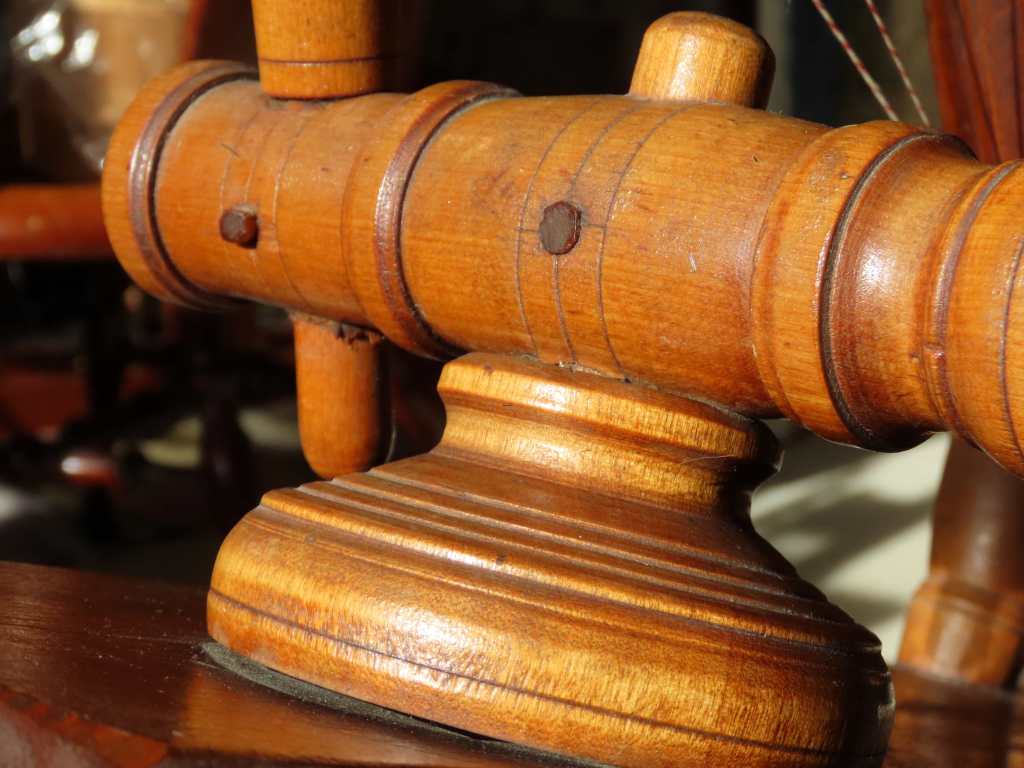
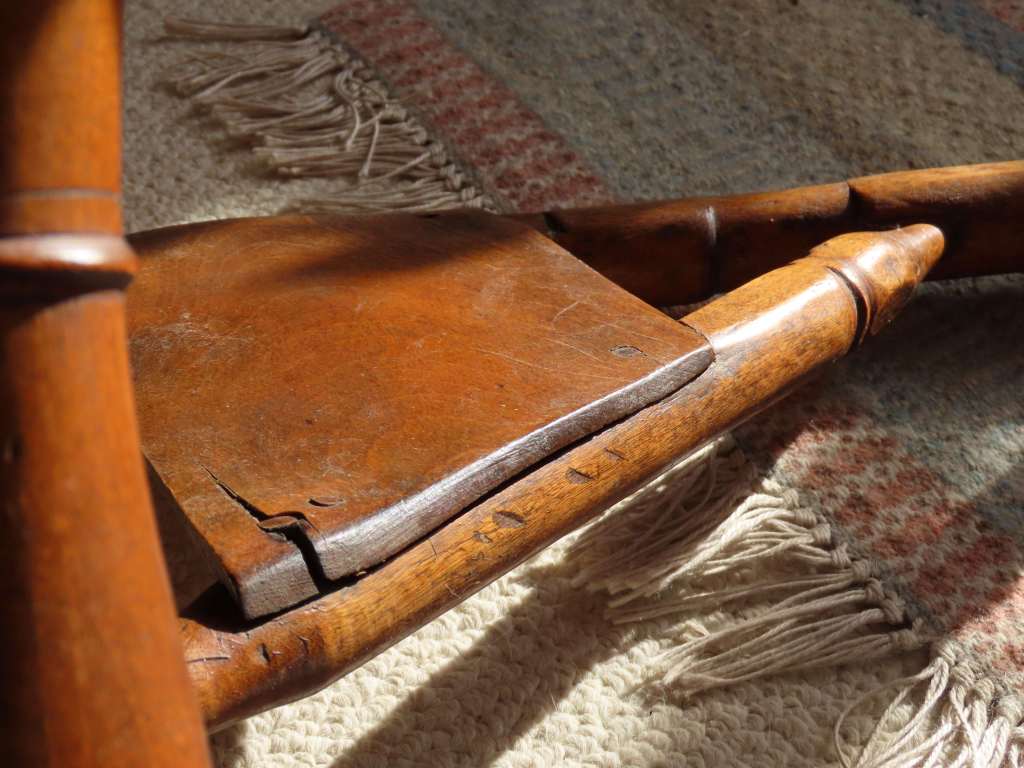
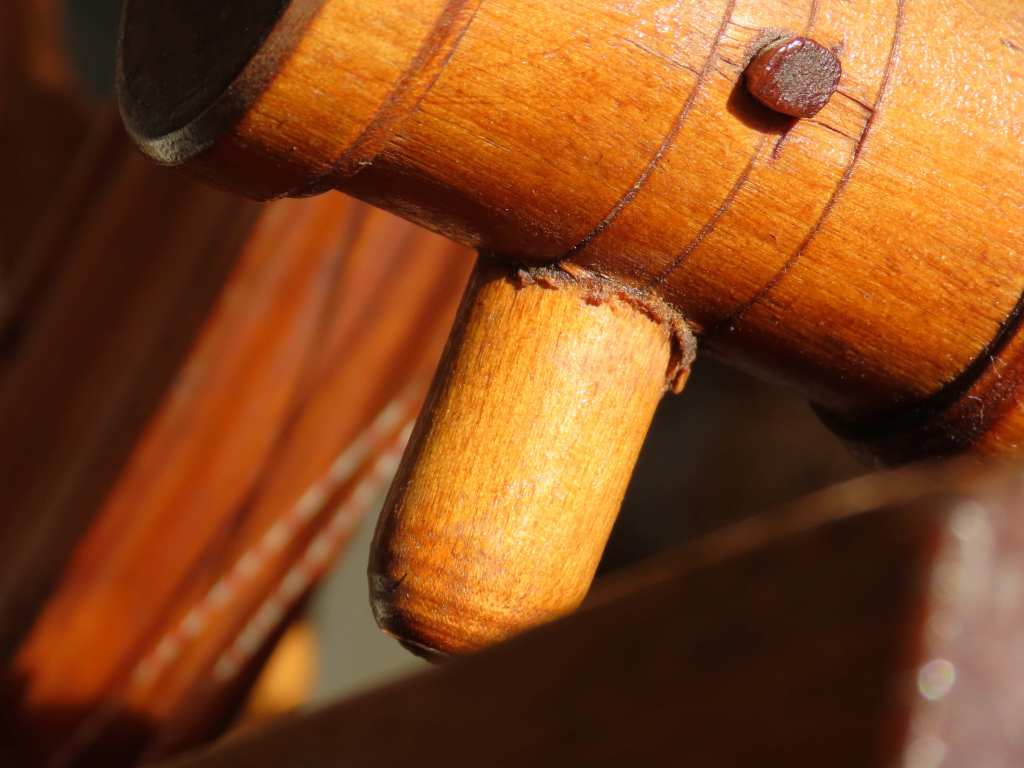
These wheels show up for sale with some regularity in New England, particularly in Massachusetts, where many PEI families migrated to find work. They share some similarities with the Nova Scotia wheels in the previous posts, including the spoon-like end to the treadle bar
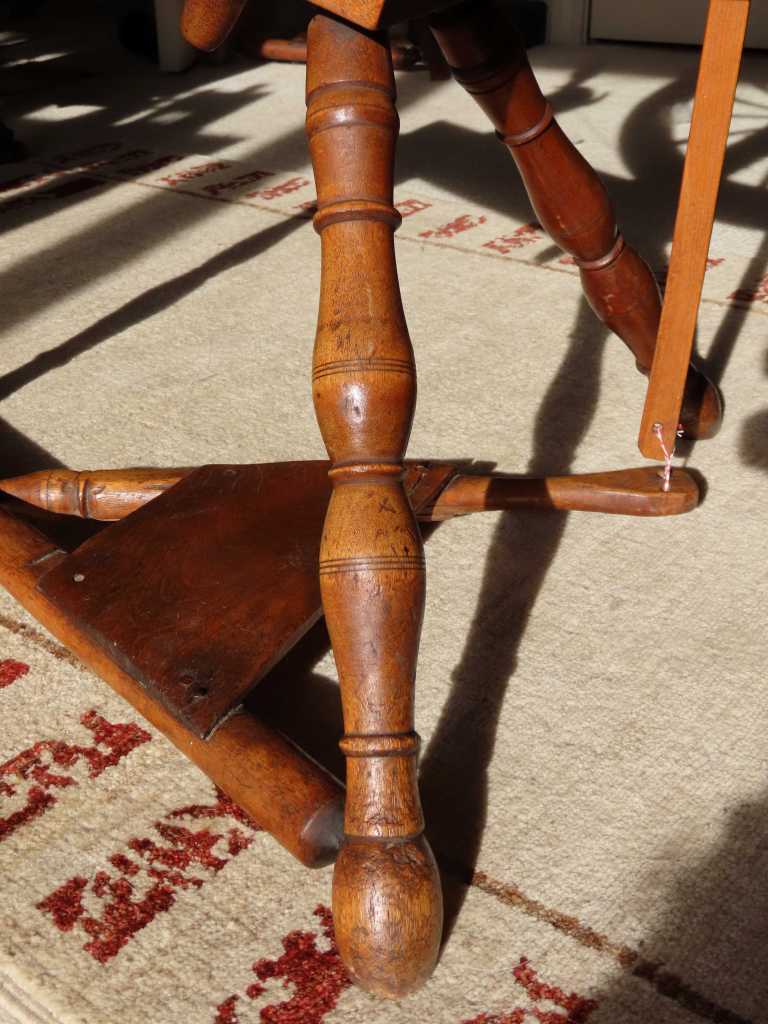
and slope on the wheel end of the table.

The lovely generously rounded maidens make these wheels easy to spot and, of course, the numbers are distinctive.

Those on the tension end are bold and thick, surrounded by a box of punched decoration, while those on the wheel end are less robust and more refined looking, with no surrounding decoration. If the numbers indicate the year made and production number of the wheel, this maker must have been making wheels for many years, so I was extremely frustrated that I have not been able to find anyone on PEI with information.

My one lucky break came from someone close to home. A few years ago, a spinner near me in Maine, Cheryl Bubar, was moving out of state and wanted to re-home some of her antique wheels. When I went over to her house, she showed me her family wheel from PEI (which she was keeping). It was a sister to mine, with the numbers 1184 on the tension end and 1853 on the other end. It turned out that Cheryl’s family also was from Kings County and were friends with the family that owned my wheel, PEI and after both families moved to Massachusetts.
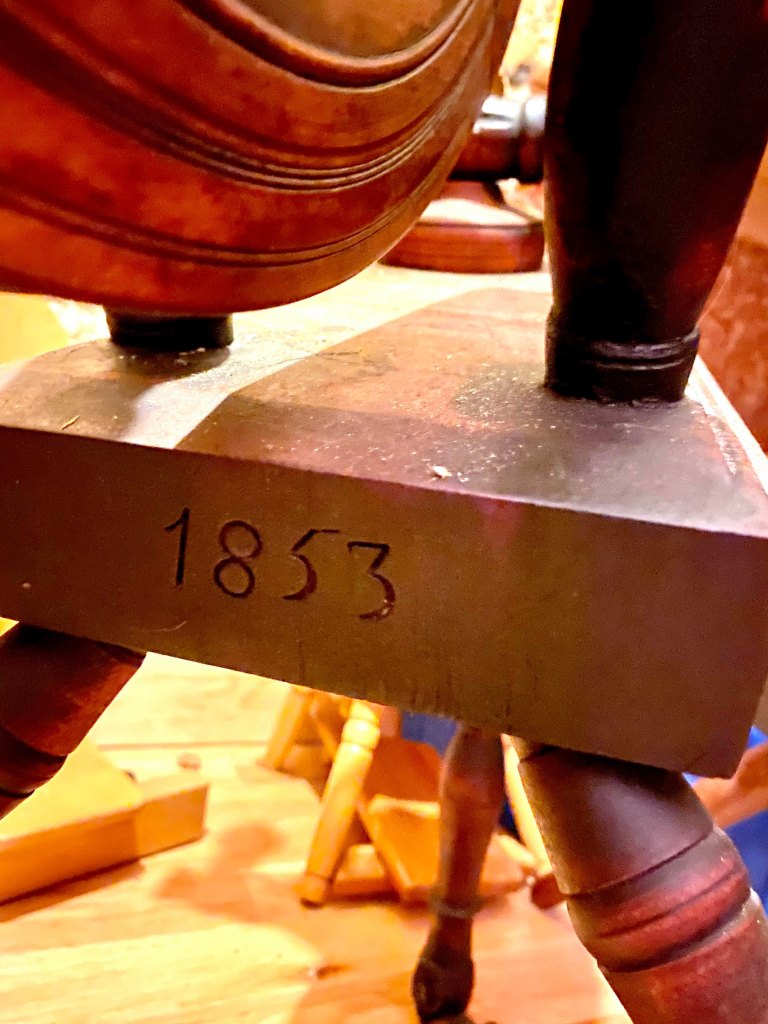
Some time later, a woman posted another of these wheels on Facebook, saying it had been donated to a museum in New Brunswick.
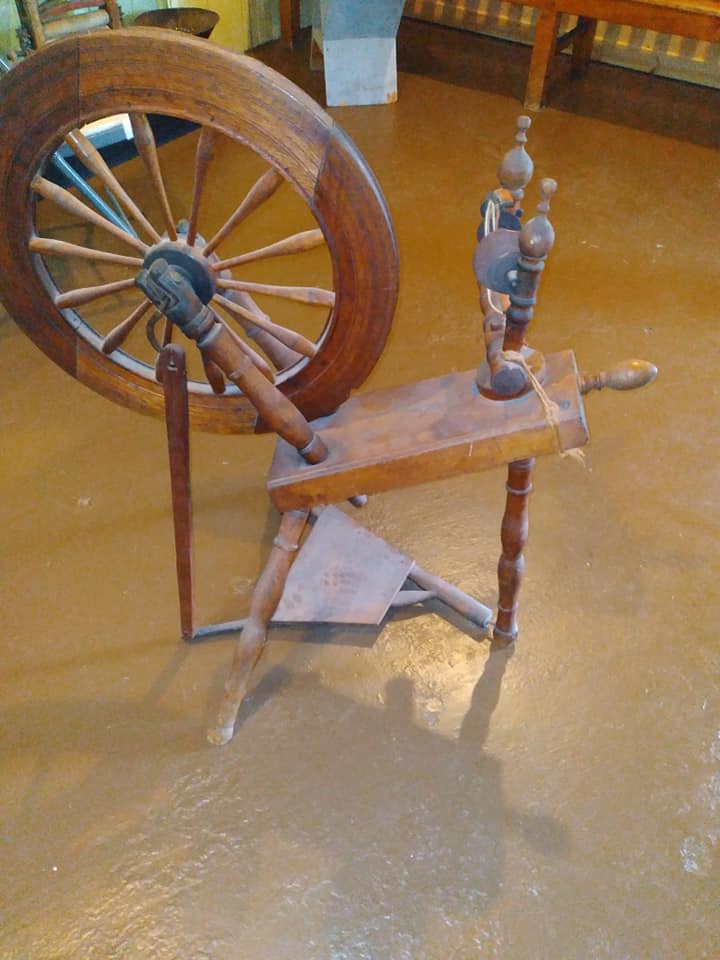
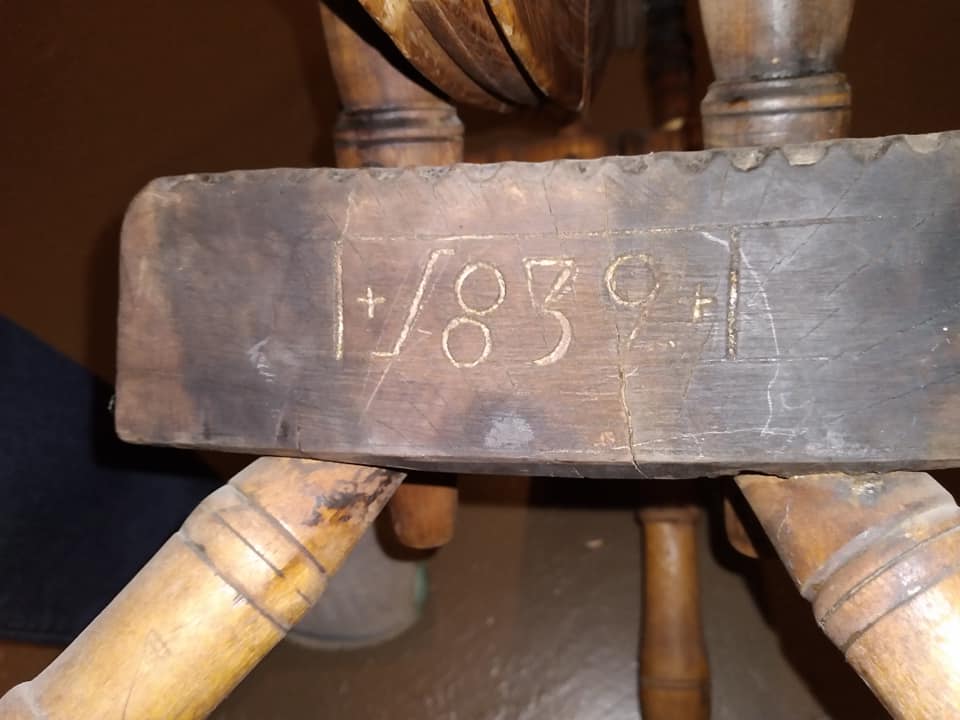
It was numbered 270 with the date 1839.
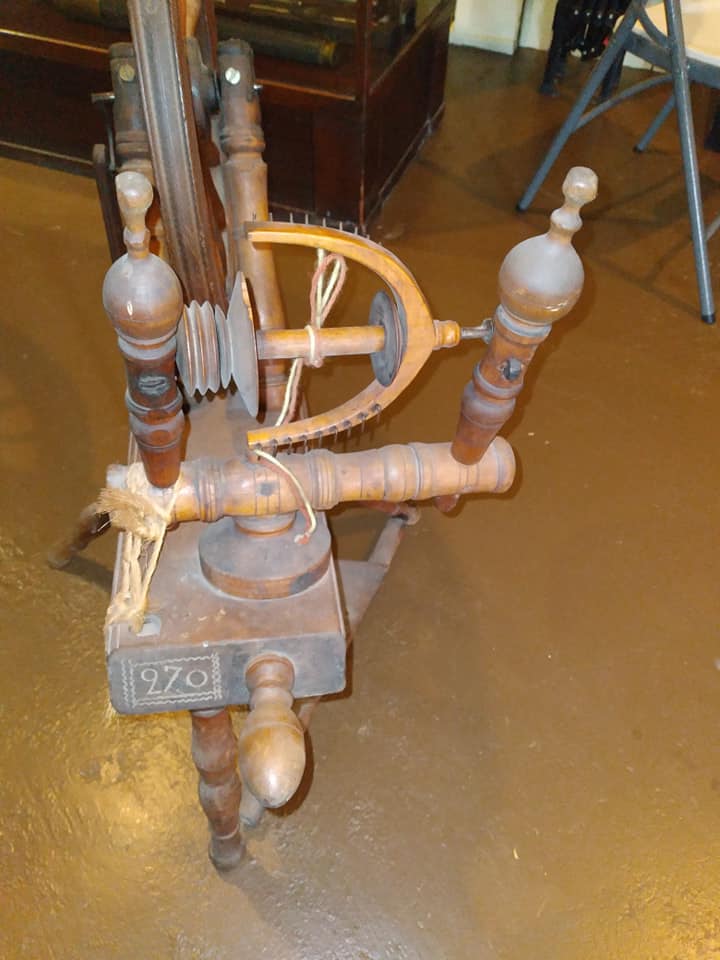
She did some digging and found that the wheel had come from St. Charles, PEI—also in Kings County. While this 1839 wheel has somewhat different maidens and slightly different numbers, it seems likely that it is an early version from the same maker.
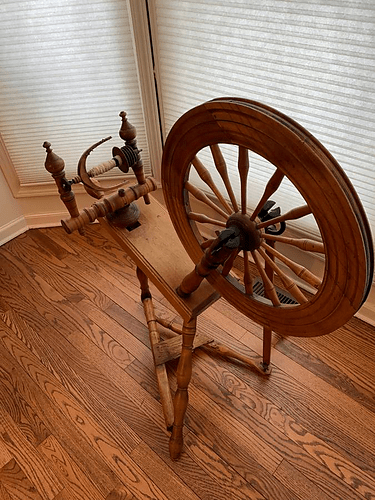
Another wheel came up for sale on Craigslist with the number 1170 and date 1853.
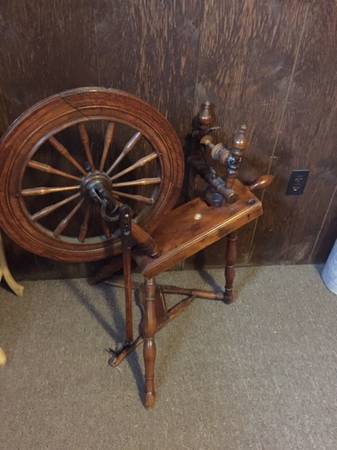
And one showed up in Michigan with the number 1694 and date 1863.
So, it appears this wheel maker (or wheel making family) made over 1800 wheels from the 1830s to at least 1865.
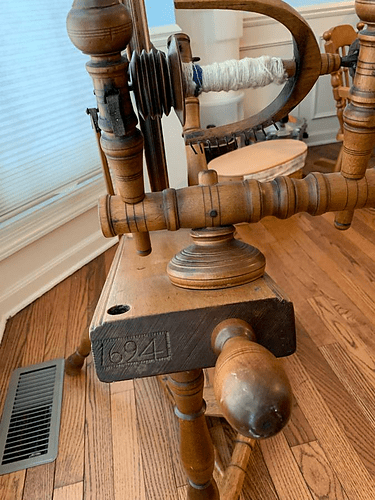
In the twelve-year period between Cheryl’s wheel and mine, he would have made about fifty wheels a year.

Cheryl did some digging and found in the book “Exiles & Islanders” a passage quoting from a letter written by John McNally (Nallen), a furniture maker in East Point PEI to his brother in County Mayo in 1832. McNally wrote, “if you were here you would make a fortune,” and that he was getting “five dollars for a spinning wheel and six pounds for a turned chair.” p. 116. (link to original letter here).

I have not been able to establish how long John McNally lived, but since three of these wheels came from Kings County, where he was making wheels in 1832, he is the leading candidate for our wheel maker. Try as I might, though, I have not been able to confirm who made these wheels.
There is evidence of at least two other wheel makers on PEI at the time, John McQuarrie (or McQuarry) and George Lockerby, but both were working in Charlottetown.
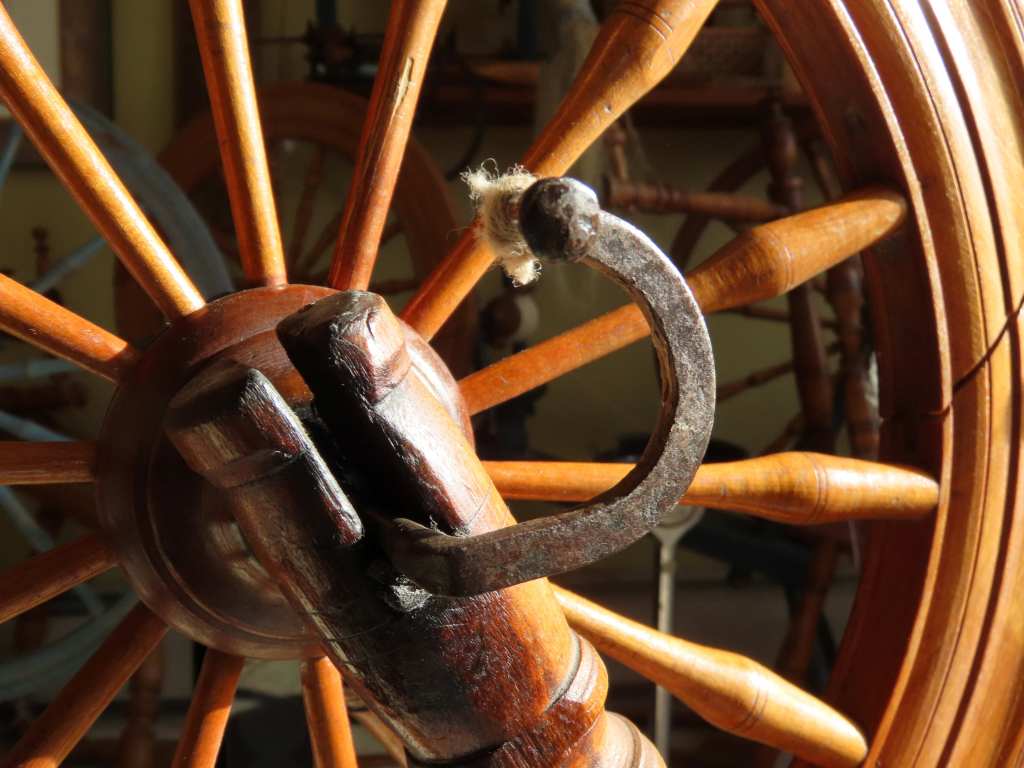
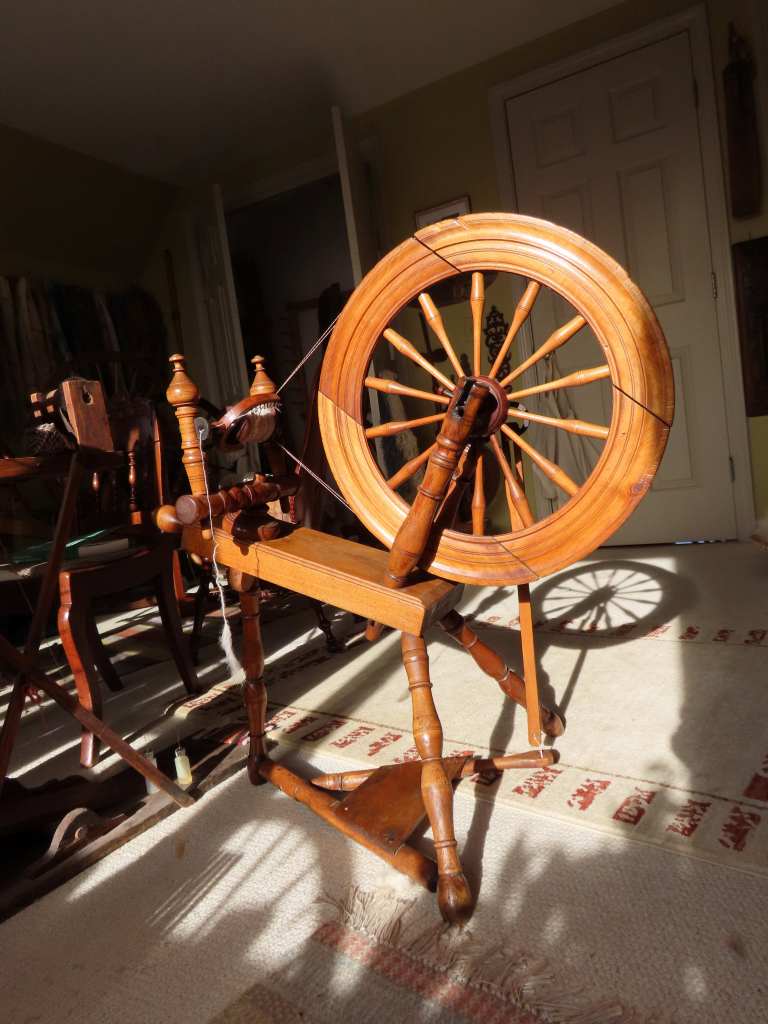
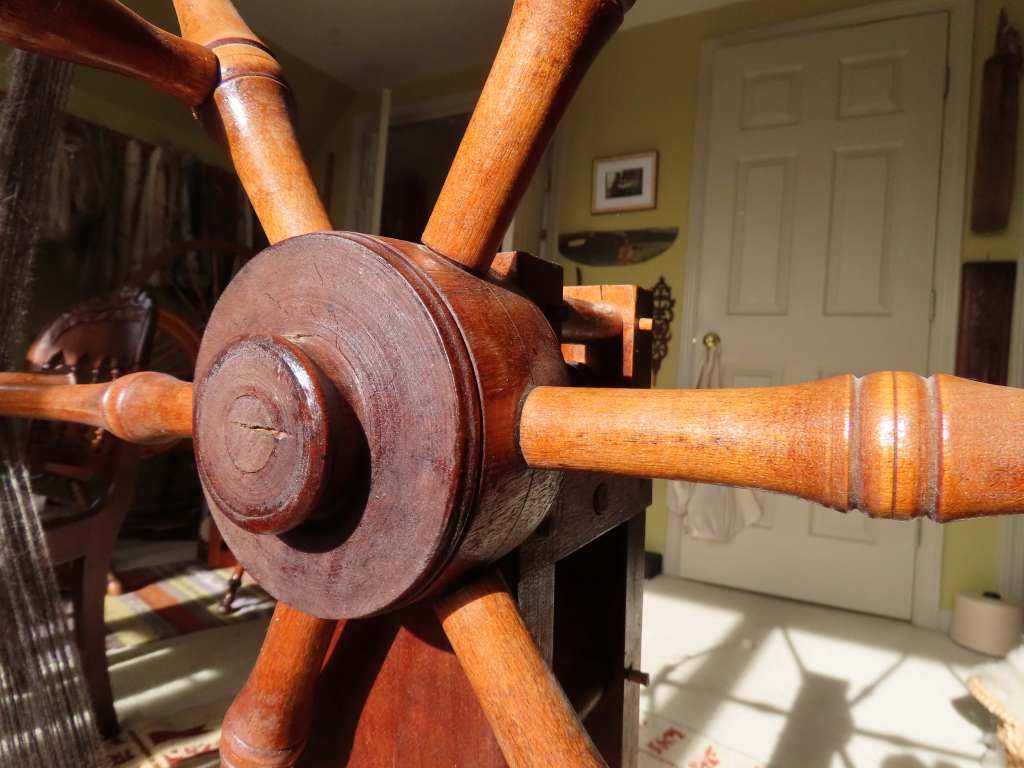
My wheel is probably the heaviest saxony style that I own. Its weight and the wood grain and coloring seems to support that it (or much of it) was made of apple wood.
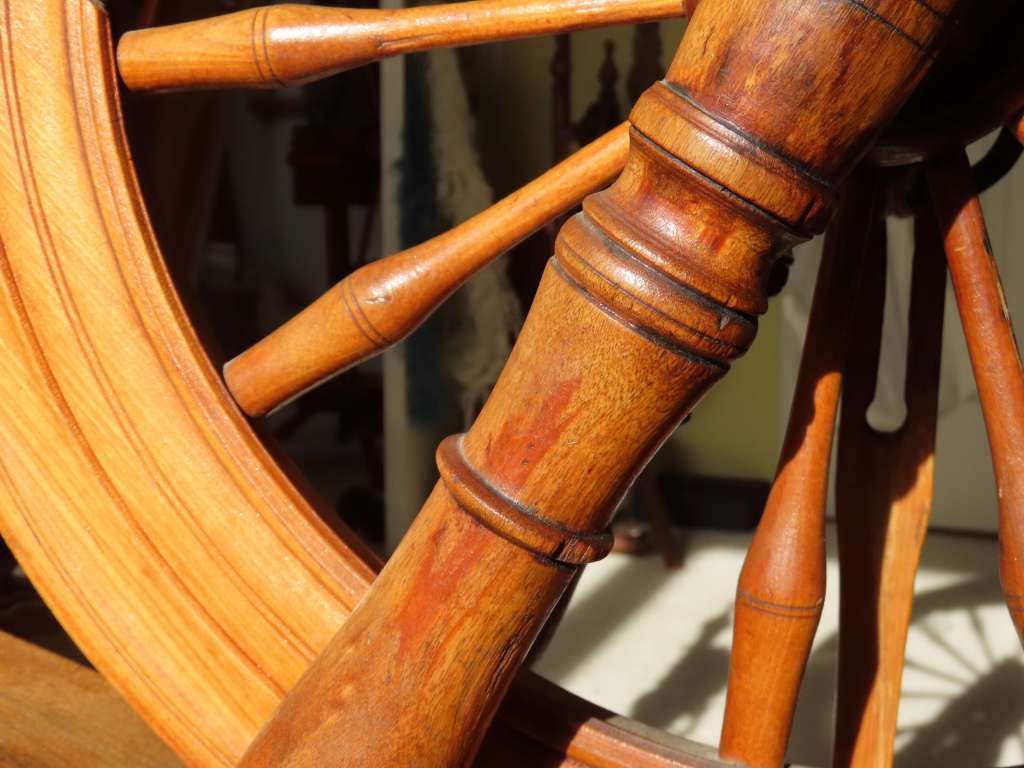
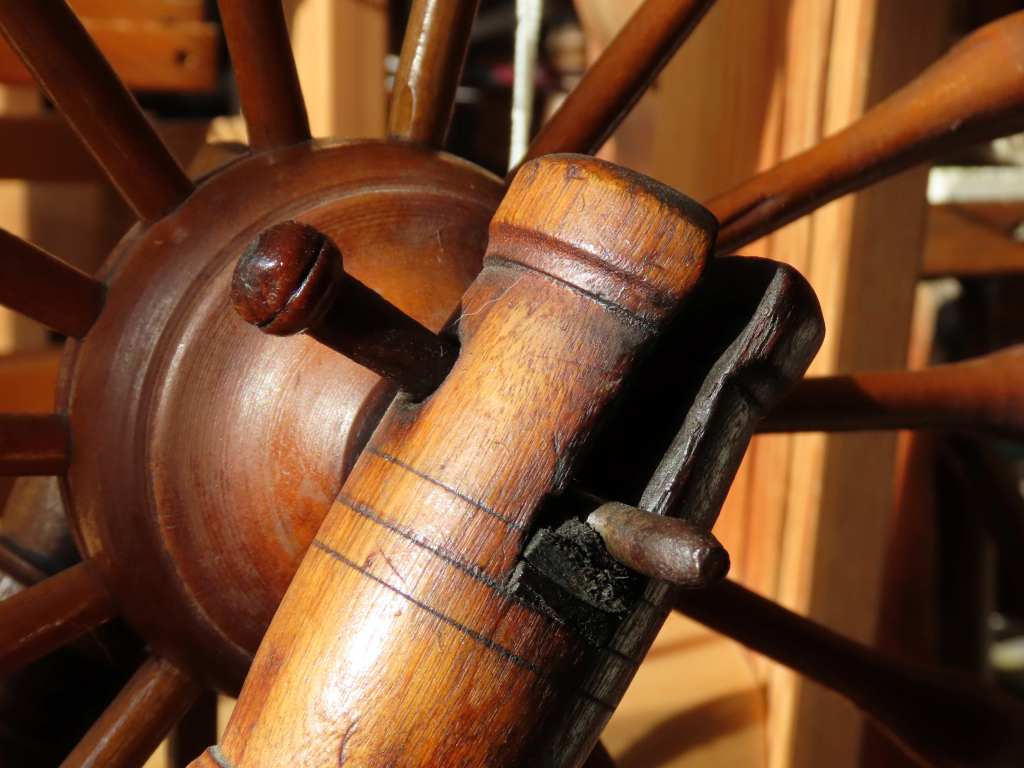
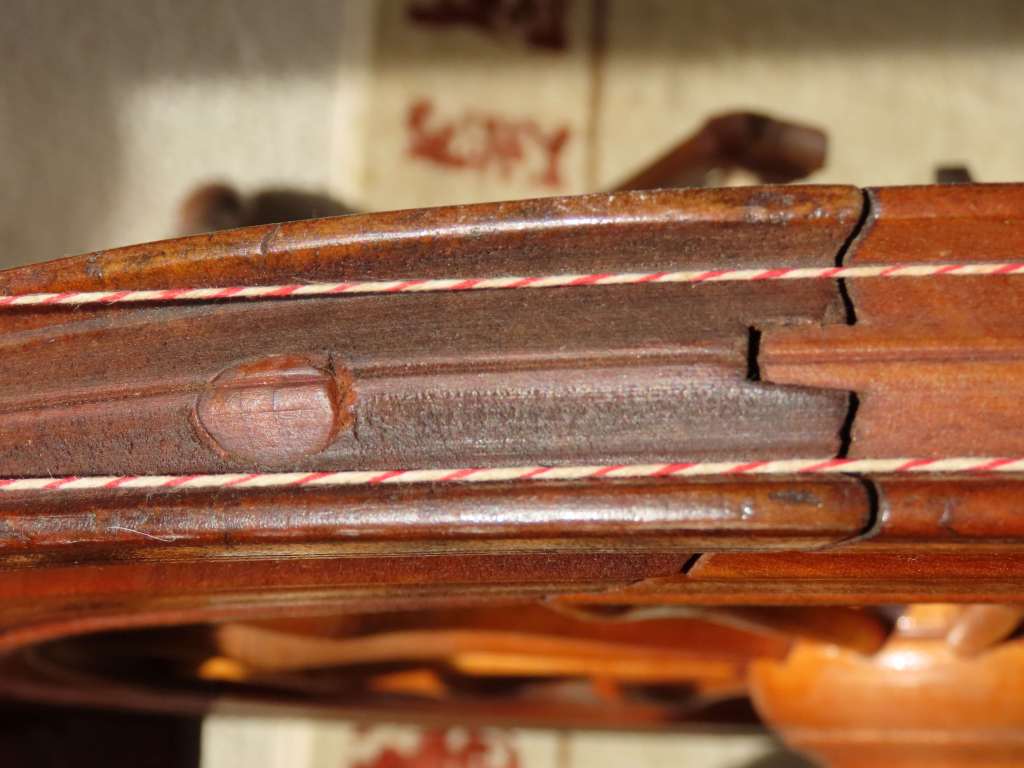
It has an unusual leather “bumper” on the far maiden,
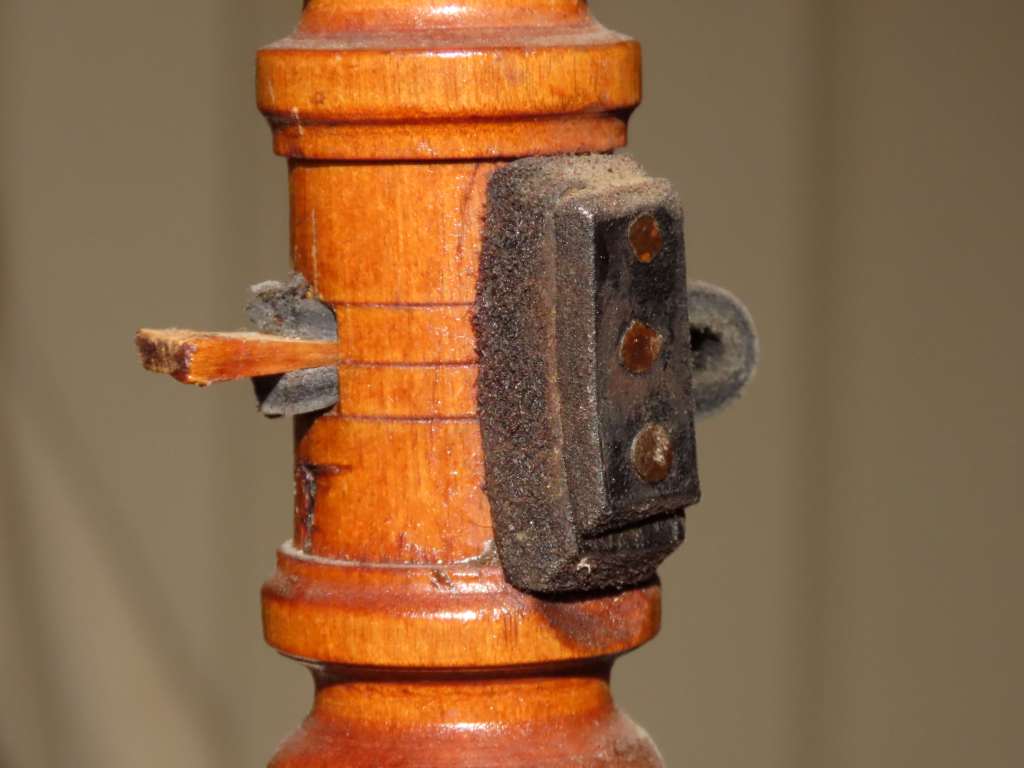
I imagine to keep the whorl from bumping against it and to help with alignment.

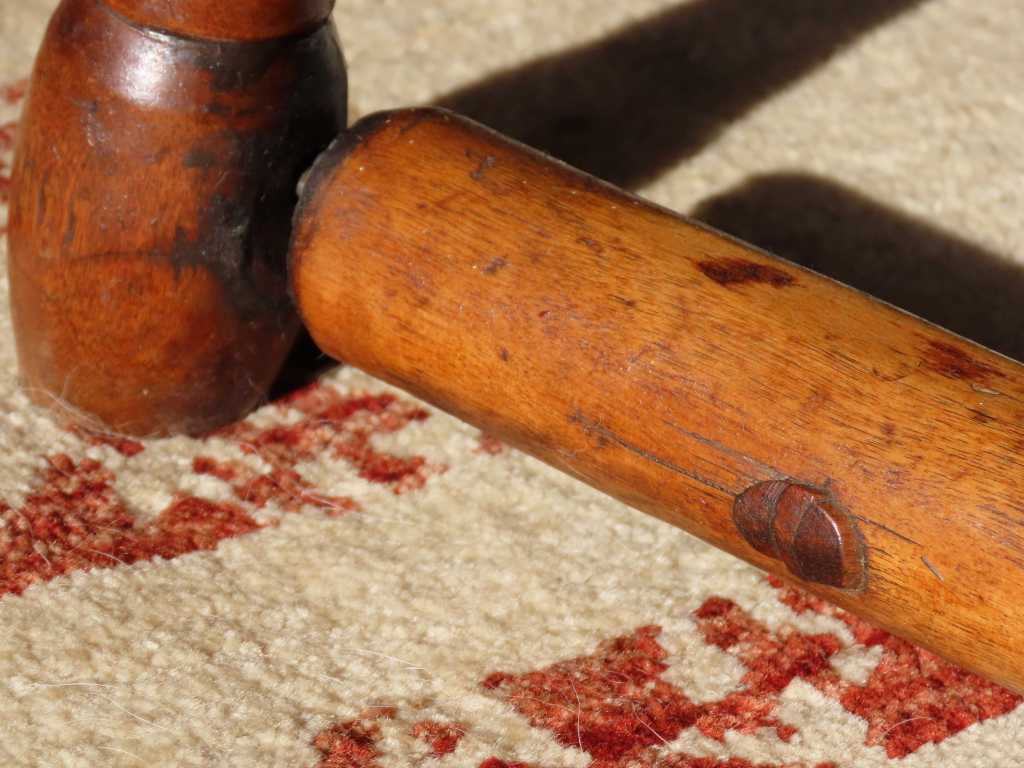
The scribe marks underneath are unusual in that they are doubled, created a sort of plaid diamond pattern.

For the first time, when taking photographs for this post, I noticed marks on the back of the spokes similar to those on the spoke fronts of Marilla, the McIntosh wheel in a previous post.

They are much fainter and fewer on this wheel, but finding them on the back of the spokes just deepens the mystery as to how they were made.
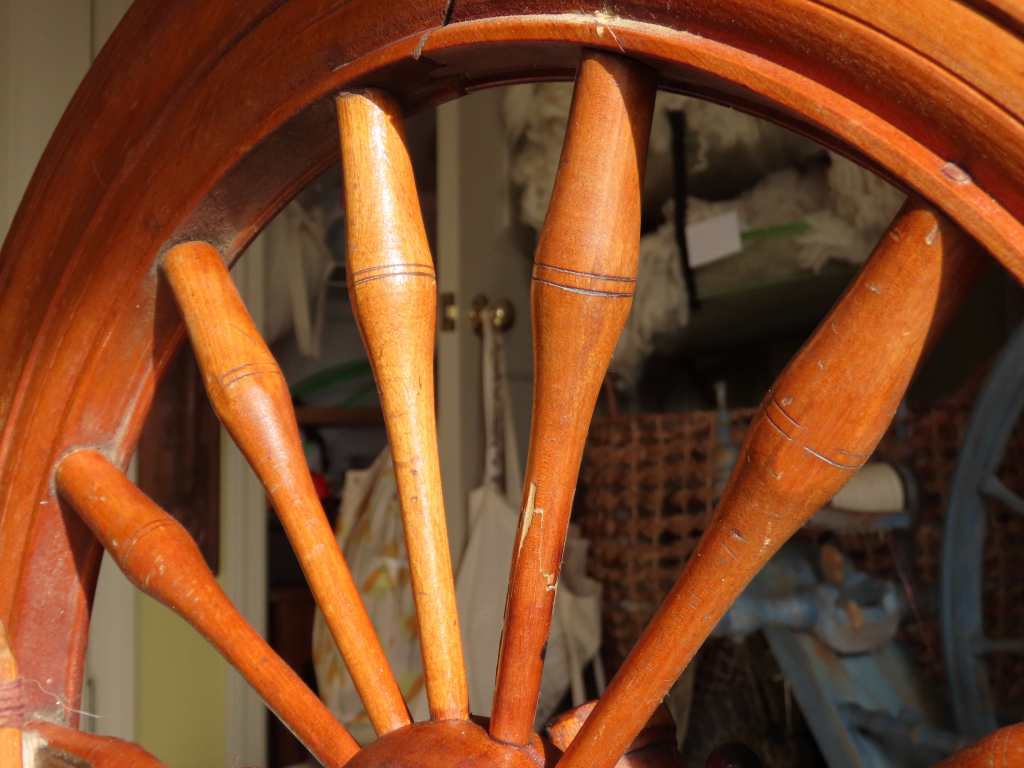
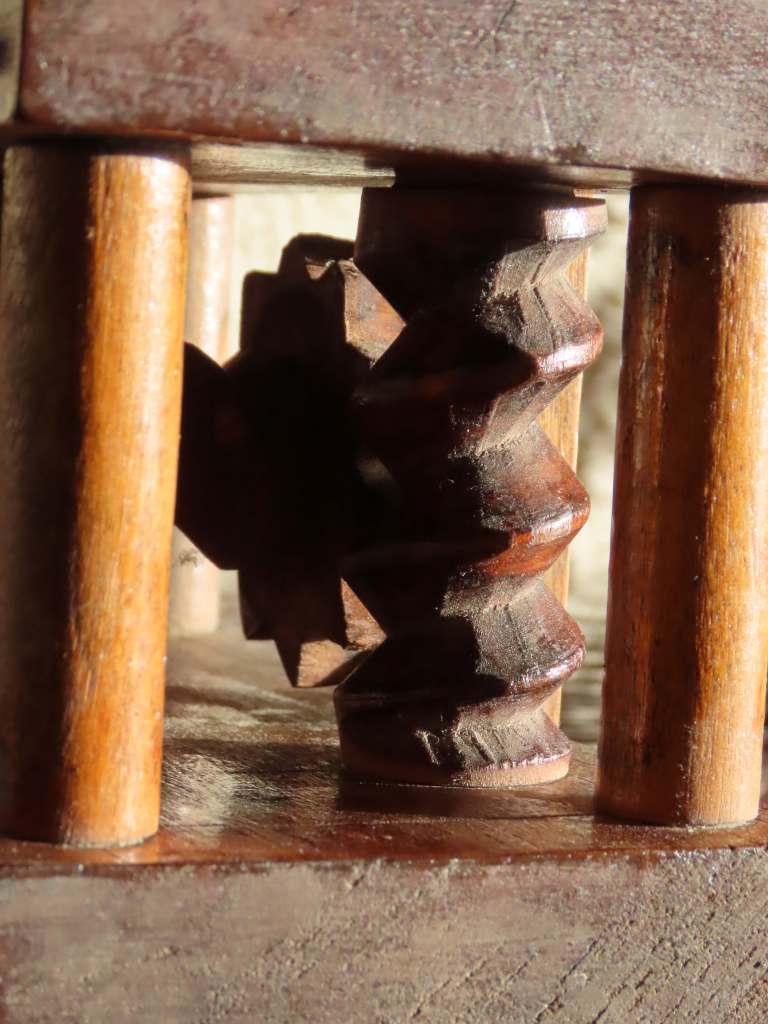
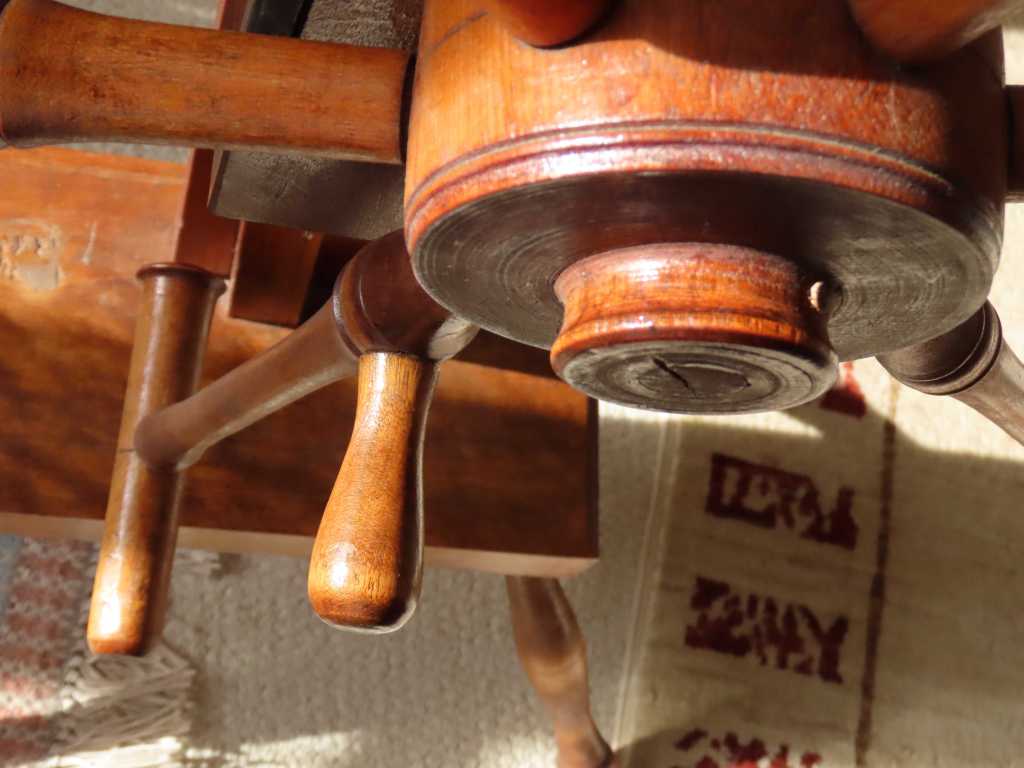
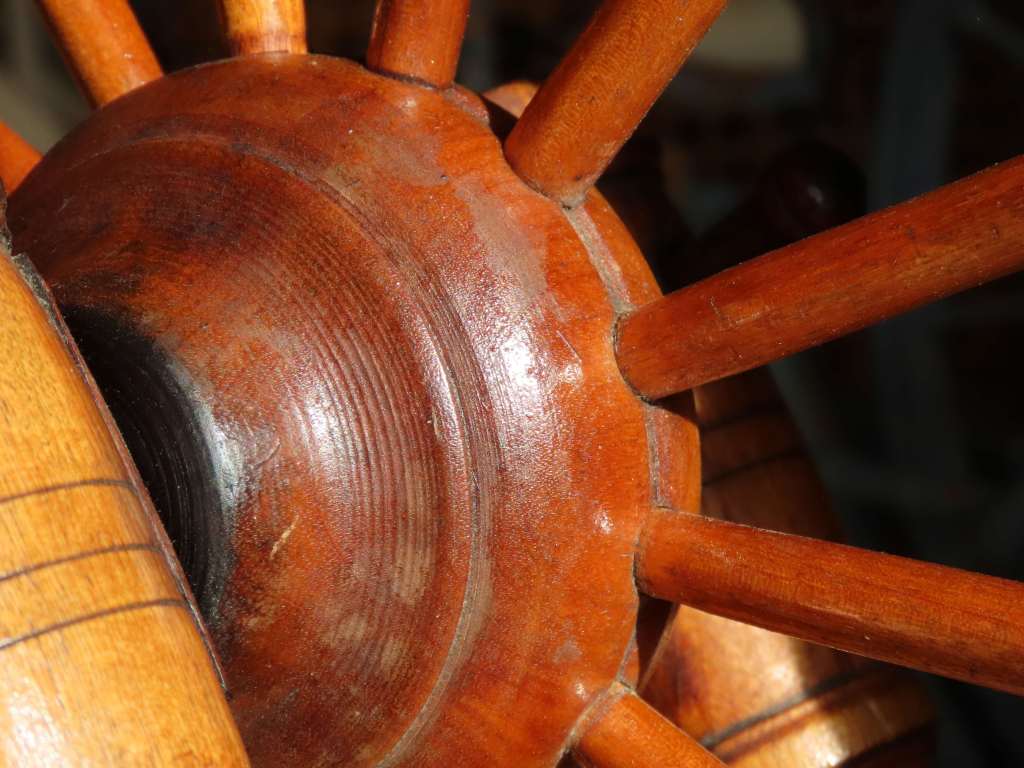
The reel is large. Very large.

In contrast with the reel in Cummer’s book, this one makes a 90” skein and clicks at every 120 turns (giving 900 yards).
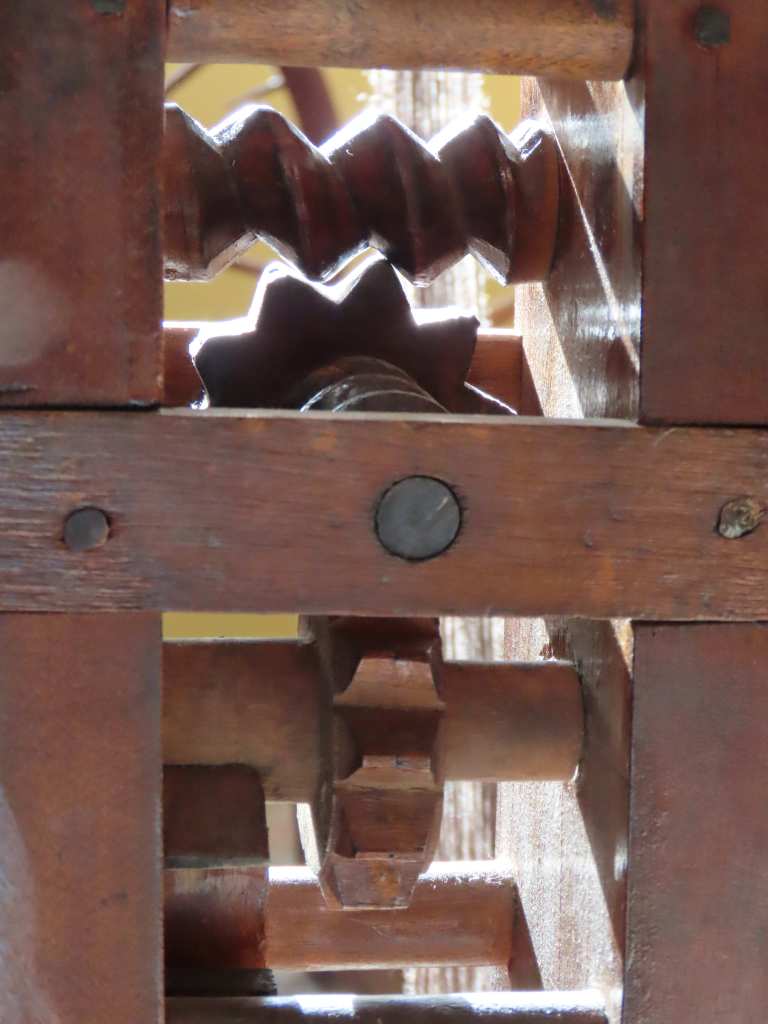
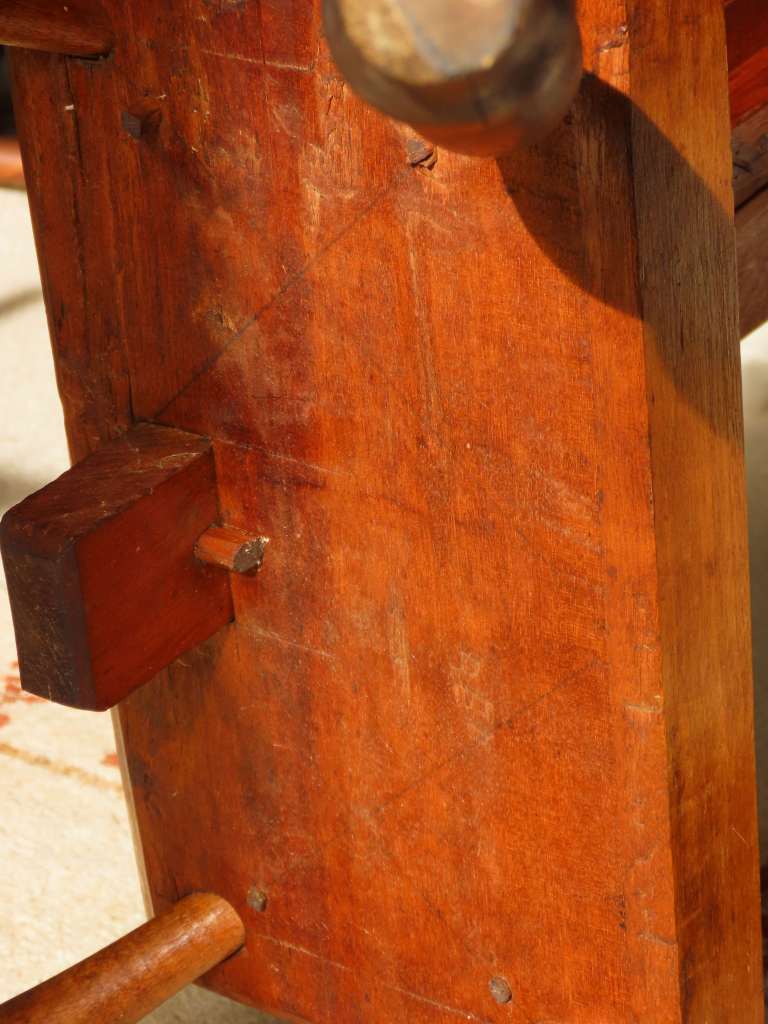
It is designed for easy carrying
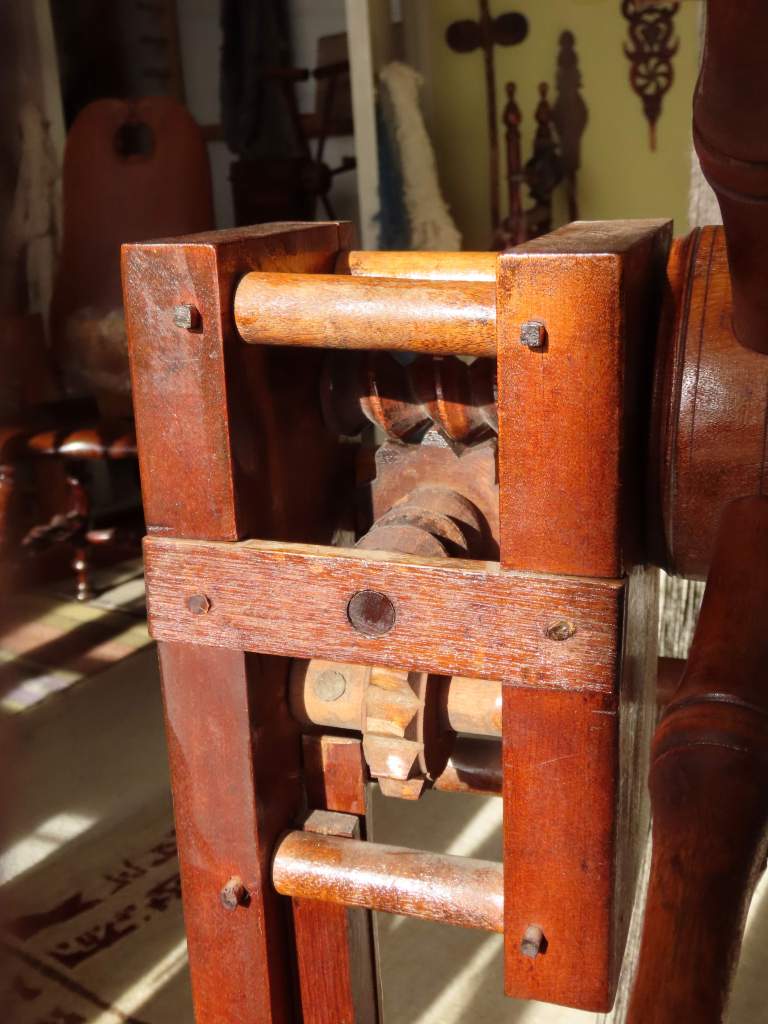
and has single crossed scribe marks underneath.
Both are beautiful working tools and I would love to know who made them.
If anyone reading this has even the slightest lead that might be helpful in finding our maker, please let me know.
Although, I have not been successful in identifying the maker, or makers, it has been a fascinating journey.
Thank you to Cheryl for her research and to Cheryl, ReBecca, and Susan for use of their wheel photos.
References:
Burnham, Harold B. and Dorothy K., ‘Keep Me Warm One Night,’ Early Handweaving in eastern Canada, University of Toronto Press, Toronto and Buffalo, 1972.
Chappelle, R. LaVerne, The Daybooks of Benjamin Chappell, Volumes One and Two, The Prince Edward Island Genealogical Society Inc., Charlottetown, PEI 1998.
Cummer, Joan, A Book of Spinning Wheels, Peter E. Randall, Portsmouth, N.H. 1984. Accessory 24, pp. 326-27.
L.M. Montgomery, Anne of Windy Poplars, the front pages of my book are missing so I don’t have the edition, but the book was copyrighted in 1936.
Montgomery, L.M., Emily Climbs, Bantam Book, Harper &Row, New York, NY 1925 (Frederick A Stokes Co.), Bantam Ed. 1983.
Montgomery, L.M., Emily of New Moon, Random House Children’s Books, New York, 1923 (Frederick A Stokes Co.)
L.M. Montgomery, Anne of Windy Poplars, the front pages of my book are missing so I don’t have the edition, but the book was copyrighted in 1936.
O’Grady, Brendan, Exiles & Immigrants: The Irish Settlers in Eastern Kings County PEI, McGill Queens University Press, 2004.
Macleod, Ada, “The Oldest Diary on PEI,” The Dalhousie Review, Volume 9 Issue 4, 1930.
 Exquisite Machinery