Several of my wheels have forged friendships. One of the earliest and best of those wheel friendships came through Granny Ross. When the wheel came up for sale in Cape Breton, Nova Scotia, a woman on Ravelry, Sherran Pak, posted the wheel’s photo, noting some similarities to the McIntosh wheels.
The seller said that the wheel was not in spinning condition and, although Sherran was initially interested in the wheel, she decided not to buy her because of the need for repairs and the difficulties in getting the wheel to her home in the Midwest.
I did not know Sherran and was uncomfortable pursuing the wheel, knowing how much she liked it. So, I contacted her and after her assurances that she was not interested and that I should go for it, I then contacted the seller.
The stars seemed to be aligned because the seller said that he would be taking a trip down to Maine in about a month and could bring the wheel with him. As it turned out, the meetup did not work out and I ended up, ultimately, finding a wonderful woman on Ravelry who, on her annual trip to Cape Breton, was willing to meet up with the seller and railroad the wheel down to me.
During the months it took to get the wheel, I got to know Sherran. Although I still have not met her in person, we have been continually in touch over the years, and she became a friend. She kept a lookout for wheels in the Midwest that might interest me and I helped her out (although to a much lesser extent) with wheels in my part of the world.
Some of my most treasured wheels came my way because of Sherran. She found them, picked them up (even waiting in line at an estate sale during covid), fostered them, arranged railroads, and sent them on their way to me. I am very much in her debt and am so glad that I have gotten to know her. And, it is all thanks to Granny Ross.
When Granny Ross finally arrived here, it was apparent why the seller said that she was not in spinning condition. The drive wheel had been seriously damaged, with a bent axle, spokes that had broken right off, with some clumsily re-glued. It looked as if someone heavy had stepped right on the drive wheel while it was on its side on the ground. I could just imagine the crunch of broken spokes.
Although I do not have photos of the drive wheel when it arrived, trust me, it was a mess. The treadle also was worn to the point of no return. The drive wheel damage was well beyond my repair capabilities, so I shipped it off to wheel-repairer extraordinaire, John Sturtevant. In the meantime, George crafted a beautiful new treadle with strong graining to match the legs.
When the drive wheel came back from John, it looked as good as new. I could not wait to try it out, interested to see how the heavy double rim would spin. I tend to like heavy drive wheels, with their sweet momentum, and Granny Ross did not disappoint. She became one of my favorite spinners.
She is a bit of a puzzle, though. Overall, she has a Scottish look.
As Sherran noted, she shares characteristics with the McIntosh wheels, including a spoon-shaped end to the treadle bar
and a slope at the drive-wheel end of the table.
And, while double rim wheels are most often found in Scandinavia, they do occasionally show up on wheels that appear to be Scottish, or made by Scottish descendants.
But the man from whom I bought the wheel said that his wife had bought it about 50 years ago in an Acadian area of Cape Breton and was told that it was Acadian.
That was intriguing to me because there seems to have been very little research done on Acadian wheels in Nova Scotia, so there is uncertainty as to what wheels were made and used by Acadians there. This photo, found in Judith Buxton-Keenlyside’s book, “Selected Canadian Spinning Wheels in Perspective” (figure 132, p. 278), is captioned “A spinning wheel maker on Ile Madam, Nova Scotia. From Edith A. Davis, “Cape Breton Island”, reprinted from the Canadian Geographical Journal 6, no. 3 (1933).”
Ile Madam is the same general area from which the seller’s wife bought Granny Ross. And, the wheel in the photo looks very similar to Granny Ross—especially the maidens,
and the legs.
To further complicate things, whoever made the wheel decorated the table with a 6-pointed rosette. While these are sometimes found on eastern European wheels, German fiber tools, and houses and barns of various cultures, I do not believe that I have ever seen one on a Scottish wheel.
Perhaps Granny Ross is a charming composite of different influences on Cape Breton—some Scots, some Acadian, a bit of German.
In any case, she is unique, with her attractive web of spokes,
strong stance,
and beautiful angled upright supports.
The shape of her legs highlights the gorgeous wood grain
and there are small lovely touches, such as the tiered MOA collar.
Much as I love this wheel—and she has been a workhorse for me—I have always felt a pang of guilt that Sherran may have deferred to me on the wheel out of her midwestern politeness.
Deep grooves on her tension knob, presumably from unwinding the bobbin
So, when I decided to sell some of my wheels, I was delighted when we were able to arrange to get Granny Ross to Sherran before Sherran moved farther west (to a place where wheels are rare). Granny Ross now resides with Sherran, where she belongs.
Most antique wheels are a puzzle—wood and metal conundrums. Who made them? Where, when, and how were they made? Who used them? For what and how were they used? Because so little of this information was written down, most often we rely on clues from the wheels themselves to try to answer these questions.
But some clues are confusing. In contrast to most wheels, this one advertises her maker and time—IS McIntosh, 1857.
How exactly she was used, however, is a mystery. There is no doubt that she was heavily used. But, in addition to expected wear, she has unusual scars that are somewhat bewildering. It feels as if she is trying to tell us something, but we lack the ability to translate it.
She is the second wheel that I ever bought and I almost passed her by. I found her deep in a crowded, dark antique store barn one town away. Brand new to antique wheels, I obediently followed the oft-heard instruction to check the drive wheel for wobble, which supposedly indicated a warped wheel. This wheel had an extreme wobble, veering one way and then the other.
So, even though I could see a name and date, I gave the wheel a pass, thinking it would be unusable. In the months that followed, though, I could not get her out of my mind. I decided to check her out more closely and found that whatever the reason for the wobble, it was not due to warping. So, when the owner offered her for a song, I brought her home, determined to get her spinning again.
Old shims on the maiden
She was filthy—absolutely encrusted in black grime. And, it turned out that the wobble was caused by a bend in the straight end of the axle. Thanks to advice from David Maxwell (aka TheSpinDoctor) on Ravelry, after securing the drive wheel in a flat position, I used a pipe for leverage to straighten the axle end. It worked beautifully.
Cleaned up, axle straightened, oiled, with a new footman made by my husband—she was ready to try. And, as those of you who rescue wheels know, that first spin after bringing a neglected wheel back to life is hard to describe without sounding overly romantic and ascribing human-like qualities to the wheel (it feels like she’s thanking me!).
But with your feet and hands feeling the imprint of past users, it is almost intoxicating when the wheel settles into its old work rhythm.
Not only is it satisfying, but there is an undeniable feeling that bringing such a marvelous little machine back to its purpose connects you with all the women who used the wheel in the past. It is a good feeling and an addictive one. This filthy, wobbly wheel set the hook, making me a sucker for wheels that cry out to be rescued.
Mark where the axle had been scraping the upright
Once I had her spinning, I set out to find out more about her maker, IS McIntosh. Coincidentally, the same person who had given advice on the bent axle, David Maxwell, also is the McIntosh wheel specialist. His research is set out in an article in The Spinning Wheel Sleuth, cited below. As David explains, there are three versions of McIntosh marks—”Alexr McIntosh,” “McIntosh,” and “IS McIntosh.”
He has documented marks from 1798 to 1892–almost one hundred years. From genealogical research, David surmises that the “Alexr” marked wheels were made by Alexander McIntosh, born in Scotland, and emigrating to Canada in 1803. The earliest marked “Alexr” wheel, a double flyer, likely was made in Scotland. Alexander eventually settled in Pictou County, Nova Scotia and his known marked Nova Scotia wheels span the years from 1811-1824.
The axle bearing looks like it might be horn
From the wheels David has been documenting, from 1829 until 1886 wheels appeared marked simply with “McIntosh.” From 1852 to 1892, the “IS McIntosh” wheels were being produced. And, starting in 1863 until 1879, the Alexr stamp again was used.
David Maxwell’s research found that Alexander’s son John apparently joined him as a wheel maker, which likely resulted in the mark’s change to simply “McIntosh.” But both Alexander and son John died in 1846. At some point, before or after 1846, Alexander’s grandsons (John’s nephews), named Alexander and James, also became wheel makers.
David’s theory is that Alexander Jr. carried on making wheels under the “McIntosh” stamp after his grandfather and uncle died, joined by his younger brother, James. In 1857, it’s probable that James started marking his wheels with the “IS McIntosh” stamp (the letter “I” often used for the letter “J” in maker’s marks) and then brother Alexander starting using the “Alexr McIntosh” stamp again. For much more detail on this, please refer to David’s article.
No matter which McIntosh was making the wheels, they all share similar features. The treadle bar has a spoon-shaped end, with a ridge underneath.
The drive wheels have 14 or 16 spokes—mostly 14 on the earlier wheels and 16 on the later ones, with some exceptions.
Marilla is missing one of her 16 spokes
The tables have a hole for the distaff, an angled end under the drive wheel, and understated, tasteful turnings.
The wheels were popular and well-made, apparently spawning imitators. Unmarked wheels often turn up that look very similar to McIntosh wheels, but with some slight deviation.
My wheel, Marilla, while a typical McIntosh, has her own unique features. Her maker, IS (likely James) was economical with wood and his time.
The wood on one leg and the MOA collar still retain some bark.
The sides of the table are quite rough
and the underside has a series of indented lines, whether from a saw, a plane, or something else, I do not know.
The wheel is made from heavy wood and the drive rim is quite wide.
There is a nail in the non-spinner side leg, with no apparent purpose (it is not on the bottom to keep the wheel from sliding).
The orifice is fluted, something found on other McIntosh wheels, but not all.
And, probably to “repair” a crack where the mandrel runs into the flyer, a thimble (with the bottom cut out) provides an ingenious and long-lasting binding.
It is such a personal touch, this thimble fix is one of my favorite things I have ever found on an antique wheel.
When I brought the wheel home, the bobbin had some very old, beautifully spun wool on the bobbin—a seriously good spinner last used this wheel. The flyer has typical wear marks
and the treadle a lovely smooth worn curve from years of treadling.
But other wear marks have me flummoxed. On the end of the table around the maker’s mark and on areas of the table, there are crescent moon-shaped gouges.
Occasionally, similar marks are found on other wheels. While no one seems to know with certainty what they are, speculation is that they might be from the spinner tapping the orifice end of the flyer, perhaps to loosen the bobbin for removal.
But, in this case, there is a whole valley gouged out of the table, where apparently something struck the surface repeatedly for a long time.
Even more perplexing are the marks on the spokes.
They are only on the spinner side
no marks on non-spinner side
and are angled, short lines–some straight, some slightly curved–on the outer 2/3 of each spoke.
I have seen two other wheels on Ravelry with somewhat similar marks, one a Norwegian-style wheel found in Saskatchewan and the other a Finnish-style wheel found in Leningrad. There is a thread named “Mystery Scratches” in the Antique Wheel group on Ravelry discussing the marks on these three wheels, with a variety of guesses as to their origins.
While many of the guesses were that they are damage unrelated to spinning (child hitting with a stick, dog chewing, odd storage), I believe they are wear marks from some type of long term use either in spinning, winding off, or warping, but try as I might, I cannot figure out how they came to be. If anyone has suggestions, please let me know. I would love to solve the mystery.
Marilla
Finally, in addition to Marilla, I was fortunate to find another McIntosh wheel several years later, this time an early 1815 Alexander.
Margaret–14 spokes, but like Marilla, she is missing one
I named that wheel Margaret and she has since moved on to another, very good home.
I only took a few photos of her, but it is interesting to compare her to the later IS wheel.
She is a beauty
but has her own table gouge, this time the typical one found under the drive band.
Here is a photo taken in Vörå, Österbotten, Finland sometime between 1920 and 1960 (link here) of a knife used in this way.
There is speculation that the knife kept the drive band cross from migrating to the top when spinning counterclockwise, so that the band would be less likely to grab flax from the distaff. But, at this point, that remains speculation. As this wheel shows, these knife marks are not just found on Scandinavian wheels, as many think, but on wheels from a variety of places and cultures. Whatever the purpose of the knife, it was important enough that spinners did not mind creating a big gouge mark in their wheels. As more and more photographs become available online, I hope that we will discover more about what the marks mean and how these wheels were traditionally used.
Thank you to David Maxwell and his sources for all of the research he has provided on McIntosh wheels.
You can find much more information in the Antique Spinning Wheels group on Ravelry, including a list of all the wheels David has been able to document.
Here is David’s article, with a wealth of information that I did not include here:
Maxwell, David, “The McIntosh Family of Spinning-Wheel Makers,” The Spinning Wheel Sleuth, Issue 108, April 2020, pp. 2-5.
Also thank you to AlltFlyer on Ravelry for the photograph of the knife in the table.
If the value of a wheel can be measured by the lengths taken to keep it spinning, this wheel must have been very highly regarded. It could be a textbook for how to keep a spinning wheel running with whatever is on hand. Belying modern wheel owners who too often declare such wheels “a piece of junk,” and those who insist that flyer arms must be “balanced,” with all its makeshift repairs, this wheel still spins beautifully, more than two hundred years after it was made.
The wheel was part of Joan Cummer’s collection, which she donated to the now-defunct American Textile History Museum. Along with most of Cummer’s wheels, it was auctioned off after the museum closed and I was fortunate enough to become the next owner.
Museum accession number
The wheel, “No. 34,” is pictured and described on pages 80-81 in Cummer’s “A Book of Spinning Wheels.” Cummer notes that it “is probably Scandinavian judging by the slope of the table and general proportions.” (p. 80) She did not know that the wheel contained a hidden clue as to its origin.
After bringing the wheel home, I wanted to get it spinning. On the mandrel, between the bobbin and flyer arms, was a spacer made from layers of leather, cardboard, and newspaper.
I carefully removed the layers and found that the newspaper pieces were in Swedish and contained Stockholm addresses and the date 1936,
evidence that this wheel—made in 1818—was being used well into the 1930s, either in Sweden, or by Swedish immigrants with access to a Swedish newspaper.
That was all I knew about this wheel until the fall of 2023, when the Rydals Museum in Sweden advertised on their Facebook page a presentation by Hans Johansson on wheels made in Hyssna, Sweden. Johansson runs Kvarnen y Hyssna (The Mill at Hyssna) (this link to his website has fantastic old photographs of Hyssna). Johansson is the fourth generation of a mill and sawmill family in Hyssna, a town east of Gothenburg, Sweden. With its ample water power and lumber, the town had a tradition of woodturning, passed down from father to son since the 16th century. By the mid-19th century, there were about fifty spinning wheel makers in the area, making a distinctive wheel style associated with Hyssna.
A typical Hyssna wheel
These “Hyssnarocken” were pictured on the Rydal Museum’s notice of Johansson’s talk and I excitedly realized that my 1818 wheel, Astrid, shared their features.
Although the museum people confirmed that Astrid likely is a Hyssna wheel, I have not been able to identify the actual maker. The most well-known Hyssna wheelmakers seem to be fairly recent ones–Johannes Persson and his son, Oscar (who was making wheels into the 1970s). The 1818 date on Astrid is the earliest I have seen on a Hyssna wheel.
With that date and the initials “ACSS” on the table end and “BAS” on the table top, it probably would not be too hard to trace the maker. But, with my limited Swedish skills, I am happy at this point just to know where the wheel is from.
Hyssna wheels have several distinctive features. There is a particular tilt to the table and angle of the legs that mark them, even from a distance.
They have painted highlights, usually in red, green, and black.
Traces of paint on the spokes
Aside from the painting, the wood has an unfinished, almost rough quality.
The table has initials, and often a date, carved and painted on its top, accompanied by decorative carving.
As Joan Cummer mentioned in her book, it is generally believed that initials on the end of the table belong to the maker, while those on the top are those of the owner. Whether that is always the case with Hyssna wheels, I do know, but the wheel in this Clara Falk blog post appears to have Johannes Persson’s initials on the table, if I understand correctly.
Two secondary upright supports extend down to the legs and the axles are held in place with pegs that go down the side of the upright rather than across it.
Pegless, but you can see the holes
Another unique feature for most Hyssna wheels is the treadle set up, in which the treadling is done by the foot (or feet) resting across the cross bars rather than on a flat treadle piece. There is a small piece between the cross bars to the right of the spinner’s feet and the spinner-side legs go through the cross bar.
Typical Hyssna treadle set up. This wheel was on FB marketplace–a lot of these wheels come up for sale
Astrid has a more traditional treadle set up, which leads to the fascinating fixes made to this wheel over the years.
There are holes in the legs for treadle bar pins, which usually would not have been present in Hyssna wheels. Oddly, in this case, in addition to the holes, someone fashioned a metal bracket to hold a pin rather than have it go through the leg.
It is possible that the treadle set up is a replacement—its turnings and wood look a bit different than the rest of the wheel—and it may not have fit the holes well. Or perhaps it is original and just popped out of the hole too much. A similar metal bracket holds the axle in place after the hole for the axle peg eroded and was no longer functional
and a front axle bearing was made with folded metal hammered into the upright.
While it is hard to tell if the treadle set-up is a replacement, it is easy to see that the spinner-side maiden came from another wheel.
Not only does it have mismatched turnings, it does not come close to fitting properly in its hole. The peg to hold it in place is missing but someone stuffed a piece of fabric under the maiden which holds it tight and lends a nice bit of history to the wheel.
The collar for the mother-of-all is shimmed with layers of paper and leather.
The wheel rim, still bearing paint traces, has a largish gap showing a peg at an awkward angle.
The crowning glory of the make-do repairs is the flyer, with its now-rusty metal patch holding a broken flyer arm in place. I replaced the spacer made of leather and newspaper with some woolen yarn wrapped on the mandrel. The whole thing looks a mess and certainly is not balanced, but it spins surprisingly well.
The orifice only has a one-sided opening as it emerges to the flyer.
The table underside is beautifully shaped
but my favorite touch is the decorative shaping of the wheel end of the table.
Joan Cummer noted that the other “end of the table bearing the tensioning screw is beautifully shaped and sculptured. Much care and pride seems to have been taken in the making of this wheel.” (p. 80) I agree. And much care was taken to keep it functioning for over 200 years.
Thank you to the Rydals Museum staff for their patience and time in helping me learn about the Hyssna wheels.
The information on Hyssna wheels is from the Rydal Museum’s summary of Hans Johansson’s presentation and a piece that he wrote: “Spinnrockar, förläggare och svavtradition i Hyssna,” which is in a book available through the museum.
Simply put, I love this Swedish wheel. Metal clad, with a long and rounded waist, it is utterly unique. To top it off, it is one of the most pleasurable wheels for spinning that I have ever used.
The table, if you can call it that, is unusual from end to end. There is a good-sized hole in the wheel end, perhaps where it was mounted on a lathe.
Each end of the table top is cut flat, making room for the wheel posts and mother-of-all. Likewise, the whole length of the table bottom is flat.
But between each flat end, the table top narrows and rounds to a caterpillar-like middle, making it easy to pick up and carry.
The wood is nicely turned but knot-ridden. Several areas still retain some dark bark.
The sides of the flat sections have multiple grooves.
But most interesting is the galvanized metal neatly covering the table at the flyer end.
Its spangled surface gives the wheel a slightly festive look.
Unlike the familiar silver of modern galvanized steel, this metal is a golden greenish color.
The mother-of-all sits atop the metal and is tightened in place with an under-table wooden screw.
Two keeper pegs flank the tension screw.
A distaff hole is on the spinner’s side, but the distaff has been lost.
Scribe marks are found throughout, most utilitarian, but some appearing to be decorative.
The maidens have three-tiered tops.
The leather bearing is a sandwich of four thick layers, cut in a distinctive style.
The flyer is relatively petite, perfect for flax.
Two maker’s marks are embedded in the table end along with several star/sunburst/wheel stamps.
Another maker’s mark, on the table top, is easier to make out.
It appears to be “A P J S” or “A upside-down-G J S. “
The drive wheel has six sections/felloes with radial joints.
The joints are unusual in that each felloe has either mortises or tenons on its ends, rather than one on each end, which seems to be more common.
Moreover, the tenons do not extend all the way into the mortise, but instead butt up against a second small piece of wood.
Each joint is pegged. The spokes, however, which straddle a small step on the inside rim, do not have any visible pegs and likely are pegged through the outside of the rim. We cannot tell for sure, though, because the rim is encased in more galvanized metal.
The axle arm for the footman is straight rather than curved or S-shaped
and the axle caps appear to made from “masur,” a curly birch found in Scandinavia and Russia, including some areas of Sweden.
The treadle is encased in metal, which has started to rust.
The foot-side treadle bar has one metal-encased end and rests and pivots in a cross bar, also partly encased in metal.
One pivot pin is covered by a small, rotating wooden piece.
Thick metal wire attaches the footman to the treadle bar.
The elegant pointed feet extend through the cross bar.
Variations on this drop-in style of treadle are often seen on Finnish wheels.
The non-spinner side foot has a nail embedded in the bottom, something often found in Quebec wheels.
It seems with so many unique features—the turned table, the galvanized metal, the masur wood, the initials–we should be able to find out where this wheel was made. But I have not been able to find its maker or town of origin, although I think we are getting close. The seller of my wheel bought it in Dalarna many years ago when she lived in Sweden. Dalarna is a traditional province (landskap) and administrative county (län) in central Sweden with a rich cultural tradition of handcrafts.
A Dalarna maypoleat Sätergläntan
There are about a dozen of these wheels of which I am aware (I am sure there are plenty more in Sweden) and many have some association with Dalarna. I first learned of them on Ravelry where Sheila MacIsaac, who lives in Scotland, started a discussion about a likely Swedish wheel that she had recently bought. Sheila’s wheel appears older than mine, with rusted metal and no metal at all on the treadle.
The initials on her wheel are slightly different, too.
They appear to be “A G J S(backwards).” Another wheel on Ravelry came over to the U.S. from Stöde, Sweden (north of Dalarna) where it was given to the owner’s great-grandmother in 1894. Its maker’s mark is similar to mine but the second letter appears to be a backwards “G.” A third belonged to a family who had lived in the southeast part of Dalarna before coming to the U.S. Interestingly, that wheel does not have a maker’s mark, but the handwritten number “17” on various parts. While my wheel does not have numbers on the outside of the parts, I did discover numbers penciled in hidden areas where the wheel uprights (number 3)
This wheel upright has a slender shim that appears to have been inserted when the wheel was made
and legs (number 2) are inserted into the table.
Also, several of these wheels have shown up on sale sites, including this wheel in Norway.
While the turned part is thicker, the maidens, drive wheel, and metal covered table appear to be very similar to the others. Another wheel recently for sale came to the U.S. from Sweden with the seller’s ancestors. But the only information she had on where they had lived was that an uncle worked at a copper mine. That mine would likely have been the large Falun mine, which is in Dalarna, too.
The Dalarna connection was reinforced by the photo above of two wheels, which Swedish spinner, weaver, and teacher, Marie Ekstedt Bjersing, posted on Facebook. The wheels are part of the collection at Sätergläntan, a century-old handcraft school in Insjön, a small town in the middle of Dalarna.
Sätergläntan
The wheels were donated to the school by two different people, and, from what Marie knows, they were from southern Dalarna. I was fortunate to take a weaving class at Sätergläntan this past summer and soon after I arrived, made a beeline to to their wheel collection to check out the two wheels.
Both are in good condition. One has initials almost identical to those on my wheel
and the other one’s are similar to those on Sheila’s wheel.
I made some inquiries locally (with help) to see if anyone had a clue as to where these wheels were made, but came up empty-handed.
The axle cap appears to be curly birch on this one, too
I spent some time spinning flax on one of the wheels and, as with mine, it is a joy to spin on. As Sheila commented about her wheel, the spinning is “almost effortless.” Whether it is the metal on the rim giving the wheel some extra weight and momentum, something about the long low design, or some other design feature, these wheels have a spinning quality that is hard to match.
While examining Sätergläntan’s wheel collection, another wheel caught my eye. Although it had a flat table, the drive wheel, spokes, drop in treadle, maidens and grooved sides were markedly similar to the turned-table, metal-clad wheels. The initials were different, but the wheels certainly appeared to be related somehow.
Could it provide some clues? Maybe. More to come in the next blog post.
Thank you to Sheila and Marie for permission to use their photos.
Update on January 12, 2024: Just as this was posted, another of the thicker-waisted versions of this style wheel came up for sale in Hofors, Sweden, which is just east of Dalarna. It only has metal on the table under the mother-of-all. But, as with my wheel, there is what appears to be bark left on the table edge.
This wheel is intriguing. It is marked with the initials “IAM” and the date “1827.”
Yet, as far as I know, the maker has not been identified. According to the list of spinning wheel makers in Pennington and Taylor’s book, several flax wheels with the “IAM” mark have been found in Pennsylvania and Ohio, with dates of 1825, 1834, and 1843.
To complicate matters, a friend has a wheel with a very similar “IAM” mark and a date of 1833, but the wheel itself bears little resemblance to this one. That wheel turned up in Virginia. This one belonged to New Hampshire collector, Sue Burns, but I have no idea where she found it originally.
When I started researching, I hoped the mark at the other end of the table, “P. Wealand”–most likely the wheel’s owner–might provide a clue.
I found numerous Wealand families in Pennsylvania and Ohio in 1827, but not many first names beginning with “P.” Probably the strongest candidate was a Polly Wealand born in 1810 in Lancaster, Pennsylvania. She would have been 17 when this wheel was made, so the timeline fits nicely for the wheel to be made as a present to her, possibly for an engagement or wedding.
But I could not find any evidence of a Lancaster wheel maker in 1827 with the initials IAM or JAM. I found a John McSorley, listed as a spinning wheel maker in East Lampeter, Lancaster, PA in the 1850 census, but his age was only 36—too young to have been making wheels in 1827. I could not track down his family to see if he had a wheel-making brother or father. James Murry was another possibility. He was listed as a wheel wright in Stroudsburg, PA in the 1860 census, but he was not that close to Lancaster and there was no concrete evidence that he made spinning wheels.
I focused my research mostly on Pennsylvania, rather than Ohio, because so many of the wheel’s features are found in other Pennsylvania wheels. What is interesting, though, is that it resembles wheels in several different eastern Pennsylvania counties.
For example, it has a few notable similarities with the wheels made by J. Fox (Jacob Fuchs) (see previous post “Ester”) in Berks County. The way the the uprights below the table are turned and striped is much like the Fox wheels.
And, as with the Fox wheels, this wheel has a hole for a reeling pin, which suggests either Berks or a nearby county, where this somewhat unusual feature was most often found.
The drive wheel is so similar to Fox’s that, at first, I thought it might be a replacement off of a Fox wheel.
The unusual hub design, with snouts on both sides, is very similar
and, like Fox wheels, the rim is built radially in four equal parts and double pegged at the joints.
The spokes are much the same.
But there are differences in construction,
turnings, decoration,
and the axle is more curved than the axle on my Fox wheel.
Also, the wood, aging, fit, grease stains, and overall look just seem to indicate that it is original to this wheel. Nevertheless, that there is some Fox influence seems pretty apparent.
On the other hand, the style of maker’s mark differs from Fox. Here, the initials and a date were picked with a sharp tool, likely an awl, into the table’s end grain rather than stamped. This style mark is similar to Abraham Overholt’s (from Bucks County) and William Major’s (from Chester County). (P & T at 124-25)
Also similar to Overholt and Major, this wheel has decorative stamping along with the P. Wealand name. (I did research to see whether Major had a wheel making brother with an “I” or “J” first name, but came up empty-handed.)
The turnings on the spokes and the flat-topped finials on the maidens and distaff
are also similar to Overholt’s wheels and to a group of other Bucks County makers, including D. Reiner, S. Reiner, I. Sellers, and I. Homsher. (P&T at 124-25).
Those wheel makers, however, constructed the secondary upright supports to extend down to the legs, which is different than this wheel, where they only go to the table.
In fact, although this wheel is much smaller, the profile looks very much like my Irish wheel (see previous post “Handsome Molly”), with the double secondary supports holding the drive wheel in a very upright position quite close to the flyer assembly.
Although I searched in Berks, Bucks, Chester, Montgomery, and Lancaster counties, I could not come up with evidence of an IAM wheel maker in 1827. I hope there are enough clues to eventually lead us to this wheel’s maker. If so, it may give us a better understanding of the relationships between wheel makers in the area and how IAM and P. Wealand fit into their particular time and place.
Whoever IAM was, he made a lovely wheel, highlighting the ray flecks in the table’s wood so that over two hundred years later, I appreciate the way they pop in the light every time I spin.
The wheel is beautifully constructed, with thoughtful decorative touches such as the chip carving,
punched designs, burned ring marks,
and pleasing turnings.
The grease stains show that the wheel was well used.
While the upper two parts of the distaff are gone, I am delighted that this part survived.
Sadly, the original flyer arms must have broken at some point. The mandrel appears to be original and perhaps the bobbin, but the clunky flyer arms seemed to be a fairly recent replacement,
so I had new ones made.
The treadle bars had some damage too (I actually broke one when I first spun on the wheel).
I repaired the treadle and with her new flyer arms, it is pure pleasure to spin on this wheel.
References:
Pennington, David and Taylor, Michael, Spinning Wheels and Accessories, Schiffer Publishing, Atglen, PA 2004, pp. 123-29.
ancestry.com for genealogical research and census records
Jacob Fox made beautiful spinning wheels. Yet, despite the fact that many fine examples of his wheels survive, I have been unable to find out very much about the man himself.
He was born Jacob Fuchs in 1788, in Berks County, Pennsylvania, son of Johann Michael Fuchs and Anna Margaretha Schwartzhaupt. Jacob’s father, Johann, was born in Hesse, Germany in 1749 and arrived in Pennsylvania as a young man in 1773. Jacob’s mother, Anna Margaretha, also of German descent, was born in Berks County in 1760.
At some point Jacob Fuchs anglicized his name to “Fox.” He married Catherine Batteiger (also spelled Potteiger) in 1815. They resided in Upper Tulpehocken Township, in Berks County, where they had several daughters, and Jacob had his workshop. Jacob died in 1862, leaving a shop that still contained his woodworking tools and branding irons. (Goyne Evans, Am. Windsor Furn. p. 222, fn. 70).
“Like many artisans of the period, Fox was both a farmer and a craftsman …” (Bartlett, pp. 28-29) He made Windsor chairs, marking them with the same brand as on my wheel, “IA: FOX.” (Goyne Evans, Am. Windsor Furn. pp. 102-03, 221).
“The work of Jacob Fox in Berks County is interesting as typical of provincial interpretations of prevailing Philadelphia style, which proved popular among his local patrons. Fox made both bow-back and square-back chairs with turned work ranging from the full baluster to full bamboo style.” (Bartlett, p. 29)
In 1839, Fox had a new branding iron made, changing his mark from “IA: FOX” to “J. FOX”. Although Fox did not date his wheels, because his branding iron has a date on its side, the changed mark serves as a demarcation for wheels made before and after 1839.
Aside from this rather bare-bones “he-was-born-he-worked-he-died” life summary, I found little information to bring Jacob Fox to life. Perhaps his wheels must speak for him. We can see from them Fox’s meticulous attention to detail and quality.
From a business perspective, he appeared to have an eye for his market. As with his chair making, Fox’s wheels were made in the style popular for his time and place. His wheels share certain distinctive features with other Berks County wheels marked “D. Kunkel,” “D.S.,” “H.S.,” and “J. Jacob.” (P&T, p. 127).
Those construction features included secondary upright supports on both sides, snugly fitted and pegged flush in the table,
and drive wheels constructed of four roughly equal sections,
each section, or felloe, tightly joined
and double pegged.
Another unusual feature, popular in eastern and central Pennsylvania, was a hole through the table’s spinner side for a reeling pin. (Taylor, SWS p.7)
Reeling pins were turned wooden pins about the size of a finger. It is believed they were used for guiding the spun thread when unwinding it from the wheel’s bobbin onto a reel. The theory is that it saved fingers from friction burn (think of rope-burn on a finer scale) and cuts made by fast-reeling flax thread. It seems like something a city women with soft hands might have used but less likely to be in high demand from farm women, whose hands likely were well-callused and work-hardened enough not to be bothered by unwinding flax.
Ester’s reeling pin is gone, but the hole is a reminder of how quickly we lose knowledge about wheel design and use at particular times and places. Why are holes for reeling pins found in only a small area of the country? Was it a tradition brought from a German region? Were reeling pins used in other parts of this country, but without storage holes? Or were they a nineteenth century local fad?
While Fox’s wheels share similarities with other area wheel makers, his wheels also have a certain flair that mark them as his creations. From hub,
to axle bearings,
to spokes
to the underside,
the materials, construction, and design are superb.
The wheels have a finely-finished quality,
exuberantly decorated with brilliant orange painted bands,
contrasted with black bands.
The feet are elegantly pointed
and the small-large-small chip carving on the table end gives a special touch.
His attention to the smallest details is remarkable.
Even the ends of the treadle bars have chip carvings.
The distaff arm is pegged in place to keep the distaff from flopping over when in use.
And the under-table portion of the wheel uprights are turned, beautifying a largely hidden part of the wheel–an unusual feature that makes him and his wheels stand out.
This wheel has seen some significant use,
with obvious wear on the treadle
and dent marks on the table.
Such marks have been the cause of much discussion in online antique wheel groups. They are often seen on Scandinavian wheels and the general consensus seems to be that small knives or other utensils were spiked into the table under the drive band to help guide or separate it, although often the marks do not look big enough to hold a knife upright for long.
The flyer fits well and matches the wheel. It has some wear
but is in overall good condition with a smooth orifice
and a moderate wingspan (not as wide as many Pennsylvania flyers). It could be original, or not.
The distaff appears to match the wheel, but, again, I do not know if it is original.
Since Ester has Fox’s early stamp, we know the wheel was made before 1839, and this distaff looks as if it might be newer than that.
The footman is intriguing because it is elegantly curved. But, without seeing other similar Fox footmen, I doubt if it is original.
As for the date carved crudely carved under Fox’s mark, it appears to have originally been 1770 and then changed to 1880.
Both dates are puzzling, because Fox would have been 15 in 1770 and dead in 1880. Still, it is part of the wheel’s history and mystery.
This wheel is a testament to the power of material things and the importance of preserving them. While there seem to be few written details about Jacob Fox, his branding iron and his wheels give us clues about him and his life. He lives on in them.
January 6, 2023 edited to add:
After posting this, I heard from two owners of J. Fox wheels, both of whom confirmed that Ester’s distaff is consistent with others on Fox wheels and likely original. In addition, Bill Leinbach sent this photo of Fox reeling pin (thanks Bill):
References:
Taylor, Michael, “Reeling Pins,” The Spinning Wheel Sleuth, Issue #115, January 2022, pp. 7-8
Bartlett, Louisa, Curator, A Cultural Celebration: Arts of the Berks County Pennsylvania Germans From a Private Collection, paper available online from exhibit June 12-Sept. 26, 2010, pp. 28-29.
Goyne Evans, Nancy, American Windsor Furniture, Specialized Forms, Hudson Hills Press, New York, N.Y. 1997.
Goyne Evans, Nancy, Windsor-Chair Making in America, From Craft Shop to Consumer, University Press of New England, Lebanon, N.H. 2006. Fox’s dated brand is pictured on page 80.
Pennington, David and Taylor, Michael, Spinning Wheels and Accessories, Schiffer Publishing, Atglen, PA 2004, pp. For a wonderful discussion of eastern Pennsylvania wheels see Chapter 11, pp. 123-29.
This New England wheel is a striking contrast to Scarlet, the wheel in the previous post. Although both wheels likely were made in Vermont, they represent two ends of the decorative spectrum. While Scarlet flaunts her beauty, with ornate turnings from spokes to legs, Jocasta is spare, with sleek lines and only subtle touches of adornment.
Like many northern New England wheels, Jocasta shows the influence of the area’s Shakers, whose wheels popularized simple turnings and clean lines. (see previous post “Patience”)
Beginning in the 1790s, the Shakers manufactured thousands of wheels at their communities in New Hampshire and in southern Maine. Many non-Shaker wheel makers nearby were influenced by the understated Shaker style. Traditional turnings in the Scottish or German style became toned down and smoothed out. Jocasta is a good example of that transition, with very Shaker-like lines, but retaining remnants of a Scottish heritage.
I bought Jocasta several years ago at an antique mall in Searsport, Maine, intrigued by her faint maker’s mark. Mostly worn off and very hard to see under the store’s dim lights, it was not a mark that I recognized. Looking closer when I brought her home, I thought the mark might be “Ramsey.”
I was familiar with wheel maker Hugh Ramsey, from Holderness, New Hampshire (1754-1831). His father, James, lived in Londonderry, New Hampshire, a town settled by Scots-Irish who developed it into an early center of New England linen production. (Feldman-Wood pp. 4-5) Londonderry had numerous wheel makers, including the Gregg brothers, Daniel Miltimore, John Ferguson, and James Anderson (who, with his brothers, later founded the Shaker Alfred Lake spinning wheel business). (Taylor pp. 2-4) The Londonderry wheels, some made as early as the 1750s and 60s, usually were 16-spoked and decoratively turned into heavy curves in the Scottish tradition. (Taylor p. 3) Hugh Ramsey’s wheels retained the basic style of the Londonderry wheels, but his turnings were less ornate.
Hugh Ramsey wheel
Not as clean and spare as Jocasta, but moving in that direction. He did not sign his wheels with “Ramsey,” but rather his initials, “HR.” (Feldman-Wood p. 5)
Hugh Ramsey maker’s mark
While it was apparent that Jocasta was not made by Hugh Ramsey, I wondered if the maker might be related to him.
I first looked for a Londonderry connection because Jocasta’s maidens resemble some of those on the Londonderry wheels. Could Hugh’s father, James, have other wheel-making sons?
I did some quick research and did not find any obvious wheel makers among Hugh’s many brothers. Research was complicated by the fact that the family spelled their name as “Ramsey” or “Ramsay” with no apparent pattern.
I abandoned the research for another day, which came about a year later, when I noticed Jocasta’s twin in the book of Joan Cummer’s wheel collection. It is wheel No. 59 in Cummer’s book, described as 18th or early 19th century and “a typical New Hampshire wheel of that time.” (Cummer pp. 134-35) Like Jocasta, it was marked “Ramsey.” Cummer’s Ramsey wheel was donated to the American Textile History Museum and put up for auction after the museum closed. Fortunately, we have some photos of it from that auction.
Joan Cummer’s wheel at auction
Unfortunately, I do not know who bought it. I also found that Cummer’s wheel is referenced under wheel maker William Ramsey in Pennington & Taylor’s wheel maker list. (Pennington & Taylor Appendix) I did a quick online search on William Ramsey, found nothing helpful, and left it at that.
Cummer’s Ramsey wheel
My sporadic, unproductive research was given a jump-start, however, when, a few months later, Gina Gerhard posted a James Ramsey great wheel on Facebook, with a photograph of the maker’s mark.
Gina’s James Ramsey great wheelJames Ramsey mark on Gina’s wheel, the letter “I” was sometimes used for a “J” in wheel marks
Although the mark is worn on Jocasta,
what is left appears to be the same as the mark on Gina’s wheel, even down to the little bobble on the tail of the letter “S.” But the first letter is almost completely worn off of Jocasta.
I think I can see an “I” with one of the double dots, as on Gina’s wheel. But it is hard to be sure.
To compound the puzzle, around this time, collector Craig Evans sent me a photo of a wheel that looks much like Jocasta, but marked with “JR.”
“JR” marked wheel
Could James Ramsey have changed stamps at some point? Was there another J. Ramsey wheel maker in the family—or a different JR altogether?
“JR” marked wheel
At this point, I wanted to find a confirmed James Ramsey flax wheel. He was from St. Johnsbury, Vermont, so I wrote to their History & Heritage Center, but did not get a response. For the third time, I abandoned the research—this time for about a year.
I took it up again last month when I decided to do this blog post.
Both Gina and Craig mentioned that wheel collector, Sue Burns, had donated a James Ramsey wheel to the Fairbanks Museum in St. Johnsbury. I wrote to the museum and found that they had disbanded their wheel collection and had given the Ramsey wheel to one of three other museums, most likely the St. Johnsbury History & Heritage Center.
So, I wrote to the History Center again, and this time immediately got a response. It turns out that the only Ramsey wheel donated by Sue Burns was a great wheel, not a flax wheel.
Without seeing a confirmed James Ramsey flax, I cannot be sure that this wheel was made by him. Nevertheless, given what we can see of the maker’s mark, it appears very likely that Jocasta was made by James Ramsey.
Edward Fairbanks’ 1914 history of St. Johnsbury provides an interesting portrait of James Ramsey. He came to St. Johnsbury in 1817, where he took over a previously built grist mill.
“Ramsey was a character, a large, bony Scotchman, with a fund of droll stories which he delighted to tell to the neighbors and over which he would shake with honest laughter.” (Fairbanks p. 146)
Ramsey settled his family near the mill, set up a carding machine in the home and, in 1820, with a partner, also built a sawmill.
James Ramsey had served in the war of 1812, with the rank of Captain. “Cap’t Ramsey as time went on built a new house. He became a stiff anti-slavery man and his house was one of the underground railway stations, so called, where runaway slaves were taken in and helped on their way to Canada” (Fairbanks pp. 146-47)
During demolition of the home in the 1930s, a second windowless cellar was discovered under the regular cellar—an underground railroad stop that actually was underground. (Caledonian Record article).
“Ramsey also became a spinning wheel manufacturer; his wheels for spinning domestic flax were considered a superior product; with oil stained red rims and cranks and spindles of best hard Swede stock.” (Fairbanks pp. 146-47) His advertisement shows the range of his products:
“Improved Patent Accelerating Wheel Head $1.13 each–Manufactured by James Ramsay–Cast Steel Set in Brass–Will Require Frequent Oiling–Spinning Wheels of every kind; Quilling Wheels, reels, shuttles,–And Spools may be had at the –Shop in St. Johnsbury, Caledonia County, Vermont–All warranted good or no sale.” (Caledonian Record article)
James died in 1860 in St. Johnsbury before seeing his youngest son, John, die in the Civil War in 1862.
This glimpse into Ramsey’s life and personality made me even more curious as to where he came from and whether he was related to Hugh Ramsey. So, I took another stab at genealogical research on ancestry.com and this time hit pay dirt. According to several family trees, Hugh Ramsey was born in Londonderry, New Hampshire, to parents James and Elizabeth, alongside twelve other children.
Hugh had seven brothers, named John, Robert, David, James Jr., Matthew, William, and Jonathan. Hugh’s brother William (1750-1823), like Hugh, left Londonderry, and by 1800 or so was living in Vermont.
William’s second son, James, was born in Londonderry in 1778, married Hepzibah Crossfield in 1805 in Surry, Vermont, and by 1817 moved to St. Johnsbury, where he and Hebzibah eventually had eight children and he made spinning wheels. So, it turns out that James, our St. Johnsbury wheel maker, is Hugh Ramsey’s nephew.
Interestingly, one genealogy showed James’ father, William, making spinning wheels in Walpole, New Hampshire, based on a listing in the U. S. Craftsperson files, which cited a 1797 advertisement selling wheels and seeking an apprentice.
I have not been able to find any other evidence, however, that this William (James’ father) lived in Walpole, although it’s certainly possible.
It is also possible that it was James’ brother, not his father, who made wheels in Walpole because The History of Walpole’s genealogy section lists William Ramsey, “wheelwright,” his wife, Elizabeth Hibbard, and their two oldest children as residents. (Frizzell vol II, p. 237).
The William who married Elizabeth Hibbard was James’ brother, born in 1782. If the 1797 date is accurate in the Craftsperson files, he would have been only 15 or 16 at the time, which seems quite young to setting up business and seeking an apprentice.
So, my on-again, off-again research sparked by one flax wheel with a worn maker’s mark continues. More research is needed to confirm that Jocasta was made by James Ramsey, to determine which William was making wheels in Walpole, and to figure out how the JR marked wheels fit into the picture.
While wheel maker research never seems to be completed—each discovery reveals new paths and wrinkles to explore–it also turns up unexpected treasures, such as this fascinating excerpt from the 1914 History of St. Johnsbury:
“Spinning and Weaving
These were necessary accomplishments in the department of woman’s industry. As soon as wool and flax could be raised on the clearings the spinning wheel was started and later the loom, and all the clothing of the settlement was of homespun made in the family kitchens. After 1800 nearly every well to do family would have either wheel or loom or both, the girls became skilled spinners and the mothers wrought firmly woven fabrics on their heavy looms.
An average day’s work would be to card and spin four skeins of seven knots each, forty threads to a knot, two yards in length. Flax spun on the little wheel would be two double skeins of fourteen knots each. When enough was spun for a web of twenty yards it was boiled out in ashes and water and well washed; then spooled and warped ready to weave into cloth, for various garments. Table cloths and towels were woven in figures, dress goods from flax, colored and woven in checks.
The volume to which this family industry attained is expressed in the returns given for the year 1810. During that year, the women of St. Johnsbury turned off from their looms 16,505 yards of linen cloth, 9,431yards of woolen, 1797 yards of cotton cloth. A total of 27,733 yards.” (Fairbanks pp. 138-39) “After some years [in the 1820s and 30s] mills began to be set up in different parts of the town [for dressed cloth] … Many of the women however continued to manufacture their own cloth.” (Fairbanks pp. 139-140)
With such a large volume of spinning, it is no wonder that so many antique wheels bear marks of heavy wear. Jocasta was well used
and has been one of the very best wheels for spinning fine flax in my flock.
If anyone has more information on James Ramsey and his wheels, please let me know.
Thank you to Craig Evans (JR wheel), Gina Gerhard (Ramsey great wheel), and Krysten Morganti (Cummer wheel and Hugh Ramsey wheel) for allowing me to use their photographs. Also, thanks to Gina for her research on James Ramsey.
The Fairbanks Museum & Planetarium in St. Johnsbury, the St. Johnsbury History & Heritage Center, and the Old Stone House Museum & Historical Village all helped in my attempt to locate a confirmed James Ramsey wheel. I am very appreciative that they took the time to respond to my questions.
Edited to add on November 17, 2022: After I posted this, Vermont weaver, Justin Squizzero (The Burroughs Garret), sent me photos (below) of one of his wheels, which is unmarked and from a Vermont collector. While it has some minor differences from Jocasta and Craig’s “JR” wheel, it has some remarkable similarities. The legs, in particular, have the same turnings at the “ankles” and it has similar grooves down the sides of the table top. Those particular features set these three wheels apart from Shaker wheels, which have smooth legs and tables. Notably, the S. Cheney wheels also share the ankle turnings and table grooves (see previous post “Sweet Cicely and Chancey”). So, while these particular wheels at first glance almost appear to be Shaker wheels, they all share the same deviations from Shaker wheel design. That suggests some connection between these three wheels. Were they made by the same person at different times, by related wheel makers, or was there some geographical market influence over the non-quite-Shaker style? Fascinating. Thanks Justin.
Justin’s wheelThe drive wheel on Justin’s unmarked wheelThe maidens are similar, but different, on Justin’s wheelThe grooves down on the top and sides of the table are likeJocasta’s, but unlike Shaker wheels
References:
Feldman-Wood, Florence, “Hugh Ramsey, Spinning Wheel Maker,” The Spinning Wheel Sleuth, Issue $48, April 2005, pp. 4-5.
Taylor, Michael, “Londonderry, NH, Flax Wheels,” The Spinning Wheel Sleuth, Issue #48, April 2005, pp. 2-4.
St. Johnsbury History & Heritage Center, Caledonian Record newspaper, February 1, 2012.
Merrimack Valley Textile Museum, All Sorts of Good Sufficient Cloth: Linen-Making in New England 1640-1860, Merrimac Valley Textile Museum, North Andover, Mass., 1980.
Cummer, Joan, A Book of Spinning Wheels, Peter E. Randall, Portsmouth, N.H. 1984.
Fairbanks, Edward, The Town of St. Johnsbury Vermont, The Cowles Press, St. Johnsbury, VT 1914.
Frizzell, Martha McDanolds, A History of Walpole, New Hampshire, Vol. II, Vermont Printing Co. 1963.
There are different types of challenges in determining who made specific antique wheels. Some wheels, such as Woody Hill in the previous post, have a maker’s mark, but we cannot track down the maker. Others, such as Scarlet, appear to be from a known maker, but have no maker’s mark.
Only a handful of wheels have surfaced in the antique wheel world that look like Scarlet. Of those, most have the maker’s mark, “P Wood,” stamped on the table’s end grain.
Phineas Wood’s makers mark, found on great wheel in Massachusetts
Try as I might to find remnants of a mark, it looks as if Scarlet’s end grain bears only paint.
Yet this striking wheel, highly decorated and finely turned, shares so many characteristics with the marked wheels, it is reasonable to presume that she was made by the same wheel maker, Phineas Wood (1767-1847), of Dover, Vermont.
Thanks to several researchers, we know something about Wood’s life. Quite a few of his great wheels, both marked and unmarked, are still around. In an article in Issue 90 of the Spinning Wheel Sleuth, Susan Hector traced her journey researching her P Wood great wheel. (“Identifying a Phineas Wood Great Wheel,” pp. 4-5). She confirmed that the “P Wood” mark belonged to Dover’s wheel maker, Phineas Wood.
Dover–in southeast Vermont, north of Wilmington and west of Newfane–is best known these days as home to ski area, Mount Snow. An early history noted that “the surface of the town is exceeding uneven, and a view from some of its highest hills present to the eye scenes both picturesque and grand,” with streams “which afford several small mill privileges,” and soil that “is hard of cultivation, yet some good crops are produced thereon, and the hillsides afford excellent grazing.” (Vermont Historical Gazetteer, “Dover” pp. 337-356).
“M.O. Howe’s house interior with spinning wheel and trunks” Newfane, Vermont 1913, Peter C. Thayer photograph—(the wheel appears to be a Phineas Wood wheel)
Phineas came to Vermont from Massachusetts, where he was born in Mendon in 1767, the son of Solomon Wood (who died in Uxbridge in 1820). Phineas’ younger brother, Obadiah Wood, born in 1773, also made spinning wheels and chairs. “After the establishing of factories along the streams and the use of power in making furniture, [Obadiah] went to work for various shops in the wood working business. It is claimed that he was the first bobbin maker in this country. His business grew to extensive proportions, and he had orders from the South American countries and other distant points. He established a large and prosperous industry in making bobbins.” (Historic Homes and Institutions of Worcester County,p. 67). Obadiah “was largely a self-educated man, well read, and holding well-considered but firm opinions on matters of public policy. He was a skillful mechanic and sagacious business man” and a member of the Society of Friends. Id.
Phineas, like Obadiah, appears to have been a skillful mechanic, with an inclination toward business. Phineas was married in Mendon in 1791, to Chloe Hazeltine. Chloe’s father moved to Wardsboro, Vermont (near Dover) around 1795 and Phineas shows up in Vermont on the 1800 census. So he likely moved to Dover, or nearby, between 1791 and 1800. In about 1820, when he was in his 50s, Phineas set up a carding machine in the “Goose City” part of Dover, raised geese, and established a goose-down factory where ten “female employees plucked geese and made their feathers into down-filled mattresses and pillow.” (Historical Gazetteer, “Manufacturers;” SWS, Issue #90, p. 5, citing Deerfield Valley News article)
“Interior of house with spinning wheel” Newfane, Vermont, 1909, Porter C. Thayer photograph
Phineas Wood’s great wheels are known for their fine workmanship and attention to detail, although the details often differ from wheel to wheel. Some, such as Susan’s, have flat-topped double upright spindle supports. Many of his great wheels, however, have unusual round-topped double upright supports, such as the one pictured below and another described in Grace Hatton’s blog here: http://antique-spinning-wheels.blogspot.com/2011/06/p-wood-great-wheel.html.
P. Wood wheel sold in Omaha, Nebraska
While there are quite a few examples of Wood’s great wheels, very few of his flax wheels have come to light. The following four photos are of a marked P Wood flax wheel for sale a few years ago, which were posted on Ravelry.
Perhaps the best example, though, is one that turned up in the Midwest–a marked wheel in even more pristine condition than Scarlet. It is through this wheel’s owner, Julie, that I learned on Ravelry about Phineas Wood and his wheels.
Julie’s wheelThe mark on Julie’s wheel
As these wheels show, Phineas Wood approached his flax wheels with creativity and an emphasis on beauty. They must have been time-consuming to make. Presumably their price reflected all that work, which makes me wonder how many were made, who bought them, and if they were prized for their looks as much as their spinning.
While we cannot be absolutely sure that Scarlet was made by Phineas Wood, her turnings, spokes, upright supports, bearings, and distaff all point in that direction. Like the marked Wood wheels, she has 16 beautifully turned spokes.
Each spoke has a delicate tiny cut-out at the end where it fits onto the drive wheel rim.
Each slightly different in size, depending on how the spoke hits the rim edge.
The rim was constructed in four parts, each with a V-shaped join.
Scarlet’s red paint is a bit of a mystery. Some Wood wheels have red paint or remnants of red paint, but Scarlet’s paint looks relatively new.
Perhaps someone painted over original paint years after the wheel was made.
Interestingly, the edge of the drive wheel, where the band runs, is a dark reddish color, but does not really appear to have been painted.
There is some wear to the paint around the MOA collar,
and the dark stains running down the wheel uprights are usually a sign that grease was used for lubricating the axle.
Although the stain is more of a discoloration of the wood than a build up of layers of grease seen on many wheels.
The metal axle bearings are in good shape, although the axle alignment is askew, with these leather washers added by someone before me
and this bit of leather on the bearing added by me, to bring the wheel into alignment.
A feature I have not noticed on other wheels is metal bearings in the leg holes for the treadle bar pins.
A brilliant touch.
The treadle and bars look immaculate, with the decorative striping,
even down to flourishes at the treadle corners, showing no wear.
The treadle bar is concave to the left of the treadle.
In some wheels, the treadle bar is actually worn to a curve there as the result of a spinner treadling with both feet. But in this case, the decorative stripes on the curve are not worn, so it appears that the concave portion was part of the treadle bar design.
Scarlet’s tension knob and feet are a different style than those on other Wood wheels—rounder and shorter. Her overall turnings,
however, are consistent with the other wheels,
ornate, with decorative lines on every possible curve.
Perhaps the finest features, to me, are the upright supports—one on each side.
They arc down to the table, in a curve that just hugs the plump round upright turns.
Spinning wheel as sculpture.
Scarlet’s cage distaff also seems to match those on the marked wheels.
At first, I thought it was a later addition,
because it was in such good condition and the center disc is made of wood that has an oddly modern feel to it.
But, the striping looks original and matches the rest of the wheel.
The horizontal distaff support arm has two holes in it, likely for a bobbin holder.
I am not sure, but I do not think that any of the marked wheels have this feature. The far side maiden is held in place with a peg, but the spinner side is un-pegged, which leaves it free to turn for removal of the flyer.
The ornate turnings on the distaff support and maidens, again, reflect Wood’s style.
As does the spinner-side flyer bearing.
A laminated two-piece leather bearing,
with rivets, it is cut and secured in the back exactly like Wood’s marked wheels.
Here is a photograph of Julie’s marked wheel for comparison of the spinner-side flyer bearing.
Julie’s wheel
In contrast with the rest of the wheel, the flyer shows more wear,
so may not be original to this wheel.
The bobbin is missing the flyer end portion.
What is most interesting about the flyer, though, are the metal protrusions just to the left of the orifice hole on each side.
There are thread wear marks running from the orifice hole along these metal pieces.
Could the metal act as guides, allowing the spinner to run the thread along them directly onto the far hooks of the flyer—a more direct path than running along the whole row of hooks? Or would the yarn have bumped up too much against the missing bobbin end?
The yarn follows the wear path along the metal perfectly. It is only speculation on my part, but without the spinners who used these wheels to teach us, we have to learn from wear marks.
I would love to hear other people’s thoughts on this.
We are fortunate to know so much about Phineas Wood and his wheels. But there is still so much we do not know. Are there any wheels attributed to Obadiah? Did the brothers make similar wheels? Did they ever work together? Did Phineas make wheels in Massachusetts, with or without Obadiah? When did Phineas actually move to Vermont? Why did he move there? Did Obadiah mark his wheels? So many questions.
I am very grateful to Julie and Miranda for their research on Phineas Wood and his wheels. Special thanks to Miranda for finding the Porter Thayer photos. And thank you to Julie for allowing me to use photos of her wheel and her research into Phineas and his brother Obadiah. For those interested, there is more information on Phineas Wood on Ravelry in the Antique Spinning Wheel group.
Edited on January 26, 2026: This marked P. Wood wheel was advertised on FB Marketplace for sale in Massachusetts.
References:
Hector, Susan M., “Identifying a Phineas Wood Great Wheel,” The Spinning Wheel Sleuth, Issue 90, Oct 2014, pp. 4-5.
Crane, Ellery Bicknell, Historic Homes and Institutions and Genealogical and Personal Memoirs of Worcester County, Massachusetts, with a History of Worcester Society of Antiquity (Volume 2) online.
Vermont Historical Gazetteer, Vol. V, The Towns of Windham County, Collated by Abby Maria Hemenway, published by Mrs. Carrie E. H. Page, Brandon, VT 1891.
Ancestry.com for family trees and records on Phineas and his Hazeltine in-laws.
This wheel—made more than two hundred years ago—is a testament to the superb skills of Connecticut wheel makers in the late 18th and early 19th century. It was made by Silas Barnum (1775-1828), one of a group of wheel makers from southwest Connecticut, who are most well-known today for their double flyer wheels.
From this group, the most well-known are Solomon Plant, the Sanfords, the Sturdevants, and Silas Barnum. The earliest, born in the 1740s, included Solomon Plant and Samuel Sanford, two men who likely were making wheels before the Revolution. A second generation, born in the 1760s and 70s, arose with John Sturdevant, Jr., Isaac Sanford (Samuel’s son), and Silas Barnum, who, in turn, were followed by another generation, born in the 1790’s, including Beardsley Sanford (Samuel’s great-nephew), Elias Bristol Sanford (Isaac’s son), Josiah Sanford (Samuel’s son by his second wife), and John Sanford Sturdevant (John Sturdevant Jr.’s son).
J. Platt appears to have been part of this group, too, but, as far as I know, no one has determined just who he was. These men, and a few others, made wheels of a distinctive style, recognizable immediately as having come from a particular time and place in our history.
For more on these wheel makers, see the previous posts: “Mindful Pond” (Solomon Plant); “Louisa Lenore” (Sanfords); and “Katherine the Witch,” “Mercy,” and “Judith and Prudence” (J. Platt).
To help keep these wheel makers sorted out, in a previous post about Silas Barnum, “Big Bear,” I included a timeline, map, and family history that helps to understand how these particular wheel makers were connected. All of them were from families that settled on the Connecticut shore in the 17th century and gradually migrated inland.
Their family names are found repeatedly, along with Platts, Pecks, Smiths, Beardsleys, and others, in the history of this area. Silas’s mother was a Sturdevant, his older sister, Sarah, married wheel maker, John Sturdevant, Jr. Their son (Silas’s nephew), John Sanford Sturdevant (likely named after his Sanford grandmother) was also a wheel maker. Silas married Martha Platt, although whether she was related to wheelmaker J. Platt remains a mystery.
While there is ample evidence of family relationships between Barnum and other Connecticut wheel makers, we know little about their working relationships. Did Barnum work with his brother-in-law, Sturdevant, Platt, or any others? How well did these men know each other? Was their wheel making competitive or cooperative, or a likely mix of the two? We just do not know.
We know that Barnum, the Sanfords, the Sturdevants, and likely Platt, worked in neighboring towns and their wheels share some remarkable similarities, so there was cross-pollination, but it would be fascinating to know more about the interplay of design influences, creativity, innovation, and marketing.
Platt in the front (with new treadle), Barnum in the back
For example, in trying to determine how J. Platt fit into this group, I was struck by the remarkable similarities between Platt and Barnum’s great wheels (see “Big Bear”), which seemed to indicate some relationship between the two men. But, when I found Barnum’s flax wheel, I was surprised by how different it was to Platt’s in the details.
Was the difference one reflecting the time they were made or just the personal style of the makers?
Barnum’s wheel is more finely and elaborately turned and has the small chip carvings dotted on decorative black bands so typical of these Connecticut wheels (but missing from Platt’s).
The spokes, also, are different.
Barnum’s spokes are more elaborate. He used the wonderfully-named “shotgun shell and olive” style, often found on Connecticut and Pennsylvania wheels of this era.
Despite these differences, though, both wheels share the same overall look and excellent craftsmanship typical of this group of wheel makers.
Barnum’s fine work on this wheel is illustrated by the spokes.
They rest up against the rim lip, with pegs cut perfectly flush with the drive rim.
Who knew a spoke peg could be a thing of beauty?
Despite the wheel’s impressive age, not a spoke has a wiggle or gap, and the drive wheel is perfectly solid, straight and aligned. The drive rim’s four parts have different patterns of shining ray flecks that glow in the sun.
There are fine turnings on the maidens and distaff (the top part is missing).
In contrast, the table is a bit more crude,
appearing to have been cut from an imperfect chunk of lumber, with one bottom edge at an angle and a concave area on the top.
Perhaps Barnum chose it for the grain, which, as with the drive rim, has highly contrasting fleck.
The table underside is smooth, without scribe marks.
The wheel end legs stick up through the table.
Each leg as a nail in the bottom, which is fairly unusual, in my experience.
I often find one in the far-side leg, but seldom in all legs.
The wheel shows considerable use,
but is in excellent working condition.
The treadle is almost worn through at the front
and right side edge and bar.
The original flyer assembly is missing. It came with a funky one that likely was made in the 1970s or so. I replaced it with one that fits perfectly and has its own elegant style, well-suited to the wheel.
The spinner-side maiden is pegged into the mother-of-all
but the far-side one only has small peg underneath,
which keeps it in the mother-of-all but allows it to turn for easy flyer removal of the flyer.
The tension knob shows no signs of wear from being used for winding off.
There is one unturned secondary upright support that runs to the table.
This is a common feature seen on these Connecticut wheels. There are chip carvings on both ends of the table
and deep double grooves down each side.
It came with a rawhide footman attached to the treadle bar with a metal hook with a nut underneath.
As I mentioned earlier, Barnum’s life spanned the period at the end of the first generation and beginning of the next generation of these Connecticut wheel makers.
To some extent, this must have been a transition period. His spokes and turnings are similar to Solomon Plant’s, but a little more refined.
The olive and shotgun shell spoke was found on the early Sanford wheels and those of John Sturdevant Jr. and Solomon Plant. But, the later Sanford wheels evolved to have simpler spokes and finials, which according to Pennington & Taylor’s book “Spinning Wheels and Accessories,” this evolution reflected the change in style to plainer turnings for furniture in the 1810s to 1830s (p. 81).
Barnum did, interestingly, venture into a style of double flyer wheel that the later generation of Sanfords embraced, with the wheel above the flyers rather than below.
Kelley’s wheel
In discussing this style wheel, Pennington & Taylor highlight one made by Elias Bristol (E.B.) Sanford, who was born 16 years after Barnum (p. 82-83). E. B. Sanford apparently patented the wheel in 1816. It had unusual metal flyers, but the tension system looks very similar to a wheel signed by Barnum, which was discovered languishing in a North Carolina junk shop by Kelley Dew a few years ago.
Kelley generously shared photos of her wheel,
showing similarities to E.B. Sanford’s, even down to the unusual decorative black marks on the wheel post.
There are differences in the wheels,
but enough similarities to indicate that one maker influenced the other.
Elias Bristol would have been about twenty-five years old when his patent was granted, while Barnum would have been forty-one.
Did the older Barnum first make his wheel and then Elias Bristol improved and patented it?
Or did Barnum take from Elias Bristol’s design, possibly without the patented parts? Who knows?
The “N” on the stamp is worn down, possibly indicating this was a late wheel of Barnum’s
Fascinating to think about, though.
The letters are crisp on Olive Peck’s Barnum stamp
I am still hoping to learn more about Silas Barnum.
I knew that I had Barnums in my Connecticut family background and recently learned that my great, great, great, great grandmother, Hannah Barnum Baxter, was Silas Barnum’s older cousin.
She married and moved to upstate New York before Silas was born, so likely never knew him. But spinning on a wheel made by someone sharing a small part of my ancestry gives me a special thrill of connection.
My great, great grandmother’s sampler. Silas Barnum was cousin to her grandmother, Hannah Barnum Baxter.
Thank you to Kelley Dew for allowing me to share her photographs of her stunning Barnum double flyer wheel.
For more information
Bacheller, Sue and Feldman-Wood, Florence, “S. Barnum and J. Sturdevant Double Flyer Wheels,” The Spinning Wheel Sleuth, Issue #31, January 2001 (and “Update” Issue #32, April 2001).
Pennington, David A. and Michael B. Taylor. Spinning Wheels and Accessories. Atglen, PA: Schiffer Publishing, Ltd., 2004, pp. 81-83.
I know little about the history of this stately wheel. A woman in southern Maine kindly gave it to me. She had bought it from a woman–not a spinner–who decided to sell it because it was taking up space on her porch. How and when this wheel made its way to New England likely will remain a mystery.
It almost certainly came from Ireland originally. It has the distinctive characteristics of an Irish wheel of this style–upright stance,
a drive wheel that sits close to the flyer but high off the table,
thick, solid legs,
and amazing reed turnings, row upon row of tiny ridges that look like perfect smocking.
Old postcards and photographs show a variety of similar wheels being used in Ireland.
Interestingly, in these photographs, most of the footmen are string or cord (usually with a leather piece attaching to the axle) rather than wood, a contrast with North American wheels.
When starting to research this wheel, I posted a photograph on Instagram. Fortunately, Johnny Shiels, a third-generation wheel maker in Donegal, saw the photo and thoughtfully reached out. He sent me a photo of a very similar antique wheel from Donegal. And, his IG account spinningwheels.ie revealed photos of other lovely old Donegal wheels that he has restored.
This style wheel, which we usually refer to as a “Saxony” in North America, is known in Ireland as a “Low Irish” or “Dutch wheel.” Actually, early Connecticut probate records from the 18th and early 19th century often referred to them as Dutch wheels, too. These wheels were introduced to Ireland from Holland by Thomas Wentworth, later the Earl of Stafford, in the 17th century to encourage linen production.
While originally intended for flax spinning, they later also would be used for spinning wool.
Ireland also had spindle-style great wheels, often called “long wheels” for wool spinning. The wheel style that we, in this country, most often associate with Irish flax spinning, however, is the upright “castle” wheel. I have been curious as to whether the different styles were regional.
Were castle wheels and Dutch wheels both used throughout Ireland, or were they exclusive to different areas? And, were the turnings on the Dutch wheels specific to certain towns or counties?
The only information I have found so far is in the booklet from the Ulster Museum, which indicates that castle wheels were principally found in Ulster, explaining that they were “confined in distribution to the northern counties. The design provides good rigidity which is essential to efficient spinning.” Id.
The same stability applies to Handsome Molly, but derives from sheer size and weight. It is a remarkably large wheel, with long legs of substantial girth, and a wide heavy table.
It measures 43 1/2 inches tall, with an orifice height of 29 1/2 inches. The table is an ample 7 1/4 inches wide and upright circumference is 8 1/4 inches.
For comparison, it is almost a full foot taller than a typical Connecticut flax wheel made by Silas Barnum.
The legs on the Barnum wheel look puny compared to Molly’s generous proportions.
There is something about the sheer mass of this wheel that does affect spinning–giving a certain lightness and ease. Pure pleasure. There are signs of use on the wheel, but it is difficult to tell how much.
There are grease marks around the axles and some signs of treadle wear.
There appear to be some wear marks, from winding off perhaps, on the tension knob. The groove over the fat part of the knob looks just like the puzzling groove on the wheel Adelaide’s knob in a previous post.
Both maidens are pegged through the mother-of-all and do not turn.
They are in good condition and look much like the maidens on Green Linnet, in a previous post.
The distaff is made from a tree branch, typically used for spinning tow.
The distaff cross-support threads into the upright.
That is a feature I have never seen before, but brilliant to keep the distaff full of flax from tipping over while spinning (which it can do–I speak from experience).
The cross support also has what appear to be wear marks from thread or yarn, again, perhaps from winding off.
There are secondary upright supports on both sides, extending to the table.
Decorative marks ring the uprights and legs, both burned and incised.
The wood grain is interesting, somewhat wide and coarse
–perhaps oak, ash or a mix?
I do not have the original flyer yet. It still exists, but has been stored away and the hunt is on to find it. I am hoping that it will give more clues as to whether this wheel was brought to this country for use or for decoration. It cannot have been easy or cheap to transport across the Atlantic. But, I totally understand why someone would go to the trouble, because it is a magnificent piece of machinery.
I am extremely grateful that this wheel is now taking up space in my home. And, it is not relegated to the porch, but in a place of honor, creating beautiful yarn.
October 2021 update: Joan Cummer had a somewhat similar wheel in her collection, Wheel No. 30. In describing the wheel, she notes: “This wheel was made in the late eighteenth or early nineteenth century in Ireland. The turnings are Sheraton period with extremely fine reed turnings on the distaff … This has been a well made and very heavy wheel.” Cummer, Joan Whittaker, A Book of Spinning Wheels, Peter E. Randall, Portsmouth, NH, 1994 (pp. 72-73).
For more information see:
Johnny Shiels Inishowen Spinning Wheels, website here.
Evans, Nancy Goyne, American Windsor Furniture, Hudson Hills Press, New York, NY, 1997 (p. 214).
Ulster Museum, Spinning Wheels (The John Horner Collection); Ulster Museum, Belfast, Ireland 1976.
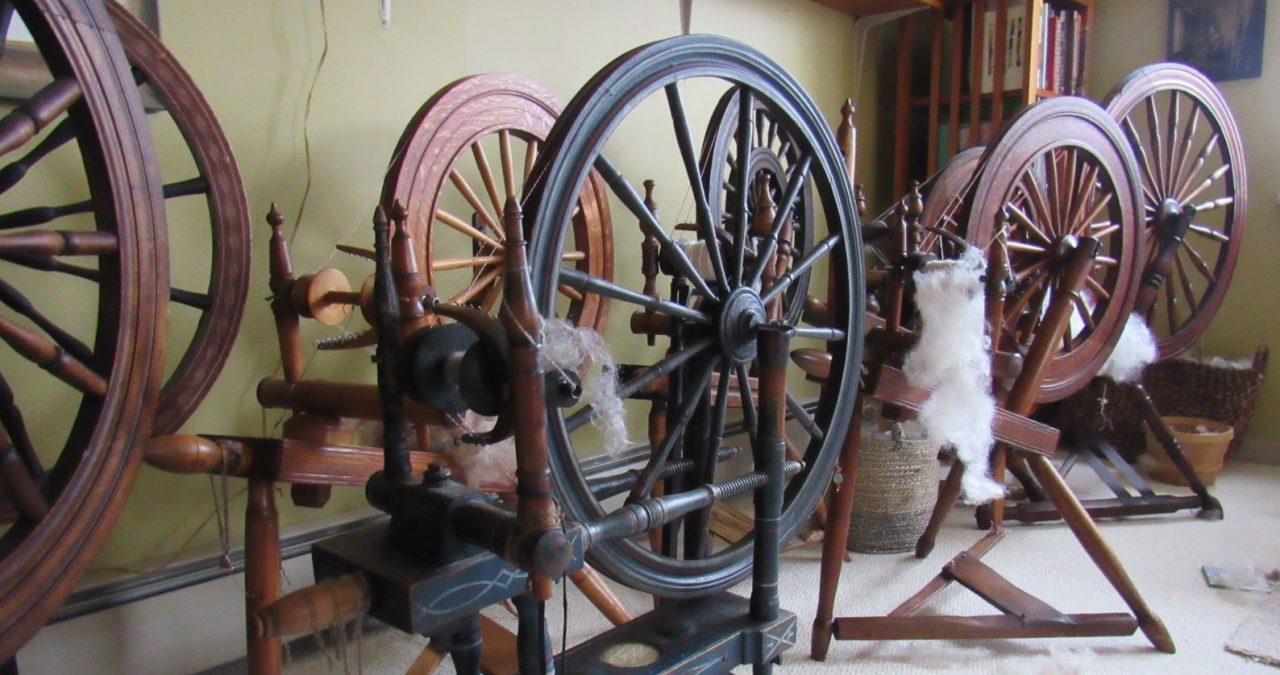
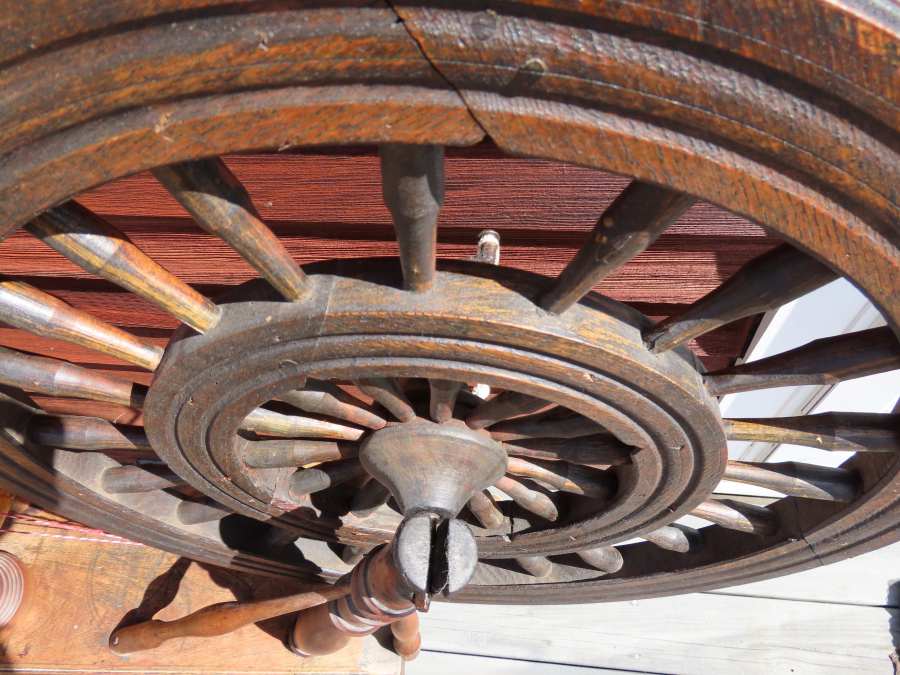

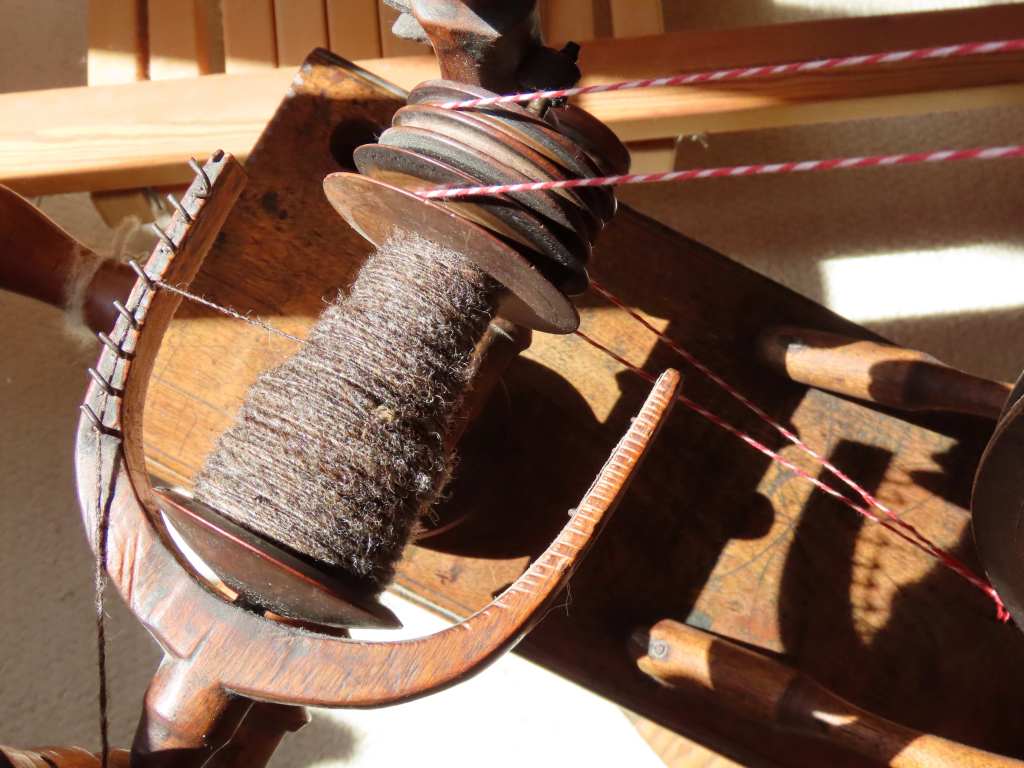
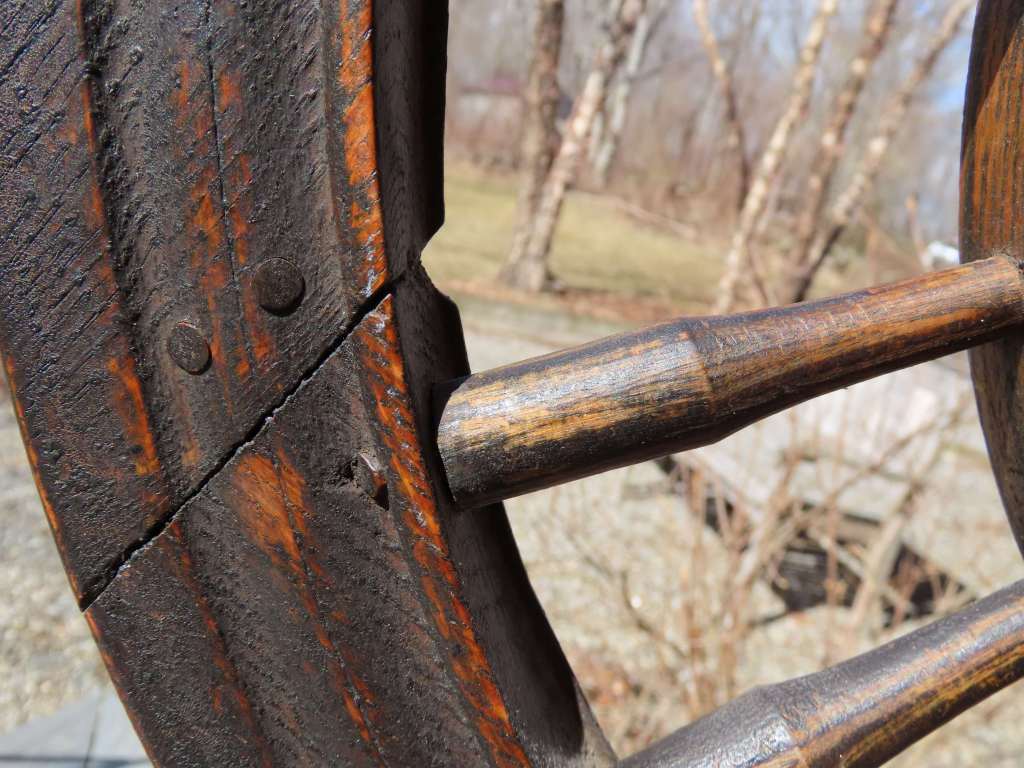
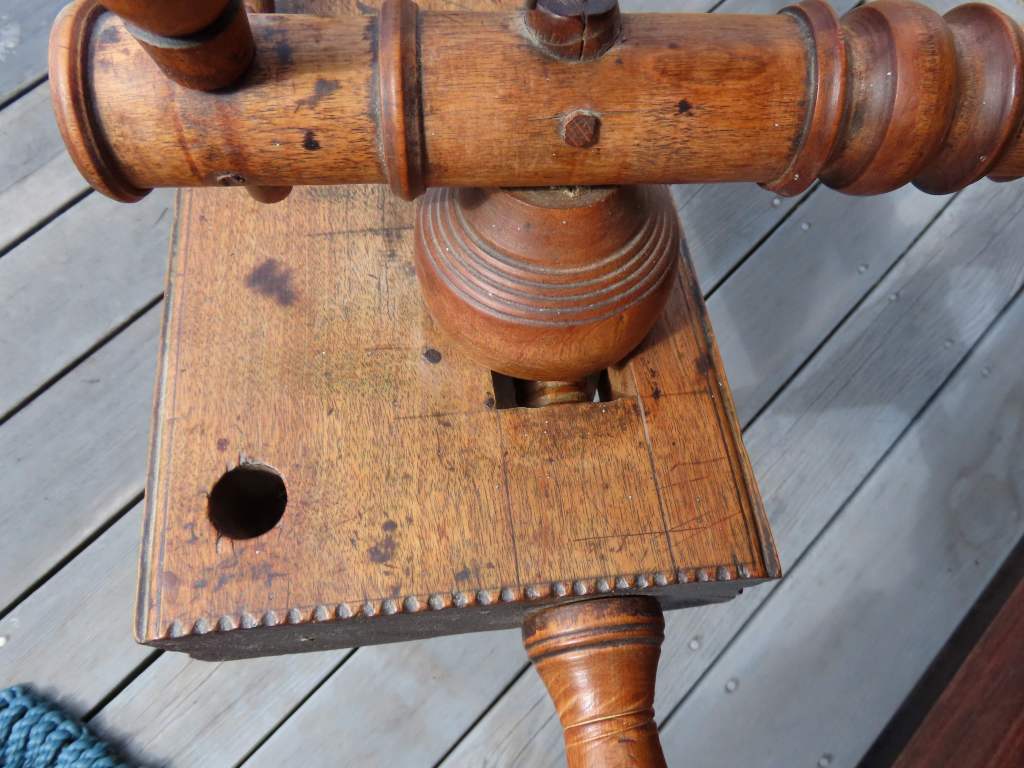
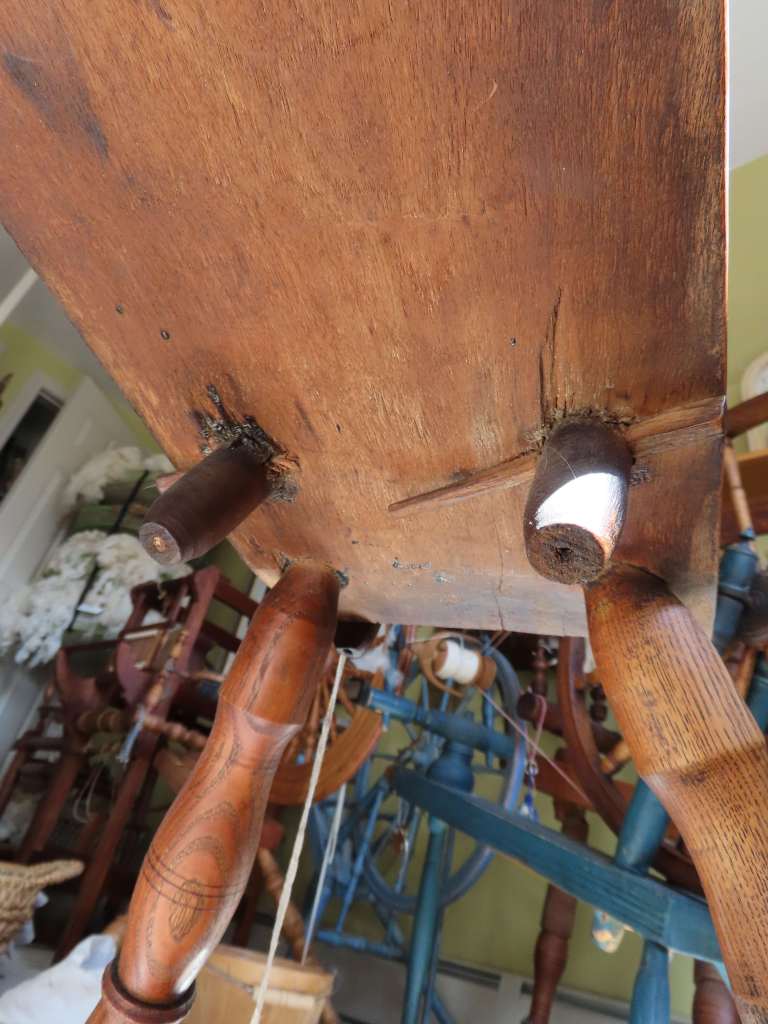
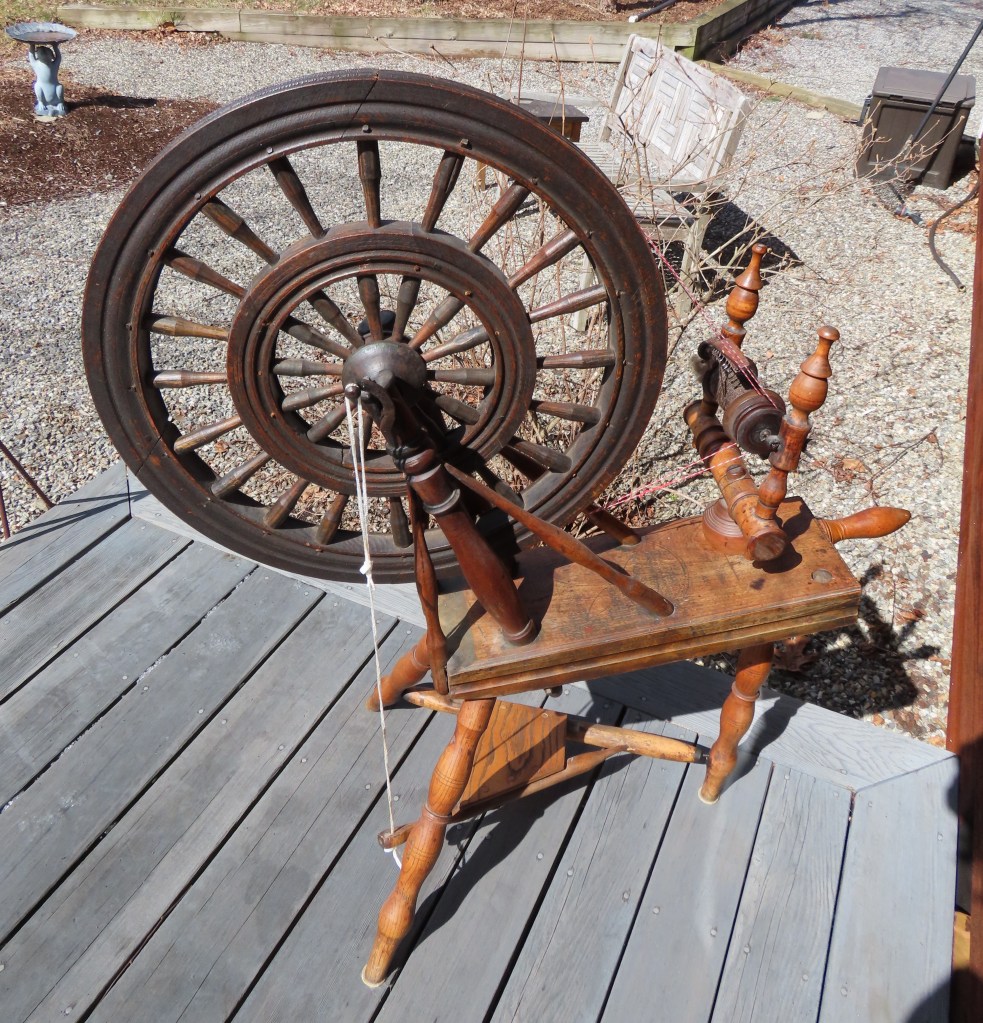
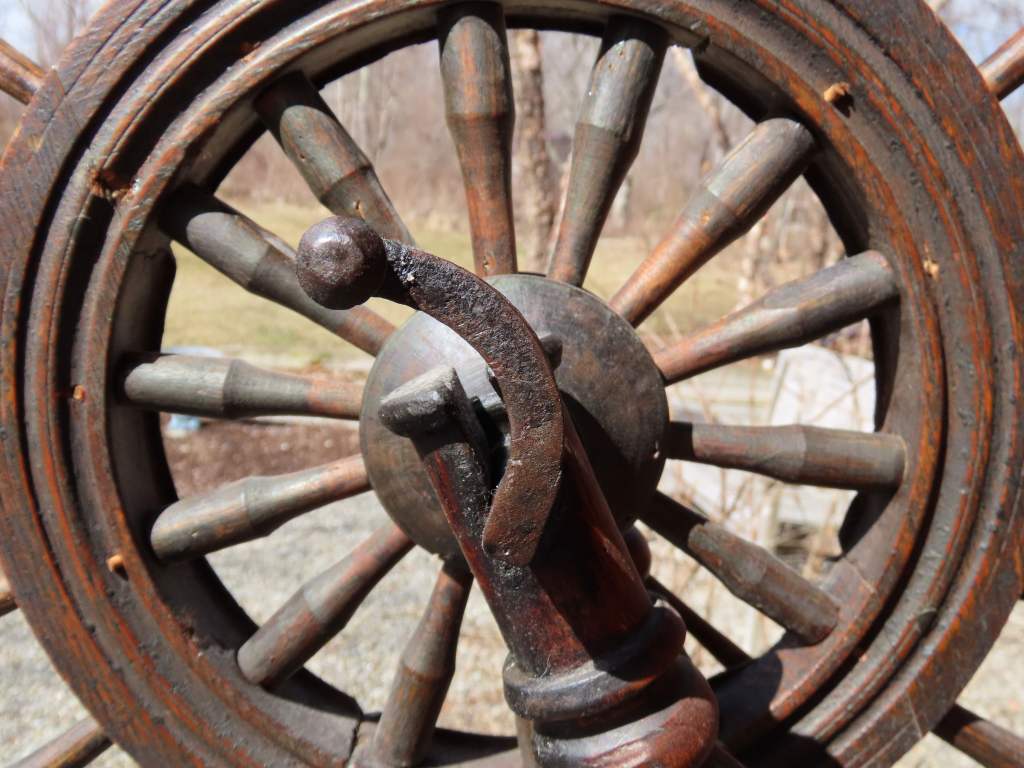

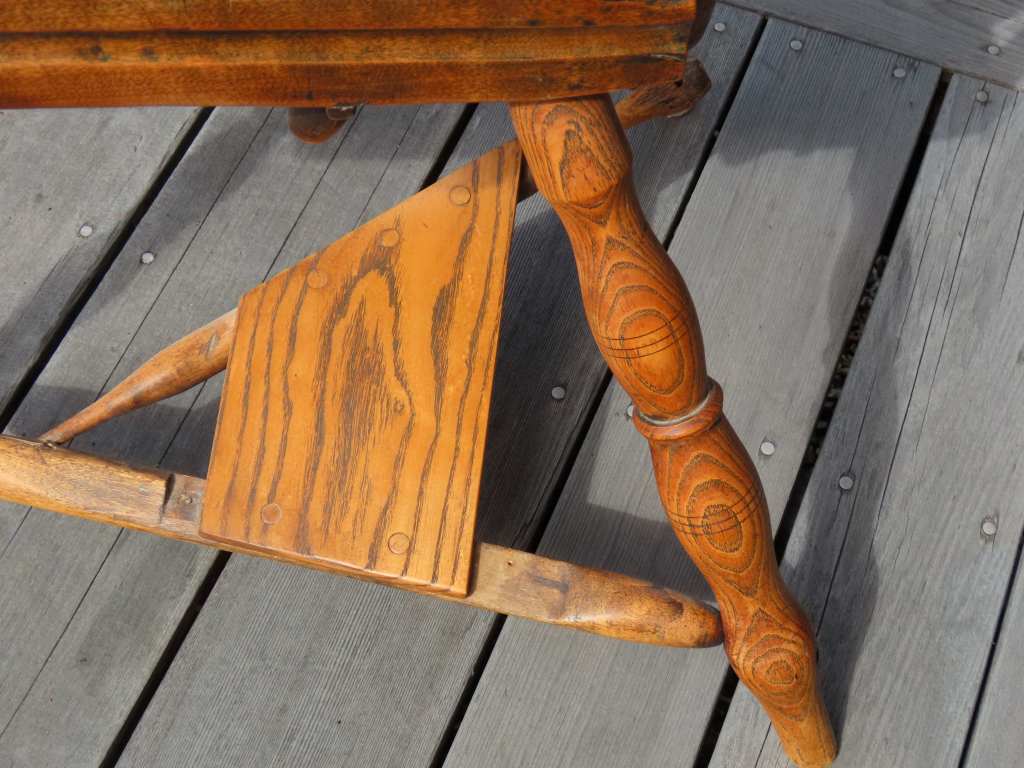
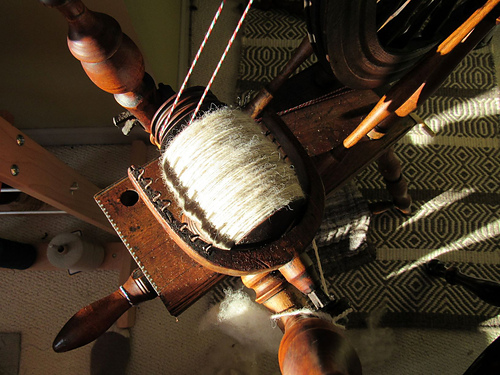

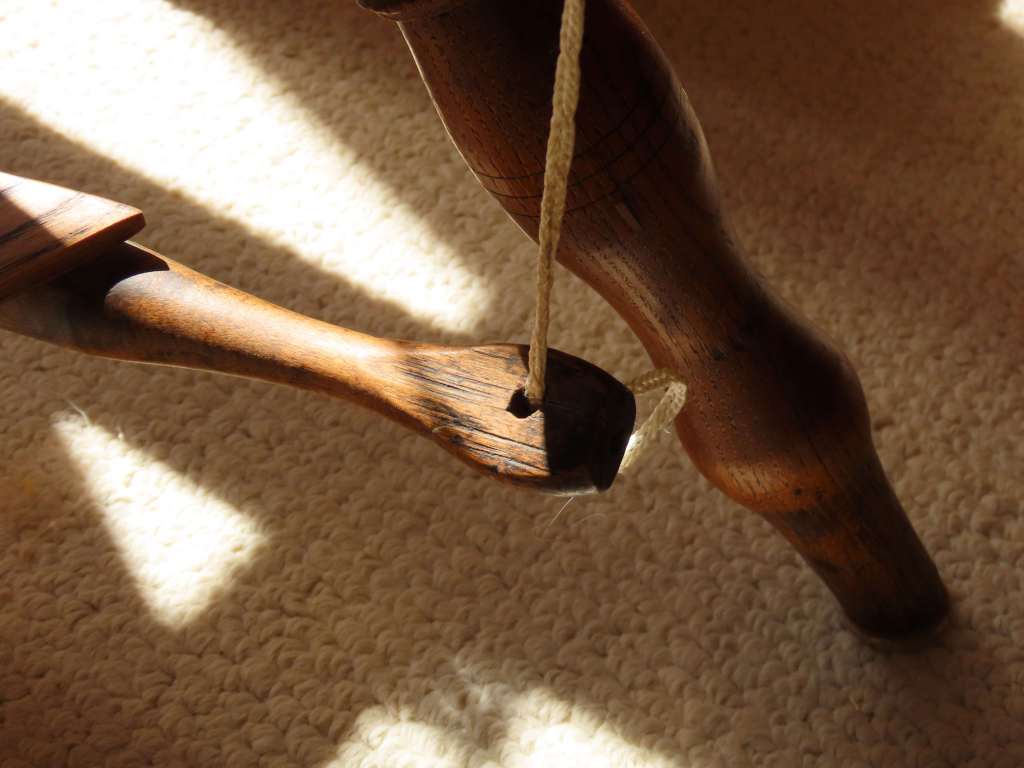

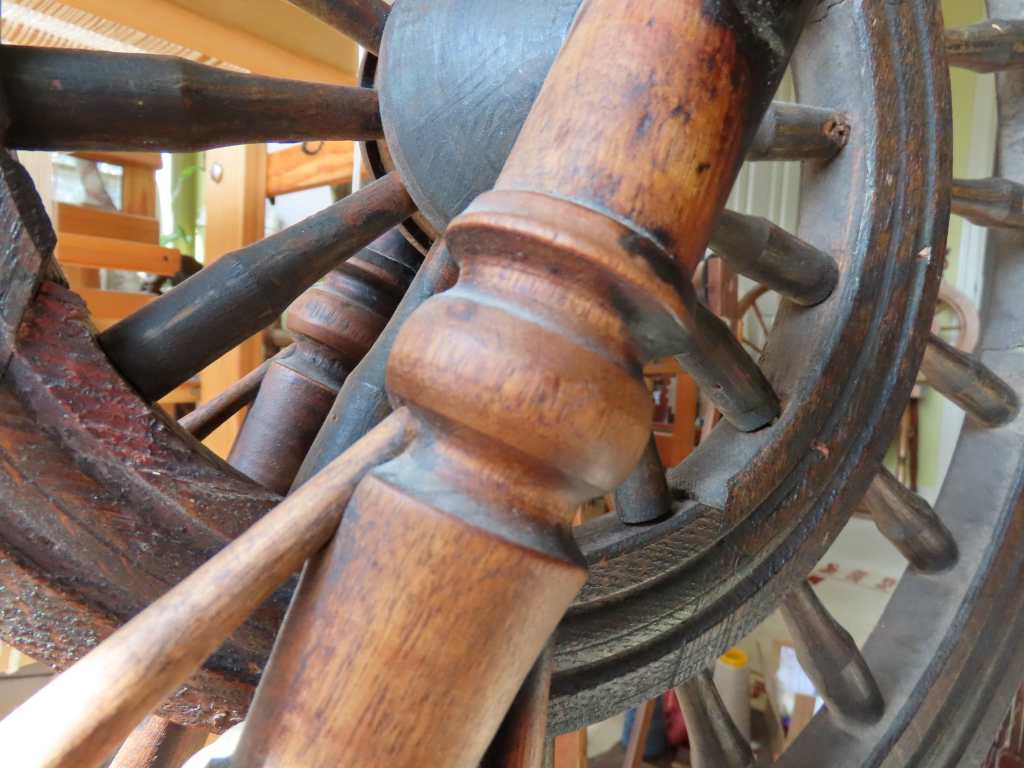
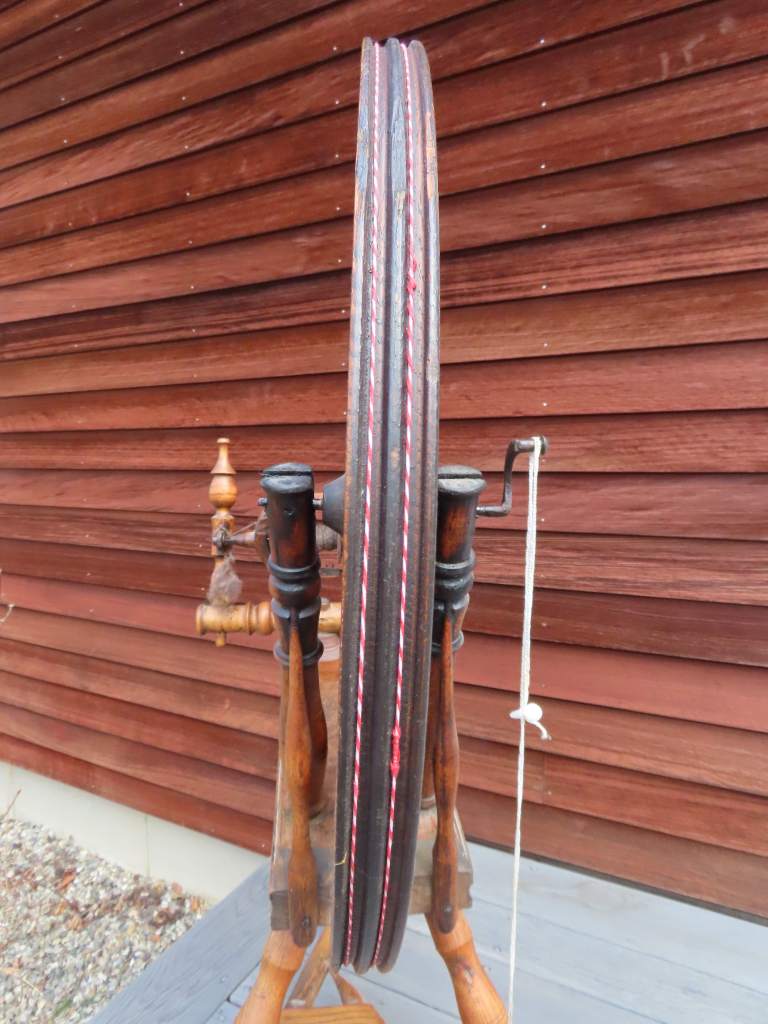
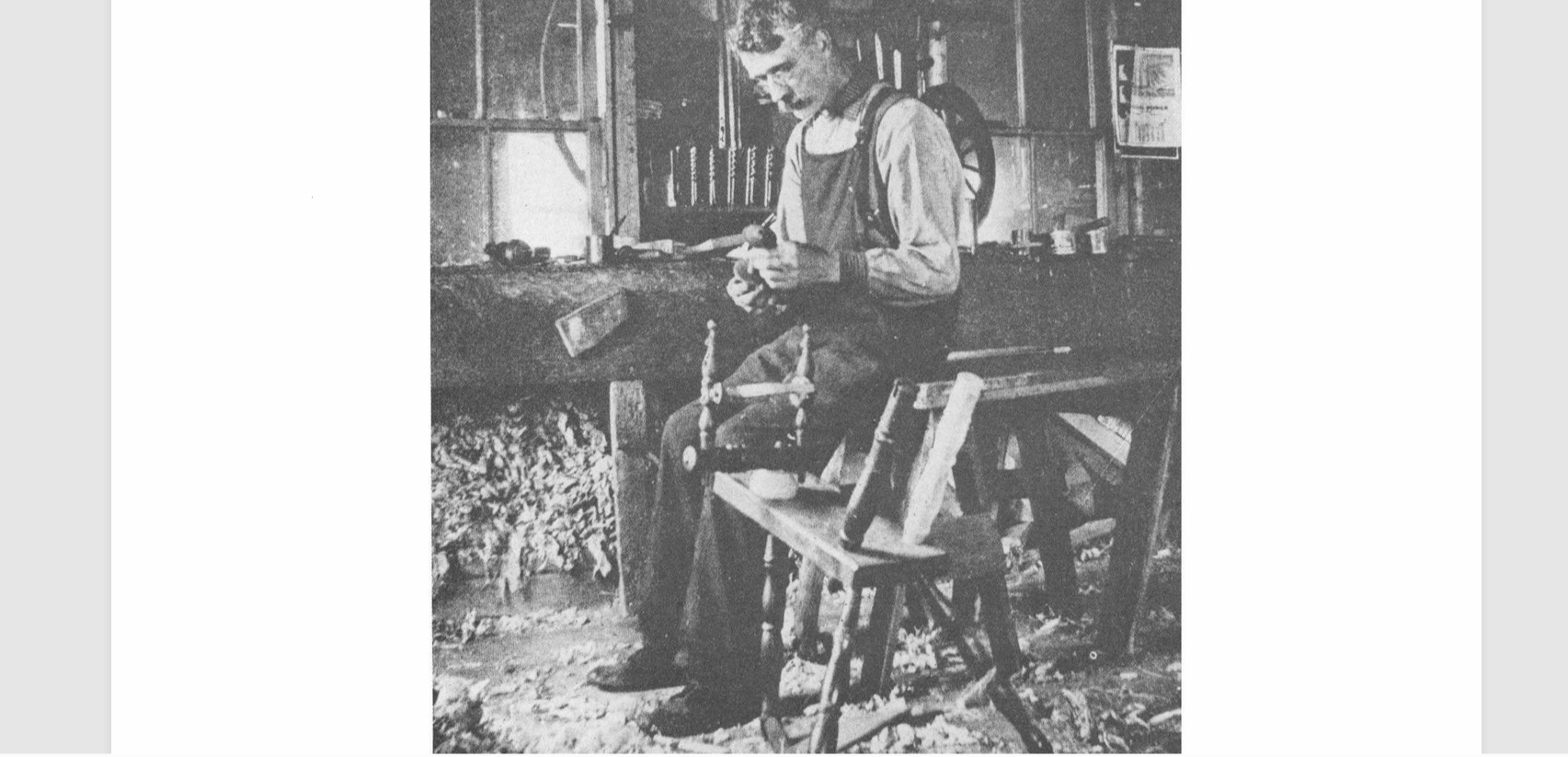
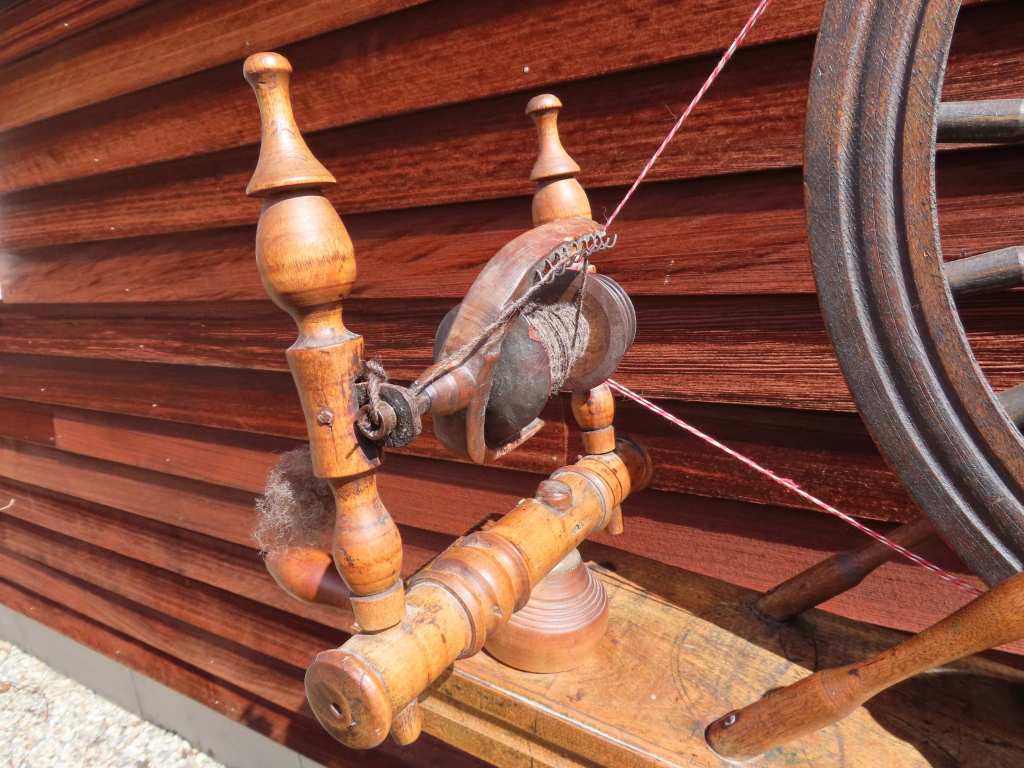
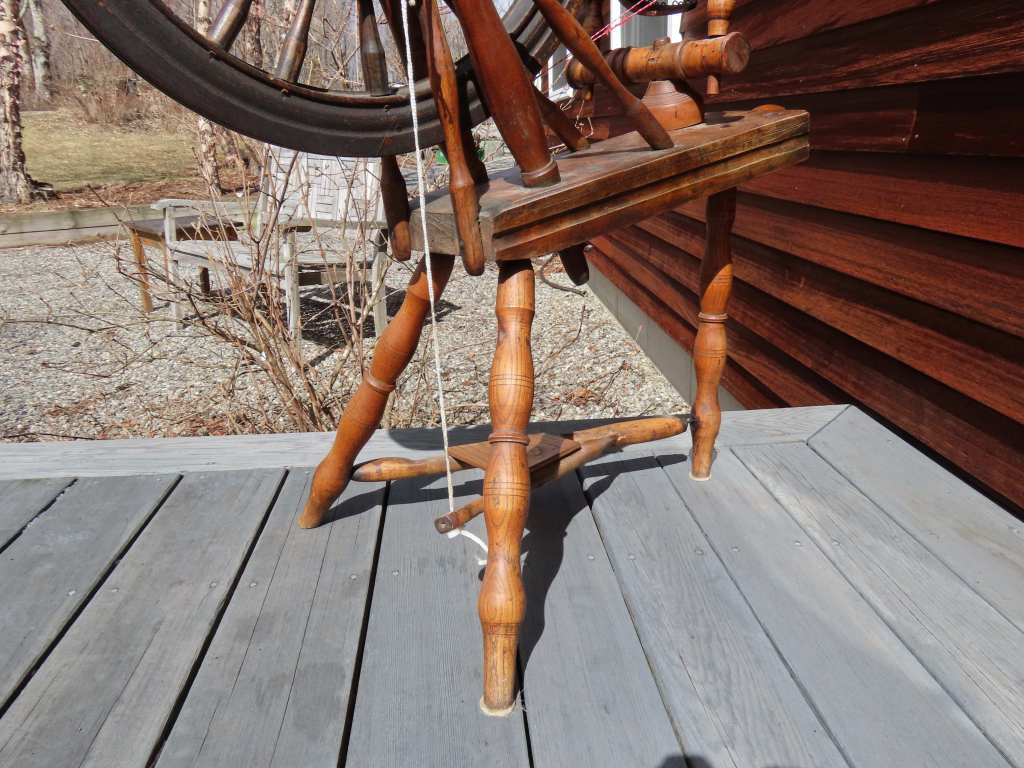
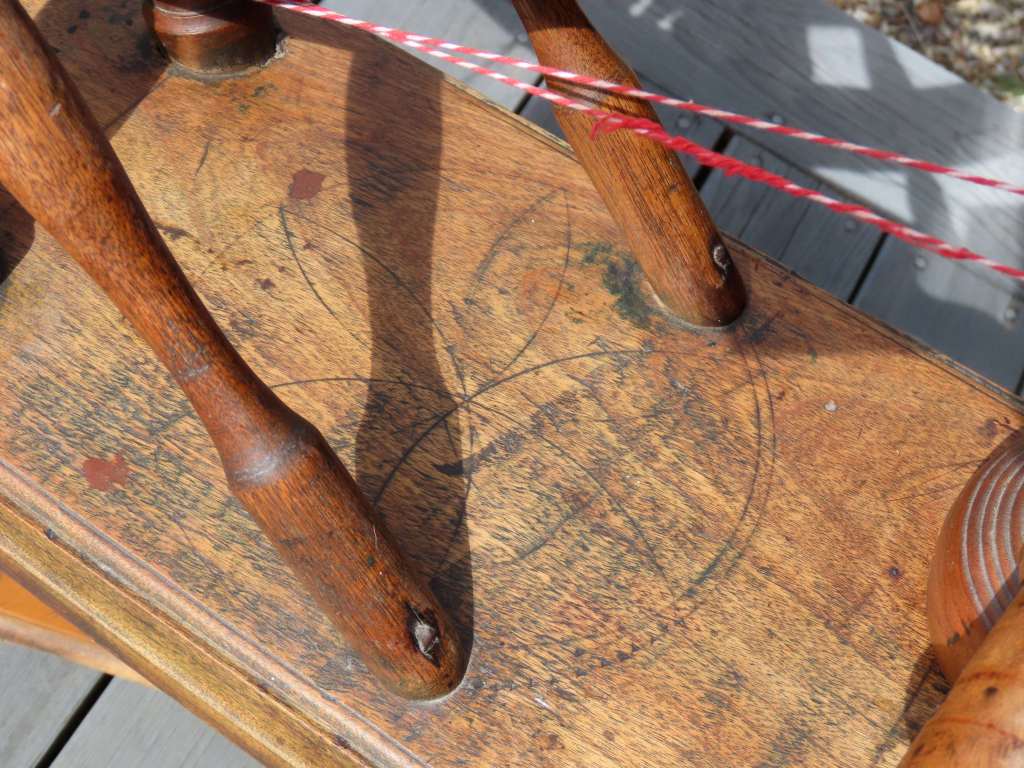
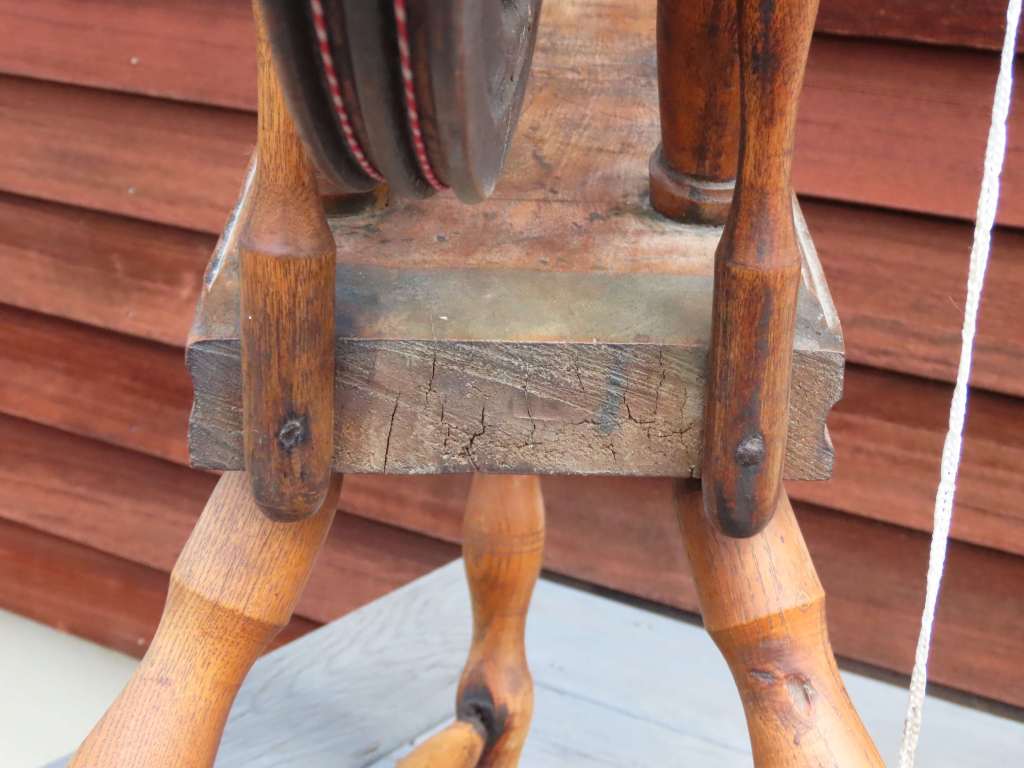
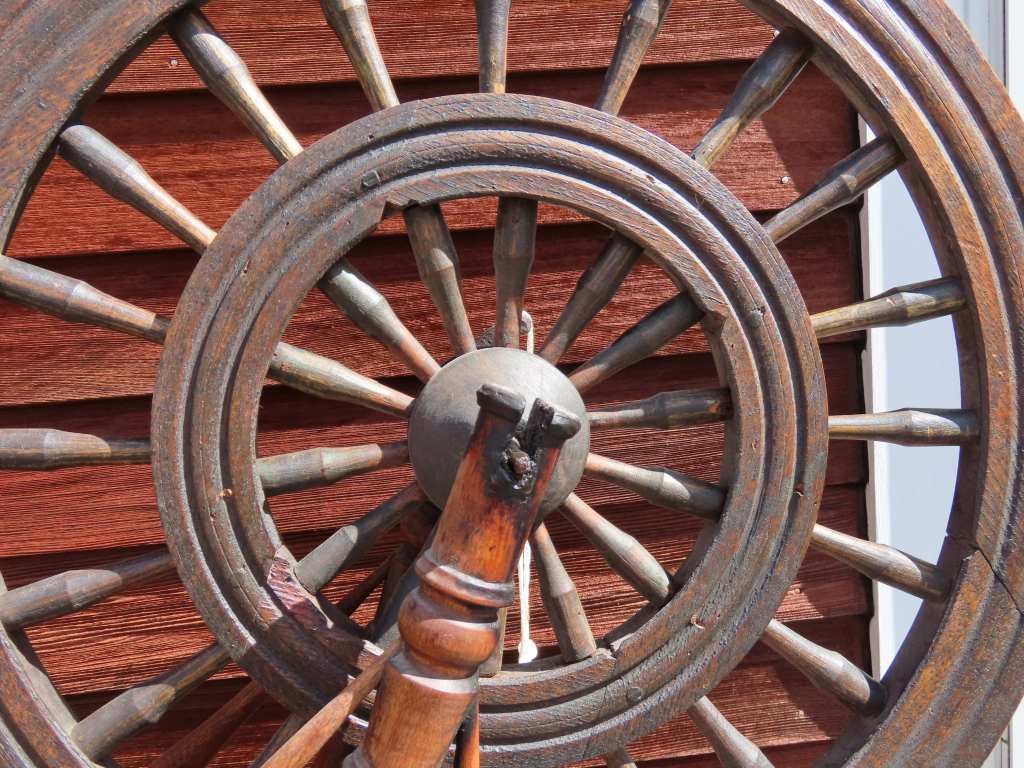
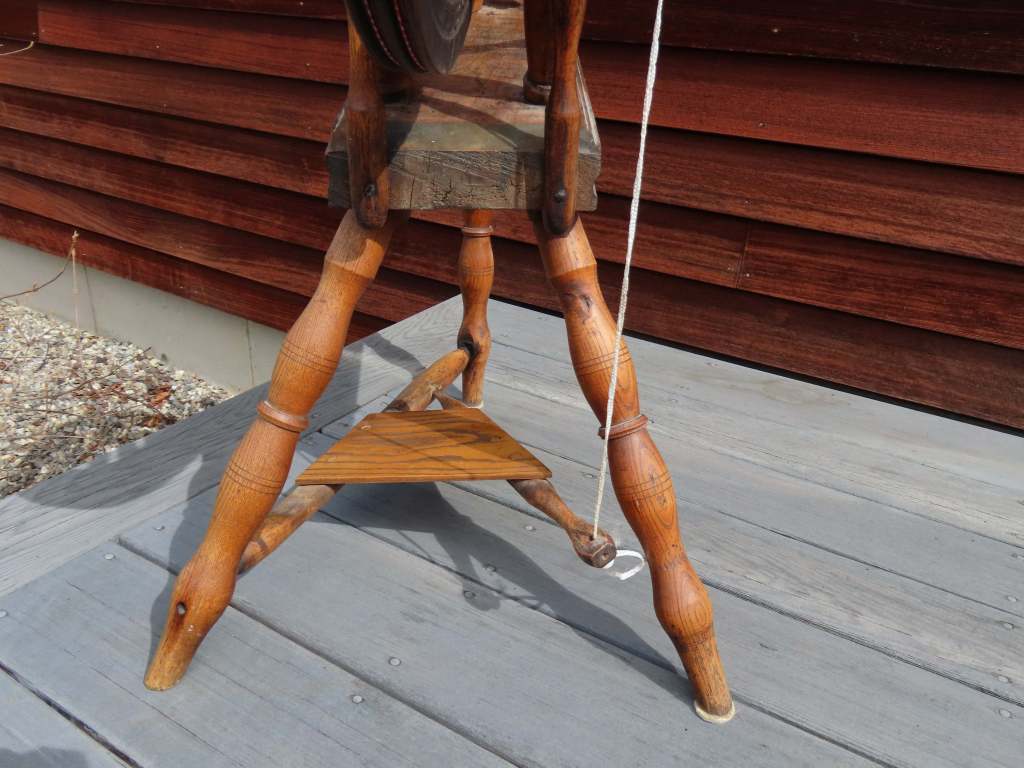
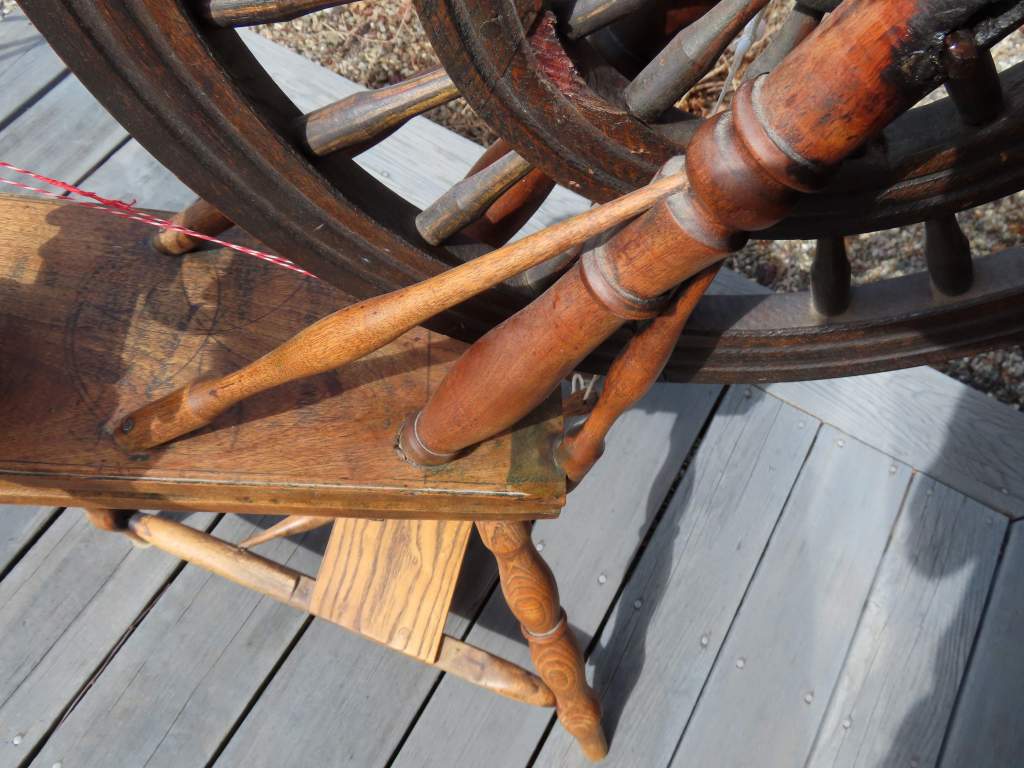
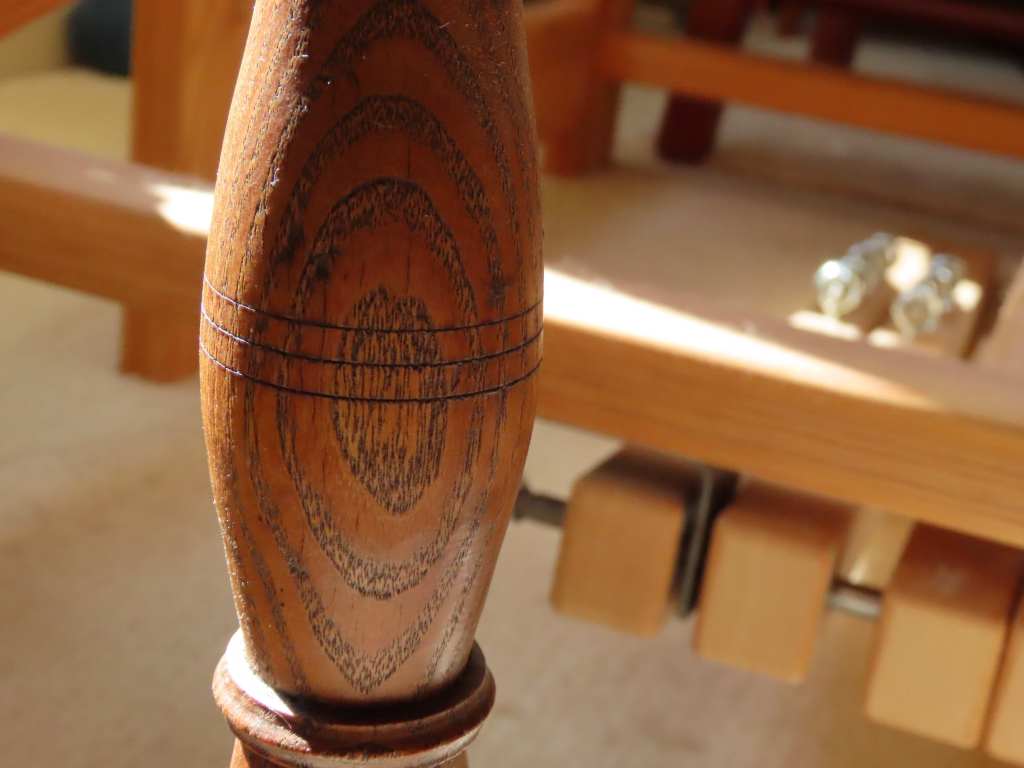
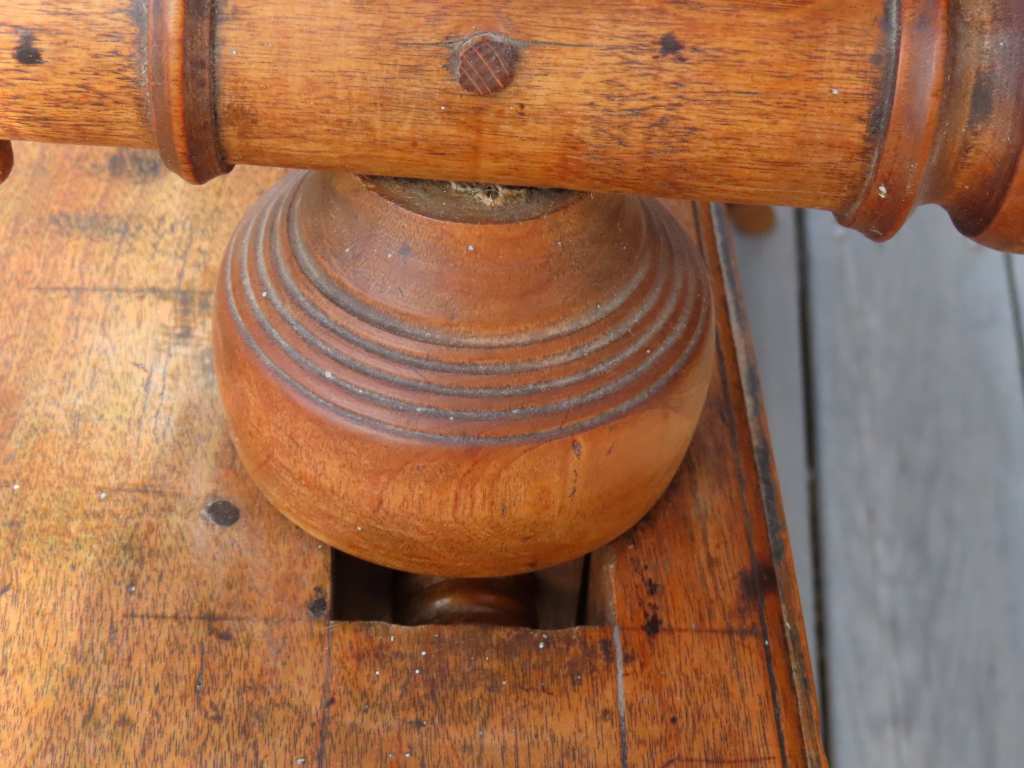
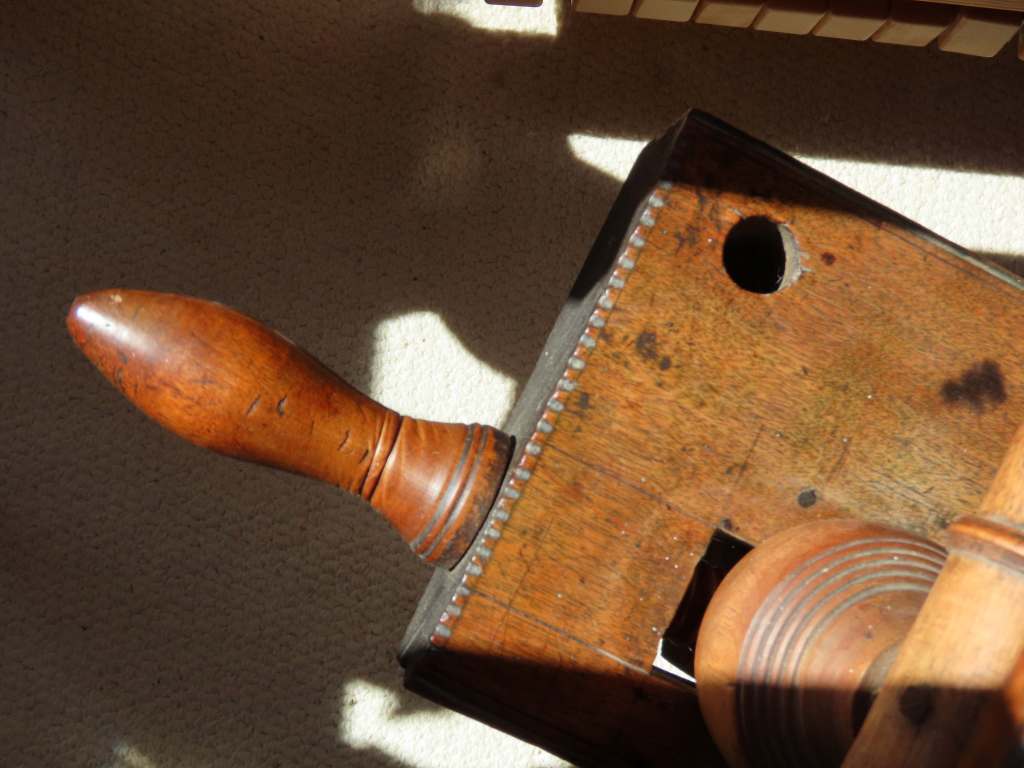

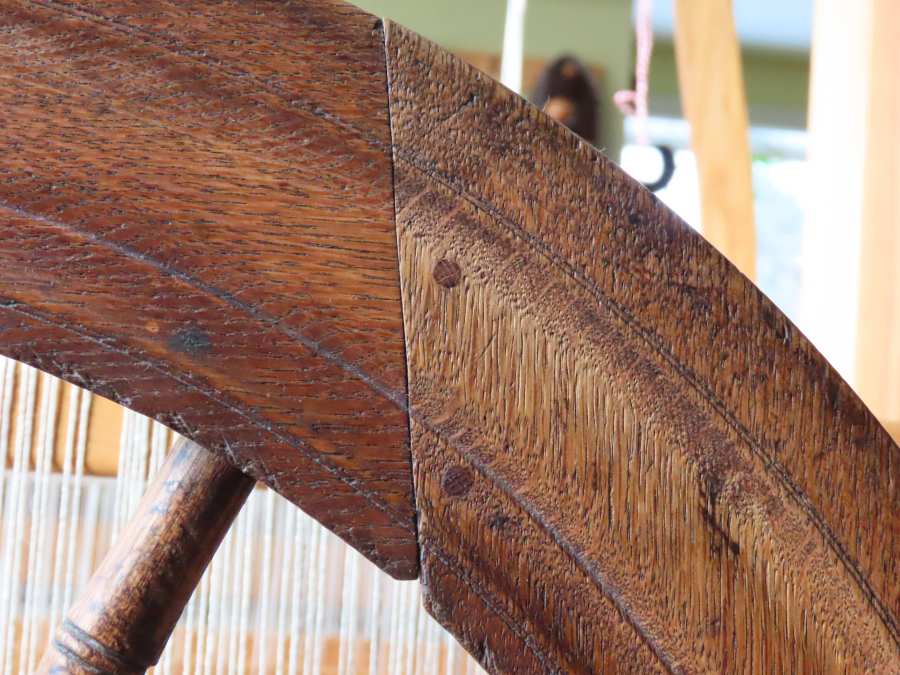
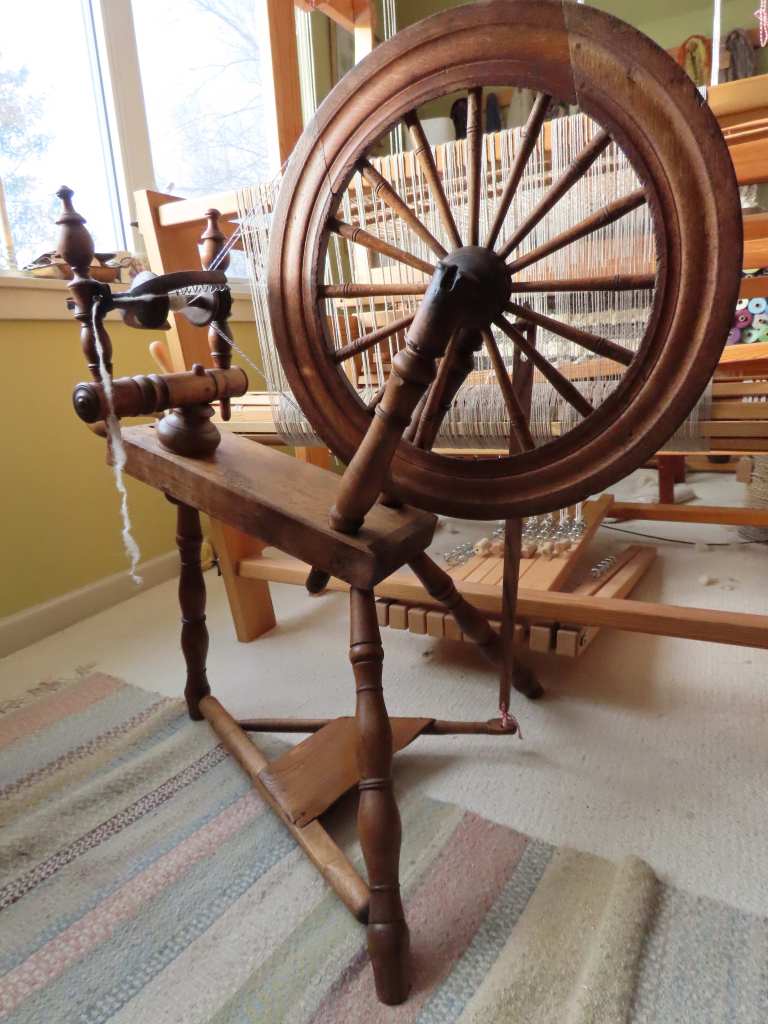
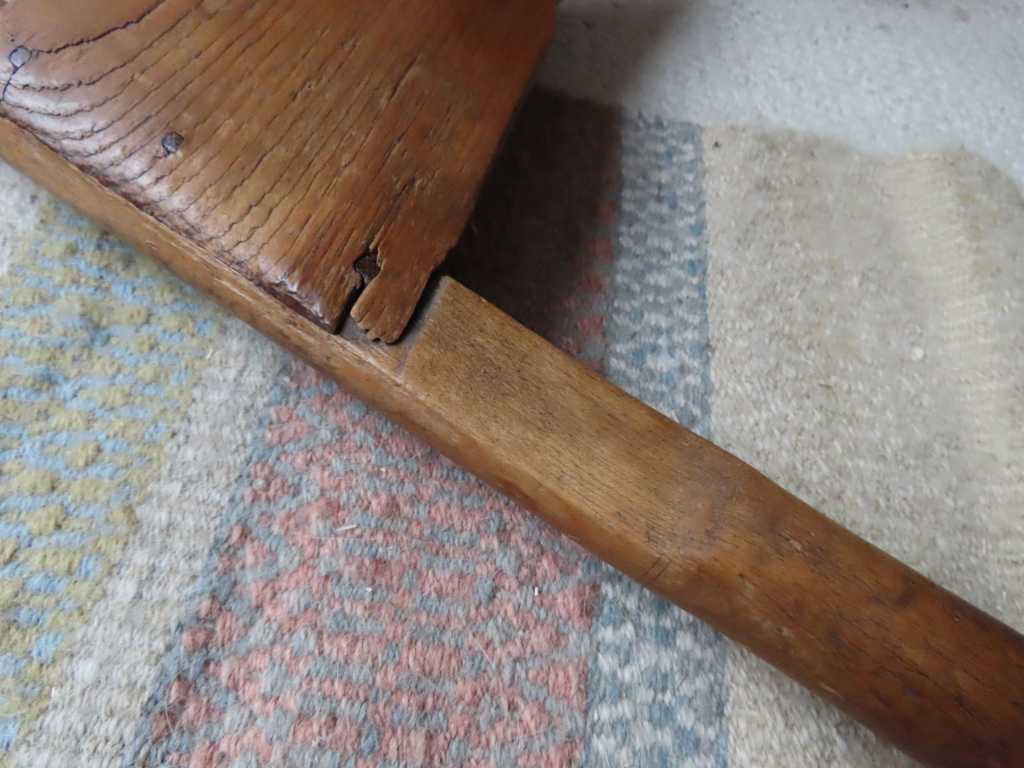
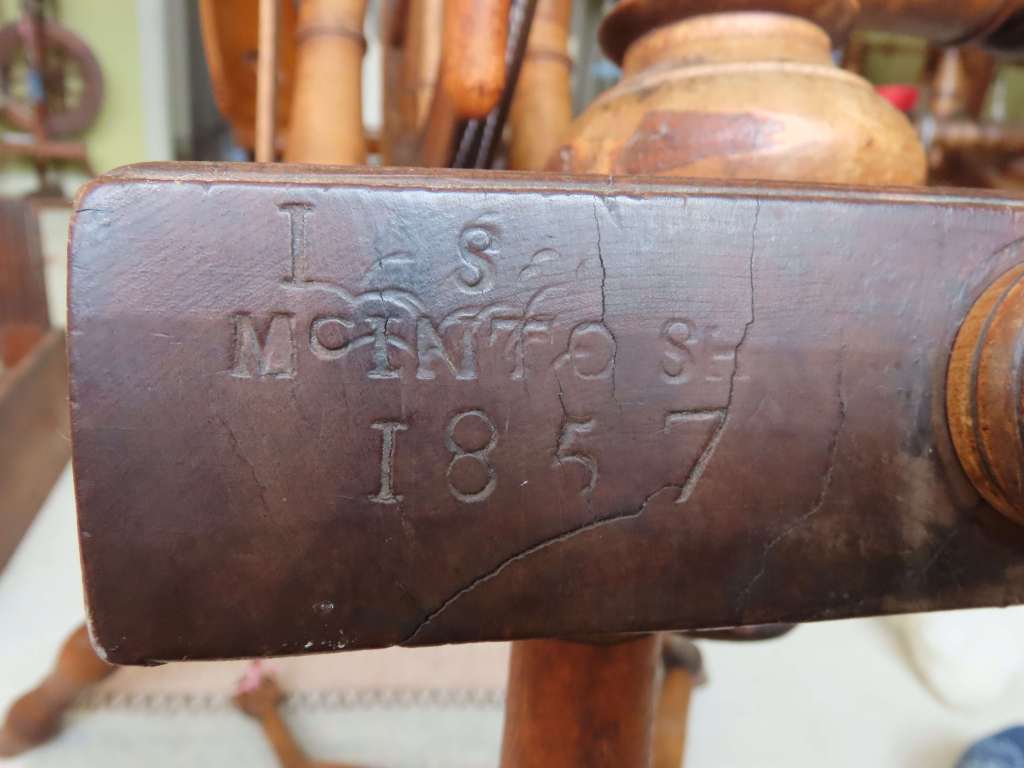
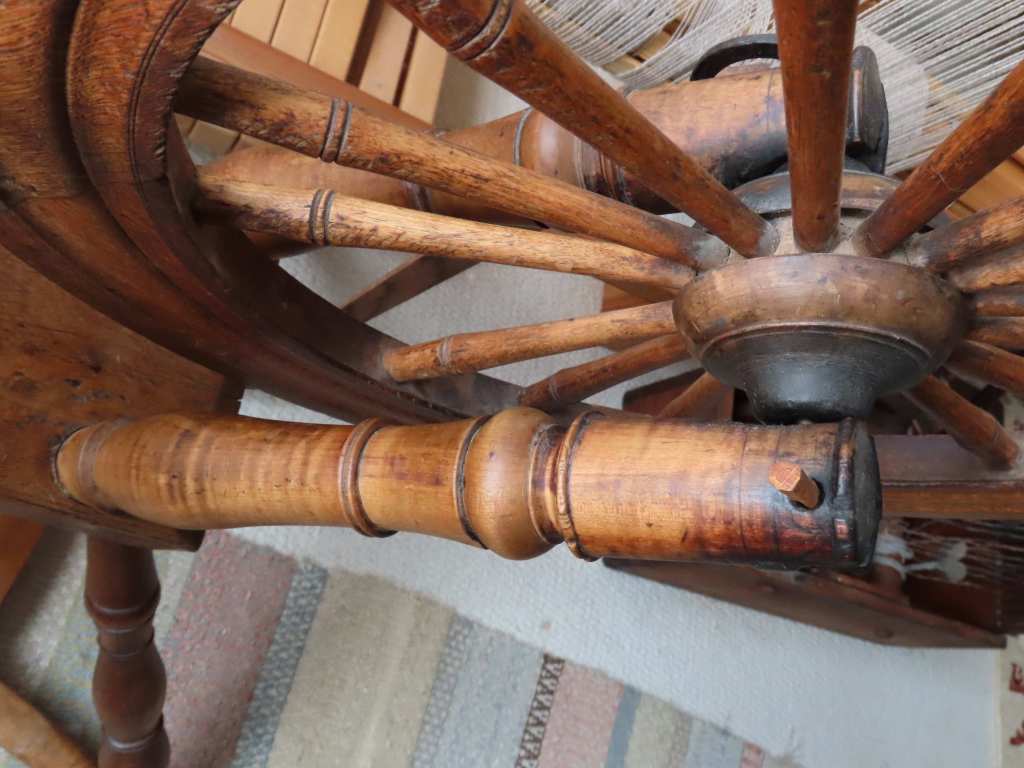
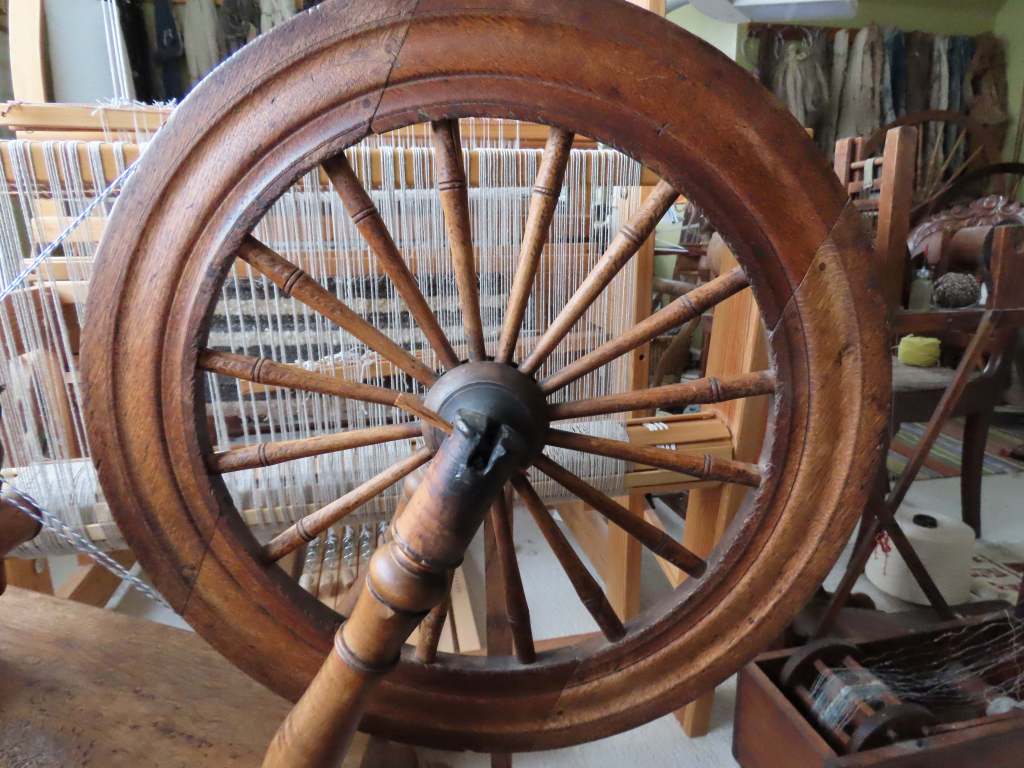
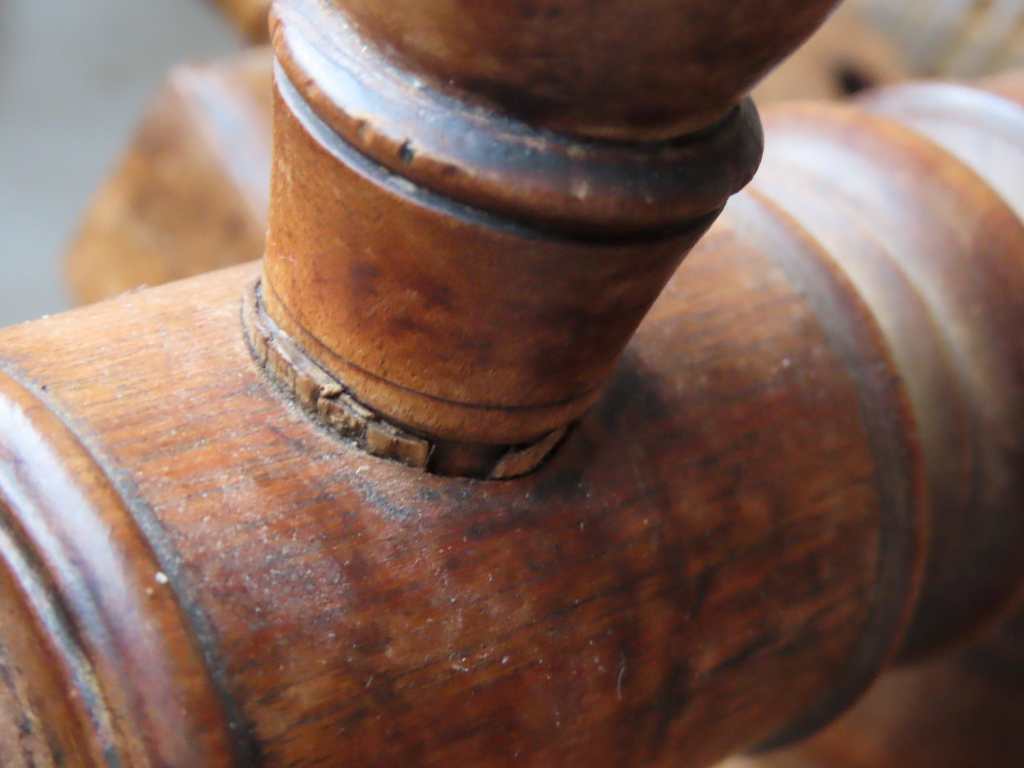


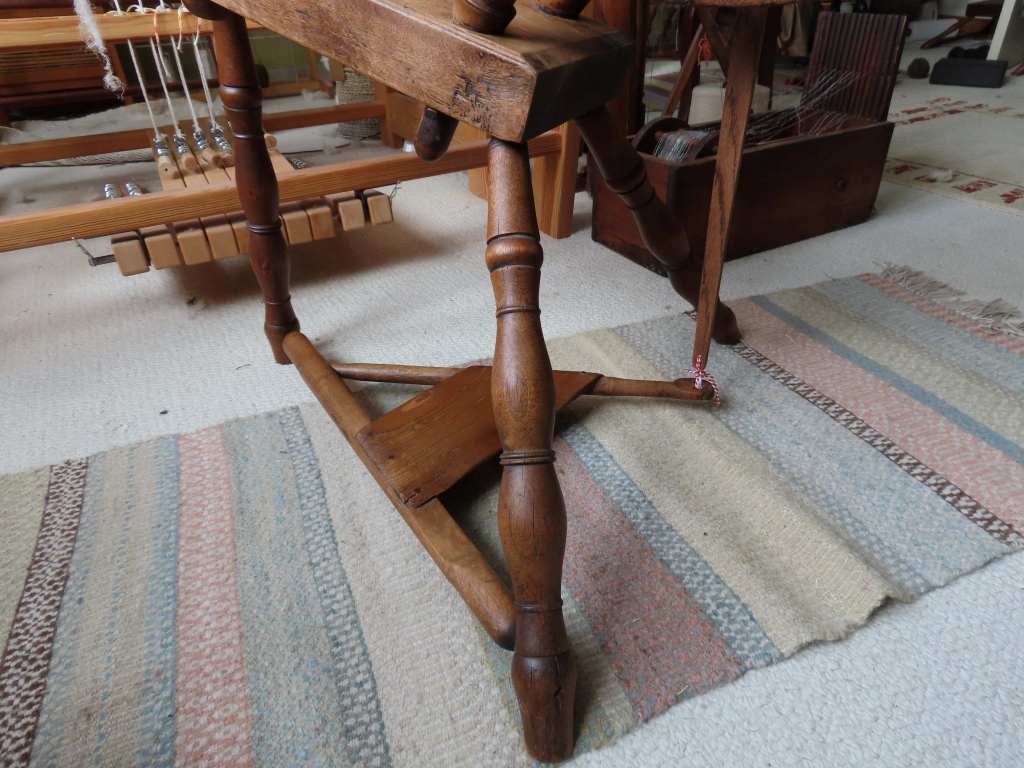
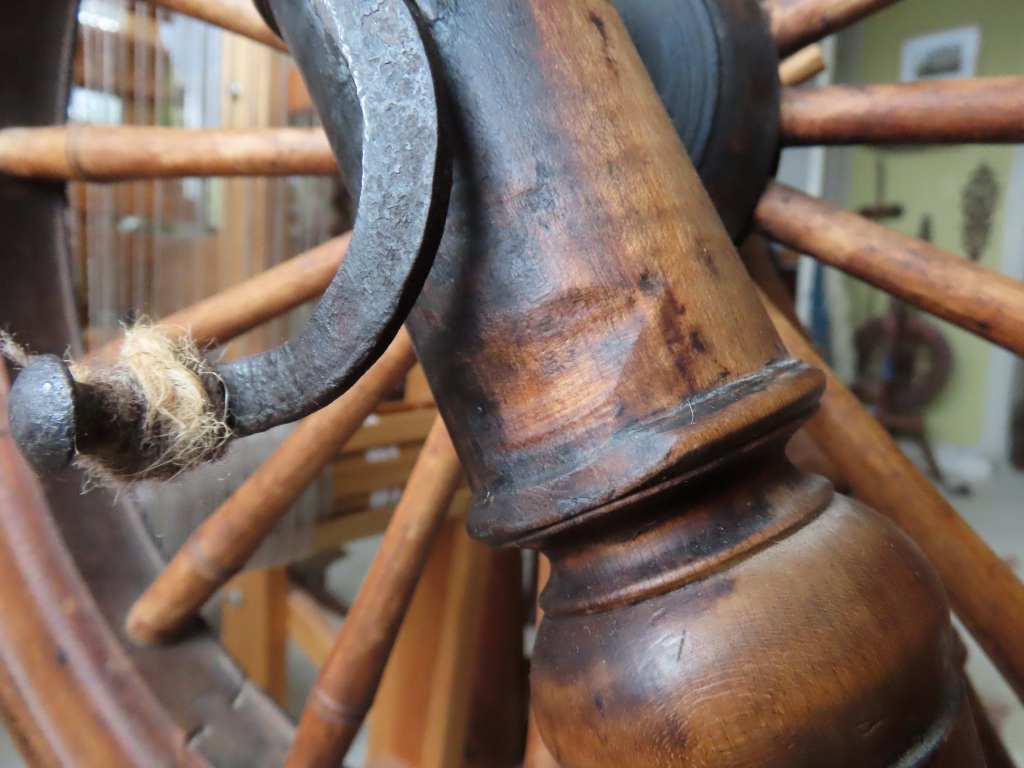
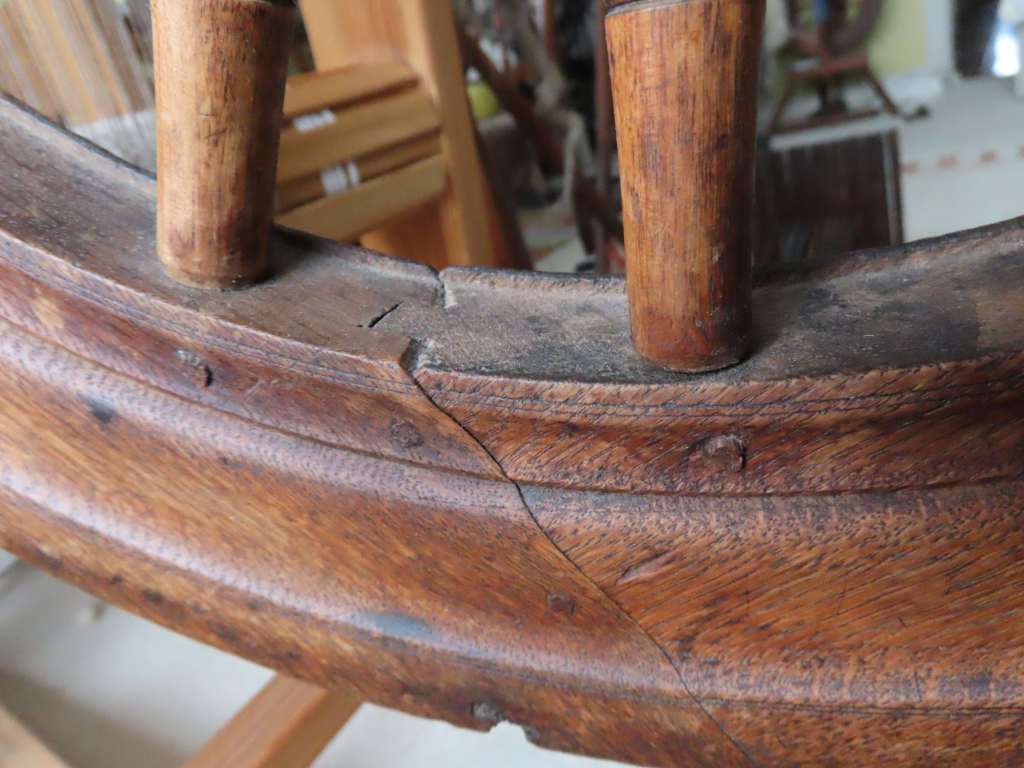


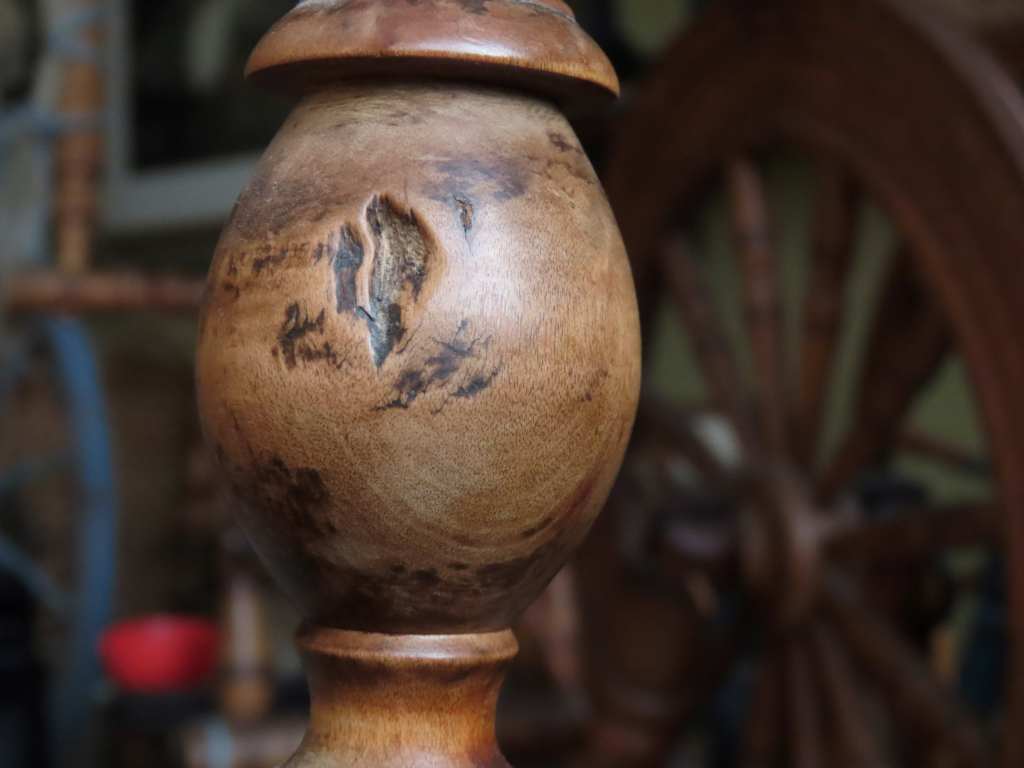
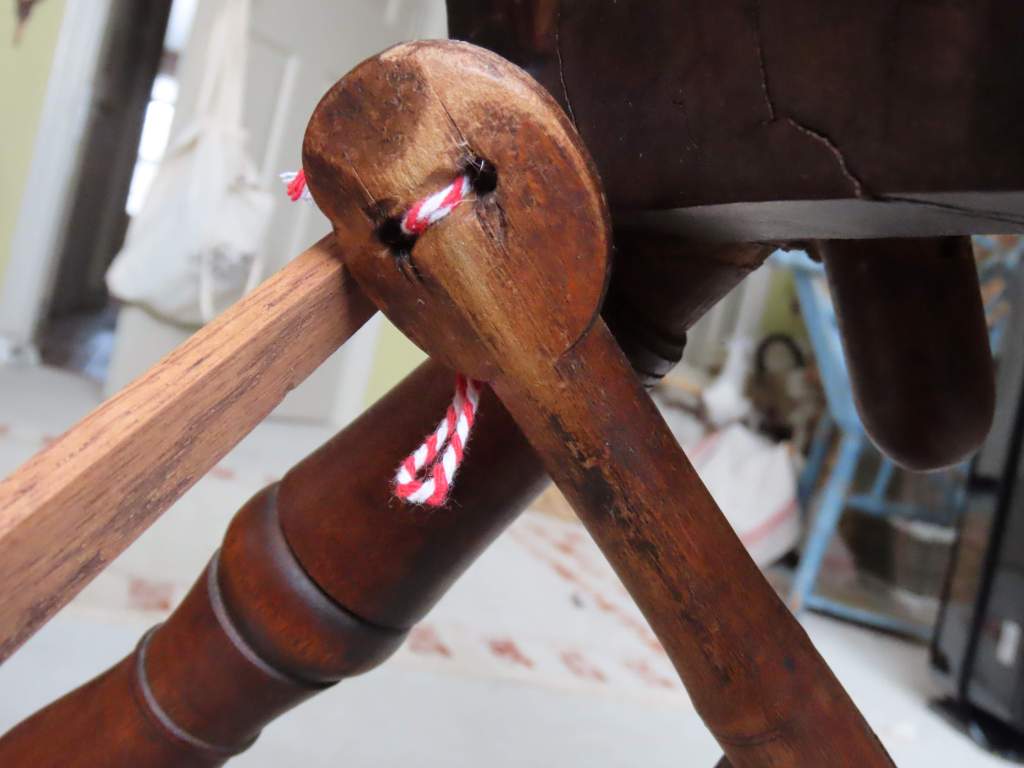
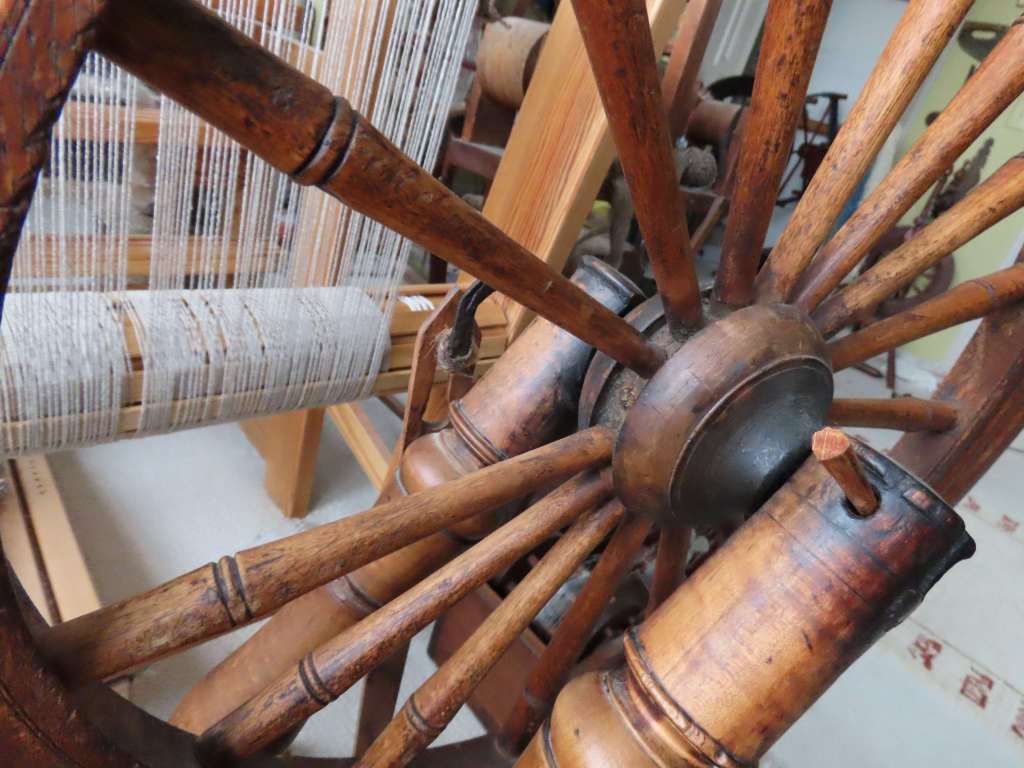
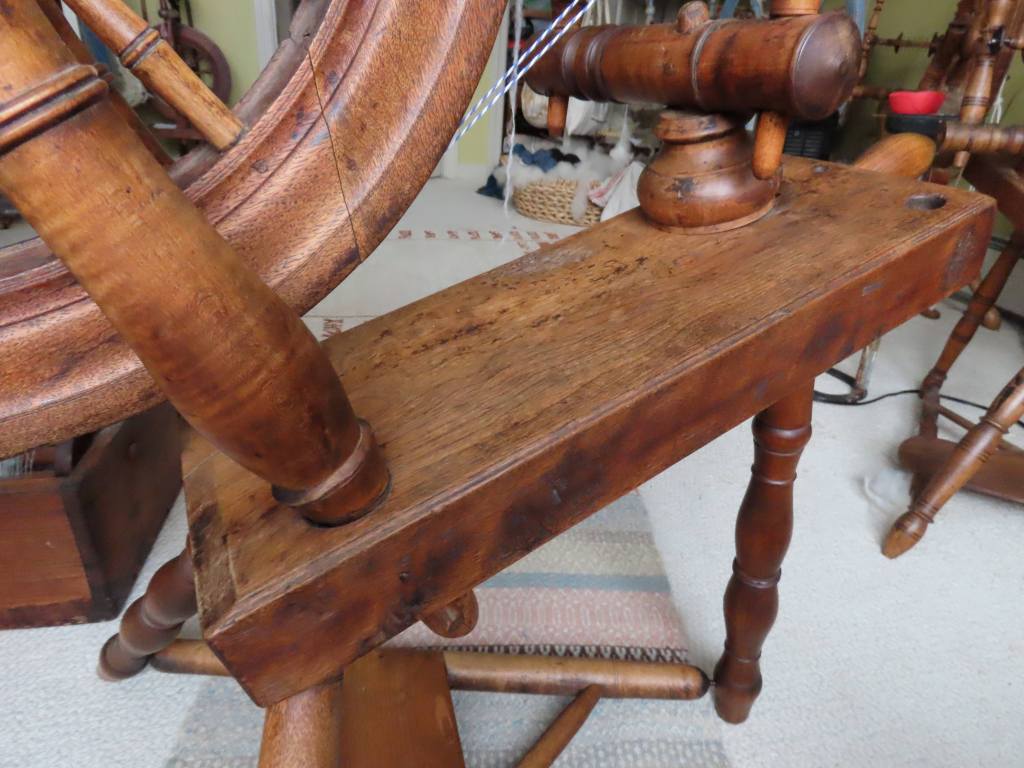
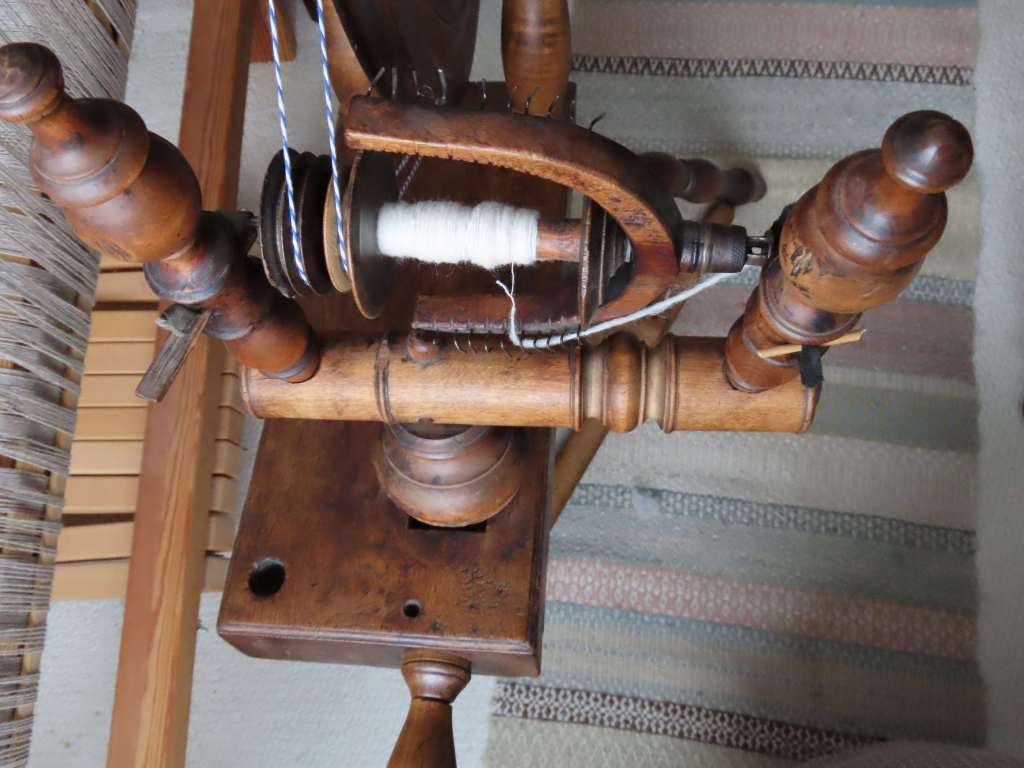
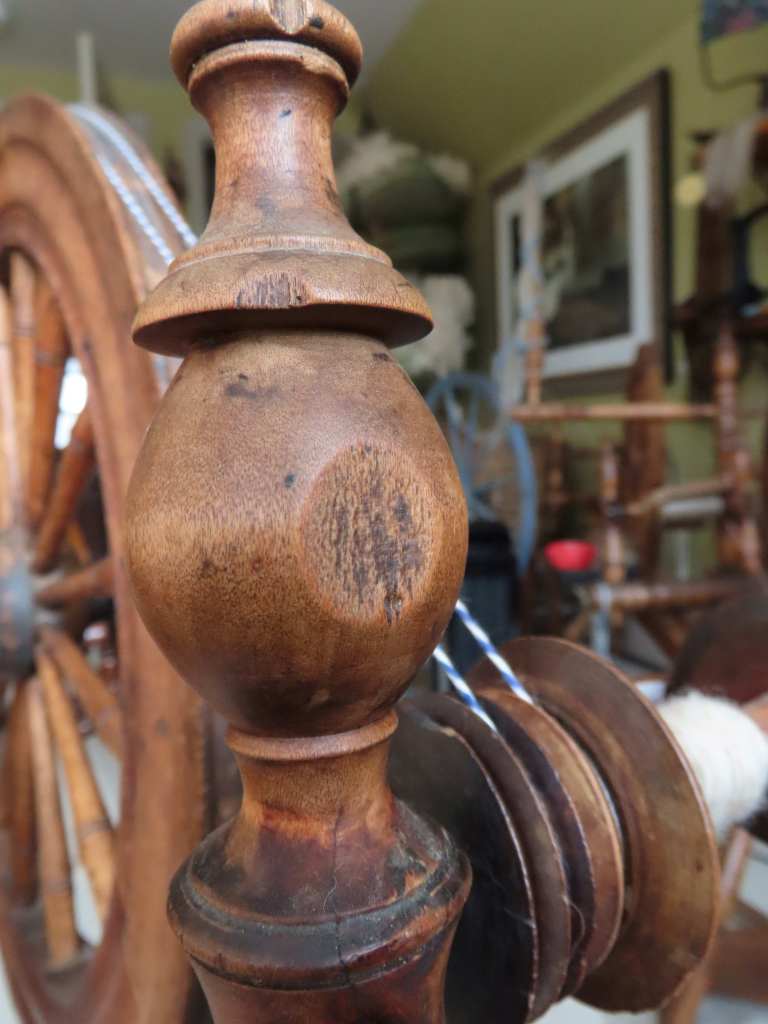
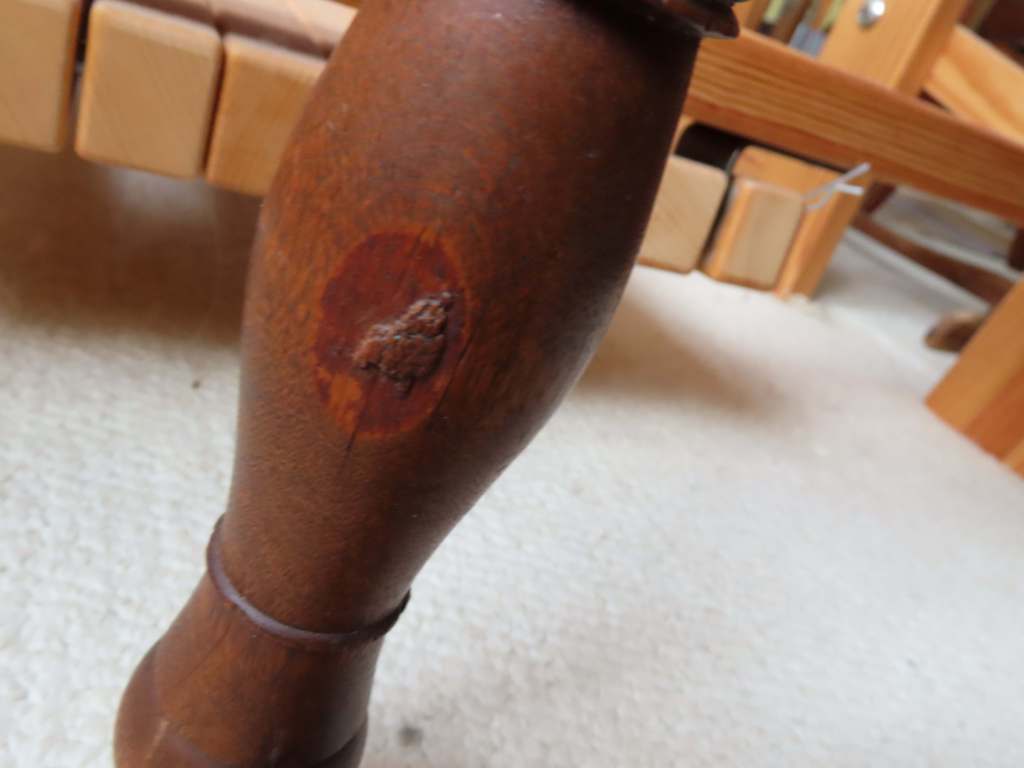
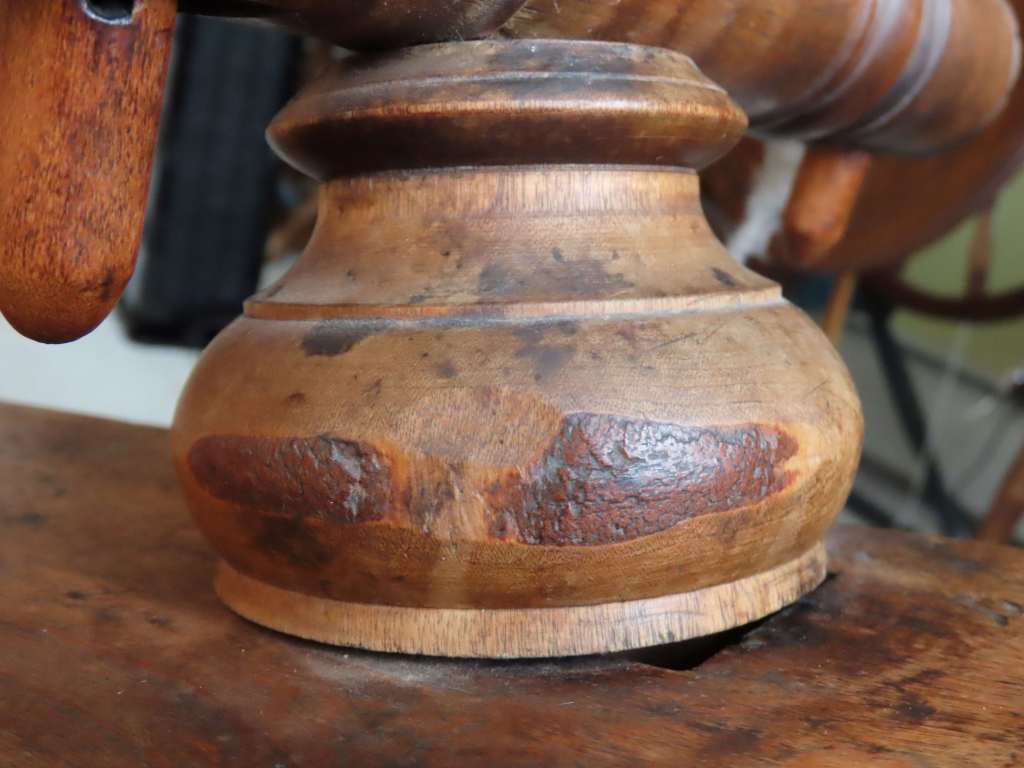
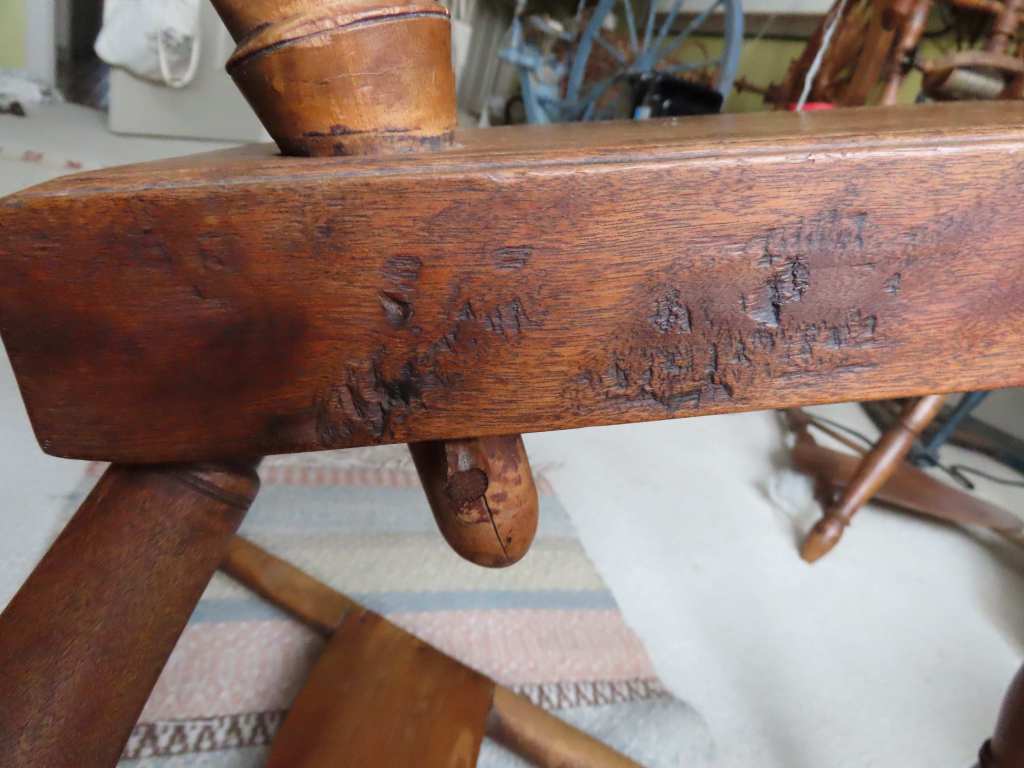

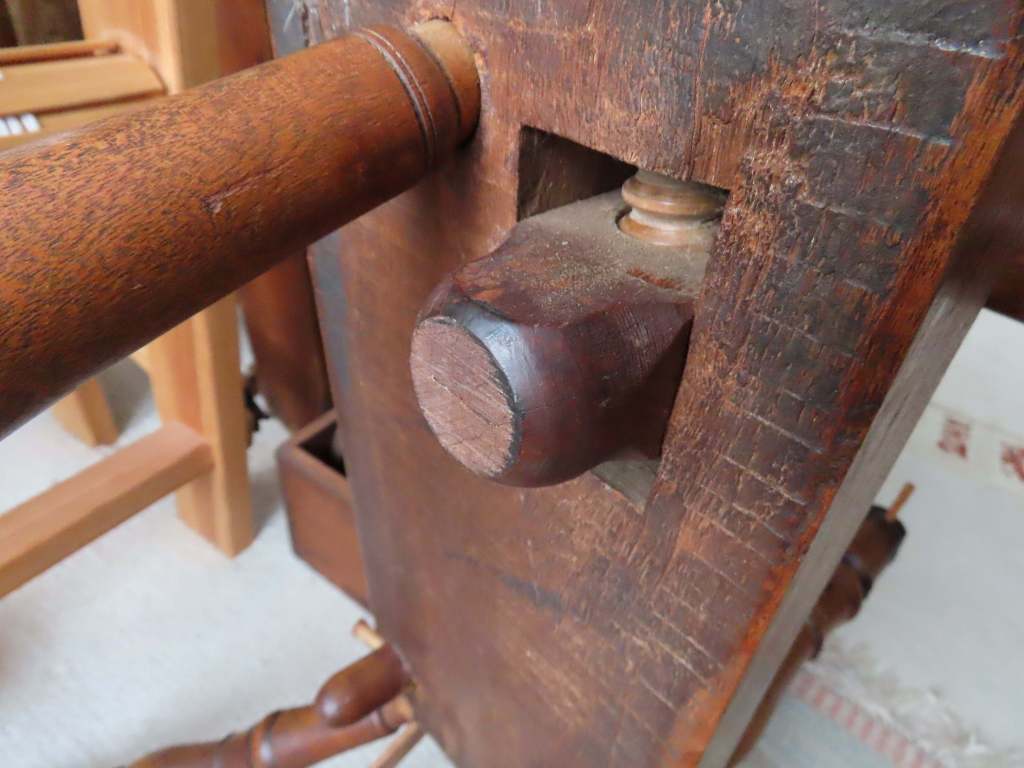
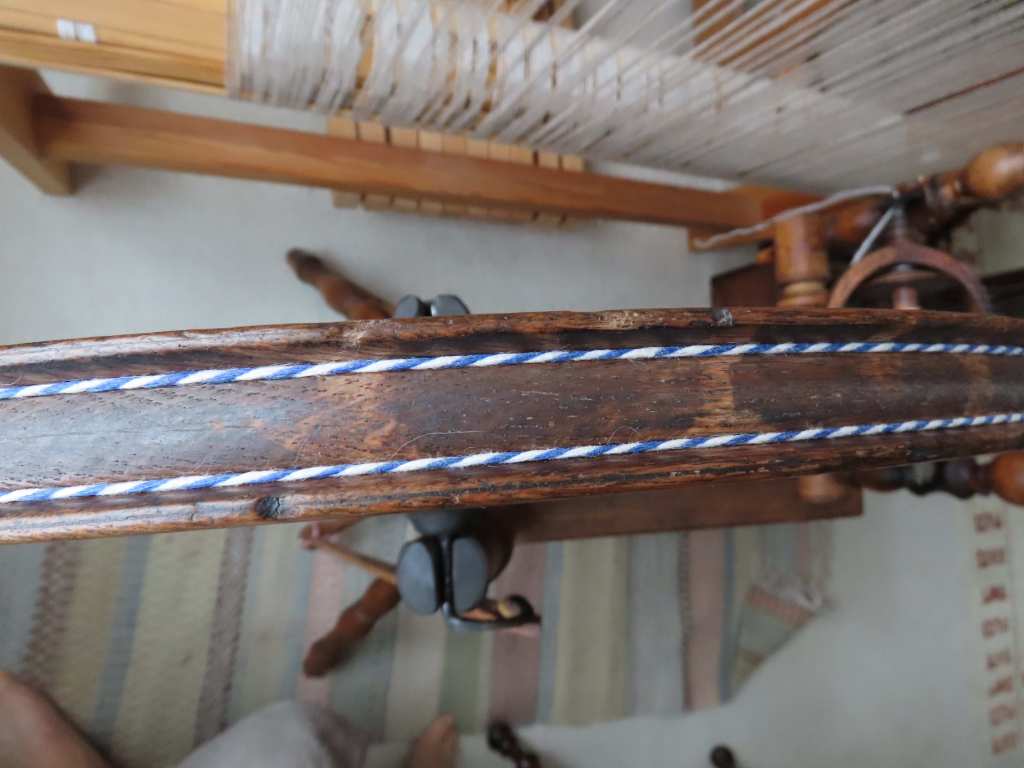

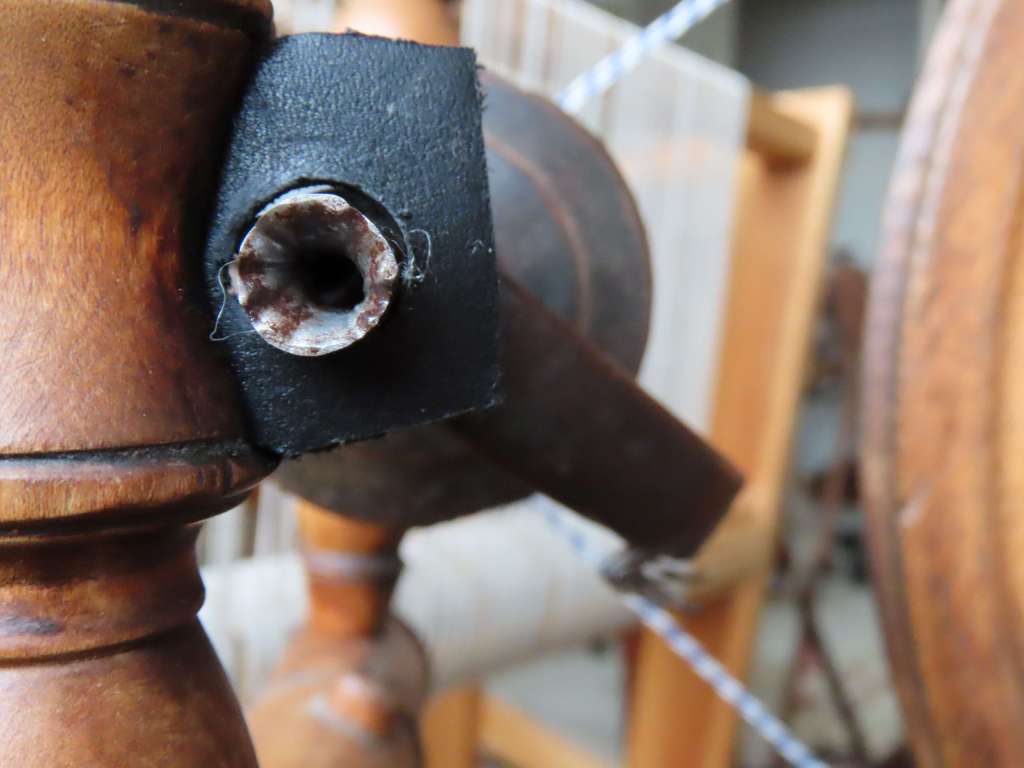
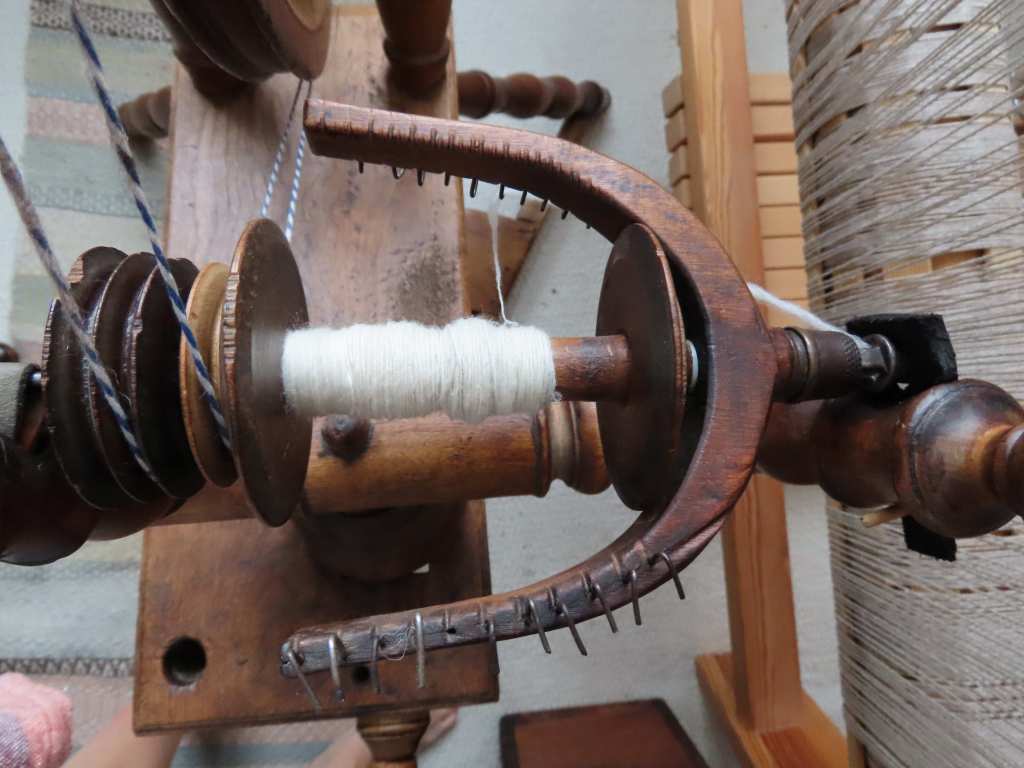
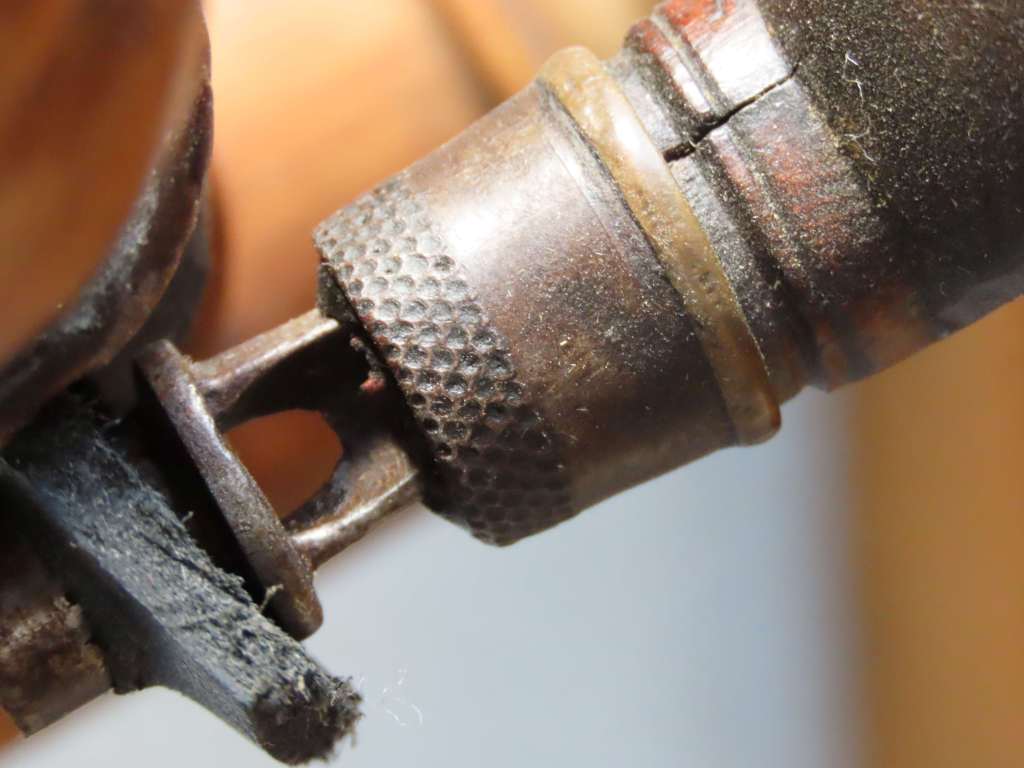
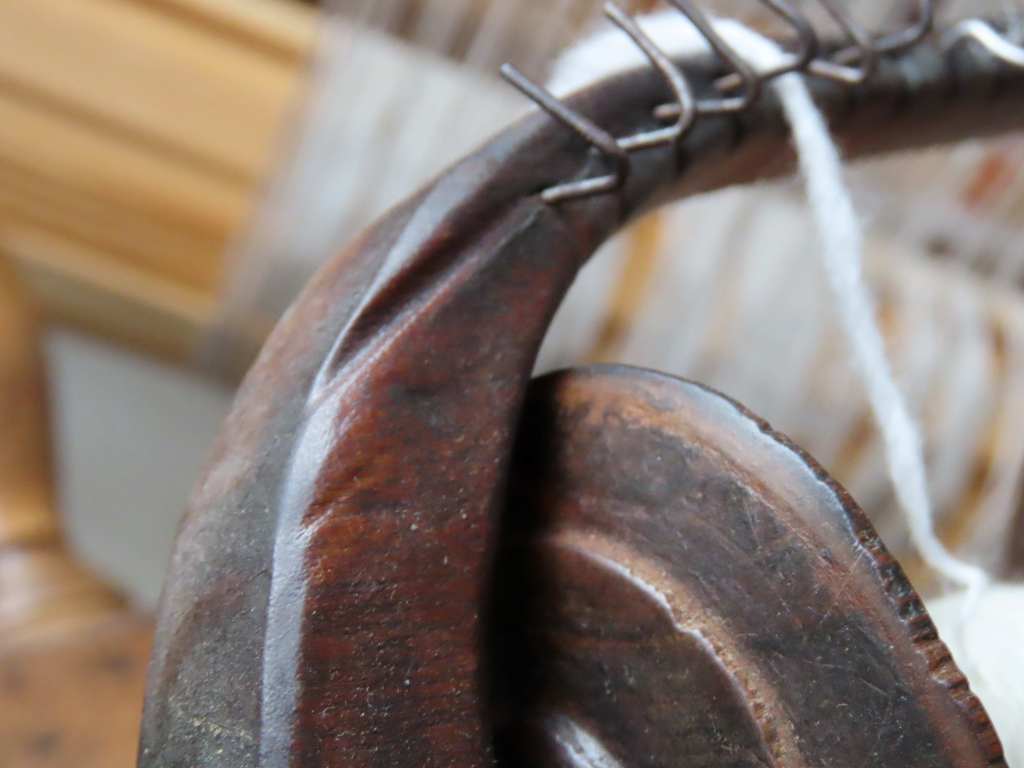
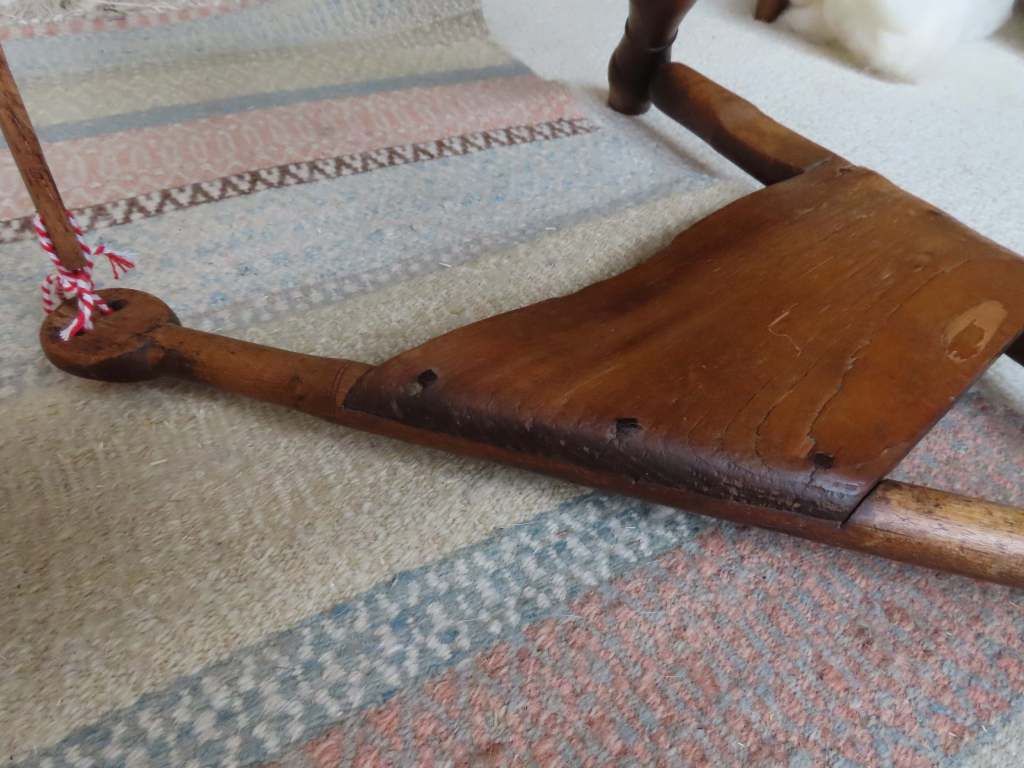
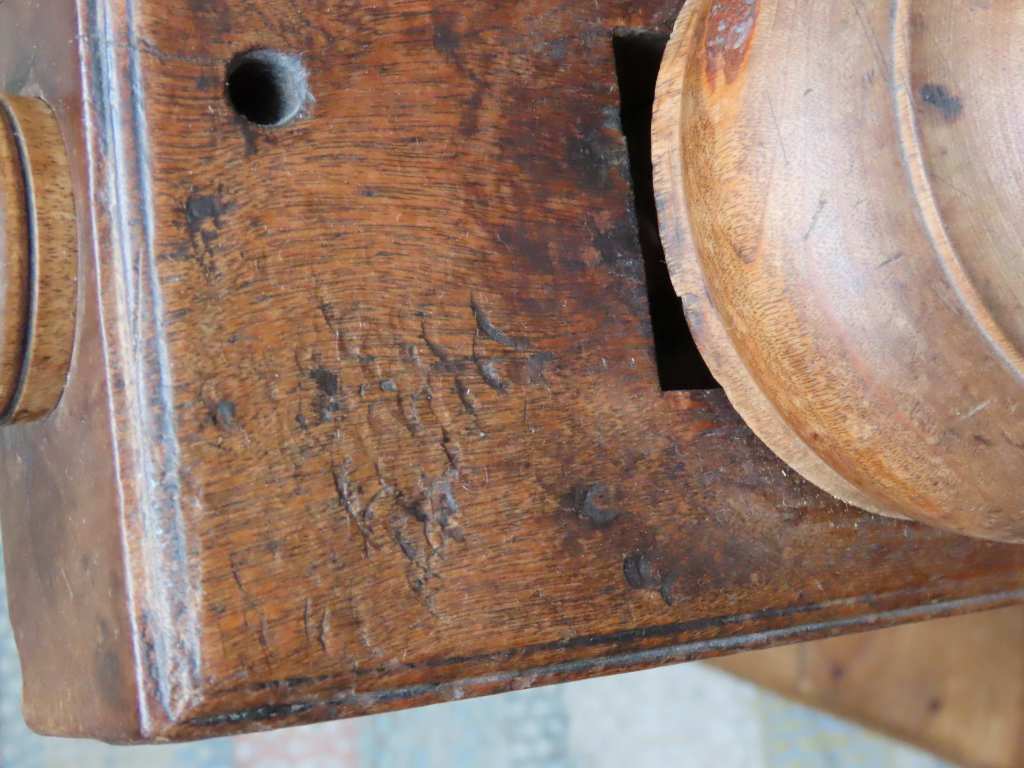
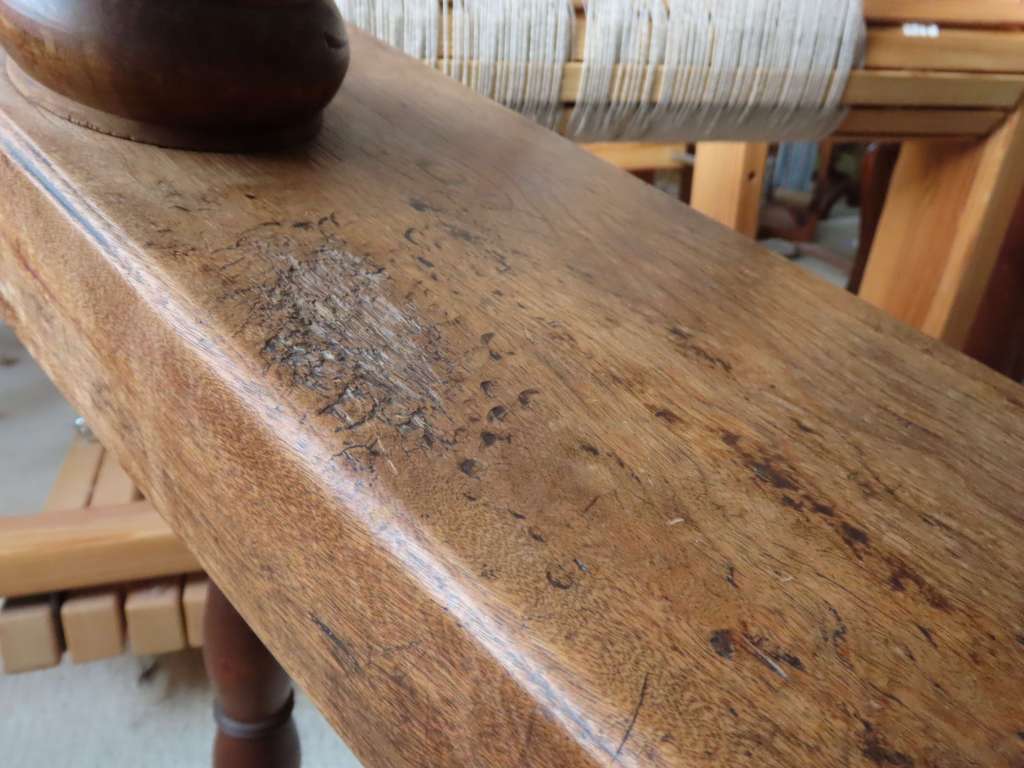
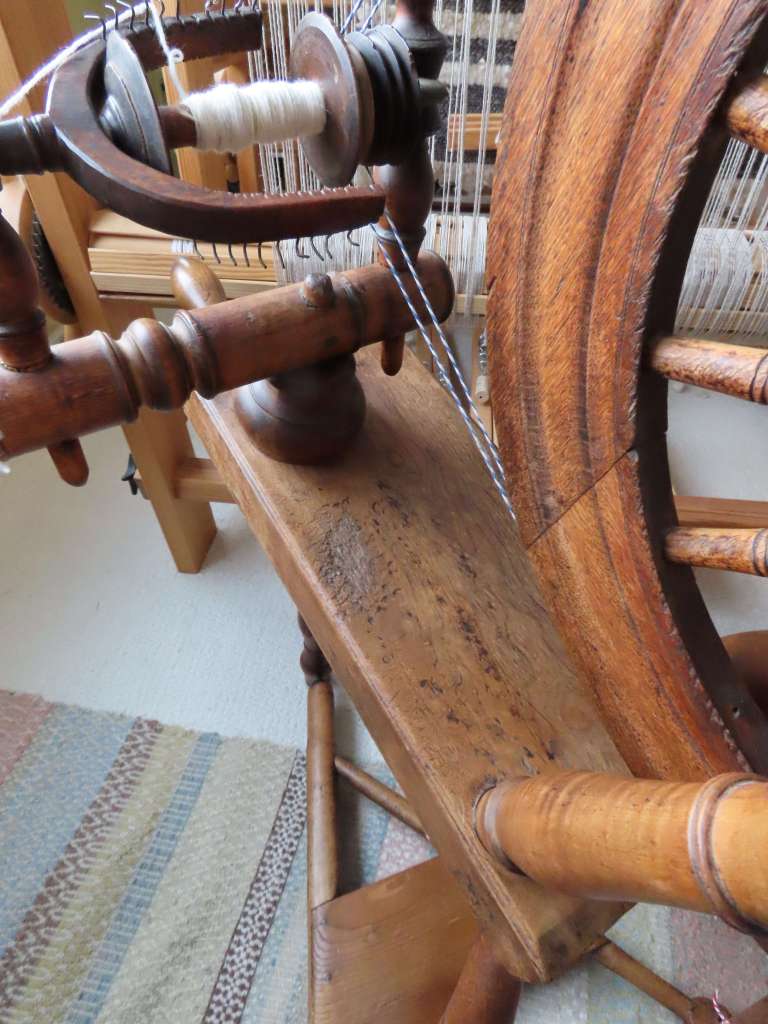

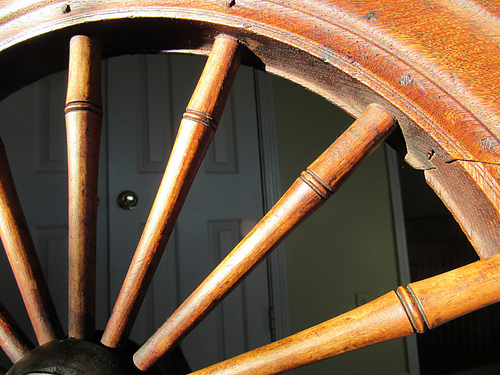
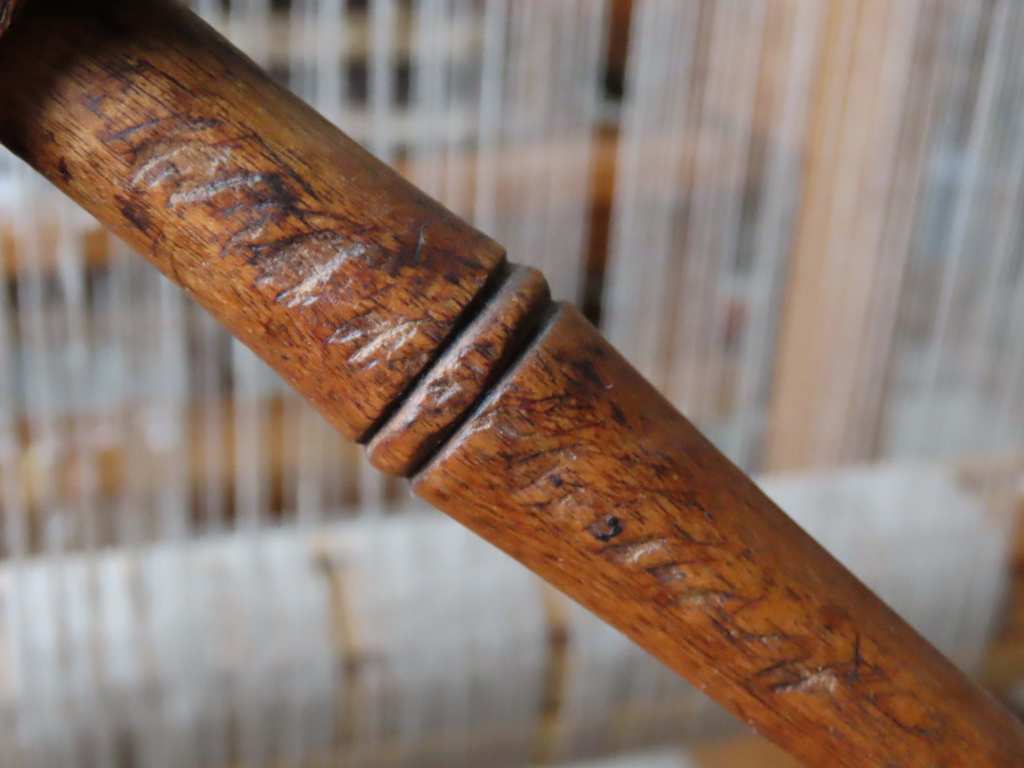
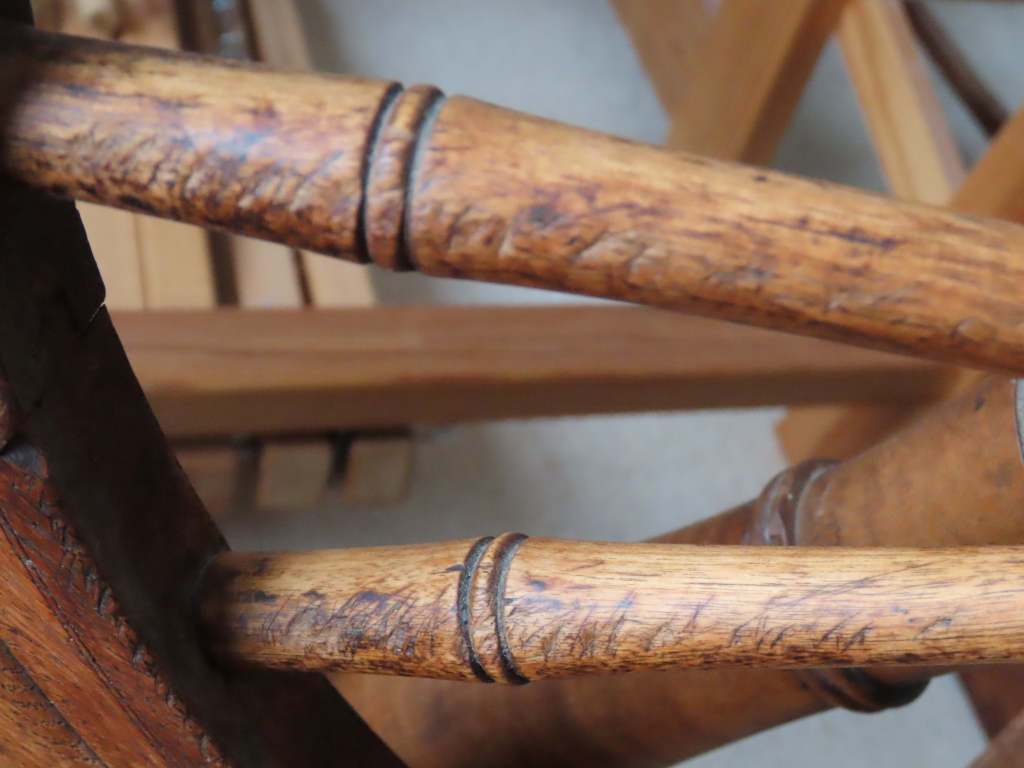

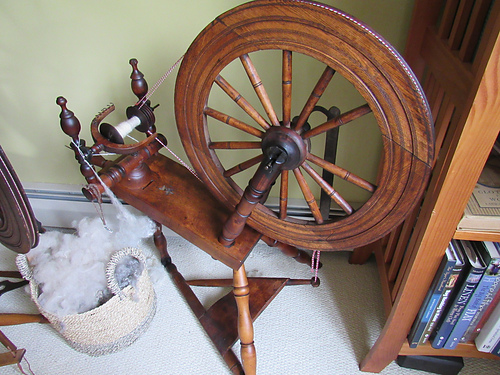
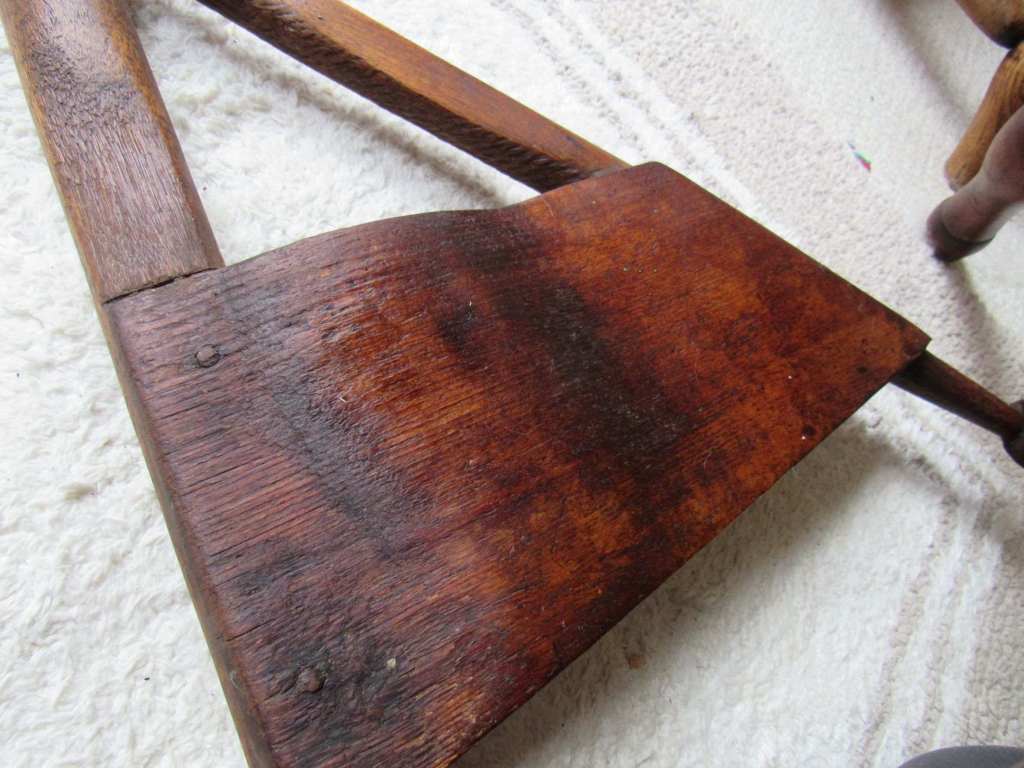

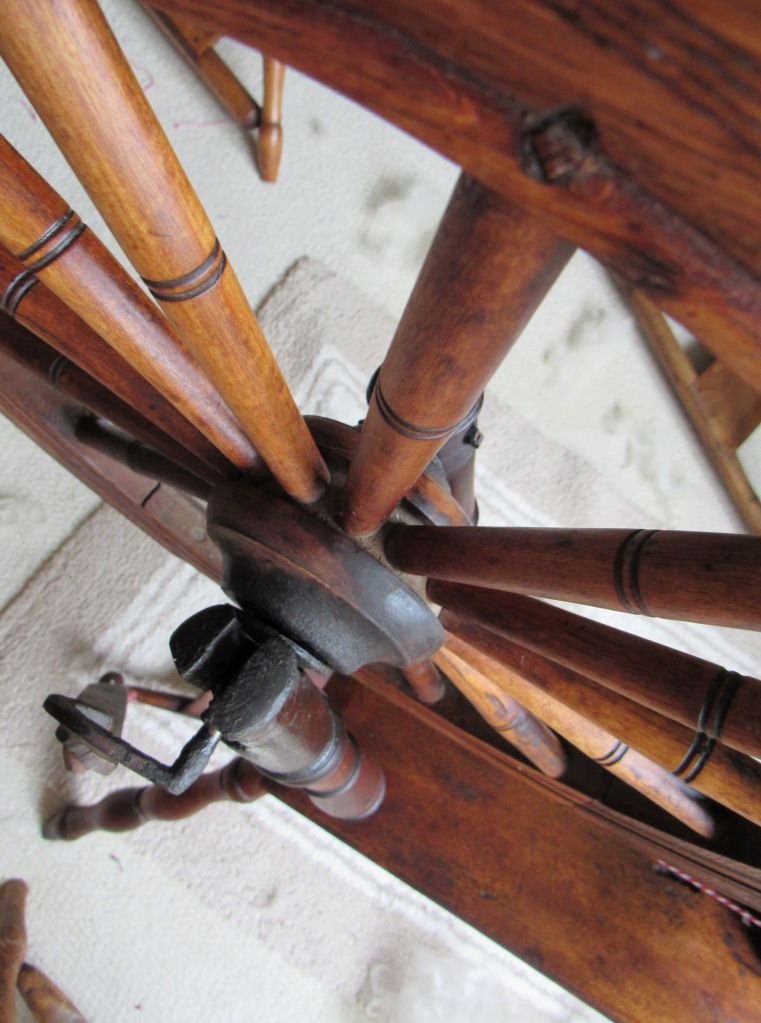
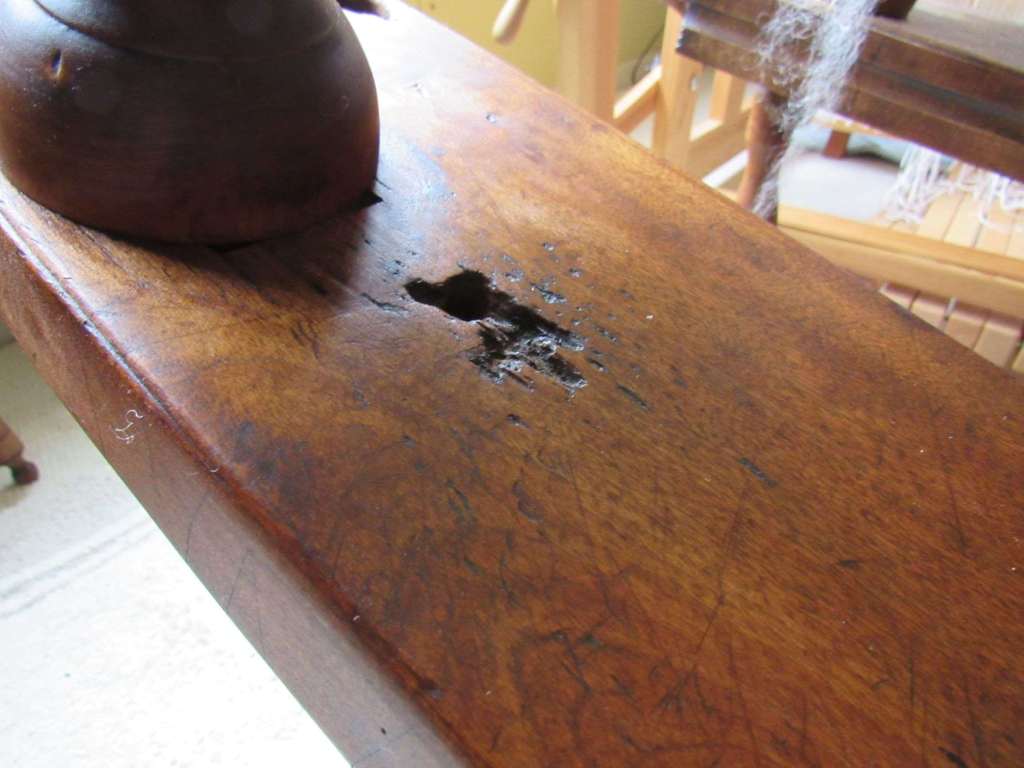
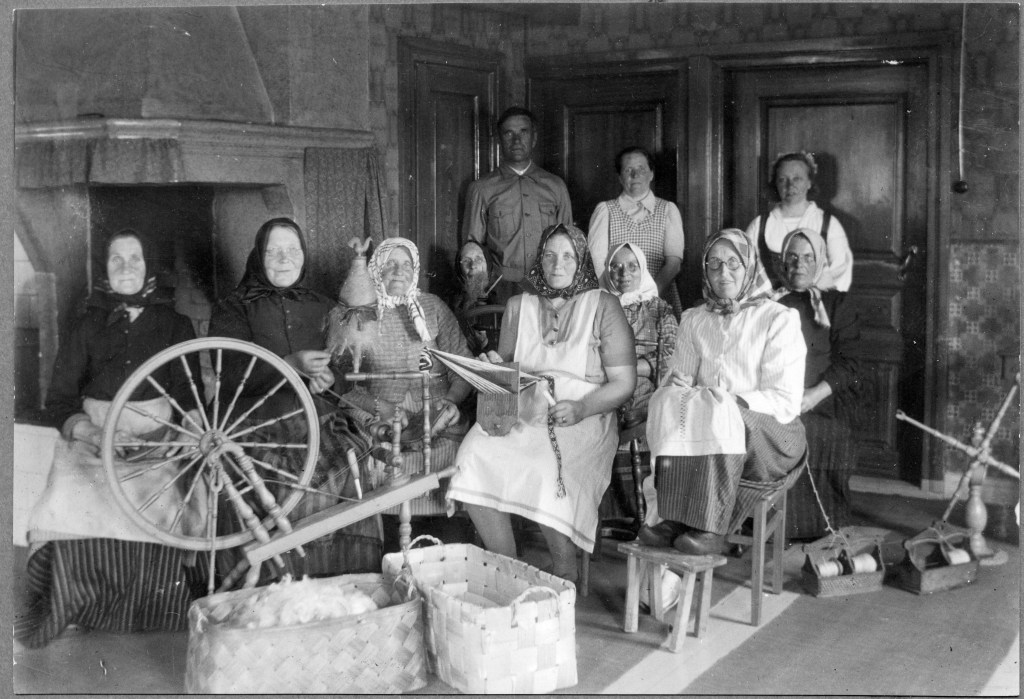
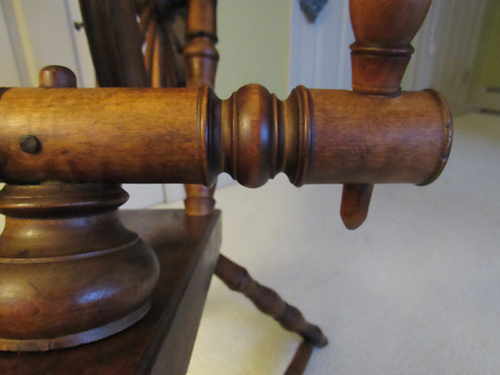
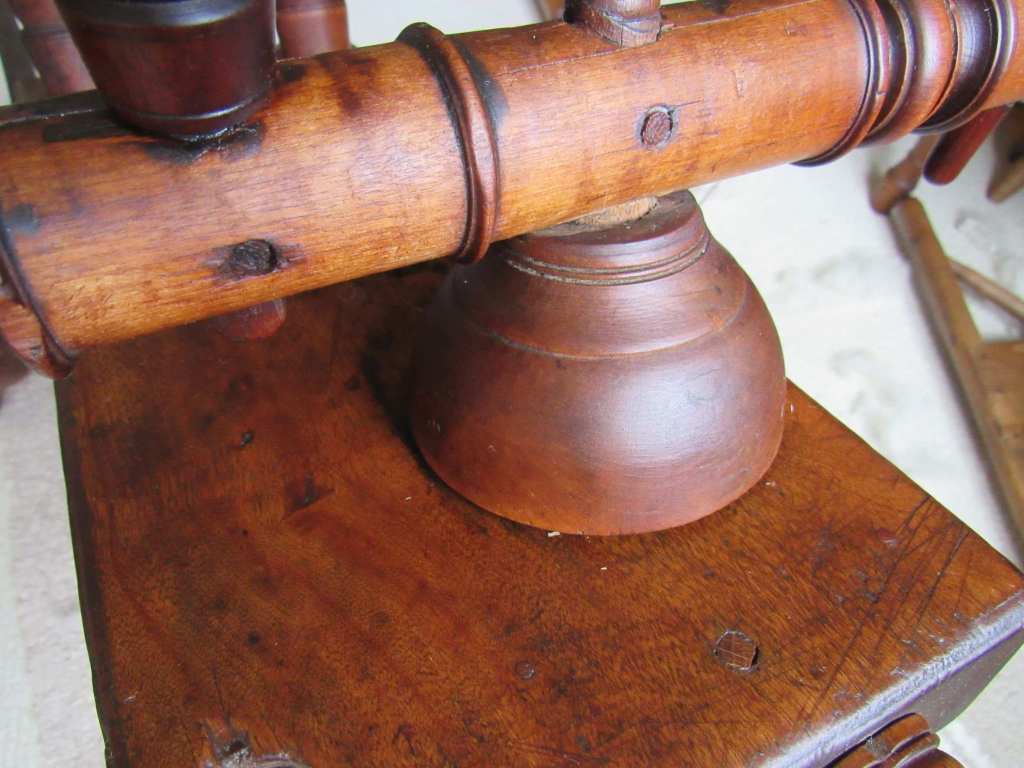
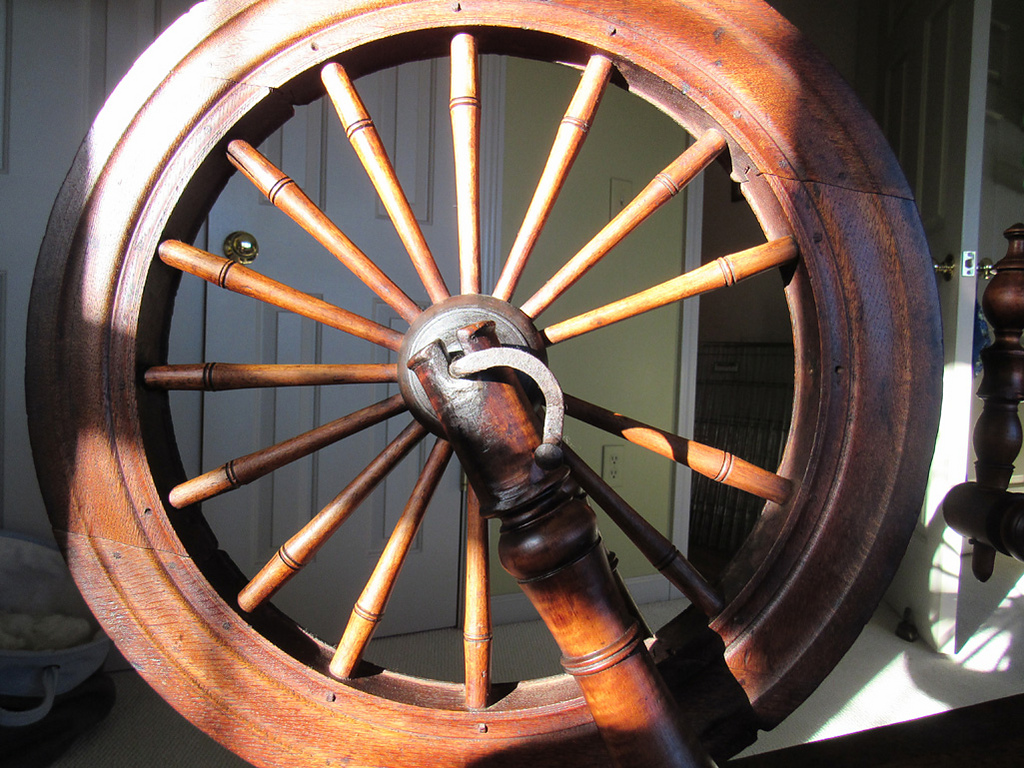
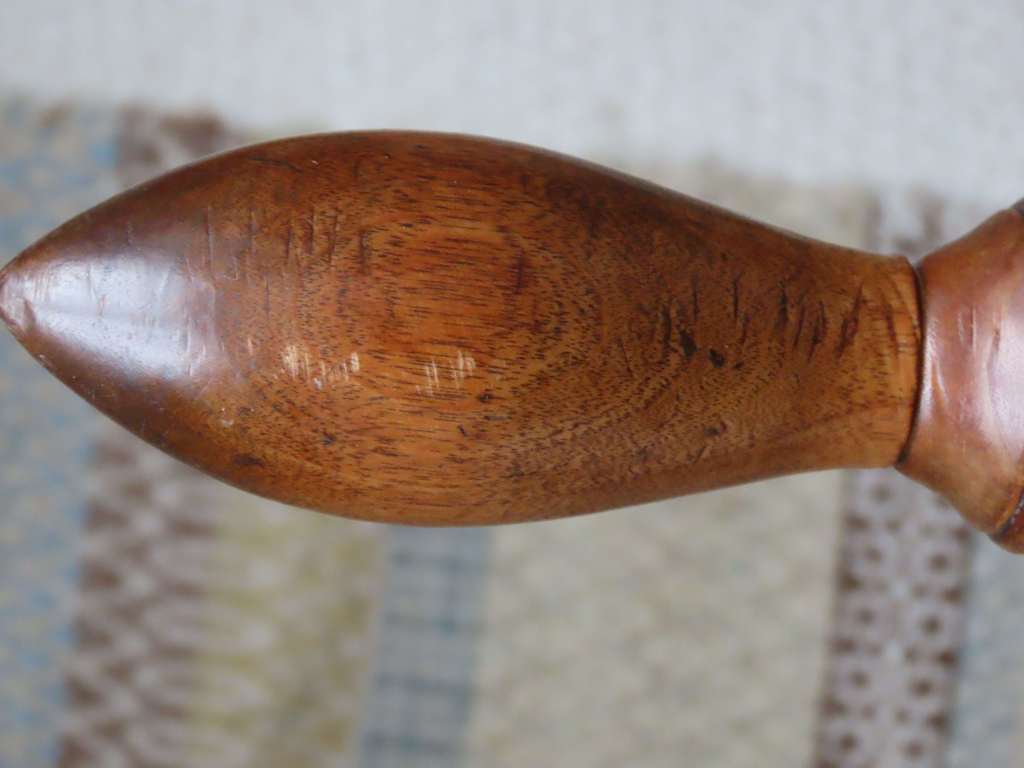
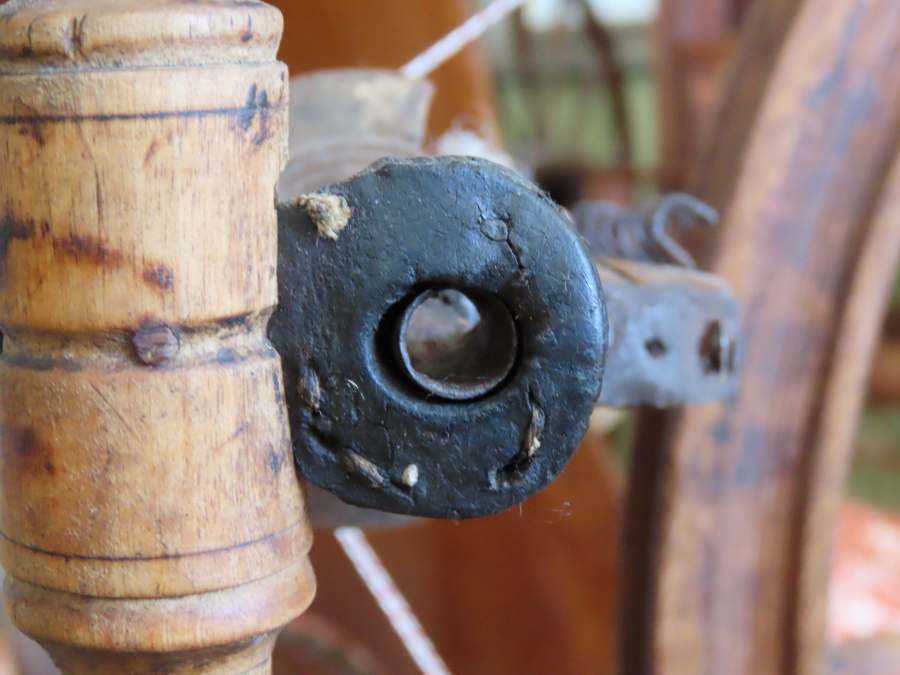
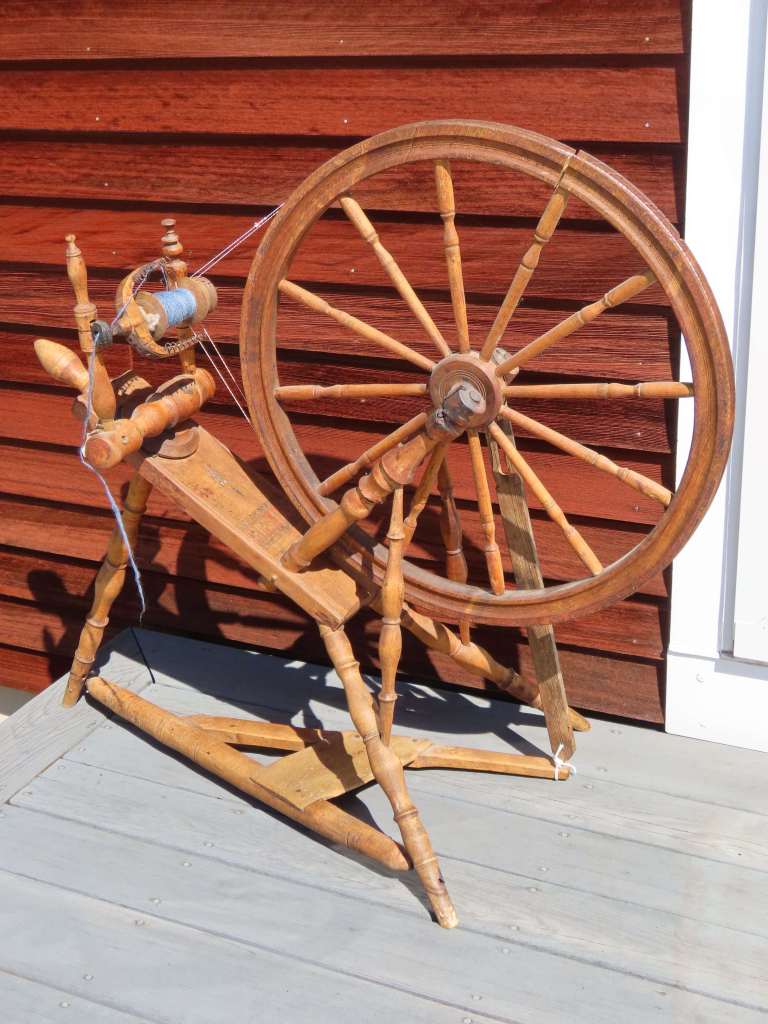
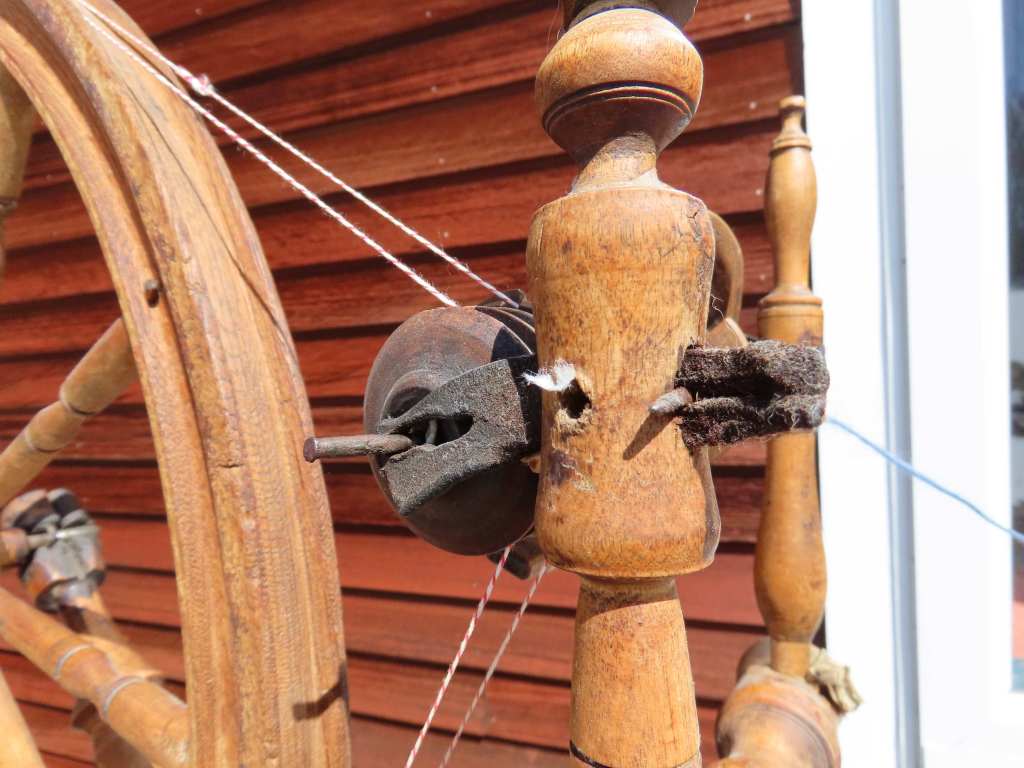
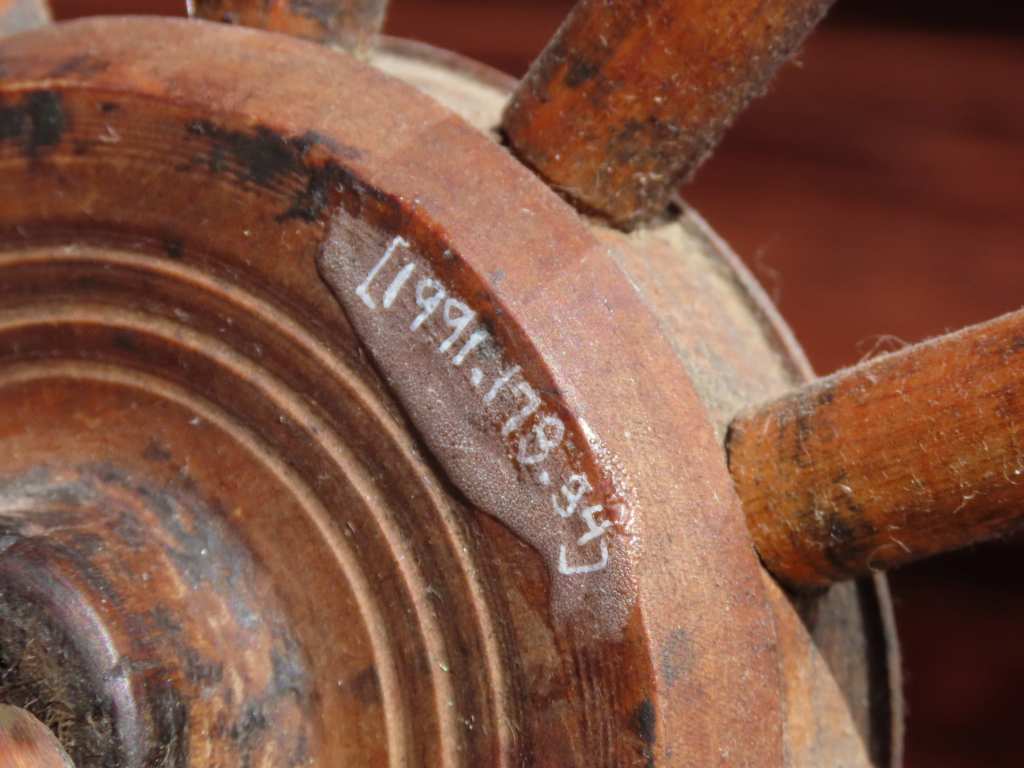
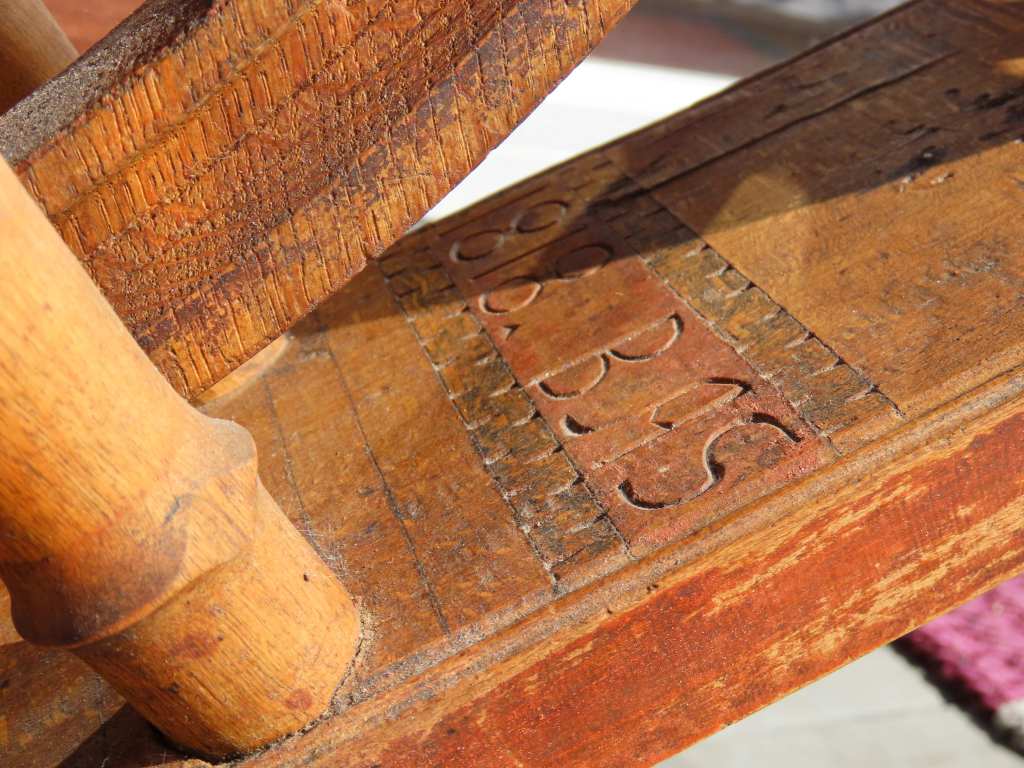
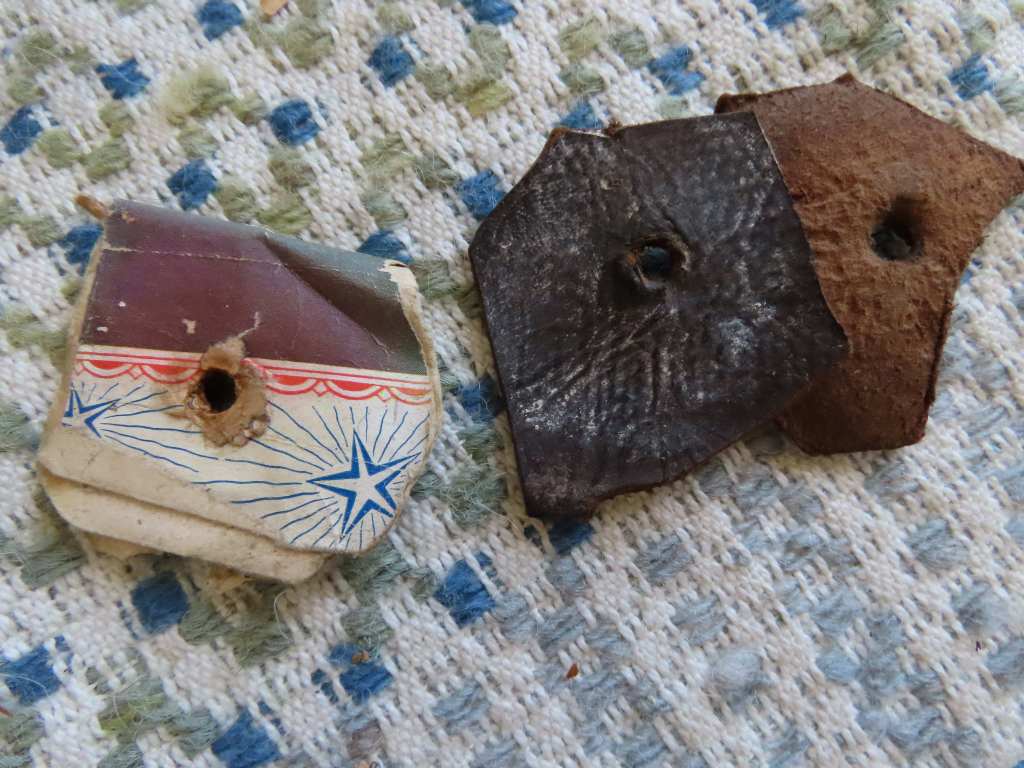
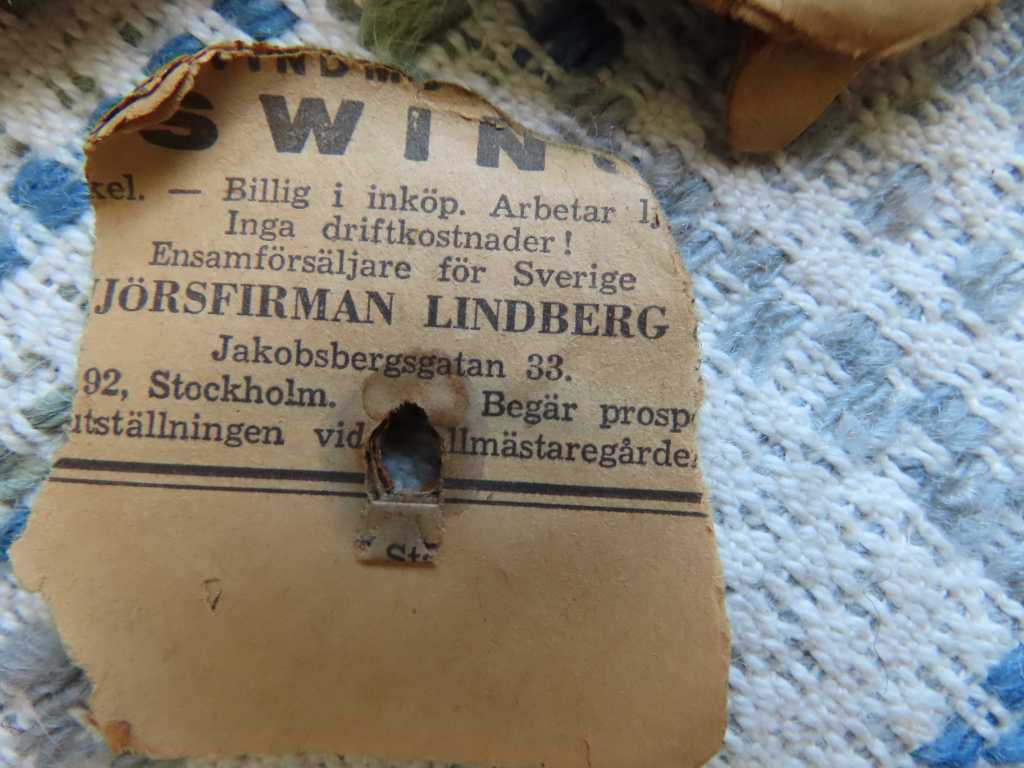
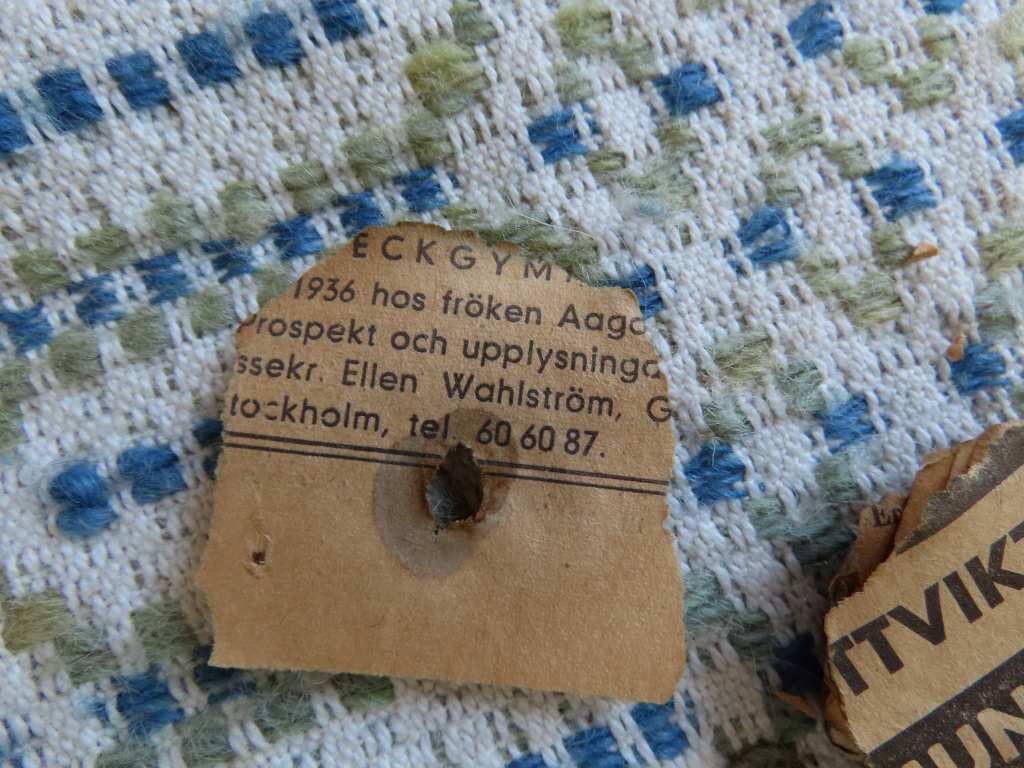
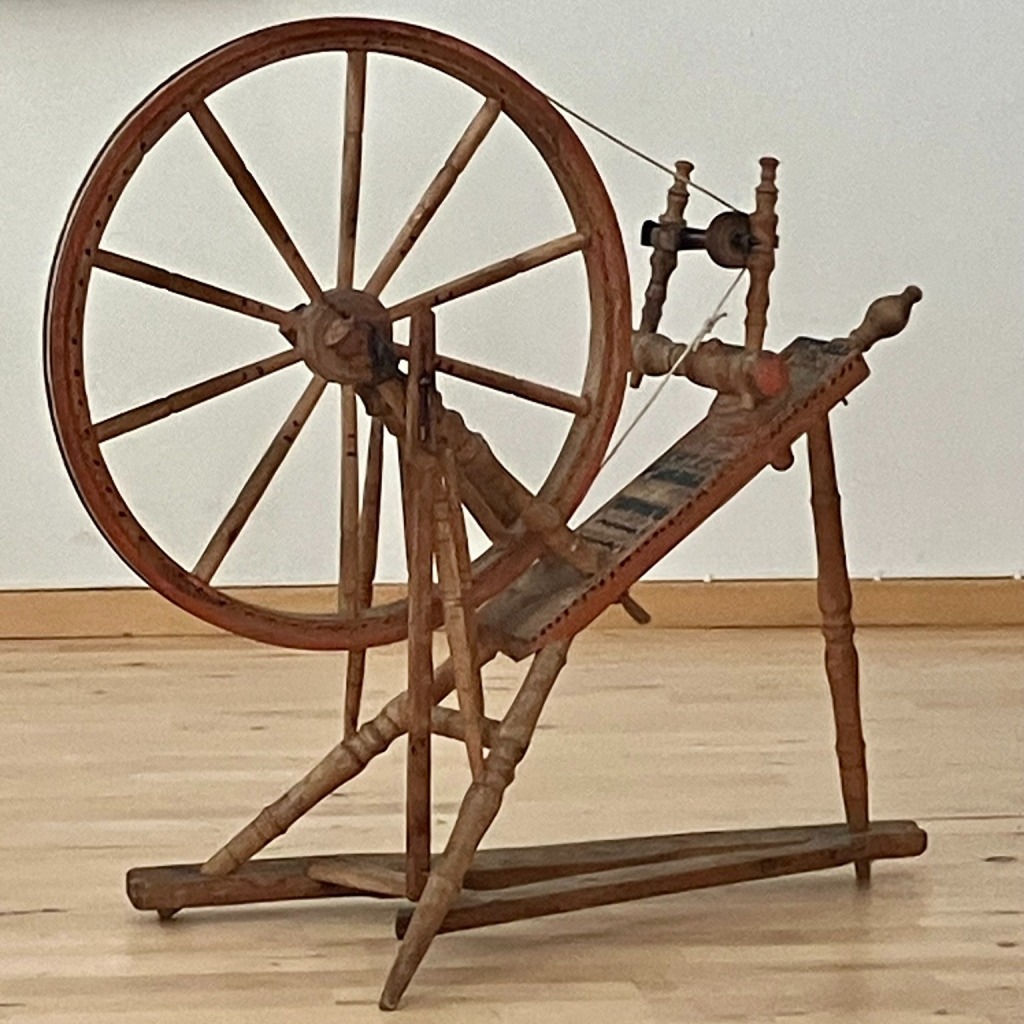
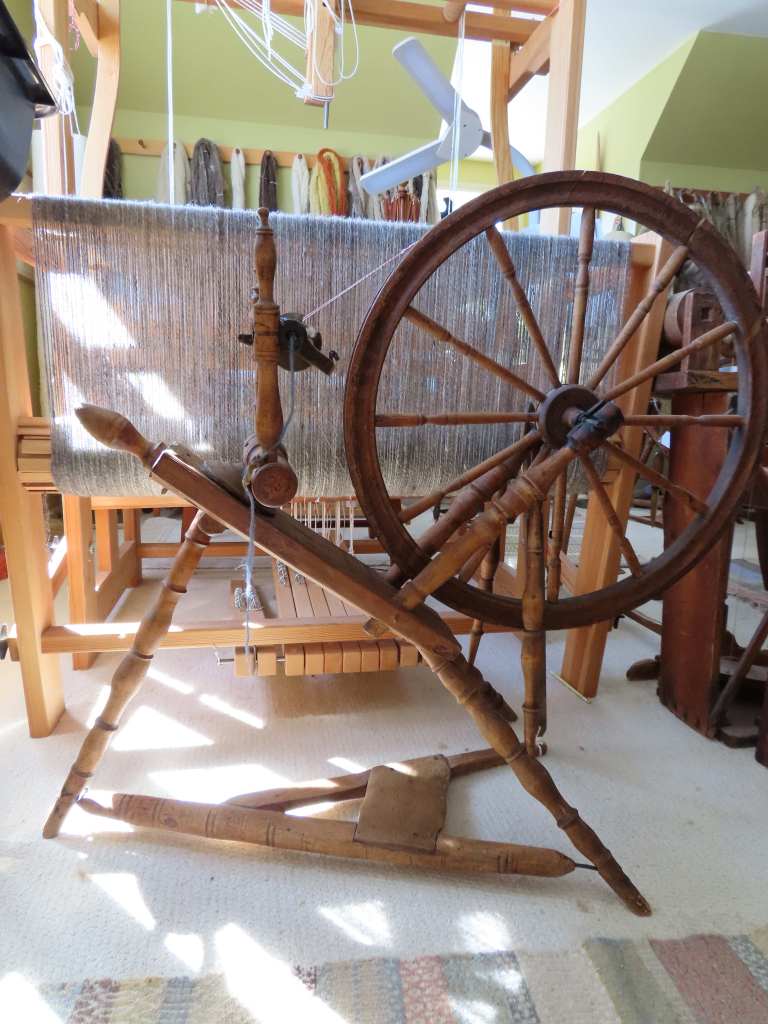
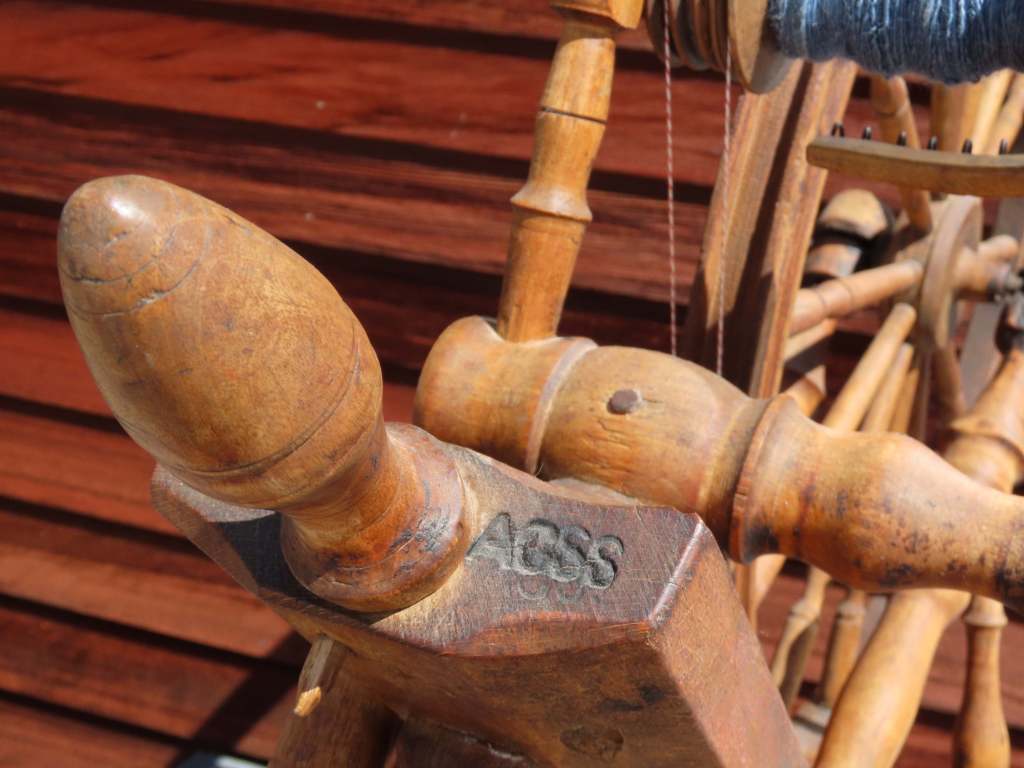
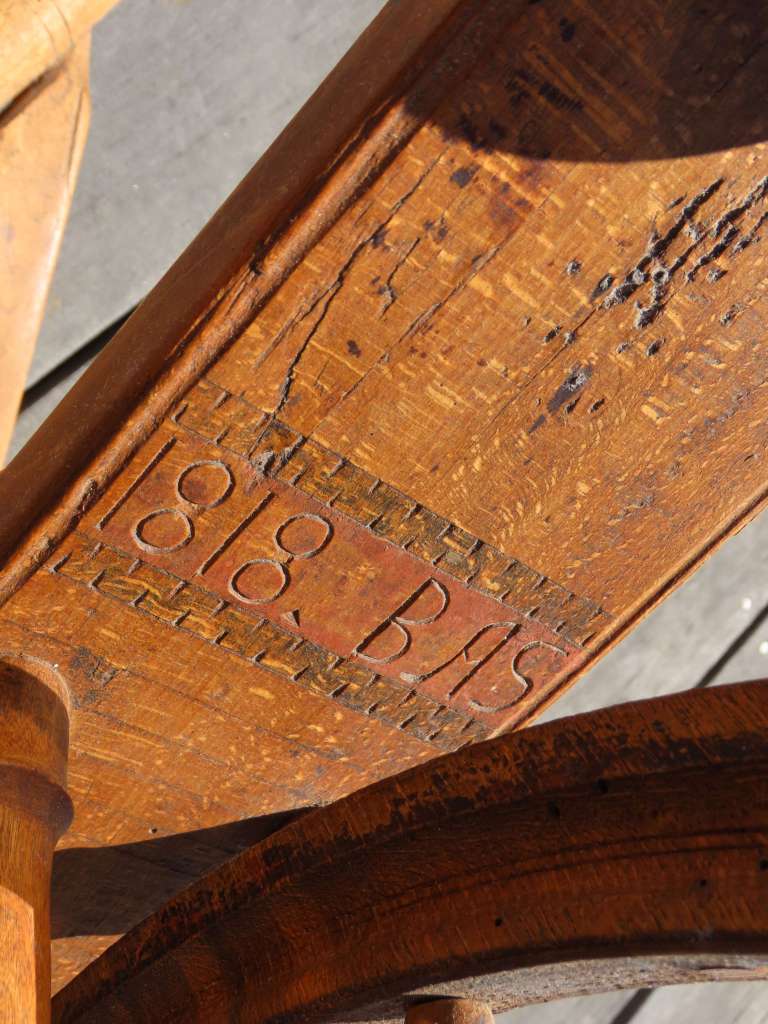
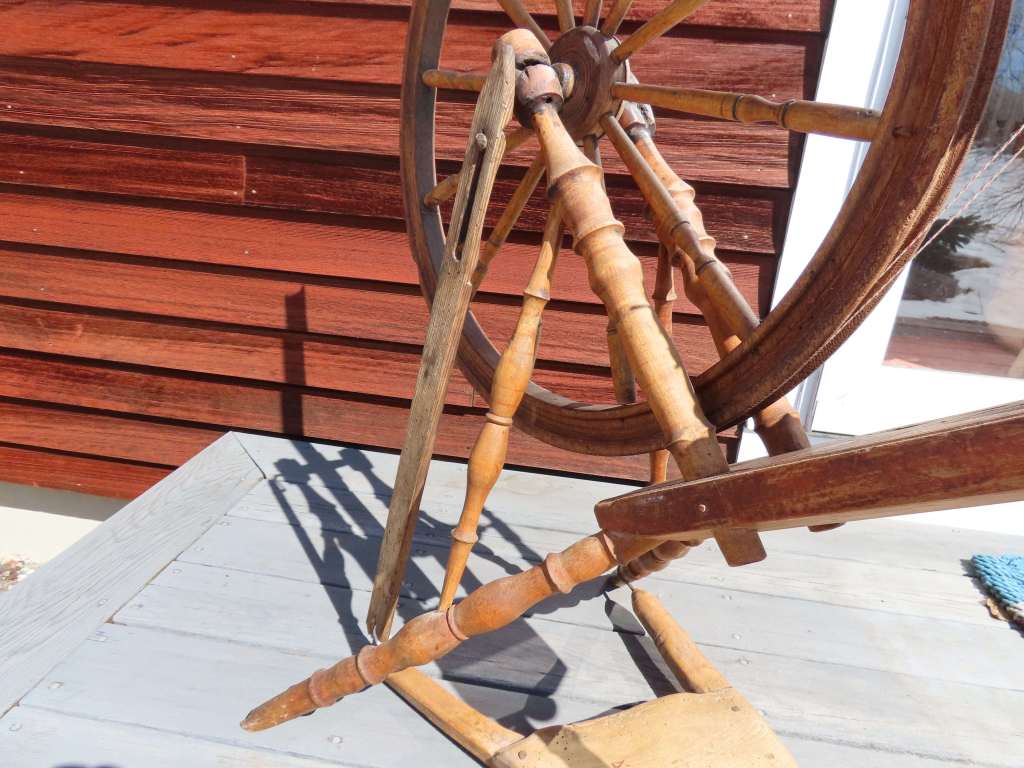
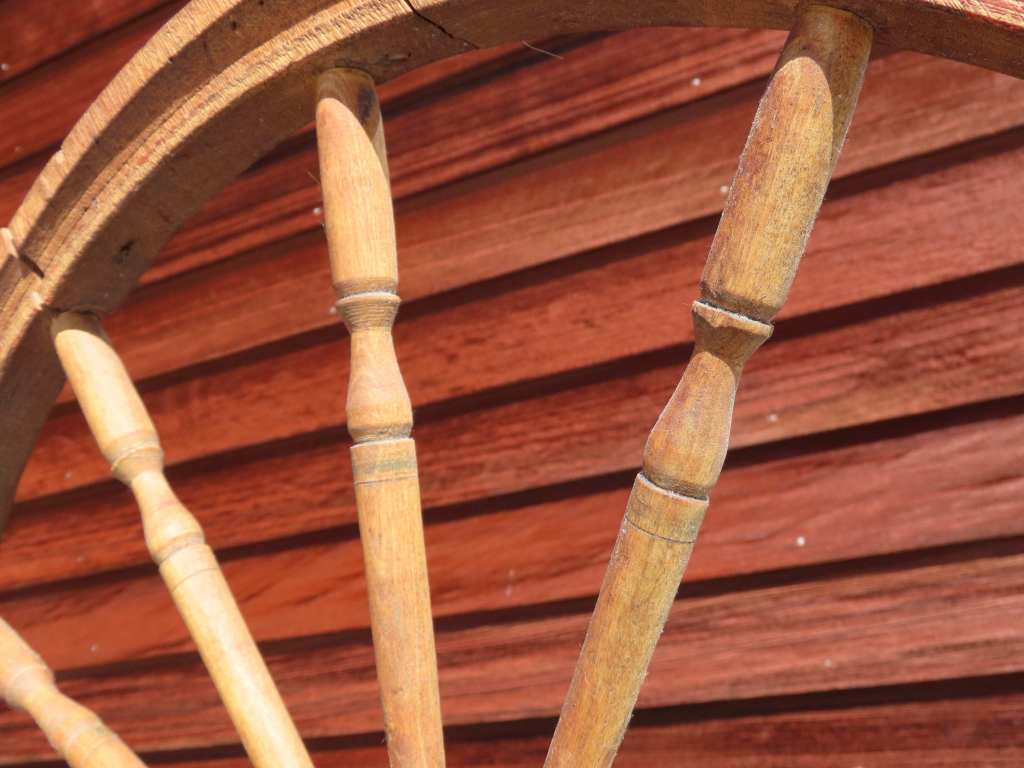
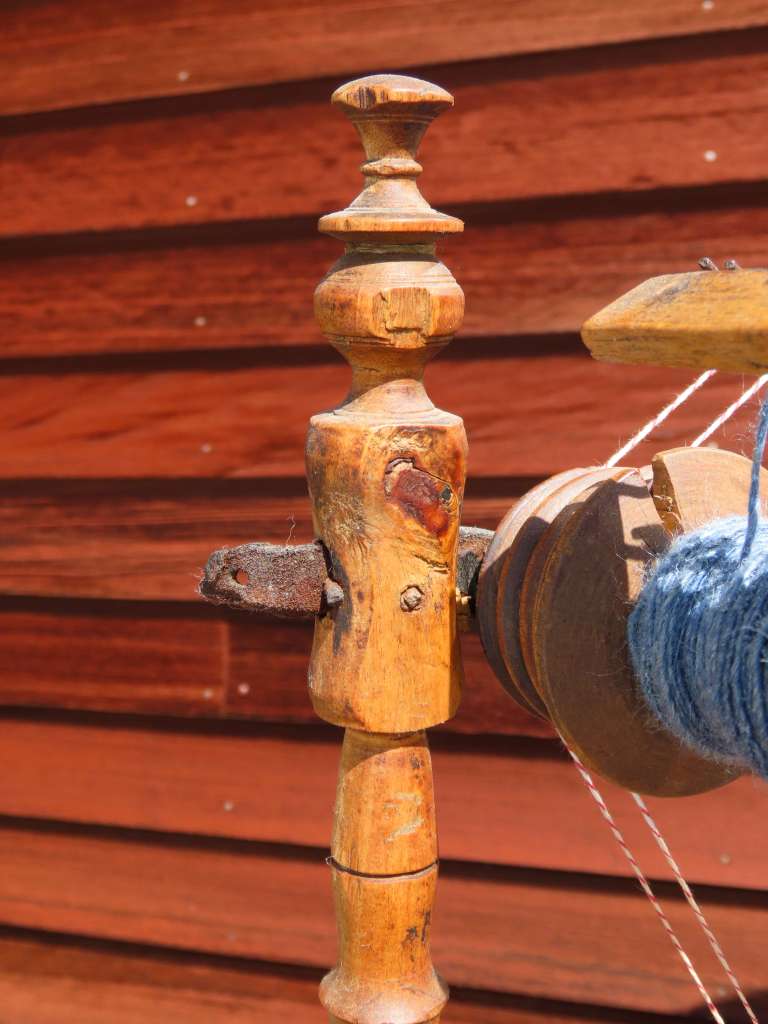
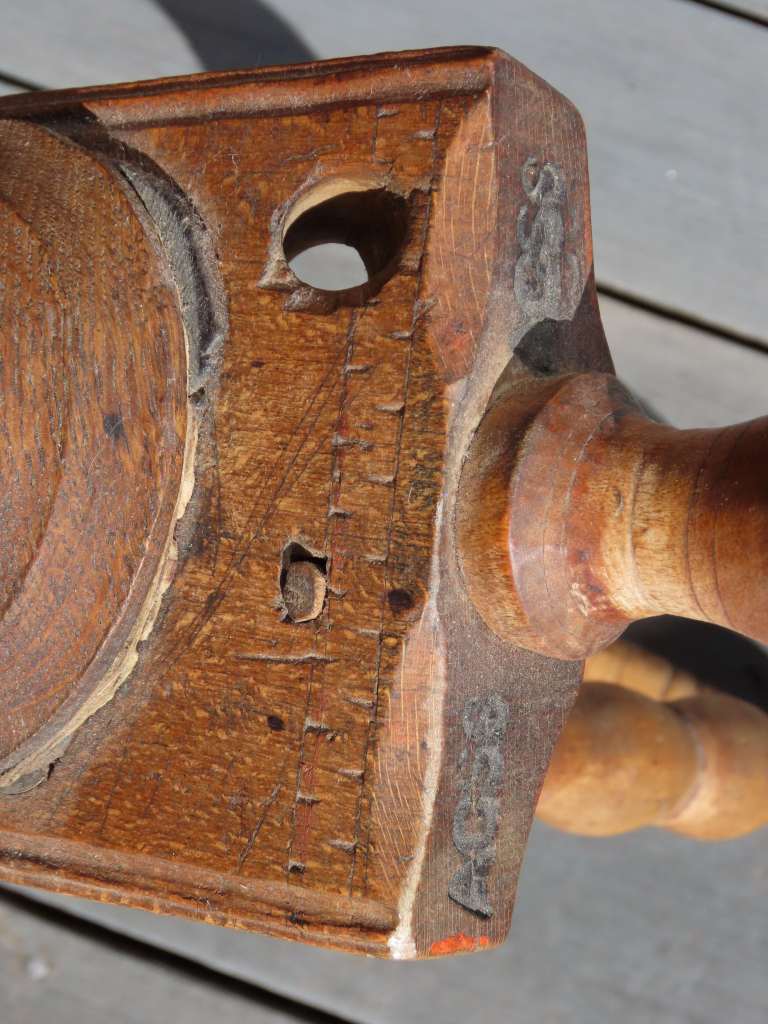
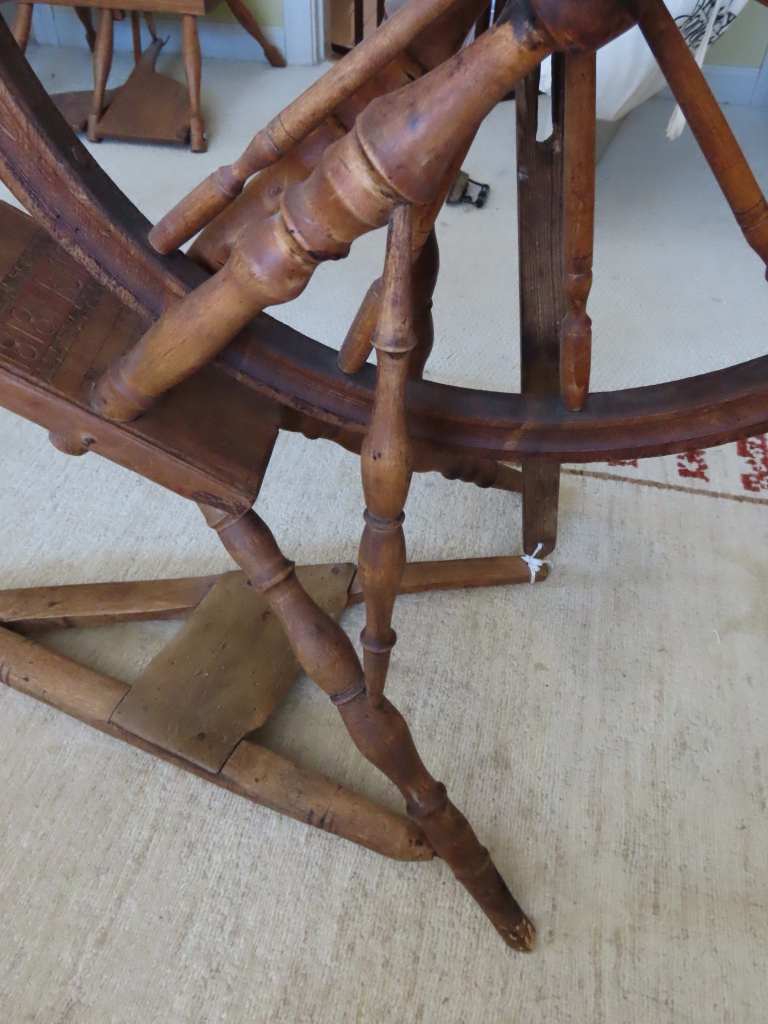
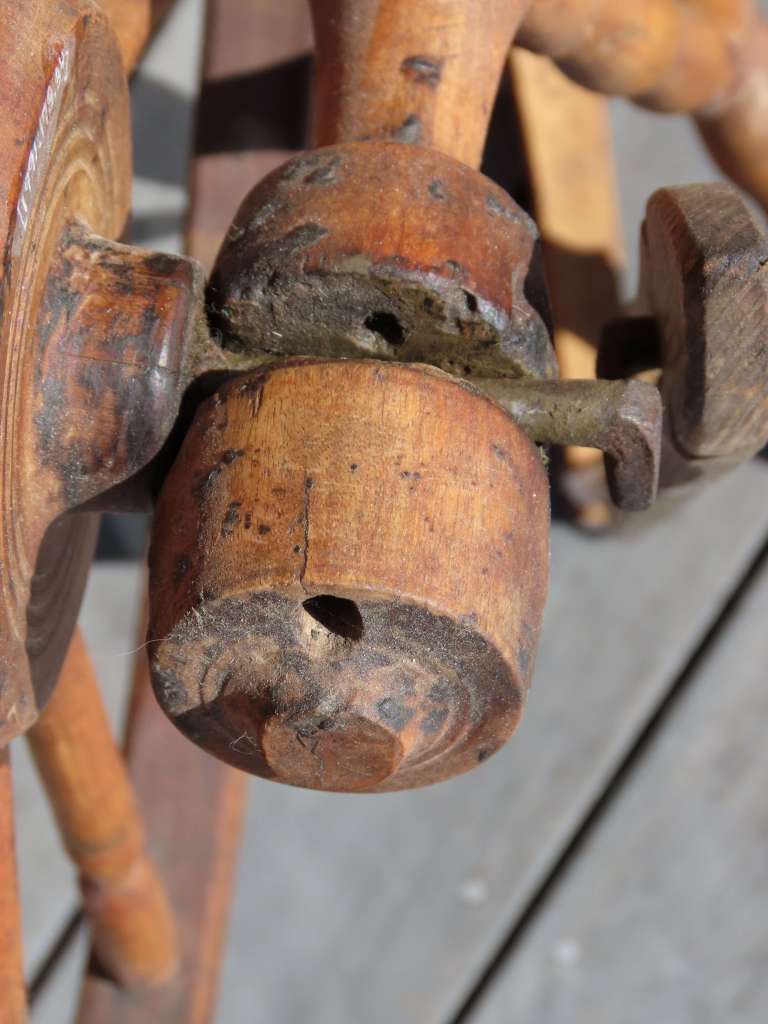
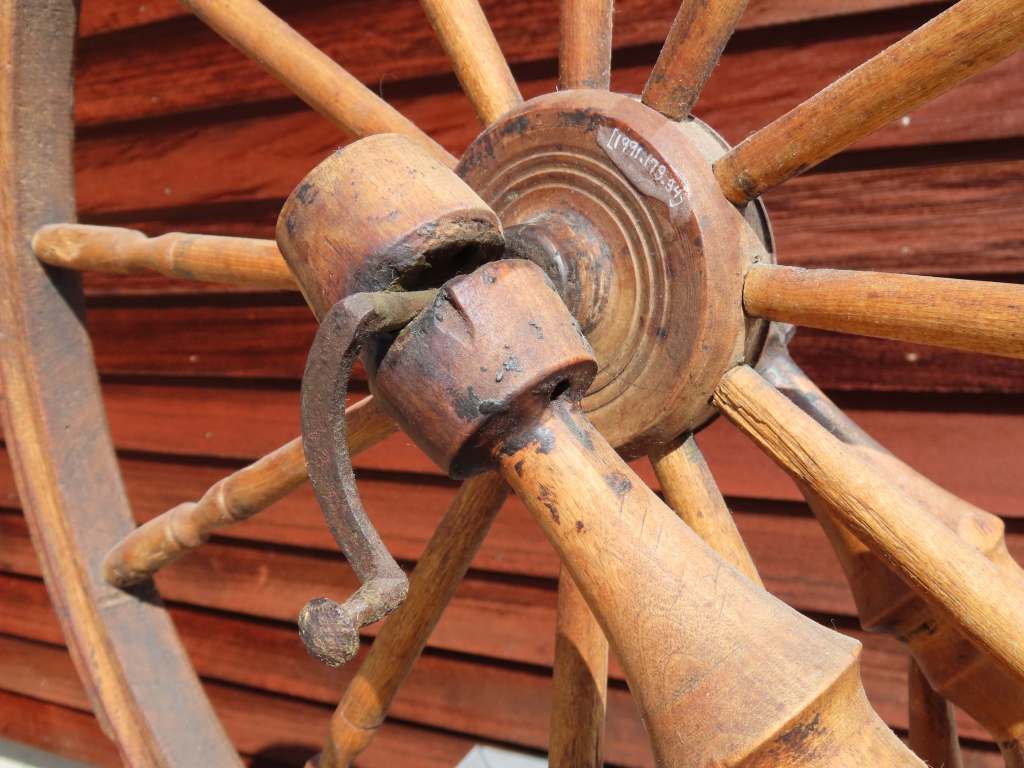
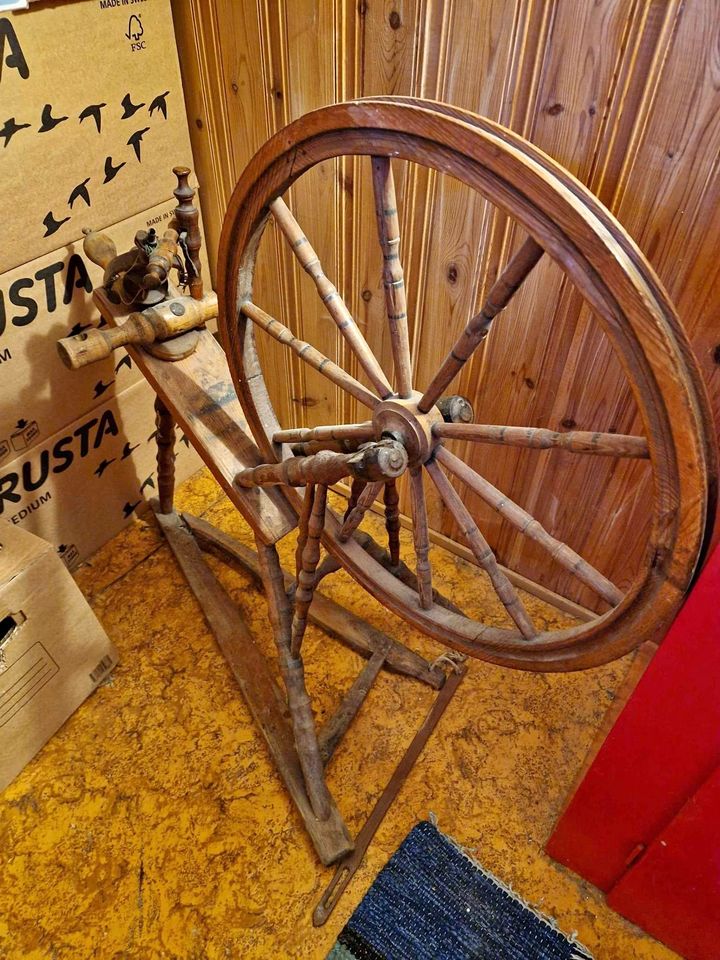
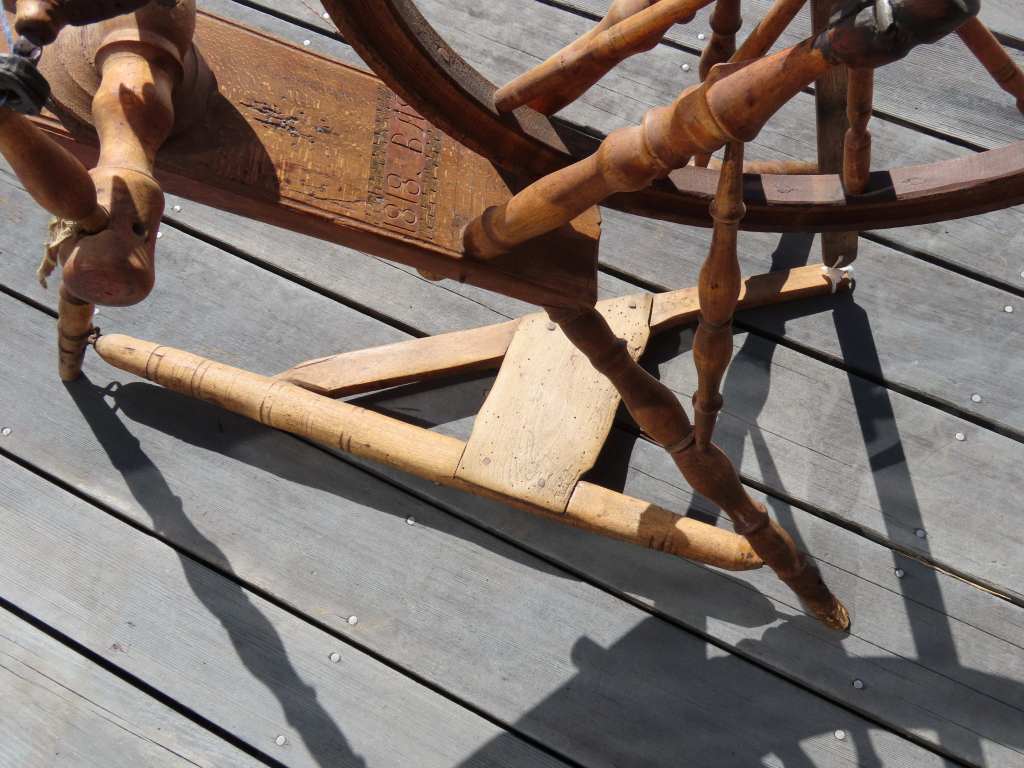
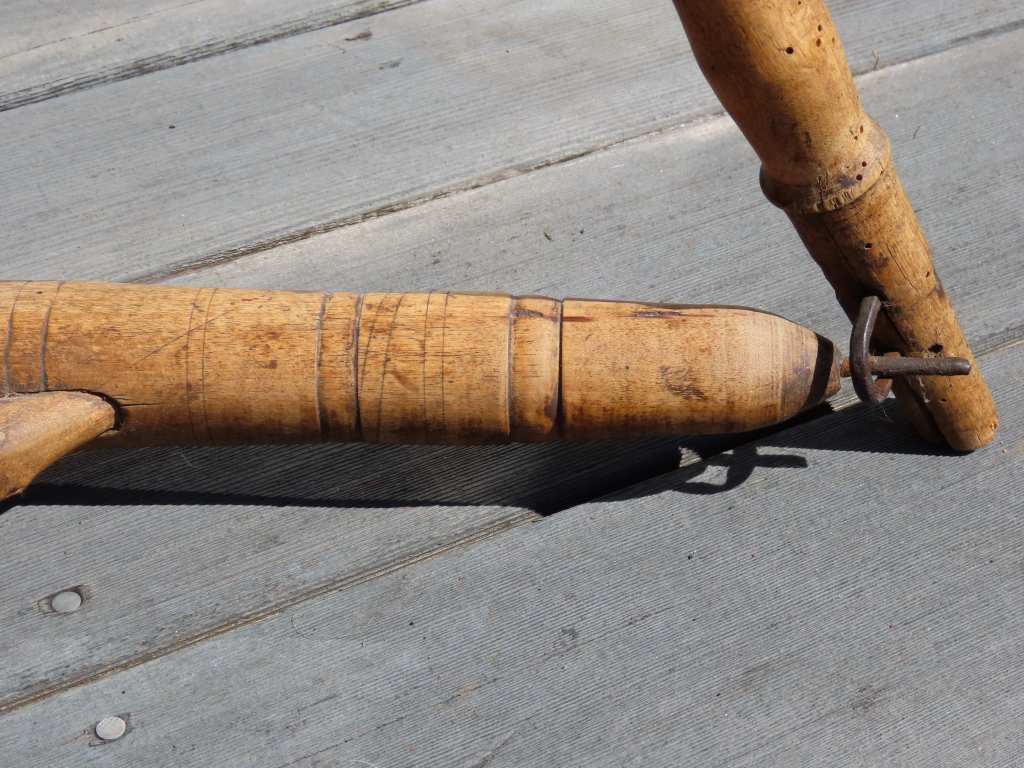
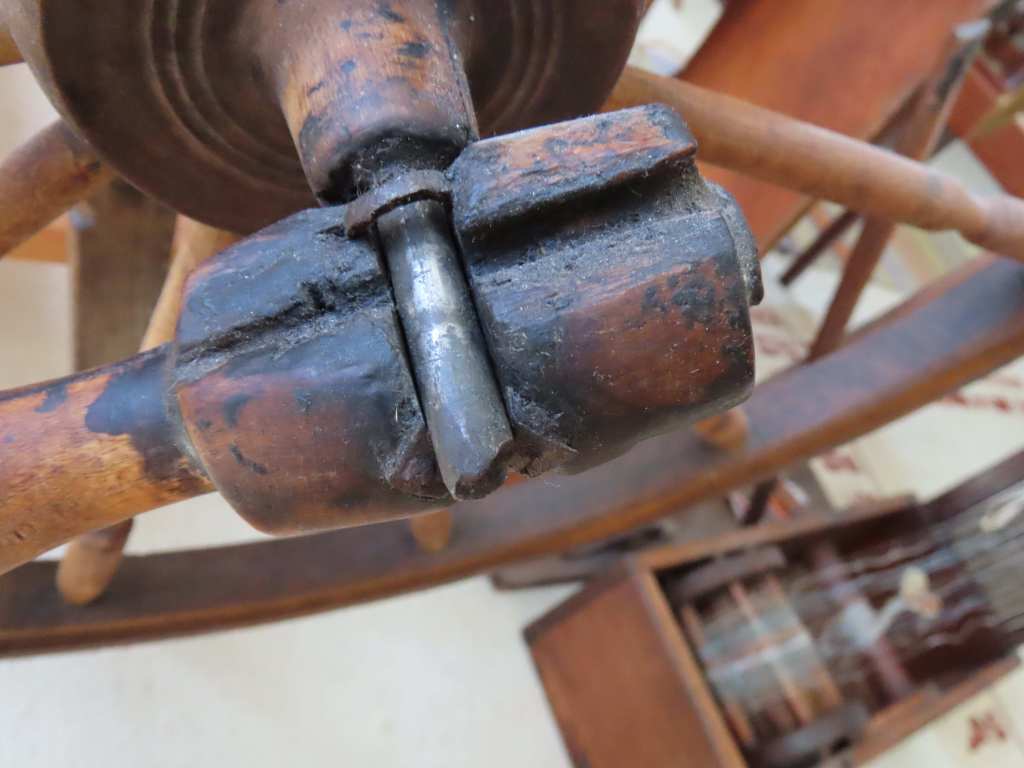
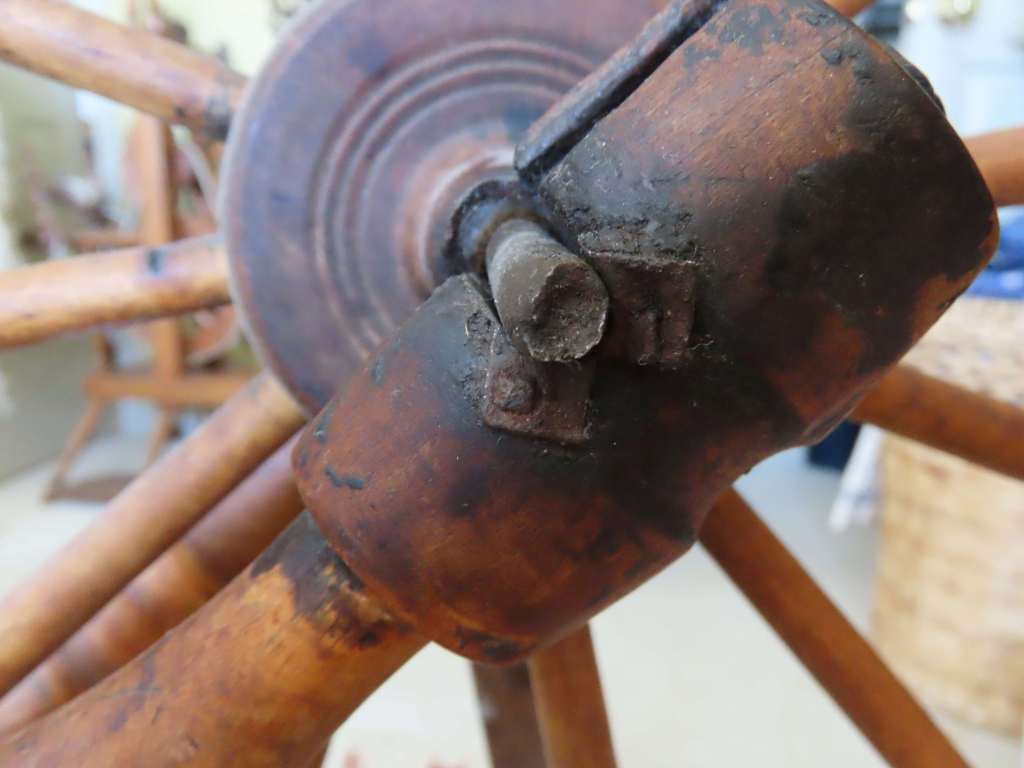
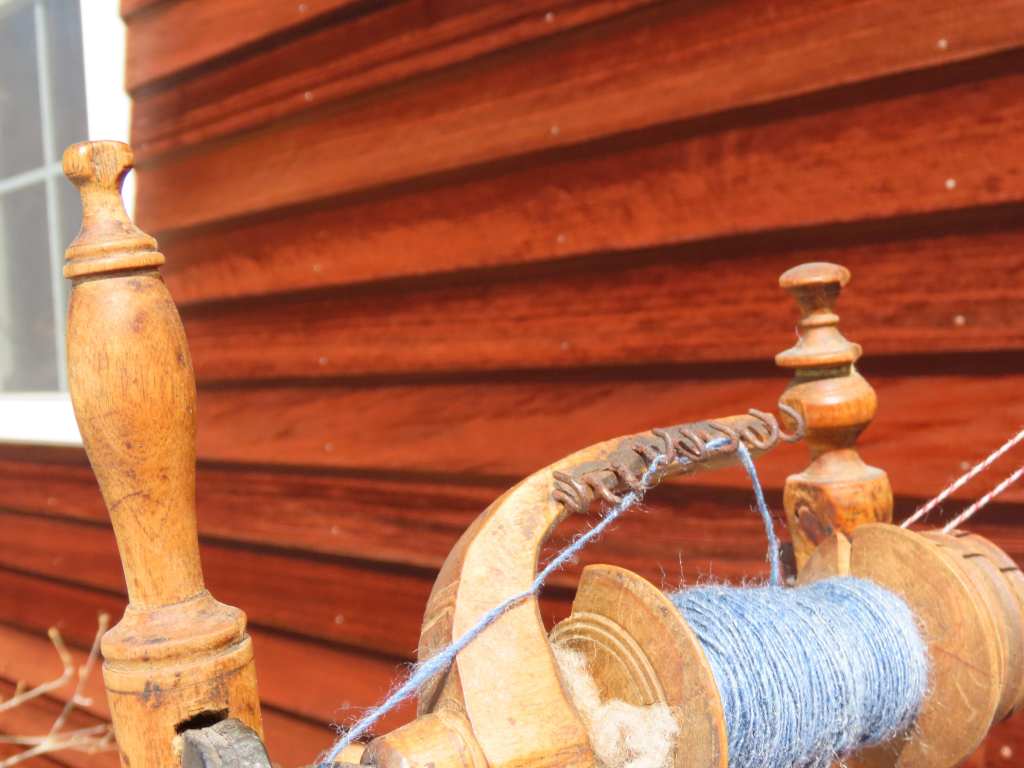
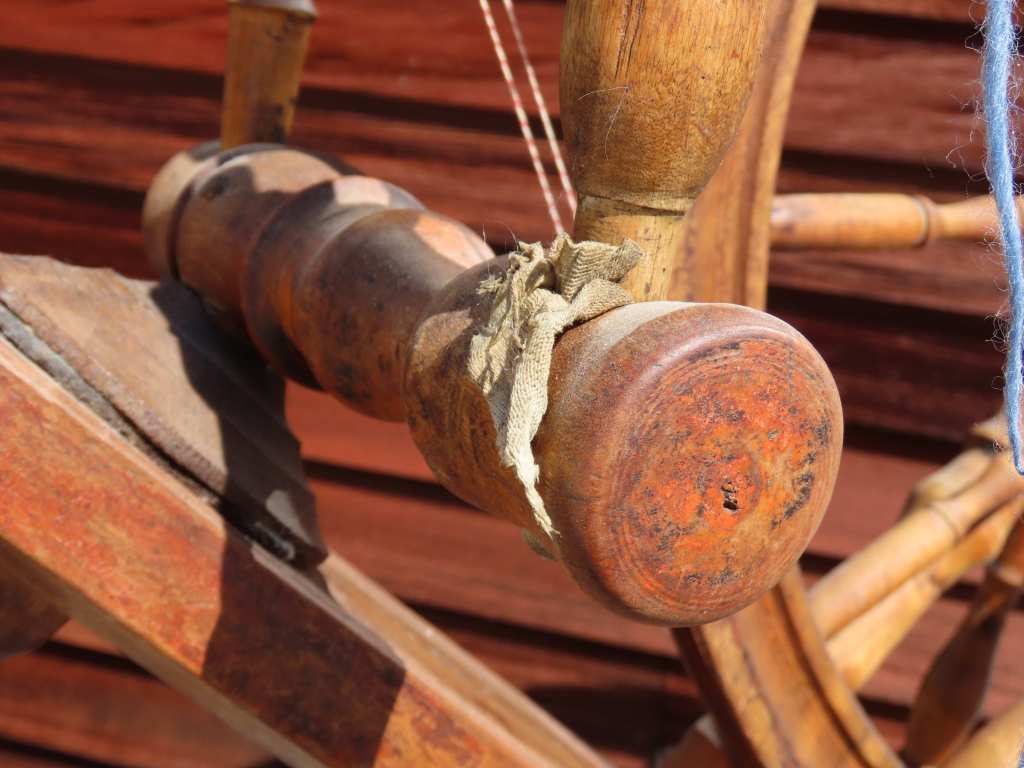
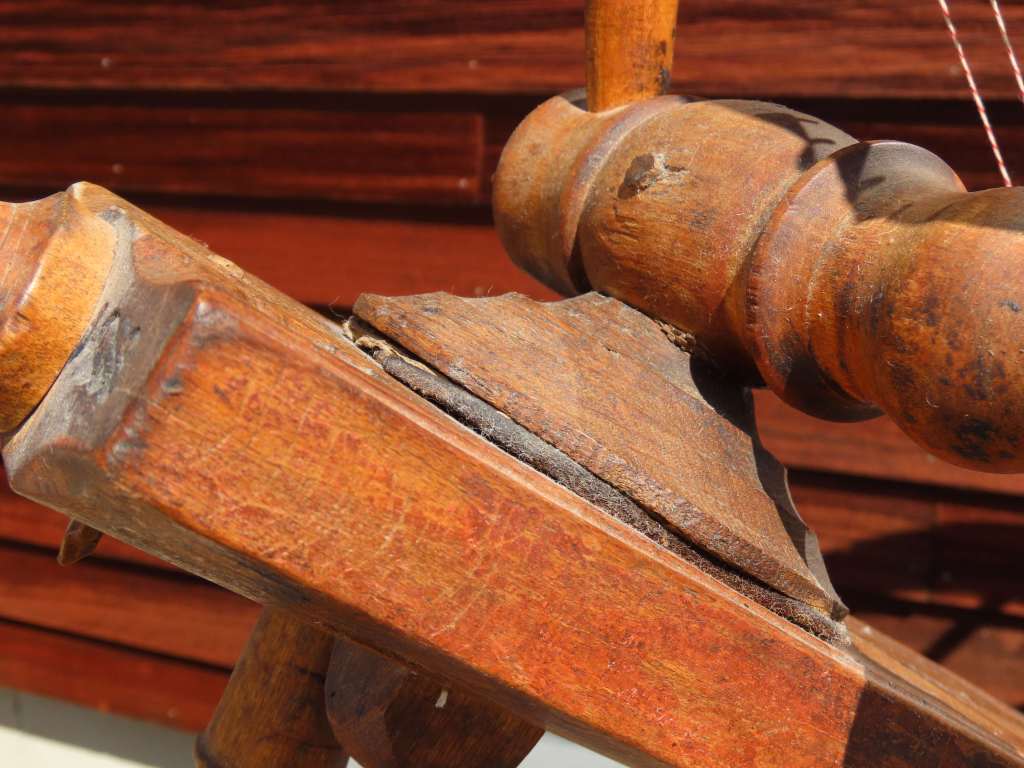
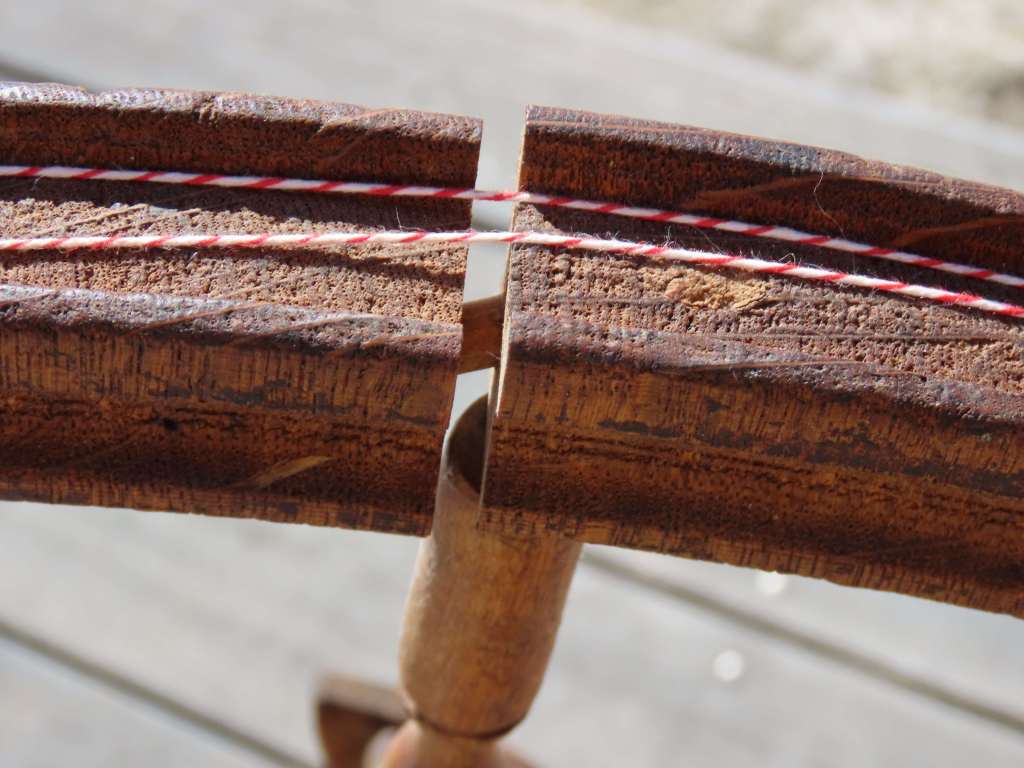
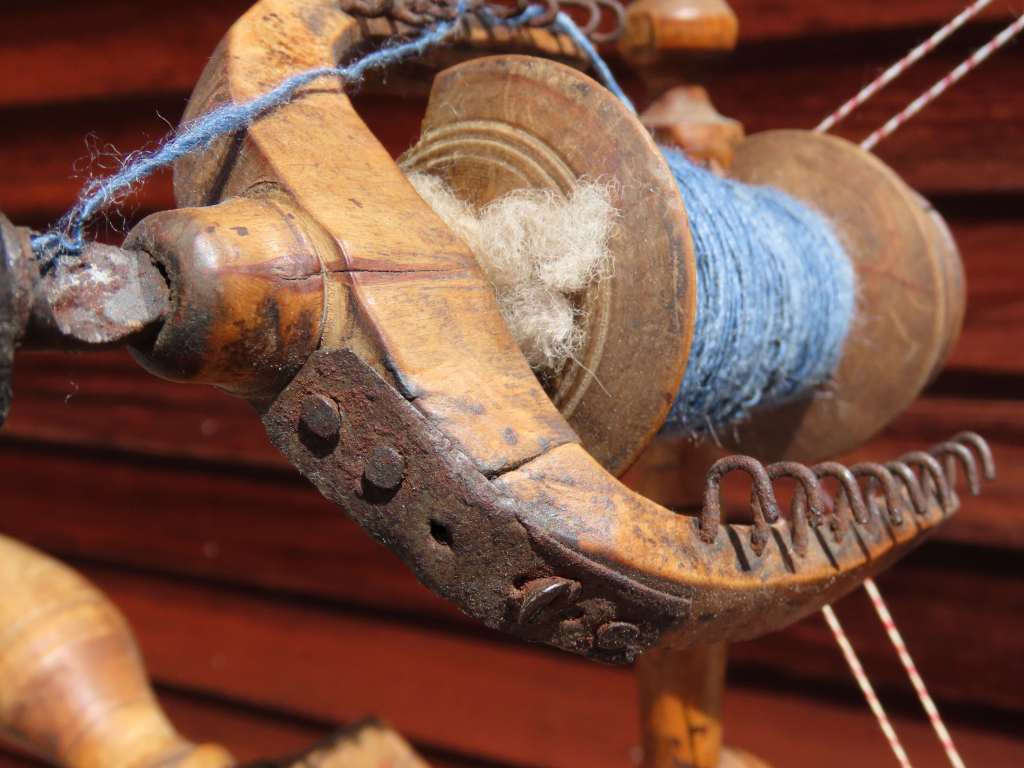
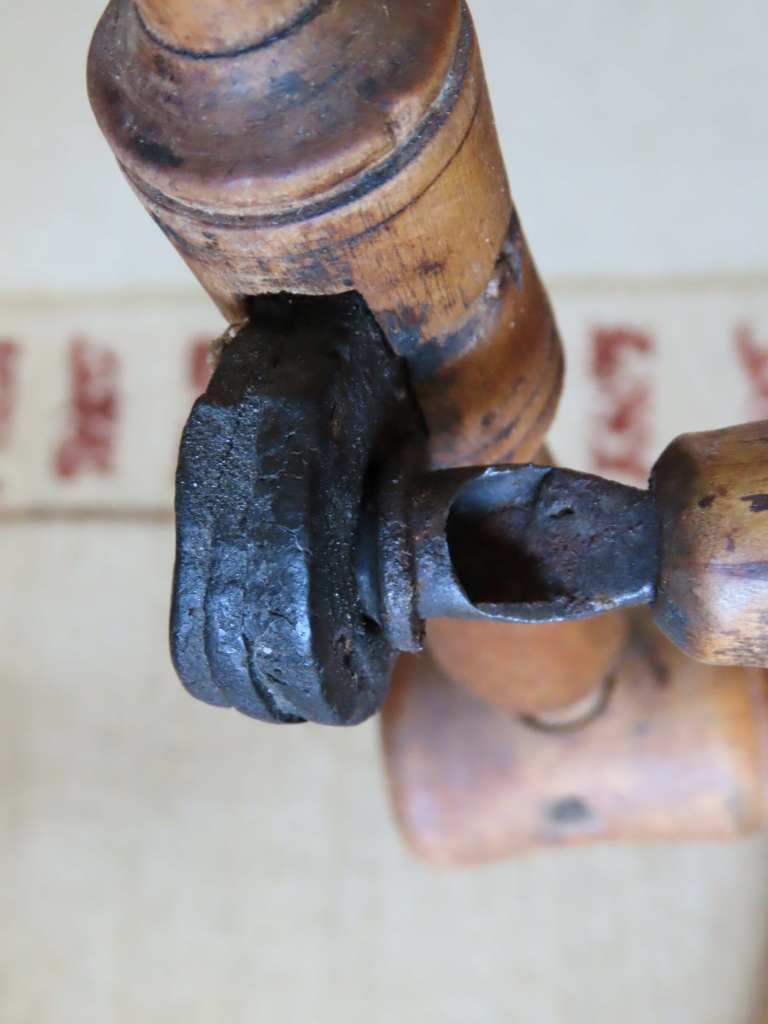
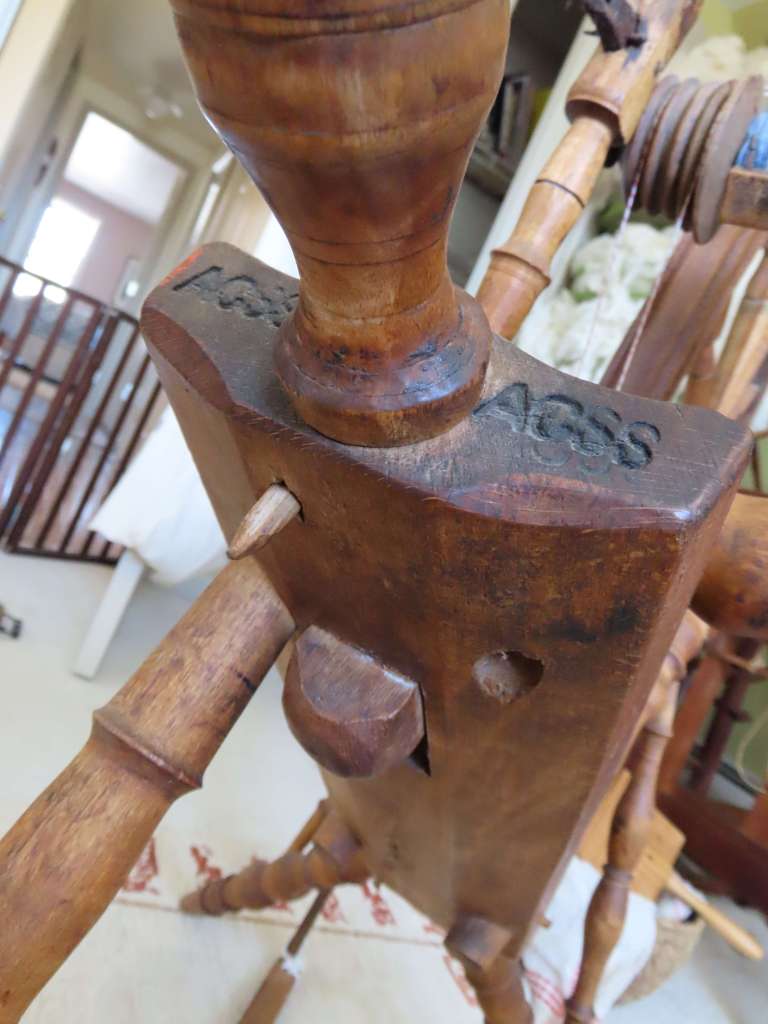
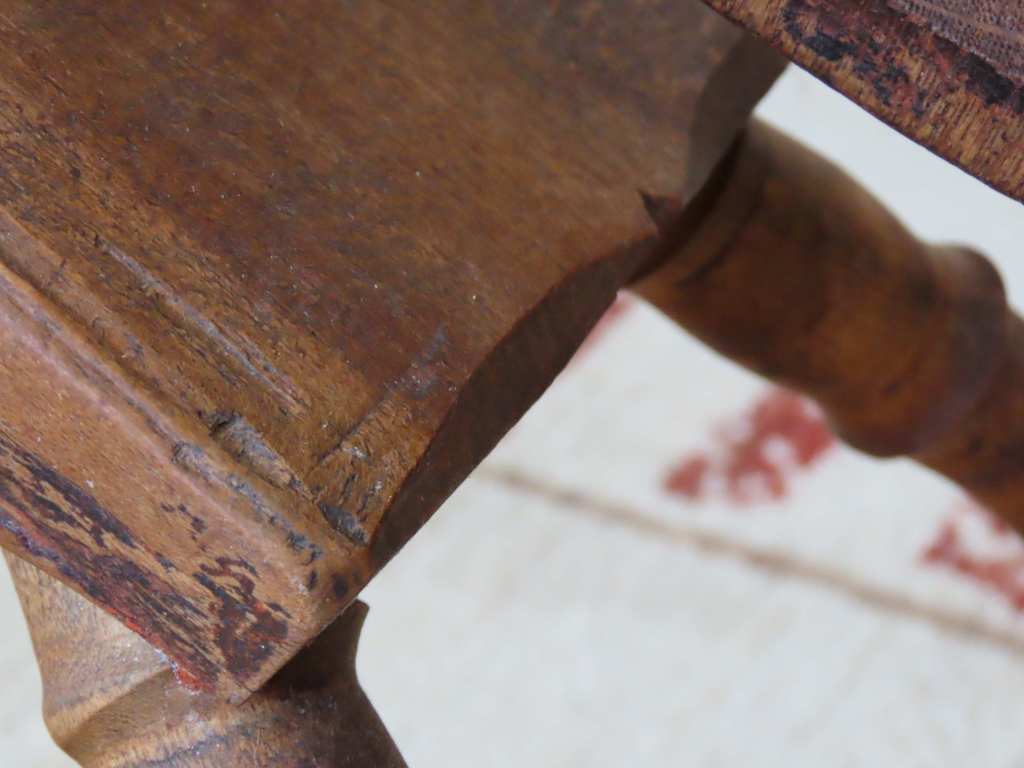
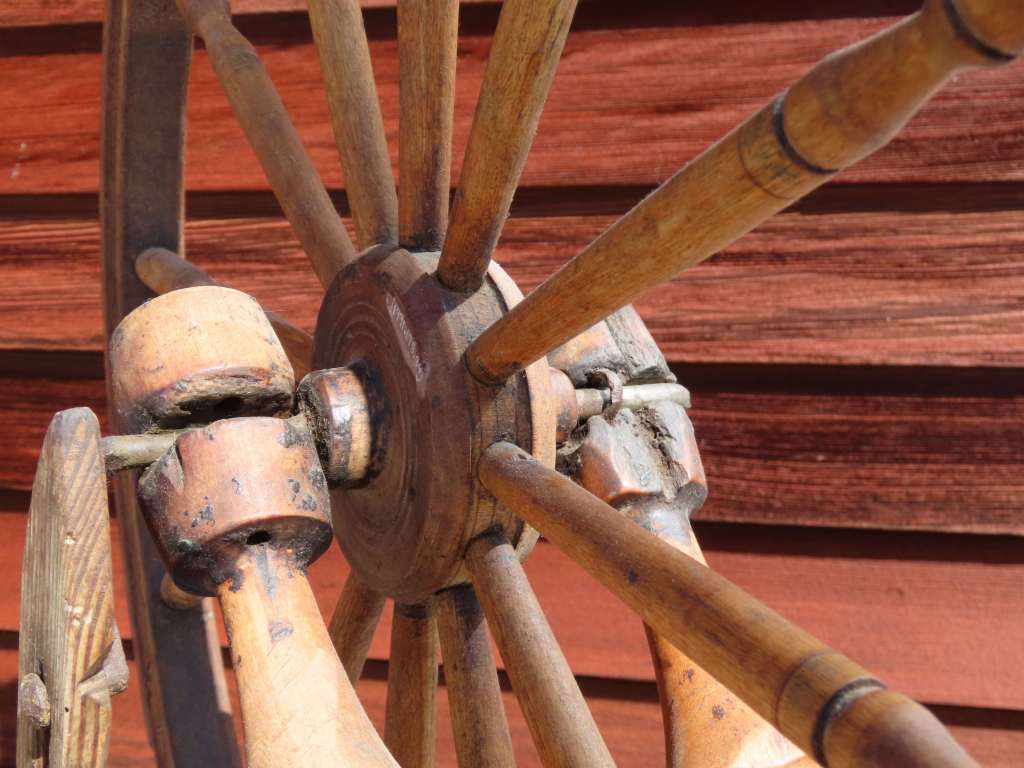
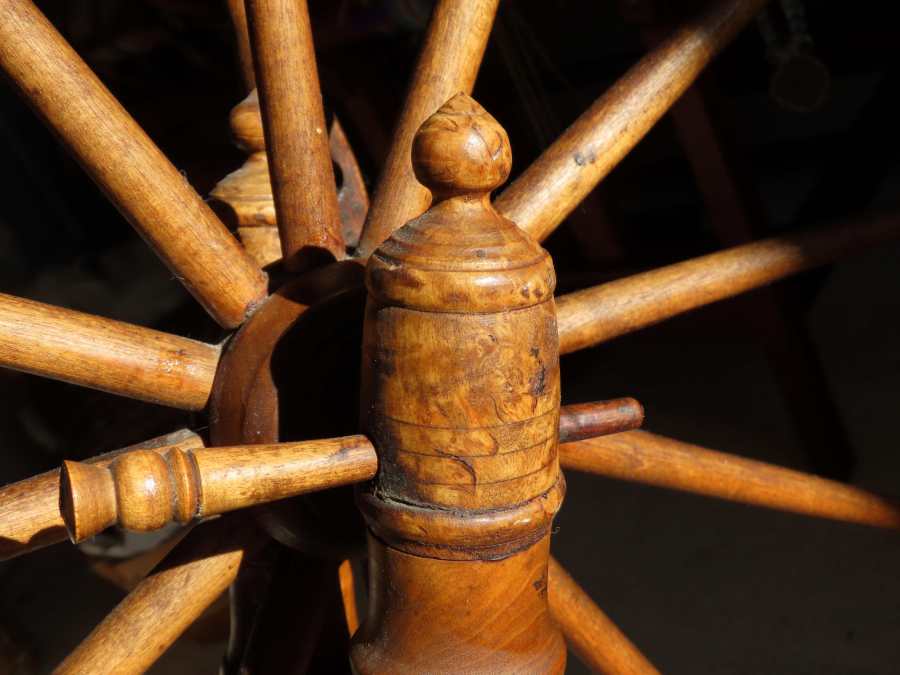
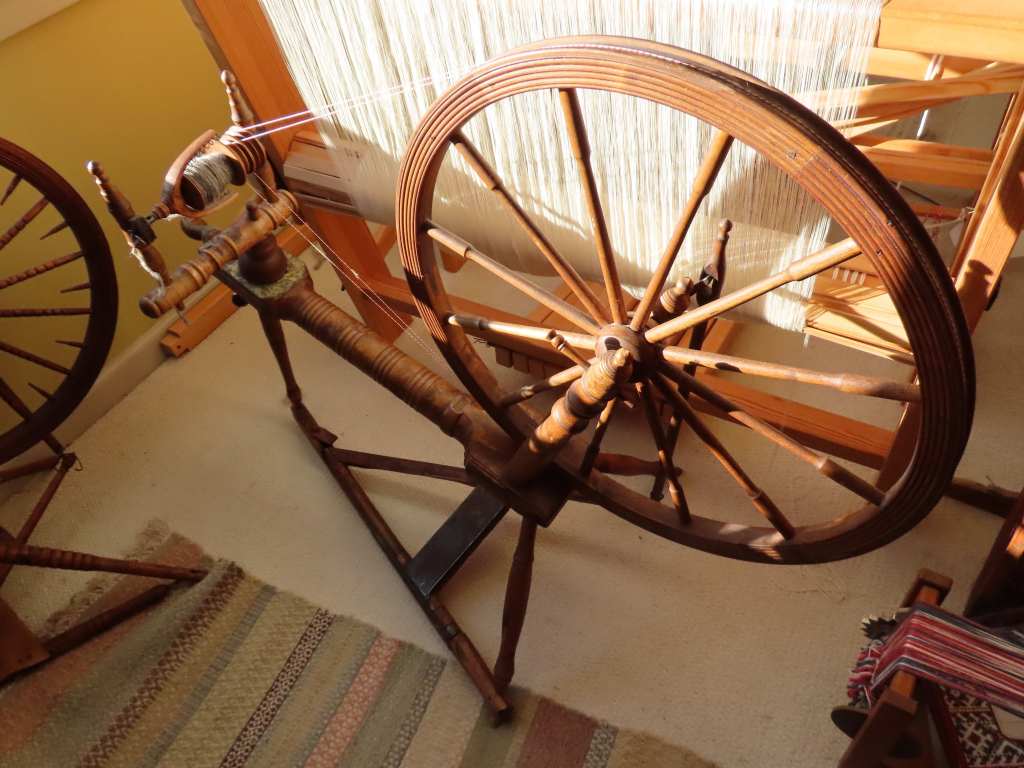
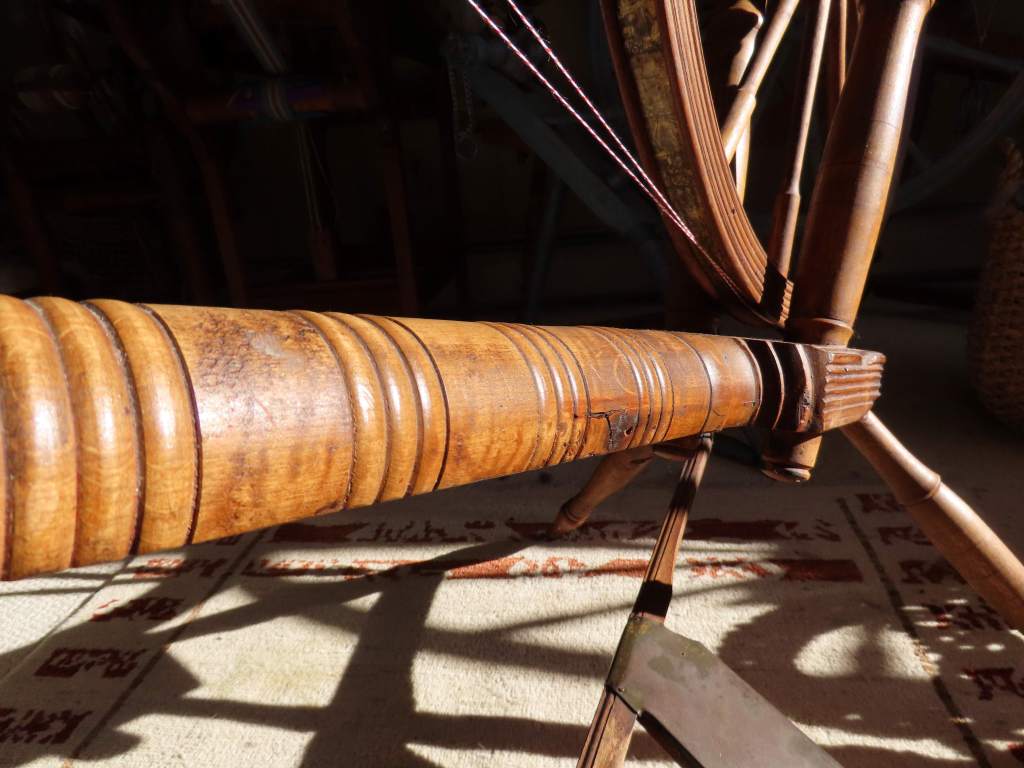
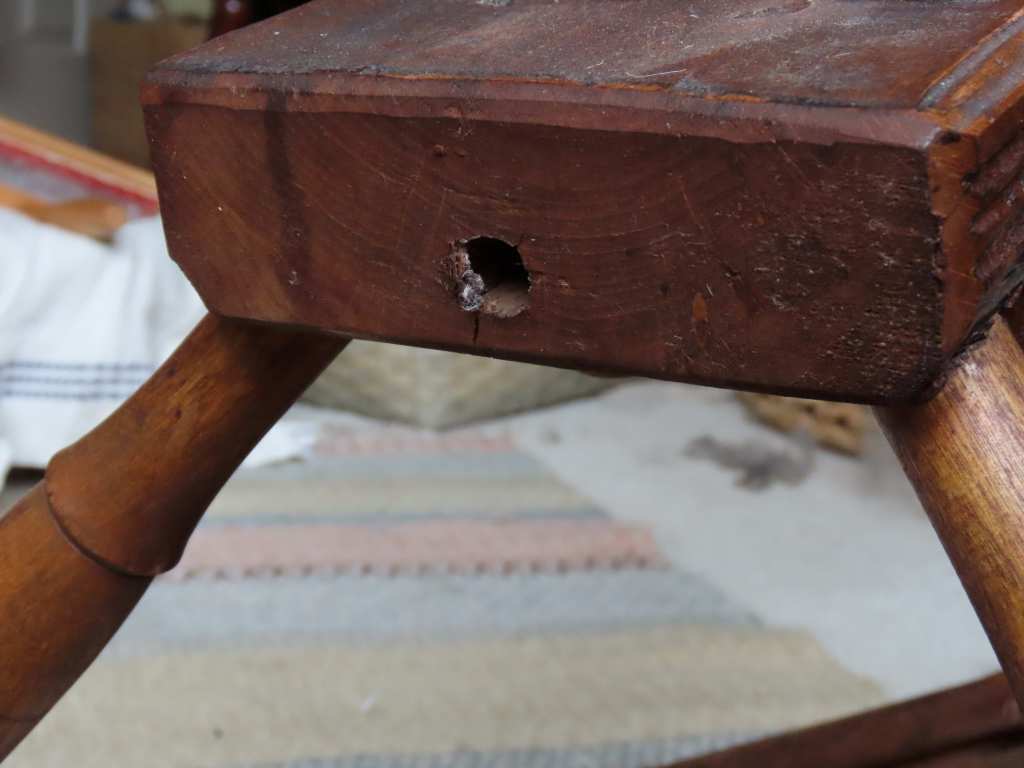
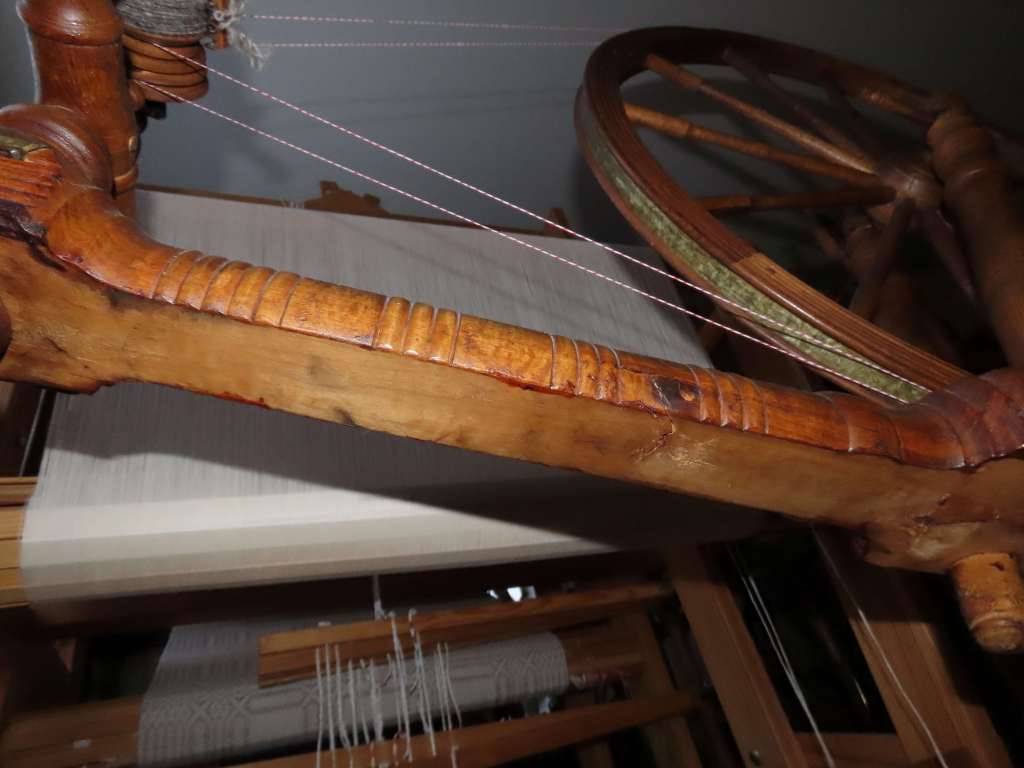
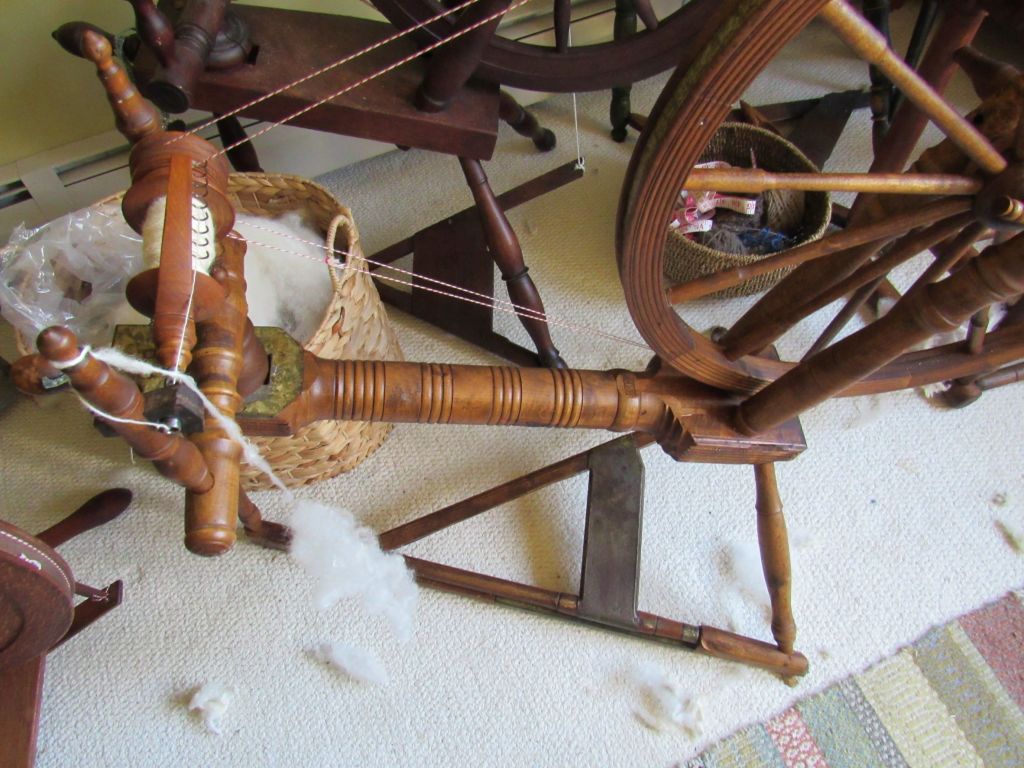
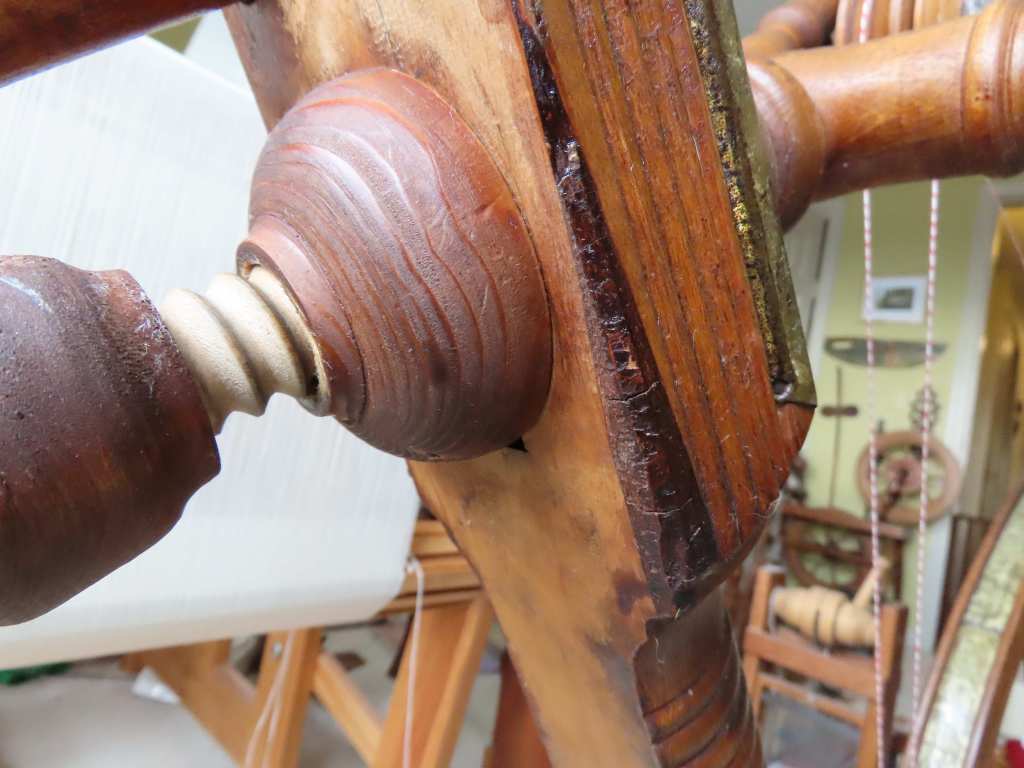
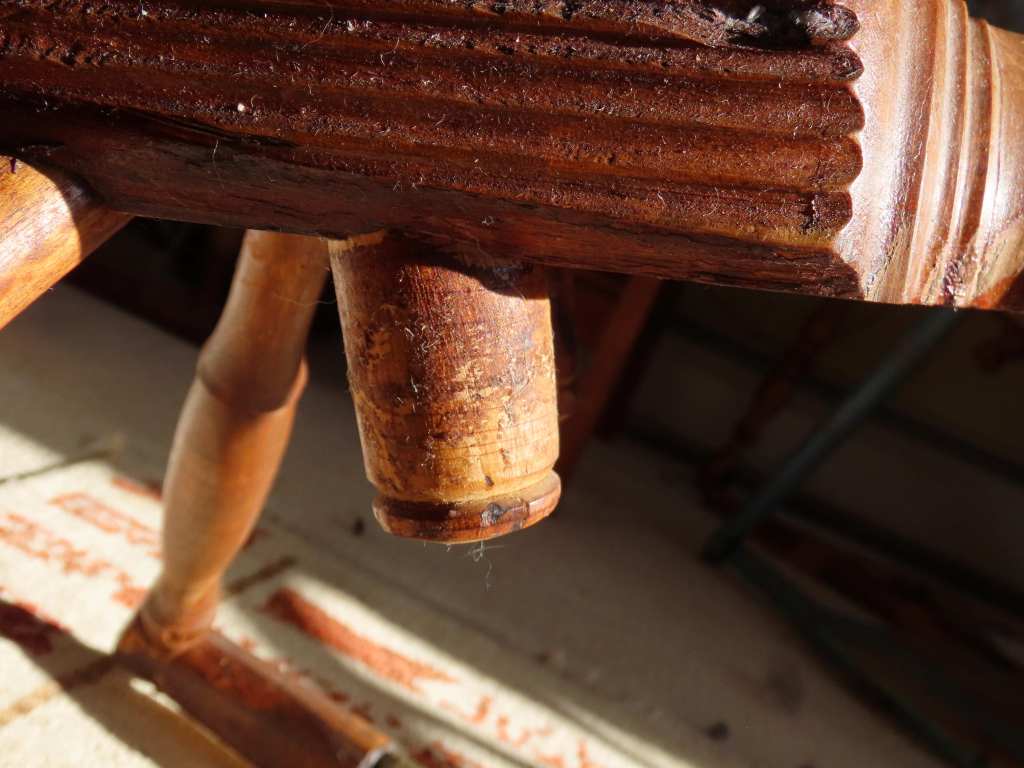
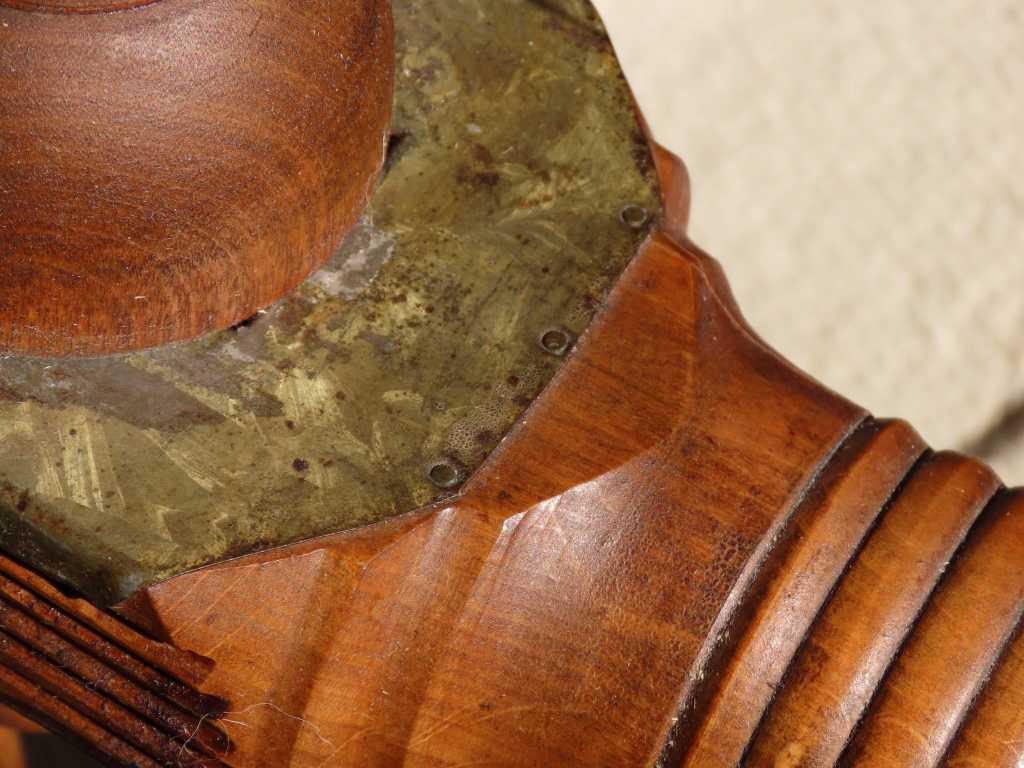
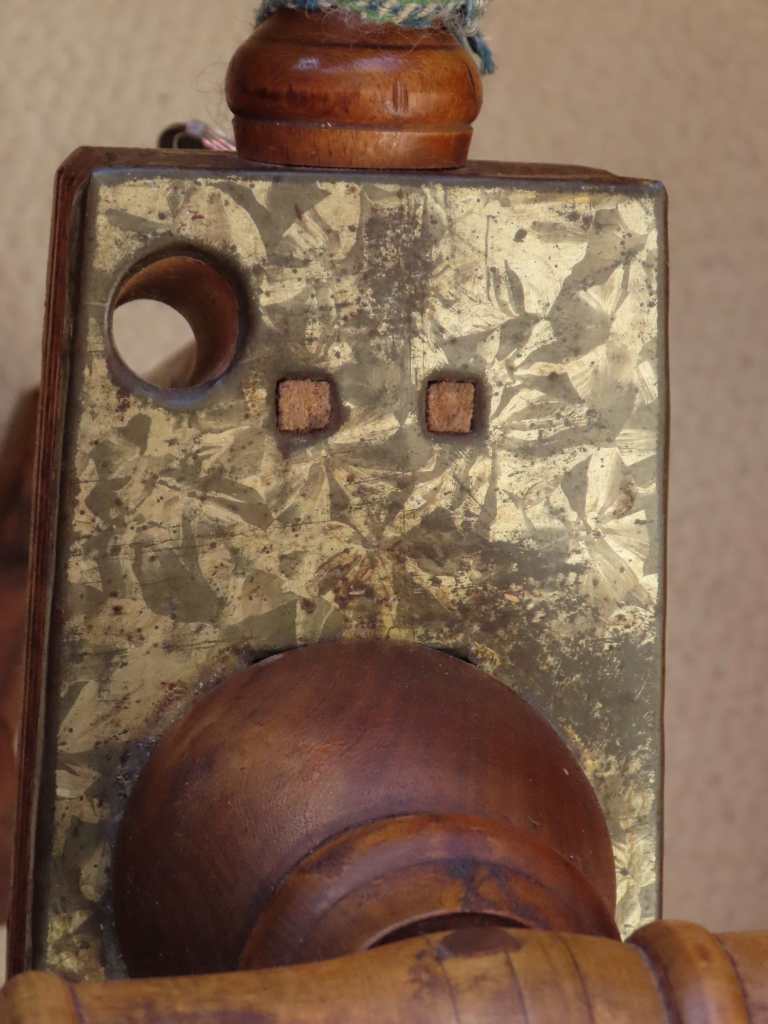
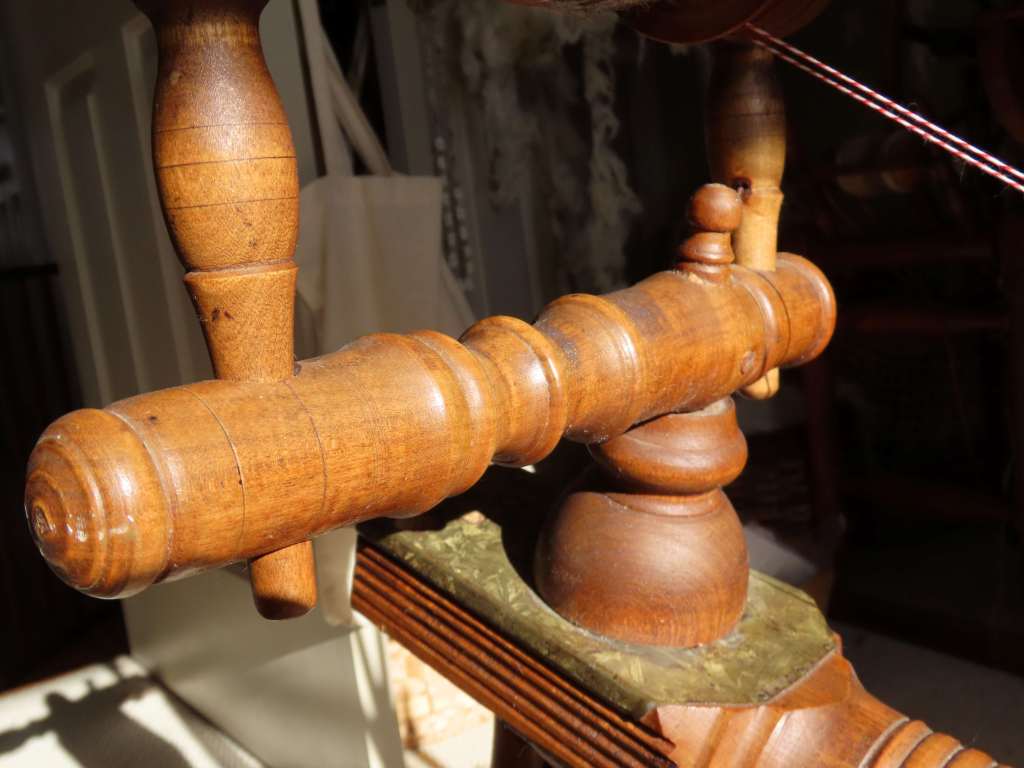
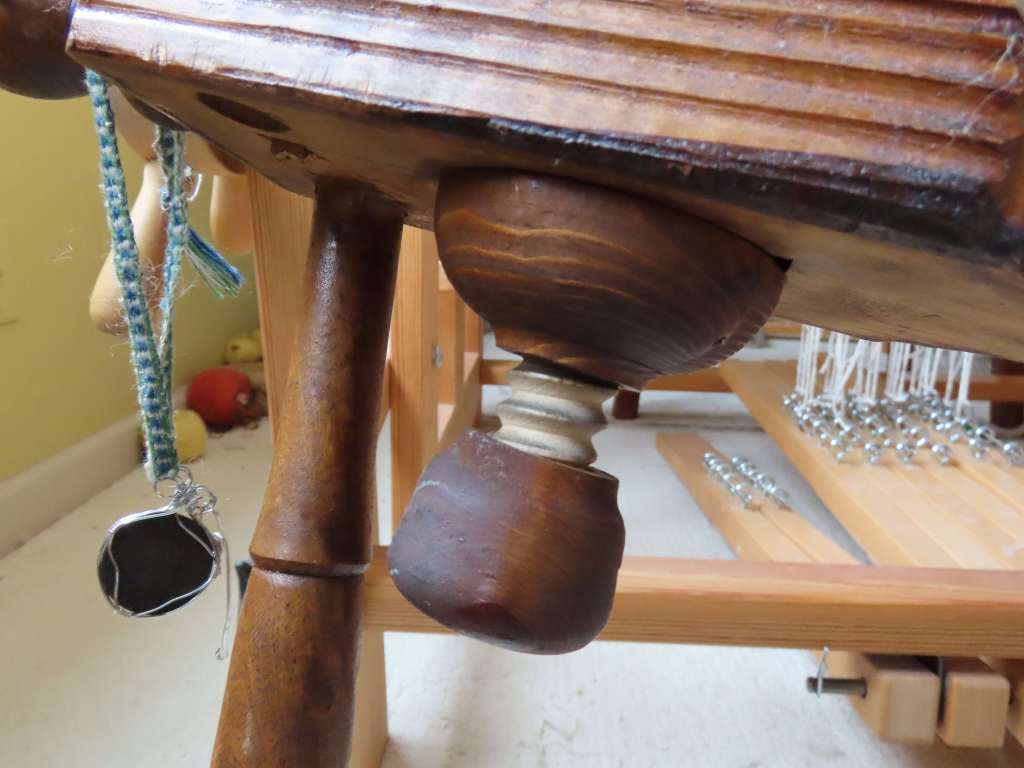
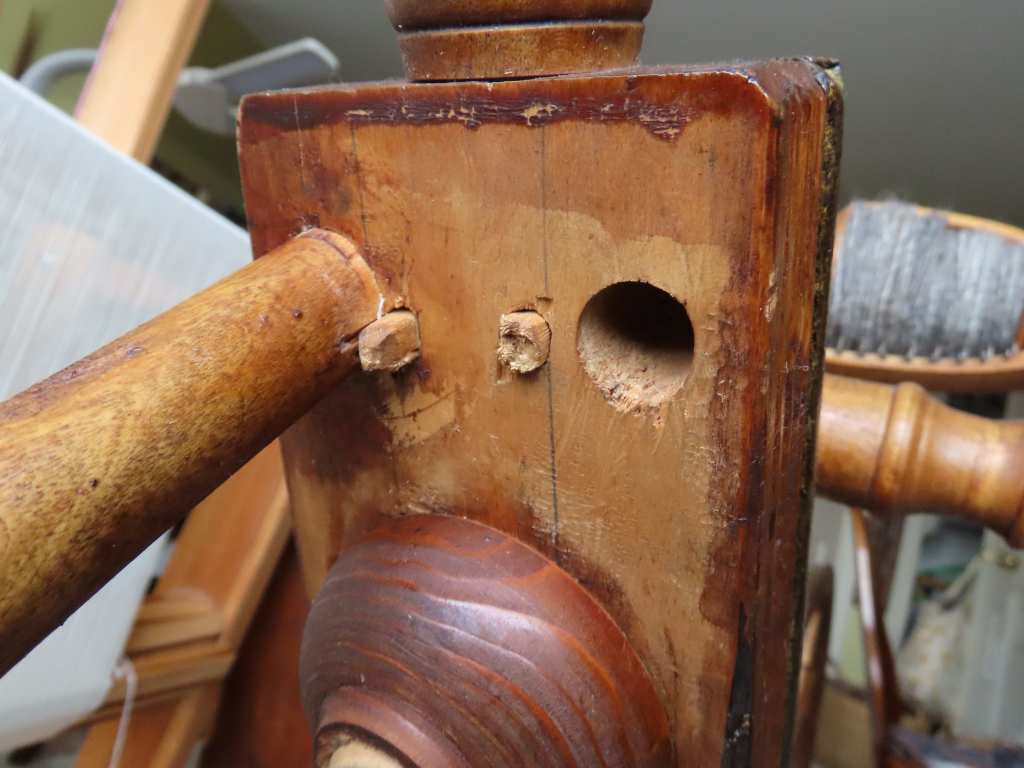
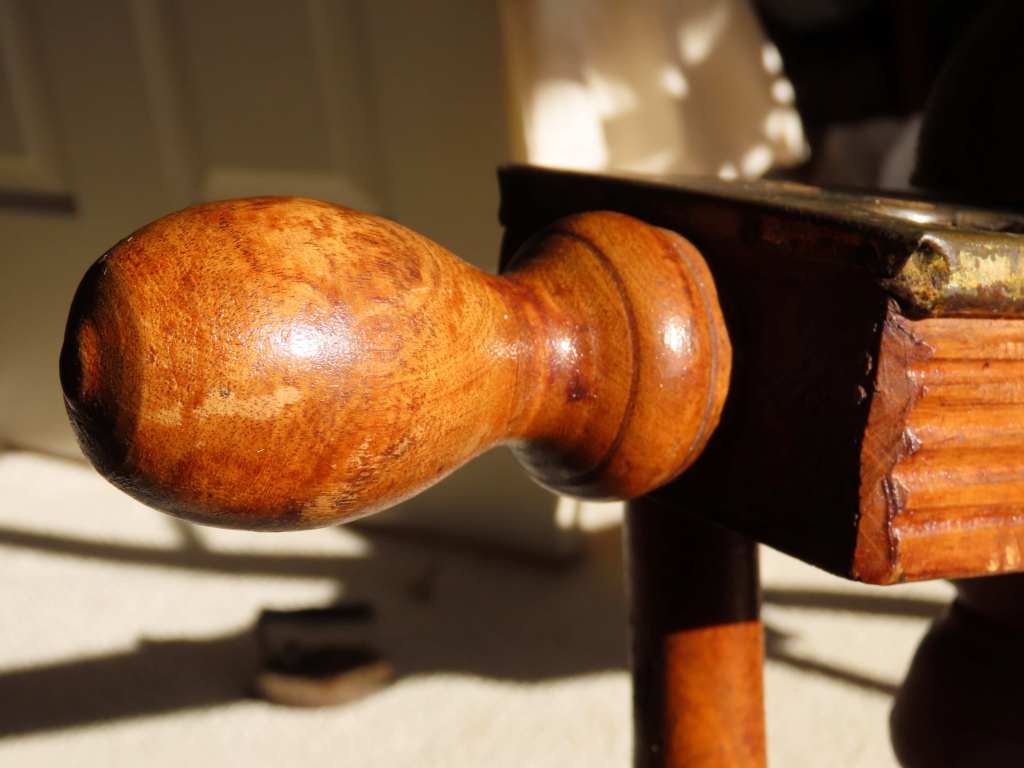
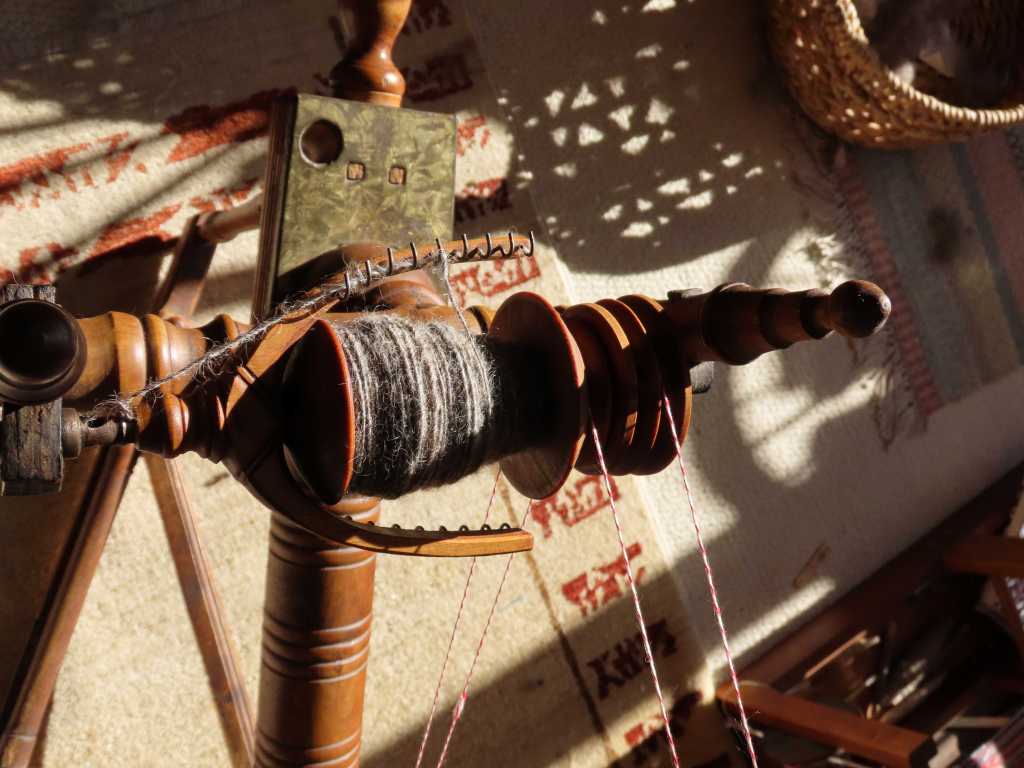
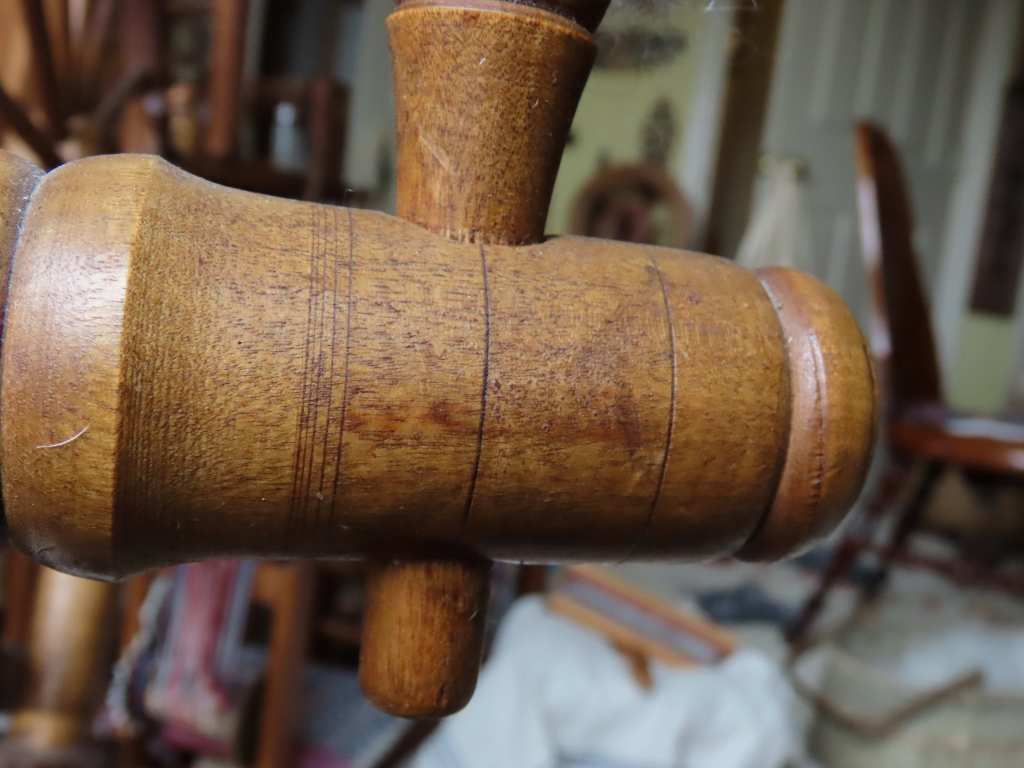
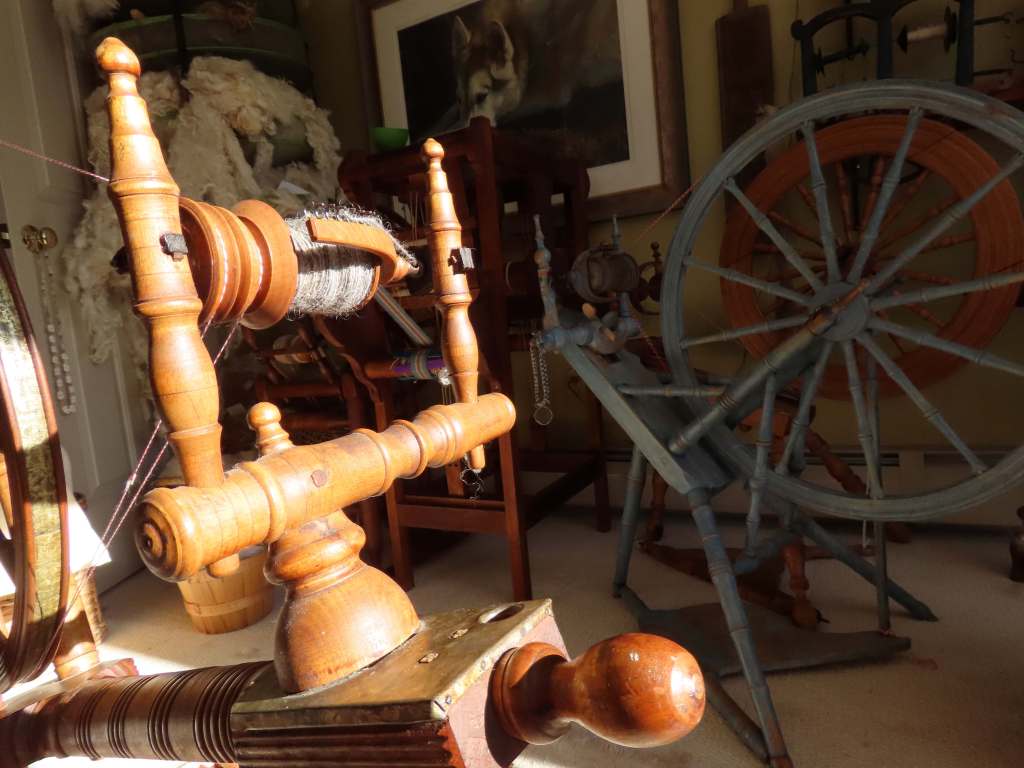
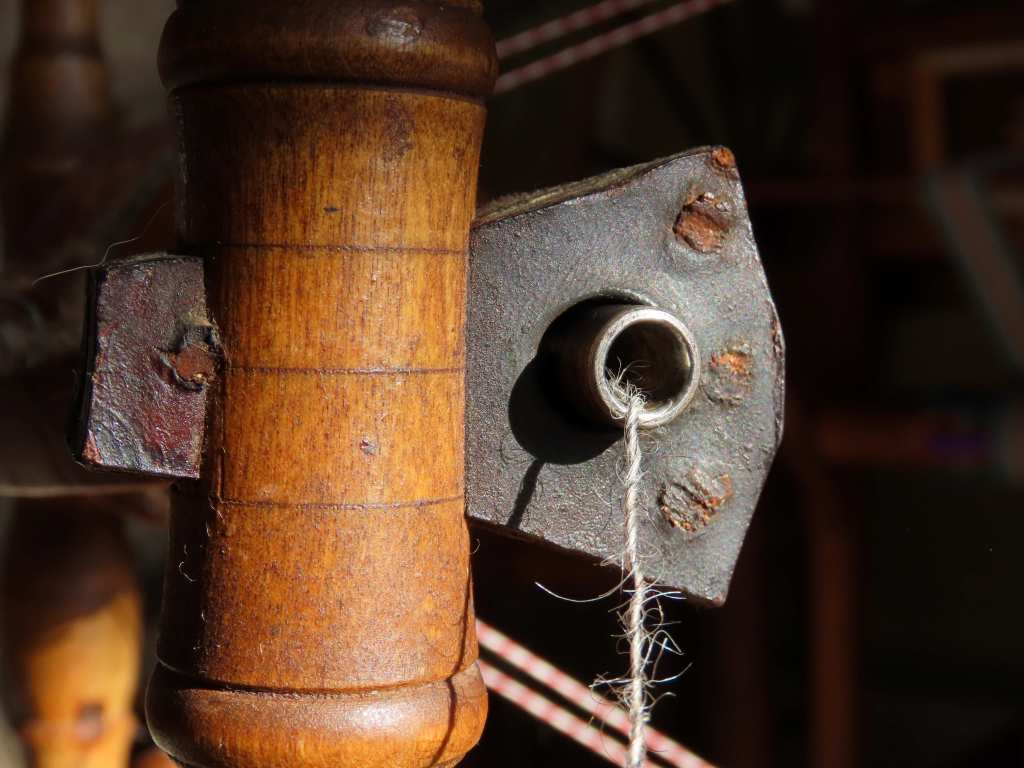
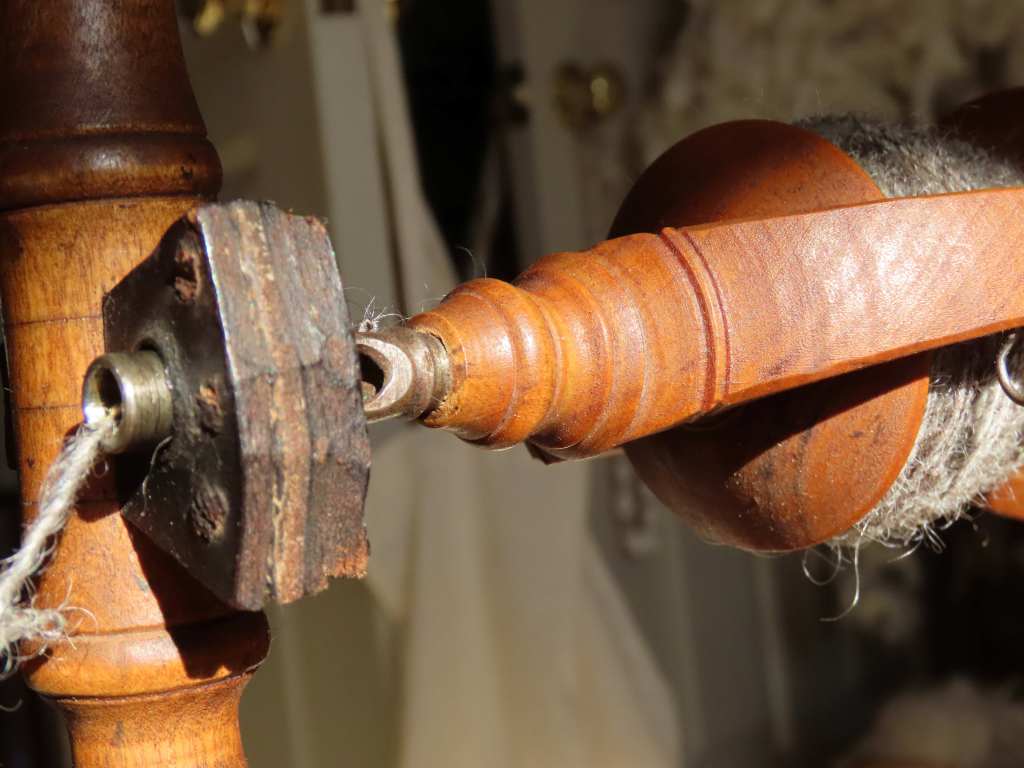
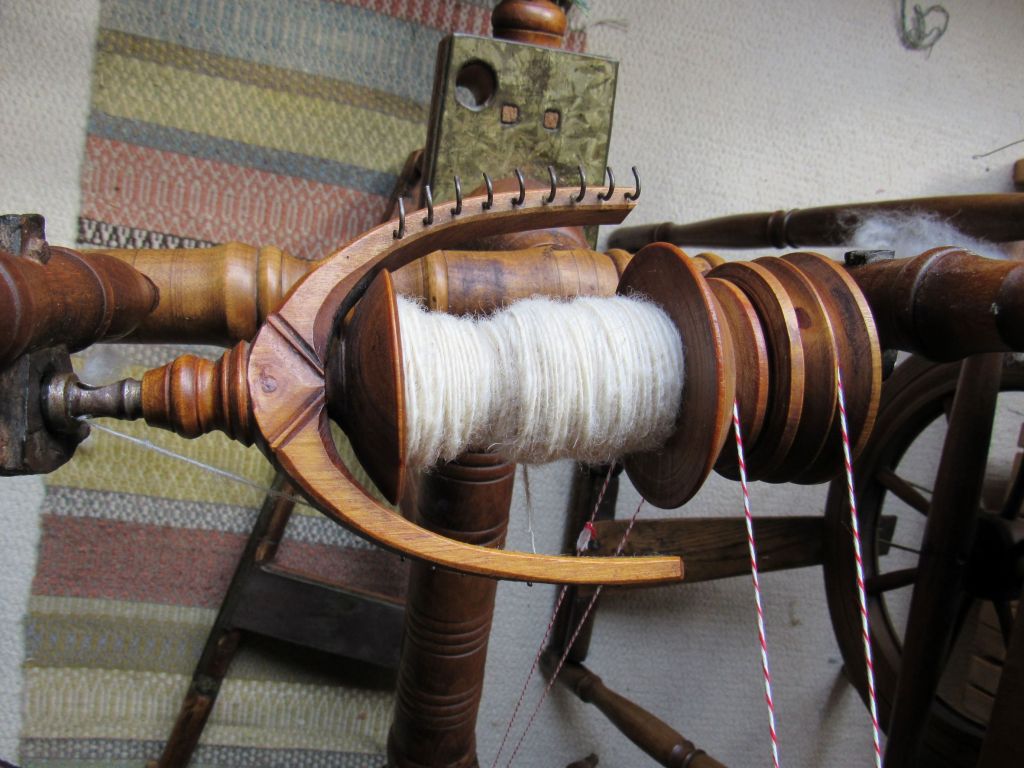
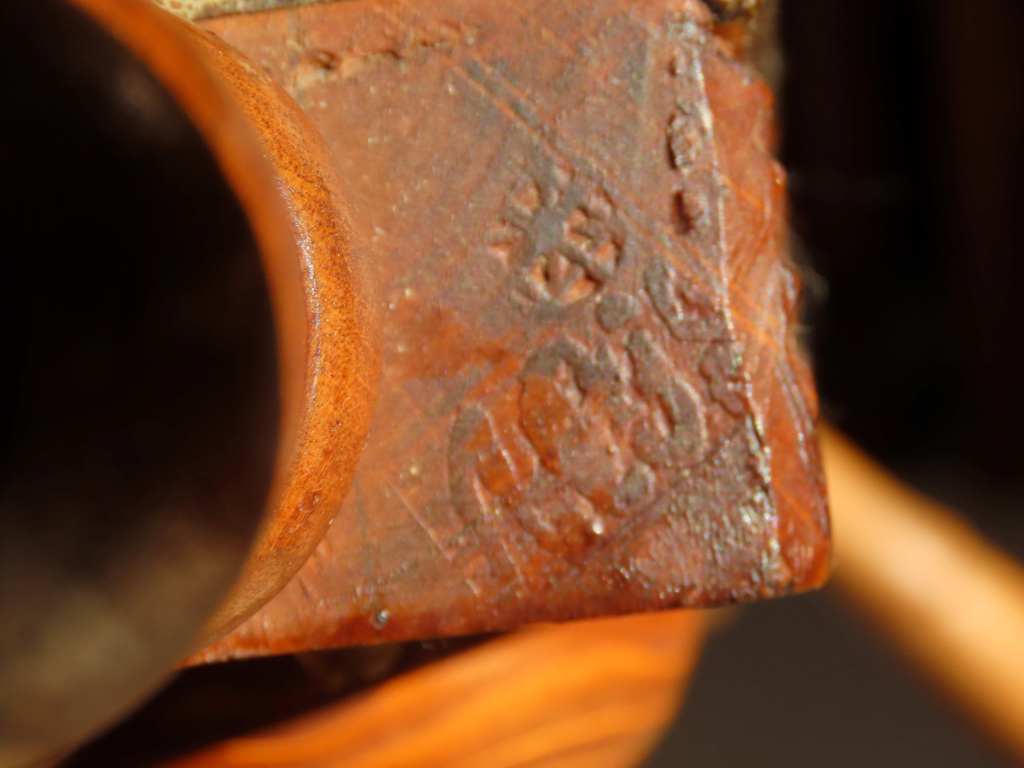
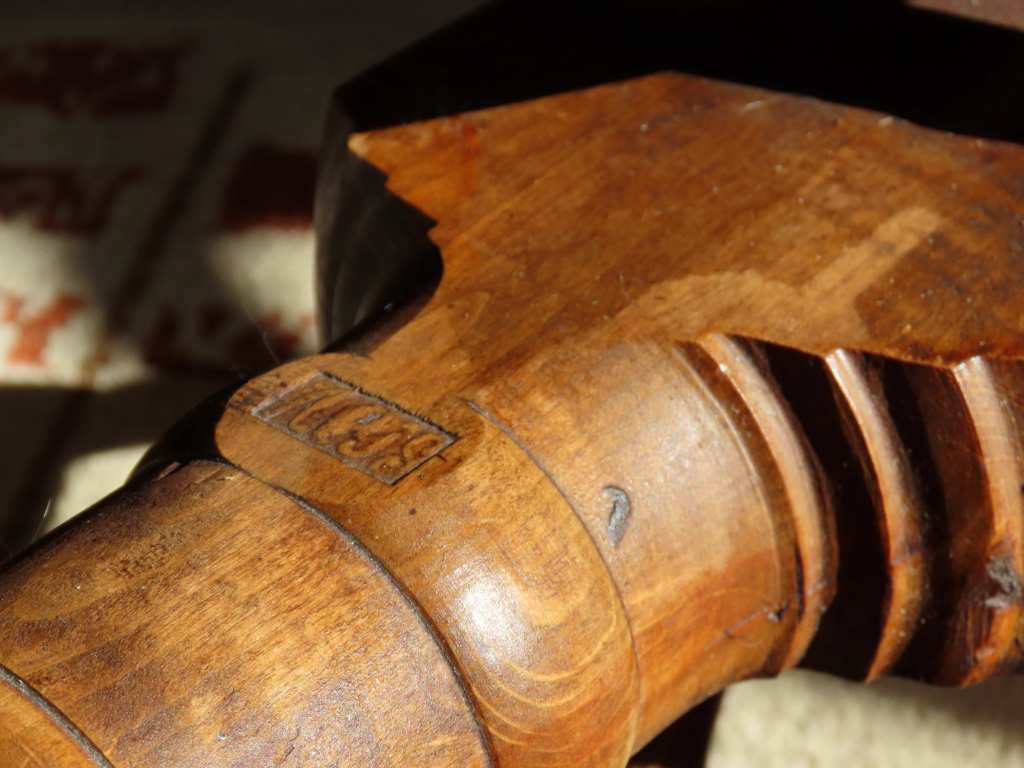
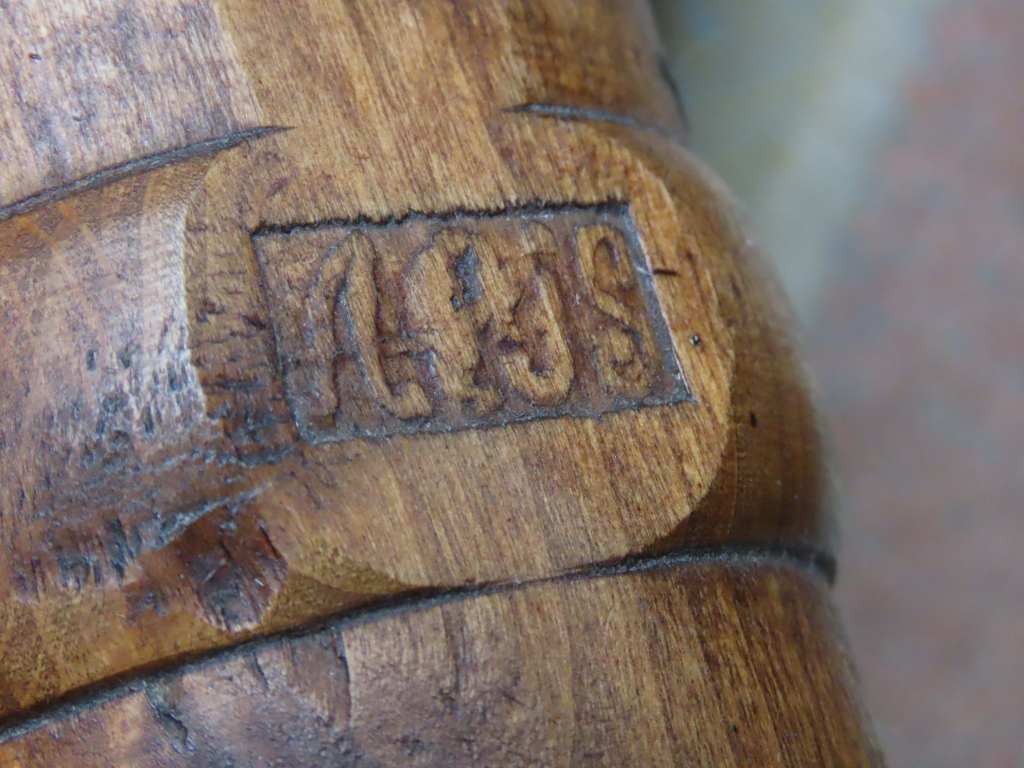
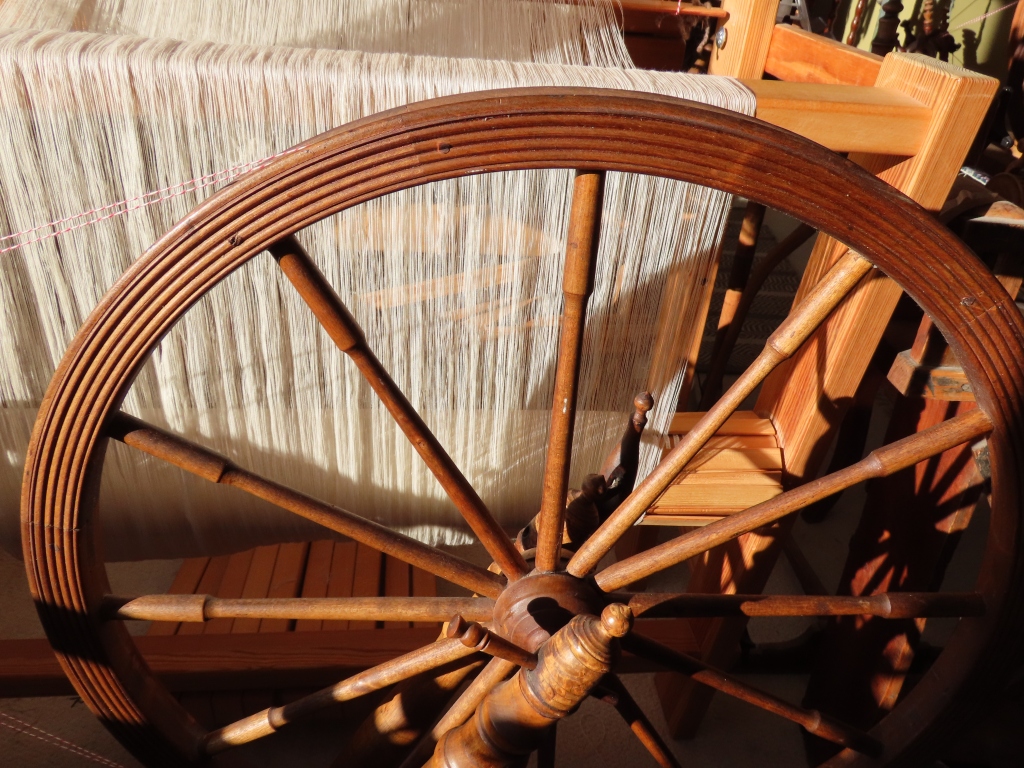
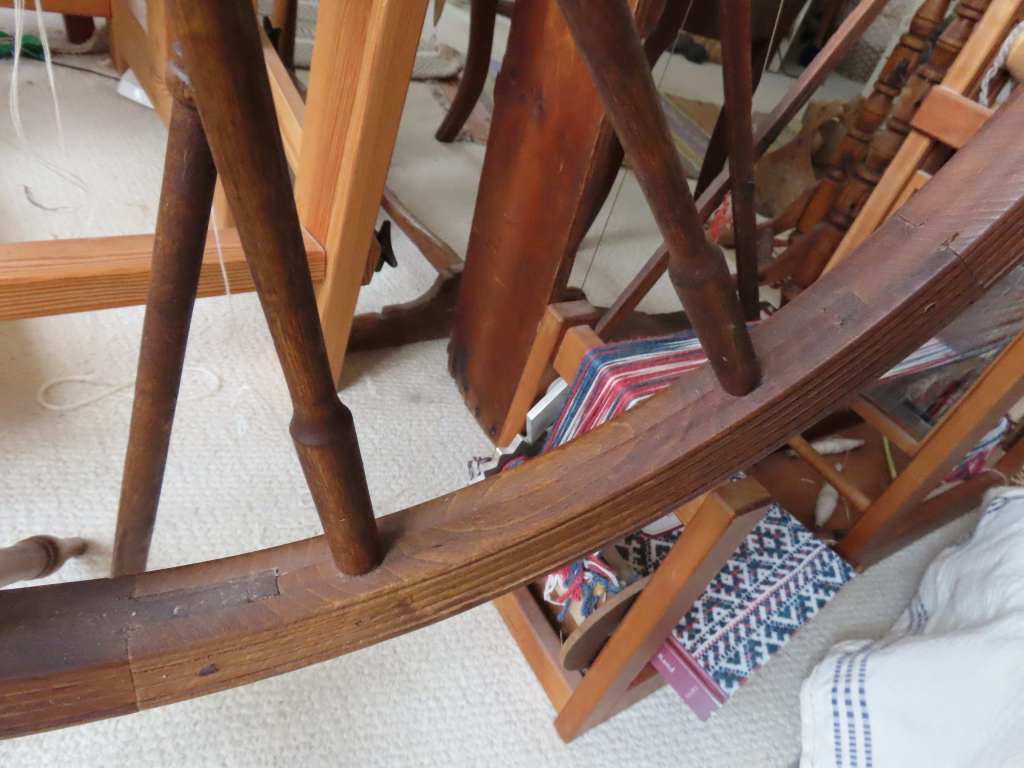
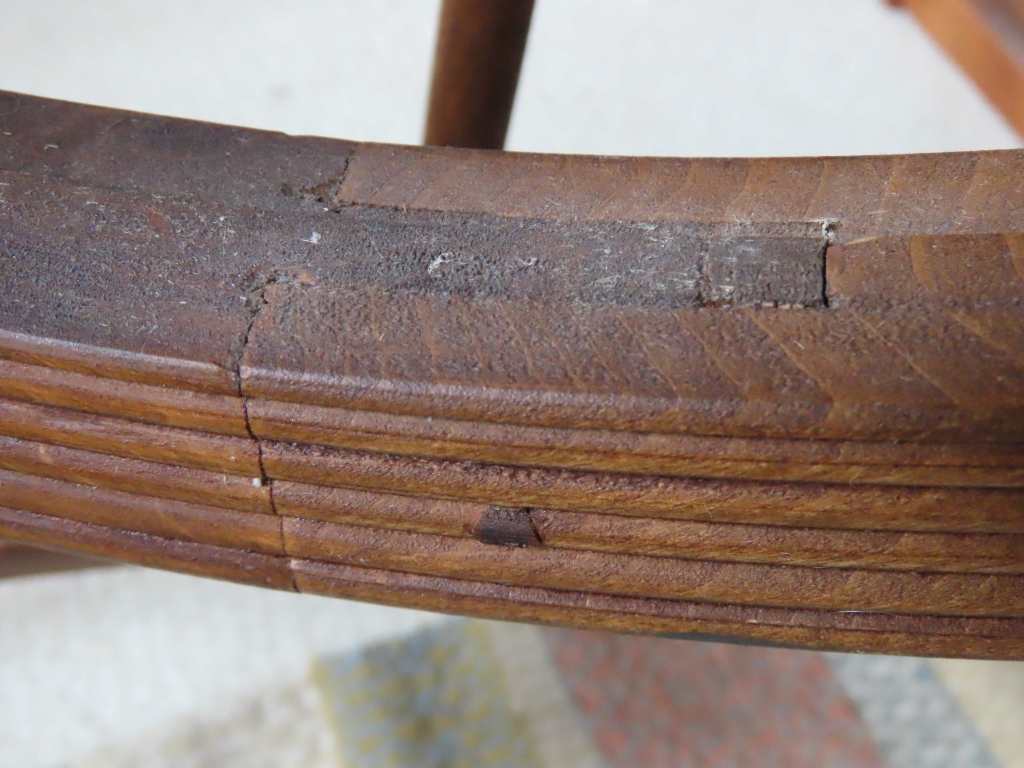
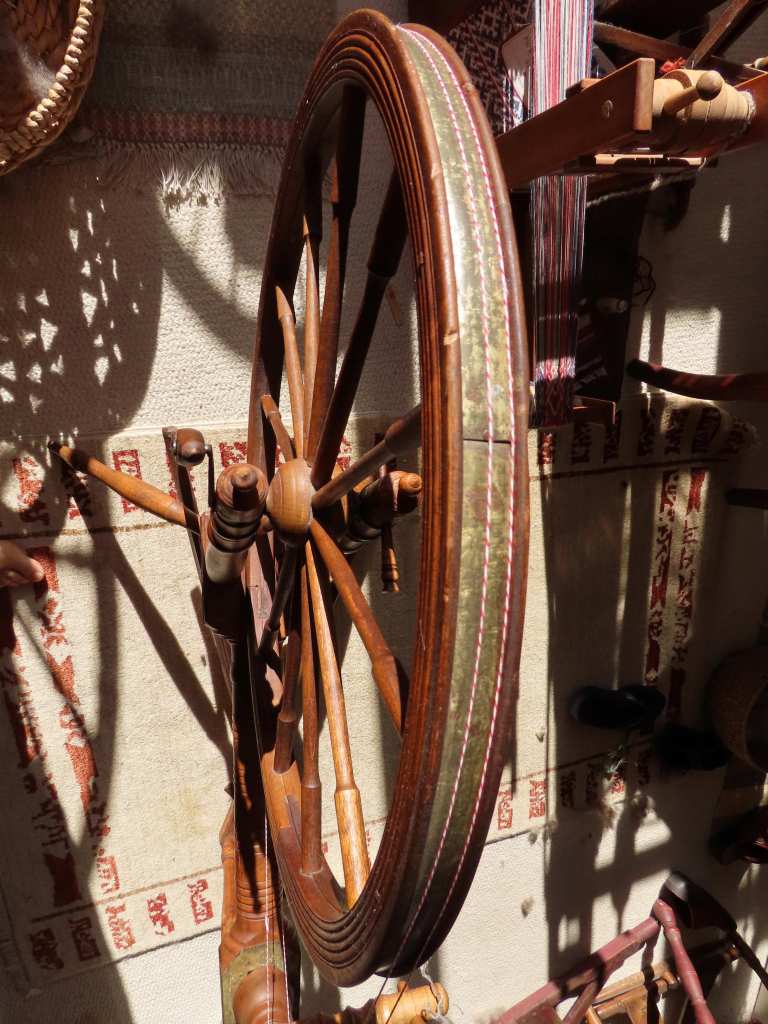
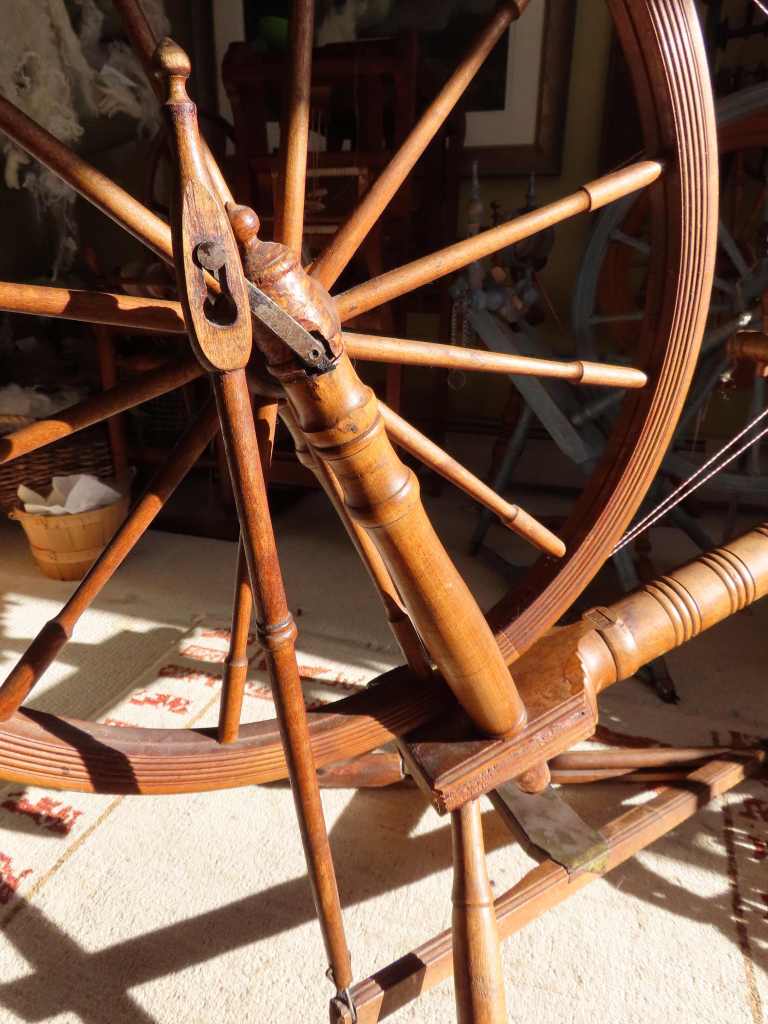
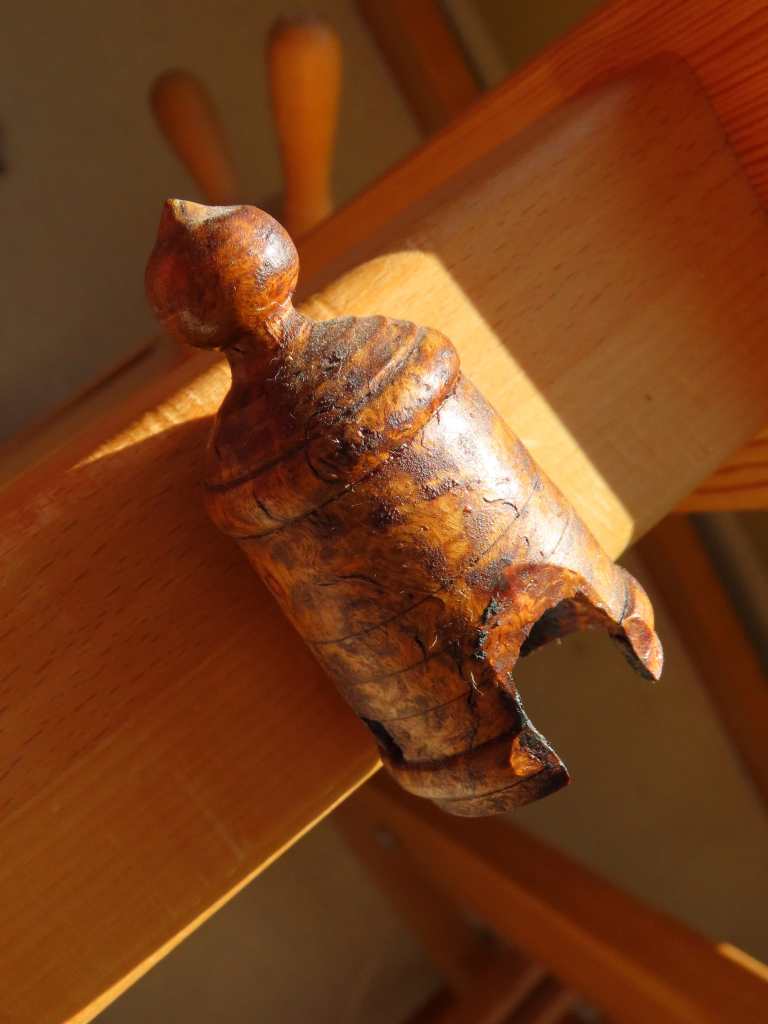
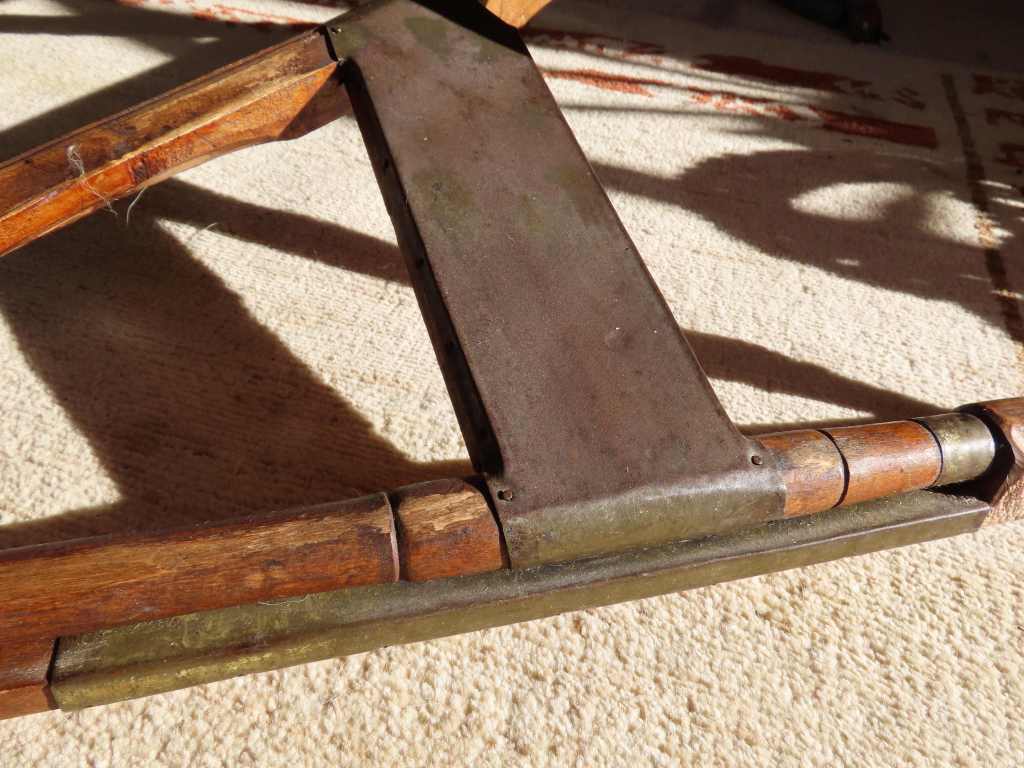
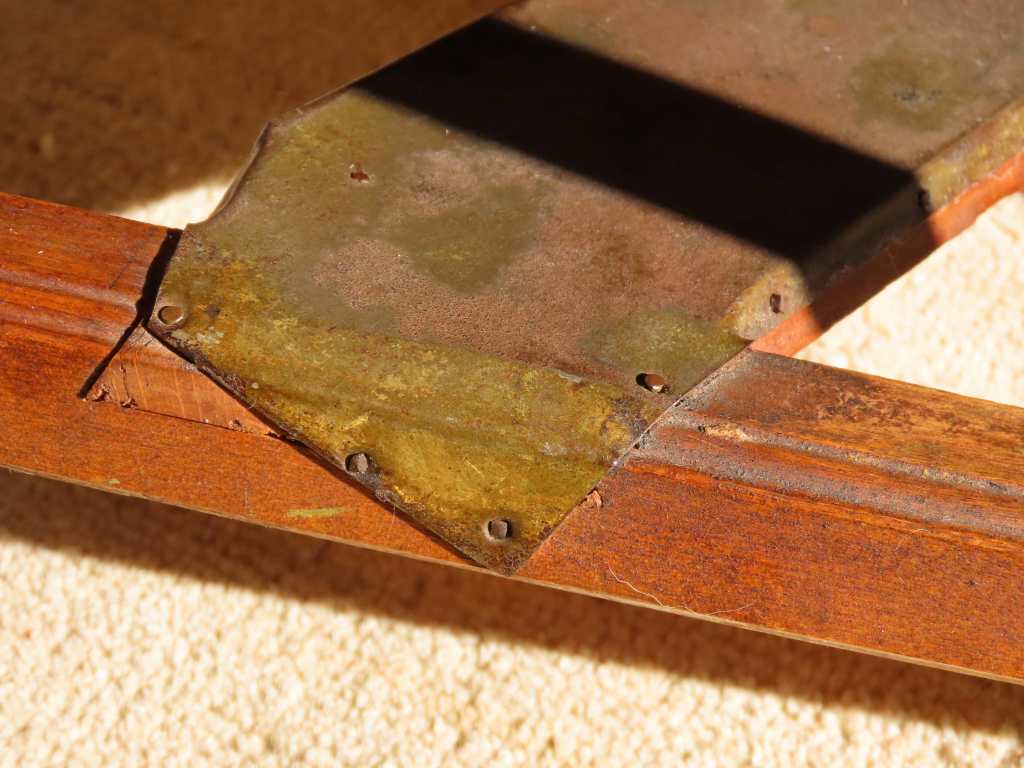
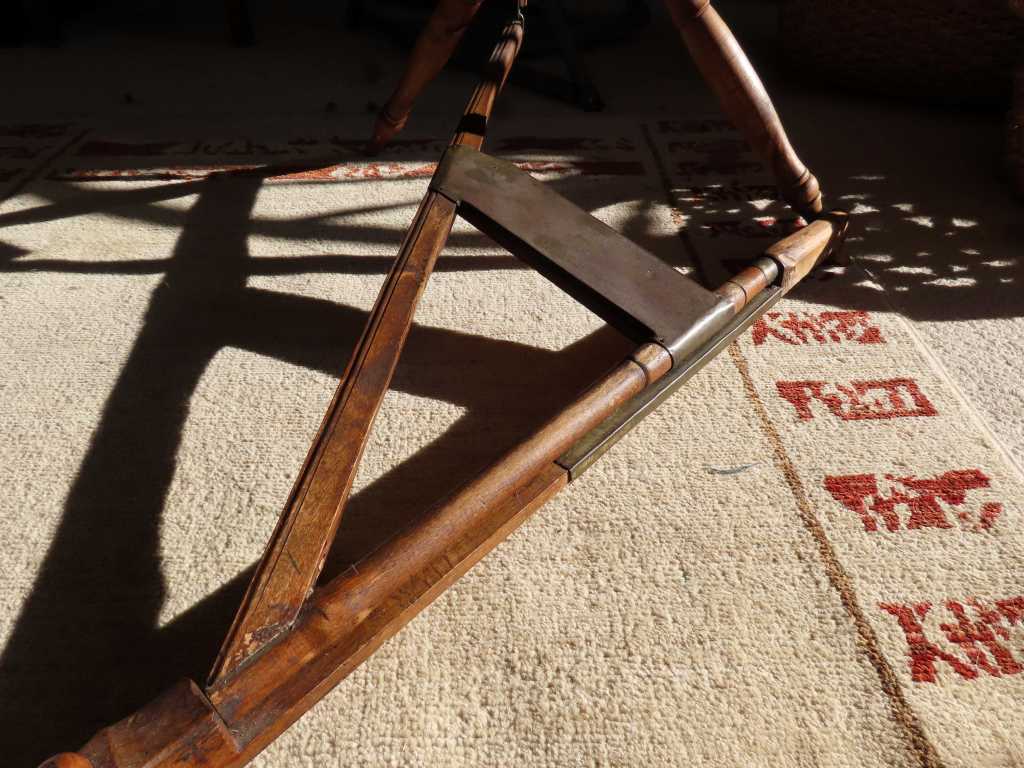
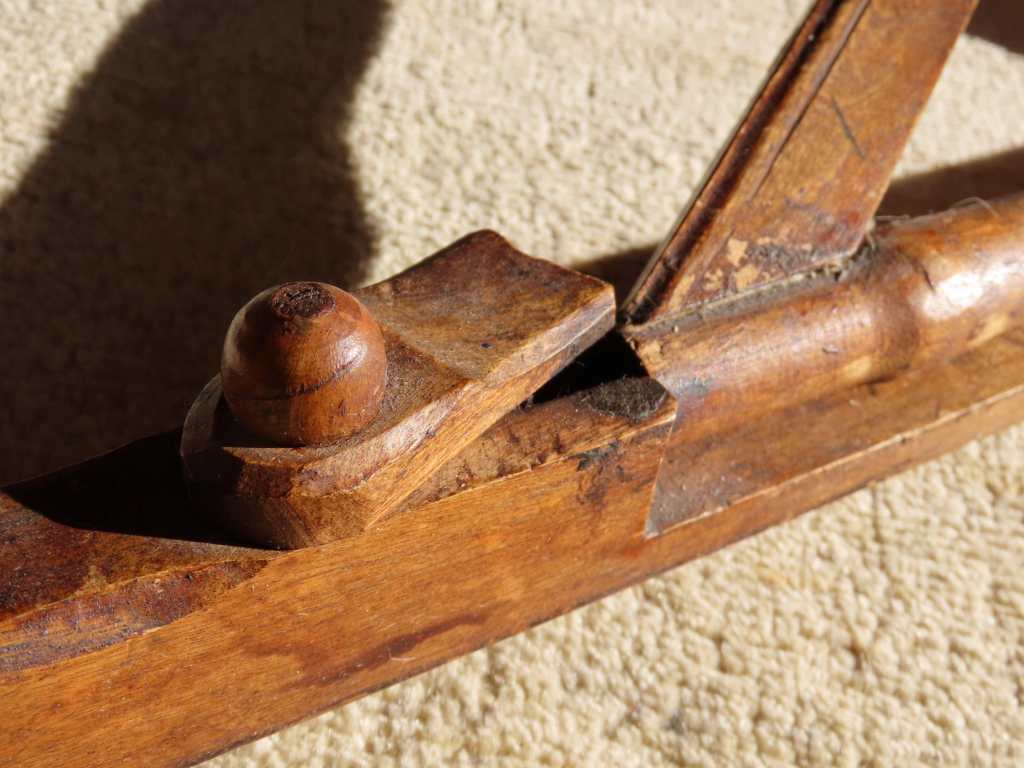
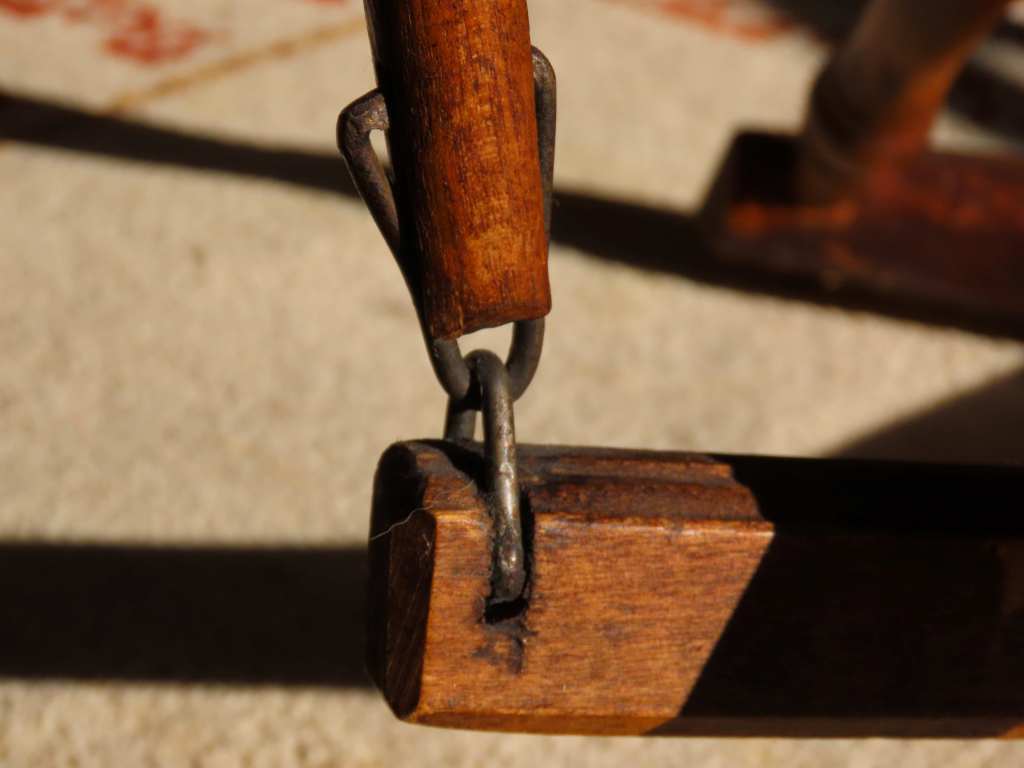
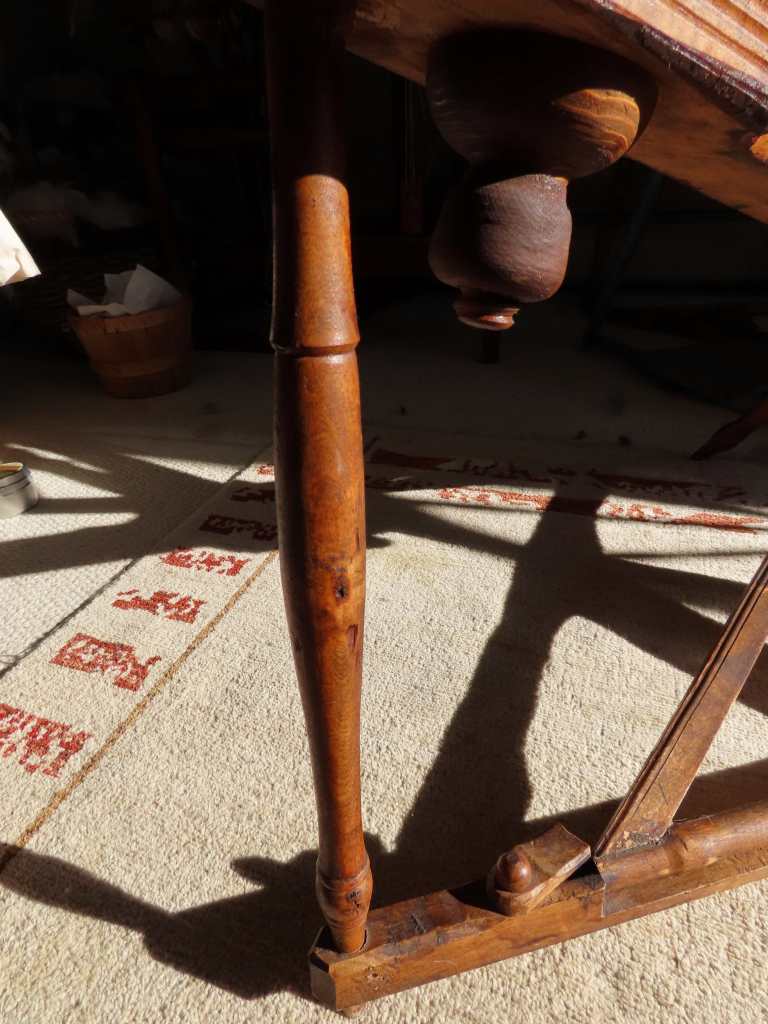
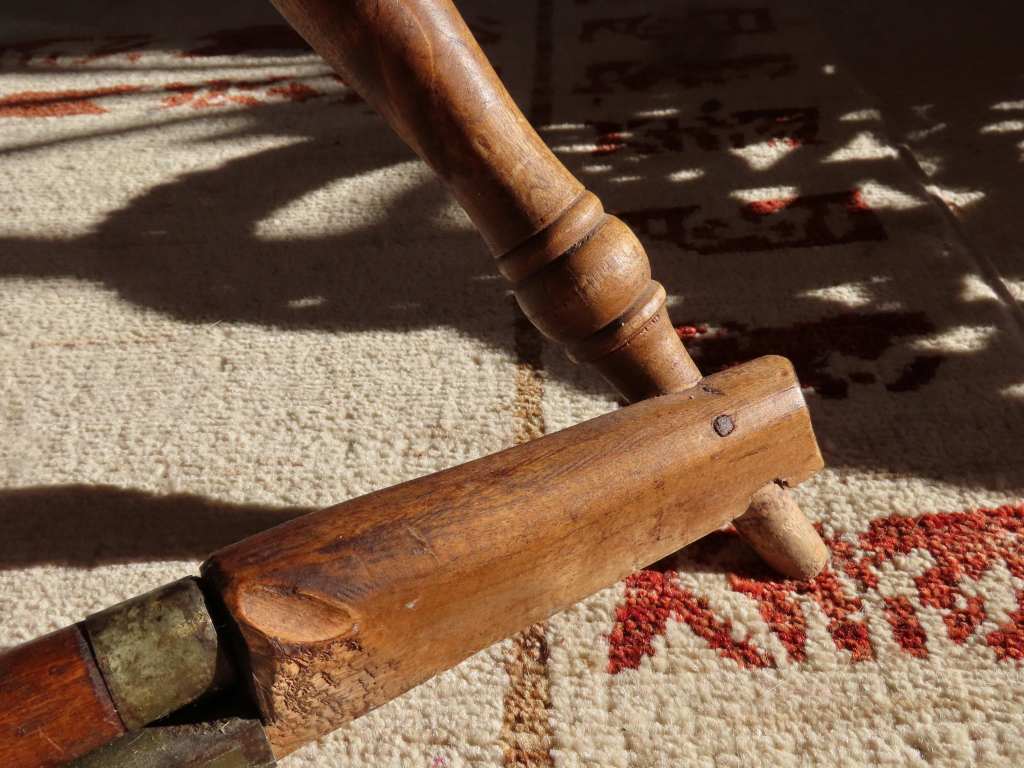
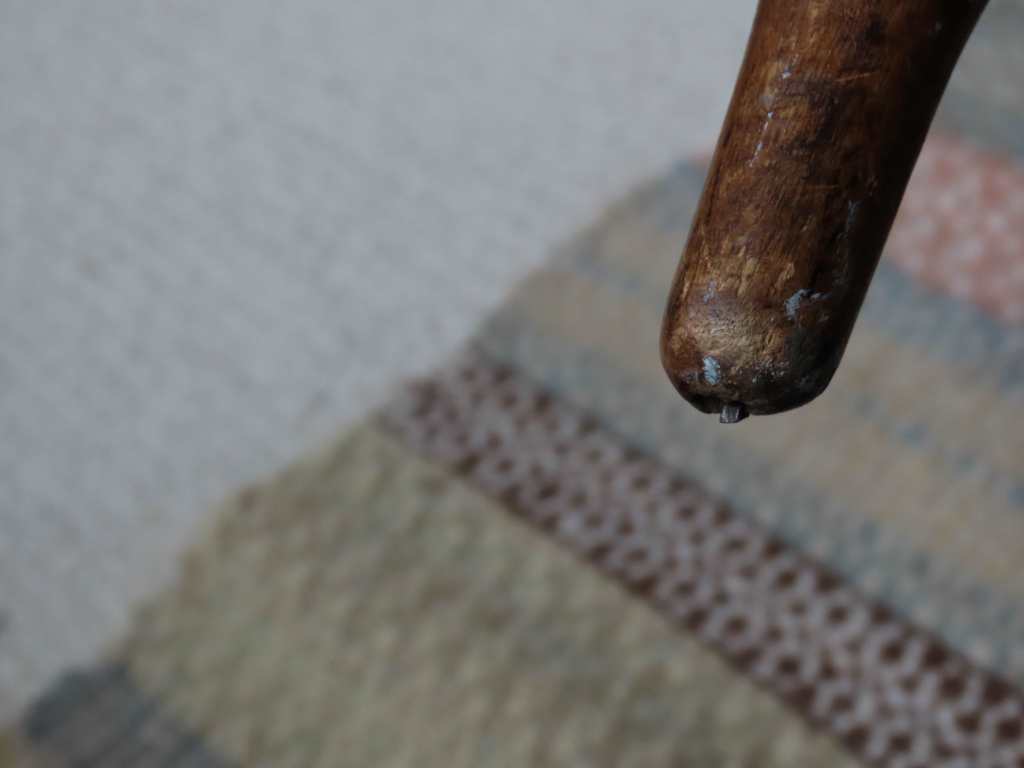
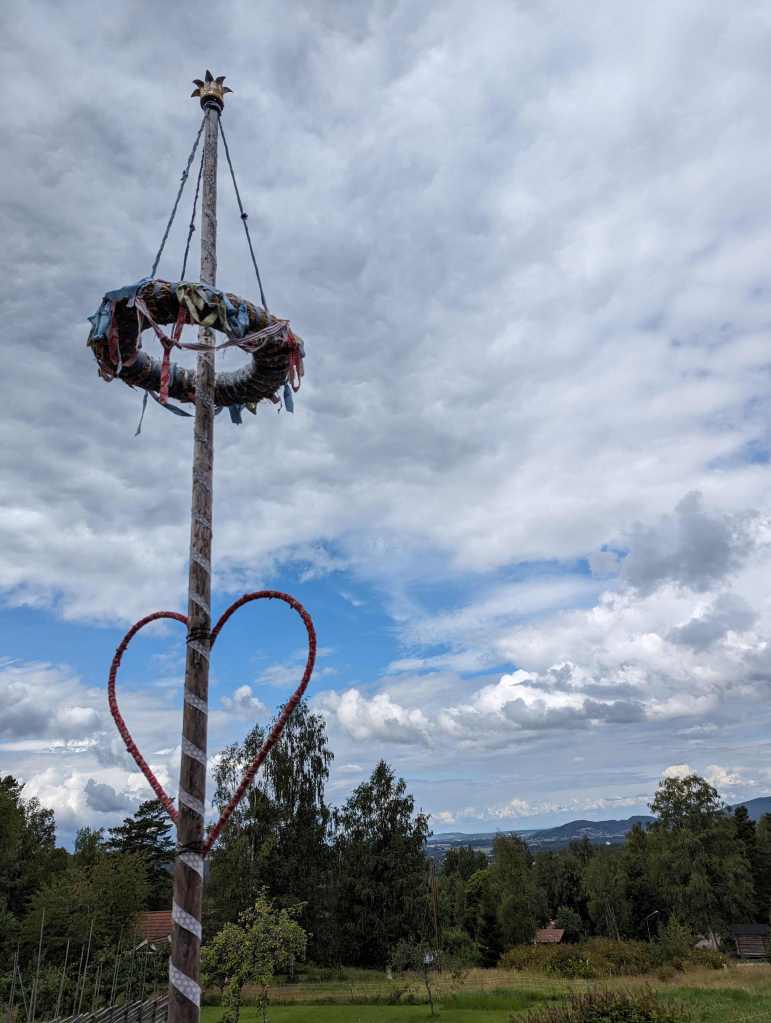
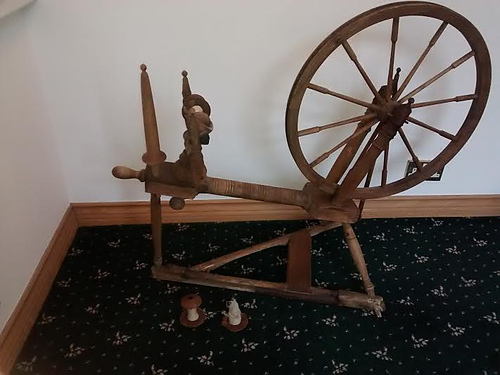
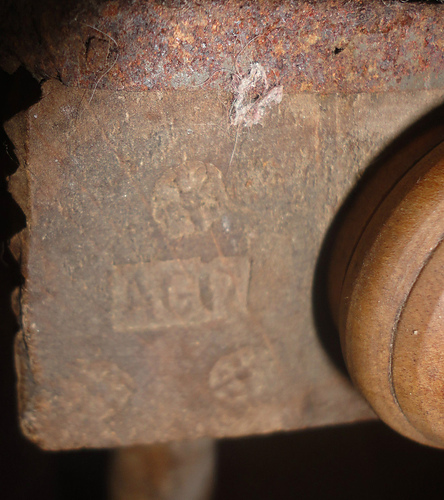
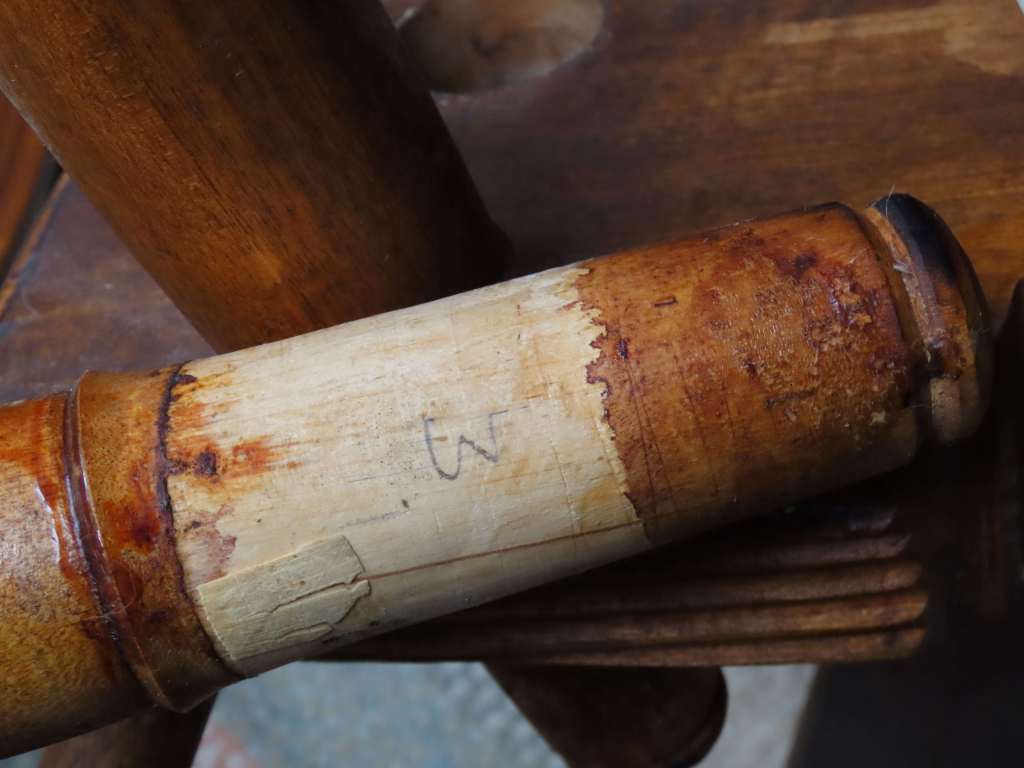
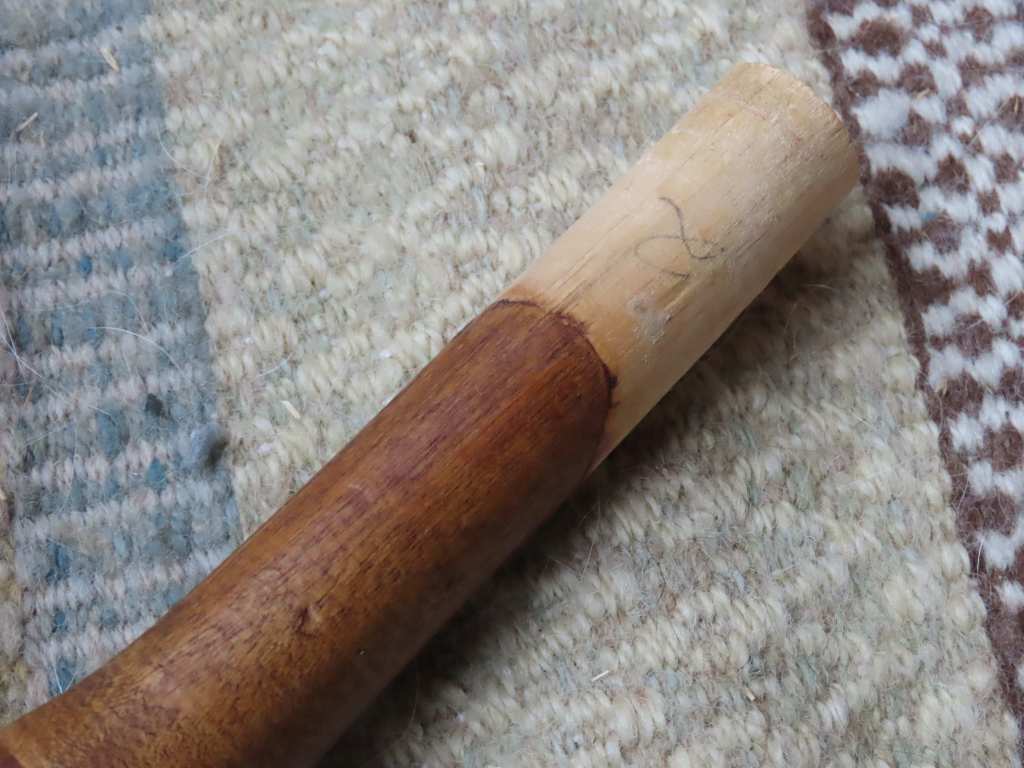
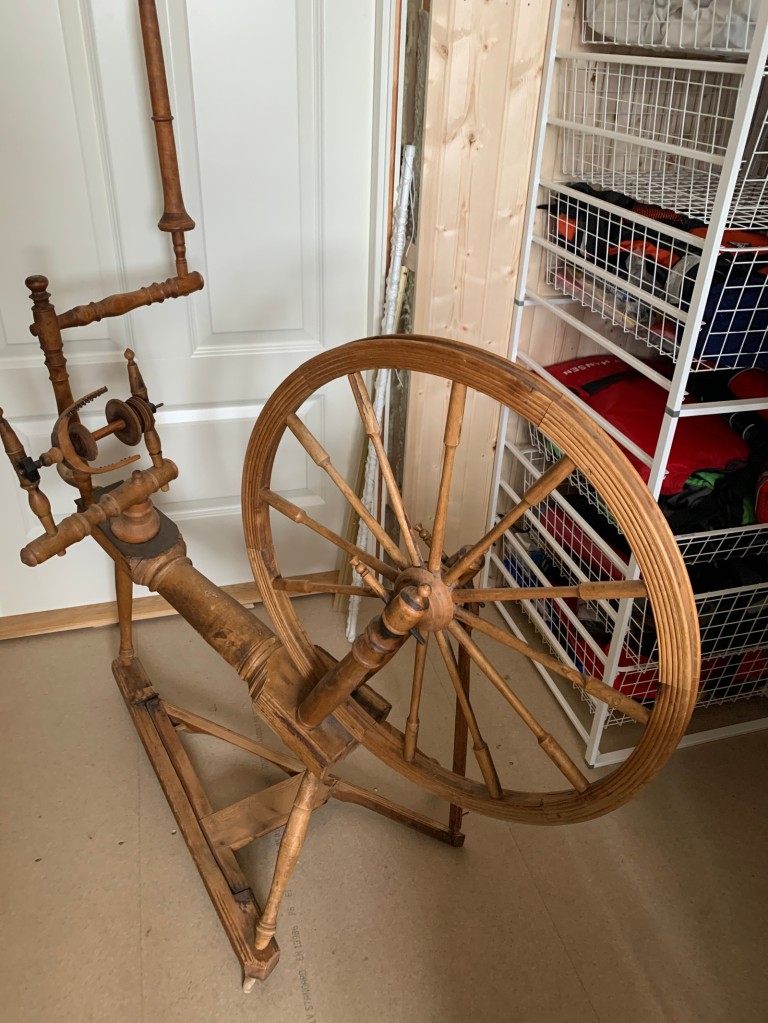
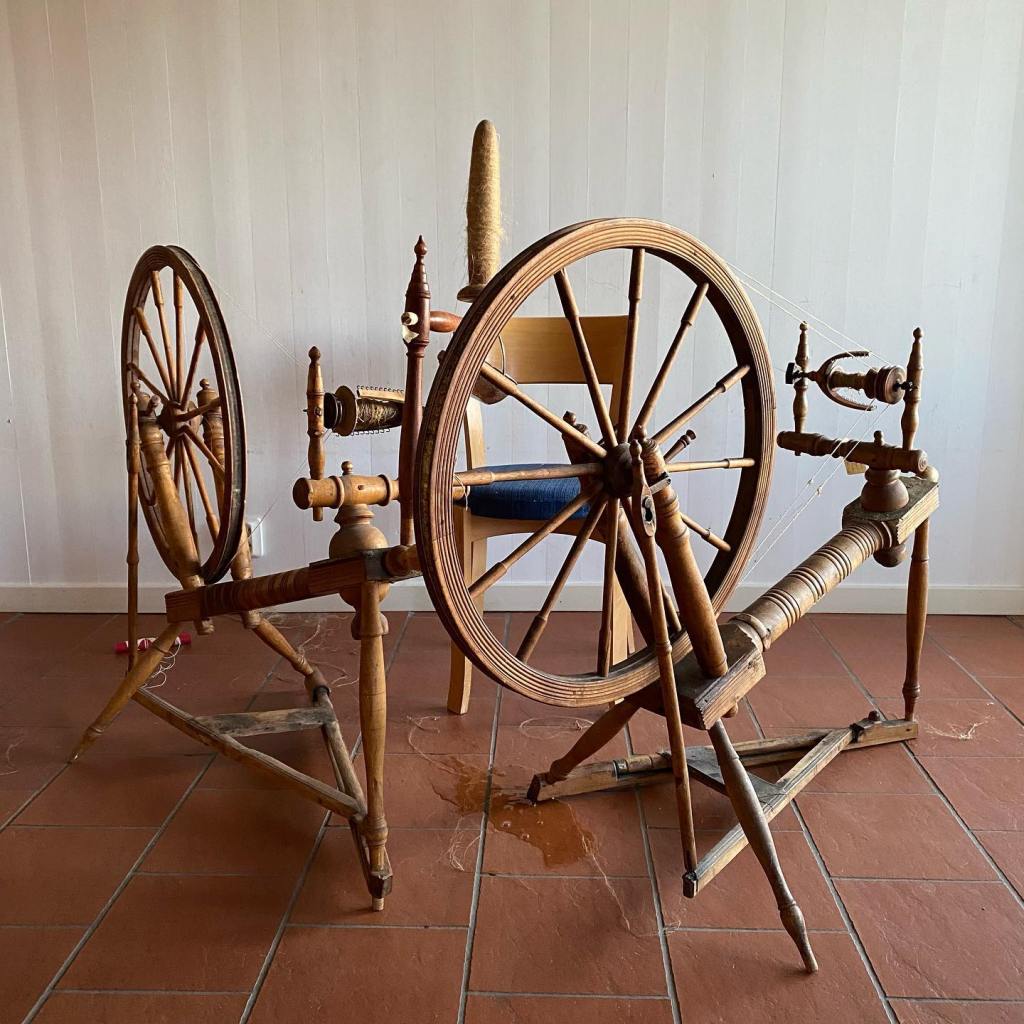
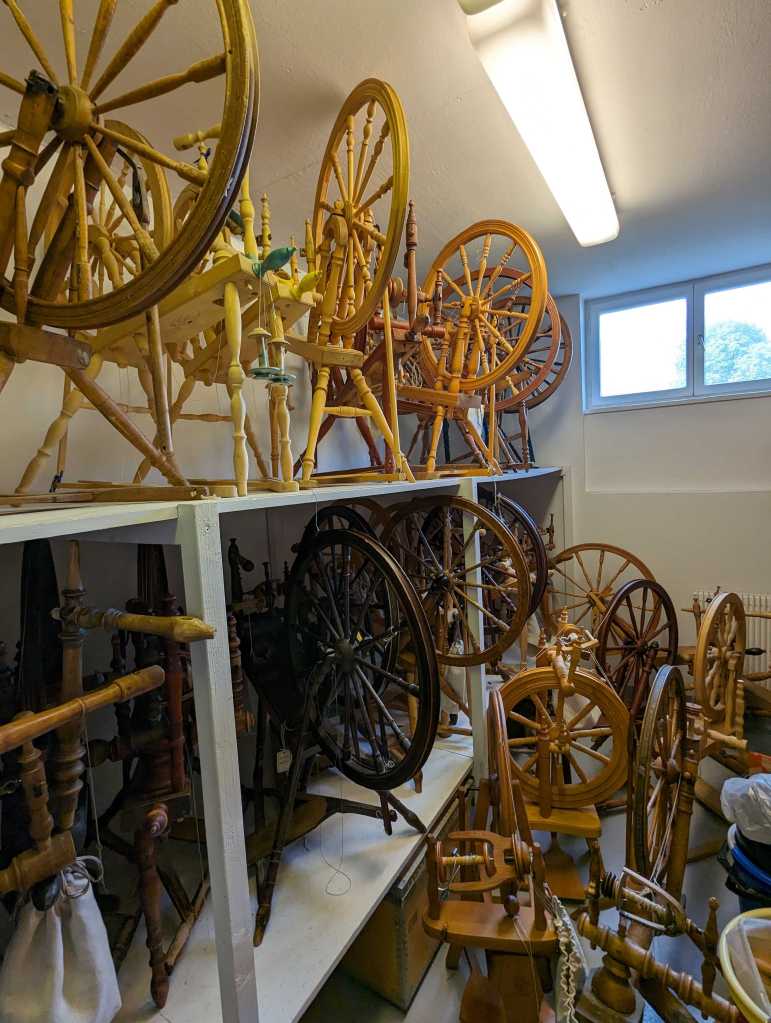
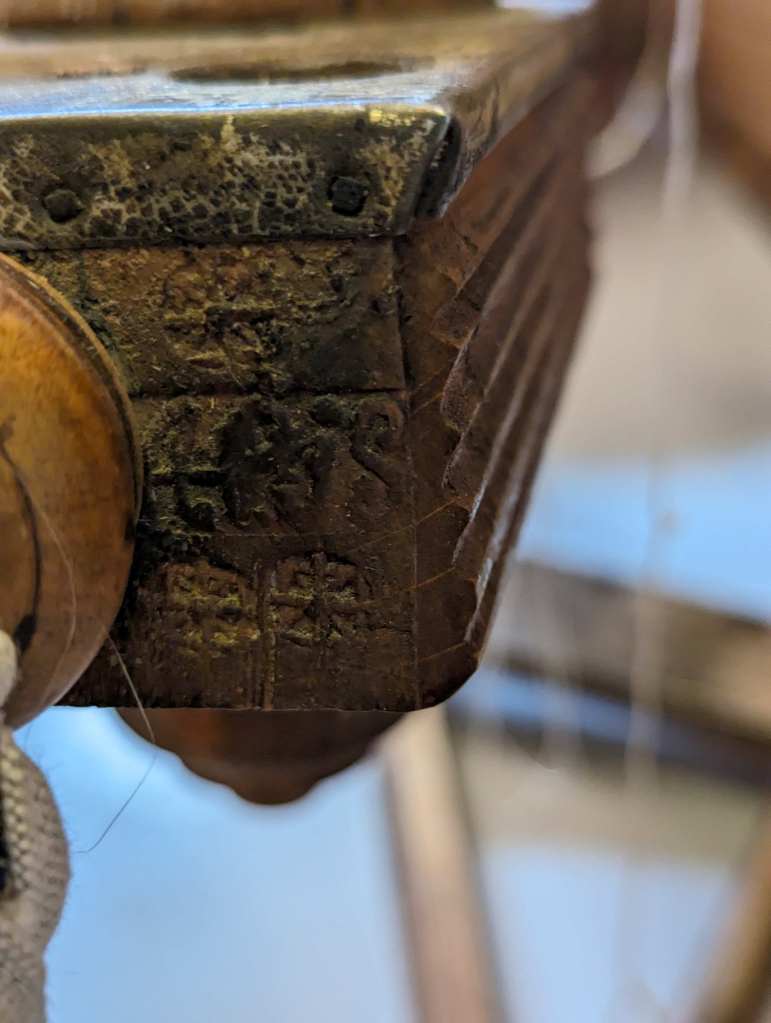
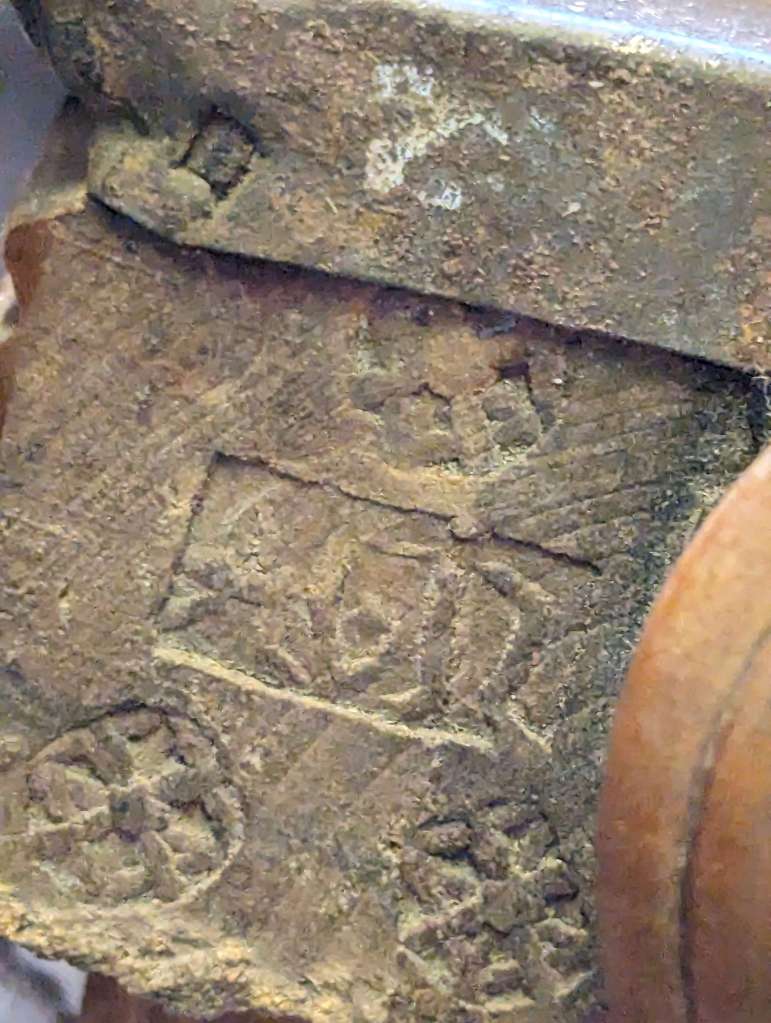
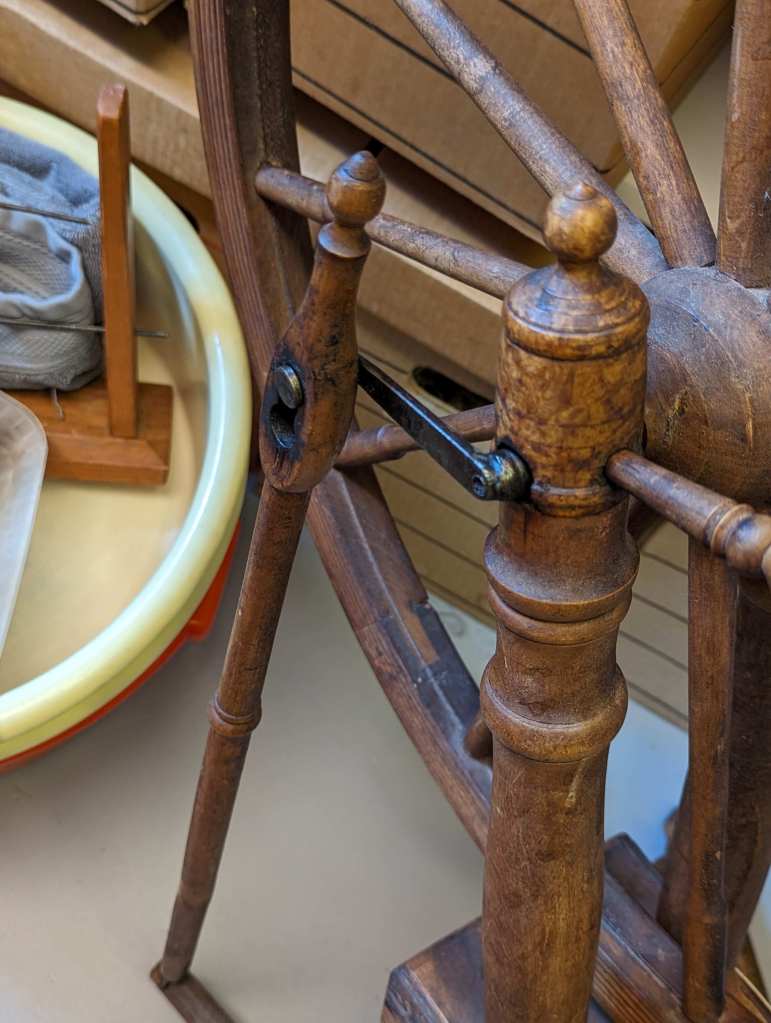
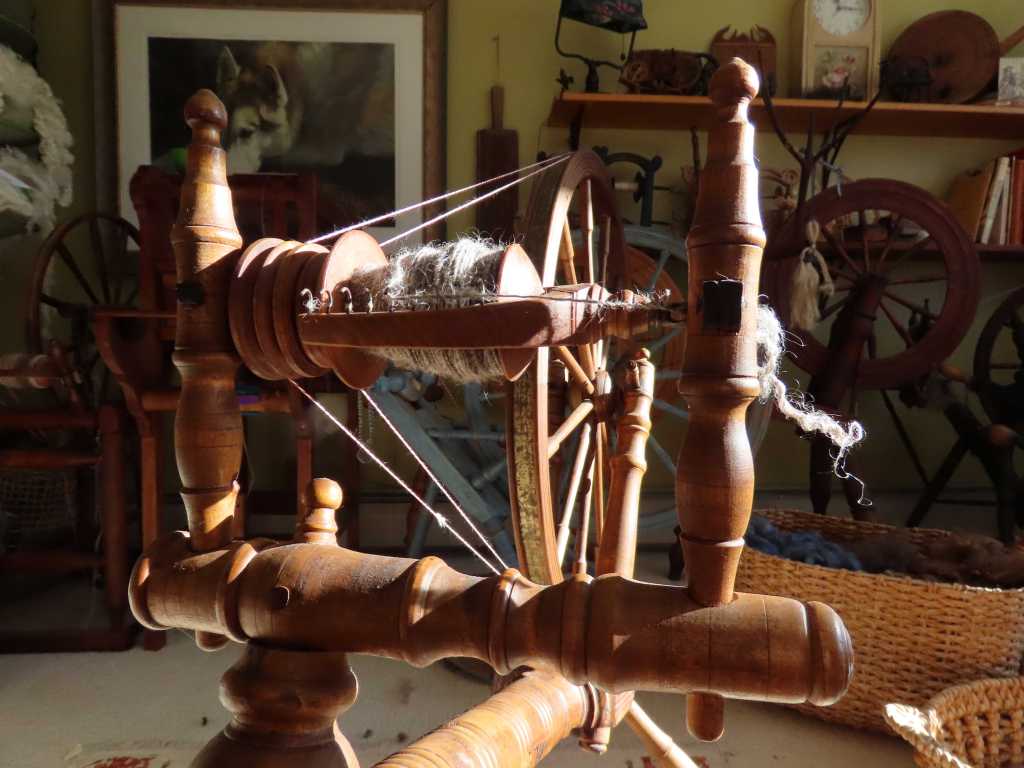
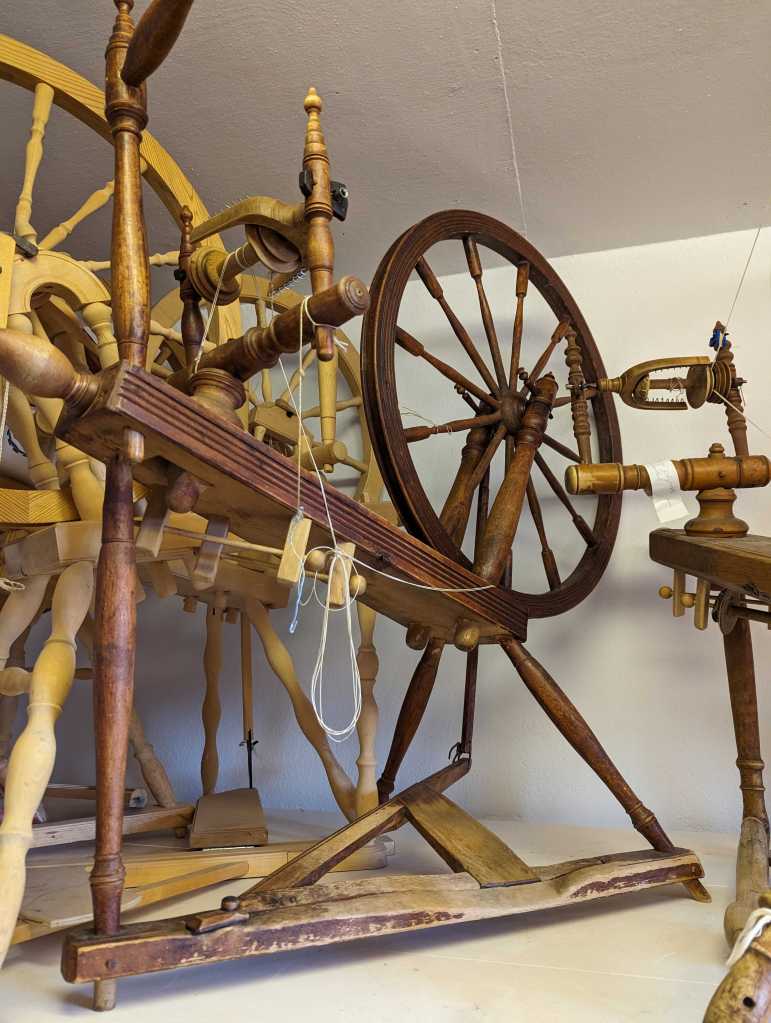
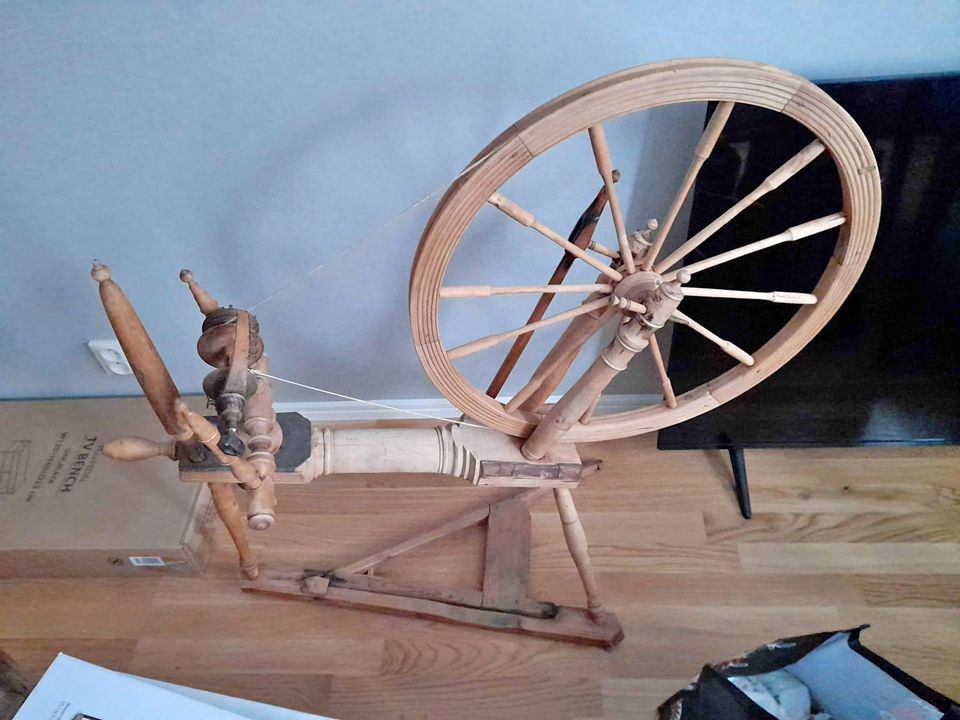
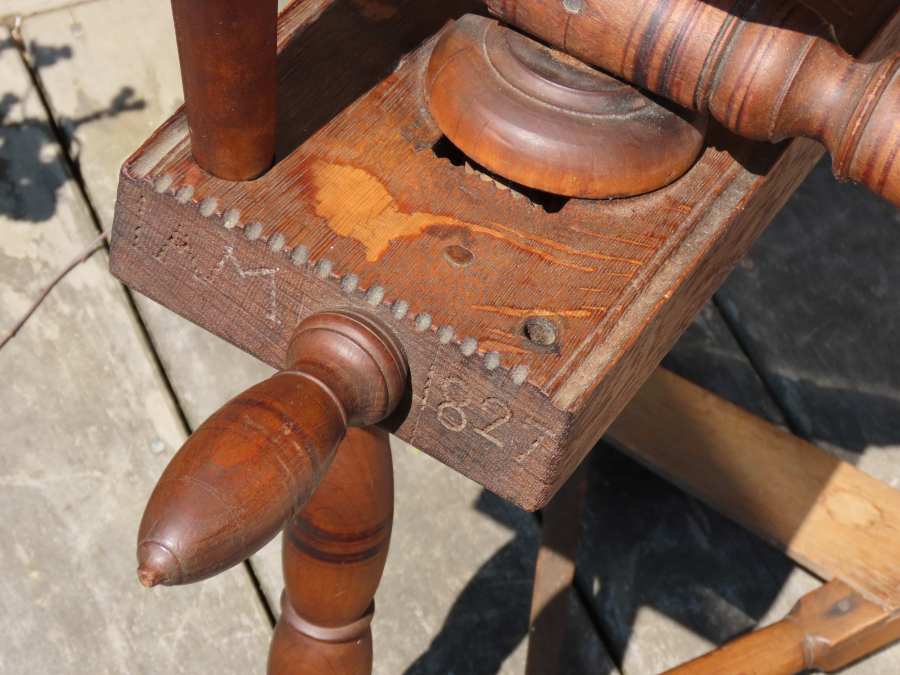
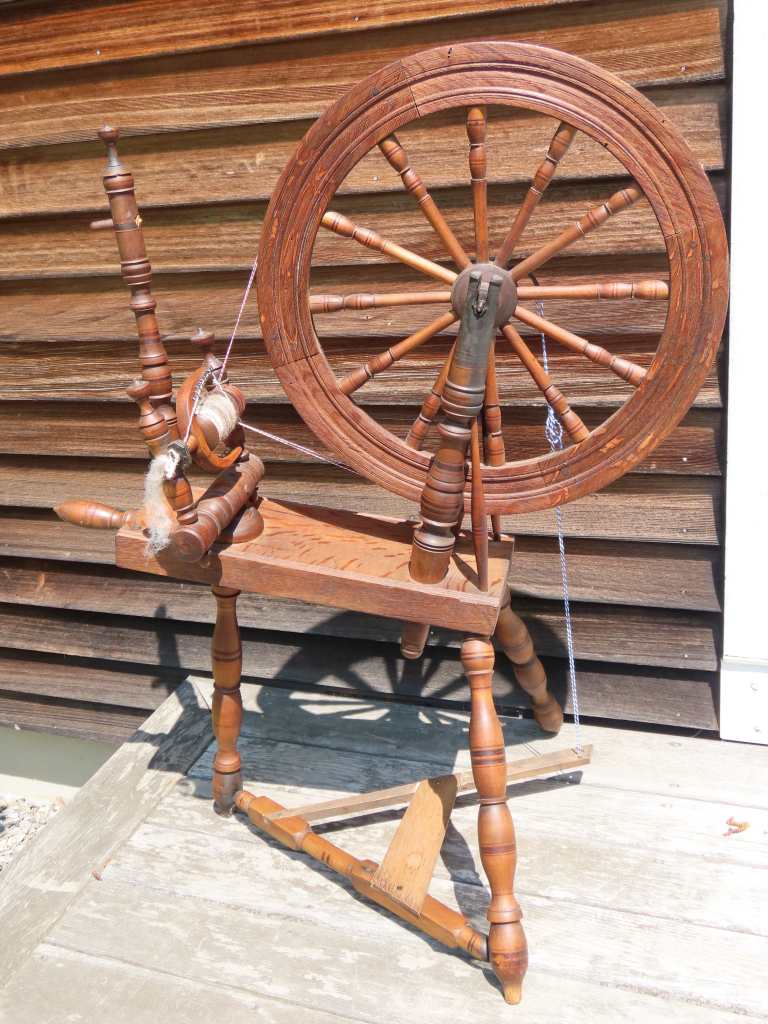
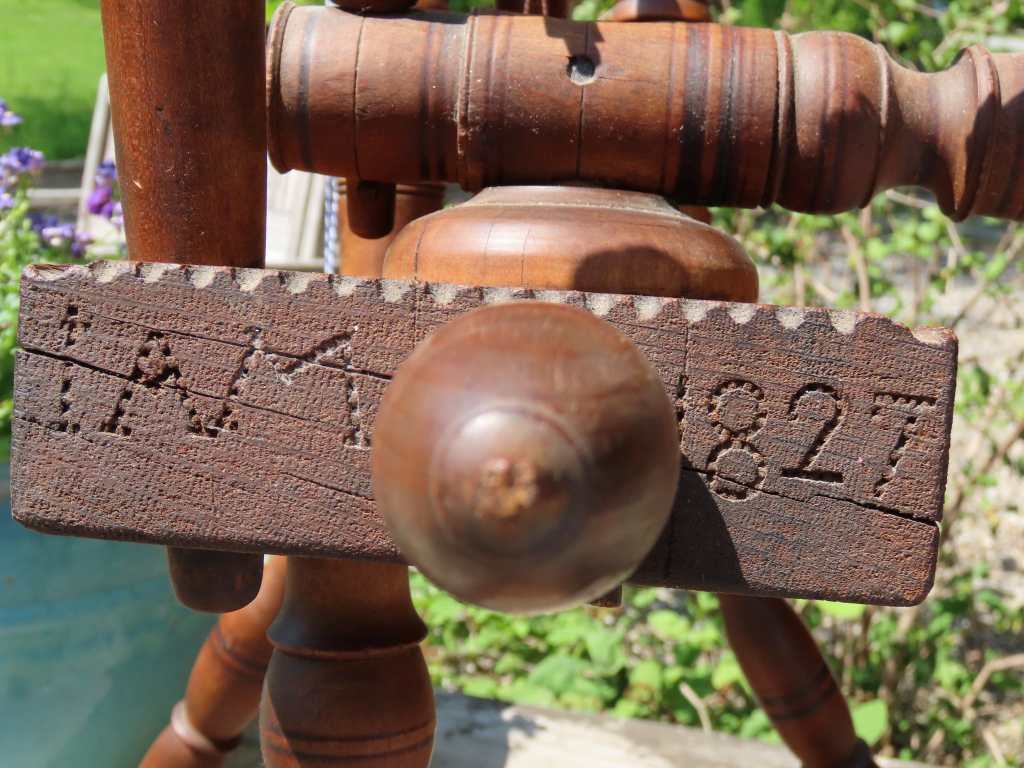
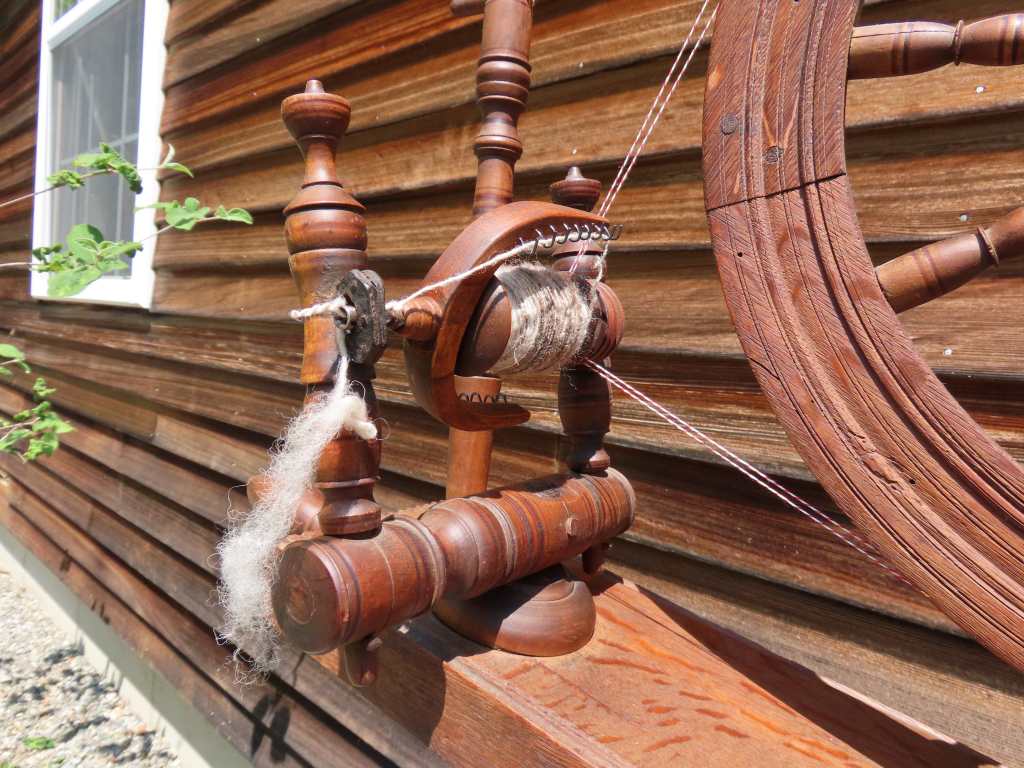
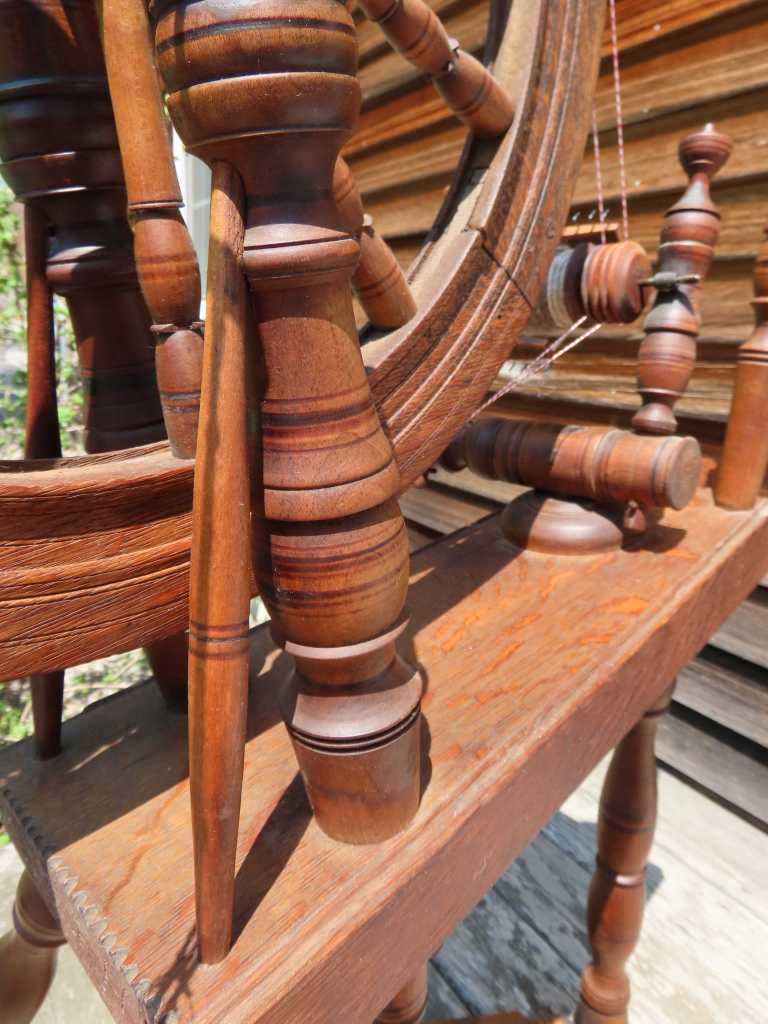
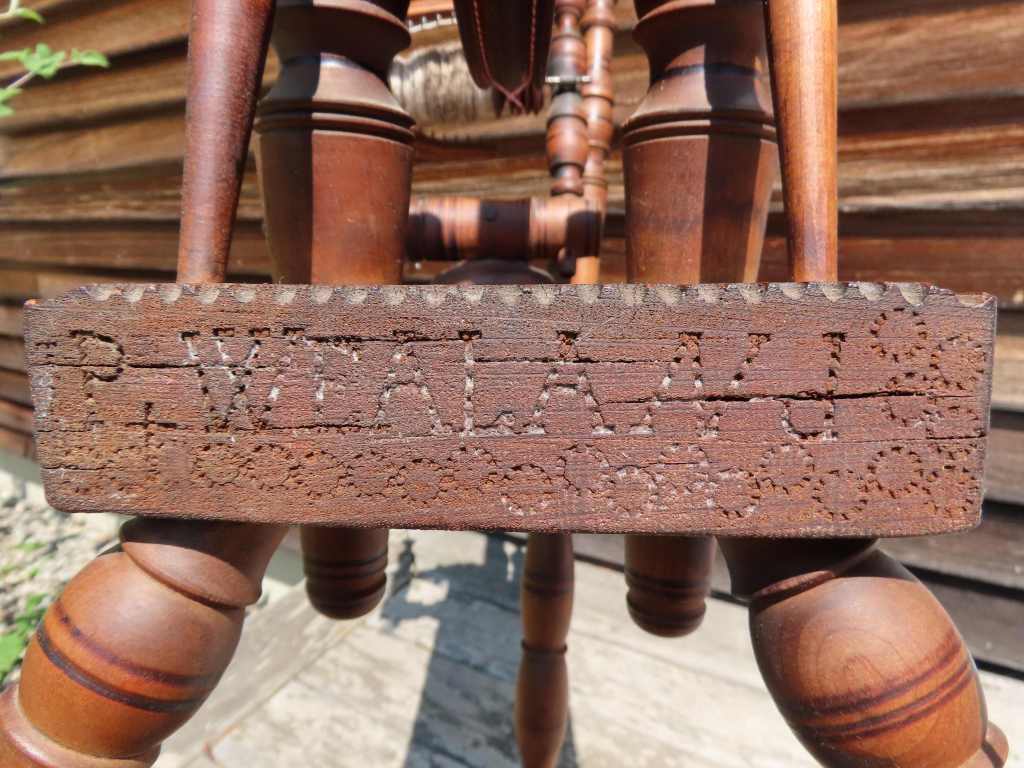
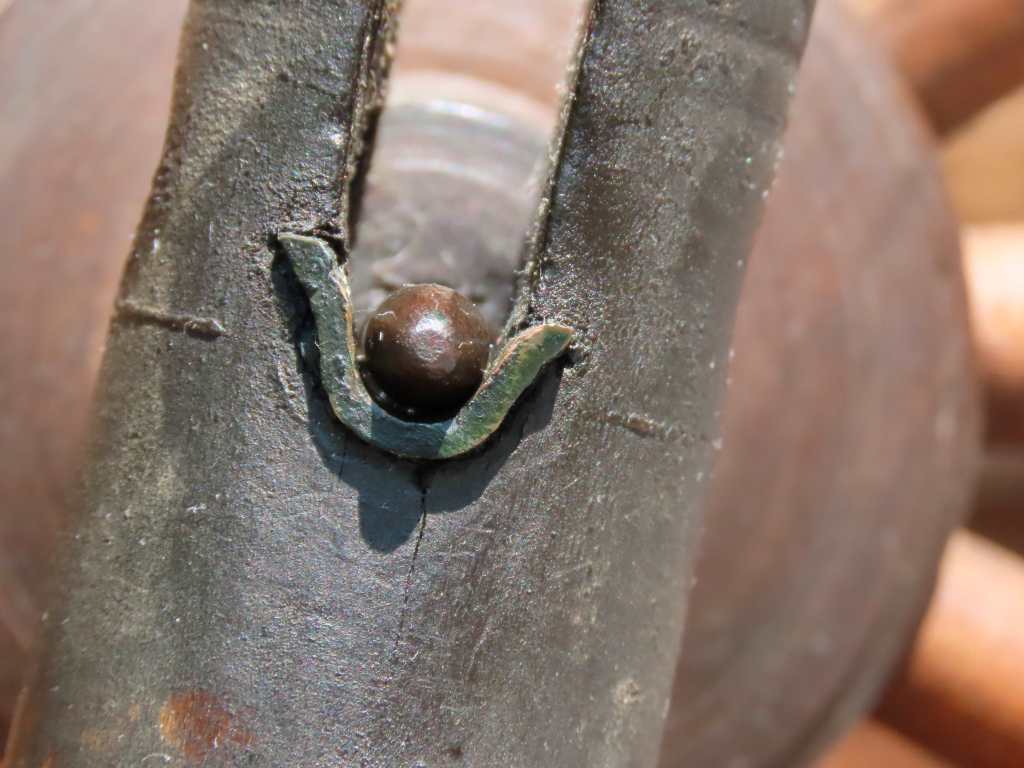
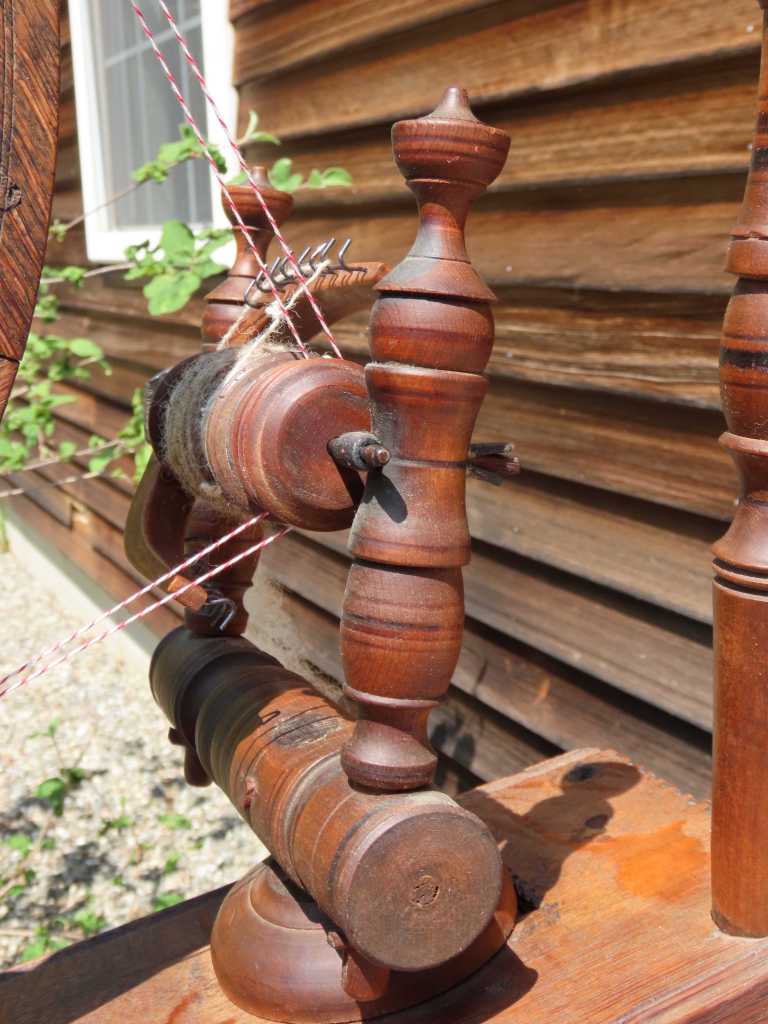
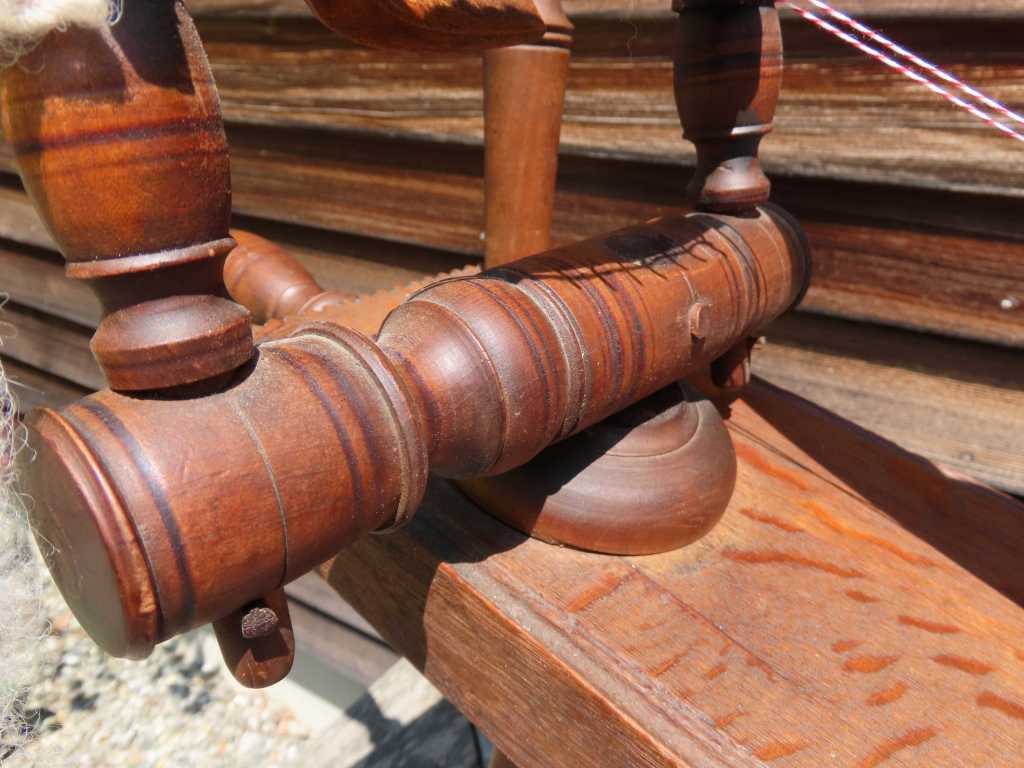
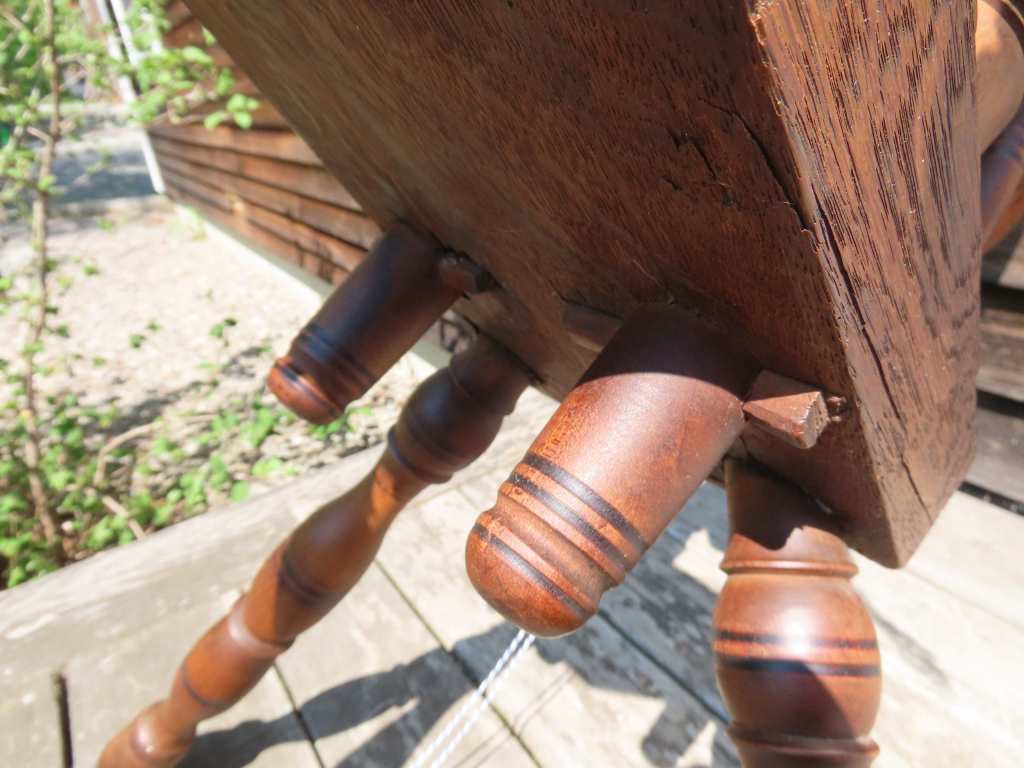
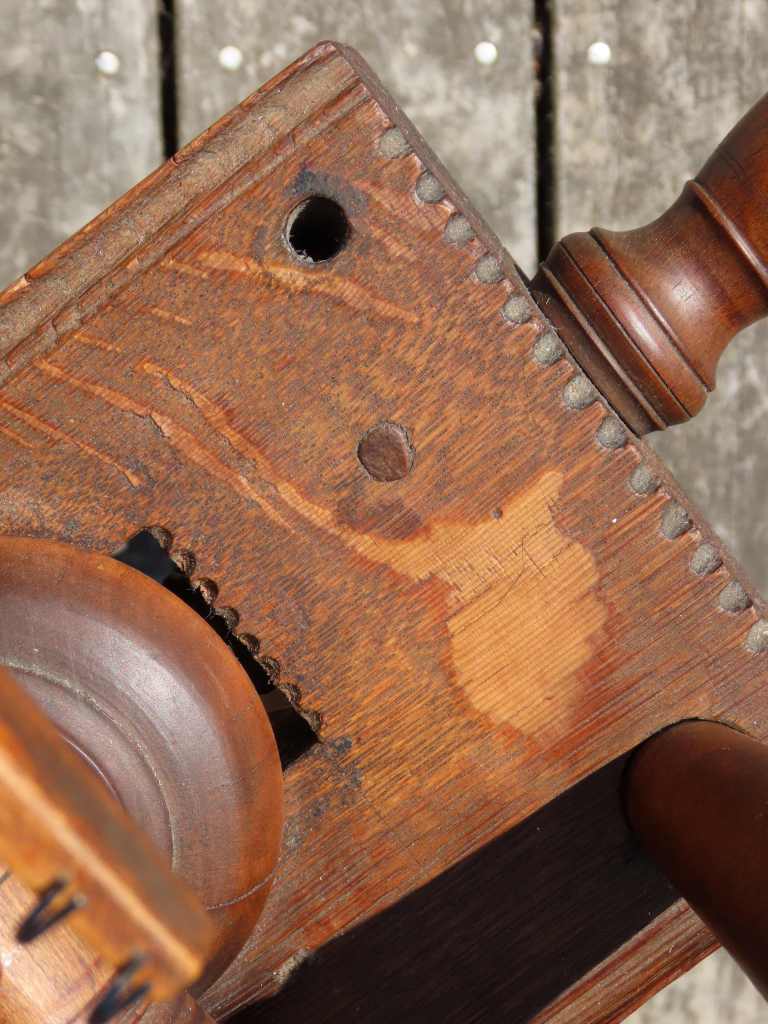
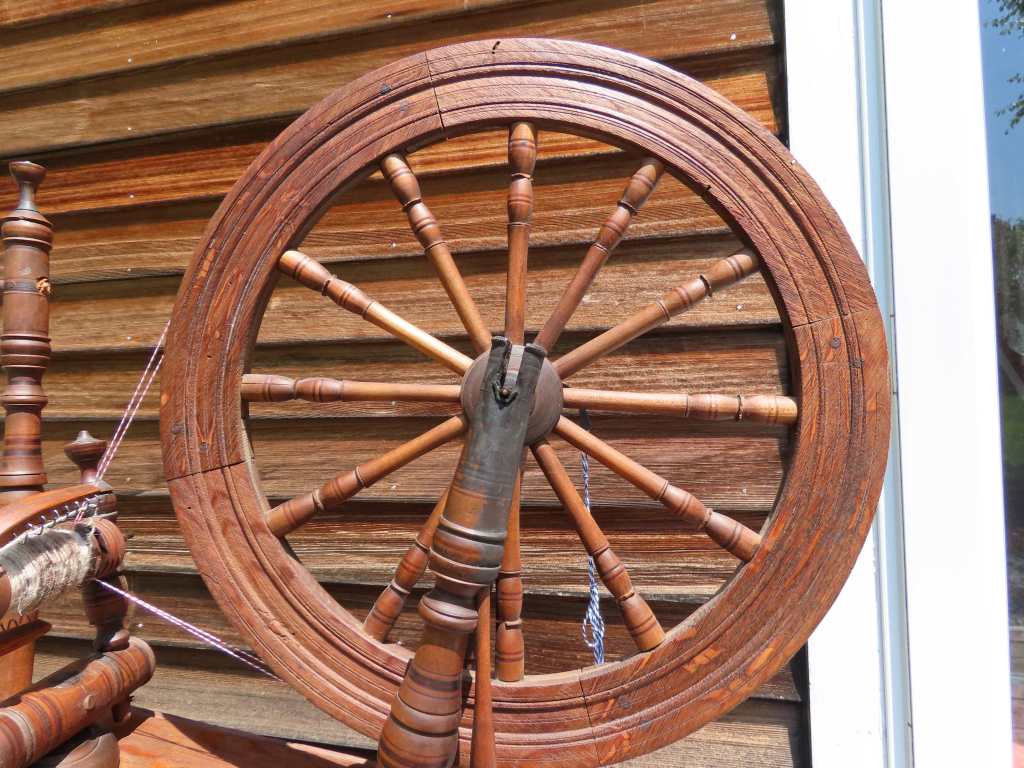
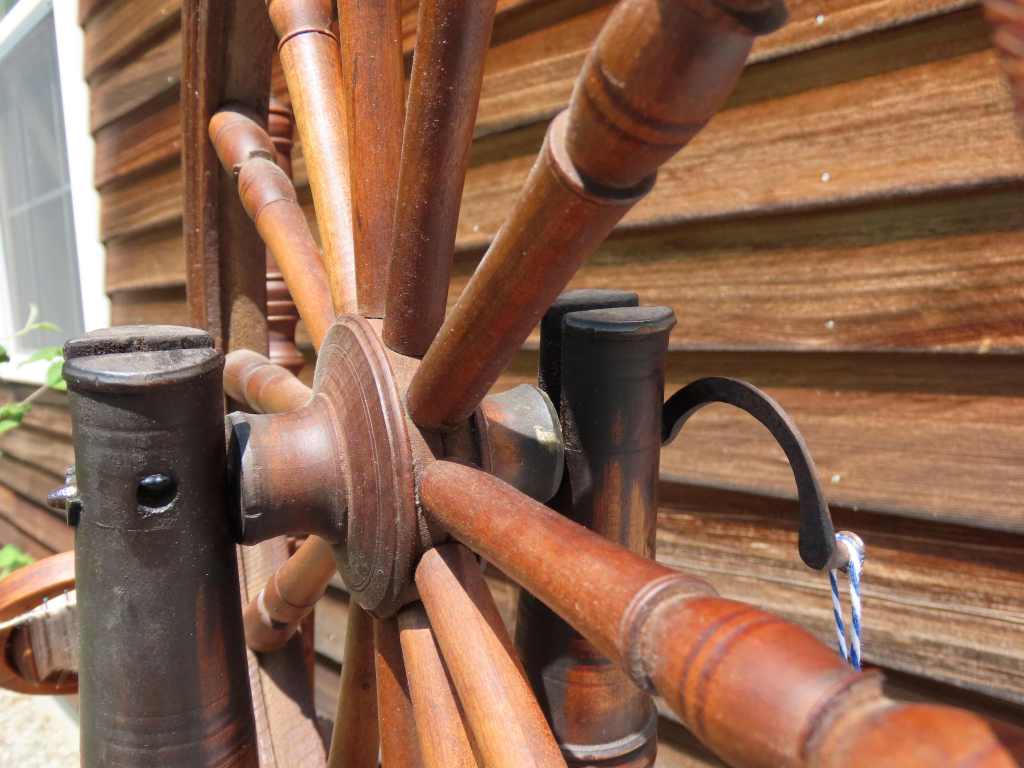
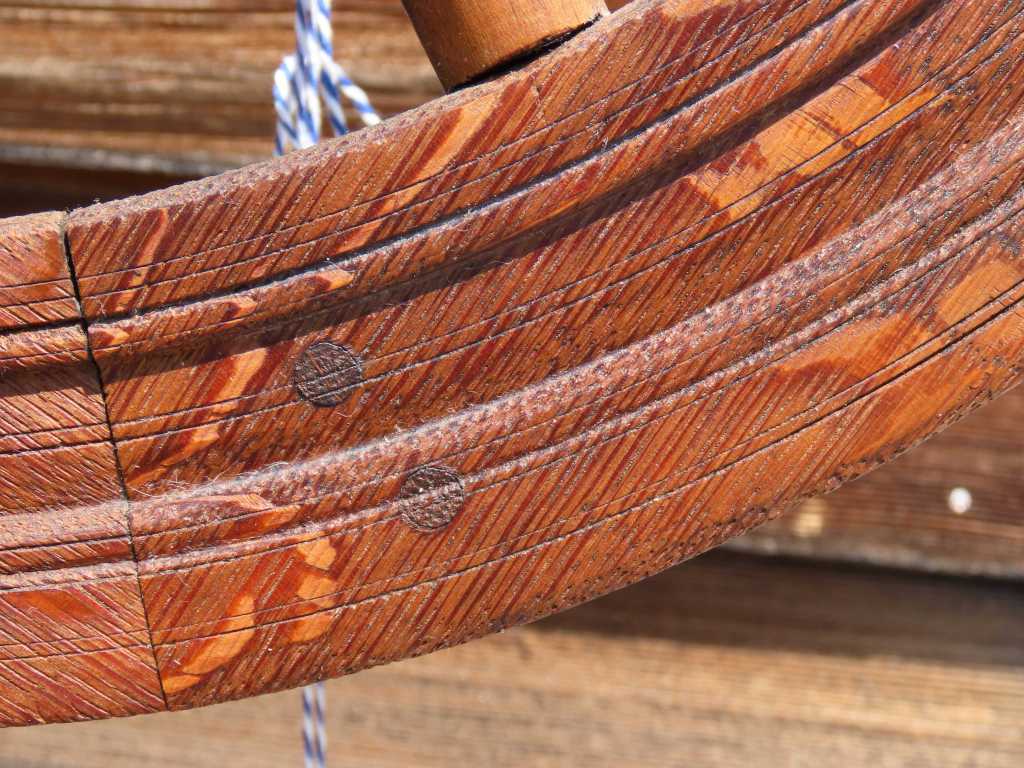
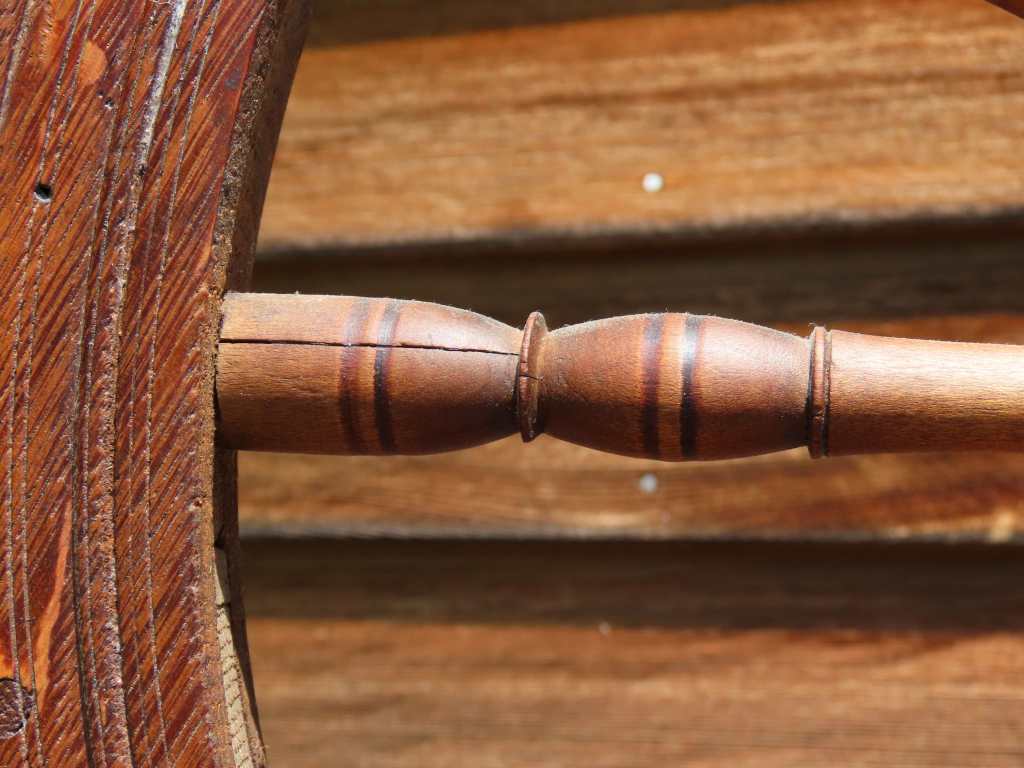
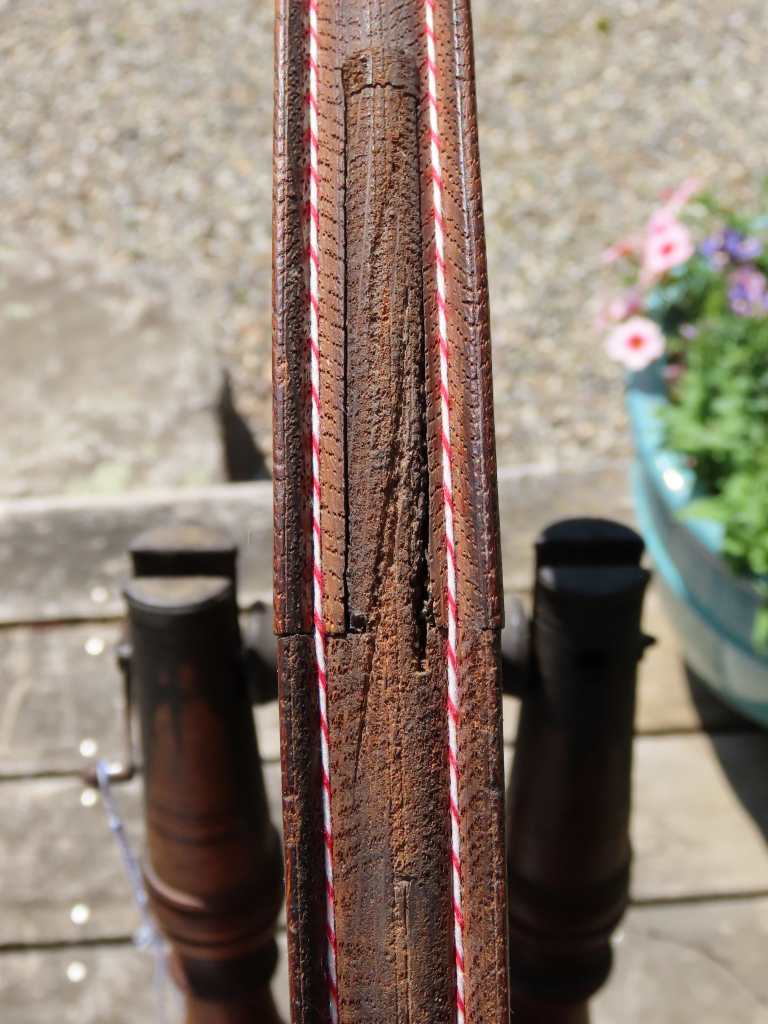
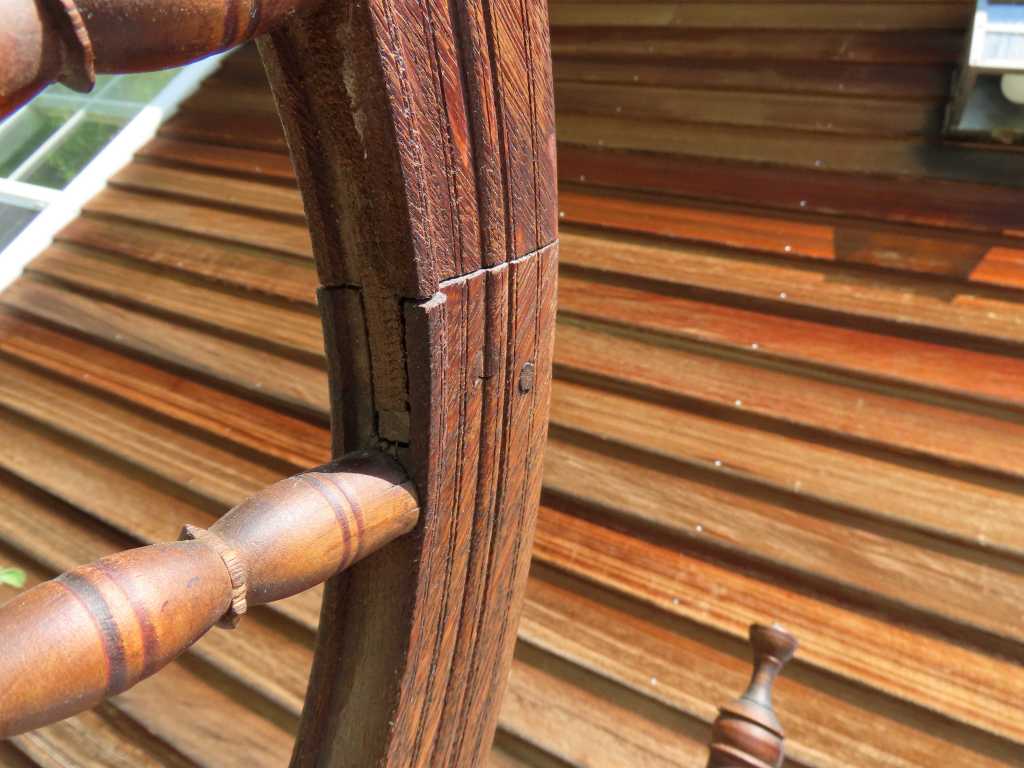
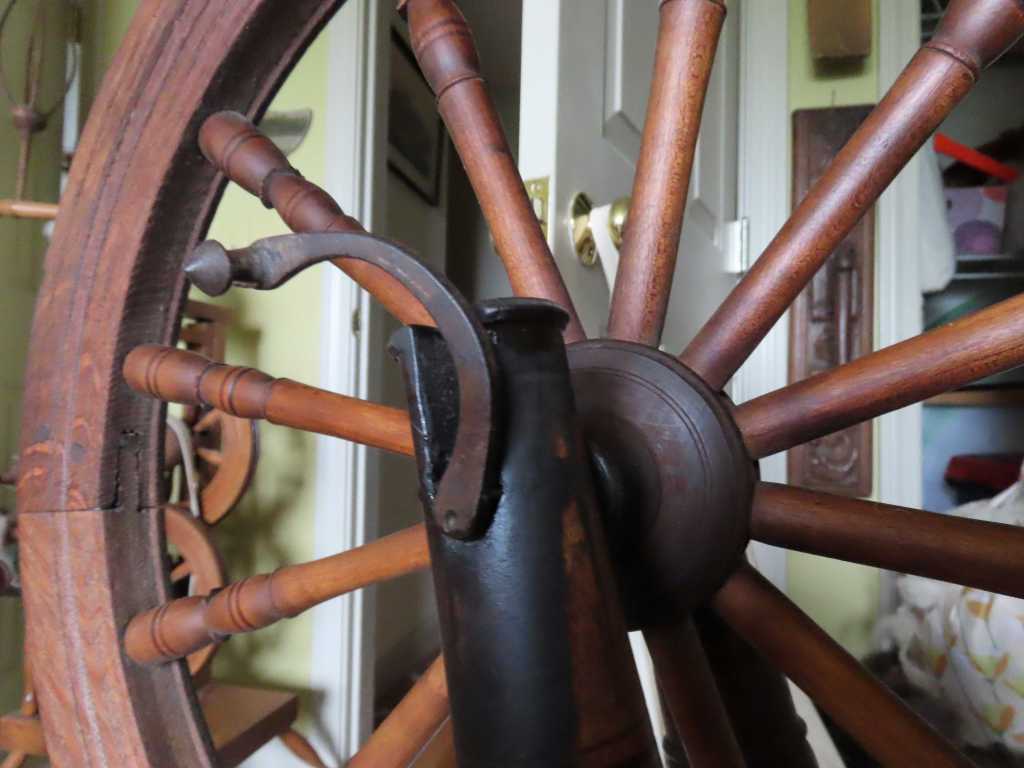
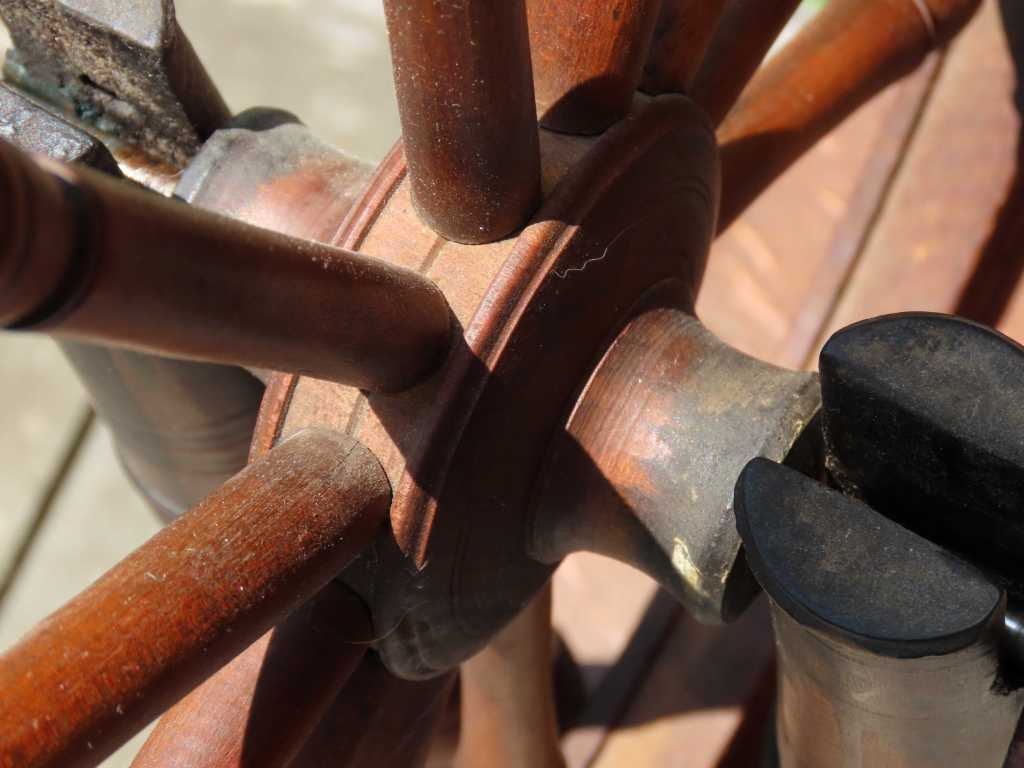
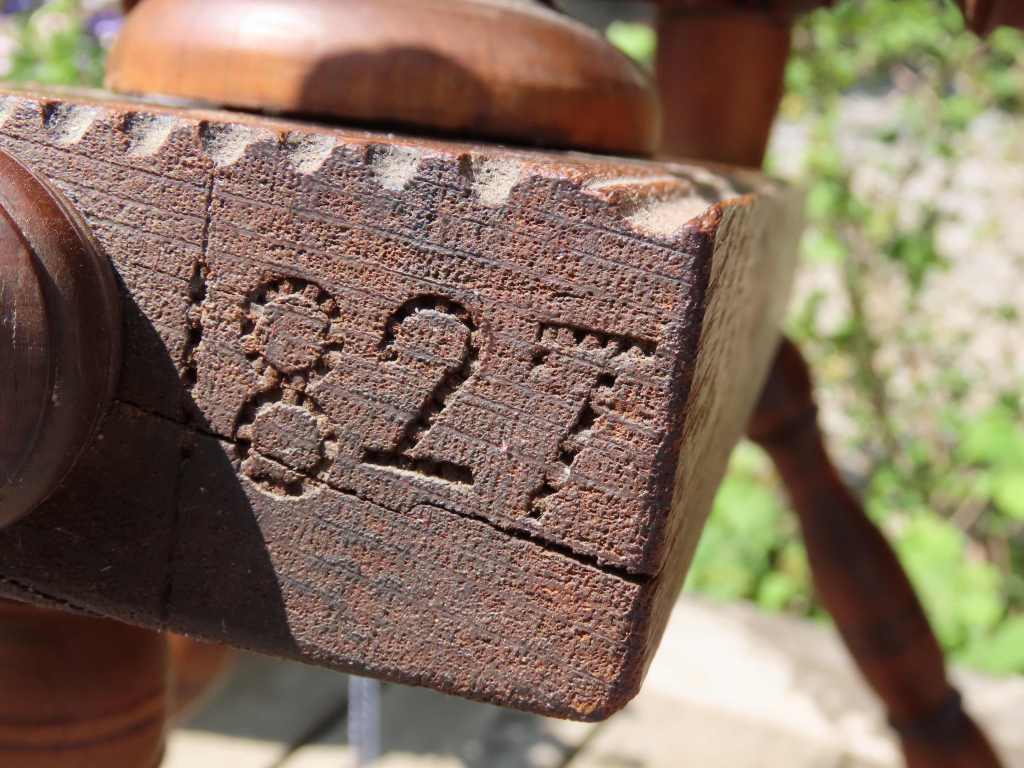
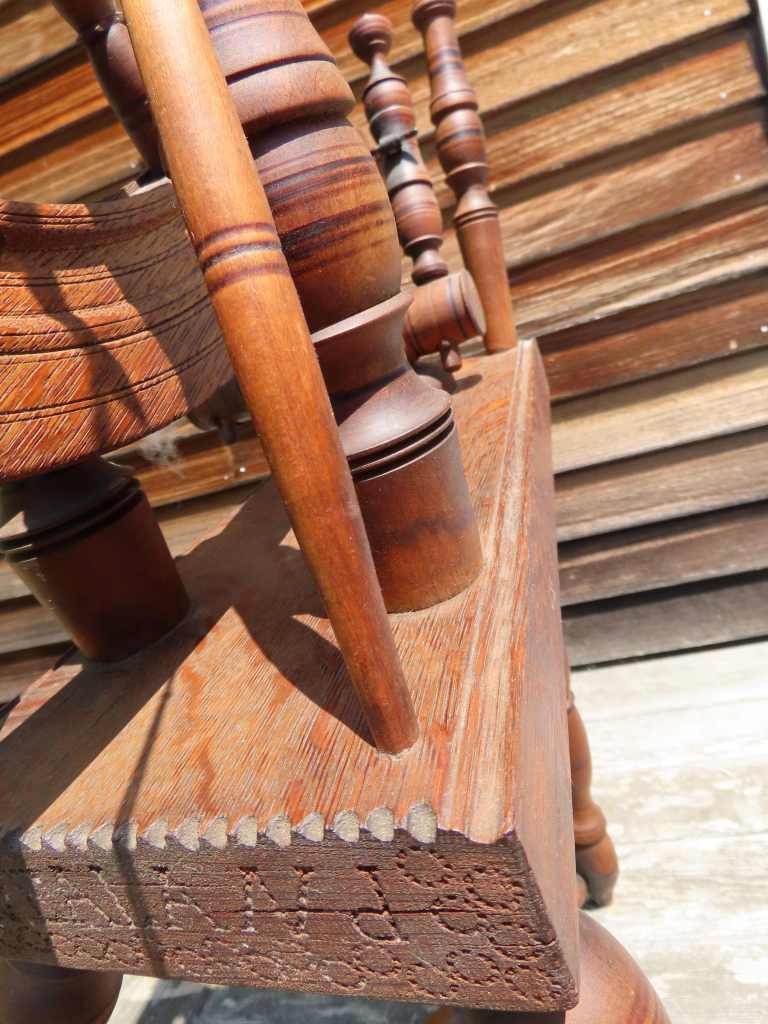
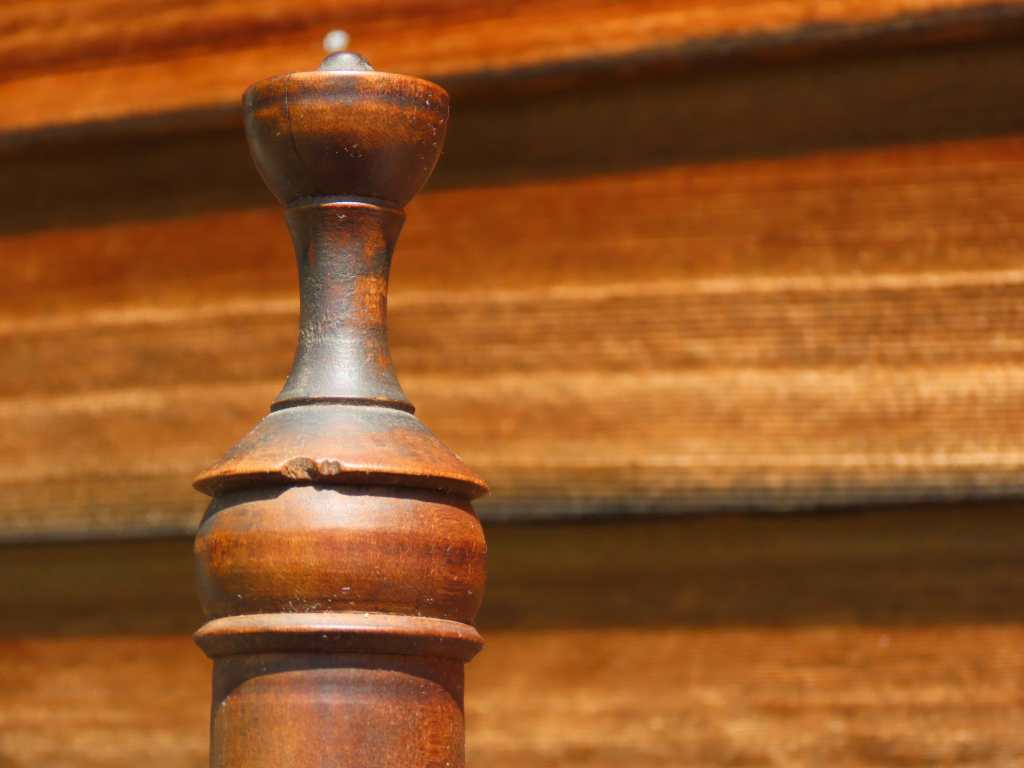
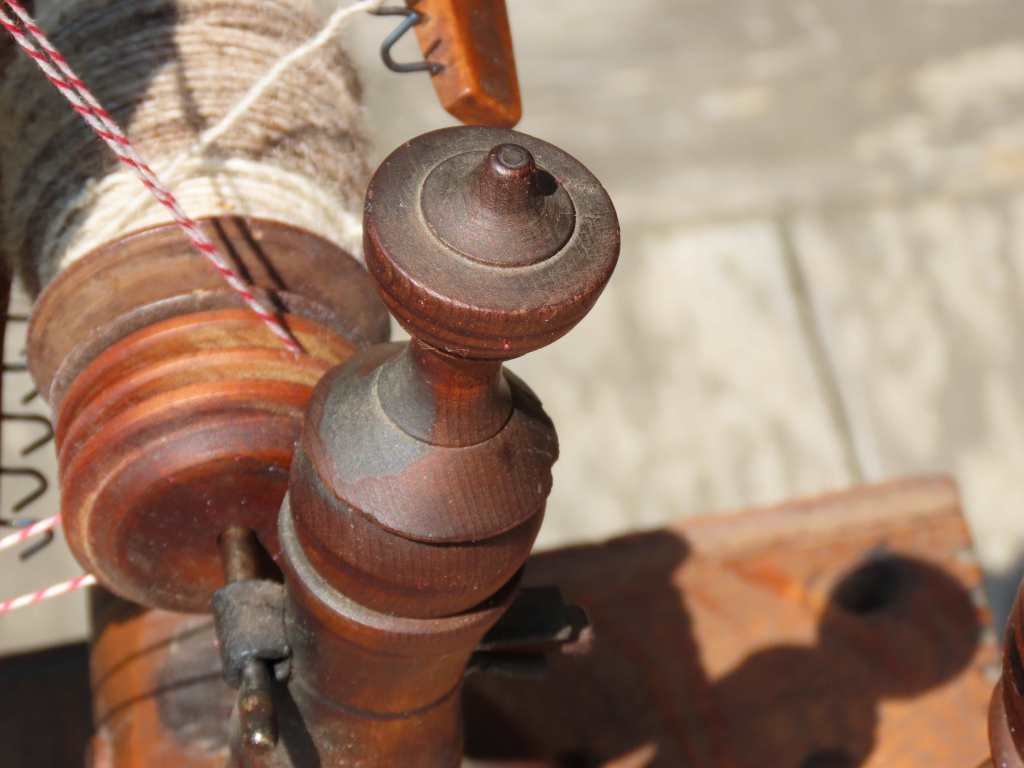
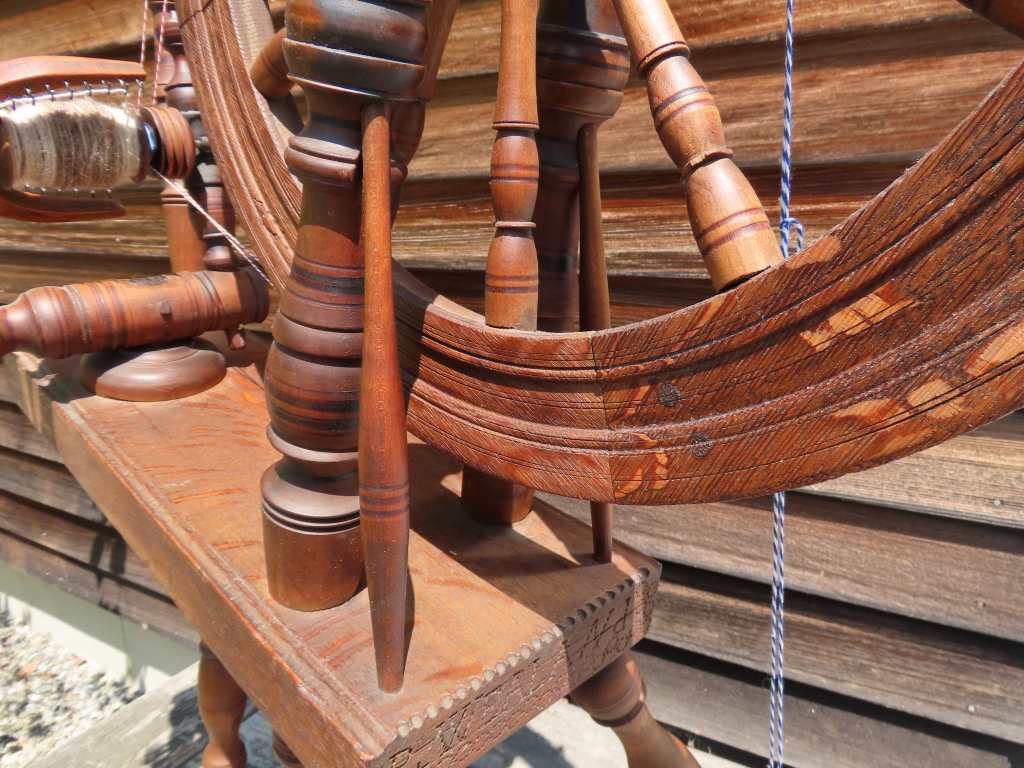
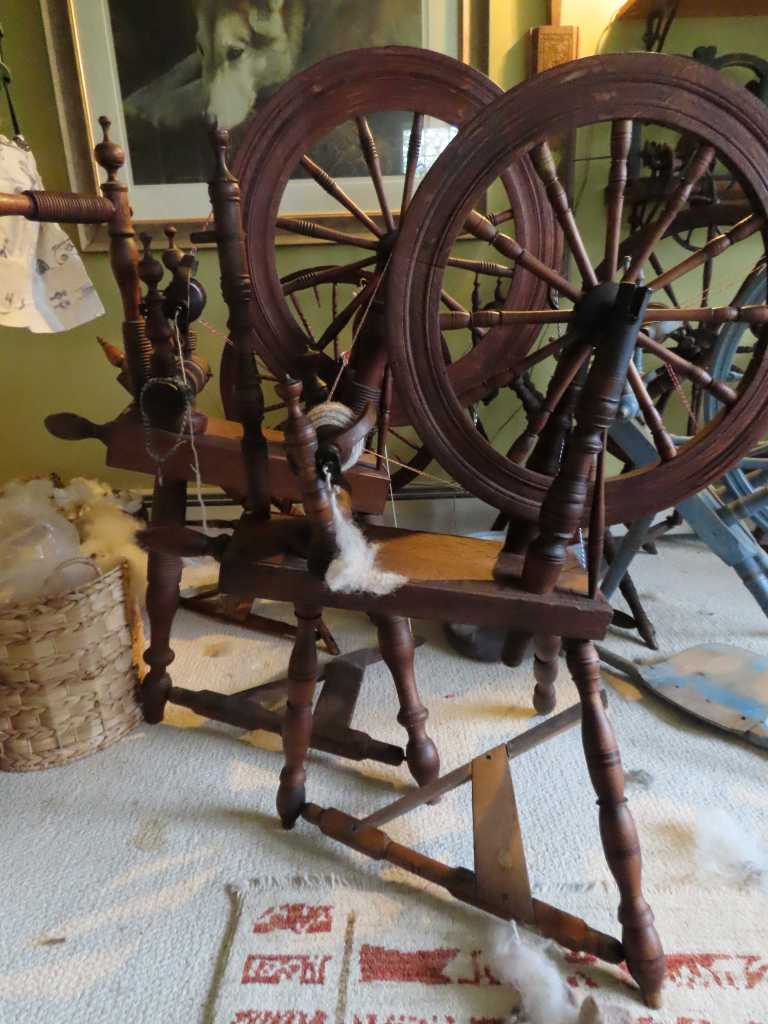
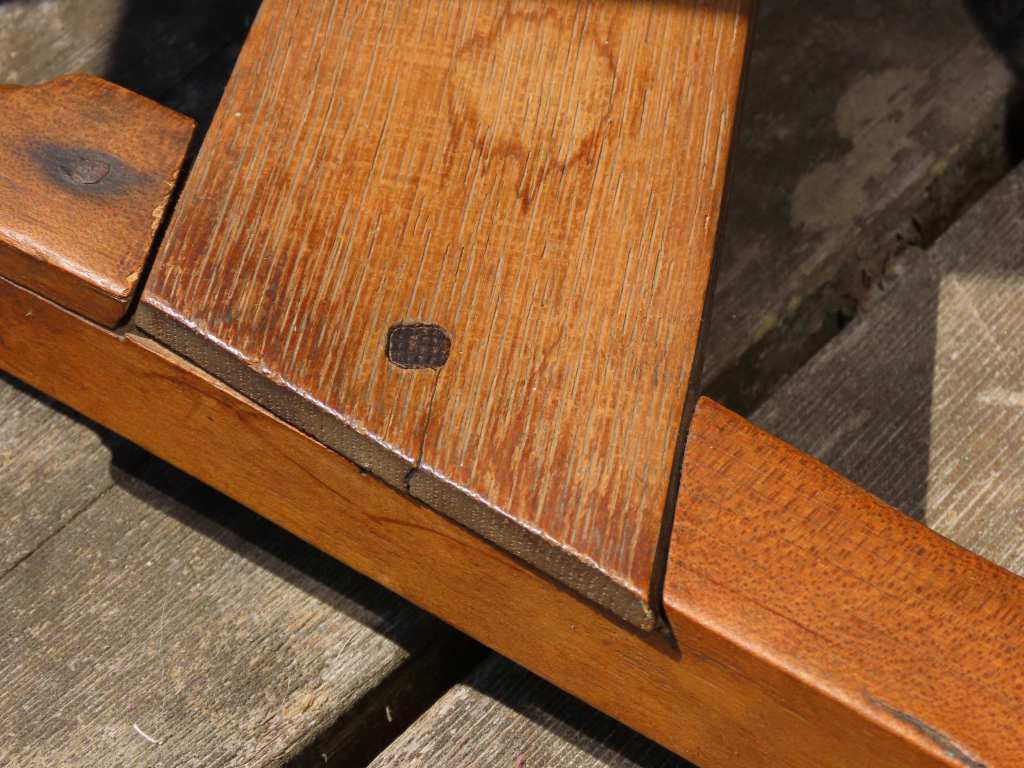
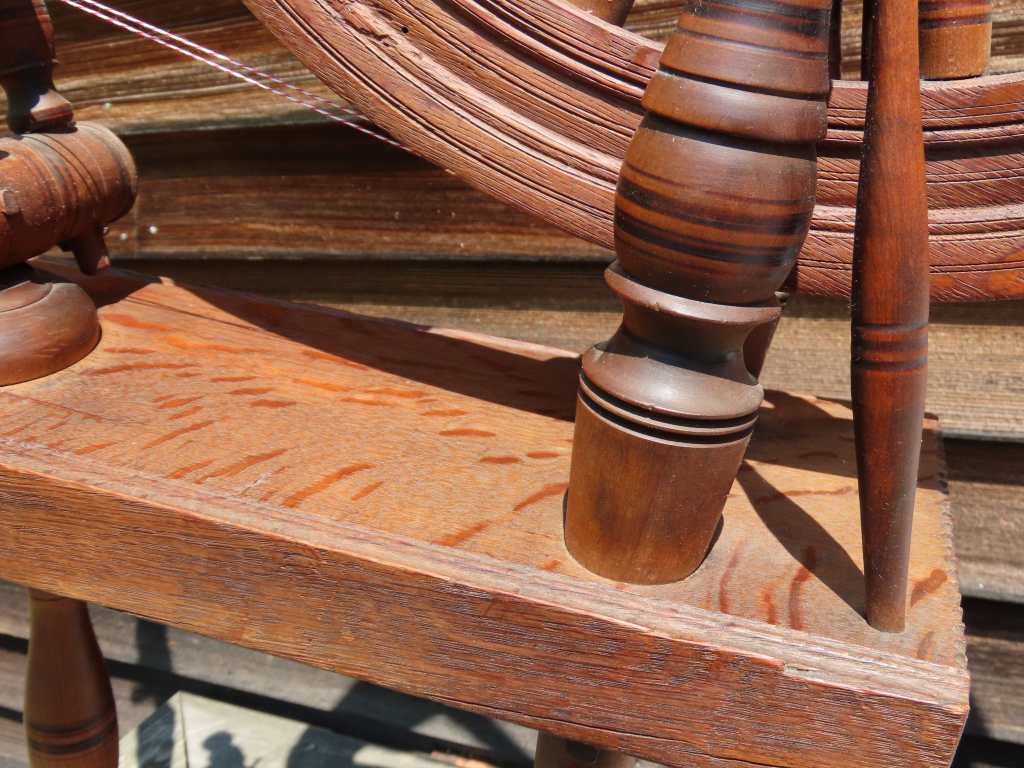
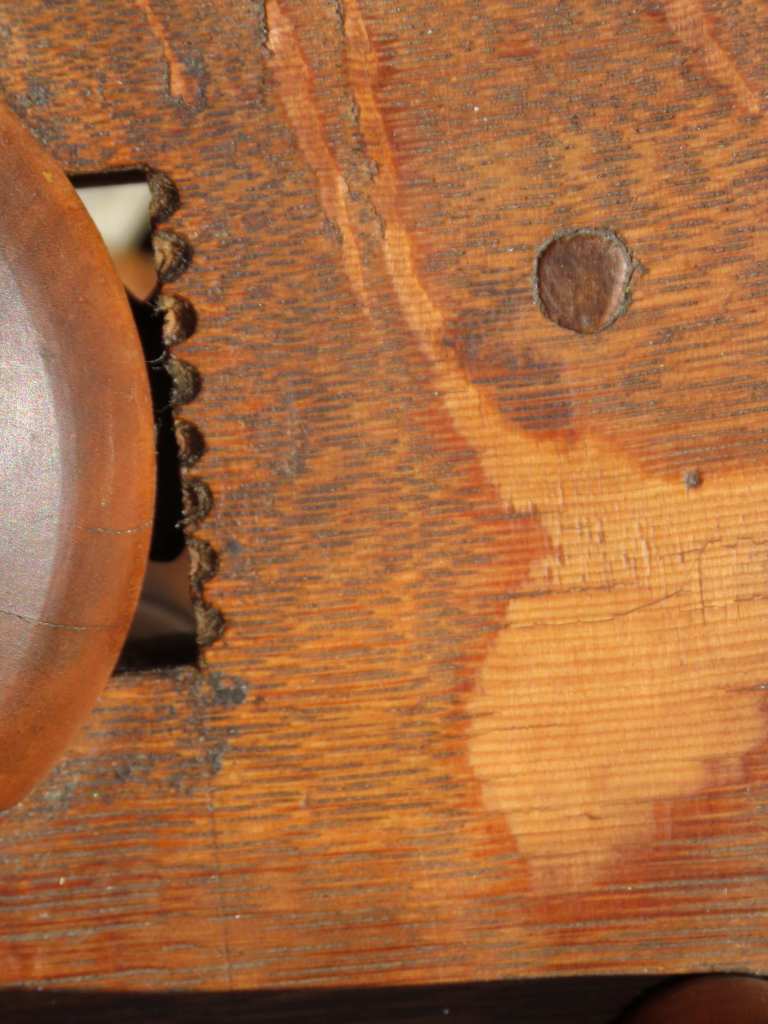
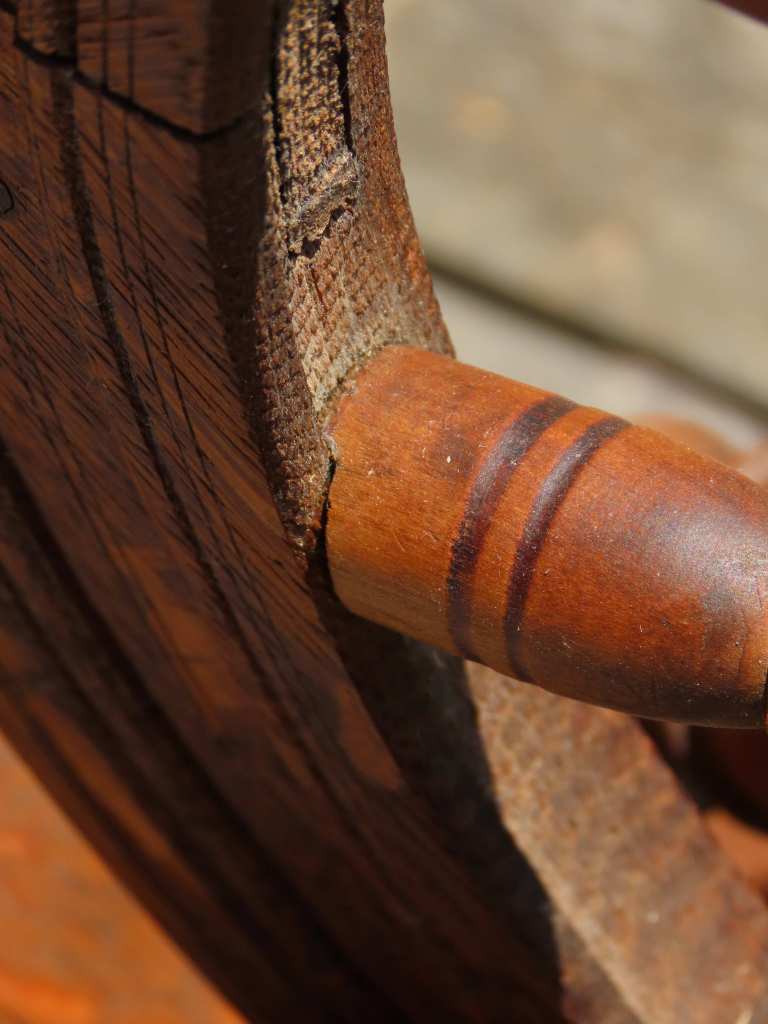
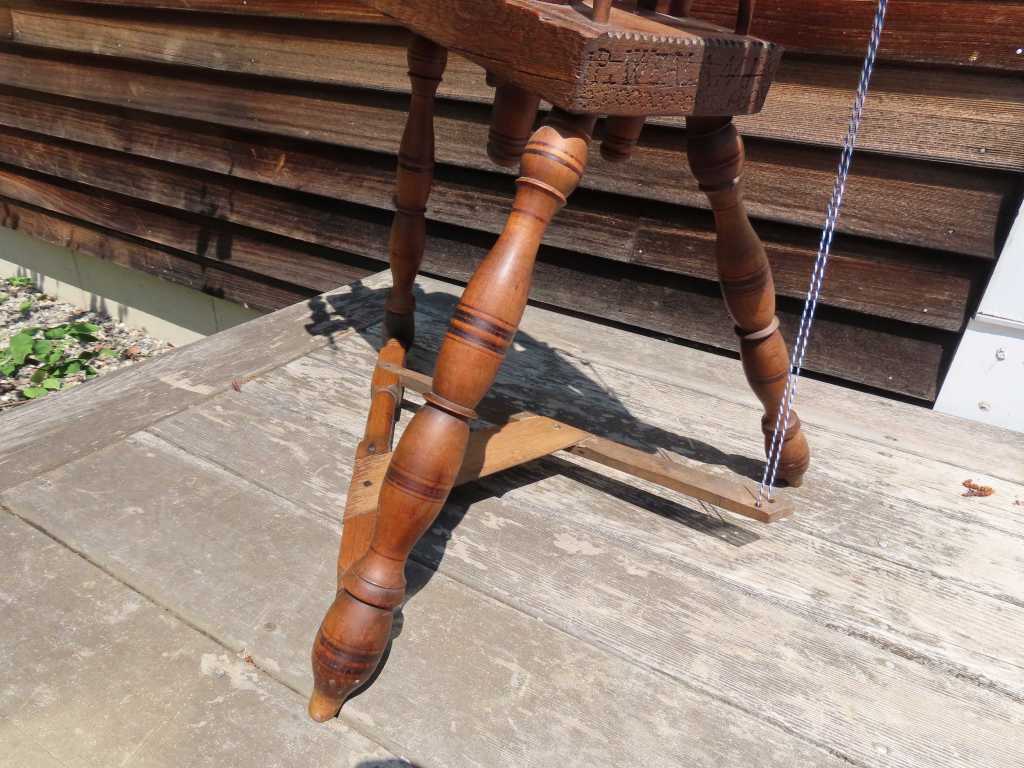
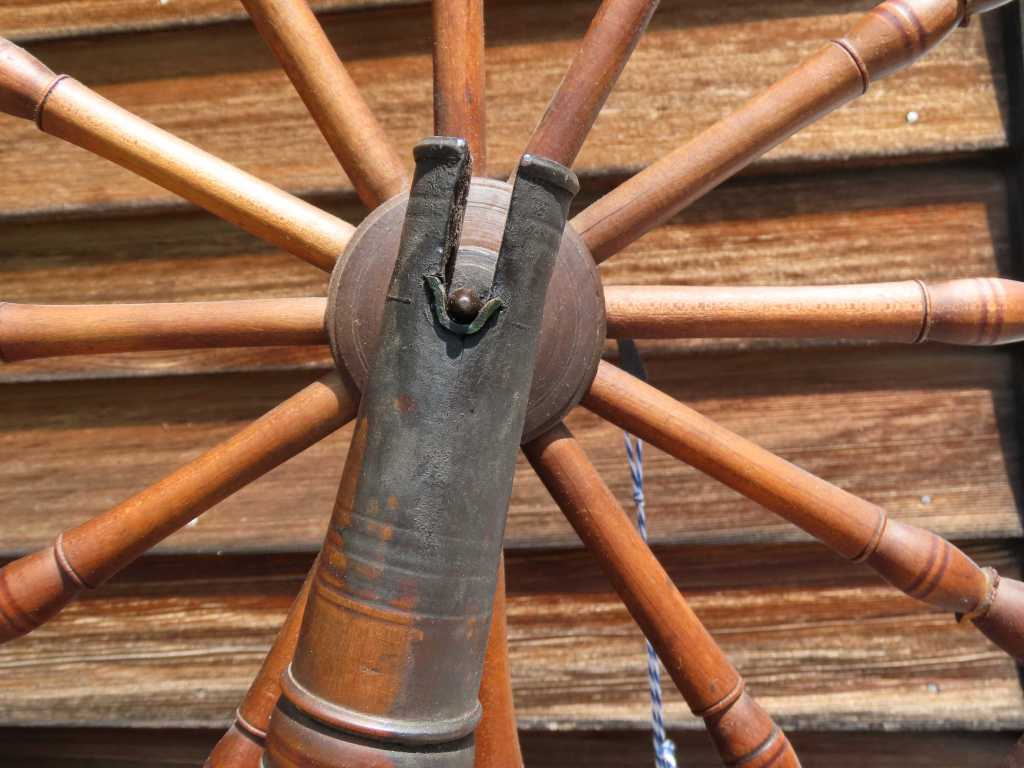
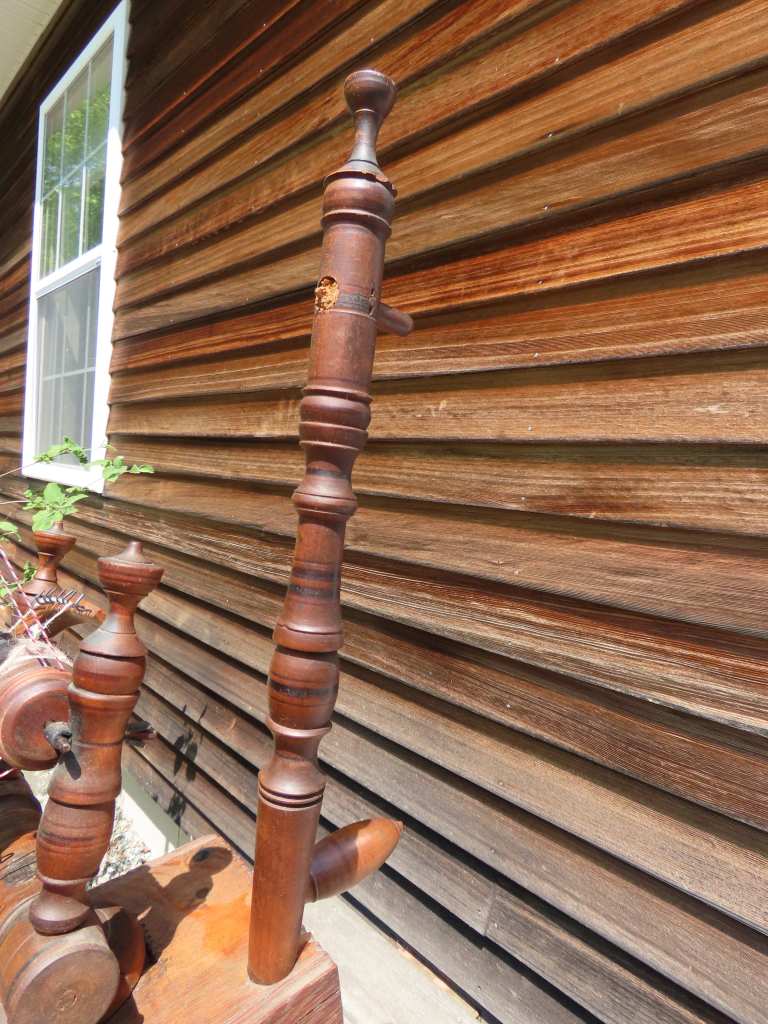
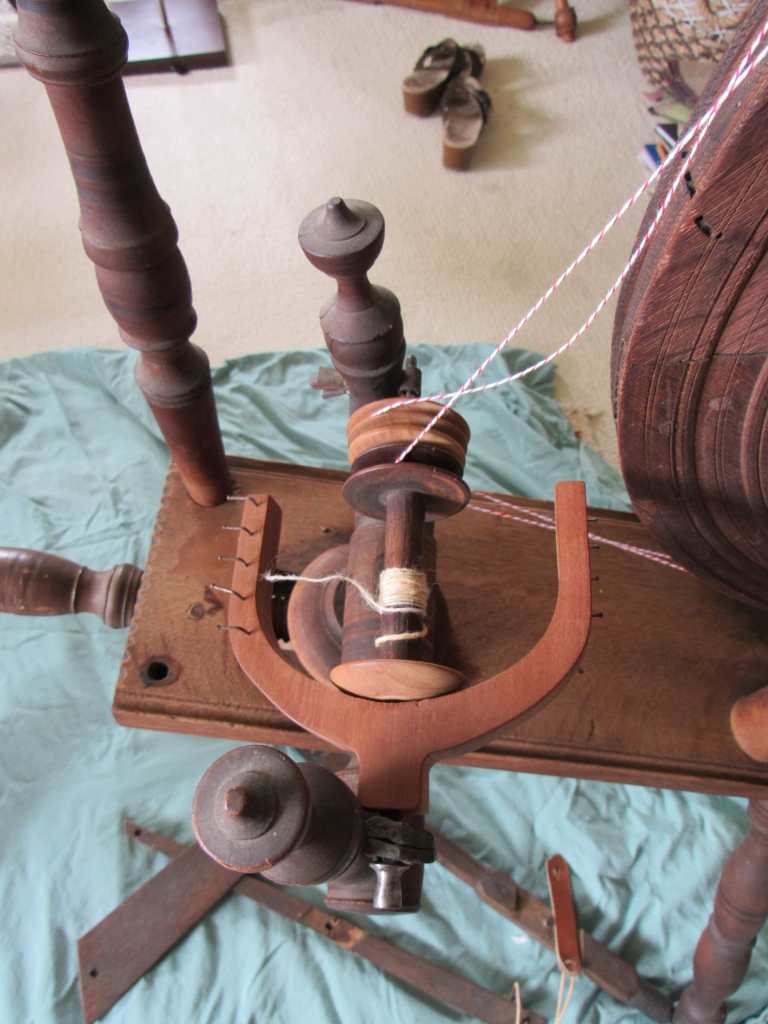
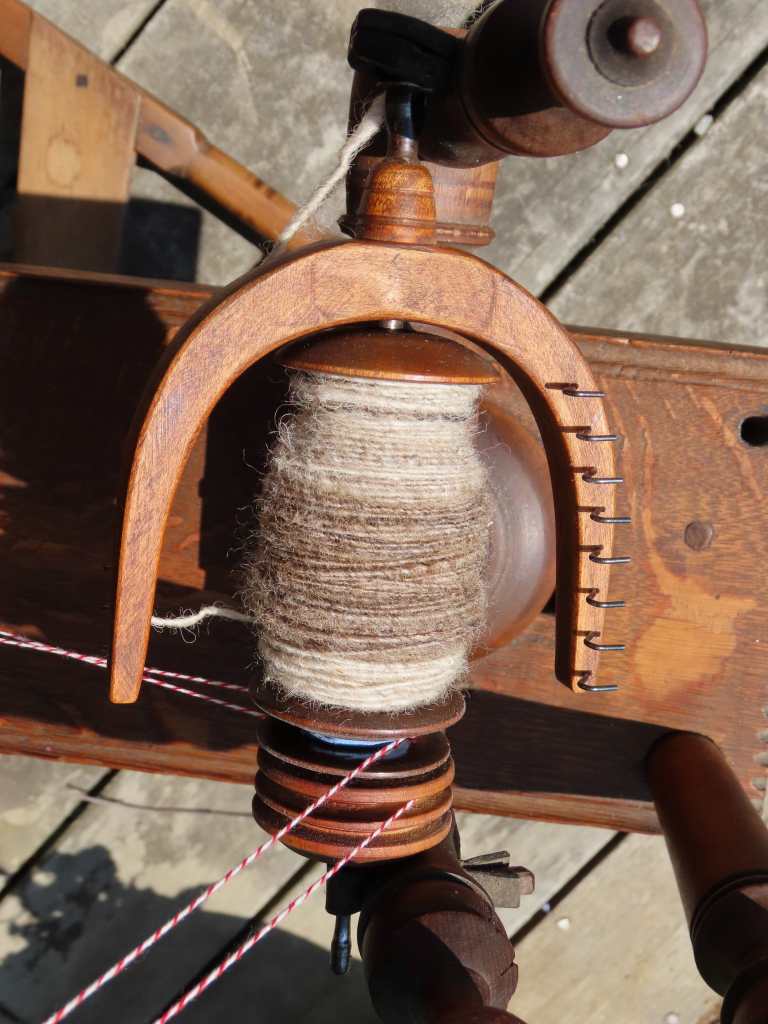
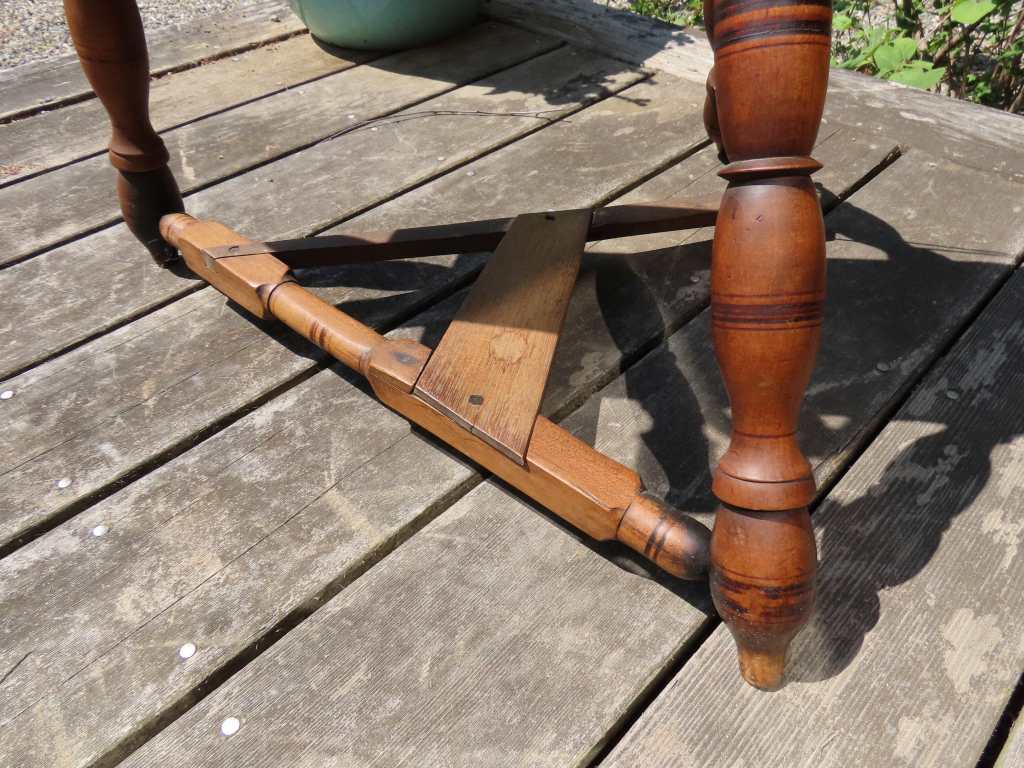
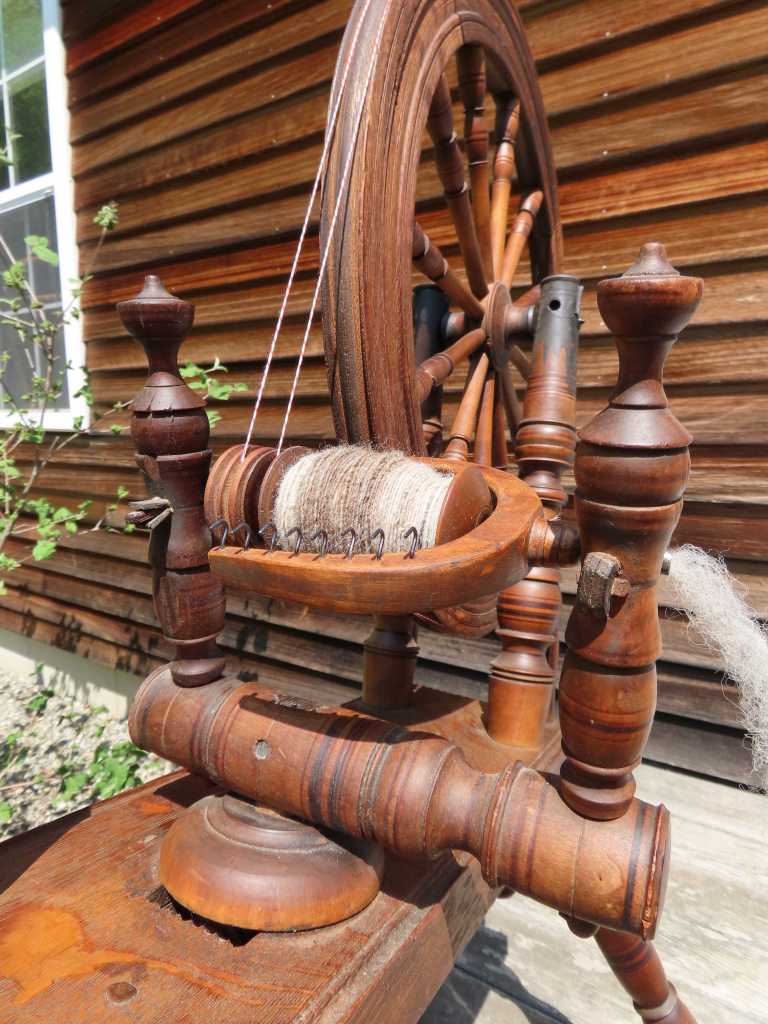
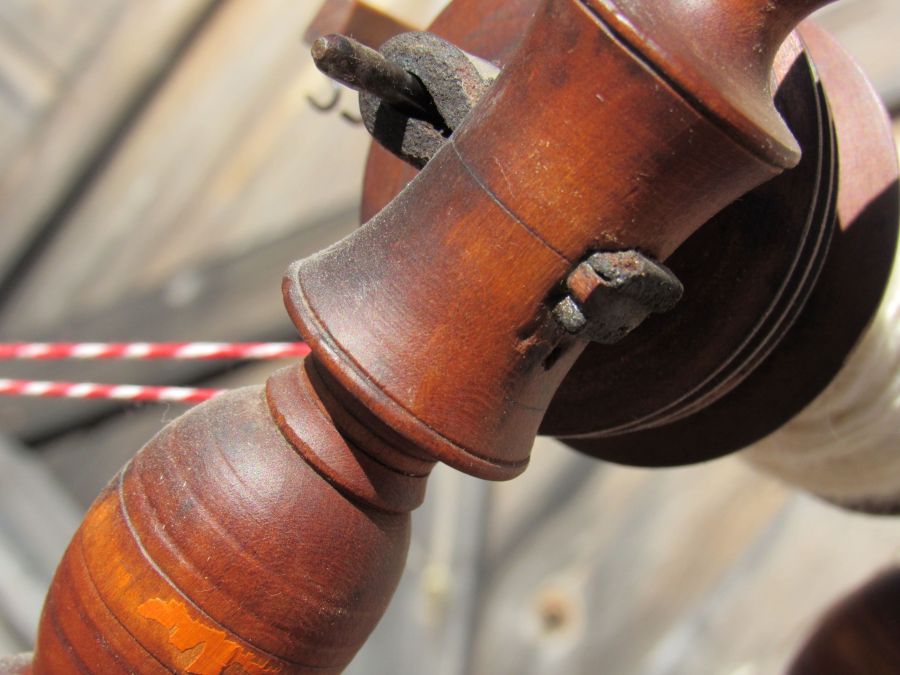
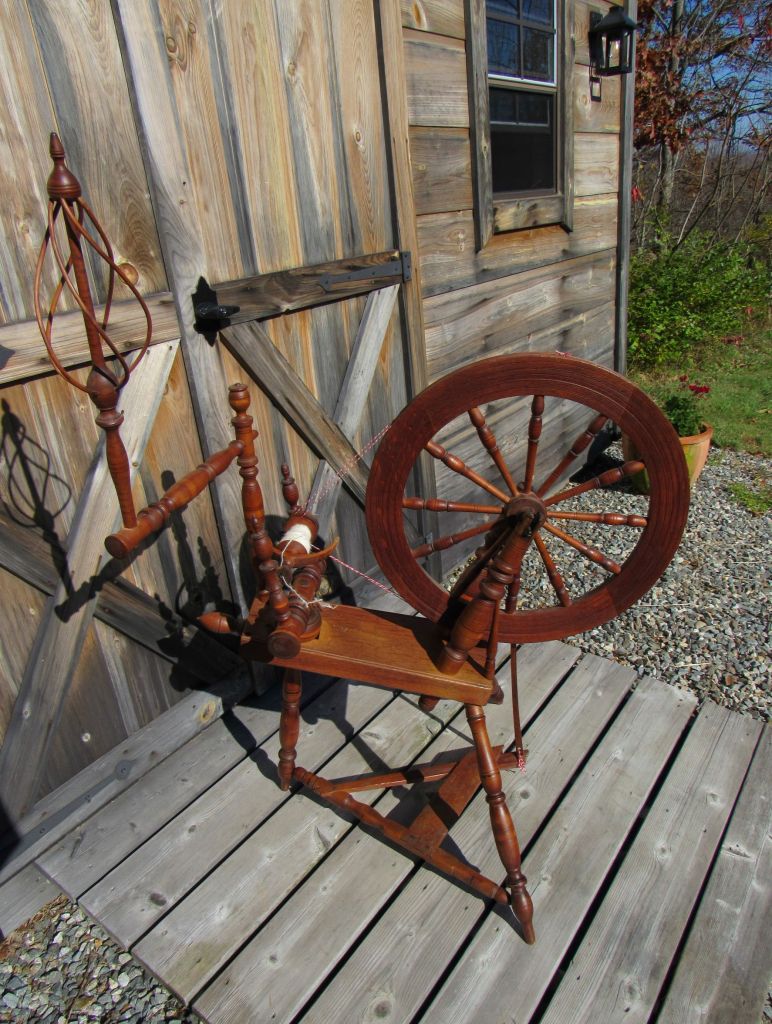
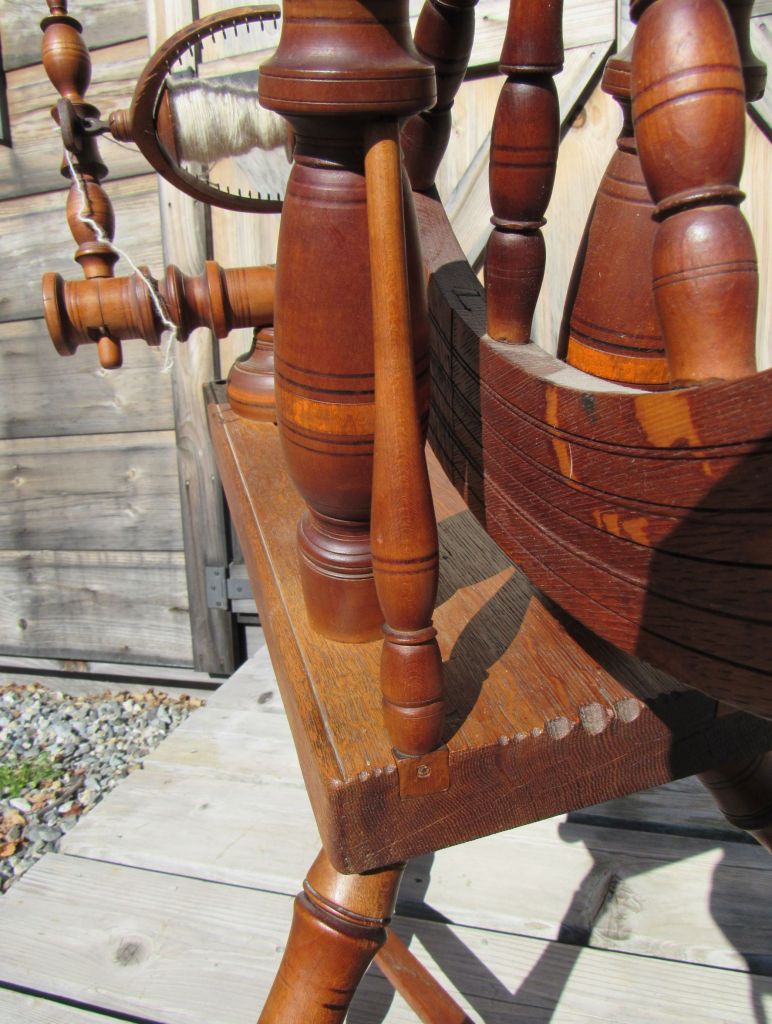
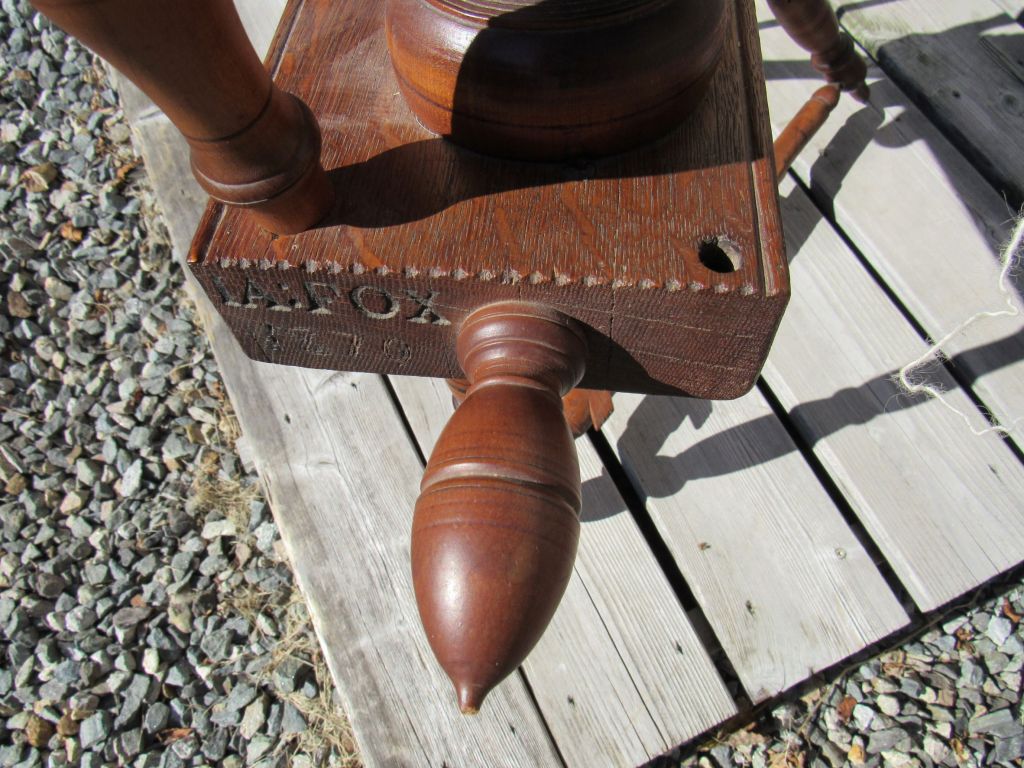
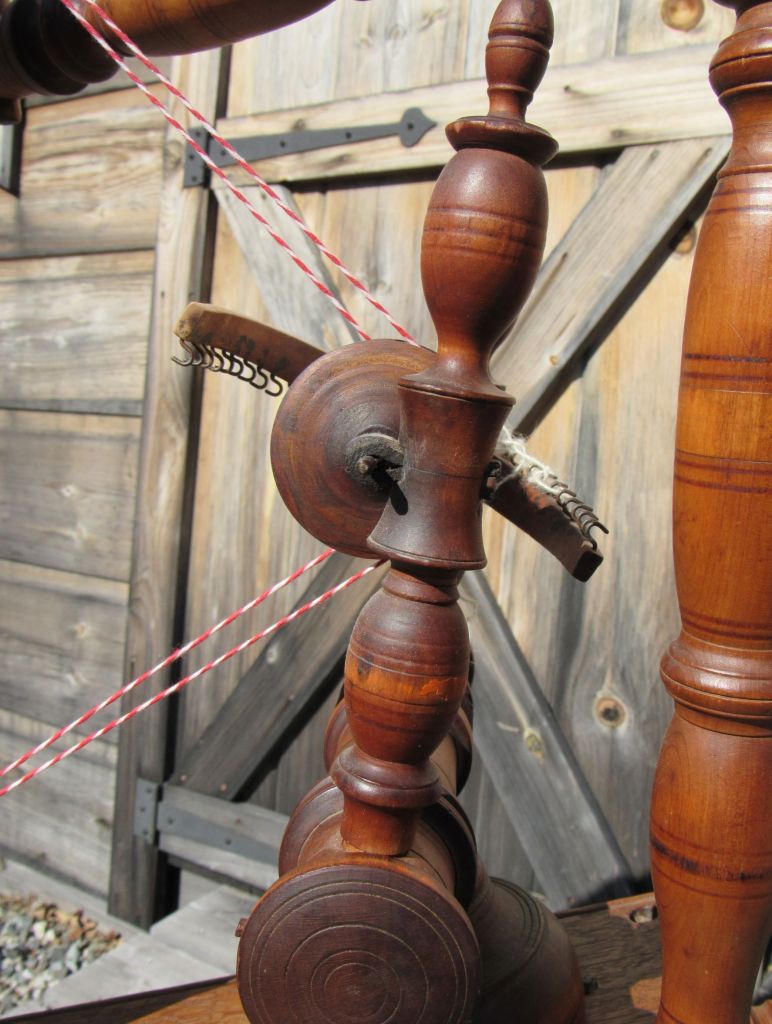
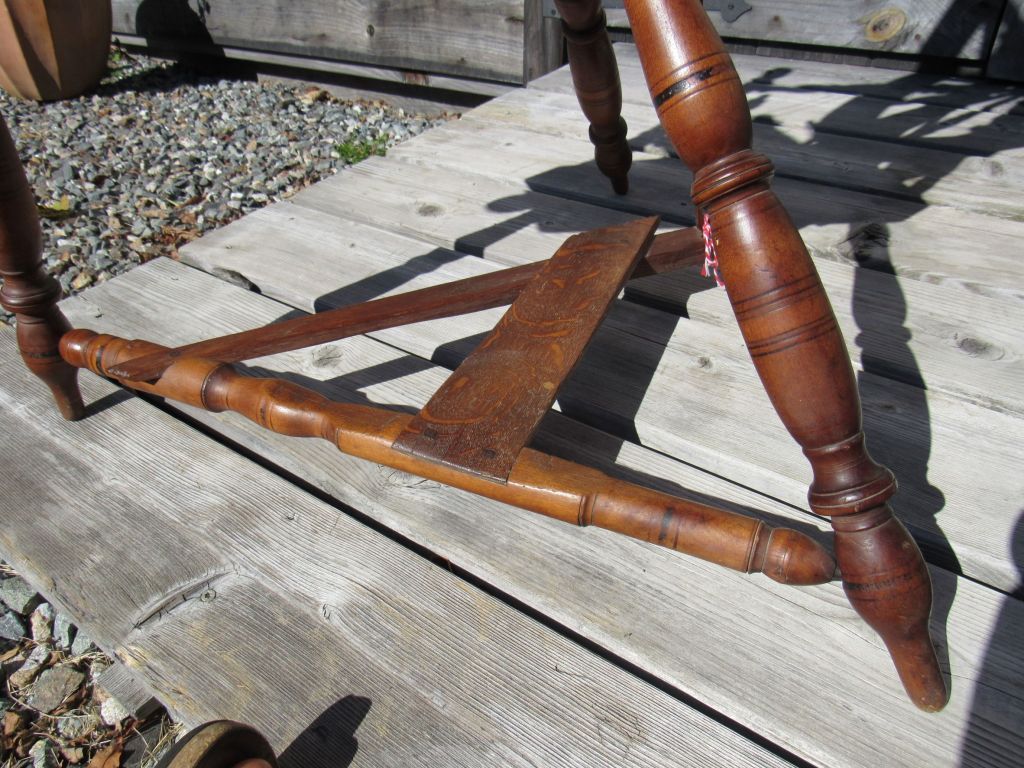
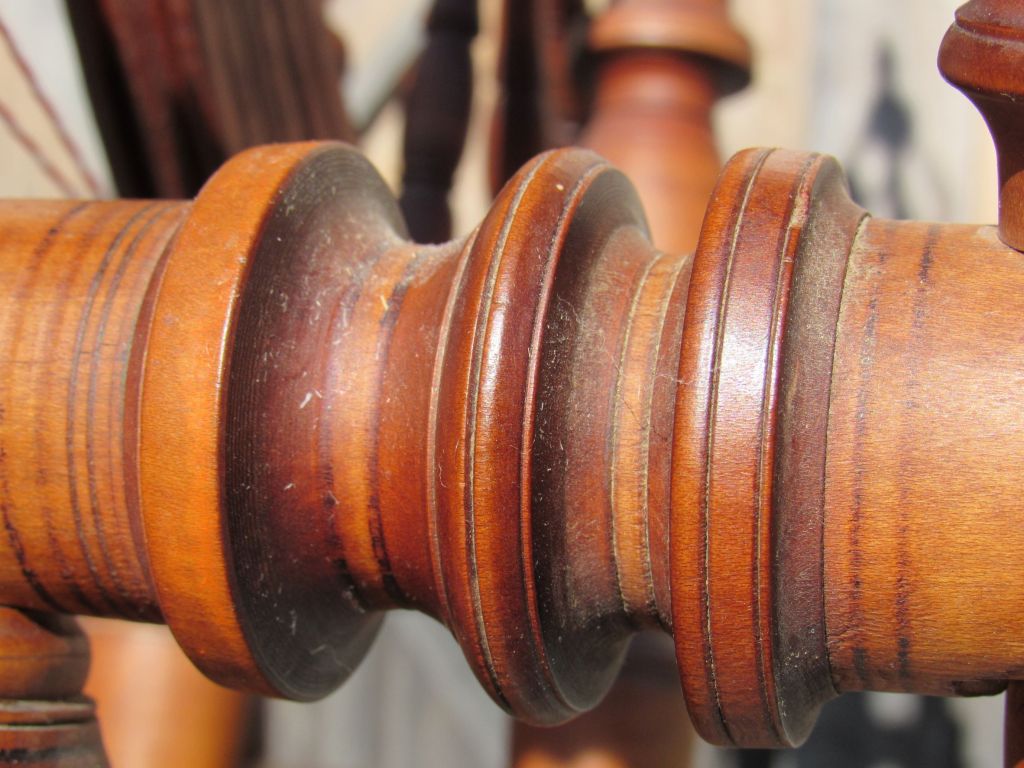
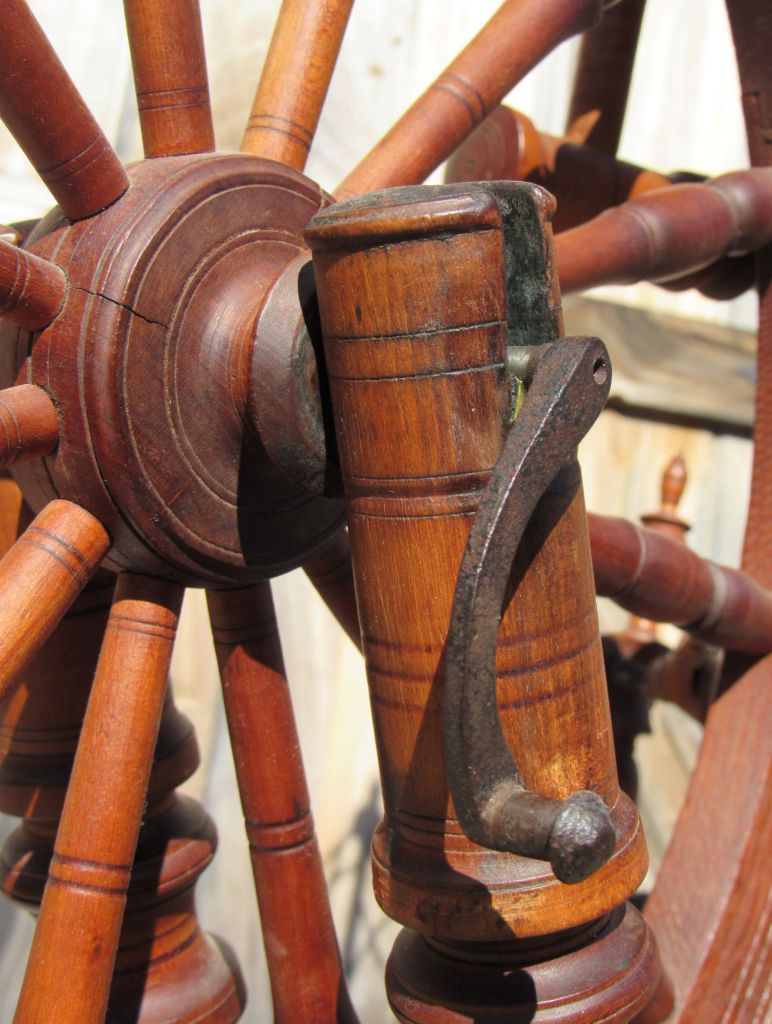
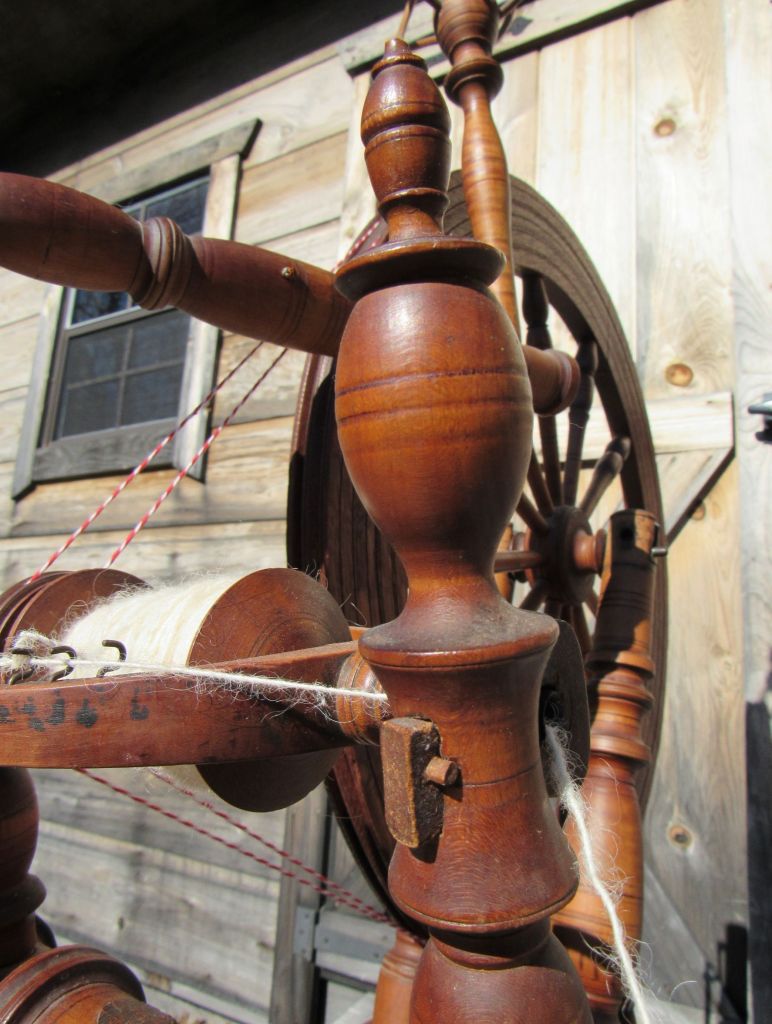
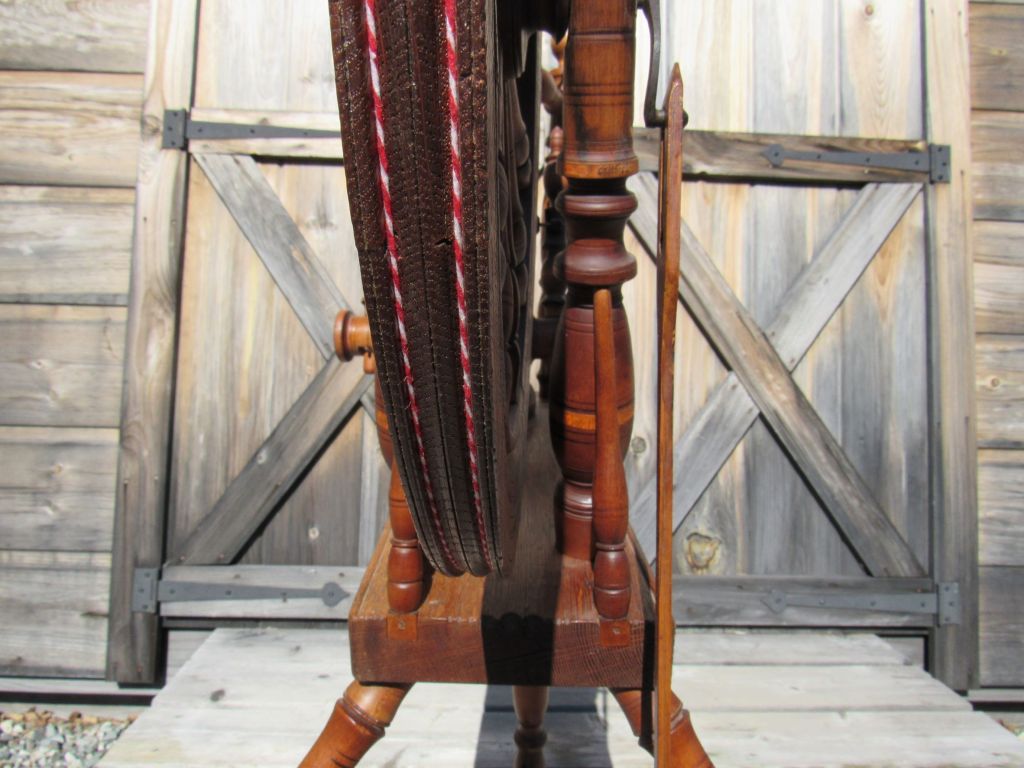
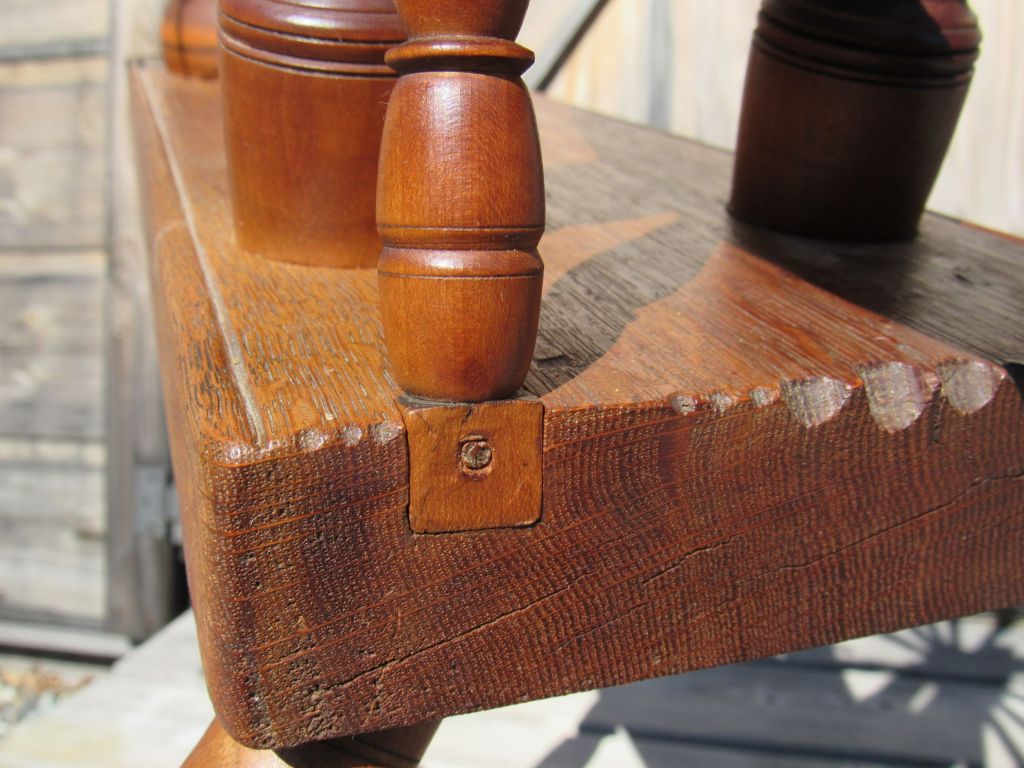
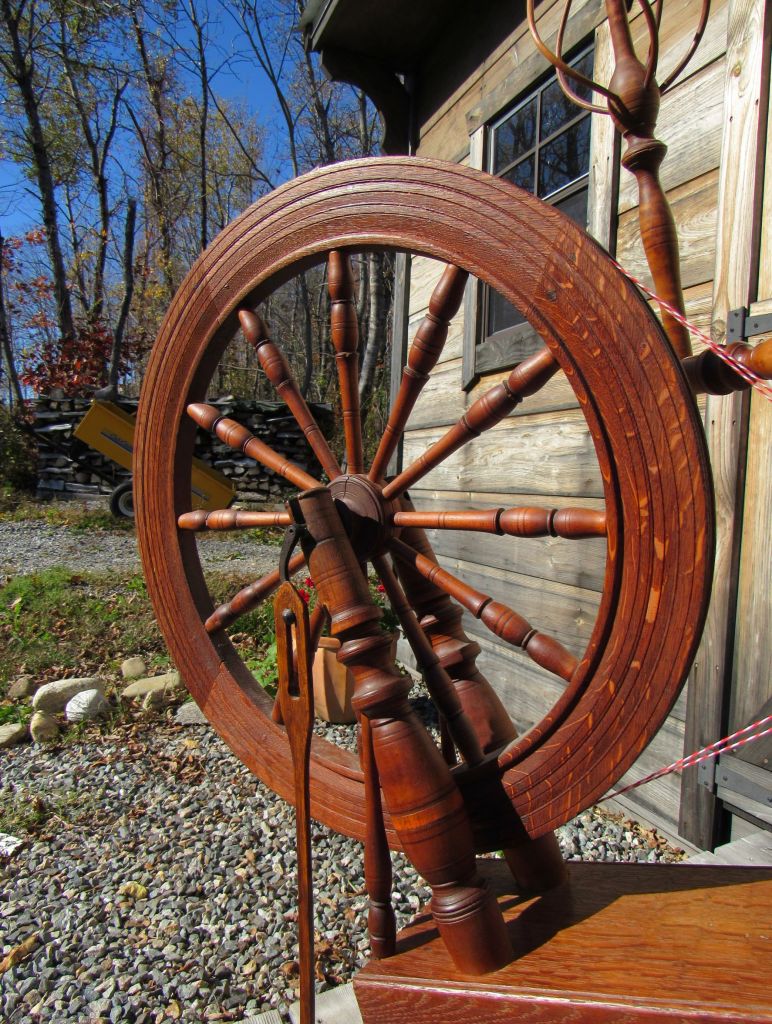
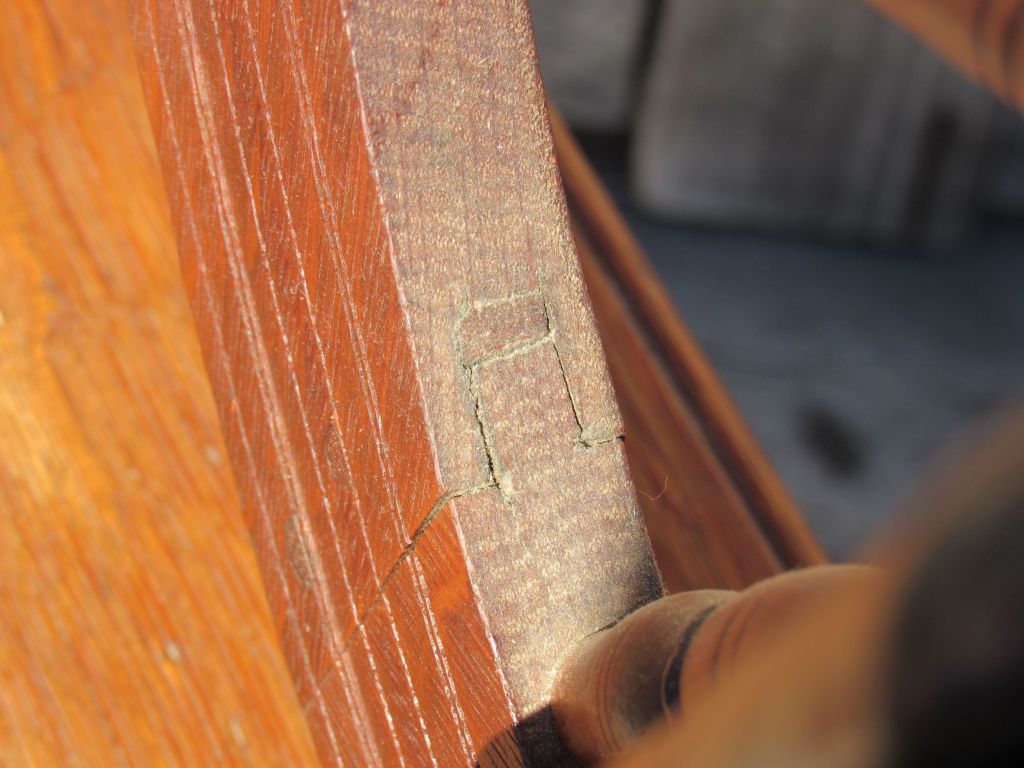
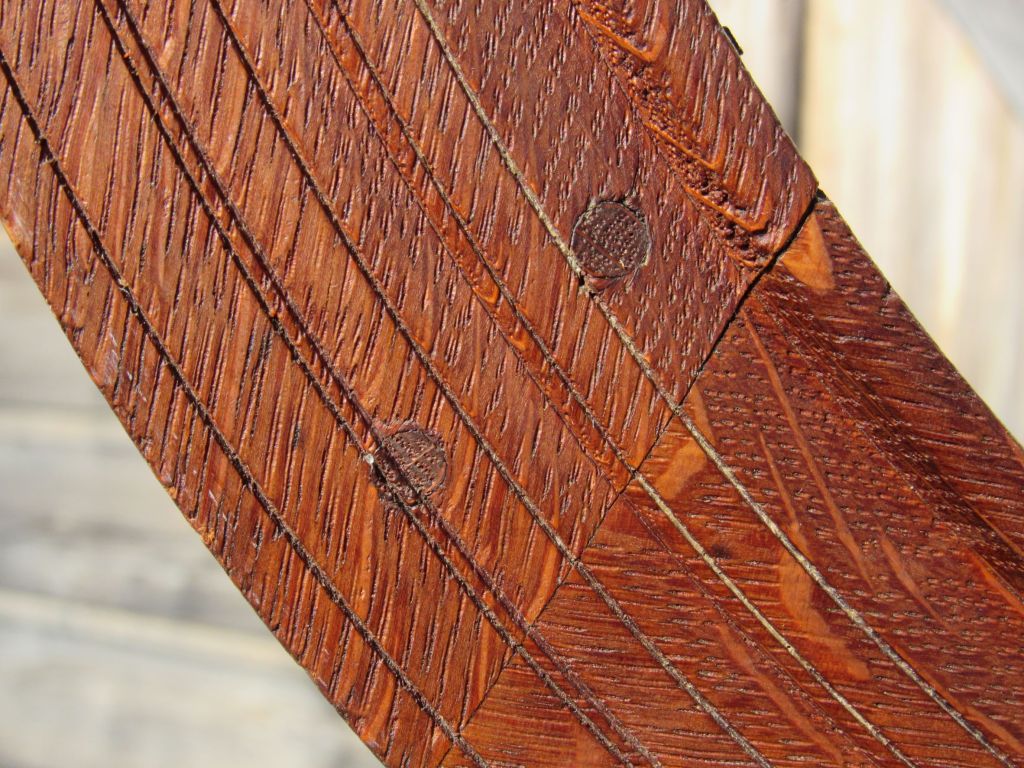
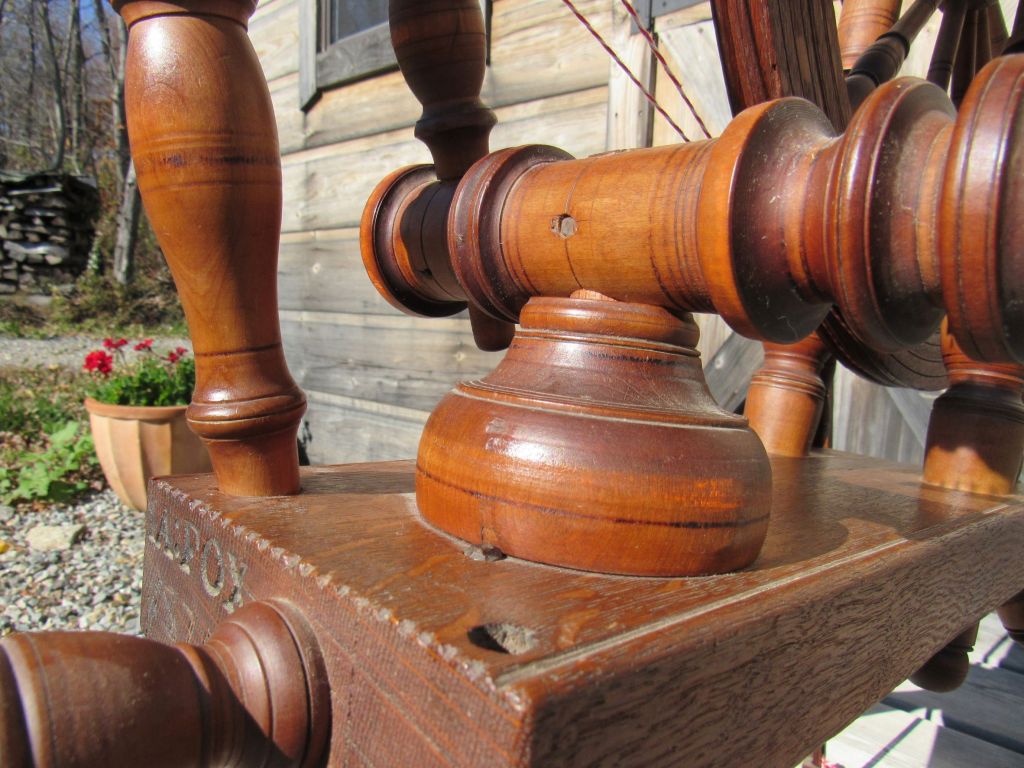
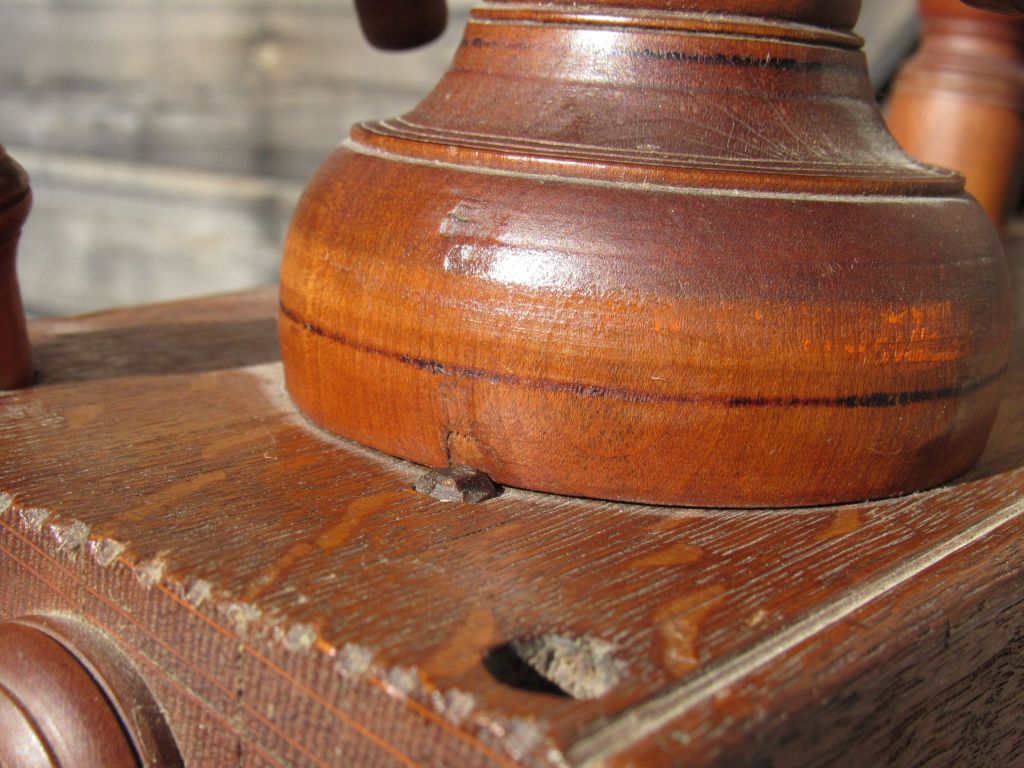
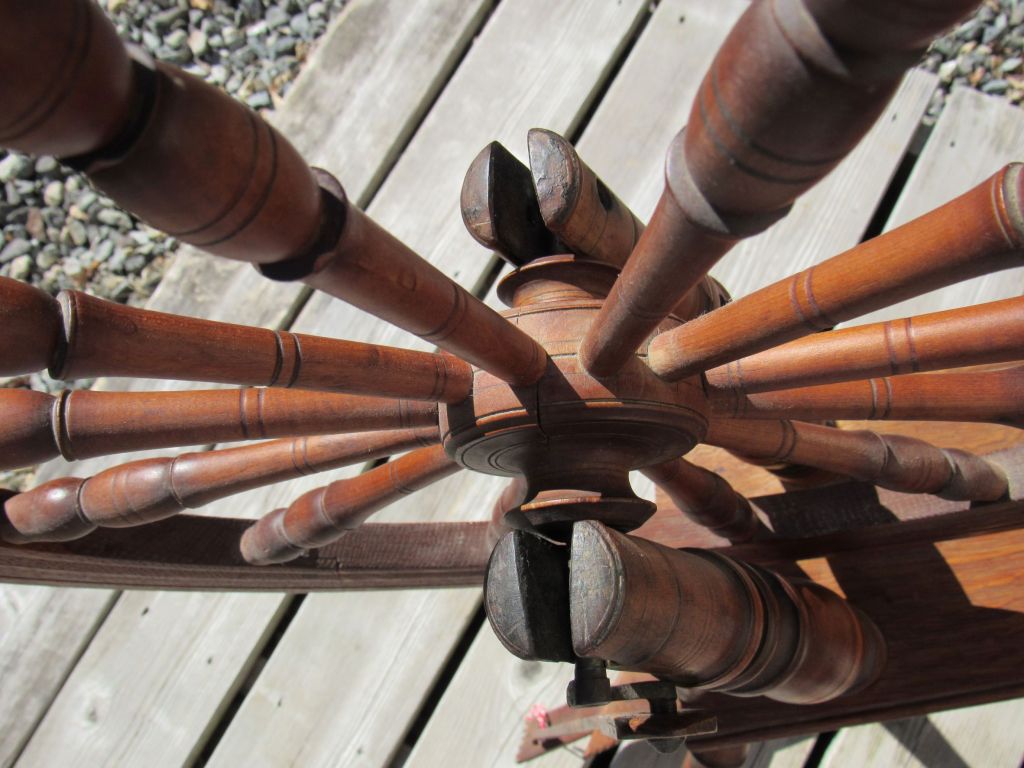
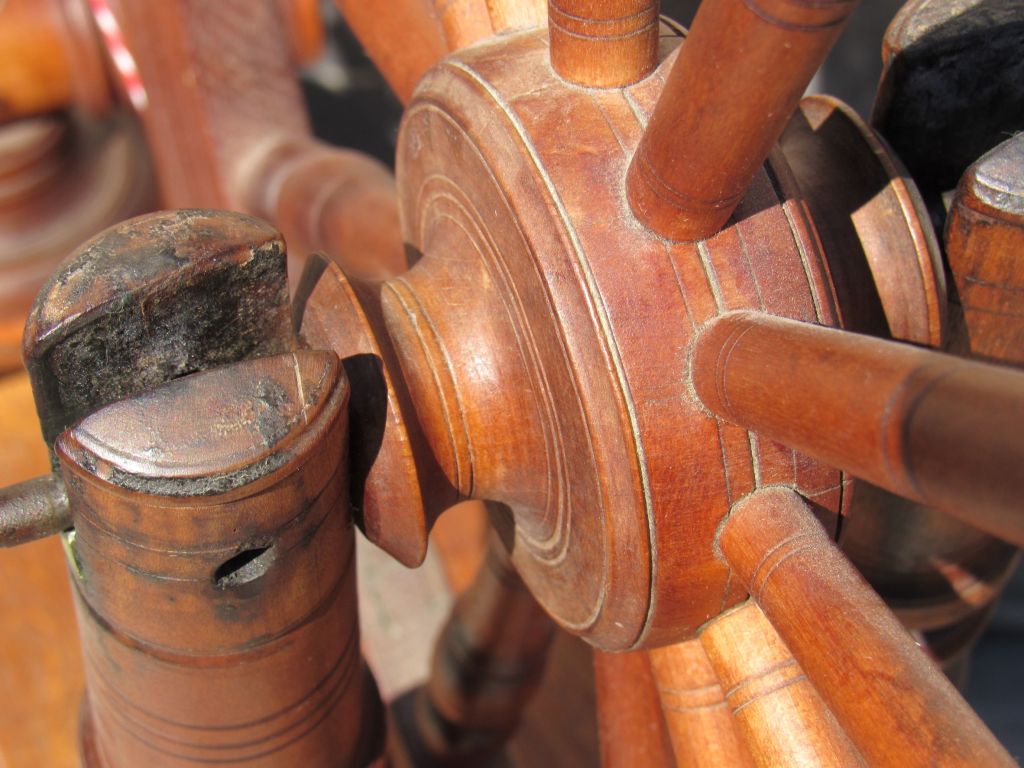
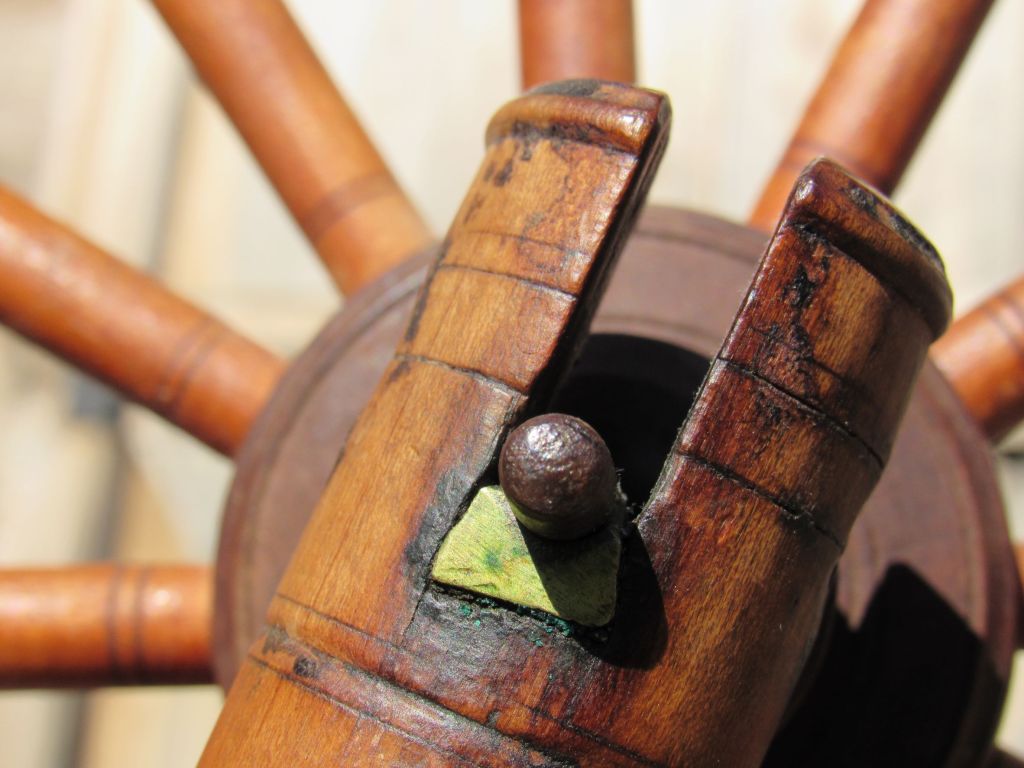
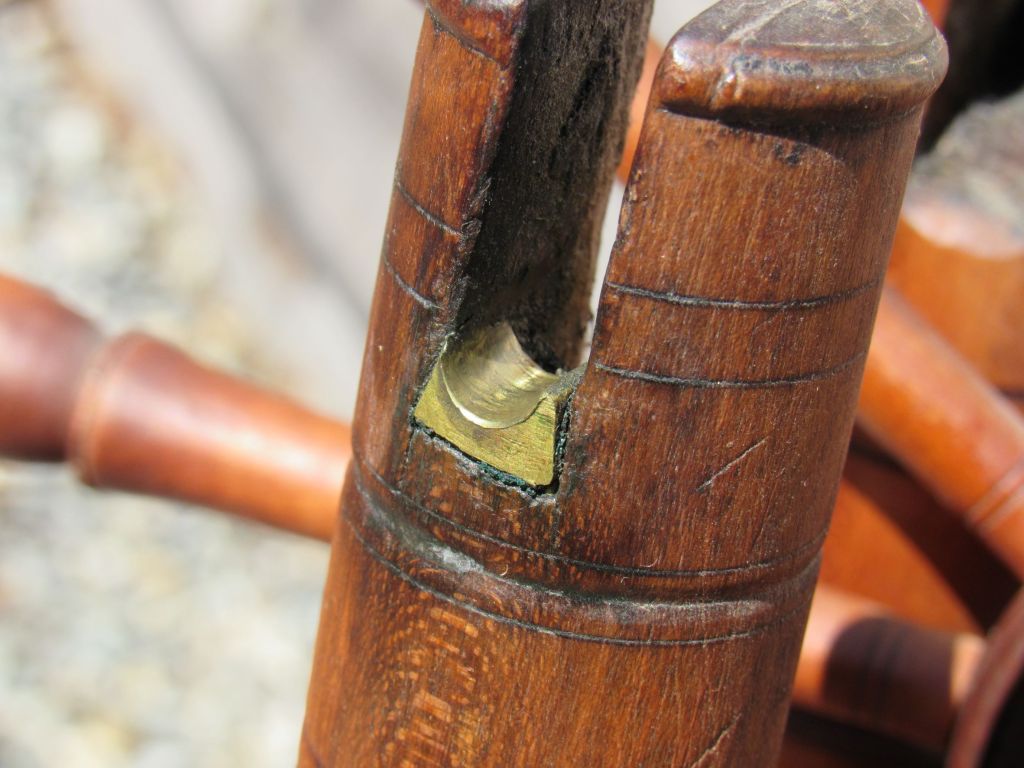
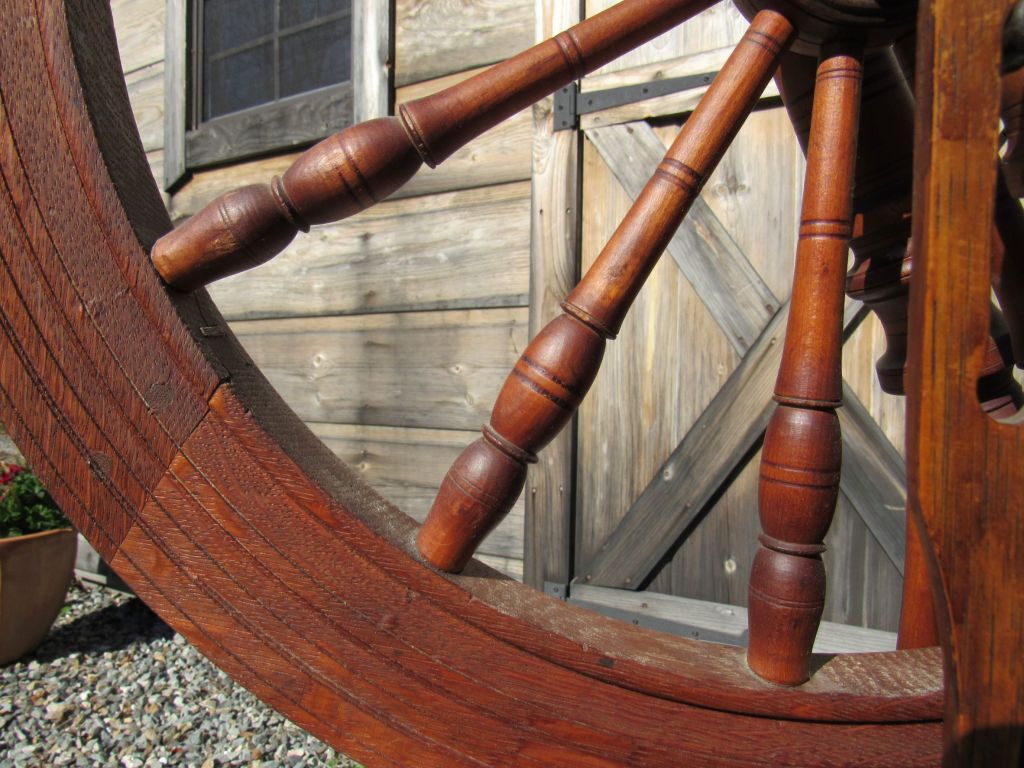
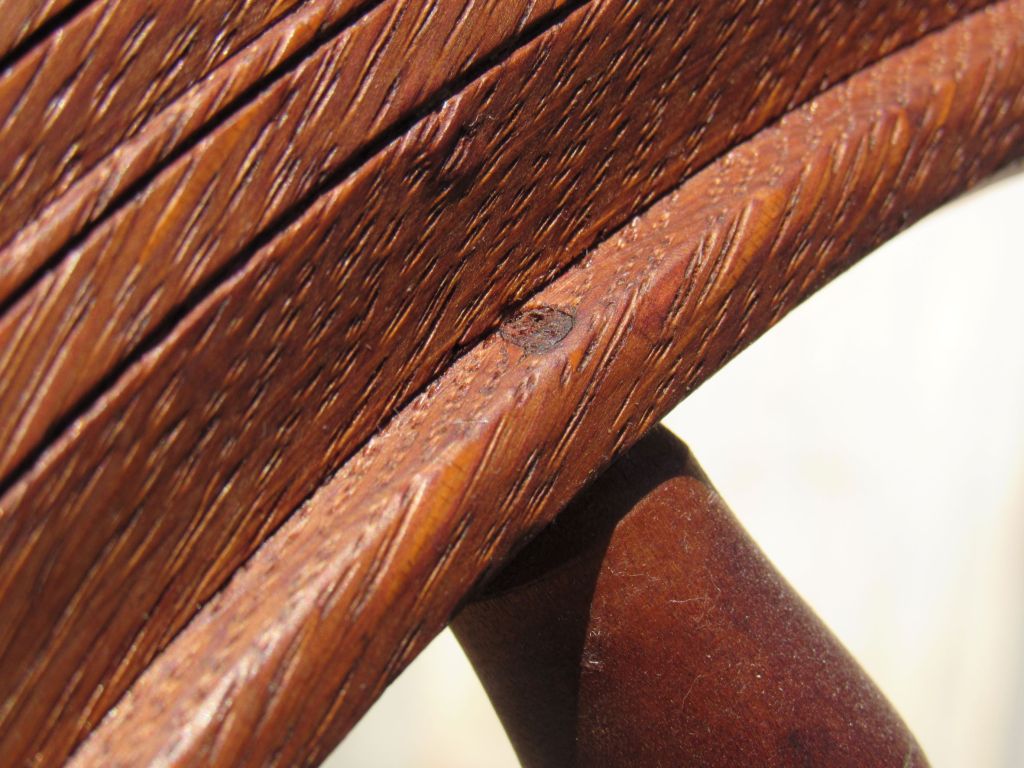
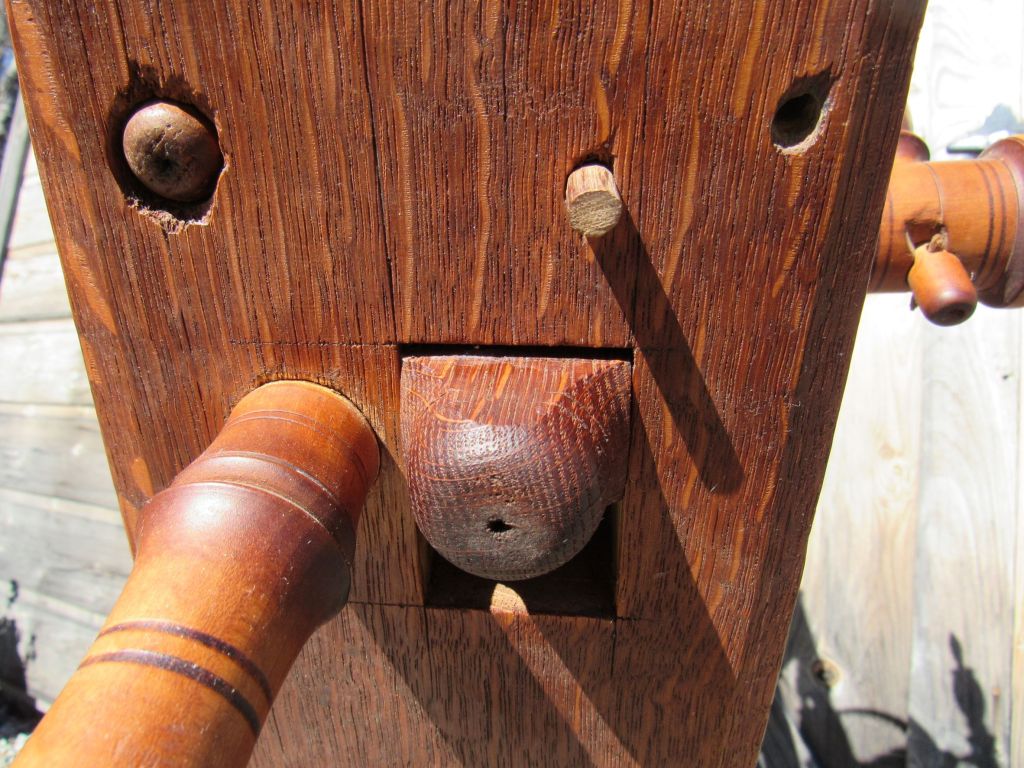
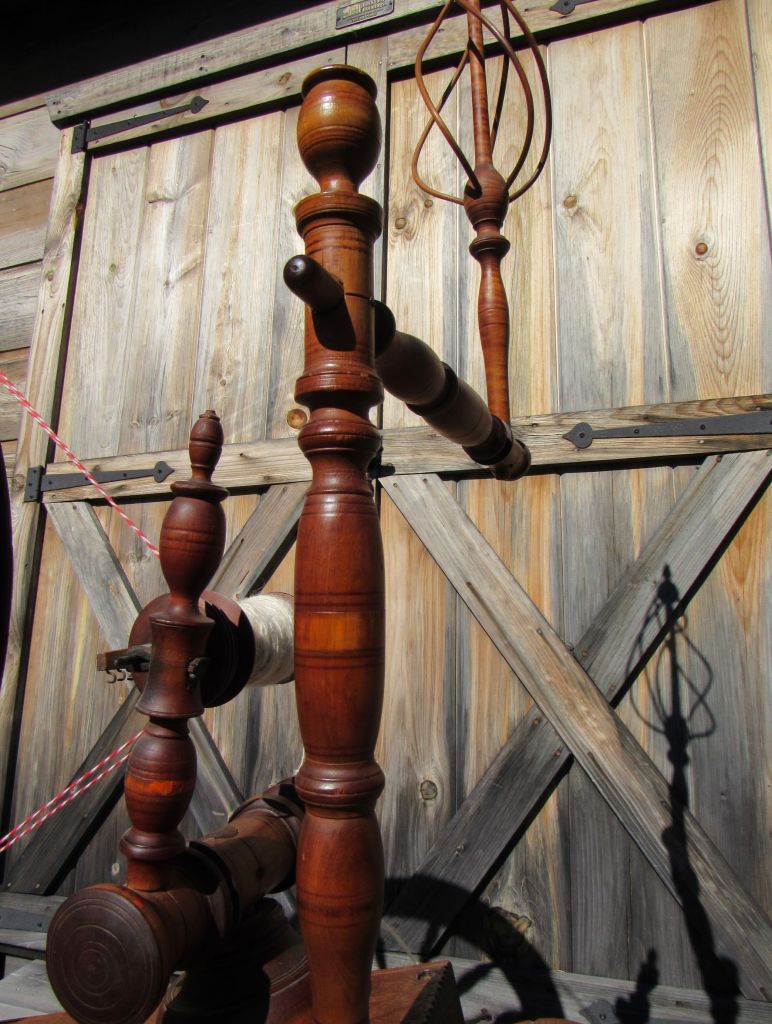
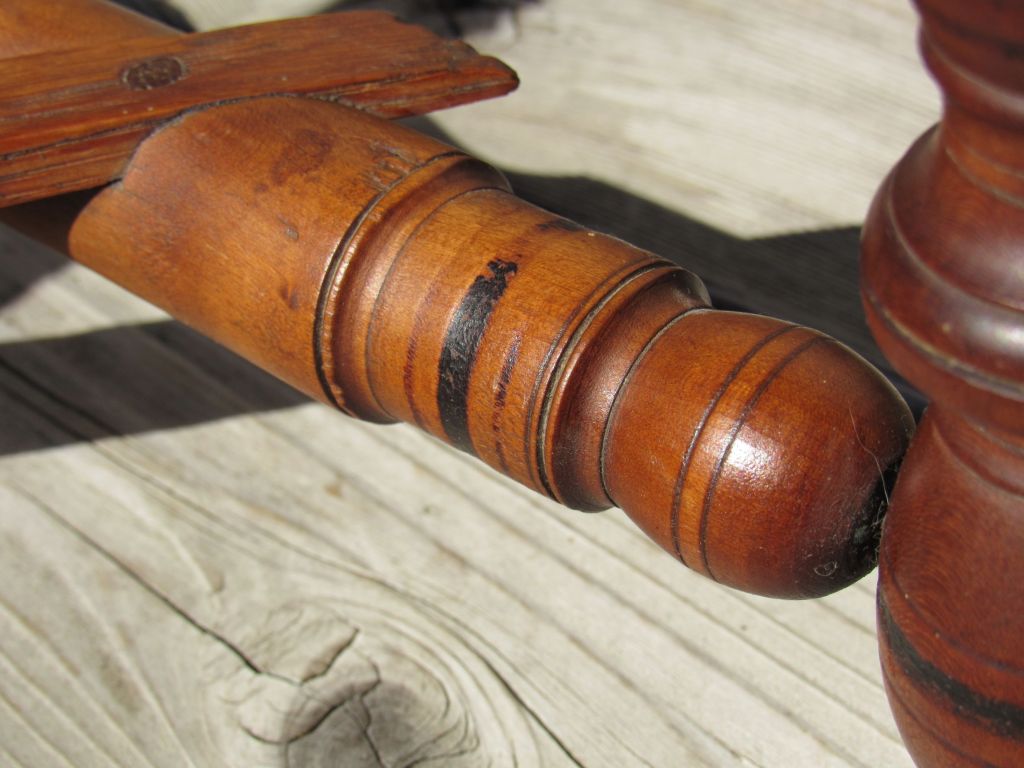
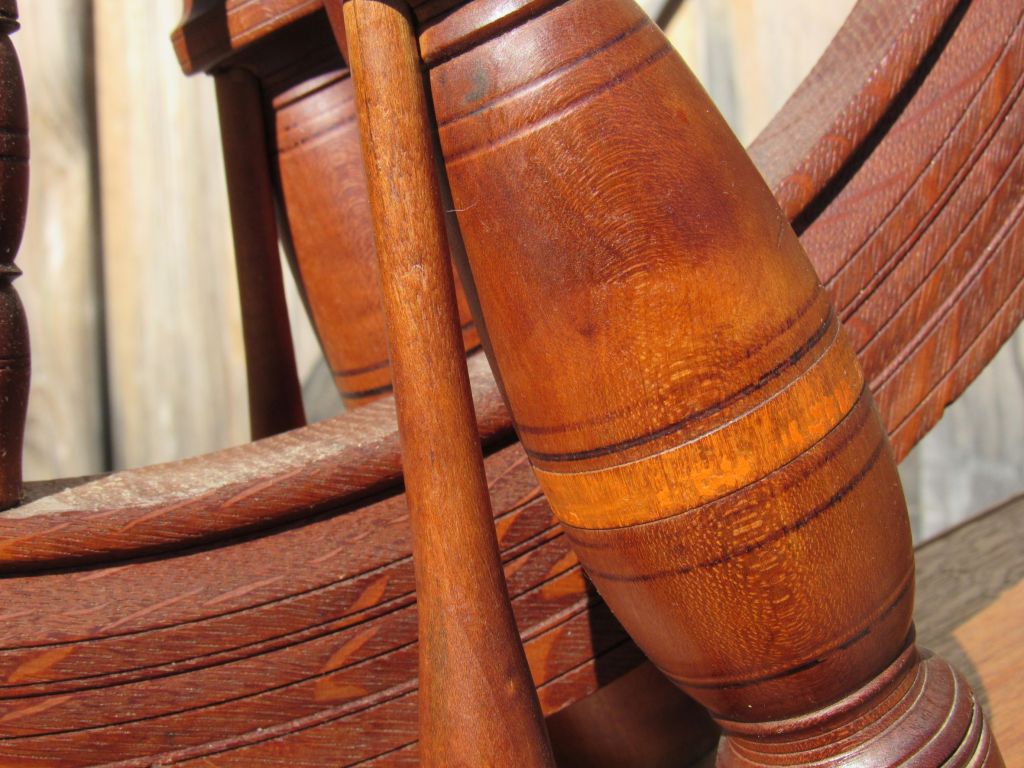
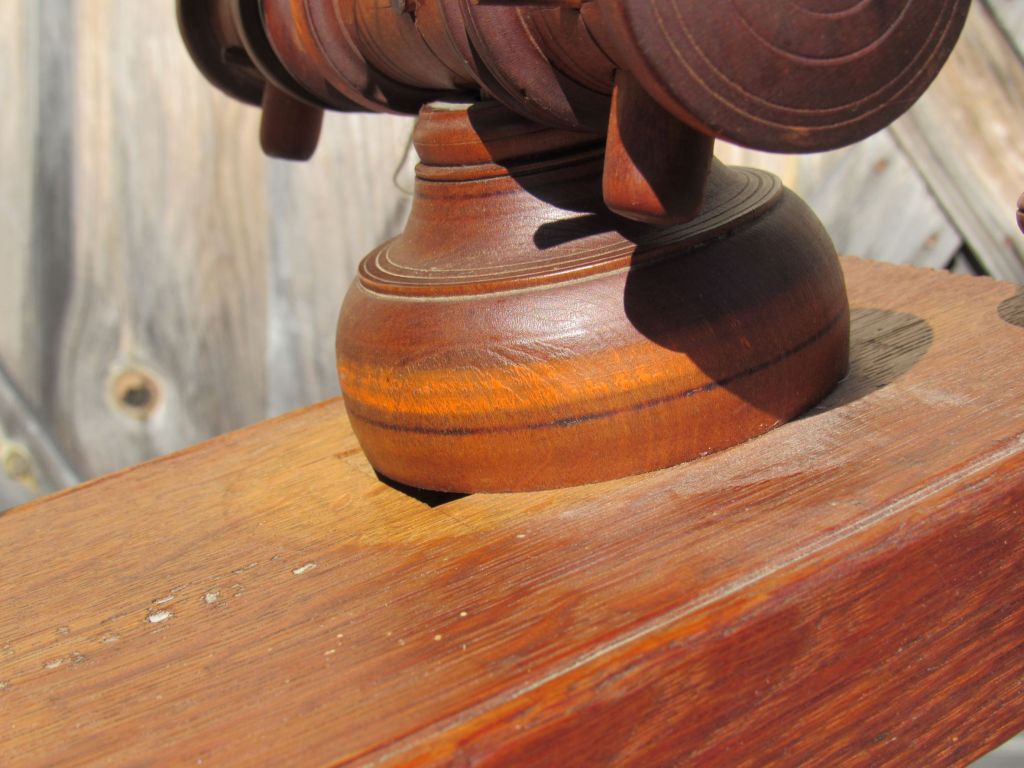
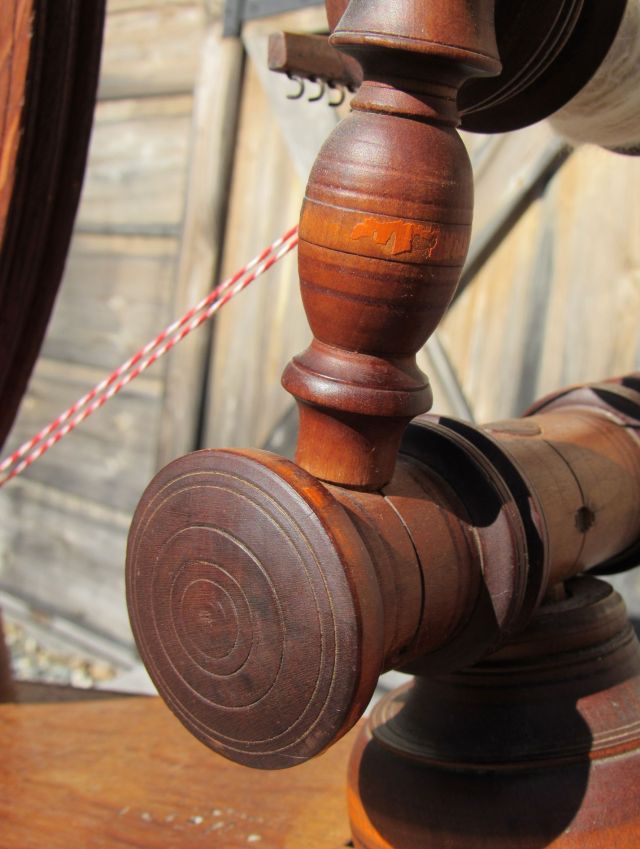
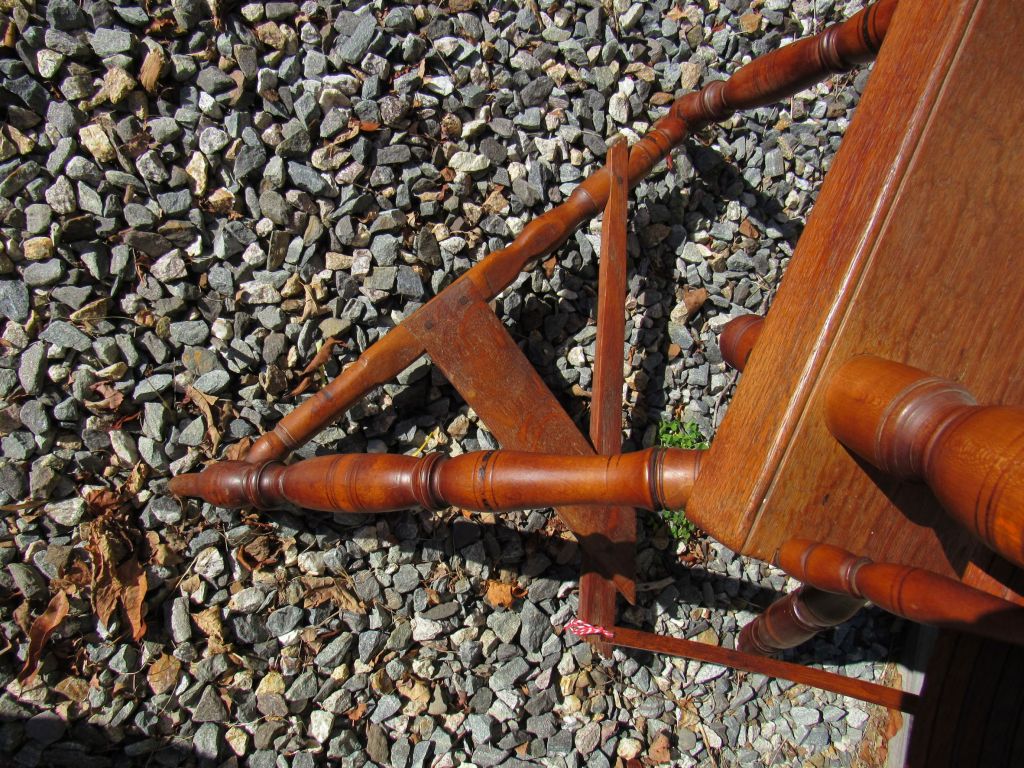
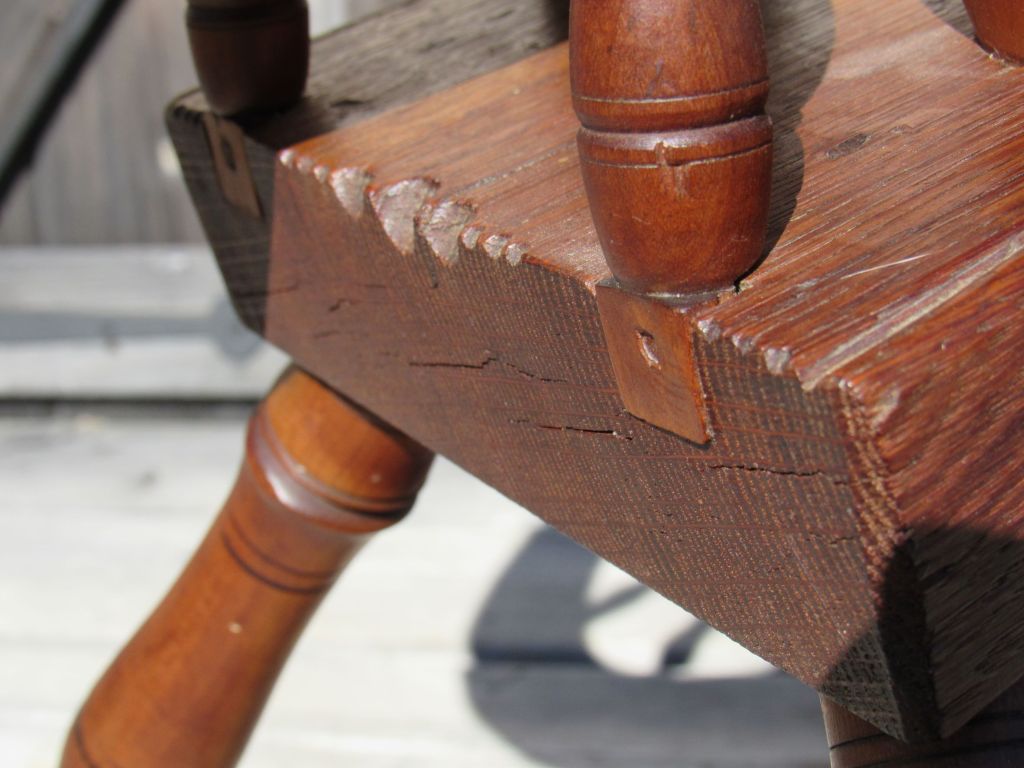
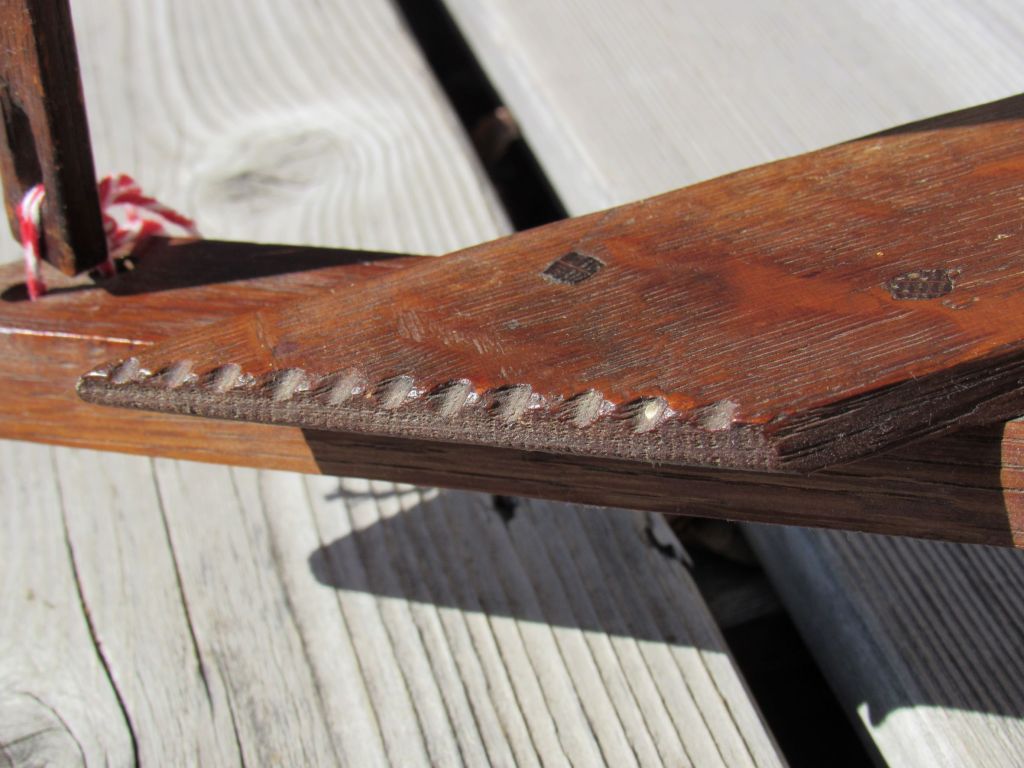
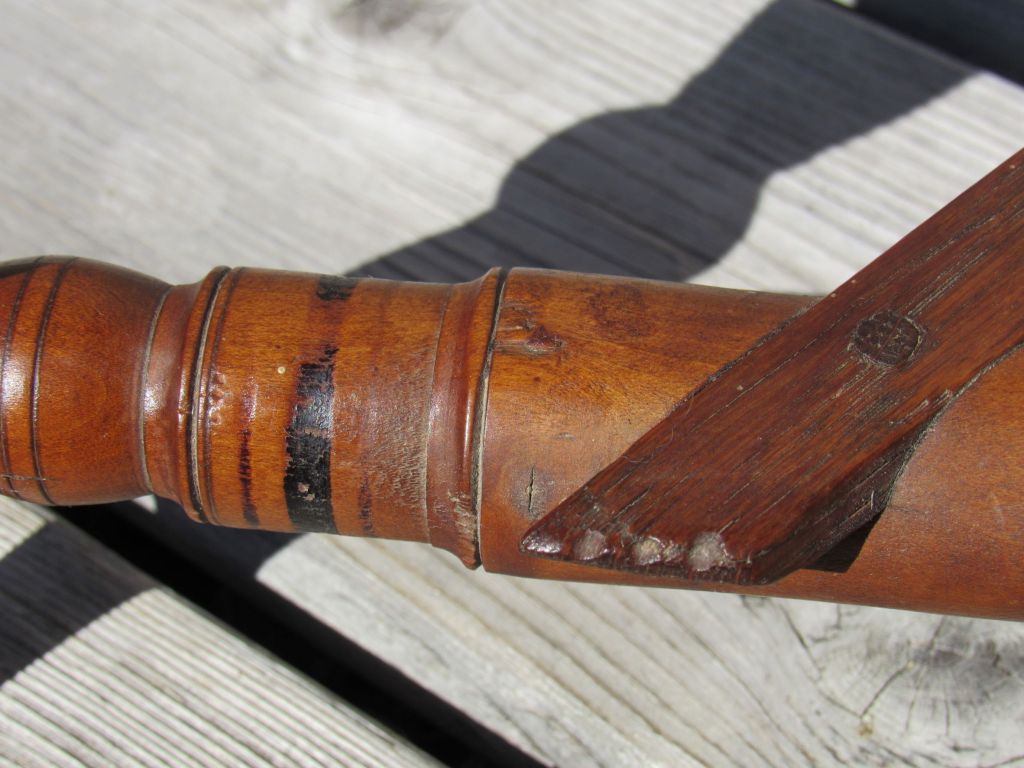
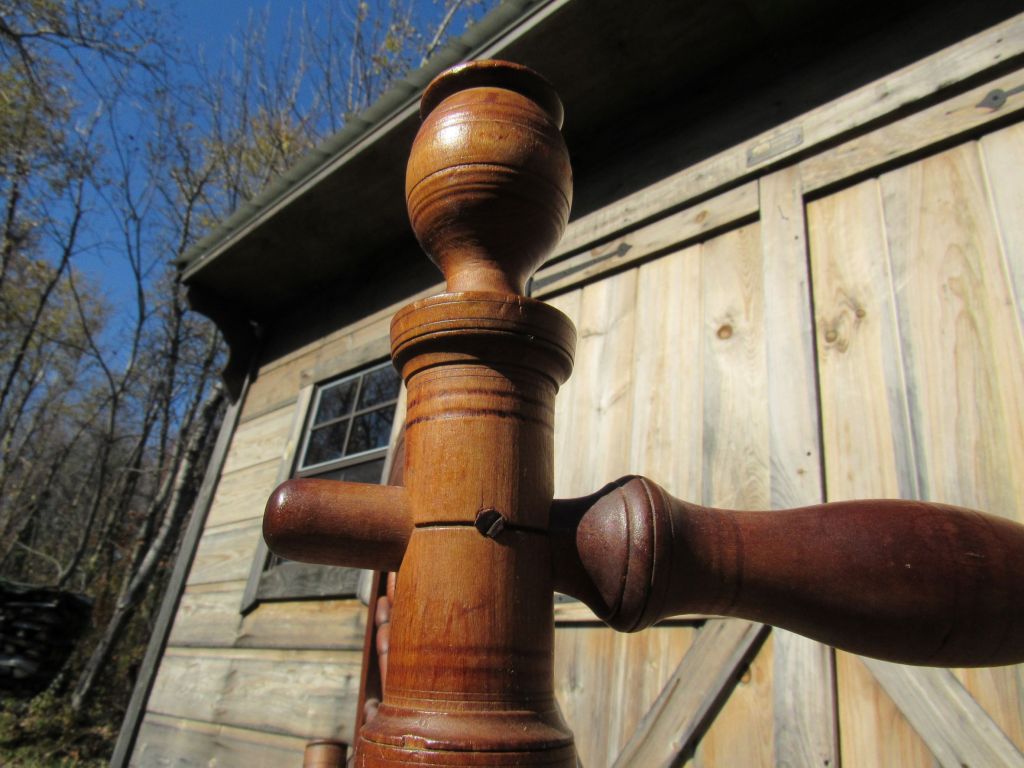
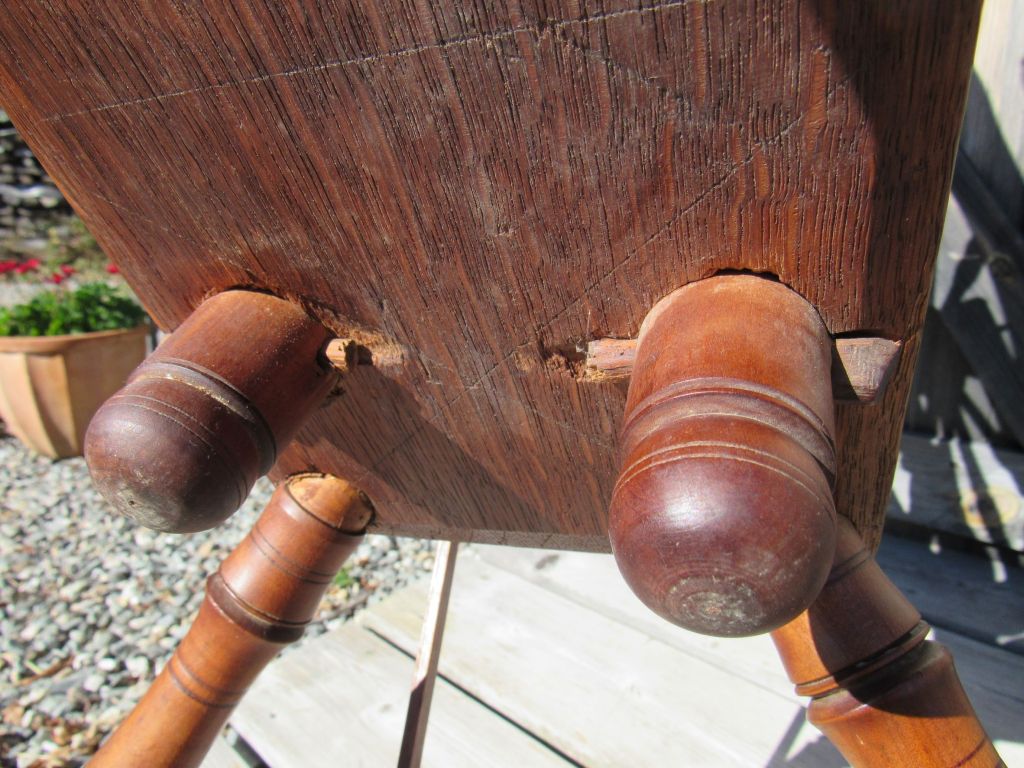
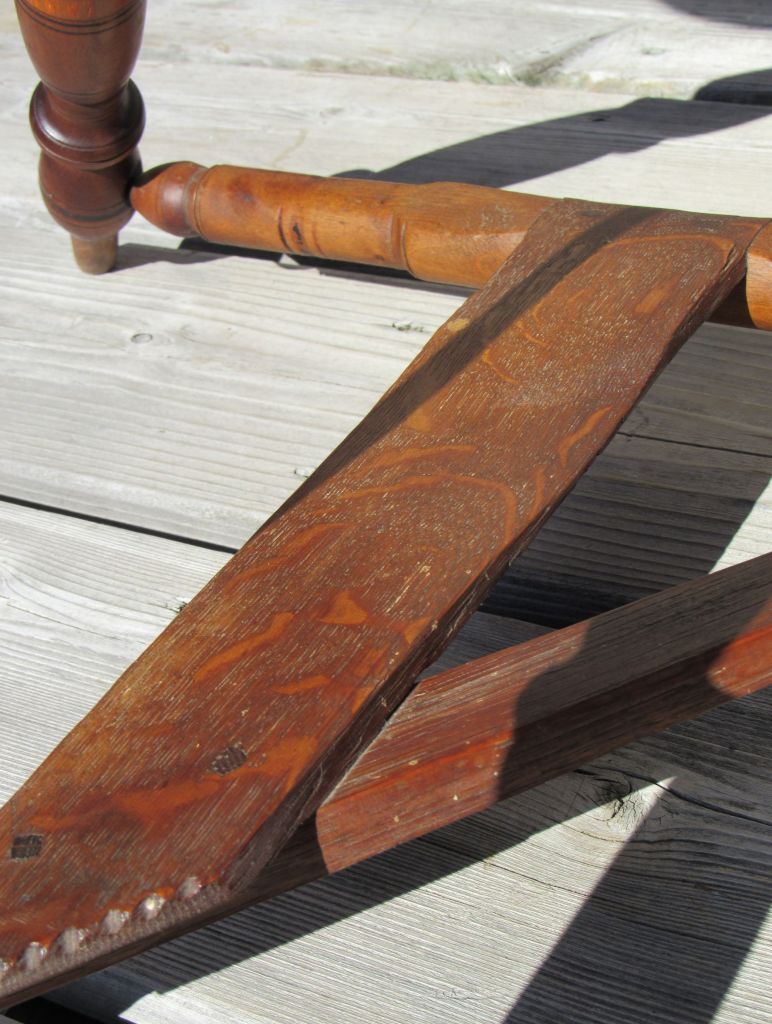
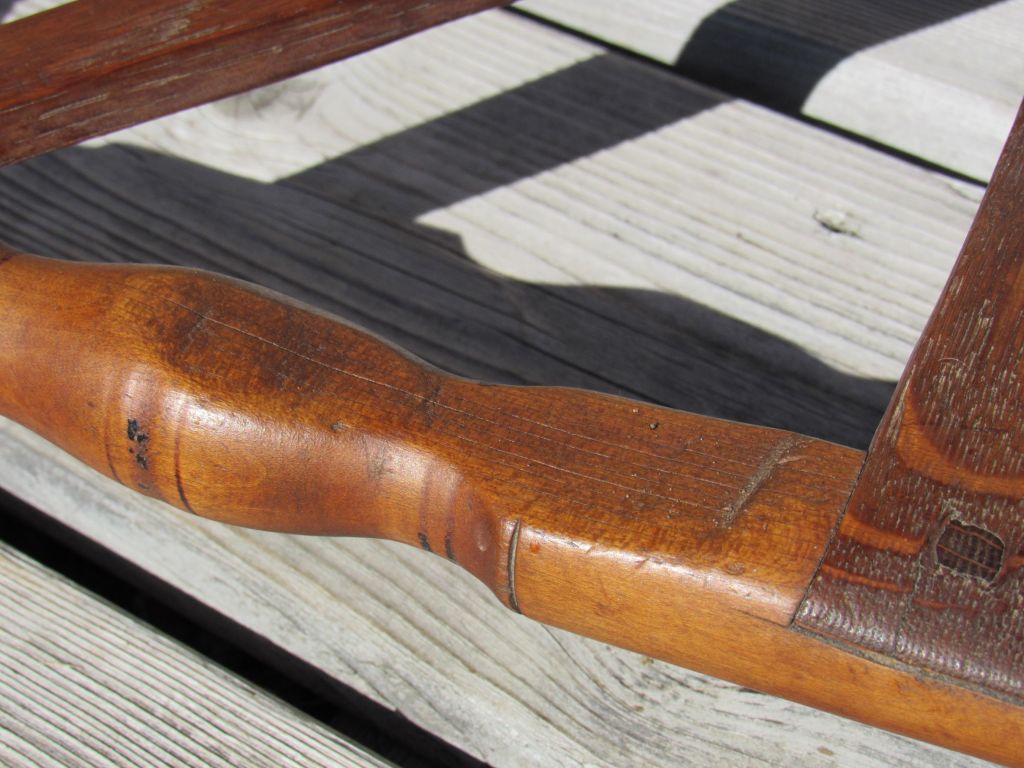
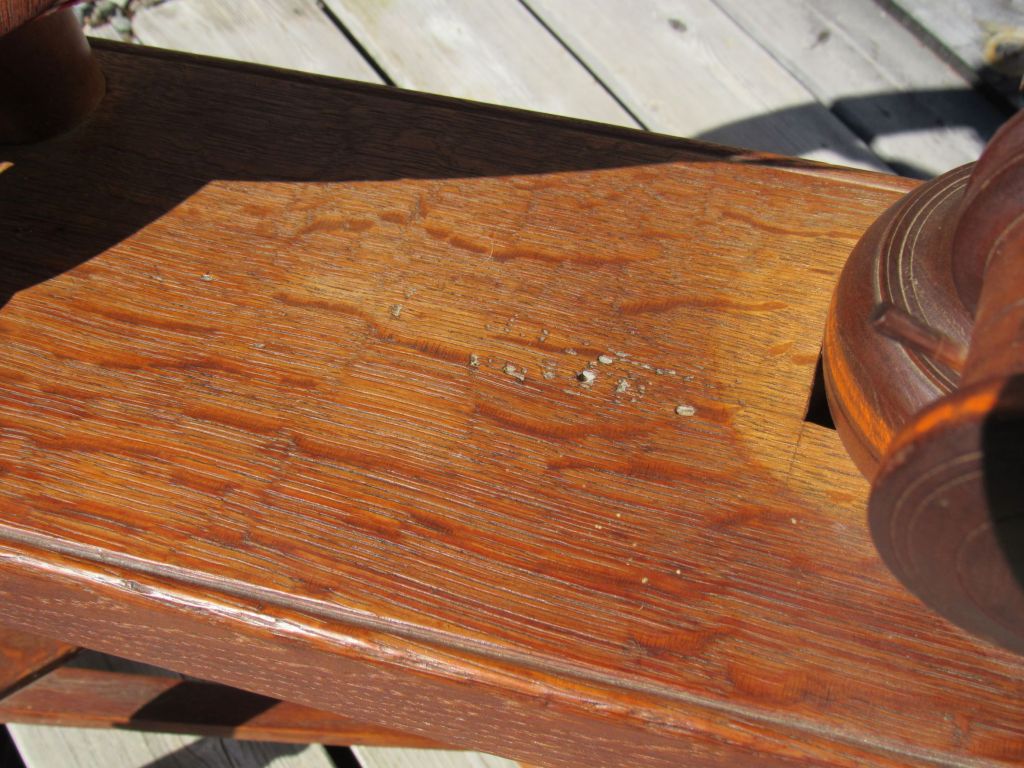
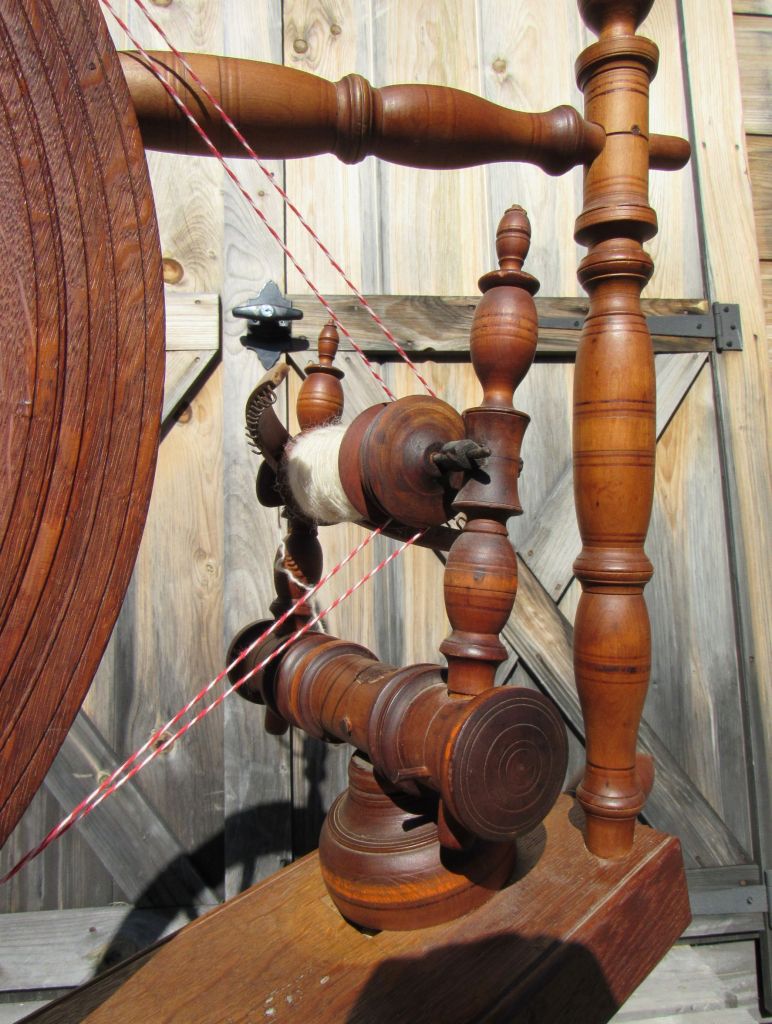
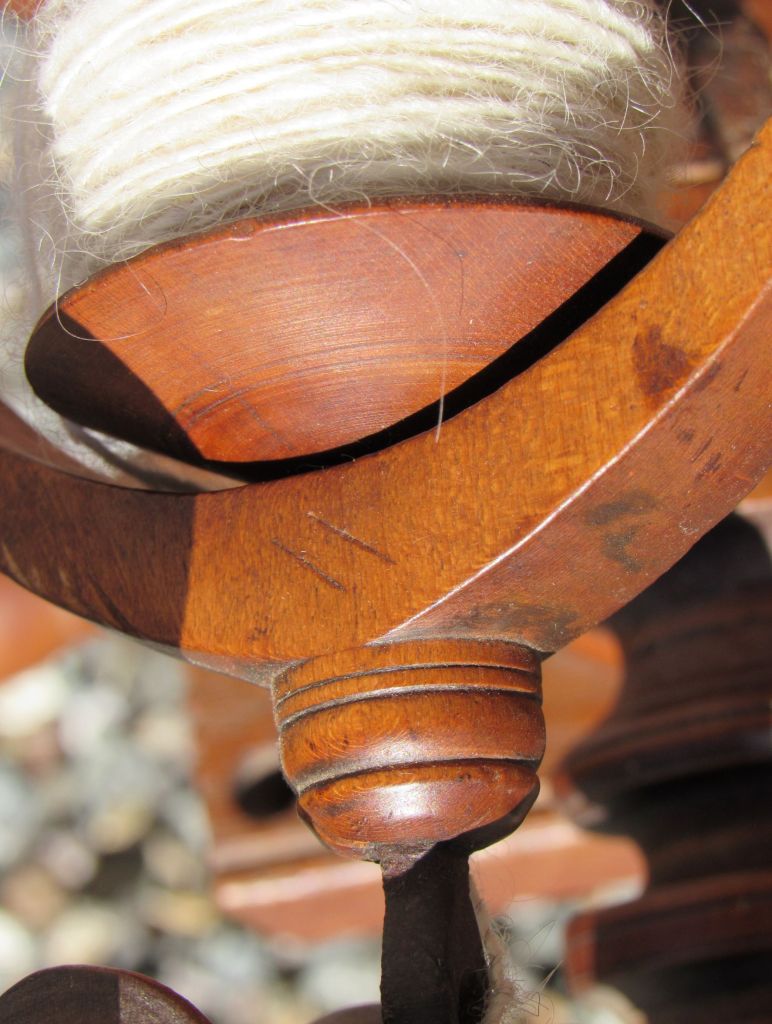
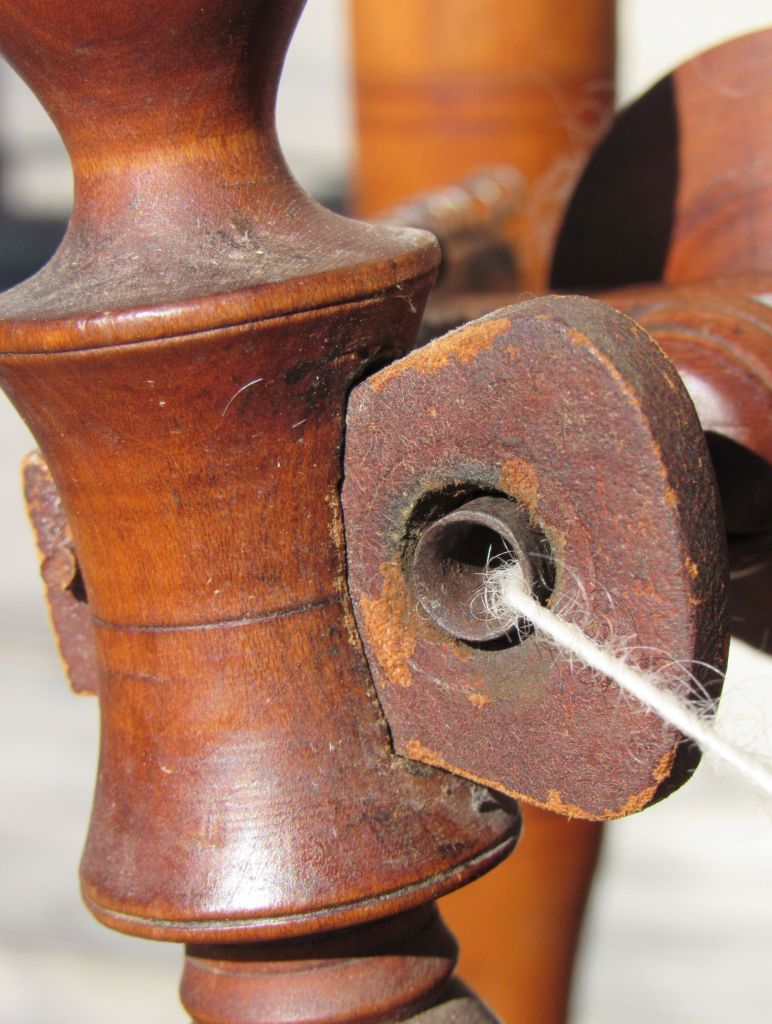
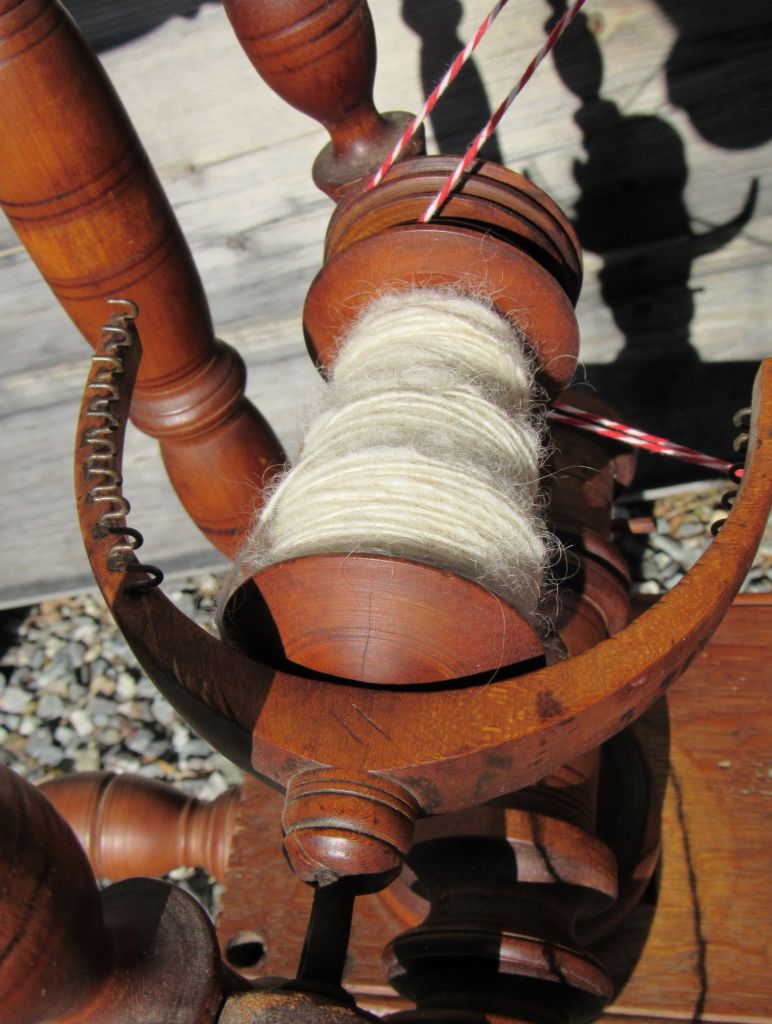
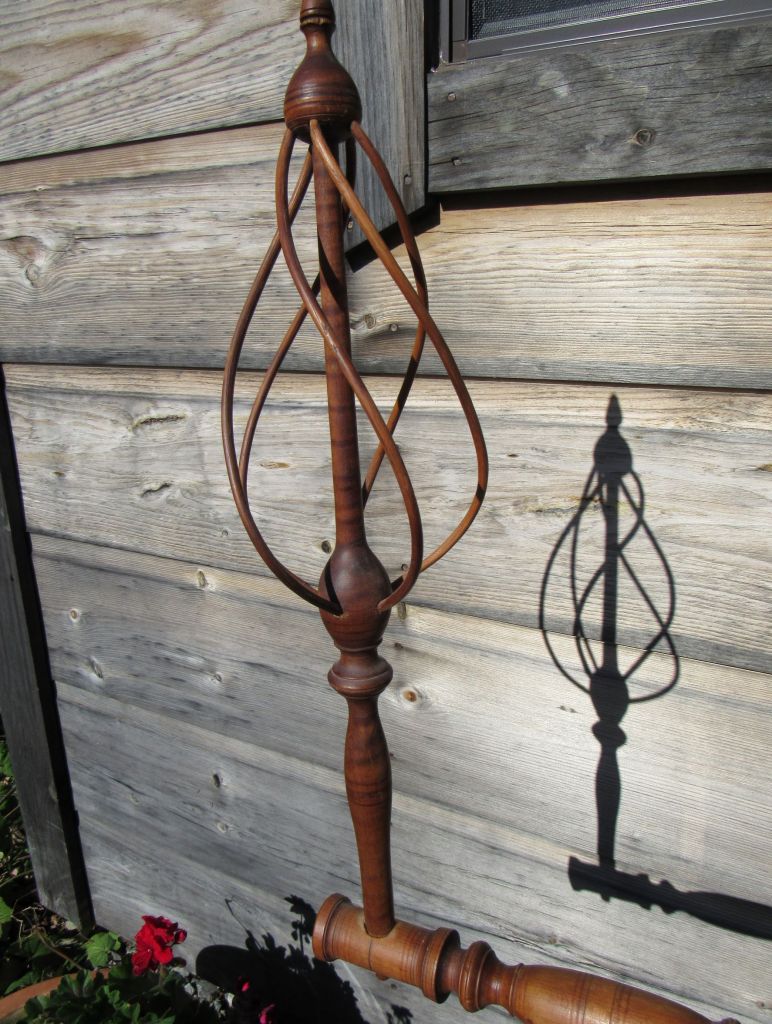
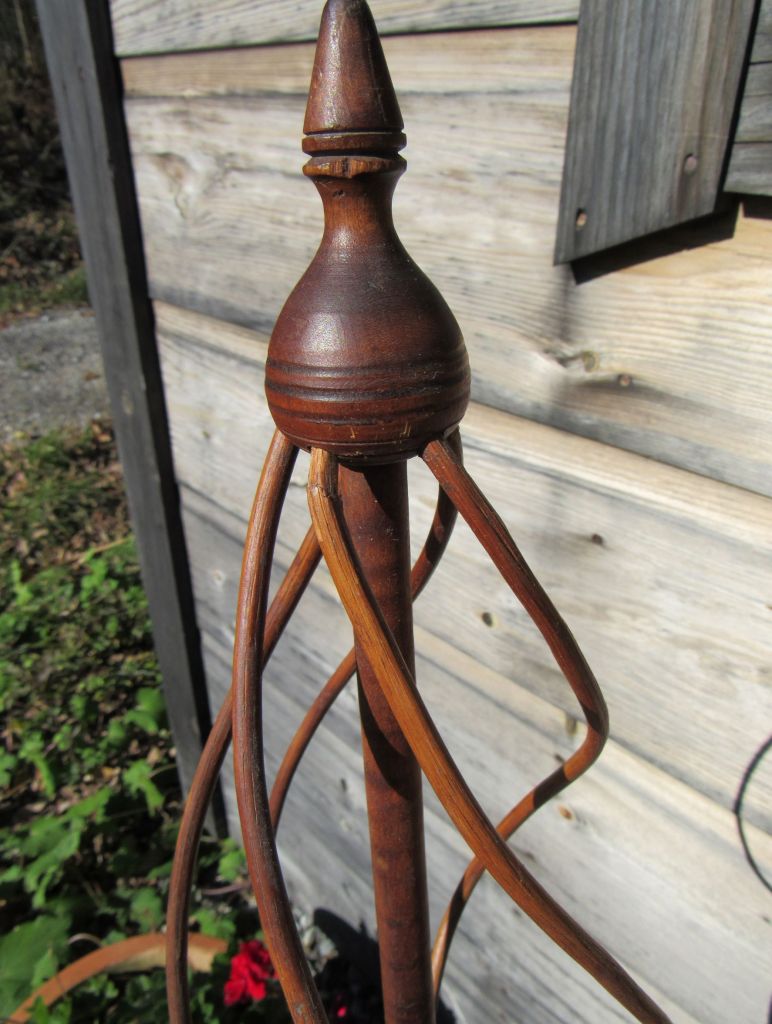
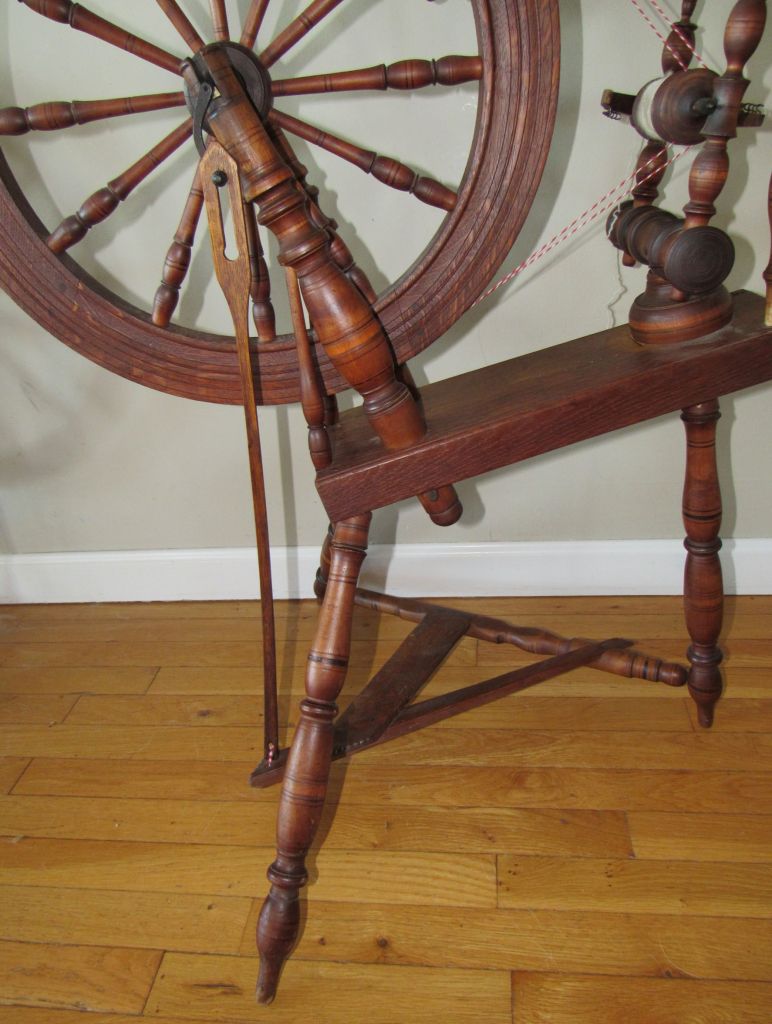
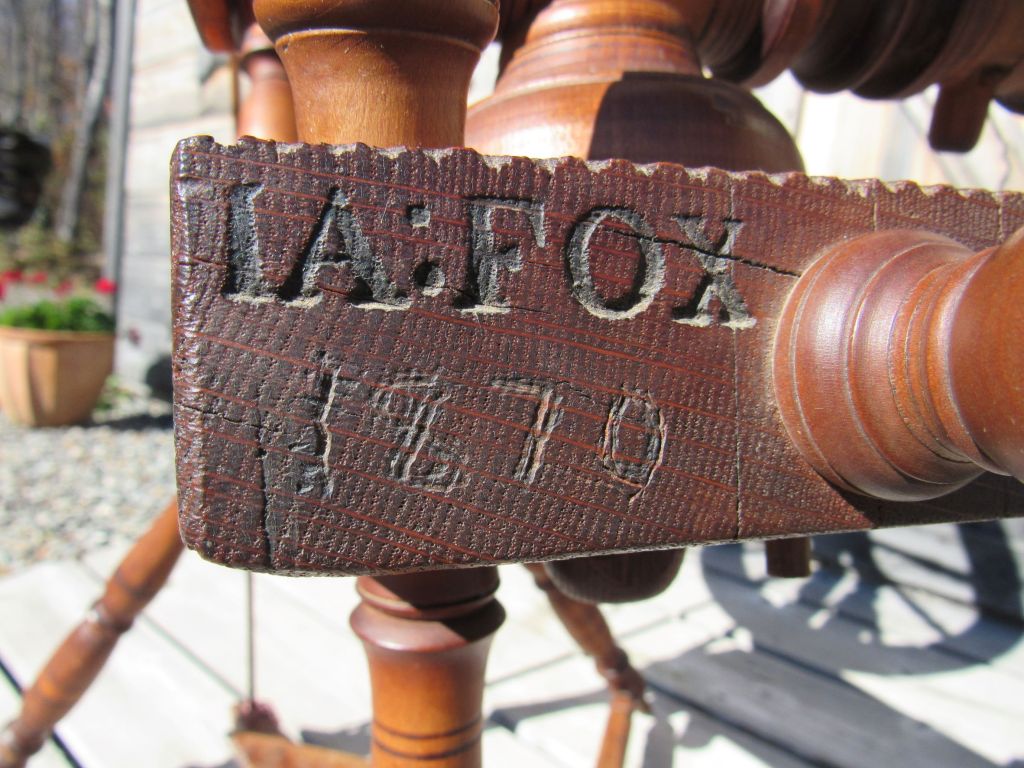
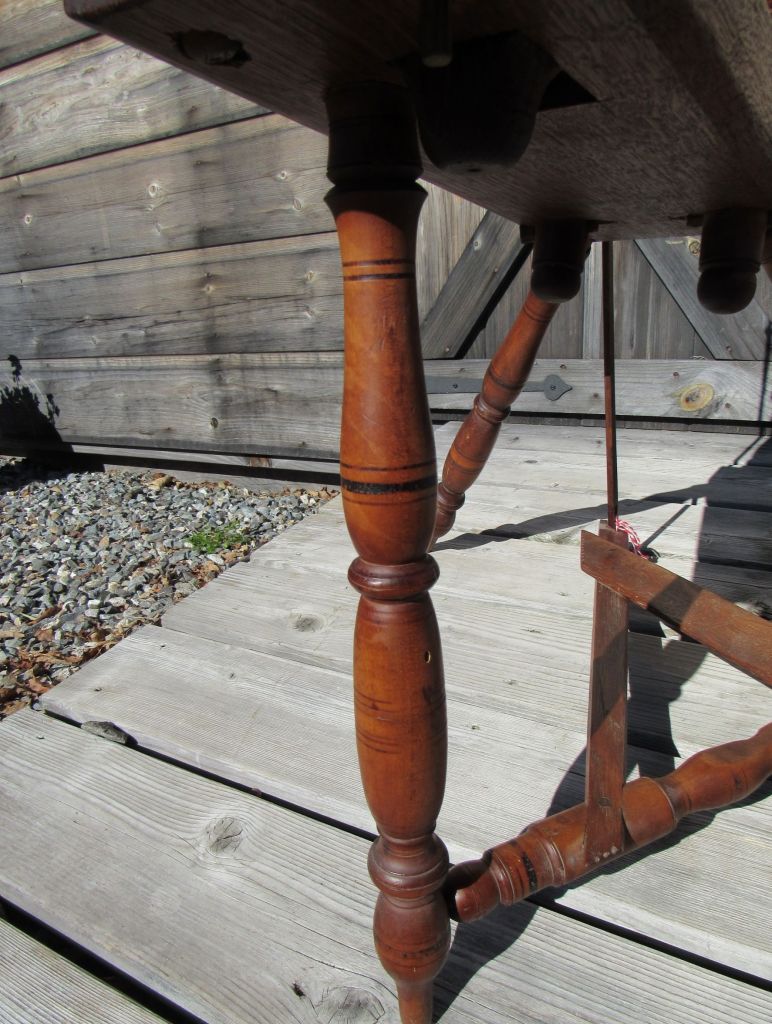
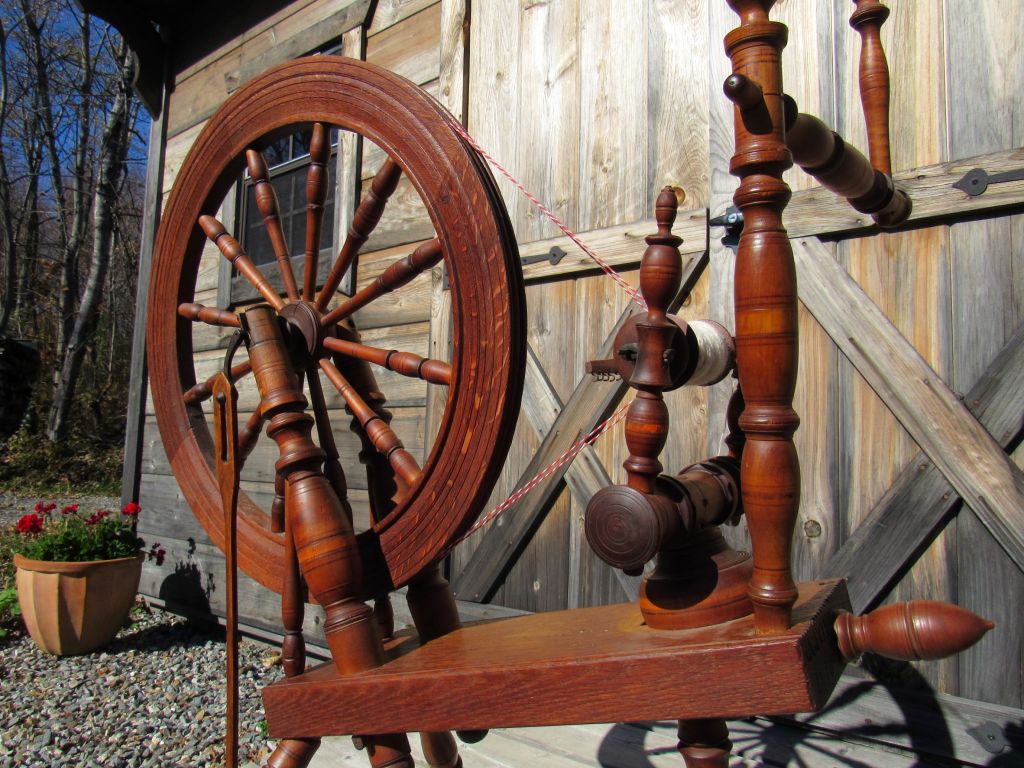
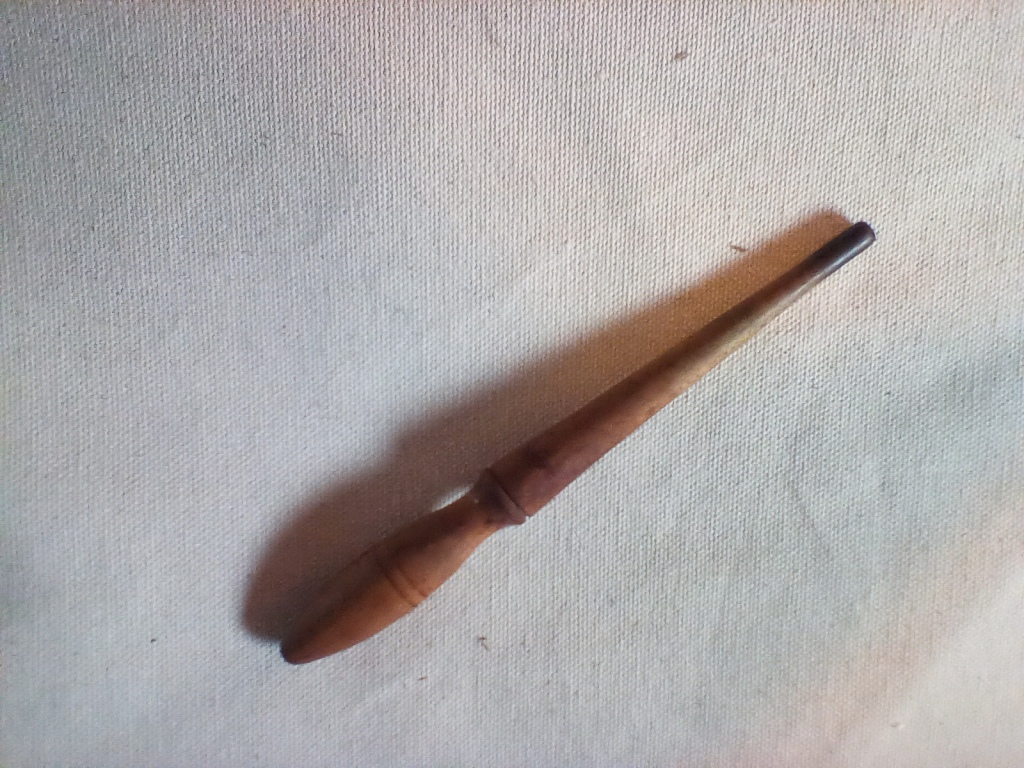
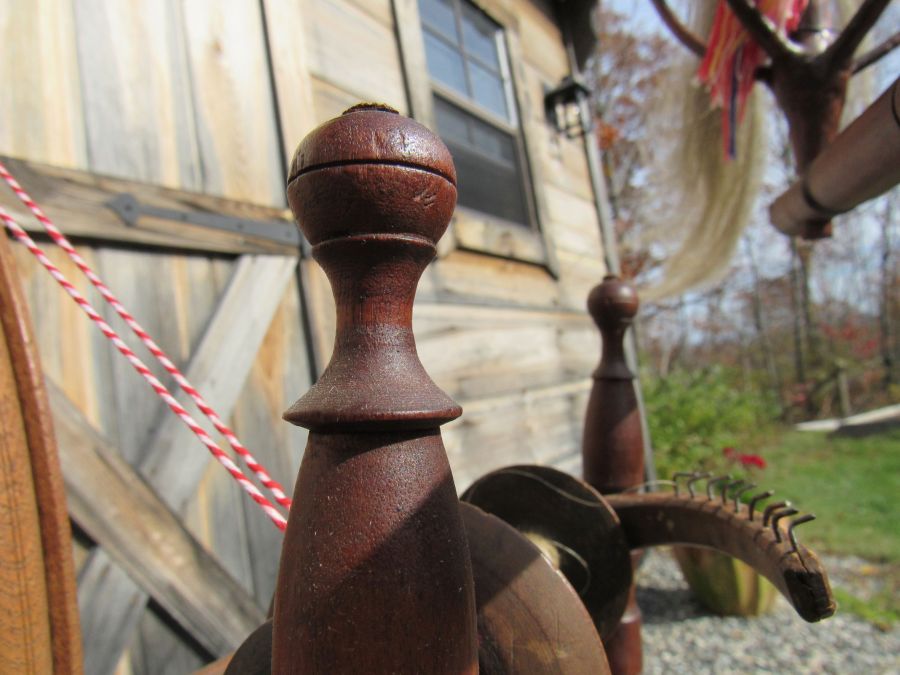
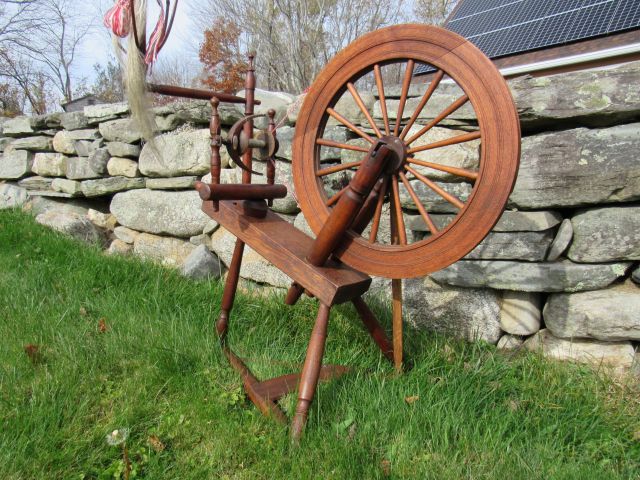
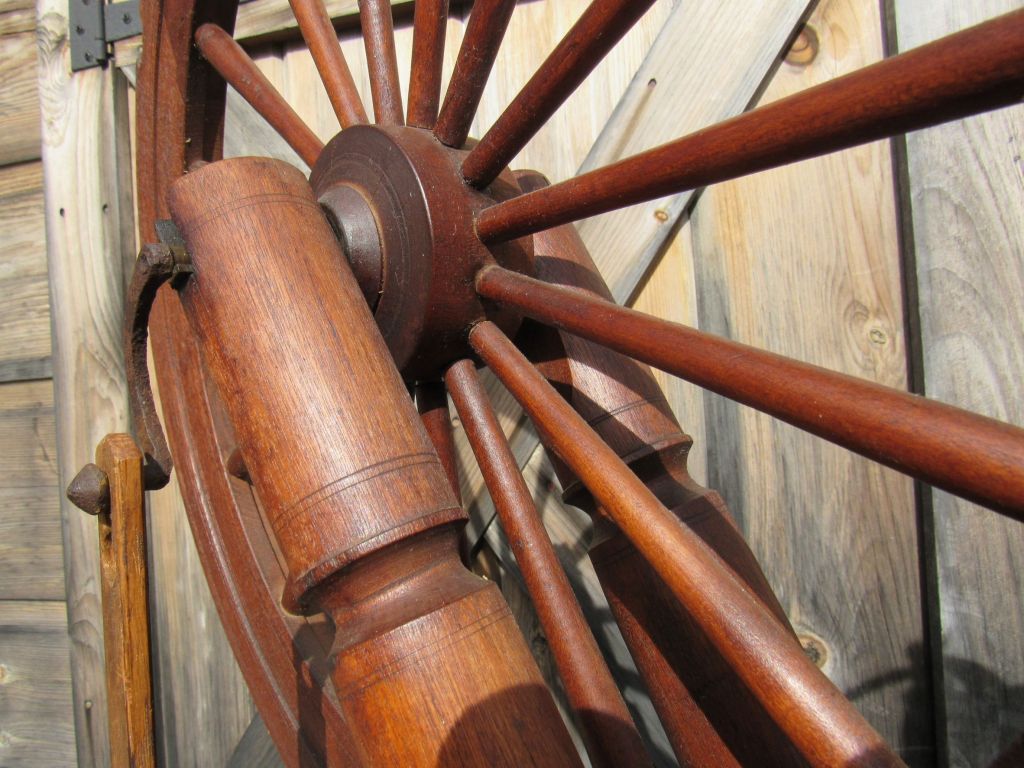
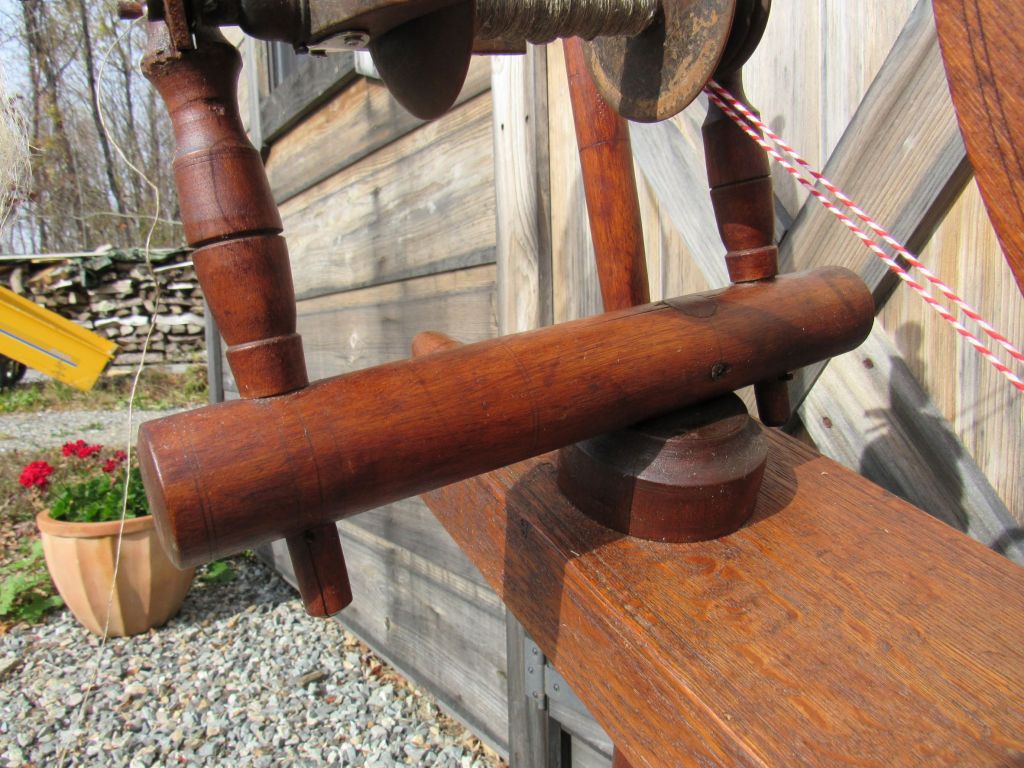
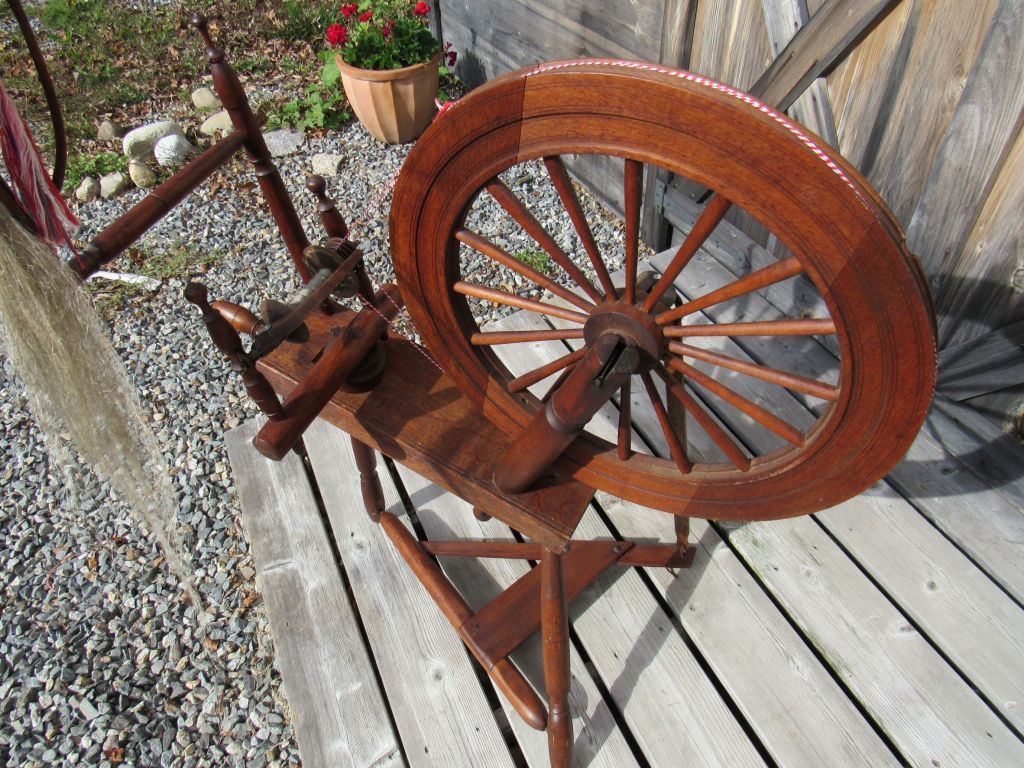
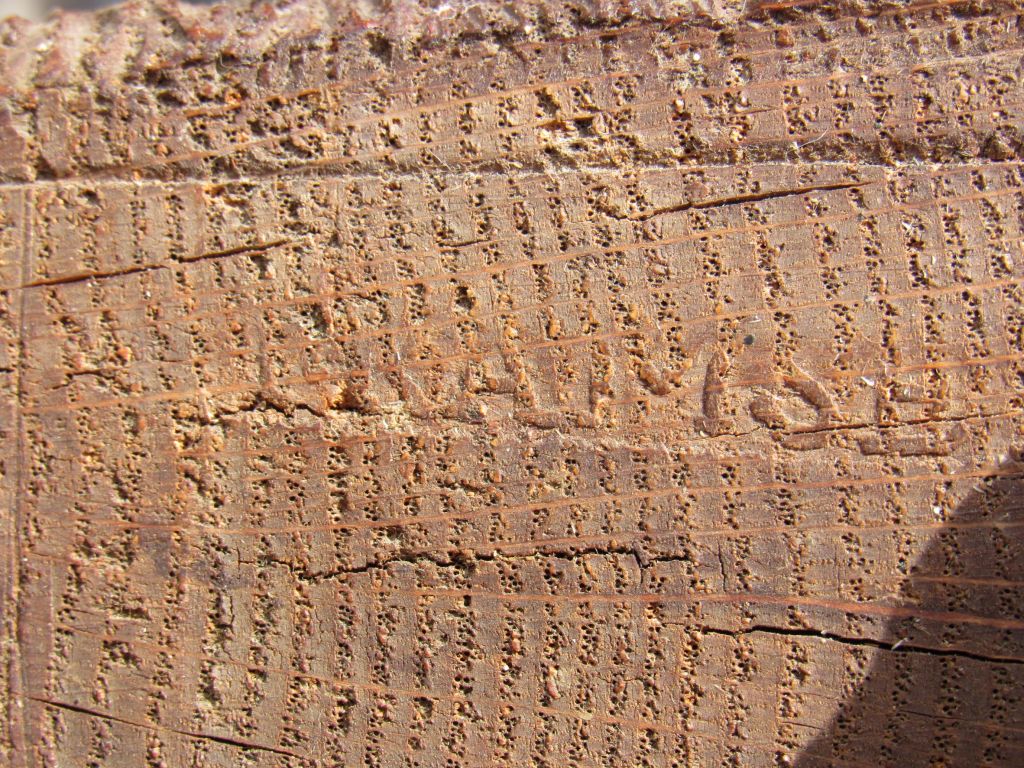
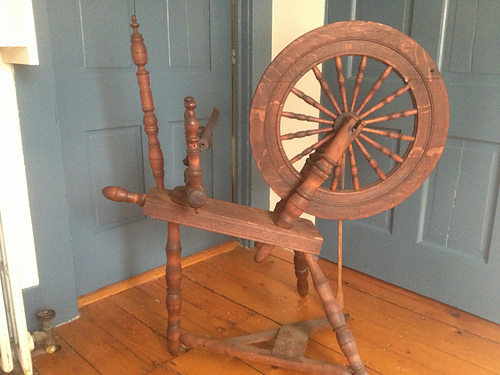
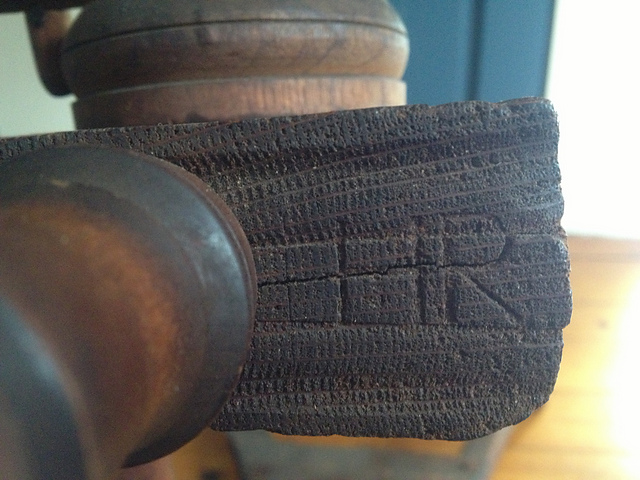
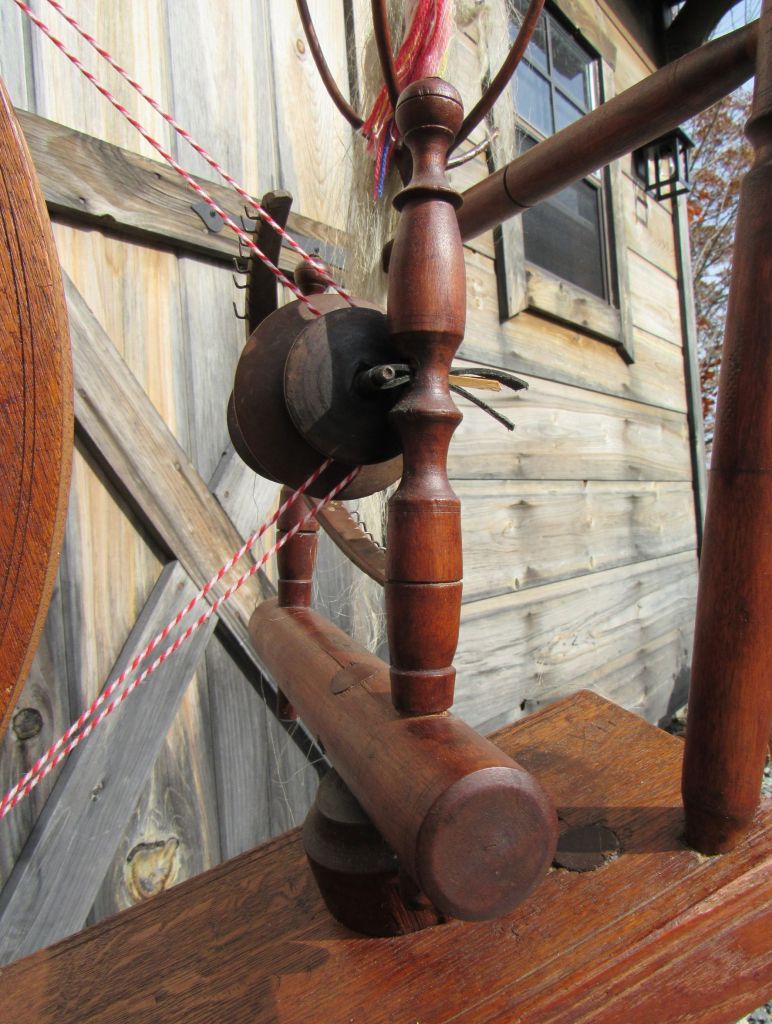
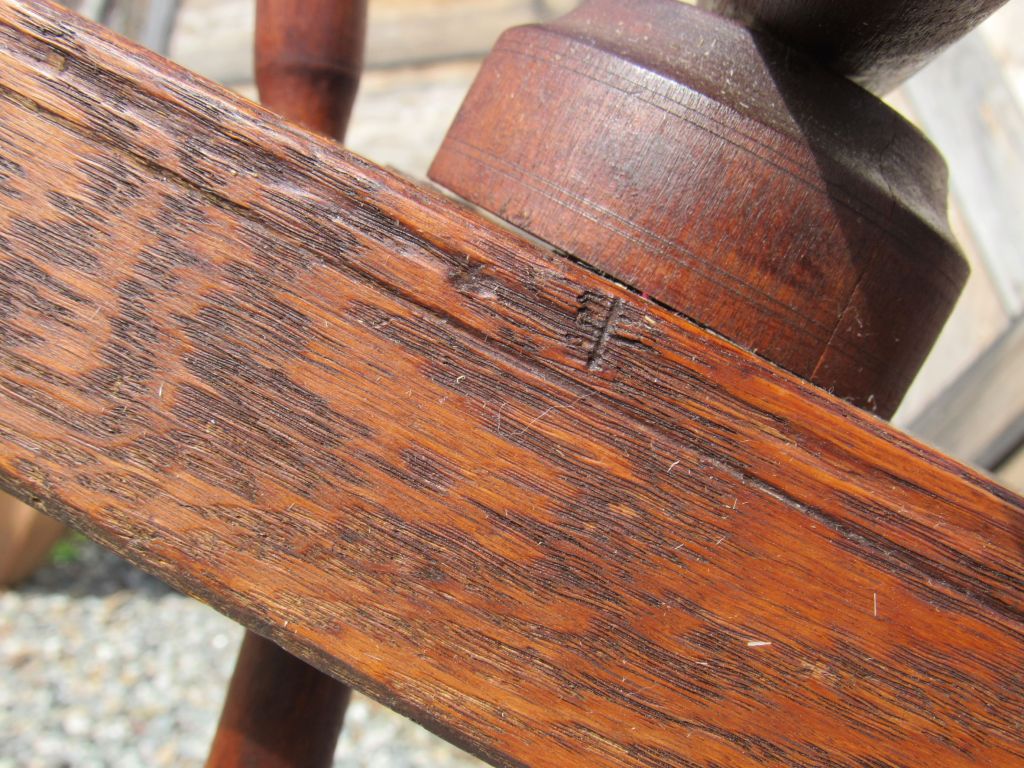
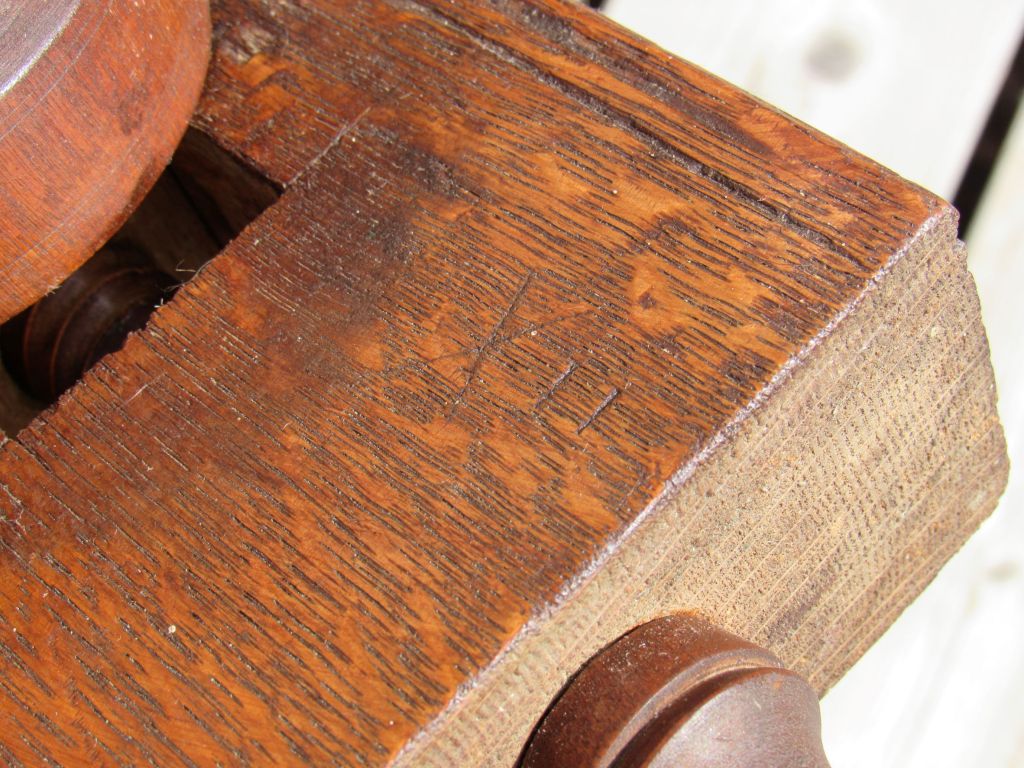
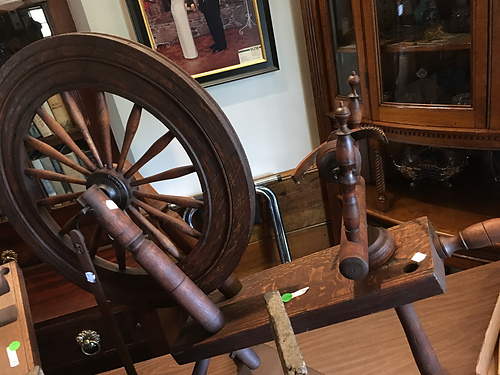
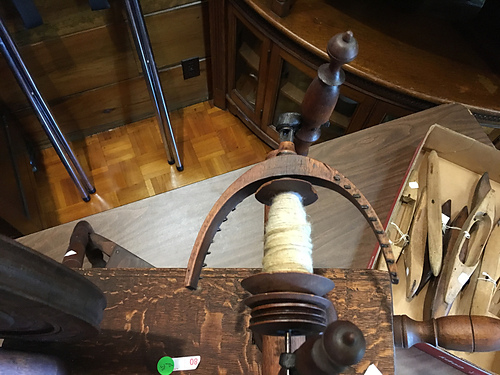
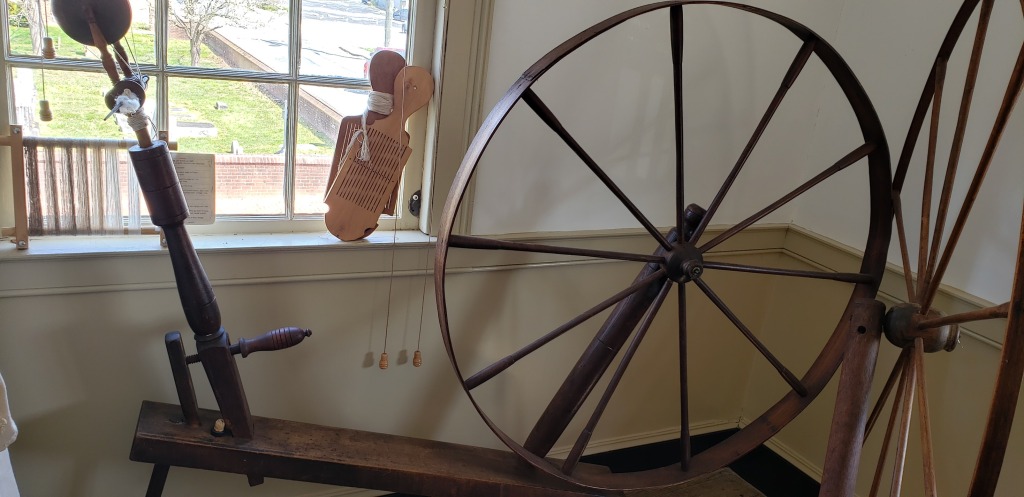
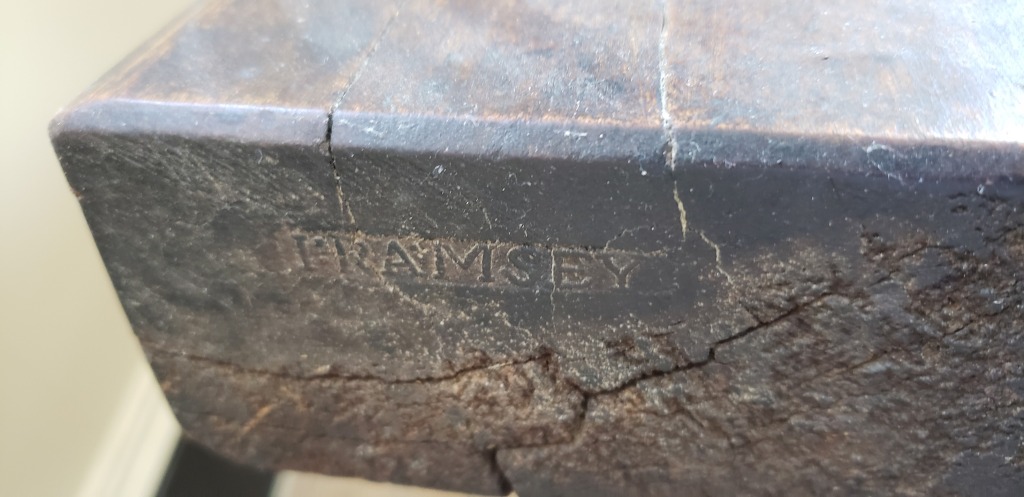
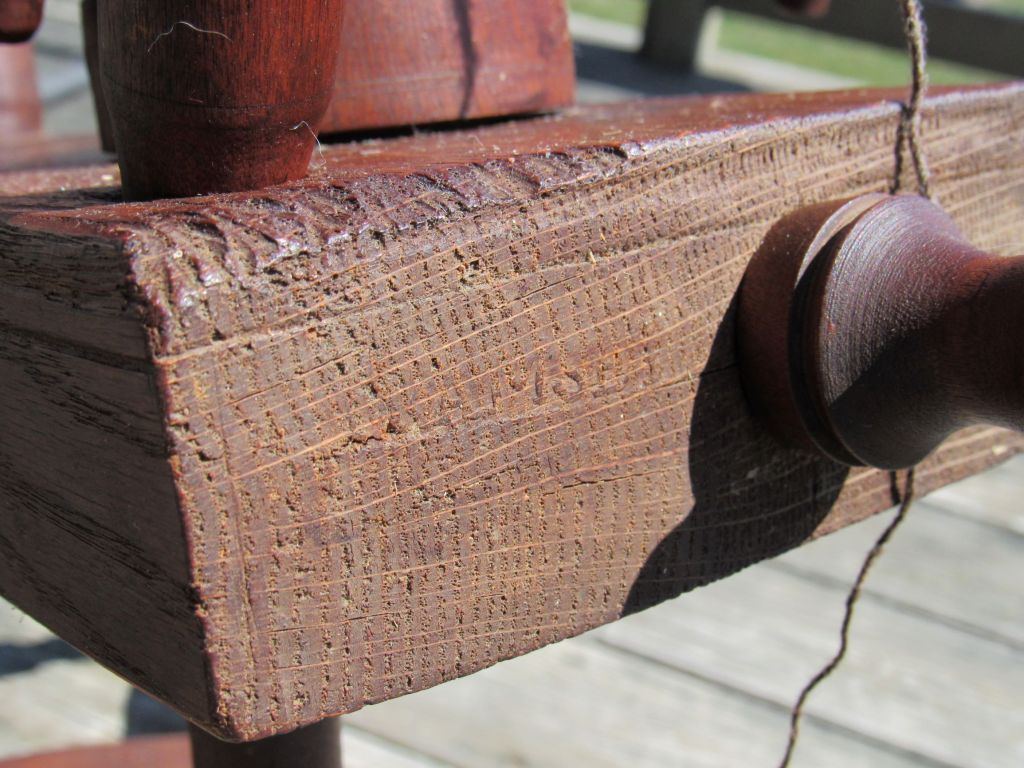
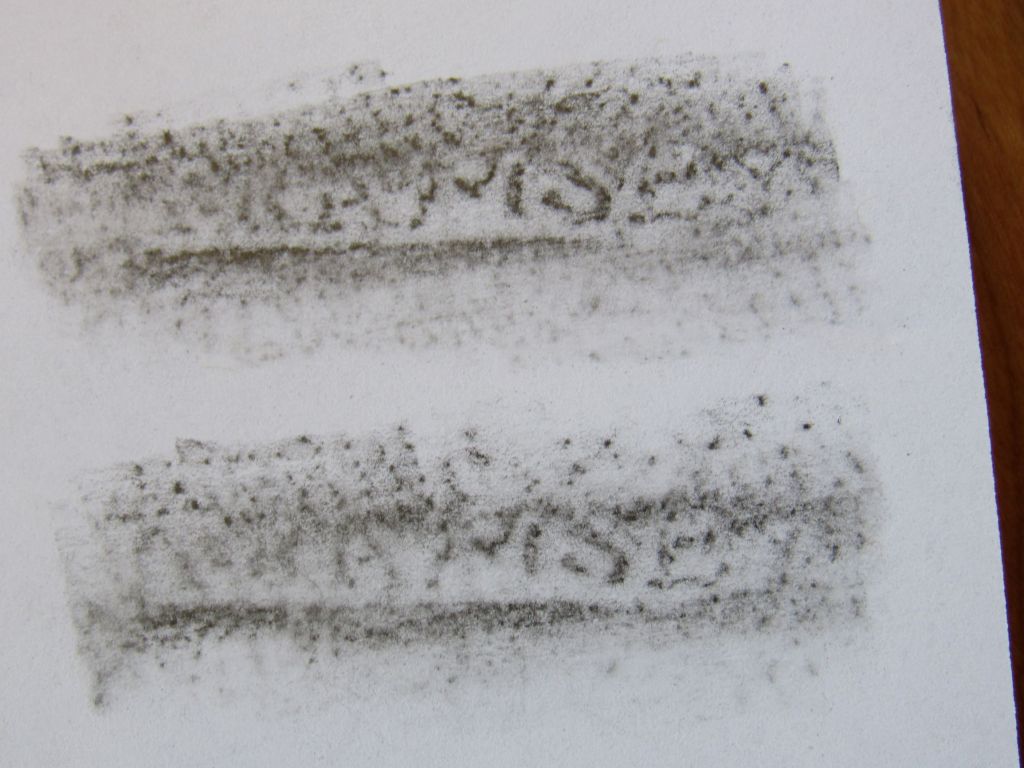
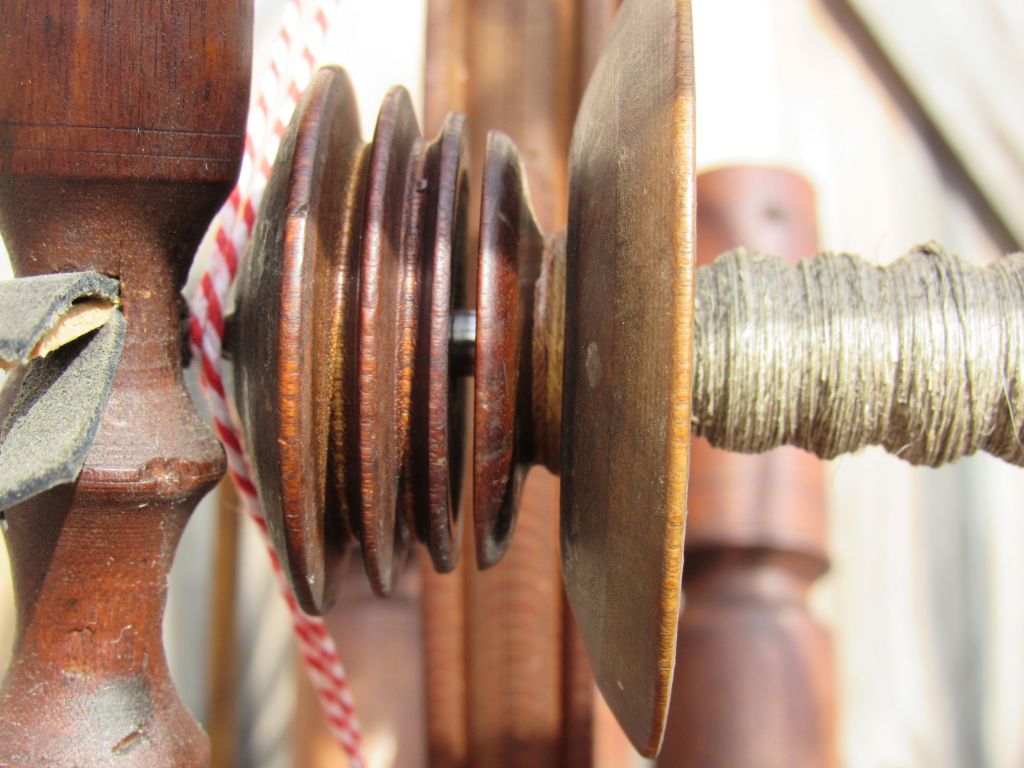
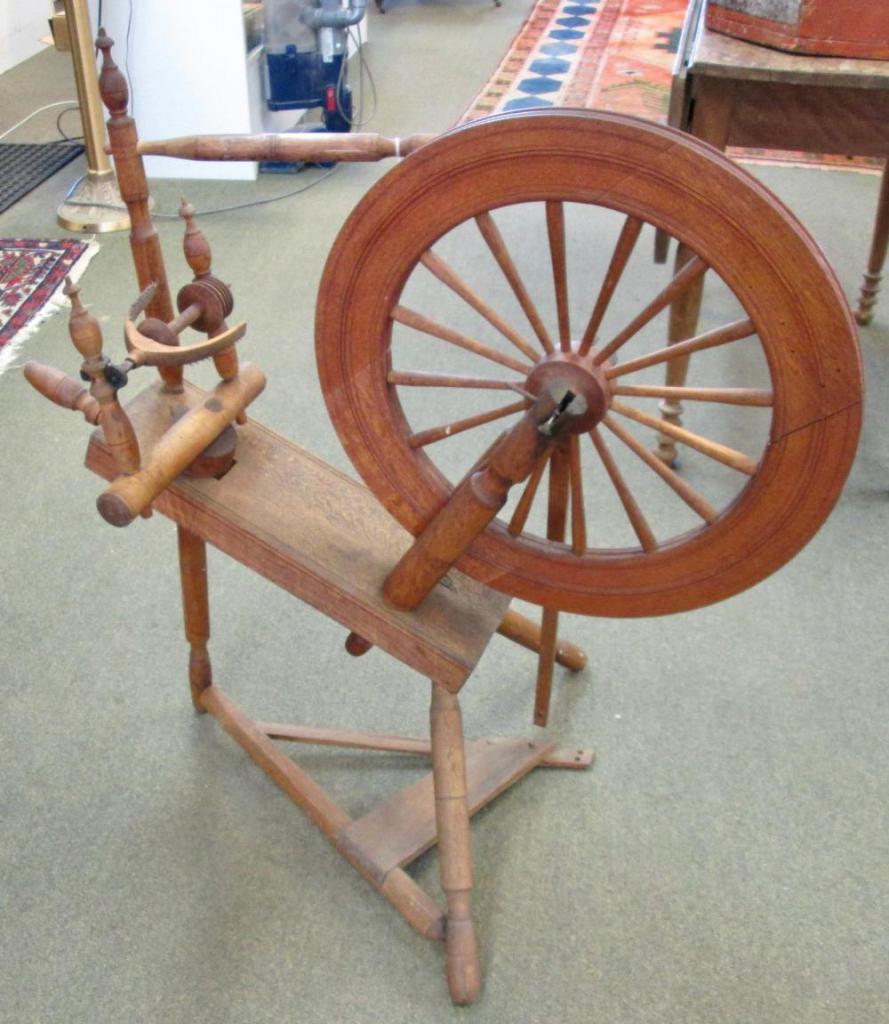
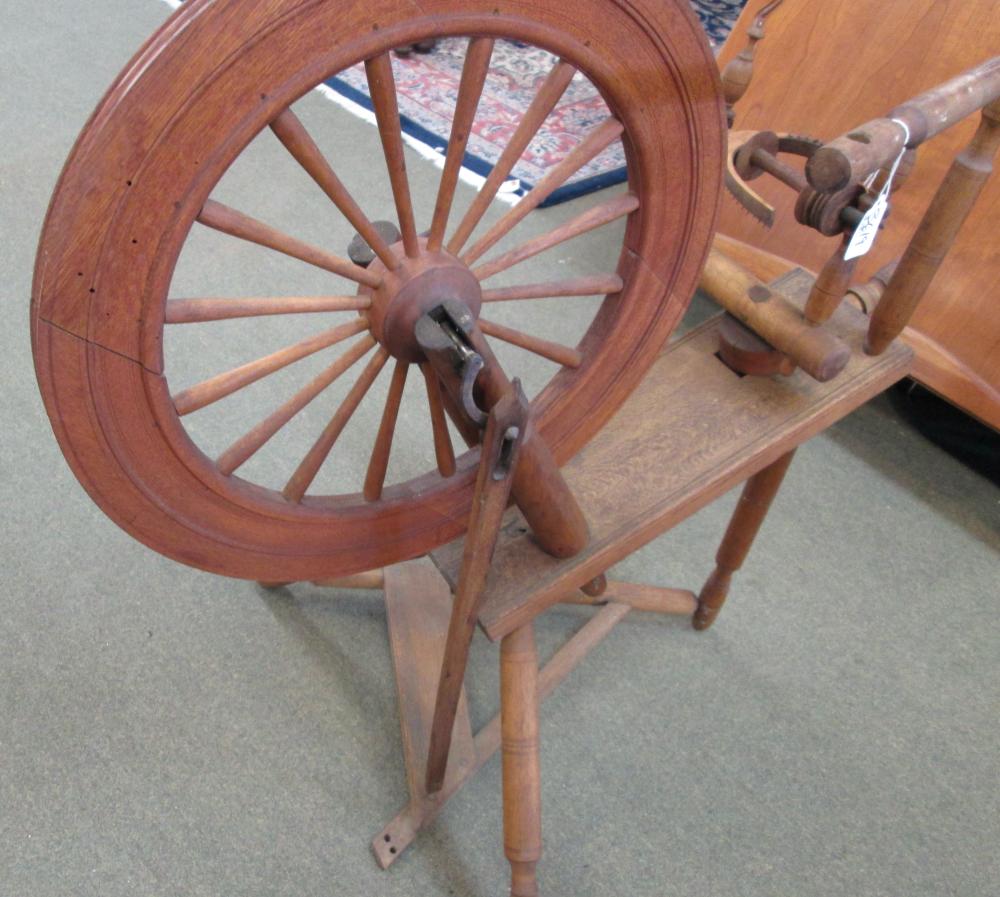
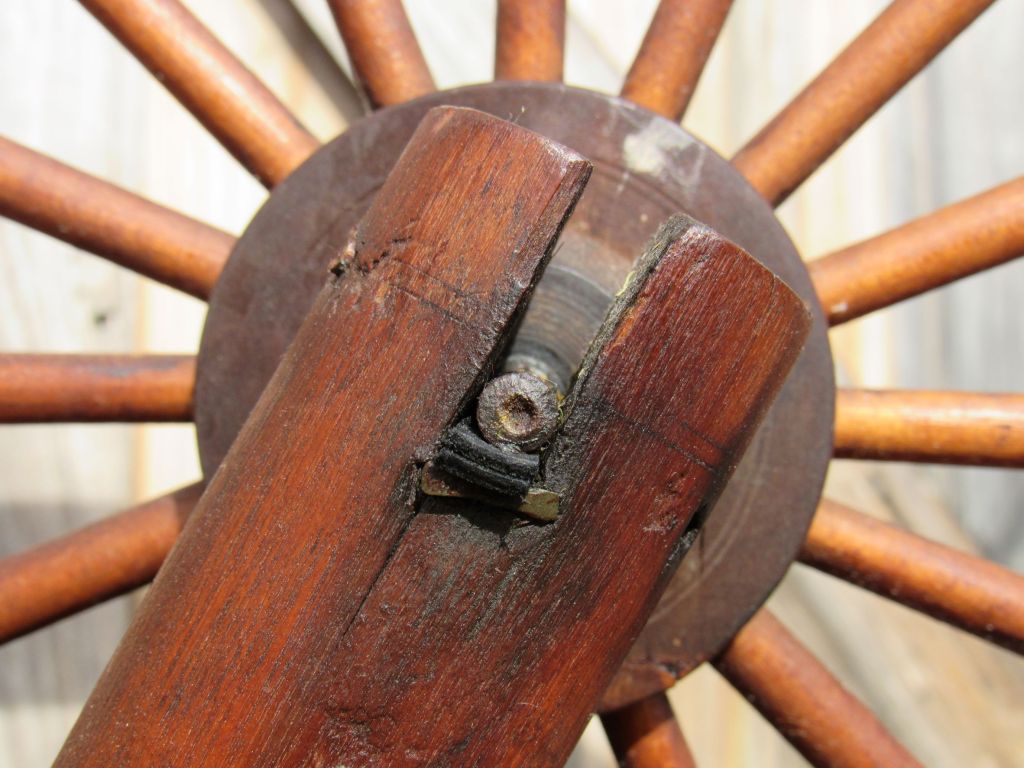
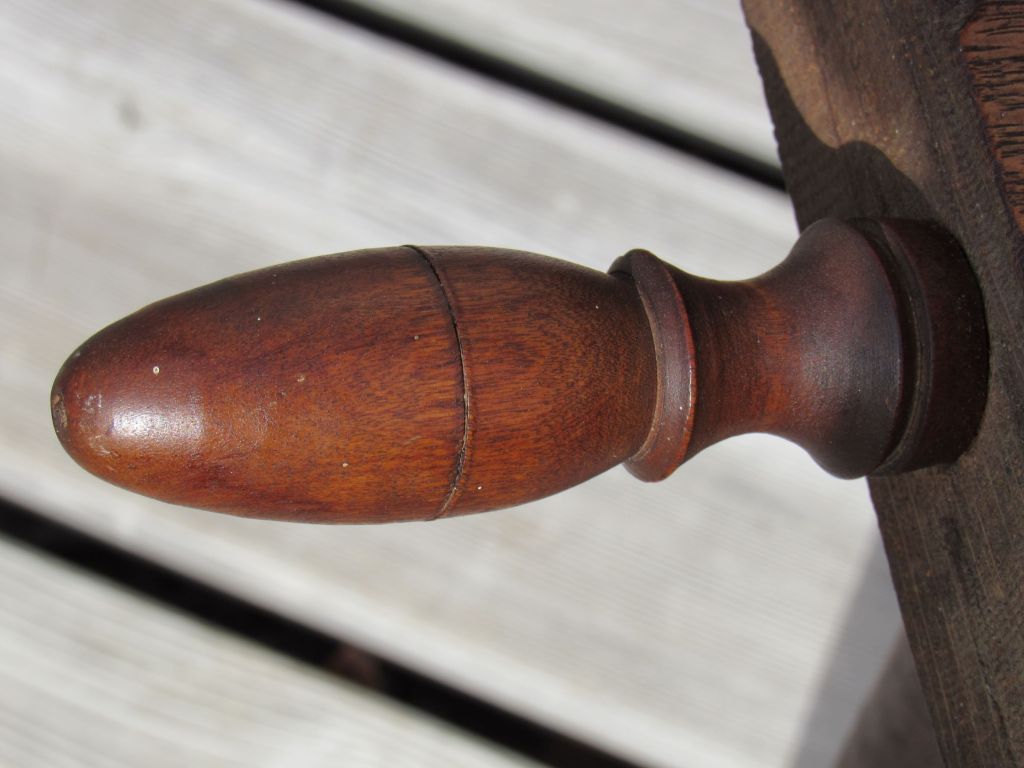
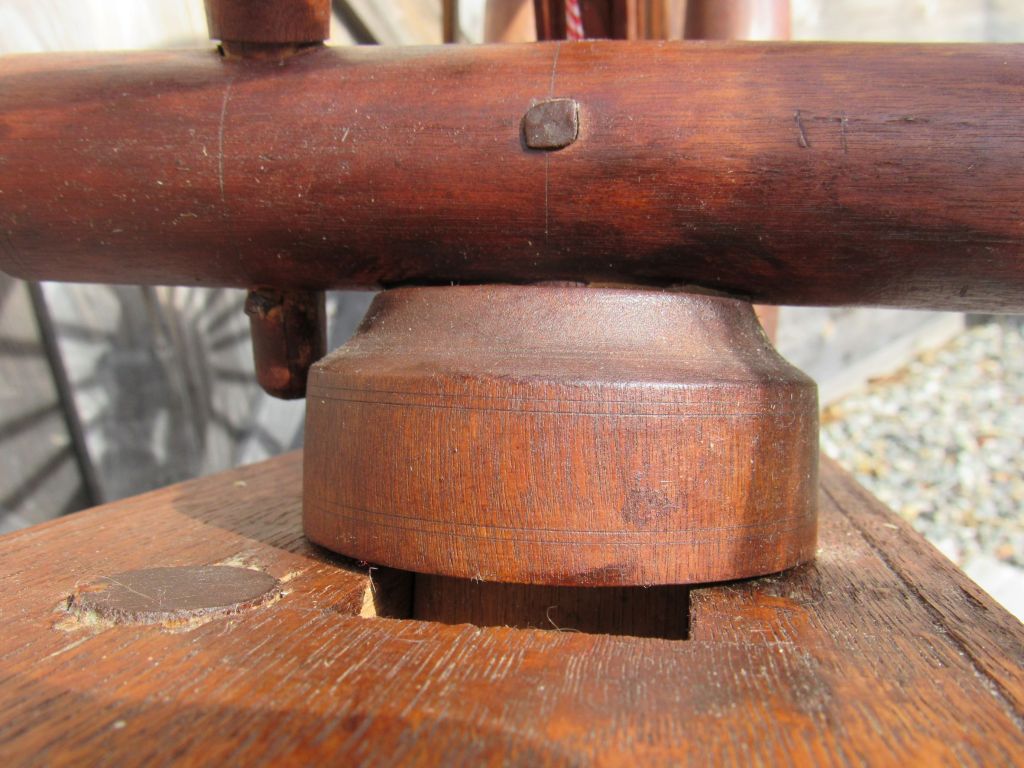
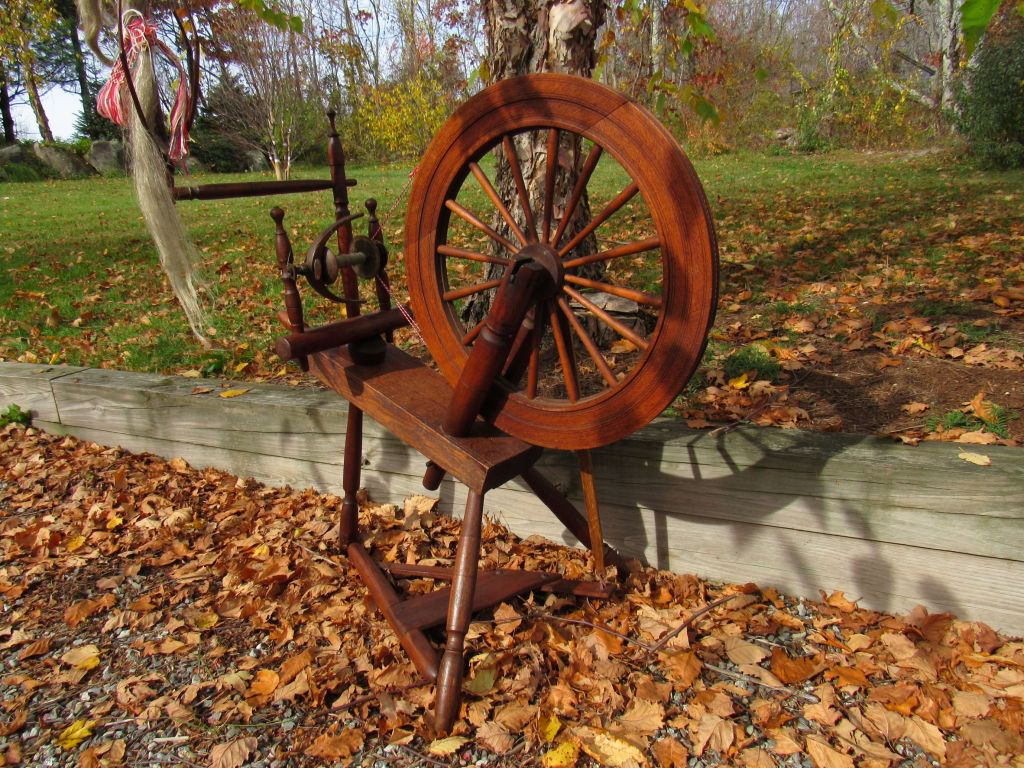
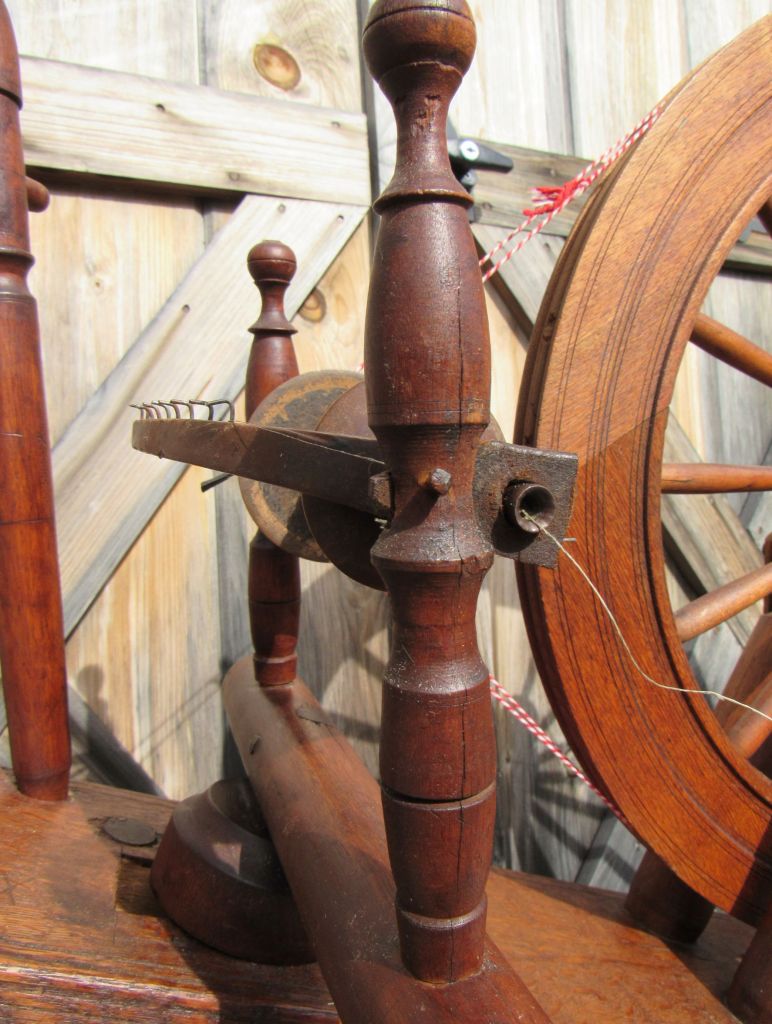
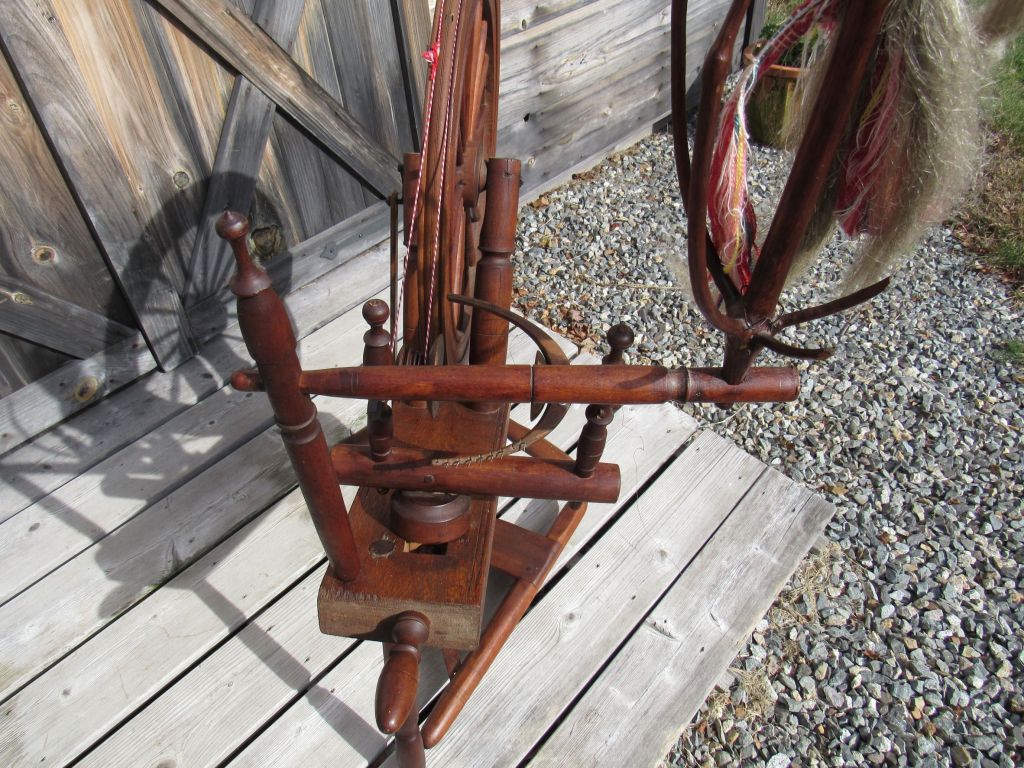
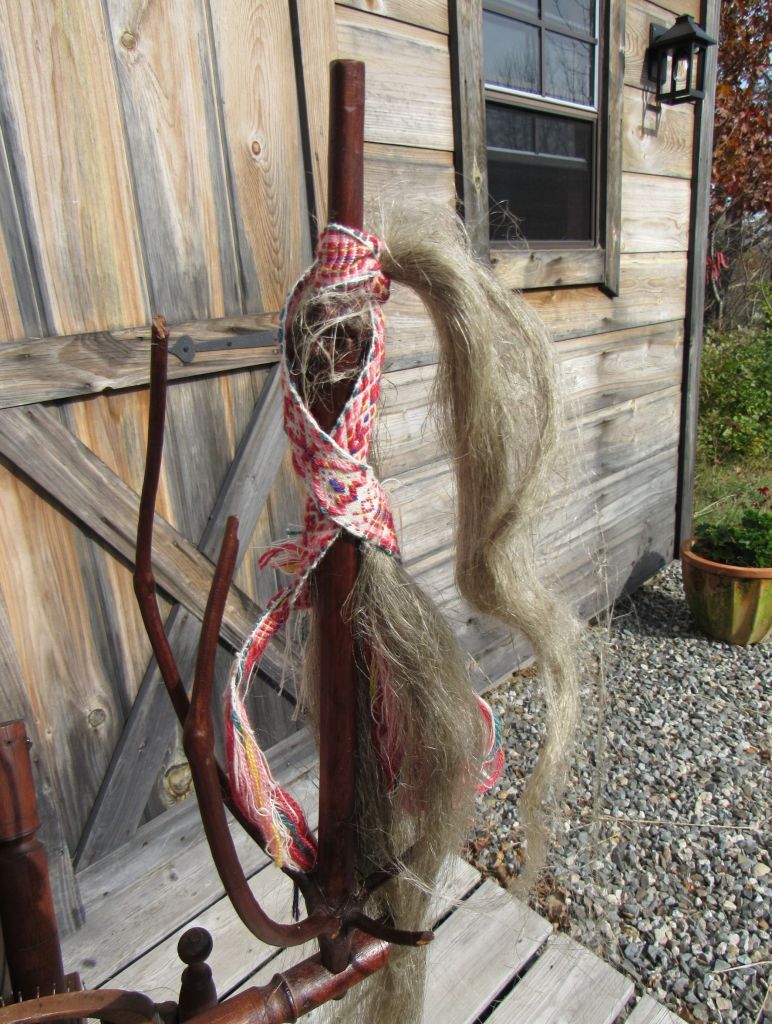
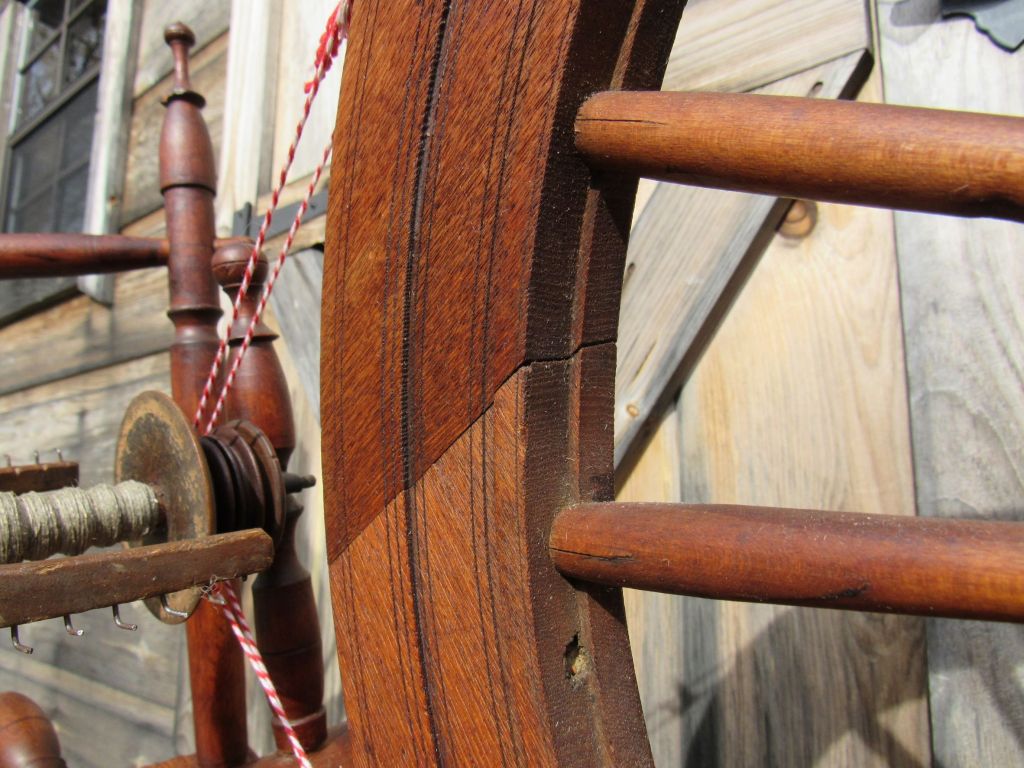
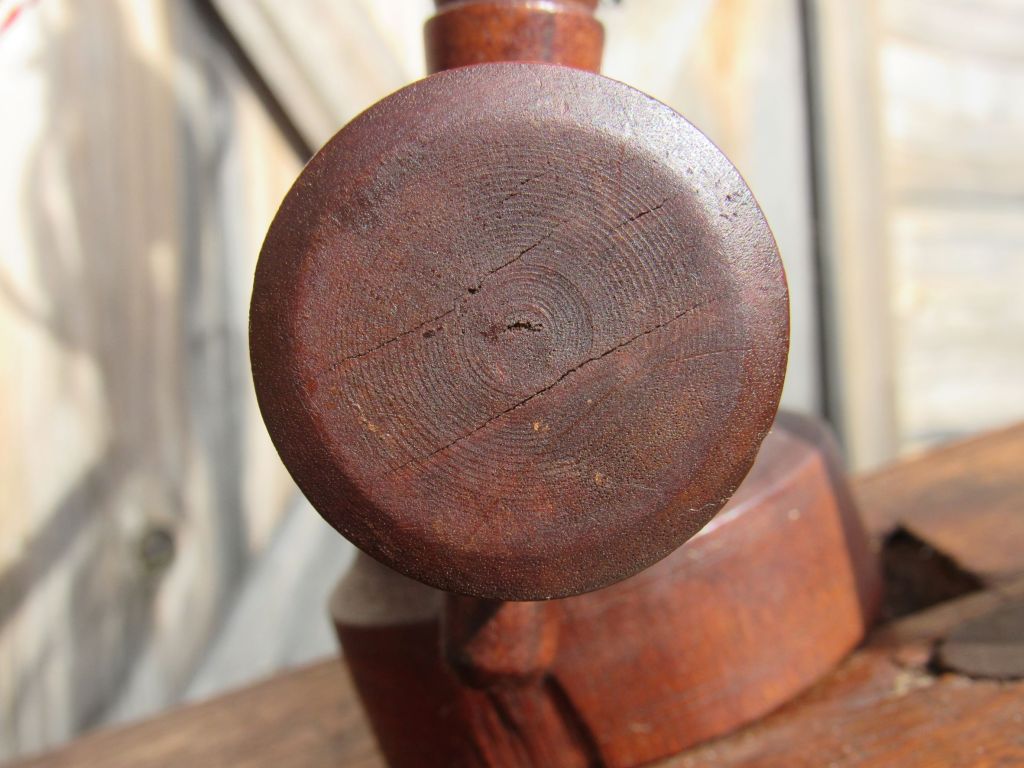
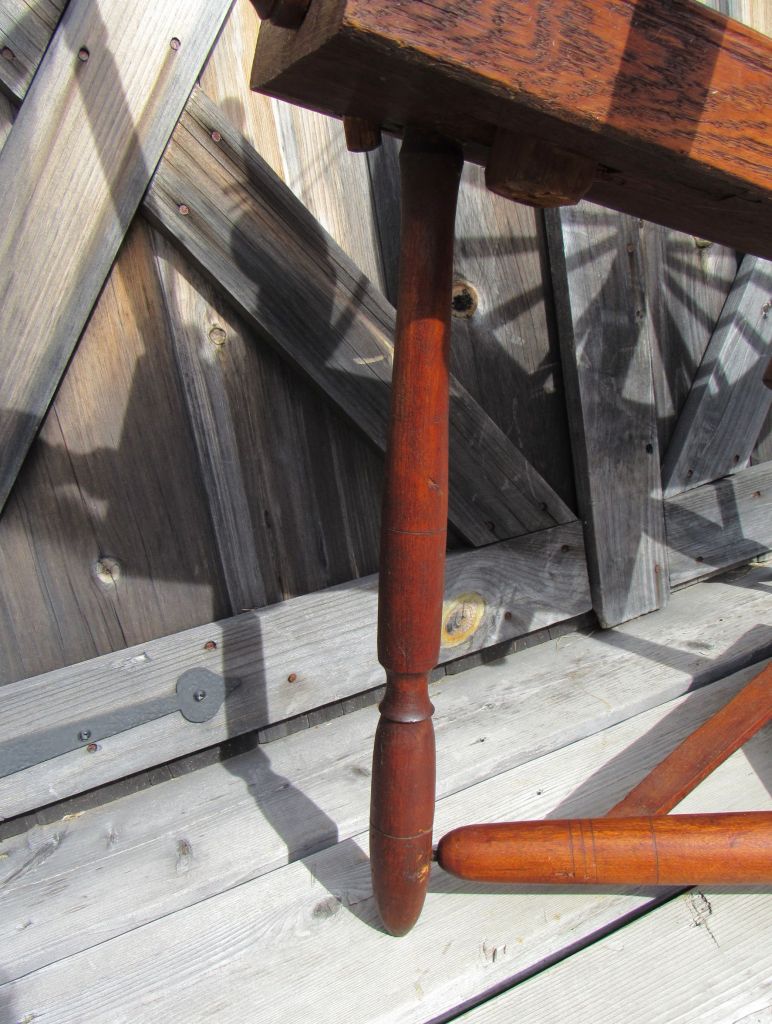
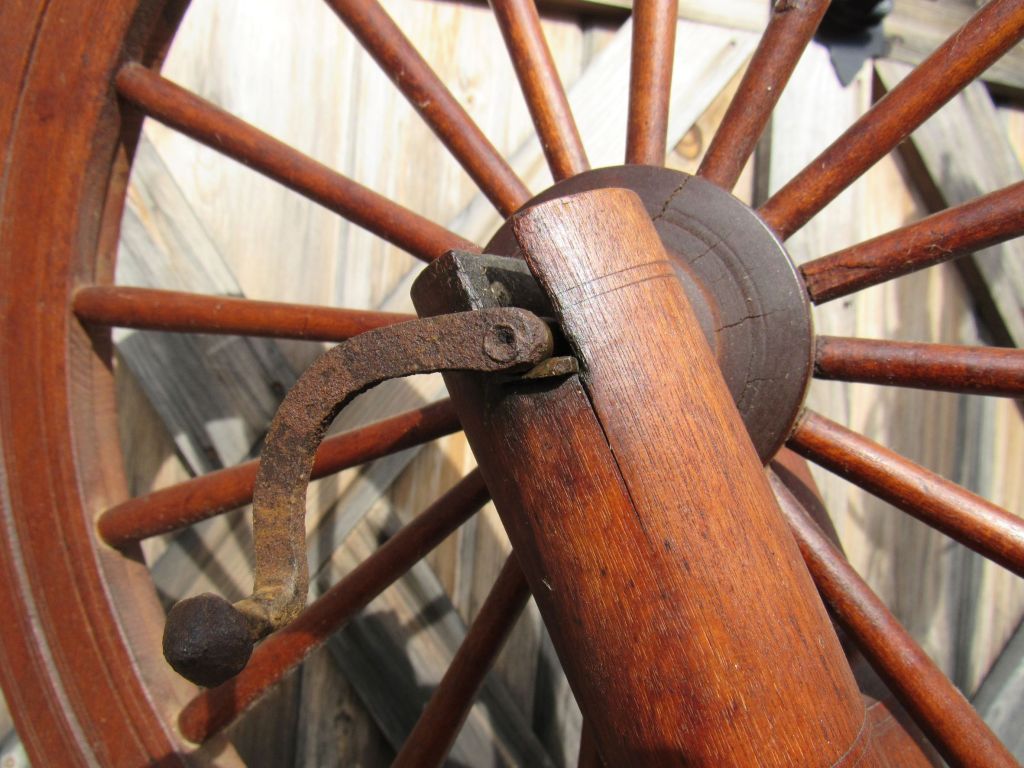
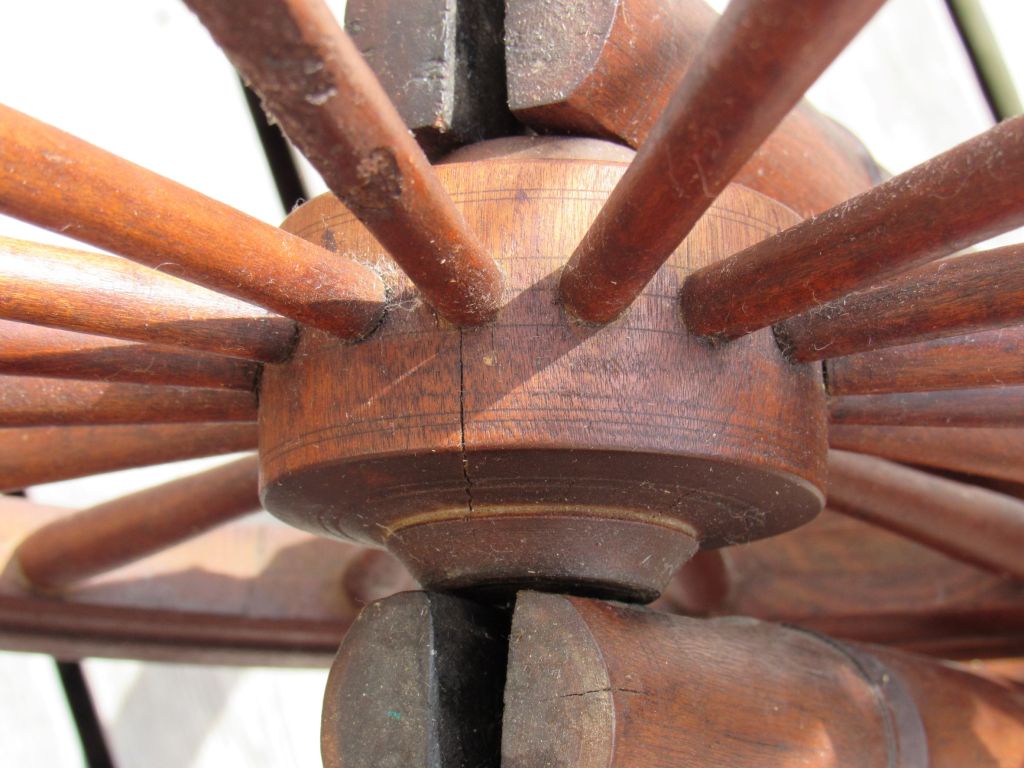
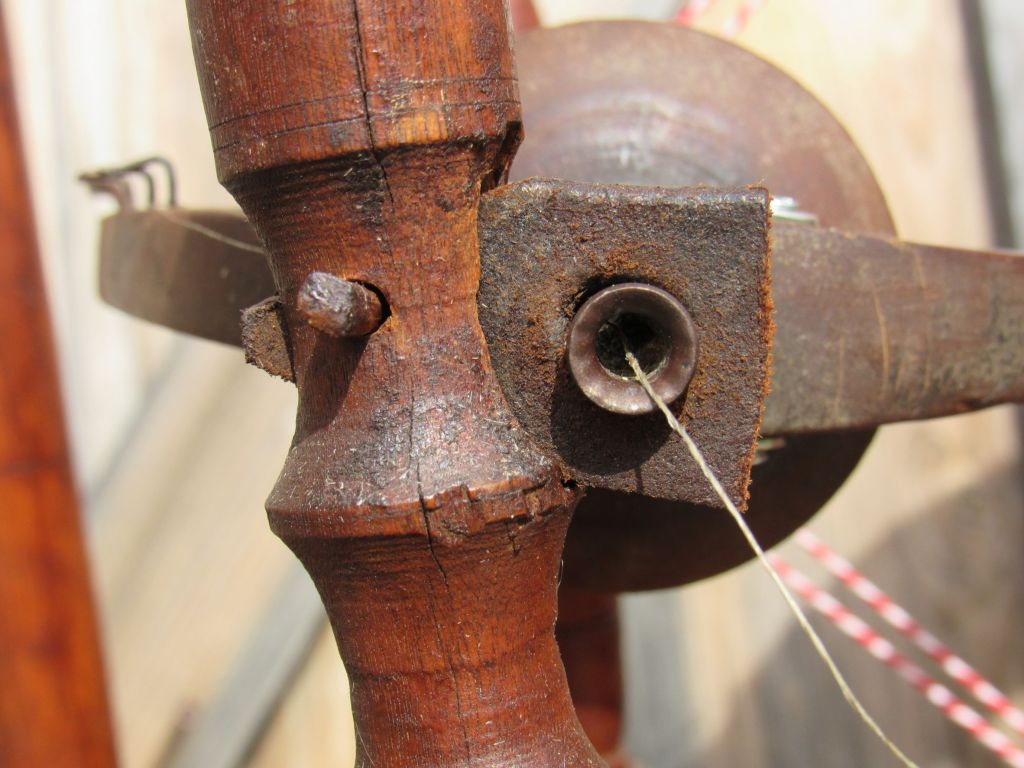
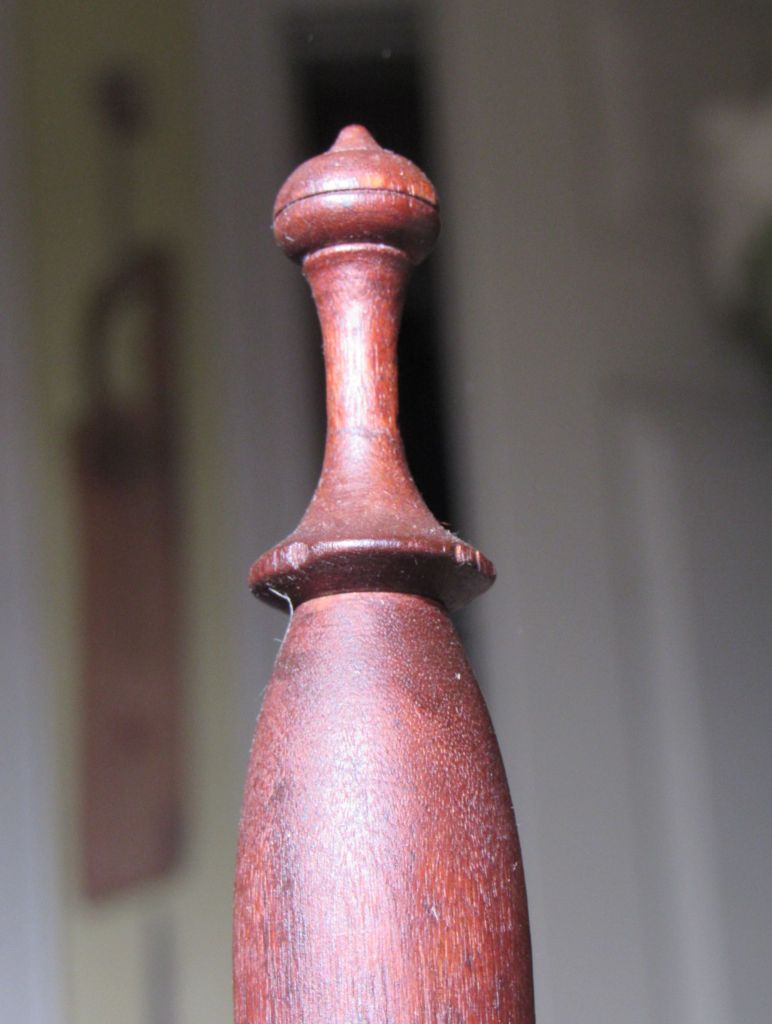
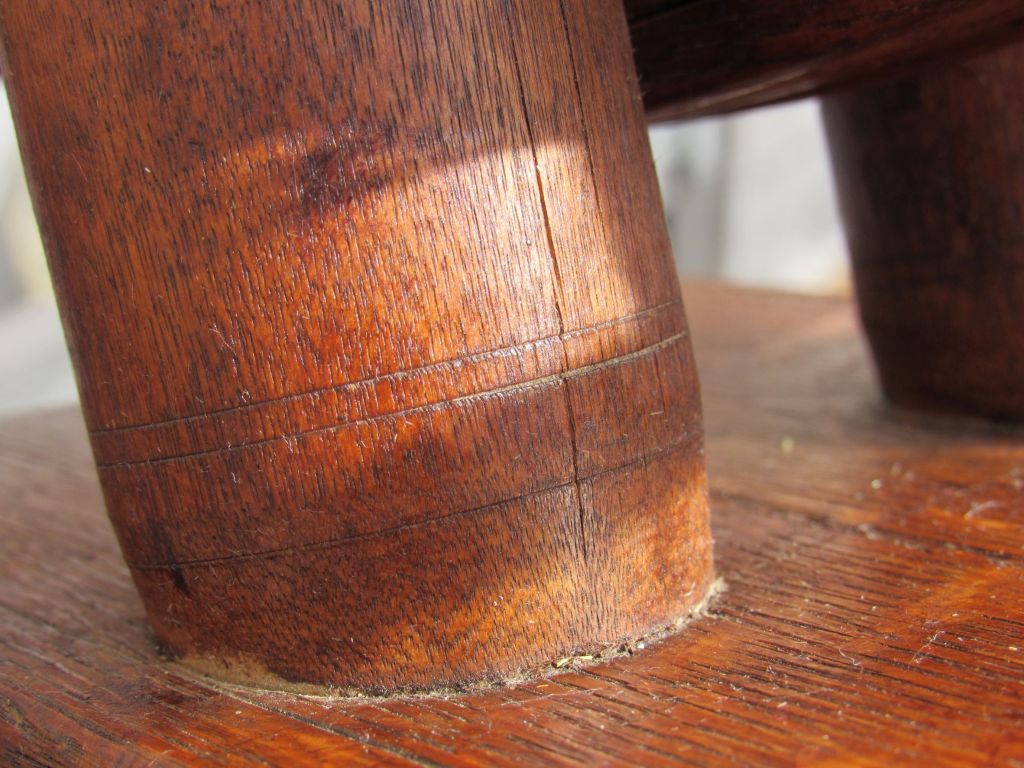
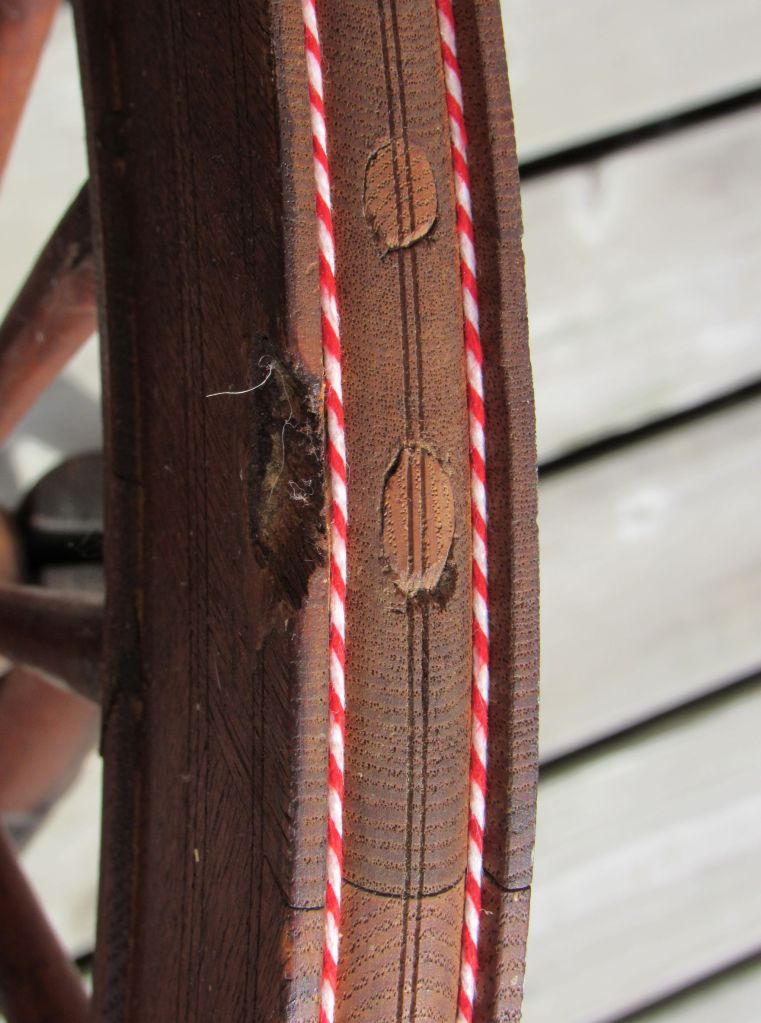
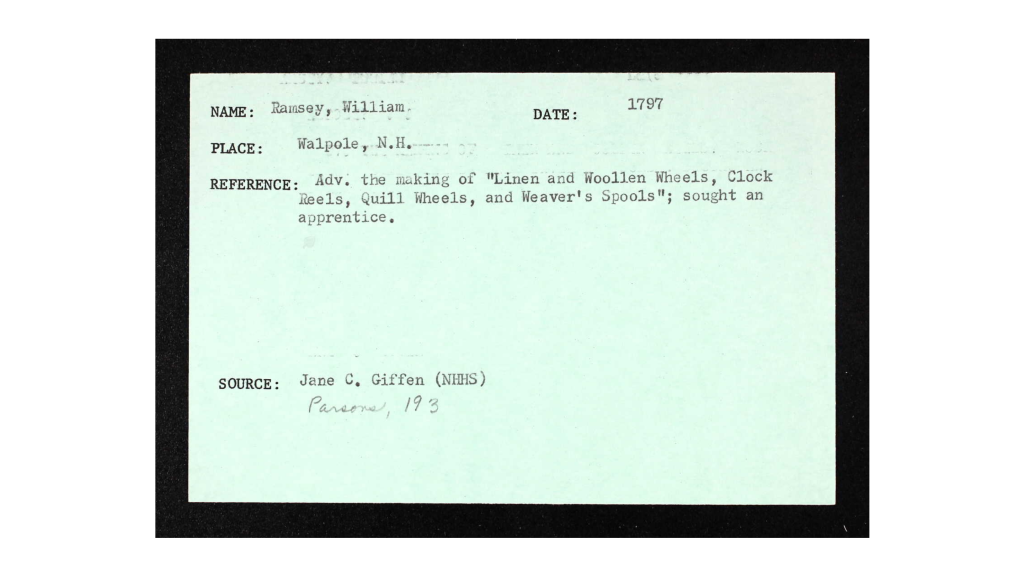
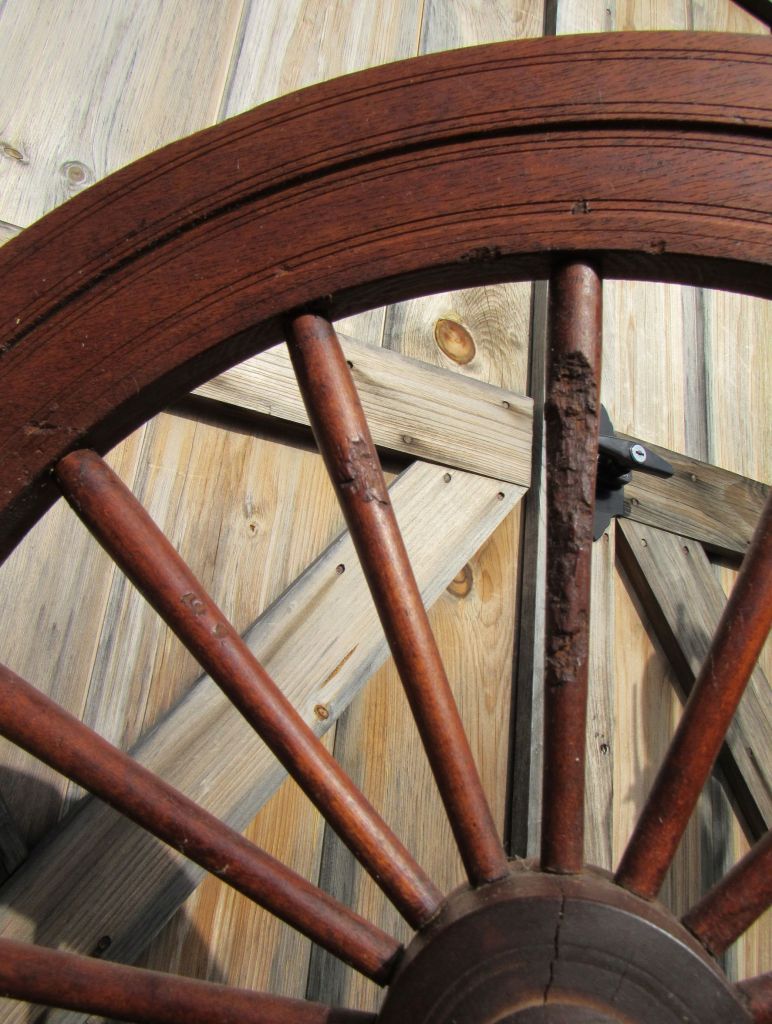
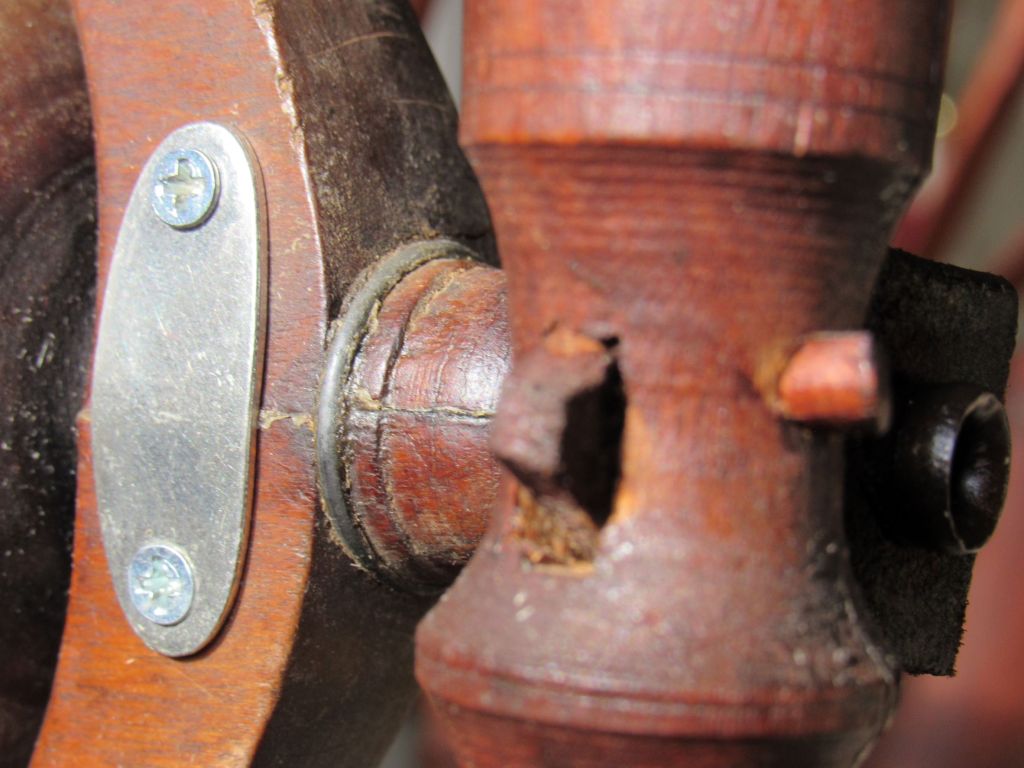
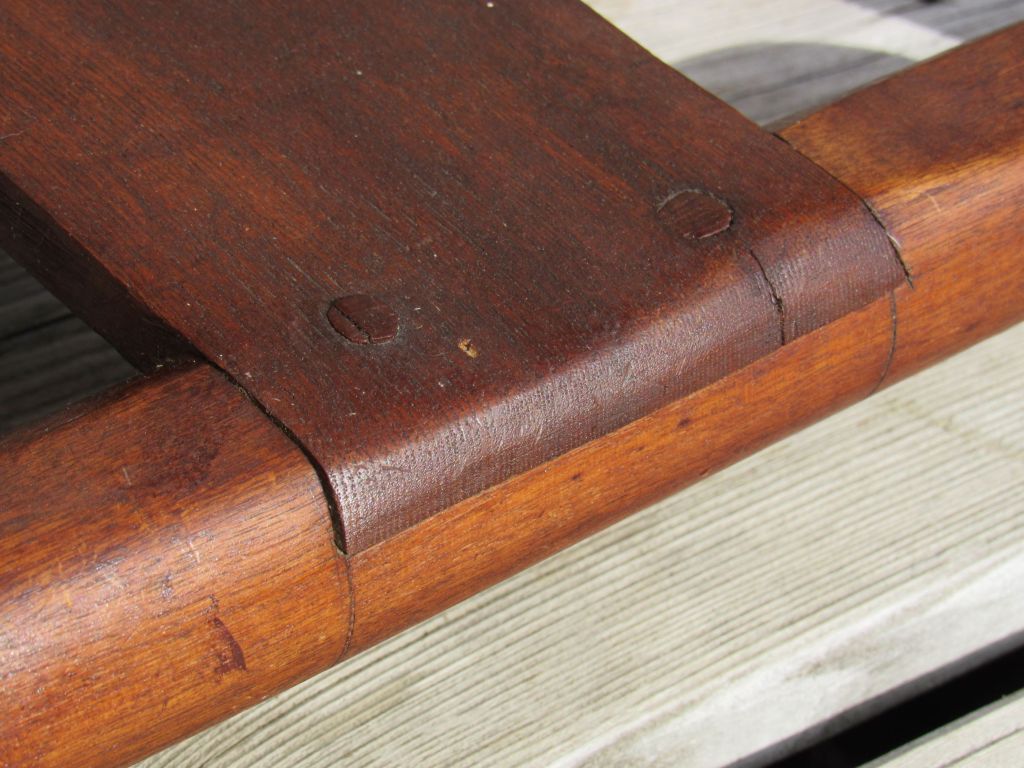
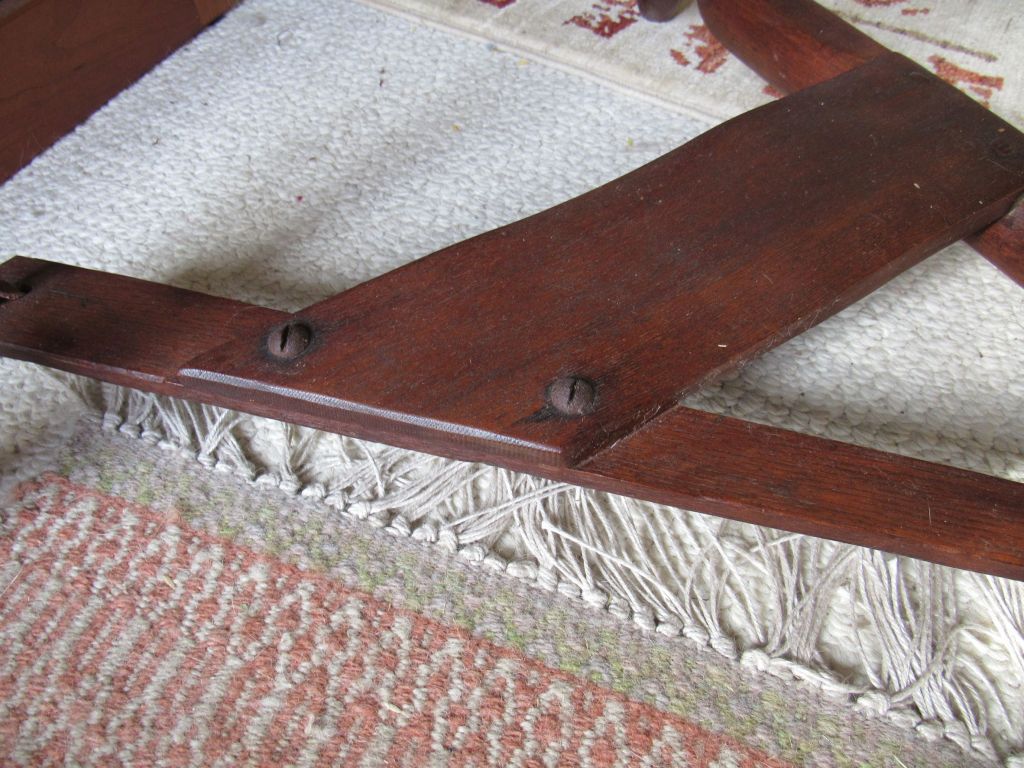
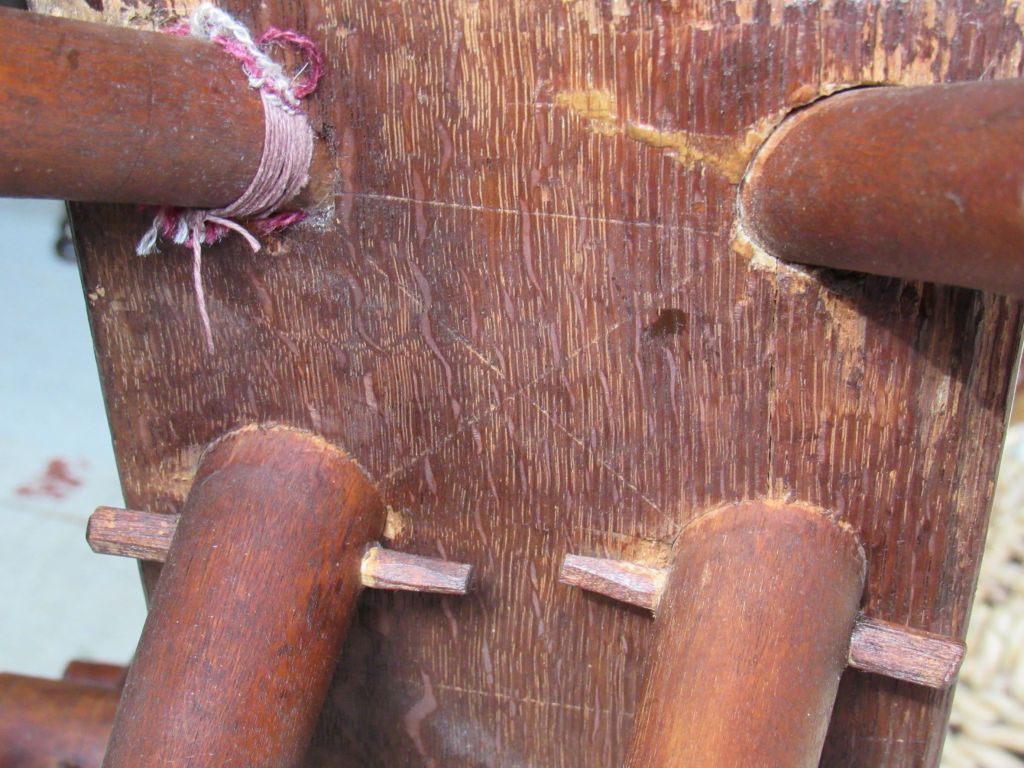
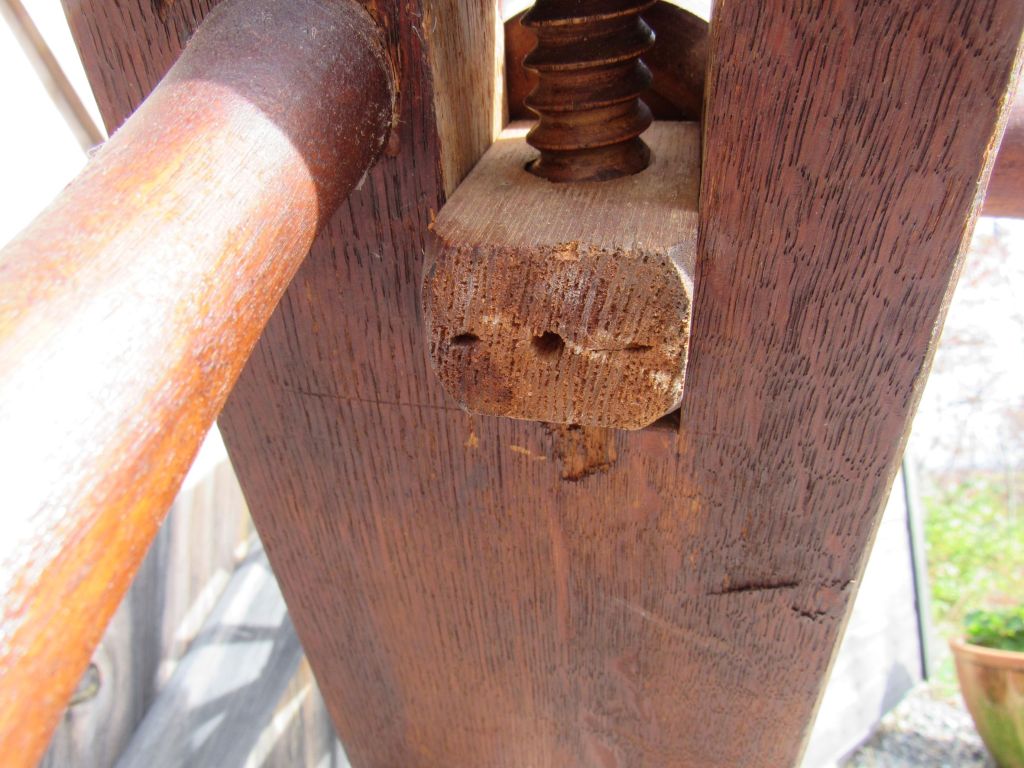
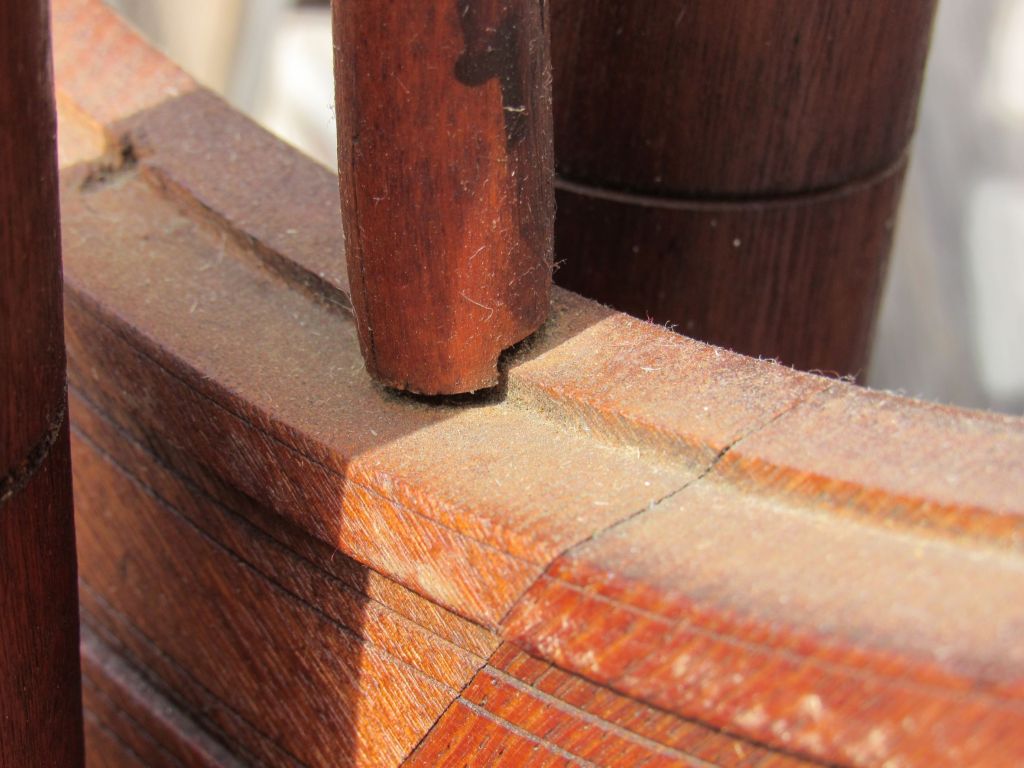
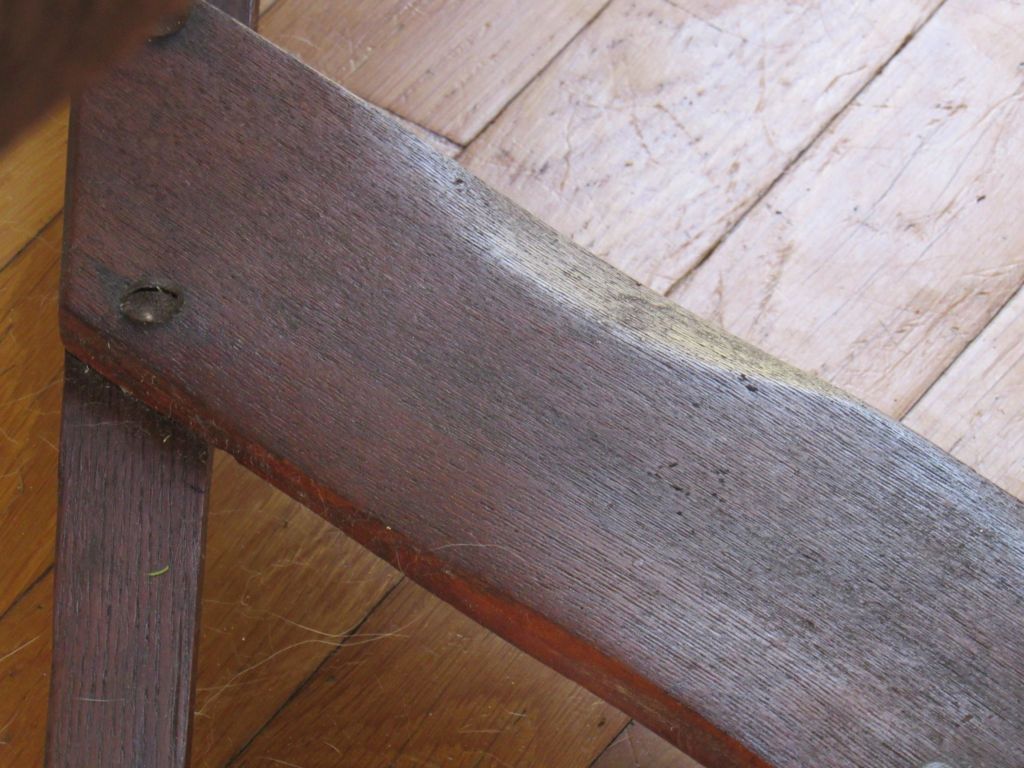
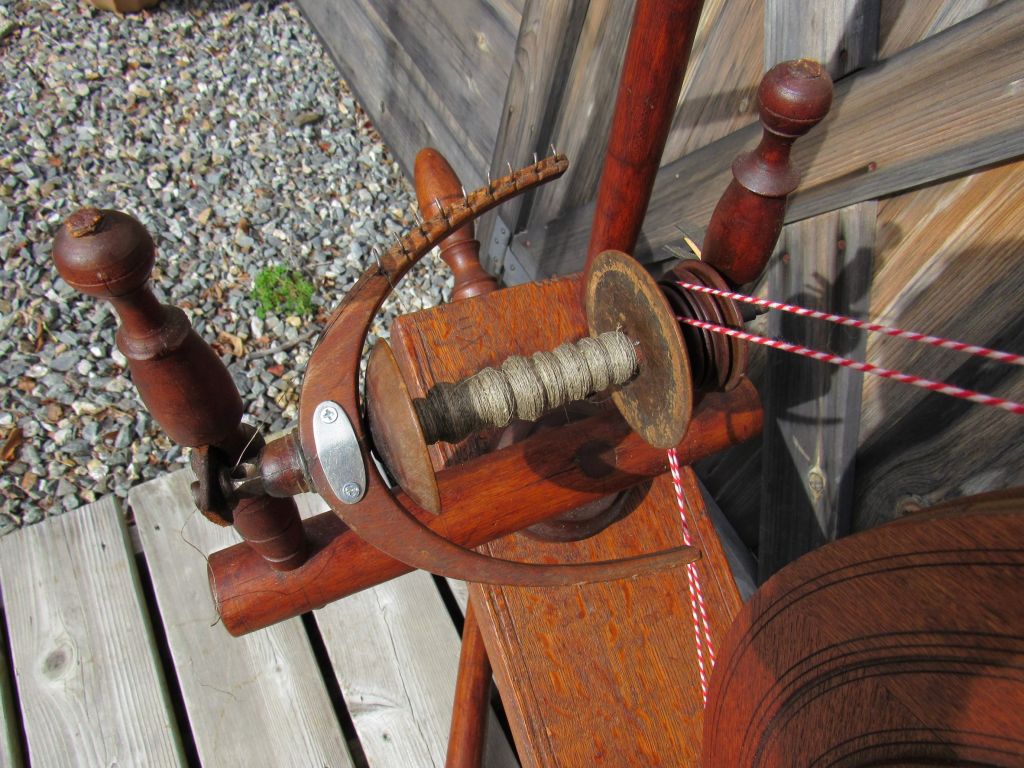
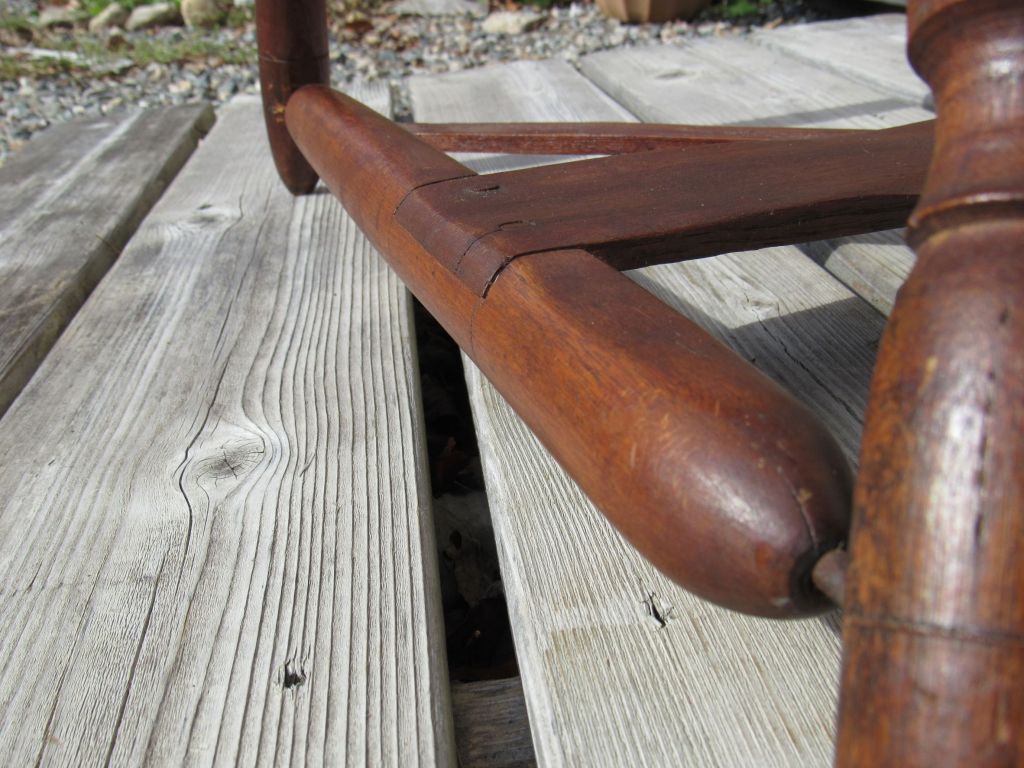
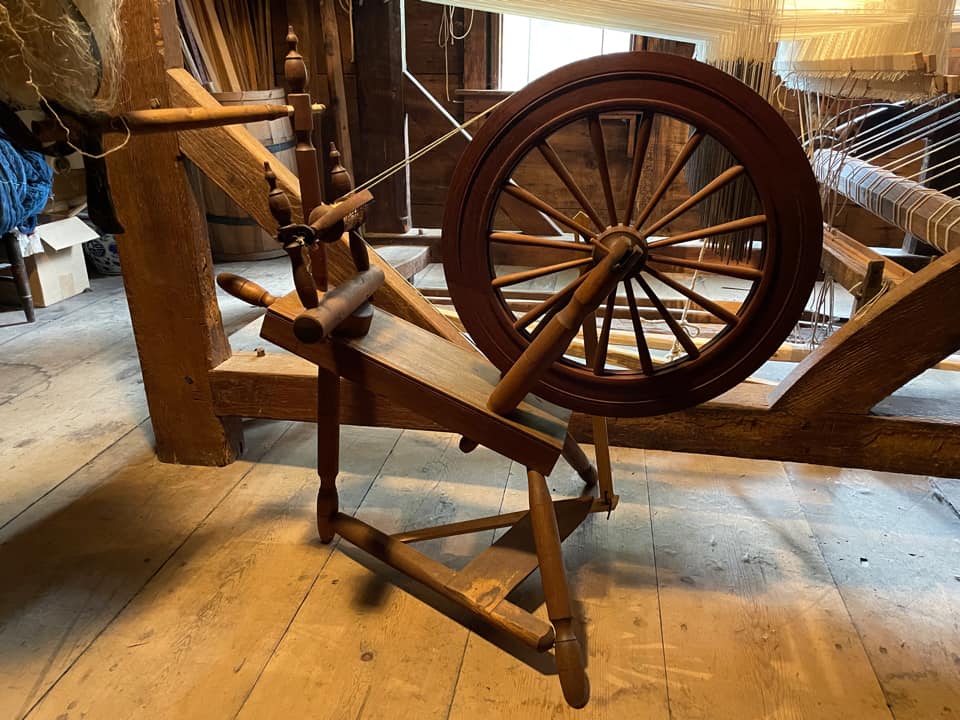
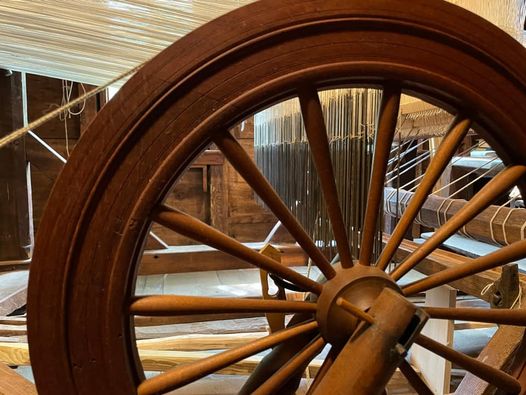
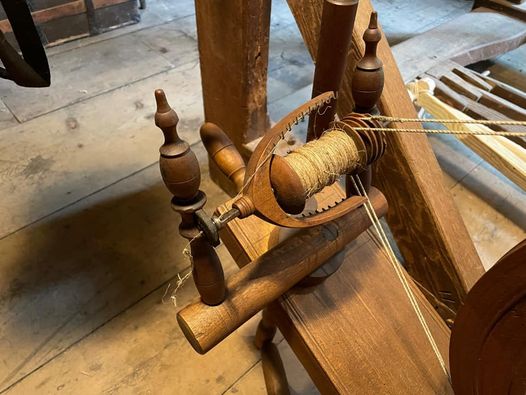
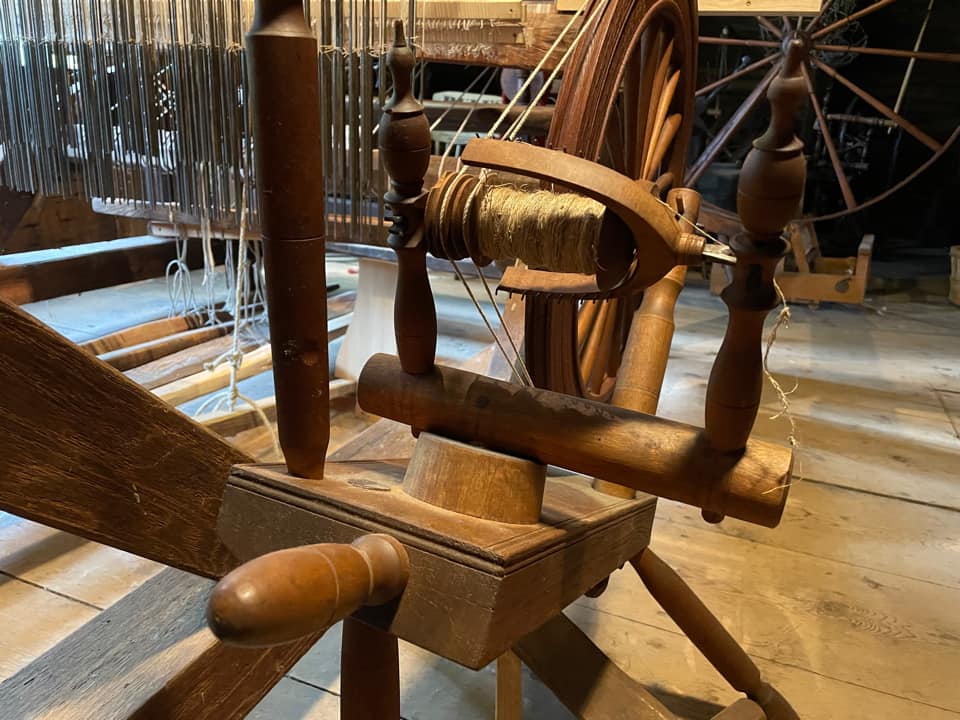
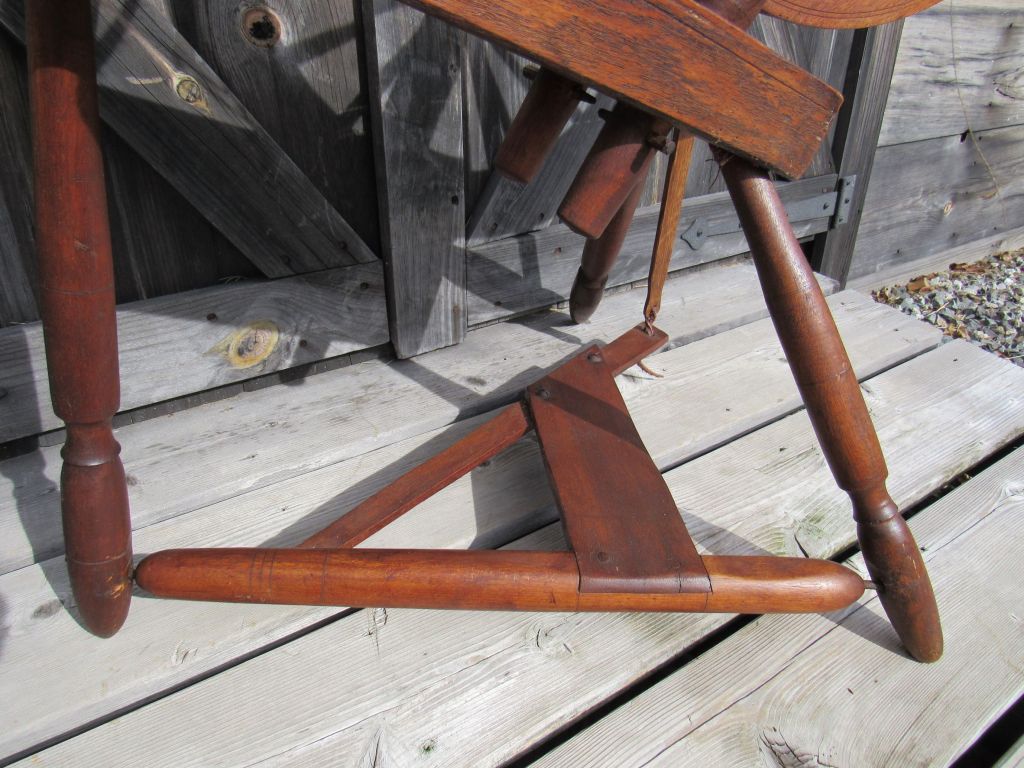
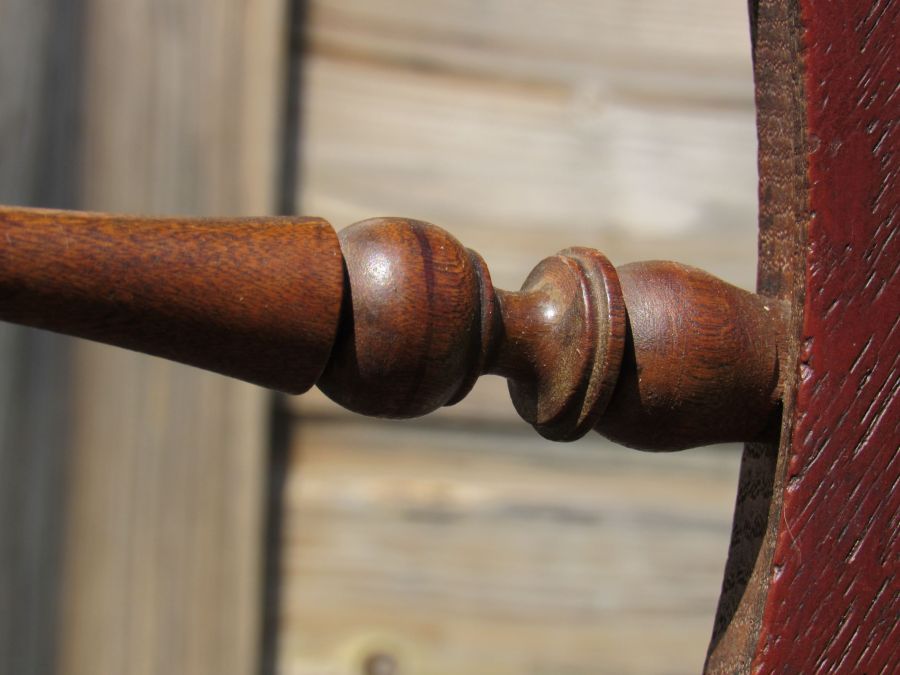
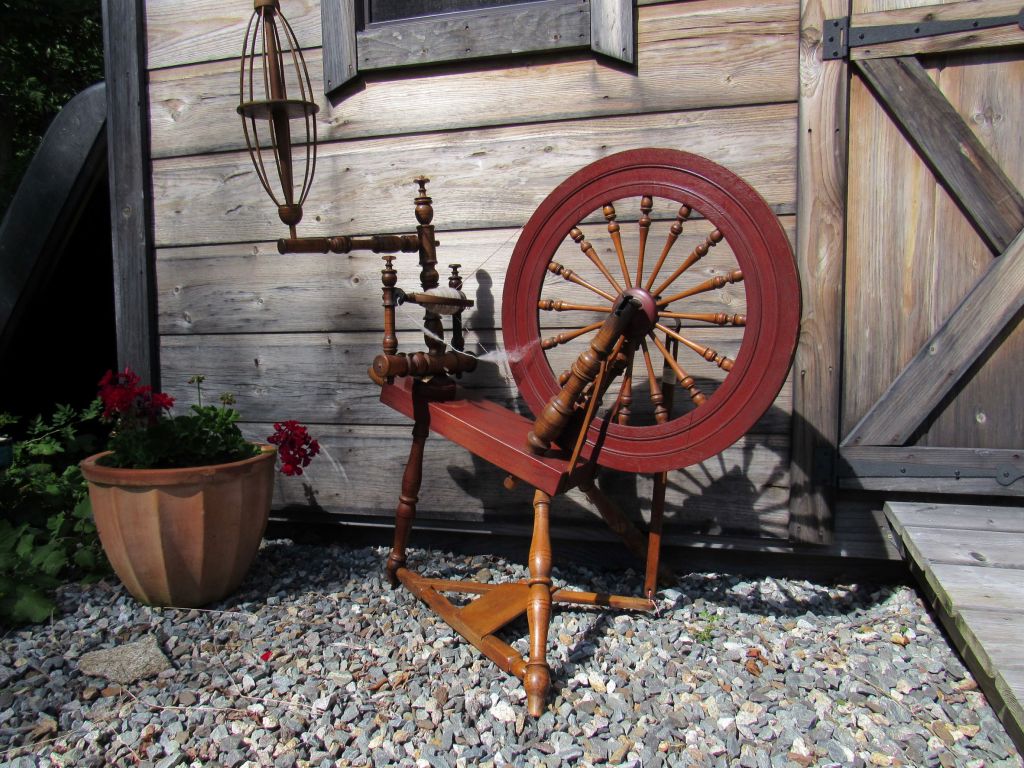

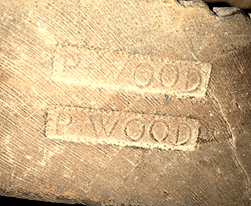
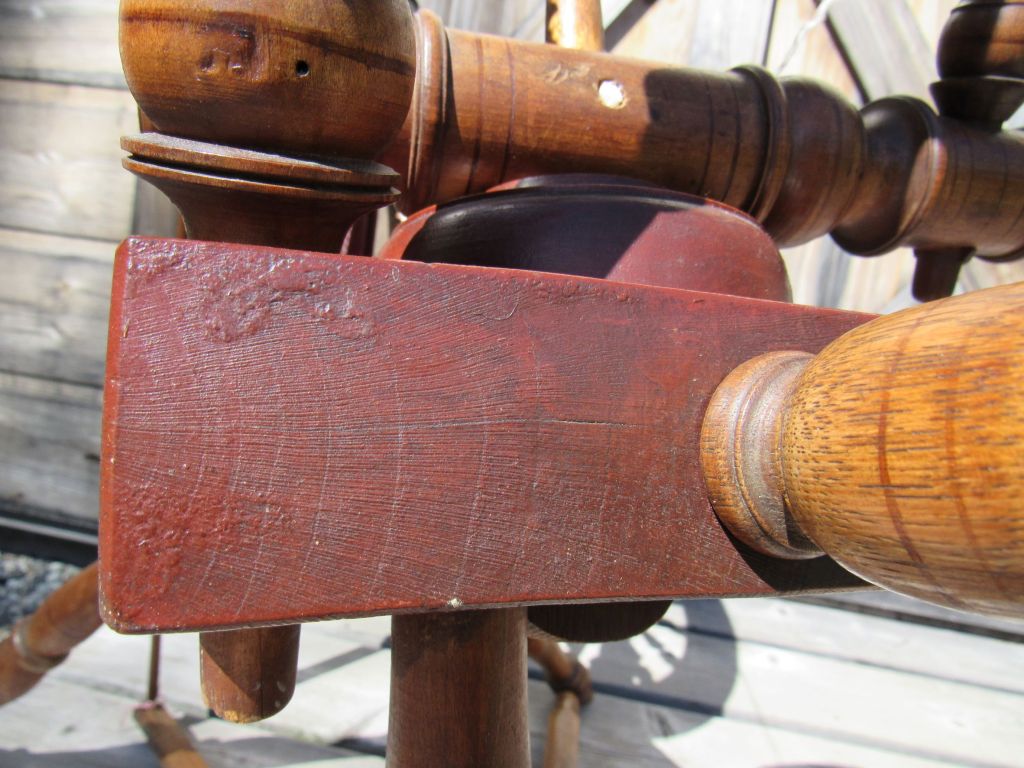
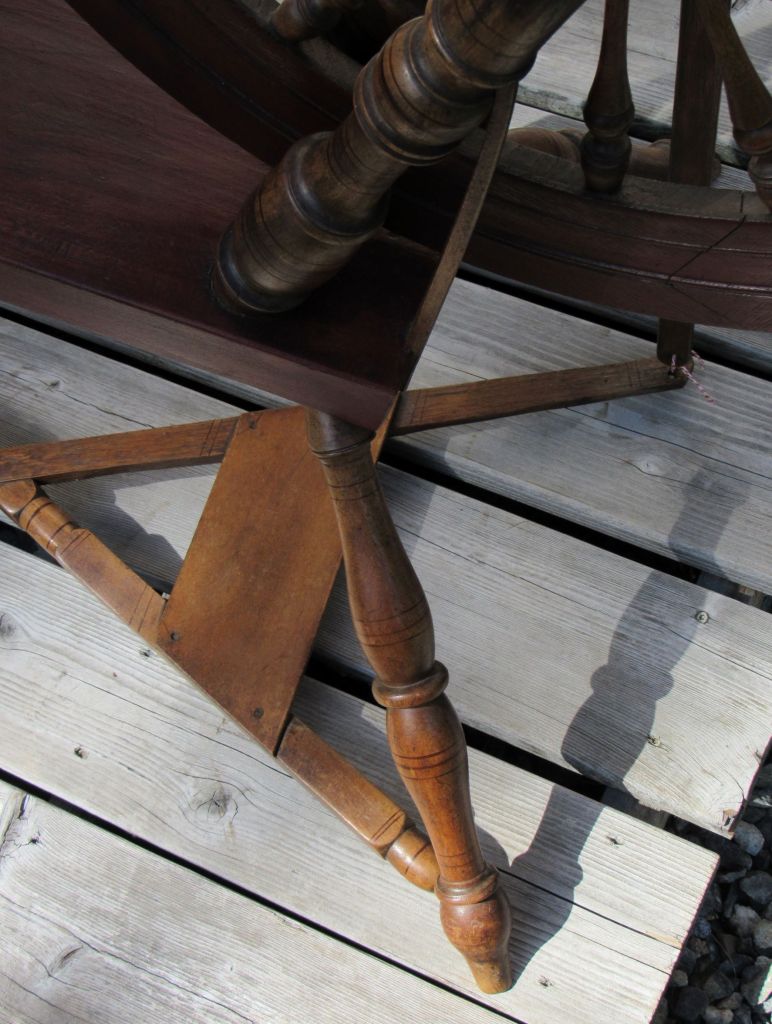


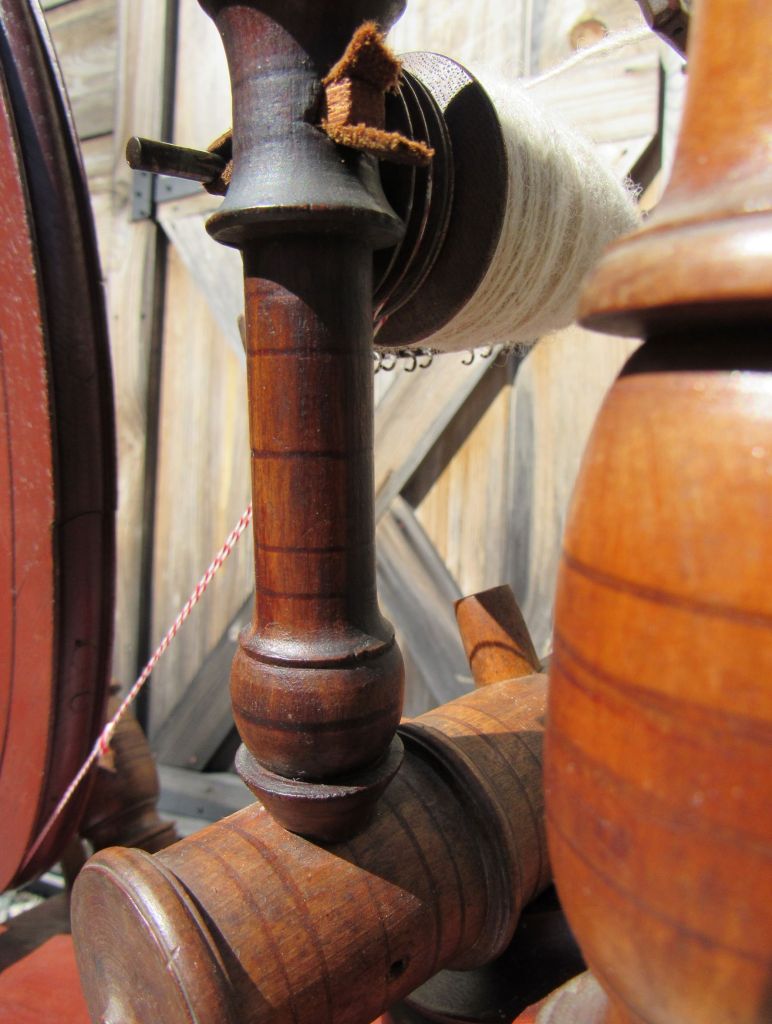
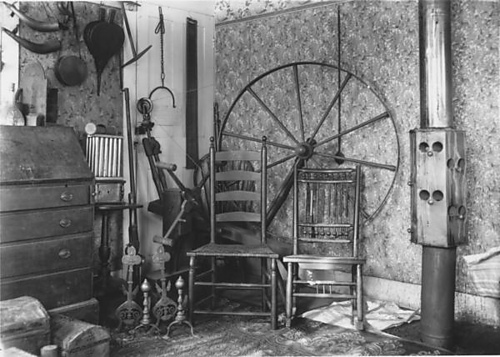

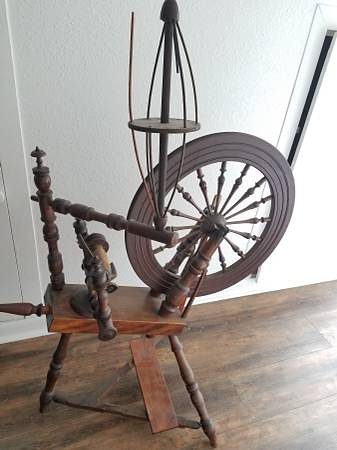
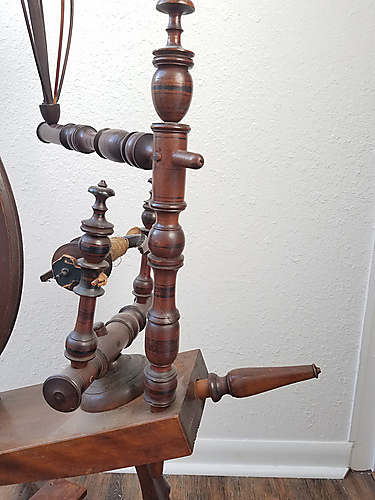
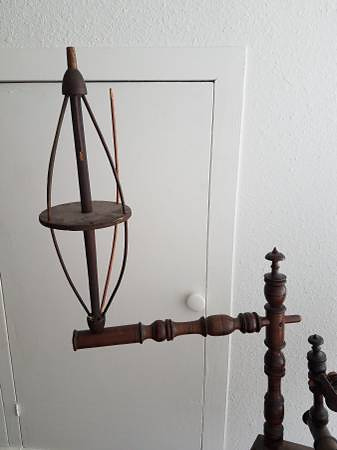
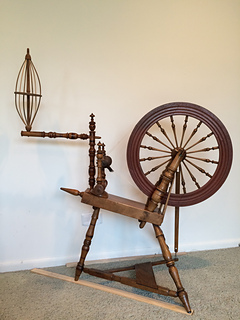
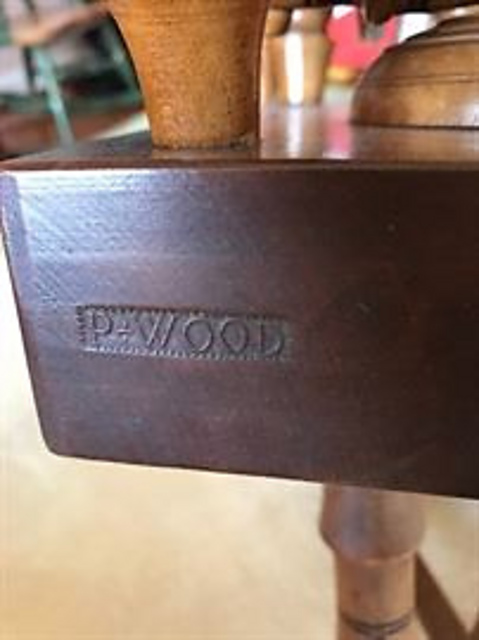
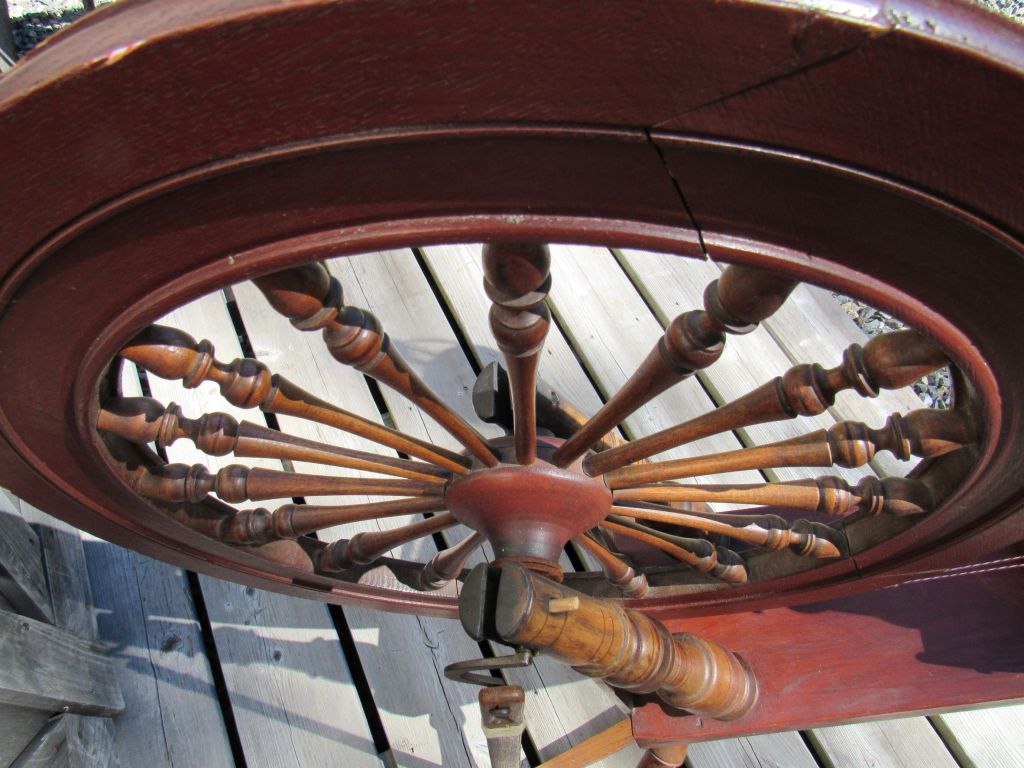
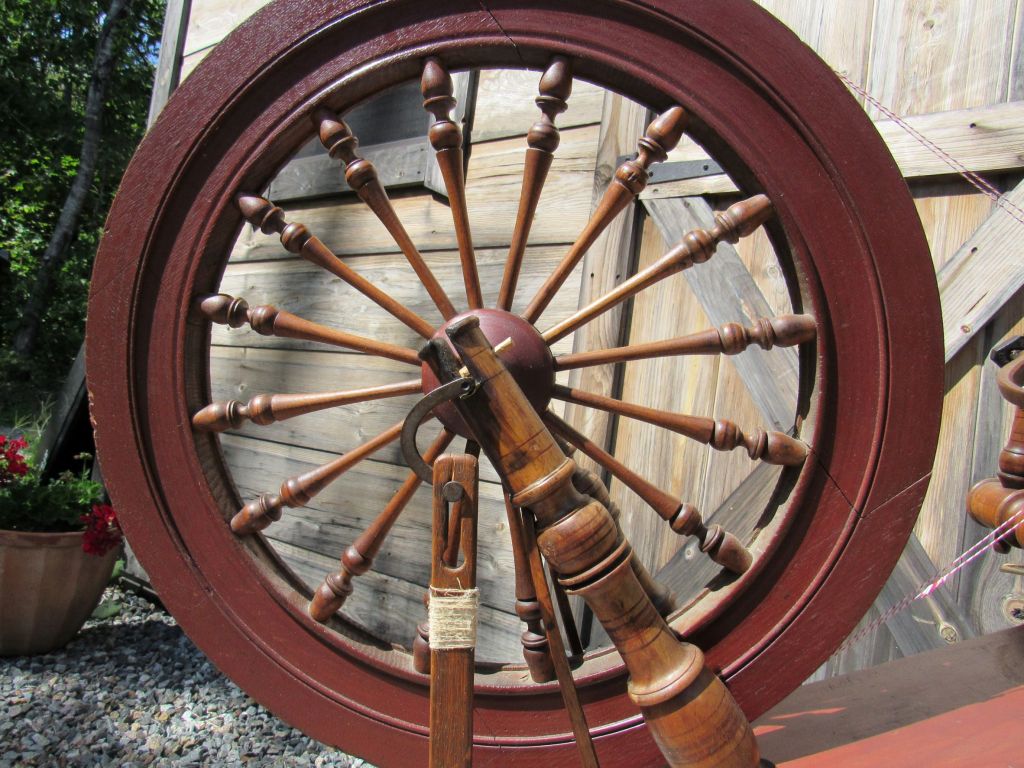

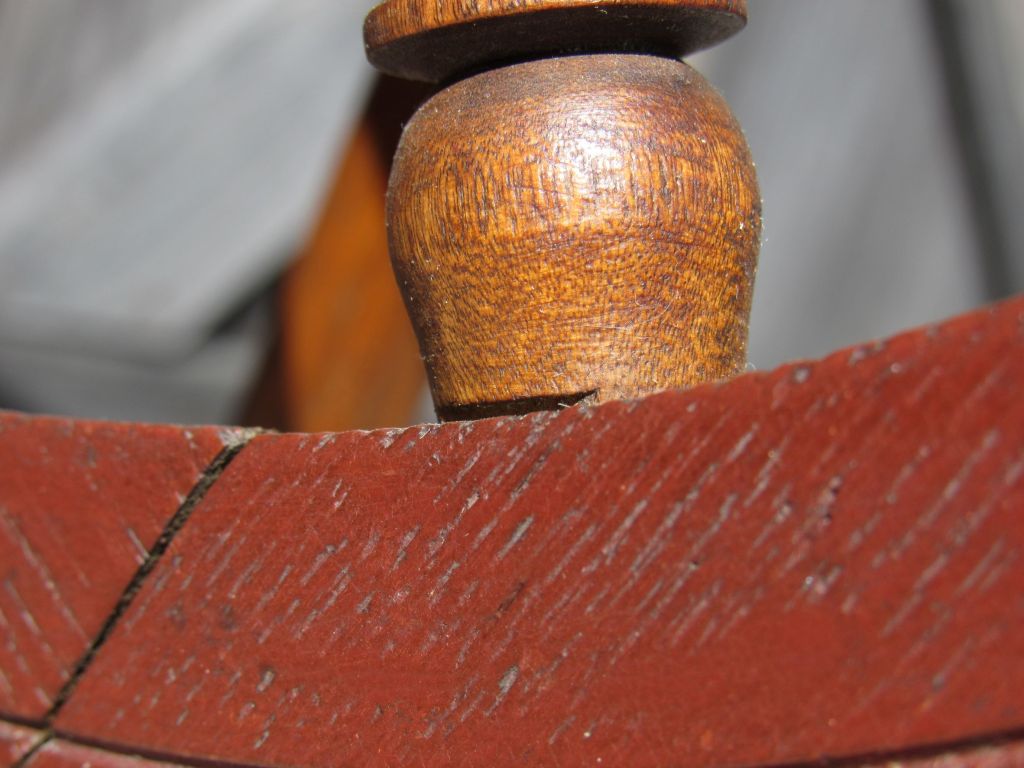
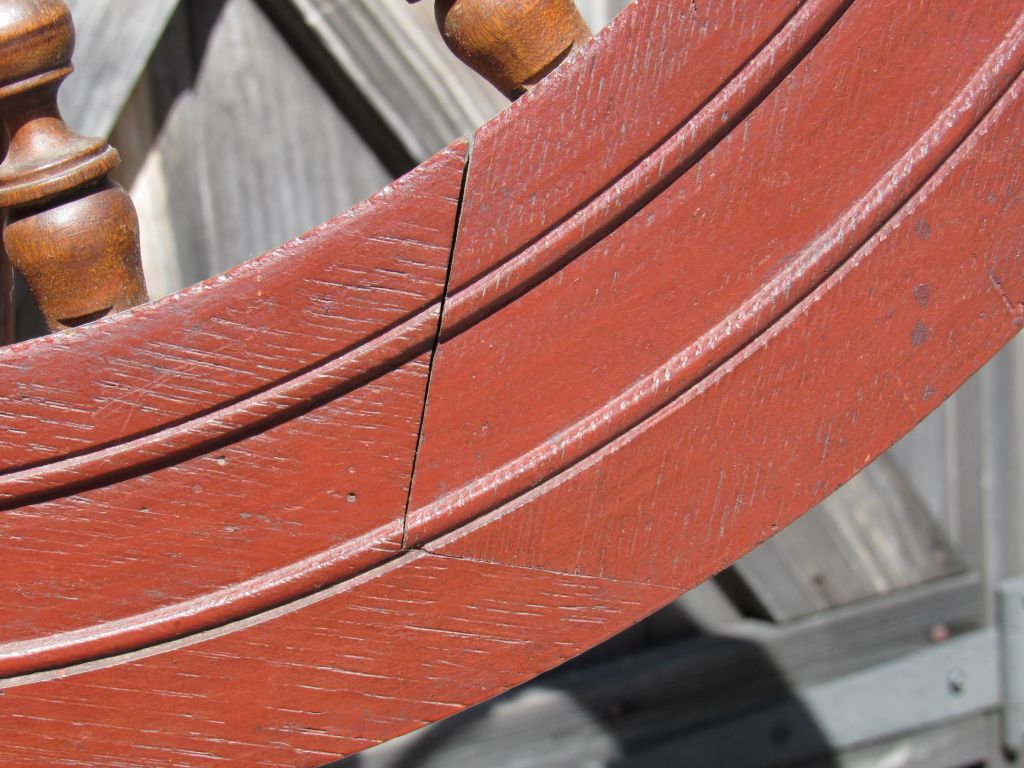
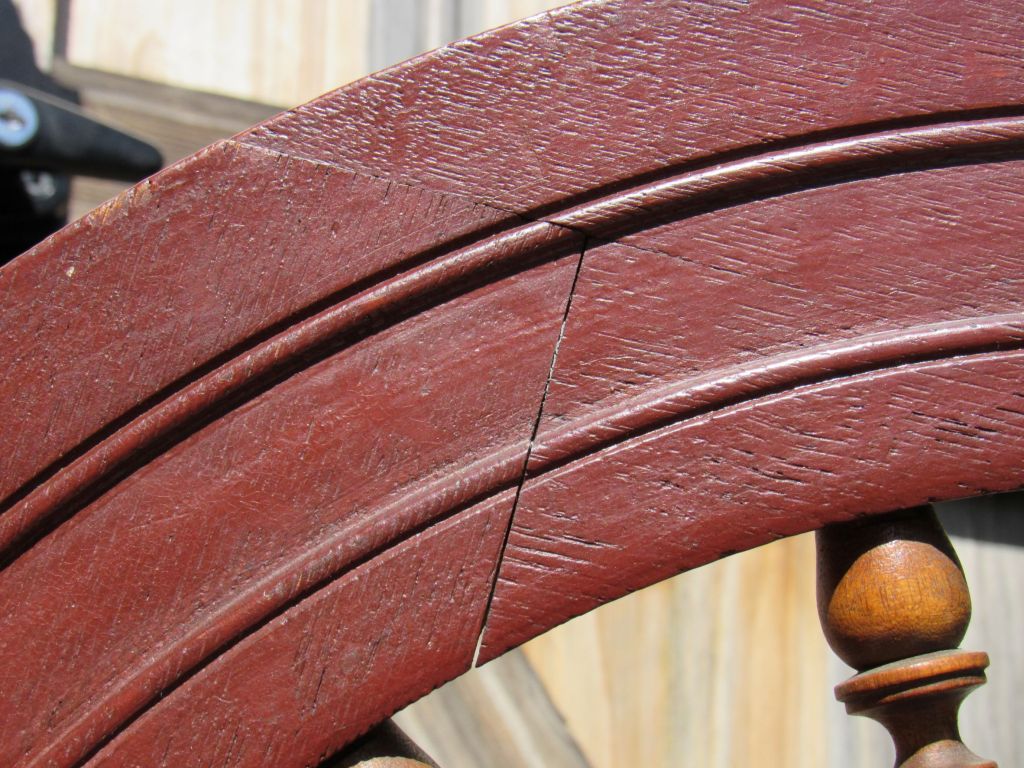
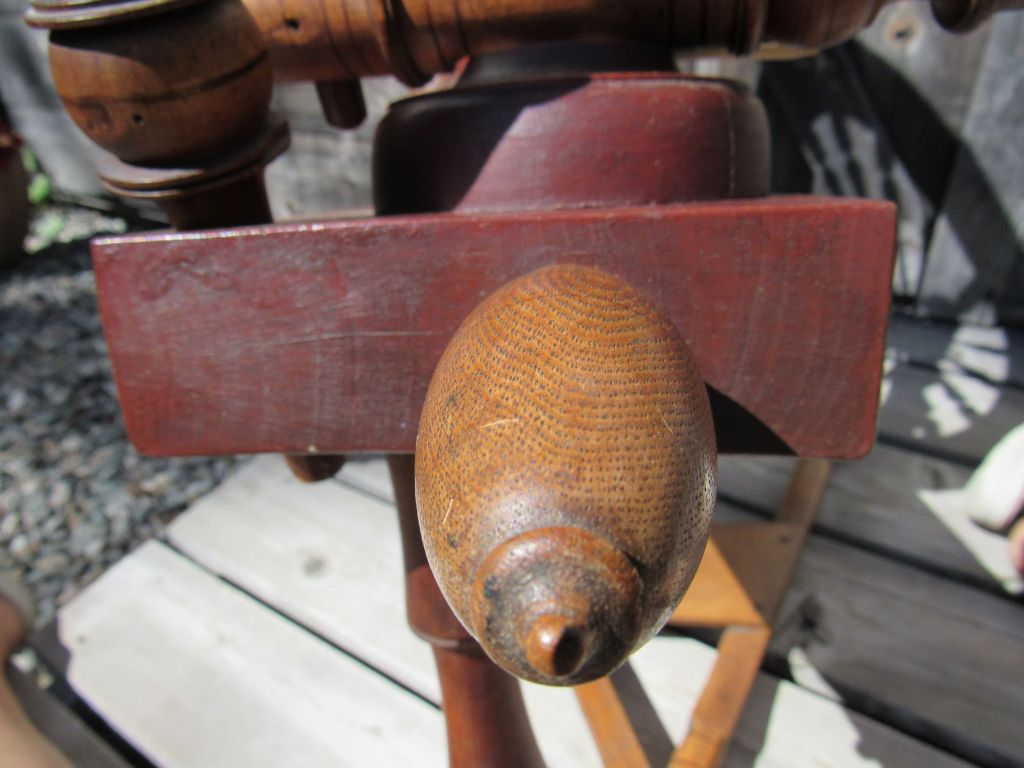
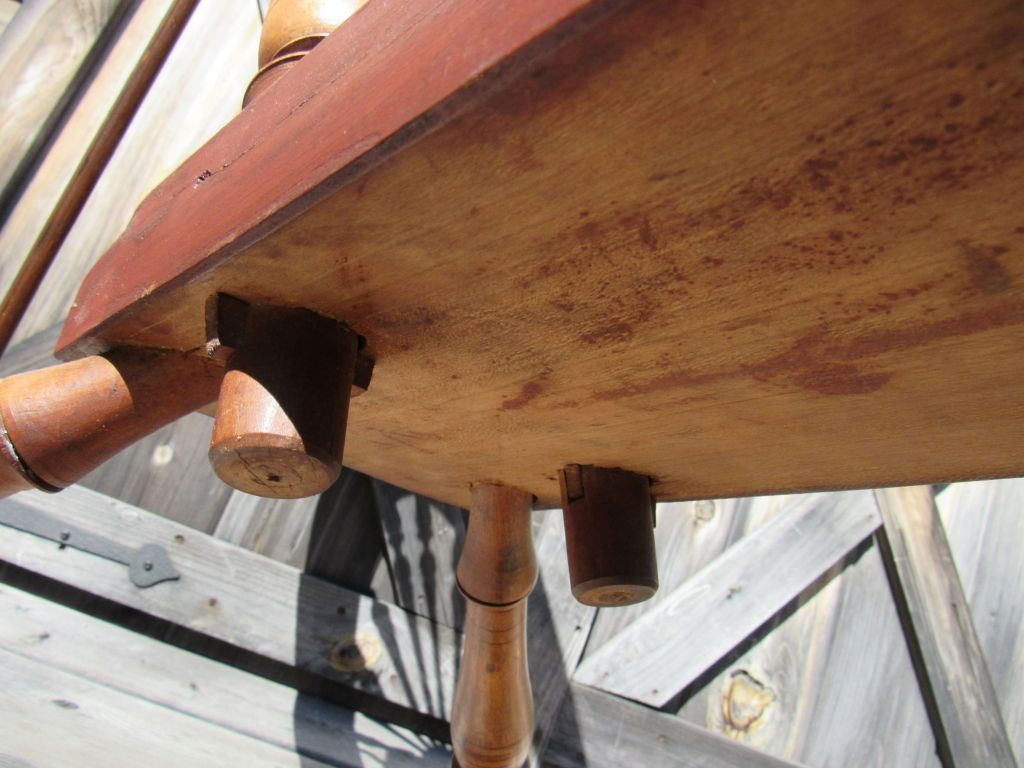
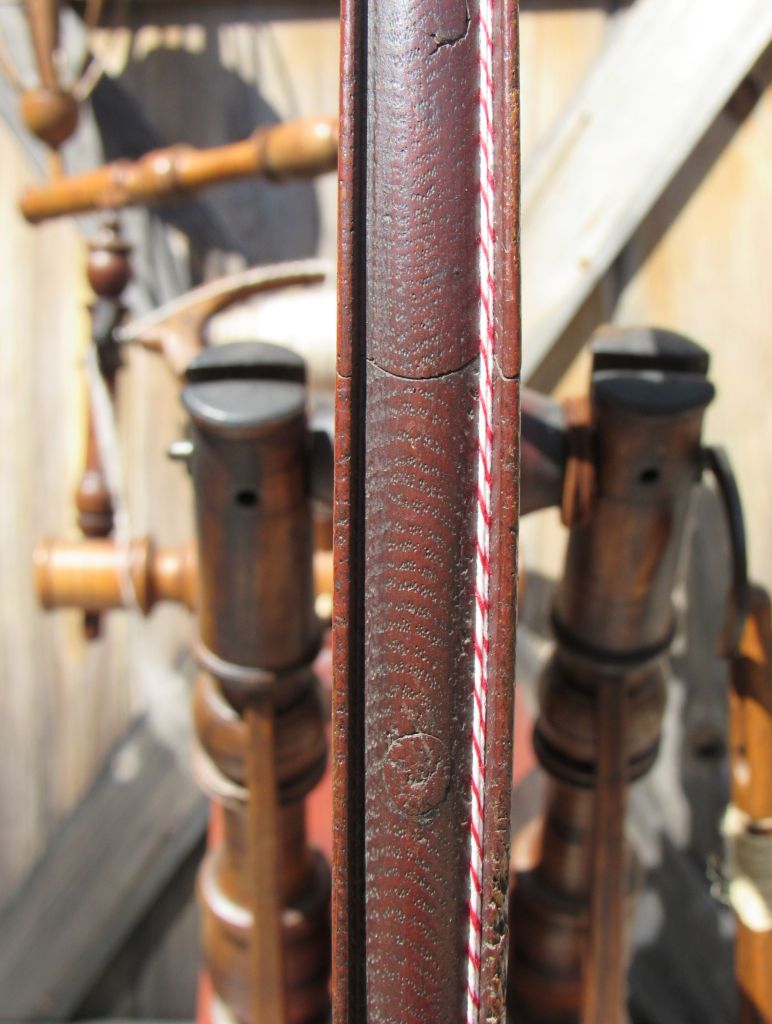
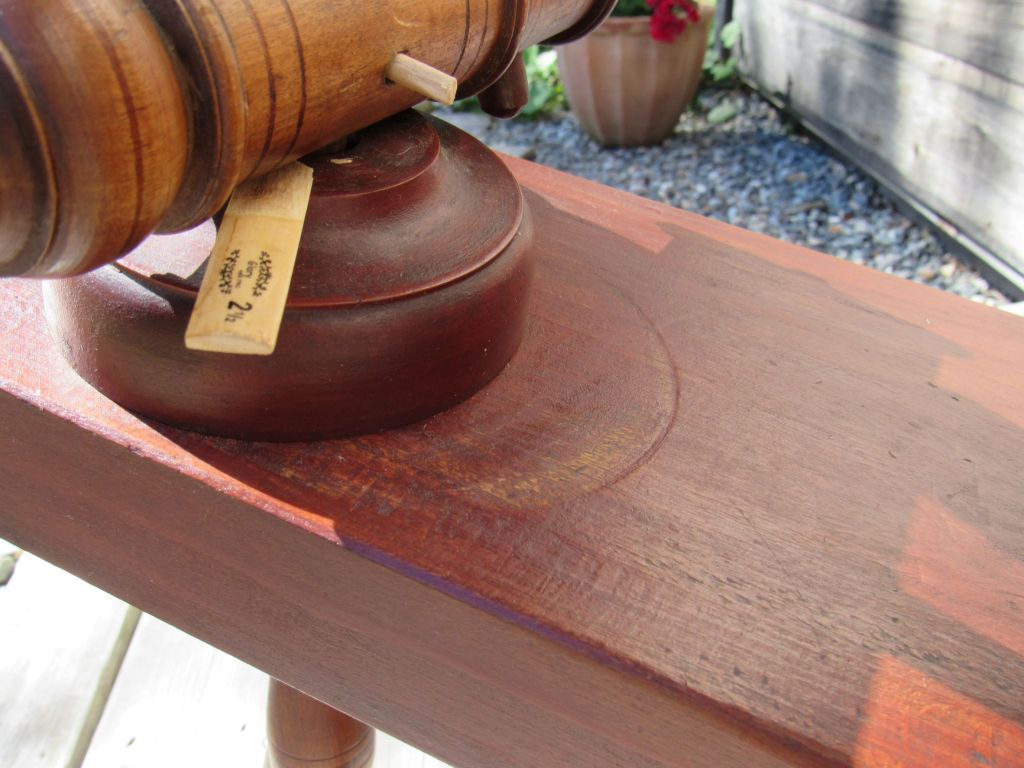
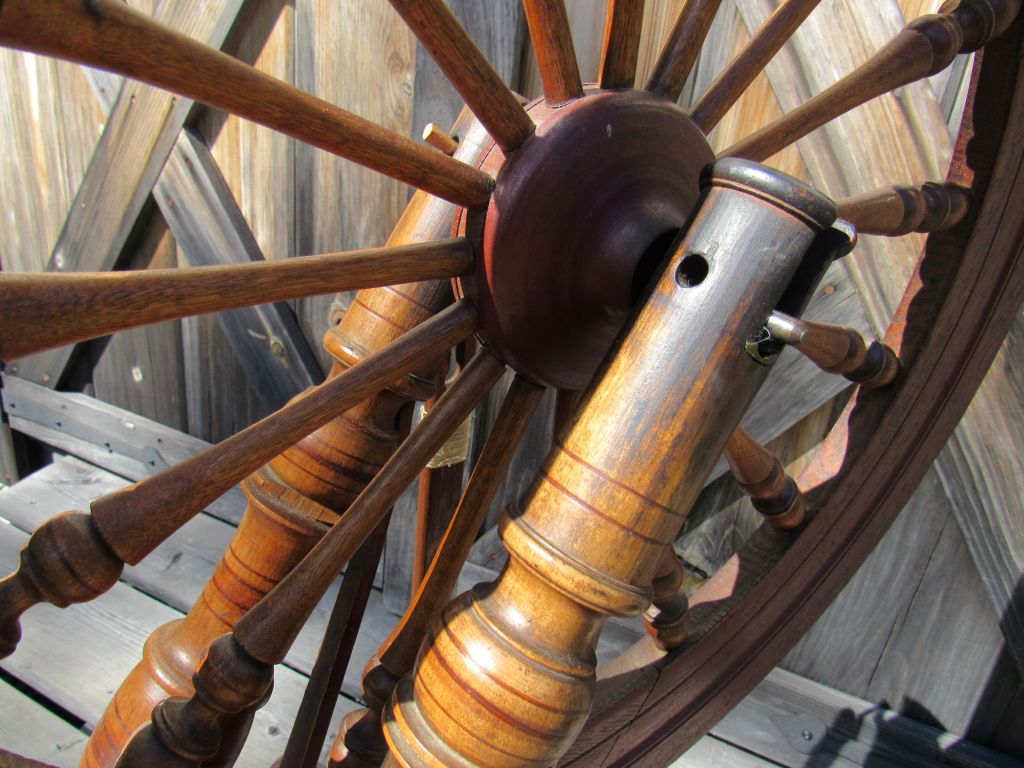
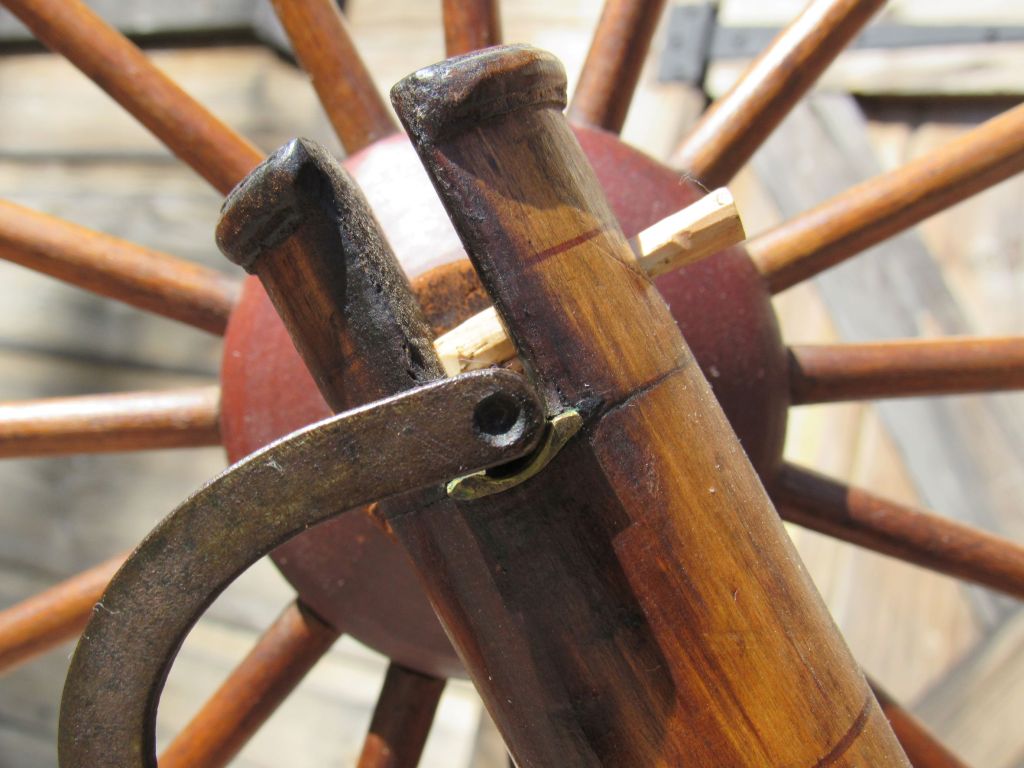
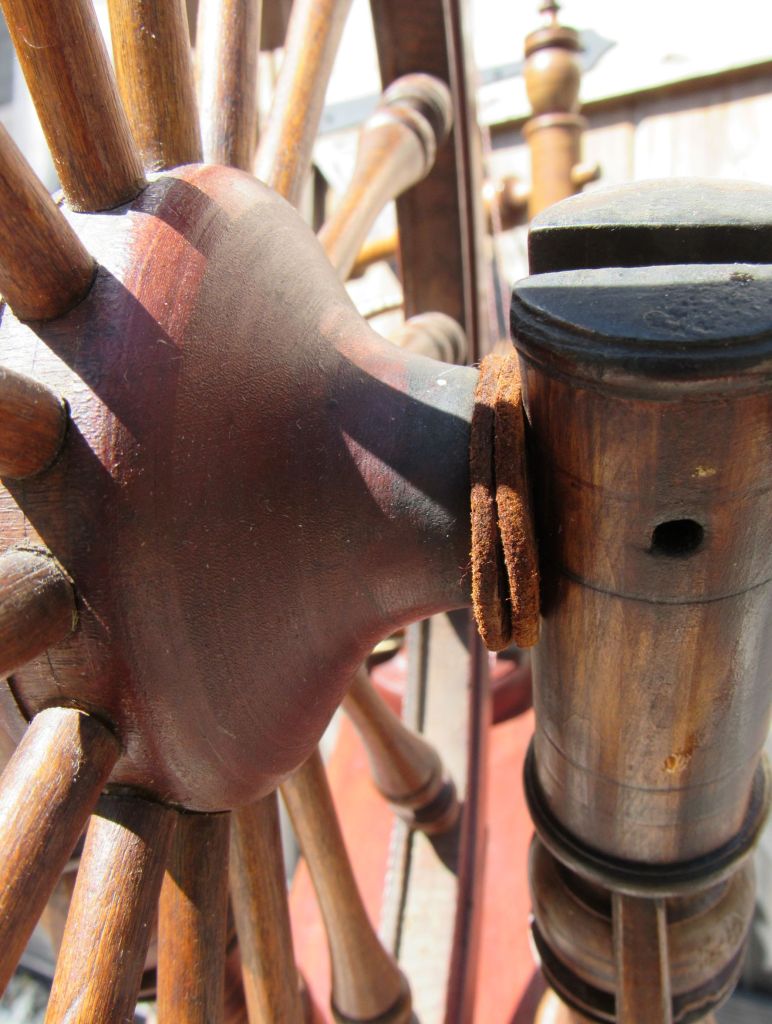

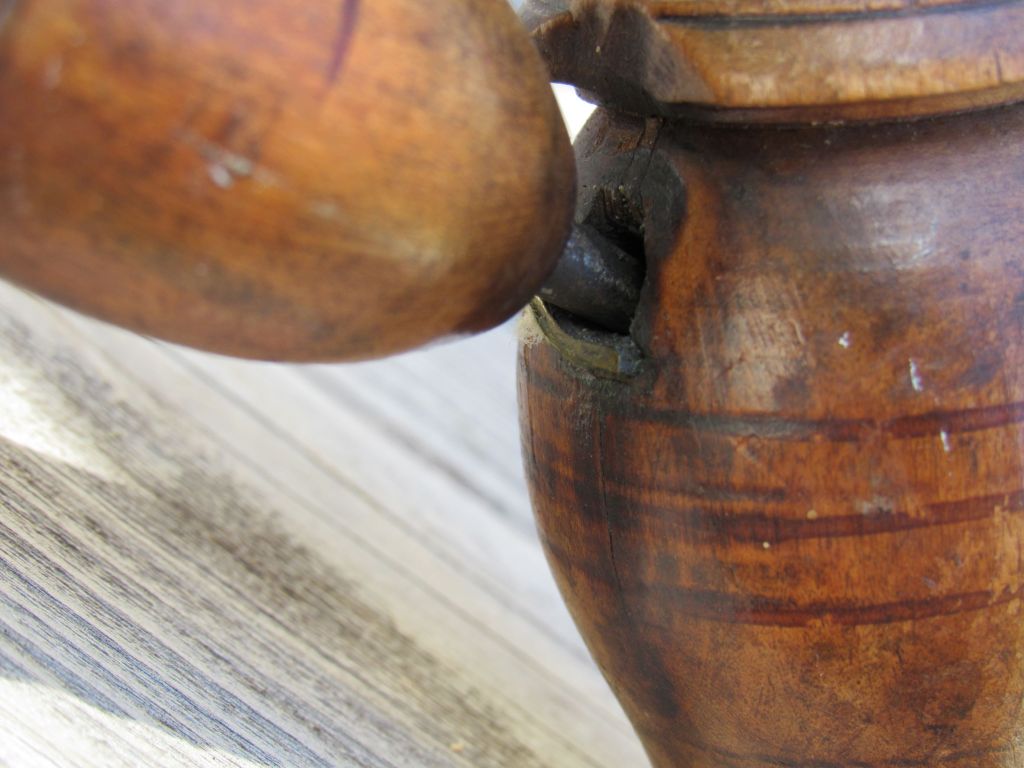
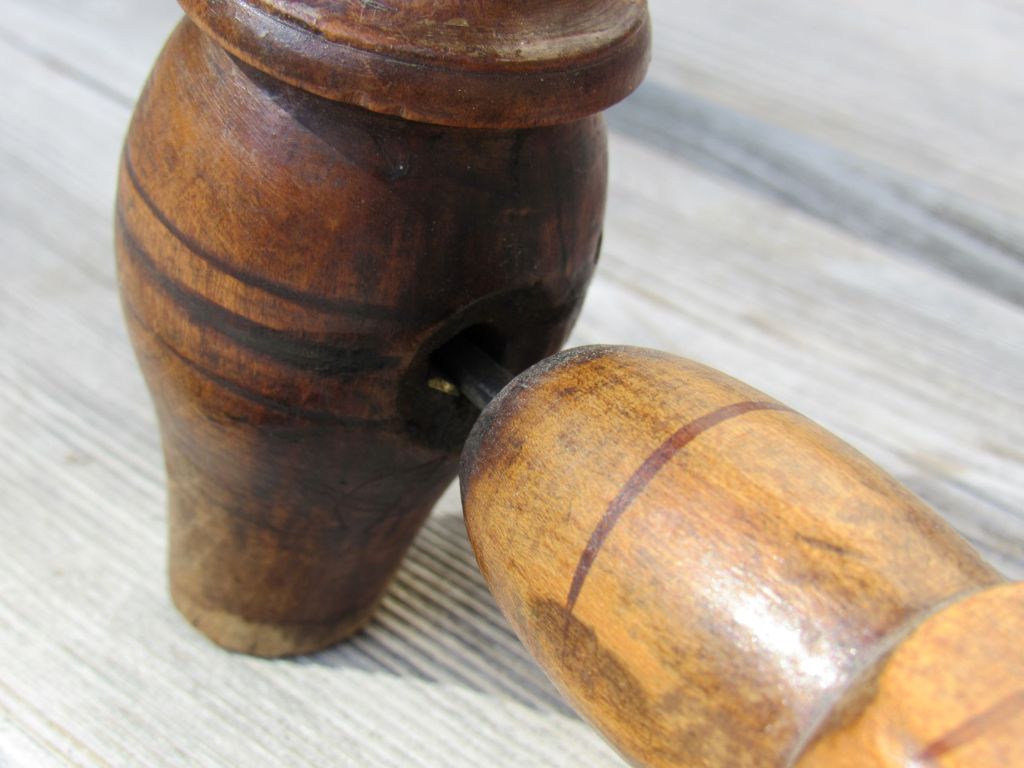
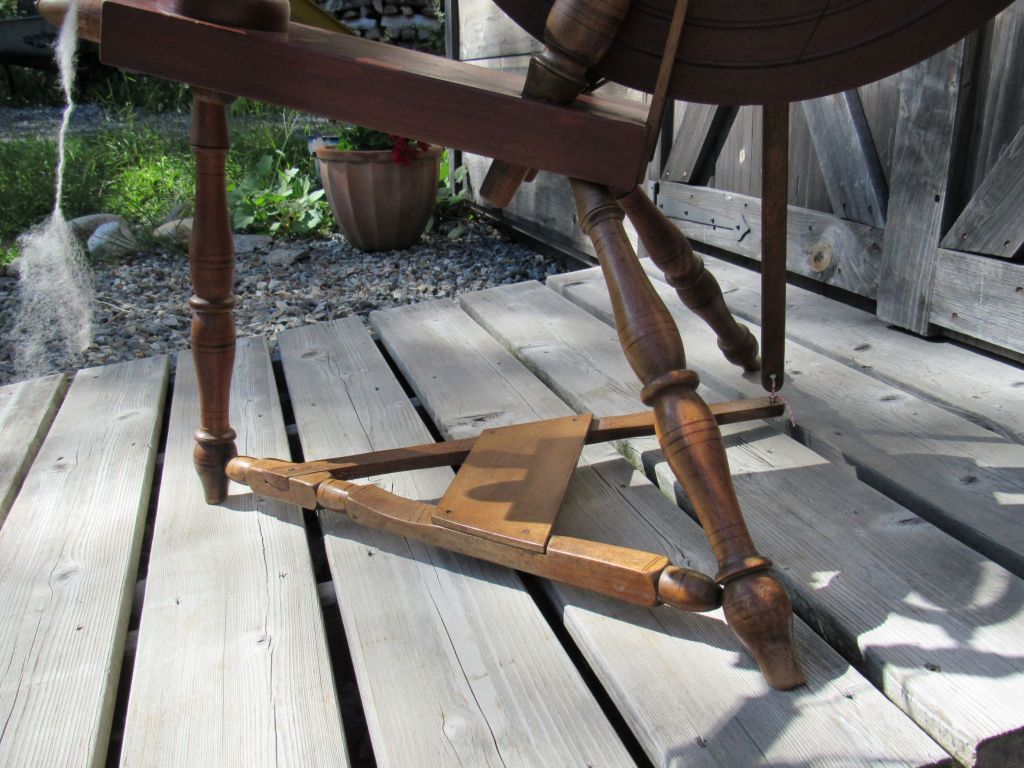

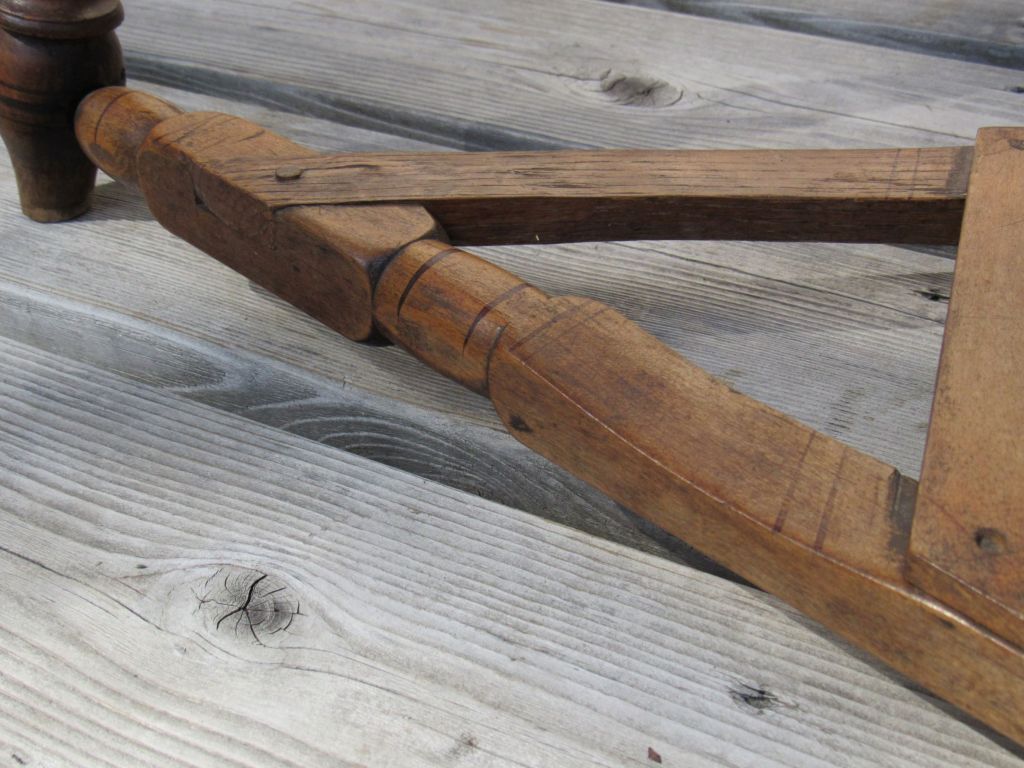
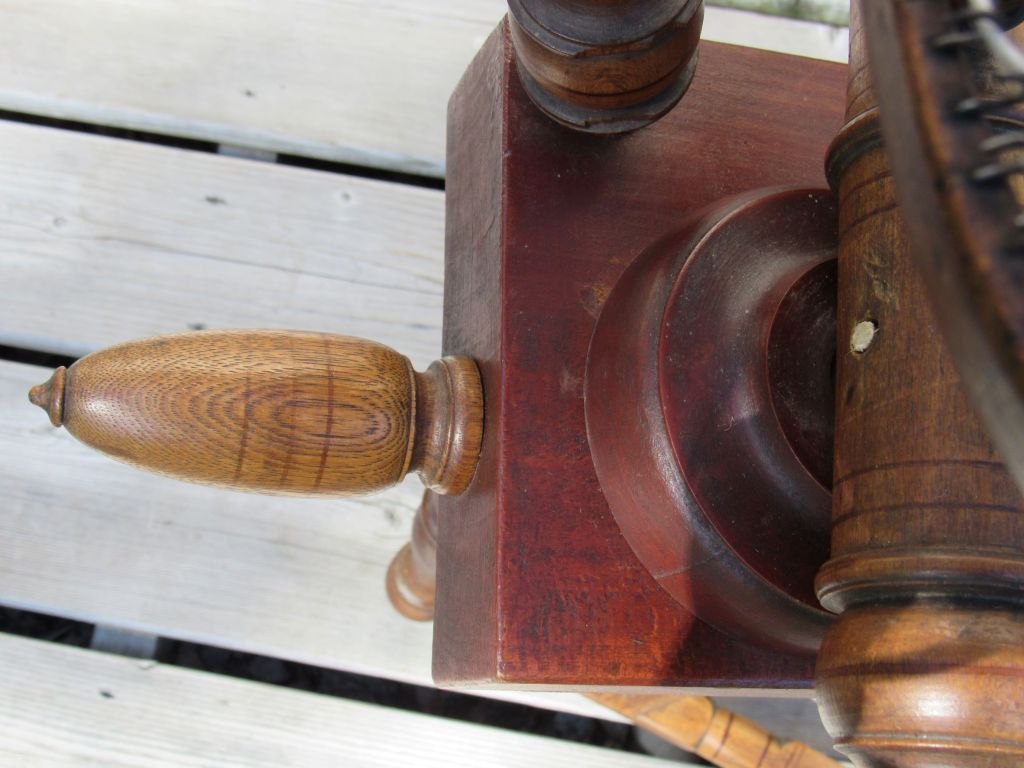
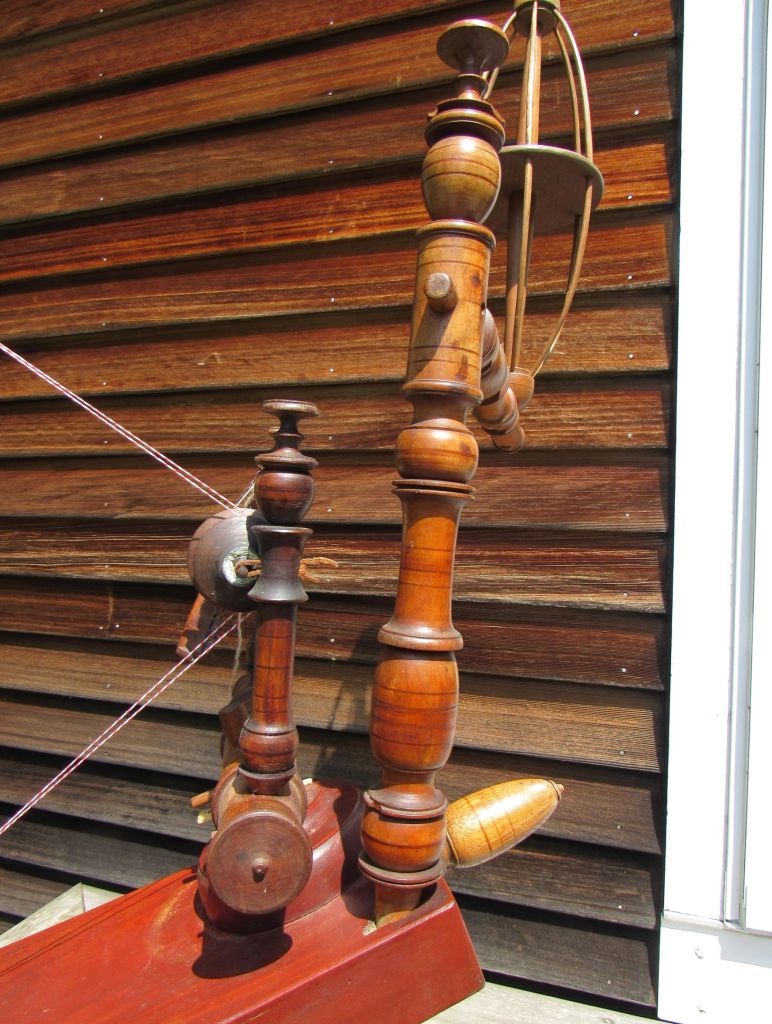
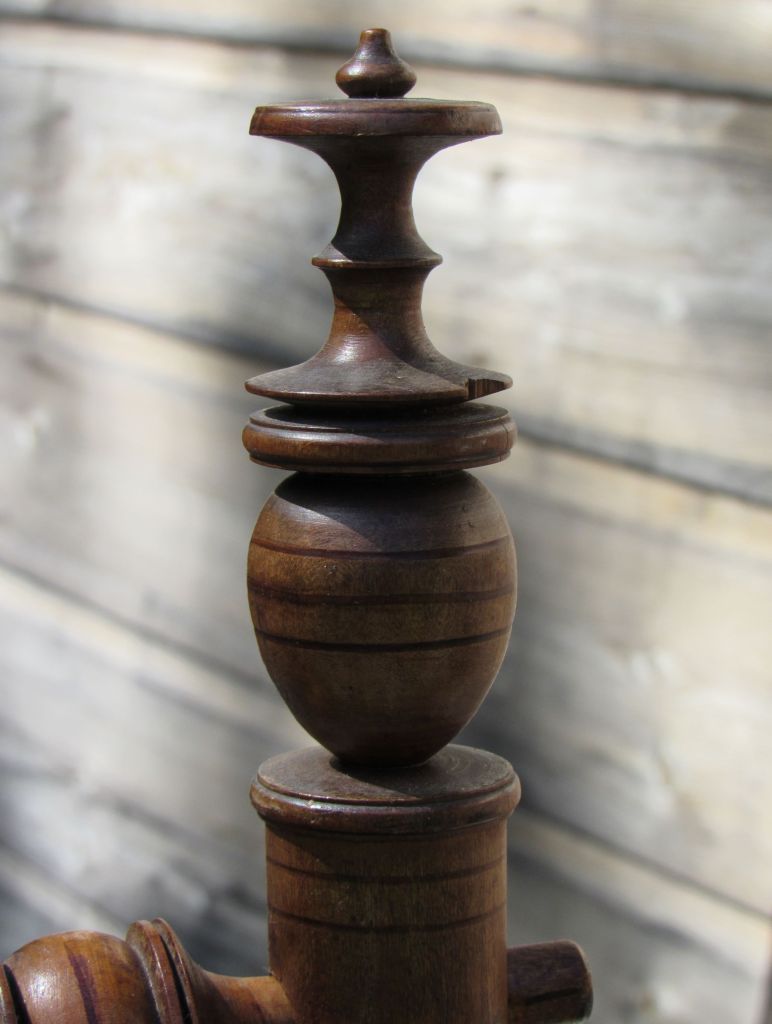
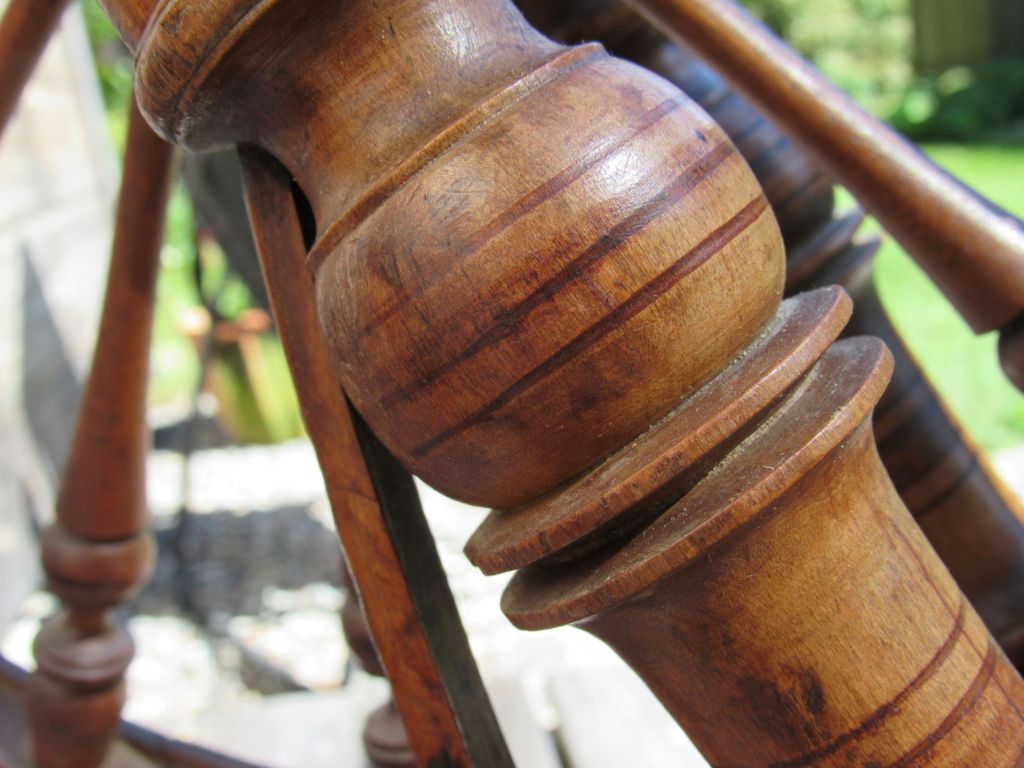
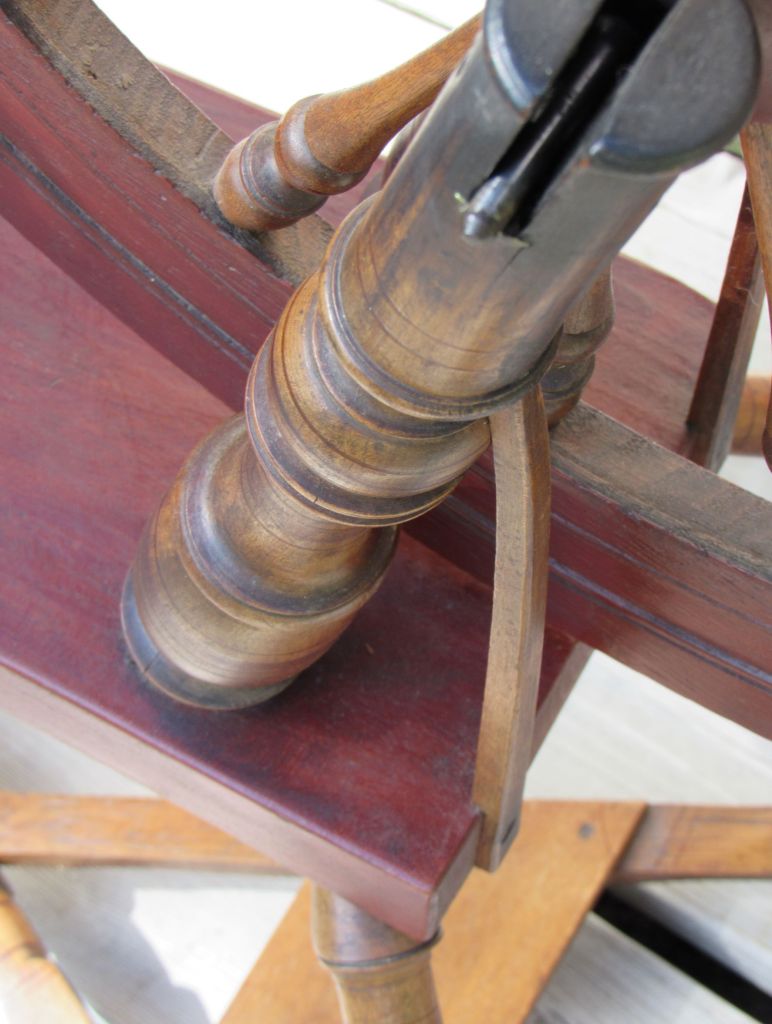

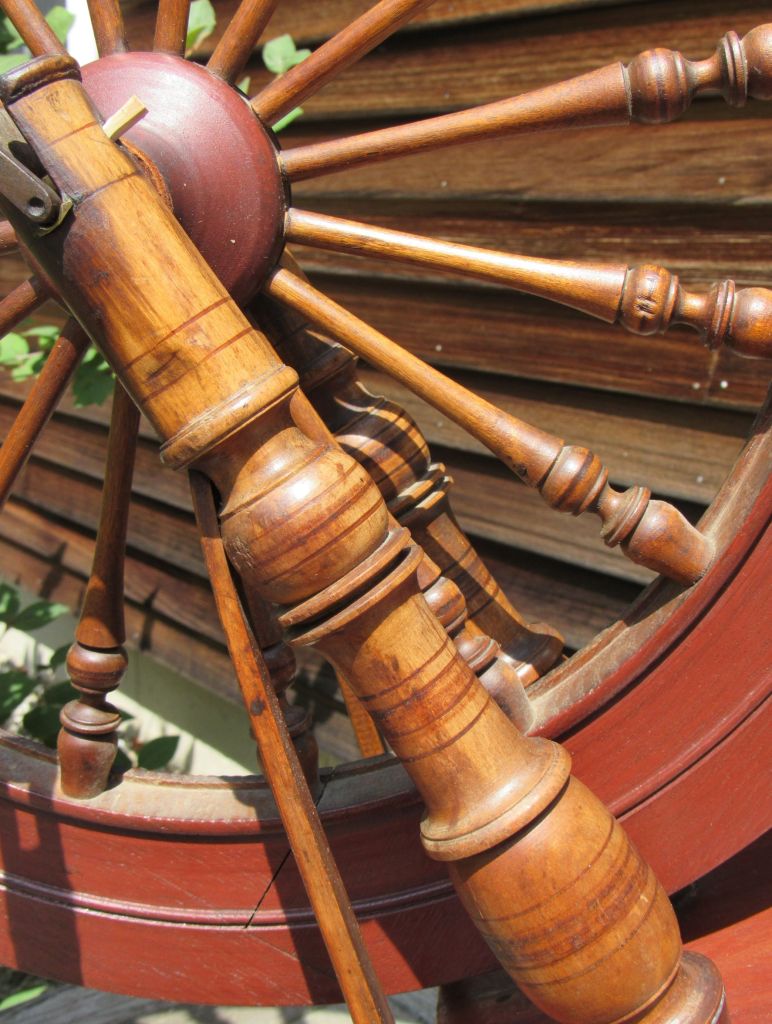
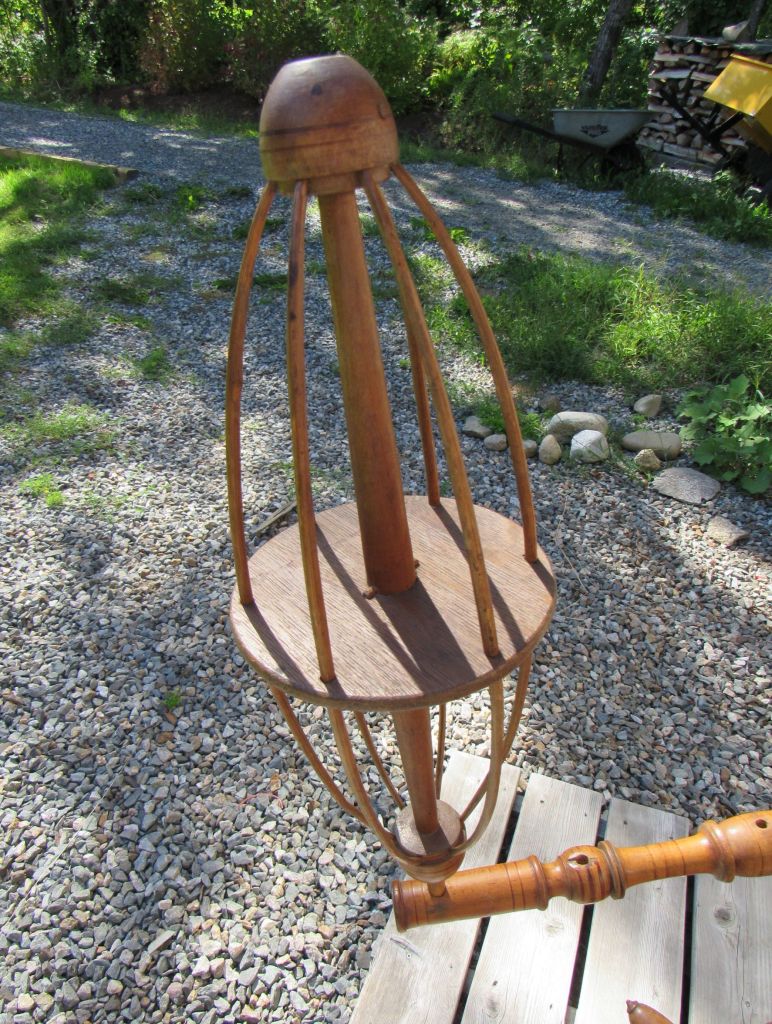

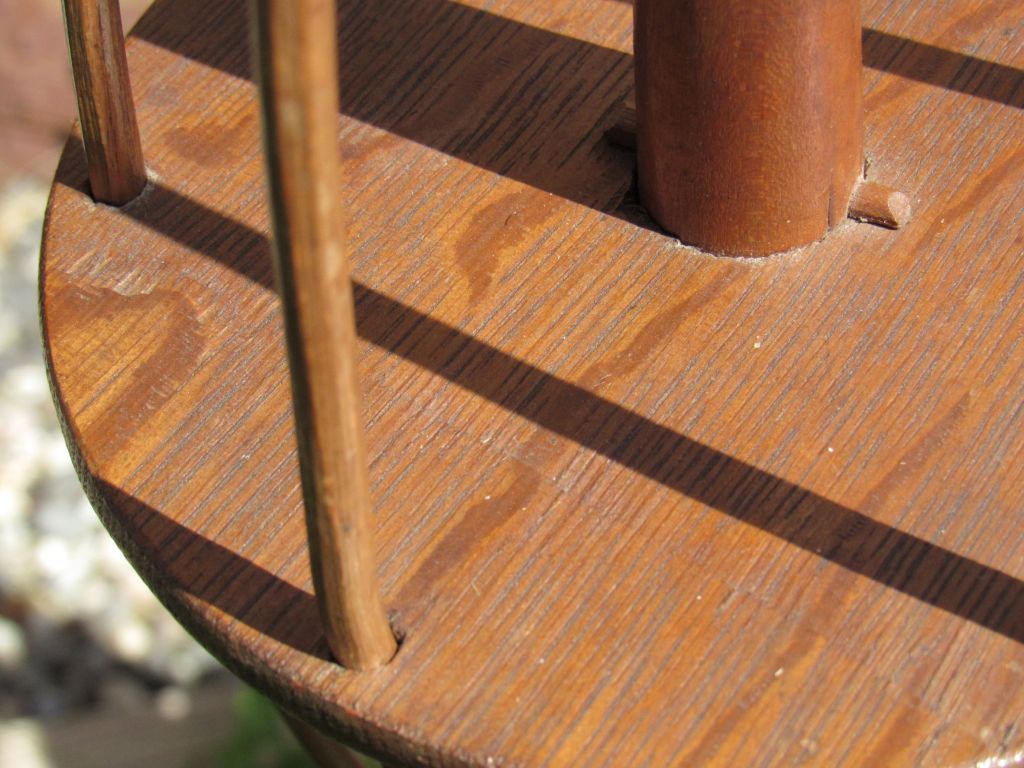
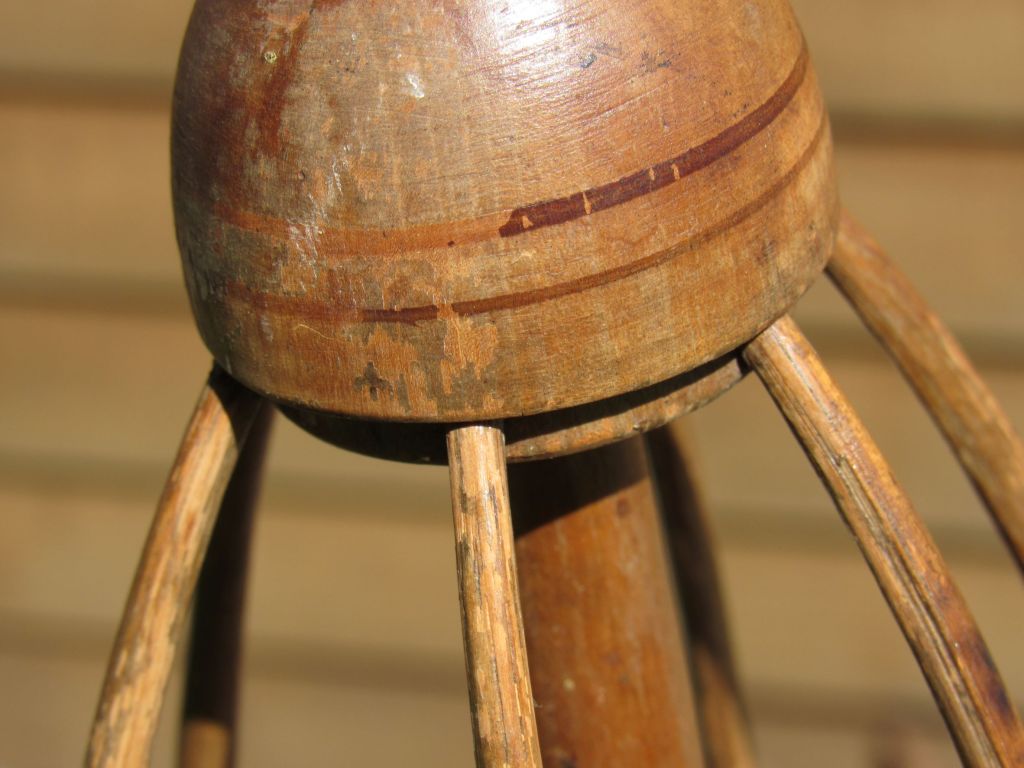

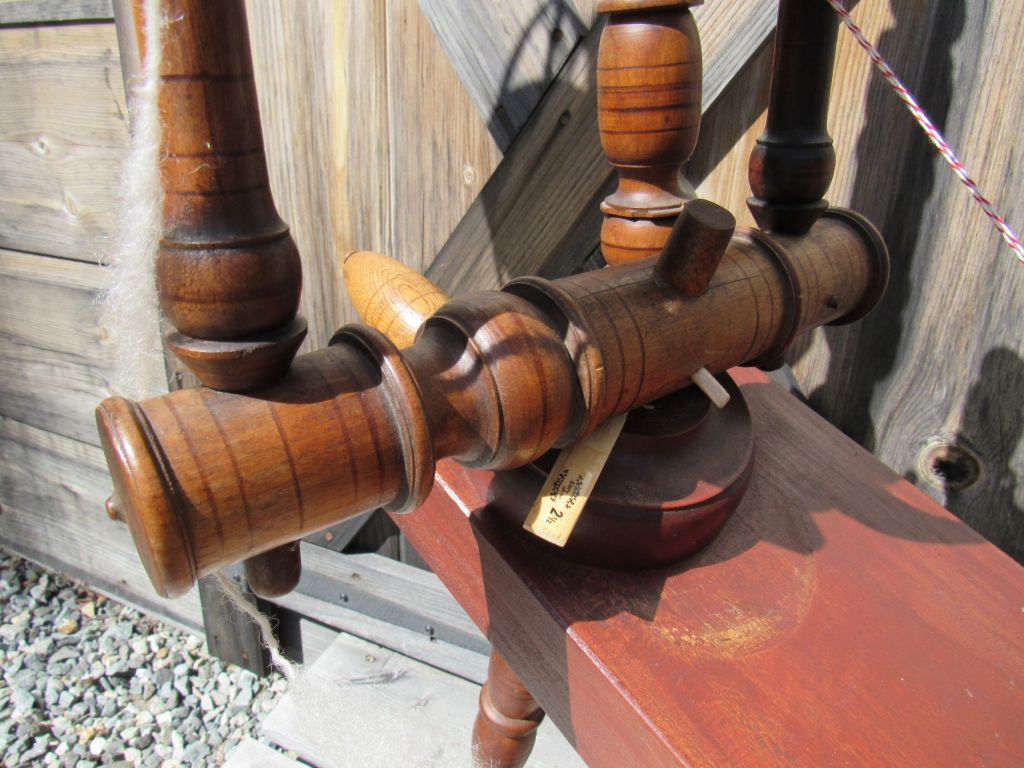

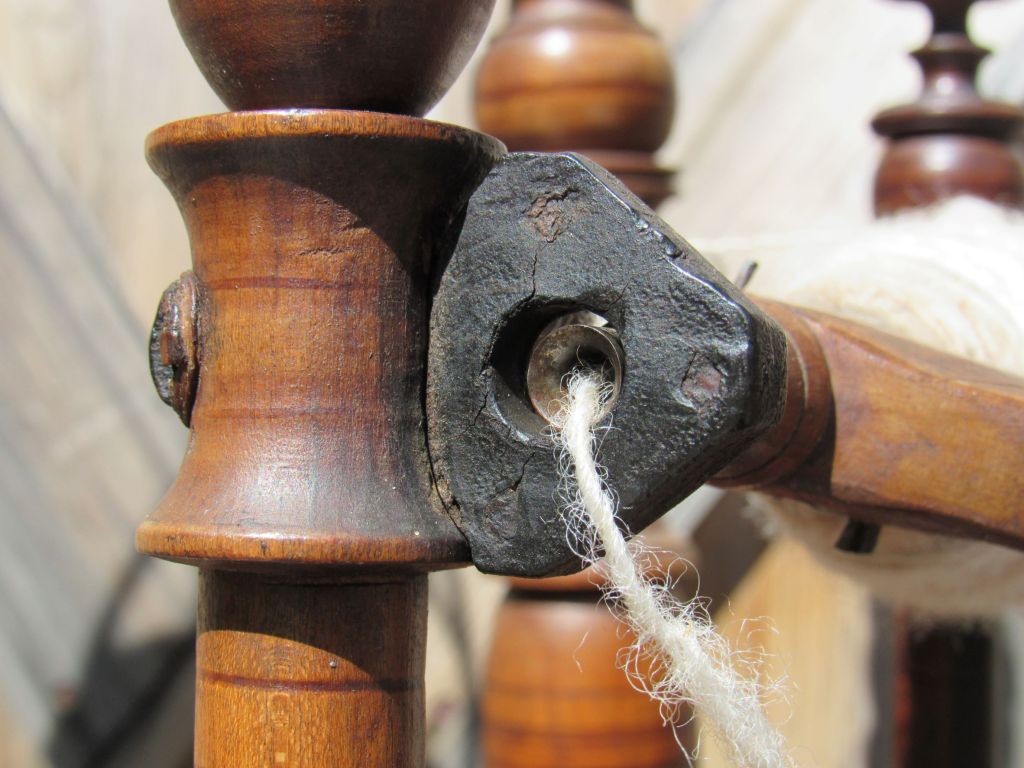
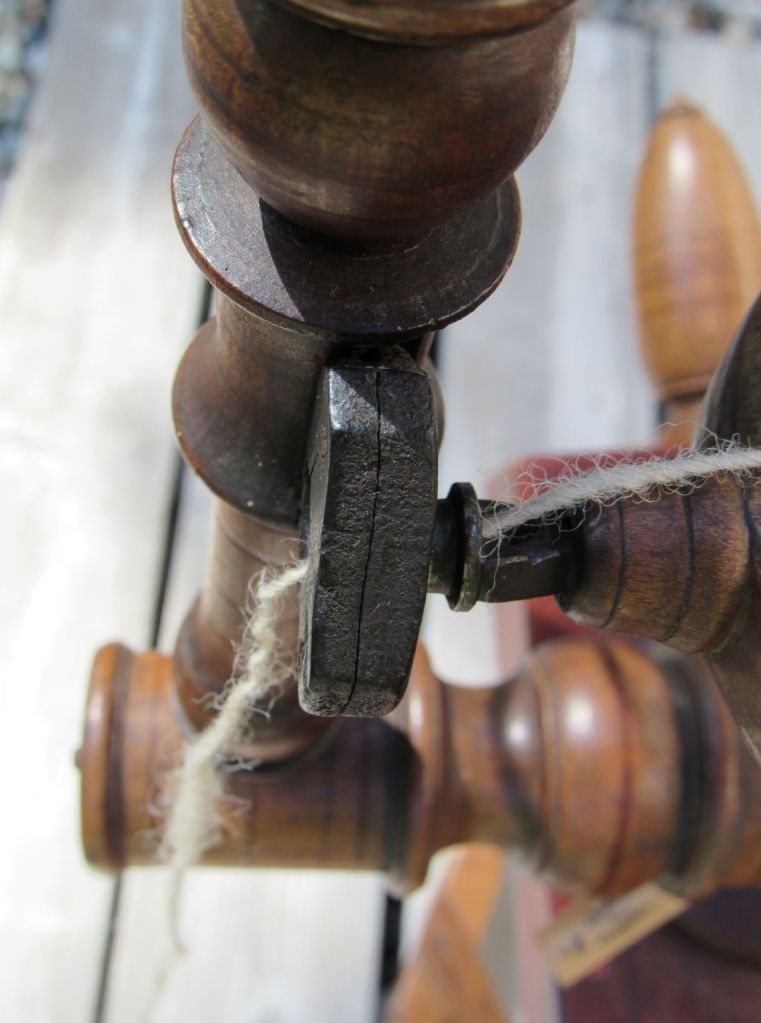
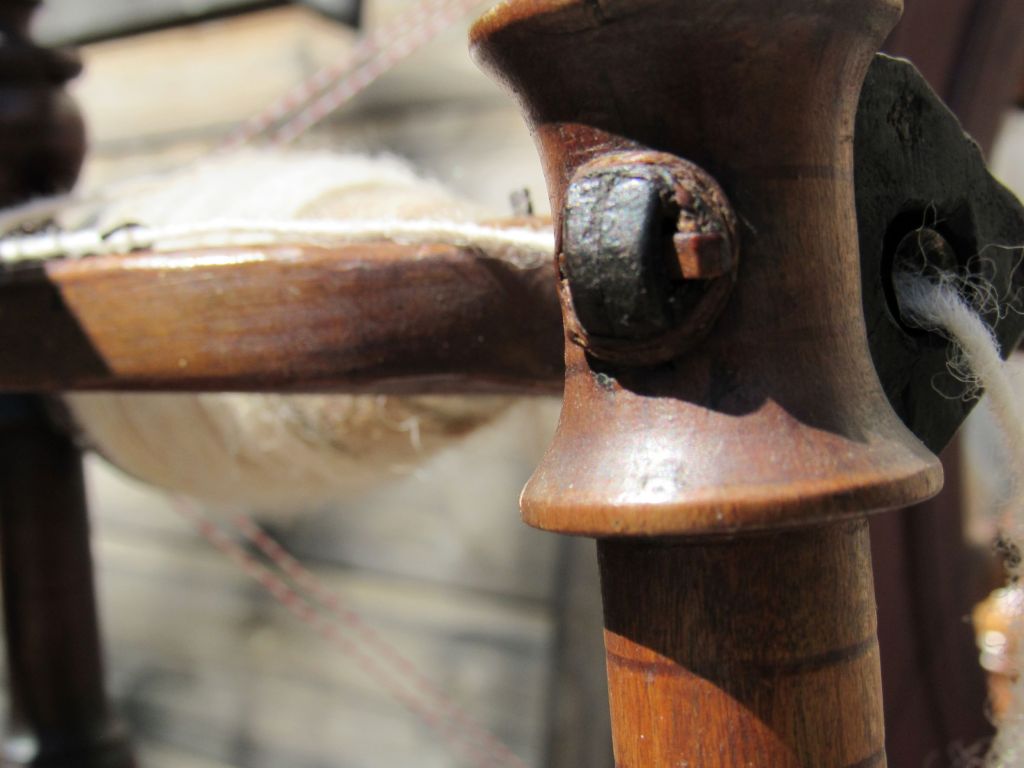
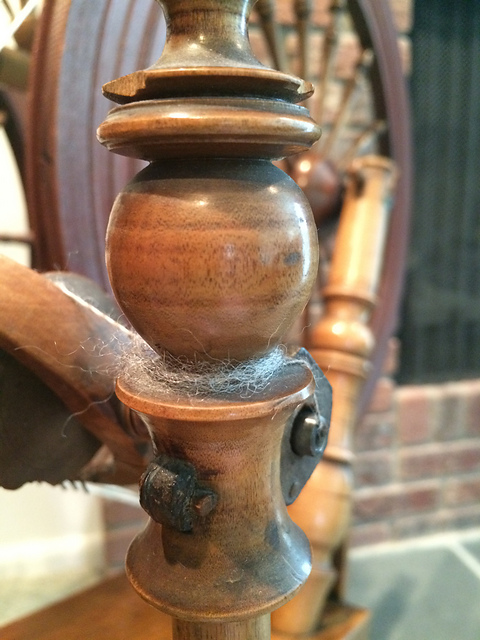
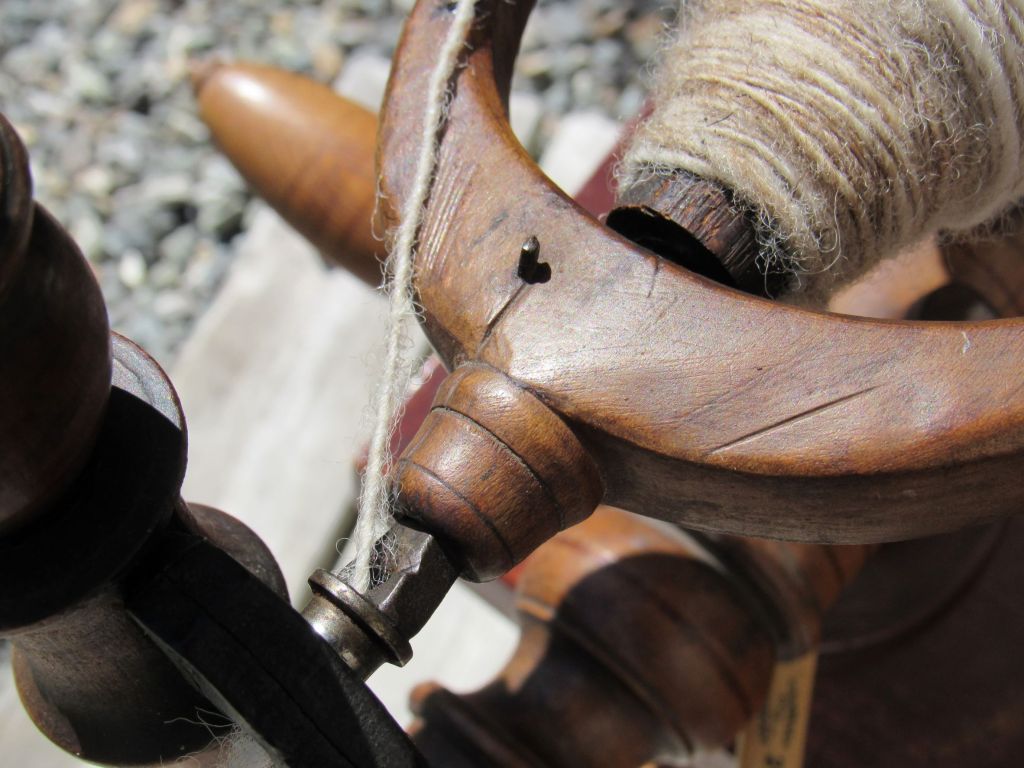
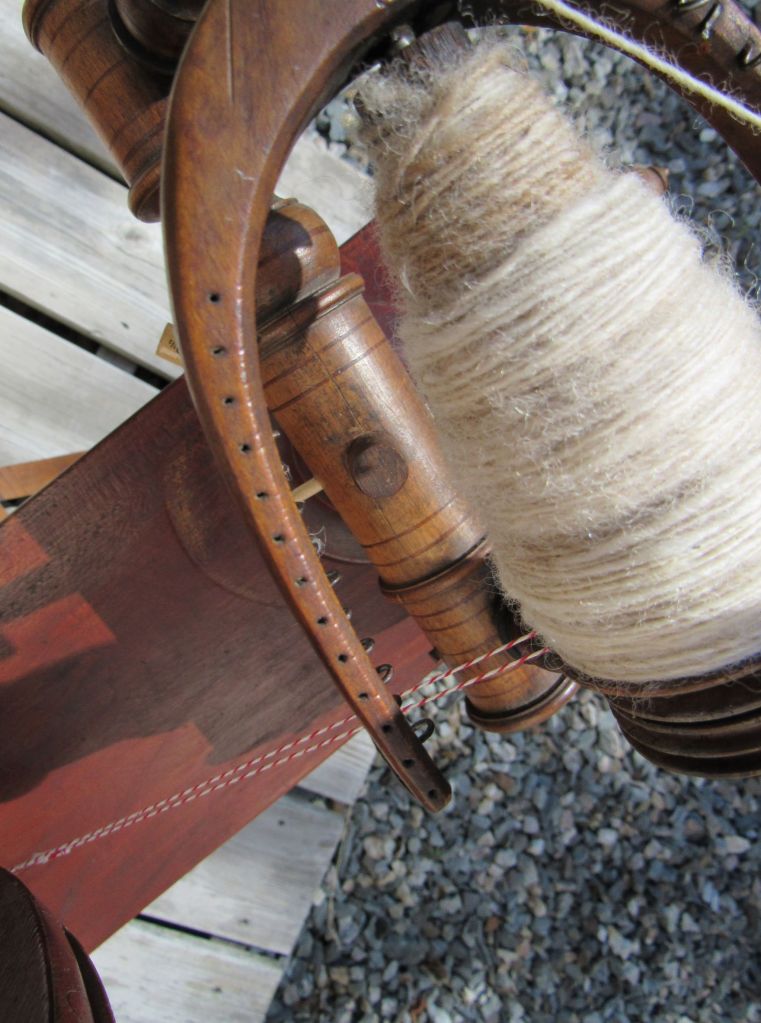

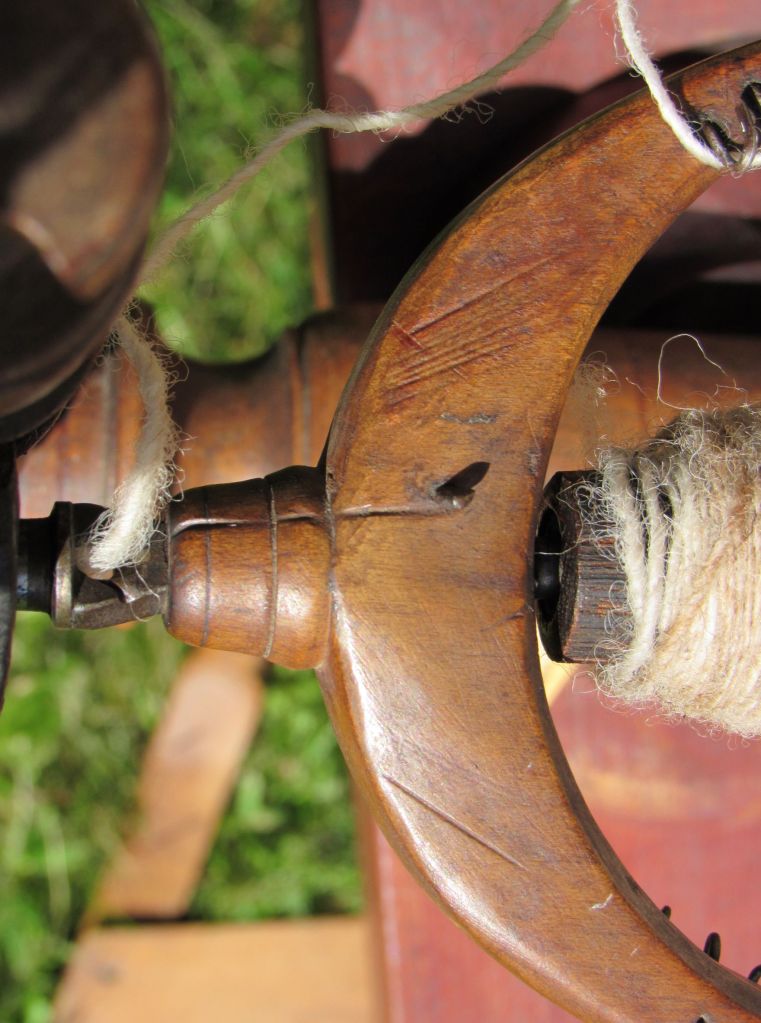
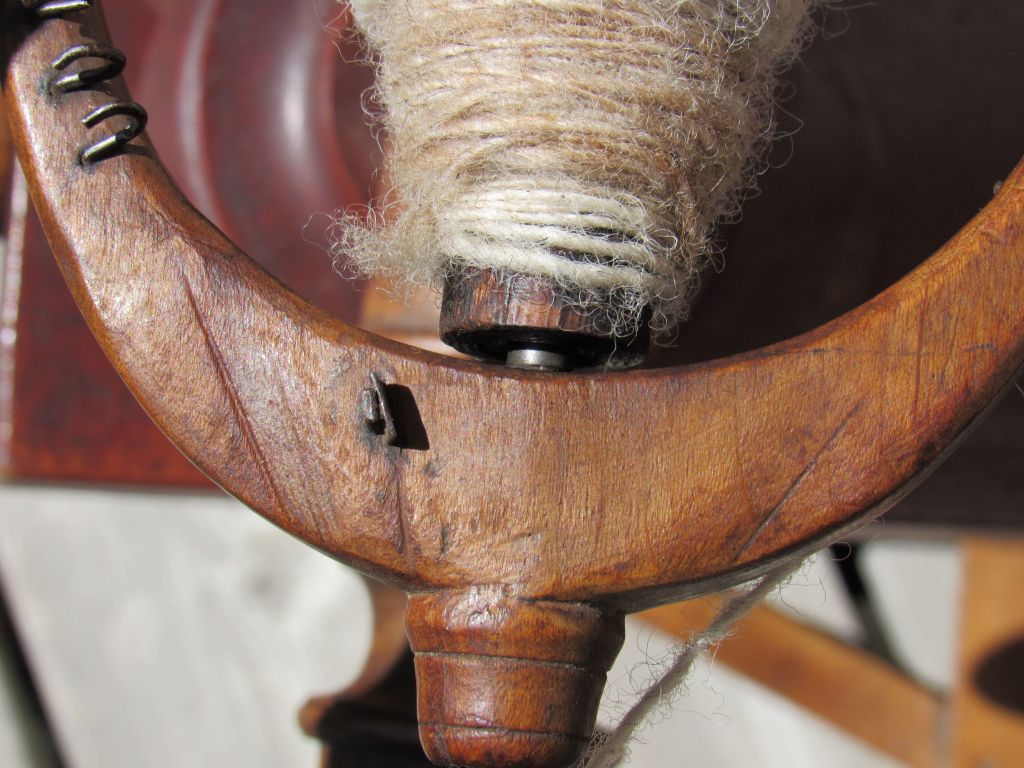
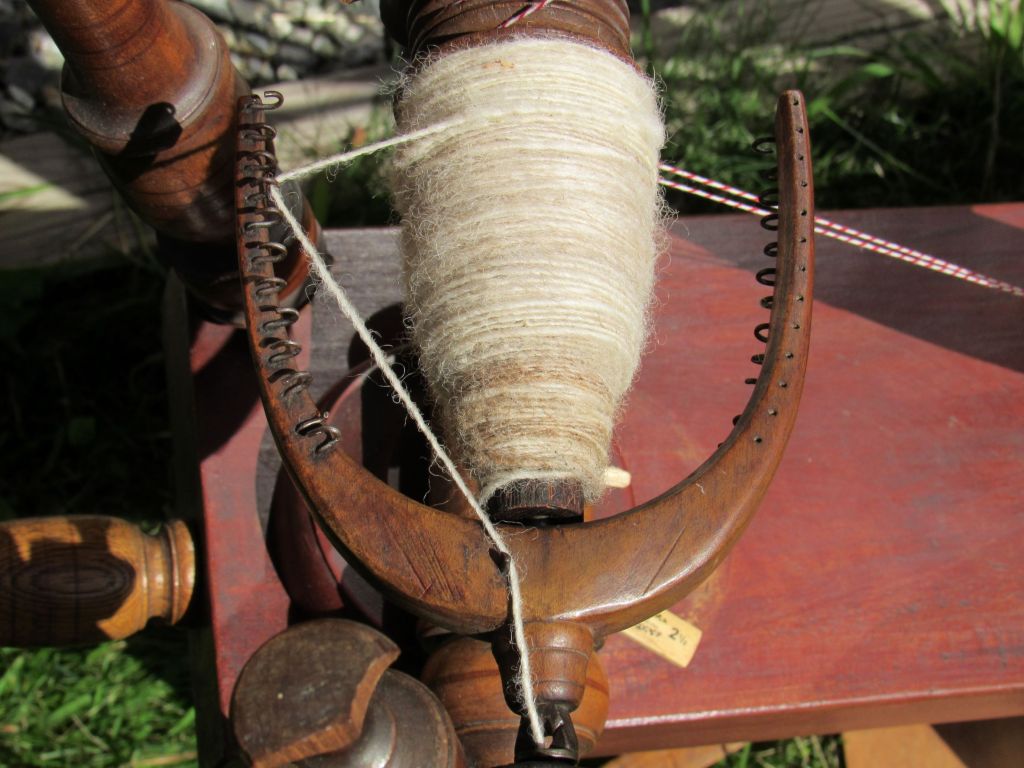

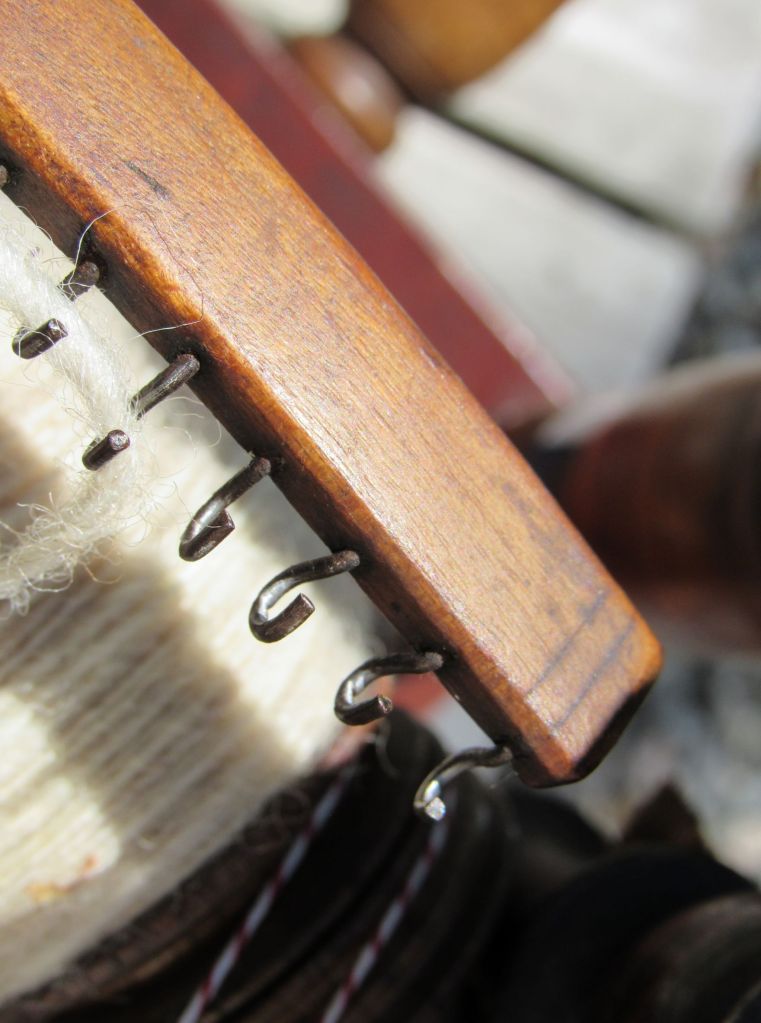
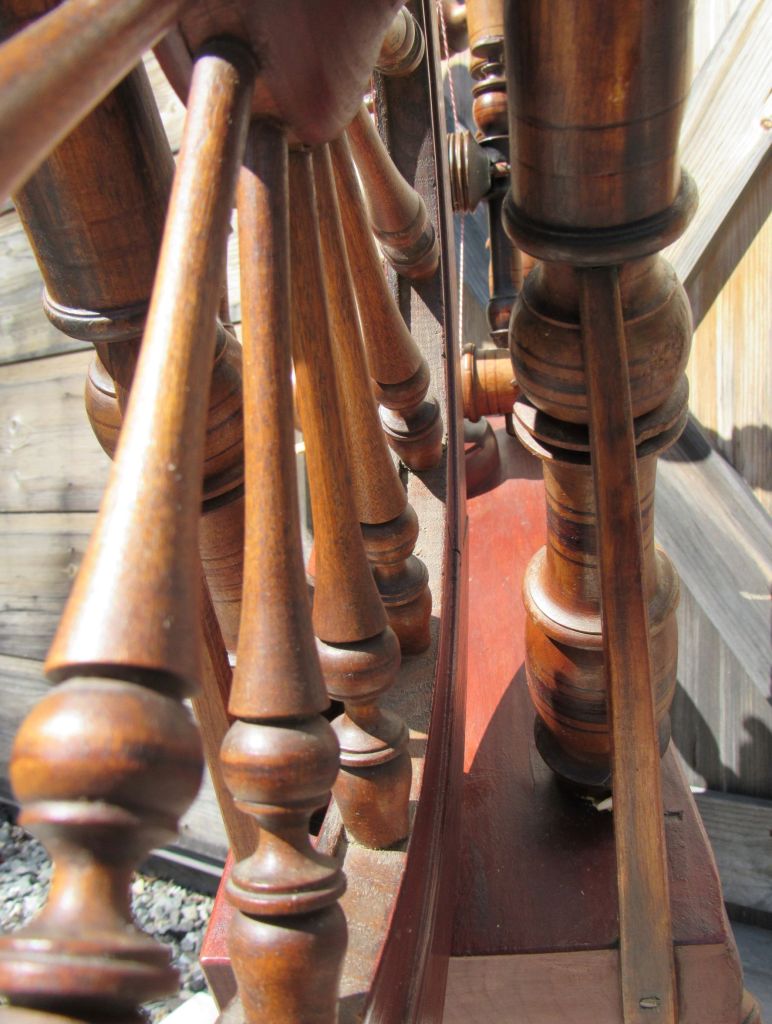
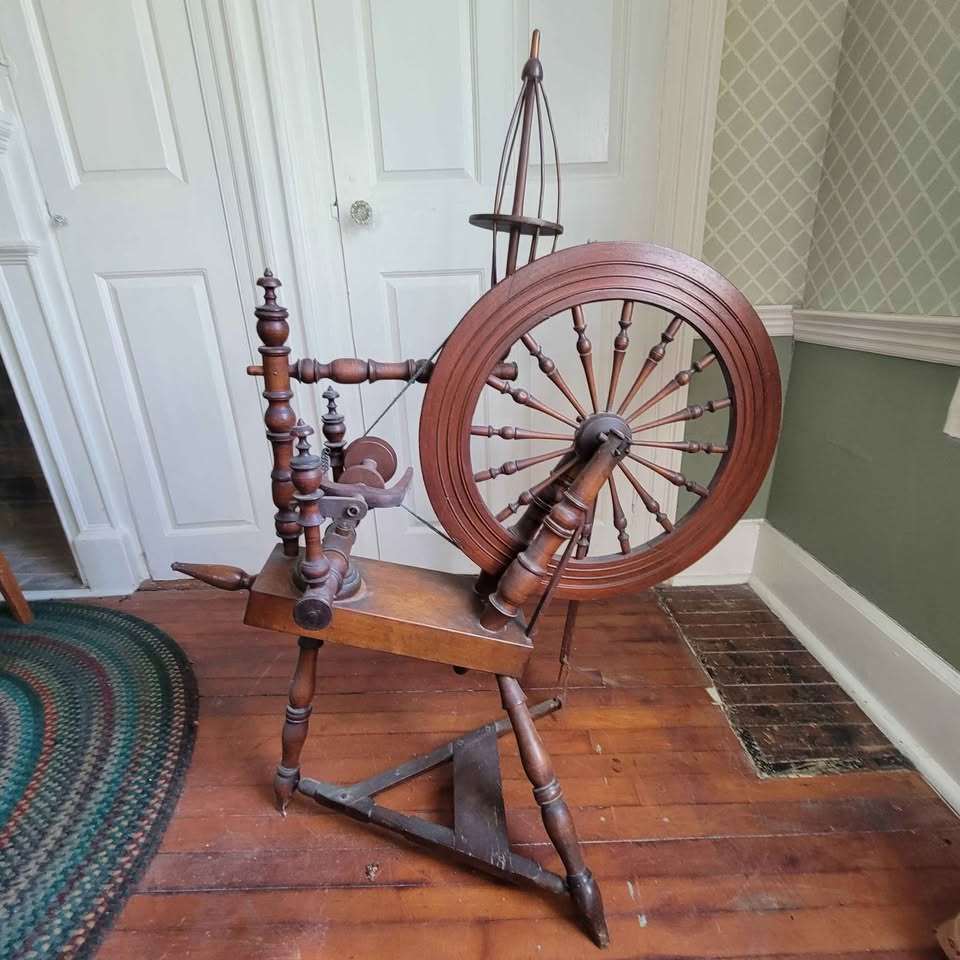
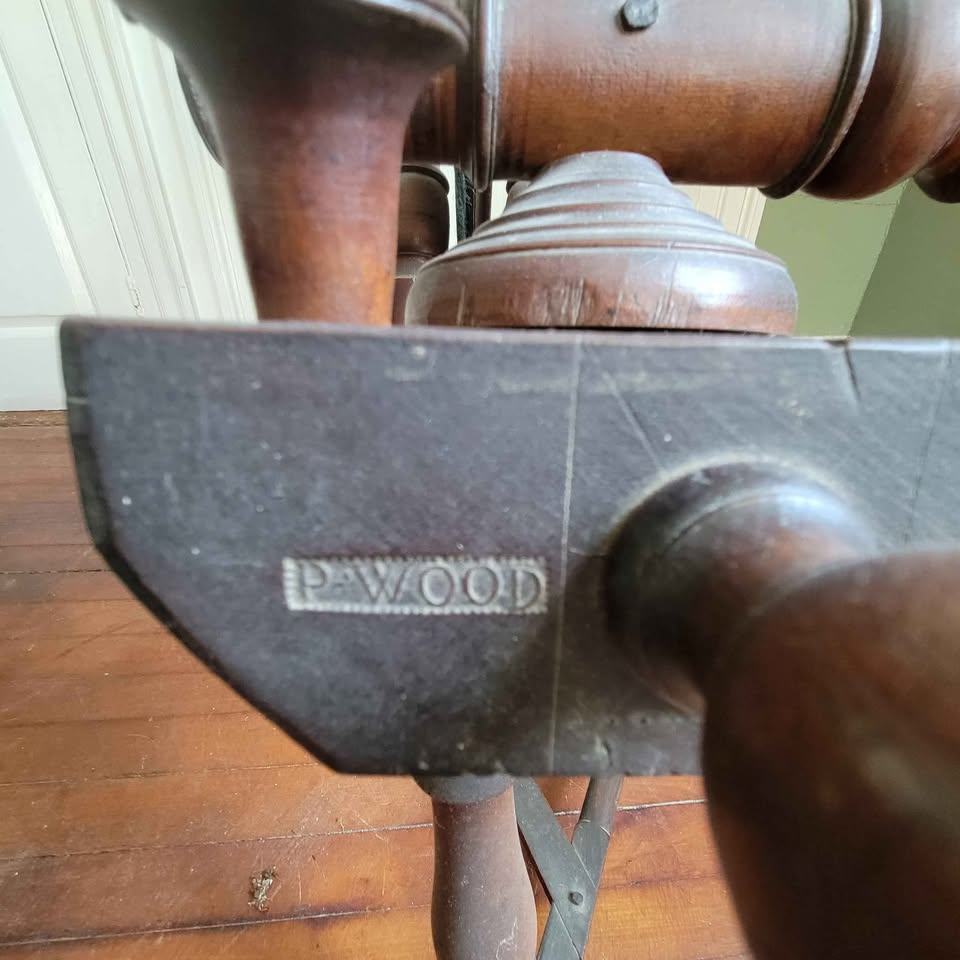
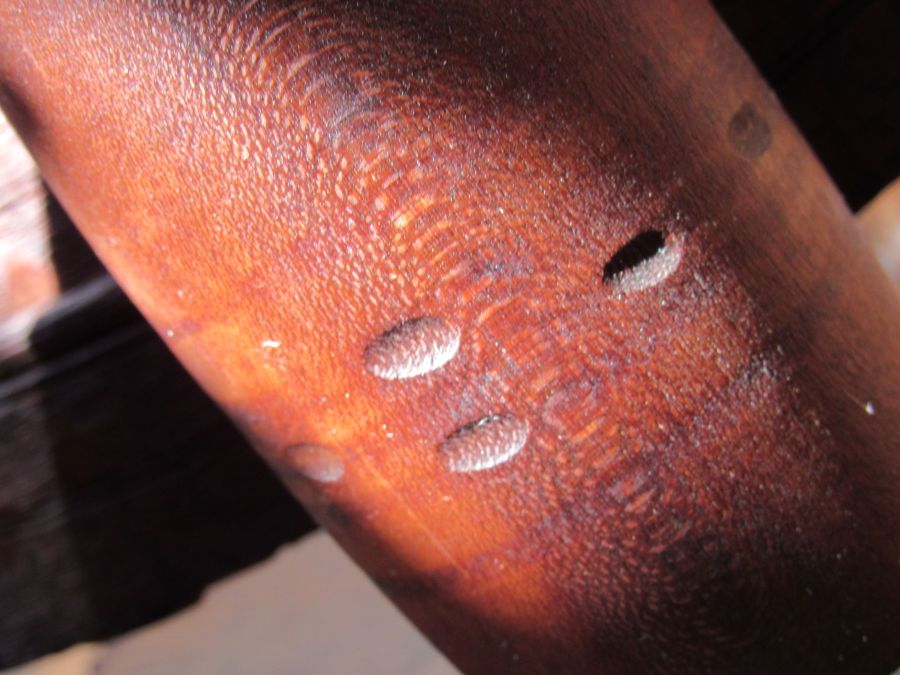
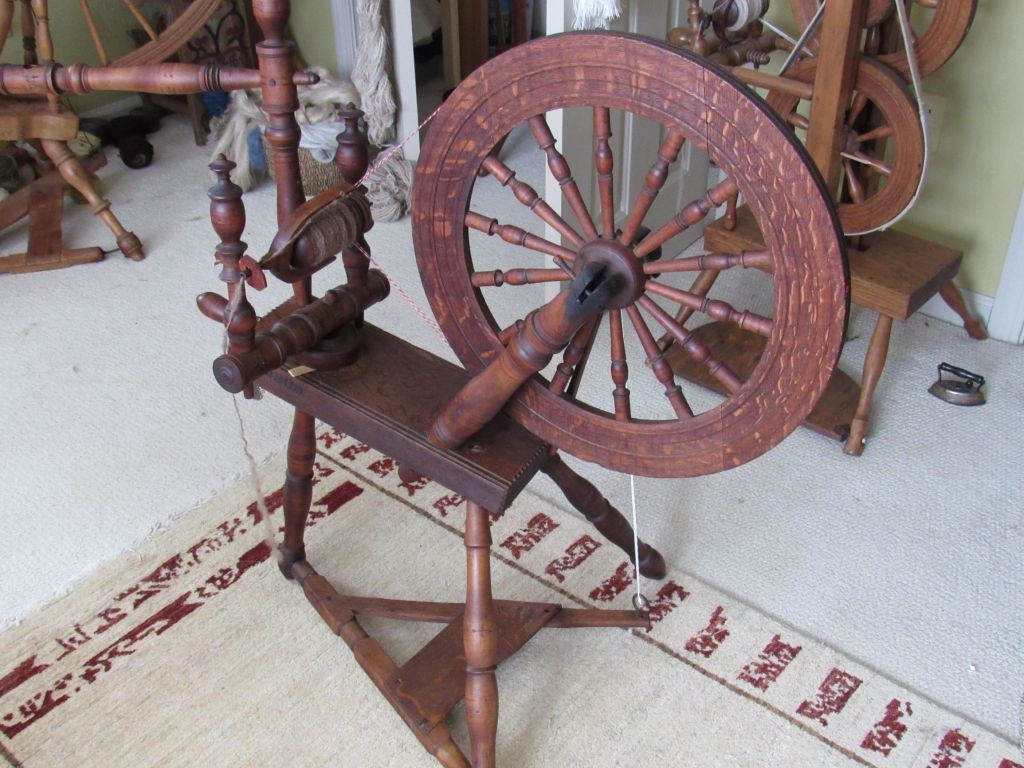
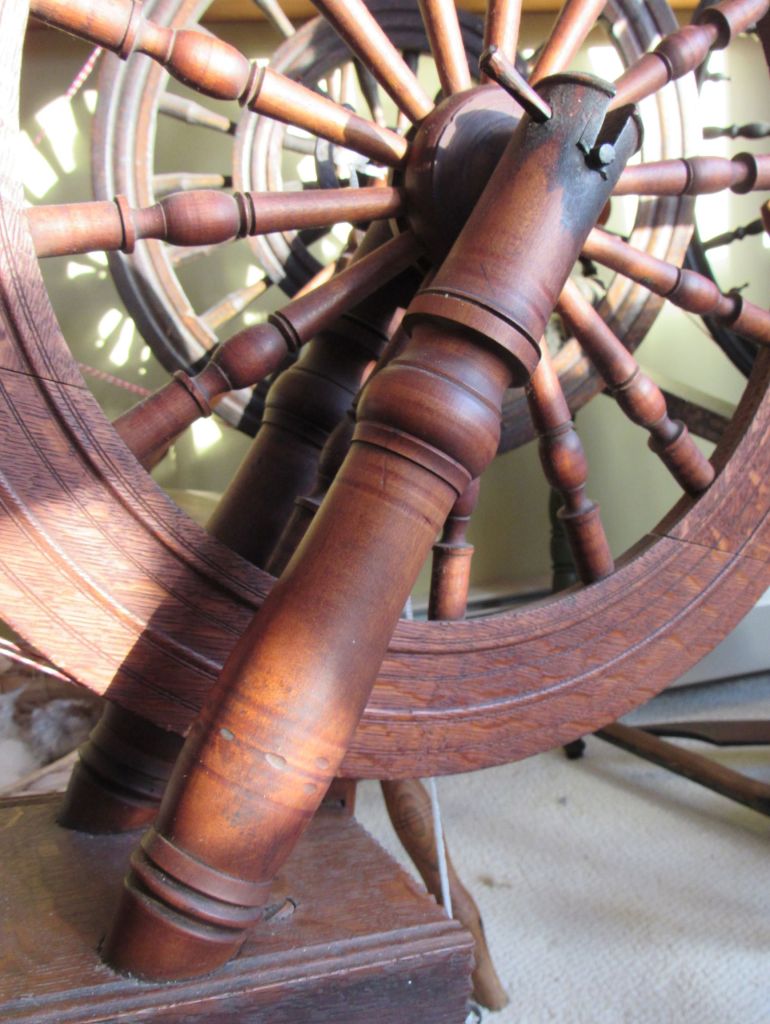
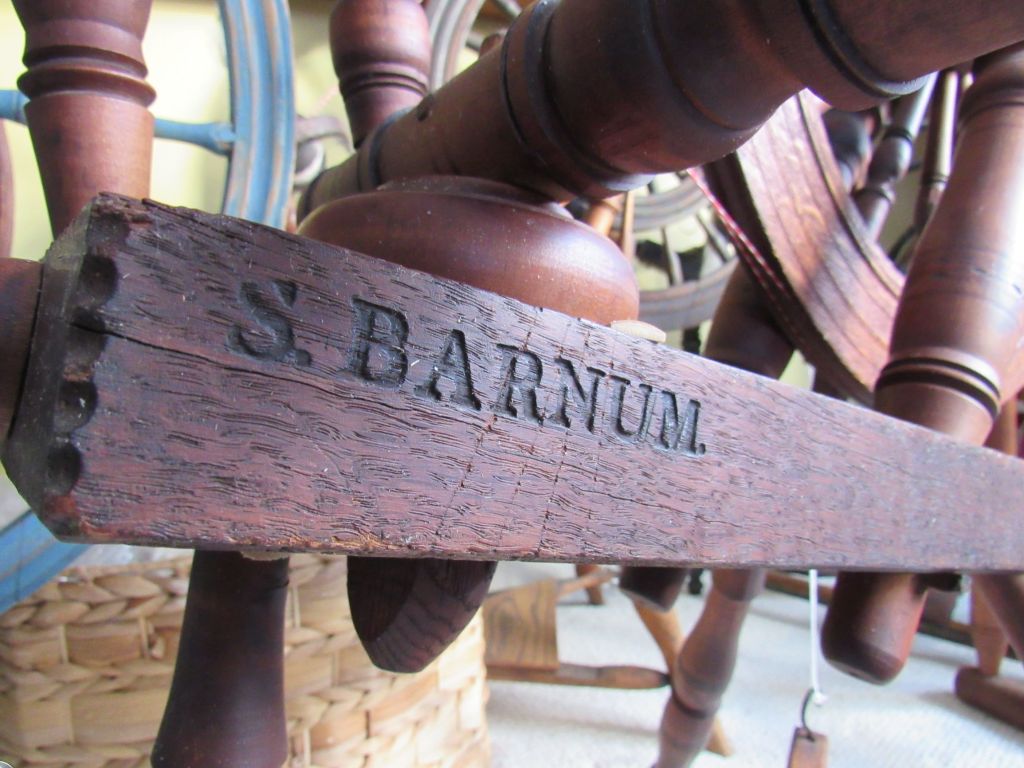
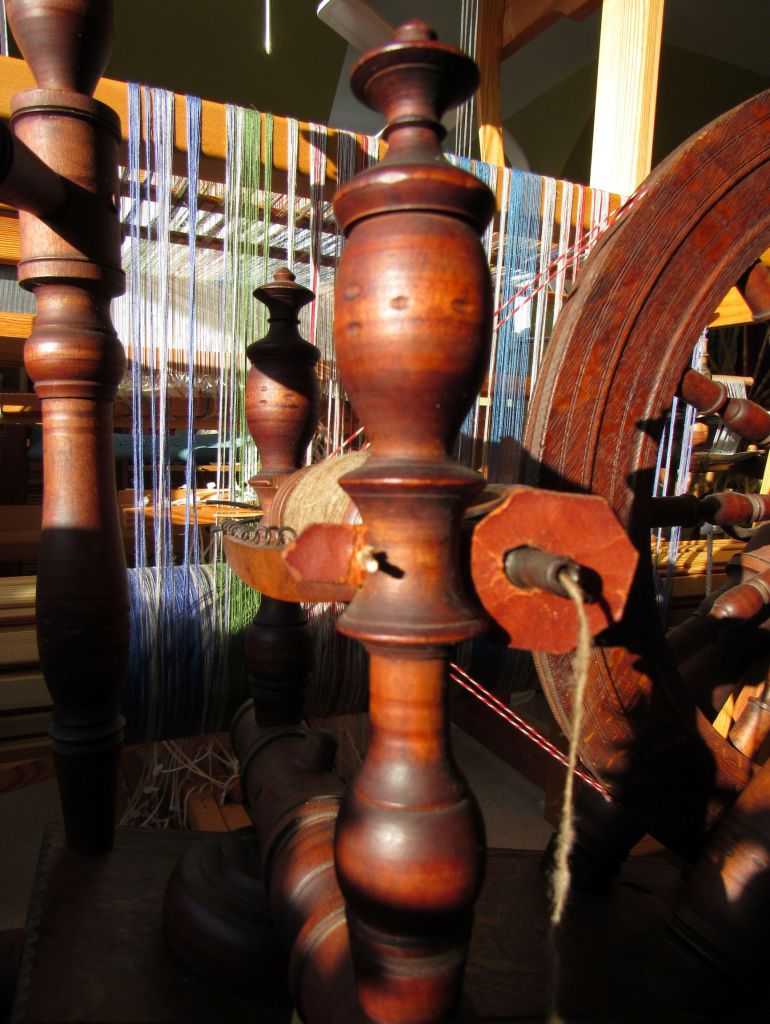
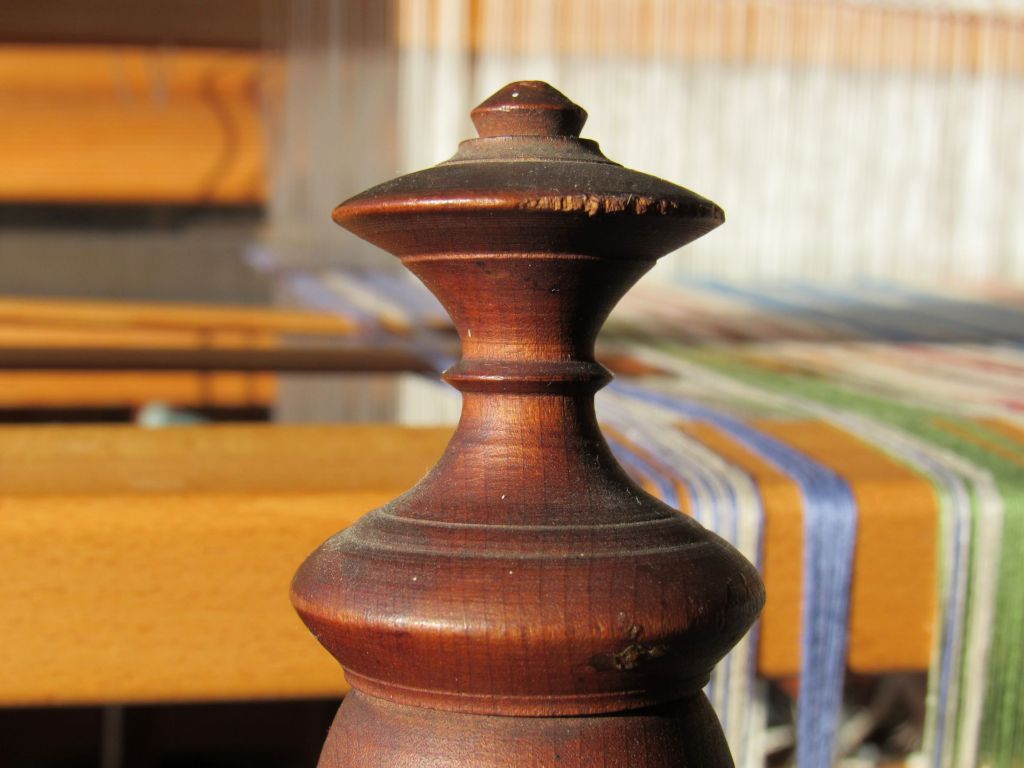
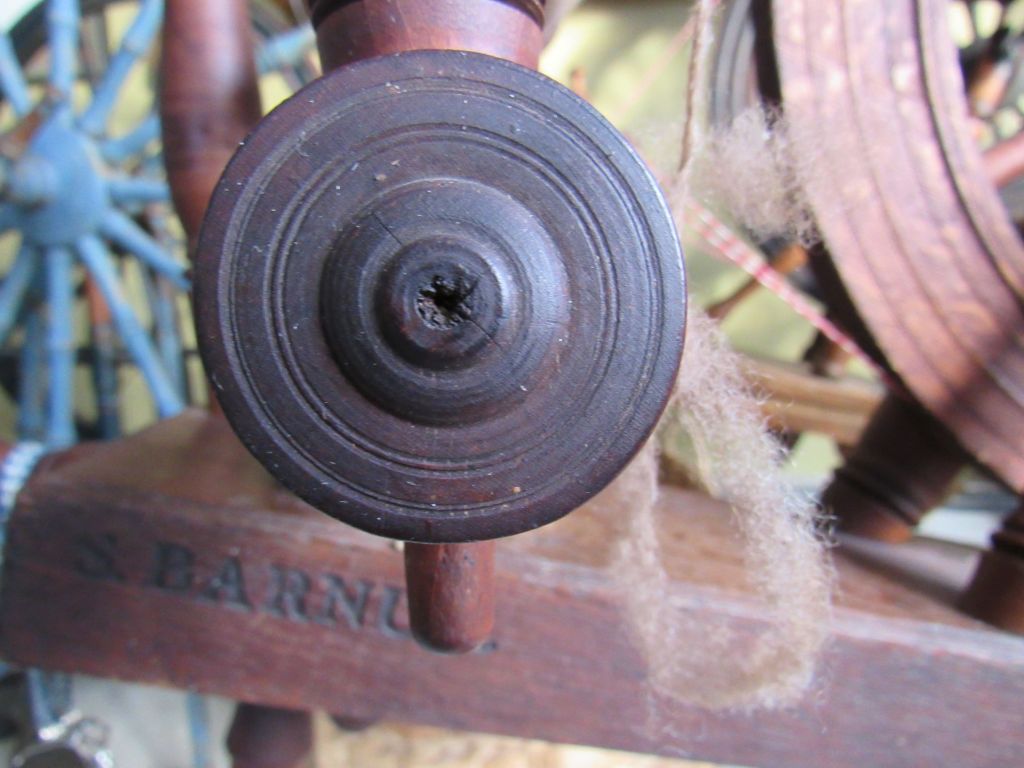
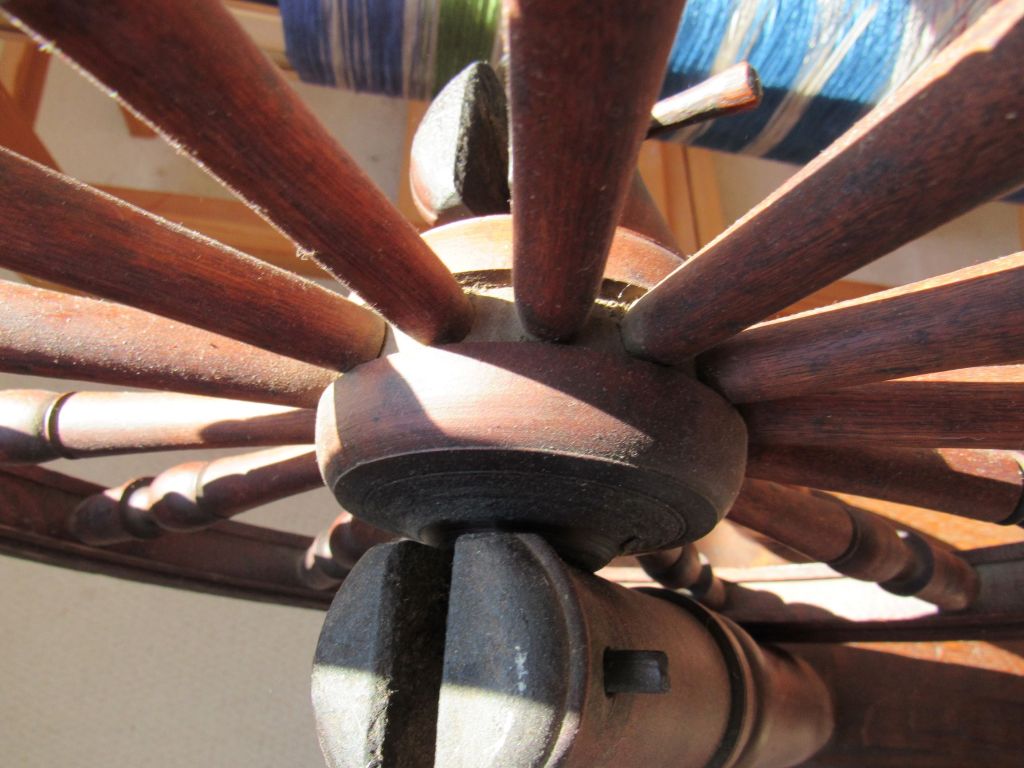

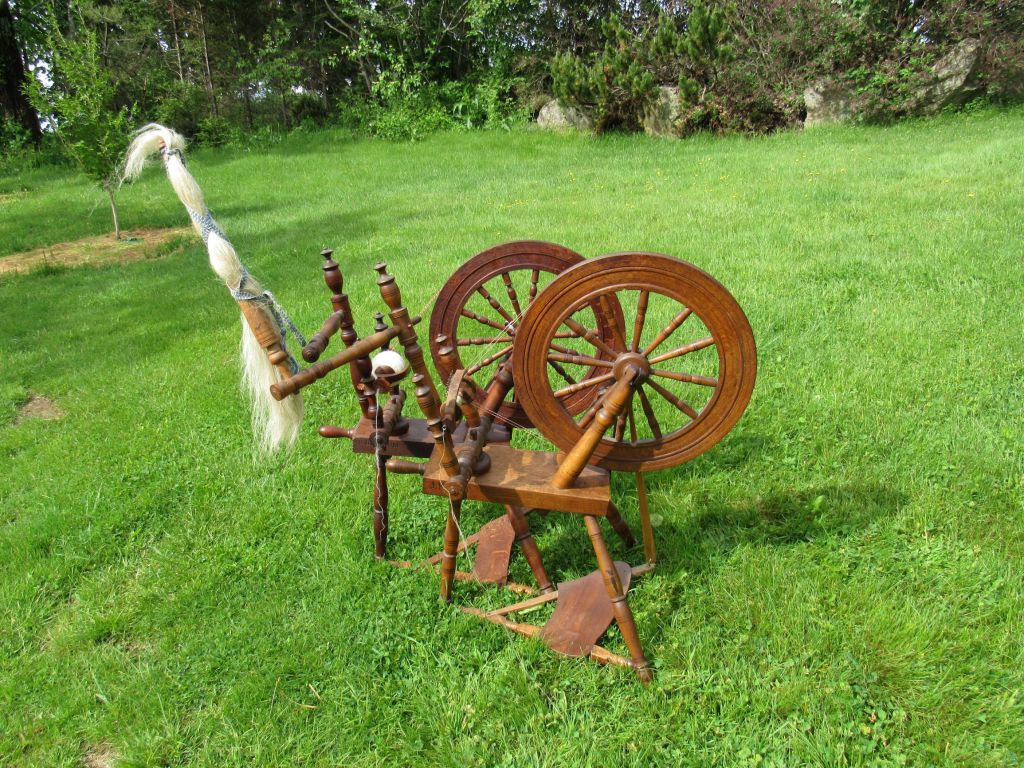
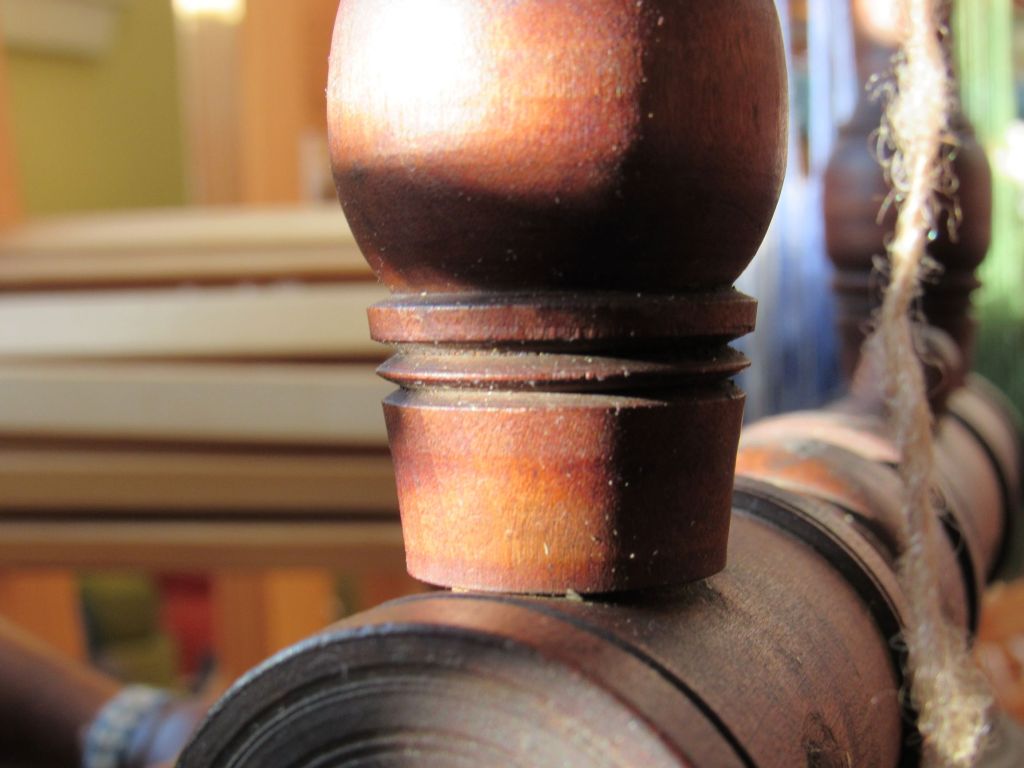
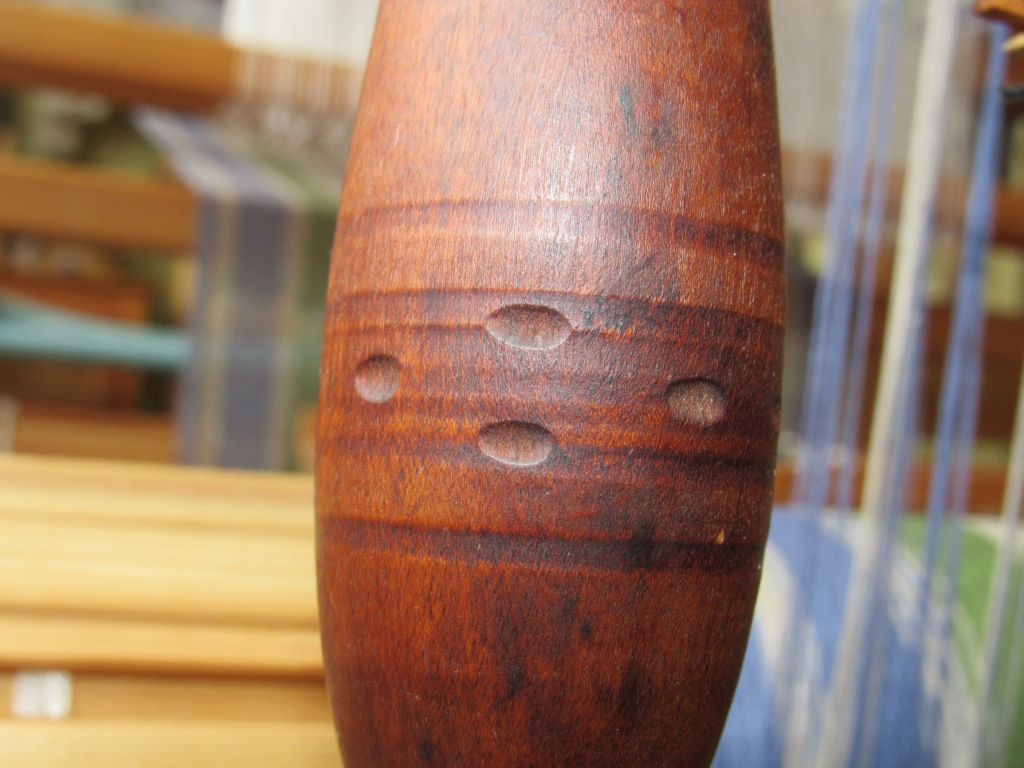
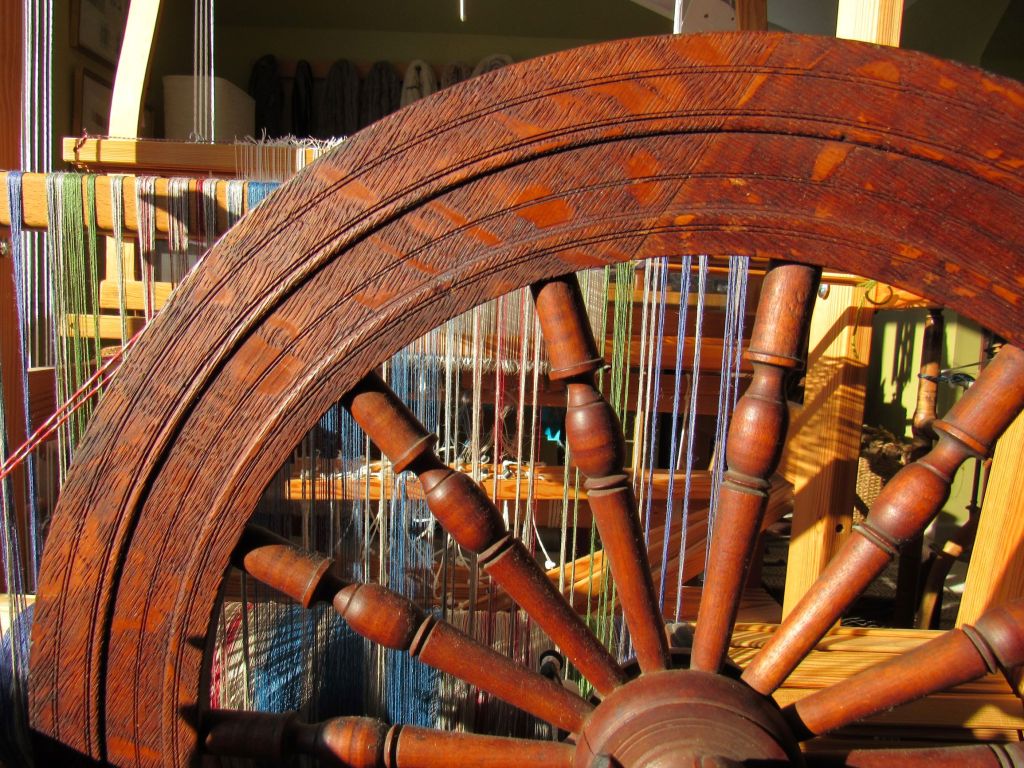

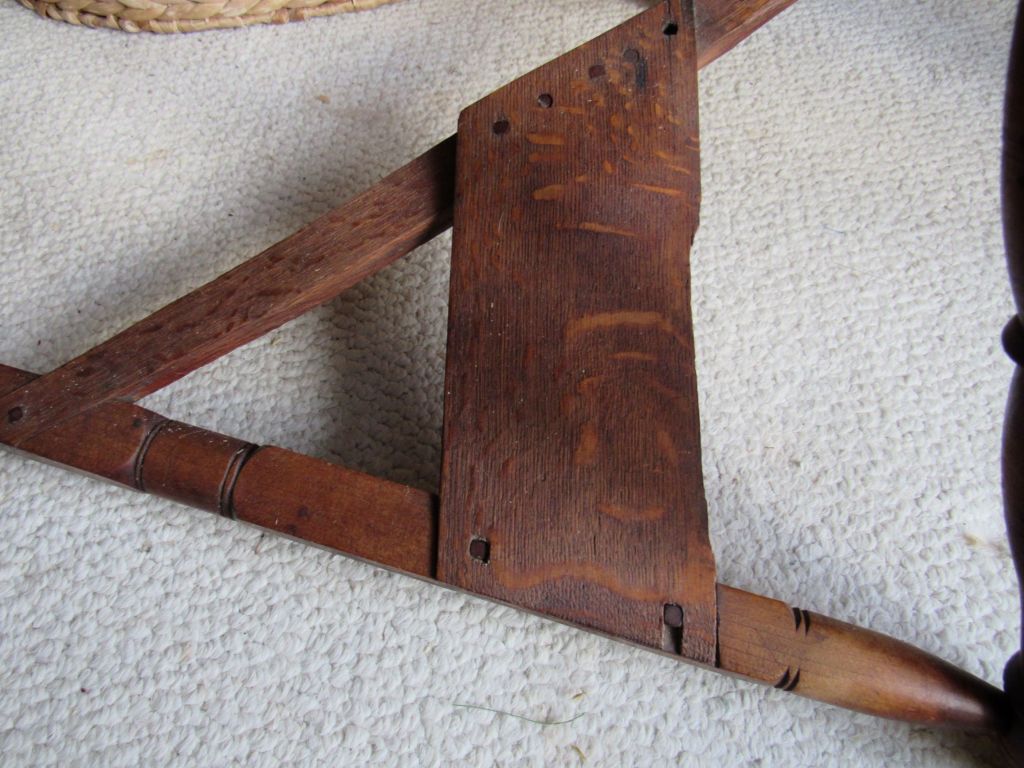
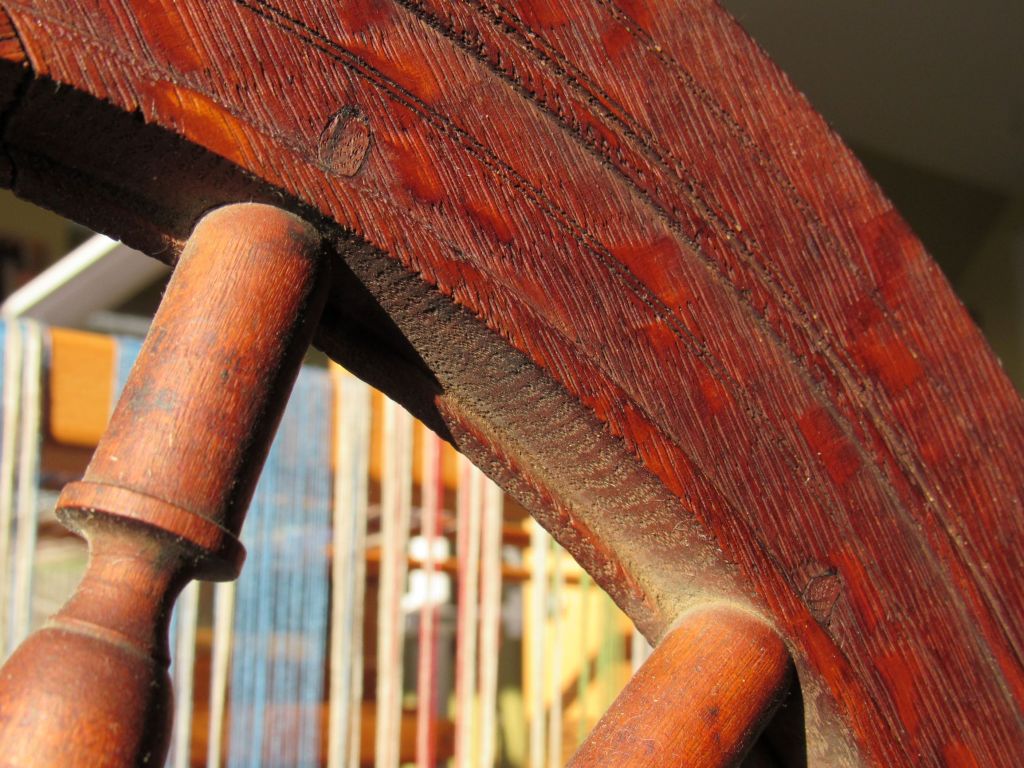
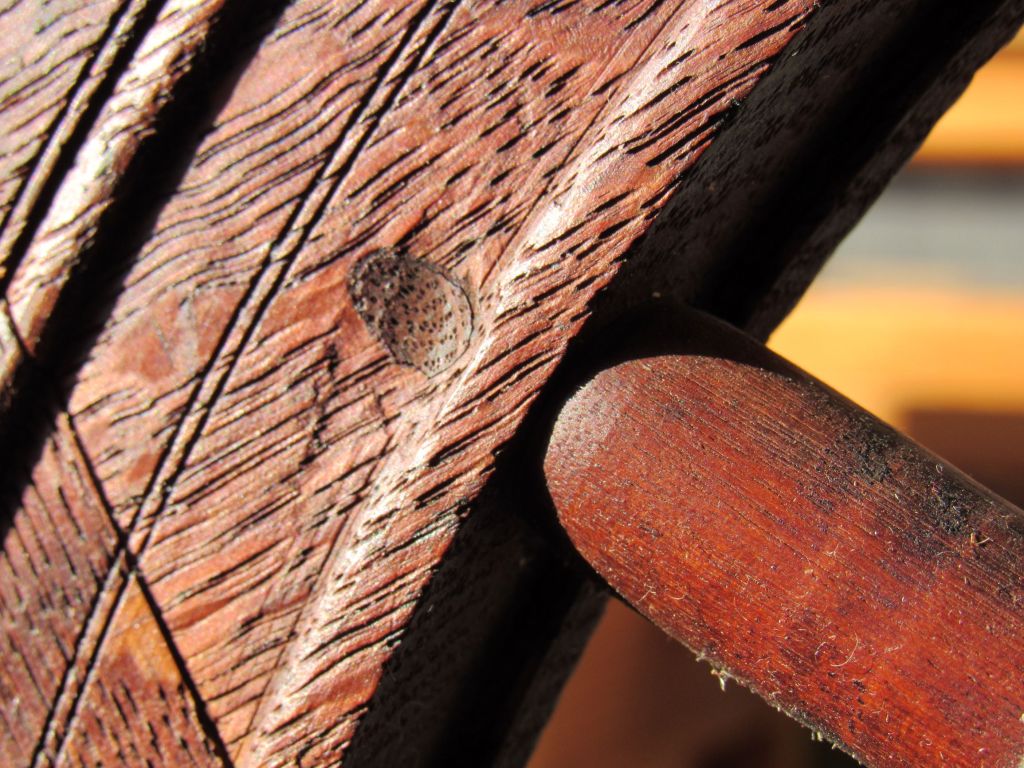
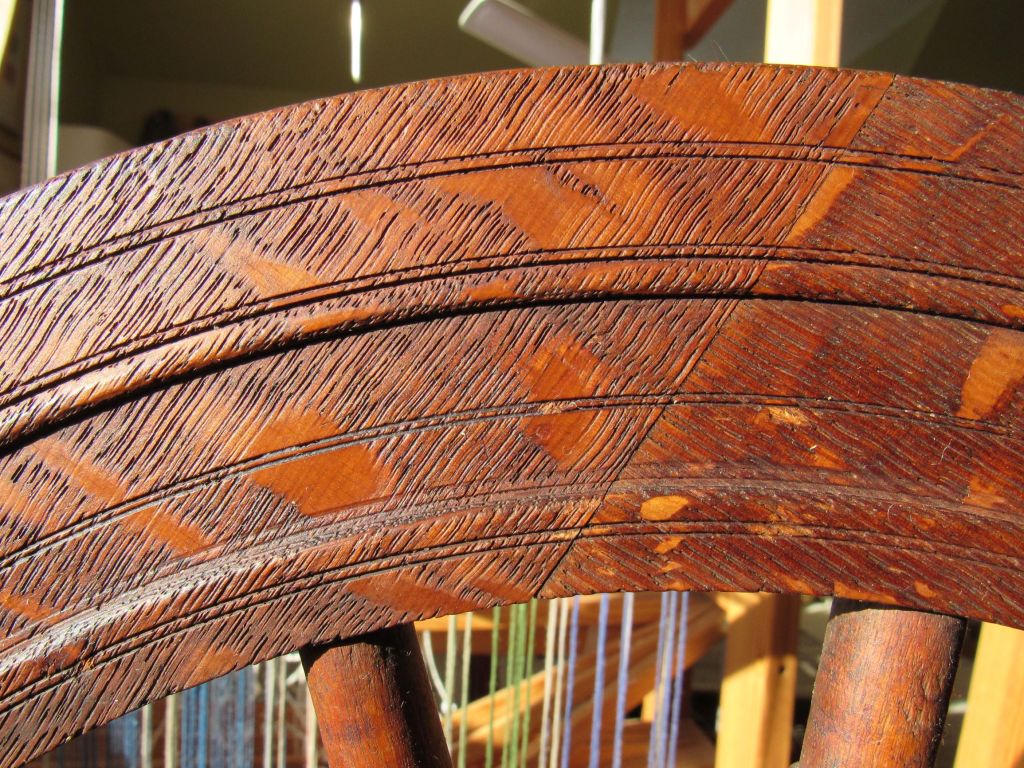
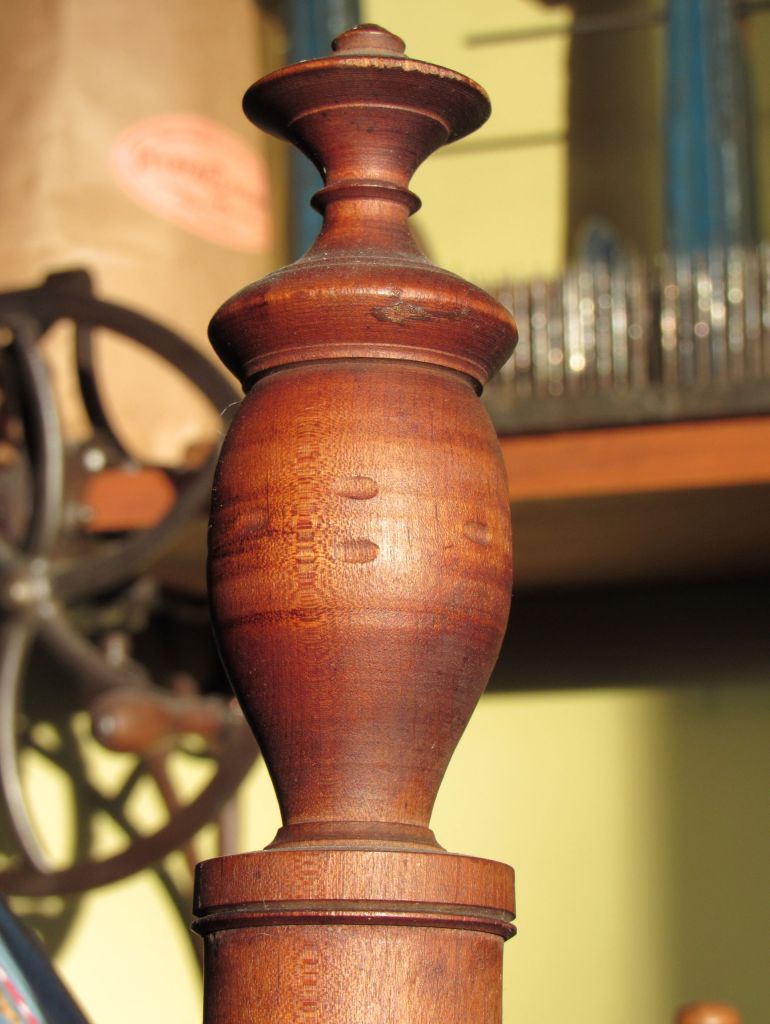
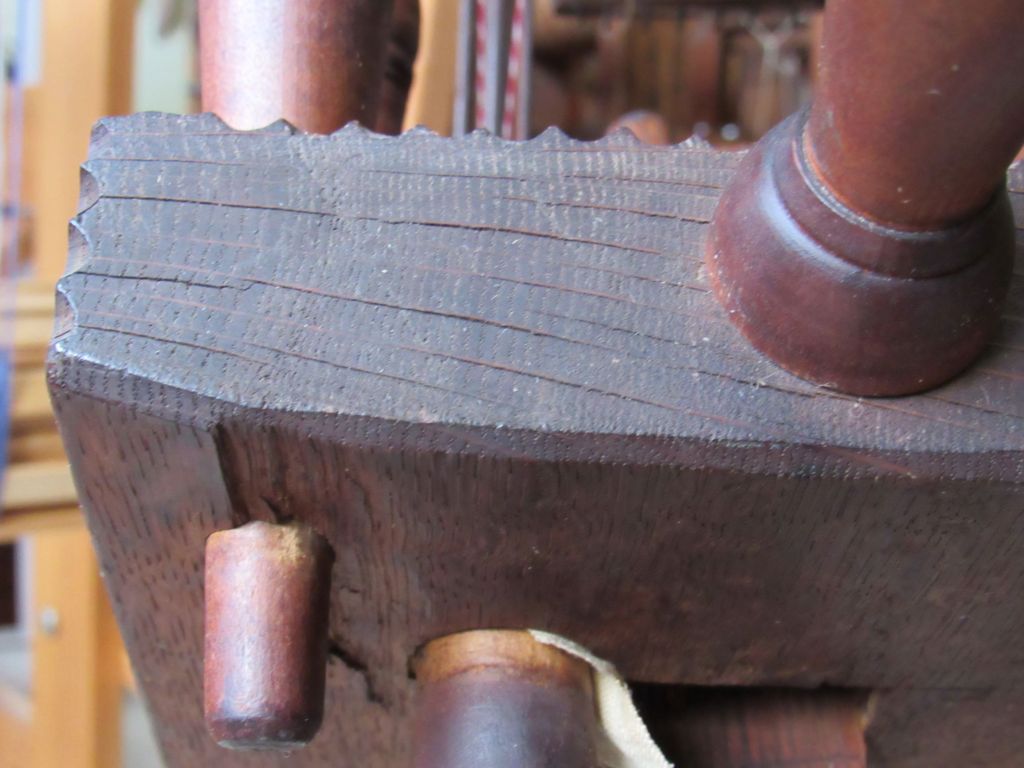
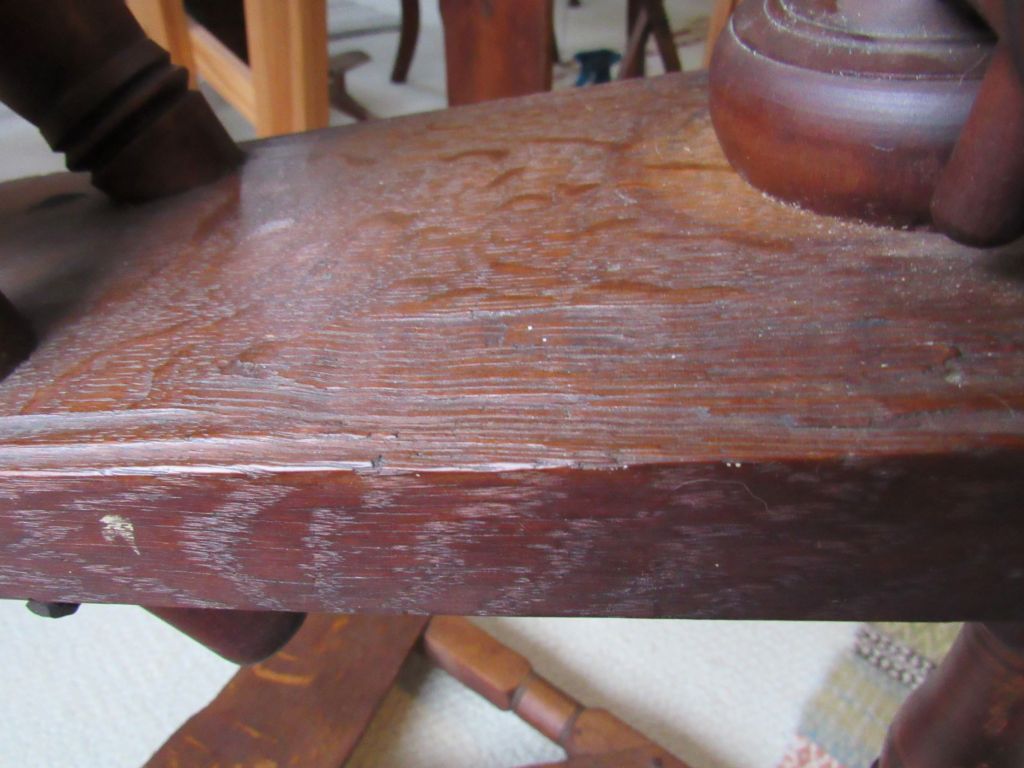


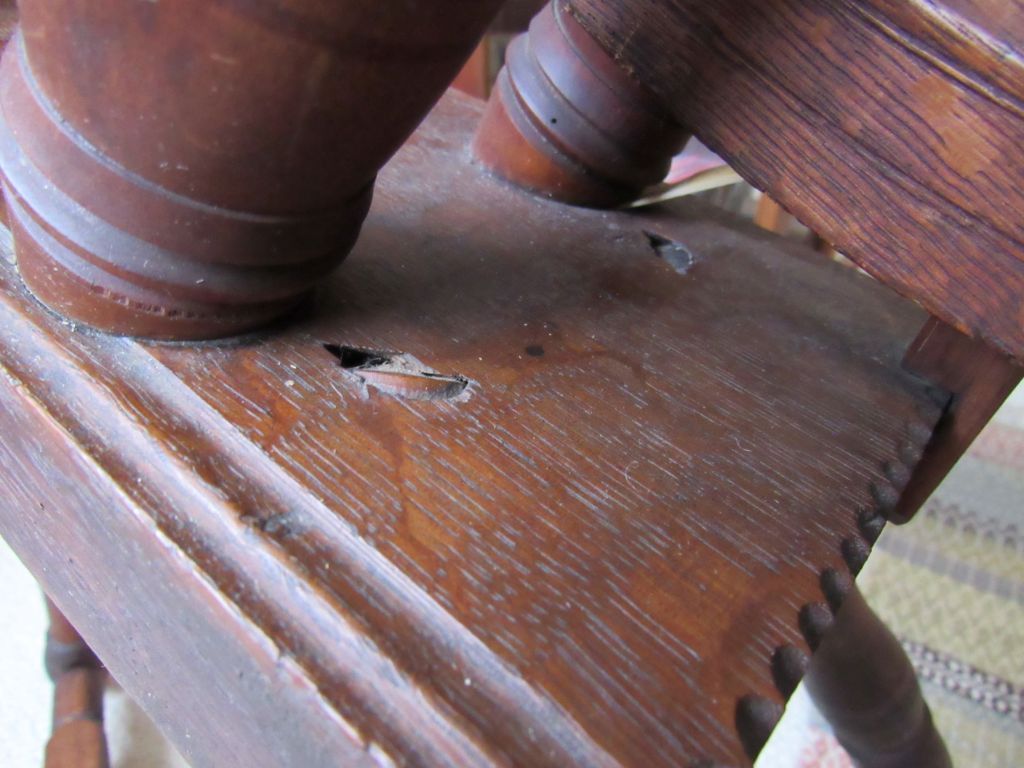
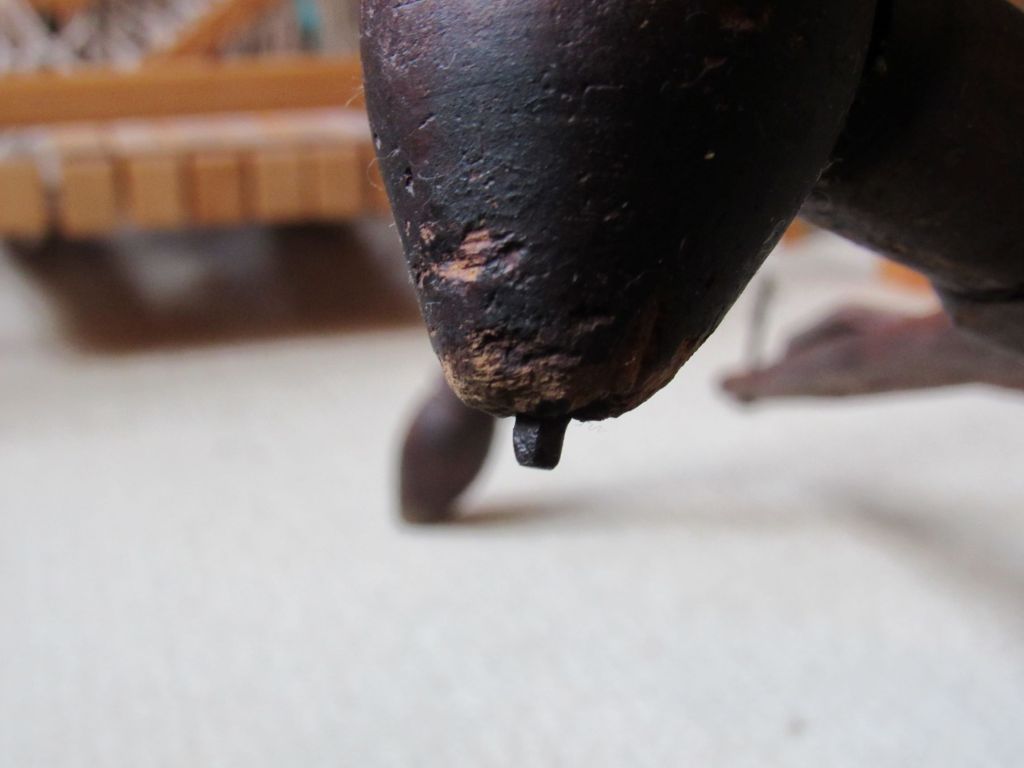
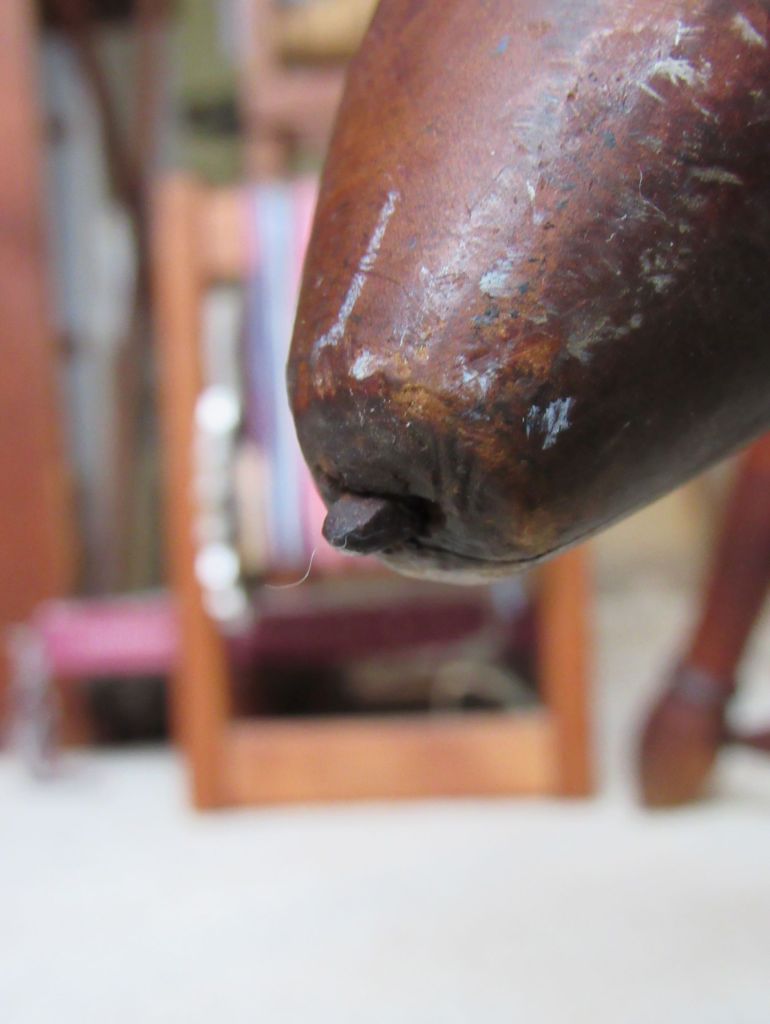
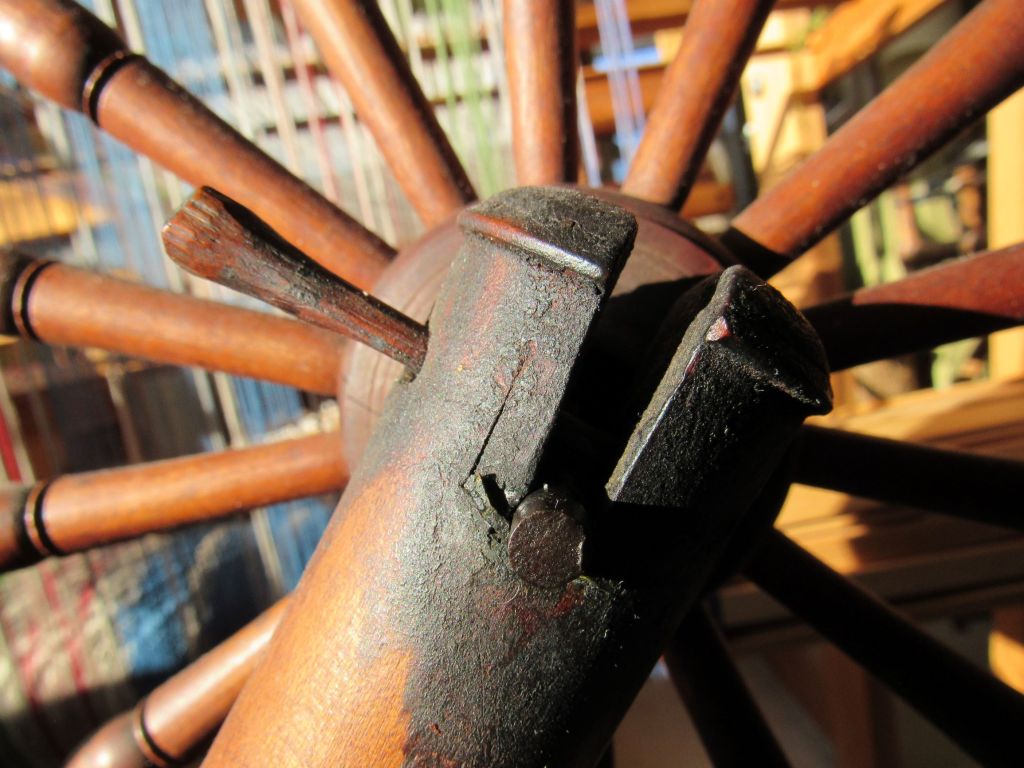
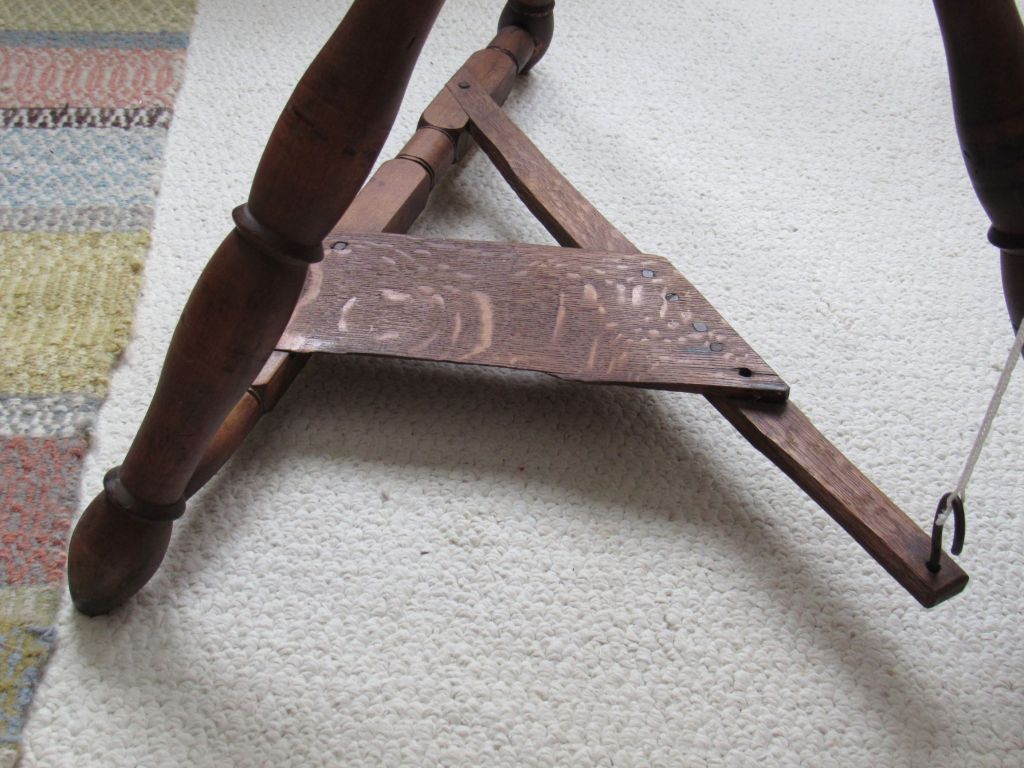
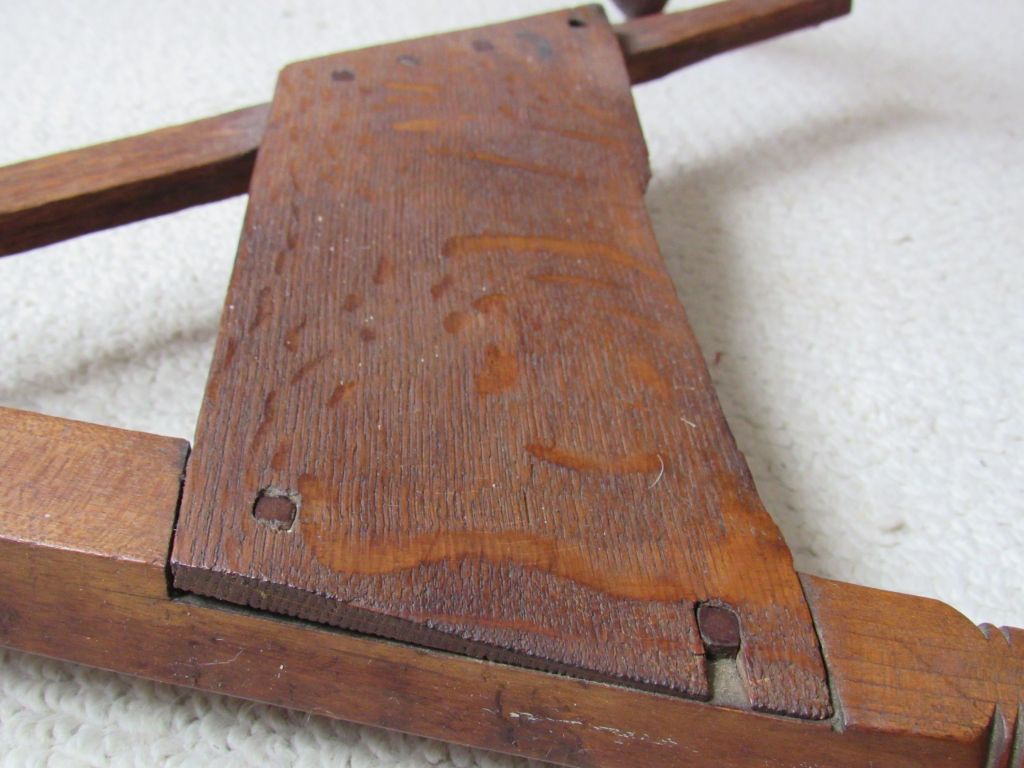
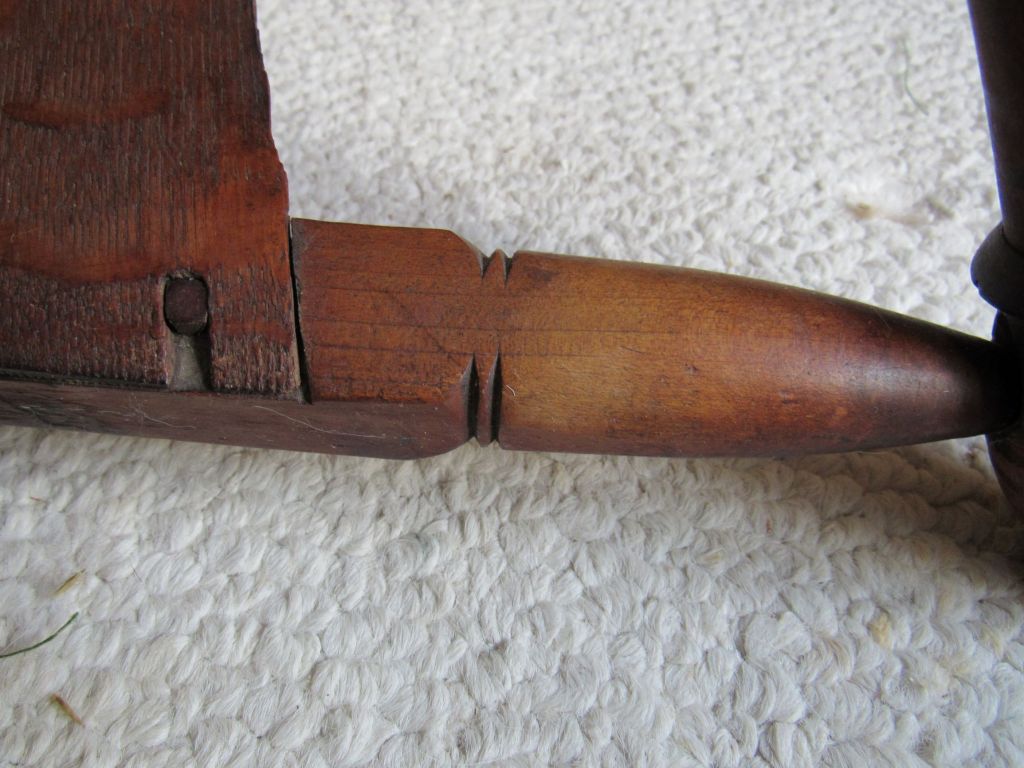
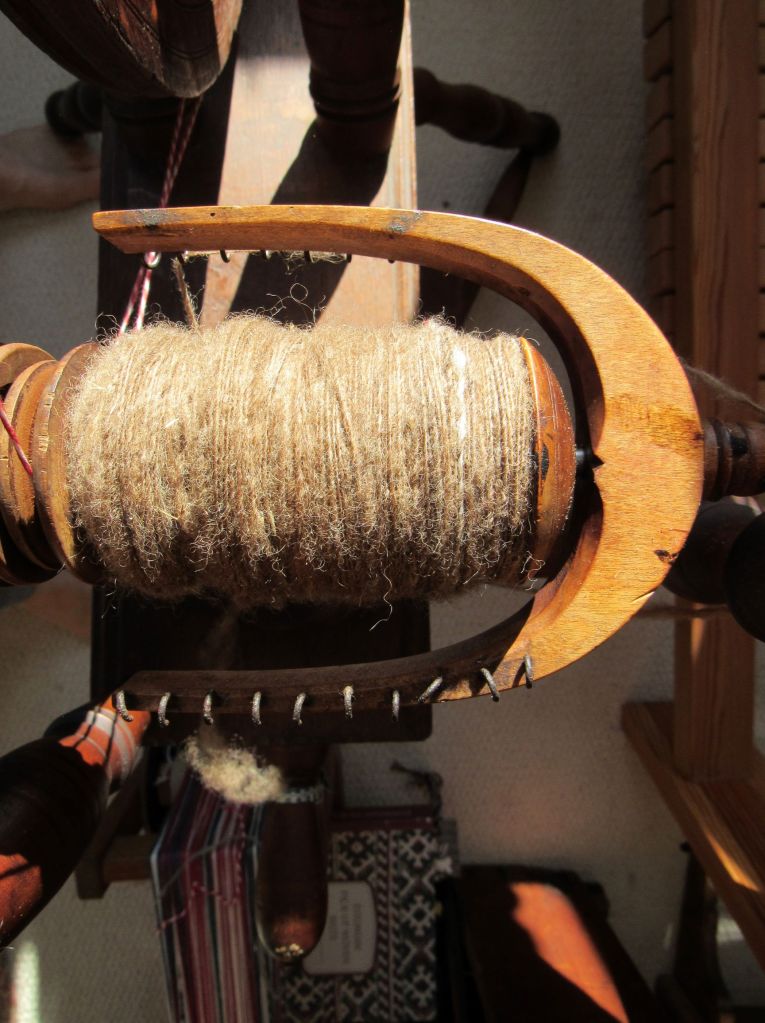
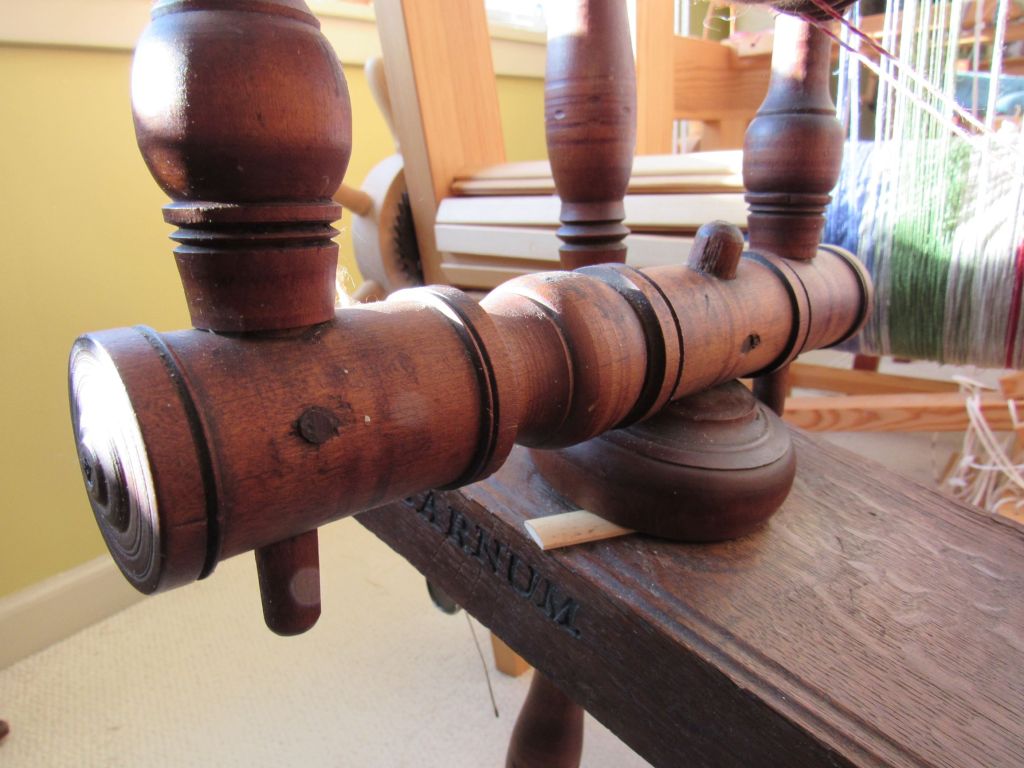
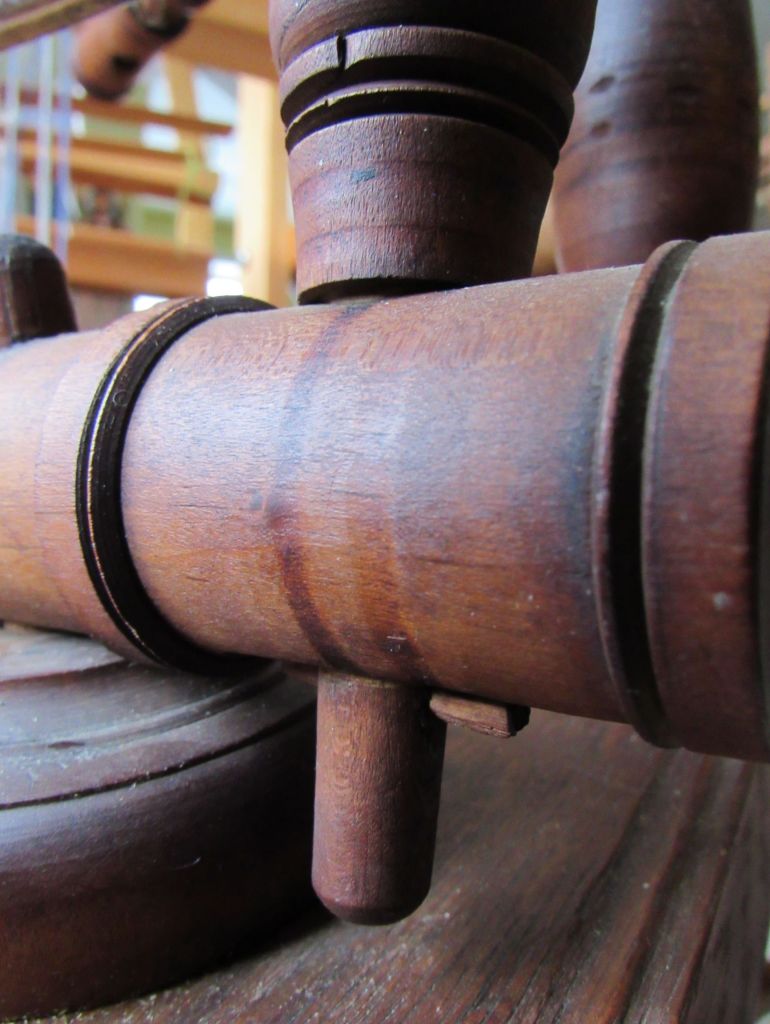
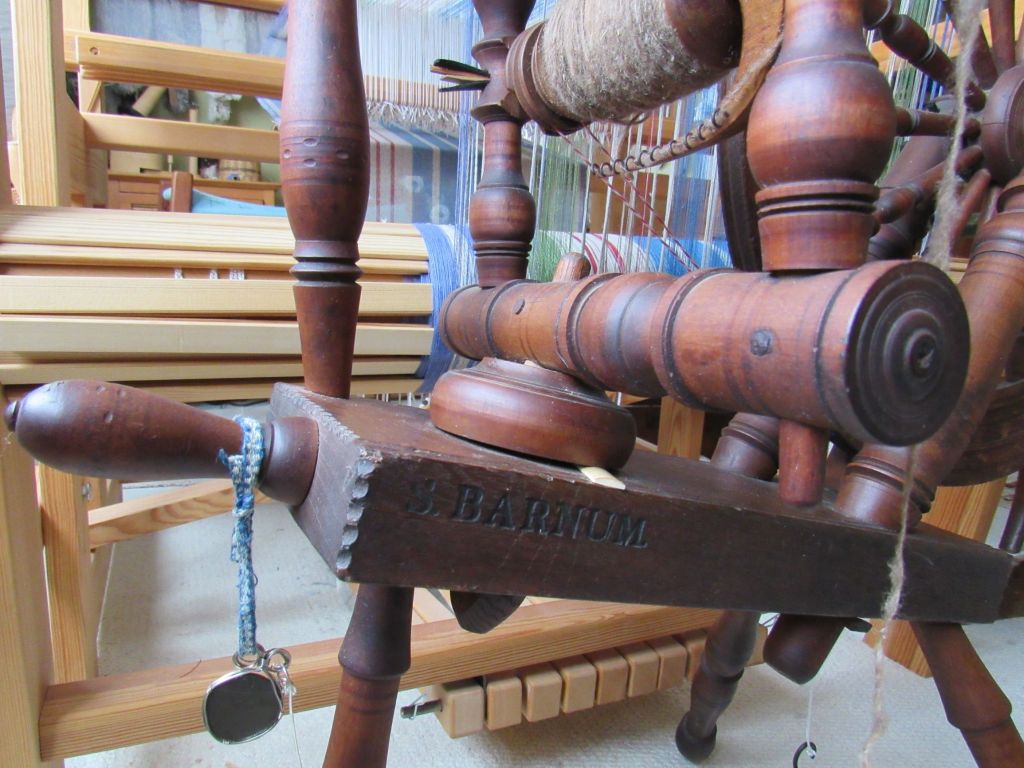
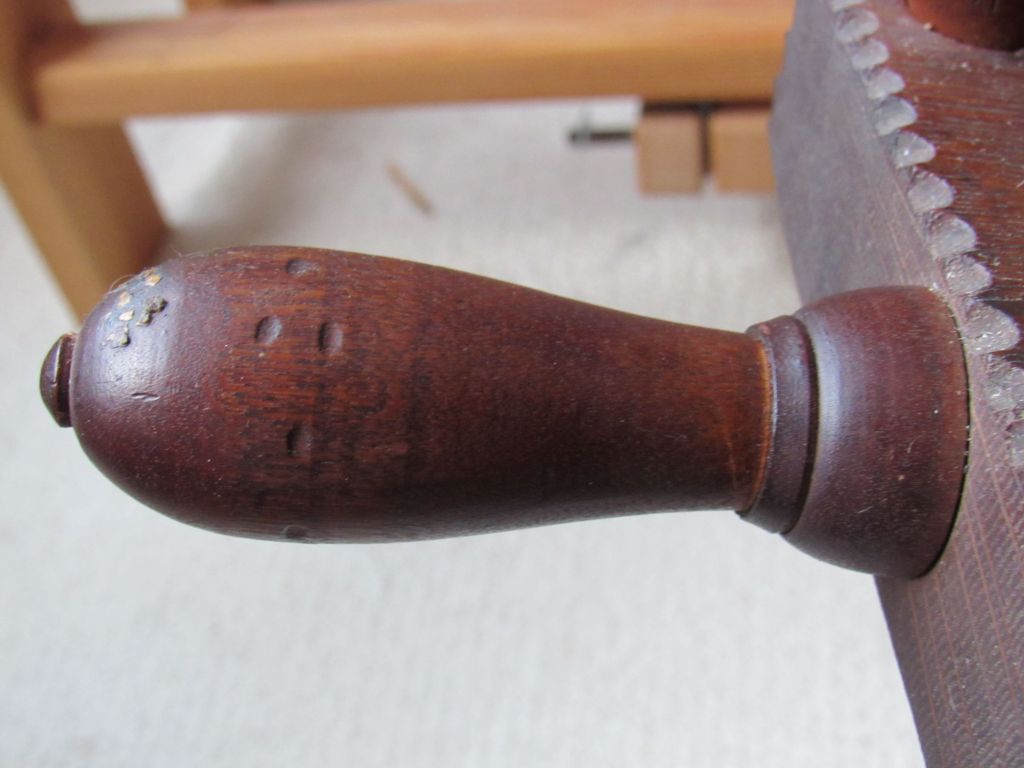
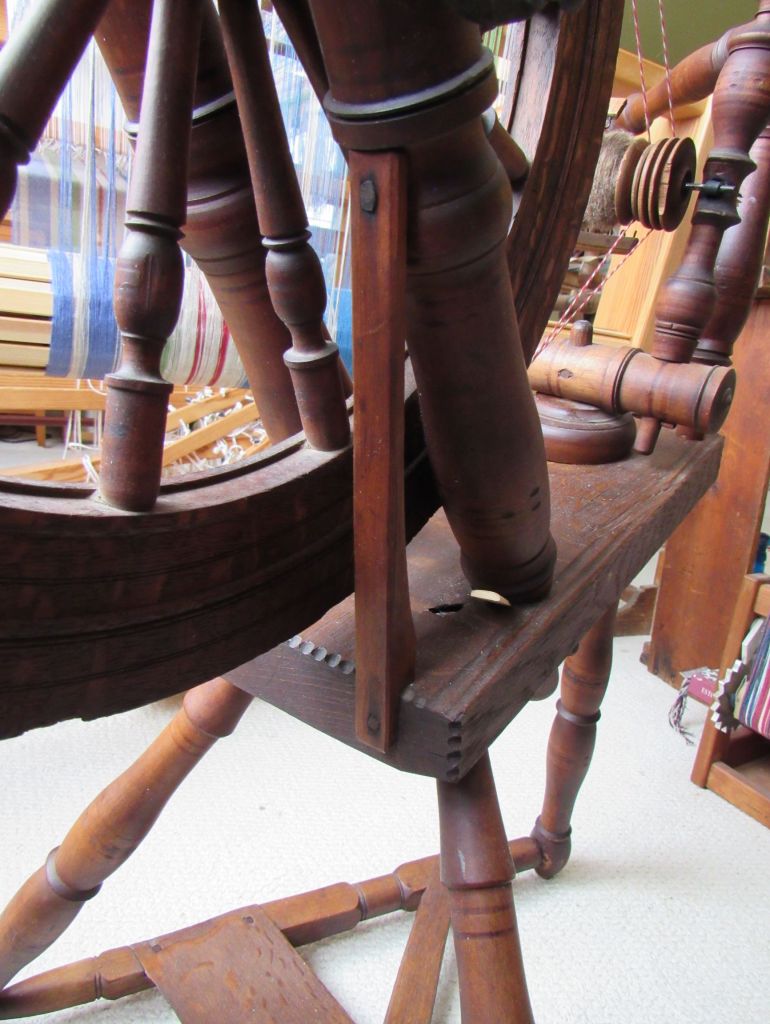

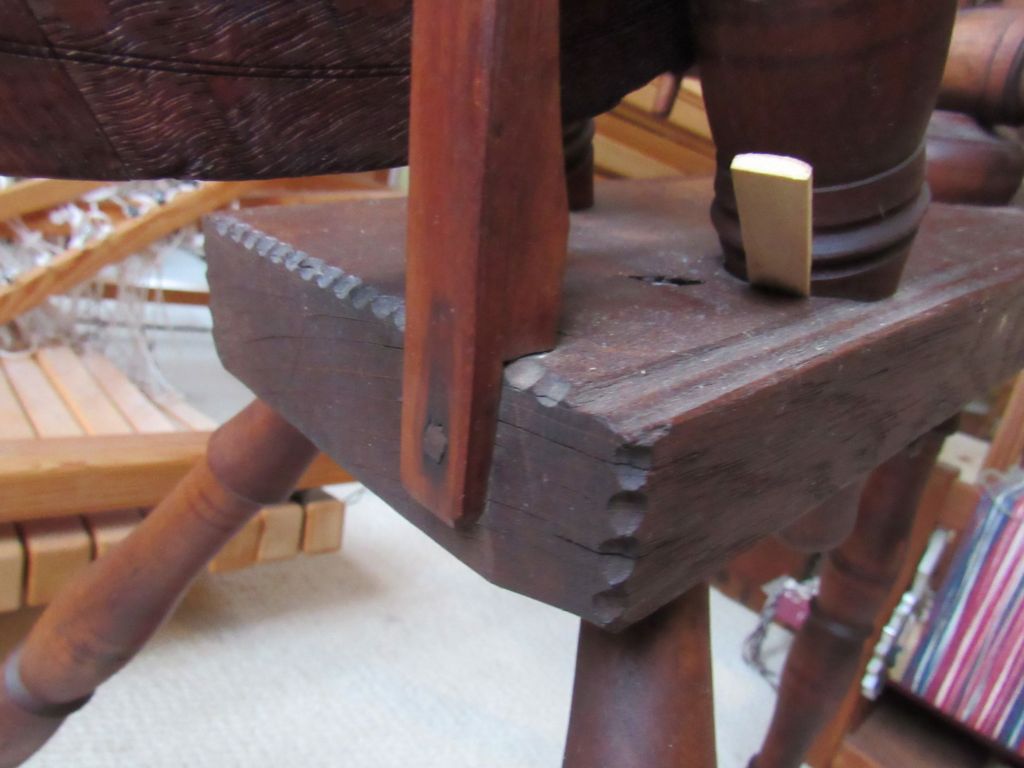
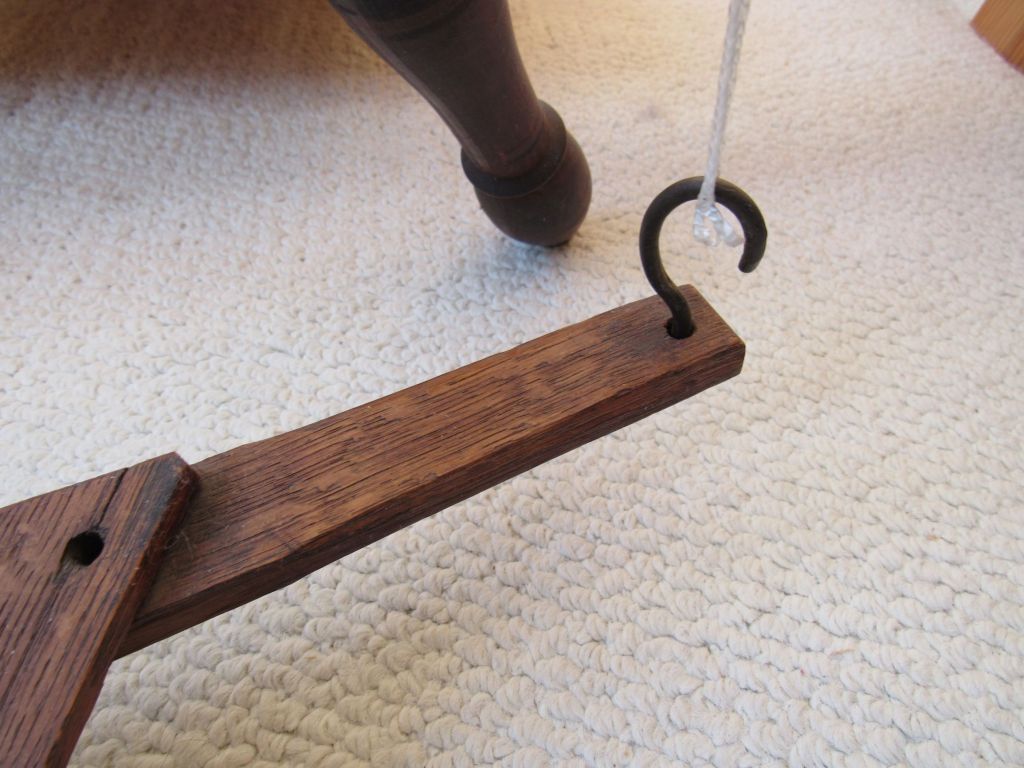
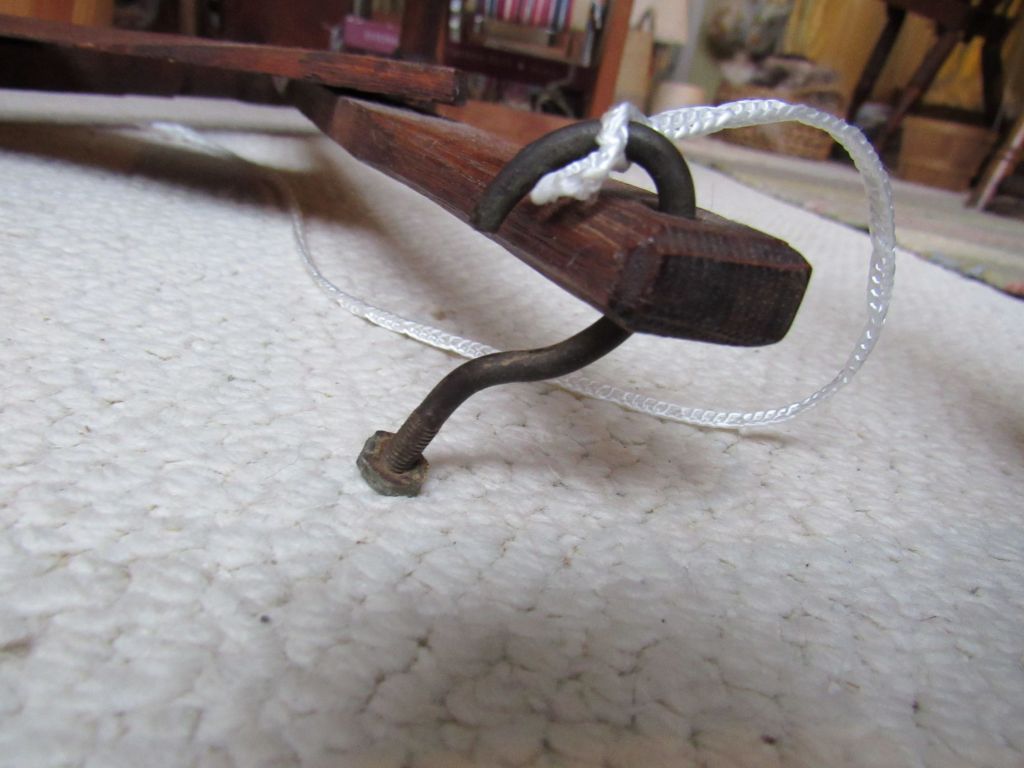

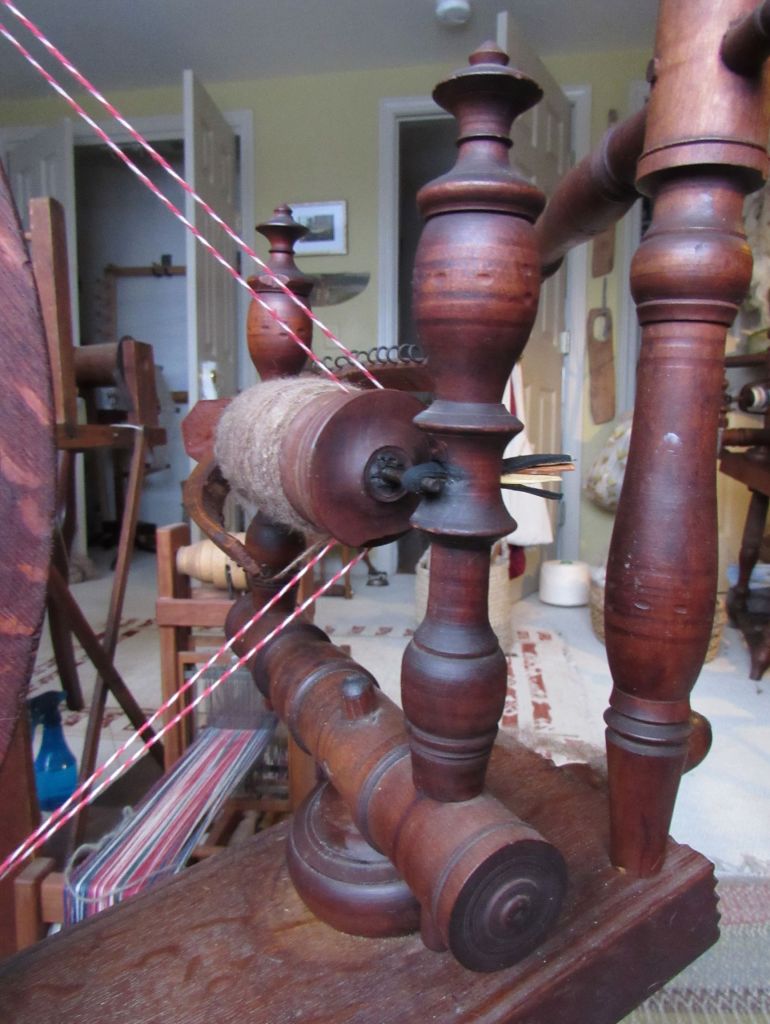
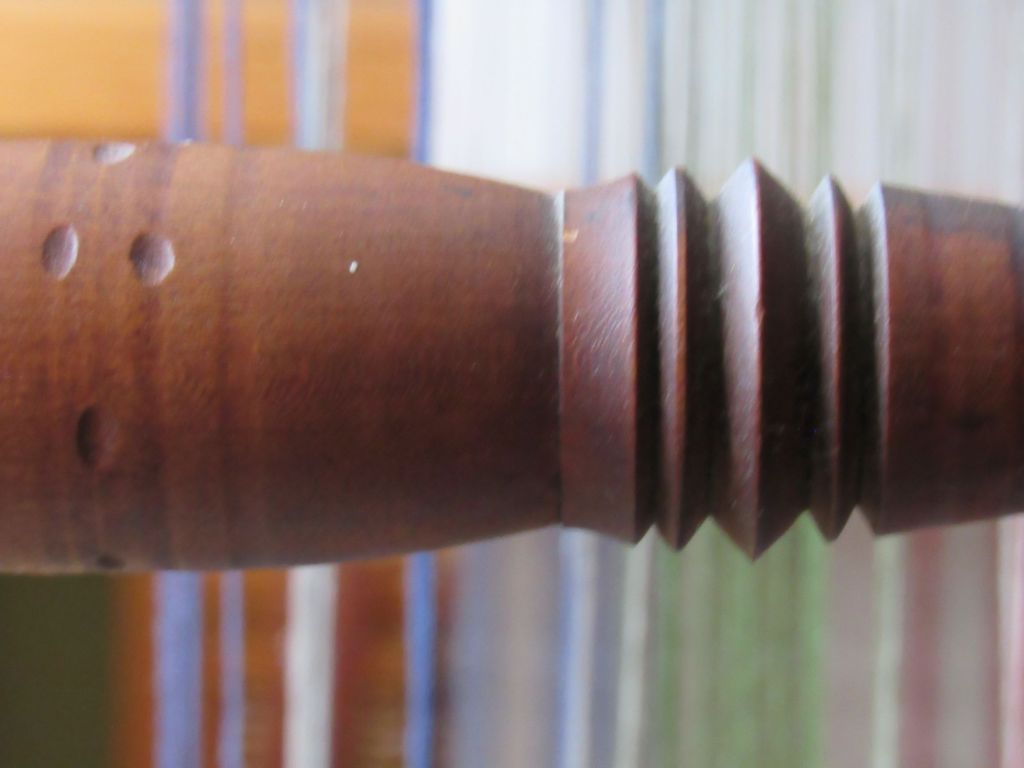

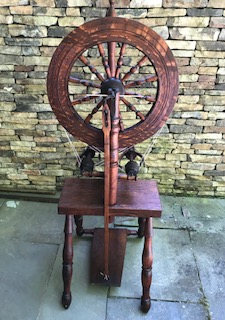


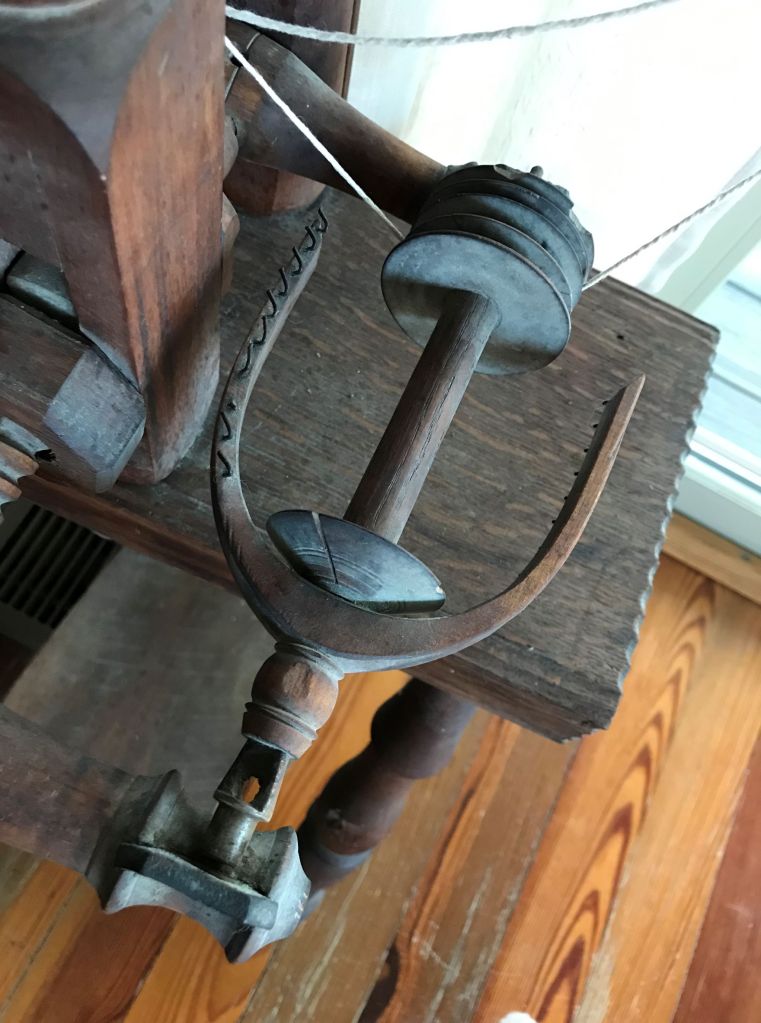
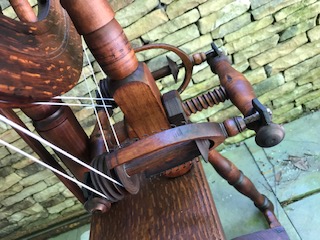

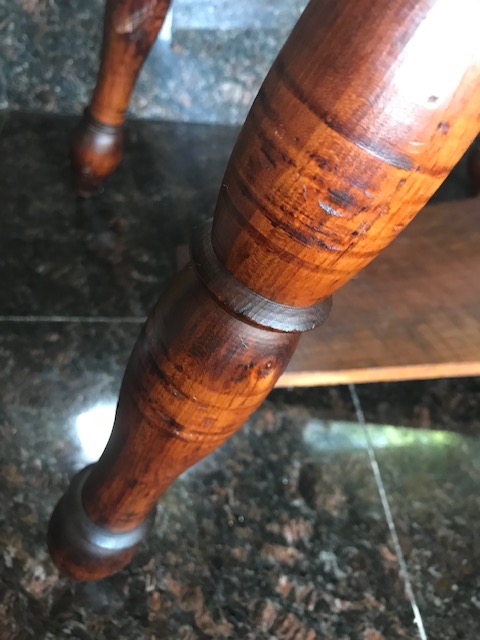

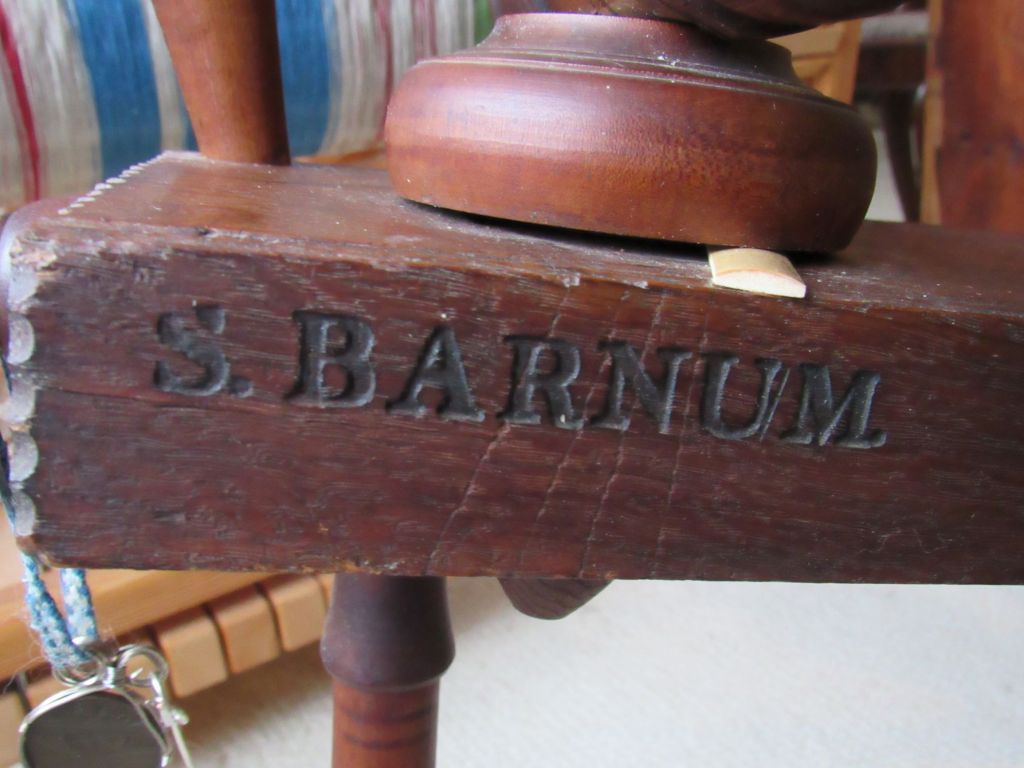
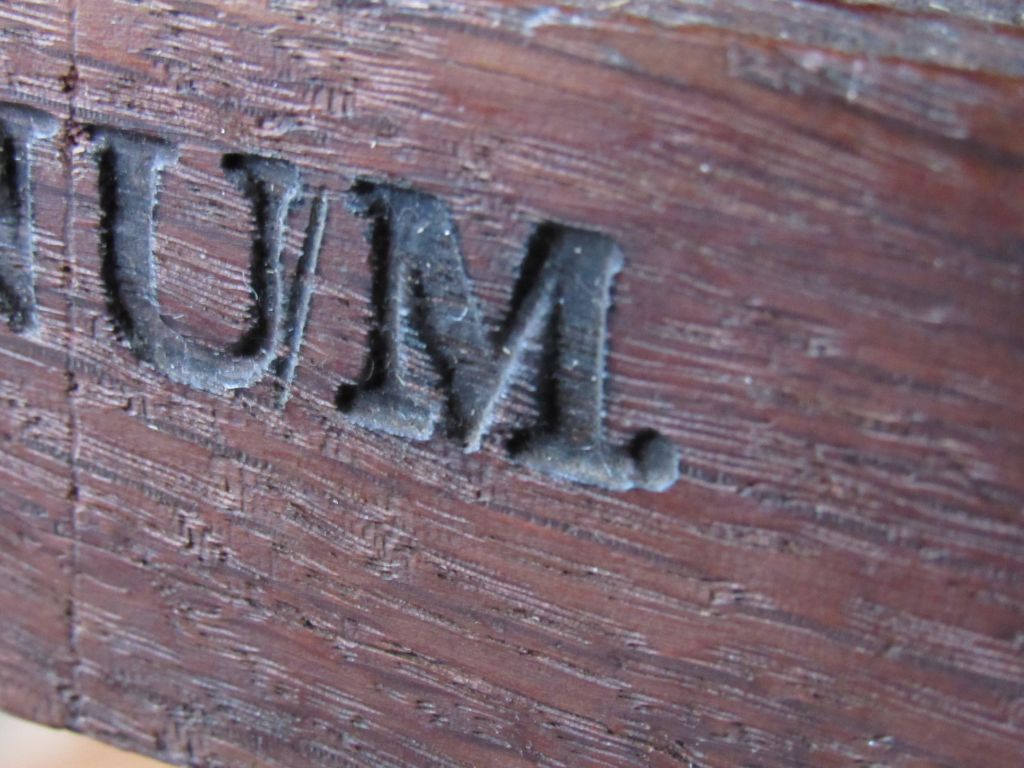

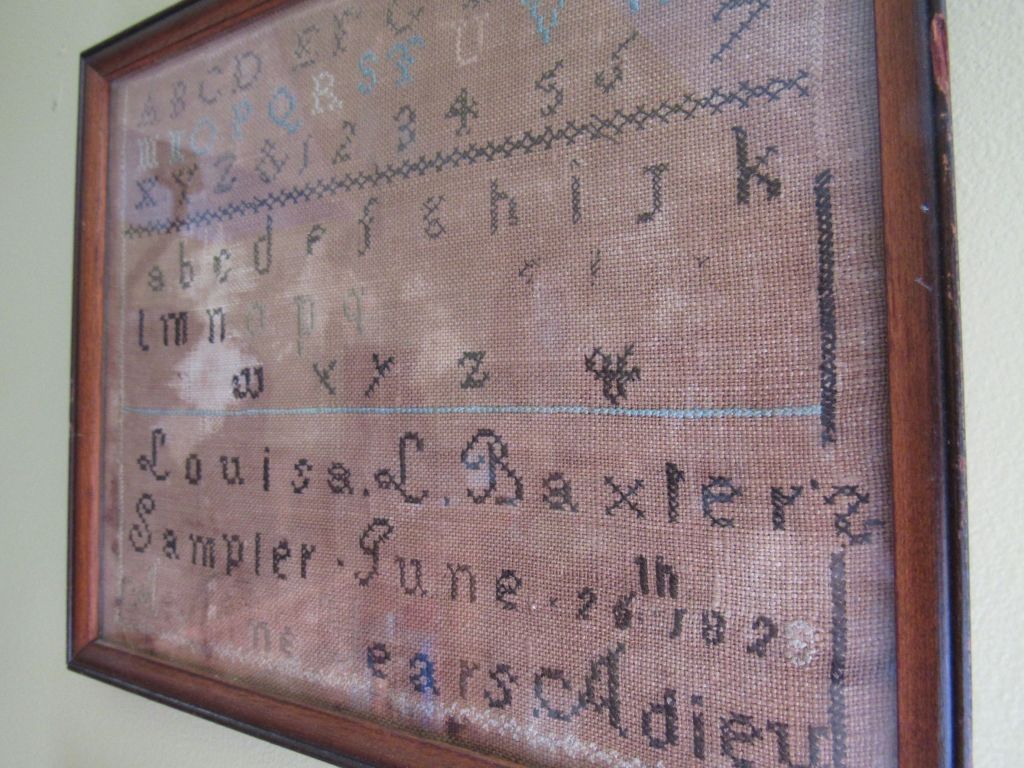
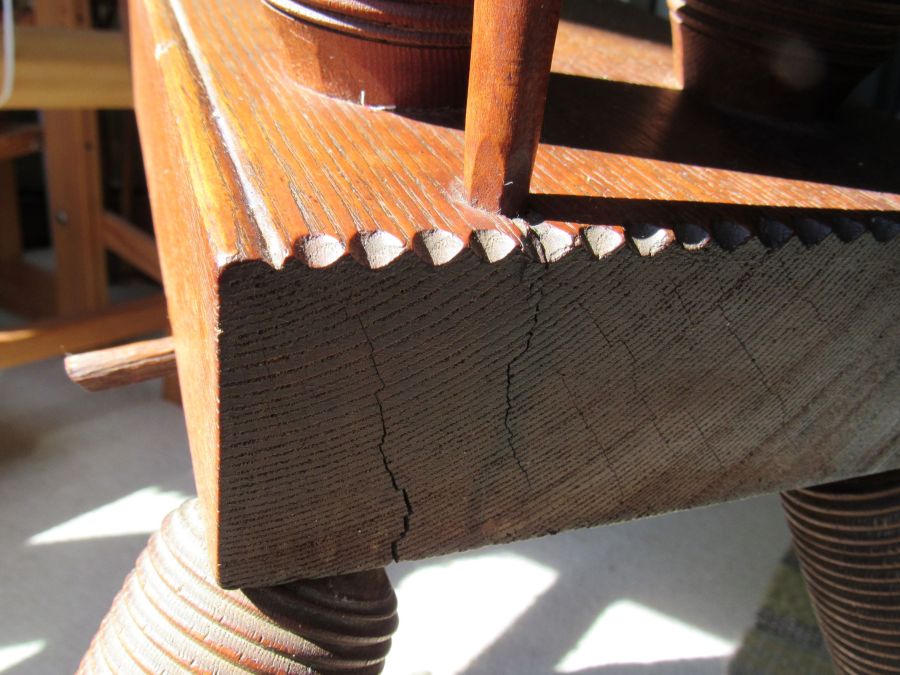
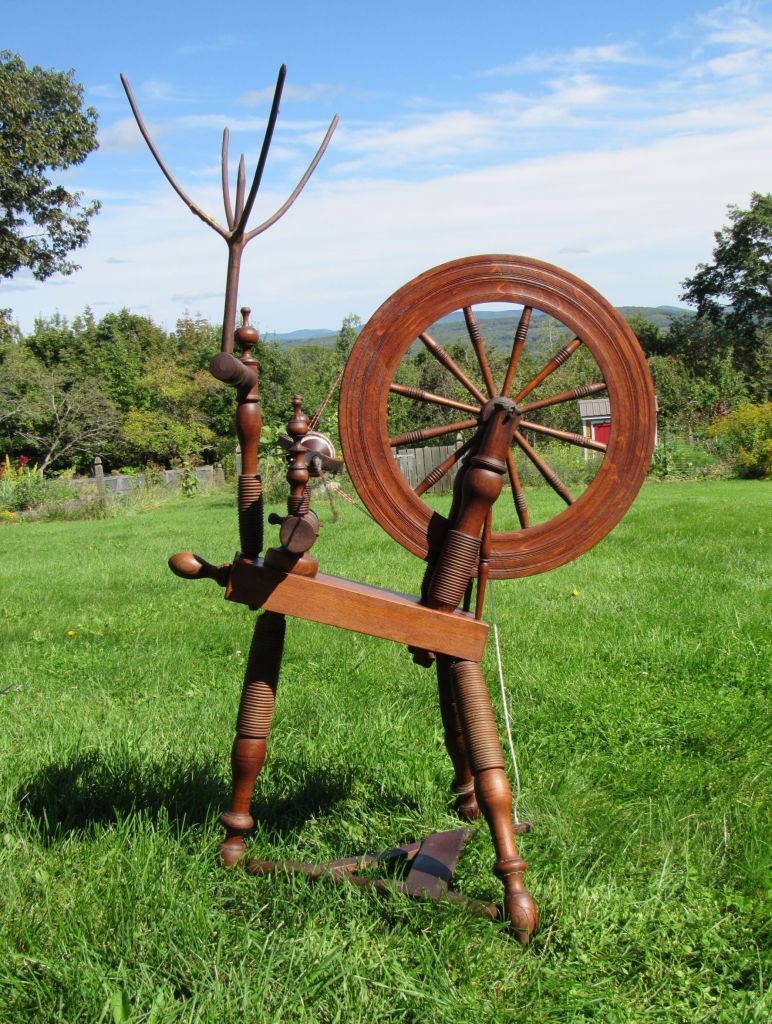


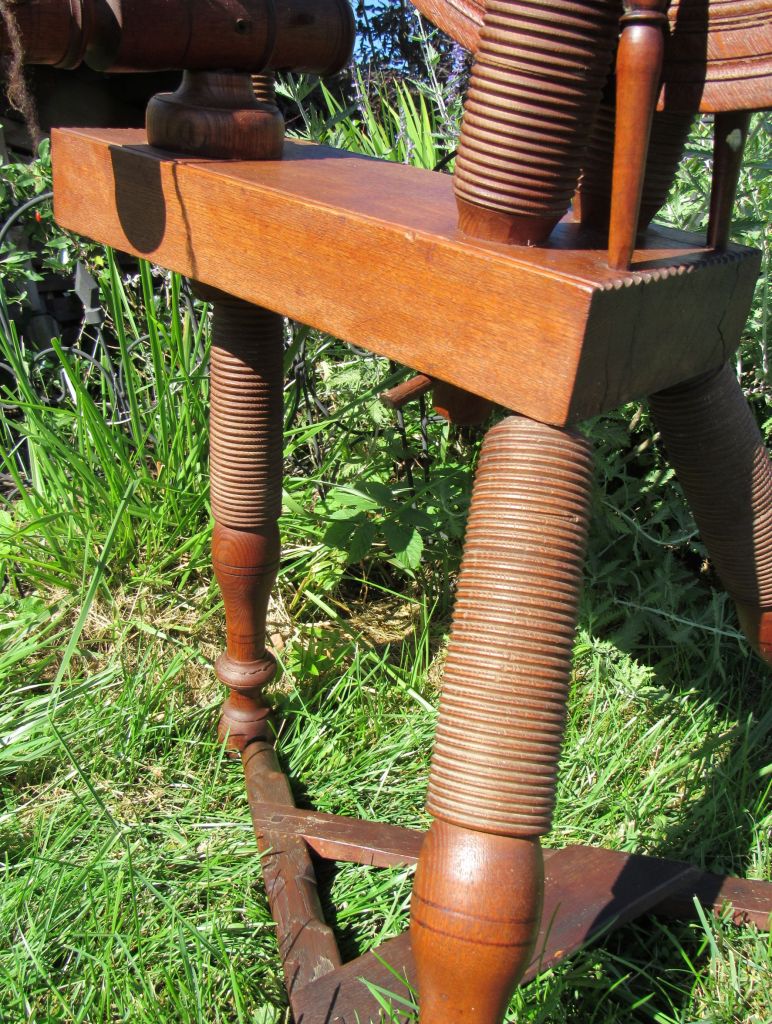

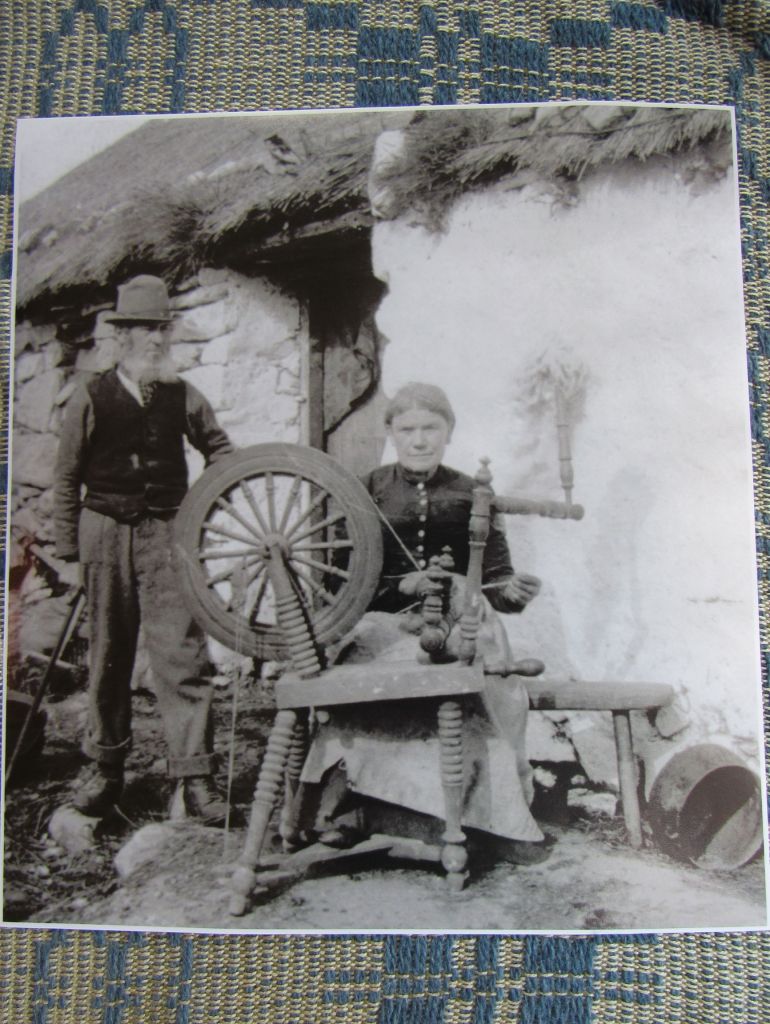

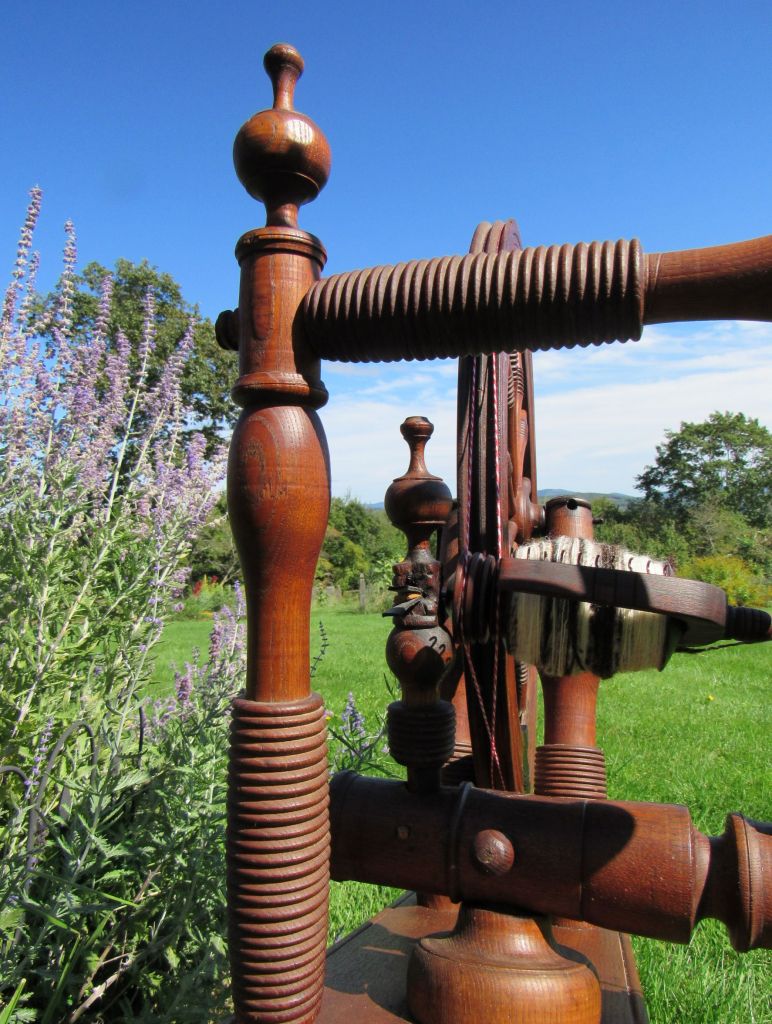

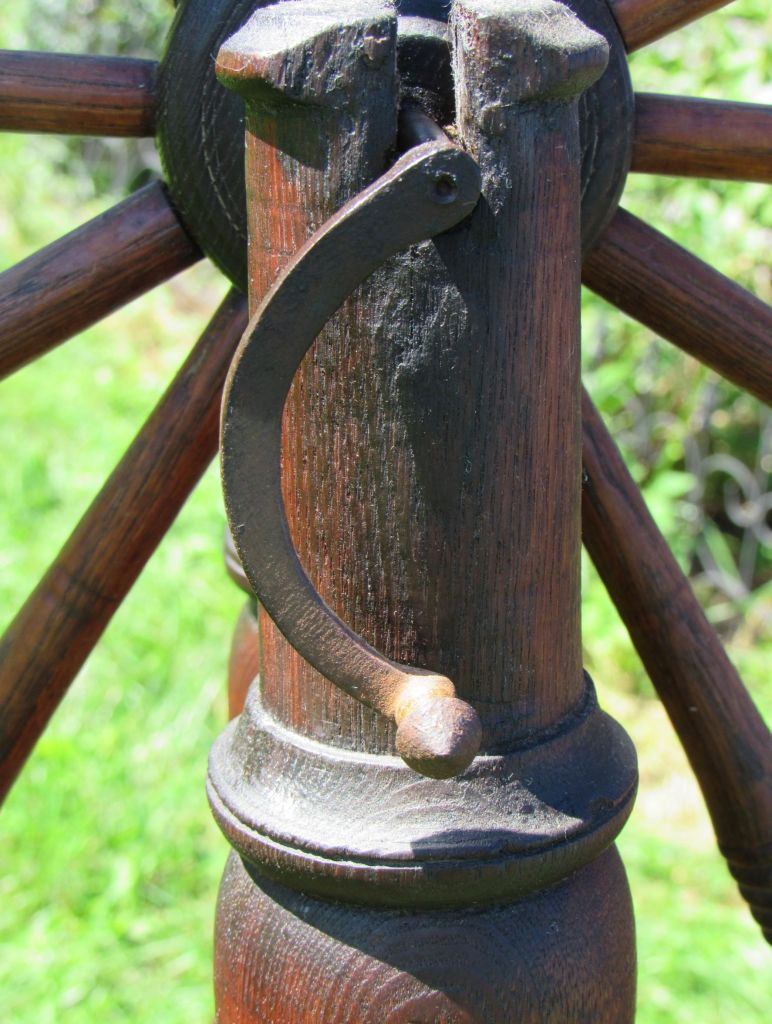
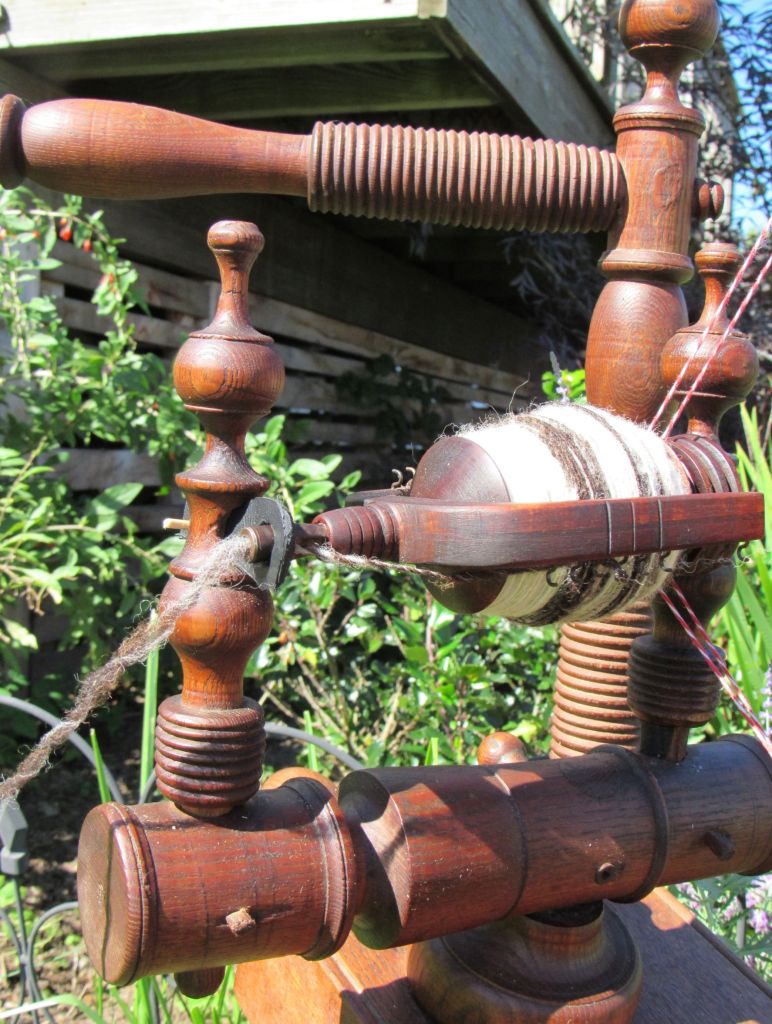
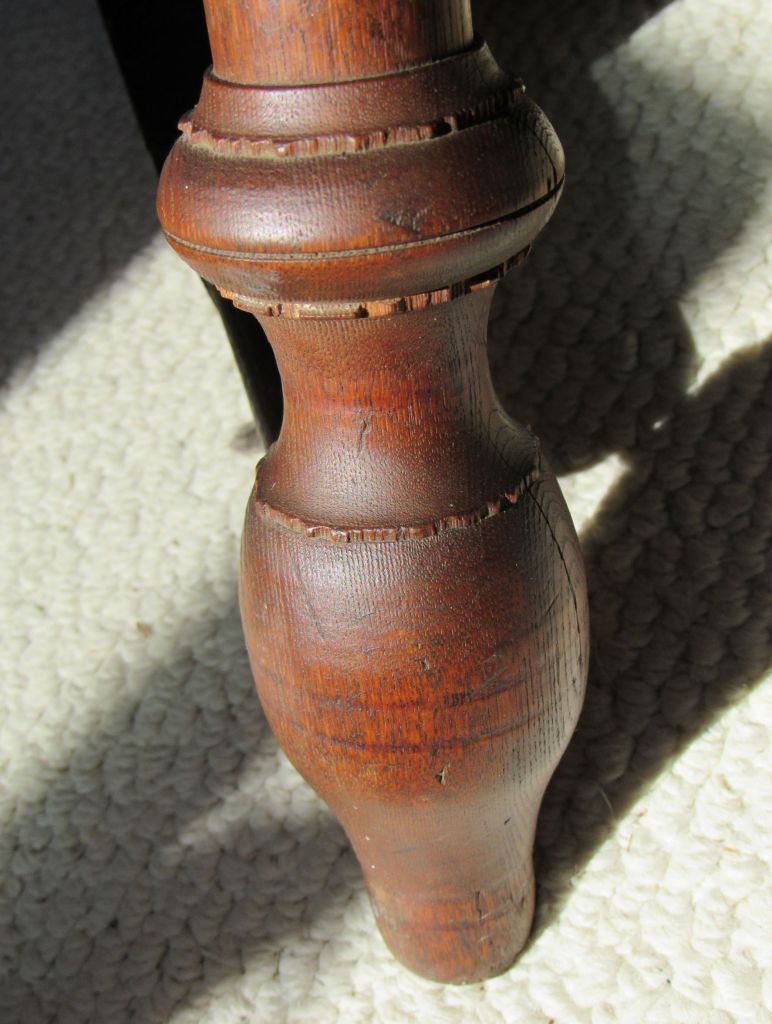
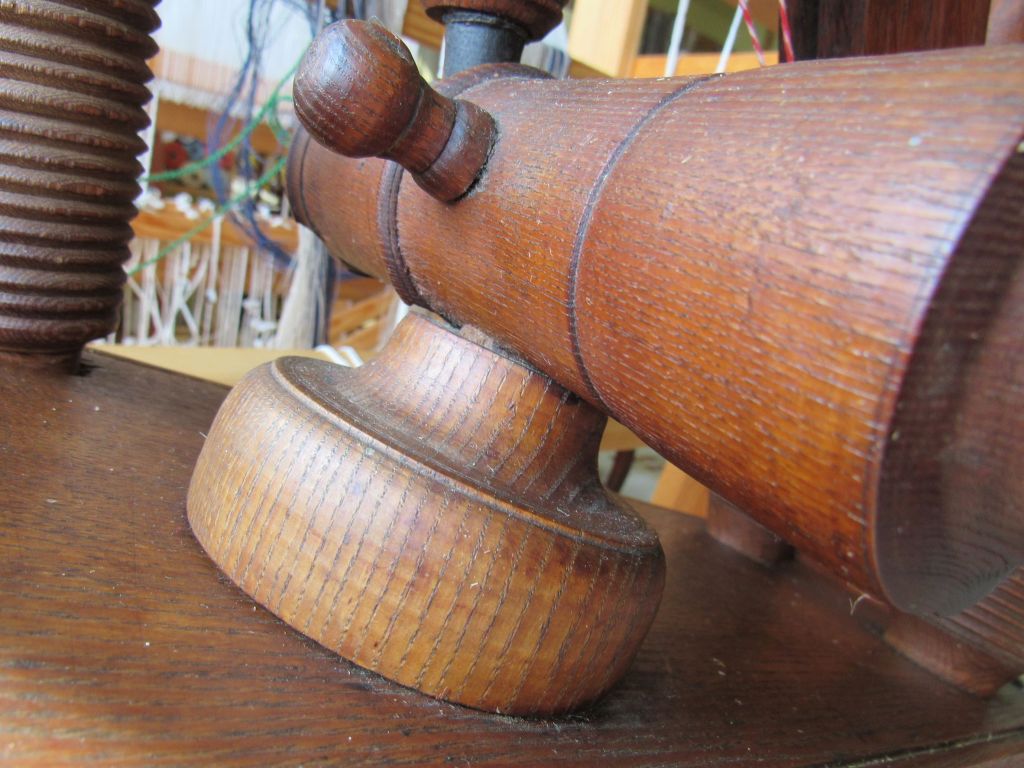

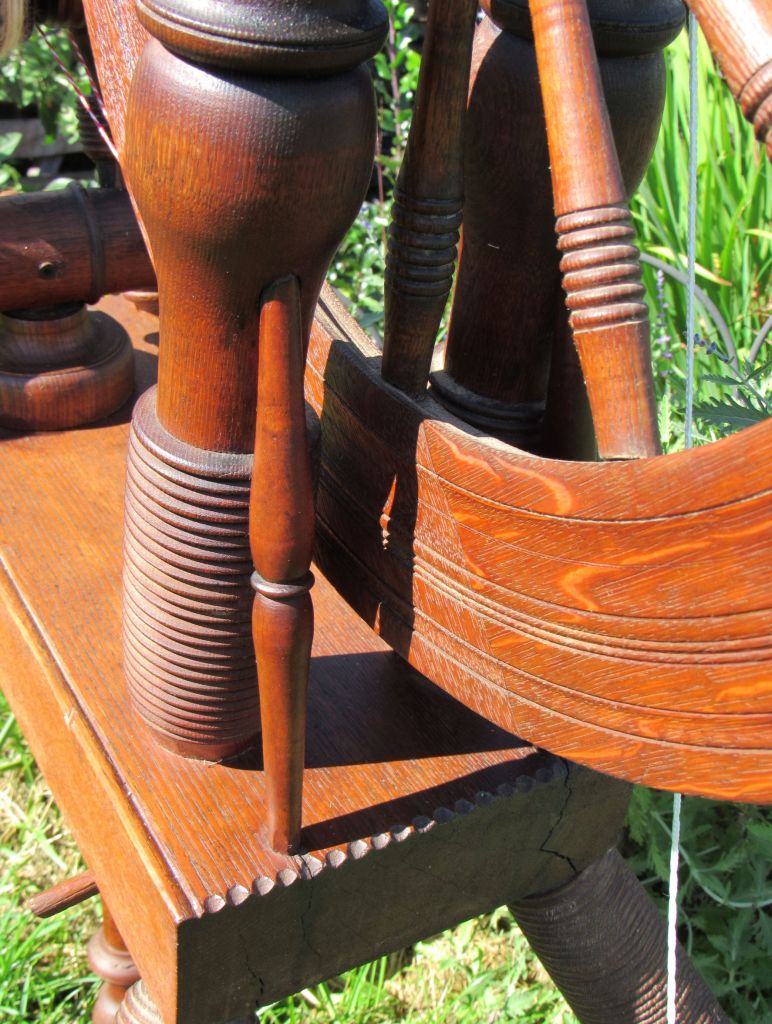
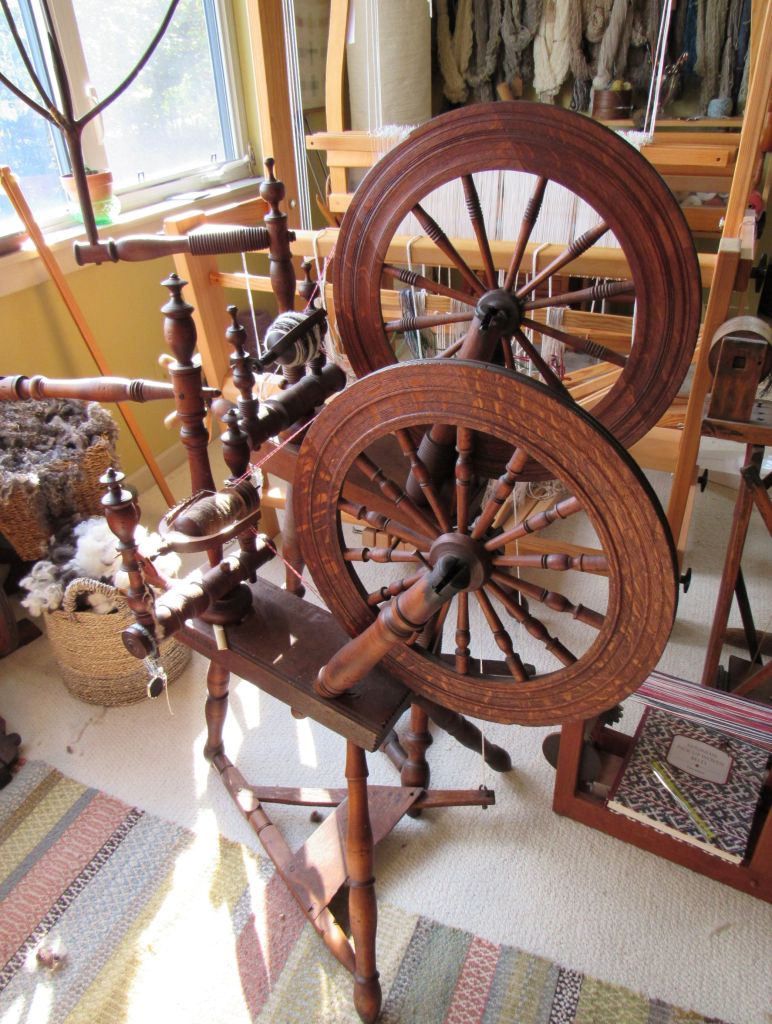
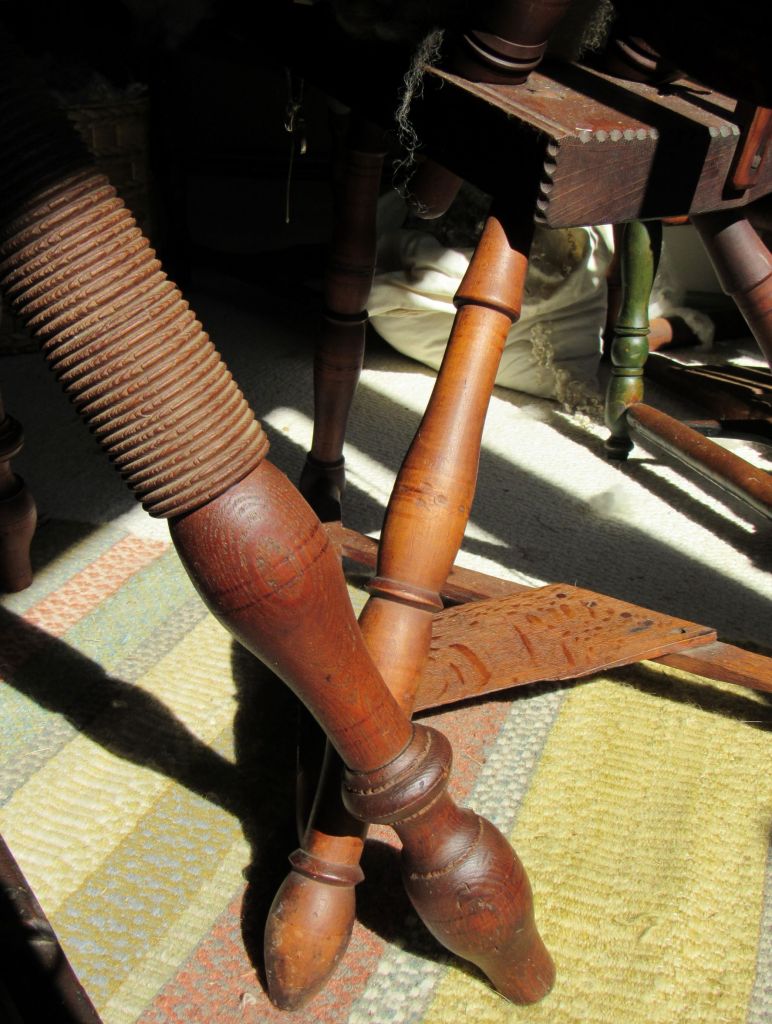
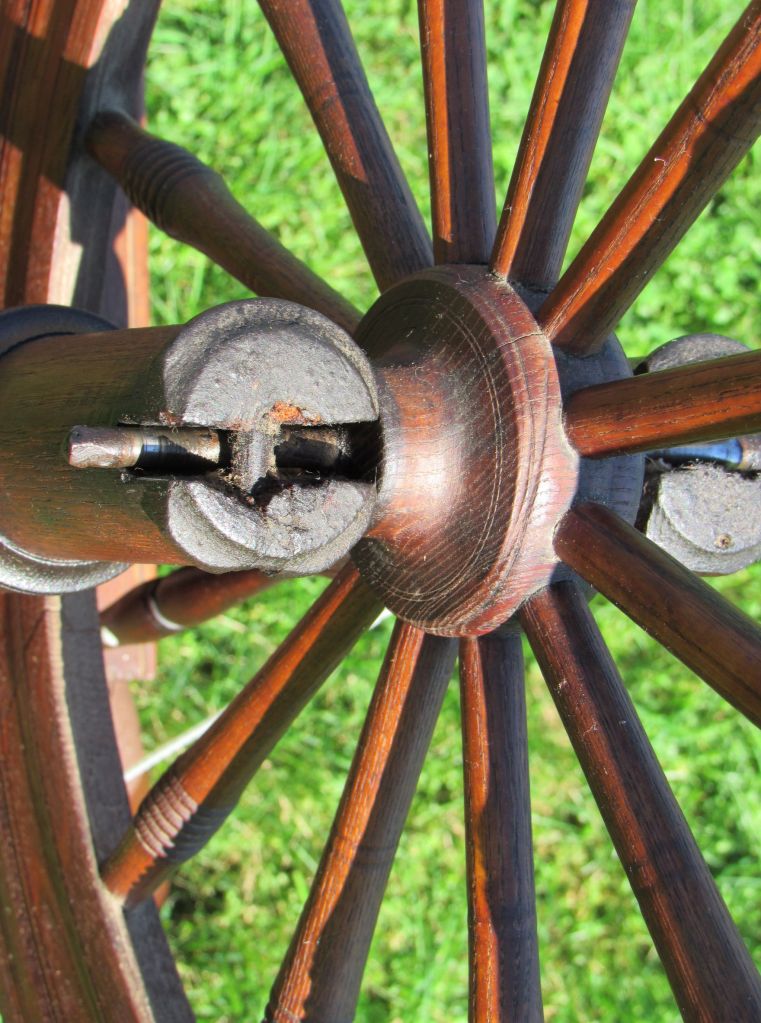


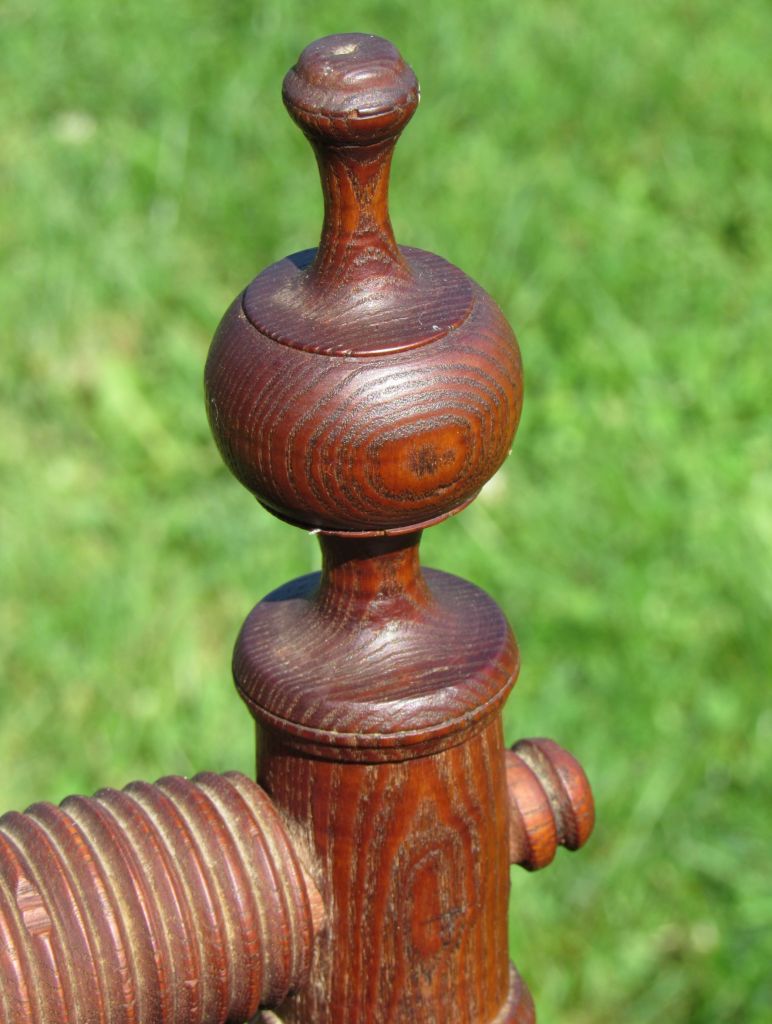
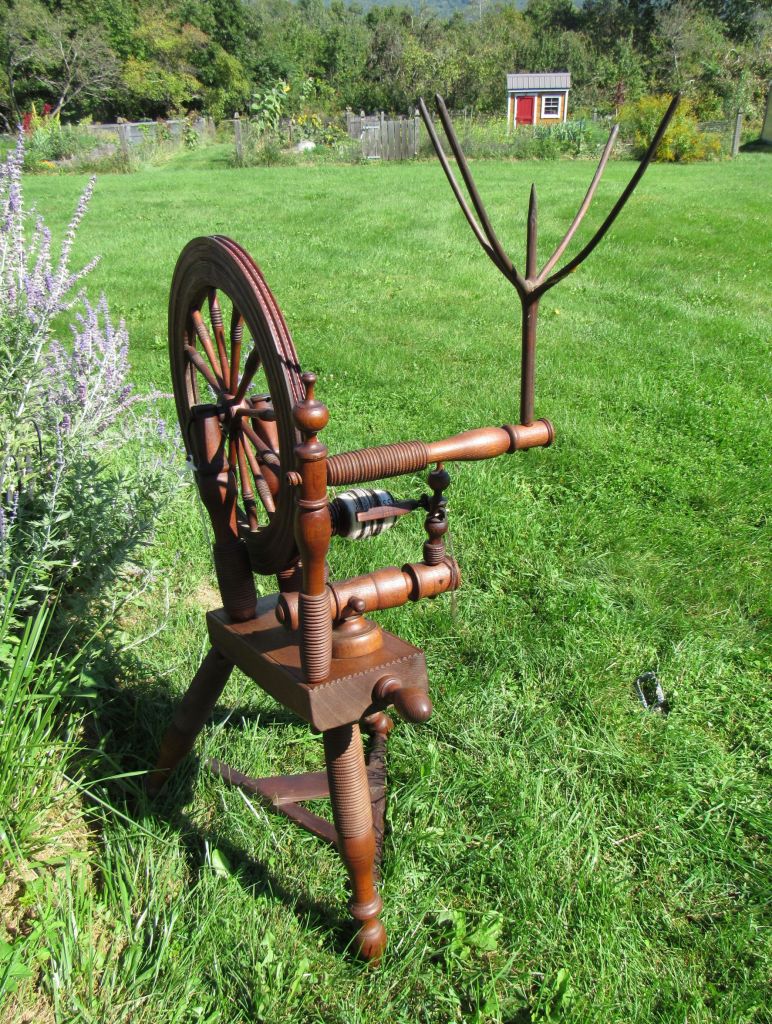
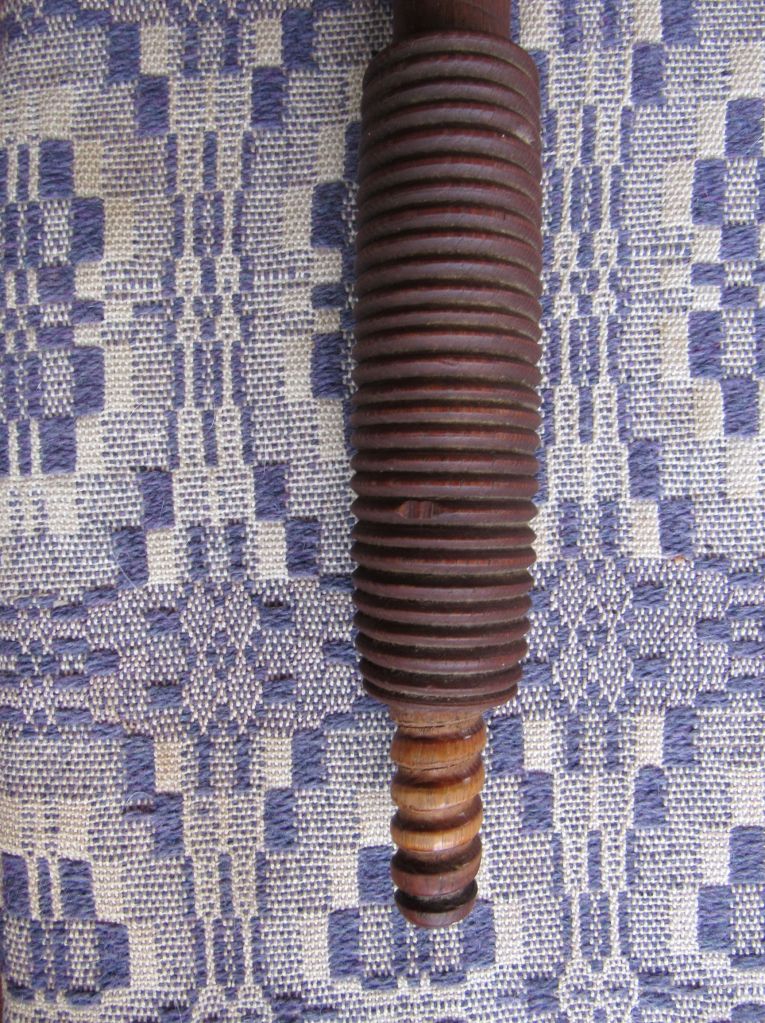
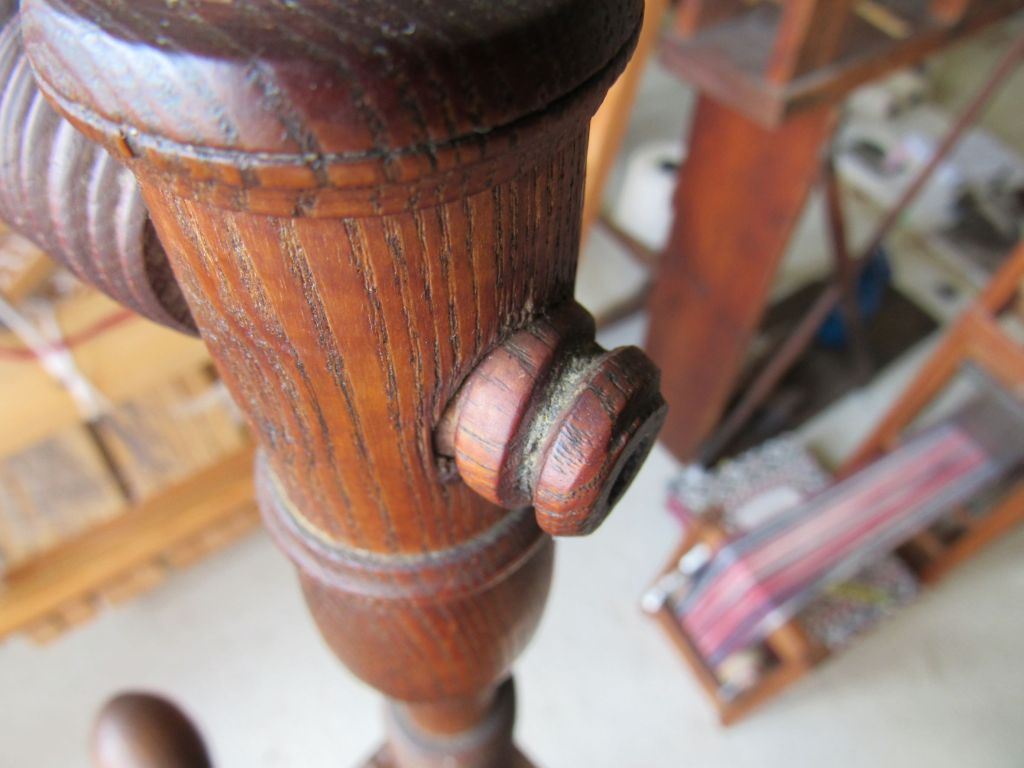

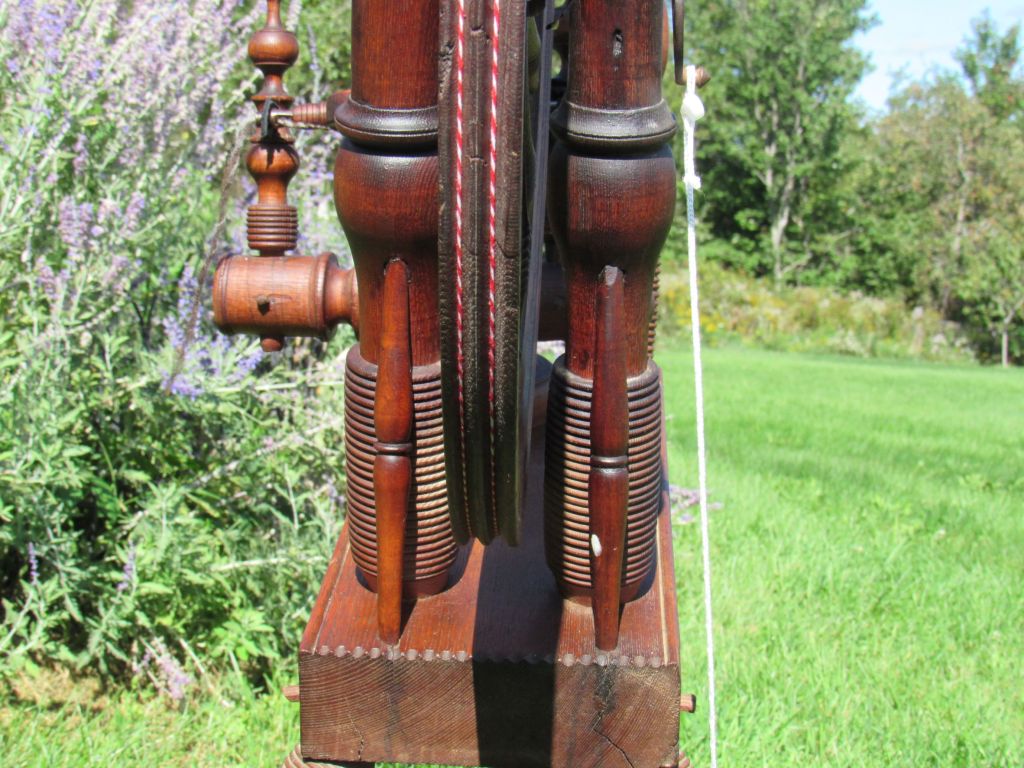

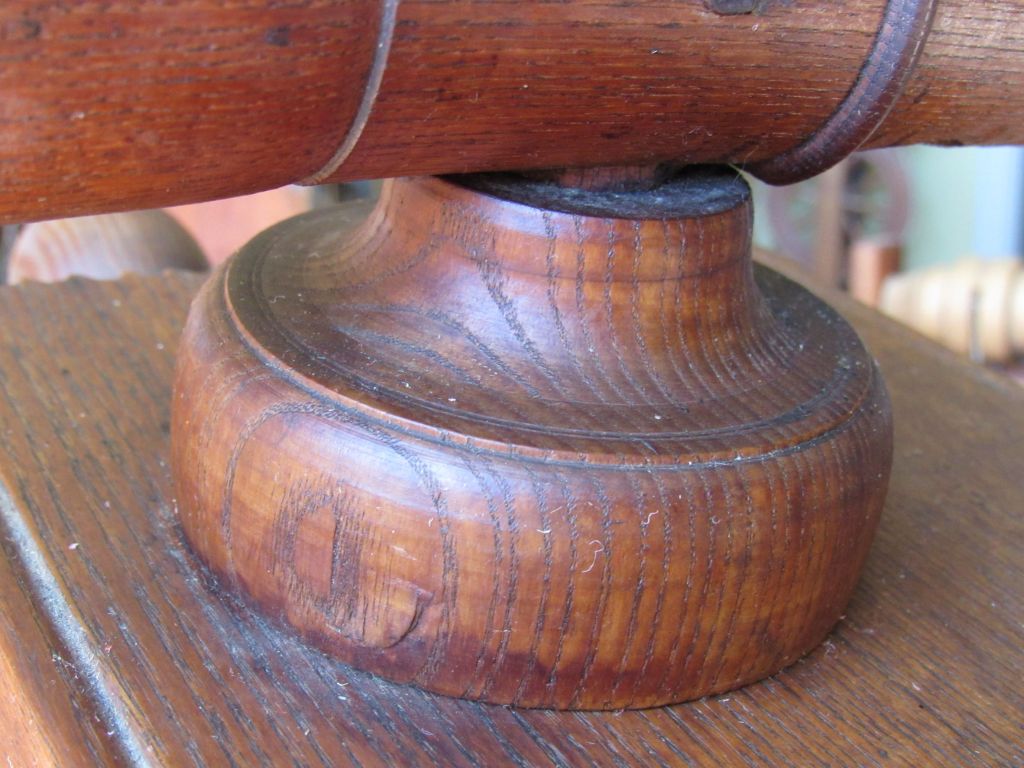
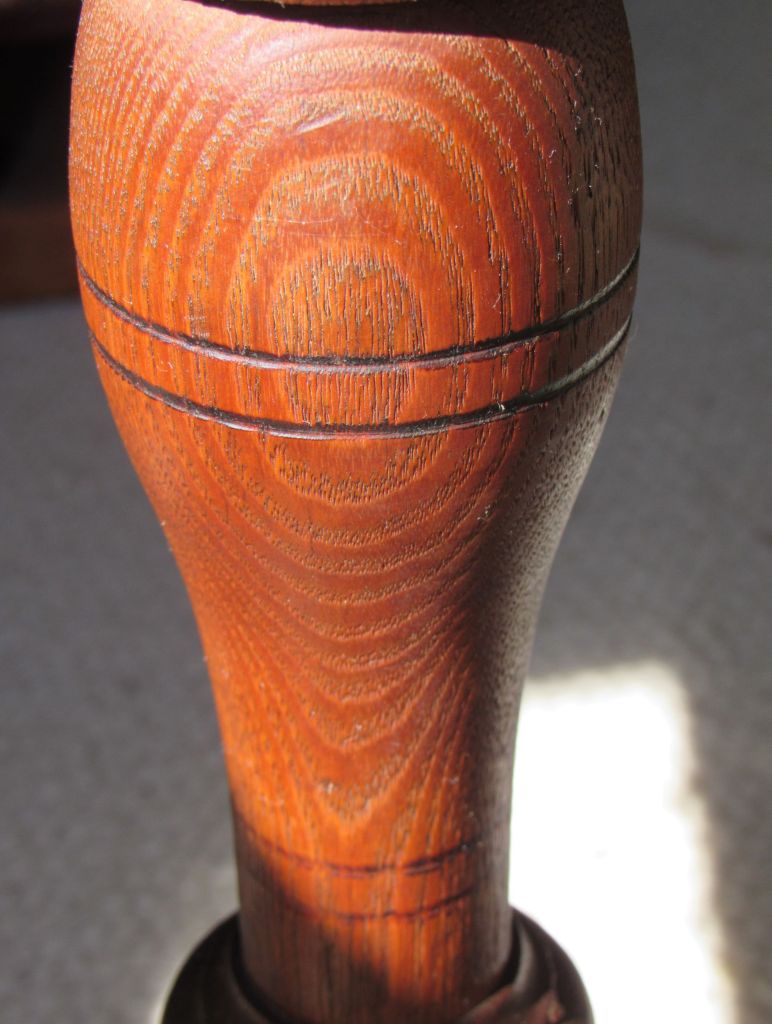
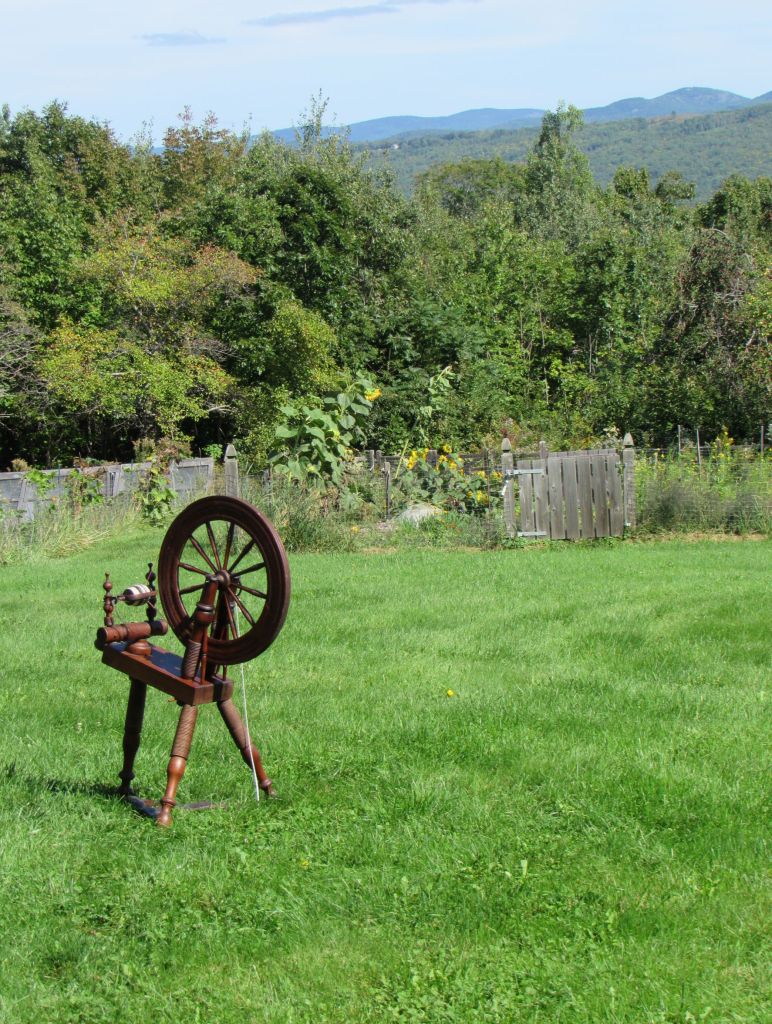
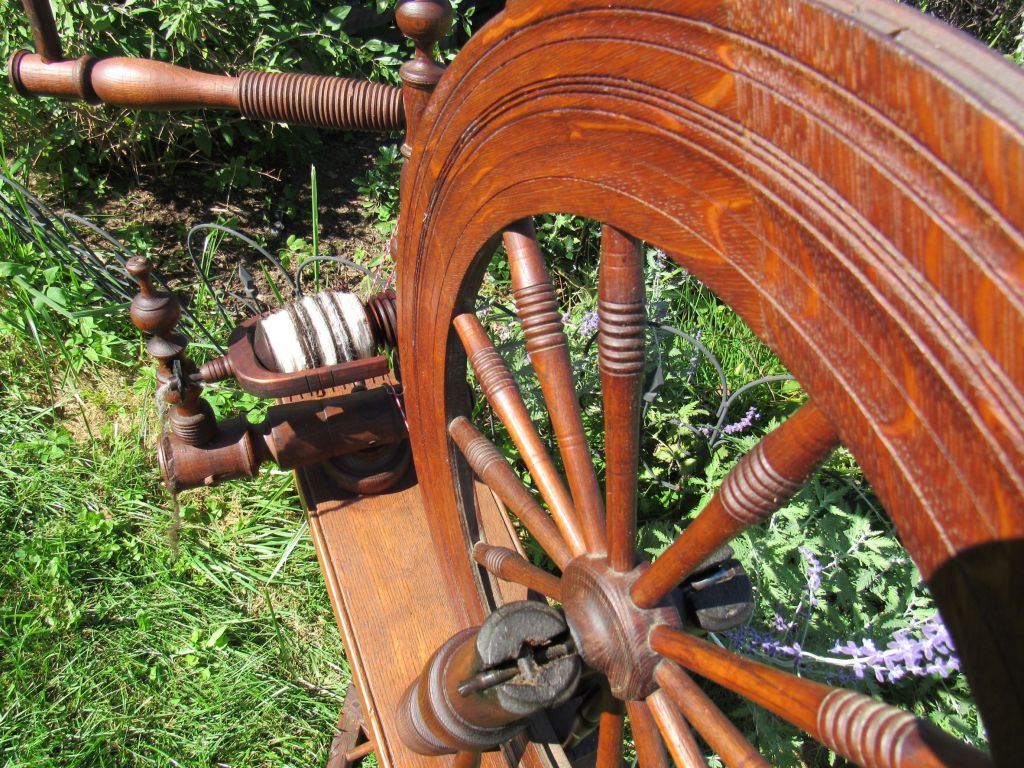
 Exquisite Machinery