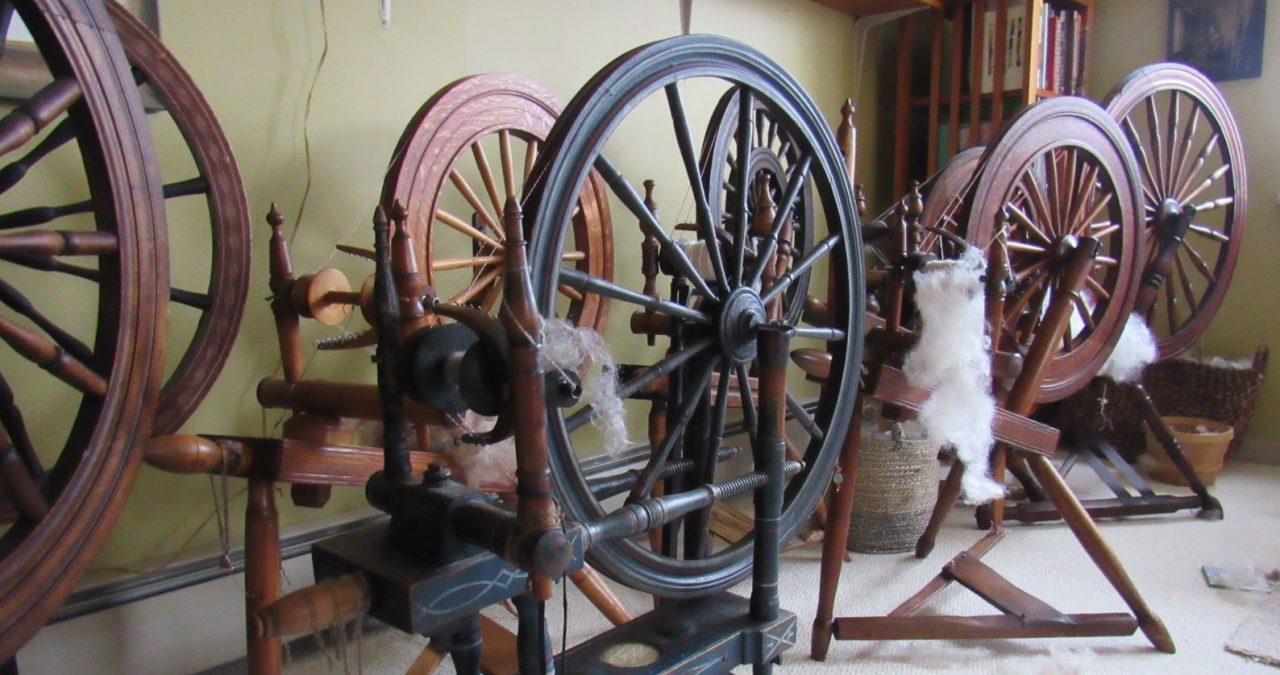
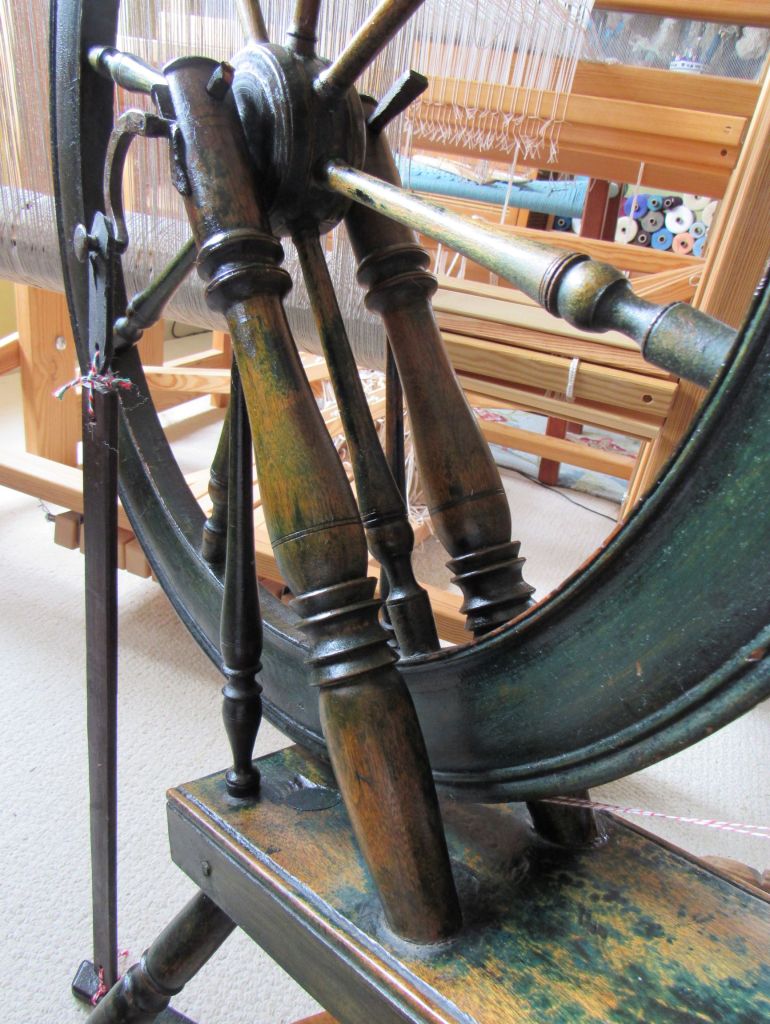
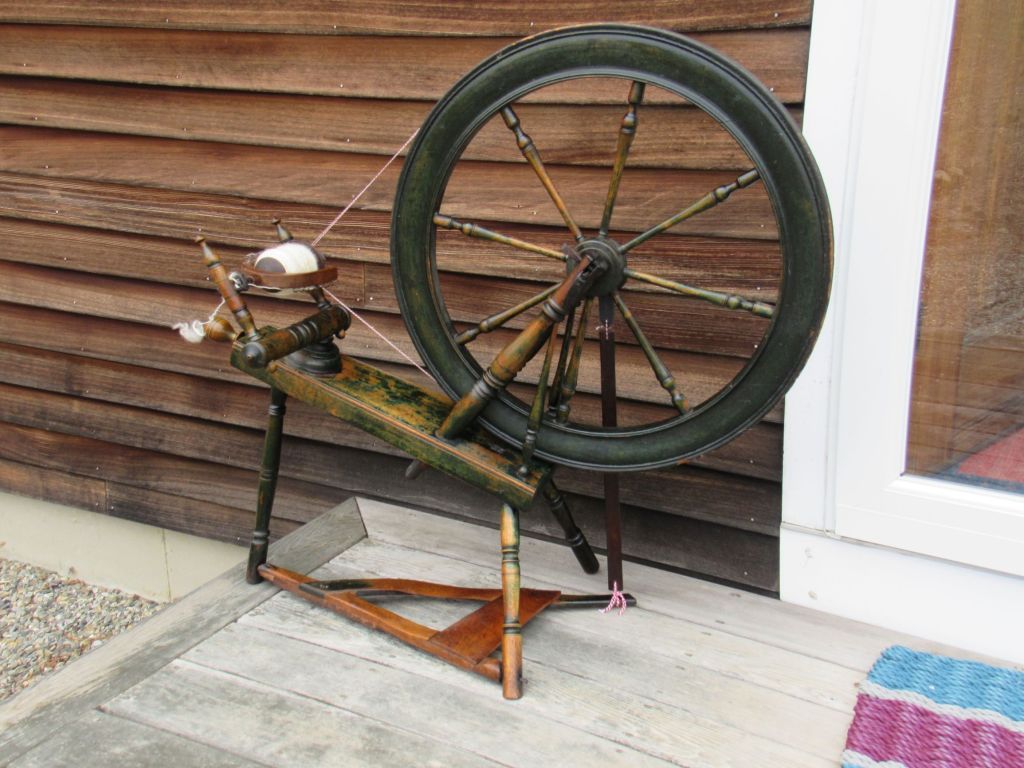
Many Quebec wheels are painted—usually a mustard yellow or, less often, shades of orange, red, and sometimes black. Only very occasionally does a green wheel turn up.
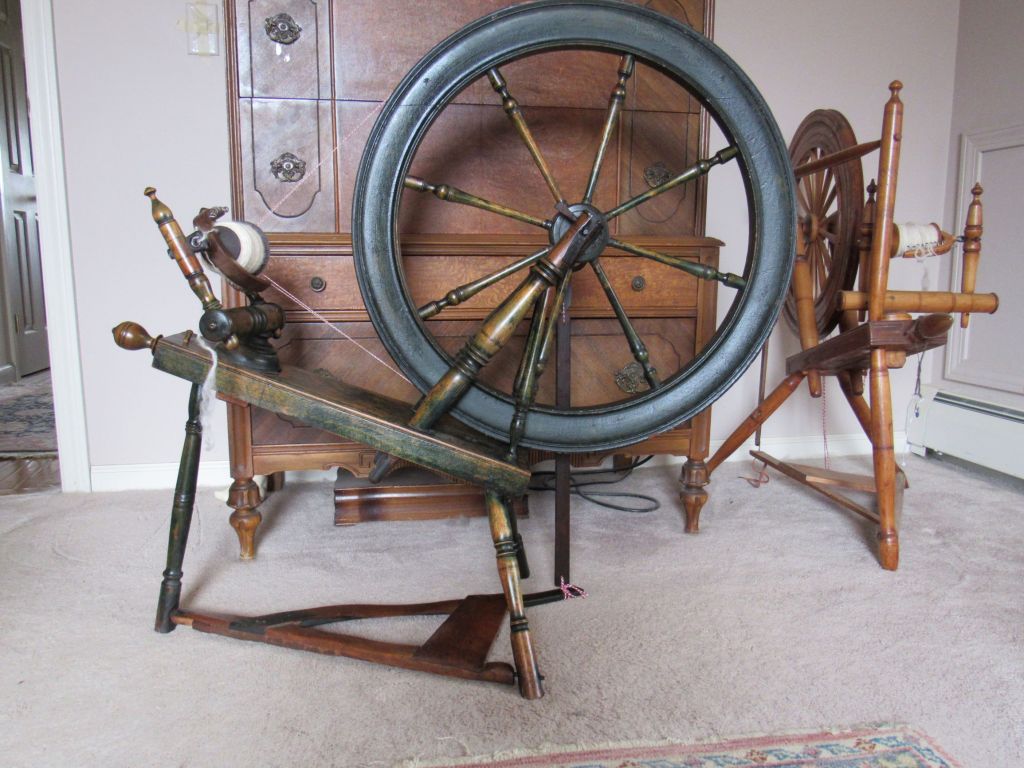
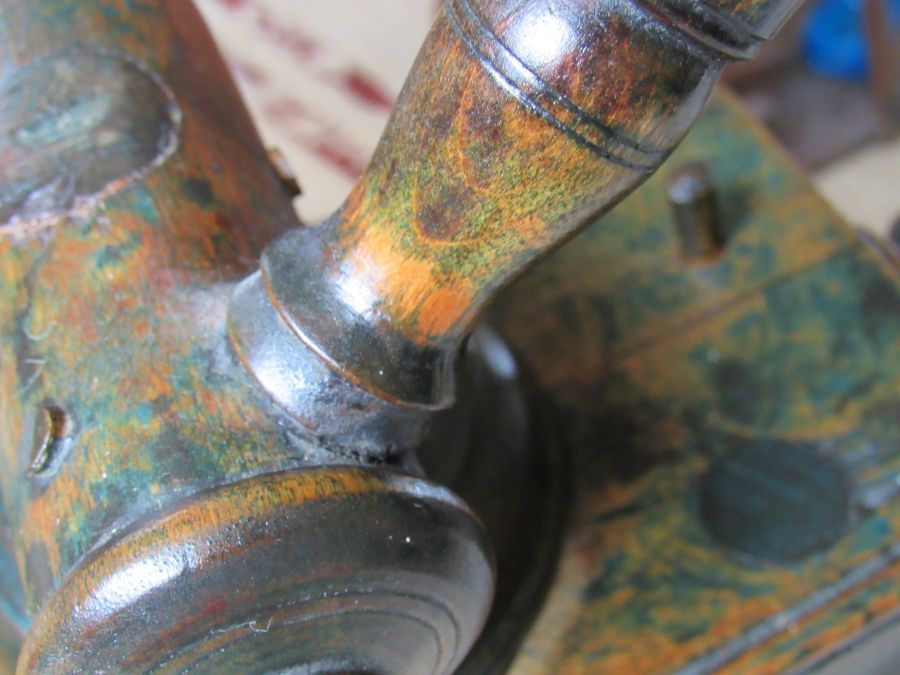
Adelaide is one of them. Her paint now is mottled and looks as if the original paint job has been touched up over the years.
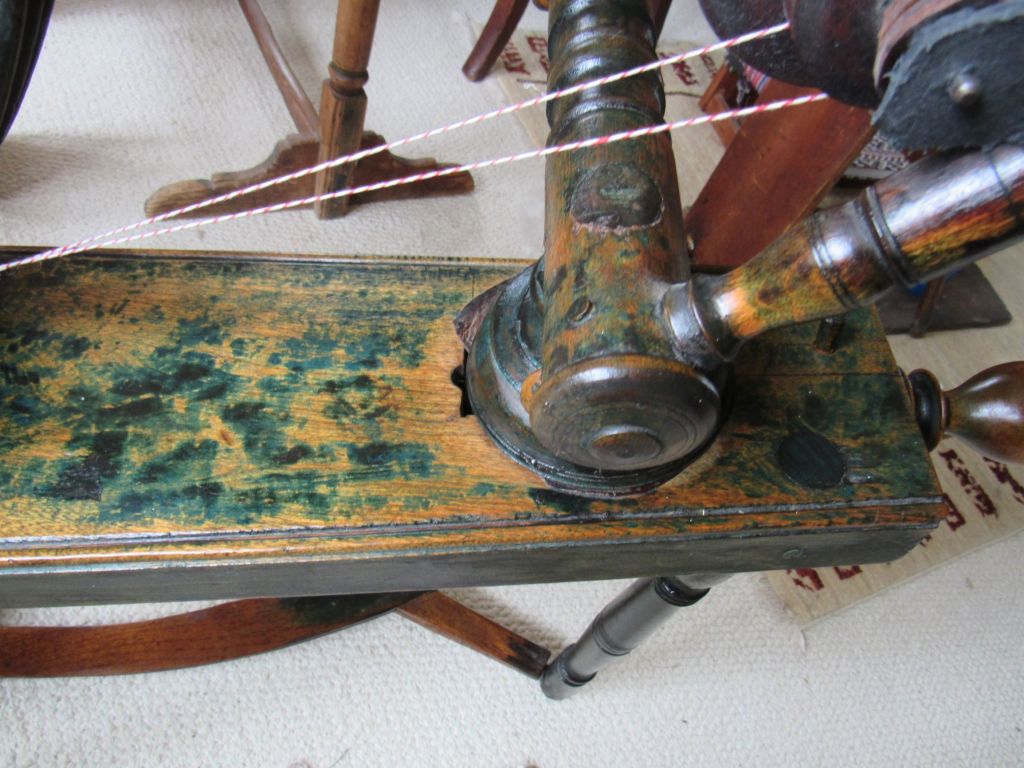

But the remnants of green, worn down to lustrous wood grain make her a wheel of rare beauty.

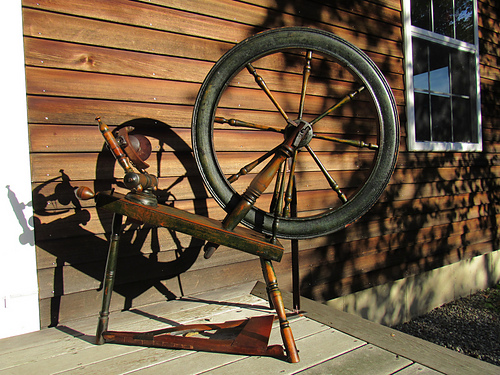
She is a screw-tension wheel, with no discernible maker’s mark, but carries the typical characteristics of a Bisson wheel.

Joseph Bisson (1823-1901) (Oct. 2021 edit–this should read Louis Bisson, not Joseph–my apologies!) was a wheel maker in the Beauce area south of Quebec City. Many, if not most, of his wheels carry a maker’s mark. His older brother, Vital, also made wheels, but none have been found with Vital’s mark. Some wheels have been found with a “Joseph Bisson FJ” mark, which may have been Vital’s son. (see Fabricants de Rouet, below).
Bisson wheels have a distinctive style. Their drive wheels and treadle assemblies are immediately recognizable. The drive wheels are spare, with only 8 spokes. Something about them is very visually appealing.

As is the treadle support, with its graceful curve. It is an attractive and practical feature, allowing for easy two-footed treadling.
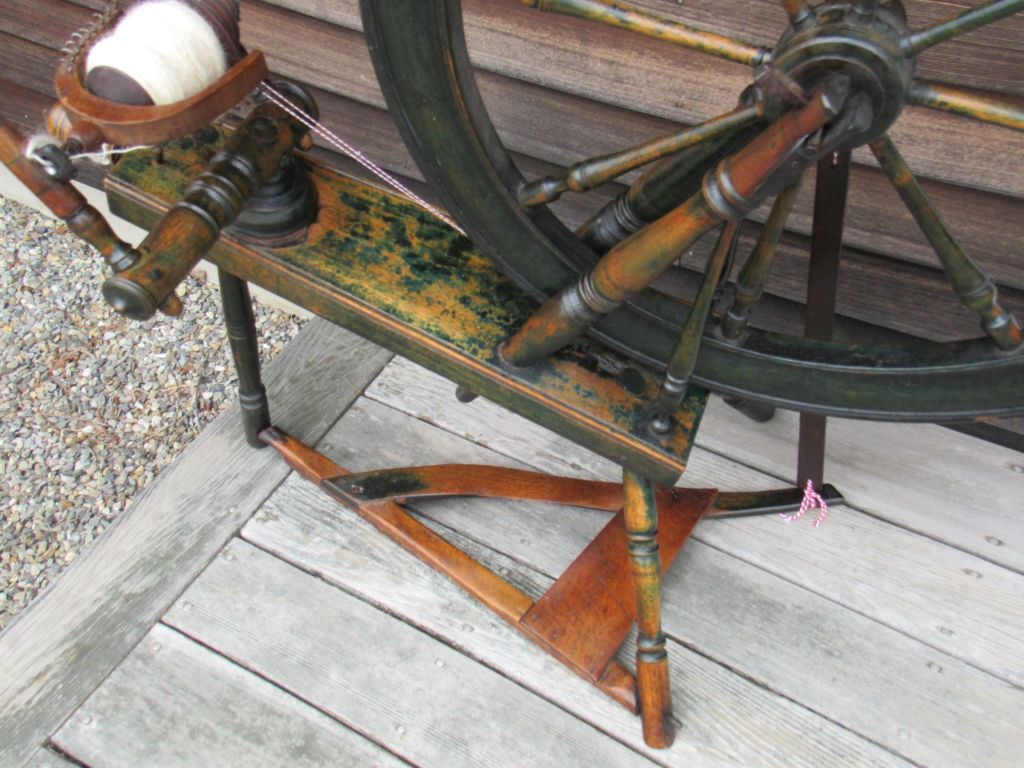
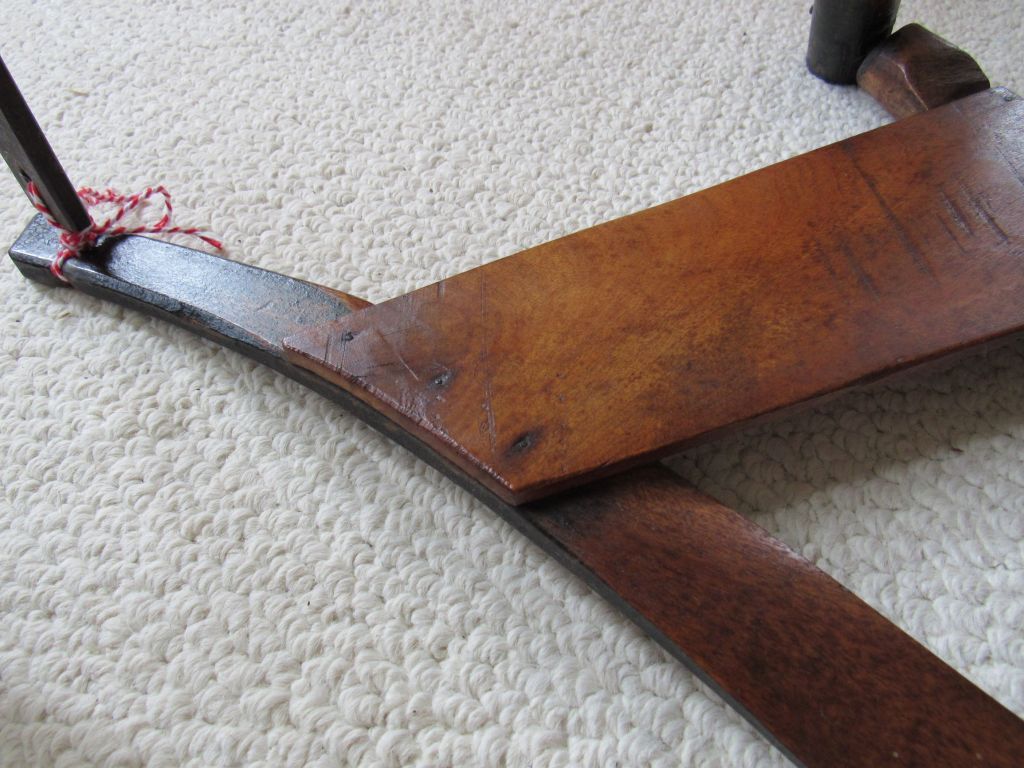
This wheel shows the most wear from a left foot on the treadle bar curve.

The wear on the treadle itself is only on the right edge. I love how the treadle is cut to match the curve in the support bar.
Bisson tables typically are grooved down both sides,
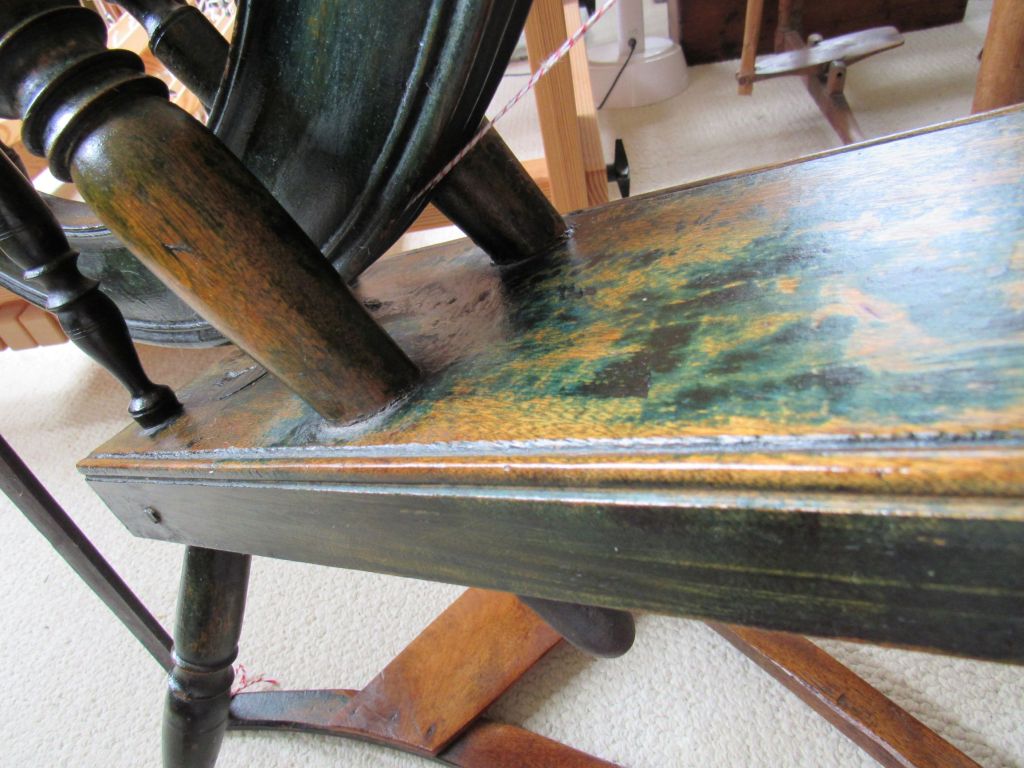
with secondary supports on each wheel upright.
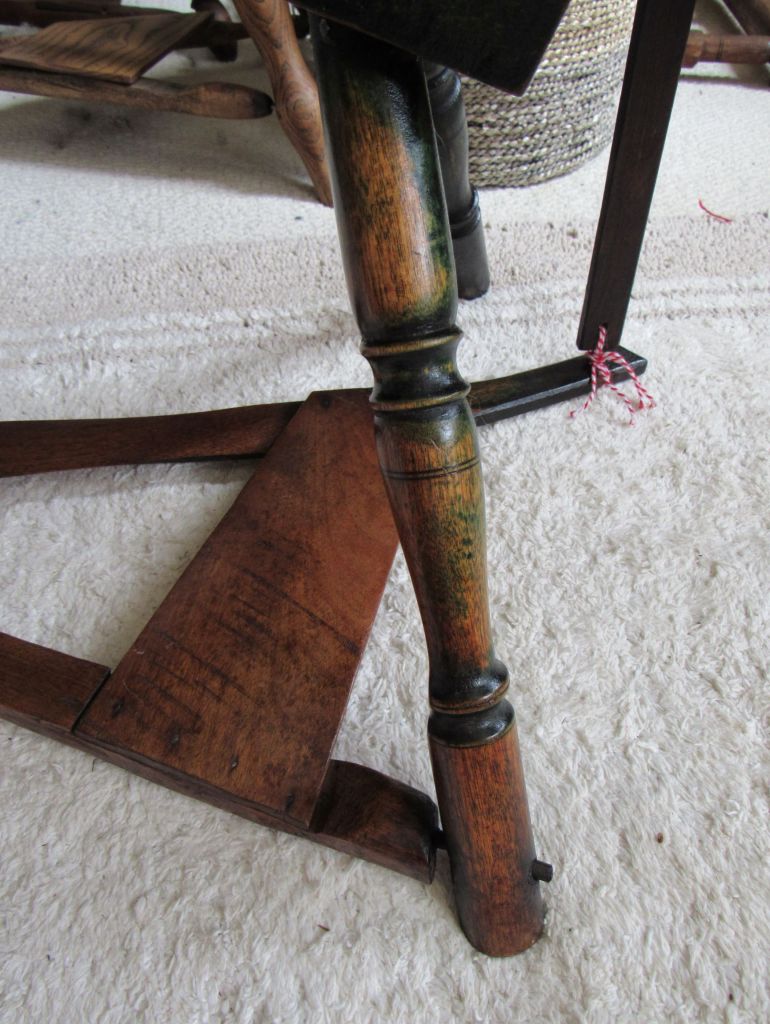
Shortish legs have simple turnings.
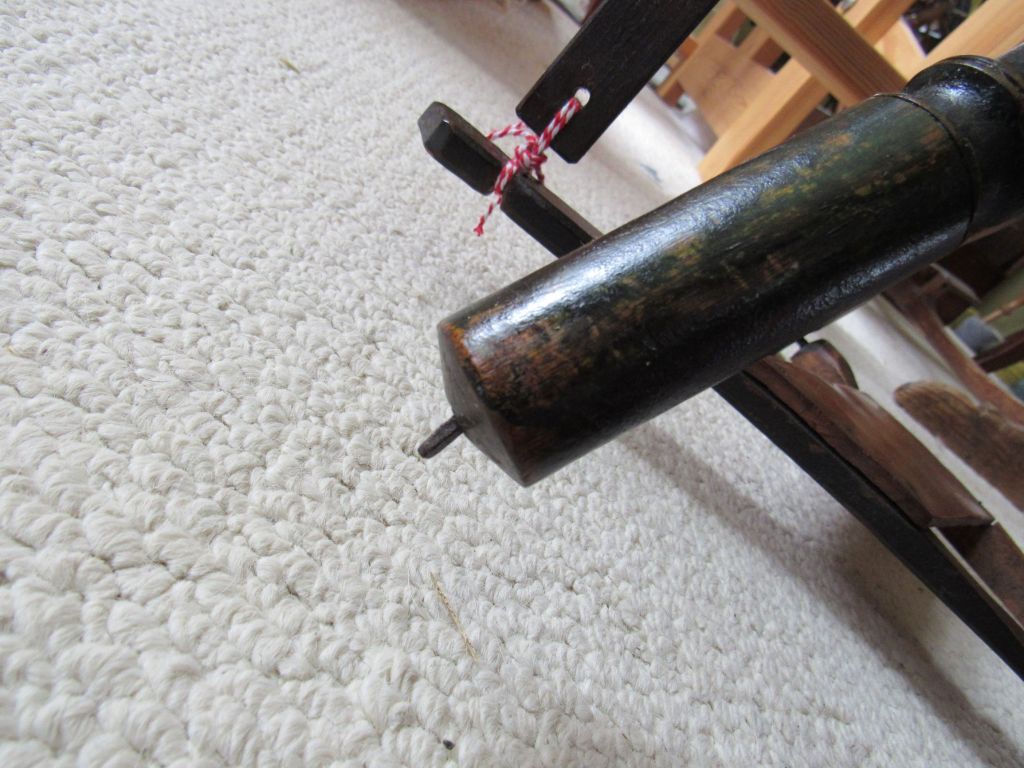
Aside from the drive wheels and treadles, Bisson flyers also are unique among the Quebec wheels. Rather than splaying outward like a wishbone, the flyer arms run parallel to the shaft and each other and have a small ridge running down the center of the flyer. Unfortunately, I do not have a photograph of a Bisson flyer since this wheel qualifies as a mélange wheel, with a replacement flyer.
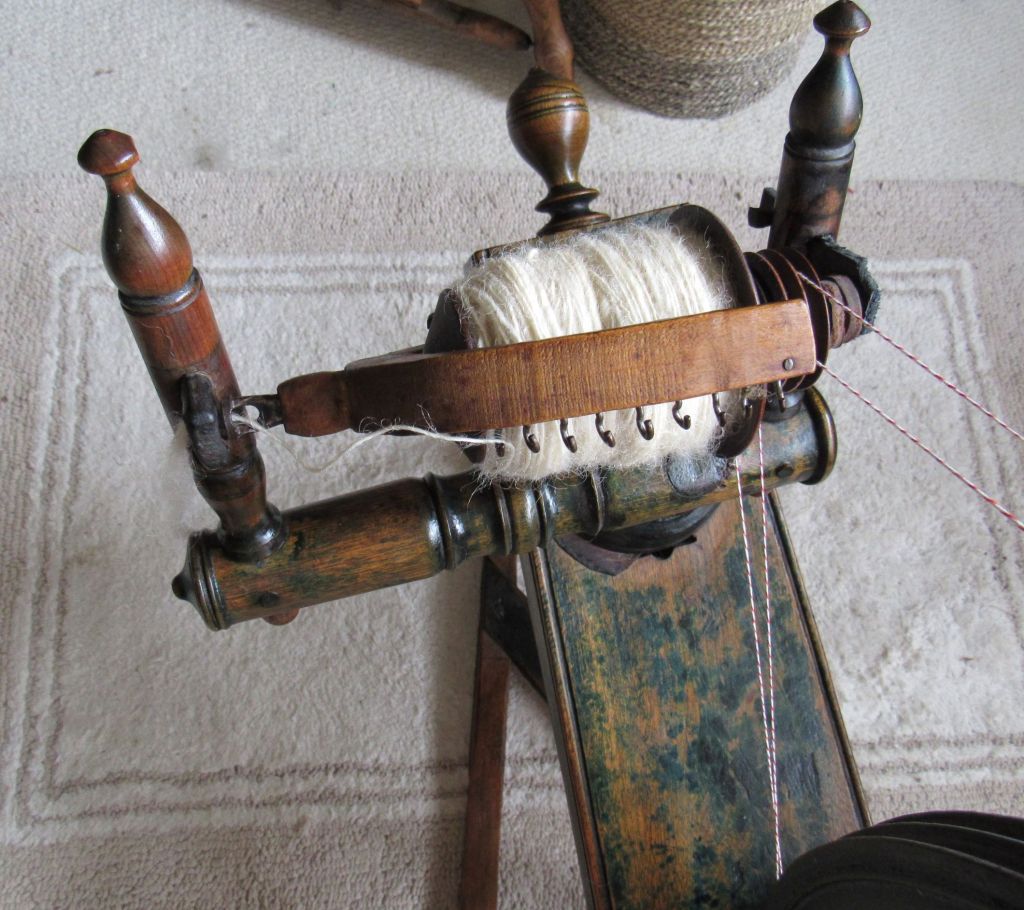
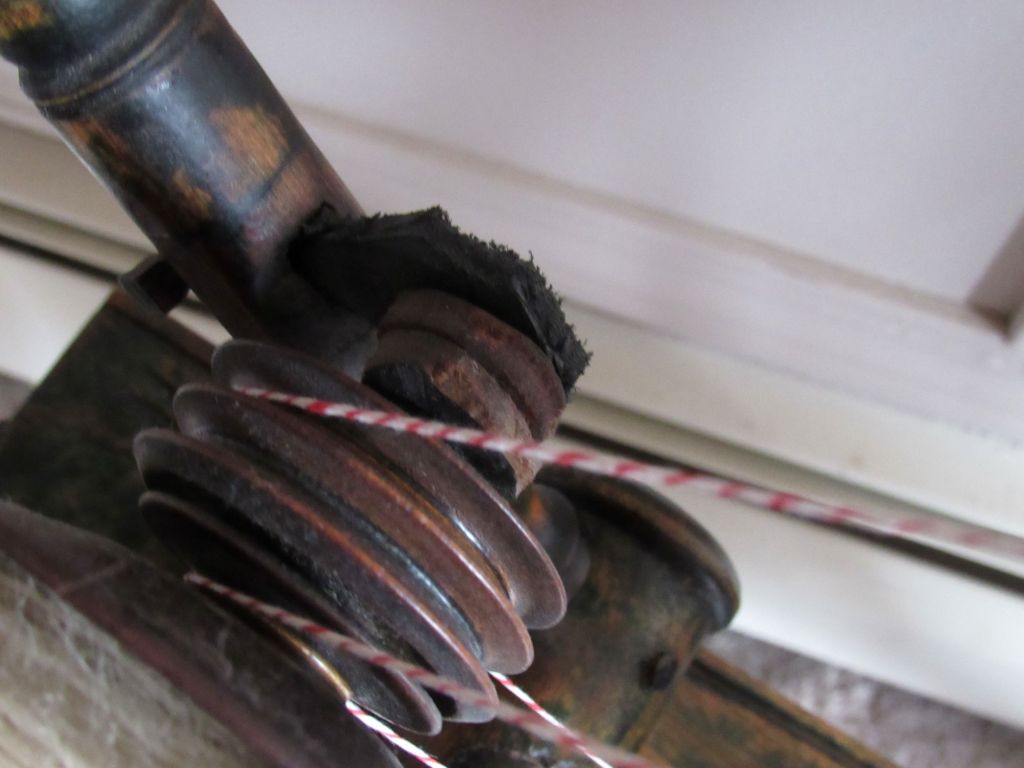
One sign that it is a replacement flyer (aside from the fact that it doesn’t look like a Bisson flyer) is that someone inserted two thick pieces of leather as washer spacers to make the replacement flyer align properly with the drive wheel.
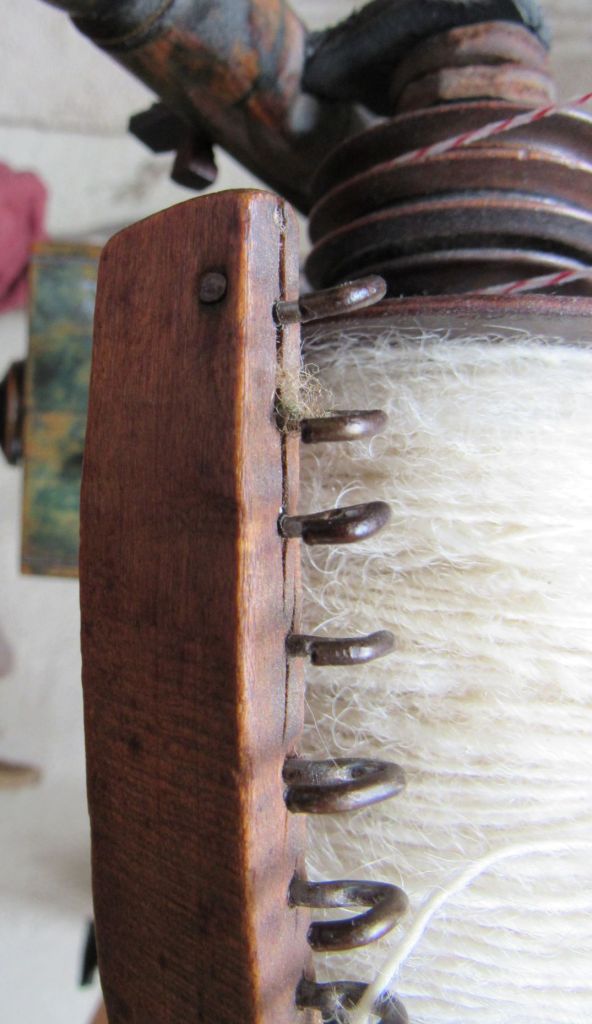
One flyer arm is cracked and has been repaired by pinning it with a small piece of metal.
The orifice is bell-shaped, but without fluting.
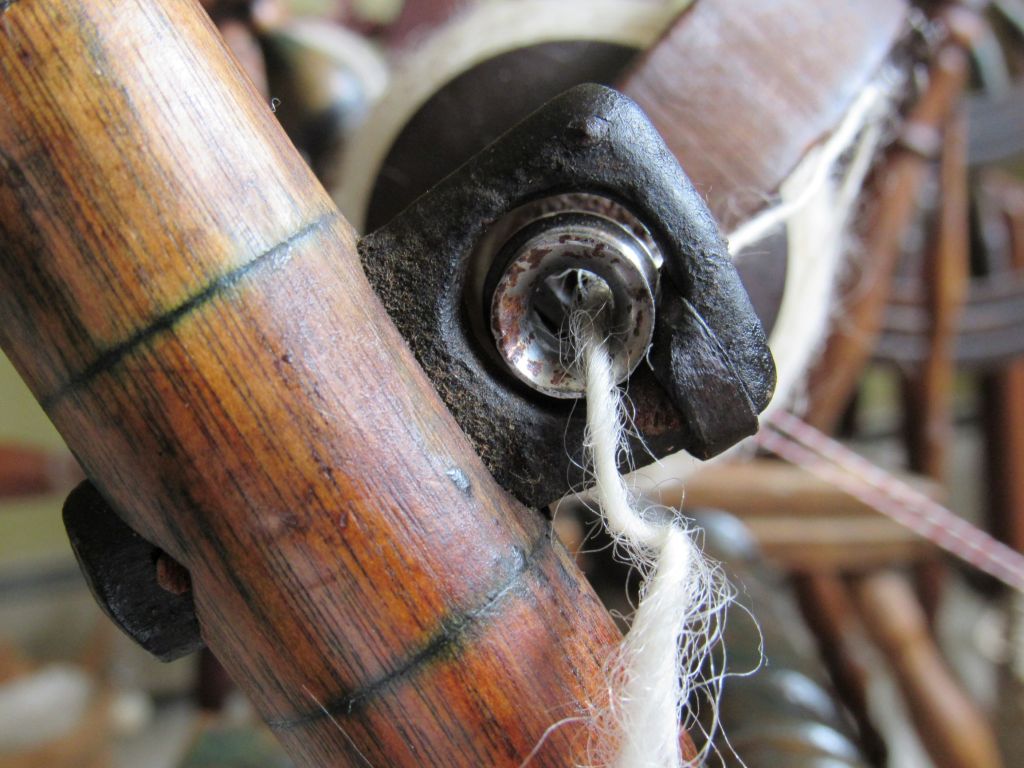

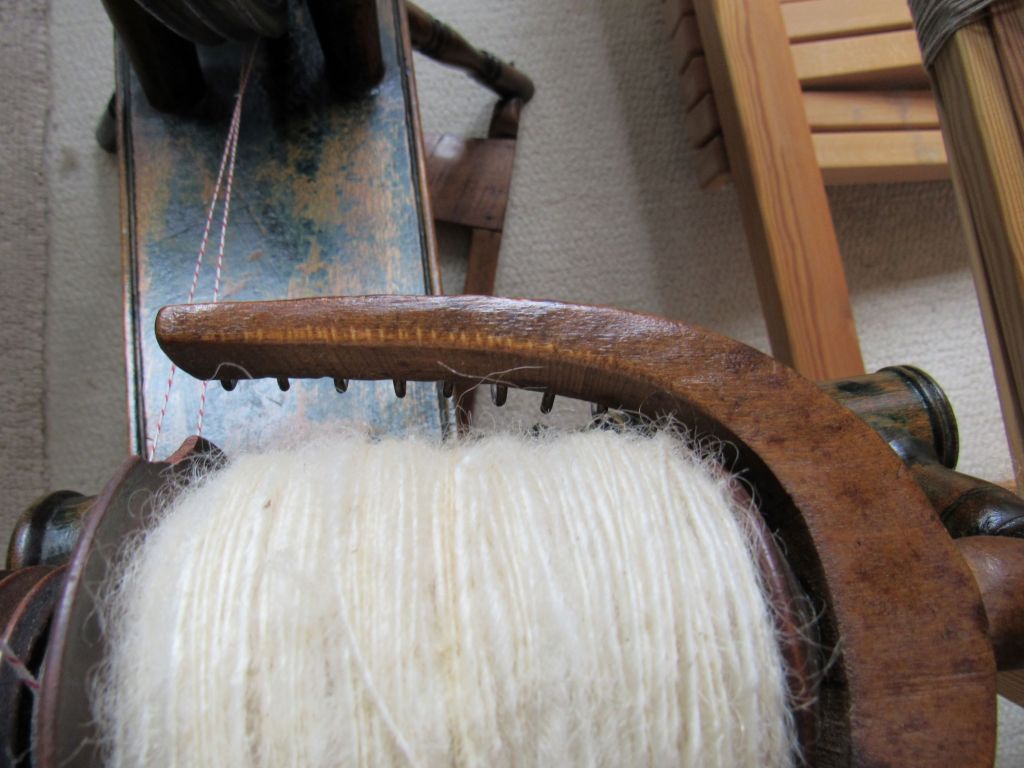
There are wear marks on the inside edges of the flyer arms, likely from winding off, and an odd groove in the tension screw.
I cannot tell if it is from wear or simply an accidental gouge.

Each side has a piece of leather acting as an axle bearing.
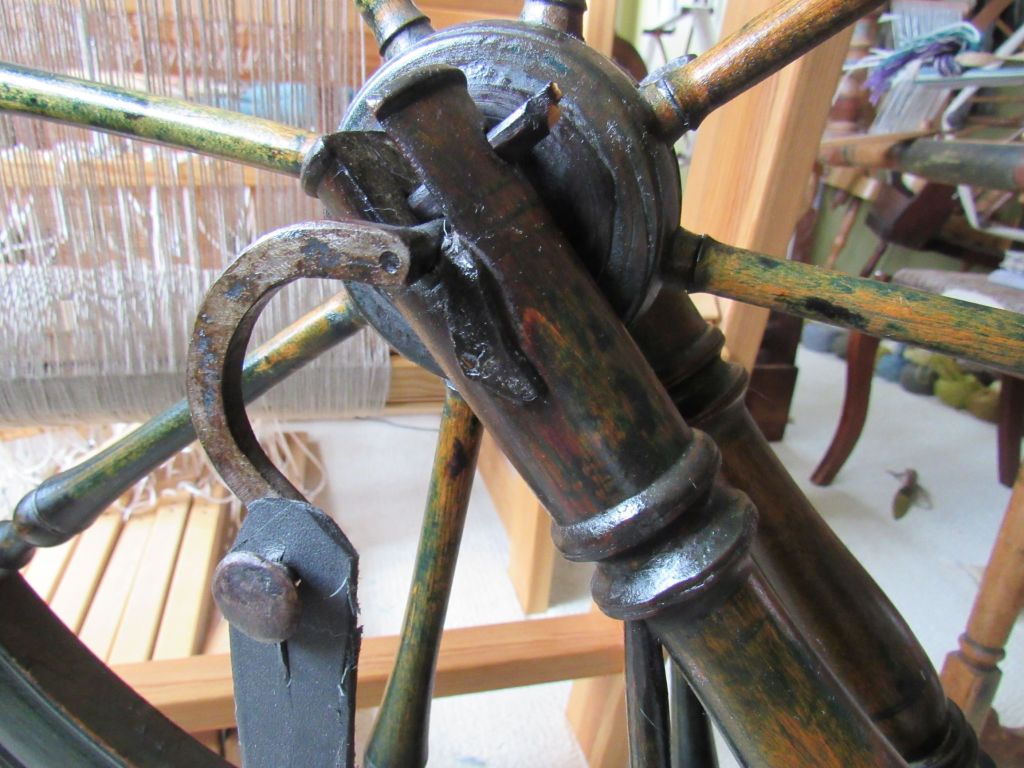
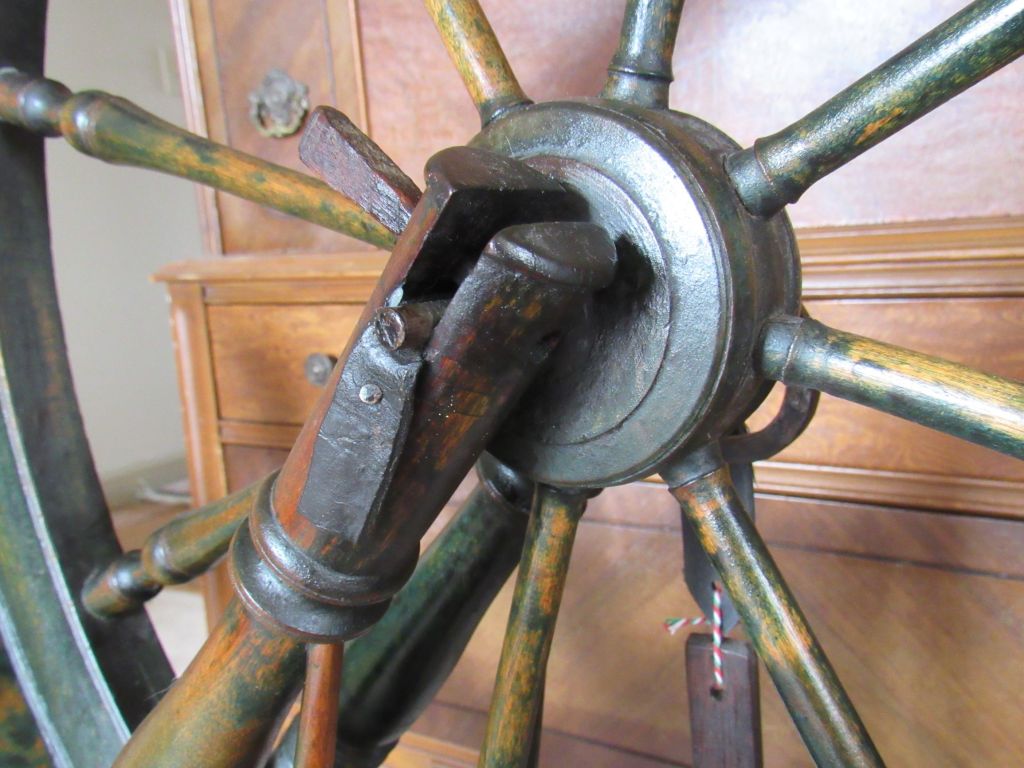
Another ancient piece of leather sits under the mother-of-all collar, keeping it tight and aligned.

The footman was attached to the crank with a piece of leather and string, which I had to replace because it was cracked beyond repair.

Adelaide had belonged to the seller’s grandmother. The family had kept the wheel lovingly wrapped up for years, sparing her the fate of so many wheels relegated to basements, barns, and garages to become spider condominiums. As a result, she survived in remarkably good condition, green paint and all.
For more information on the Bisson family and their wheels, see:
Foty, Caroline, Fabricants de Rouets— this book and a photo supplement are available for sale as a downloadable PDF by contacting “Fiddletwist” by message on Ravelry.
 Exquisite Machinery