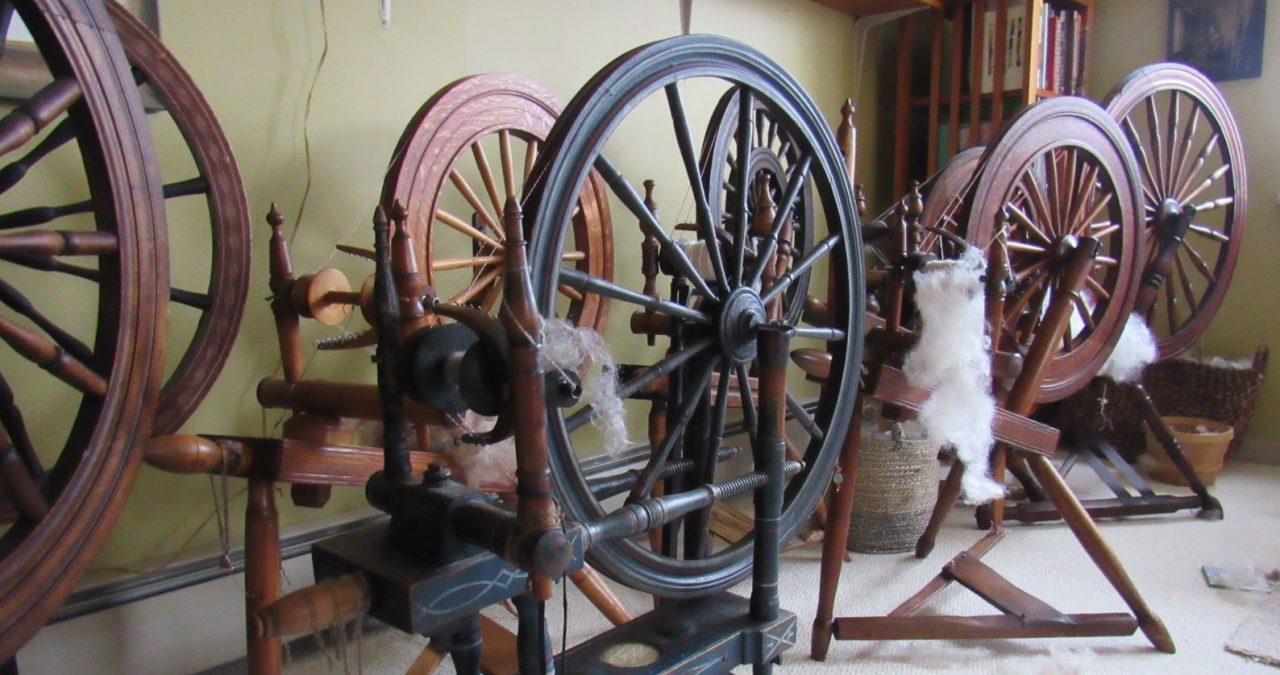
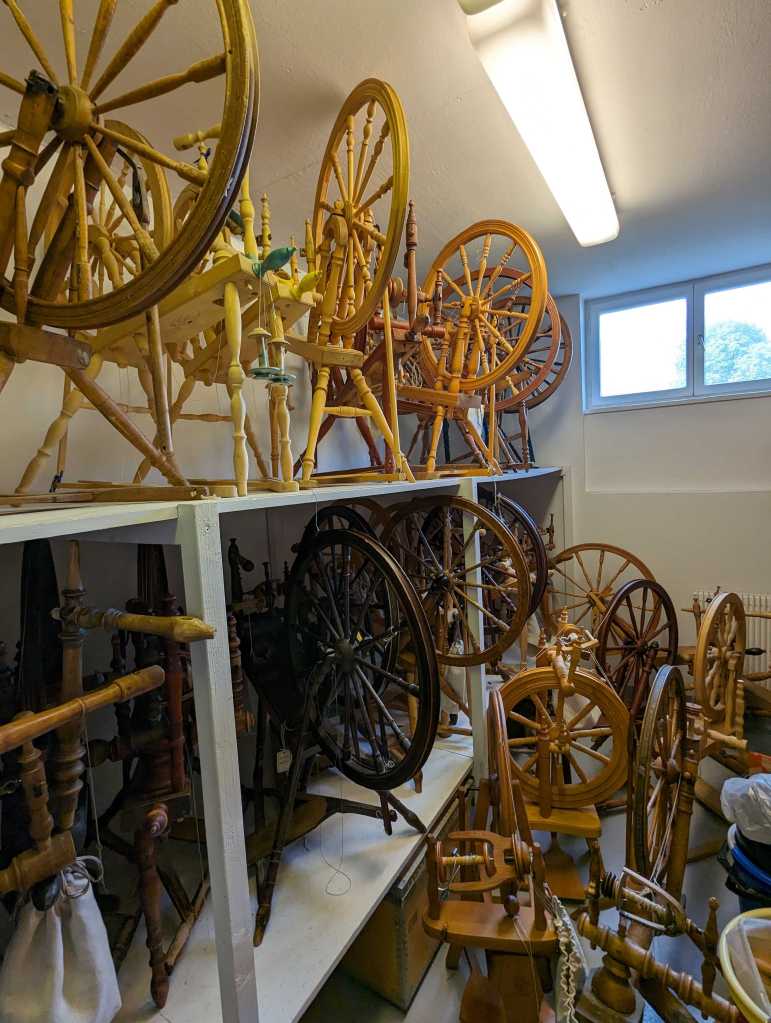
While in Dalarna, Sweden last summer, one particular wheel style kept appearing at various places I visited. I first noticed this style in the collection at Sätergläntan, the craft school I was attending for a daldräll weaving course. I was especially interested in the collection’s two turned-table, metal-clad wheels described in my last post, “Torvi.”
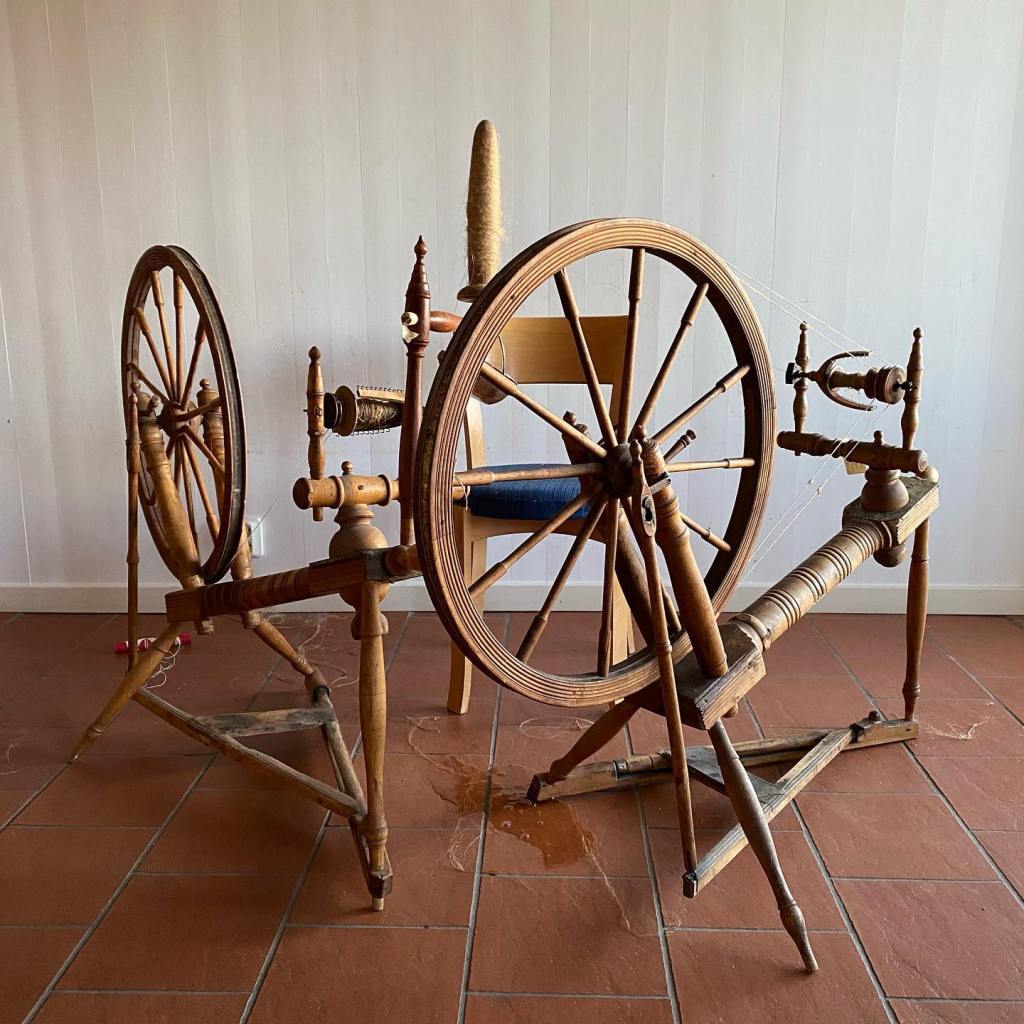
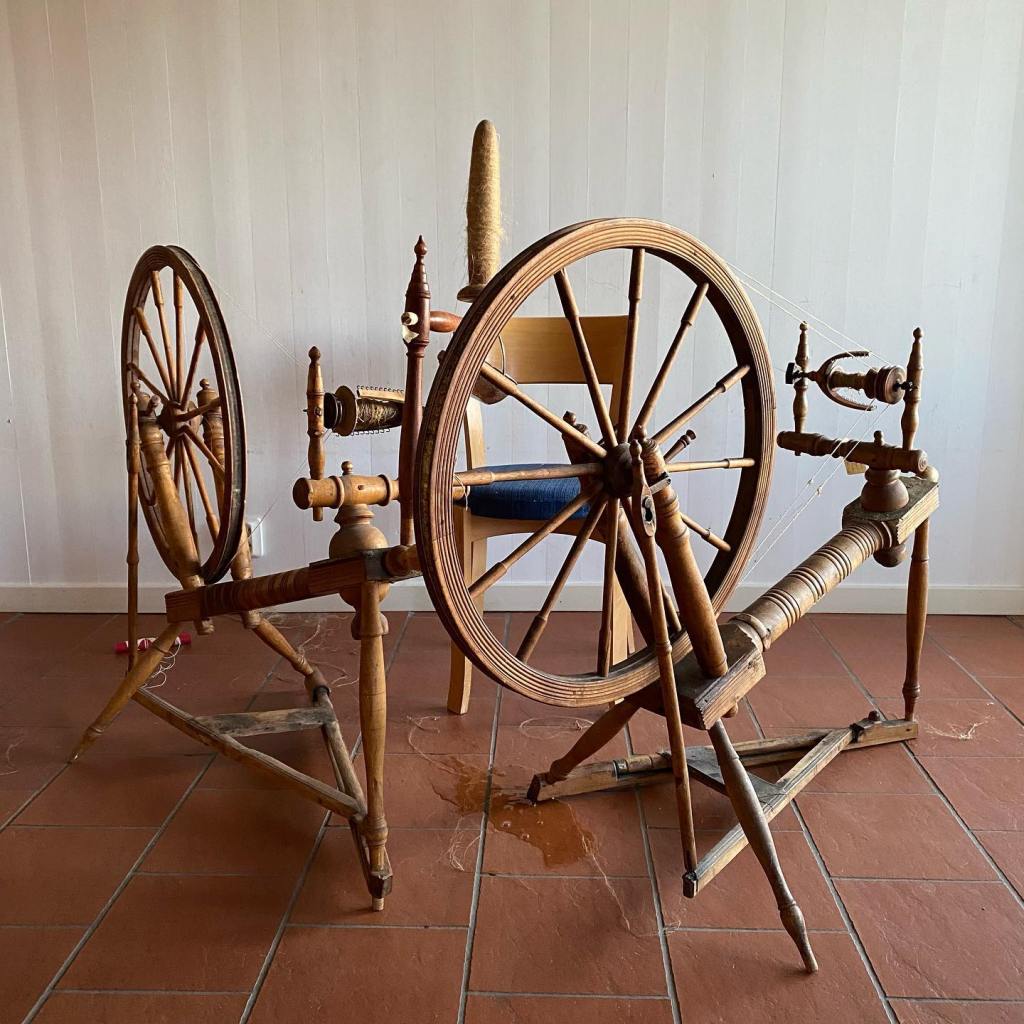
Even as I was marveling over those wheels, however, another caught my eye. It was the maidens I noticed first—they were so much like those on the turned-table wheels.
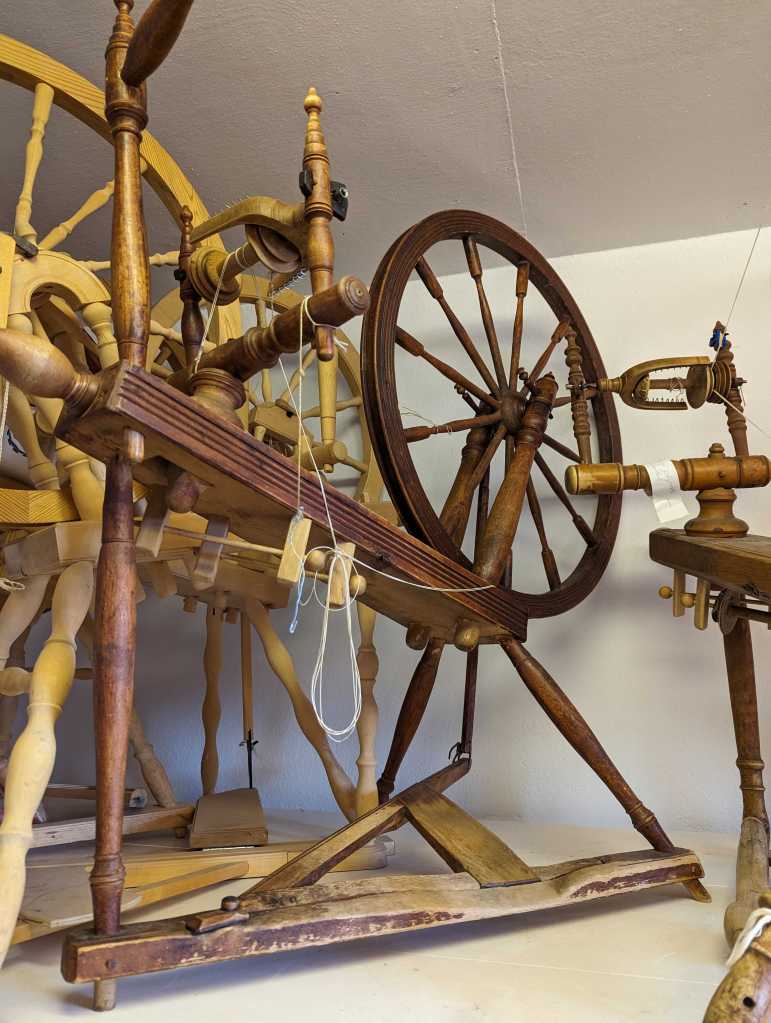
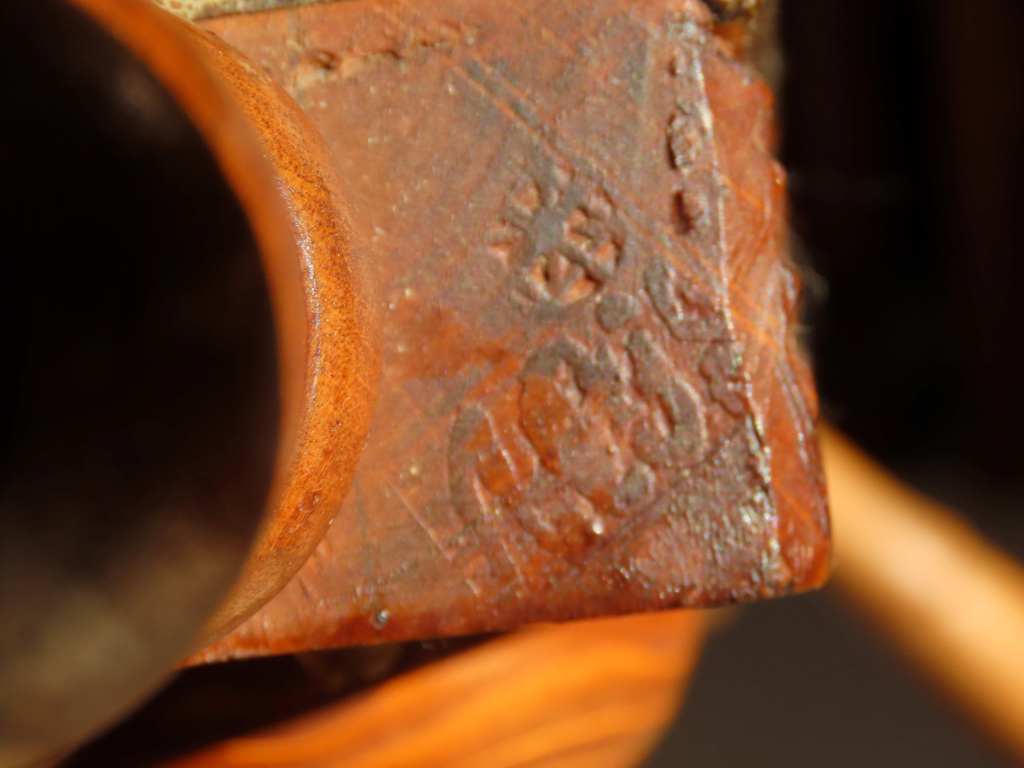
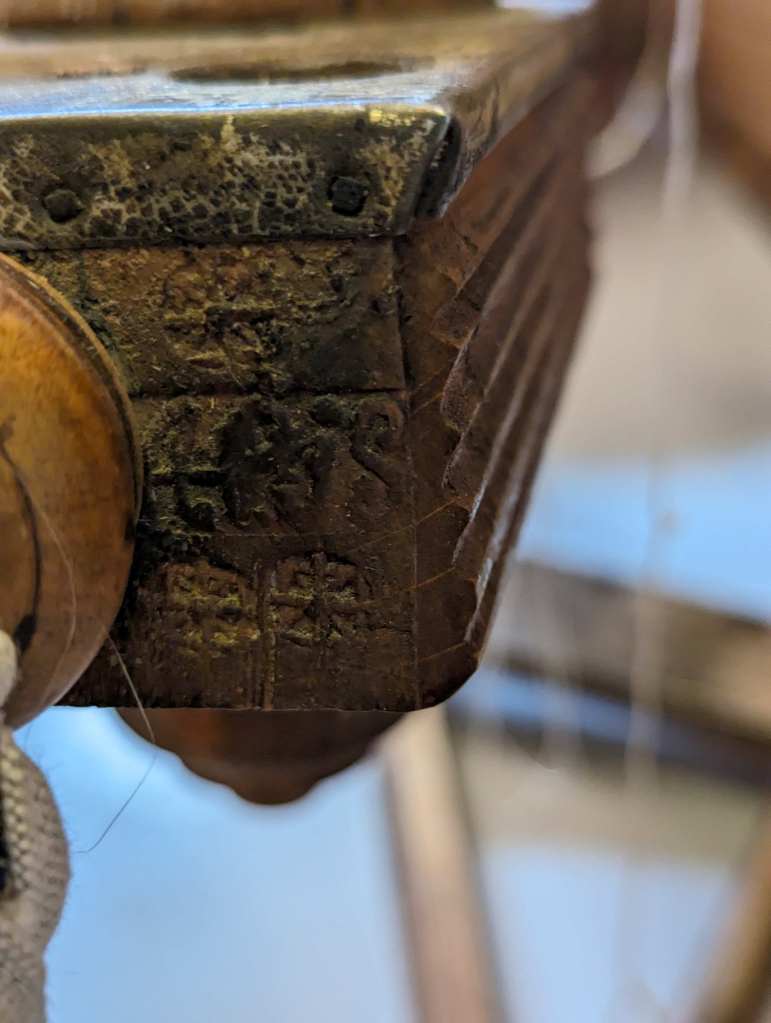
And not just the maidens–the unusual treadle set up, the legs and feet, the axle caps, the table-side grooves, and the spokes and drive wheel– all were remarkably similar to the turned-table wheels. The maker’s mark was different, though—an I (or J): E.L, with some star/sunburst stamps.
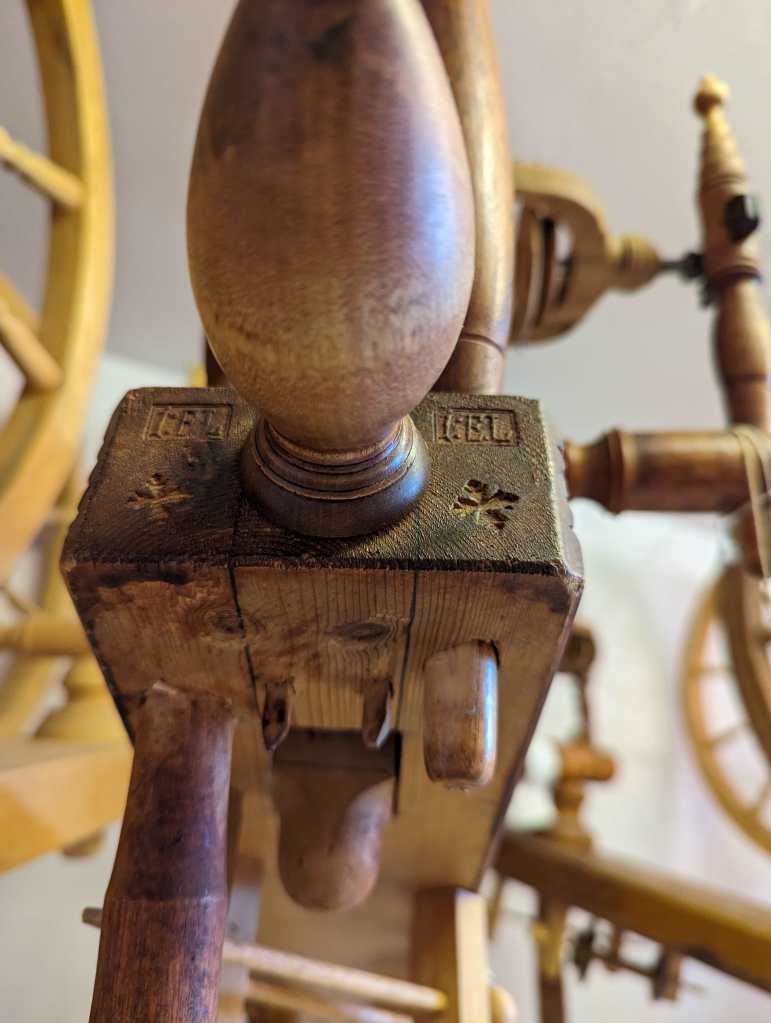
Later that week, we took a trip to the home of Anna Thomasson, a weaver who co-wrote a book on daldräll weaving. While there, we were treated to a tour of the home of the mother of Swedish poet Erik Axel Karlfeldt, which is next to Anna’s studio in southern Dalarna. As soon as we entered the house, there it was—another wheel of this style.
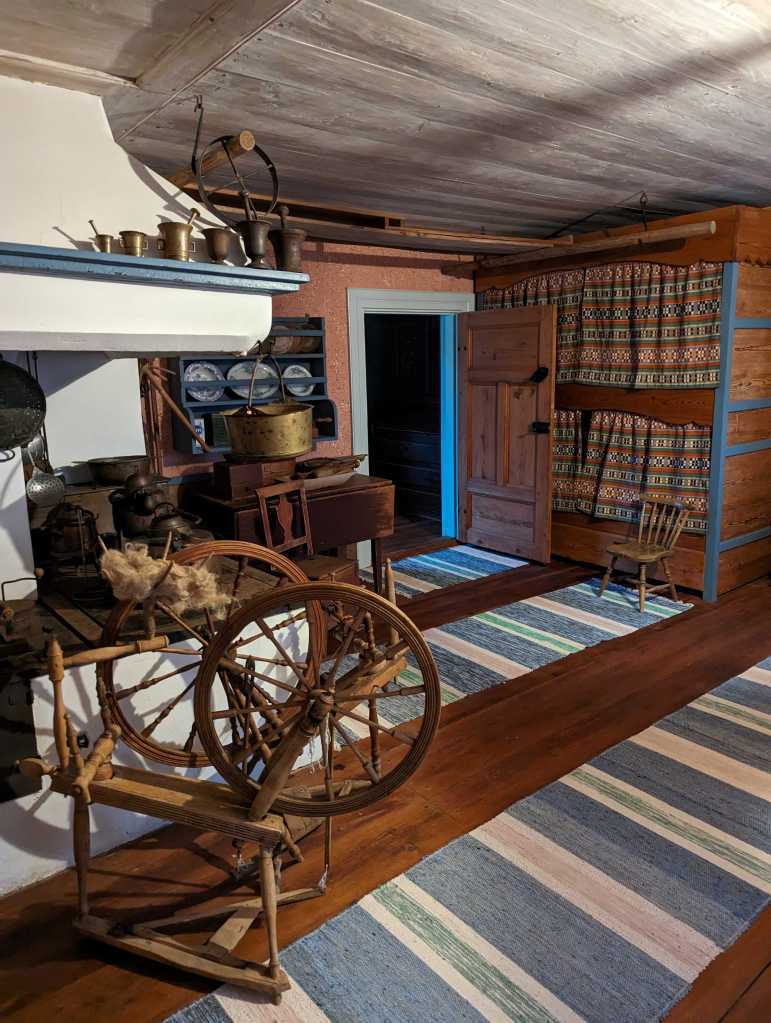
Seeing it there made me realize that I had seen others a few days earlier, when visiting the museum home of artists Carl and Karin Larsson in Sundborn, near Falun (post on this visit is here: Sweden, Part 1). While we were not allowed to take photos in the Larsson house, I was sure that one of the wheels there was this style (I have since confirmed it through photos in books). And there was a second one at the nearby exhibit on Karin Larsson and her textiles, which I was able to photograph.
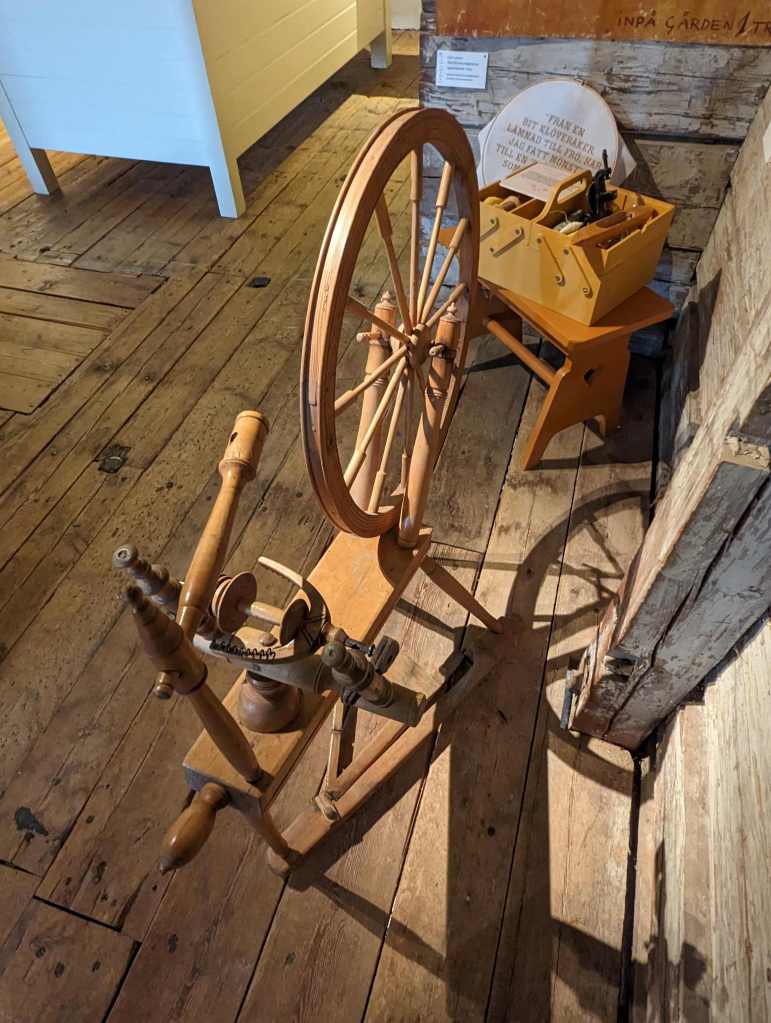
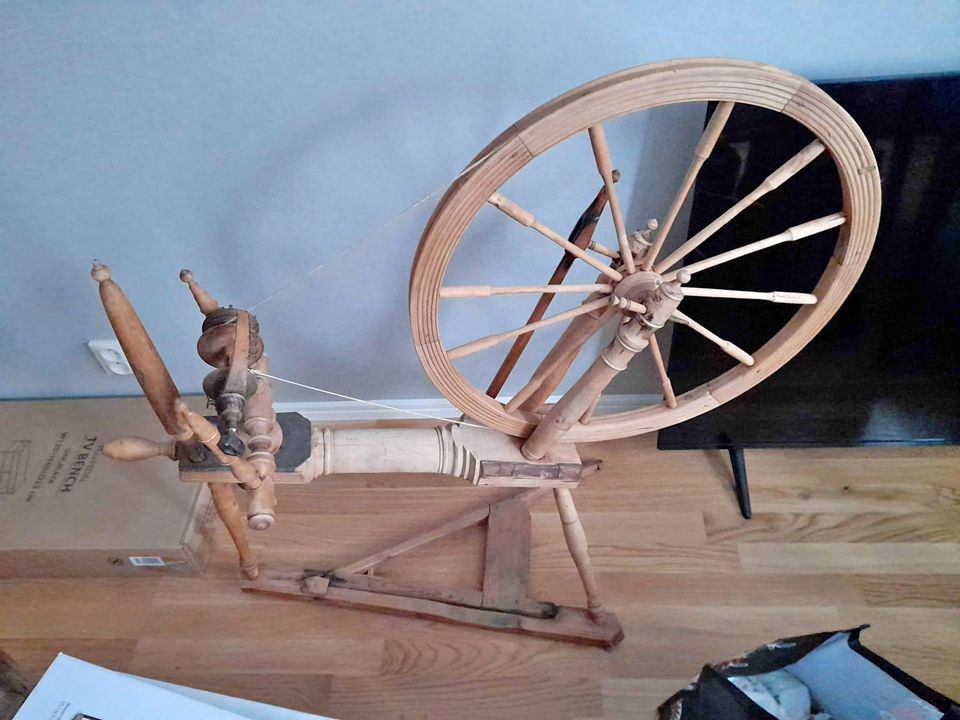
When I returned home, I found that these wheels pop up regularly on Facebook Marketplace in Dalarna. This one said that it was owned by a great-grandmother born in 1893 and from somewhere near Falun.
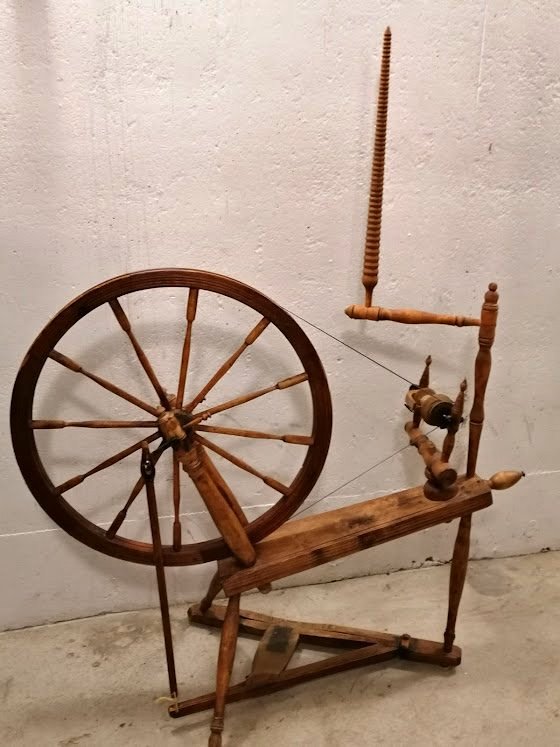
The Dalarna Museum in Falun also has one, recorded as being from the Husby/Hedemora area, which is in Dalarna, southeast of Falun. (Dalarna museum wheel link). Skansen, Stockholm’s wonderful open-air museum, has another, with the maker’s initials “CWB,” but no information as to where it came from. (Skansen wheel link). With so many of these wheels in the Dalarna area, I was puzzled that there did not seem to be any definitive information on where they were made.
From the 18th to 20th centuries, Scandinavia had well-known centers of wheel-making, usually in an area with good water power, where multiple wheel-makers, sometimes as many as fifty or more (often related), produced wheels for generations. The distinctive Finnish Kiikkalainen wheels and Norwegian Gylland wheels are good examples. Sweden had several wheel-making centers, including Solberga, Hyssna, and Hjulbäck. Each area’s wheels were immediately recognizable for their particular style and features, but with small variations by the different makers.
Many of these regionally-styled wheels were marketed outside of the areas in which they were made and, perhaps for that reason, many were marked by the wheelmakers. So, while the wheel’s style and features advertised the area in which it was made, it was the initials that advertised the individual maker.
It seems likely that these Dalarna wheels were made in this same pattern, with multiple wheel-makers in an area making similar wheels. But what area? I am sure there are people Sweden who would be able to immediately identify where these were made, but I have not found them yet. Perhaps I will get lucky and one will read this post. I hope so. In the meantime, a clue has emerged. I found a wheel in same style as Ulla in an old Facebook post. It apparently has some metal on the rim, the initials “GI (or J) S,” several star/sunburst stamps and “Stigsbo” stamped on the table end. Stigsbo is a town on the eastern edge of Dalarna, close to Stjärnsund. In commenting on the wheel, Kirsi Manni, who lives in Dalarna, indicated that wheels made in Stärnsund Parish often have the star stamps on them since “stjärna” means “star” in Swedish. Could the Stigsbo wheel, with similar initials to the turned-table wheels be made by the same maker?
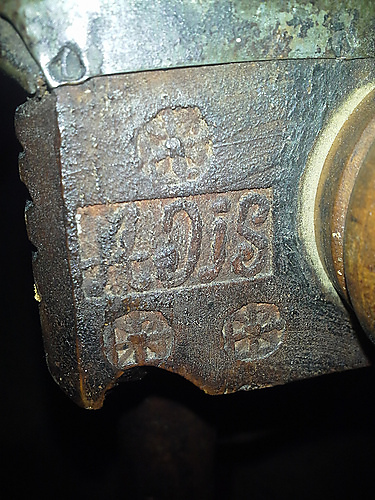
But why has only one wheel been found with a place name on it? From what I understand, Stigsbo today is tiny–were there multiple wheelmakers in the area, but spread out, perhaps in the triangle between Stigsbo, Falun, and Hedemora? My research has been hindered by my poor Swedish language skills. Nevertheless, I have not been able to find anything discussing this area as a hotbed of wheel-making. Unfortunately, I have not been able to make contact with owner of the Stigsbo wheel to get permission to post photos. But the initials bear a resemblance to the first example above.
So, the mystery lingers as to where these wheels were made. Oddly enough, while researching them, one came up for sale in Massachusetts. It is highly unusual to find any Swedish wheels for sale in New England, so I jumped on it.
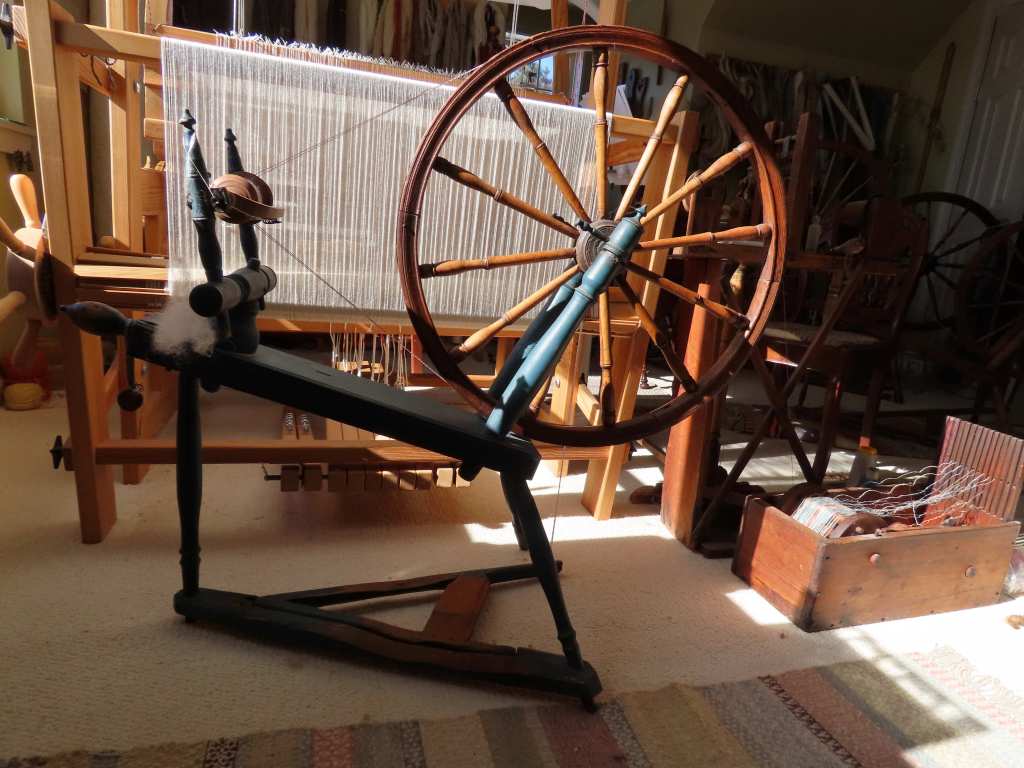
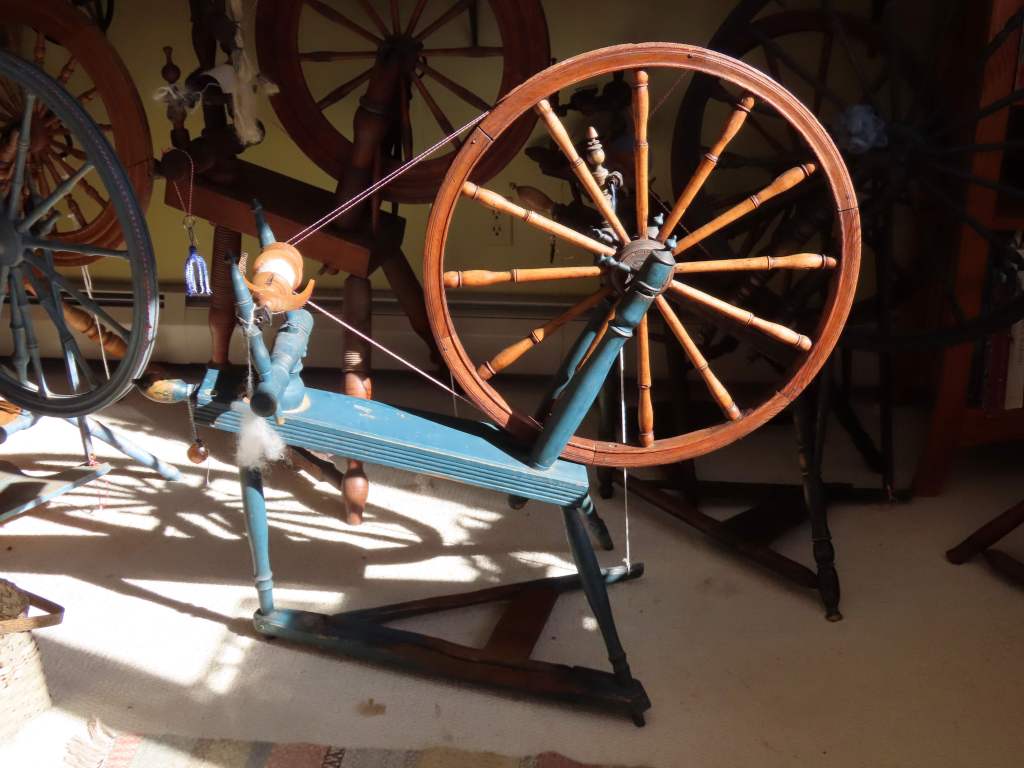
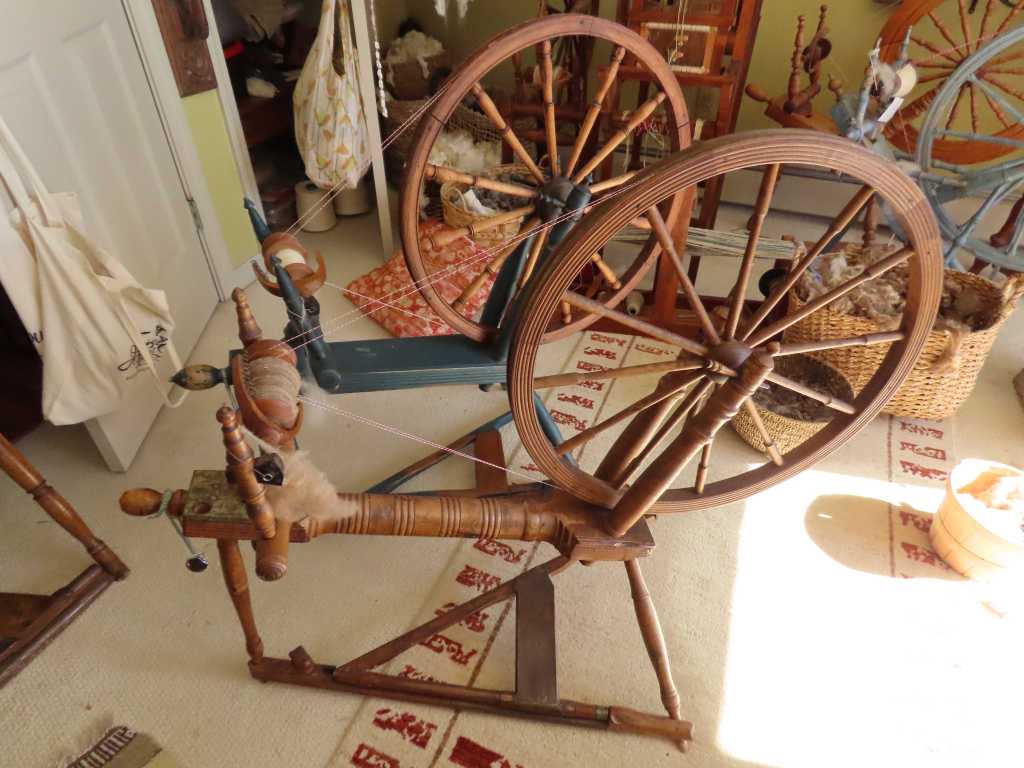
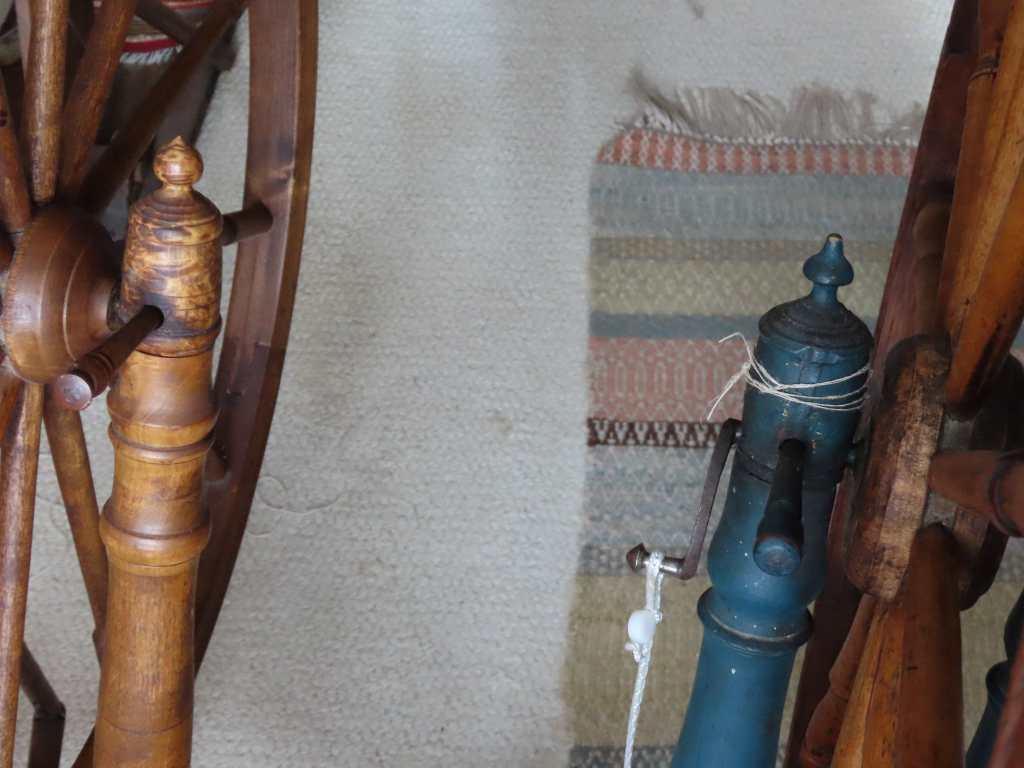
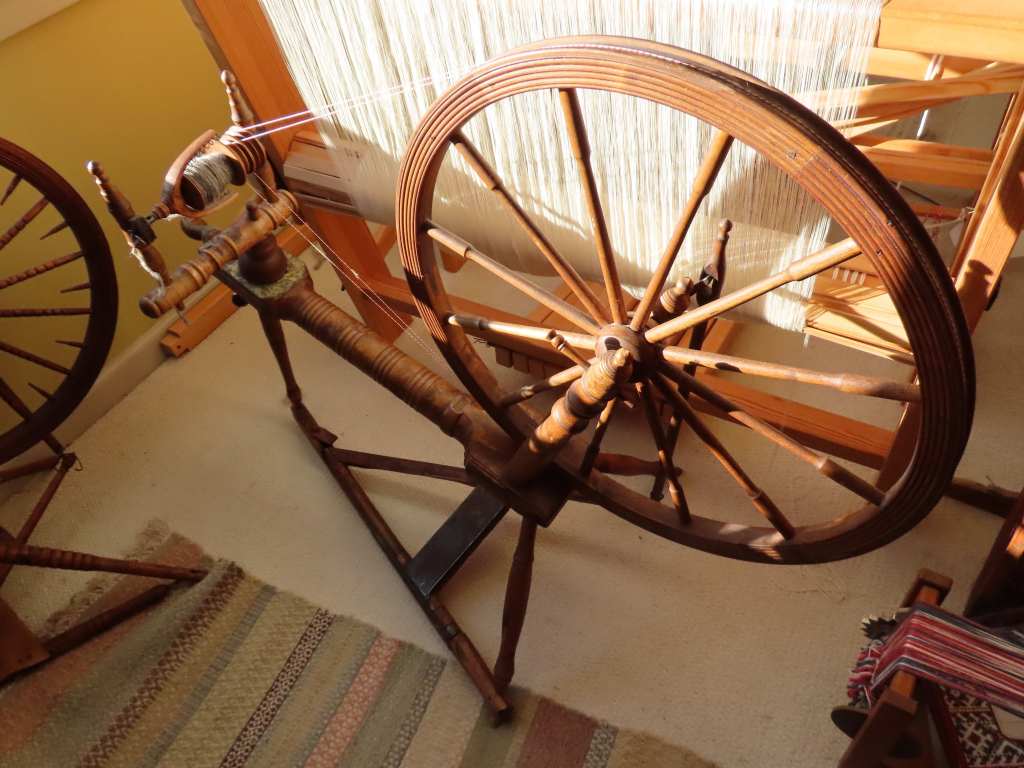
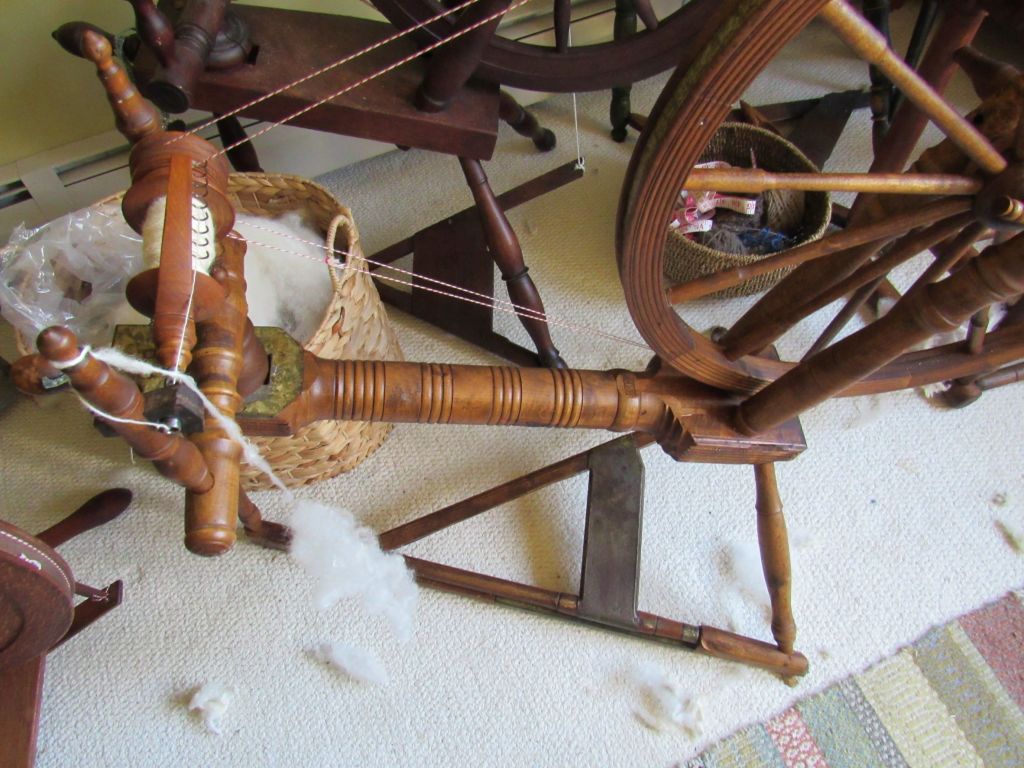
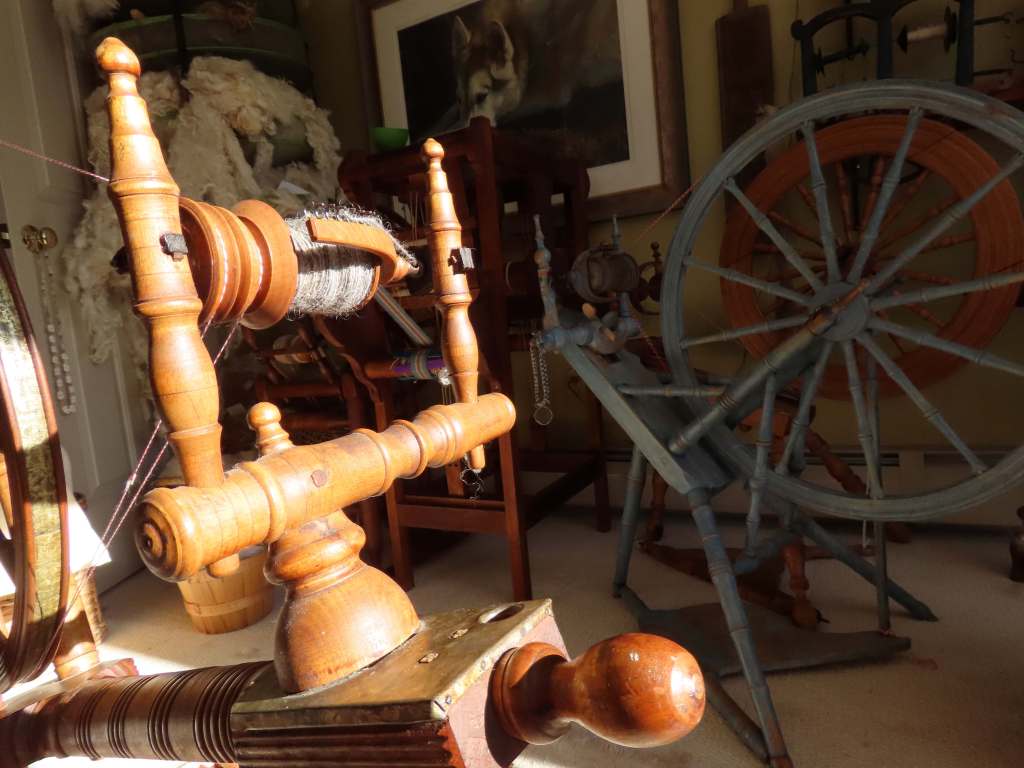
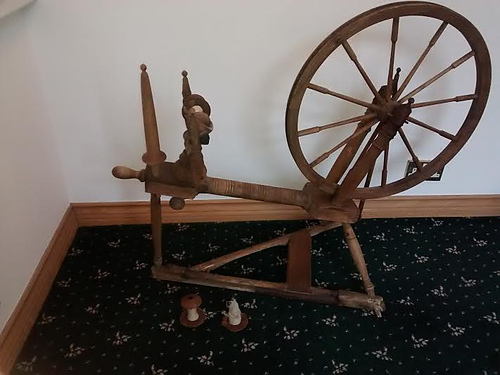
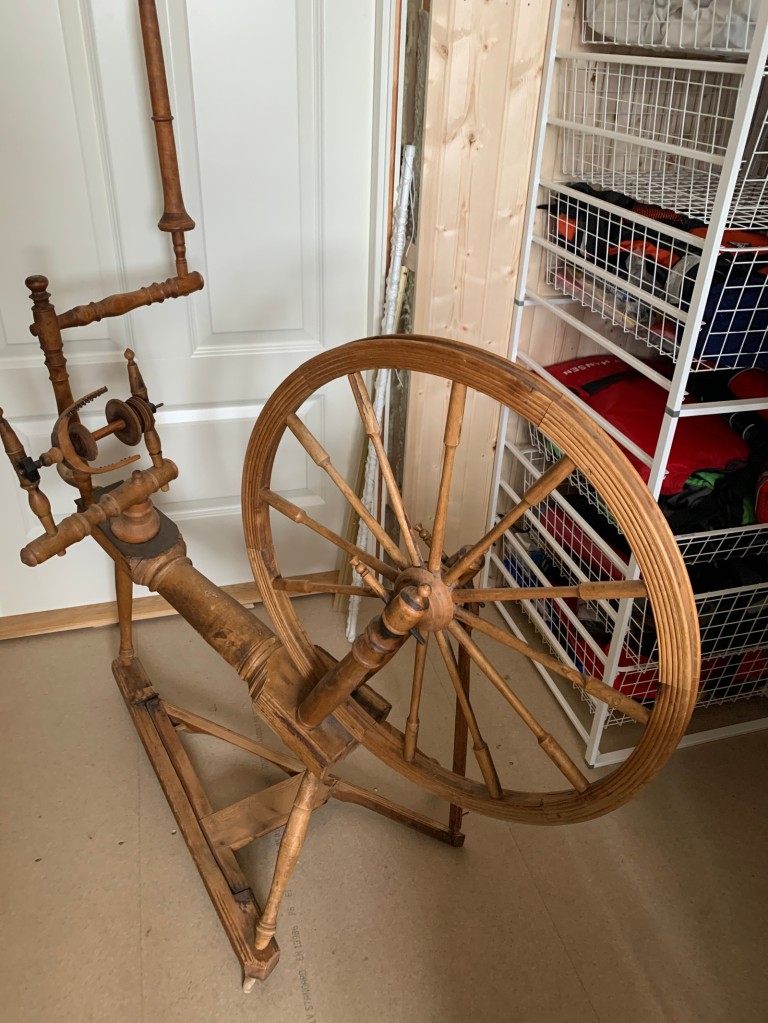
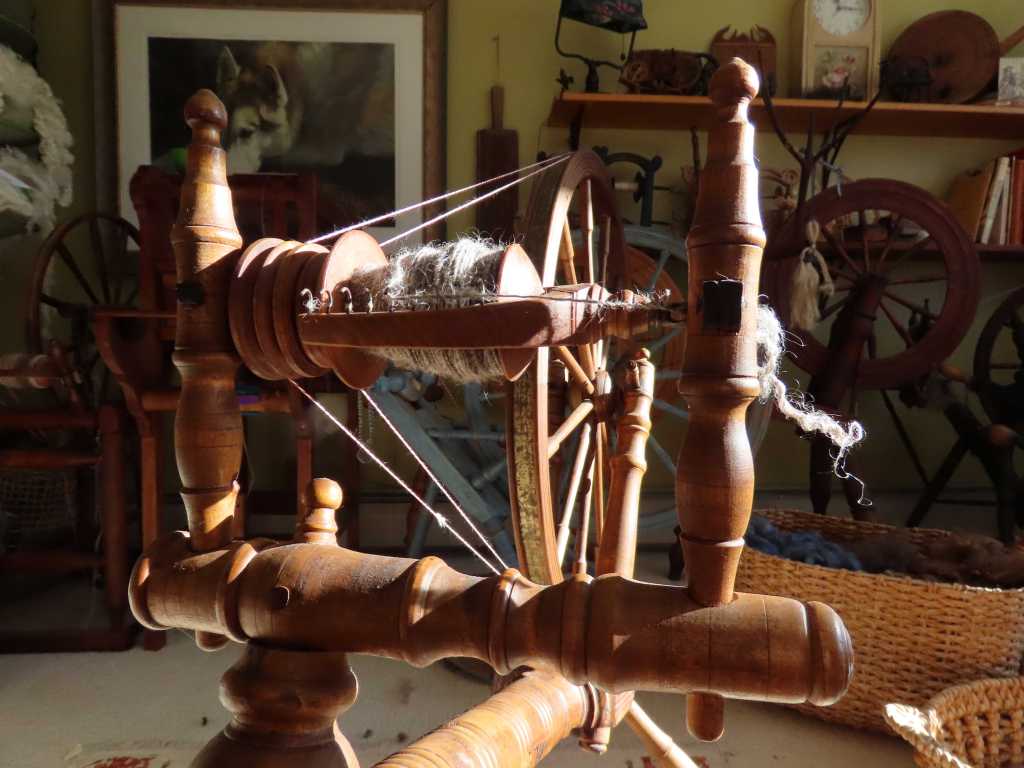
Painted a greenish-blue, with an unpainted drive wheel and flyer for contrast, Ulla is a beauty and spins almost as effortlessly as her relative, Torvi.
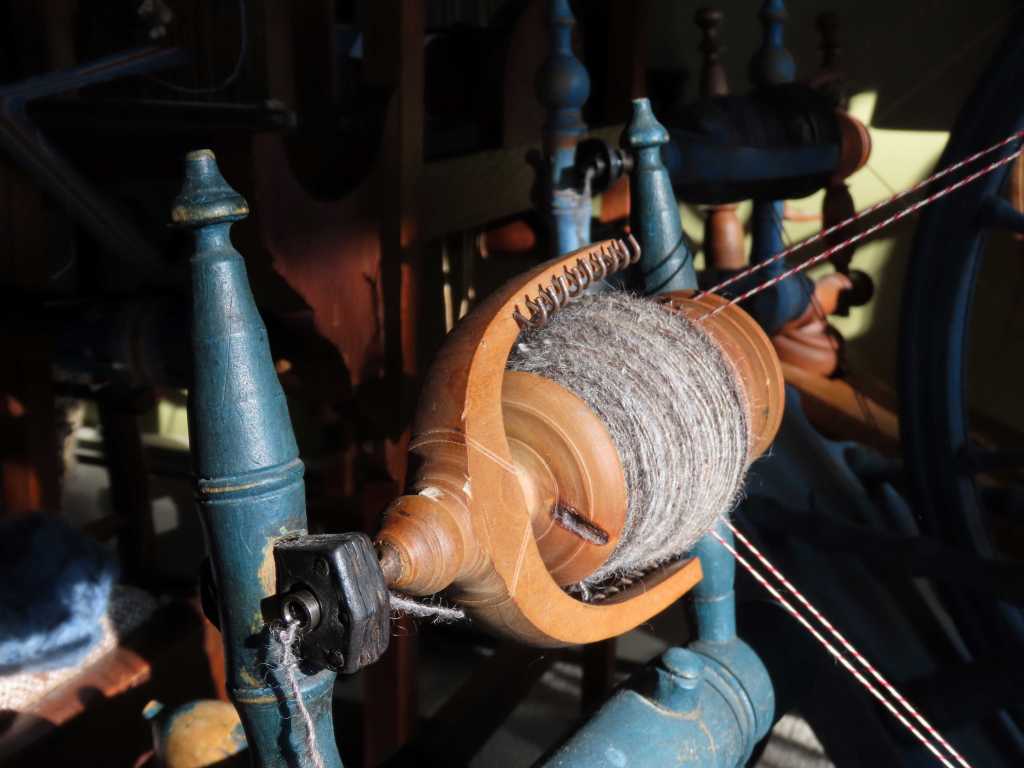
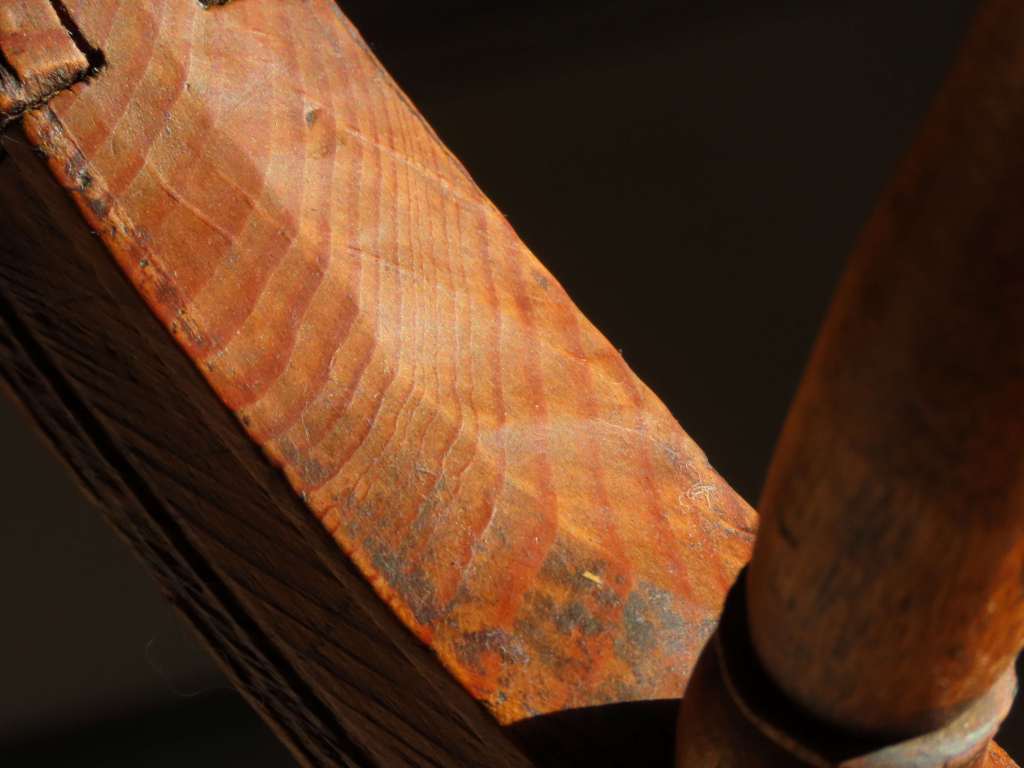
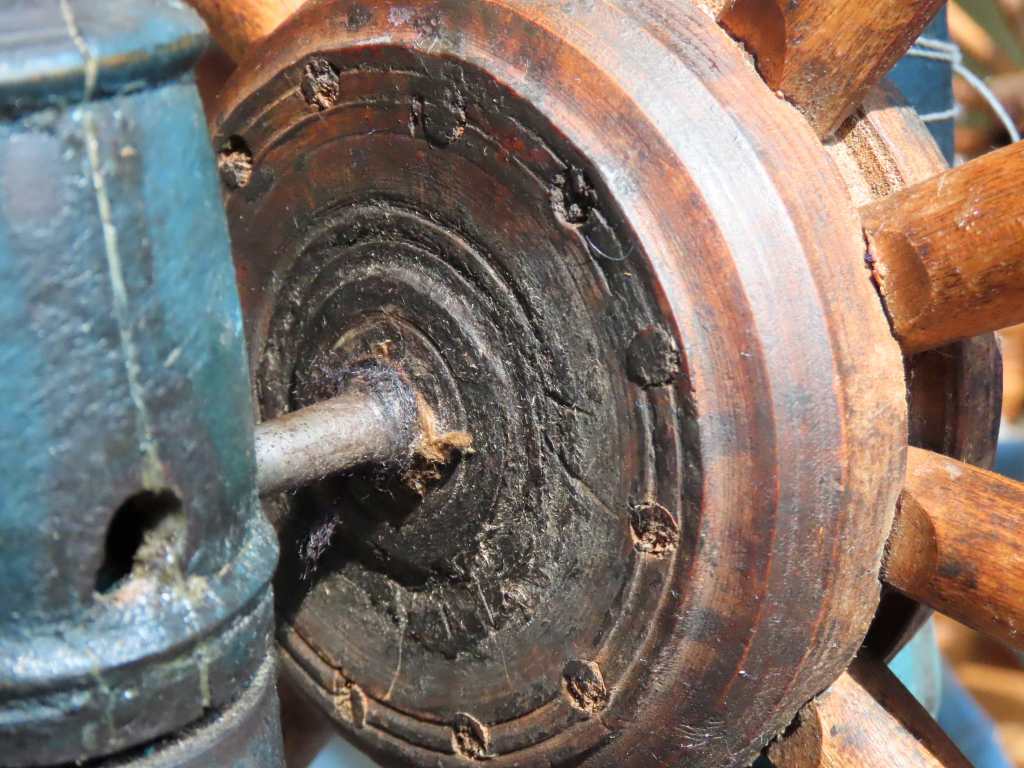
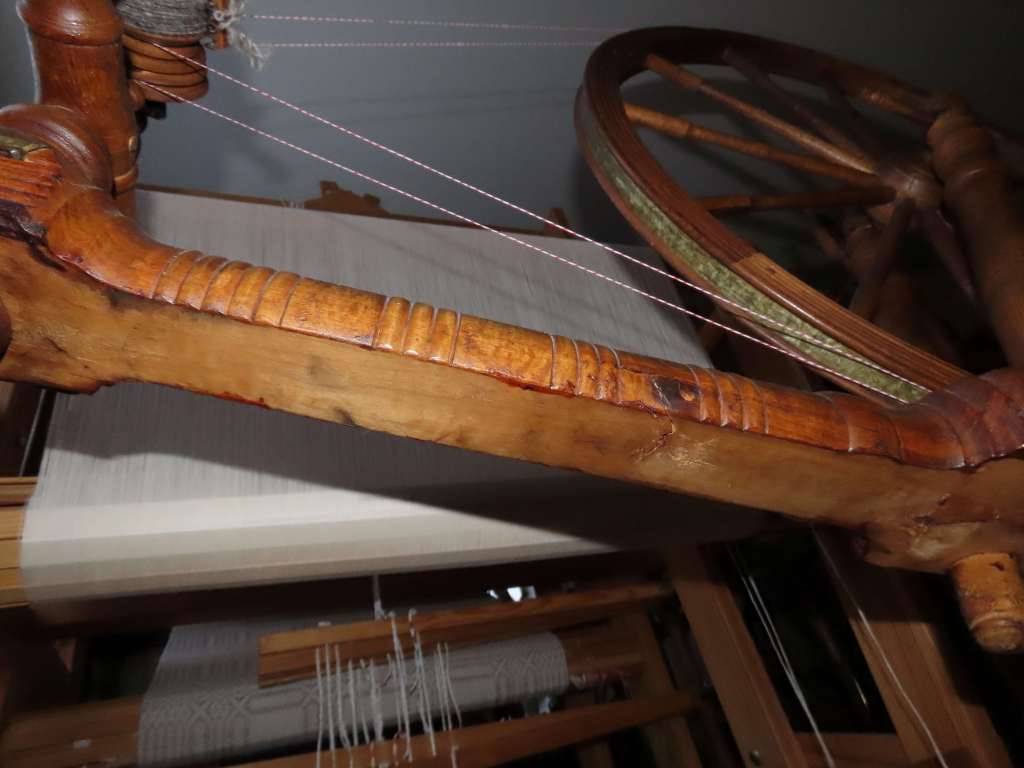
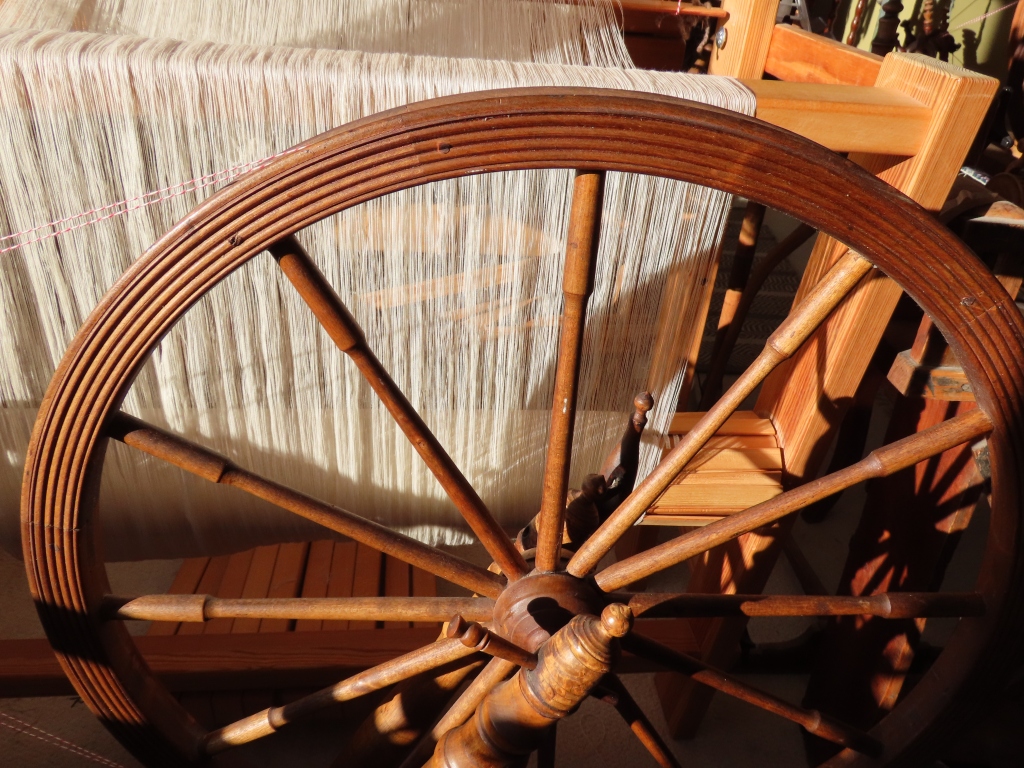
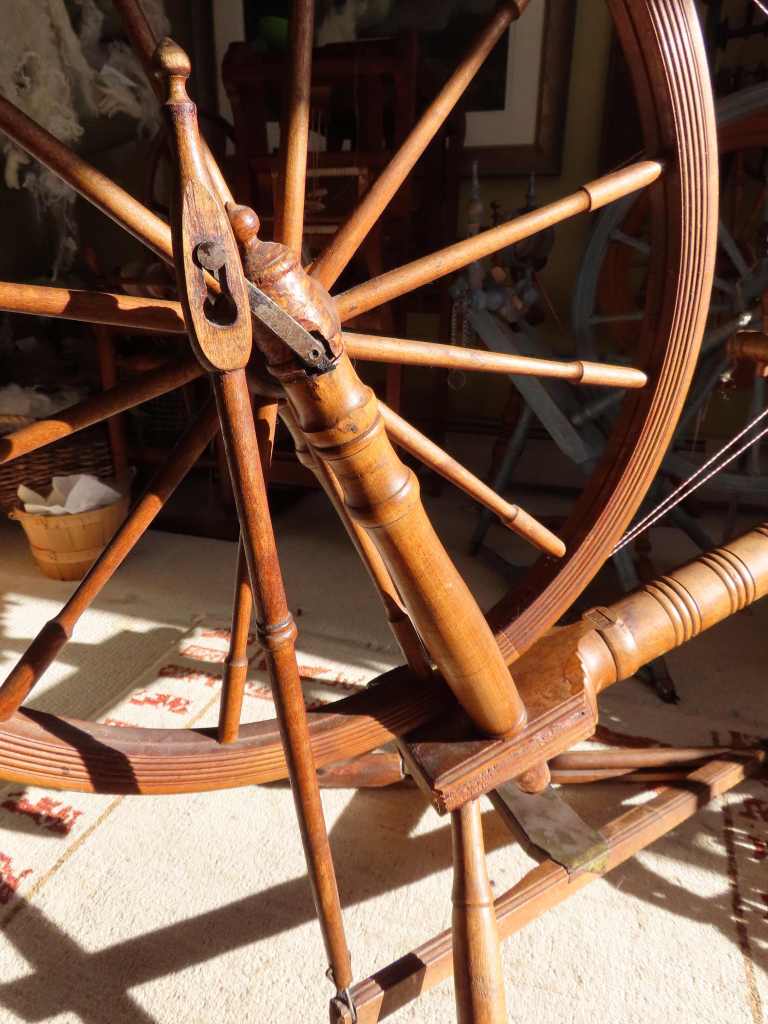
The drive wheel was very dark with old oil and dirt, but cleaned up to reveal striking wood grain.
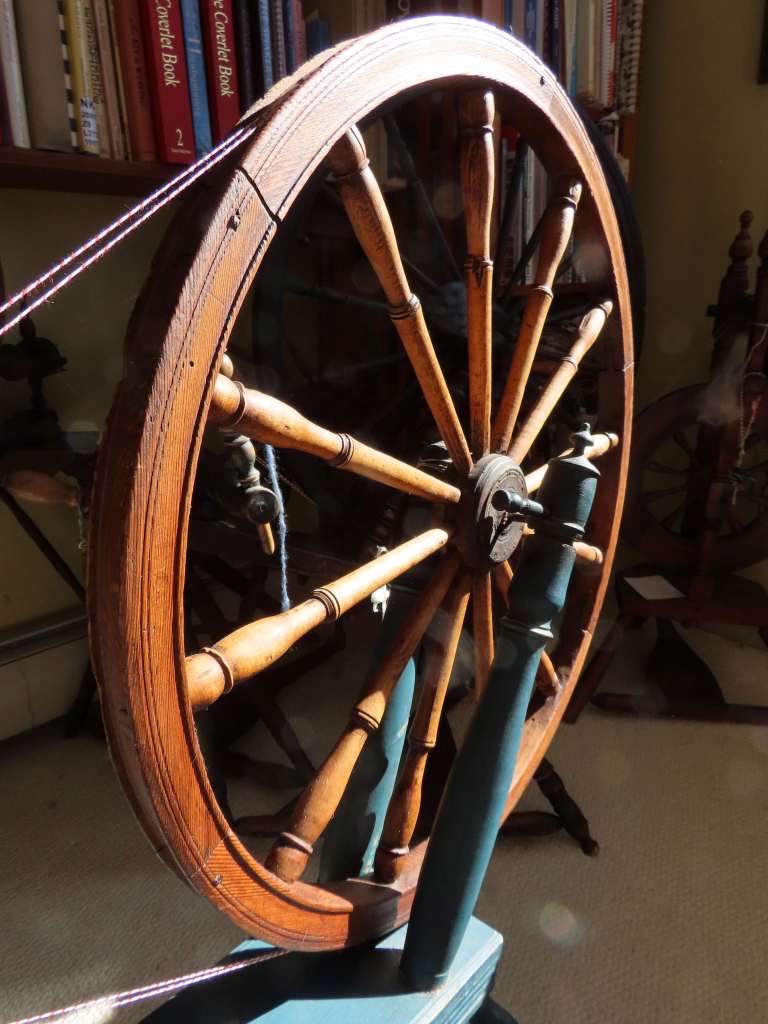
It does not have the simple spokes of the other wheels of this style.
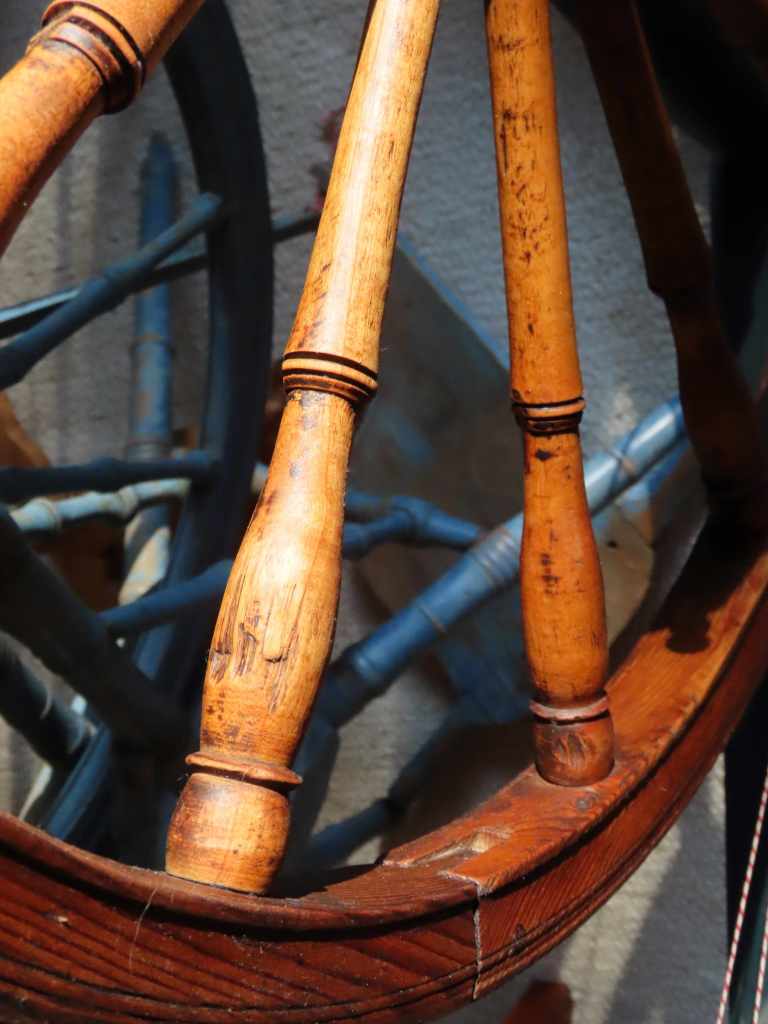
And the drive wheel fits oddly between the uprights, leading me to believe it may be a replacement.
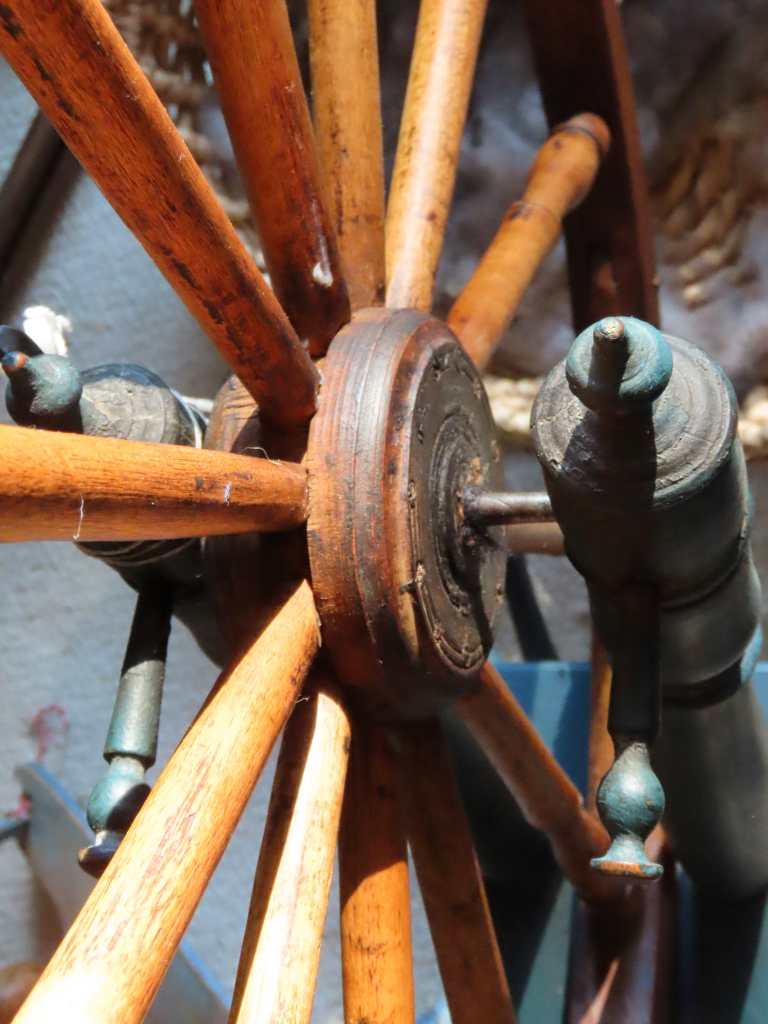
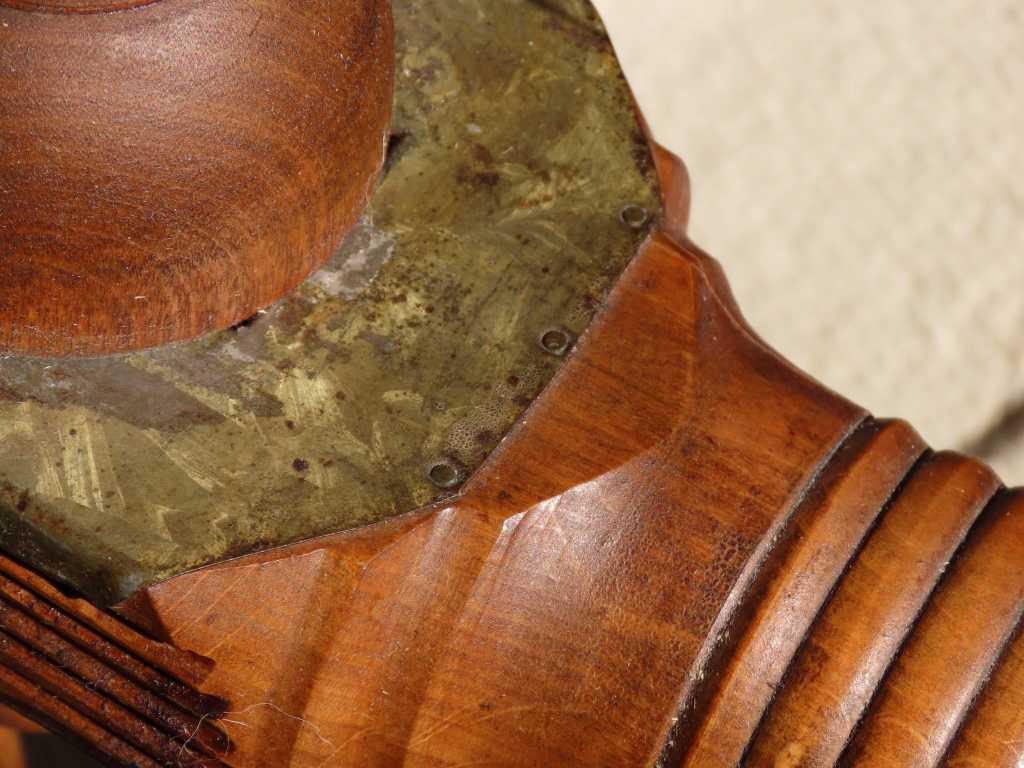
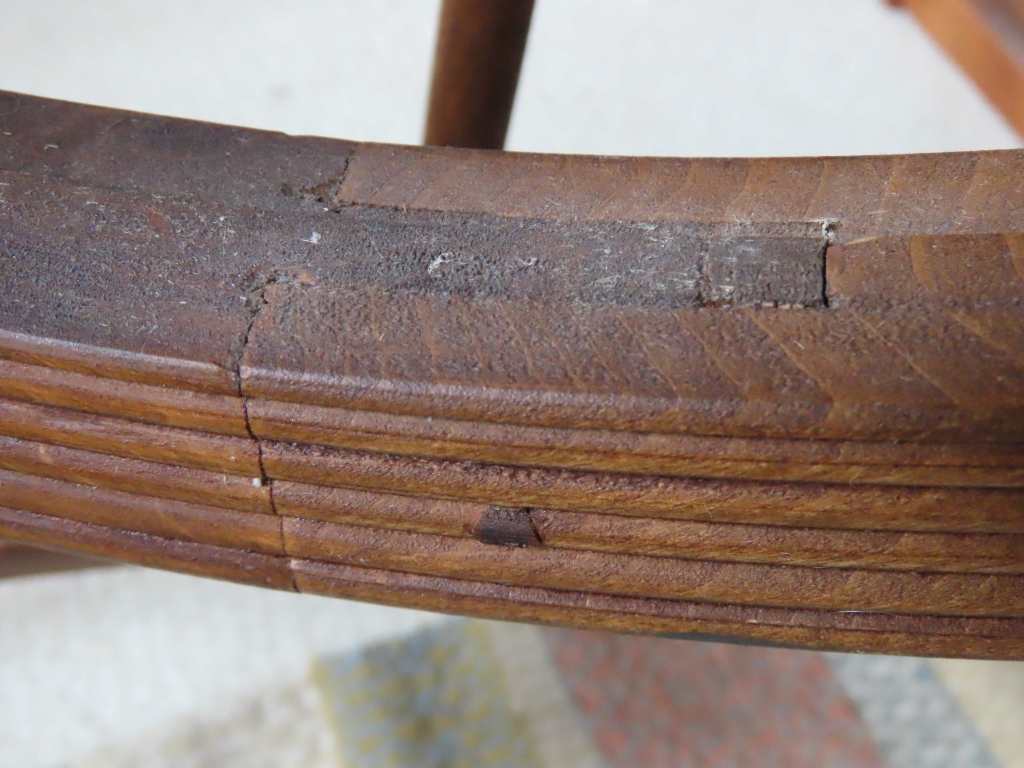
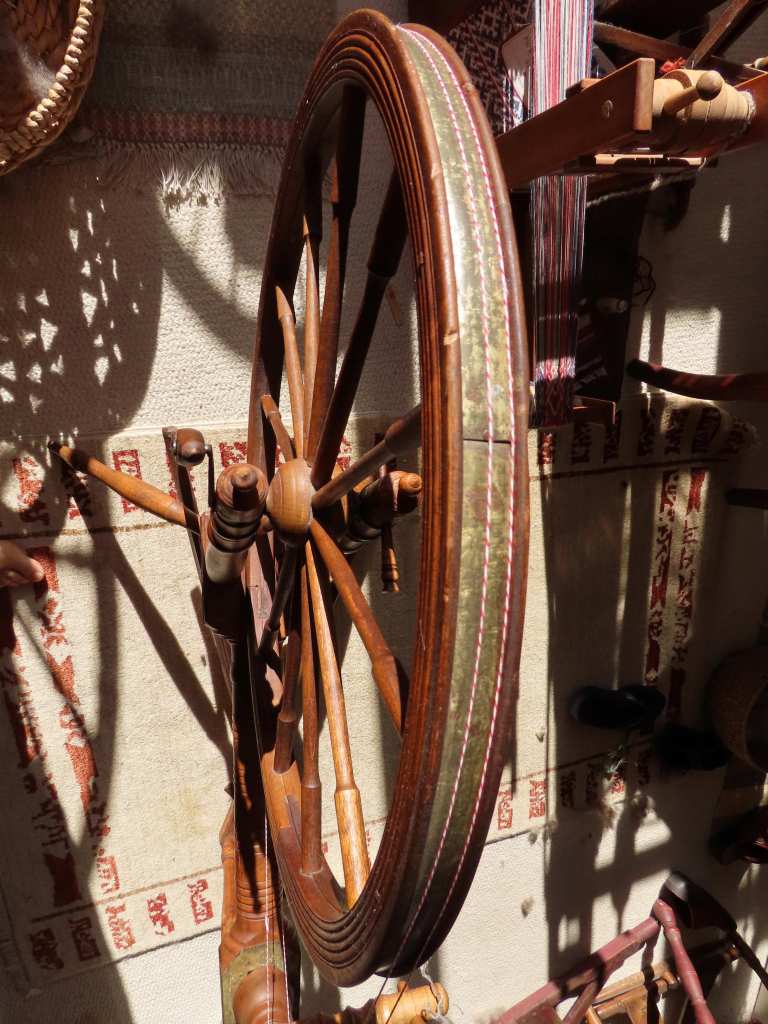
The spokes are pegged through the outside of the rim, which is probably how they are pegged on Torvi, although we cannot tell because Torvi’s rim is covered in metal.
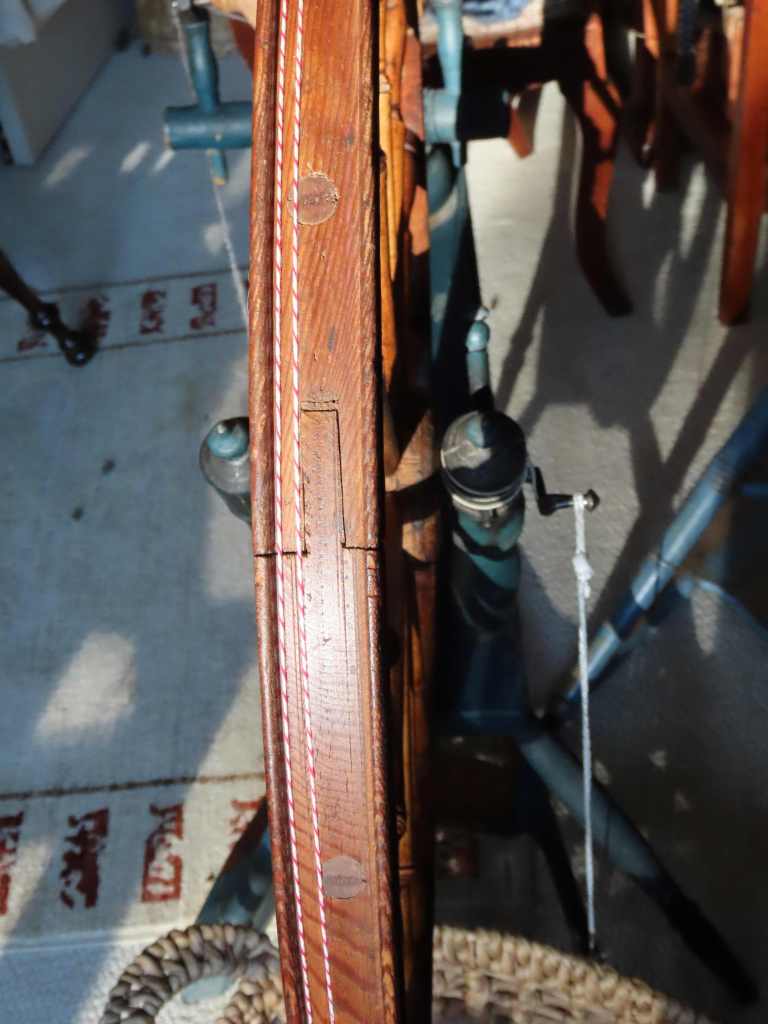
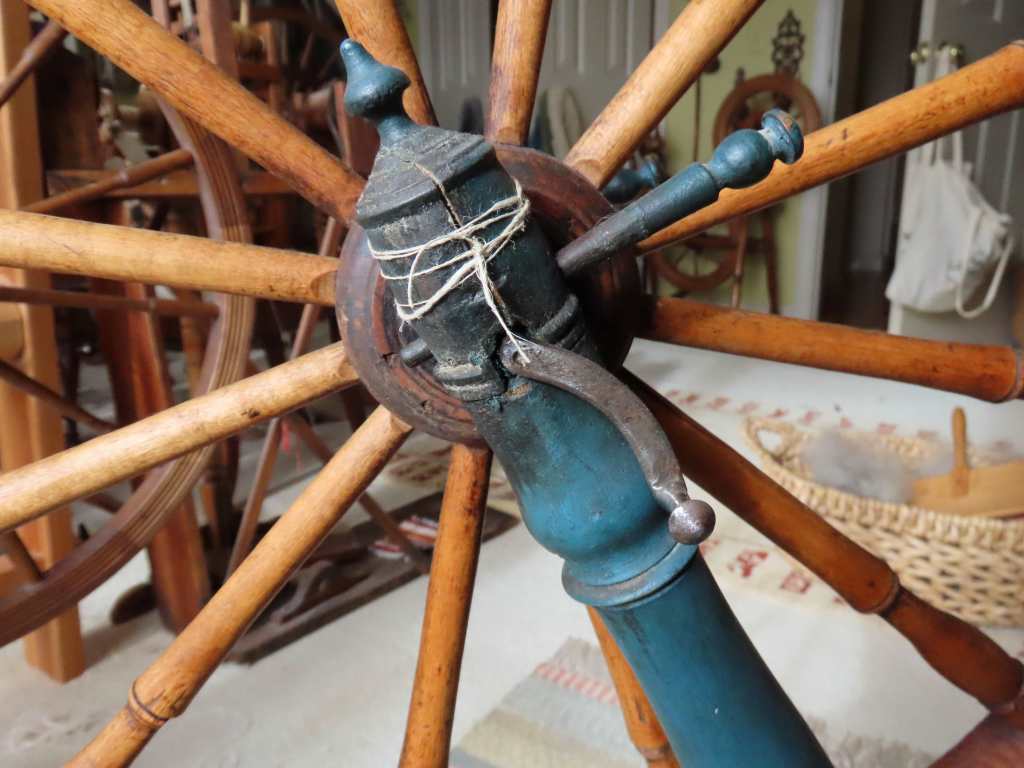
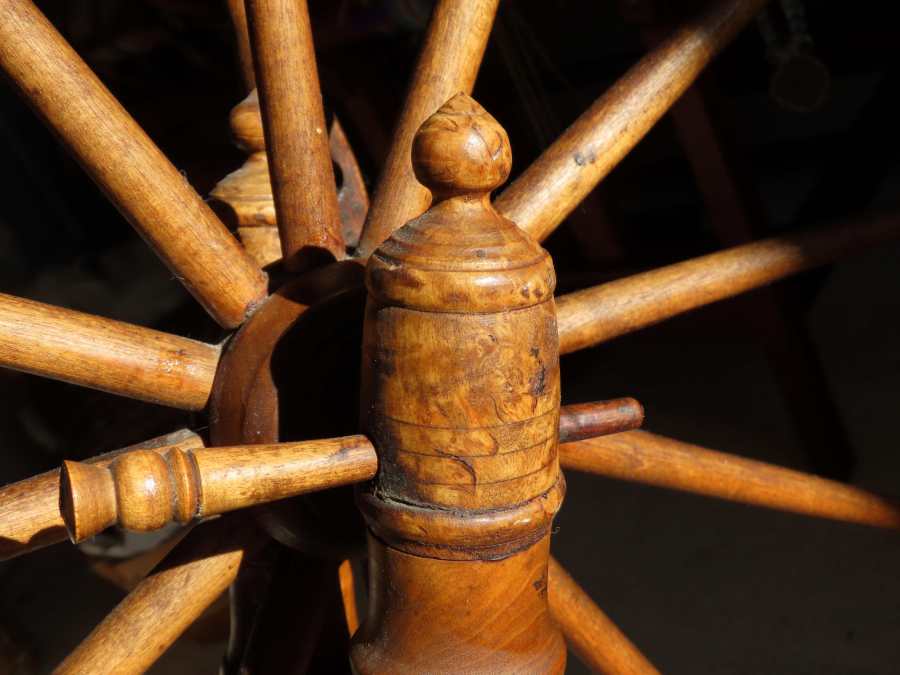
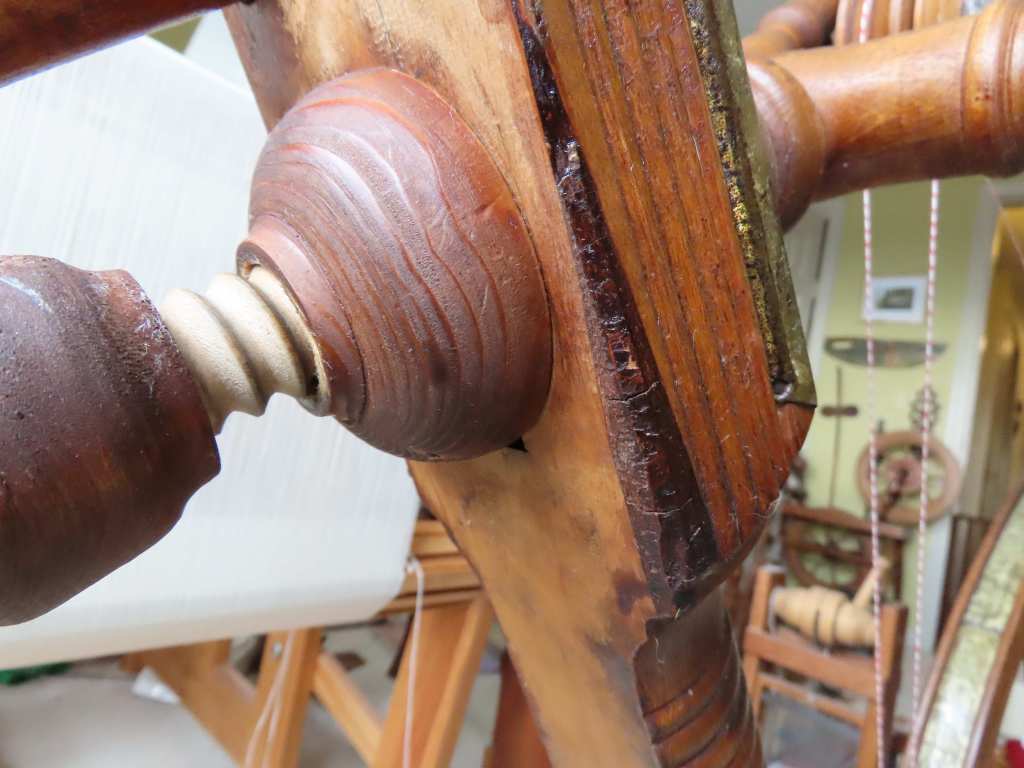
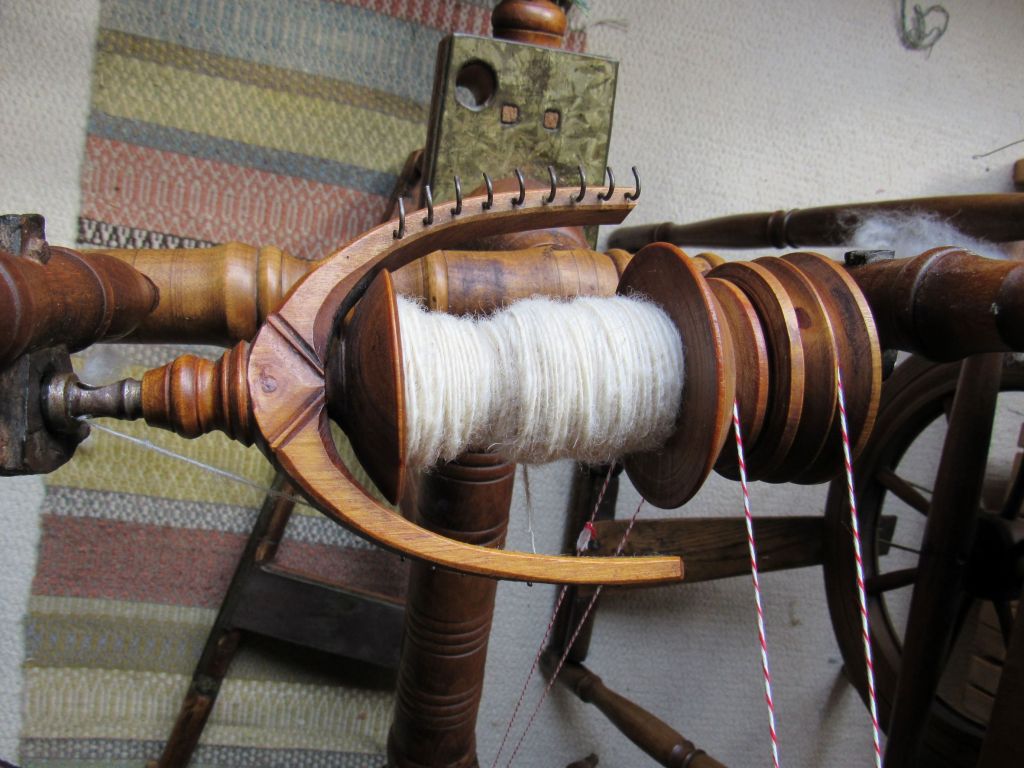
The hub construction is quite interesting and there appears to be some hemp or other material around the axle where it goes through the hub.
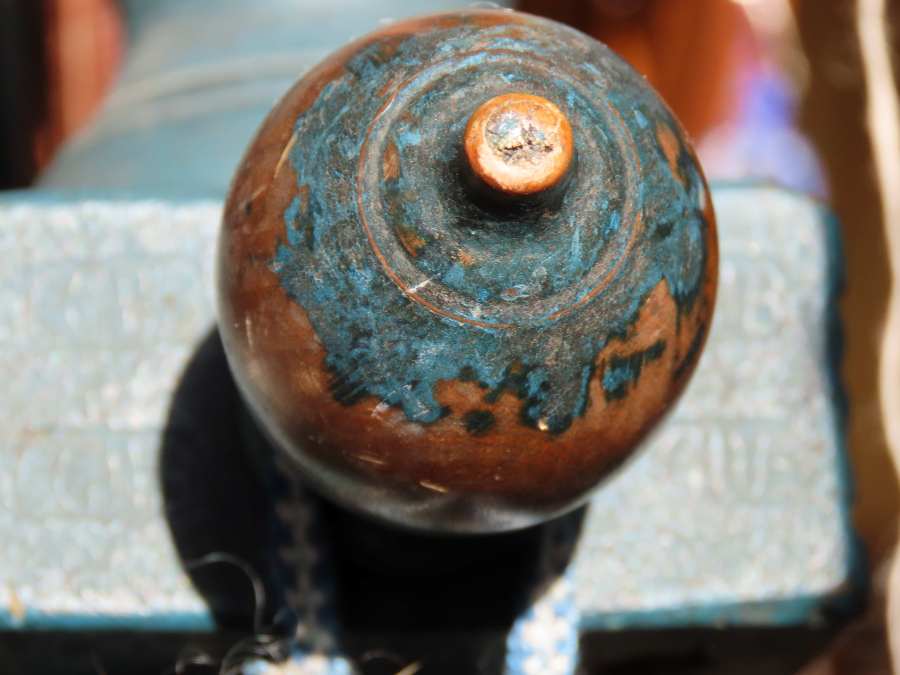
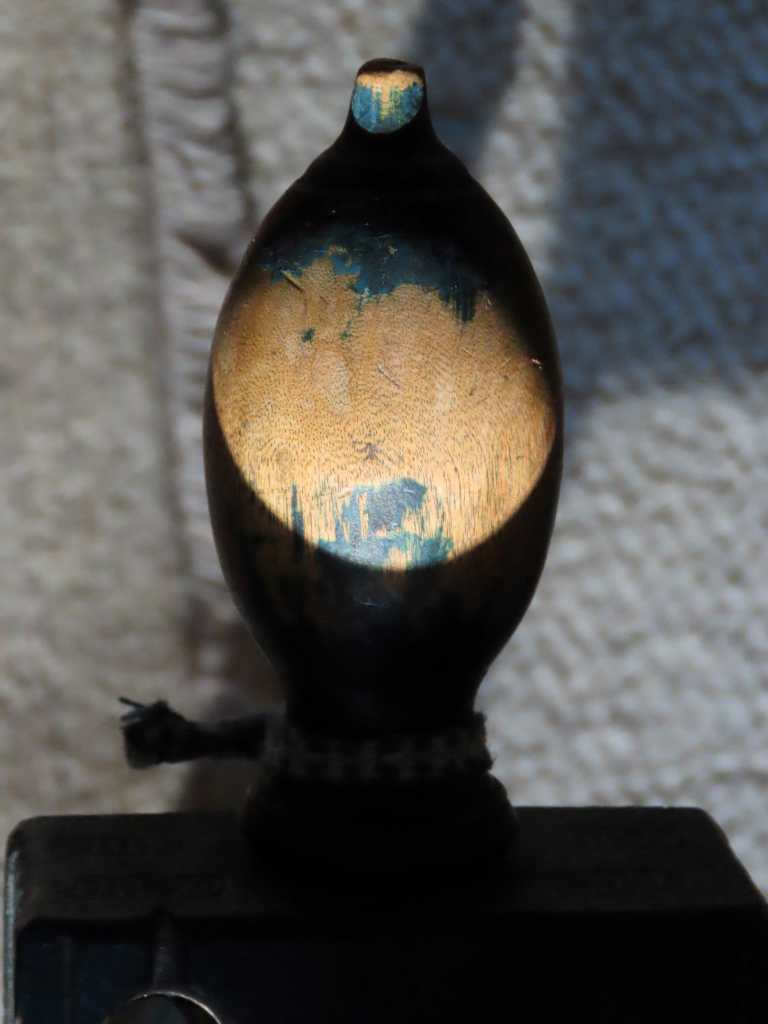
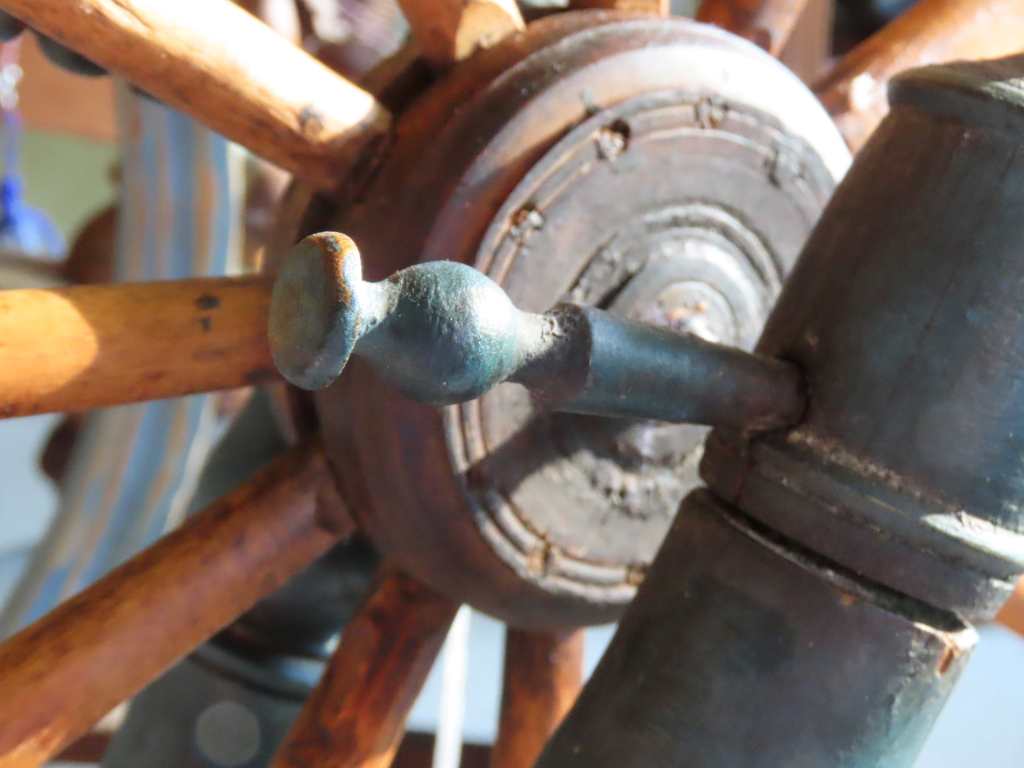
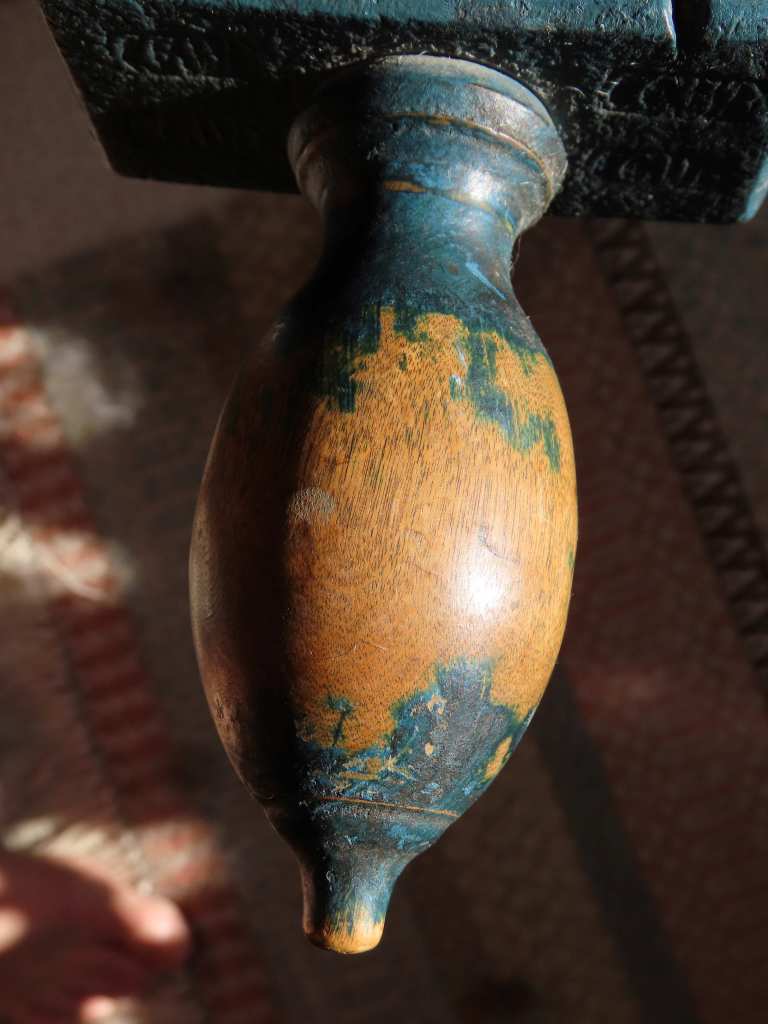
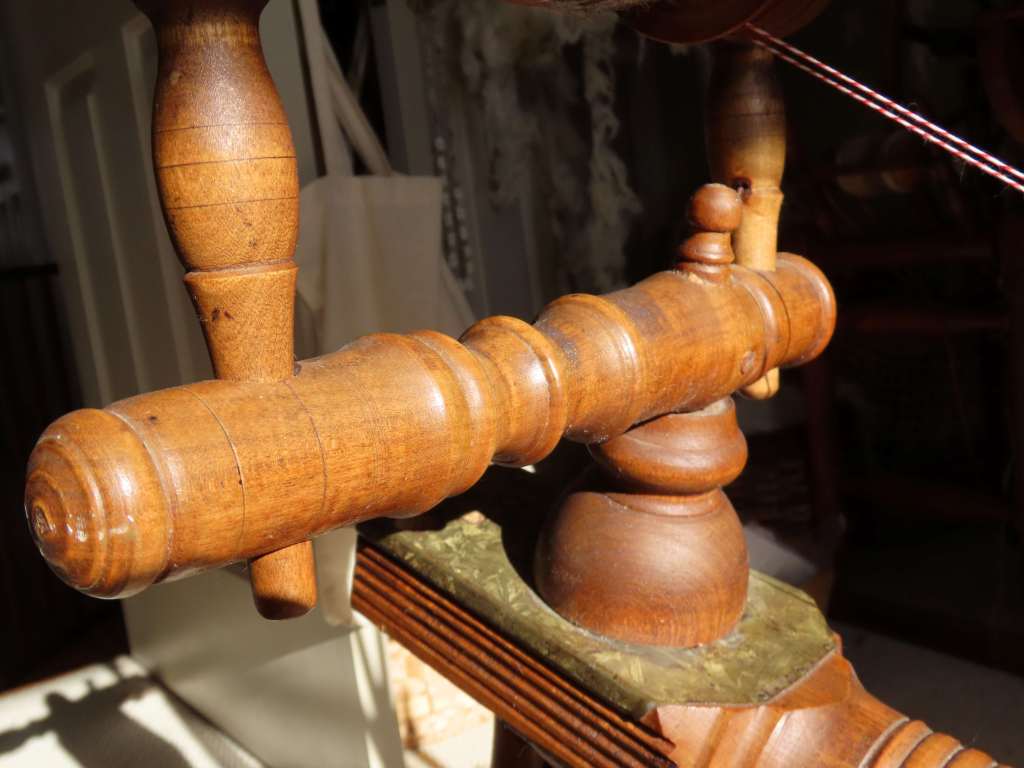
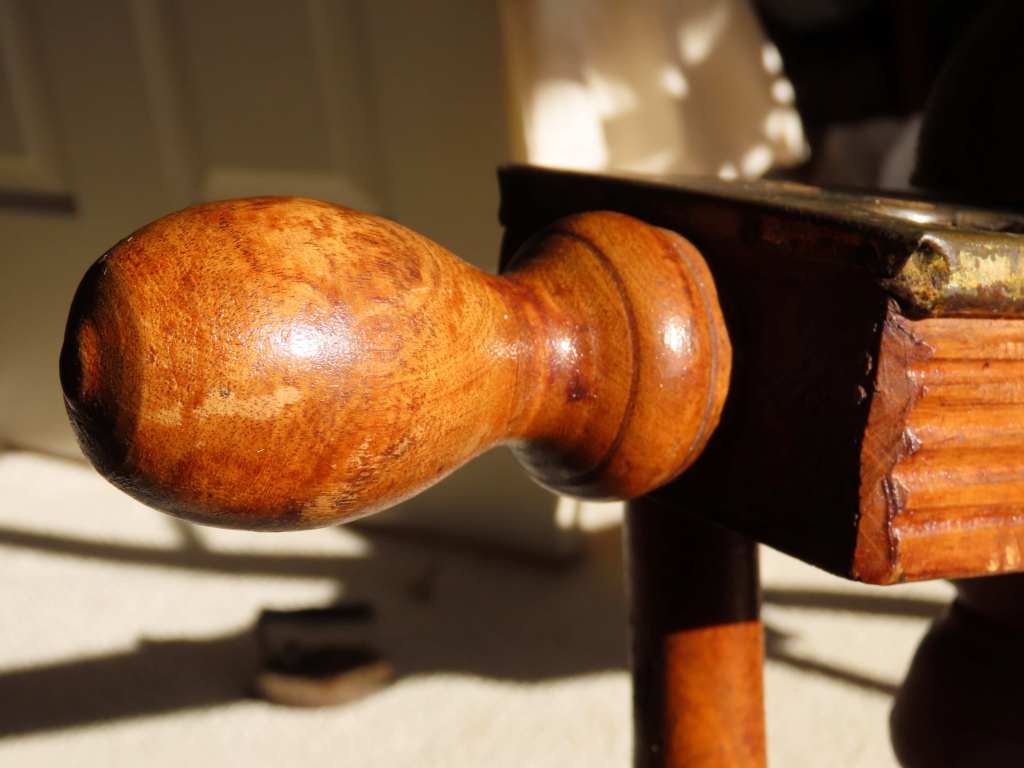
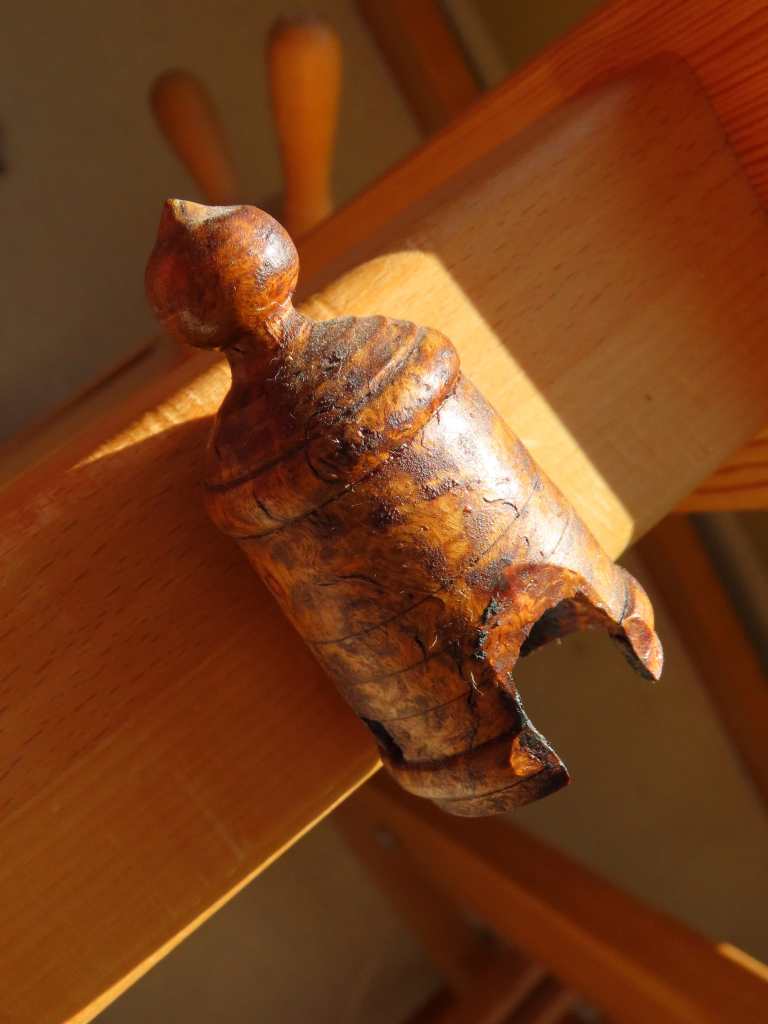
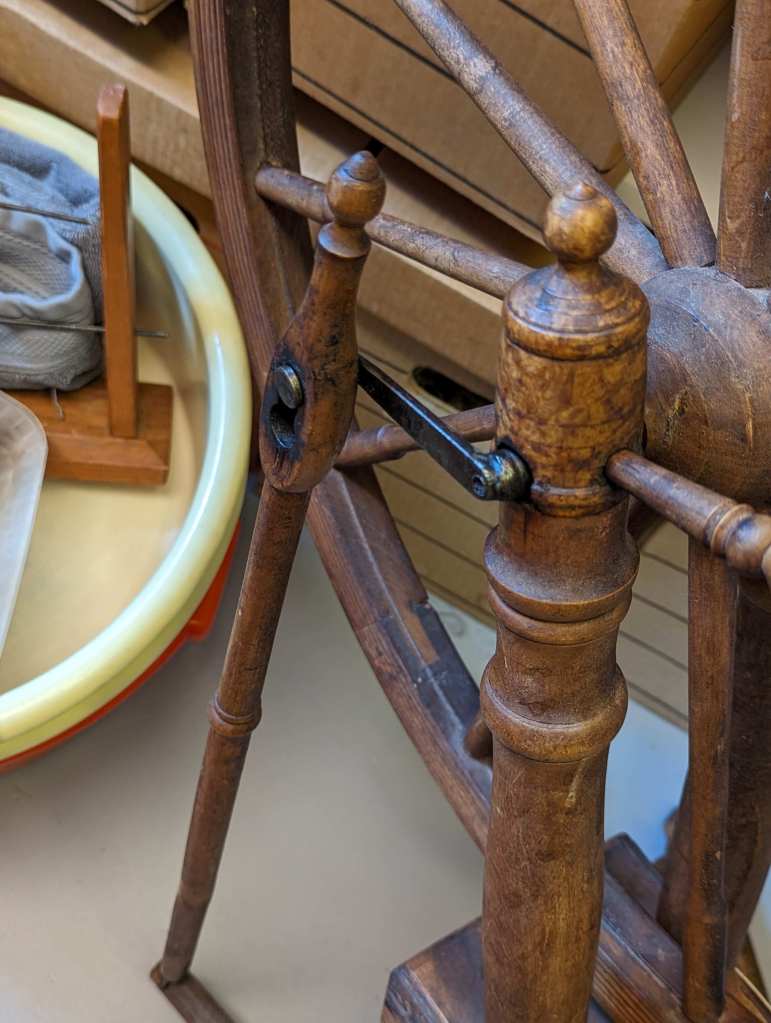
It has the distinctive style of axle cap found on these wheels.
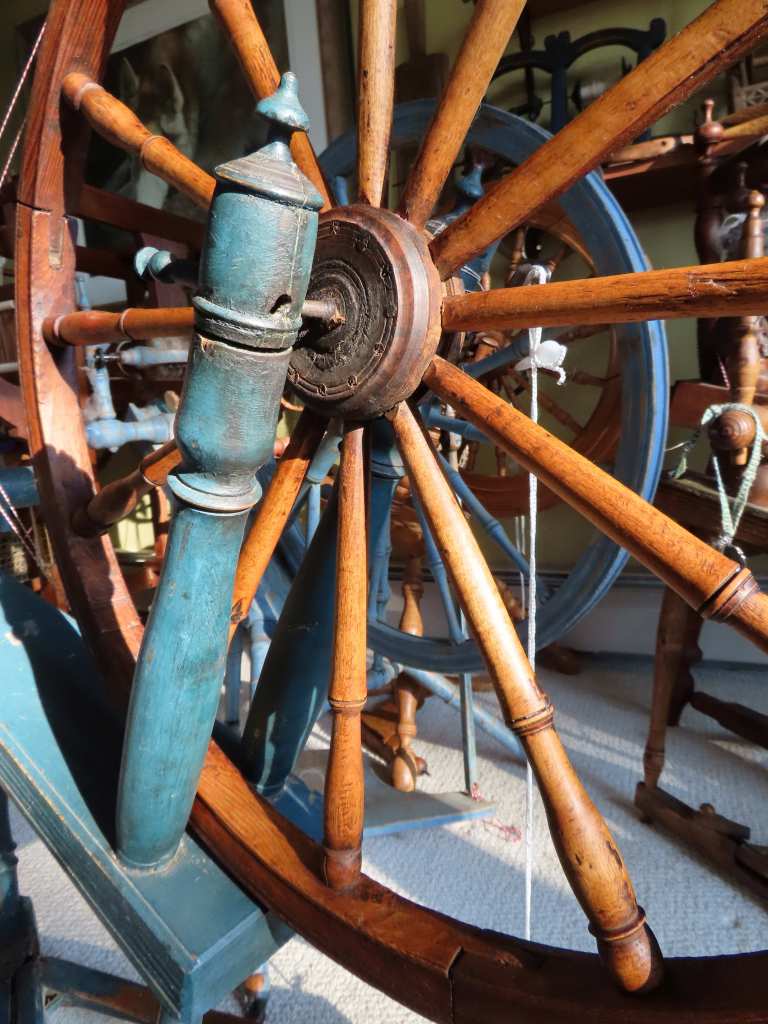
One is cracked almost through, so I temporarily wrapped it with some linen.
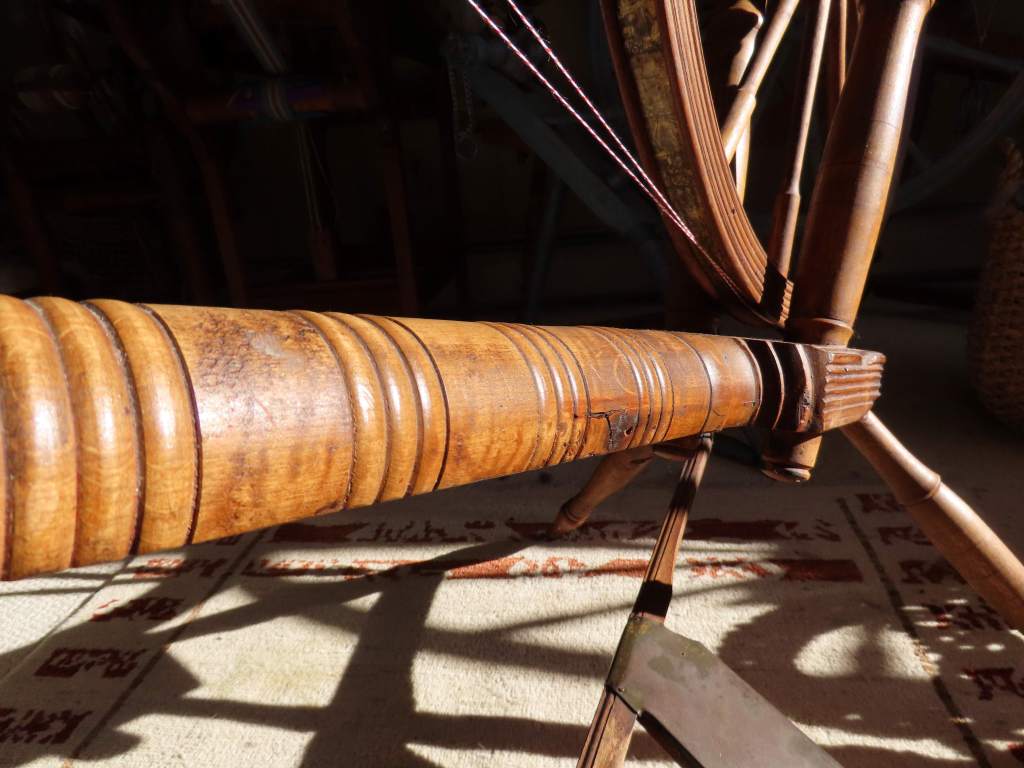
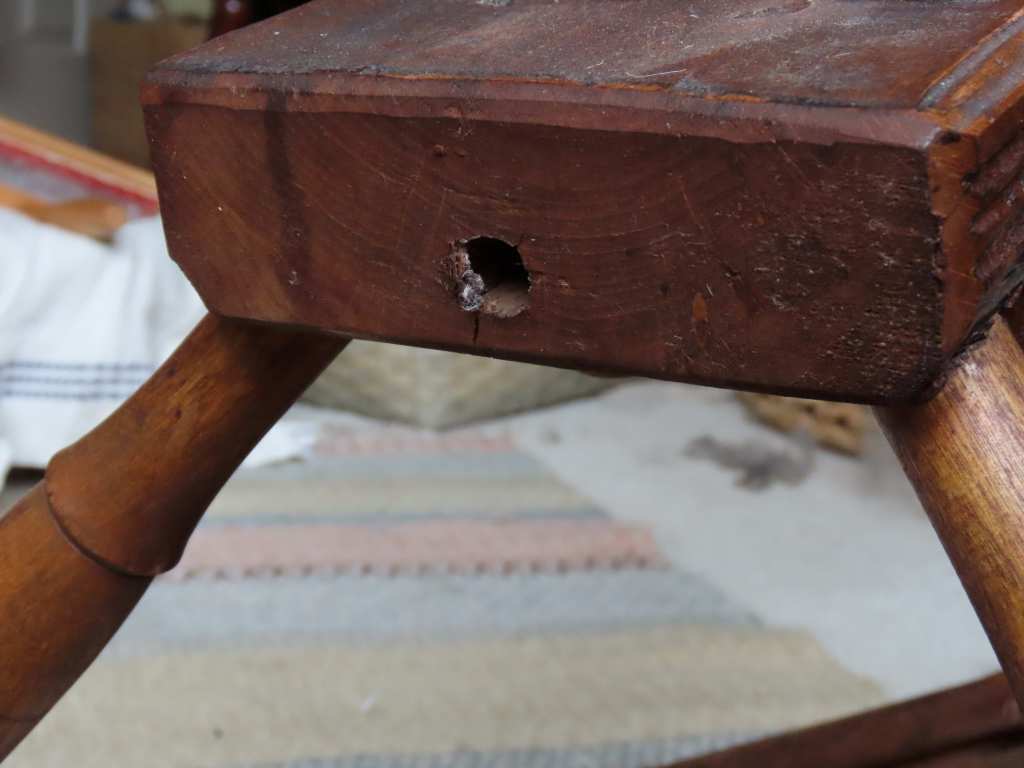
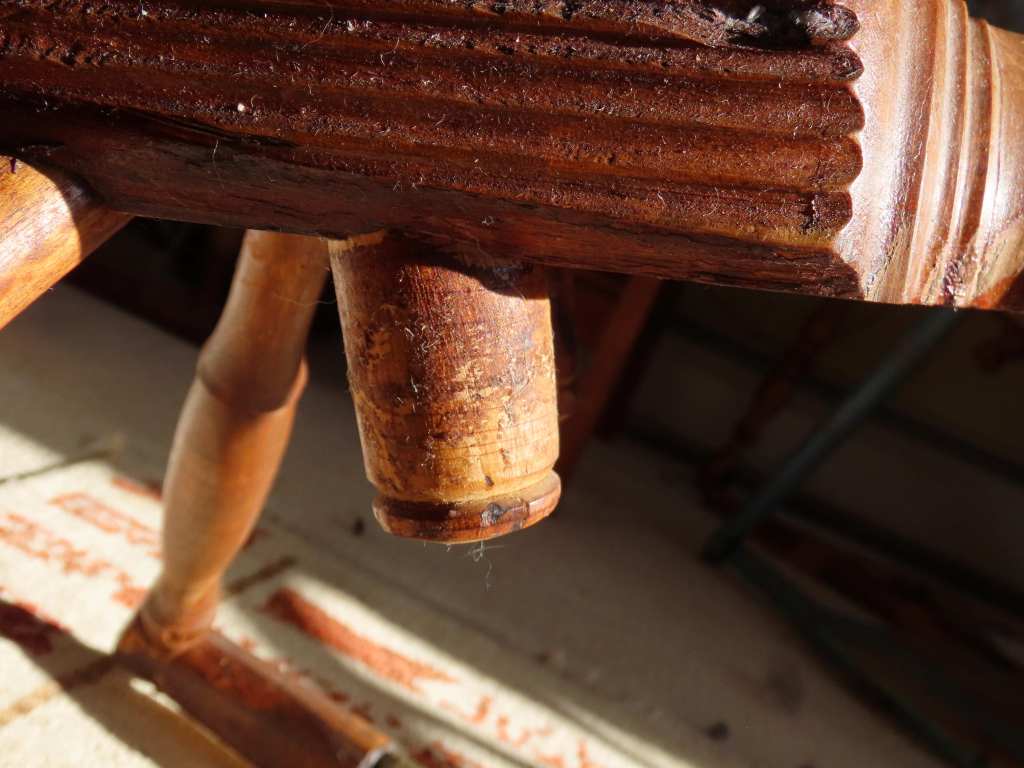
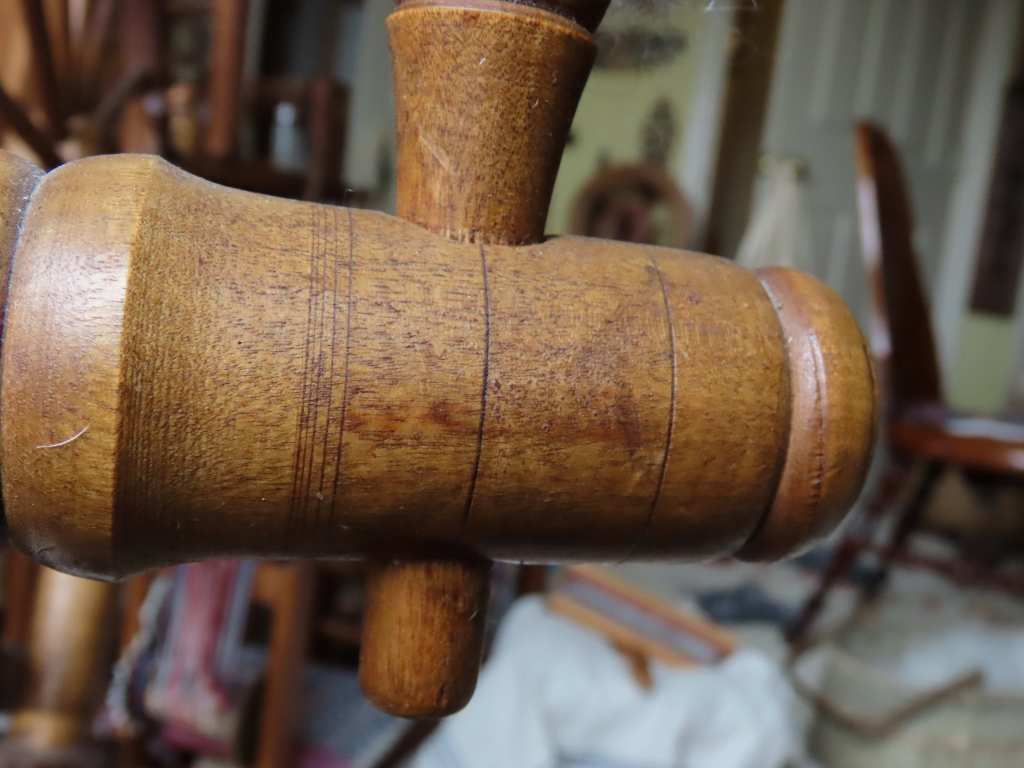
The table sides are grooved
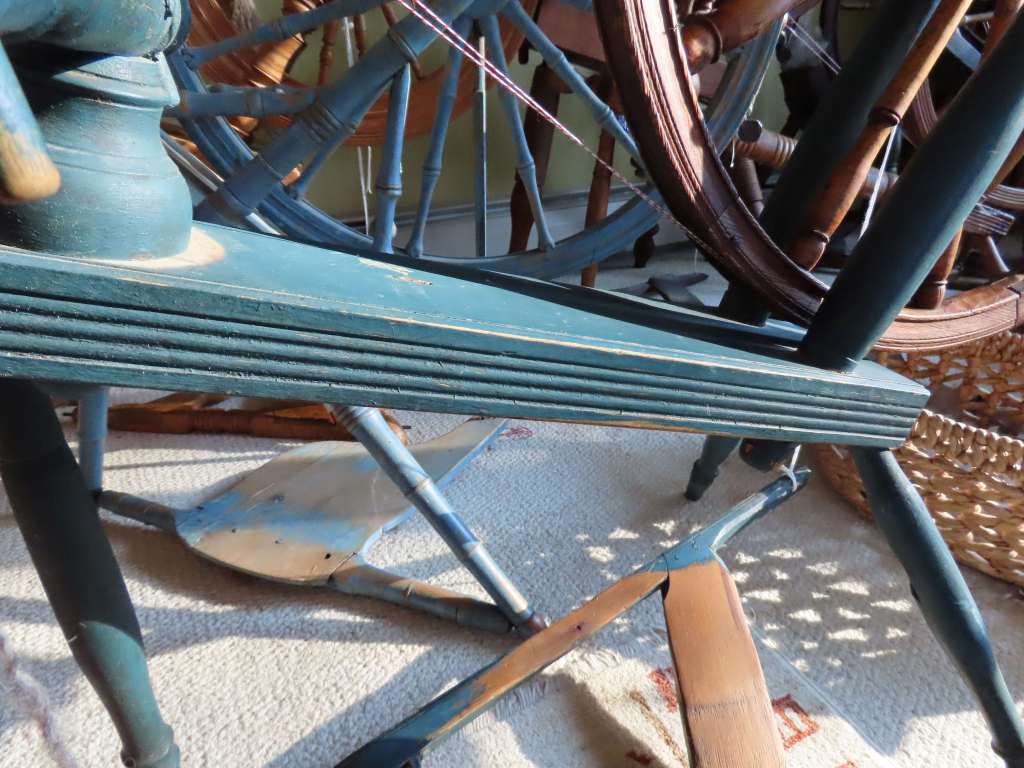
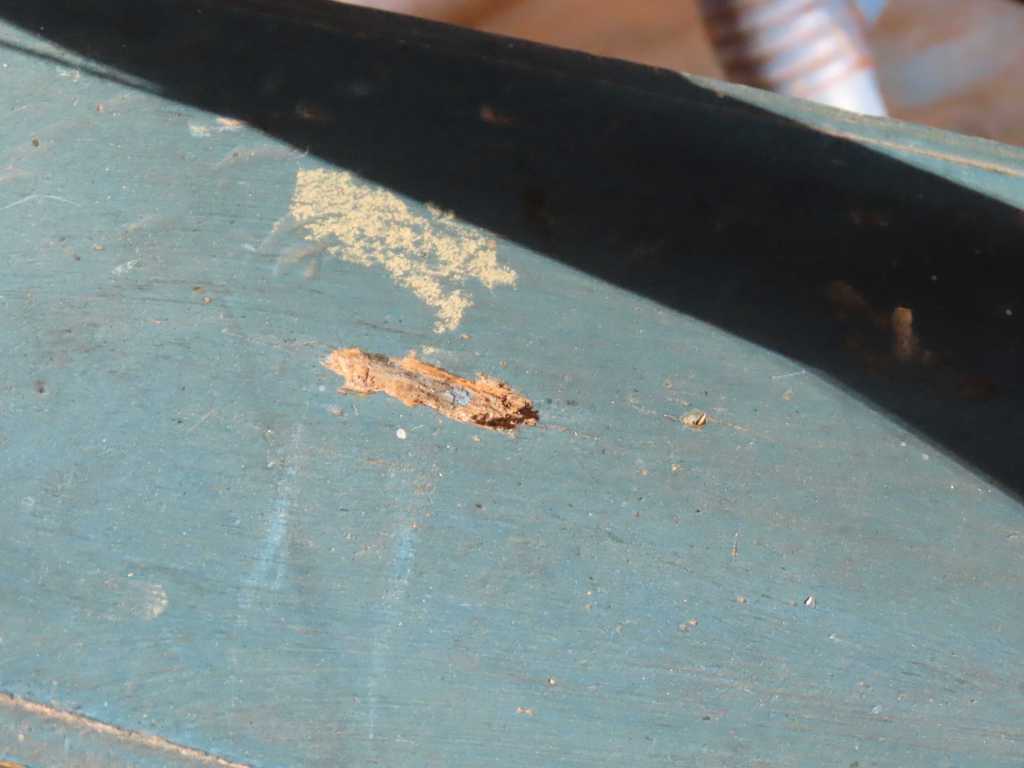
and there is a gouge in the middle, which is presumed to be from a knife or other tool, used to manipulate the drive band cross, perhaps for plying (I have not yet seen a definitive explanation for why the knife was used—only speculation).
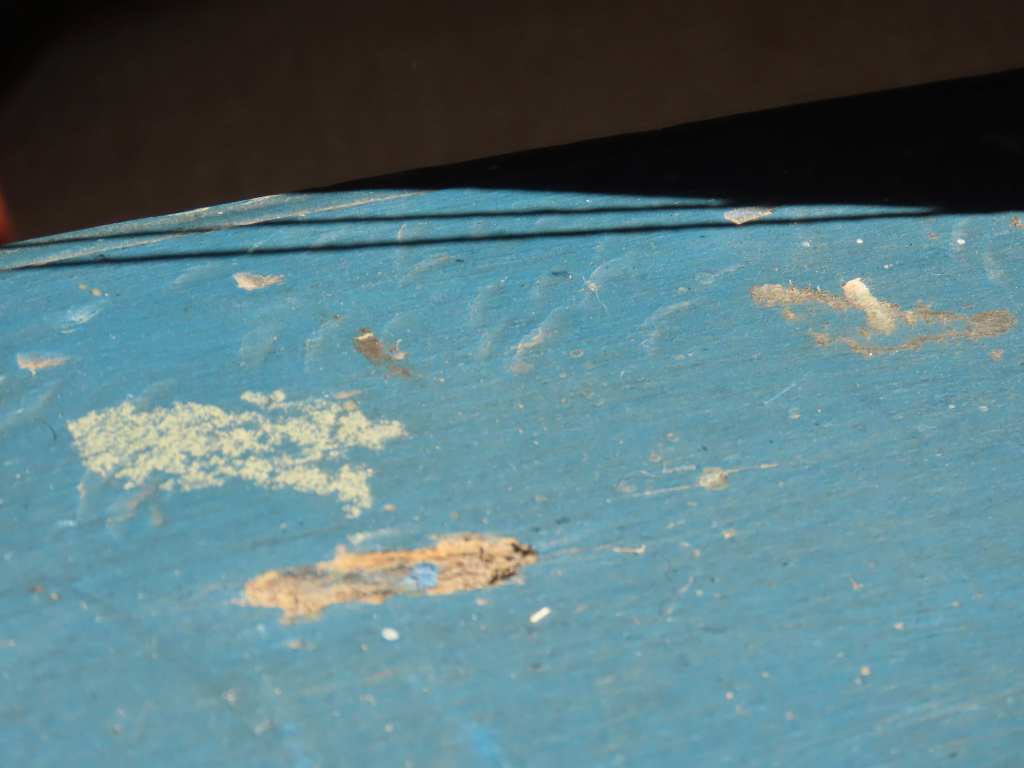
There are also fainter semi-circular marks on the table that seem to show up from time to time on wheels–a history of a spinner’s habit of tapping something, perhaps the orifice end of the flyer, on the table for some unknown purpose.
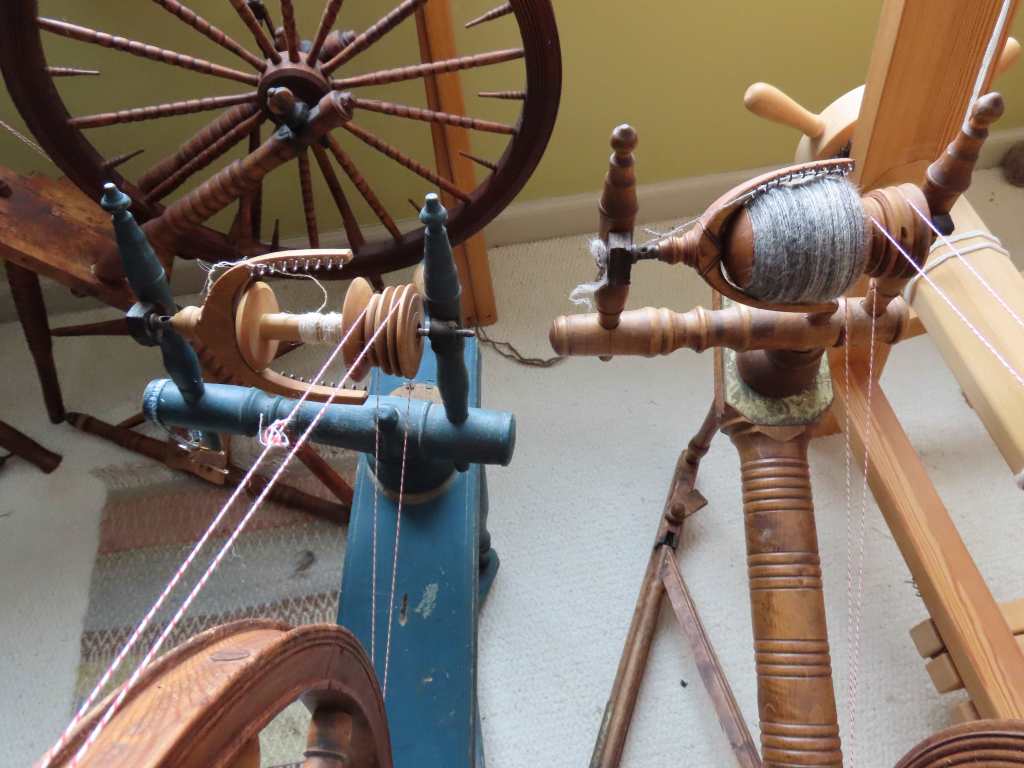
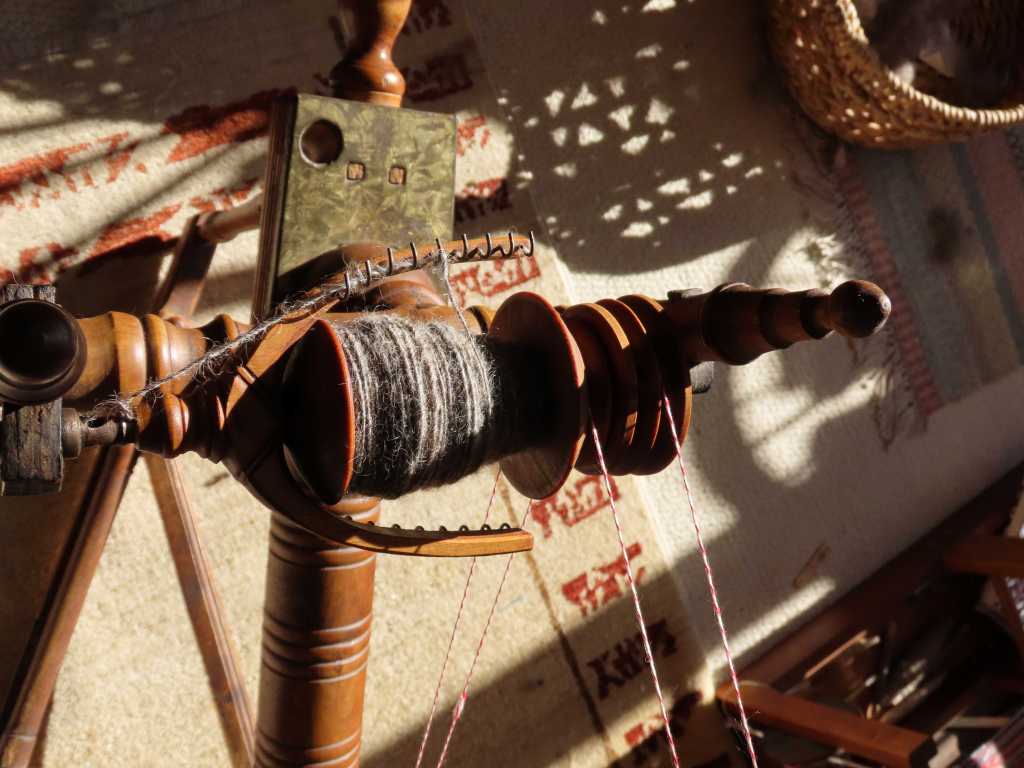
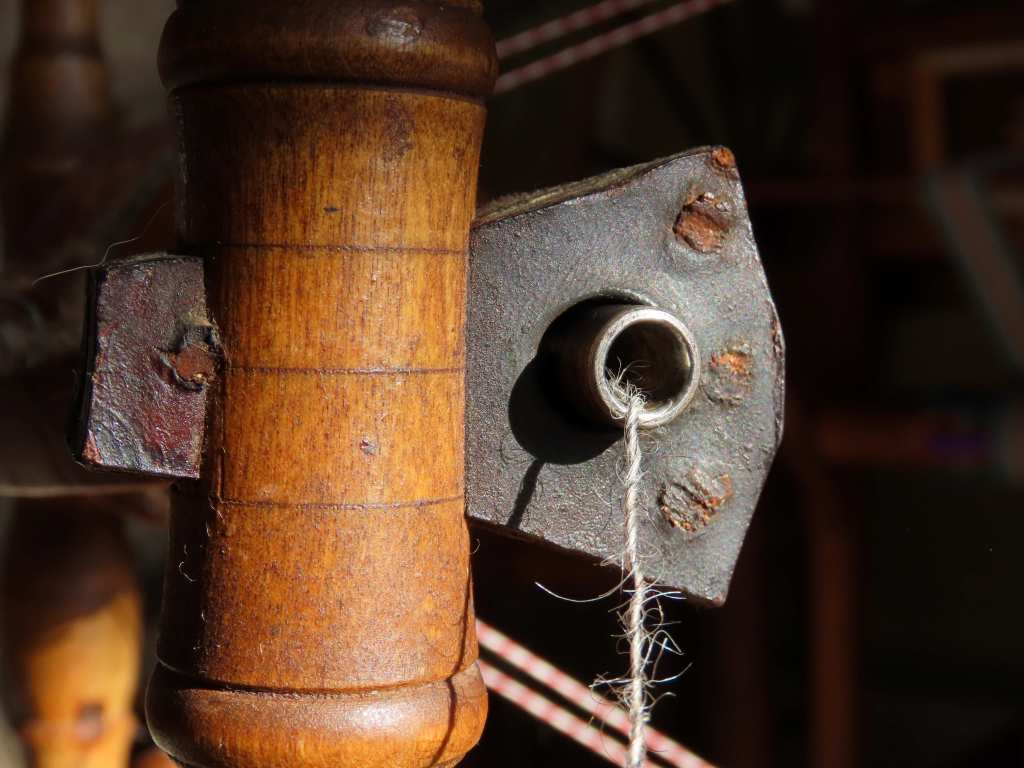
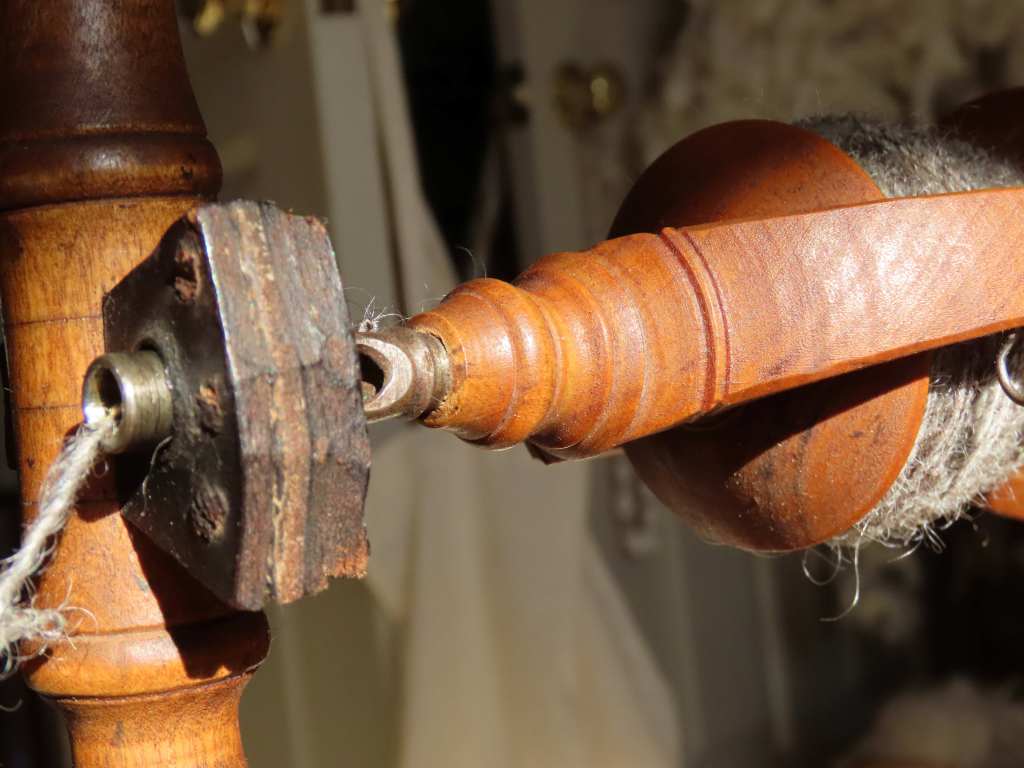
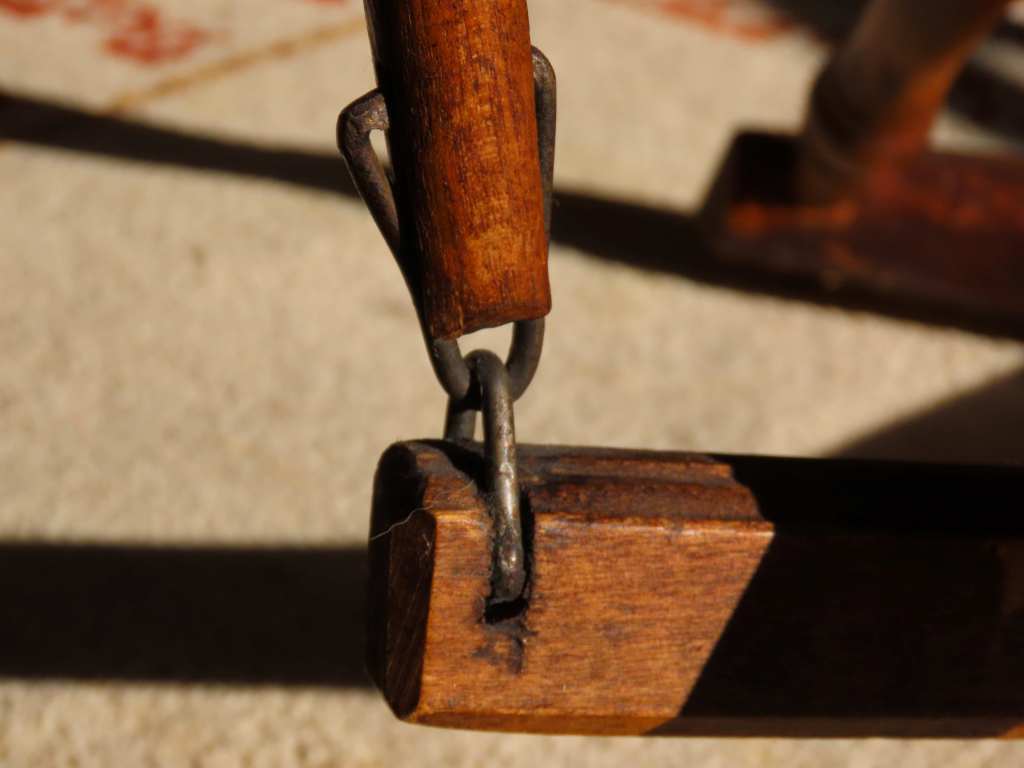
The four-layer leather flyer bearings secured with metal are typical for Swedish wheels.
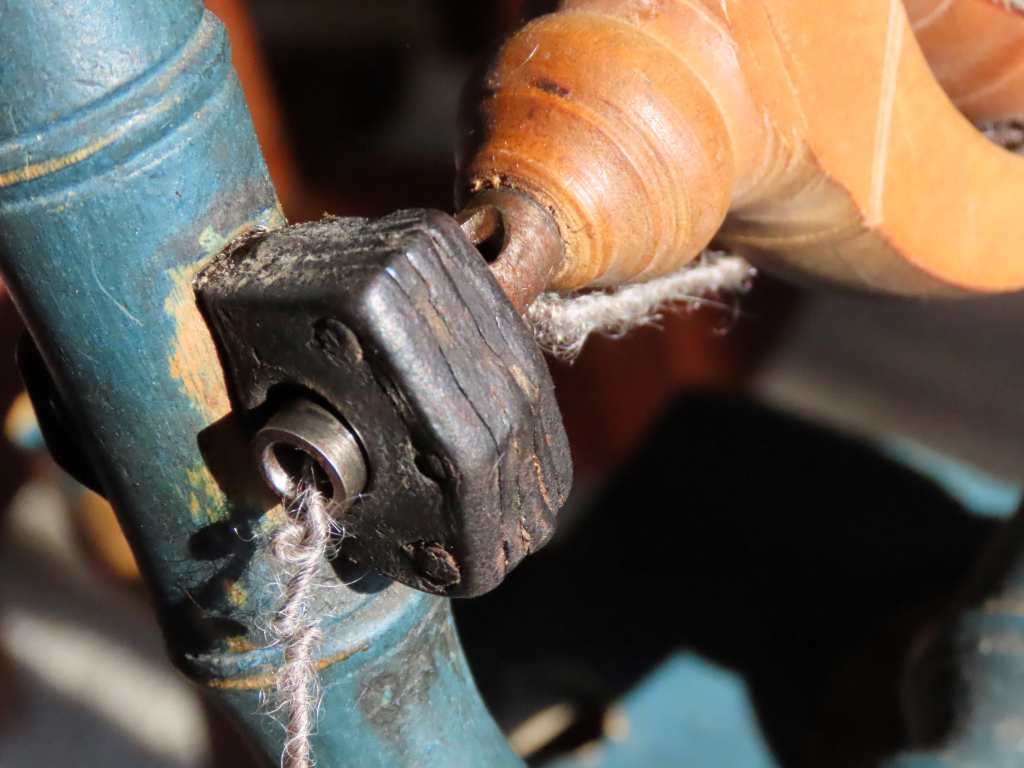
The flyer is in wonderful shape
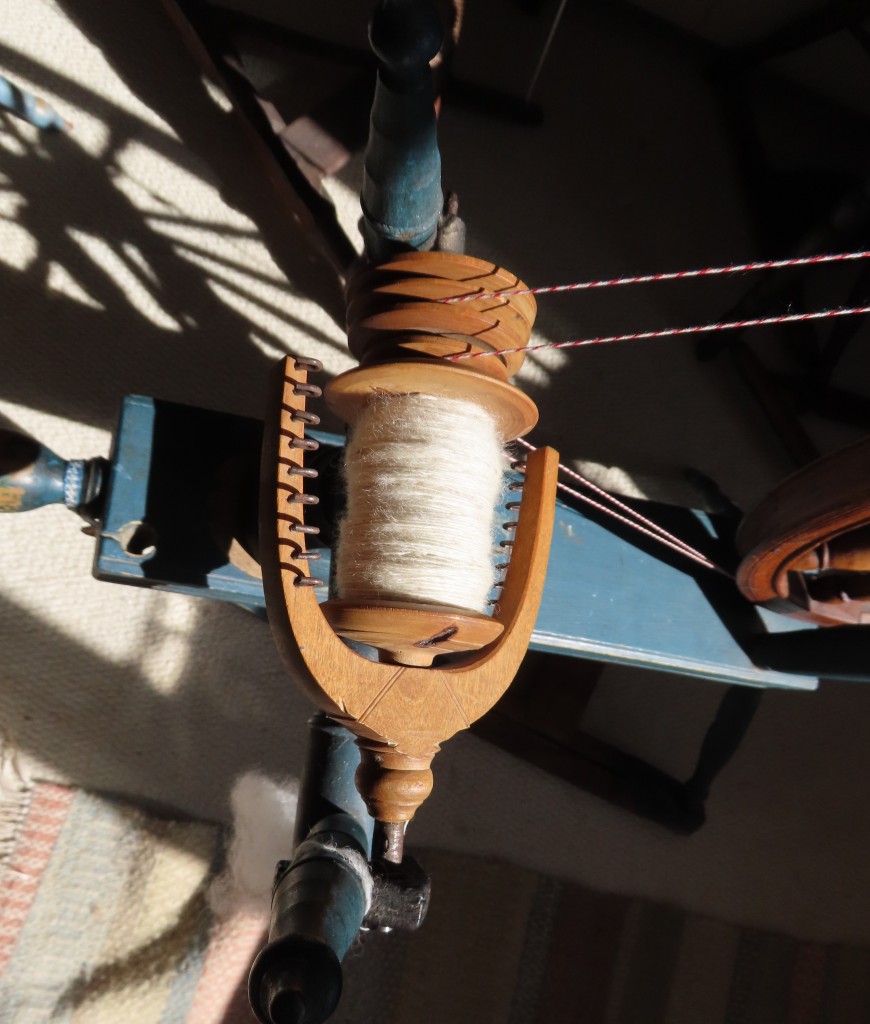
and, given the amount of wear on the treadle, might be a replacement or second or third flyer made for the wheel.
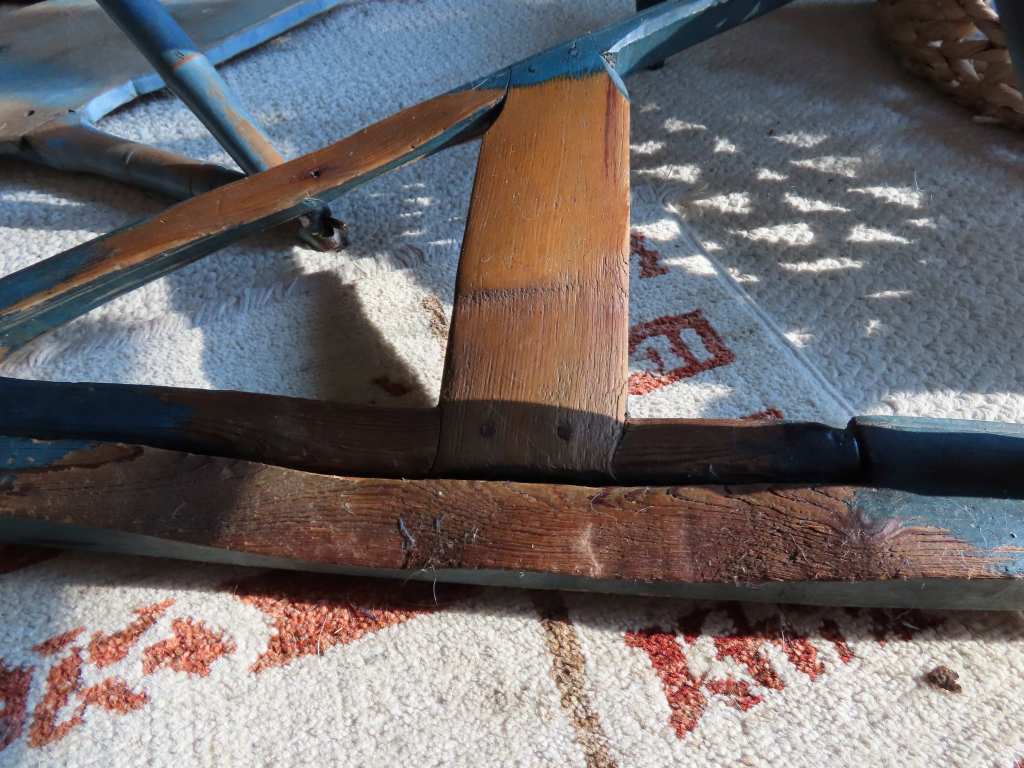
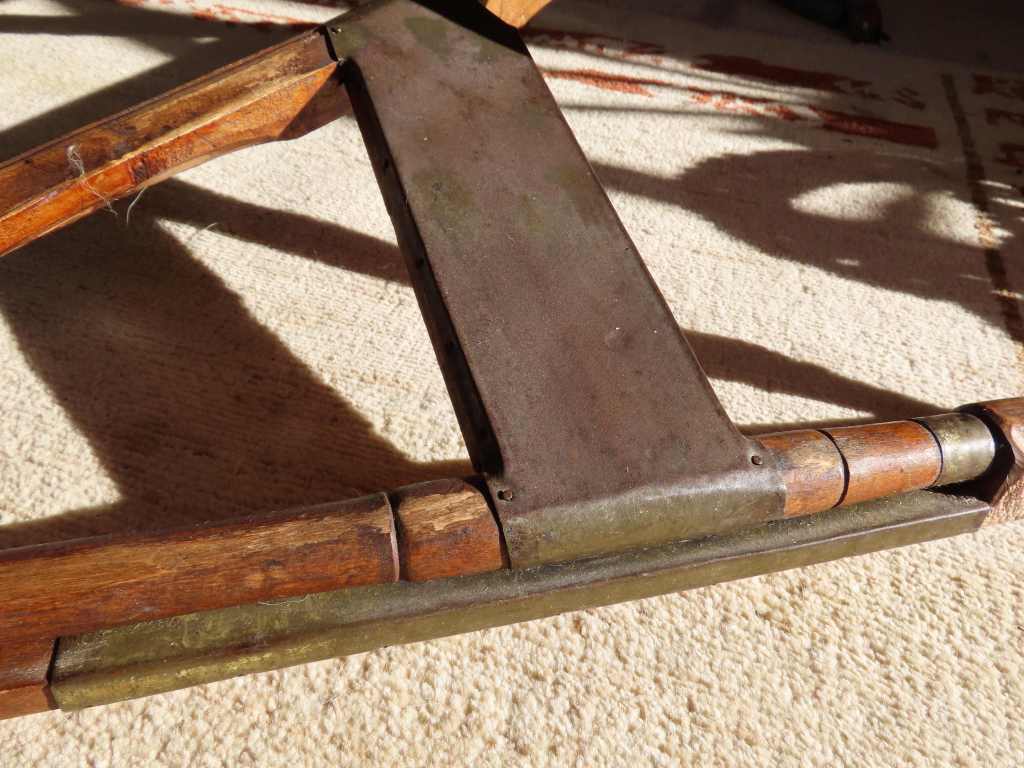
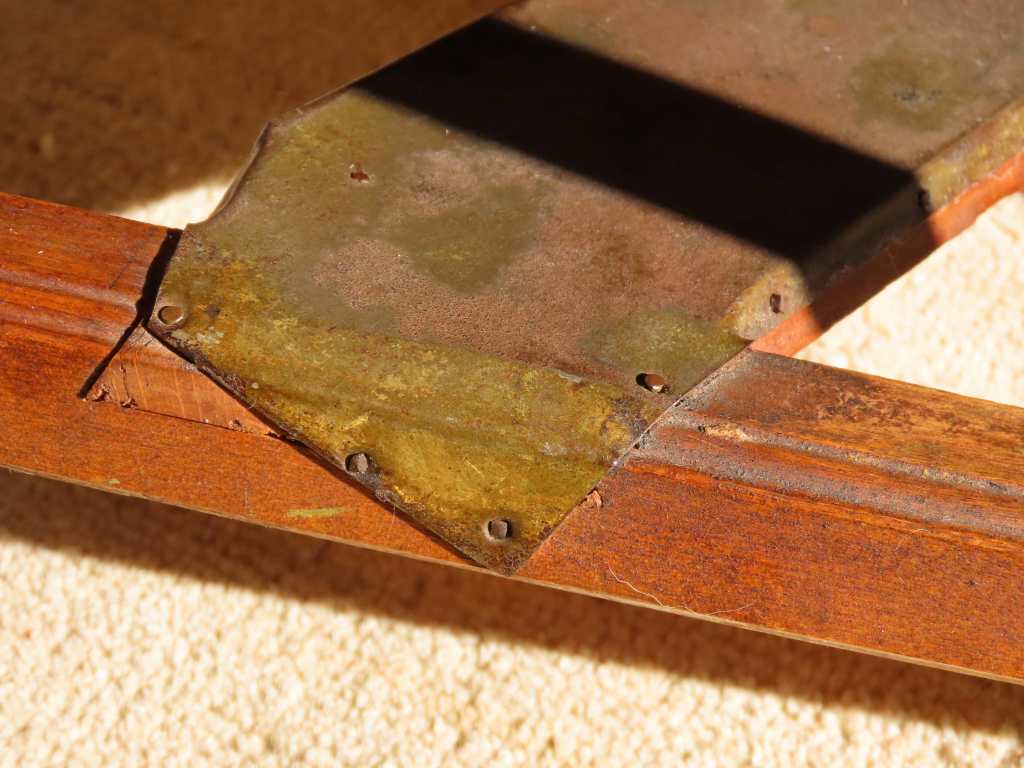
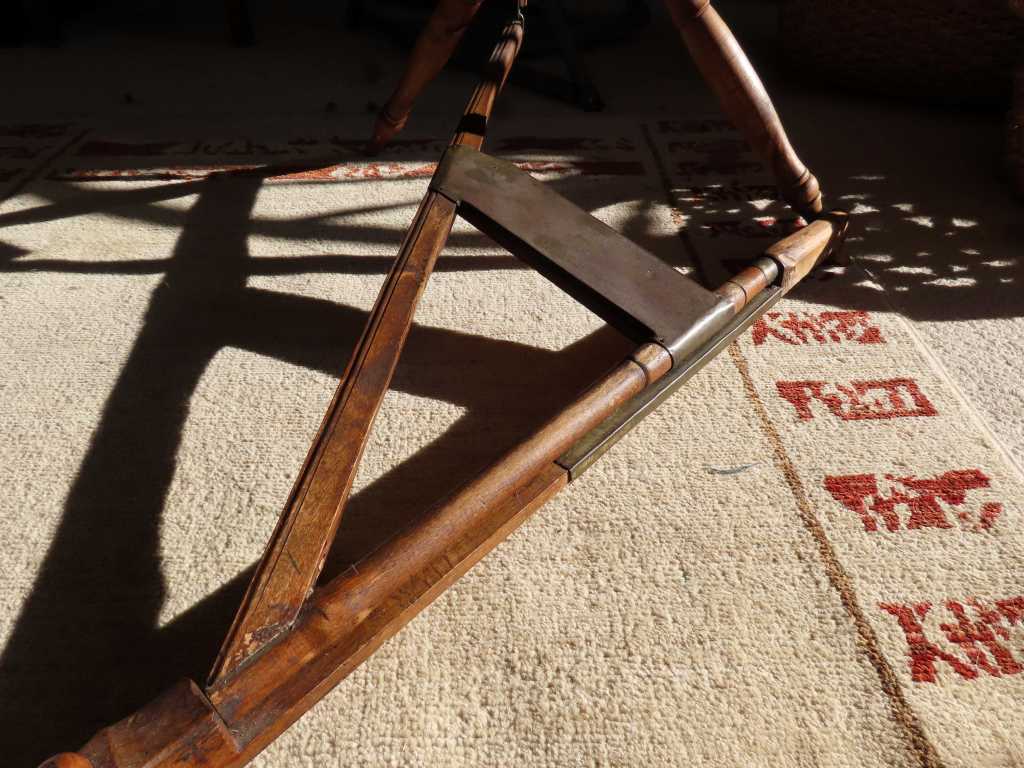
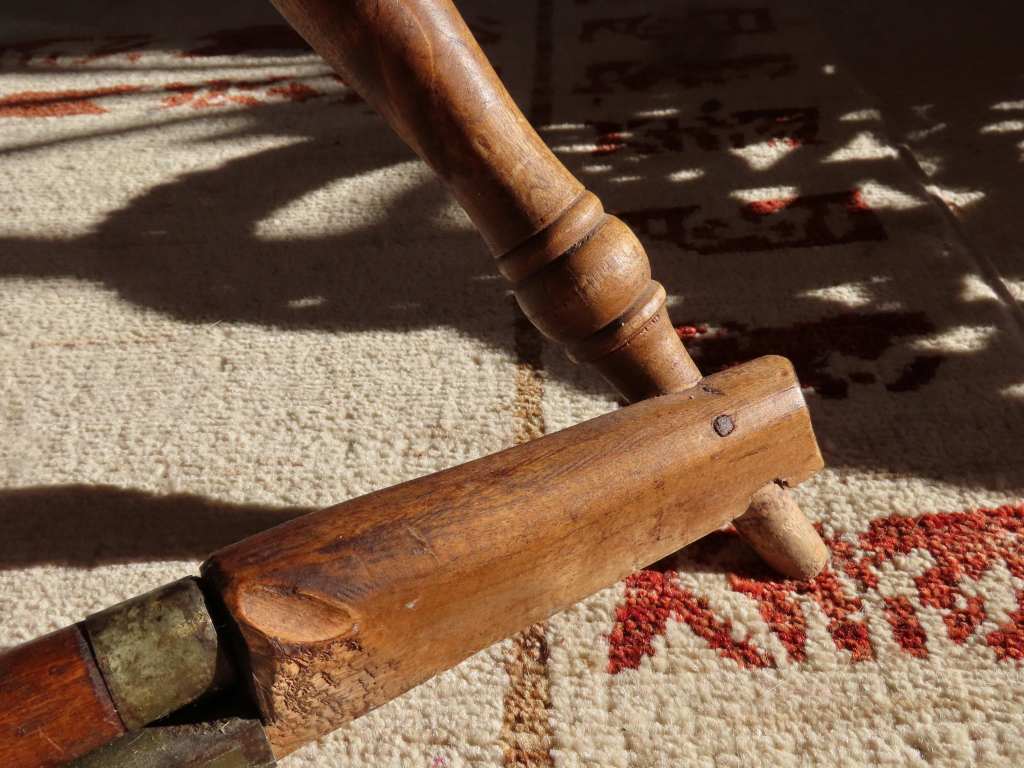
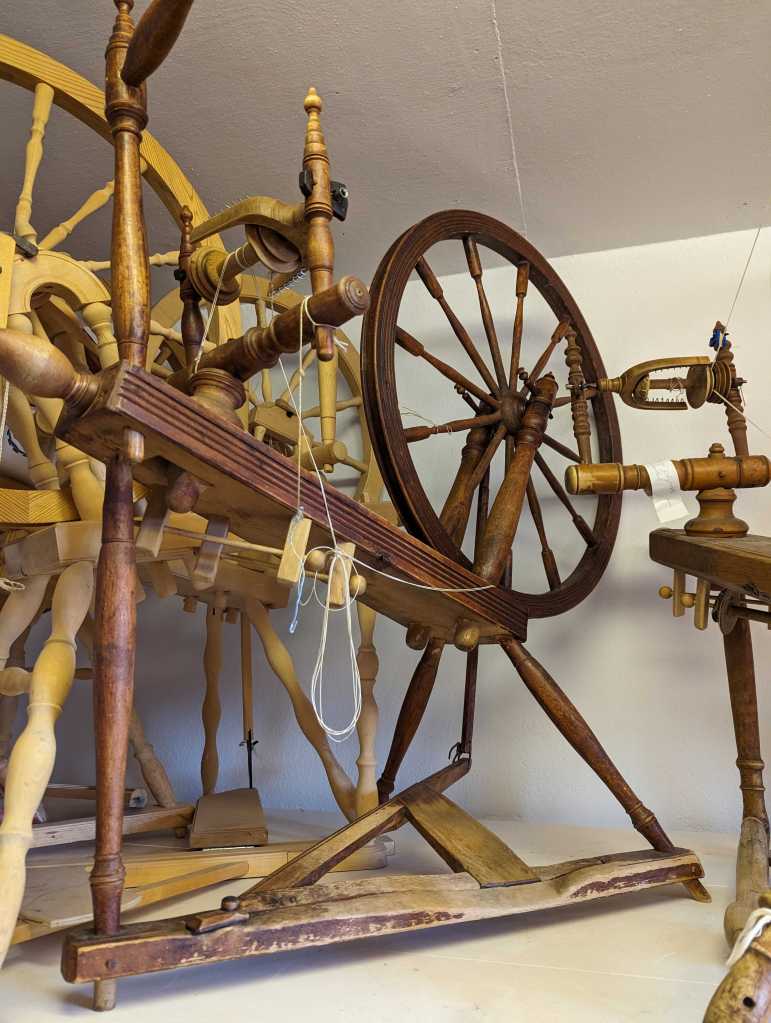
Most of the wheels I have seen of this style show extensive wear on the treadles. They must have been real work horses. Ulla’s drop-in treadle and pointy toes are characteristic of this style.
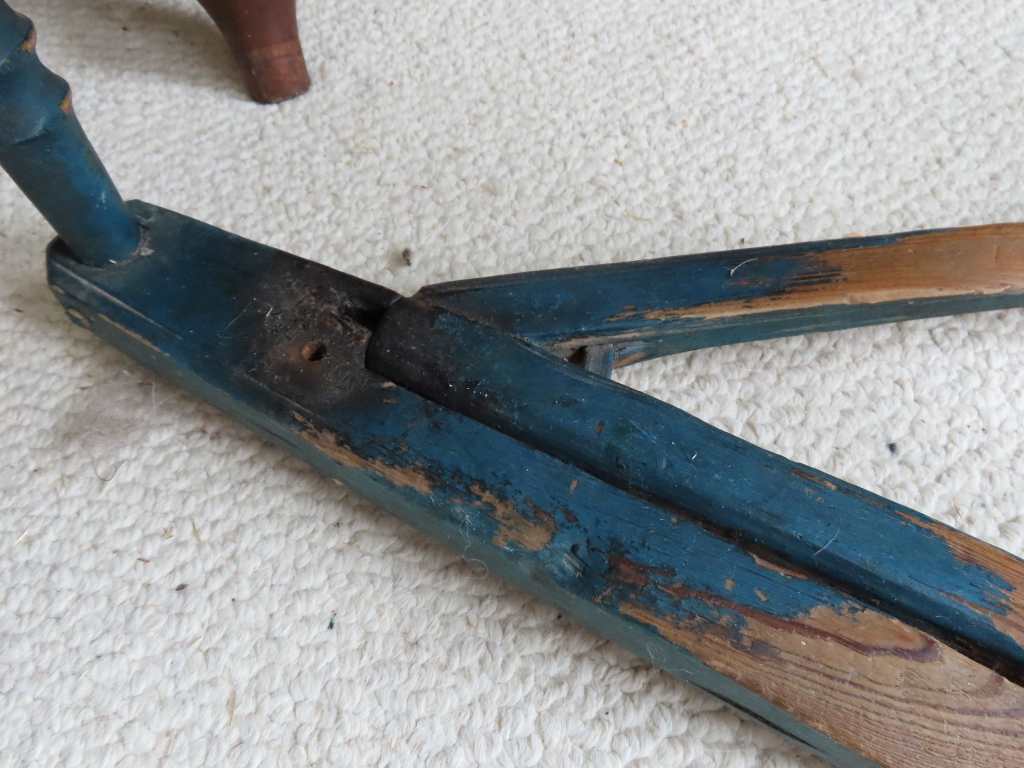
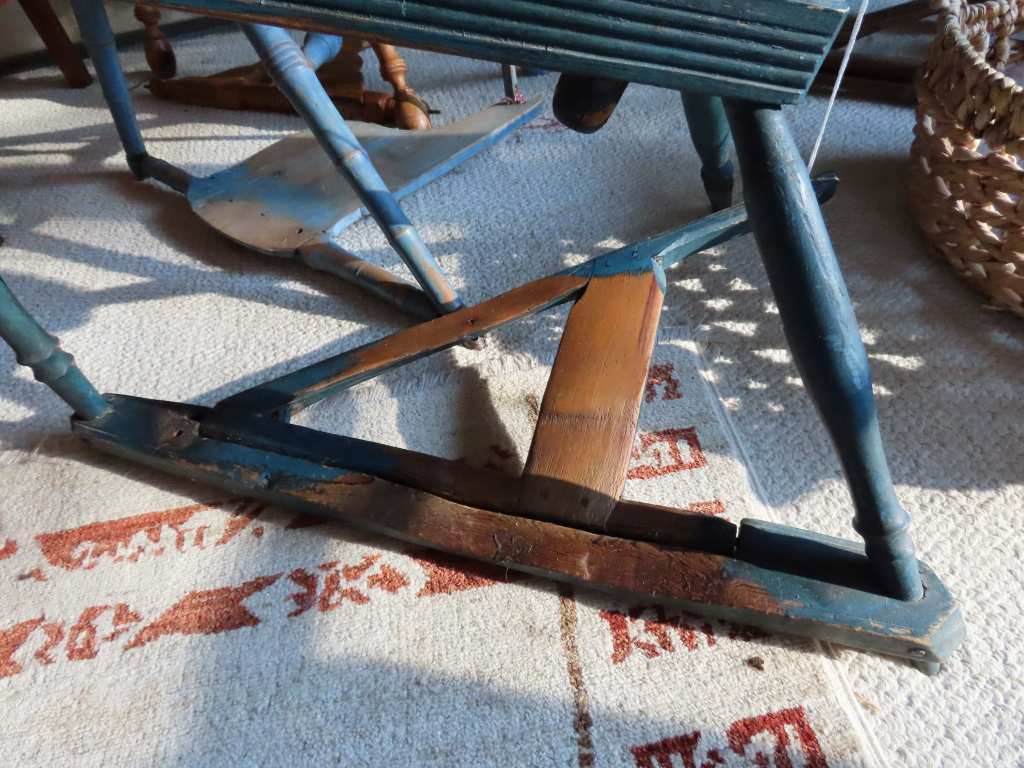
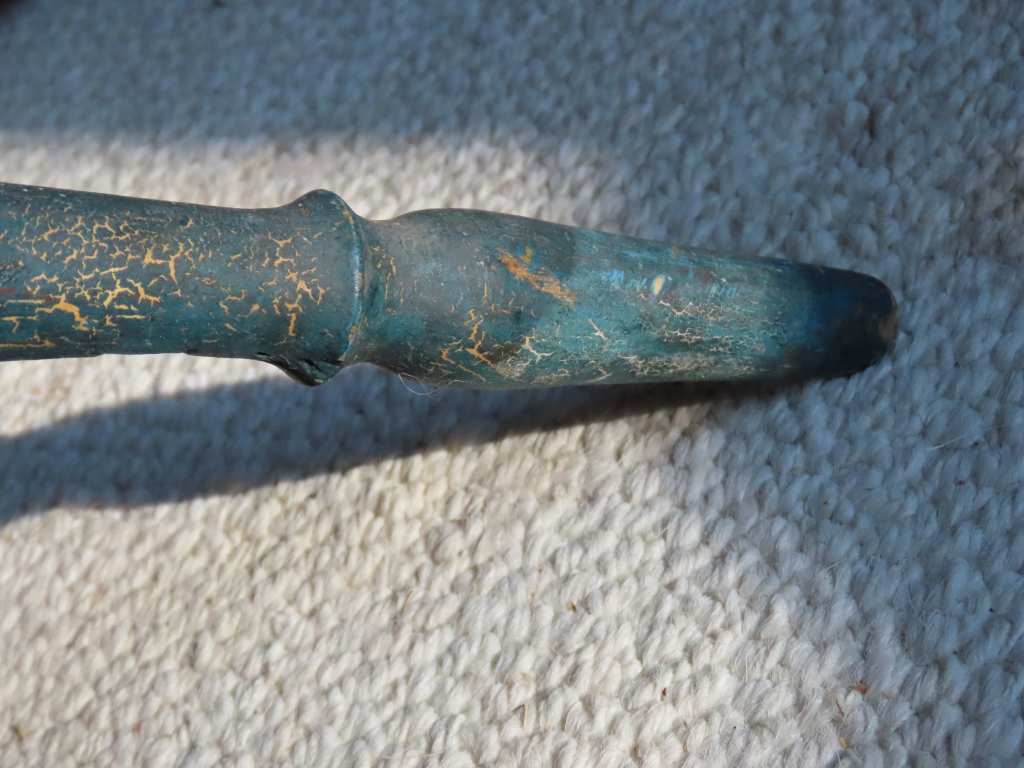
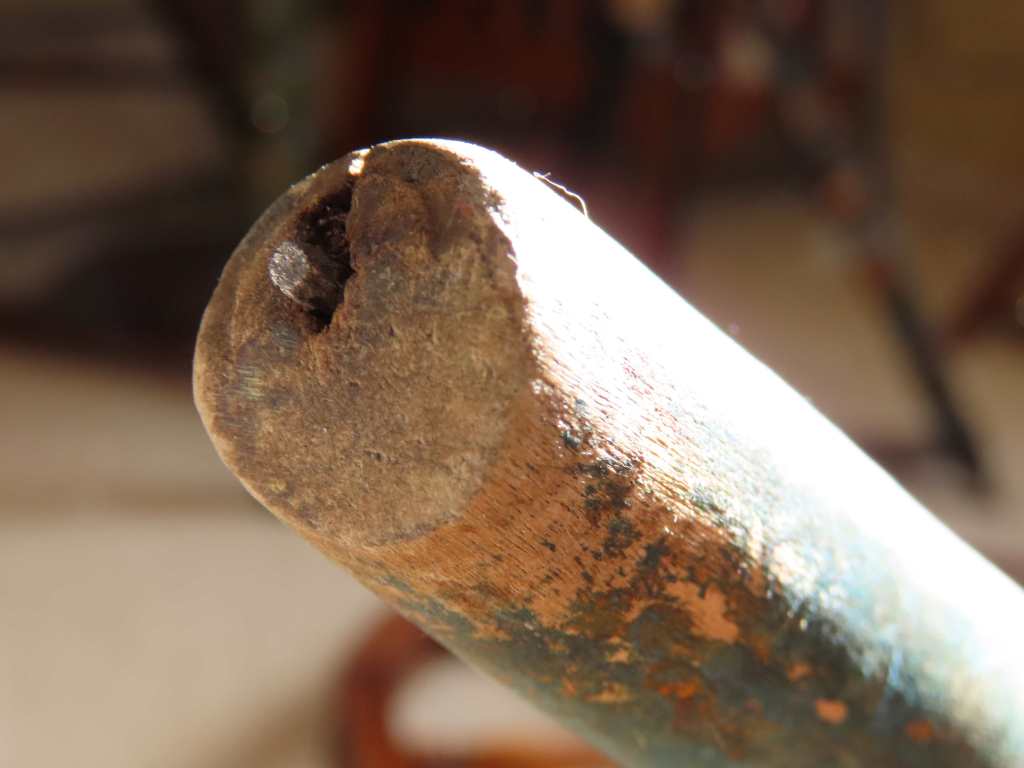
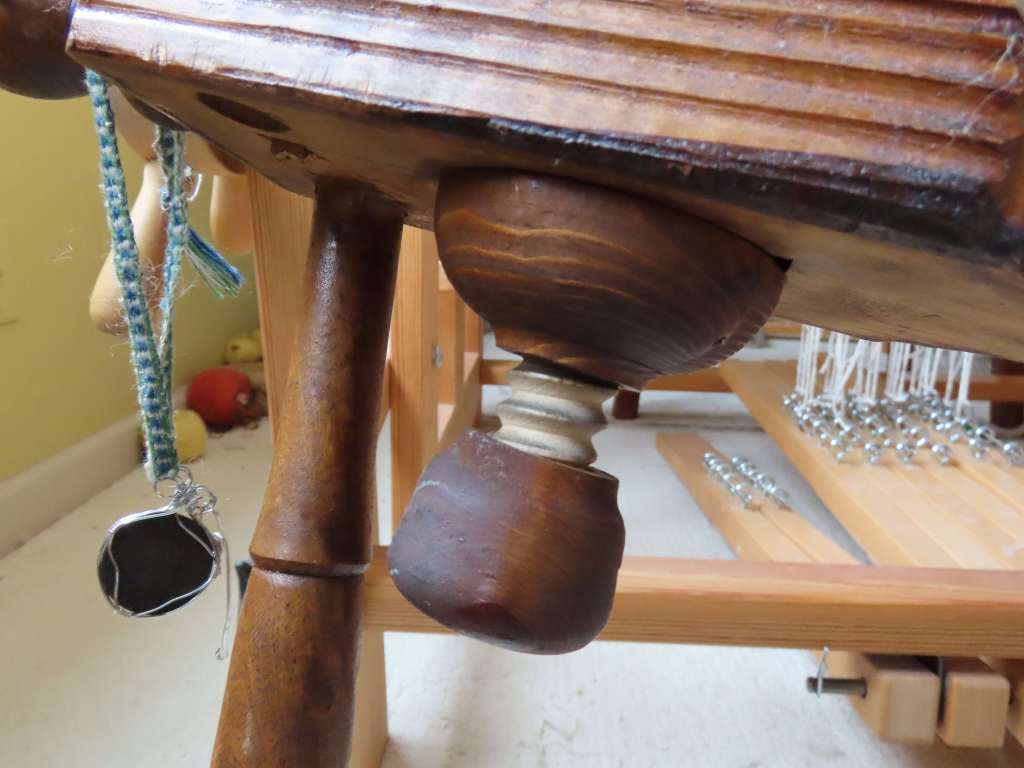
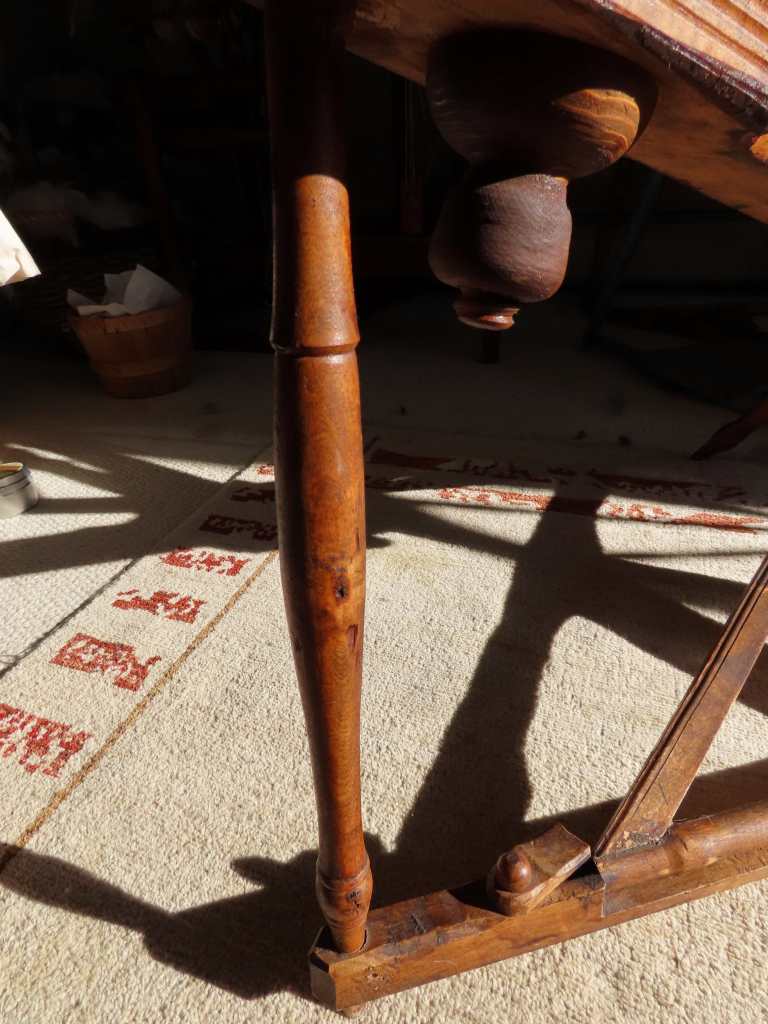
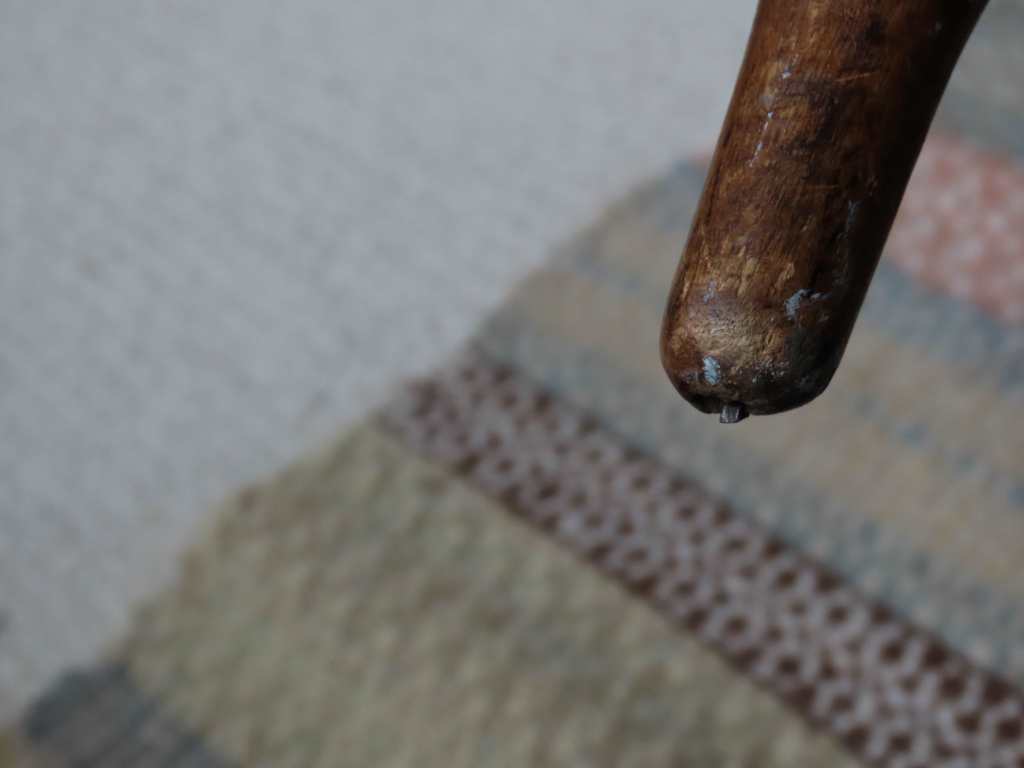
Interestingly, the non-spinner side leg has a metal spike, just like Torvi.
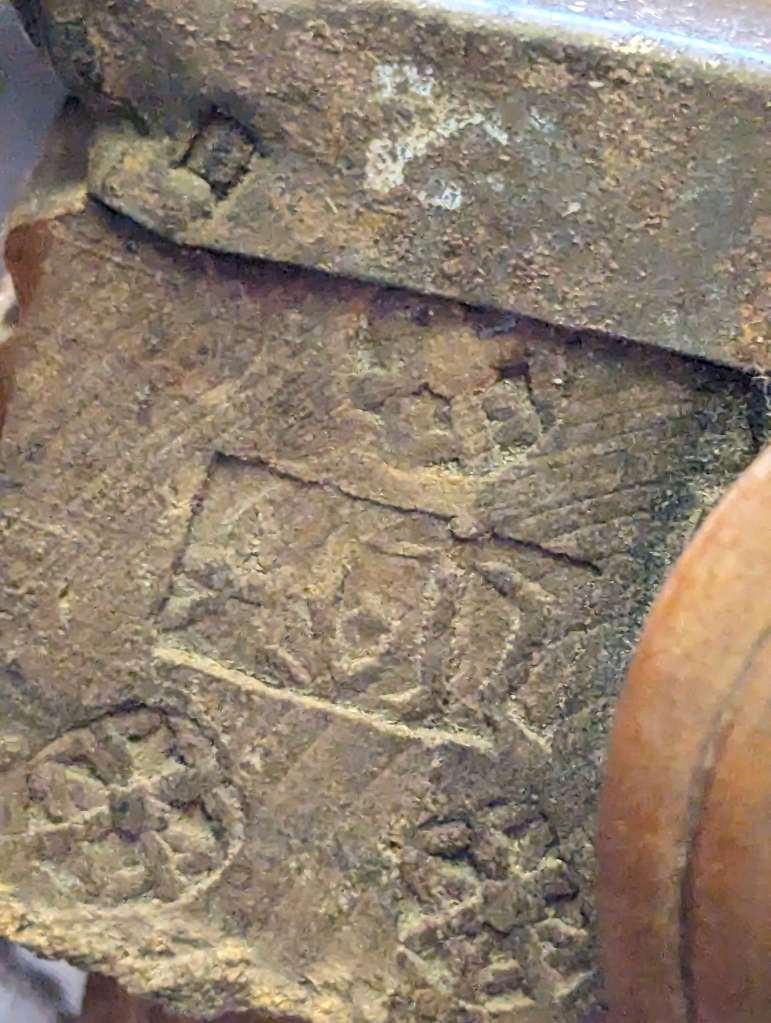
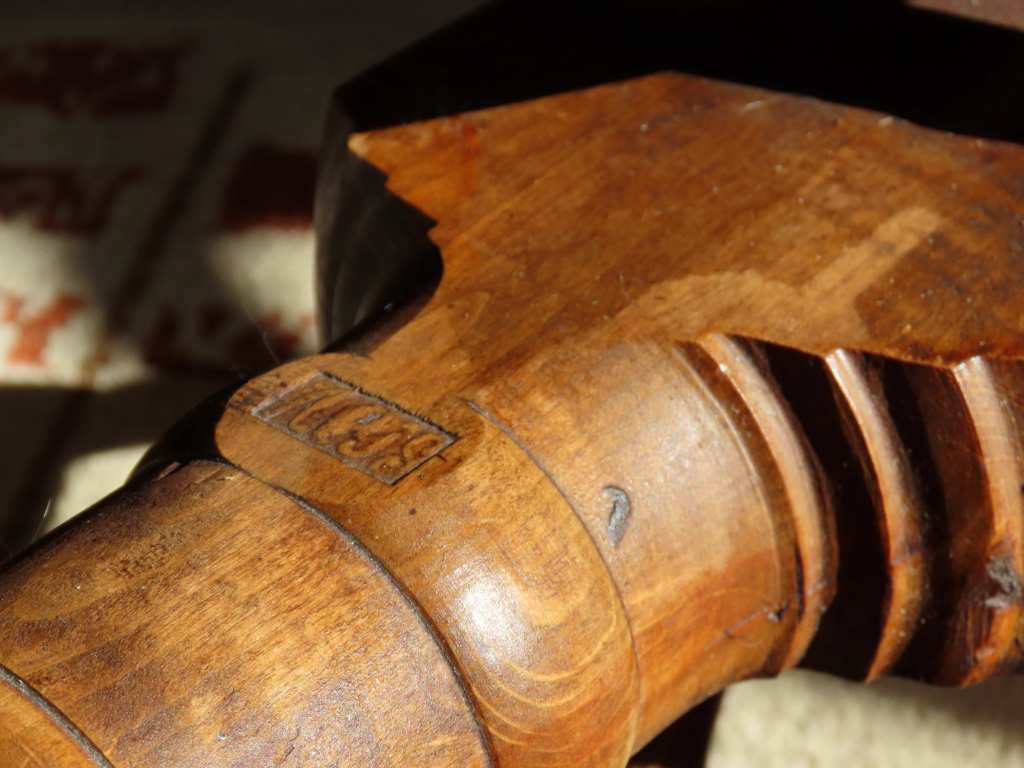
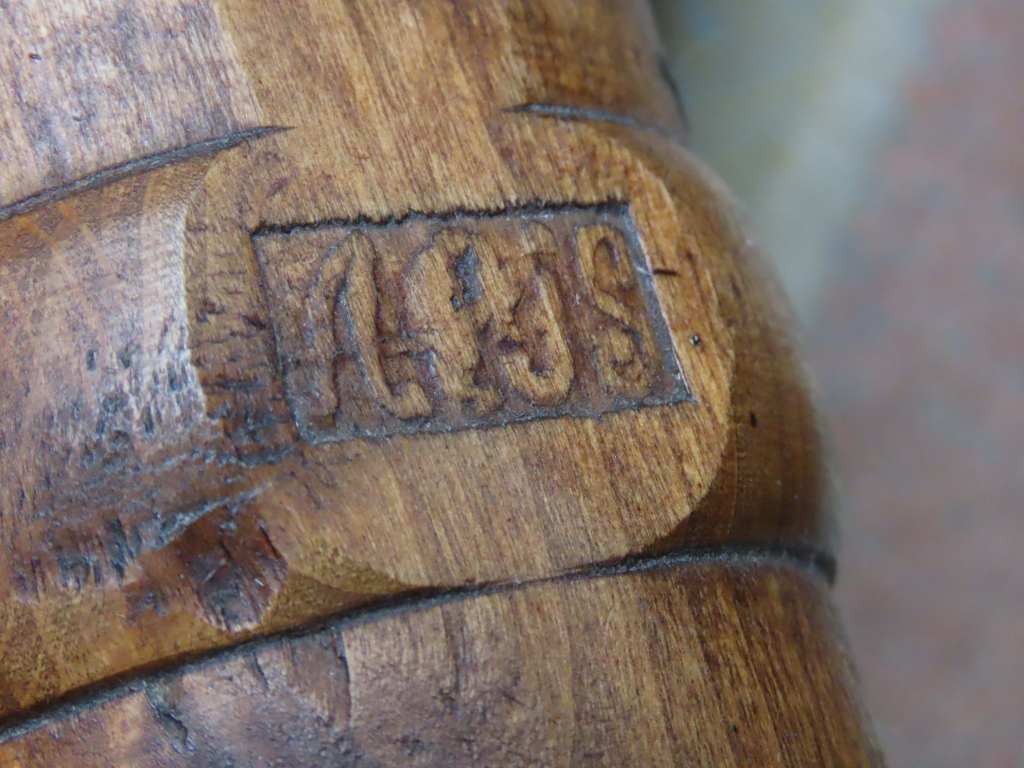
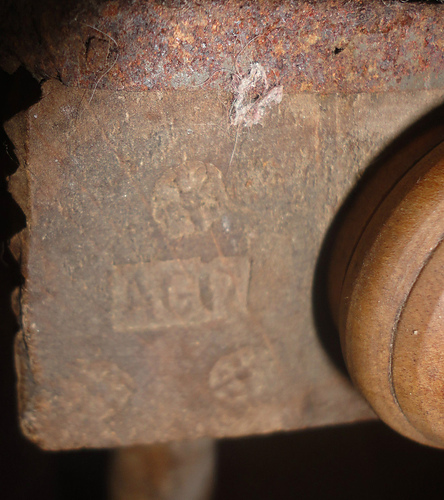
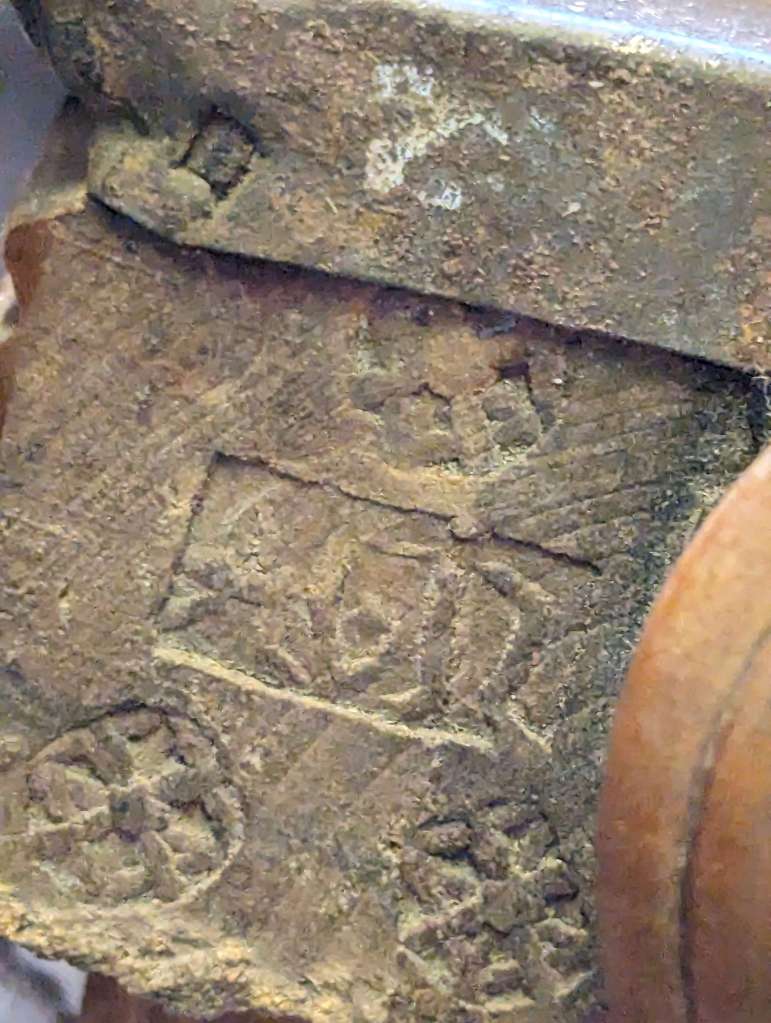
The maker’s initials are a little hard to make out, but appear to be “CGWB.”
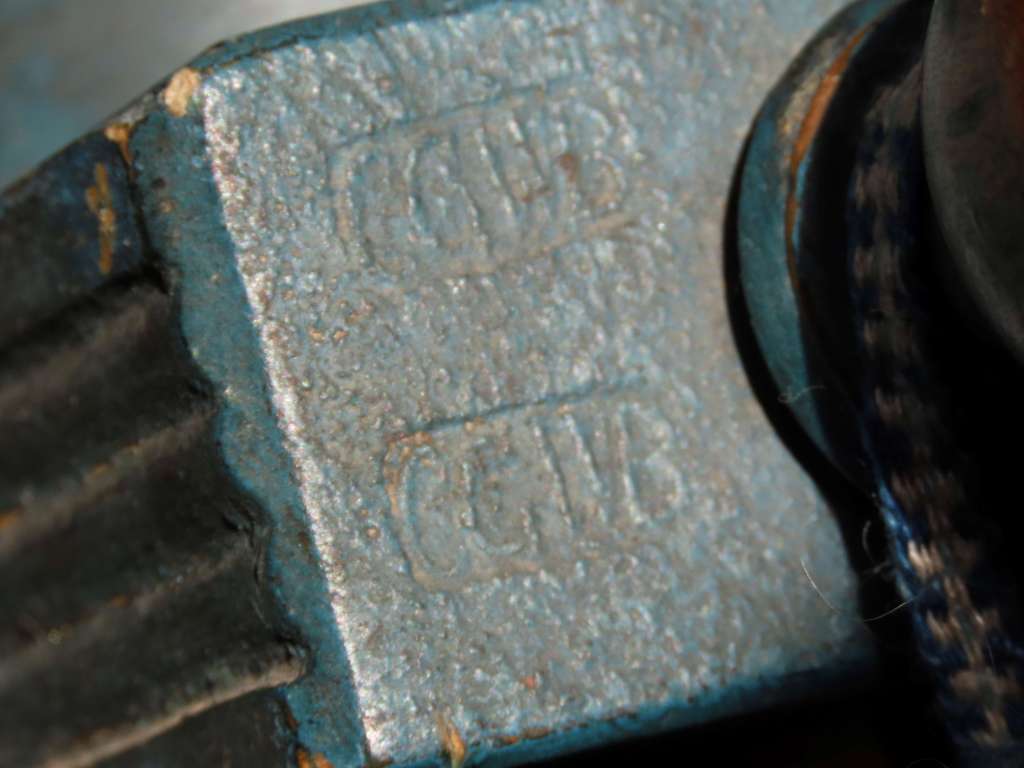
It is stamped twice on each side of the tension knob, but there are no star/sunburst stamps. The bottom of the treadle is marked in pencil “55.”
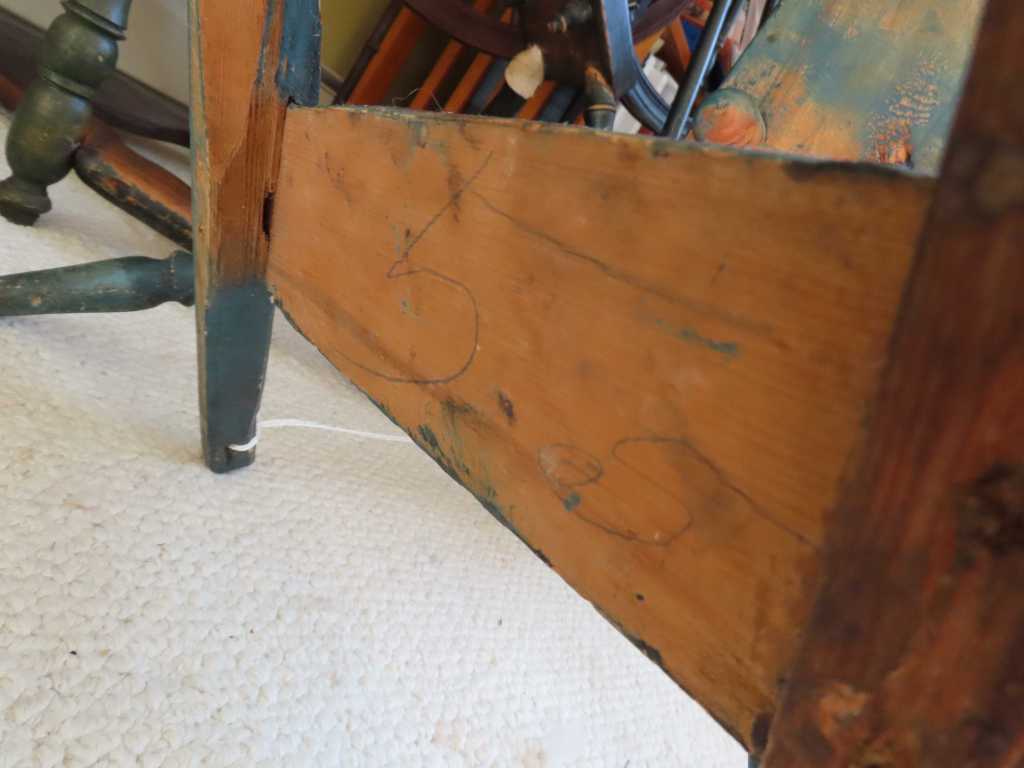
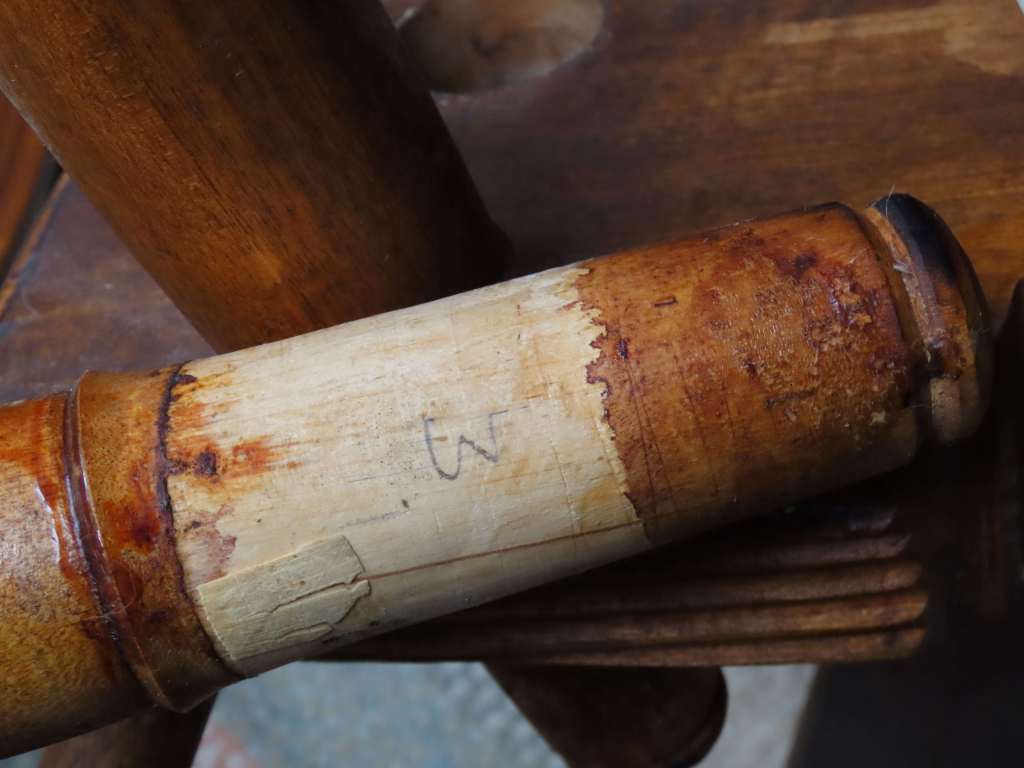
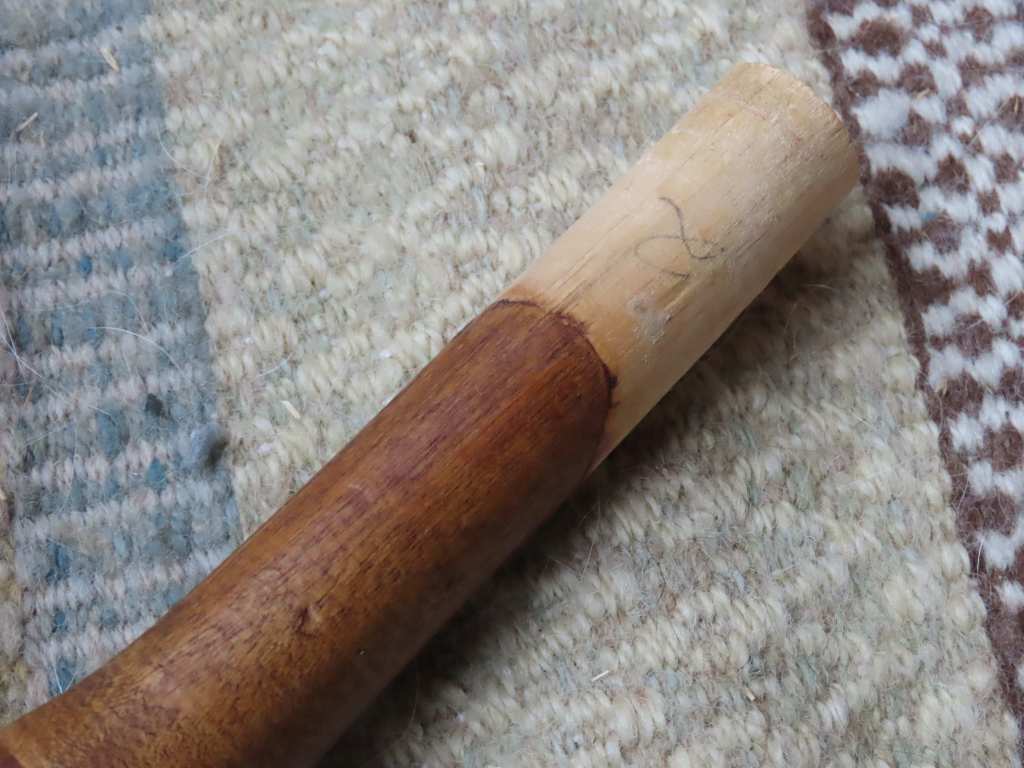
I did not remove the legs or the uprights to check for numbers (as Torvi has) because they were tightly shimmed in place before the wheel was painted.
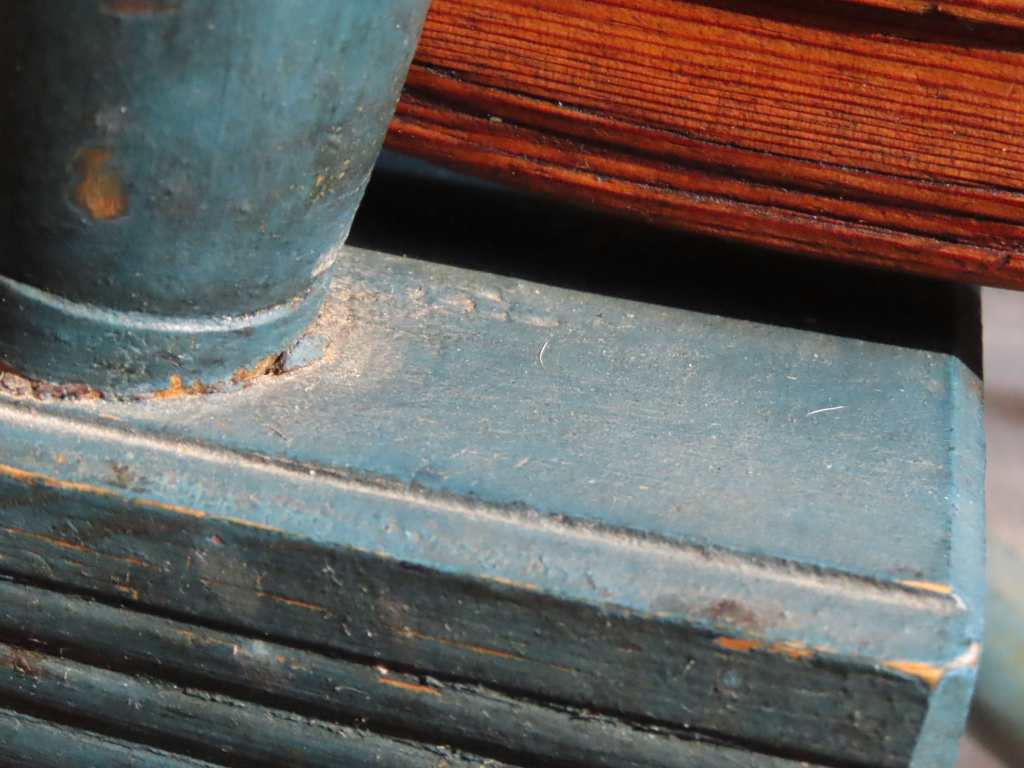
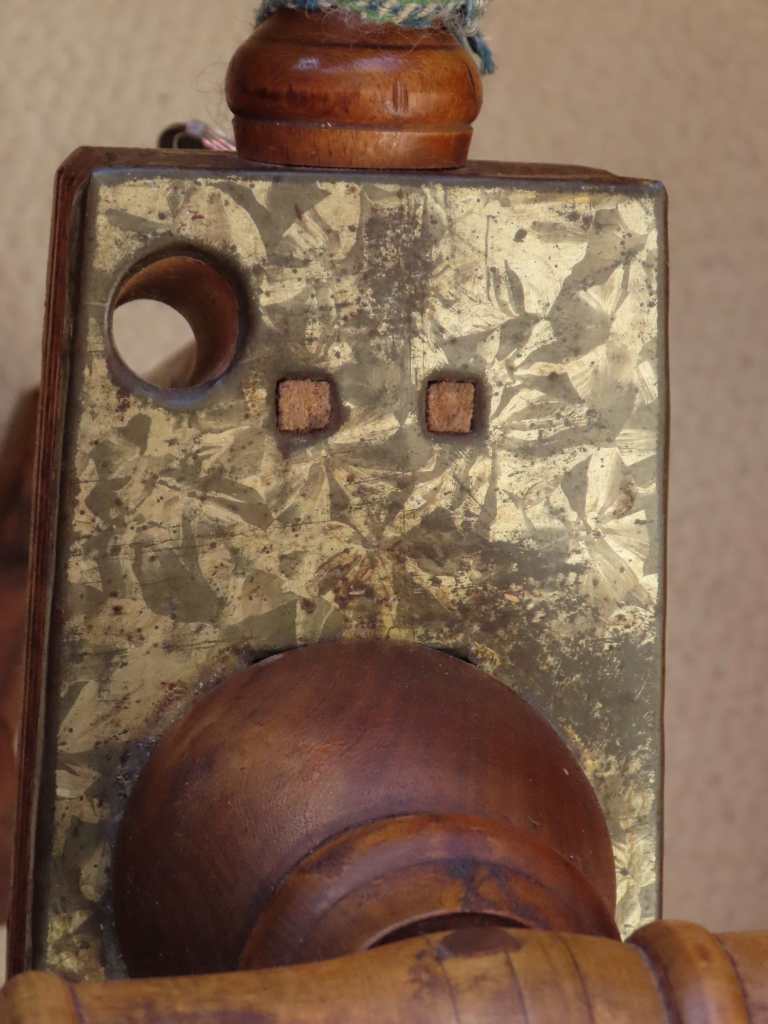
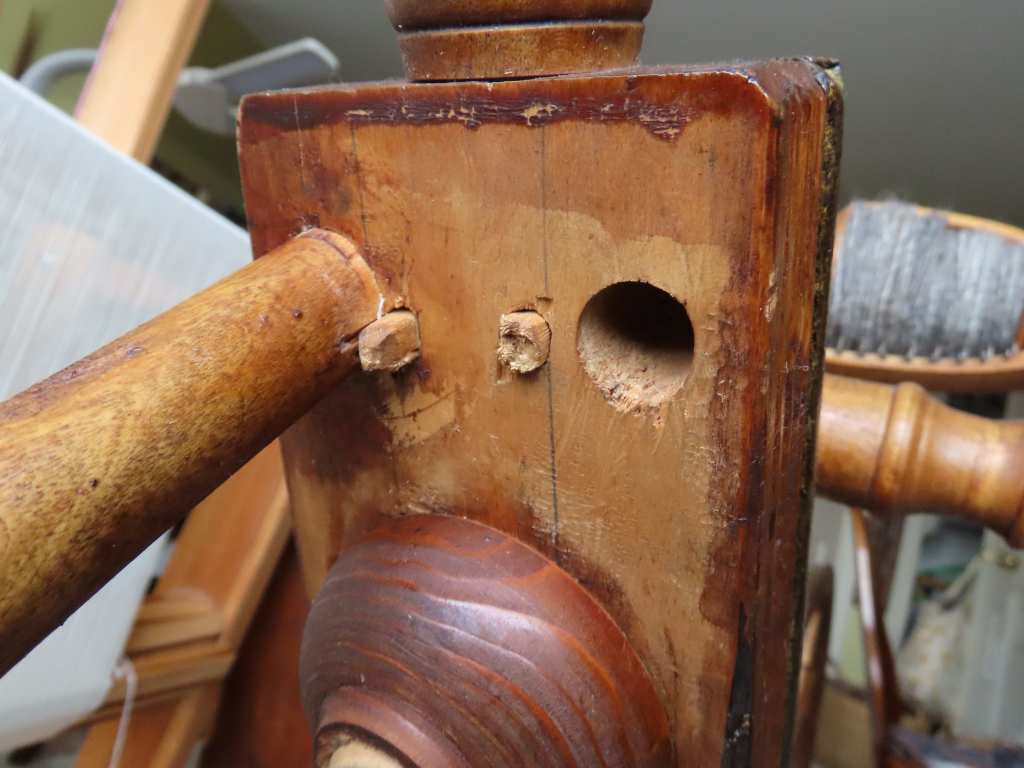
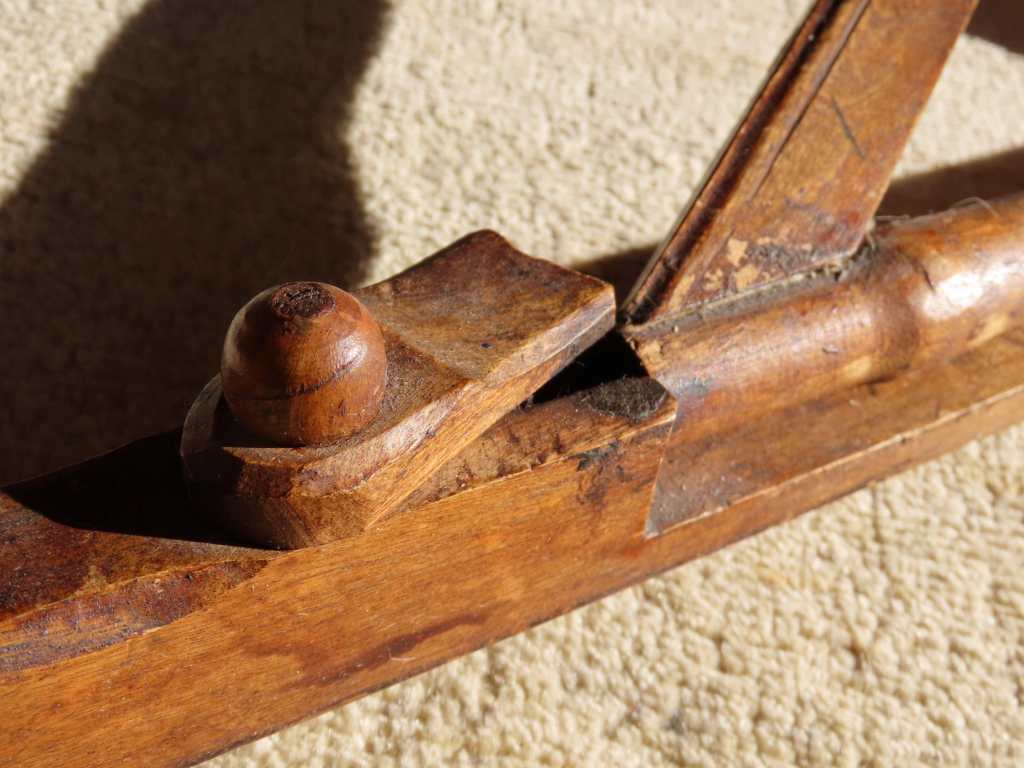
As with the turned-table wheels, there are two keeper pegs for the tension screw.
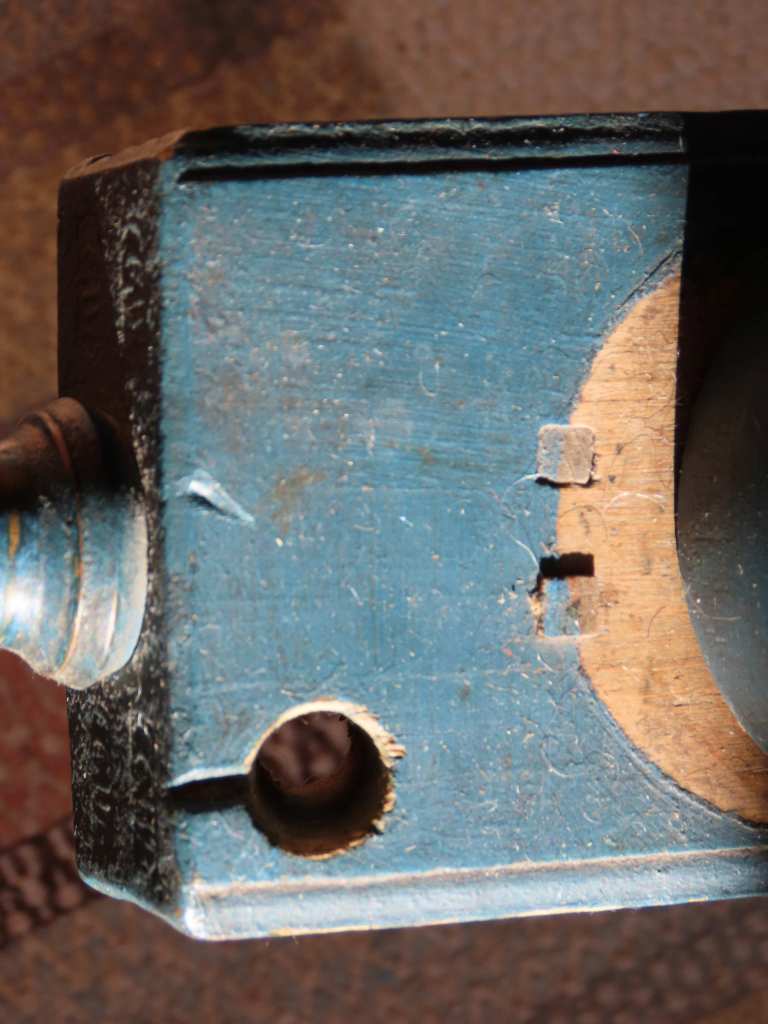
But, in contrast with Torvi, there is no wooden screw and nut under the mother-of-all.
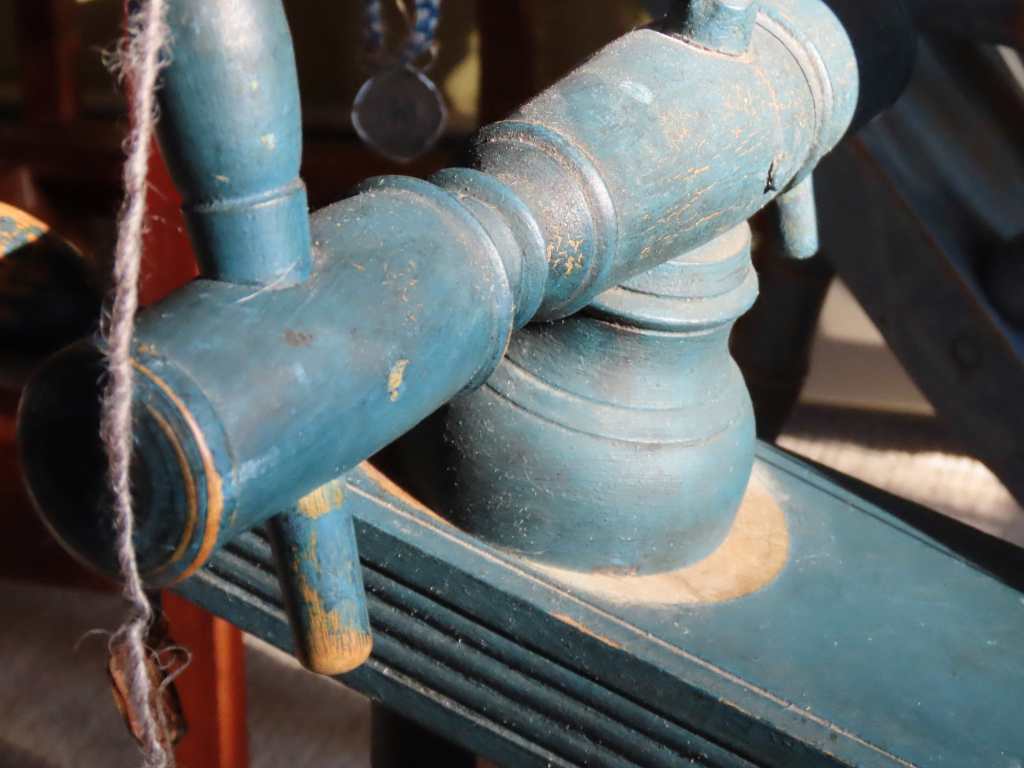
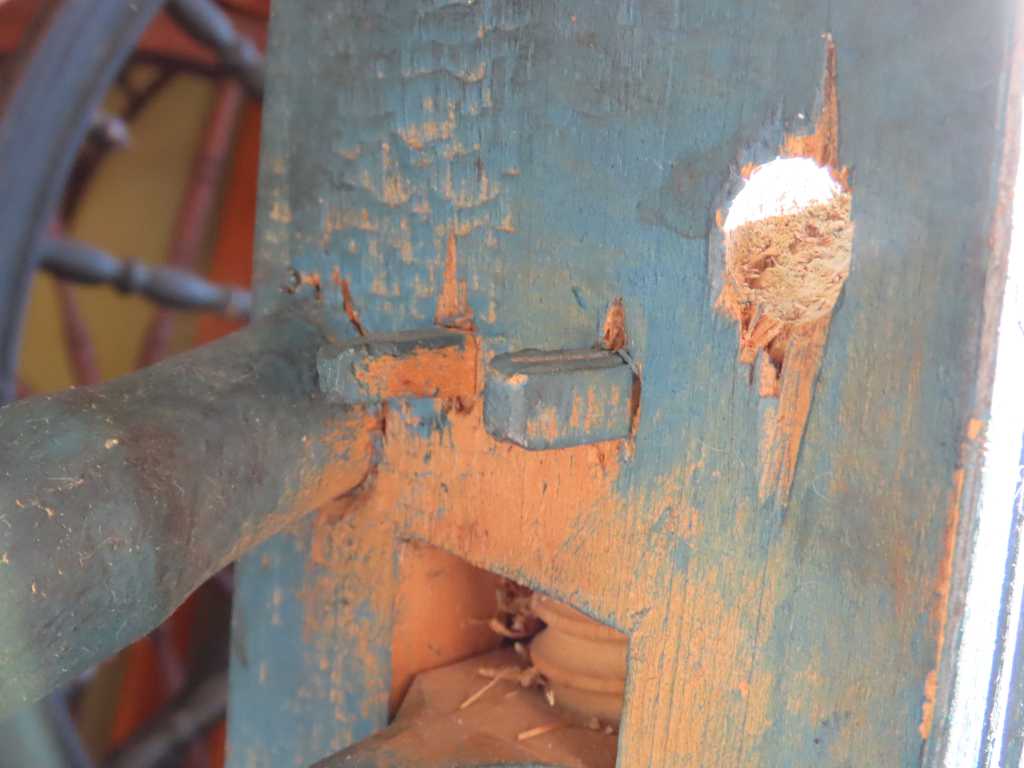
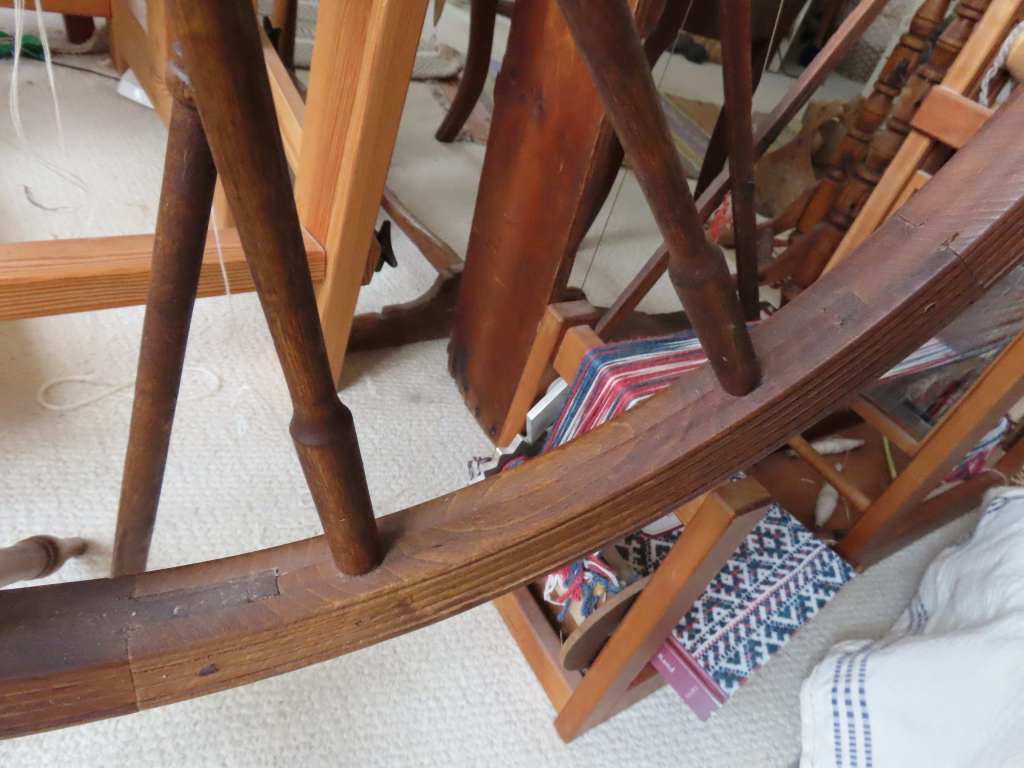
The uprights are secured under the table with one piece of wood through both.
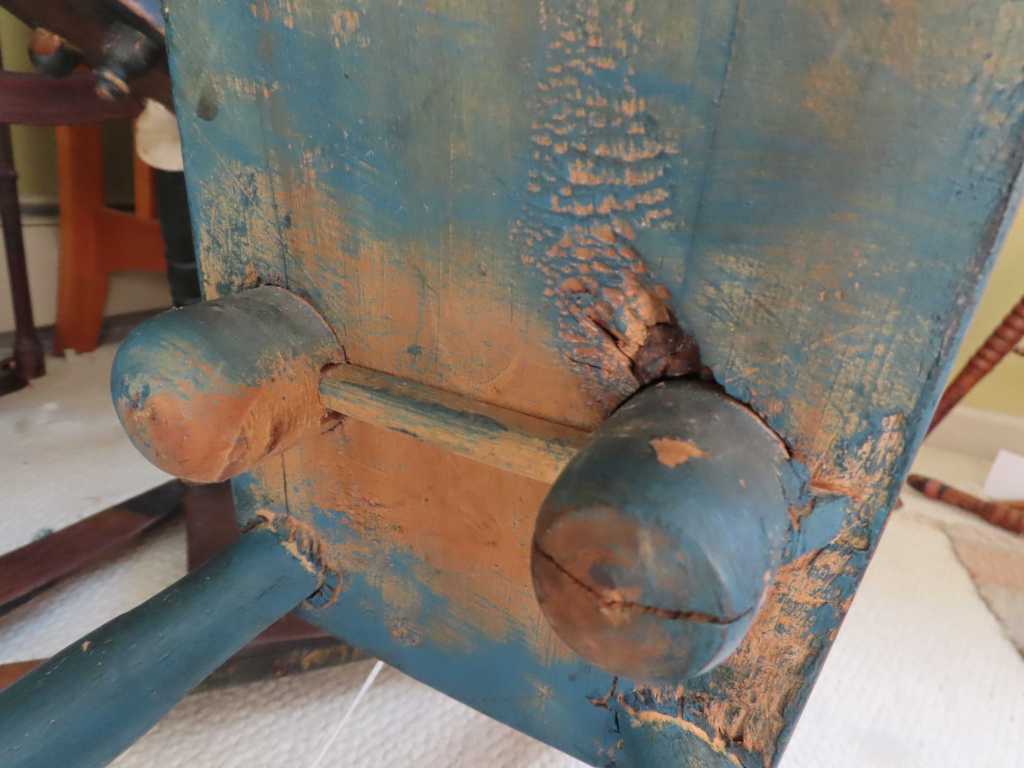
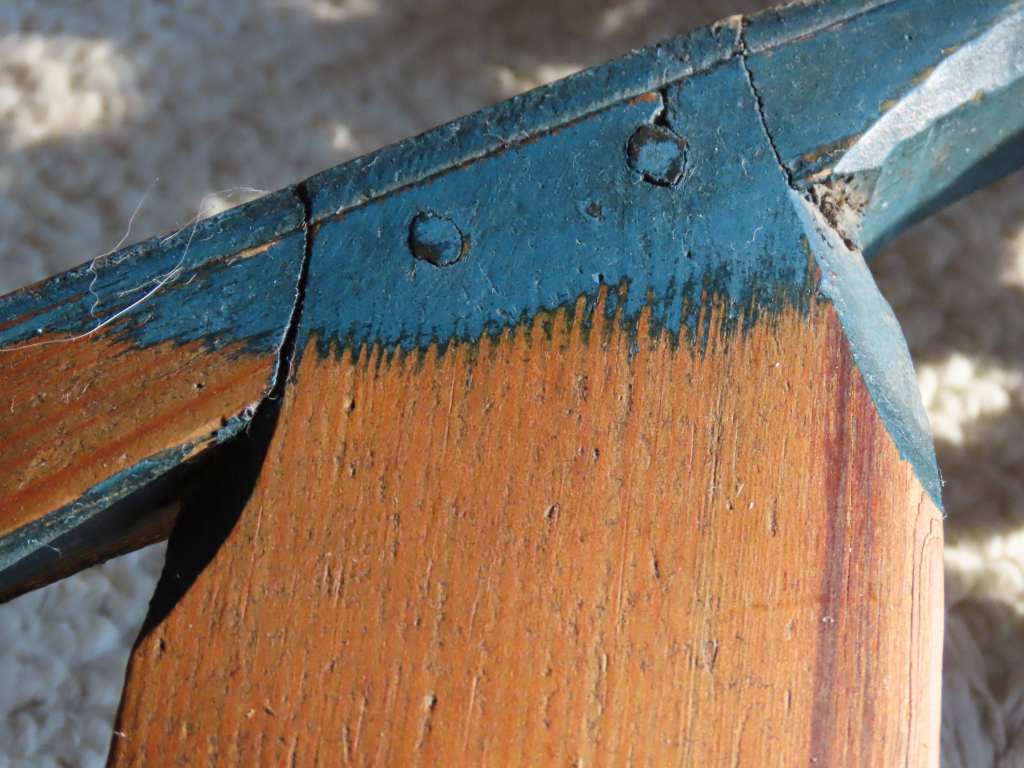
The paint shows wear in all the expected places and enhances the interest and beauty of the wheel.
With all of the similarities between these Ulla-style wheels and the Torvi turned-table style wheels, it looks as if they all were made in the same region, but with multiple makers. If we can pinpoint with some certainty the town or towns where these wheels were made, it will make it worthwhile to research the maker’s initials to try to determine who they were. Stigsbo will be a starting place. If any one has more clues, however small, please let me know.
 Exquisite Machinery