Jerusha

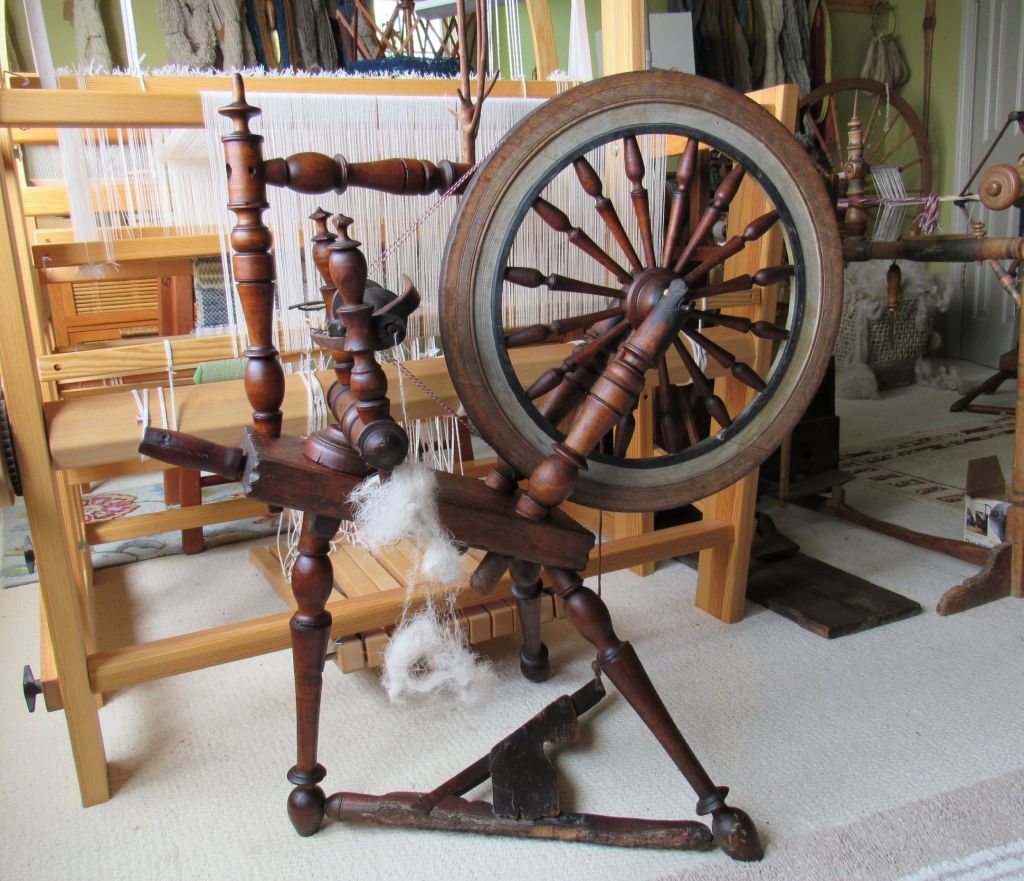
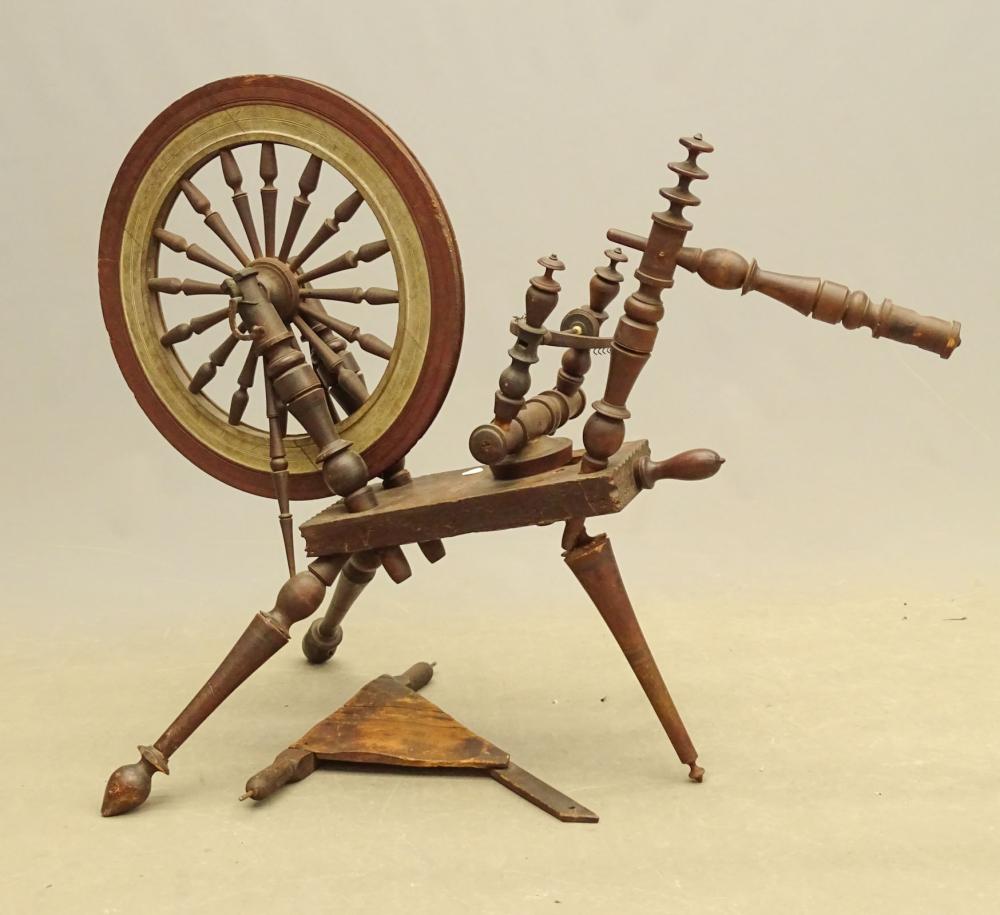
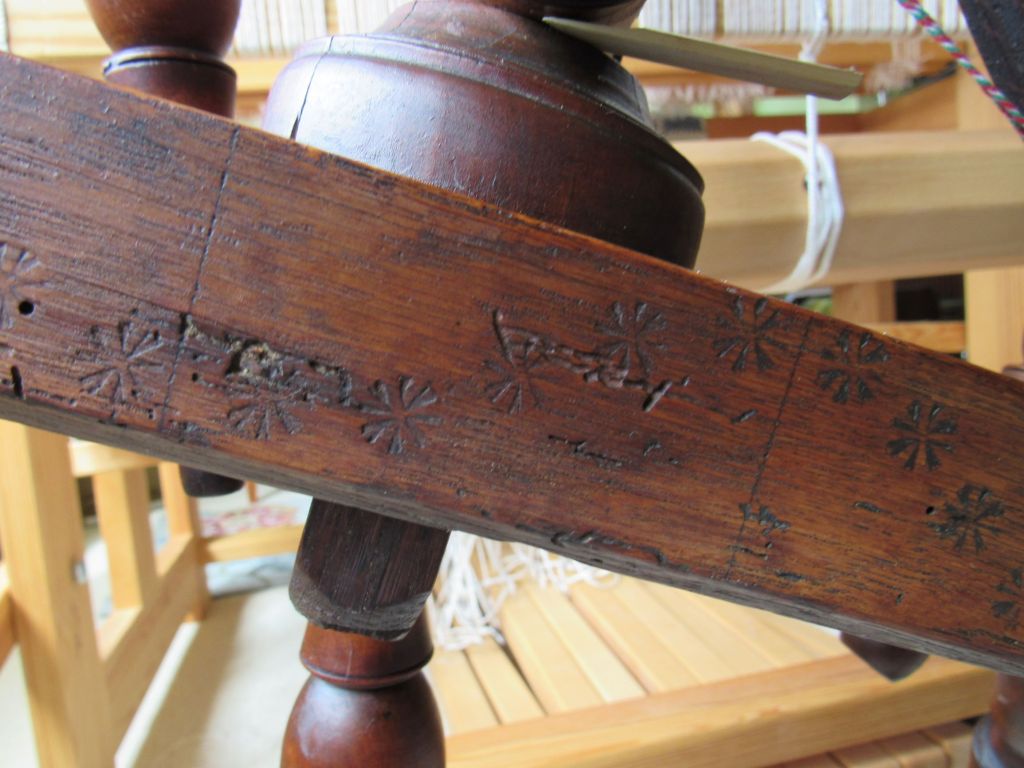
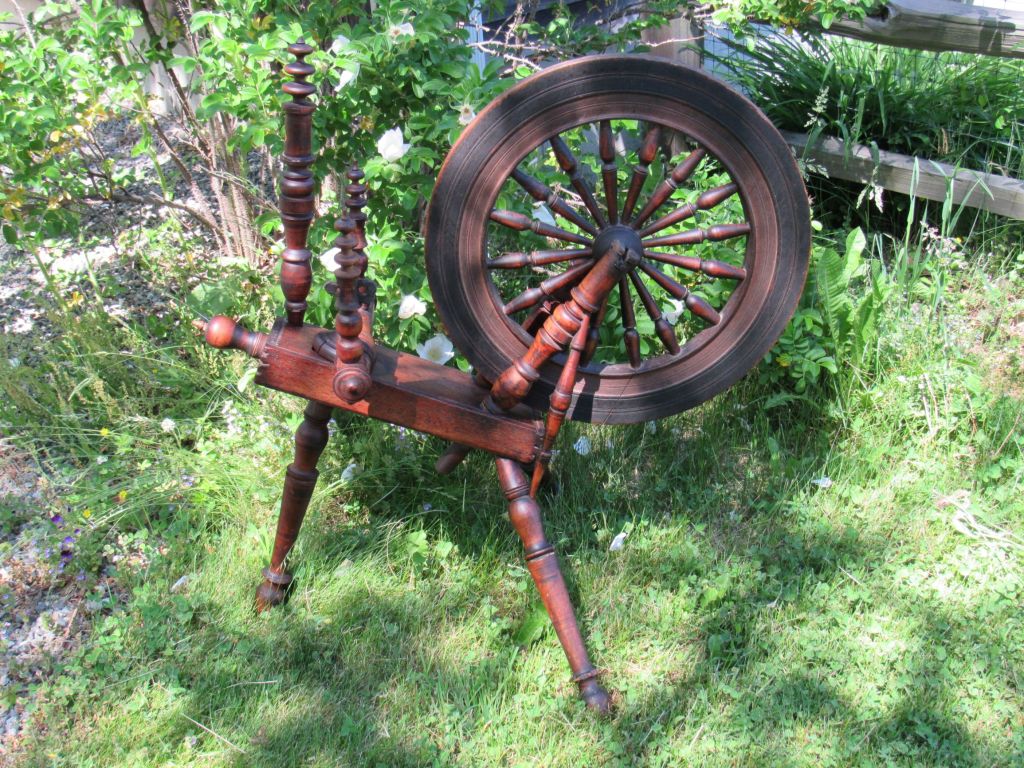
This exuberant wheel appears to be related to the family of wheels in the previous post, “Julia.” Those wheels are marked “JC,” “IC,” or “SC,” accompanied by star/flower stamps, and I expected to see one of those sets of initials on this one. But, no–nothing but star stamps–lots of them.
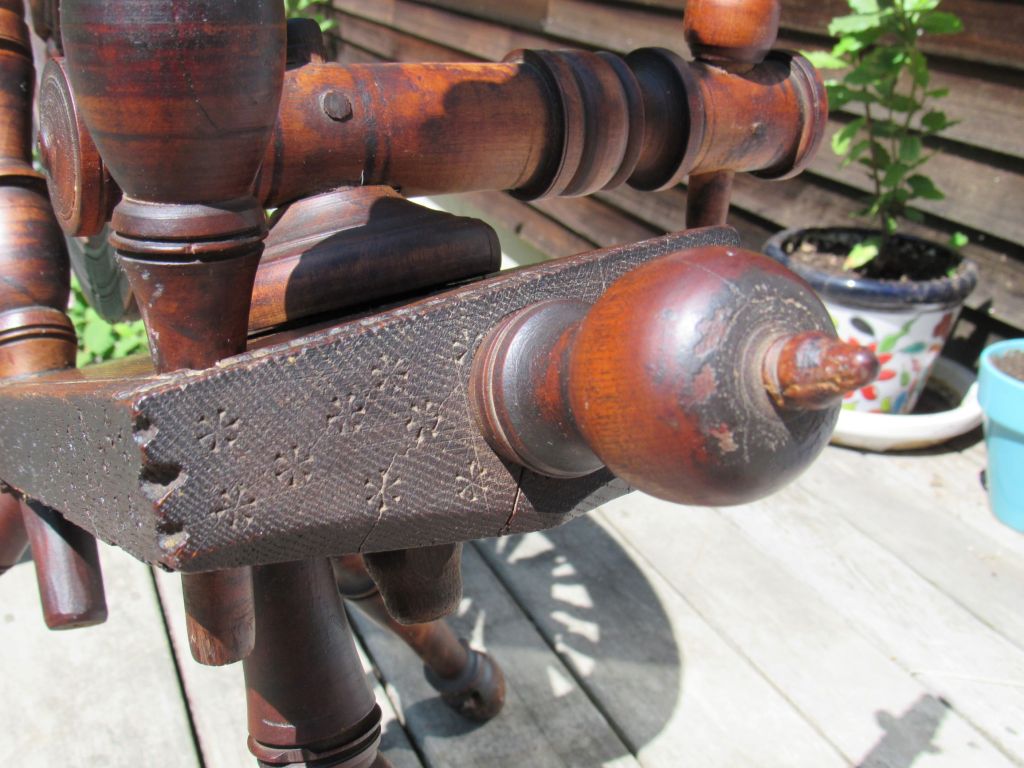
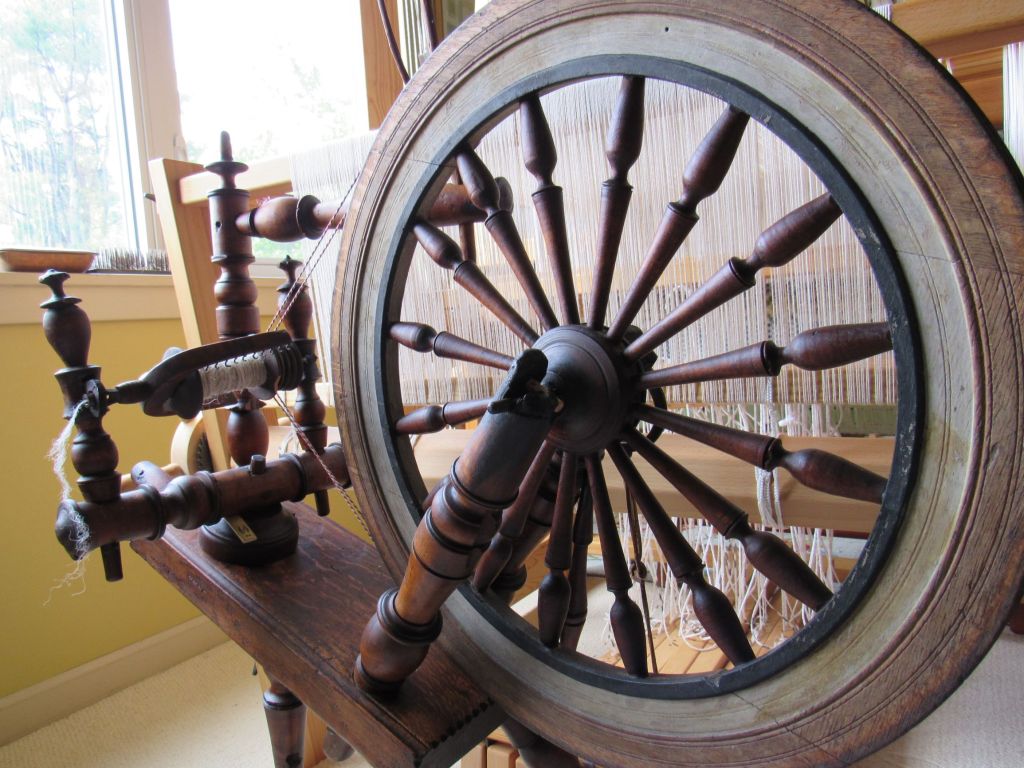
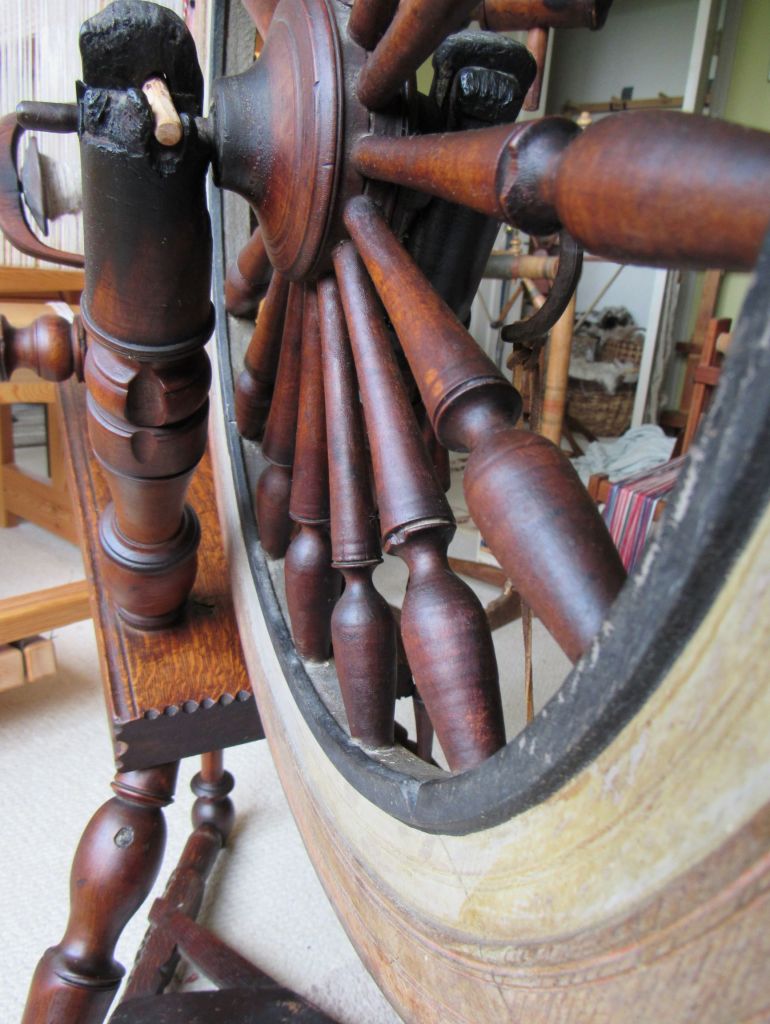
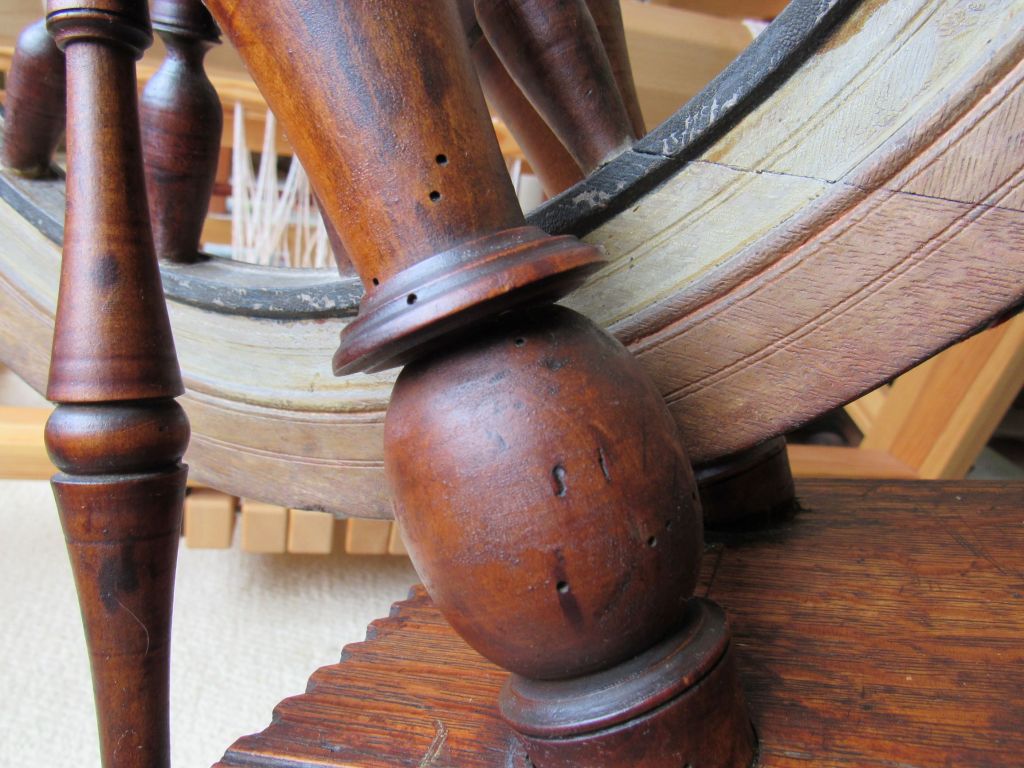
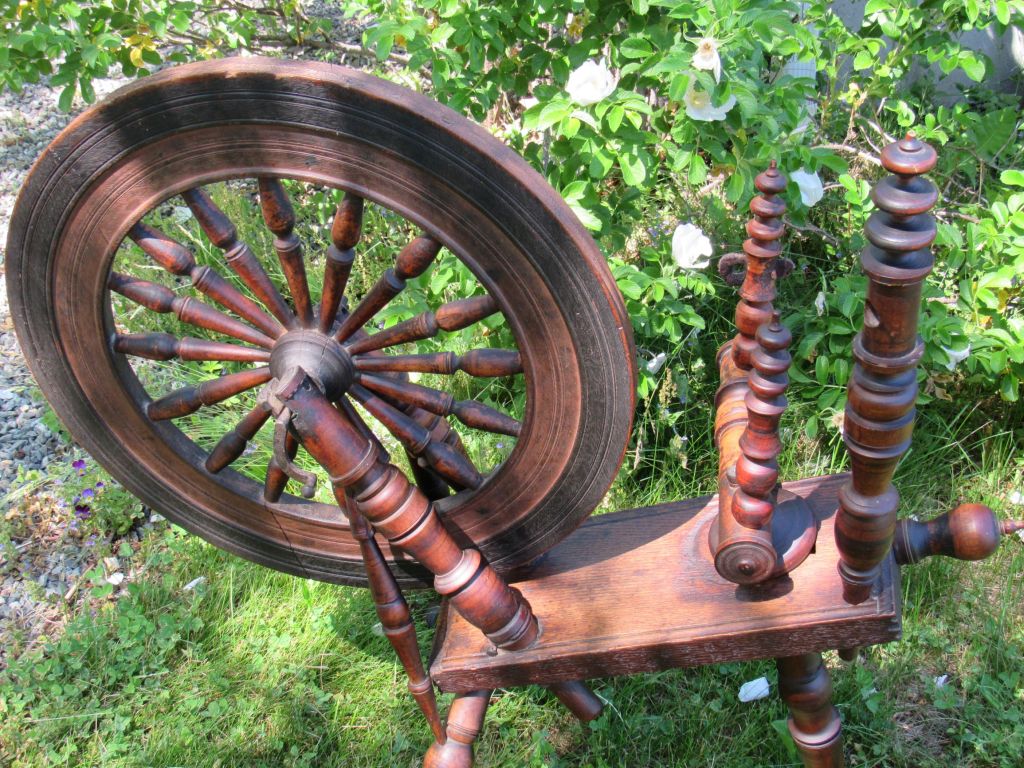
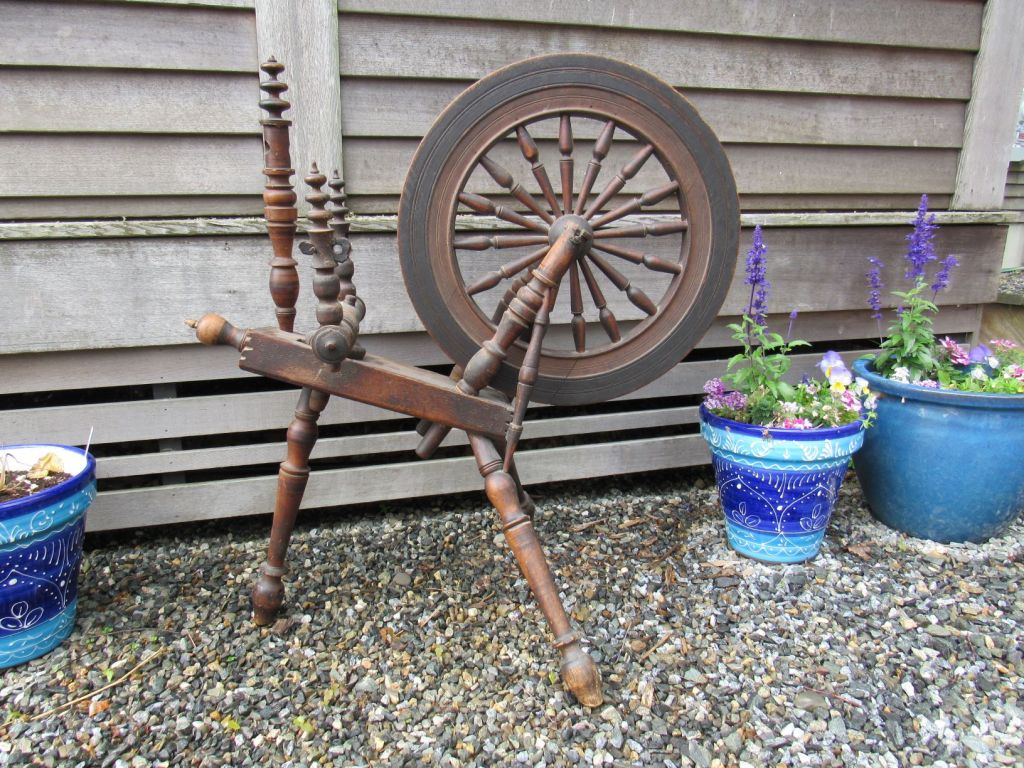
The basic characteristics of this wheel are the same as the others–small table, vase-turned legs, 16 tulip bud spokes, painted rim, extra upright supports, star stamps, and pagoda tops.
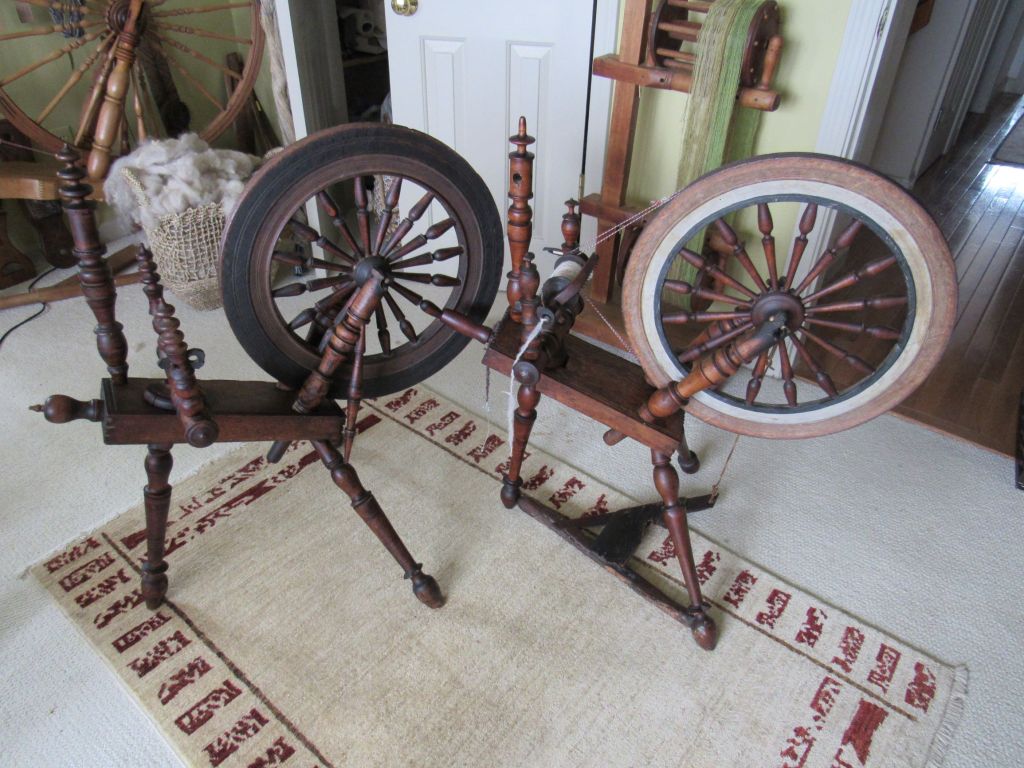
But when viewed side-by-side with Julia, everything is slightly different. This wheel’s table is slightly longer, narrower, and less tilted. The turnings–while sharing the same general contours–are different.

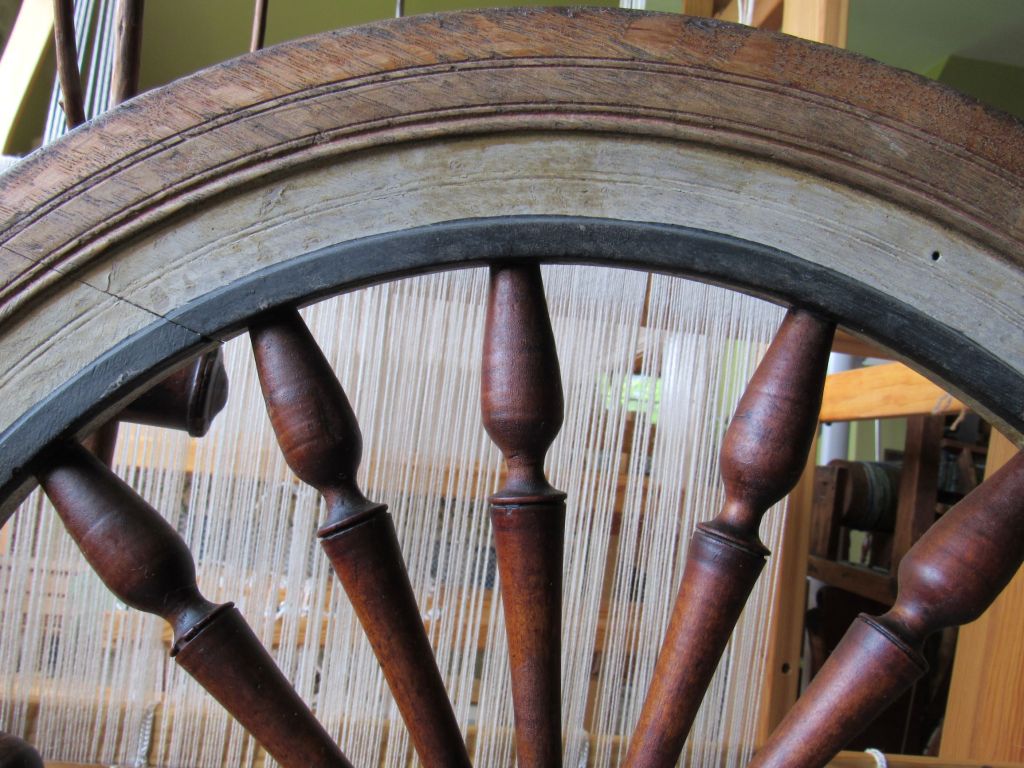
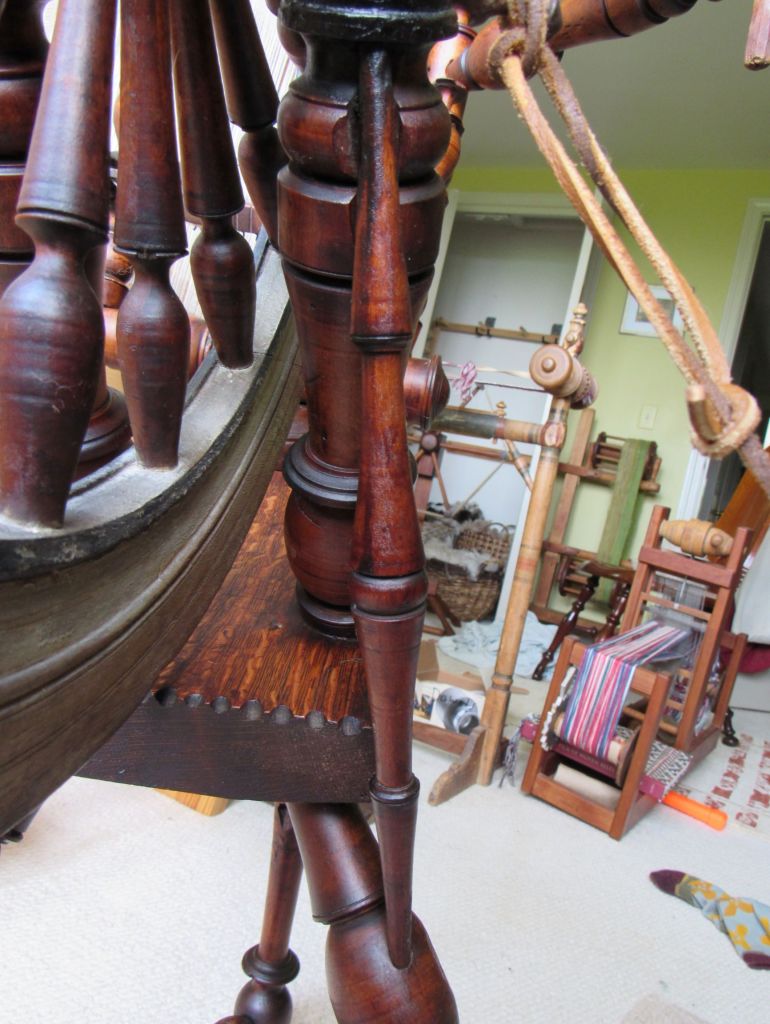
The spokes are shorter and stouter.
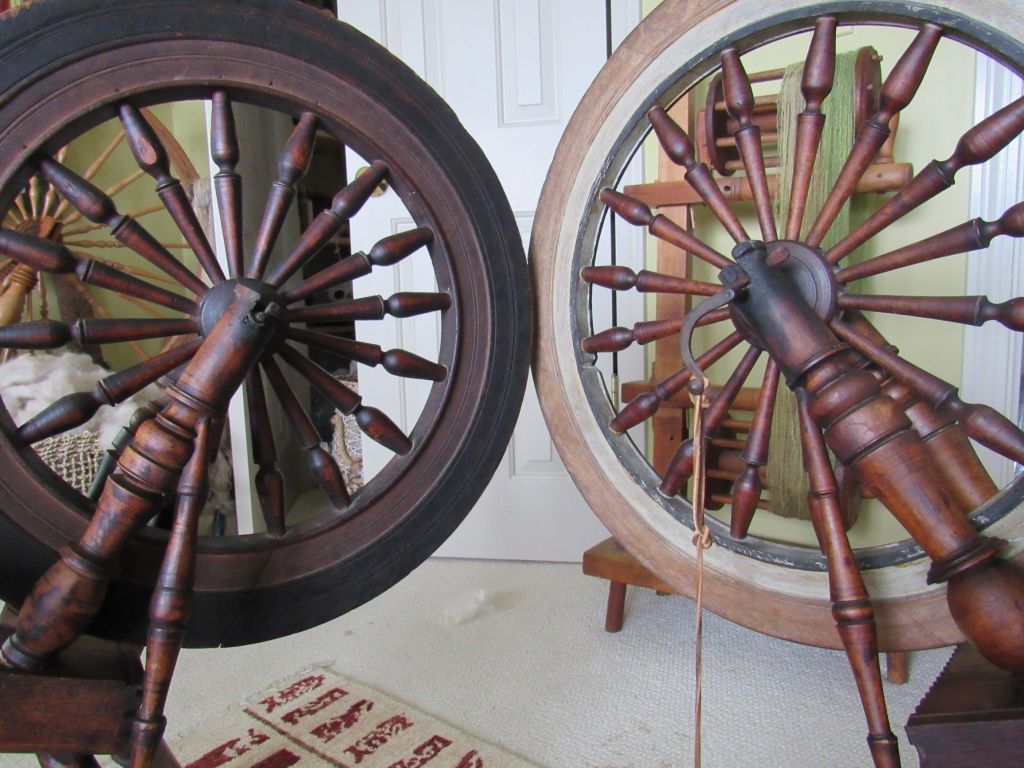
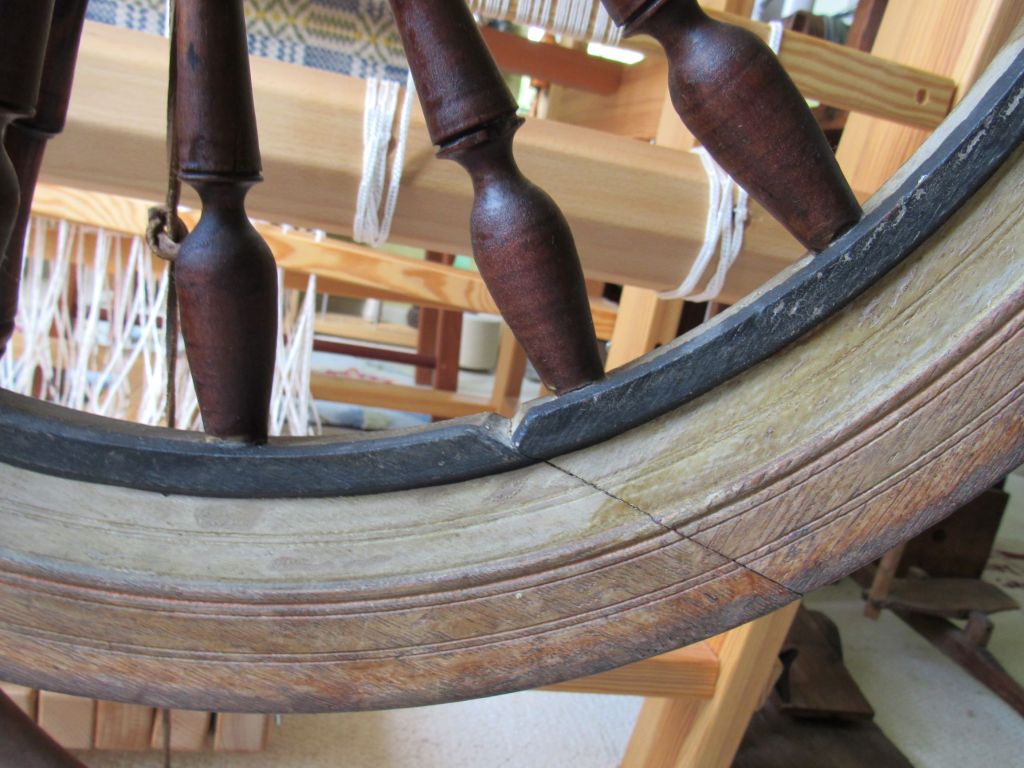
The drive wheel is about the same 20″ diameter, but looks heftier because of a broader rim. Even the star/flower stamps are different.
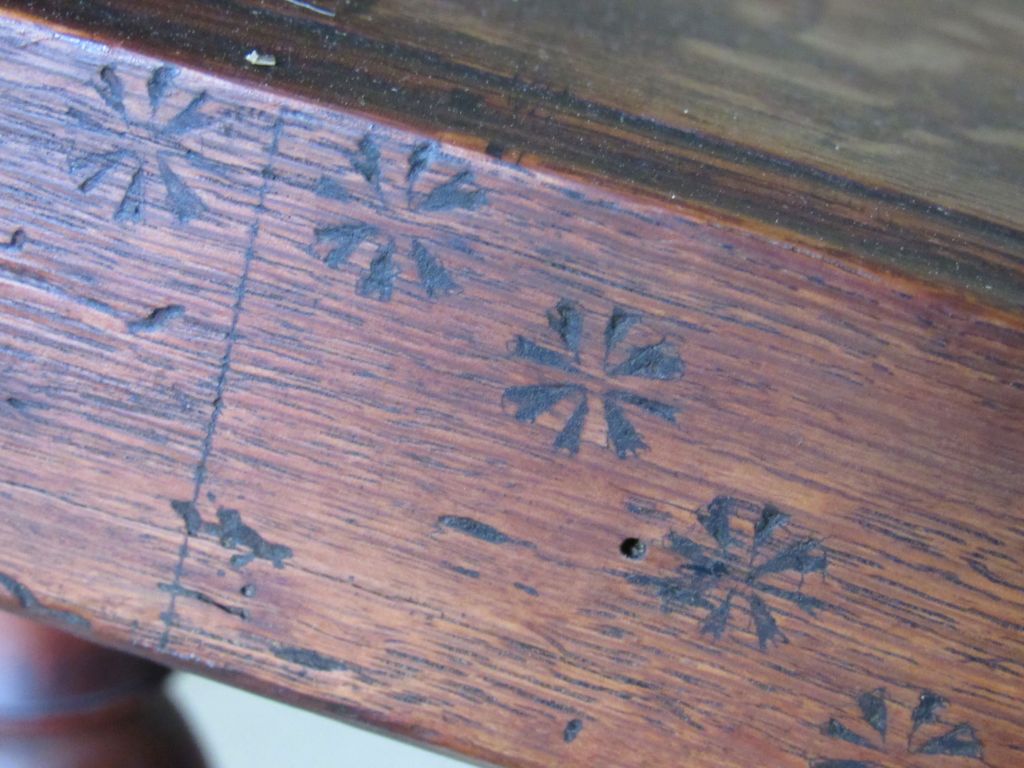
Julia’s stamps have 8 points, made by 4 V-shapes
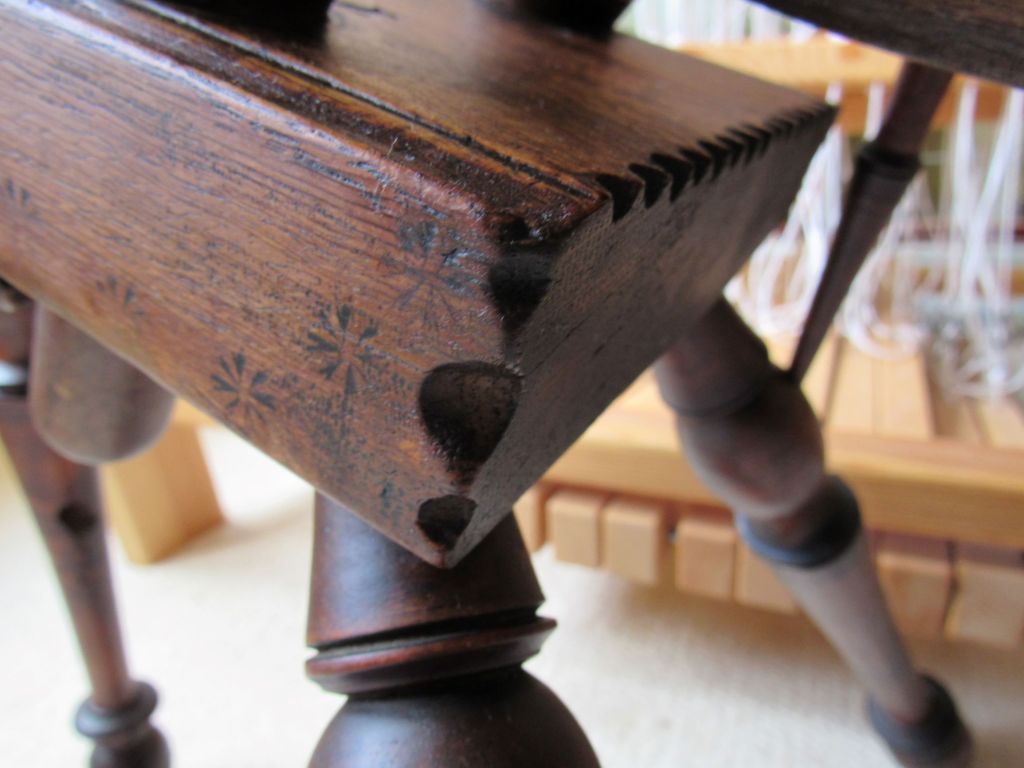
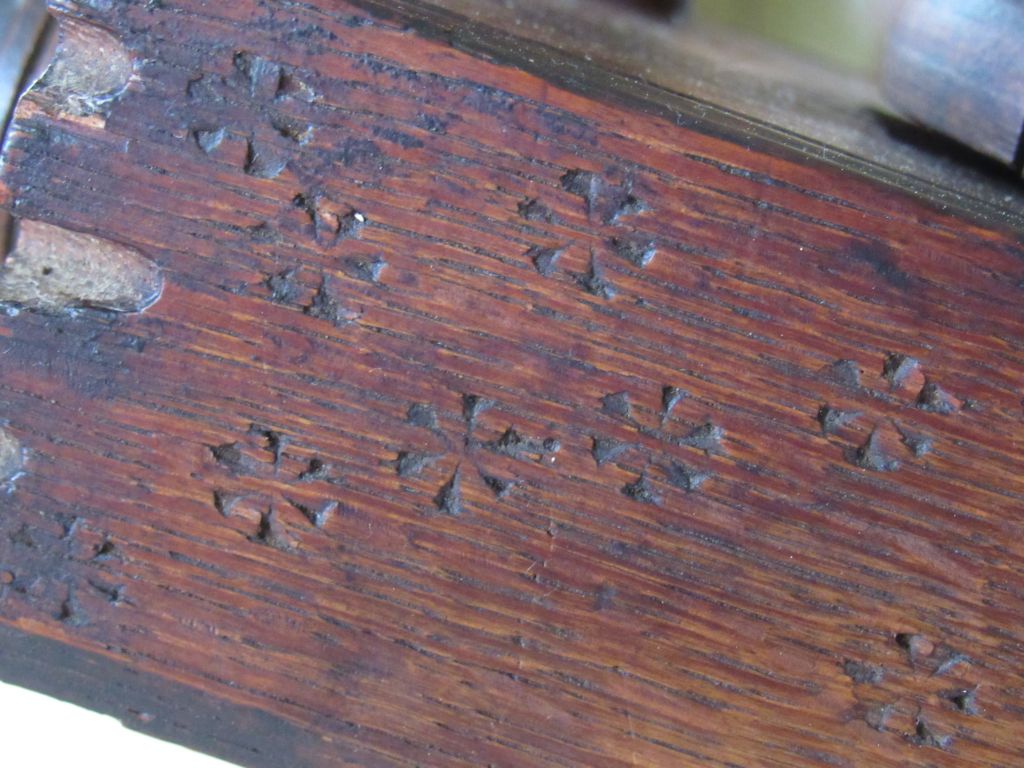
Jerusha’s stars are six simple points

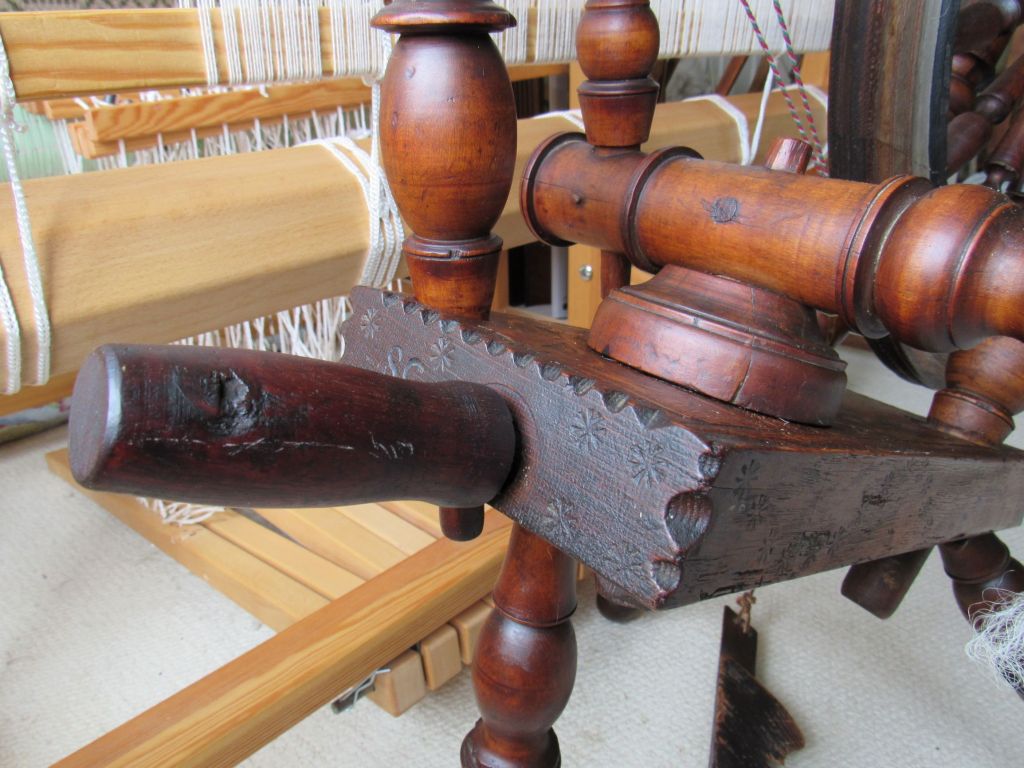
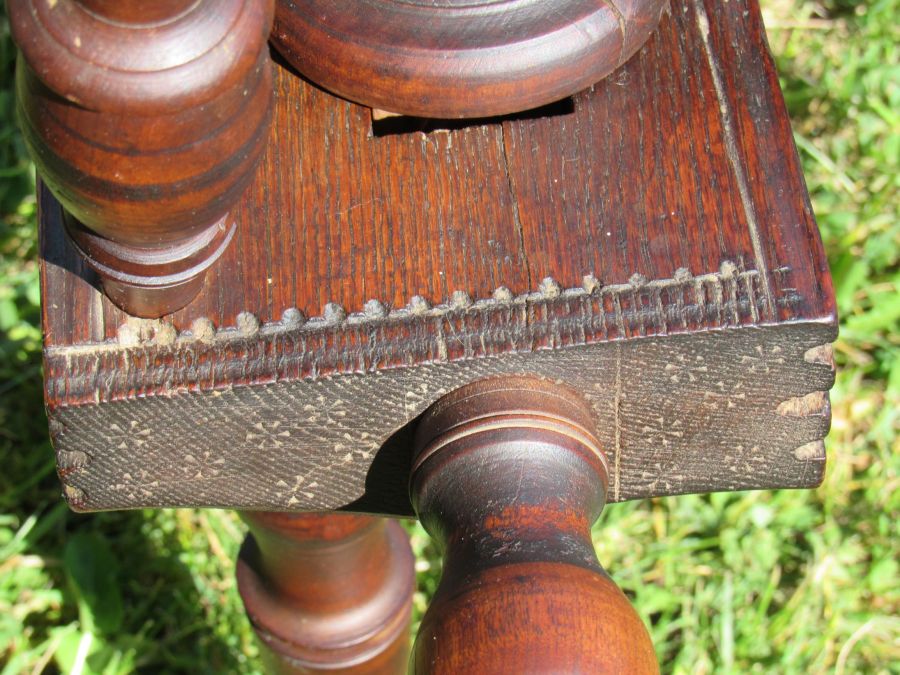
Jerusha has stars on every side of the table (Julia doesn’t have them on the wheel end), with wave patterns down both sides and additional stars in the curves.
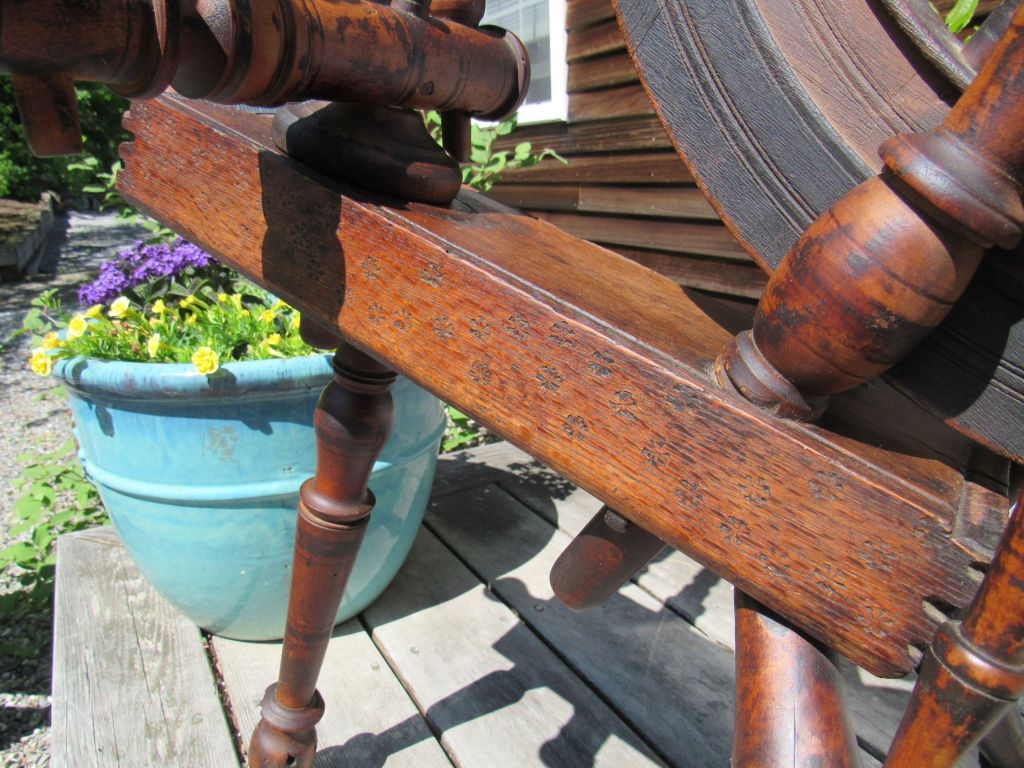
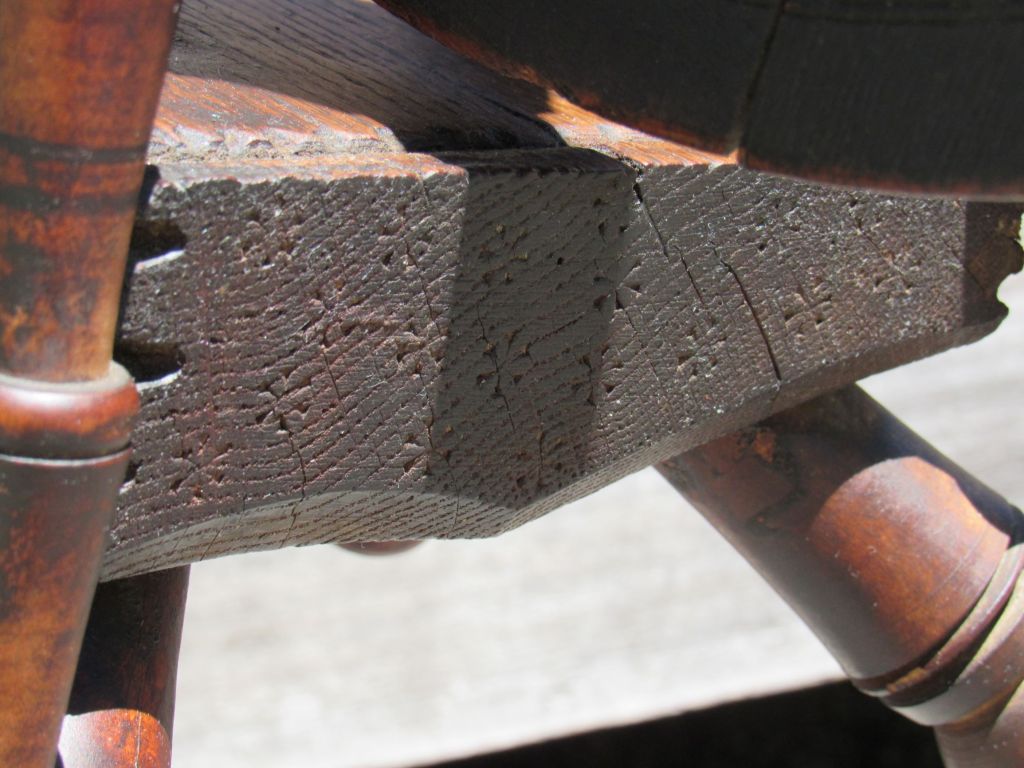
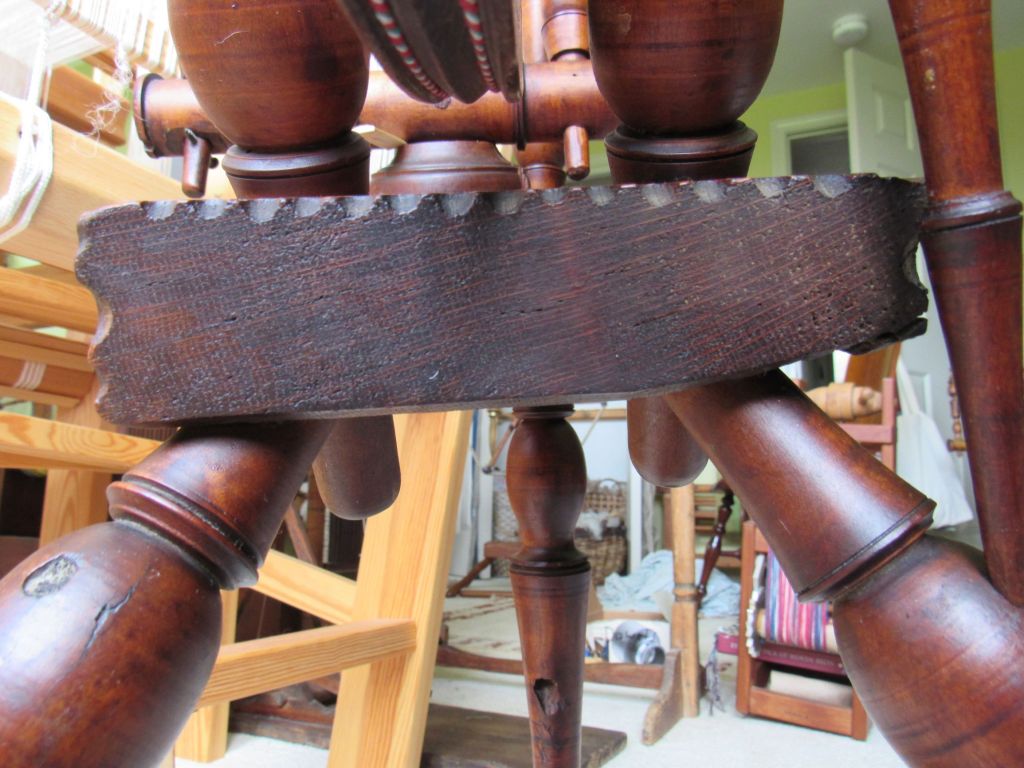
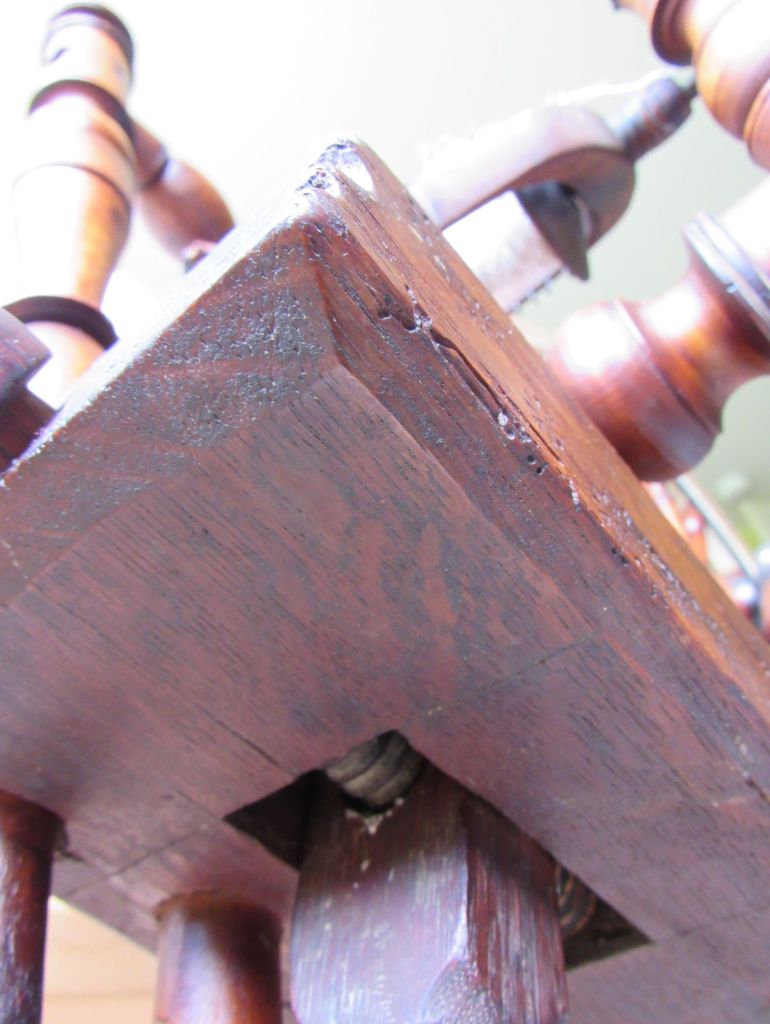
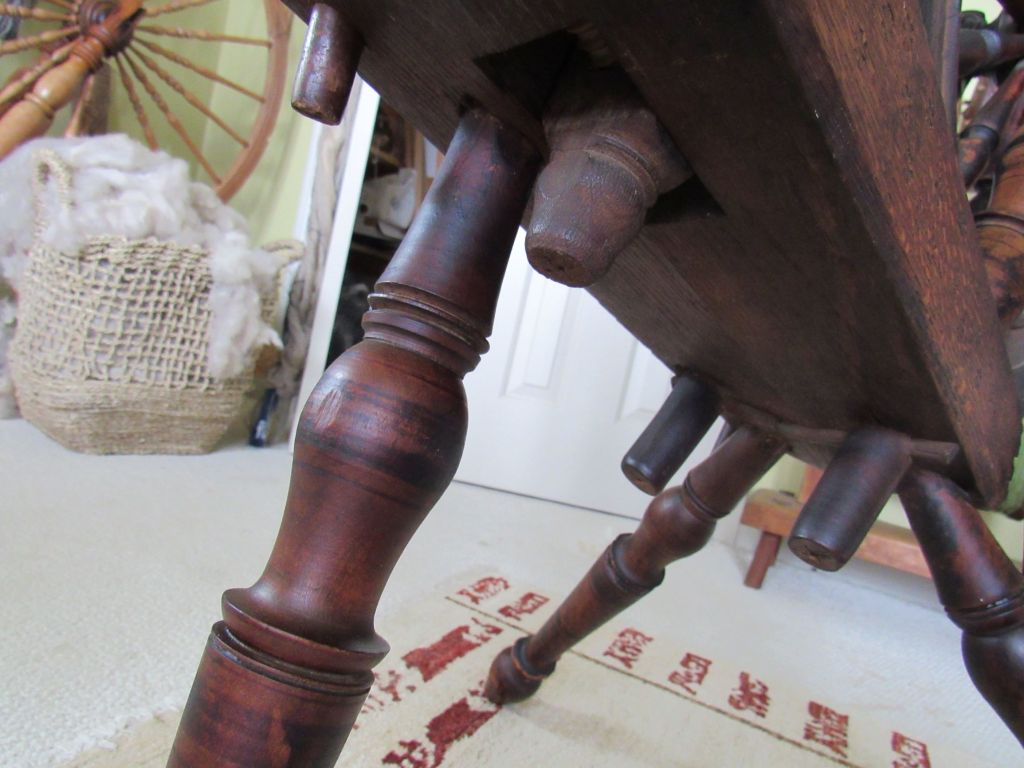
The table is generally wedge-shaped, but has a slight peak underneath in the middle.

The table underside is smooth, with beautiful chamfered edges.

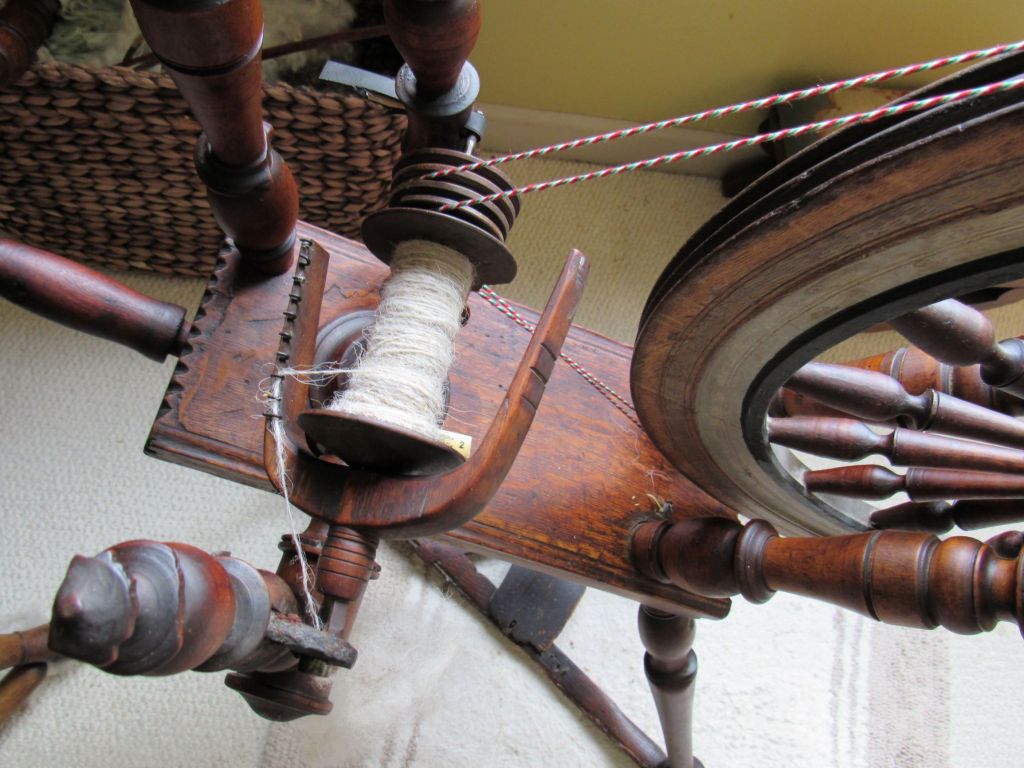
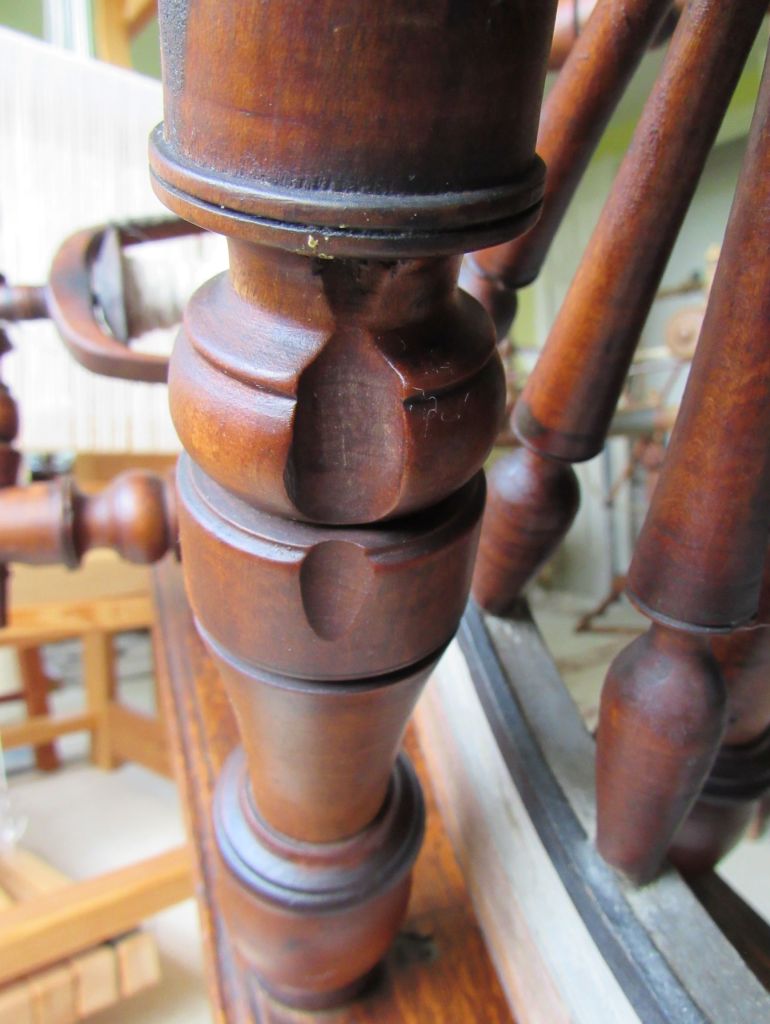
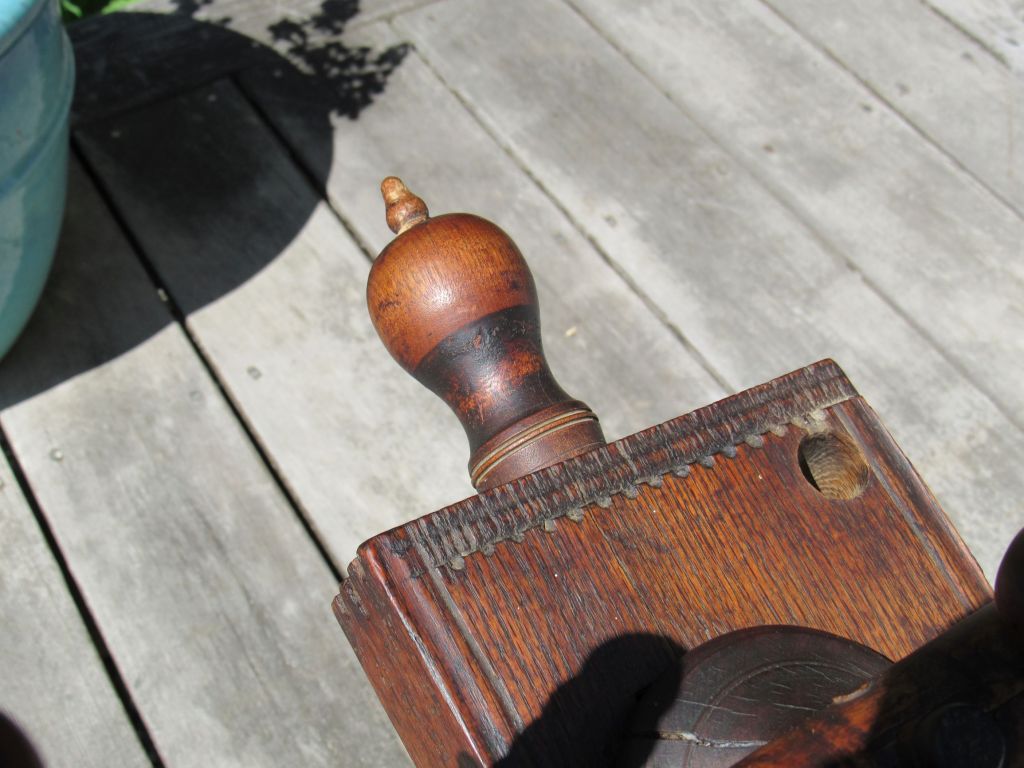
The tension knob is plump, with a painted band. That end of the table is decorated with an unusual carved pattern and all corners have the small-large-small chip carving of the other wheels in the family.
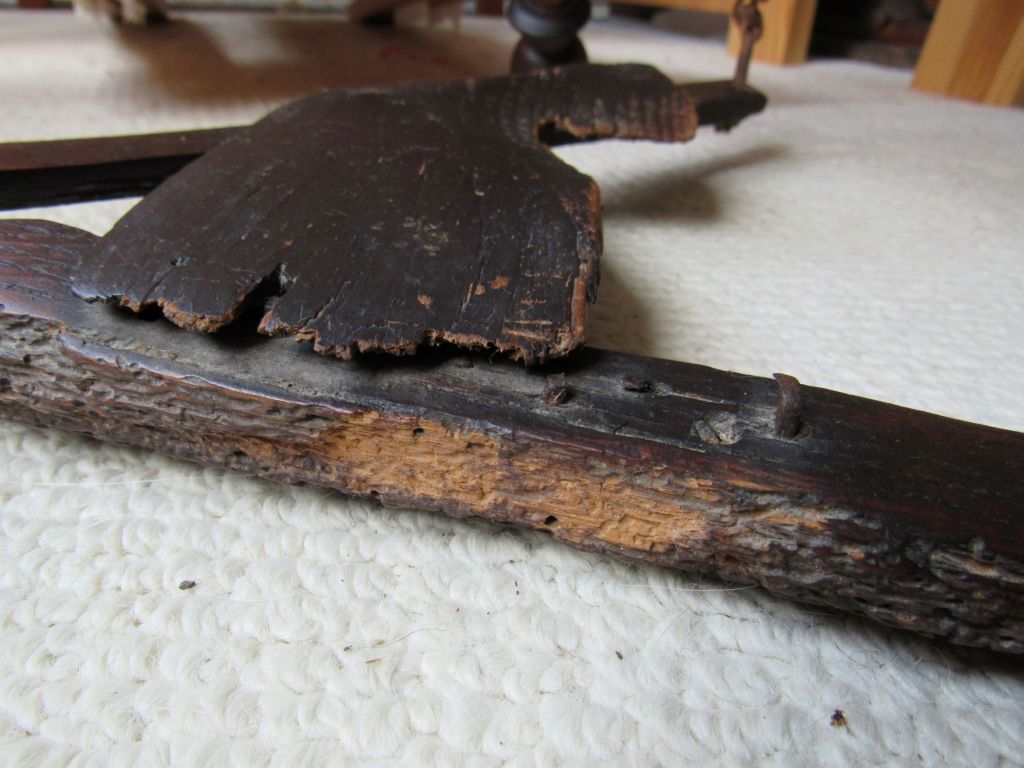
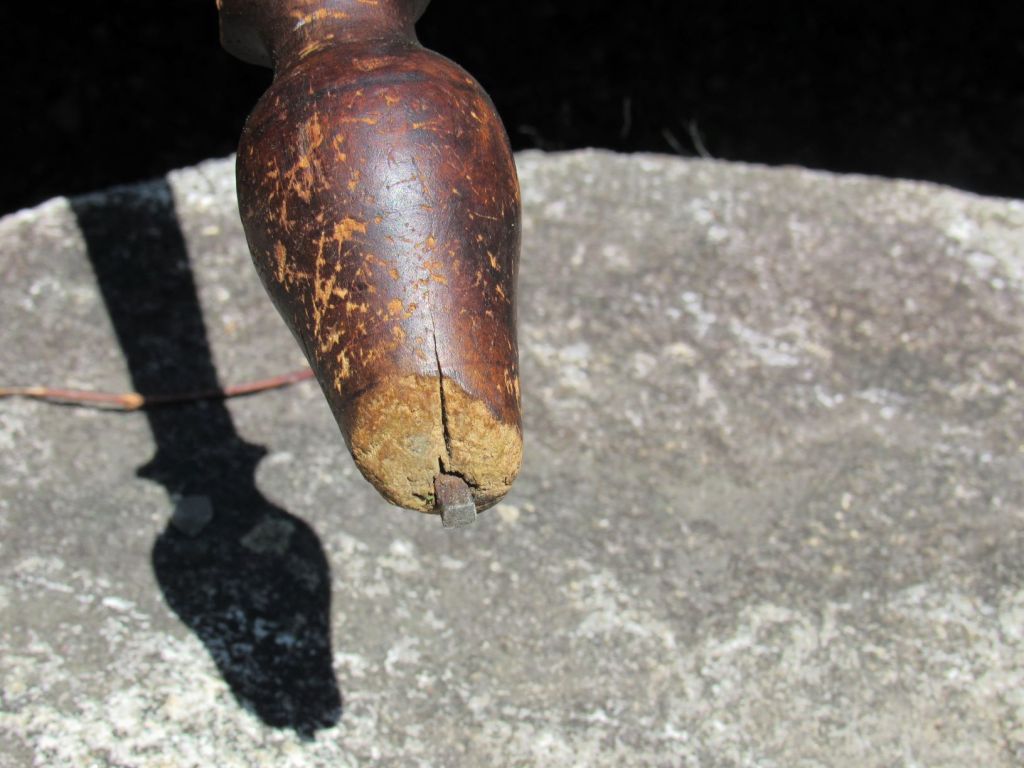
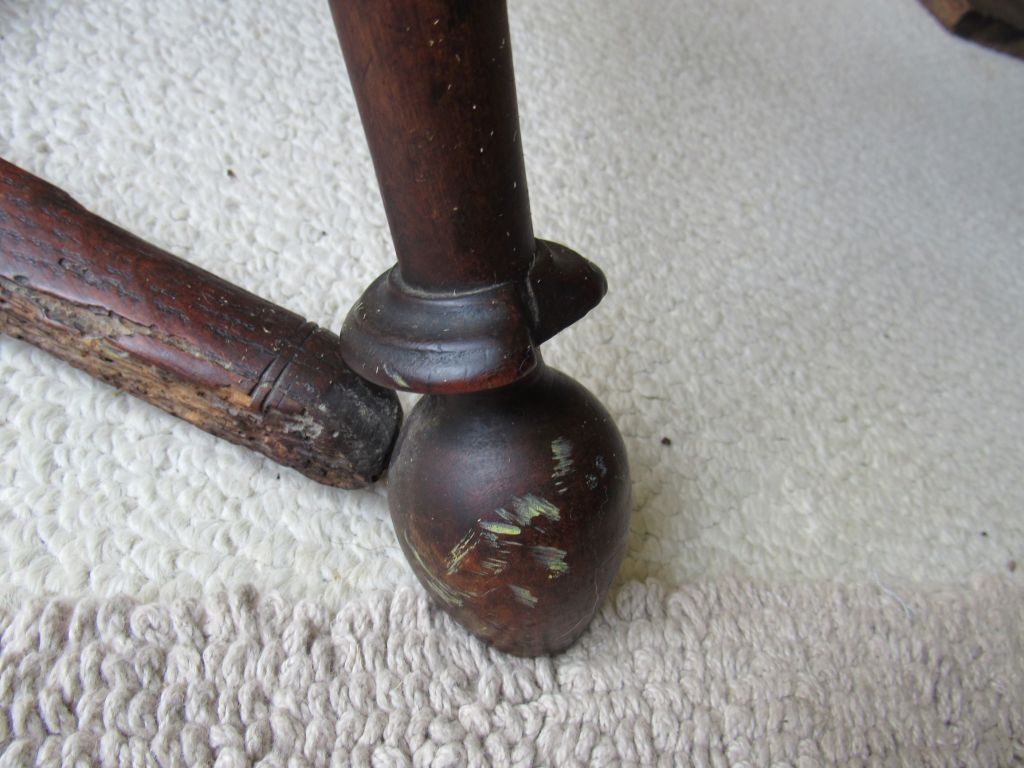
The non-spinner side leg has a nail in the bottom, presumably to keep the wheel from moving across the floor.
There also is a nail driven into the table in front of the rear drive-wheel support.
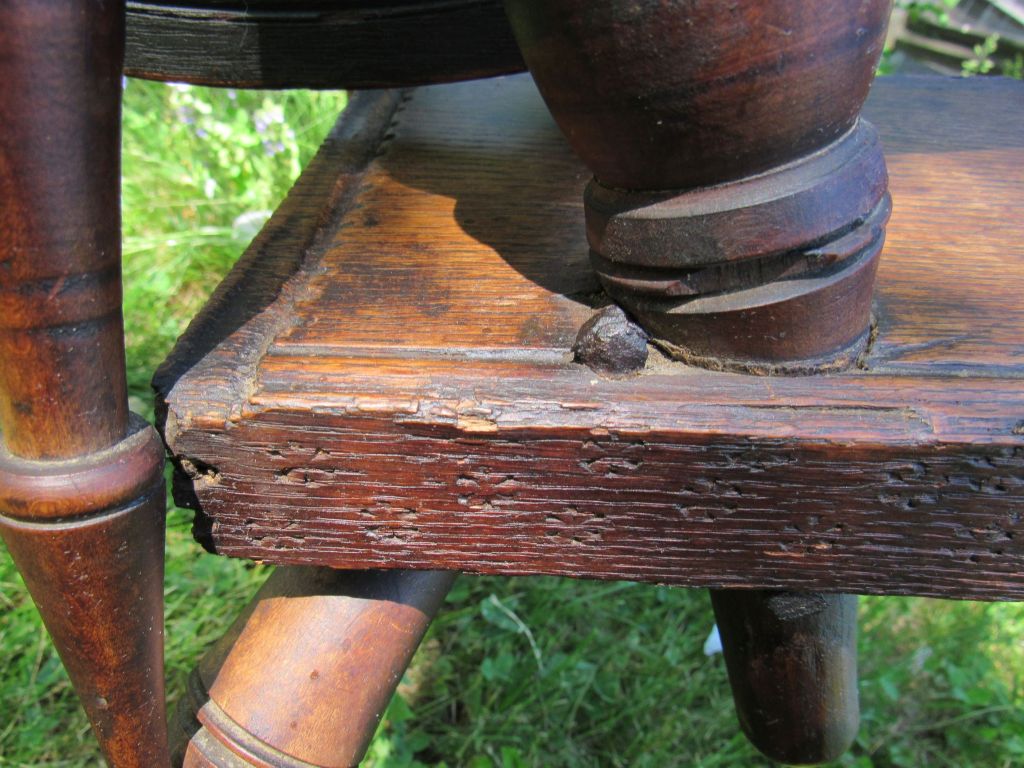
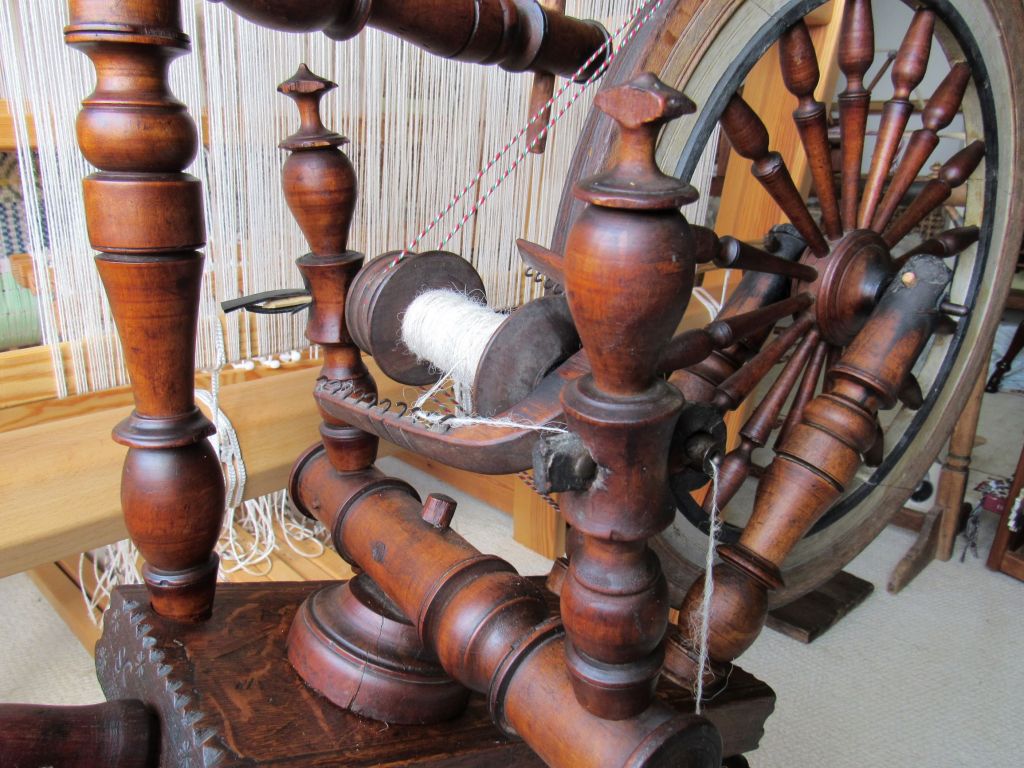
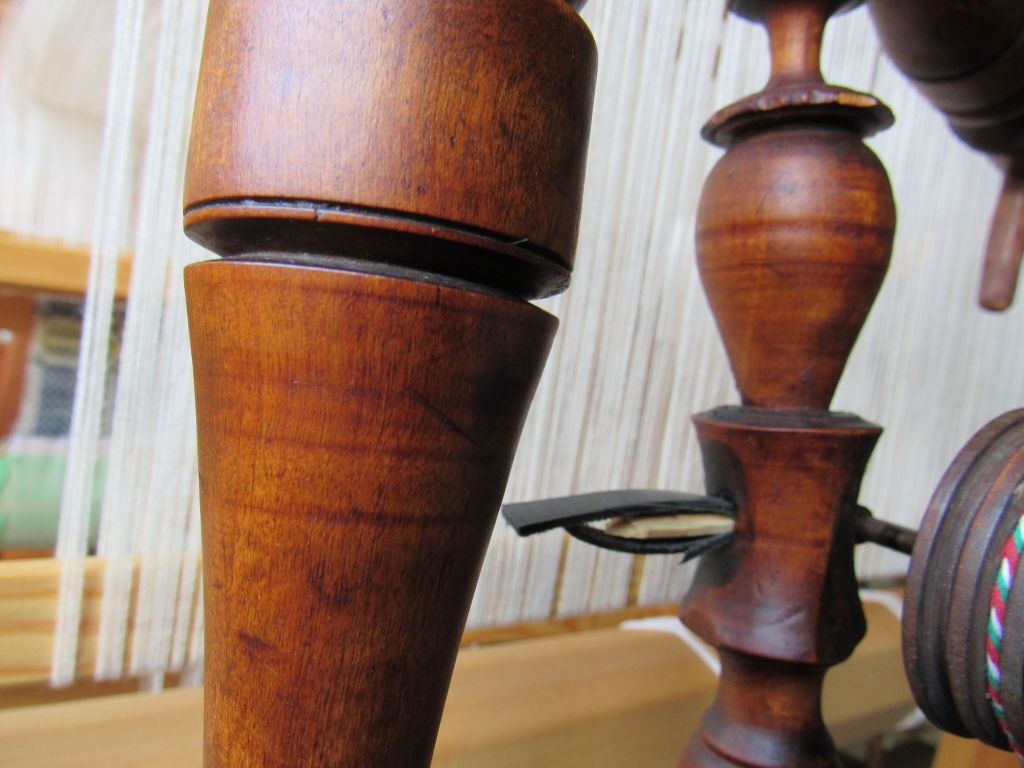
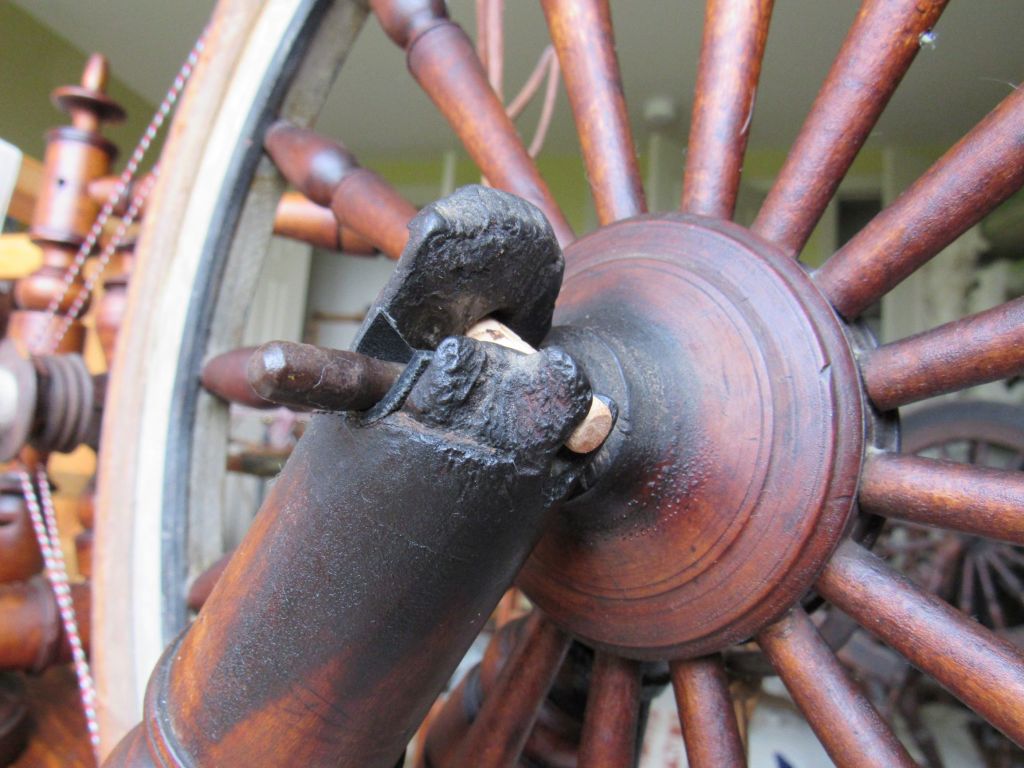
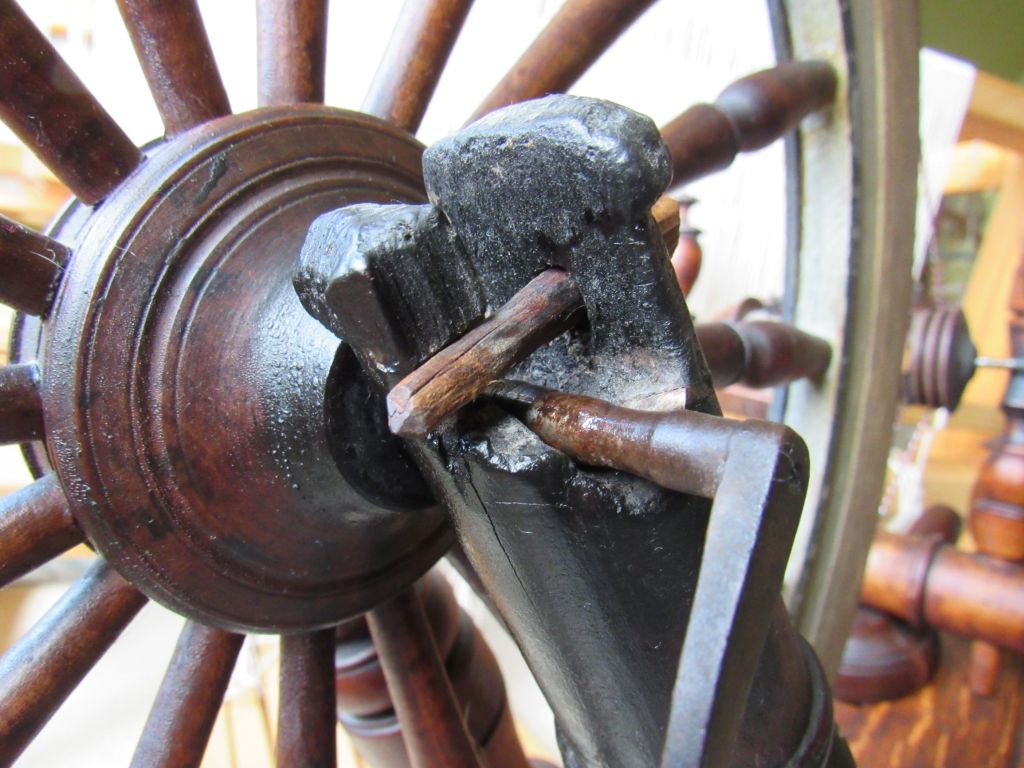
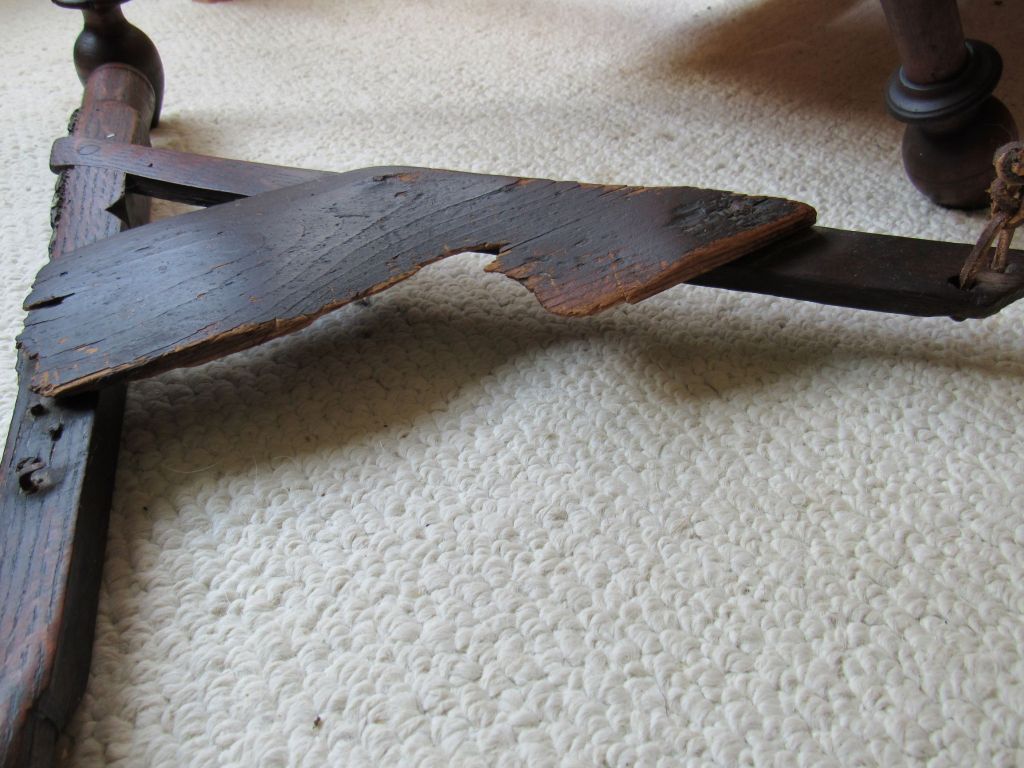
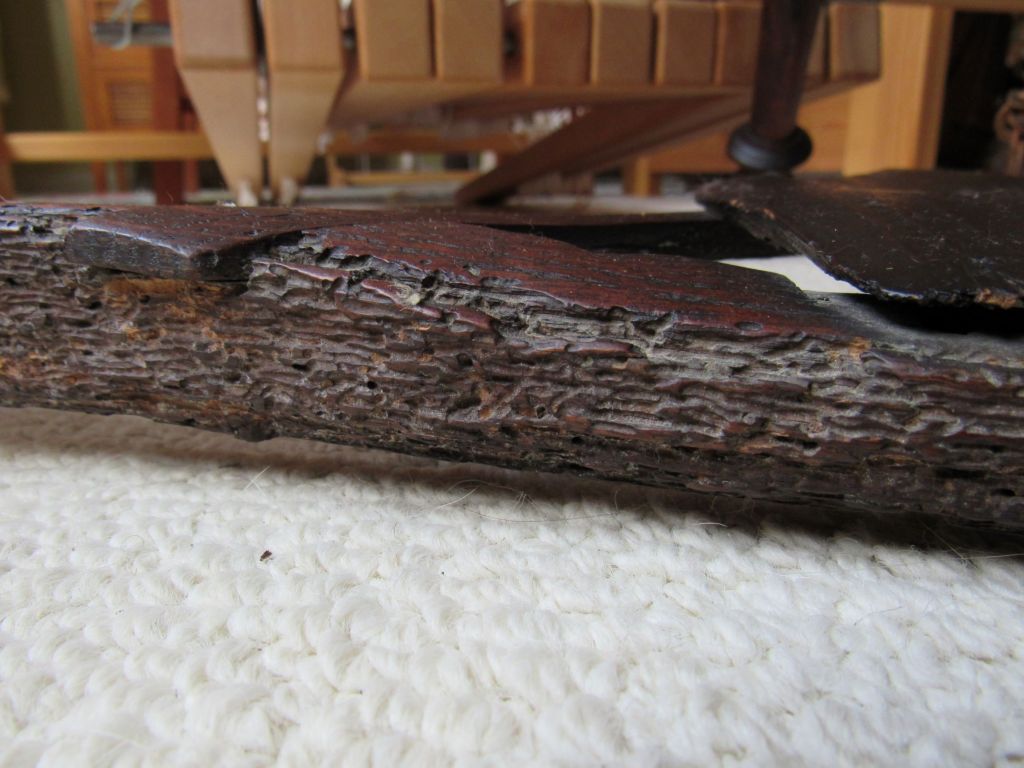
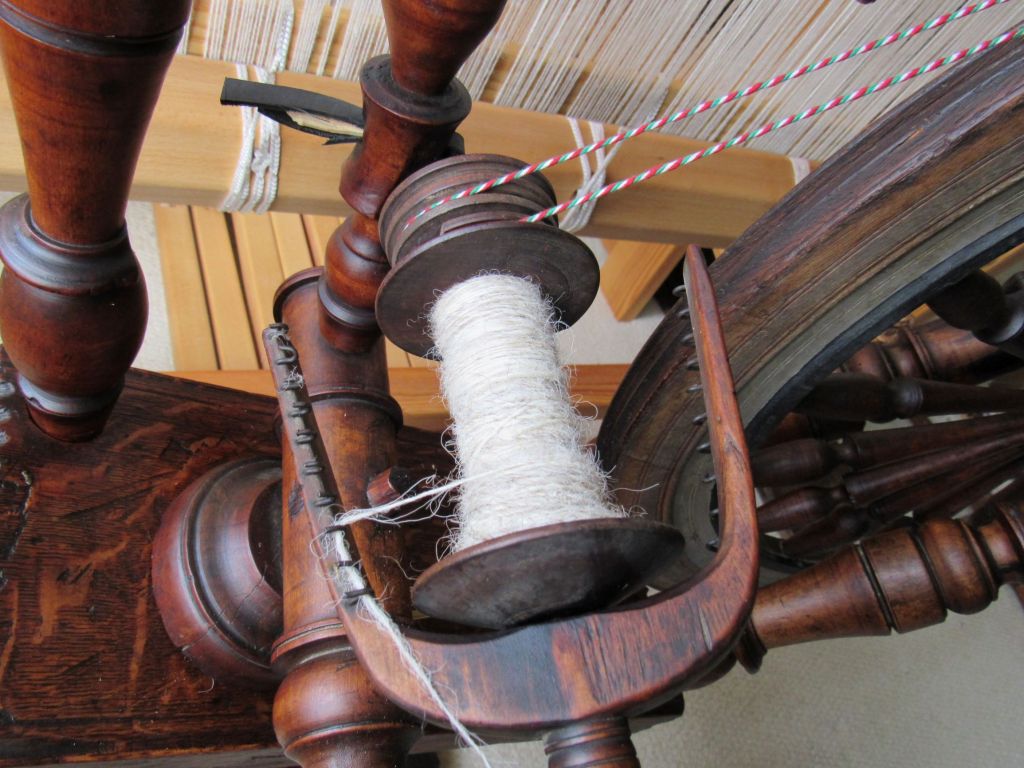
The treadle parts and flyer assembly are missing, but the wheel shows that it was well-used by the layers of encrusted grease around the axle and on the maidens.
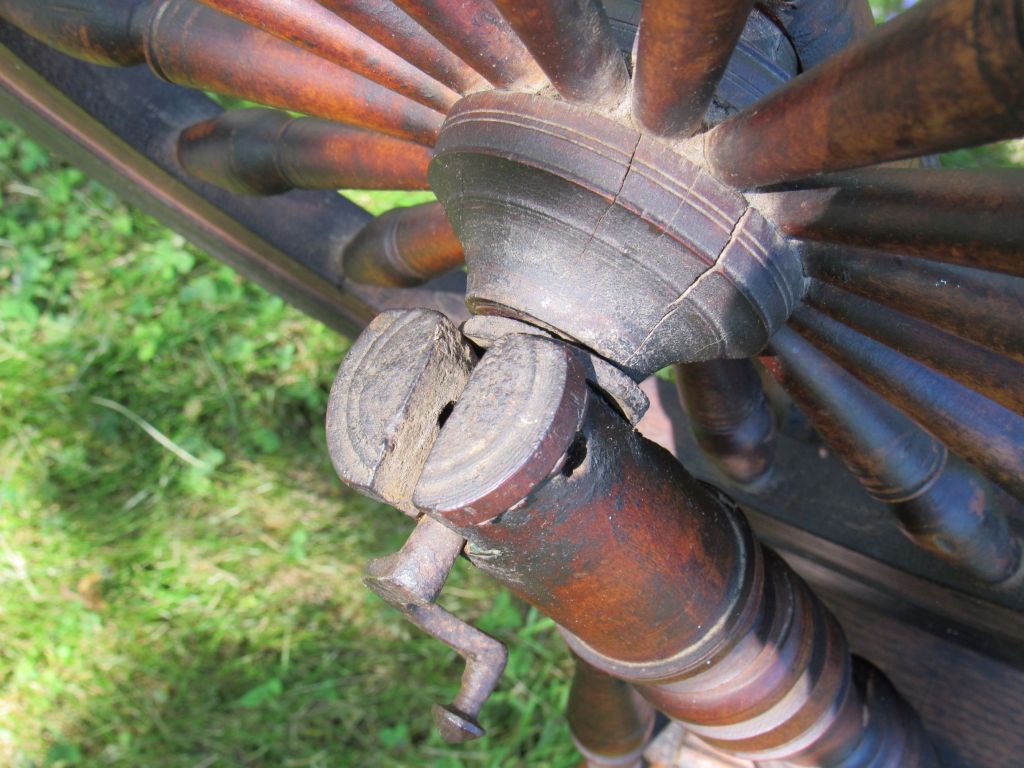
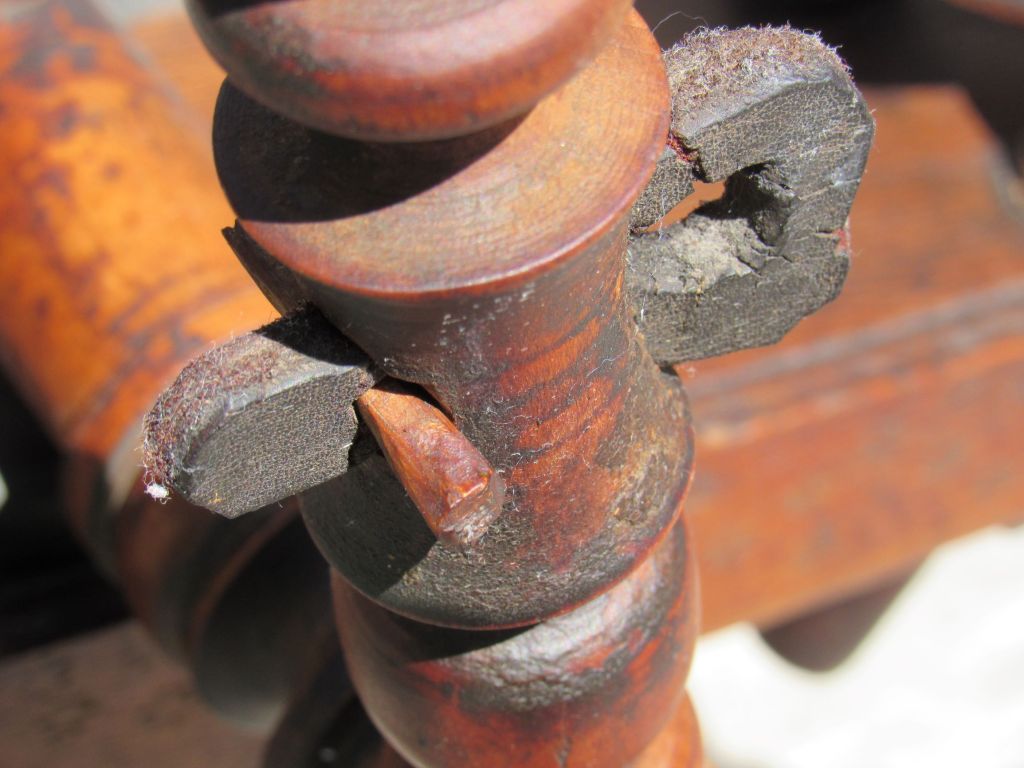
After clean up–some of the grease remains.

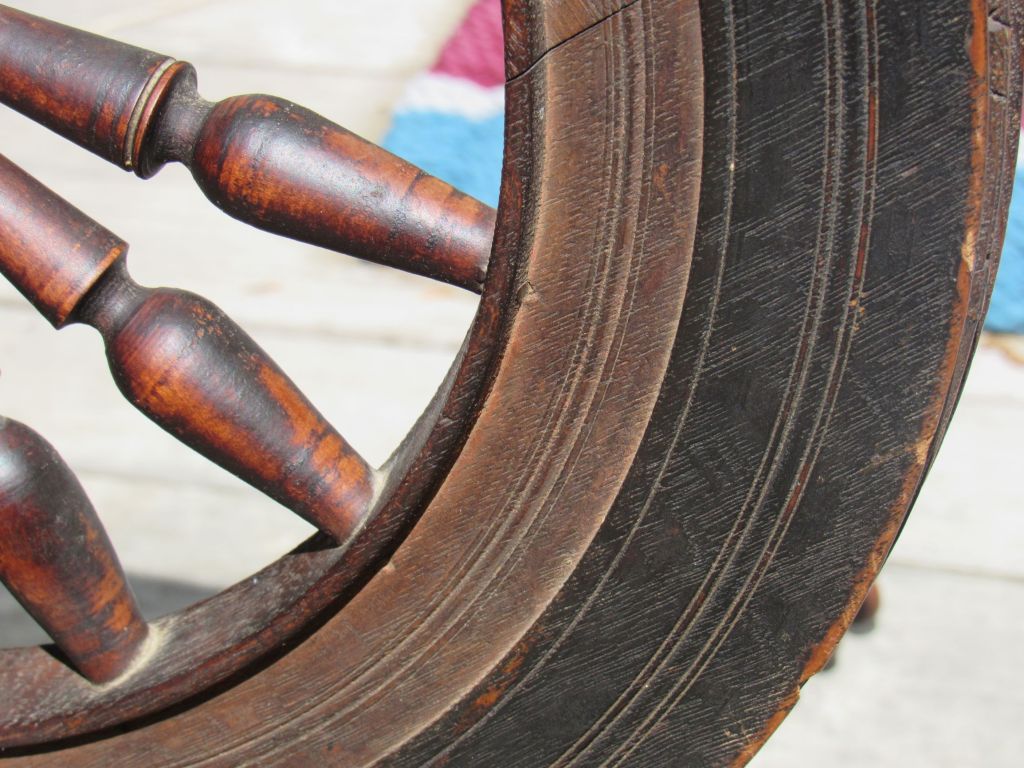
The wheel is decorated with black bands, although some have worn off and others covered with years of grime.
The paint colors on the drive wheel appear to be black and perhaps red.
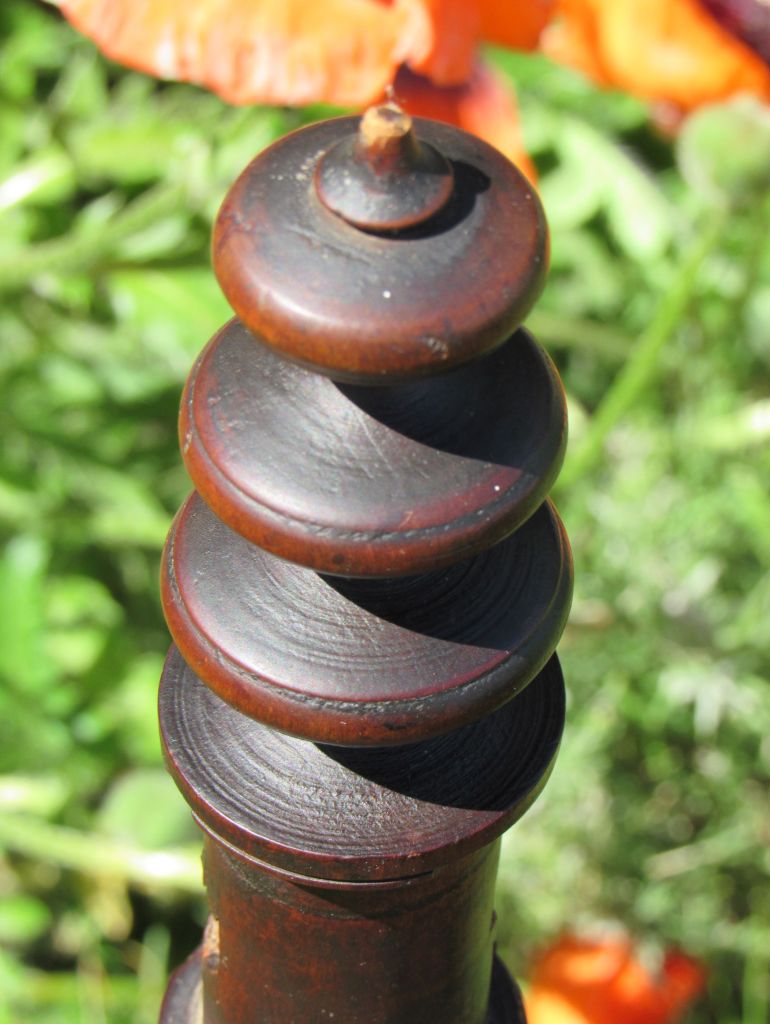
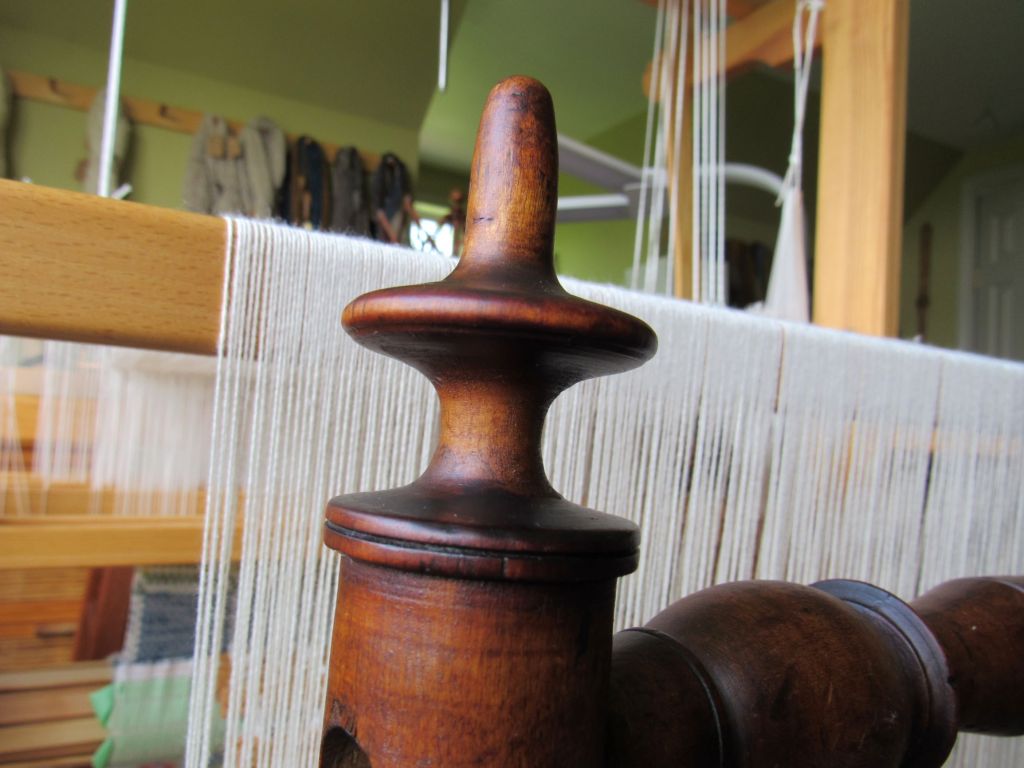
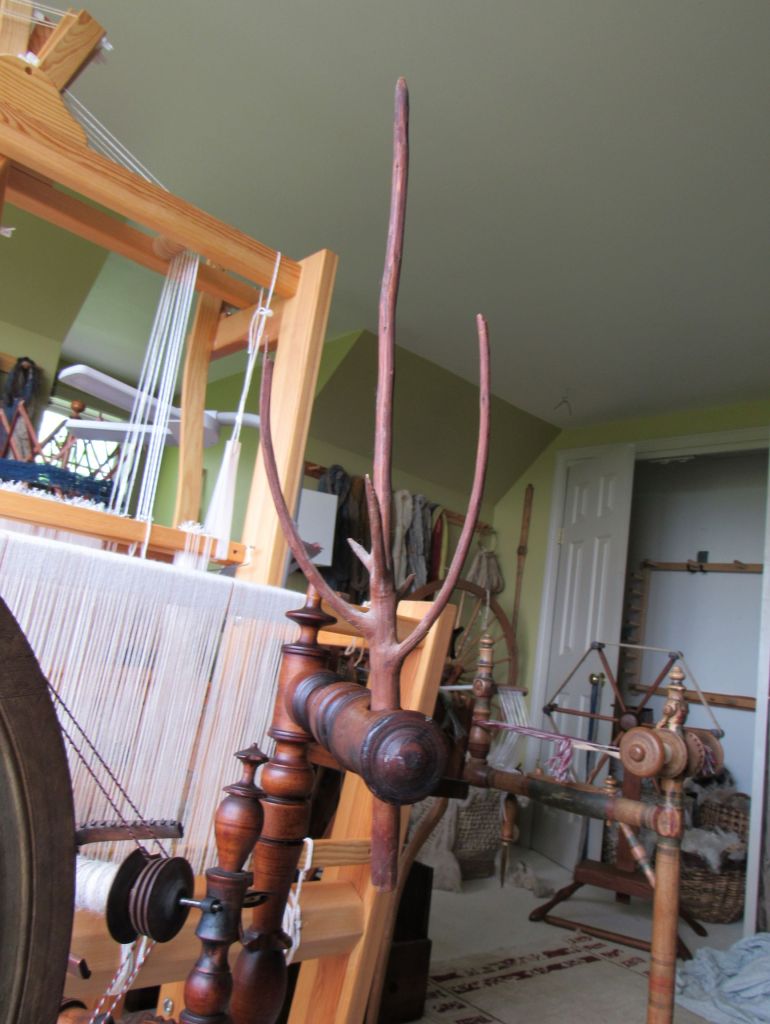
And the wheel’s crowning glory is the trio of triple pagodas.
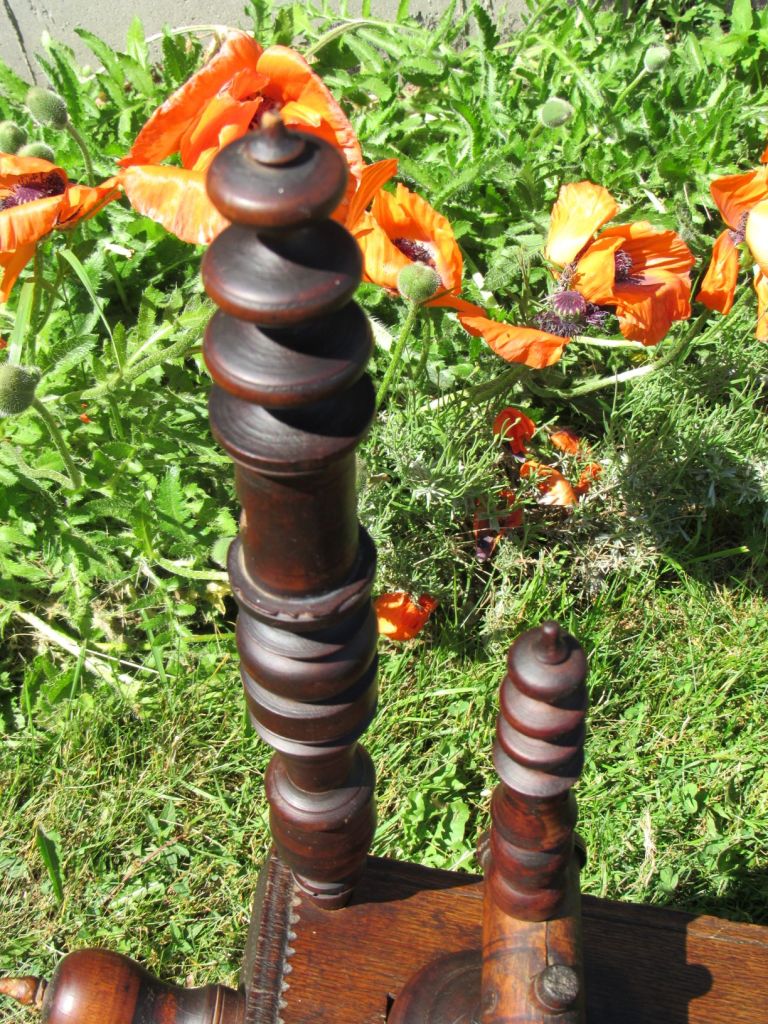
I have an extra flyer assembly that looks as if it will fit this wheel and my husband will make new treadle parts this fall. Then we’ll see how she spins.
January 18, 2022 update:

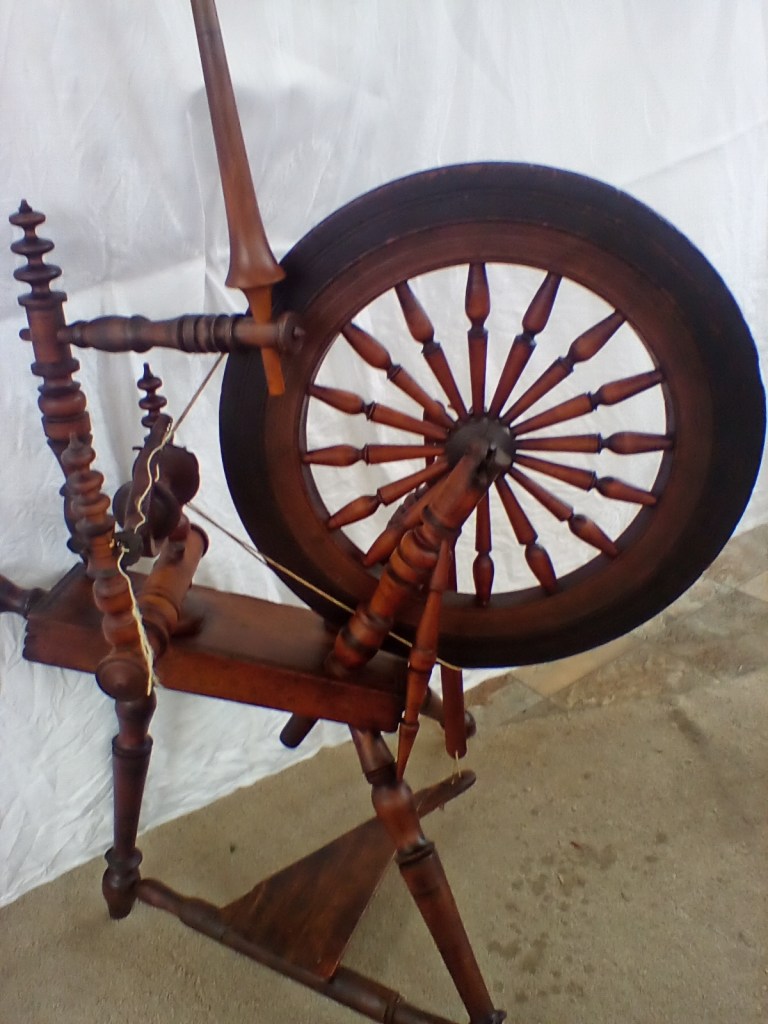
In May, 2021, I took a trip to Pennsylvania to railroad antique wheels there and back, visit with other wheel lovers, and see the textile tool collections at the Landis Valley Museum, Ephrata Cloister, and Schwenkfelder museum. Thanks to friend and fellow railroader, Tina M., a highlight of the trip was a morning she and I spent with Bill Leinbach, who not only is an extraordinary weaver, but also has a remarkable collection of antique wheels. Weaving, wheels, good conversation–my idea of heaven. Since then, Bill has generously continued to share his knowledge with me and, when he asked if I would be willing to part with Jerusha, I was delighted to pass her on to him. After his meticulous clean up and new treadle and distaff parts, she has been brought back to her full glory. Thank you Bill.
Julia

Some wheels demand notice.  Certain curves, angles, stances, and colors stand out in a way that catches the eye. 

A family of eye-catching wheels, sharing distinctive looks and features, have come up for auction over the years in scattered locations in the northeast—New Jersey, Massachusetts, and Connecticut.  They are jaunty, but elegant, with short tables, vase-turned legs, and sixteen tulip-bud spokes.   

Here are two examples—the first from a New Jersey estate sale and the second from a recent auction in Copake, New York. 

Notice that the Copake wheel has a distaff inserted for the rear missing leg.

Most have painted rims—a fairly unusual feature.  From what I know, all are festooned with stamps resembling stars, or sunbursts, or flowers—depending on your interpretation—along the table end and sides. 

Most have the initials “JC” stamped on the table end, but there are others, with similar legs, supports, and star patterns, but variations on the maidens and spokes marked “IC” and “HE.”

In January 2020, a similar wheel appeared on Facebook Marketplace in New Hampshire.  It shared the same features with the JC wheels, but was marked “SC.” 

I was intrigued.   Was there a family of wheelmakers creating these distinctive, exuberant wheels?  I wanted to buy the wheel but, unfortunately, my planned trips to pick it up were delayed by snow, rain, and the granddaddy of delays—the Covid-19 lockdown.  Fortunately, the seller graciously held onto the wheel for me until I could finally pick it up on a spectacular sunny May drive through the White Mountains.  It was worth the wait.

Once cleaned up, this wheel just glowed.  The combination of rich wood grain on the spokes and the table contrasted with the paint colors on the rim is amazing.  The rim looks as if it may have been red, white, and blue originally. 

If so, the white and blue stayed strong, but the red faded into barely discernible remnants in the grooves. 

The star stamps run in a sine wave pattern down both sides of the table

and adorn the tension-knob end with the “SC” stamp.  The other end of the table is naked of stamps. 

There are scalloped chip carvings at both table ends. And these wheels all seem to share a feature of corner chip carvings of small-large-small. 
The underside of the table is planed and smooth, with a chamfered edge, and long pointed holding pegs and chuck marks on the bottom of the uprights.

The table itself is very short, only 15 inches, and the angle with the splayed legs suggests the look of a dog inviting you to play. 

It’s very appealing.  The drive wheel diameter is 20 inches, which with the short table, brings it quite close to the flyer assembly, similar to Pennsylvania wheels, but with a less upright stance. 

Also similar to Pennsylvania wheels (and others, including Connecticut wheels) are the extra supports between the legs and the drive wheel supports. 

This wheel originally had one on each side, but only the backside one remains.  The other side shows the beautiful grooving and hole for the missing support. 

The metal axle support, or bearing, is straight and at a severe angle to the support—almost horizontal with the ground.

The wheel has subtle ring marks on the turnings

and a simple one tiered tower on the distaff support–many of these wheels have more.

The distaff itself on this wheel is made from a sapling, often used for spinning tow.

My goal with all of my wheels is to get them spinning again.  I was a concerned that this wheel had been spun to death and was too worn out to be used again.  I’ve dealt with a lot of old wheels that show decades of use, but none with quite this imprint of heavy spinning.  The upright supports for the drive wheel were badly eroded and blackened. 

Some blackening occurs from the continual use of grease as a lubricant for the axles, but I’ve never seen uprights like this, where they are just broken down to nubs. 

The treadle had been worn completely through, yet it wasn’t replaced, just used as is—a skeleton of itself, but still functional.  
Moreover, the treadle bars had been well-tunneled by beetles, which can turn it into a crumbling wood lace—not ideal for continued use. 
And, what worried me most was that the tension screw was not original. 

The threads on the screw don’t match those under the mother of all.   No matter.  This wheel was made to spin.  A few tweaks and adjustments, plenty of oil, and she was off and running. 

The wheels with the most wear on them are often the best spinners.  Makes sense, of course. 

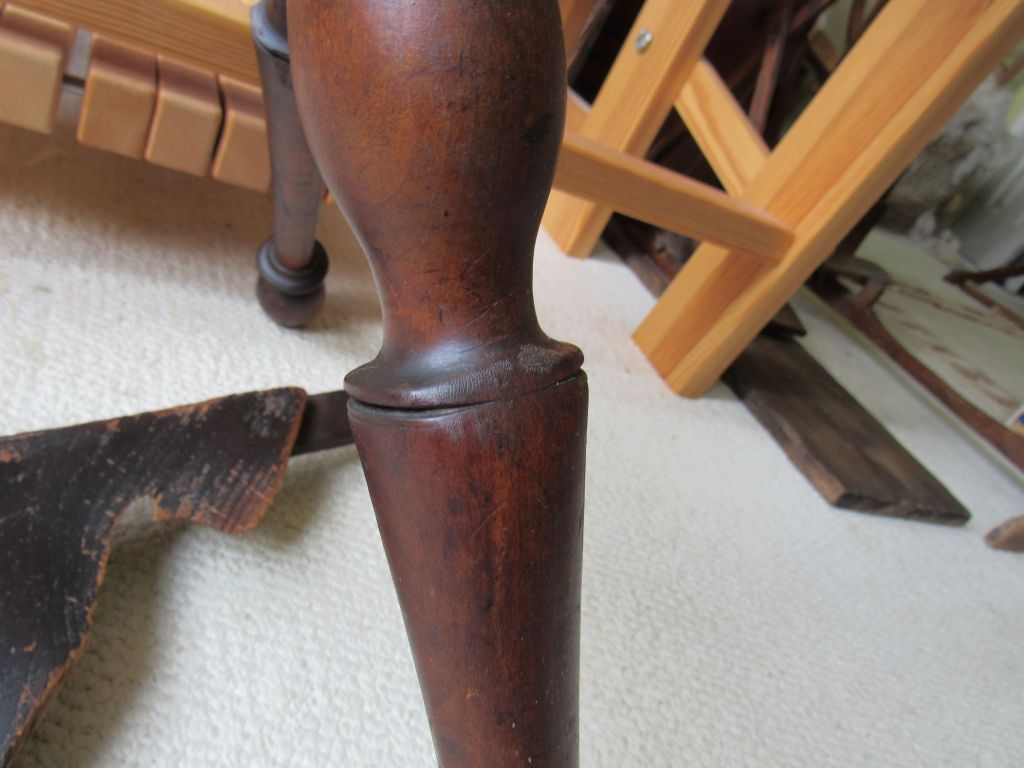
When cleaning the wheel, I was surprised to find that the fine-edged turnings on the right spinner side leg had been completely smoothed down.  

Once I started spinning, I understood that wear.  Because the table is so short on this wheel, the spinner’s treadling leg rests naturally on the wheel’s front leg.  It’s a comfortable accommodation.  But, imagine how much fiber was spun on this wheel and how many decades of women’s legs rested on this wheel’s leg to smooth those grooves into oblivion.  It’s a rare privilege to add my leg to their imprint. 

The day after I got this wheel spinning, I drove to southern Maine to pick up another wheel from the same family. She will get her own post once she’s up and running.

Given the style of these wheels and the amount of wear and damage found on many of them, they may date from the 1700s.  But, really, we don’t know who made them, or when or where they were made.  The research continues.  In the meantime, these wheels are a brilliant reminder of how a person—or in this case, perhaps a family—can transform a utilitarian item into a work of great beauty that leaves a personal impact long after the maker is gone.