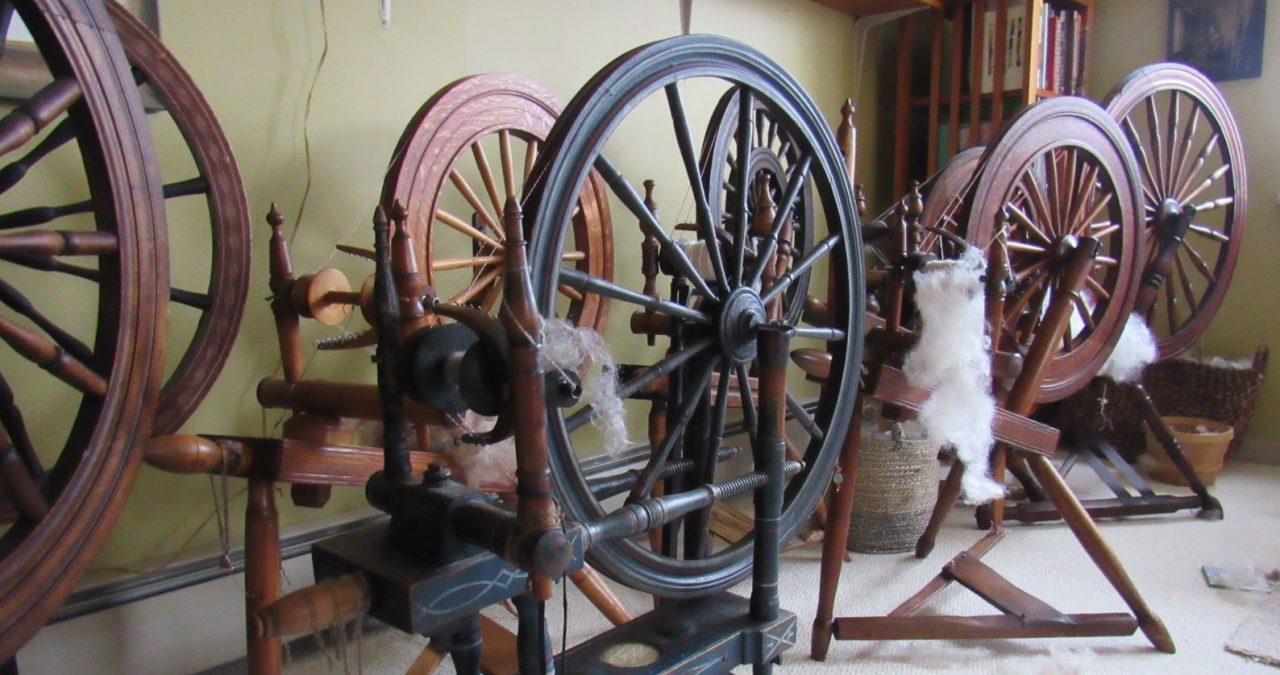
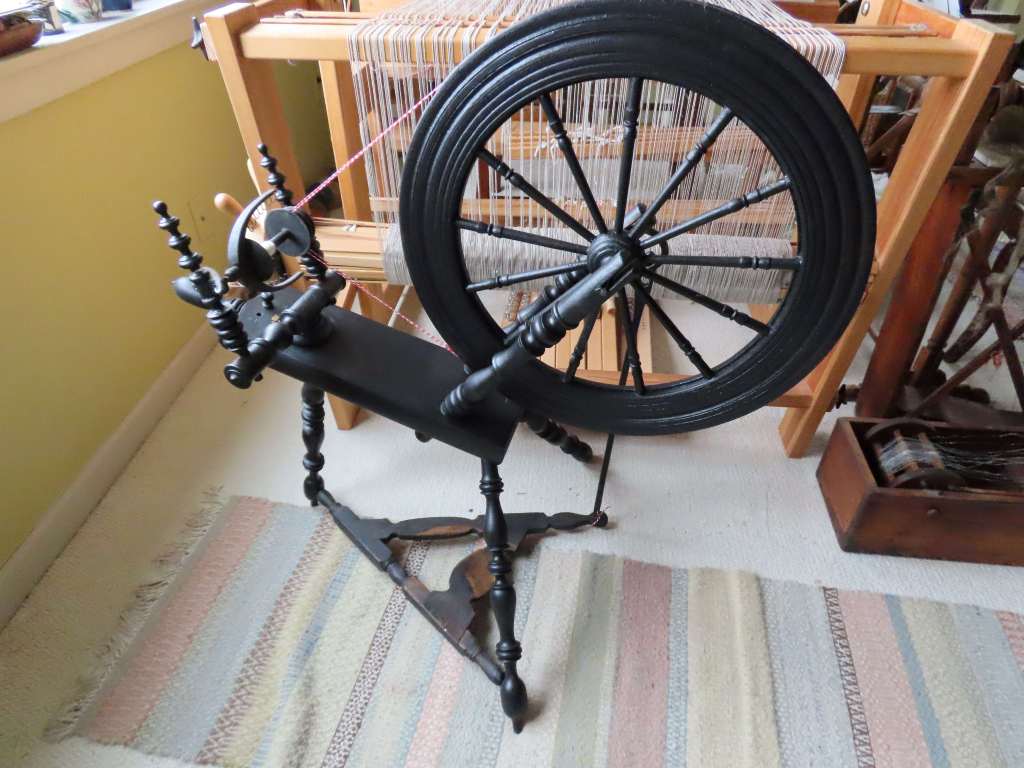
I bought Cocodris years ago from a woman in Bath, Maine. She told me that her grandfather had traded a gun for the wheel somewhere in the northern reaches of Maine.
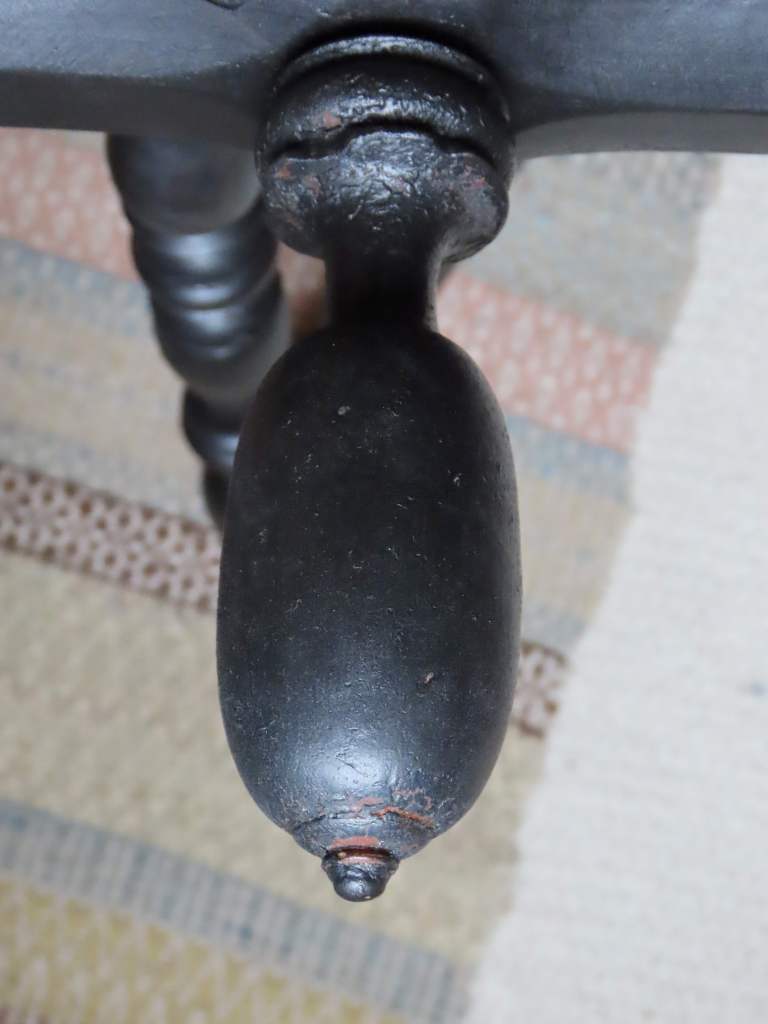
I was attracted by the beautiful treadle curves, an oddly whimsical touch, especially for a wheel found in Maine.

The paint was a bit startling, though.
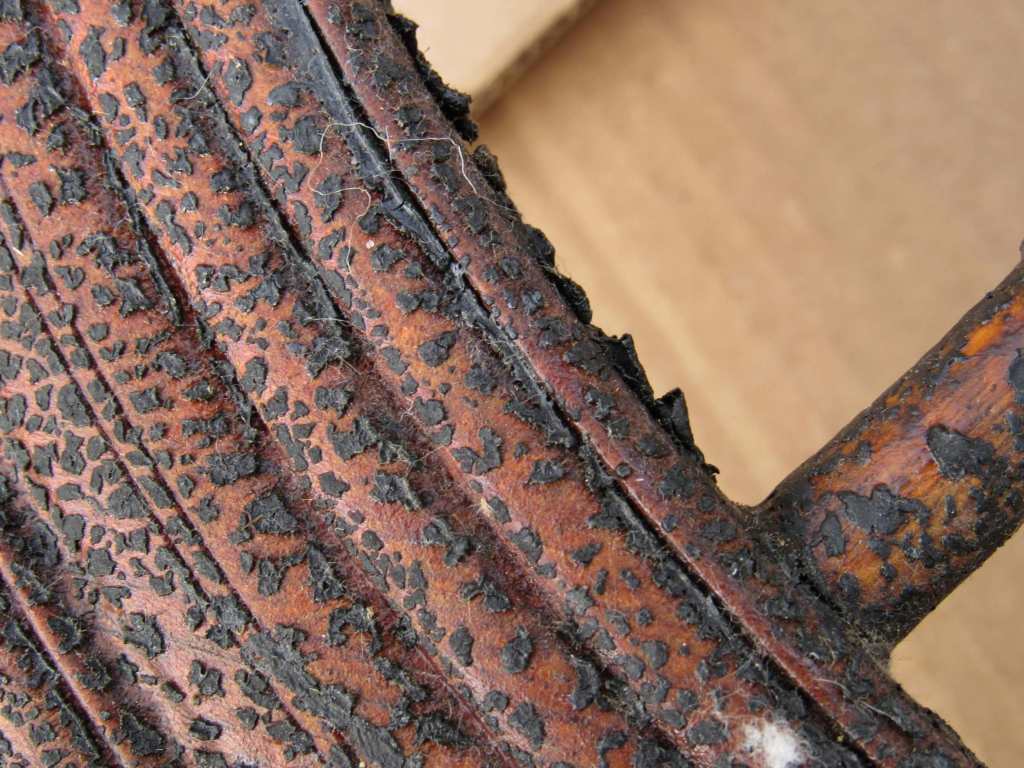
Cracked and peeling, bits almost exploded off the surface,
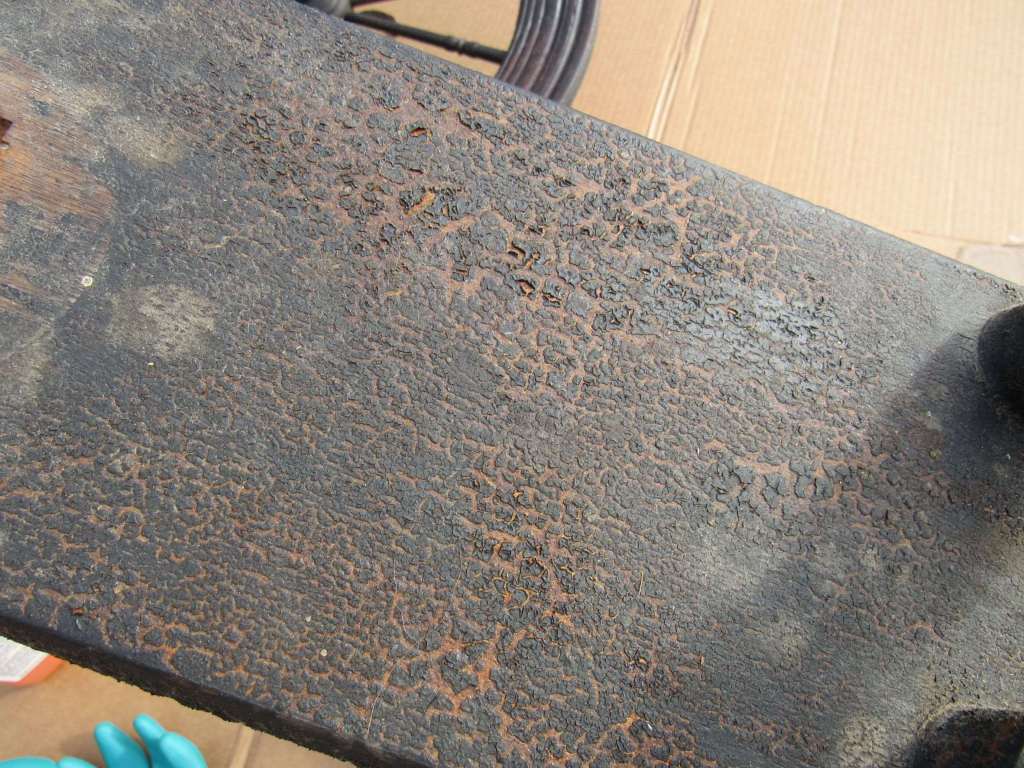
leaving a trail of black paint crumbs behind. While I rather liked the alligatored look, I was not enthusiastic about the paint litter so decided that I needed to address it.

I tried every suggested non-stripping tactic for alligatored finishes, but nothing worked.
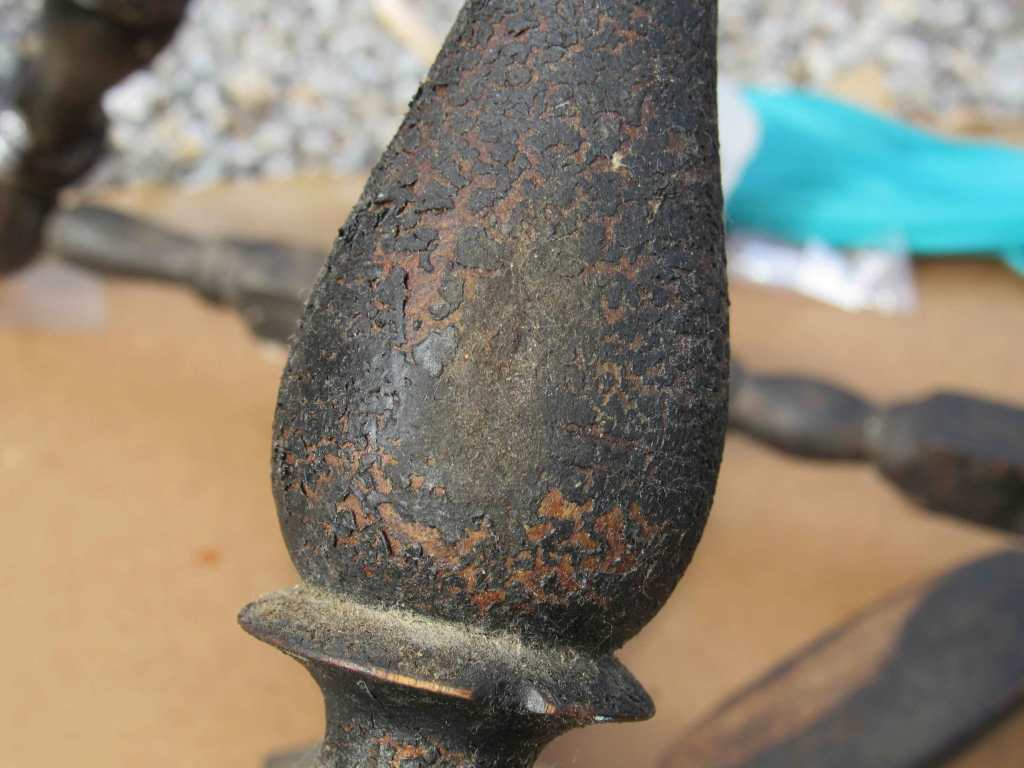
I finally decided to use a citrus stripper and at least remove the worst of the flaking areas.

What a nightmare. Let’s just say that the paint won. I was trying for a mixed look—some parts painted, some showing the wood.
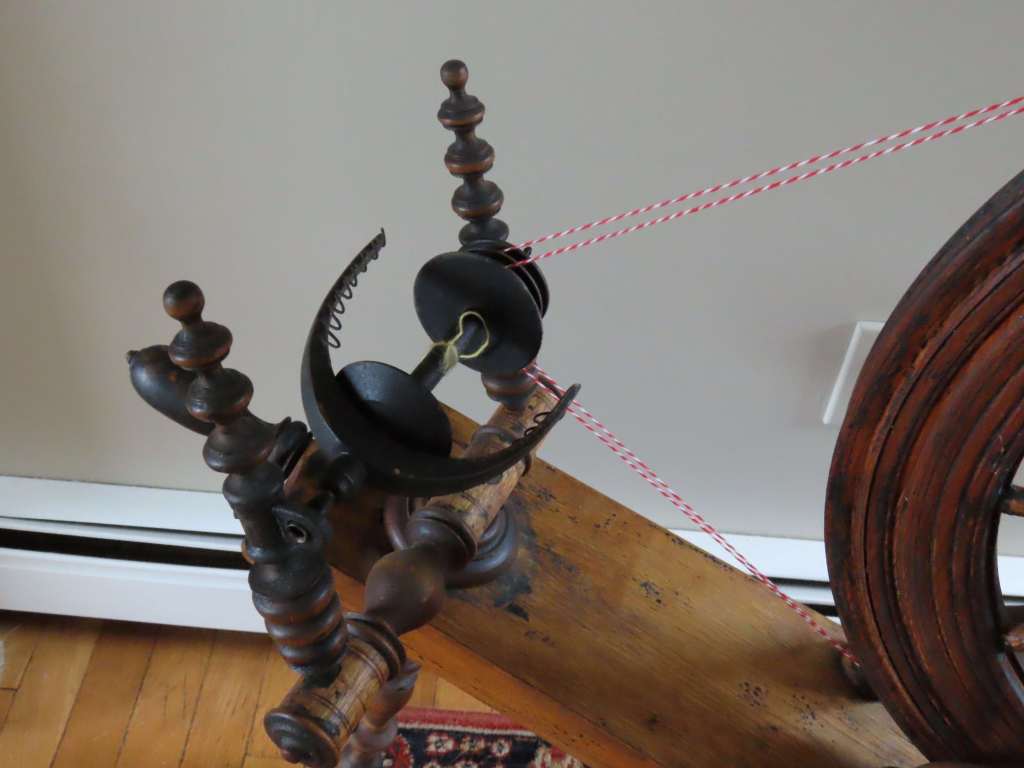
Instead, I ended up with a wheel that looked as if it had a terrible skin disease.
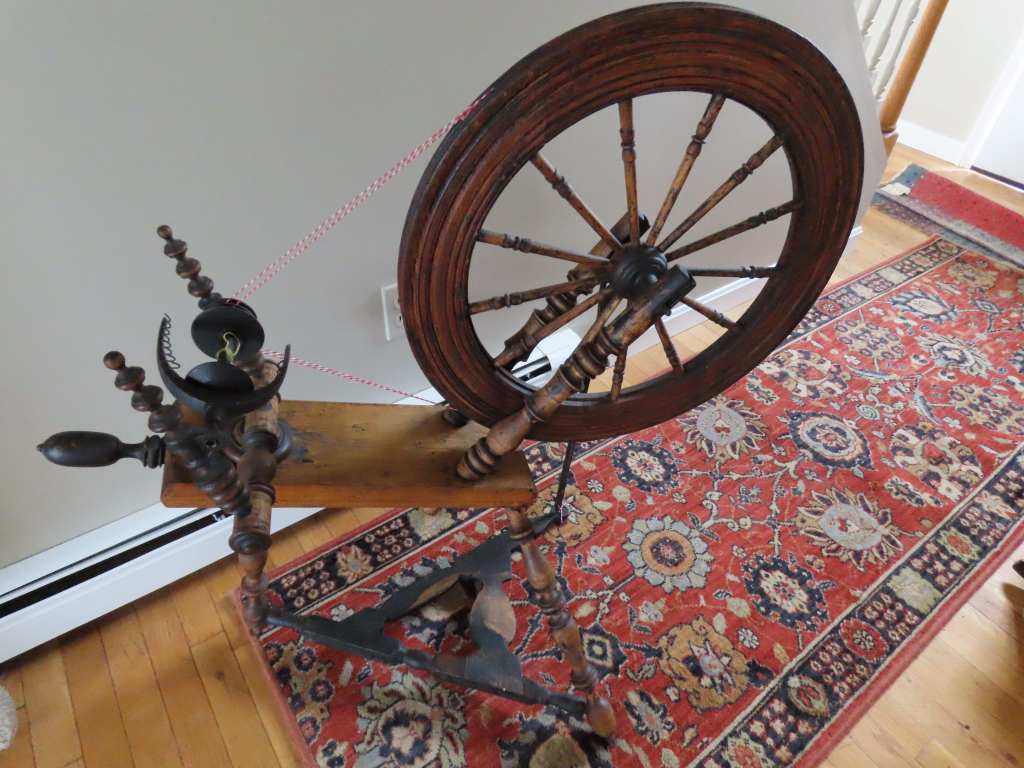
Rather than trying to strip it more, I repainted it, all except for the treadle parts and flyer, which I had not stripped.

They still have the original paint and wear.
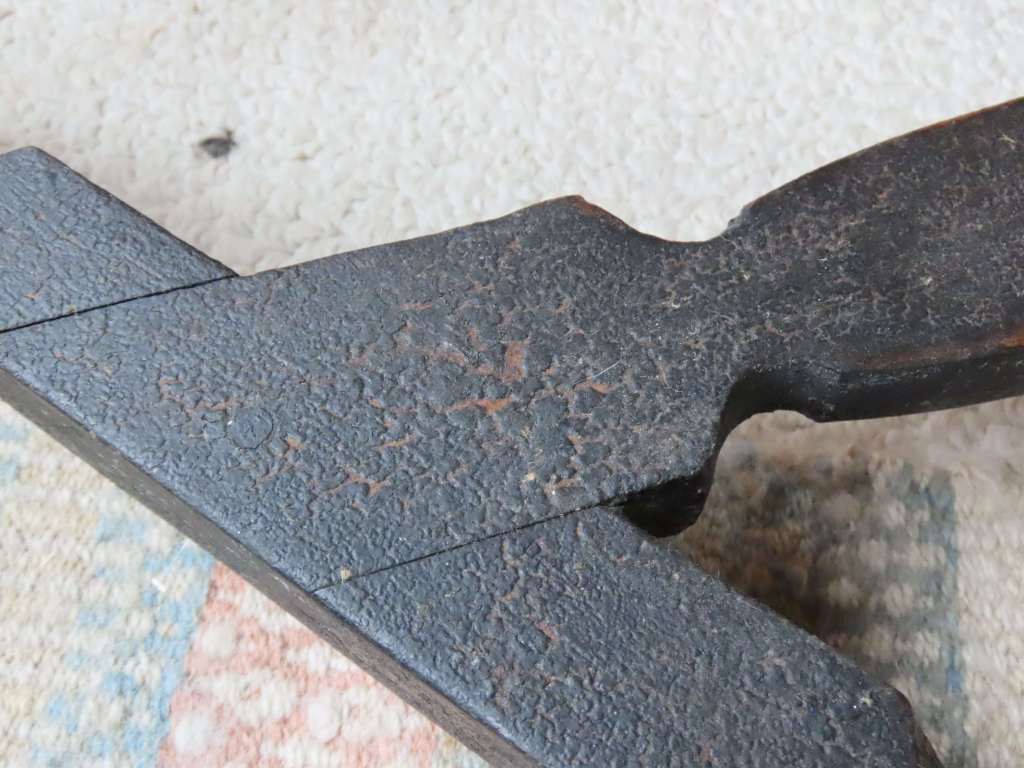

It is a bit messy, slightly weird looking, and needs some touch up,

but the black paint highlights the wheel’s beautiful turnings.
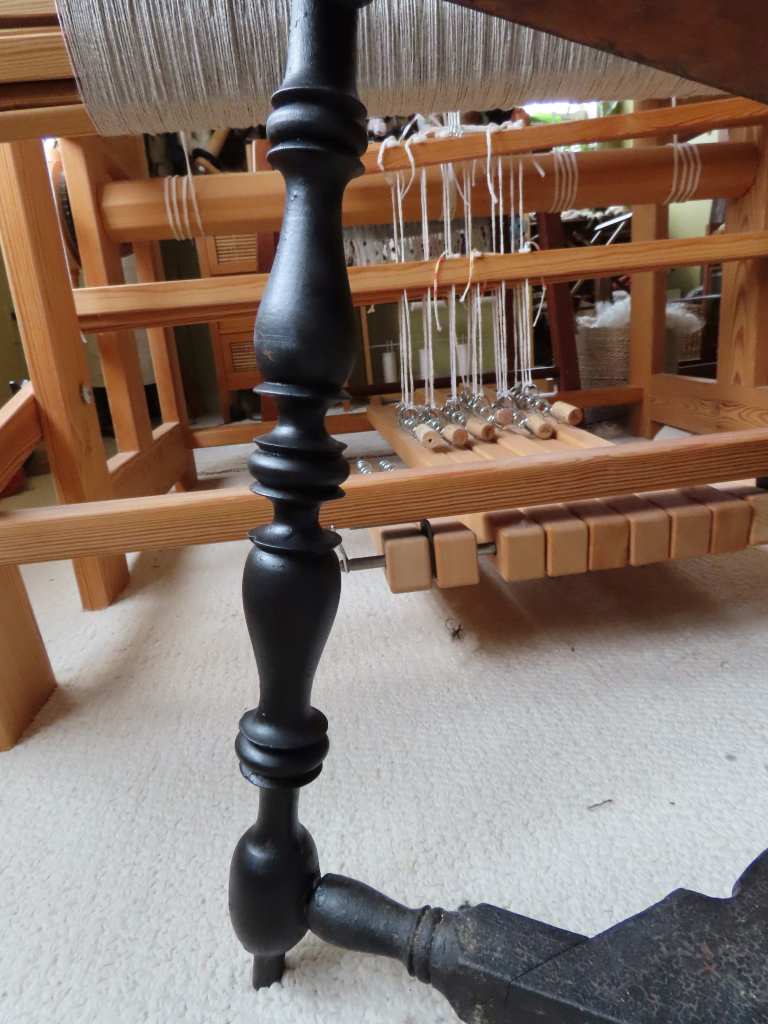
And, as is often the case, those turnings started showing up elsewhere. I began to notice similar wheels coming up for sale. While the wheels had individual differences, most had “bowtie” spokes
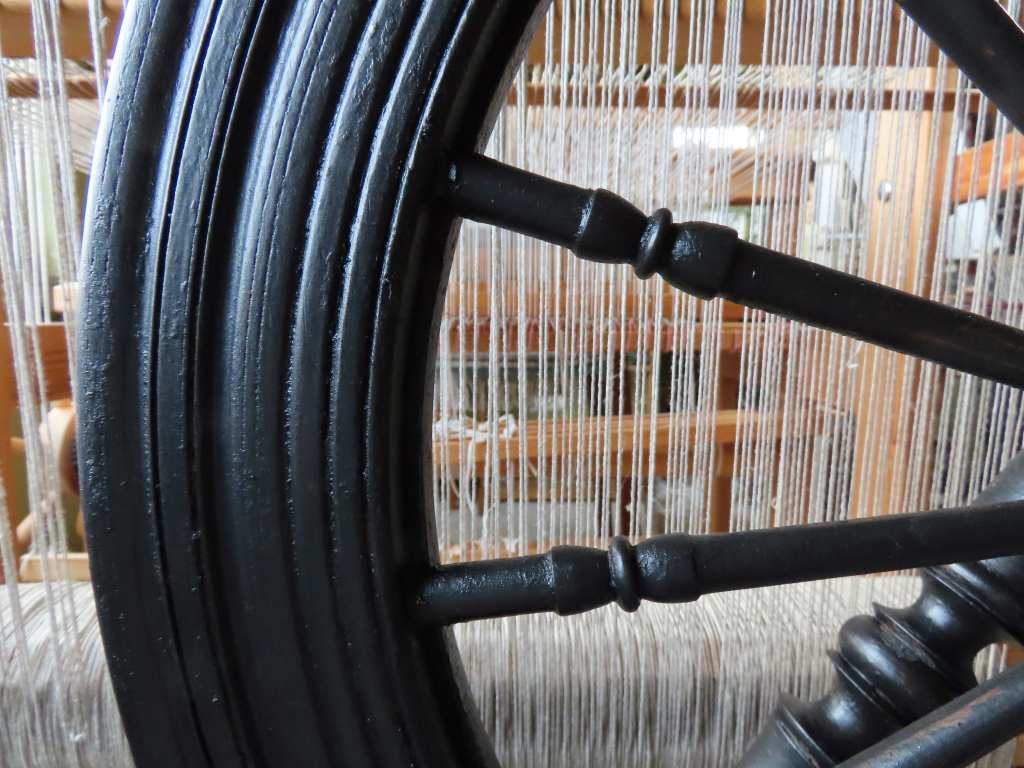
and legs that resembled the Quebec Paradis wheels.

The maidens generally came in two styles—three-tiered like Cocodris’ maidens, or bobble-topped like those on Philomene, the wheel in the previous post.
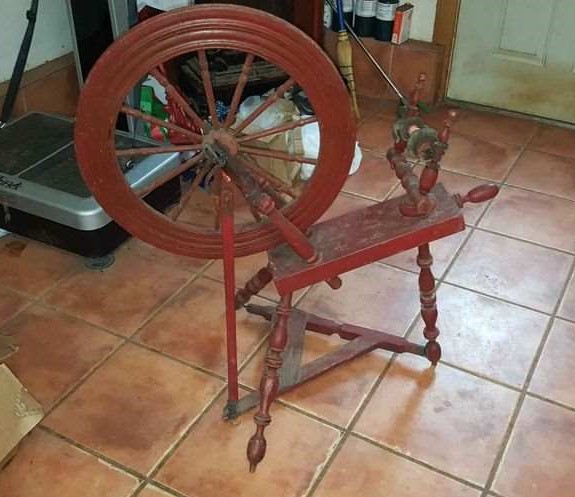
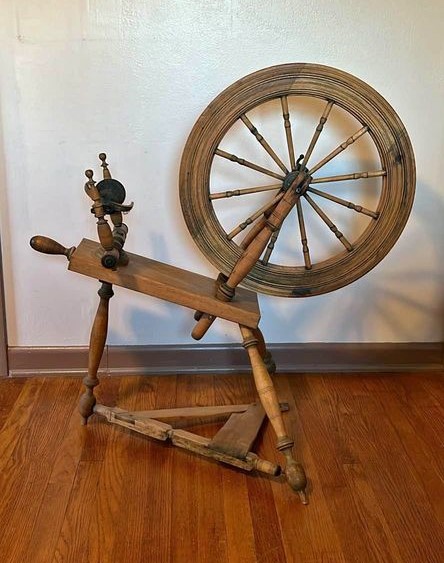
When I acquired Philomene and started researching her maker, Thomas Michaud, it became apparent that this style wheel was commonly found in the upper St. John River Valley, on the border between northern Maine and New Brunswick.

I suspect that most were made by Thomas Michaud and his wheel-making brothers, Hubade/Ubald and Francois Regis (see the previous post “Philomene”). But, since almost none are marked, we can only surmise that they are related based on similarity of features.
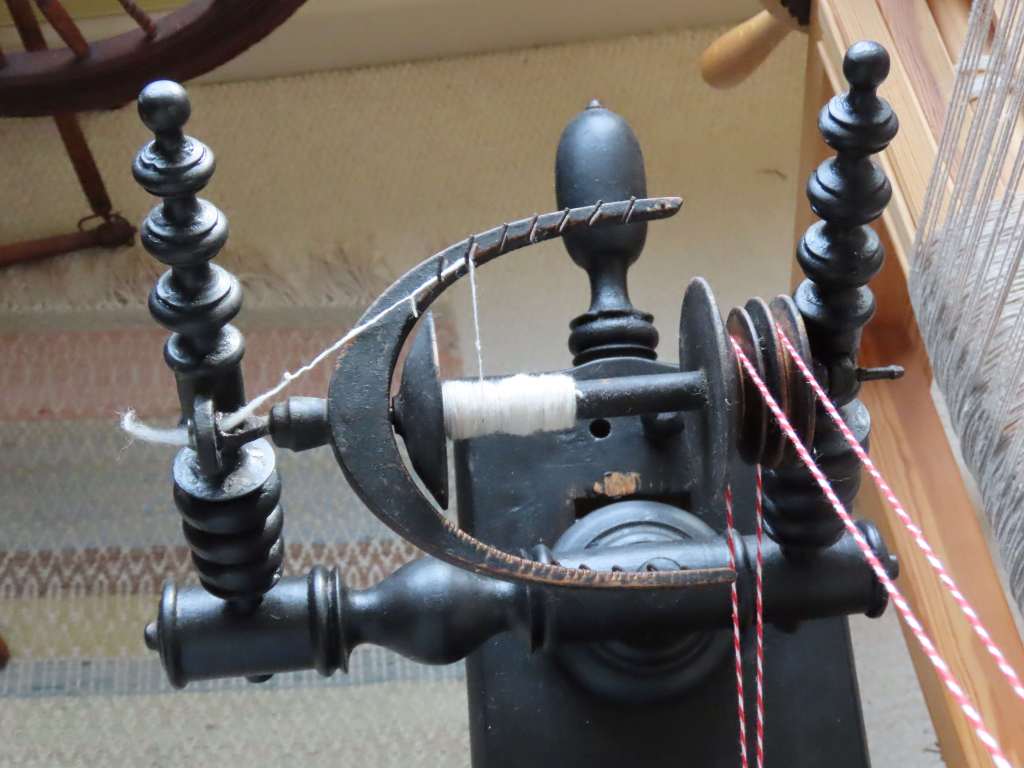
Cocodris’ maidens, for example, are like those on Diane Howes’ marked Thomas Michaud wheel (with a few less tiers).
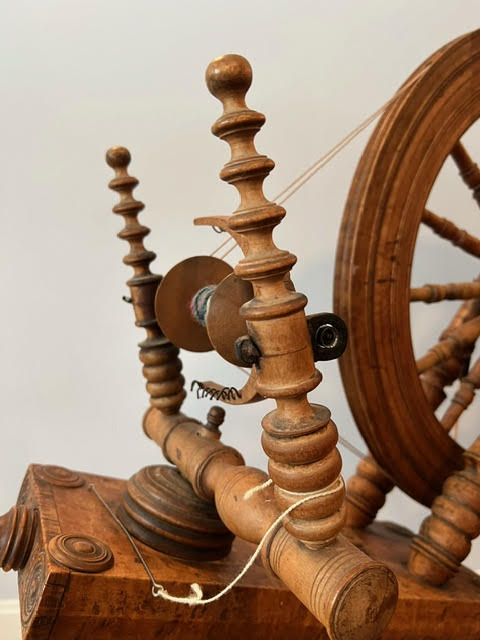
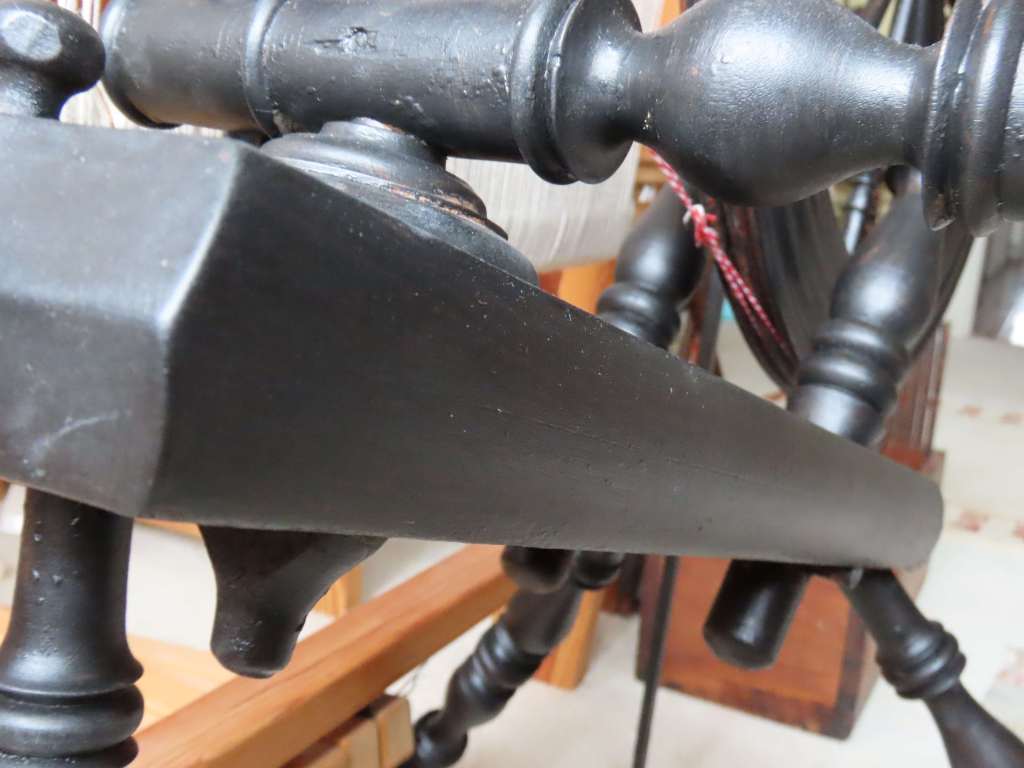
The curved table sides,
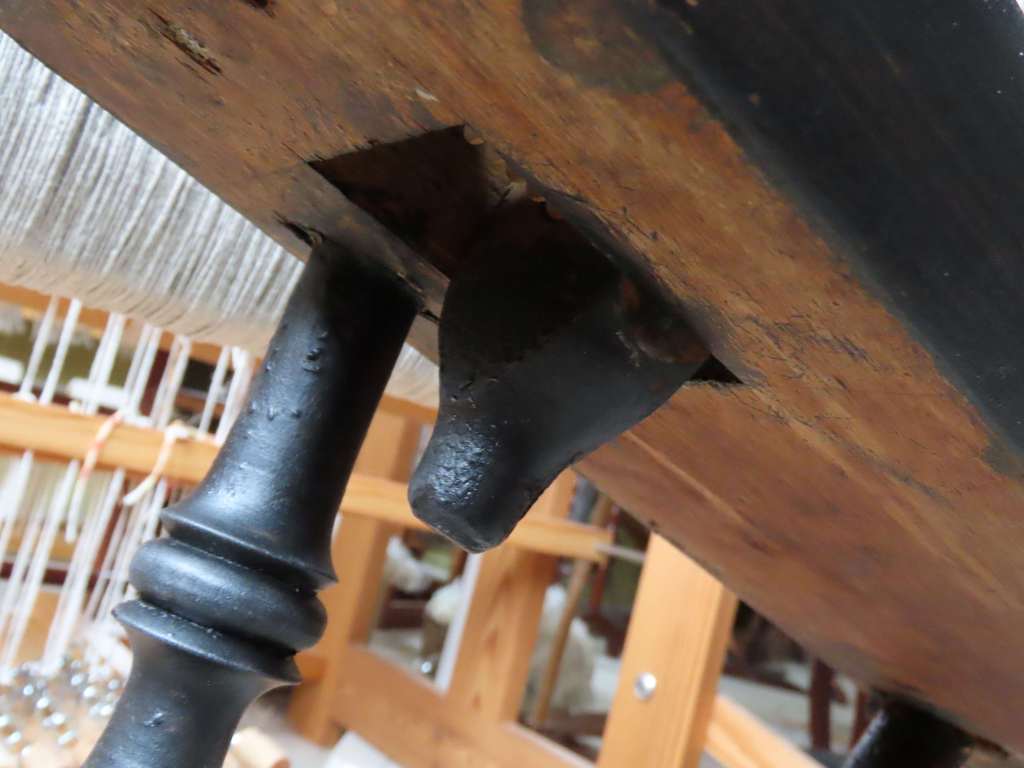
the under-table MOA post
and scribe marks,
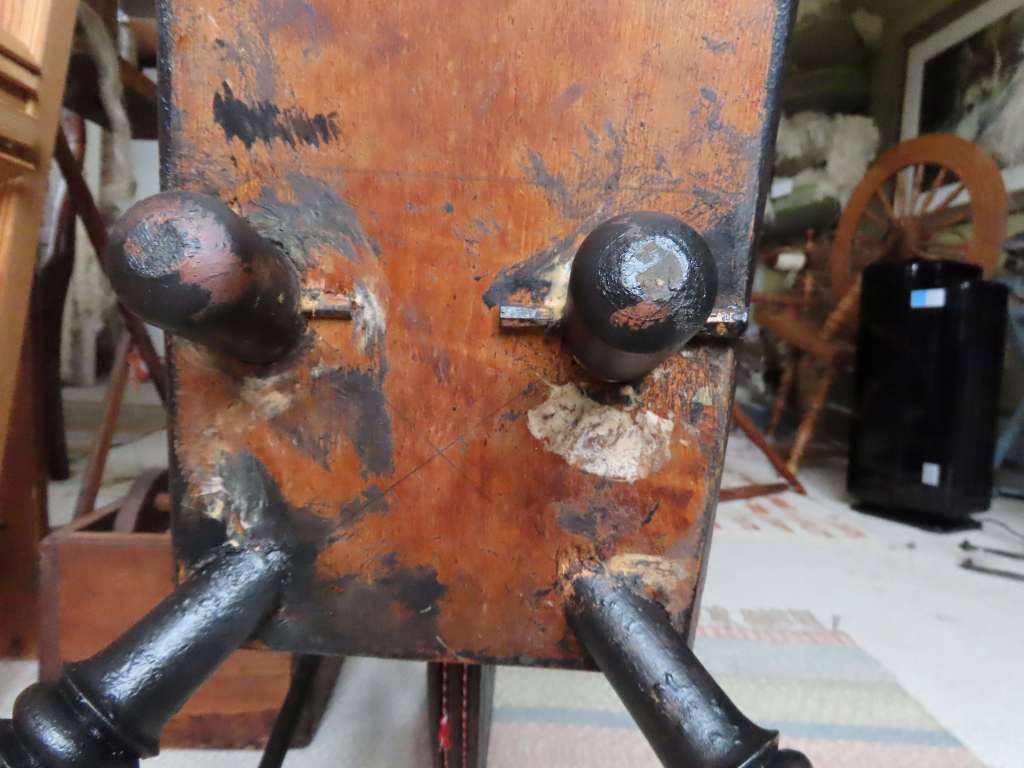
and the flyer scribe marks also are similar.
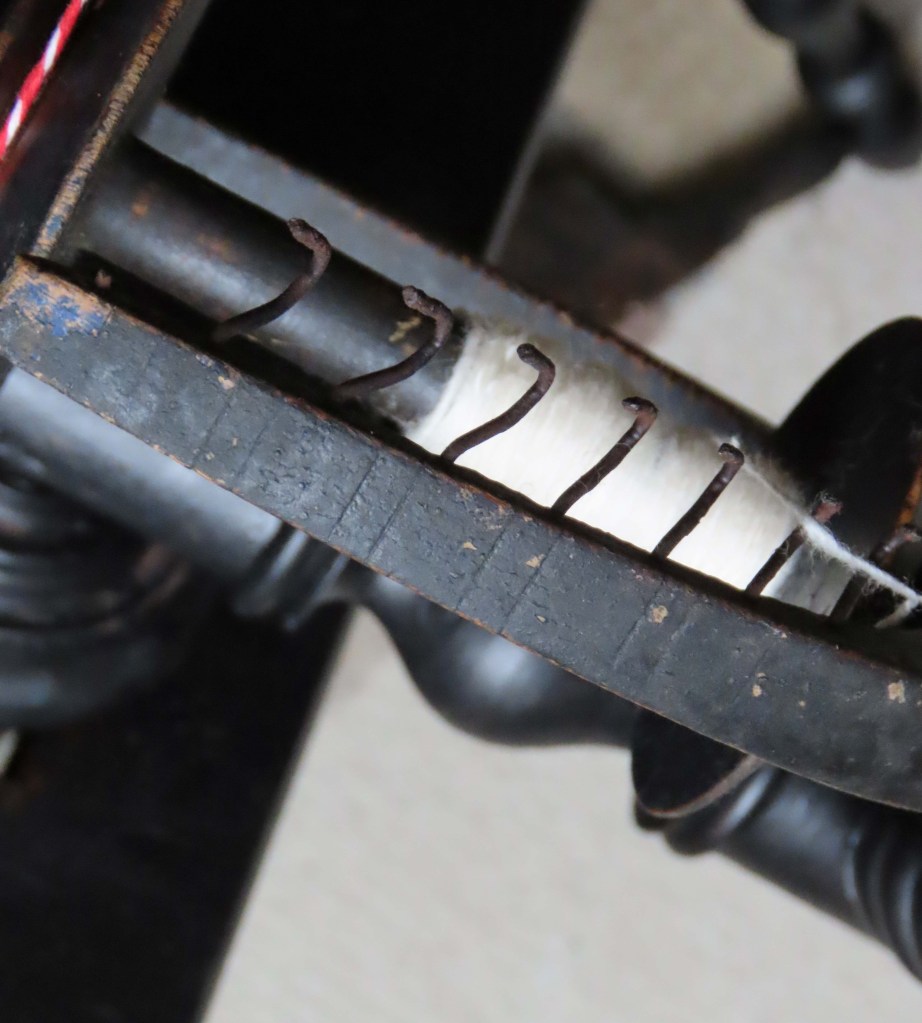
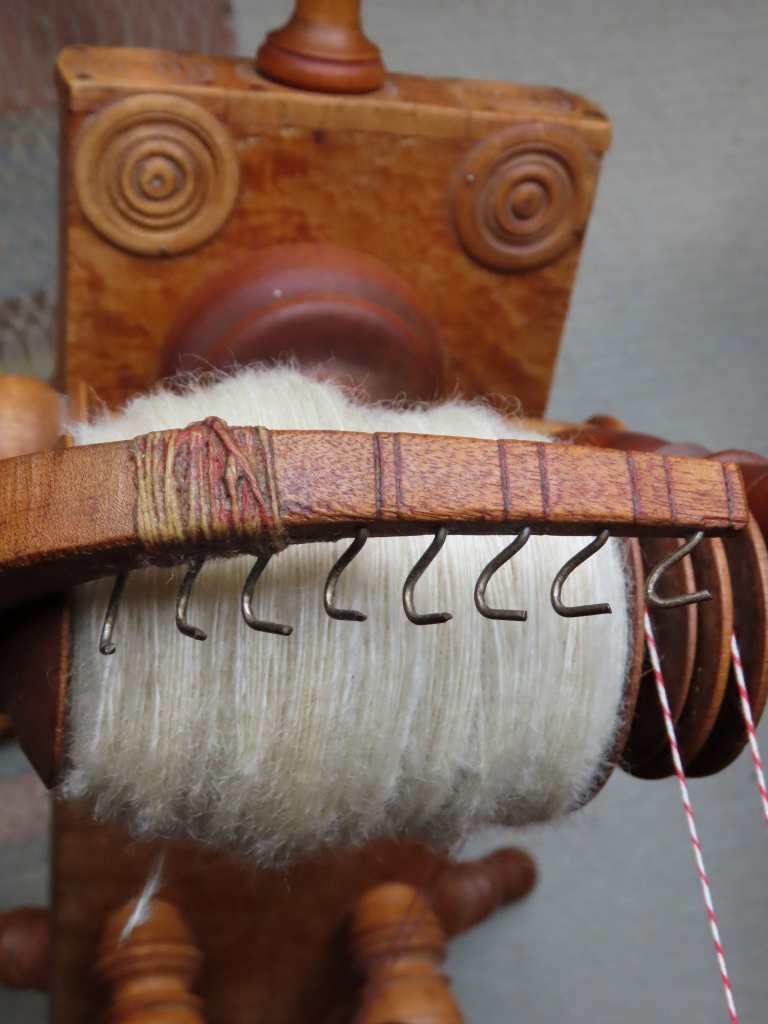
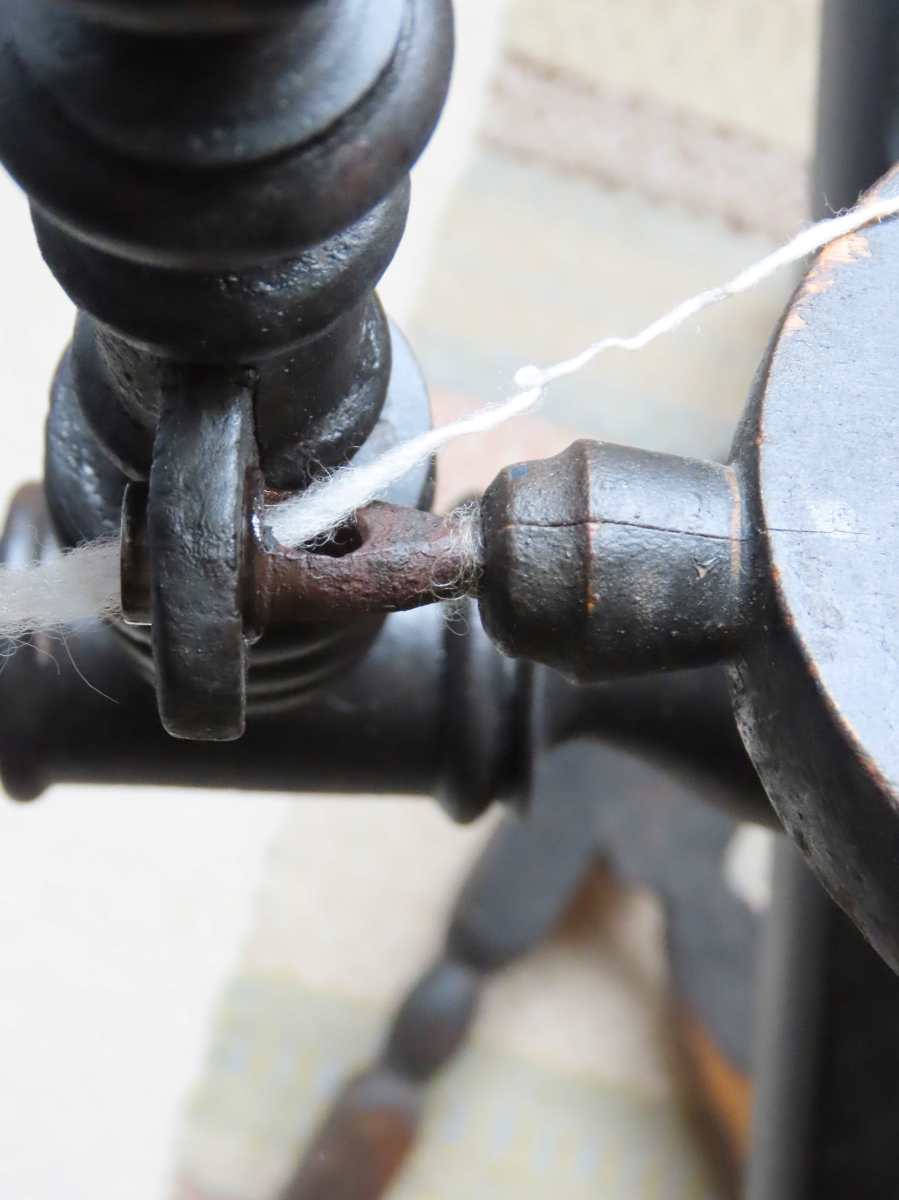
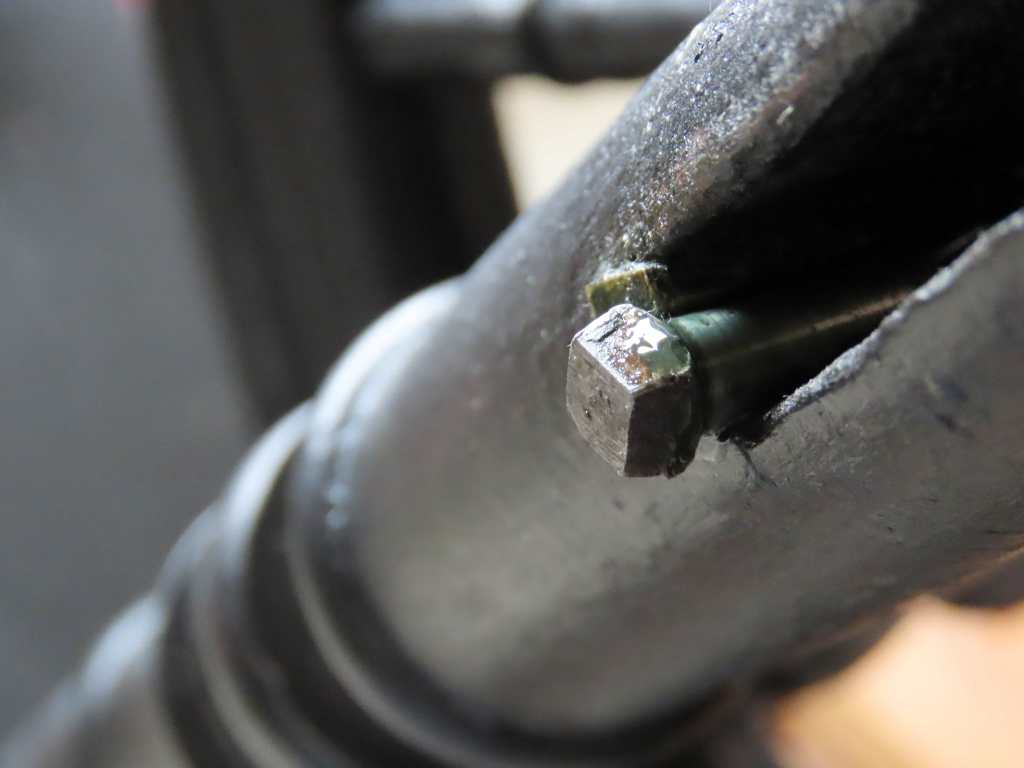
Cocodris and Philomene share somewhat unusual metal work,
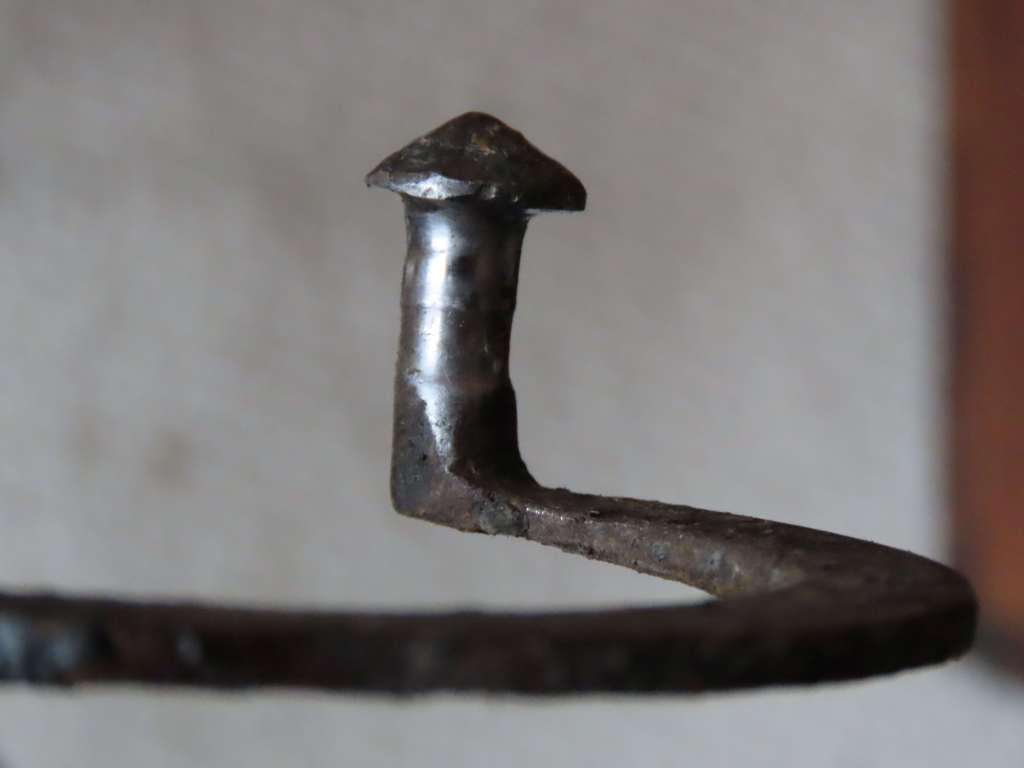
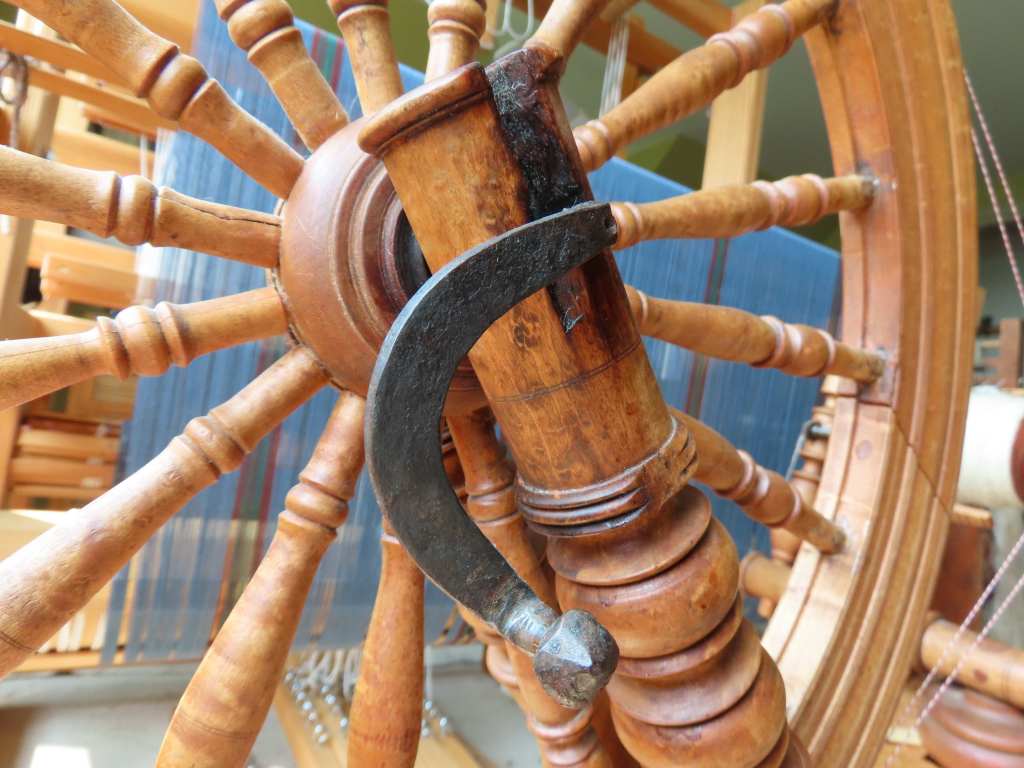
having distinctive angled knobs at the mandrel ends
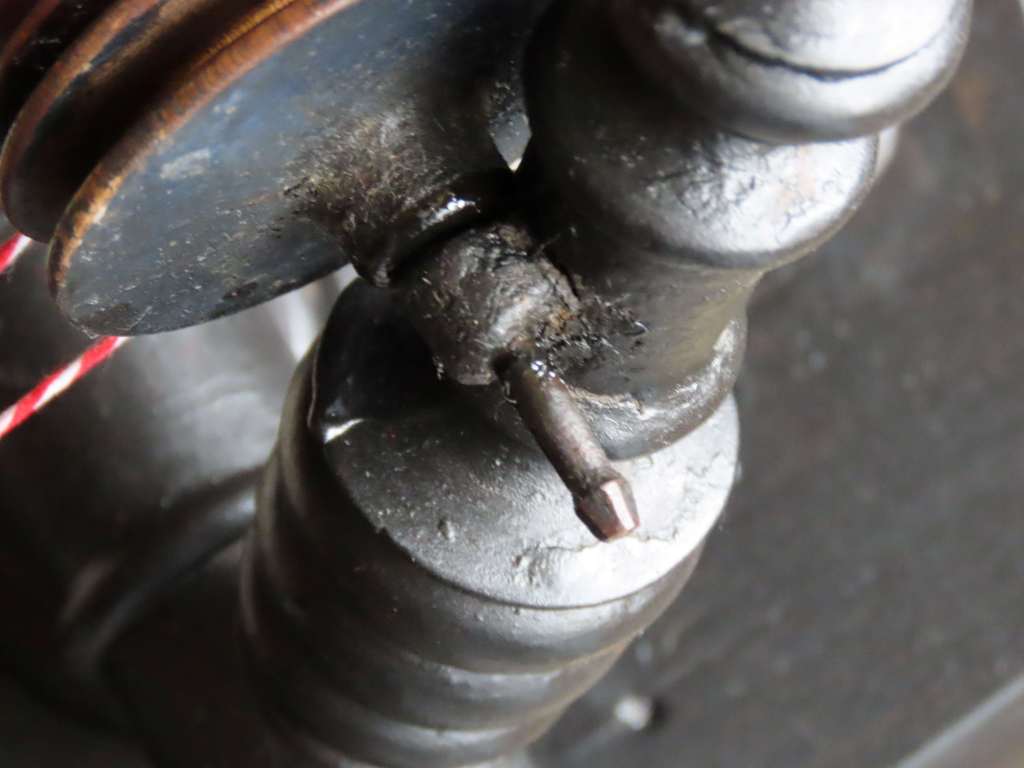
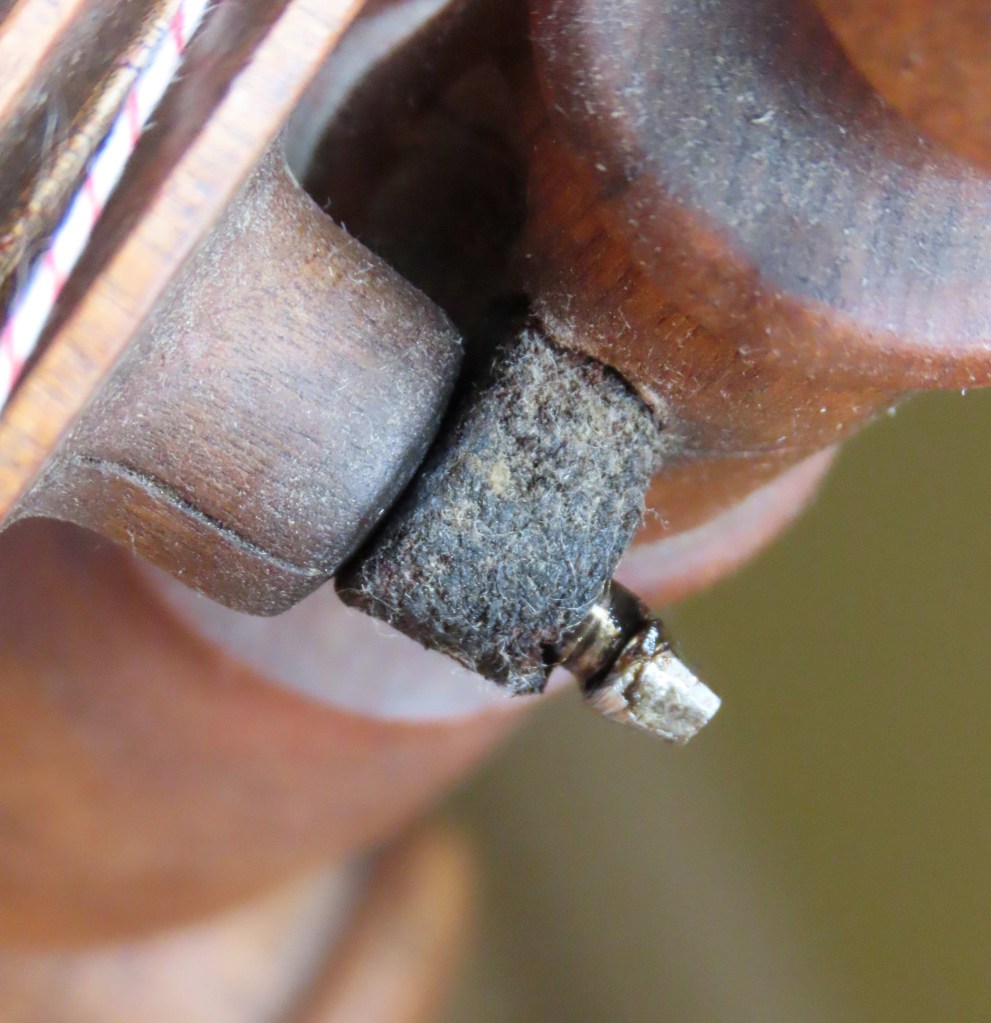
and squared axle ends.

But, the most compelling similarity is the lovely treadle design.
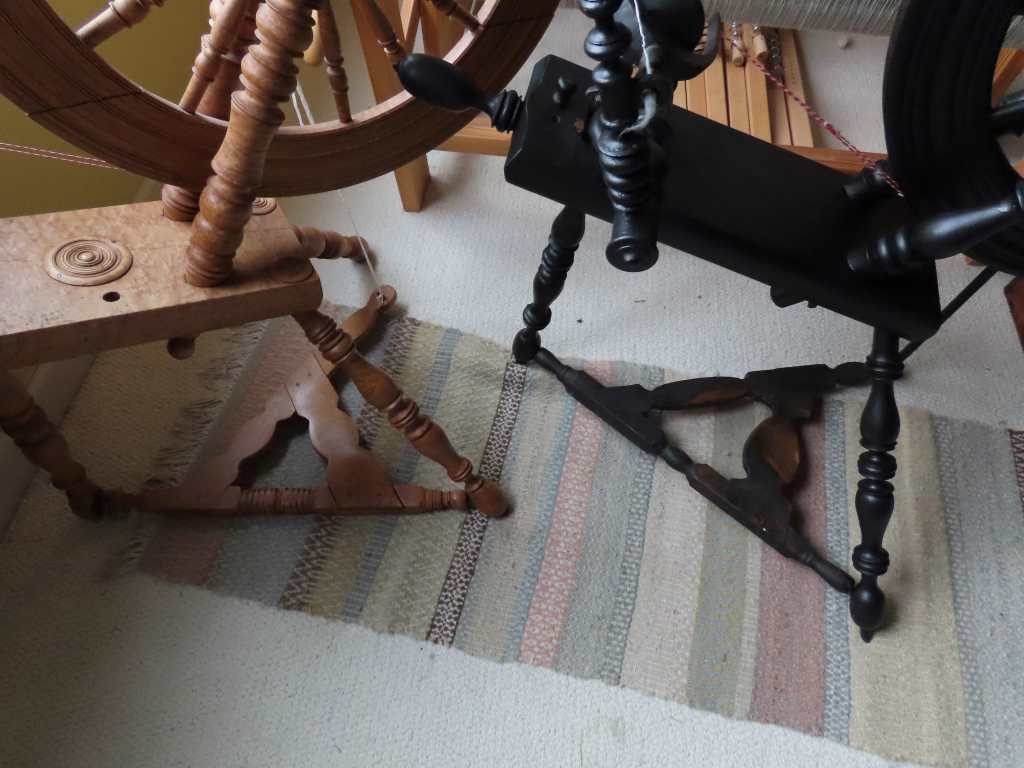
It is so unusual and rare that it makes me think that Cocodris likely was made by Thomas Michaud. Even the wheels’ heavy treadle wear matches.

In fact, Cocodris is an even better spinner than Philomene—quiet and steady, perfect for fine singles.
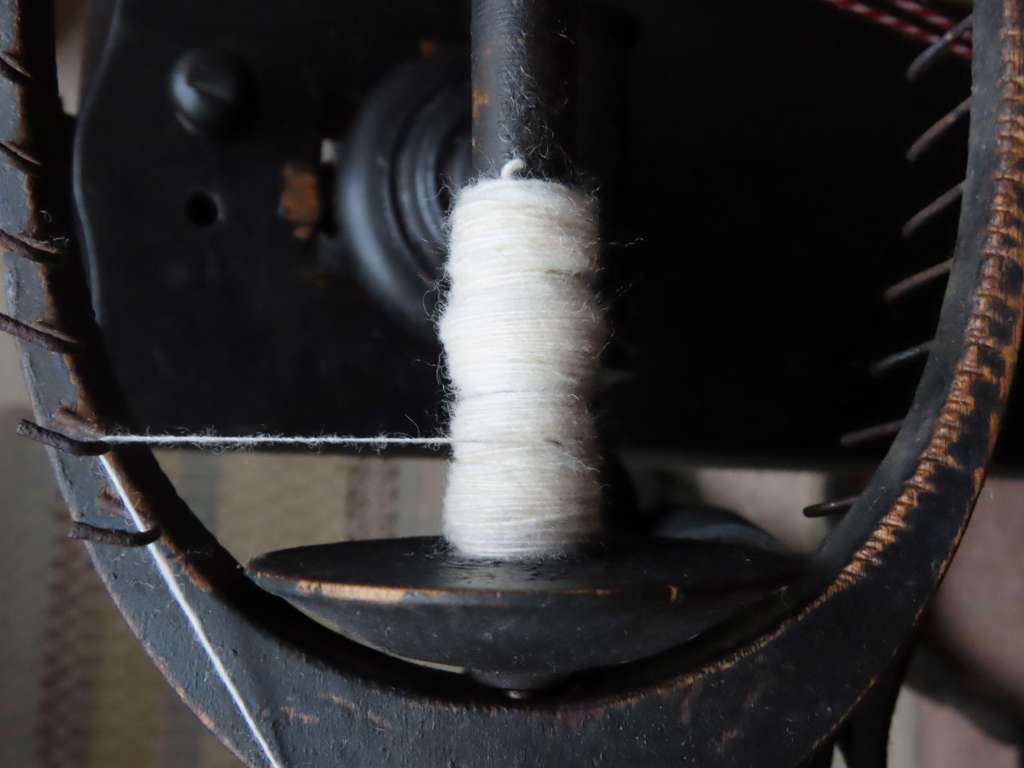
Although one upright is skewed toward the spinner (it’s in tight) and the drive wheel does not directly align with the whorl, she is smooth, fast, and delightful to use.

Definitely worth the trade of a gun.
 Exquisite Machinery