

This attractive bobbin winder was made in Turner, Maine, by a man with the wonderful name of Hannibal Thomson. Unraveling the who, where, and when of Thomson’s wheels illustrates why many of us are addicted to rescuing these old wheels. There’s the thrill of the hunt—for the wheels themselves and to discover the wheel makers. And there’s the collaboration with other antique-wheel addicts, railroading wheels to new owners, sharing knowledge and research, and getting ridiculously excited about discovering a wheel’s origins.

My Thomson journey started at a Maine antique store, “Den of Antiquities,” where I spotted a Shaker-like flax wheel with an un-Shaker-like maker’s mark in large letters on the table. The mark had been worn to oblivion on one end but enough was there to make out, “Thomson.”
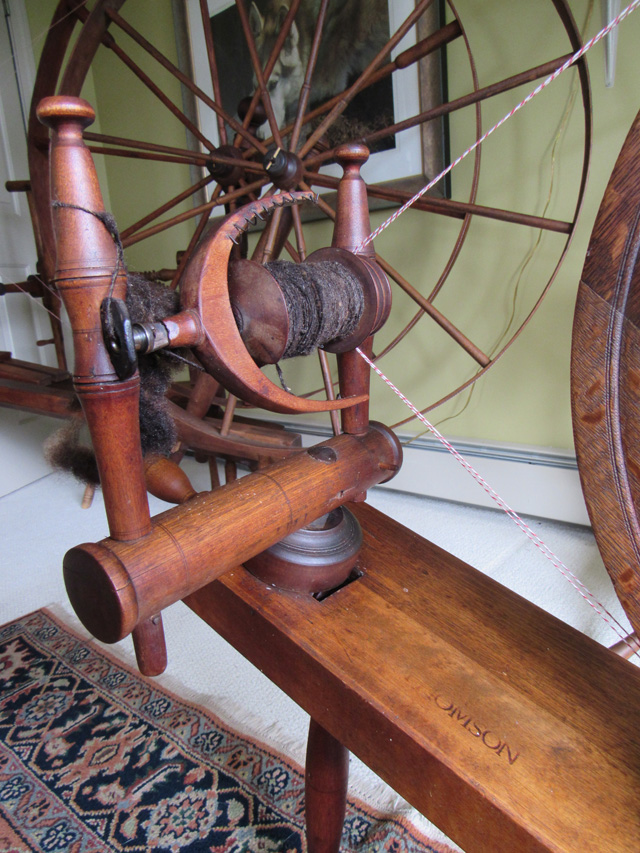
I knew nothing about Mr. Thomson and brought the wheel home in anticipation of a history hunt to find the maker. I found references to three Thom(p)sons in Ravelry’s Antique Spinning Wheel group, J. Thompson, T. Thompson, and H. Thomson. All the table stamps were in the same style, although the spelling varied. A wheel making family, perhaps? My wheel matched those of H. Thomson. I had found my maker.

Unfortunately, I couldn’t seem to discover exactly who he was. My on-line research found many H. Thomsons who had come to Maine from Massachusetts, but I couldn’t find any references to wheel making.
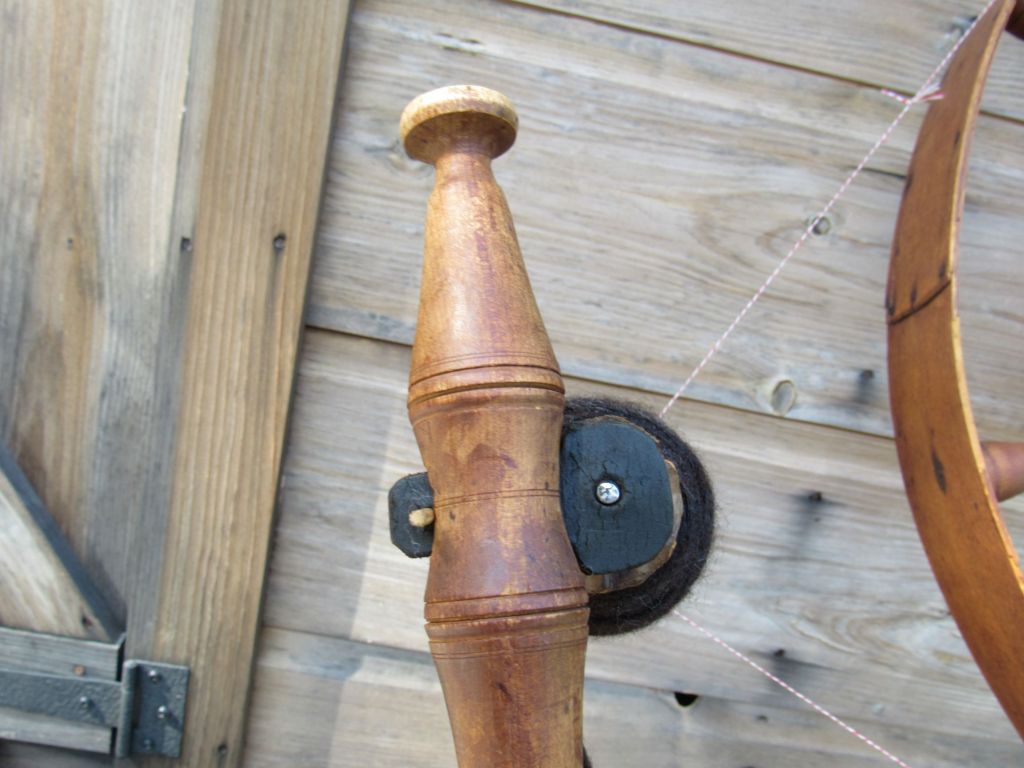
I did find, however, another H. Thomson wheel owner on Ravelry who lived not far from me in Maine. Jan had an H. Thomson bobbin winder (like the subject of this post), and flax wheel, but the drive wheel was not original.
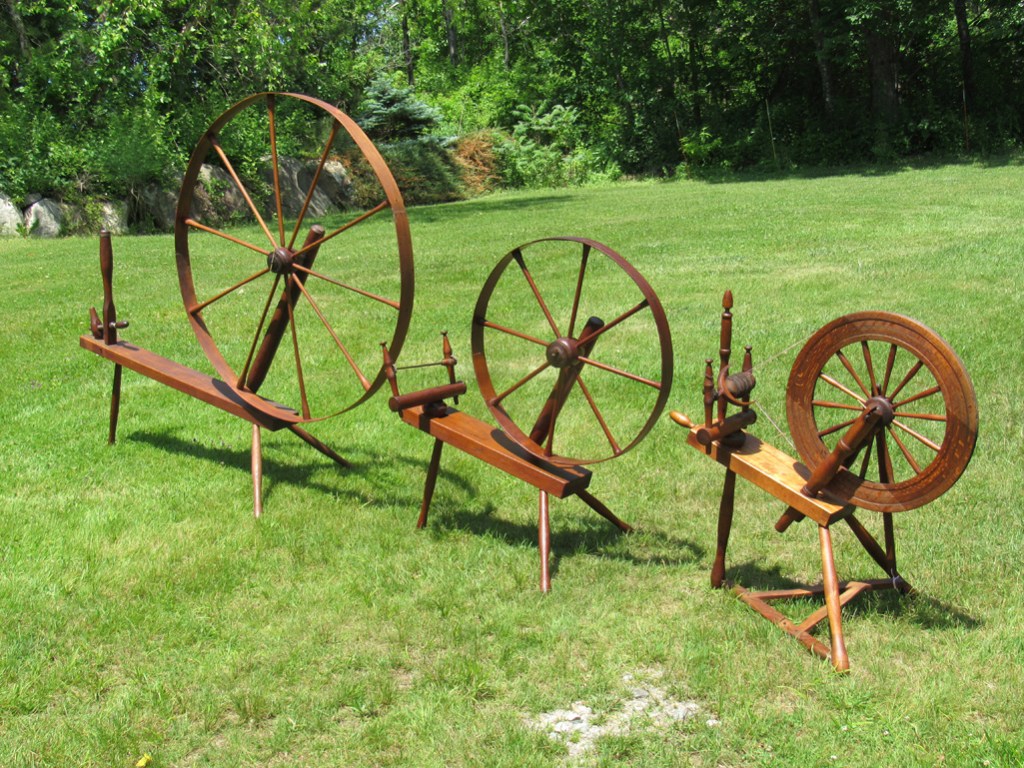
She had been looking for an H. Thomson great wheel and when one became available at a large “wheel rescue” that I was helping with in Massachusetts, we arranged a wheel railroad.

I drove a number of wheels that Jan had been fostering down to their new owners who were also at the rescue and brought back the Thomson great wheel for Jan. In the process, I got a chance to spin on the great wheel and it was love at first spindle click. As with the flax wheel, the Thomson great wheel was a beautiful spinner, well- balanced and designed for effortless spinning. I was hooked.

Some months later, a Thomson bobbin winder came up for sale in New Hampshire. It was a long drive, so I decided to combine it with it a trip to see Craig Evans, a wheel and textile collector, historian, and weaver, who lived in the same area and was selling some of his collection.

I picked up the bobbin winder and a large skarne that the seller desperately wanted to unload (“take it! take it!”) and headed to Craig’s. While admiring some of his amazing collection (and picking a few things to bring home), we talked about wheels and wheel makers, including H. Thomson. Craig recalled seeing a Thomson flax wheel in an antique store in Alfred, Maine years earlier, but didn’t know anything about Thomson himself.

About a year later, I heard from Craig that he had discovered the identity of H. Thomson. During that year, I had acquired a Thomson great wheel and passed my flax wheel on to Jan, to complete her Thomson collection. I excitedly contacted Jan with the news and she and Craig collaborated on a fascinating article, with Craig’s research and Jan’s wheels, titled “Hannibal Thomson and His ‘Widely Known and Sought For’ Spinning Wheels.” The Spinning Wheel Sleuth #107, Oct. 2020.

The title quote was from a book on the history of Turner, Maine, the town where Hannibal lived and worked in the early to mid 1800s. The description of Hannibal brings him alive: “Mr. Thompson was a good mechanic, and his spinning-wheels were widely known and sought for. He prosecuted his business for many years, and being remarkable for ready wit, his shop was an agreeable place in which to spend a leisure hour.” French, pp. 87-88.
Hannibal died at age 79 in 1861, but not before seeing his wheels become obsolete: “He lived to a good old age, but in the last years there were few calls for his work, as in the change of customs, spinning-wheels, carding machines, and fulling-mill, all went down together and became things of the past.” French, p. 88.
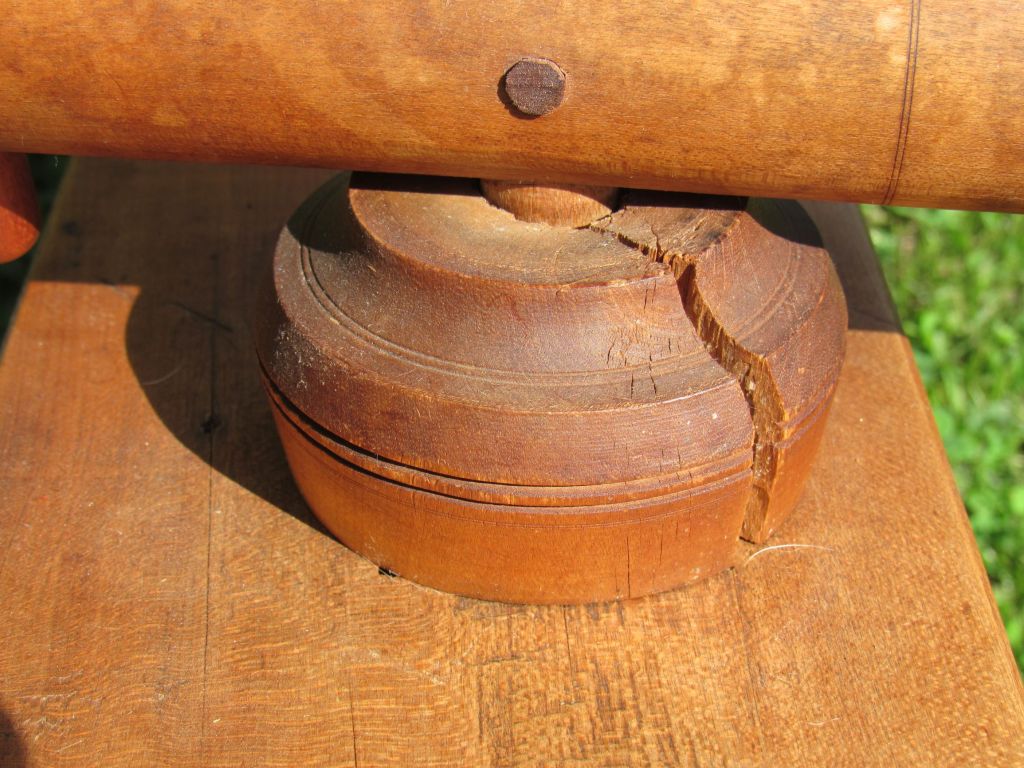
What would Hannibal think if he could see how we value his work today? His wheels once again are spinning, while we marvel at his skill and thoughtful design.
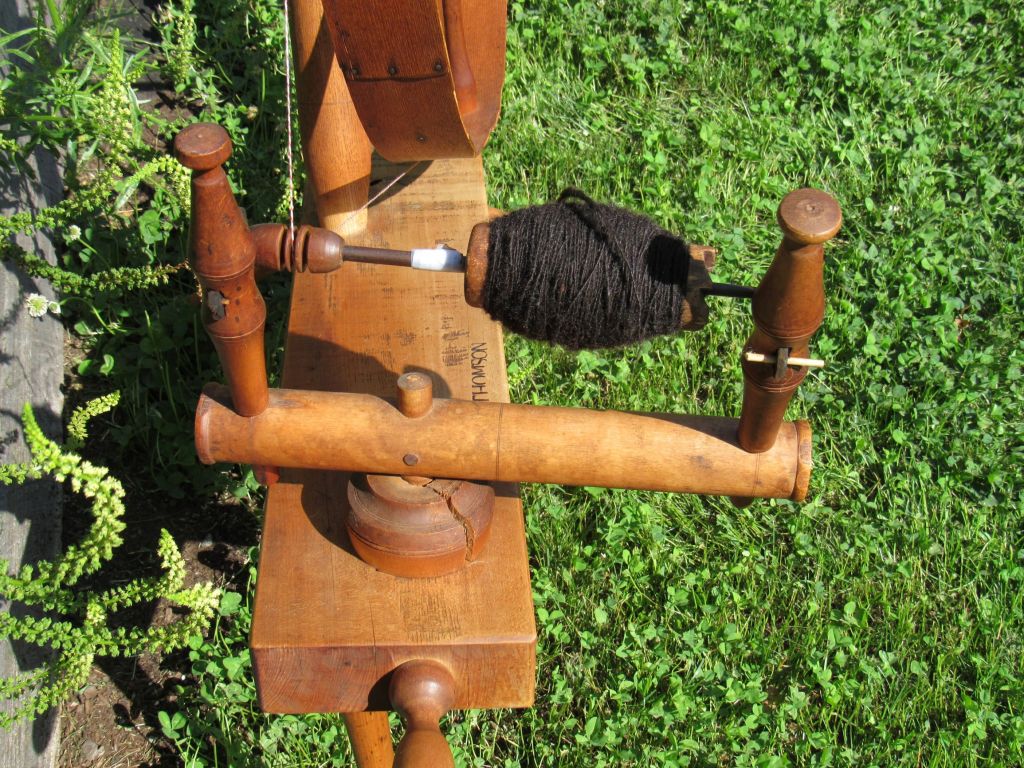
Hannibal’s name in his lifetime was spelled in a variety of ways, with his last name spelled both “Thomson” and “Thompson.” Craig found that Hannibal came from a family of wheel makers. His great-grandfather, Archibald Thompson, emigrated with other Scots-Irish in the 1720s from Ulster, a center of Irish linen production.
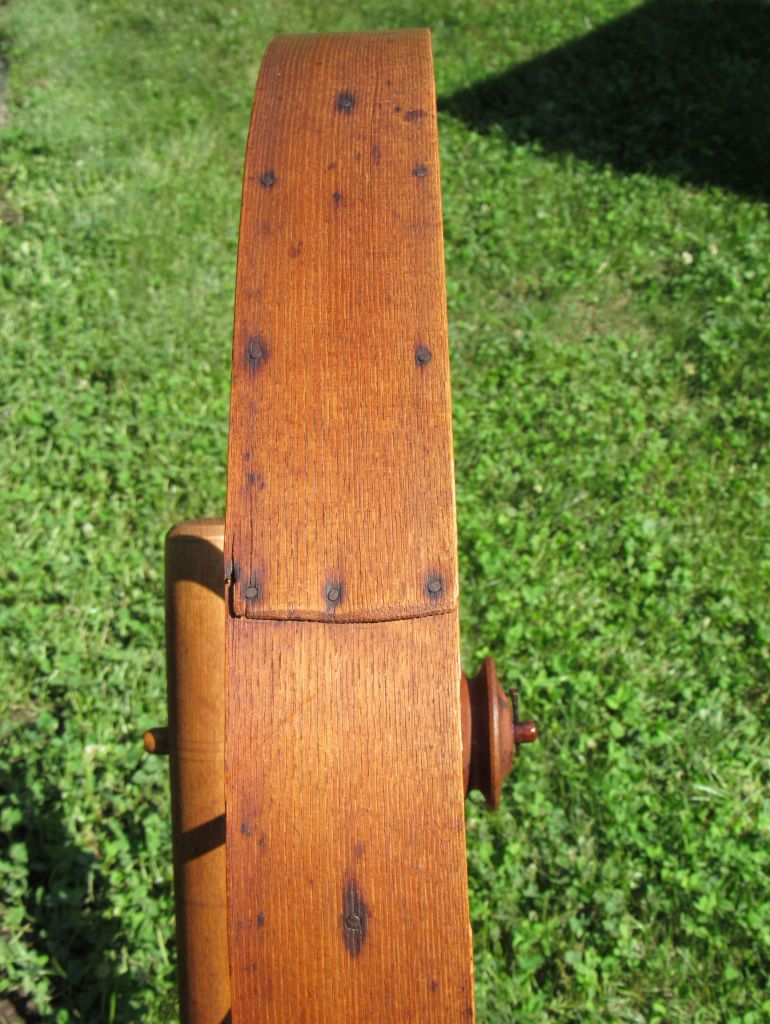
Archibald settled in North Bridgewater (now Brockton), Massachusetts, and was reputed in local histories to have made the first treadle spinning wheel in this country—or New England. Others, however, have credited the Scots-Irish who settled in Londonderry, New Hampshire in the early 1700s with that distinction.

In any case, Archibald’s descendants (called “his posterity” in one history) also made wheels. Given the similarities in the style and placement of the makers’ marks, it’s likely the wheels marked “J. Thomson” and “T. Thompson” were made by family members, although that hasn’t been established yet.
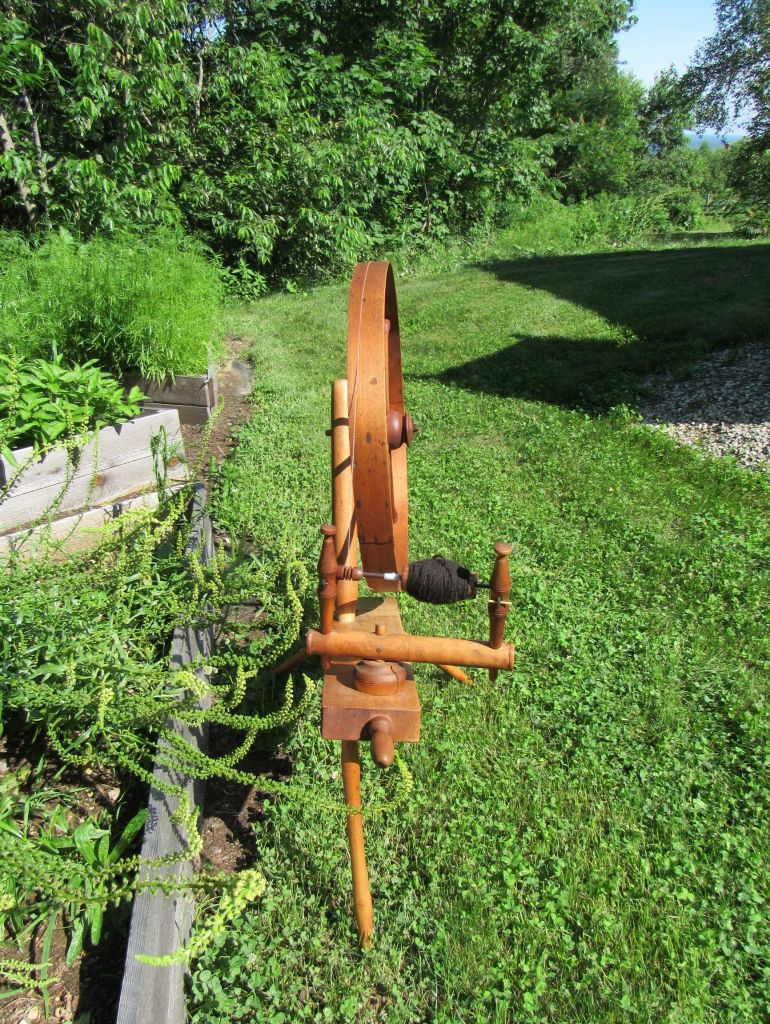
As for the winder itself, it’s a little beauty. Its overall look is similar to Shaker wheels, which isn’t surprising because Turner, Maine is not far from the Maine Shaker colonies and Hannibal’s wheels were made in the heyday of Shaker wheel production. The Shaker style influenced many local wheel makers.
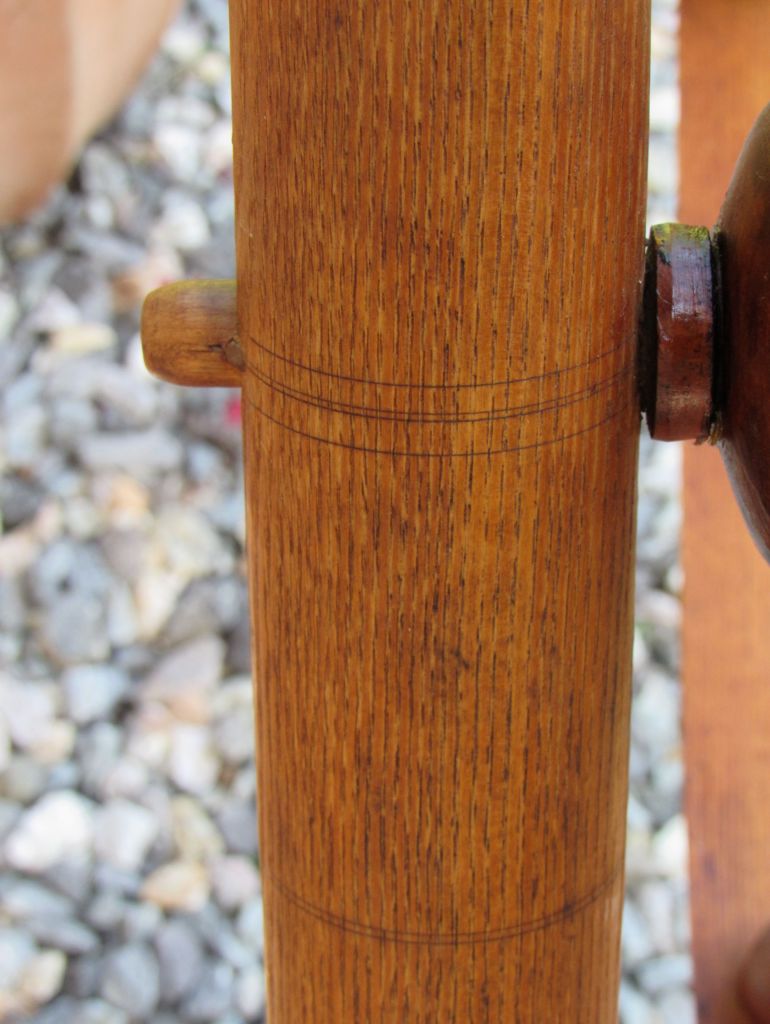
These bobbin winders were used by weavers to fill bobbins, which were then placed on a skarne (or creel) (photos at the end of the post) for winding warps onto a warping board or reel, or directly onto a loom’s sectional beam.
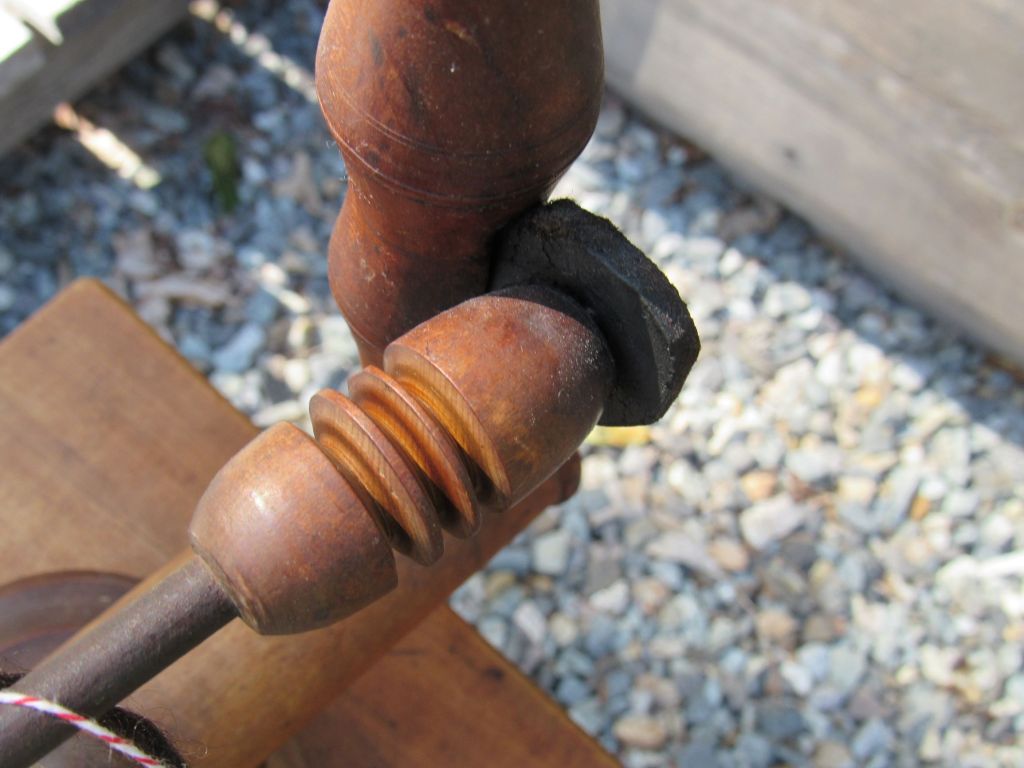
The bobbins often were filled from skeins on swifts. But, in my case, I usually tuck the winder right next to my great wheels and unwind from the wheel spindle directly onto the bobbin.

The winder’s legs are slightly offset and the mother-of-all is angled—features that presumably make for ease of use.

There is a similar Thomson winder in Pennington & Taylor’s book, with slightly different maidens and a spindle tip, which would allow it to be used for winding quills or even spinning. P. 29, Fig 2-33. Quills were inserted into a weaver’s shuttle, which carries the weft across the warp. This one doesn’t have a spindle tip, just a long metal rod with a whorl.

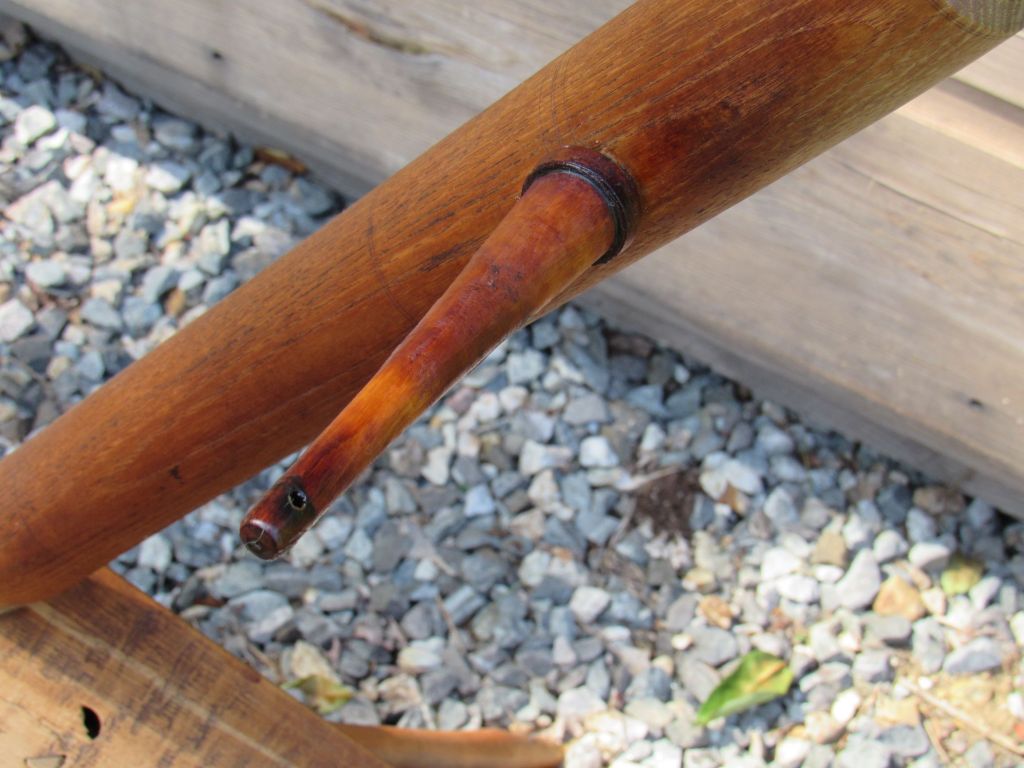
The rod on my winder is pretty thick, so may have been rather large for quills. Its axle is wooden, which I keep well lubricated because I use the winder all the time. It’s a marvelous tool.
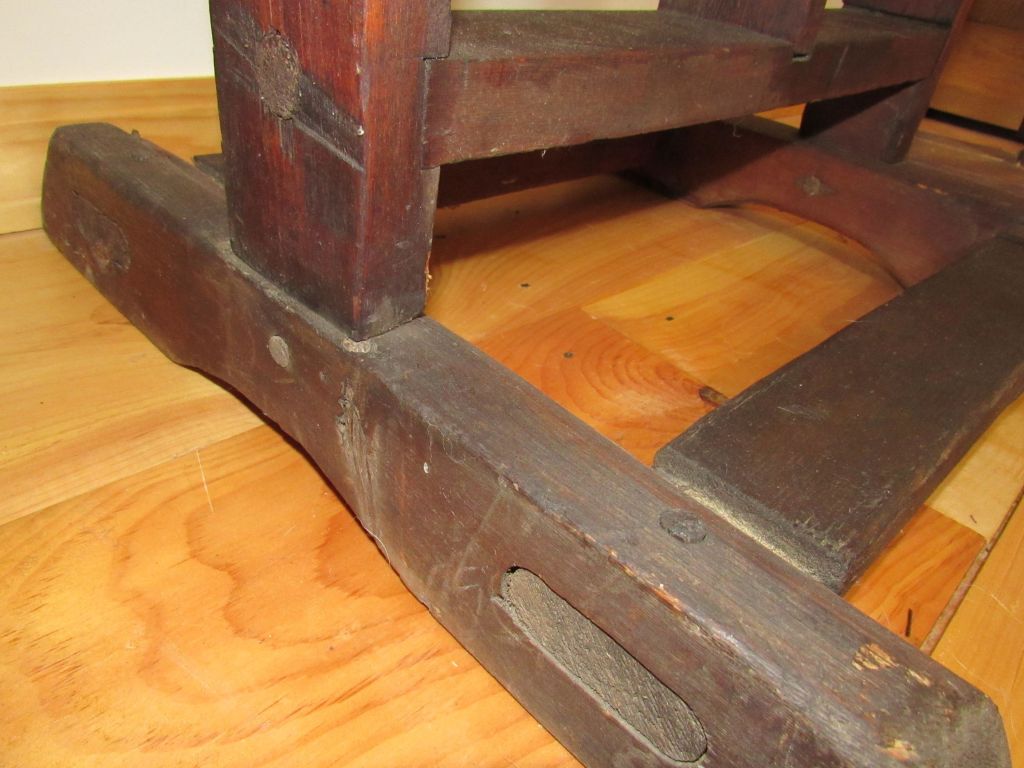
I hadn’t planned on buying a skarne when I picked up the winder, but they are very difficult to find, and the owner wanted to get rid of it.

So, home it came.
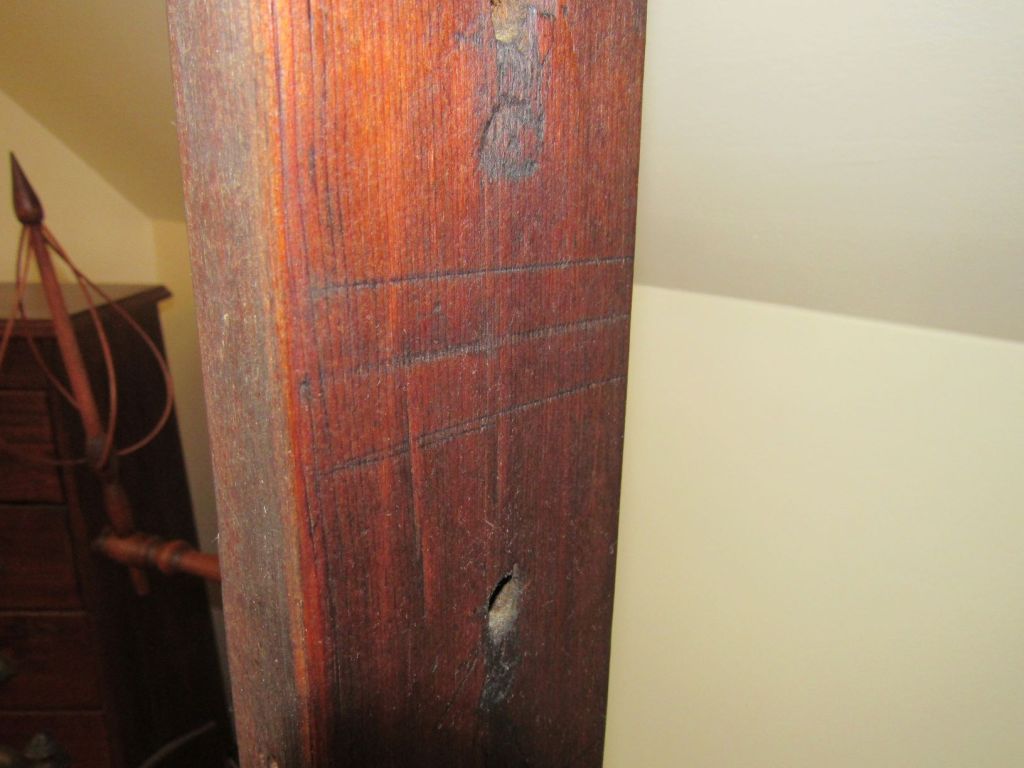
It has holes for 10 crossbars, so would hold at least 20 bobbins, more if they were smaller. Once I get additional crossbars in, I’ll put it to good use.
My resources for information on Hannibal Thomson and bobbin winders:
Cunningham, Jan and Craig Evans, “Hannibal Thomson and His ‘Widely Known and Sought For’ Spinning Wheels,” The Spinning Wheel Sleuth 107 (October 2020).
Feldman-Wood, Florence, “Bobbin Winder Basics,” The Spinning Wheel Sleuth 36 (April 2002)
Taylor, Michael, “Londonderry, N.H. Flax Wheels, The Spinning Wheel Sleuth 48 (April 2005)
Books:
All Sorts of Good Sufficient Cloth: Linen Making in New England 1640-1860, Merrimack Valley Textile Museum, North Andover, MA 1980.
French, W.R. A History of Turner, Maine, From Settlement to 1886, Portland, ME: Hoyt, Fogg, Durham, 1887.
Pennington, David A. and Michael B. Taylor. Spinning Wheels and Accessories. Atglen, PA: Schiffer Publishing, Ltd., 2004, fig. 2-33, p. 29.
 Exquisite Machinery
This is fascinating. I don’t even know where to begin with questions. I know weaving, but the spinning is a mystery. Those three wheels are really beautiful.
LikeLike
Ask away. Once the pandemic is over, come up for a visit . We’ll talk gardening, I’ll get you spinning, and send you home with an old wheel!
LikeLiked by 1 person
Alright! It’s a deal. I love Maine.
LikeLiked by 1 person
How interesting that Archibald Thompson settled in North Bridgewater (Brockton) and Marlboro Packard was born there albeit at least 30 years after Archibald came. Maybe the families knew each other. If I had known this history when I lived there I might have appreciated it more. 🙂
LikeLike
Actually your comment when you got the Packard wheel about North Bridgewater prompted me to do some research on whether there might be a link between the two families. There was! In fact, Hannibal Thomson and Marlboro Packard are related. I’ll be doing a post soon on the Packard wheels and will lay it all out then.
LikeLike
Hi Brenda, I read an article online about the library in Union ME with antique spinning wheels on display. And then came across this article. I acquired an antique walking spinning wheel and it has all the parts but it is not running well. It needs adjustments and I think the big wheel is a little warped. I live in Cape Elizabeth, ME and was wondering if you know someone who has knowledge about these wheels and maybe can restore it to good working condition. Maybe I am a bit too ambitious:). Also, I am totally new to spinning and have no experience. I just ordered a drop spindle to get the feel of it. Thank you in advance for your reply. Margreet Gilda
LikeLike
Hi Margreet, I’m so glad you reached out! We have a nice community of great wheel spinners in Maine and, before Covid, were starting to meet a few times a year to share spinning and wheel tips. That’s on hold for now, but I would be delighted to help with your wheel. Perhaps the easiest way to start would be for you to send me some photos and I can give you some suggestions long-distance. If that doesn’t help, I’d be happy to take a look at your wheel to figure out what adjustments are needed. As long as the weather is nice, we could meet outside or, alternatively, would be happy to bring it home with me and make adjustments here. If you’d like to send me an email at gbzpage@gmail.com (with wheel photos!), we can discuss details. Welcome to the great wheel world! Brenda
LikeLike