
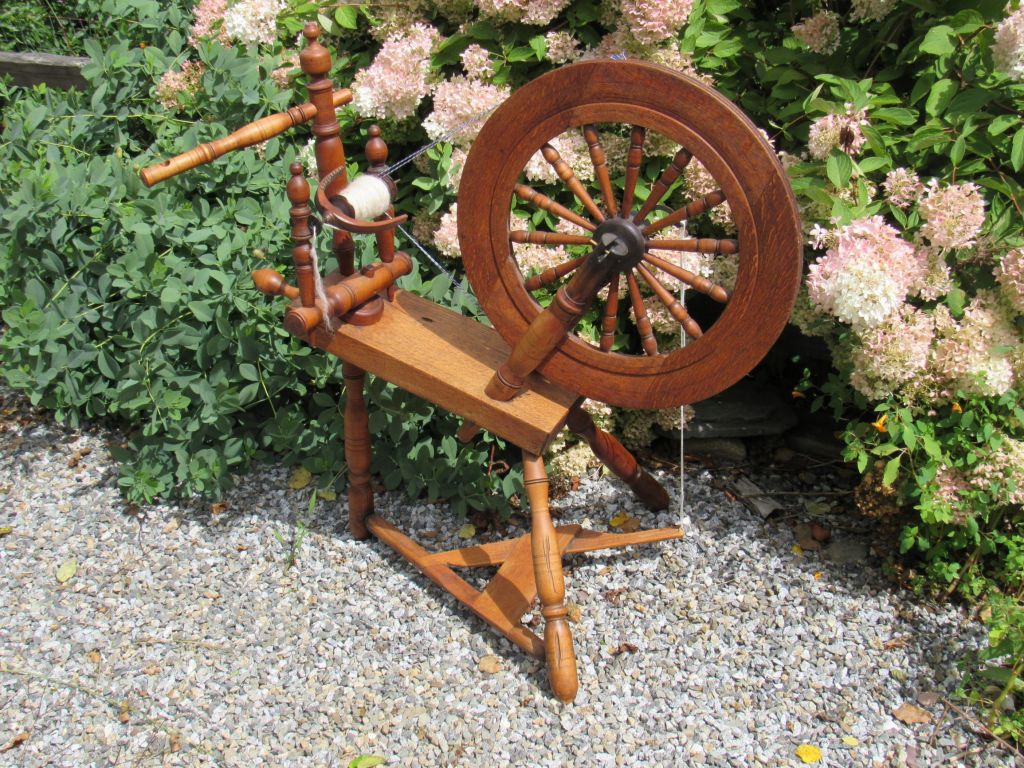
Marlboro Packard, born in Massachusetts in 1763 into a family of carpenters, moved north to Union, Maine where he produced attractive, well-engineered spinning wheels, found throughout the midcoast to this day.

Marlboro, also spelled “Marlborough,” was “a natural mathematician. He excelled in the solution of mathematical problems and in the use of mechanical tools. He could make anything from a boot-jack to a wagon wheel, from a window to a spinning wheel and in construction of the latter, he was a past master. All spinning wheels in the locality having the letters ‘MP’ carved on the end of the body are the work of Mr. Packard.” Soldiers and Sailors of Lower St. Georges Maine, p. 51.

Marlboro was born in Bridgewater, Massachusetts, in the same part of town (now Brockton) as the wheel-making Thompson family (see previous posts “Polly and a Skarne” and “Mag Reiver and a Finger”).
Multiple generations of Thompsons (also spelled “Thomson”) were well-known wheel-makers in Bridgewater.

While the Packards were carpenters, I couldn’t find evidence that they made wheels while in Bridgewater or that they worked with the Thompsons.

But it does appear that the two families were related. Marlboro’s aunt, Joanna Packard (his father Nathan’s sister), had a daughter, Jennett Allen, who married wheel-maker John Thompson. John and Jennett were wheel-maker Hannibal Thomson’s parents.
That makes Marlboro and Hannibal first cousins once-removed.

Both Marlboro and Hannibal ended up in Maine making spinning wheels, but they are a generation apart and their wheels reflect that.

Marlboro’s wheels were similar to those made by the earlier Thomson generations, based on a traditional Scottish-style wheel, while Hannibal’s wheels show the strong influence of the Maine Shakers on wheel styles in the early and mid 1800s.
Marlboro’s father, Nathan, died in 1772, when Marlboro was only nine years old. It’s unclear when Marlboro came to Maine, but his uncles Micah and Benjamin apparently moved to Cushing on the midcoast in the 1760s.
They worked as carpenters and appear to have done well. I couldn’t determine how long Marlboro stayed on in Bridgewater or whether he learned wheel-making skills there before coming to Maine.
But eventually, Marlboro joined his uncles and by 1795 must have been well established in his trade, because the Maine Historical Society has copies of payment invoices to Marlboro for turning work, including banisters, for Montpelier, the mansion being built in Cushing by Henry Knox, George Washington’s former Secretary of War.
In the 1790s or early 1800s Marlboro moved to Union, about 15 miles inland up the St. George River from the coast, and settled on Clarry Hill, the top of which is now blueberry barrens with a magnificent view.

The Packard farmhouse still stands and Marlboro’s wheels appear with regularity in antique stores and barn sales throughout the area.
In the Maine State Museum, one of Marlboro’s wheels serves as the example of a typical Maine flax wheel.
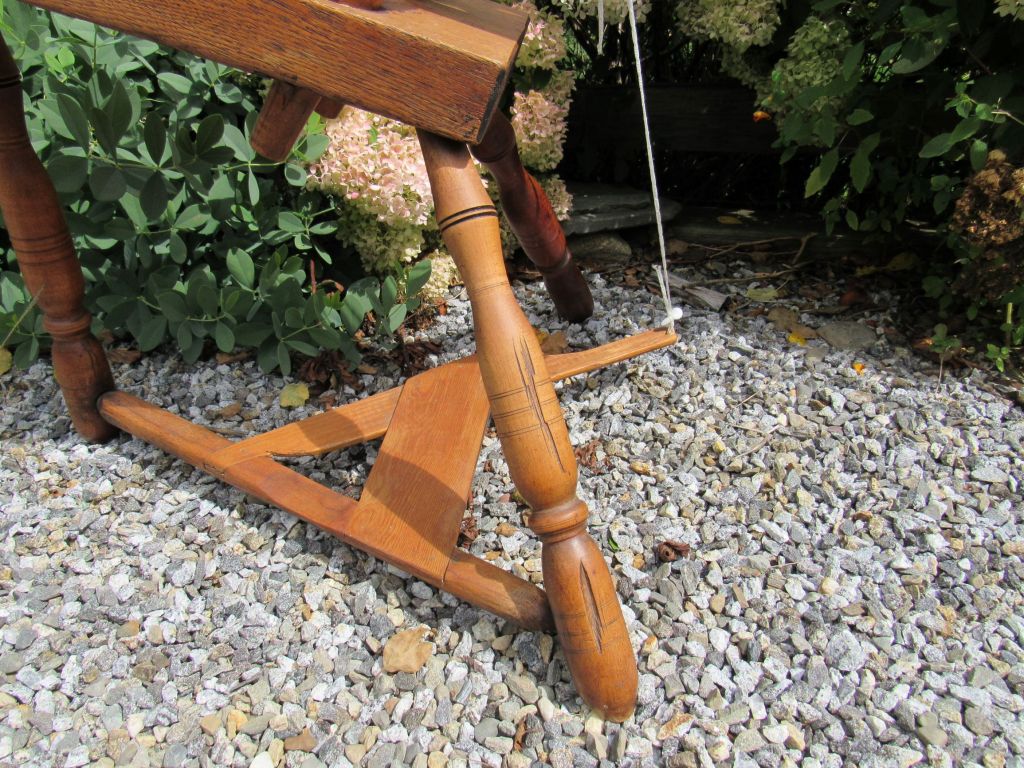
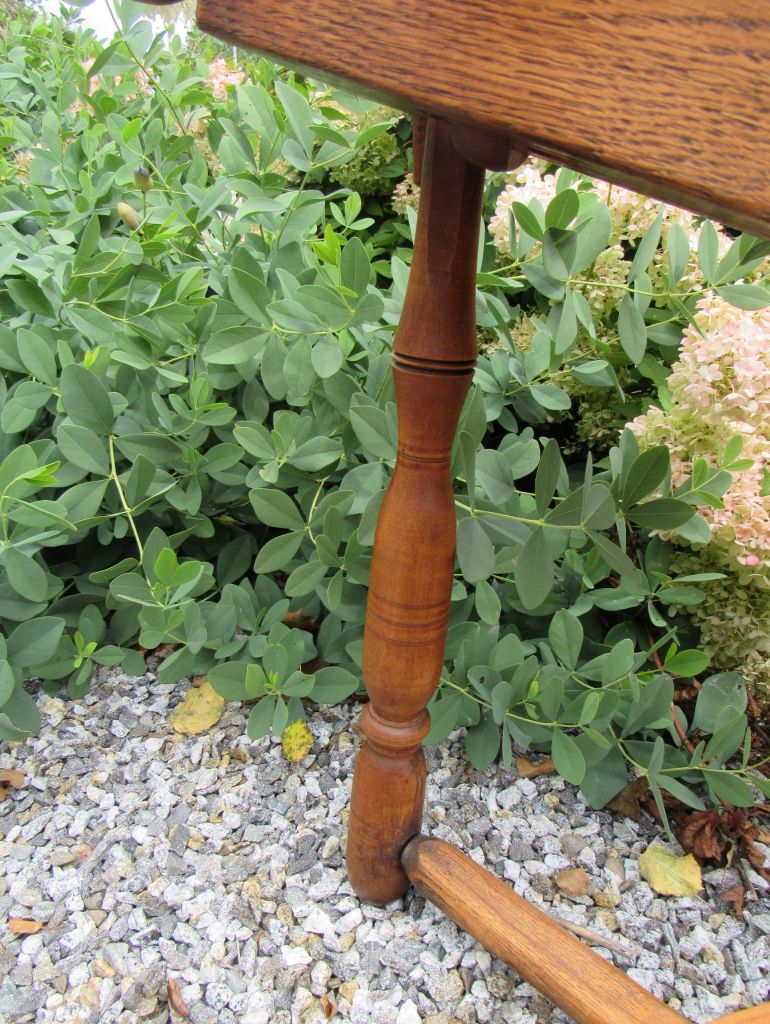
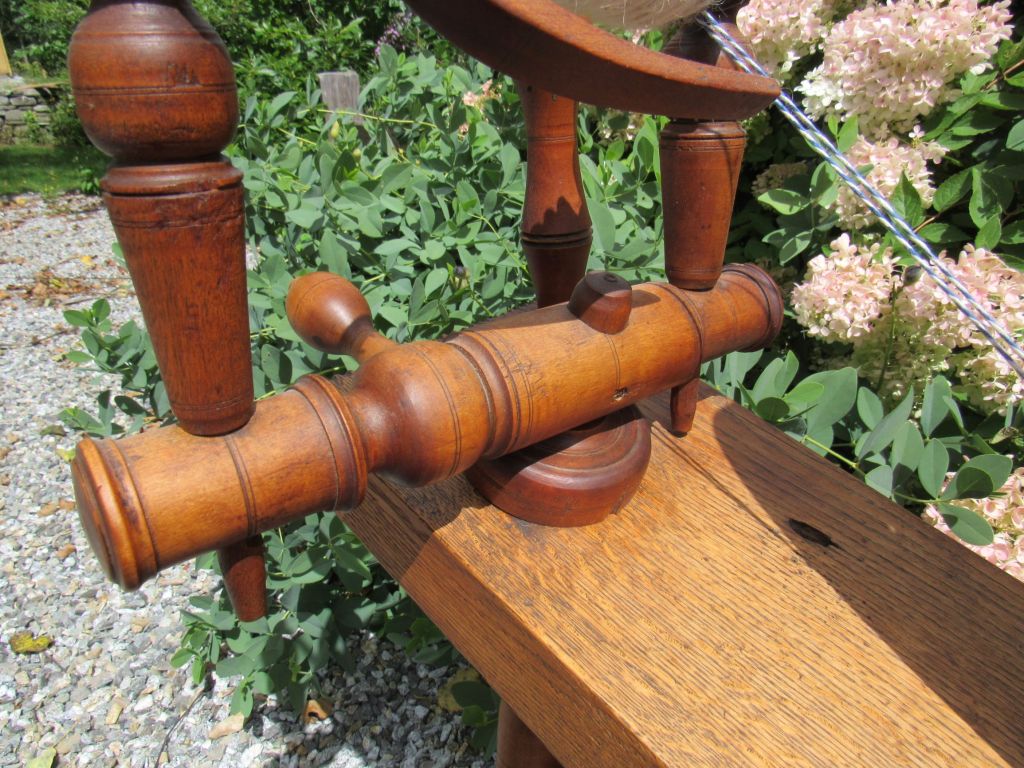
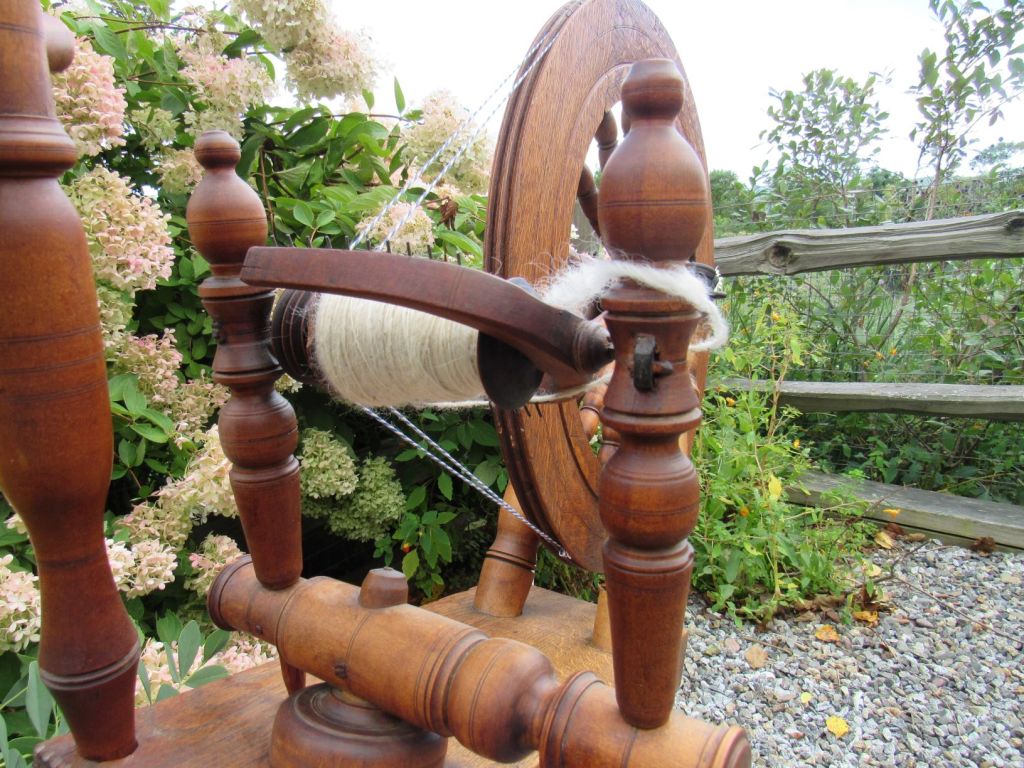
Marlboro’s flax wheels are easily recognizable.
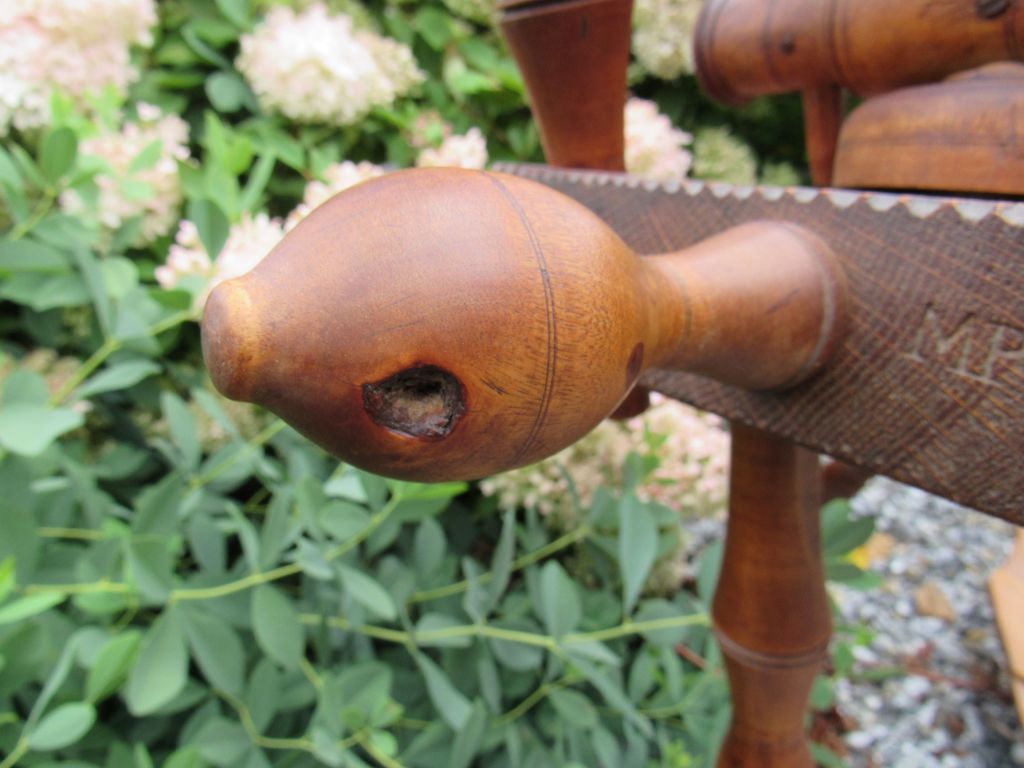
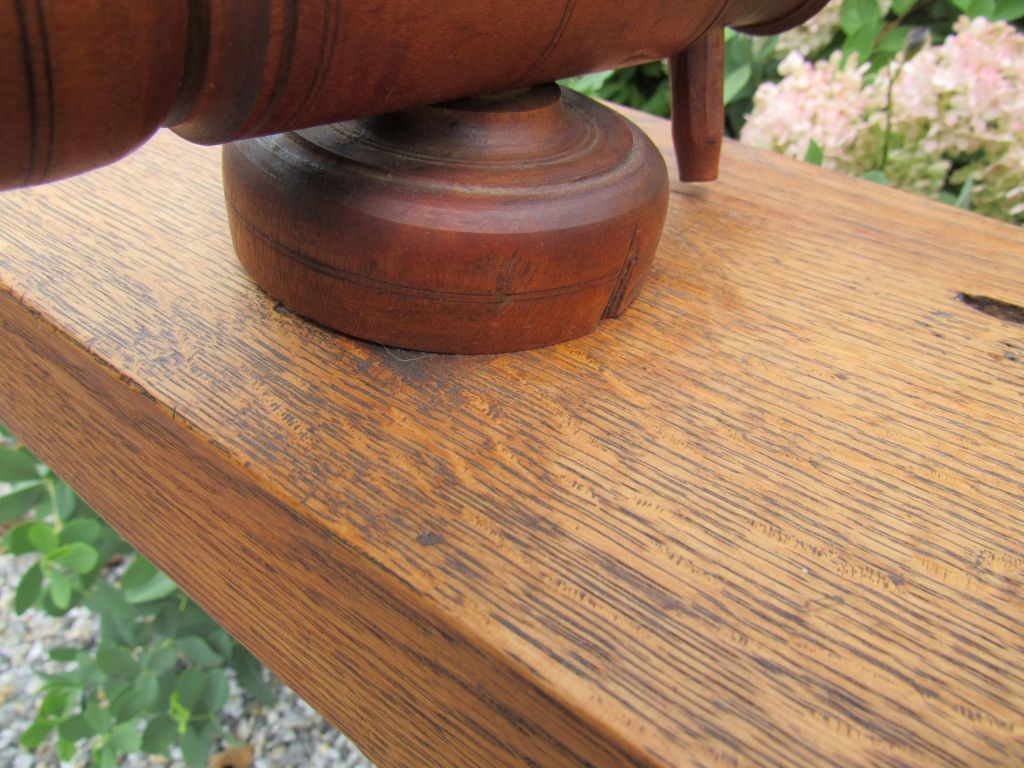
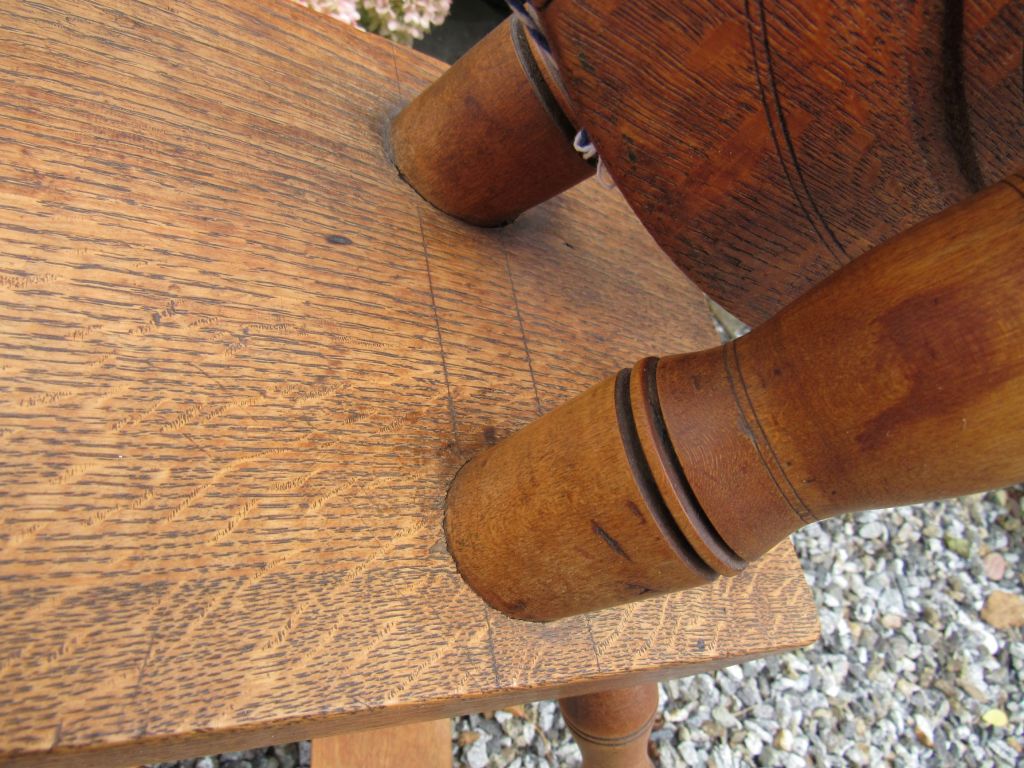
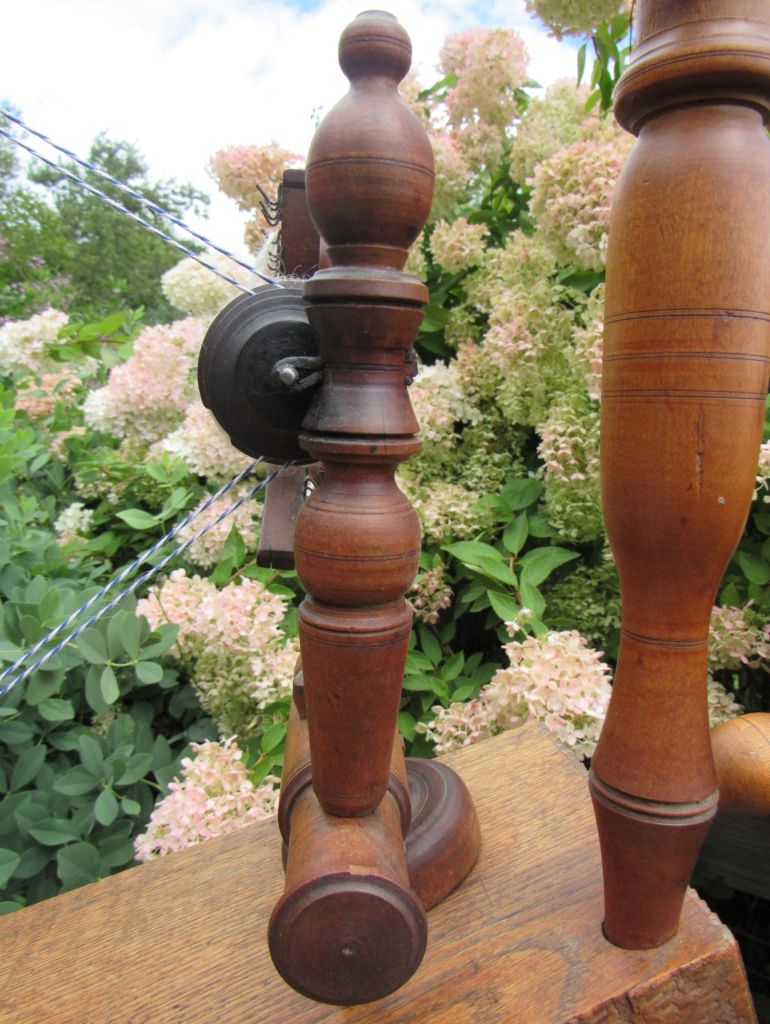
Aside from his doubled initial stamps on the table end, the turnings are somewhat unusual in their generous proportions. There is nothing skinny or delicate about these wheels, they are plump and ripe-looking.

My wheel has a replacement treadle.
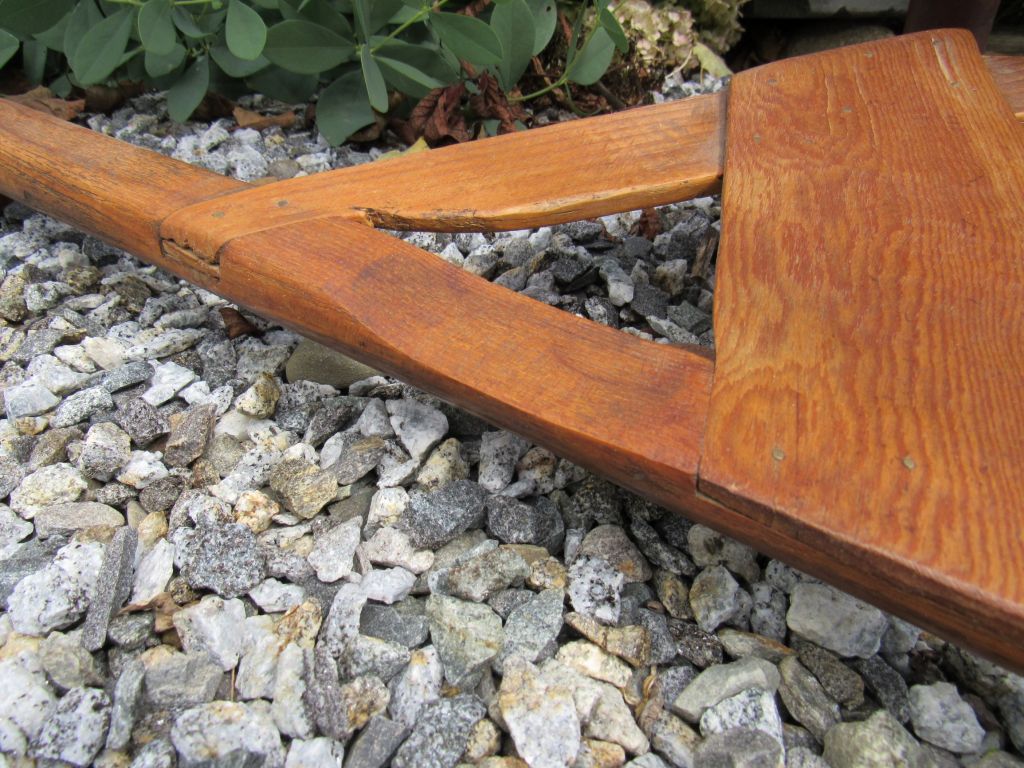
Marlboro’s treadles have a distinct notch such as this one found by a friend in Searsport. Here is her wheel and the treadle.


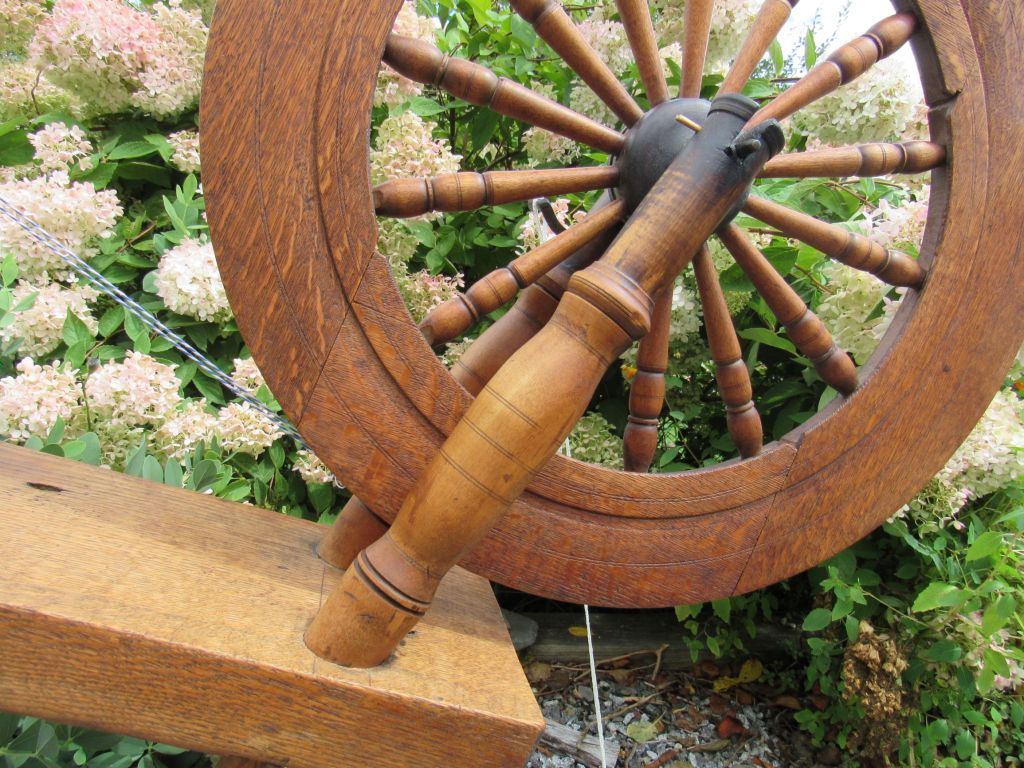
On my Packard wheel, the back side of the drive wheel has black marks, which look somewhat like burn marks, but in odd patterns.
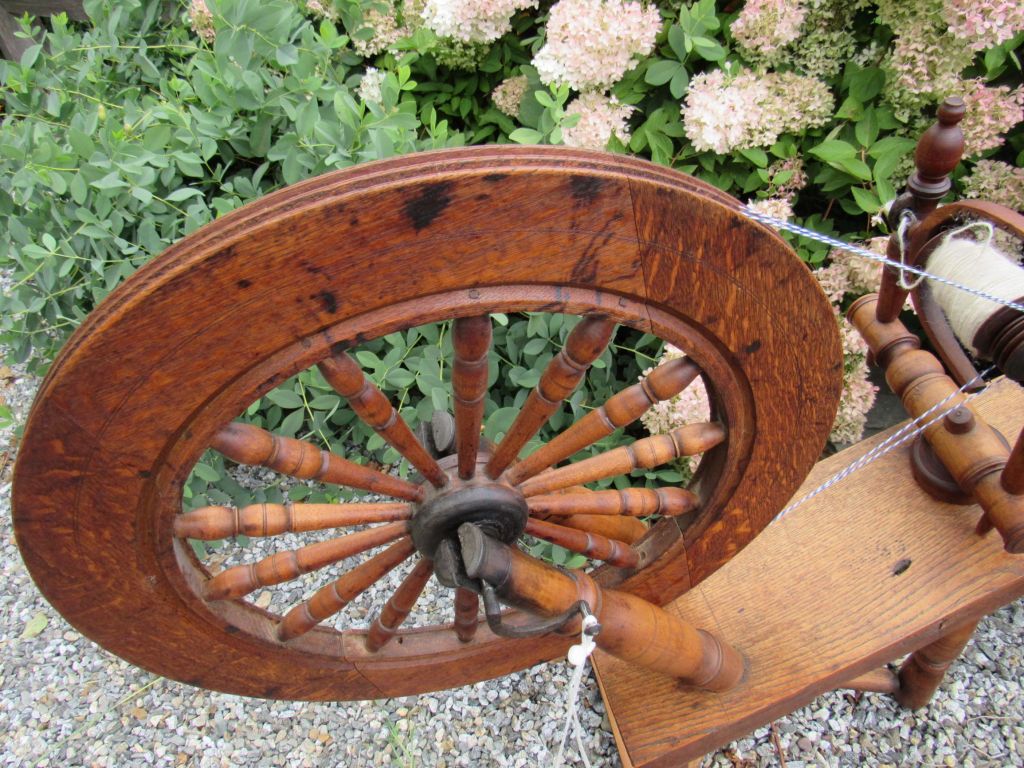
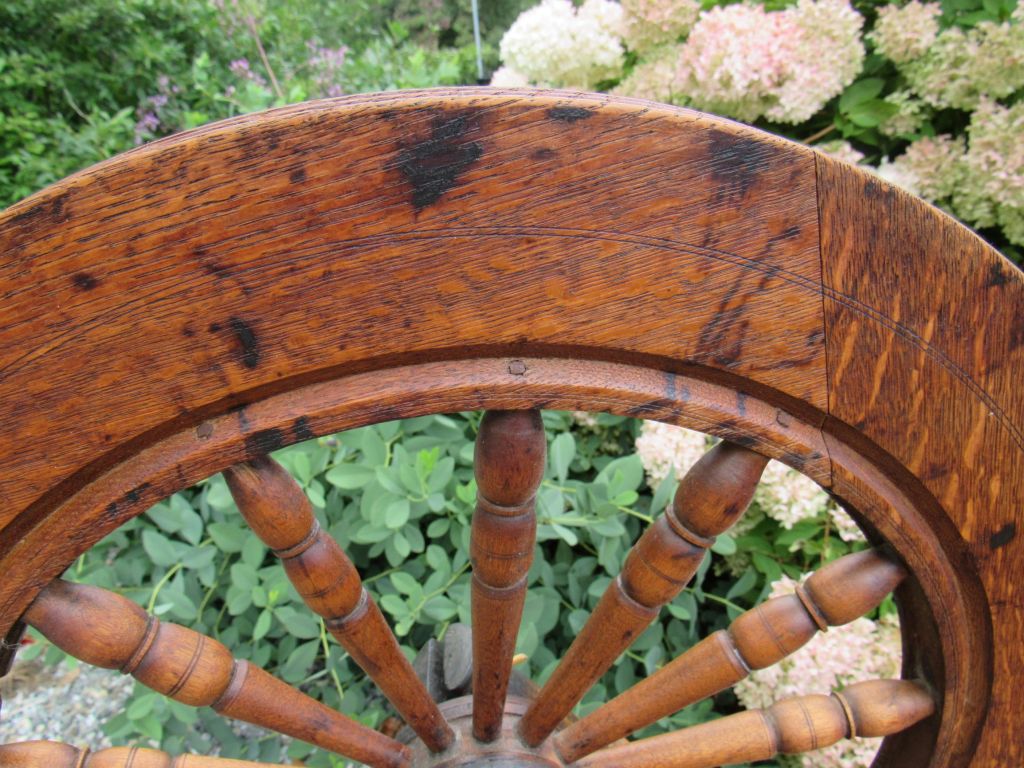
It also has gouge marks on the table, which remain something of a mystery.
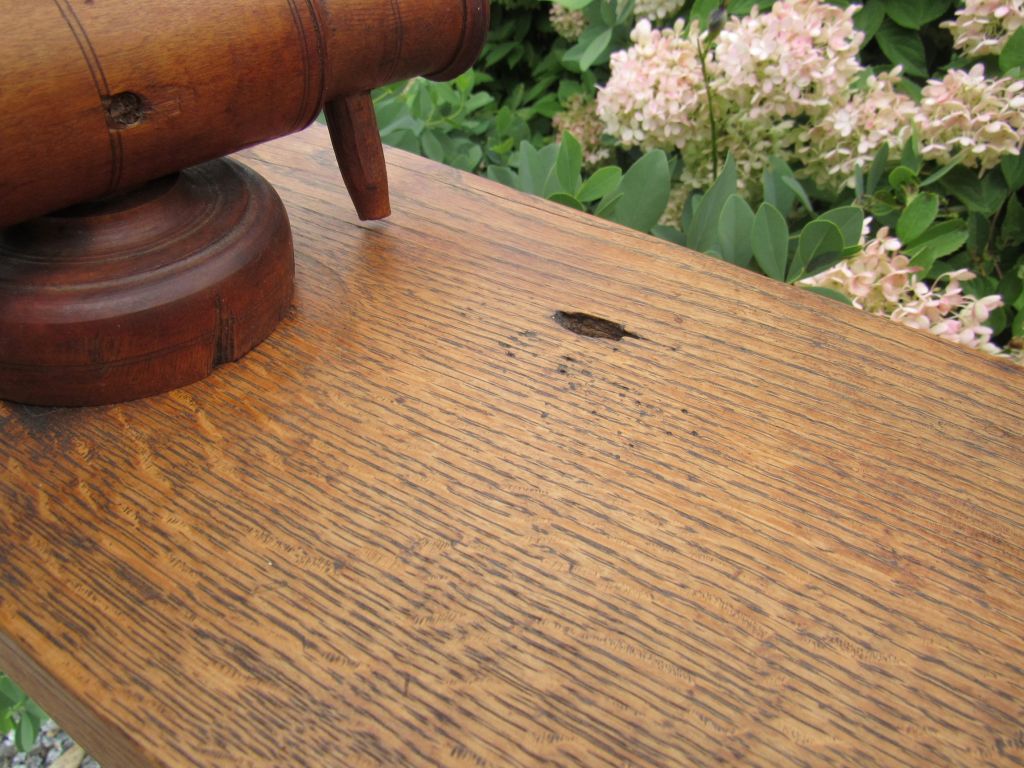
They are usually attributed to the practice of sticking knives (or forks) in the table to separate or guide the double drive band, perhaps when plying.

My wheel has a quirk shared with another of my Maine wheels, in that if the whorl is tightened fully, it tends to pinch the bobbin so that it doesn’t turn freely, so I need to back it off slightly. Once that is done, she spins fast and sweet.
I was delighted to be contacted this week by a woman seeking information about her beautiful Packard wheel bought in New York state. It is complete with a full distaff and in amazing condition. It is satisfying to see that Marlboro’s wheels have been cherished and maintained so that they can continue to spin for us two hundred years later.

The wonderful quote on Marlboro is from:
Miller, Frank Burton, Soldiers & Sailors of the Plantation of Lower St. Georges Maine, Who Served in the War for American Independence, Genealogical Publishing Co., 1999.
Update December 2020:
I recently ran across this old photograph for sale in eBay. According to the seller, it was taken in 1914 and is from a photo album belonging to the Fountain and Sproul family from Round Pond and Sproul Hill in Bristol, Maine. The back of the photo identifies the woman knitting as Margy Johnson. What caught my eye was the swift behind Margy Johnson and, of course, the spinning wheel, which is a Marlboro Packard wheel. Bristol is about thirty miles from Union, where the wheel was made. It is hard to tell from the photo whether the wheel was still in use. The treadle appears quite worn, the footman is attached and there appears to be a drive band. It felt like I met an old friend when I recognized this wheel.

 Exquisite Machinery