
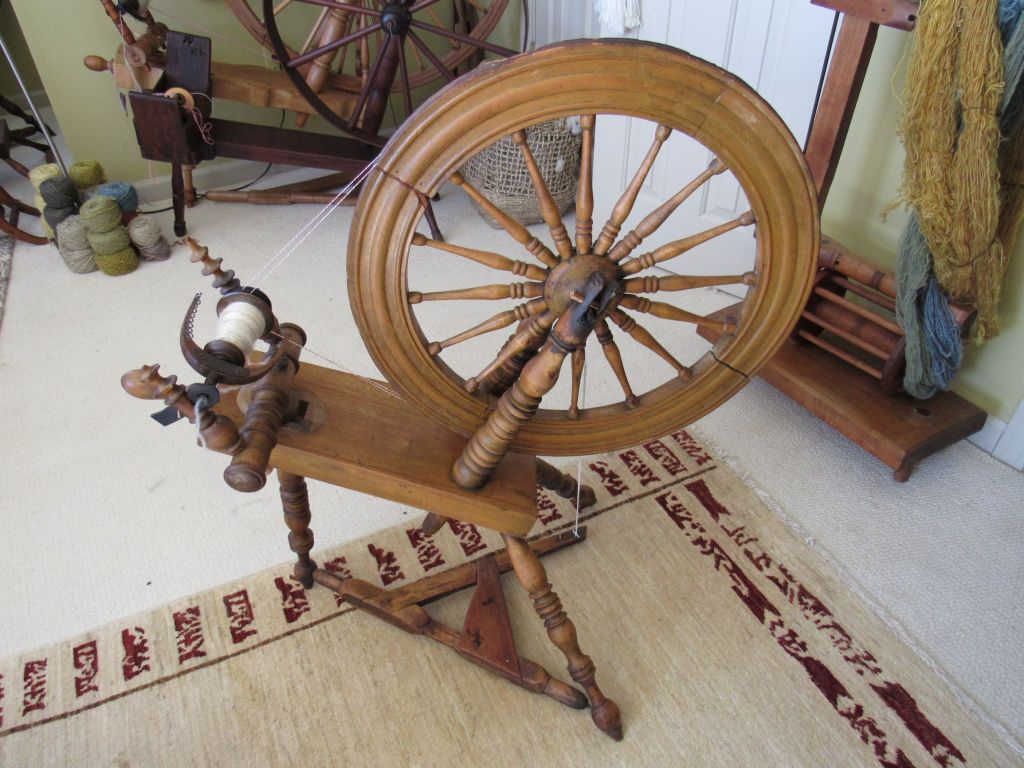
While Olympe (previous post) is my biggest Quebec wheel, Hortense is my smallest. She is unmarked, but likely made by a member of the Paradis family. This multi-generational Quebec wheel-making family was centered in St. Andre, Kamarouska, on the St. Lawrence river northeast of Quebec City.

There are wheels marked by Amable Paradis (1811-1891), his sons Phillipe, Amable Balthasar (Balt), and Aram Baptiste. In addition, some of Amable’s other sons, his brother, Antoine, and a third generation, including Alfred and Lucien, also were wheel makers. They were a productive clan, turning out wheels for many decades. There is much more information about this interesting family in Caroline Foty’s book Fabricants de Rouet.
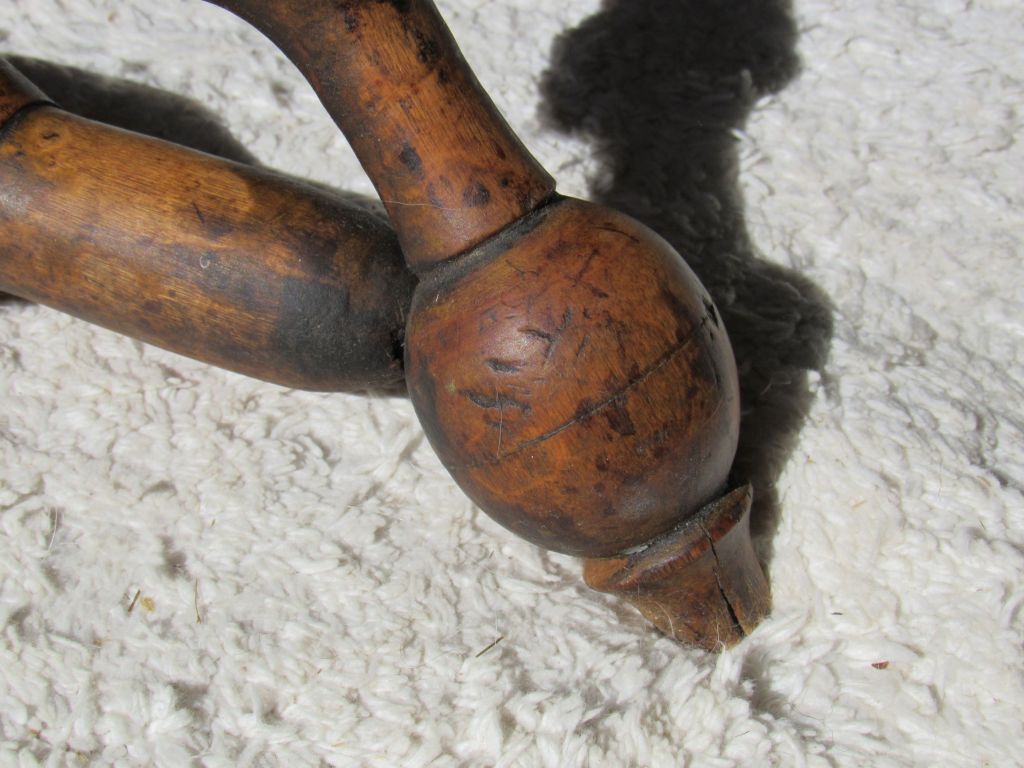
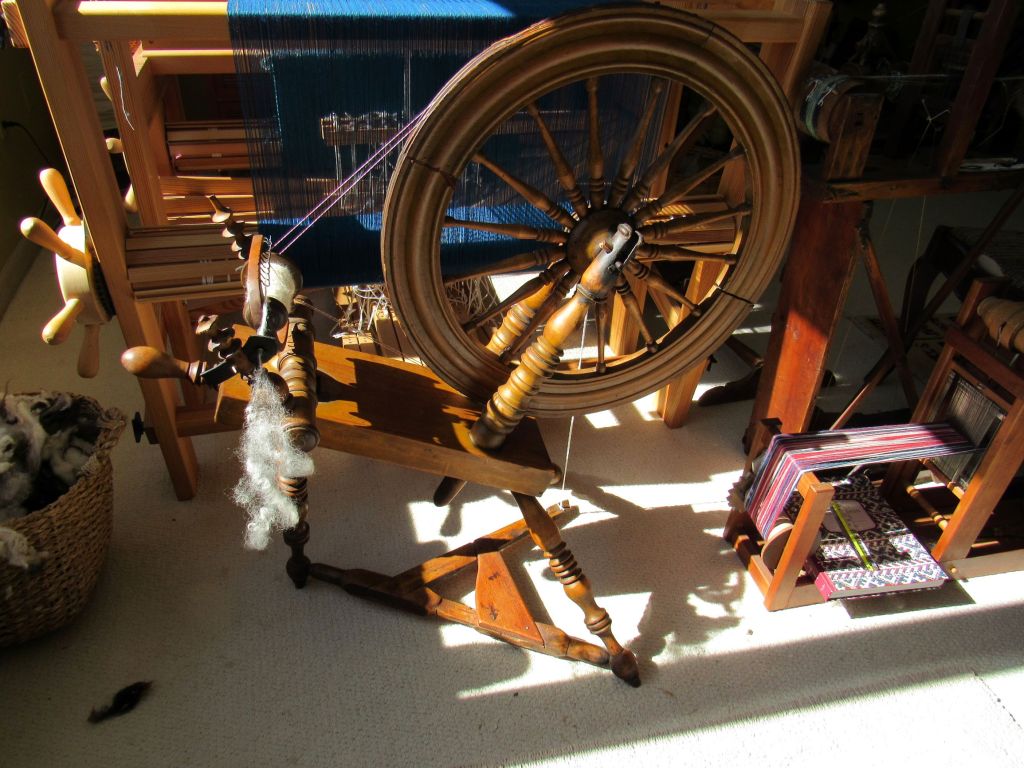
Although a few other Quebec wheels share some characteristics of Paradis family wheels, Hortense appears to be a fairly classic Paradis. She is small,

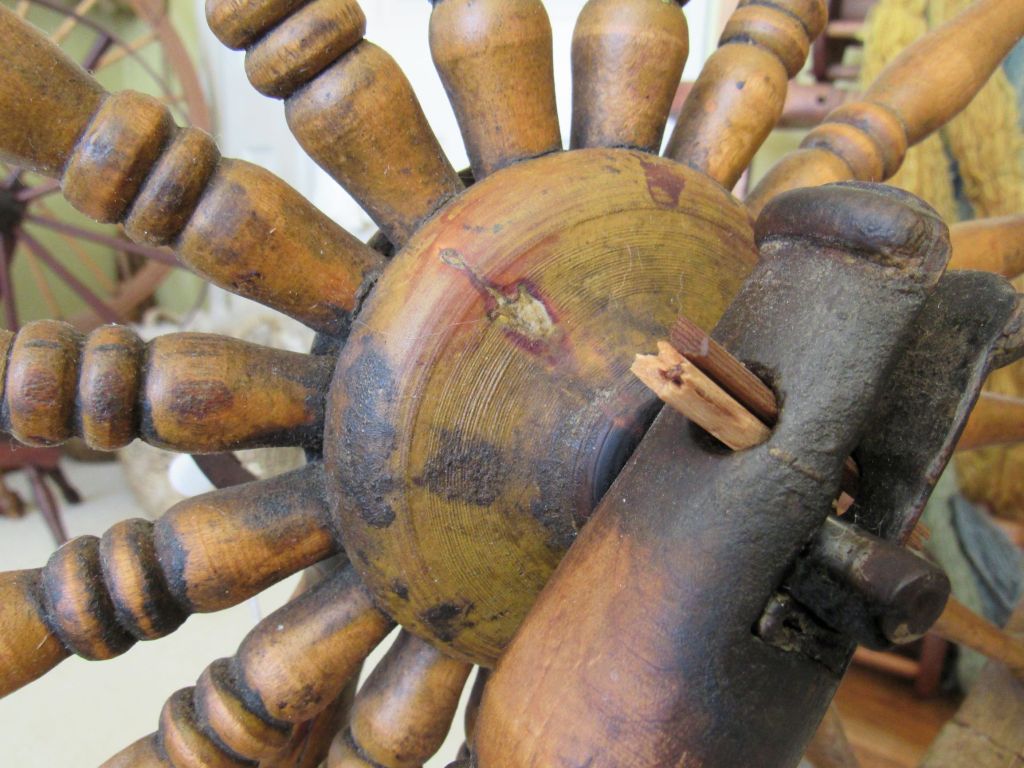
with screw tension, pagoda (or Jetson) maidens, distinctive spoke turnings, and yellow paint.
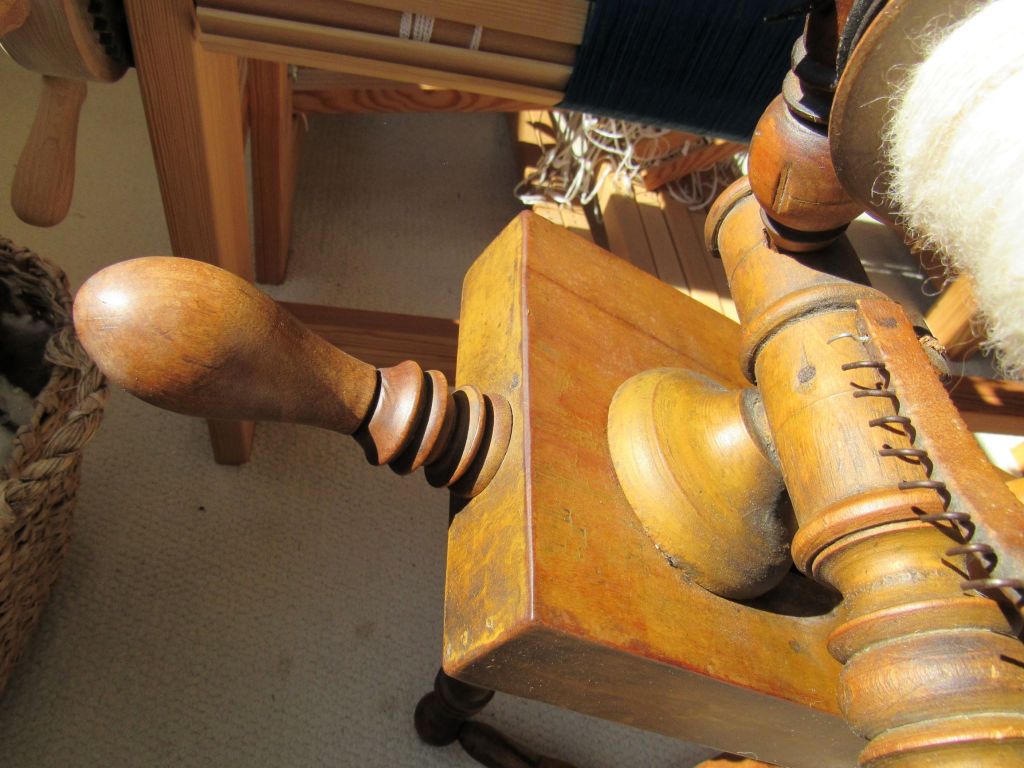
Hortense turned up at a local auction, offered with a great wheel. She was in rough shape, but her perky stance captivated me. I am a sucker for wheels that resemble dogs in a “play with me” position, and she certainly has that look.
Besides, no one bid on her. I could not leave her behind. So, for $20, this little survivor and a great wheel came home with me.
Hortense is loaded with character. While her color is primarily yellow, she has splashes and undertones of red peeking through.
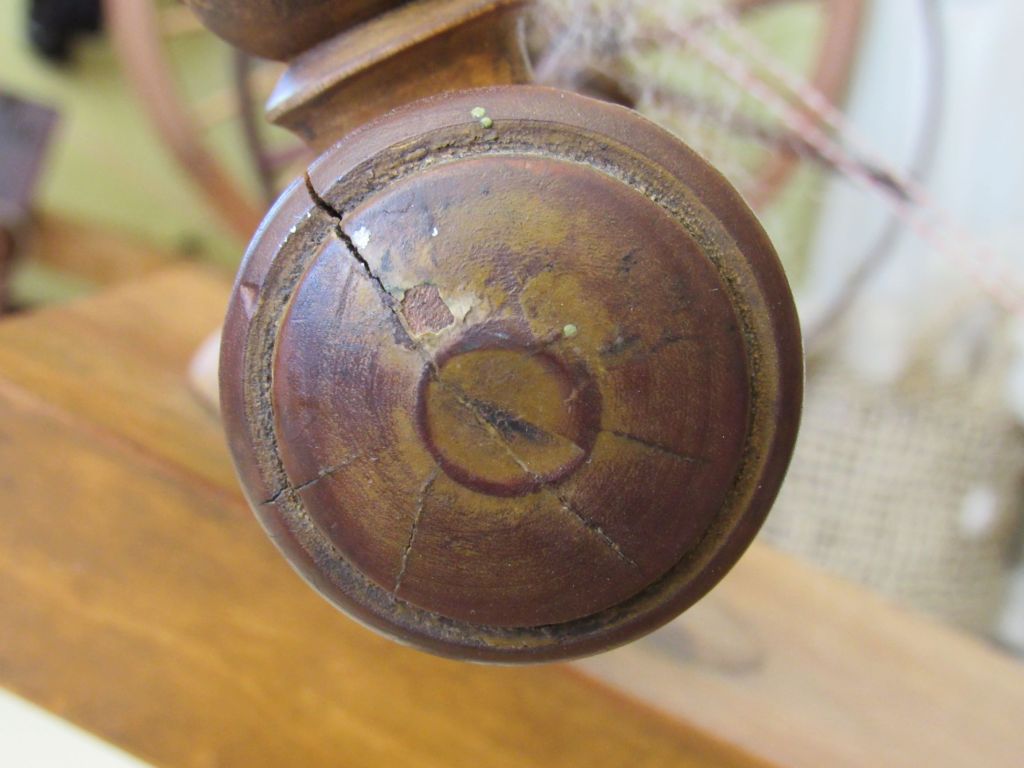
She was a hard worker, carrying evidence of long years of use and repeated repairs.
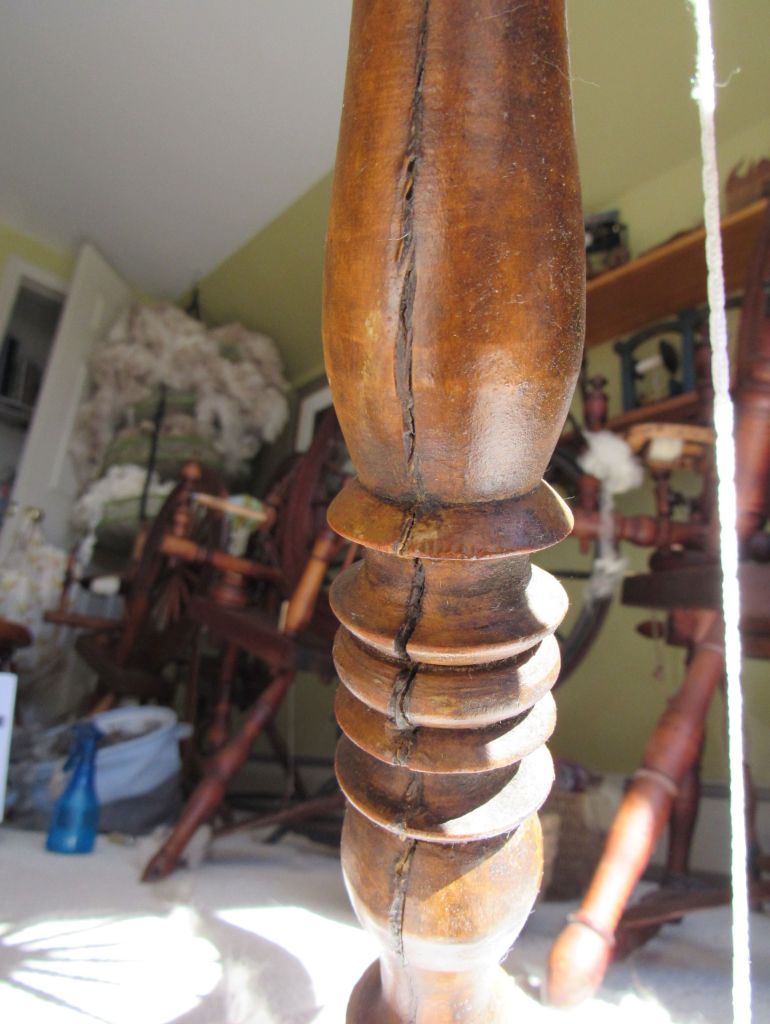
Those repairs were worth it because she continues to be a lovely little spinner.

She has cracks and knots and battered maidens.
Her hub is gruesomely cracked,
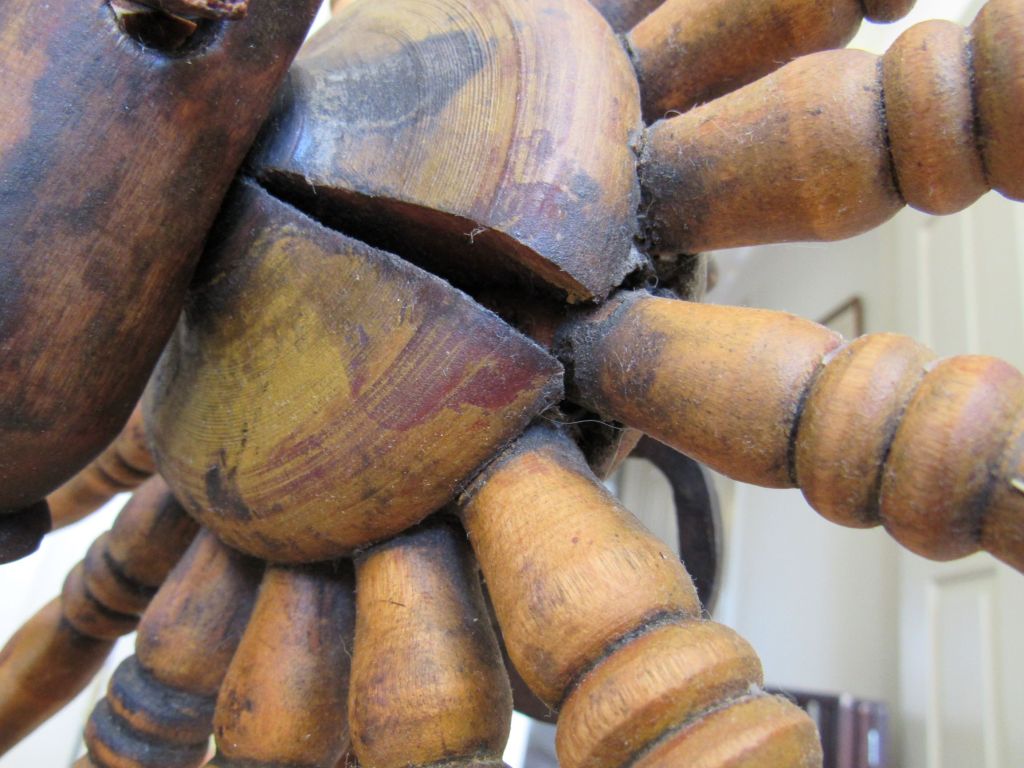
with what appears to be a wedge of stiff leather inserted on one side.

Despite the yawning crack, the axle remains solid in the hub, with no slippage.
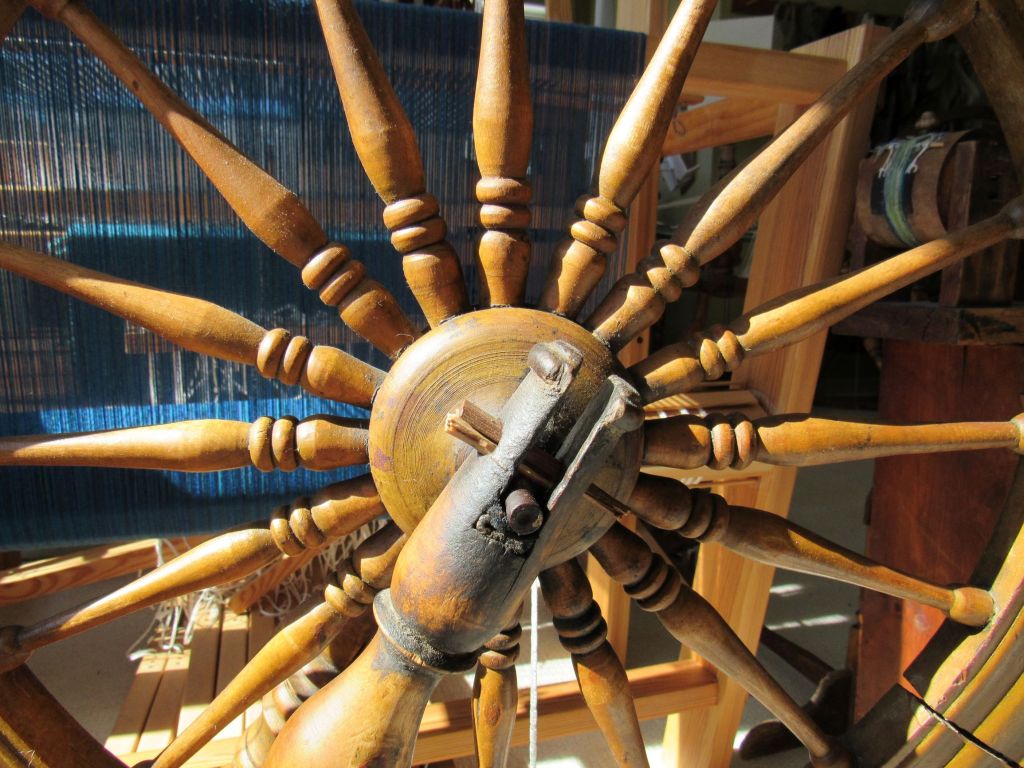
A gap in the drive wheel also has a thin piece of wood inserted.

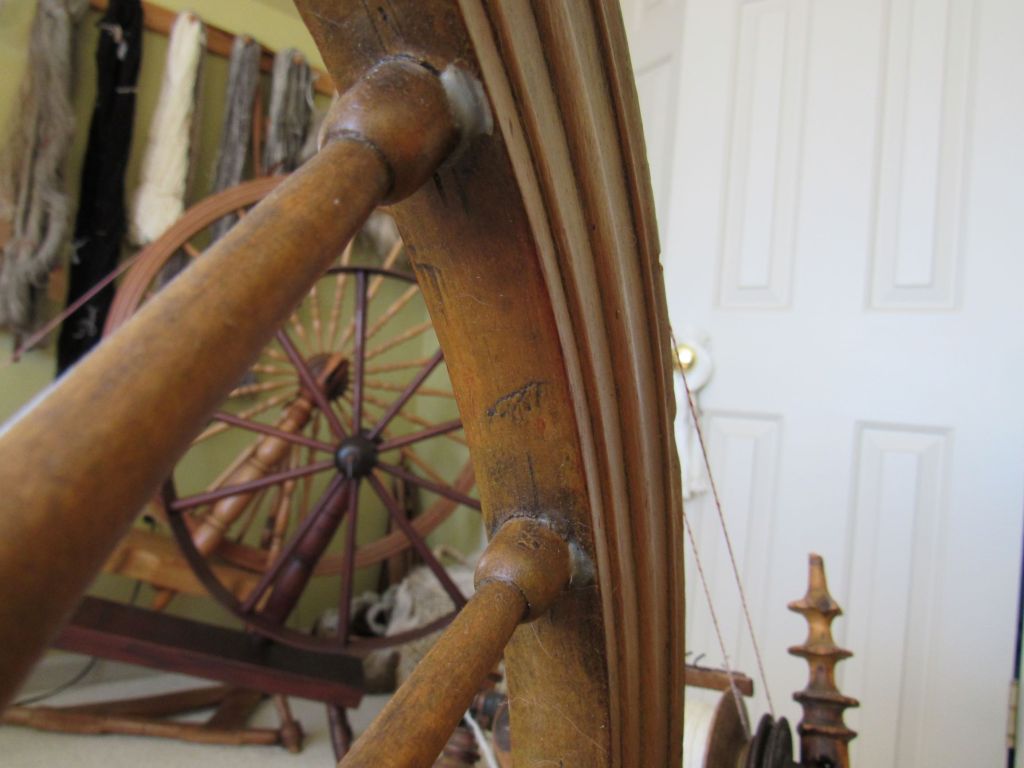
Many of the spokes have been messily glued to the rim.
The wheel uprights–
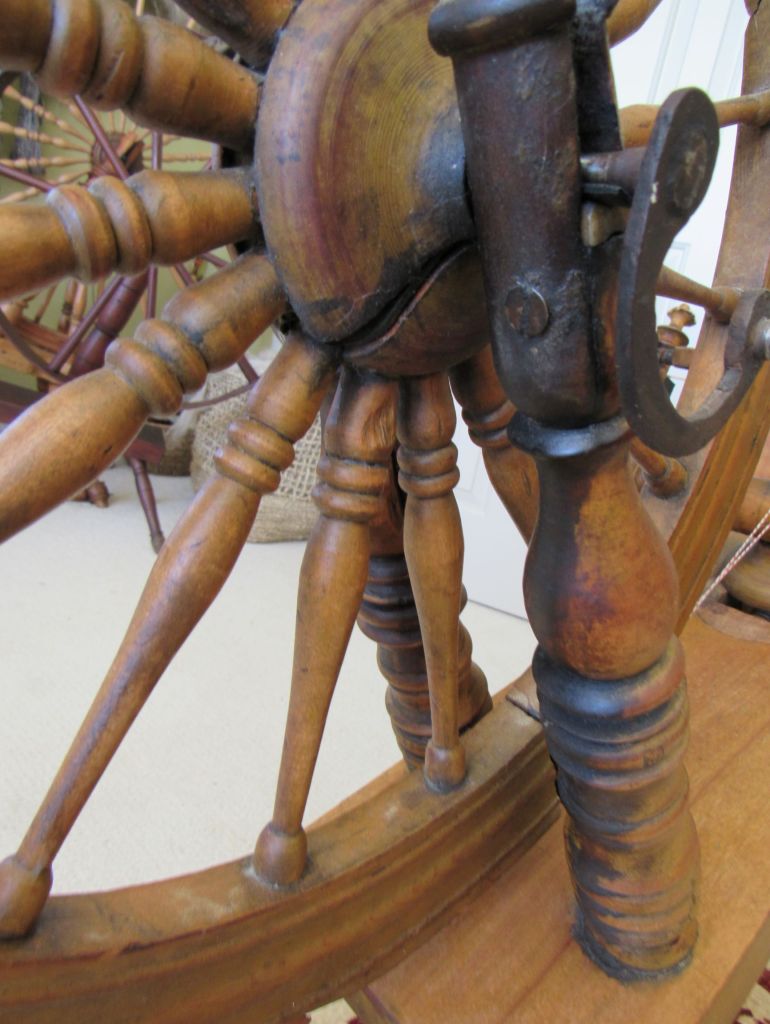
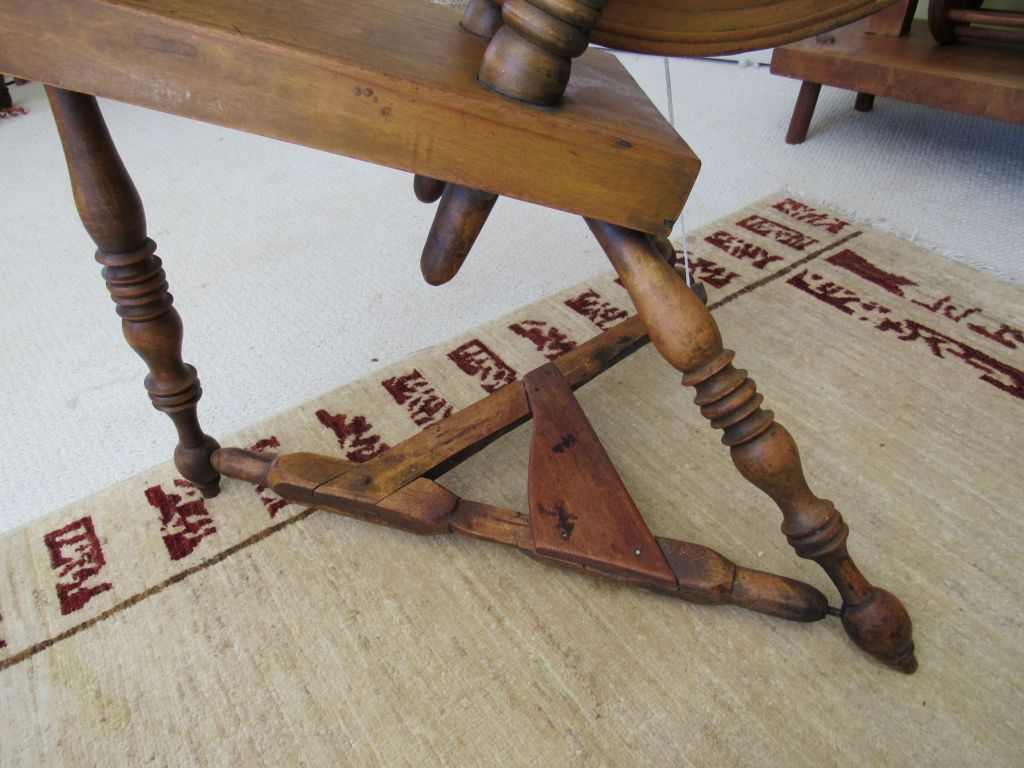
black to the table with dripping grease residue–extend quite far below and are pegged under the table.
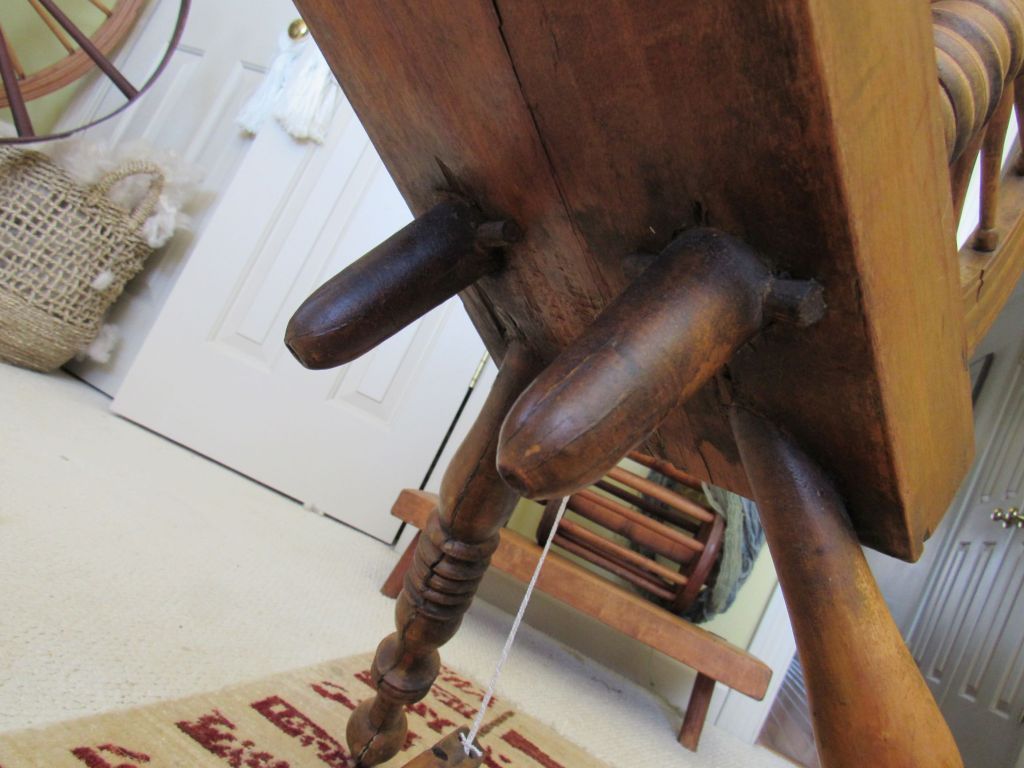
The axle bearings appear to be horn, or possibly bone,
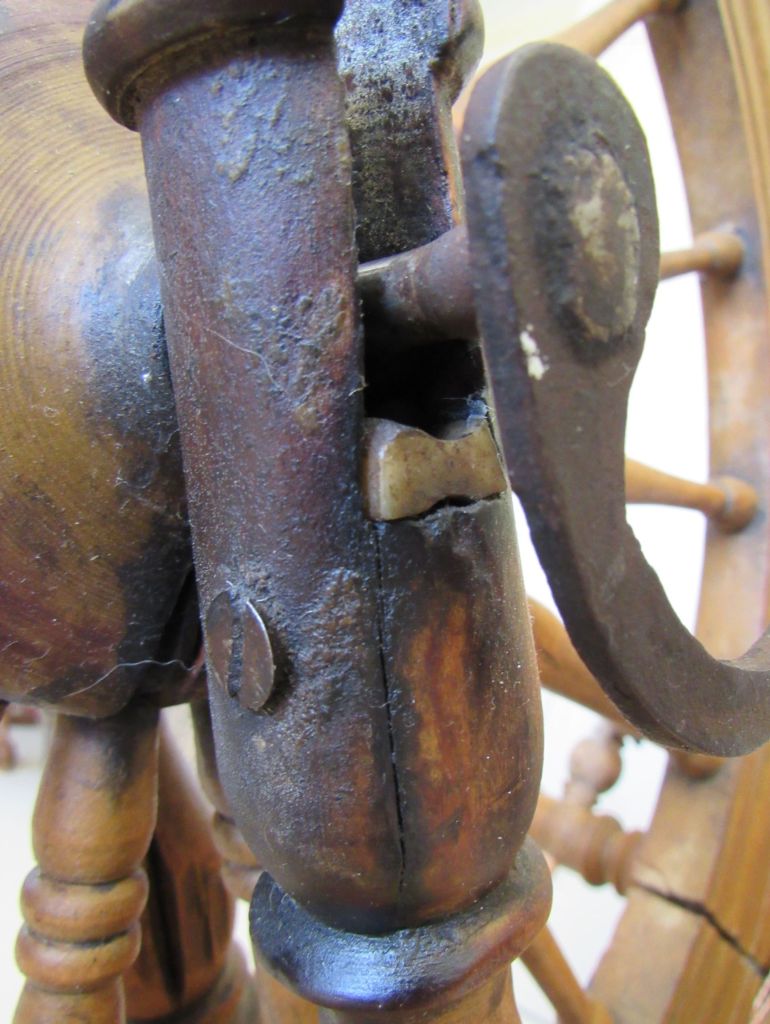
and there is a screw in the side of the rear upright that may have been used to stabilize a crack. The little treadle is not original–its treadle supports are well worn, but it is not.
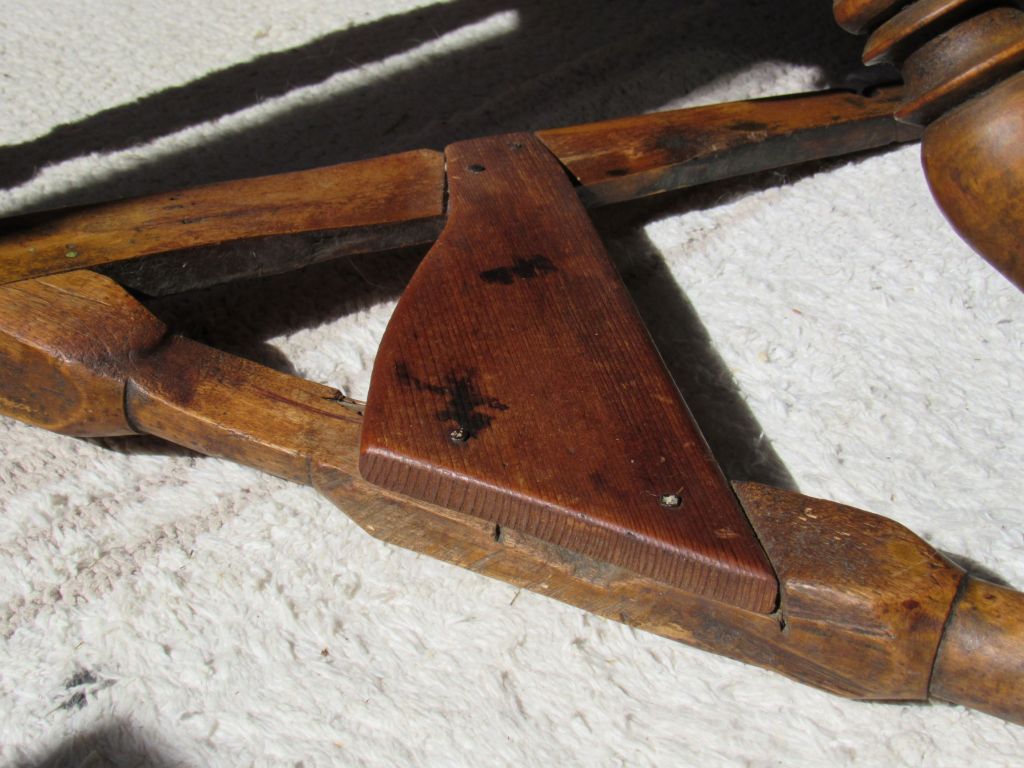
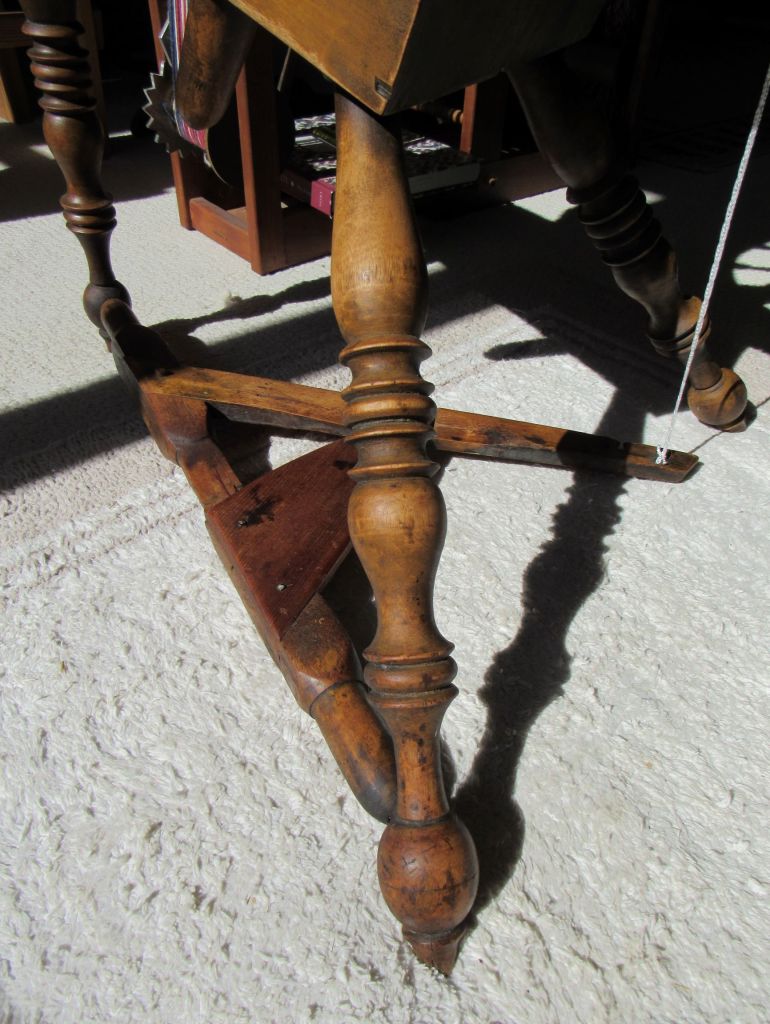
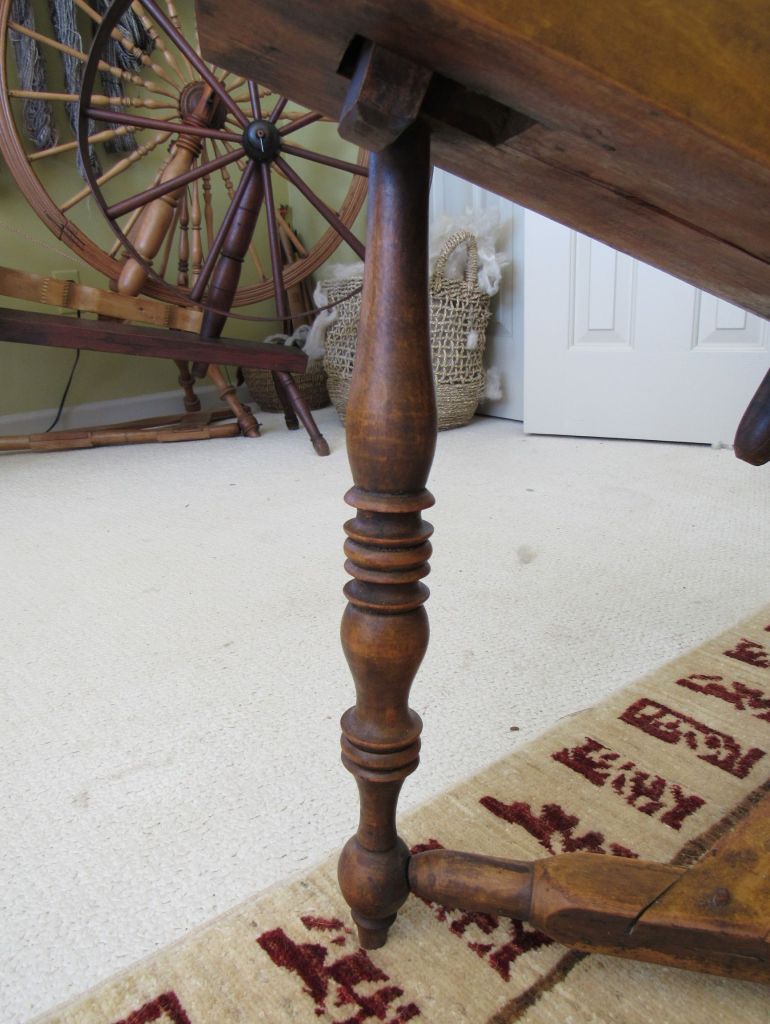
She has lovely legs.
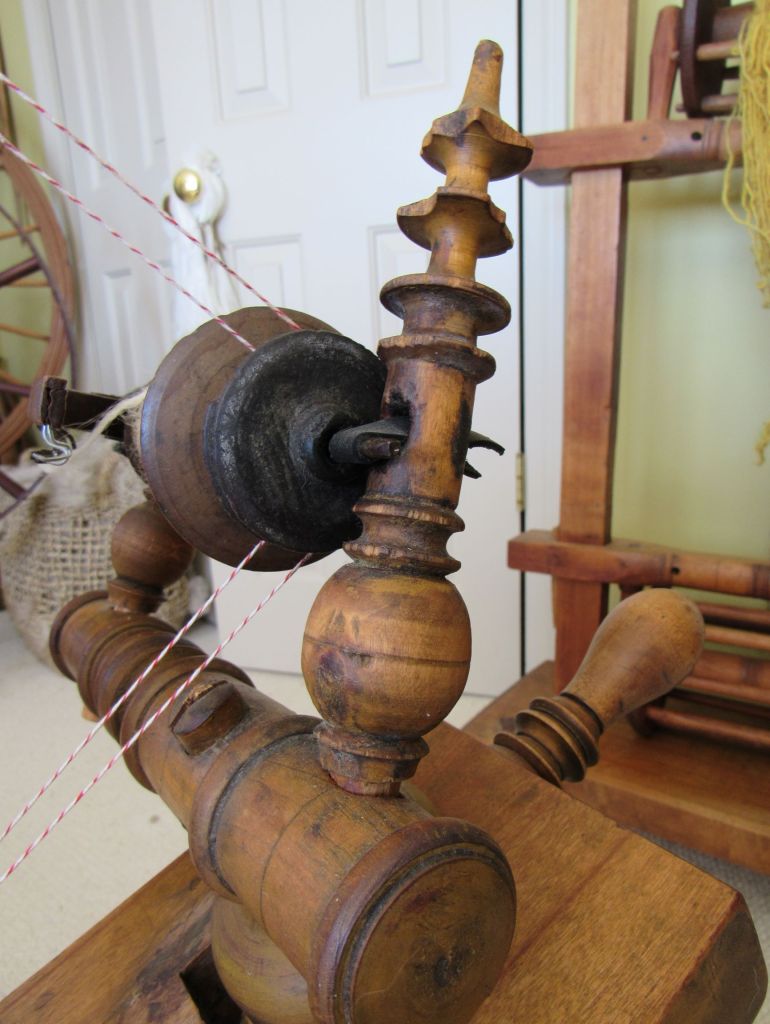
The flyer probably broke clear in half and was repaired with glue, a thick thread wound around the orifice end,
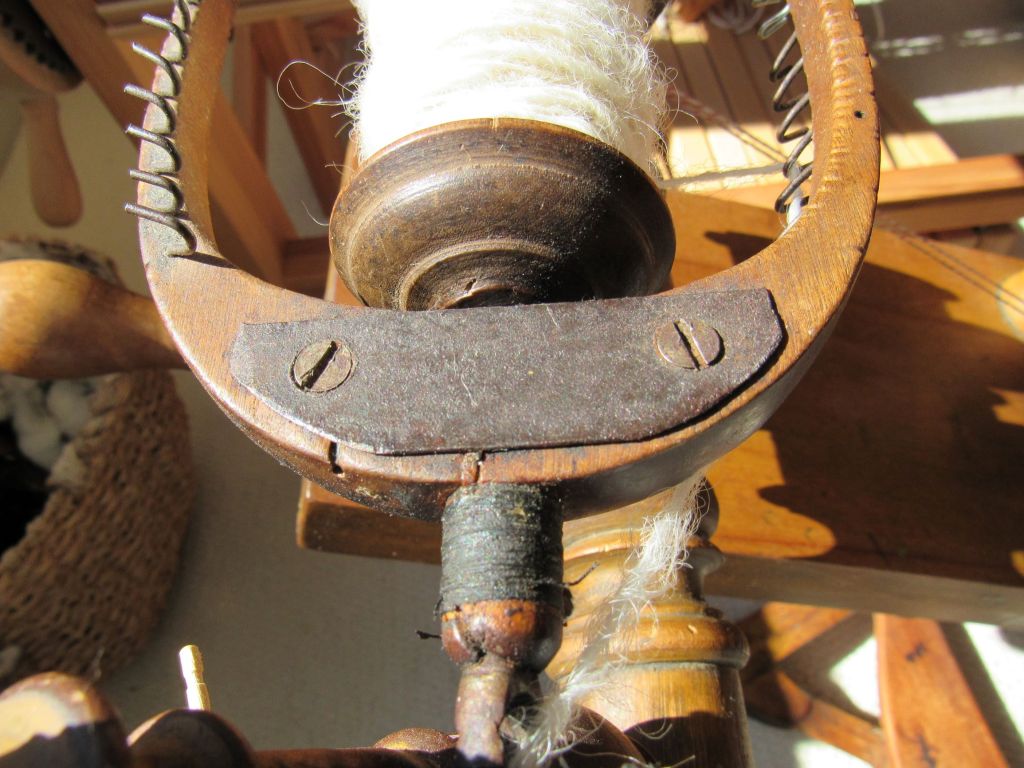
and metal plates screwed on to both sides.
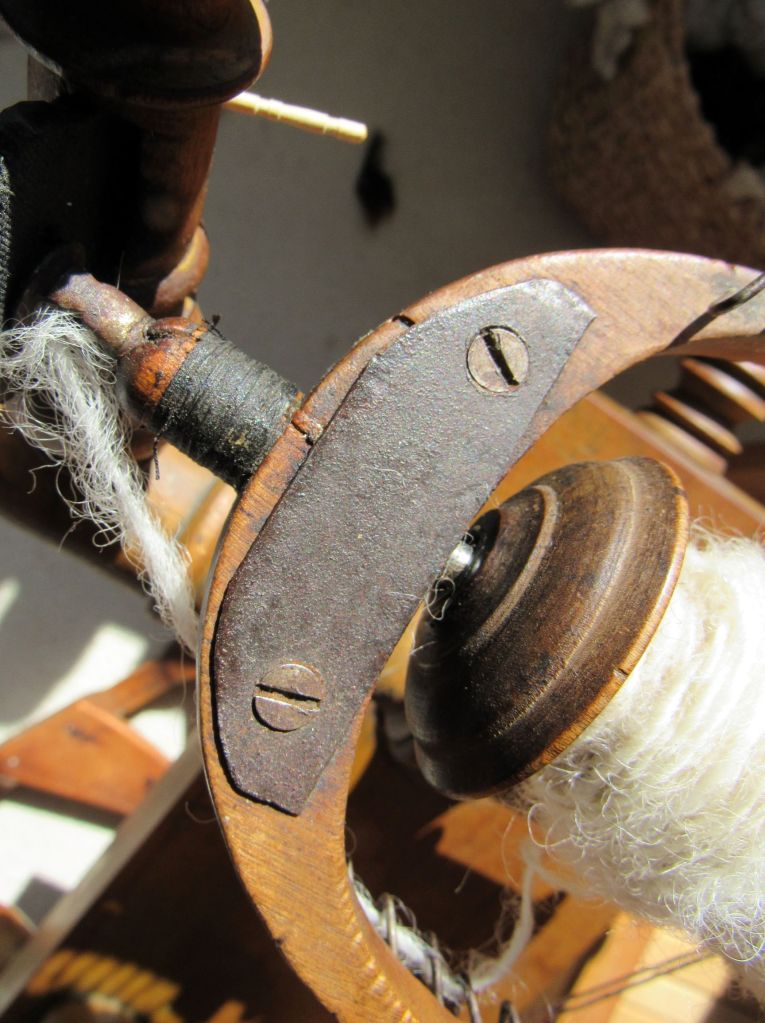
There are two types of wear marks on the flyer arms. There are a series of close-set ridges on the inside of each arm—marks that are found on many old wheels.
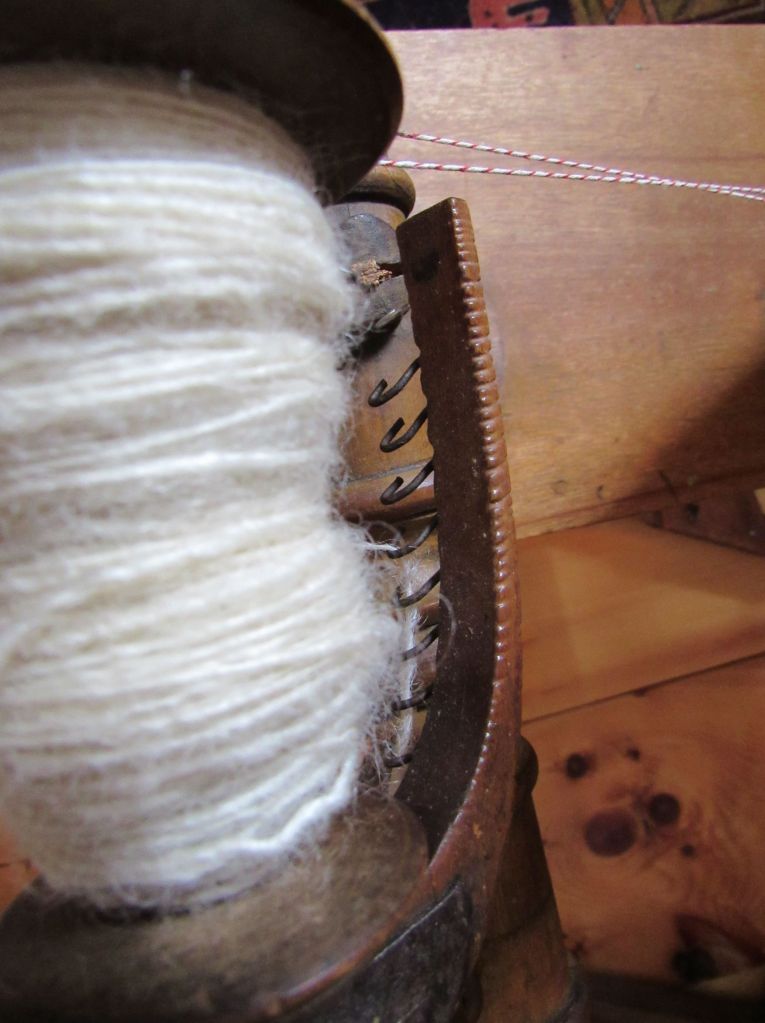
As explained in an earlier post, “Zotique,” I suspect these ridges were made from winding yarn off the bobbins rather than cross-lacing.

Hortense has some wear marks on her tension screw that could be from winding off around the screw.
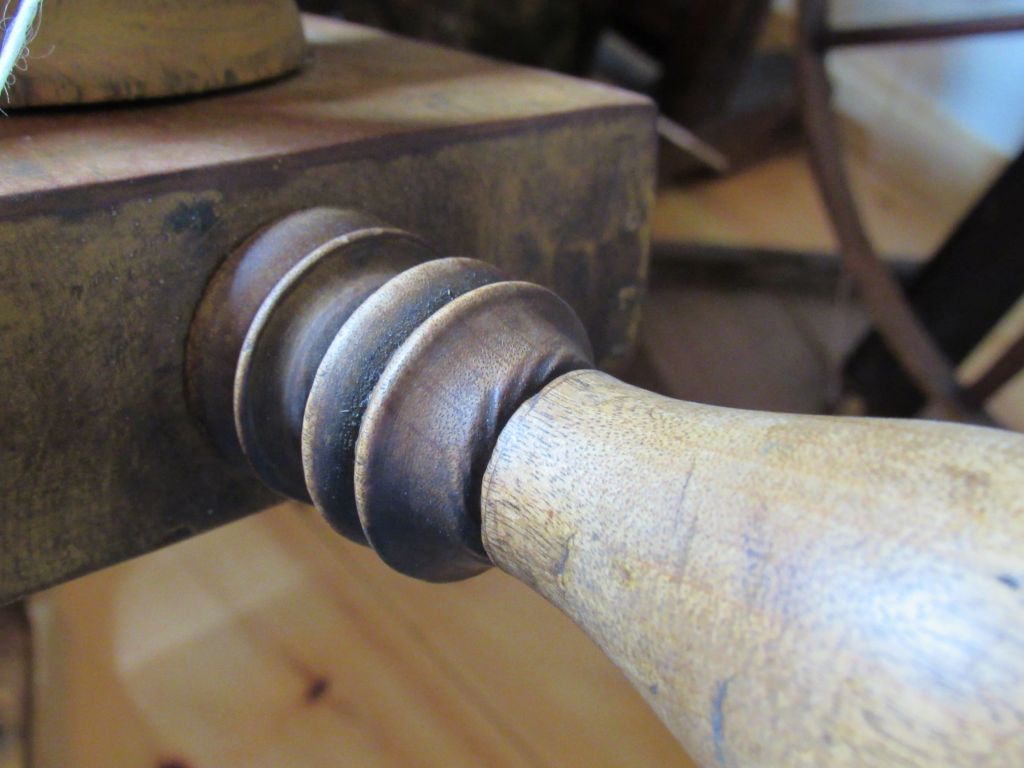
What is most interesting about Hortense’s flyer, though, is a second type of more unusual wear marks that go across the flyer arms.
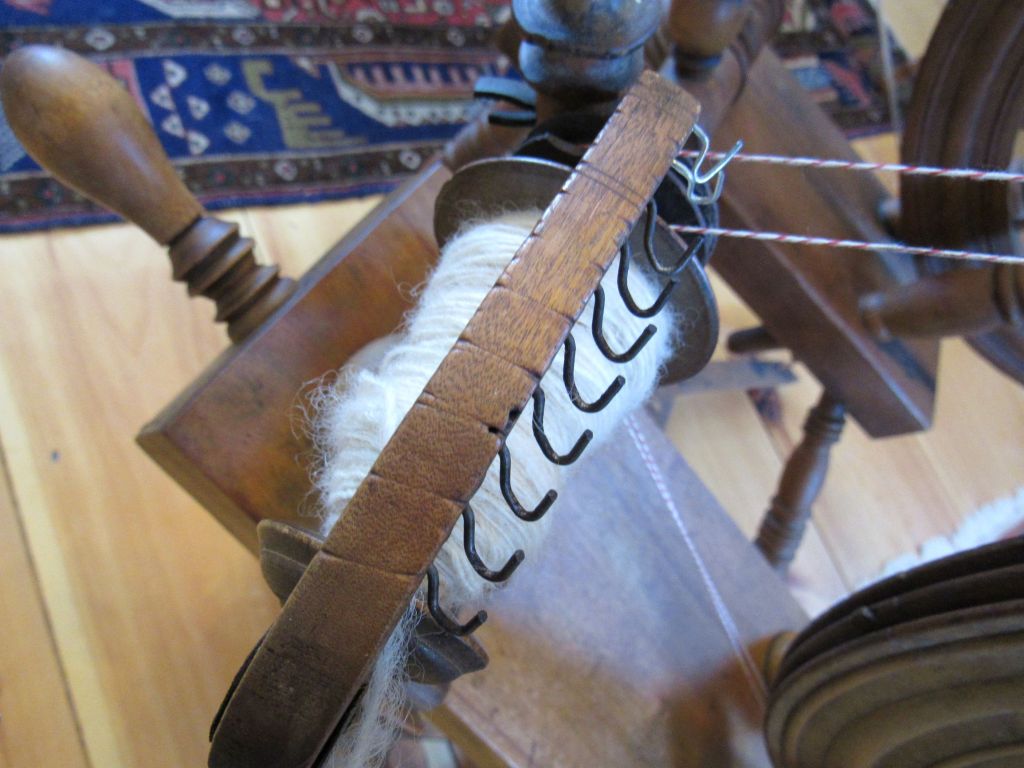
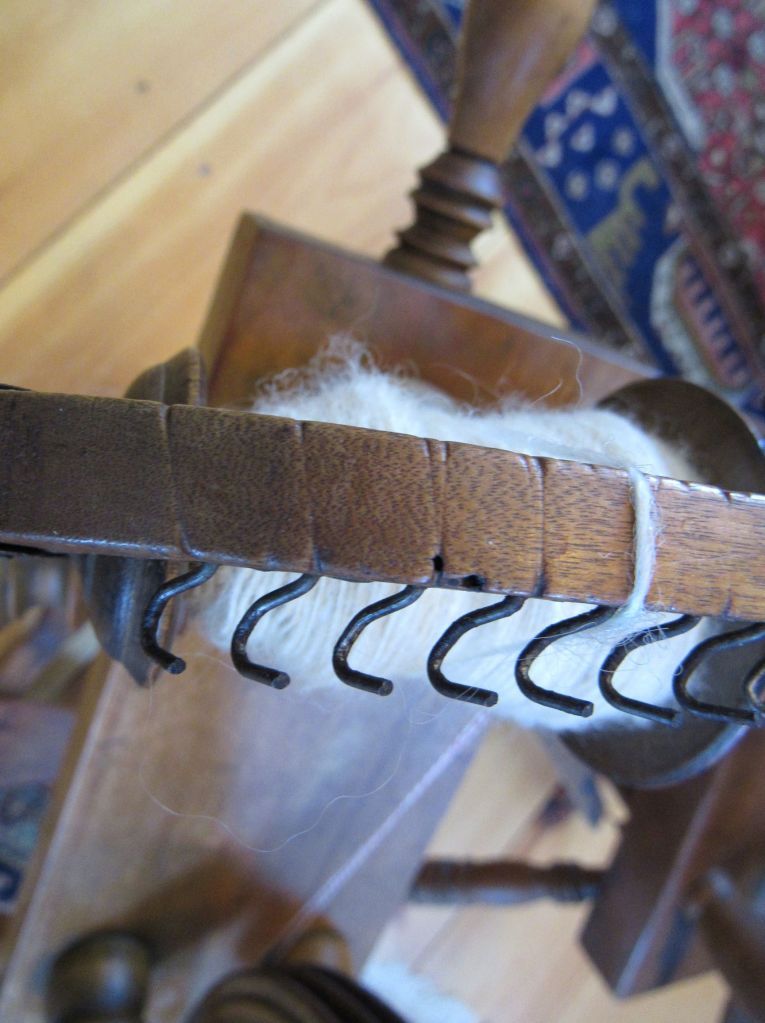
These marks appear to be consistent with those made by cross lacing.
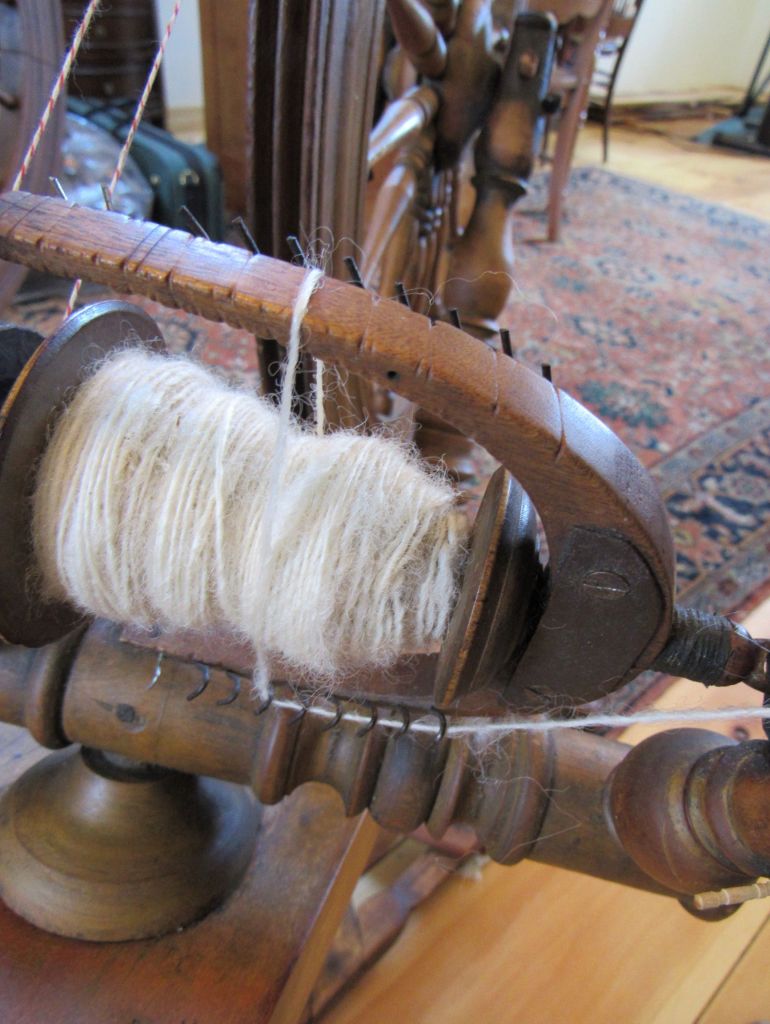
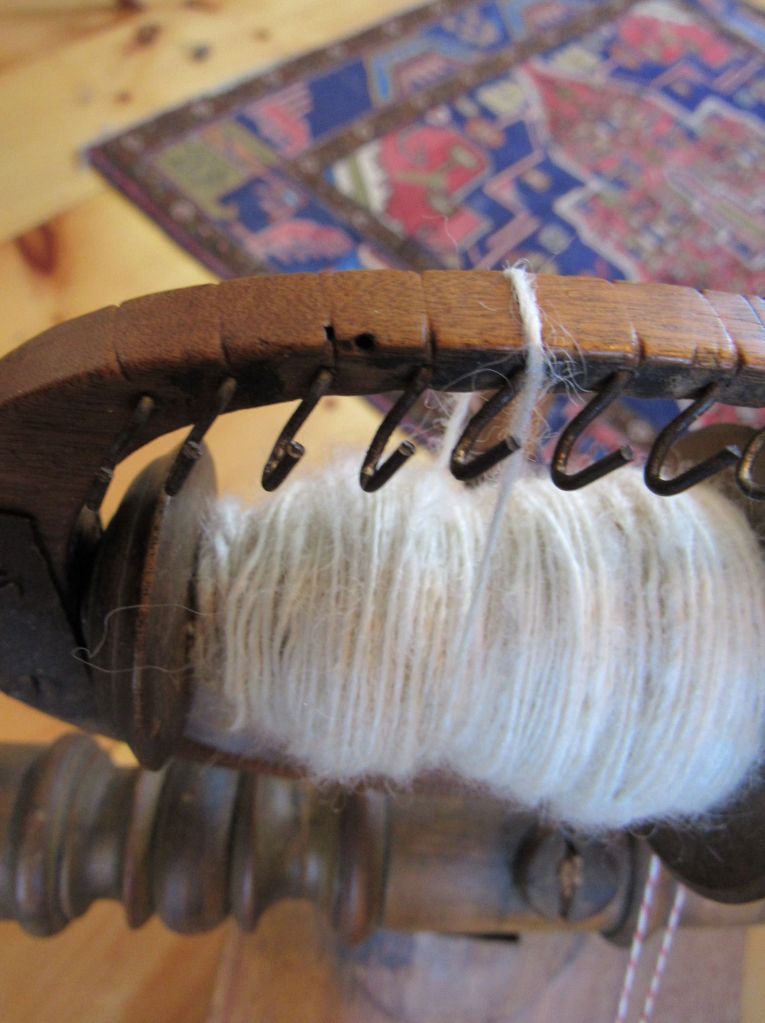
As I said in the “Zotique” post, I am just speculating about how these marks were made and would love to hear thoughts from others on this.
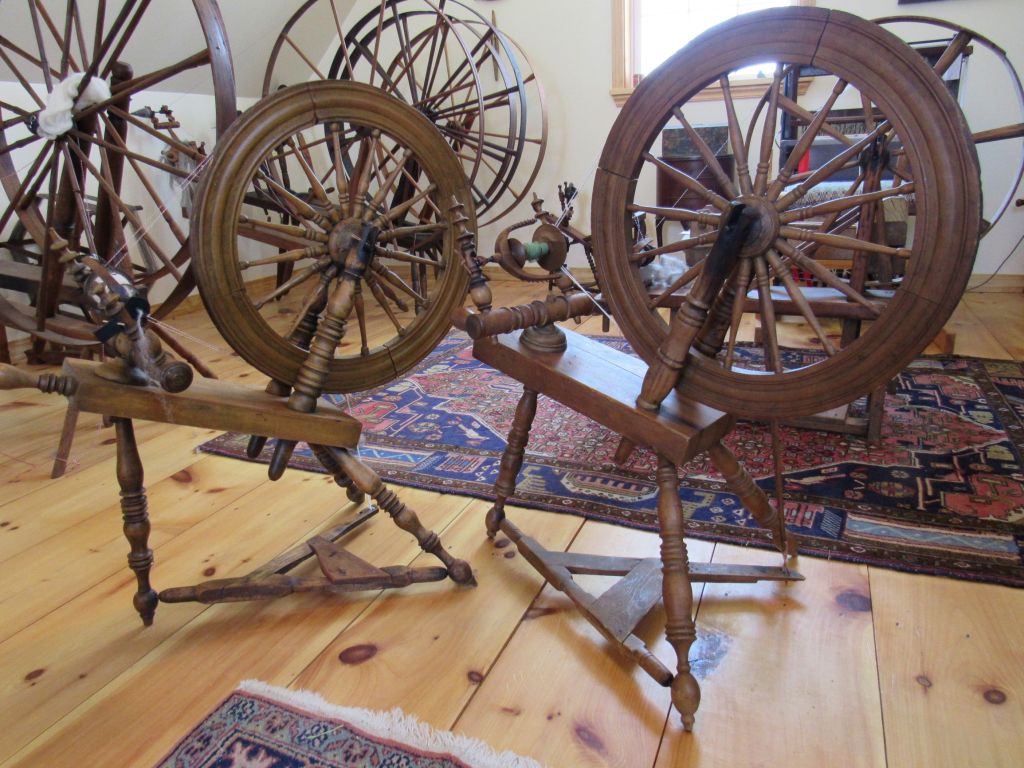
I recently picked up a marked Amable Paradis that I am fostering for a friend and will move along on the first leg of a wheel railroad.
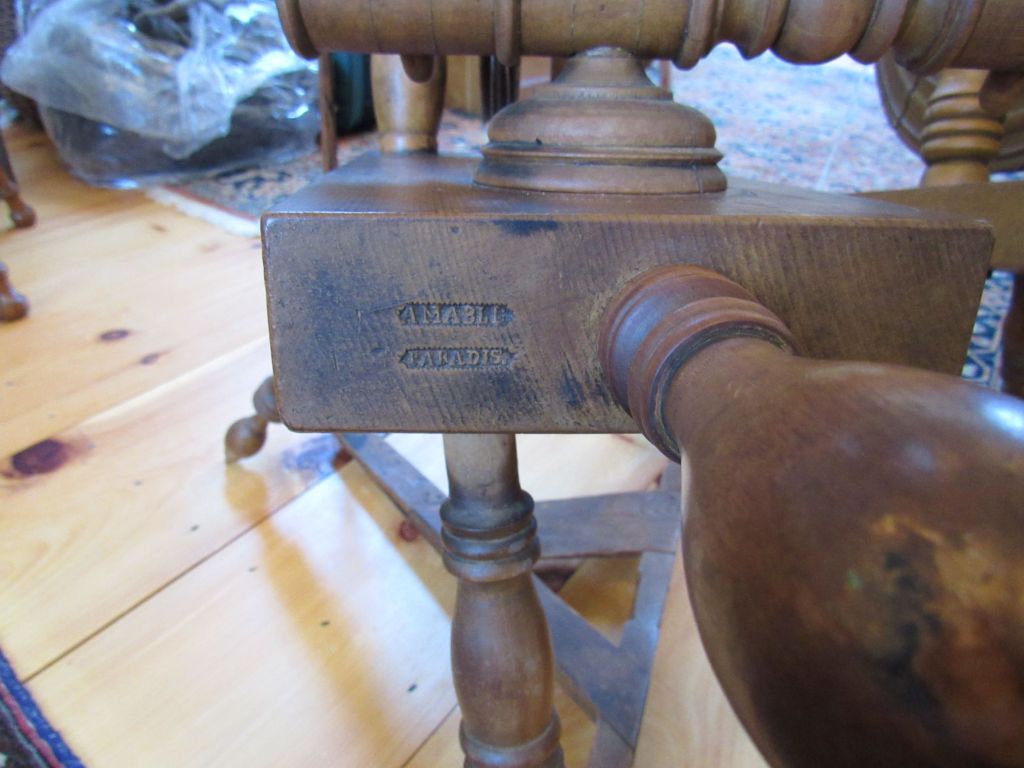
Because Hortense looks quite old, I had thought she was likely made by Amable, but when seeing her side-by-side with the marked wheel, there were more differences than I had expected. The cranks are similar,
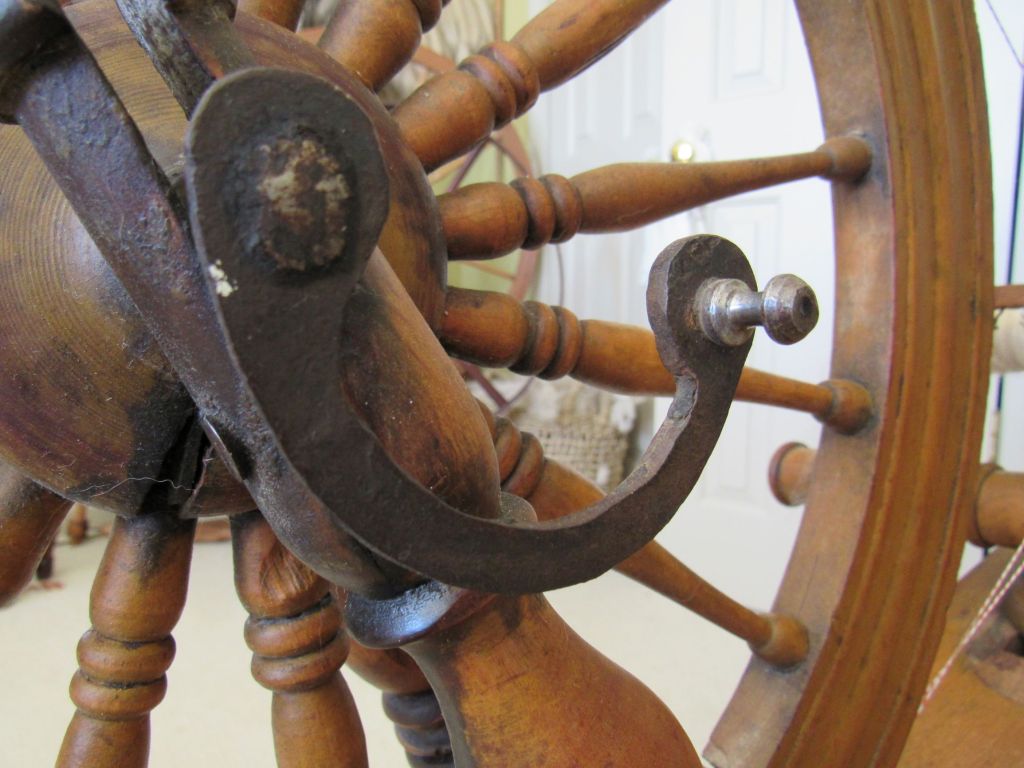
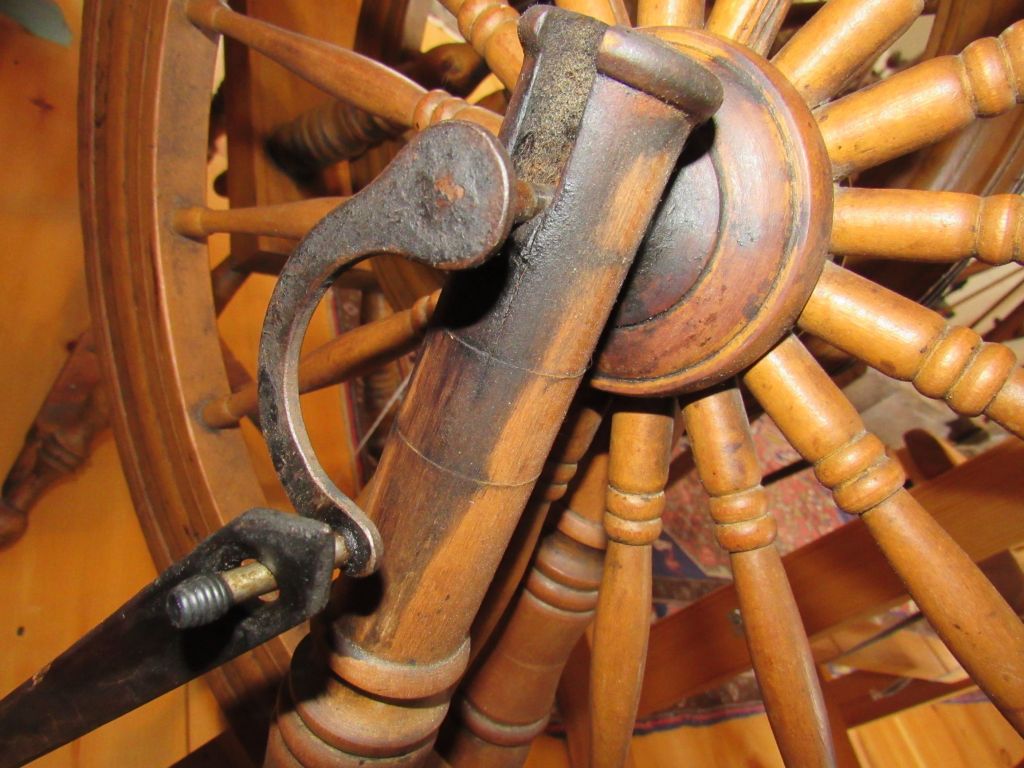
as are the rims,

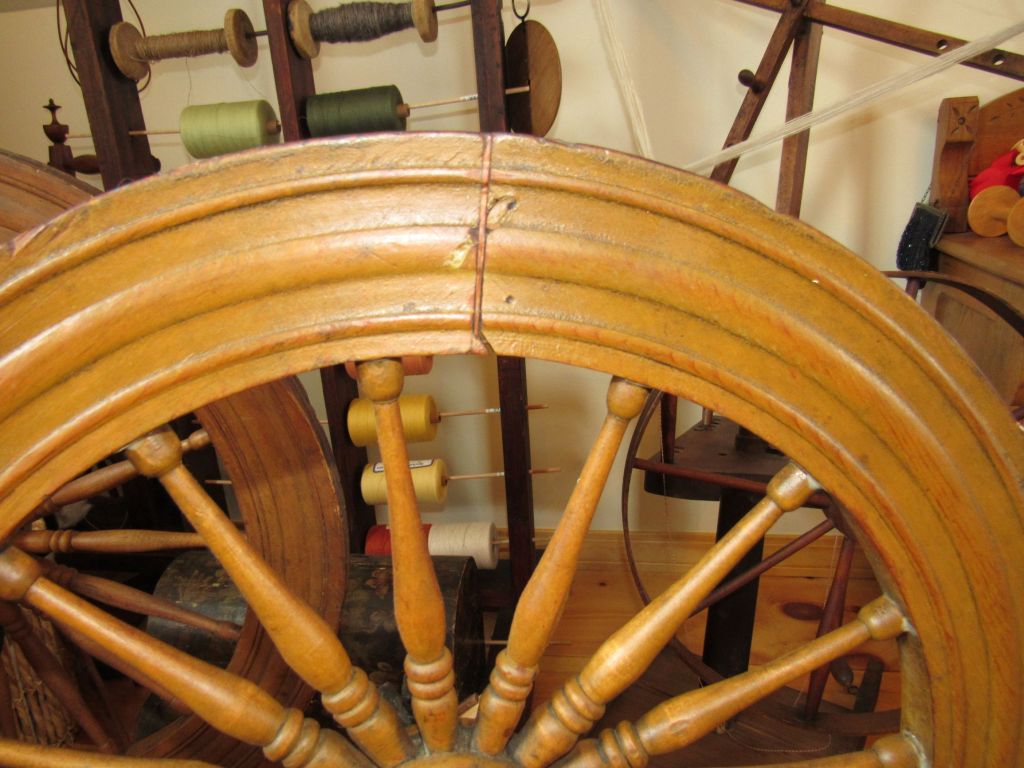
and, while the legs and spokes have the same overall design, they are different.
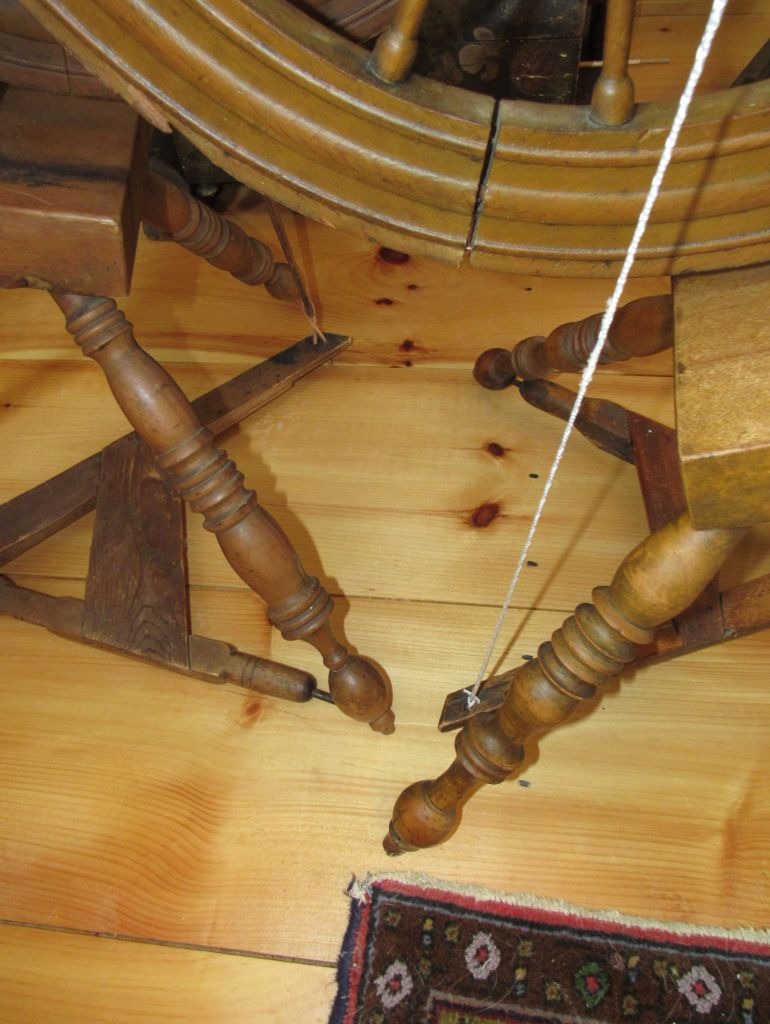
Hortense has a more raked stance with a shorter, more tilted table, more bubbly spokes, and slightly more dramatic turnings. She is a bit like a caricature of the Amable–everything is slightly more exaggerated. It would be fascinating to put a whole line up of Paradis family wheels together to compare the differences. Maybe someday.
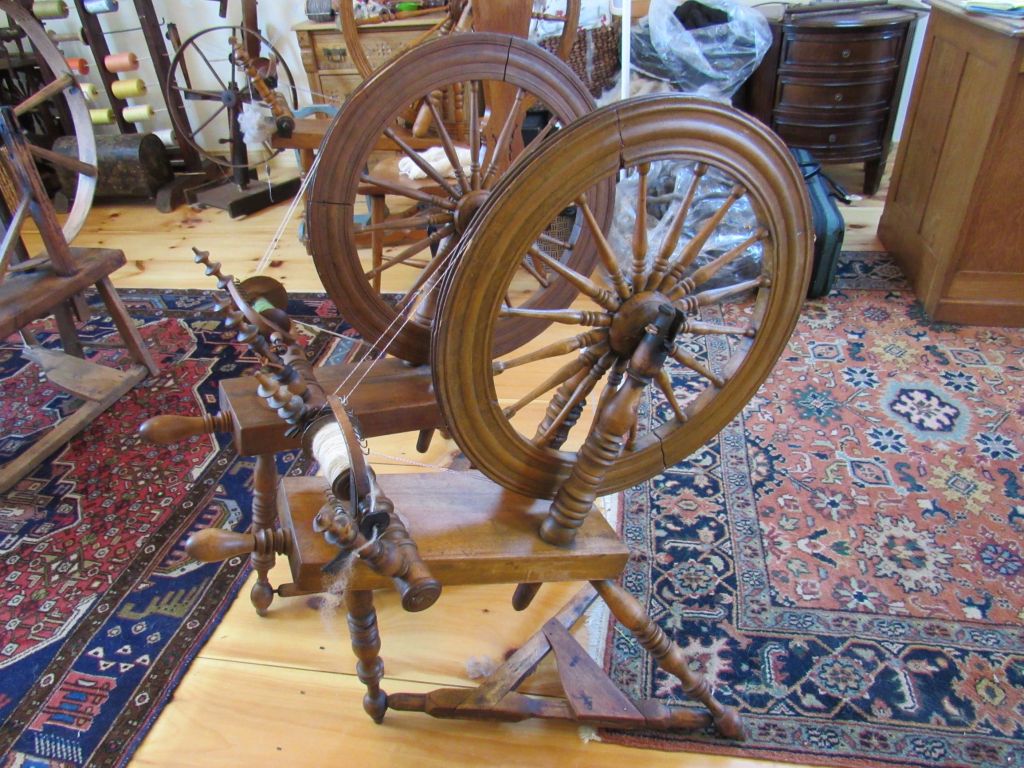
Thank you to Sherran Pak for allowing me to use photos of her Amable Paradis wheel.
For further information on the Paradis family and their wheels see:
Foty, Caroline, Fabricants de Rouets— this book and a photo supplement are available for sale as a downloadable PDF by contacting “Fiddletwist” by message on Ravelry.
 Exquisite Machinery
I love to see something so well-used and repaired because it was essential. These things have lovely designs and are things of beauty. And you’re right–they have a bit of a down dog look. I almost expect a little growly greeting.
LikeLike
Sometimes the ones with the most repairs are really good spinners. I imagine their owners were attached to them and really wanted to keep them going. Or it may just be that they couldn’t afford a new wheel. In any case, often the repairs are as interesting as the wheel!
LikeLiked by 1 person
Yes, I think it would be hard to let go of a good piece of equipment–especially if they were expensive to replace or the owner was well adapted to it.
LikeLiked by 1 person
As always, a great post.
I have a very similar wheel, marked MG (or, maybe, ML) who some think may be related to Paradis. Can she come to the party?
Also, I have a marked small pinch-nosed Paradis. So different from yours. A very diverse family, the Paradis.
LikeLike
Of course she can come to the party! I would be happy to add her photo to the post for comparison. She’s a little bigger than these wheels, isn’t she? With so many wheel-making family members, it’s no wonder that there is a variety of styles. But I wonder if there was pressure to keep the Paradis brand fairly consistent and how the pinch-nose wheels evolved. Are your wheels good spinners?
LikeLike
Hortense is beautiful. Thank you for sharing her with us.
LikeLike
I’m glad that her beauty shines through all the battering and hard use. Thanks so much for commenting!
LikeLike