
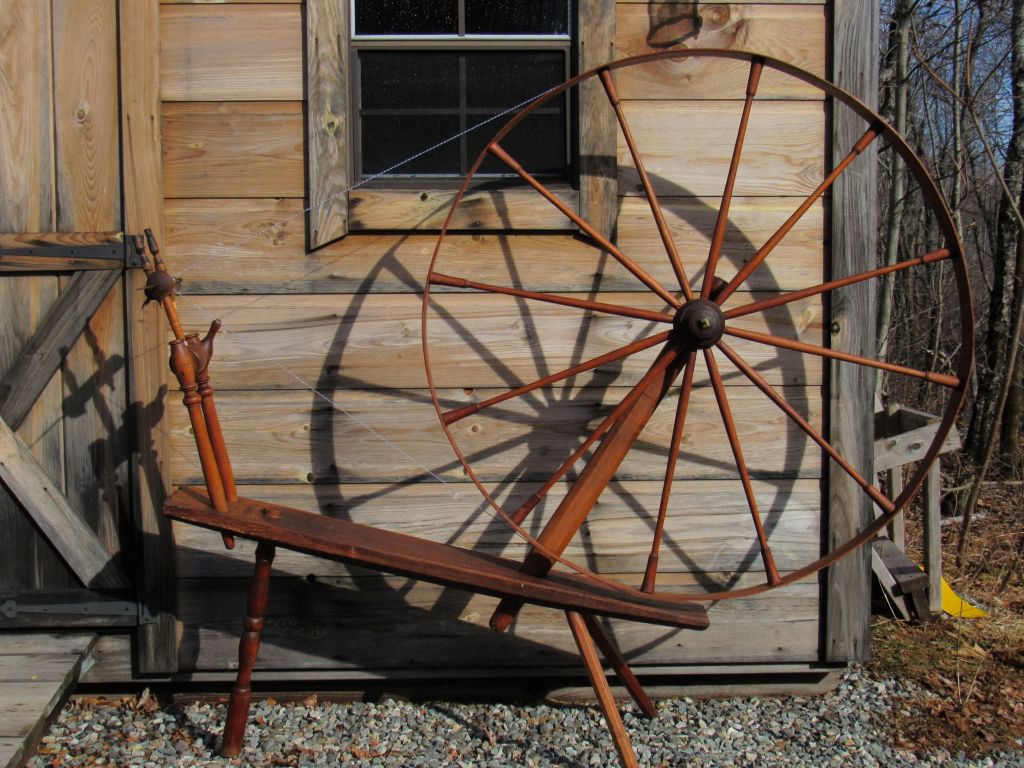
This wheel invites questions. I would love to be able to sit down with its maker and ask why he constructed it the way he did. Why this way, why that–what are the reasons behind his design? Fortunately, in this case, we know something about the maker.

He appears to have been thoughtful and innovative–a build-a-better-mousetrap kind of man. So, his wheels perhaps can tell us something about 19th century ergonomics in designing great wheels for greater ease and efficiency in spinning.

The most striking feature, at first glance, is not the wheel design, but the dark red paint on the table. It does not run the whole length, but ends in a graceful curve near the spindle end, topped by and highlighting the maker’s name,“E. Spencer.”

It is a nice touch by this intriguing man. On some of Spencer’s wheels, his name in the stamp runs straight across. On others, such as this one, the name roughly follows the curve of the paint. Elizur Spencer was born in 1779 in New Hartford, Connecticut. Around 1803-04, he moved to Sandisfield, a western Massachusetts town on the Connecticut border, with his wife Mary (called Polly). According to this wonderful article by a local Sandisfield historian: Elizur Spencer of Sandisfield., Mass., and His Remarkable Apple Parer, Spencer was: “the most skilled artisan-woodworker who ever lived in Sandisfield and probably for many miles around.” (p. 2).
The article goes on to say: “By all accounts Elizur, a humble man and a helpful and generous neighbor, was a wonder. Town historian George Shepard in 1885 remembered him as a prolific, first-rate craftsman who made important things to improve everyday life. Shepard wrote that Spencer made ‘spinning wheels, quill wheels, reels, swifts and paring machines.’ He added that Spencer ‘used a small stream to the south to power his turning shop.’” (p. 3)

Spencer’s house, a dam and small reservoir, and remnants of his shop still stand. After his wife’s death in 1822, in addition to his wheel and tool making, Spencer farmed and raised his three teenage daughters. The “paring machine” referred to in the article was an apple parer, which could be used right- or left-handed, an innovation that must have been fairly unusual for his time.

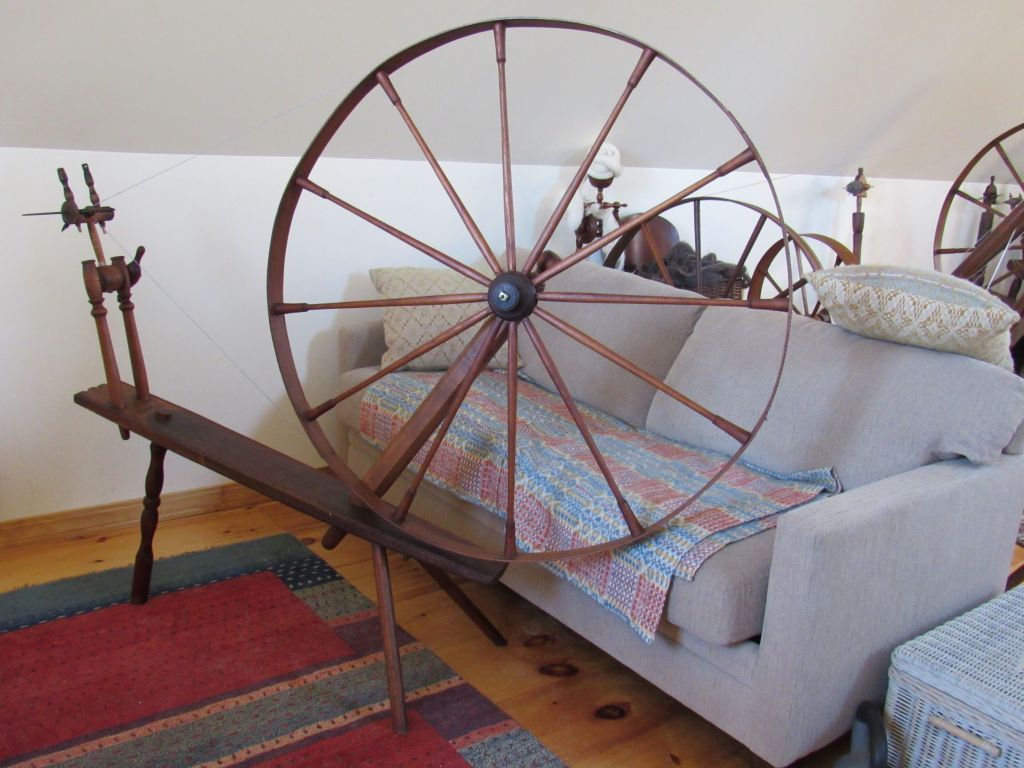
Spencer’s great wheels likewise have unusual design features. Aside from the red paint, the thing that immediately stands out is the mismatched legs. The spindle-end leg is beautifully turned, sleek and rounded, with a well-balanced design.

In contrast, the wheel-end legs are chamfered, a leg style often associated with early or relatively primitive wheels because they could be made without a lathe.
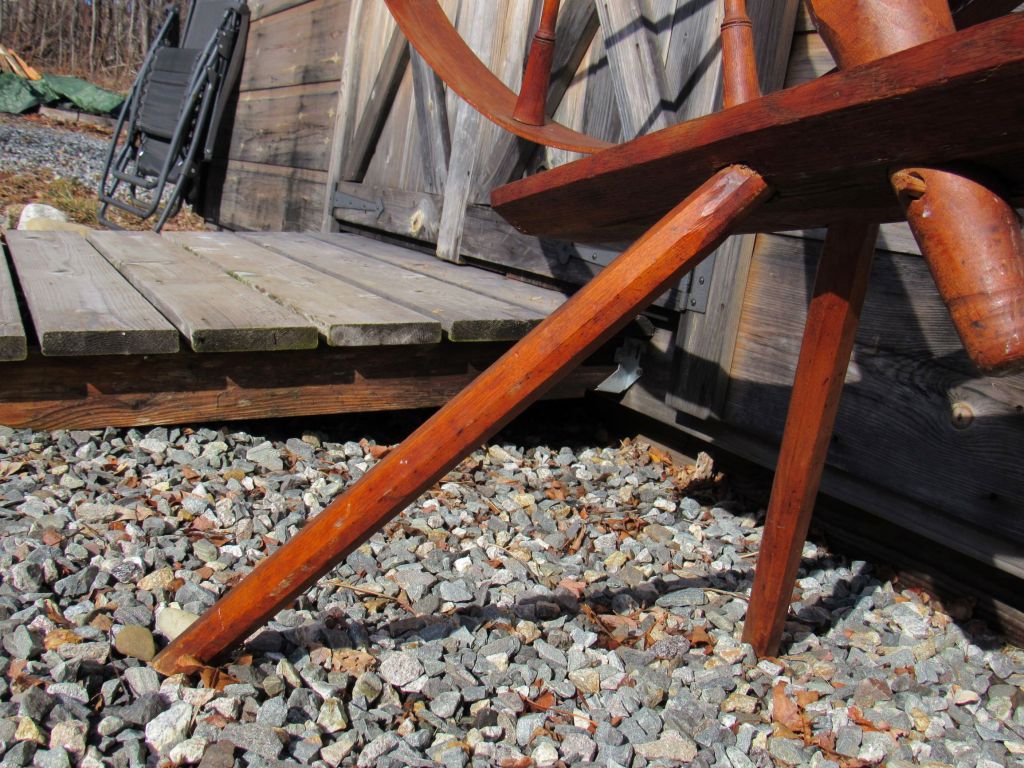
Why would Spencer chamfer the wheel-end legs rather than turn them? Perhaps the answer lies in this photo.

The spinner-side leg is much shorter than the back-side leg—only 16 1/2 inches compared to 19 1/2 inches—making it difficult to match turnings on those legs in a way that would look good. It is pure speculation, but perhaps chamfering was an easier and more visually appealing way to deal with the three-inch difference in leg length. As for why the wheel-end legs have differing lengths, it is a feature seen on some great wheels.
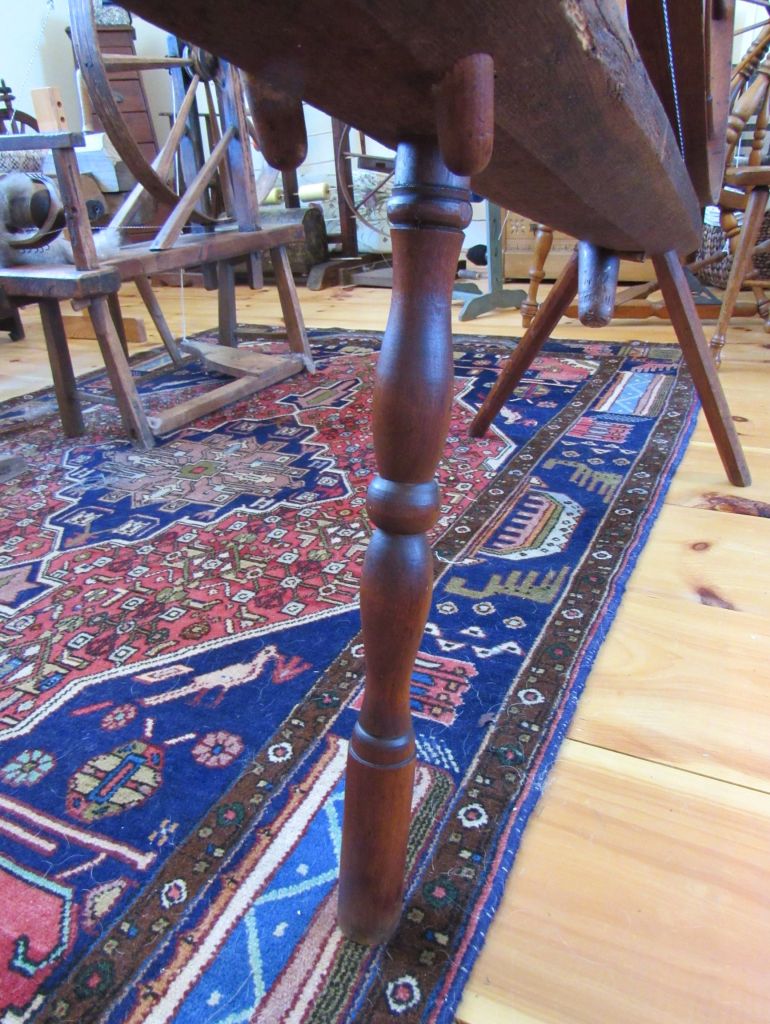
It is generally assumed that the spinner side leg is shorter and tucked a bit under the table to better keep it out of the way of the spinner. Spencer’s wheels appear to reinforce that theory because the whole wheel appears designed to allow the spinner to easily and smoothly move back and forward while spinning. The legs are set in the angled undersides of the table.

The table narrows as it approaches the wheel end–a good feature for long skirts, giving them a little more room and less of sharp end to catch against. Interestingly, both sides of the table narrow, but the spinner’s side narrows more.

Did Spencer narrow the spinner’s side to accommodate the spinner and then narrow the other side—but less so—to provide a balanced look to the table? I do not know, but am really intrigued by his decisions balancing utility and beauty.

Another apparent spinner accommodation is Spencer’s tilted drive wheel post. And, it is almost absurdly tilted. Again, the theory is that a tilted post or a tilted axle moves the upper part of the drive wheel away from the spinner, giving more room for the spinner’s arm and shoulder to move with ease. It seems as if it would cause problems with the drive band, but it works.

Everything about this wheel seems to be spinner-conscious, designed to provide for free movement of legs and arms. But it makes for an oddly lovely lopsidedness when viewed from the end.
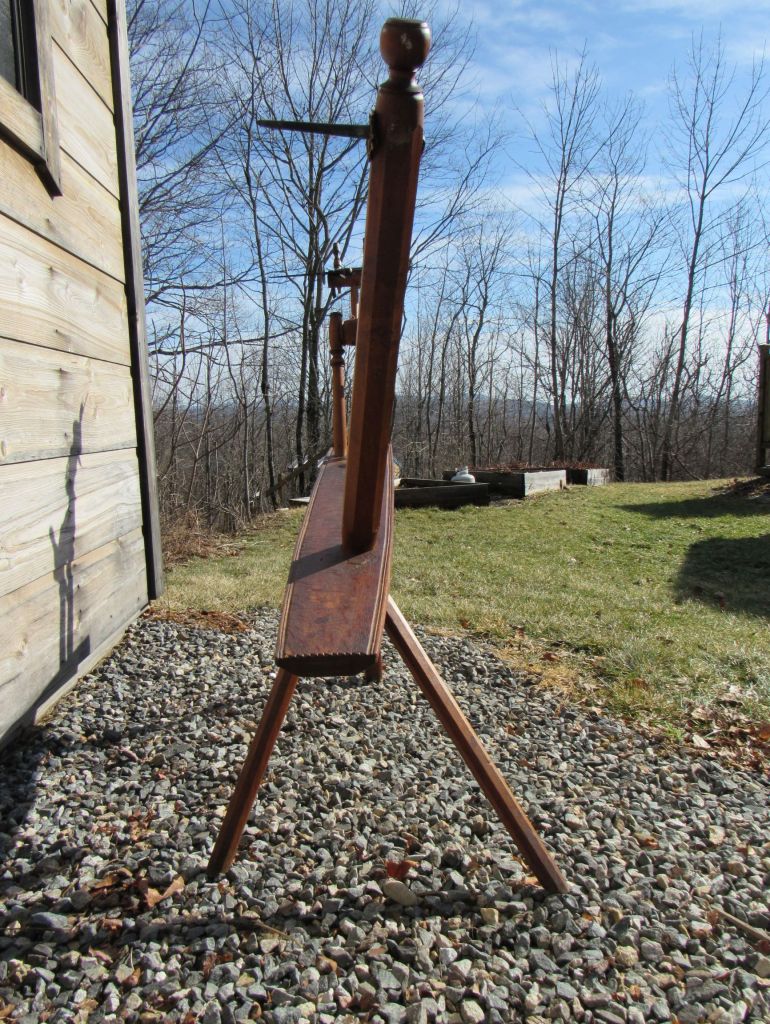
Does the long dancer-like leg on the non-spinner side provide compensation for the weight of the drive wheel tilt?
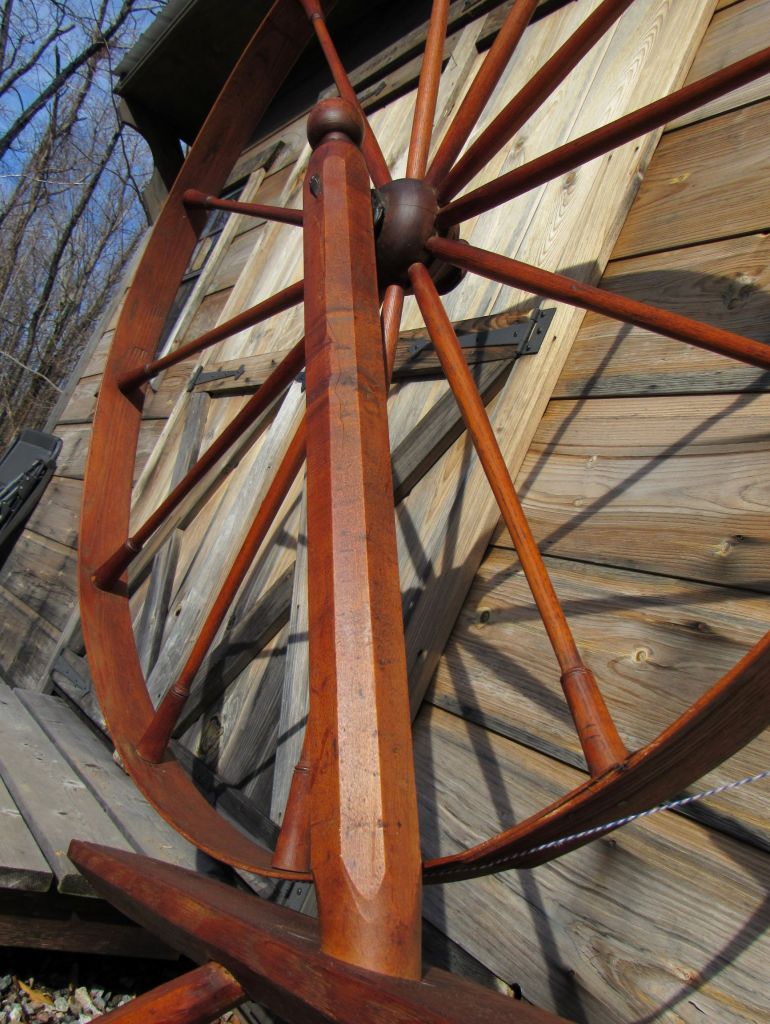
And, what about the wheel post—chamfered along its length with a turned top? Was that an aesthetic choice, combining the chamfering from the wheel-end legs, with the lovely turning on the leg and posts on the spindle end? Underneath the table, the edges are beveled.

Everywhere, even under the table, the quality of workmanship is impressive. The wheel is, as the apple-parer article described, “exquisite.”
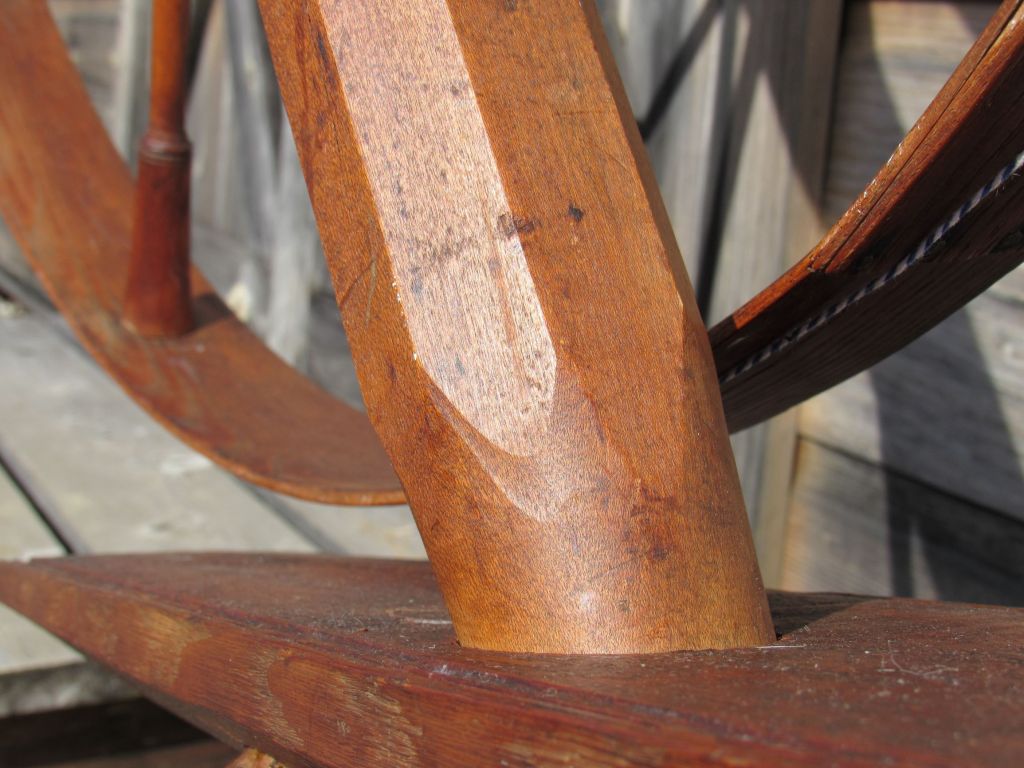
Many wheel makers put chip carving on table ends.

But, on one end, Spencer put this personal flourish on his wheels.
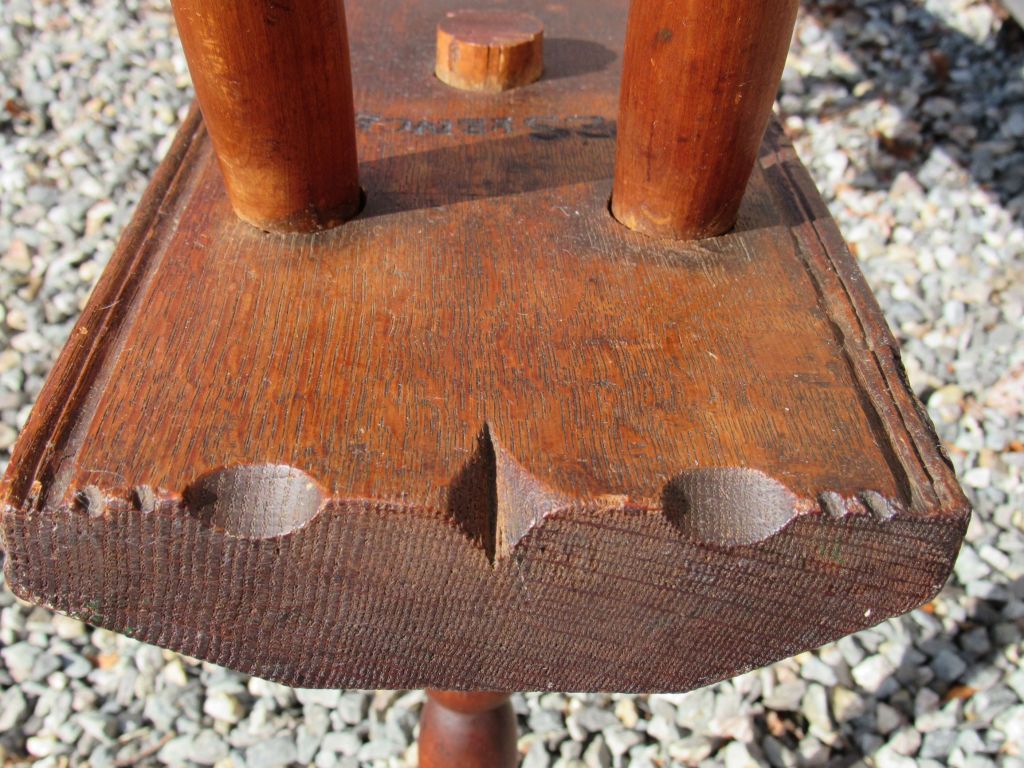
It is actually this particular detail that captured my heart. I admire that unique touch—a signature of a little extra beauty.

Spencer made flax wheels, too, but I have only seen photographs of one of them. I would love to know whether his flax wheels had any innovative touches.

He also made accelerated heads, complete with his label (he had a similar label on his apple peelers). Mine looks as if it could be made by him, but without the label, I can’t be sure.

It is missing the accelerator wheel and whorl, so I use it as a direct drive.

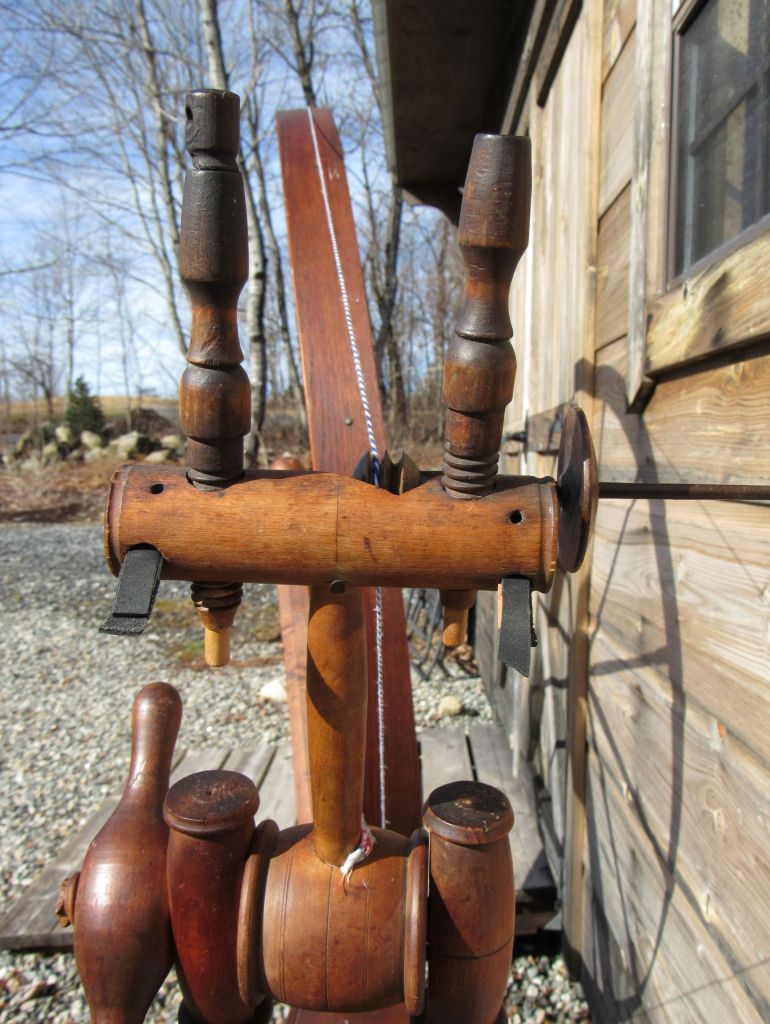
The wheel has the double upright barrel tension that was typical for Connecticut and upstate New York great wheels.
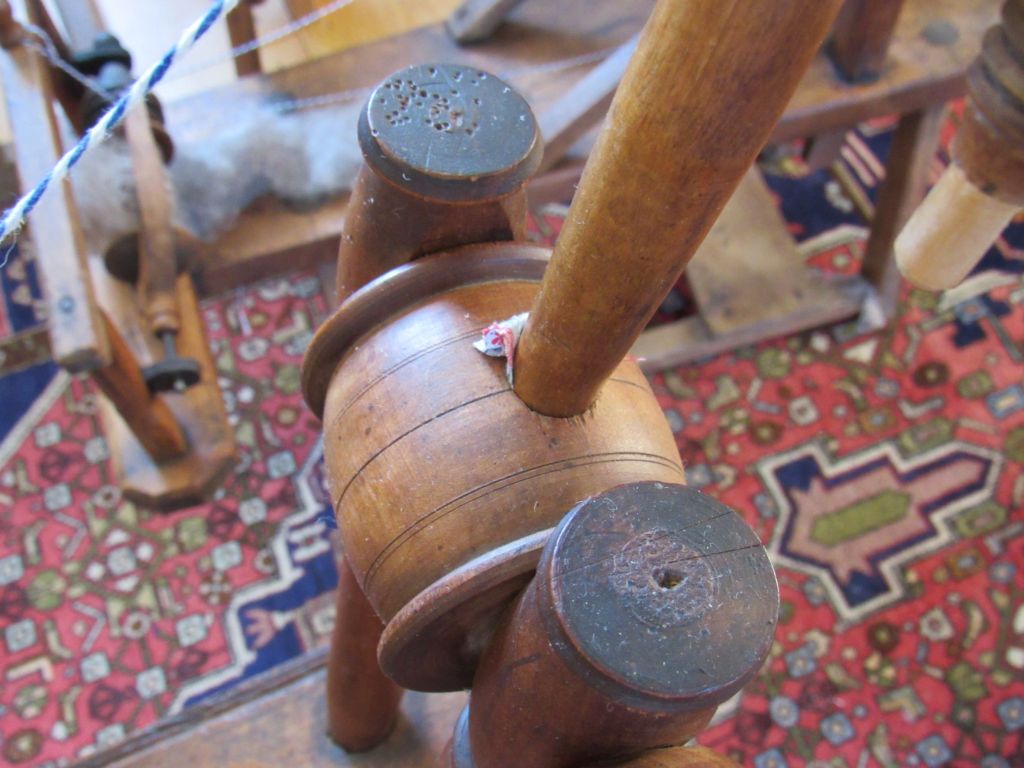
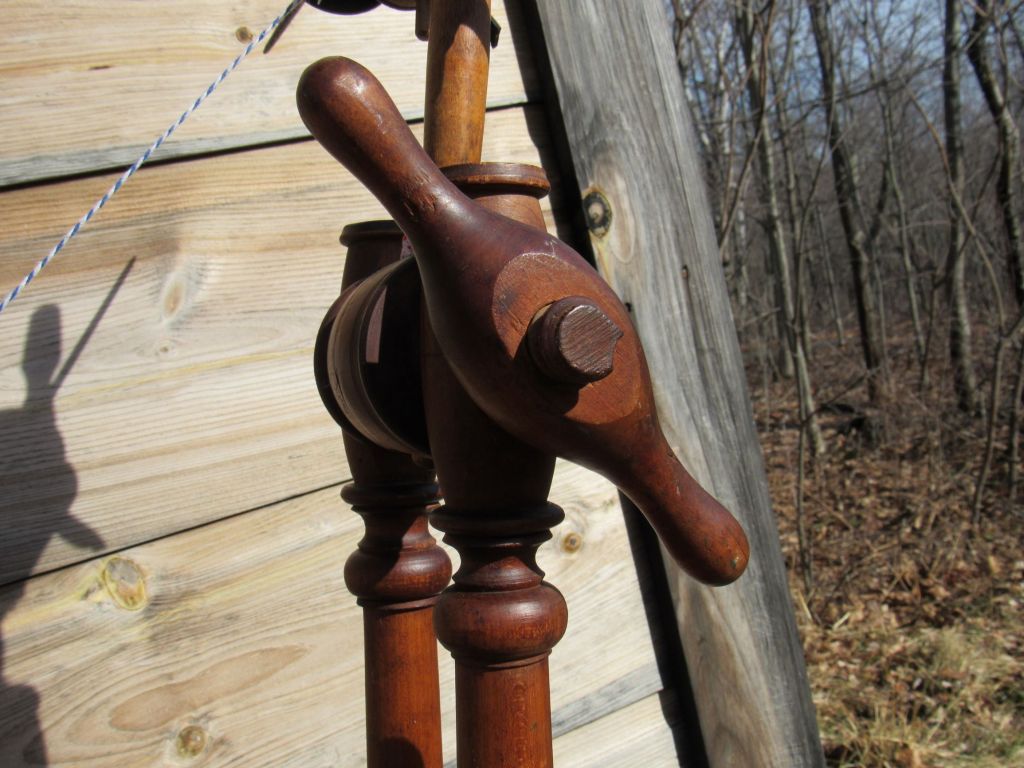
The tension tightening handle has smooth curves that feel good in the hand.
The top of the spinner-side post has dents that look as if they may have been made by the spindle end, but I do not know the reason why the spindle would have been hit against the post–perhaps to help remove it from the bearings?

The axle is threaded on the end,

with a smooth-edged old nut that looks handmade.

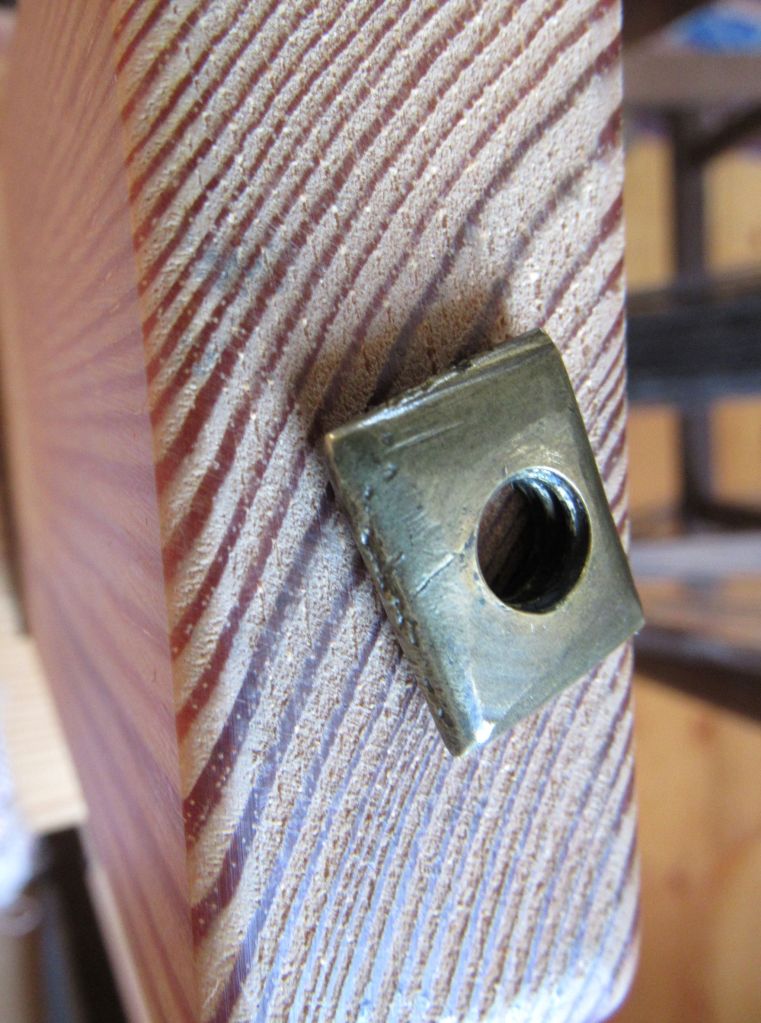
The backside of the axle is flattened and hammered into the upright post.
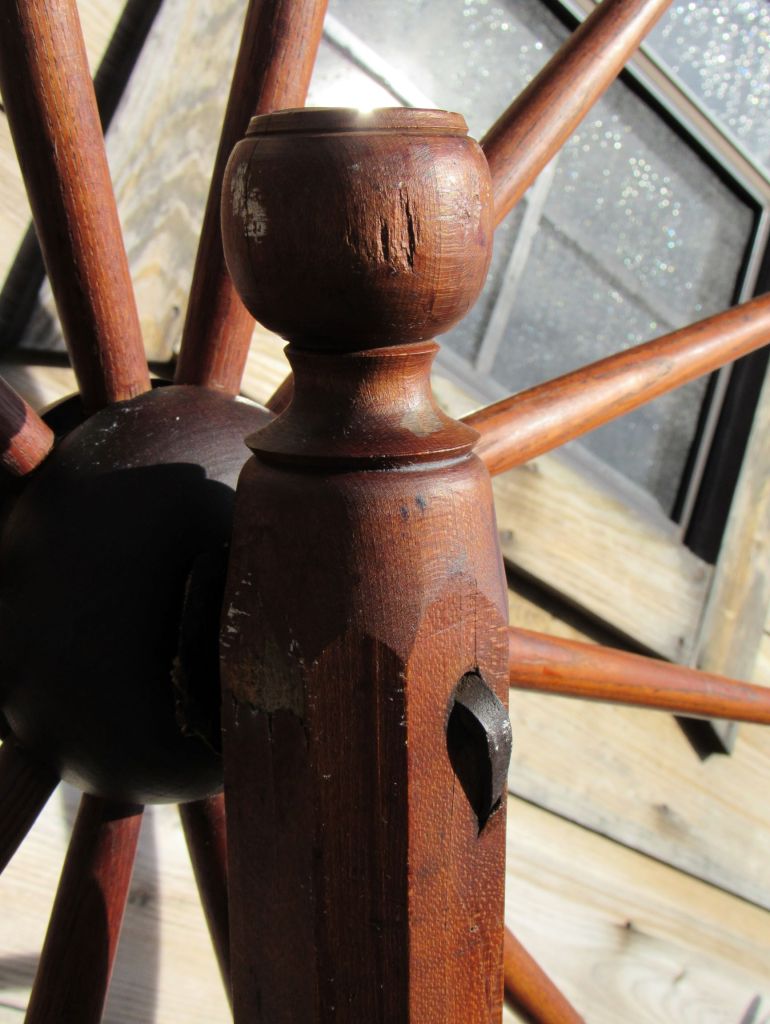

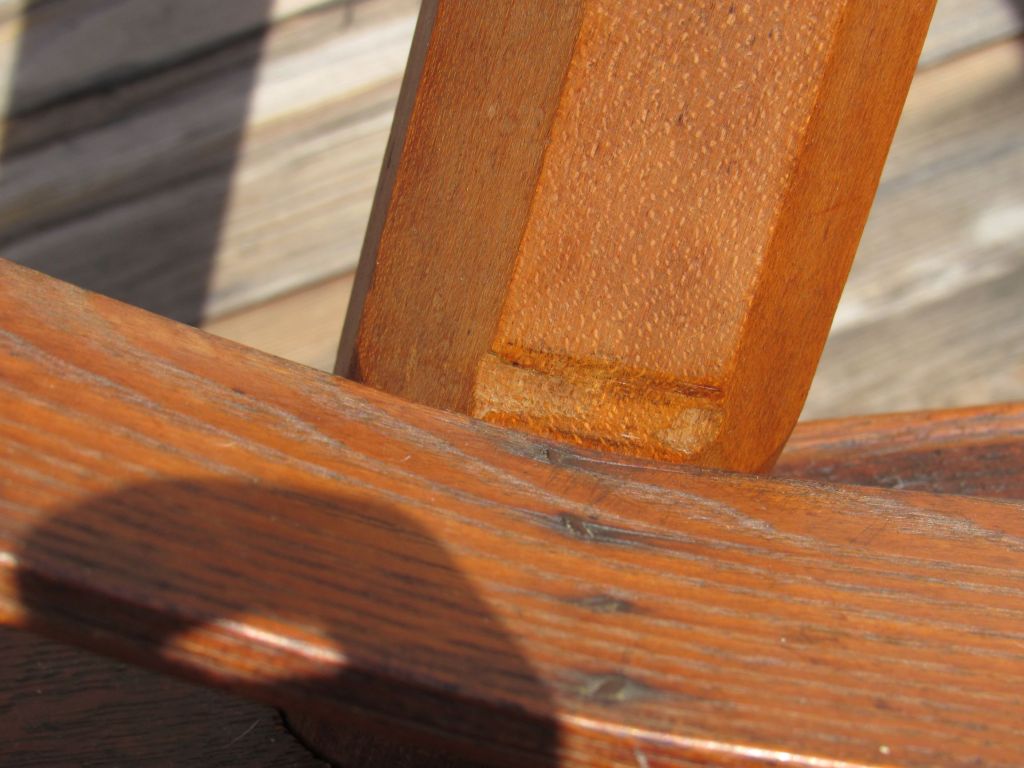
The hub is hefty, with the spokes perfectly fitted into a wide groove.
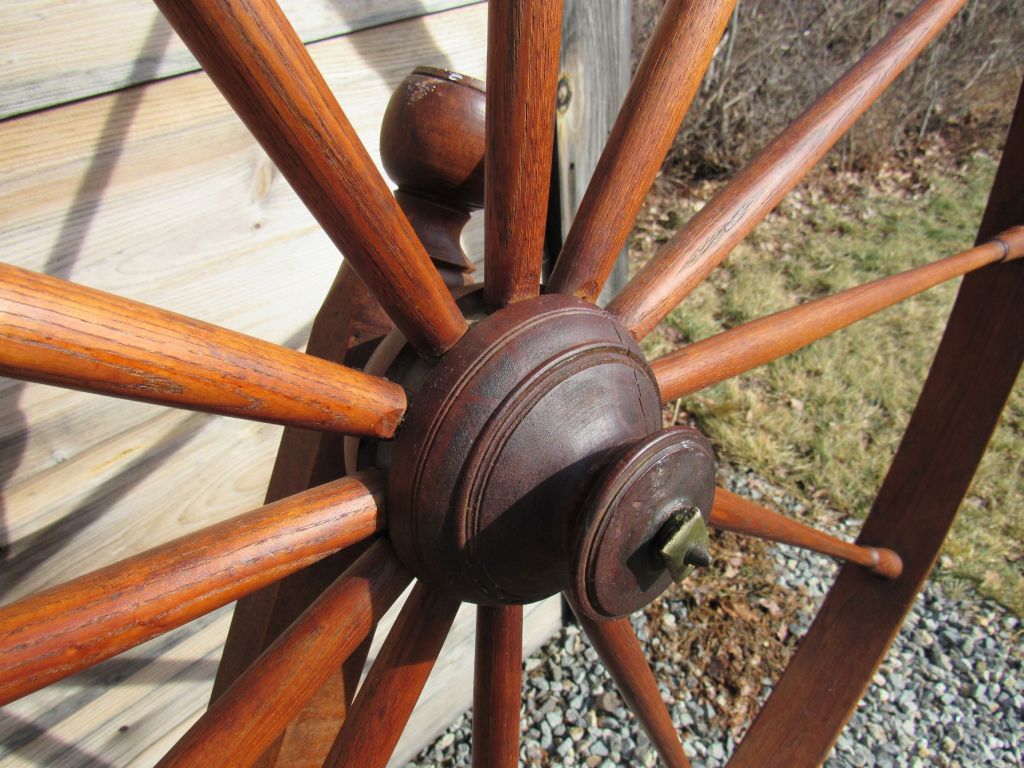
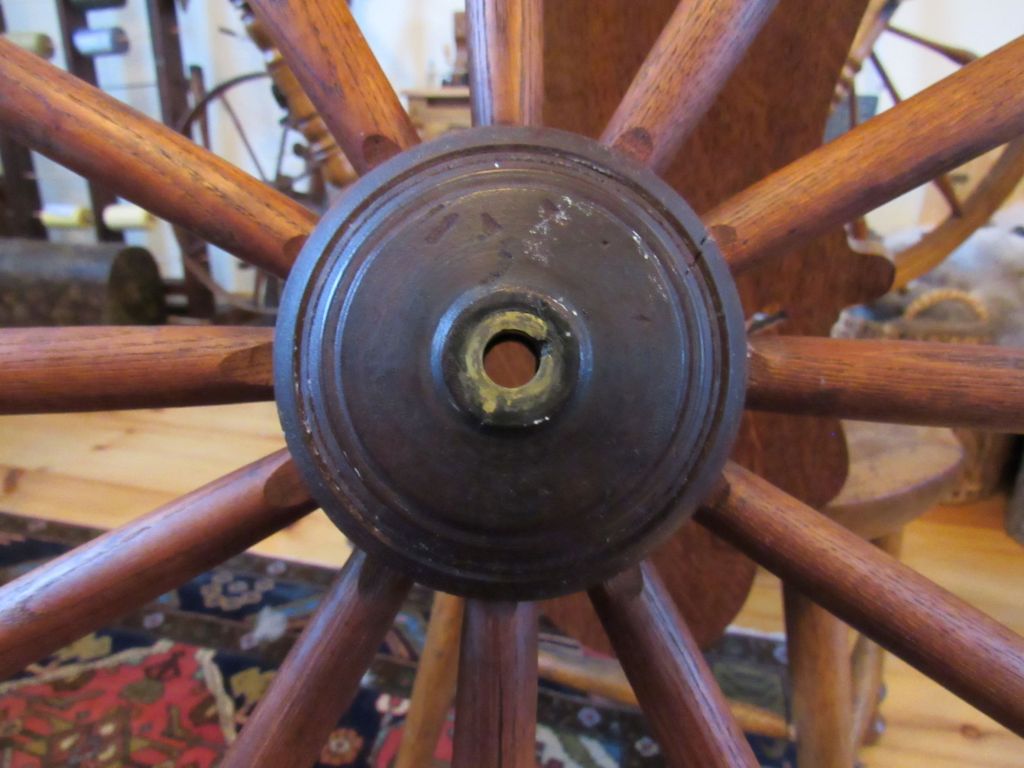
Brass bearings are fitted into both sides of the hub.

The only flaw I have seen on this wheel is that the bottom of the upright post shows where the wheel rim scraped against it. I cannot tell if the groove is from wear or whether it may have been carved out to give the rim some extra room.
At some point, someone added a few layers of leather and canvas, apparently to hold the hub out far enough so that the wheel clears the upright.

The drive wheel rim is tight, without loose or wobbly spokes.


The wheel-end legs are flush with the table top
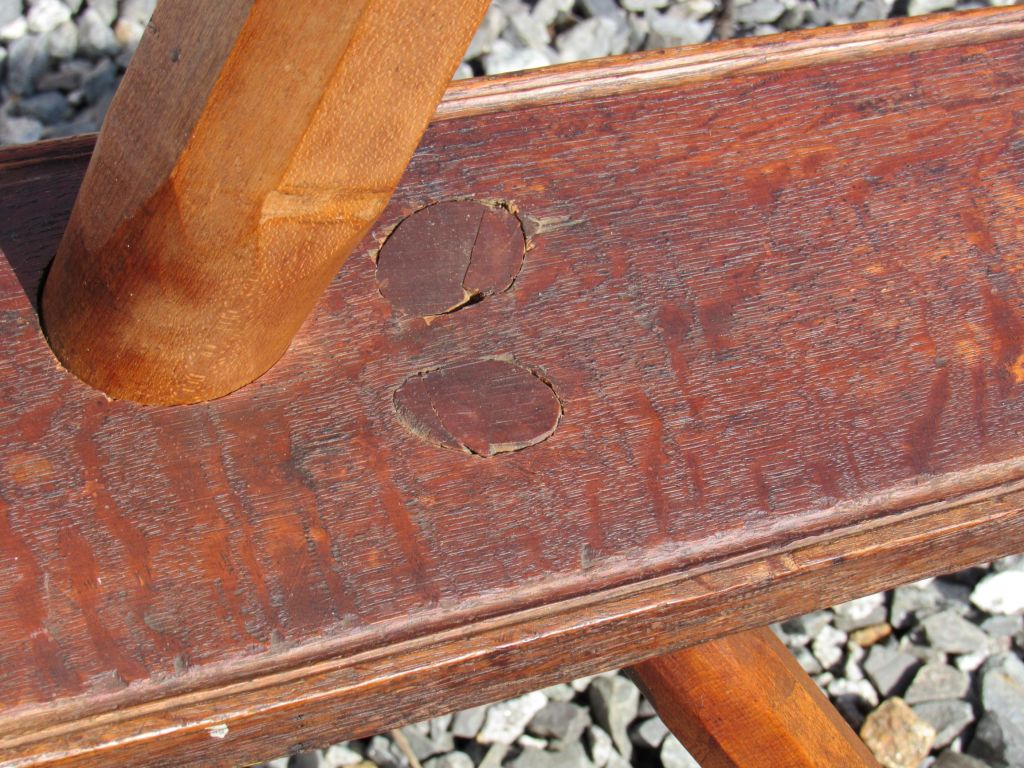
but the spindle-end leg protrudes above it. I wondered if it had eventually worked its way upward, but it is painted on its side, indicating that it probably was that way originally.
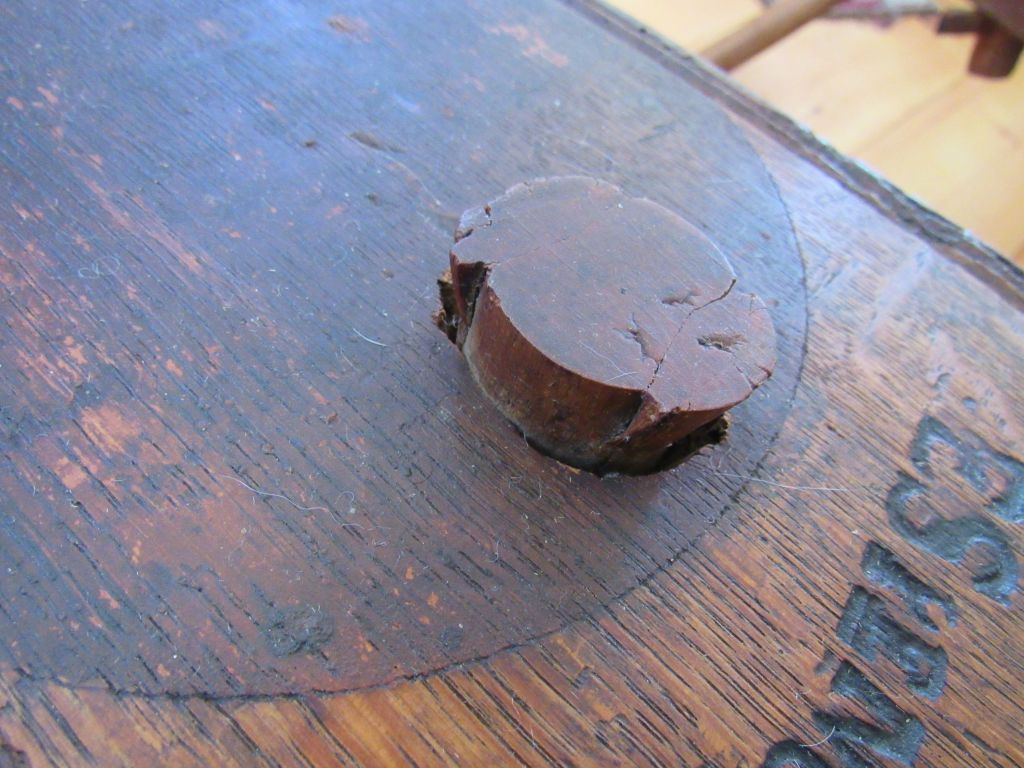
Some Spencer great wheels have the same protruding leg-top as mine, and others are flush. It seems odd to have it protrude. Could it have been intended as a rolag holder? That is how I use it. Because, I use this wheel a lot.

It is an amazing wheel for spinning, elevating the spinner’s dance to something very graceful and almost effortless. If I could meet with Spencer, after grilling him about his design choices, I would thank him for making such an exquisite machine.
Bernard, Ronald, “Elizur Spencer of Sandisfield, Mass., and His Remarkable Apple Parer,” published in the Apple Parer Journal, January 8, 2017.
Thanks to Miranda for finding this article and making it available on Ravelry.
 Exquisite Machinery
Lovely wheel! I wish there were a few of those around here. I know of two walking wheels in New Zealand: one is totally decrepit and the other (a smaller modern replica, but it does work) is at the far end of the country.
LikeLike
I wish that there was some way that we could easily ship them down to you. We have so many old great wheels here in Maine that, sadly, many are getting thrown away. It’s such a shame because it is whole different spinning experience than on a treadle wheel.
LikeLike
Amazing wheel. Thank you so much for sharing its story and for taking such detailed pictures. Is there a story behind the name you have picked for her?
LikeLike
Thanks Rita. Theodosia Bunce was Elizur Spencer’s grandmother. She died in 1803, around the time that he moved to Massachusetts. We remember the makers’ names but seldom know the names of the women who spun on the wheels. So, I often like to name wheels after women living at the time the wheels were made, who probably spun on similar wheels. In this case, I doubt Theodosia Bunce ever spun on this wheel, but perhaps her spinning experiences influenced her grandson in how he built his wheels.
LikeLike
And I call her Dosia for short.
LikeLike