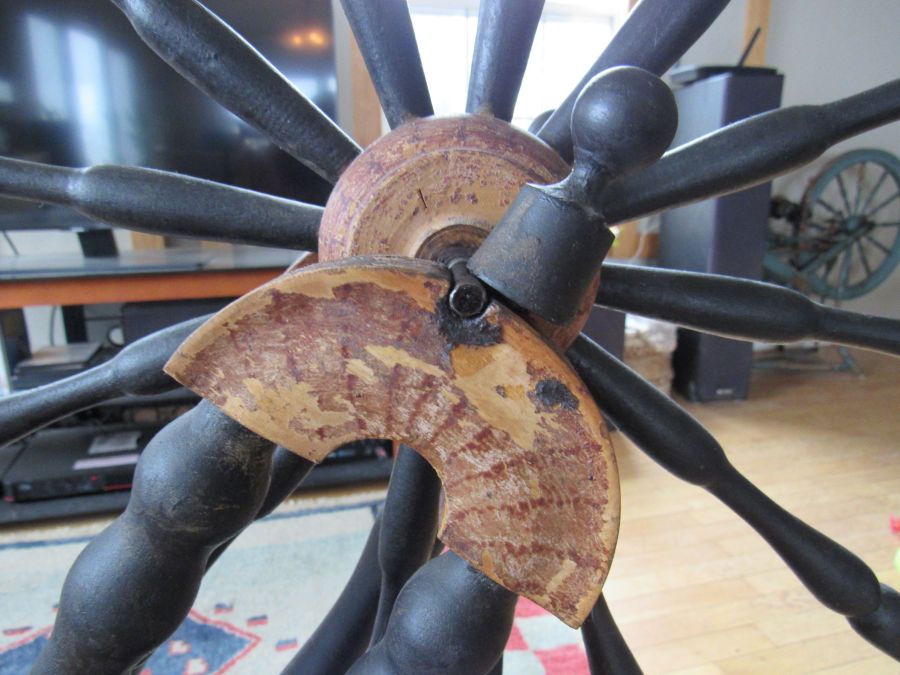
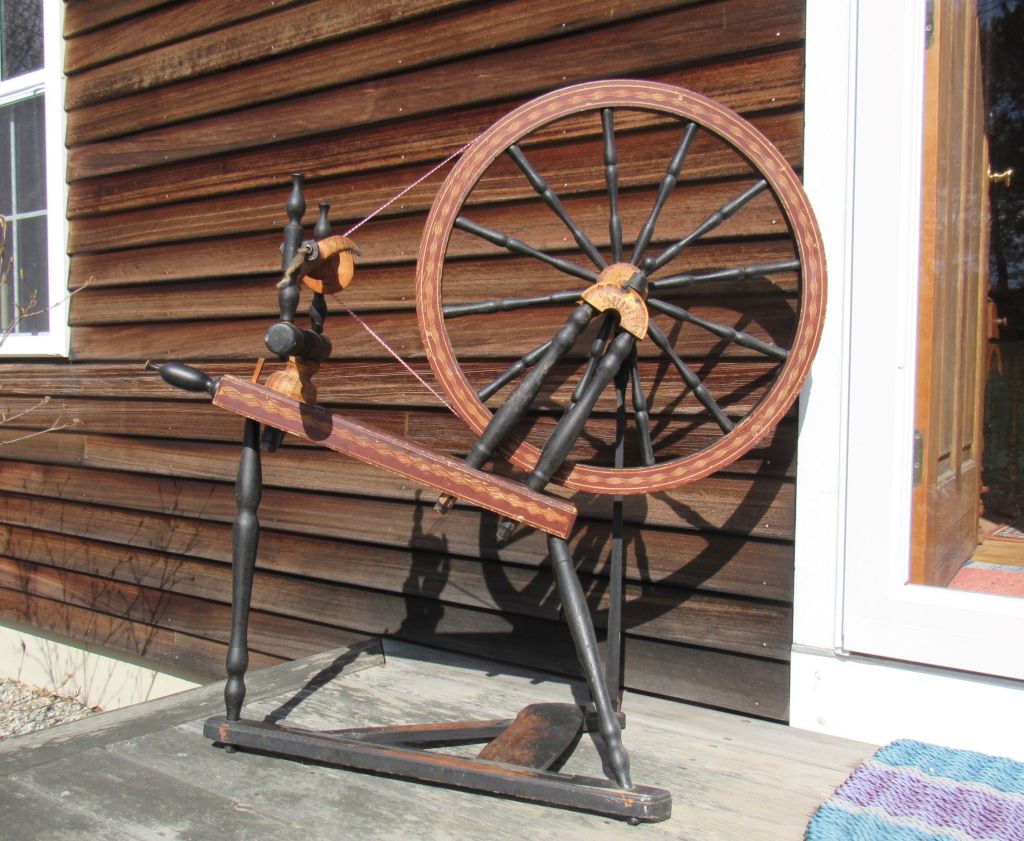
The most well-known and recognizable Finnish spinning wheels are the painted Kiikkalainens. They are utterly unique to a specific place in southwestern Finland, Kiikka, located on the river Kokemäenjoki.

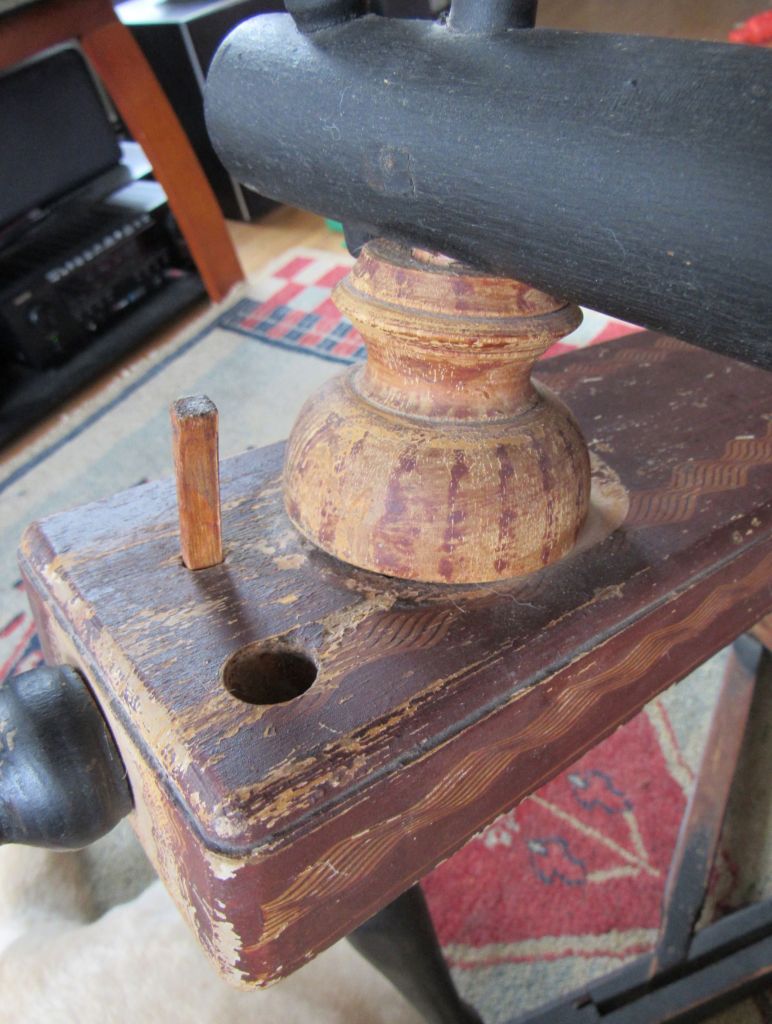
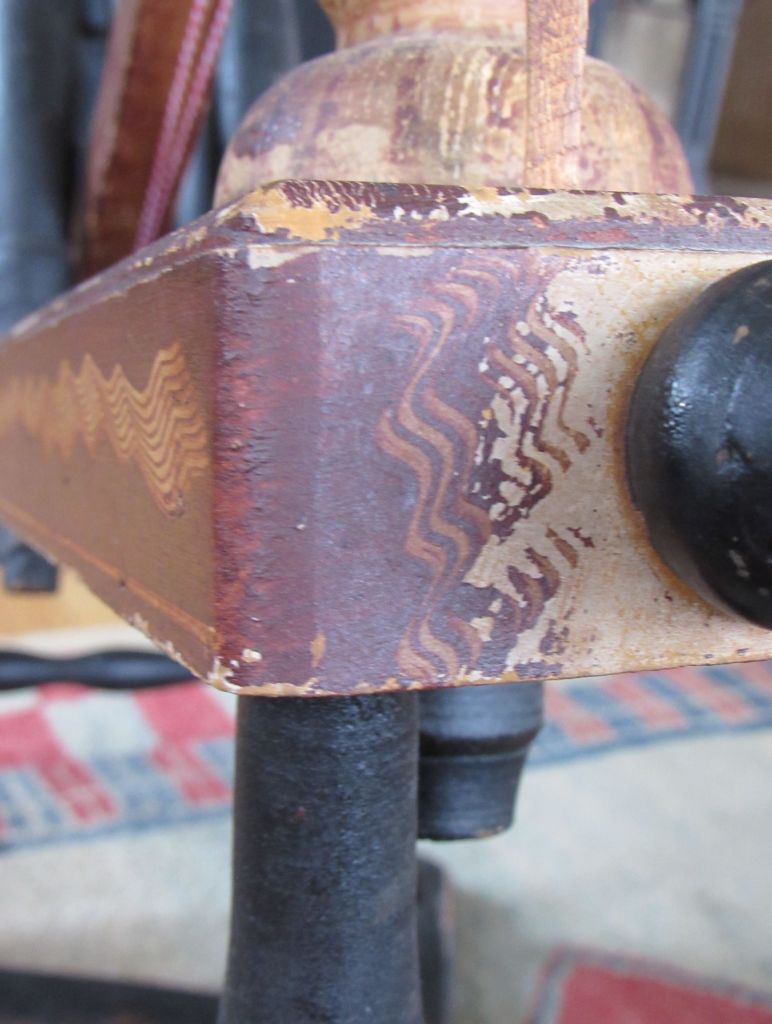
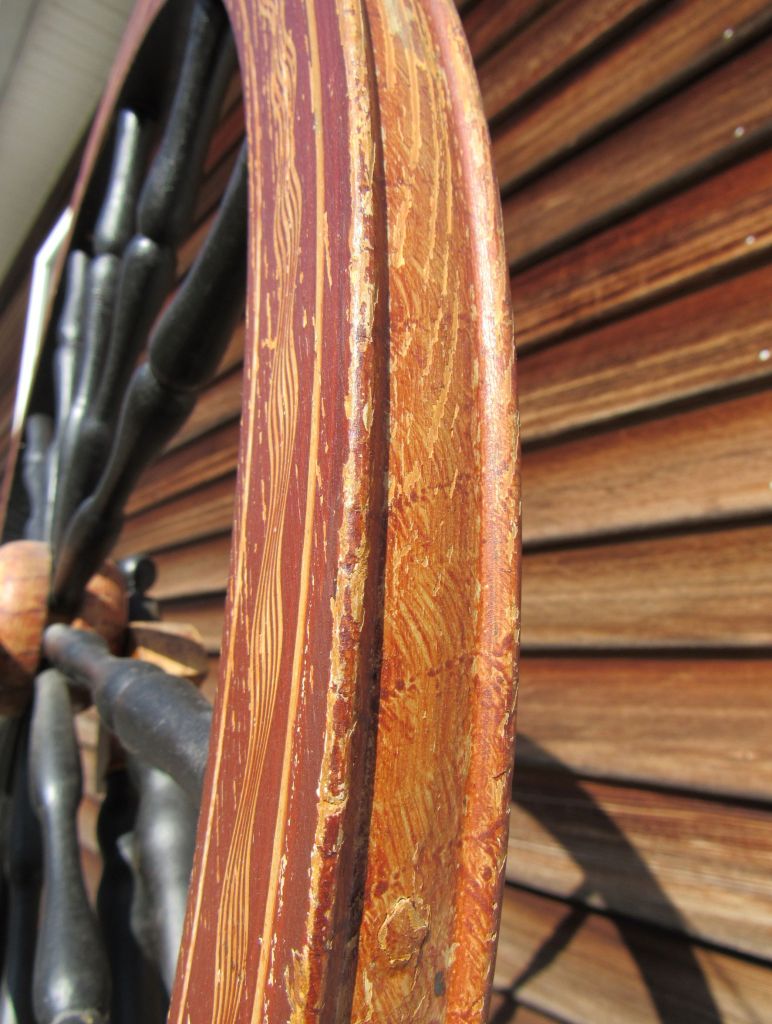
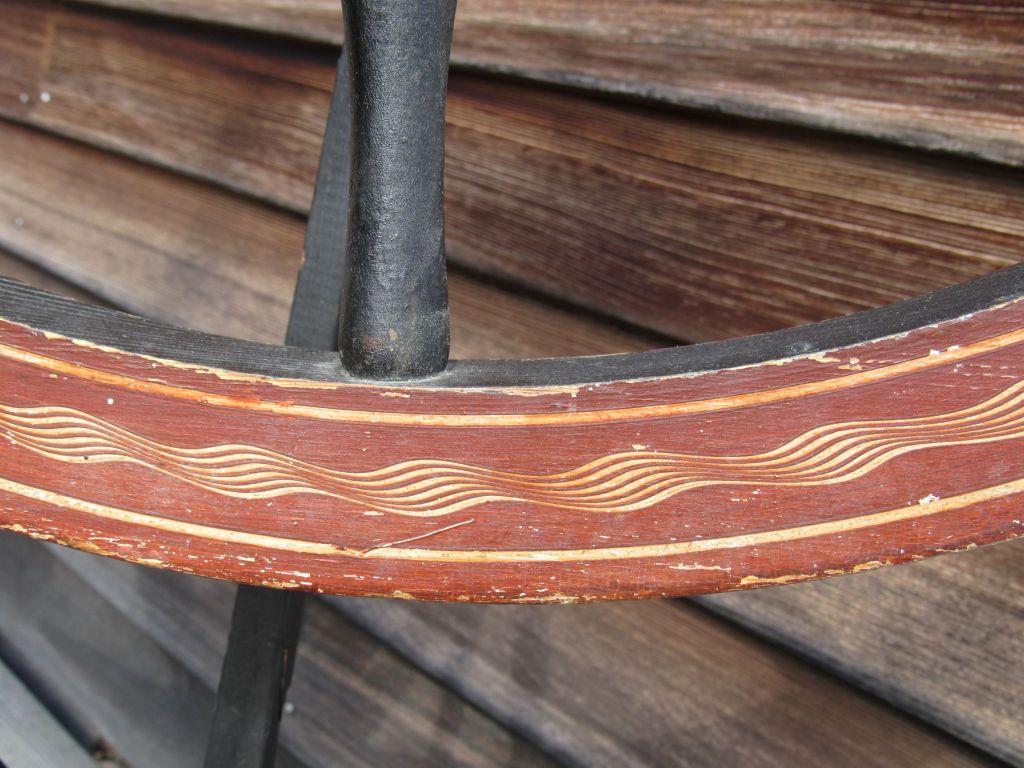
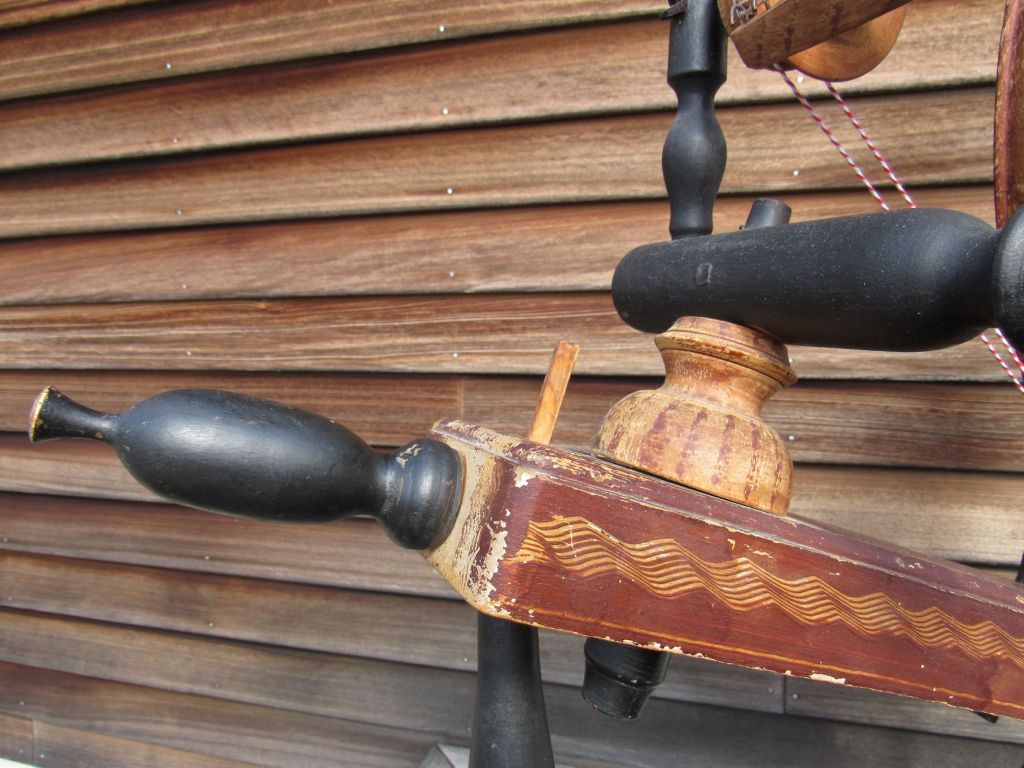
From the mid-1800s until the mid 1900s, Kiikka was famous for its spinning wheels. Most Kiikkalainens that we recognize today are painted red and black, decorated with ribbon-candy-like undulating golden lines down the sides and top of the red table
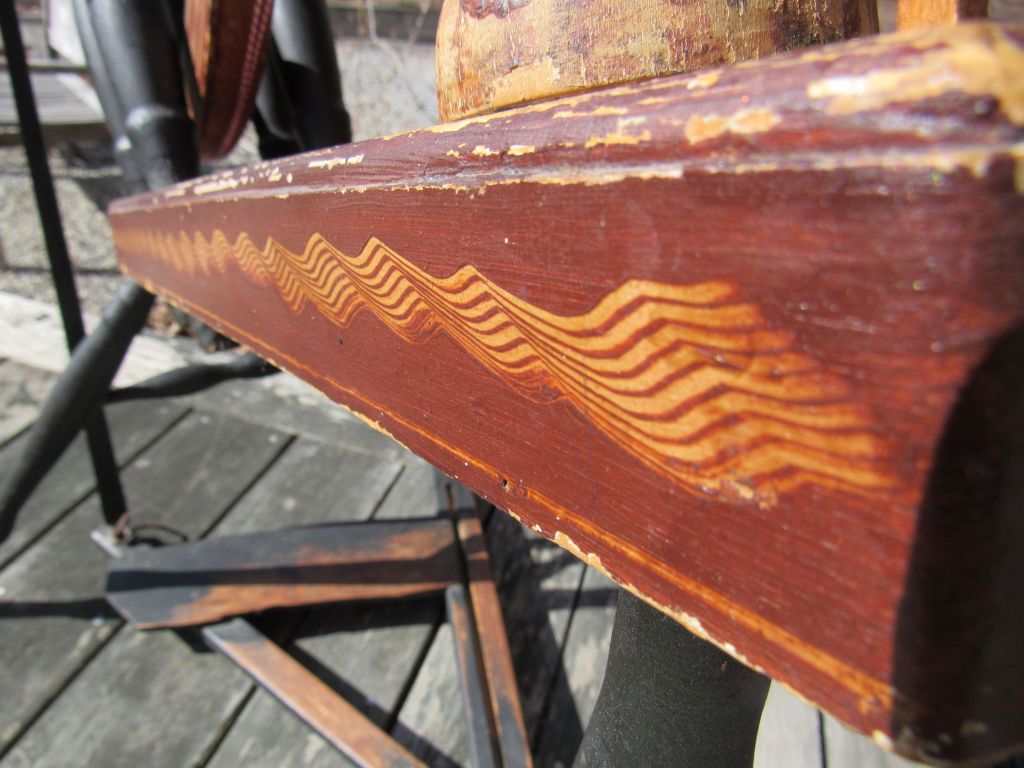
and around the wheel rim.
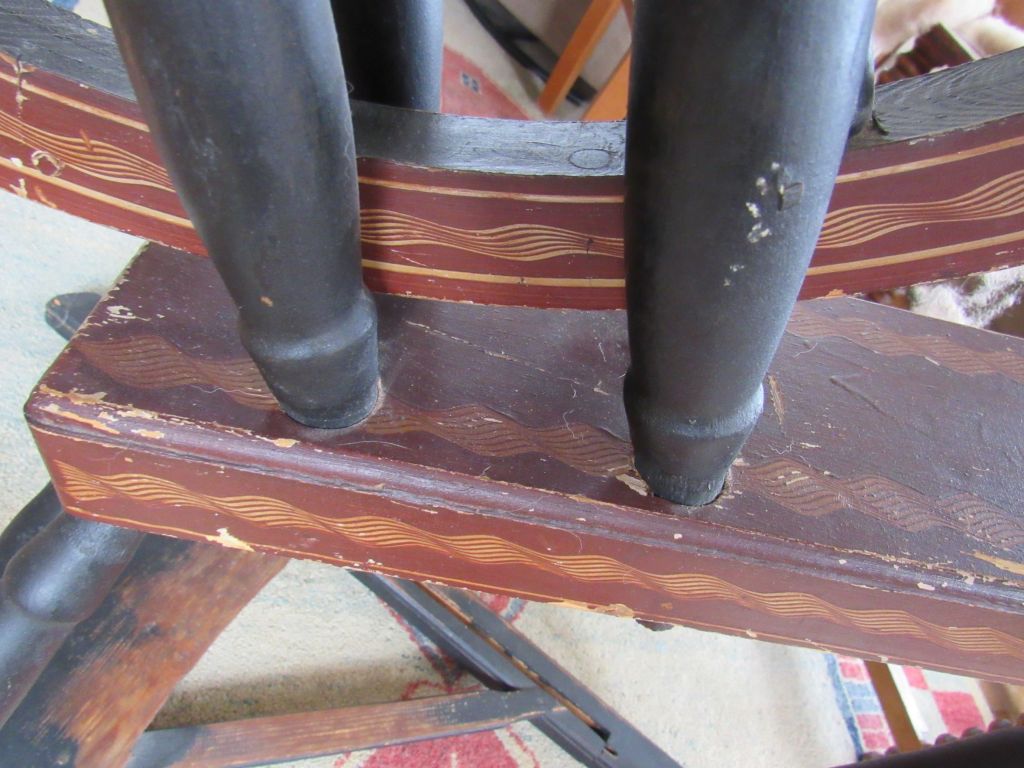
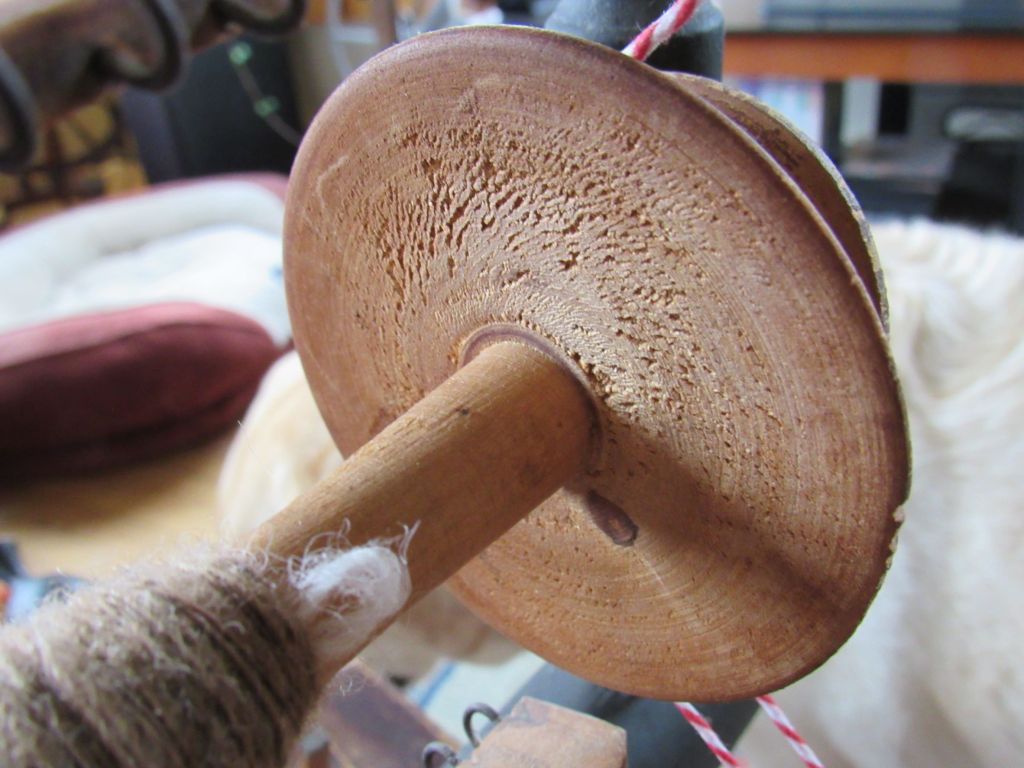
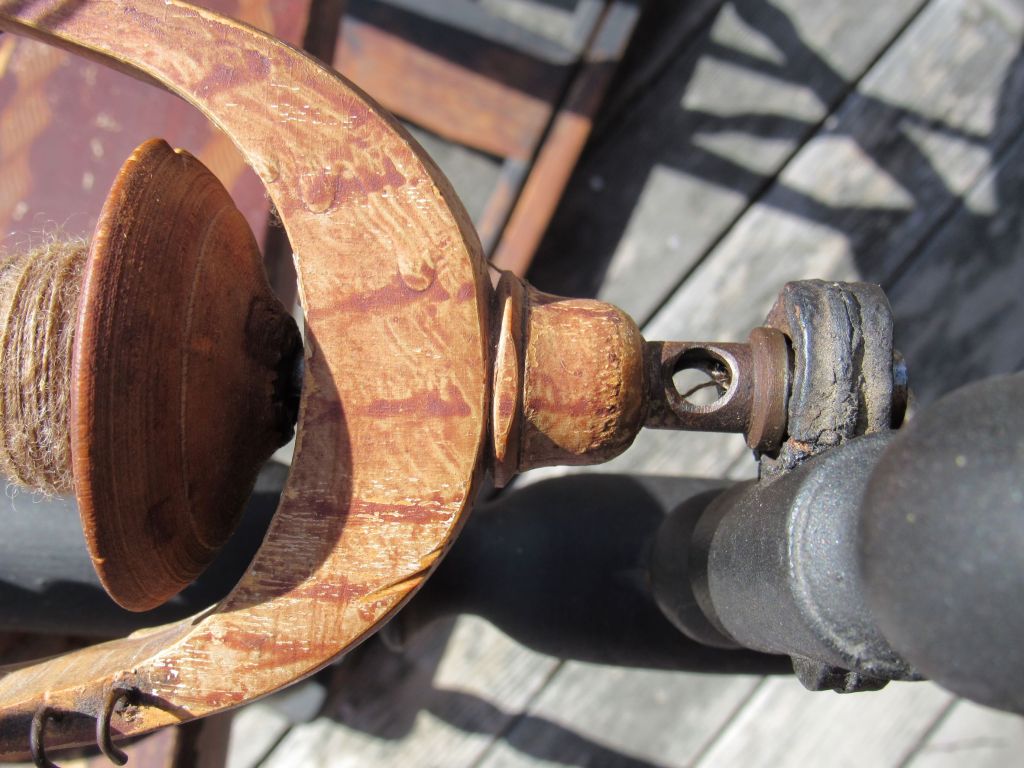
In contrast, the flyer assembly, collar, hub,
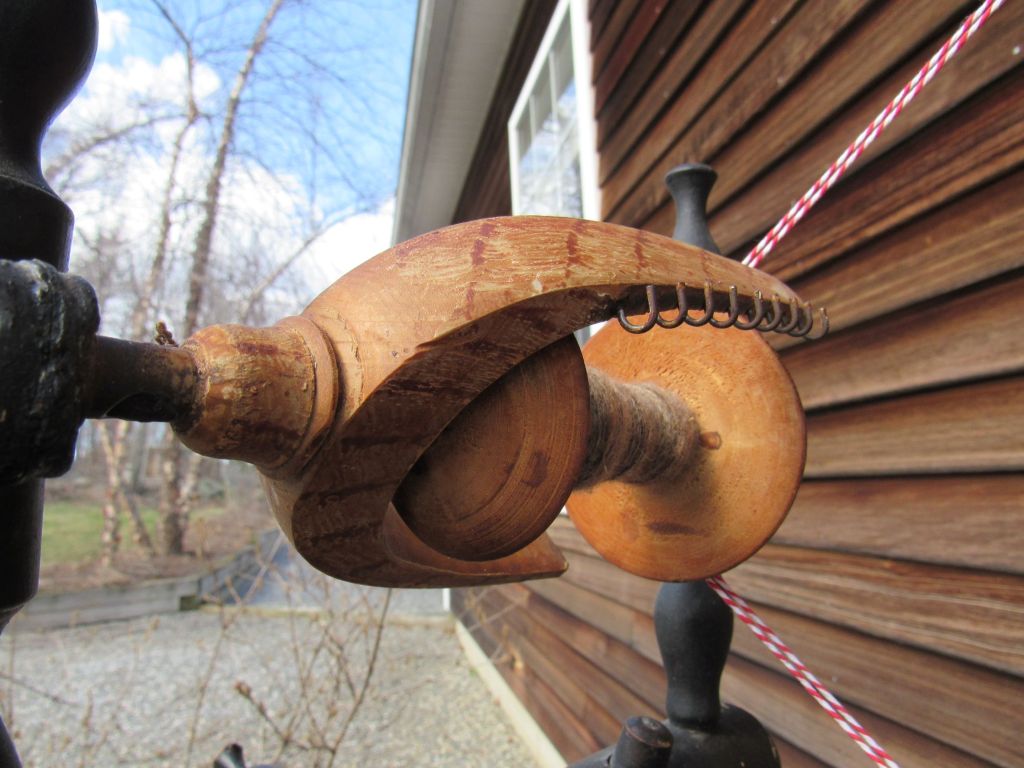
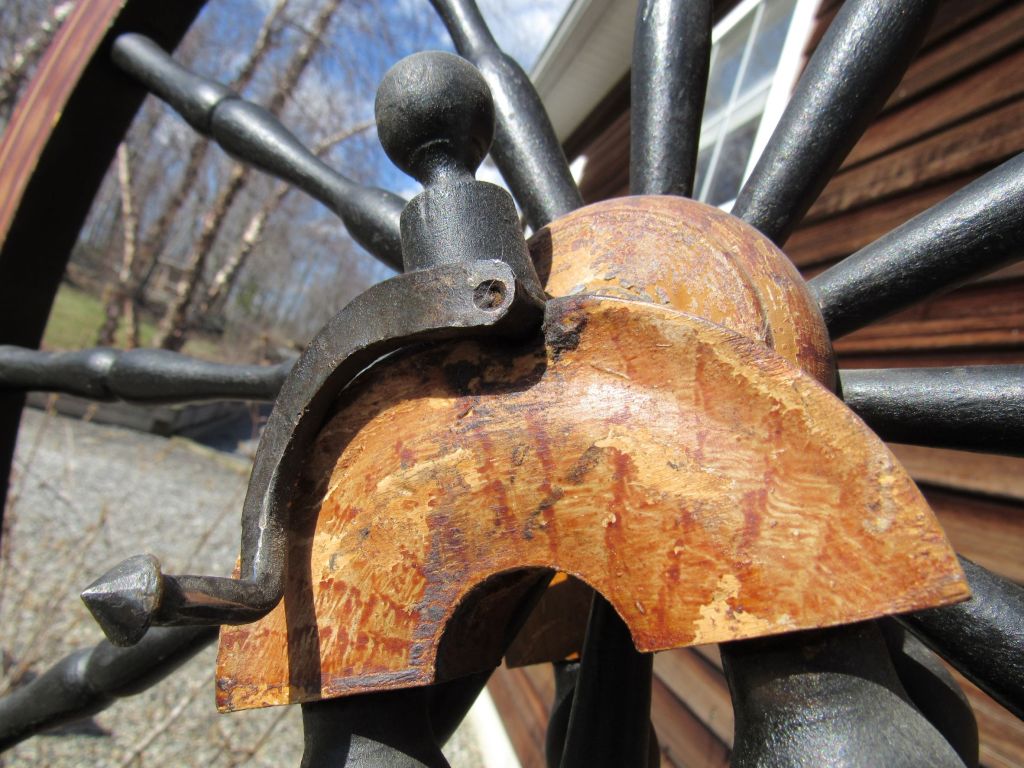
and upright arches
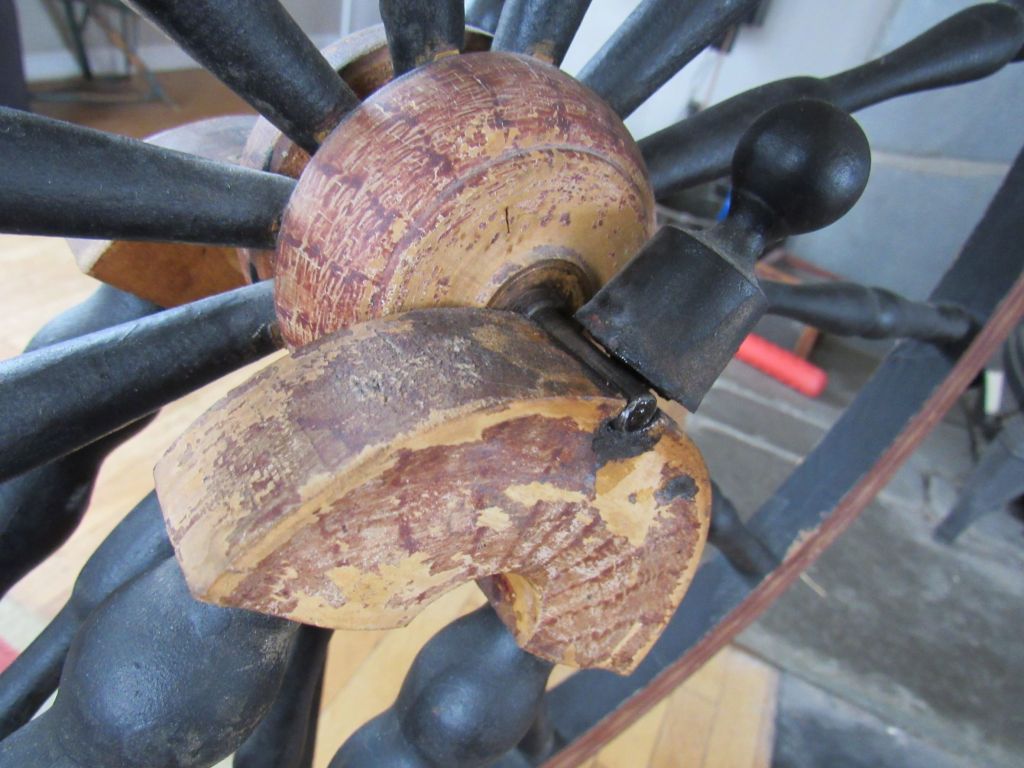
are painted with reddish-brown tiger-like stripes over a cream-colored background, giving a bit of a faux grain effect.
There must be a fascinating explanation for the origin of the color and design scheme, but, with my non-existent Finnish language skills, I have not been able to discover it yet.
As I mentioned in my previous post, “Impi,” Sauli Rajala started a Facebook group dedicated to Kiikka wheels, called “Rukkitaivas, Spinning Wheel Heaven, Kiikka.” His group has contributed enormously to our knowledge in this country of Finnish wheels.
Because these wheels were most often marked with paper labels, most of which have fallen off or been worn away, it has been difficult to trace the makers. The most common name found on labels seemed to be “Aaro Kaukonen,” who was making wheels well into the mid 1900s.
Aaro Kaukonen’s grandson, Velli-Matti Kaukonen recently wrote a book “Kiikan Kehruurukkitehdas ja Jokisivun Saha,” about Aaro Kaukonen’s “Spinning Machine Factory.” From two articles posted on Sauli’s site, it is my understanding that Aaro Kaukonen was taught to make wheels by his father-in-law, Kalle Ulven. Kalle was from the most famous wheel making family in the area.
Their wheel dynasty started with two brothers, Antti (Ant) Kynnysmaa and his brother, Joseph. The brothers started making wheels in the 1820s and became more and more well known.
In 1845, Antii received a certificate as a master wheelmaker and the brothers changed their last name to Ulven (also spelled Ulvein and Ullven) (this is very similar to the story of the Rantila family in the previous post, “Impi”).
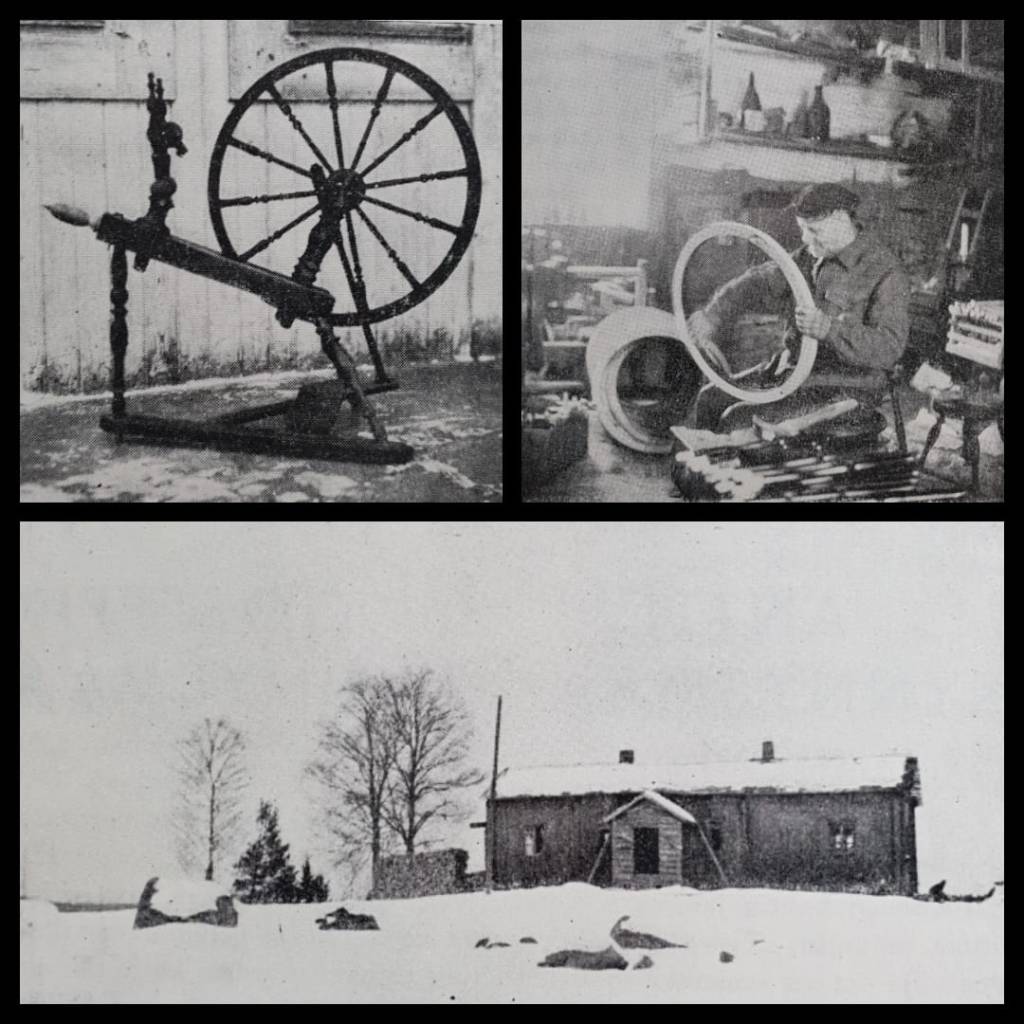
An innovator, when Joseph bought his wheels to market, he designed a trailer for travel, with a small cabin for sleeping. At the beginning, Joseph’s wheels were unpainted, but he later painted them green (if I am understanding the translation correctly).
I have not found any information on when the black and red version emerged, however. Joseph died in 1882, but his sons Semmi, Kalle, and Herman continued as wheel makers.
Kalle’s daughter (I believe it was this Kalle, but may have been a generation later on), Marta, married Aaro Kaukonen and, through her family’s teaching, Kaukonen became a wheelmaker. We also see labels for Emil Ulven and Wilho Ulven (Ullven), who may have been the next generation.

We know that Auro Kaukonen made his wheels in a small “factory” but whether he worked directly with the Ulvens, I do not know. (Update June 2025: According to Sauli Rajala, Auro initially worked with Kalle, but then set up his own shop and opened the spinning wheel factory in 1938.) This 1939 article about the Ulvens and Kaukonen is entitled “The Only Spinning Wheel Factory in the World.”
I am slowly working my way through translating it and suspect that it has the answer to many of my questions. If anyone reading this blog post speaks Finnish, perhaps they could help with some translation.
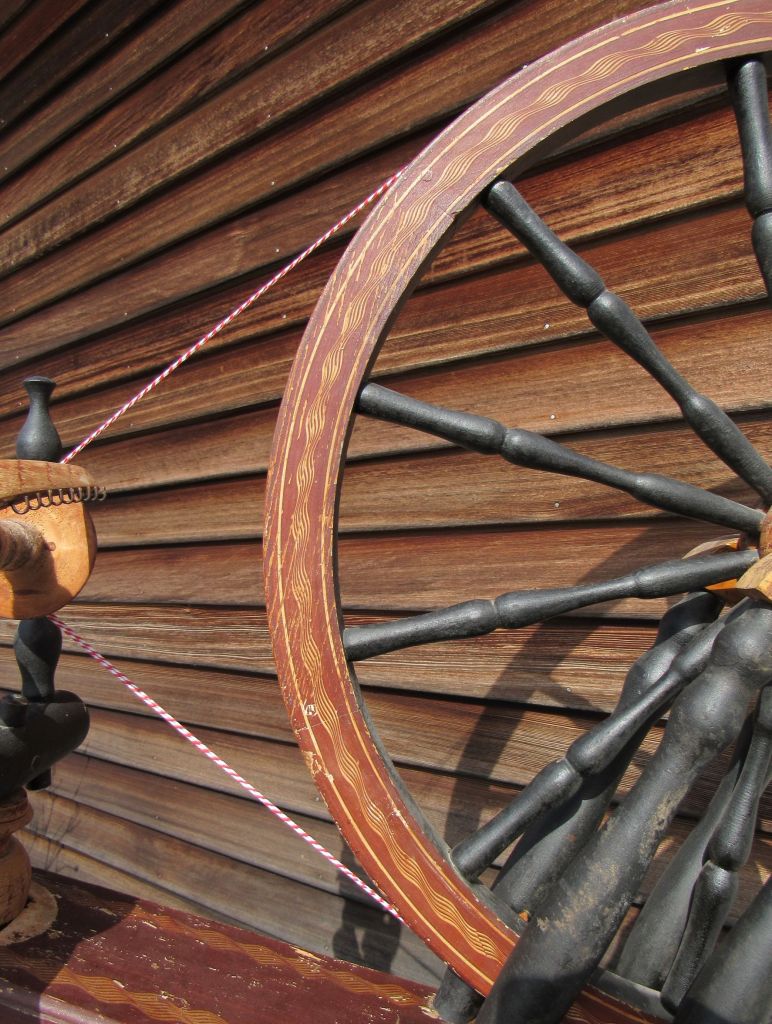
While there was obviously a large output of “factory” wheels, the red and black wheels were not all the same. There is a huge variety in construction details and paint patterns.
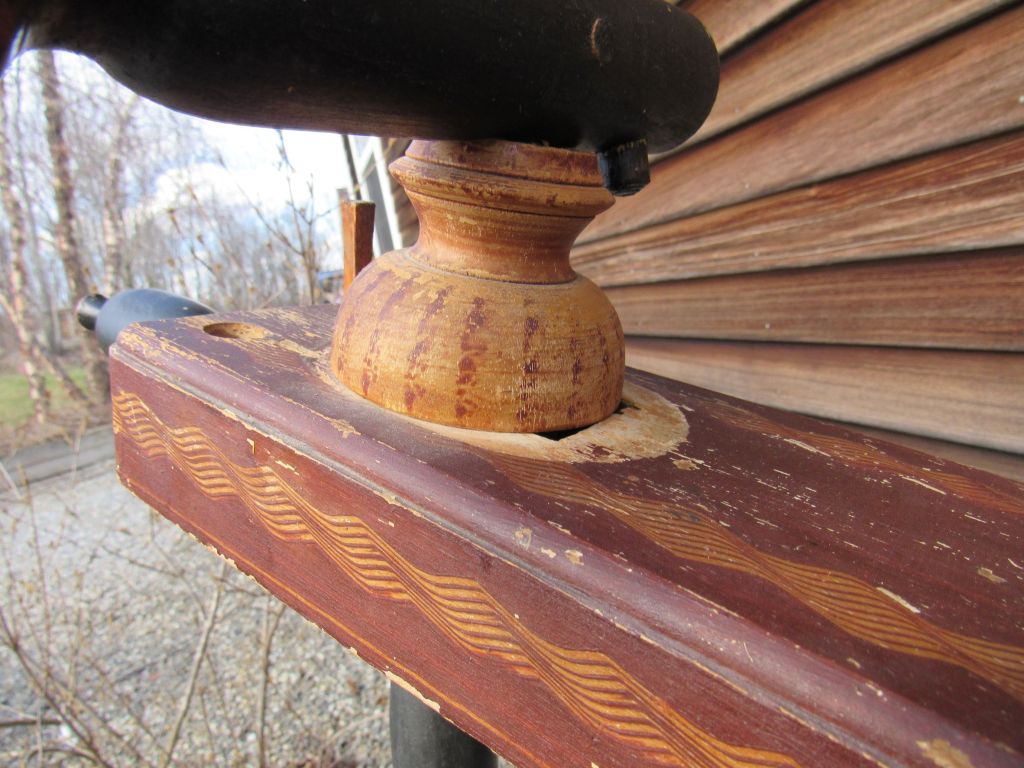
Even individual wheel makers were not turning out cookie-cutter wheels.
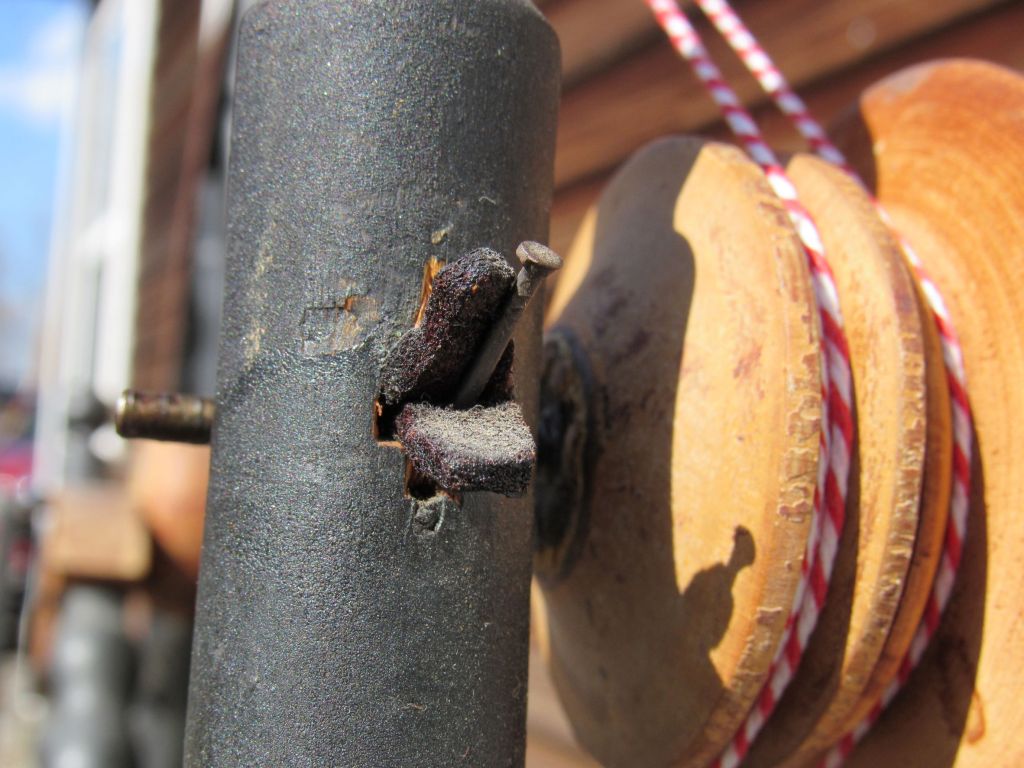
For example, several wheels labeled “Herman Ulven” have showed up, and each is different. On the other hand, the flyer assemblies on the red and black Kiikkalainens seem to be quite uniform.
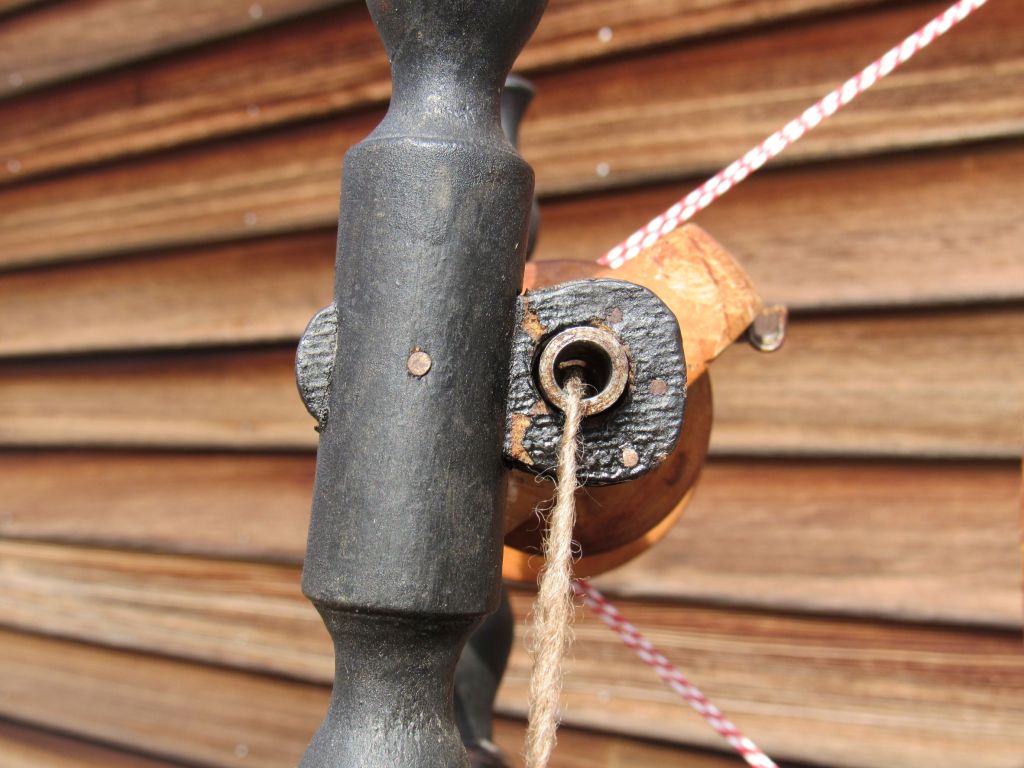
Perhaps there was some uniformity in flyers so that they could be interchangeable, but individuality in design and decoration.
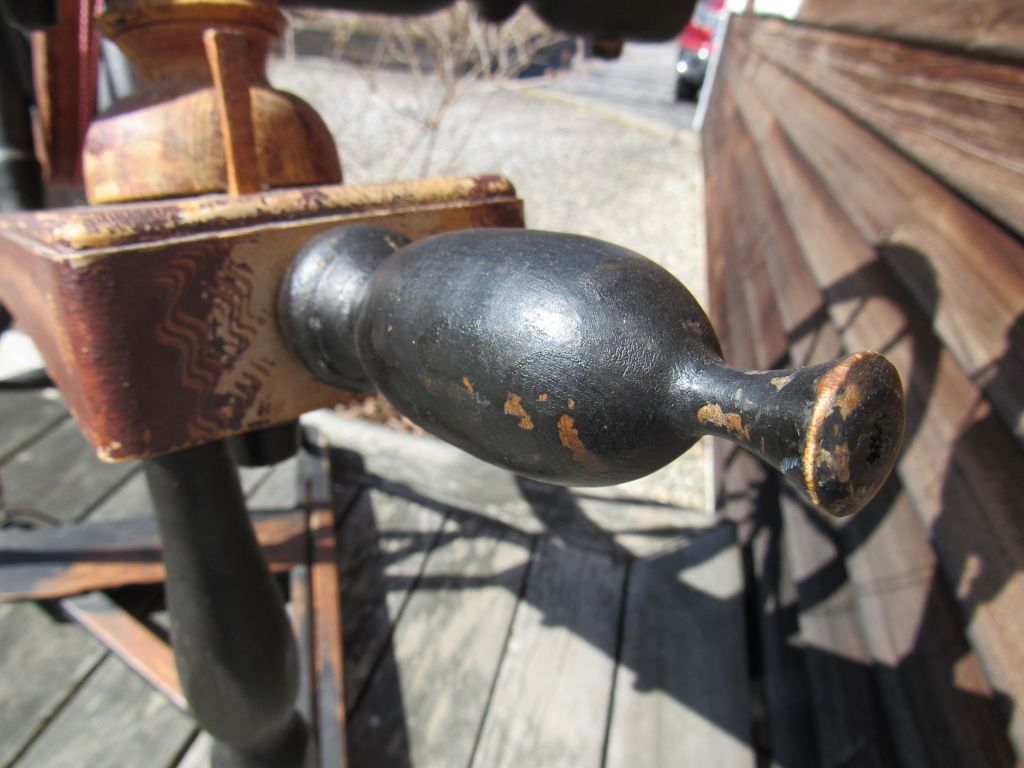
My wheel has no label, so I can only guess its age. It looks older than the shiny wheels from the mid- 1900s and has seen a lot of use, especially showing wear on the treadle.
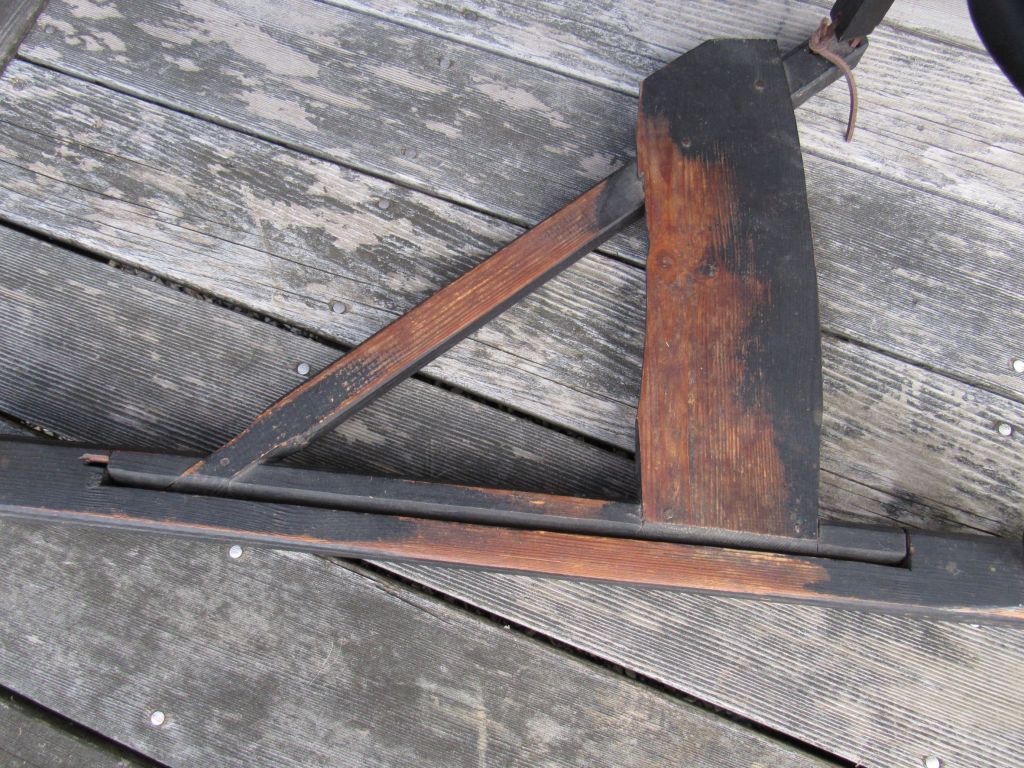
I bought it at an auction about an hour from my home on mid-coast Maine. There is a good-sized Finnish population in the mid-coast, descending from immigrants who settled here from the mid-1800s through the early 1900s.
I like to think that my wheel was brought over by one of those immigrants in the early 1900s. But that is only speculation.
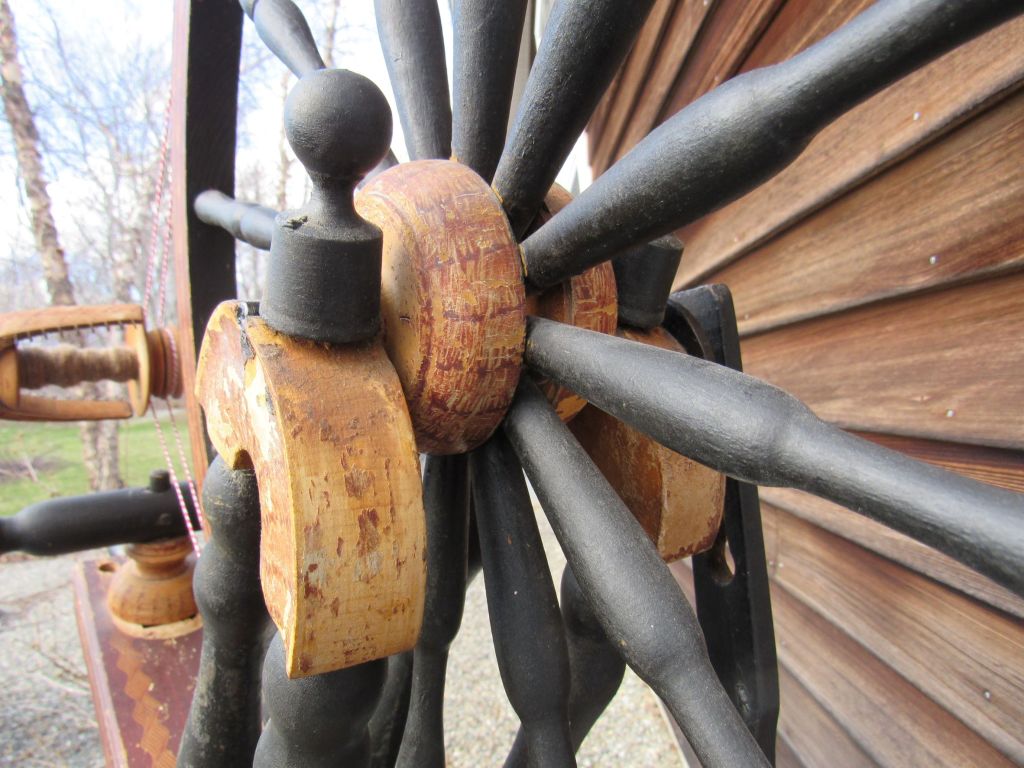
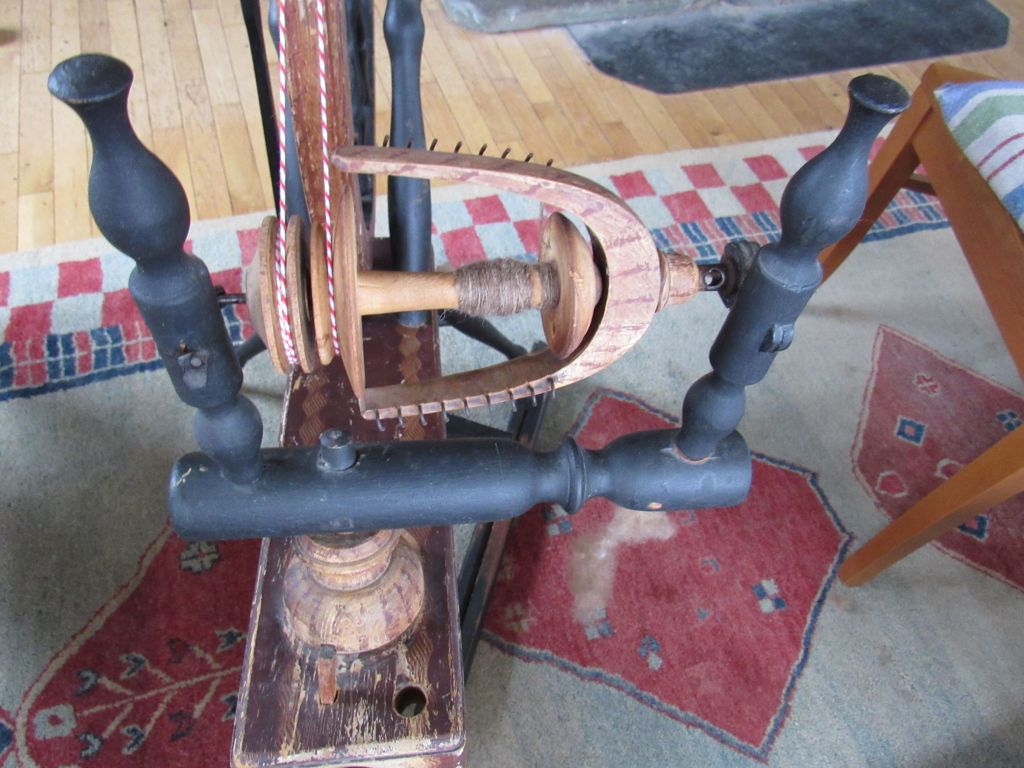
It is a wonderful spinner–much like the Quebec wheels made during the same time period—with a large drive wheel designed for speed and efficiency. The drive wheel is made with six joined pieces, much like Impi’s wheel in the previous post.
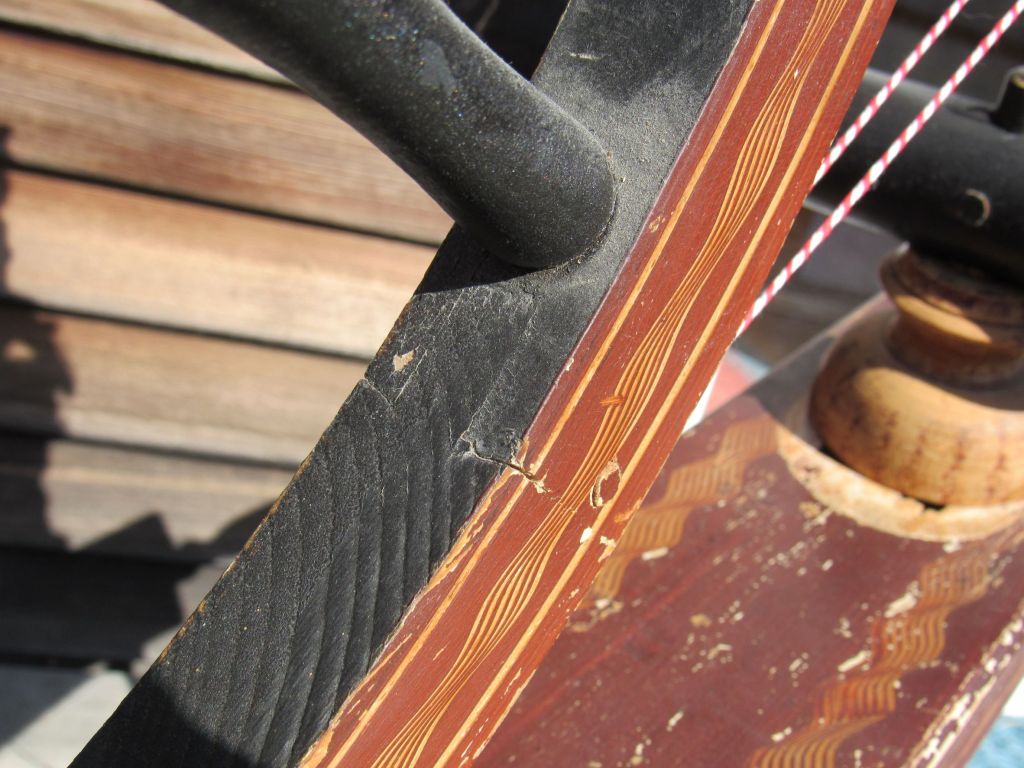
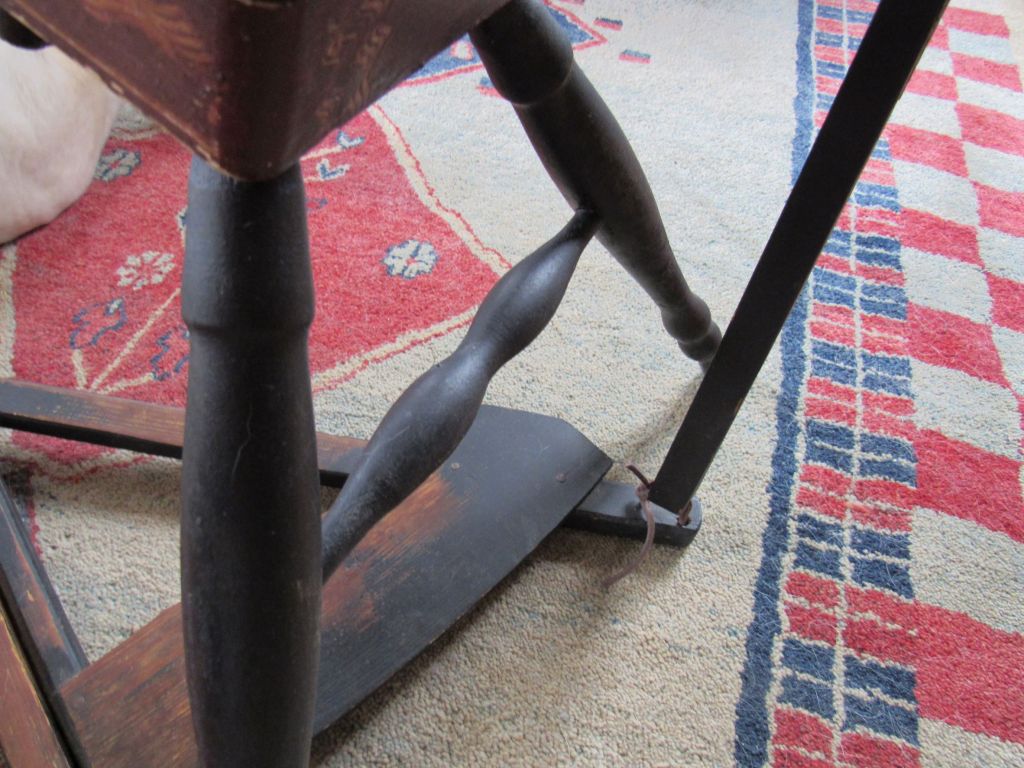
Like many Finnish wheels, the treadle pins are set into the treadle bar rather than going directly into the legs.
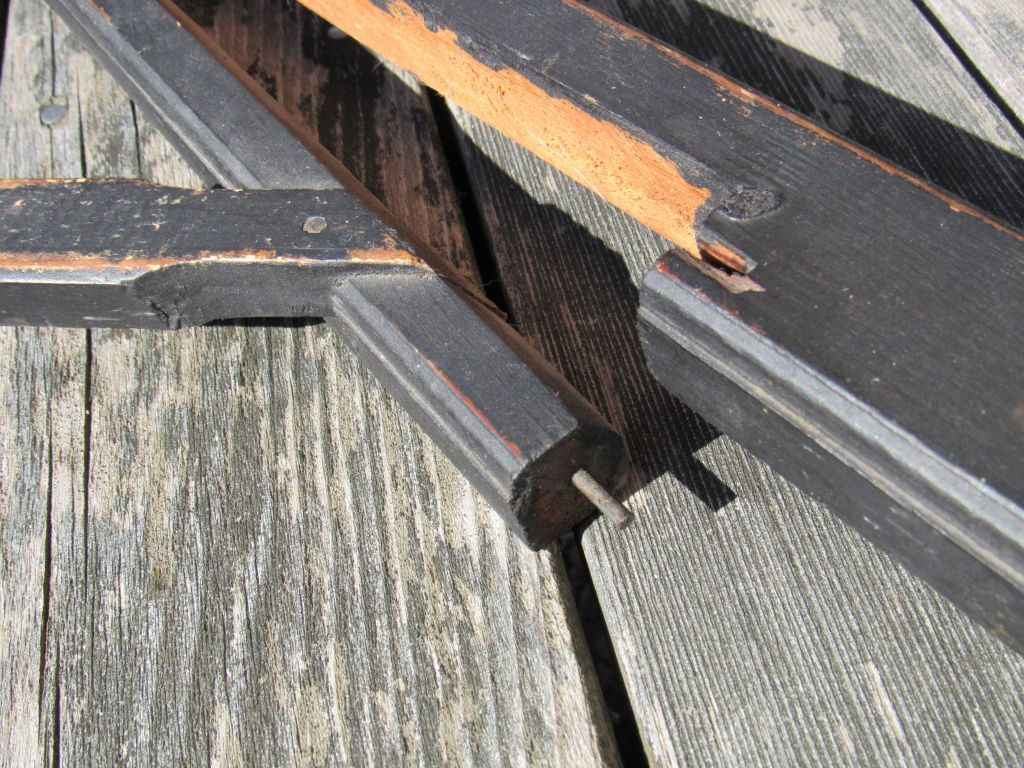
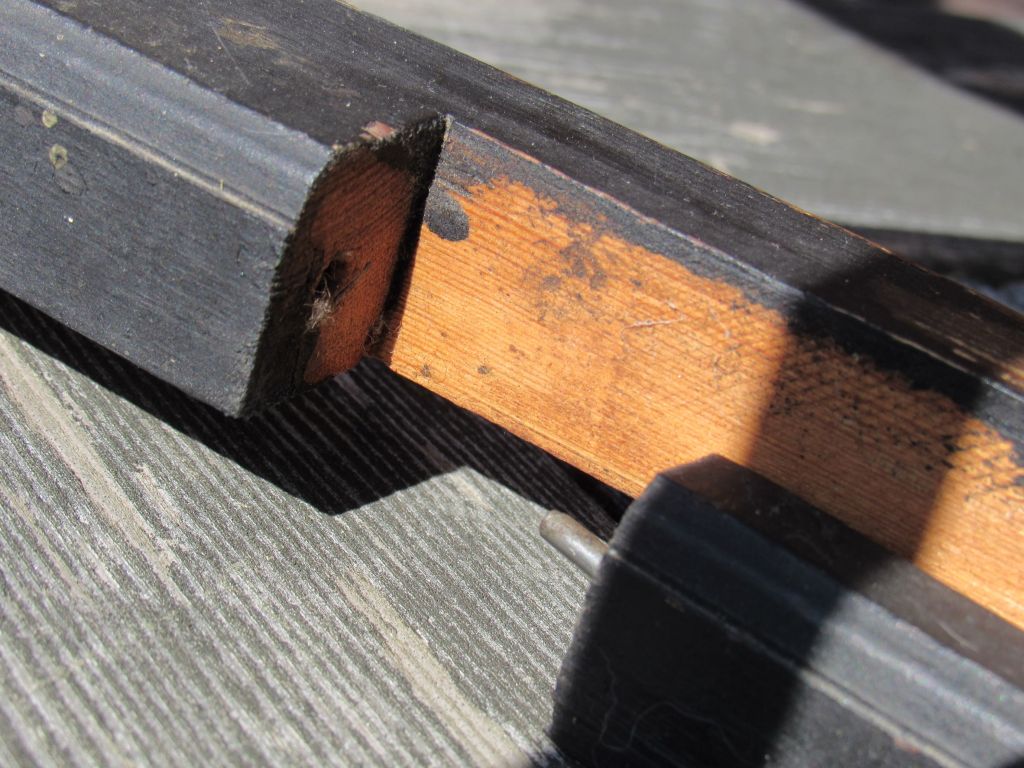
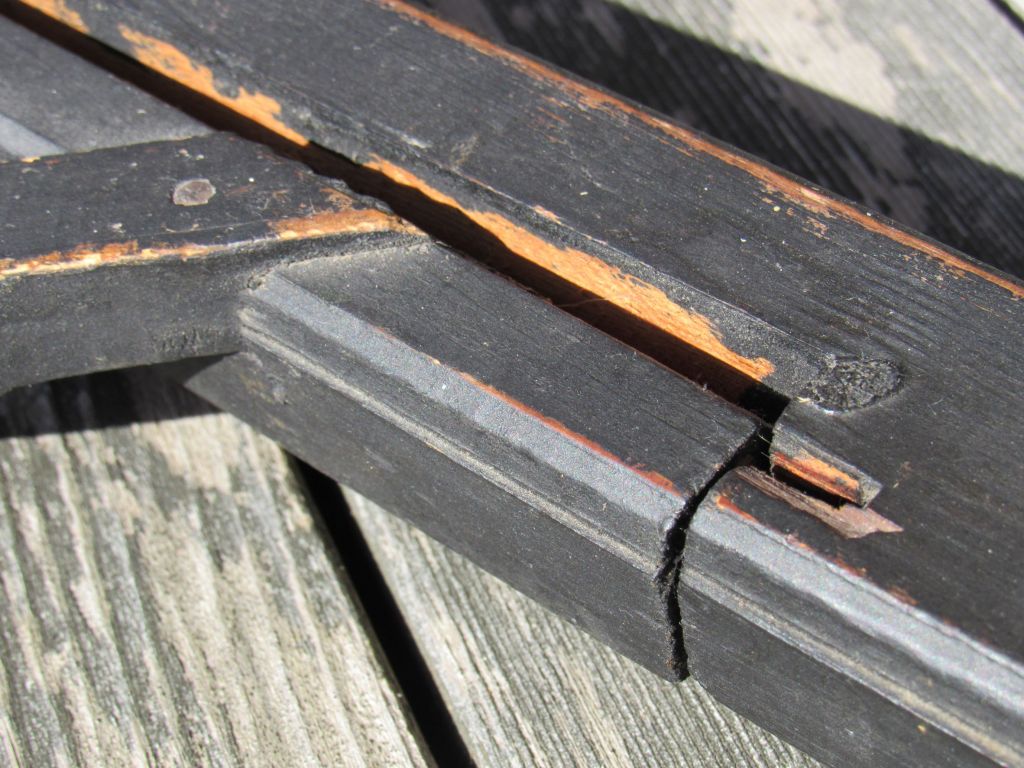
And the spinner-side feet emerge below the treadle bar.
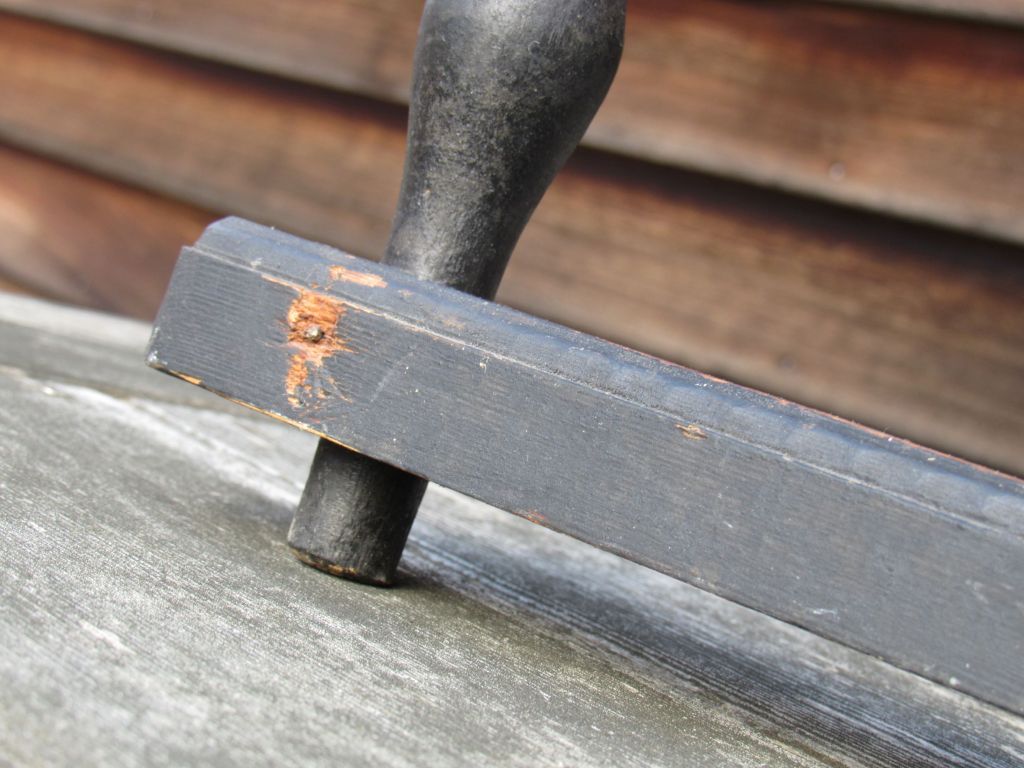
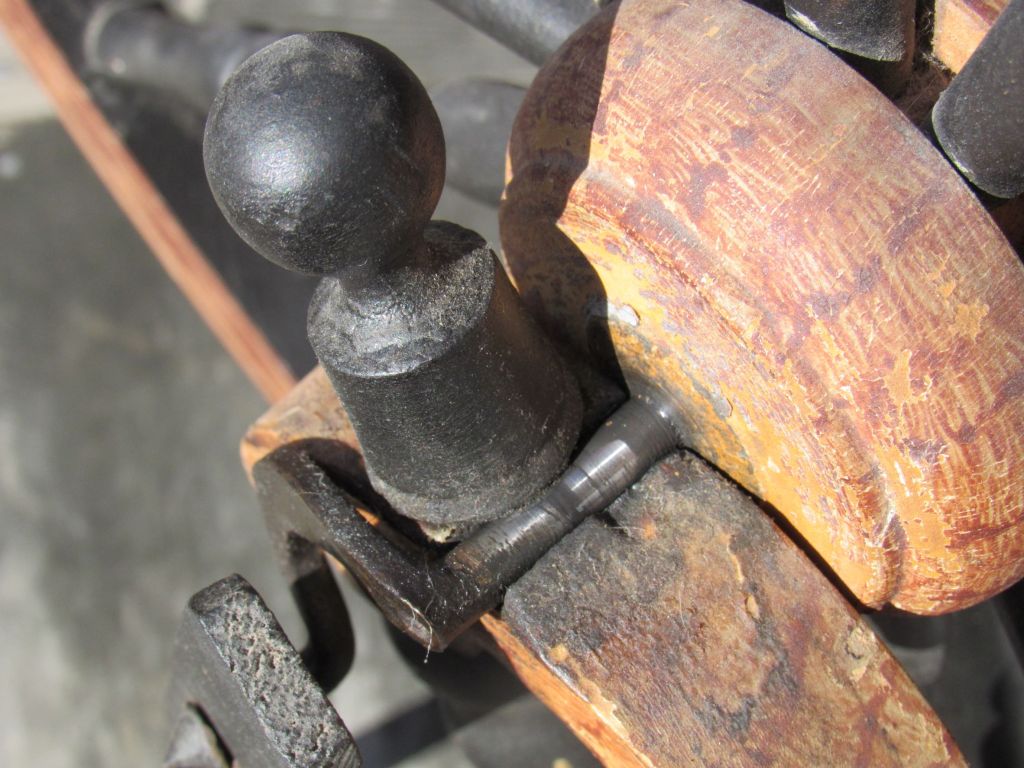
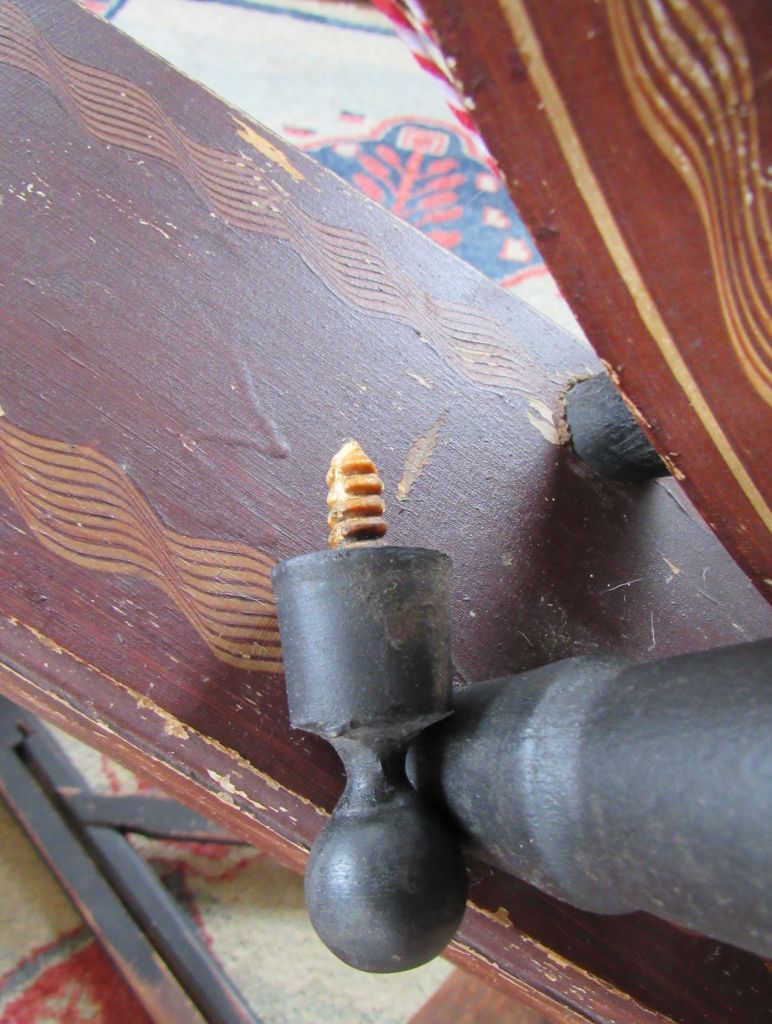
The double uprights are topped with arches and the axle is held in place with wooden screws.

There are a few paint drips on my wheel, but those are its only flaw.
It is lightweight, an excellent fast spinner, and brightens every room it is in. I have only started to learn about these wheels and will update this post as I learn more.
The photographs and family history of the Ulvens came from this article: 23.8.1824 “KIIKASSA, KYNNYSMAAN TORPASSA ALKOI RUKKIVARVARIEN AIKAKAUSI,” by Jaana Härmä, about the history of spinning wheel making in Kiikka, which was posted in the Rukkitaivas group on Facebook.
Update June 24, 2025: Sauli Rajal offered some additional information about the wheel in this blog. According to Sauli, it was made by Eino Hossa in Keikyä, a neighboring village to Kiikka, probably in the late 1940s.


Yours are the best pix of a Finnish Wheel I have seen. I will use them as I restore my presumed Finnish Wheel.
Thanks! Your blog posts are always full of information but told in a fun, story like way.
LikeLike
Thanks Susanne! You always make me feel appreciated! Let me know if you need any more photos. And you can always borrow this wheel for a while if you want to use it as restoration model.
LikeLike
Hi Brenda, I’m just curious. Is the drive band going around the whorl twice? This is new to me. Thanks!
LikeLike
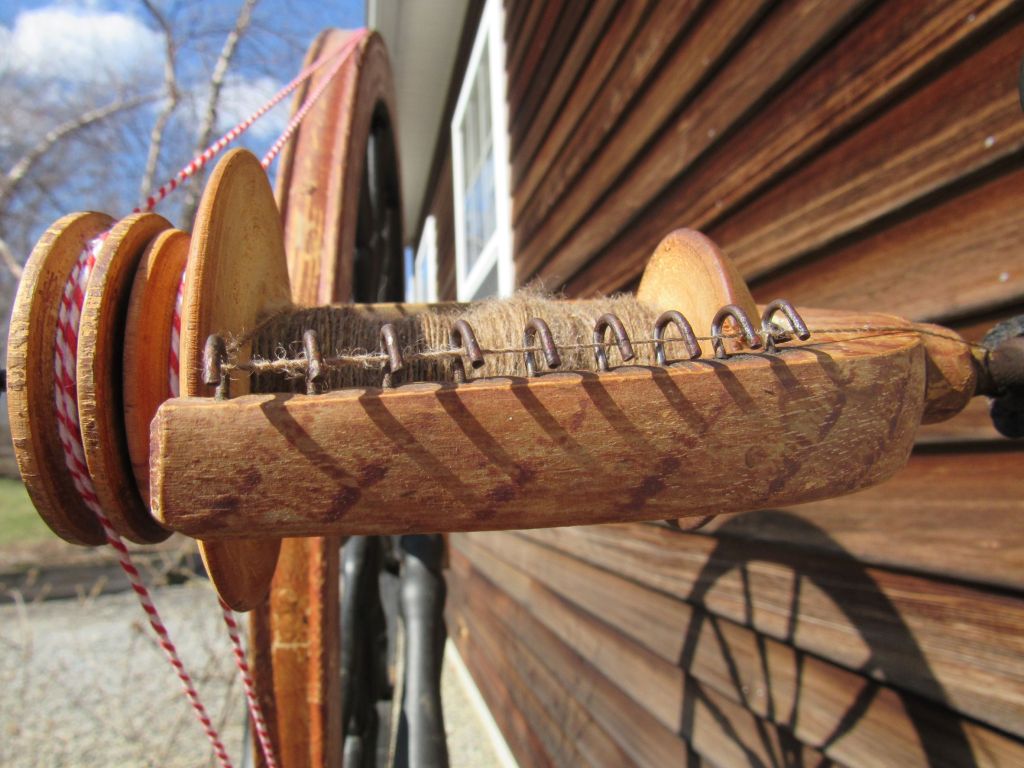
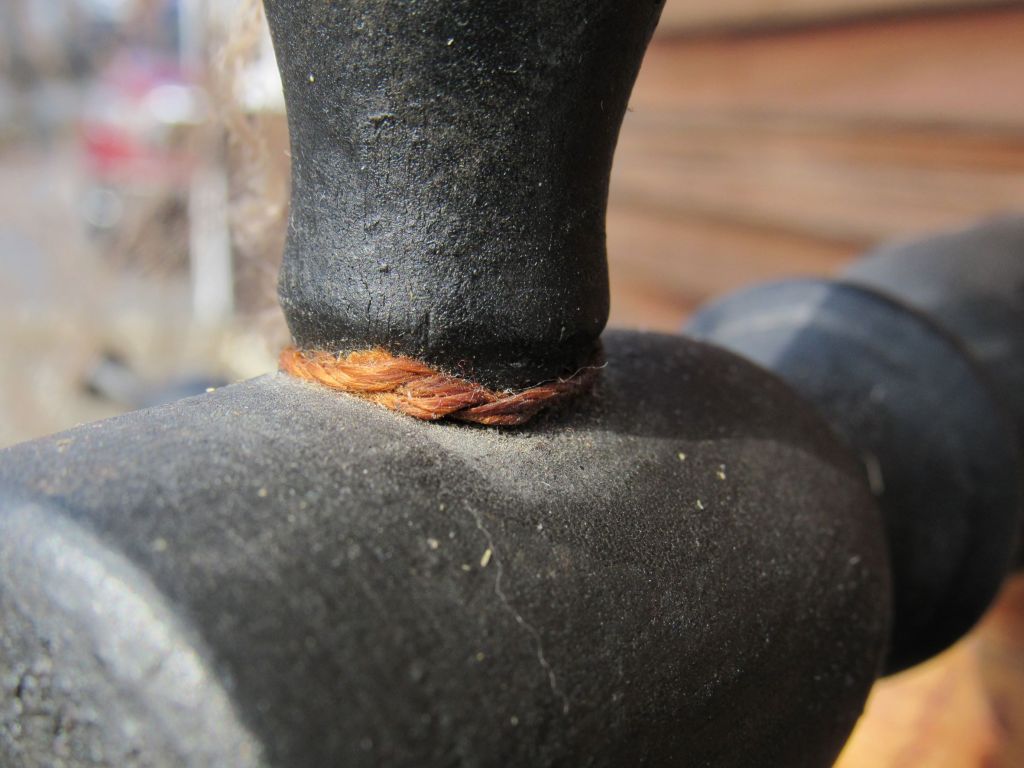
I’m so glad you asked. I was going to mention this in the post, but forget to include it. When I got this wheel, like many antique wheels, it had been sitting for a long time unused. I wasn’t happy with the uptake–it was a little sluggish. So, I increased the ratio between the flyer whorl and bobbin whorl by wrapping some string around the flyer whorl. Some people use a rubber band for this or a nice piece of linen cord, but I just used the cotton twine that I use for my drive bands. It isn’t the drive band itself, but a separate piece of twine that I wrapped around the whorl three times and tied with a knot. On old wheels that have seen a lot of use, sometimes the flyer whorl gets worn down (it seems to wear more than the bobbin whorl, for some reason) and you will see old fixes with different kinds of thread or cord in there, often with an accumulation of crud on top. Unless there has been a lot of apparent wear on the whorl, oftentimes, for me this is only a temporary fix, an assist to get the wheel happily acclimated to spinning again. In this case, I never removed it, and probably won’t since she spins so beautifully the way she is set up right now. I hope this all makes sense. If not, let me know!
LikeLike