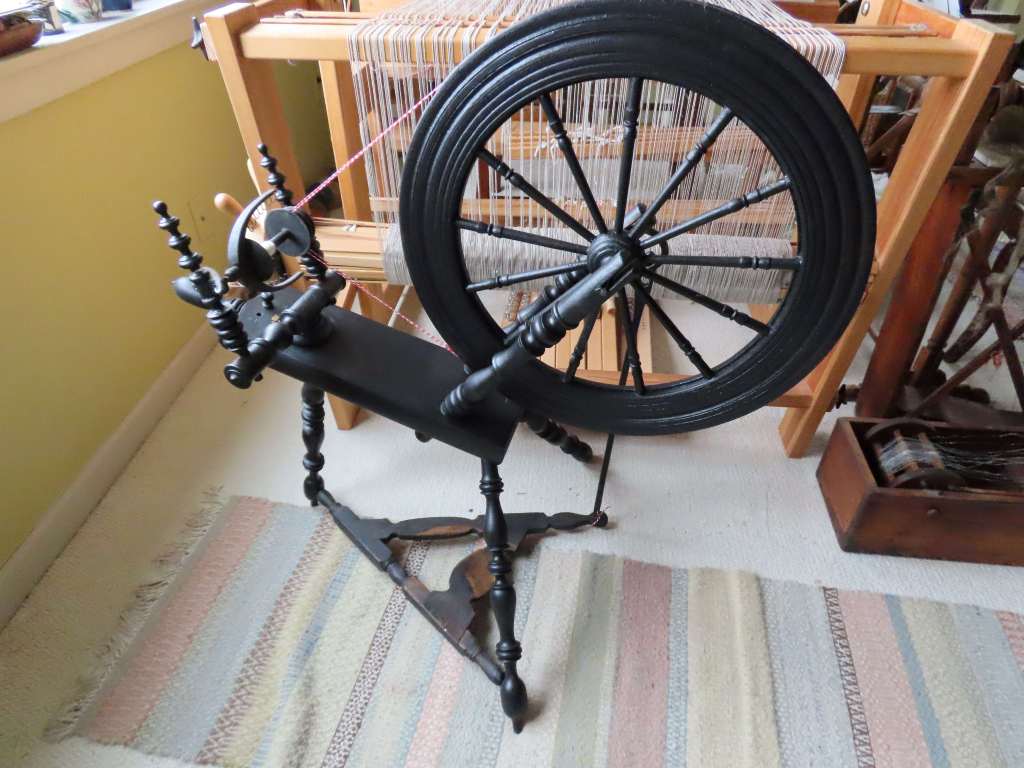
I bought Cocodris years ago from a woman in Bath, Maine. She told me that her grandfather had traded a gun for the wheel somewhere in the northern reaches of Maine.
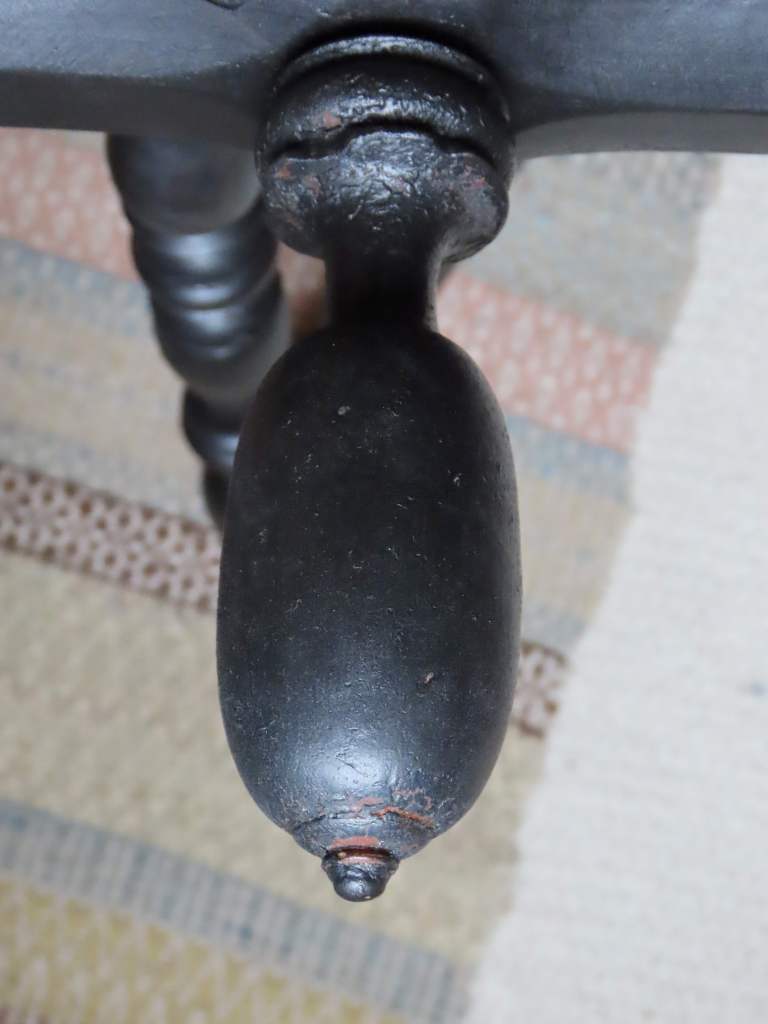
I was attracted by the beautiful treadle curves, an oddly whimsical touch, especially for a wheel found in Maine.

The paint was a bit startling, though.
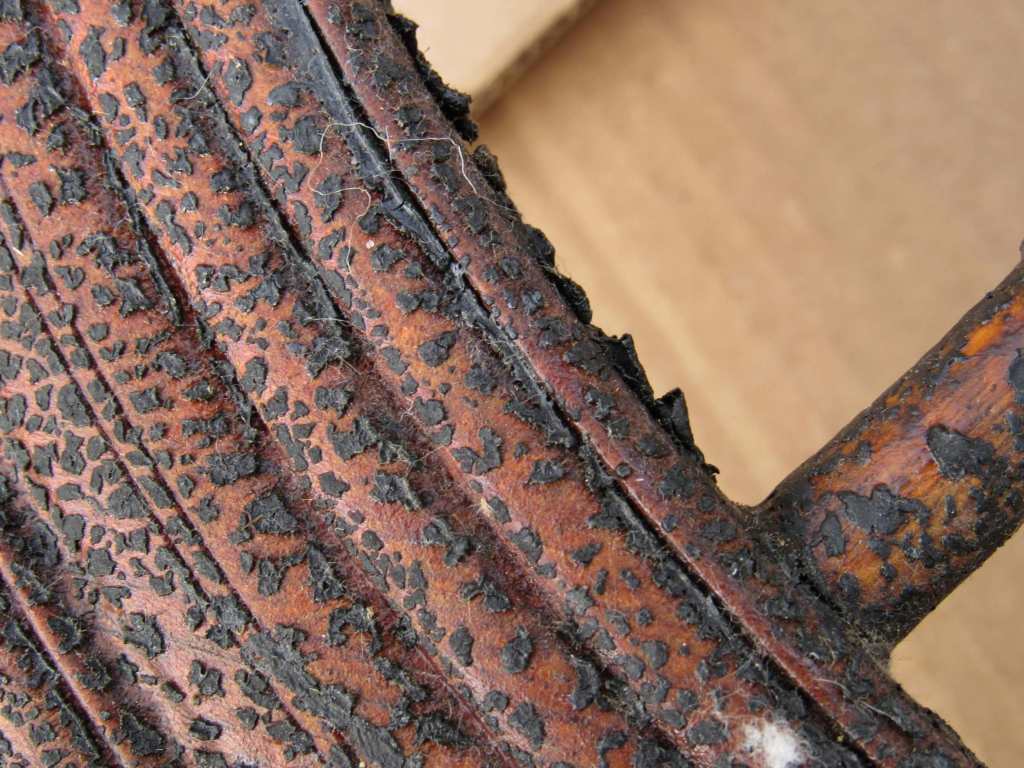
Cracked and peeling, bits almost exploded off the surface,
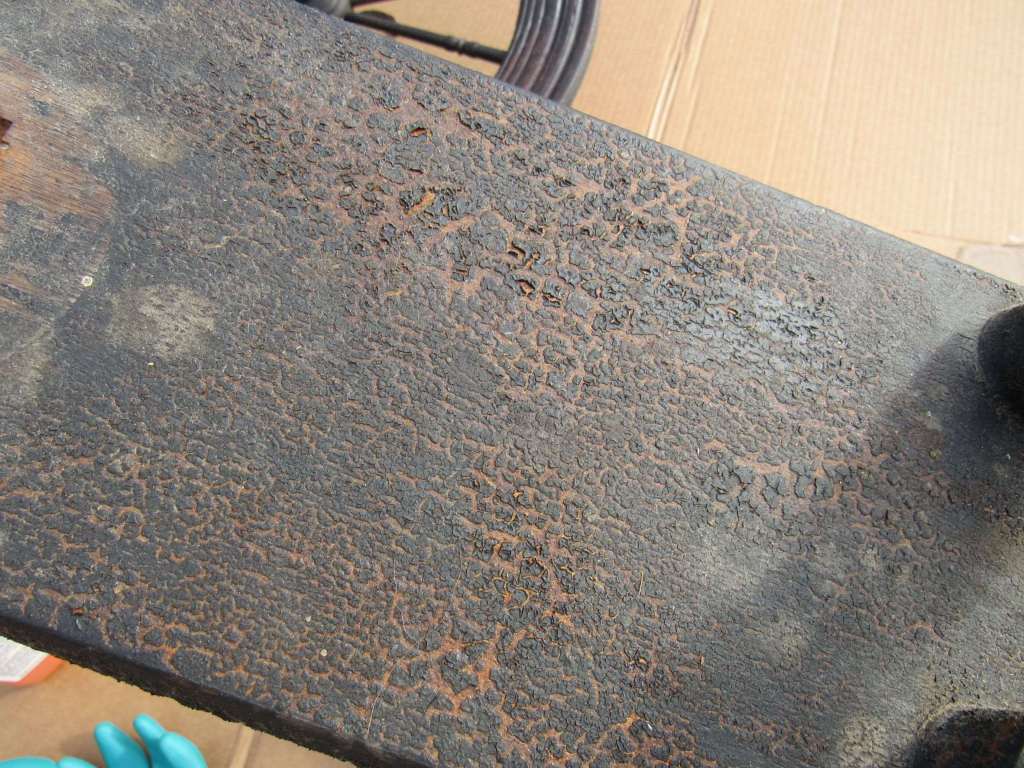
leaving a trail of black paint crumbs behind. While I rather liked the alligatored look, I was not enthusiastic about the paint litter so decided that I needed to address it.

I tried every suggested non-stripping tactic for alligatored finishes, but nothing worked.
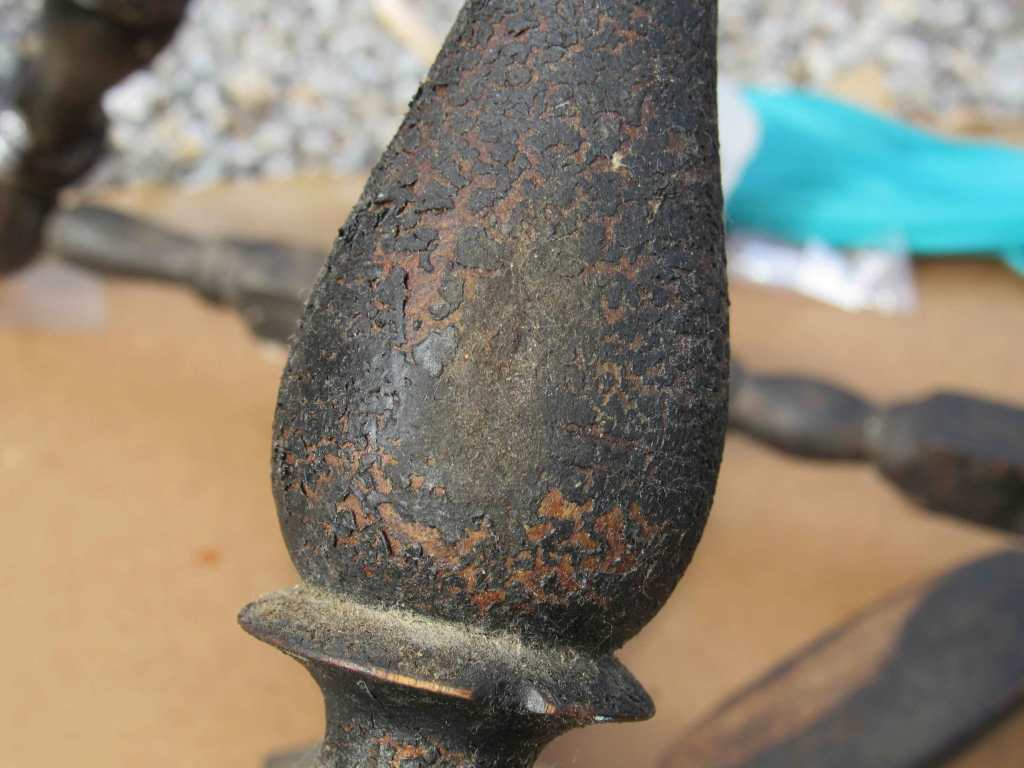
I finally decided to use a citrus stripper and at least remove the worst of the flaking areas.

What a nightmare. Let’s just say that the paint won. I was trying for a mixed look—some parts painted, some showing the wood.
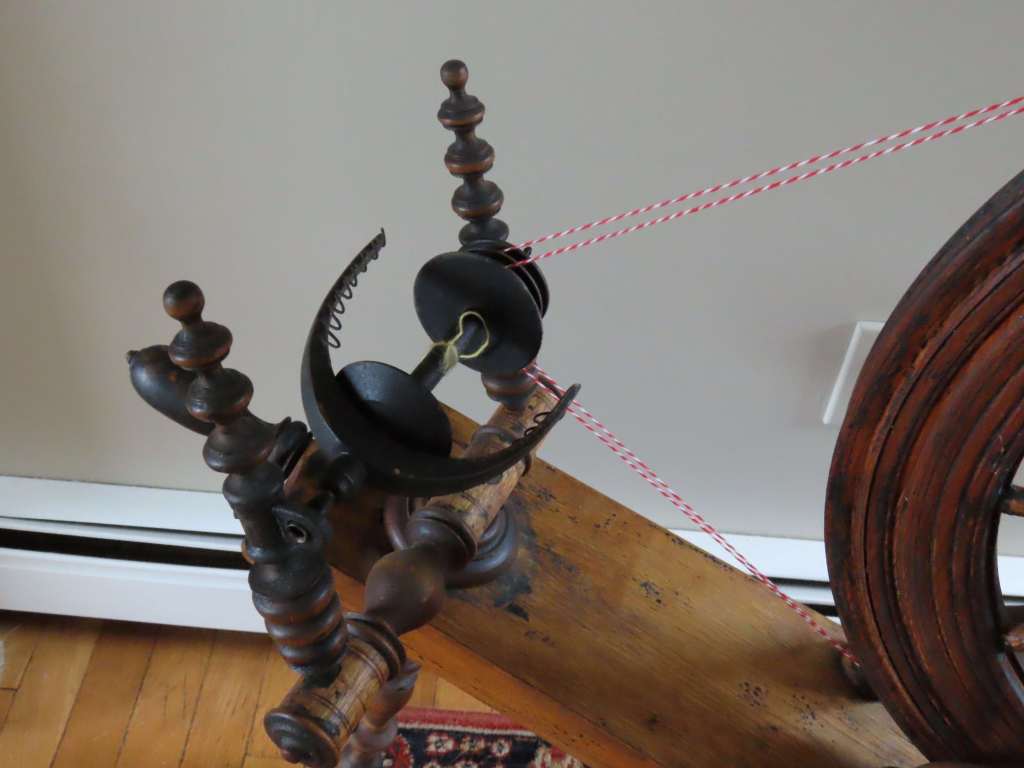
Instead, I ended up with a wheel that looked as if it had a terrible skin disease.
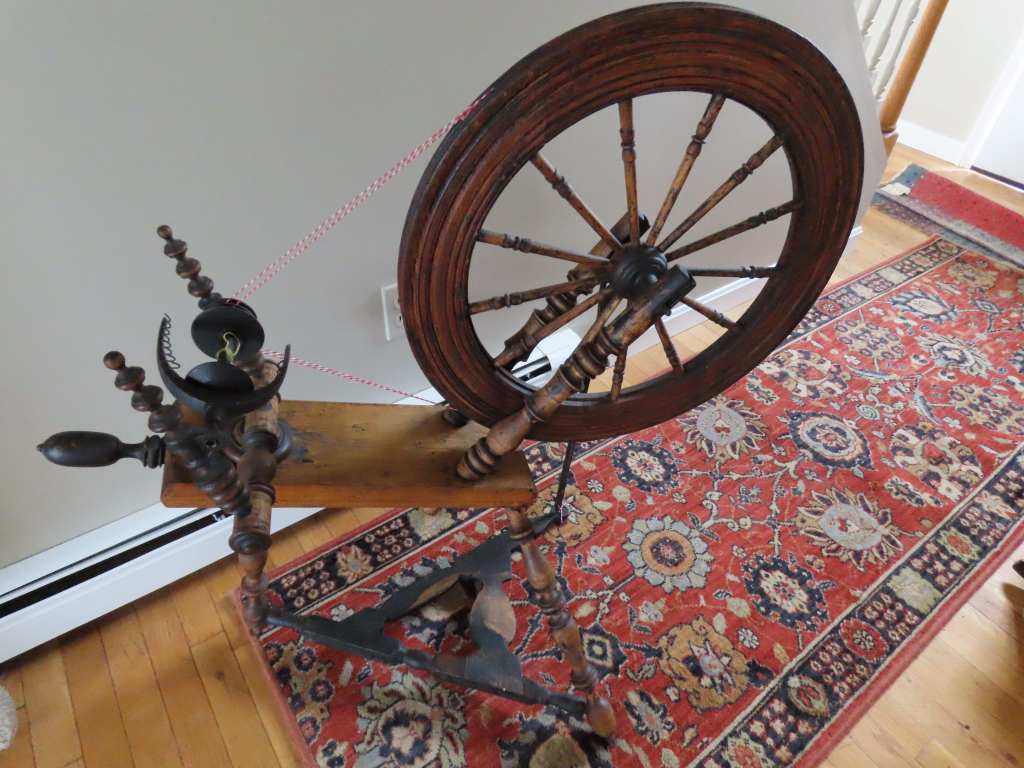
Rather than trying to strip it more, I repainted it, all except for the treadle parts and flyer, which I had not stripped.

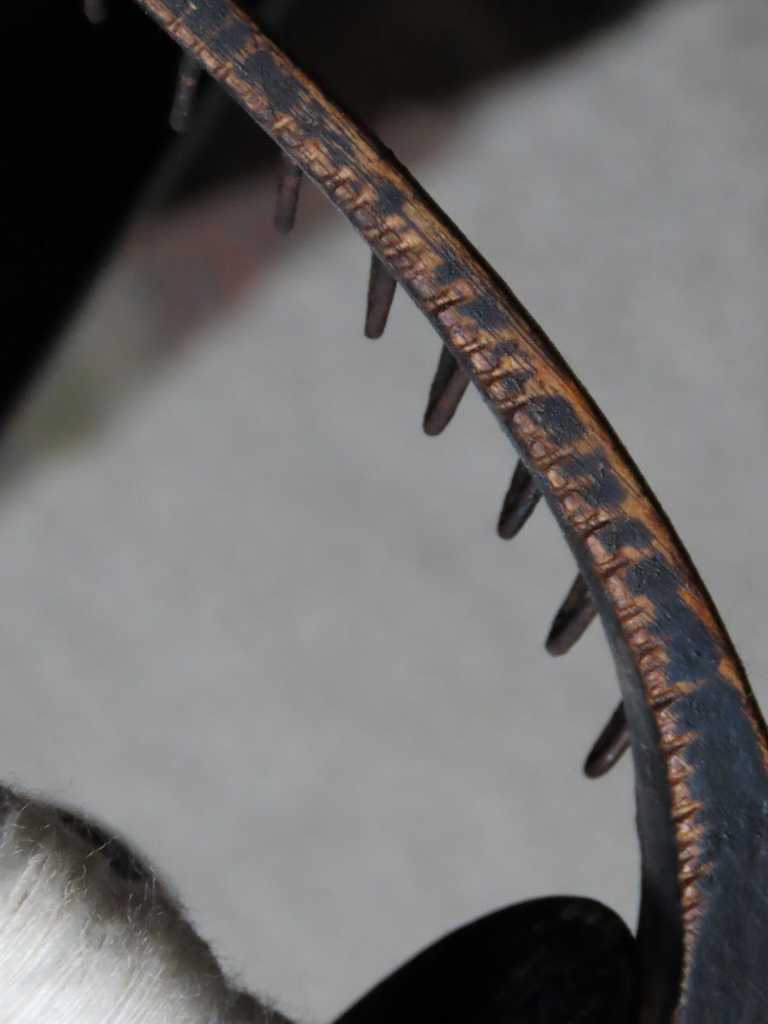
They still have the original paint and wear.
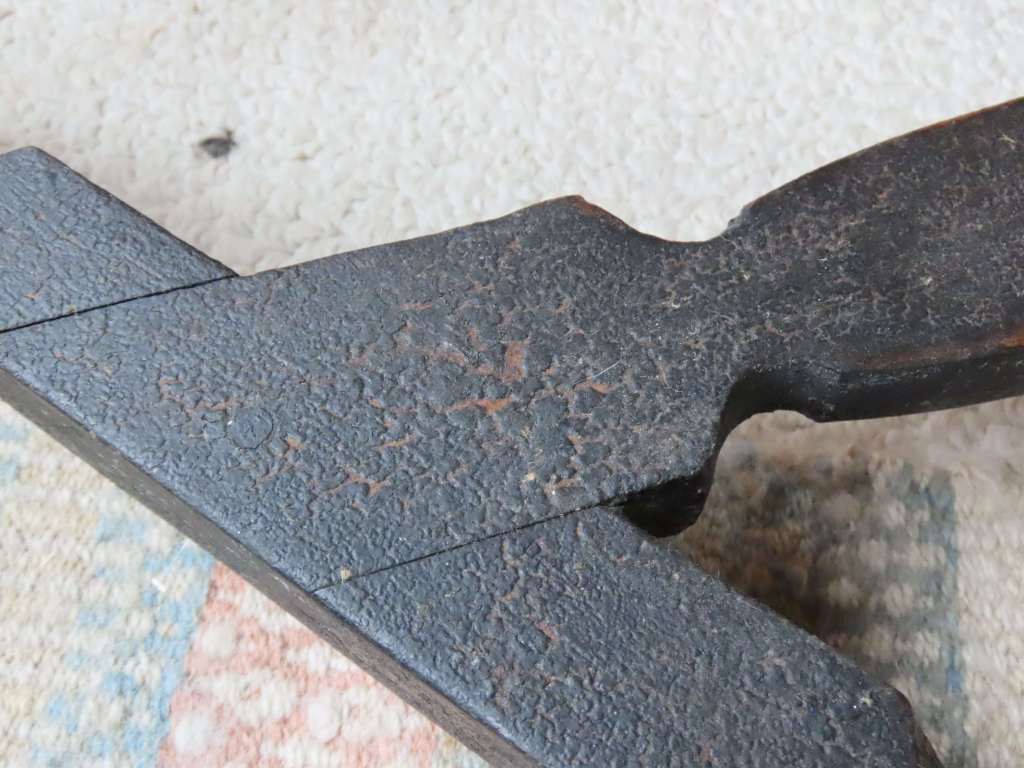

It is a bit messy, slightly weird looking, and needs some touch up,

but the black paint highlights the wheel’s beautiful turnings.
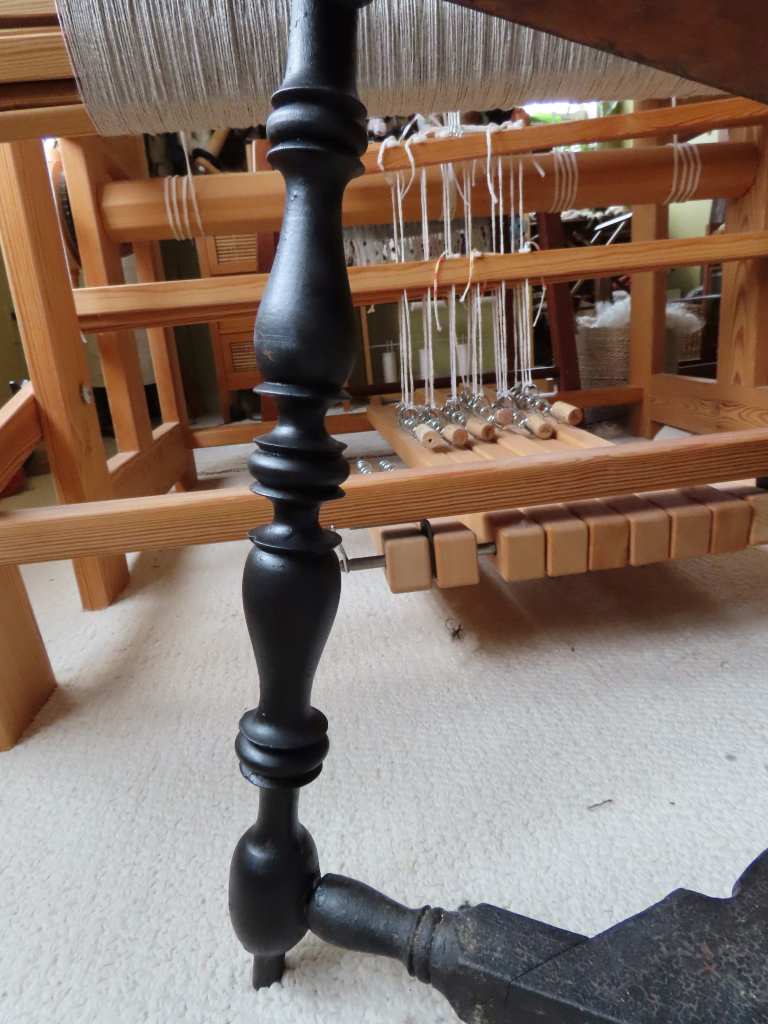
And, as is often the case, those turnings started showing up elsewhere. I began to notice similar wheels coming up for sale. While the wheels had individual differences, most had “bowtie” spokes
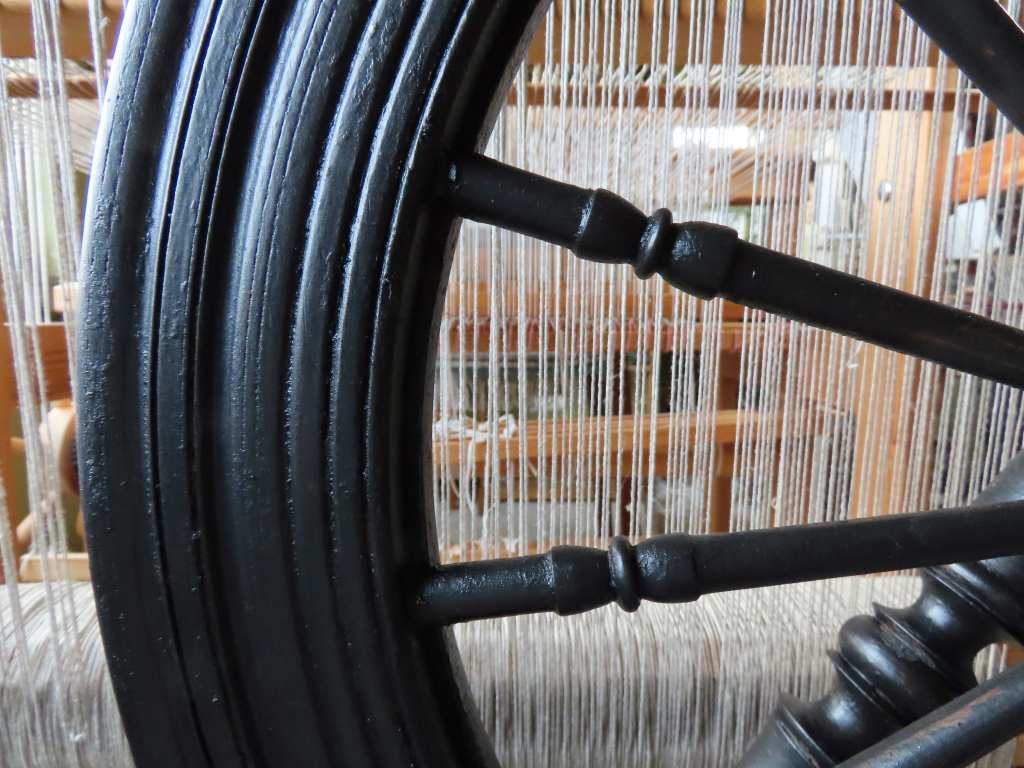
and legs that resembled the Quebec Paradis wheels.

The maidens generally came in two styles—three-tiered like Cocodris’ maidens, or bobble-topped like those on Philomene, the wheel in the previous post.
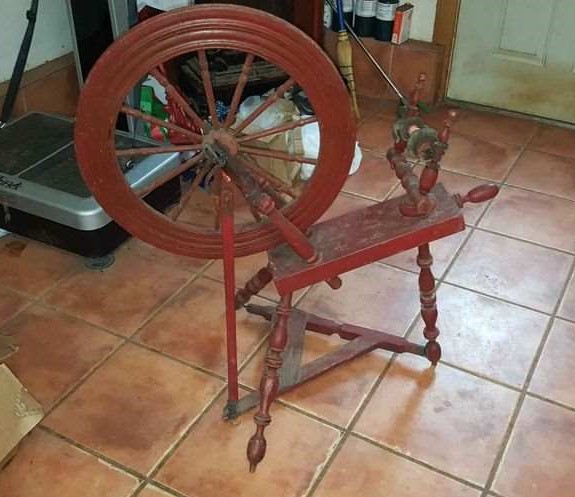
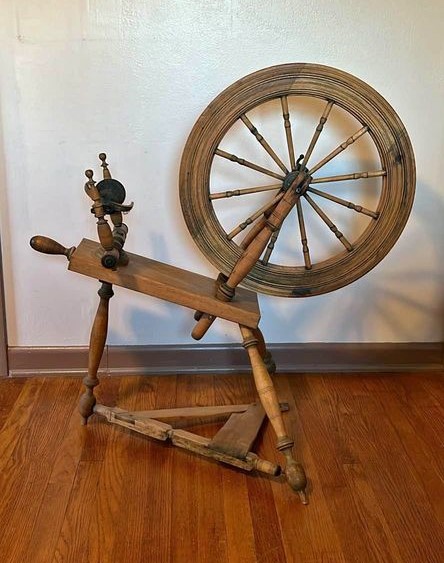
When I acquired Philomene and started researching her maker, Thomas Michaud, it became apparent that this style wheel was commonly found in the upper St. John River Valley, on the border between northern Maine and New Brunswick.

I suspect that most were made by Thomas Michaud and his wheel-making brothers, Hubade/Ubald and Francois Regis (see the previous post “Philomene”). But, since almost none are marked, we can only surmise that they are related based on similarity of features.
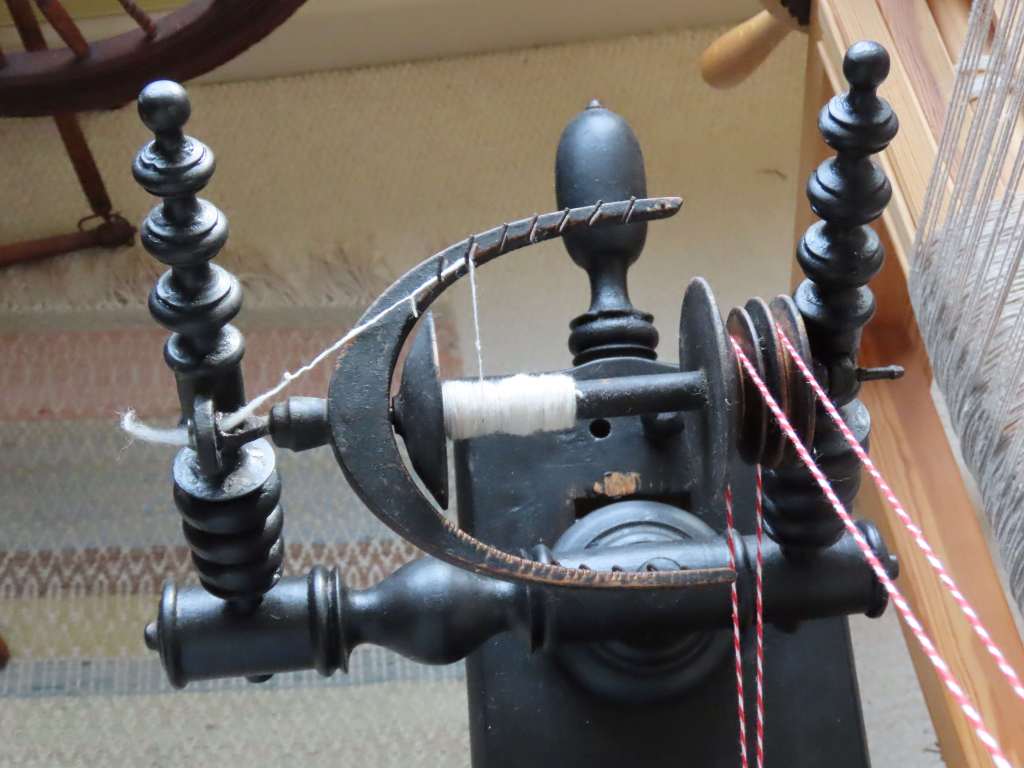
Cocodris’ maidens, for example, are like those on Diane Howes’ marked Thomas Michaud wheel (with a few less tiers).
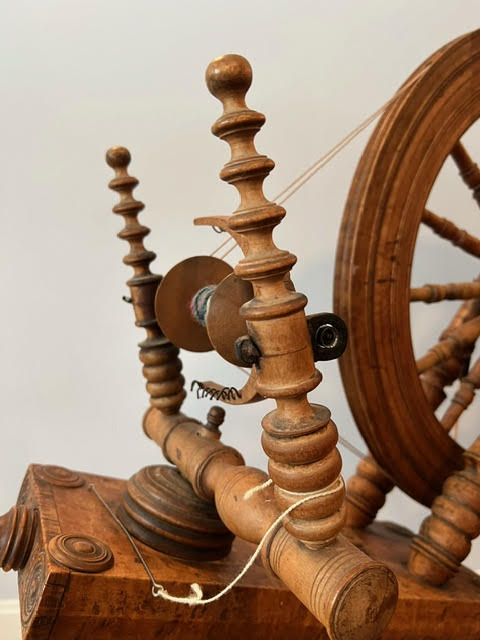
The curved table sides,
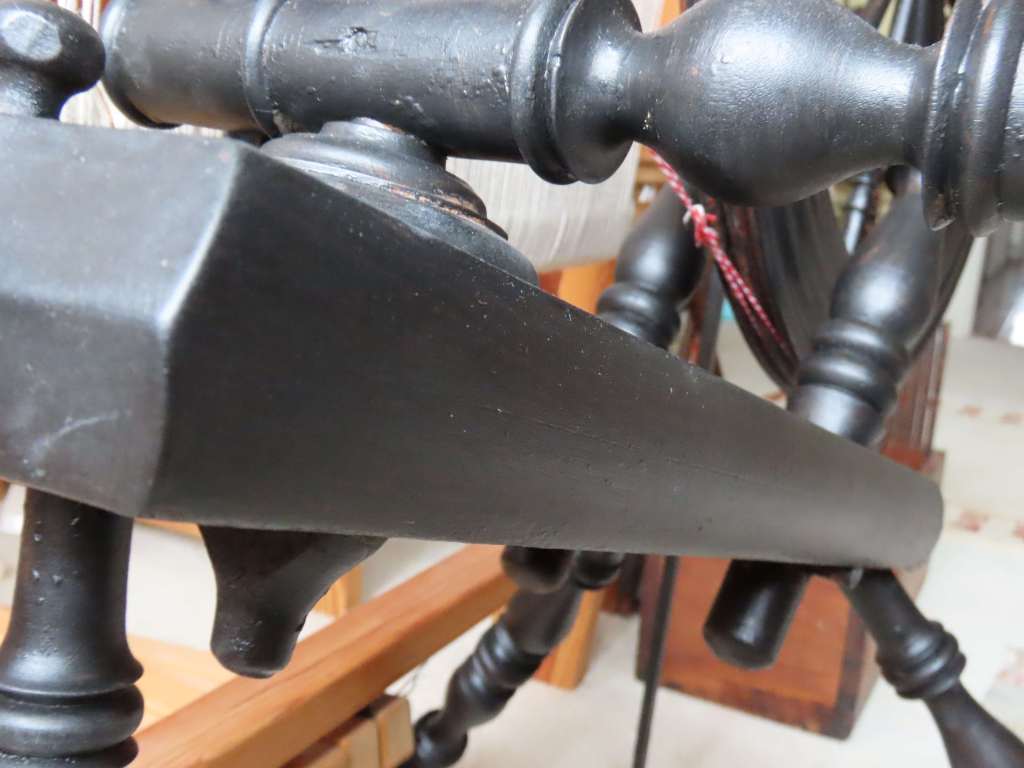
the under-table MOA post
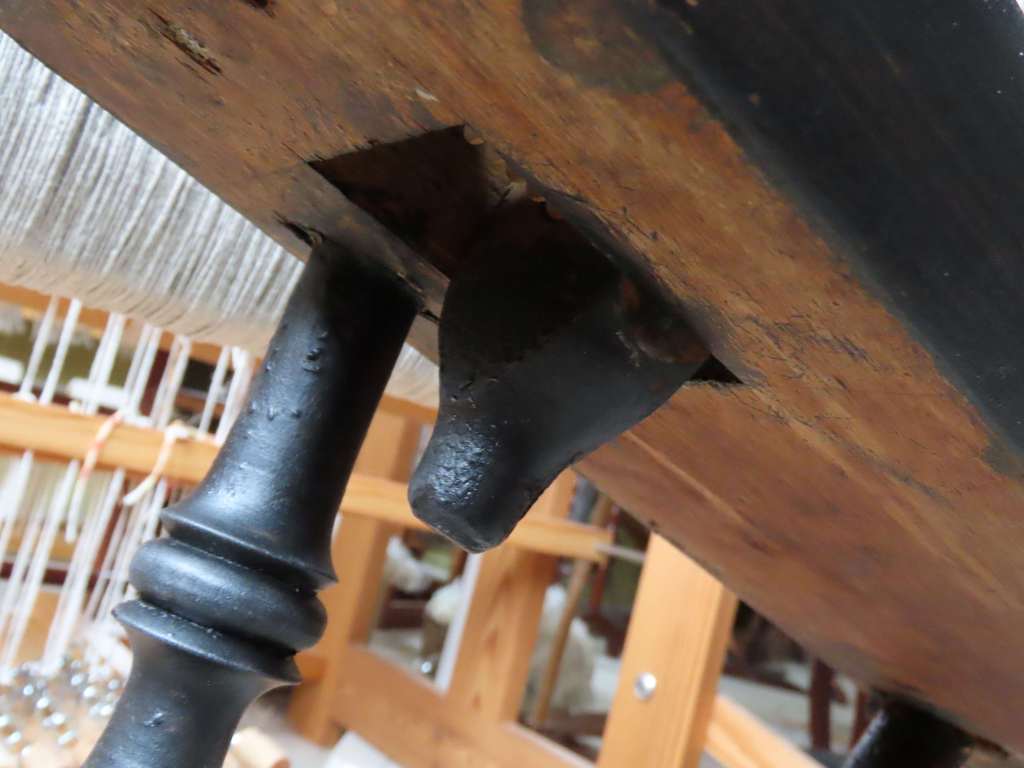
and scribe marks,
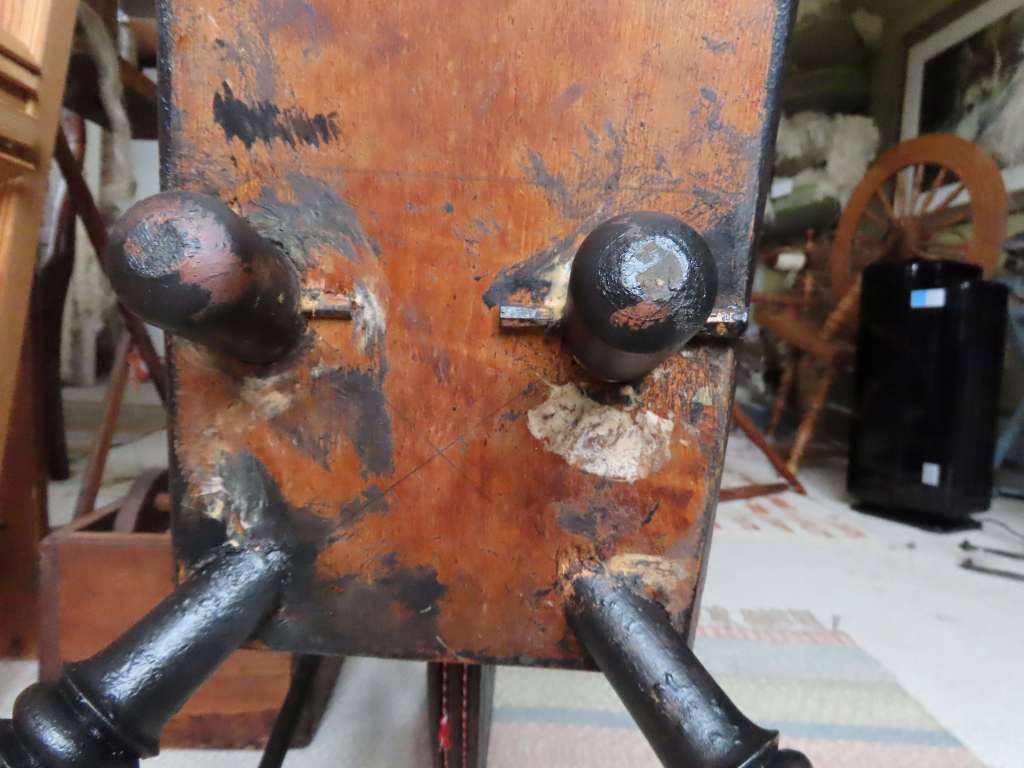
and the flyer scribe marks also are similar.
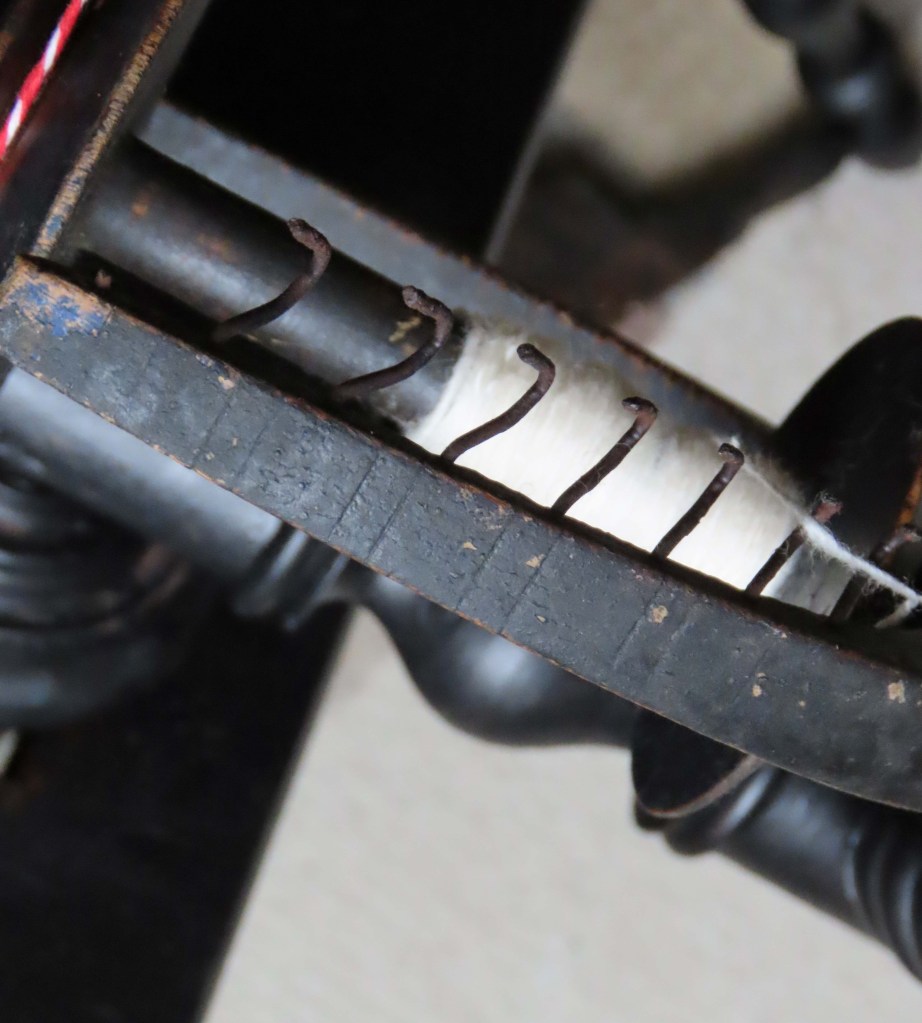
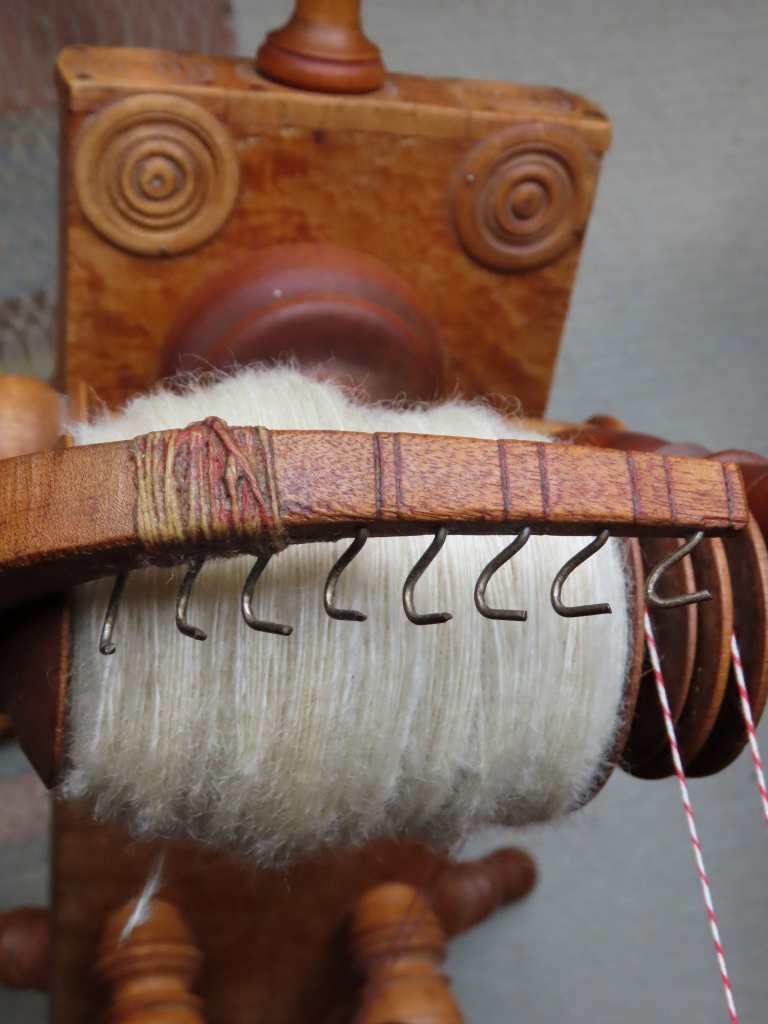
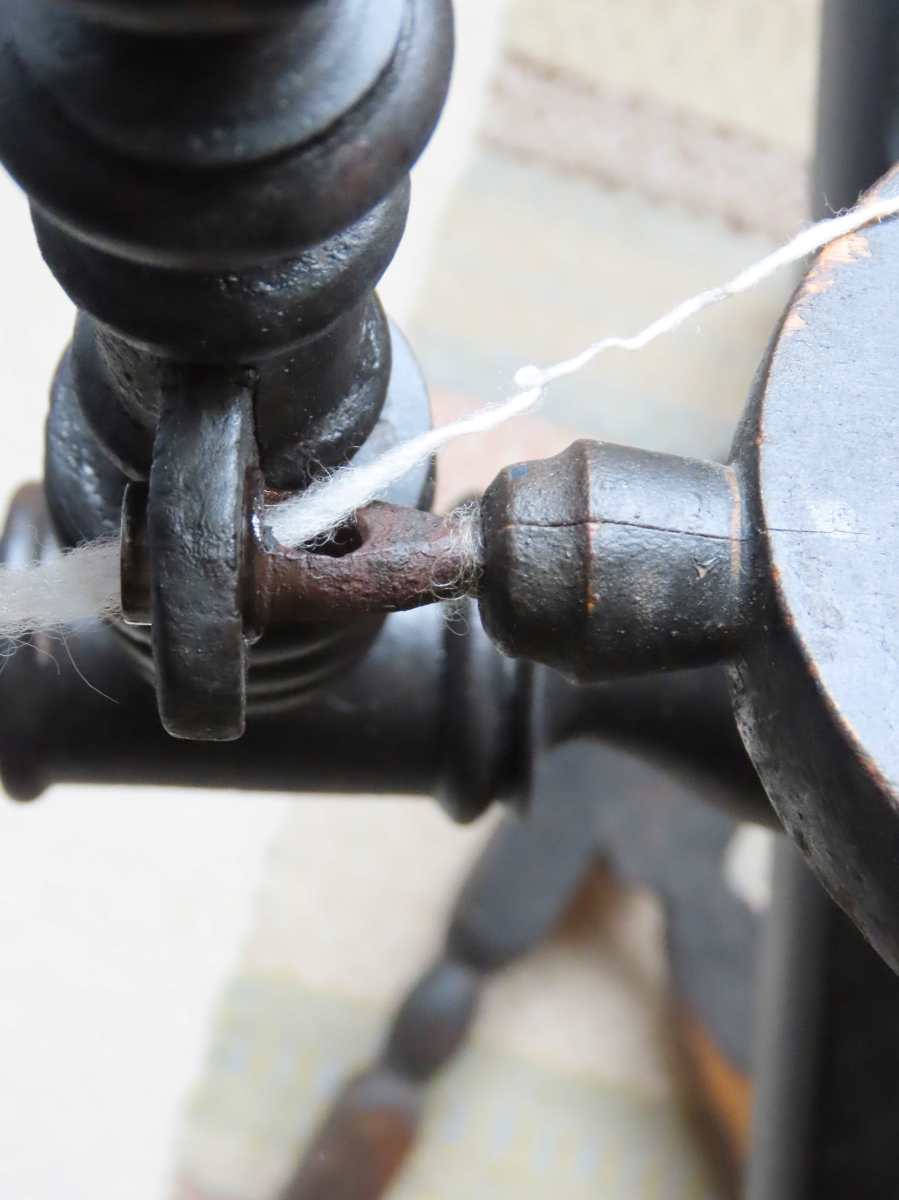
Cocodris and Philomene share somewhat unusual metal work,
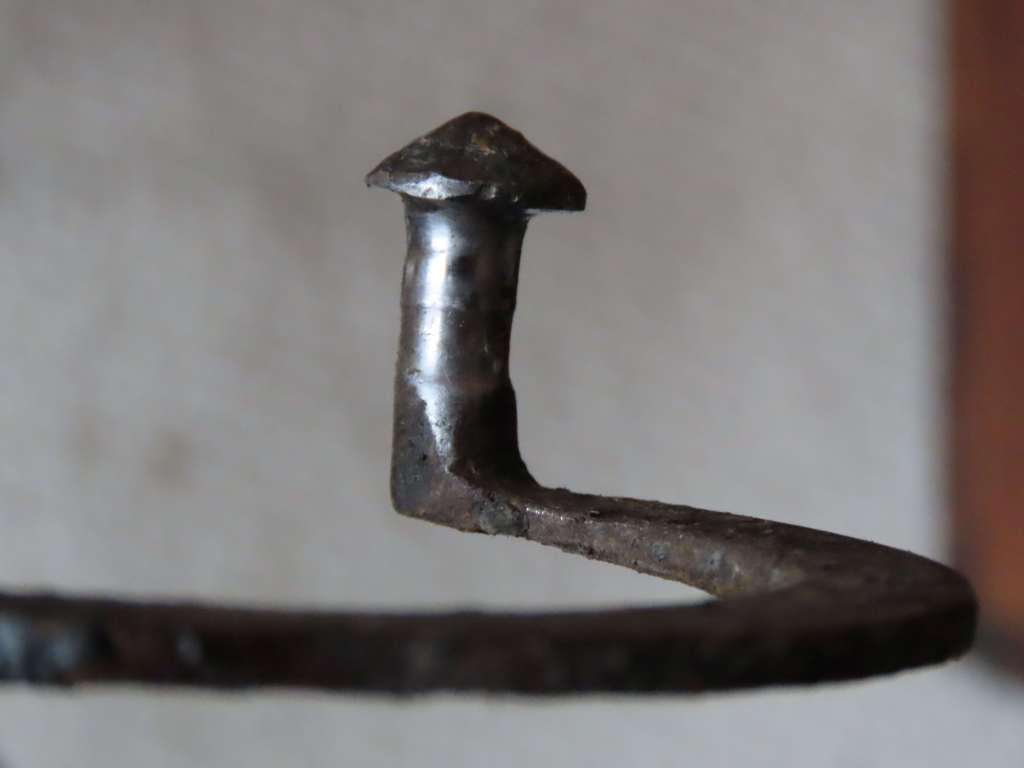
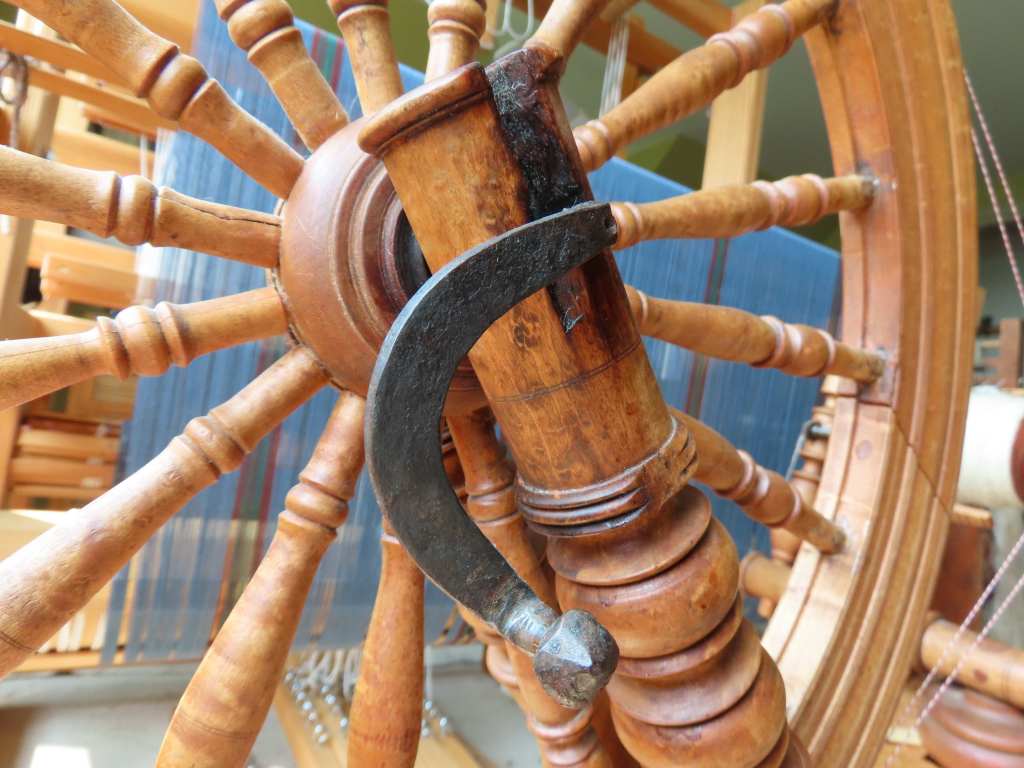
having distinctive angled knobs at the mandrel ends
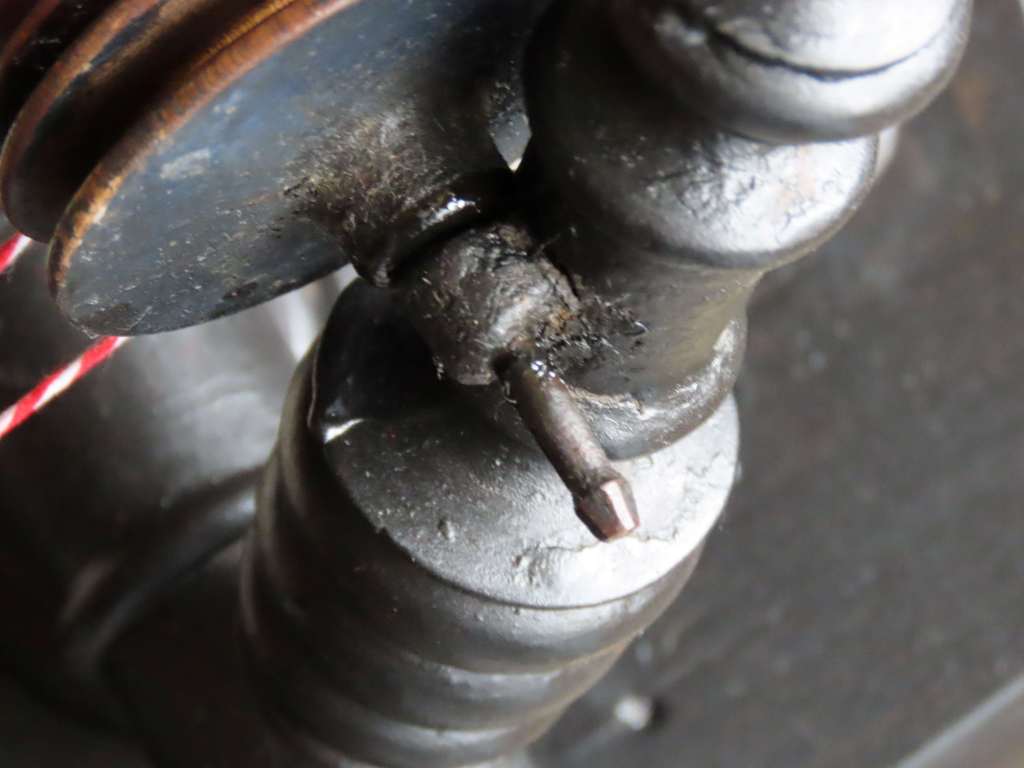
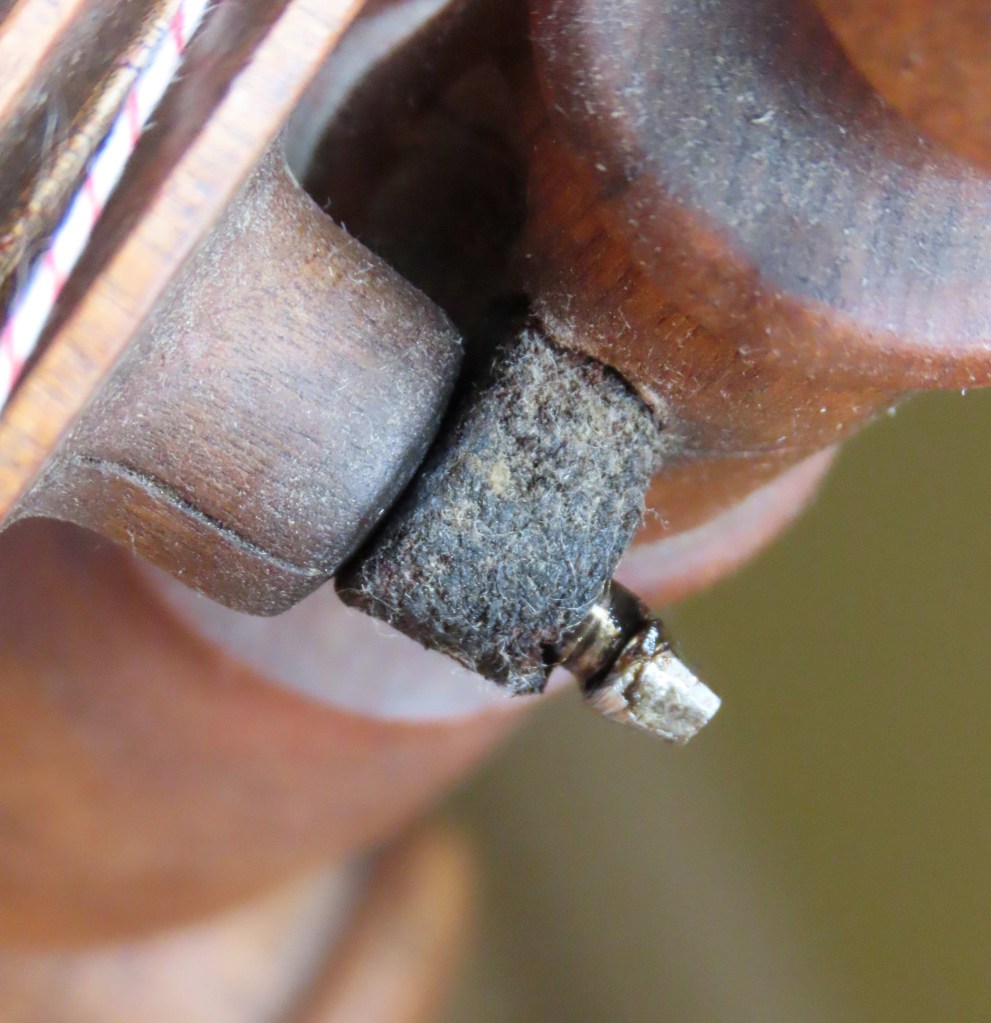
and squared axle ends.
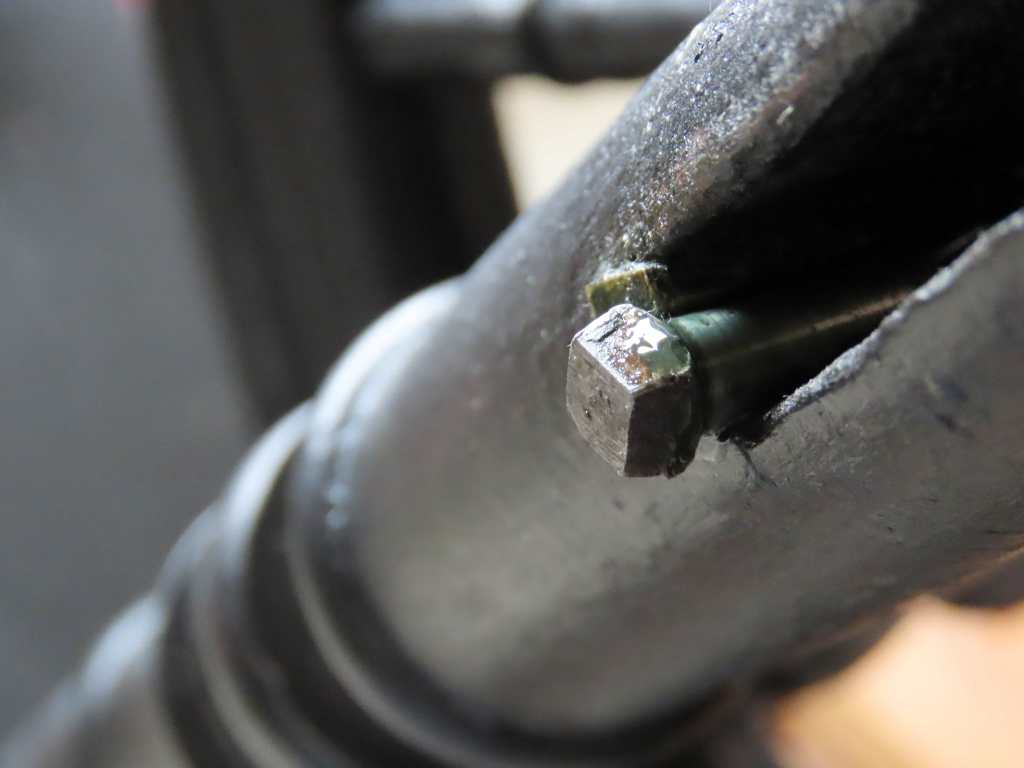

But, the most compelling similarity is the lovely treadle design.
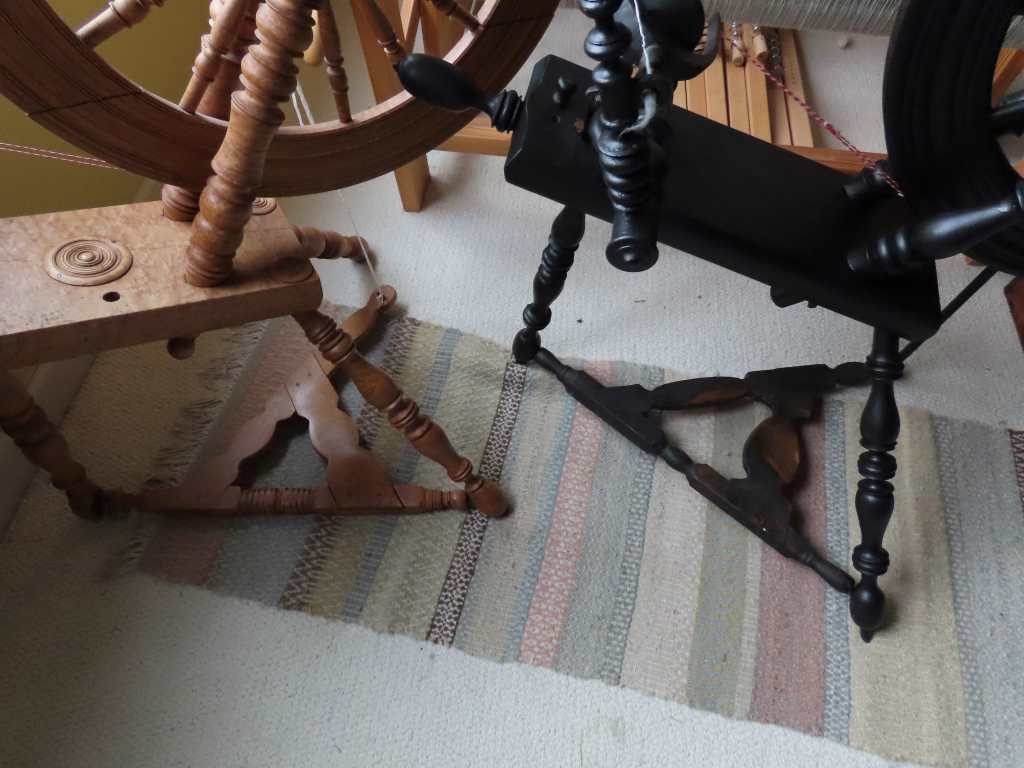
It is so unusual and rare that it makes me think that Cocodris likely was made by Thomas Michaud. Even the wheels’ heavy treadle wear matches.

In fact, Cocodris is an even better spinner than Philomene—quiet and steady, perfect for fine singles.
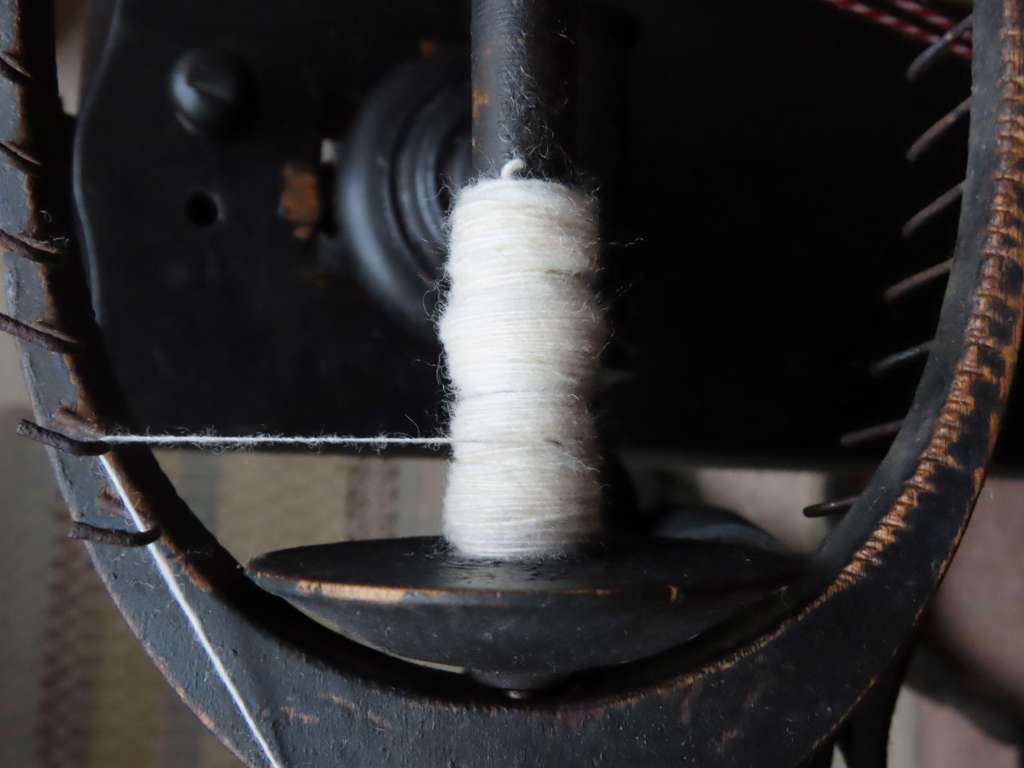
Although one upright is skewed toward the spinner (it’s in tight) and the drive wheel does not directly align with the whorl, she is smooth, fast, and delightful to use.

Definitely worth the trade of a gun.
 Exquisite Machinery
So nice! I always appreciate your attention to the little details of construction (such as the squared ends on the wheel axle). I do have a couple of questions.
What kind of paint did you use? Have you ever tried linseed?
Also, from the looks of the lede photo the rust build-up on the flyer shaft is causing internal stress and cracking of the socket. Did you, or are you planning on, mitigating that?
Thanks again for the excellent post.
LikeLike
Great questions. It’s probably glaringly obvious that I am not a stripping or painting enthusiast. This is the first and last wheel I will ever try to strip. I used a regular flat latex furniture paint. I would have loved to have tried linseed paint, had I known about it. I’m a big flax and linen person, so using a linseed product would have been very appealing. Thanks for mentioning it.
I didn’t mention it in the post, but all of the metal parts on Cocodris are very rusted and corroded–in contrast with those on Philomene. Whether it’s a difference in the metal itself or the exposure to moisture through the years, I don’t know, but Cocodris’ metal is a mess compared to most wheels. As for the crack, it doesn’t appear to be recent and has been stable since I’ve had the wheel, so I’ve just been keeping an eye on it. I don’t have the knowledge or resources to pull the mandrel out, and I got this wheel for a song, so haven’t really thought about mitigation. To be honest, quite a few of my wheels have cracks on the socket–some have been wrapped in the past. What would be your suggestion for mitigation?
Finally, I appreciate your feedback. It’s nice to know that people are enjoying these posts.
LikeLike
Linseed paint is lovely, although it does have a much longer dry time. I usually use Allbäck brand, which Lee Valley carries, but there are others out there, mostly from Europe. There is a lovely book on the subject, by Michiel Brouns, who is in the business.
From the looks of things on Cocodris, I wonder if you were dealing with shellac residue, rather than paint? Alcohol is the only thing that works for that, which could explain your frustrations.
As for rust removal, flyer shafts are usually just friction-fit in place. Heh, “just”. Not for the faint of heart, you can just drive it out with a hammer. Unless it is badly rusted, in which case the rust can lock it in place, which means getting it out will shatter the socket (sigh). Very much a patient-by-patient situation. But if it comes out you can do serious rust removal, and clean up the socket, quite handily. The big issue is that, once the rusting starts, any additional moisture, including high humidity, can build on what is there. Bubbles become lumps, become cracks, then become exploding flyers (much harder to repair).
The best product I have found for rust removal is called Evaporust, also sold by Lee Valley among others (and common at machine shop suppliers). It is a liquid bath, uses room-temperature chelation to react the rust away, and is amazing. Non-toxic, and re-usable, too. I believe they also sell a gel version, but I haven’t used it.
LikeLike
I had hoped that the finish was shellac and initially tried alcohol. But, it had no effect on the finish at all. I do believe that the finish is alligatored black paint, either original or there for a long time.
I have hammered out axles in flax wheels and great wheels, so am not totally faint of heart, but not sure I want to hammer out the flyer shaft. I have heard many people praise Evaporust (for using on old loom reeds, mostly). I will give it a try. Thanks for your advice. I appreciate it.
LikeLike
If I had a gun, which I never had nor plan to, I would happily trade it for this wheel. She is gorgeous.
LikeLike
She is a little worse for the refinishing, but a happy survivor.
LikeLike
At her age, she is entitled to the odd quirk and blemish!
LikeLiked by 1 person
Well…I had my paternal grandparents’ kitchen clock repaired recently. It had a crackled finish, but was varnished rather than painted. The restorer put oil on it and it was amazing what it did for the finish. I hate having to strip and refinish anything, so I admire your persistence. These things, utilitarian as they are, are so beautiful. I often admire old machinery or event the fancy brickwork on old buildings. When did we decide to make things so plain, or that beauty in a tool wasn’t necessary? Every time I read one of your blogs, I want to learn how to use a spinning wheel!
LikeLike
Yes, apparently if it’s shellac that has crackled, it can fairly easily be restored. But this was paint and I tried the suggestions for shellac and they didn’t work … at all. I am with you in hating to strip anything and this is the LAST time I will EVER do it. I’m just happy it ended up looking as good as it did.
I totally agree with you that we have lost the art of combining beauty and utility. The care that spinning wheel makers took to add their personal creative touches and to make them lovely to look at is one of the things I love most about antique wheels.
There are plenty of lovely old wheels down your way and they don’t cost much. You could pick one up and learn to spin! I miss your blog, by the way. Seems like most of my old blogging buddies are slowing down or stopping! Hope you are doing well. Have a great Thanksgiving.
LikeLike