
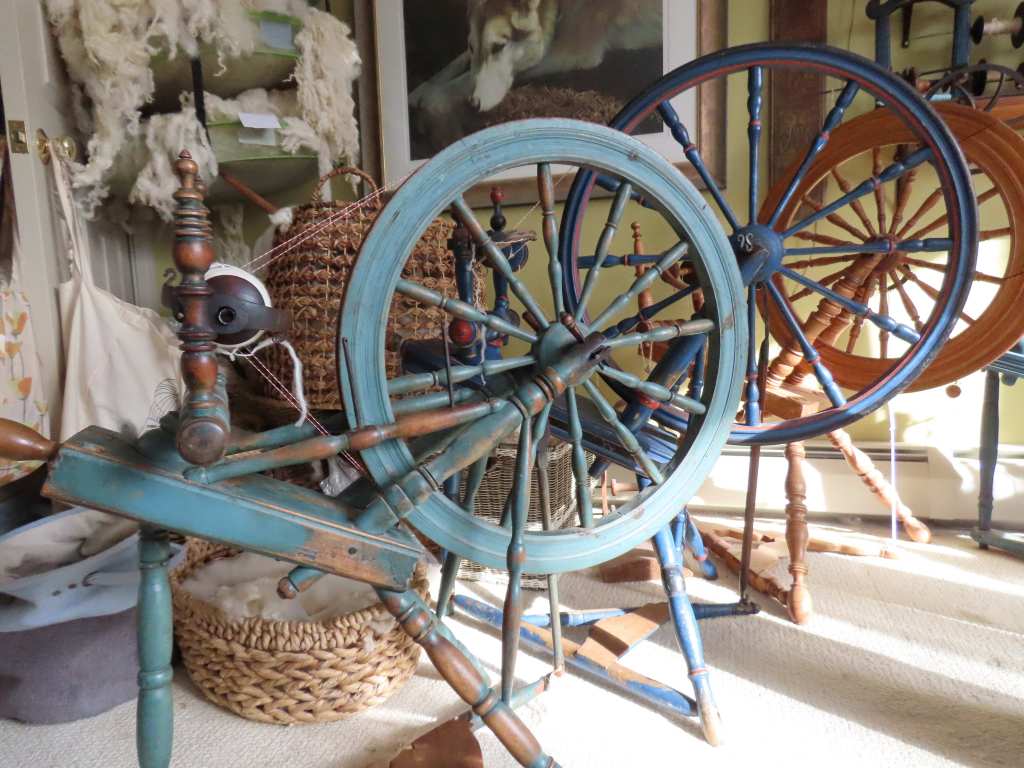
These petite Norwegian wheels turn up regularly in this country, mostly in the Midwest.

Because they are light and small, they must have been relatively easy to transport to this country from Norway.
Because wheel makers often were scarce in the Midwest, “Norwegians who had emigrated earlier strongly recommended in letters to friends and family that women bring spinning wheels to America. The writers also occasionally suggested packing wool carders, looms, sheep shears and shears for cutting woven cloth.” Norwegian American Women, p. 159.

“Most sources indicate that women used the Norwegian treadle spinning wheels they brought or acquired. Kari Bunde Veblen requested a second wheel from Norway after the first one, brought by a newcomer, ‘did not prove satisfactory in that it growled slightly in running.’ ” Id at 162.
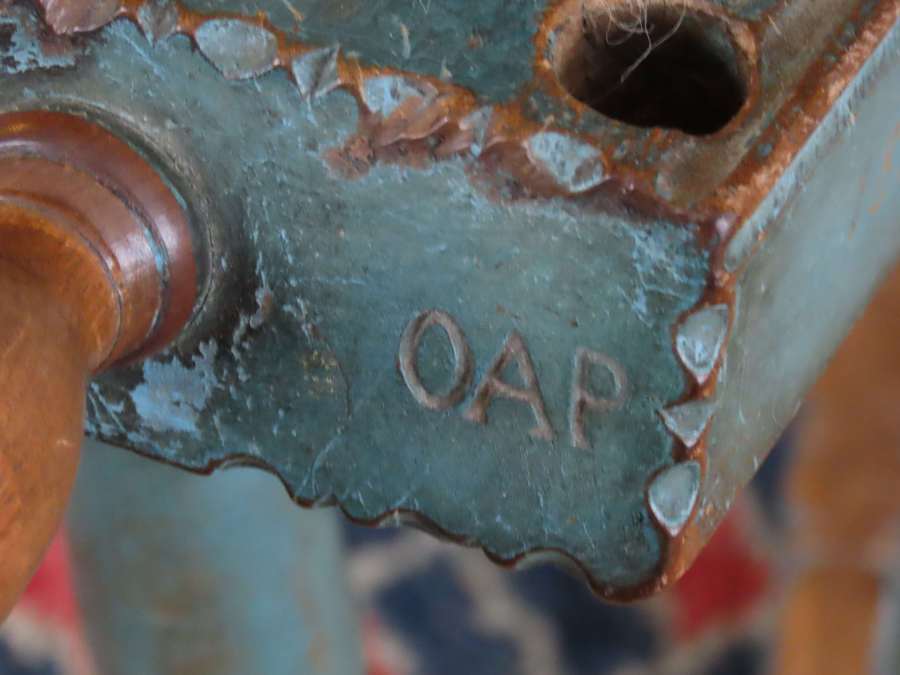
Although these wheels have a clear maker’s mark of OAP, as far as I know, his identity is a mystery.

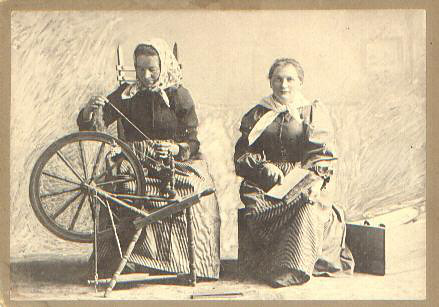
We believe the wheels may have come from the Hordaland area of Norway based on this photo found on an ancestry site, with the caption: “Lofthus, Norway – One lady spins the wool while the other combs 1888.”*
The wheels appear to have been made for decades, with painted dates ranging from the 1830s (and perhaps earlier) to the 1870s.

They are usually painted, sometimes with floral designs such as these wheels in the Vesterheim Museum in Decorah, Iowa.
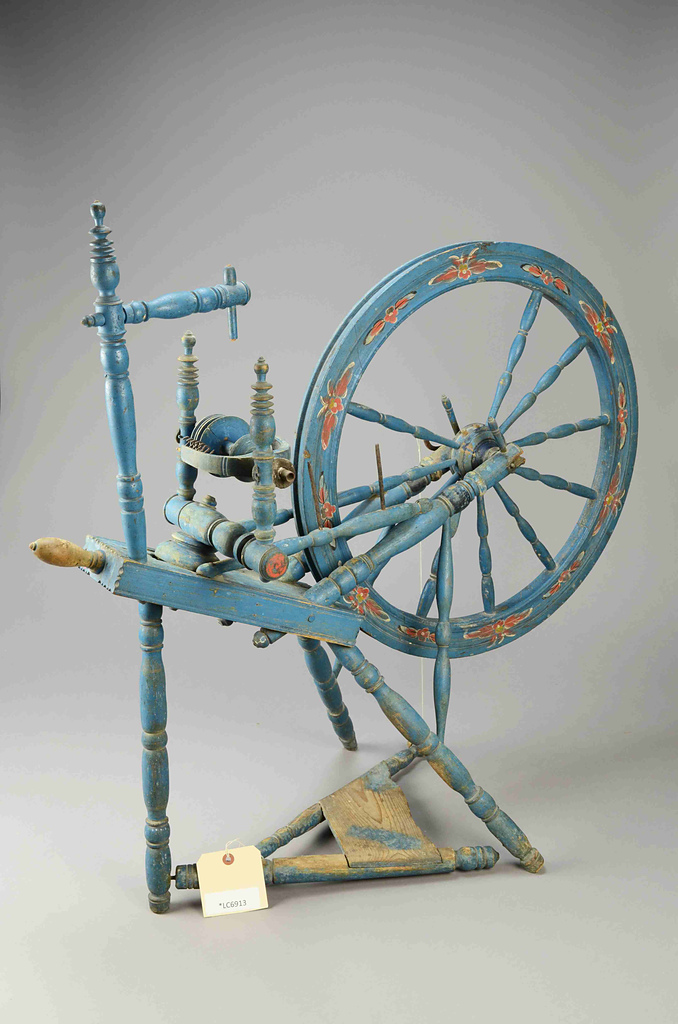
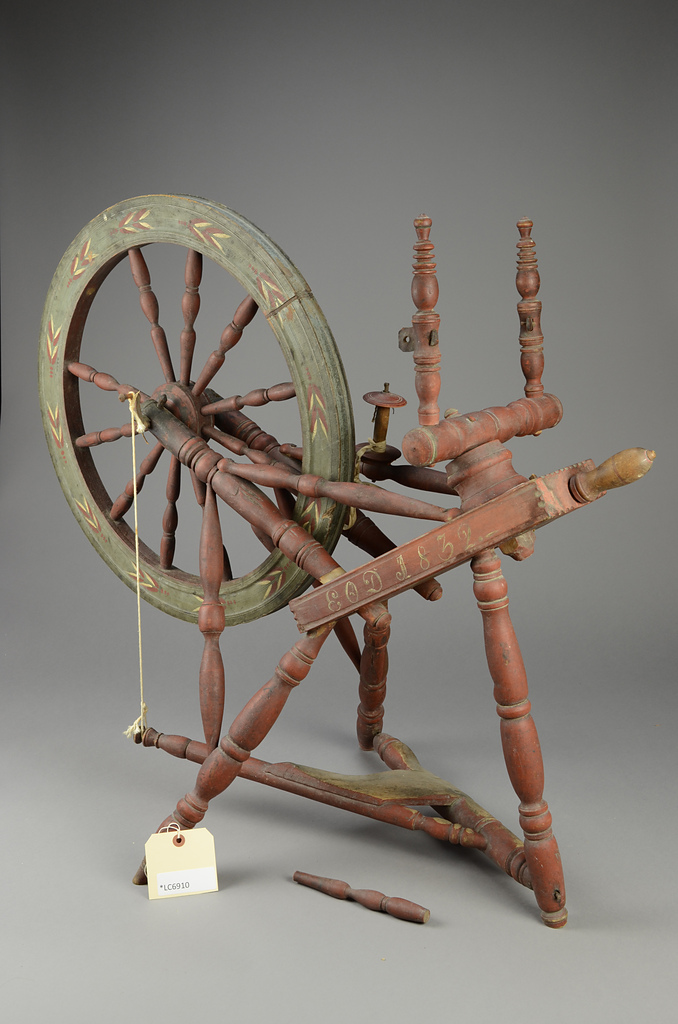
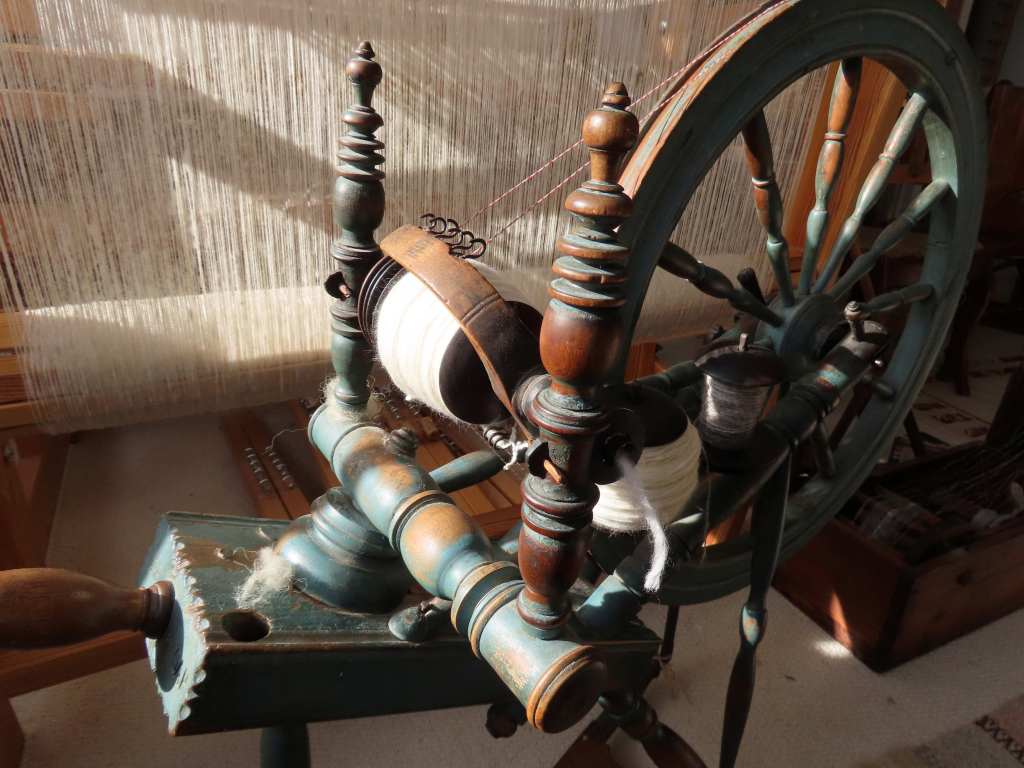
Aside from the lovely paint jobs and compact size, these wheels are immediately recognizable because of an onboard lazy kate.
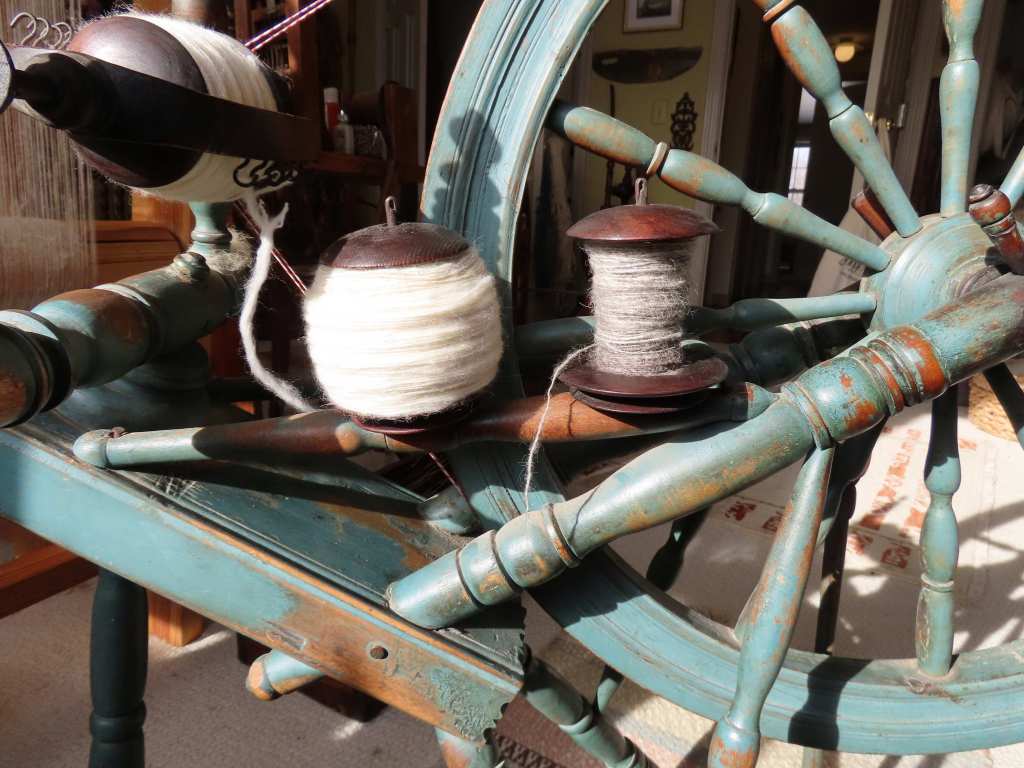
The front cross-bar support has two metal shafts, beautifully worked with folded tops.
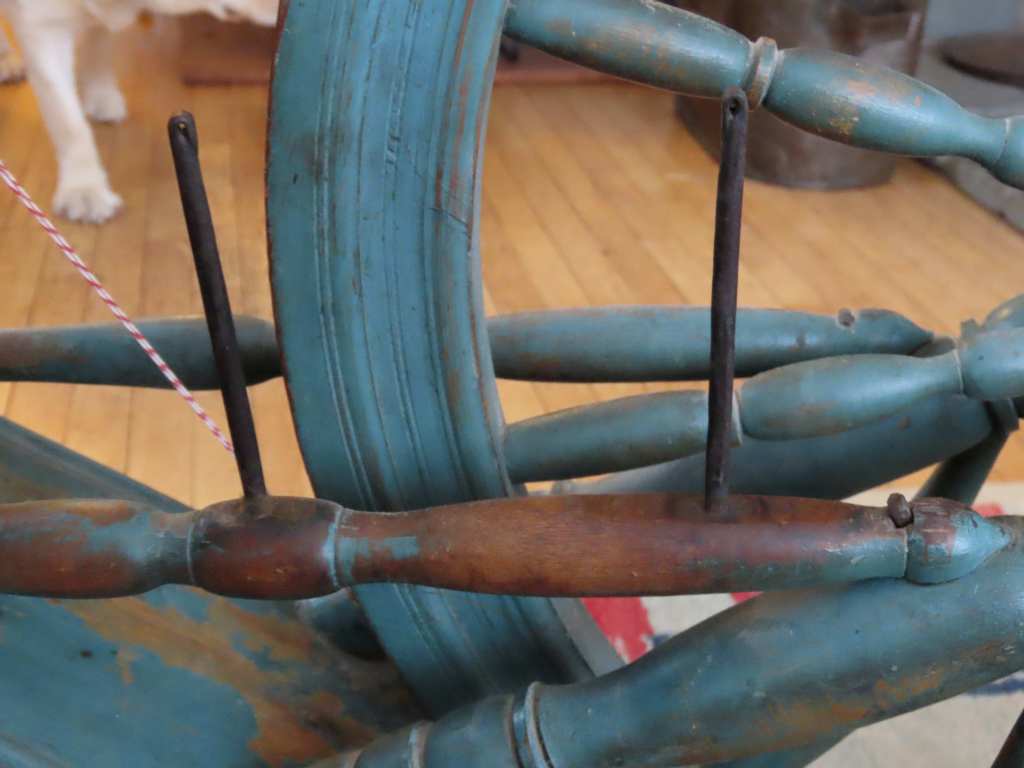

These can hold full bobbins, allowing the spinner to ply directly from the wheel.
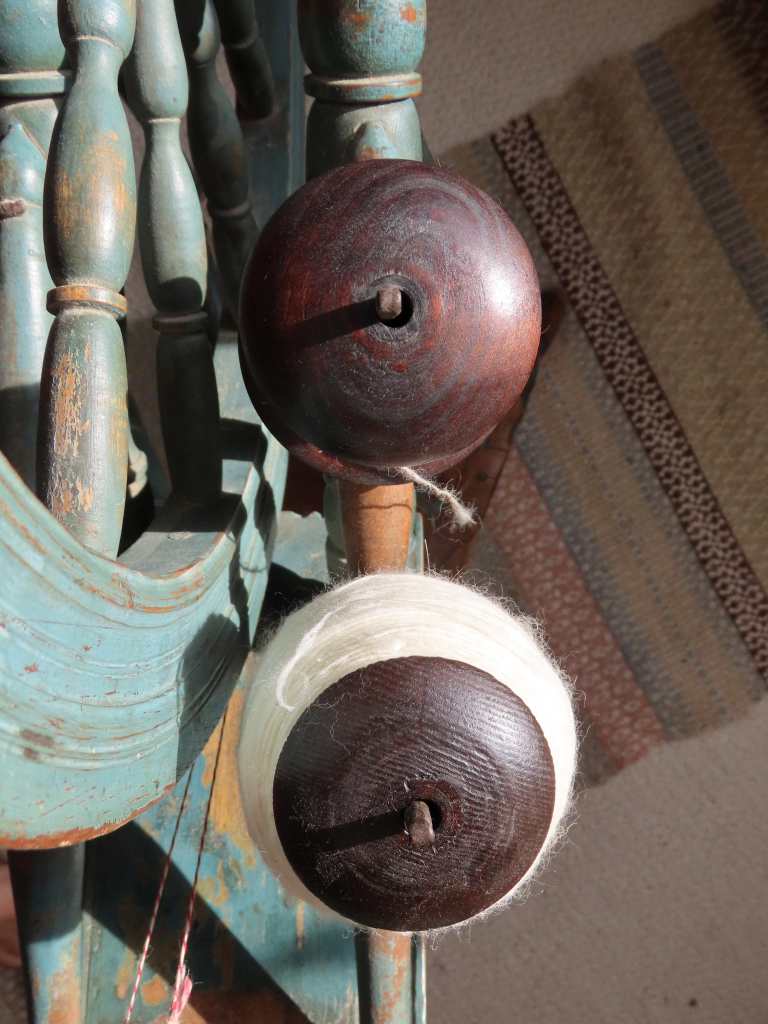
It is a handy, ingenious feature, made possible by a hub that is flat in the back, but with an extension on the spinner side to make space for the bobbins.

Solveig was found in northern Minnesota.
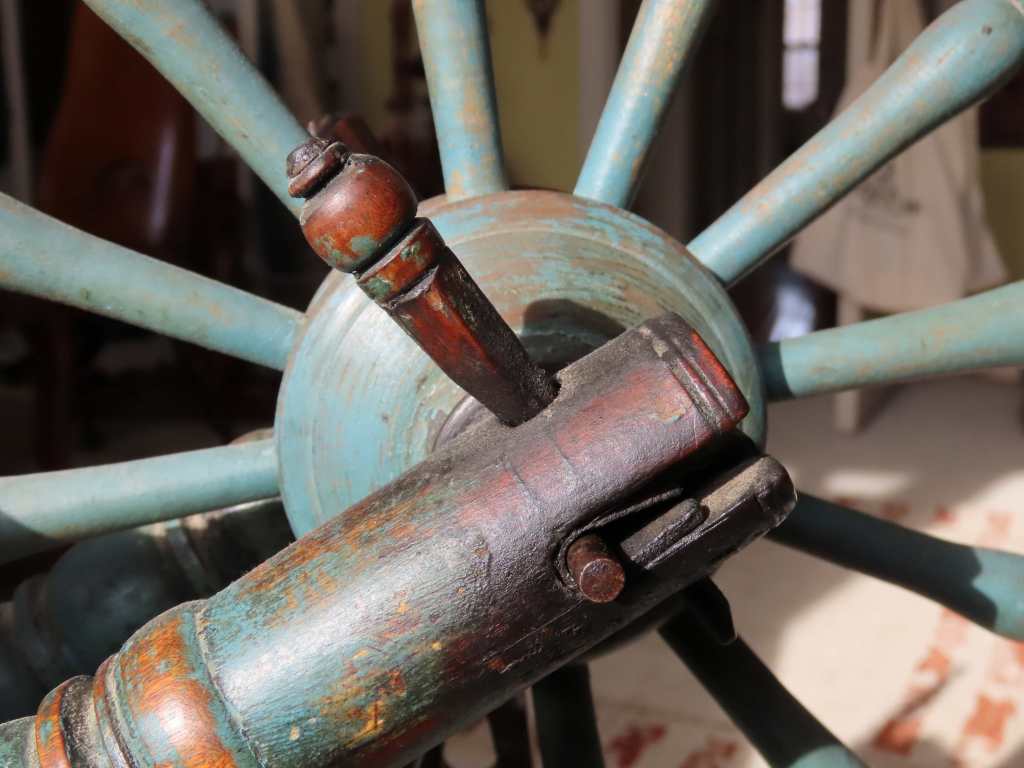
She is a workhorse, spinning and plying with ease.
While many antique wheels have very little difference in the depth of the bobbin and whorl grooves, Solveig’s bobbin groove is much deeper than her two whorl grooves.

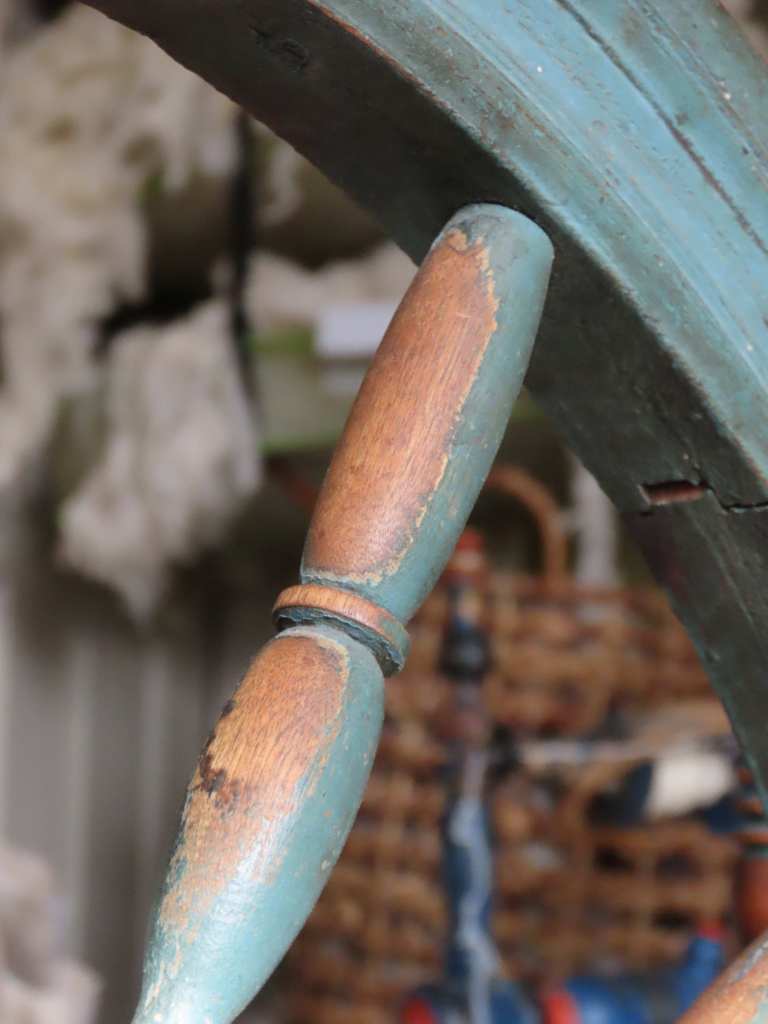
The gorgeous blue-green paint shows the typical wear made by women spinners wearing long skirts.

Paint wear on the spokes confirms that the drive wheel was turned in both directions, using the lazy kate for plying, although there is more wear on spokes indicating clockwise turning.
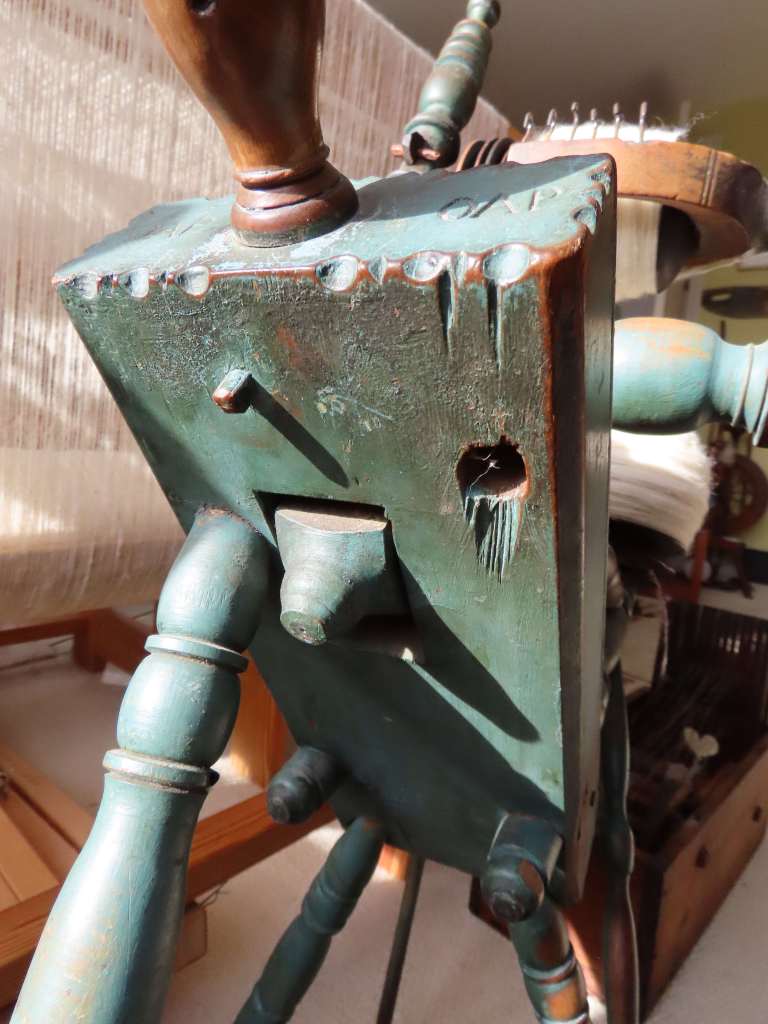
The front maiden has wear marks in a somewhat unusual place near the bottom, where spun thread was wound around it, probably when unwinding the bobbin.
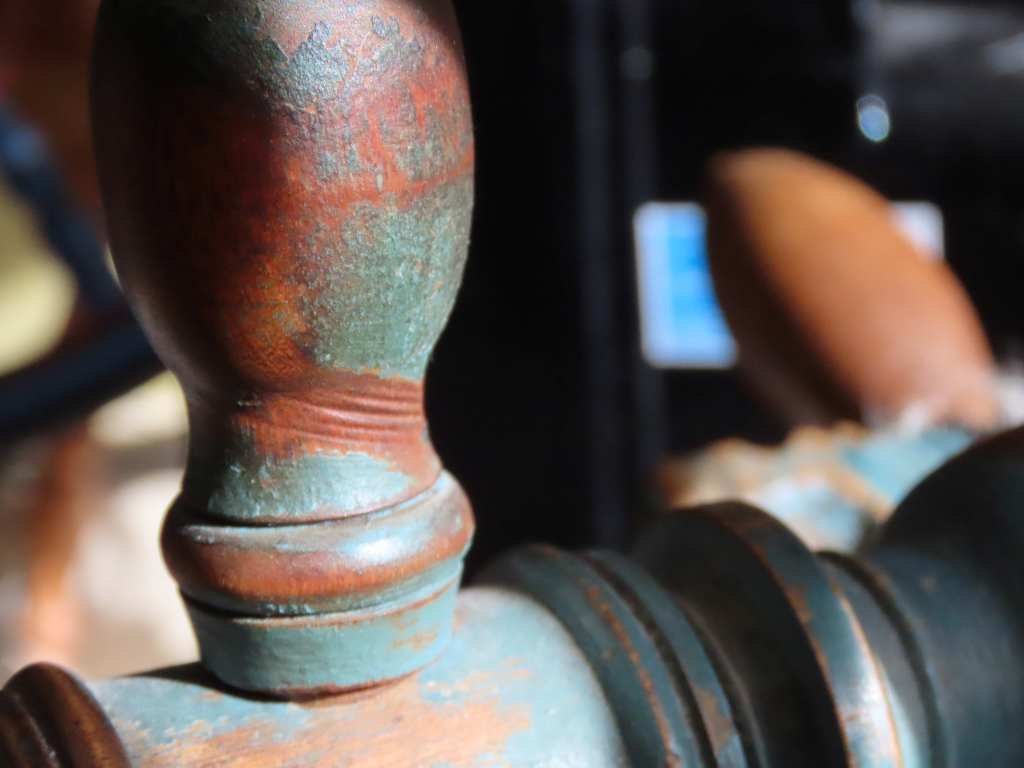
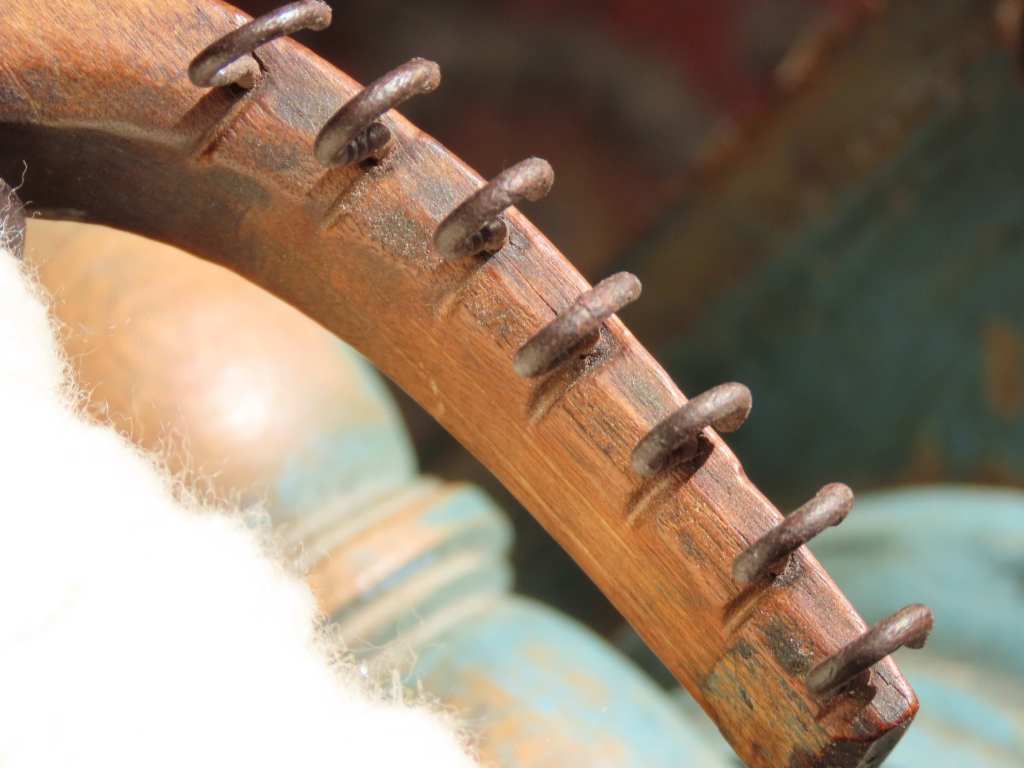
Deep grooves run alongside the flyer hooks–again a wear pattern that is out of the ordinary.
The orifice opening is slightly fluted,
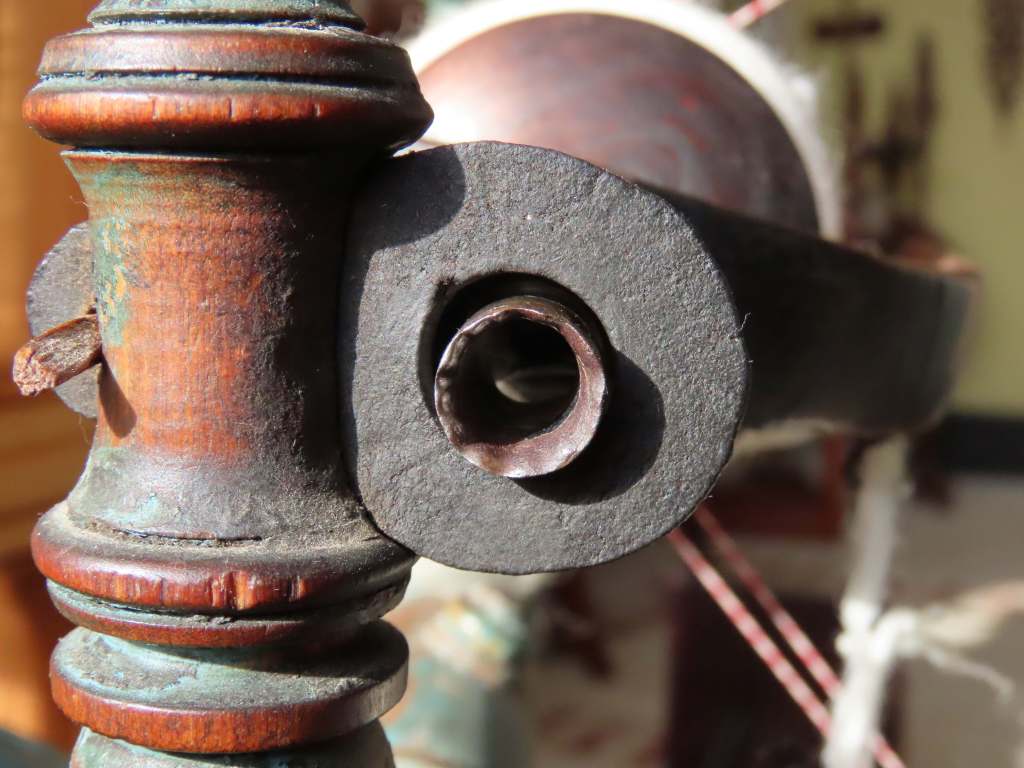
with a opening big enough for easy plying.
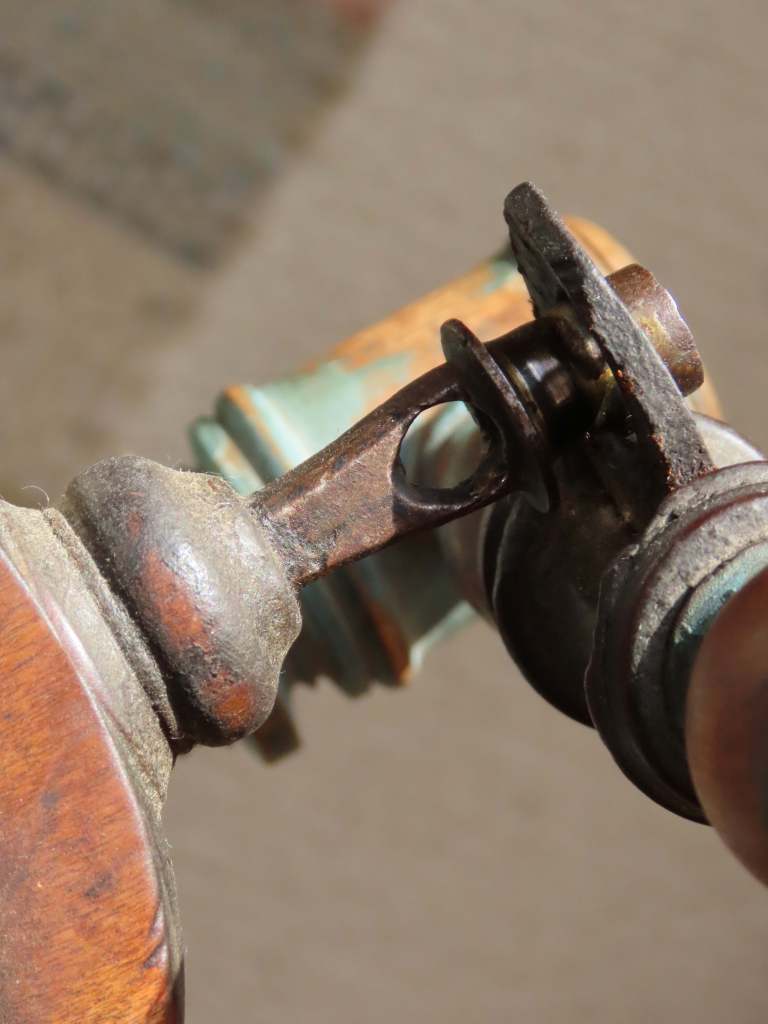
and there is wear on the far side of the mandrel where it hits the bearing.
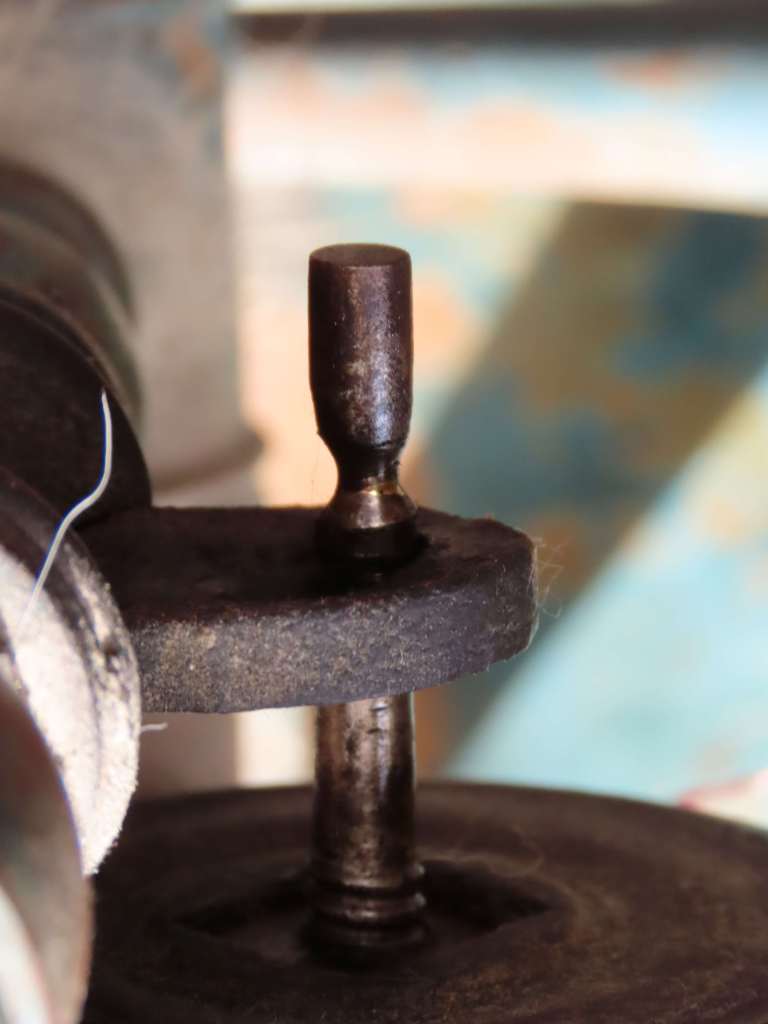
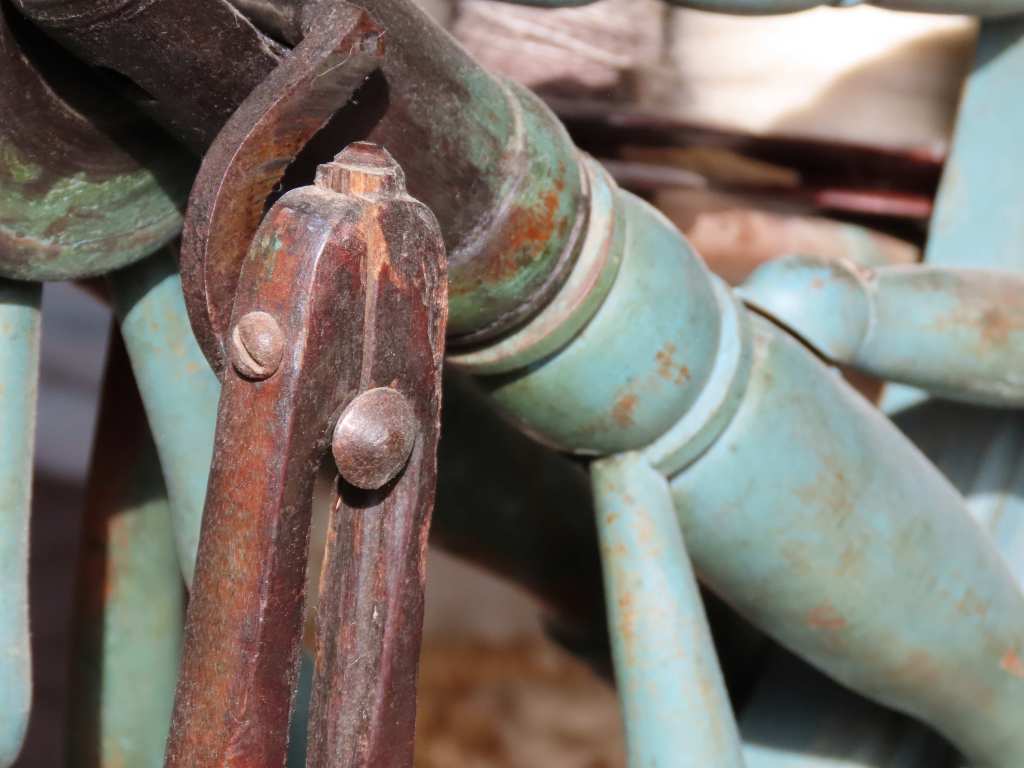
The footman has been repaired with a screw.
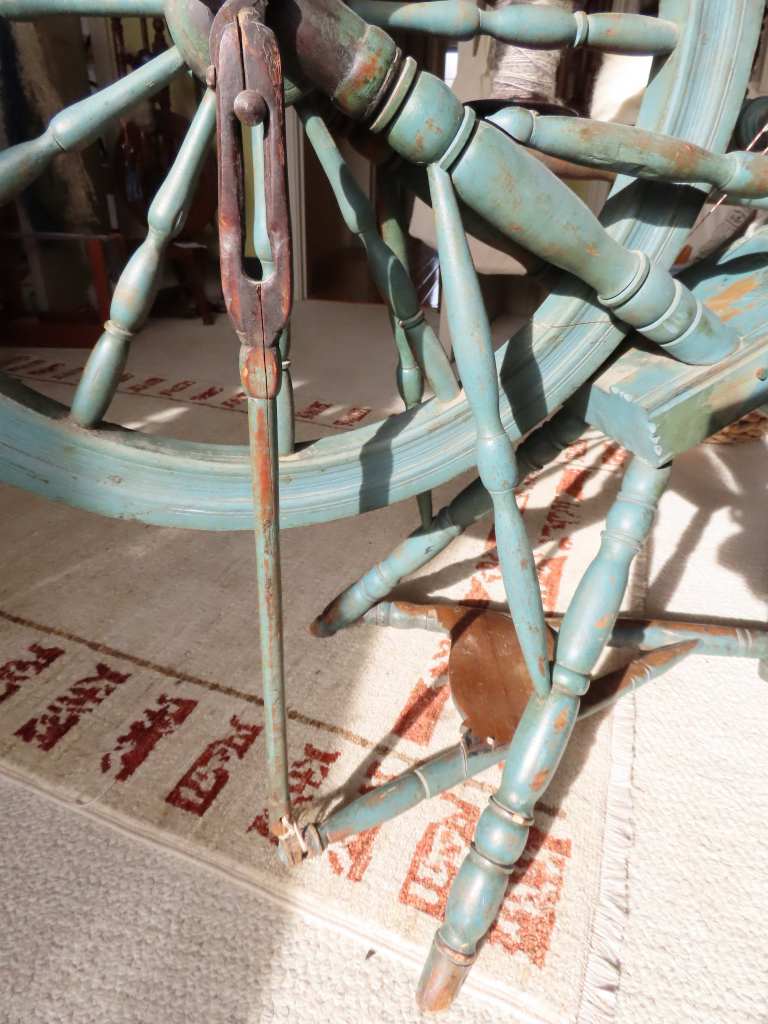
In contrast with many of these wheels, which have painted initials of the owners along with a date, Solveig has the date 1827 scratched into the side of the table.
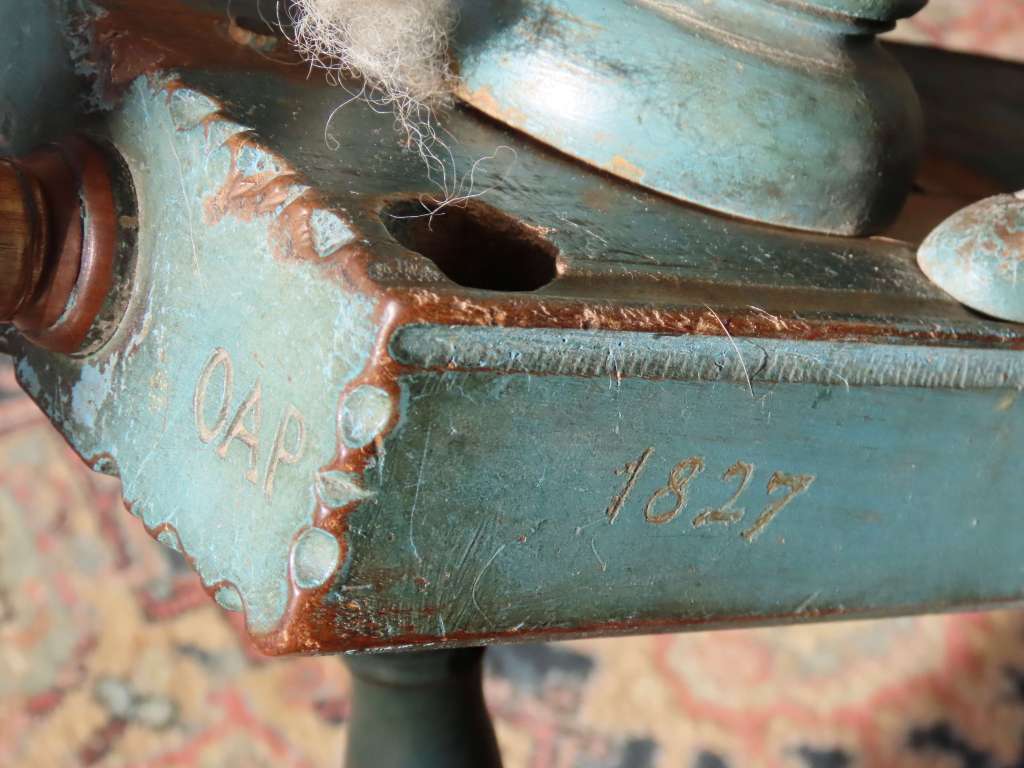
Since OAP did not routinely apply the date in this way, it likely was added later by an owner and may not be accurate.
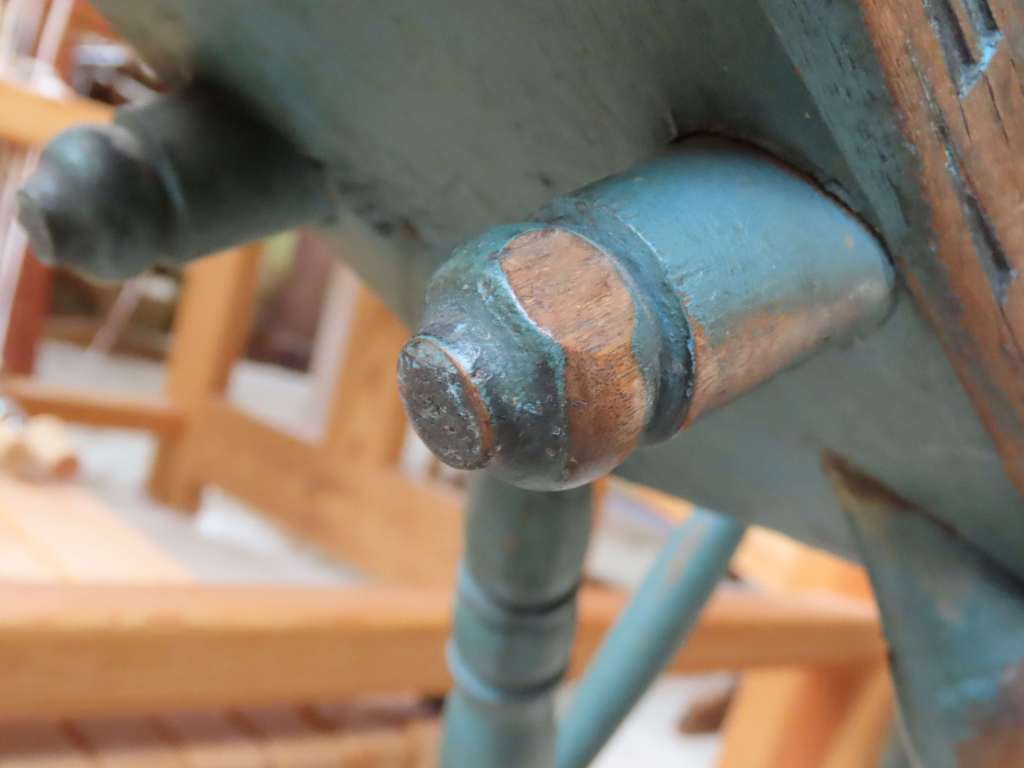
But there is not doubt that Solveig was used for many years.
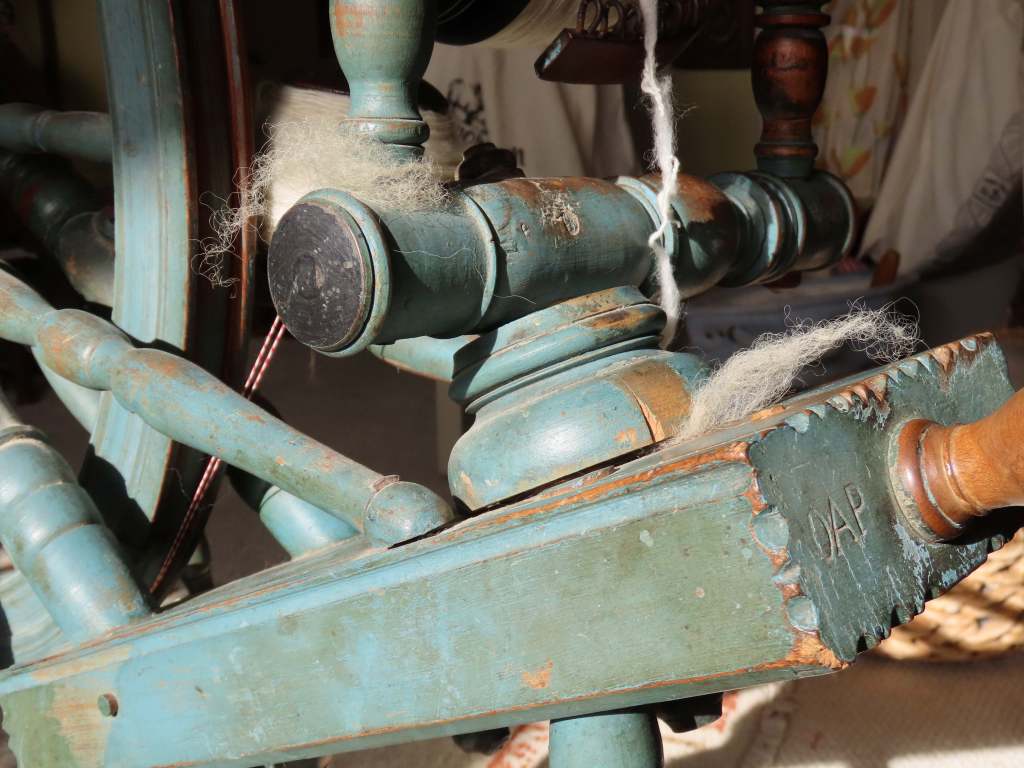
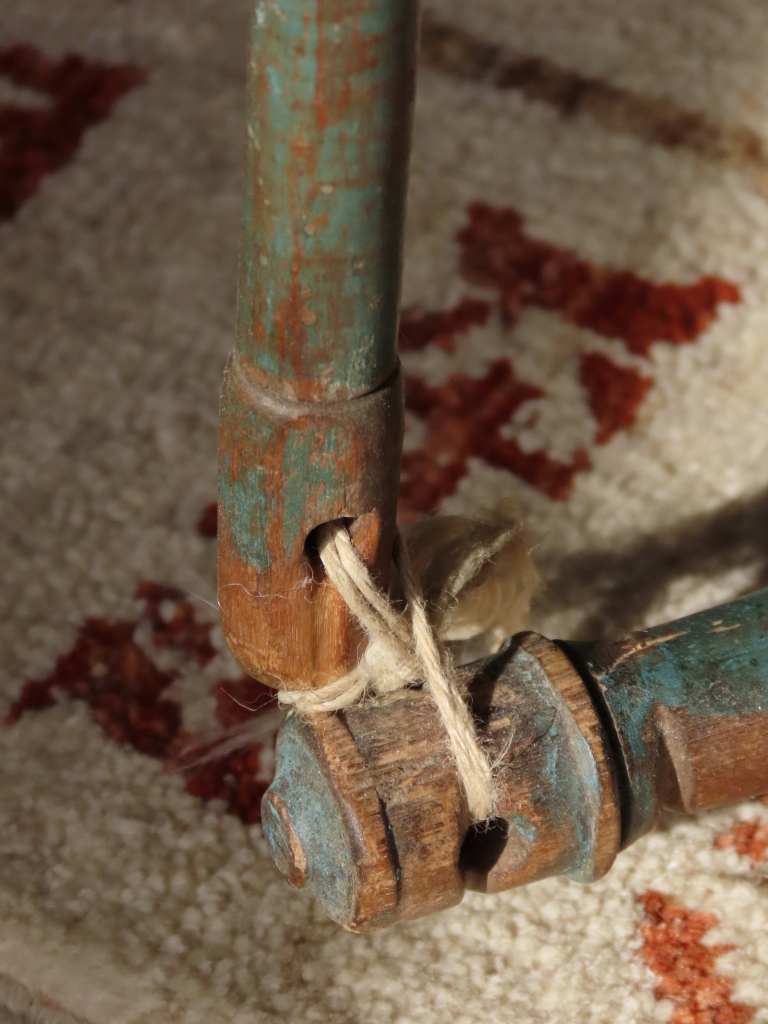
The wear on the treadle is so extreme it created a wooden wave.
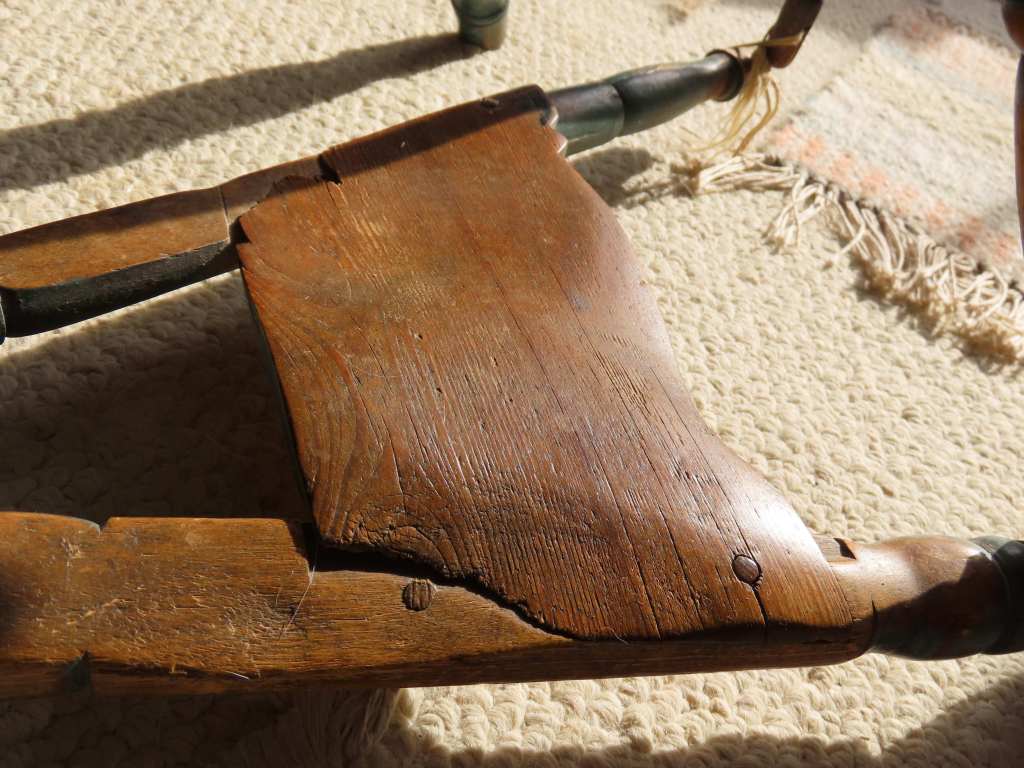
The drive wheel construction is typical of Norwegian wheels.
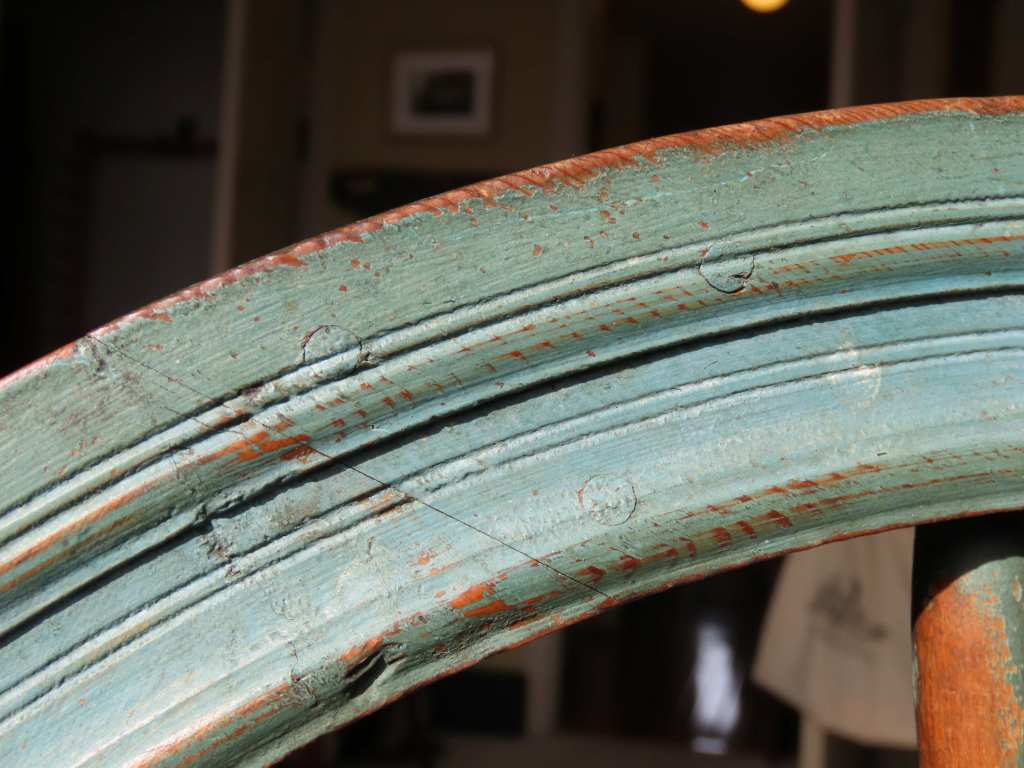
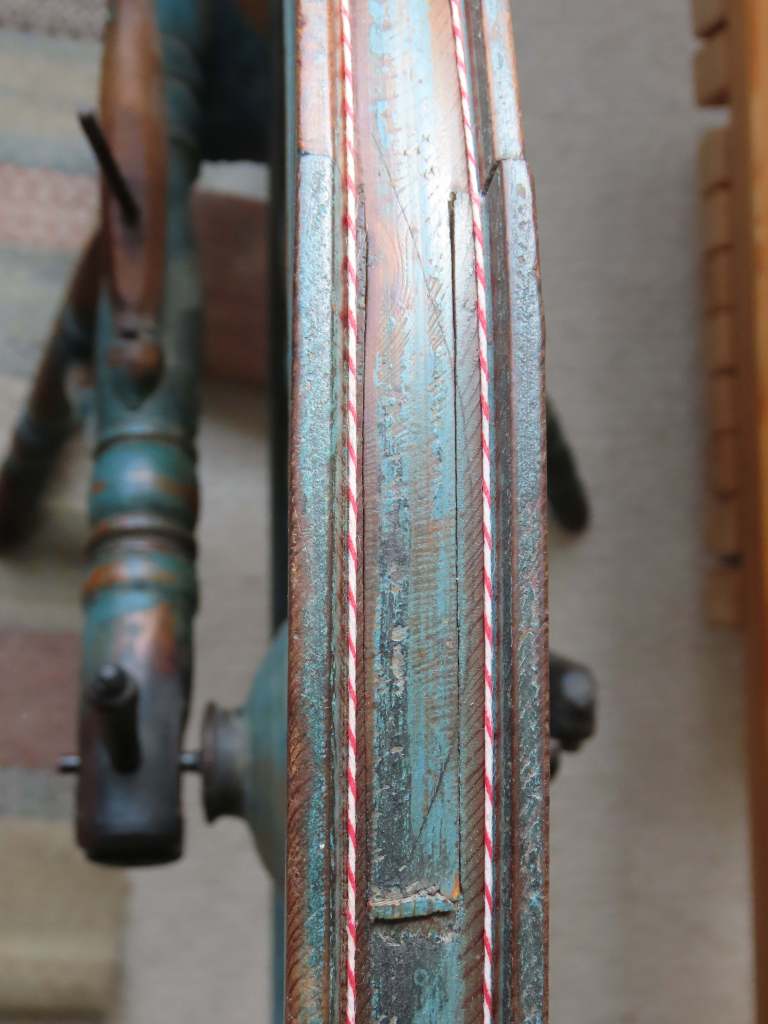
But, every part of the wheel carries special touches from OAP, whoever he was. A small cut-out under the drive wheel,
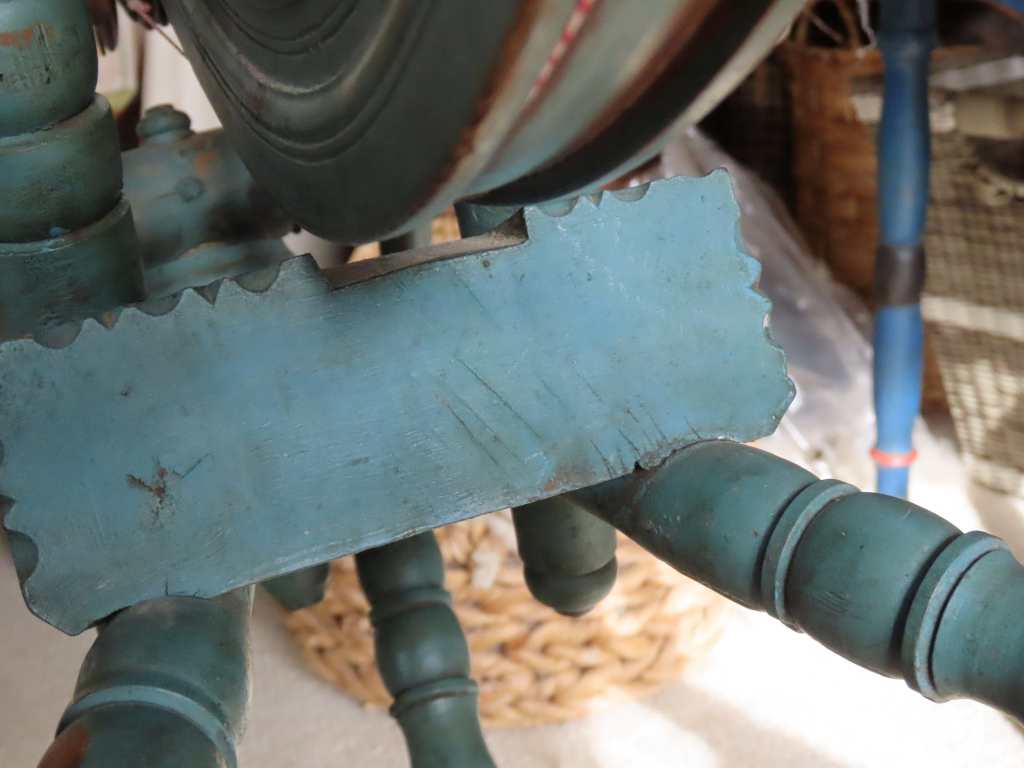
distinctive maidens,

little touches of decorative design,
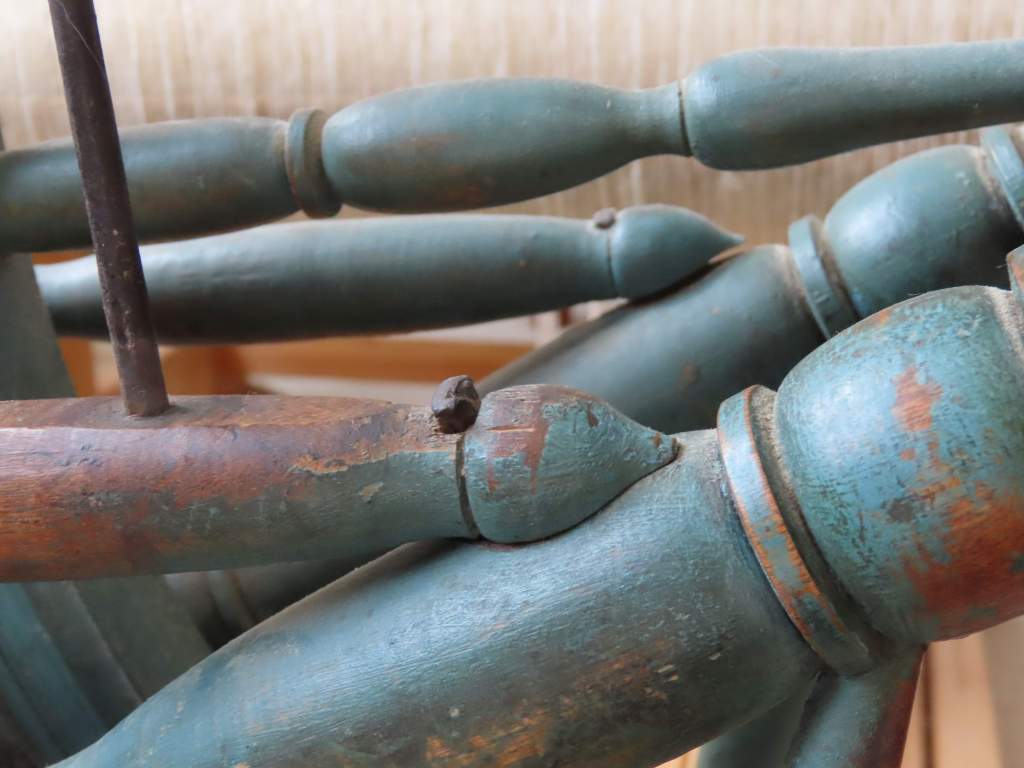
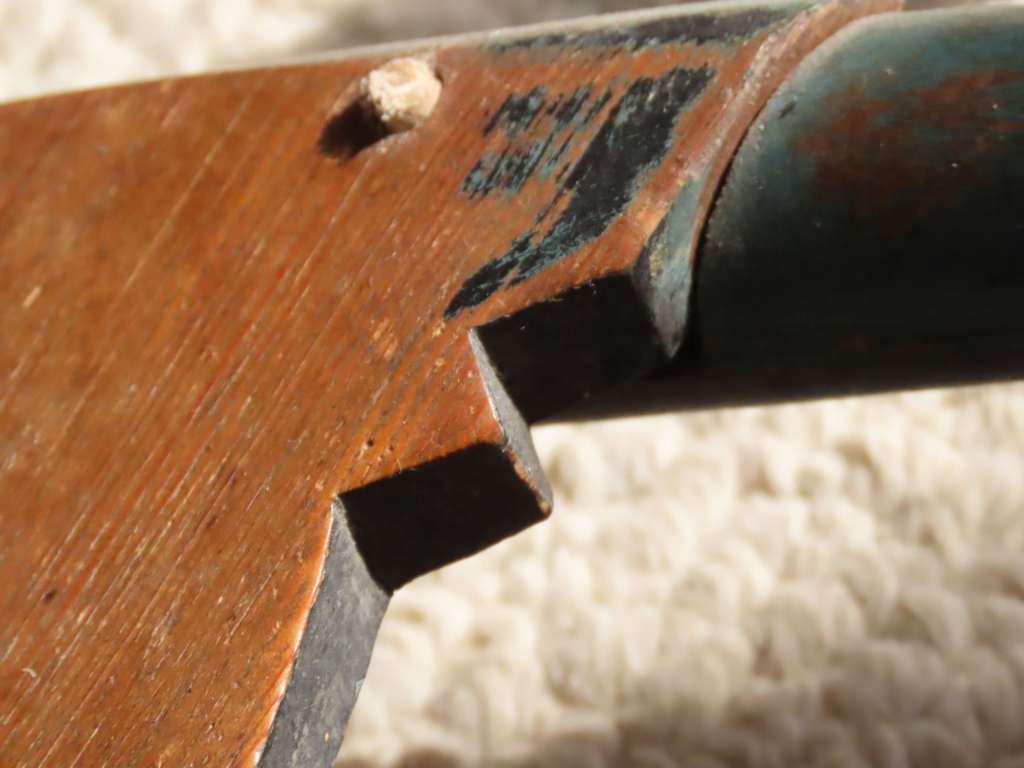
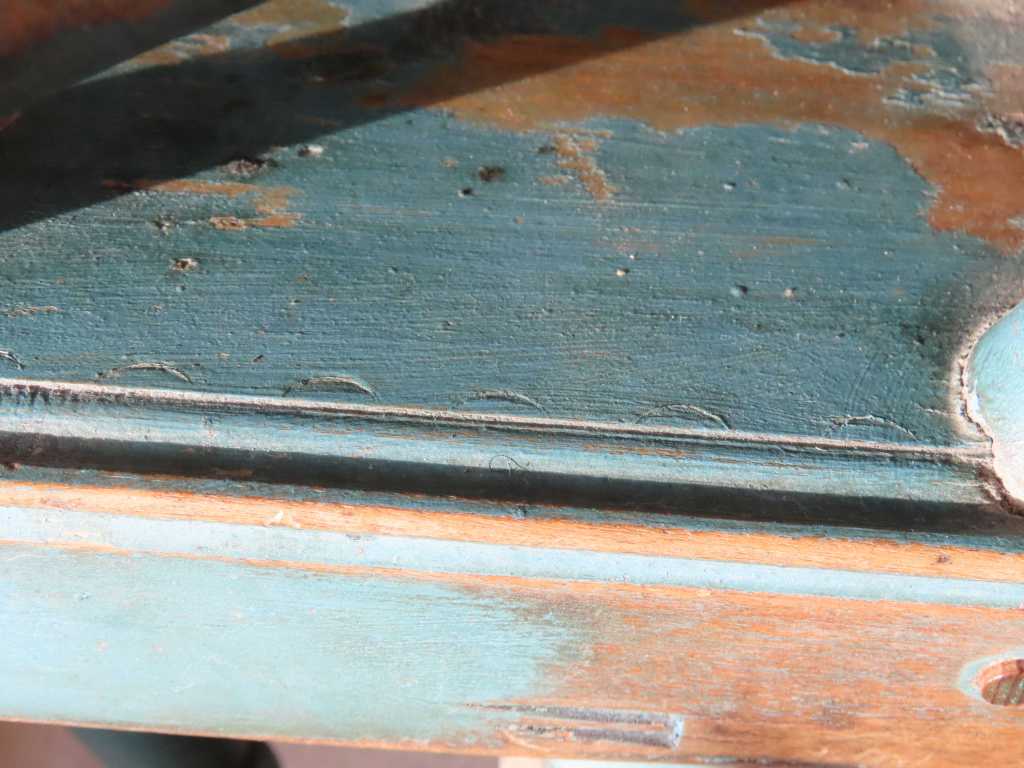
and the maker’s signature chip carving are a reminder that he valued beauty along with practicality.

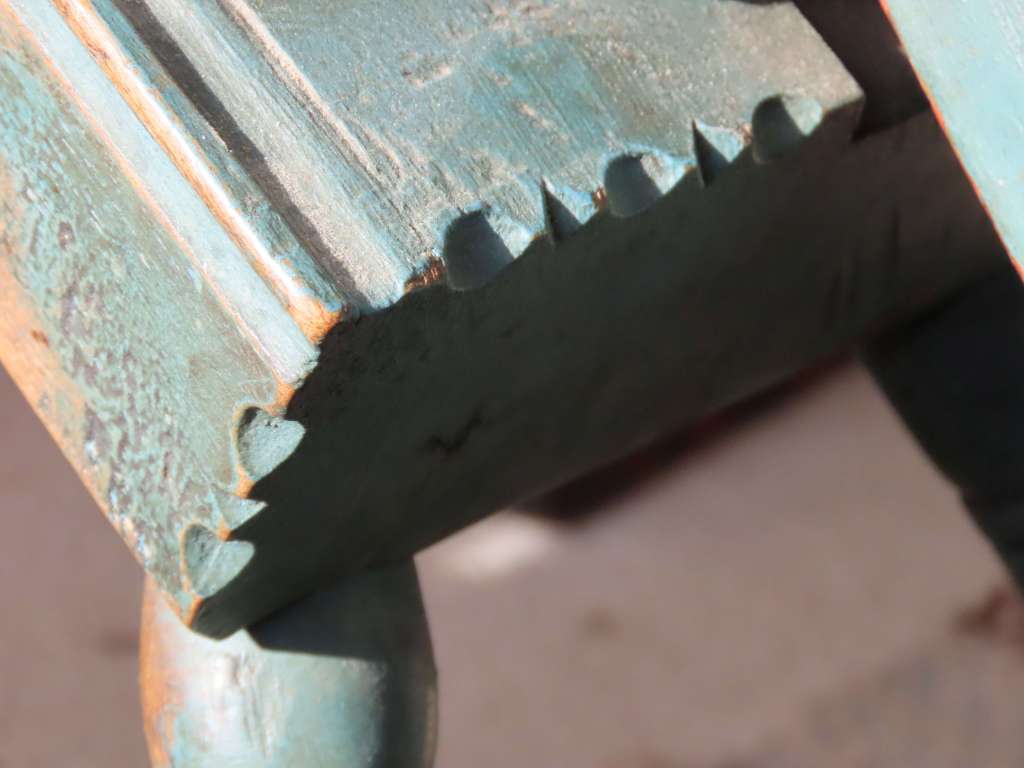
It is no wonder that OAP’s wheels were so popular and remain coveted to this day.

Thank you to Andrea Myklebust for the Norway and Vesterheim photos. And, of course, for this wheel, which will soon be returned to live with Andrea again.
*The photo of the wheel in Norway was accompanied by this explanation: “This picture hangs framed over my mother’s spinning wheel along with a set of cards. Mom doesn’t know who the people in the picture are but thinks they are cousins from Lofthaug. – Wendy Turner ”
The quotations are from:
Bergland, Betty A. and Lahlum, Lori Ann, Norwegian American Women, Migration, Communities, and Identities, Minnesota Historical Society Press, St. Paul, MN 2011.
 Exquisite Machinery
Brenda,
Your photos and descriptions really convey just how exquisite this wheel, along with the thought and care OEM put into making it really is. Thank you for what you are doing with your blog!
LikeLike
Thanks for the kind words Tina. It always makes me happy to hear that people are enjoying the blog. I try hard to convey why each wheel is special and exquisite in its own way. These Norwegian wheels are some of my favorites.
LikeLike
i love how you show and describe the interesting features and decorative touches of these beautiful old wheels.
LikeLike
I have a very similar wheel from the one in the second picture on this post, dated 1863. I bought it at a junk/antique store in El Paso, ILlinois. My husband cleaned it up, and it spins very well.
LikeLike
Lucky you! These wheels seem to pop up all over the midwest, so they must have been valued enough for families to keep them around even after no one was using them. Most everyone seems to find that they are very good spinners.
LikeLike