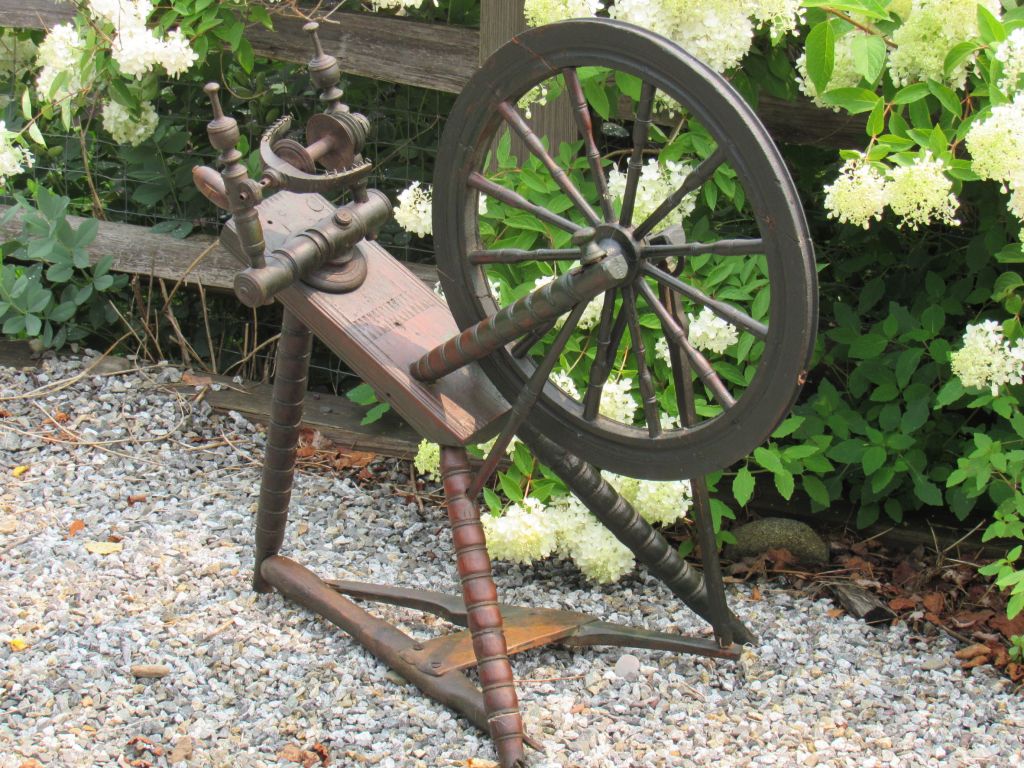
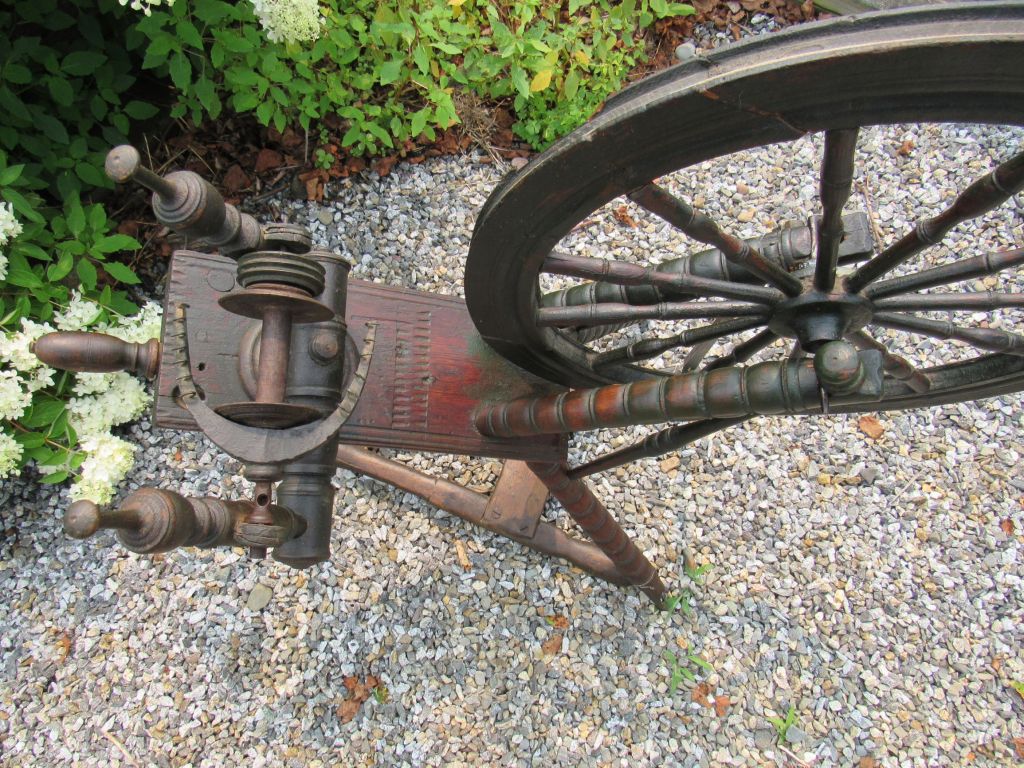
This is an old wheel. It was part of Joan Cummer’s collection, auctioned off when Lowell’s American Textile History Museum closed. I was the only person to bid on this wheel at the auction and bought it because Cummer believed it to be the oldest wheel in her collection.
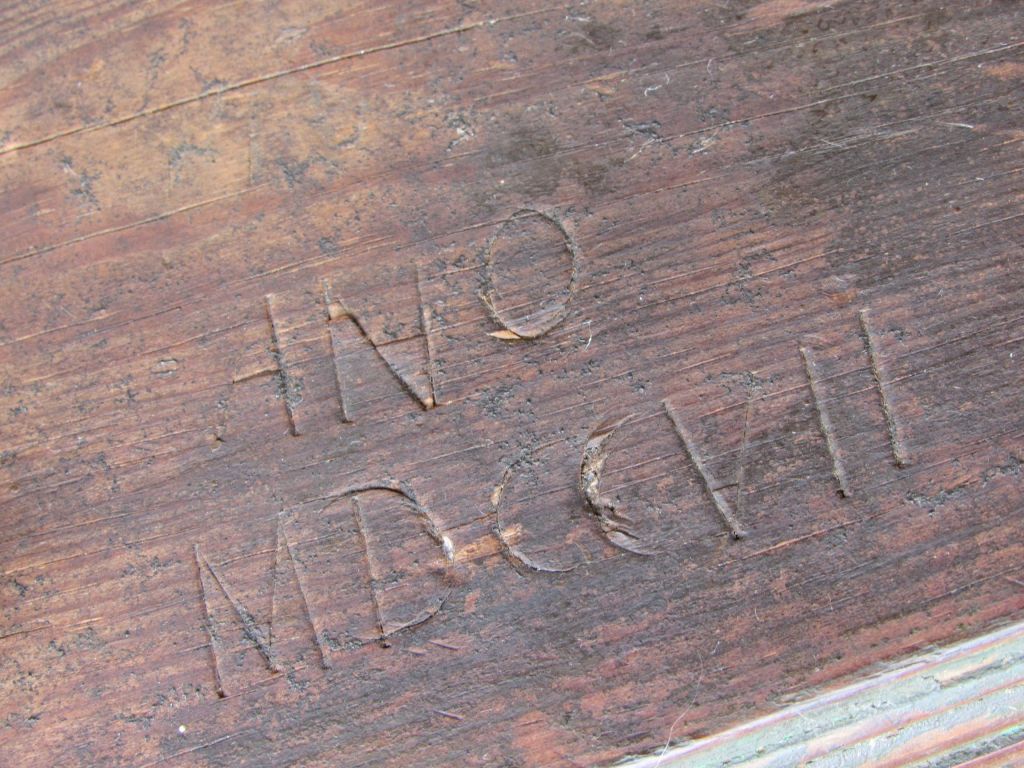
The underside of the table has a carved date in Roman Numerals of 1707, and the same date is faintly inscribed on the table’s side.
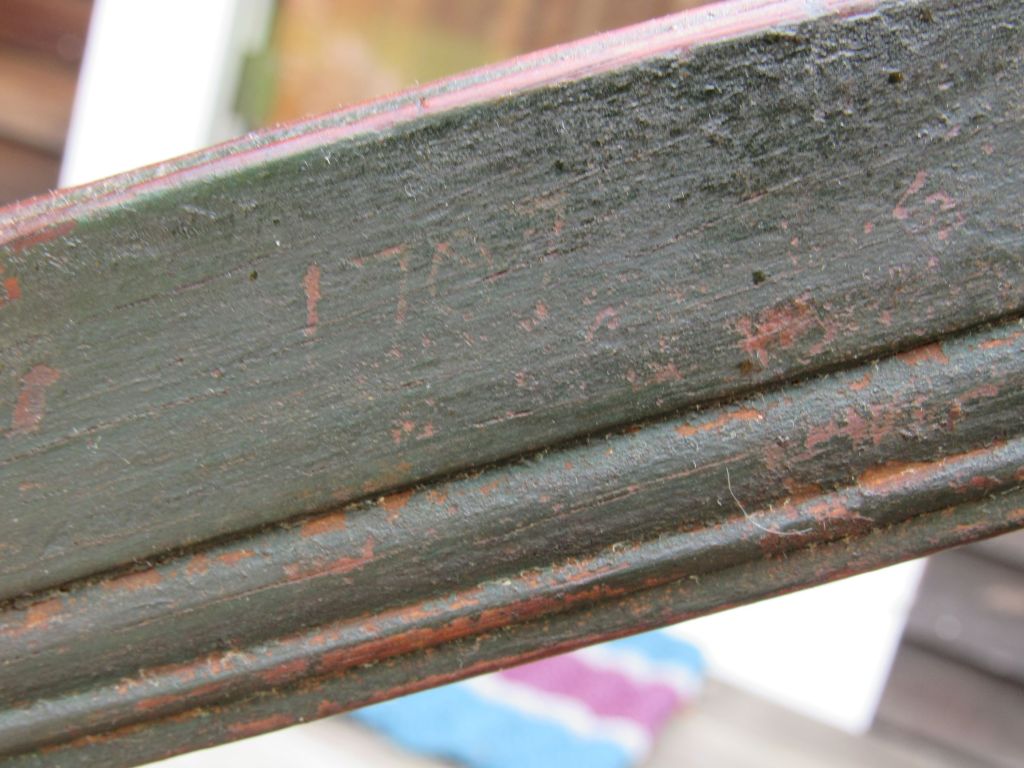
The wheel is No. 29 in Cummer’s collection and, in her description, she did not question the date, noting that it was compatible with the wheel’s William and Mary turnings.
According to Cummer, the wheel was believed to have been brought to New England from England.
I do not know if the wheel is really that old or if it was from England—it has some Scandinavian-style features.
Unfortunately, we do not have many surviving wheels from the early 18th century for comparison and I have not been able to find any similar wheels in paintings.
I like to think it is over three hundred years old.

But, even if not quite that old, it has been through a lot.
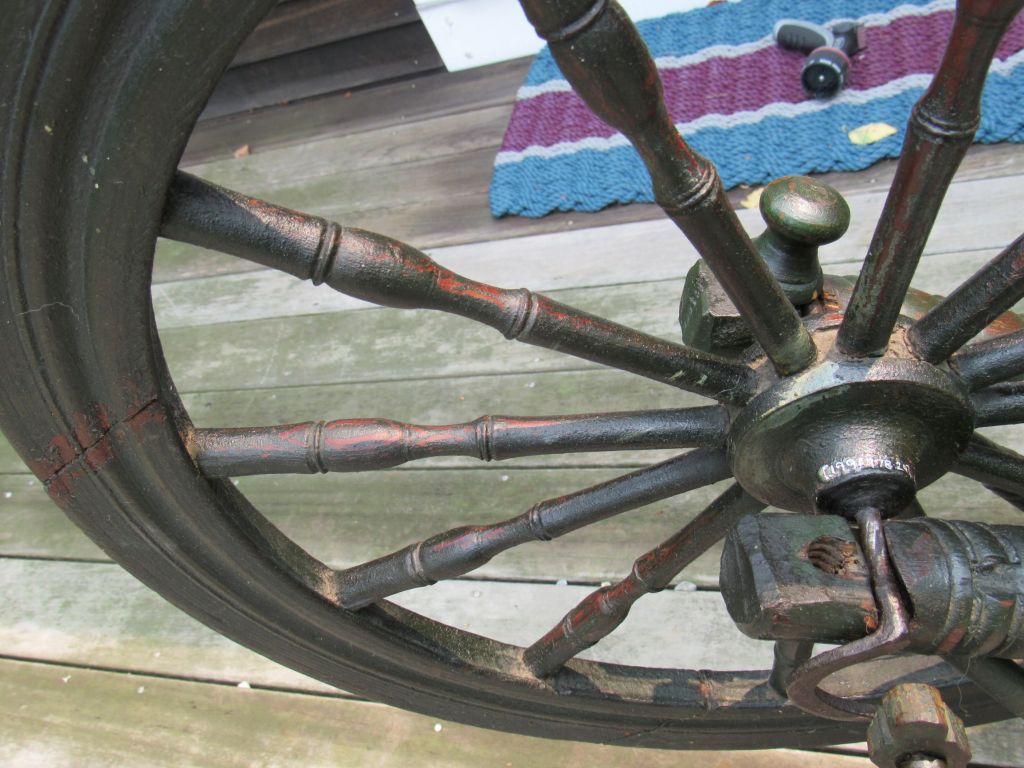
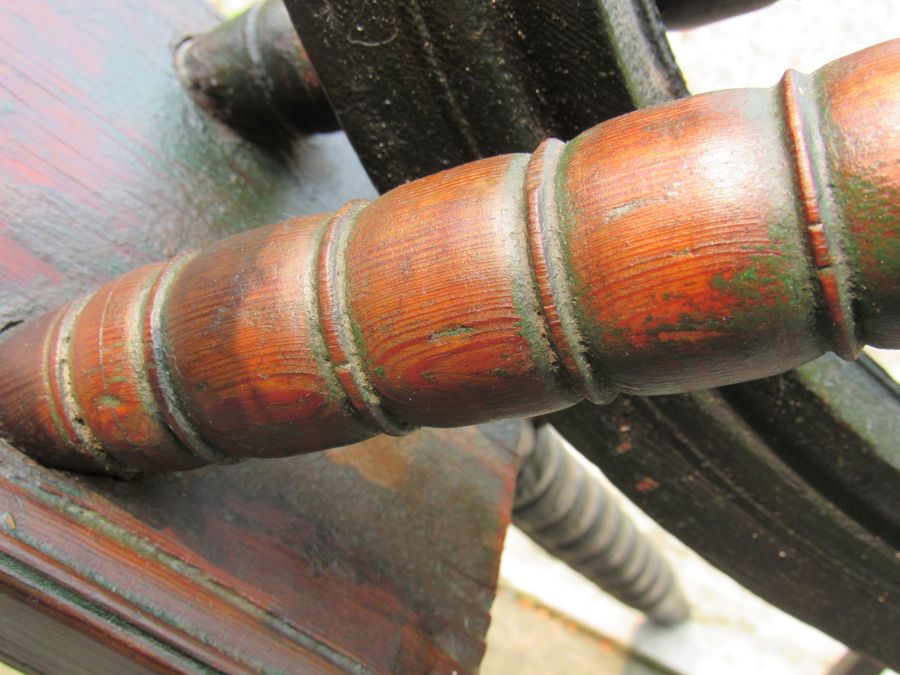
As Cummer commented, there seems to be at least one layer of green paint that, while old, is not original.
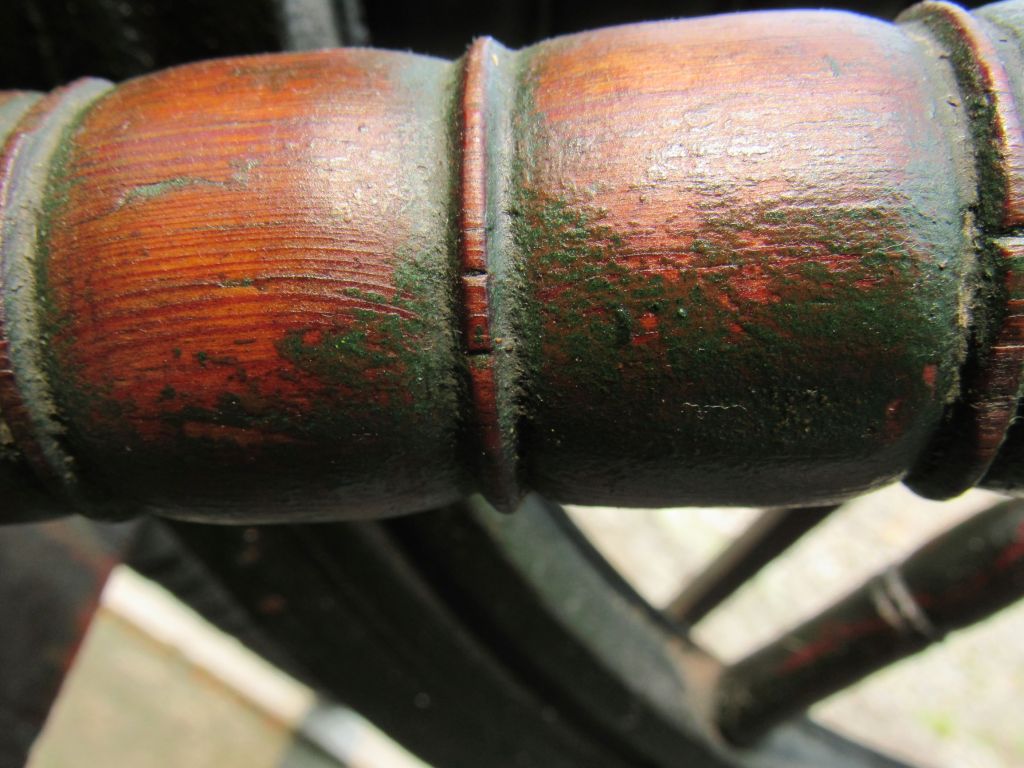
The wood that shines through is a beautifully grained reddish color.
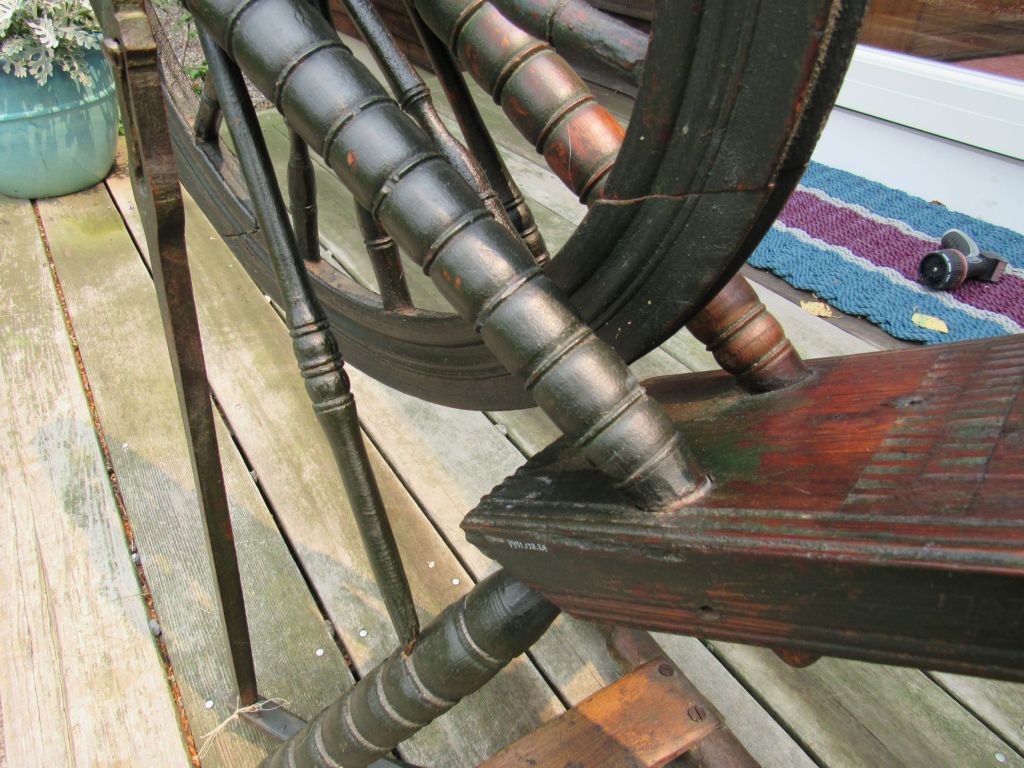
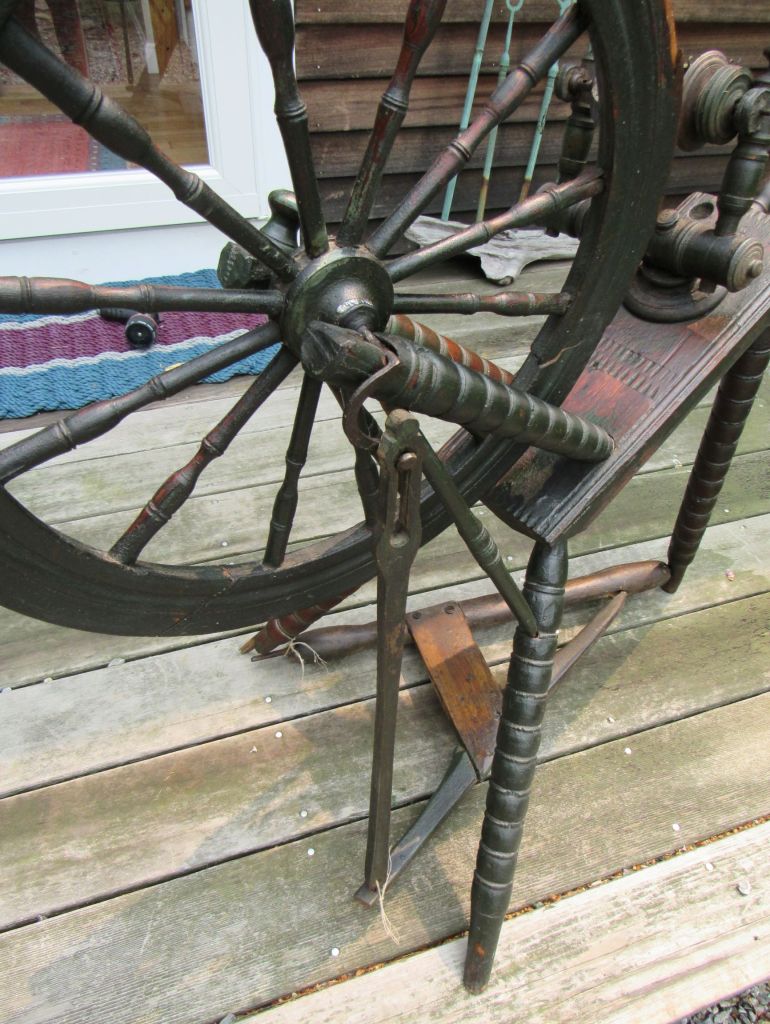
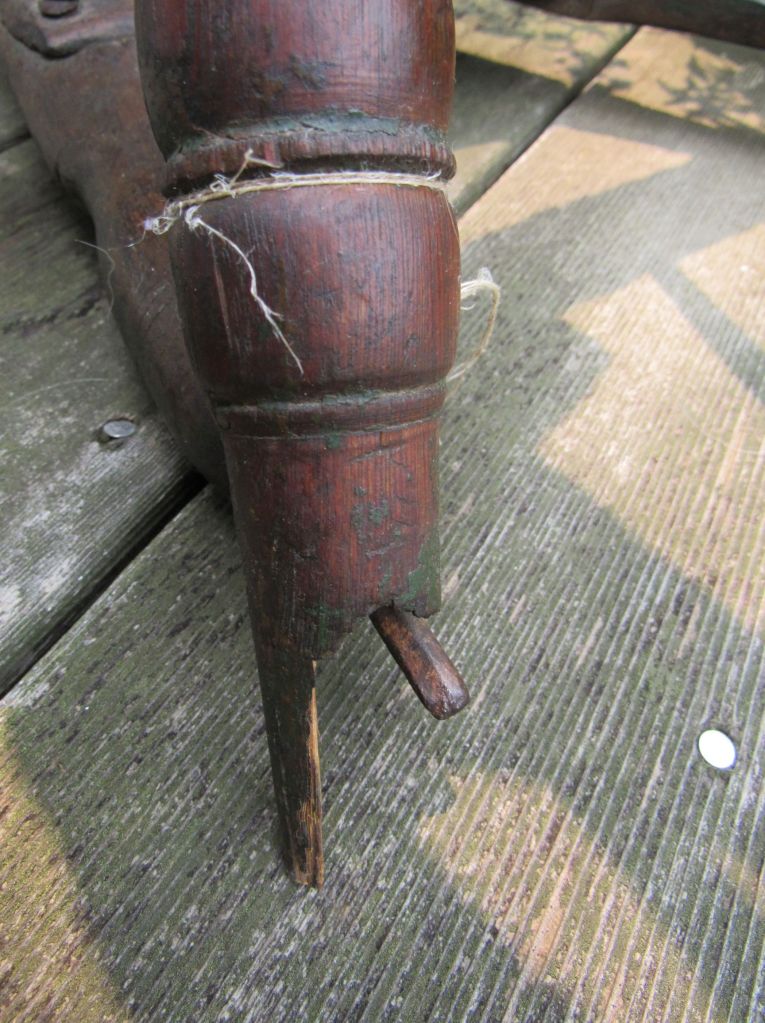
The two secondary upright supports rise from the legs and fall out at the slightest jiggle. One foot is completely broken out where the treadle bar rod was inserted.
In the leg at the other end, the bar is supported by a metal tube inserted through the wood.
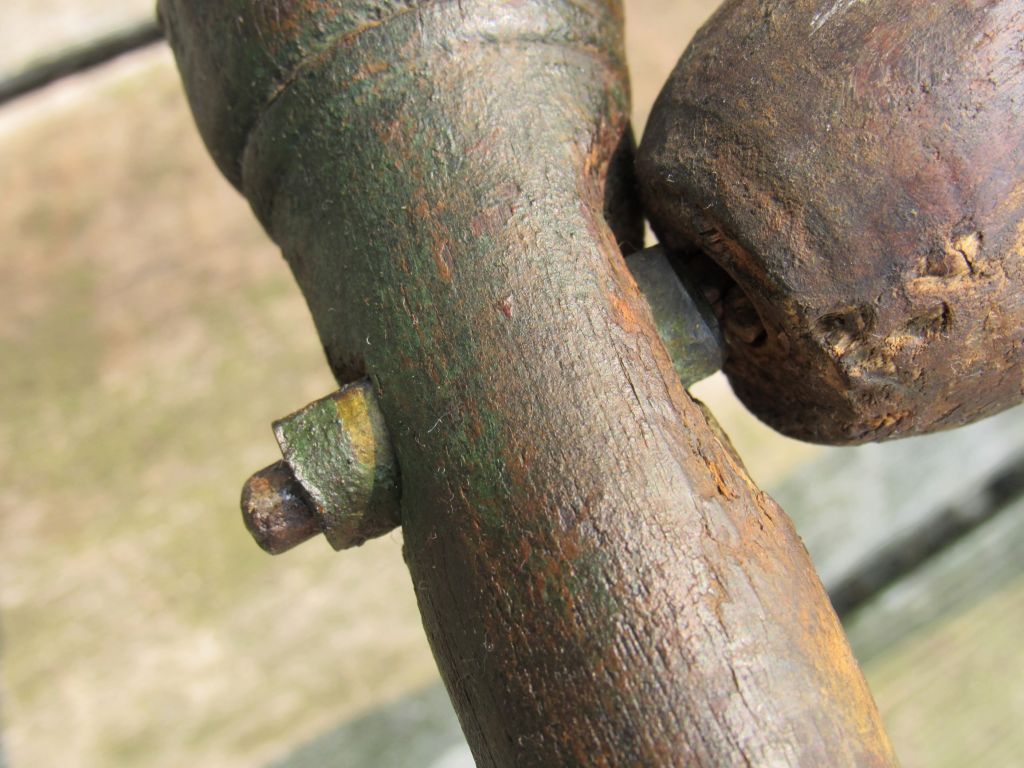
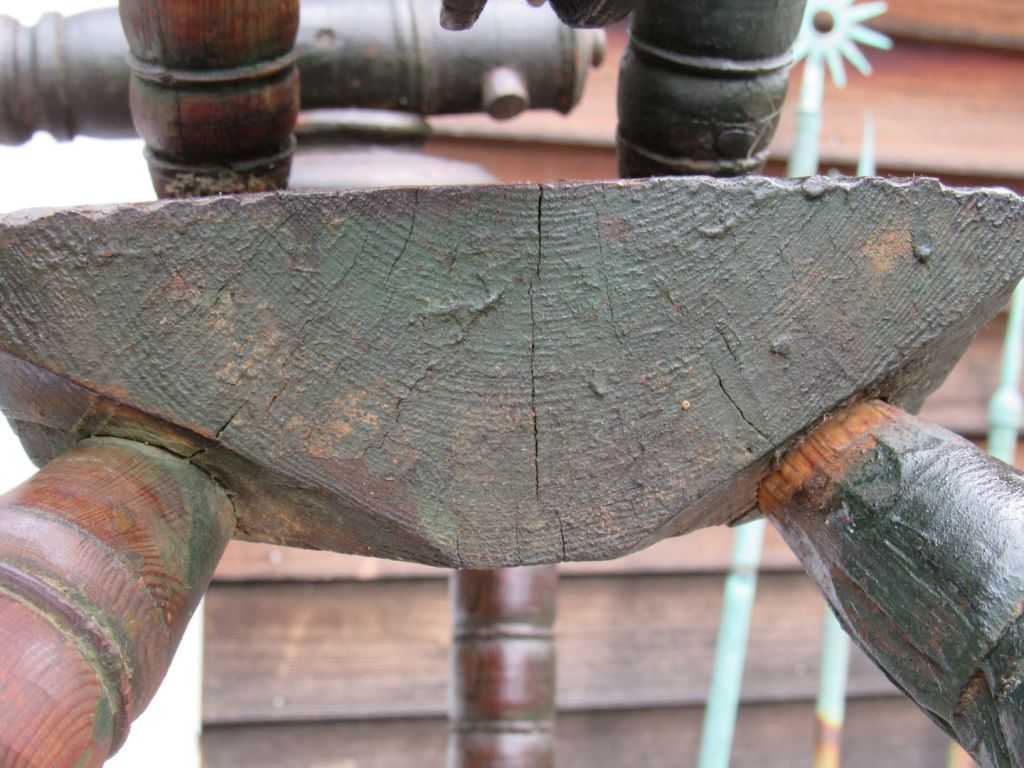
The wheel’s slanty stance is a result of the legs being inserted into angular cuts on the table’s downhill side.

The circular tree rings are visible on the end of the table.
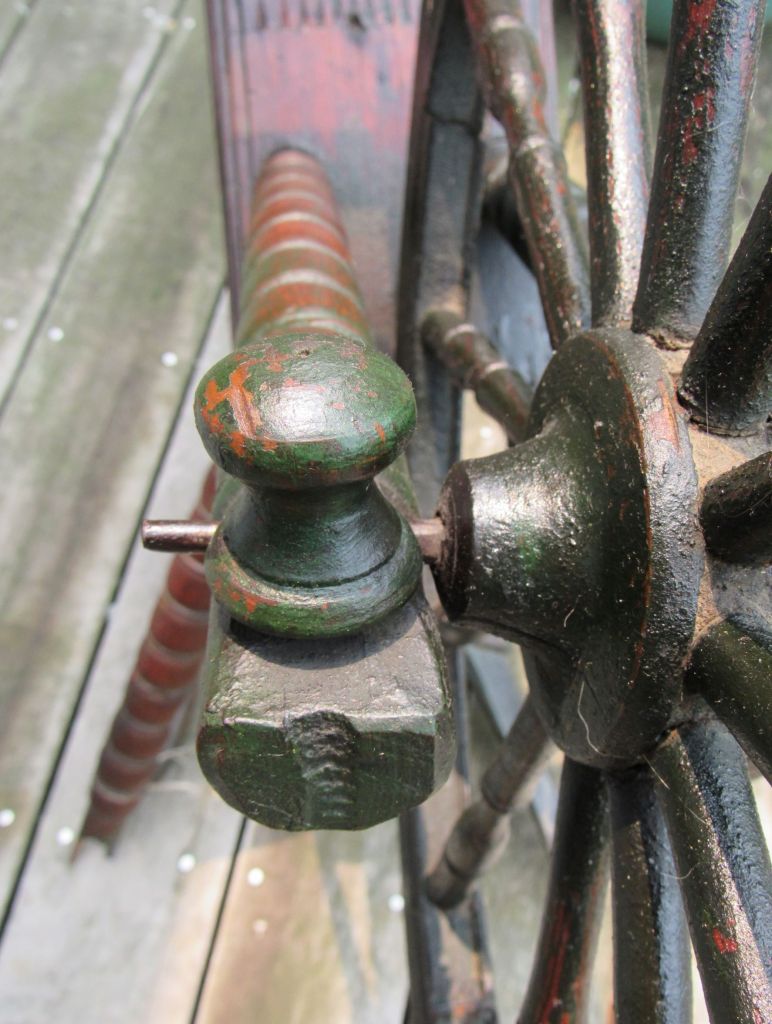
The axle is held in place with a large screwed wooden pin,
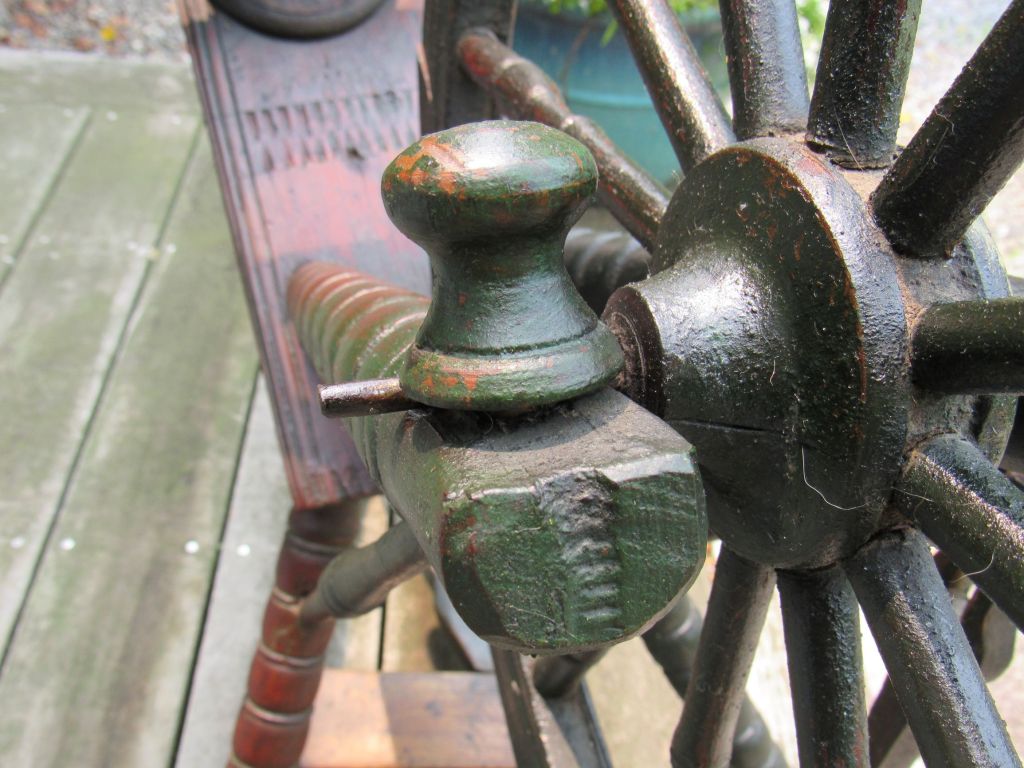
although the back one is missing. There are carvings on the table
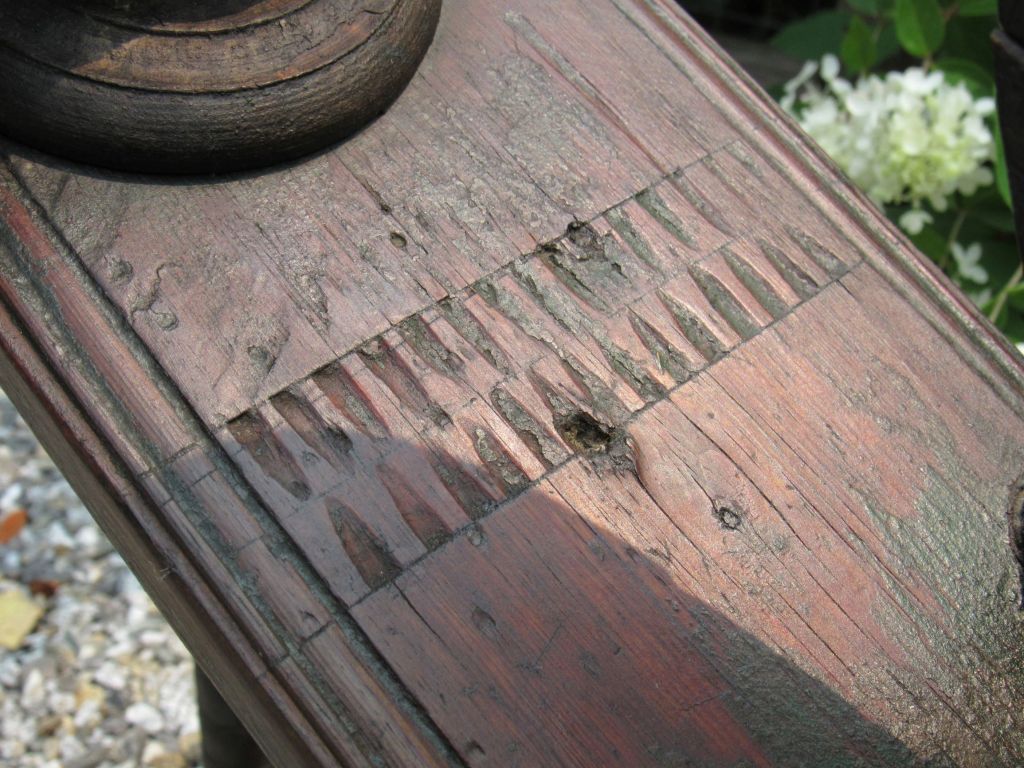
and at both ends,
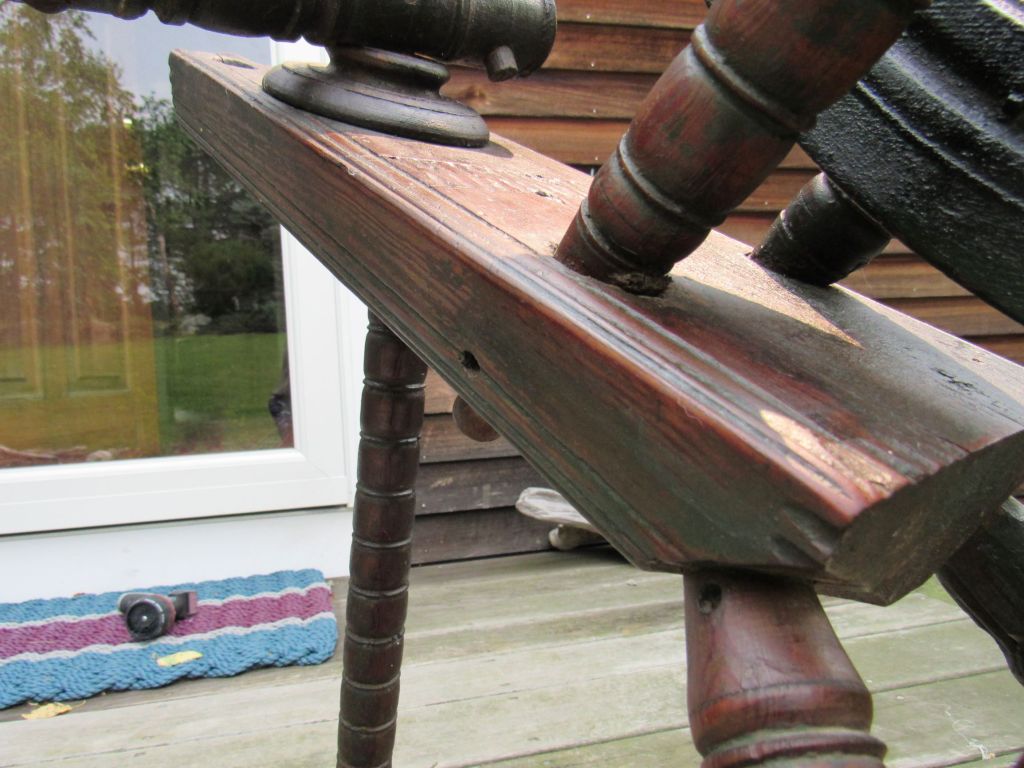
a distaff hole,
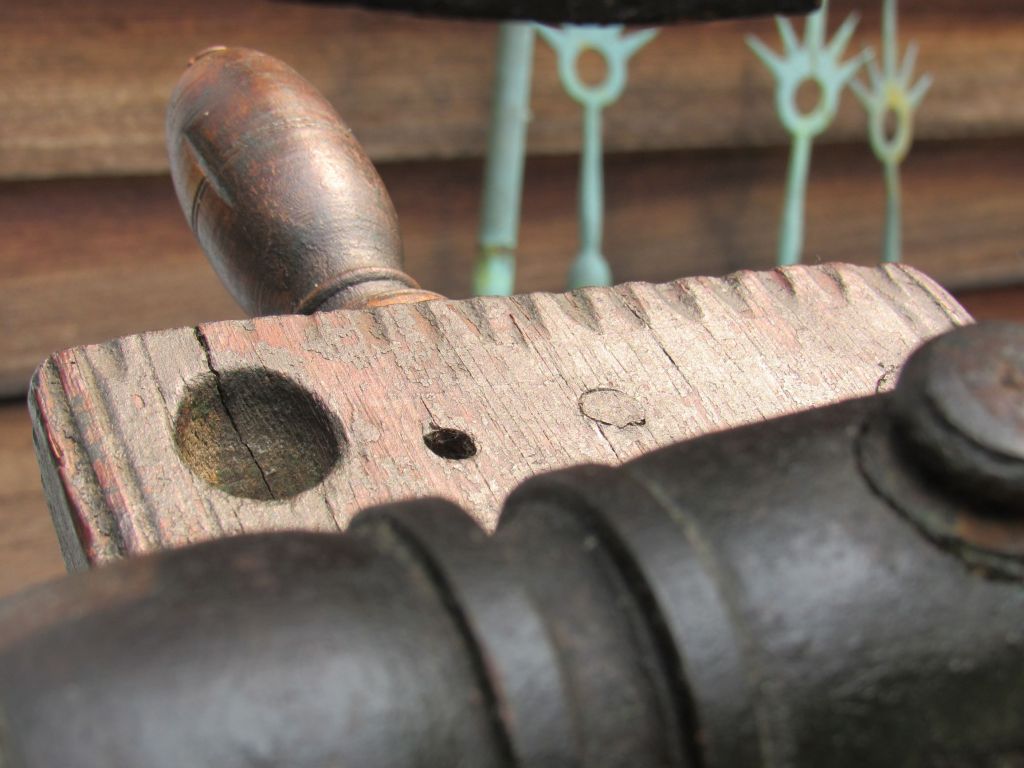
and multiple grooves down the sides.
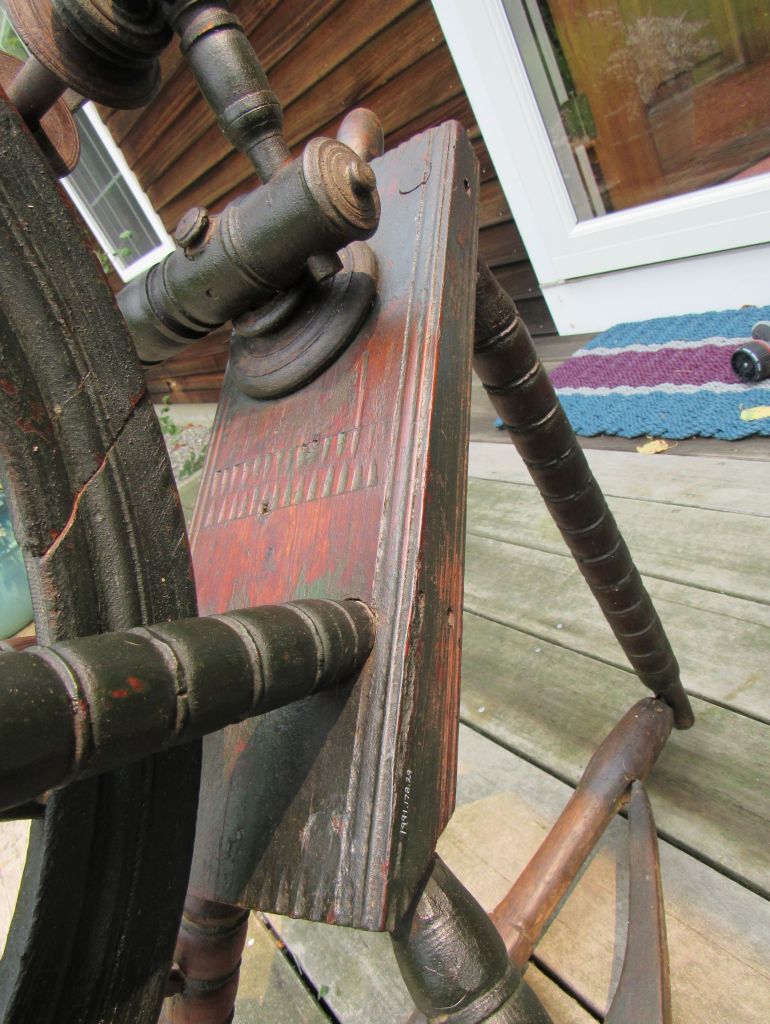
The treadle bars are thick and give plenty of support for two footed treadling. Yet, they are graceful, too. The treadle is now attached with large screws.
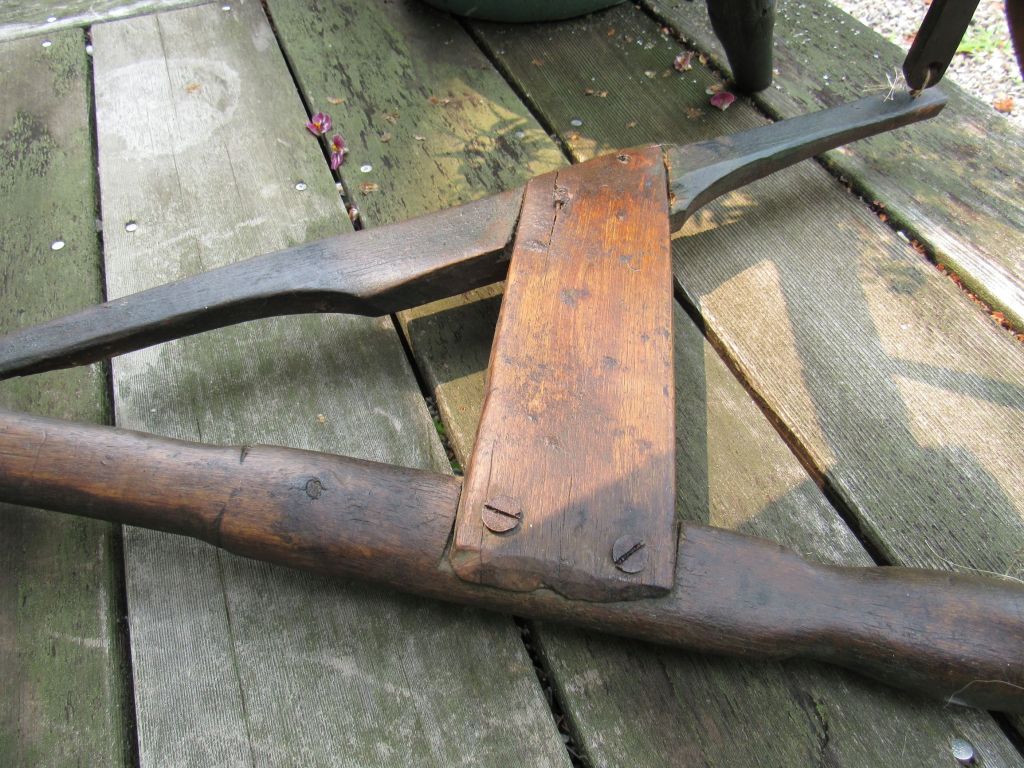
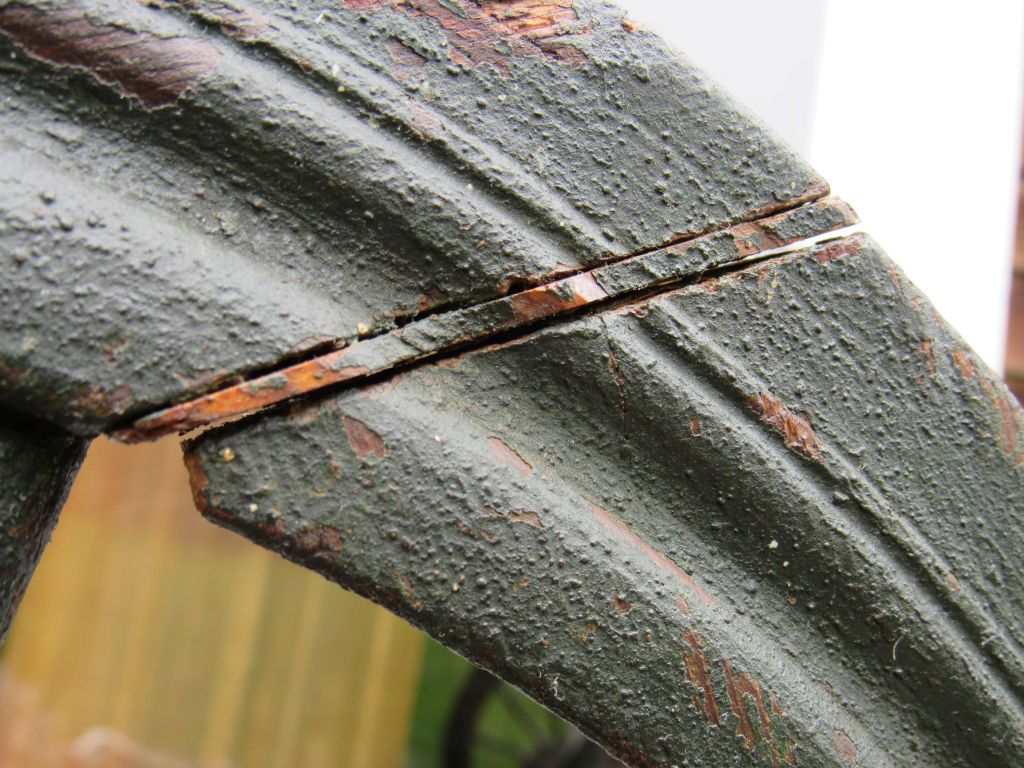
The wheel rim is four parts with a thin shim piece in one join.
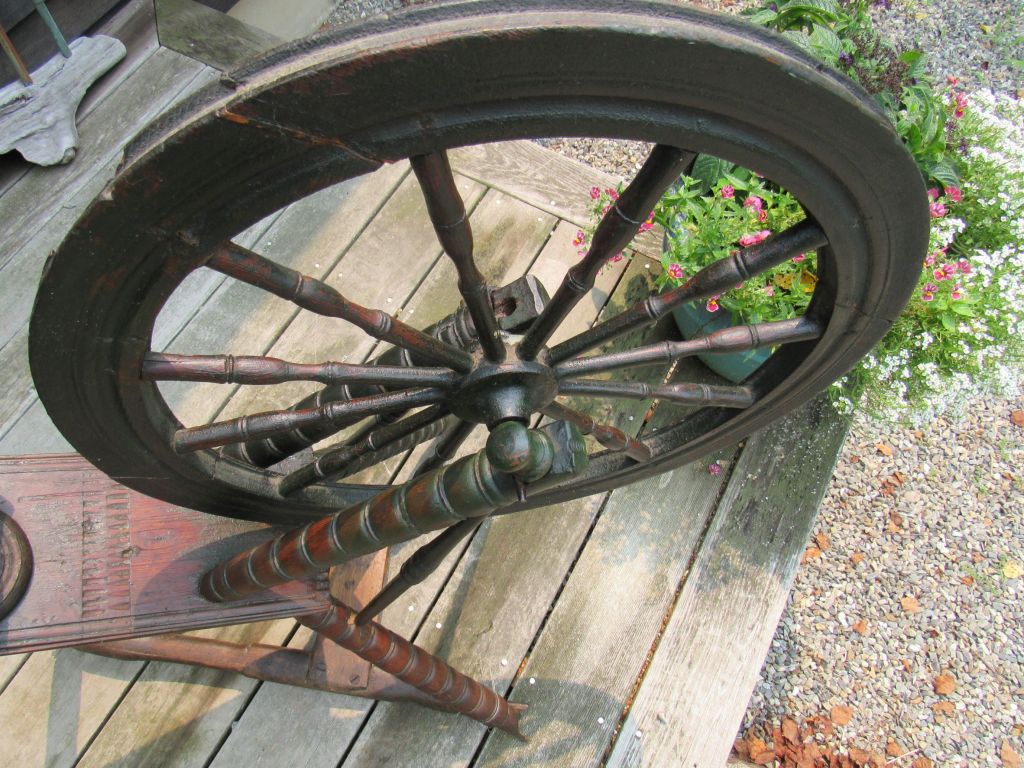
The elongated tops of the maidens are particularly lovely.
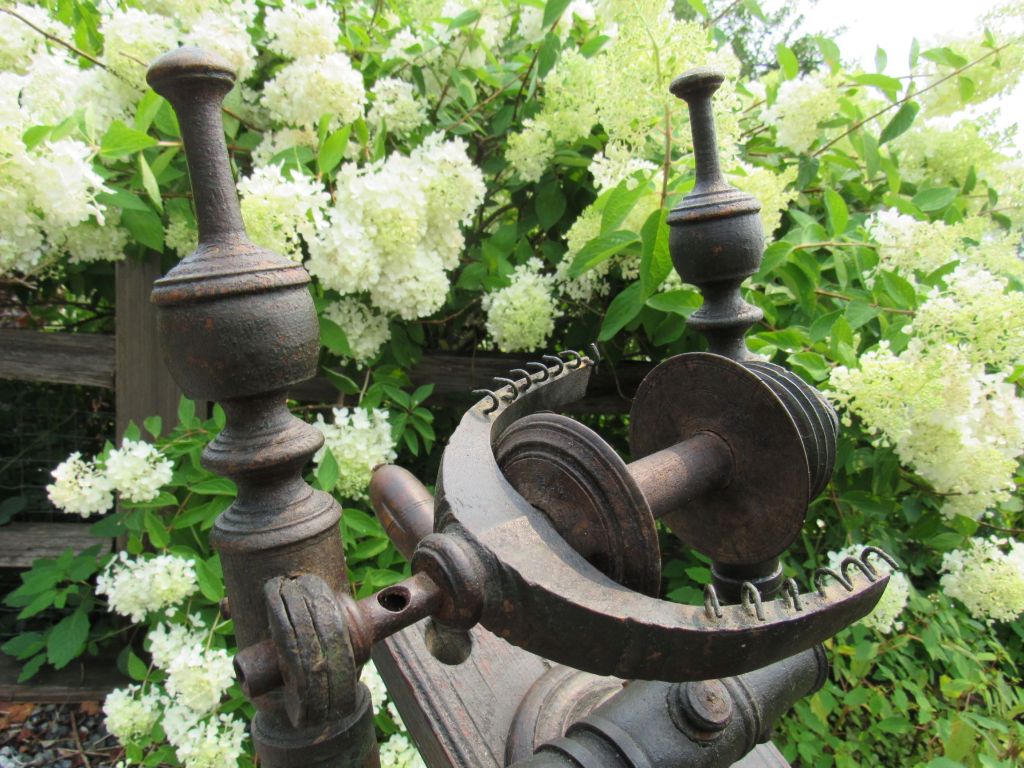
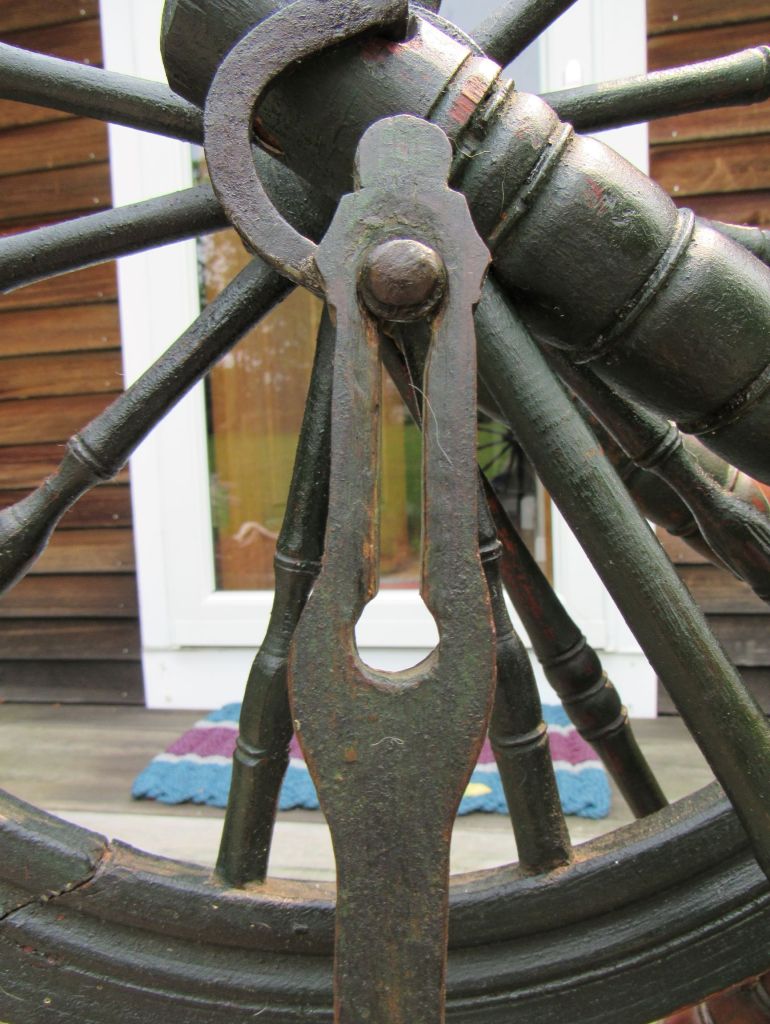
The flyer assembly is in good shape

with three-layered leather flyer bearings held together with rivets.
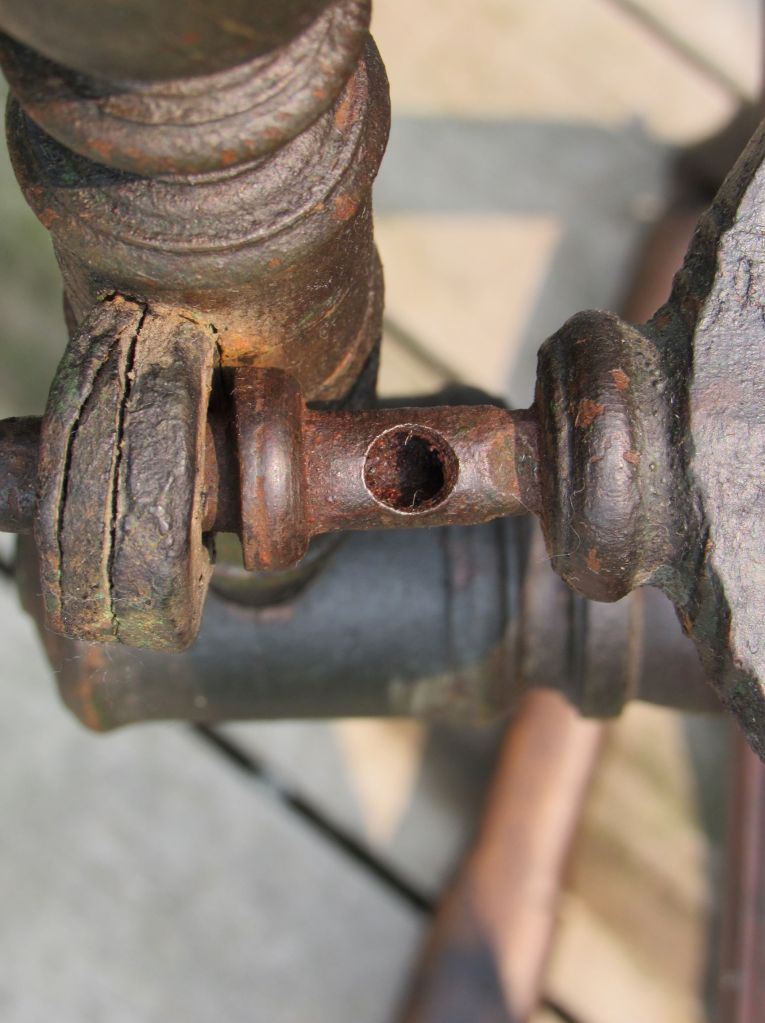
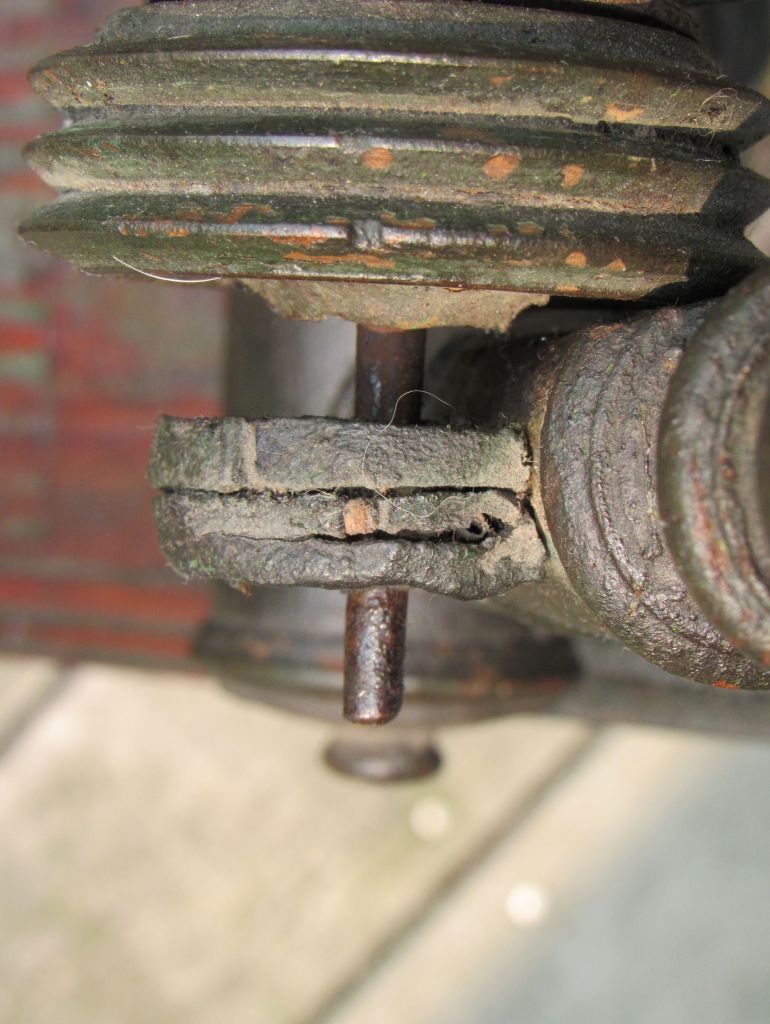
It appears that the green paint was slathered over everything at some point, including the flyer hooks and leather bearings.
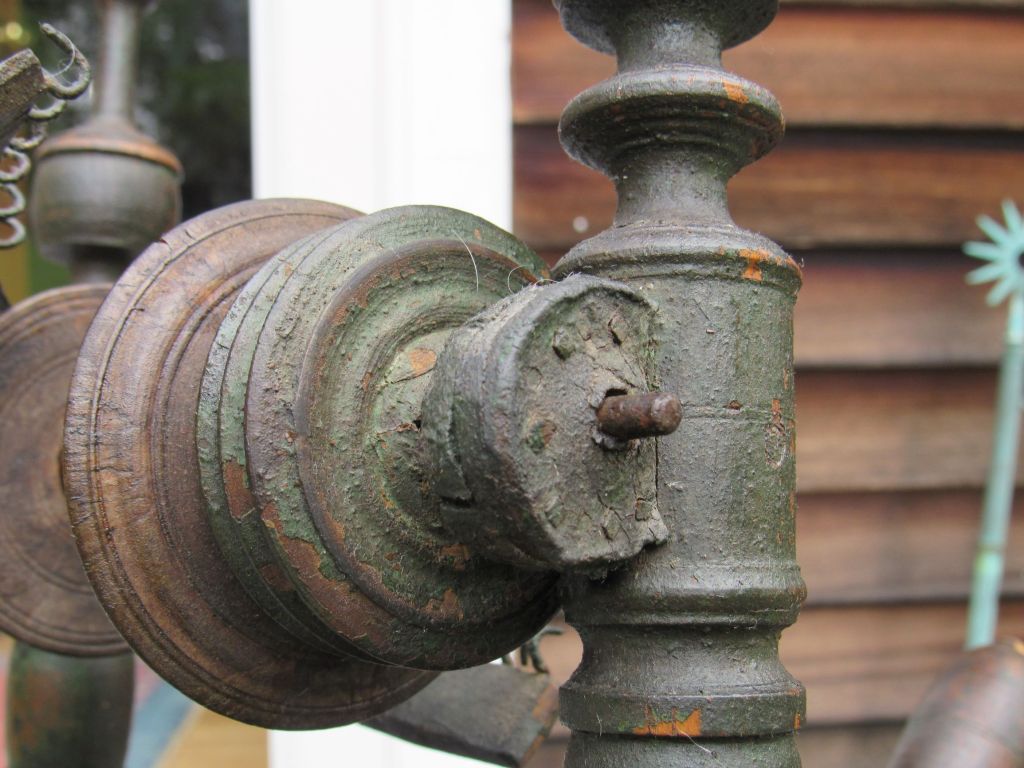
It is an unusual, intriguing wheel and I am always on the lookout for others like it so that we might be able to better establish its age and origin.

For further reference see:
Cummer, Joan, A Book of Spinning Wheels, Peter E. Randall, Portsmouth, N.H. 1984, pp. 70-71.
 Exquisite Machinery
What a fascinating wheel. Amazing that the flyer array is in such good shape. Thank you for sharing.
LikeLike
Thank you for commenting! Yes, I agree about the flyer. It looks like the whole wheel, including the working parts, was painted green many years ago. So, I suspect it has been out of use for a very long time. Perhaps its use as a decoration is what preserved it for so long.
LikeLike
So old! And so good that you rescued it from being unwanted. I love the maidens, and the turning on the legs and posts.
LikeLike
I ended up taking home several of the unwanted wheels at those auctions. I almost took it personally when no one bid on a wheel. As a result, I got two wheels for $5 (they were complete but in pieces), one for $10, and this one for $20.
LikeLike
Hi Brenda
One of my cousin’s is bringing me a rescued wheel with 1835 carved in the wood. I will get it cleaned up and photograph it. Can I send them to you for assistance??
please and thank you Margaret Tyler (619) 462-1723 or margaret.tyler3@gmail.com
On Fri, Jul 30, 2021 at 7:02 AM Exquisite Machinery wrote:
> Brenda posted: ” This is an old wheel. It was part of Joan Cummer’s > collection, auctioned off when Lowell’s American Textile History Museum > closed. I was the only person to bid on this wheel at the auction and > bought it because Cummer believed it to be th” >
LikeLike
Of course. I’d love to help. I’ll send you an email.
LikeLike
Just love the way you described the wheel and the close-up photos were excellent. You get 100% for your report! Please, keep us posted with the restoration.
LikeLike
Thanks. Actually, I’m sending this wheel off to a friend for her to restore. I’ll have her send photos!
LikeLike
Beautiful wheel!
LikeLike
Thank you Tammy!
LikeLiked by 1 person